1. Introduction
Liquefaction is a phenomenon in which saturated or nearly saturated granular soils—typically loose or silty sand—experience a drastic reduction in effective stress [
1]. This occurs due to the buildup of excess pore water pressure under cyclic or transient loading conditions. The result is a temporary loss of shear strength and fluid-like behavior. While seismic shaking is the most common trigger, liquefaction can also be induced by rapid loading, vibration, or sudden changes in hydraulic conditions, such as those associated with intense rainfall or fluctuations in the groundwater level. Because liquefaction often occurs in localized areas around buried utilities, it can severely impact urban infrastructure, leading to manhole uplift, pipeline damage, and road subsidence. Following the 2010–2011 Canterbury earthquake sequence in New Zealand, extensive investigations demonstrated that liquefaction-induced damage was concentrated in backfilled urban areas, including sewer pipelines and manholes [
2]. This occurred even in areas where the surrounding natural ground showed limited manifestations. These events underscored the vulnerability of conventional sandy backfill materials and highlighted the necessity of developing backfill soils with enhanced liquefaction resistance and sufficient workability for confined construction spaces. Findings from New Zealand have since become a global reference for lifeline-focused liquefaction mitigation strategies. Since then, major earthquakes around the world, including the 2011 Great East Japan Earthquake and the Noto Peninsula earthquake, have repeatedly reported severe damage, including excessive lateral loads on structures, lateral ground flow, and even the failure of lifeline facilities [
3,
4].
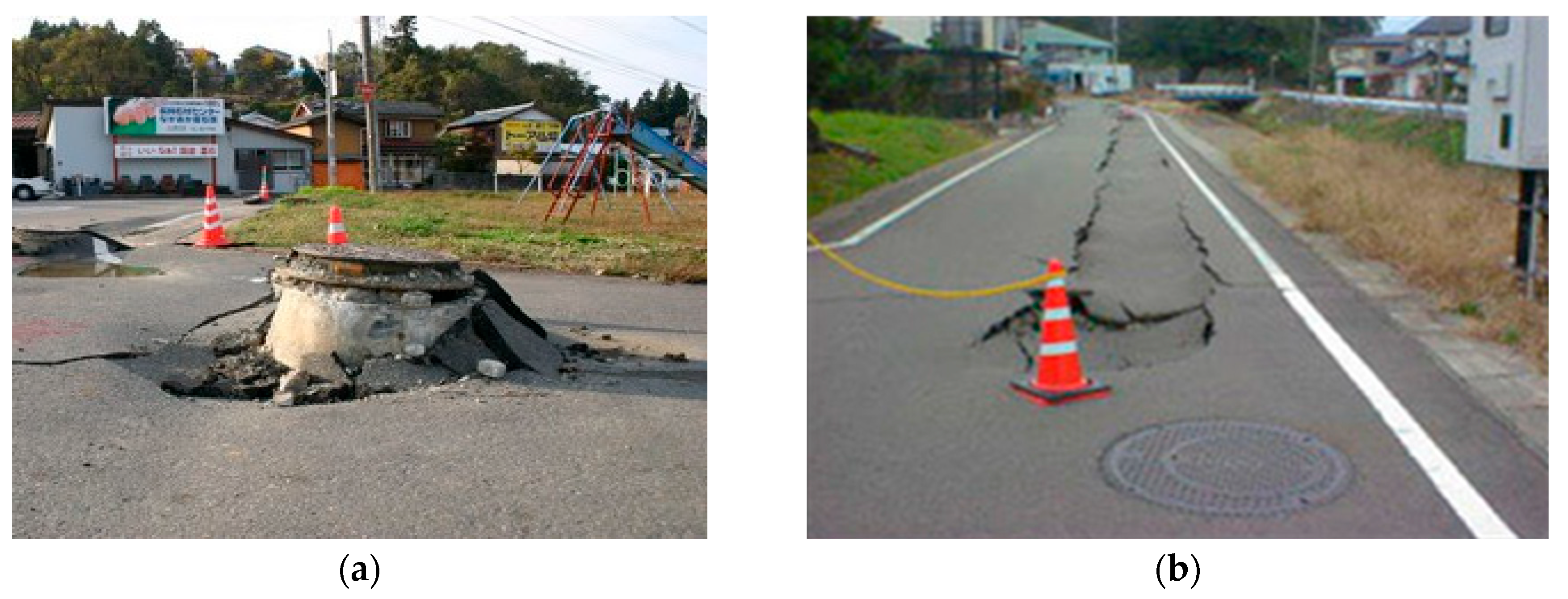
Not only in the past but also in recent years, large earthquakes and sudden heavy rains have caused many problems in sandy grounds. For example, as shown in
Figure 1, manhole rising, water retention in manholes, and ground subsidence in backfilled areas, which in turn make large unevenness on the road and cause traffic disruptions. The cause of these troubles is sand, which can be easily poured into gaps, and has been used as backfill material for buried pipelines in the ground due to its ease of construction. However, as shown in
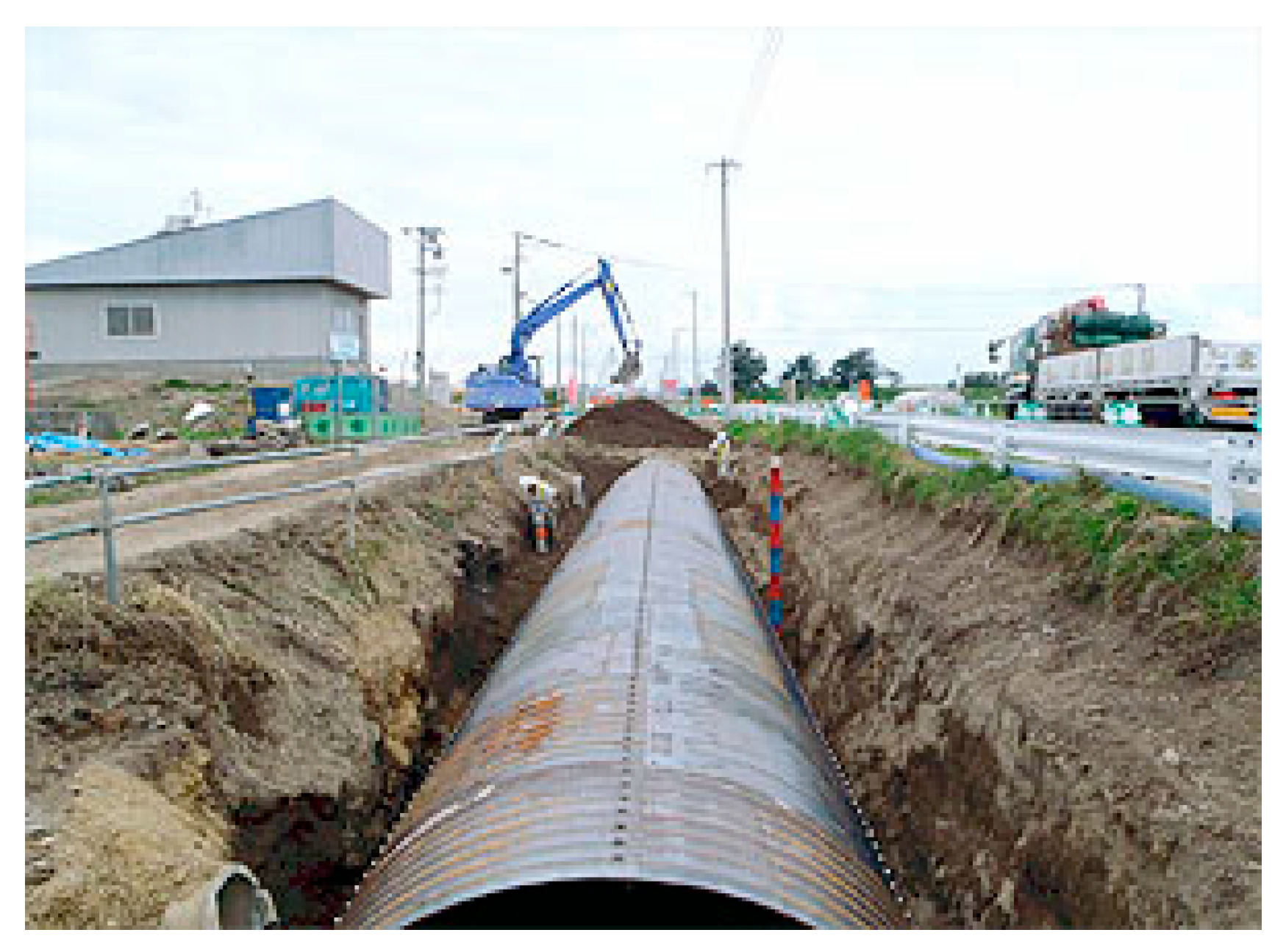
Figure 2, it is difficult to apply sufficient compaction to the sand poured into the gaps due to a lack of sufficient working space and the risk of damaging the buried objects. Because of insufficient compaction, sand as backfill material can cause liquefaction during earthquakes or can be washed away with rainwater permeation during sudden heavy rains. Road environmental problems have a large impact on transportation infrastructure and the living environment. Backfill material that resists liquefaction is required to prevent such damage. Re-use of construction-generated soil is an important issue in countries with small land areas, such as Japan and Korea. Effective methods to use large-grained soil like gravel or sand are established, but clay with a small particle size is currently disposed of in final landfills because it is too fine to utilize as construction material. This study aims to develop an improved soil that is effective against liquefaction by mixing clay with sand used as backfill material for pipelines. In this study, with an eye on the effective utilization of waste, slag was used as large-grained waste and dried sludge was used as the small-grained clay, instead of using natural sand as backfill material.
Despite the growing body of research on liquefaction-resistant soils and the use of waste materials for backfill, critical gaps remain. Many existing studies focus on improving strength or cyclic resistance. However, systematic and quantitative evaluations of permeability and workability, which are essential requirements for backfill materials around buried lifelines, are often insufficient. In particular, waste-mixed soils containing fine particles tend to experience an excessive reduction in permeability; however, this trade-off has not been rigorously quantified under realistic backfilling conditions. Furthermore, few studies have assessed compaction behavior, trafficability, and liquefaction resistance simultaneously within a unified experimental framework. This study quantitatively evaluates slag—dried sludge mixed soil using standardized compaction tests, cone penetration tests, permeability measurements, and shaking table tests. This provides a comprehensive assessment of its applicability as a liquefaction-resistant, workable backfill material.
2. Background
Liquefaction during earthquakes is one of the most important issues in geotechnical engineering, and various ground improvement techniques have been studied around the world to mitigate the damage [
5]. This section summarizes research on improved soils aiming at liquefaction resistance, and research trends on backfill materials utilizing waste materials. The former includes ground improvement technologies such as chemical solidification using cement and lime, fiber reinforcement, and calcium carbonate precipitation using microorganisms (bio cement/MICP), while the latter includes research examples of backfill materials made from a mixture of waste tire chips, fly ash, incineration ash, recycled aggregate, waste glass, and so on. Liquefaction resistance by improved soil has been advanced as a traditional and novel method based on the progress of the strength, stiffness, and drainage performance of the ground. On the other hand, backfill materials that utilize waste materials are attracting attention as a new approach that simultaneously reduces environmental impact and addresses liquefaction problems [
6].
2.1. Improved Soil Using Solidification Agents
Chemical improvement, in which cement or lime is mixed and injected into soil to solidify it, is the most traditional method for liquefaction countermeasures. This method effectively suppresses the generation of excess pore water pressure by strengthening the bonds between soil particles and increasing their rigidity. Elzamel et al. (2022) mixed dry sand with 0 to 2% cement by weight and conducted cyclic triaxial tests after 3 days of curing [
7]. They reported that the cement-added sand exhibited significantly improved resistance to cyclic shear. When 2% cement and 1% polypropylene fiber were combined, the liquefaction resistance was approximately nine times higher than that of unimproved sand at a cyclic stress ratio of 0.30. Porcino (2012) investigated multiple liquefaction events of lightly solidified sand and showed that the resistance to re-liquefaction decreases when the bond structure is partially destroyed by the first liquefaction [
8]. In other words, light solidification treatment may reduce the improvement effect against aftershocks after a large earthquake, so it is essential to consider the cyclic history and embrittlement [
9].
Fiber reinforcement, which involves mixing synthetic or natural fibers into sandy soil, is a technology that introduces tensile resistance elements into the soil skeleton and enhances liquefaction resistance by confining shear deformation [
10]. Maheshwari et al. (2012) conducted shaking table tests on fiber-reinforced sand and showed that the addition of randomly distributed fibers suppresses the accumulation of excess pore water pressure and increases the number of shakings required to trigger liquefaction [
11]. Noorzad & Amini (2014) quantitatively demonstrated through cyclic triaxial tests that liquefaction resistance improved with increasing fiber content [
12]. The fiber reinforcement effect is achieved through the synergistic action of the “densification effect”, which increases density by partially filling voids in fine sand, and the “confinement effect” by fiber tensile resistance. On the other hand, anisotropy depending on fiber orientation has been pointed out. Vercueil et al. (1997) reported that horizontally oriented geosynthetics contribute to liquefaction resistance, while the effect of vertically oriented fibers is limited [
13]. Zhang and Russell (2020) used stress transfer analysis to show that the change in the effective stress path due to fiber tension is the mechanism that suppresses fluidization [
14]. Fiber reinforcement is also effective for low to medium-density loose sand and is expected to be applied to embankments and backfills as an inexpensive and easy-to-construct improvement method [
6].
Microbially induced calcite precipitation (MICP) is a novel technique that uses bacterial enzymes to precipitate calcium carbonate crystals between soil particles, acting as a natural cement [
5]. Montoya et al. (2013; 2015) and Lee et al. (2022) demonstrated that the precipitation of a few percent of CaCO
3 significantly increased cyclic shear strength and improved liquefaction resistance [
15,
16,
17]. Xiao et al. reported through cyclic triaxial tests that calcite deposition significantly improved liquefaction resistance compared to untreated sand [
18]. Sun et al. (2021) conducted staged treatment tests on loamy soil and found that the number of cycles required for liquefaction increased exponentially with increasing treatment times [
19]. Simatupang and Okamura (2017) demonstrated that MICP exhibited a high strengthening effect under unsaturated conditions [
20].
2.2. Improved Soil Using Waste Materials
Many studies have been conducted on mixing waste tire chips with sand. Rubber, being lightweight and highly elastic, has excellent vibrational energy absorption properties and suppresses the increase in excess pore water pressure. Hazarika et al. (2010) demonstrated significant improvement in liquefaction resistance through cyclic triaxial tests of sand containing 50% of tire chips by volume [
21]. Kaneko et al. (2013) and Bahadori and Farzalizadeh (2016) reported that the addition of chips suppresses the rise in pore water pressure and reduces settlement, but the damping force increased [
22,
23]. Furthermore, it has been pointed out that the effect is greatest at around 30%, and that excessive mixing can reduce resistance [
24].
Attempts have also been made to mix by-products such as coal fly ash and incineration bottom ash with sand. Zeybek and Eyin (2023) conducted tests using fly ash mixtures of 0 to 40% and found that the resistance decreased up to an addition ratio of approximately 20%, but increased again above that rate, demonstrating a nonlinear trend [
25]. This is thought to be due to the balance between the improvement in particle size distribution by the addition of fine particles and the impediment to drainage caused by excess fine particles [
26]. While there are limited reports on the mixing of incineration ash, Renuka et al. (2022) reported improvements in bearing capacity and shear strength [
27].
Research has also been conducted on the use of recycled crushed stone and glass sand as backfill materials. These have excellent permeability, high specific gravity, and the ability to suppress pipe floating, which is expected to reduce damage in the event of liquefaction [
28]. However, issues remain, such as workability due to particle size and shape, the sharpness of glass particles, safety management, and evaluation of long-term durability due to factors such as alkali-silica reaction.
3. Experimental Content and Method
3.1. Preparation of Samples
This study used slag and dried sludge samples. Sand and clay were also used as control soil standards. The slag was obtained from a domestic steel manufacturing by-product supplier, and the dried sludge was collected from a municipal wastewater treatment facility after dehydration and drying processes. The slag and dried sludge were obtained from Yamazaki Gravel, Inc. (Ōtsu, Japan). The sand and clay used as reference materials were commercially available standard soils commonly employed in geotechnical laboratory testing. The sand was purchased from Kohnan Shoji Co., Ltd. (Osaka, Japan) and the clay was supplied by Kasanen Industries Co., Ltd. (Kasaoka, Japan). All materials were used as received, without further chemical treatment.
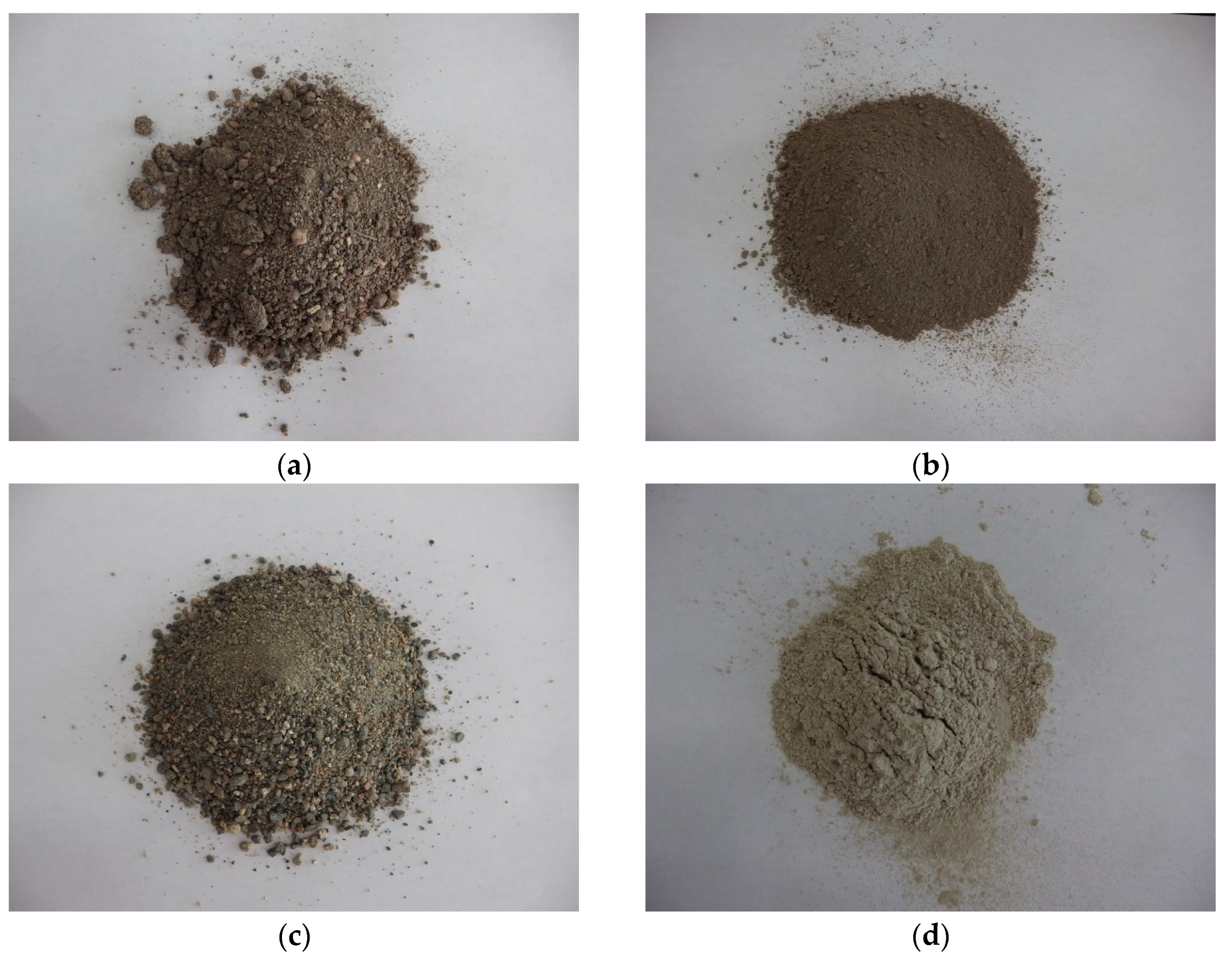
Figure 3 shows the appearance of these samples.
The basic physical properties are summarized in
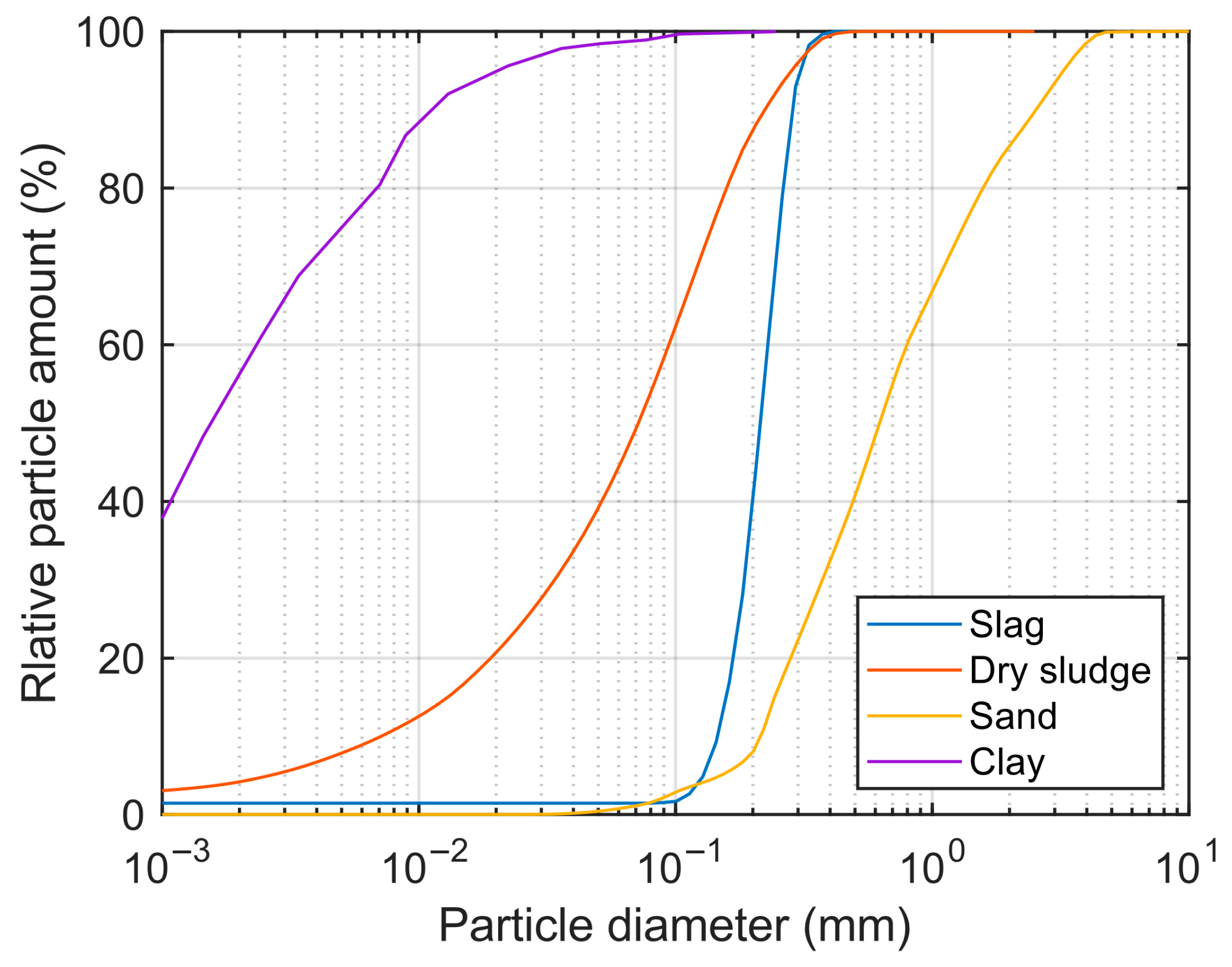
Table 1, and the particle size characteristics are shown in
Figure 4. The particle size of the slag is all-sand fraction (75 µm to 2 mm), while that of the dried sludge is composed of 50.6% sand, 42.1% silt (5 µm to 75 µm), and 7.3% clay (5 µm or less). The ignition losses of the slag and dried sludge were 5.9% and 11.3%, respectively. As the ignition losses were not significantly large, the samples are primarily inorganic rather than organic. Since the materials used are primarily composed of inorganic minerals such as SiO
2, their mineral compositions hardly affect phyesical properties. Therefore, no detailed chemical or mineralogical characterization was performed. Slag and sand showed nearly identical hydraulic conductivity. However, the 80:20 mixture of slag and dried sludge exhibited a permeability of 2.0
10
−6 m/s, while the 80:20 mixture of sand and clay showed 8.4
10
−8 m/s, approximately two orders of magnitude lower. This is due to the high viscosity of the standard clay used, which is suitable for applications such as drilling, grouting, backfilling, and muddy water. The clay contains some swelling montmorillonite minerals. This testing strategy in
Table 1 ensures that the comparative evaluation focuses on parameters directly linked to practical backfill performance. These parameters include workability, compaction response, strength, and liquefaction resistance. This approach avoids relying on soil indices such as minimum and maximum dry bulk density, relative density, and the Atterberg limit, which are only valid for limited soil types.
3.2. Compaction Test
All tests, including the cone penetration test, shaking table test, and compaction test, were conducted in accordance with the relevant Japanese Industrial Standards (JIS) [
29,
30,
31,
32,
33,
34,
35]. One repetition was performed for each test condition. Reproducibility in these standardized, mechanically controlled geotechnical tests is primarily ensured by strictly controlling specimen preparation, boundary conditions, and loading procedures, a common practice in large-scale soil mechanics experiments.
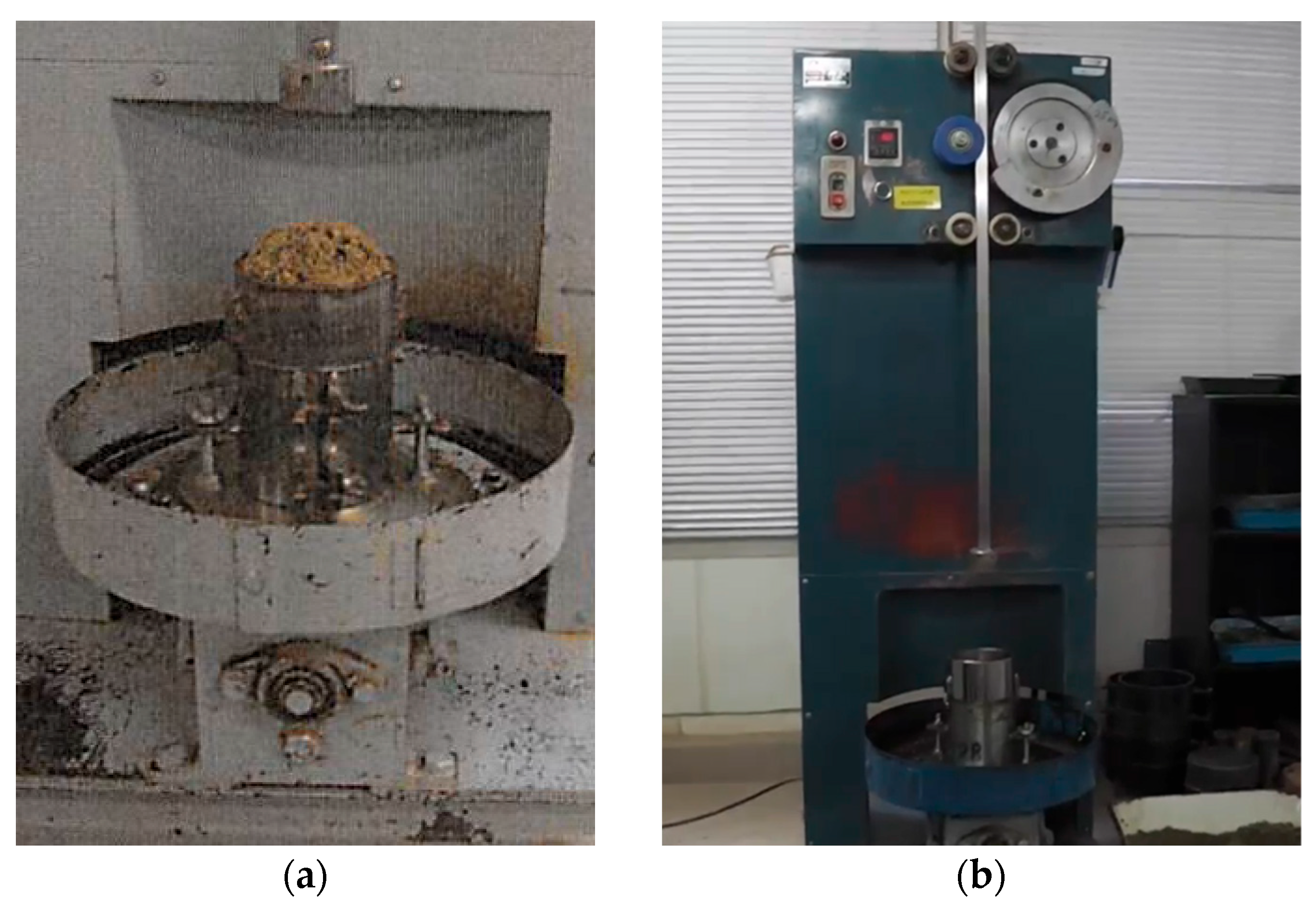
The compaction test evaluates the maximum mechanical performance that the materials will exhibit under ideal conditions. To investigate the effect of the sludge blending ratio on the compaction characteristics of the mixed sample, a compaction test was carried out in accordance with JIS A 1210 (see
Figure 5). Six different sludge compounding ratios were prepared based on the total amount of slag and dried sludge: 0%, 10%, 15%, 20%, 25%, and 30% by mass. Compaction curves were then obtained for each, and the maximum dry density and optimum moisture content were determined.
3.3. Cone Penetration Test
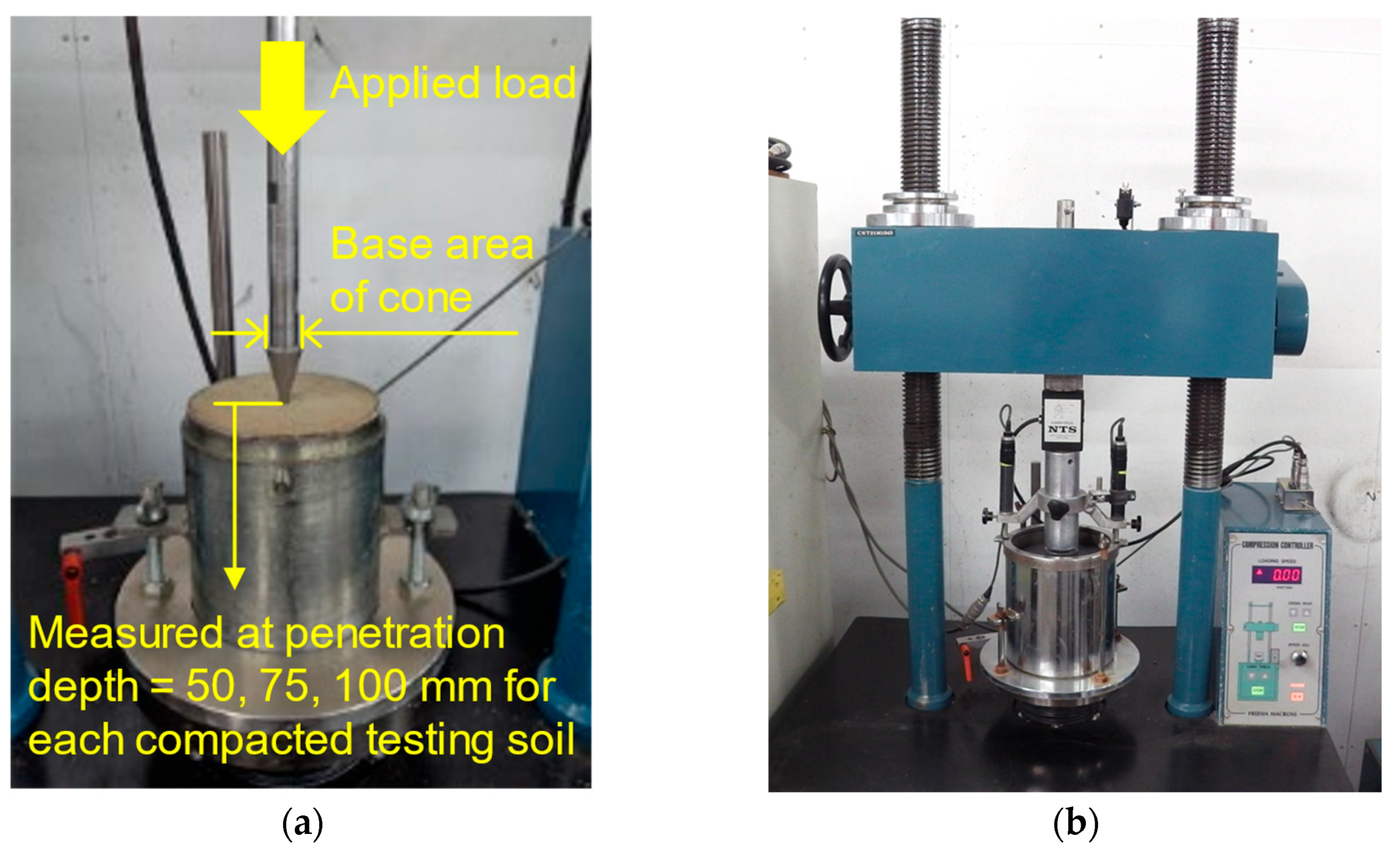
To clarify the penetration resistance as a strength property of the sample made by mixing slag and dried sludge, a cone penetration test was conducted in accordance with JIS A 1228. With the loading device shown in
Figure 6, a cone was pressed into the sample at a constant speed of 1 mm/s, and the relation between penetration depth and penetration force was measured. The test was carried out continuously until the penetration depth from the top surface of the sample reached 100 mm. The average penetration resistance force was calculated from the resistance forces at the depths of 50 mm, 75 mm, and 100 mm. The cone index was calculated by using the following equation.
where
is the cone index (N/m
2),
is the average penetration resistance (N), and
is the base area of the cone (=3.24
10
−4 m
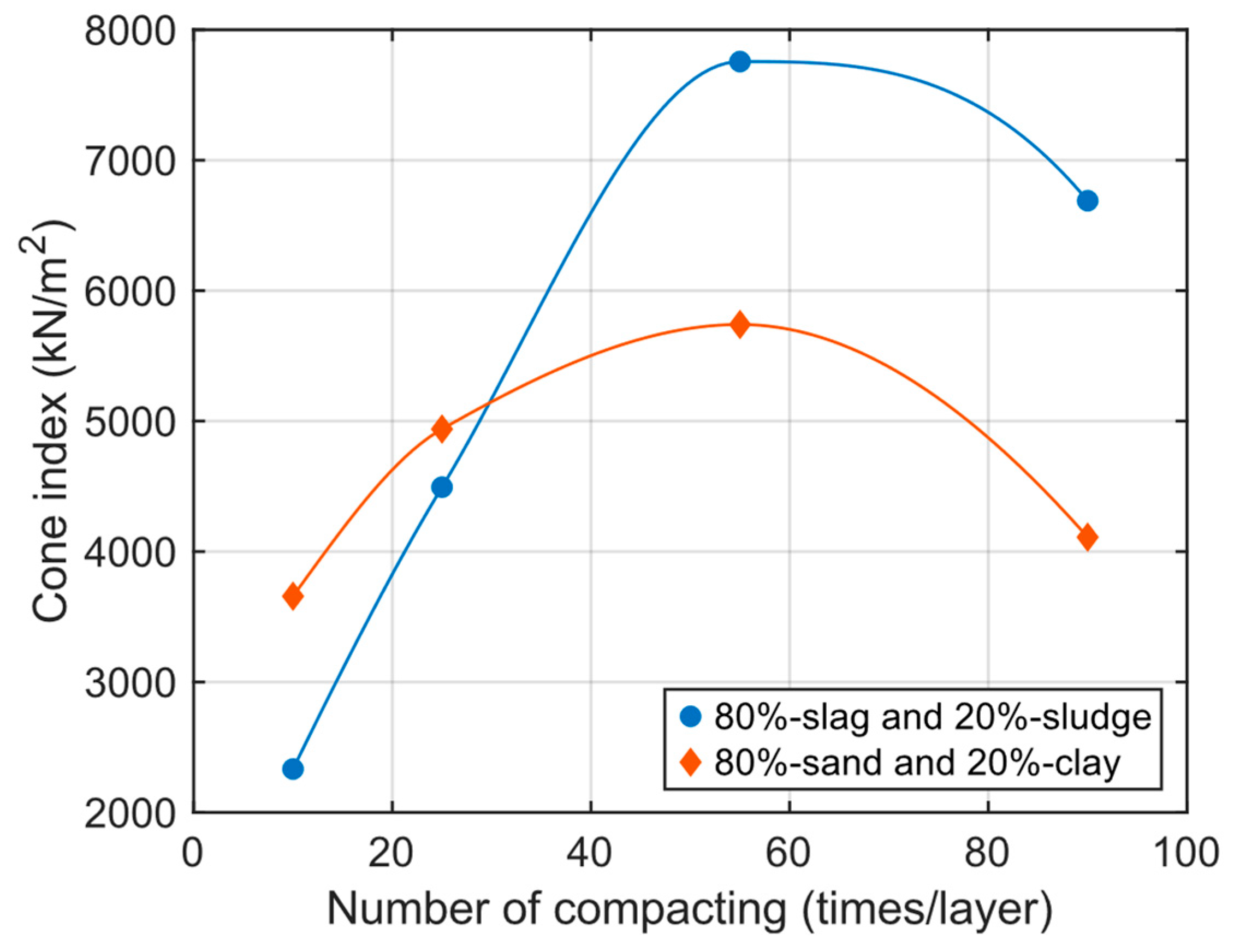
2). Because the cone index depends on the degree of the sample compaction, the number of compactions was varied to 10, 25, 55, and 90, and the relation between the number of compactions and the cone index was plotted. The cone index was calculated using the penetration resistance values measured after each compaction condition. The peak value was adopted as the representative cone index for comparison. This approach enables the evaluation of the cone index’s sensitivity to compaction effort without making assumptions about the number of compaction layers.
3.4. Shaking Table Test
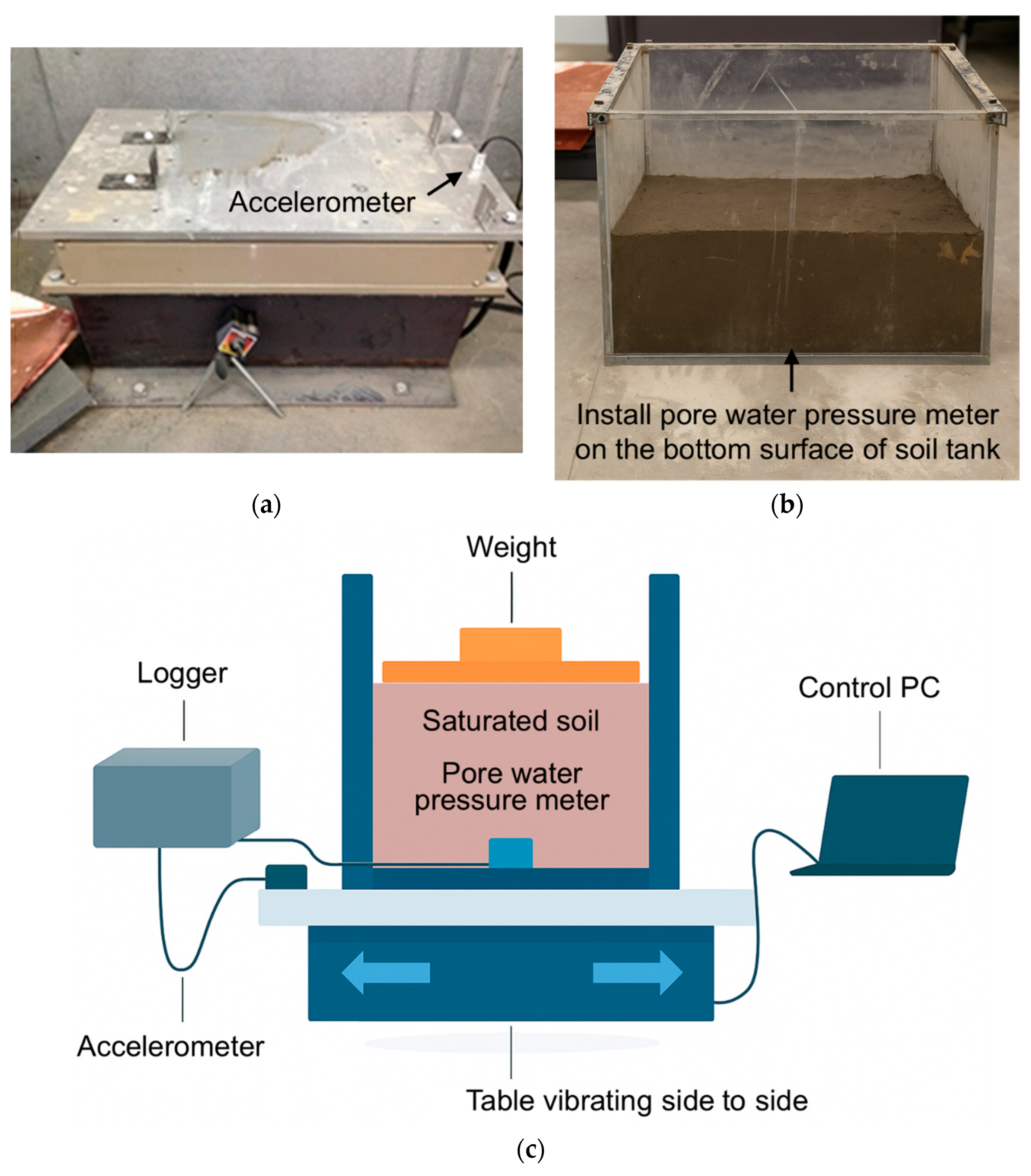
From the results of the compaction test, the sludge mixture ratio that gives the maximum dry density was found and shaking tests were conducted on the test soil tank prepared under those conditions. An accelerometer was installed on the shaking table as shown in
Figure 7a, and a pore water pressure meter was installed in an acrylic container (27 cm long, 42 cm wide, and 29 cm high) as shown in
Figure 7b.
Figure 7c shows the shaking table test schematic. The sample was then placed in the container to a height of 7.5 cm, and a surcharge load of approximately 5 kPa was applied for one minute to compact it, assuming actual site conditions. The samples were then placed in the container to a height of 15 cm and compacted in the same way by applying a surcharge load of approximately 5 kPa for one minute to create a test soil tank with a layer thickness of 15 cm. The surcharge load applied and the compaction procedure used in the shaking table tests were designed to simulate practical in situ backfill conditions in which heavy compaction equipment cannot be used. The goal of this experimental setup is not to reproduce maximum achievable density, but rather to evaluate the relative performance of different backfill materials under the constrained compaction conditions commonly encountered in urban infrastructure construction.
Water was poured slowly over the compacted soil tank to simulate saturated conditions. The saturated test soil tank was placed on the shaking table, and shaking began under a surcharge load of 1 kPa. A surcharge load of 1 kPa was selected to represent a minimal yet realistic surface load on shallow backfill soils in urban environments. This load is similar to the contact pressure exerted by pedestrians. This low surcharge was applied to maintain realistic confining stress during shaking tests while avoiding excessive preloading, which could obscure the intrinsic liquefaction resistance of the materials being tested. The acceleration gradually increased every minute from the start of shaking, and the readings from a pore water pressure meter buried in the soil tank were recorded. The test was terminated when it was determined by visual inspection that the ground had liquefied.
4. Experimental Results and Discussion
4.1. Compaction Characteristics
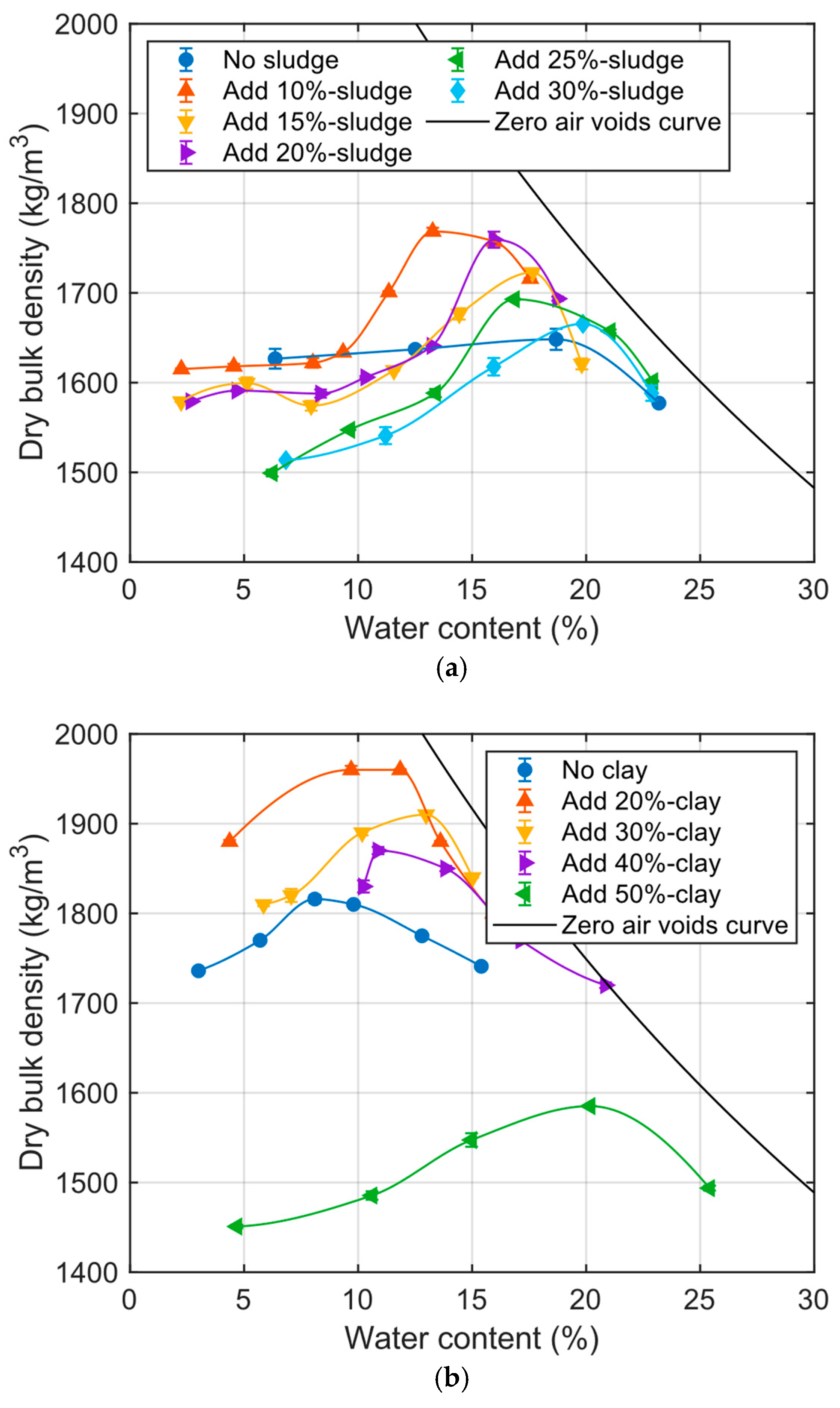
Figure 8 shows the results of the compaction test.
Figure 8a is the compaction curves for a mixed sample of slag and dried sludge when the blending ratio of sludge were 0%, 10%, 15%, 20%, 25%, and 30%. These results show that the sludge blending ratios that gave the highest maximum dry density were 10% and 20%. When the ratio was less than 20%, the maximum dry density increased with the amount of sludge added. However, when the ratio exceeded 20%, the maximum dry density decreased relative to the amount of sludge added.
As a reference,
Figure 8b shows the compaction curve for a mixed sample of sand and clay. A similar trend was observed, with the highest maximum dry density being obtained when the clay content was 20%. When the clay content exceeded 20%, the maximum dry density decreased relative to the amount of clay added. Compared to the case of slag and dried sludge mixture, the blending ratio of clay put greater impact on the maximum dry density. The maximum dry density varied from 1590 to 1960 kg/m
3. In the case of slag and dried sludge mixture, the change was limited to 1650 to 1770 kg/m
3. This is thought to be because clay has stronger viscosity and is more absorbent and swells better than dried sludge. Sand, which has high fluidity, has traditionally been used as backfill material around buried pipes such as sewer pipes. As an improved soil, the mixed sample of sand and clay has high viscosity and loses fluidity, making it less suitable as a backfill material. On the other hand, it was found that a mixed sample of slag and dried sludge has the advantage of being more suitable as a backfill material because it has low viscosity and high fluidity.
The variability of the compaction test results was evaluated based on multiple measurements obtained at each water content.
Figure 8 includes error bars indicating the variability of dry density to enhance the transparency of the experimental results.
4.2. Strength Characteristic
Figure 9 shows the relationship between the number of compacting times and the cone index obtained from the cone penetration test. The results are for a mixed sample of 80% slag and 20% dried sludge, which achieved the maximum dry density, and a mixed sample of 80% sand and 20% clay. For both samples, the strength (cone index) increased as the number of compacting times increased. After reaching the peak value, there was a tendency for the strength to decrease due to overcompaction.
The decrease in cone index observed after the peak value under overcompaction is due to kneading-type failure in moist soils with fine particles. Overcompaction energy imposes repeated shear stresses on the soil skeleton, which can disrupt stable interparticle bonding structures, such as flocculated clay aggregates. This process can induce localized shear deformation and the formation of weakened planes, often referred to as slickensides. During the cone penetration test, the cone tip may pass through these weakened zones. This results in reduced penetration resistance and, consequently, a lower cone index despite the increased compaction effort.
Trafficability, or the ability of the ground to withstand the movement of construction machinery, is commonly evaluated using the cone index. Road construction guidelines provide cone index values that are indicative of what is required for road construction. For instance, the Road Construction Design Guidelines published by the Japan Road Association specify a target cone index of approximately 1200 kN/m
2 for dump trucks, which require the highest bearing capacity of all typical construction vehicles [
36]. These guideline values serve as reference criteria rather than performance guarantees tied to specific compaction procedures. At actual construction sites, the cone index is evaluated using in situ cone penetration tests. However, when assessing the feasibility of introducing new materials, laboratory-scale element tests are generally adopted under controlled conditions (e.g., the Japanese Industrial Standard adopted in this study).
From this, both mixed samples have sufficient strength for road use. In particular, the mixed sample of slag and dried sludge has a relatively higher strength than that of sand and clay. Thus, slag and dried sludge mixture is superior in terms of strength as a backfill material around buried objects such as sewer pipes, which tend to be insufficiently compacted.
Statistical error bars, such as standard deviation, were not introduced for the cone penetration or the following shaking table tests. These tests are mechanically controlled and sequential, involving either fixed penetration rates or stepwise increases in acceleration. The results are strongly influenced by the initial state of the specimen rather than random measurement noise. Therefore, it is difficult to define conventional statistical variability indicators in a meaningful way. Instead, reproducibility is ensured through standardized specimen preparation.
4.3. Liquefaction Characteristics
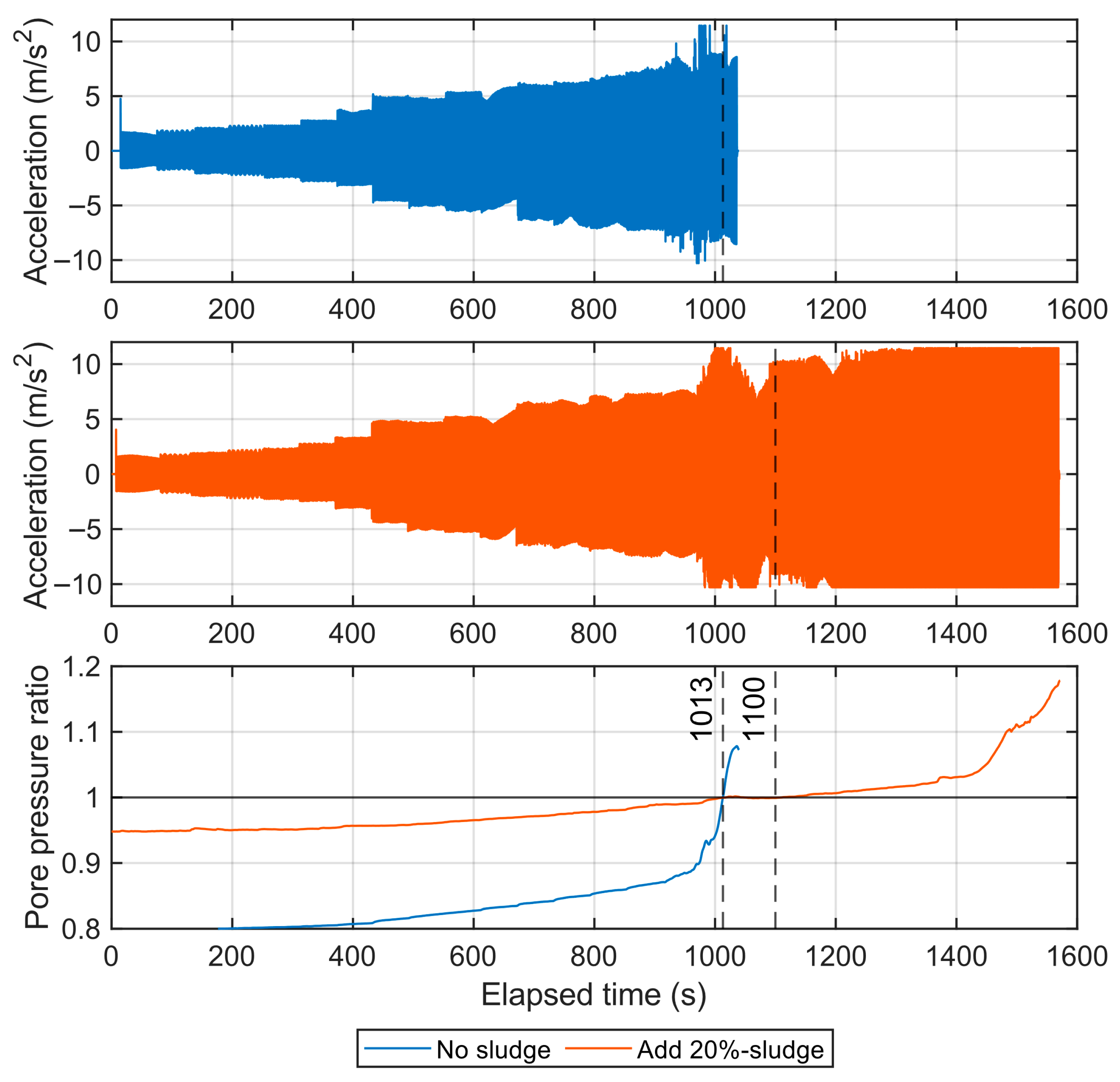
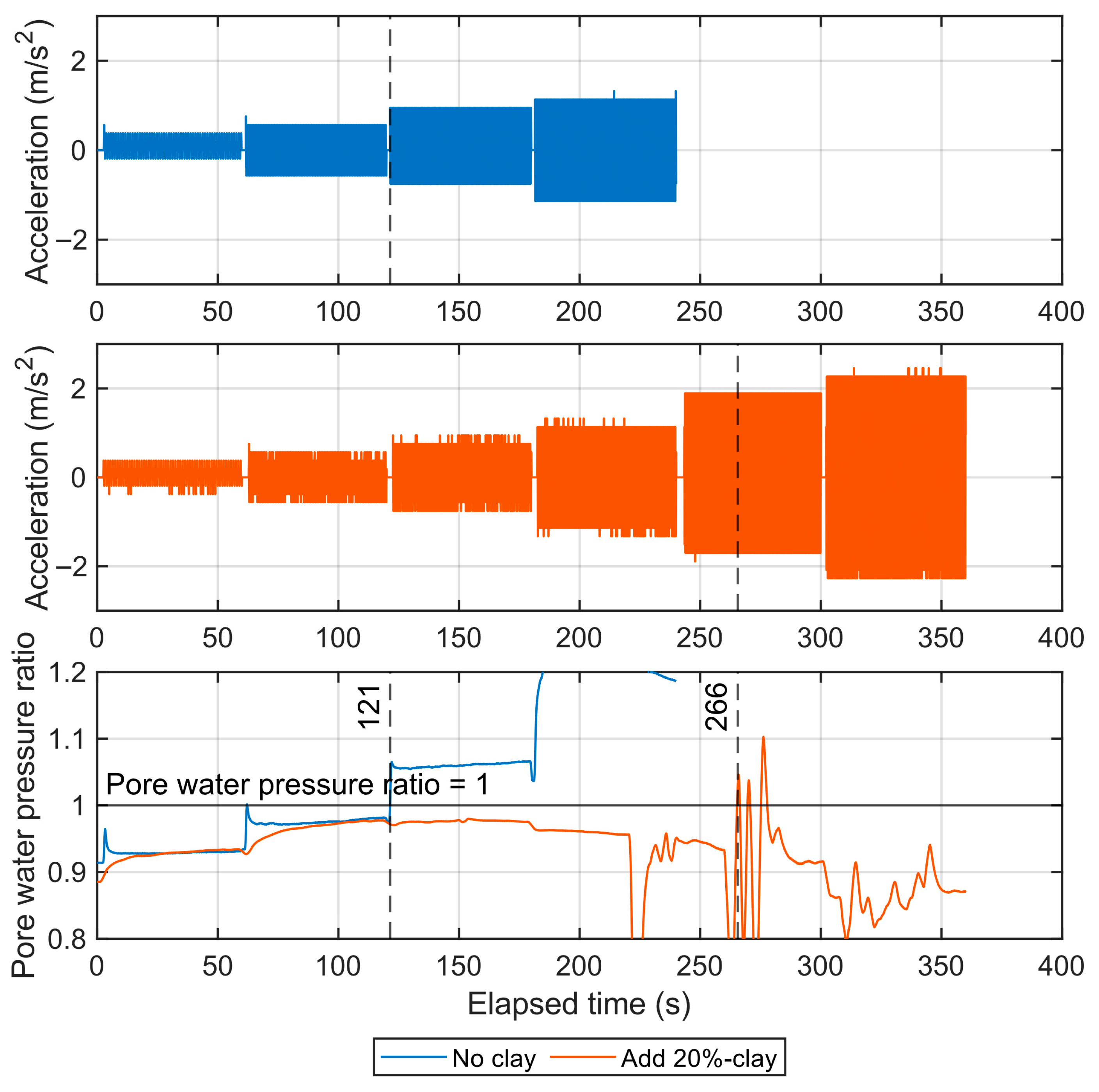
Based on the results of compaction tests and cone penetration tests, it was determined that the mixed sample of 80% slag (or sand) and 20% dried sludge (or clay) provided the best strength condition. A shaking test was performed to investigate the liquefaction characteristics of the ground with this mixed condition. As a control, the liquefaction characteristics of ground containing only slag (or sand) were also investigated. The profiles obtained from the accelerometer and pore water pressure meter are shown in
Figure 10 and
Figure 11. In principle, liquefaction is defined as the state in which the effective stress becomes zero. This corresponds to a pore water pressure ratio of one, meaning the excess pore water pressure is equal to the initial effective stress. In these experiments, the initial effective stress based on the initial soil layer thickness and groundwater level was estimated. Pore water pressure during shaking was continuously monitored. The pore water pressure ratio in the figure represents the ratio of pore water pressure to initial effective stress. When this value is 1, the effective stress is canceled by the pore water pressure that increases due to shaking and becomes theoretically zero. When the pore water pressure ratio exceeds 1, it means that liquefaction has occurred. However, this stress-based criterion only applies to loose, clean, sandy soils. When fine-grained or cohesive materials are mixed into the soil, the dissipation of excess pore water pressure is delayed due to reduced permeability. Consequently, the soil skeleton may maintain residual shear resistance even when the pore water pressure ratio reaches or slightly exceeds unity. Therefore, attainment of a pore water pressure ratio of 1 does not always coincide with observable liquefaction or fluidization in mixed soils. In partially undrained conditions, transient pore water pressures can exceed the initial effective stress. This reflects the hydraulic response of low-permeability mixed soils, not a violation of the liquefaction concept.
The horizontal acceleration was applied to the simulated ground and increased by one step every 60 s. In the ground containing only slag, the ground gradually began to loosen at 960 s, and liquefaction was confirmed visually at 1013 s (at an acceleration of 7 m/s2). For this reason, visual observation of ground behavior, including surface instability and loss of self-supporting capacity, was used alongside pore water pressure measurements as a complementary criterion. The shaking table tests primarily compared the time at which the pore water pressure ratio reached unity with the time at which liquefaction was visually confirmed. The difference between these times provides a practical indicator of the toughness and post-yield resistance of mixed soils, which is particularly relevant when evaluating liquefaction-resistant backfill materials. As the acceleration increased, the pore water pressure also gradually increased, and a sudden increase occurred at 400 s (at an acceleration of 4 m/s2). Liquefaction occurred when the pore water pressure ratio exceeded 1, at which theoretically the effective stress becomes zero. This coincided with the timing of visual observation of liquefaction.
On the other hand, in the mixed ground where 20% dried sludge was added with slag, the ground became loose at 1100 s (when the acceleration was 10 m/s2), but the condition did not change until 1380 s (when the acceleration was 11 m/s2). Liquefaction began when further acceleration was applied. Even when the pore water pressure ratio exceeded 1, where the calculated theoretical effective stress is zero, liquefaction could not be confirmed visually for some time. This shows that the ground with a 20% dried sludge mixture is cohesive and can be made tough against liquefaction.
In summary, it was found that the acceleration required to cause liquefaction was approximately 4 m/s2 higher in ground containing 20% dried sludge than in ground containing only slag. Additionally, the time required for the pore water pressure ratio to reach 1, where the effective stress becomes zero, was 1013 s for the ground with only slag, and 1380 s for the ground with 20% dried sludge. The ground with only slag completely liquefied instantly after it began to loosen, but by mixing 20% dried sludge, it could take some time to completely liquefy after it began to loosen.
Figure 11 shows the results of a shaking test conducted on sandy ground as a control. Liquefaction occurred in 121 s (at an acceleration of 1 m/s
2) in the sandy ground, and in 266 s (at an acceleration of 2 m/s
2) in the sandy ground mixed with 20% clay. In this way, mixing a small amount of clay into sandy ground makes it possible to increase liquefaction resistance and lengthen the time it takes for the ground to liquefy from a loose state. These results were achieved because clay particles enter the gaps in the sand, increasing the strength and toughness of the ground.
Under the experimental conditions and with the material properties investigated in this study, the slag-dried sludge mixture exhibited greater liquefaction resistance than the sand-clay mixture. However, it is important to note that this observation is influenced by multiple factors, including particle shape, fines characteristics, permeability, and the origin of the materials used. As one of the reasons, unlike sand, which has a flat surface, slag has an uneven surface [
37,
38], which strengthens the interlocking of the slag particles, resulting in greater cohesion and internal friction angle.
The results should therefore be interpreted as a comparative evaluation of backfill materials under limited compaction conditions, rather than as an assessment of their behavior under fully compacted ideal ground states. This perspective is particularly relevant for lifeline backfills, where construction constraints often govern field performance.
5. Conclusions
Many previous studies have evaluated liquefaction resistance using element tests under controlled stress conditions. However, there is still a need for a performance-based evaluation of backfill materials in environments that represent actual buried lifelines. In these environments, construction constraints, drainage limitations, and material workability play critical roles. This study addressed this gap by emphasizing integrated physical and shaking table tests before conducting detailed, element-scale investigations.
We investigated the applicability of a new, improved soil, which mixed industrial by-products, slag and dried sludge. This is a countermeasure against the liquefaction vulnerability of sandy backfill materials conventionally used in buried lifelines in urban areas. Compaction tests, cone penetration tests, and shaking table tests were systematically conducted, and it was quantitatively demonstrated that the mixed soil made from waste materials exhibits excellent properties in both strength and liquefaction resistance.
Compaction tests showed that the maximum dry density of slag—dried sludge mixture was achieved at a sludge ratio of approximately 10 to 20%. The maximum dry density ranged from 1650 to 1770 kg/m3, with the highest value of 1770 kg/m3 recorded for the 20% sludge mixture. This result is consistent with a similar optimal mixture ratio (20%) confirmed for the sand-clay mixture. However, the slag—dried sludge mixture offers the advantage of suppressing the increase in viscosity, thereby reducing the workability degradation that is a problem with conventional sand-clay mixture. This indicates that the slag—dried sludge mixture meets the design requirements of both fluidity and compaction performance when used in the narrow spaces around buried pipes.
Cone penetration tests confirmed that the 80% slag—20% dried sludge mixture exhibited greater strength than a sand-clay mixture under the same conditions, which fully meets practical strength standards for traffic loads. The cone index increased with the number of compaction cycles, reaching a maximum of 7750 kPa, far exceeding the 1200 kN/m2 standard required for dump truck traffic in the Road Construction Design Guidelines. This is the result of the synergistic action of the interlocking effect of the surface roughness of the slag particles and the filling effect of the fine voids of the sludge particles. This indicates the slag—dried sludge mixture can maintain high support performance around buried pipes, where insufficient compaction is generally unavoidable.
Furthermore, shaking table tests demonstrated a clear improvement in liquefaction resistance. In the slag-only ground, liquefaction occurred 1013 s after an acceleration of 7 m/s
2 was reached, whereas in the 80% slag—20% dried sludge mixture, liquefaction did not occur until 11 m/s
2 and began 1380 s later. These conclusions are supported by the shaking table test results shown in
Figure 10 and
Figure 11. The time histories of acceleration and pore water pressure ratio demonstrate that the 80% slag—20% dried sludge mixture required higher acceleration and a longer shaking duration to reach the theoretical liquefaction condition (pore pressure ratio = 1) and visually confirmed liquefaction compared to the slag-only and sand-based reference cases. Therefore, the acceleration required for liquefaction to begin was approximately 1.5 times higher, and the liquefaction time was extended by approximately 36%. Complete fluidization occurred almost immediately after the pore pressure ratio reached unity in the slag-only ground. However, a clear time lag was identified between pore pressure ratio = 1 and visually observed liquefaction for the slag—dried sludge mixture. It indicates the development of residual shear resistance due to the presence of fine-grained components. This cohesiveness is an important property that contributes to the prevention of urban disasters such as manhole rising and road subsidence.
This study demonstrates that improved liquefaction resistance and delayed fluidization were observed under shaking table test conditions for the specific materials and mixture ratio examined (80% slag and 20% dried sludge). However, because liquefaction behavior is governed by multiple interacting variables, including material origin, particle morphology, fines composition, and permeability, these findings should not be interpreted as universally applicable. Rather, they offer practical insights into how fine-grained waste materials can improve the performance of granular backfill under specific conditions while underscoring the importance of material-specific evaluations.
It should be noted that the findings of this study are subject to certain limitations. First, the experimental program was conducted at a laboratory scale using small soil tanks. Second, the shaking table tests were performed under simplified loading and boundary conditions. Additionally, the study did not explicitly examine long-term durability, aging effects, or the influence of repeated seismic events or environmental factors such as wet–dry cycles, groundwater level fluctuations, and chemical weathering. Therefore, the applicability of the proposed backfill material to full-scale field conditions should be interpreted with caution.
Despite these limitations, the present study clearly demonstrates the short-term strength and liquefaction resistance of the proposed slag—dried sludge backfill material. For practical implementation, further consideration of long-term performance is required. In particular, the potential leaching of inorganic constituents must be evaluated using standardized leaching tests to ensure environmental safety under in situ conditions. Additionally, gradual changes in particle arrangement, density, and stiffness may occur over extended service periods. However, since the proposed material does not rely on chemical bonding, it is expected to be less susceptible to brittle degradation than lightly cemented soils. These considerations underscore the importance of selecting appropriate materials, controlling construction quality, and monitoring long-term performance when using the proposed backfill in urban infrastructure.
Beyond its geotechnical performance, the proposed slag—dried sludge backfill material has significant implications at the urban scale. Enhancing the seismic resilience of buried lifeline infrastructure, such as sewer and utility networks, can reduce functional disruptions following earthquakes in densely populated cities. Furthermore, effectively reusing industrial byproducts reduces dependence on natural sand resources and landfill disposal, supporting circular economy strategies and long-term urban sustainability. This approach aligns with sustainable urban development goals by integrating disaster risk reduction, resource efficiency, and environmental impact mitigation into infrastructure design.
To translate the results of this research into practical applications, several issues must be addressed in future studies. First, large-scale field tests that simulate actual burial conditions are needed to verify long-term compaction behavior and strength evolution under seismic activity. Additionally, dynamic finite element method (FEM) and particle-based numerical analyses should be developed to predict ground behavior during complex risk events, including groundwater fluctuations and heavy rainfall infiltration. Finally, construction management indicators and quality standards must be systematized and incorporated into municipal technical guidelines and water supply and sewerage construction specifications. Through these efforts, the proposed backfill material is expected to contribute to the development of sustainable, resilient urban infrastructure.