
Review

Recent Progress and Methodology for the Characterization of Layer-Effects of Extrusion-Based 3D-Printed Concrete


1
School of Civil Engineering, Chongqing Jiaotong University, Chongqing 400074, China
2
Institute of Future Civil Engineering Science and Technology, Chongqing Jiaotong University, Chongqing 400074, China
3
Department of Civil and Environmental Engineering, Faculty of Engineering, University of Waterloo, Waterloo, ON N2L 3G1, Canada
*
Author to whom correspondence should be addressed.
Infrastructures 2026, 11(3), 98; https://doi.org/10.3390/infrastructures11030098

Submission received: 12 February 2026 / Revised: 9 March 2026 / Accepted: 10 March 2026 / Published: 16 March 2026

Abstract

Three-dimensional printed concrete (3DPC) has emerged as an innovative construction technology for extreme environments, offering advantages in thermal insulation, reduced labor requirements, and rapid construction. However, this layer-by-layer deposition process brings interlayer effects that affect mechanical anisotropy, permeability, and thermal performance, posing challenges for structural reliability. This review systematically examines current methods for characterizing and mitigating interlayer effects in 3DPC. Material-related factors—including admixtures, aggregates, recycled materials, fibers, and geopolymer incorporation—alongside process parameters such as printing speed, nozzle geometry, layer height, interlayer time, and environmental conditions, are analyzed for their influence on interlayer quality. State-of-the-art techniques for evaluating interlayer voids, mechanical behavior, and thermal performance are summarized. Moreover, results from micro-imaging, mechanical testing, and heat transfer assessments are also introduced. Ultimately, strategies for optimizing material composition and printing parameters to improve interlayer bonding and overall performance are highlighted. Overall, this paper provides a methodological framework to guide the design, testing, and practical implementation of 3DPC in demanding engineering applications.

1. Introduction

In recent years, three-dimensional printed concrete (3DPC) has gained increasing attention as an emerging technology in the construction industry. It holds the potential to revolutionize building practices, particularly in extreme environments such as polar regions, high altitudes, cold climates and off-planet infrastructure that demand exceptional thermal insulation. Therefore, 3DPC offers a promising alternative due to its ability to create complex geometries efficiently and with minimal labor requirements.
However, the layer-by-layer methodology intrinsic to 3DPC poses unique challenges that must be addressed to fully exploit its advantages. The layer effects inherent in this process often result in anisotropic properties, affecting structural integrity, thermal insulation, and permeability. These variations can compromise durability and necessitate comprehensive research into characterization methods to optimize interlayer adhesion and overall structural performance.
This paper provides an in-depth review of recent advancements in the characterization of these layer effects, focusing on parameters that influence 3DPC’s extrudability, buildability, and rheological properties. Critical factors such as material composition, additive optimization, and printing conditions are explicated, as they significantly impact the quality and capability of the printed structures. Moreover, the review covers essential printing parameters such as nozzle speed, layer height, and interlayer time intervals, which affect the mechanical properties and thermal insulation capacity of 3DPC. The development of advanced materials and additives that enhance concrete flowability and cohesion is also highlighted.
In addition, this study explores cutting-edge characterization and imaging tools used to assess void distributions in 3DPC structures, a vital aspect influencing strength and durability. The layer effects, including the anisotropic properties, which lead to directional dependence in mechanical behavior, are elaborated, followed by permeability and thermal conduction factors that ensure 3DPC structures meet the high insulation requirements of extreme environments.
Overall, this paper aims to be a valuable resource for future studies focusing on the mix design of 3DPC, particularly for projects in extreme environments. The factors and methods presented will serve as important references for mix design, standard establishment, and research. It also emphasizes the need for more detailed exploration of the influence of various factors. The insights and findings seek to pave the way for innovative applications of 3DPC to address modern construction challenges.

2. Factors Leading to Interlayer Effects

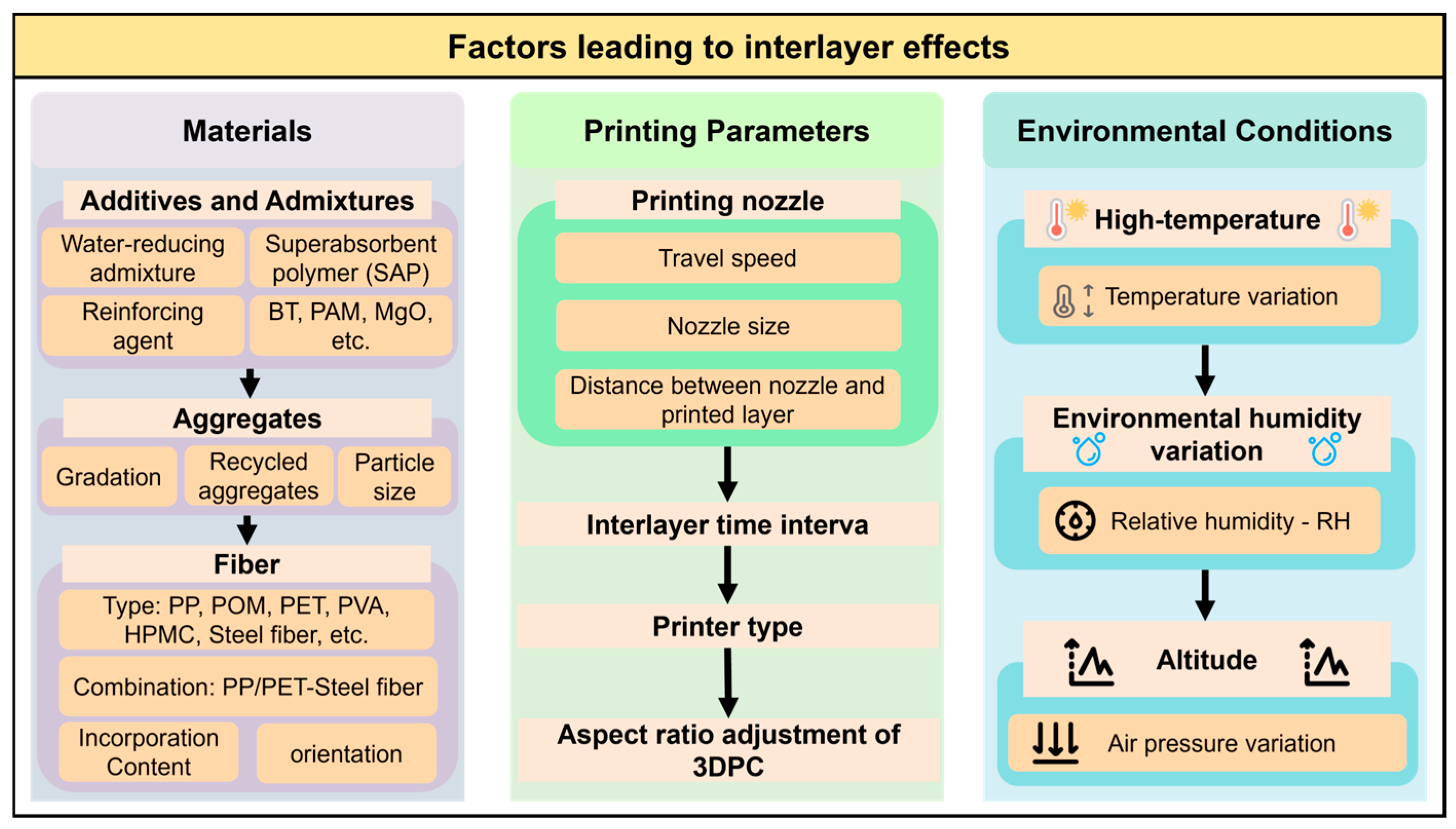
The interlayer effects of 3D-printed concrete (3DPC) are influenced by multiple factors, which can generally be summarized into three main categories, as shown in Figure 1. The first category pertains to the differences in raw materials used for 3D-printed concrete (3DPC). The second category involves variations in process parameters during the printing process. The third category relates to the environmental conditions present during the 3D printing of concrete (3DPC). This paper systematically summarizes relevant research findings from domestic and international scholars on the factors affecting interlayer effects, aiming to provide reference and guidance for future studies on the interlayer effects of 3D-printed concrete.

2.1. Materials

The incorporation of different types of materials into 3D-printed concrete can significantly influence its mechanical properties. Table 1 summarizes the specific effects of various additives on the mechanical performance of 3D-printed concrete.

2.1.1. Additives and Admixtures

Fluid-retaining polycarboxylate superplasticizers (FR-PC) can significantly enhance the thixotropy of 3D-printed concrete (3DPC), improve its workability retention, and maintain high interlayer bond strength even under extended printing intervals. In contrast, highly dispersive polycarboxylate superplasticizers (HD-PC) substantially weaken the interlayer bond performance [1].
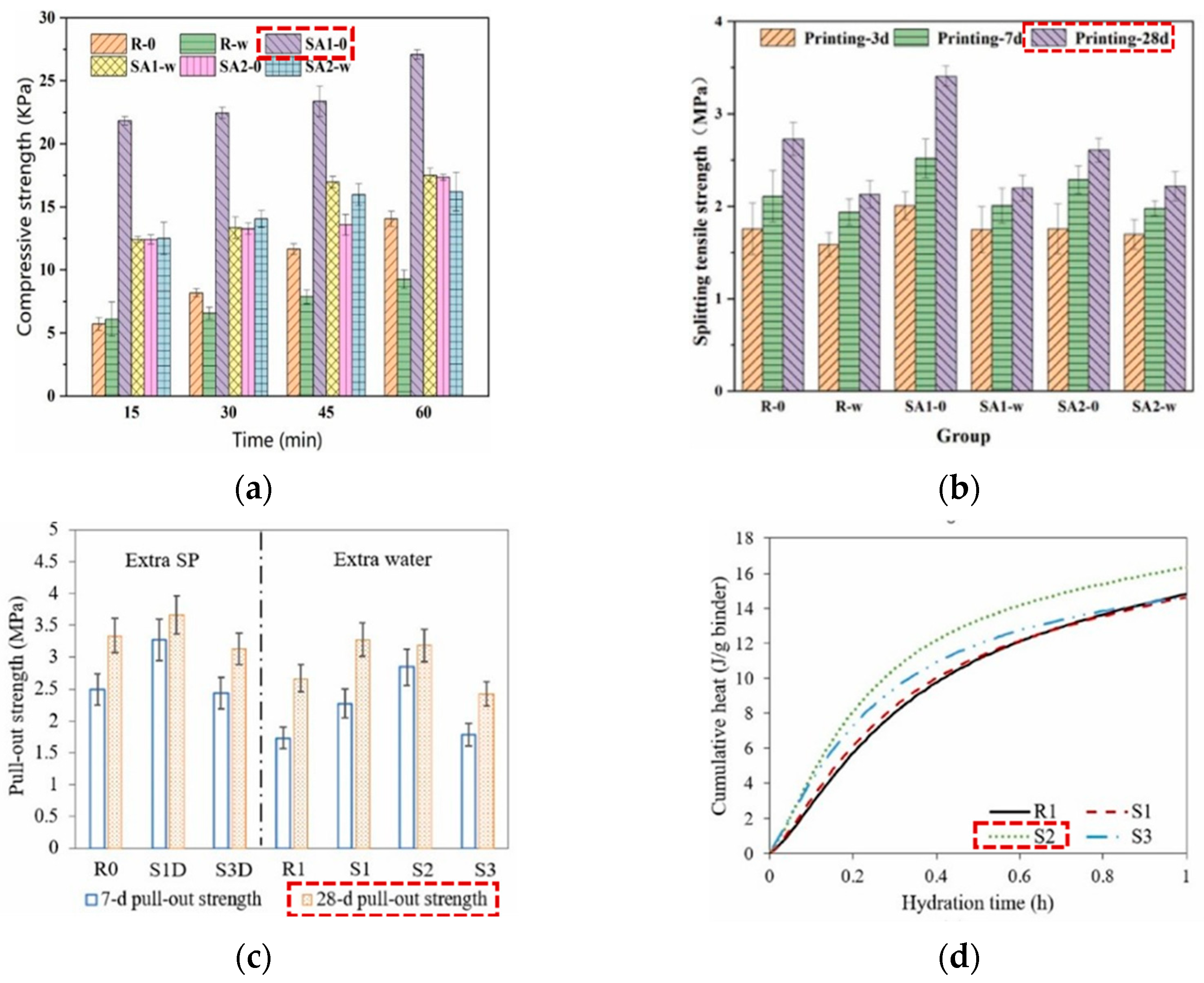
Among superabsorbent polymers (SAPs), moisture-retaining types (SA1, S1, S2) can significantly improve the early strength and interlayer adhesion of 3D-printed concrete (3DPC). As shown in Figure 2, SA1 increases 15 min compressive strength by 282% and 28-day splitting tensile strength by 24.9% without additional compensatory water. S1 performs best in maintaining internal relative humidity (IRH) and achieves the highest 28-day interlayer pull-out strength. Due to its finer particle size, S2 significantly enhances the early nucleation bridging effect, leading to a substantial increase in the structuring rate within 30 min [2,3].
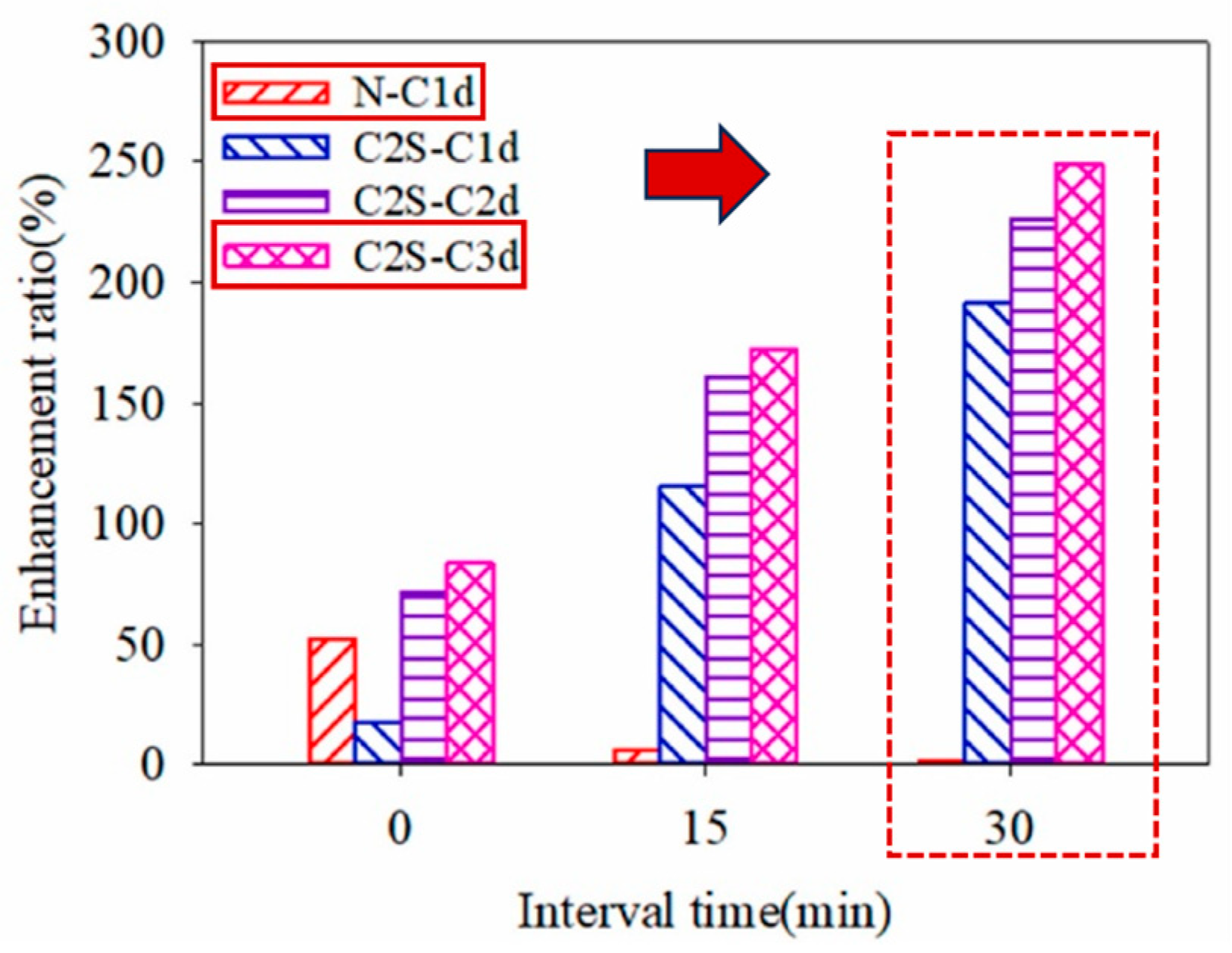
The application of a CO2-activated interfacial enhancer (CIE) considerably improves the interlayer strength of 3D-printed concrete (3DPC) by generating calcium carbonate and silica gel through carbonation reactions, which fill interlayer voids and form a dense interlocking structure. As shown in Figure 3, when a 100 μm thick layer of CIE, primarily composed of highly carbonizable dicalcium silicate (C2S), is sprayed between layers, the 28-day interlayer strength of 3DPC can be increased by up to 249.3% under three days of CO2 curing (with one day of CO2 curing) and a printing interval of 30 min. CIE effectively fills the interlayer microvoid structure by producing calcium carbonate (typically in the form of rhombohedral calcite crystals) and silica gel through carbonation reactions, reducing porosity and promoting the formation and growth of needle-shaped ettringite and rod-shaped calcium sulfoaluminate crystals, thereby forming a dense interlocking microstructure at the interlayer. Moreover, longer printing intervals facilitate sufficient CO2 penetration and enhance carbonation, further improving the bonding performance of the interlayer interface [4].
Compared to synthetic foaming agents (AS), protein-based foaming agents (PS) can generate smaller pore structures with a more uniform distribution. When combined with commercial stabilizers, pore size can be further refined, water absorption reduced, and interlayer adhesion in 3D-printed foam concrete enhanced [5].
Magnesium oxide (MgO) at a dosage of 6% can materially enhance the thixotropy and compressive strength of 3D-printed concrete (3DPC). The magnesium hydroxide crystals generated through its hydration process can fill pores and microcracks, thereby improving internal compactness and interlayer bond strength [6].
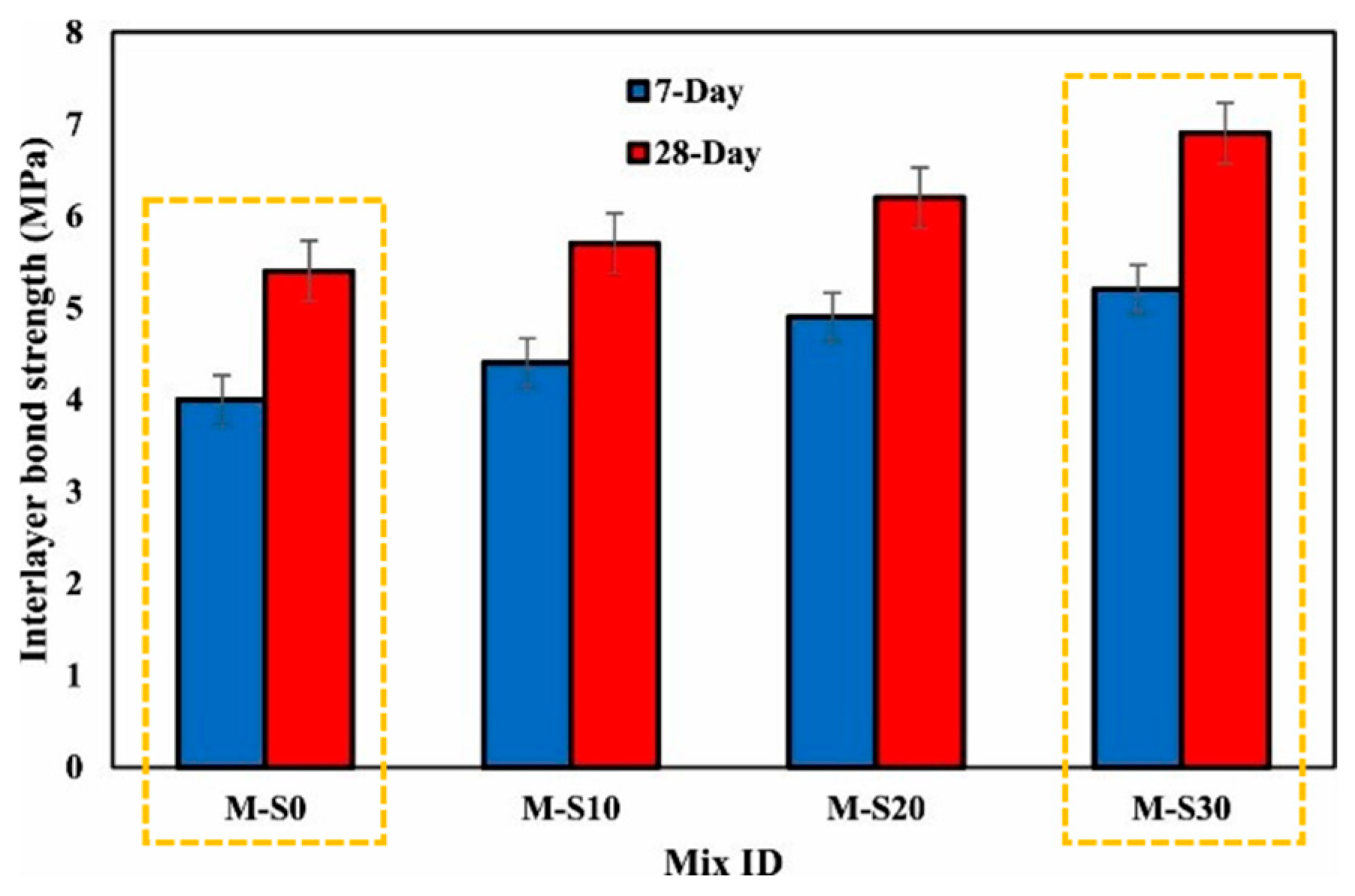
The incorporation of slag into metakaolin-based geopolymers can significantly enhance interlayer bond strength. As shown in Figure 4, at a dosage of 30%, the 28-day interlayer strength increased by 21.7%. This improvement is primarily attributed to the increased calcium content, which enhances C–S–H gel formation, decreases porosity, and leads to a denser microstructure [7].
Polyacrylamide (PAM) can help increase filament bonding through polymer film formation and exert flocculation effects to aggregate colloidal particles and fill pores, therefore significantly improving the interlayer bond strength of 3D-printed ultra-high-performance concrete (UHPC). In contrast, nano-bentonite (BT), due to its high specific surface area and strong water absorption capacity, reduces surface wettability and consequently weakens interlayer bonding performance [8].
Although anionic polyacrylamide (APAM) can increase the plastic viscosity and structural build-up rate of the paste, it tends to increase interfacial porosity, thus reducing interlayer durability and shear bond strength [9].
Additionally, attapulgite also enhances dynamic yield stress and structural build-up rate, but it simultaneously reduces interlayer bond strength and durability [10].
In summary, slump-retaining polycarboxylate superplasticizer (FR-PC), moisture-retaining superabsorbent polymers (SA1/S1/S2), CO2-activated interface enhancer (CIE), and polyacrylamide (PAM) demonstrate outstanding performance in enhancing the interlayer properties of 3D-printed concrete, offering multiple advantages including improved early-age strength, enhanced bonding, and a densified microstructure. Protein-based foaming agents and slag indirectly strengthen interlayer performance by optimizing pore structure and promoting the formation of hydration products. In contrast, high-dispersion polycarboxylate superplasticizer (HD-PC), self-releasing superabsorbent polymer (S3), nano-bentonite (BT), anionic polyacrylamide (APAM), and attapulgite, while improving certain rheological properties, significantly compromise interlayer bond strength or durability, necessitating careful trade-off considerations in their application. Magnesium oxide (MgO) exhibits favorable comprehensive performance at moderate dosages; however, excessive incorporation may pose risks to volume stability.
The interlayer properties of 3D-printed concrete (3DPC), such as bonding strength, mechanical anisotropy, and durability, are significantly influenced by the material’s composition. Key factors include the types and dosages of admixtures—such as superplasticizers, internal curing agents, reinforcing fibers, and foaming agents—as well as the incorporation ratios of oxides and geopolymers. Additionally, the chemical nature of supplementary additives plays a crucial role in controlling hydration kinetics, interlayer adhesion, and overall structural performance.

2.1.2. Aggregates

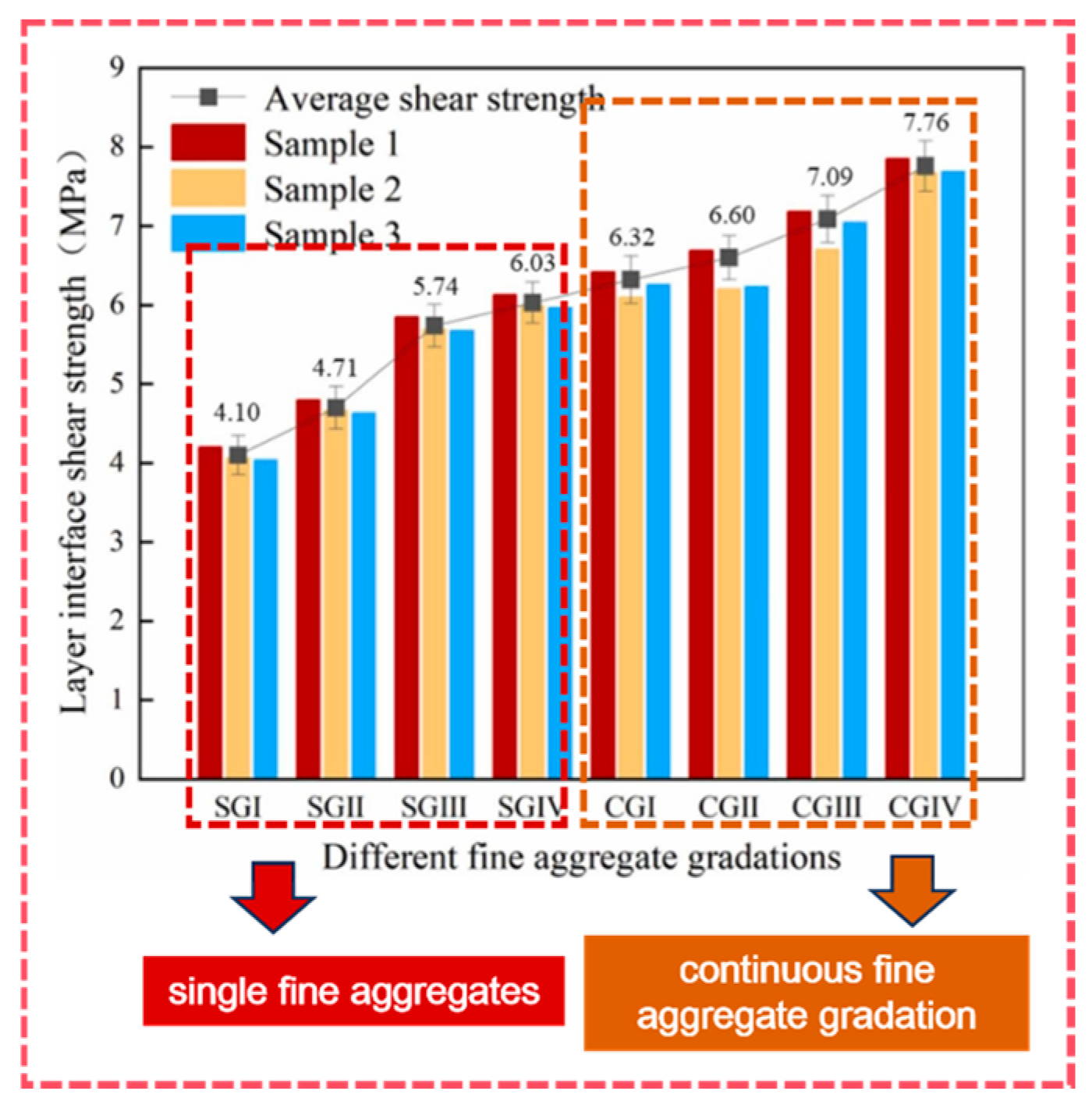
Different fine aggregate gradations affect the interlayer shear properties of 3D-printed concrete (3DPC). As shown in Figure 5, the interlayer shear strength of 3DPC with continuously graded aggregates is much higher than that with single-sized aggregates. Furthermore, as the proportion of coarse aggregates in 3DPC increases, the interlayer shear strength can be improved from 6.32 MPa to 7.76 MPa. This is attributed to the fact that the increased coarse aggregate content enhances the bond between aggregates and the cement matrix, reduces porosity, and increases microstructural density at the interlayer interface [11].
The particle size of coarse aggregates in 3D-printed concrete has a distinct impact on interlayer properties. As the particle size increases, the interlayer stability of concrete improves and the interlayer porosity decreases. This is because larger-sized aggregates serve as support and skeletal structures within the concrete, reducing deformation and collapse at the interlayer interface. Meanwhile, the increase in aggregate particle size also elevates the yield stress of concrete, further enhancing the stability of the interlayer interface. However, larger-sized aggregates lead to a decrease in the extrudability of concrete, making it more difficult to extrude during the printing process, thereby affecting the continuity and uniformity of the interlayer interface [12].
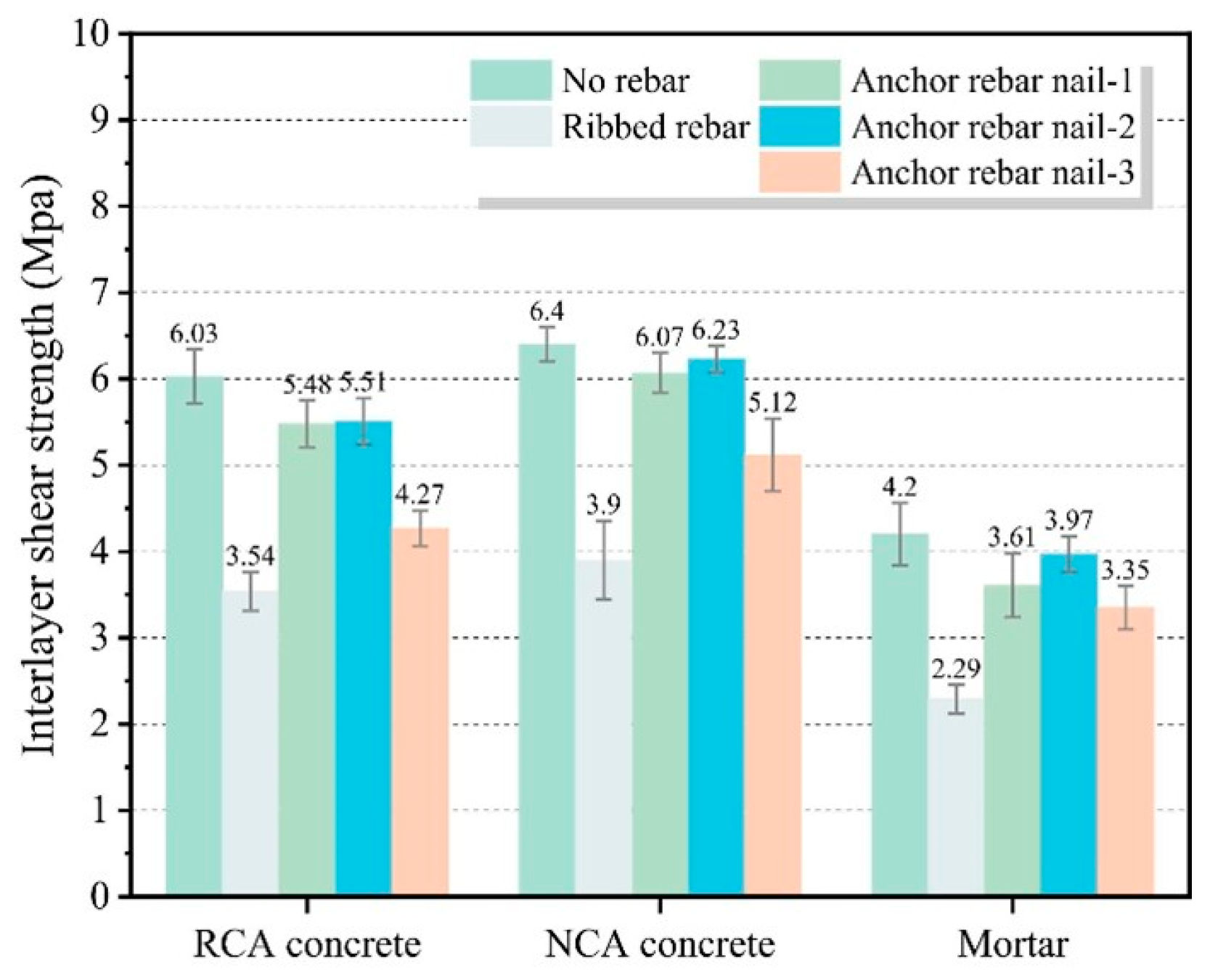
The incorporation of recycled coarse aggregates (RCAs) enhances the interlayer shear strength of 3D-printed concrete. As shown in Figure 6, compared with 3D-printed mortar (3DPM), the interlayer shear strength of 3D-printed recycled coarse aggregate concrete (RCA) increased by 43.6%. However, compared with 3D-printed natural coarse aggregate concrete (NCA), its shear strength decreased by 6.1%. The addition of RCA improves the microstructure of the interlayer interface by forming interlocking structures at the interface, thereby increasing the interlayer shear strength. Nevertheless, the residual old cement mortar on the surface of RCA reduces its bond strength with fresh cement mortar, leading to the formation of more pores and weak interfaces at the interlayer interface [13].
The interlayer shear strength and compressive strength of 3DPC decrease with increasing content of recycled plastic eco-aggregates (Resin8). This is attributed to the hydrophobic nature of Resin8, which leads to increased excess moisture in the concrete mixture and delays the formation of hydration products. Additionally, its porous structure and low relative density result in the formation of weaker interfacial transition zones (ITZs) within the concrete, increasing interlayer porosity and weakening interlayer bond strength [14].
Blending recycled lightweight aggregates in 3D-printed cement-based mortar results in a considerably increase in porosity, with pores predominantly concentrated in the interlayer regions, where the peak porosity can reach approximately 33%. The presence of these pores weakens the bond strength at the interlayer interface, making it a vulnerable zone within the structure. Furthermore, the low density and high porosity of lightweight aggregates also increase the overall porosity of the concrete, further compromising the mechanical performance of the interlayer interface [15].
The incorporation of an appropriate amount of carbonated recycled fine aggregates into 3D-printed mortar can enhance interlayer bond strength and reduce interlayer porosity and pore defects. This is attributed to the carbonation treatment, which forms calcium carbonate products on the aggregate surface, filling the pores and microcracks on the aggregate surface, improving the interfacial transition zone between aggregates and the cement matrix, and enhancing the compactness and strength of the interlayer interface [16].
Partially replacing natural sand with rice husk particles in 3D-printed cement-based composites reduces interlayer bond strength, whereas incorporating rice husk as an additional component enhances interlayer bond strength. This is attributed to the fact that adding rice husk as an additional component increases the solid content in 3D-printed cement-based composites and reduces the cement paste volume, thereby improving internal friction and interlayer bond strength. However, when the rice husk content is relatively high, the interlayer bond strength is adversely affected due to increased porosity and particle debonding at the interface [17].
Specifically, aggregate characteristics have a decisive influence on the interlayer properties of 3D-printed concrete (3DPC). Continuously graded aggregates can significantly enhance the bonding effect and mechanical interlocking between aggregates and the cement matrix by improving packing density and reducing interlayer porosity, thereby increasing interlayer shear strength. An appropriate increase in aggregate particle size and coarse aggregate content contributes to the formation of a stable skeletal structure, improving the compactness and stability of the interlayer interface; however, excessively large particle sizes may weaken interlayer continuity due to reduced extrudability. Furthermore, the effects of recycled aggregate types and dosages on interlayer properties vary. Incorporating an appropriate amount of recycled coarse aggregates can enhance the interlayer interlocking effect, while recycled lightweight aggregates and plastic aggregates tend to be detrimental to interlayer properties due to increased porosity and weakened interfacial transition zones. In contrast, recycled fine aggregates subjected to modification treatments such as carbonation can effectively improve the interface structure and enhance interlayer bond strength.

2.1.3. Fibers

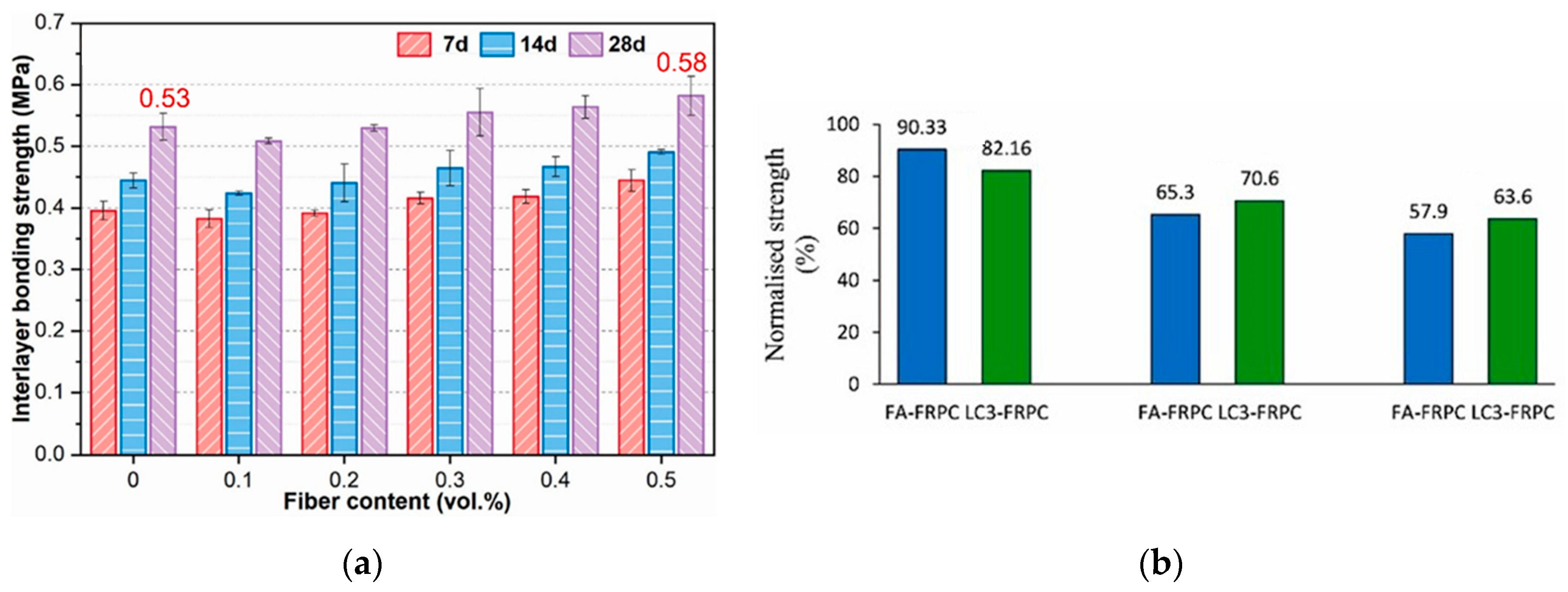
Polypropylene (PP) fibers can effectively improve the interlayer bond properties of geopolymer 3D-printed concrete (3DPC). As shown in Figure 7a, when the PP fiber content is 0.5%, the 28-day interlayer bond strength increases from 0.53 MPa to 0.58 MPa. The enhancement mechanism is primarily attributed to the cross-layer bridging effect of fibers, which also induces the formation of self-healing products such as N-A-S-H gel and ettringite, thereby filling interlayer gaps. When the PP fiber content is increased to 0.8%, the interlayer bond strength improves by 11.8% at 28 days. The fibers form an effective cross-layer bridging network within a short-range scale of approximately 3 mm and significantly suppress the formation of interfacial drying shrinkage cracks, achieving a balance between interlayer strength and printability, which is considered the optimal dosage. Further increases in fiber content would weaken the interlayer bonding performance due to fiber agglomeration and insufficient hydration. Additionally, as shown in Figure 7b, in the LC3-PP fiber composite system, incorporating 1% PP fibers can increase the interlayer flexural strength by 9.8%. This is achieved by reducing tensile anisotropy by approximately 7.2% and promoting the deposition of C-A-S-H gel along the interlayer interface, further enhancing interlayer bond properties [18,19,20].
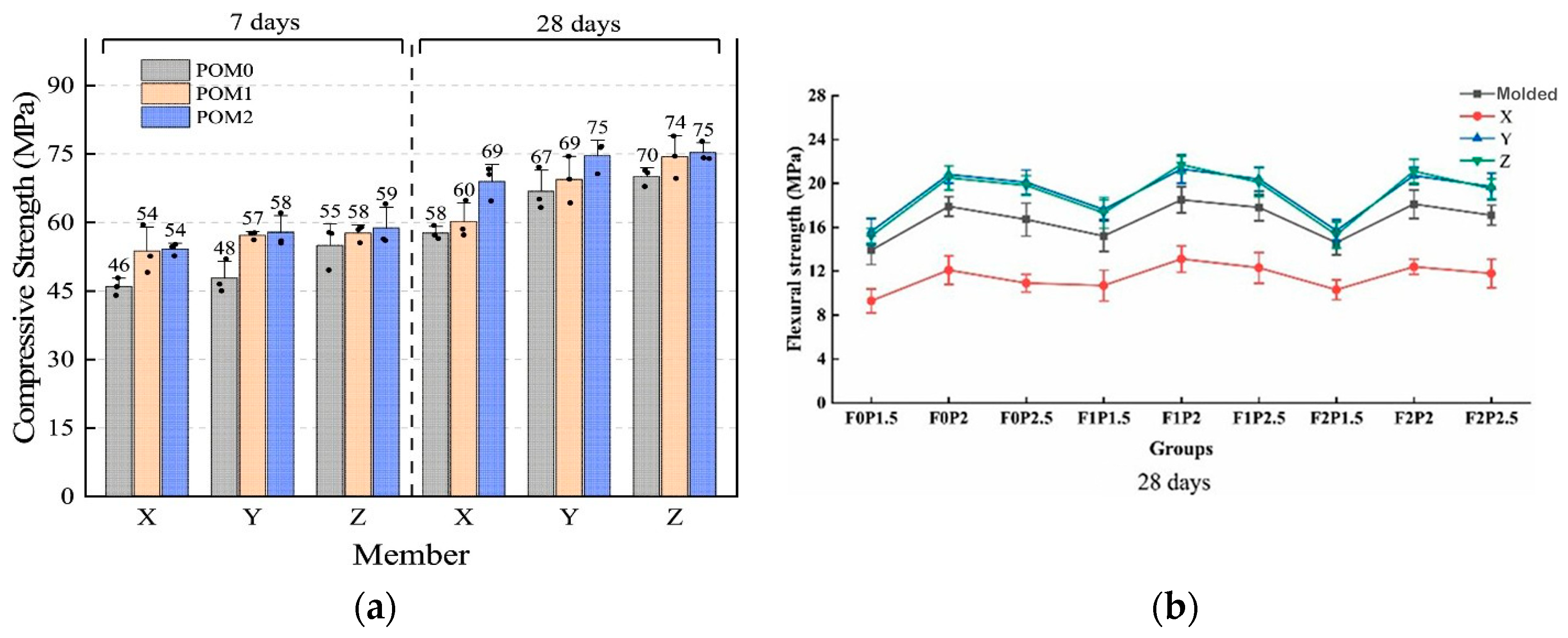
On the other hand, polyoxymethylene (POM) fibers can effectively improve the mechanical properties of 3DPC. As shown in Figure 8a, when POM fibers are introduced into 3D-printed concrete at a dosage of 2%, compared with 3DPC without POM fibers, the 7-day compressive strength along the printing direction (Y-direction) increases by approximately 20.8%, and the 28-day compressive strength along the direction perpendicular to the printing direction within the printing plane (X-direction) improves by approximately 3.4%, while allowing the printing speed to increase to 80 mm/s. Furthermore, as shown in Figure 8b, when POM fibers (1.5–2.5%) are combined with fly ash, at a POM fiber content of 2%, the 28-day flexural strength of 3D-printed concrete specimens along the printing direction increases by approximately 15% compared with mold-cast specimens of the same mix proportion. This is primarily attributed to the hydrogen bonding interaction between the polar groups on the POM fiber surface and the paste, as well as the oriented distribution of fibers along the printing direction under the shearing action of the nozzle, thereby achieving bridging and suppression of interlayer cracks [21,22].
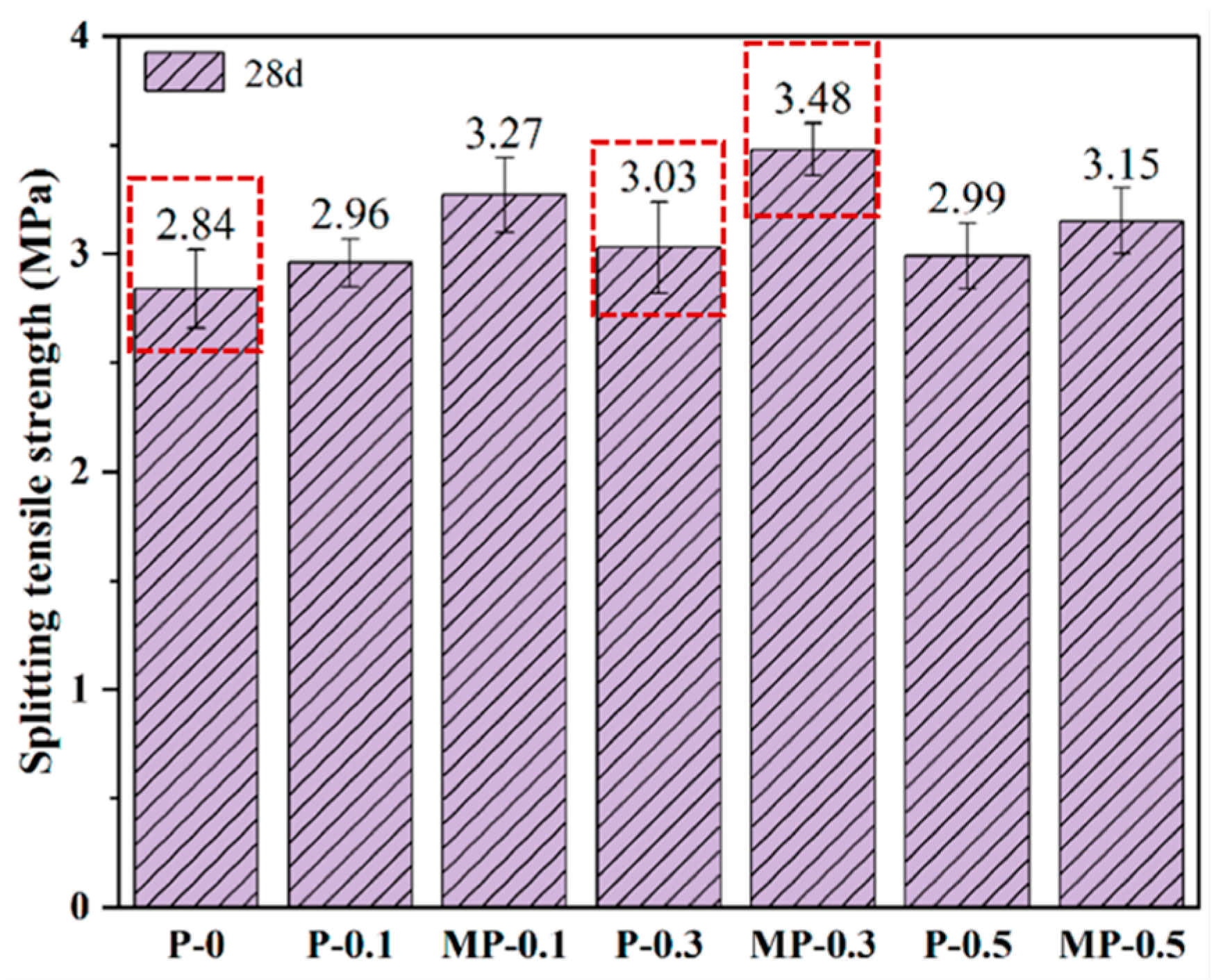
By introducing a polydopamine coating at the interlayer interface of 3D-printed concrete, a nano-rough film rich in C-N polar groups can be generated in situ on the surface of recycled PET fibers, simultaneously achieving chemical anchoring and mechanical interlocking. As shown in Figure 9, when MPET fibers are incorporated at a dosage of 0.3 vol%, the interlayer splitting tensile strength of 3DPC reaches 3.48 MPa, representing a 14.8% improvement compared with unmodified PET fibers at the same dosage (3.03 MPa) and a 22.5% improvement compared with the fiber-free control group (2.84 MPa) [23].
Including 2% polyvinyl alcohol (PVA) fibers in 3D-printed concrete (3DPC) roughly doubles its interlayer deformability. The porosity of the 3DPC is reduced to 0.086% due to pozzolanic reactions, and the fibers enhance interlayer toughness by bridging microcracks and refining the interfacial transition zone [24].
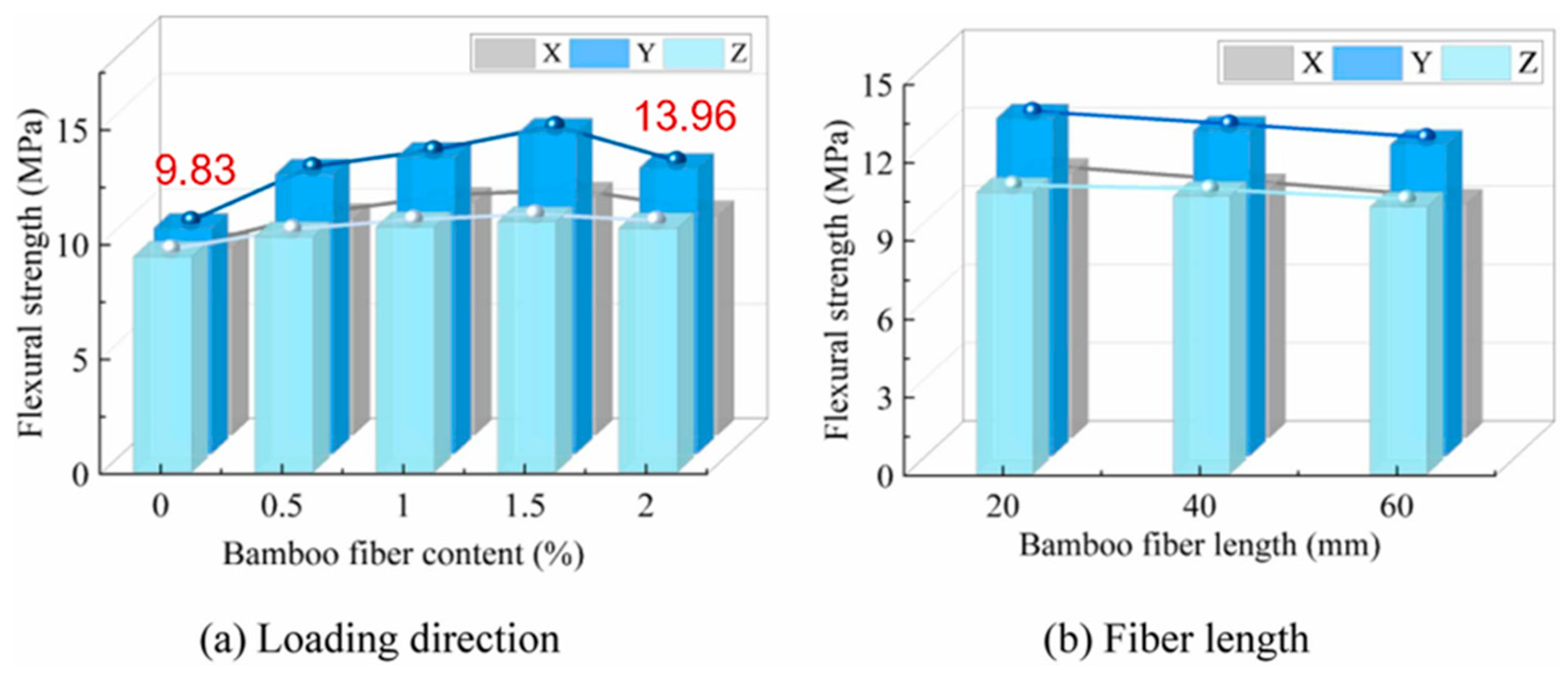
As shown in Figure 10, under sulfate attack, incorporation of 1.5% bamboo fibers with a length of 40 mm improves the interlayer flexural strength of 3D-printed concrete (3DPC) in the printing direction by approximately 29% compared with fiber-free specimens. This enhancement is contributed by mechanical interlocking from surface micro-grooves and crack-bridging effects of the fibers, which also significantly suppress propagation of sulfate-expansion cracks. By contrast, when fiber length is increased to 60 mm, uneven fiber distribution and reduced fiber–matrix interfacial bond strength lead to a decline in through-thickness bonding performance [25].
In 3D-printed recycled concrete, incorporation of 0.5–1.5 wt% plant fibers (e.g., coconut shell and flax) enhance interlayer flexural strength. The hydroxyl groups on the fiber surfaces form hydrogen bonds with cement C–S–H, and the fibers’ rough, porous morphology increases interlayer mechanical interlocking. However, excessive fiber content can lead to hydrophilic swelling and may weaken the interfacial bond [26].
In 3D-printed engineered cementitious composites (3DP-ECCs), the hybrid incorporation of 0.2 wt% cellulose nanofibrils (CNF) with 1 vol% polyethylene (PE) fibers and 0.5 vol% steel fibers enhance the interlayer bond strength retention from less than 10% to approximately 88% within a 60 min open time through a dual “water retention–nucleation” mechanism. Concurrently, the interlayer porosity is reduced to 0.56%, thereby effectively suppressing cold joint formation and ensuring interlayer integrity in large-scale printed components [27].
In 3D-printed concrete incorporating steel fibers (0–0.6%) and PE fibers, the interlayer interface splitting tensile strength increases by 50% when the steel fiber dosage is raised to 0.6%. Furthermore, during the extrusion process, the steel fibers were guided by the nozzle to protrude slightly from the layer surface, forming mechanical interlock and bridging that inhibited interfacial crack propagation while refining the interlayer porosity [28].
A comparative study of 3D-printed mortars including 0%, 0.15%, and 0.30% hydroxypropyl methylcellulose (HPMC) and 0.5% micro-steel fibers revealed that with increasing HPMC dosage, the interlayer porosity increased and surface moisture was retained by the polymer, resulting in reduced wettability and a maximum reduction in shear bond strength of 77%. Due to their parallel alignment along the printing direction, the steel fibers were unable to bridge across the interface, and the loosened interfacial structure instead weakened the fiber–matrix bond [29].
In 3D-printed concrete (3DPC), the incorporation of 0–2% basalt, carbon, steel, polypropylene (PP), and polyvinyl alcohol (PVA) fibers improves interlayer bonding through crack-bridging and shrinkage microcrack suppression. However, excessive fiber dosage compromises interfacial adhesion due to air entrapment or parallel alignment along the printing direction [30].
Specifically, fiber type, orientation, dosage, and hybrid ratio with steel fibers exert significant influences on the interlayer performance of 3D-printed concrete (3DPC). Various fiber types—including polypropylene (PP), polyoxymethylene (POM), polyethylene terephthalate (PET), polyvinyl alcohol (PVA), and natural fibers—enhance interlayer properties through crack-bridging, bond strength improvement, or toughness enhancement; however, excessive incorporation may induce fiber agglomeration or deteriorate interfacial bonding. Fiber orientation plays a critical role in interlayer crack suppression, with aligned fibers effectively bridging cracks across interfaces. Optimal fiber dosages contribute to refined interlayer performance, whereas in hybrid systems with steel fibers, although mechanical properties are enhanced, disproportionately high steel fiber contents may compromise interfacial adhesion. A comprehensive consideration of fiber type and incorporation ratio is therefore instrumental in optimizing the interlayer performance of 3DPC.

2.2. Printing Parameters

The movement speed of the printing nozzle, the nozzle size and shape, and the distance between the nozzle and the printed layer are key parameters affecting the interlayer performance of 3D-printed concrete. The nozzle movement speed has a significant impact on interlayer performance. Excessive speed can generate tensile stress within the printed filament, causing filament fracture or interlayer cracking; conversely, too slow a speed can lead to material accumulation and uneven interlayer compressive stress, thereby reducing interlayer bonding strength. Lower printing speeds can improve surface roughness and enhance mechanical interlocking between layers, thus increasing interlayer bonding strength; however, higher speeds can make the surface smoother due to increased particle kinetic energy, weakening interlayer bonding. If the ratio of nozzle size to aggregate particle size is less than 4, clogging is likely to occur, affecting the continuity of the printed filament. Regarding nozzle shape, rectangular nozzles provide a better interlayer contact area and shape stability compared to circular nozzles, which helps improve interlayer bonding strength. When the distance between the nozzle and the printed layer surface exceeds 10 mm, interlayer bonding strength significantly decreases because the large distance reduces interlayer contact pressure and effective bonding area. The elevation of the nozzle and the choice of printing path also influence pore distribution and interlayer stress distribution, thereby affecting the mechanical properties of the printed layers [31,32,33,34].
The printing interval time of 3D-printed concrete has a significant impact on interlayer performance. As the printing interval time increases, moisture evaporation between layers intensifies, leading to a decrease in surface moisture content, which in turn inhibits hydration reactions and the formation of chemical bonds between layers, significantly reducing interlayer bond strength (IBS). When the printing interval time exceeds one hour, interfacial porosity increases and interlayer strength decreases markedly, especially when the interval time surpasses two hours, where interlayer bond strength may drop by up to 83%. Moreover, excessively long printing intervals can cause the formation of cold joints, considerably reducing the interlayer bond strength, particularly in tensile and shear directions. The optimal printing interval time should be controlled within one minute to prevent excessive moisture evaporation and deterioration of interlayer bonding performance, thereby ensuring the continuity of hydration reactions and interlayer strength. When the printing interval time is less than five minutes, the interlayer interface is relatively dens and bond strength is good; however, when the interval exceeds ten minutes, gaps appear at the interface and strength rapidly declines. By reasonably controlling the printing interval time and layer thickness, self-drying and strength reduction can be effectively avoided, thereby ensuring the overall performance of 3D-printed concrete structures [35,36,37,38].
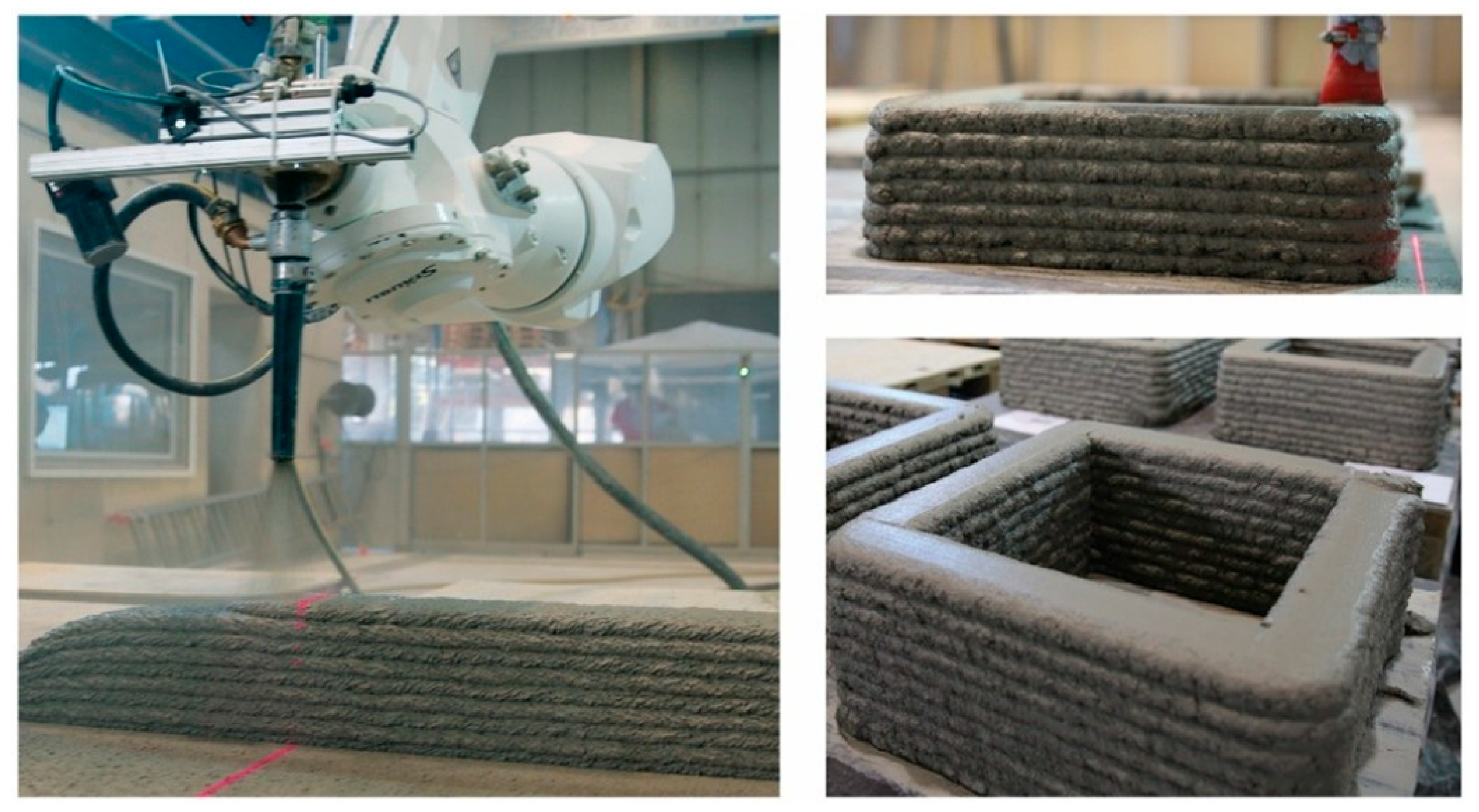
There are significant differences in interlayer performance between spray concrete 3D printing (SC3DP) and extrusion 3D printing, as illustrated in Figure 11. SC3DP (six-axis robotic arm, nozzle diameter 15 mm, printing speed 6 m/min), due to its higher-kinetic energy, results in increased macroscopic roughness between layers and reduces porosity to 1.5%. Even with a printing interval of up to 120 min, the interlayer flexural strength remains 30% higher than that of extrusion printing. In contrast, extrusion 3D printing (gantry frame, rectangular nozzle 20 mm × 25 mm printing speed 4 m/min), due to its lower-kinetic energy, yields relatively smoother interlayer surfaces with a porosity of 3.4%. Moreover, the interlayer strength of extrusion 3D printing decreases exponentially as the printing interval increases. This indicates that SC3DP has a clear advantage in enhancing interlayer strength, particularly under controlled printing intervals and kinetic energy conditions, effectively improving interlayer bonding performance [39].
The width-to-height ratio (W/H) of 3D-printed concrete is a key geometric parameter for regulating interlayer density. When the W/H ratio increases from 1.0 to 1.5, the extrusion pressure rises and the interlayer contact area expands, causing the volume fraction of large interface pores (>1 µm) to decrease from 16.5% to 9%. However, when the W/H ratio exceeds 1.5, the material begins to overflow to both sides of the nozzle and traps air, leading to the formation of flattened large pores at the interface. This indicates that reasonable control of the width-to-height ratio can significantly improve interlayer density and electrical conductivity, particularly by optimizing extrusion pressure and interlayer contact area, thereby effectively enhancing the overall performance of the material [40].
Specifically, factors such as the movement speed of the printer nozzle, its size and shape, the distance between the nozzle and the printed layer, the printing interval time, the type of printer (such as robotic arm concrete printers or gantry printers), and the preset 3DPC width-to-height ratio all have varying degrees of impact on the interlayer performance of 3DPC.

2.3. Environmental Conditions

The impact of high-temperature environments on 3D-printed fiber-reinforced concrete is mainly reflected in the degradation of interlayer bonding and overall structural integrity. As the temperature rises, moisture in 3DPC evaporates more rapidly, leading to an increase in porosity and the decomposition of Ca(OH)2 and CaCO3, which significantly reduces interlayer strength. When the temperature reaches 400 °C, the pressure from steam exceeds the interlayer bonding strength, triggering interface debonding and splitting; when the temperature exceeds 800 °C, the matrix microstructure deteriorates uniformly, and interlayer strength drops to 25–30% of its value at room temperature. Additionally, high temperatures accelerate the formation of C-S-H gel, which helps fill interface pores and enhance both chemical and mechanical interlocking. However, as temperature increases, the setting time of the initially printed layers shortens, and moisture evaporates more quickly, further exacerbating the lack of fusion (LOF). Overall, high temperatures not only accelerate cement hydration but also significantly reduce interlayer bonding and structural strength by promoting moisture loss. Therefore, controlling the ambient temperature is crucial for maintaining the structural stability of 3DPC [41].
Environmental humidity has a significant impact on the interlayer performance of 3D-printed concrete (3DPC), primarily by regulating factors such as the evaporation rate of surface moisture, fiber orientation, and interfacial pore structure. When environmental humidity is low, surface moisture evaporates more rapidly, restricting the hydration process and thereby reducing interlayer strength. At the same time, the fibers shrink due to water loss and become directionally aligned, thereby promoting the formation of interfacial defects. Under conditions of higher-humidity, moisture retention is prolonged, enhancing the bridging effect of fibers and thereby improving interlayer strength and bonding. Additionally, humidity affects the water absorption and shrinkage of anionic polyacrylamide (APAM) microgels added to 3DPC, which in turn regulates interfacial porosity and shear strength. A high-humidity environment helps suppress surface bleeding and reduces the pore softening effect, thus enhancing interlayer performance. Overall, environmental humidity is a key factor influencing interlayer bonding strength and 3DPC performance. Maintaining higher-humidity or appropriately adding auxiliary materials (such as fly ash) can effectively enhance interlayer wettability and bonding strength; particularly under high-temperature and low-humidity conditions, controlling humidity is especially critical [42,43].
Ambient air pressure has a significant impact on the interlayer performance of 3D-printed mortar. Low air pressure or high-altitude environments accelerate moisture evaporation and CO2 diffusion, leading to an early increase in capillary pressure and a reduction in interlayer water film thickness, thereby weakening interlayer adsorption and bonding effects. At the same time, a decrease in air pressure alters the rate of moisture migration as well as hydration and carbonation kinetics, increasing interfacial porosity and reducing the effective contact area, which promotes interlayer bubble retention and decreases carbonation products, ultimately weakening interlayer bonding strength. Under suitable air pressure conditions, maintaining adequate humidity and CO2 partial pressure can promote CaCO3 formation, fill interfacial pores, optimize interlayer structure, and enhance splitting strength. Conversely, in extremely low-pressure environments, if CO2 supply is insufficient or humidity is low, carbonation is restricted, interfacial porosity increases, and interlayer anisotropy is enhanced [16,33,38].
Specifically, changes in environmental temperature, humidity, and air pressure can significantly affect the interlayer performance of 3D-printed fiber-reinforced concrete. High temperatures accelerate moisture evaporation and cause pore formation, while also leading to the decomposition of Ca(OH)2 and CaCO3; conversely, low-humidity or low-pressure conditions restrict hydration and carbonation reactions and increase interface defects, thereby weakening interlayer bonding. In contrast, under suitable temperature, humidity, and pressure conditions, interface pores can be filled with C-S-H gel and CaCO3, and the bridging effect of fibers is enhanced, thereby significantly improving interlayer strength and overall structural stability.

3. Characterization of Interlayer Effects

The characteristics of interlayer effects primarily include interlayer gap features, interlayer mechanical properties, and interlayer thermodynamic properties. To characterize these features, corresponding testing methods need to be employed. This section summarizes the testing methods adopted by numerous researchers in studying interlayer effects, aiming to provide reference for scholars conducting subsequent research on interlayer effects.

3.1. Testing Measurement of Interlayer for 3DPC

In investigating the interlayer pore characteristics of 3D-printed concrete and their influence on mechanical performance, researchers have extensively employed a suite of advanced characterization and analytical techniques. These include X-ray computed tomography (X-ray CT), scanning electron microscopy (SEM), mercury intrusion porosimetry (MIP), and digital image correlation (DIC), often integrated with computational and image-processing tools. Through these methods, studies have systematically examined the distribution, morphology, pore size distribution, and anisotropic features of interlayer voids in 3D-printed concrete, while establishing their correlation with mechanical properties.

3.1.1. CT

Recent advances in X-ray computed tomography (X-CT) have enabled systematic characterization of interlayer porosity in 3D-printed concrete (3DPC), revealing critical relationships between pore structure and mechanical performance.
Liu et al. [44] employed X-CT to analyze interlayer pore distribution and orientation in 3D-printed specimens (3DCP-SF and 3DCP-BE), demonstrating that pores exhibit a biconvex (lenticular) morphology with no preferential alignment relative to the printing direction. In a comprehensive review, Ler et al. [45] synthesized findings from 28 X-CT studies, confirming that 3DPC pores display anisotropic characteristics, with the highest porosity concentrated at interfacial zones, while X-CT enables direct quantification of pore differences across interlayer, inter-filament, and intra-layer regions. Yu et al. [46] utilized X-CT to scan 50-layer 3D-printed columns, revealing a total porosity of 13.6%—10.9% higher than cast specimens—with interlayer pores being larger and more flattened.
Further investigations by Liu et al. [13] on 3D-printed recycled aggregate concrete (3DPRAC) quantified porosity, 3D pore distribution, and recycled aggregate embedment positions, while Chen et al. [47] demonstrated that circular nozzles produce more interconnected interlayer pores than rectangular nozzles, enhancing mechanical anisotropy.
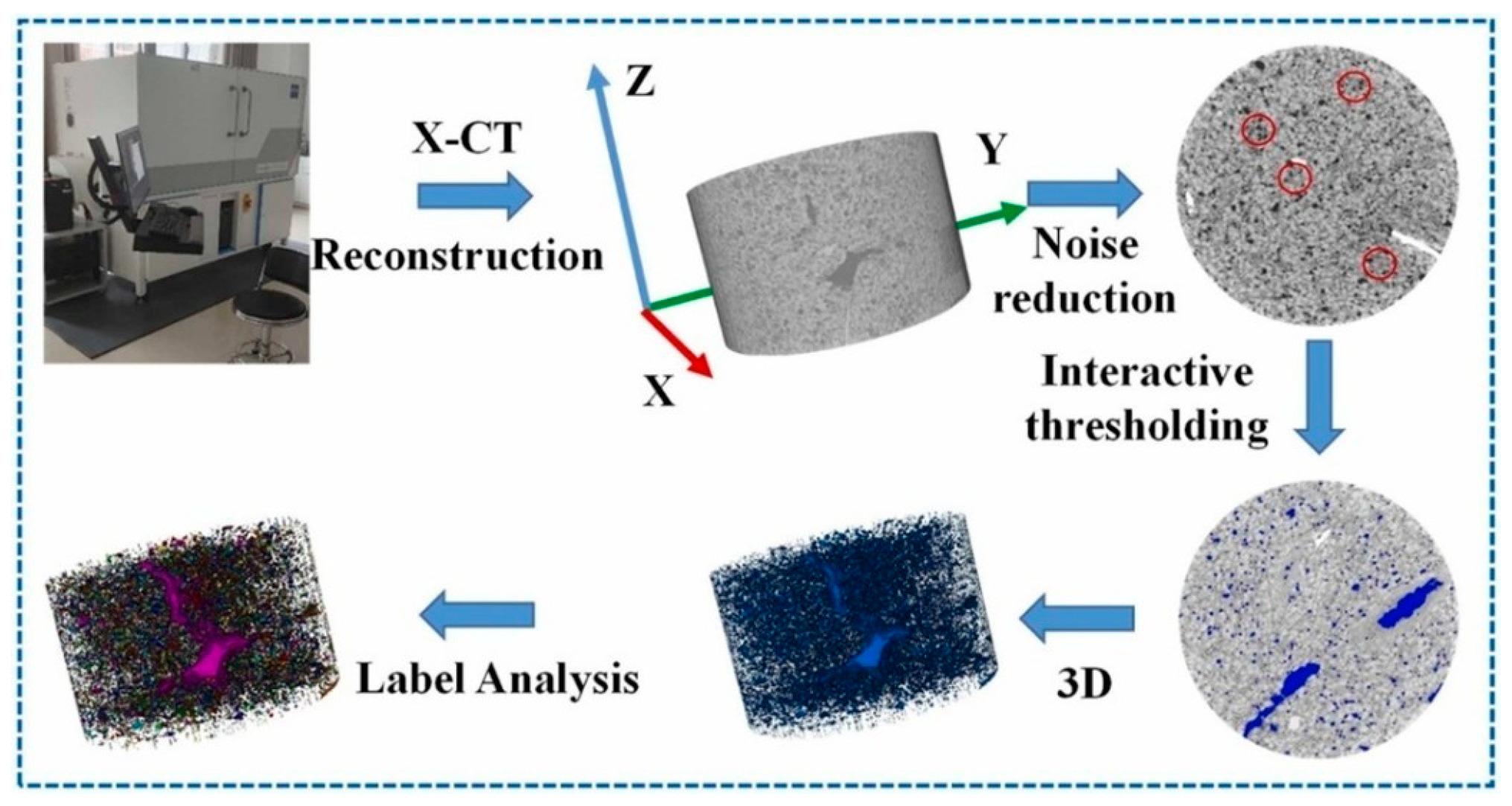
Industrial-grade X-CT combined with Avizo 3D segmentation, as reported by Liu et al. [48], revealed that printing parameters regulate pore distribution through local pressure and flow velocity gradients, thereby influencing mechanical anisotropy. Wang et al. [12] performed 3D statistical analysis on 3D-printed coarse aggregate concrete (3DPCAC) using an XTH320 XCT scanner, showing that interlayer defect porosity increases with aggregate size and that pores align along the printing direction. Zhao et al. [28] systematically investigated the effects of steel fiber content on interlayer bond strength and pore structure in high-strength engineered cementitious composites (HS-ECCs), confirming that fiber orientation and pore optimization significantly improve interlayer adhesion. The testing process is shown in Figure 12.
Danish et al. [32] observed continuous interlayer pore distributions in 3D-printed cementitious composites, with porosity 3–7% higher than cast specimens, while Yang et al. [49] used μ-XCT to track fiber and particle distribution in extrusion-molded filaments (EMCC), proposing a theoretical model for shear stress gradients and fiber-collision mechanisms.
Lin et al. [40] found that a width-to-height ratio (W/H) of 1.5 minimizes inter-filament porosity and optimizes interlayer bonding, and Lucen et al. [4] demonstrated that CO2-activated interfacial enhancers (CIEs) reduce interlayer porosity from 14% to ~1% in 30 min interval specimens, substantially improving interlayer strength.
Finally, Bayat et al. [15] employed HeliScan μ-XCT to scan 3D-printed high-strength mortar with recycled lightweight aggregates, identifying a peak interlayer porosity of 33% and confirming that lightweight aggregates reduce interlayer bond and flexural strength.
These studies collectively highlight the critical role of X-CT in advancing our understanding of interlayer porosity and its impact on the mechanical behavior of 3D-printed concrete.

3.1.2. SEM

Scanning electron microscopy (SEM) has been extensively employed to investigate the microstructural characteristics of interlayer interfaces in 3D-printed concrete (3DPC), providing critical insights into material performance under various modifications and environmental conditions.
Si et al. [25] utilized SEM to compare the interlayer interface morphology of 3D-printed concrete containing 2% bamboo fibers before and after sodium sulfate erosion, revealing that post-erosion fibers exhibited damaged longitudinal striations and loosened interfaces, which directly correlated with reductions in strength and durability. Luo et al. [2] observed the interlayer microstructure of moisture-retaining superabsorbent polymer (SAP)-modified 3DPC through SEM, demonstrating that SAP internal curing enhanced the compactness of the hardened concrete’s microstructure. Ma et al. [42] examined the distribution of 6 mm and 12 mm polyacrylonitrile (PAN) fibers within 3D-printed concrete interlayers, finding that fibers predominantly aligned along the printing direction, potentially influencing mechanical anisotropy. Yao et al. [10] investigated the pore morphology at interfaces of 3D-printed cement pastes containing attapulgite, showing that higher dynamic yield stress and faster structural build-up rates resulted in increased interfacial pore area and greater numbers of large pores. Aman et al. [6] analyzed MgO-incorporated 3D-printed concrete interlayer regions via SEM, revealing that at 3% and 6% MgO content, Mg(OH)2 crystals filled interlayer micropores, reducing drying shrinkage and improving densification, though excessive MgO induced over-expansion and cracking. Jaji et al. [7] combined nitrogen physisorption with SEM-EDS to characterize the pore structures of slag-modified metakaolin-based 3D-printed geopolymers (3DPGPC), demonstrating that 30% slag content increased BET surface area by 78% while reducing the average BJH desorption pore width from 138 nm to 100 nm. Ding et al. [16] used SEM-EDS to examine 3D-printed mortars with pre-soaked limewater-carbonated recycled fine aggregates, showing that CaCO3 precipitation filled interlayer microcracks, densifying the interfacial transition zone and enhancing bond strength. Li et al. [50] employed SEM-backscattered electron (BSE) imaging to study interlayer microcracks and pores in printed cement pastes under different 28-day curing regimes, finding that CO2 curing promoted dense CaCO3 layer formation at interfaces, significantly improving bond strength compared to air and steam curing. Yu et al. [23] combined SEM with X-ray diffraction (XRD) to compare interfacial bonding of dopamine-modified PET fibers (MPET) versus unmodified PET fibers in 3D-printed concrete, confirming that polydopamine (PDA) coatings enhanced fiber surface roughness and hydrophilicity.
These SEM-based studies collectively advance our understanding of how material modifications, curing conditions, and environmental exposures influence the microstructural evolution and performance of 3D-printed concrete interfaces.

3.1.3. Other Methods

Recent studies have employed advanced characterization techniques to systematically investigate the interlayer porosity and microstructural properties of 3D-printed cementitious materials, revealing critical relationships between printing parameters, material modifications, and performance. Yu et al. [46] utilized mercury intrusion porosimetry (MIP) to compare printed and cast mortars, demonstrating that printed specimens exhibited significantly higher total porosity (23.0% vs. 13.3% for 7 nm-10 μm pores) and an increased critical pore diameter (455 nm vs. 22.2 nm), confirming that the absence of vibration during printing leads to greater interlayer macroporosity and consequent strength reduction. Li et al. [50] analyzed printed specimens under different curing regimes using MIP, finding that steam curing doubled the cumulative pore volume compared to standard curing, while CO2 curing refined pores to as small as 50 nm, demonstrating its effectiveness in densifying interlayer porosity. Danish et al. [32] employed MIP to compare pore size distributions between printed and cast specimens, showing that printed samples exhibited a substantially larger critical pore diameter (257.9 nm vs. 43 nm), which correlated with increased permeability and reduced interlayer bond strength. Lin et al. [40] combined MIP with CT analysis to evaluate printed specimens with varying width-to-height ratios (W/H), determining that W/H = 1.5 yielded the lowest cumulative mercury intrusion and minimum porosity, corresponding to optimal interlayer bonding.
Advanced imaging and monitoring techniques have further elucidated the mechanisms of interlayer defect formation. Moelich et al. [45] employed 2D digital image correlation (DIC) to monitor plastic shrinkage cracking at 3D-printed concrete interfaces, revealing that greater upper-layer self-weight accelerated interfacial moisture evaporation, leading to more pronounced interface sliding and cracking. Yuan et al. [9] integrated backscattered electron microscopy (BSEM) with Image Pro Plus 6.0 software to analyze the interlayer porosity and pore size distribution of 3D-printed mortars containing anionic polyacrylamide (APAM), demonstrating that increasing APAM dosage elevated interlayer porosity from 2.26% to 5.01% and enlarged pore diameters to 22 μm. Yao et al. [10] conducted quantitative BSEM analysis of interlayer porosity, showing that increasing attapulgite content raised interfacial porosity from 4.32% to 15.6%, which directly correlated with reduced interlayer shear strength. Yang et al. [35] utilized ultra-depth three-dimensional microscopy (UDF3SM) to examine interlayer interfaces in 3D-printed ultra-high-performance concrete (3DP-UHPC), observing that when interlayer interval times were ≤5 min, interfaces remained dense and defect-free; however, intervals exceeding 5 min resulted in visible interfacial gaps, which could be healed through hot-water curing.
These comprehensive studies collectively advance our understanding of how printing parameters, material composition, and curing conditions influence the microstructural characteristics and performance of 3D-printed cementitious materials.

3.2. Testing Measurement of Mechanical Properties for 3DPC

To systematically assess the interlayer mechanical performance of 3D-printed concrete, research commonly utilizes three-point or four-point bending tests, uniaxial or triaxial compression tests, direct or indirect tensile and splitting tests, along with double-shear, oblique shear, and interfacial shear tests. Furthermore, these are complemented by tensile testing using dog-bone specimens and pull-out tests. By combining digital image correlation (DIC) techniques with numerical simulation approaches, a comprehensive characterization of the interlayer bending, tensile, compressive, and shear resistance, is conducted.

3.2.1. Interlayer Flexural Performance

Recent studies have employed bending tests to systematically evaluate the interlayer mechanical performance of 3D-printed cementitious composites, revealing critical insights into material modifications and printing parameters. Ding et al. [27] conducted three-point bending tests on 3D-printed engineered cementitious composites (ECCs), demonstrating that the incorporation of 0.20% cellulose fibers effectively mitigated interlayer flexural strength degradation, with only a 12.01% reduction observed even after a 60 min open time. Chen et al. [47] utilized three-point bending tests to investigate geopolymer concrete printed with varying lateral movement distances (Ds), finding that reducing Ds enhanced pore sphericity, improved mechanical performance, and significantly reduced flexural anisotropy. Yalçınkaya et al. [29] performed three-point bending tests (mid-span loading perpendicular to the printing direction) on hydroxypropyl methylcellulose (HPMC)-modified 3D-printed mortars, revealing that 0.15% HPMC addition caused a 56.8% decrease in 28-day flexural strength for fiber-reinforced specimens. Tinoco et al. [17] employed four-point bending tests (mid-span loading perpendicular to the printing direction) on rice husk-incorporated 3D-printed concrete (3DPC) prism specimens to assess the impact of bio-based additions on interlayer performance. Their results showed that 25% rice husk content led to a 54.7% reduction in flexural strength, highlighting the trade-off between sustainability and mechanical performance in 3D-printed bio-based mortars.
Specifically, the interlayer flexural properties of 3D-printed concrete (3DPC) are typically characterized through three-point bending tests and four-point bending tests. These testing methodologies effectively evaluate the deformation behavior and failure modes of interlayer structures under flexural loading, thereby providing critical insights into interlayer mechanical performance. Furthermore, analysis of test results enables systematic investigation of how interlayer pore characteristics, fiber incorporation, and printing process parameters influence flexural performance, offering theoretical guidance for optimizing the mechanical properties of 3DPC.

3.2.2. Interlayer Tensile Performance and Bond Strength

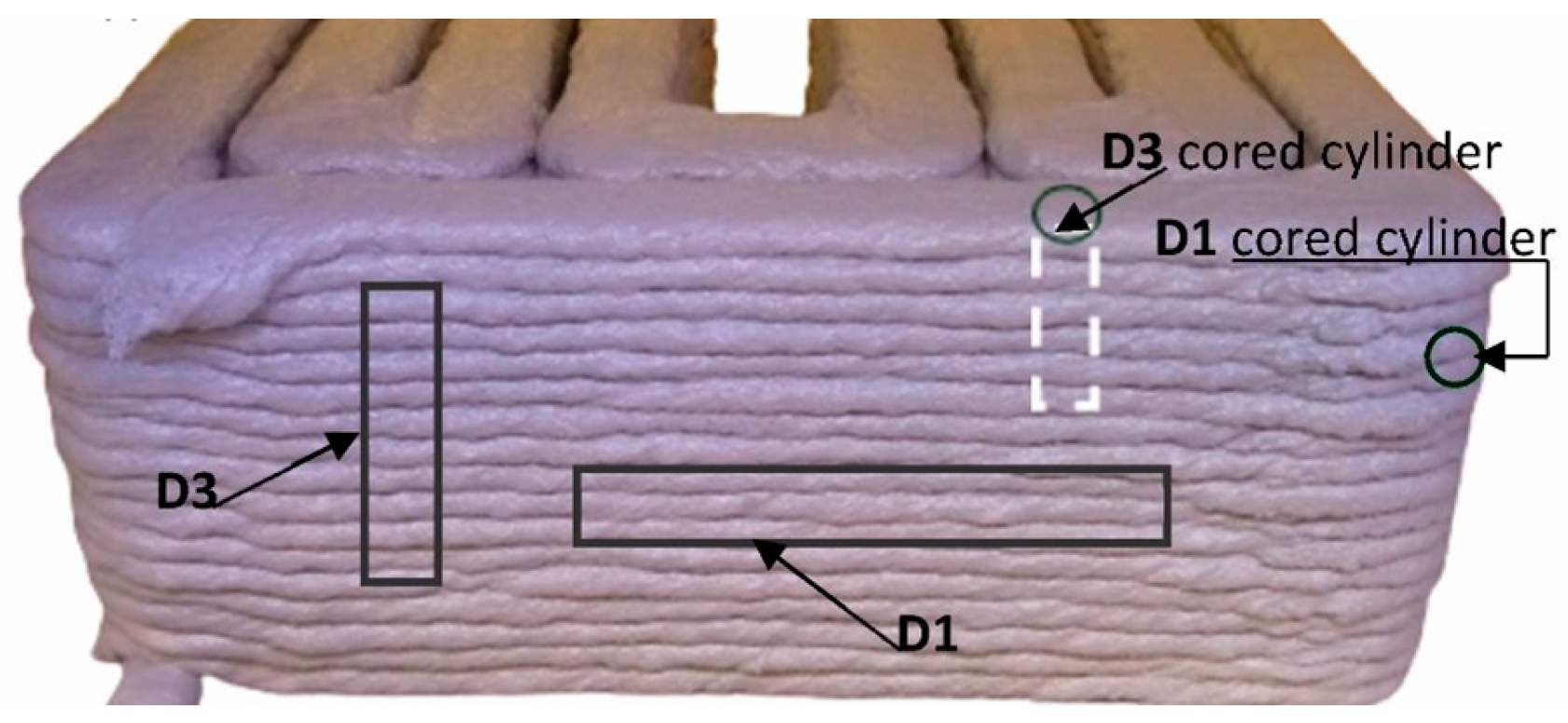
Recent research has systematically investigated the interlayer tensile and bond characteristics of 3D-printed concrete (3DPC) through diverse testing methodologies, revealing critical relationships between material composition, printing parameters, and mechanical performance. Shen et al. [21] employed JSCE-standard dog-bone specimens for uniaxial tensile testing of POM fiber-reinforced cementitious composites (POM-FRCCs), demonstrating that 2 vol% POM fiber incorporation enhanced tensile strength along the printing direction by 33% (from 3.93 MPa to 5.22 MPa), while minimal improvement was observed perpendicular to the printing direction, confirming that failure is predominantly controlled by interlayer weak planes. Ibrahim et al. [18] conducted direct tensile tests on fiber-reinforced 3D-printed concrete (FRPC) containing limestone-calcined clay cement (LC3-FRPC) and fly ash (FA-FRPC) along the interlaminar D3 direction, discovering that the interlaminar tensile strength of LC3-FRPC exceeded that of FA-FRPC by 8.1%, with he direction shown in Figure 13.
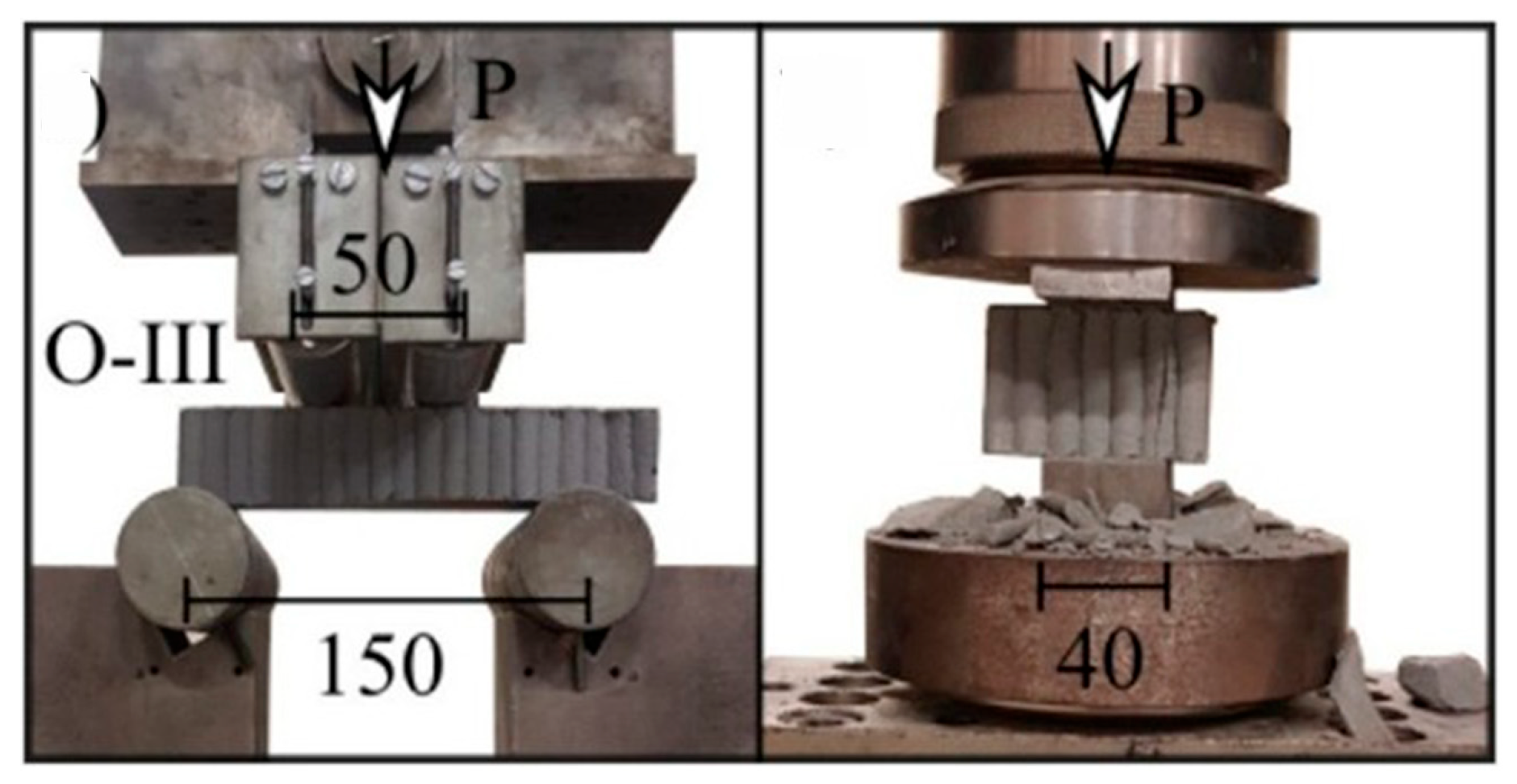
Zhao et al. [28] performed interfacial splitting tensile tests on hybrid steel–PE fiber-reinforced high-strength ECC, showing a 50.12% increase in interlayer splitting strength with 0.6% steel fiber content. Gu et al. [3] evaluated SAP-modified 3D-printed mortar through pull-out tests (using “8”-shaped specimens at 0.1 mm/min) and splitting tensile tests (at 50 N/s), demonstrating that moisture-retaining SAP enhanced 7-day and 28-day pull-out strengths by 22–74% and 10–24%, respectively. Luo et al. [2] confirmed the efficacy of SAP internal curing through both indirect layer-casting pull-out tests and direct splitting tensile tests, reporting a 24.9% improvement in 28-day interlayer splitting strength. Conversely, Bayat et al. [15] observed significant bond strength reductions (33% for FAC and 56% for EG) in splitting tensile tests of lightweight aggregate-modified specimens. Masoud et al. [20] demonstrated an 11.8% increase in interlayer bond strength through ASTM C1583 direct tensile tests on polypropylene fiber-reinforced geopolymer concrete. Li et al. [8] investigated 3DP-UHPC modified with bentonite (BT) and polyacrylamide (PAM), revealing a 60% reduction in interlayer shear strength with BT but a 53.7% enhancement with PAM. Jaji et al. [7] employed four-point bending and splitting tensile tests to show that 30% slag content improved interlayer bond strength by 22% in geopolymer 3DPC. Finally, Moelich et al. [51] demonstrated a 10% increase in interlayer bond strength through four-point bending tests on SAP-modified high-performance 3DPC (O-III orientation, shown in Figure 14). These comprehensive studies collectively elucidate how material modifications, fiber reinforcement, and internal curing strategies critically influence the interlayer mechanical properties of 3D-printed concrete.
Specifically, the interlayer tensile strength and bond strength of 3D-printed concrete (3DPC) are typically characterized through a combination of pull-out tests, splitting tensile tests, direct tensile tests using dumbbell-shaped specimens, and four-point bending tests. These testing methods enable comprehensive evaluation of the mechanical responses of interlayer interfaces under tensile, shear, and flexural loading conditions, thereby revealing critical insights into interlayer bond performance and tensile properties. By analyzing results from these diverse testing approaches, researchers can systematically investigate how interlayer pore structure, printing parameters, and material additives (such as fibers or admixtures) influence tensile strength and bond strength. This multi-faceted characterization provides a robust theoretical foundation for optimizing the overall performance of 3DPC, ultimately advancing the development of structurally efficient and durable 3D-printed cementitious composites.

3.2.3. Interlayer Compressive Strength

The interlayer compressive properties of 3D-printed concrete (3DPC) have been systematically investigated through various compression testing methodologies, revealing important insights into material behavior and anisotropy.
Si et al. [25] conducted uniaxial compression tests on bamboo fiber-reinforced 3D-printed concrete, demonstrating that a 1.5% fiber content with 40 mm fiber length enhanced average interlayer compressive strength by 19.3%, with the most significant improvement (up to 25%) observed in the X-direction perpendicular to the printing layers. Chen et al. [47] examined the compressive strength of 3D-printed geopolymer concrete under different printing parameters, establishing a strong logarithmic relationship between compressive strength and porosity (ranging from 9.1% to 12.8%), where strength decreased logarithmically as porosity increased. Following ASTM C109 standards, Shen et al. [21] performed triaxial compression tests on polyoxymethylene (POM) fiber-reinforced 3D-printed cementitious composites (3DP-FRCCs), revealing distinct directional strength characteristics: the Z-direction (parallel to layer stacking) exhibited the highest compressive strength, followed by the Y-direction (printing direction), with the X-direction (perpendicular to both printing and stacking directions) showing the lowest values. Yang et al. [35] evaluated the anisotropic compressive behavior of digitally reinforced 3D-printed ultra-high-performance concrete (DR3DP-UHPC) by testing 100 mm cubic specimens along three orthogonal directions, demonstrating that the Z-direction achieved the highest compressive strength of 147.36 MPa, while elastic modulus increased with curing time across all directions. These comprehensive studies collectively demonstrate how fiber reinforcement, porosity characteristics, and printing orientation significantly influence the compressive performance of 3D-printed concrete, providing crucial guidance for material optimization and structural design of 3D-printed concrete elements.
Specifically, the compressive strength at the interlayer of 3D-printed concrete (3DPC) is commonly characterized using uniaxial and triaxial compression tests. These testing methods enable the assessment of mechanical behavior of interlaminar materials subjected to compressive loading, encompassing strength, deformation properties, and failure patterns. By comparing results obtained under various testing conditions, the effects of interlaminar pore structure, printing parameters, and material constituents on compressive strength can be comprehensively investigated, thus offering valuable insights for optimizing the mechanical performance of 3DPC. Moreover, triaxial compression tests provide a more accurate representation of the stress states encountered in real-world applications, thereby further substantiating the reliability of interlaminar compressive performance.

3.2.4. Interlayer Shear Performance

The interlayer shear properties of 3D-printed concrete (3DPC) have been systematically investigated through various advanced testing methodologies, revealing significant insights into material optimization and structural performance.
Pei et al. [11] conducted double-shear tests combined with SEM analysis on 3DPC with different fine aggregate gradations, demonstrating that continuous grading following the Fuller curve (n = 0.4) achieved a maximum interlayer shear strength of 7.76 MPa—a 22.78% improvement over single-sized 4.75 mm aggregates, highlighting the critical role of aggregate gradation in enhancing interlayer bonding. Shahzad et al. [52] evaluated 3D-printed ultra-high-performance concrete (3DP-UHPC) using both double-shear and bond-shear tests, revealing that interlayer and filament interfaces exhibited 22.2% and 27.4% reductions in double-shear strength, respectively, and corresponding 21.8% and 9.4% decreases in bond-shear strength compared with the matrix, thereby quantifying the inherent weakness at printed interfaces. Bayat et al. [15] performed double-surface direct shear tests on 3DPC interlayer interfaces, demonstrating that printing intervals caused an 80% reduction in interlayer shear strength compared to only 10% without intervals, effectively quantifying the detrimental impact of cold joints on shear anisotropy. Liu et al. [13] employed a modified interlayer shear test for 3D-printed recycled aggregate concrete (3DPRAC), showing that anchored rebar nails (ARNs) enhanced interlayer shear strength by 20.6–55.6% and developed a unified calculation formula based on virtual work–plastic limit theory. These studies collectively demonstrate how aggregate gradation, interface characteristics, printing parameters, and reinforcement strategies critically influence the interlayer shear performance of 3D-printed concrete, providing essential guidance for material design and structural optimization.
Specifically, the shear strength at the interlayer of 3D-printed concrete (3DPC) is commonly characterized using double-surface direct shear tests, inclined shear strength tests, splitting tests, and several modified interlaminar shear tests. These experimental methods enable effective assessment of the mechanical behavior of interlaminar materials subjected to shear loads, encompassing shear strength, shear deformation, and failure patterns. The resulting experimental findings offer crucial theoretical basis for the optimization of interlaminar performance in 3DPC and the advancement of its practical engineering applications.

3.3. Testing Measurement of Thermal Properties for 3DPC

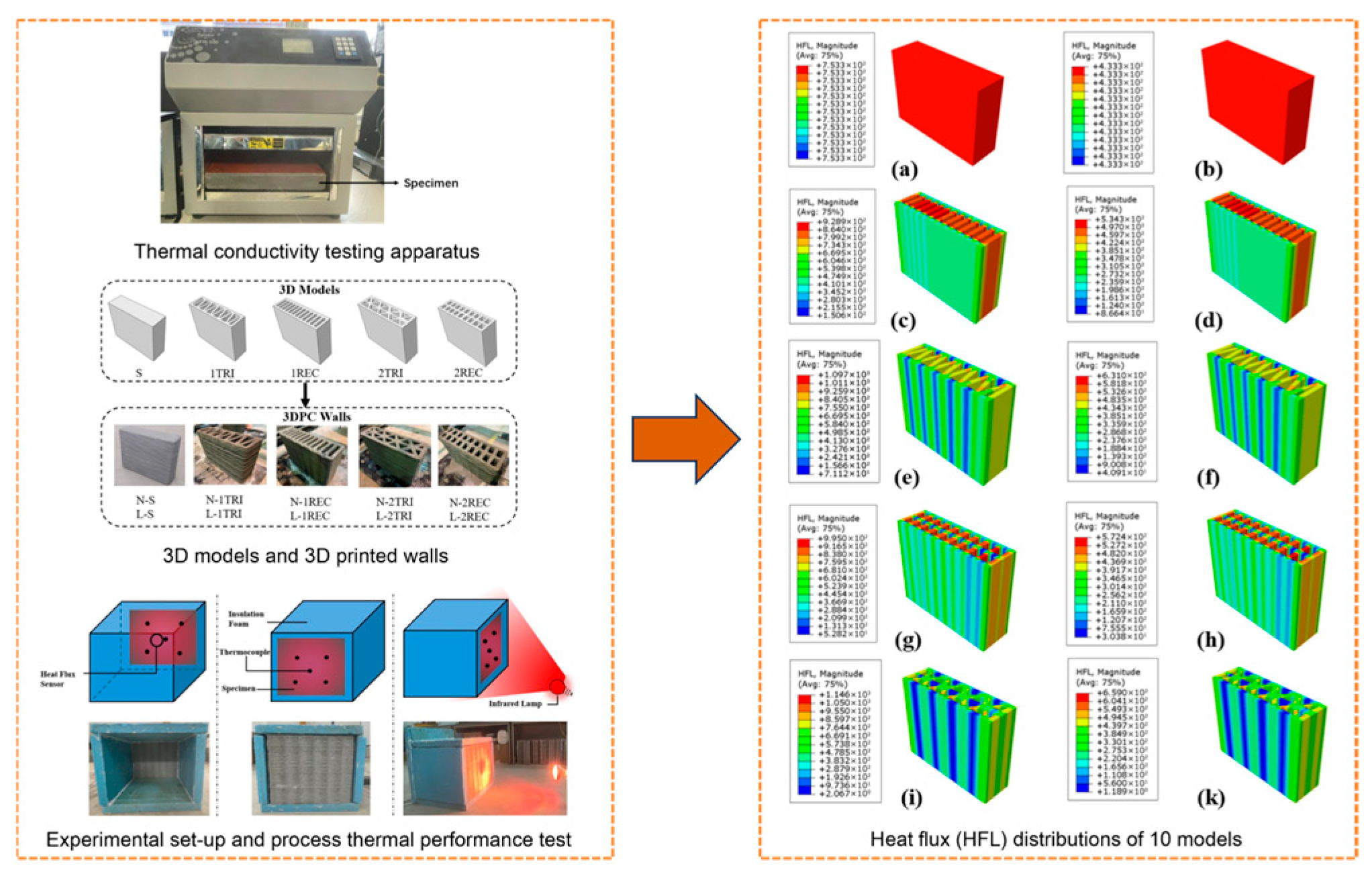
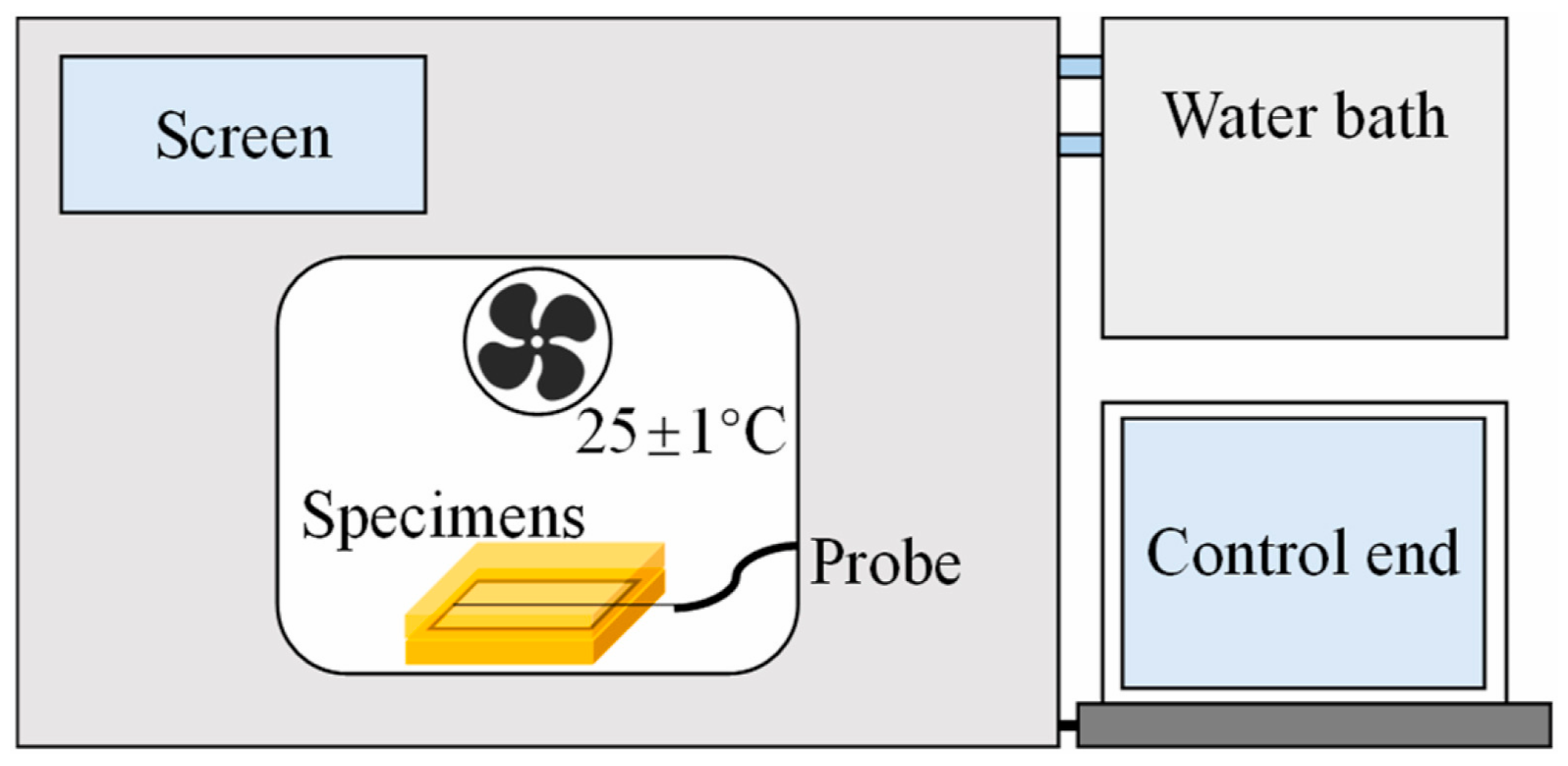
The thermodynamic performance of 3D-printed concrete (3DPC) walls is evaluated through steady-state and transient heat transfer tests, as shown in Figure 15. A thermal box setup, following ISO 9869, ISO 8990, ASTM C1046, and ASTM C1363 standards [53,54,55,56], is used to measure heat flux and surface temperature differences, from which thermal resistance and U-value are derived. A cyclic transient test (9 h heating, 15 h cooling) provides data to quantify thermal storage and delay capabilities. Additionally, a 3D steady-state finite element model in ABAQUS, considering only thermal conduction, is developed to simulate heat flux distribution and inverse-calculate the U-value. The simulation results are then compared with experimental data to verify model accuracy and assess the overall thermodynamic properties of the wall [57].
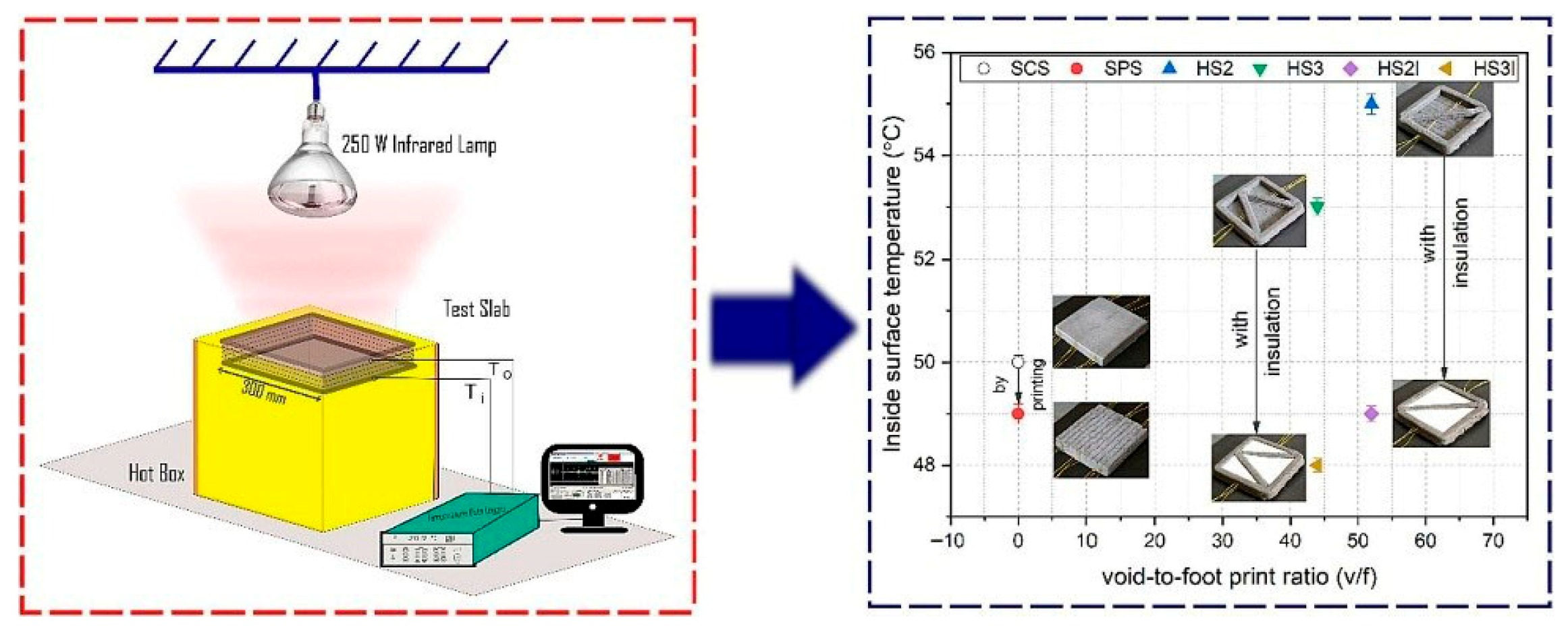
The thermodynamic properties of 3D-printed concrete are measured using a “thermal box–infrared lamp” experimental system, as shown in Figure 16. First, a one-dimensional heat flux environment is created using a wooden–polystyrene insulated box, with a printed panel of specific dimensions acting as the top surface. A 250 W infrared lamp is then positioned 300 mm away from the panel and illuminated for 120 min to simulate solar radiation, followed by a natural cooling phase after the lamp is turned off. Next, K-type thermocouples are embedded at three layers: exterior, middle, and interior of the panel, and temperature data are continuously collected at a frequency of 1 Hz. Finally, the effects of cavity ratio and XPS insulation filling on thermal resistance and thermal capacity are evaluated by comparing the average inner surface temperature, the peak temperature difference between exterior and interior, and the thermal inertia during the cooling phase [58].
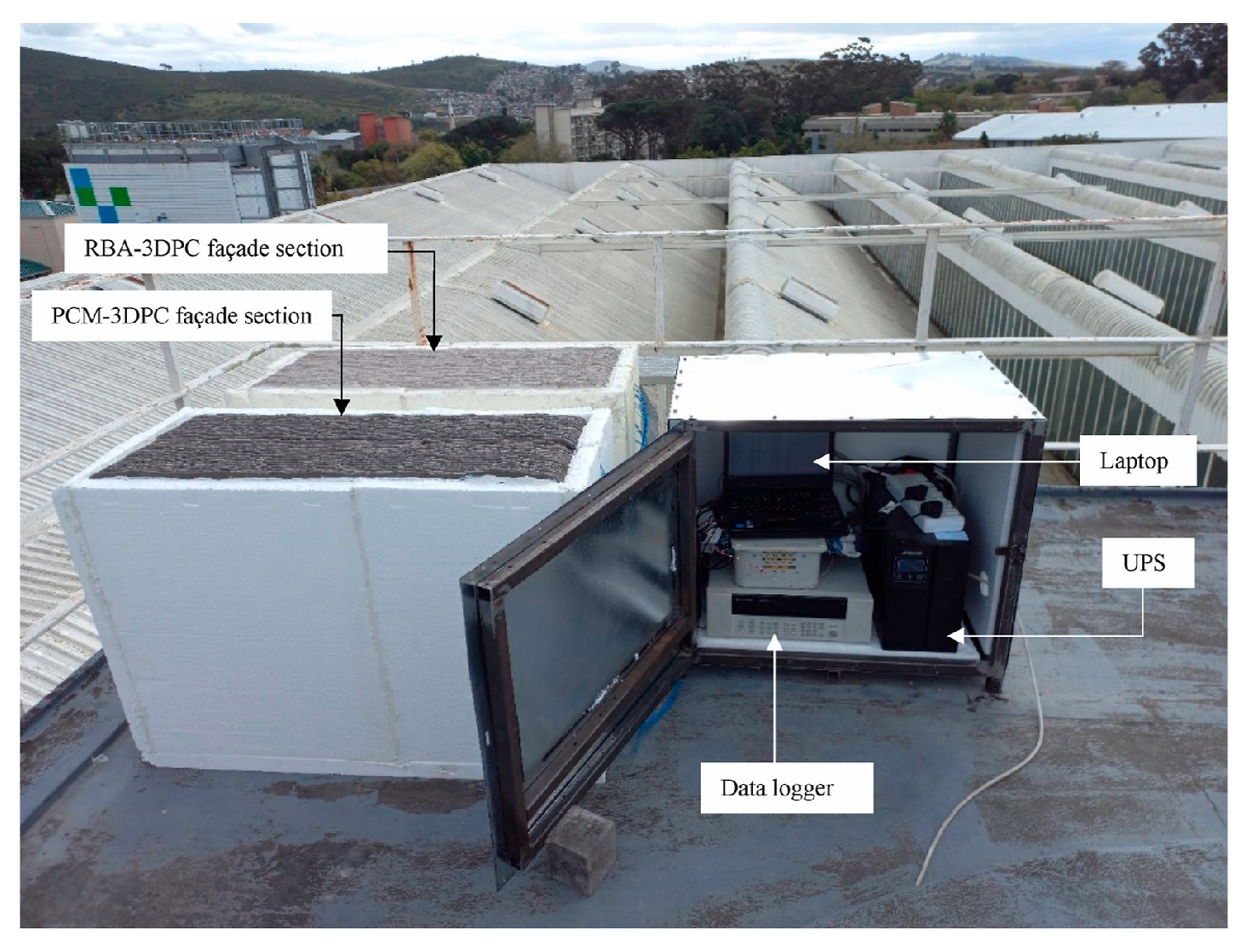
The thermodynamic performance of 3D-printed concrete (3DPC) can be evaluated through temperature response, thermal delay, and comfort indicators. As shown in Figure 17, to study the impact of phase change materials (PCMs) on thermal regulation, PCM-doped recycled brick aggregates were used to replace 64% of the natural aggregates in the preparation of cavity wall specimens. T-type thermocouples were embedded at different depths, and the specimens were placed in a polystyrene insulated box to control boundary conditions. During the continuous 48–110 h measurement period, solar radiation, wind speed, and air temperature were recorded. Experimental data, including maximum/minimum/average temperatures, temperature differential delay, and ASHRAE 55 adaptive comfort hours, were used as evaluation metrics. These results were compared with a baseline wall without PCM, quantifying the effects of PCM latent heat storage on heat transfer reduction, peak interior surface temperature reduction, and extended comfort periods, thereby providing a reproducible experimental framework for the quantitative analysis of 3DPC thermal performance [59].
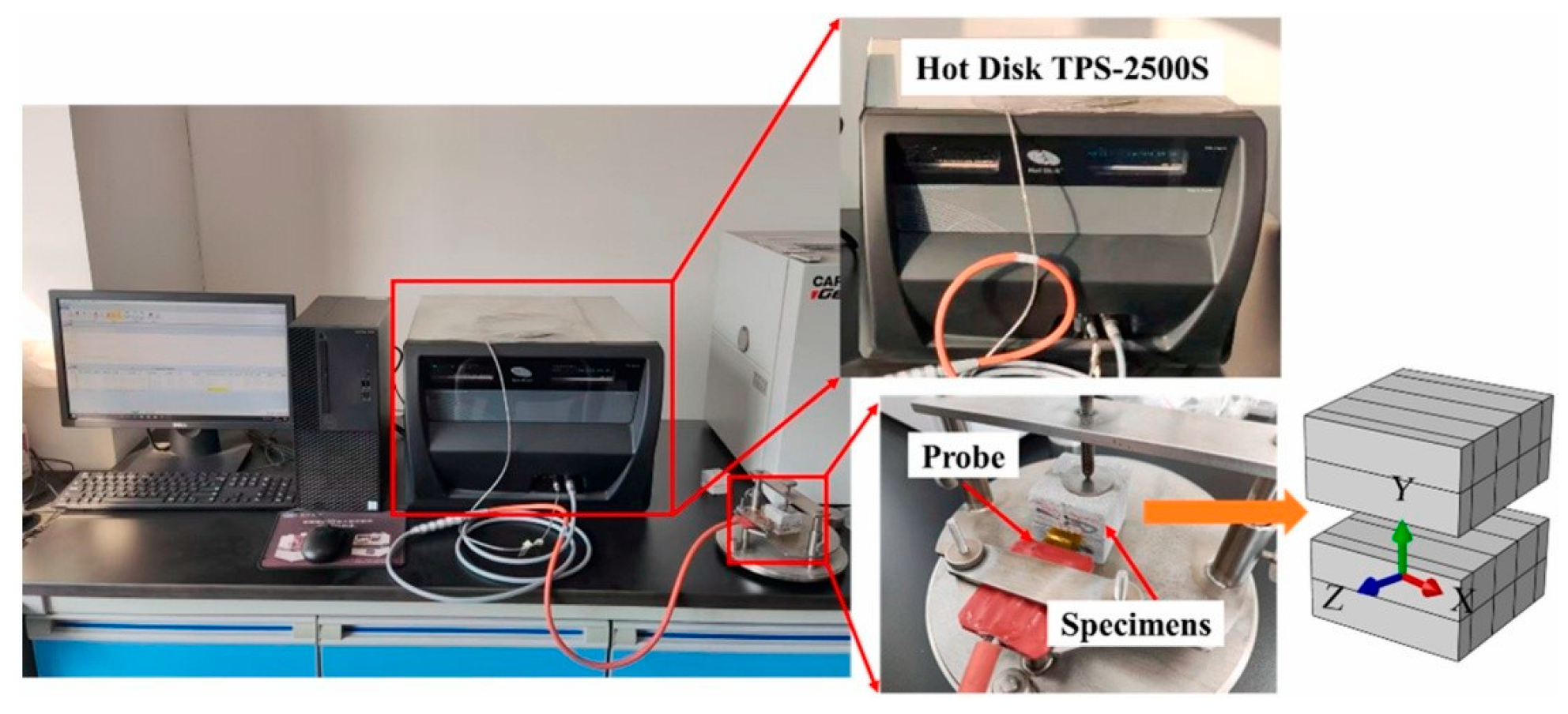
The thermodynamic performance of 3D-printed concrete can be comprehensively evaluated through a combination of experimental testing and building energy consumption simulations. First, the thermal conductivity of 3D-printed concrete specimens (28-day standard curing, 2.5 cm thickness) is measured using the Hot Disk transient plane heat source method, providing key thermal property parameters at the material level, as shown in Figure 18. Additionally, using hourly meteorological data from IWEC for Shanghai, a single-story residential model is established within the EnergyPlus framework, and multiple scenario simulations are conducted to study the impact of reduced thermal conductivity, increased volumetric heat capacity, and their synergistic changes on energy efficiency. Through 50-year life cycle energy consumption calculations, the energy-saving potential of 3DPC walls with different ultrafine glass powder contents is quantified, revealing the effects of synergistic thermal property changes on energy efficiency, including peak-shaving and valley-filling effects. In the thermodynamic performance testing, apart from thermal conductivity, the dry apparent density and air content of the specimens are also important indicators for comprehensive evaluation [60,61].
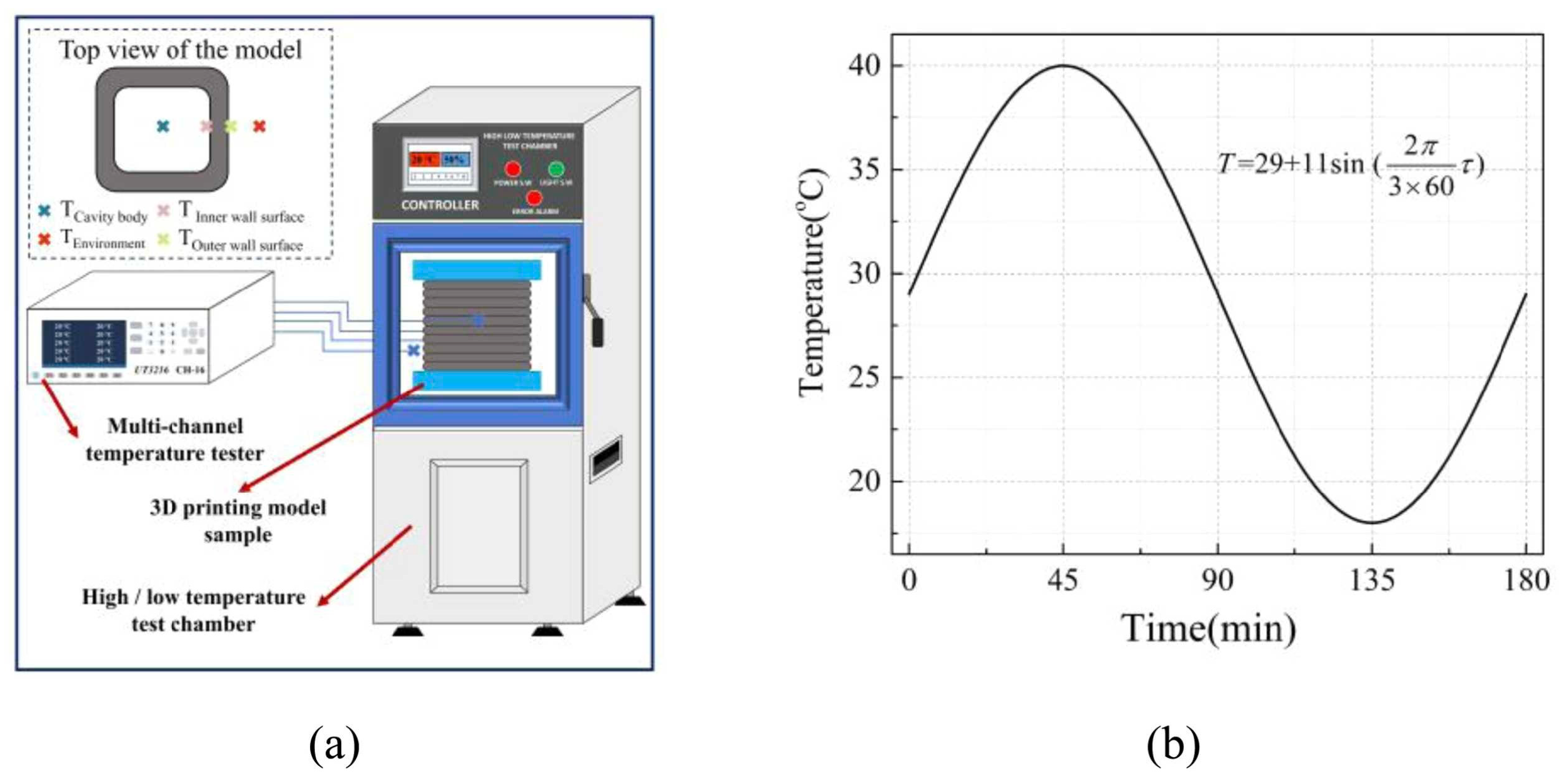
The thermodynamic performance of 3D-printed concrete (3DPC) is crucial for building energy efficiency and indoor thermal comfort and can be systematically characterized through indicators such as thermal conductivity, specific heat capacity, and dynamic temperature response. As shown in Figure 19, a thermal cycling chamber is first used to simulate diurnal temperature variations, and multiple thermocouples are employed to record the interior, exterior, and cavity temperatures, with overheating degree integration used to quantify thermal comfort. Next, the thermal conductivity at 25 °C is measured using the Hot Disk transient plane heat source method, revealing the material’s thermal conduction characteristics. Then, the NETZSCH step calorimetry method is used to obtain the equivalent specific heat capacity with latent heat in the temperature ranges of 0–20 °C, 18–38 °C, and 40–60 °C, thereby evaluating the thermal storage capacity. Finally, based on these multidimensional thermal indicators, the thermal regulation performance of 3DPC is systematically analyzed, providing experimental evidence for its building applications [62].
The thermodynamic performance of 3D-printed concrete (3DPC) is typically characterized by key parameters such as dry density, specific heat capacity, and thermal conductivity. Dry density is determined using the drying–saturation–weighing method to reflect the material’s pore structure. Specific heat capacity is usually measured by Differential Scanning Calorimetry (DSC) under controlled heating conditions to assess thermal storage capacity. Thermal conductivity is characterized based on steady-state heat transfer theory and measured using the guarded hot plate method under a set temperature difference to represent heat conduction performance [63].
The thermodynamic performance of 3D-printed concrete can be characterized by its thermal conductivity, which is typically measured using the transient hot-wire method, as shown in Figure 20. In the experiment, the printed or cast samples are first cut into thin slices of 40 mm × 40 mm × 5 mm and polished using sandpaper with a grit size of 240 to 600. The samples are then placed in a TC3100 hot-wire apparatus for approximately 10 repeated tests. Any data points that deviate by more than 15% from the mean are excluded as outliers. Finally, the average of five valid measurements is taken to determine the steady-state thermal conductivity. This method efficiently and reliably reflects the thermal conduction properties of 3D-printed concrete [64].
Specifically, the thermodynamic performance of 3D-printed concrete (3DPC) can be evaluated using several testing methods. First, steady-state heat transfer tests employ a thermal box system and infrared lamps to provide heat flux, while thermocouples and heat flux meters measure temperature differences and heat flow; thermal resistance is calculated, and the U-value is inversely determined to assess the material’s thermal conductivity. Second, transient heat transfer tests involve cyclic heating and cooling experiments to obtain surface temperature time series, from which decay factors and time delays are extracted to quantify the wall’s thermal storage and delay capabilities. Third, finite element simulation methods, using three-dimensional steady-state heat transfer models (e.g., ABAQUS), calculate heat flux distributions and are then compared with experimental data to verify the accuracy of the simulated heat transfer characteristics. Fourth, thermal property measurements, such as the Hot Disk transient plane heat source method, are used to determine thermal conductivity and specific heat capacity, which, combined with building energy simulations, allow the analysis of the effects of different thermal property parameters on energy-saving potential. By integrating these multidimensional testing and simulation approaches, the thermodynamic performance of 3DPC can be comprehensively assessed, providing a scientific basis for its application in the building sector.

4. Manifestation of Interlayer Voids in 3DPC

The thickness and distribution of interlayer voids in 3D-printed concrete (3DPC) significantly affect its mechanical properties. Excessive interlayer voids lead to poor interfacial bonding, consequently reducing overall strength and durability. Furthermore, the non-uniform distribution of voids, particularly the elevated porosity at interfacial zones, creates stress concentrations under loading conditions, thereby increasing the risk of crack propagation. Therefore, rational control of interlayer void size and distribution is crucial for optimizing the structural stability and strength of 3DPC. The following section summarizes key findings from numerous scholars regarding interlayer void characteristics in 3DPC, aiming to provide valuable references for future research in this field. This comprehensive review serves as a foundation for advancing our understanding of interlayer void behavior and its implications for 3D-printed concrete performance.

4.1. Void Distribution

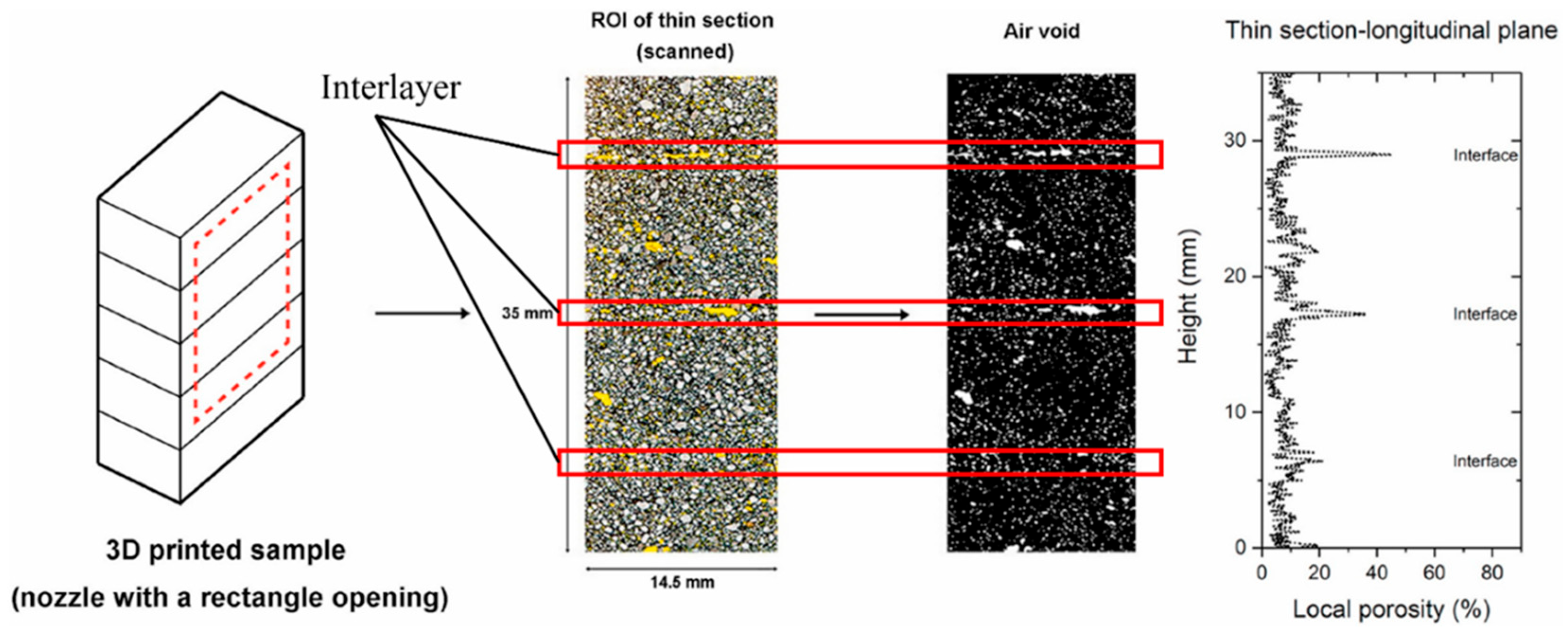
3D-printed concrete (3DPC) and high-performance mortar during the printing process exhibit lower intra-layer porosity along the printing direction, while the interlaminar interfacial porosity increases significantly, forming a distinctive step-like pore distribution pattern, with interlayer pore sizes reaching the millimeter scale, as shown in Figure 21. This increase in pore size is primarily influenced by factors such as prolonged printing time intervals, insufficient material extrudability, surface moisture evaporation, and lack of vibration, resulting in the formation of interconnected flattened or ellipsoidal macropores at the interface. The increase in pore thickness not only weakens the interlaminar bond strength and flexural strength but also reduces the thermal conductivity of the material. Furthermore, under low-humidity or steam curing conditions, moisture loss at the interface and intensified early shrinkage lead to a marked increase in porosity, whereas CO2 curing can reduce pore size through the filling of carbonation products. Overall, the pore distribution characteristics of 3DPC are characterized by dense interlayer and loose interlayers, which are jointly regulated by printing processes and environmental conditions [15,31,50,65,66].
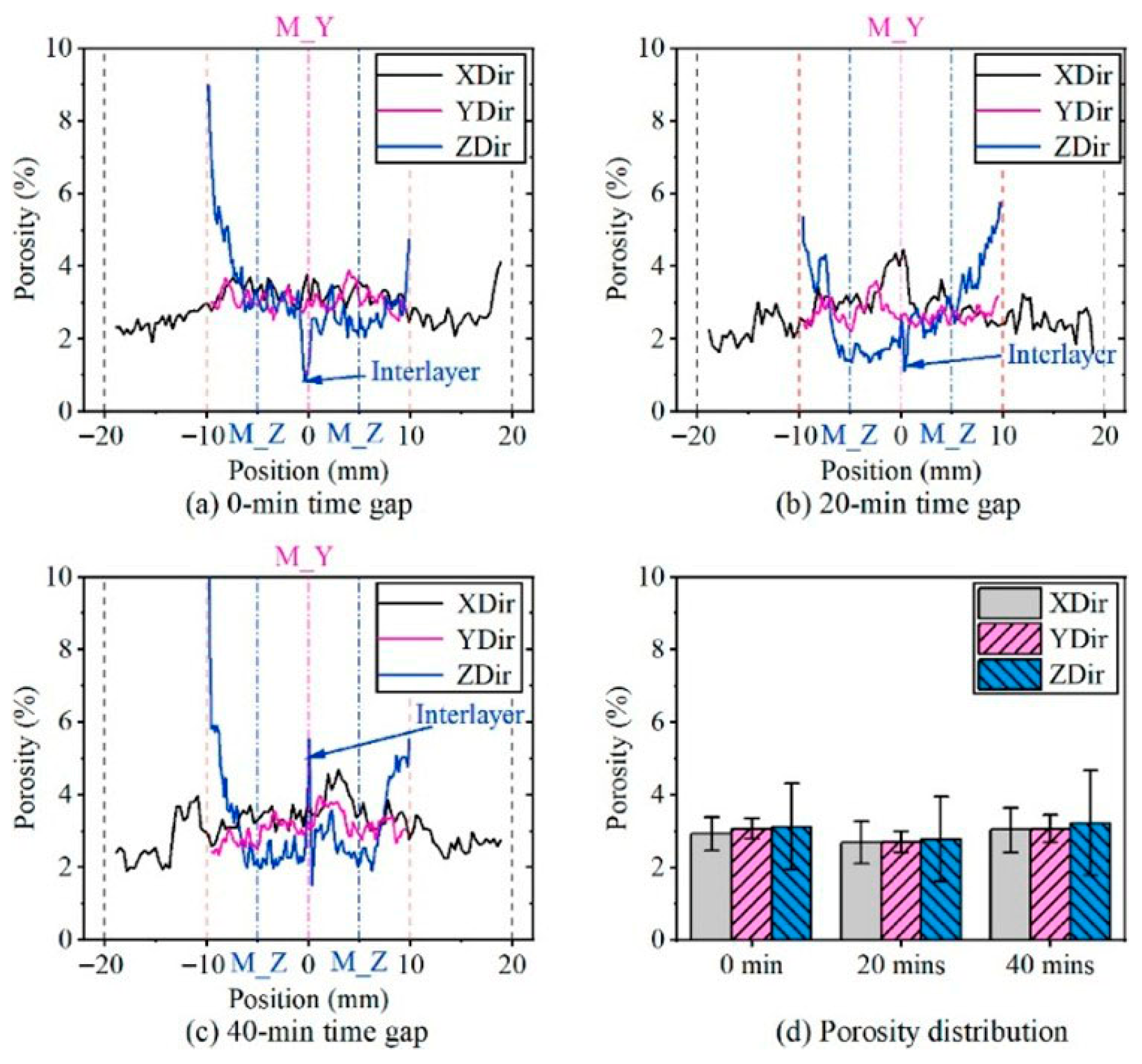
Through quantitative analysis of single printed filaments and unit cell specimens of 3DPC by combining CT scanning with finite element modeling, it is found that as the interlaminar printing time interval of 3DPC increases from 0 to 40 min, the interfacial porosity in the vertical direction (Z-direction) increases from 2.78% to 3.22%, and the interlaminar voids exhibit a distribution pattern with higher porosity at the edges and lower in the middle [44], as shown in Figure 22.
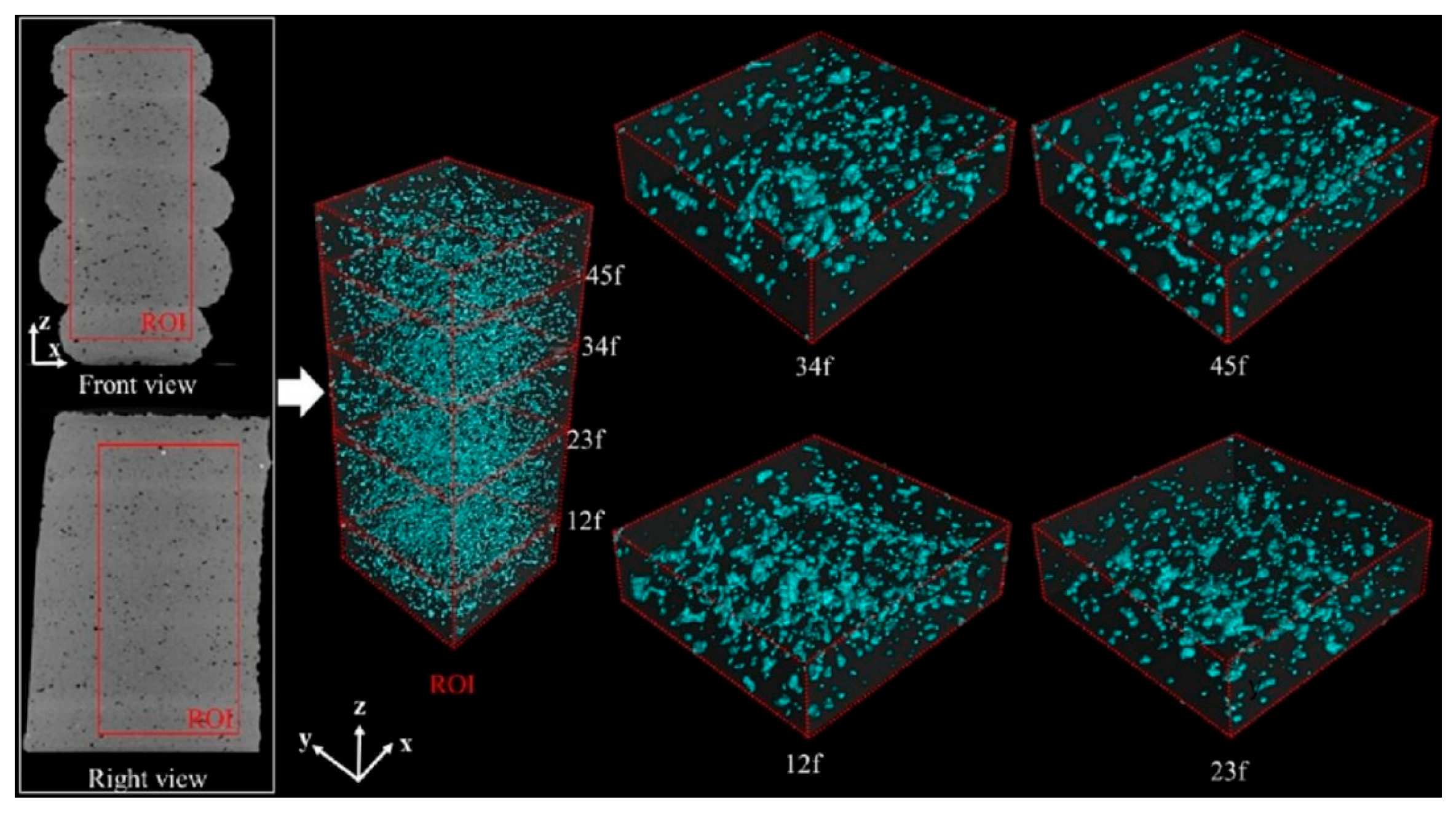
The interlayer pore distribution in 3D-printed concrete (3DPC) exhibits distinct size and spatial gradients, governed by the coupled effects of self-weight consolidation and moisture migration. At the bottom layer, macropores (>0.1 mm) dominate with the highest volume fraction, displaying flattened morphologies with pronounced horizontal elongation; originally spherical pores are compressed under overburden pressure and coalesce into crack-like interconnected voids. The middle layer demonstrates moderate pore quantity and sphericity, where localized rewetting can partially restore splitting strength. In contrast, the top layer features relatively small, near-spherical pores concentrated at the filament center, as shown in Figure 23. Overall, porosity shows a “rise-then-slight-decline” trend from top to bottom, transitioning from small-scale gel pores to large-scale interfacial voids. This interlayer porosity gradient not only reflects the coupled effects of self-weight and moisture transport but also reveals how layer-specific consolidation influences pore morphology and bonding performance. These findings provide critical insights for optimizing 3DPC printing parameters to enhance structural integrity and durability [67,68,69].
Specifically, the interlayer interfacial regions of 3D-printed concrete (3DPC) exhibit significantly higher porosity compared to the intra-filament zones, with porosity increasing markedly as the printing time interval extends. The interfacial voids are predominantly macropores and elongated pores aligned along the printing direction, displaying irregular morphologies. Pore size gradually decreases with increasing distance from the interface. Macropores are particularly concentrated at the bottom and middle layer interfaces, while gel pores are primarily distributed in the central regions of the printed filaments. Overall, porosity increases progressively from the top to the bottom layers, with interlayer transition zones showing a layer-by-layer escalation in porosity. Concurrently, the morphology of interfacial pores transitions from flattened shapes in the bottom layers to elliptical or near-spherical forms in the top layers. These observations highlight the critical influence of printing parameters on the pore structure and mechanical performance of 3DPC.

4.2. Thickness of Interlayer Voids

The thickness of interlayer voids in 3D-printed concrete can be defined as the height of the air gap or weak zone formed between two consecutively extruded layers of concrete material.
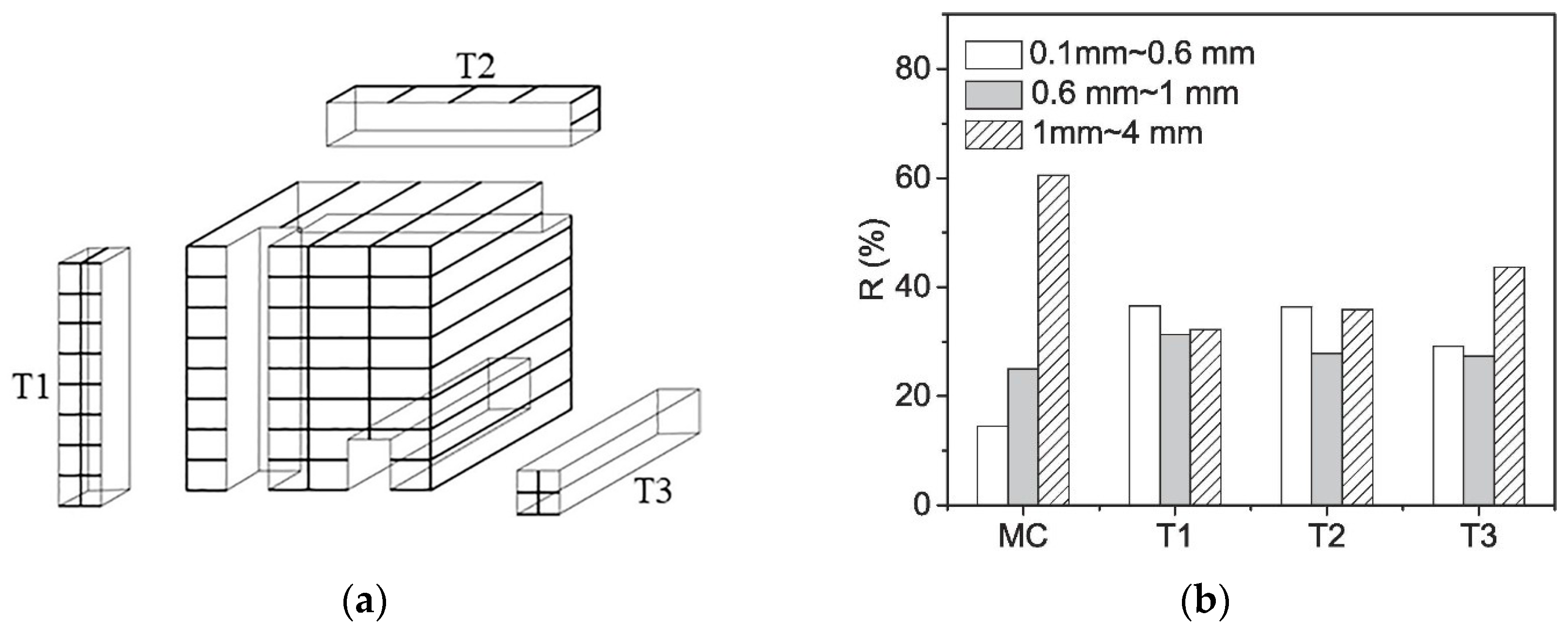
The interlayer pore thickness in 3D-printed concrete (3DPC) is predominantly controlled by aggregate size and content. Coarse aggregates impede mortar flow, creating voids at interlayer interfaces, while printing pressure fails to reconsolidate the underlying layer surface. Both increasing aggregate particle size and higher coarse aggregate-to-binder ratios (CA/b) result in elevated interlayer porosity. The interlayer pore thickness in 3DPC exhibits a decreasing trend from T1 to T3 directions, where higher proportions of 0.1–0.6 mm pores and lower proportions of 1–4 mm pores correlate with increased capillary water absorption coefficients, as shown in Figure 24. These thickness variations originate from differences in interlayer bonding strength and surface dehydration levels, with greater thickness leading to more pronounced anisotropic water permeability [31,70].
Pore thickness is further regulated by old mortar moisture content and lateral squeegee compression, where higher moisture content and greater lateral pressure reduce thickness and minimize anisotropic strength differences. Through multi-scale characterization via X-ray computed tomography (CT) and magnetic resonance imaging (MRI), the thickness of interlayer weak zones has been quantified to range from 18 to 331 μm, with the thinnest cross-section (18 μm) confirmed at the center [68].
Optimized fiber parameters have proven effective in refining interlayer pores. SEM observations of bamboo fiber-reinforced 3DPC before and after sulfate attack reveal that naturally occurring flattened interlayer pores become significantly refined as bamboo fiber content increases from 0% to 2%, with fibers bridging microcracks. However, excessively long fibers (60 mm) may cause localized pore enlargement due to uneven fiber distribution [25].
The 3D-printing process significantly amplifies pore thickness, representing a primary cause of performance degradation. Compared to conventionally cast concrete, 3DPC exhibits a gradient pore structure transitioning from fine intra-layer pores to coarse interlayer pores and macropores, with average pore diameters increasing from 43 nm to 258 nm and total porosity significantly elevated. Millimeter-scale elongated pores frequently form at interlayer regions due to rapid moisture loss during printing, lack of vibration compaction, and the combined effects of interlayer time intervals and troweling. Increased pore thickness weakens interlayer interfacial bonding and enhances permeability pathway continuity, resulting in substantial reductions in compressive and flexural strength while inducing pronounced anisotropy. While the incorporation of superabsorbent polymers (SAPs) or mechanical interlocking can partially reduce pore thickness and improve performance, effective control of interlayer pore thickness remains a critical challenge for enhancing the strength and durability of 3D-printed concrete. These findings underscore the need for optimized printing parameters, material design, and post-processing techniques to mitigate interlayer defects and advance the structural performance of 3DPC [32,46].
Specifically, the interlayer void thickness of 3D-printed concrete (3DPC) is influenced by multiple factors and generally ranges from 0.1 mm to 4 mm. The roughness of the interlayer voids is closely related to their thickness and is affected by printing parameters (such as the nozzle diameter-to-layer height ratio), material admixtures (e.g., calcium carbonate whiskers, nano-silica, polypropylene fibers), interlayer time intervals, ambient humidity, and aggregate type. Overall, the interlayer void thickness of 3DPC exhibits a wide variation and is governed by the combined effects of process parameters and material characteristics.

5. Interlayer Effects on Mechanical and Thermodynamic Performance

5.1. Anisotropy

The mechanical performance of 3D-printed concrete (3DPC) is significantly influenced by interlayer anisotropy, which manifests as directional variations in strength properties.
The substitution of natural sand with pre-soaked limewater-carbonated recycled fine aggregate (CRFA) demonstrates particular promise, with optimal performance achieved at a 50% replacement ratio, where directional strength disparities are effectively eliminated while enabling high-value utilization of recycled materials [16].
While polymer admixtures like Resin8 may slightly compromise overall compressive strength, their hydrophobic properties create an interface water-enrichment effect that enhances interlayer bond strength, thereby improving anisotropy characteristics. In fiber-reinforced systems, maintaining polypropylene fiber content at ≤0.5 vol% combined with interlayer waiting times ≤20 min, effectively suppresses anisotropy deterioration while preserving workability in 3D-printed geopolymer composites [14,71].
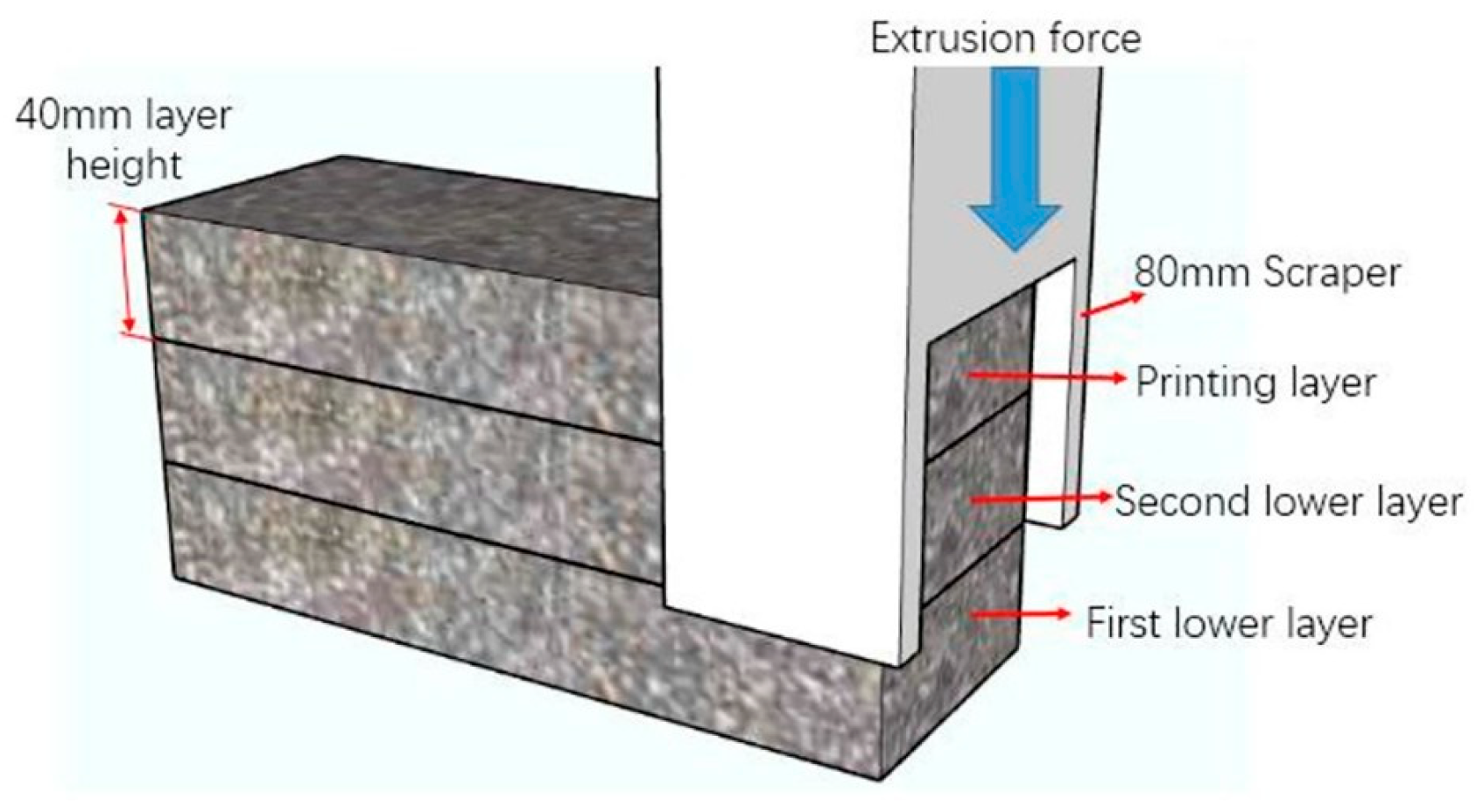
Process optimization through nozzle configuration plays a crucial role in mitigating anisotropy. As shown in Figure 25, vertical nozzle printing equipped with 80mm extended squeegees significantly improves multi-layer compaction, reducing interlayer porosity to 63.3% while increasing flexural strength parallel to the printing direction by 70–75% [72].
The critical importance of interlayer time intervals is demonstrated through comparative testing of normal-weight and EPS lightweight aggregate specimens, where pauses between layers amplify anisotropy coefficients by 3.9–10.8 times, with shear strength exhibiting the most significant degradation (up to 80%) [36].
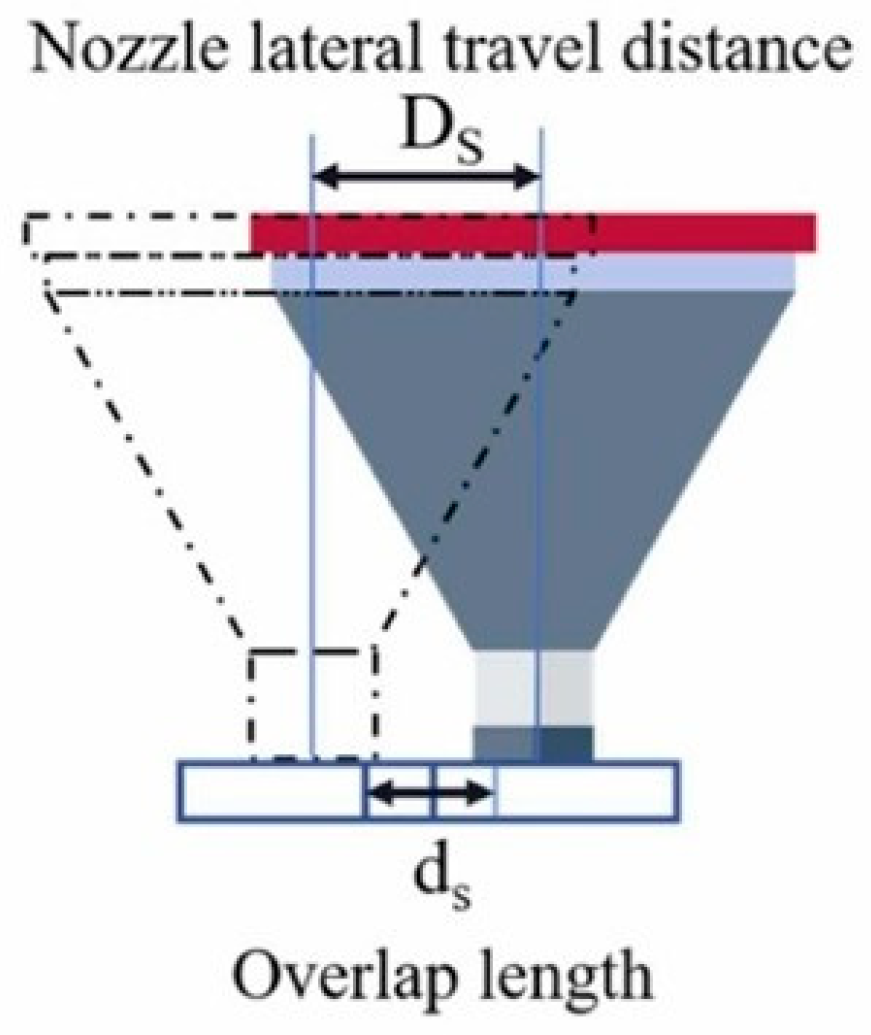
Advanced printing strategies employing rectangular nozzles and reduced lateral movement distance (Ds) further enhance performance by improving filament-to-filament contact and minimizing interlayer connected pores while compressing macropores (>1 mm3) into mesopores (0.01–0.1 mm3). This pore size refinement decreases compressive and flexural strength anisotropy by approximately 25% and 45%, respectively [47]. The lateral movement distance is shown in Figure 26.
Numerical modeling using peridynamics (PD) framework, which discretizes 3DPC filaments and interfaces into three bond types with dual-scalar plasticity and damage models, confirms through experimental validation that shorter interlayer intervals result in more controlled crack propagation and reduced anisotropy [73].
Specifically, in 3D-printed concrete (3DPC), interlayer anisotropy is a key factor affecting its mechanical properties, specifically manifesting as significant variations in interlayer strength across different directions, particularly in the vertical direction where both compressive and flexural strengths are lowest. Factors such as interlayer porosity, fiber content, printing direction, nozzle shape, and interlayer time intervals significantly influence anisotropy. Higher interlayer porosity typically leads to strength reduction, while excessively long interlayer waiting times and excessive fiber content may also cause strength loss. By optimizing printing process parameters, such as adjusting nozzle shape (e.g., employing vertical nozzles equipped with longer 80 mm scrapers), reducing interlayer time intervals, selecting appropriate fiber content, and optimizing aggregate gradation, interlayer anisotropy can be effectively reduced, thereby enhancing the mechanical performance and structural stability of 3DPC. Therefore, controlling the interlayer pore structure and optimizing printing processes constitute effective approaches for improving interlayer strength variation in 3DPC.

5.2. Interlayer Bonding (Adhesion)

The interlayer bond strength of 3D-printed concrete (3DPC) is significantly influenced by interfacial pore structure and material systems, with interfacial chemical enhancement and porosity control being key to strength improvement. In systems employing lightweight aggregates (such as fly ash cenospheres and expanded glass), the interfacial porosity is approximately 12% higher than that within layers, resulting in substantial reductions in interlayer bond strength ranging from 33% to 56%. In contrast, the LC3 system, due to its ability to generate more C-A-S-H gel, therefore increases interlayer bond strength by 8.1% and 9.8% under tensile and flexural loading conditions, respectively. Furthermore, the interlayer bonding performance of 3DPC exhibits pronounced vertical position dependence. With increasing vertical layer number, the bottom-most interface experiences the most severe performance deterioration due to pore flattening and interconnection caused by upper-layer pressure, exhibiting the lowest strength (approximately 1.8 MPa), while the middle interface demonstrates the highest bond strength (reaching up to 4.5 MPa) [18,50,67].
Superabsorbent polymers (SAPs) in 3D-printed concrete (3DPC), particularly the application of moisture-retaining SAP, have been proven to be an effective approach for enhancing interlayer bond strength through regulating interfacial hydration conditions. The core function of moisture-retaining SAP lies in releasing internal moisture, a process that not only significantly promotes the hydration reaction of anhydrous cementitious particles at the interface to form a denser structure but also effectively mitigates the adverse effects on strength caused by moisture evaporation in low water-to-binder ratio printed specimens, reducing the loss of interlayer bond strength from as high as 50% to 30%. Specifically, this moisture regulation mechanism yields significant strength enhancement effects: an increase of 282% in early-age (15 min) tensile strength and a 24.9% improvement in 28-day interlayer splitting tensile strength [2,3,51].
The application of γ-C2S-based CO2-activated interface enhancers (CIEs) in 3D-printed concrete challenges conventional wisdom by demonstrating that longer printing intervals can actually enhance interlayer bond strength while simultaneously achieving carbon sequestration. Research involving synchronous spraying of 100 μm CIE particles combined with 1–3 days of carbonation curing reveals remarkable performance improvements: specimens with 30 min printing intervals exhibit a 249% increase in 28-day interlayer strength. Moreover, this enhancement effect becomes even more pronounced with extended printing intervals, effectively reversing the traditional inverse relationship between printing time gap and bond strength. This innovative approach not only achieves superior mechanical performance but also provides a sustainable solution for carbon capture and utilization in 3D-printed concrete construction [4].
Comparison of the performance of 3DPC under four curing regimes—constant standard curing (CSC), air curing (AC), steam curing (SC), and CO2 curing (CC)—revealed that AC and SC reduce the interlayer bond strength by approximately 13% and 31~55%, respectively, whereas CO2 carbonation curing enhances the 3-day interlayer bond strength by approximately 4.8~27.5% and improves the pore structure, rendering the interface more compact [15].
Nozzle height is a critical factor affecting the interfacial contact state and void ratio. When the distance from the nozzle to the print surface exceeds 20 mm, the interlayer bond strength decreases significantly due to reduced interfacial contact area and increased voids, with a reduction of approximately 22% for every 10 mm increase. Furthermore, the interlayer bond strength of extrusion-based printed specimens exhibits high sensitivity to pause time, with prolonged pause time resulting in substantial strength degradation. In contrast, specimens fabricated by spray-based 3D printing (SC3DP) form denser interfacial structures with higher macroscopic roughness due to high-kinetic energy impact, demonstrating markedly lower sensitivity to pause time. Even when the pause time is extended to 120 min, good interlayer bonding performance can be maintained [33,39].
In summary, the interlayer bond strength of 3D-printed concrete (3DPC) is affected by numerous factors, including fiber dosage, interlayer time intervals, chemical admixtures, curing regimes, and printing technologies. Moderate fiber incorporation enhances bond strength; nevertheless, interlayer intervals exceeding 20 min result in substantial strength degradation. Chemical admixtures such as hydroxypropyl methylcellulose (HPMC) may compromise bonding capacity, while superabsorbent polymers (SAPs) facilitate interlayer strength enhancement through interfacial moisture retention. Reduced porosity and interfacial chemical reactions effectively ameliorate interlayer bonding performance. Furthermore, curing methodologies and diverse printing techniques exert notable influence on interlayer bond strength. Consequently, judicious regulation of these parameters is essential for optimizing the interlayer bond strength of 3DPC.

5.3. Permeability Characteristics of Interlayer

The interlayer permeability of 3D-printed concrete (3DPC) represents a critical durability weakness, governed by printing interval time, surface dryness, and pore coarsening. The absence of vibration compaction, high-speed nozzle movement-induced tearing, and mold-free curing accelerate moisture loss, resulting in macropore enrichment and capillary pore coarsening. This microstructural degradation elevates total porosity from 22.8% to 32.6% and increases the critical pore diameter from 43 nm to 258 nm, leading to a maximum 39% reduction in interlayer flexural strength [46].
The interlayer permeability of 3DPC is primarily regulated by the width-to-height ratio (W/H), a key geometric printing parameter. When W/H increases from 1.0 to 1.5, enhanced extrusion pressure expands interlayer contact area and reduces matrix porosity, causing a linear decrease in chloride diffusion coefficient (DRCM). However, when W/H exceeds 1.5, excessive lateral material flow entraps air at interfaces, creating interconnected defects that reverse the porosity trend and slightly increase DRCM. Permeability pathways concentrate at inter-filament interfaces, where porosity variations closely mirror DRCM trends, while intra-filament regions remain consistently dense due to continuous compaction. Thus, interlayer permeability directly controls chloride penetration depth and interlayer bond strength by modulating interface defect density [40].
3DPC interlayer permeability is dually controlled by interlayer porosity and early-age humidity, serving as both a sensitive durability indicator and an indirect measure of interface bond quality. High yield stress impedes interlayer moisture migration, causing rapid interface dehydration that increases capillary pores (>10 μm) and enhances connectivity, thereby tripling permeability coefficients. Accelerated structural build-up further reduces interlayer hydration, creating weak interfaces that increase chloride penetration depth from 9 mm to 21 mm and carbonation depth from 4 mm to 7.5 mm [10].
Specifically, the interlayer permeability of 3DPC is fundamentally determined by its pore structure characteristics. The lack of vibration compaction at interfaces facilitates the formation of large macropores, significantly increasing permeability. The rise in interlayer porosity correlates strongly with interface defect density, particularly when pore diameters exceed 1 mm, which creates preferential pathways for chloride ions and moisture ingress. Additionally, geometric printing parameters and cement paste rheology critically influence interlayer permeability. Excessive yield stress and improper structural build-up rates exacerbate interlayer moisture loss, enhancing capillary pore connectivity and further elevating permeability, thereby compromising durability and flexural strength.
To improve interlayer permeability and enhance overall durability, strategies should focus on reducing interlayer waiting time, optimizing paste formulation, and adjusting printing parameters. These measures can effectively mitigate interlayer defects, ultimately improving the structural performance and long-term durability of 3D-printed concrete.

5.4. Thermal Conduction in 3D-Printed Wall

The thermal conduction of 3DPC walls is jointly controlled by cavity geometry and material thermal conductivity, and the rational optimization of cavity arrangement can achieve a balance between structural lightweight design and thermal insulation performance. As the cavities in 3DPC walls become narrower and more numerous, the thermal resistance of the wall increases. Consequently, high-thermal conductivity high-performance concrete (HPC) experiences a temperature decrease of approximately 1 °C due to cavity effects, while low-thermal conductivity lightweight foamed concrete (LWFC) exhibits a temperature increase of approximately 1 °C. These thermal characteristics enable the inner surface of 3DPC walls to maintain diurnal temperature variations within 3 °C, thereby effectively reducing air conditioning loads and suppressing the formation of thermal stress-induced cracks [74].
The thermal conduction characteristics of 3D-printed concrete walls are governed by the coupled regulation of topology and material factors. An integrated design approach primarily based on cavity topology optimization and supplemented by low-thermal conductivity material filling can simultaneously achieve lightweight, thermal insulation, and fire resistance properties without increasing wall thickness. The internal cavity ratio, cavity shape, and arrangement orientation of 3DPC walls can reduce the thermal conductivity coefficient λ of wheat straw-based composite materials to as low as 0.04 W/(m·K) by extending heat flow paths and increasing heat transfer surface area. However, the interlayer interface forms thermal bridges due to differences in porosity and moisture content, causing the interlayer thermal conductivity coefficient λ to increase by 10~30% compared to that within layers, resulting in preferential heat flow transmission along the interlayer. This mechanism results in a steady-state heat transfer coefficient U-value of 0.15 W/(m2·K) for the wall, only one-quarter that of conventional concrete walls. Under transient conditions, spherical PCM cavities with thermal storage and release capabilities can reduce indoor temperature amplitude by approximately 7 °C and delay the peak by approximately 26 min [75].
The thermal conduction properties of 3D-printed concrete (3DPC) walls are collectively influenced by surface geometry, interlayer porosity, and thermal conductive silicone. The corrugated surface texture increases the effective heat transfer area by over 11%, while silicone filling introduces an additional contact thermal resistance of approximately 0.005 m2K/W. The synergistic effect of these factors alters heat flow pathways, resulting in measured thermal resistance values that exceed theoretical calculations based on material thermal conductivity by 6.6% to 24%, while significantly reducing both average surface temperature and peak heat flux. This geometry–interface coupling effect endows 3DPC walls with an equivalent steady-state thermal resistance of 0.15–0.17 m2K/W. Under transient conditions, this configuration reduces temperature prediction errors by approximately 50% and decreases heat flow prediction errors by about one-third, thereby enhancing both thermal insulation and temperature regulation performance [76].
The thermal conductivity of 3D-printed concrete walls is primarily influenced by the combined effects of interlayer cold joints and cavities. By adjusting the number, size, and filling method of cavities, it is possible to achieve thermal insulation effects such as delayed heat transfer and peak temperature reduction inside the wall without significantly increasing the wall’s weight, while also mitigating cracking caused by excessive interlayer thermal gradients. The microscopic pores at the printed interface impede heat flow, while cavities reduce thermal resistance by lowering heat capacity and increasing pathways for radiation and convection. When the cavities are filled with extruded polystyrene (XPS), thermal resistance increases, interlayer temperature differences decrease, and the risk of interlayer debonding is reduced. The inner surface temperature of solid printed panels is approximately 1 °C lower than that of cast panels, while the temperatures of double-cavity and triple-cavity hollow panels are 6 °C and 4 °C higher than those of solid panels, respectively. After filling, the temperature returns to a level similar to that of solid panels, confirming that thermal conductivity directly determines the magnitude of interlayer stress and the risk of delamination [58].
Specifically, the thermodynamic performance of 3D-printed concrete (3DPC) walls is jointly influenced by cavity geometry, interlayer porosity, interfacial materials, and thermal conductivity. The size and number of cavities directly determine the thermal resistance of the wall, with larger or more numerous cavities resulting in greater suppression of heat flow transfer. Different types of concrete materials exhibit varying temperature responses due to differences in thermal conductivity, with high-thermal conductivity concrete typically leading to temperature reduction, while low-thermal conductivity materials result in temperature increase. Furthermore, surface geometry and interlayer defects alter heat flow paths, thereby affecting thermal resistance and temperature fluctuations. By optimizing cavity arrangement and material filling design, the thermal insulation performance of the wall can be effectively enhanced, and the risk of cracks induced by thermal stress can be reduced. Therefore, the thermal conduction characteristics of 3DPC walls require comprehensive consideration of material properties, structural layout, and interfacial design to achieve optimal balance between lightweight design and thermal insulation performance.

6. Conclusions and Outlook

This review summarizes the interlayer effects in three-dimensional printed concrete (3DPC), with particular emphasis on their formation mechanisms, characterization methods, and impacts on mechanical and thermodynamic performance. Based on the investigation above, the following conclusions can be drawn:
  • Factors governing interlayer properties: Interlayer performance is influenced by the combined effects of material composition, printing parameters, and environmental conditions. Among these factors, aggregate characteristics and interlayer time interval are consistently reported as the dominant contributors to interlayer quality, as they primarily determine interfacial porosity, continuity, and bonding capacity. Optimized aggregate gradation promotes dense packing and effective mechanical interlocking, while prolonged interlayer intervals induce interface defects due to moisture loss and premature hydration, resulting in interlayer weakness.
  • Characterization of interlayer effects: Advanced experimental and imaging techniques, including X-ray CT, SEM, MIP, DIC, and numerical simulation, are effective in revealing interlayer pore morphology, void distribution, and anisotropic features. Mechanical characterization methods—such as bending, tensile, compressive, and shear tests—combined with DIC and modeling facilitate the quantitative analysis of interlayer effects. Thermodynamic performance can be reliably assessed through steady-state and transient heat transfer tests, measurements of thermal properties, and finite element simulations.
  • Impact on mechanical and durability performance: Interlayer regions exhibit higher porosity than intra-filament zones, dominated by macropores and elongated pores aligned with the printing direction. Interlayer void thickness ranges widely (18–6000 μm) and increases with longer interlayer time intervals, suboptimal printing parameters, and unfavorable material combinations, directly affecting strength, permeability, and thermal performance.
  • Thermodynamic implications: Interlayer porosity, cavity geometry, and material thermal conductivity collectively govern the thermal resistance and heat transfer behavior of 3DPC walls. Appropriately designed cavities and controlled interlayer defects can enhance thermal insulation performance while mitigating thermal stress-induced cracking, thereby supporting the suitability of 3DPC for cold and extreme environments.
Moving forward from current research, future studies should prioritize the development of comprehensive mix designs and optimized printing strategies that simultaneously ensure printability, interlayer bonding quality, mechanical performance, and thermal insulation efficiency. The establishment of standardized testing protocols for interlayer characterization, together with real-time monitoring techniques, is necessary to improve process reliability and reproducibility. Furthermore, the integration of sustainable materials, including recycled aggregates and supplementary cementitious materials, should be considered. Ultimately, a comprehensive 3DPC design model system that integrates material formulation, printing parameters, and environmental conditioning will be critical for advancing large-scale construction with enhanced durability and energy efficiency.

Author Contributions

Conceptualization, S.W. and C.C.; methodology, C.C.; software, C.C.; validation, X.L., D.Y. and S.W.; formal analysis, C.C.; investigation, C.C.; resources, S.W.; data curation, C.C.; writing—original draft preparation, C.C. and S.W.; writing—review and editing, X.L. and S.W.; visualization, D.Y.; supervision, S.W.; project administration, S.W.; funding acquisition, S.W. All authors have read and agreed to the published version of the manuscript.

Funding

This research was funded by Chongqing Science and Technology Bureau with grant number CSTB2025YCJH-KYXM0051.

Data Availability Statement

Data is available upon request from corresponding author.

Conflicts of Interest

The authors declare that there is no conflict of interest in this paper.

References

  1. Pan, T.; Jiang, Y.; Ji, X. Interlayer bonding investigation of 3D printing cementitious materials with fluidity-retaining polycarboxylate superplasticizer and high-dispersion polycarboxylate superplasticizer. Constr. Build. Mater. 2022, 330, 127151. [Google Scholar] [CrossRef]
  2. Luo, Q.-L.; Yu, K.-K.; Long, W.-J.; Zheng, S.-Y.; Geng, S.-Y.; Feng, G.-L.; Wang, H.-L.; Qiu, Z.-H. Influence of different types of superabsorbent polymers on fresh mechanical properties and interlayer adhesion of 3D printed concrete. Case Stud. Constr. Mater. 2024, 21, e03517. [Google Scholar] [CrossRef]
  3. Gu, Y.-C.; Zheng, S.; Ma, H.; Long, W.-J.; Khayat, K.H. Effect of absorption kinetics of superabsorbent polymers on printability and interlayer bond of 3D printing concrete. Cem. Concr. Compos. 2024, 151, 105609. [Google Scholar] [CrossRef]
  4. Hao, L.; Lyu, H.; Zhang, H.; Zhang, S.; Xiao, J.; Sun, P.C. Development of CO2-activated interface enhancer to improve the interlayer properties of 3D-printed concrete. Cem. Concr. Compos. 2025, 162, 106122. [Google Scholar] [CrossRef]
  5. Rudziewicz, M.; Maroszek, M.; Hutyra, A.; Góra, M.; Rusin-Żurek, K.; Hebda, M. Influence of Foaming Agents and Stabilizers on Porosity in 3D Printed Foamed Concrete. Processes 2025, 13, 403. [Google Scholar] [CrossRef]
  6. Aman, A.M.; Yang, Z.; Xin, Y.; Zhang, X.; Li, Y.; Huang, D.; Shen, J. Introducing magnesium oxide into 3D printed concrete to mitigate dry-shrinkage. Case Stud. Constr. Mater. 2025, 22, e04610. [Google Scholar] [CrossRef]
  7. Jaji, M.B.; van Zijl, G.P.; Babafemi, A.J. Slag-modified metakaolin-based 3D printed geopolymer: Mechanical characterisation, microstructural properties, and nitrogen physisorption pore analysis. J. Build. Eng. 2024, 81, 108166. [Google Scholar] [CrossRef]
  8. Li, H.; Shi, Y.; Rong, H.; Dai, K. Effect of additives on the performance of 3D-printing ultra-high performance concrete. J. Build. Eng. 2025, 104, 112451. [Google Scholar] [CrossRef]
  9. Yuan, Q.; Xie, Z.; Yao, H.; Huang, T.; Li, Z.; Zheng, X. Effect of polyacrylamide on the workability and interlayer interface properties of 3D printed cementitious materials. J. Mater. Res. Technol. 2022, 19, 3394–3405. [Google Scholar] [CrossRef]
  10. Yao, H.; Xie, Z.; Li, Z.; Huang, C.; Yuan, Q.; Zheng, X. The relationship between the rheological behavior and interlayer bonding properties of 3D printing cementitious materials with the addition of attapulgite. Constr. Build. Mater. 2022, 316, 125809. [Google Scholar] [CrossRef]
  11. Pei, Q.; Zhong, Y.; Wang, S.; Zhang, L.; Lai, Y. Interlayer bonding shear performance and constitutive model of 3DPC with different fine aggregate gradations. Constr. Build. Mater. 2025, 486, 142024. [Google Scholar] [CrossRef]
  12. Wang, H.; Shen, W.; Sun, X.; Song, X.; Lin, X. Influences of particle size on the performance of 3D printed coarse aggregate concrete: Experiment, microstructure, and mechanism analysis. Constr. Build. Mater. 2025, 463, 140059. [Google Scholar] [CrossRef]
  13. Liu, C.; Zhang, Y.; Liu, H.; Wu, Y.; Yu, S.; He, C.; Liang, Z. Interlayer reinforced 3D printed concrete with recycled coarse aggregate: Shear properties and enhancement methods. Addit. Manuf. 2024, 94, 104507. [Google Scholar] [CrossRef]
  14. Oosthuizen, J.D.; Babafemi, A.J.; Walls, R.S. 3D-printed recycled plastic eco-aggregate (Resin8) concrete. Constr. Build. Mater. 2023, 408, 133712. [Google Scholar] [CrossRef]
  15. Bayat, H.; Karimpouli, S.; Yang, L.; Ramandi, H.L.; Kashani, A. Investigation of interlayer bonding and pore characteristics in 3D-printed high-strength mortar incorporating recycled lightweight aggregates. J. Build. Eng. 2025, 103, 112183. [Google Scholar] [CrossRef]
  16. Ding, Y.; Zhang, Y.; Zhao, Y.; Zhang, M.; Tong, J.; Zhu, L.; Guo, S. Impact of pre-soaked lime water carbonized recycled fine aggregate on mechanical properties and pore structure of 3D printed mortar. J. Build. Eng. 2024, 89, 109190. [Google Scholar] [CrossRef]
  17. Tinoco, M.P.; Cavalcante, T.C.; de Andrade, L.D.; de Araújo, O.M.; Lopes, R.T.; Filho, R.D.T.; Reales, O.A.M. Mix design strategies for 3D printable bio-based cementitious composites using rice husk particles as multifunctional aggregates. J. Build. Eng. 2025, 100, 111740. [Google Scholar] [CrossRef]
  18. Ibrahim, K.A.; van Zijl, G.P.; Babafemi, A.J. Comparative studies of LC3- and fly ash-based blended binders in fibre-reinforced printed concrete (FRPC): Rheological and quasi-static mechanical characteristics. J. Build. Eng. 2023, 80, 108016. [Google Scholar] [CrossRef]
  19. Liu, X.; Hu, J.; Guo, X. Printability and interlayer bonding property of 3D printed fiber reinforced geopolymer (3DP-FRG). J. Build. Eng. 2024, 87, 109060. [Google Scholar] [CrossRef]
  20. Masoud, L.; Hammoud, A.; Mortada, Y.; Masad, E. Rheological, mechanical, and microscopic properties of polypropylene fiber reinforced-geopolymer concrete for additive manufacturing. Constr. Build. Mater. 2024, 438, 137069. [Google Scholar] [CrossRef]
  21. Shen, Q.; Sun, D.; Lu, C.; Zhang, Z.; Zhang, X.; Abdalla, J.A.; Hawileh, R.A. Fresh and anisotropic-mechanical properties of polyoxymethylene fibers reinforced 3D printable cementitious composites. J. Build. Eng. 2025, 103, 112140. [Google Scholar] [CrossRef]
  22. Luo, S.; Jin, W.; Wu, W.; Zhang, K. Rheological and mechanical properties of polyformaldehyde fiber reinforced 3D-printed high-strength concrete with the addition of fly ash. J. Build. Eng. 2024, 98, 111387. [Google Scholar] [CrossRef]
  23. Yu, K.-K.; Zhao, T.-Q.; Luo, Q.-L.; Ping, Y. Recycled PET Fibers with Dopamine Surface Modification for Enhanced Interlayer Adhesion in 3D Printed Concrete. Materials 2024, 17, 5126. [Google Scholar] [CrossRef] [PubMed]
  24. Sun, J.; Wang, Y.; Yang, X.; Wang, H.; Li, S.; Al-Azzani, H.; Zhao, H.; Wang, X. Red mud utilization in fiber-reinforced 3D-printed concrete: Mechanical properties and environmental impact analysis. Constr. Build. Mater. 2025, 462, 139830. [Google Scholar] [CrossRef]
  25. Si, Q.; Zhang, W.; Pan, Z.; Zheng, J.; Yu, C.; Zhang, G. Study on the mechanical and durability properties of 3D-printed bamboo fiber-reinforced concrete. Constr. Build. Mater. 2025, 478, 141464. [Google Scholar] [CrossRef]
  26. Lu, Y.; Xiao, J.; Li, Y. 3D printing recycled concrete incorporating plant fibres: A comprehensive review. Constr. Build. Mater. 2024, 425, 135951. [Google Scholar] [CrossRef]
  27. Ding, Y.; Ou, X.; Qi, H.; Xiong, G.; Nishiwaki, T.; Liu, Y.; Liu, J. Interlayer bonding performance of 3D printed engineered cementitious composites (ECC): Rheological regulation and fiber hybridization. Cem. Concr. Compos. 2024, 154, 105805. [Google Scholar] [CrossRef]
  28. Zhao, Y.; Shen, G.; Zhu, L.; Ding, Y.; Guan, X. Enhancing interfacial bonding and pore structure optimization in 3D-printed high-strength ECC with steel-PE hybrid fibers. Case Stud. Constr. Mater. 2025, 23, e04934. [Google Scholar] [CrossRef]
  29. Yalçınkaya, Ç. Influence of Hydroxypropyl Methylcellulose Dosage on the Mechanical Properties of 3D Printable Mortars with and without Fiber Reinforcement. Buildings 2022, 12, 360. [Google Scholar] [CrossRef]
  30. Warsi, S.B.F.; Panda, B.; Biswas, P. Exploring fibre addition methods and mechanical properties of fibre-reinforced 3D printed concrete: A review. Dev. Built Environ. 2023, 16, 100295. [Google Scholar] [CrossRef]
  31. Fernand, M.; Li, Y.; Qian, Q.; Chi, Y.; Yang, Z. Effects of coarse aggregates on 3D printability and mechanical properties of ultra high performance fiber reinforced concrete. J. Build. Eng. 2024, 96, 110516. [Google Scholar] [CrossRef]
  32. Danish, A.; Khurshid, K.; Mosaberpanah, M.A.; Ozbakkaloglu, T.; Salim, M.U. Microstructural characterization, driving mechanisms, and improvement strategies for interlayer bond strength of additive-manufactured cementitious composites: A review. Case Stud. Constr. Mater. 2022, 17, e01217. [Google Scholar] [CrossRef]
  33. Yang, L.; Sepasgozar, S.M.; Shirowzhan, S.; Kashani, A.; Edwards, D. Nozzle criteria for enhancing extrudability, buildability and interlayer bonding in 3D printing concrete. Autom. Constr. 2023, 146, 104671. [Google Scholar] [CrossRef]
  34. Ding, T.; Xiao, J.; Mechtcherine, V. Microstructure and mechanical properties of interlayer regions in extrusion-based 3D printed concrete: A critical review. Cem. Concr. Compos. 2023, 141, 105154. [Google Scholar] [CrossRef]
  35. Yang, Y.; Zhang, C.; Liu, Z.; Dong, L.; Yang, T.; Zhao, Q.; Wu, C. Effect of hydration process on the interlayer bond tensile mechanical properties of ultra-high performance concrete for 3D printing. Constr. Build. Mater. 2024, 451, 138902. [Google Scholar] [CrossRef]
  36. Aminpour, N.; Memari, A. Analysis of anisotropic behavior in 3D concrete printing for mechanical property evaluation. J. Build. Eng. 2025, 99, 111652. [Google Scholar] [CrossRef]
  37. Zhou, B.; Zhou, H.; Yoshioka, H.; Noguchi, T.; Wang, K.; Sun, B.; Cai, G.; Guo, Y.; Wang, D.; Zhao, W. Mechanical and microstructure evolution of 3D printed concrete interlayer at elevated temperatures. J. Build. Eng. 2025, 107, 112706. [Google Scholar] [CrossRef]
  38. Peng, C.; Yang, Z.; Li, H. A predictive model for interlayer water evolution and experimental validation of 3D printed cementitious materials. Constr. Build. Mater. 2024, 451, 138712. [Google Scholar] [CrossRef]
  39. Kloft, H.; Krauss, H.-W.; Hack, N.; Herrmann, E.; Neudecker, S.; Varady, P.A.; Lowke, D. Influence of process parameters on the interlayer bond strength of concrete elements additive manufactured by Shotcrete 3D Printing (SC3DP). Cem. Concr. Res. 2020, 134, 106078. [Google Scholar] [CrossRef]
  40. Lin, Y.; Yan, J.; Sun, M.; Han, X.; Tang, B. Interlayer cohesion in 3D printed concrete: The role of width-to-height ratio in modulating transport properties and pore structure. J. Build. Eng. 2024, 98, 111009. [Google Scholar] [CrossRef]
  41. Arunothayan, A.R.; Sanjayan, J.G. Elevated temperature effects on 3D printed ultra-high performance concrete. Constr. Build. Mater. 2023, 367, 130241. [Google Scholar] [CrossRef]
  42. Ma, W.; Wang, G.; Zhou, Y.; Xu, Q.; Dai, Y. Polyacrylonitrile fiber reinforced 3D printed concrete: Effects of fiber length and content. J. Build. Eng. 2024, 97, 110869. [Google Scholar] [CrossRef]
  43. Wang, Y.; Qiu, L.-C.; Chen, S.-G.; Liu, Y. 3D concrete printing in air and under water: A comparative study on the buildability and interlayer adhesion. Constr. Build. Mater. 2024, 411, 134403. [Google Scholar] [CrossRef]
  44. Liu, Z.; Li, M.; Wong, T.N.; Tan, M.J. Determine the effects of pore properties on the mechanical performances of 3D concrete printing units with experimental and numerical methods. J. Build. Eng. 2024, 92, 109730. [Google Scholar] [CrossRef]
  45. Ler, K.-H.; Ma, C.-K.; Chin, C.-L.; Ibrahim, I.S.; Padil, K.H.; Ab Ghafar, M.A.I.; Lenya, A.A. Porosity and durability tests on 3D printing concrete: A review. Constr. Build. Mater. 2024, 446, 137973. [Google Scholar] [CrossRef]
  46. Yu, S.; Xia, M.; Sanjayan, J.; Yang, L.; Xiao, J.; Du, H. Microstructural characterization of 3D printed concrete. J. Build. Eng. 2021, 44, 102948. [Google Scholar] [CrossRef]
  47. Chen, W.; Guan, Y.; Zhu, B.; Han, J.; Zhang, Y.; Qian, Y.; Cai, J.; Pan, J. Influence of extruded strip shape and dimension on the mechanical properties and pore characteristics of 3D printed geopolymer concrete. Constr. Build. Mater. 2025, 464, 140176. [Google Scholar] [CrossRef]
  48. Liu, Z.; Li, M.; Wang, X.; Wong, T.N.; Tan, M.J. Investigate mechanisms of different printing parameters on the mechanical anisotropy of 3D concrete printing elements by using computed tomography scan and computational fluid dynamics methods. Addit. Manuf. 2025, 103, 104760. [Google Scholar] [CrossRef]
  49. Yang, R.; Zhu, Y.; Lan, Y.; Zeng, Q.; Peng, Y.; Wang, Z. Differences in micro grain/fiber distributions between matrix and interlayer of cementitious filaments affected by extrusion molding. Addit. Manuf. 2022, 60, 103236. [Google Scholar] [CrossRef]
  50. Li, Q.; Gao, X.; Su, A.; Lu, X. Interlayer adhesion strength of 3D-printed cement-based materials exposed to varying curing conditions. J. Build. Eng. 2023, 74, 106825. [Google Scholar] [CrossRef]
  51. Moelich, G.M.; Kruger, J.; Combrinck, R. Modelling the interlayer bond strength of 3D printed concrete with surface moisture. Cem. Concr. Res. 2021, 150, 106559. [Google Scholar] [CrossRef]
  52. Shahzad, Q.; Li, F. Interfacial bond effects on the shear strength and damage in 3D-printed concrete structures: A combined experimental and numerical study. Eng. Fract. Mech. 2025, 315, 110840. [Google Scholar] [CrossRef]
  53. BS EN ISO 9869-1; Thermal Insulation—Building Elements—In-Situ Measurement of Thermal Resistance and Thermal Transmittance. British Standards Institution: London, UK, 2014.
  54. BS EN ISO 8990; Thermal Insulation—Determination of Steady-State Thermal Transmission Properties—Calibrated and Guarded Hot Box. British Standards Institution: London, UK, 1996.
  55. ASTM C1046-95; Standard Practice for In-Situ Measurement of Heat Flux and Temperature on Building Envelope Components. ASTM International: West Conshohocken, PA, USA, 2021.
  56. ASTM C1363-19; Standard Test Method for Thermal Performance of Building Materials and Envelope Assemblies by Means of a Hot Box Apparatus. ASTM International: West Conshohocken, PA, USA, 2019.
  57. Liu, R.; Du, H. Optimizing thermal insulation through geometric design: Comparative analysis of normal and lightweight 3D printed concrete wall patterns. Energy Build. 2025, 348, 116437. [Google Scholar] [CrossRef]
  58. Dey, D.; Panda, B. An experimental study of thermal performance of 3D printed concrete slabs. Mater. Lett. 2023, 330, 133273. [Google Scholar] [CrossRef]
  59. Christen, H.; van Zijl, G.; de Villiers, W. Improving building thermal comfort through passive design—An experimental analysis of phase change material 3D printed concrete. J. Clean. Prod. 2023, 392, 136247. [Google Scholar] [CrossRef]
  60. Wang, H.; Li, X.; Gong, H.; Xu, Y.; Wang, P.; Liu, M. Thermal and mechanical properties of 3D-printed fiber-reinforced lightweight concrete based on air entrainment and hollow glass microspheres. J. Build. Eng. 2025, 114, 114408. [Google Scholar] [CrossRef]
  61. Singh, A.; Sun, J.; Qi, D.; Abden, J.; Zhou, Y.Y.; Duan, Z.; Tam, V.W. Evaluating glass powder substitution for 3D printed concrete: Effects on thermal properties and embodied carbon. Case Stud. Constr. Mater. 2026, 24, e05786. [Google Scholar] [CrossRef]
  62. Qiao, Z.; Li, H.; Wang, F.; Qi, Y.; Zheng, W. Optimizing thermal energy storage in 3D printed concrete with hollow ceramsite composite phase change materials. Case Stud. Constr. Mater. 2025, 22, e04688. [Google Scholar] [CrossRef]
  63. Ding, T.; Wei, J.; Sun, J.; Feng, K. Experimental study on thermal properties of 3D printed concrete with recycled sand and powder. Constr. Build. Mater. 2026, 506, 144934. [Google Scholar] [CrossRef]
  64. Shen, J.; Ye, T.; Xiao, J.; Li, S. Mechanical and thermal properties of 3D printed earth concrete solidified by geopolymers: A study of utilizing excavated clay. J. Build. Eng. 2025, 107, 112705. [Google Scholar] [CrossRef]
  65. Nodehi, M.; Aguayo, F.; Nodehi, S.E.; Gholampour, A.; Ozbakkaloglu, T.; Gencel, O. Durability properties of 3D printed concrete (3DPC). Autom. Constr. 2022, 142, 104479. [Google Scholar] [CrossRef]
  66. Chen, Y.; He, S.; Gan, Y.; Çopuroğlu, O.; Veer, F.; Schlangen, E. A review of printing strategies, sustainable cementitious materials and characterization methods in the context of extrusion-based 3D concrete printing. J. Build. Eng. 2022, 45, 103599. [Google Scholar] [CrossRef]
  67. Zhang, Y.; Yang, L.; Qian, R.; Liu, G.; Zhang, Y.; Du, H. Interlayer adhesion of 3D printed concrete: Influence of layer stacked vertically. Constr. Build. Mater. 2023, 399, 132424. [Google Scholar] [CrossRef]
  68. Xiao, J.; Lv, Z.; Duan, Z.; Zhang, C. Multi-scale characterization of the 3D printed concrete strength considering the full grade pore structure. Cem. Concr. Compos. 2025, 164, 106246. [Google Scholar] [CrossRef]
  69. Sun, H.-Q.; Zeng, J.-J.; Xie, S.-S.; Xia, J.-R.; Yu, S.; Zhuge, Y. Mechanical and microstructural characterization of interlayer bonding in multi-material 3D-Printed concrete. Cem. Concr. Compos. 2026, 165, 106308. [Google Scholar] [CrossRef]
  70. Zhang, Y.; Qiao, H.; Qian, R.; Xue, C.; Feng, Q.; Su, L.; Zhang, Y.; Liu, G.; Du, H. Relationship between water transport behaviour and interlayer voids of 3D printed concrete. Constr. Build. Mater. 2022, 326, 126731. [Google Scholar] [CrossRef]
  71. Babafemi, A.J.; Norval, C.; Kolawole, J.T.; Paul, S.C.; Ibrahim, K.A. 3D-printed limestone calcined clay cement concrete incorporating recycled plastic waste (RESIN8). Results Eng. 2024, 22, 102112. [Google Scholar] [CrossRef]
  72. Ji, G.; Xiao, J.; Zhi, P.; Wu, Y.-C.; Han, N. Effects of extrusion parameters on properties of 3D printing concrete with coarse aggregates. Constr. Build. Mater. 2022, 325, 126740. [Google Scholar] [CrossRef]
  73. Zhu, J.; Cervera, M.; Ren, X. Peridynamic anisotropic behavior analysis of 3D-printed concrete structures. Comput. Struct. 2025, 314, 107764. [Google Scholar] [CrossRef]
  74. Marais, H.; Christen, H.; Cho, S.; De Villiers, W.; Van Zijl, G. Computational assessment of thermal performance of 3D printed concrete wall structures with cavities. J. Build. Eng. 2021, 41, 102431. [Google Scholar] [CrossRef]
  75. de Rubeis, T.; Ciccozzi, A.; Giusti, L.; Ambrosini, D. On the use of 3D printing to enhance the thermal performance of building envelope—A review. J. Build. Eng. 2024, 95, 110284. [Google Scholar] [CrossRef]
  76. Li, Z.; Xing, W.; Sun, J. Heat transfer calculation and correction for 3D printed walls incorporating surface geometry effects. Appl. Therm. Eng. 2025, 281, 128567. [Google Scholar] [CrossRef]
Figure 1. Summary of factors causing interlayer effects.
Infrastructures 11 00098 g001
Figure 2. (a) Compressive strength of SA1 in the absence of compensatory water [2]; (b) 28-day splitting tensile strength of SA1 [2]; (c) 28 d pull-out strength of [3]; (d) cumulative heat curves of S2 in 3DPC [3].
Infrastructures 11 00098 g002
Figure 3. C2S-C3d-30 min interlayer strength enhancement ratio measured at 28 days [4].
Infrastructures 11 00098 g003
Figure 4. Interlayer bond strength against curing ages [7].
Infrastructures 11 00098 g004
Figure 5. Interlayer shear strength of specimens with different fine aggregate gradations [11].
Infrastructures 11 00098 g005
Figure 6. Interlayer shear strength [13].
Infrastructures 11 00098 g006
Figure 7. (a) Effect of fiber content on interlayer bonding strength [19]; (b) normalized bond strength for compressive, DTT, and four-point bending tests [18].
Infrastructures 11 00098 g007
Figure 8. (a) Compressive strength of 3DP-FRCC mixtures [21]; (b) comparison of the flexural strength of specimens produced by mold casting and 3D printing [22].
Infrastructures 11 00098 g008
Figure 9. Interlayer adhesion strength of 3DPC [23].
Infrastructures 11 00098 g009
Figure 10. Flexural strength as affected by loading direction and fiber length [25].
Infrastructures 11 00098 g010
Figure 11. Specimen production by SC3DP (left) and extrusion 3D printing (right) [39].
Infrastructures 11 00098 g011
Figure 12. X-CT test and analysis program [28].
Infrastructures 11 00098 g012
Figure 13. Orientation of 3D-printed objects [18].
Infrastructures 11 00098 g013
Figure 14. Four-point bending test and printing sample orientation for testing [51].
Infrastructures 11 00098 g014
Figure 15. Methods for testing the thermodynamic performance of 3DPC [57].
Infrastructures 11 00098 g015
Figure 16. Methods for testing the thermodynamic performance of 3DPC [58].
Infrastructures 11 00098 g016
Figure 17. Setup for thermal tests [59].
Infrastructures 11 00098 g017
Figure 18. Thermal conductivity test [60].
Infrastructures 11 00098 g018
Figure 19. Thermal performance test of TES-3DPC model: (a) Schematic diagram of the test device for the thermal performance of 3D-printed model; (b)temperature setting curve of high- and low-temperature thermal cycling chambers [62].
Infrastructures 11 00098 g019
Figure 20. Schematic of the transient hot-wire method [64].
Infrastructures 11 00098 g020
Figure 21. Air void characterization using optical image scanning and analysis [66].
Infrastructures 11 00098 g021
Figure 22. Porosity distributions along printing (X), transverse (Y), and building (Z) directions (M_Y and M_Z are midpoints of Y and Z) [44].
Infrastructures 11 00098 g022
Figure 23. Pore distribution of five stacked layers in the interlayer zone via X-CT [67].
Infrastructures 11 00098 g023
Figure 24. (a) Extraction diagram of sliced 3D-printed concrete specimens; (b) void size percentages of 3D-printed concrete at different interlayer zones [70].
Infrastructures 11 00098 g024
Figure 25. Vertical nozzle with 80 mm scrapers [72].
Infrastructures 11 00098 g025
Figure 26. Lateral movement distance diagram [47].
Infrastructures 11 00098 g026
Table 1. Summary of the effects of different materials on 3DPC performance.
Main TypesSpecific TypeEffects
Additives and AdmixturesFluid-retaining polycarboxylate superplasticizers (FR-PC)maintain high interlayer bond strength
Highly dispersive polycarboxylate superplasticizers (HD-PC)weaken the interlayer bond performance
Moisture-retaining type SAPimprove the early strength and interlayer adhesion
CO2-activated interfacial enhancer (CIE)improve the interlayer strength
Protein-based foaming agentsenhance the interlayer bonding strength
Magnesium oxide (MgO) at a dosage of 6%enhance the thixotropy and compressive strength
Slag in metakaolin-based geopolymersenhance the interlayer bond strength
Polyacrylamide (PAM)improve the interlayer bond strength
Anionic polyacrylamide (APAM)reduce interlayer durability and shear bond strength
Attapulgitereduce interlayer bond strength and durability
AggregatesRecycled coarse aggregates (RCAs)enhance the interlayer shear strength
Recycled plastic eco-aggregates (Resin8)increase interlayer porosity and weaken interlayer bond strength
Recycled lightweight aggregatesweaken the bond strength at the interlayer interface
Rice huskenhance the interlayer bond strength
FibersPolypropylene (PP) fibersimprove the interlayer bond properties
Polyoxymethylene (POM) fibersimprove compressive and flexural performance
Modified PET (MPET) fibersimprove the interlayer splitting tensile strength
Polyvinyl alcohol (PVA) fibersenhance interlayer toughness
Bamboo fibersimprove the interlayer flexural strength
Plant fibers (e.g., coconut shell and flax)enhance interlayer flexural strength
0.2 wt% cellulose nanofibrils (CNF) with 1 vol% PE fibers and 0.5 vol% steel fibersenhance the interlayer bond strength
Steel fibers—polyethylene (PE) fibersimprove the interlayer splitting tensile strength
Hydroxypropyl methylcellulose (HPMC)—micro-steel fibersweaken the fiber–matrix bond
Disclaimer/Publisher’s Note: The statements, opinions and data contained in all publications are solely those of the individual author(s) and contributor(s) and not of MDPI and/or the editor(s). MDPI and/or the editor(s) disclaim responsibility for any injury to people or property resulting from any ideas, methods, instructions or products referred to in the content.