
Analysis of the Viability of Manufacturing MASAI Mixtures at Ambient Temperature


 ,
, 

Abstract
1. Introduction
- (1)
- High-performance asphalt materials.
- (2)
- Asphalt materials manufactured at a maximum temperature of 140 °C.
- (3)
- Asphalt materials modified with a minimum of 0.5% in weight of local reclaimed polymers (e.g., crumb rubber, polyethylene, etc.) using dry or wet processes.
- (4)
- Asphalt materials manufactured with a minimum of 20% in weight of Reclaimed Asphalt Pavement (RAP), or a minimum of 5% of other waste from other local industries.
- (5)
- Asphalt materials that incorporate sensors and/or other devices that send/receive information to offer new functions for improvement, such as road safety and traffic assessment.
2. Materials and Methods
2.1. Materials
2.2. Testing Plan
3. Analysis of Results
4. Conclusions
- -
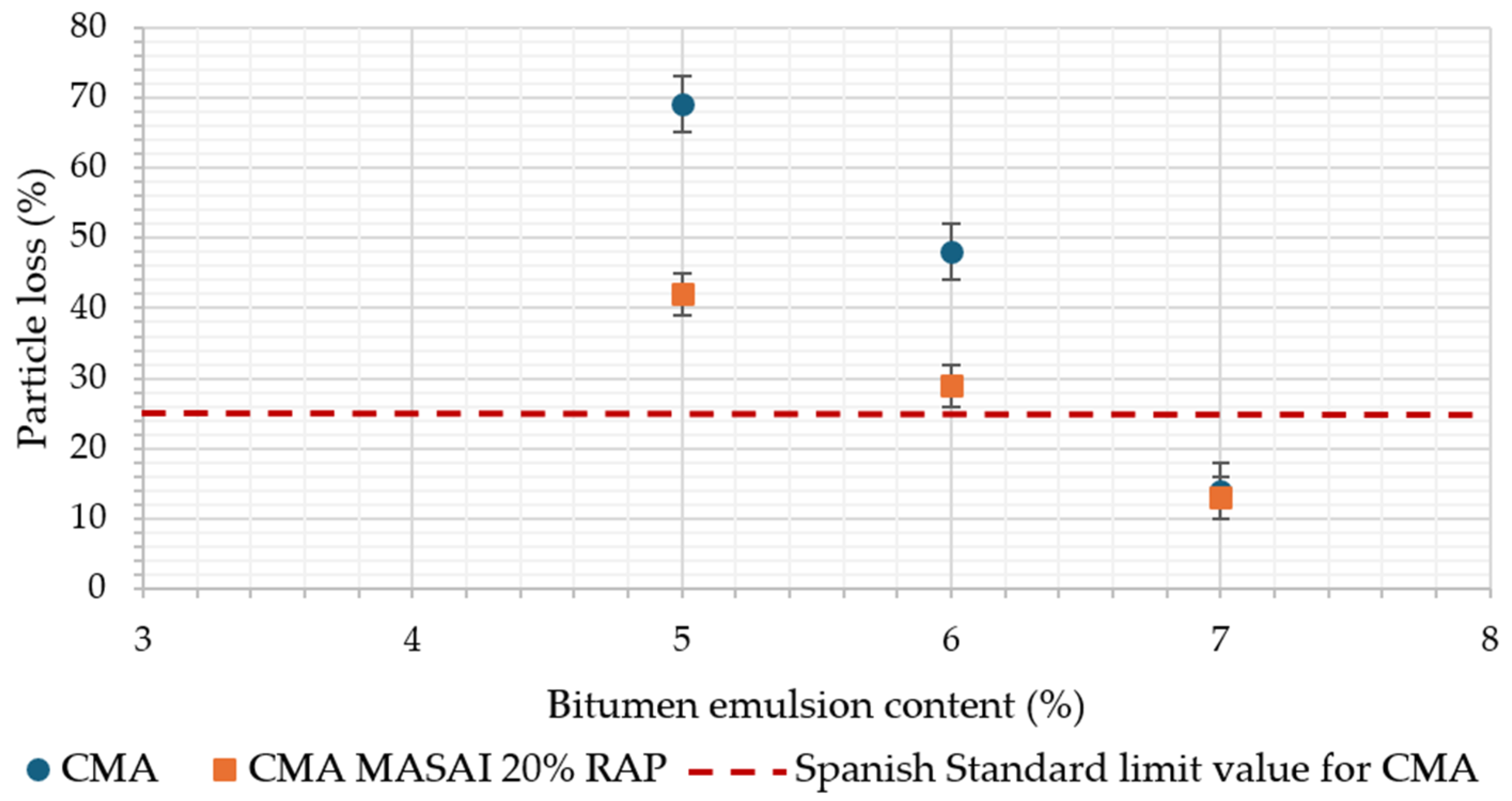
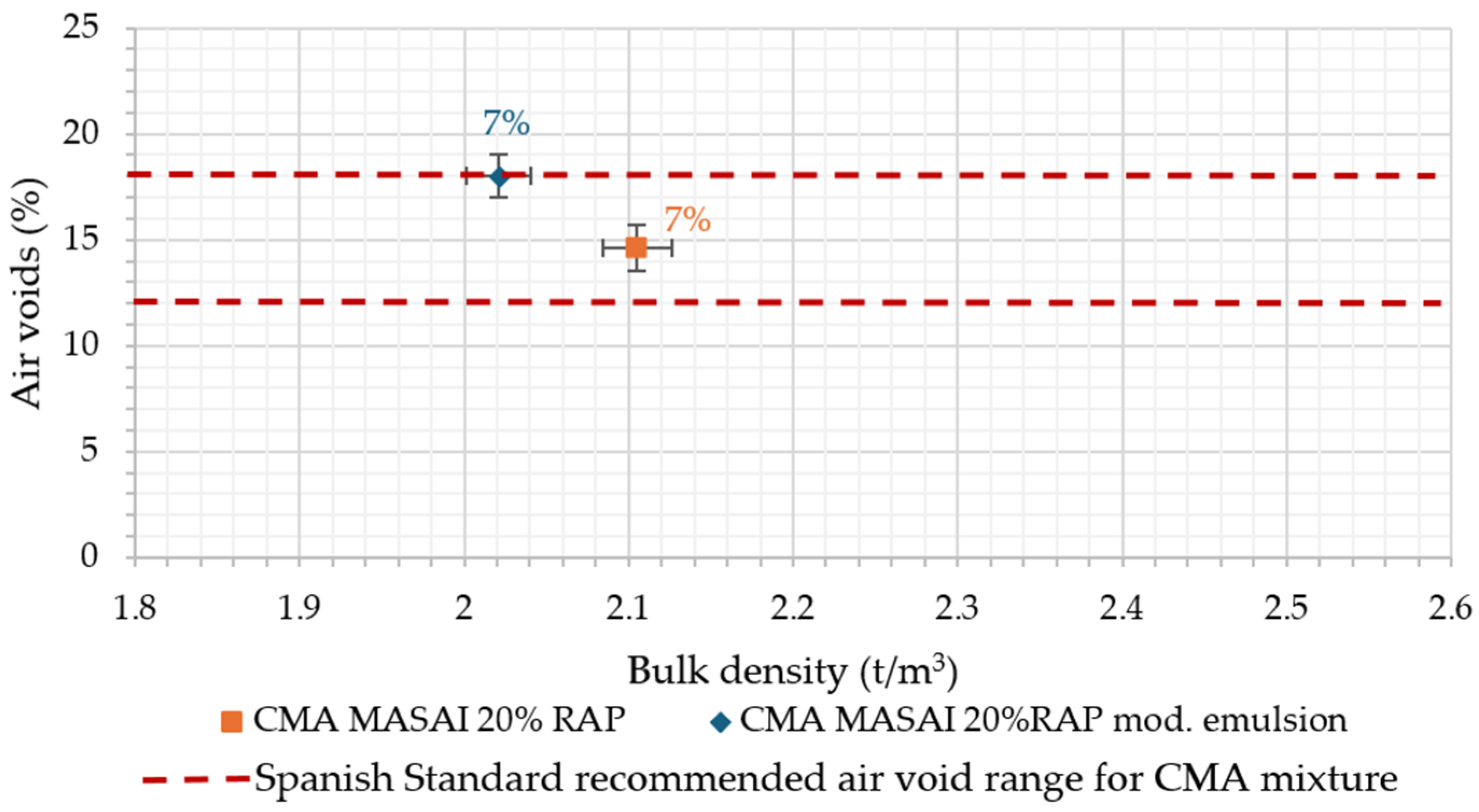
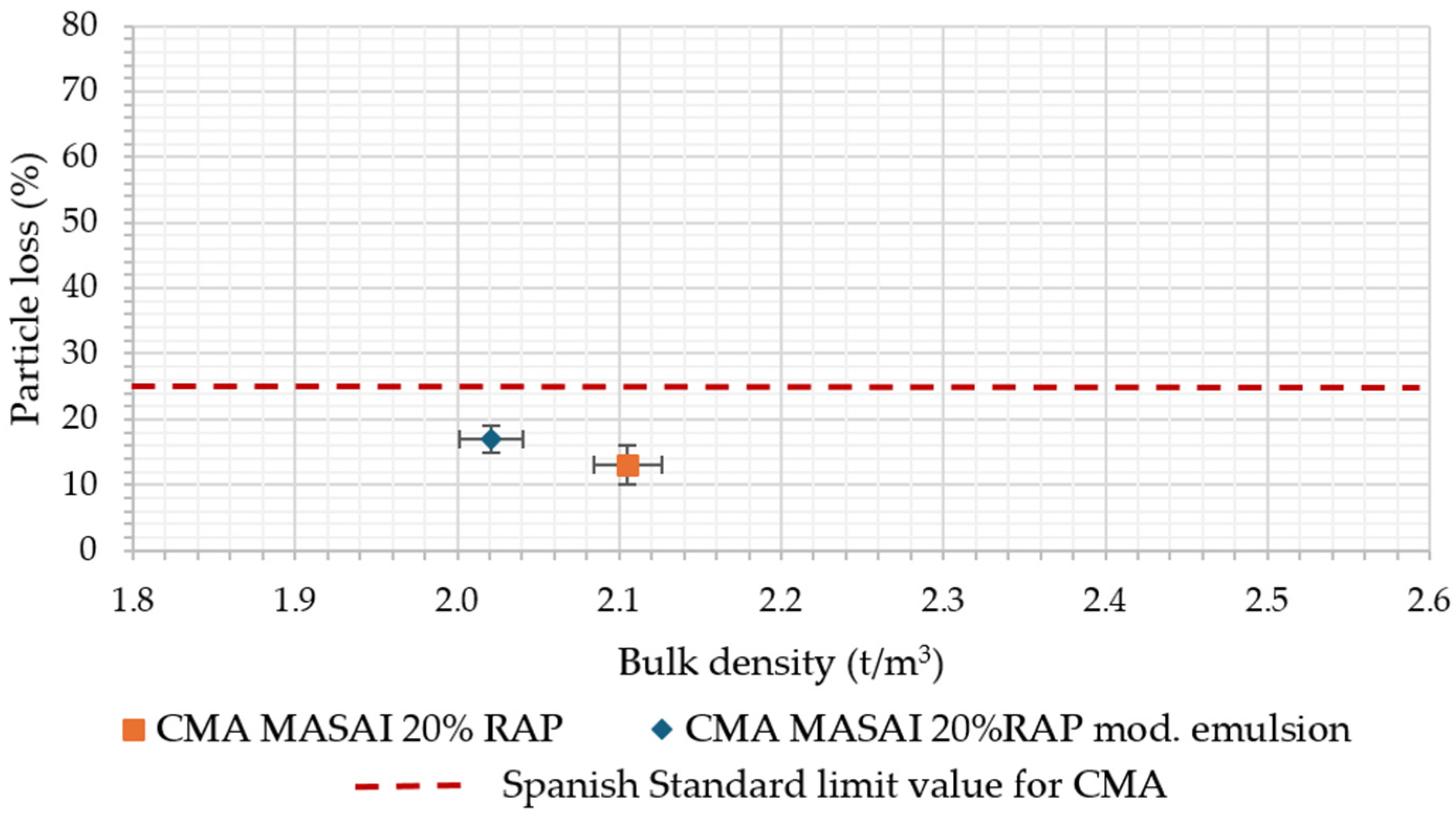
- Emulsion content is a key parameter in improving the wear resistance of MASAI mixtures produced at ambient temperature. As the emulsion content increases, the percentage of particle loss decreases, reaching an optimum at 7% emulsion.
- -
- The presence of RAP does not affect the mechanical performance of open-graded mixtures produced at ambient temperature.
- -
- It was demonstrated that the presence of an optimal emulsion content has a greater influence on the mechanical properties of these mixtures than the type of emulsion used.
- -
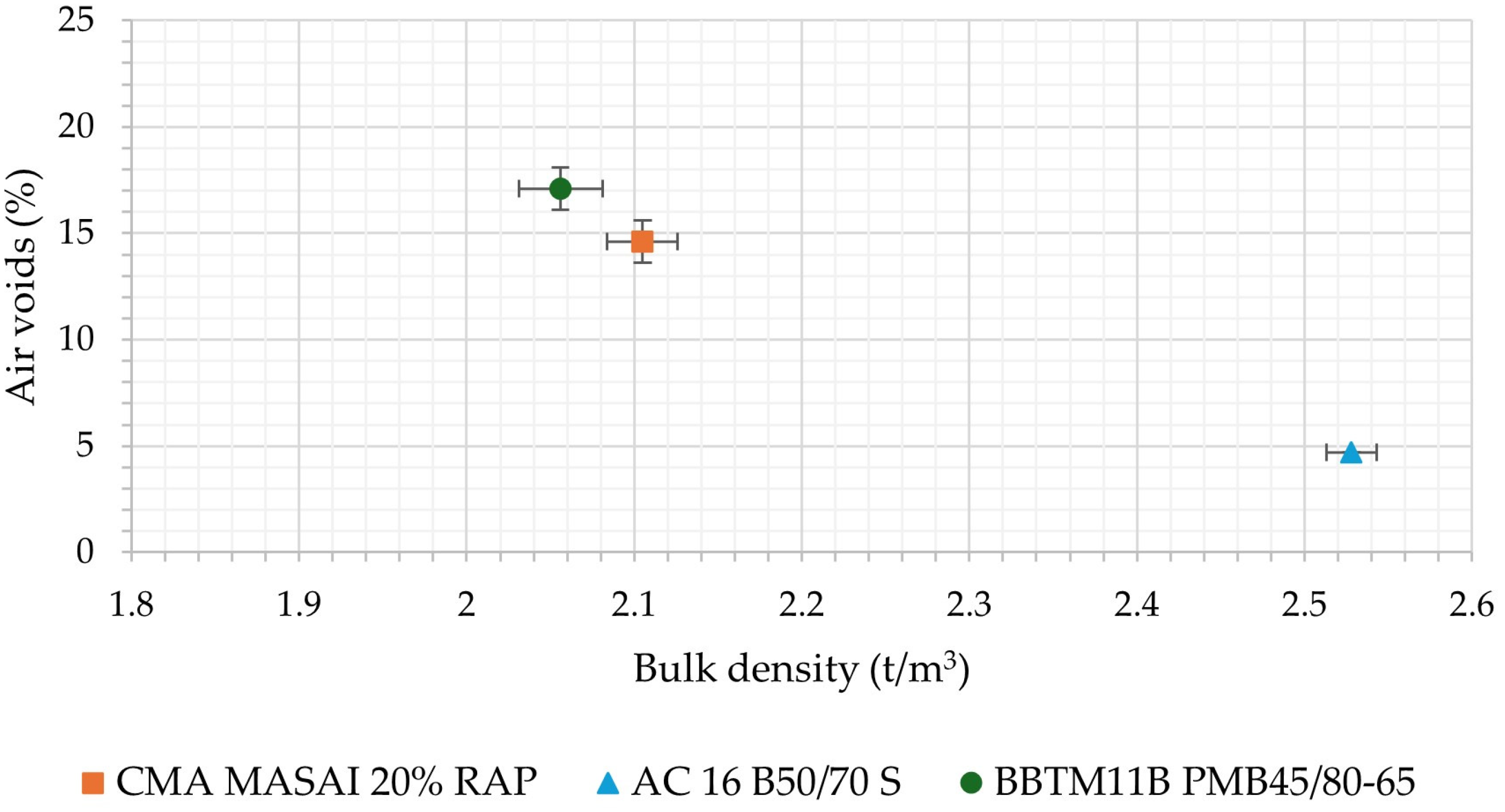
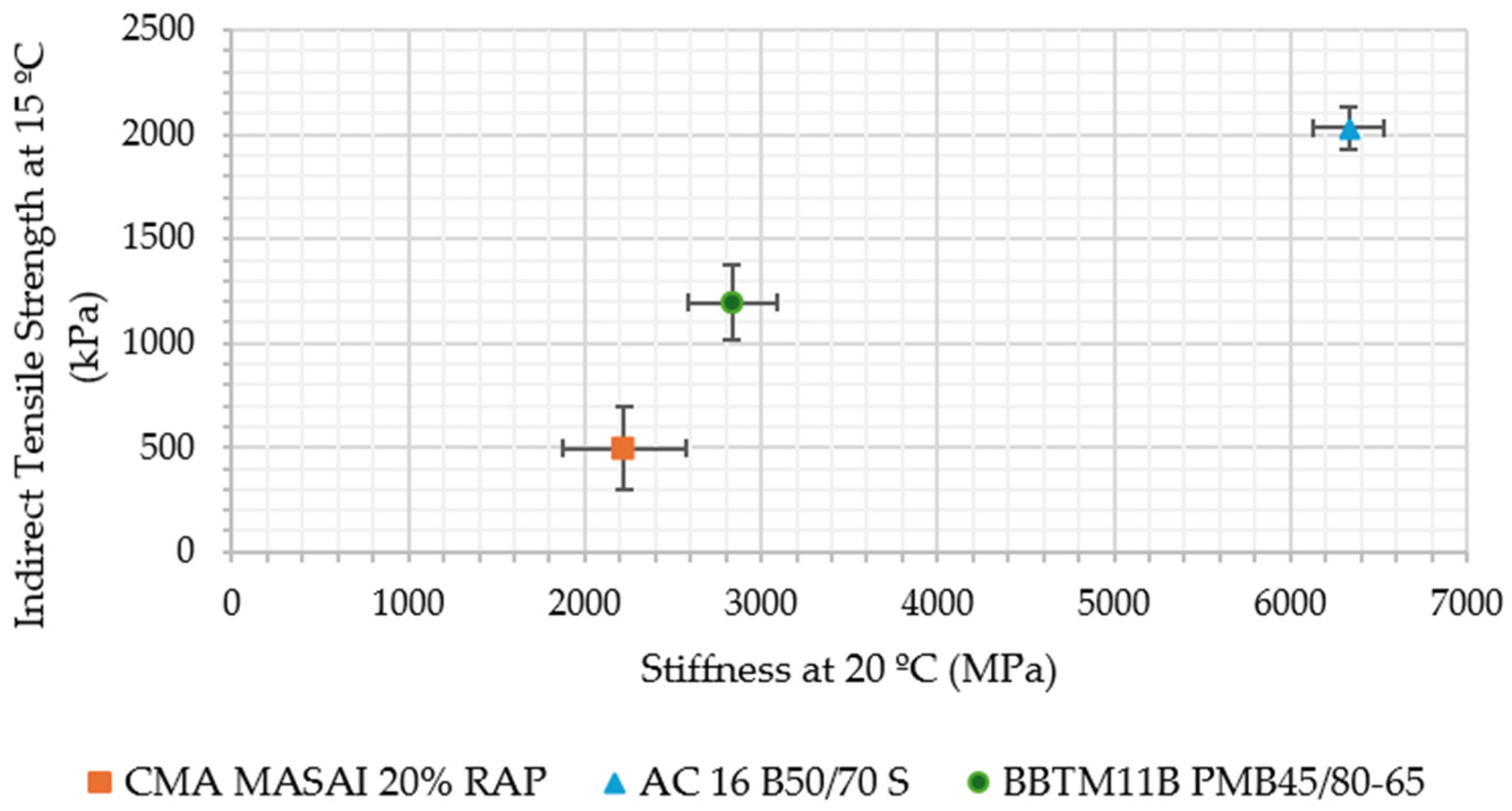
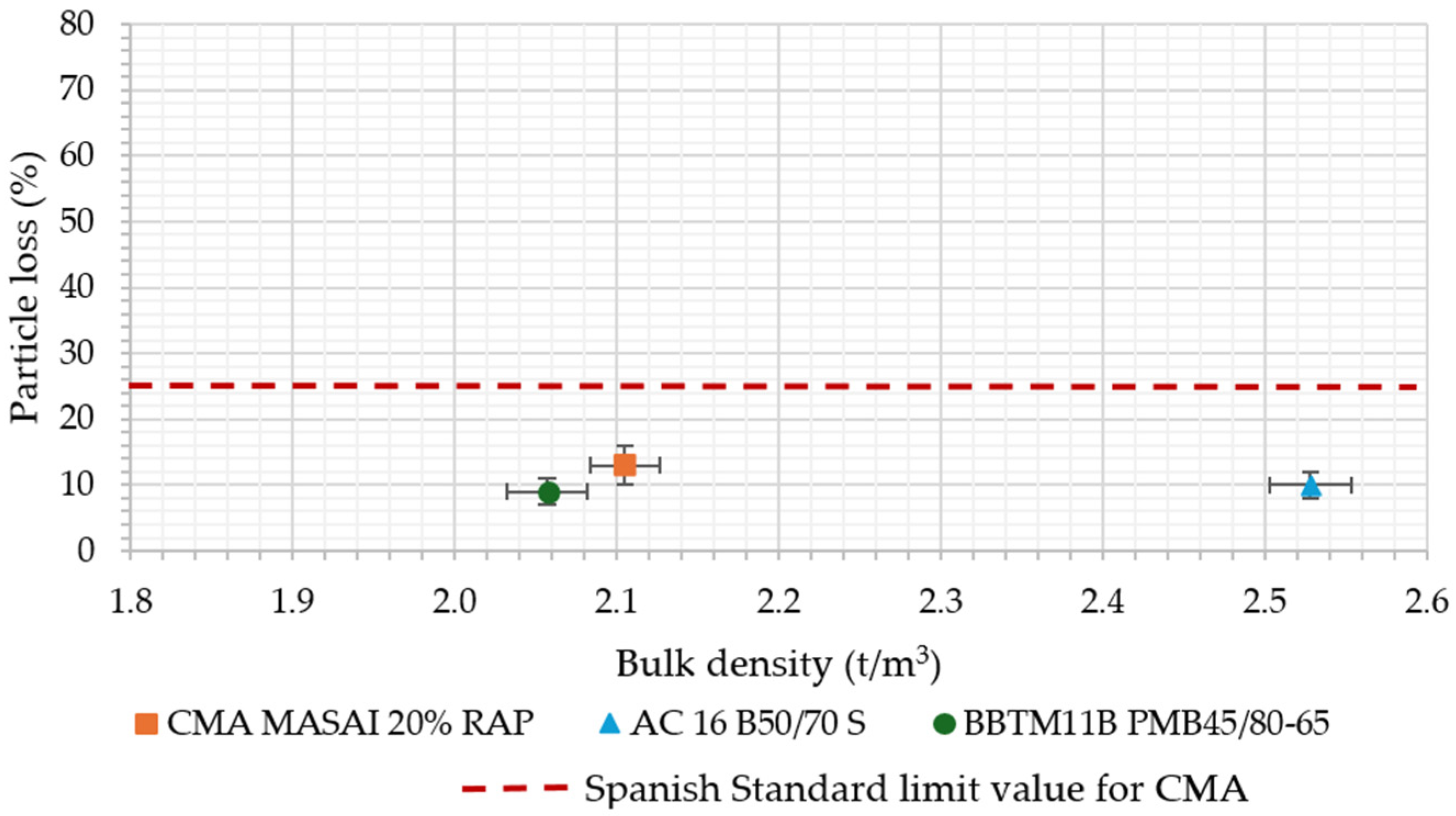
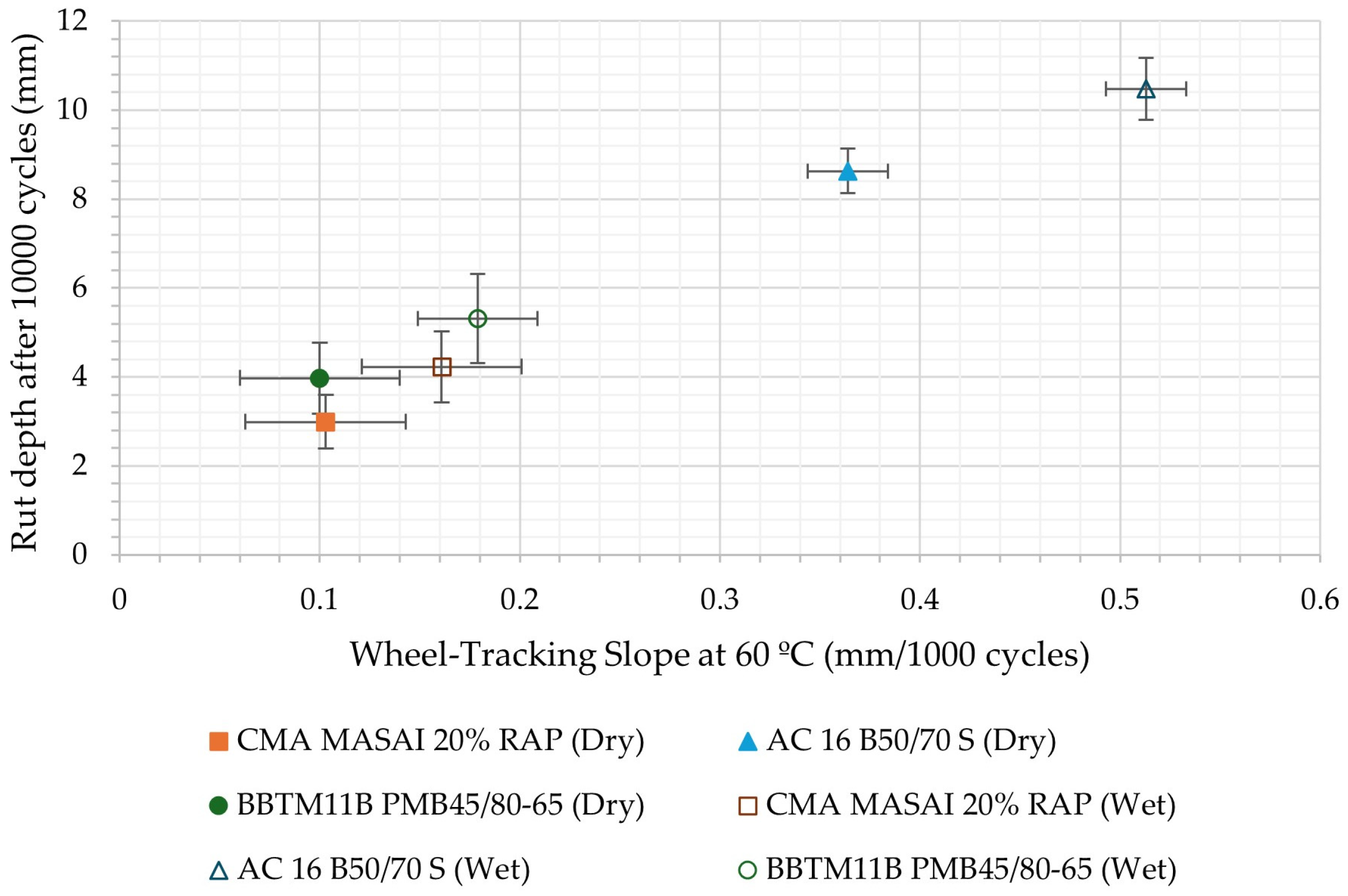
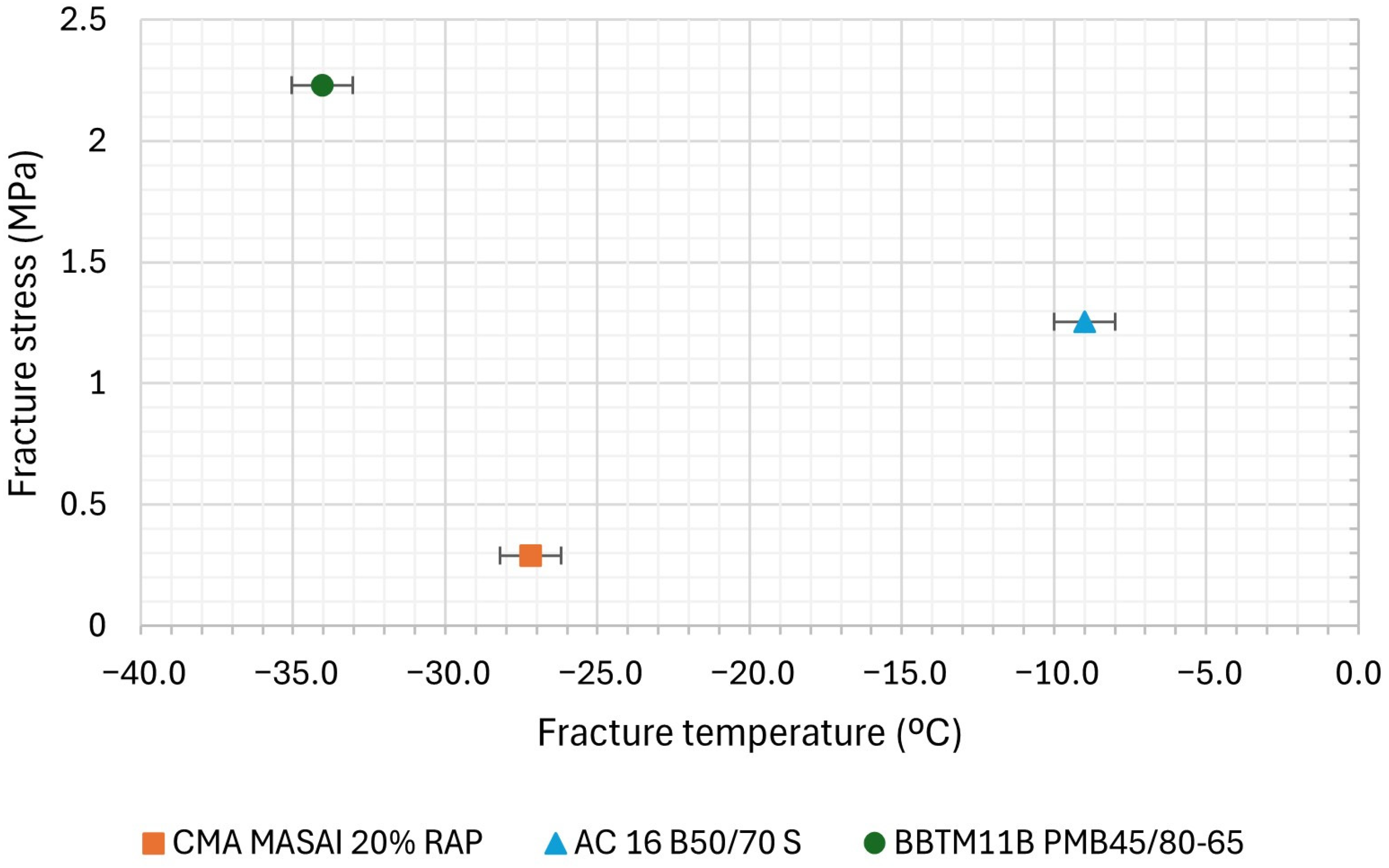
- The dense-graded AC mixture exhibited the highest stiffness and indirect tensile strength due to its low air void content, although this also resulted in a more brittle response, particularly under low-temperature conditions. Among mixtures with comparable air void contents, the BBTM 11B outperformed the CMA MASAI in stiffness and tensile strength, which can be attributed to its hot-mix production process and the use of a polymer-modified binder. In contrast, the CMA MASAI mixture displayed particle loss, permanent deformation, and moisture susceptibility comparable to those of conventional hot-mix references, demonstrating satisfactory surface durability and resistance to rutting. Based on these considerations, these materials could represent more sustainable and competitive solutions for the rehabilitation of pavements that do not require structural restoration.
Author Contributions
Funding
Data Availability Statement
Conflicts of Interest
References
- Rubio, M.C.; Martínez, G.; Baena, L.; Moreno, F. Warm Mix Asphalt: An overview. J. Clean. Prod. 2012, 24, 76–84. [Google Scholar] [CrossRef]
- Moreno, F.; Sierra, F.J.; Sol, M.; Rubio, M.C. MASAI: Sustainable, automated and intelligent asphalt materials. The way to the next generation of asphalt pavements. Road Mater. Pavement Des. 2023, 24, 486–505. [Google Scholar] [CrossRef]
- Meena, P.; Ransinchung, G.D.R.N.; Kumar, P. An ideal cold mix asphalt for road pavement. Innov. Infrastruct. Solut. 2025, 10, 342. [Google Scholar] [CrossRef]
- Neupane, P.; Wu, S. A comprehensive review of moisture damage in asphalt mixtures: Mechanisms, evaluation methods, and mitigation strategies. Constr. Build. Mater. 2025, 471, 140740. [Google Scholar] [CrossRef]
- Chu, F.; Li, Q.; Sun, C.; Luo, Y.; Li, J.; Feng, J.; Zhang, H. Investigation on the pavement performance and application of cold mix emulsified asphalt mixture in the surface layer. J. Clean. Prod. 2025, 507, 145542. [Google Scholar] [CrossRef]
- Shantharam, A.; Kataware, A.V. Study on design and performance evaluation of cold stone matrix asphalt-A high performance cold mix asphalt. Constr. Build. Mater. 2025, 487, 142062. [Google Scholar] [CrossRef]
- Jain, S.; Singh, B. Cold mix asphalt: An overview. J. Clean. Prod. 2021, 280, 124378. [Google Scholar] [CrossRef]
- Akshaya Krishna, N.; Marathe, S.; Mithanthaya, I.R. Incorporation of Emulsion in Semi-dense Bituminous Concrete for Sustainable Cold Mix-Road Construction. In Recent Advances in Infrastructure Development and Management; Lecture Notes in Civil Engineering, LNCE; Springer: Berlin/Heidelberg, Germany, 2025; Volume 570, pp. 163–173. [Google Scholar]
- Daneshvar, D.; Motamed, A.; Imaninasab, R. Improving fracture and moisture resistance of cold mix asphalt (CMA) using crumb rubber and cement. Road Mater. Pavement Des. 2022, 23, 527–545. [Google Scholar] [CrossRef]
- Thanaya, I.N.A.; Zoorob, S.E.; Forth, J.P. A laboratory Study on Cold-mix, Cold-lay Emulsion Mixtures. Proc. Inst. Civ. Eng.–Transp 2009, 162, 47–55. [Google Scholar] [CrossRef]
- Dash, S.S.; Chandrappa, A.K.; Sahoo, U.C. Design and performance of cold mix asphalt—A review. Constr. Build. Mater. 2022, 315, 125687. [Google Scholar]
- Al Nageim, H.; Dulaimi, A.; Al-Busaltan, S.; Kadhim, M.A.; Al-Khuzaie, A.; Seton, L.; Croft, J.; Drake, J. The development of an eco-friendly cold mix asphalt using wastewater sludge ash. J. Environ. Manag. 2023, 329, 117015. [Google Scholar] [CrossRef] [PubMed]
- Chegenizadeh, A.; Tufilli, A.; Arumdani, I.S.; Budihardjo, M.A.; Dadras, E.; Nikraz, H. Mechanical Properties of Cold Mix Asphalt (CMA) Mixed with Recycled Asphalt Pavement. Infrastructures 2022, 7, 45. [Google Scholar] [CrossRef]
- Behera, A.; Thushara, V.T.; Krishnan, J.M. Linear viscoelastic response of emulsified-asphalt cold recycled mixtures. Mech. Time Depend. Mater. 2024, 28, 3157–3181. [Google Scholar] [CrossRef]
- Xu, S.; Ren, X.; Wu, H.; Zhu, Z.; Yang, Y.; Ling, M. Design and water stability evaluation of cold mix emulsified asphalt mixture under multiple freeze–thaw cycles. J. Mater. Civ. Eng. 2024, 36, 04024212. [Google Scholar] [CrossRef]
- Zhu, C.; Zhang, H.; Guo, H.; Wu, C.; Wei, C. Effect of gradations on the final and long-term performance of asphalt emulsion cold recycled mixture. J. Clean. Prod. 2019, 217, 95–104. [Google Scholar] [CrossRef]
- Ojum, C.; Thom, N. Effect of binder in recycled asphalt on cold mix pavements. Proc. Inst. Civ. Eng. Constr. Mater. 2017, 170, 205–210. [Google Scholar] [CrossRef]
- Yan, J.; Ni, F.; Yang, M.; Li, J. An experimental study on fatigue properties of emulsion and foam cold recycled mixes. Constr. Build. Mater. 2010, 24, 2151–2156. [Google Scholar] [CrossRef]
- UNE-501603; Bitumen and Bituminous Binders. Framework for Specifying Anionic Bituminous Emulsions. Asociación Española de Normalización y Certificación—AENOR: Madrid, Spain, 2013.
- UNE-EN 13808; Bitumen and Bituminous Binders: Framework for Specifying Cationic Bituminous Emulsions. Asociación Española de Normalización y Certificación—AENOR: Madrid, Spain, 2023.
- Asociación Técnica de Emulsiones Bituminosas (ATEB). Pliego de Mezclas Bituminosas Abiertas en Frío; Asociación Técnica de Emulsiones Bituminosas (ATEB): Madrid, Spain, 2005. [Google Scholar]
- UNE-EN 12697-5; Bituminous Mixtures: Test Methods: Part 5: Determination of the Maximum Density. Asociación Española de Normalización y Certificación—AENOR: Madrid, Spain, 2020.
- UNE-EN 12697-6; Bitumious Mixtures: Test Methods: Part 6: Determination of Bulk Density of Bituminous Specimens. Asociación Española de Normalización y Certificación—AENOR: Madrid, Spain, 2022.
- UNE-EN 12697-8; Bitumious Mixtures: Test methods: Part 8: Determination of Void Characteristics of Bituminous Specimens. Asociación Española de Normalización y Certificación—AENOR: Madrid, Spain, 2020.
- UNE-EN 12697-17; Bituminous Mixtures: Test Methods: Part 17: Particle Loss of Porous Asphalt Specimens. Asociación Española de Normalización y Certificación—AENOR: Madrid, Spain, 2018.
- UNE-EN 12697-23; Bitumious Mixtures: Test Methods: Part 23: Determination of the Indirect Tensile Strength of Bituminous Specimens. Asociación Española de Normalización y Certificación—AENOR: Madrid, Spain, 2018.
- UNE-EN 12697-26; Bitumious Mixtures: Test Methods: Part 26: Stiffness. Asociación Española de Normalización y Certificación—AENOR: Madrid, Spain, 2019.
- UNE-EN 12697-22; Bitumious Mixtures: Test Methods: Part 22: Wheel Tracking. Asociación Española de Normalización y Certificación—AENOR: Madrid, Spain, 2022.
- UNE-EN 12697-46; Bitumious Mixtures: Test Methods for Hot Mix Asphalt: Part 46: Low Temperature Cracking and Properties by Uniaxial Tension Test. Asociación Española de Normalización y Certificación—AENOR: Madrid, Spain, 2018.



| Sieve Size (mm) | 31.5 | 22.4 | 16 | 12.5 | 11.2 | 8 | 4 | 2 | 0.5 | 0.25 | 0.063 |
| (% Passing) | 100 | 100 | 86 | 77 | 74 | 62 | 45 | 31 | 13 | 10 | 8.3 |
| Binder content RAP [%] | 4.0 |
| Penetration (25 °C) [0.1 mm] | 8 |
| Softening point [°C] | 85 |
| Property | A67BFM | C67BPF3 MBA |
|---|---|---|
| Binder content (%, EN 1428) | 67 | 67 |
| Maximum residual binder penetration at 25 °C (dmm, EN 1426) | 330 | 220 |
| Minimum residual binder softening point (°C, EN 1427) | 39 | 35 |
| Sieve Size (mm) | 40 | 31.5 | 22.4 | 20 | 16 | 11.2 | 12.5 | 8 | 4 | 2 | 0.5 | 0.25 | 0.063 |
| CMA (% Passing) | 100 | 100 | - | 100 | - | - | 100 | 87 | 43 | 38 | - | - | - |
| CMA MASAI (% Passing) | 100 | 100 | - | 99 | - | - | 95 | 80 | 32 | 26 | - | - | - |
| AC16B50/70S (% Passing) | - | 100 | 100 | - | 99 | - | 83 | 54 | 35 | 12 | 9 | 4.0 | |
| BBTM11B PMB45/80-65 (% Passing) | 100 | 100 | 100 | 100 | 100 | 97 | - | 59 | 26 | 19 | 10 | - | 5.1 |
Disclaimer/Publisher’s Note: The statements, opinions and data contained in all publications are solely those of the individual author(s) and contributor(s) and not of MDPI and/or the editor(s). MDPI and/or the editor(s) disclaim responsibility for any injury to people or property resulting from any ideas, methods, instructions or products referred to in the content. |
© 2026 by the authors. Licensee MDPI, Basel, Switzerland. This article is an open access article distributed under the terms and conditions of the Creative Commons Attribution (CC BY) license.
Share and Cite
García Travé, G.; Tauste Martínez, R.; Moreno Navarro, F.; Rubio Gámez, M.d.C. Analysis of the Viability of Manufacturing MASAI Mixtures at Ambient Temperature. Infrastructures 2026, 11, 75. https://doi.org/10.3390/infrastructures11030075
García Travé G, Tauste Martínez R, Moreno Navarro F, Rubio Gámez MdC. Analysis of the Viability of Manufacturing MASAI Mixtures at Ambient Temperature. Infrastructures. 2026; 11(3):75. https://doi.org/10.3390/infrastructures11030075
Chicago/Turabian StyleGarcía Travé, Gema, Raúl Tauste Martínez, Fernando Moreno Navarro, and María del Carmen Rubio Gámez. 2026. "Analysis of the Viability of Manufacturing MASAI Mixtures at Ambient Temperature" Infrastructures 11, no. 3: 75. https://doi.org/10.3390/infrastructures11030075
APA StyleGarcía Travé, G., Tauste Martínez, R., Moreno Navarro, F., & Rubio Gámez, M. d. C. (2026). Analysis of the Viability of Manufacturing MASAI Mixtures at Ambient Temperature. Infrastructures, 11(3), 75. https://doi.org/10.3390/infrastructures11030075