Article

Performance Evaluation and Microstructural Analysis of Eco-Friendly Self-Compacting Geopolymer Concrete

1
Department of Civil and Architectural Technology, Taif 26556, Saudi Arabia
2
Structural Engineering Department, Mansoura University, Mansoura 35516, Egypt
3
School of Civil and Mechanical Engineering, Curtin University, Perth 6845, Australia
4
Faculty of Engineering, Mansoura National University, New Mansoura 35516, Egypt
5
Civil and Environmental Engineering Department, United Arab Emirates University, Al Ain 15551, United Arab Emirates
*
Author to whom correspondence should be addressed.
Infrastructures 2026, 11(3), 74; https://doi.org/10.3390/infrastructures11030074

Submission received: 30 December 2025 / Revised: 20 February 2026 / Accepted: 22 February 2026 / Published: 25 February 2026

Abstract

The rising environmental burden of Portland cement production has intensified the demand for eco-friendly binders that support sustainable construction. This study investigates the development and performance of eco-friendly self-compacting geopolymer concrete (SCGC) produced from industrial by-products, including fly ash (FA), ground granulated blast furnace slag (GGBFS), silica fume (SF), metakaolin (MK), and glass waste powder (GWP). Twenty-one binder formulations were evaluated for fresh-state workability, mechanical performance, durability, and microstructural characteristics under different curing regimes. Fresh properties were assessed using slump flow, V-funnel, L-box, and J-ring tests, while hardened-state evaluations included compressive and flexural strength, Young’s modulus, and water absorption. Scanning electron microscopy (SEM) and X-ray diffraction (XRD) analysis were performed on selected mixes to examine microstructural features and crystalline phase development. Results highlight a strong dependency of SCGC performance on binder composition and curing conditions. Mixes rich in GGBFS and SF demonstrated superior mechanical and durability performance, achieving compressive strengths of up to 102.4 MPa under water curing and 107.6 MPa under heat curing, along with negligible water absorption, reflecting a dense and well-developed gel matrix. SEM micrographs confirmed homogeneous, compact microstructures in high-performing mixes, while XRD analysis revealed broad amorphous humps indicative of well-formed N-A-S-H and C-A-S-H gel phases with minimal crystalline residues. In contrast, FA-dominant mixes displayed delayed strength development, and MK-GWP-rich systems exhibited higher porosity and reduced strength. This study underscores the significance of precursor synergy, optimized curing strategies, and microstructural refinement in tailoring SCGC for high-performance, durable, and low-carbon applications in sustainable construction with values ranged from 38.64 GPa (Mix 21) to 25.04 GPa (Mix 19) at 28 days. Stiffer mixes corresponded to denser matrices containing GGBFS and silica fume, whereas lower values were linked to weaker bonding and higher porosity.

1. Introduction

The global construction sector significantly contributes to environmental degradation, particularly due to the widespread use of ordinary Portland cement (OPC), responsible for approximately 8% of global CO2 emissions [1,2]. The production of OPC is highly energy-intensive and involves limestone calcination, which releases substantial amounts of greenhouse gases [2]. As sustainability becomes a primary concern in infrastructure development, the search for alternative, low-carbon cementitious materials has intensified [3]. In this context, geopolymer concrete has emerged as a promising substitute, offering substantial reductions in carbon emissions and utilizing industrial waste streams, such as fly ash and slag, as aluminosilicate sources [4,5]. Self-compacting geopolymer concrete (SCGC) integrates the environmental advantages of geopolymer concrete with the rheological benefits of self-consolidating concrete [6]. SCGC eliminates the need for mechanical vibration, improves placement in congested reinforcement zones, and enhances surface finishes. Its dual ecological and functional characteristics make it a highly attractive modern and sustainable construction material [7].
The development of SCGC has garnered increasing attention as a viable strategy for achieving sustainable and high-performance construction materials [4,8]. Research into SCGC has expanded rapidly over the past decade, focusing on precursor selection, rheology optimization, strength development, and long-term durability [9,10]. While numerous studies have demonstrated the benefits of binary and ternary binder systems, the performance of multi-precursor blends remains underexplored, particularly under varied curing conditions [11].
The core of any geopolymer system lies in the chemical reactivity and synergistic interaction of its aluminosilicate precursors [12]. Fly ash (FA), particularly Class F with low calcium content, remains the most widely studied material due to its spherical morphology, high silica content, and pozzolanic activity [13]. Numerous studies have demonstrated that FA-based SCGC offers high flowability and excellent long-term strength, though it suffers from slow setting and limited early-age performance under ambient curing [8,11]. Ground granulated blast furnace slag (GGBFS) has been extensively employed as a partial replacement or co-binder to address this limitation [9]. Rich in calcium and amorphous phases, GGBFS promotes early strength development through hydropolymerization and hydration reactions. For example, Demie et al. [14] observed a 25% increase in compressive strength when 40% of FA was replaced with GGBFS, reaching 58 MPa at 28 days. Similarly, Ghafoor and Fujiyama [8] reported enhanced stiffness and setting time in FA–slag blends, enabling SCGC to be viable for accelerated construction schedules.
Beyond FA and GGBFS, reactive pozzolans such as silica fume (SF) and metakaolin (MK) have been explored for their filler effect, reactivity, and ability to densify the microstructure. Sherwani et al. [9] demonstrated that adding nano-silica and steel fibers improved flexural strength by 20% and reduced permeability by 18%, underscoring the significance of microstructural engineering. However, these studies broadly assess ternary combinations, and the performance of quaternary or quinary systems remains underexplored. Furthermore, the inclusion of glass waste powder (GWP), despite its high silica content and sustainable potential, is scarcely addressed. Recent efforts by Ouldkhaoua et al. [15] and Li et al. [16] indicate that recycled glass particles can contribute to strength and chemical stability, but their behavior in SCGC formulations remains insufficiently documented.
The type, concentration, and ratio of alkaline activators critically influence geopolymerization kinetics, gel structure, and workability [17,18,19]. Sodium silicate (Na2SiO)/sodium hydroxide (NaOH) ratio, NaOH molarity, and the activator-to-binder (A/B) ratio dictate dissolution rates and setting behavior [11]. Aliabdo et al. [11] noted that high NaOH concentrations (10–16 M) accelerated early strength but increased mix viscosity and reduced flowability, necessitating careful dosage control. Patel and Shah [20] optimized the Na2SiO3/NaOH ratio to 2:1 for improved workability in FA-slag systems, aligning with Boukendakdji et al. [21], who emphasized the effect of superplasticizer type and activator concentration on rheology. Nevertheless, few studies systematically correlate activator parameters with multi-precursor binder systems, especially when SF, MK, or GWP are present. Moreover, while most researchers fix the activator-to-binder ratio for simplicity, this may overlook opportunities for rheological tuning when more than three binders are involved.
Workability is a critical property of SCGC, with performance typically evaluated against European federation for specialist construction chemicals and concrete systems (EFNARC) standards for slump flow (650–800 mm), passing ability (L-box > 0.8), and viscosity (V-funnel < 10 s). Irum and Shabbir [10] demonstrated that FA–GGBFS-based geopolymer concrete, incorporating recycled aggregates, when subjected to optimized curing conditions, achieved satisfactory strength and durability performance meeting structural standards. However, higher proportions of SF or MK increase viscosity due to their finer particle size and high surface area [9]. Current literature provides limited data on GWP-rich systems, and parameters such as thixotropy and segregation resistance, which are crucial for field applications, remain underreported.
Compressive strength is one of the most reported performance indicators for SCGC. Binary and ternary systems incorporating FA and GGBFS often achieve strengths above 60 MPa at 28 days [10,14]. Sherwani et al. [9] and Ghafoor and Fujiyama [8] further demonstrated that incorporating nano-silica and slag-rich binders enhances early-age strength through accelerated geopolymer gel formation. However, studies that link compressive strength trends to binder composition and curing-dependent phase evolution remain limited. Flexural strength and static elastic modulus, critical for structural applications, have been explored less frequently and often with inconsistent methodologies, limiting their integration into predictive models. Nikmehr et al. [22] demonstrated that SCGC using recycled aggregates and high-alkali activators achieved flexural strength of 5–8 MPa, but their results were not correlated with binder chemistry or modulus data. Furthermore, elastic modulus measurements are often inconsistently reported or omitted, limiting structural modeling and design applications.
Curing plays a decisive role in geopolymerization, especially in low-calcium systems. Heat curing (60–90 °C) accelerates strength gain but may induce shrinkage and increase energy demands [8]. Patel and Shah [20] found that FA-based SCGC required 24–48 h of thermal curing to meet early strength requirements, whereas slag-based systems performed well under ambient conditions. Irum and Shabbir [10] found that hot curing (80 °C for 24 h) leads to notably higher mechanical performance (compressive, tensile, and flexural strength) and improved durability (lower water absorption and higher electrical resistivity) in fly ash/GGBFS geopolymer concretes with recycled fine and coarse aggregates, compared with ambient curing. This suggests that elevated curing temperatures can effectively compensate for weaker aggregates and maintain desirable microstructural densification.
Nevertheless, comparative evaluations of water- and heat-curing for identical binder systems remain rare, hindering the development of standardized curing guidelines. It is challenging to recommend curing strategies tailored to SCGC with mixed precursors or to predict long-term durability confidently [23].
Durability indicators such as water absorption, sorptivity, and chloride ingress resistance are essential for SCGC applications in marine or aggressive environments. Studies indicate that well-optimized binder systems can achieve water absorption below 2%, reflecting dense gel networks and superior durability [9,24]. Amran et al. [24] emphasized that nano-modified SCGC exhibited reduced porosity and long-term strength retention. However, limited work has examined the combined effects of GWP, MK, and multi-precursor blends on long-term performance, leaving a critical research gap in predicting durability from binder composition. Recent studies show that silica fume can refine pore structure and reduce permeability by enhancing geopolymer gel formation, but its effect is sensitive to dosage and system composition, leading to inconsistent permeability trends in low-calcium fly-based geopolymers [25].
Although significant progress has been made in advancing SCGC, several critical research gaps remain. Existing studies primarily emphasize binary and ternary binder systems, while systematic exploration of quaternary and quinary blends remains limited [6,26]. These higher-order combinations have the potential to deliver enhanced synergistic effects through improved precursor interactions, yet their role in optimizing SCGC performance is underexplored [27]. In addition, the GWP has been scarcely utilized in SCGC formulations, despite its potential to enhance sustainability and mechanical performance. Likewise, comparative assessments of different curing regimes (ambient air, water, and elevated temperature) applied to identical binder compositions are rare, restricting the ability to establish reliable guidelines for practical implementation.
Furthermore, the relationships among binder chemistry, gel-phase development, and key performance indicators, such as elastic modulus, permeability, and long-term durability, are not well established [6,28]. Much of the current research addresses these parameters in isolation, with few studies integrating fresh, mechanical, and durability properties within a unified experimental framework. This fragmentation hinders the development of holistic insights into SCGC behavior throughout its life cycle. These limitations underscore the need for comprehensive studies that bridge binder composition, curing conditions, microstructural evolution, and multi-performance evaluation. This study addresses these gaps through an integrated experimental and analytical framework.

Objectives and Novelty

The main objective of this research is to investigate the development and performance of SCGC incorporating multiple industrial by-products, FA, GGBFS, SF, MK, and GWP, across diverse binder configurations. Specifically, the study aims to:
  • Evaluate fresh properties (flowability, viscosity, passing ability),
  • Assess mechanical performance (compressive strength, flexural strength, elastic modulus),
  • Examine durability (water absorption and permeability) under curing regimes: water and elevated temperature.
The novelty of this work lies in its holistic, multi-dimensional approach to SCGC design and evaluation. Unlike most prior research, which has been confined to binary or ternary binders, this study extends to quaternary and quinary systems, enabling a broader assessment of precursor synergy. The inclusion of GWP introduces a sustainable, silica-rich material that has been largely overlooked in SCGC research, thereby strengthening the contribution to circular economy practices. Another distinctive aspect is the integration of X-ray diffraction (XRD) analysis to investigate gel phase formation and unreacted residues [29]. The study provides mechanistic insights into calcium–aluminosilicate interactions governing matrix densification and permeability by correlating mineralogical patterns with macroscopic performance. Several formulations demonstrated exceptional results, including compressive strengths of 107.6 MPa under heat curing and 75.8 MPa under water curing, along with near-complete impermeability, reflecting dense, well-developed gel matrices.
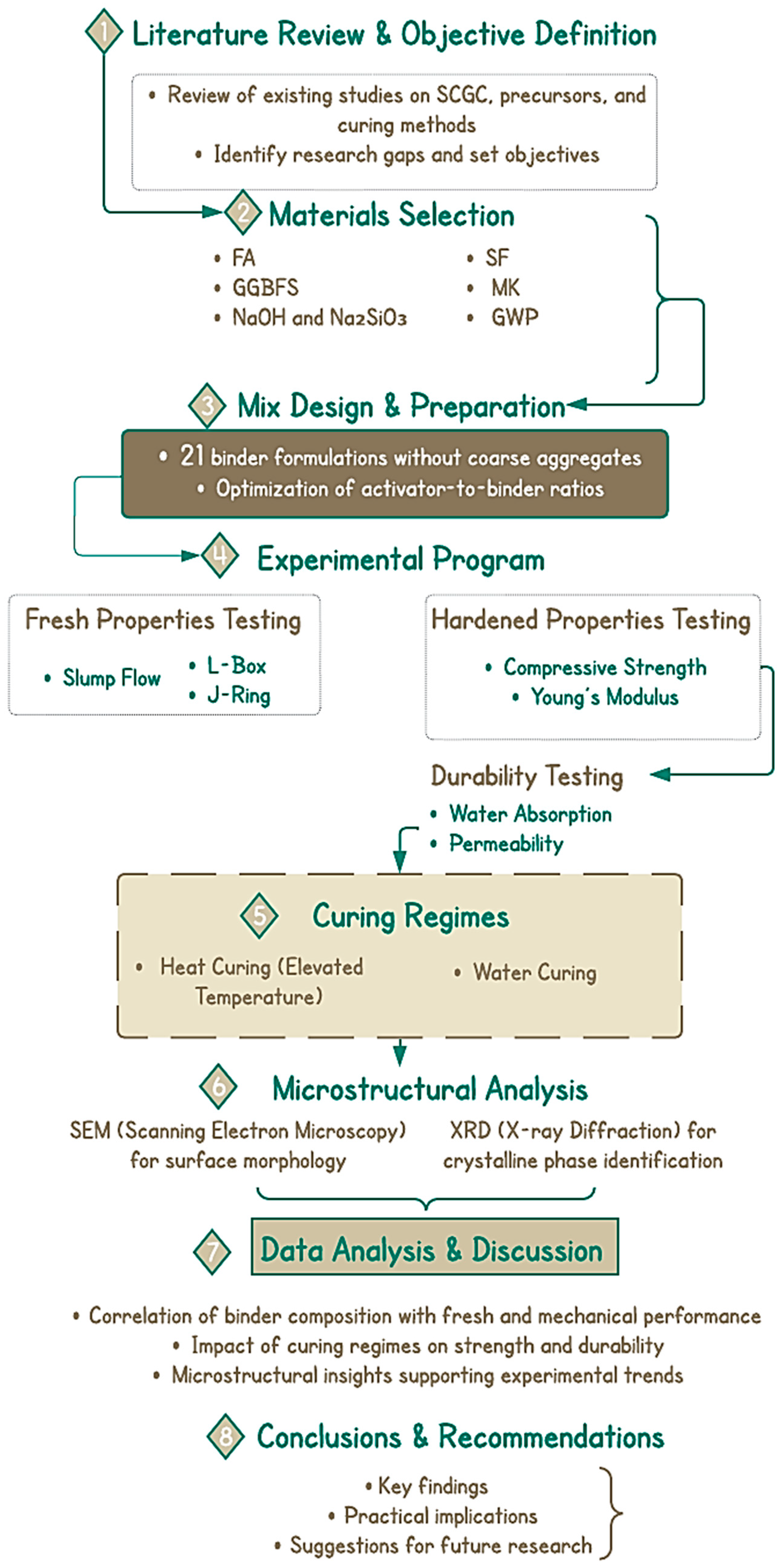
The framework illustrated in Figure 1 highlights the systematic pathway from material selection to microstructural analysis. Ultimately, this study aims to establish practical mix-design strategies and curing guidelines to accelerate the adoption of SCGC in high-performance, sustainable construction applications.

2. Materials and Methods

2.1. Materials

The SCGC mixtures in this study were formulated using five aluminosilicate precursors sourced from industrial waste and supplementary cementitious materials: FA, GGBFS, SF, MK, and GWP. These binders were selected for their chemical reactivity, availability, and environmental benefits in reducing the carbon footprint of cementitious materials.
  • FA: Low-calcium class-F fly ash was sourced from a local power plant. It exhibited a mean particle size of approximately 12 µm, with a chemical composition dominated by silica (SiO2), alumina (Al2O3), and minor iron oxides. Its spherical morphology and pozzolanic behavior enhance workability and support long-term strength gain [30].
  • GGBFS: Obtained from a steel manufacturing facility, the GGBFS was finely ground (<45 µm) and characterized by high calcium and aluminosilicate content. Its latent hydraulic reactivity promotes rapid geopolymer gel formation and early strength development [21].
  • SF: Commercial silica fume (<1 µm) was incorporated to refine the pore structure and densify the matrix, leveraging its high surface area and amorphous silica content for improved mechanical and durability performance [31].
  • MK: Produced from high-purity calcined kaolinite, the MK had a median particle size of ~2–5 µm and high alumina content. It enhanced reactivity and strength gain and optimized gel-phase formation [32].
  • GWP: Cleaned, dried, and ground recycled glass (<75 µm) was introduced as a sustainable binder component, contributing high silica content and promoting a circular economy approach.
The alkaline activator comprised a 12M NaOH solution, prepared 24 h in advance, and a Na2SiO3 solution with a silica modulus (SM = SiO2/Na2O) of 2.5. These were combined in a 2:1 Na2SiO3/NaOH ratio, optimized for balanced workability and strength in preliminary studies. A polycarboxylate ether-based superplasticizer (SP) was added at 0.5–1.5% by binder weight to ensure flowability without segregation. Table 1 summarizes the physical and chemical characteristics of the binder materials used. The oxide compositions reported are limited to the major oxides relevant to geopolymerization and were obtained from material supplier data; minor oxides (e.g., Na2O/K2O, MgO, SO3) and loss on ignition (LOI) were not consistently available for all materials and are therefore not included.
The Blaine fineness of each precursor was considered in interpreting the geopolymerization behavior. Finer materials, such as silica fume and metakaolin, provide higher specific surface areas, enhancing dissolution rates and accelerating gel formation, which contributes to improved early-age strength and matrix densification [4]. In contrast, coarser precursors such as fly ash and glass waste powder generally exhibit slower dissolution rates, contributing more prominently to long-term strength development rather than early reactivity while also affecting pore structure evolution and microstructural continuity [4,8].

2.2. Mix Proportions

A total of 21 SCGC mix designs were formulated to evaluate the influence of binder composition on the fresh, mechanical, and durability properties of the mixtures. These designs incorporated the five selected precursors in varying binary, ternary, quaternary, and quinary combinations, while maintaining a constant total binder content of 500 kg/m3 across all formulations.
For all mixtures, the A/B was fixed at 0.50, and the Na2SiO3/NaOH ratio was maintained at 2.0 to ensure consistency. The liquid-to-binder ratio (L/B), including the alkaline activator solution and additional water (if required), was adjusted to achieve the desired workability in accordance with EFNARC guidelines for self-compacting concrete [33]. No coarse aggregates were used to isolate the binder matrix’s influence during this experimentation phase. Instead, zone II fine sand was incorporated at a binder-to-sand weight ratio of 1:1.5.
A representative subset of the mix proportions is provided in Table 2, summarizing the binder types and contents, activator ratios, superplasticizer dosages, and targeted flow properties. The mix codes (Mix 1 to Mix 21) correspond to the specific binder combinations and are consistently referenced throughout the experimental program and analysis.
The selection of binder proportions was guided by established findings in the geopolymer literature concerning precursor synergy, calcium availability, and workability–strength trade-offs. Previous studies have shown that incorporating GGBFS at moderate-to-high levels enhances early-age strength and stiffness through calcium-assisted gel formation, while fly ash improves flowability and long-term strength development [4,8,9,14]. The inclusion of silica fume and metakaolin was informed by their reported roles in increasing reactive silica and alumina contents, refining pore structure, and improving matrix densification when used within controlled dosage ranges [9,25,31]. Glass waste powder was incorporated based on emerging studies demonstrating its potential as a supplementary silica source in alkali-activated systems, particularly when combined with calcium-rich binders [15,16].
Accordingly, the binder proportions used in this study were designed to systematically investigate the combined effects of calcium-rich, aluminosilicate-rich, and silica-rich precursors while remaining consistent with mix-design ranges reported in previous self-compacting geopolymer studies [4,9,10].
While the adopted binder ranges align with previous studies, minor adjustments were made during preliminary trials to ensure adequate self-compactability and mixture stability in the absence of coarse aggregates, consistent with practices reported in prior geopolymer mortar investigations [8,9].

2.3. Mixing and Casting Procedures

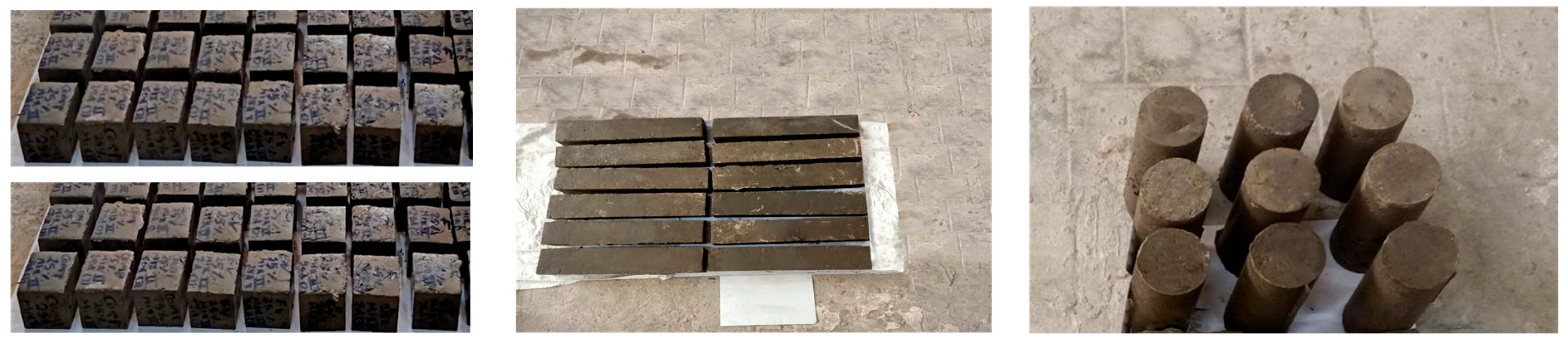
The mixing protocol was carefully standardized for all SCGC mixtures to ensure consistency and to minimize variability in rheological and mechanical performance [34]. Prior to mixing, all dry binder components, FA, GGBFS, SF, MK, and GWP, were pre-weighed and thoroughly homogenized in their dry state for two minutes using a laboratory-scale mechanical mixer, ensuring uniform particle dispersion. The alkaline activator solution, composed of NaOH and Na2SiO3 and prepared 24 h in advance, was gradually introduced into the dry blend while the mixer operated [27]. Mixing continued for five minutes to promote the complete dissolution of aluminosilicate precursors and initiate the geopolymerization reaction. During this stage, a polycarboxylate-based superplasticizer was added incrementally to adjust the mixture’s rheology and achieve the desired workability and self-compactability, while preventing segregation. Once a uniform and flowable paste was obtained, the fresh SCGC was cast into molds of various dimensions, see Figure 2; Cubic specimens (50 × 50 × 50 mm) for compressive and elastic modulus testing, prismatic specimens (40 × 40 × 160 mm) for flexural strength testing, and cylindrical specimens (150 × 300 mm) for evaluating the modulus of elasticity.
No mechanical vibration was applied during casting to simulate in situ self-compacting conditions. The molds were immediately covered with plastic sheets to minimize moisture loss and prevent premature surface drying during the initial setting phase. After 24 h, the specimens were demolded and transferred to their respective curing regimes (ambient air, water, or elevated-temperature curing) until the specified testing ages.

2.4. Curing Regimes

Three distinct curing methods were adopted to assess the influence of curing on the performance of SCGC: ambient air curing, water curing, and thermal (heat) curing [10]. These regimes were selected to simulate various practical curing conditions and evaluate their impact on strength development, microstructural densification, and permeability [35].
  • Water curing: Samples were submerged in a water tank maintained at 25 ± 2 °C immediately after demolding. This curing method enabled continued geopolymerization through external moisture exposure, particularly beneficial for slag-rich and low-calcium binders.
  • Ambient air curing: Specimens were stored under laboratory ambient conditions at a temperature of 25 ± 2 °C. Relative humidity was not actively controlled but followed typical indoor laboratory conditions.
  • Heat curing: For thermally cured mixes, specimens were placed in a controlled-temperature oven at 60 °C for 24 h immediately after demolding. Upon completion of thermal treatment, the samples were returned to ambient conditions until the designated testing ages. Heat curing was selected to accelerate geopolymerization, especially in fly ash-dominant systems, and assess its effect on early-age and long-term mechanical performance.
Each curing regime was applied to a subset of mixes to allow direct comparisons between curing methods. Compressive strength and water absorption tests were conducted at 7 and 28 days to evaluate performance under thermal and moisture conditions.

2.5. Test Methods

A comprehensive experimental program was conducted to evaluate the performance of the developed SCGC mixtures, encompassing fresh properties, mechanical behavior, and durability characteristics. All tests were performed in accordance with international standards or recognized guidelines to ensure consistent and comparable results. All experimental results represent the mean of three independent tests, with variability reported in terms of standard deviation.

2.5.1. Fresh Properties

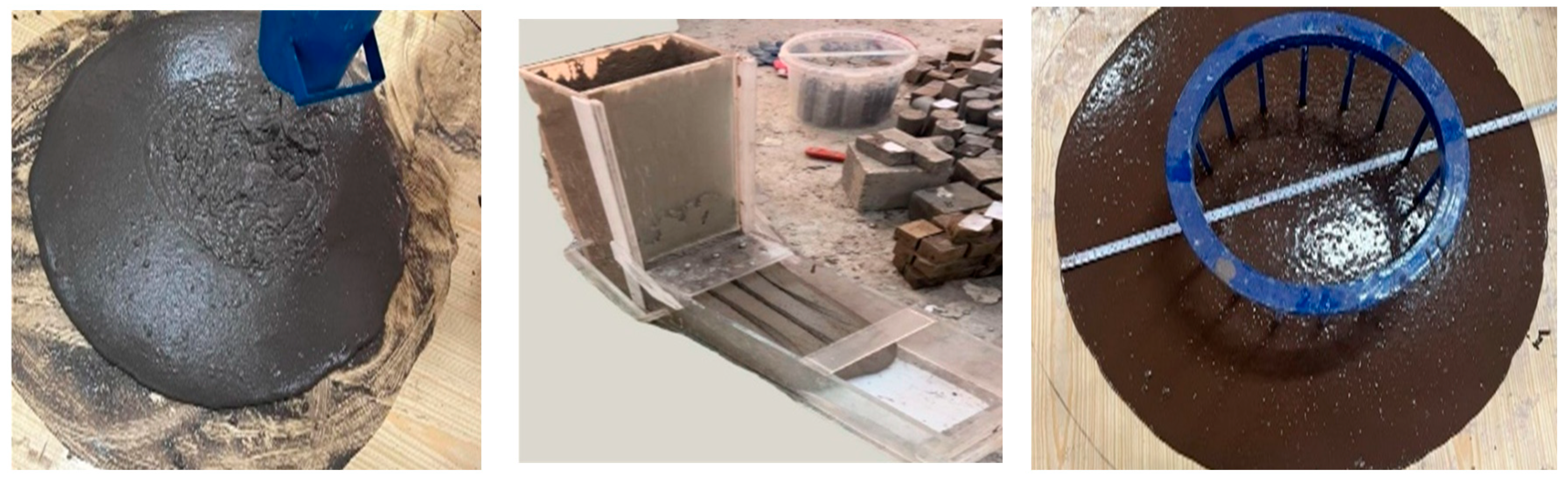
The fresh-state behavior of SCGC was assessed using standard tests prescribed by the EFNARC guidelines for self-compacting concrete, see Figure 3 [36]. The following tests were conducted:
  • Slump flow test: Used to evaluate the filling ability of SCGC. The average spread diameter was measured in two perpendicular directions immediately after lifting the slump cone. A target range of 650–800 mm was used to determine satisfactory flowability.
  • L-Box test: Measured passing ability, primarily through congested reinforcement. The L-box blocking ratio (H2/H1) was calculated, where values ≥ 0.80 indicated good passing ability.
  • V-Funnel test: Assessed the viscosity of the mix by recording the time taken for the SCGC to flow through a narrow V-shaped funnel. Lower values indicate higher fluidity.
  • J-Ring test: Evaluated the ability of SCGC to flow through obstructions while maintaining homogeneity. The difference in flow diameter between the J-ring and standard slump flow was recorded to detect segregation or blocking potential.
All fresh property tests were performed immediately after mixing. Each test was conducted in triplicate, and the average values were reported.

2.5.2. Mechanical Properties

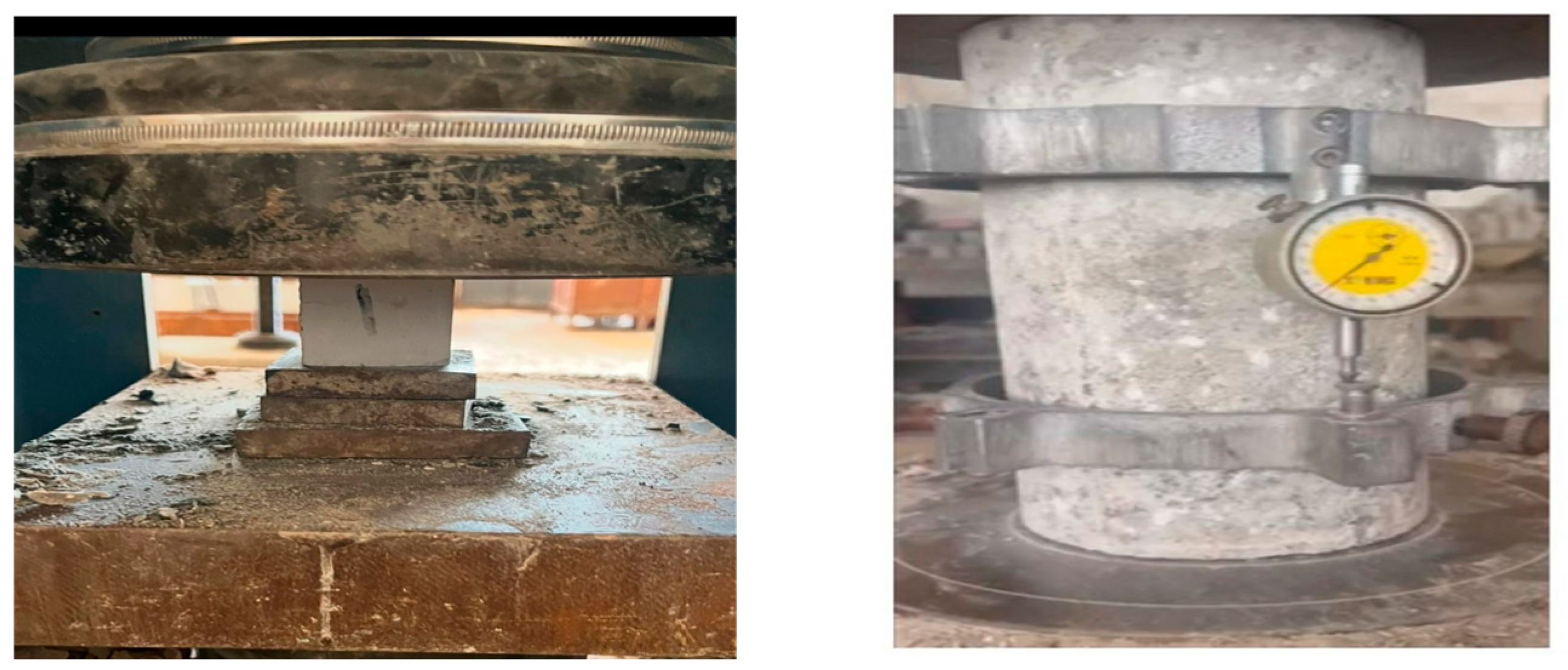
The hardened-state performance of SCGC was characterized by compressive, flexural, and static elastic modulus, as shown in Figure 4. Standard specimen sizes and loading protocols were employed as follows:
  • Compressive strength: Tested on 50 × 50 × 50 mm cube specimens at curing ages of 7 and 28 days, following ASTM C39/C39M-18. A digital compression testing machine with a load capacity of 2000 kN and a constant loading rate of 0.25 MPa/s was used. Three specimens per mix per age were tested, and average values were reported.
  • Elastic modulus (static modulus of elasticity): The static elastic modulus was determined following the ASTM C469 loading procedure and calculation method, using 150 × 300 mm cylindrical specimens. Although ASTM C469 was originally developed for conventional concrete containing coarse aggregate, it has been widely adopted in the literature for geopolymer mortars and fine-grained cementitious composites to compare elastic behavior. The modulus was calculated from the stress–strain response at 0–40% of the ultimate compressive strength. Three specimens per mix were tested at 28 days, and the average values were reported.

2.5.3. Water Absorption

Water absorption of SCGC was measured according to ASTM C642 [37] to evaluate pore connectivity and permeability, which are indicative of potential durability performance. Cubic specimens (50 mm) were oven-dried and then immersed in water for 48 h to determine the saturated weight. Water absorption (%) was calculated as:
Absorption   ( % )   =   W s a t W d r y W d r y   ×   100
where W s a t and W d r y are the saturated surface-dry and oven-dry weights, respectively. Three specimens per mix were tested at 28 days, and the average values were compared across different binder compositions and curing methods to assess relative permeability and microstructural compactness. It should be noted that water absorption provides only an indirect measure of durability-related characteristics and does not constitute a full durability assessment.
Water absorption was evaluated as an indirect indicator of matrix compactness and pore connectivity rather than as a comprehensive measure of durability. Although lower water absorption values are generally associated with denser microstructures and improved resistance to fluid ingress, this parameter alone cannot fully capture long-term durability. Accordingly, the results are interpreted comparatively to assess relative differences among mixtures rather than to predict absolute durability.

2.5.4. X-Ray Diffraction (XRD) Analysis

XRD was employed to investigate the phase composition and microstructural development of six selected SCGC mixtures (Mixes 1, 5, 6, 13, 17, and 21), to link crystalline and amorphous phase evolution to mechanical and durability performance [38,39]. Hardened samples were collected after 28 days of curing under three regimes (ambient air, water, and elevated temperature). Each specimen was finely ground and sieved through a 75 μm mesh to obtain a uniform powder suitable for analysis. Measurements were conducted using a laboratory X-ray diffractometer with Cu-Kα radiation (λ = 1.5406 Å), operating at 40 kV and 40 mA. Scans were recorded over a 2θ range of 5–60° with a step size of 0.02°. Phase identification was performed by matching diffraction patterns with standard reference databases, focusing on crystalline phases commonly associated with geopolymer systems, including quartz (SiO2), albite (NaAlSi3O8), gehlenite (Ca2Al(AlSiO7)), and calcite (CaCO3).
Particular attention was given to the broad amorphous hump, indicative of geopolymeric gel formation, primarily sodium aluminosilicate hydrate (N-A-S-H) and calcium aluminosilicate hydrate (C-A-S-H). The XRD data were qualitatively interpreted to evaluate precursor dissolution, gel-phase development, and the persistence of unreacted crystalline residues [31]. These observations were subsequently correlated with compressive strength and water absorption results, offering microstructural insights into the mechanisms governing SCGC performance across different binder compositions and curing conditions.

2.5.5. Scanning Electron Microscopy (SEM) Analysis

SEM analysis was conducted to examine the microstructural characteristics of six selected geopolymer paste mixtures (Mixes 1, 5, 6, 13, 17, and 21). Hardened specimens were collected after 28 days of curing under the three regimes (ambient air, water, and elevated temperature), consistent with the samples used for XRD testing [40].
Sample preparation: Small fragments from the interior of each specimen were extracted and oven-dried at 60 °C for 24 h to remove moisture. The fragments were then fractured to expose internal surfaces and mounted on aluminum stubs using carbon tape. To ensure electrical conductivity and minimize charging during SEM imaging, the samples were sputter-coated with a thin (~5 nm) gold layer prior to SEM observation [41].
Microstructural observations were performed using a high-resolution scanning electron microscope operated at 20 kV and magnifications up to 2000×. The microscope was equipped with energy-dispersive X-ray spectroscopy (EDX) to qualitatively determine the elemental composition of selected regions. SEM imaging focused on documenting surface morphology, unreacted particles, microcracks, voids, and the distribution of geopolymer gel within the binder matrix, providing qualitative support for evaluating the microstructural development of the different mixtures.

3. Results and Discussion

3.1. Fresh Properties

The fresh properties of the SCGC mixtures were evaluated using slump flow, L-box, and J-ring tests to assess workability, filling ability, and passing capacity. The results, summarized in Table 3, show that binder composition significantly influenced rheological performance. Mixtures incorporating higher proportions of GGBFS and SF (e.g., Mixes 4, 5, 10, 11, and 13) demonstrated enhanced flowability, achieving slump flow diameters within the recommended range of 650–800 mm, indicating satisfactory self-compacting behavior. Mix 10 recorded the highest slump flow (790 mm) and the lowest V-funnel flow time (5.61 s), reflecting excellent workability and stability.
By contrast, mixtures with MK content (e.g., Mix 6) or reduced alkaline activator levels exhibited reduced flowability and increased viscosity. Mix 6 displayed the lowest slump flow (411 mm) and the longest V-funnel time (55.85 s), coupled with a very low L-box ratio (0.10), confirming restricted passing ability and significant flow resistance. Similar trends were observed in Mixes 7 and 8, where high angular particle content and increased water demand limited self-compaction. The L-box ratios of most mixtures exceeded 0.85, confirming adequate passing ability through confined spaces, with Mix 4 achieving the highest ratio (0.97). J-ring tests further supported these findings, with minimal blocking observed in most mixes; however, the greater differential in J-ring and slump flow diameters (up to 80 mm) in high-MK mixtures highlighted their higher internal friction and reduced flow uniformity.
Although the applied fresh-property tests (slump flow, V-funnel, L-box, and J-ring) were originally developed for self-compacting concrete, they were employed in this study to qualitatively assess the flowability, passing ability, and stability of geopolymer mortar under self-flowing conditions. In the absence of coarse aggregate, these tests provide a practical means to compare relative rheological performance between mixes. Accordingly, EFNARC criteria are referenced as indicative benchmarks rather than strict acceptance limits, and the results are interpreted within the context of mortar–scale behavior.
Overall, these results confirm that binder synergy, particularly combinations of FA, GGBFS, and SF, supports superior self-compacting performance, while mixes rich in MK or GWP tend to exhibit reduced workability unless compensated by higher superplasticizer dosages or optimized activator contents.

3.2. Mechanical Properties

3.2.1. Compressive Strength

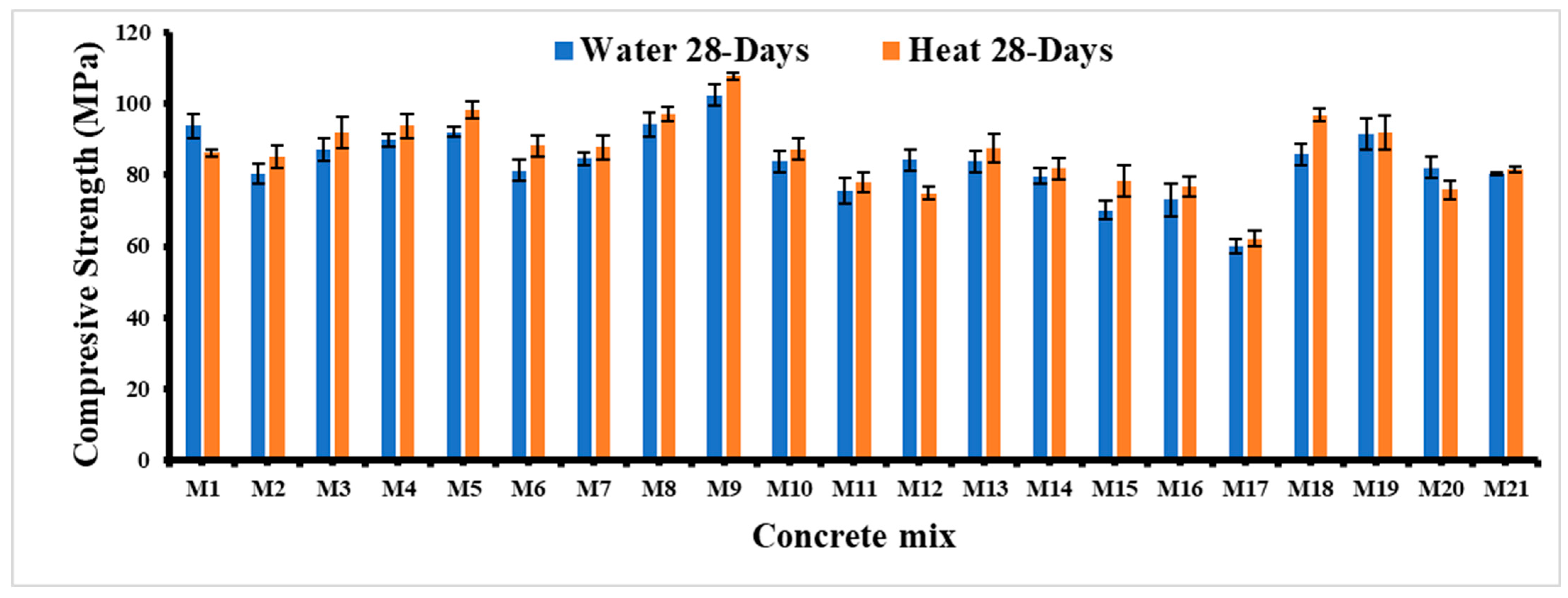
The compressive strength of the SCGC mixtures was evaluated at 7 and 28 days under curing regimes: heat and water. The results, presented in Figure 5 and Figure 6 and summarized in Table 4, highlight the strong influence of binder composition and curing method on strength development. Under water curing, most mixes achieved compressive strengths above 85 Mpa at 28 days, reflecting the beneficial effect of continuous moisture on geopolymer gel formation and matrix densification. The highest 28-day strength was observed for Mix 9 (102.4 Mpa), indicating enhanced reaction activity in binder systems rich in GGBFS and silica fume, supported by reactive metakaolin and glass waste powder proportions that increased aluminosilicate availability. Mixes with reduced GGBFS or higher FA replacement (e.g., Mix 5 and Mix 10) resulted in slightly lower 28-day strengths under water curing, such as 92 Mpa for Mix 5 and 83.8 Mpa for Mix 10.
On the other hand, variations in mixture composition demonstrated a clear effect on strength development. Mixes with higher metakaolin content (such as Mixes 8, 16, 17, and 21, as shown in Table 2) generally showed improved strength under water curing, due to the high alumina content of MK, which supports extensive geopolymer network formation in moist conditions. However, mixes with reduced GGBFS content or higher FA replacement (e.g., Mix 5 and Mix 10 compositions) resulted in slightly lower 28-day strengths under water curing, such as 92 Mpa for Mix 5 and 83.8 Mpa for Mix 10, indicating that calcium-rich binders are more responsive to continuous hydration and secondary gel formation.
Heat curing provided the greatest strength enhancement, particularly at later ages, due to accelerated dissolution of aluminosilicate phases and rapid geopolymer gel formation. Under heat curing, the 28-day compressive strengths ranged from 62.1 Mpa (Mix 17) to 107.6 Mpa (Mix 9), with several mixes exhibiting strengths above 85 Mpa, such as Mix 9 (107 Mpa), Mix 5 (98.3 Mpa), Mix 18 (96.4Mpa), and Mix 4 (93.8 Mpa). These high values indicate that binders containing elevated proportions of GGBFS and silica fume, combined with moderate metakaolin contributions, are highly reactive under thermal activation and promote dense matrix development.
Mixes such as Mix 16 (77 Mpa) and Mix 17 (62 Mpa) demonstrated relatively lower strengths than the top-performing heat-cured mixes, suggesting that reduced fly ash and GGBFS, or calcium, availability may limit the extent of reaction despite elevated curing temperatures. Nevertheless, all mixes benefited from heat curing compared to water curing, confirming that high-temperature curing conditions significantly enhance dissolution and polycondensation, particularly in calcium-rich systems.
The inclusion of standard deviation (SD) values and corresponding error bars provides additional insight into the reliability of the results. Across all mixes, SD values ranged from 2.22 to 4.69 Mpa, indicating low variability among triplicate specimens and confirming the robustness of the reported averages. Notably, Mix 9, which achieved the highest 28-day strengths, also showed relatively low SD, supporting the statistical significance of its superior performance compared to lower-strength mixes such as Mix 17. The error bars allow visual assessment of differences between mixes, demonstrating that the observed trends in compressive strength are meaningful rather than arising from experimental variability.
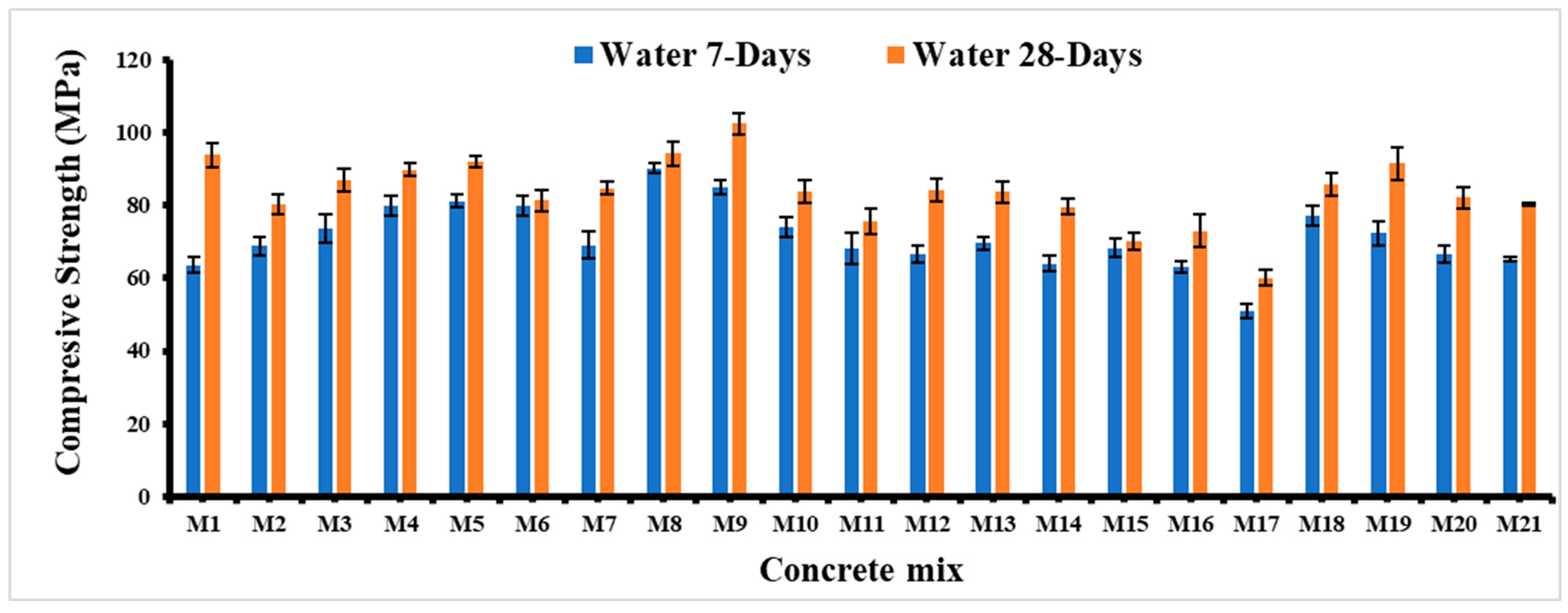
The development of strength over time is shown in Figure 6, where a progressive increase is evident in all water-cured mixes. At 7 days, compressive strengths ranged from 51Mpa (Mix 17) to 84.9 Mpa (Mix 9), with mixes containing higher proportions of GGBFS and silica fume exhibiting noticeably higher early strength due to the availability of reactive calcium that promotes the formation of C-(A)-S-H type gel. By 28 days, all water-cured mixes showed substantial strength gains, with values ranging from 80 Mpa to 102.4 Mpa, indicating that continued moisture availability enhances polymerization and matrix densification. Based on the 28-day water-curing results, the mixes can be classified into two main performance groups:
  • High-strength group (≥85 Mpa): Mixes 1, 3, 4, 5, 8, 9, 18 and 19, which contain appreciable quantities of GGBFS and silica fume, promoting continued gel formation and dense microstructure refinement under prolonged curing conditions.
  • Moderate-high strength group (60–85 Mpa): Mixes 2, 6, 7, 10, 11, 12, 13, 14, 15, 16, 17, 20, and 21, where either the fly ash content was higher, or the GGBFS proportion was relatively lower, resulting in slightly reduced but still substantial long-term strength development.
These findings demonstrate that binder chemistry and curing regime are critical factors in controlling compressive strength development. Mixes containing higher amounts of GGBFS and silica fume consistently outperformed mixes with higher fly ash replacement, due to the dual contribution of calcium-rich hydration and aluminosilicate geopolymerization. Furthermore, while heat curing accelerated early strength development, water curing supported sustained reaction progression, leading to long-term structural densification and enhanced mechanical performance.

3.2.2. Young’s Modulus

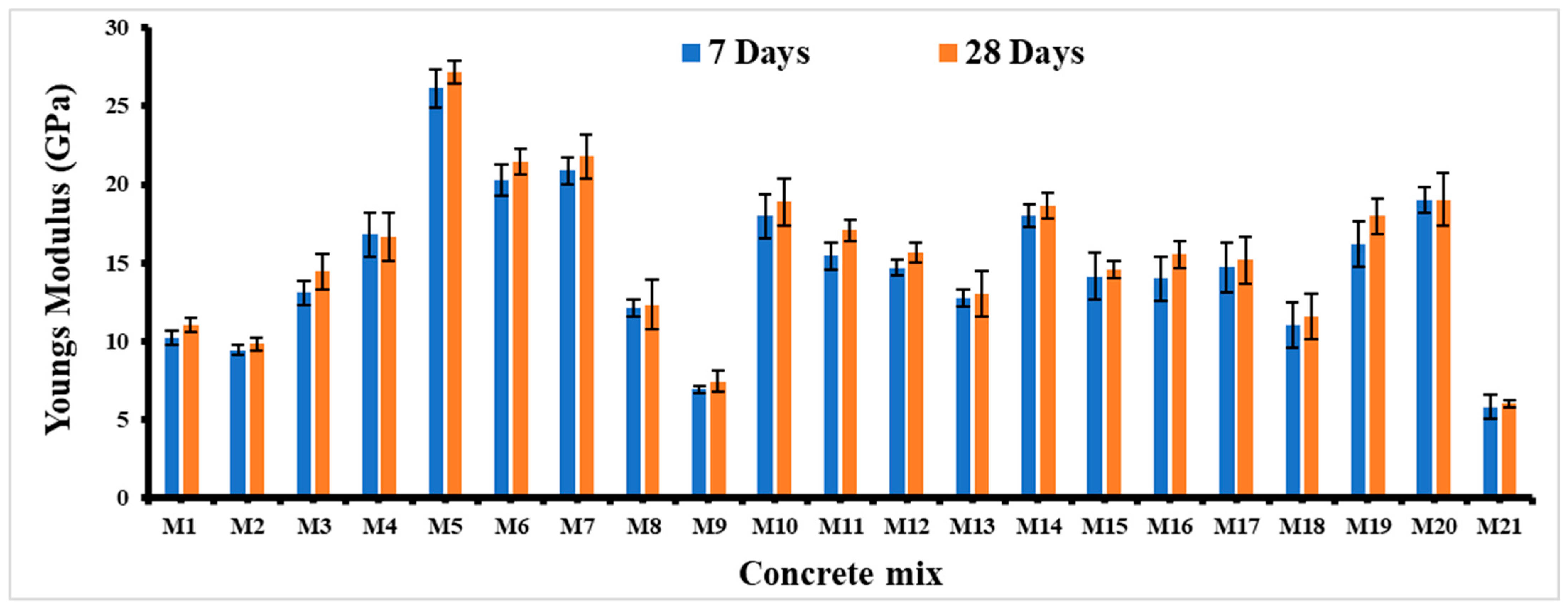
Young’s modulus, representing the stiffness and resistance to deformation of SCGC mixes, was evaluated at 7 and 28 days (Figure 7). The results highlight significant variations in stiffness across the mixes, primarily influenced by binder composition and the degree of matrix densification achieved during curing. Mix 21 exhibited one of the highest stiffness values, with a modulus of 38.64 Gpa at 28 days, indicating a dense, well-compacted matrix that enhances load-bearing capacity and minimizes deflection. Such performance makes Mix5 suitable for structural applications requiring high rigidity, such as bridges, high-rise buildings, and industrial flooring. Mix 9, which also demonstrated high compressive (28-day water: 102 Mpa) and flexural strengths, showed consistently high stiffness, confirming the beneficial synergy of GGBFS and silica fume in refining the microstructure and reducing porosity.
Conversely, mixes with less reactive or imbalanced binder systems showed reduced stiffness. Mix 5, with a modulus of 22.04. Gpa, and Mix 19, with values below 26 Gpa, demonstrated greater deformability and limited resistance to tensile and bending stresses. However, despite their lower modulus values, these mixes still achieved relatively high 28-day compressive strengths under water or heat curing (Mix 5: 92 Mpa, Mix 19: 91.4 Mpa), indicating that curing conditions can partially compensate for lower early-age stiffness. This suggests that such mixes may be suitable for applications where flexibility is acceptable or where curing can be optimized to enhance structural performance. The results indicate that binder optimization significantly enhances stiffness and structural integrity, particularly by including reactive calcium- and silica-rich materials such as GGBFS and SF. These findings align with previous studies [8] and confirm that improved particle packing and a denser matrix contribute to higher modulus values, thereby enhancing the durability and service performance of SCGC in structural applications.

3.3. Durability Properties

Water Absorption

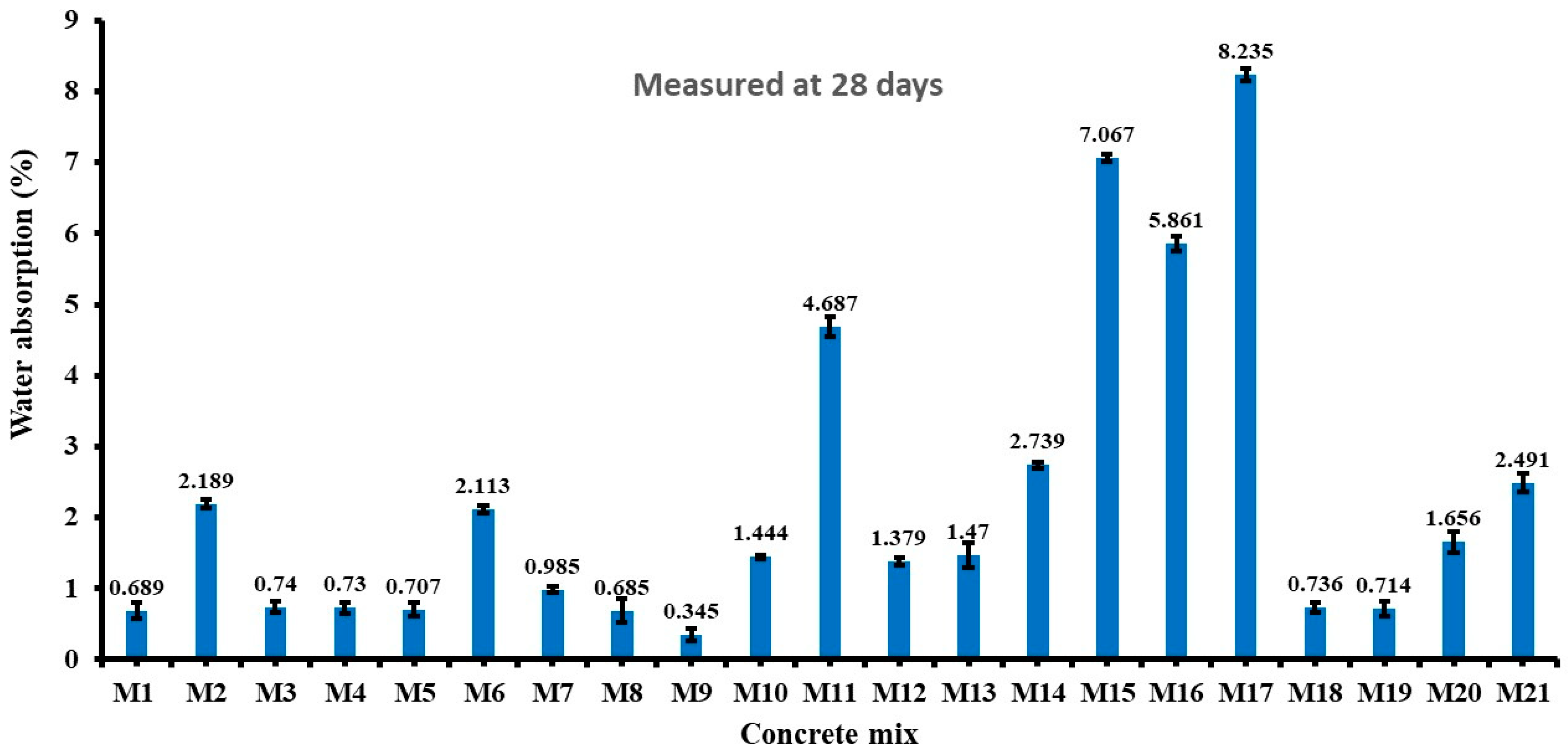
Water absorption is a critical indicator of the durability of SCGC, reflecting its ability to resist moisture ingress, a key factor in ensuring long-term performance, especially in aggressive environments. The results in Figure 8 reveal substantial variation in water absorption among the mixes, highlighting the influence of binder composition and microstructural density. Mix 8 and Mix 9 exhibited low water absorption, indicating excellent impermeability and a highly dense microstructure. This superior performance can be attributed to the higher proportions of GGBFS, MK, and silica fume, which enhance particle packing and refine pore structures, thereby minimizing pathways for water ingress. Such performance is particularly advantageous for structures in marine environments, water-retaining systems, and deep foundations, where prolonged exposure to moisture can accelerate deterioration. These findings are consistent with the observations of Li et al. [16], who demonstrated the role of refined geopolymer matrices in reducing permeability and improving service life.
In contrast, Mix 17 recorded the highest water absorption value of 8.23%, suggesting a more porous structure and greater susceptibility to deterioration under moisture exposure. This high porosity likely stems from suboptimal binder-to-water ratios or incomplete geopolymerization, resulting in a greater volume of interconnected voids [16,22]. Similarly, Mix 15 exhibited relatively high absorption, reinforcing the need for optimized binder chemistry and curing conditions to minimize porosity. Notably, Mix 1, Mix 8, and Mix 9 demonstrated exceptionally low absorption levels, indicating strong resistance to water penetration and a potential for use in applications that demand enhanced moisture protection, such as underground structures or facilities exposed to chemically aggressive environments.
Overall, these results highlight the importance of binder optimization and proper mix design in enhancing the durability of SCGC. Mixes with low absorption, such as Mix 8 and Mix 9, are recommended for critical structural applications where impermeability and long-term durability are priorities. Conversely, mixes with higher absorption, like Mix 15 and Mix 17, require further refinement to improve pore structure and moisture resistance. These findings align with existing literature [16,24], emphasizing the role of microstructural densification and balanced mix proportions in producing durable and sustainable geopolymer concrete.

3.4. Microstructural Analysis by X-Ray Diffraction (XRD)

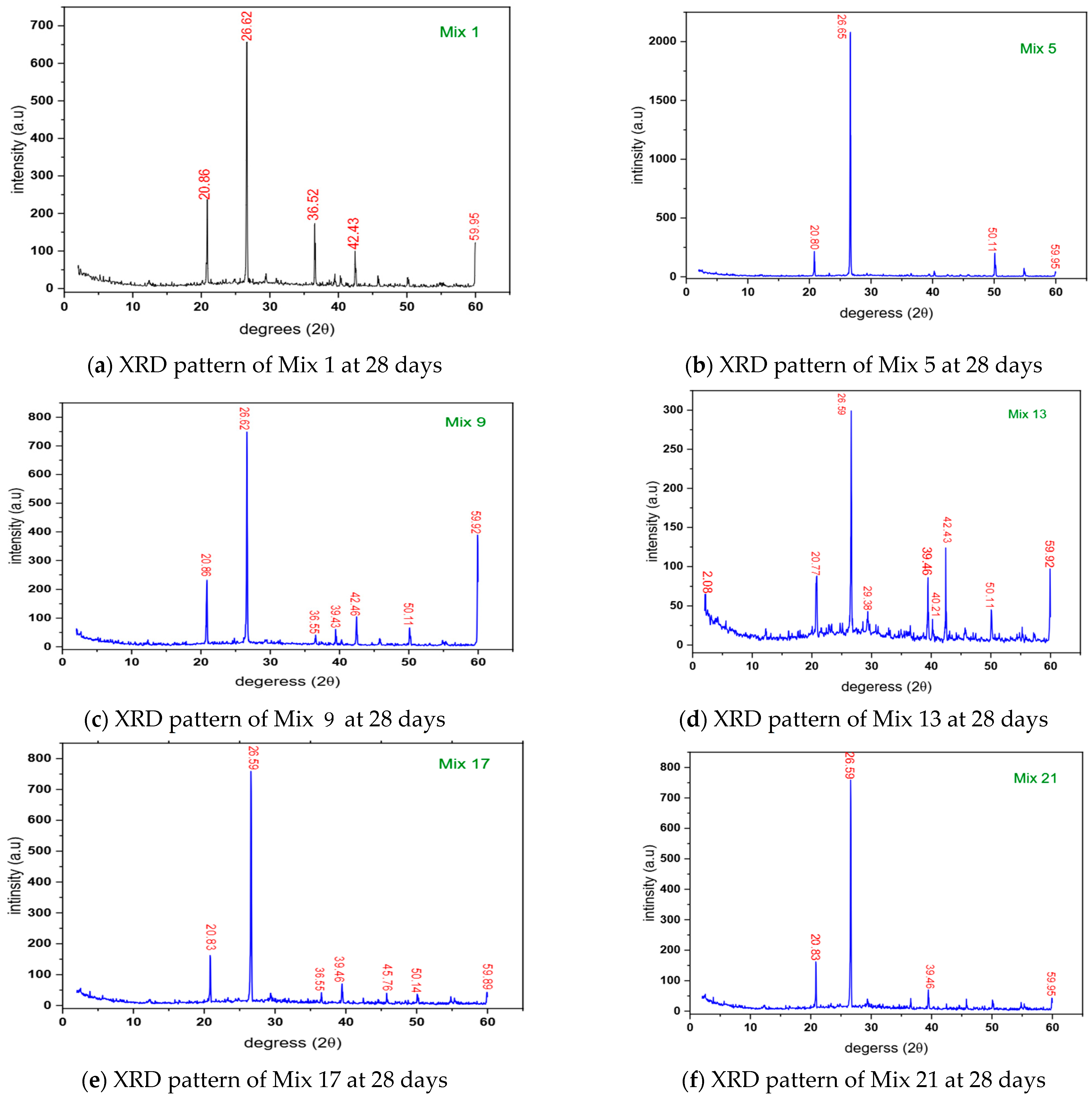
The XRD analysis was conducted on six SCGC mixes (Mixes 1, 5, 6, 13, 17, and 21) after 28 days of curing to identify the crystalline phases and assess the degree of amorphous gel formation. The analysis revealed notable variations in the crystalline and amorphous phase compositions of the SCGC mixes, correlating strongly with their mechanical performance and durability. Across all mixes, the diffractograms exhibited a broad amorphous hump in the 20–35° 2θ range, indicative of geopolymeric gel formation, primarily sodium aluminosilicate hydrate (N-A-S-H) and, in calcium-rich systems, calcium aluminosilicate hydrate (C-A-S-H). However, the intensity of this amorphous feature and the prominence of its crystalline peaks varied with binder composition and curing regimes, as shown in Figure 9.
Mix 1 (Figure 9a) showed dominant quartz peaks (94%), with minor amounts of calcite (4%) and kaolinite (2%), suggesting partial reactivity and the presence of unreacted precursor particles. Mixes 5 and 9 (Figure 9b,c) exhibited firm quartz peaks (100%) with limited amorphous content, indicating incomplete silica-rich precursors and a less dense matrix dissolution. This microstructural characteristic aligns with their moderate compressive strength and non-zero water absorption.
Mix 13 (Figure 9d) demonstrated a high quartz content (~90%) with minor calcite (9%) and trace kaolinite (1%), indicating effective geopolymerization and well-formed gel phases, consistent with its high compressive strength and good durability. Mix 17 (Figure 9e) displayed predominantly quartz (98%) with a small percentage of calcite (2%), suggesting a slightly lower degree of reaction compared to Mix 13, yet still supporting substantial mechanical performance and low water absorption. In contrast, Mix 21 (Figure 9f) showed quartz as the primary crystalline phase (93%), accompanied by calcite (4%) and gypsum (3%), with a weak amorphous background. Despite the limited amorphous content, Mix 21 still achieved relatively high compressive strength and moderate durability, highlighting the contribution of binder composition to overall performance.
These results are summarized in Table 5, which consolidates the detected crystalline phases, estimated reaction degrees, and their correlations with mechanical and durability performance. Overall, the XRD analysis confirms that binder composition and reaction efficiency strongly influence the microstructure and performance of SCGC. Mixes with higher amorphous content exhibited denser matrices and superior mechanical and durability properties, while mixes with dominant crystalline residues showed slightly reduced reaction efficiency, yet still achieved adequate strength and durability under optimized curing conditions.

3.5. SEM Analysis

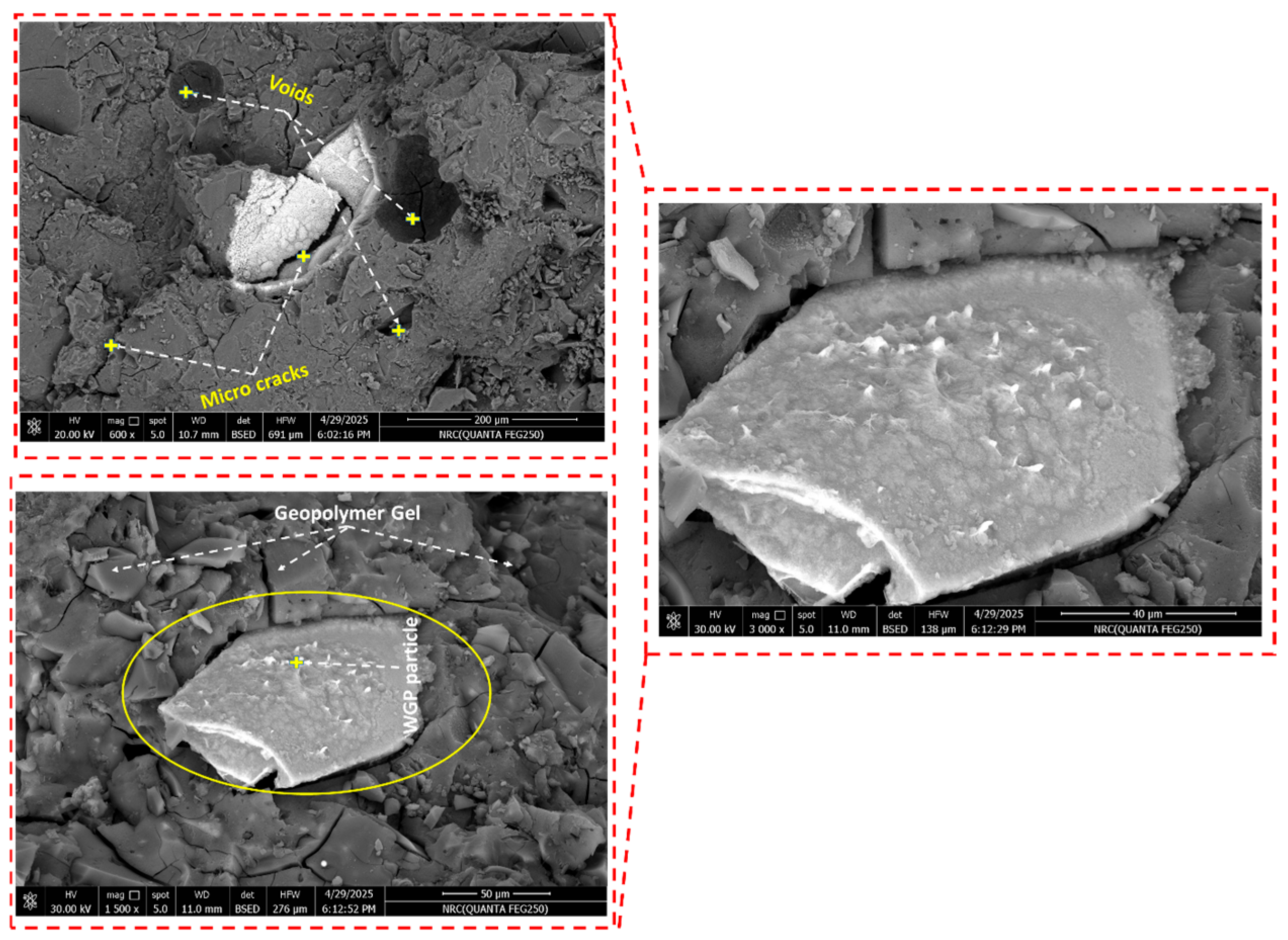
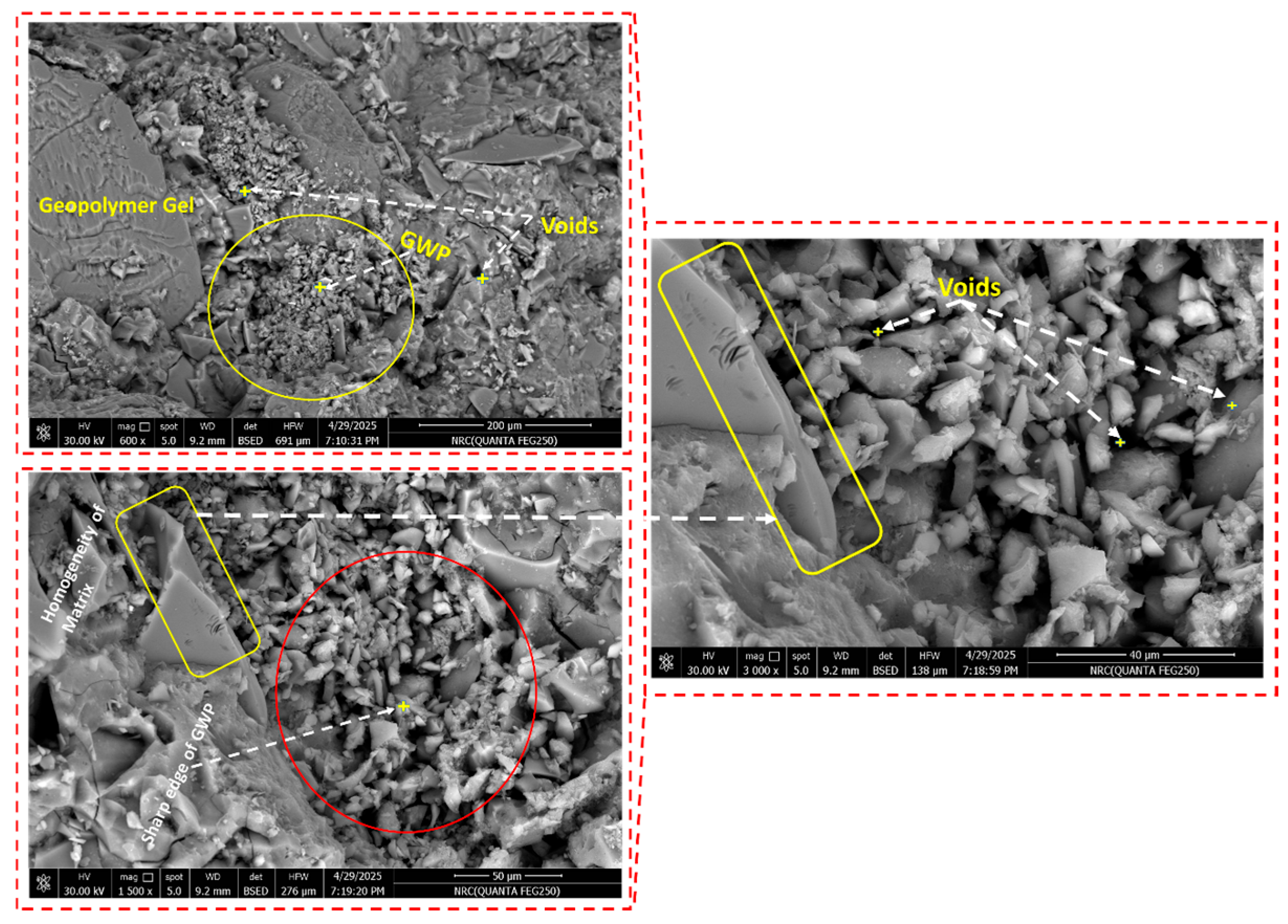
SEM analysis was conducted on selected SCGC mixtures (Mixes 1, 5, 9, 13, 17, and 21) to examine microstructural features and establish correlations with mechanical performance. Representative micrographs for each mixture are shown in. For Mix 1, SEM images (Figure 10) revealed microcracks and voids distributed throughout the matrix at magnifications of ×1500–×6000. Unreacted waste glass particles were also observed, indicating incomplete geopolymerization. These defects contributed to a moderate compressive strength at ambient conditions (28-day: 93.8 MPa), while showing higher strength under heat curing (28-day water: 86.2 MPa), highlighting the influence of the curing environment on mechanical performance.
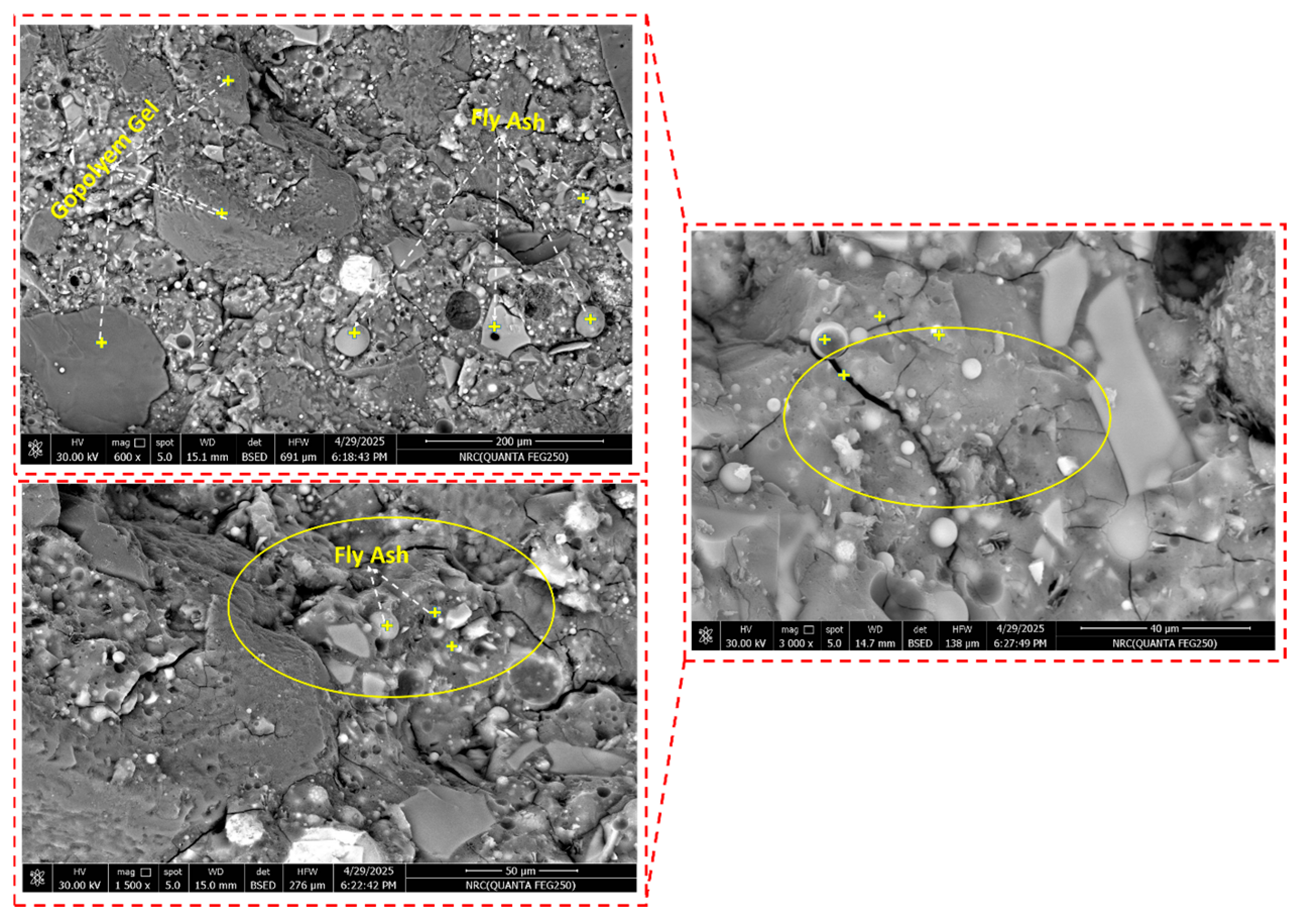
Mix 5’s microstructure predominantly consisted of a dense geopolymer gel, reflecting good homogeneity and extensive reaction of the precursor materials (Figure 11). Only a few spherical fly ash particles remained unreacted, and minor microcracks were detected. Despite the improved microstructure, the 28-day water-compressive strength of Mix 5 (92 MPa) was slightly lower than that of Mix 1 (93.8 MPa), indicating that microstructural enhancements did not always translate into higher strength across all curing conditions. The results confirm that incorporating 40% metakaolin with 40% slag promotes better reactivity than fly ash or waste glass powder combinations.
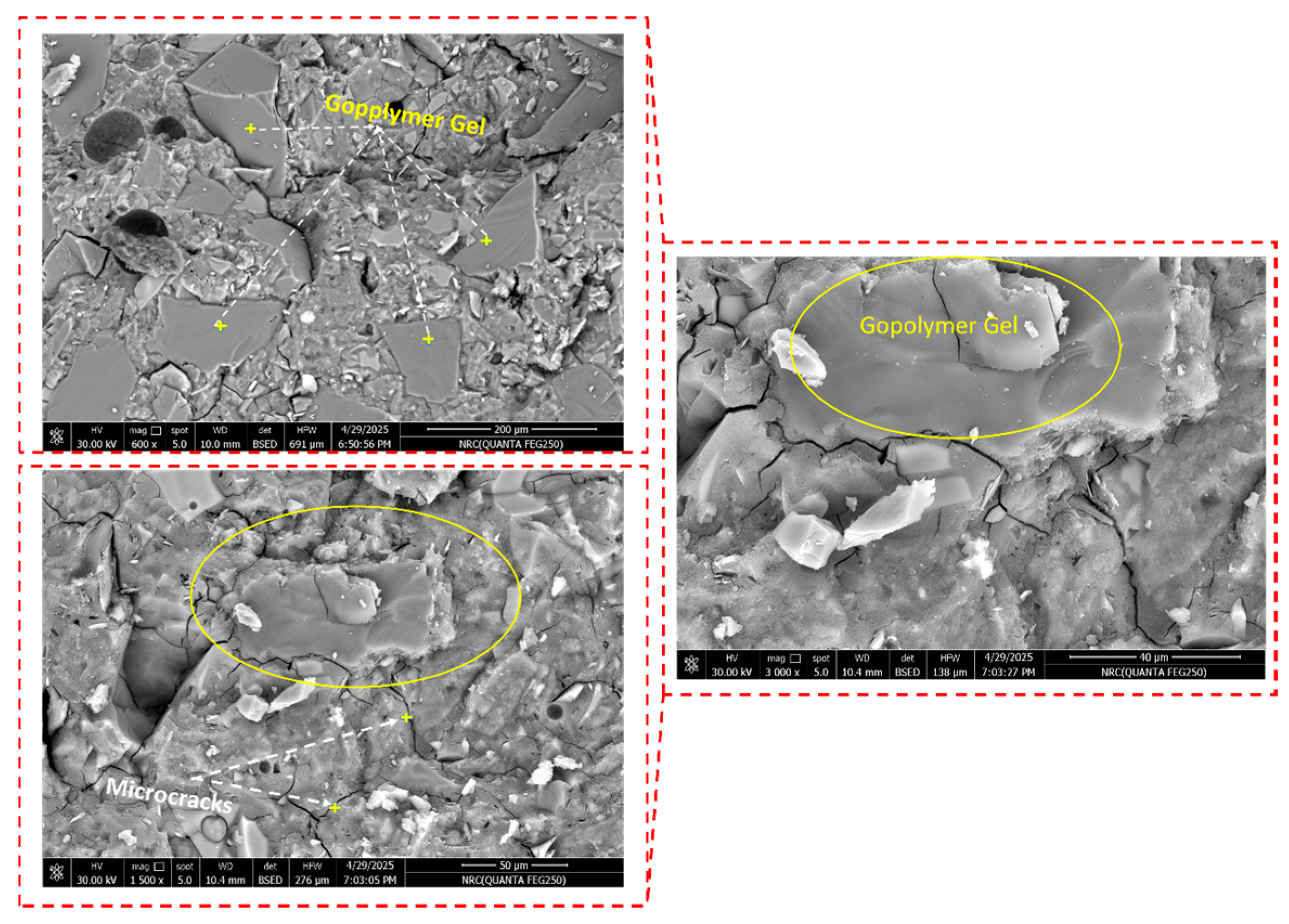
In Mix 9, a compact, continuous geopolymer gel phase was evident, with minimal unreacted particles in the matrix (Figure 12). This suggests a high degree of reaction between metakaolin and slag (40% each), resulting in a refined, homogeneous structure. Consequently, Mix 9 achieved high compressive strengths under all curing regimes (28-day water: 102.4 MPa), although Mixes 6 and 8 reached slightly higher values under water curing. The microstructural observations strongly support the mechanical test results.
The micrographs of Mix 13 (Figure 13) showed angular fragments of waste glass embedded in the matrix, forming some interfacial voids. Despite containing 40% waste glass similar to Mix 1, Mix 13 exhibited improved interaction between slag and glass powder, as reflected in higher 28-day heat-compressive strength (87.5 MPa) than Mix 1 (86.2 MPa). At ×3000 magnification, stronger bonding between the angular glass particles and the geopolymer gel was observed.
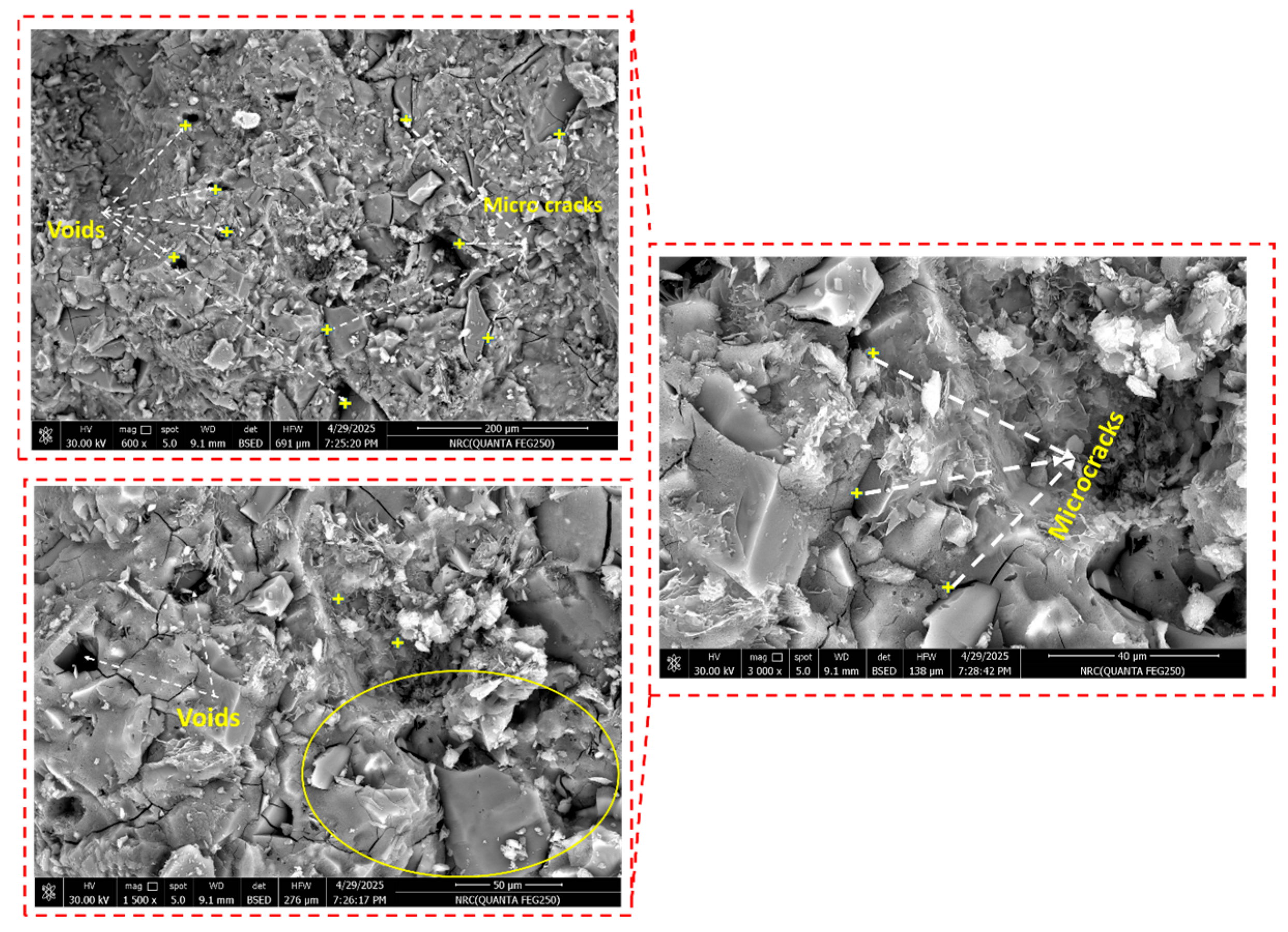
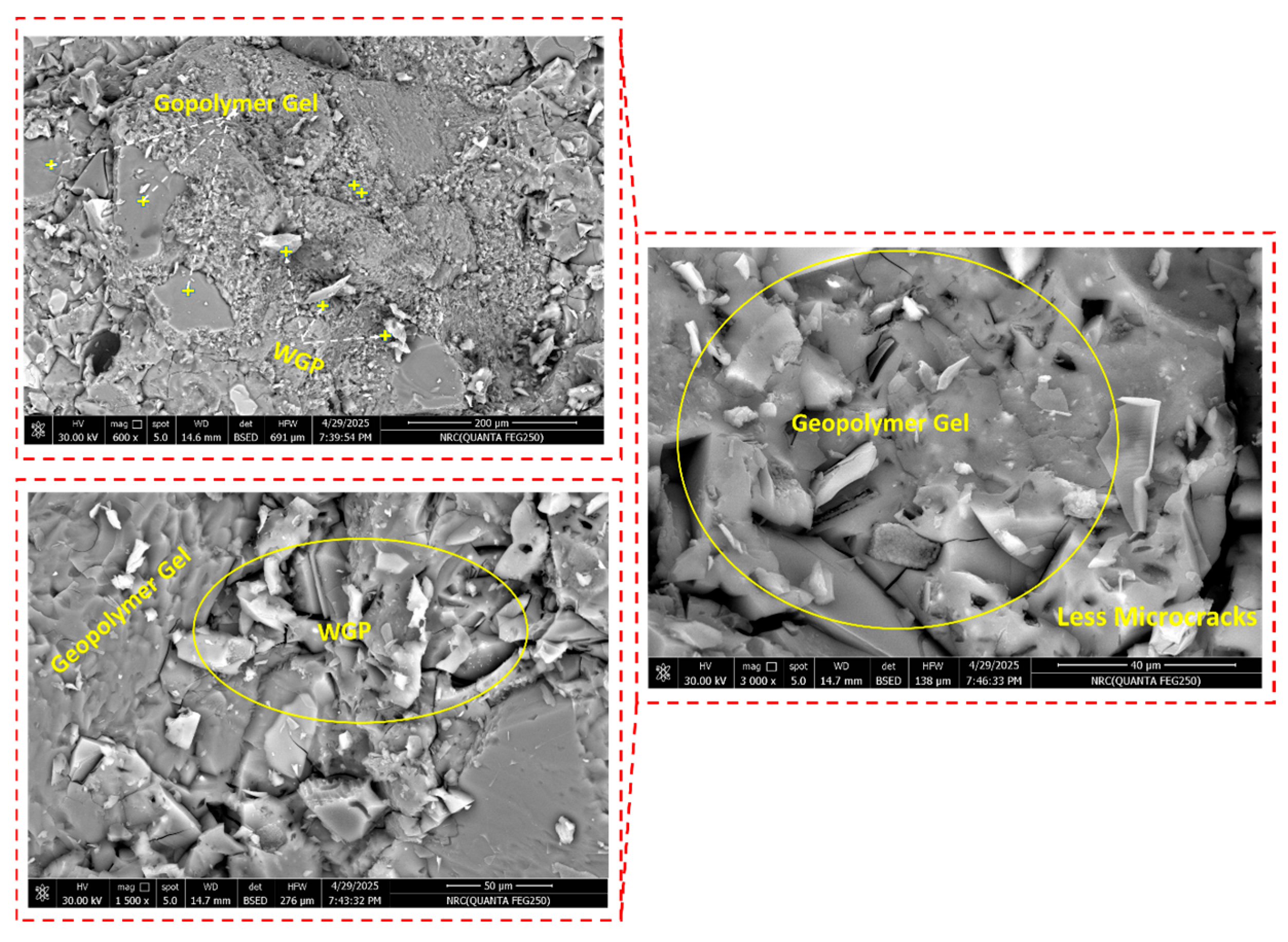
The SEM analysis of Mix 17 revealed numerous cracks, irregularly shaped glass particles, and widespread porosity (Figure 14). Early-age compressive strength (7-day: 51 MPa) was low, reflecting poor initial reactions. However, the 28-day water compressive strength increased significantly (60 MPa), indicating that extended curing helped develop a more mature gel network despite early structural defects. A dense geopolymer gel network with relatively few microcracks was observed in Mix 21, reflecting good structural homogeneity (Figure 15). The substitution of silica fume (20%) in place of metakaolin improved the degree of reaction and bonding within the matrix. This microstructure is consistent with the enhanced compressive strength under water curing (28-day water: 80 MPa), slightly higher than that of Mix 1.
The SEM analysis confirmed that mixtures with denser gel formation, fewer unreacted particles, and reduced porosity exhibited higher compressive strengths across all curing regimes, whereas those with microcracks, angular unreacted particles, and voids showed lower mechanical performance at an early age. These findings reinforce the strong correlation between microstructural characteristics and the compressive strength development of SCGC, emphasizing the importance of curing conditions on final performance.

4. Discussion

The combined evaluation of fresh, mechanical, durability, and microstructural results demonstrates that the performance of self-compacting geopolymer systems is governed by the synergistic interaction between binder chemistry and curing regime, rather than by either parameter acting independently. As this study was conducted on geopolymer mortar systems without coarse aggregate, the discussion is intentionally framed at the binder and matrix level, focusing on reaction mechanisms, gel development, and pore structure evolution. Consequently, the findings should not be directly extrapolated to geopolymer concrete, where coarse aggregates significantly influence rheology, strength development, cracking behavior, and durability performance.

4.1. Interaction Between Binder Composition and Curing Regime

The results clearly indicate that curing regime and binder composition interact in a non-linear manner to control strength development. Heat curing consistently accelerated geopolymerization across all mixes, as evidenced by higher 28-day compressive strengths relative to water curing. However, the magnitude of this enhancement varied markedly with binder chemistry.
Binders rich in GGBFS and silica fume, particularly those incorporating moderate metakaolin contents (e.g., Mixes 4, 5, 8, 9, and 18), showed the most pronounced response to heat curing. In these systems, elevated temperatures promoted rapid dissolution of aluminosilicate phases and calcium activation, thereby facilitating the simultaneous formation of C-(A)-S-H and N-A-S-H gels, resulting in dense matrices and superior mechanical performance. Conversely, mixes with lower calcium availability or higher proportions of less reactive precursors (e.g., higher fly ash or waste glass powder contents) exhibited a more limited response to thermal activation, indicating that heat curing alone cannot compensate for suboptimal binder reactivity.
Under water curing, strength development was more gradual but sustained. Mixes containing sufficient calcium and reactive alumina (notably those with balanced GGBFS–MK combinations) continued to gain strength up to 28 days, highlighting the role of prolonged moisture availability in supporting secondary gel formation and matrix densification. In contrast, mixes with reduced GGBFS content or imbalanced precursor proportions exhibited comparatively lower long-term strength under water curing, confirming that binder composition governs the effectiveness of the curing regime rather than the reverse.
These observations emphasize that curing regime effects cannot be interpreted independently; instead, optimal performance is achieved when curing conditions are matched to a chemically compatible binder system.

4.2. Microstructural Control of Mechanical Performance

Macro-scale mechanical trends are strongly supported by microstructural evidence from XRD and SEM analysis. Mixes with higher compressive strength exhibited greater amorphous-phase content, indicating extensive geopolymeric gel formation. SEM images of these mixes revealed continuous gel networks, limited unreacted particles, and reduced porosity, all of which contribute to enhanced load transfer and stiffness. These features directly explain the higher measured compressive strength and Young’s modulus of these mixes, as the continuous amorphous gel phase provides efficient stress distribution and resistance to crack initiation.
From a composition-driven perspective, these microstructural characteristics can be directly attributed to the roles and interactions of the individual binder constituents. Fly ash primarily contributes reactive aluminosilicate species that promote N–A–S–H gel formation, governing long-term strength development. GGBFS supplies readily available calcium, accelerating reaction kinetics and enabling the formation of C–(A)–S–H gel, which enhances early-age strength and matrix densification. Metakaolin increases the availability of reactive alumina, improving gel continuity and reducing pore connectivity, while silica fume acts as an ultrafine silica source and microfiller, refining particle packing and strengthening interfacial zones. In contrast, waste glass powder provides additional silica but exhibits limited reactivity in the absence of sufficient calcium and alumina, resulting in partially unreacted particles and localized porosity in some mixes.
In contrast, mixes with higher proportions of unreacted crystalline phases or angular waste glass particles exhibited localized voids, interfacial weaknesses, and microcracks. These features acted as stress-concentration sites, reducing early-age strength and stiffness, particularly under ambient curing. Although extended curing partially mitigated these deficiencies, incomplete dissolution and limited gel continuity persisted in less reactive binder systems.
Young’s modulus results further corroborate this interpretation. Mixes with dense, well-integrated gel matrices exhibited higher stiffness, reflecting effective particle packing and strong interfacial bonding. Conversely, lower modulus values were associated with more porous microstructures and weaker gel connectivity, even in mixes that achieved relatively high compressive strength at later ages. This decoupling shows that compressive strength alone does not fully capture the quality of matrix densification. These microstructural differences also explain the observed durability-related trends, as mixes with continuous gel networks and reduced pore connectivity exhibited lower water absorption, whereas porous matrices with weak interfacial zones facilitated fluid ingress.

4.3. Durability Implications and Limitations

Durability assessment in this study was limited to water absorption, an indirect indicator of pore connectivity and matrix densification. Mixes with low absorption generally had dense microstructures, high amorphous gel content, and superior mechanical performance. This relationship supports a mechanistic link between a refined pore structure and reduced moisture ingress.
However, it is important to emphasize that water absorption alone does not provide a comprehensive evaluation of durability. The conclusions regarding durability should therefore be considered indicative rather than definitive. Long-term performance in aggressive environments, such as sulfate exposure, chloride penetration, carbonation, freeze–thaw cycling, or alkali–silica reaction, was not assessed and may be influenced differently by binder chemistry and curing conditions.
Mixes with higher water absorption, particularly those with visible microcracking or incomplete geopolymerization, are likely more susceptible to durability-related degradation. Nevertheless, extended curing and further optimization of activator chemistry may improve their long-term resistance, underscoring the need for broader durability testing in future investigations.

4.4. Scope and Applicability of Findings

This study focused on geopolymer mortar systems without coarse aggregate to isolate the effects of binder composition, curing regime, and microstructural development. While this approach is appropriate for fundamental binder-level investigation, the absence of coarse aggregates limits the direct applicability of the results to full geopolymer concrete systems.
In geopolymer concrete, coarse aggregates significantly influence fresh behavior, stress distribution, crack propagation, elastic modulus, and transport properties. Therefore, although the trends observed in this study provide valuable insights into binder optimization and reaction mechanisms, further research that incorporates coarse aggregates is required before extending these findings to structural geopolymer concrete applications.
The experimental program was designed to evaluate the overall performance of blended geopolymer binders rather than to isolate the individual contributions of FA, GGBFS, SF, MK, and GWP. Consequently, interpretations of matrix densification, gel development, and synergistic effects are primarily inferred from established structure–property relationships reported in the literature and qualitatively supported by SEM and XRD observations. Quantitative isolation of individual precursor roles would require advanced analytical techniques such as gel chemistry analysis, phase quantification, or pore structure characterization, which are beyond the scope of the present study.

5. Conclusions

This study investigated the influence of binder composition, curing regimes, and microstructural evolution on the performance of self-compacting geopolymer mortar (SCGM). The main conclusions are as follows:
  • Fresh properties:
    Mixes rich in GGBFS and silica fume showed superior flowability, achieving slump flows of ~650–780 mm and V-funnel times of 5–12 s. In contrast, metakaolin-rich systems exhibited reduced workability, with slump flows as low as ~410 mm and V-funnel times exceeding 50 s. These results highlight the critical role of binder reactivity and particle packing in controlling fresh-state behavior.
  • Compressive strength:
    Strength development strongly depended on binder composition and curing. Water-cured mortar mixes achieved 28-day compressive strengths ranging from ~45 to 75 MPa, whereas heat curing enhanced early-age strength, particularly in fly ash-dominant mixes, reaching up to ~80 MPa. GGBFS- and silica fume-rich mixes consistently exhibited higher strengths due to accelerated geopolymerization and denser gel formation.
  • Young’s modulus:
    The static Young’s modulus varied from ~20 to 35 GPa across mixes. Higher modulus values were associated with dense, well-bonded microstructures formed in mixes containing GGBFS and silica fume, while more porous or partially reacted matrices displayed lower stiffness.
  • Durability:
    Water absorption measurements ranged from ~2–8%, reflecting differences in pore refinement and gel continuity. Mixes with optimized GGBFS, silica fume, and metakaolin content showed the lowest absorption, whereas mixes with higher proportions of unreactive waste glass or low-calcium binders exhibited higher absorption. These results are indicative of relative durability trends rather than a comprehensive durability assessment.
  • Microstructural analysis:
    XRD and SEM analysis confirmed that mixes with higher amorphous content and continuous gel networks exhibited superior mechanical performance and lower water absorption. Conversely, mixes with significant unreacted crystalline phases or angular glass particles displayed localized porosity, microcracks, and weaker interfacial bonding, explaining their lower strength and higher absorption. The observed trends demonstrate the synergistic roles of FA, GGBFS, MK, SF, and GWP in governing gel formation, matrix densification, and macroscopic performance.
In summary, careful selection of binder proportions, combined with appropriate curing (water or heat), enables high-performance self-compacting geopolymer mortars, achieving 28-day compressive strengths up to ~75–80 MPa, Young’s modulus up to ~35 GPa, and low water absorption. These findings emphasize that binder chemistry and curing conditions are the primary drivers of mechanical and durability outcomes at the mortar scale, and results should not be extrapolated to full concrete without accounting for coarse aggregate effects.

Author Contributions

T.A.—Department of Civil and Architectural Technology, Taif, Saudi Arabia. A.M.T., M.M., T.A. and O.Y.—Structural Engineering Department, Faculty of Engineering, Mansoura University, Egypt. R.A.—School of Civil and Mechanical Engineering, Curtin University, Perth, Australia. All authors have read and agreed to the published version of the manuscript.

Funding

This research received no external funding.

Data Availability Statement

All data supporting the findings of this study are available within the manuscript.

Acknowledgments

The authors express gratitude to all contributors and institutions that supported this research, including material suppliers and technical staff who assisted in the experimental phase.

Conflicts of Interest

The authors declare that they have no known competing financial interests or personal relationships that could have appeared to influence the work reported in this paper.

References

  1. Abdelaal, A.; Elkatatny, S.; El Fattah, A.M.A. A Non-Portland Cement System: A Step Forward Towards Sustainability of Oil Well Cementing. In Proceedings of the SPE Annual Technical Conference and Exhibition, San Antonio, TX, USA, 16–18 October 2023; SPE: Richardson, TX, USA, 2023; p. D031S035R003. [Google Scholar] [CrossRef]
  2. Tregambi, C.; Solimene, R.; Montagnaro, F.; Salatino, P.; Marroccoli, M.; Ibris, N.; Telesca, A. Solar-driven production of lime for ordinary Portland cement formulation. Sol. Energy 2018, 173, 759–768. [Google Scholar] [CrossRef]
  3. Hamed, Y.R.; Keshta, M.M.; Elshikh, M.M.Y.; Elshami, A.A.; Matthana, M.H.S.; Youssf, O. Performance of Sustainable Geopolymer Concrete Made of Different Alkaline Activators. Infrastructures 2025, 10, 41. [Google Scholar] [CrossRef]
  4. Zhang, P.; Gao, Z.; Wang, J.; Guo, J.; Hu, S.; Ling, Y. Properties of fresh and hardened fly ash/slag based geopolymer concrete: A review. J. Clean. Prod. 2020, 270, 122389. [Google Scholar] [CrossRef]
  5. Tahwia, A.M.; Aldulaimi, D.S.; Abdellatief, M.; Youssf, O. Physical, Mechanical and Durability Properties of Eco-Friendly Engineered Geopolymer Composites. Infrastructures 2024, 9, 191. [Google Scholar] [CrossRef]
  6. Alagarsamy, V.; Clementz Edwardraj, F.C.; Muthiah, M.; Ubagaram, J.A. Influence of Alkaline Binders on the Workability and Strength of Self Compacting Geopolymer Concrete. Zast. Mater. 2025, 66, 280–291. [Google Scholar] [CrossRef]
  7. Youssf, O.; Safaa Eldin, D.; Tahwia, A.M. Eco-Friendly High-Strength Geopolymer Mortar from Construction and Demolition Wastes. Infrastructures 2025, 10, 76. [Google Scholar] [CrossRef]
  8. Ghafoor, M.T.; Fujiyama, C. Constitutive model for self-compacting geopolymer mortar based on fly ash content. J. Build. Eng. 2023, 71, 106462. [Google Scholar] [CrossRef]
  9. Sherwani, A.F.H.; Younis, K.H.; Arndt, R.W. Fresh, Mechanical, and Durability Behavior of Fly Ash-Based Self Compacted Geopolymer Concrete: Effect of Slag Content and Various Curing Conditions. Polymers 2022, 14, 3209. [Google Scholar] [CrossRef] [PubMed]
  10. Irum, S.; Shabbir, F. Performance of fly ash/GGBFS based geopolymer concrete with recycled fine and coarse aggregates at hot and ambient curing. J. Build. Eng. 2024, 95, 110148. [Google Scholar] [CrossRef]
  11. Aliabdo, A.A.; Abd Elmoaty, A.E.M.; Salem, H.A. Effect of cement addition, solution resting time and curing characteristics on fly ash based geopolymer concrete performance. Constr. Build. Mater. 2016, 123, 581–593. [Google Scholar] [CrossRef]
  12. Elemam, W.E.; Abdelraheem, A.H.; Mahdy, M.; Tahwia, A. Prediction and Optimization of Self-Consolidating Concrete Properties. ACI Mater. J. 2022, 119, 91–104. Available online: https://www.concrete.org/publications/internationalconcreteabstractsportal.aspx?m=details&id=51733149 (accessed on 27 September 2025). [CrossRef]
  13. Farooque, K.; Yeasmin, Z.; Alam, S.; Alam, A.; Zaman, M. Pozzolanic Activity of Fly Ash. Bangladesh J. Sci. Ind. Res. 1970, 45, 303–308. [Google Scholar] [CrossRef][Green Version]
  14. Demie, S.; Nuruddin, M.F.; Shafiq, N. Effects of micro-structure characteristics of interfacial transition zone on the compressive strength of self-compacting geopolymer concrete. Constr. Build. Mater. 2013, 41, 91–98. [Google Scholar] [CrossRef]
  15. Ouldkhaoua, Y.; Laidani, Z.; Sahraoui, M.; Benabed, B.; Canpolat, O.; Abousnina, R. Performance Evaluation of Self-Compacting Repair Mortar Containing Calcined Kaolinite Clay and Waste Glass. SSRN 2023. [Google Scholar] [CrossRef]
  16. Li, W.; Shumuye, E.D.; Shiying, T.; Wang, Z.; Zerfu, K. Eco-friendly fibre reinforced geopolymer concrete: A critical review on the microstructure and long-term durability properties. Case Stud. Constr. Mater. 2022, 16, e00894. [Google Scholar] [CrossRef]
  17. Pauzi, A.H.; Ismail, L.; Siyal, A.A.; Man, Z.; Azizli, K.A. Experimental Study of Geopolymer Solidification Kinetics. Appl. Mech. Mater. 2014, 625, 127–130. [Google Scholar] [CrossRef]
  18. Chen, K.; Lin, W.-T.; Liu, W. Effect of NaOH concentration on properties and microstructure of a novel reactive ultra-fine fly ash geopolymer. Adv. Powder Technol. 2021, 32, 2929–2939. [Google Scholar] [CrossRef]
  19. Ibrahim, M.; Megat Johari, M.A.; Rahman, M.K.; Maslehuddin, M. Effect of alkaline activators and binder content on the properties of natural pozzolan-based alkali activated concrete. Constr. Build. Mater. 2017, 147, 648–660. [Google Scholar] [CrossRef]
  20. Patel, Y.J.; Shah, N. Development of self-compacting geopolymer concrete as a sustainable construction material. Sustain. Environ. Res. 2018, 28, 412–421. [Google Scholar] [CrossRef]
  21. Boukendakdji, O.; Kadri, E.-H.; Kenai, S. Effects of granulated blast furnace slag and superplasticizer type on the fresh properties and compressive strength of self-compacting concrete. Cem. Concr. Compos. 2012, 34, 583–590. [Google Scholar] [CrossRef]
  22. Nikmehr, B.; Kafle, B.; Al-Ameri, R. Developing a sustainable self-compacting geopolymer concrete with 100% geopolymer-coated recycled concrete aggregate replacement. Smart Sustain. Built Environ. 2024, 13, 395–424. [Google Scholar] [CrossRef]
  23. Chandru, P.; Natarajan, C.; Karthikeyan, J. Influence of sustainable materials in strength and durability of self-compacting concrete: A review. J. Build. Pathol. Rehabil. 2018, 3, 8. [Google Scholar] [CrossRef]
  24. Amran, M.; Al-Fakih, A.; Chu, S.H.; Fediuk, R.; Haruna, S.; Azevedo, A.; Vatin, N. Long-term durability properties of geopolymer concrete: An in-depth review. Case Stud. Constr. Mater. 2021, 15, e00661. [Google Scholar] [CrossRef]
  25. Ergeshov, Z.; Örklemez, E.; Ketema, A.F.; Kwami, M.I.A.; Ilkentapar, S.; Durak, U.; Karahan, O.; Atis, C.D. Influence of Silica Fume on the Mechanical and Microstructural Properties and Life Cycle Assessment of Fly Ash-Based Geopolymer Mortar. Arab. J. Sci. Eng. 2025. [Google Scholar] [CrossRef]
  26. Cheng, M.-Y.; Khitam, A.F.K. Novel Optical-Inspired Rain Forest for the Explainable Prediction of Geopolymer Concrete Compressive Strength. J. Comput. Civ. Eng. 2024, 38, 04024035. [Google Scholar] [CrossRef]
  27. Sharifi, Y.; Afshoon, I.; Firoozjaie, Z. Fresh Properties of Self-Compacting Concrete Containing Ground Waste Glass Microparticles as Cementing Material. J. Adv. Concr. Technol. 2015, 13, 50–66. [Google Scholar] [CrossRef]
  28. Ma, Z.; Wu, Y.; Fang, K.; Zhang, Y.; Wang, C. Developing fully recycled alkali-activated mortar made with waste concrete fines as a substitute for both binder and sand: Multi-properties evaluation. Constr. Build. Mater. 2025, 477, 141323. [Google Scholar] [CrossRef]
  29. Anitha, M.; Garg, A.; Ramesh Babu, T.S. Experimental study of geopolymer concrete with recycled fine aggregates and alkali activators. Case Stud. Chem. Environ. Eng. 2023, 8, 100501. [Google Scholar] [CrossRef]
  30. Vinothkumar, A.; Kalaivani, M.; Easwaran, P. Development of Fly ash-GGBS Based Self Compacting Geopolymer Concrete: A Review. Int. Res. J. Multidiscip. Technovation 2019, 1, 373–377. [Google Scholar] [CrossRef]
  31. Gülşan, M.E.; Alzeebaree, R.; Rasheed, A.A.; Niş, A.; Kurtoğlu, A.E. Development of fly ash/slag based self-compacting geopolymer concrete using nano-silica and steel fiber. Constr. Build. Mater. 2019, 211, 271–283. [Google Scholar] [CrossRef]
  32. Ouldkhaoua, Y.; Benabed, B.; Abousnina, R.; El-Kadri, H. Rheological properties of blended metakaolin self-compacting concrete containing recycled CRT funnel glass aggregate. Epa.—J. Silic. Based Compos. Mater. 2019, 71, 154–161. [Google Scholar] [CrossRef]
  33. Elemam, W.E.; Abdelraheem, A.H.; Mahdy, M.G.; Tahwia, A.M. Optimizing fresh properties and compressive strength of self-consolidating concrete. Constr. Build. Mater. 2020, 249, 118781. [Google Scholar] [CrossRef]
  34. Anisa, E.A.; Afriansya, R.; Astuti, P. Self-compacting geopolymer concrete (SCGC) using fly ash. In Proceedings of the XVII Mexican Symposium on Medical Physics, Veracruz, México, 7–9 September 2022; AIP Publishing: Melville, NY, USA, 2023; p. 020006. [Google Scholar] [CrossRef]
  35. Karthik, D.; Nirmalkumar, K.; Priyadharshini, R. Characteristic assessment of self-compacting concrete with supplementary cementitious materials. Constr. Build. Mater. 2021, 297, 123845. [Google Scholar] [CrossRef]
  36. Murthi, P.; Poongodi, K.; Awoyera, P.O.; Gobinath, R.; Raja, K.T.; Olalusi, O.B. Fresh properties of self-compacting concrete incorporating electric arc furnace oxidizing slag (EAFOS) as coarse aggregate. SN Appl. Sci. 2020, 2, 651. [Google Scholar] [CrossRef]
  37. Elemam, W.E.; Tahwia, A.M.; Abdellatief, M.; Youssf, O.; Kandil, M.A. Durability, Microstructure, and Optimization of High-Strength Geopolymer Concrete Incorporating Construction and Demolition Waste. Sustainability 2023, 15, 15832. [Google Scholar] [CrossRef]
  38. Faridmehr, I.; Nehdi, M.L.; Huseien, G.F.; Baghban, M.H.; Sam, A.R.M.; Algaifi, H.A. Experimental and Informational Modeling Study of Sustainable Self-Compacting Geopolymer Concrete. Sustainability 2021, 13, 7444. [Google Scholar] [CrossRef]
  39. Burduhos Nergis, D.D.; Abdullah, M.M.A.B.; Sandu, A.V.; Vizureanu, P. XRD and TG-DTA Study of New Alkali Activated Materials Based on Fly Ash with Sand and Glass Powder. Materials 2020, 13, 343. [Google Scholar] [CrossRef]
  40. Li, X.; Ma, X.; Zhang, S.; Zheng, E. Mechanical Properties and Microstructure of Class C Fly Ash-Based Geopolymer Paste and Mortar. Materials 2013, 6, 1485–1495. [Google Scholar] [CrossRef]
  41. Behera, M.; Minocha, A.K.; Bhattacharyya, S.K. Flow behavior, microstructure, strength and shrinkage properties of self-compacting concrete incorporating recycled fine aggregate. Constr. Build. Mater. 2019, 228, 116819. [Google Scholar] [CrossRef]
Figure 1. Research Framework.
Infrastructures 11 00074 g001
Figure 2. SCGC Specimens.
Infrastructures 11 00074 g002
Figure 3. Fresh property tests conducted on SCGC, including slump flow, J- Ring flowability, and L-Box passing ability.
Infrastructures 11 00074 g003
Figure 4. Mechanical Tests (compressive and elastic modulus tests).
Infrastructures 11 00074 g004
Figure 5. Effect of different curing methods on SCGC compressive strength.
Infrastructures 11 00074 g005
Figure 6. Compressive strength development at 7 and 28 days for SCGC mixes.
Infrastructures 11 00074 g006
Figure 7. Young’s modulus of SCGC mixes at 7 and 28 days.
Infrastructures 11 00074 g007
Figure 8. Water absorption of SCGC mixes.
Infrastructures 11 00074 g008
Figure 9. XRD analysis results.
Infrastructures 11 00074 g009
Figure 10. SEM Image for Mix 1.
Infrastructures 11 00074 g010
Figure 11. SEM Image for Mix 5.
Infrastructures 11 00074 g011
Figure 12. SEM Image for Mix 9.
Infrastructures 11 00074 g012
Figure 13. SEM Image for Mix 13.
Infrastructures 11 00074 g013
Figure 14. SEM Image for Mix 17.
Infrastructures 11 00074 g014
Figure 15. SEM Image for Mix 21.
Infrastructures 11 00074 g015
Table 1. Physical and Chemical Properties of Materials Utilized.
MaterialSpecific GravityBlaine Fineness (m2/kg)SiO2 (%)Al2O3 (%)CaO (%)Fe2O3 (%)
GWP2.50450651052
SF2.202200092111
FA2.303605528105
GGBFS2.904204010351
MK2.601600504021
Table 2. Proposed mix designs used in this study.
Mix DesignGGBFS (kg/m3)FA (kg/m3)SF (kg/m3)GWP (kg/m3)MK (kg/m3)SH
Solution
SS
Solution
Water SHWater SSSP
Mix 13600180360012024062.4230.380.36
Mix 236090180270012024062.4230.380.36
Mix 3360180180180012024062.4230.380.36
Mix 436027018090012024062.4230.380.36
Mix 53603601800012024062.4230.380.36
Mix 636001802709012024062.4230.380.36
Mix 7360018018018012024062.4230.380.36
Mix 836001809027012024062.4230.380.36
Mix 93600180036012024062.4230.380.36
Mix 1027090180360012024062.4230.380.36
Mix 11180180180360012024062.4230.380.36
Mix 1290270180360012024062.4230.380.36
Mix 130360180360012024062.4230.380.36
Mix 1427001803609012024062.4230.380.36
Mix 15180018036018012024062.4230.380.36
Mix 1690018036027012024062.4230.380.36
Mix 170018036036012024062.4230.380.36
Mix 18360090360012024062.4230.380.36
Mix 1936900360012024062.4230.380.36
Mix 203600903609012024062.4230.380.36
Mix 2136090036018012024062.4230.380.36
GWP: Glass waste powder; SF: Silica fume; FA: Fly ash; GGBFS: Ground granulated blast furnace slag; MK: Metakaolin; SH: Sodium hydroxide; SS: Sodium silicate; SP: Superplasticizer.
Table 3. Fresh properties of SCGC based on variation in binder.
Mix IDSlump Flow (mm)V-Funnel Flow
(Sec)
L-Box Ratio
(H2/H1)
J-Ring Flow (mm)PJ
(mm)
Mix 169222.050.826803.5
Mix 263018.910.855103.1
Mix 370011.810.856893.6
Mix 477010.910.977630
Mix 57606.580.907403.9
Mix 641155.850.104067.1
Mix 752031.820.685106.8
Mix 843037.850.354176.6
Mix 951028.000.474956.4
Mix 107905.610.957833.0
Mix 116729.160.896650
Mix 126507.480.806452.9
Mix 137409.510.847323.2
Mix 1461613.500.806041.2
Mix 1552213.580.825156.8
Mix 1653126.480.565206.7
Mix 1757041.680.565585.8
Mix 1848220.230.384736.4
Mix 1953420.050.405236.6
Mix 2060410.030.645902.5
Mix 21320448.000.043906.0
Table 4. Hardened properties of SCGC based on the variation in the binder.
Mix ID7—Day Water (Mpa)28—Day Water (Mpa) 28—Day Heat (Mpa)
Average MpaStandard
Deviation
Average MpaStandard
Deviation
Average MpaStandard
Deviation
Mix 163.62.7793.84.0986.23.76
Mix 268.83.0080.33.5085.13.71
Mix 373.63.21873.79924.01
Mix 479.83.4889.73.9193.84.09
Mix 581.23.54924.0198.34.28
Mix 679.83.4881.33.5488.13.84
Mix 769.13.0184.63.6987.53.81
Mix 8903.9294.24.11974.23
Mix 984.93.70102.44.46107.64.69
Mix 10743.2383.83.6587.23.80
Mix 1168.32.9875.53.2977.93.40
Mix 1266.72.9184.23.6774.93.26
Mix 1369.53.0383.73.6587.53.81
Mix 14642.7979.63.4781.83.57
Mix 1568.32.9870.13.0678.33.41
Mix 16632.75733.1876.73.34
Mix 17512.22602.6262.12.71
Mix 1877.23.3785.73.7496.44.20
Mix 1972.33.1591.43.98924.01
Mix 2066.52.9082.13.5875.83.30
Mix 2165.12.84803.4981.33.54
Table 5. XRD Findings and Correlation with Mechanical and Durability Performance.
Mix IDMain Detected Phases from XRDReaction
Degree
Compressive Strength (28-Day Water, MPa)Water
Absorption
Microstructural
Interpretation
Mix 1Quartz (dominant), minor calcite, trace kaolinitePartial to good geopolymerization93.8ModerateWell-developed gel with dense matrix
Mix 5Quartz (dominant)Moderate to high geopolymerization92Low (~0%)Predominantly reacted silica; dense amorphous gel
Mix9Quartz (dominant)Moderate to high geopolymerization102.4Slight absorptionDense matrix with substantial gel formation
Mix 13Quartz (major), calcite (minor), trace kaoliniteGood geopolymerization83.7Moderate (~2–4%)Well-formed gel and dense microstructure
Mix 17Quartz (major), trace calciteModerate geopolymerization60High (>7%)Dense matrix with significant gel formation
Mix 21Quartz (dominant), minor calcite, gypsumModerate to high geopolymerization80High (>8%)Amorphous gel coexists with crystalline phases; compact matrix
Disclaimer/Publisher’s Note: The statements, opinions and data contained in all publications are solely those of the individual author(s) and contributor(s) and not of MDPI and/or the editor(s). MDPI and/or the editor(s) disclaim responsibility for any injury to people or property resulting from any ideas, methods, instructions or products referred to in the content.