
Lime Stabilization of Tropical Soils: Mechanical Parameters for Mechanistic–Empirical Pavement Design

 , ,
, ,
Abstract
1. Introduction
2. Experimental Program
2.1. Materials and Mixtures
2.2. Methods
2.2.1. Specimen Preparation and Curing
2.2.2. Unconfined Compressive Strength Tests
2.2.3. Flexural Tensile Strength Tests
3. Results and Discussion
3.1. Unconfined Compressive Strength
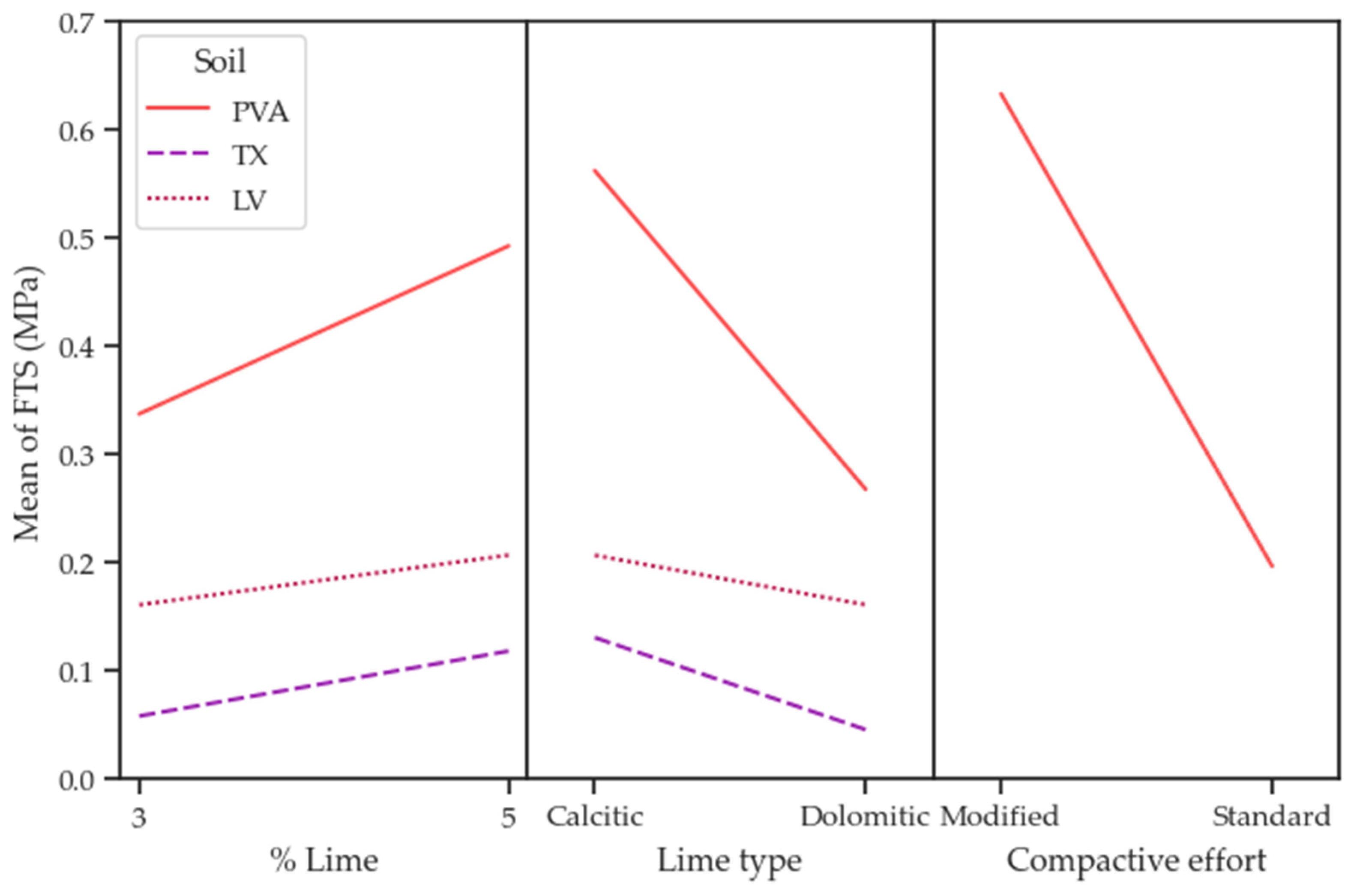
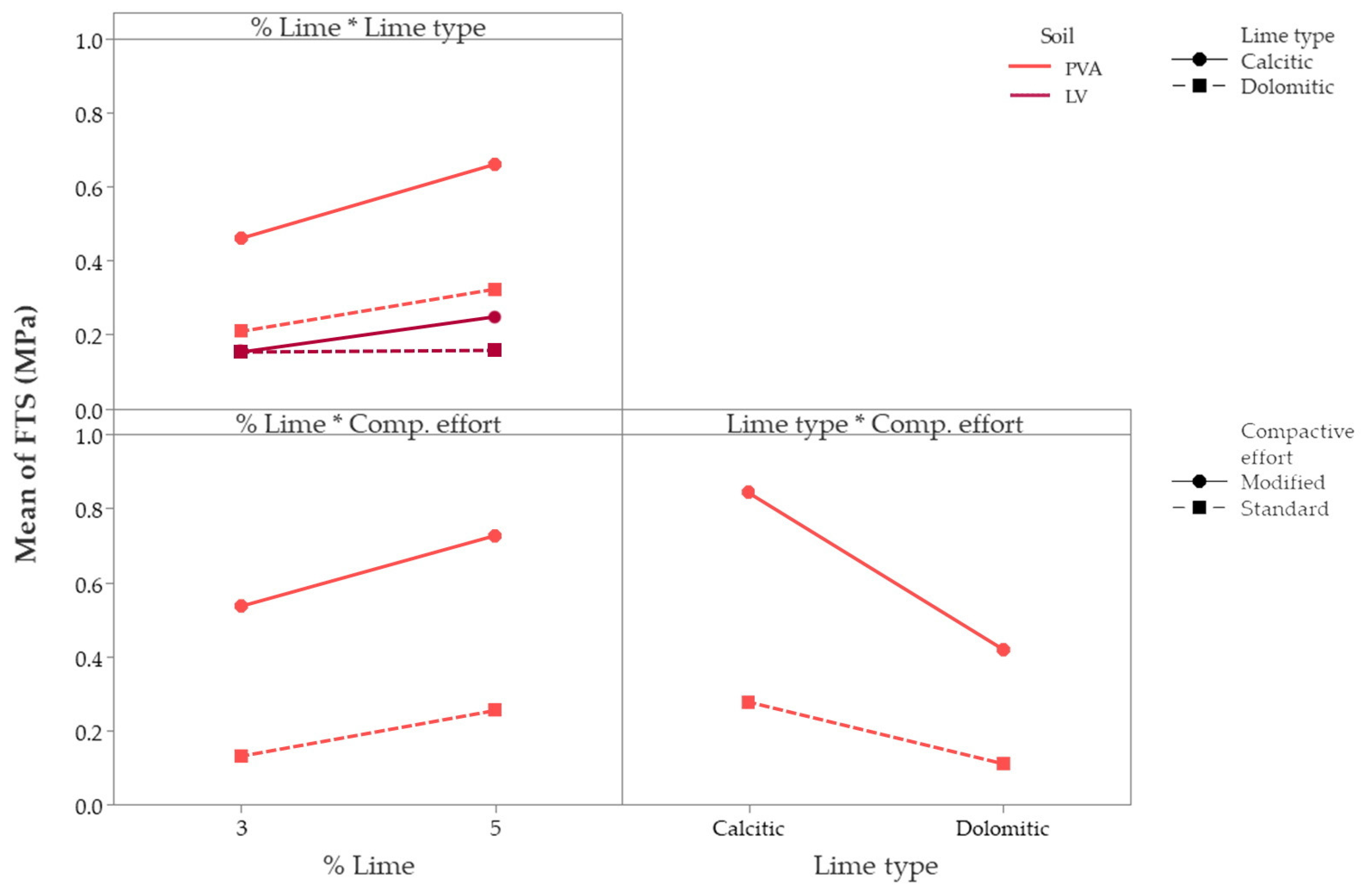
3.2. Flexural Tensile Behavior
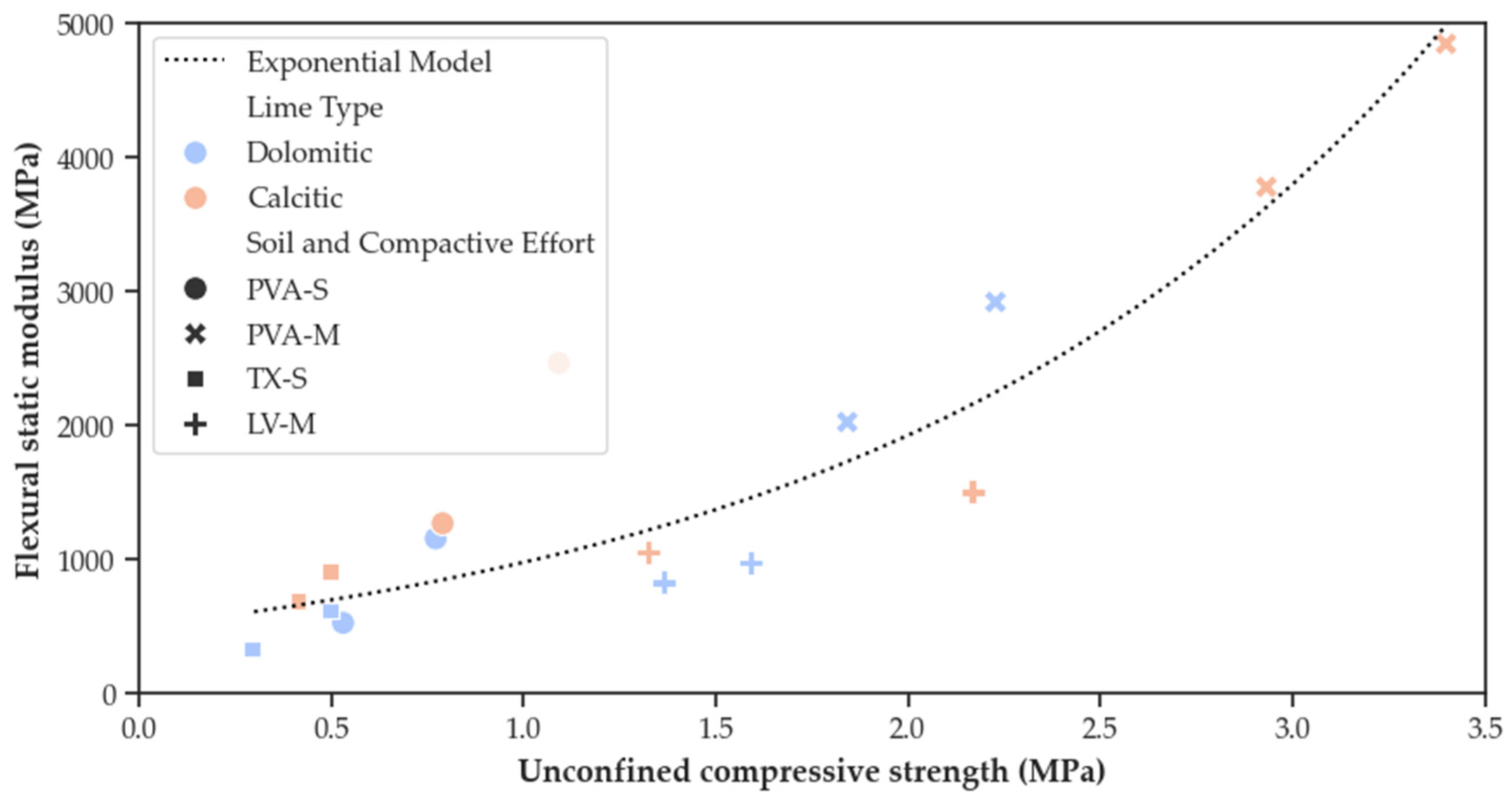
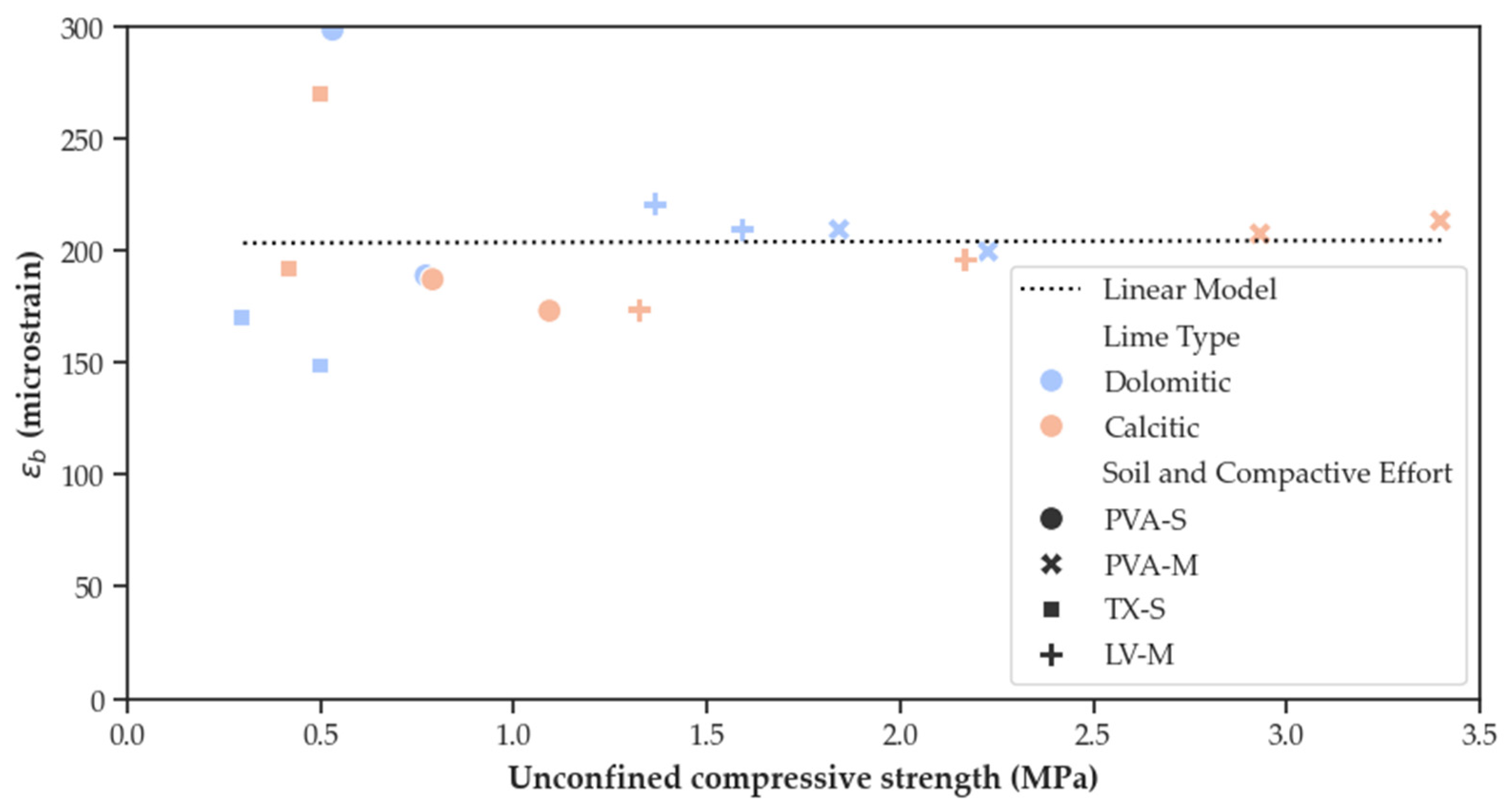
3.3. Correlations Between Compressive Strength and Flexural Properties
4. Conclusions
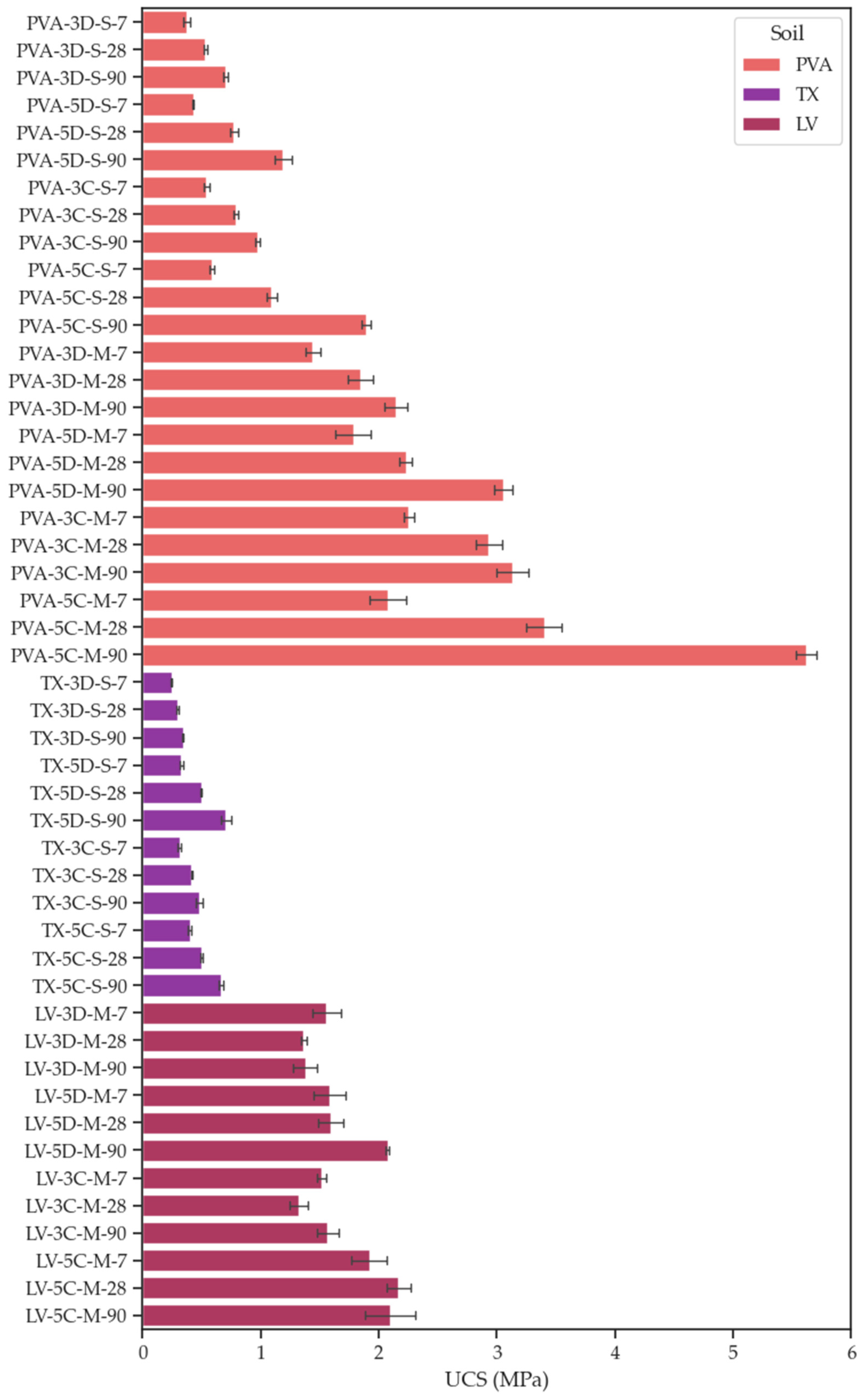
- All three soils responded positively to lime treatment, though to different extents. Argisol (PVA) and Latosol (LV), particularly when compacted with modified effort, achieved high strength and stiffness and demonstrated performance consistent with lime-stabilized materials. In contrast, Luvisol (TX) showed more moderate improvements, consistent with soil modification. These trends are likely associated with its elevated organic matter content (1.5%) and high potassium concentration (>400 mg/dm3), both of which may inhibit pozzolanic reactions. These findings emphasize that lime treatment performance is soil-dependent, and that stabilization feasibility must be evaluated for each soil according to its reactivity with lime.
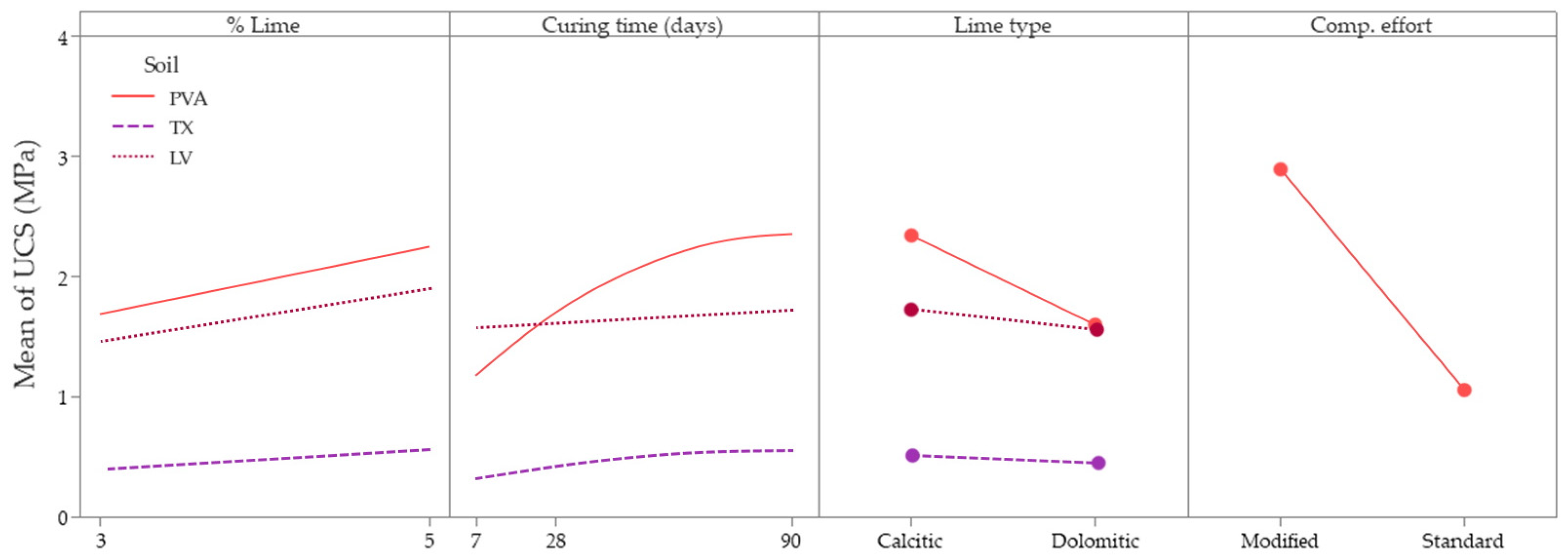
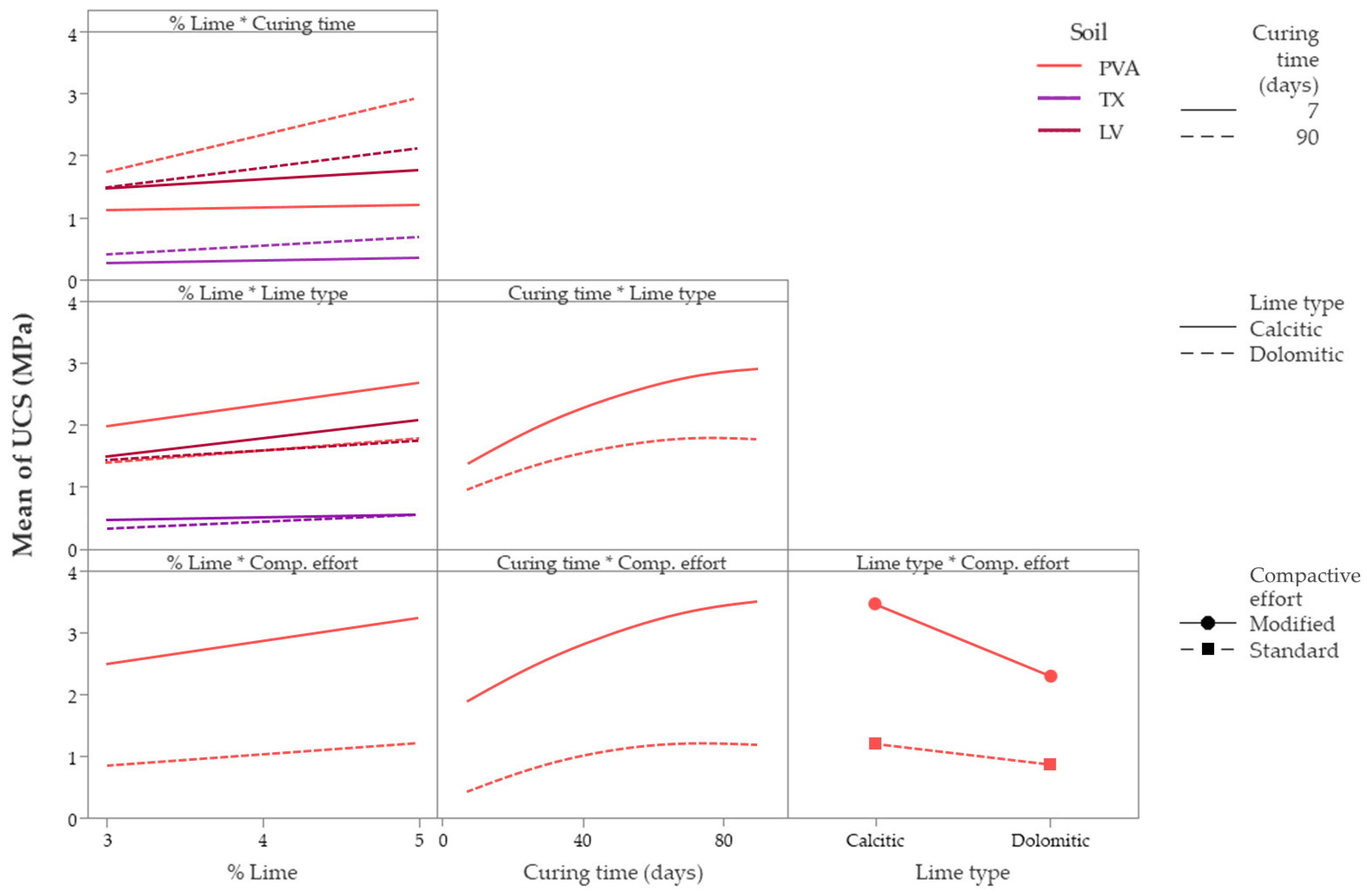
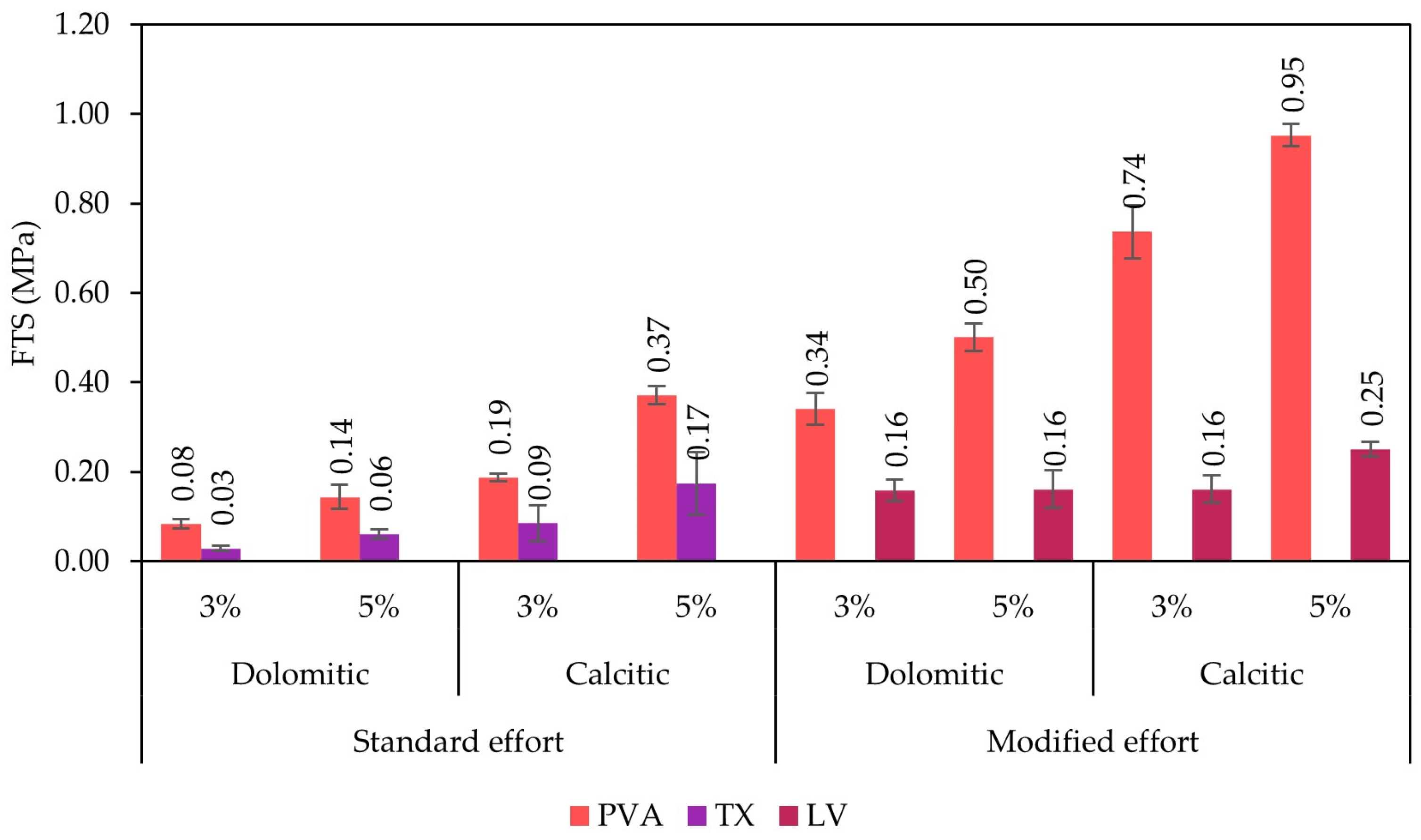
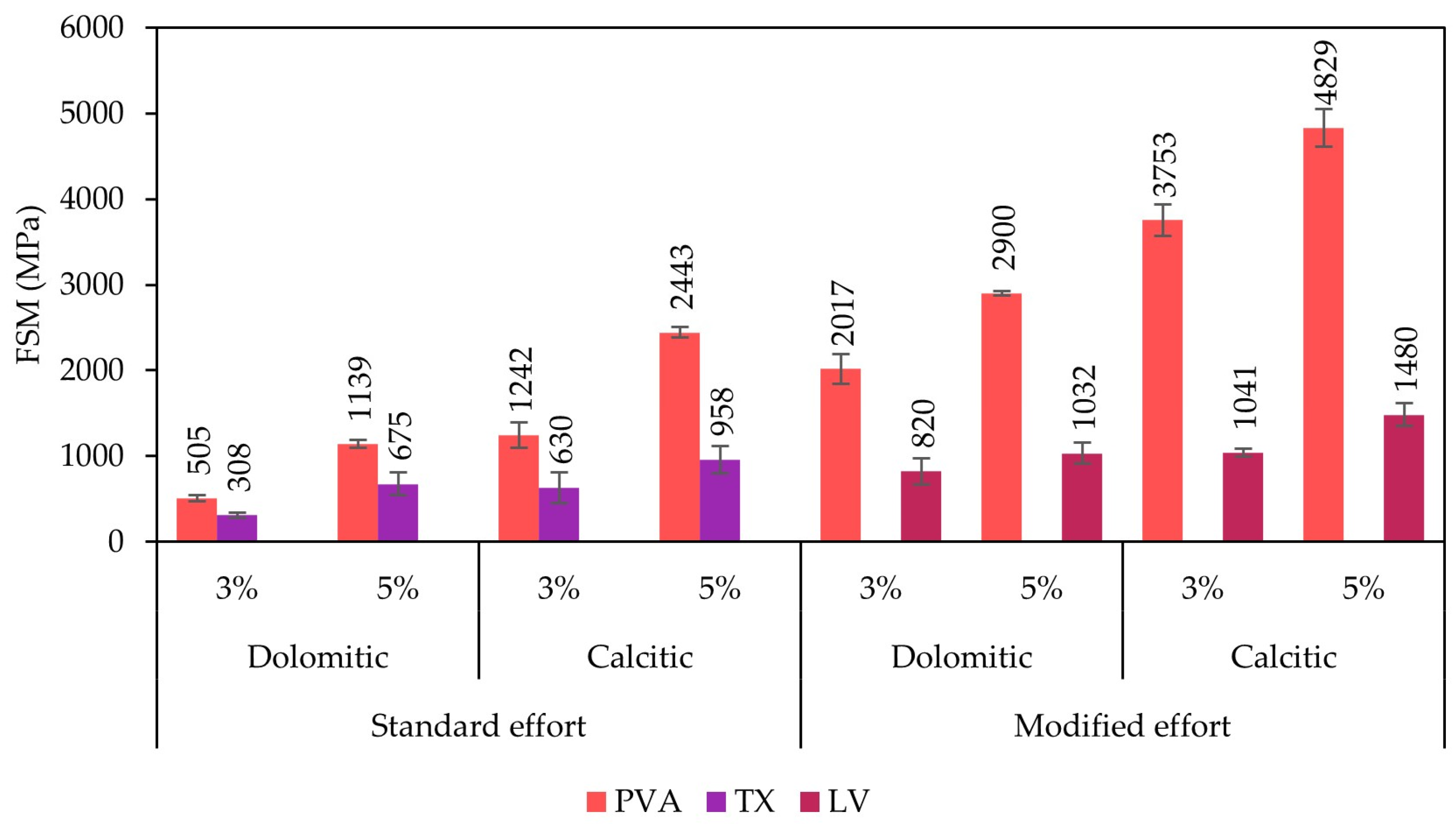
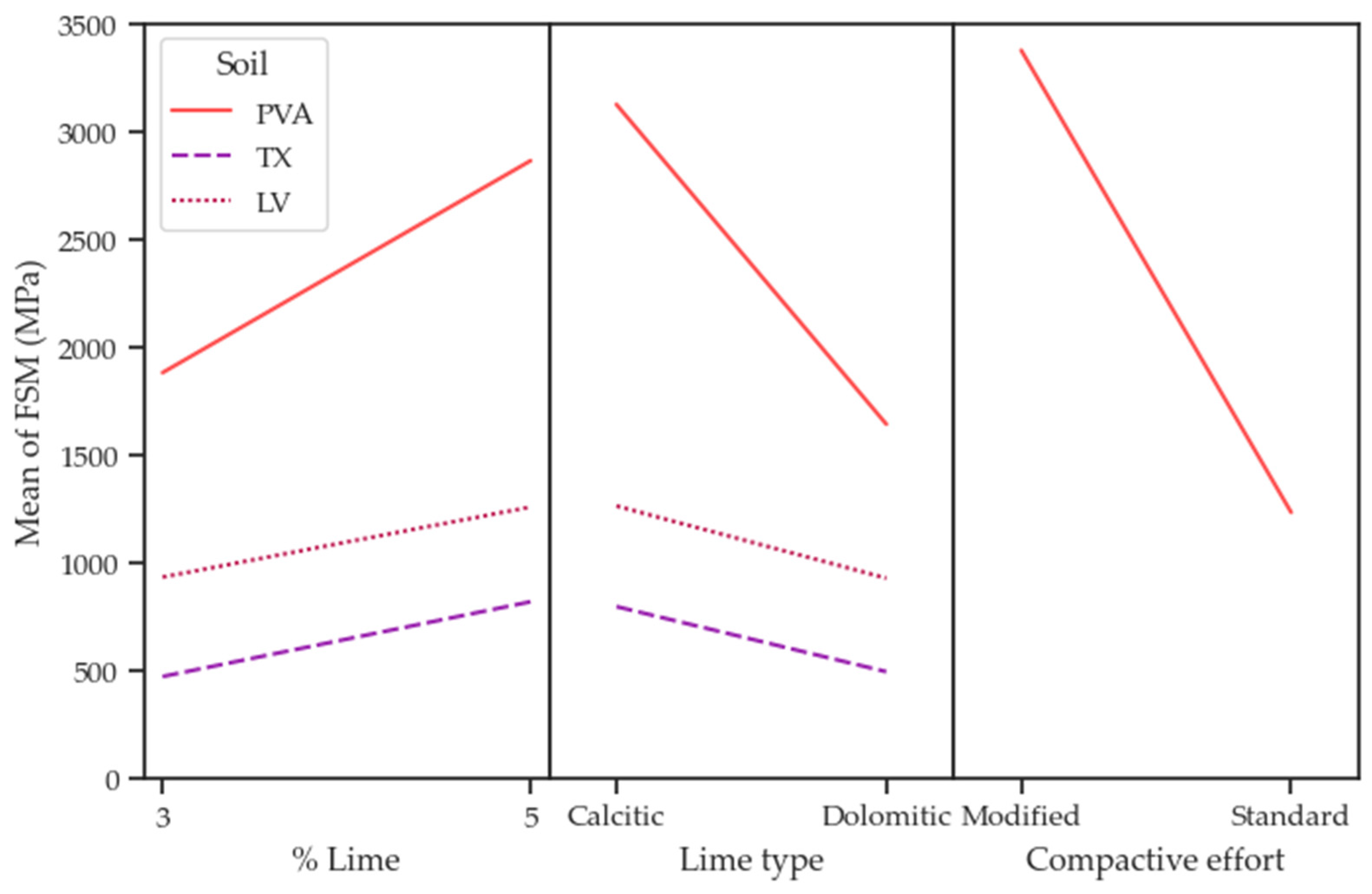
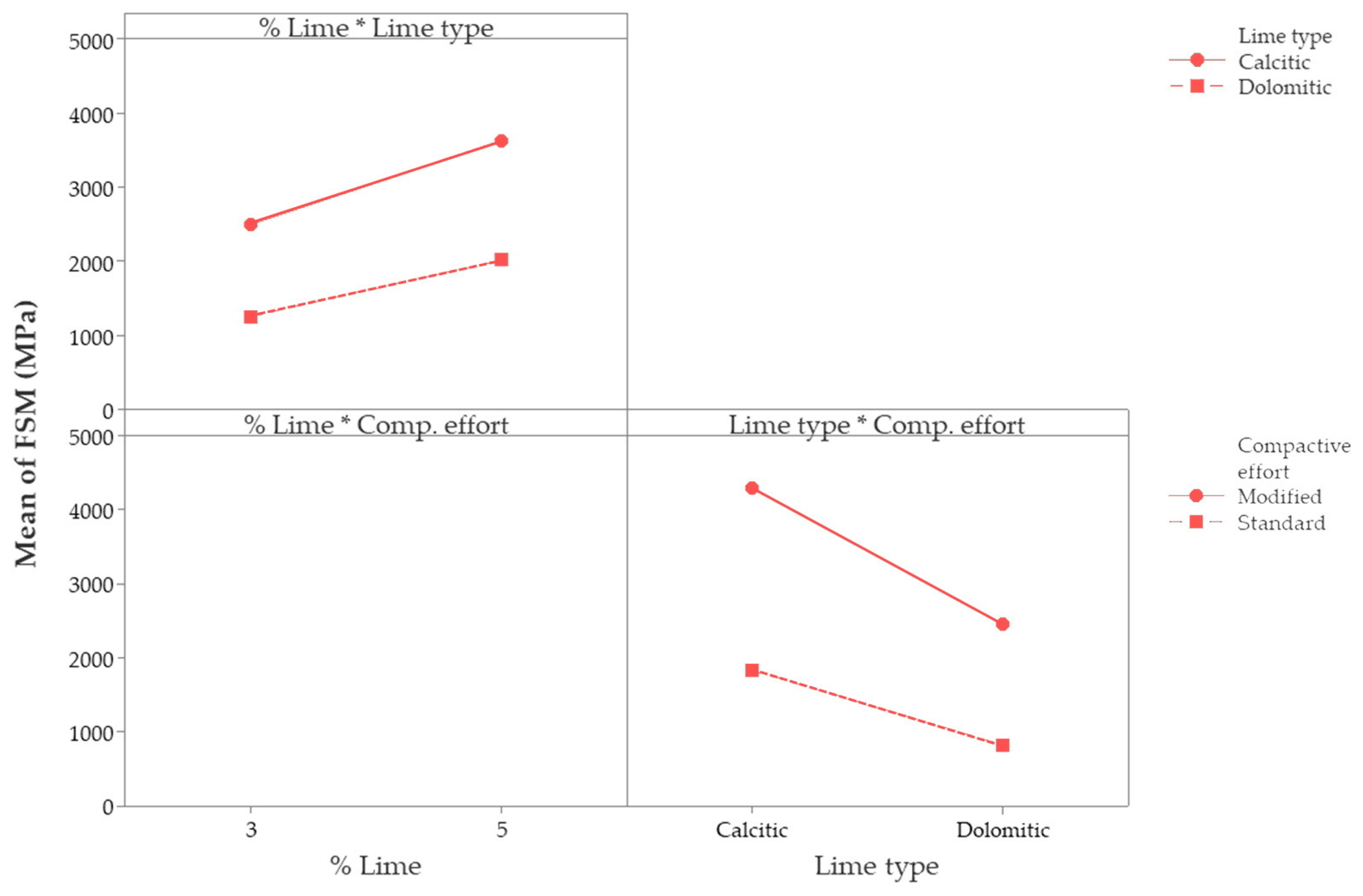
- Mechanical behavior of soil–lime mixtures was influenced by the study’s controllable factors, with compactive effort emerging as the dominant factor within the evaluated experimental framework, followed by lime type and lime content. The use of higher lime content (5%) resulted in increased strength and stiffness, especially in combination with calcitic lime and modified compactive effort. These results have direct implications for field construction: increasing compactive effort, an operationally achievable measure in practice, provides substantial performance gains without requiring excessive lime contents, which may induce shrinkage, thereby promoting both cost-effectiveness and structural reliability.
- Curing time significantly influenced unconfined compressive strength, confirming the time-dependent development of pozzolanic reactions. A strong interaction between lime content and curing time was observed: lime content exerted minimal influence at 7 days but became increasingly significant after 28 and 90 days, indicating progressive lime consumption and cementitious development as curing advances. Overall, longer curing time yielded higher UCS values.
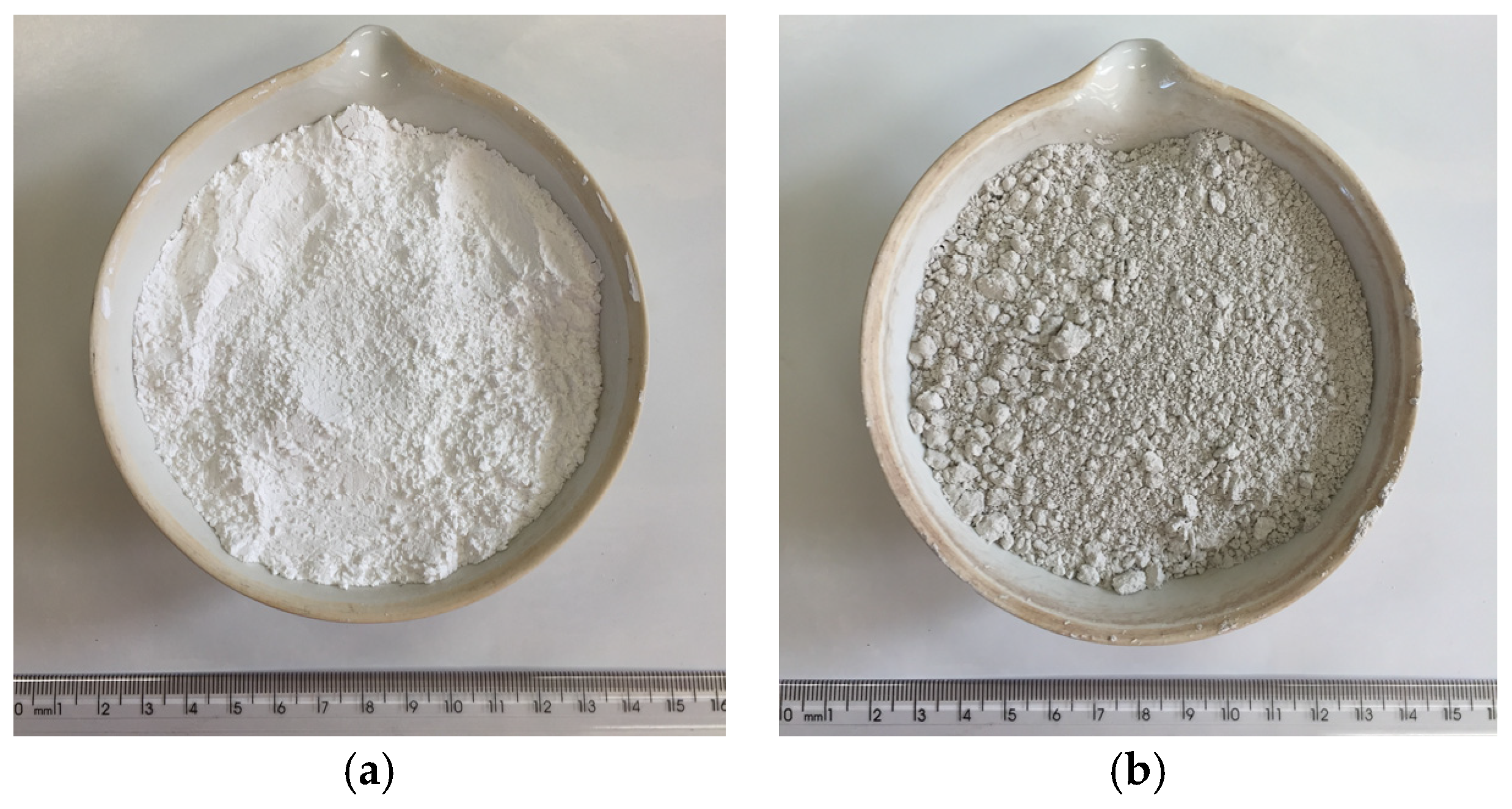
- Calcitic lime produced superior mechanical behavior compared with dolomitic lime. This effect is attributed to higher Ca(OH)2 content (93% vs. 44%), lower retained fraction on the 0.075 mm sieve (0.2% vs. 17.8%), and lower particle density (0.4 vs. 0.6 g/cm3), resulting in greater surface area and higher dissolution rate. These properties contributed to enhanced reactivity and cementation, particularly when combined with higher compactive effort.
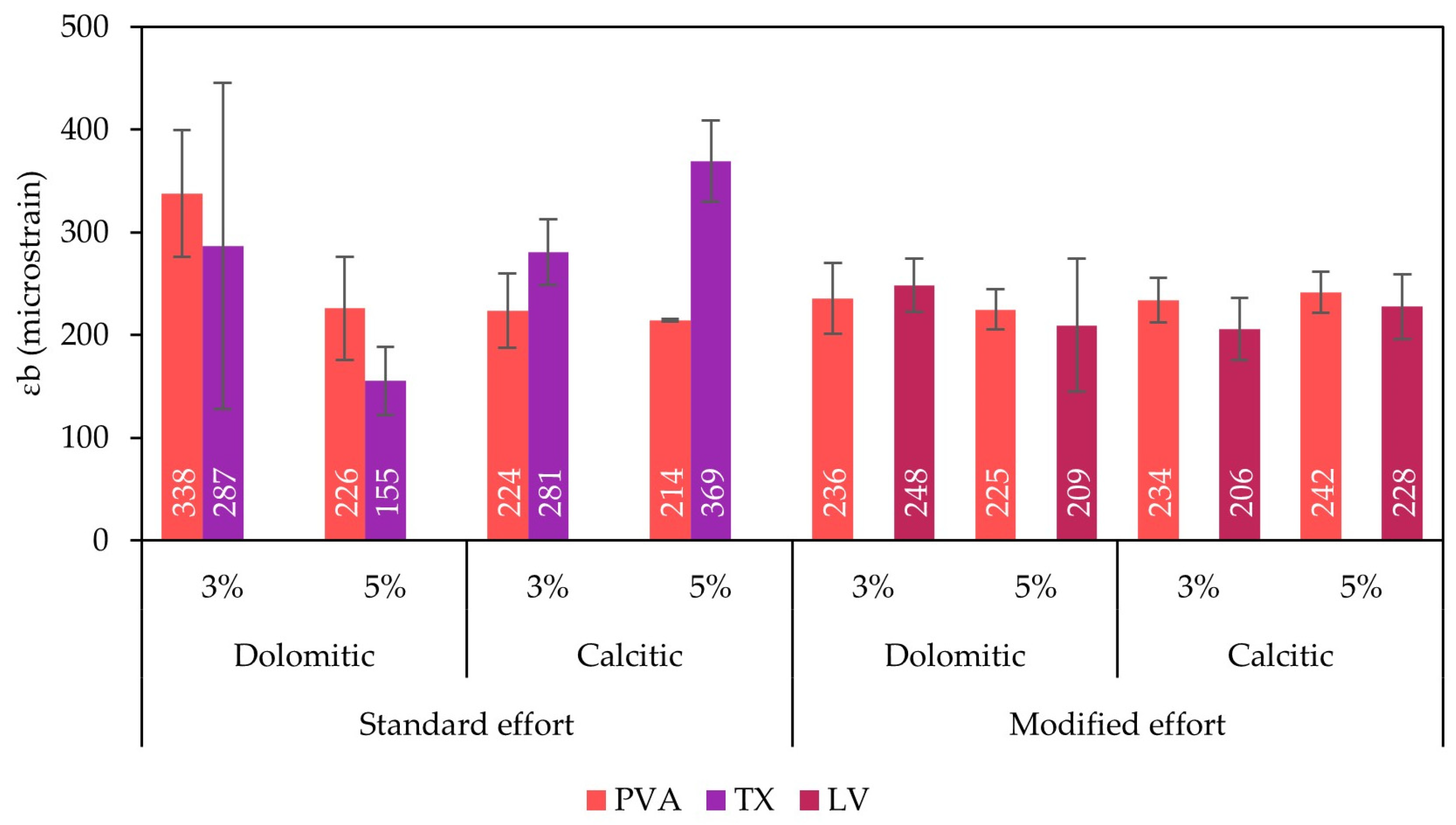
- Strain at break was the only measured parameter not significantly affected by the studied controlled factors. For soil–lime mixtures with UCS > 1 MPa at 28 days, εb converged toward approximately 200 microstrain. This indicates that lime-stabilized mixtures in this study exhibit a more ductile response than typical cement-treated materials, tolerating greater deformation before cracking and, thus, providing desirable stress–strain behavior for mechanistic–empirical pavement applications.
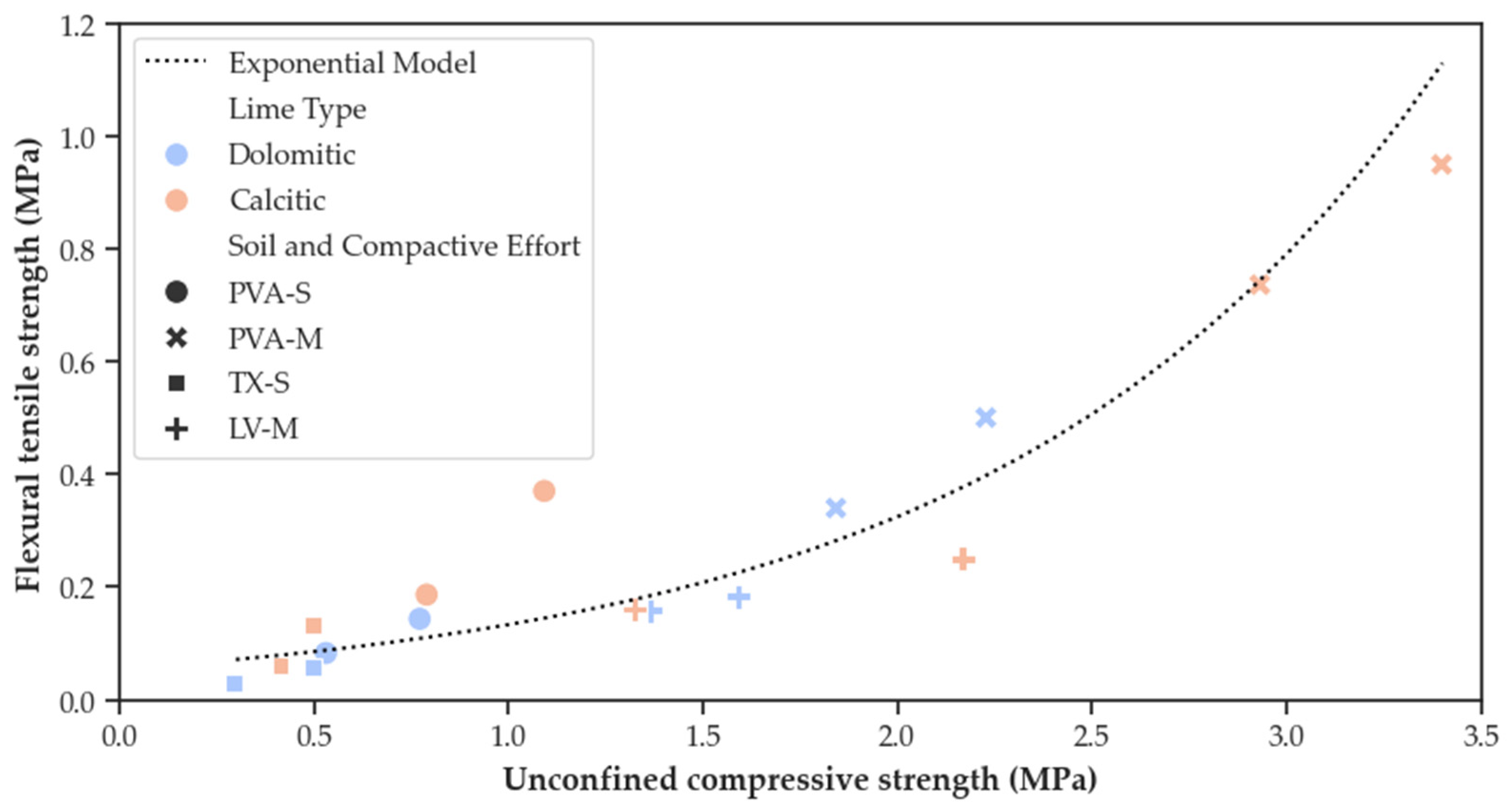
- Statistically significant correlations were established between UCS, FTS, and FSM, facilitating the estimation of flexural properties directly from compressive strength values. Thus, when flexural testing is unavailable, engineers may use the proposed estimation equations to estimate flexural modulus and strength from UCS and may adopt εb = 200 microstrain for preliminary pavement design assessments.
Author Contributions
Funding
Data Availability Statement
Acknowledgments
Conflicts of Interest
Abbreviations
| Alexchangeable | Exchangeable Aluminum |
| ANOVA | Analysis of Variance |
| ASTM | American Society for Testing and Materials |
| AASHTO | American Association of State Highway and Transportation Officials |
| C | Calcitic Lime |
| Ca(OH)2 | Calcium Hydroxide |
| CEC | Cation Exchange Capacity |
| D | Dolomitic Lime |
| εb | Strain at Break |
| FSM | Flexural Static Modulus |
| FTS | Flexural Tensile Strength |
| IDT | Indirect Tensile Strength |
| K | Potassium |
| LG’ | Lateritic Clayey Soil |
| LV | Red Latosol |
| M | Modified Effort |
| MAE | Mean Absolute Error |
| MCT | Miniature, Compacted, Tropical |
| MDUW | Maximum Dry Unit Weight |
| Mg(OH)2 | Magnesium Hydroxide |
| MH | High-Plasticity Silt |
| ML | Low-Plasticity Silt |
| NG’ | Non-Lateritic Clayey Soil |
| NLA | National Lime Association |
| NS’ | Non-Lateritic Silty Soil |
| OMC | Optimum Moisture Content |
| P | Phosphorus |
| PVA | Red–Yellow Argisol |
| R2 | Determination Coefficient |
| RMSE | Root Mean Squared Error |
| S | Standard Effort |
| SAMDM | South African Mechanistic–Empirical Design Method |
| TX | Haplic Luvisol |
| UCS | Unconfined Compressive Strength |
| USCS | Unified Soil Classification System |
References
- American Association of State Highway and Transportation Officials (AASHTO). AASHTO Guide for Design of Pavement Structures; AASHTO: Washington, DC, USA, 1993; p. 624. [Google Scholar]
- Dias, R.D. Proposal of a Methodology for the Definition of a Basic Geotechnical Map in Tropical and Subtropical Regions. Rev. Inst. Geológico 1995, 16, 51–55. [Google Scholar] [CrossRef] [Scilit]
- Castro, F.J.C.O. Contribution to the Knowledge and Determination of the Reactivity of Sesquioxide Soils Using Calcium Hydroxide: Application to the Geopolymerization (Stabilization) Process. Ph.D. Thesis, Federal University of Rio de Janeiro (COPPE/UFRJ), Rio de Janeiro, Brazil, 1995. [Google Scholar]
- de Carvalho, J.C.; de Rezende, L.R.; Cardoso, F.B.F.; Lucena, L.C.F.L.; Guimarães, R.C.; Valencia, Y.G. Tropical Soils for Highway Construction: Peculiarities and Considerations. Transp. Geotech. 2015, 5, 3–19. [Google Scholar] [CrossRef] [Scilit]
- Nogami, J.S.; Villibor, D.F. Low-Cost Pavements Using Lateritic Soils; Editora Villibor: São Paulo, Brazil, 1995. [Google Scholar]
- Bhattacharja, S.; Bhatty, J.I.; Todres, H.A. Stabilization of Clay Soils by Portland Cement or Lime—A Critical Review of Literature. PCA R&D Ser. 2003, 60, 124–133. [Google Scholar]
- Thompson, M.R. Factors Influencing the Plasticity and Strength of Lime–Soil Mixtures. Univ. Ill. Bull. 1967, 64, 1–20. [Google Scholar]
- Little, D.N. Stabilization of Pavement Subgrades and Base Courses with Lime; National Lime Association: Arlington, VA, USA, 1995; p. 219. [Google Scholar]
- Hilt, G.H.; Davidson, D.T. Lime Fixation in Clayey Soils; Highway Research Bulletin: Washington, DC, USA, 1960; pp. 20–32. [Google Scholar]
- Prusinski, J.R.; Bhattacharja, S. Effectiveness of Portland Cement and Lime Stabilizing Clay Soils. Transp. Res. Rec. 1999, 1652, 215–227. [Google Scholar] [CrossRef] [Scilit]
- Eades, J.L.; Grim, R.E. A Quick Test to Determine Lime Requirements for Lime Stabilization. Highw. Res. Rec. 1966, 139, 61–72. [Google Scholar]
- National Lime Association. Lime Treated Soils Save Time & Money; National Lime Association: Arlington, VA, USA, 2005; p. 5. [Google Scholar]
- Herzog, A.; Mitchell, J.K. Reactions Accompanying Stabilization of Clay with Cement. Highw. Res. Board 1963, 36, 146–171. [Google Scholar]
- Clare, K.E.; Cruchley, A.E. Laboratory Experiments in the Stabilization of Clays with Hydrated Lime. Géotechnique 1957, 7, 97–111. [Google Scholar] [CrossRef] [Scilit]
- Ola, S.A. The Potentials of Lime Stabilization of Lateritic Soils. Eng. Geol. 1977, 11, 305–317. [Google Scholar] [CrossRef] [Scilit]
- Thompson, M.R. Lime Reactivity of Illinois Soils. J. Soil Mech. Found. Div. 1966, 92, 67–92. [Google Scholar] [CrossRef] [Scilit]
- Thompson, M.R. Suggested Method for Mixture Design Procedure for Lime-Treated Soils. In Special Procedures for Testing Soil and Rock for Engineering Purposes; ASTM International: West Conshohocken, PA, USA, 1970; pp. 430–440. [Google Scholar] [CrossRef] [Scilit]
- Al-Kiki, I.M.; Al-Atalla, M.A.; Al-Zubaydi, A.H. Long Term Strength and Durability of Clayey Soil Stabilized with Lime. Eng. Tech. J. 2011, 29, 725–735. [Google Scholar]
- Baldovino, J.A.; Moreira, E.B.; Teixeira, W.; Izzo, R.L.S.; Rose, J.L. Effects of Lime Addition on Geotechnical Properties of Sedimentary Soil in Curitiba, Brazil. J. Rock Mech. Geotech. Eng. 2018, 10, 188–194. [Google Scholar] [CrossRef] [Scilit]
- Bayat, M.; Asgari, M.R.; Mousivand, M. Effects of Cement and Lime Treatment on Geotechnical Properties of a Low Plasticity Clay. In Proceedings of the International Conference on Civil Engineering Architecture & Urban Sustainable Development, Tabriz, Iran, 27–28 November 2013. [Google Scholar]
- Deneele, D.; Dony, A.; Colin, J.; Herrier, G.; Lesueur, D. The Carbonation of a Lime-Treated Soil: Experimental Approach. Mater. Struct. 2021, 54, 21. [Google Scholar] [CrossRef] [Scilit]
- Ojuri, O.O.; Adavi, A.A.; Oluwatuyi, O.E. Geotechnical and Environmental Evaluation of Lime–Cement Stabilized Soil–Mine Tailing Mixtures for Highway Construction. Transp. Geotech. 2017, 10, 1–12. [Google Scholar] [CrossRef] [Scilit]
- Hou, T.S.; Yuan, X.H.; Zeng, X.; Wang, X.; Ceng, Y.D.; Zhang, Z.Z.; Hou, M.L. Water Resistance Properties of Lime Soil Ground under Long-Term Soaking Environment. Indian Geotech. J. 2021, 51, 1299–1309. [Google Scholar] [CrossRef] [Scilit]
- Deneele, D.; Le Runigo, B.; Cui, Y.J.; Cuisinier, O.; Ferber, V. Experimental Assessment Regarding Leaching of Lime-Treated Silt. Constr. Build. Mater. 2016, 112, 1032–1040. [Google Scholar] [CrossRef] [Scilit]
- Toohey, N.M.; Mooney, M.A.; Bearce, R.G. Stress–Strain–Strength Behavior of Lime-Stabilized Soils during Accelerated Curing. J. Mater. Civ. Eng. 2013, 25, 1880–1886. [Google Scholar] [CrossRef] [Scilit]
- Chittoori, B.C.S.; Puppala, A.J.; Pedarla, A. Addressing Clay Mineralogy Effects on Performance of Chemically Stabilized Expansive Soils Subjected to Seasonal Wetting and Drying. J. Geotech. Geoenviron. Eng. 2018, 144, 04017097. [Google Scholar] [CrossRef] [Scilit]
- Al-Mukhtar, M.; Khattab, S.; Alcover, J.F. Microstructure and Geotechnical Properties of Lime-Treated Expansive Clayey Soil. Eng. Geol. 2012, 139–140, 17–27. [Google Scholar] [CrossRef] [Scilit]
- Solanki, P.; Khoury, N.; Zaman, M.M. Engineering Properties and Moisture Susceptibility of Silty Clay Stabilized with Lime, Class C Fly Ash, and Cement Kiln Dust. J. Mater. Civ. Eng. 2009, 21, 749–757. [Google Scholar] [CrossRef] [Scilit]
- Negawo, W.J.; Di Emidio, G.; Bezuijen, A.; Verastegui Flores, R.D.; François, B. Lime-Stabilisation of High Plasticity Swelling Clay from Ethiopia. Eur. J. Environ. Civ. Eng. 2019, 23, 504–514. [Google Scholar] [CrossRef] [Scilit]
- Razali, R.; Rashid, A.S.A.; Che Lat, D.; Horpibulsuk, S.; Roshan, M.J.; Rahman, N.S.A.; Ahmad Rizal, N.H. Shear Strength and Durability against Wetting and Drying Cycles of Lime-Stabilised Laterite Soil as Subgrade. Phys. Chem. Earth 2023, 132, 103479. [Google Scholar] [CrossRef] [Scilit]
- Randhawa, K.S.; Chauhan, R.; Kumar, R. An Investigation on the Effect of Lime Addition on UCS of Indian Black Cotton Soil. Mater. Today Proc. 2021, 50, 797–803. [Google Scholar] [CrossRef] [Scilit]
- Fedrigo, W.; Kleinert, T.R.; Núñez, W.P.; Graeff, Â.G.; Pinto da Silva Filho, L.C.; Brito, L.A.T. Shrinkage of Cold Recycled Cement-Treated Mixtures of Asphalt Pavement Materials. J. Test. Eval. 2023, 51, 2230–2244. [Google Scholar] [CrossRef] [Scilit]
- Biswal, D.R.; Sahoo, U.C.; Dash, S.R. Durability and Shrinkage Studies of Cement Stabilised Granular Lateritic Soils. Int. J. Pavement Eng. 2019, 20, 1451–1462. [Google Scholar] [CrossRef] [Scilit]
- Bhandari, R.K.M. Factors Influencing the Drying Shrinkage of Cement Stabilised Mixtures. In Australian Road Research Board Conference Proceedings; ARRB: Melbourne, Australia, 1975; Volume 5, pp. 9–23. [Google Scholar]
- Fedrigo, W.; Núñez, W.P.; Kleinert, T.R.; Matuella, M.F.; Ceratti, J.A.P. Strength, Shrinkage, Erodibility and Capillary Flow Characteristics of Cement-Treated Recycled Pavement Materials. Int. J. Pavement Res. Technol. 2017, 10, 393–402. [Google Scholar] [CrossRef] [Scilit]
- Mandal, T.; Edil, T.B.; Tinjum, J.M. Study on Flexural Strength, Modulus, and Fatigue Cracking of Cementitiously Stabilised Materials. Road Mater. Pavement Des. 2017, 19, 1546–1562. [Google Scholar] [CrossRef] [Scilit]
- Behak, L.; Núñez, W.P. Mechanistic Behaviour under Traffic Load of a Clayey Silt Modified with Lime. Road Mater. Pavement Des. 2018, 19, 1072–1088. [Google Scholar] [CrossRef] [Scilit]
- Nazari, M.; Ghabchi, R.; Zaman, M.; Commuri, S. Influence of Chemical Stabilization on the Flexural Fatigue Performance of Subgrade Soil. In Proceedings of the Geotechnical Frontiers, Orlando, FL, USA, 12–15 March 2017; American Society of Civil Engineers (ASCE): Reston, VA, USA, 2017; pp. 103–113. [Google Scholar]
- Krzewinski, V.; Dufour, N.; Chevalier, C.; Borderon, J.; Gasc-Barbier, M. Fatigue Behavior of Lime- and/or Cement-Treated Soils: A Database Analysis and Empirical Modeling Approach. Results Eng. 2025, 28, 107682. [Google Scholar] [CrossRef] [Scilit]
- Lan, X.; Zhang, X.; Yin, Y.; Zeng, H.; Chang, X. Enhancing Shrinkage Performance in Inorganic Binder-Stabilized Pavement Bases: A Comprehensive Review. Constr. Build. Mater. 2025, 483, 141753. [Google Scholar] [CrossRef] [Scilit]
- Dhar, S.; Hussain, M. The Strength and Microstructural Behavior of Lime Stabilized Subgrade Soil in Road Construction. Int. J. Geotech. Eng. 2021, 15, 471–483. [Google Scholar] [CrossRef] [Scilit]
- Baldovino, J.A.; Moreira, E.B.; Izzo, R.L.S.; Rose, J.L. Empirical Relationships with Unconfined Compressive Strength and Split Tensile Strength for the Long Term of a Lime-Treated Silty Soil. J. Mater. Civ. Eng. 2018, 30, 06018008. [Google Scholar] [CrossRef] [Scilit]
- Thompson, M.R. Split-Tensile Strength of Lime-Stabilized Soils; Highway Research Record: Washington, DC, USA, 1966; pp. 69–82. [Google Scholar]
- Rios, S.; da Fonseca, A.V.; Bangaru, S.S. Silty Sand Stabilized with Different Binders. Procedia Eng. 2016, 143, 187–195. [Google Scholar] [CrossRef] [Scilit]
- Gnanendran, C.T.; Piratheepan, J.; Ramanujam, J.; Arulrajah, A. Accelerated Laboratory Pavement Model Test on Cemented Base and Clay Subgrade. Geotech. Test. J. 2011, 34, 297–309. [Google Scholar] [CrossRef] [Scilit]
- Klinsky, L.M.G.; Faria, V.C.; Bertollo, S.A.M.; Leal, A.D. Evaluation of the Structural Contribution of Lime-Improved Subgrades. In Proceedings of the 42nd RAPv and 16th ENACOR, Gramado, RS, Brazil, 12–14 November 2013. [Google Scholar]
- Little, D.; Thompson, M.; Terrell, R.; Epps, J.; Barenberg, E.J. Soil Stabilization for Roadways and Airfields; Report ESL-TR-86-19; Air Force Engineering and Services Center: Tyndall Air Force Base, FL, USA, 1987; p. 19. [Google Scholar]
- Behak, L. Structural Analysis of Low-Volume Traffic Pavements Surfaced with Lime-Modified Soil Considering Laboratory Testing and Monitoring of Experimental Sections. Ph.D. Thesis, Federal University of Rio Grande do Sul, Porto Alegre, Brazil, 2013. [Google Scholar]
- Poncelet, N.; François, B. Effect of Laboratory Compaction Mode, Density and Suction on the Tensile Strength of a Lime-Treated Silty Soil. Transp. Geotech. 2022, 34, 100763. [Google Scholar] [CrossRef] [Scilit]
- Disfani, M.M.; Arulrajah, A.; Haghighi, H.; Mohammadinia, A.; Horpibulsuk, S. Flexural Beam Fatigue Strength Evaluation of Crushed Brick as a Supplementary Material in Cement Stabilized Recycled Concrete Aggregates. Constr. Build. Mater. 2014, 68, 667–676. [Google Scholar] [CrossRef] [Scilit]
- Arulrajah, A.; Disfani, M.M.; Haghighi, H.; Mohammadinia, A.; Horpibulsuk, S. Modulus of Rupture Evaluation of Cement Stabilized Recycled Glass/Recycled Concrete Aggregate Blends. Constr. Build. Mater. 2015, 84, 146–155. [Google Scholar] [CrossRef] [Scilit]
- Linares-Unamunzaga, A.; Pérez-Acebo, H.; Rojo, M.; Gonzalo-Orden, H. Flexural Strength Prediction Models for Soil-Cement from Unconfined Compressive Strength at Seven Days. Materials 2019, 12, 387. [Google Scholar] [CrossRef] [Scilit]
- González, A.; Jameson, G.; de Carteret, R.; Yeo, R. Laboratory Fatigue Life of Cemented Materials in Australia. Road Mater. Pavement Des. 2013, 14, 518–536. [Google Scholar] [CrossRef] [Scilit]
- Mamun, M.; Bindiganavile, V. Sulphate Resistance of Fibre Reinforced Cement-Based Foams. Constr. Build. Mater. 2011, 25, 3427–3442. [Google Scholar] [CrossRef] [Scilit]
- Fedrigo, W.; Núñez, W.P.; Castañeda López, M.A.; Kleinert, T.R.; Ceratti, J.A.P. A Study on the Resilient Modulus of Cement-Treated Mixtures of RAP and Aggregates Using Indirect Tensile, Triaxial and Flexural Tests. Constr. Build. Mater. 2018, 171, 161–169. [Google Scholar] [CrossRef] [Scilit]
- Fedrigo, W.; Núñez, W.P.; Schreinert, G.G.; Kleinert, T.R.; Matuella, M.F.; Castañeda López, M.A.; Ceratti, J.A.P. Flexural Strength, Stiffness and Fatigue of Cement-Treated Mixtures of Reclaimed Asphalt Pavement and Lateritic Soil. Road Mater. Pavement Des. 2019, 22, 1004–1022. [Google Scholar] [CrossRef] [Scilit]
- Castañeda López, M.A.; Fedrigo, W.; Kleinert, T.R.; Núñez, W.P.; Ceratti, J.A.P. Full-Depth Reclamation of Flexible Pavements with Portland Cement: Fatigue Study Using Four-Point Bending Test. In Proceedings of the TRB 2017 Annual Meeting, Transportation Research Board (TRB), Washington, DC, USA, 8–12 January 2017; National Academies of Sciences, Engineering, and Medicine: Washington, DC, USA, 2017; pp. 1–14. [Google Scholar]
- Castañeda López, M.A.; Fedrigo, W.; Kleinert, T.R.; Matuella, M.F.; Núñez, W.P.; Ceratti, J.A.P. Flexural Fatigue Evaluation of Cement-Treated Mixtures of Reclaimed Asphalt Pavement and Crushed Aggregates. Constr. Build. Mater. 2018, 158, 320–325. [Google Scholar] [CrossRef] [Scilit]
- Fedrigo, W.; Kleinert, T.R.; Schreinert, G.G.; Brito, L.A.T.; Núñez, W.P. Statistical Analysis of the Tensile Strength of Cold Recycled Cement-Treated Materials and Its Influence on Pavement Design. Infrastructures 2025, 10, 284. [Google Scholar] [CrossRef] [Scilit]
- Diniz, B.C.; Fedrigo, W.; Kleinert, T.R.; Batista, G.S.; Núñez, W.P.; Correa, B.M.; Brito, L.A.T. Lime Stabilization of Tropical Soil for Resilient Pavements: Mechanical, Microscopic, and Mineralogical Characteristics. Materials 2024, 17, 4720. [Google Scholar] [CrossRef] [Scilit]
- Bhattacharya, P.G.; Pandey, B.B. Flexural Fatigue Strength of Lime–Laterite Soil Mixtures. In Transportation Research Record; Transportation Research Board: Washington, DC, USA, 1986; pp. 86–92. [Google Scholar] [CrossRef] [Scilit]
- Theyse, H.L.; De Beer, M.; Rust, F.C. Overview of South African Mechanistic Pavement Design Method. Transp. Res. Rec. 1996, 1539, 7–17. [Google Scholar] [CrossRef]
- South African National Roads Agency Limited. South African Pavement Engineering Manual—Chapter 10: Pavement Design, 2nd ed.; South African National Roads Agency SOC Ltd.: Pretoria, South Africa, 2014. [Google Scholar]
- Santos, H.G.; Jacomine, P.K.T.; Anjos, L.H.C.; Oliveira, V.A.; Lumbreras, J.F.; Coelho, M.R.; Almeida, J.A.; Araújo Filho, J.C.O.; Oliveira, J.B. Brazilian Soil Classification System; Embrapa: Brasília, Brazil, 2018. [Google Scholar]
- ASTM D3282; Standard Practice for Classification of Soils and Soil-Aggregate Mixtures for Highway Construction Purposes. ASTM International: West Conshohocken, PA, USA, 2004.
- ASTM D2487; Standard Practice for Classification of Soils for Engineering Purposes (Unified Soil Classification System). ASTM International: West Conshohocken, PA, USA, 2000.
- DNER-CLA 259; Classification of Tropical Soils for Highway Purposes Using Compacted Specimens in Miniature Equipment. DNER: Brasília, Brazil, 1996.
- ASTM D6276; Standard Test Method for Using pH to Estimate the Soil-Lime Proportion Requirement for Soil Stabilization. ASTM International: West Conshohocken, PA, USA, 2006.
- National Lime Association. Lime-Treated Soil Construction Manual: Lime Stabilization & Lime Modification; National Lime Association: Arlington, VA, USA, 2004. [Google Scholar]
- ASTM D698; Standard Test Methods for Laboratory Compaction Characteristics of Soil Using Standard Effort (12,400 ft-lbf/ft3 (600 kN·m/m3)). ASTM International: West Conshohocken, PA, USA, 2021.
- ASTM D1557; Standard Test Methods for Laboratory Compaction Characteristics of Soil Using Modified Effort (56,000 ft-lbf/ft3 (2700 kN·m/m3)). ASTM International: West Conshohocken, PA, USA, 2021.
- Bell, F.G. Lime Stabilization of Clay Minerals and Soils. Eng. Geol. 1996, 42, 223–237. [Google Scholar] [CrossRef] [Scilit]
- Transportation Research Board (TRB). Lime Stabilization—Reactions, Properties, Design and Construction; State of the Art Report 5; TRB: Washington, DC, USA, 1987; p. 64. [Google Scholar]
- Mallela, J.; Von Quintus, H.; Smith, K.L. Consideration of Lime-Stabilized Layers in Mechanistic-Empirical Pavement Design; National Lime Association: Arlington, VA, USA, 2004; p. 36. [Google Scholar]
- Sivapullaiah, P.V.; Prashanth, J.P.; Sridharan, A. Delay in Compaction and Importance of the Lime Fixation Point on the Strength and Compaction Characteristics of Soil. Ground Improv. 1998, 2, 1365–1781. [Google Scholar] [CrossRef] [Scilit]
- Neves, G.A. Influence of Specific Surface Area on the Pozzolanic Activity of the Lateritic Soil-Lime System. Master’s Thesis, Federal University of Paraíba, João Pessoa, Brazil, 1989. [Google Scholar]
- ASTM D5102; Standard Test Methods for Unconfined Compressive Strength of Compacted Soil-Lime. ASTM International: West Conshohocken, PA, USA, 2009.
- Mandal, T.; Tinjum, J.M.; Gokce, A.; Edil, T.B. Protocol for Testing Flexural Strength, Flexural Modulus, and Fatigue Failure of Cementitiously Stabilized Materials Using Third-Point Flexural Beam Tests. Geotech. Test. J. 2016, 39, 91–105. [Google Scholar] [CrossRef] [Scilit]
- Wen, H.; Muhunthan, B.; Wang, J.; Li, X.; Edil, T.; Tinjum, J.M. Characterization of Cementitiously Stabilized Layers for Use in Pavement Design and Analysis; Transportation Research Board: Washington, DC, USA, 2014. [Google Scholar]
- Austroads. AP-T198: Preliminary Investigation of the Influence of Micro-Cracking on Fatigue Life of Cemented Materials; Austroads: Sydney, Australia, 2012. [Google Scholar]
- Austroads. AP-T101: The Development and Evaluation of Protocols for the Laboratory Characterisation of Cemented Materials; Austroads: Sydney, Australia, 2008. [Google Scholar]
- Rezende, L.R. Study of the Behavior of Alternative Materials Used in Flexible Pavement Structures. Ph.D. Thesis, University of Brasília, Brasília, Brazil, 2003. [Google Scholar]
- Little, D.N. Evaluation of Structural Properties of Lime Stabilized Soils and Aggregates—Volume 3: Mixture Design and Testing Procedure for Lime Stabilized Soils; National Lime Association: Arlington, VA, USA, 2000; p. 16. [Google Scholar]
- Lovato, R.S. Study of the Mechanical Behavior of a Lateritic Soil Stabilized with Lime Applied to Pavement Engineering. Master’s Thesis, Federal University of Rio Grande do Sul, Porto Alegre, Brazil, 2004. [Google Scholar]
- Ormsby, W.C.; Kinter, E.B. Effects of Dolomitic and Calcitic Limes on Strength Development in Mixtures with Two Clay Minerals. Public Roads 1973, 37, 149–160. [Google Scholar]
- Austroads. AP-T16: Mix Design for Stabilised Pavement Materials; Austroads: Sydney, Australia, 2002. [Google Scholar]





| Property | Argisol (PVA) | Luvisol (TX) | Latosol (LV) | |
|---|---|---|---|---|
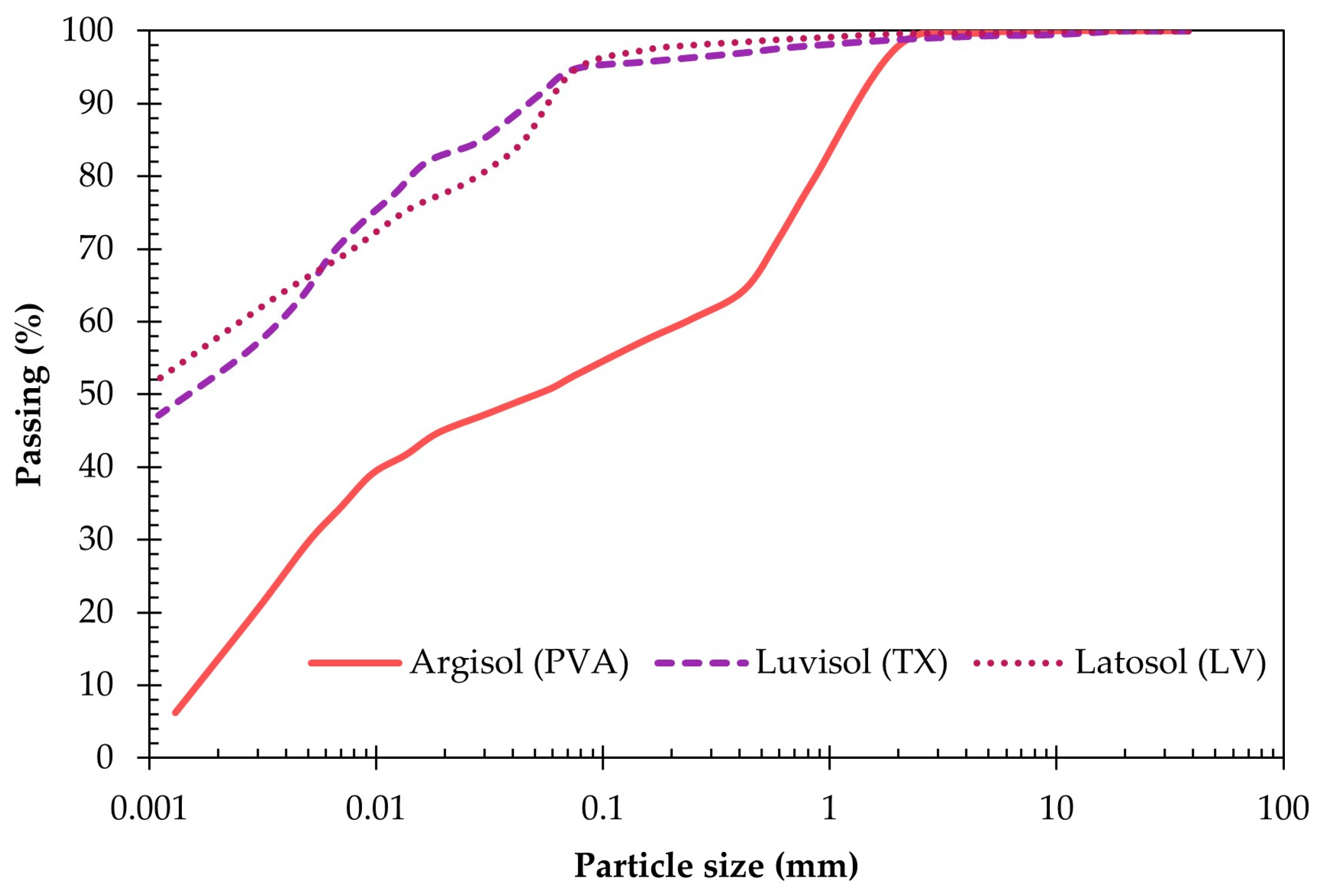
| % passing through #200 sieve (0.075 mm) | 53 | 95 | 95 | |
| Plasticity Index (%) | 17 | 28 | 15 | |
| Classification | AASHTO [65] | A-7-5 | A-7-5 | A-7-5 |
| USCS [66] | ML | MH | MH | |
| MCT [67] | NS’ | NG’ | LG’ | |
| Chemical properties | pH (H2O) | 5.1 | 6.8 | 4.6 |
| P (mg/dm3) | 0.2 | 17.0 | 0.7 | |
| K (mg/dm3) | 6 | >400 | 51 | |
| Alexchangeable (cmolc/dm3) | 1.2 | 0.0 | 0.8 | |
| CEC (cmolc/dm3) | 2.6 | 27.3 | 7.3 | |
| Organic matter (%) | 0.2 | 1.5 | 0.7 | |
| Base saturation (%) | 16.0 | 94.0 | 33.0 | |
| Soil | Lime Type | Lime Content | Compactive Effort | ID | MDUW (kN/m3) | Relative MDUW Difference | OMC (%) | Absolute OMC Difference |
|---|---|---|---|---|---|---|---|---|
| Argisol | - | - | Standard | PVA-S | 16.28 | 18.9 | ||
| Argisol | Dolomitic | 3% | Standard | PVA-S-3D | 15.68 | (−3.7%) | 21.8 | (+2.9 p.p.) |
| Argisol | Dolomitic | 5% | Standard | PVA-S-5D | 15.63 | (−4.0%) | 20.8 | (+1.9 p.p.) |
| Argisol | Calcitic | 3% | Standard | PVA-S-3C | 15.49 | (−4.9%) | 21.2 | (+2.3 p.p.) |
| Argisol | Calcitic | 5% | Standard | PVA-S-5C | 15.41 | (−5.4%) | 22.0 | (+3.1 p.p.) |
| Argisol | - | - | Modified | PVA-M | 18.58 | 9.6 | ||
| Argisol | Dolomitic | 3% | Modified | PVA-M-3D | 18.46 | (−0.6%) | 13.4 | (+3.8 p.p.) |
| Argisol | Dolomitic | 5% | Modified | PVA-M-5D | 18.22 | (−2.0%) | 13.4 | (+3.8 p.p.) |
| Argisol | Calcitic | 3% | Modified | PVA-M-3C | 18.25 | (−1.8%) | 13.2 | (+3.6 p.p.) |
| Argisol | Calcitic | 5% | Modified | PVA-M-5C | 18.05 | (−2.9%) | 13.5 | (+3.9 p.p.) |
| Luvisol | - | - | Standard | TX-S | 14.08 | 28.0 | ||
| Luvisol | Dolomitic | 3% | Standard | TX-S-3D | 13.98 | (−0.7%) | 29.5 | (+1.5 p.p.) |
| Luvisol | Dolomitic | 5% | Standard | TX-S-5D | 13.94 | (−1.0%) | 28.3 | (+0.3 p.p.) |
| Luvisol | Calcitic | 3% | Standard | TX-S-3C | 13.91 | (−1.2%) | 29.2 | (+1.2 p.p.) |
| Luvisol | Calcitic | 5% | Standard | TX-S-5C | 13.87 | (−1.5%) | 28.4 | (+0.4 p.p.) |
| Latosol | - | - | Modified | LV-M | 15.17 | 29.7 | ||
| Latosol | Dolomitic | 3% | Modified | LV-M-3D | 15.56 | (+2.6%) | 27.4 | (−2.3 p.p.) |
| Latosol | Dolomitic | 5% | Modified | LV-M-5D | 15.50 | (+2.2%) | 27.0 | (−2.7 p.p.) |
| Latosol | Calcitic | 3% | Modified | LV-M-3C | 15.25 | (+0.6%) | 28.4 | (−1.3 p.p.) |
| Latosol | Calcitic | 5% | Modified | LV-M-5C | 15.00 | (−1.1%) | 29.8 | (+0.1 p.p.) |
| Model | Linear Equation | a | b | Linear R2 | k1 | k2 | Model R2 | MAE | RMSE |
|---|---|---|---|---|---|---|---|---|---|
| −0.07 | 0.25 | 0.83 | −0.07 | 0.25 | 0.83 | 0.08 | 0.10 | ||
| 0.25 | 0.28 | 0.65 | 0.25 | 0.28 | 0.65 | 0.11 | 0.15 | ||
| −2.91 | 0.89 | 0.79 | 0.05 | 0.89 | 0.87 | 0.06 | 0.09 | ||
| −1.77 | 1.16 | 0.84 | 0.17 | 1.16 | 0.82 | 0.08 | 0.11 |
| Model | Linear Equation | a | b | Linear R2 | k1 | k2 | Model R2 | MAE | RMSE |
|---|---|---|---|---|---|---|---|---|---|
| −21.31 | 1202.74 | 0.7805 | −21.31 | 1202.74 | 0.78 | 450.78 | 580.59 | ||
| 1528.28 | 1351.54 | 0.6231 | 1528.28 | 1351.54 | 0.62 | 595.55 | 760.82 | ||
| 6.20 | 0.68 | 0.7413 | 490.60 | 0.68 | 0.84 | 369.88 | 494.38 | ||
| 7.07 | 0.86 | 0.7447 | 1174.22 | 0.86 | 0.72 | 499.71 | 651.20 |
Disclaimer/Publisher’s Note: The statements, opinions and data contained in all publications are solely those of the individual author(s) and contributor(s) and not of MDPI and/or the editor(s). MDPI and/or the editor(s) disclaim responsibility for any injury to people or property resulting from any ideas, methods, instructions or products referred to in the content. |
© 2026 by the authors. Licensee MDPI, Basel, Switzerland. This article is an open access article distributed under the terms and conditions of the Creative Commons Attribution (CC BY) license.
Share and Cite
Kleinert, T.R.; Grimm, H.F.; Núñez, W.P.; Visser, A.T. Lime Stabilization of Tropical Soils: Mechanical Parameters for Mechanistic–Empirical Pavement Design. Infrastructures 2026, 11, 58. https://doi.org/10.3390/infrastructures11020058
Kleinert TR, Grimm HF, Núñez WP, Visser AT. Lime Stabilization of Tropical Soils: Mechanical Parameters for Mechanistic–Empirical Pavement Design. Infrastructures. 2026; 11(2):58. https://doi.org/10.3390/infrastructures11020058
Chicago/Turabian StyleKleinert, Thaís Radünz, Henrique Falck Grimm, Washington Peres Núñez, and Alex Theo Visser. 2026. "Lime Stabilization of Tropical Soils: Mechanical Parameters for Mechanistic–Empirical Pavement Design" Infrastructures 11, no. 2: 58. https://doi.org/10.3390/infrastructures11020058
APA StyleKleinert, T. R., Grimm, H. F., Núñez, W. P., & Visser, A. T. (2026). Lime Stabilization of Tropical Soils: Mechanical Parameters for Mechanistic–Empirical Pavement Design. Infrastructures, 11(2), 58. https://doi.org/10.3390/infrastructures11020058