Review

A Comprehensive Review on Constitutive Models and Damage Analysis of Concrete Spalling in High Temperature Environment and Geological Repository for Spent Fuel and Nuclear Waste Disposal


1
Department of Civil Engineering Technology, Environmental Management and Safety, Rochester Institute of Technology, Rochester, NY 14623, USA
2
Department of Civil and Environmental Engineering, University of Illinois Urbana-Champaign, Urbana, IL 61801, USA
*
Author to whom correspondence should be addressed.
Infrastructures 2026, 11(2), 54; https://doi.org/10.3390/infrastructures11020054
Submission received: 28 November 2025 / Revised: 22 January 2026 / Accepted: 3 February 2026 / Published: 5 February 2026

Abstract

This paper reviews constitutive models used to predict concrete spalling under elevated temperatures, with emphasis on fire exposure and concrete linings in deep geological repositories for spent fuel and nuclear waste. The review synthesizes (1) how material composition (ordinary Portland cement concrete, geopolymer concrete, and fiber-reinforced systems using polypropylene and steel fibers) affects spalling resistance; (2) how coupled environmental and mechanical actions (temperature, moisture, stress state, chloride ingress, and radiation) drive damage initiation and spalling; and (3) how constituent-scale characteristics (microstructure, porosity, permeability, elastic modulus, and water content) govern thermal–hydro–mechanical–chemical (THMC) transport and damage evolution. We compare major constitutive modeling frameworks, including plasticity–damage models (e.g., concrete damage plasticity), statistical damage approaches, and fully coupled THM/THMC formulations, and highlight how key parameters (e.g., water-to-binder ratio, temperature-driven pore-pressure gradients, and crack evolution laws) control predicted spalling onset, depth, and timing. Several overarching challenges emerge: lack of standardized experimental protocols for spalling tests and assessments, which limits cross-study benchmarking; continued debate on whether spalling is dominated by pore pressure, thermo-mechanical stress, or their interaction; limited integration of multiscale and constituent-level material characteristics; and high data and computational demands associated with advanced multi-physics models. The paper concludes with targeted research directions to improve model calibration, validation, and performance-based design of concrete systems for high-temperature and repository applications.

1. Introduction

A geological repository is a long-term solution for storing hazardous or radioactive waste within a stable geologic environment, typically at depths of 200–1000 m below the ground surface [1]. Highly toxic waste that cannot be further recycled must be isolated to prevent contamination of air, surface water, and groundwater. Geological repositories rely on a combination of natural and engineered barriers that are expected to remain stable over geological timescales.
Concrete lining systems constitute a critical engineered barrier in geological repositories and are subjected to long-term environmental, thermal, mechanical, and radiological influences. Due to heat generated by spent fuel and nuclear waste, the temperature of concrete lining structures can reach approximately 100–200 °C or higher, depending on repository design and decay heat evolution. In addition, long-term gamma irradiation may alter the physical and chemical properties of concrete, degrading its microstructure, reducing mechanical performance, and accelerating damage accumulation.
One of the most severe forms of concrete deterioration under elevated temperature or fire exposure is spalling. Spalling refers to the abrupt detachment or violent ejection of surface layers of concrete, often triggered by extreme thermal gradients and internal pore pressure buildup. This phenomenon significantly compromises the structural integrity of critical infrastructure, including buildings, tunnels, and nuclear waste containment systems, by reducing load-bearing capacity and accelerating failure [2,3].
Concrete spalling manifests in several forms, including surface delamination, aggregate spalling, popcorn spalling, and the more hazardous explosive spalling. It results from nonlinear and strongly coupled interactions among heat-induced pore pressure, mechanical deformation, and chemical degradation [4,5,6]. As concrete is heated, free and bound water evaporate, increasing internal vapor pressure [7,8]. Elevated pore pressure reduces effective stress and promotes crack initiation [9,10], while dehydration alters the microstructure and reduces stiffness and strength [11,12,13]. Simultaneously, differential thermal expansion between aggregates and cement paste introduces additional stresses that further contribute to cracking and damage [14,15].
Accurate prediction of concrete spalling therefore requires constitutive models capable of capturing the coupled thermal–hydro–mechanical–chemical (THMC) processes governing concrete degradation. Numerous studies have contributed to the development of constitutive and fracture models for concrete and related porous materials. Wang et al. [16,17] performed numerical analyses of hydraulic fracturing in heterogeneous porous materials such as rock and concrete, investigating static and dynamic fracture evolution around cavities. Zhu et al. [18] proposed an L-curve-based Tikhonov regularization method for determining the relaxation modulus of concrete, while Zhu et al. [19] developed a master curve for predicting the dynamic modulus of concrete. Sun and Zhu [20] introduced a two-stage damage constitutive model with thermodynamic consistency to characterize concrete behavior. Qiu et al. [21] investigated the mechanical properties of cement mortar, and Ren and Sun [22,23], along with Sun et al. [24], developed generalized contact models within the discrete element method to characterize concrete fracture behavior and the influence of air voids under mixed-loading conditions.
Despite these advances, the field still lacks a unified theoretical framework capable of reliably predicting the onset and severity of concrete spalling, particularly explosive spalling under axial compression [9,25,26]. This limitation arises from the highly variable nature of spalling triggers, which include mechanical loading, fire exposure, temperature gradients, humidity, chloride ingress, and radiation effects. Furthermore, the absence of standardized spalling test methods complicates data comparison and model validation across different studies [27].
To address these challenges, recent research has focused on multi-physics constitutive models that explicitly incorporate THMC coupling. These include models based on plasticity theory, energy dissipation concepts, and statistical damage mechanics [6,10,15]. While such models provide improved physical realism, many remain computationally intensive and require a large number of material parameters, limiting their direct applicability in engineering practice. Accurate spalling prediction therefore requires constitutive models that can capture (i) the evolution of strength and stiffness under thermal loading; (ii) internal pore pressure development governed by permeability, porosity, and dehydration kinetics; and (iii) pre- and post-peak stress–strain behavior, including damage accumulation and softening, within a coupled THM or THMC framework.
Environmental loading factors, particularly temperature and moisture, further influence pore pressure dynamics and fracture development. Critical thresholds, such as dehydration temperatures near 105 °C, mark transitions from free water evaporation to chemically bound water release and are often associated with sudden spalling onset [8,11,13]. These coupled processes highlight the importance of linking constituent material characteristics, such as pore structure, interfacial transition zones, and water content, directly to damage evolution models. Statistical damage models have incorporated energy-based criteria to predict failure progression under varying confining pressures [6,28], while thermo-elasto-plastic formulations and phase-field approaches have been used to simulate crack initiation and propagation under thermal loading [14,15]. Nevertheless, the practical implementation of these models remains constrained by mathematical complexity and limited calibration data.
As nuclear energy regains worldwide interest due to its low-carbon and clean energy nature, this study presents a comprehensive literature review of constitutive models and damage mechanisms governing concrete spalling. The objectives of this paper are to (i) categorize and analyze spalling-related constitutive models based on material composition and environmental conditions; (ii) elucidate the role of coupled THMC processes in damage evolution; and (iii) propose constitutive modeling strategies suitable for predicting spalling in high-risk environments, particularly deep geological repositories for spent fuel and nuclear waste. By integrating recent experimental, theoretical, and computational findings, this work provides a structured foundation for advancing the modeling, prediction, and mitigation of concrete spalling.

2. Governing Equations for Concrete Spalling

Concrete subjected to elevated temperatures and complex environmental or mechanical loading behaves as a multiphase porous medium, consisting of a solid skeleton, liquid water, water vapor, and dry air. The nonlinear and strongly coupled interactions among these phases give rise to thermal–hydro–mechanical–chemical (THMC) processes, which govern pore pressure evolution, deformation, damage accumulation, and ultimately spalling. Accurate prediction of concrete spalling in tunnels and nuclear waste containment structures, particularly under high-temperature or fire conditions, therefore requires a rigorous description of the governing conservation equations that couple heat transfer, mass transport, and mechanical response [4,5,6].

2.1. Linear Momentum Balance Equation

The linear momentum balance equation governs the mechanical equilibrium of the multiphase porous medium by relating inertial forces, body forces, and internal stresses. It provides the mechanical foundation for coupling deformation with pore pressure and thermal effects in THMC formulations. The balance equation is expressed as:
div σ + ρ g ρ a s = 0
where ρ = 1 n ρ s + n S w ρ w + n S g ρ g . In this equation, a s , n , and g are the acceleration, the porosity, and the acceleration of gravity, and ρ s , ρ w , and ρ g are the density of the solid, water, and gas. S w and S g are the degrees of saturation of the pore space occupied by the liquid water and gas phases. For a two-fluid-phase pore system (water + gas), S w + S g = 1. The gas phase is a mixture of dry air and water vapor [29,30,31].
For unsaturated porous media such as concrete, the total stress σ of the unsaturated soils is rewritten as [29],
σ = σ I α [ u a S w ψ ]
where σ is the generalized effective stress tensor, and α is Biot coefficient defined as α = 1 K t / K s , with K t ( x , t ) the bulk modulus of the porous media and K s ( x , t ) the bulk modulus of the solid grain. The effective stress tensor is subsequently related to strain through the constitutive model introduced in Section 2.5.

2.2. The Mass Balance Equation for the Water Species (Three Water Phases) and the Solid

The mass balance equation for water accounts for the transport and phase change of water in its three forms: liquid water, water vapor, and chemically bound water within the solid matrix. This equation is critical for predicting pore pressure buildup, which plays a dominant role in thermally induced spalling. The governing equation is written as:
div ρ w k r w k w μ w [ grad u g ψ + ρ w g ] + div ρ g w k r g k g μ g [ grad p g w + ρ g w g ] div ρ g M a M w M g 2 D g g w grad p g w u g + ρ w S w + ρ g w S g div v s + n u w ρ g w S ˙ w [ ρ w β s w + ρ g w β s 1 n S g ] T ˙ + n S g ρ ˙ g w + ρ w n S w K w u ˙ g ψ ˙ = 0
where k g and k w are the intrinsic permeability tensor of gas and water, k r g and k r w are the gas and water permeability, μ w and μ g are the liquid water and gas viscosity, β s w = S w 1 n β s , with β s the thermal expansion coefficient for solid particles. K w is the bulk modulus of the liquid water, D g g w is the diffusivity tensor of water vapor, and M g , M a , and M w are the gas mixture, the molar mass of dry air, and water respectively.
This formulation captures the coupling between temperature, moisture transport, and volumetric deformation of the solid skeleton.

2.3. The Mass Conservation Equation for Dry Air

The dry air mass balance equation governs the transport of the non-condensable gas phase within the pore space. Although dry air does not undergo phase change, its transport influences gas pressure, vapor diffusion, and overall pore pressure evolution, particularly under rapid heating conditions. The governing equation is expressed as:
div ρ g a k r g k g μ g grad p g + ρ g g + div ρ g M a M w M g 2 D g g a grad p g w u g + ρ g a S g div v s + n S g ρ ˙ g a ρ g a n S ˙ w ρ g a β s 1 n S g T ˙ = 0
where D g g w is the diffusivity tensor of dry air. This equation is coupled with the water vapor transport equation through the total gas pressure and porosity evolution.

2.4. The Energy Balance Equation of the Porous Medium

The energy balance equation describes the conservation of thermal energy within the multiphase porous medium and governs heat conduction, latent heat effects, and energy dissipation due to mechanical deformation. It is a central component of THMC models for predicting temperature gradients and thermally induced damage. The governing equation is given by:
div ρ w k r w k μ w grad u g ψ + ρ w g Δ H v a p div χ e f f grad T ρ w S w div v s Δ H v a p + C p w ρ w k r w k μ w grad u g ψ + ρ w g + C p g ρ g k r g k μ g grad p g + ρ g g grad T + ρ C p e f f T ˙ ρ w n S w K w u ˙ g ψ ˙ Δ H v a p + β s w T ˙ Δ H v a p n u w ρ g w S ˙ w Δ H v a p = D l o c
where Δ H v a p is the latent heat, ρ C p e f f , C p w and C p g are the thermal capacity, the specific heat of the water and gas, respectively, and χ e f f is the thermal conductivity. D l o c = σ ε ˙ p is the dissipation function of the thermoplastic frictional heating with ε ˙ p being the plastic strain rate in Vardoulakis [32] and Cecinato et al. [33]. Deformation is driven by the transmission and transformation of energy. Through this formulation, deformation is directly coupled to thermal evolution via energy transmission and transformation.

2.5. Thermo-Mechanical (TM) Constitutive Model

To close the system of governing equations, a constitutive relationship is required to link effective stress to strain while accounting for thermal, chemical, and damage-induced effects. In a general incremental form, the thermo-mechanical constitutive model is expressed as [5,30,31,34,35]:
  σ = 1 d 1 V D T d ε d ε c r e e p d ε t c h e m d ε t h d ε t r
where D T is the tangent matrix, d ε is the total strain of the skeleton, d ε t h is the thermal strain, d ε c r e e p is the creep strain, d ε t c h e m is the chemical strain, and d ε t r is the transient thermal strain. The variables d and V represent the mechanical damage and thermo-chemical damage components, respectively, allowing stiffness degradation and irreversible deformation to be captured within the constitutive framework.

3. Influence of Material Composition on Constitutive Models for Spalling

The material composition of concrete, including binder chemistry, aggregate type and gradation, mix proportions, water-to-binder (W/B) ratio, and microstructural features such as porosity, governs its transport properties, thermal response, and mechanical strength, and thus has a significant influence on spalling behavior under elevated temperatures. Material composition not only determines mechanical performance but also controls susceptibility to pore pressure buildup, cracking, and spalling. Ordinary Portland cement concrete (OPCC), geopolymer concrete, and fiber-reinforced variants incorporating polypropylene or steel fibers have all demonstrated markedly different thermal responses and spalling resistance [7,36,37].

3.1. Binder Composition and Chemistry

The chemical nature of the binder dictates the dehydration limits, thermal stability, and failure mode of the concrete matrix.

3.1.1. Ordinary Portland Cement Concrete (OPCC)

OPCC is the most widely used cementitious material in structural applications. When exposed to elevated temperatures, OPCC undergoes significant physical and chemical transformations, including dehydration, microcracking, and progressive strength degradation. These changes are largely attributed to the decomposition of hydration products such as calcium–silicate–hydrate (C–S–H) and portlandite [8,38].
Thermal degradation results in reductions in elastic modulus and compressive strength and often leads to a transition from brittle to more ductile post-peak behavior [36,39]. Constitutive models for OPCC are therefore commonly derived from classical plasticity theory and extended through temperature-dependent parameters [40,41]. These models typically incorporate temperature-dependent stress–strain relationships calibrated from high-temperature experiments, degradation functions for elastic modulus, and softening laws to capture post-peak behavior and brittle-to-ductile transition [42,43]. Such formulations form the basis for simulating thermally induced damage and fire performance in conventional concrete structures.

3.1.2. Binary and Ternary Blended Cement Systems

Modern concrete construction increasingly relies on binary and ternary binder systems to reduce carbon footprints and enhance durability [44,45]. These systems incorporate Supplementary Cementitious Materials (SCMs) such as fly ash, slag, and silica fume, as well as limestone fillers found in Portland-Limestone Cement (Type IL) and ternary blends (Type IT). The introduction of these materials fundamentally alters the microstructure and thermal response of the concrete, necessitating specific adjustments in constitutive modeling [44].
  • Influence on Microstructure and Permeability: Blended cements typically exhibit a more refined pore structure compared to plain OPCC due to the pozzolanic reaction and the “filler effect” of fine limestone particles or SCMs [45]. While this densification improves mechanical properties and durability under normal service conditions, it can be detrimental under fire exposure. The reduced intrinsic permeability hinders the transport of water vapor generated during heating, leading to steeper pore pressure gradients [44,46]. Consequently, constitutive models for high-performance blended concretes must incorporate permeability evolution functions that account for this lower initial porosity to accurately predict the higher susceptibility to explosive spalling. Research indicates that while materials like slag and fly ash can improve residual strength at moderately elevated temperatures, the denser matrix they create often requires specific mitigation strategies, such as fiber reinforcement, to prevent pressure-induced failure [47].
  • Thermal Decomposition and Modeling Implications: The chemical degradation pathways of blended cements differ from pure OPC. For instance, in Type IL cements, the calcium carbonate (CaCO3) component undergoes decarbonation at temperatures generally between 700 °C and 800 °C, releasing carbon dioxide (CO2) and calcium oxide (CaO) [48]. This adds a non-condensable gas species to the pore network, further contributing to internal pressure buildup alongside water vapor.
    Mass Balance: THMC constitutive formulations must be extended to account for CO2 generation in the gas mass balance equation (Equation (4)), rather than modeling the gas phase solely as air and water vapor.
    Energy Balance: The endothermic nature of decarbonation absorbs significant thermal energy, which must be reflected in the specific heat capacity and enthalpy terms within the energy balance equation (Equation (5)) [48].
For ternary blends containing slag or fly ash, the dehydration of secondary C–S–H gels often occurs over different temperature ranges than primary C–S–H, affecting the calibration of thermal softening laws and dehydration-induced shrinkage strains [46,48]. Ignoring these compositional nuances in modeling can lead to significant errors in predicting both the onset time of spalling and the magnitude of pore pressure peaks.

3.1.3. Geopolymer Concrete

Geopolymer concrete, produced from aluminosilicate-rich precursors such as fly ash or slag activated by alkaline solutions, exhibits superior thermal stability due to its dense microstructure and low calcium content. Compared with OPCC, geopolymer concrete generally shows higher early-age strength, a steeper ascending stress–strain branch, and a more brittle post-peak response. Its mechanical behavior is primarily governed by the rapid formation of sodium–alumino–silicate–hydrate (N–A–S–H) gels, which serve as the principal binding phase.
Experimental studies indicate that geopolymer concrete exhibits increased compressive strength and elastic modulus at higher curing temperatures, reflecting accelerated geopolymerization and N–A–S–H gel formation [49,50,51]. The influence of curing duration and thermal treatment has been systematically examined by Noushini et al. [36], who conducted uniaxial compression tests under multiple curing regimes and ages.
Ref. [36] compares the stress–strain behavior of OPCC and geopolymer concrete under various curing temperatures. The results demonstrate that elevated curing temperatures significantly enhance stiffness and peak strength but also accentuate post-peak brittleness. Although geopolymer concrete achieves high strength rapidly, failure after peak stress is abrupt, exhibiting ceramic-like behavior with limited ductility. This behavior highlights the inadequacy of OPCC-based constitutive formulations for geopolymer systems and underscores the need for tailored constitutive models that can capture their sharp elastic–failure transition.
Experimental evidence consistently shows that geopolymer concrete:
  • exhibits higher early-age strength due to rapid geopolymerization [36,51];
  • possesses a steeper ascending stress–strain branch, indicating higher stiffness [52];
  • displays pronounced post-peak brittleness with sudden failure [53,54];
  • gains strength with increased curing temperature due to accelerated N–A–S–H gel formation [49,51].
Consequently, geopolymer concrete requires distinct constitutive formulations. Regression-based models have been proposed to relate compressive strength, elastic modulus, and peak strain to binder composition and curing temperature [36,50]. These formulations often modify classical stress–strain equations to reflect geopolymer-specific microstructure, curing sensitivity, and post-peak brittleness.
Comparative analyses reveal that OPCC-based constitutive models often underestimate the stiffness and peak strength of geopolymer concrete, particularly under heat-curing conditions [36,55]. This discrepancy arises from fundamental differences in gel chemistry and microstructural development [49,51]. Although geopolymer concrete generally exhibits reduced pore pressure buildup due to its dense microstructure and lower free water content, its heightened post-peak brittleness introduces susceptibility to unstable crack propagation once failure initiates [36,47].
In contrast, OPCC typically contains higher evaporable water content, making it more prone to vapor-induced pore pressure buildup and explosive spalling at elevated temperatures unless mitigated through fiber reinforcement [8,37].
A generalized constitutive expression used to describe both OPCC and geopolymer concrete behavior under variable thermal and loading conditions is given by [36]:
σ = f ( ε ; f c , E , ε p , n )
where σ is the compressive stress, ε is the compressive strain, f c is the mean compressive strength, E is the elastic modulus, and ε p is the peak strain at maximum stress. n is a shape parameter defining the nonlinearity of the stress–strain curve. The model parameters are calibrated based on concrete type and thermal exposure.

3.2. Fiber-Reinforced Concrete

Fiber reinforcement is an effective strategy for improving spalling resistance under elevated temperatures. Polypropylene fibers and steel fibers influence spalling through fundamentally different mechanisms, affecting both transport and mechanical behavior.

3.2.1. Polypropylene Fibers

Polypropylene fibers are widely recognized for mitigating explosive spalling. When heated to approximately 160–170 °C, the fibers melt and create interconnected void networks that significantly increase transient permeability. This facilitates vapor release, reducing internal pore pressure and mitigating explosive spalling [7,8].
Experimental observations show substantial reductions in peak pore pressure with even small polypropylene fiber additions [7]. Two vapor pressure plateaus are commonly observed: one associated with free water evaporation (115–125 °C) and a second associated with vapor release through microcracks and ITZs promoted by fiber melting (180–220 °C) [7,56].
In constitutive modeling, polypropylene fiber effects are incorporated through temperature-dependent permeability functions, damage-modified porosity, and coupled moisture diffusion formulations. These mechanisms are particularly important for dense concretes such as UHPC, where low intrinsic permeability increases spalling risk.

3.2.2. Steel Fibers

Steel fibers enhance tensile strength, post-cracking ductility, and energy absorption capacity without melting under thermal exposure [57,58,59]. They bridge microcracks, delay crack localization, and improve residual load-carrying capacity.
In constitutive models, steel fibers are typically represented through modifications to post-peak softening laws, fracture energy parameters, and tensile damage evolution [60,61,62]. These adjustments primarily affect the descending branch of the stress–strain curve, enhancing ductility and energy dissipation.

3.2.3. Hybrid Fibers

Hybrid fiber systems combining polypropylene and steel fibers provide synergistic benefits by simultaneously mitigating pore pressure buildup and enhancing post-cracking toughness. Constitutive models for hybrid fiber-reinforced concrete often adopt bilinear or nonlinear composite stress–strain formulations that capture stiffening in the ascending branch and ductility in the post-peak regime [63,64]:
σ f ( ε ) = f c ε ε f α , if   ε ε f [ 10 p t ] f c exp β ε ε f ε f , if   ε > ε f
where σ f is the compressive stress, f c is the peak compressive strength, ε f is the strain at peak stress, and α and β are material parameters. This model effectively captures stiffening effects in the ascending portion due to steel fibers’ confinement and crack control, post-peak ductility introduced by steel bridging and delayed crack localization, and improved pre-failure pressure release, attributed to polypropylene fibers induced permeability changes. Such a model is especially relevant for ultra-high-performance fiber-reinforced concrete (UHP-FRC) and fire-resistant concretes, where hybrid fiber systems are increasingly employed.
Hybrid fiber systems are particularly effective in spalling-prone environments such as tunnel linings, fire-exposed buildings, and nuclear containment structures, where both hydraulic and mechanical damage mechanisms must be addressed within a coupled THMC framework.
A comparative summary of the performance, modeling considerations, and limitations of these fiber reinforcement strategies is presented in Table 1.

3.3. Water Content and Pore Structure

The W/B ratio controls initial porosity, pore connectivity, and vapor transport. High W/B ratios increase permeability and vapor diffusivity, reducing pore pressure buildup but lowering stiffness and strength [7,8]. Low W/B concretes, including UHPC and geopolymer concrete, exhibit dense microstructures with restricted vapor flow, increasing spalling risk [56,61,65].
Constitutive models must therefore incorporate porosity evolution laws, saturation-dependent permeability, and coupled vapor diffusion mechanisms to capture pressure-induced cracking [10,15].

3.4. Aggregate Properties and Interfacial Transition Zones (ITZ)

Aggregate properties strongly influence ITZ behavior, thermal expansion mismatch, and microcrack initiation. Angular aggregates promote stress concentration and weaker ITZs, while thermal incompatibility between aggregates and paste accelerates cracking and vapor migration under heating [7,66,67].
Constitutive approaches addressing ITZ effects include multiphase homogenization schemes, localized damage models, and ITZ-specific stiffness and fracture energy degradation [68,69].

4. Microstructural Modeling Approaches

Advanced microstructural models bridge constituent-scale features and macroscale response. Statistical damage models, multiscale homogenization, and permeability–damage coupling schemes explicitly account for heterogeneity, crack evolution, and vapor transport [15,28,70]. Despite these advances, a significant gap remains: most microstructural models still rely on empirical calibration of damage parameters rather than direct incorporation of material-specific microstructural descriptors, representing a key research gap.

4.1. Statistical and Probabilistic Damage Models

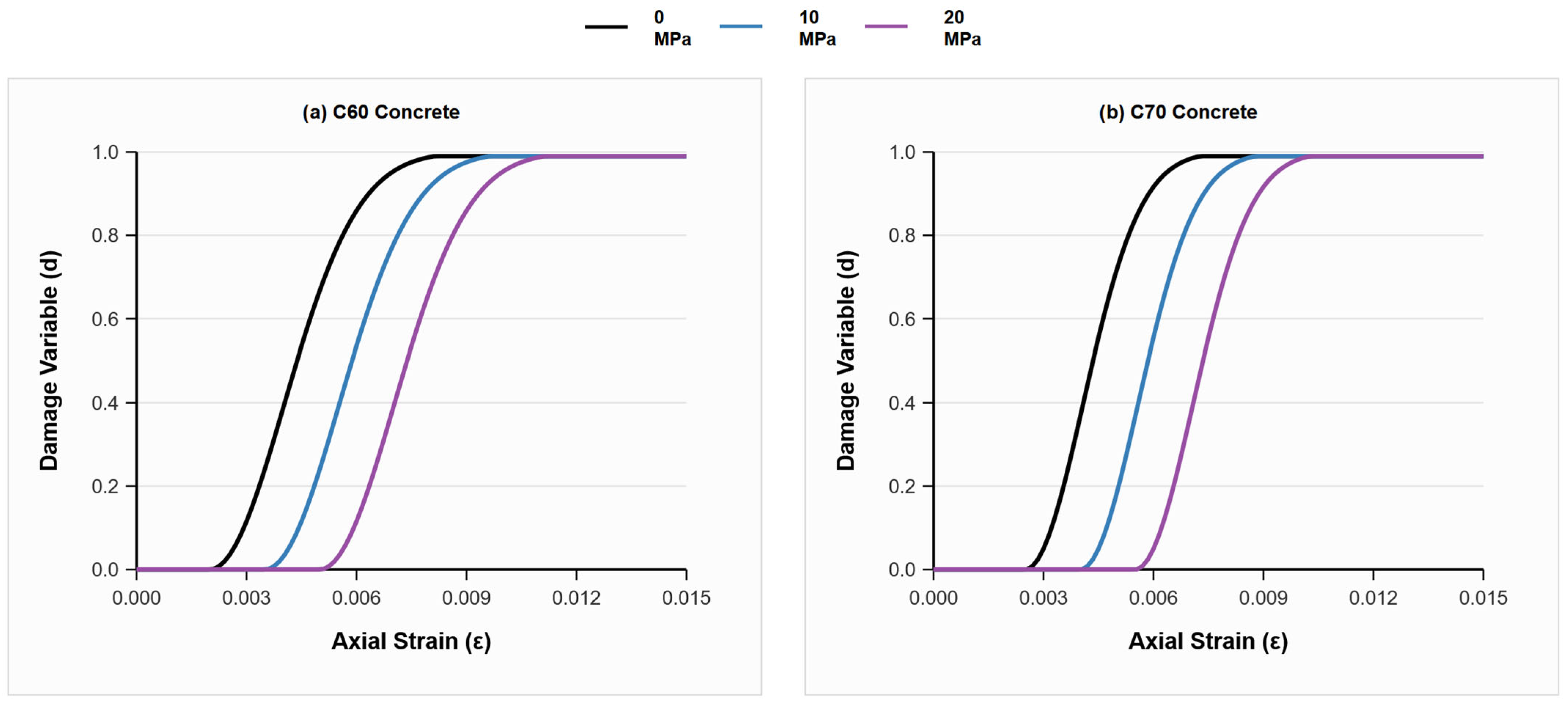
Statistical damage models address the inherent randomness of concrete failure by assigning spatially variable material properties across the mesh. These models typically utilize a Weibull-type distribution to describe the probability of damage occurring at a microstate level. By linking local failure probabilities to global stiffness degradation, these frameworks can simulate the stochastic nature of spalling without requiring the explicit geometric modeling of every aggregate particle. Research by Zhang et al. [6] illustrates that at low strain levels, the damage variable increases slowly due to the closure of pre-existing micro-defects. As loading progresses beyond a critical threshold, new microcracks initiate and coalesce, particularly within weaker aggregate regions and ITZs, leading to accelerated damage evolution and a high likelihood of spalling initiation.

4.2. Discrete and Lattice Particle Models

For higher-resolution analysis, discrete approaches such as the Lattice Discrete Particle Model (LDPM) offer a direct representation of material granularity. Validated by Cusatis et al. [28], these models simulate concrete as a system of interacting particles, where the aggregate size distribution and ITZ properties directly govern fracture energy and crack tortuosity. Under high-temperature exposure, lattice models are particularly effective at capturing the thermal incompatibility between expanding aggregates and the shrinking cement paste, a primary driver of the microcracking that precedes explosive spalling.

4.3. Multiscale Homogenization

To balance computational cost with microstructural fidelity, multiscale homogenization schemes are increasingly employed. These methods utilize Representative Volume Elements (RVEs) to determine effective thermal and mechanical properties based on the volume fractions and properties of the constituents [71]. Recent advances in permeability–damage coupling allow these models to update transport properties dynamically as microcracks evolve, providing a physical basis for the sudden increase in permeability often observed during heating [10,71].

5. Influence of Environmental and Mechanical Loading on Constitutive Models for Spalling

Concrete spalling in practical applications is rarely governed by a single factor. Instead, it results from the combined effects of environmental and mechanical loading, including thermal gradients, moisture conditions, and applied stress states. Elevated temperature plays a dominant role by accelerating material degradation, pore pressure buildup, and microcracking, particularly in fire-exposed structures and high-temperature environments such as tunnels and nuclear containment systems [9,10,72]. To realistically predict spalling progression under such conditions, constitutive models must integrate mechanical damage mechanisms with coupled thermal–hydro–mechanical–chemical (THMC) interactions.

5.1. Mechanical Loading and Damage Evolution

Mechanical loading in the form of axial compression, tension, or shear initiates internal cracking that weakens the concrete matrix and promotes spalling, especially when combined with thermally induced pore pressure. Concrete subjected to high confinement or dynamic loading typically undergoes a progression from microcrack closure at low strain, through elastic deformation, crack propagation with plastic strain accumulation, and ultimately strain softening and damage localization.
Constitutive models addressing these behaviors commonly couple elastoplasticity with damage mechanics. A widely used framework is the Concrete Damage Plasticity (CDP) model, which distinguishes tensile cracking and compressive crushing as separate failure mechanisms and introduces damage variables that evolve with plastic strain. Effective stress concepts are employed to represent stiffness degradation while maintaining numerical stability.
The damage-dependent stress–strain relationship is typically expressed as [73,74]:
σ = ( 1 D ) σ *
where σ is the nominal stress, σ * is the effective (undamaged) stress, and D is a scalar damage variable ranging from 0 (undamaged) to 1 (fully damaged). As loading progresses, plastic strain accumulation and microcrack growth lead to gradual damage evolution, ultimately resulting in failure. This formulation allows constitutive models to capture both pre-peak stiffness degradation and post-peak softening behavior.
Statistical damage models extend this framework by incorporating material heterogeneity through energy-based failure criteria, such as dissipation energy density. These models probabilistically evaluate failure initiation across heterogeneous microstructural domains and are particularly effective in capturing spatial variability and localization effects in large-scale concrete structures [6,13,28].

5.2. Thermal Loading and Dehydration Effect

Exposure to elevated temperatures induces a sequence of coupled physical and chemical transformations that significantly alter the mechanical and hydraulic behavior of concrete. These transformations directly contribute to spalling, especially under rapid heating conditions such as tunnel fires or nuclear containment accident scenarios.
Thermally induced processes include evaporation of free water beginning near 100 °C, leading to vapor pressure buildup; dehydration of chemically bound water in cement hydration products, typically initiating around 105 °C, which alters phase composition and reduces cohesion [7,8]; thermal expansion, generating internal stresses and strain incompatibilities between aggregates and cement paste; and microstructural degradation, including pore collapse, cracking, and stiffness loss, which intensify under sustained or cyclic heating [10,13].
These nonlinear and interdependent processes create stress concentrations and pressure gradients that may trigger explosive spalling. Consequently, comprehensive THMC constitutive models must incorporate temperature-dependent porosity evolution, permeability changes, vapor diffusion and phase transition mechanisms, pore pressure development driven by evaporation and transport constraints, and thermally induced damage affecting stiffness and strength.
A simplified expression often used to represent thermally induced pore pressure increments is given by [5,10]:
Δ P = α T Δ T + f ( ε v , n 0 )
where α T is the thermal expansion coefficient, Δ T is the change in temperature, and n 0 is the initial void ratio. The function f ( ε v , n 0 ) accounts for microstructural evolution, such as void closure or microcrack formation. This formulation provides a practical link between thermal loading, pore pressure development, and mechanical damage within THMC frameworks.

5.3. Coupled Modeling Under Fire or High-Temperature Condition

Coupled thermal–mechanical (TM) and thermal–hydro–mechanical (THM) models are essential for simulating spalling under complex boundary conditions. Typical applications include fire-induced spalling in tunnel linings, nuclear waste containment walls subjected to sustained heating and internal pressure buildup, and heat-curing scenarios in early-age geopolymer concrete, where elevated temperatures significantly influence hydration and strength development.
To represent these conditions, classical elastoplastic–damage models are extended by incorporating temperature- and moisture-dependent material properties, enabling fully coupled THM or THMC formulations. Key model extensions include moisture-dependent thermal conductivity and specific heat to capture evolving thermal diffusivity [10], temperature-dependent yield surfaces to represent strength degradation and brittle-to-ductile transitions [41], and hardening–softening laws that evolve with accumulated plastic strain and thermal exposure [15,31]. These enhancements enable the simulation of mechanical deterioration, thermal strain localization, dehydration effects, and pore pressure dynamics that collectively govern spalling.
In statistical damage constitutive models, the probability of failure across microstructural domains is often described using a Weibull-type distribution [28]:
P ( X ) = 1 exp X m k
where P ( X ) is the probability of damage occurring at a microstate X , and m and k are statistical shape and scale parameters calibrated from the experiment. This formulation captures the progressive accumulation of damage across a heterogeneous concrete matrix driven by combined thermal gradients and mechanical confinement.
Zhang et al. [6] illustrated the evolution of the damage variable as a function of axial strain for two concrete grades (C60 and C70), as shown in Figure 1. At low strain levels, the damage variable increases slowly due to the closure of pre-existing micro-defects such as pores and microcracks. As loading progresses, elastic deformation dominates while damage continues to accumulate gradually. Once stress exceeds a critical threshold, new microcracks initiate and coalesce, particularly within weaker aggregate regions and ITZs, leading to accelerated damage evolution. In the post-peak regime, damage increases rapidly, corresponding to pronounced stiffness degradation and a high likelihood of spalling initiation.
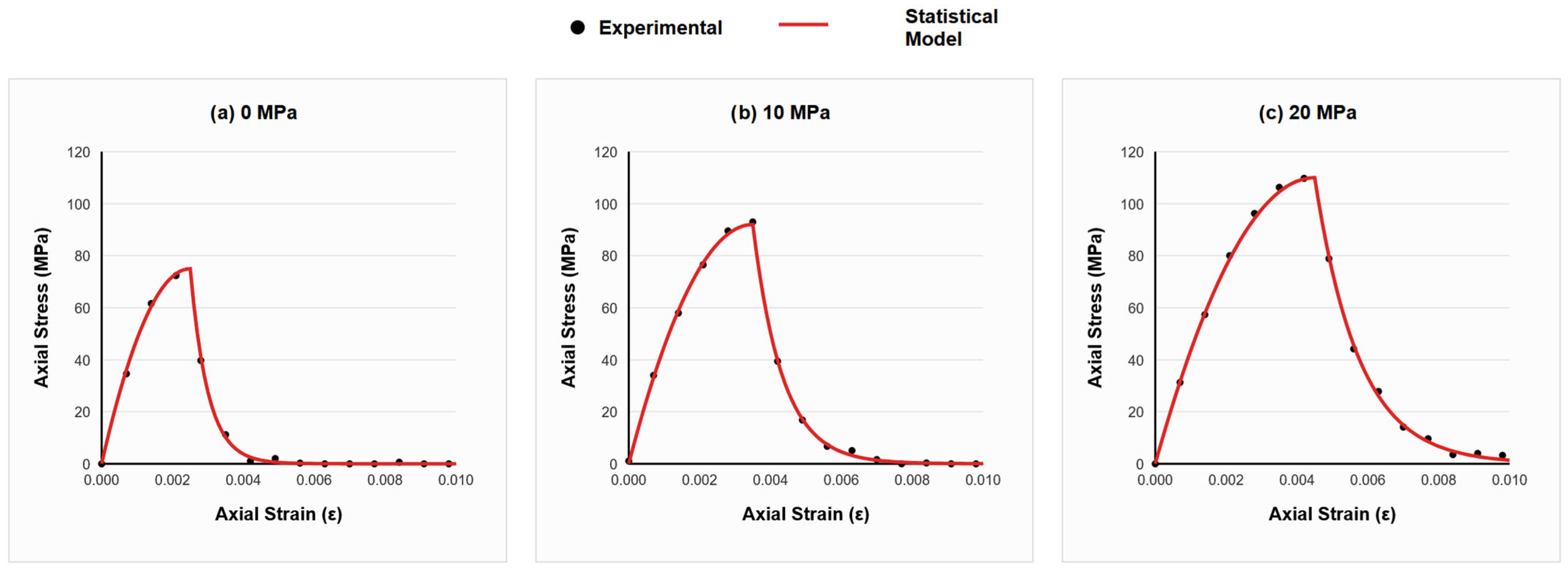
Figure 2 compares predictions from the statistical damage constitutive model with experimental results. The model shows strong agreement with observed behavior in both pre-peak elastic strain energy accumulation and post-peak energy release, with a reported correlation coefficient of 0.96. Further validation using standard deviation (SD) and relative standard deviation (RSD) metrics under confining pressures of 0–20 MPa yielded an average RSD of 3.64%, demonstrating the robustness and predictive accuracy of the statistical damage framework.

5.4. COMSOL-Based Multiphysics Modeling for Spalling in Geological Repositories

Numerical implementation platforms, particularly COMSOL Multiphysics, play a critical role in simulating concrete spalling under coupled thermal–hydro–mechanical (THM) conditions. The flexibility and robust multiphysics coupling capabilities of COMSOL make it well suited for investigating spalling phenomena in geological repositories and nuclear waste containment systems [75]. Its ability to handle complex geometries, heterogeneous materials, and time-dependent boundary conditions enables more realistic representation of repository environments surrounding nuclear waste.
COMSOL-based models typically solve fully coupled three-dimensional THM governing equations within a unified finite element framework. These simulations account for essential processes such as heat transfer, moisture transport, pore pressure evolution, and mechanical deformation. By capturing the interactions among thermal gradients, vapor pressure buildup, and stress redistribution, COMSOL-based approaches provide valuable insight into spalling initiation and damage localization in concrete linings subjected to long-term heating from radioactive waste [76,77]. The capability to represent evolving boundary conditions and spatially variable material properties is particularly advantageous for repository-scale simulations [77].
A key advantage of COMSOL Multiphysics lies in its direct coupling of transport phenomena with mechanical response, which enables parametric investigations of temperature history, moisture content, and material composition [76]. Such studies are critical for understanding the role of permeability evolution in either mitigating or exacerbating spalling risk, an issue central to safety assessment of underground containment structures in nuclear waste management [75]. In particular, the development of advanced THMC formulations within COMSOL has facilitated analysis of bentonite barriers and their interactions with surrounding geological media, further supporting repository-scale performance evaluation [77].
Despite these advantages, COMSOL-based THM simulations are computationally demanding. Accurate predictions require careful calibration of material parameters, especially permeability, thermal conductivity, porosity evolution, and damage-related constitutive relationships, to ensure physical realism [78,79]. The reliability of simulation results is strongly dependent on the quality of experimental input data and the robustness of constitutive assumptions, particularly when extrapolated to long-term repository conditions [80].
Overall, COMSOL Multiphysics represents an effective numerical platform for implementing and testing advanced THM constitutive models in geological repository applications. Its capability to couple multiple physical processes provides a flexible environment for validating constitutive assumptions and exploring complex spalling behavior under realistic thermal, mechanical, and hydrological conditions [81,82]. As a complementary tool to analytical formulations and custom THMC codes, COMSOL-based simulations enhance safety assessment and support long-term performance evaluation of engineered barrier systems in nuclear waste containment.

6. Constitutive Model Types and Implications for Structural Applications

Over the past several decades, substantial progress has been made in the development of constitutive models to describe the complex behavior of concrete subjected to thermal, mechanical, and environmental loading. These models aim to capture key mechanisms governing spalling, including microcrack initiation, pore pressure evolution, damage accumulation, and failure propagation under elevated temperatures and confined conditions. Constitutive formulations vary widely in their level of complexity, from linear-elastic or phenomenological models to fully coupled nonlinear multiphysics frameworks, as well as in their physical assumptions (empirical versus mechanistic) and intended applications, such as structural fire design, tunnel lining assessment, and nuclear safety analysis.
The classification of constitutive models for spalling is synthesized in Table 2, which categorizes approaches based on their physical assumptions, intended applications, and computational requirements. Broadly, these models range from simplified plasticity–damage frameworks suitable for general structural analysis to fully coupled multiphysics formulations required for high-risk safety assessments. While simpler models offer computational efficiency for standard loading scenarios, they often lack the fidelity to capture the complex thermal–hydraulic interactions driving explosive spalling. Conversely, fully coupled THMC frameworks provide the necessary physical detail for geological repository applications but demand significantly higher computational resources and extensive material calibration.
In high-risk environments, including geological repositories for spent fuel and nuclear waste, fire-exposed buildings, and tunnel infrastructures, concrete structures are subjected to combined thermal, mechanical, hydraulic, and, in some cases, chemical loading. Under such conditions, coupled constitutive models are essential for capturing material response, predicting damage evolution, and ensuring long-term structural performance and safety. These models provide several critical capabilities:
  • Prediction of spalling onset and location: By accounting for thermal gradients, pore pressure buildup, and stress–strain evolution, coupled THM or THMC models enable engineers to anticipate when and where spalling is likely to occur [9,10].
  • Informed material selection and mix design: Numerical simulations facilitate the evaluation of alternative binders, fiber reinforcement strategies, and curing regimes, supporting the optimization of concrete compositions, such as geopolymer systems or hybrid fiber-reinforced concretes, to enhance fire resistance and reduce spalling susceptibility [7,49,50].
  • Risk assessment and performance-based design: Integration of constitutive models into finite element or multiscale simulation frameworks allows engineers to assess structural behavior under realistic fire, confinement, and thermal loading scenarios, supporting regulatory compliance, safety evaluation, and life-cycle performance assessment [15,40].

By capturing the synergistic effects of thermal, hydraulic, and mechanical loading, modern constitutive models bridge the gap between microstructural degradation mechanisms and structural-scale behavior. They inform critical decisions related to fire-resistant structural design, containment requirements in nuclear waste disposal facilities, and durability and retrofit strategies for tunnels and energy infrastructure [8,42,83]. Adesign methodologies increasingly shift toward performance-based codes and risk-informed frameworks, the use of multiphysics, damage-coupled constitutive models is expected to become increasingly indispensable in engineering practice.
Table 2. Types and Characteristics of Constitutive Models for Concrete Spalling.
Constitutive Model TypePhysical AssumptionsIntended ApplicationsStrengthsLimitations
Concrete Damage Plasticity (CDP) Models
  • Based on continuum damage mechanics combined with classical plasticity theory.
  • Represents tensile cracking and compressive crushing using scalar damage variables that degrade stiffness.
  • Widely used to simulate nonlinear concrete behavior under monotonic and cyclic loading [84].
  • Common in commercial FE software (e.g., ABAQUS) [85].
  • Easy to implement and computationally efficient.
  • Well suited for modeling mechanical damage and crack propagation.
  • Captures stiffness degradation due to cyclic strain accumulation.
  • Limited thermal–hydraulic (TH) coupling: Conventional formulations cannot simulate pore pressure buildup.
  • Lacks mechanisms for thermal softening or moisture-driven damage unless manually extended to THM frameworks [86].
Plasticity–Damage Bounding Surface Models
  • Extends classical plasticity with bounding surfaces to describe path-dependent hardening/softening.
  • Damage evolution is governed by internal variables that track loading history.
  • Cyclic and dynamic loading scenarios [87,88].
  • Fatigue analysis and strain-rate dependent simulations [89,90].
  • Effective for cyclic and dynamic loading.
  • Captures accumulation of thermal–mechanical damage under repeated load cycles.
  • Models path-dependent softening and rate-dependent stiffness degradation.
  • No explicit transport modeling: Does not account for pore pressure evolution or vapor transport.
  • Complexity: Requires many internal state variables and extensive experimental calibration compared to standard CDP models.
Coupled THM/THMC Models
  • Fully coupled multiphysics formulations.
  • Integrates conservation laws for heat, moisture, and momentum.
  • Often includes chemical reaction kinetics, phase change, and damage evolution.
  • Extreme conditions where spalling, moisture transport, and thermo-mechanical degradation interact [10].
  • High-risk fire scenarios and nuclear safety assessments [15,31].
  • Comprehensive framework: Explicitly captures pore pressure evolution and moisture/gas transport.
  • Simulates dehydration effects, strain localization, and crack coalescence under combined thermal–mechanical loading.
  • Computationally expensive: High processing cost for large-scale simulations.
  • Data-intensive: Requires extensive material characterization and calibration of transport/damage parameters, limiting routine engineering use.
COMSOL Multiphysics (3D FEM)
  • THM/THMC coupling implemented within a unified finite element environment.
  • Direct linking of transport equations with mechanical stress fields.
  • Geological repositories and nuclear waste containment systems.
  • Fire-exposed concrete linings with complex geometries.
  • Strong built-in coupling: Flexible implementation of transport–mechanical interactions.
  • Versatility: Suitable for complex geometries and spatially variable boundary conditions.
  • Allows user-defined modification of governing equations.
  • High computational demand: 3D coupled simulations are very resource-intensive.
  • Calibration required: Requires extensive user input for material parameters; lacks “out-of-the-box” spalling constitutive models without customization.

7. Discussion

This review demonstrates that accurate prediction of concrete spalling is not merely a mechanical problem but a multi-physical challenge governed by the coupled effects of material composition, environmental loading, and constitutive formulation. By synthesizing the material-dependent behaviors discussed in Section 3 with the environmental and mechanical loading mechanisms in Section 4 and the constitutive modeling strategies reviewed in Section 5, several critical interdependencies emerge that define both the current state of the art and future pathways for predictive modeling of spalling.

7.1. Material Composition as a Determinant of Constitutive Modeling

The reviewed literature indicates that constitutive models for spalling cannot be applied generically across different concrete systems and must be tailored to specific material compositions. Ordinary Portland cement concrete (OPCC) generally exhibits progressive stiffness degradation driven by dehydration and microcracking, which can be reasonably captured using temperature-dependent damage–plasticity formulations. Similarly, binary and ternary blended systems, particularly those using limestone (Type IL), introduce additional complexity due to the decarbonation of CaCO3 and the refinement of pore structure, which exacerbates pore pressure buildup. In contrast, geopolymer concretes display higher thermal stability but are characterized by a steeper elastic–failure transition and pronounced post-peak brittleness. As a result, constitutive models developed for OPCC often underestimate the risk of sudden spalling in geopolymer systems unless material-specific shape parameters and failure criteria are introduced to capture their ceramic-like fracture behavior.
Fiber reinforcement further alters the governing damage mechanisms and therefore the modeling requirements. As discussed in Section 3.3, polypropylene and steel fibers mitigate spalling through fundamentally different physical processes. Polypropylene fibers act primarily through hydraulic mechanisms by increasing permeability after melting, thereby relieving vapor pressure. Steel fibers, by contrast, enhance mechanical resistance through crack bridging, increased fracture energy, and improved post-peak ductility. Effective constitutive frameworks must therefore be capable of either switching between or explicitly coupling:
  • Permeability-driven formulations for polypropylene fibers that account for melting-induced void networks and pressure release;
  • Fracture-energy-based formulations for steel fibers that modify post-peak softening laws to reflect enhanced ductility and crack bridging.
Hybrid fiber systems highlight the need for unified formulations that can simultaneously capture both hydraulic and mechanical mitigation mechanisms.

7.2. Critical Role of THMC Coupling

A central conclusion of this review is the inadequacy of purely mechanical constitutive models for predicting explosive spalling. As shown in Section 4, spalling is triggered by the convergence of thermal gradients, pore pressure buildup, and mechanically induced stress concentrations. Critical thresholds—such as dehydration temperatures near 105 °C—often act as initiation points for coupled thermal, hydraulic, mechanical, and chemical damage processes.
Simplified elastoplastic or damage-based models frequently fail to capture these phenomena because they neglect vapor expansion, moisture transport, and chemically induced degradation of the binder. The reviewed evidence supports the conclusion that reliable prediction of spalling requires fully coupled thermal–hydro–mechanical–chemical (THMC) frameworks. Such models must explicitly link the mass balance of liquid water and vapor with the momentum balance of the solid skeleton. Without this coupling, simulations may capture thermal cracking but are unlikely to reproduce pressure-driven popcorn or explosive spalling observed in dense concretes and high-performance materials.

7.3. Balancing Physical Fidelity and Computational Cost

The constitutive model types reviewed in Section 5 reveal a clear trade-off between computational efficiency and physical realism.
  • Concrete Damage Plasticity (CDP) models are computationally efficient and readily available in commercial finite element software, making them suitable for general structural analyses where spalling is not the dominant failure mode. However, their inability to explicitly represent pore pressure evolution limits their applicability for fire safety assessments of tunnel linings and nuclear containment structures.
  • Statistical damage models provide an intermediate level of complexity by incorporating material heterogeneity and Weibull-distributed failure probabilities. These approaches effectively capture the stochastic nature of damage accumulation while avoiding the full computational cost of microstructural resolution.
  • Fully coupled THM/THMC models, particularly those implemented in multiphysics platforms such as COMSOL, offer the highest predictive fidelity. These models are essential for high-risk applications such as deep geological repositories, where long-term thermal loading from nuclear waste interacts with groundwater transport and mechanical confinement.
The choice of constitutive framework must therefore be guided by the application context, acceptable computational cost, and the level of physical detail required to assess spalling risk.

7.4. Pathway Toward Performance-Based Design

The synthesis of findings across Section 3, Section 4 and Section 5 suggests a clear pathway toward performance-based design of spalling-resistant concrete systems. Future constitutive models must move beyond empirical curve-fitting approaches toward physically informed formulations that explicitly incorporate constituent-level descriptors. Key descriptors include pore size distribution, permeability evolution, interfacial transition zone characteristics, aggregate morphology, and binder chemistry.
Integrating these descriptors directly into damage evolution laws will enable constitutive models to serve not only as post-failure assessment tools but also as proactive design instruments. Such models can support optimization of mix designs—such as hybrid fiber contents, geopolymer precursor selection, and water-to-binder ratios—to meet specific fire-resistance and durability requirements for critical infrastructure, including tunnels, nuclear containment systems, and geological repositories.

8. Future Research

Despite substantial progress in constitutive modeling of concrete spalling, several critical research gaps remain that limit the reliability, transferability, and predictive capability of existing models, particularly under elevated temperature and multi-physics loading conditions. Addressing these challenges is essential for advancing the design of concrete structures in fire-prone, nuclear, and subterranean environments and for improving the robustness of spalling prediction in engineering practice.
A major limitation in current research is the lack of standardized experimental protocols for spalling assessment. Variations in specimen geometry, heating rate, moisture conditioning, boundary conditions, and instrumentation have led to inconsistent datasets and hindered meaningful comparison across studies. The development of standardized high-temperature spalling test procedures is therefore essential to support model validation, benchmarking, and regulatory adoption [3,8,66,91].
Another important research need lies in the integration of constituent-level material characteristics into constitutive models. Many existing formulations treat concrete as a homogenized continuum and do not explicitly account for microstructural features such as pore size distribution, interfacial transition zone (ITZ) degradation, aggregate morphology, or binder chemistry. Physically informed constitutive models should incorporate data from advanced characterization techniques, including micro-computed tomography (micro-CT), phase composition analysis, and digital material reconstruction, to establish direct links between material composition and damage evolution [68,69].
Multiscale modeling frameworks also represent a critical frontier for future research. Bridging microscale phenomena—such as vapor diffusion, microcrack nucleation, and ITZ damage—with macroscale structural response remains a major challenge. The development of robust multiscale coupling strategies, including representative volume elements (RVEs), homogenization techniques, and hierarchical computational schemes, is necessary to improve predictive fidelity while maintaining computational efficiency [70,71].
Spalling is inherently localized and stochastic, influenced by material heterogeneity, boundary conditions, and thermal gradients. Incorporating probabilistic and statistical damage modeling approaches, such as Weibull-type failure distributions and energy-based damage thresholds, offers a promising pathway to capture variability and uncertainty in spalling initiation and propagation [6,28]. Such approaches can enhance the robustness of spalling predictions, particularly for large-scale or safety-critical infrastructure.
Experimental validation at a large scale remains another significant gap. There is a notable scarcity of high-temperature, full-scale experimental data, especially for emerging materials such as geopolymer concrete, ultra-high-performance concrete (UHPC), and hybrid fiber-reinforced concretes. Comprehensive experimental programs involving instrumented large specimens and combined thermal–hydro–mechanical–chemical (THMC) loading are needed to calibrate and validate advanced constitutive models under realistic service conditions [7,49,50].
Looking forward, the development of next-generation constitutive models for spalling should move toward physically informed formulations that explicitly incorporate material-specific descriptors rather than relying primarily on empirical fitting. Key descriptors that should be integrated include aggregate characteristics (e.g., morphology, gradation, and specific surface area), which influence fracture energy and ITZ behavior [68,69,92]; binder hydration state and gel chemistry, which govern thermal stability, cohesion, and chemical shrinkage in both OPC and geopolymer systems [44,93]; and pore structure and connectivity, including pore size distribution, tortuosity, and saturation, which control vapor transport, pore pressure evolution, and permeability [5,8,10].
Integrating these descriptors into fully coupled THMC constitutive models will enable more accurate prediction of spalling thresholds under complex boundary conditions, improve model calibration across different mix designs, and enhance the transferability of simulations from laboratory-scale experiments to real-world structures such as tunnel linings, nuclear containment systems, and fire-rated structural elements. Moreover, physically grounded modeling frameworks will facilitate the effective use of machine learning, inverse modeling, and data-driven calibration techniques, accelerating innovation in fire-resilient and thermally optimized concrete systems.

9. Conclusions

This study has synthesized the current state of the art in concrete spalling mechanisms and constitutive modeling, with emphasis on behavior under elevated temperature, mechanical loading, and coupled multi-physics conditions. Several key conclusions can be drawn.
Material composition plays a defining role in spalling resistance. The use of geopolymer binders, hybrid fiber reinforcement, and optimized water-to-binder ratios can significantly reduce spalling susceptibility by influencing permeability, fracture toughness, and microstructural stability. These material-dependent effects must be reflected in constitutive model calibration to achieve reliable predictions.
Existing constitutive models span a wide spectrum, ranging from classical plasticity-based damage formulations to fully coupled THMC frameworks. Each class of models serves a distinct purpose depending on the application domain, material system, and loading environment. While simpler models are computationally efficient and suitable for structural-scale analyses, advanced THMC models offer superior predictive capability for explosive spalling by capturing the coupled evolution of pore pressure and mechanical degradation.
Despite significant progress, major challenges remain as follows. Addressing these challenges is essential to improve model robustness, transferability, and applicability in engineering practice.
  • Lack of standardized experimental protocols for spalling test and assessment, which limits cross-study benchmarking.
  • Continued debate on whether spalling is dominated by pore pressure, thermo-mechanical stress, or their interaction. This may well be contributed to by the factor that concrete spalling is inherently a multi-physical phenomenon governed by the interaction of thermal, hydraulic, mechanical, and chemical (THMC) processes, and therefore it is hard to accurately quantify a single factor dominating such a process. Accurate prediction of spalling requires constitutive formulations that explicitly account for pore pressure buildup, thermal strain, dehydration, damage evolution, and cracking under coupled loading conditions.
  • Limited integration of multiscale and constituent-level material characteristics.
  • High data and computational demands associated with advanced multi-physics models.
In high-risk applications—such as deep geological repositories for spent fuel and nuclear waste, fire-exposed tunnels, and nuclear containment systems—there is a critical need for accurate, scalable, and physically informed constitutive models. Such tools are essential for performance-based design, safety assessment, and long-term durability evaluation of concrete infrastructure subjected to extreme thermal and mechanical environments.
Overall, this review provides a comprehensive foundation for advancing constitutive modeling of concrete spalling and supports the continued development of next-generation, multi-physics-based design methodologies for resilient concrete structures.

Author Contributions

T.D.C.: Conceptualization, Methodology, Paper Structuring, Literature Review, Investigation, Paper Revision, Figure and Table Development, and Original Draft Preparation. L.S.: Supervision, Funding Support, Conceptualization, Methodology, Paper Structuring, Literature Review, Investigation, Paper Revision and Finalization. K.D.: Literature Review, Data Collection, Original Draft Preparation; C.B.: Literature Review, Data Collection, Original Draft Preparation. J.Z.: Reviewing and Editing. All authors have read and agreed to the published version of the manuscript.

Funding

This research was funded by the U.S. Nuclear Regulatory Commission (NRC) under Grant No. 31310022M0034.

Data Availability Statement

This paper is a comprehensive review study where no new data were created.

Acknowledgments

This study is sponsored by the U.S. Nuclear Regulatory Commission (NRC) under Grant No. 31310022M0034.

Conflicts of Interest

The authors declare no conflict of interest.

Nomenclature

SymbolsDescription
a s Acceleration
n Porosity
g Acceleration of gravity
S w degrees of saturation of the pore space occupied by the liquid water
S g degrees of saturation of the pore space occupied by the gas phases
ρ s Density of the solid
ρ g Density of the gas
ρ w Density of the water
σ Generalized effective stress tensor
σ Total stress of the unsaturated soils
K t ( x , t ) Bulk modulus of the porous media
K s ( x , t ) Bulk modulus of the solid grain
k g Intrinsic permeability tensor of gas
k w Intrinsic permeability tensor of water
k r g Gas permeability
k r w Water permeability
μ w Liquid water viscosity
μ g Liquid gas viscosity
β s Thermal expansion coefficient for solid particles
D g g w Diffusivity tensor of water vapor
M g Molar mass of gas mixture
M a Molar mass of dry air
M w Molar mass of water
D g g w Diffusivity tensor of dry air
Δ H v a p Latent heat
ρ C p e f f Thermal capacity
C p w Specific heat of the water
C p g Specific heat of the gas
χ e f f Thermal conductivity
ε ˙ p Plastic strain rate
D l o c Dissipation function of the thermoplastic frictional heating
D T Tangent matrix
d ε Total strain of the skeleton
d ε c r e e p Creep strain
d ε t h Thermal strain
d ε t c h e m Chemical strain
d Mechanical damage components
V Thermo-chemical damage components
d ε t r Transient thermal strain
σ c Compressive stress
ε c Compressive strain
f c m Mean compressive strength
E c Elastic modulus
ε c Peak strain at maximum stress
σ f compressive stress
f c Peak compressive strength
ε f Strain at peak stress
σ * Effective (undamaged) stress
α T Thermal expansion coefficient
Δ T Change in temperature
f ( ε v , n 0 ) Microstructural evolution
P ( X ) probability of damage occurring at a microstate
X Microstate variable

References

  1. The Geological Society of London—Geological Disposal of Radioactive Waste. Available online: www.geolsoc.org.uk (accessed on 15 May 2025).
  2. Bisby, L.A.; Green, M.F.; Kodur, V.K.R. Response to fire of concrete structures that incorporate FRP. Prog. Struct. Eng. Mater. 2005, 7, 136–149. [Google Scholar] [CrossRef] [Scilit]
  3. Khoury, G.; Anderberg, Y.; Both, K.; Fellinger, J.; Hoj, N.P.; Maiorana, C. Fire Design of Concrete Structures—Materials, Structures and Modelling; FIB: Lausanne, Switzerland, 2007; Available online: https://www.research.unipd.it/handle/11577/1778920 (accessed on 1 February 2026).
  4. Schrefler, B.A. The Finite Element Method in Soil Consolidation. Ph.D. Thesis, University College of Swansea, Swansea, UK, 1984. [Google Scholar]
  5. Gawin, D.; Pesavento, F. An Overview of Modeling Cement Based Materials at Elevated Temperatures with Mechanics of Multi-Phase Porous Media. Fire Technol. 2012, 48, 753–793. [Google Scholar] [CrossRef] [Scilit]
  6. Zhang, L.; Cheng, H.; Wang, X.; Liu, J.; Guo, L.; Sola, A.; Chakraborty, S.; Volpini, V.; José, I.; García, L. Statistical Damage Constitutive Model for High-Strength Concrete Based on Dissipation Energy Density. Crystals 2021, 11, 800. [Google Scholar] [CrossRef] [Scilit]
  7. Kalifa, P.; Chéné, G.; Gallé, C. High-temperature behaviour of HPC with polypropylene fibres: From spalling to microstructure. Cem. Concr. Res. 2001, 31, 1487–1499. [Google Scholar] [CrossRef] [Scilit]
  8. Phan, L.T. Pore pressure and explosive spalling in concrete. Mater. Struct. 2008, 41, 1623–1632. [Google Scholar] [CrossRef] [Scilit]
  9. Dwaikat, M.B.; Kodur, V.K.R. Hydrothermal model for predicting fire-induced spalling in concrete structural systems. Fire Saf. J. 2009, 44, 425–434. [Google Scholar] [CrossRef] [Scilit]
  10. Gawin, D.; Pesavento, F.; Schrefler, B.A. Modelling of hygro-thermal behaviour of concrete at high temperature with thermo-chemical and mechanical material degradation. Comput. Methods Appl. Mech. Eng. 2003, 192, 1731–1771. [Google Scholar] [CrossRef] [Scilit]
  11. Li, R.; Li, X. A Coupled Chemo-Elastoplastic-Damage Constitutive Model for Plain Concrete Subjected to High Temperature. Int. J. Damage Mech. 2010, 19, 971–1000. [Google Scholar] [CrossRef] [Scilit]
  12. Yao, Y.; Fang, H.; Guo, H. Unified Damage Constitutive Model for Fiber-Reinforced Concrete at High Temperature. J. Eng. Mech. 2021, 148, 04021132. [Google Scholar] [CrossRef] [Scilit]
  13. Yao, Y.; Guo, H.; Tan, K. An elastoplastic damage constitutive model of concrete considering the effects of dehydration and pore pressure at high temperatures. Mater. Struct. 2020, 53, 19. [Google Scholar] [CrossRef] [Scilit]
  14. Ju, J.W.; Zhang, Y. Advanced thermomechanical constitutive models for airfield concrete pavement under high temperatures. Stud. Appl. Mech. 1998, 46, 275–286. [Google Scholar] [CrossRef] [Scilit]
  15. Zhou, H.; Tian, X.; Wu, J. Cracking and thermal resistance in concrete: Coupled thermo-mechanics and phase-field modeling. Theor. Appl. Fract. Mech. 2024, 130, 104285. [Google Scholar] [CrossRef] [Scilit]
  16. Wang, S.Y.; Sun, L.; Au, A.S.K. 2D-numerical analysis of hydraulic fracturing in heterogeneous geo-materials. Constr. Build. Mater. 2009, 23, 2196–2206. [Google Scholar] [CrossRef] [Scilit]
  17. Wang, S.Y.; Sun, L.; Yang, C. Numerical study on static and dynamic fracture evolution around rock cavities. J. Rock Mech. Geotech. Eng. 2013, 5, 262–276. [Google Scholar] [CrossRef] [Scilit]
  18. Zhu, Y.; Sun, L.; Xu, H. L-Curve based tikhonov’s regularization method for determining relaxation modulus from creep test. J. Appl. Mech. 2011, 78, 031002. [Google Scholar] [CrossRef] [Scilit]
  19. Zhu, H.; Sun, L.; Yang, J. Developing Master Curves and Predicting Dynamic Modulus of Polymer-Modified Asphalt Mixtures. J. Mater. Civ. Eng. 2011, 23, 131–137. [Google Scholar] [CrossRef] [Scilit]
  20. Sun, L.; Zhu, Y. A serial two-stage viscoelastic–viscoplastic constitutive model with thermodynamical consistency for characterizing time-dependent deformation behavior of asphalt concrete mixtures. Constr. Build Mater. 2013, 40, 584–595. [Google Scholar] [CrossRef] [Scilit]
  21. Qiu, K.; Chen, H.; Sun, W. Determination of Mechanical Properties of Cement Asphalt Mortar via UPV Method. J. Mater. Civ. Eng. 2013, 26, 04014009. [Google Scholar] [CrossRef] [Scilit]
  22. Ren, J.; Sun, L. Generalized Maxwell Viscoelastic Contact Model-Based Discrete Element Method for Characterizing Low-Temperature Properties of Asphalt Concrete. J. Mater. Civ. Eng. 2015, 28, 04015122. [Google Scholar] [CrossRef] [Scilit]
  23. Ren, J.; Sun, L. Characterizing air void effect on fracture of asphalt concrete at low-temperature using discrete element method. Eng. Fract. Mech. 2017, 170, 23–43. [Google Scholar] [CrossRef] [Scilit]
  24. Sun, L.; Ren, J.; Zhang, S. Fracture Characteristics of Asphalt Concrete in Mixed-Loading Mode at Low-Temperature Based on Discrete-Element Method. J. Mater. Civ. Eng. 2018, 30, 04018321. [Google Scholar] [CrossRef] [Scilit]
  25. Ko, J.; Ryu, D.; Noguchi, T. The spalling mechanism of high-strength concrete under fire. Mag. Concr. Res. 2011, 63, 357–370. [Google Scholar] [CrossRef] [Scilit]
  26. Zhao, J.; Zheng, J.J.; Peng, G.F.; van Breugel, K. Numerical analysis of heating rate effect on spalling of high-performance concrete under high temperature conditions. Constr. Build. Mater. 2017, 152, 456–466. [Google Scholar] [CrossRef] [Scilit]
  27. Kannangara, T.; Joseph, P.; Fragomeni, S.; Guerrieri, M. Existing theories of concrete spalling and test methods relating to moisture migration patterns upon exposure to elevated temperatures—A review. Case Stud. Constr. Mater. 2022, 16, E01111. [Google Scholar] [CrossRef] [Scilit]
  28. Wu, J.Y.; Li, J.; Faria, R. An energy release rate-based plastic-damage model for concrete. Int. J. Solids Struct. 2006, 43, 583–612. [Google Scholar] [CrossRef] [Scilit]
  29. Lewis, R.; Schrefler, B. Finite Element Method in the Deformation and Consolidation of Porous Media; John Wiley & Sons: Hoboken, NJ, USA, 1998. [Google Scholar]
  30. Cao, T.D.; Sanavia, L.; Schrefler, B.A. A thermo-hydro-mechanical model for multiphase geomaterials in dynamics with application to strain localization simulation. Int. J. Numer. Methods Eng. 2016, 107, 312–337. [Google Scholar] [CrossRef] [Scilit]
  31. Cao, T.D.; Sun, L. Temperature-dependent elastoplastic behavior of low plasticity unsaturated soils. Acta Geotech. 2025, 20, 2889–2909. [Google Scholar] [CrossRef] [Scilit]
  32. Vardoulakis, I. Catastrophic landslides due to frictional heating of the failure plane. Mech. Cohes.-Frict. Mater. 2000, 5, 443–467. [Google Scholar] [CrossRef]
  33. Cecinato, F.; Zervos, A.; Veveakis, E. A thermo-mechanical model for the catastrophic collapse of large landslides. Int. J. Numer. Anal. Methods Geomech. 2011, 35, 1507–1535. [Google Scholar] [CrossRef] [Scilit]
  34. Cao, T.D.; Hussain, F.; Schrefler, B.A. Porous media fracturing dynamics: Stepwise crack advancement and fluid pressure oscillations. J. Mech. Phys. Solids 2018, 111, 113–133. [Google Scholar] [CrossRef] [Scilit]
  35. Shahrokhabadi, S.; Cao, T.D.; Vahedifard, F. Thermo-hydro-mechanical modeling of unsaturated soils using isogeometric analysis: Model development and application to strain localization simulation. Int. J. Numer. Anal. Methods Geomech. 2020, 44, 261–292. [Google Scholar] [CrossRef] [Scilit]
  36. Noushini, A.; Aslani, F.; Castel, A.; Gilbert, R.I.; Uy, B.; Foster, S. Compressive stress-strain model for low-calcium fly ash-based geopolymer and heat-cured Portland cement concrete. Cem. Concr. Compos. 2016, 73, 136–146. [Google Scholar] [CrossRef] [Scilit]
  37. Li, Y.; Pimienta, P.; Pinoteau, N.; Tan, K.H. Effect of aggregate size and inclusion of polypropylene and steel fibers on explosive spalling and pore pressure in ultra-high-performance concrete (UHPC) at elevated temperature. Cem. Concr. Compos. 2019, 99, 62–71. [Google Scholar] [CrossRef] [Scilit]
  38. Rashidi, M.; Knapp, M.C.L.; Hashemi, A.; Kim, J.Y.; Donnell, K.M.; Zoughi, R.; Jacobs, L.J.; Kurtis, K.E. Detecting alkali-silica reaction: A multi-physics approach. Cem. Concr. Compos. 2016, 73, 123–135. [Google Scholar] [CrossRef] [Scilit]
  39. Kodur, V.; Naser, M.Z. Fire hazard in transportation infrastructure: Review, assessment, and mitigation strategies. Front. Struct. Civ. Eng. 2021, 15, 46–60. [Google Scholar] [CrossRef] [Scilit]
  40. Gernay, T.; Millard, A.; Franssen, J.M. A multiaxial constitutive model for concrete in the fire situation: Theoretical formulation. Int. J. Solids Struct. 2013, 50, 3659–3673. [Google Scholar] [CrossRef] [Scilit]
  41. Yu, X.; Chen, L.; Fang, Q.; Ruan, Z.; Hong, J.; Xiang, H. A concrete constitutive model considering coupled effects of high temperature and high strain rate. Int. J. Impact Eng. 2017, 101, 66–77. [Google Scholar] [CrossRef] [Scilit]
  42. Kodur, V. Properties of Concrete at Elevated Temperatures. Int. Sch. Res. Notices 2014, 2014, 468510. [Google Scholar] [CrossRef] [Scilit]
  43. Nechnech, W.; Meftah, F.; Reynouard, J.M. An elasto-plastic damage model for plain concrete subjected to high temperatures. Eng. Struct. 2002, 24, 597–611. [Google Scholar] [CrossRef] [Scilit]
  44. Amran, M.; Huang, S.S.; Onaizi, A.M.; Murali, G.; Abdelgader, H.S. Fire spalling behavior of high-strength concrete: A critical review. Constr. Build. Mater. 2022, 341, 127902. [Google Scholar] [CrossRef] [Scilit]
  45. Boakye, K.; Khorami, M. Properties of self-compacting concrete (SCC) prepared with binary and ternary blended calcined clay and steel slag. Infrastructures 2024, 9, 46. [Google Scholar] [CrossRef] [Scilit]
  46. Hager, I. Behaviour of cement concrete at high temperature. Bull. Pol. Acad. Sci. Tech. Sci. 2013, 61. [Google Scholar] [CrossRef] [Scilit]
  47. Mohammed, H.; Ahmed, H.; Kurda, R.; Alyousef, R.; Deifalla, A.F. Heat-induced spalling of concrete: A review of the influencing factors and their importance to the phenomenon. Materials 2022, 15, 1693. [Google Scholar] [CrossRef] [Scilit] [PubMed]
  48. Gong, F.; Jiang, X.; Gamil, Y.; Iftikhar, B.; Thomas, B.S. An overview on spalling behavior, mechanism, residual strength and microstructure of fiber reinforced concrete under high temperatures. Front. Mater. 2023, 10, 1258195. [Google Scholar] [CrossRef] [Scilit]
  49. Bernal, S.A.; Provis, J.L.; Walkley, B.; Nicolas, R.S.; Gehman, J.D.; Brice, D.G.; Kilcullen, A.R.; Duxson, P.; Van Deventer, J.S.J. Gel nanostructure in alkali-activated binders based on slag and fly ash, and effects of accelerated carbonation. Cem. Concr. Res. 2013, 53, 127–144. [Google Scholar] [CrossRef] [Scilit]
  50. Ismail, I.; Bernal, S.A.; Provis, J.L.; Nicolas, R.S.; Hamdan, S.; Van Deventer, J.S.J. Modification of phase evolution in alkali-activated blast furnace slag by the incorporation of fly ash. Cem. Concr. Compos. 2014, 45, 125–135. [Google Scholar] [CrossRef] [Scilit]
  51. Rovnaník, P. Effect of curing temperature on the development of hard structure of metakaolin-based geopolymer. Constr. Build. Mater. 2010, 24, 1176–1183. [Google Scholar] [CrossRef] [Scilit]
  52. Pan, Z.; Sanjayan, J.G.; Rangan, B.V. Fracture properties of geopolymer paste and concrete. Mag. Concr. Res. 2011, 63, 763–771. [Google Scholar] [CrossRef] [Scilit]
  53. Ganesan, N.; Abraham, R.; Raj, S.D.; Sasi, D. Stress–strain behaviour of confined Geopolymer concrete. Constr. Build. Mater. 2014, 73, 326–331. [Google Scholar] [CrossRef] [Scilit]
  54. Haider, G.M.; Sanjayan, J.G.; Ranjith, P.G. Complete triaxial stress–strain curves for geopolymer. Constr. Build. Mater. 2014, 69, 196–202. [Google Scholar] [CrossRef] [Scilit]
  55. Thomas, R.J.; Peethamparan, S. Alkali-activated concrete: Engineering properties and stress–strain behavior. Constr. Build. Mater. 2015, 93, 49–56. [Google Scholar] [CrossRef] [Scilit]
  56. Ding, Y.; Zhang, C.; Cao, M.; Zhang, Y.; Azevedo, C. Influence of different fibers on the change of pore pressure of self-consolidating concrete exposed to fire. Constr. Build. Mater. 2016, 113, 456–469. [Google Scholar] [CrossRef] [Scilit]
  57. Cwirzen, A.; Penttala, V.; Vornanen, C. Reactive powder based concretes: Mechanical properties, durability and hybrid use with OPC. Cem. Concr. Res. 2008, 38, 1217–1226. [Google Scholar] [CrossRef] [Scilit]
  58. Wille, K.; Naaman, A.E.; Parra-Montesinos, G.J. Ultra-High Performance Concrete with Compressive Strength Exceeding 150 MPa (22 ksi): A Simpler Way. Mater. J. 2011, 108, 46–54. [Google Scholar] [CrossRef] [Scilit]
  59. Sultan, H.K.; Alyaseri, I. Effects of elevated temperatures on mechanical properties of reactive powder concrete elements. Constr. Build. Mater. 2020, 261, 120555. [Google Scholar] [CrossRef] [Scilit]
  60. Barros, J.A.O.; Cunha, V.M.C.F.; Ribeiro, A.F.; Antunes, J.A.B. Post-cracking behaviour of steel fibre reinforced concrete. Mater. Struct. 2005, 38, 47–56. [Google Scholar] [CrossRef] [Scilit]
  61. Amran, M.; Huang, S.S.; Onaizi, A.M.; Makul, N.; Abdelgader, H.S.; Ozbakkaloglu, T. Recent trends in ultra-high performance concrete (UHPC): Current status, challenges, and future prospects. Constr. Build. Mater. 2022, 352, 129029. [Google Scholar] [CrossRef] [Scilit]
  62. Hiew, S.Y.; Teoh, K.B.; Raman, S.N.; Hung, C.C.; Chaen, Y.X.; Kong, D.; Hafezolghorani, M. A unified tensile constitutive model for mono/hybrid fibre-reinforced ultra-high-performance concrete (UHPC). Cem. Concr. Compos. 2024, 150, 105553. [Google Scholar] [CrossRef] [Scilit]
  63. Nataraja, M.C.; Dhang, N.; Gupta, A.P. Stress–strain curves for steel-fiber reinforced concrete under compression. Cem. Concr. Compos. 1999, 21, 383–390. [Google Scholar] [CrossRef] [Scilit]
  64. Lee, M.K.; Barr, B.I.G. An overview of the fatigue behaviour of plain and fibre reinforced concrete. Cem. Concr. Compos. 2004, 26, 299–305. [Google Scholar] [CrossRef] [Scilit]
  65. Lin, J.; Zhang, Y.; Guo, Z.; Du, H. Impact of synthetic fibers on spalling and intrinsic pore structure of ultra-high performance concrete (UHPC) under elevated temperatures. Constr. Build. Mater. 2024, 439, 137325. [Google Scholar] [CrossRef] [Scilit]
  66. Khoury, G.A. Effect of fire on concrete and concrete structures. Prog. Struct. Eng. Mater. 2000, 2, 429–447. [Google Scholar] [CrossRef] [Scilit]
  67. Bentur, A.; Mindess, S. Fibre Reinforced Cementitious Composites; Taylor & Francis: Abingdon, UK, 2007. [Google Scholar]
  68. Chen, B.; Liu, J. Investigation of effects of aggregate size on the fracture behavior of high performance concrete by acoustic emission. Constr. Build. Mater. 2007, 21, 1696–1701. [Google Scholar] [CrossRef] [Scilit]
  69. Ji, H.; Yang, X.; Luo, Z.; Bai, F. Tensile Fracture Property of Concrete Affected by Interfacial Transition Zone. Int. J. Concr. Struct. Mater. 2023, 17, 2. [Google Scholar] [CrossRef] [Scilit]
  70. Cusatis, G.; Mencarelli, A.; Pelessone, D.; Baylot, J. Lattice Discrete Particle Model (LDPM) for failure behavior of concrete. II: Calibration and validation. Cem. Concr. Compos. 2011, 33, 891–905. [Google Scholar] [CrossRef] [Scilit]
  71. Bernard, F.; Kamali-Bernard, S. Numerical study of ITZ contribution on mechanical behavior and diffusivity of mortars. Comput. Mater. Sci. 2015, 102, 250–257. [Google Scholar] [CrossRef] [Scilit]
  72. Gawin, D.; Pesavento, F.; Schrefler, B.A. Modelling of deformations of high strength concrete at elevated temperatures. Mater. Struct. 2004, 37, 218–236. [Google Scholar] [CrossRef] [Scilit]
  73. Mazars, J. A description of micro- and macroscale damage of concrete structures. Eng. Fract. Mech. 1986, 25, 729–737. [Google Scholar] [CrossRef] [Scilit]
  74. Zhou, X.Q.; Hao, H. Modelling of compressive behaviour of concrete-like materials at high strain rate. Int. J. Solids Struct. 2008, 45, 4648–4661. [Google Scholar] [CrossRef] [Scilit]
  75. Kelkar, S.; Lewis, K.; Karra, S.; Zyvoloski, G.; Rapaka, S.; Viswanathan, H.; Mishra, P.; Chu, S.; Coblentz, D.; Pawar, R. A simulator for modeling coupled thermo-hydro-mechanical processes in subsurface geological media. Int. J. Rock Mech. Min. Sci. 2014, 70, 569–580. [Google Scholar] [CrossRef] [Scilit]
  76. Rutqvist, J.; Zheng, L.; Chen, F.; Liu, H.H.; Birkholzer, J. Modeling of coupled thermo-hydro-mechanical processes with links to geochemistry associated with bentonite-backfilled repository tunnels in clay formations. Rock Mech. Rock Eng. 2014, 47, 167–186. [Google Scholar] [CrossRef] [Scilit]
  77. Yustres, Á.; López-Vizcaíno, R.; Cabrera, V.; Navarro, V. Development of a THMC code for bentonites in COMSOL Multiphysics. In Proceedings of the E3S Web of Conferences; EDP Sciences: Les Ulis, France, 2020; Volume 195, p. 04002. [Google Scholar] [CrossRef] [Scilit]
  78. Narkuniene, A.; Poskas, G.; Bartkus, G. Modelling of the Corrosion-Induced Gas Impact on Hydraulic and Radionuclide Transport Properties of Geological Repository Barriers. Minerals 2023, 14, 4. [Google Scholar] [CrossRef] [Scilit]
  79. Selvadurai, A.P.S.; Suvorov, A.P.; Selvadurai, P.A. Thermo-hydro-mechanical processes in fractured rock formations during a glacial advance. Geosci. Model Dev. 2015, 8, 2167–2185. [Google Scholar] [CrossRef] [Scilit]
  80. Gupta, A.; Abed, A.A.; Sołowski, W.T. Analysis of key thermal coupled factors in modelling of bentonite barriers. Jpn. Geotech. Soc. Spec. Publ. 2021, 9, 88–93. [Google Scholar] [CrossRef] [Scilit]
  81. Fu, W.; Radakovic-Guzina, Z.; Damjanac, B.; Pyatigorets, A.; Hazzard, J. A Coupled Continuum-Discontinuum Framework for Thermal-Hydro-Mechanical Modeling of Deep Geological Repository for Nuclear Waste Disposal. In Proceedings of the ARMA US Rock Mechanics/Geomechanics Symposium; ARMA: Alexandria, VA, USA, 2025; p. D041S058R003. [Google Scholar]
  82. Zhou, X.; Zhang, Y. Implementation and verification of a user-defined element (UEL) for coupled thermal-hydraulic-mechanical-chemical (THMC) processes in saturated geological media. Int. J. Numer. Anal. Methods Geomech. 2023, 47, 2153–2190. [Google Scholar] [CrossRef] [Scilit]
  83. Kodur, V.K.R.; Phan, L. Critical factors governing the fire performance of high strength concrete systems. Fire Saf. J. 2007, 42, 482–488. [Google Scholar] [CrossRef] [Scilit]
  84. Lubliner, J.; Oliver Oller, S.; Oñate, E. A plastic-damage model for concrete. Int. J. Solids Struct. 1989, 25, 299–326. [Google Scholar] [CrossRef] [Scilit]
  85. Lee, J.; Fenves, G.L. Plastic-Damage Model for Cyclic Loading of Concrete Structures. J. Eng. Mech. 1998, 124, 892–900. [Google Scholar] [CrossRef] [Scilit]
  86. Grassl, P.; Jirásek, M. Damage-plastic model for concrete failure. Int. J. Solids Struct. 2006, 43, 7166–7196. [Google Scholar] [CrossRef] [Scilit]
  87. Chaboche, J.L. Time-independent constitutive theories for cyclic plasticity. Int. J. Plast. 1986, 2, 149–188. [Google Scholar] [CrossRef] [Scilit]
  88. Chaboche, J.L.; Nouailhas, D. Constitutive Modeling of Ratchetting Effects—Part I: Experimental Facts and Properties of the Classical Models. J. Eng. Mater. Technol. 1989, 111, 384–392. [Google Scholar] [CrossRef] [Scilit]
  89. Baktheer, A.; Martínez-Pañeda, E.; Aldakheel, F. Phase field cohesive zone modeling for fatigue crack propagation in quasi-brittle materials. Comput. Methods Appl. Mech. Eng. 2024, 422, 116834. [Google Scholar] [CrossRef] [Scilit]
  90. Gudžulić, V.; Neu, G.E.; Meschke, G. Numerical analysis of plain and fiber reinforced concrete structures during cyclic loading: Influence of frictional sliding and crack roughness. PAMM 2021, 20, e202000167. [Google Scholar] [CrossRef] [Scilit]
  91. Khoury, G.A.; Majorana, C.E.; Pesavento, F.; Schrefler, B.A. Modelling of heated concrete. Mag. Concr. Res. 2015, 54, 77–101. [Google Scholar] [CrossRef]
  92. Jin, L.; Yu, W.; Li, D.; Du, X. Numerical and theoretical investigation on the size effect of concrete compressive strength considering the maximum aggregate size. Int. J. Mech. Sci. 2021, 192, 106130. [Google Scholar] [CrossRef] [Scilit]
  93. Provis, J.L.; Bernal, S.A. Geopolymers and related alkali-activated materials. Annu. Rev. Mater. Res. 2014, 44, 299–327. [Google Scholar] [CrossRef] [Scilit]
Figure 1. Evolution of Damage Variable with Axial Strain in (a) C60 and (b) C70 Concrete (adapted from Zhang et al. [6]).
Infrastructures 11 00054 g001
Figure 2. Comparison of Model Predictions with Experimental Results: Pre- and Post-Peak Behavior (adapted from Zhang et al. [6]).
Infrastructures 11 00054 g002
Table 1. Comparative Analysis of Fiber Reinforcement Strategies for Spalling Mitigation.
Fiber TypeSpalling Mitigation MechanismModeling ConsiderationsAdvantagesLimitations
Polypropylene (PP) FibersPermeability Enhancement: Fibers melt at ~160–170 °C, creating interconnected void networks that facilitate vapor release and reduce internal pore pressure.Transport-Driven:
Requires temperature-dependent permeability functions and damage-modified porosity evolution laws to capture the sudden increase in diffusivity upon fiber melting.
Effectively mitigates explosive spalling by releasing vapor pressure; reduces peak pore pressure significantly.Does not significantly enhance residual mechanical strength or post-cracking ductility compared to steel fibers.
Steel FibersMechanical Bridging:
Enhances tensile strength and energy absorption; bridges microcracks to delay strain localization and prevent sudden debris ejection.
Fracture-Energy-Driven: Modeled through modifications to post-peak softening laws, tensile damage evolution, and fracture energy parameters to represent enhanced ductility.Improves residual load-carrying capacity; enhances post-peak ductility and toughness; maintains structural integrity after cracking.Less effective than PP fibers at relieving internal vapor pressure buildup; primarily addresses mechanical failure rather than hydraulic triggers.
Hybrid FibersSynergistic Action: Combines pressure release (PP melting) with crack bridging (steel fibers), addressing both hydraulic and mechanical spalling triggers simultaneously.Composite Formulation: Often requires bilinear or nonlinear composite stress–strain formulations to capture both the ascending stiffening (steel effect) and pressure-relief mechanisms.Offers comprehensive protection for high-risk structures (e.g., UHPC, nuclear containment); balances pressure relief with structural toughness.Increases modeling complexity due to interacting failure modes; requires calibration of multiple material parameters.
Disclaimer/Publisher’s Note: The statements, opinions and data contained in all publications are solely those of the individual author(s) and contributor(s) and not of MDPI and/or the editor(s). MDPI and/or the editor(s) disclaim responsibility for any injury to people or property resulting from any ideas, methods, instructions or products referred to in the content.