1. Introduction
Asphalt mixtures are the main material used in urban roads and highway pavements mostly because of their great mechanical characteristics and natural flexibility. However, the use of natural resources is vital for their production as well as maintenance, therefore generating a major environmental impact. Notably contributing to this footprint is the use of petroleum-derived bitumen and the mining of natural aggregates. Recent research has focused mostly on two techniques to enhance sustainability: (i) cutting back on the usage of raw materials by means of recycled components, and (ii) giving asphalt mixes self-healing properties in order to increase the service life of pavements.
Seen this way, utilizing recycled materials in asphalt mixtures lowers manufacturing costs and demand for virgin aggregates, both of which have economic advantages and help to conserve environment. Still, one must ensure that these environmentally friendly choices do not compromise the mechanical characteristics or durability of the asphalt. Consequently, a wide range of recycled materials have been examined, with particular attention paid to by-products from the steel manufacturing, including electric arc furnace (EAF) slag. Gallego et al. [
1] suggest that these materials have potential to take the place of conventional aggregates.
Table 1 presents a list of relevant studies on this topic, including information about the type of ferromagnetic material, the heating method and the test used to assess self-healing capacity.
Traffic volumes and weather factors would unavoidably hasten the progressive degradation of pavements. Because of bitumen’s thermoviscoelastic qualities, several investigations have found that asphalt mixtures can have self-healing properties under hot temperatures. When the temperature of the mix gets to a point when the bitumen’s viscosity is decreased [
2,
3,
4], the binder is free to flow and can fill microcracks and somewhat restore the mechanical integrity of the pavement. This self-repair phenomenon extends the useful life of materials, reduces maintenance, and decreases the consumption of raw materials, which translates into lower greenhouse gas emissions and a reduced environmental impact [
5].
Numerous heating methods, such as microwave, infrared radiation, and electromagnetic induction heating, have been investigated in an attempt to attain the necessary temperatures for triggering this self-healing behavior [
6,
7,
8] (see
Table 1). Despite the fact that microwave heating is typically more efficient in terms of quick thermal input, it has a propensity to produce uneven heat distribution when compared to induction-based techniques [
9,
10,
11]. Due to the present lack of scalable technology and the difficulties in attaining consistent heating across wide surfaces, its widespread use in road infrastructure is also restricted [
12].
In contrast, Faraday’s Law serves as the foundation for electromagnetic induction heating, in which alternating electromagnetic fields induce magnetic flux in conductive materials, which causes heat to be produced by the Joule effect. To improve the efficacy of this method in asphalt mixtures, a number of ferromagnetic additives have been studied, such as steel wool fibers, steel shavings, and ferrite particles. When exposed to electromagnetic fields, these materials facilitate the production of internal heat. Steel wool fibers with longer lengths and smaller diameters, according to Liu et al. [
3,
4], improve the electrical conductivity of the asphalt mixture, resulting in more efficient and homogeneous heating. In a similar vein, Lizárraga & Gallego [
13] investigated the integration of electric arc furnace slag as a ferromagnetic material and discovered that it resulted in significant energy savings during the induction heating process. Furthermore, steel slag has been shown to have a higher heating capacity compared to other aggregates, making it particularly suitable for use in self-repairing pavements using electromagnetic induction [
1]. In a more recent contribution, Penalva-Salinas et al. [
14] optimized the induction heating process in semi-dense asphalt mixtures by examining the impact of current intensity, the proportion of ferromagnetic additives, and coil geometry on heating speed, energy consumption, and temperature uniformity, demonstrating that the proper design of the induction system is essential to enhance self-healing performance while maintaining efficiency and sustainability.
Despite the growing interest in self-healing asphalt technologies, there is still no standardized method for quantifying the healing capacity of asphalt mixtures. Various studies have used different mechanical tests—such as indirect tensile strength (ITS) [
3,
4,
13,
15,
16], three-point bending on prismatic or semicircular specimens (F3P or SCB) [
2,
9,
10,
11,
12,
17,
18,
19,
20,
21], or even particle loss tests [
12]—to assess healing after cracking (see
Table 1). However, discrepancies persist in terms of specimen conditioning, heating protocols, and recovery times, making it difficult to compare results across studies. Some investigations recompact the specimens after heating, while others do not. Moreover, the temperature and duration of the rest period before and after the test can vary significantly. This lack of methodological consistency highlights the need to develop and validate new, robust procedures tailored to the specific objectives and configurations of each research. In this work, a tailored protocol is defined to assess the self-healing behavior of asphalt mixtures containing ferromagnetic materials, based on the most relevant contributions in the literature and the experimental objectives of the study.
Table 1.
Relevant previous studies on the evaluation of the self-repairing properties of bituminous mixtures.
Table 1.
Relevant previous studies on the evaluation of the self-repairing properties of bituminous mixtures.
| Research | Type of Asphalt Mixture * | Ferromagnetic Materials | Heating Method | Test to Assess Self-Healing Capacity ** |
|---|
| Liu et al. [3] | PA | Steel wool fiber | Induction | ITS |
| Liu et al. [4] | PA | Steel wool fiber | Induction | ITS, ITF |
| Ajam et al. [2] | AC | Metal sand | Induction
Infrared radiation | F3P |
| Norambuena-Contreras and García [12] | AC | Steel wool fiber | Induction | PP, SCB |
| Wang et al. [9] | AC | Carbon fiber | Microwaves | F3P |
| Franesqui et al. [17] | AC, BBTM, PA | Waste of steel wool fiber
Steel filings
Metal powder | Microwaves | F3P |
| Rew et al. [15] | AC | Graphite
Carbon black | Electric conductivity | ITS |
| Zhu et al. [10] | SMA | Ferrite powder | Microwaves | F3P |
| Norambuena-Contreras et al. [18] | AC | Steel wool fiber Steel filings | Microwaves | SCB |
| Phan et al. [19] | AC | Electric arc furnace slag | Microwaves | SCB |
| Vila-Cortavitarte et al. [20] | AC | Blasting shoot wastes
Steel grit wastes
Sand wastes from sandblasting processes
Green foundry slags
Bronze foundry slags
Arc-electric foundry slags Demolding sand from different foundries
Unburnt foundry wastes
Foundry ashes
Bronze powder from polishing
Deburring wastes Machining shavings | Induction | SCB |
| Vila-Cortavitarte et al. [21] | AC | Virgin steel grits
By-products from blasting processes in the form of steel spheres and grits
Dust by-products filtered from blasting processes
Green slags from metal manufacturing | Induction | F3P |
| Lizárraga and Gallego [13] | HWRA | Electric arc furnace slag | Microwaves | ITSM, ITS |
| Xu et al. [16] | PA | Steel wool fiber | Induction | ITSM, ITS |
| Xu et al. [11] | PA | Steel wool fiber | Microwaves | SCB |
In this context, the present study aims to advance the state of the art by jointly addressing two aspects that have typically been explored separately in previous research. On the one hand, while steel-industry by-products such as EAF slags have been identified as promising recycled aggregates, their combination with ferromagnetic additives for induction-based self-healing has not been systematically evaluated under a unified mechanical framework. On the other hand, although induction heating has proven effective for activating healing in asphalt mixtures, the literature still shows substantial variability in testing protocols, specimen conditioning, and healing indices, which hinders direct comparison across studies. Therefore, this work proposes and applies a consistent experimental protocol based on repeated SCB fracture–healing cycles, including controlled confinement and induction heating stages, to quantify self-healing capacity through the recovery of fracture toughness relative to the initial cracked state. Within this framework, four AC16 Surf 35/50 S mixtures are designed by combining two coarse aggregate types (natural porphyritic and recycled steel slag) with two steel wool fiber dosages (2% and 4%), enabling a direct assessment of how aggregate origin and ferromagnetic content influence both induction responsiveness and mechanical healing potential. In doing so, the study contributes a reproducible methodology and new comparative evidence to support the design of sustainable, induction-healable asphalt mixtures.
2. Materials and Methods
This study was structured into three main phases: (Phase 1) selection of the type of asphalt mixture, dosage, fabrication, and preparation of specimens, (Phase 2) preconditioning and initial SCB test, and (Phase 3) application of induction heating and assessment of self-healing capacity.
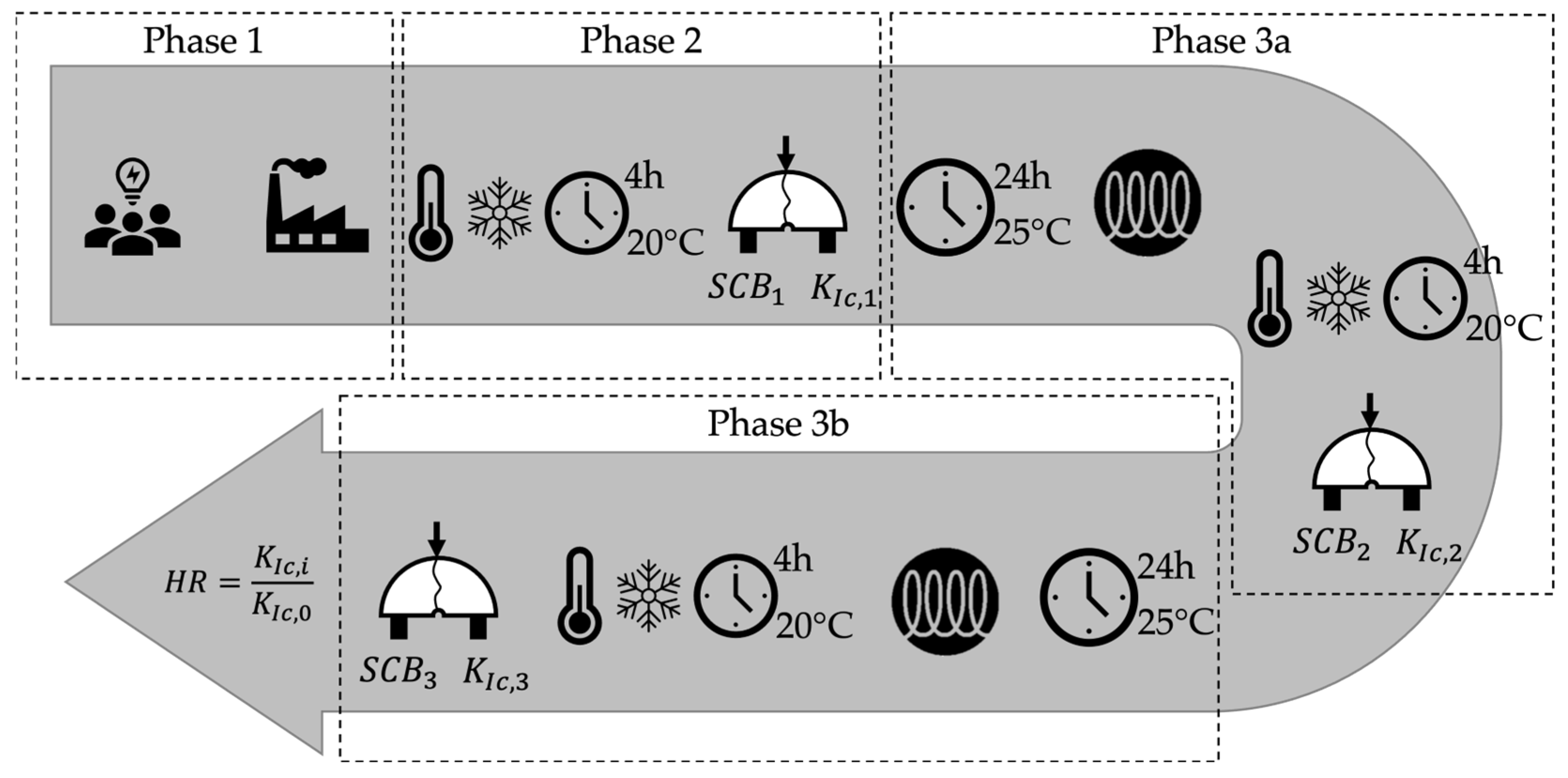
Figure 1 provides a schematic representation of the experimental procedure, highlighting the sequential and cyclic nature of the methodology rather than individual test results. Phase 1 summarizes the selection of materials and mixture design, while Phase 2 represents the initial conditioning and reference SCB fracture test used to obtain the baseline fracture toughness (
KIc,1). Phase 3 illustrates the repeated sequence of conditioning, induction heating, and SCB testing applied to the same specimen, allowing the evolution of fracture toughness (
KIc,2 and
KIc,3) to be monitored after successive healing cycles.
2.1. Materials
The following aggregates were used to carry out this study: (i) limestone filler, (ii) limestone fine aggregate, (iii) porphyry coarse aggregate, and (iv) steel slag coarse aggregate. The particle size distributions of these materials are detailed in
Table 2. Additionally, virgin bitumen 35/50 pen was included (see
Table 3). These aggregates and bitumen are commonly used for surface layers in road construction and rehabilitation, accommodating different traffic types and climates.
The selection of the ferromagnetic additive type and its content is supported by findings from the literature review. Thick, short steel wool fibers are recommended, specifically type 4# steel wool fibers (ø = 0.11–0.17 mm; l = 10 mm; ρ = 7.85 g/cm
3). The content of steel wool fibers in the asphalt mixtures was constrained by manufacturing limitations. To further refine this selection, the fiber content was increased in 2% increments in asphalt mixtures. In previous research, it was observed that mixtures with fiber contents equal to or exceeding 6% by volume of bitumen exhibited issues related to homogeneity, which compromised the structural integrity of the material [
14]. Consequently, fiber contents of 2% and 4% by volume of bitumen were selected as the optimal levels for this study, balancing performance requirements with manufacturing capabilities.
2.2. Asphalt Mixture Design and Sample Preparation
Based on the materials mentioned above and in accordance with the granulometric spindles specified in the Spanish road specifications (PG-3) for an asphalt mixture AC16 surf 35/50 S [
30], the following Hot Mix Asphalts (HMA) were formulated:
S2: composed of limestone filler, limestone fine aggregate, steel slag coarse aggregate, and 2% of steel wool fibers by volume of bitumen.
S4: composed of limestone filler, limestone fine aggregate, steel slag coarse aggregate, and 4% of steel wool fibers by volume of bitumen.
P2: composed of limestone filler, limestone fine aggregate, porphyry coarse aggregate, and 2% of steel wool fibers by volume of bitumen.
P4: composed of limestone filler, limestone fine aggregate, porphyry coarse aggregate, and 4% of steel wool fibers by volume of bitumen.
The dosage for each formulation is presented in
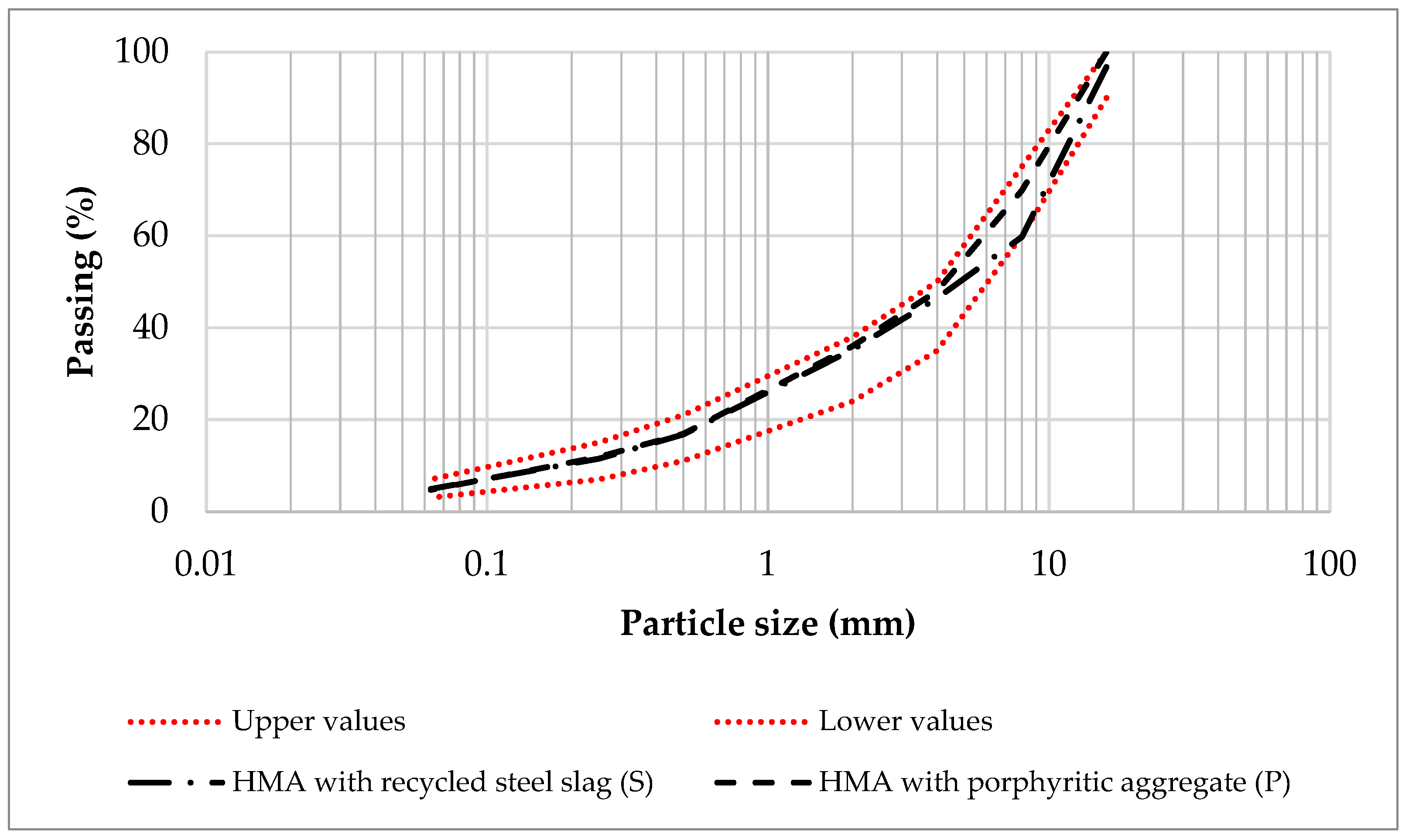
Table 4. To this regard, percentages of aggregates, bitumen, and ferromagnetic additive are estimated by weight in relation to the total asphalt mixture. The granulometric distribution of the asphalt mixtures are included in
Figure 2 together with the granulometric spindles for an asphalt mixture AC16 surf 35/50 S [
30].
All asphalt mixtures were manufactured at 165 °C and cylindrical specimens (Ø 101.6 mm and height 63.5 mm) were compacted at 130 °C using impact compaction, applying 75 blows per face [
31]. After compaction, the specimens were sawed into semicircular shapes, and a 4 ± 1 mm notch, 6 ± 1 mm deep, was made at the midpoint of the flat side of each sample to facilitate and control crack propagation during the SCB (semi-circular bending) test [
32].
2.3. Preconditioning and Initial SCB Test
The indirect tensile strength or fracture resistance of asphalt mixtures was assessed using the semi-circular bending (SCB) test, as specified in standard UNE-EN 12697-44 [
32], whose main objective is to evaluate the behavior of the mix against crack initiation and extension.
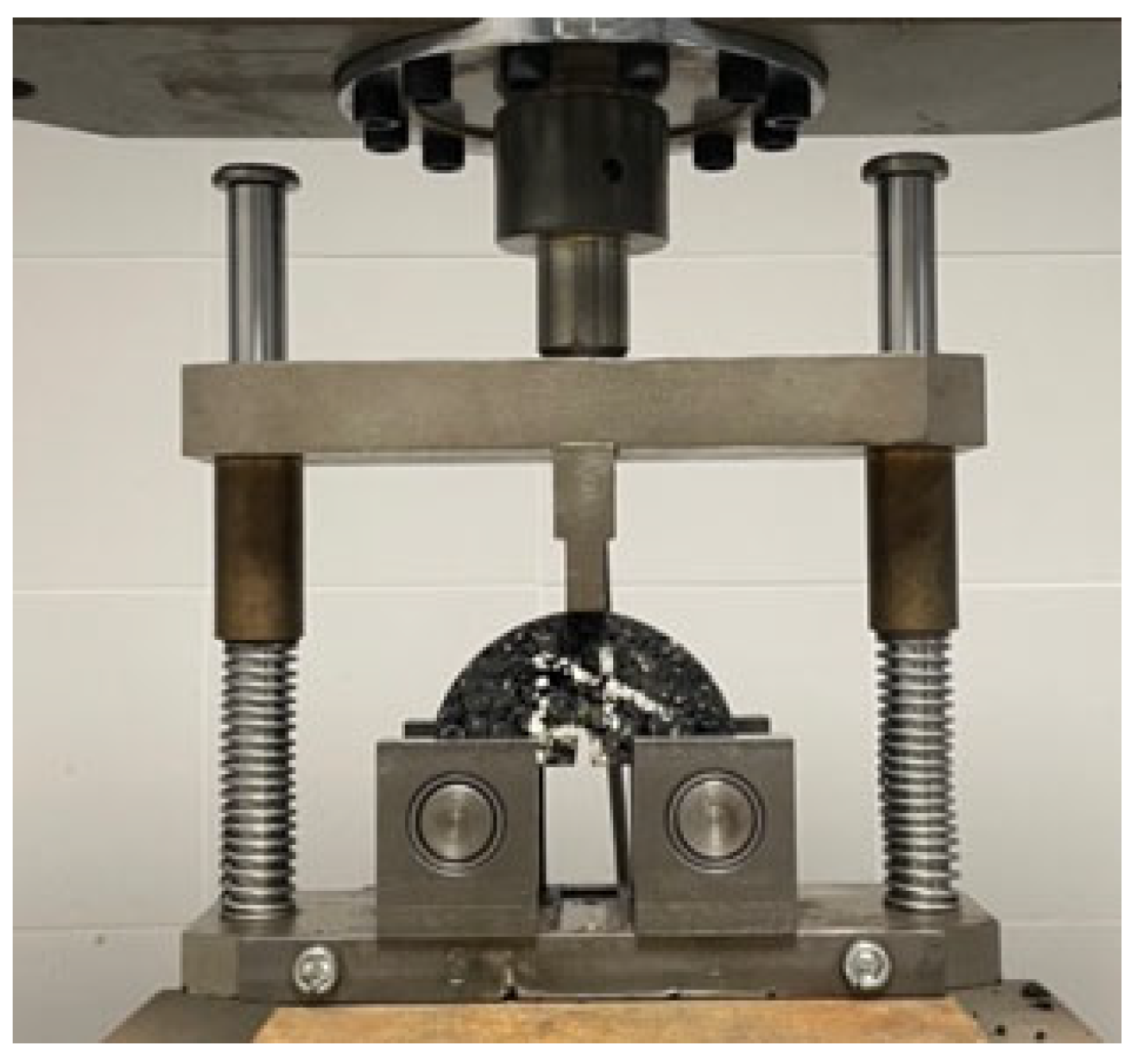
The test uses a notched semi-cylindrical specimen under a three-point bending load (see
Figure 3). Directly at the notch, this arrangement produces a tensile stress at the middle of the flat surface, therefore starting and spreading a crack throughout the material.
Following cutting and notching procedures, the specimens were kept in a horizontal position under normal laboratory conditions for a period of 7 to 42 days. Prior to testing, all samples were conditioned to achieve thermal equilibrium for four hours at 20 °C. The SCB fracture test was then performed employing the loading device shown in
Figure 3.
This approach allows for the estimation of the fracture toughness of the material, or its capacity to withstand crack propagation from a stress concentration site. Particularly, one determines the tensile strength (KIc). This indicator is expressed in N/mm1.5 and is calculated from the maximum load sustained by the sample prior to failure. It indicates the material’s resistance to cracking by reflecting the amount of energy absorbed before fracture.
The KIc parameter is particularly relevant for the design and evaluation of asphalt pavements exposed to cyclic traffic loading or low-temperature conditions, as it provides an indicator of the material’s resistance to fatigue cracking and thermally induced cracking. Moreover, the SCB test is often used to evaluate the performance of laboratory-developed asphalt mixtures or to compare several asphalt formulations as a quality control measure.
Several mechanical properties were computed in order to compare the fracture behavior of the investigated asphalt mixtures:
where
is the maximum tensile stress,
Di is the diameter of the specimen in millimeters (mm),
ti is the thickness of the specimen in millimeters (mm), and
Fmax,i is the maximum load of the specimen in newtons (N).
where
KIc,i is the tensile strength of the specimen
i,
ai is the depth of the notch in the specimen in millimeters, and
Y1 is the normalized stress intensity factor in mode I fracture. Given that
s/ri = 0.8, where
s is half the distance between the centers of the rollers in millimeters (mm) and
ri is the radius of the specimen,
Y1 can be expressed as follows:
Finally, the tensile strength of the material is reported as the average of the K
Ic values calculated from the tested specimens:
2.4. Assessment of Self-Healing Capacity
Each specimen was kept for 24 h before ready for self-healing evaluation following the initial SCB (SCB
1) test (Phase 2). Illustrated in
Figure 1, the self-healing protocol was designed in two more phases (Phase 3a and Phase 3b), each comprising confinement, inductive heating, post-healing rest, and re-fracture.
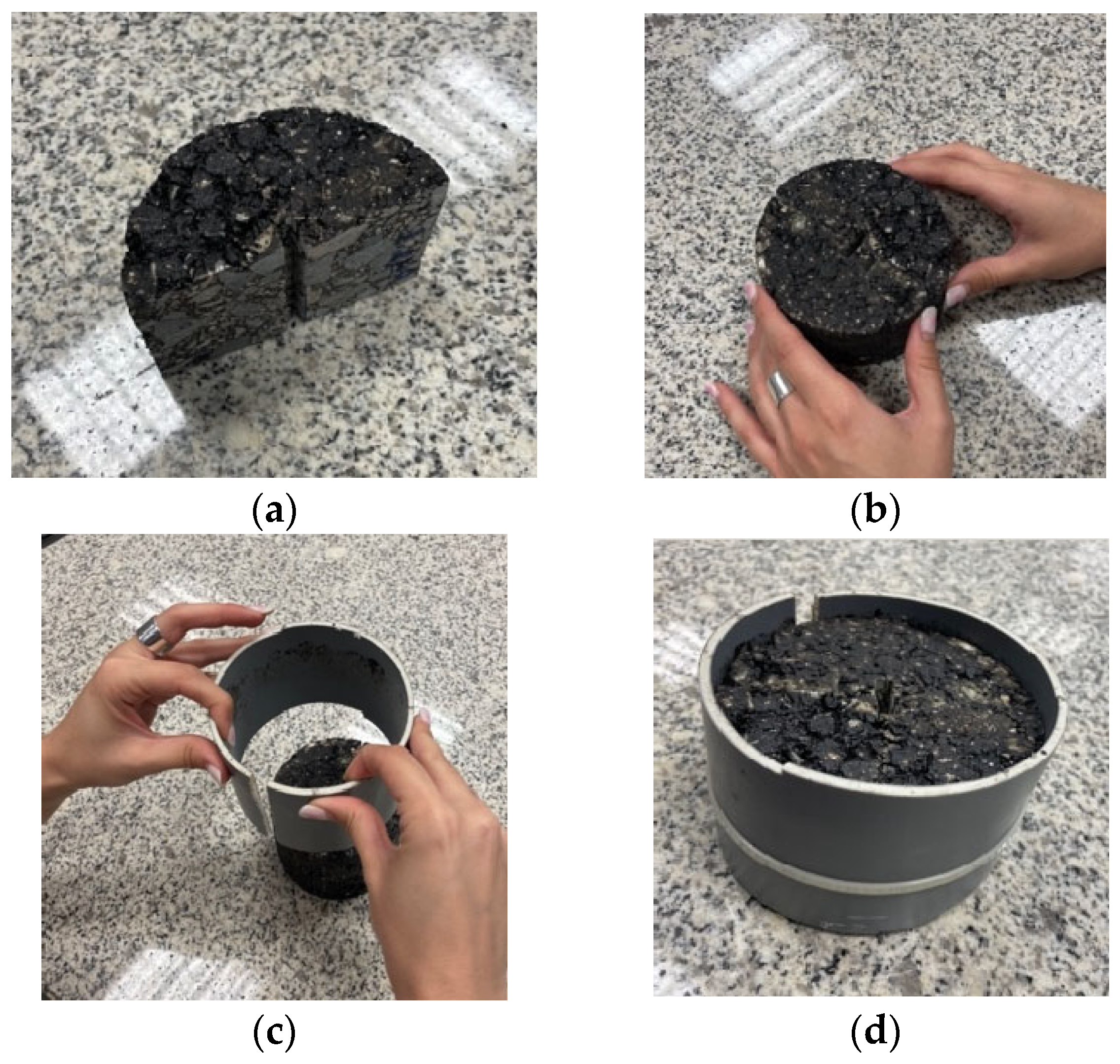
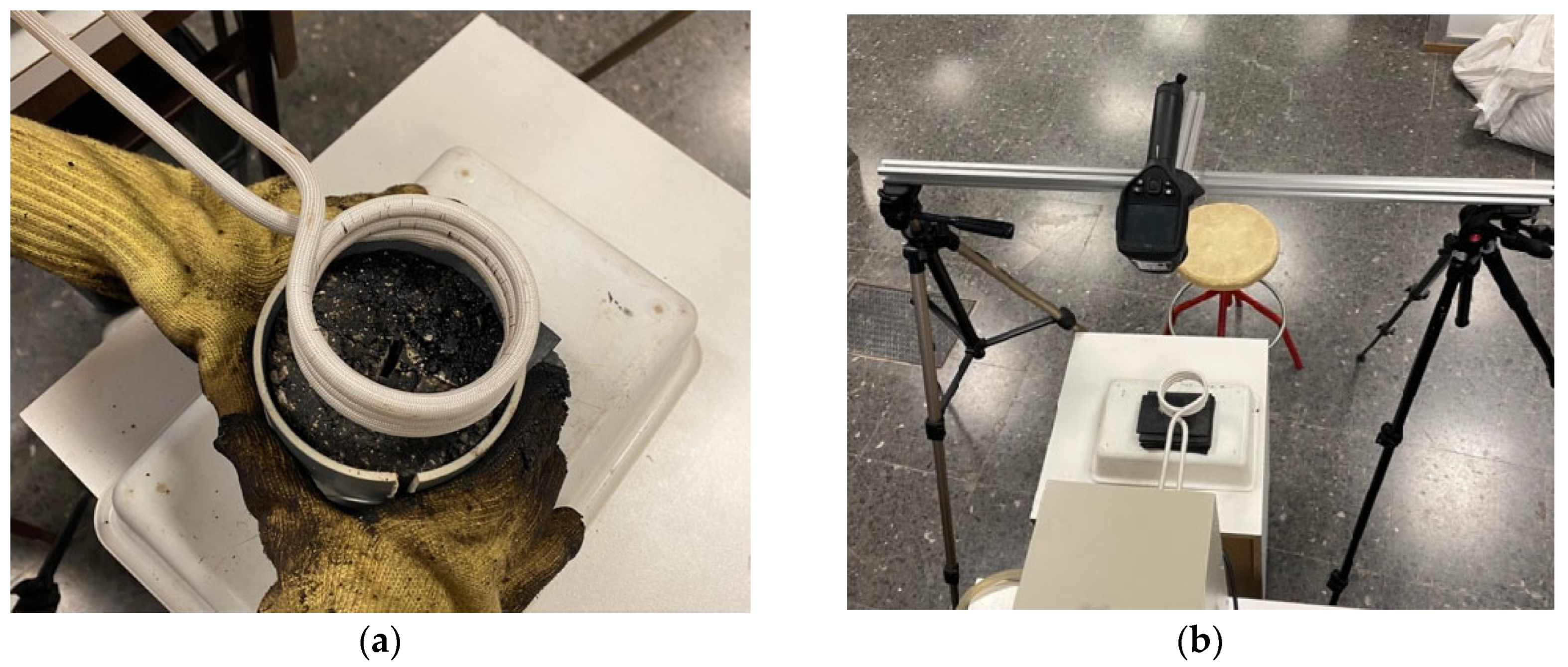
Each broken specimen was confined in a custom-designed PVC mold and linked with a fiber-free reference sample in both phases to apply moderate pressure with a plastic zip tie, with the aim of preventing the specimen from crumbling during the heating phase and attempting to reflect the actual conditions surrounding a crack. PVC and plastic were intentionally used since these non-conductive materials did not obstruct the electromagnetic induction process. This guaranteed that just the bituminous material within the sample received thermal activation.
Figure 4 shows the complete confinement procedure.
Once constrained, the specimens were heated for 10 min using a high-frequency induction system created for accurate thermal control. With an adjustable frequency range of 30 to 100 kHz and a current intensity range of 200 to 600 A, the equipment ran at a peak power of 15 kW. As shown in earlier studies [
14], these characteristics enabled adjustment of the heating settings to maximize thermal penetration in typical thickness asphalt layers (~5 cm).
To guarantee maximum heating efficiency for this experiment, the lowest frequency and the maximum available power levels were utilized. To verify heating homogeneity, surface temperature change was tracked using a thermographic camera and laser temperature sensors during the process (
Figure 5).
After heating, the specimens were kept locked for another 24 h to help internal healing following heating. To find out how much recovery there was, they were then fractured once again (SCB2) under the same conditions as in Phase 2. This involved preconditioning the specimens for four hours at 20 °C and then performing the SCB test.
To evaluate the cumulative impacts of repeated healing, a third cycle (Phase 3b) followed the same procedure—confinement, ten-minute induction heating, 24-h rest, precondition, and SCB (SCB3) test.
The healing capacity was measured, similar to previous research, as the percentage recovery of mechanical resistance determined by comparing the tensile strength from the second and third SCB tests (after each induction heating cycle: K
Ic,
2 and K
Ic,
3) with the original value acquired in the first SCB test (prior to any healing intervention: K
Ic,
1) (see
Figure 1). This gave a trustworthy indicator of the self-healing process’s efficacy under regulated laboratory setting.
3. Results
Table 5 presents the results achieved from the three-stage SCB fracture and induction heating method outlined in the methodologies section for every semi-circular sample examined. The table includes the kind of aggregate, fiber content, SCB peak loads, and temperatures noted during first and second induction heating stages. It should be noted that the temperatures reported correspond to surface temperatures measured on the specimen during induction heating. A preliminary lab test showed that the temperature distribution within the specimen follows a consistent gradient, with temperatures at a depth of 1.5 cm reaching approximately 80–90% of the surface temperature after 10 min of heating, regardless of fiber content or aggregate type, while temperatures at a depth of 3 cm remain around 65–75% of the surface value. These findings confirm that surface temperature measurements provide a representative indicator of the thermal state within the material.
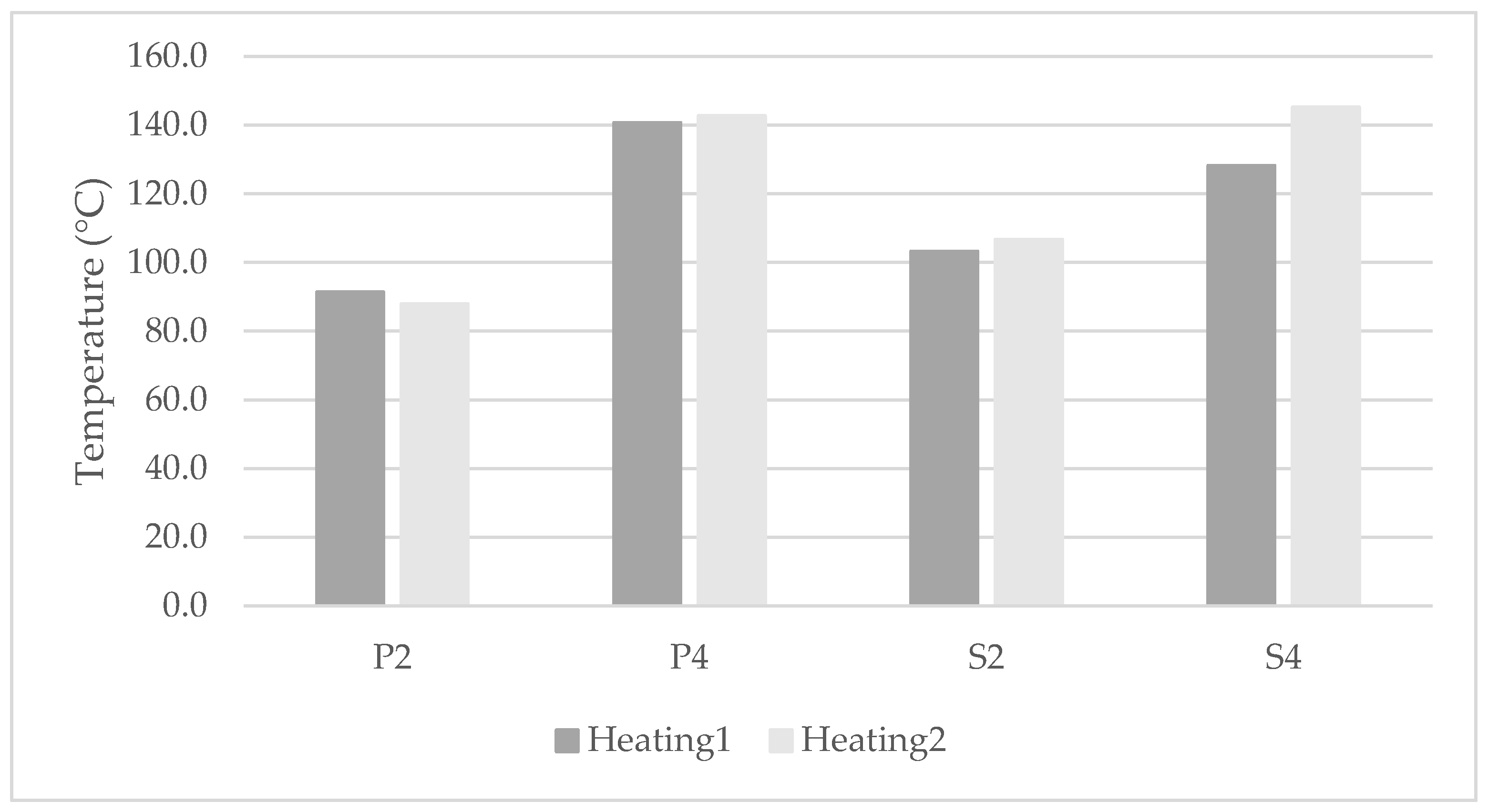
The results show that specimens with recycled steel slag aggregates (S2 and S4) consistently reached higher peak loads in the initial SCB test (Fmax,1), with S4 specimens exceeding 4.0 kN in some cases, in contrast to porphyritic mixtures, which remained below 3.5 kN. This confirms the superior mechanical performance of EAF slag-based asphalt mixtures. Moreover, porphyritic mixtures with 4% fibers (P4) reached significantly higher induction temperatures—up to 150 °C—than their 2% counterparts, suggesting enhanced electromagnetic responsiveness due to the increased steel fiber content.
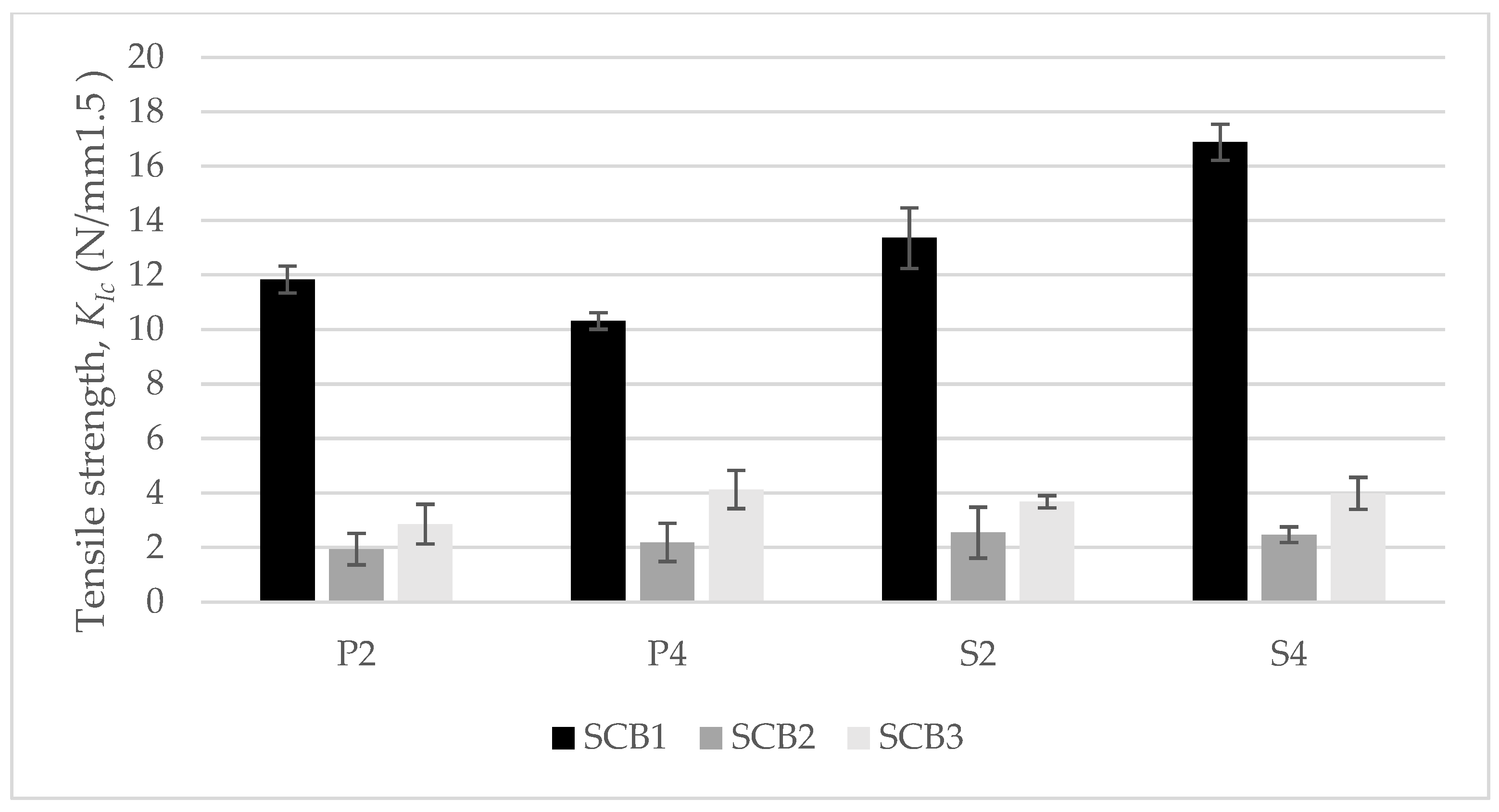
Figure 6 shows the indirect tensile strength values (
KIc) obtained from the SCB tests. Initial
KIc values reflect the superior mechanical integrity of slag-based mixtures, with S4 reaching 16.88 N/mm
1.5 compared to 10.32 N/mm
1.5 in P4. After the first healing cycle (SCB
2), recovery was moderate across all mixtures, with tensile strength values ranging from 1.94 to 2.55 N/mm
1.5. Notably, the second healing cycle (SCB
3) yielded greater recovery, with P4 and S4 mixtures approaching or surpassing 4.0 N/mm
1.5, confirming that a higher content of steel wool fibers enhances crack closure and structural restoration. This trend suggests that higher fiber content enhances both the heating response and healing capacity, especially after repeated induction cycles. In particular, the combination of recycled slag and 4% fibers (S4) offered a particularly robust performance, balancing high initial strength and strong healing response.
The dispersion of results, represented by the standard deviation bars in
Figure 6, provides additional insight into the repeatability of the self-healing response. In general, the variability associated with the initial SCB test (SCB
1) was higher for slag-based mixtures, reflecting their greater absolute strength levels. After the healing cycles, standard deviations remained moderate across all mixtures, indicating a consistent recovery behavior despite the lower absolute
KIc values. Notably, asphalt mixtures with higher fiber content tended to exhibit more stable post-healing responses, suggesting that steel wool fibers not only enhance healing efficiency but also contribute to a more homogeneous mechanical recovery after induction heating.
Average induction temperatures obtained in each composition are shown in
Figure 7. Higher ratios of steel wool fiber mixtures reached greater temperatures under the same induction settings, as expected, therefore confirming their increased electromagnetic energy absorption capacity. Temperature differences between 2% and 4% fiber mixtures were especially significant in the porphyritic group, with up to 60 °C increases, while slag-based specimens exhibited smaller gaps, suggesting that steel slag itself contributes to the electromagnetic response, independently of fiber content.
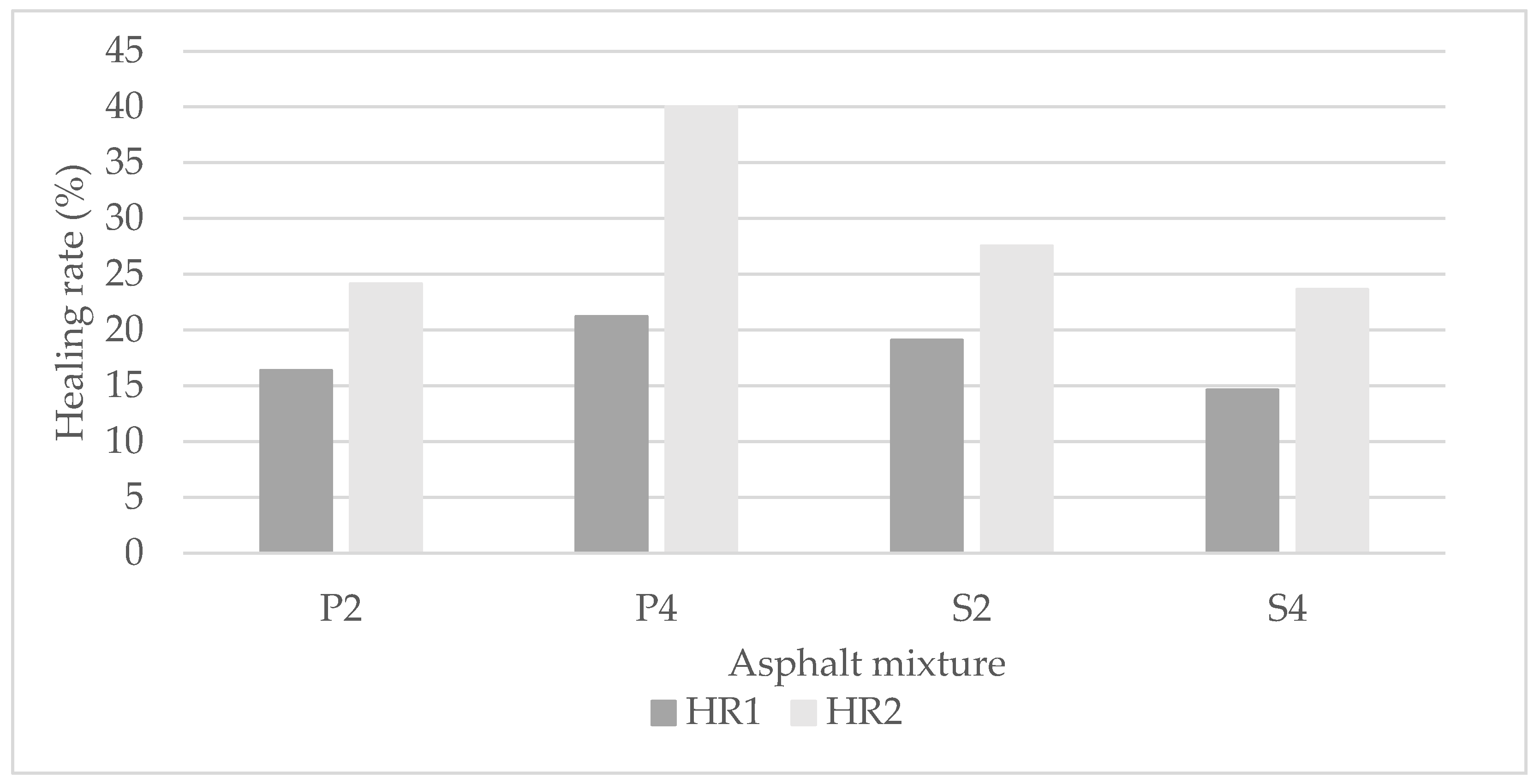
Self-healing capacity was measured in terms of the percentage of tensile strength retained—
HR, healing rate—after each induction cycle, based on the results obtained in the first SCB test.
Figure 8 depicts these recovery rates graphically. In all examined combinations, the second self-healing cycle produced more recovery than the first. This tendency underscores how repeated induction heating affects material recovery and crack closure. Across all setups, self-healing rates varied between 14.6% and 40% after 10 min of induction heating, therefore highlighting the possibilities of this method to increase the service life of asphalt pavements. P4 mixtures exhibited the highest recovery rate (HR
2 = 40.0%), followed by S2 and S4 (27.5% and 23.7%, respectively). These values confirm that both recycled aggregates and higher fiber content contribute positively to mechanical restoration. The improvement in HR after the second cycle also suggests that repeated healing treatments could be strategically applied in the field to extend pavement durability. This behavior likely indicates that the heating duration applied in a single healing cycle may be insufficient to fully activate the material’s self-healing mechanisms. Consequently, extending induction heating times or optimizing heating protocols could further enhance crack closure and mechanical recovery, especially in field applications.
4. Discussion
The findings of this study validate the growing promise of integrating self-healing asphalt technologies with the application of recycled steel aggregates and steel wool fibers. The observed fracture recovery percentages following each induction heating cycle show without question the ability of electromagnetic heating to restore mechanical performance after damage. This study offers a methodical and repeatable approach to assess self-healing capacity, therefore allowing for steady comparisons across several substances, rather than just reproducing known results. Importantly, the main contribution of this work is not limited to the quantification of self-healing performance, but also lies in the experimental methodology established to study the phenomenon in a systematic manner. This methodological framework can be readily extrapolated to other mechanical tests and damage scenarios, broadening its applicability beyond the specific SCB configuration used herein. This technique has real relevance in cases when fast functional recovery is essential—e.g., in city streets, industrial areas, or airport taxiways subject to continuous damage and scarce maintenance possibilities.
Beyond the laboratory setting, the incorporation of healing capability into sustainable mixes provides evident advantages with regard to infrastructure longevity, maintenance cost reduction, and environmental performance. In accordance with circular economy ideas, the utilization of steel industry byproducts and, as demonstrated in the current research, these reclaimed materials serve as functional elements improving the response to induction heating. One of the main results of the study is this dual role—structural and functional—of recycled slag aggregate.
The results agree with earlier studies that confirmed the basics of induction-induced curing in asphalt mixtures. Among the first to point out how steel wool fibers help to boost conductivity and encourage crack closure were Liu et al. [
3,
4] and Ajam et al. [
2]. Including not just varied fiber contents but also opposing aggregate types under a single test plan, this research confirms their findings inside a wider experimental setup. The present study emphasizes the development of mechanical properties over several fracture-healing cycles as opposed with Gallego et al. [
1] and Lizárraga and Gallego [
13], which centered mostly on thermal behavior and heating efficiency. This links energy intake to functional recovery, therefore complementing and expanding their efforts.
For effective heating, the authors of this research recently refined important operational factors including coil geometry, frequency, and current intensity [
14]. Building on that research, the current study assesses the structural effects of using these best-suited conditions and validates their ability to restore fracture strength across several material designs. Another major development is this link between mechanical performance and thermal management.
Some restrictions must nonetheless be recognized. Under perfectly regulated laboratory conditions, the investigation was carried out; nevertheless, these do not fully represent the intricate impacts of environmental elements like moisture, ageing, or traffic-induced loading. Though adequate for trend analysis, the number of samples per condition limits the statistical power of the conclusions. Furthermore, just two fiber dosages (2% and 4%) were tested, opening opportunity for more study into hybrid reinforcement techniques or middle values.
Regarding measurement, the assessment concentrated only on macroscopic mechanical recovery evaluated by means of the SCB test. Although fracture toughness is a dependable predictor of performance, it offers no information regarding microscale processes like binder redistribution or crack structure. Nevertheless, the experimental approach proposed in this study is not intrinsically tied to a single mechanical test and could be adapted to alternative fracture, fatigue, or stiffness-based tests, as well as combined with advanced characterization techniques to gain deeper insight into self-healing mechanisms. More thorough knowledge of the healing process would come from integrating instruments such X-ray computed tomography (CT), scanning electron microscopy (SEM), or dynamic shear rheometry (DSR).
Further development will call field-scale tests from an implementation point of view to verify the laboratory results under actual service conditions. Low-traffic pavements or test tracks could expose real-world problems with equipment movement, heating duration, and energy supply in pilot projects. Furthermore, integrating embedded sensors to track pavement condition and activate induction heating could turn traditional roads into smart, adaptive infrastructure.
Eventually, setting the viability of self-healing asphalt as a standard solution requires thorough life cycle assessments (LCA) and economic analyses. These studies could offer the numerical foundation for its application in sustainability-oriented pavement design, highlighting its long-term advantages in terms of lower maintenance frequency, emissions, and material usage.
5. Conclusions
Using two kinds of AC16 Surf S hot-mix asphalt mixtures made with 35/50 bitumen—one including natural porphyritic aggregates and the other incorporating recycled steel slag—this study assessed self-healing ability. Steel wool fibers were included in both circumstances to make electromagnetic induction heating possible and to assist automated crack repair.
The data confirm that combining recycled steel slag aggregates with steel wool fibers provides a technically practical and environmentally friendly substitute for traditional mixtures. Through material repurposing, these sustainable formulations promote circular economy ideas and exhibit mechanical behavior equivalent or even better than that of conventional asphalt. An additional contribution of this study lies in the definition and validation of a repeatable experimental methodology based on successive fracture–healing cycles, which can be extrapolated to other mixture types and mechanical tests.
Induction heating proved to be an effective method for activating the self-healing mechanism in asphalt mixtures, enabling partial recovery of mechanical strength after cracking. With higher fiber contents generating stronger thermal responses under identical induction parameters, a direct relationship was observed between steel wool fiber dosage and the peak temperatures reached during heating.
Particularly in porphyritic-based samples, mixtures including 4% steel wool fibers demonstrated quicker recovery rates than those with 2%. This stresses how much fiber content affects the success of the healing process as well as its impact on heating efficiency.
Following a second induction cycle, all combinations showed better healing with recovery rates ranging from 14.6% to 40%. This shows that repetitive heating under restricted confinement conditions improves the restoring effect, suggesting that optimized or extended heating protocols could further improve crack closure and mechanical recovery, especially in practical applications.
Finally, combining self-healing technologies with recycled industrial byproducts emerges as a promising strategy for developing more resilient, low-maintenance, and environmentally conscious pavements. While further research is required to fully assess long-term durability and life-cycle impacts under real service conditions, the results of this study demonstrate the technical potential of induction-based self-healing asphalt to reduce maintenance needs, material consumption, and associated carbon emissions.