Article

Comparative Experimental and Numerical Study on Waterproofing Techniques for Construction Joints in Mining Tunnel Linings

1
College of Geoscience and Surveying Engineering, China University of Mining and Technology (Beijing), Beijing 100083, China
2
Beijing Urban Rail Transit Construction Engineering Co., Ltd., Beijing 101118, China
3
Beijing Urban Construction Design & Development Group Co., Ltd., Beijing 100037, China
4
State Key Laboratory for Fine Exploration and Intelligent Development of Coal Resources, China University of Mining and Technology (Beijing), Beijing 100083, China
*
Author to whom correspondence should be addressed.
Infrastructures 2026, 11(1), 13; https://doi.org/10.3390/infrastructures11010013
Submission received: 1 November 2025 / Revised: 17 December 2025 / Accepted: 2 January 2026 / Published: 5 January 2026
(This article belongs to the Topic Advances on Structural Engineering, 3rd Edition)

Abstract

This study is based on in situ structural test sections and systematically explains the construction processes and key control points of different waterproofing methods by optimizing the self-waterproofing of structural concrete, controlling the installation process of external waterproofing membranes, and managing quality throughout the construction process. For various materials such as polymer-coated waterstops, steel-edged rubber waterstops, and composite grouting pipes with water-swelling strips, the waterproofing performance under the corresponding processes was analyzed through a combination of experiments and numerical simulations. The research focuses on investigating the influence of material selection and construction techniques on waterproofing effectiveness, clarifying the applicable conditions and performance differences among various materials and techniques. The results indicate that polymer-coated waterstops perform significantly better than other materials; self-compacting concrete causes minimal disturbance to waterstops, which is beneficial for waterproofing, but it exhibits deficiencies in early-age crack resistance; refined control of construction techniques plays a decisive role in the overall performance of the waterproofing system. Consequently, detailed construction quality control specifications for the main structure and its components were developed.

1. Introduction

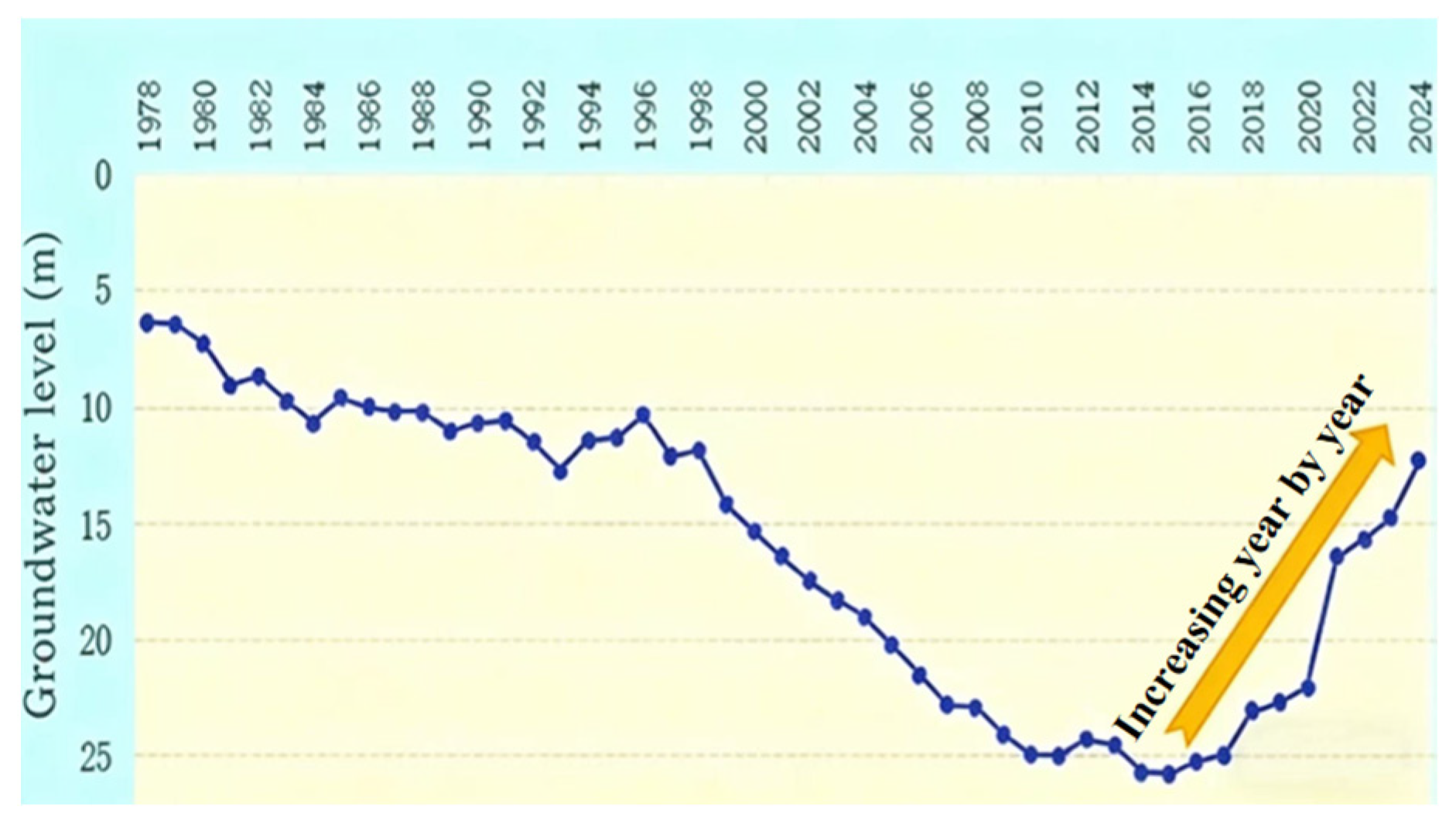
Since the commissioning of the South-to-North Water Diversion Project in Beijing in 2014, the metropolitan groundwater table has demonstrated sustained recovery, as illustrated in Figure 1. This hydrogeological rebound has significantly exacerbated water leakage in existing metro underground structures, with documented leakage points increasing by over 80% since 2019 and now approaching 4000 instances, thereby posing substantial threats to operational safety. The formation of interconnected leakage pathways initiates pore pressure dissipation and establishes dynamic seepage fields, consequently concentrating surrounding hydrostatic and geostatic stresses within these preferential flow zones. This stress intensification triggers progressive structural deterioration, ultimately propagating both the density and extent of leakage manifestations while continuously escalating defect severity.
Tunnel leakage represents a multifactorial phenomenon arising from the interplay of environmental conditions and engineering parameters. The hydrogeological regime, climatic variations, and groundwater table fluctuations—particularly those associated with extreme precipitation events—exert considerable influence on seepage behavior [1]. Groundwater infiltration not only directly contributes to leakage but may also modify the surrounding soil fabric, thereby aggravating hydrogeological conditions [2]. Further investigation into concrete fracture mechanisms, construction quality enhancement, interfacial bonding performance, and systematic evaluation of emerging waterproofing materials remains imperative [3].
Numerical simulations employing finite element methodologies have established robust correlations among pore water pressure, drainage efficiency, and lining permeability [4]. Appropriately parameterized three-dimensional saturated seepage models can effectively characterize hydraulic head distribution within lining systems [5]. Through integrated consideration of permeability coefficients for lining, grouting layer, and surrounding soil, comprehensive predictive frameworks for leakage assessment have been developed, with subsequent validation via ABAQUS implementations [6].
Waterproofing materials constitute vital components in metro engineering for leakage mitigation and long-term operational integrity. Comparative analysis of macromolecular environmental aging versus aqueous exposure reveals distinct degradation pathways in polymeric systems [7]. Current optimization efforts focus on widely implemented membranes, coatings, and sealants, with impermeability, environmental compatibility, and durability emerging as critical research priorities [8]. Under the combined effects of long-term stress and small amounts of seepage water, the molecular chains of the rubber material in the waterstop will undergo irreversible oxidation and creep, leading to stress relaxation and significantly reducing its sealing effectiveness [9]. Thermomechanical analysis under hygrothermal conditions has elucidated the compressive deformation behavior of elastomers [10], enabling subsequent lifespan projection [11]. The development of BP neural network models for forecasting mechanical performance in SBS-modified membranes further provides technical support for engineering applications [12].
Advances in concrete material design have demonstrated that optimized mix proportions with reduced cement and water contents effectively mitigate hydration heat generation, enhance structural density, and suppress the propagation of interconnected microcracks [13]. Particular attention must be devoted to quality assurance during diaphragm wall excavation in hydrologically active soft strata, with emphases on underwater concreting methodologies and joint waterproofing treatments [14]. Systematic investigations into metro structural durability have addressed carbonation kinetics, stray current effects, and chloride ion penetration mechanisms, culminating in predictive service life models [15]. The strategic incorporation of expansive agents into concrete formulations has yielded measurable reductions in shrinkage-induced tensile stresses, demonstrating efficacy in metro engineering applications [16]. Notably, the introduction of Dura fibers in structural concrete during construction of Gongyuanqian Station on Guangzhou Metro Line 2 substantially improved material impermeability [17]. While empirical observations from engineering practice have preliminarily summarized how construction techniques influence concrete waterproofing performance [18,19,20], both theoretical frameworks and practical implementations in this domain remain emergent, necessitating deeper mechanistic understanding through systematic investigation.
In summary, this study presents a systematic investigation of waterproofing technologies for operational mining-metro tunnels based on a full-scale in situ test section, aiming to address recurrent water leakage issues. The experimental configuration and monitoring methodology are explicitly delineated, followed by a comprehensive analysis—supported by empirical data and numerical simulations—of critical aspects encompassing the inherent impermeability of structural concrete, installation procedures for external waterproof membranes, and holistic quality control practices. By evaluating waterproofing performance across varied construction conditions, the critical roles of material selection and process precision are underscored. Through multi-group comparative testing, this research formulates standardized specifications for structural waterproofing construction and quality assurance, while identifying pivotal controlling factors governing tunnel leakage. The integrated experimental-numerical approach adopted herein effectively elucidates performance differentials among waterproofing techniques, thereby establishing reliable technical support for ensuring long-term tunnel structural integrity during operation. The overall chapter arrangement of the thesis is shown in Table 1.

2. Waterproofing Test for Construction Joints in Mine Tunnels

2.1. Purpose and Content of the Experiment

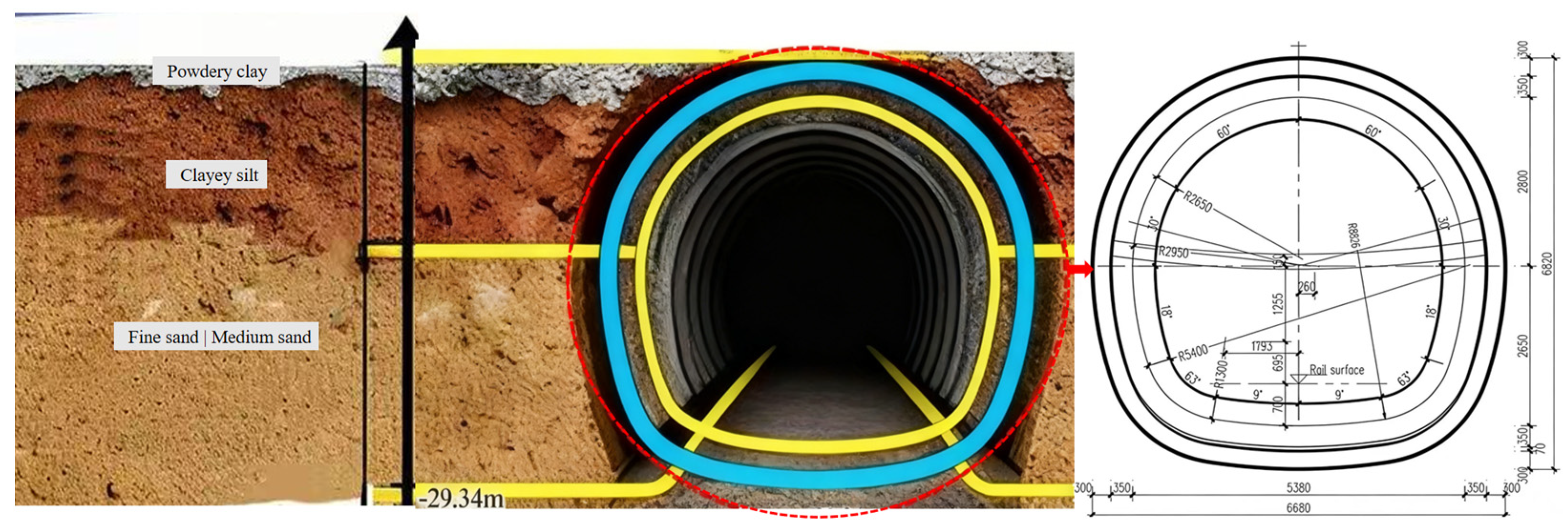
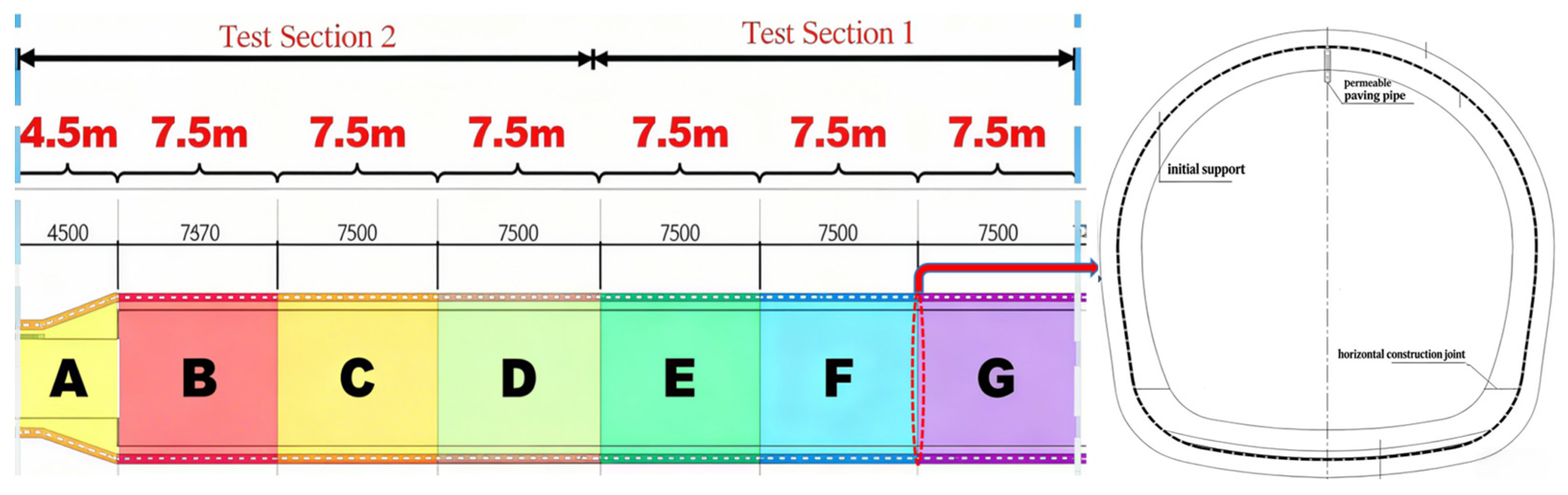
In response to the increasingly prominent issue of water leakage in metro systems, this study focuses on key aspects such as the inherent waterproofing performance of structural concrete, joint waterproofing, construction techniques, on-site management, and quality control. The objective is to develop multiple critical waterproofing construction technologies during the tunneling phase, enhance the waterproofing capacity of tunnel structures, and ensure their long-term operational safety. The total length of the shaft access channel in the test section is 49.5 m, divided into Test Section 1 (Zones E–G) and Test Section 2 (Zones A–D). These two sections are separated by a deformation joint. The tunnel floor slab is buried at a depth of 29.34 m, with a standard cross-section measuring 6.68 m in width and 6.82 m in height. The primary lining, with a thickness of 300 mm, was cast using C35 concrete, while the secondary lining, 350 mm thick, was constructed with C40 concrete, as illustrated in Figure 2. According to geological survey results, the shaft excavation bottom is located in fine to medium sand and gravel layers. The site has three layers of groundwater: phreatic water, interlayer water, and confined water, with stable water table depths (relative to the ground surface) of −8.5 m, −16.30 m, and −24.60 m, respectively. Since Chamber A is close to the shaft and pumping well, it has the steepest hydraulic gradient and the most significant dewatering effect. Chamber G is farthest from the pumping well and is least affected by dewatering, resulting in a gradient water table in the test area that rises gradually from 0 m in Chamber A to 2.2 m in Chamber G.
Test Section 1 was designed to validate the inherent waterproofing capability of the concrete structure and the performance of joints (e.g., deformation and construction joints) under the condition of no external waterproofing membrane; Test Section 2 was designed to evaluate the performance and installation techniques of the external waterproofing membrane itself. The experimental grouping scheme is shown in Figure 3.
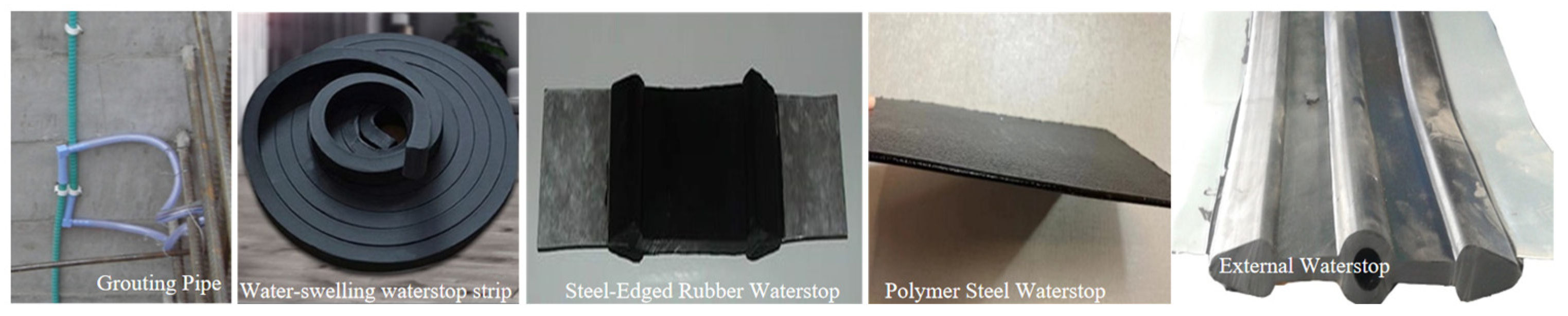
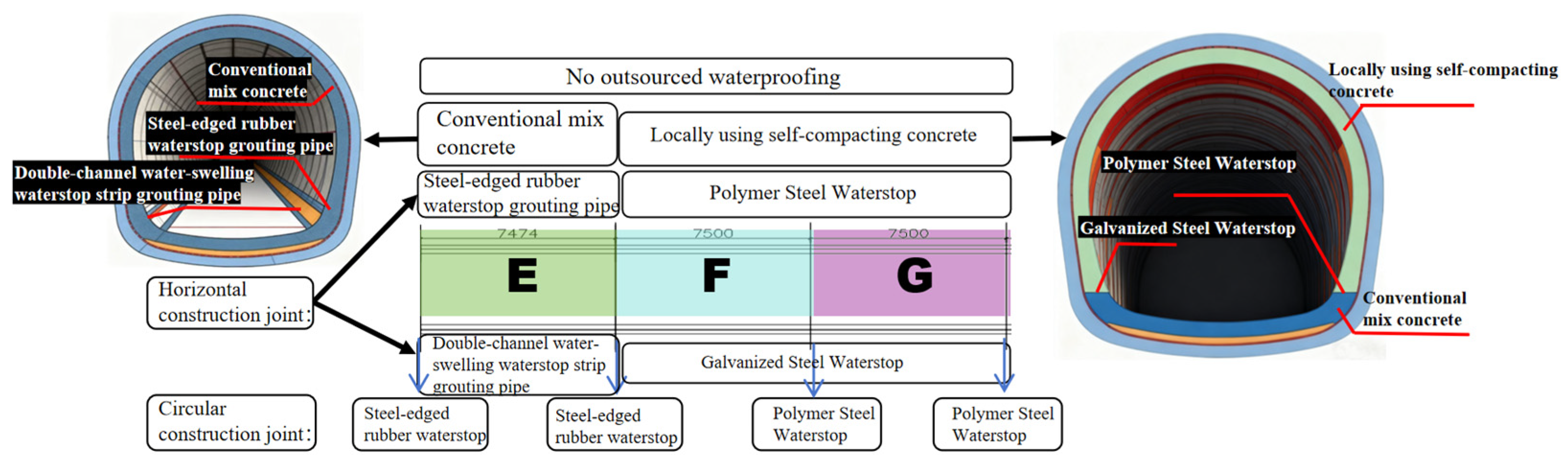
Test Section 1, with a total length of 22.5 m, was subdivided into three segments (E to G) by means of a deformation joint and circumferential construction joints, each segment measuring approximately 7.5 m in length. Segment E was constructed with conventional concrete, while Segments F to G utilized self-compacting concrete (SCC), enabling a direct comparison of their waterproofing performance. The joints were categorized into two types: construction joints and deformation joints. For the deformation joints, the study focused on comparing the waterproofing effectiveness of conventional steel-edged rubber waterstops versus groutable variants. In the case of construction joints, a comparison was made between commonly used waterstop elements and a novel type. The type of waterstop material used in the experiment is shown in Figure 4. Performance comparison of tunnel joint waterproofing materials is shown in Table 2.
Additionally, grouting pipes were installed in both horizontal and circumferential joints. A specific testing protocol was implemented wherein grouting was not conducted initially; instead, it was activated only upon the occurrence of water leakage, to evaluate the remedial efficacy of the grouting system. The overall experimental design is schematically represented in Figure 5.
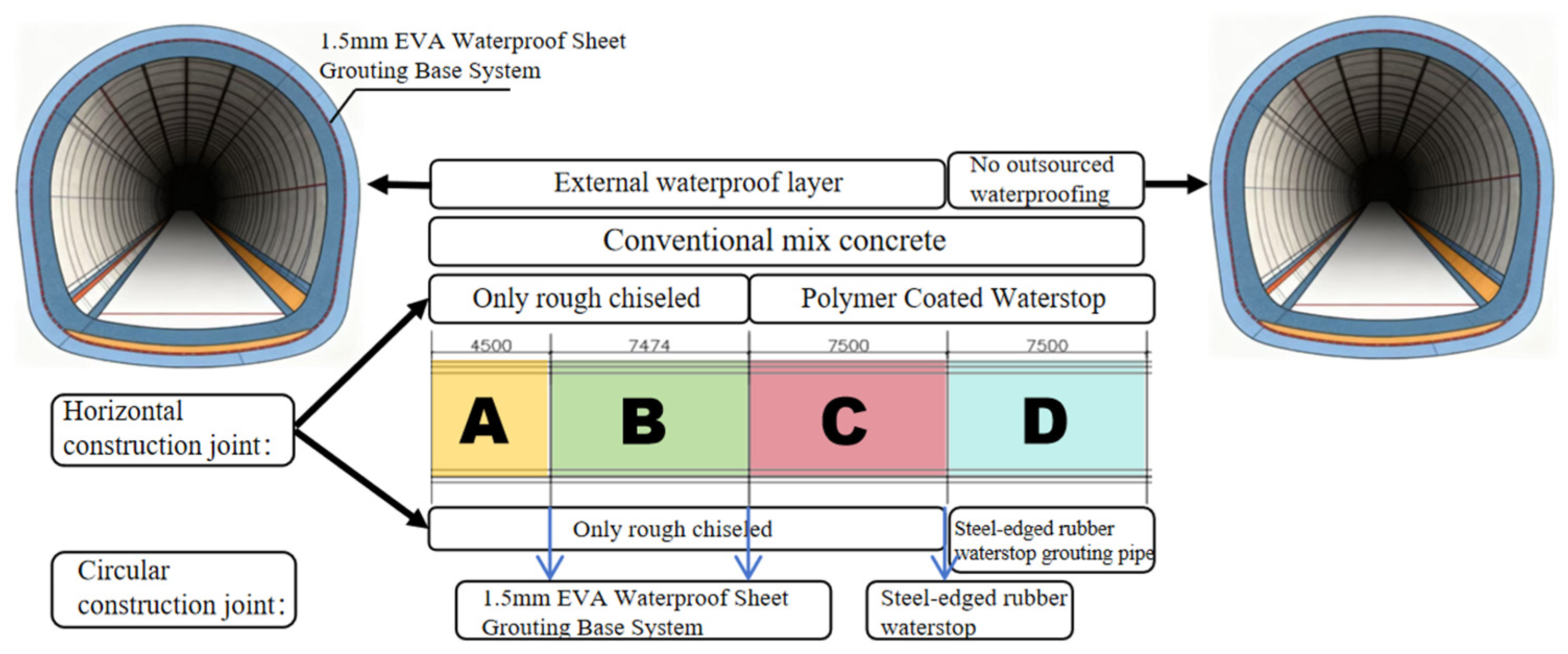
Figure 6 shows a cross-sectional view of the segmented Test Section 2. It can be seen that the total length of the transverse tunnel in Test Section 2 is 27 m, and the test is divided into four modules (A~D). The first segment of the transverse tunnel is approximately 4.5 m long, while the remaining segments are each about 7.5 m long. Different measures are used to verify the effectiveness of waterproof material joints, grouting bases, and waterproof laying processes. Each module adopts a different waterproofing process, with waterproof materials based on commonly used materials in Beijing, allowing for comparative analysis according to different waterproofing measures. Additionally, no waterproofing measures are applied at the joints of each module, enabling a summary and analysis of the differences in processes and waterproof performance between different materials.

2.2. Test Monitoring Plan

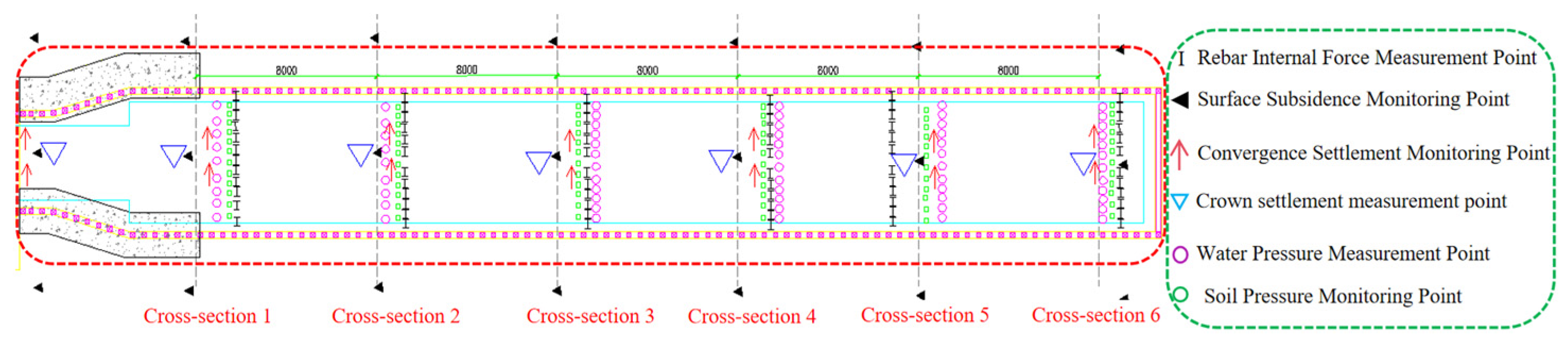
Monitoring points for surface settlement, convergence, and crown settlement were installed at six sections spaced 8 m apart, with each section consisting of five surface settlement points, two convergence points, and one crown settlement point. Water pressure monitoring points were arranged at six sections, also spaced 8 m apart, with each section equipped with 12 water pressure points. A summary of the monitoring point installation workload is provided in Table 3.
For the mine-method underground tunnel section, the tunnel excavation and the permanent concrete lining (secondary lining) are not carried out simultaneously, but rather step by step and in a staggered manner, but rather in a step-by-step, staggered manner. The complete process follows the sequence: ‘sectional excavation → immediate initial support → monitoring stability → laying waterproof layer → final secondary lining’. According to the design specifications [21], the monitoring frequency was determined based on the distance between the tunnel excavation face and the monitoring sections. Monitoring was conducted once per day when the distance was ≤2B (where B represents the excavation span), once every two days when the distance was ≤5B, and once per week when the distance exceeded 5B. After conditions stabilized, monitoring was reduced to once per month. The frequency was increased in response to any abnormal conditions. The plan and profile views of the monitoring points are illustrated in Figure 7.

2.3. Test Monitoring Methods and Devices

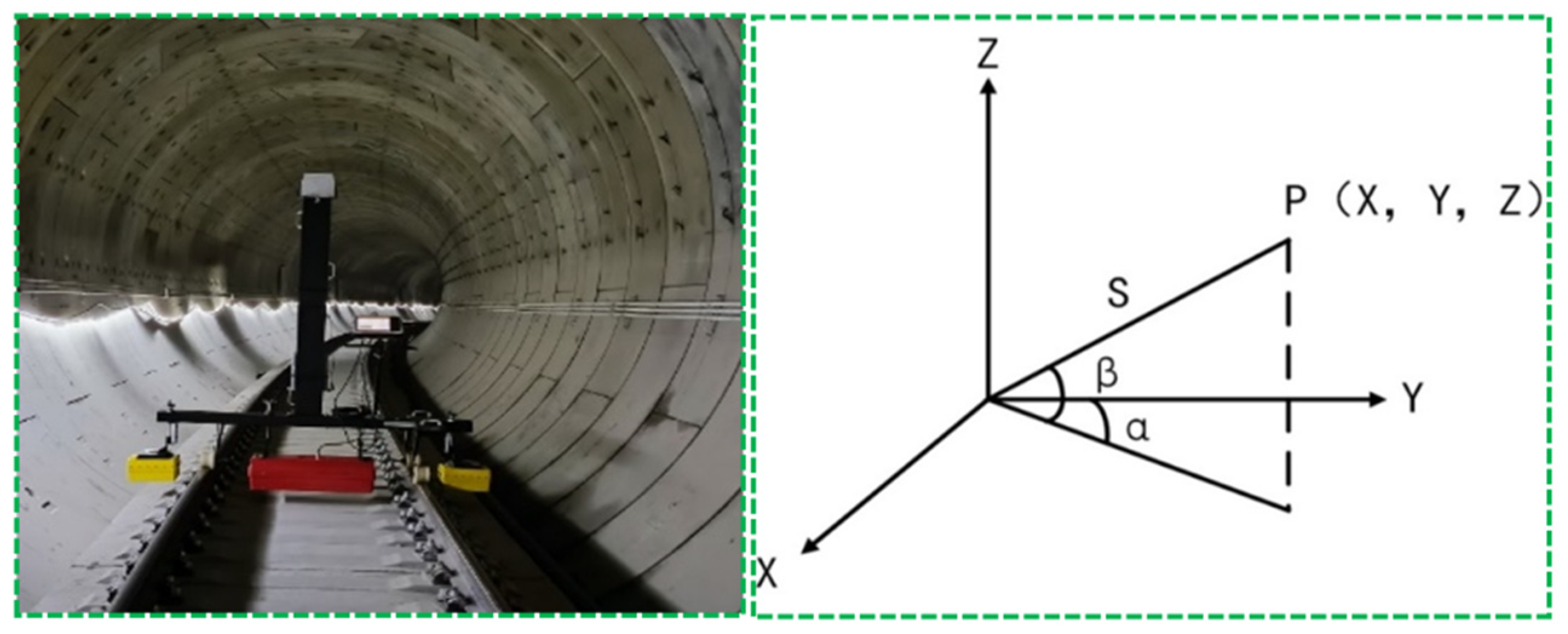
Three-dimensional laser scanning technology employs laser pulse emission and reception to capture high-fidelity spatial data of surface geometries. Operating on the time-of-flight (ToF) principle, the system calculates the distance (S) between the scanner and a target point by precisely measuring the round-trip duration of laser signals. The horizontal angle (α) is defined as the angular deviation between the projection of the laser beam on the X-Y plane and the reference Y-axis, determining the lateral orientation of the target point. The vertical angle (β) represents the inclination between the laser beam and the horizontal plane, establishing the elevation component along the Z-axis. Through trigonometric integration of the measured distance with these angular parameters, the system resolves the precise three-dimensional coordinates P (X, Y, Z) as depicted in Figure 8, while concurrently recording reflectance intensity and RGB texture information for each point. This methodology delivers metrological-grade accuracy through dense point cloud generation, operational efficiency, and non-contact measurement capabilities, enabling rapid acquisition of comprehensive spatial datasets. These attributes render the technique particularly suitable for dimensional documentation and concealed defect detection in subsurface engineering environments.

2.4. Test Results and Analysis

2.4.1. Test of F~G Segment

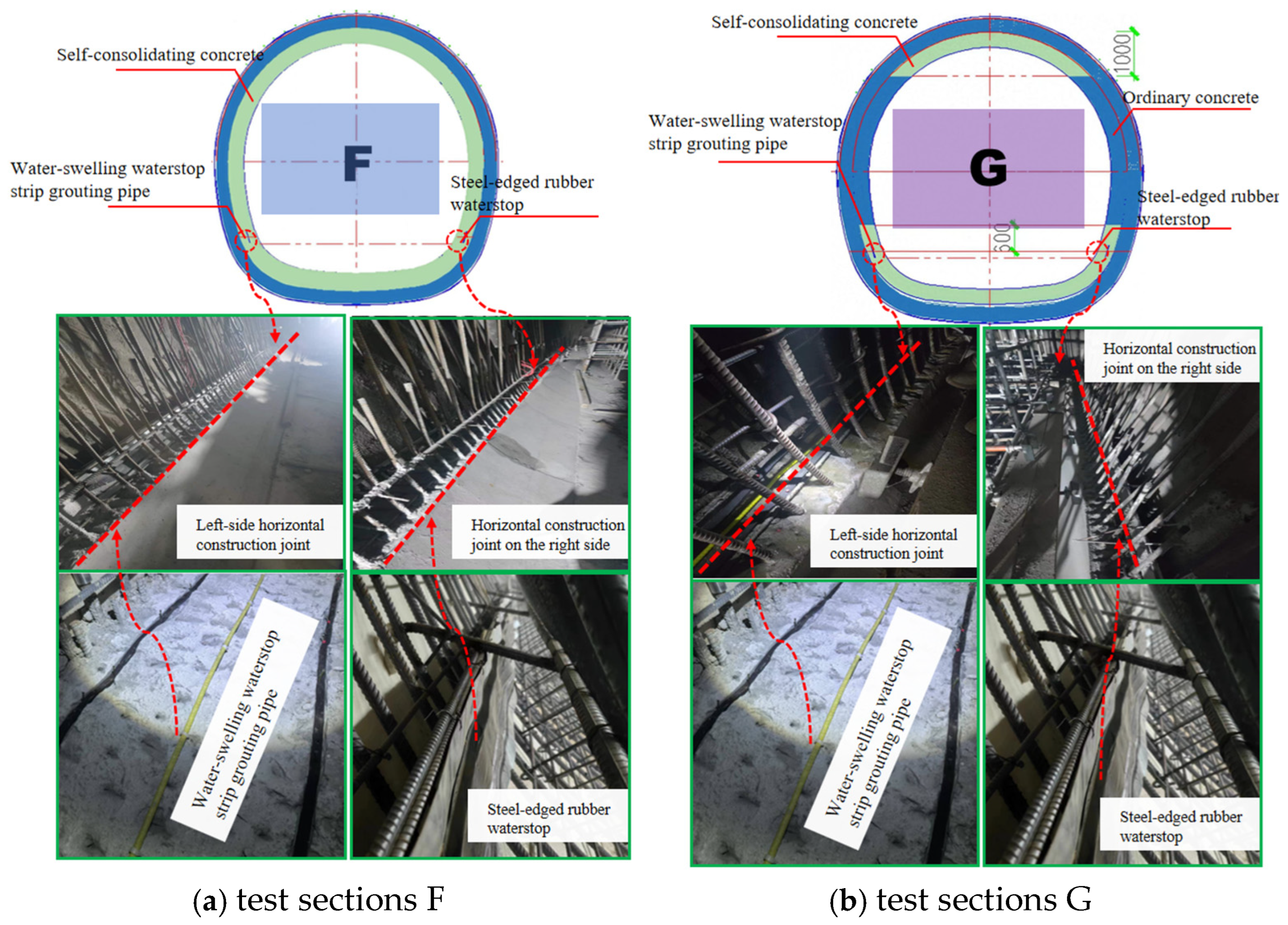
The cross-sections of test sections F and G use different types of concrete: the secondary lining of section F is made of self-compacting concrete, while section G is cast with a combination of ordinary and self-compacting concrete, without an external waterproof layer. On the left side of both sections, construction joints are equipped with water-swelling waterstops and grouting pipes, while the right side uniformly uses steel-edged rubber waterstops. The specific structure is shown in Figure 9.
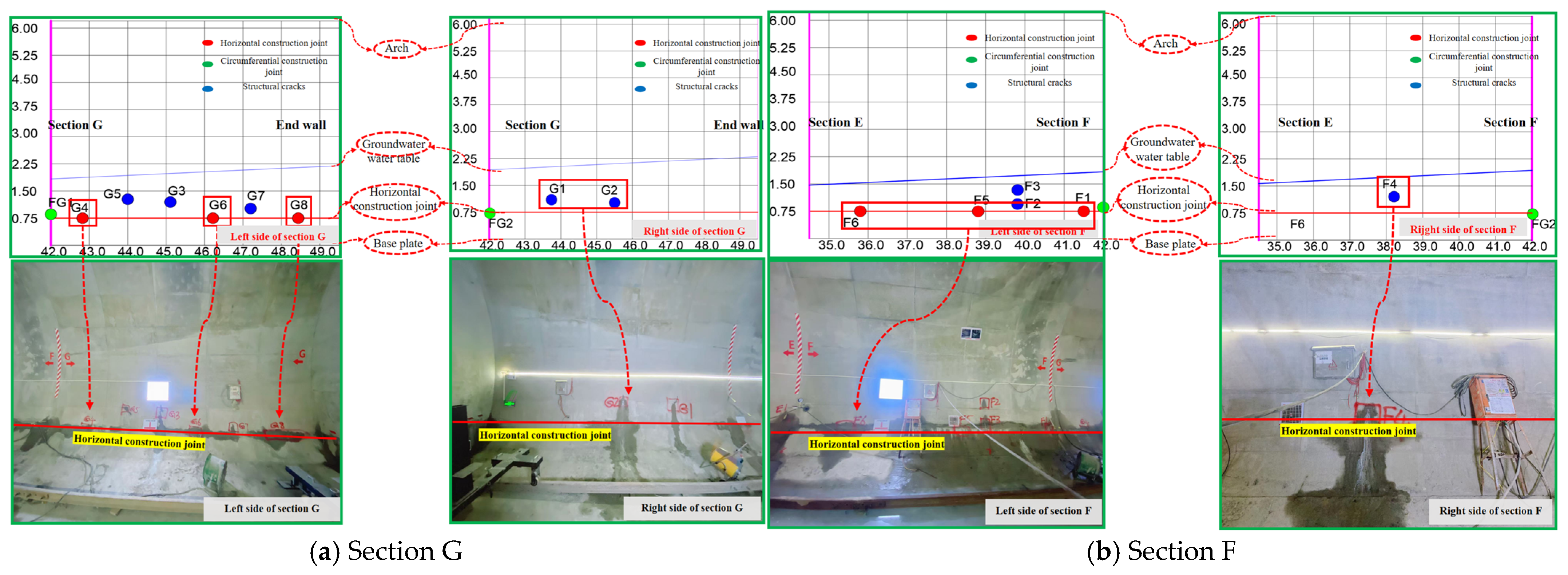
Figure 10a presents the projection diagram of leakage points and corresponding field photographs for Section G of the test segment. As shown, a total of 10 leakage points were identified in Segment G, comprising 3 at horizontal construction joints, 5 at structural cracks, and 2 at circumferential construction joints. Figure 10b shows the projection diagram and field photographs for Section F. It can be observed that 7 leakage points were recorded in Segment F, including 3 at horizontal construction joints, 3 at structural cracks, and 1 at a circumferential construction joint.

2.4.2. Test of Sections D~E

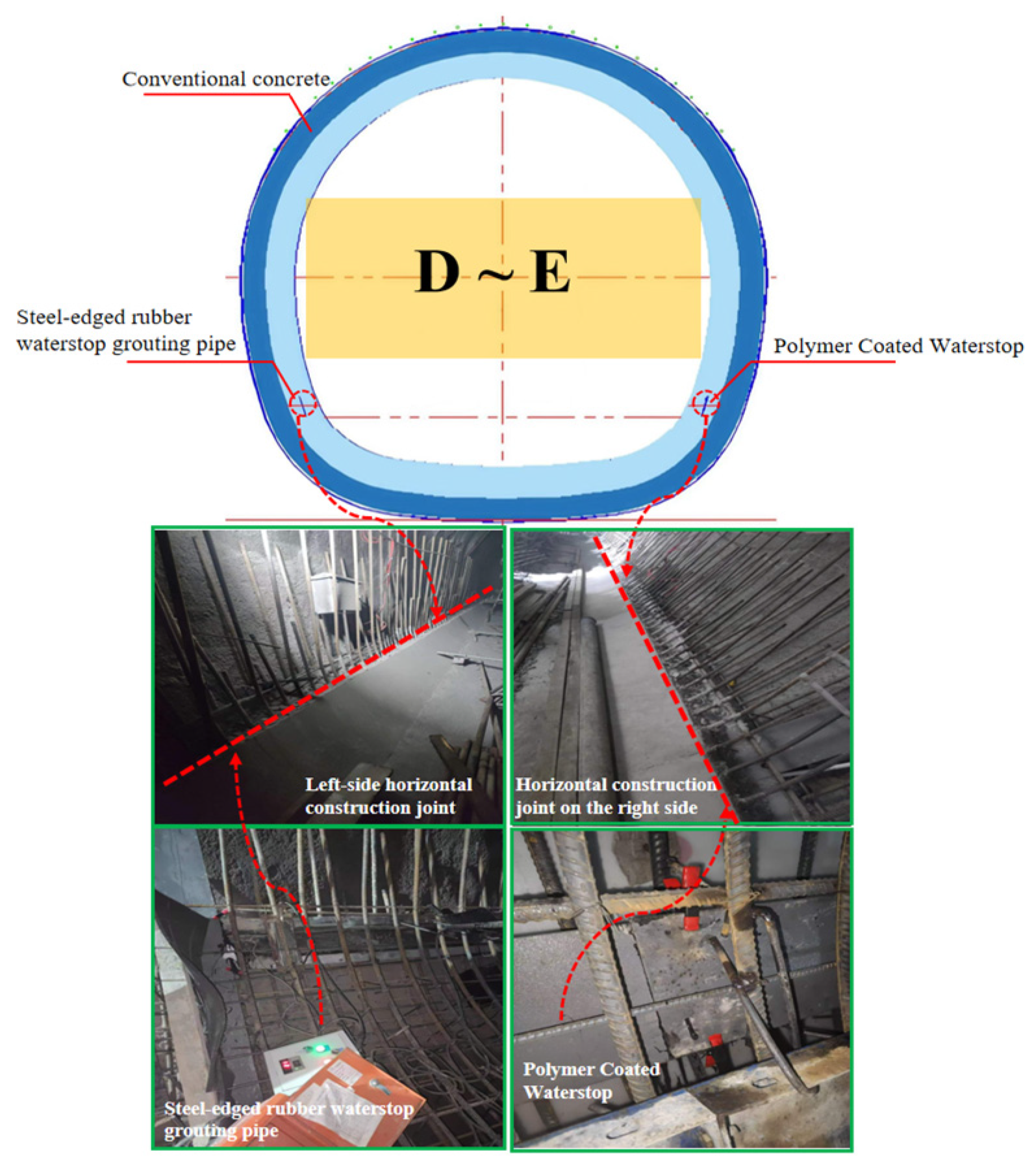
Both trial sections D and E were poured with conventional concrete and had no external waterproof layer. Steel-edged rubber waterstops with grouting pipes were used for the construction joints on the left side of both sections, while the right-side construction joints uniformly used polymer-coated waterstop components. The specific structure is shown in Figure 11.
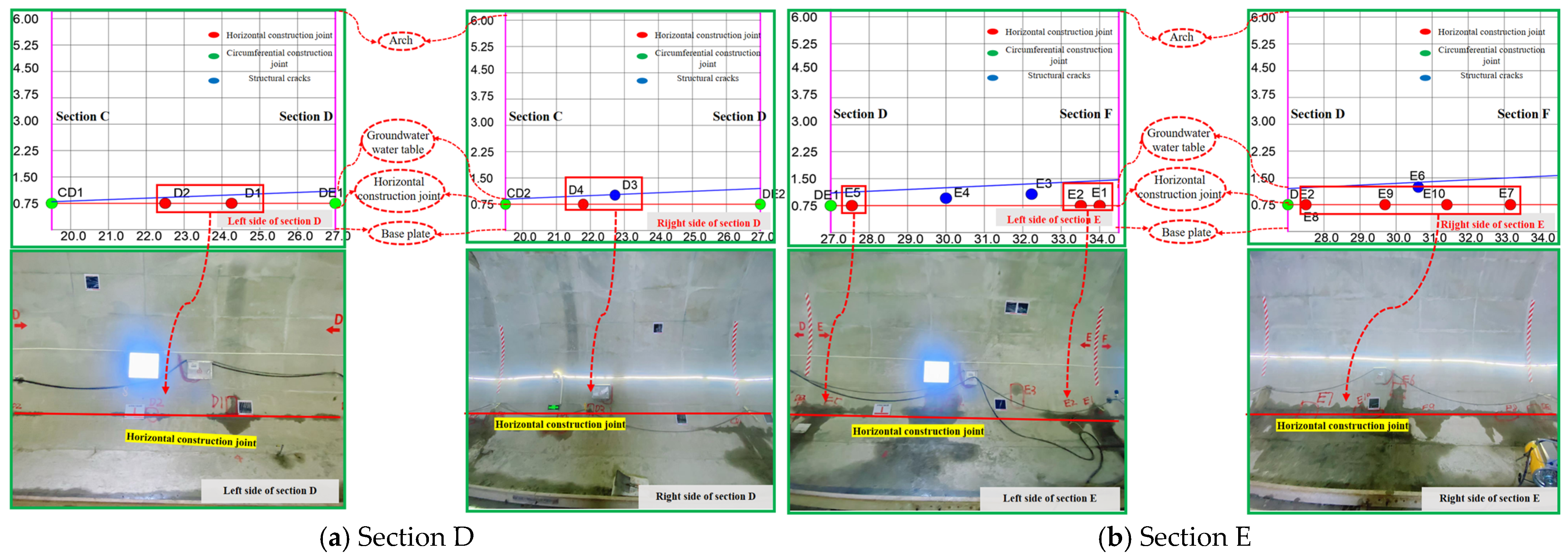
Figure 12a presents the projection diagram and corresponding field photographs of leakage points in Section D of the test segment. As observed, a total of 8 leakage points were identified in Segment D, including 3 at horizontal construction joints, 1 at a structural crack, and 3 at the circumferential joint between Segments C and D. Figure 12b illustrates the leakage point projection diagram and field photographs for Section E. In Segment E, 12 leakage points were recorded, comprising 7 at horizontal construction joints, 3 at structural cracks, and 2 at the circumferential joint between Segments D and E.

2.4.3. Test of Sections A~C

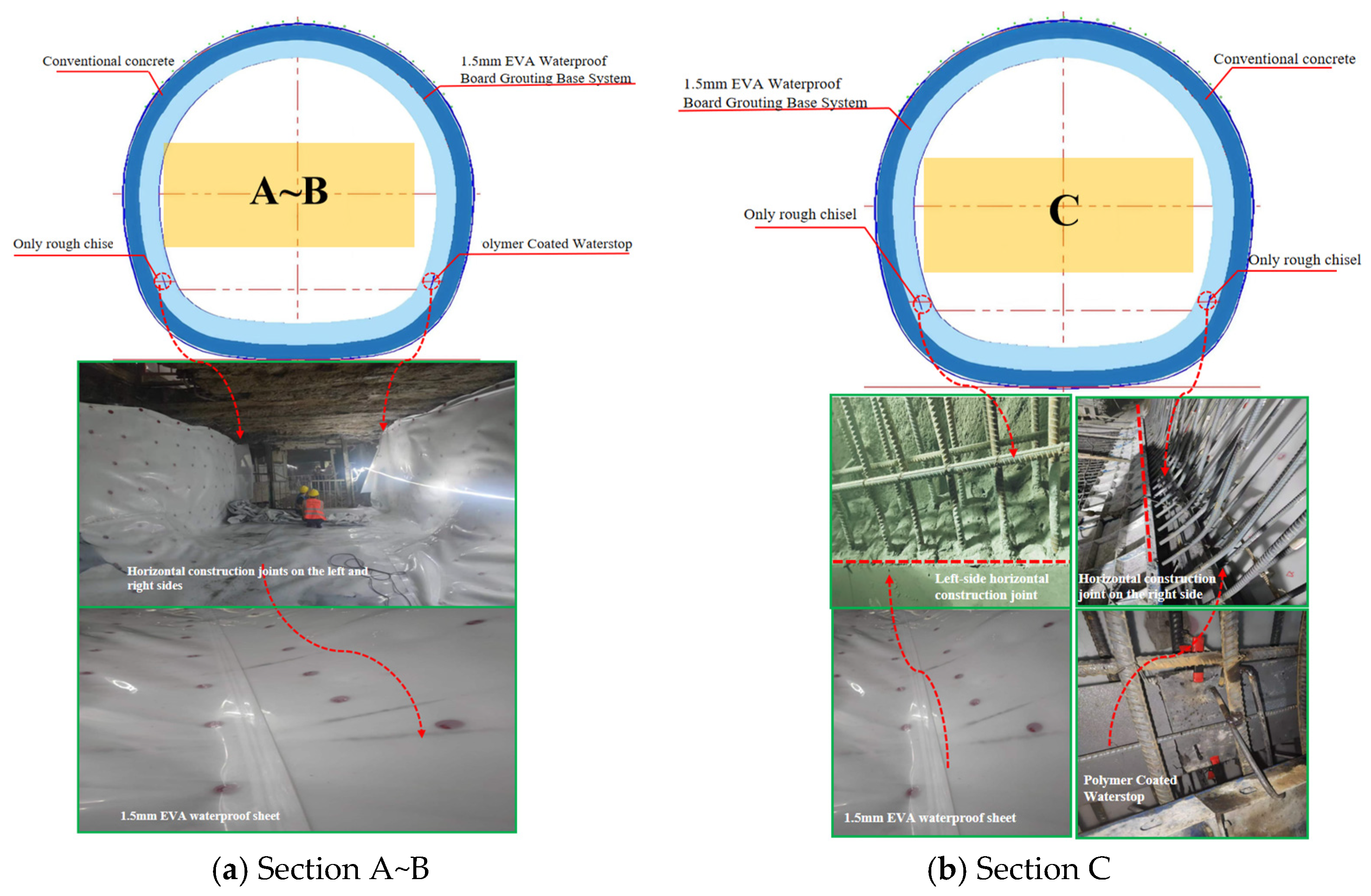
Test Sections A to C were all constructed with conventional concrete and featured an external waterproofing system composed of a 1.5 mm thick EVA membrane integrated with grouting sockets. On the left side of each section, the construction joints received only surface chipping treatment. For the right-side construction joints, Sections A and B also employed surface chipping, while Section C utilized a polymer-coated waterstop element. The detailed structural configuration is illustrated in Figure 13.
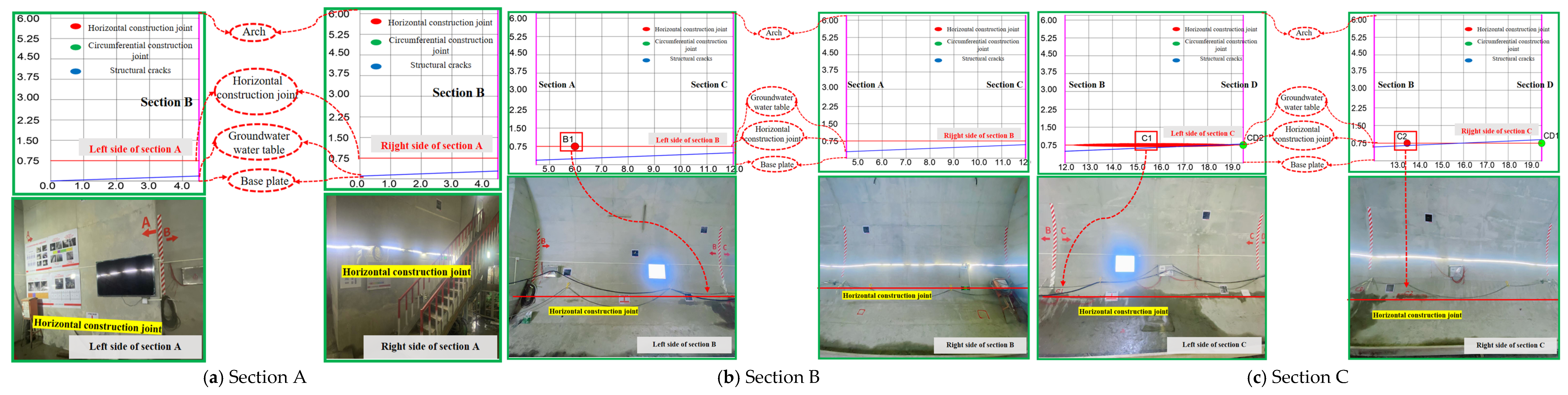
Figure 14 shows the projection map of water leakage points on sections A~C of the test segment, as well as field photos. It can be seen that there are a total of 2 water leakage points at location C, both at horizontal construction joints; there is 1 water leakage point in segment B, also at a horizontal construction joint; no water leakage points are observed in segment A.

3. Finite Element Analysis Model

3.1. Model Parameters

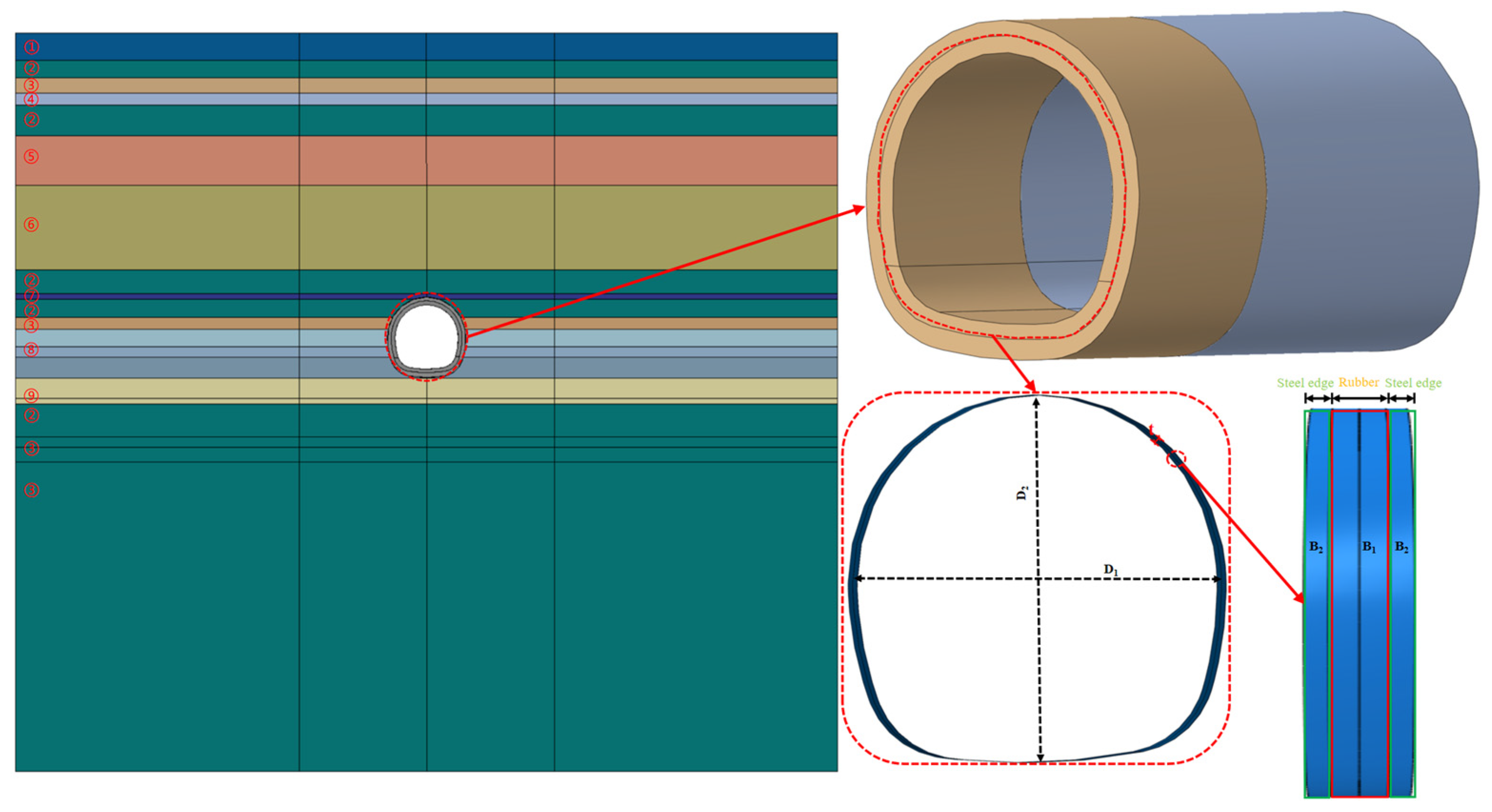
A three-dimensional finite element model comprising seven compartments with different waterproofing techniques and materials was developed using ABAQUS. The model was constructed strictly according to the actual dimensions of the field test to investigate waterproofing performance. As shown in Figure 15, the model consists of three components: the excavated soil layer, the supporting chamber, and the waterproofing materials. The specific parameters of the ground soil model are listed in Table 4. The concrete lining was simulated using the Concrete Damaged Plasticity (CDP) model, with a concrete strength grade of C40. The standard cross-sectional length (D1) of the lining is 6680 mm, and the standard longitudinal length (D2) is 6820 mm. The steel edge, with a length B2 = 65 mm, was modeled as a rigid body. The rubber section, with a length B1 = 200 mm, was treated as a hyperelastic incompressible material and described using the Mooney-Rivlin constitutive model. The rubber was discretized with C3D8R solid elements. The expression for this constitutive model is as follows [22]:
U = C10(I1 − 3) + C01(I2 − 3)
In the equation, U represents the strain energy potential; C10 and C01 are material constants; I1 and I2 are the first and second invariants of the strain tensor. Referring to previous research results [22], the values of parameters C10 and C01 in the model were set to 0.592 and 0.148, respectively. A “hard” contact algorithm was adopted to simulate the normal behavior between the waterproofing materials and the supporting structure, effectively preventing penetration between the bodies. Surface-to-surface contact was employed to describe the interaction between different supporting structural elements, while the penalty friction method was used to model tangential behavior at the interfaces. The coefficient of friction (μ) between concrete and polymer-coated steel waterstops is adopted as 0.6, whereas a value of 0.5 is established for the interface between concrete and steel-edged rubber waterstops, and that between the supporting structure and the surrounding soil was set to 0.35. The sides of the soil are constrained in the normal directions of x and z; the top surface is free with no constraints applied. Constraints are applied at the bottom of the soil in the x, y, and z directions, assuming there is no displacement at the bottom of the soil.
In this study, the initial stress field import method was employed to achieve geostatic stress equilibrium. A geometrically, mesoscopically, and materially identical model was first constructed based on the explicit analysis benchmark. This model was subjected exclusively to gravitational loading to achieve geostatic stress equilibrium, thereby establishing a stable stress field under self-weight conditions without inducing significant displacements. The resulting stress field from the equilibrium analysis was then imported via the predefined field function, assigning the stress states of all elements and nodes as the initial conditions for the subsequent full simulation.
In the ABAQUS numerical simulation, the spatial position of the phreatic surface was accurately determined based on geological cross-sections. The pore water pressure distribution was defined using the Analytical Field method with a linear distribution function as follows:
P = γ(Y − Y0)
In the governing equation, the unit weight of water (γ) is taken as 10,000 N/m3, with the Y-coordinate of the tunnel invert (Y0) and the water table elevation (Y) being −26.8 m and −23.3 m, respectively.
This method provides a key technical approach for accurately representing the in situ hydrogeological conditions. By establishing a pore water pressure distribution model corresponding to the groundwater level depth, an accurate characterization of the leakage field around the tunnel structure was achieved. This parametric modeling methodology, grounded in hydrogeological conditions, effectively ensures the physical authenticity of the water pressure boundary conditions, thereby significantly enhancing the credibility of the numerical analysis results for the tunnel structure’s waterproofing performance.

3.2. Model Validation

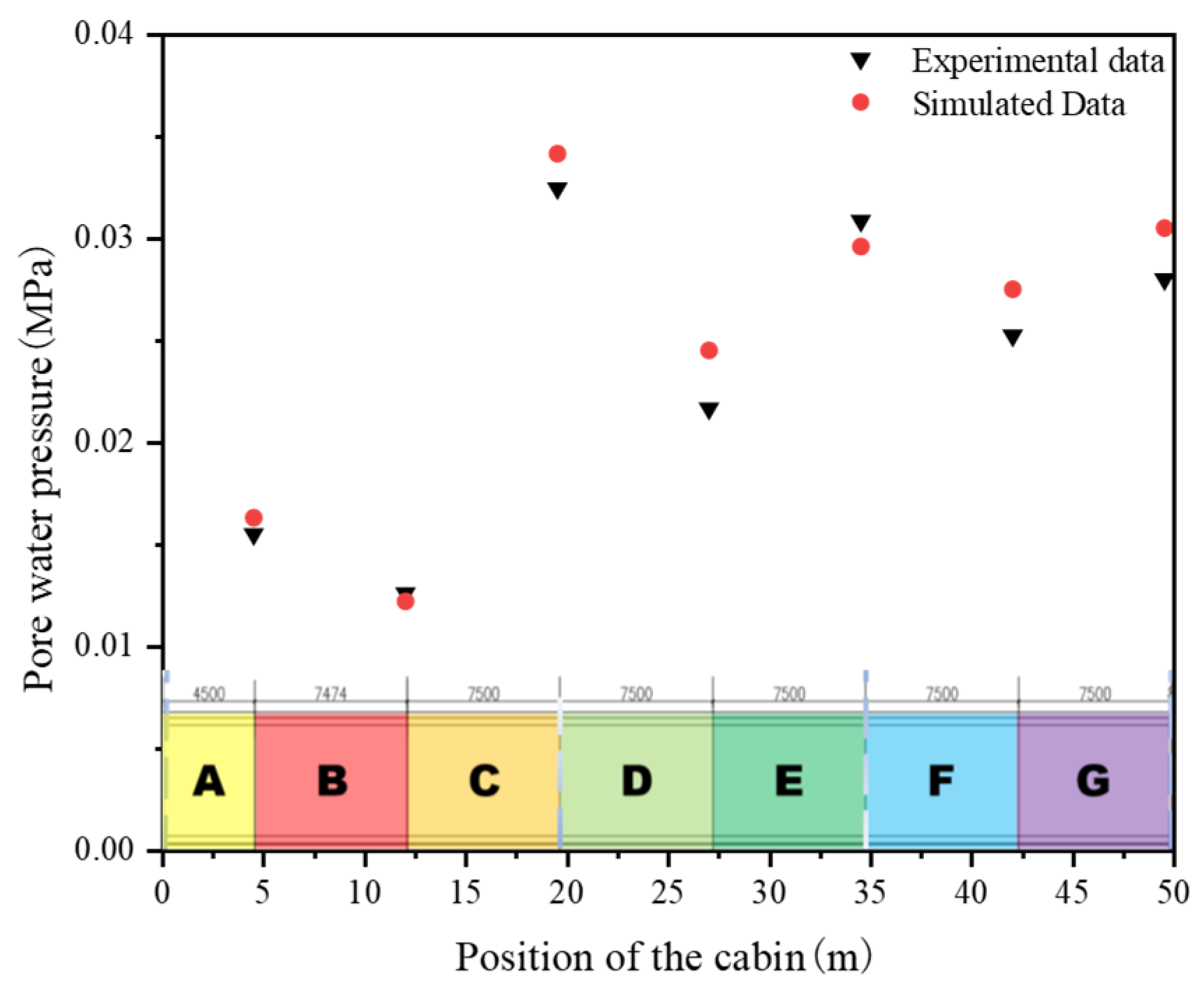
Existing studies [23,24] indicate that contact stress is a key mechanical indicator for assessing the ability of joint waterproofing systems to resist water pressure, providing an important basis for waterproof design. Building on this, the present study uses numerical simulation methods to analyze the interfacial mechanical behavior of tunnel lining joint waterstops and concrete. First, the contact stress distribution in the annular joint area is extracted, serving as an important metric for evaluating the integrity of the interface seal. As shown in Figure 16, by comprehensively comparing contact stress distribution, contact displacement, and experimentally observed leakage behavior, Although the experimental data show some dispersion due to the limitations in water pressure measurement accuracy, resulting in partial deviations from the numerical results, overall, the numerical simulation results are in good agreement with the experimental data in terms of magnitude and trend. This comparison validates the effectiveness of the numerical model developed in this study, demonstrating its capability to accurately simulate the mechanical and sealing behavior of the joints and to reliably assess the sealing performance of tunnel segment joints.

3.3. Distribution Characteristics of Contact Stress at Circumferential Seams

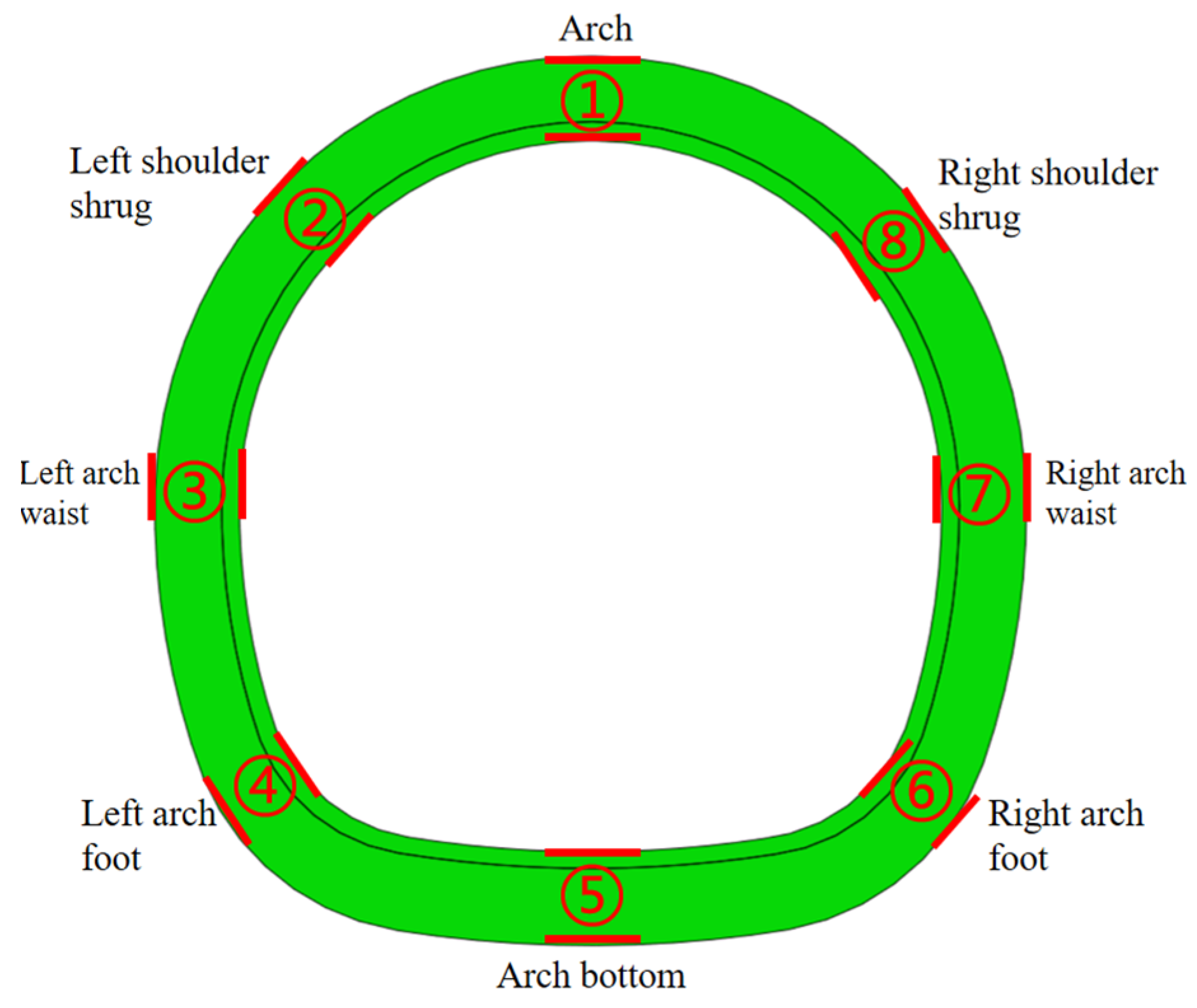
Based on the deployment plan of the pore water pressure gauges in the test section, this study set up corresponding data collection points at the corresponding positions of the annular cross-section in the numerical model, and their spatial distribution is shown in Figure 17.
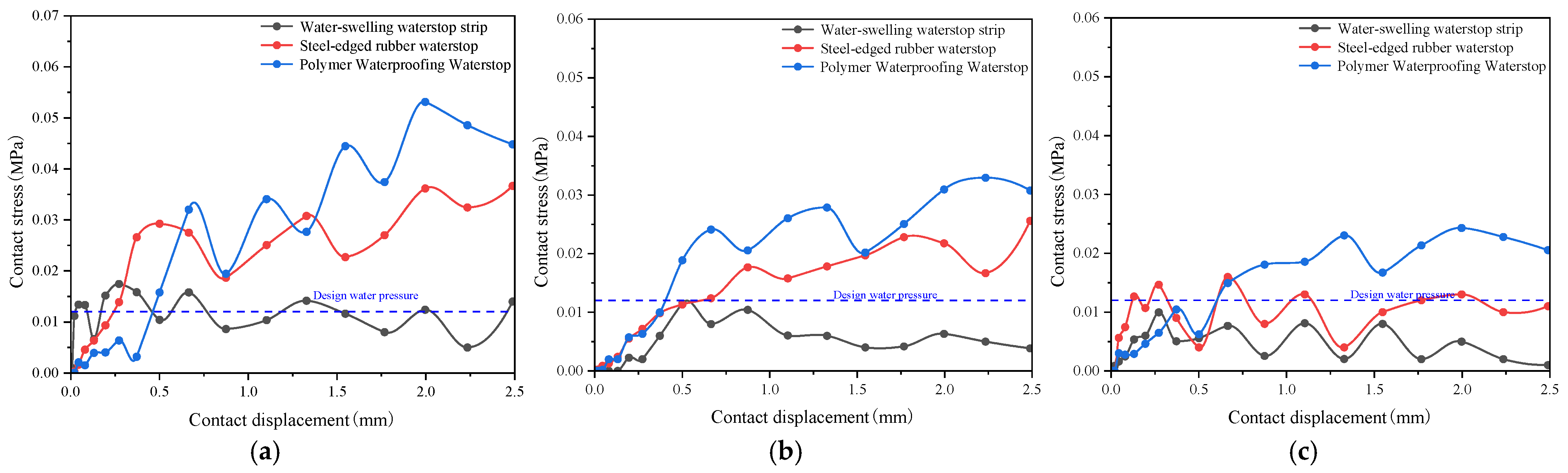
To evaluate the waterproof performance of the three materials, the contact stress distribution curves at the construction joints on the arch bottom, arch waist, and arch dome were plotted under the same design water pressure, as shown in Figure 18. It can be seen that Figure 18a–c all show that the waterproof performance of polymer-coated steel strip waterstops is greater than that of steel-edged rubber waterstops, which is in turn greater than that of water-swelling waterstops, and that the contact stress at the arch bottom is greater than at the arch waist and arch dome. The performance ranking of the three waterproof materials is highly consistent with the trends obtained from the above experiment.
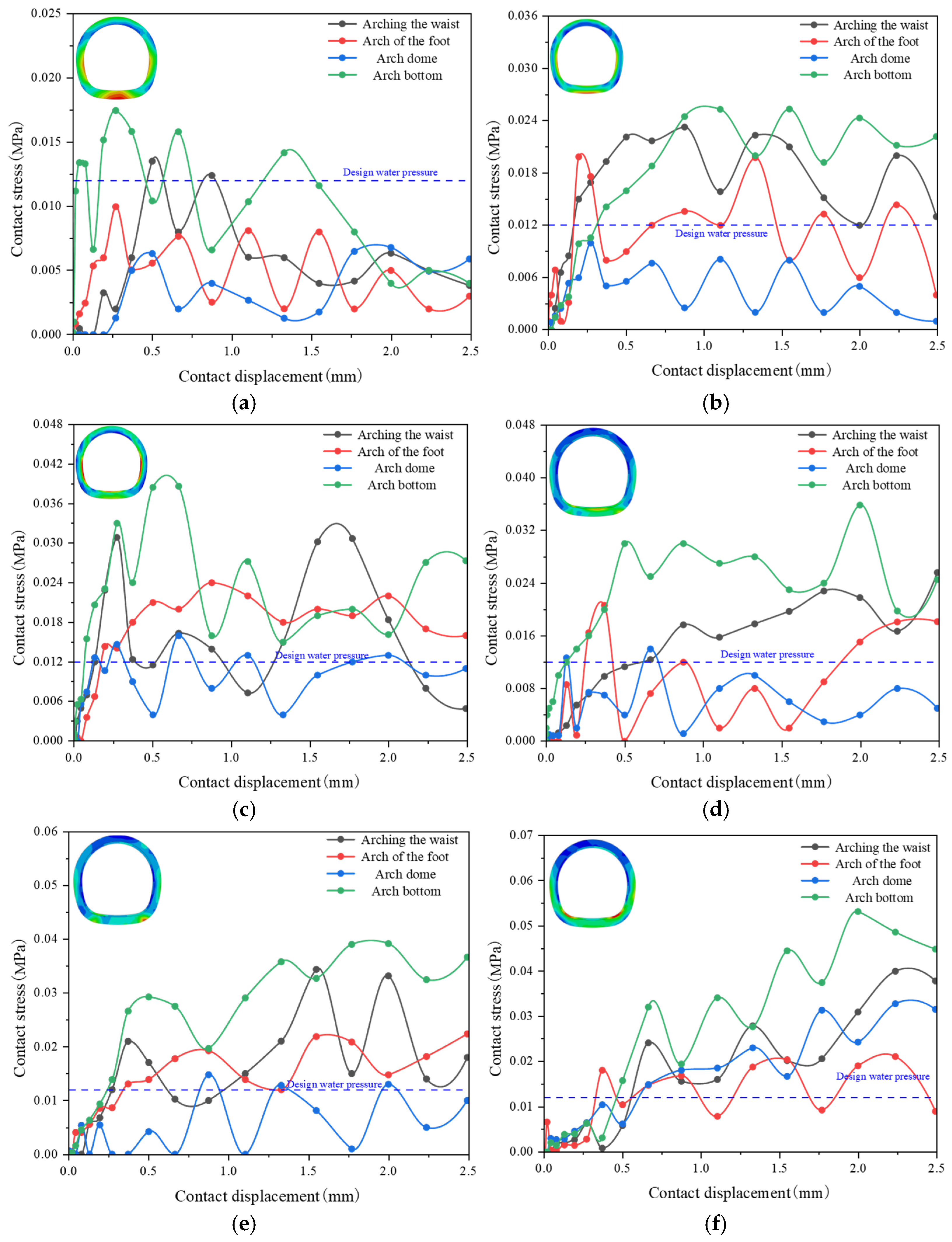
To reveal the distribution characteristics of the toroidal joint contact stress, based on the numerical simulation results, the toroidal joint contact stress distribution of each test section along different contact displacements was extracted under the same design water pressure conditions, as shown in Figure 19.
Comparative analysis based on Figure 19c,e indicates that the contact stress at the C–D section is significantly greater than that at the E–F section, demonstrating the superior waterproofing performance of the polymer-coated waterstop compared to the steel-edged rubber waterstop. Furthermore, as shown in Figure 19c,d, the waterproofing effectiveness with the EVA membrane as an external waterproofing layer is markedly better than that without an external layer. This conclusion is highly consistent with the experimental results presented earlier.
Analysis of the waterproofing materials at the ring joints under contact displacement reveals the distribution characteristics of contact stress across different parts of the annular section. The results show that the invert area of the horseshoe-shaped section exhibits the highest contact stress, while the vault area shows the lowest. This phenomenon can be attributed to differences in the structural mechanical behavior of the horseshoe-shaped configuration: the invert, serving as the tunnel’s base, bears the weight from the overlying structure and vertical ground pressure, placing it in a state of compression with favorable joint closure. Construction operations at the invert—being planar or slightly inclined—facilitate membrane installation, welding, protection, concrete pouring, and compaction, thereby ensuring higher construction quality. Concrete under gravity achieves better compaction in this region. In contrast, the vault is susceptible to unfavorable tensile forces leading to joint opening. During membrane installation or concrete pouring at the vault, workers must operate overhead—similar to “overhead welding” or “overhead pasting”—under restricted workspace and visibility. Such conditions are highly prone to defects including inadequate membrane adhesion, discontinuous welds, and insufficient concrete compaction.

4. Discussion

Conventional evaluation of tunnel waterproofing techniques often relies on isolated case studies or individual test data, making it difficult to systematically analyze the synergistic effects between materials and construction processes. For instance, traditional performance comparisons frequently overlook variations in construction techniques, thereby leading to evaluation results that deviate from actual performance. Without systematic test sections simulating real-world conditions, it is challenging to reveal the long-term performance evolution of materials under coupled complex stress and hydrological interactions.
Therefore, this study clarifies the construction processes and control points of different waterproofing technologies through in situ full-scale test sections, controlling the installation process of external waterproof membranes, and implementing whole-process quality management. Through integrated experimental testing and numerical simulation, a comparative analysis was conducted on the waterproofing performance of various materials—including polymer-coated waterstops, steel-edged rubber waterstops, and water-swellable sealants combined with grouting pipes—under their corresponding technological conditions.

5. Conclusions

This study conducts a systematic investigation of waterproofing technologies through the establishment of an in situ test section. Based on the optimization of the inherent waterproofness of structural concrete, controlled installation of external waterproofing membranes, and whole-process quality management, the research employs an integrated analytical approach combining experimental studies and numerical simulations to systematically compare waterproofing performance under different construction conditions, with strict documentation of key process parameters. The main conclusions are as follows:
1. Sections A–C, constructed with an external waterproofing layer, exhibited a significant reduction in the total number of leakage points compared to sections D–G, which lacked such a layer. This confirms the crucial role of the external waterproofing system in enhancing the short-term waterproofing efficiency of the tunnel. A further comparison of the leakage point distribution between the left and right sides of sections F–G revealed a noticeably higher number of leaks on the left side. Combined with the differences in waterproofing details between the corresponding sections, this allows for the conclusion that the waterproofing performance ranks as follows: polymer-coated waterstop > steel-edged rubber waterstop > water-swellable strip combined with grouting pipe. This trend aligns well with the numerical simulation results, collectively validating the performance differences between various waterstop elements in practical engineering applications and providing a reliable basis for the selection and optimization of joint waterproofing designs in tunnels.
2. Numerical simulation of the waterproofing materials at the ring joints under contact displacement reveals the spatial distribution of contact stress in the annular section: the invert area exhibits the maximum contact stress, resulting in optimal waterproofing performance, whereas the vault area shows relatively lower contact stress due to more complex construction conditions, leading to inferior waterproofing effectiveness. This finding verifies the reliability of the experimental data and systematically explains the underlying reasons for the observed differences from the perspectives of both the structural mechanical mechanism and construction techniques.
3. A comparison between the left side of sections D–E and the right side of sections F–G reveals significantly more leakage at the horizontal construction joints in the D–E sections. Considering the waterproofing details and concrete types used in these sections, it is concluded that self-compacting concrete (SCC), requiring no vibration, causes minimal disturbance to waterstops and thus contributes positively to waterproofing effectiveness. However, analysis of structural crack leakage distribution shows that Segment G (with partial SCC) and Segment F (full SCC) exhibit more structural cracks compared to Segments D/E constructed with conventional concrete. This indicates that SCC demonstrates poorer performance in controlling structural cracking, which can be attributed to its insufficient volumetric stability and crack resistance during early-age strength development. Furthermore, the higher number of structural cracks in Segment G compared to Segment F suggests the importance of maintaining material consistency within the same segment, as interfaces between different materials may create potential weak zones prone to cracking.
4. The external waterproofing layer plays a crucial role in the overall waterproofing system. In the mined tunnel sections where EVA membranes are employed as the external waterproofing layer, the grouting socket system should be enhanced to ensure complete and dense grouting, thereby effectively mitigating water migration behind the membrane. Concurrently, it is essential to strengthen quality control of concrete raw materials and the entire construction process. This ensures the full utilization of the inherent waterproofing capability of the concrete structure itself, laying a solid foundation for long-term leakage prevention in stations and running tunnels.

Author Contributions

Methodology, Z.Z.; Software, X.Z.; Supervision, X.X. All authors have read and agreed to the published version of the manuscript.

Funding

This work is supported by the National Key R&D Program of China (Grant No.2023YFC3008902, 2023YFB3211002), the National Natural Science Foundation of China (Grant No. 52174155). And supported by “the Fundamental Research Funds for the Central Universities” (2024JCCXMT01).

Data Availability Statement

The data presented in this study are available on request from the corresponding author.

Acknowledgments

The authors would like to thank the editors and anonymous reviewers for their numerous detailed and inspiring suggestions and comments that helped improve the quality and readability of this paper.

Conflicts of Interest

Author Xinjie Zhou was employed by the Beijing Urban Rail Transit Construction Engineering Co., Ltd. and Beijing Urban Construction Design & Development Group Co., Ltd. The remaining authors declare that the research was conducted in the absence of any commercial or financial relationship that could be construed as a potential conflict of interest.

References

  1. Yoo, C. Effect of water leakage in tunnel lining on structural performance of lining in subsea tunnels. Mar. Georesources Geotechnol. 2017, 35, 305–317. [Google Scholar] [CrossRef]
  2. Peng, H.; Li, Y.; Niu, X.; Tang, H.; Meng, X.; Li, Z.; Wan, K.; Li, W.; Song, W. Characteristics analysis of leakage diseases of Beijing underground subway stations based on the field investigation and data statistics. Transp. Geotech. 2024, 48, 101317. [Google Scholar] [CrossRef]
  3. Xu, Q.; Li, P.; Li, Y.; Zeng, J.; Zhang, S. Mechanisms and prioritization of subway tunnel crack leakage in sandy strata: An integrated experimental and correlation analysis of key influencing factors. Tunn. Undergr. Space Technol. 2025, 165, 106893. [Google Scholar] [CrossRef]
  4. Shin, Y.J.; Song, K.I.; Lee, I.M.; Cho, G.C. Interaction between Tunnel Supports and Ground Convergence—Consideration of leakage Forces. Int. J. Rock Mech. Min. Sci. 2011, 48, 394–405. [Google Scholar] [CrossRef]
  5. Xie, X.S.; Xie, X.H.; Wang, X.D.; Lu, B.; Wang, M.; Chen, H.S. Influence of Aquitard on External Water Pressure of Deep-Buried Tunnel Lining. Chin. J. Geotech. Eng. 2020, 42, 146–150. [Google Scholar]
  6. Zhang, D.M.; Ran, L.Z.; Yan, J.Y.; Yang, T.L. Influence of Grouting on Pore Water Pressure Changes Induced by Leakage in Shield Tunnels. Rock Soil Mech. 2017, 38, 3427–3435+3444. [Google Scholar]
  7. Hsuan, Y.G.; Koerner, R.M. Antioxidant Depletion Lifetime in High Density Polyethylene Geomembranes. J. Geotech. Geoenviron. Eng. 1998, 124, 532–541. [Google Scholar] [CrossRef]
  8. Wang, F.; Huang, H. Theoretical analysis of the joint leakage in shield tunnel considering the typical deformation mode. Int. J. Geomech. 2020, 20, 04020218. [Google Scholar] [CrossRef]
  9. Le Saux, V.; Le Gac, P.Y.; Marco, Y.; Calloch, S. Limits in the Validity of Arrhenius Predictions for Field Ageing of a Silica Filled Polychloroprene in a Marine Environment. Polym. Degrad. Stab. 2014, 99, 254–261. [Google Scholar] [CrossRef]
  10. Patel, M.; Singh, B. Evaluation of the Impacts of Phased Excavation of Shield Tunnel on Adjacent Piled Raft Foundation of a Building. In Proceedings of the Indian Young Geotechnical Engineers Conference, Chennai, India, 21–23 October 2021; Springer Nature: Singapore, 2021; pp. 183–196. [Google Scholar]
  11. Patel, M.; Skinner, A.R. Thermal Ageing Studies on Room-Temperature Vulcanised Polysiloxane Rubbers. Polym. Degrad. Stab. 2001, 73, 399–402. [Google Scholar] [CrossRef]
  12. Shang, J.L.; Mi, Y.; Zhang, H.; Li, L.Y. Durability Prediction of Waterproof Materials Using Neural Network Method. Ind. Saf. Environ. Prot. 2010, 36, 59–61. [Google Scholar]
  13. Zhang, X.S.; Deng, J.W.; Dong, Y.D. Review of Waterproofing Measures for Shanghai Metro Station Structures. China Civ. Eng. J. 2000, 107–110. [Google Scholar] [CrossRef]
  14. Leingartner, M.; Maurer, J.; Ferrein, A.; Steinbauer, G. Evaluation of Sensors and Mapping Approaches for Disasters in Tunnels. J. Field Robot. 2016, 33, 1037–1057. [Google Scholar] [CrossRef]
  15. Huang, B.D. Study on Influencing Factors of Metro Structure Durability and Its Life Prediction. Ph.D. Thesis, Tongji University, Shanghai, China, 2007. [Google Scholar]
  16. Wu, X.J.; Liu, G.B.; Lu, L.S.; Li, Z.G. Optimization of Crack Control Criteria for Diaphragm Walls in Metro Stations. Chin. J. Rock Mech. Eng. 2005, 24, 5395–5399. [Google Scholar]
  17. Chen, Y.; Diao, T.X. New Construction Technology of the Cave-Pile Method in a Metro Station. Railw. Constr. Technol. 2014, 45–47+97. [Google Scholar]
  18. Lin, C.; Wang, X.; Nie, L.; Sun, H.; Xu, Z.; Du, Y.; Liu, L. Comprehensive Geophysical Investigation and Analysis of Lining Leakage for Water-Rich Rock Tunnels: A Case Study of Kaiyuan Tunnel, Jinan, China. Geotech. Geol. Eng. 2020, 38, 3449–3468. [Google Scholar] [CrossRef]
  19. Han, L.; Chen, J.; Li, H.; Liu, G.; Leng, B.; Ahmed, A.; Zhang, Z. Multispectral water leakage detection based on a one-stage anchor-free modality fusion network for metro tunnels. Autom. Constr. 2022, 140, 104345. [Google Scholar] [CrossRef]
  20. Liu, P.; Liu, M.; Sha, F.; Chen, Y.; Zhi, W.; He, S.; Yu, Z. Preparation and performance investigation of a high efficiency cement permeation type waterproofing materials. Constr. Build. Mater. 2023, 365, 130140. [Google Scholar] [CrossRef]
  21. JTG/T 3660-2020; Ministry of Transport of the People’s Republic of China, Technical Specifications for Construction of Highway Tunnels. China Communications Press: Beijing, China, 2020.
  22. Bian, R.; Gao, B.; Sun, Y.; Zhu, W.; Zhang, Q.; Ye, G. Full-scale Waterproof Performance Test and Numerical Study of T-Joints in Shield Tunnels. J. Shanghai Jiao Tong Univ. 2025, 1–27. [Google Scholar] [CrossRef]
  23. Gong, C.; Ding, W.; Soga, K.; Mosalam, K.M.; Tuo, Y. Sealant behavior of gasketed segmental joints in shield tunnels: An experimental and numerical study. Tunn. Undergr. Space Technol. 2018, 77, 127–141. [Google Scholar] [CrossRef]
  24. Sun, L. Numerical Analysis of Waterproofing Mechanism for Shield Joints Based on Applied Water Pressure. Tunn. Constr. (Chin. Engl.) 2018, 38, 603–610. [Google Scholar]
Figure 1. Groundwater Level Recovery Curve.
Infrastructures 11 00013 g001
Figure 2. Standard cross−sectional diagram.
Infrastructures 11 00013 g002
Figure 3. Overview of the Test Section and Details of Concrete Lining.
Infrastructures 11 00013 g003
Figure 4. Schematic Diagram of Different Waterstop Materials.
Infrastructures 11 00013 g004
Figure 5. Segmented Profile Diagram of Test Section 1.
Infrastructures 11 00013 g005
Figure 6. Segmented Profile Diagram of Test Section 2.
Infrastructures 11 00013 g006
Figure 7. Point Layout Plan.
Infrastructures 11 00013 g007
Figure 8. Three-dimensional Laser Scanner Device and Principle Diagram.
Infrastructures 11 00013 g008
Figure 9. Selection of materials for F~G sections.
Infrastructures 11 00013 g009
Figure 10. Projection Map of Water Seepage Points in Section F~G.
Infrastructures 11 00013 g010
Figure 11. Selection of materials for D~E sections.
Infrastructures 11 00013 g011
Figure 12. Projection Map of Water Seepage Points in Section D~E.
Infrastructures 11 00013 g012
Figure 13. Selection of materials for A~C sections.
Infrastructures 11 00013 g013
Figure 14. Projection Map of Water Seepage Points in Section A~C.
Infrastructures 11 00013 g014
Figure 15. Finite element model.
Infrastructures 11 00013 g015
Figure 16. Comparison of Model Validation Results.
Infrastructures 11 00013 g016
Figure 17. Distribution of monitoring points with circular cross-sections.
Infrastructures 11 00013 g017
Figure 18. Magnitude of contact stress between different waterproof materials. (a) arch bottom; (b) arch waist; (c) arch dome.
Infrastructures 11 00013 g018
Figure 19. Distribution of contact stress under different contact displacements. (a) Section A~B; (b) Section B~C; (c) Section C~D; (d) Section D~E; (e) Section E~F; (f) Section F~G.
Infrastructures 11 00013 g019
Table 1. Overview of the Structure and Content of the Paper.
Chapter NumberChapter TitleCore ContentMain Method
1IntroductionExplain the research background, the importance of water-proofing tunnel joints, and the shortcomings of existing studies, and propose the objectives of this research.Literature Review
2Waterproofing Test for Construction Joints in Mine TunnelsProvide a detailed introduction of the experimental design and implementation process, including the experimental materials, experimental apparatus, and monitoring methods;Set up the test section
3Finite element analysis modelDescribe the details of the established three-dimensional finite element model, including geometric dimensions, mesh division, material constitutive models, and boundary conditions.Finite Element Method
4DiscussionConduct an in-depth analysis based on experimental and simulation results. Explore the performance differences between different waterproofing solutions and their underlying mechanisms; analyze the impact of key parameters on waterproofing performance.Mechanism analysis, statistical inference
5ConclusionSystematically summarize the main findings and key conclusions of this study; based on the research results, propose recommendations that are meaningful for engineering practice.
6ReferencesList all the academic references cited in this article, formatted correctly and accurately.
Table 2. Comparison of Waterproofing Material Properties for Tunnel Joints.
Waterproof MaterialsResistance to DeformationInstallation MethodDamage Resistance
EVA waterproof membranePoor (especially shear resistance)Full-coverage adhesive, high requirements for the substrateEasily punctured, difficult to repair once damaged
Water-swelling waterstopMedium (has some biting ability after expansion)Embedded installation, simple and quickMedium; there may be expansion and contraction fatigue under long-term immersion
Polymer Steel WaterstopExcellent (high resistance to shear)Embedded installation, placed in a reserved slotExcellent; the metal frame provides protection
Table 3. Workload Statistics of Monitoring Point Deployment.
Monitoring ProjectMonitoring EquipmentArrangement LocationNumber of PointsInstallation MethodTest Purpose
Water pressureWater pressure gaugeNear expansion joints and circumferential construction joints72Embedded between the primary lining and the secondary lining, strictly sealed.Monitoring of water pressure around the lining structure and construction joint areas
Initial support structure arch crown settlementElectronic level/total stationNear expansion joints and circumferential construction joints7Install settlement measuring pins with a forced centering base on the arch.Initial support structure arch crown settlement
Convergence of the initial support structureTotal Station Near expansion joints and circumferential construction joints14Install convergence measurement bolts on both side walls of the tunnel cross-sectionConvergence of the initial support structure
Ground subsidenceElectronic levelNear expansion joints and circumferential construction joints35Install settlement markers in the groundSurface settlement above the tunnel
Table 4. Soil Layer Information.
Soil Layer NumberSoil Layer NameUnit Weight of Soil/γElastic Modulus/EPoisson’s Ratio/μ
Miscellaneous fill soil19.0 kN/m32000 kPa0.3
Clayey silt19.2 kN/m32200 kPa0.4
Powdery clay20.0 kN/m3850 kPa0.43
Sandy silt19.2 kN/m33000 kPa0.43
Silt | Fine Sand20.2 kN/m318,000 kPa0.43
Rounded gravel and cobblestones21.5 kN/m315,000 kPa0.43
clay19.2 kN/m33000 kPa0.4
Fine sand | Medium sand21.2 kN/m36000 kPa0.4
Mao Stone22.2 kN/m34500 kPa0.4
Disclaimer/Publisher’s Note: The statements, opinions and data contained in all publications are solely those of the individual author(s) and contributor(s) and not of MDPI and/or the editor(s). MDPI and/or the editor(s) disclaim responsibility for any injury to people or property resulting from any ideas, methods, instructions or products referred to in the content.