Article

In Situ Estimation of Breach Outflow Hydrographs from Fluvial Dike Failures: A Methodology Integrating Real-Time Monitoring and Physical Modelling †

1
Laboratório Nacional de Engenharia Civil (LNEC), 101 Avenida do Brasil, 1700-066 Lisboa, Portugal
2
Institute of Hydro-Engineering of the Polish Academy of Sciences (IBW PAN), 7 ul. Kościerska, 80-328 Gdańsk, Poland
3
CERIS, Instituto Superior Técnico, Universidade de Lisboa, 1 Av. Rovisco Pais, 1049-001 Lisbon, Portugal
*
Author to whom correspondence should be addressed.
This paper was one of the ten best scientific/academic full papers submitted and presented at the 2025 fifth International Dam World Conference, Lisbon, Portugal. There are no major alterations to the conference full paper.
Infrastructures 2025, 10(12), 335; https://doi.org/10.3390/infrastructures10120335
Submission received: 10 October 2025 / Revised: 17 November 2025 / Accepted: 1 December 2025 / Published: 5 December 2025
(This article belongs to the Special Issue Preserving Life Through Dams)

Abstract

Embankment structures in civil engineering, such as earth dams and fluvial dikes, have a crucial role in society. These structures, often used for water storage and mining tailing containment, are cost-effective due to their reliance on locally sourced materials. While the failure of concrete structures is not so frequent but often lead to severe consequences, embankment structures, particularly fluvial dikes, are more prone to breach and the consequences vary from mild to catastrophic, depending on the proximity to human populations. Worldwide, some fluvial dike failures have resulted in catastrophic outcomes for human lives, the local economy and the environment. This paper aims to develop a methodology to calculate in situ breach outflow hydrographs, resorting to real-time, non-intrusive and friendly access technology. The goal is to provide a practical platform for developing and testing integrated systems applicable to prototype failure cases. An accurate, real-time hydrograph estimation capacity improves risk assessment. The proposed methodology deploys, in a medium-scale experimental facility, common technology and data processing techniques to characterize the evolution of a fluvial dike failure. The morphodynamic and hydrodynamic components influencing the in situ breach outflow hydrograph are assessed by characterizing, in real-time, the breach morphology at the surface and underwater, the surface velocity maps and the corresponding cartesian coordinates.

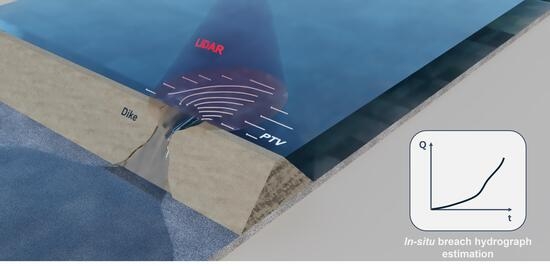
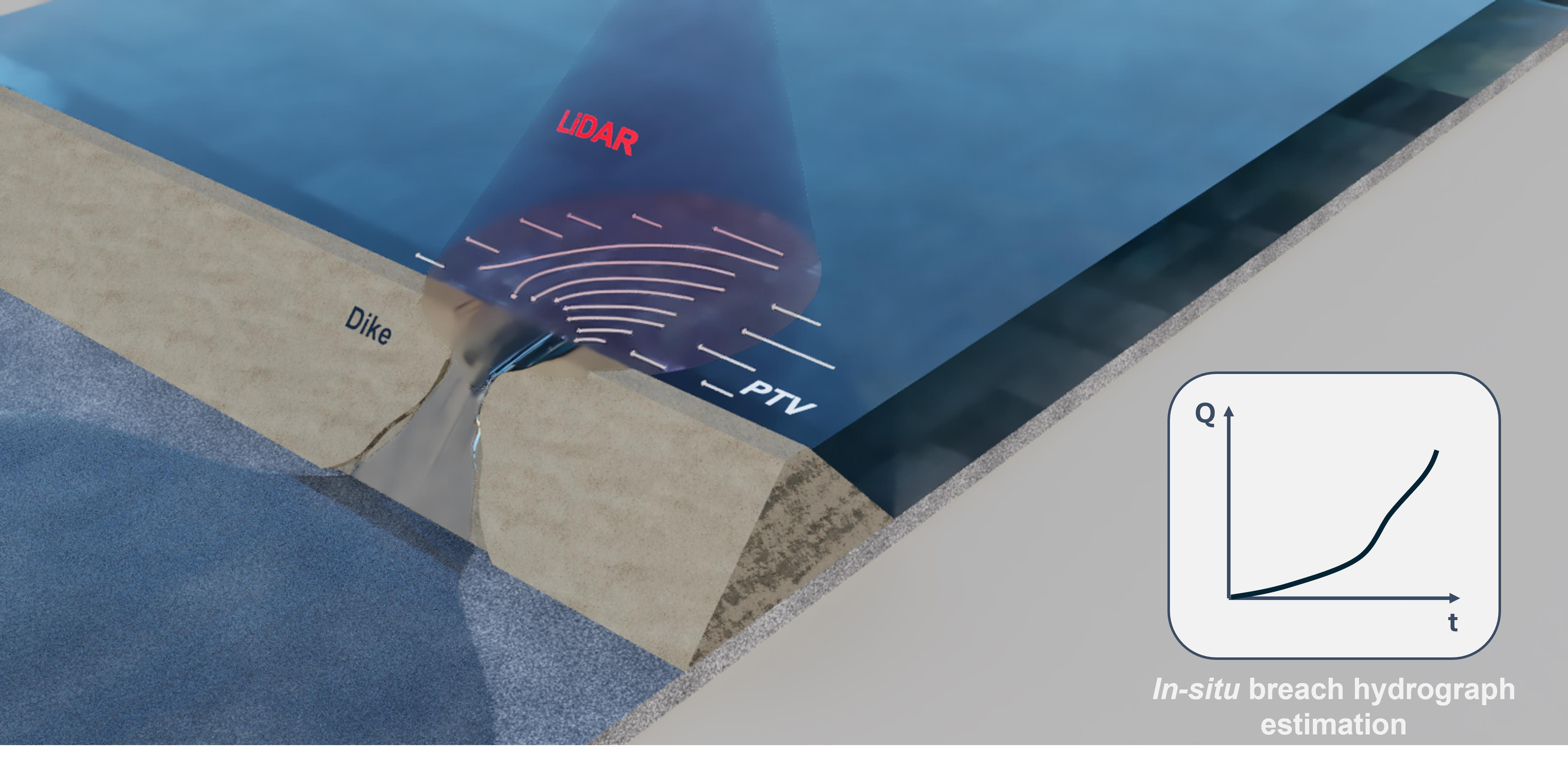
Graphical Abstract

1. Introduction

Embankment structures, like all civil engineering constructions, inherently carry the risk of failure, a phenomenon that can lead to significant downstream damage, including property destruction, loss of human life and ecological disasters. Historical records of embankment failures around the world feature the universal vulnerability of these structures to various hazards. A particularly notable incident occurred in 2005 with the failure of the fluvial dike system in New Orleans, which was triggered by Hurricane Katrina. This catastrophic event resulted in the flooding of approximately 85% of the metropolitan area, causing an estimated USD 75 billion in property damage and directly leading to hundreds of fatalities [1].
In some Mediterranean basins, there have been notable embankment failure events. For example, the Tous Dam in Spain failed due to overtopping on 20 October 1982, flooding the downstream city of Sumacárcel [2]. In Italy, the Val di Stava dam collapsed on 19 July 1985, unleashing a devastating mudflow that ravaged the downstream valley [3]. Similarly, on 27 March 2016, Greece experienced the failure of Sparmos Dam due to internal erosion, which resulted in significant flooding [4]. In Portugal, embankment failures are also quite frequent, such as the failure of two fluvial dikes in the Mondego dike system on 22 December 2019 due to overtopping [5]. These recurrent incidents, coupled with their destructive potential, highlight the need for continued efforts to understand, monitor and predict embankment failures.
A comprehensive understanding of the breach process is essential to improving failure prediction and risk mitigation. This process involves several interconnected aspects: (i) identifying the mechanisms that initiate and drive the failure, (ii) characterizing the breach geometric evolution and (iii) quantifying the resulting outflow hydrograph, which governs the flood propagation downstream. However, these processes are difficult to observe directly during real events due to the hazardous and rapidly evolving nature of breaches. Consequently, physical modeling, numerical simulations and field monitoring must be combined to obtain reliable data and enable forecasting tools.
Among these, the accurate estimation of breach outflow hydrographs is particularly critical for real-time flood management. Take as an example the mitigation actions undertaken during a fluvial dike failure in 2024 in South China, where 2300 workers were deployed to rescue 5700 residents and establish an additional line of defense across 226 m of the dike [6]. In such scenarios, real-time breach outflow hydrograph data can be highly valuable for flood forecasting tools, which can substantially improve emergency response and resource allocation.
Recent advances in remote sensing and image-based flow measurement technologies, such as Light Detection and Ranging (LiDAR) [7,8], Particle Tracking Velocimetry (PTV) and Large-Scale Particle Image Velocimetry (LSPIV) [9,10], when combined with Unmanned Aerial Vehicles [11], provide a promising solution to extract hydrodynamic data during breach events without direct human intervention. These technologies allow for the in situ collection of key flow parameters, which can then be processed to estimate the breach outflow hydrographs and calibrate predictive models.
At the Portuguese National Laboratory for Civil Engineering, research has been ongoing to better understand embankment failure mechanisms in a medium-scale experimental facility designed to control hydraulic and geotechnical parameters [12]. This work focuses on linking the breach evolution process in fluvial dikes with some key factors influencing the failure, namely the Froude number of the approach flow (Fr) and the embankment soil characteristics, such as dry unit weight (γd) and water content (ω%), in order to develop an integrated monitoring and analysis system applicable both in the laboratory and in the field.
The specific aim of this study is to develop and validate a methodology for the in situ estimation of the breach outflow hydrograph (ISBOH) during embankment failure by correlating the approach flow characteristics and the evolving breach geometry. This approach represents a step toward real-time breach monitoring and data-driven flood forecasting beyond laboratory conditions.
This paper is structured as follows: Section 2 describes the experimental setup, including the facility, monitoring instruments and embankment characteristics. Section 3 describes the methods used to estimate the breach outflow hydrograph. Section 4 details the methodology for estimating the in situ breach outflow hydrograph (ISBOH), outlining the techniques used for breach geometry assessment and velocity field measurements. Section 5 presents and analyzes the experimental results by evaluating the accuracy and consistency of the ISBOH methodology by comparing it with conventional estimation techniques. Finally, Section 6 summarizes the key findings and discusses potential applications and future research directions.

2. Experimental Setup and Test Protocols

2.1. Experimental Facility and Monitoring Instruments

The dike failure experimental facility, located at the Portuguese National Civil Engineering Laboratory (LNEC), operates in a closed-circuit system, with the flow following a defined path. Initially, water is pumped from an underground reservoir to an upper reservoir. Under the influence of gravity, the water then flows down into the facility, passing through the main channel before being redirected to the underground reservoir through a system of gutters positioned at the outlet.
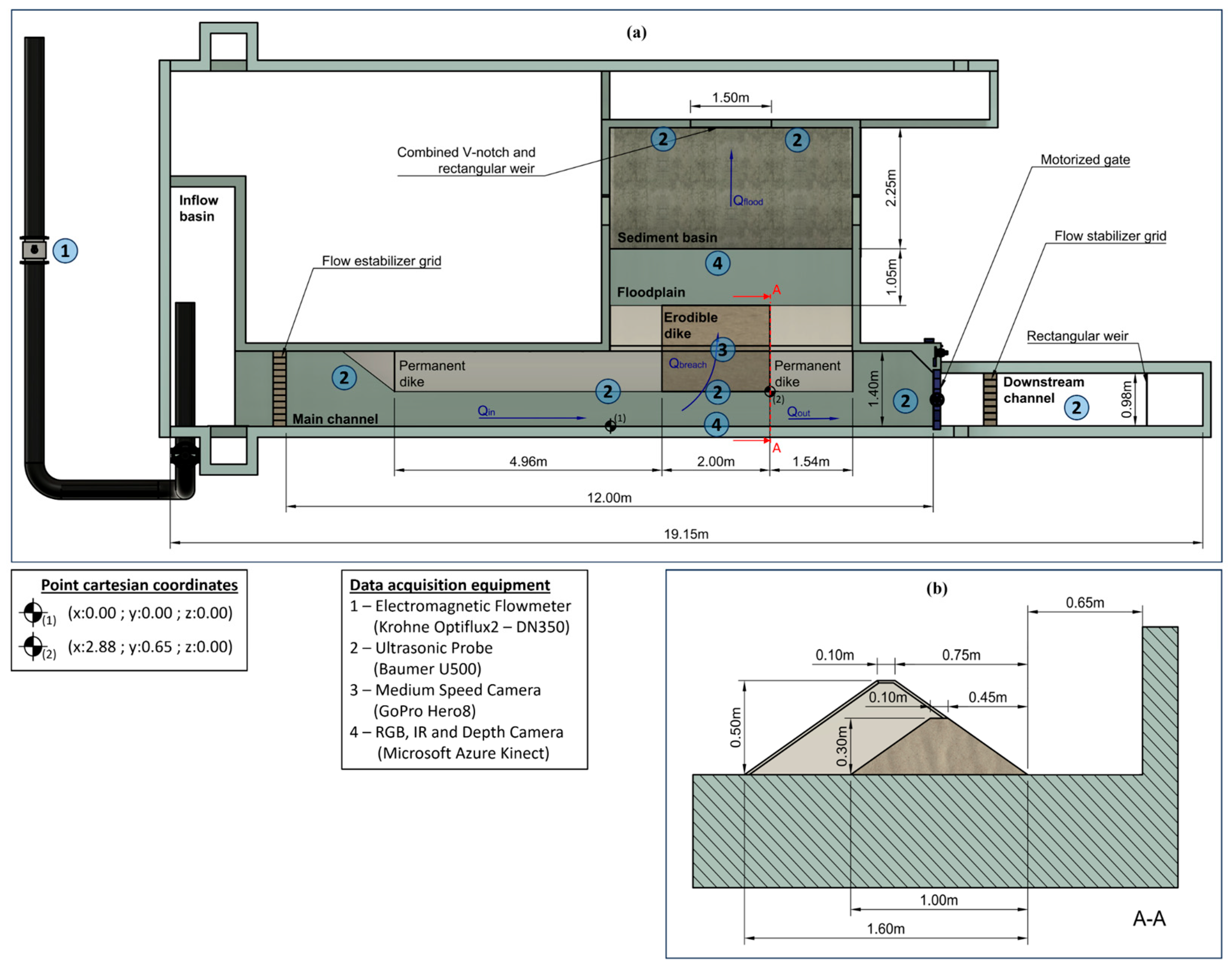
As shown in Figure 1a, the facility consists of a 1.40 m wide, 19.15 m long channel, designed to simulate river flow. It allows testing of dikes with a maximum height of 0.50 m and length of 2.00 m. The water level upstream of the dike is controlled by a motorized gate downstream. During the dike failure tests, a sediment basin (4.50 m wide by 2.25 m long) collects the eroded soil coming from the dike, located on an elevated platform. A mixed V-notch rectangular weir at the sediment basin outlet is used to estimate breach outflow discharge (Qflood) by water level correlation. Additionally, the main channel outflow (Qout) is measured by water level correlation to the downstream channel rectangular weir’s rating curve. The main channel is also equipped with a modular, non-erodible dike section, allowing for the construction of an erodible dike at the desired location.
The experimental setup is specifically designed to replicate the failure of a typical fluvial dike on a river’s left bank. The flow in the main channel runs parallel to the dike crest, simulating real-world flow conditions. Structural boundaries, such as the downstream gate and non-erodible dike section, help contain the failure zone and replicate prototype-scale fluvial conditions.
For live, non-intrusive data collection, the facility is equipped with various monitoring tools, as illustrated in Figure 1a and detailed below:
-
An upstream Krohne Optiflux electromagnetic flowmeter (Ludwig Krohne GmbH & Co. KG, Duisburg, Germany) for inflow measurement (Qin).
-
Seven Baumer U500 ultrasonic probes (Baumer International GmbH, Stockach, Germany) for water level measurement (four over the main channel, two over the sediment basin and one downstream);
-
A GoPro Hero 8 medium-speed camera (GoPro Inc., San Mateo, CA, USA), capable of capturing 240 fps at 1080p resolution for water surface velocity and surrounding parameter estimation;
-
Two Microsoft Azure Kinectsynchronized LiDARs (Microsoft Corporation (NASDAQ: MSFT), Redmond, WA, USA), each capable of capturing five point clouds per second for the 3D characterization of the dike and water surface.

2.2. Soil Characterization for Erodible Dike Construction

The erodible dike is placed 4.96 m from the upstream end of the permanent dike to account for inflow deflection. It has a height ranging from 0.50 m to 0.30 m, a fixed length of 2.00 m, side slopes of 1:1.5 and a crest width of 0.10 m (Figure 1b). Although steeper than the minimum slopes typically recommended for fluvial dikes, this choice was justified by the relatively high fine content of the silty sand used, which provided sufficient cohesion to maintain stability. Additionally, the slope geometry was constrained by the experimental facility, ensuring construction without interference from the side walls.
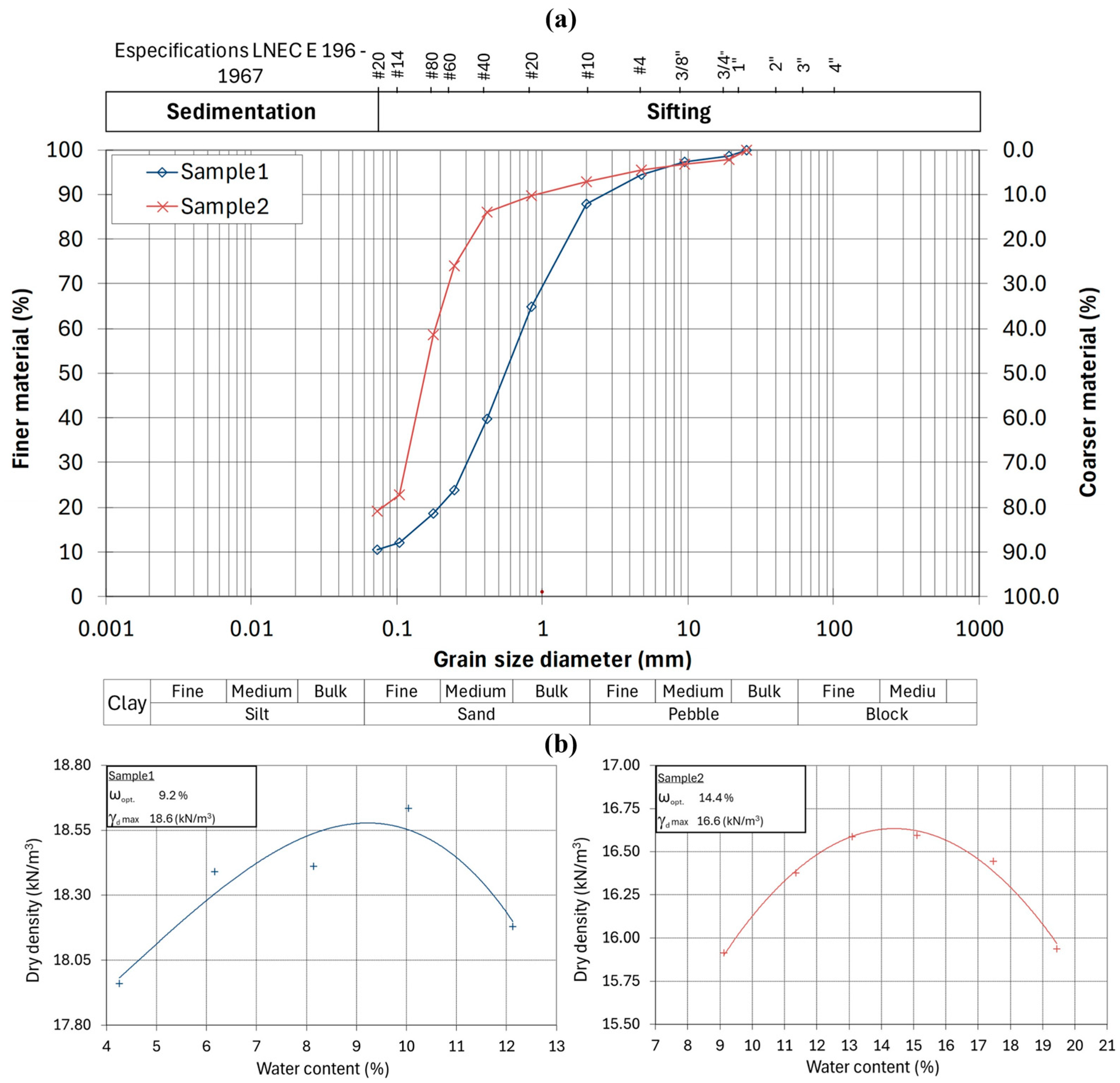
Experimental tests in this study considered two soil grain size distributions (Figure 2). Dikes were constructed using a multi-lift system (0.05 m lifts) and compacted by vibration with a compaction plate, following the reference values from the Standard Proctor Compaction test (LNEC E197-1966). Throughout the construction of the embankment subjected to failure, soil samples were taken during construction to measure the ω% and γd.
To replicate real dike material variability, both soils were apparent-cohesive sandy soils, with varying silt content and particle size distribution. Sample 1 (S1) had an average particle diameter (d50) of 0.60 mm and 10% silt content, with an optimal ω% of 9.2% and a maximum dry unit weight (γdmax) of 18.6 kN/m3. Sample 2 (S2) had d50 of 0.16 mm and 20% silt content, with an optimal ω% of 14.4% and a γdmax of 16.6 kN/m3.

2.3. Experimental Protocols for Dike Failure Testing

Table 1 presents the set of dike failure experiments conducted to evaluate if the in situ breach outflow hydrograph (ISBOH) estimates could be applied to a varying scenario of uncontrolled (challenging environment) and controlled variables, such as the main channel inflow (Qin), main channel water depth (hMChannel), Fr, ω% and embankment compaction (RC).

2.3.1. Variable Conditions (Uncontrolled Variables)

Before the test, the downstream and sediment basins were filled to the minimum levels corresponding to their respective weir’s crest. An initial breach, measuring 0.1 m in width, 0.1 m in length and 0.02 m in depth, was prepared at the crest of the erodible dike, precisely 0.3 m from the transition between the non-erodible and erodible sections. This setup ensured consistent and controlled breach initiation coordinates.
The test began when water fully passed through the initial breach and reached the embankment’s floodplain. The endpoint was defined as the moment the sediment basin’s weir no longer provided reliable data. During the test, inflow rates were increased while the downstream gate, initially closed, was progressively opened to maintain the water level in the main channel.
A challenging environment was generated by intermittently interrupting the downstream gate’s movement and irregularly varying the inflow (Table 1 first row). These actions resulted in a varying upstream Froude number (Fr) and altered the flow–embankment interaction dynamics. Consequently, various erosion patterns were observed, including continuous hydraulic erosion and mass detachment due to undercutting.

2.3.2. Controlled Conditions

For subsequent tests (Table 1, last four rows), the downstream gate was, initially, fully open and the inflow conditions were stabilized before water passed through the breach. Once the test commenced, i.e., as overtopping was initiated, the gate’s automatic directives were turned on to maintain a constant water level in the channel. The test was defined as concluded when the downstream gate had to be closed to such an extent that normal fluvial flow conditions could no longer be maintained, meaning that flow no longer exhibited an upstream to downstream direction.

3. Breach Outflow Hydrograph Estimation

To simplify the ISBOH methodology exposition, all regarded data refers to the S1T1 test (Soil 1, Test 1). This test was also used as a baseline case for evaluating the ISBOH methodology within a challenging environment characterized by an increasing number of interacting variables, including inflow, outflow, water level, upstream Froude number and breach erosion behavior.

3.1. Indirect Estimation (Non-Local)

The breach effluent hydrograph can be indirectly estimated through two distinct methods that are detailed below.

3.1.1. Spillway Discharge Rating Curve

The use of spillways is a hydraulic standard procedure to estimate flow rates. In this study, a spillway positioned at the sediment basin outlet allowed us to indirectly calculate the breach outflow. By correlating the continuously measured water level in the sediment basin with the pre-calibrated spillway discharge curve, the breach outflow could be determined with high frequency.

3.1.2. Mass Balance Principles

The breach outflow was alternatively estimated through the application of the continuity equation within the reservoir. The latter encompassed the equilibrium between the Qin, and the main channel total outflow (Qmcout); in this case, the latter corresponded to the outflow from the downstream channel (Qout) and the discharge resulting from the volume variations within the main channel (Qv = dV/dt)
Q b r e a c h = Q i n Q m c o u t = Q i n Q v Q o u t
Q b r e a c h = Q i n Q v + Q o u t

3.2. Direct Estimation (‘In Situ’)

The ISBOH method involves advanced data extraction techniques to capture detailed flow and structural characteristics during breach tests. A medium-speed camera recording 1080p video at 240 fps enabled PTV to compute 2D flow vectors, including velocity magnitude and direction, using Styrofoam beads with a mean diameter of 0.3 mm as tracers. Additionally, a LiDAR system with an RGB camera, a depth sensor and an IR emitter provided 3D point clouds, capturing the breach structure above and below the water surface, both over- and underwater.
To define the free-surface transition line between a major two-dimensional water surface component and increasing three-dimensionality, the ISBOH method used the water level cartesian coordinates F(z) = hf(z) = h. This line marked changes in water surface geometry and, in turn, defined the vertical intersection with the breach structure, forming the flow transition cone. The breach outflow, QbreachISBOH, was then calculated as:
Q b r e a c h I S B O H = A B C × i = 1 n V B L n
where ABC is the breach cone area, VBL is the velocity vectors magnitude and n is the number of vectors considered.
In the following subsections, the procedures for determining the breach geometry and flow transition cone, as well as the surface velocity fields, essential for implementing the ISBOH method, are presented in detail.

3.2.1. Determination of Breach Geometry and Flow Transition Cone

Homogeneous dike embankment failure tests pose significant challenges due to the unpredictability of mass detachments from the main dike structure. This dynamic nature complicates the morphodynamic characterization. Laboratory-controlled conditions often fall short of replicating the embankment structure without influencing breach erosion patterns [13,14].
To overcome these limitations, real-time LiDAR equipment applying Time-of-Flight (ToF) principles was employed. This approach allowed for continuous, non-intrusive monitoring of breach morphology, while preserving the natural instability of the embankment and extracting 3D cartesian data [15].
The LiDAR system measured round-trip times of IR light pulses, with distance data (d) derived by means of a single pulse or by phase, determined by Equations (4) and (5), respectively:
d = c   Δ t 2
d = c 4 π f φ = c 4 π f tan 1 C 3 C 1 C 0 C 2
where d is the distance between the object and the equipment, c is the speed of light, Δt is the time of flight of the light pulse, φ is the phase difference, f is the modulated signal frequency and C# are the modulated periods [7,16].
Two Microsoft Azure Kinect LiDAR units, integrating a high-resolution RGB camera, infra-red sensors (IR) and depth sensors, captured five point clouds per second with a resolution of up to one million points per frame. Post-processing corrected for the refraction indices and shadow effects [15].
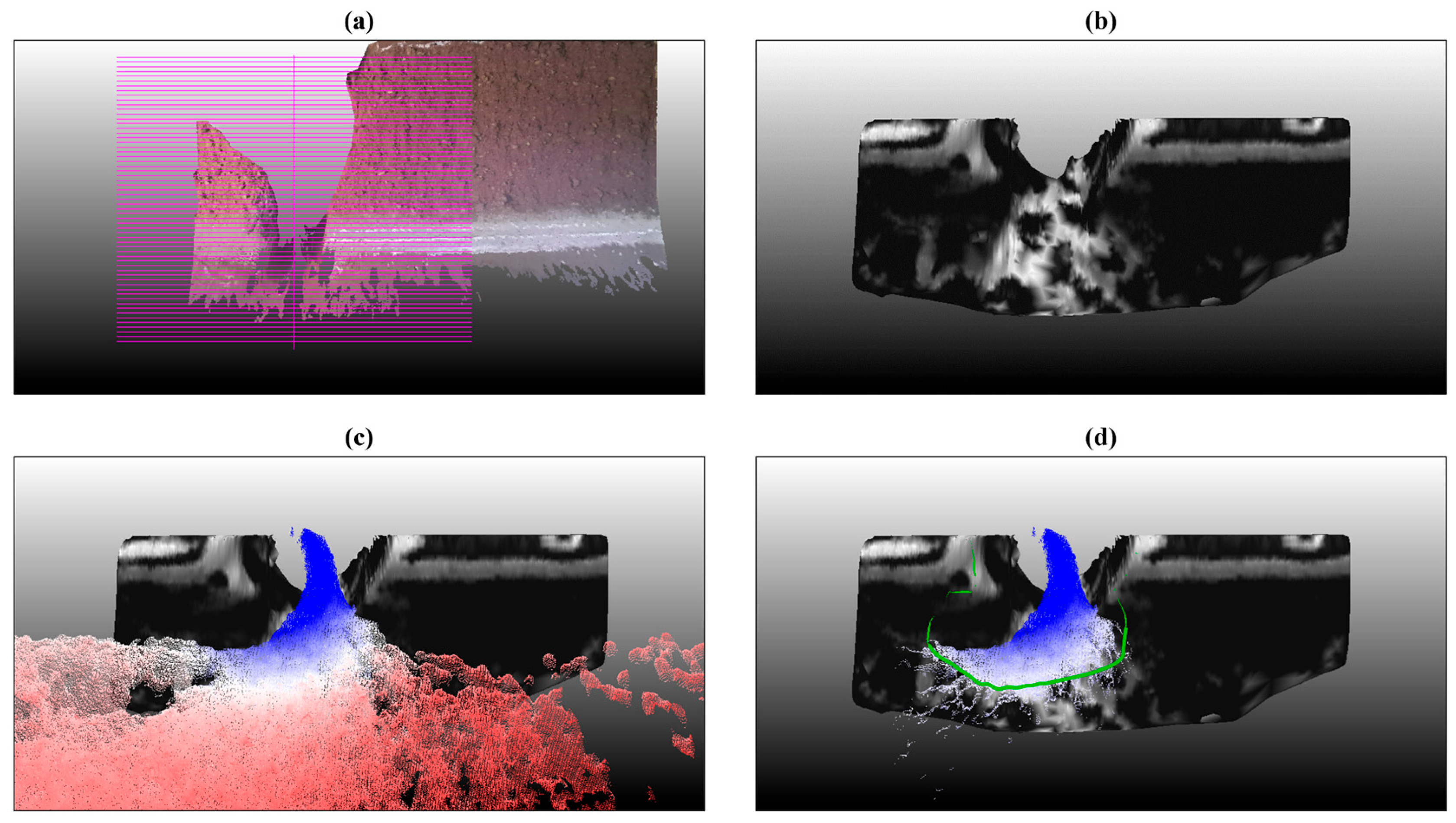
The processed point clouds enabled volumetric characterization of the breach at intervals of 0.2 s. Figure 3 outlines the steps for defining the flow transition cone geometry, while Table 2 summarizes key geometrical data for the QbreachISBOH estimation.
The distance between banks is defined using the horizontal water level upstream of the breach. The free-surface transition line (Figure 3c,d) is established by mapping the water surface in a point cloud, integrating cartesian coordinate data with continuously measured water surface data from ultrasonic probes. This integration delineates the free-surface transition line, representing the water surface z-coordinate just below the main channel water level (Figure 3d, green line). The flow transition cone area is then calculated by vertically intersecting this line with the dike structure.
The flow transition cone represents the region where hydraulic flow velocity shifts from conventional fluvial flow (upstream–downstream) to the breach-derived flow (upstream–breach). At the dike breach facility, this transition cone typically forms where the main channel water surface shows a sudden decrease in the coordinate z. Accurate determination of the cone boundary and area is critical for estimating the ISBOH, especially since planar velocimetry methods are limited to two-dimensional (2D) analysis.

3.2.2. Determination of Surface Velocity Fields

Low-density (12 kg/m3) Styrofoam particles, with diameters ranging between 3 mm and 4 mm, were dispersed across the water surface to measure velocity fields. An action camera captured footage at 240 fps, offering advantages such as high memory capacity and affordability. On the other hand, barrel distortion from the camera’s fish-eye lens required pre-processing corrections.
The footage was processed using PTV, which involves identifying particles, matching them between consecutive frames and computing the velocity vectors [17].
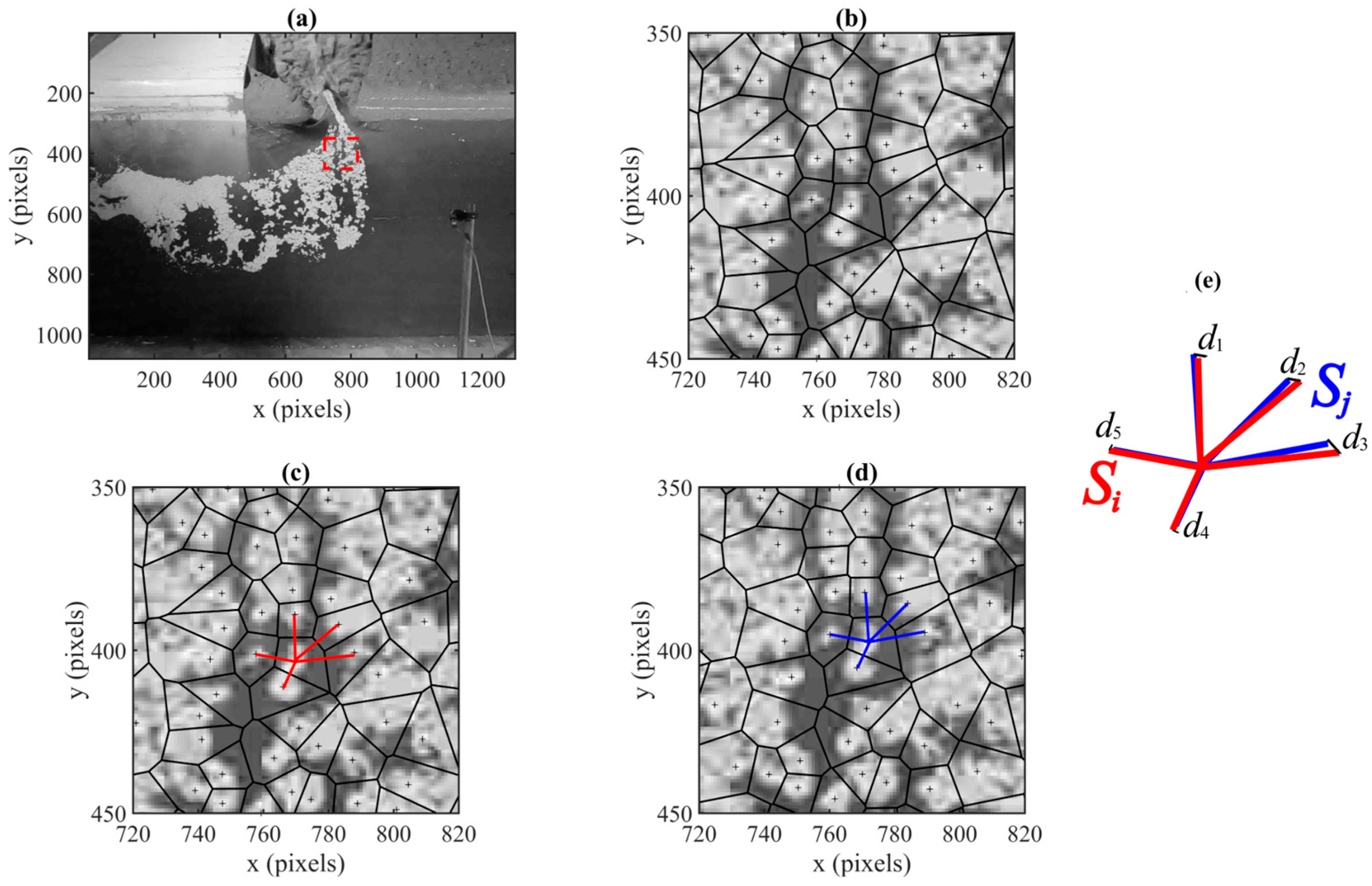
The Voronoï PTV algorithm was used to track the particles [18,19]. It consists of drawing Voronoi diagrams around the detected particles (Figure 4b) and uses the resulting Voronoï stars for matching between frames (Figure 4c), which is achieved by minimizing the distance between Voronoï stars; the same procedure was applied for the images below—t = t + dt (Figure 4d).
This star pattern will be used as a matching template, and matching between particle i and particle j occurs if the distance between the extremities of the two stars Si and Sj is a minimum:
m a t c h P i , P j = min d i s t S i ,   S j
The distance between the extremities is given by:
d i s t S i ,   S j = m e d i a n ( d 1 , d 2 ,   ,   d n )
where di (i = 1, 2, …, n) is the Euclidean distance between each extremity. The velocity of particle i is given by:
v = d i s t S i ,   S j d t
where dt is the time interval between x1consecutive frames. This procedure is then extended to all detected particles.
Using the median in Equation (7) ensures robustness against high gradients and missing particles, making this method particularly effective for transient flows such as those in dike breach scenarios [18,19].

4. Data Processing for ISBOH Method

All extracted data was post-processed to define the breach geometry, breach transition cone and average magnitude velocity of the water surface.

4.1. Three-Dimensional Breach Geometry Reconstruction

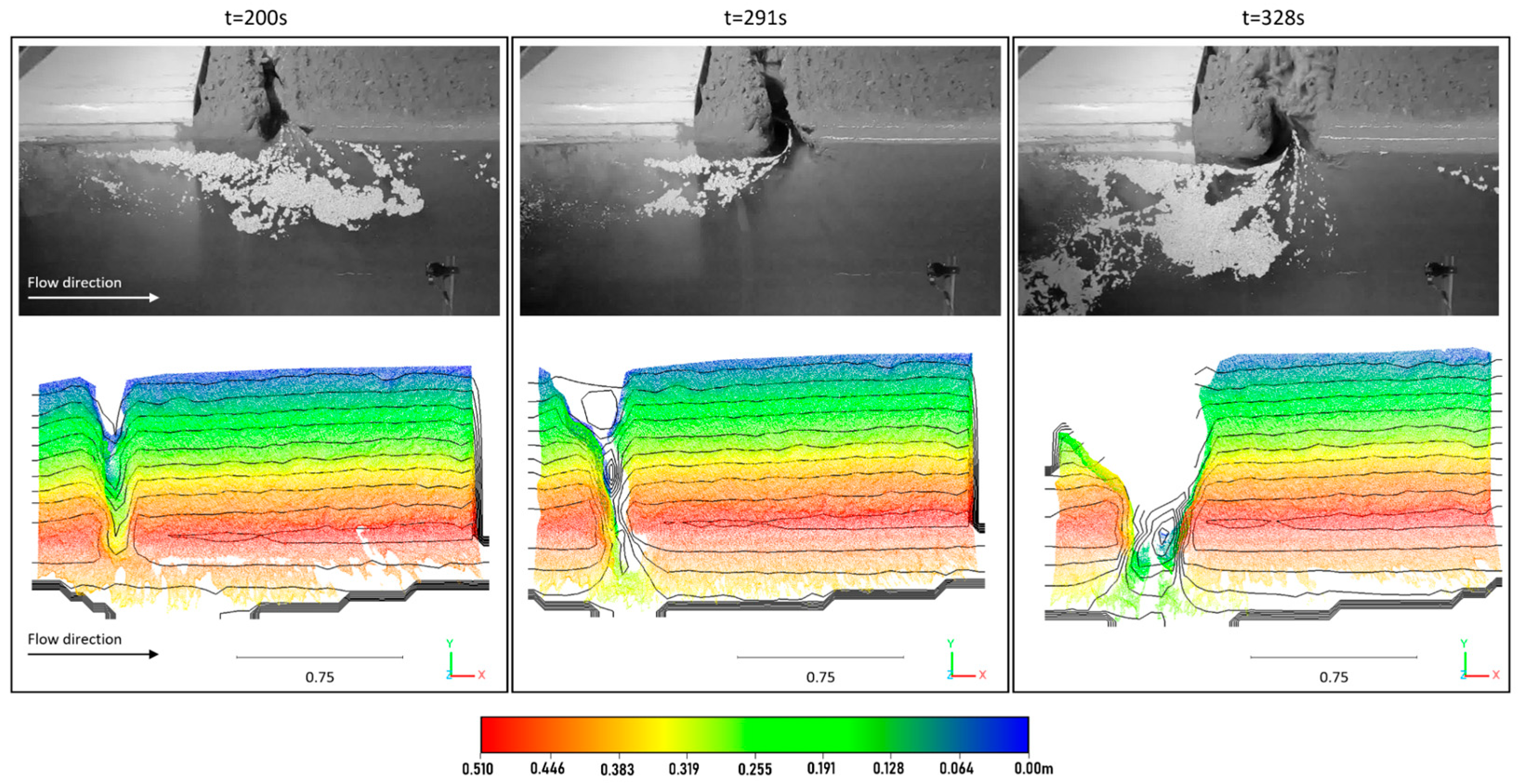
Figure 5 depicts the evolution of the breaching process at three instants of the laboratory test, which lasted 406 s. The breaching process evolves quite rapidly and is characterized by two primary erosive processes. The first, referred as continuous erosion, is due to the hydraulic flow’s action on the dike’s surface. The second, described as a discrete erosive process, is due to the detachment and consequent falling of masses of soil from the dike body.
The data extracted by the LiDAR equipment allowed us to assess detailed 3D information of the breaching process. The top images from Figure 5 capture visual breaching stages at three instants, while the bottom ones display the corresponding point cloud reconstructions, revealing the 3D geometry of over- and underwater dike structures.

4.2. Flow Transition Cone Area Definition

The flow transition cone, critical for ISBOH calculations, was derived by vertically intersecting the free-surface transition line (mapped from water surface coordinates) with the dike structure. Point cloud data (10 s intervals) was processed using an RGB noise filter to address floating tracer noise (Figure 3c,d). The cone’s geometry reflected hydraulic flow changes from the main channel to the breach, with the cone area evolving as erosion progressed.

4.3. Surface Velocity Field Measurements

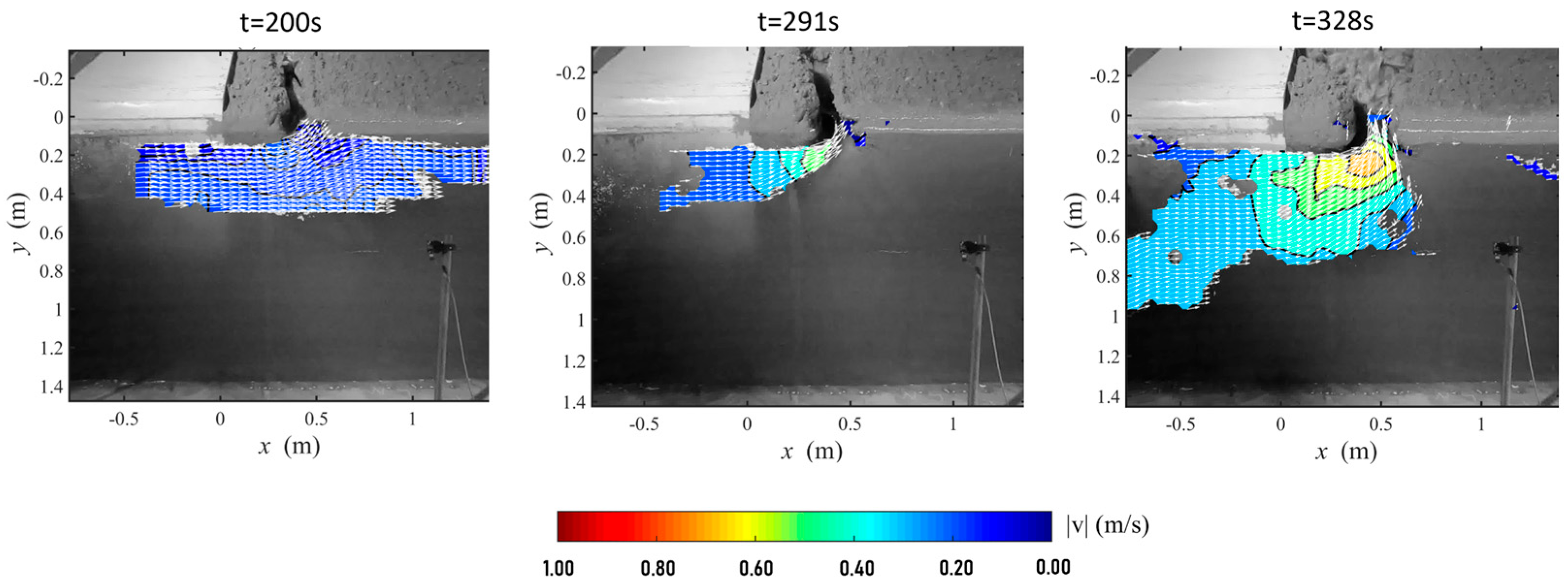
With the PTV algorithm, the direction and magnitude velocity of the dispersed tracers in the main channel water surface was computed at 240 fps. Figure 6 depicts the gradient of velocity at different time instants, matching the instants used to characterize the breach geometry.
The velocity gradients near the breach (Figure 6) reveal flow acceleration toward the breach and its role as a flow attractor, pulling the seeding from farther regions into the breach (t = 328 s). Binning techniques structure the velocity data, allowing for a detailed view of breach influence on upstream flow dynamics.
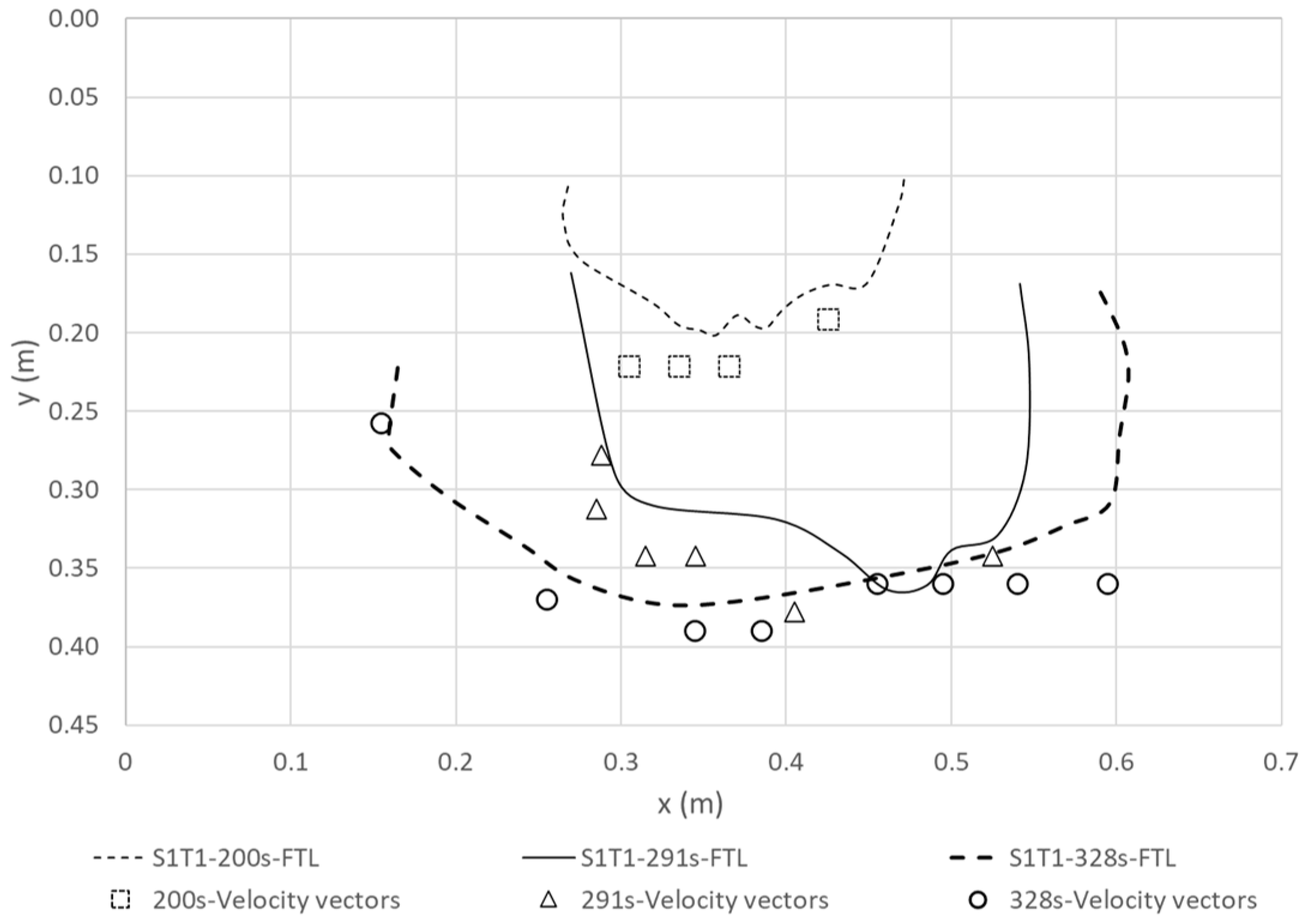
Figure 7 illustrates the intersection between the water surface velocity field and the free-surface transition line at the specified instants. The data used to estimate the breach outflow using the ISBOH method is summarized in Table 3.

4.4. Breach Outflow Hydrographs

Breach outflows (Qbreach) were indirectly estimated using spillway rating curves and mass balance methods and directly via ISBOHs. The main principles of operation were presented in Section 3.1.1 and Section 3.1.2.
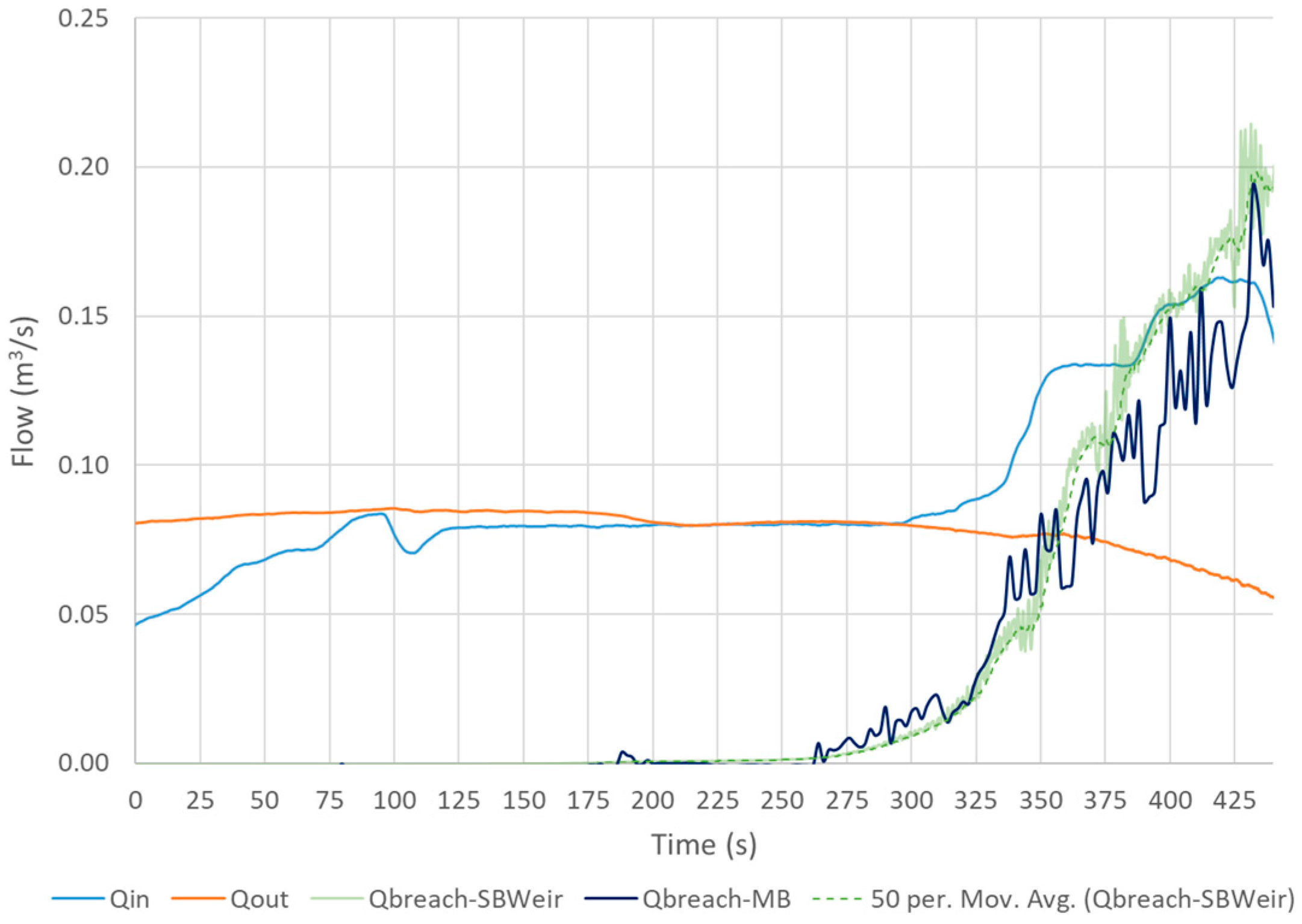
Figure 8 depicts the measured or indirectly estimated flow rates associated with the S1T1 test. Upstream inflow (Qin) was measured with an electromagnetic flowmeter placed at the facility’s entrance. Downstream outflow (Qout) from the main channel’s downstream spillway was estimated with two different approaches, depending on the water level control conditions. If the downstream gate maintained a stable water level, Qout was estimated by the discharge rating curve of the downstream channel spillway. If the downstream gate was stopped and the water level fluctuated, Qout was estimated using Equation (9), where µ is the flow coefficient, b is the height of the gate opening and l is the width of the gate opening.
Q = μ b l 2 g h
The breach outflows depicted in Figure 8 (from test S1T1) were indirectly estimated through two different techniques. QbreachSBWeir corresponds to the estimate based on the spillway’s discharge rating curve of the sediment basin and QbreachMB corresponds to the mass balance estimation, calculated using the water level data acquired by the ultrasonic probes in the main channel.
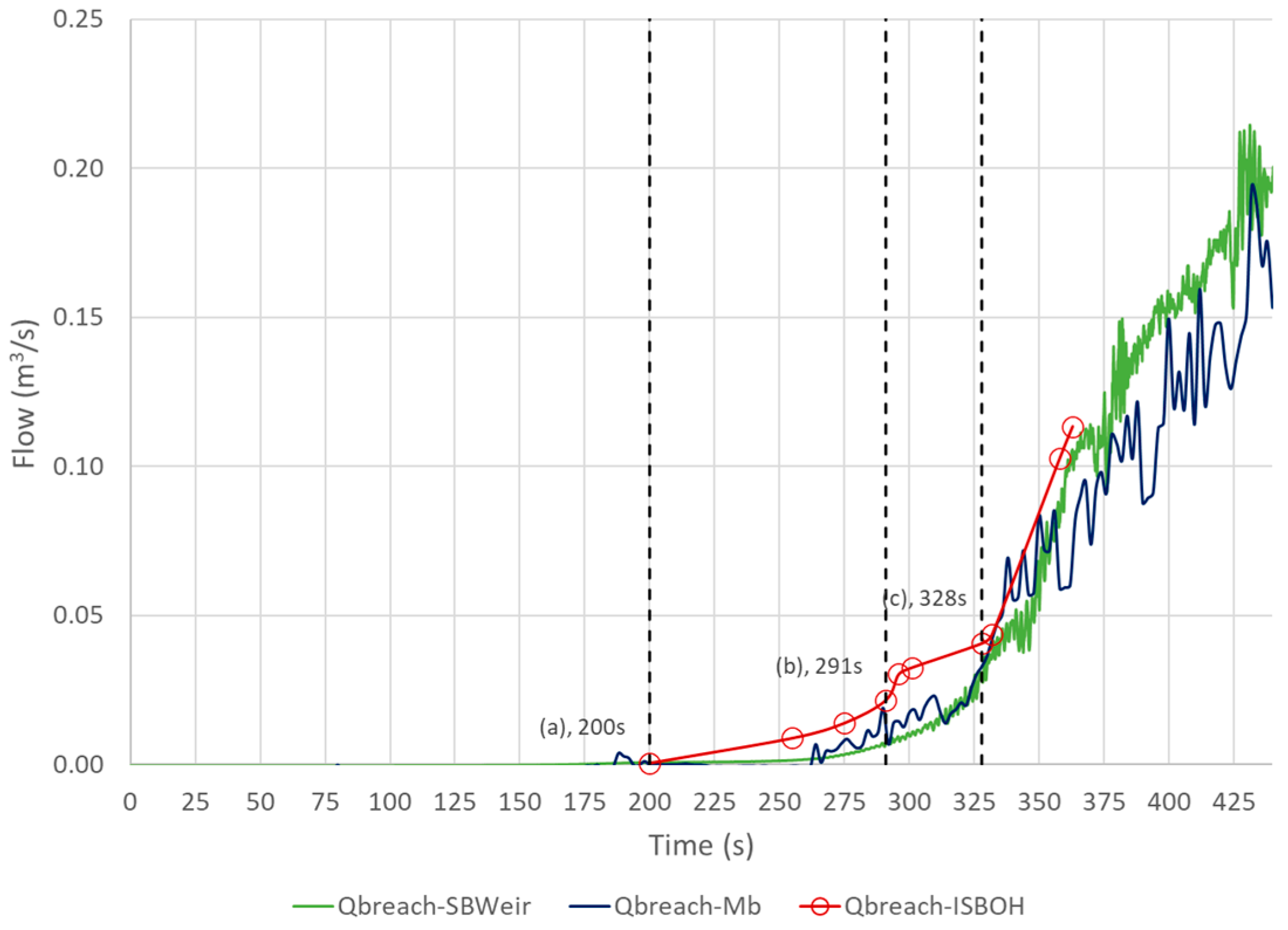
Figure 9 focuses on the breach outflow hydrographs estimated using both indirect methods and the direct ISBOH method (QbreachISBOH). The ISBOH method combines velocimetry data, breach geometry and the flow transition cone area by multiplying the cone area with the average velocity of vectors intersecting the free-surface transition line (Figure 7 and Table 3). The figure also highlights the time instants used for direct breach outflow estimation, as shown in Figure 5 and Figure 6. Despite the challenging test conditions, the ISBOH method closely matched the magnitudes and evolutions of breach outflow estimated by conventional indirect methods, particularly for the higher flows.

5. Consistency and Accuracy of ISBOH Estimation Technique

The ISBOH method entailed the fusion of LiDAR-driven data (resulting in the determination of the breach geometry and flow transition cone area) and the PTV technique (resulting in the surface velocity field determination). The output data consistency using the method was evaluated by comparing five experimental tests, encapsulating different upstream hydraulic conditions (constant and variable Fr), and water contents for two grain-sized soils (denoted as S#T#).
To validate the ISBOH method, it is essential to benchmark it against more commonly applied breach outflow estimation methodologies. Such comparisons provide critical assessment of the accuracy of the ISBOH methodology. This section outlines both direct (QbreachISBOH) and indirect (QbreachSBWeir and QbreachMB) methodologies for breach outflow calculation.

5.1. ISBOH Consistency

The multiple data processing tools applied in the ISBOH method implied a specific experimental protocol of intermittent seeding deployment on the water surface. The water surface velocity field calculation, the flow trajectory definition and the water level cartesian coordinates (free-surface transition line) were determined by seeding deployment. The absence of seeding allowed for the breach’s geometric definition and ultimately the flow transition cone’s definition.
Although essential for the ISBOH estimation process, the seeding protocol posed challenges, such as time misalignment between the reproduced breach geometry and the velocimetry or flow transition cone data, and seeding particle trajectory due to flow directions parallel to the dike crest, leading to velocity vectors not always being perpendicular to the free-surface transition line.
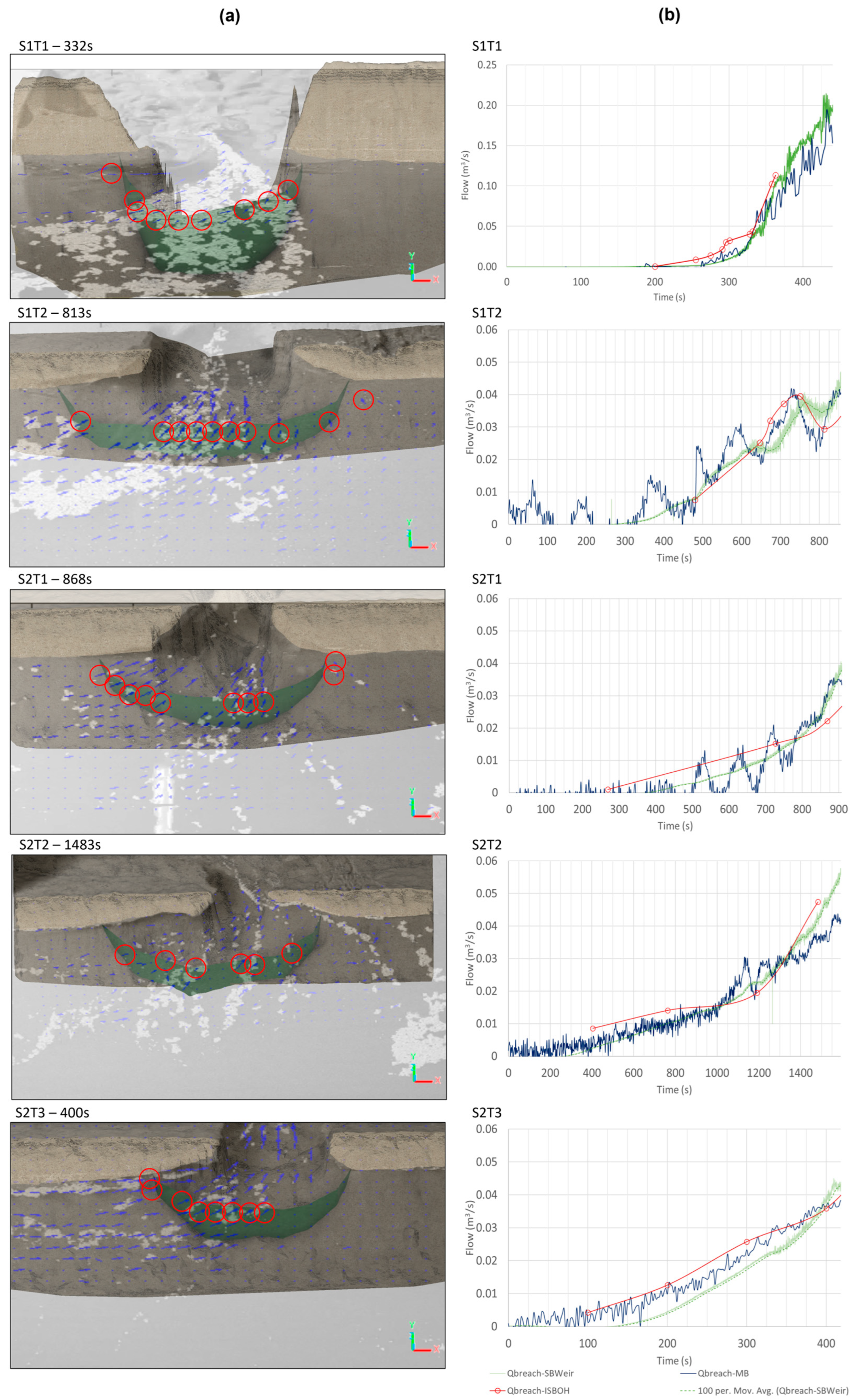
Despite these challenges, the ISBOH method produced breach outflow estimates with magnitudes and temporal evolutions comparable to those derived from indirect and more conventional methods (Figure 10b). The complete integration of data used for ISBOH estimation, highlighting the vectors considered for calculating average flow velocity, is illustrated in Figure 10a.

5.2. ISBOH Accuracy

The ISBOH method was tested in both uncontrolled and controlled hydraulic parameters, such as Qin, hMChannel and Fr, the latter computed, as per the usual definition, from Qin, hMChannel and the geometry of the cross-section The challenging environment (uncontrolled parameters) and the steady environment (controlled parameters) were established to test the method’s accuracy in different scenarios.
The intermittent seeding deployment added a time lag between processed data, further challenging the method’s accuracy.
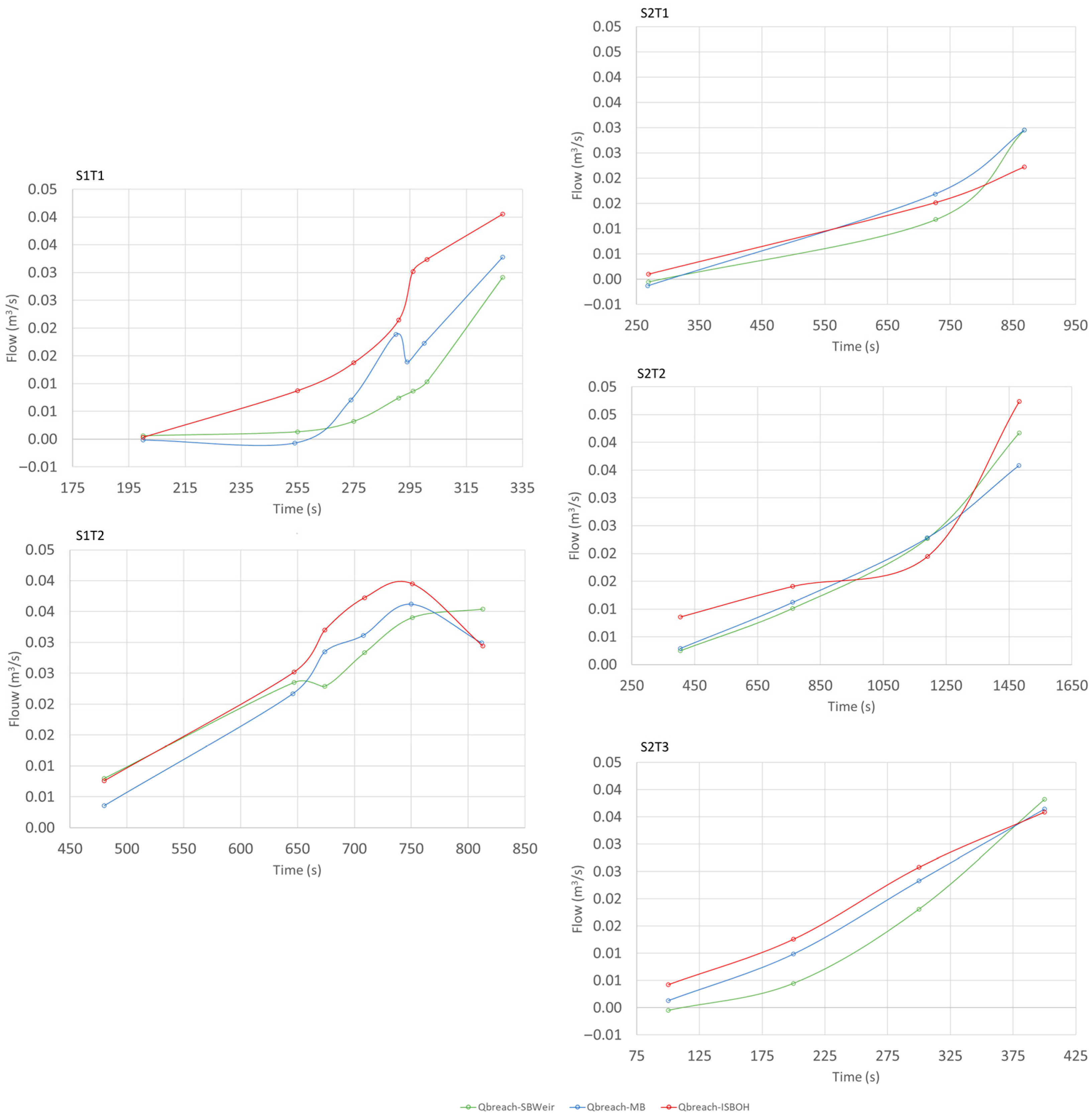
All experimental tests were compared at the same time instants using the ISBOH, SBWeir and MB methods for breach outflow hydrograph estimation. Despite differences in test environments, Figure 11 illustrates that breach outflow hydrographs from the three methods exhibit similar magnitudes and temporal evolutions.
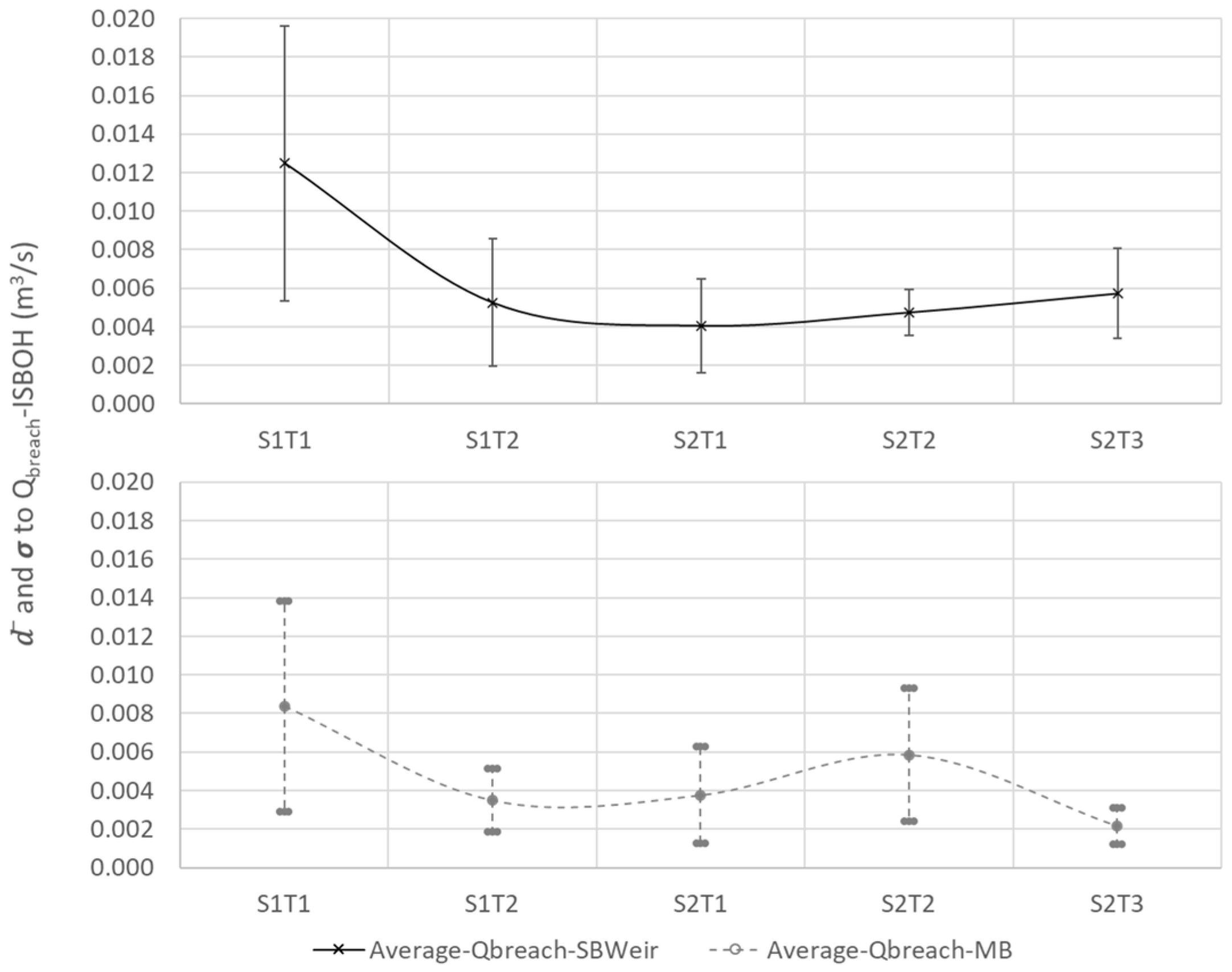
Figure 12 depicts the average differences (đ) and standard deviations (σ) of the breach outflow between the ISBOH and the benchmark methods (SBWeir and MB), where each data point corresponds to a complete experimental test. A global analysis shows minor differences between the ISBOH and the MB methods (đ ≈ 5.0 × 10⁻³ m3/s and σ = 1.6 × 10⁻³ m3/s) compared to the differences between the ISBOH and the SBWeir methods (đ ≈ 7.0 × 10⁻³ m3/s and σ = 2.0 × 10⁻³ m3/s).
Figure 12 also evidences the impact of a challenging environment on the breach outflow estimation by the ISBOH method. The S1T1 test, performed under uncontrolled hydraulic parameters and with a lack of intermittent seeding, struggled with breach geometric reproduction due to point cloud holes induced by the seeding particles, and with the correct velocity field estimation due to the constantly changing relationship between the diameter of the seeding particles and the corresponding number of pixels.
The data analysis focused on tests executed in a steady environment to reduce differences between the methods. The relationship between the ISBOH and MB methods reduced to đ ≈ 4.0 × 10⁻³ m3/s and σ = 0.9 × 10⁻³ m3/s, and between the ISBOH and SBWeir methods reduced to đ ≈ 5.0 × 10⁻³ m3/s and σ = 0.8 × 10⁻³ m3/s.
It is important to highlight that the breach outflow estimated by the flood basin weir’s rating curve, although more commonly used for hydrograph analysis due to its high frequency data output capabilities, is more accurate in steady state conditions in the presence of structures such as channel bends or in laterally contracted spillways.

6. Conclusions and Future Work

6.1. Key Findings

A step-up approach for directly estimating embankment breach outflows was developed, integrating various technologies and techniques to measure key variables such as water levels, velocity maps and 3D breach characterization. The results validated the accuracy and consistency of the experimental method (ISBOH) and its monitoring layout.
The key findings of the present work were as follows:
  • Live 3D Breach Modeling: The methodology enables real-time 3D monitoring of breach evolution during failure, allowing geometric data extraction for parametric dike failure forecasts.
  • Optimized Camera Placement: Strategic camera positioning captured the complete breaching process, with action cameras proving viable for velocity measurement when paired with tracer particles. This suggests potential Unmanned Aerial Vehicle (UAV) applications for monitoring natural channels and rivers.
  • Seeding Importance in Velocity Measurements: Adequate seeding distribution on the free surface is crucial for accurate velocity field assessment. Increased particle density would enhance coverage and accuracy.
  • Hydrograph Estimation: The in situ method demonstrates promising results, aligning closely with indirect breach outflow estimations.
  • Seeding Deployment Intermittency: This approach improves breach geometry data quality and refines breach outflow estimations.
Tests revealed that breach outflow estimations conducted near the breach site exhibited lower discrepancies compared to those derived indirectly through sediment basin spillway calculations. The ISBOH method enhanced direct estimation techniques by introducing the concept of a free-surface transition line and defining the flow transition cone area. Unlike previous methods, ISBOH offers applicability not only to fluvial dikes but also to other embankment structures, such as earth and tailing dams. However, modeling tailing dams in laboratory settings remains complex due to their non-Newtonian behavior.

6.2. Practical Applications and Future Developments

Drones and remote sensing offer potential for field applications, both in pre-failure monitoring and post-failure flood propagation assessment. Accurate estimates of the breach hydrograph are critical for risk assessment, as they are inputs for flood models that help to map the flood impacts. The ISBOH methodology has proven to be successful across various fluvial dike breach scenarios, aligning well with indirect flow estimates.
The methodology has enabled the determination of crucial hydraulic variables, particularly breach hydrographs, breach geometry and surface velocity fields, demonstrating its viability for real-time monitoring. Although velocity measurements at the free surface are valuable, they do not represent the complete vertical velocity profile and must be considered as approximations.
Point cloud data from LiDAR technology has proven effective in reproducing the topography of the breach and the coordinates of the free surface, both above and below the water. This capacity is key to defining the free-surface transition line and estimating the area of the flow transition cone.
Ongoing research aims to refine breach flow estimates using aerial drones and to develop a simplified forecasting model correlating breach width with outflow. Experimental tests must continue under varying inflow conditions and embankment compositions to effectively calibrate the numerical models.
The ISBOH method is yet to be fully automated. To achieve reliable forecasting of the breach outflow, data from real events must be complemented with results from numerical models, enabling integration into a flood mapping software for use by Civil Protection Authorities.

Author Contributions

Conceptualization, R.J.; methodology, R.J., S.A., R.A. and R.M.L.F.; validation, R.J., S.A., R.A., J.B.S. and R.M.L.F.; data curation, R.J., S.A. and R.A.; writing—original draft preparation, R.J.; writing—review and editing, R.J., S.A. and R.A.; supervision, S.A., J.B.S. and R.M.L.F.; project administration, S.A.; funding acquisition, S.A. and R.M.L.F. All authors have read and agreed to the published version of the manuscript.

Funding

DikesFPro Project PTDC/ECI-EGC/7739/2020 and the PhD scholarship 2021.07337.BD (https://doi.org/10.54499/2021.07337.BD), both supported by the Portuguese Foundation for Science and Technology (FCT).

Data Availability Statement

The raw data supporting the conclusions of this article will be made available by the authors on request.

Acknowledgments

The authors acknowledge the Portuguese Laboratory of Civil Engineering (LNEC) staff of the Hydraulic and Environment, Geotechnical Departments and Scientific Instrumentation Center, without whom, this work would not be possible.

Conflicts of Interest

The authors declare no conflicts of interest.

Abbreviations

The following abbreviations are used in this manuscript:
LiDARLight Detection and Ranging
ToFTime-of-Flight
PTVParticle Tracking Velocimetry
LSPIVLarge-Scale Particle Image Velocimetry
RGBRed, Green and Blue
IRInfra-red
FrFroude number
γdDry unit weight
γdmaxMaximum dry unit weight
ω%Water content
ISBOHIn situ breach outflow hydrograph
hMChannelWater level depth in the main channel
QinMain channel inflow
QmcoutMain channel total outflow
QvFlow resulting from the main channel volume variations
QoutDownstream channel outflow
QfloodFlood basin flow
QbreachBreach outflow
QbreachISBOHBreach outflow measured by the in situ breach outflow hydrograph method
QbreachSBWeirBreach outflow measured by the weir located on the sediment basin
QbreachMBBreach outflow measured by the mass balance in the main channel
DSDividing Streamline
ABCBreach cone area
VBLVelocity vector magnitude
tTime
đAverage difference
σStandard deviation
gGravity acceleration
bHeight of the gate opening
lWidth of the gate opening
iInitial position
jFinal position
nNumber of vectors
dDistance
φ Phase difference
FSignal frequency
CSpeed of light

References

  1. Maldonado, C. Katrina Fact-Check: Guesstimate of Katrina’s Flooding in New Orleans Was Correct. Available online: https://thelensnola.org/2015/07/20/katrina-fact-check-guesstimate-of-katrinas-flooding-in-new-orleans-was-correct/ (accessed on 30 November 2025).
  2. Alcrudo, F.; Mulet, J. Description of the Tous Dam Break Case Study (Spain). J. Hydraul. Res. 2007, 45, 45–57. [Google Scholar] [CrossRef]
  3. David, A. Natural Disasters, 1st ed.; Routledge-Taylor & Francis Group: New York, NY, USA, 1993; ISBN 1-85728-094-6. [Google Scholar]
  4. Dounais, G.T.; Bardanis, M.E. The Failure of Homogeneous Dams by Internal Erosion–The Case of Sparmos Dam, Greece. In Sustainable and Safe Dams Around the World; Tournier, J.P., Bennett, T., Bibeau, J., Eds.; 2019; Available online: https://www.taylorfrancis.com/chapters/edit/10.1201/9780429319778-71/failure-homogeneous-dams-internal-erosion%E2%80%94the-case-sparmos-dam-greece-dounias-bardanis (accessed on 30 November 2025).
  5. Nunes, A.; Amaro, A.; Vieira, A.; Velez de Castro, F.; Félix, F. Geografia, Riscos e Proteção Civil. Homenagem Ao Professor Doutor Luciano Lourenço. Volume 1; RISCOS—Associação Portuguesa de Riscos, Prevenção e Segurança: 2021; Volume 1. Available online: https://www.riscos.pt/publicacoes/outras-publicacoes/outras/grpc-lhll/volume-1/ (accessed on 30 November 2025).
  6. Gangadharan, S. In China, Over 5000 People Evacuated After Floodwaters Breach A Dike. Available online: https://stratnewsglobal.com/world-news/in-china-over-5000-people-evacuated-after-floodwaters-breach-a-dike/ (accessed on 30 November 2025).
  7. Horaud, R.; Hansard, M.; Evangelidis, G.; Ménier, C. An Overview of Depth Cameras and Range Scanners Based on Time-of-Flight Technologies. Mach. Vis. Appl. 2016, 27, 1005–1020. [Google Scholar] [CrossRef]
  8. Kurillo, G.; Hemingway, E.; Cheng, M.-L.; Cheng, L. Evaluating the Accuracy of the Azure Kinect and Kinect V2. Sensors 2022, 22, 2469. [Google Scholar] [CrossRef] [PubMed]
  9. Aleixo, R.; Carvalho, E.; Lima, M.M.C.L.; Ferreira, R.M.L. Determinação Dos Campos de Velocidades de Escoamentos Bifásicos Usando PIV-PTV. Rev. Recur. Hídricos 2020, 41, 9–15. [Google Scholar] [CrossRef]
  10. Bento, A.M.; Amaral, S.; Viseu, T.; Cardoso, R.; Ferreira, R.M.L. Direct Estimate of the Breach Hydrograph of an Overtopped Earth Dam. J. Hydraul. Eng. 2017, 143. [Google Scholar] [CrossRef]
  11. Yoon, J.; Doh, J. Optimal PID Control for Hovering Stabilization of Quadcopter Using Long Short Term Memory. Adv. Eng. Inform. 2022, 53, 101679. [Google Scholar] [CrossRef]
  12. Amaral, S.; Caldeira, L.; Viseu, T.; Ferreira, R.M.L. Designing Experiments to Study Dam Breach Hydraulic Phenomena. J. Hydraul. Eng. 2020, 146. [Google Scholar] [CrossRef]
  13. Alvarez, T.; Aleixo, R.; Mendes, S.V.; Amaral, S.; Viseu, T.; Ferreira, R.M.L. Frozen in Time: Continuous Measurements in a Dam Breach Flow. In River Flow 2022; CRC Press: London, UK, 2024; pp. 508–515. [Google Scholar]
  14. Rifai, I.; Schmitz, V.; Erpicum, S.; Archambeau, P.; Violeau, D.; Pirotton, M.; Dewals, B.; El, K.; Abderrezzak, K. Continuous Monitoring of Fluvial Dike Breaching by a Laser Profilometry Technique. Water Resour. Res. 2020, 56, e2019WR026941. [Google Scholar] [CrossRef]
  15. Jónatas, R.J.L.; Aleixo, R.J.F.; Amaral, S.R.C.; Mendes, S.V.; Viseu, M.T.F.S.; Ferreira, R.M.L. Laboratory Application of Real-Time LiDAR Technology for Assessing Breach Morphology during the Failure of Earth Dams and Fluvial Dikes. J. Hydraul. Eng. 2025, 151, 04025033. [Google Scholar] [CrossRef]
  16. Kim, K.; Kim, J. Dynamic Displacement Measurement of a Vibratory Object Using a Terrestrial Laser Scanner. Meas. Sci. Technol. 2015, 26, 045002. [Google Scholar] [CrossRef]
  17. Aleixo, R.; Amaral, S.; Viseu, T.; Mendes, S.; Alvarez, T.; Alberto, C.; Ferreira, R.M.L. Challenges of Surface Image Velocimetry—The Dam-Breach Example. In Proceedings of the 39th IAHR World Congress: International Association for Hydro-Environment Engineering and Research (IAHR), Spain; 2022; pp. 5150–5155. Available online: https://www.researchgate.net/publication/367592451_Challenges_of_Surface_Image_Velocimetry_the_dam-breach_example (accessed on 30 November 2025).
  18. Capart, H.; Young, D.L.; Zech, Y. Voronoi Imaging Methods for the Measurement of Granular Flows. Exp. Fluids 2001, 32, 121–135. [Google Scholar] [CrossRef]
  19. Aleixo, R.; Soares-Frazão, S.; Zech, Y. Velocity-Field Measurements in a Dam-Break Flow Using a PTV Voronoï Imaging Technique. Exp. Fluids 2011, 50, 1633–1649. [Google Scholar] [CrossRef]
Figure 1. Experimental setup for dike failure experiments. (a) Plan view and monitoring equipment’s (b) A-A transversal section.
Infrastructures 10 00335 g001
Figure 2. Soil samples 1 and 2. (a) Soil grain size distribution curves. (b) Compaction curves of the samples—Standard Proctor Compaction.
Infrastructures 10 00335 g002
Figure 3. Flow transition cone geometry steps in cloud comparison (S1T1): (a) Point cloud conversion to mesh by 1 mm profiles. (b) Mesh curvature intensity (black: low; white: high). (c) Main channel water level as z-coordinate gradient in relation to the ultrasonic probes data (red: higher; white: same; blue: lower). (d) Water free-surface transition line (green).
Infrastructures 10 00335 g003
Figure 4. Voronoï PTV algorithm steps. (a) Flow image from S1T1 test at t = 328 s, indicating area of analysis. (b) Voronoï diagram at t. (c) Voronoï diagram and star at t. (d) Voronoï diagram and star at t + dt. (e) Matching determination by overlapping two stars.
Infrastructures 10 00335 g004
Figure 5. Breach evolution at three time instants (S1T1). Top: plain images (GoPro camera images). Bottom: 3D reconstruction of the dike structure (point clouds) with additional colormap elevation and contour lines.
Infrastructures 10 00335 g005
Figure 6. Example of the application of PTV to obtain the surface velocity map at the breach vicinity in the fluvial dike failure in S1T1 at different time instants.
Infrastructures 10 00335 g006
Figure 7. Cartesian coordinates of Dividing Streamline (DS) and velocity vectors at the considered time instants: t = 200 s; t = 291 s; t = 328 s (S1T1 experimental data).
Infrastructures 10 00335 g007
Figure 8. Flow rate estimates for dike breach test (S1T1). Upstream inflow and effluent flows (downstream spillway outflow, sediment basin outflow and breach outflow hydrograph estimated by mass balance).
Infrastructures 10 00335 g008
Figure 9. Dike breach (S1T1) outflow hydrographs (indirect and direct estimations).
Infrastructures 10 00335 g009
Figure 10. Dike breach tests at different stages. (a) Breach geometry, flow transition cone (green structure) and water surface velocity. Red circles indicate velocity vectors considered for average flow velocity calculations. (b) Estimated breach outflows.
Infrastructures 10 00335 g010
Figure 11. Breach outflow hydrograph magnitudes and time-step evolutions for all methods.
Infrastructures 10 00335 g011
Figure 12. ISBOH method estimation compared to breach outflows estimated by flood basin weir’s rating curve (Qbreach-FBWeir) and mass balance (Qbreach-MB). Average flow difference and standard deviation in each presented test.
Infrastructures 10 00335 g012
Table 1. Experimental conditions during each test.
Dike Failure Test (S#T#)Set
Variables
Dike Height (m)Qin
(m3/s)
hMChannel
(m)
Fr (-)ω (%)RC (%)
S1T1Uncontrolled0.500.047–0.1600.30–0.500.1–0.47.3 95.4
S1T2Controlled0.500.0800.480.110.499.8
S2T1Controlled0.500.0800.470.113.493.7
S2T2Controlled0.300.0750.280.213.096.6
S2T3Controlled0.300.0750.280.212.195.1
Table 2. Dike breach geometric data extracted from the point cloud processing in S1T1.
Time (s)Breach Cone Area (m2)Free-Surface Transition Line Length (m)Distance Between Breach Banks (m)
2000.0030.1950.155
2550.0170.3760.161
2750.0430.5710.221
2910.0470.5950.248
2960.0640.6760.260
3010.0830.7110.246
3280.0710.6350.287
3320.0760.5970.339
3580.1651.1400.625
Table 3. Geometric and velocity data considered to estimate the breach outflow at the presented instant (S1T1 experimental data).
S1T1—200 sS1T1—291 sS1T1—328 s
Cone Area (m2) = 0.003Cone Area (m2) = 0.047Cone Area (m2) = 0.071
x (m)y (m)u (m/s)v (m/s)x (m)y (m/s)u (m)v (m/s)x (m)y (m)u (m/s)v (m/s)
0.3050.2210.108−0.0960.2880.2780.456−0.1670.1550.2580.556−0.019
0.3350.2210.086−0.0770.2850.3120.487−0.2630.2550.370.338−0.006
0.3650.2210.055−0.0100.3150.3420.610−0.5020.3450.390.512−0.225
0.4250.1910.030−0.0390.3450.3420.224−0.2670.3850.390.688−0.560
0.4050.3780.109−0.2780.4550.360.333−0.469
0.5250.3420.001−0.2570.4950.360.176−0.456
0.540.360.318−0.552
0.5950.36−0.036−0.527
Disclaimer/Publisher’s Note: The statements, opinions and data contained in all publications are solely those of the individual author(s) and contributor(s) and not of MDPI and/or the editor(s). MDPI and/or the editor(s) disclaim responsibility for any injury to people or property resulting from any ideas, methods, instructions or products referred to in the content.