Article

Comparing Body Density of Lumpfish (Cyclopterus lumpus) to Different Operational Welfare Indicators


by
Albert Kjartan Dagbjartarson Imsland
1,2,*,†,
Magnus Sunason Berg
2,†,
Gyri Teien Haugland
2 and
Kirstin Eliasen
3
1
Akvaplan-niva Iceland Office, Akralind 4, 201 Kopavogur, Iceland
2
Department of Biological Sciences, University of Bergen, High Technology Centre, 5020 Bergen, Norway
3
Fiskaaling, Við Áir 11, Hvalvik 430, Faroe Islands
*
Author to whom correspondence should be addressed.
These authors contributed equally to this work.
Fishes 2022, 7(5), 284; https://doi.org/10.3390/fishes7050284
Submission received: 7 September 2022 / Revised: 30 September 2022 / Accepted: 10 October 2022 / Published: 13 October 2022
(This article belongs to the Special Issue Cleaner Fish in Aquaculture)

Abstract

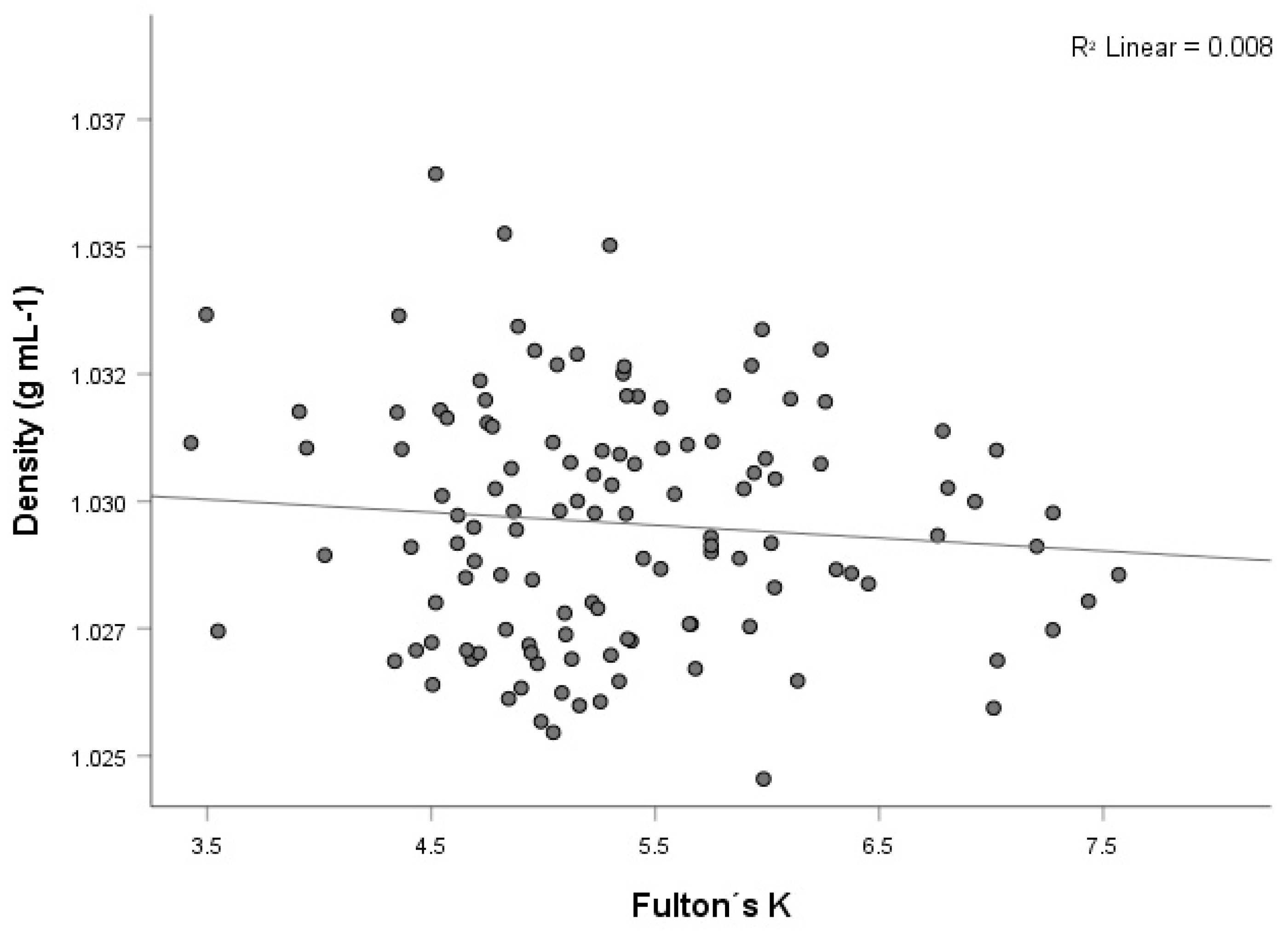
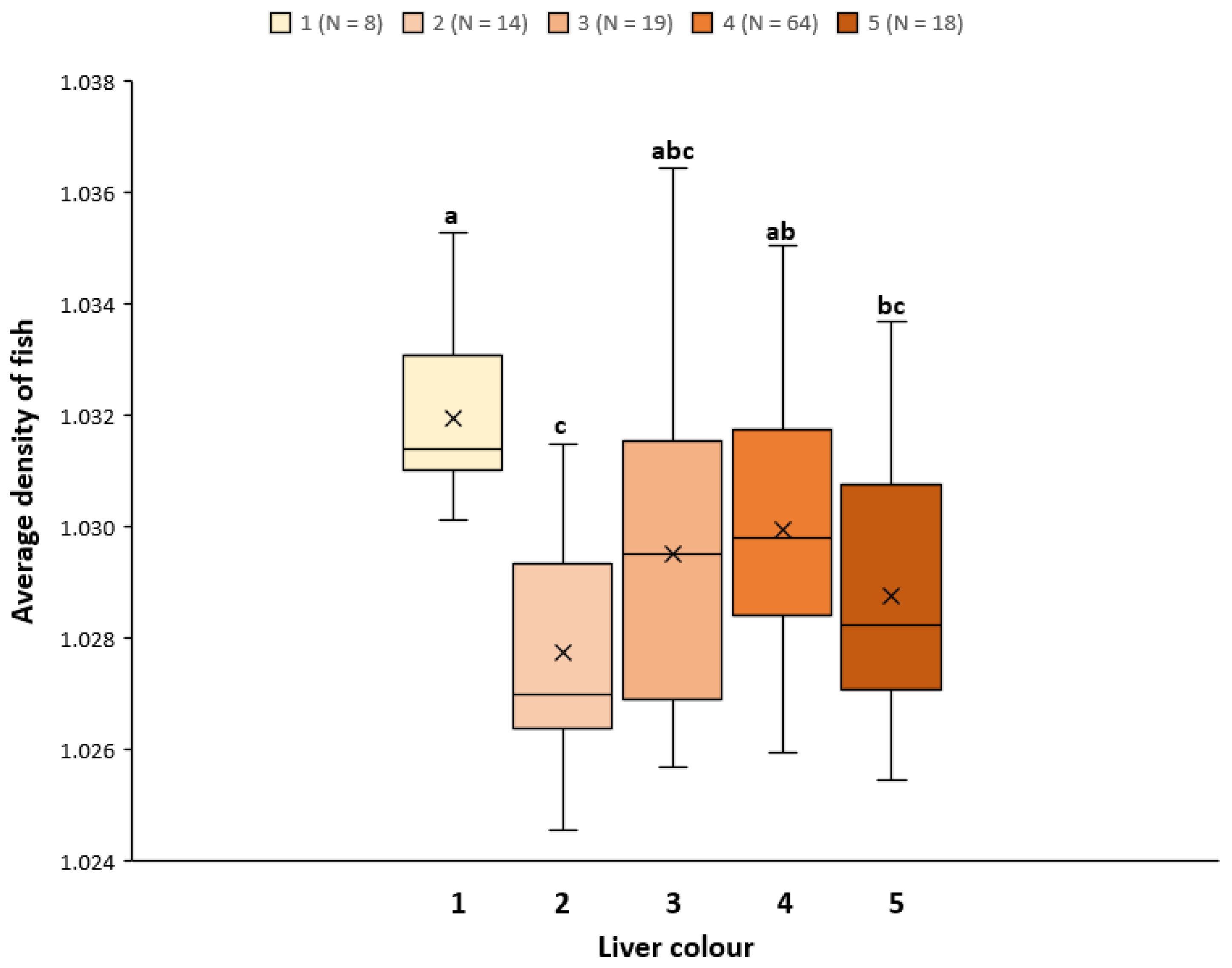
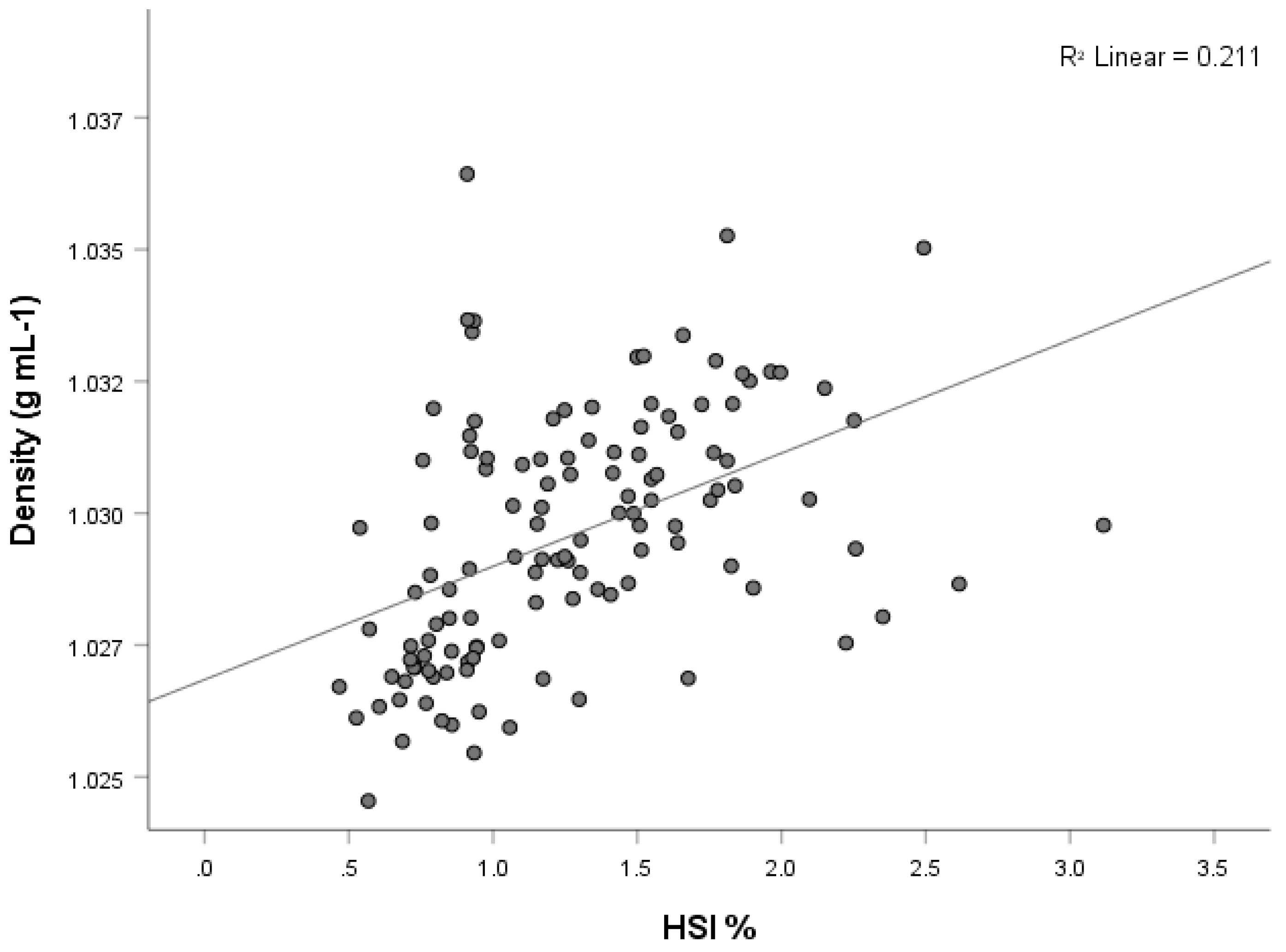
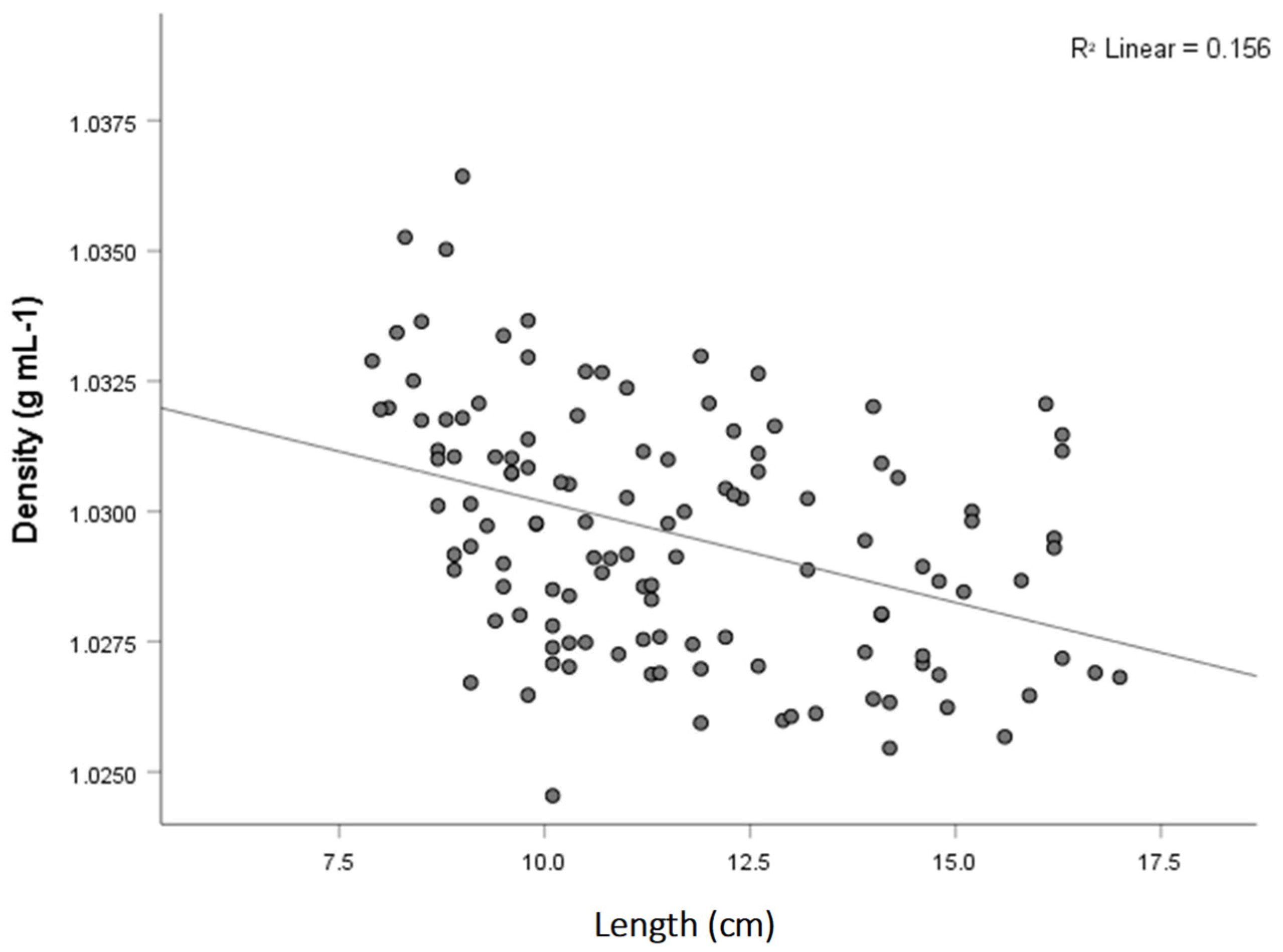
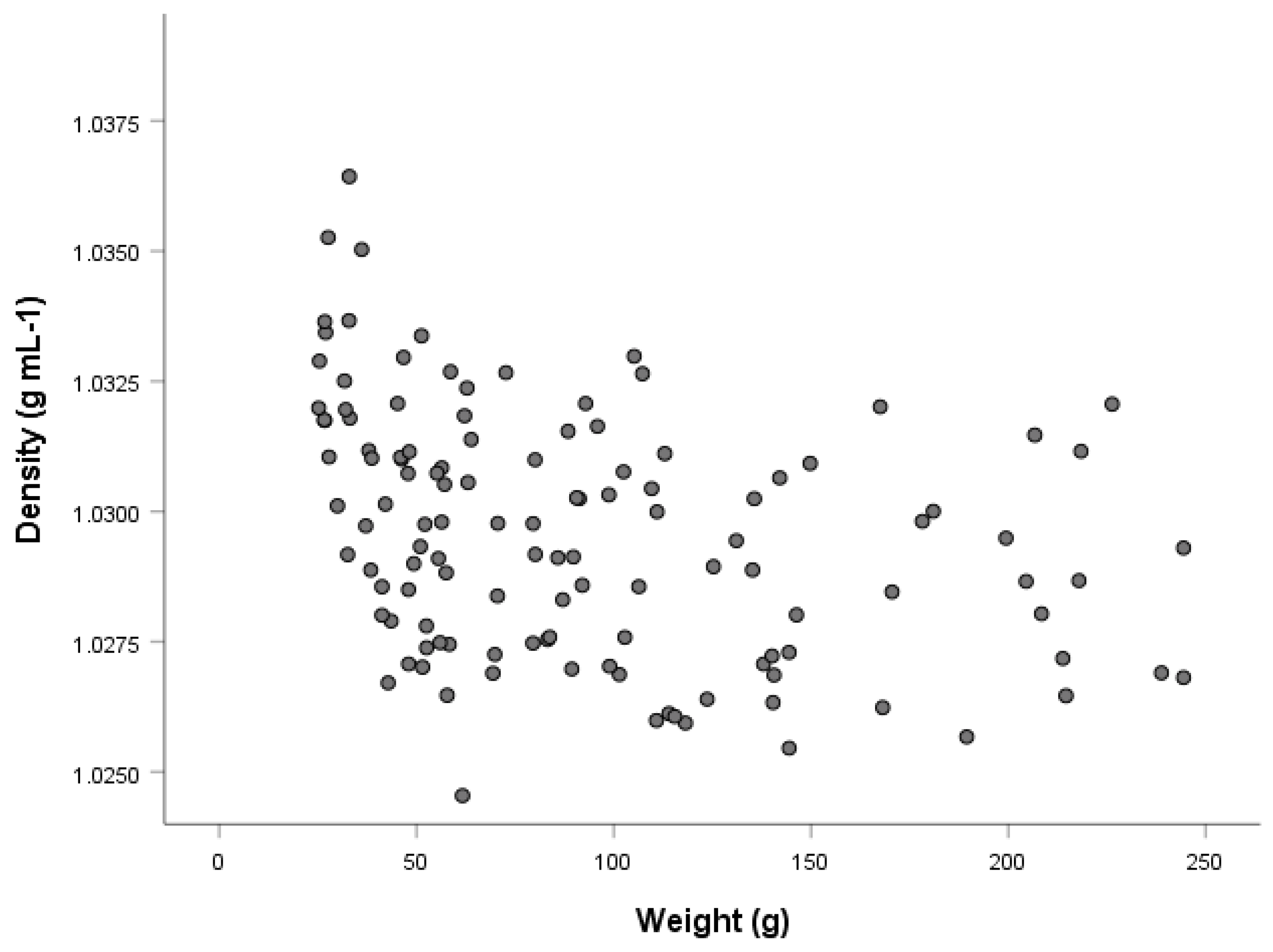
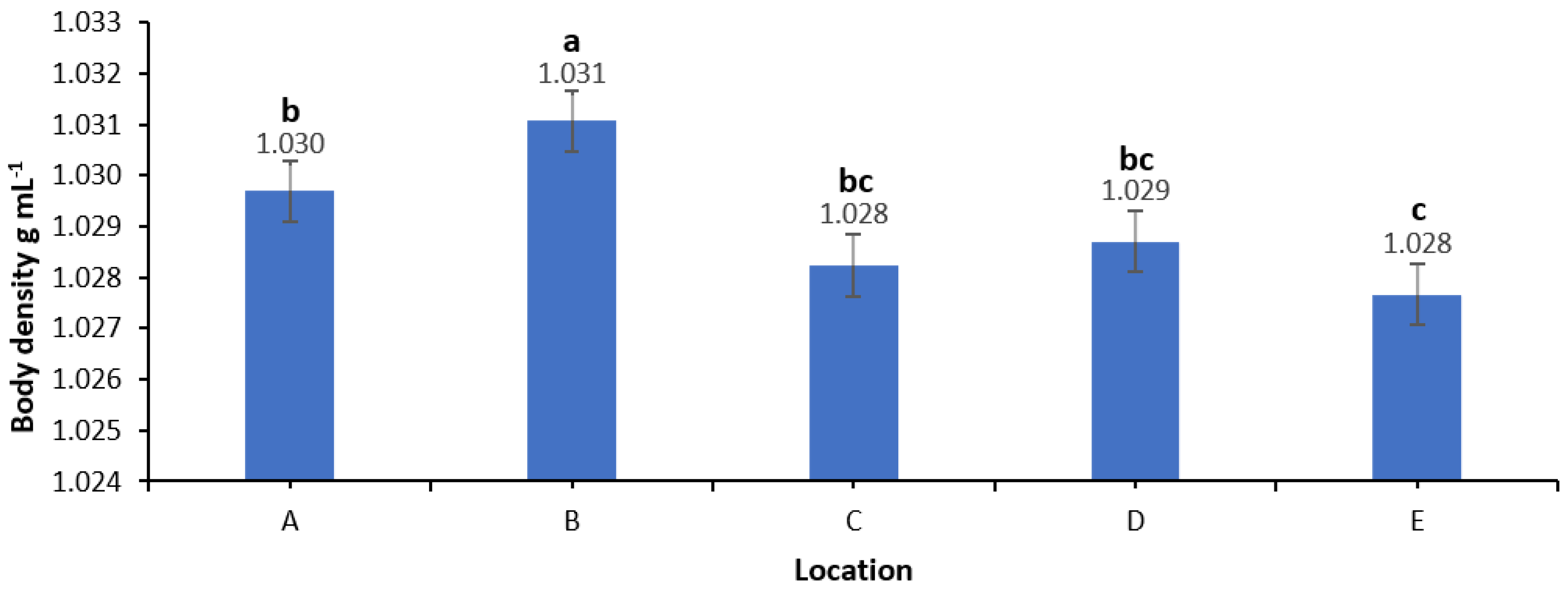
Farmed lumpfish (Cyclopterus lumpus) are commonly used as cleaner fish in the salmonid aquaculture industry, but a knowledge gap exists with regards to their body density. Filling this knowledge gap is of importance, as the lumpfish has no swim bladder and thus relies on alternative methods for buoyancy, i.e., the body density difference between the fish and its surroundings. The aims of this study were to measure the body density of lumpfish and investigate the correlation between body density and different operational welfare indicators. A total of 138 lumpfish were sampled at five different aquaculture sites situated in the Faroe Islands. Weight in water and air was measured, body density was calculated, and operational welfare was assessed. The average body density of the juvenile lumpfish was 1.030 g mL−1. Fulton’s K, stomach score, and length were negatively correlated to body density, while the hepatosomatic index was positively correlated to body density. Liver colour was correlated to body density, but the groupings were too broad for a final definitive conclusion. The knowledge gained from this study might help the industry improve their understanding of the operational welfare indicators used for lumpfish. Additionally, the knowledge might also help the aquaculture industry improve their husbandry and feeding practices.
Keywords: aquaculture; buoyancy; body density; lumpfish; operational welfare indicators aquaculture; buoyancy; body density; lumpfish; operational welfare indicators