1. Introduction
The Pacific sardine (
Sardinops sagax; hereafter sardine) are a small, coastal pelagic fish that range from southeastern Alaska, U.S., to the Gulf of California, Mexico, off the Pacific Coast of North America [
1]. Throughout its range, the species serves as an important prey species for birds, marine mammals, and predatory fishes [
2,
3], and it has supported important commercial fisheries in the U.S. and Mexico [
4,
5]. Similar to other clupeoid fishes, sardine naturally undergo large and rapid fluctuations in distribution and abundance in response to changes in environmental conditions that impact spawning, recruitment, feeding and other vital processes [
6,
7,
8]. They exhibit an opportunistic life history strategy that is linked to their population dynamics in relation to environmental forcing and that is characterized by fast growth, early maturation (age at 50% maturity is 6 months old [
9]), a small body size, a short lifespan, and a high natural mortality rate, and which has evolved to succeed in highly variable environmental conditions [
10,
11,
12].
In times of high abundance, sardine are found throughout their range, with their northern extent expanding farther north in the summer [
13,
14]. This is because larger sardine travel longer distances along the U.S. Pacific Coast during seasonal north–south movements [
15,
16], while juveniles in U.S. waters are non-migratory and most common in nearshore waters south of Pt. Conception [
17,
18,
19]. The sardine fishery was first developed during a period of high abundance during World War I, with landings peaking in the 1930s at 700,000 mt per year [
20]. This was followed by a decline in abundance to very low levels from the 1960s to 1980s and the closure of the fishery in the mid-1960s [
21,
22]. In times of low abundance, sardine distribution is patchy and closer to shore, and does not extend as far north [
13,
14]. Sardine increased in abundance again in the late 1980s–2000s, and a new fishery arose in the 2000s [
23,
24]. In the 2010s, landings decreased and the estimated biomass dropped below the 150,000 mt harvest guideline threshold, and the commercial targeted U.S. fishery has been under a moratorium since 2015 [
22]. The importance of the sardine fishery has led to decades of population monitoring [
25,
26,
27,
28].
Paired age and length data for sardine have been generated consistently for nearly a century [
29,
30,
31,
32] and have been integral to the monitoring, assessment, and management of their fishery in the U.S., Mexico, and Canada (e.g., [
24,
27,
33]) as well as to investigations of the physical and biological drivers of their population dynamics (e.g., [
13,
16]). Since the development of the fishery, nearly all studies of growth in sardine have been regionally focused (e.g., [
9,
34,
35]). This is a result of logistical constraints (e.g., the large geographic range of sardine), international borders, and the hypothesized existence of three subpopulations of sardine that allegedly exhibit differences in growth [
13,
36]. The U.S. manages only a portion of the sardine population, the hypothesized northern subpopulation (NSP), which is reported to range from Alaska to northern Baja California, Mexico [
28,
37]. Two additional subpopulations that have been hypothesized to exist include a southern or temperate subpopulation (SSP) that ranges from Southern California, U.S., to the southern tip of Baja California, Mexico, and a warm subpopulation present in the Gulf of California (GOCSP [
13,
38,
39]). These hypothesized subpopulations, however, lack empirical and theoretical support [
12,
40,
41]. In addition, a recent review found no evidence of regional differences in growth in support of subpopulations (i.e., NSP and SSP) along the Pacific Coast [
12]. In light of this new research, the Pacific Fisheries Management Council is in the process of re-evaluating the sardine stock definition to determine if all sardine in U.S. waters should be defined as one stock [
42].
Butler et al. [
43] were among the first to use otoliths to age and model somatic growth in sardine off the U.S. Pacific Coast. Dorval et al. [
9] conducted the first statistically robust examination of growth patterns in sardine, investigating potential changes in the growth rate of sardine collected off California (NSP) in 1994 and from 2004 to 2010 in relation to changes in regional abundance following the recovery of the fishery in the 2000s. The study reported a compensatory relationship between growth rate and estimated population size, which they attributed to feeding conditions and density-dependent factors (e.g., intraspecific competition for resources). Dorval et al. [
9] concluded that temporal variations in the size and age distributions of sardine were a consequence of the recovery dynamics of the population. Given the importance of growth information to stock assessments of sardine and the possibility that growth is density-dependent, a reexamination of growth during the current period of low abundance is warranted.
More recently, several studies on sardine growth off Mexico have emerged. Enciso-Enciso et al. [
35] examined the growth of the hypothesized SSP off Baja California. Similarly, Nevárez-Martínez et al. [
34] examined the growth of the hypothesized GOCSP in the Gulf of California. Sardine off North America are all now considered to comprise a single biological population with no heritable differences in growth or other life history traits [
12,
40,
41], so comparing reported growth patterns is useful for understanding the influence of environmental conditions and other factors on growth in sardine.
The overall goal of this study was to provide an updated growth model for sardine off the U.S. Pacific Coast and to compare the results with previous studies. The first objective was to run simulations to investigate the effects of sample distribution on growth model parameters and to test for potential bias in our data. The second objective was to update the growth model for the hypothesized NSP of sardine during a period of low abundance (2012–2021). The third objective was to compare the sardine length-at-age and growth model parameters generated in this study to those reported in previous studies to evaluate evidence of spatial or temporal variations in growth.
4. Discussion
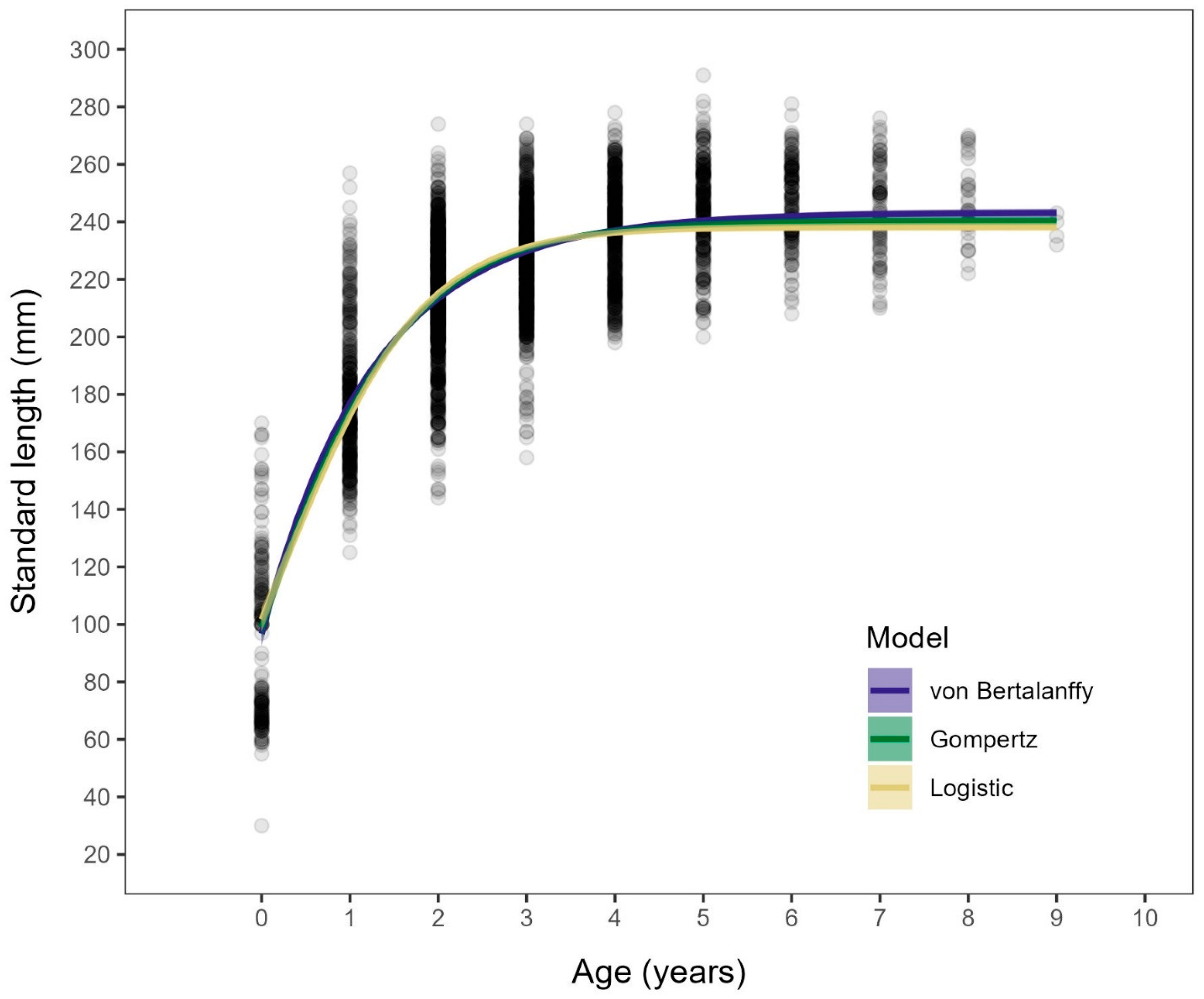
The present study provides an improved understanding of somatic growth of sardine off the Pacific Coast of the U.S. Growth of sardine was best explained by the VBM, which facilitated comparisons of the results of this study with those from previous studies that also used the VBM. The observed growth pattern fits that predicted for small, pelagic marine fishes that follow an opportunistic life history strategy (i.e.,
r-selected) and that flourish in variable environmental conditions with frequent disturbances [
10,
11,
64]. It also reflects how sardine grow fast during their first few years as non-migratory juveniles but grow slower as adults when more energy becomes allocated towards reproduction and migration, which is an evolutionary strategy observed in many fishes to increase survivorship during the juvenile phase and maximize lifetime fitness [
65].
Individual variation in sardine growth rate is high; in the current study the length-at-age varied by 150 mm SL within a given age class, and a 235 mm SL individual could occupy any of up to nine age classes. This pattern indicates that growth in sardine is phenotypically plastic at the level of an individual fish and varies spatially and temporally in response to the environmental conditions experienced during its lifetime [
12,
66]. Phenotypic plasticity in somatic growth is predicted for species and populations with large geographic ranges that span large environmental gradients [
67]. In sardine, each individual experiences large differences in environmental conditions in both time and space due to their broad geographic distribution, ontogenetic shifts in habitat and behavior, long-range seasonal migrations, protracted spawning seasons over a large spawning area, and other aspects of their life history [
12]. This is also true on small spatiotemporal scales; for example, sardine exhibit diel vertical movements from deeper waters to the surface, and an individual may experience temperatures from 5.6 to 18.0 °C [
68]. Phenotypic plasticity in growth was first suggested for sardine by Phillips [
69] and is still supported, particularly in light of the lack of heritable (genotypic) differences among hypothesized subpopulations [
12,
40,
41]. Large variations in individual length-at-age at seasonal, annual, and interannual time scales both within and among regions and fishing ports [
9,
13,
69,
70] may dampen any true signals of growth variation, either temporal or spatial [
12].
When modeling somatic growth in fishes, it is important to sample fish from each age and length class in sufficient quantities regardless of their relative abundance in order to generate robust growth models and avoid invalid conclusions about growth [
71,
72,
73]. This is because length and age data used to model somatic growth in marine fishes are highly susceptible to sample distribution bias, particularly for short-lived, fast-growing species [
50,
74]. For example, Bolser et al. [
50] demonstrated that a biased sample distribution can result in an underestimated
L∞ and an overestimated
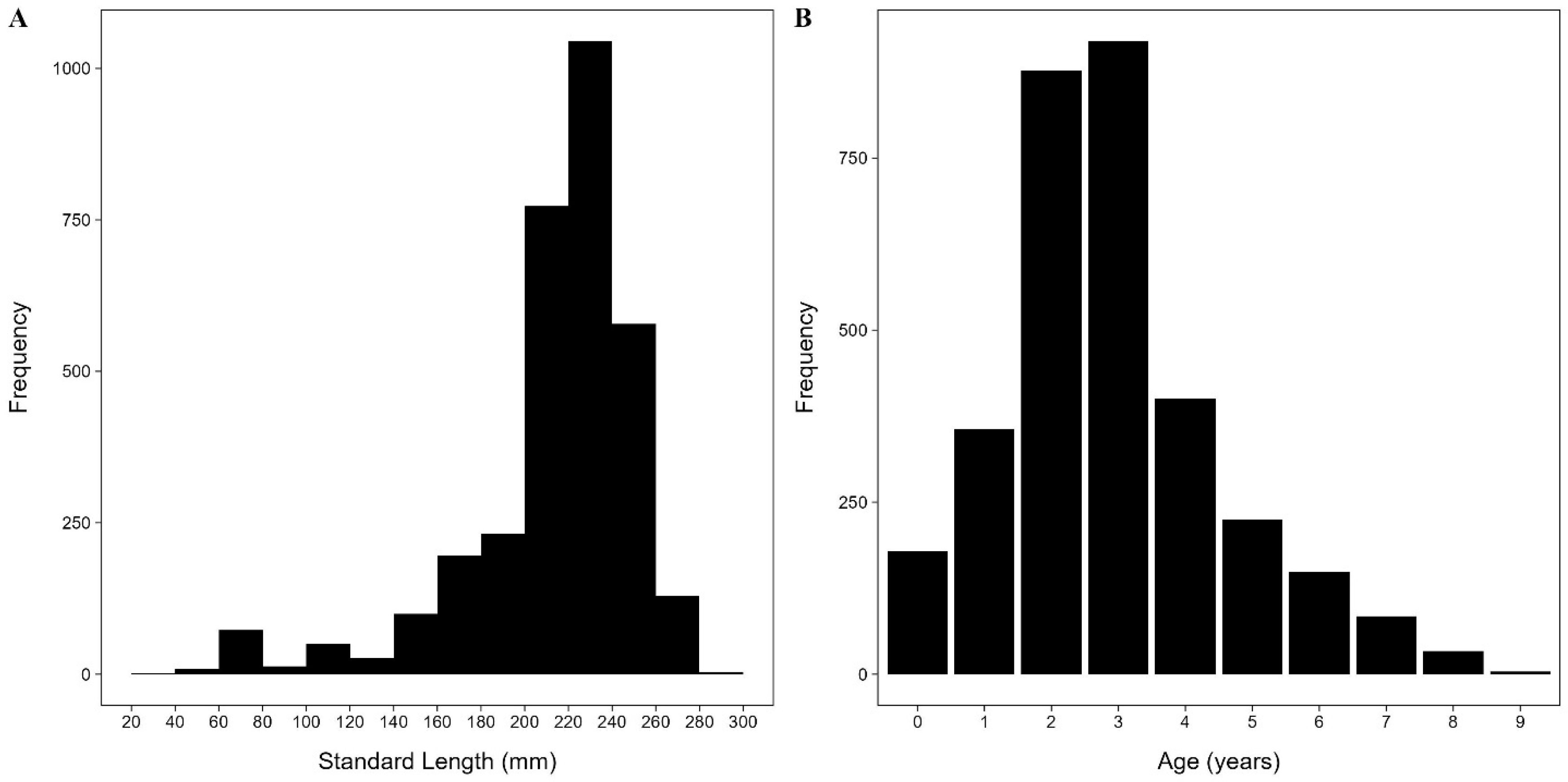
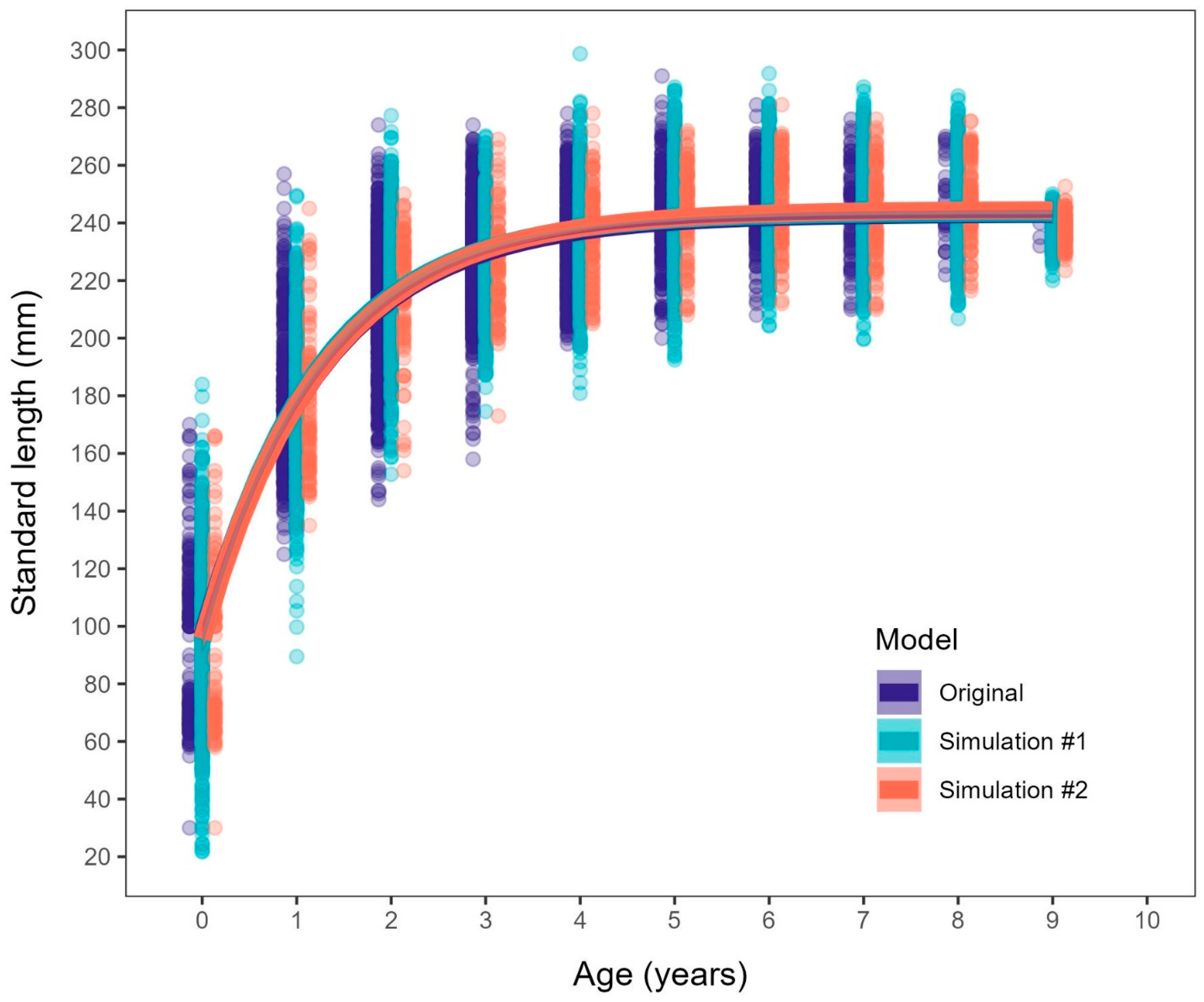
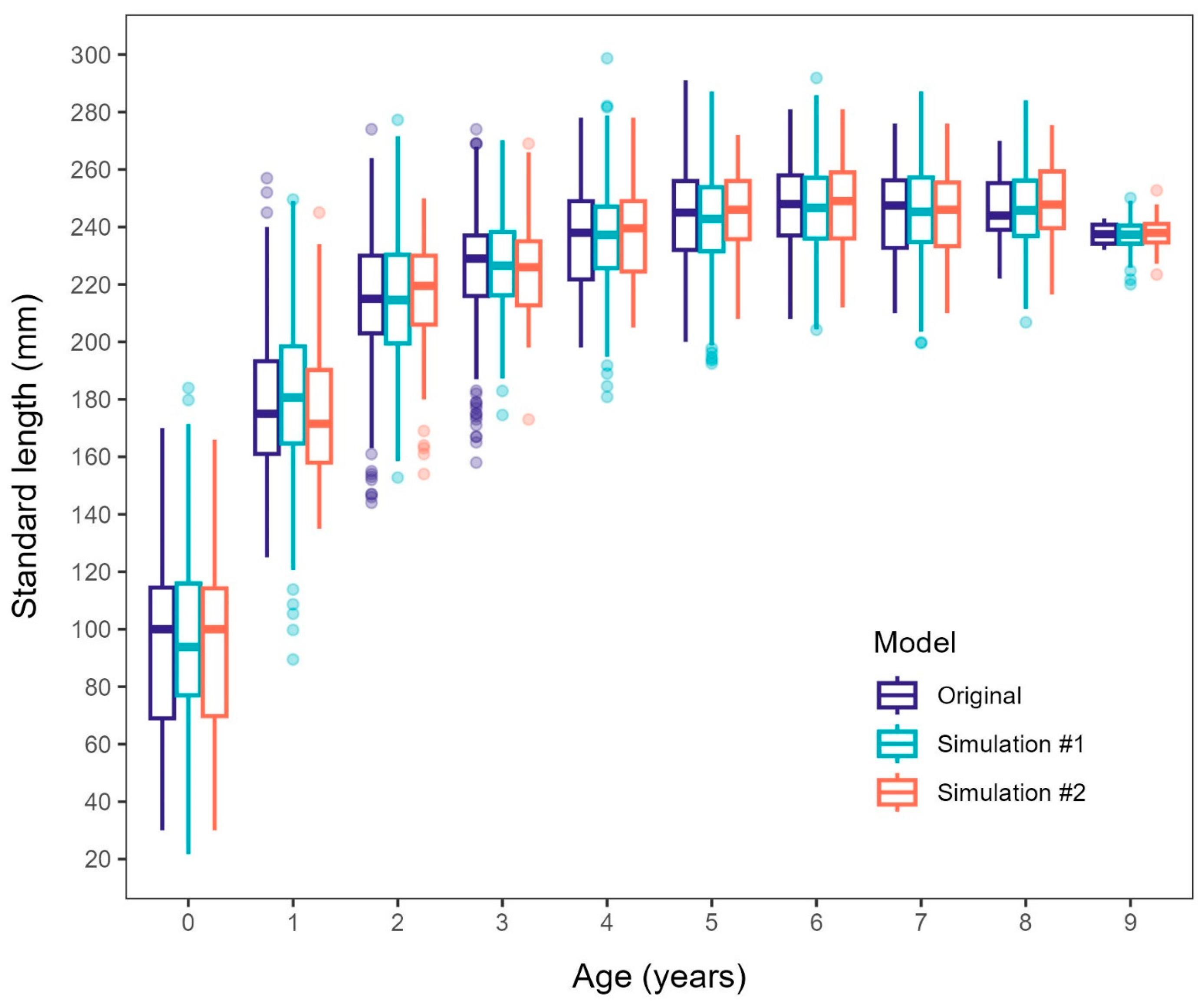
K, stressing the importance of sufficiently sampling each size and age class. For this study, we analyzed 9 years of paired age and length data (2012–2021) that represented the full length (30–292 mm SL) and age (0–9 years) distribution of the species to generate a growth model of sardine during the recent period of low abundance. The results comparing the sample distributions and parameter estimates between the original dataset and the two simulations confirmed that the VBM was robust, and the dataset contained a sufficiently large sample size, length distribution, and age distribution to accurately represent the growth of the population.
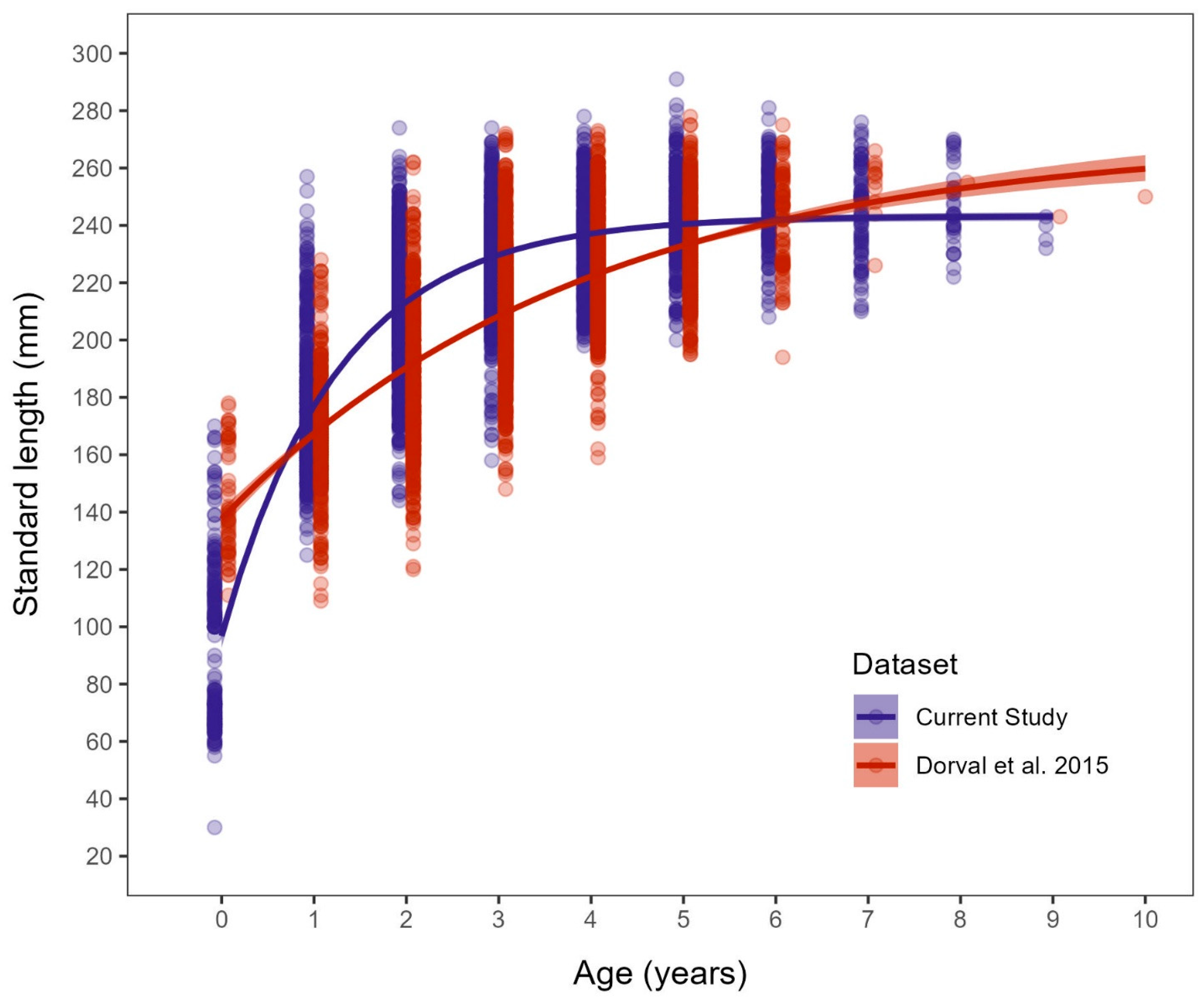
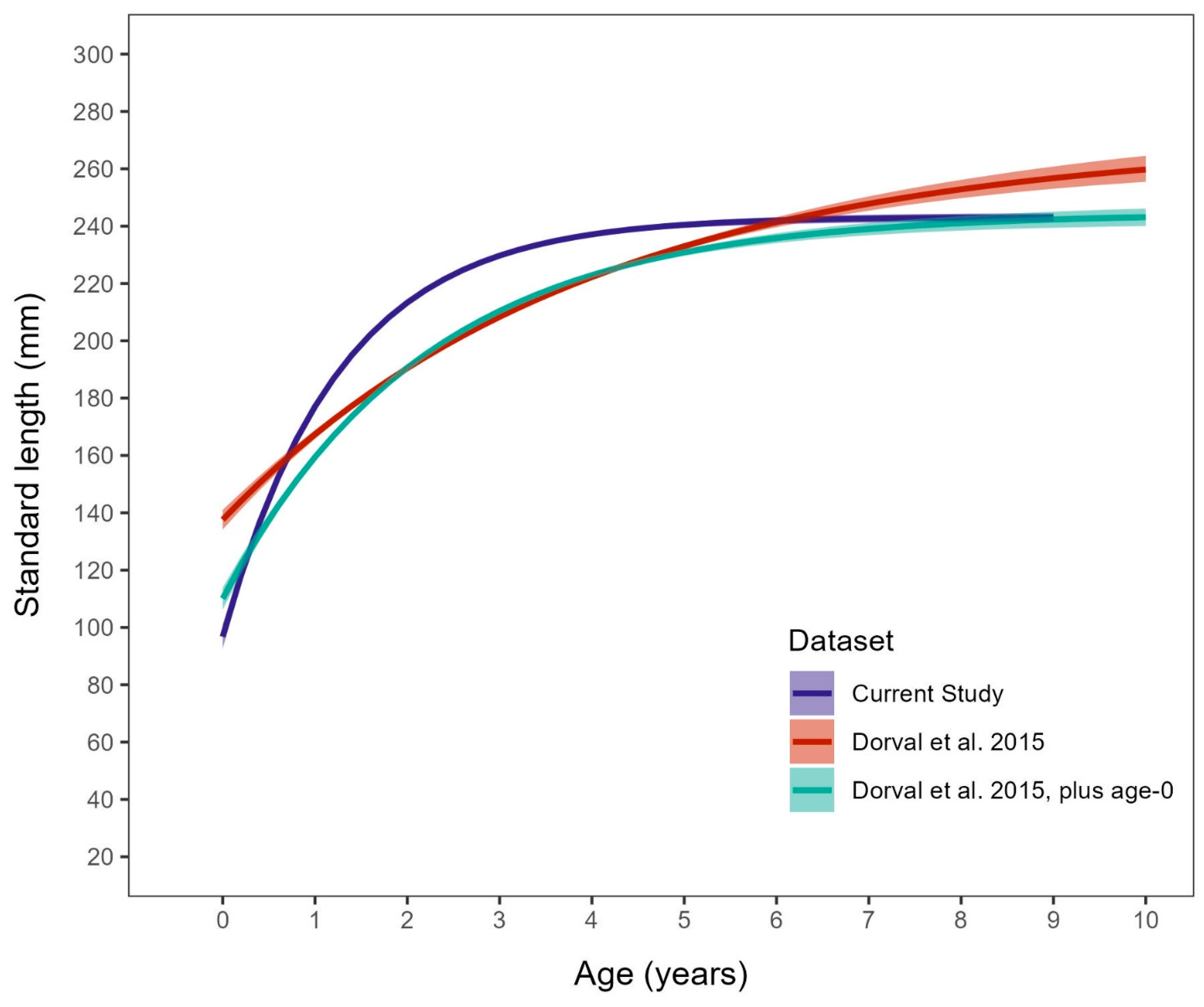
The growth parameters described among the studies we compared varied considerably. This variation could be derived from individual variation, actual differences in growth, or artifacts of sampling bias. All of the comparison studies lacked young, small fish (<100 mm SL), which led to the underestimation of
K [
50,
71]. With the length-at-age of the current study and Dorval et al. [
9] plotted side-by-side (
Figure 6), the effect that having fish < 100 mm SL has on the VBM parameters is apparent. To illustrate this, we added the small age-0s from the current study to the Dorval et al. [
9] data (
Figure 7). The addition of these small age-0s made the shape of the VBM more similar to the current study, and the resulting
K would be larger than the original in Dorval et al. [
9]. Instead of underestimating
K, Butler et al. [
43] chose to fix
t0 at 0 due to a lack of young, small fish, which resulted in the overestimation of
K and the underestimation of
L∞ [
71]. Given the fixed
t0 and low accuracy and precision in age estimates, the authors concluded that it was uncertain whether their resulting growth parameters were valid [
43]. Nevárez-Martínez et al. [
34] and Enciso-Enciso et al. [
35] reported smaller estimates of
L∞ than the current study and Dorval et al. [
9], which was likely driven by the lack of large (>226 mm SL) fish in the studies from Mexico. This discrepancy in sample distributions across studies presented challenges when comparing growth patterns among studies.
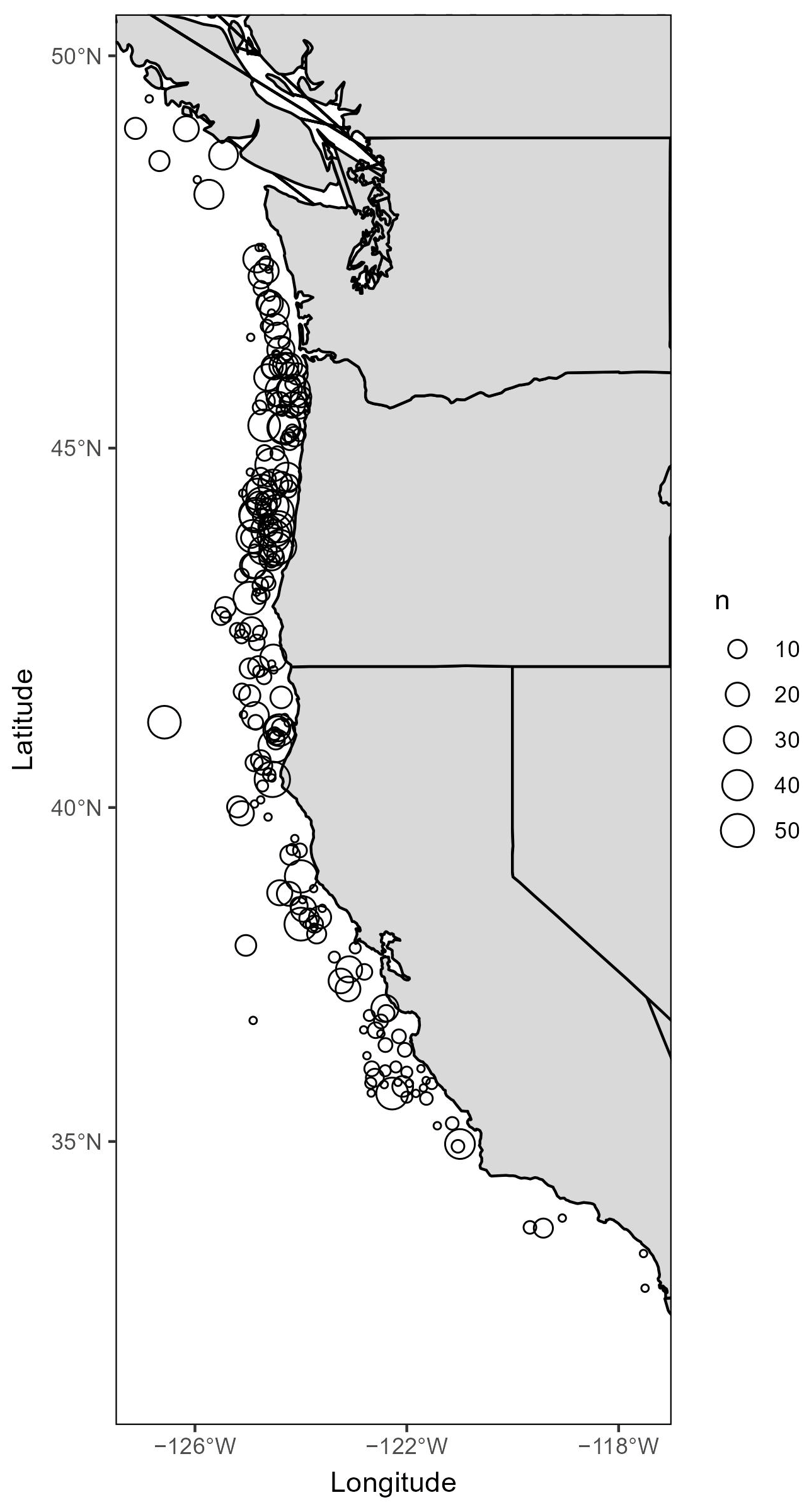
Sampling in different regions can contribute to differences in sample distributions across studies. The studies compared here generally had abutting geographic ranges but little overlap. The movement patterns of sardine are understudied, but Clark and Janssen [
15] recovered tagged sardine that had traveled both north and south between fish reduction plants from Bahía Sebastián Vizcaíno, Baja California Sur, Mexico, to Vancouver Island, British Columbia, Canada, and demonstrated that larger fish move more extensively. McDaniel et al. [
16] examined the age-at-length distribution of the NSP of sardine along the Pacific Coast of the U.S. and concluded that sardine aged 2 and older conduct seasonal northward and offshore movements. In U.S. waters, juvenile fish are most common in the nearshore south of Pt. Conception [
17,
18,
19]. Dorval et al. [
9] focused on the sardine core spawning area in offshore California waters; thus, they did not sample nearshore juvenile habitats, leading to a lack of small and immature age-0 fish. Therefore, size- or age-based movement patterns of sardine throughout their range may affect the availability of specific age classes in some regions during the times when sampling occurs (e.g., the Southern California Bight or Baja California and the Pacific Northwest). For example, the CPS Survey is conducted during the summer and fall when larger and older sardine that seasonally migrate are more abundant off the Pacific Northwest and less common off Southern California. This geographic separation of sizes could lead to erroneous conclusions about regional growth differences when the entire life history of sardine is not considered [
12].
Another factor that may contribute to the differences in sample distribution is collection method. The current study and Dorval et al. [
9] collected sardine via a fishery-independent survey that used a surface trawl at night with an 8 mm mesh codend [
46]. The lack of small sardine collected for Dorval et al. [
9] likely has more to do with season (see below) and location (see above) than with collection method. Both studies from Mexico relied on samples from fishery-dependent sources that used purse seines with a 25 mm mesh size [
34,
35]. The small mesh size of the fishery-independent collection would allow smaller sardine to be collected than those collected by the mesh used to collect fishery-dependent samples in Mexico. Additionally, Enciso-Enciso et al. [
35] recognized that fishery-dependent collection may not sample the entire size range of the population, as small fish may not be recruited to the fishery and larger fish may be less abundant due to exploitation.
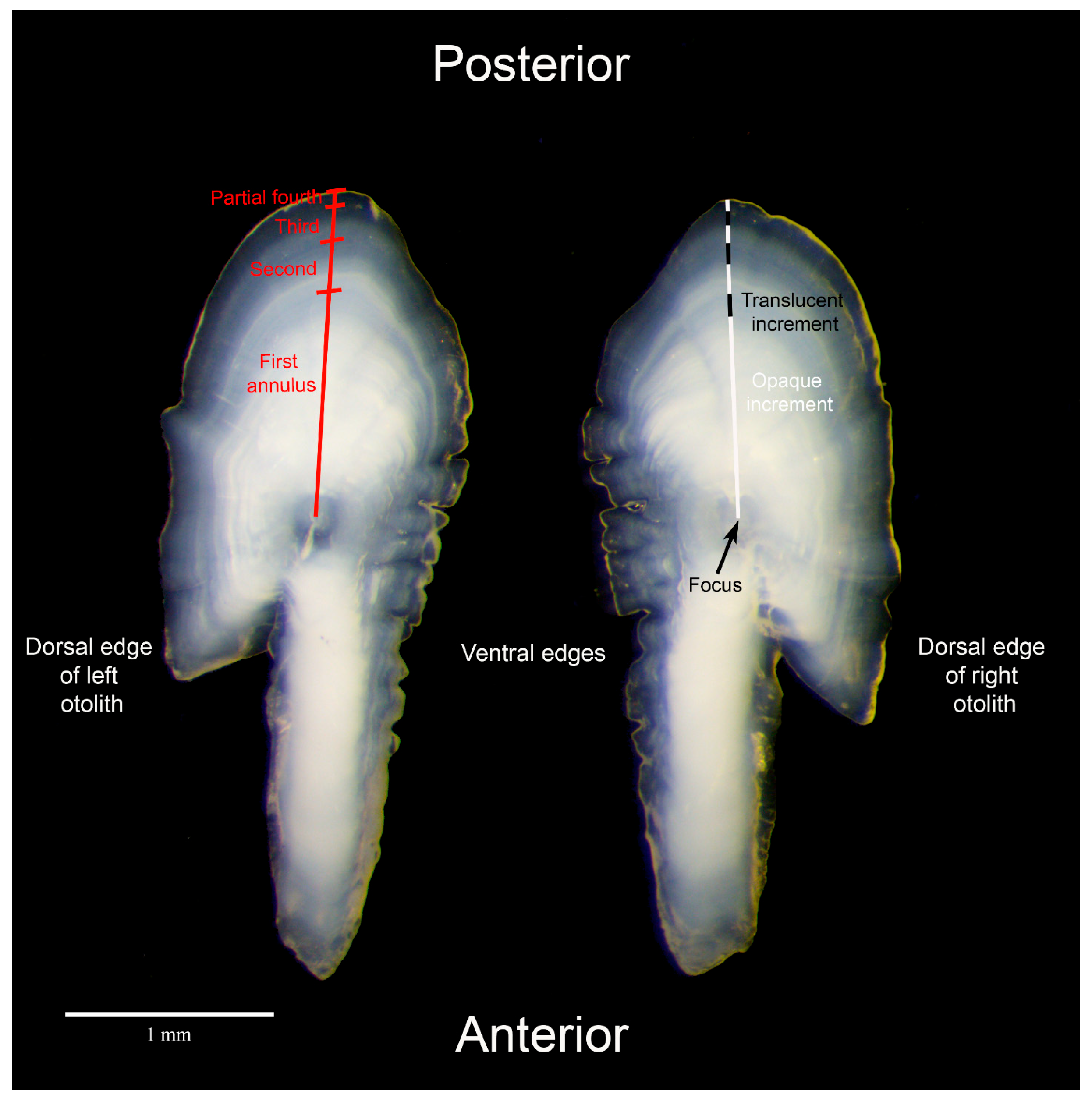
An often-overlooked factor that directly influences estimates of length-at-age is the aging protocol, which differed between the U.S. and Mexican studies. For the present study and that of Dorval et al. [
9], a July 1 birthdate and the catch date are used to assign a final age and allow their allocation to a respective year class [
32]. In contrast, no birthdate is assumed for fish collected off Baja California, and all ages are assigned based on a calendar year [
32,
35]. Additionally, there was a difference in the precision of final ages between the U.S. and Mexican studies. The Mexican studies used decimal ages at 0.5-year intervals, whereas the present study and Dorval et al. [
9] aged sardine using annual increments. These differences in aging protocols could lead to small deviations in final age assignments (e.g., ±1 year), and given the short lifespan of sardine, these could produce very different modeled growth patterns and parameter estimates [
75,
76].
Season may also contribute to the differences in sample distribution among studies. Collections for each study were performed over different seasons, and this may have affected what sardine were available for collection. Dorval et al. [
9] collected samples during spring between San Diego, CA, and San Francisco, CA, targeting adult sardine to assess the spawning stock biomass of the NSP. The historic fishery off Monterey, CA, did not collect fish smaller than 180 mm SL, and spring is the only time fish larger than 180 mm SL were found off San Diego, CA, within 15 miles of the coast [
77]. Spawning is constrained by temperature [
78,
79,
80] and other oceanographic factors [
81] and while it can occur year-round it often has a peak in the Southern California Bight in spring and early summer (reviewed in [
40]). Following the growth of sardine from hatch during peak spawning to the next spring when collection for Dorval et al. [
9] was occurring, the available sardine would almost be 1 year old, which would correspond to fish greater than 100 mm SL. This combination of season, region, and target (adult sardine) would explain why there are no sardine < 120 mm SL in Dorval et al. [
9]. In contrast, the current study collected sardine from June through September in most years, when fish a few months old and less than 100 mm SL were available to the net.
There has been a longstanding debate on whether density-dependent processes influence population dynamics (e.g., stock–recruitment relationships) in sardine, but findings have been inconsistent, ranging from a strong relationship to no relationship at all [
20,
82,
83,
84,
85,
86]. Between the current study and Dorval et al. [
9] there are data on sardine growth across 17 years during both high- and low-abundance regimes. Dorval et al. [
9] collected sardine during a time of high sardine abundance and reported that growth rate (
K) and patterns in length-at-age of sardine cohorts born between 1986 and 2008 showed strong density-dependent effects, which they attributed to competition for resources (i.e., food availability). Given that our data were collected during a time of low sardine abundance, the higher growth rate and larger length-at-age for age classes 1–6 reported in the present study during a period of low abundance are consistent with these conclusions. The difference in stock abundance of sardine between Dorval et al. [
9] and this study is striking. Sardine age-1+ biomass in 1994 and from 2004 to 2010 ranged from 817,419 to 3,017,338, with an average of 1,757,353 across years [
21,
22]. In comparison, the sardine age-1+ biomass from 2012–2021 ranged from 73,147 to 468,607 mt with an average of 144,635 mt [
28]. While this correlation is compelling, we do not conclude that density dependence is the only plausible explanation (see other discussion points) for differences between the growth patterns reported in the current study and Dorval et al. [
9].
Evidence of regional differences in growth patterns is also equivocal. The differences in reported growth parameters between studies in different regions can be explained by numerous factors related to sampling and methodological approaches. Moreover, the migratory behavior, broad spawning season and other aspects of the life history of sardine mean that individuals experience and respond to the environmental conditions of multiple regions. The seasonal and annual conditions of the entire species distribution itself are incredibly variable and dynamic, which is reflected in their high growth variation and large fluctuations in abundance. Therefore, while regional variations in growth are a plausible explanation for the differences in growth parameters between the current study, Nevárez-Martínez et al. [
34], and Enciso-Enciso et al. [
35], they are not the only plausible explanation.
Challenges in attempting to separate the drivers and relative influence of spatial and temporal variations in growth patterns are not unique to sardine. For example, age and growth studies on the European sardine (
Sardina pilchardus) also show large variations in growth parameters which have been explained by differences in sample distribution, environmental conditions, exploitation, and population structure [
87,
88,
89]. Density-dependent growth has also been proposed for the Japanese sardine (
Sardinops melanosticta) in relation to food availability [
90,
91]; however, the published results are conflicting [
92]. Additionally, Ohshimo et al. [
93] found no relationship between larval and juvenile growth and stock size and a recent review by Sakuramoto [
94] concluded that growth is determined by environmental conditions at the time of birth rather than density-dependent processes. Based on our results and our evaluations of other existing studies on sardine, we reached the same conclusion as authors studying sardine in other regions: without a method to control for these different explanations, we cannot conclude with any certainty which set—or, more likely, combination—of explanations (e.g., phenotypic plasticity, density dependence, sample distributions) best explains the reported differences in growth parameters between time periods, regions, and individual studies.




 ,
,