Article

Bioactive Compound Profile and Nutrition Values of Kava (Piper methysticum) Cultivated in Fiji

by
Tibor Pasinszki
1,*,
Deepti Darshani Devi
1 and
Melinda Krebsz
2,*
1
School of Sciences, College of Engineering and TVET, Fiji National University, Suva P.O. Box 3722, Fiji
2
Research School of Chemistry, College of Science and Medicine, The Australian National University, Canberra, ACT 2601, Australia
*
Authors to whom correspondence should be addressed.
Horticulturae 2025, 11(12), 1456; https://doi.org/10.3390/horticulturae11121456
Submission received: 2 November 2025 / Revised: 28 November 2025 / Accepted: 29 November 2025 / Published: 1 December 2025
(This article belongs to the Topic Nutritional and Phytochemical Composition of Plants)

Abstract

Piper methysticum G. Forst. (kava) is an important horticultural shrub of the Pacific, used as an ingredient of the intoxicating kava beverage, dietary supplement, and medicine around the globe. This study presents the first systematic evaluation of the phytochemical composition and nutrition values of roots and rhizomes of kava cultivated on three key kava-growing areas of Fiji (Rotuma, Kadavu, and Vanua Levu) by quantifying their kavalactone and flavokavain content, as well as measuring their calorific value, protein concentration and ash contents. Dried roots and rhizomes of the studied cultivars exhibited relatively high kavalactone concentrations (8.9–13.8 and 3.9–8.9 wt.%, respectively); favorable lactone profiles, with kavain as the major lactone component (2.1–4.6 and 1.1–2.6 wt.%, respectively); and low flavokavain contents (below 0.25 wt.%). The protein and ash contents of roots were measured to be 2.7–5.0 wt.% and 3.2–6.2 wt.%, respectively, and calorific values of roots were measured as 17.1–19.4 MJ·kg−1—values that are systematically higher than those found for rhizomes (1.6–3.2 wt.%, 2.3–4.6 wt.%, and 16.5–17.7 MJ·kg−1, respectively). A positive relationship between the calorific value and total kavalactone content was observed. A novel, unclassified kava cultivar (named Matanitabua) was discovered in Vanua Levu and identified as a noble kava cultivar.

1. Introduction

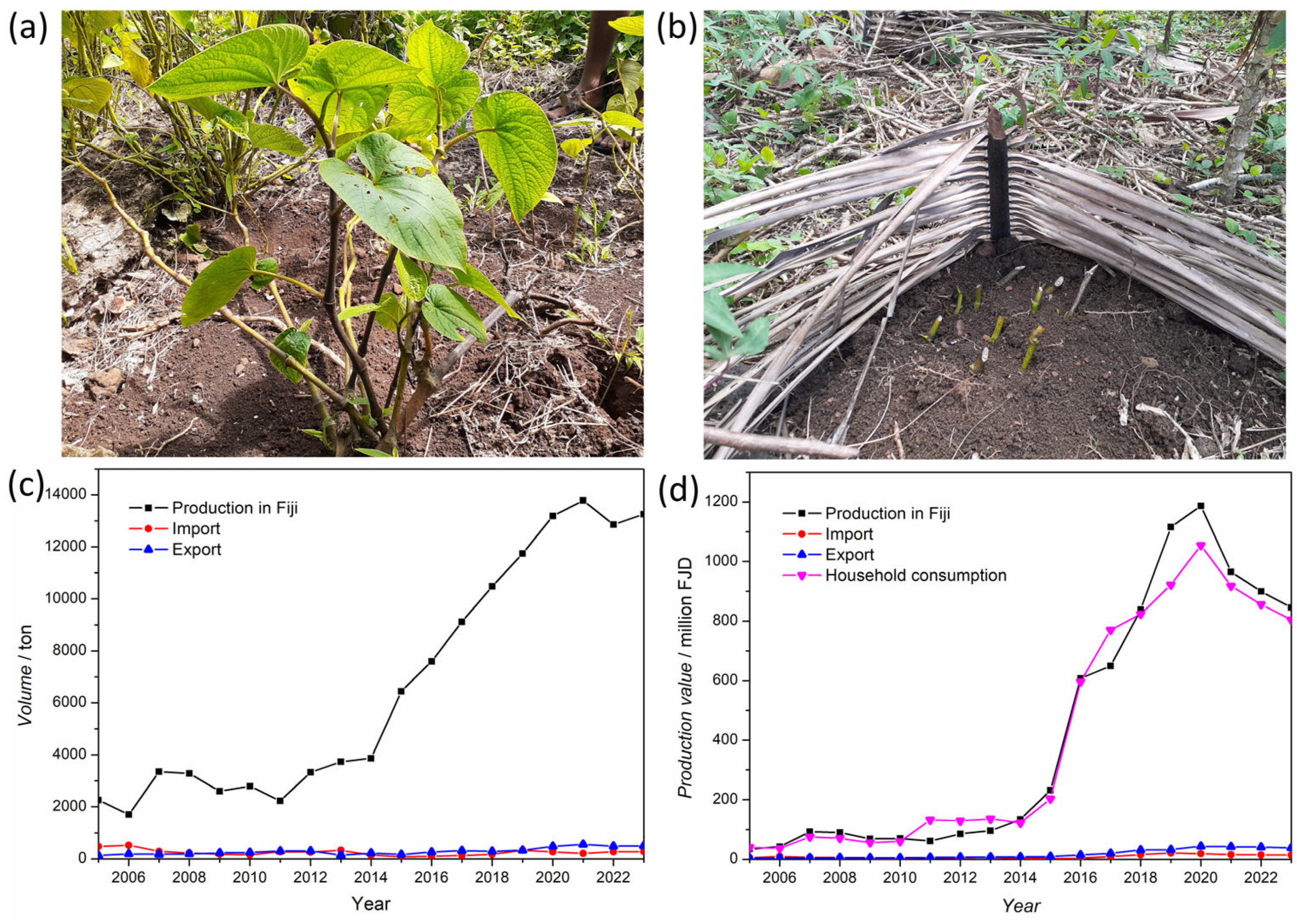
Kava (Piper methysticum G. Forst.), a perennial Pacific shrub (Figure 1a), is one of the most important horticultural commodities and cash crops of several Pacific countries, contributing to economic development through marketing and export. Major producers are Fiji and Vanuatu [1,2,3]. The shrub is the source of the traditional non-alcoholic and sedative kava beverage, which is prepared from the plant’s underground organs by soaking dried and ground plant material in water and filtering the suspension through a cloth strainer. Fresh juice squeezed from uprooted plant roots and rhizomes has also been consumed. The kava drink has been prepared in the Pacific for centuries and valued as a ceremonial drink [4,5,6,7,8]. In contemporary times, kava has become a dietary supplement, medicine, and recreational beverage. It is part of the diet at home, in addition to being consumed in kava bars and as a social drink at various events. Kava is marketed around the globe in both raw and processed forms, such as dried roots and rhizomes, dried and ground plant organs, fluid extracts, tablets, and dry-filled capsules [9,10,11,12]. Kava production of Fiji has strongly increased during the last ten years. The internal market is large, and consumption follows production (or vice versa) (Figure 1c,d). Fiji produced 13,260 tons of kava in 2023, with a market value of FJD 845 million Fijian dollar (about USD 380 million) [1]. Analysts expect the global kava market to grow in 2025 and following years [13,14].
The kava shrub is relatively large; can grow up to a height of 2–4 m; prefers shade, high relative humidity of 70–100%, and an average temperature of 20–35 °C; and favors friable, well-drained, deep soils that are rich in organic material and have a pH between 5.5 and 6.5 [5]. The slightly acidic volcanic soil in Fiji is appropriate for kava cultivation [15]. Based on variations in plant appearance—namely, leaf color, leaf lamina shape, stem color, position and color of lenticles on the stem, internode shape, and internode configuration—more than two hundred kava cultivars can be distinguished [4,5,15,16]. Domesticated plants are sterile and propagated by stem cuttings (Figure 1b). Kava is usually harvested between the age of 3 and 5 years, all year round. Based on traditional use, kava cultivars can be classified into four groups—namely, (1) noble kavas, with a long history of commonly safe consumption as a traditional social drink; (2) medicinal cultivars, with a proven and long history of beneficial therapeutic effects among traditional Pacific herbalists; (3) two-day cultivars (meaning two-day intoxication); and (4) ‘Wichmannii’ varieties (wild kava); the latter two groups elicit strong psychotropic effects, as well as side effects such as nausea and headache [17,18].
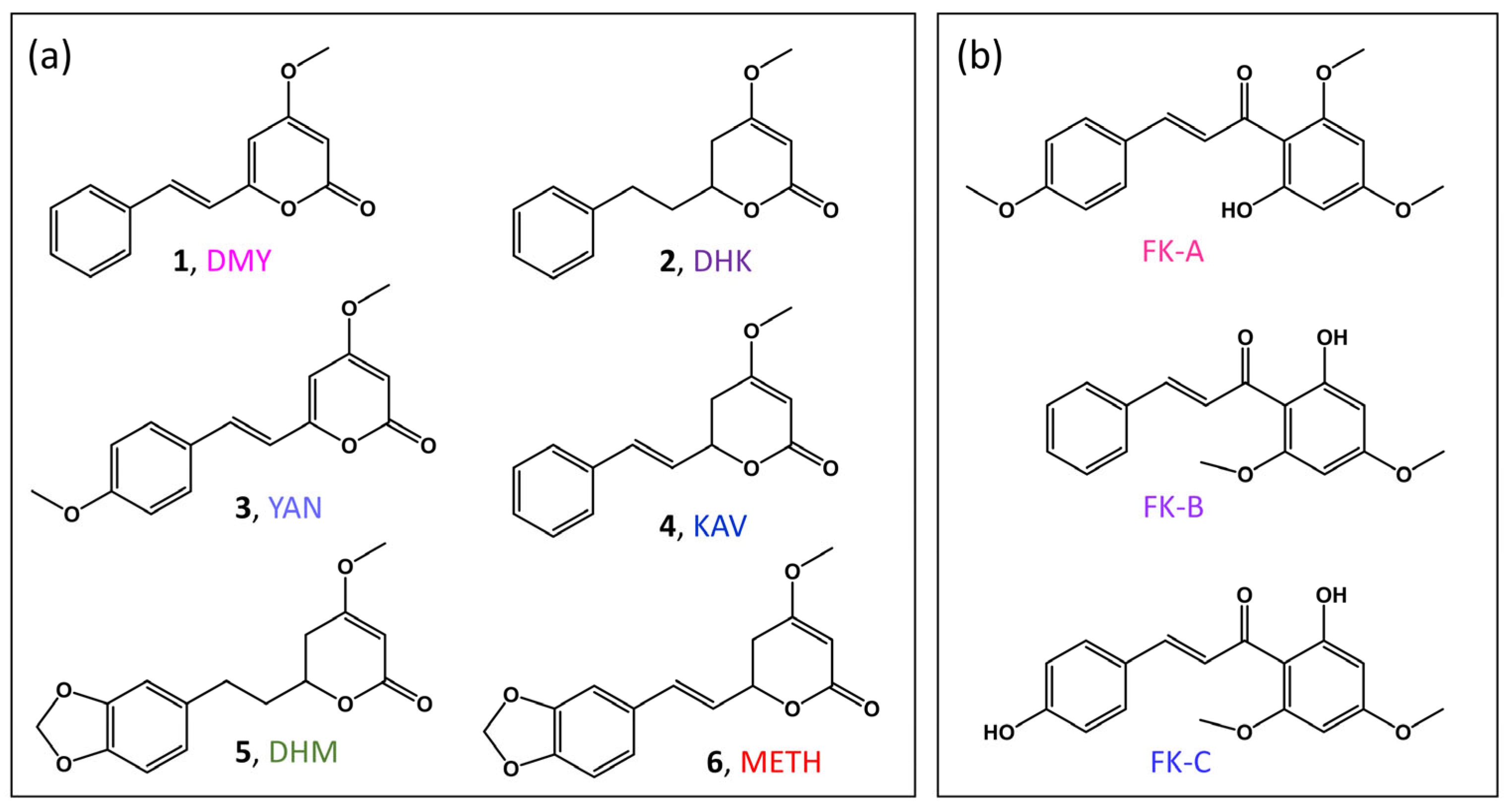
The kava plant produces biologically active and psychoactive compounds; the two major groups are the kavalactones (KLs) and flavokavains (FKs) (Figure 2) [7,19]. The absolute and relative amounts of KLs and FKs are principal determinants of the biological activity and chemical quality of kava and kava beverages, which strongly depend on the cultivar, plant organ, and growing area. A broad range of pharmacologic effects have been attributed to these compounds, including anxiolytic, muscle relaxant, stress-relieving, sedative, hypnotic, neuroprotective, anti-inflammatory, antitumor, analgesic, spasmolytic, and antithrombic effects [9,19,20]. Kava is also used as antidepressant and for the treatment of anxiety [11,21] and post-traumatic stress disorder [8]. The amount of FKs in kava is one to two orders of magnitude smaller than that of KLs [22,23]. Due to the very low concentration of FKs in kava, they do not contribute to beverage quality, but their elevated levels in kava extracts may present health risk due to their cytotoxicity. It is not known whether FKs produce physiological effects [22]. The most important properties of the beverage for social drinkers are its soothing and relaxing effects, which are the results of synergistic effects of all kavalactones. The total lactone content is responsible for the intensity and the lactone profile and for the quality of physiological effect, as different KLs have different properties [7]. To date, twenty kavalactones are known [24]; however, a smaller group of six kavalactones called major kavalactones account for about 96% of the total organic extract from kava [5,15,25]. Therefore, kava’s medicinal and psychoactive effects are mostly attributed to these lactones—namely, to desmethoxyyangonin (DMY), yangonin (YAN), dihydrokavain (DHK), kavain (KAV), dihydromethysticin (DHM), and methysticin (METH) (Figure 2). It is now known that the KAV content of kava is related to enhanced anxiolytic and relaxing effects, but high DHM and DHK levels cause headache and nausea [7,9]. Therefore, the chemical quality of kava is strongly connected to the KL profile. This is underpinned by ethnobotanical studies highlighting that kava drinkers prefer cultivars with high KAV and low DHM and DHK levels due to their pleasant and desirable effects [5,7,15]. There is a definite correlation between the lactone profile and traditional classification of kava; noble kava cultivars contain relatively high KAV and low DHM and DHK concentrations, but the relative amounts of the latter two undesirable KLs are higher in non-noble derivatives [9,23,26].
Kava is not free from side effects, such as dermopathy, gastrointestinal discomfort, nausea, and headaches. The most concerning is its potential hepatotoxicity [7,11]. Due to suspected hepatotoxicity, kava products were banned between 2002 and 2015 in Germany and other European countries and were placed on the warning list in the United States [11,27]. Hepatotoxicity is now believed to be linked to flavokavains, especially to FK-B, and the incidence of hepatotoxicity in the late 1990s and early 2000s may have been the consequence of either using non-noble cultivars and/or aerial parts of the kava shrub to produce kava products or adulteration or contamination [11,19]. The concentration of flavokavains in noble kava is lower than that of non-noble cultivars; non-noble kavas exhibit much higher FK/KL and FK/(YAN + DMY) values and lower K/FK-B ratios than noble plant varieties [23,26,28]. It is now widely accepted that the moderate consumption of kava prepared from underground organs of noble cultivars using traditional water extraction techniques is safe. According to the Codex Alimentarius Food Standards of the FAO-WHO, only roots, rhizomes, and basal stems of noble kava varieties shall be used as raw plant material for kava products for human consumption [29]. Therefore, separating noble and non-noble cultivars is a key food safety issue. Currently, thirteen classified noble kava variants are known to be cultivated in Fiji—namely, the Damu, Matakaro balavu, Matakaro leka, Dokobana loa, Dokobana vula, Qila balavu, Qila leka, Loa kasa balavu, Loa kasa leka, Yalu, Vula kasa balavu, Vula kasa leka, and Yonolulu varieties [29,30]. Major unique characteristics of these cultivars are highlighted in ref. [30].
The quality control of kava is essential for human health and should include both the selection of cultivars and plant organs at farms and testing of kava products for their KL and FK contents at production sites. It is imperative that farms, suppliers, retailers, and merchants sell only ‘safe’ products. Although the origin of kava cannot be identified after the plant is dried and ground, both the KL profile and the FK/KL ratio of processed products permit an unmistakable identification of noble kavas and assure the quality and safety of the kava [28]. The two major chemical quality markers are the total KL contents and relative amounts of KLs (KL profile or chemotype). The current chemical quality code for standardization of kava was proposed by Teschke and Lebot [31,32]. The code is based on the listing of the identification number of each major KL (Figure 2) in decreasing order of quantity (e.g., 462351). Unfortunately, printing these quality indicators on kava product packages is still not mandatory, and producers follow standard food industry requirements by providing information, for example, on calorific value and protein content.
Since the KL and FK contents of kava depend on cultivation area and plant type, creating KL and FK profiles for cultivars of various kava-growing regions and obtaining information on farming practices are important, as such profiles can reflect regional fingerprints. Considering the latter, the aim of the present study was to assess the quality of kava planted on Kadavu (the southernmost kava-growing region), Rotuma (the northernmost region), and Vanua Levu (largest kava-growing area) islands by quantifying the amounts of the six major kavalactones and three flavokavains in dried rhizomes and roots of local cultivars; twenty-three randomly selected farms were visited in 2023 and 2024, and one hundred and ten genuine kava plants were harvested. Kava is an important horticultural commodity and cash crop of family farms on these islands. It was established that visited farms in these three regions plant only noble kava cultivars with kavain as the major lactone component, which is vital for safety and quality; the KL profile, however, reflects regional fingerprints. In addition, to benchmark nutritional values, the protein content and calorific value of roots and rhizomes were also determined. An interesting positive correlation was found between the calorific value and the total lactone content of rhizomes and roots of studied plants.

2. Materials and Methods

2.1. Reference Materials and Solvents

HPLC-grade acetonitrile, absolute ethanol, glacial acetic acid, isopropanol, and methanol were purchased from ThermoFisher Scientific (Auckland, New Zealand) and Banksia Scientific (Bulimba, Australia). Ethanol (98%, analytical grade) was procured from Kaks Marketing (Suva, Fiji). A certified acetonitrile solution of the mixture of three flavokavains (25 ± 2 µg·mL−1 each) and six major kavalactones (250 ± 1 µg·mL−1 each) was acquired from the Cerilliant Corporation (Round Rock, TX, USA). The six pristine, crystalline major kavalactones and three flavokavains were supplied by MedChem Express LLC (Shanghai, China) and Biosynth Ltd. (Compton, UK). BBOT (2,5-Bis(5-tert-butyl-2-benzo-oxazol-2-yl)-thiophene) standard reference material for elemental analysis was purchased from IVA Analysentechnik Gmbh (Meersbusch, Germany). A Millipore Direct-Q Ultrapure H2O system was used to prepare ultrapure water (type 1, 18.2 MΩ·cm).

2.2. Kava Shrub Collection and Plant Material Treatment

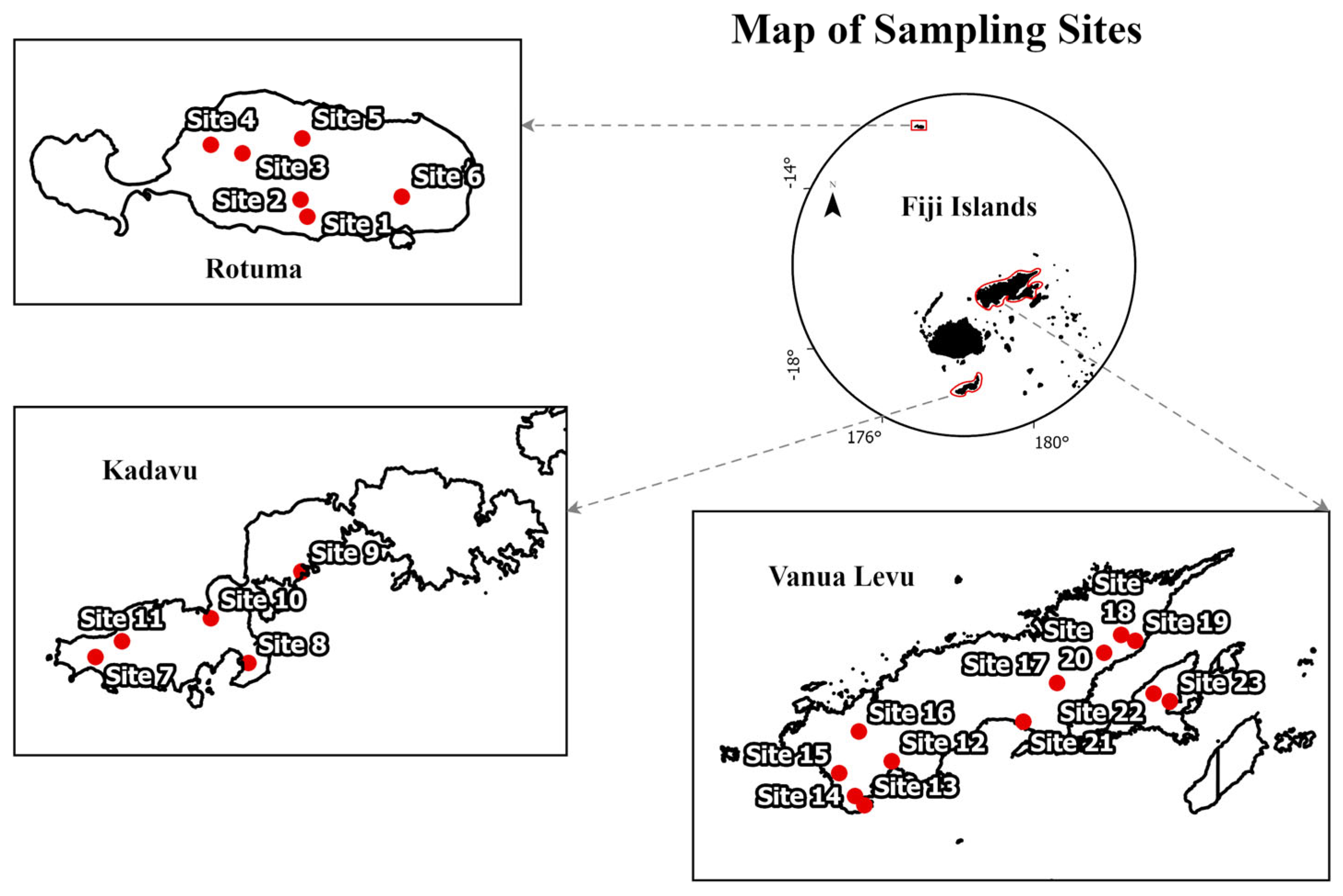
Six private family farms were visited on Rotuma in October 2023, five on Kadavu Island in January 2024, and twelve in Vanua Levu in March and May 2024 to collect plant samples. Sampling sites and the number of collected samples at each site are shown in Figure 3 and in the captions of Figure 3, respectively. Rotuma, Vanua Levu, and Kadavu have tropical rainforest climates with average yearly temperatures of 28.3, 26.5, and 26.2 °C and precipitation of 215, 164, and 155 mm [33], respectively. Soils in the investigated regions are volcanic soils [34,35]. It was found that farmers almost exclusively plant one kava variety in Rotuma, the Matakaro balavu; therefore, roots and rhizomes of fifteen Matakaro balavu plants were collected there. We note that we identified Qila leka and Loa kasa balavu varieties at one of the farms, but they were too young to uproot. Ten and thirteen different kava varieties were collected on Kadavu and Vanua Levu (one from each available variety from each farm). The ‘false kava’ plant (Piper auritum Kunth), used for spiking experiments, was obtained from a farmer in Taveuni (false kava does not contain kavalactones).
The rhizomes and roots of kava shrubs were pre-dried in the field after cleaning (rhizomes were sliced), and drying was completed in the laboratory by freeze drying. Roots of a plant were pooled; similarly, rhizome chips were combined. Dried plant tissues were ground using a coffee grinder to obtain fine powders for extraction. In addition, a freshly uprooted and undried plant was also transferred to the laboratory; it was immediately chopped and freeze-dried.

2.3. Extraction of Dried, Ground Kava

Our previously published method [3] was used with small modifications as follows. First, 1 g dried ground kava was extracted with 50 mL 98% ethanol in a sealed centrifuge tube at ambient temperature in the dark under continuous magnetic stirring for 1 h. The mixture was centrifuged at an rcf of 2300 for 30 min in the following step. An appropriate amount of extract was then sucked through a syringe filter disk (0.45 μm pore size) and filled and closed into a glass chromatographic vial for analysis. Two parallel experiments were conducted for each plant sample. Descriptive statistics were performed using OriginPro 7 software.

2.4. Instrumental Techniques and Measurements

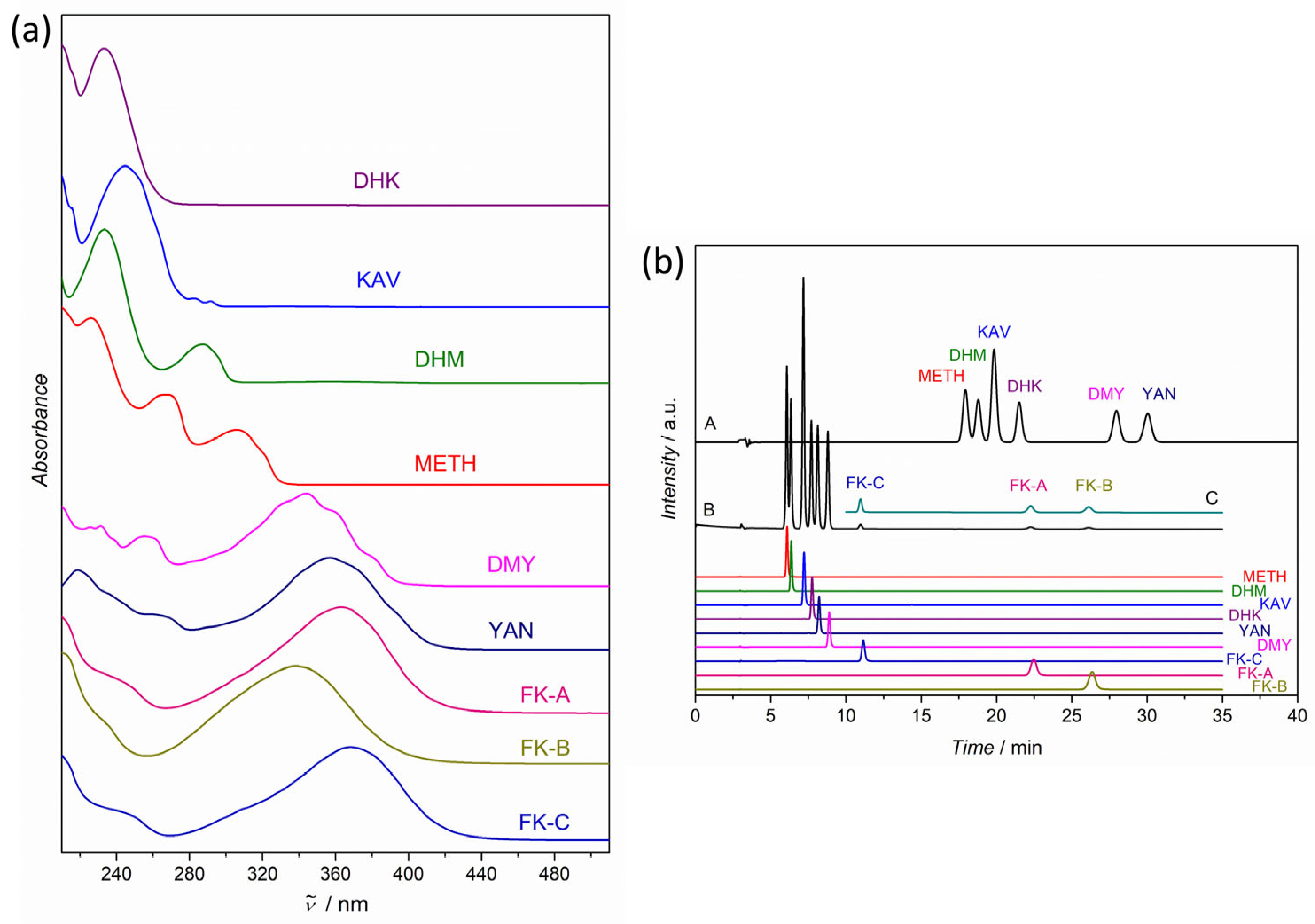
UV/Vis spectra of absolute ethanolic solutions of pristine kavalactones and flavokavains were recorded on an SP-MUV8000T Dual-beam UV/Vis spectrophotometer, applying a step size of 0.1 nm and wavelength accuracy of ±0.1 nm (Bioevopeak Co., Ltd., Jinan, Shandong, China) (Figure 4).
HPLC quantifications were conducted using a Thermo Scientific Dionex UltiMate 3000 (U)HPLC instrument fitted with a DAD-3000RS diode array UV detector (Auckland, New Zealand). Chromatograms were monitored at 240 nm for kavalactones and at 360 nm for flavokavains (Figure 4a,b). The kavalactone content of extracts was determined using the chromatographic method of Shao et al. [36]. The following HPLC conditions were used: isocratic elution on a YMCbasic S-5um reversed-phase analytical column (5 μm particle size, with length and I.D. of 25 cm × 4.6 mm, respectively; purchased from YMC Co., Ltd., Kyoto, Japan), a mobile-phase flow rate of 1 mL·min−1, injection of 5 μL sample solution, column temperature of 40 °C, and a mobile phase of water–acetonitrile–methanol–acetic acid (60:20:20:0.1 v/v%, mobile phase I) [36] for kavalactone and water–acetonitrile–isopropanol–acetic acid (60:20:20:0.1 v/v%, mobile phase II) [23] for flavokavain quantification (see Figure 4b). Calibration lines for the six kavalactones and three flavokavains were established by stepwise dilution of a mixed kavalactone and flavokavain solution (4 mM for each) prepared from pristine materials and ethanol as the solvent; linearity was determined and remained consistent during this study, covering the concentration range of 0.01–4 mM.
A Parr 6050 Bomb Calorimeter was used to measure the calorific value of dried root and rhizome samples (Moline, IL, USA). Ashing of samples was performed at 650 °C for 6 h using a Daihan Scientific 1200 °C Digital Muffle Furnace (Seoul, Republic of Korea). The protein contents of dried kava powders were measured using a ThermoScientific FlashSmart EA CHNS/O Elemental Analyzer (Auckland, New Zealand). Examples of the elemental analyzer chromatograms are shown in Figures S1 and S2 (Supplementary Material).

2.5. Methodological Validation

The solvent selection used for extraction was discussed in our previous paper [3], and methodological validation was performed as described recently [23]. The mixed kavalactone–flavokavain CRM was used to evaluate the accuracy of the HPLC measurement, and certified values of analytes were reproduced within the standard deviation (note that certified kava powder is currently not available on the market). The precision of the analytical procedure (involving both extraction and HPLC measurement) was evaluated by performing five replicate quantifications of the KL and FK contents of a selected kava root powder (Matakaro balavu from site 1). The relative standard deviations (RSDs) for all FK and KL analytes were below 1%. For analyte recovery experiments, 1 g ‘false kava’ root powder was spiked with a mixed ethanolic KL–FK solution containing 16 micromoles of each compound, and the spiked solid was extracted with 50 mL 98% ethanol. The recoveries were found to be between 98 and 100% for all analytes. The limit of detection (LOD) of the HPLC instrument was determined by measuring a dilute ethanolic solution of KLs and FKs containing 4 µM of each compound; the LOD was obtained by multiplying the standard deviation (SD) of seven repeated measurements by Student’s t-statistic value for a one-tailed test at the 99% confidence level [37]. The LOD values for KAV, DHK, METH, DHM, YAN, DMY, FK-A, FK-B, and FK-C were 0.11 (0.46), 0.05 (0.23), 0.10 (0.35), 0.26 (0.94), 0.05 (0.18), 0.03 (0.15), 0.11 (0.34), 0.11 (0.38), and 0.08 (0.26) μg·mL−1 (µM), respectively. Kava extracts prepared during this research contain much higher concentrations of KLs and FKs than those with corresponding limits of quantification (LOQ = 3.33 LOD).

3. Results and Discussion

3.1. Kavalactone Profile of Various Organs of a Dried Kava Shrub from Rotuma

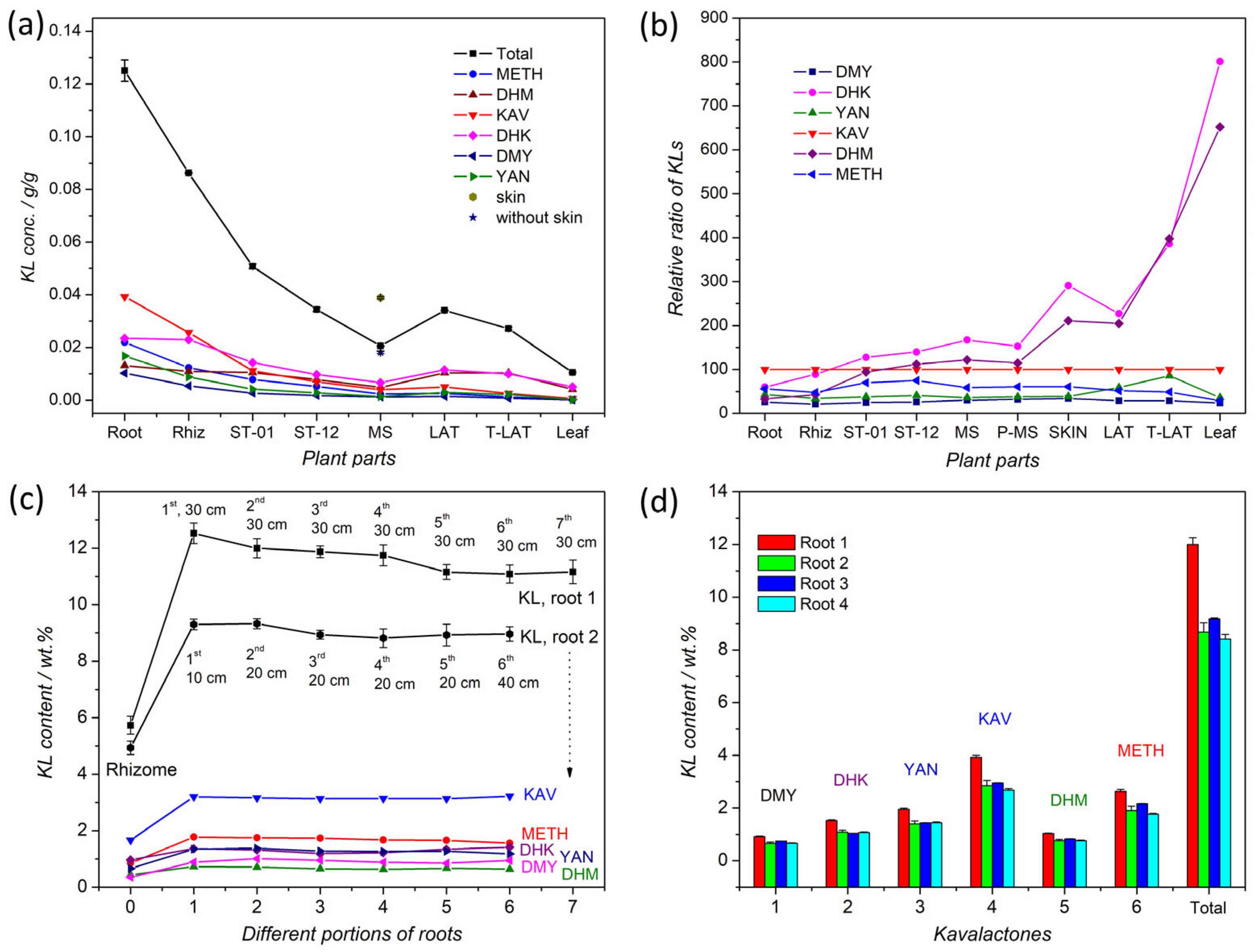
The variation of the total KL and water contents, as well as the KL profile in plant organs, was evaluated for a selected Matakaro balavu plant transferred to the laboratory right after uprooting (Table 1). Water contents of shrub organs were calculated as the mass differences of shrub parts after and before drying. The water content of plant organs was found to vary between 60 and 81%; the rhizome had the lowest water content, and the relative amount of water gradually increased from the rhizome toward the leaf. The skin of the middle stem (peeling, selected for comparison) contained a lower amount of water than the peeled stem. In line with previous studies [3,23], the total kavalactone content was measured to be the highest in the root of the shrub and gradually decreased toward the middle stem and remained low in the lateral stem and leaf (Figure 5a and Table 1; chromatograms are shown in Figure S3 in the Supporting Material).
The kavalactone concentration of the basal stem (considered between the rhizome and the first node of the stem) was only 41% of that of the root. In a selected case, for the middle stem, the difference between the KL content of the peeled stem and peelings (skin) was also determined; the skin contained 2.1 times higher levels of KLs than the peeled stem (Table 1). The KL profile of plant organs changed gradually from the root toward the leaf. KAV was the major kavalactone component in the roots and rhizome. Its amount in roots was higher than the sum of the two undesirable KLs—namely, DHK and DHM. However, the ratio of (DHK + DHM)/KAV gradually increased from the root toward the leaf, and DHK and DHM became the two major KL constituents in the stem, lateral stem, and leaf (Figure 5b), underlining that the aerial parts of the shrub are not favorable for human consumption.

3.2. Kavalactone Concentrations in Different Roots of the Kava Shrub

It is an interesting question whether roots of a plant are uniform concerning the KL concentration and profile and how this concentrations changes along the root. To study the latter, long roots were cut into smaller sections (see Figure 5c). It must be noted that finding roots that are longer than two meters is very rare. As Figure 5c shows, the total lactone contents of two selected roots of a plant (root 1 and 2) and their lactone profiles (shown for root 2) hardly changed along the root. However, the two roots had considerably different total lactone concentrations of 11.1–12.5 wt.% and 9.0–9.3 wt.%. To confirm this surprising result, four roots of another plant were also studied, which confirmed the same (Figure 5d). Due to this finding, three to six roots of a plant were pooled in this study, as results of pooled samples represent the lactone content of a kava plant better than a randomly selected root.

3.3. Kavalactone Profile of Kava Cultivars from Rotuma Island

Thirteen Matakaro balavu cultivars between the ages of two and seven years were uprooted on Rotuma Island (Table 2), and they all exhibited high total kavalactone contents—namely, 10.9–13.8 wt.% (mean and standard deviation: 12.4 ± 1.1 wt.%) and 4.8–8.9 wt.% (6.7 ± 1.3 wt.%) for dried roots and rhizomes, respectively.
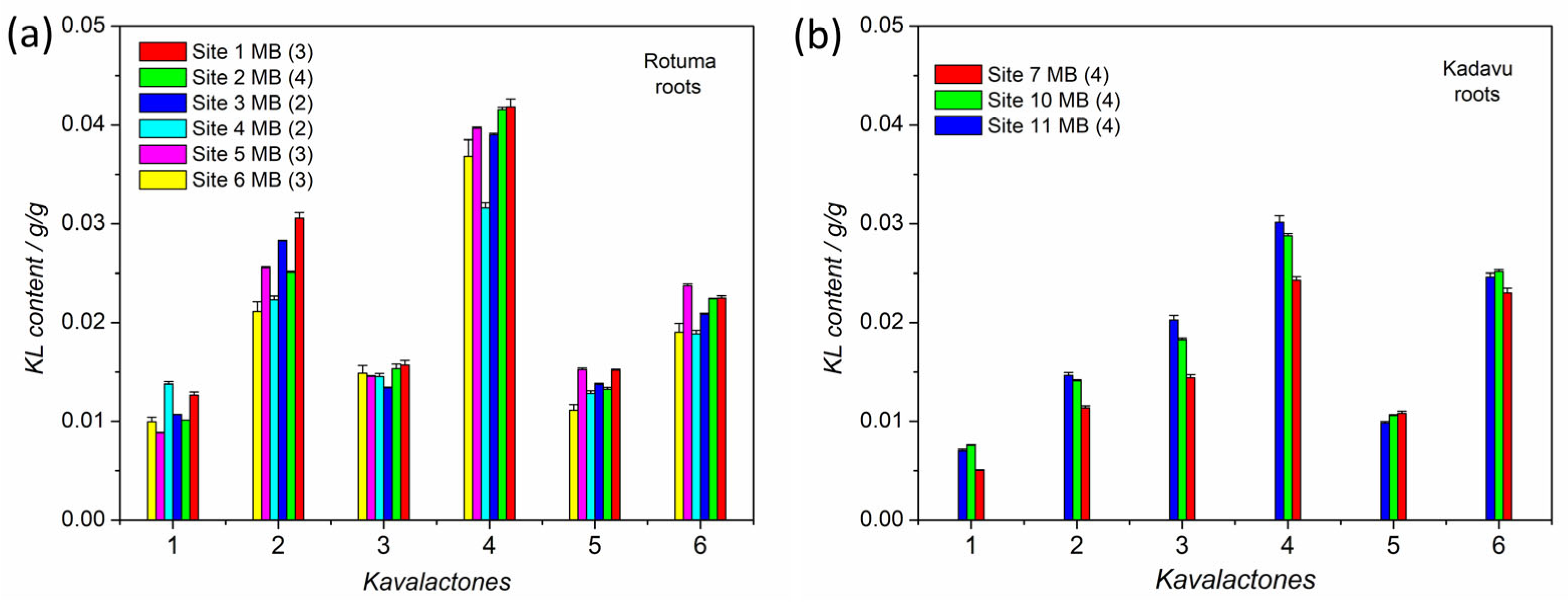
The highest kavalactone content in roots was 14.1 wt.%, which is outstanding. KL profiles of selected plants are shown in Figure 6a. KAV was the major kavalactone, with concentrations ranging between 3.2 and 4.6 wt.% (3.9 ± 0.4 wt.%) in dried roots and between 1.7 and 2.7 wt.% (2.1 ± 0.3 wt.%) in dried rhizomes. KAV represented 27–34 wt.% and 27–33 wt.% of the total kavalactones in roots and rhizomes, respectively. DHK was second, and METH had the third highest concentration among kavalactones in both roots and rhizomes. There was a small variation in the relative amounts of minor KLs—namely, YAN, DHM, and DMY (Table 2). In roots, KAV, METH, and YAN collectively amounted to 57–64 wt.% (61.6 ± 2.7 wt.%) of the total kavalactones, and the combination of DHK and DHM accounted for 25–33 wt.% (29.7 ± 2.4 wt.%); these values in rhizomes were 56–69 wt.% (58.9 ± 4.0 wt.%) and 24–38 wt.% (34.4 ± 4.0 wt.%), respectively. The (DHK + DHM)/KAV ratio was 0.81–1.12 (0.96 ± 0.10) in roots and 0.95–1.37 (1.16 ± 0.16) in rhizomes. All these values presented above indicate slightly raised relative DHM and DHK concentrations in rhizomes compared to roots and underpin a ‘healthier’ KL profile for roots considering human consumption. The most typical kavalactone profile of roots was found to be 426351 (77% of roots); two roots exhibited a KL profile of 426(53)1, and one exhibited a profile of 4263(15); therefore, roots can be characterized with a KL code of 426[351], where square brackets indicate variability. Rhizomes had a KL profile of 426531 (85% of rhizomes) or 426351 (15% of rhizomes). Therefore, general KL profile of rhizomes is 426[53]1. Concerning the thirteen Matakaro balavu plants, correlation between the age of plants and their kavalactone content could not be confirmed (see, e.g., site 2 in Table 2 for 2-, 3-, 4-, and 7-year-old plants). In addition to the mature plants reported above, one young, half-year-old kava plant was also uprooted to test its KL contents; the KL content of its roots was found to be low, at only 6.0 wt.%. The latter findings are in line with earlier observation of Simeoni and Lebot in Vanuatu, highlighting that after two years of vegetative growth, the KL content in kava plants does not increase but, rather, fluctuates (±2%) and that the KL profile appears to be stable [38]. In conclusion, Rotuma kava is rich in kavalactones, and the lactone profile is favorable for human consumption. Roots of the plant are superior to rhizomes concerning both the amount of KLs and the lactone profile.

3.4. Kavalactone Profile of Kava Cultivars from Kadavu Island

Twenty-two plants were uprooted from Kadavu Island for KL quantification, representing ten different cultivars (Table 3). Neither Qila balavu, Yonololu, Vula kasa leka, nor unclassified cultivars were found on visited farms. All cultivars were known as noble kava shrubs. The total kavalactone contents in dried roots and rhizomes were measured to be between 8.9 and 12.2 wt.% (9.9 ± 1.0 wt.%) and between 3.9 and 6.5 wt.% (5.2 ± 0.7 wt.%), respectively. The KAV contents were 2.1–3.2 wt.% (2.8 ± 0.3 wt.%) and 1.1–1.8 wt.% (1.5 ± 0.2 wt.%) in roots and rhizomes, respectively. KAV was the major kavalactone, followed in roots either by METH (82% of investigated roots) or YAN (14% of roots), except in Qila leka, where DHK had the second highest concentration. A proportion of 55% of plant roots exhibited a KL profile of 463251; a generalized KL code of 4[63]2[51] or 4[632][51] could be concluded for 68 and 82% of roots, respectively, where square brackets indicate variability. The KL profiles of rhizomes showed slightly elevated relative DHK concentrations compared to those of roots, and DHK had the second highest concentration among KLs in 41% of rhizomes. The (DHK + DHM)/KAV ratio was 0.65–1.10 (0.86 ± 0.10) and 0.78–1.49 (1.11 ± 0.17) for roots and rhizomes, respectively. Due to variability, a single chemotype could not be derived for rhizomes, and the 4[623]51 profile fits 81% of plant rhizomes.
It is interesting to note the chemotype similarity of roots and rhizomes of different cultivars within a given farm location. For example, at site 7 (Table 3), roots of all seven different cultivars had the same KL code of 463251 (bracketing is not shown); four out of six rhizomes had the same KL code of 462351. There were slight variations in KL codes concerning sites 8–11 (Table 3). On the other hand, the same kava cultivar exhibited different KL codes at different farm locations; for example, roots of the Dokobana vula variant expressed five different KL codes at five different farm locations—namely, 463251, 432615, 463125, 436125, and 436251. The Loa kasa balavu kava cultivar expressed more unified KL codes, as it showed 463251 at three farms and 463125 only at one farm. Matakaro balavu had a KL code of 463251 at all three sites where it was found. Although the sample number was small, it can be concluded that identifying or differentiating cultivars based on the lactone code alone is not possible. In other words, a single general lactone code cannot be assigned to a single cultivar, as differences in KL profiles are not characteristic.
There are marked differences in the contents and profiles of KLs if kava cultivars in Rotuma and Kadavu are compared. In general, the KL contents in rhizomes and roots of kava in Rotuma (compare data in Table 2 and Table 3 and Figure 6a,b) are higher than in Kadavu (12.4 ± 1.1/6.7 ± 1.3 wt.% and 9.9 ± 1.0/5.2 ± 0.7 wt.% in dried roots/rhizomes, respectively), but the relative amounts of DHK and DHM are also higher. The (DHK + DHM)/KAV ratio for roots of Rotuma and Kadavu cultivars are 0.96 ± 0.10 and 0.85 ± 0.11, respectively. Comparing only the Matakaro balavu variant, the most typical kavalactone profiles for roots in Rotuma and Kadavu are 426351 and 463251, respectively, indicating the same; these values are 426531 and 462351, respectively, for rhizomes. In conclusion, both kava cultivating areas produce quality kava, as the KL content is high and the KAV concentration is dominant (27–34 wt.% of the total kavalactone content), but the lactone profile is slightly more favorable for human consumption for cultivars produced in Kadavu due to the relatively lower DHK + DHM content. Differences might be explained by climatic and soil effects (stronger sunshine in Rotuma due to its location being closer to the equator) and farming practices, as farm areas in Rotuma are situated in a relatively flat area containing thick soil but on hilly area in Kadavu. The KL profiles in these two regions are distinctively different, allowing for the identification of the origin of plant organs if the two regions are compared.

3.5. Chemotype and Lactone Content of Kava from Vanua Levu

Five farms were visited in Bua region, four in Savusavu, two in Saqani, and one in the Labasa region of Vanua Levu; altogether 31, 21, 16, and 6 plants were uprooted and analyzed, respectively (74 altogether). All kava plants were identified as classified noble cultivars, except one (see below in Section 3.7). The total kavalactone content varied broadly in these regions between 6.7 and 20.1 wt.% (mean and SD: 10.7 ± 2.4 wt.%) for roots and between 3.1 and 7.7 (5.0 ± 1.1) for rhizomes. Exceptionally high KL content was found for roots of few plants—namely, 20.1 wt.% (site 15, Qila leka, Table 4), 16.8 wt.% (site 19, Qila balavu, Table 5), and 15.2 wt.% (site 22, Qila leka, Table 6). It is possible that soil and climate effects have positive influences on the lactone content for these plants, but the latter were not studied. KAV was the major kavalactone in both roots and rhizomes; its amounts in roots and rhizomes were found to be 2.0–7.0 wt.% (mean and SD: 3.3 ± 0.8 wt.%) and 1.0–2.8 wt.% (1.6 ± 0.4 wt.%), respectively, amounting to about 26–35 wt.% (31.3 ± 2.4 wt.%) and 27–36 wt.% (31.3 ± 2.6 wt.%) of the total lactone content, respectively.
Considering the lactone profile of roots (Table 4, Table 5 and Table 6), all roots fit the generalized KL profile of 4[632][51], where square brackets indicate variability (there is only one exception at site 8, where the DHK and DMY contents are very close to each other); METH, DHK, and YAN have the second highest concentration in 57, 11, and 6 plant roots (77, 15, and 8%), respectively. The most frequent KL code in roots is 463251, appearing in 38% of plant roots. Slight differences between regions are observed, as 463251 is the dominant KL code in 57% of plants from the Savusavu region but 35% from the Bua region and in 36% of plants from the three farms in the Saqani and Labasa regions. A proportion of 62% of plant roots exhibit a KL profile where the three lactones with the highest concentrations are KAV, METH, and YAN, collectively representing 60–72 wt.% (67.2 ± 3.4 wt.%) of the total lactone content. This is a good profile, as DHK and DHM are not in the top three; the sum of DHM and DHK in these roots is 20–31 wt.% (24.6 ± 3.1 wt.%), and the (DHK + DHM)/KAV ratio is 0.53–1.17 (0.79 ± 0.13). Small differences between KL profiles of roots from different farms are observed; for example, in Bua, most of the roots (five out of seven) from farm 1 have DHK as the second highest lactone component, but roots from farm 2 all have METH as the second highest lactone component. Seemingly slight variations in KL codes are more characteristic of farms than cultivars, highlighting the importance of soil and climate effects. It is important to note that these variations are general characteristics and cannot be applied to individual plants. Note, for example, that the same cultivar (Loa kasa leka) at site 12 exhibits different KL codes—namely, 463251 and 426351 (Table 4).
The lactone profile of rhizomes was slightly different compared to that of roots. The sum of KAV, YAN, and METH in rhizomes was in the region of 53–70 wt.% (62.4 ± 4.1 wt.%) of the absolute lactone content, and the sum of DHM and DHK was 23–41 wt.% (30.7 ± 3.9 wt.%). The (DHK + DHM)/KAV ratio for rhizomes was 0.64–1.49 (0.99 ± 0.19), which is higher than that of roots. Rhizomes can be characterized by a general lactone profile of 4[26][35]1, which fits to 88% of rhizomes, or 4[2635]1, which describes 99% of rhizomes (all rhizomes but one at site 19). In general, the kavalactone profiles of kava in Vanua Levu were like those in Kadavu, which may be explained by the much closer geographical location compared to that of Rotuma. In conclusion, kava produced in Vanua Levu exhibits high chemical quality concerning both the KL content and profile. The observed exceptionally high KL contents in a couple of plants are believed to be due to favorable soil effects, which are worth investigating in the future, highlighting the KL-producing potential of these kava cultivars.

3.6. Flavokavain Contents of Kava Cultivars from Rotuma and Kadavu Islands

Although the amount and profile of kavalactones determine kava’s psychoactive effects, the low FK content of kava products is crucial for consumers’ health protection due to the toxicity of FKs. To obtain information on this safety issue, the FK contents of dried roots and rhizomes of all uprooted shrubs in these regions were determined. Results are collected in Table 7. In general, the measured FK concentration was found to be below 0.25 wt.% in all cases, which is very low and confirms safety of consumption of kava drinks prepared from these cultivars. No significant differences between FK contents of roots and rhizomes were found, resulting in higher FK/KL ratios for rhizomes compared to roots. The amounts of FK-A and FK-B were comparable in many cases, and their relative amounts varied, but FK-C always exhibited the lowest concentration (12–21 wt.% of the total FK content). Considering both the FK and KL contents, roots of plants show higher KL contents and ‘healthier’ KL + FK profiles than rhizomes.

3.7. The Unclassified Kava Cultivar in Vanua Levu

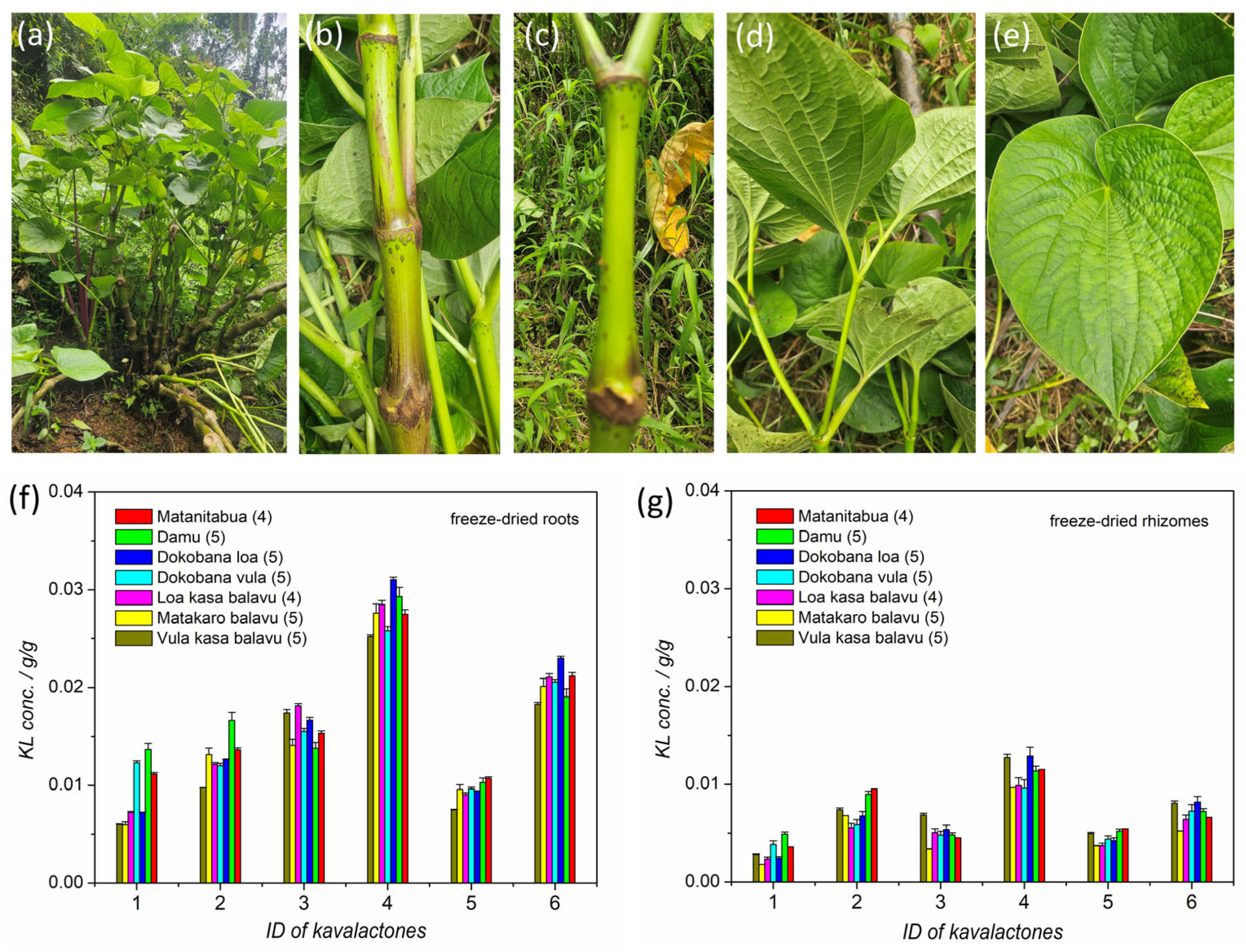
One unclassified kava cultivar was identified in Vanua Levu—namely, at site 19—that differed from any classified known kava variety in Fiji. Local farmers have named this cultivar ‘Matanitabua’ (Figure 7). This unclassified variant resembles the Yonolulu cultivar but with distinct signatures. The sampled plant grew above shoulder height in an upright direction and had a bushy appearance. The stems were green, with a few large purplish lenticles that were green in their centers and appeared mostly on the top third fraction of the internode. Due to the paucity of lenticels, stems were relatively smooth. The internodes were medium to long and thin, with reddish to purplish coloration above the lower node of the internode. The appearance of a small number of green lenticels near the top of the internode is a characteristic mark of this kava cultivar. The medium to long and thin internodes of the stem distinguish this variant from Yonolulu. The stems snapped very easily, which is another characteristic of this cultivar. The leaves of the plant were green with a light green petiole. The appearance of roots was like that of other noble kava cultivar roots.
The kavalactone codes of roots and rhizomes of the ‘Matanitabua’ cultivar were determined to be 4632(15) and 426531, respectively, similar to other noble kava cultivars in that region; a comparison is shown in Figure 7f and Figure 7g for roots and rhizomes, respectively. It is important to note that the flavokavain concentration of this plant was low, similarly to other noble cultivars—namely, 0.06 and 0.09 wt.% in dried rhizomes and roots, respectively (see Table 8). The KAV/FK-B ratio in rhizomes and roots of the Matanitabua variant was 59 and 100, respectively, which is in line with our findings reported above for roots of noble cultivars (viz. 51–97); therefore, the KAV/FK-B ratio is much higher than that of roots of the non-noble cultivar (viz. 4–6) found on Rabi island (see our previous paper [23]). Table 8 compares the flavokavain content of the unclassified Matanitabua cultivar to that of classified noble derivatives. All parameters of Matanitabua—namely, the absolute FK content, the relative ratio of flavokavains, the FK/KL ratio, FK/(YAN + DMY) ratio, and the KAV/FK-B ratio (the latter of which are 65–79 and 30–75 for roots and rhizomes, respectively, for the classified noble derivatives in Table 8)—are comparable to those of noble derivatives and confirm Matanitabua as a noble kava.

3.8. Calorific and Nutrition Values of Dried Rhizomes and Roots of Kava Cultivars

Printing of the KL content and profile on commercialized ground kava packages is currently not obligatory. Depending on the market requirement, producers may print nutritional values, such as protein content or calorific value. To benchmark these food quality indicators for Rotuma and Kadavu kava, the calorific values, protein concentrations, and ash contents of dried roots and rhizomes were measured. The fiber/sugar content was estimated by subtracting the sum of KL, peptide, and ash contents from the corresponding total mass of samples (Table 9).
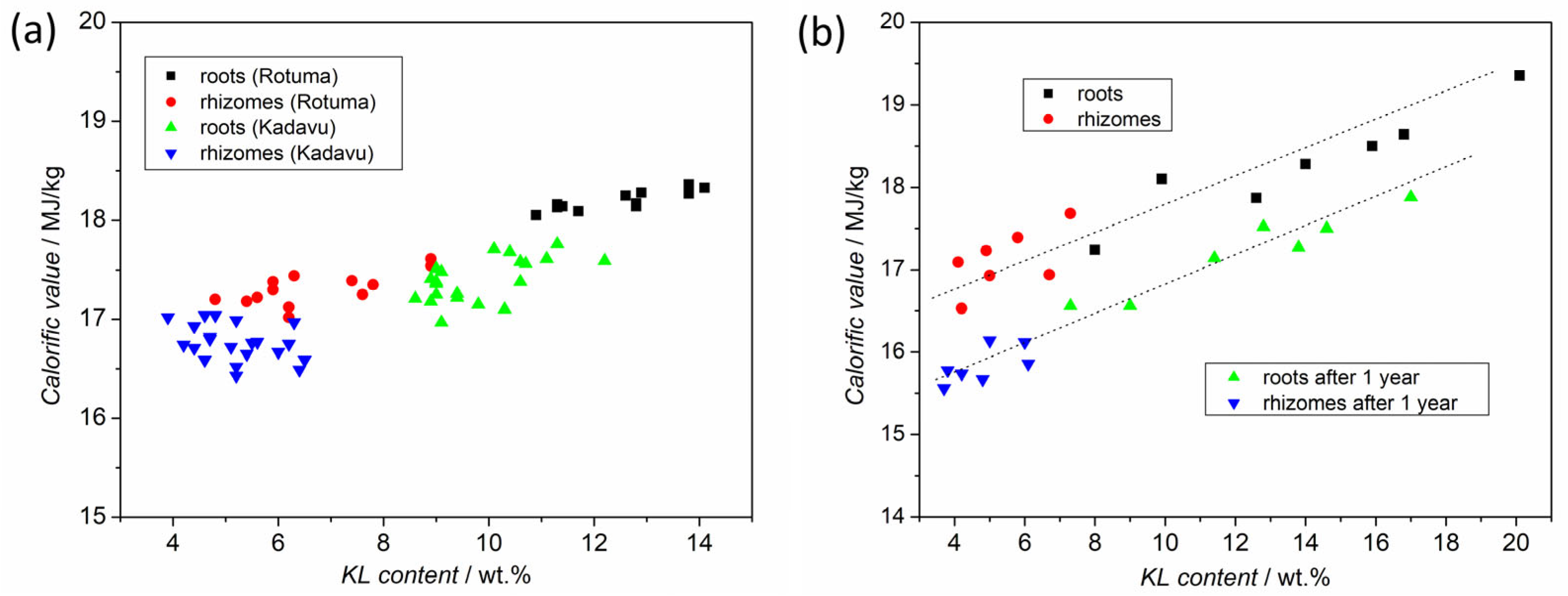
Interestingly, all measured values were higher for roots compared to rhizomes, therefore the sugar/fiber contents of rhizomes were found to be higher than those of roots. It was also interesting to find a positive relationship between the calorific value and the total KL content, as a higher KL concentration resulted in a higher calorific value (Figure 8a). This relationship suggests a much higher calorific value for KLs/FKs than that of plant material without lactones. To prove this, roots of a Loa kasa leka plant were extracted with ethanol, and the solvent was removed. The measured calorific values for the extracted solid lactone mixture and the extracted and dried plant material were 28.59 ± 0.16 MJ·kg−1 and 15.08 ± 0.39 MJ·kg−1, respectively. No other relationship between measured quality indicators could be established. The average calorific values and protein, ash, and sugar/fiber contents for the thirteen Rotuma root (rhizome) samples are 18.19 ± 0.09 MJ·kg−1 (17.31 ± 0.17 MJ·kg−1), 3.86 ± 0.70 wt.% (2.33 ± 0.47 wt.%), 5.0 ± 1.0 wt.% (3.4 ± 0.6 wt.%), and 78.8 ± 1.8 wt.% (87.5 ± 1.6 wt.%), respectively. The same average values for Kadavu root and rhizome (in parenthesis) samples are 17.40 ± 0.21 MJ·kg−1 (16.76 ± 0.18 MJ·kg−1), 3.86 ± 0.78 wt.% (2.20 ± 0.37 wt.%), 5.5 ± 0.6 wt.% (3.9 ± 0.5 wt.%), and 80.8 ± 1.2 wt.% (88.7 ± 1.1 wt.%), respectively. Considering these average values, Kadavu kava has a lower calorific value than Rotuma kava (in relationship with its lower kavalactone content), but food quality indicators agree within the standard deviations. Considering small differences, the protein content is about the same, and the ash value and sugar/fiber content of Kadavu kava is slightly higher than those of Rotuma kava.
Calorific values of selected samples from Vanua Levu were also measured and show the same relationship with lactone content as Rotuma and Kadavu kava (Figure 8b and Table 10). Freeze-dried, ground samples from this region were stored in plastic zip-lock bags at room temperature for a year and measured again. Surprisingly, the calorific value dropped by 4–9% (Table 10). The total KL content was also reinvestigated, and an 8–18% decrease was observed (Table S1). The lactone profile did not change. Obviously, more sophisticated storage and/or cooling methods are required to store freeze-dried kava powders to prevent aging of the material and lactone loss (investigating this issue was not the subject of the present paper). Nutrition values of ground kava after one year of storage are collected in Table S2 (Supporting Material).

4. Conclusions

Kadavu, Rotuma, and Vanua Levu are important kava-growing areas of Fiji. The kavalactone and flavokavain contents and profiles of one hundred and ten studied kava plants confirm that farmers cultivate exclusively noble kava in the visited family gardens and farms. The kavalactone contents in roots and rhizomes of plants were sufficiently high (12.4 ± 1.1/6.7 ± 1.3 wt.%, 9.9 ± 1.0/5.2 ± 0.7 wt.%, and 10.7 ± 2.4/5.0 ± 1.1 wt.% in dried roots/rhizomes in Rotuma, Kadavu, and Vanua Levu, respectively), the flavokavain content was low (below 0.25 wt.%), and the lactone profile was favorable for human consumption (26–36 wt.% of the total kavalactone content was kavain, and the (DHK + DHM)/KAV ratio varied between 0.53 and 1.17 for roots and between 0.64 and 1.49 for rhizomes), highlighting the high chemical quality of kava in these regions. Interestingly, kavalactone profiles were observed to be more characteristic of the region than of kava cultivars, as different cultivars tended to show similar KL profiles at the same farm but the same cultivar often exhibited different KL profiles at different farms. The kavalactone profile, however, was measured to be sufficiently distinct to distinguish products of Rotuma; the most typical KL codes of kava roots in Rotuma and Kadavu/Vanua Levu were 426351 and 463251, respectively. Results confirm that both the kavain and total kavalactone contents decrease gradually from the roots toward the plant’s leaves, but the relative DHM and DHK concentrations increase in the same direction. The protein contents, ash contents, and calorific values were found to be higher for roots than rhizomes. It was interesting to find a relationship between the total amount of kavalactones and the calorific values of dried roots and rhizomes. This relationship is worthy of further exploration, as measurement of the calorific value is fast and cheap compared to HPLC quantification of the lactone content. The calorific value might serve as a fast estimation method of the total amount of kavalactones in dried plant roots and rhizomes. It is important to note the observed aging and kavalactone loss of freeze-dried, ground kava upon storage in zip-lock bags; studying the latter would be an interesting topic for future research. Another important finding of this work is the unusually high kavalactone contents of a couple of plants in Vanua Levu, highlighting the need to study the soil and its nutrients in the future.

Supplementary Materials

The following supporting information can be downloaded at: https://www.mdpi.com/article/10.3390/horticulturae11121456/s1, Figures S1 and S2: Selected chromatograms of the CHNS elemental analyzer; Figure S3: HPLC chromatograms of the extracts of various organs of the dried Matakaro balavu plant from Rotuma; Table S1: Chemotype and quantified kavalactone (KL) concentrations of freeze-dried rhizomes and roots of selected kava cultivars from various locations stored in plastic zip-lock bags at room temperature for one year; Table S2: Measured calorific and nutrition values of dried roots and rhizomes of selected dried plant materials from various locations in Bua, Saqani, and Savusavu stored in plastic zip-lock bags at room temperature for one year.

Author Contributions

Conceptualization, T.P.; methodology, validation, T.P., D.D.D. and M.K.; formal analysis, T.P., D.D.D. and M.K.; investigation, T.P., D.D.D. and M.K.; data curation, T.P., D.D.D. and M.K.; writing—original draft preparation, T.P., D.D.D. and M.K.; writing—review and editing, T.P., D.D.D. and M.K.; visualization, T.P., D.D.D. and M.K.; project administration, T.P. All authors have read and agreed to the published version of the manuscript.

Funding

This work was funded by the Fiji National University (grant number GI009) and the Australian and New Zealand governments through the Pacific Horticultural and Agricultural Market Access (PHAMA) Plus Program (grant number FJ07).

Data Availability Statement

Data generated in this study are available in the article, the Supporting Material, and via Mendeley at https://doi.org/10.17632/r8mwd7m6b2.1.

Acknowledgments

We thank Shiloh Sylvia Narayan for creating the map of sampling sites.

Conflicts of Interest

The authors declare no conflicts of interest. The funders had no role in the design of this study, in the collection of data, in the analyses or interpretation of data, in the writing of the manuscript, or in the decision to publish the results.

References

  1. Pacific Data Hub, Kava Data. 2025. Available online: https://pacificdata.org/data/dataset/kava-df-kava (accessed on 4 February 2025).
  2. Lebot, V.; Labouisse, J.P.; Rivallan, R.; Kaoh, J.; Davrieux, F. Use of SSR markers and FTIR chemometrics to assess the nobility of kava cultivars from the Pacific. Food Control 2024, 164, 110598. [Google Scholar] [CrossRef]
  3. Pasinszki, T.; Devi, D.D. The Kavalactone Content and Profile of Fiji Kava Sold on the Local Market. Beverages 2024, 10, 4. [Google Scholar] [CrossRef]
  4. Singh, Y.N. Kava: An overview. J. Ethnopharm. 1992, 37, 13–45. [Google Scholar] [CrossRef] [PubMed]
  5. Lebot, V.; Merlin, M.; Lindstrom, L. Kava: The Pacific Elixir: The Definite Guide to Its Ethnobotany, History, and Chemistry; Healing Arts Press: Rochester, VT, USA, 1997. [Google Scholar]
  6. Mohanty, M. Fiji Kava: Production, Trade, Role and Challenges. J. Pac. Stud. 2017, 37, 5–30. [Google Scholar] [CrossRef] [PubMed]
  7. Soares, R.B.; Dinis-Oliveira, R.J.; Oliveira, N.G. An Updated Review on the Psychoactive, Toxic and Anticancer Properties of Kava. J. Clin. Med. 2022, 11, 4039. [Google Scholar] [CrossRef] [PubMed]
  8. Aporosa, S.A.A.; Itoga, D.; Ioane, J.; Prosser, J.; Vaka, S.; Grout, E.; Atkins, M.; Head, M.; Baker, J.; Blue, T.; et al. Innovating through tradition: Kava-talanoa as a culturally aligned medico-behavioral therapeutic approach to amelioration of PTSD symptoms. Front. Psychol. 2025, 16, 1460731. [Google Scholar] [CrossRef]
  9. Bian, T.; Corral, P.; Wang, Y.; Botello, J.; Kingston, R.; Daniels, T.; Salloum, R.G.; Johnston, E.; Huo, Z.; Lu, J.; et al. Kava as a Clinical Nutrient: Promises and Challenges. Nutrients 2020, 12, 3044. [Google Scholar] [CrossRef]
  10. Fu, P.P.; Xia, Q.; Guo, L.; Yu, H.; Chan, P.-C. Toxicity of Kava Kava. J. Environ. Sci. Health Part C 2008, 26, 89–112. [Google Scholar] [CrossRef]
  11. White, C.M. The Pharmacology, Pharmacokinetics, Efficacy, and Adverse Events Associated with Kava. J. Clin. Pharmacol. 2018, 58, 1396–1405. [Google Scholar] [CrossRef]
  12. Whitton, P.A.; Lau, A.; Salisbury, A.; Whitehouse, J.; Evans, C.S. Kava lactones and the kava-kava controversy. Phytochemistry 2003, 64, 673–679. [Google Scholar] [CrossRef]
  13. Kava Price Prediction 2025/2026–2031; BTCDirect: Nijmegen, The Netherlands, 2025.
  14. TBRC (The Business Research Company). Kava Root Extract Global Market Report 2025; The Business Research Company: London, UK, 2025; Available online: https://www.thebusinessresearchcompany.com/report/kava-root-extract-global-market-report (accessed on 5 February 2025).
  15. Lebot, V.; Levesque, J. The origin and distribution of kava (Piper methysticum Forst. f. Piperaceae): A phytochemical approach. Allertonia 1989, 5, 223–281. [Google Scholar]
  16. Lebot, V.; Merlin, M.D.; Lindstrom, L. Kava: The Pacific Drug; Yale University Press: New Haven, CT, USA, 1992. [Google Scholar] [CrossRef]
  17. Teschke, R. Kava hepatotoxicity: Pathogenetic aspects and prospective considerations. Liver Int. 2010, 30, 1270–1279. [Google Scholar] [CrossRef] [PubMed]
  18. Teschke, R.; Sarris, J.; Lebot, V. Kava hepatotoxicity solution: A six-point plan for new kava standardization. Phytomedicine 2011, 18, 96–103. [Google Scholar] [CrossRef] [PubMed]
  19. Wang, Y.; Su, C.; Zhang, B.; Niu, Y.; Ren, R.; Zhao, X.; Yang, L.; Zhang, W.; Ma, X. Biological Activity, Hepatotoxicity, and Structure-Activity Relationship of Kavalactones and Flavokavins, the Two Main Bioactive Components in Kava (Piper methysticum). Evid.-Based Complement. Altern. Med. 2021, 2021, 6851798. [Google Scholar] [CrossRef]
  20. Kanumuri, S.R.R.; Mamallapalli, J.; Nelson, R.; McCurdy, C.R.; Mathews, C.A.; Xing, C.; Sharma, A. Clinical pharmacokinetics of kavalactones after oral dosing of standardized kava extract in healthy volunteers. J. Ethnopharm. 2022, 297, 115514. [Google Scholar] [CrossRef]
  21. Smith, K.; Leiras, C. The effectiveness and safety of Kava Kava for treating anxiety symptoms: A systematic review and analysis of randomized clinical trials. Complement. Therap. Clin. Pract. 2018, 33, 107–117. [Google Scholar] [CrossRef]
  22. Lebot, V.; Kaoh, J.; Legendre, L. High-Throughput Analysis of Flavokawains in Kava (Piper methysticum Forst. f.) Roots, Chips and Powders and Correlations with Their Acetonic Extracts Absorbance. Food Anal. Methods 2020, 13, 1583–1593. [Google Scholar] [CrossRef]
  23. Devi, D.D.; Pasinszki, T. Kavalactone Content and Profile of Kava Cultivated on Taveuni, Qamea, and Rabi Islands of Fiji. Agriculture 2025, 15, 478. [Google Scholar] [CrossRef]
  24. Zhang, N.; Wu, L.; Liu, X.; Shen, X. Plant-Derived Kavalactones and Their Bioactivities. Med. Res. 2018, 2, 170019. [Google Scholar] [CrossRef]
  25. Lebot, V.; Levesque, J. Genetic Control of Kavalactone Genotypes in Piper methysticum Cultivars. Phytochemistry 1996, 43, 397–403. [Google Scholar] [CrossRef]
  26. Lebot, V.; Michalet, S.; Legendre, L. Kavalactones and Flavokavins Profiles Contribute to Quality Assessment of Kava (Piper methysticum G. Forst.), the Traditional Beverage of the Pacific. Beverages 2019, 5, 34. [Google Scholar] [CrossRef]
  27. Economidis, G.; Lynch, M.; Taylor, S.; Asare-Doku, W.; Macpherson, G.; Degenhardt, L.; Farrell, M.; Santo, T., Jr. Global Perspectives on Kava: A Narrative Systematic Review of the Health Effects, Economic and Social Impacts and Policy Considerations. Drug Alcohol Rev. 2025, 44, 1601–1640. [Google Scholar] [CrossRef] [PubMed]
  28. Lebot, V.; Do, T.K.T.; Legendre, L. Detection of flavokavins (A, B, C) in cultivars of kava (Piper methysticum) using high performance thin layer chromatography (HPTLC). Food Chem. 2014, 151, 554–560. [Google Scholar] [CrossRef] [PubMed]
  29. CXS 336R-2020; Regional Standard for Kava Products for Use as a Beverage When Mixed with Water. FAO-WHO: Rome, Italy, 2023. Available online: https://www.fao.org/fao-who-codexalimentarius/sh-proxy/fr/?lnk=1&url=https%253A%252F%252Fworkspace.fao.org%252Fsites%252Fcodex%252FStandards%252FCXS%2B336R-2020%252FCXS_336Re.pdf (accessed on 8 January 2025).
  30. PHAMA Plus. Fiji Kava Quality Manual. 2024. Available online: https://phamaplus.com.au/resources/technical-reports/fiji-kava-quality-manual/ (accessed on 7 February 2025).
  31. Lebot, V. An overview of kava production in the Pacific Islands: What we do know and what we don’t know. J. South Pacific Agric. 1997, 4, 55–62. [Google Scholar]
  32. Teschke, R.; Lebot, V. Proposal for a Kava Quality Standardization Code. Food Chem. Toxicol. 2011, 49, 2503–2516. [Google Scholar] [CrossRef]
  33. Fiji Climate. Climate Zone and Historical Climate Data. 2025. Available online: https://weatherandclimate.com/fiji (accessed on 25 November 2025).
  34. Leslie, D.M. An Introduction to the Soils of Fiji. 1997. Available online: https://fiji-psp.landcareresearch.co.nz/assets/soil-reports/Leslie_1997_Introduction-to-the-Soils-of-Fiji_web.pdf (accessed on 25 November 2025).
  35. Laffan, M.D.; Smith, S.M. Soils of Rotuma. Fiji. NZ Soil Survey Report 72. 1986. Available online: https://www.bing.com/ck/a?!&&p=eef9756d62df1f8d41ac0b925aaf11ba1f3e85a3fef3a4a6df73c230174b532dJmltdHM9MTc2NDExNTIwMA&ptn=3&ver=2&hsh=4&fclid=1c173ceb-e704-6b50-3880-2a61e6ab6a5c&u=a1aHR0cHM6Ly9kaWdpdGFsbGlicmFyeS5sYW5kY2FyZXJlc2VhcmNoLmNvLm56L2RpZ2l0YWwvYXBpL2NvbGxlY3Rpb24vcDIwMDIyY29sbDcvaWQvMTYxL2Rvd25sb2Fk (accessed on 25 November 2025).
  36. Shao, Y.; He, K.; Zheng, B.; Zheng, Q. Reversed-phase high-performance liquid chromatographic method for quantitative analysis of the six major kavalactones in Piper methysticum. J. Chromatogr. A 1998, 825, 1–8. [Google Scholar] [CrossRef]
  37. Glaser, J.A.; Foerst, D.L.; McKee, G.D.; Quave, S.A.; Budde, W.L. Trace analyses for wastewaters. Environ. Sci. Technol. 1981, 15, 1426–1435. [Google Scholar] [CrossRef]
  38. Simeoni, P.; Lebot, V. Identification of factors determining kavalactone content and chemotype in Kava (Piper methysticum Forst. f.). Biochem. System. Ecol. 2002, 30, 413–424. [Google Scholar] [CrossRef]
Figure 1. (a) Photograph of a young kava shrub; (b) stem cuttings and technique to protect them from the Sun in Rotuma; (c) the volume of kava production in Fiji; (d) production volume, household consumption, and import and export of kava in Fiji [1].
Horticulturae 11 01456 g001
Figure 2. Chemical formula and labeling of (a) major kavalactones (1: desmethoxyyangonin; 2: dihydrokavain; 3: yangonin; 4: kavain; 5: dihydromethysticin; 6: methysticin) and (b) flavokavains (FK-A: flavokavain-A; FK-B: flavokavain-B; FK-C: flavokavain-C).
Horticulturae 11 01456 g002
Figure 3. Sampling sites and number of uprooted plants (in parenthesis) in Rotuma, Kadavu, and Vanua Levu. Sites are in the administrative region of named villages. Sites in Rotuma (top left)—site 1: Haga Juju (3); site 2: Saukama Juju (4); site 3: Matasau Ahau (2); site 4: Mea (1); site 5: Malaha’h (2); site 6: Noatau (3). Sites in Kadavu (bottom left)—site 7: Davuiqele Nabukelevu (7); site 8: Muani Ravitaki (5); site 9: Senima Namara (5); site 10: Natumua Tavuki (2); site 11: Tawava, Yawe (3). Sites in Vanua Levu (bottom right)—Bua regio—site 12: Vunivutu, Wainunu (7); site 13: Narodomole (8); site 14: Nasolo Nadi (6); site 15: Naqadoa, Dama (6); site 16: Kavula Lekutu (4)—Labasa region—site 17: Satulaki Korotari (6)—Saqani region—site 18: Nacula (5); site 19: Biaugunu (11)—Savusavu region—site 20: Vanuavo, Vaturova (7); site 21: Vunivesi, Belego (3); site 22: Cololevu (8); site 23: Tukavesi (3).
Horticulturae 11 01456 g003
Figure 4. (a) UV/Vis spectra of kavalactones and flavokavains in ethanol; (b) chromatogram of the certified mixed kavalactone and flavokavain solution using A: mobile phase I and detection wavelengths of 240 nm (see ref. [3] for peak assignment), B: mobile phase II and 240 nm (chromatogram of individual components are shown for peak identification), and C: mobile phase II and 360 nm.
Horticulturae 11 01456 g004
Figure 5. (a) Kavalactone contents of various organs of a freeze-dried kava shrub (Rhiz = rhizome; ST = stem; MS = middle stem; LAT = lateral stem; T-LAT = thin lateral stem); (b) relative amounts of kavalactones compared to kavain (KAV is selected to be 100 as the reference) in various organs of a freeze-dried kava shrub (Rhiz = rhizome; ST = stem; MS = middle stem; LAT = lateral stem; P-MS = peeled middle stem; T-LAT = thin lateral stem); (c) kavalactone concentrations in portions of two roots of a Matakaro balavu plant from site 22; (d) kavalactone contents of four different roots of a Loa kasa balavu plant from site 22.
Horticulturae 11 01456 g005
Figure 6. (a) Kavalactone profiles of dried roots of selected Matakaro balavu plants from Rotuma and (b) kavalactone profiles of roots of Matakaro balavu cultivars from Kadavu.
Horticulturae 11 01456 g006
Figure 7. Photos of the unclassified ‘Matanitabua’ cultivar: (a) whole plant; (b,c) stem; (d) petiole; (e) leaf; (f,g) comparison of the kavalactone profiles of roots and rhizomes of the unclassified noble cultivar (Matanitabua) with those of classified noble cultivars at site 19, respectively (the age of the plant is shown in parenthesis in years).
Horticulturae 11 01456 g007
Figure 8. Plot of calorific values versus total KL contents of dried roots and rhizomes of plants from (a) Rotuma and Kadavu (Table 9) and (b) Vanua Levu (Table 10). Dotted lines are guides for the eyes.
Horticulturae 11 01456 g008
Table 1. Chemotype and kavalactone contents of a freeze-dried Matakaro balavu plant from site 6 a.
Plant Part bWater
Cont. (wt.%)
Total KL Cont. (wt.%)KAV
Cont. (wt.%)
Mass Ratio of KLs cKL Profile
(Based on Mass) d
KL Profile
(Based on mol) d
Root72.712.50 ± 0.413.93 ± 0.1626:60:43:100:33:564(26)3514263(51)
Rhizome59.78.62 ± 0.022.57 ± 0.0121:89:34:100:43:48426531426531
Stem 0–163.45.08 ± 0.091.11 ± 0.0225:128:38:100:94:702(45)631245631
Stem 1–264.63.45 ± 0.070.70 ± 0.0126:140:41:100:112:752546312(45)631
Middle stem70.22.06 ± 0.010.40 ± 0.0130:167:36:100:122:592546312(54)6(31)
Peeled MS68.21.82 ± 0.050.37 ± 0.0132:153:38:100:115:612546312(45)6(31)
Peelings of MS78.23.89 ± 0.040.53 ± 0.0134:291:39:100:211:612546(31)2546(31)
Lateral stem75.33.41 ± 0.020.51 ± 0.0129:227:59:100:205:52254361254361
Thin lateral stem80.52.72 ± 0.060.26 ± 0.0129:386:86:100:398:49(52)4361(25)4361
Leaf77.31.05 ± 0.030.06 ± 0.0124:801:36:100:652:29254(361)254(316)
a 3-year-old freeze-dried plant. b Abbreviations: stem 0–1 = stem between the rhizome and the first node (basal stem); stem 1–2 = stem between the first and second nodes; MS = middle stem. c Relative to the KAV content (selected to be 100), in the order of KL codes: 1, DMY; 2, DHK; 3, YAN; 4, KAV; 5, DHM; 6, METH. d See numbering of KLs in Figure 2. Brackets are used when the KL contents of two KLs were close to each other (within 10%) according to the following formula: 0.1 > (A − B)/((A + B)/2), where A and B stand for the two KLs.
Table 2. Chemotypes and kavalactone contents of freeze-dried roots and rhizomes of the Matakaro balavu cultivar from various locations on Rotuma a.
Location bTotal KL Cont. (%) cKAV
Cont. (%) d
Mass Ratio of KLs eKL Profile
(Based on Mass) f
KL Profile
(Based on mol) f
Site 1 (3)13.8/6.24.2/2.130:73:38:100:36:54/20:65:36:100:32:47426(35)1/4263514263(15)/426351
Site 1 (3)13.8/8.94.3/2.629:67:39:100:34:54/23:83:38:100:44:52426351/4265314263(15)/426(53)1
Site 1 (5)11.7/6.23.7/2.025:58:47:100:32:52/20:74:37:100:34:45426351/426(35)142(63)(51)/426351
Site 2 (2)10.9/5.63.3/1.531:60:46:100:37:59/24:79:48:100:55:664(26)351/4265314263(15)/426(53)1
Site 2 (3)14.1/7.44.6/2.125:55:42:100:29:53/23:89:38:100:46:544(26)351/4265314263(15)/426531
Site 2 (4)12.8/5.94.0/1.922:64:37:100:38:60/20:69:32:100:43:56426(53)1/426531426(35)1/426531
Site 2 (7)11.3/5.43.8/1.822:55:36:100:31:55/19:59:33:100:36:594(26)351/4(26)531426351/426(53)1
Site 3 (2)12.6/8.93.9/2.727:73:34:100:35:53/23:89:36:100:48:54426(53)1/426531426(351)/426531
Site 3 (3)12.9/7.84.1/2.325:58:42:100:33:55/23:80:41:100:47:534(26)351/4265314263(51)/426(53)1
Site 4 (2)11.4/7.63.2/2.444:71:46:100:41:60/29:75:31:100:35:454263(15)/426531426(13)5/426(51)3
Site 5 (0.5)6.0/---1.7/---30:87:31:100:49:70/---4265(31)/---4265(13)/---
Site 5 (3)12.8/6.34.2/1.924:60:37:100:32:54/20:83:32:100:44:48426351/4265314263(51)/426531
Site 6 (3)11.3/5.93.6/2.027:57:40:100:30:52/20:65:35:100:34:50426351/426(53)1426351/426(53)1
Site 6 (3)11.3/4.83.9/1.727:52:33:100:29:52/20:60:24:100:39:574(26)351/4(26)531426(31)5/426531
a Values for roots and rhizomes are presented in successive numbers and separated with the “/” symbol. b See Figure 3; the age of the shrub is given in parenthesis in years. c In wt.%; the SD for all samples was below ±0.03. d In wt.%; the SD for all samples was below ±0.01. e Relative to KAV (selected to be 100) in order of KL codes: 1, DMY; 2, DHK; 3, YAN; 4, KAV; 5, DHM; 6, METH. f Numbering is shown in Figure 2. Brackets are used when KL contents of two KLs were close to each other (within 10%) according to the following formula: 0.1 > (A − B)/((A + B)/2), where A and B stand for the two KLs.
Table 3. Chemotypes and kavalactone concentrations of freeze-dried roots and rhizomes of the different kava cultivars from various locations on Kadavu a,b.
CultivarTotal KL Cont. (%) cKAV
Cont. (%) d
Mass Ratio of KLs eKL Profile
(Based on Mass) f
KL Profile
(Based on mol) f
Site 7
Damu10.6/5.13.1/1.525:48:64:100:35:74/22:57:57:100:41:72463251/46(23)5146(32)51/462351
Dokobana vula9.0/4.23.0/1.423:39:49:100:26:65/18:64:22:100:39:574632(51)/4265314632(15)/4265(31)
Loa kasa balavu10.6/5.23.0/1.422:39:68:100:34:85/18:66:54:100:52:77463251/462(35)1463251/4(26)351
Loa kasa leka11.3/6.03.2/1.725:47:72:100:36:74/18:63:58:100:48:734(63)251/4623514(36)251/4(26)351
Matakaro balavu8.9/4.72.4/1.321:47:59:100:45:94/21:65:52:100:49:84463(25)1/462(35)1463251/462(35)1
Matakaro leka11.1/n.a.3.1/n.a.26:50:70:100:37:77/n.a.463251/n.a.4(63)251/n.a.
Yalu9.0/5.42.5/1.430:56:62:100:37:70/26:79:59:100:51:67463251/42635146(32)(51)/42(63)51
Site 8
Dokobana loa8.9/6.52.6/1.828:46:58:100:35:75/24:60:64:100:39:63463251/4(362)514632(51)/4(23)651
Dokobana vula9.8/6.42.9/1.732:56:63:100:30:57/25:89:63:100:43:4743(26)(15)/423(65)14(32)615/423(65)1
Loa kasa balavu10.1/4.62.9/1.429:51:62:100:34:68/21:71:46:100:42:60463251/4263514(63)2(15)/426351
Vula kasa balavu9.1/5.82.7/1.520:58:55:100:39:69/22:94:45:100:55:5946(23)51/42(65)314(62)351/42(65)31
Qila leka8.6/4.42.7/1.424:64:51:100:32:53/21:76:49:100:32:4542(63)51/42(36)5142(36)(51)/423651
Site 9
Damu12.2/6.23.2/1.943:43:81:100:35:84/20:45:55:100:33:784(63)(12)5/4632514(36)(12)5/463251
Dokobana loa9.1/5.22.3/1.554:54:75:100:39:76/43:59:60:100:37:384(63)(21)5/4(32)1(65)4(36)(12)5/4231(65)
Dokobana vula9.4/5.52.6/1.654:41:69:100:29:69/28:68:54:100:38:564(63)125/42(63)514(36)125/42(36)51
Loa kasa balavu10.3/5.62.7/1.652:43:73:100:36:80/47:54:55:100:34:58463125/4(632)154(63)125/42(631)5
Matakaro leka9.0/4.82.3/1.526:65:66:100:45:78/20:68:39:100:40:6046(32)51/4(623)514(26)351/426(35)1
Site 10
Dokobana vula9.0/5.22.1/1.367:62:83:100:41:70/39:84:63:100:53:6743(61)25/42(63)51431265/42(36)51
Matakaro balavu10.4/3.92.9/1.126:49:63:100:37:87/24:67:49:100:44:76463251/462351463251/4(26)351
Site 11
Dokobana vula9.0/4.72.7/1.225:54:68:100:32:59/21:78:62:100:53:62436251/42(36)514326(51)/42(36)51
Loa kasa balavu9.4/4.63.0/1.422:43:59:100:30:68/19:63:52:100:44:65463251/4(62)351463251/426351
Matakaro balavu10.7/4.43.1/1.323:49:67:100:33:82/19:57:53:100:40:75463251/46(23)51463251/462351
a Values for 4-year-old roots and rhizomes are presented in successive numbers and separated with the “/” symbol, n.a.= not available, b See Figure 3. c In wt.%; SDs for all samples are smaller than ±0.03. d In wt.%; SDs for all samples are smaller than ±0.01. e Relative to KAV (selected to be 100) in order of KL codes: 1, DMY; 2, DHK; 3, YAN; 4, KAV; 5, DHM; 6, METH. f Numbering is shown in Figure 2. Brackets are used when the KL contents for two KLs were close to each other (within 10%) using the formula of 0.1 > (A − B)/((A + B)/2), where A and B stand for the two KLs.
Table 4. Chemotypes and kavalactone concentrations of freeze-dried rhizomes and roots of the different kava cultivars from various locations in Bua a.
Variant bTotal KL Cont. (%) cKAV
Cont. (%) d
Mass Ratio of KLs eKL Profile
(Based on Mass) f
KL Profile
(Based on mol) f
Site 12 (freeze-dried)
Damu (3)11.7/4.54.1/1.523:48:46:100:20:50/22:52:45:100:28:514(623)15/4(26)35142(63)15/42(63)(51)
Loa kasa leka (3)12.1/4.14.0/1.323:39:51:100:26:62/21:56:44:100:36:60463251/4(62)3514632(15)/426351
Loa kasa leka (3)12.2/6.73.7/1.922:67:49:100:36:57/20:74:52:100:43:57426351/426351426351/42(63)51
Qila leka (3)14.0/6.74.5/1.924:67:49:100:27:44/22:99:44:100:43:43423651/(42)(365)1 4236(15)/(42)(365)1
Vula kasa balavu (3)12.0/6.93.9/2.127:55:50:100:27:50/24:72:49:100:33:4742(36)(15)/42(36)5142(36)15/426351
Vula kasa leka (3)12.2/5.43.9/1.525:86:41:100:31:41/21:100:35:100:49:4742(36)51/(42)(56)3142(36)(51)/(42)(56)31
Yalu (3)12.6/5.04.0/1.330:56:50:100:28:53/33:87:53:100:46:544(263)(15)/42(63)5142(36)15/42(36)51
Site 13 (freeze-dried)
Damu (4)10.6/4.43.2/1.542:42:61:100:27:62/19:53:39:100:30:564(63)(21)5/4(62)3514(36)(12)5/426351
Dokobana loa (4)12.2/7.04.3/2.622:40:39:100:21:59/19:42:40:100:22:5046(23)(15)/46(23)51 462315/4(62)3(15)
Dokobana vula (4)13.1/7.74.4/2.828:43:45:100:23:55/20:58:36:100:23:4146(32)15/42635146(23)15/42(63)(15)
Loa kasa leka (4)11.6/6.33.7/2.325:37:57:100:26:69/18:41:37:100:27:594632(51)/462351463215/462351
Loa kasa balavu (4)10.7/4.93.6/1.722:36:50:100:24:66/18:50:40:100:29:534632(51)/4(62)351463215/4(26)351
Matakaro leka (4)10.6/5.53.4/1.823:42:55:100:28:65/20:63:42:100:33:54463251/4263514632(15)/426351
Matakaro balavu (4)8.9/4.72.9/1.628:39:45:100:25:66/19:43:40:100:28:62463215/46235146(32)15/462351
Vula kasa leka (4)12.0/4.93.2/1.452:52:58:100:39:76/38:63:49:100:44:67463(21)5/4(62)35146(132)5/4263(15)
Site 14 (freeze-dried)
Loa kasa balavu (3)8.4/3.12.5/1.035:54:57:100:30:55/23:58:44:100:32:544(362)15/4(26)3514(23)615/426351
Loa kasa leka (3)13.9/5.24.9/1.720:41:46:100:24:54/18:58:37:100:31:53463251/42635146(32)(15)/426351
Qila leka (4)10.1/4.83.4/1.520:59:42:100:30:50/18:72:35:100:38:52426351/426(53)1426351/426(53)1
Yalu (3)8.7/5.12.5/1.430:64:58:100:37:63/25:83:52:100:45:544(263)51/42(63)5142(63)(15)/42(36)51
Vula kasa balavu (2.5)10.8/5.12.9/1.327:57:58:100:46:80/27:76:52:100:58:7246(32)51/4(26)531462351/426(53)1
Vula kasa leka (2)13.1/5.13.5/1.438:57:64:100:42:72/28:66:51:100:50:71463251/462(35)14(632)(15)/426(35)1
Site 15 (freeze-dried)
Dokobana loa (4)9.8/6.13.1/2.024:44:57:100:29:61/20:56:51:100:31:52463251/4(263)514(63)2(15)/42(36)51
Loa kasa balavu (3)12.2/5.23.6/1.622:49:57:100:36:76/18:68:42:100:41:63463251/4(26)(35)1463251/426351
Loa kasa leka (4)13.4/5.94.1/1.824:49:58:100:31:67/18:73:37:100:43:61463251/42653146(32)51/426(53)1
Qila leka (6)20.1/7.37.0/2.524:47:52:100:20:44/22:57:45:100:26:4343(26)15/42(36)514(23)615/4236(15)
Vula kasa balavu (5)10.0/4.62.3/1.166:55:74:100:48:88/56:81:58:100:55:67463125/426(315)46(13)25/42(13)5
Vula kasa leka (4)15.9/5.85.1/1.922:56:54:100:28:53/18:74:38:100:34:484(236)51/42635142(36)(51)/426351
Site 16 (freeze-dried)
Dokobana vula (3)8.3/4.02.7/1.323:44:45:100:28:62/18:54:43:100:35:6146(32)51/46235146(23)(15)/4(26)351
Loa kasa leka (3)8.1/4.32.8/1.421:59:39:100:26:46/19:58:40:100:38:64426351/4623514263(51)/4(26)351
Qila leka (3.5)8.2/3.62.8/1.222:55:42:100:26:48/19:78:32:100:37:47426351/42653142(63)(15)/426(53)1
Vula kasa balavu (3)9.8/4.73.0/1.534:36:55:100:28:71/21:53:44:100:35:60463(21)5/462351463(21)5/4(26)351
a Measured values for roots and rhizomes are listed consecutively and separated with the “/” symbol. b The plant’s age is given in parenthesis in years; see Figure 3 for farm location. c In wt.%; the SD is smaller than ±0.03 for all measured samples. d In wt.%; the SD is smaller than ±0.01 for all samples. e Listed in the consecutive order of KL codes: 1, DMY; 2, DHK; 3, YAN; 4, KAV; 5, DHM; 6, METH. f See labels and numbers in Figure 2. Brackets indicate if the KL concentrations of two KLs were close to each other (within about 10%) according to the formula of 0.1 > (A − B)/((A + B)/2), where A and B stand for the two KLs.
Table 5. Chemotypes and kavalactone concentrations of freeze-dried rhizomes and roots of the different kava variants from Labasa and Saqani regions a.
Variant bTotal KL Cont. (%) cKAV
Cont. (%) d
Mass Ratio of KLs eKL Profile
(Based on Mass) f
KL Profile
(Based on mol) f
Site 17 (freeze-dried)
Dokobana loa (3)11.3/5.13.5/1.525:49:46:100:32:73/20:70:40:100:42:6346(23)51/426(53)14623(51)/426(35)1
Dokobana vula (3)12.4/5.73.9/1.735:42:48:100:27:64/31:61:42:100:35:58463215/4(26)35146(32)15/4263(15)
Dokobana vula (3)12.2/4.1 3.7/1.231:45:62:100:27:62/25:84:47:100:44:544(36)215/4263514(36)215/42(63)51
Loa kasa balavu (3)10.1/3.83.0/1.129:51:49:100:36:72/20:67:35:100:45:6646(23)51/4(26)5314623(51)/426531
Loa kasa leka (3)13.2/6.14.0/1.825:51:55:100:34:67/21:67:47:100:39:5846(32)51/42635146(23)51/426351
Matakaro balavu (3)9.6/4.1 2.9/1.229:56:47:100:32:64/21:77:39:100:40:57462351/426(53)14(26)3(15)/426(35)1
Site 18 (freeze-dried)
Dokobana vula (4)8.3/4.32.7/1.527:49:44:100:27:57/19:63:34:100:29:534623(51)/4263514(26)315/426351
Loa kasa balavu (4)7.2/4.32.3/1.421:55:42:100:35:67/17:65:33:100:35:57462351/426(53)14(62)351/426(53)1
Matakaro balavu (4)6.7/4.42.0/1.420:58:39:100:36:67/17:68:38:100:41:58462(35)1/426(53)14(26)351/426(53)1
Matakaro leka (3)8.7/4.42.4/1.341:55:47:100:44:79/33:62:38:100:40:64462(351)/4(62)(53)1462(13)5/426(135)
Vula kasa balavu (4)8.0/5.12.5/1.624:50:51:100:26:74/19:64:39:100:30:6746(32)(51)/4(62)351462315/426351
Site 19 (freeze-dried)
Damu (5)10.3/4.22.9/1.147:57:47:100:35:65/43:79:42:100:46:63462(31)5/426(513)4(26)135/4261(53)
Dokobana loa (5)10.0/4.03.1/1.323:41:54:100:30:74/19:52:42:100:33:63463251/4623514632(51)/4(62)351
Dokobana vula (5)9.6/3.62.6/1.048:46:60:100:37:80/40:61:50:100:46:76463(12)5/462(35)1463(12)5/4(62)(31)5
Loa kasa balavu (4)9.6/3.32.8/1.025:43:64:100:32:74/24:56:51:100:38:65463251/4623514632(51)/4(26)351
Loa kasa balavu (5)8.0/4.82.4/1.423:44:56:100:35:81/19:71:46:100:39:53463251/426351463251/42(63)51
Matakaro leka (5)12.2/5.23.6/1.620:47:56:100:37:78/19:60:46:100:39:67463251/46235146(32)51/4(26)351
Matakaro balavu (5)9.1/3.12.8/1.022:48:51:100:35:73/19:70:35:100:38:5446(32)51/426(53)146(23)51/426(53)1
Matanitabua (4) g9.9/4.12.7/1.241:50:56:100:39:77/31:83:39:100:47:574632(15)/42653146(32)15/426531
Qila balavu (5)16.8/4.95.2/1.523:50:65:100:29:55/20:72:42:100:37:49436251/42635143(26)(51)/42(63)51
Qila leka (5)12.1/4.83.9/1.421:52:58:100:27:49/20:76:47:100:38:4943(26)51/42(63)514(32)6(51)/42(36)51
Vula kasa balavu (5)8.4/4.32.5/1.324:39:69:100:30:73/22:58:54:100:39:634(63)251/4623514(36)2(51)/426351
a Measured values for roots and rhizomes are listed consecutively and separated with the “/” symbol. b Plant’s age is given in parenthesis in years; see Figure 3 for farm location. c In wt.%; the SD is smaller than ±0.03 for all kava samples. d In wt.%; the SD is smaller than ±0.01 for all kava samples. e Listed in consecutive order of KL codes: 1, DMY; 2, DHK; 3, YAN; 4, KAV; 5, DHM; 6, METH. f See labels and numbers in Figure 2. Brackets are used if the KL concentrations of two KLs were close to each other (within about 10%) according to the formula of 0.1 > (A − B)/((A + B)/2), where A and B stand for the two KLs. g Unclassified cultivar; local name is Matanitabua.
Table 6. Chemotypes and kavalactone concentrations of freeze-dried rhizomes and roots of the different kava variants from Savusavu a.
Variant bTotal KL Cont. (%) cKAV
Cont. (%) d
Mass Ratio of KLs eKL Profile
(Based on Mass) f
KL Profile
(Based on mol) f
Site 20 (freeze-dried)
Dokobana loa (4)10.0/5.42.8/1.626:60:52:100:40:73/20:57:48:100:40:64462351/4623514(62)351/4(26)351
Dokobana vula (4)10.0/5.23.5/1.823:38:50:100:23:56/19:54:41:100:29:514632(15)/4(26)3514(63)215/426351
Loa kasa balavu (4)10.8/5.73.4/1.923:43:55:100:29:68/19:47:43:100:30:61463251/46(23)514632(51)/462351
Loa kasa balavu (4)9.7/7.23.0/2.323:48:45:100:33:71/19:49:42:100:32:6646(23)51/462351462351/462351
Matakaro leka (4)10.3/4.83.3/1.526:47:53:100:27:56/21:58:49:100:33:574(63)2(51)/4(26)3514(362)15/426351
Matakaro balavu (4)8.8/4.52.7/1.421:46:52:100:34:71/17:56:39:100:40:68463251/462(53)146(32)51/4(62)(35)1
Vula kasa balavu (4)9.4/3.63.2/1.223:38:52:100:24:54/19:56:45:100:31:514(63)2(51)/4(26)3514(36)215/42(63)51
Site 21 (freeze-dried)
Dokobana loa (2)7.3/3.12.2/1.027:41:55:100:32:74/23:53:42:100:28:57463251/4(62)3514632(15)/4263(51)
Vula kasa balavu (3)11.8/8.23.5/2.421:56:64:100:35:62/19:66:60:100:38:574(36)251/42(36)514(32)651/423651
Vula kasa leka (2)8.0/4.22.7/1.424:40:45:100:26:63/20:56:41:100:31:56463251/4(62)35146(23)(15)/426351
Site 22 (freeze-dried)
Dokobana loa (3)10.9/5.83.3/1.824:42:69:100:27:69/22:61:51:100:34:604(63)251/4(26)3514(36)215/426351
Dokobana vula (4)11.8/5.73.9/2.025:45:46:100:26:61/20:51:40:100:24:4946(32)(51)/4(26)351 46(23)15/4263(51)
Loa kasa balavu (4)8.7/4.02.8/1.423:41:48:100:28:66/20:44:37:100:28:63463251/46235146(32)(15)/462351
Root 112.03.923:39:50:100:27:674632514632(15)
Root 28.72.823:38:49:100:27:674632514632(15)
Root 39.22.925:36:49:100:28:724632514632(15)
Root 48.42.725:40:52:100:27:674632514632(15)
Loa kasa leka (4)10.6/3.73.5/1.222:30:57:100:23:74/22:40:50:100:24:634632(51)/4632(51)4632(15)/4632(15)
Matakaro balavu (4)8.0/5.12.7/1.828:48:39:100:23:54/20:56:30:100:23:48462315/4263514(26)315/4263(15)
Matakaro leka (4)7.9/3.92.5/1.220:42:43:100:35:81/17:55:42:100:38:6746(32)51/46235146(23)51/4(62)351
Qila balavu (3.5)11.1/4.83.7/1.622:49:49:100:26:53/18:72:38:100:27:4546(32)51/42635142(63)(15)/426351
Qila leka (4)15.2/6.04.6/1.725:62:58:100:31:53/22:81:53:100:39:504(23)651/42(36)514236(51)/423651
Site 23 (freeze-dried)
Dokobana vula (3)8.0/4.02.9/1.424:39:39:100:18:52/22:62:33:100:23:4146(23)15/4263(51)462315/426315
Matakaro leka (3)8.5/5.12.8/1.722:45:53:100:21:59/22:56:45:100:24:464632(15)/42(63)514(632)15/42(36)(15)
Loa kasa balavu (3)10.5/5.93.3/1.927:56:48:100:28:61/25:63:44:100:30:504623(51)/4263514(26)315/42(63)(51)
a Measured values for roots and rhizomes are listed consecutively and separated with the “/” symbol. b Plant’s age is given in parenthesis in years; see Figure 3 for farm location. c In wt.%; the SD is smaller than ±0.03 for all kava samples. d In wt.%; the SD is smaller than ±0.01 for all kava samples. e Listed in the order of KL codes: 1, DMY; 2, DHK; 3, YAN; 4, KAV; 5, DHM; 6, METH. f See labels and numbers in Figure 2. Brackets are used when the KL contents of two KLs were close to each other (within about 10%) according to the formula of 0.1 > (A − B)/((A + B)/2), where A and B stands for the two KLs.
Table 7. Flavokavain contents of freeze-dried roots and rhizomes of various kava cultivars from Kadavu and Rotuma a.
Site bVariant cTotal FK Cont.
(wt.%)
Mass Ratio
of FKs d
FK/(YAN + DMY)
Mass Ratio
FK/KL Ratio
(Mass)
1Matakaro balavu (5)0.17 ± 0.001/0.22 ± 0.00445:35:20/46:36:180.064/0.1890.015/0.035
2Matakaro balavu (4)0.23 ± 0.008/0.16 ± 0.00943:40:17/47:39:140.096/0.1600.018/0.026
3Matakaro balavu (3)0.14 ± 0.020/0.11 ± 0.00138:42:20/46:35:190.050/0.0720.011/0.013
4Matakaro balavu (2)0.13 ± 0.002/0.17 ± 0.00341:38:21/44:36:200.044/0.1160.011/0.022
5Matakaro balavu (3)0.20 ± 0.017/0.18 ± 0.00135:45:20/40:41:190.079/0.1740.016/0.028
6Matakaro balavu (3)0.16 ± 0.006/0.22 ± 0.00135:50:15/42:44:140.075/0.2100.015/0.048
7Damu (4)0.09 ± 0.001/0.07 ± 0.00449:38:13/59:29:120.034/0.0590.009/0.013
7Dokobana vula (4)0.09 ± 0.002/0.04 ± 0.00149:36:16/52:32:160.072/0.0900.010/0.010
7Loa kasa balavu (4)0.10 ± 0.001/0.09 ± 0.00251:33:16/60:27:130.036/0.0830.009/0.016
7Loa kasa leka (4)0.12 ± 0.001/0.11 ± 0.00157:27:16/60:26:140.038/0.0890.010/0.019
7Matakaro balavu (4)0.06 ± 0.001/0.06 ± 0.00154:32:14/52:34:140.033/0.0590.007/0.012
7Matakaro leka (4)0.08 ± 0.004/n.a.49:35:16/n.a.0.028/n.a.0.008/n.a.
7Yalu (4)0.07 ± 0.005/0.07 ± 0.00162:24:14/57:29:140.029/0.0570.008/0.013
8Dokobana loa (4)0.10 ± 0.001/0.12 ± 0.00456:31:13/56:30:140.043/0.0710.011/0.018
8Vula kasa balavu (4)0.09 ± 0.001/0.12 ± 0.00460:28:12/58:32:100.045/0.1150.010/0.021
8Qila leka (4)0.07 ± 0.001/0.05 ± 0.00138:52:10/47:43:110.043/0.0630.010/0.013
9Damu (4)0.09 ± 0.001/0.06 ± 0.00354:30:16/62:24:140.023/0.0400.007/0.009
10Dokobana vula (4)0.09 ± 0.002/0.08 ± 0.00147:34:20/50:32:180.027/0.0610.010/0.015
11Matakaro balavu (4)0.10 ± 0.001/0.06 ± 0.00148:39:14/55:35:100.037/0.0660.009/0.014
a Measured values for roots and rhizomes are presented in successive numbers separated with the “/” symbol, n.a.= not available, b See Figure 3. c The age of the shrub is given in parenthesis in years. d In the order of FK-A, FK-B, and FK-C (relative to the total amount, which is selected to be 100).
Table 8. Measured flavokavain (FK) contents of rhizomes and roots of the freeze-dried unclassified kava cultivar Matanitabua and those of classified cultivars from site 19 a.
Variant bTotal FK Cont.
(wt.%)
Mass Ratio
of FKs c
FK/(YAN + DMY)
Mass Ratio
FK/KL Ratio
(Mass)
Site 19
Matenitabua (4) d0.09 ± 0.001/0.06 ± 0.00449:34:17/50:34:160.03/0.080.01/0.02
Damu (5)0.11 ± 0.005/0.07 ± 0.00243:37:20/40:41:190.04/0.070.01/0.02
Dokobana vula (5)0.08 ± 0.004/0.04 ± 0.00443:39:18/51:31:180.03/0.050.01/0.01
Matakaro balavu (5)0.10 ± 0.001/0.05 ± 0.00142:41:17/45:39:160.05/0.110.01/0.02
Loa kasa balavu (5)0.08 ± 0.001/0.09 ± 0.00145:43:12/52:36:120.04/0.100.01/0.02
Vula kasa balavu (5)0.08 ± 0.009/0.05 ± 0.00148:34:18/54:28:180.04/0.060.01/0.01
a Measured values for roots and rhizomes are presented consecutively and separated with the “/” symbol. b Plant’s age is given in parenthesis in years. c Listed in the consecutive order of FK-A, FK-B, and FK-C (see Figure 2). d Unclassified cultivar; local name is Matanitabua.
Table 9. Calorific values and protein and ash contents of dried roots and rhizomes from Kadavu and Rotuma a.
Site bPlant Type cCalorific Value d
MJ·kg−1
Protein Content e
wt.%
Ash Content d
wt.%
Sugar/Fiber f
wt.%
1Matakaro balavu (3)18.27 ± 0.07/17.02 ± 0.064.87 ± 0.11/3.16 ± 0.095.9 ± 0.5/4.4 ± 0.375.4/86.2
1Matakaro balavu (3)18.36 ± 0.04/17.54 ± 0.084.08 ± 0.09/2.75 ± 0.104.6 ± 0.4/3.3 ± 0.577.5/85.1
1Matakaro balavu (5)18.09 ± 0.05/17.12 ± 0.043.41 ± 0.13/2.49 ± 0.106.1 ± 0.4/4.4 ± 0.578.8/86.9
2Matakaro balavu (2)18.05 ± 0.10/17.22 ± 0.094.39 ± 0.13/2.64 ± 0.115.3 ± 0.5/2.9 ± 0.379.4/86.7
2Matakaro balavu (3)18.33 ± 0.05/17.39 ± 0.084.54 ± 0.14/3.05 ± 0.084.1 ± 0.1/3.6 ± 0.477.3/86.0
2Matakaro balavu (4)18.17 ± 0.07/17.30 ± 0.044.14 ± 0.10/2.30 ± 0.054.3 ± 0.5/3.0 ± 0.478.8/88.8
2Matakaro balavu (7)18.16 ± 0.06/17.18 ± 0.072.79 ± 0.17/1.72 ± 0.103.2 ± 0.1/2.3 ± 0.182.7/90.6
3Matakaro balavu (2)18.25 ± 0.08/17.61 ± 0.053.82 ± 0.16/2.04 ± 0.014.4 ± 0.2/3.0 ± 0.479.2/86.1
3Matakaro balavu (3)18.28 ± 0.09/17.35 ± 0.093.18 ± 0.19/2.22 ± 0.044.0 ± 0.1/2.8 ± 0.579.9/87.2
4Matakaro balavu (2)18.14 ± 0.11/17.25 ± 0.034.95 ± 0.07/2.40 ± 0.096.2 ± 0.5/3.4 ± 0.177.5/86.6
5Matakaro balavu (3)18.14 ± 0.06/17.44 ± 0.053.70 ± 0.12/1.79 ± 0.065.8 ± 0.3/3.8 ± 0.377.7/88.1
6Matakaro balavu (3)18.13 ± 0.03/17.38 ± 0.093.25 ± 0.10/1.92 ± 0.065.3 ± 0.5/3.4 ± 0.280.2/88.8
6Matakaro balavu (3)18.16 ± 0.05/17.20 ± 0.033.11 ± 0.11/1.87 ± 0.065.9 ± 0.3/3.4 ± 0.179.7/89.9
7Damu (4)17.58 ± 0.04/16.72 ± 0.043.16 ± 0.07/1.85 ± 0.125.2 ± 0.3/3.2 ± 0.281.0/89.9
7Dokobana vula (4)17.36 ± 0.05/16.74 ± 0.062.82 ± 0.06/1.77 ± 0.094.4 ± 0.1/3.2 ± 0.383.8/90.8
7Loa kasa balavu (4)17.38 ± 0.03/16.52 ± 0.043.70 ± 0.03/2.54 ± 0.116.1 ± 0.2/4.6 ± 0.379.6/87.7
7Loa kasa leka (4)17.76 ± 0.05/16.67 ± 0.052.73 ± 0.15/1.58 ± 0.084.6 ± 0.3/3.6 ± 0.381.4/88.8
7Matakaro balavu (4)17.41 ± 0.10/16.82 ± 0.082.68 ± 0.08/1.56 ± 0.015.3 ± 0.2/3.7 ± 0.583.1/90.0
7Matakaro leka (4)17.61 ± 0.06/n.a.2.76 ± 0.11/n.a.4.60 ± 0.2/n.a.81.5/n.a.
7Yalu (4)17.25 ± 0.06/16.65 ± 0.054.92 ± 0.10/2.53 ± 0.096.1 ± 0.3/3.6 ± 0.2 80.0/88.5
8Dokobana loa (4)17.18 ± 0.04/16.59 ± 0.053.99 ± 0.09/2.32 ± 0.075.8 ± 0.2/3.9 ± 0.181.3/87.3
8Dokobana vula (4)17.15 ± 0.08/16.49 ± 0.064.16 ± 0.04/2.58 ± 0.096.2 ± 0.4/3.5 ± 0.379.8/87.5
8Loa kasa balavu (4)17.71 ± 0.05/17.04 ± 0.073.35 ± 0.11/1.75 ± 0.115.3 ± 0.1/3.5 ± 0.481.3/90.2
8Vula kasa balavu (4)17.48 ± 0.04/16.97 ± 0.054.76 ± 0.10/2.61 ± 0.056.0 ± 0.3/4.5 ± 0.380.1/87.1
8Qila leka (4)17.21 ± 0.07/16.71 ± 0.064.96 ± 0.15/2.54 ± 0.126.2 ± 0.2/4.4 ± 0.280.2/88.7
9Damu (4)17.59 ± 0.06/16.75 ± 0.073.22 ± 0.08/1.69 ± 0.054.8 ± 0.3/3.2 ± 0.379.8/88.9
9Dokobana loa (4)16.97 ± 0.04/16.43 ± 0.054.60 ± 0.04/2.00 ± 0.105.2 ± 0.3/4.1 ± 0.381.1/88.7
9Dokobana vula (4)17.22 ± 0.08/16.76 ± 0.043.74 ± 0.07/2.30 ± 0.116.0 ± 0.3/4.3 ± 0.580.9/87.9
9Loa kasa balavu (4)17.10 ± 0.05/16.77 ± 0.044.98 ± 0.12/2.46 ± 0.025.9 ± 0.1/4.3 ± 0.178.8/87.6
9Matakaro leka (4)17.51 ± 0.07/17.04 ± 0.054.94 ± 0.05/2.44 ± 0.116.1 ± 0.2/4.1 ± 0.180.0/88.7
10Dokobana vula (4)17.38 ± 0.09/16.99 ± 0.074.11 ± 0.08/2.37 ± 0.066.2 ± 0.2/4.5 ± 0.180.7/87.9
10Matakaro balavu (4)17.68 ± 0.03/17.02 ± 0.063.85 ± 0.08/2.32 ± 0.085.1 ± 0.4/4.0 ± 0.280.7/89.8
11Dokobana vula (4)17.36 ± 0.06/16.80 ± 0.054.22 ± 0.11/2.65 ± 0.106.1 ± 0.3/4.6 ± 0.380.7/88.1
11Loa kasa balavu (4)17.26 ± 0.05/16.59 ± 0.033.58 ± 0.03/2.40 ± 0.094.6 ± 0.2/3.3 ± 0.182.4/89.7
11Matakaro balavu (4)17.56 ± 0.07/16.93 ± 0.083.68 ± 0.10/1.95 ± 0.066.2 ± 0.5/4.2 ± 0.379.4/89.5
a Values for roots and rhizomes are presented in successive numbers and separated with the “/” symbol, n.a.= not available, b See Figure 3. c Age of the shrub in years is given in parenthesis. d Duplicate measurements. e Triplicate measurements. f Calculated by subtracting the protein, ash, and KL contents from the total mass.
Table 10. Measured calorific values of dried roots and rhizomes of selected plants from various Vanua Levu locations after drying and after 1 year of storage in plastic zip-lock bags a.
Site bPlant Type cCalorific Value d
MJ/kg
Calorific Value e
MJ/kg
12Qila leka (3)18.28 ± 0.12/16.94 ± 0.1817.40 ± 0.18/15.81 ± 0.08
12Yalu (3)17.87 ± 0.10/16.93 ± 0.0717.14 ± 0.09/15.74 ± 0.05
15Qila leka (6)19.35 ± 0.01/17.68 ± 0.1517.88 ± 0.16/16.12 ± 0.17
15Vula kasa leka (4)18.50 ± 0.02/17.39 ± 0.0317.60 ± 0.13/16.18 ± 0.06
19Matanitabua (4)18.10 ± 0.05/17.09 ± 0.0916.56 ± 0.08/15.56 ± 0.12
19Qila balavu (5)18.64 ± 0.06/17.23 ± 0.0517.40 ± 0.18/15.75 ± 0.11
21Vula kasa leka (2)17.24 ± 0.04/16.53 ± 0.0616.55 ± 0.02/15.79 ± 0.02
a Values for roots and rhizomes are presented in consecutive numbers and separated with the “/” symbol (duplicate measurements). b See Figure 3. c Age of the shrub in years is given in parenthesis. d Measured after drying the plant organs. e Measured after one year of storage of the dried and ground plant materials in plastic zip-lock bags at room temperature.
Disclaimer/Publisher’s Note: The statements, opinions and data contained in all publications are solely those of the individual author(s) and contributor(s) and not of MDPI and/or the editor(s). MDPI and/or the editor(s) disclaim responsibility for any injury to people or property resulting from any ideas, methods, instructions or products referred to in the content.