Engineered Escherichia coli Nissle 1917 for the High Level Biosynthesis of γ-Aminobutyric Acid

 ,
,
Abstract
1. Introduction
2. Materials and Methods
2.1. Bacterial Strains, Plasmids and Growth Conditions
2.2. Analysis of Conserved Amino Acid Residue Sites in GAD
2.3. Construction of Phylogenetic Tree for GAD Ancestral Enzymes
2.4. Engineering of the EcN (T7) Strain
2.5. Expression and Purification of AncGADs
2.6. Characterization of the Biochemical Properties of AncGADs
2.7. Molecular Dynamics (MD) Simulation
2.8. Measurement of Thermostability of AncGADs
2.9. Fed-Batch Cultivation of Engineered EcN Strain
2.10. High Level Synthesis of GABA by Using Dormant Engineered EcN Cells
3. Results and Discussion
3.1. Reconstruction of GAD Ancestral Enzymes
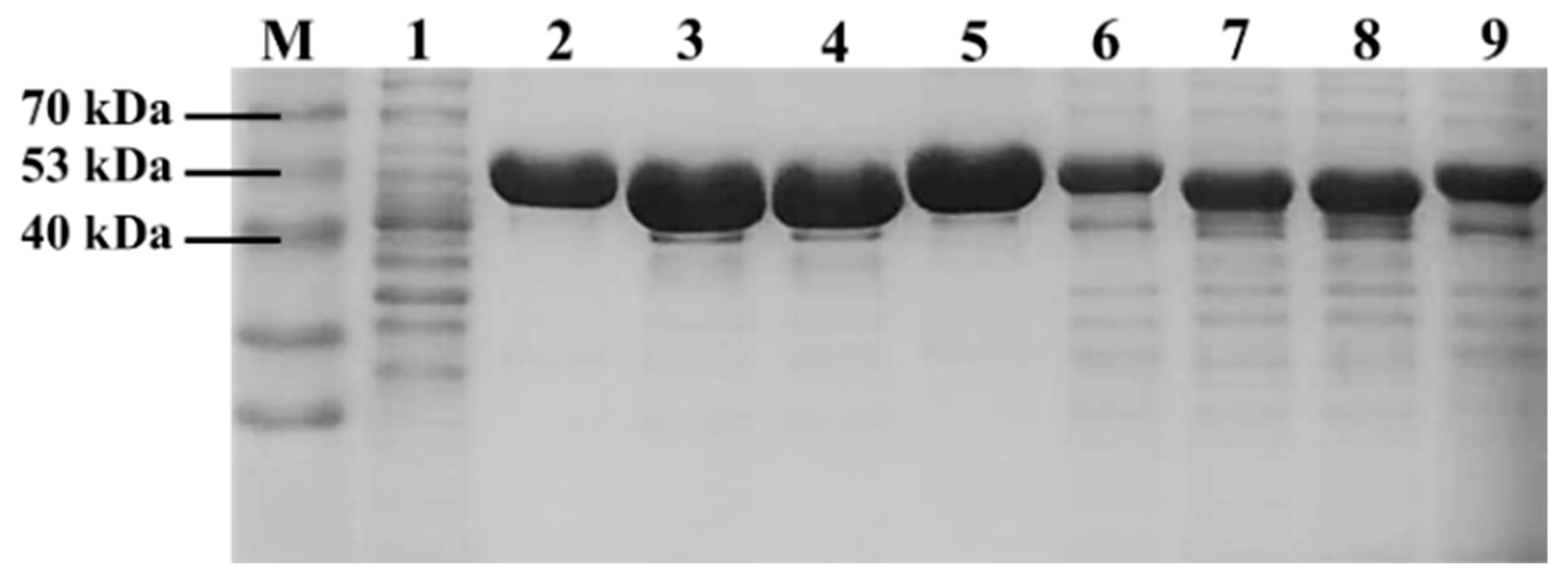
3.2. Expression and Purification of AncGADs in Engineered EcN (T7)
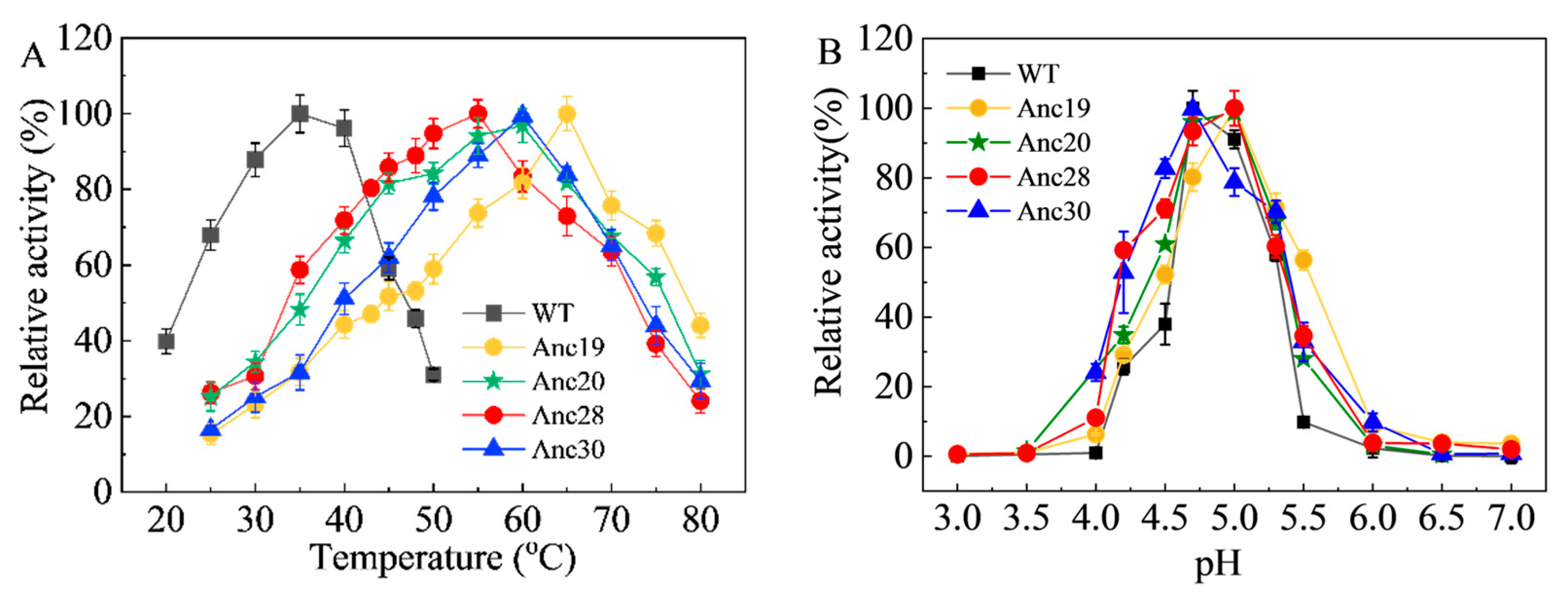
3.3. The Enzymatic Properties of AncGADs
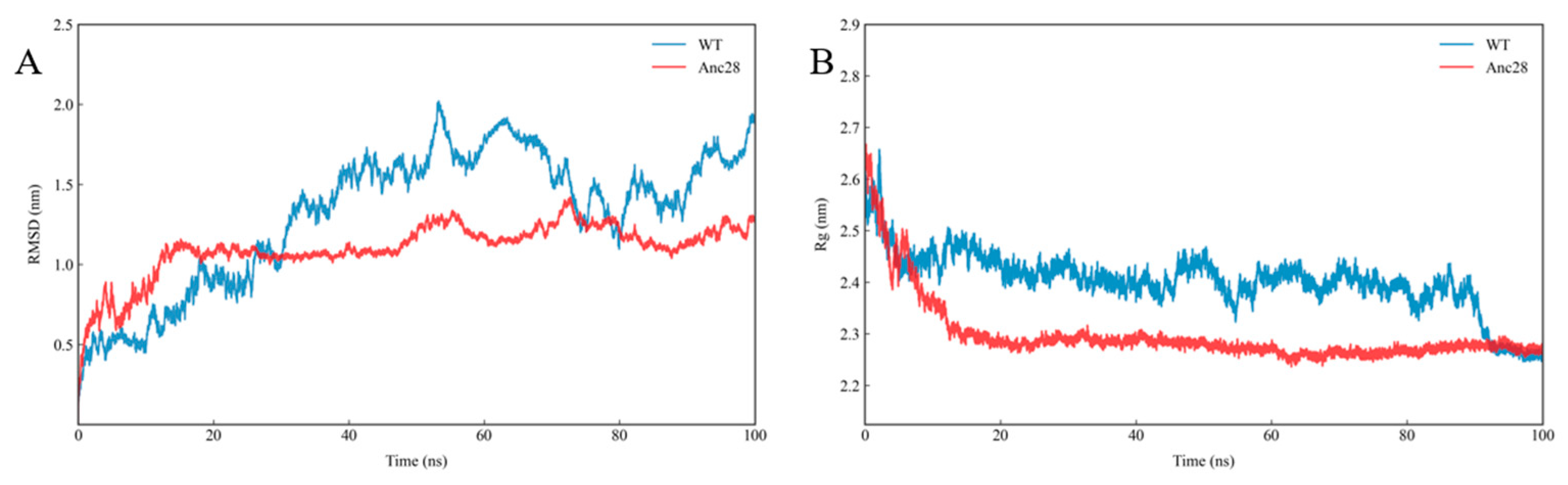
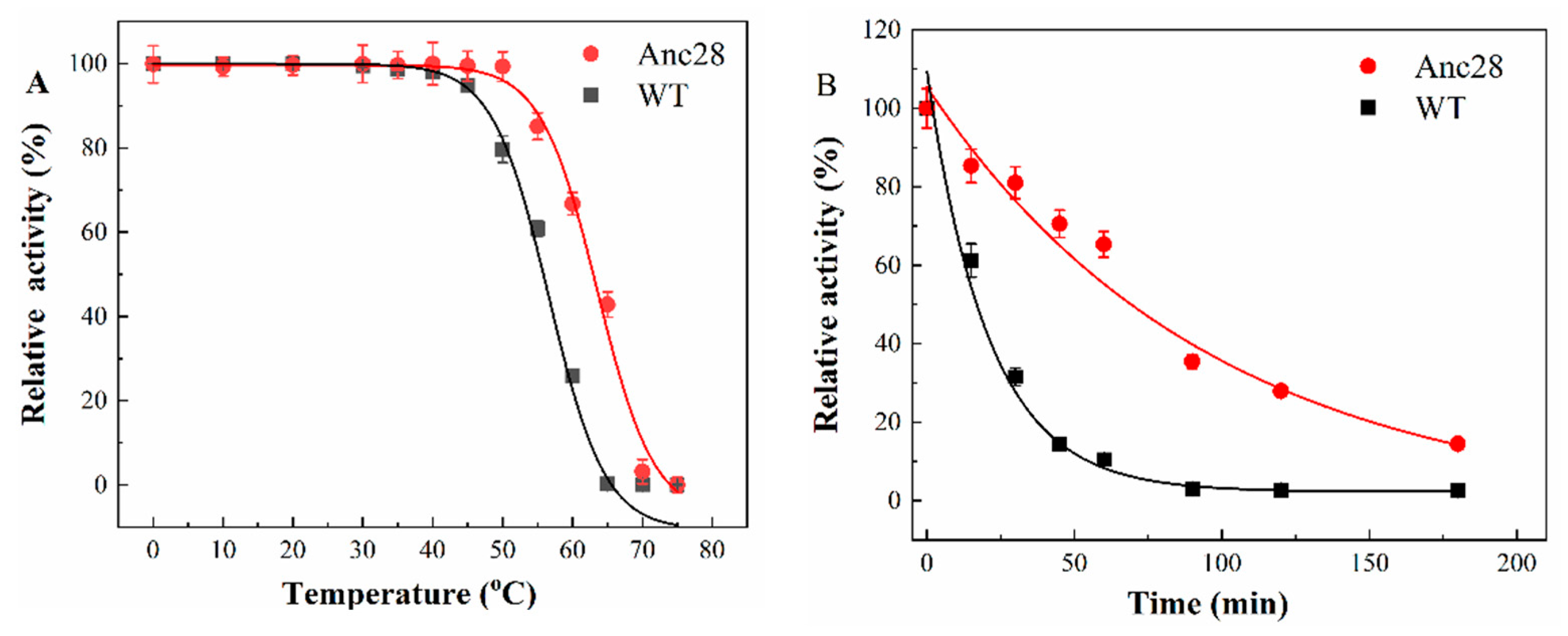
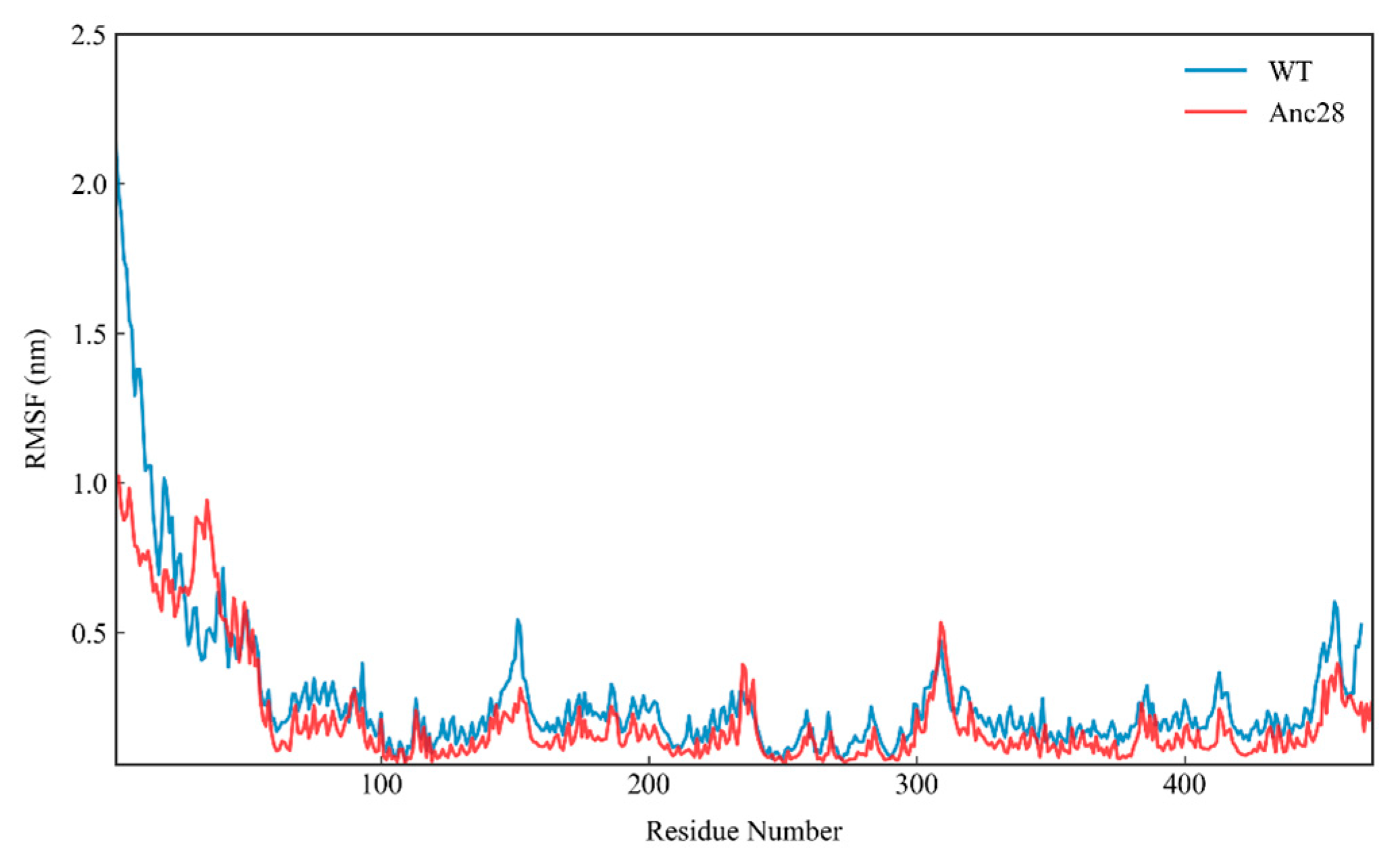
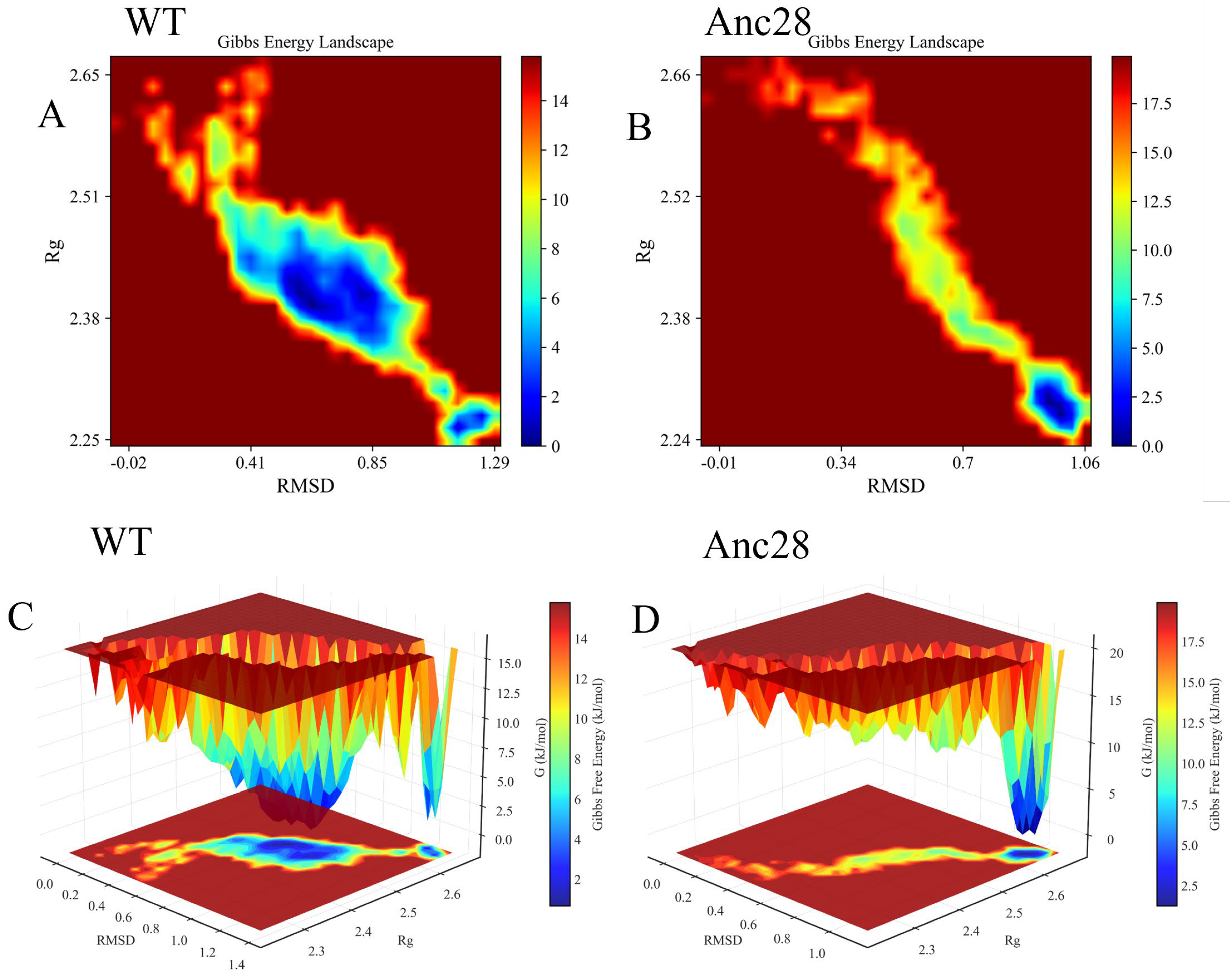
3.4. AncGADs Exhibited Enhanced Thermal Stability

| Source of GAD | Engineering Strategy | Obtained GAD Mutants | Effects | Reference |
|---|---|---|---|---|
| E. coli MG1655 | Site-directed mutagenesis based on the N-terminal structure analysis | GadBQ5D/V6I/T7E | T5015 increased by 7.7 °C | [34] |
| E. coli K12 | Site-directed mutagenesis based on a homologous comparison of its isoform and the catalytic–substrate interactions | GadBT62S, GadBQ309A | Residual activity increased by 19% and 27% after 12 h at 45 °C, pH 4.3 | [35] |
| L. brevis CGMCC 1306 | Site-directed mutagenesis at consensus site followed by saturation mutation | GadBT383V | T5015 increased by 3.0 °C; t1/2 increased 1.2-fold at 37 °C | [15] |
| L. plantarum GM 1403 | C-terminal truncation guided by homology modeling | GadBΔC11 | T5015 increased by 1.82 °C | [36] |
| L. brevis CGMCC 1306 | Proline residues were introduced at sites corresponding to those present in the thermophilic T. kodakarensis GAD | GadBG364P | t1/2 increased by 19.4 min and T5015 by 5.3 °C at 55 °C | [37] |
| L. brevis CGMCC 1306 | Site-directed mutagenesis selected by Ramachandran plot analysis | GadBK413A | t1/2 increased 2.1-fold at 50 °C | [38] |
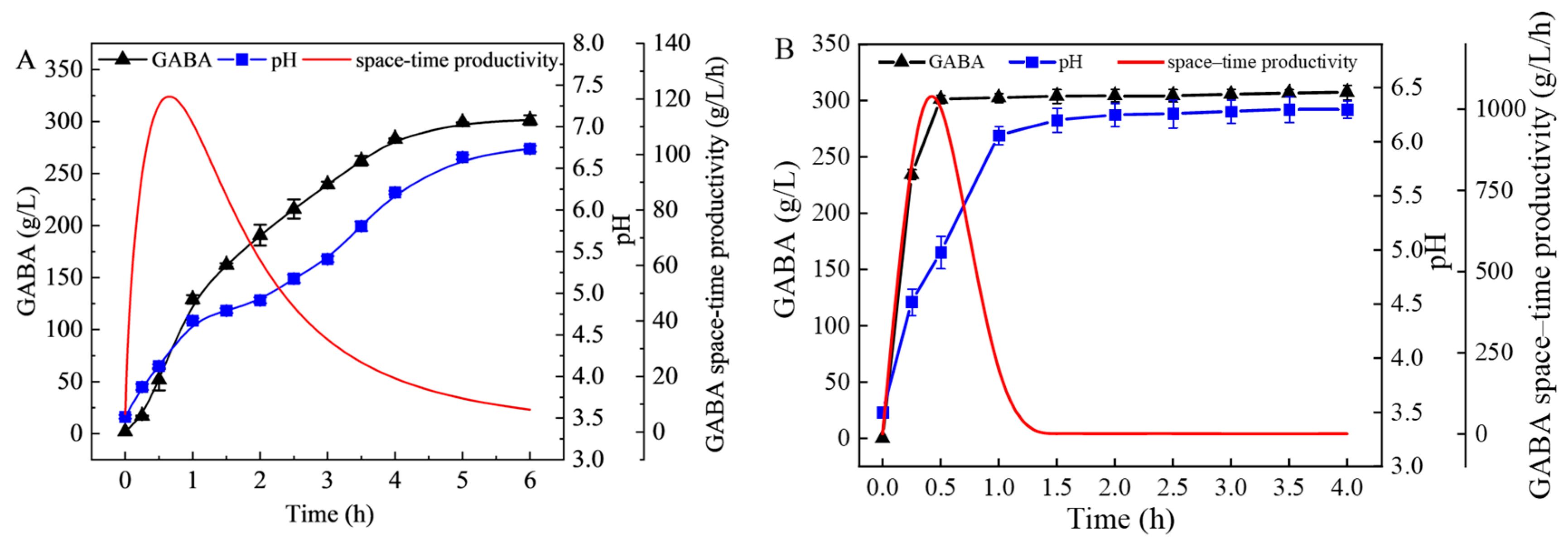
3.5. High-Efficiency GABA Synthesis Employing Engineered EcN (T7)
4. Conclusions
Supplementary Materials
Author Contributions
Funding
Institutional Review Board Statement
Informed Consent Statement
Data Availability Statement
Acknowledgments
Conflicts of Interest
References
- Almutairi, S.; Sivadas, A.; Kwakowsky, A. The effect of oral GABA on the nervous system: Potential for therapeutic intervention. Nutraceuticals 2024, 4, 241–259. [Google Scholar] [CrossRef]
- Cui, Y.; Miao, K.; Niyaphorn, S.; Qu, X. Production of gamma-aminobutyric acid from Lactic Acid Bacteria: A systematic review. Int. J. Mol. Sci. 2020, 21, 995. [Google Scholar] [CrossRef]
- Yan, J.; Qu, Y.; Cui, X. Research progress of extraction and determination methods of γ-aminobutyric acid. Sci. Technol. Food Ind. 2014, 4, 251–356. [Google Scholar] [CrossRef]
- Ding, J.; Hou, G.G.; Nemzer, B.V.; Xiong, S.; Dubat, A.; Feng, H. Effects of controlled germination on selected physicochemical and functional properties of whole-wheat flour and enhanced γ-aminobutyric acid accumulation by ultrasonication. Food Chem. 2018, 243, 214–221. [Google Scholar] [CrossRef]
- Somasundaram, S.; Jeong, J.; Hong, S.H. Cell surface display of Neurospora crassa glutamate decarboxylase on Escherichia coli for extracellular Gamma-aminobutyric acid production from high cell density culture. Biochem. Eng. J. 2021, 176, 108196. [Google Scholar] [CrossRef]
- Huang, Y.; Su, L.; Wu, J. Pyridoxine Supplementation Improves the activity of recombinant glutamate decarboxylase and the enzymatic production of gama-aminobutyric acid. PLoS ONE 2016, 11, e0157466. [Google Scholar] [CrossRef]
- Iorizzo, M.; Paventi, G.; Di Martino, C. Biosynthesis of gamma-aminobutyric acid (GABA) by Lactiplantibacillus plantarum in fermented food production. Curr. Issues Mol. Biol. 2024, 46, 200–220. [Google Scholar] [CrossRef] [PubMed]
- Monteiro, M.P.; Kohl, H.M.; Roullet, J.-B.; Gibson, K.M.; Ochoa-Reparaz, J.; Castillo, A.R. Genetically engineered Lactococcus lactis strain constitutively expresses GABA-producing genes and produces high levels of GABA. Lett. Appl. Microbiol. 2024, 77, ovae051. [Google Scholar] [CrossRef]
- Pizzi, A.; Parolin, C.; Gottardi, D.; Ricci, A.; Parpinello, G.P.; Lanciotti, R.; Patrignani, F.; Vitali, B. A novel GABA-producing Levilactobacillus brevis strain isolated from organic tomato as a promising probiotic. Biomolecules 2025, 15, 979. [Google Scholar] [CrossRef] [PubMed]
- Asun, A.C.; Lin, S.-T.; Ng, H.S.; Lan, J.C.-W. Production of gamma-aminobutyric acid (GABA) by Bacillus subtilis BBEL02 fermentation using nitrogen-rich industrial wastes as crude feedstocks. Biochem. Eng. J. 2022, 187, 108654. [Google Scholar] [CrossRef]
- Wen, J.; Sun, W.; Leng, G.; Li, D.; Feng, C.; Tian, Z.; Wang, X. Enhanced fermentative γ-aminobutyric acid production by a metabolic engineered Corynebacterium glutamicum. Biotechnol. Bioprocess Eng. 2024, 29, 129–140. [Google Scholar] [CrossRef]
- Jiang, D.; Cai, Q.; Gao, A.; Li, J.; Yang, Y.; Xu, X.; Ye, Y.; Hou, J. Cloning and expression of a full-length glutamate decarboxylase gene from a high-yielding γ-aminobutyric acid yeast strain MJ2. Ann. Microbiol. 2013, 63, 487–494. [Google Scholar] [CrossRef]
- Su, L.; Huang, Y.; Wu, J. Enhanced production of recombinant Escherichia coli glutamate decarboxylase through optimization of induction strategy and addition of pyridoxine. Bioresour. Technol. 2015, 198, 63–69. [Google Scholar] [CrossRef] [PubMed]
- Yogeswara, I.B.A.; Maneerat, S.; Haltrich, D. Glutamate decarboxylase from Lactic Acid bacteria—A key enzyme in GABA synthesis. Microorganisms 2020, 8, 1923. [Google Scholar] [CrossRef]
- Hua, Y.; Lyu, C.; Liu, C.; Wang, H.; Hu, S.; Zhao, W.; Mei, J.; Huang, J.; Mei, L. Improving the thermostability of glutamate decarboxylase from Lactobacillus brevis by consensus mutagenesis. Appl. Biochem. Biotechnol. 2020, 191, 1456–1469. [Google Scholar] [CrossRef] [PubMed]
- Zhang, Q.-F.; Hu, S.; Zhao, W.-R.; Huang, J.; Mei, J.-Q.; Mei, L.-H. Parallel Strategy Increases the thermostability and activity of glutamate decarboxylase. Molecules 2020, 25, 690. [Google Scholar] [CrossRef] [PubMed]
- Zhang, K.; Dai, Y.; Sun, J.; Lu, J. Enzyme ancestral sequence reconstruction and directed evolution. Chin. J. Biotechnol. 2021, 37, 4187–4200. [Google Scholar] [CrossRef]
- Gumulya, Y.; Baek, J.-M.; Wun, S.-J.; Thomson, R.E.S.; Harris, K.L.; Hunter, D.J.B.; Behrendorff, J.B.Y.H.; Kulig, J.; Zheng, S.; Wu, X.; et al. Engineering highly functional thermostable proteins using ancestral sequence reconstruction. Nat. Catal. 2018, 1, 878–888. [Google Scholar] [CrossRef]
- Zhao, J.; Wang, B.; Di, J.; Zhou, J.; Dong, J.; Ni, Y.; Han, R. Ancestral sequence reconstruction for Novel bifunctional glutathione synthetase with enhanced thermostability and catalytic efficiency. Foods 2026, 15, 309. [Google Scholar] [CrossRef]
- Kayikci, M.; Venkatakrishnan, A.J.; Scott-Brown, J.; Ravarani, C.N.J.; Flock, T.; Babu, M.M. Visualization and analysis of non-covalent contacts using the Protein Contacts Atlas. Nat. Struct. Mol. Biol. 2018, 25, 185–194. [Google Scholar] [CrossRef]
- Musil, M.; Khan, R.T.; Beier, A.; Stourac, J.; Konegger, H.; Damborsky, J.; Bednar, D. FireProtASR: A web server for fully automated ancestral sequence reconstruction. Brief Bioinform. 2021, 22, 185–194. [Google Scholar] [CrossRef] [PubMed]
- Yao, L.-L.; Cao, J.-R.; Lyu, C.-J.; Fan, F.-F.; Wang, H.-P.; Cao, H.-W.; Huang, J.; Mei, L.-H. Food-grade γ-aminobutyric acid production by immobilized glutamate decarboxylase from Lactobacillus plantarum in rice vinegar and monosodium glutamate system. Biotechnol. Lett. 2021, 43, 2027–2034. [Google Scholar] [CrossRef]
- Miyazaki, J.; Nakaya, S.; Suzuki, T.; Tamakoshi, M.; Oshima, T.; Yamagishi, A. Ancestral residues stabilizing 3-isopropylmalate dehydrogenase of an extreme thermophile: Experimental evidence supporting the thermophilic common ancestor hypothesis. J. Biochem. 2001, 129, 777–782. [Google Scholar] [CrossRef]
- Gaucher, E.A.; Thomson, J.M.; Burgan, M.F.; Benner, S.A. Inferring the palaeoenvironment of ancient bacteria on the basis of resurrected proteins. Nature 2003, 425, 285–288. [Google Scholar] [CrossRef]
- Shimizu, H.; Yokobori, S.; Ohkuri, T.; Yokogawa, T.; Nishikawa, K.; Yamagishi, A. Extremely thermophilic translation system in the common ancestor commonote: Ancestral mutants of Glycyl-tRNA synthetase from the extreme thermophile Thermus thermophilus. J. Mol. Biol. 2007, 369, 1060–1069. [Google Scholar] [CrossRef]
- Veronika, Š.; Bidmanová, Š.; Koudelakova, T.; Prokop, Z.; Chaloupkova, R.; Damborský, J. Strategies for stabilization of enzymes in organic solvents. ACS Catal. 2013, 3, 2823–2836. [Google Scholar] [CrossRef]
- Huang, J.; Fang, H.; Gai, Z.-C.; Mei, J.-Q.; Li, J.-N.; Hu, S.; Lv, C.-J.; Zhao, W.-R.; Mei, L.-H. Lactobacillus brevis CGMCC 1306 glutamate decarboxylase: Crystal structure and functional analysis. Biochem. Biophys. Res. Commun. 2018, 503, 1703–1709. [Google Scholar] [CrossRef]
- Khan, R.T.; Musil, M.; Stourac, J.; Damborsky, J.; Bednar, D. Fully Automated Ancestral Sequence Reconstruction using FireProtASR. Curr. Protoc. 2021, 1, e30. [Google Scholar] [CrossRef]
- Grote, A.; Hiller, K.; Scheer, M.; Münch, R.; Nörtemann, B.; Hempel, D.C.; Jahn, D. JCat: A novel tool to adapt codon usage of a target gene to its potential expression host. Nucleic Acids Res. 2005, 33, W526–W531. [Google Scholar] [CrossRef] [PubMed]
- Behrouzi, A.; Mazaheri, H.; Falsafi, S.; Tavassol, Z.H.; Moshiri, A.; Siadat, S.D. Intestinal effect of the probiotic Escherichia coli strain Nissle 1917 and its OMV. J. Diabetes Metab. Disord. 2020, 19, 597–604. [Google Scholar] [CrossRef] [PubMed]
- Chen, H.; Lei, P.; Ji, H.; Yang, Q.; Peng, B.; Ma, J.; Fang, Y.; Qu, L.; Li, H.; Wu, W.; et al. Advances in Escherichia coli Nissle 1917 as a customizable drug delivery system for disease treatment and diagnosis strategies. Mater. Today Bio 2023, 18, 100543. [Google Scholar] [CrossRef]
- Wang, Y.; Luo, Z.; Tu, Y.; Zhong, T.; Hu, S.; Zhao, W.; Lyu, C.; Chan, Z.; Huang, J.; Mei, L. Mining of a novel thermostable glutamate decarboxylase by ancestral sequence reconstruction and application of this enzyme in biosynthesis of food-grade γ-aminobutyric acid. Chin. J. Biotechnol. 2025, 41, 2062–2076. [Google Scholar] [CrossRef]
- Pennacchietti, E.; Lammens, T.M.; Capitani, G.; Franssen, M.C.R.; John, R.A.; Bossa, F.; De Biase, D. Mutation of His465 alters the pH-dependent Spectroscopic Properties of Escherichia coli glutamate decarboxylase and broadens the range of Its activity toward more alkaline pH. J. Biol. Chem. 2009, 284, 31587–31596. [Google Scholar] [CrossRef]
- Jun, C.; Joo, J.C.; Lee, J.H.; Kim, Y.H. Thermostabilization of glutamate decarboxylase B from Escherichia coli by structure-guided design of its pH-responsive N-terminal interdomain. J. Biotechnol. 2014, 174, 22–28. [Google Scholar] [CrossRef]
- Fengmin, L.; Heng, Z.; Xiangjun, Z.; Xiaobo, W.; Huiyan, L.; Haitian, F. Site-directed mutagenesis improves the practical application of L-glutamic acid decarboxylase in Escherichia coli. Eng. Life Sci. 2023, 23, e2200064. [Google Scholar] [CrossRef] [PubMed]
- Lyu, C.; Yao, L.; Zhu, Q.; Mei, J.; Cao, Y.; Hu, S.; Zhao, W.; Huang, J.; Mei, L.; Yao, S.; et al. Reconstruction of the glutamate decarboxylase system in Lactococcus lactis for biosynthesis of food-grade γ-aminobutyric acid. Appl. Microbiol. Biotechnol. 2021, 105, 4127–4140. [Google Scholar] [CrossRef]
- Fang, H.; Lü, C.; Hua, Y.; Hu, S.; Zhao, W.; Fang, W.; Song, K.; Huang, J.; Mei, L. Increasing the thermostability of glutamate decarboxylase from Lactobacillus brevis by introducing proline. Chin. J. Biotechnol. 2024, 35, 636–646. [Google Scholar] [CrossRef]
- Ke, P.; Huang, J.; Hu, S.; Zhao, W.; Lü, C.; Yu, K.; Lei, Y.; Wang, J.; Mei, L. Enhancing glutamate decarboxylase activity by site-directed mutagenesis: An insight from Ramachandran plot], Sheng Wu Gong Cheng Xue Bao Chin. J. Biotechnol. 2016, 32, 31–40. [Google Scholar] [CrossRef]
- Le Vo, T.D.; Kim, T.W.; Hong, S.H. Effects of glutamate decarboxylase and gamma-aminobutyric acid (GABA) transporter on the bioconversion of GABA in engineered Escherichia coli. Bioprocess Biosyst. Eng. 2012, 35, 645–650. [Google Scholar] [CrossRef] [PubMed]
- Ke, C.; Wei, J.; Ren, Y.; Yang, X.; Chen, J.; Huang, J. Efficient gamma-aminobutyric acid bioconversion by engineered Escherichia coli. Biotechnol. Biotechnol. Equip. 2018, 32, 566–573. [Google Scholar] [CrossRef]
- Park, S.J.; Kim, E.Y.; Noh, W.; Oh, Y.H.; Kim, H.Y.; Song, B.K.; Cho, K.M.; Hong, S.H.; Lee, S.H.; Jegal, J. Synthesis of nylon 4 from gamma-aminobutyrate (GABA) produced by recombinant Escherichia coli. Bioprocess Biosyst. Eng. 2013, 36, 885–892. [Google Scholar] [CrossRef] [PubMed]
- Xiong, Q.; Xu, Z.; Xu, L.; Yao, Z.; Li, S.; Xu, H. Efficient production of γ-GABA using recombinant E. coli expressing glutamate decarboxylase (GAD) derived from Eukaryote Saccharomyces cerevisiae. Appl. Biochem. Biotechnol. 2017, 183, 1390–1400. [Google Scholar] [CrossRef] [PubMed]
- Lyu, J.-F.; Lyu, C.-J.; Cao, J.-R.; Mei, J.-Q.; Hu, S.; Zhao, W.-R.; Xu, T.-Y.; Wang, Y.-T.; Wang, D.-L.; Huang, J.; et al. High level production of γ-aminobutyric acid in engineered Escherichia coli by refactoring the glutamate decarboxylase. Process Biochem. 2022, 118, 243–251. [Google Scholar] [CrossRef]



| Strains/Plasmids | Characteristics | Source |
|---|---|---|
| Strains | ||
| DH5α | F− endA1 glnV44 thi-1 recA1 relA1 gyrA96 deoR nupG purB20 φ80dlacZΔM15 Δ(lacZYA-argF)U169, hsdR17(rK−mK+), λ− | Takara |
| EcN (T7) | Serotype O6:K5:H1 derivate, insertion of T7-RNA polymerase gene with lacUV5 promoter by deletion of malEFG operon | Lab stock |
| EcN (T7)/pET28a-gadB | EcN (T7) strain harboring pET28a-gadB | This work |
| EcN (T7)/pET28a-gadBAnc19 | EcN (T7) strain harboring pET28a-gadBAnc19 | This work |
| EcN (T7)/pET28a-gadBAnc20 | EcN (T7) strain harboring pET28a-gadBAnc20 | This work |
| EcN (T7)/pET28a-gadBAnc28 | EcN (T7) strain harboring pET28a-gadBAnc28 | This work |
| EcN (T7)/pET28a-gadBAnc30 | EcN (T7) strain harboring pET28a-gadBAnc30 | This work |
| Plasmids | ||
| pET-28a (+) | Expression vector, Kan+ | Novagen |
| pET28a-gadB | The gadB segment in vector pET-28a | Lab stock |
| pET28a-gadBAnc19 | The gadBAnc19 segment in vector pET-28a | This work |
| pET28a-gadBAnc20 | The gadBAnc20 segment in vector pET-28a | This work |
| pET28a-gadBAnc28 | The gadBAnc28 segment in vector pET-28a | This work |
| pET28a-gadBAnc30 | The gadBAnc30 segment in vector pET-28a | This work |
| GADs | Km (mM) | kcat (s−1) | kcat/Km (s−1mM−1) |
|---|---|---|---|
| WT | 41.01 | 32.60 | 0.79 |
| Anc19 | 54.78 | 48.23 | 0.88 |
| Anc20 | 59.63 | 41.47 | 0.69 |
| Anc28 | 26.80 | 57.41 | 2.14 |
| Anc30 | 30.44 | 30.16 | 0.99 |
| Strains | Gene and Source | Concentration (g/L) | Productivity (g/L/h) | Conversion Ratio | References |
|---|---|---|---|---|---|
| E. coli XBT | GadB and GadC (E. coli) | 5.46 | 0.114 | 89.5% | [39] |
| E. coli BL21(DE3) | GadB (L. lactis) | 204.12 | 34 | 99% | [40] |
| E. coli XL1-Blue | GadB (L. lactis) | 94.8 | 1.98 | 77.7% | [41] |
| E. coli BL21(DE3) | GadB (Saccharomyces cerevisiae) | 252 | N/S | 99% | [42] |
| E. coli BL21(DE3) | GadBΔC11K17T/D294G/E312S/Q346H (L. brevis) | 270.42 | 36.06 | 99.9 | [43] |
Disclaimer/Publisher’s Note: The statements, opinions and data contained in all publications are solely those of the individual author(s) and contributor(s) and not of MDPI and/or the editor(s). MDPI and/or the editor(s) disclaim responsibility for any injury to people or property resulting from any ideas, methods, instructions or products referred to in the content. |
© 2026 by the authors. Licensee MDPI, Basel, Switzerland. This article is an open access article distributed under the terms and conditions of the Creative Commons Attribution (CC BY) license.
Share and Cite
Yue, J.; Wu, W.; Fan, F.; Zhao, W.; Hu, S.; Chan, Z.; Mei, L.; Lyu, C. Engineered Escherichia coli Nissle 1917 for the High Level Biosynthesis of γ-Aminobutyric Acid. Fermentation 2026, 12, 281. https://doi.org/10.3390/fermentation12060281
Yue J, Wu W, Fan F, Zhao W, Hu S, Chan Z, Mei L, Lyu C. Engineered Escherichia coli Nissle 1917 for the High Level Biosynthesis of γ-Aminobutyric Acid. Fermentation. 2026; 12(6):281. https://doi.org/10.3390/fermentation12060281
Chicago/Turabian StyleYue, Junhao, Wanting Wu, Fangfang Fan, Weirui Zhao, Sheng Hu, Zhuhua Chan, Lehe Mei, and Changjiang Lyu. 2026. "Engineered Escherichia coli Nissle 1917 for the High Level Biosynthesis of γ-Aminobutyric Acid" Fermentation 12, no. 6: 281. https://doi.org/10.3390/fermentation12060281
APA StyleYue, J., Wu, W., Fan, F., Zhao, W., Hu, S., Chan, Z., Mei, L., & Lyu, C. (2026). Engineered Escherichia coli Nissle 1917 for the High Level Biosynthesis of γ-Aminobutyric Acid. Fermentation, 12(6), 281. https://doi.org/10.3390/fermentation12060281