Systematic Review

Building a Hand-Curated ceRNET for Endometrial Cancer, Striving for Clinical as Well as Medicolegal Soundness: A Systematic Review


1
Institute of Molecular Biology and Pathology, Italian National Research Council (CNR-IBPM), 00185 Rome, Italy
2
Department of Anatomical, Histological, Forensic and Orthopedic Sciences, Sapienza University of Rome, 00161 Rome, Italy
3
Department of Medico-Surgical Sciences and Biotechnologies, Sapienza University of Rome, 04100 Latina, Italy
*
Author to whom correspondence should be addressed.
These authors contributed equally to this work.
Non-Coding RNA 2025, 11(3), 34; https://doi.org/10.3390/ncrna11030034
Submission received: 24 February 2025 / Revised: 31 March 2025 / Accepted: 27 April 2025 / Published: 30 April 2025
(This article belongs to the Special Issue Non-coding RNA as Biomarker in Cancer)

Abstract

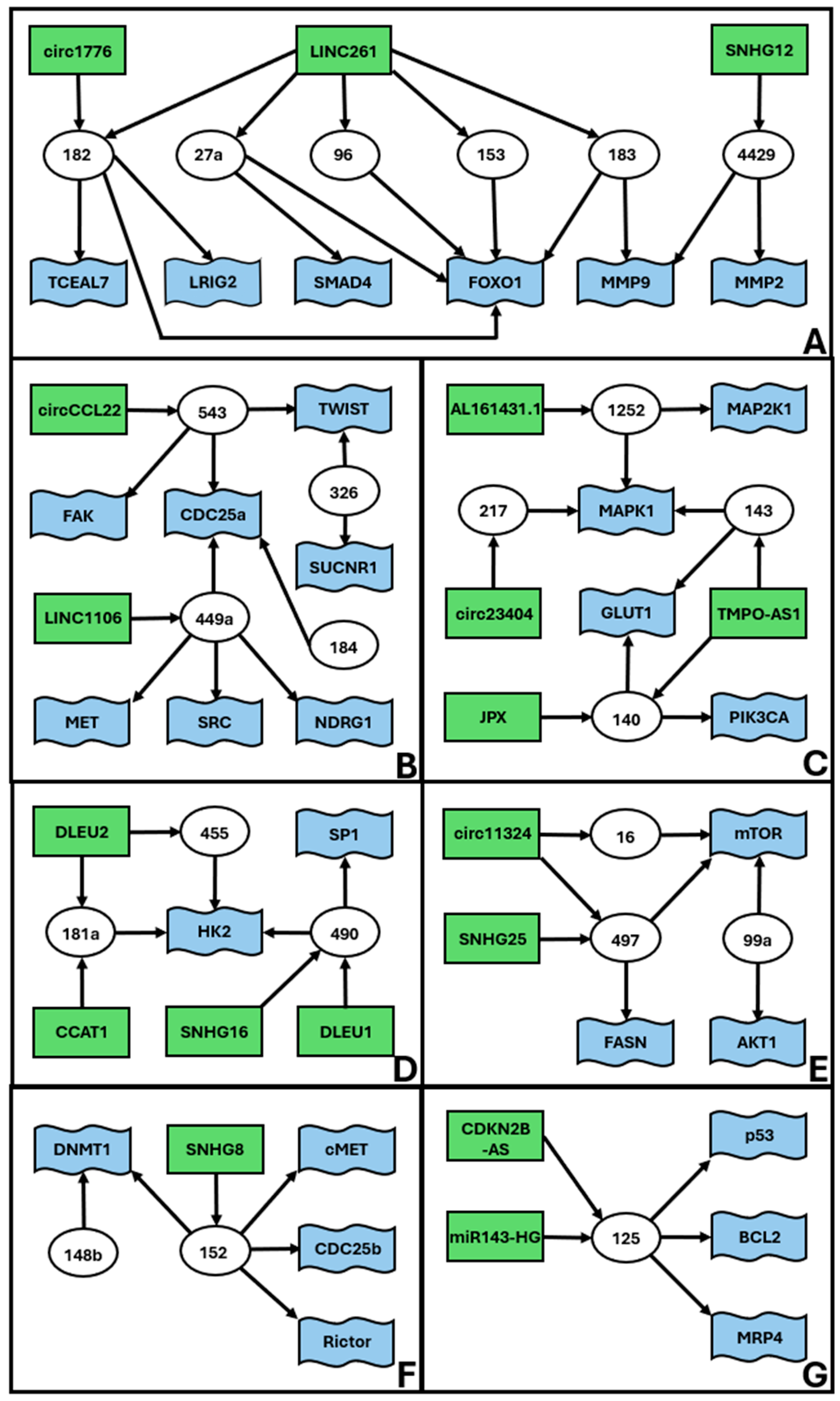
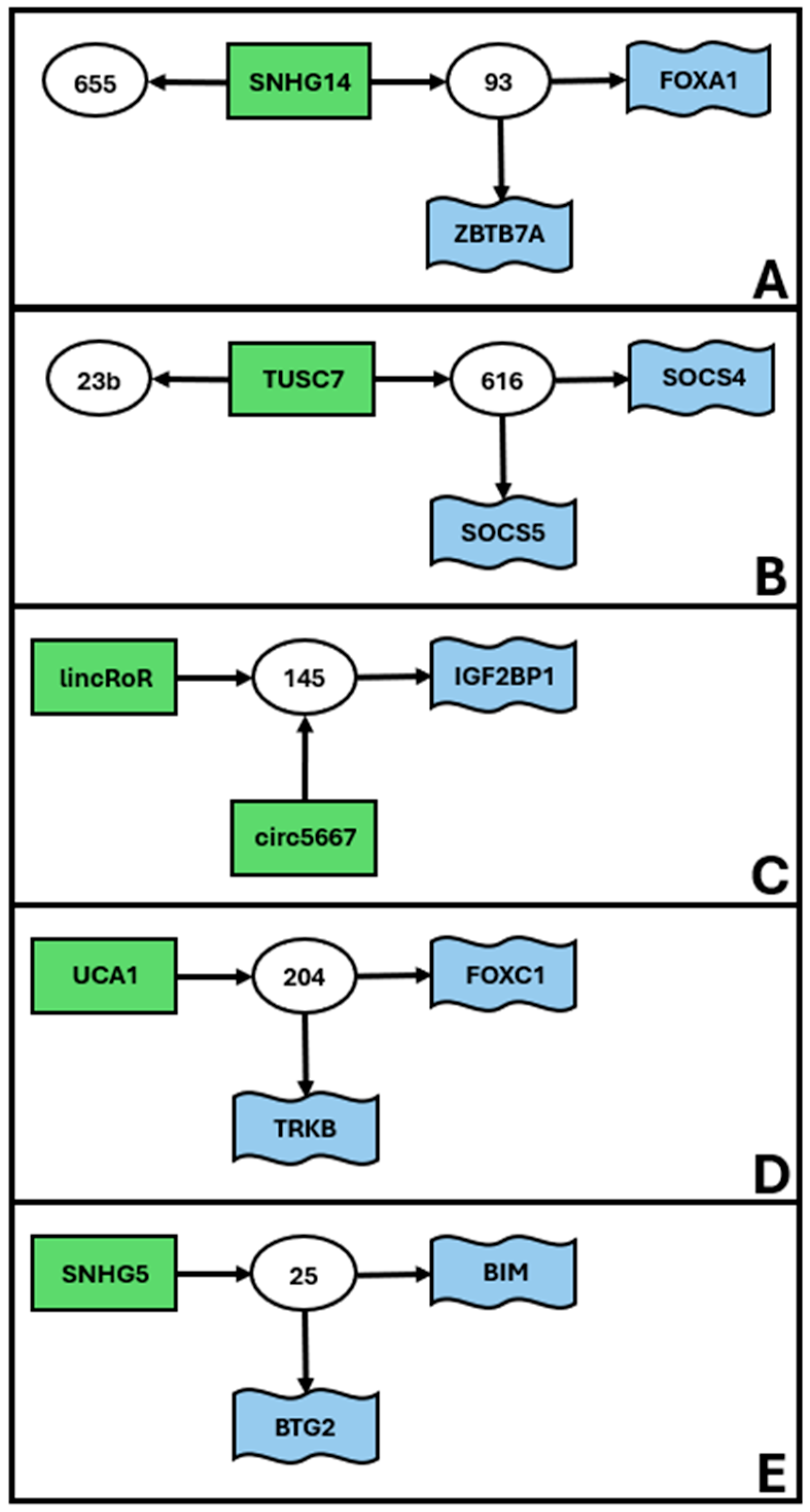
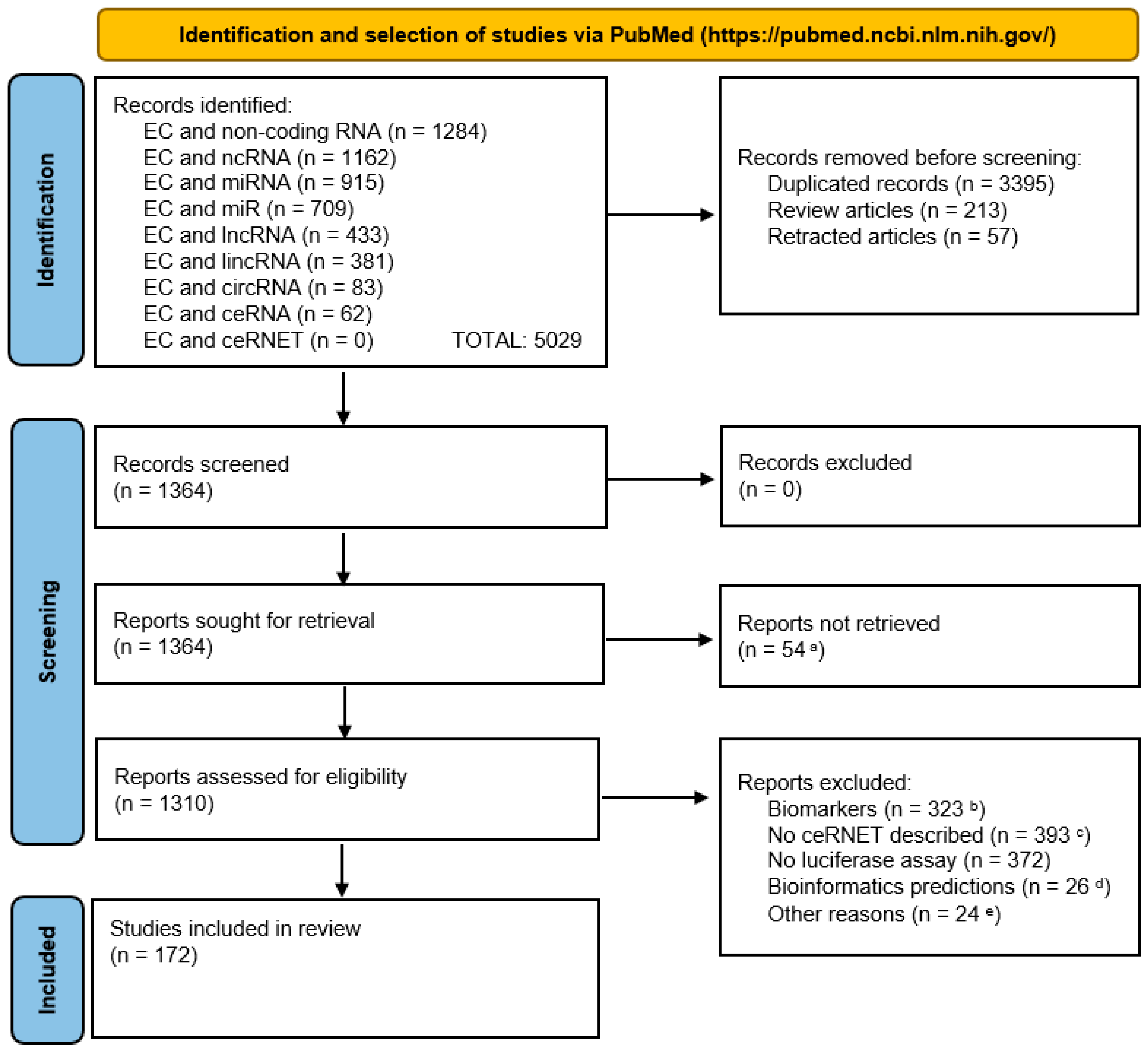
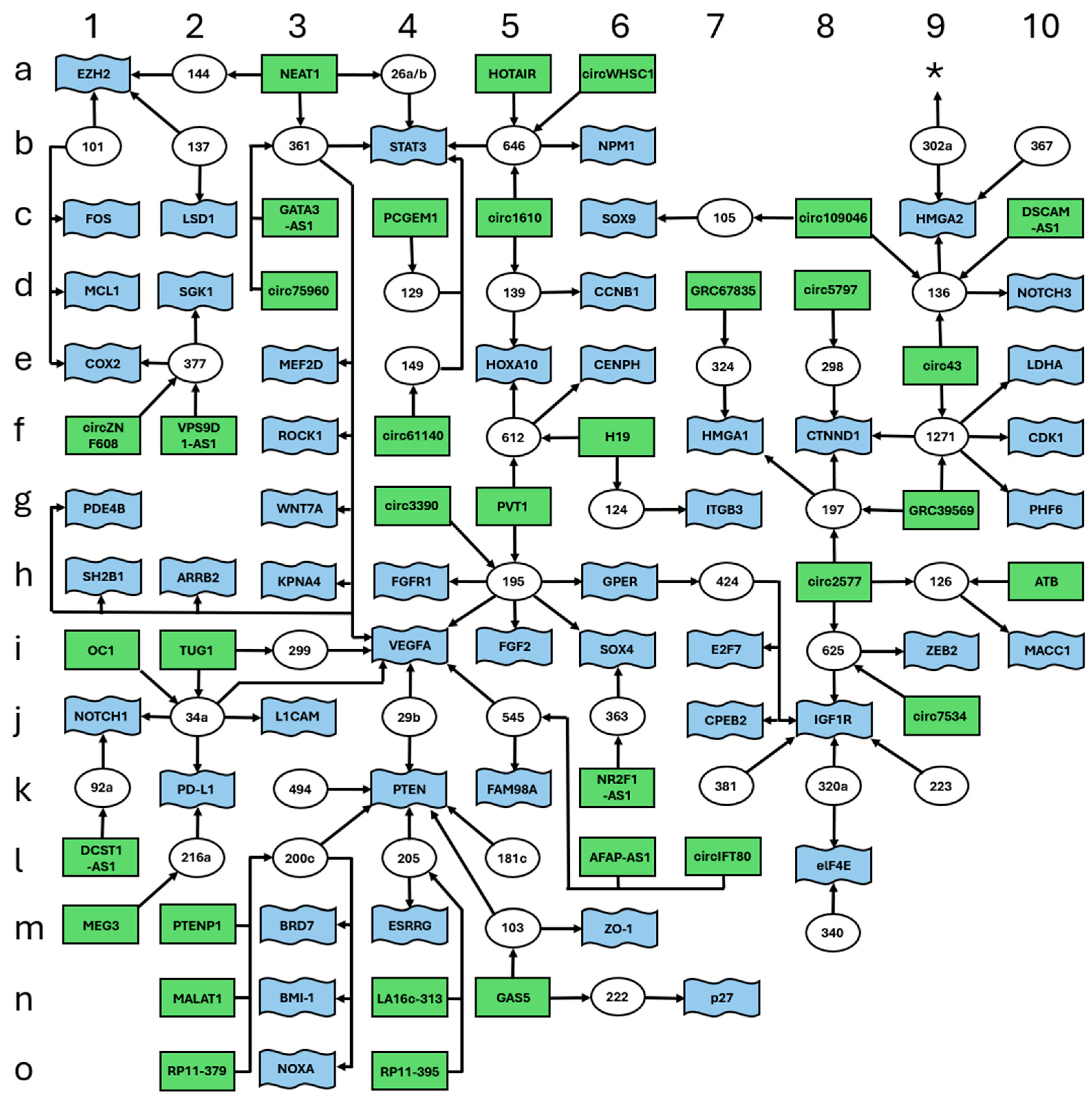
Background/Objectives: Competing endogenous RNAs (ceRNA) are molecules that compete for the binding to a microRNA (miR). Usually, there are two ceRNA, one of which is a protein-coding RNA (mRNA), with the other being a long non-coding RNA (lncRNA). The miR role is to inhibit mRNA expression, either promoting its degradation or impairing its translation. The lncRNA can “sponge” the miR, thus impeding its inhibitory action on the mRNA. In their easier configuration, these three molecules constitute a regulatory axis for protein expression. However, each RNA can interact with multiple targets, creating branched and intersected axes that, all together, constitute what is known as a competing endogenous RNA network (ceRNET). Methods: In this systematic review, we collected all available data from PubMed about experimentally verified (by luciferase assay) regulatory axes in endometrial cancer (EC), excluding works not using this test; Results: This search allowed the selection of 172 bibliographic sources, and manually building a series of ceRNETs of variable complexity showed the known axes and the deduced intersections. The main limitation of this search is the highly stringent selection criteria, possibly leading to an underestimation of the complexity of the networks identified. However, this work allows us not only to hypothesize possible gap fillings but also to set the basis to instruct artificial intelligence, using adequate prompts, to expand the EC ceRNET by comparing it with ceRNETs of other cancers. Moreover, these networks can be used to inform and guide research toward specific, though still unidentified, axes in EC, to complete parts of the network that are only partially described, or even to integrate low complexity subnetworks into larger more complex ones. Filling the gaps among the existing EC ceRNET will allow physicians to hypothesize new therapeutic strategies that may either potentiate or substitute existing ones. Conclusions: These ceRNETs allow us to easily visualize long-distance interactions, thus helping to select the best treatment, depending on the molecular profile of each patient, for personalized medicine. This would yield higher efficiency rates and lower toxicity levels, both of which are extremely relevant factors not only for patients’ wellbeing, but also for the legal, regulatory, and ethical aspects of miR-based innovative treatments and personalized medicine as a whole. This systematic review has been registered in PROSPERO (ID: PROSPERO 2025 CRD420251035222).
Keywords: gene regulation network; cancer; artificial intelligence; innovative cancer therapy; ethics; medicolegal viability gene regulation network; cancer; artificial intelligence; innovative cancer therapy; ethics; medicolegal viability