8.1. Effects of Key Structural Parameters on External Performance
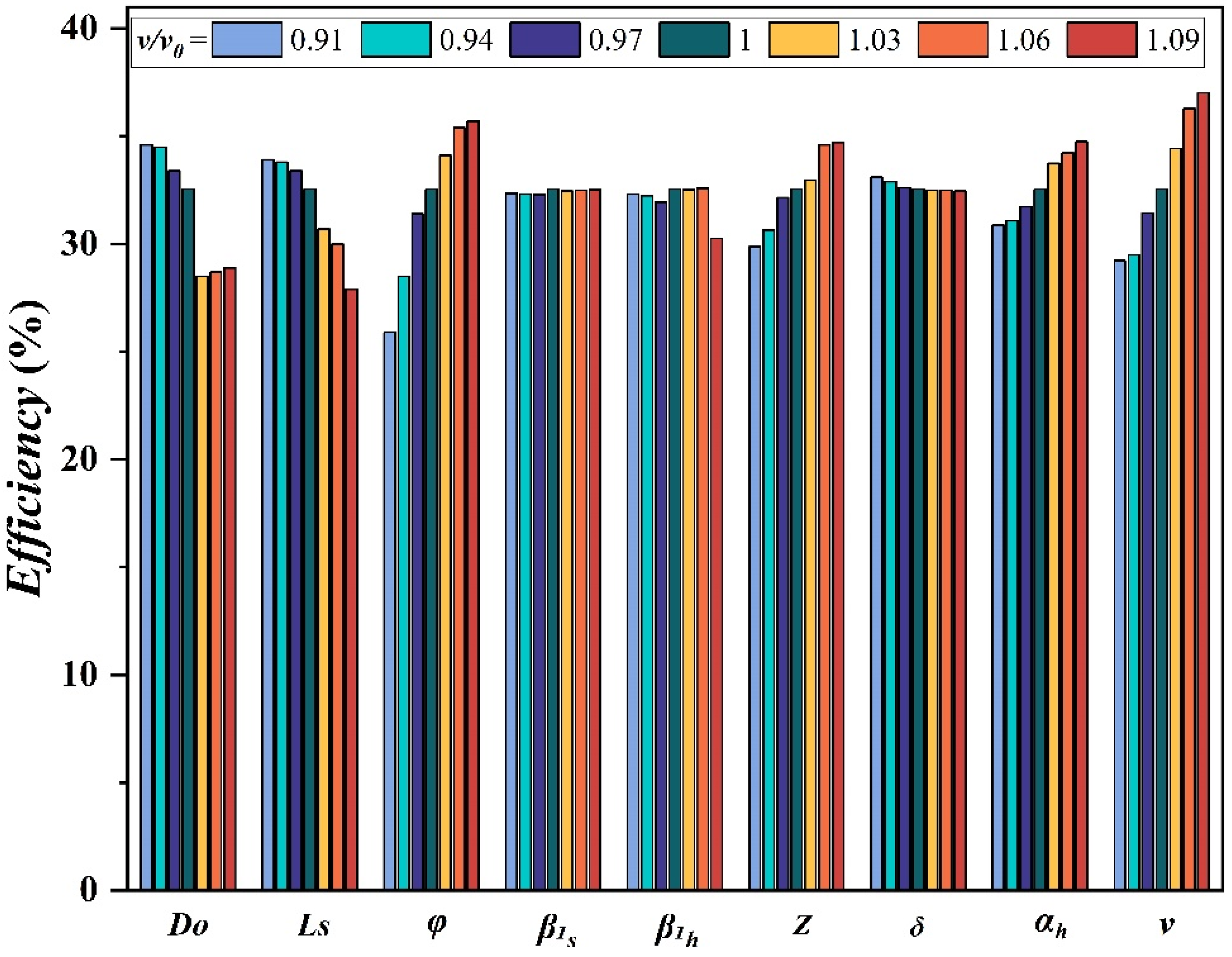
Figure 9 and
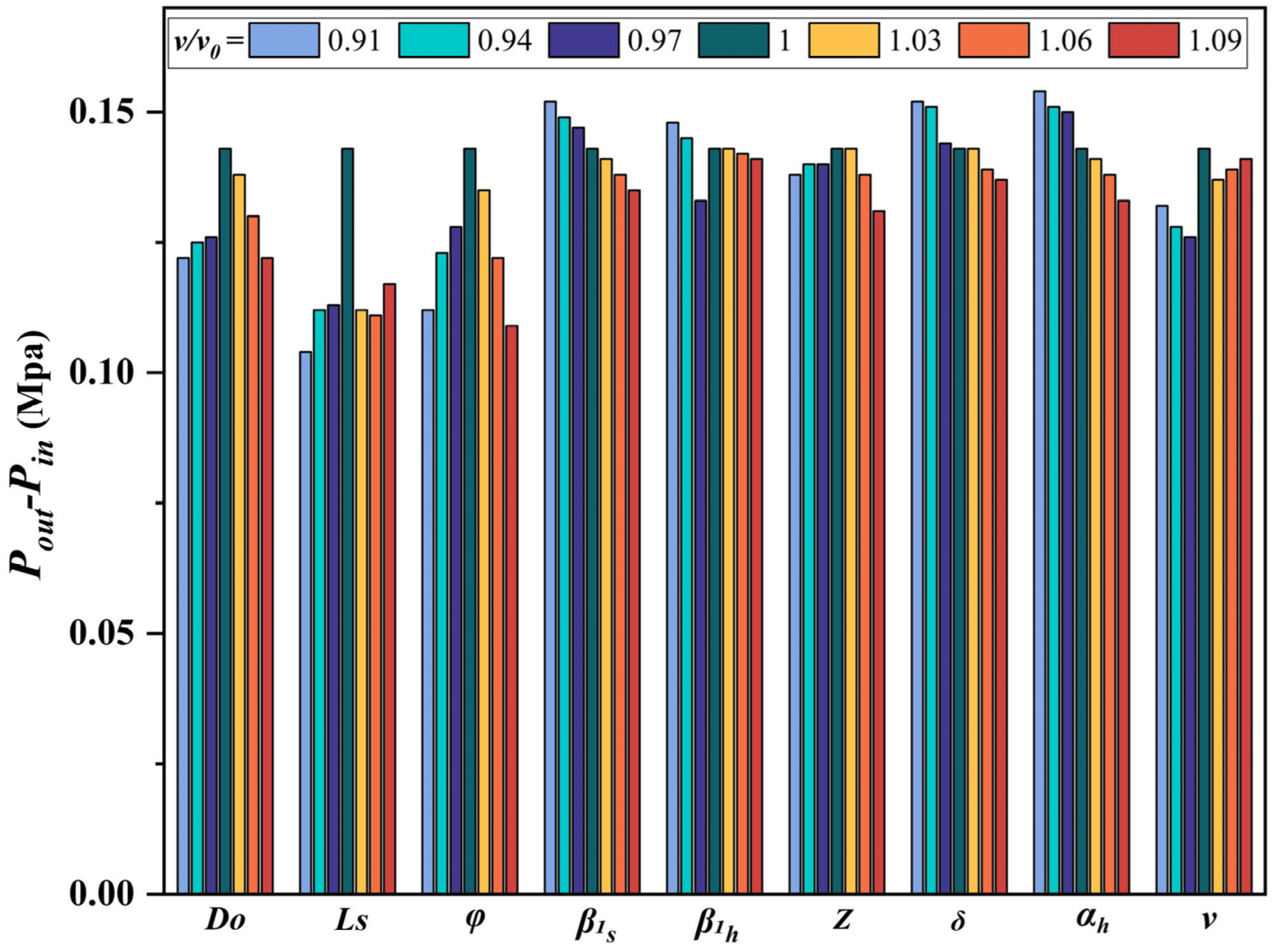
Figure 10 present the bar charts illustrating the effects of the dimensionless values of nine key impeller geometric parameters on pump efficiency and pressure rise (Pout-Pin), respectively. The results indicate that both efficiency and pressure rise exhibit pronounced nonlinear responses to parameter variations within the range of 0.91–1.09. For most parameters, either efficiency or pressure rise reaches an extremum at the dimensionless value of 1.00 (the baseline design), suggesting that this value represents a critical balance point.
With respect to the impeller outer diameter, increasing the dimensionless value from 0.91 to 1.00 results in a decrease in efficiency from 34.6% to 32.55%, while the pressure rise increases from 0.122 Mpa to 0.143 Mpa. Further increasing the diameter to 1.09 leads to a slight recovery in efficiency (28.9%) but a reduction in pressure rise to 0.122 Mpa, indicating that moderate enlargement of the outer diameter enhances pressurization, whereas excessive enlargement weakens this effect. For axial length, efficiency decreases monotonically from 33.92% to 27.9% as the dimensionless value increases from 0.91 to 1.09. The pressure rise peaks at 0.143 Mpa near the design point and subsequently declines, implying the existence of an optimal axial length range, beyond which pressurization performance deteriorates.
The blade wrap angle shows a strong positive correlation with efficiency, which increases from 25.9% to 35.7% as the dimensionless value increases from 0.91 to 1.09. In contrast, the pressure rise reaches a maximum of 0.143 Mpa at the design value and then decreases with further increases in wrap angle, owing to enhanced flow separation and vortex-induced losses at excessive wrap angles. The shroud inlet blade angle has a minor influence on efficiency (32.3–32.55%), but the pressure rise decreases from 0.152 Mpa to 0.135 Mpa as the angle increases, mainly due to intensified impact losses.
For the hub inlet blade angle, efficiency reaches a local maximum of 32.58% at a dimensionless value of 1.06 and then drops sharply to 30.25%, indicating the presence of an optimal configuration; excessive angles tend to cause partial blockage of the flow passage. A significant reduction in pressure rise is observed near 0.97, which is associated with changes in the hub passage geometry. Increasing the blade number from 0.91 to 1.09 enhances efficiency from 29.88% to 34.72%, while the pressure rise peaks at approximately 0.143 Mpa within the range of 1.00–1.03 and then decreases due to increased friction losses caused by overly dense blade arrangements.
The tip clearance exhibits a weak negative correlation with efficiency (from 33.1% to 32.45%), whereas the pressure rise decreases markedly from 0.152 Mpa to 0.137 Mpa as the clearance increases, primarily due to intensified leakage losses. For the hub half-cone angle, efficiency increases from 30.88% to 34.75% as the dimensionless value increases from 0.91 to 1.09, attributed to improved flow diffusion and reduced separation. However, the pressure rise continuously decreases, since excessive cone angles induce rapid passage expansion and low-pressure vortex formation. The hub ratio shows a strong positive correlation with efficiency (29.22–37.02%), while the pressure rise reaches a maximum at the design value and then fluctuates slightly with further increases, reflecting the combined influence of passage geometry.
Overall, blade wrap angle, blade number, hub ratio, and hub half-cone angle have a significant impact on efficiency, which can be enhanced by increasing these parameters within appropriate ranges, although critical thresholds must be considered for wrap angle and blade number. In contrast, tip clearance and axial length are negatively correlated with efficiency and should be minimized or carefully constrained in design. From the perspective of pressure rise, impeller outer diameter, axial length, wrap angle, and hub ratio reach their optimal values near the baseline design, whereas the shroud inlet blade angle and hub half-cone angle exhibit negative correlations.
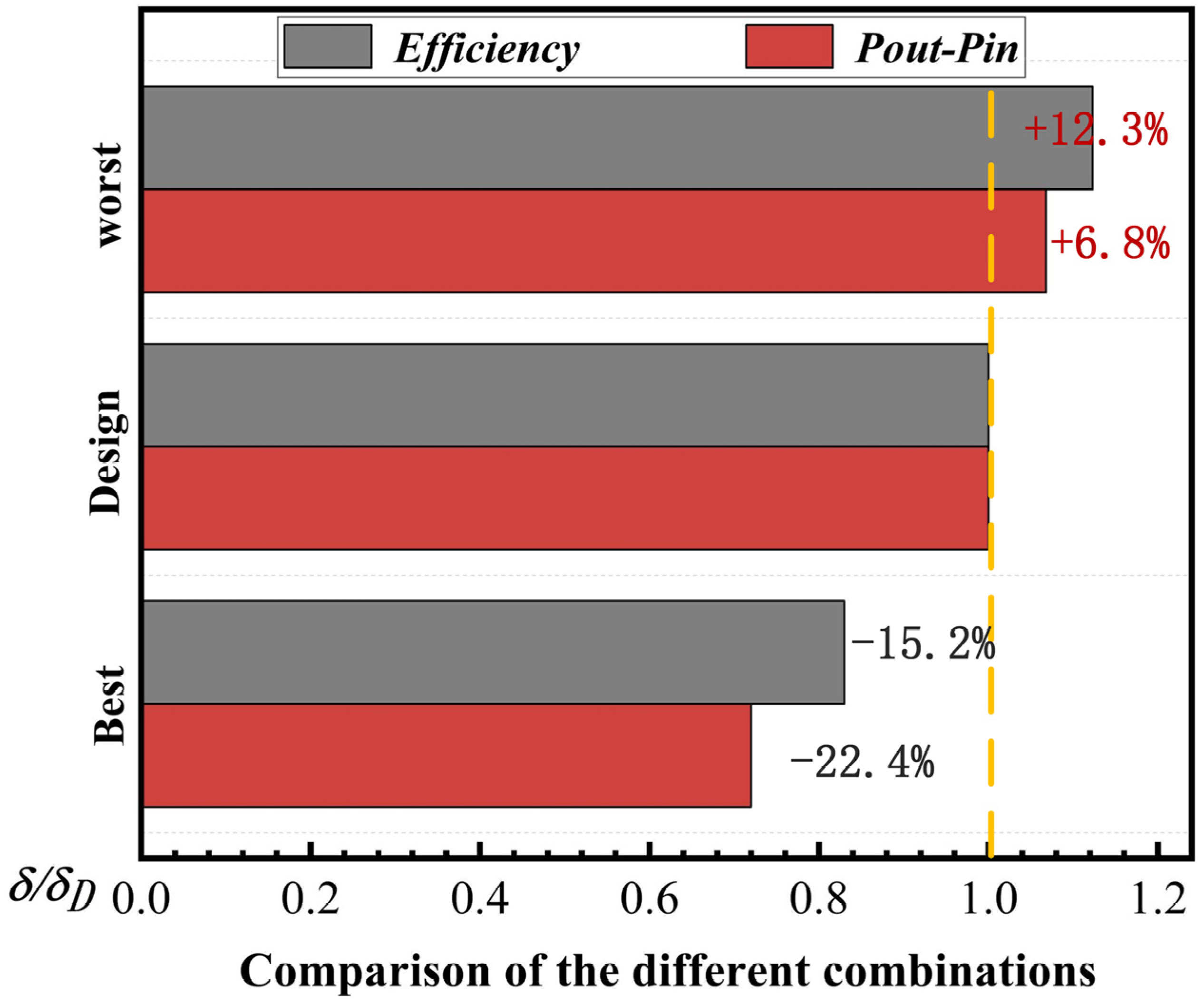
Based on cross-comparison of all cases, the maximum efficiency of 37.6% is achieved for the parameter combination D0 = 186 mm, Ls = 50 mm, φ = 140°, β1s = 5.6°, β1h = 7.5°, Z = 6, δ = 0.3, αh = 7.5°, and ν = 0.7. The maximum pressure rise of 0.154 Mpa is obtained for a similar configuration with D0 = 191 mm, Ls = 56 mm, and φ = 140°.
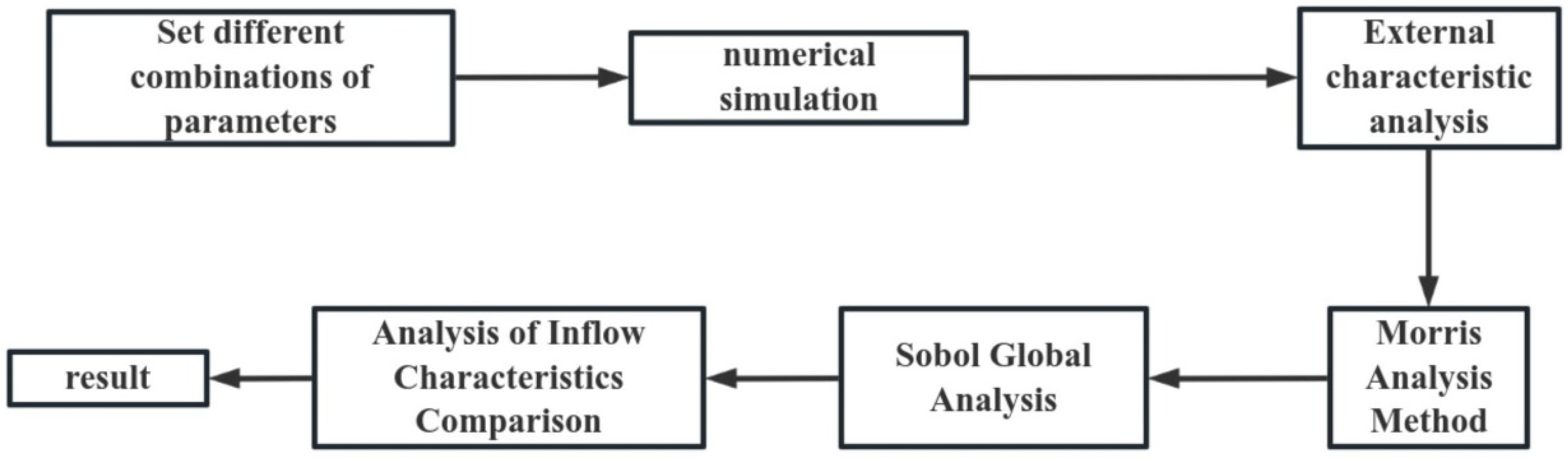
It should be noted that under practical operating conditions, these structural parameters do not influence external performance independently but exhibit strong coupling and interaction effects. The above external performance analysis only reflects the individual influence of each parameter and cannot fully capture their combined effects. Therefore, a Morris sensitivity analysis is further required to systematically screen and rank the relative importance of different structural parameters, which is addressed in the following section.
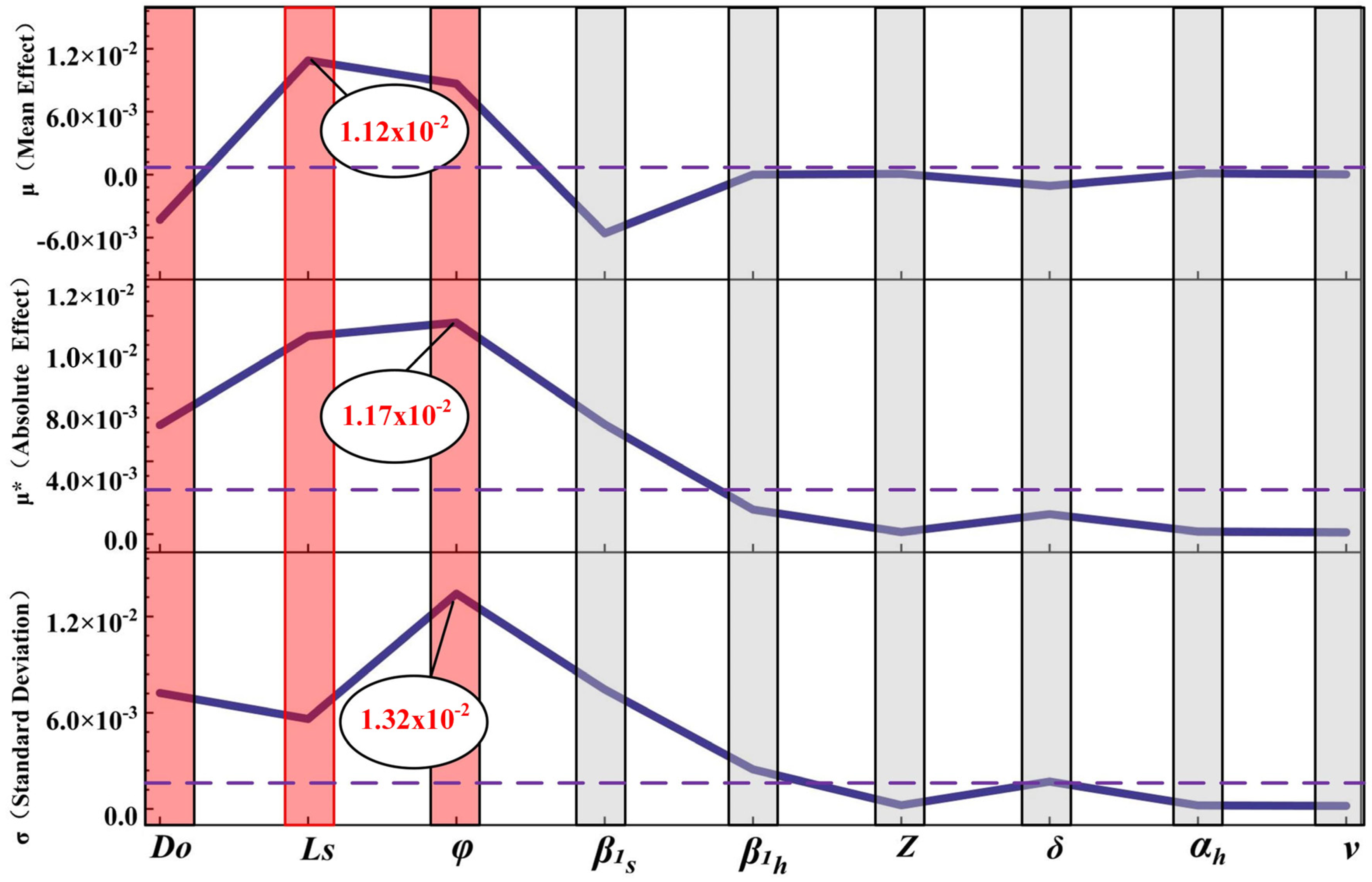
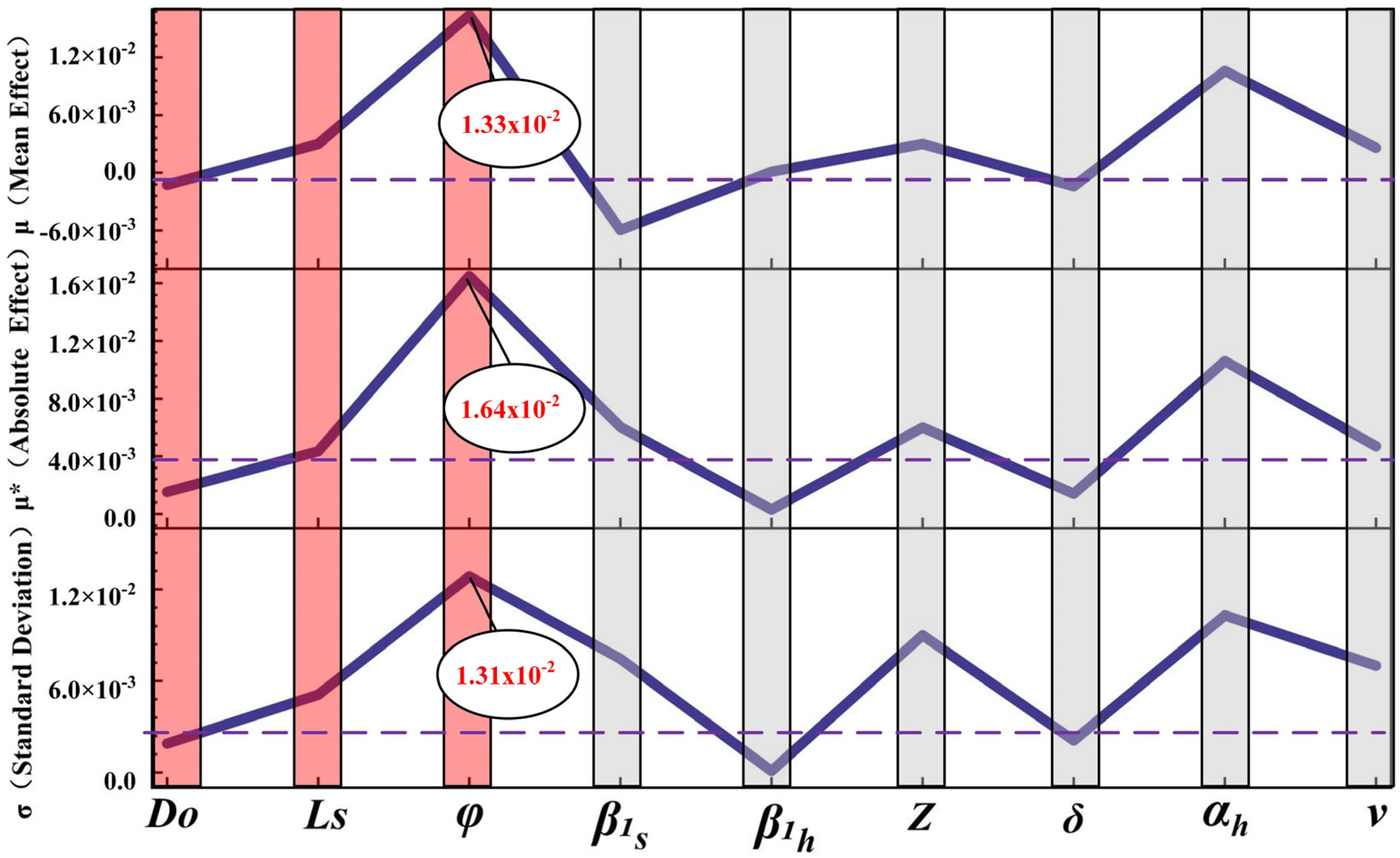
In the Morris sensitivity analysis, the mean effect reflects the overall directional influence of a structural parameter on the response, the absolute effect represents the overall magnitude of its influence regardless of direction, and the standard deviation indicates the degree of nonlinearity and interaction with other parameters. Based on the above Morris sensitivity analysis, the impeller outer diameter
D0, axial length
Ls, and blade wrap angle
φ are identified as the three dominant structural parameters affecting the performance of the multiphase pump. These parameters consistently exhibit the highest sensitivity levels in both efficiency and pressure-rise responses. In both
Figure 11 and
Figure 12, the dashed lines denote the average values of all structural parameters for each sensitivity index. However, the Morris method mainly provides qualitative screening results and cannot quantitatively evaluate the relative contributions of individual parameters or their interaction effects. Therefore, Sobol global sensitivity analysis is further conducted to quantify the individual and coupled effects of these three dominant parameters. Considering the high computational cost of Sobol analysis, only these key geometric variables are selected for further investigation. To improve the accuracy and reliability of the Sobol analysis, additional samples are generated by increasing the sampling density and narrowing the parameter intervals of the impeller outer diameter, axial length, and blade wrap angle. The final variation ranges are set to 163–211 mm for the impeller outer diameter, 40–64 mm for the axial length, and 108–132° for the blade wrap angle. Numerical simulations are then performed for all sampled configurations, and the corresponding external performance data are collected for subsequent sensitivity analysis.
Figure 11 presents the Morris sensitivity results for efficiency. Among all parameters, the axial length shows the largest mean effect, reaching 1.12 × 10
−2, whereas the blade wrap angle exhibits the largest absolute effect and standard deviation, with values of 1.17 × 10
−2 and 1.32 × 10
−2, respectively. These results indicate that the effect of blade wrap angle on efficiency is not only strong but also highly nonlinear, with pronounced interaction effects. In contrast, most of the remaining structural parameters are below the average level indicated by the dashed lines, suggesting relatively weak influences on efficiency. This further implies that efficiency variation cannot be fully explained by the independent change of a single parameter, but is instead governed by coupled geometric effects. Secondary parameters, such as hub inclination, blade thickness, and clearance, exhibit relatively small mean effects and standard deviations, demonstrating limited influence under the investigated operating conditions.
A similar sensitivity pattern is observed for pressure rise, as shown in
Figure 12. The blade wrap angle has the largest mean effect, with a value of 1.33 × 10
−2, and it also exhibits the largest absolute effect and standard deviation, reaching 1.64 × 10
−2 and 1.31 × 10
−2, respectively. This confirms that the blade wrap angle plays a leading role in determining pressure-rise performance and is also involved in strong nonlinear and interaction effects. The impeller outer diameter and axial length also show considerable sensitivity, reflecting their important roles in flow development, residence time, and blade loading distribution. In addition, most of the remaining structural parameters are above the average level indicated by the dashed lines, indicating that pressure rise is generally more sensitive to geometric variations than efficiency. Compared with the efficiency response in
Figure 11, the pressure-rise response in
Figure 12 appears smoother, suggesting that pressure performance is more strongly governed by geometric scaling effects, whereas efficiency is more susceptible to complex coupling mechanisms, especially under ultra-high gas volume fraction conditions where phase separation and secondary flows become more significant.
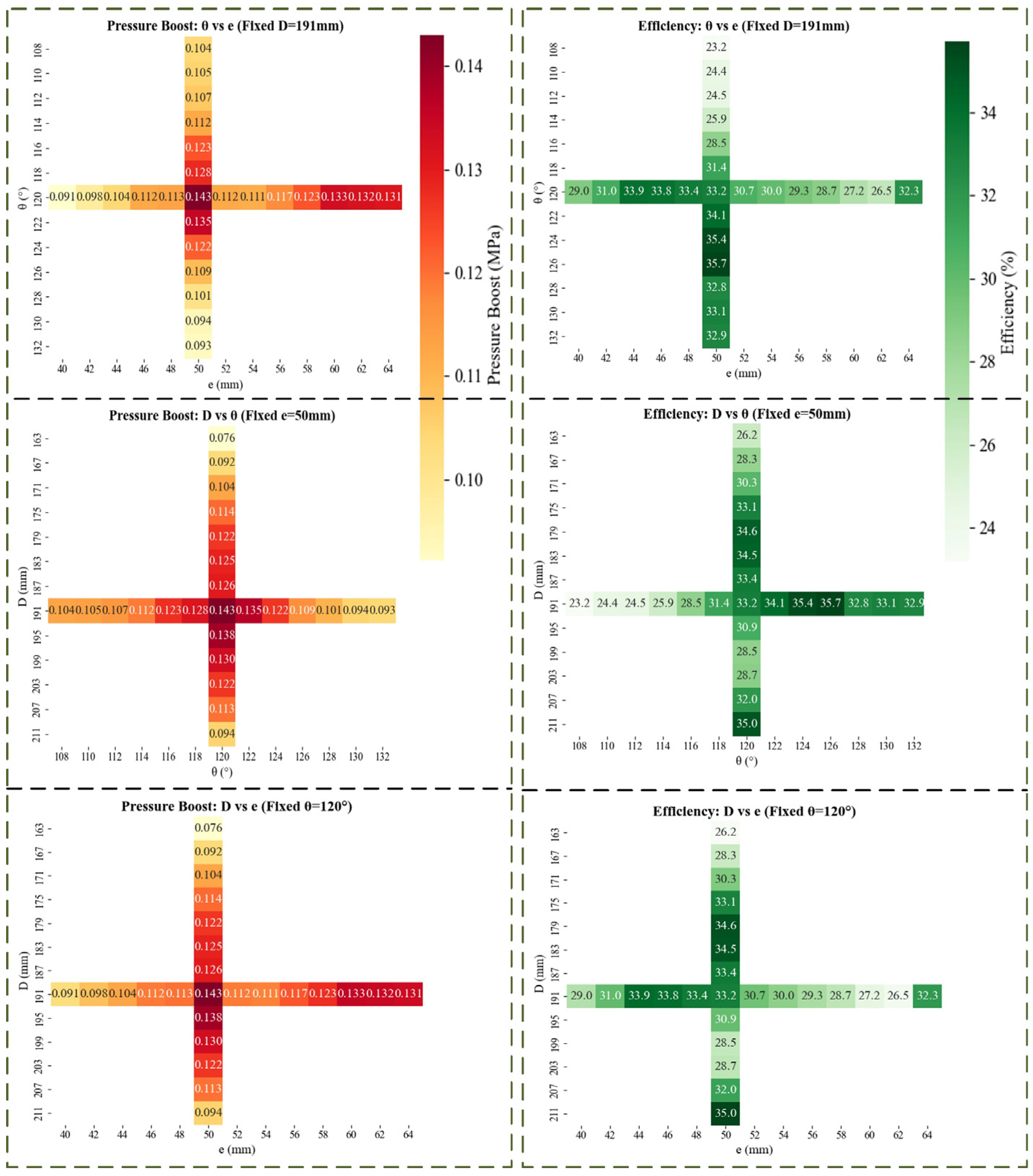
Figure 13 presents the combined heat maps of pressure rise and efficiency for the three dominant structural parameters of the multiphase pump impeller, namely the impeller outer diameter, axial length, and blade wrap angle. The left side of the
Figure 13 shows the pressure-rise heat maps, and the right side shows the corresponding efficiency heat maps. In each sub-map, two parameters vary simultaneously while the third parameter is fixed at its baseline design value. Darker color intensity indicates a higher pressure rise or efficiency under the corresponding parameter combination. The pressure-rise heat maps show that the parameter combinations with relatively high pressurization performance are mainly concentrated near the baseline design region. When one parameter is fixed at its design value, the combinations around the design values of the other two parameters generally exhibit darker colors, indicating stronger pressurization capability. This result suggests that pressure rise is sensitive to the coordinated variation in impeller outer diameter, axial length, and blade wrap angle.
In contrast, the efficiency heat maps show a broader and less concentrated distribution of favorable parameter combinations. Compared with the pressure-rise maps, the efficiency maps present a more complex response pattern, indicating that efficiency is affected by parameter variation in a less localized manner. In other words, relatively high efficiency can be achieved in a wider parameter range, whereas high pressure rise is concentrated in a narrower combination region.
Therefore, the combined heat-map results indicate that the dominant structural parameters affect pressure rise and efficiency in different ways. The pressure-rise performance is more concentrated around specific parameter combinations, while the efficiency response exhibits a broader and more irregular distribution. This difference further implies that the performance optimization of the multiphase pump should consider the coupling effects among structural parameters rather than relying only on single-parameter analysis.
To further investigate parameter interaction effects, Sobol global sensitivity analysis is employed to quantitatively evaluate the influence of individual parameters and their interactions on pressure rise and efficiency through the accurate calculation of first-order and total-effect indices.
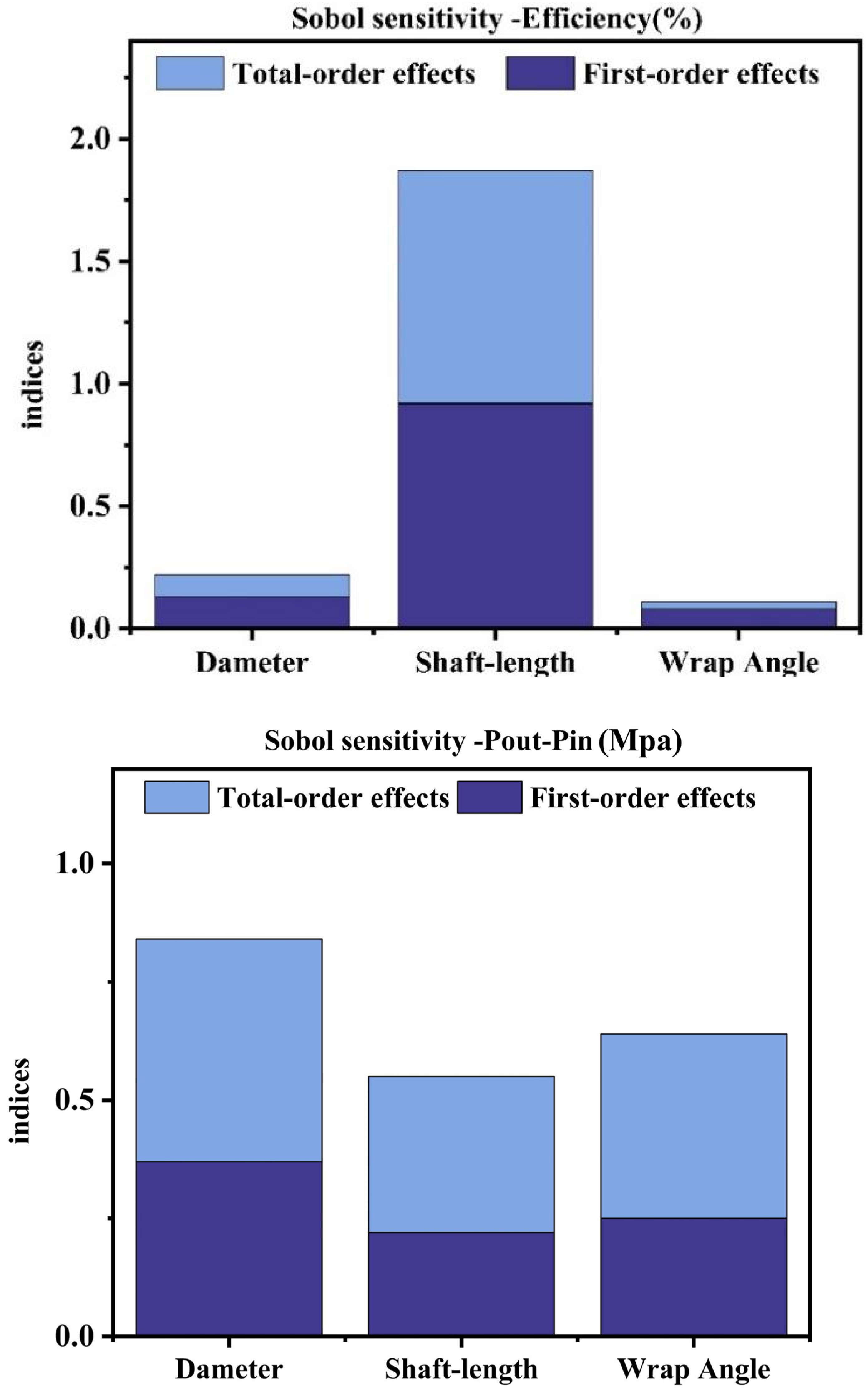
Figure 14 presents the sensitivity analysis results for the three dominant impeller parameters—outer diameter, axial length, and blade wrap angle—on pressure rise and efficiency, including both first-order (main-effect) and total-effect indices. The first-order Sobol index (
Si) represents the proportion of output variance explained solely by an individual parameter, reflecting its independent contribution. A value of Si close to unity indicates a strong individual influence, whereas a value close to zero implies a negligible independent effect. The total-effect index (
STi) accounts for the combined contribution of a parameter and all of its interaction effects with other parameters. The difference between Sti and Si therefore quantifies the strength of parameter interactions; when
STi >
Si, joint optimization with other parameters becomes necessary, as adjusting the parameter alone has limited impact.
For pressure-rise performance, the impeller outer diameter exhibits the strongest independent influence, with a first-order index of Si = 0.37. Its total-effect index (STi = 0.47) indicates the presence of interaction effects, although their contribution remains moderate. This result further confirms that the impeller outer diameter is the most critical parameter governing pressurization performance. The axial length shows the second-largest influence (Si = 0.22, STi = 0.33), characterized by a moderate independent effect and relatively weak interactions. Although the blade wrap angle has a first-order index comparable to that of axial length (Si = 0.25), its considerably higher total-effect index (STi = 0.39) suggests that it influences pressure rise predominantly through synergistic interactions with other parameters. Overall, the total-effect indices of all three parameters are significantly higher than their corresponding first-order indices, indicating that parameter coupling plays an important role in determining pressure-rise performance, with the interaction effects involving blade wrap angle being particularly pronounced.
In contrast, the sensitivity patterns for efficiency differ markedly. The axial length exhibits a dominant influence on efficiency, with nearly overlapping first-order and total-effect indices (Si = 0.92, STi = 0.95), indicating that efficiency is almost entirely governed by the independent effect of axial length, while interaction effects are negligible. The impeller outer diameter has a much weaker influence on efficiency (Si = 0.13), and its total-effect index (STi = 0.09) is even lower than the first-order index. This counterintuitive result suggests that the influence of outer diameter on efficiency may be suppressed by interactions with other parameters. The blade wrap angle has an almost negligible impact on efficiency (Si = 0.08, STi = 0.03), and can therefore be considered insignificant in terms of efficiency variation. These pronounced differences in parameter sensitivity indicate that pressure rise and efficiency respond to impeller geometric parameters through fundamentally different mechanisms. While pressure-rise performance is strongly affected by multi-parameter coupling effects, efficiency is predominantly controlled by axial length, highlighting the necessity of adopting different optimization strategies for these two key performance indicators.
Comprehensive analysis indicates that performance optimization of multiphase pumps requires differentiated parameter regulation strategies. For pressure-rise performance, priority should be given to optimizing the impeller outer diameter, which acts as the dominant parameter. Meanwhile, particular attention must be paid to the matching relationship between the blade wrap angle and other parameters, especially the axial length, since their synergistic effects play a critical role in pressurization. As a parameter with moderate influence, axial length can be optimized at a secondary stage for pressure-rise enhancement. In contrast, efficiency optimization is governed by a fundamentally different mechanism. Axial length is identified as the decisive parameter controlling pump efficiency and therefore requires focused optimization, whereas the effects of impeller outer diameter and blade wrap angle on efficiency can be considered negligible. This pronounced difference in parameter sensitivity provides a clear optimization pathway for practical design: first, ensuring an optimal axial length to achieve maximum efficiency; subsequently, adjusting the impeller outer diameter to satisfy pressure-rise requirements; and finally, exploiting the regulatory role of blade wrap angle to further enhance pressurization without compromising efficiency. Such a hierarchical and targeted parameter optimization strategy enables an effective overall improvement in multiphase pump performance. Based on the Sobol sensitivity analysis, the impeller outer diameter is identified as the most sensitive structural parameter affecting external performance, while the axial length exhibits the most moderate influence among the considered parameters.
8.2. Effects of Key Structural Parameters on the Internal Flow Characteristics of the Multiphase Pump
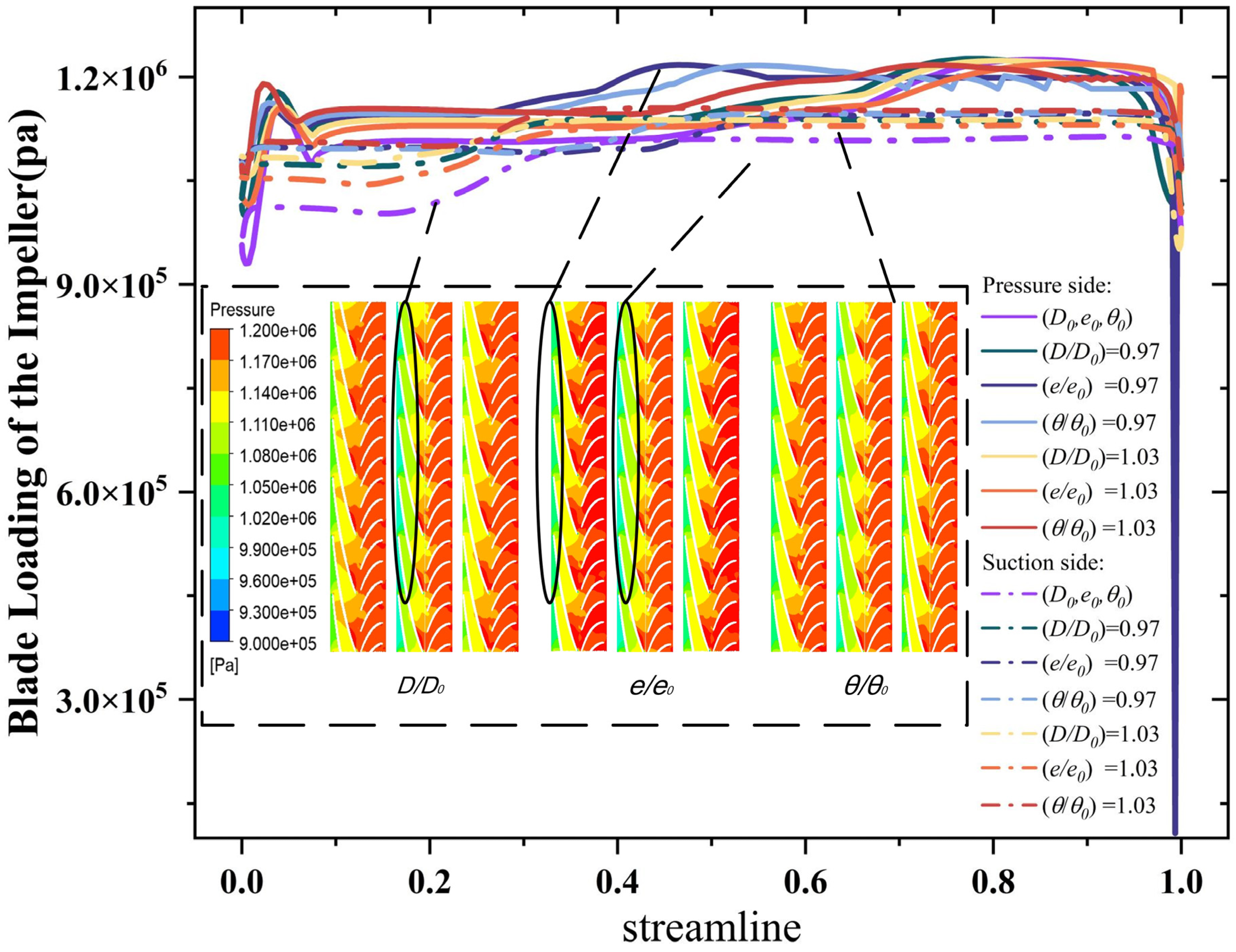
To further verify that the impeller outer diameter is the most influential structural parameter governing multiphase pump performance, this section compares the effects of the three dominant parameters on the internal flow characteristics of the pump, thereby validating the sensitivity analysis results. To clearly visualize the variations in internal flow induced by geometric parameter changes, nine representative cases are selected for post-processing analysis based on the baseline design parameters (D0, e0, θ0) = (191, 50, 120), with dimensionless values (D/D0, e/e0, θ/θ0) = (0.97, 1.00, 1.03).
Figure 15 illustrates the pressure rise distribution and blade loading at 0.5 blade height under different geometric configurations. As shown in the figure, among the three parameter variations, the baseline design exhibits a significantly smaller region of abrupt pressure increase (red regions) within the impeller compared with the other cases, while the corresponding pressure rise region within the diffuser is noticeably larger. This indicates that, under the design configuration, the impeller is able to convert mechanical energy into fluid kinetic energy more effectively, which is subsequently transformed into pressure energy within the diffuser, resulting in superior pressurization performance. In contrast, for cases with reduced impeller outer diameter, the pressure gradient within the impeller passage becomes less pronounced. Similar trends are also observed for cases with reduced axial length and reduced blade wrap angle. However, for the small-diameter impeller, a relatively high-pressure region appears on the mid-span suction side of the blade and extends toward the central part of the flow passage. This phenomenon demonstrates that variations in impeller outer diameter have a significant influence on the internal pressure distribution and, consequently, on the pressurization performance of the multiphase pump.
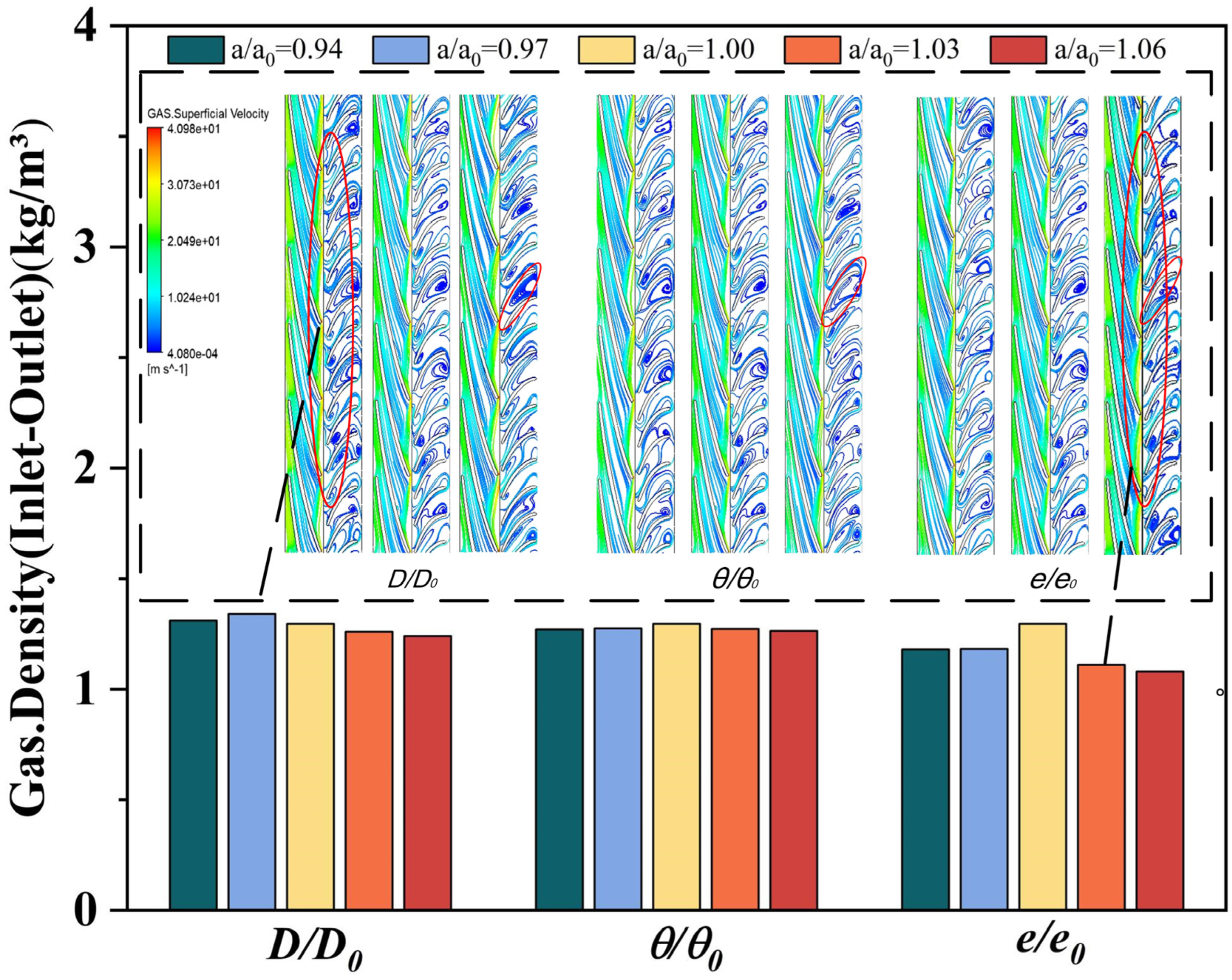
Figure 16 illustrates the gas streamlines at 0.5 blade height and the bar charts of inlet–outlet gas density difference (Δρ) under different geometric configurations. The results reveal a nonlinear response of Δρ to variations in the three structural parameters, namely
D/
D0,
e/
e0, and
θ/
θ0. In general, a larger density difference indicates stronger gas compression or transport capability, implying that the gas acquires higher pressure energy through compression or kinetic energy conversion within the pump. Therefore, a higher Δρ corresponds to enhanced gas-handling performance. As shown in the figure, the gas streamlines inside the impeller are relatively uniform, with high inlet gas velocity. Within the impeller passages, the gas velocity first decreases and then increases, and a distinct recirculation region is observed near the impeller outlet. For variations in impeller outer diameter, large-diameter cases exhibit pronounced streamline bifurcation within the impeller passages, indicating the formation of low-gas-density regions. Meanwhile, the number of vortices in the diffuser decreases, although their characteristic size becomes larger. In contrast, smaller-diameter cases show a greater number of vortices with smaller diameters.
For variations in blade wrap angle, no streamline bifurcation is observed in the impeller passage under large wrap angles; instead, this phenomenon shifts to cases with smaller wrap angles. Overall, the diffuser region exhibits the fewest gas vortices under the baseline design configuration, whereas both the number and size of vortices increased for the other two configurations. Notably, the largest gas vortices appear in the diffuser under large impeller outer diameter conditions, where they nearly occupy the entire diffuser passage. The gas density difference reaches its maximum at the baseline design parameters. On either side of this point, the performance variation exhibits clear asymmetry: when the dimensionless impeller outer diameter decreases, the reduction in Δρ is relatively gradual, whereas increasing the diameter leads to a much sharper decline. In particular, a cliff-like drop in Δρ is observed during the transition from 1.03 to 1.06, indicating the existence of a critical threshold for gas transport performance. Once this threshold is exceeded, the internal flow structure undergoes a fundamental change. The three structural parameters exhibit clear synergistic effects, with response trends generally consistent with those of the impeller outer diameter. The combined variation in impeller outer diameter, axial length, and blade wrap angle jointly governs the response of the gas density difference, resulting in complex nonlinear behavior. The performance curves remain relatively stable near the baseline range (0.97–1.03) but change significantly beyond this interval. These results demonstrate the highly sensitive and nonlinear response of gas transport performance to geometric parameter variations, particularly under increasing parameter values, where rapid performance deterioration is observed.
It should be noted that variations in impeller outer diameter produce the smallest change in the inlet–outlet gas density difference, indicating that outer diameter has the weakest influence on gas transport capability among the three parameters, whereas blade wrap angle exerts the strongest effect.
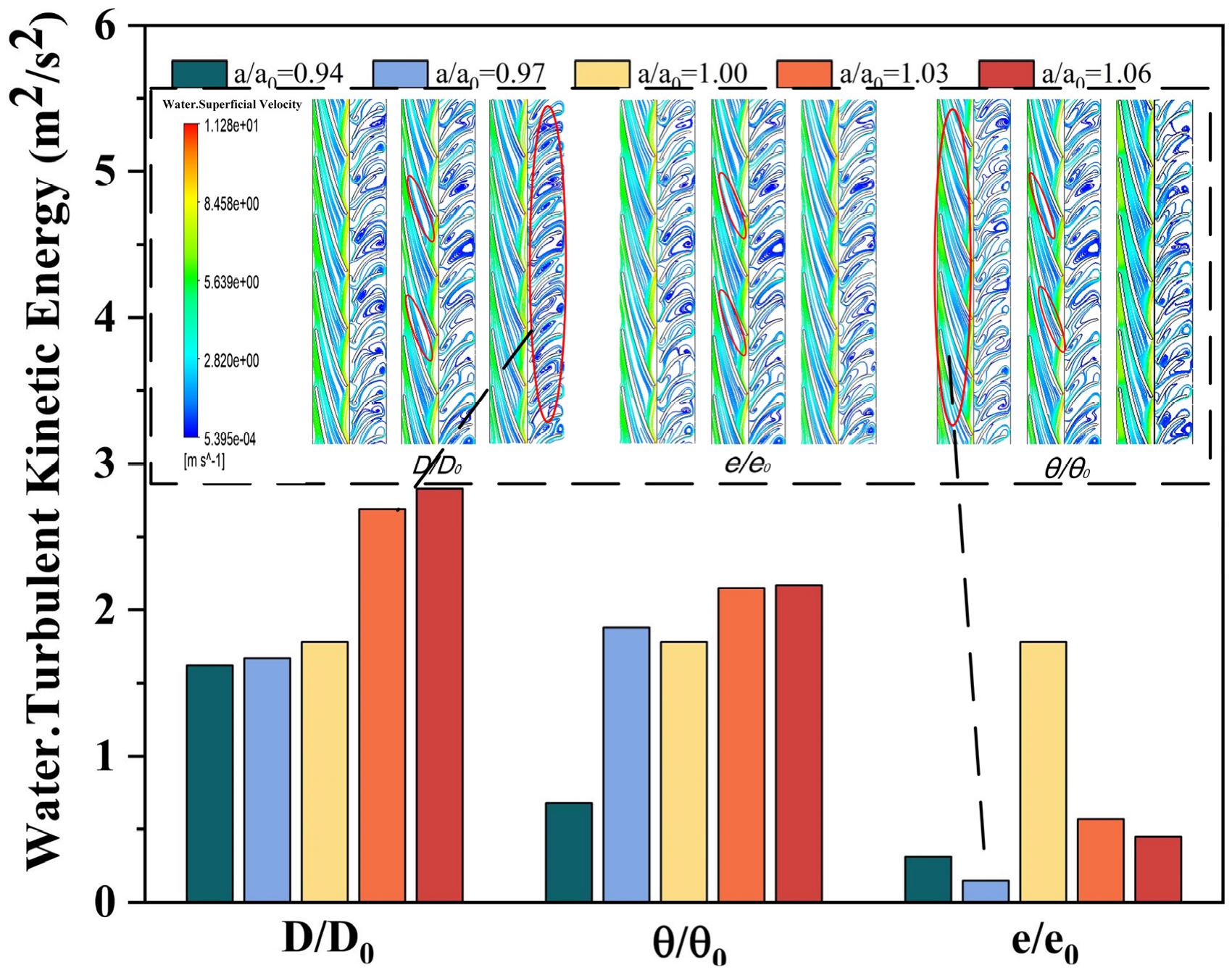
Figure 17 presents the liquid-phase streamlines at 0.5 blade height and the corresponding bar charts of turbulent kinetic energy (TKE) within the impeller for different geometric configurations. Turbulent kinetic energy is a key indicator of flow stability and energy dissipation: higher TKE values imply more intense velocity fluctuations and a more disordered flow field, which can severely deteriorate gas–liquid transport efficiency.
As shown in the figure, the liquid-phase streamlines inside the impeller are relatively uniform, with high inlet velocities. Within the impeller passages, the liquid velocity first decreases and then increases, and the recirculation region near the impeller outlet is noticeably smaller than that observed for the gas phase. In addition, the distribution characteristics of liquid-phase streamlines differ significantly from those of the gas phase. Specifically, blank or low-velocity regions in the liquid-phase streamlines are mainly observed under the baseline design configuration, whereas such regions are almost absent under reduced or enlarged geometric conditions. In the diffuser region, the number of vortices formed by liquid-phase streamlines is substantially smaller than that of gas-phase vortices. Under the baseline design condition, liquid-phase vortices exhibit the largest characteristic diameter but the smallest number, indicating that the liquid phase shows better adaptability to geometric variations than the gas phase. Among the three parameters, variations in impeller outer diameter exert the strongest influence on liquid-phase TKE within the impeller, while variations in blade wrap angle have the weakest effect. Comparisons of different impeller outer diameters reveal that larger diameters lead to a sharp increase in turbulent kinetic energy, suggesting that excessive outer diameter intensifies gas–liquid separation and secondary flow phenomena. As the diameter decreases, the reduction in TKE becomes relatively gradual. For axial length variations, extremely low TKE values are observed at small axial lengths (e/e0 = 0.96), whereas TKE remains nearly unchanged when e/e0 ≥ 0.97. This indicates that shorter axial lengths effectively suppress the generation of turbulent kinetic energy, which is consistent with the fact that a reduced transport distance limits gas–liquid separation within the impeller. With respect to blade wrap angle, both large and small wrap angles contribute to a reduction in TKE, with smaller wrap angles exhibiting a more pronounced effect.
These characteristics reveal the complex response of liquid-phase turbulent kinetic energy to geometric parameter variations. The impeller outer diameter is identified as the most influential parameter affecting TKE magnitude, whereas blade wrap angle has the least impact. Moreover, shorter axial lengths and smaller wrap angles are shown to significantly reduce turbulent kinetic energy, thereby improving the liquid-phase transport capability of the multiphase pump.
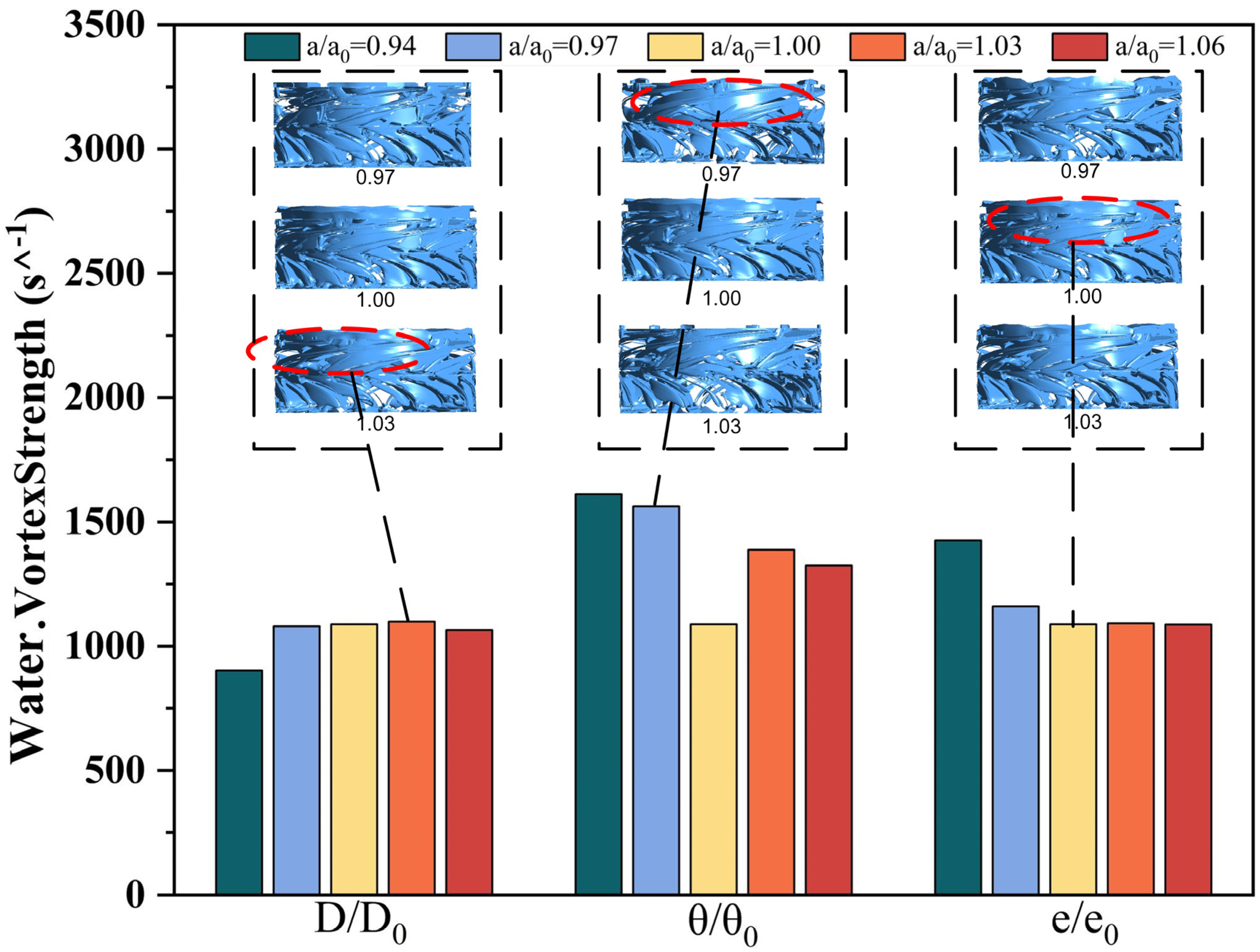
Figure 18 illustrates the variation in liquid-phase vortex strength within the impeller under different geometric configurations, together with the vorticity distribution based on the Q-criterion. According to the Q-criterion definition
, vortex cores are identified as rotation-dominated regions where
Q > 0. The dashed boxes from left to right represent the vortex distributions under the three structural parameter ratios of impeller outer diameter, blade wrap angle, and axial length, respectively.Horizontal comparisons show the evolution of vorticity distributions for different dimensionless values of the same geometric parameter. The bar charts quantify the nonlinear response of liquid-phase vortex strength to variations in the three structural parameters
D/
D0,
e/
e0, and
θ/
θ0. The vortex strength (
λci) is a commonly used parameter in fluid mechanics for quantifying the local rotational intensity of vortical structures. It is defined as the imaginary part of the complex conjugate eigenvalues of the velocity gradient tensor ∇
u, expressed as
. Physically,
λci represents the local angular rotation frequency of a fluid element; larger values indicate more concentrated rotational kinetic energy and more efficient local energy transfer. As shown in
Figure 17, smaller impeller outer diameters correspond to the lowest vortex strength and smaller vortex core sizes, a trend that is also observed for reduced axial length and blade wrap angle. When the impeller outer diameter is increased, the vortex strength shows a decreasing tendency while the characteristic vortex diameter within the impeller slightly enlarges. For variations in axial length and wrap angle, smaller geometric values yield significantly higher vortex strength than other configurations, and vortex strength decreases progressively as the parameters increase. A notable difference is observed for axial length, where vortex strength drops sharply at first and then decreases more gradually. In contrast, for blade wrap angle, the minimum vortex strength occurs at the baseline design condition (
θ/
θ0 = 1.00), with abrupt increases or decreases observed when moving from smaller to baseline values or from baseline to larger values. Overall, blade wrap angle exerts the strongest influence on impeller vortex strength and induces the most pronounced response, whereas the effect of impeller outer diameter is relatively weak and more gradual. In addition, increases in axial length and wrap angle promote an overall expansion of vortex structures, further indicating that variations in impeller outer diameter play an important role in vortex generation and evolution within the multiphase pump.
It is worth noting that the variation trend of impeller vortex strength differs markedly from that of turbulent kinetic energy discussed previously. This discrepancy arises because, under conditions of high vortex strength, rigid-body vortices tend to dominate the flow. Such vortices exhibit a high degree of coherence, with fluid elements rotating synchronously within the vortex core and producing minimal velocity fluctuations. As a result, turbulent kinetic energy remains relatively low despite the presence of strong vortical structures.