Review

Probiotic Yeast for Brewing? A Mini-Review of Craft Brewing Research with Saccharomyces cerevisiae var. boulardii


International Centre for Brewing and Distilling, School of Engineering and Physical Sciences, Heriot-Watt University, Edinburgh EH14 4AS, UK
*
Author to whom correspondence should be addressed.
Current address: School of Chemistry and Molecular Biosciences, The University of Queensland, Brisbane, QLD 4072, Australia.
Beverages 2026, 12(5), 58; https://doi.org/10.3390/beverages12050058
Submission received: 12 March 2026 / Revised: 6 May 2026 / Accepted: 7 May 2026 / Published: 11 May 2026
(This article belongs to the Section Beverage Technology Fermentation and Microbiology)

Highlights

  • S. boulardii shows comparable or greater growth than S. cerevisiae during brewing fermentation, while generally producing less alcohol.
  • Beers fermented with S. boulardii display broadly similar flavour and sensory profiles to those brewed with S. cerevisiae.
  • S. boulardii-brewed beers may offer health-related functions such as enhanced antioxidant activity, in addition to maintaining yeast viability during storage and simulated GI transit.
  • Co-fermentation, modified mashing regimes, and targeted flavour additions have been explored to improve brewing performance with S. boulardii.

Abstract

The brewing industry remains at the forefront of technological innovation, with growing interest in alternative yeasts. Saccharomyces cerevisiae var. boulardii, a well-established probiotic yeast, has attracted attention for its potential to produce probiotic-enriched beers, offering an option for moderate consumers seeking functional beverages. This mini-review brings together current research on the use of S. boulardii in craft brewing, focusing on fermentation performance, flavour and sensory characteristics, and potential health-related functions. While often regarded as a variant of S. cerevisiae, S. boulardii shows comparable or greater cell growth, increased acetic acid production at the expense of glycerol, and lower alcohol yield compared to S. cerevisiae. Despite these differences, beers brewed with S. boulardii exhibit similar volatile compound profiles and sensory characteristics to those produced with S. cerevisiae. In terms of health-related attributes, S. boulardii-fermented beers show higher antioxidant activity, the presence of malto-oligosaccharides with prebiotic potential, and the ability of yeast to survive both storage and gastrointestinal transit. Strategies explored to optimise its brewing performance and customer acceptance include co-fermentation with S. cerevisiae, modified mashing protocols, and natural flavour additions. Overall, the available evidence supports S. boulardii as a promising yeast for developing probiotic-enriched beers. Further research is needed to validate current findings at commercial scales, investigate host–microbiome interactions following beer consumption and develop strategies that balance probiotic efficacy and desirable beer appearance over shelf life. The paper may assist brewers in making informed decisions about deploying S. boulardii, aligning consumer interest in functional beverages with the enjoyment of beer.

1. Introduction

Brewing is a long-established yet evolving process in which yeast is introduced to a fermentable, sugar-rich substrate (known as wort) to produce beer, which is one of the most consumed beverages globally. Within this broad landscape, craft beer represents a particularly dynamic and innovative segment, characterised by relatively small-scale production, experimentation with alternative ingredients, and a drive to push the sensory [1] and functional boundaries [2] of beer.
In this context, hops and yeast have attracted particular attention. Hops are traditionally valued for their contribution to beer bitterness, aroma and stability, while also providing bioactive compounds, such as polyphenols and bitter acids, that may contribute to health-related properties. Alongside hops, yeast plays an important role in shaping beer composition by converting wort sugars into ethanol, CO2, and a range of yeast metabolites, including flavour-active and potentially bioactive compounds. This has led to growing interest in diversifying brewing yeasts beyond the traditional ale and lager yeasts, S. cerevisiae and S. pastorianus [3], to develop functional beers produced with probiotic yeast that may deliver health-related benefits to the host [4].
Probiotics are defined as ‘live microorganisms that, when administered in adequate amounts, confer a health benefit on the host’ [5]. The primary probiotic group is Lactic Acid Bacteria (LAB), which can release antibacterial substances or metabolites upon consumption, such as lactic acid, preventing the growth of pathogens, activating the host immune response, and improving epithelial barrier function [6]. LAB, such as Lacticaseibacillus paracasei, have been incorporated into sour beer production [7]. A previous study has also suggested that free and immobilised probiotic LAB could be delivered via ale beer [8]. In parallel, the yeast S. boulardii has been demonstrated to be an effective probiotic, due to its ability to survive at body temperature (37 °C), resistance to certain levels of stomach and bile acids and potential benefits to gastrointestinal health [9]. S. boulardii is a non-pathogenic yeast first isolated in 1923 by French microbiologist Henri Boulard, who observed a functional tea made from tropical fruit skins (lychee and mangosteen) during a cholera outbreak in Southeast Asia. These observations led to his isolation and identification of this yeast [10].
S. boulardii is often considered a variant of S. cerevisiae, especially given their close genomic relatedness (>99%) [11]; nevertheless, its precise phylogenetic position remains unresolved. Genomic studies have revealed some distinctive characteristics between S. boulardii and S. cerevisiae, such as differences in Ty elements (yeast retrotransposons) and gene copy number in the subtelomeric regions [12]. The same research group also reported enhanced ability for pseudohyphal growth upon nitrogen limitation and increased resistance to acidic pH in S. boulardii compared to laboratory strains of S. cerevisiae [13]. Further study also revealed the absence of two genes for hexose transporters HXT11 and HXT9 in S. boulardii compared to S. cerevisiae [11], which may contribute to its resistance to multiple antifungals, including cycloheximide, sulfometuron methyl and 4-nitroquinoline-N-oxide [14]. This probiotic yeast has been deployed to treat various clinical diseases such as Clostridium difficile-associated syndrome, antibiotic-associated diarrhoea, Traveller’s diarrhoea and Crohn’s disease [9]. Furthermore, various dairy foods have been formulated with S. Boulardii, such as yoghurt [15], cheese whey [16] and ice cream [17].
Given its probiotic potential, the incorporation of S. boulardii into beer production presents an opportunity to develop next-generation craft beers that function as delivery vehicles for probiotics to the human gastrointestinal tract [4,18,19]. While it is widely acknowledged that excessive alcohol consumption poses health risks, the development of such probiotic-enriched beers could offer an alternative for moderate consumers seeking beverages that combine enjoyment with potential health-supporting properties [8,20]. Several studies have reported the application of S. boulardii in craft brewing and explored whether beer produced by S. boulardii retains such probiotic functionality. This review brings together the current research on the brewing performance of S. boulardii in comparison with its closely related yeast S. cerevisiae. It focuses on fermentation performance, beer attributes, flavour and sensory profiles, as well as the potential health-related functions of beer produced by S. boulardii. In addition, it explores process modifications that have been used to implement S. boulardii in brewing. It is anticipated that the findings could support brewers in making informed decisions regarding the incorporation of this probiotic yeast into craft beer production.

2. Fermentation Performance

S. boulardii displayed some differences in fermentation profiles and beer characteristics compared with S. cerevisiae. Table 1 summarises the available comparative studies in the literature, which collectively indicate a consistent trend. Nevertheless, it should be noted that they were conducted at different fermentation scales and used varying ingredients and methodologies.
Notably, the authors noticed that S. boulardii exhibited significantly higher cell concentration during both 9 days of primary fermentation and after 30 days of secondary fermentation compared to S. cerevisiae [22], while their yeast viability remained comparable. Another study producing wheat beer reported similar cell growth between S. boulardii and S. cerevisiae under identical brewing conditions [23]. In addition, higher growth rate and higher viability were observed in S. boulardii compared to S. cerevisiae [24]. These results indicated that S. boulardii can sustain active growth without compromising cell survival throughout the brewing process.
In terms of alcohol production, beers fermented with S. boulardii generally yielded 5–50% less alcohol compared to those produced with S. cerevisiae [21,22,24]. This decrease was likely attributed to reduced sugar utilisation or differences in the central carbon metabolic pathway [25]. The real degree of fermentation (RDF) was generally 10–35% lower with the probiotic yeast, although this trend varied depending on the hop variety used including Bobek, Crystal, Columbus and Polaris. Indeed, brewing with Columbus hops resulted in an RDF up to 10% higher for S. boulardii than S. cerevisiae [22].
Metabolite analysis revealed elevated levels of volatile acidity [21], consistent with the increased acetic acid production at the expense of glycerol [23]. This shift suggests a redirection of carbon flux in S. boulardii [25]. Given glycerol’s known role in mouthfeel and osmotic stress protection [26], its reduced formation may also influence beer sensory properties and yeast survival during elevated stress brewing conditions, such as high-gravity brewing fermentations [27]. Furthermore, beer pH was reported to be lower in S. boulardii-fermented beers than in those fermented with S. cerevisiae [22], which may be associated with the greater growth of the probiotic strain. This could be advantageous for reducing spoilage risk. Nevertheless, the variability of beer pH seems more pronounced in S. cerevisiae-fermented beers [23], indicating that further investigation is needed to clarify the strain- and process-dependent effects on beer acidity.

3. Beer Attributes and Flavour Profiles

Studies showed that beers fermented with S. boulardii exhibited colour characteristics comparable to those produced with S. cerevisiae [21,22,23], whereas variations in final pH values were also observed (Table 1).
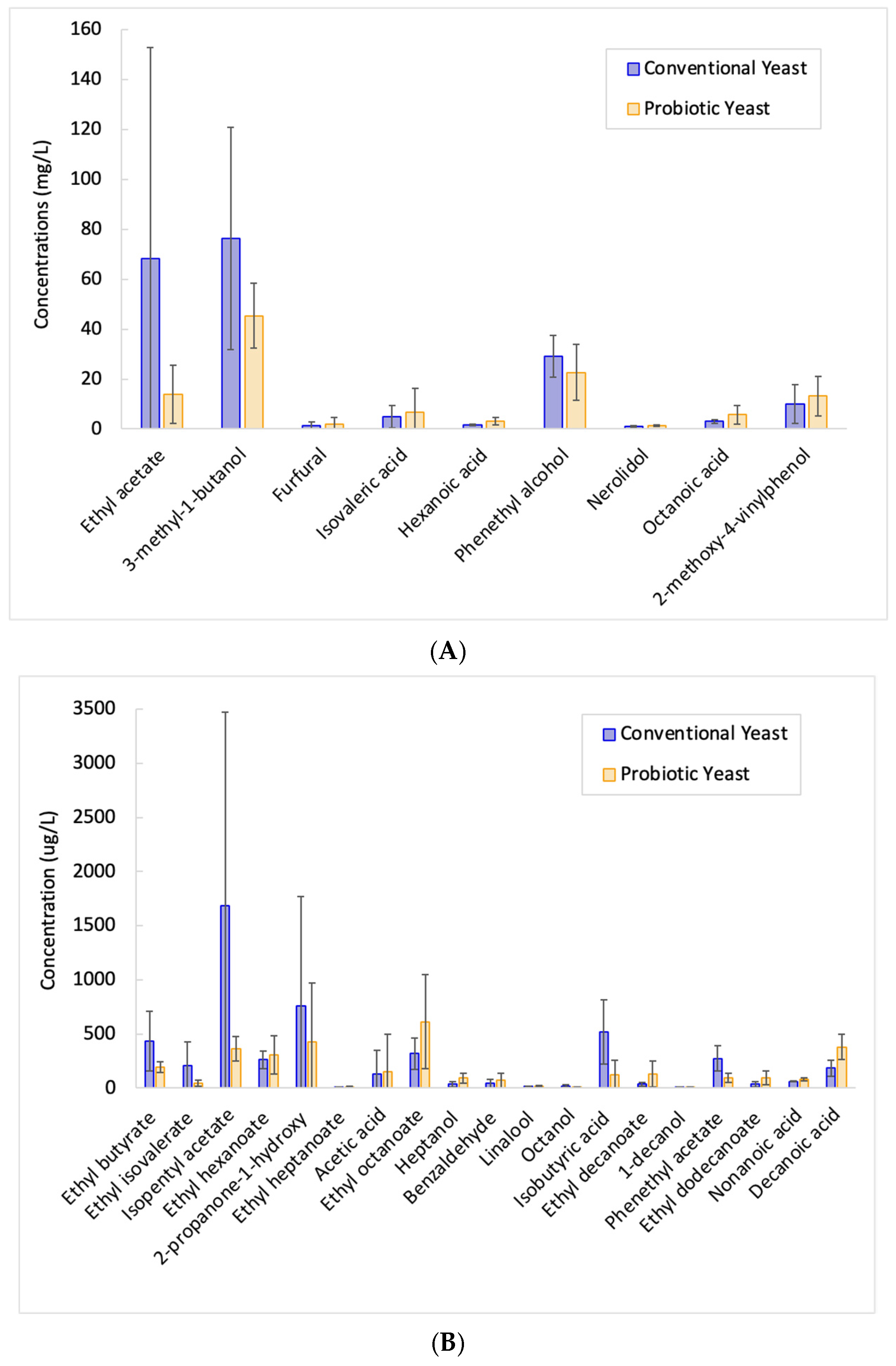
Diaz et al., 2023 [22] identified 30 volatile compounds in beers brewed with S. boulardii probiotic or S. cerevisiae using different hop varieties. The authors found that the presence and concentration of these compounds primarily depended on the yeast type, rather than hop type. Figure 1A and Figure 1B show their average concentrations in mg/L and ug/L, respectively. While beer fermented with S. cerevisiae exhibited higher mean concentrations of several esters and fatty acids, such as ethyl acetate, 3-methyl-1-butanol, isopentyl acetate and isobutyric acid, there was no major difference in the comparison. This result was in agreement with a previous study [21], which reported broadly similar volatile profiles between S. boulardii and various strains of S. cerevisiae.
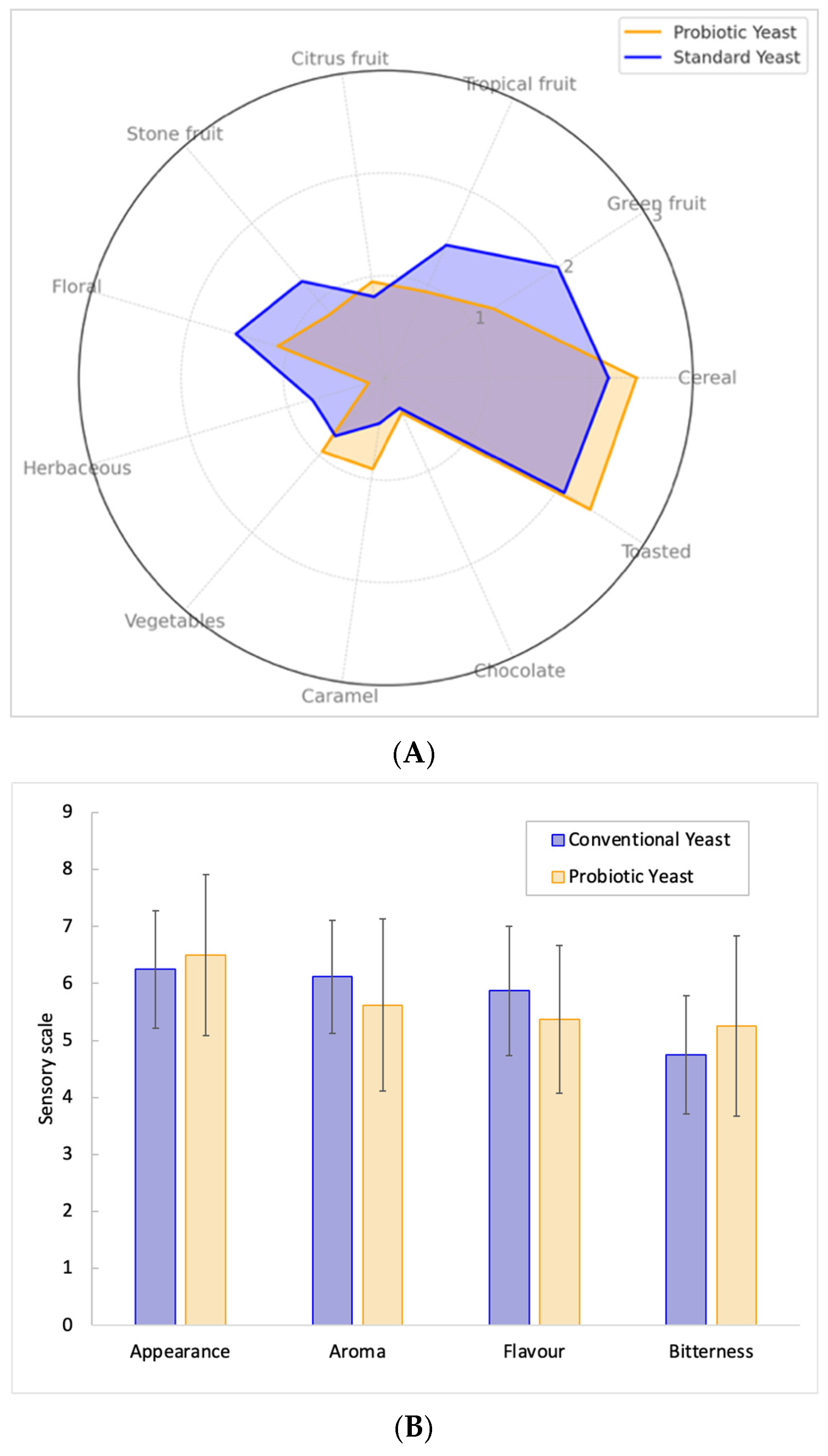
In terms of sensory profiles, Diaz et al., 2023 [22] found that beers produced by S. cerevisiae scored higher on fruity and floral descriptors, whereas the beers brewed with S. boulardii showed slightly greater intensity in cereal and toast descriptors (Figure 2A). Nevertheless, Mulero-Cerezo et al., 2019 [24] reported that the overall impression ratings between the two yeast types were similar at 20 L scale, including appearance, aroma, flavour and bitterness (Figure 2B).
It should be noted that Figure 1 and Figure 2 were intended to bring the research findings together and provide readers with a visual comparison of the published data in graphical form. Statistical testing was not performed, given that the underlying raw data from the original studies were not accessible. Therefore, these figures should be interpreted as illustrative summaries of reported trends rather than evidence of statistically significant differences.

4. Health-Related Functions

Beers fermented with S. boulardii show enhanced antioxidant activity, measured by DPPH Scavenging Activity, compared to those brewed with S. cerevisiae [21,24]. Although the total phenolic content and polyphenol profiles remain similar between the two beers [21,24], this increase was likely due to the probiotic yeast’s increased secretion of compounds, such as β-glucans [28] and gamma-aminobutyric acid [29]. These compounds could show antioxidant effects, typically achieved by reducing oxidative stress markers, improving the cellular redox balance, or indirectly supporting antioxidant defences.
In addition, fermentation of barley wort with S. boulardii led to an increase in malto-oligosaccharides (MOSs), including maltotetraose, maltoheptose, maltohexose, and maltopentose [30]. Although the results were not compared to those of S. cerevisiae, these MOS compounds are known prebiotics that are beneficial to gut health [31], potentially enhancing the symbiotic effect of the beverage, including improved probiotic viability, sensorial properties and possible overall functionality [32].
Furthermore, while LAB could be an alternative probiotic option, most LAB strains are unable to grow in beer due to the combined inhibitory effects of hop compounds, low pH, ethanol, and other stressors [33], S. boulardii retains viability through beer fermentation, storage, and gastrointestinal (GI) transit. In a study where wheat beer was stored at 0 °C for 60 days followed by in vitro gastric conditions (pH 2.0 for 45 min) and intestinal conditions (pH 7.0 for 180 min), viable cell counts of S. boulardii reduced from approx. 108 to around 106 CFU/mL [23]. Based on this, the authors suggested that consuming ca. 90 mL of the wheat beer produced, equivalent to approx. 109 CFU, could confer a probiotic effect [34]. A separate study also confirmed the S. boulardii survival under simulated GI conditions. After 60 min of gastric exposure (pH 2.0) and 120 min in intestinal conditions (pH 7.5), cell counts of S. boulardii only decreased from 8.5 × 10⁷ to 1.5 × 10⁷ CFU/mL [35]. These findings indicated that the beer storage condition could be more stressful to S. boulardii than the simulated GI environment [23].
Nevertheless, it was reported that during secondary fermentation, where beer transitions from a sugar-rich to sugar-limited beer, S. boulardii may form biofilms inside glass bottles, potentially resulting in a haze-like appearance [36]. The observation was consistent with the elevated expression of biofilm-related gene FLO11 and microscopic visualisation. This result underscores the importance of carefully determining the shelf life of beers containing live probiotic yeast. Alternatively, strategies such as high-pressure processing [37] may be considered to inactivate yeast, since both live and dead cells in probiotic products can generate beneficial biological responses [38].

5. Process Modification

Various process modifications have been explored to enhance the fermentation performance, functionality and sensory quality of craft beers fermented with S. boulardii. These include co-fermentation with S. cerevisiae, adjustments to conventional mashing protocols, and the addition of natural flavour.

5.1. Co-Fermentation

Co-fermentation of probiotic strains of LAB and conventional brewing yeast has been explored in beverage production to achieve both unique flavour profiles and potential health benefits [39,40,41]. Similarly, fermentation of S. boulardii with selected S. cerevisiae strains was investigated to produce craft beers [21]. The findings showed that S. boulardii often became the dominant strain by the end of the fermentation process. Co-fermentation did not negatively affect key beer characteristics such as aroma or ethanol yield, although outcomes varied depending on the S. cerevisiae strain used. Interestingly, co-fermentations significantly improved antioxidant activity and total polyphenol content compared to single yeast strain fermentations. The greatest enhancement was observed in the co-fermentation of S. boulardii and S. cerevisiae P4, which was isolated from sourdoughs. These improvements could be attributed to S. boulardii antioxidative properties and its interaction with brewing yeasts. The authors concluded that co-fermenting S. boulardii with brewing yeasts offers a promising approach to developing probiotic craft beers with added functional value.

5.2. Modified Mashing Regime

Researchers improved the brewing performance of S. boulardii in wheat beer production by using a modified mashing regime, adjusting both the wort composition and the mash temperature profile to favour β-amylase activity and thereby increase the level of fermentable sugars in the wort [23]. The modified protocol resulted in significantly higher yeast growth and higher ethanol contents compared to the conventional protocol. However, the ethanol content was still lower than that of S. cerevisiae (3.42% versus 3.52% ABV). Both protocols also produced similar levels of glycerol and acetic acid; the latter remained higher in the beer brewed with S. boulardii than in that with S. cerevisiae. The study highlighted the impact of wort composition and mashing temperature profile on S. boulardii fermentation performance, although further optimisation, such as the addition of adjuncts, is still needed to identify the best brewing conditions.

5.3. Flavour Addition

To enhance sensory appeal and improve customer acceptance, the researchers incorporated natural flavour, specifically strawberry and nutty notes, at 0.4% (v/v) during formulation of the S. boulardii-fermented beverage, using a pitching rate of 1 × 10³ or 1 × 10⁴ CFU/mL. Sensory evaluation showed that the nutty-flavoured formulation inoculated at 1 × 10⁴ CFU/mL achieved the highest overall ratings, indicating a favourable balance between probiotic incorporation and product palatability. These findings suggest that targeted flavour optimisation can be an effective strategy for incorporating probiotic yeast into craft beer-style beverages while maintaining the sensory qualities expected by consumers.
Future research could focus on several key areas. First, sensory and functional outcomes should be validated at pilot and industrial scales, as fermentation volume, vessel geometry, oxygen transfer, pitching rate and process control may influence yeast performance, flavour development and metabolite production. Second, the effects of probiotic-enriched beer on human gut microbiota, gastrointestinal function and immune-related outcomes require systematic investigation through in vitro digestion models, gut fermentation systems and, ultimately, human intervention studies. Third, strategies are needed to preserve the viability and probiotic functionality of S. boulardii throughout beer processing, storage and consumption, while maintaining desirable visual and sensory attributes. Approaches such as microencapsulation or other protective delivery systems may help improve yeast survival [20], provided that they do not compromise beer clarity, mouthfeel, flavour or consumer acceptance. As demand for functional beverages continues to grow, S. boulardii-based beers could represent a promising addition to the evolving craft brewing sector.

6. Conclusions

This study reviewed research findings on the application of S. boulardii in craft brewing. Among the literature analysed, this probiotic strain showed comparable or higher cell growth, increased acetic acid production at the expense of glycerol, and reduced ethanol content compared to S. cerevisiae. Despite these metabolic differences, beers brewed with S. boulardii maintained a broadly similar flavour and sensory profiles compared to those brewed with S. cerevisiae. Such beer also demonstrated potential health-related functions, including enhanced antioxidant activity, the presence of malto-oligosaccharides, yeast survival through fermentation, storage and GI transit. To improve brewing performance and customer acceptance, several process modifications have been explored in the literature, including co-fermentation, modified mashing regimes, and targeted flavour additions. Overall, these findings suggest that S. boulardii has considerable potential as a functional brewing yeast for developing probiotic craft beers.

Author Contributions

T.W.: conceptualisation, methodology, investigation, writing (original draft), S.Z.: conceptualisation, methodology, investigation, supervision, writing (original draft, review and editing). All authors have read and agreed to the published version of the manuscript.

Funding

This research received no external funding.

Institutional Review Board Statement

Not applicable.

Informed Consent Statement

Not applicable.

Data Availability Statement

No new data were created or analysed in this study. Data sharing is not applicable to this article.

Acknowledgments

The authors are grateful to David Jenkins who provided insightful comments to the manuscript. Figure 2A was prepared with assistance from ChatGPT 5.0.

Conflicts of Interest

The authors declare there are no conflicts of interest.

References

  1. Yang, D.; Wang, Y. Framework for a Comparative Study of Flavor Metabolites and Sensory Profiles of Six Craft Beers and Ten Large-Scale Industrial Beers in the Chinese Market. J. Am. Soc. Brew. Chem. 2023, 81, 109–117. [Google Scholar] [CrossRef]
  2. Bustos, L.; Soto, E.; Parra, F.; Echiburu-Chau, C.; Parra, C. Brewing of a Porter Craft Beer Enriched with the Plant Parastrephia Lucida: A Promising Source of Antioxidant Compounds. J. Am. Soc. Brew. Chem. 2019, 77, 261–266. [Google Scholar] [CrossRef]
  3. Boulton, C.; Quain, D. Brewing Yeast and Fermentation; Blackwell Science: London, UK, 2001; ISBN 4550316357. [Google Scholar]
  4. Ramanan, M.; Fox, G.P.; Marco, M.L. Beer for Live Microbe Delivery. J. Funct. Foods 2024, 113, 105987. [Google Scholar] [CrossRef]
  5. FAO; WHO. Guideline for the Evaluation of Probiotics in Food; FAO: Rome, Italy; WHO: London, ON, Canada, 2002. [Google Scholar]
  6. Ohland, C.L.; Macnaughton, W.K. Probiotic Bacteria and Intestinal Epithelial Barrier Function. Am. J. Physiol.-Gastrointest. Liver Physiol. 2010, 298, 807–819. [Google Scholar] [CrossRef] [PubMed]
  7. Herkenhoff, M.E. The Probiotic Paradox: Thriving in High-Hopped Sour Beer. J. Am. Soc. Brew. Chem. 2024, 82, 422–430. [Google Scholar] [CrossRef]
  8. Calumba, K.F.; Reyes, V.; Bonilla, F.; Villasmil, E.; Sathivel, S. Ale Beer Containing Free and Immobilized Lactobacillus Brevis, a Potential Delivery System for Probiotics. Food Prod. Process. Nutr. 2021, 3, 8. [Google Scholar] [CrossRef]
  9. Ansari, F.; Alian Samakkhah, S.; Bahadori, A.; Jafari, S.M.; Ziaee, M.; Khodayari, M.T.; Pourjafar, H. Health-Promoting Properties of Saccharomyces Cerevisiae Var. Boulardii as a Probiotic: Characteristics, Isolation, and Applications in Dairy Products. Crit. Rev. Food Sci. Nutr. 2023, 63, 457–485. [Google Scholar] [CrossRef]
  10. McFarland, L.V. Systematic Review and Meta-Analysis of Saccharomyces boulardii in Adult Patients. World J. Gastroenterol. 2010, 16, 2202–2222. [Google Scholar] [CrossRef]
  11. Khatri, I.; Tomar, R.; Ganesan, K.; Prasad, G.S.; Subramanian, S. Complete Genome Sequence and Comparative Genomics of the Probiotic Yeast Saccharomyces boulardii. Sci. Rep. 2017, 7, 371. [Google Scholar] [CrossRef]
  12. Edwards-Ingram, L.C.; Gent, M.E.; Hoyle, D.C.; Hayes, A.; Stateva, L.I.; Oliver, S.G. Comparative Genomic Hybridization Provides New Insights into the Molecular Taxonomy of the Saccharomyces Sensu Stricto Complex. Genome Res. 2004, 14, 1043–1051. [Google Scholar] [CrossRef]
  13. Edwards-Ingram, L.; Gitsham, P.; Burton, N.; Warhurst, G.; Clarke, I.; Hoyle, D.; Oliver, S.G.; Stateva, L. Genotypic and Physiological Characterization of Saccharomyces Boulardii, the Probiotic Strain of Saccharomyces cerevisiae. Appl. Environ. Microbiol. 2007, 73, 2458–2467. [Google Scholar] [CrossRef]
  14. Nourani, A.; Wesolowski-Louvel, M.; Delaveau, T.; Jacq, C.; Delahodde, A. Multiple-Drug-Resistance Phenomenon in the Yeast Saccharomyces Cerevisiae: Involvement of Two Hexose Transporters. Mol. Cell Biol. 1997, 17, 5453–5460. [Google Scholar] [CrossRef]
  15. Sarwar, A.; Aziz, T.; Al-Dalali, S.; Zhao, X.; Zhang, J.; Ud Din, J.; Chen, C.; Cao, Y.; Yang, Z. Physicochemical and Microbiological Properties of Synbiotic Yogurt Made with Probiotic Yeast Saccharomyces boulardii in Combination with Inulin. Foods 2019, 8, 468. [Google Scholar] [CrossRef] [PubMed]
  16. Rengel dos Passos, F.; Lopes Maestre, K.; Florêncio da Silva, B.; Rodrigues, A.C.; Contini Triques, C.; Alves Garcia, H.; Fagundes-Klen, M.R.; Antonio da Silva, E.; Fiorese, M.L. Production of a Synbiotic Composed of Galacto-Oligosaccharides and Saccharomyces boulardii Using Enzymatic-Fermentative Method. Food Chem. 2021, 353, 129486. [Google Scholar] [CrossRef] [PubMed]
  17. Sarwar, A.; Aziz, T.; Al-Dalali, S.; Zhang, J.; ud Din, J.; Chen, C.; Cao, Y.; Fatima, H.; Yang, Z. Characterization of Synbiotic Ice Cream Made with Probiotic Yeast Saccharomyces Boulardii CNCM I-745 in Combination with Inulin. LWT 2021, 141, 110910. [Google Scholar] [CrossRef]
  18. Zendeboodi, F.; Gholian, M.M.; Khanniri, E.; Sohrabvandi, S.; Mortazavian, A.M. Beer as a Vehicle for Probiotics. Appl. Food Biotechnol. 2021, 8, 329–337. [Google Scholar] [CrossRef]
  19. Habschied, K.; Živković, A.; Krstanović, V.; Mastanjević, K. Functional Beer—A Review on Possibilities. Beverages 2020, 6, 51. [Google Scholar] [CrossRef]
  20. Santos, D.; Barreiros, L.; Jesus, Â.; Silva, A.L.; Martins, J.P.; Oliveira, A.I.; Pinho, C. Beer with Probiotics: Benefits and Challenges of Their Incorporation. Beverages 2024, 10, 109. [Google Scholar] [CrossRef]
  21. Capece, A.; Romaniello, R.; Pietrafesa, A.; Siesto, G.; Pietrafesa, R.; Zambuto, M.; Romano, P. Use of Saccharomyces cerevisiae Var. boulardii in Co-Fermentations with S. Cerevisiae for the Production of Craft Beers with Potential Healthy Value-Added. Int. J. Food Microbiol. 2018, 284, 22–30. [Google Scholar] [CrossRef]
  22. Díaz, A.B.; Durán-Guerrero, E.; Valiente, S.; Castro, R.; Lasanta, C. Development and Characterization of Probiotic Beers with Saccharomyces Boulardii as an Alternative to Conventional Brewer’s Yeast. Foods 2023, 12, 2912. [Google Scholar] [CrossRef]
  23. Pereira de Paula, B.; de Souza Lago, H.; Firmino, L.; Fernandes Lemos Júnior, W.J.; Ferreira Dutra Corrêa, M.; Fioravante Guerra, A.; Signori Pereira, K.; Zarur Coelho, M.A. Technological Features of Saccharomyces cerevisiae Var. boulardii for Potential Probiotic Wheat Beer Development. LWT 2021, 135, 110233. [Google Scholar] [CrossRef]
  24. Mulero-Cerezo, J.; Briz-Redón, Á.; Serrano-Aroca, Á. Saccharomyces cerevisiae Var. boulardii: Valuable Probiotic Starter for Craft Beer Production. Appl. Sci. 2019, 9, 3250. [Google Scholar] [CrossRef]
  25. Zhuang, S.; Smart, K.; Powell, C.D. The Relationship Between Wort Sugar Concentration and Yeast Carbon Partitioning During Brewing Fermentations. J. Am. Soc. Brew. Chem. 2019, 77, 225–234. [Google Scholar] [CrossRef]
  26. Zhuang, S.; Smart, K.; Powell, C. Impact of Extracellular Osmolality on Saccharomyces Yeast Populations during Brewing Fermentations. J. Am. Soc. Brew. Chem. 2017, 75, 244–254. [Google Scholar] [CrossRef]
  27. Stewart, G.G. High-Gravity Brewing and Distilling-Past Experiences and Future Prospects. J. Am. Soc. Brew. Chem. 2010, 68, 1–9. [Google Scholar] [CrossRef]
  28. Wang, H.; Chen, G.; Li, X.; Zheng, F.; Zeng, X. Yeast β-Glucan, a Potential Prebiotic, Showed a Similar Probiotic Activity to Inulin. Food Funct. 2020, 11, 10386–10396. [Google Scholar] [CrossRef] [PubMed]
  29. Sun, X.; Wang, J.; Li, C.; Zheng, M.; Zhang, Q.; Xiang, W.; Tang, J. The Use of γ-Aminobutyric Acid-Producing Saccharomyces Cerevisiae SC125 for Functional Fermented Beverage Production from Apple Juice. Foods 2022, 11, 1202. [Google Scholar] [CrossRef] [PubMed]
  30. Patelski, A.M.; Dziekońska-Kubczak, U.; Ditrych, M. The Fermentation of Orange and Black Currant Juices by the Probiotic Yeast Saccharomyces cerevisiae Var. boulardii. Appl. Sci. 2024, 14, 3009. [Google Scholar] [CrossRef]
  31. Ji, H.; Liu, J.; McClements, D.J.; Bai, Y.; Li, Z.; Chen, L.; Qiu, C.; Zhan, X.; Jin, Z. Malto-Oligosaccharides as Critical Functional Ingredient: A Review of Their Properties, Preparation, and Versatile Applications. Crit. Rev. Food Sci. Nutr. 2024, 64, 3674–3686. [Google Scholar] [CrossRef]
  32. Chan, M.Z.A.; Liu, S.Q. Fortifying Foods with Synbiotic and Postbiotic Preparations of the Probiotic Yeast, Saccharomyces boulardii. Curr. Opin. Food Sci. 2022, 43, 216–224. [Google Scholar] [CrossRef]
  33. Sakamoto, K.; Konings, W.N. Beer Spoilage Bacteria and Hop Resistance. Int. J. Food Microbiol. 2003, 89, 105–124. [Google Scholar] [CrossRef] [PubMed]
  34. Hill, C.; Guarner, F.; Reid, G.; Gibson, G.R.; Merenstein, D.J.; Pot, B.; Morelli, L.; Canani, R.B.; Flint, H.J.; Salminen, S.; et al. Expert Consensus Document: The International Scientific Association for Probiotics and Prebiotics Consensus Statement on the Scope and Appropriate Use of the Term Probiotic. Nat. Rev. Gastroenterol. Hepatol. 2014, 11, 506–514. [Google Scholar] [CrossRef] [PubMed]
  35. Gutiérrez-Nava, M.A.; Jaén-Echeverría, E.; Acevedo-Sandoval, O.A.; Román-Gutiérrez, A.D. Fermentation of Barley Wort with Saccharomyces Boulardii to Generate a Beverage with Probiotic Potential. Future Foods 2024, 9, 100373. [Google Scholar] [CrossRef]
  36. Mohammadi, K.; Saris, P.E.J. Biofilm Formation of Probiotic Saccharomyces cerevisiae Var. boulardii on Glass Surface during Beer Bottle Ageing. Beverages 2022, 8, 77. [Google Scholar] [CrossRef]
  37. Senkarcinova, B.; Graça Dias, I.A.; Nespor, J.; Branyik, T. Probiotic Alcohol-Free Beer Made with Saccharomyces cerevisiae Var. boulardii. LWT 2019, 100, 362–367. [Google Scholar] [CrossRef]
  38. Adams, C.A. The Probiotic Paradox: Live and Dead Cells Are Biological Response Modifiers. Nutr. Res. Rev. 2010, 23, 37–46. [Google Scholar] [CrossRef]
  39. Domínguez-Tornay, A.; Díaz, A.B.; Lasanta, C.; Durán-Guerrero, E.; Castro, R. Co-Fermentation of Lactic Acid Bacteria and S. Cerevisiae for the Production of a Probiotic Beer: Survival and Sensory and Analytical Characterization. Food Biosci. 2024, 57, 103482. [Google Scholar] [CrossRef]
  40. Freire, A.L.; Ramos, C.L.; da Costa Souza, P.N.; Cardoso, M.G.B.; Schwan, R.F. Nondairy Beverage Produced by Controlled Fermentation with Potential Probiotic Starter Cultures of Lactic Acid Bacteria and Yeast. Int. J. Food Microbiol. 2017, 248, 39–46. [Google Scholar] [CrossRef]
  41. Menezes, A.G.T.; Ramos, C.L.; Dias, D.R.; Schwan, R.F. Combination of Probiotic Yeast and Lactic Acid Bacteria as Starter Culture to Produce Maize-Based Beverages. Food Res. Int. 2018, 111, 187–197. [Google Scholar] [CrossRef]
Figure 1. Comparison of volatile compounds profiles in mg/L (A) and ug/L (B) between beers brewed with probiotic yeast S. boulardii and yeast S. cerevisiae. Modified from Díaz, A.B.; Durán-Guerrero, E.; Valiente, S.; Castro, R.; Lasanta, C., Foods, 2023, https://doi.org/10.3390/foods12152912 [22]. Data adapted and re-analyzed by the authors.
Beverages 12 00058 g001
Figure 2. Comparison of sensory note (A) (Modified from Díaz, A.B.; Durán-Guerrero, E.; Valiente, S.; Castro, R.; Lasanta, C., Foods, 2023, https://doi.org/10.3390/foods12152912 [22], data adapted and re-analyzed by the authors.) and overall ratings (B) (Modified from Mulero-Cerezo, J.; Briz-Redón, Á.; Serrano-Aroca, Á., Appl. Sci., 2019, https://doi.org/10.3390/app9163250 [24], data adapted and re-analyzed by the authors.) between beers brewed with S. boulardii and S. cerevisiae. (A) was prepared with assistance from ChatGPT 5.0. Numbers 1, 2 and 3 represent the scores of the samples in the descriptive evaluation in (A).
Beverages 12 00058 g002
Table 1. Summary of fermentation profiles and beer attributes from previous studies using S. boulardii compared to S. cerevisiae.
ParametersDescription
Source of S. boulardiiIsolated from
a commercial product (Codex, Zambon, Italy)
CECT 1474 (CECT, Valencia Spain)Floratil 200 (Merck, Lyon, France)CECT 1474 (CECT, Valencia, Spain)
Source of S. cerevisiaeA series of strains isolated from fermented food, as well as a commercial beer strain US-05 (Fermentis, Lille, France) Lallemand BrewingWB-06 (Fermentis, Lille, France)Safale S-04 (Fermentis, Lille, France)
Working volume100–400 mL1.8 L25–200 L2–20 L
Wort preparationHopped wort mashed by a local microbrewery, with a pH of 5.1.Commercial spray malt light extract (Muntons, Stowmarket, UK), composed of 100% barley malt with a protein content of 7.5, a pH of 5–6, and an EBC of 7–12. Four different hops from Laguilhoat (Fuenlabrada, Spain) were used separately, including Crystal, Bobek, Polaris and Columbus.Wort composition (3.8 kg of pilsen malt and 4.6 kg of wheat malt), hopped with Columbus hop pellets to obtain 15 BU. Wort composition (19.5 kg wheat malt and
19.5 kg barley malt) with a modified mashing profile was also used.
100% hopped malt extract, pH 6.7 ± 0.2 due to the type of tap water used.
Wort original gravity1.05281.0441.05031.024
Fermentation conditions20 °C for 15 daysPrimary fermentation at 20 °C for 9 days followed by secondary fermentation at 20 °C for 30 days.24 °C and 90% relative humidity for 54 h, followed by cooling to 0 °C for maturation.24 ± 1 °C for 9 days
Cell growth n.a.Significantly higher growth in S.b, similar viabilitySimilar cell growthHigher growth rate and higher viability in S.b
Alcohol10–50% lower in S.b 5–19% lower in S.bCa. 10% lower in S.b50% lower in S.b
RDF10–35% lower in S.b 17–31% lower in S.b when using Bobek, crystal and Polaris, whereas 10% higher in S.b when using ColumbusCa.10% lower in S.bSimilar
Sugar consumptionn.a.n.a.maltose and glucose equivalentn.a.
Glycerol/acidVolatile acidity 0.63 g/L (S.b) versus 0.22–0.62 g/L (S.c)n.a.Less glycerol and more acetic acid in S.bn.a
ColourSimilarSimilar, all refers to pale ale, with EBC value below 18SimilarSimilar
Beer pHn.a.4.29–4.42 (S.b) versus 4.39–4.81 (S.c)4.17 (S.b) versus 3.77 (S.c)n.a
Reference[21][22][23][24]
Abbreviations: S.b: S. boulardii; S.c: S. cerevisiae; n.a.: data not available.
Disclaimer/Publisher’s Note: The statements, opinions and data contained in all publications are solely those of the individual author(s) and contributor(s) and not of MDPI and/or the editor(s). MDPI and/or the editor(s) disclaim responsibility for any injury to people or property resulting from any ideas, methods, instructions or products referred to in the content.