


Abstract
This review of thiazolidinedione or glitazone, which have a five-membered heterocyclic ring C3NS, shows their versatile properties in terms of pharmacological actions such as antimicrobial, antifungal, insecticidal, pesticidal, antidiabetic, anti-inflammatory, anti-proliferative, anti-neurotoxicity, anticonvulsant, anti-thyroidal, and anti-tubercular uses. While having a wide range of biological activities, the TZDs mainly act via binding to the peroxisome proliferator-activated receptor (PPAR) members. PPAR-γ are ligand-activated transcription factors, which are members of the nuclear hormone receptors group. Activations of PPAR-γ regulate cell proliferation and differentiation, glucose homeostasis, apoptosis, lipid metabolism, and inflammatory responses. This review explores the synthesis of a thiazolidinedione and its derivatives, focusing on their pharmacological profiles and antidiabetic activity. It highlights the benefits of synthesis, reaction profiles, and catalyst recovery, which may encourage further investigation into these scaffolds by researchers. Based on synthesized derivatives, some glimpses of the structure–activity relationships of some compounds have been compiled. All the synthesized derivatives have been reviewed concerning their standard drugs already available and concluded with the highly or moderately active synthesized derivatives of thiazolidinedione. The data for this review was collected by an extensive review of current scientific literature, including on the synthesis, biological evaluation, SAR, and patents (2015–25).
1. Introduction
Thiazolidinediones belong to the class of heterocyclic compounds with a five-membered C3NS ring framework which are also referred to as “glitazones” or “insulin enhancers.” Thiazolidinedione (TZD) is a word from early 1923 that describes a class of drugs used to treat type 2 diabetes (Figure 1) [1,2] which are generated from thiazolidine and additionally contain nitrogen and sulfur atoms [3,4,5] and two carbonyl groups at positions 2 and 4. In 1982, 2,4-thiazolidinediones were considered for their antidiabetic properties intensively. Ciglitazone is the first of the class, followed by Pioglitazone, Englitazone, and Troglitazone [6,7,8,9]. The first reaction for obtaining TZD was described using mono-chloroacetic acid and thiourea in an aqueous medium with cyclization [10,11].
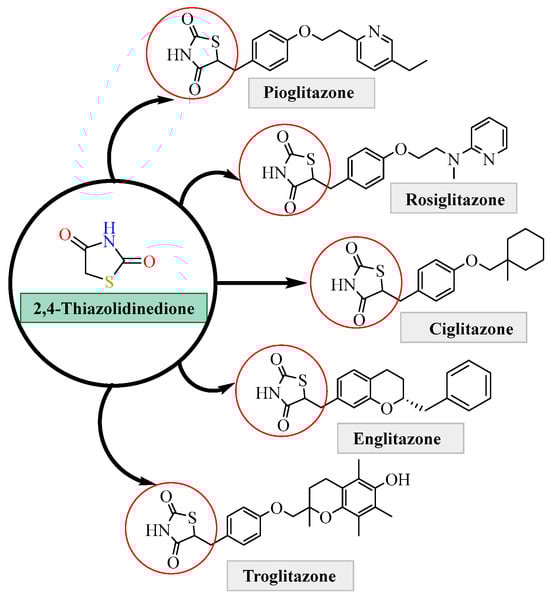
Figure 1.
Representatives of thiazolidinedione.
Type 1 diabetes is an autoimmune condition resulting in the destruction of pancreatic beta-cells and absolute insulin deficiency. Type 2 diabetes is a polygenic illness marked by insulin resistance in the liver and peripheral tissue, along with relative insulin deficiency [12,13]. Insulin resistance is the precursor of type 2 diabetes, a condition in which cells in the body do not react appropriately to insulin. High blood glucose levels during pregnancy in women without a history of diabetes are known as gestational diabetes [14,15,16].
Thiazolidinediones function as peroxisome proliferator-activated receptors gamma (PPAR-γ) agonists, which are nuclear hormones. PPAR-γ regulates the expression of many genes associated with glucose metabolism, but this represents only a small portion of its function. Upon activation, PPAR-γ associates with certain DNA sequences termed peroxisome proliferator response elements (PPREs), thus modulating the transcription of target genes. This activation enhances glucose absorption by increasing the expression of glucose transporter type 4 (GLUT4) in adipose tissue and muscle, which promote the release of adiponectin to boost insulin sensitivity and inhibits the production of pro-inflammatory cytokines such as TNF-α and IL-6. It helps to preserve pancreatic β cell structure and mass more effectively than insulin secretagogues, such as sulfonylureas. This is because TZDs reduce insulin resistance, thereby lowering the secretory burden on β cells, whereas secretagogues stimulate insulin release. Collectively, these benefits enhance glycemic regulation and diminish insulin resistance [17]. The blood glucose concentration in peripheral tissues is affected by glucose homeostasis due to the activation of PPAR-γ by thiazolidinedione; however, this predominance is primarily seen in a sedentary state. During physical exertion or energy-depleting situations, AMPK serves as the principal regulator of glucose homeostasis, surpassing the effects mediated by PPAR-γ [18,19]. By causing compensatory hyperinsulinemia, increased islet inflammation, and beta-cell lipotoxicity, insulin resistance reduces pancreatic beta-cell function [20]. Increased beta cell death and progressive reductions in insulin secretory ability are brought on by these circumstances. Rise in numerous cardiovascular risk variables are linked to insulin resistance [21]. Thiazolidinediones reduce HbA1c levels in patients with type 2 diabetes, indicating enhanced long-term glycemic regulation. HbA1c indicates the proportion of glycated hemoglobin, which correlates with average blood glucose levels over a period of 2–3 months and does not reflect tolerance to hyperglycemia or the degree of glycation. Both drugs, rosiglitazone and pioglitazone, help lower the blood glucose level as well as sensitivity of insulin, usually by reducing HbA1c levels about 0.5–1.5% [22,23,24,25,26]. Rosiglitazone reduces the long-term incidence of type 2 diabetes by slowing down, rather than completely stopping, the basic progression of the disease [26]. It raises HDL-cholesterol levels, decreases high-sensitivity C-reactive protein (hs-CRP), enhances urinary excretion of albumin and other proteins, and affects both the development and progression of diabetic nephropathy [27,28,29,30,31]. Although several TZDs have shown tolerance in specific studies, some, especially troglitazone and rosiglitazone, have been withdrawn due to significant side effects, including hepatotoxicity and increased cardiovascular risk. Other compounds, such as darglitazone and ciglitazone, have failed clinical studies because of significant toxicity [32,33,34,35]. Additional positive benefits on atherogenesis, endothelial function, ovarian steroidogenesis, and fibrinolysis have been demonstrated by research [36,37]. According to certain research, PPAR-gamma receptor stimulation can cause cancer cells to die [38]. Due to inconsistent research and other confounders, these pathways are still being studied. Thiazolidinediones have been classified as the drugs used in the management of type 2 diabetes known as glitazones. Apart from this, based on SAR or chemistry, they have been classified as TZDs with an oxymethyl linker, TZDs with an oxyethyl linker, TZDs with an oxyethylamino linker, TZD conjugates, TZDs with unusual substitutions, and TZDs with N substitution. A bibliometric chart of thiazolidinedione (TZD) research typically visualizes the trends in publications over time, categorized by biological activity. Based on the available literature, this graph (Figure 2) illustrates the number of research publications on thiazolidinedione derivatives from 2015 to 2025, categorized by biological activity [39].
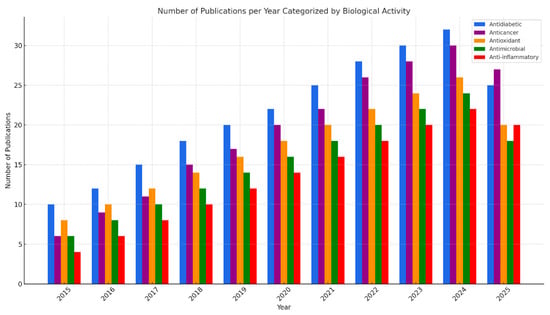
Figure 2.
Trends in research publications on thiazolidinedione derivatives from 2015 to 2025. Data categorized by biological activity: antidiabetic, anticancer, antioxidant, antimicrobial, and anti-inflammatory.
Molecular docking of glitazones, such as pioglitazone and rosiglitazone, demonstrates significant binding to the PPARγ receptor, with binding energies of −10 to −11 kcal/mol. It establishes essential hydrogen bonds with residues such as Ser289 and Tyr473, along with hydrophobic interactions that stabilize the ligand within the receptor. However, binding interactions alone may not confirm complete agonistic activity, as inverse agonists, partial agonists, and antagonists may demonstrate similar or even superior binding affinities to PPARγ [40,41].
The main objective of the study is to evaluate the antidiabetic efficacy of TZD derivatives by examining their impact on blood glucose regulation (HbA1c levels) and insulin sensitivity. Structure–activity relationship (SAR) investigations are employed to elucidate the impact of chemical changes on biological activity. The endpoints pertain to SAR-based assessment of structural characteristics associated with biological efficacy.
History of Thiazolidinedione
The first methodologies for the synthesis of the core thiazolidinedione structure were purportedly reported as early as 1923, and the term was accepted by IUPAC well before the 1990s. In fact, it was used by Takeda Pharmaceuticals in the late 1970s for a general drug class. Thiazolidinedione was documented to be insulin tolerant in diabetic animal models in the 1980s, and it was documented to decrease blood sugar and lipid concentrations. Following that, Isseman and Green reported the first nuclear peroxisome proliferator-triggered receptor in the 1990s. Therefore, two other isoforms of PPAR, PPAR-γ and PPAR-δ (also called PPAR-β), were known [42,43].
In another approach, ciglitazone was discovered with propitious lipid and glucose-lowering effects but profound liver toxicity [44,45]. In 1997, troglitazone (another thiazolidinedione analog) was approved by the FDA to treat type 2 diabetes, but use was discontinued due to an increased occurrence of drug-induced hepatitis. [46]. In 1999, pioglitazone and rosiglitazone were introduced. Pioglitazone was withdrawn due to the high risk of bladder cancer. The FDA revised the warning and advised that pioglitazone should not be initiated in patients with active bladder cancer and that patients with a history of bladder cancer should be treated with care [47]. Rosiglitazone was restricted in the USA and withdrawn in Europe after shreds of evidence of cardiovascular risk and death [48].
2. Pharmacological Importance of Thiazolidinedione as Therapeutic Agents
TZDs have reported pharmacological properties for further development as new ligands for drug discovery, including antidiabetic, anticancer, antimicrobial, antioxidant, and anti-inflammatory activities, as well as several miscellaneous effects [49].
2.1. Antidiabetic Activity
Several TZDs are utilized as antidiabetic agents, and their synthetic pathways are well-established. This presentation introduces novel molecules designed for development as antidiabetic agents. They are as follows:
TZD 1 was treated with 4-nitrobenzaldehyde in the presence of piperidine, toluene, and benzoic acid to give 5-(4-nitrobenzyliden)thiazolidine-2,4-dione 2. The intermediate was then reduced to yield 5-(4-aminobenzyl)thiazolidine-2,4-dione, labeled as compound 3. Finally, intermediate II 3 was treated with a range of substituted benzoyl chlorides 4 to afford the desired compounds (2,4-dioxo-1,3-thiazolidin-5-yl)methylphenylbenzamides 5. The anti-hyperglycemic activity of the synthesized compounds was observed, and it was found that the compounds substituted with ethyl and chloromethyl were the most active compounds in this series compared with pioglitazone. The results indicate that the compounds exhibited notable antidiabetic effects by reducing the elevated plasma glucose associated with type 2 diabetes mellitus. Additionally, both compounds demonstrated strong binding energy in molecular docking analyses, with docking scores of −6.38 and 6.14, respectively, with standards (G-score −7.75). The detailed synthetic strategy for compound 5 was outlined in Scheme 1, with the detailed structure activity relationship (SAR) analysis shown in Figure 3. As shown in Figure 3, the phenyl R functions as a hydrophobic tail, and compounds in which R is substituted with ethyl or chloromethyl groups exhibit strong antidiabetic activity [50].
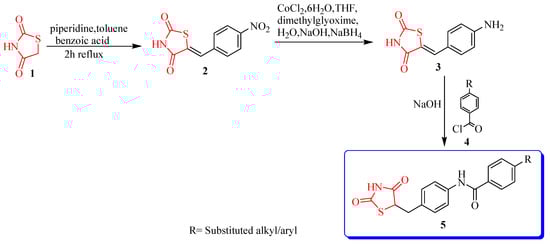
Scheme 1.
Derivatives of (2,4-dioxo-1,3-thiazolidin-5-yl)methylphenylbenzamides.
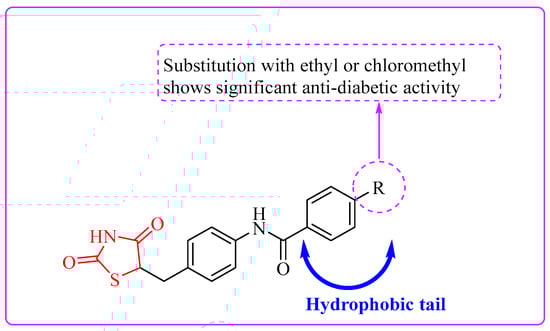
Figure 3.
SAR of derivatives of 2,4-dioxo-1,3-thiazolidin5-yl)methylphenylbenzamides.
A series of novel 5-[2-(4-fluorobenzyl)-6-aryl-imidazo [2,1-b] [1,3,4]thiadiazol-5-ylmethylene derivatives of thiazolidine-2,4-dione 10 were produced. All compounds were produced using Knoevenagel condensation of 2-(4-fluorobenzyl)-6arylimidazo[2,1-b][1,3,4]thiadiazole-5-carbaldehydes 9 in conjunction with POCl3, as shown in Scheme 2. All newly synthesized compounds were evaluated for their in vivo low-glucose-level effects in male Wistar rats. Thiazolidinediones (TZDs) with naphthyl and coumarinyl substitutions had significant hypoglycemic efficacy, as demonstrated by a percentage reduction in plasma glucose levels at various dosages (10, 30, and 100 mg/kg body weight). The results indicated that these compounds exhibited a variety of hypoglycemic activities (42.48 ± 3.25 to 70.35 ± 3.14). Substituting naphthyl or coumarinyl groups into the molecule improved its biological activity, as illustrated in Figure 4. These alterations probably enhance binding affinity or pharmacokinetic characteristics [51].
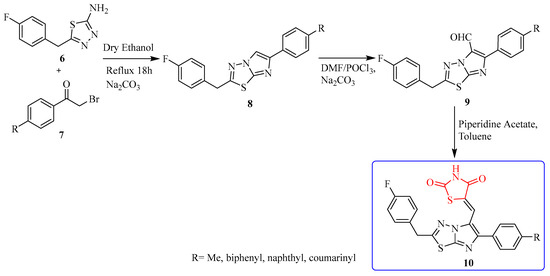
Scheme 2.
5-{[2-(4-alkyl/aryl)-6-arylimidazo[1,2][1,3,4]thiadiazol5-yl]metylene}-1,3-thiazolidine-2,4-dione.
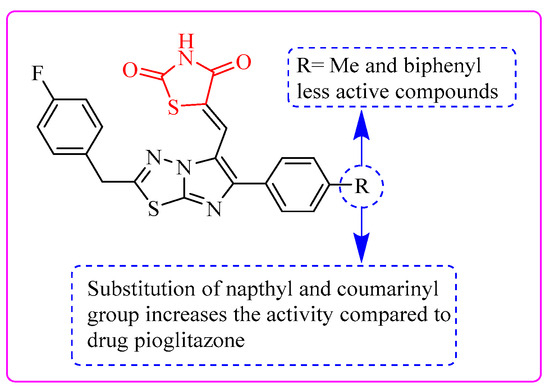
Figure 4.
SAR of [5-{[2-(4-alkyl/aryl)-6-arylimidazo[1,2][1,3,4]thiadiazol5-yl]metylene}-1,3-thiazolidine-2,4-dione].
The reaction of commercially available TZD (1) with cinnamaldehyde 11 in the presence of piperidine produced (5Z)-5-[(E)-3-phenylallylidene]thiazolidine-2,4-dione 12. Compound 12 was subsequently reacted with a number of alkyl bromides, substituted alkyl bromides, and substituted aryl bromides, using anhydrous potassium carbonate as a base in acetone. After the workup and recrystallization from methanol, the reaction yielded the pure product compound 13, as shown in Scheme 3. The results from the in vitro assay indicate that the compound containing 4-carboxylpheny methyl demonstrates the strongest PTP-1B inhibitory activity with an IC50 of 6.52 mM, showing anti-hyperglycemic potential similar to that of the insulin. The SAR of 3-substituted-5-((E)-3-phenylallylidene)thiazolidine-2,4-diones derivatives is mentioned in Figure 5 [52].
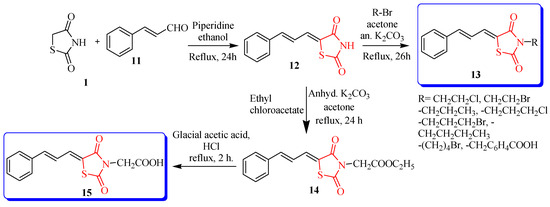
Scheme 3.
Synthesis of (Z)-3-substituted-5-((E)-3-phenylallylidene)thiazolidine-2,4-diones.
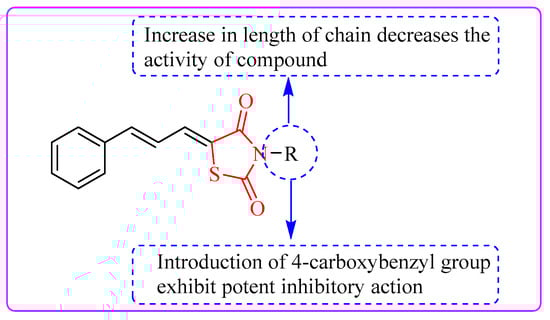
Figure 5.
SAR of (Z)-3-substituted-5-((E)-3-phenylallylidene)thiazolidine-2,4-diones.
Nikalje et al. synthesized several thiazolidinedione derivatives by reacting 4-hydroxy-3-ethoxybenzaldehyde 16 in ethanol with piperidine and benzoic acid, as outlined in Scheme 4. The alloxan-induced diabetes rat model, along with Dunnett’s t-test and ANOVA, was employed to evaluate the in vitro antidiabetic efficacy of each synthetic compound. From this series the synthesized compounds exhibited moderate hypoglycemic effects, with compounds 18e, 18f, 18b, 18a, and 18d demonstrating a reduction in blood glucose levels: the SAR is illustrated in Figure 6 [53].
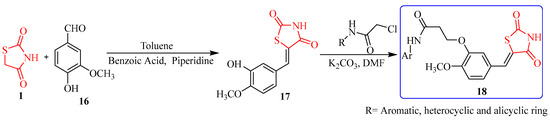
Scheme 4.
Synthetic strategy of (Z)-N-aryl-3-(5-((2,4-dioxothiazolidin-5-ylidene)methyl)-2-methoxyphenoxy)propenamide.
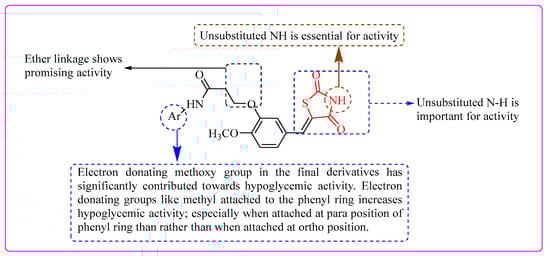
Figure 6.
SAR of (Z)-N-aryl-3-(5-((2,4-dioxothiazolidin-5-ylidene)methyl)-2-methoxyphenoxy)propanamide.
Synthesis of 1-((2,4-dioxothiazolidin-5-yl) methyl)-3-tosylureas 26 by the help of benzene sulphonamides 25 has been completed starting from Furan-2,5-dione 19 and thiourea 21 in water. The intermediate was first reacted with sulfuric acid to produce 2,4-dioxo-thiazolidin-5-yl-acetic acid (22). This compound was then treated with SOCl2 in DMF and DCM, providing a suitable synthetic route to the final target compound. The synthesized and assessed compounds show effective activity, as described in Scheme 5. These compounds substituted with H, 4-chloro, 2,4-dichloro, and 2,5dichloro significantly inhibited the rise in postprandial hyperglycemia to the tune of 15.8 (p < 0.01), 17.2 (p < 0.01), 14.3 (p < 0.05), and 16.5 (p < 0.01)%, respectively, and the SAR analysis is presented in Figure 7 [54].
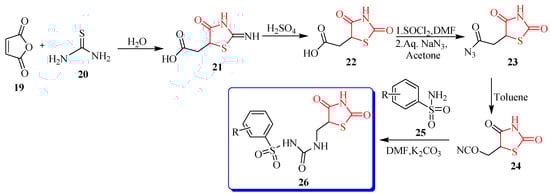
Scheme 5.
Schematic representation of 1-((2, 4-dioxothiazolidin-5-yl) methyl)-3-tosylureas.
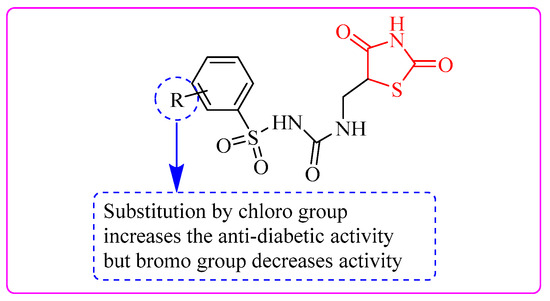
Figure 7.
SAR of 1-((2, 4-dioxothiazolidin-5-yl) methyl)-3-tosylureas derivatives with antidiabetic activity.
In this reaction, N-(substituted)-2-{4-[(2, 4-dioxo-1, 3-thiazolidin-5-ylidene) methyl] phenoxy} acetamide 32 and [3-(2,4-Dioxo-thiazolidin-5-ylidenemethyl)-2-methoxy-phenoxy]-acetaldehydes 35 were synthesized for the determination their potential against diabetes. The reaction was initiated from thiourea 27 and chloroacetic acid 28 in concentrated hydrochloric acid and water, and was further refluxed for 10–11 h. Further, 4-Hydroxy-3-methoxy-benzaldehyde 32 was incorporated in one step and 2-Chloro-acetamide 31 in another for the end product synthesis. Synthesized compounds were evaluated on the basis of standard drugs, and those that are N-methylaniline substituted show significant activity. The synthetic scheme is mentioned in Scheme 6. The SARs of the synthesized compounds suggest that modifying the substituent group (R) on the molecule can influence its glucose-lowering capacity, with groups like nitro, chloro, or fluoro affecting related biological activities, as depicted in Figure 8 [55].
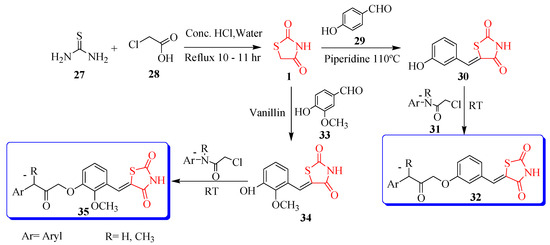
Scheme 6.
Synthetic strategy of compound 32 and 35.
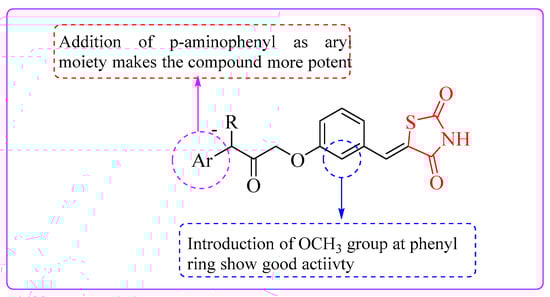
Figure 8.
SAR of compound 32 and 35.
In search of new antidiabetic agents, heterocyclic compounds containing 3,5-substituted thiazolidinedione moieties 40 were synthesized through a concise three-step reaction process, as described in Scheme 7. The synthesis involved Knoevenagel condensation at the 5th position of the 3,5-substituted thiazolidinedione ring system. The synthesized derivatives were subjected to evaluation for their in vivo antidiabetic activity against diabetes-induced Wistar rats and in vitro activity against α-amylase, α-glucosidase, and glucose uptake by yeast cells. The compounds substituted with the ethyl group were predicted to have the greatest effect out of the compounds 40, showing interactions with targets which exhibited potential binding patterns against the active sites of target α-amylase and α-glucosidase with modulating AMY2A, GAA, PPARG, PIK3CA, PRKCB, INSR, and PRKCB signaling pathways, as described in Figure 9 [56]. The ethyl-substituted compounds showed in vitro α-amylase and α-glucosidase inhibitory activity, with IC50 values of 86.06 ± 1.1 μM and 74.97 ± 1.23 μM, compared to the standard drug acarbose (IC50 values of 26.89 ± 3.12 μM and 29.25 ± 0.15 μM). They also demonstrated 58.23 ± 0.13% glucose uptake in vitro and significantly reduced blood glucose levels in vivo (114 ± 1.17 mg/dL, p < 0.001), which was comparable to the effect of pioglitazone (102.2 ± 0.79 mg/dL).
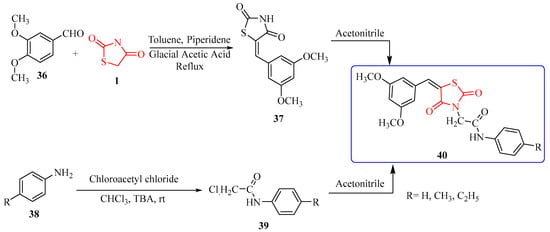
Scheme 7.
Synthesis of 3,5-diubstituted thiazolidinedione ring system.
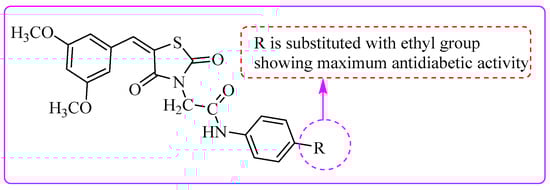
Figure 9.
SAR of 3,5-diubstituted thiazolidinedione ring system.
Datar et al. synthesized a new series of thiazolidinediones 44 via reaction between thiazolidinedione 1 along with several benzaldehyde derivatives 41 using Scheme 8. The compound 44 was screened for antidiabetic activity using the SLM model, and the compound found with methoxy substitution was found to be more active [5-(3,4-dimethoxy)benzylidine2,4-thiazolidinedione,5-(3,4,5 trimethoxy)benzylidine2,4-thiazolidenedione], as mentioned in Figure 10 [51].
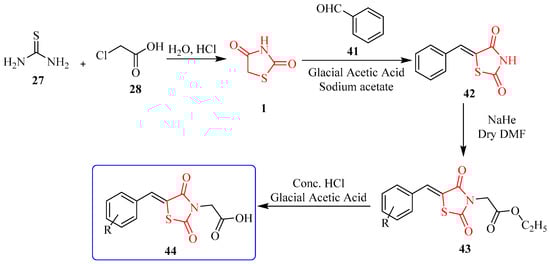
Scheme 8.
Synthetic scheme of [5-(3,4-substituted)benzylidine2,4-thiazolidinedione,5-(3,4,5 trimethoxy)benzylidine2,4-thiazolidenedione] and derivatives.
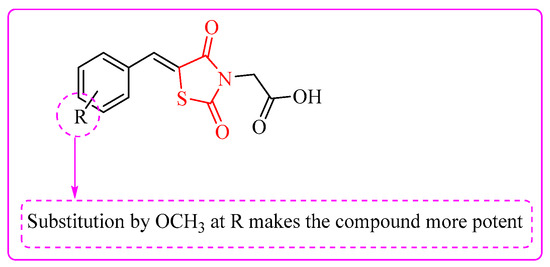
Figure 10.
SAR of [5-(3,4-dimethoxy)benzylidine2,4-thiazolidinedione,5-(3,4,5 trimethoxy)benzylidine2,4-thiazolidenedione].
(N-Substituted-5-quinolidenyl)-2,4-thiazolidinedione 48 was synthesized using polyethylene glycol-600 as an alkylating agent. The resulting mixture was then heated to complete the reaction. This step further led to the synthesis of the end product 5-[(quinolin-2-yl)methyl]-1,3-thiazolidine-2,4-dione 46 by PEG-600 at 100 °C (Scheme 9). All the compounds were tested for antidiabetic activity. Compounds synthesized and assessed with conventional drugs are shown to be highly potent [57].
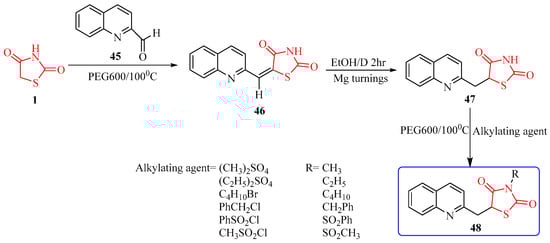
Scheme 9.
Synthesis of (N-substituted-5-quinolidenyl)-2, 4-thiazolidiendione.
Synthesis of 5-arylidene derivatives 50 was performed by the inclusion of different aromatic aldehydes in glacial acetic acid using thiazolidinedione 1 as the starting material in ethanol and water, as represented in Scheme 10. All the compounds in this scheme were tested for their antidiabetic potential. -Allyl-5-(2, 4-dichlorobenzylidine)thiazolidine-2, 4-dione synthesized compounds show effective activity when using the reference drug rosiglitazone. SAR analysis of structural modifications can influence glucose-lowering effects, insulin sensitivity, or enzyme inhibition (like α-glucosidase or DPP-4), and details are illustrated in Figure 11 [58].
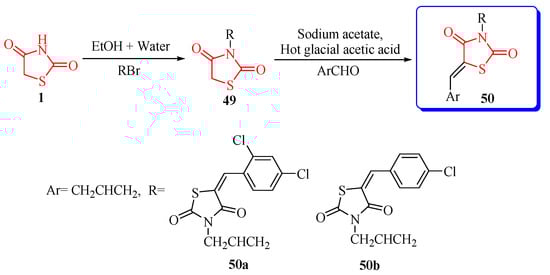
Scheme 10.
Synthetic strategy of 5-arylidene derivatives of thiazolidinedione.
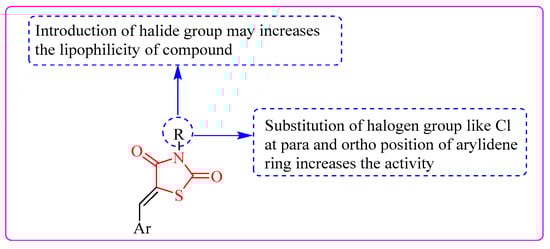
Figure 11.
SAR of 5-arylidene derivatives.
In the given study, the synthesis of N-(2–(4-((2, 4-dioxothiazolidin-5-yl) methyl) substituted) ethyl) benzamide 56 derivatives was performed, with the help of magnesium and methanol at room temperature, using substituted benzoic acids 52 with SOCl2 in dimethylformamide under specific temperature conditions for 6–10 h. All these compounds were evaluated for antidiabetic activity, and the synthesized compound N-(2-(4-((2, 4-dioxothiazolidin-5-yl) methyl) phenoxy) ethyl)-4-methylbenzamide shows effective activity compared with rosiglitazone. The synthetic procedure is discussed in Scheme 11, with SAR analysis shown in Figure 12. On examination, due to the functional groups like R1, X1, or X2, a medicinal chemist can enhance the selectivity and physicochemical characteristics. The compounds substituted with H, CH3, or OH groups can increase activity [59].
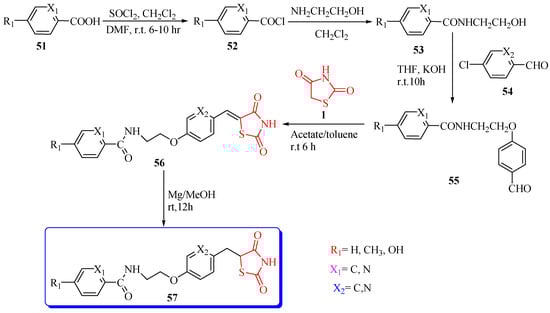
Scheme 11.
Synthesis of N-(2–(4-((2, 4-dioxothiazolidin-5-yl) methyl) substituted) ethyl) benzamide.
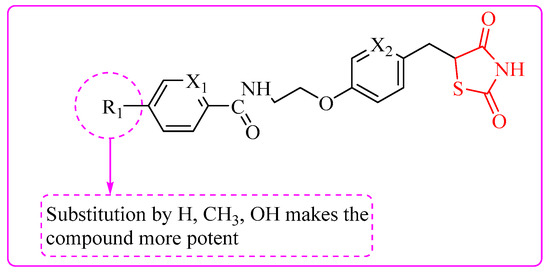
Figure 12.
SAR of N-(2–(4-((2, 4-dioxothiazolidin-5-yl) methyl) substituted) ethyl) benzamide derivatives.
In this review, the synthesis of N-(1, 3-benzo[d]thiazol-2-yl)-2-[(5Z)-5-(4-hydroxybenzylidene)-2,4-dioxo-1,3-thiazolidin-3-yl] acetamide 63 and (5Z)-3-(1H-benzo[d]imidazol-2-ylmethyl)-5-(4-hydroxybenzylidene)-1,3-thiazolidine-2,4-dione 66 have been completed by potassium carbonate in dimethylformamide at room temperature. This two-step reaction was completed with the help of an appropriated route of synthesis, in which the first step started from benzothiazol-2-ylamine 58 and another step started from thiazolidinedione 1, as described in Scheme 12 with the SAR analysis given in Figure 13. All synthesized compounds were taken into antidiabetic studies and most of the compounds were found to have highly potent compounds. The SAR shown in Figure 13 indicates that the benzothiazole ring enhances antidiabetic activity, while replacing it with a benzimidazole ring slightly reduces the activity [60].
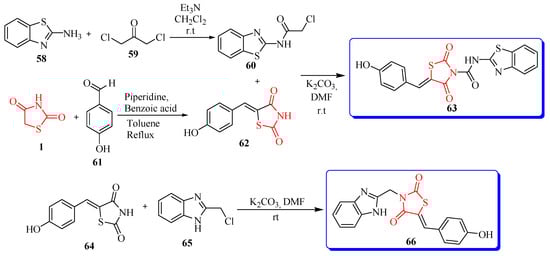
Scheme 12.
Synthesis of thiazolidinediones derivatives.
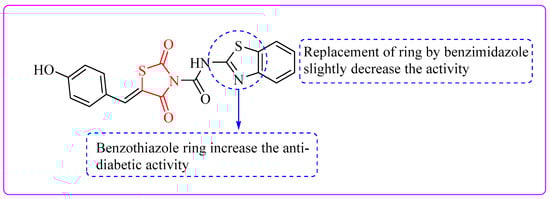
Figure 13.
SAR of thiazolidinediones containing benzthiazoles.
Synthesis of 5-[4-(2-methyl/phenylthiazol-4-ylmethoxy) benzylidene]-thiazolidine-2, 4-diones 72 has been completed from the starting material thioformamides 67 and 1, 3-Dichloro-propan-2-one 68, proceeding to the formation of the final compounds after passing through the different appropriate routes of the chemical reaction (Scheme 13). 5-[4-(2-{[5-(4-Methoxyphenyl)-4H-1,2,4-triazol-3-yl]thio}ethoxy) benzylidene]-1,3-thiazolidine-2,4-dione of synthesized and assessed compounds shows effective potency when compared to pioglitazone, and the SAR is discussed in Figure 14 [61].
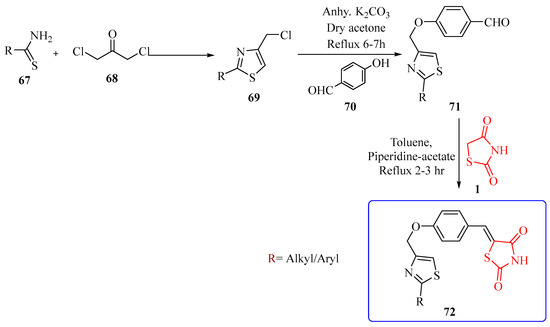
Scheme 13.
Schematic representation for synthesis of 5-[4-(2-methyl/phenylthiazol-4-ylmethoxy) benzylidene]-thiazolidine-2, 4-diones.
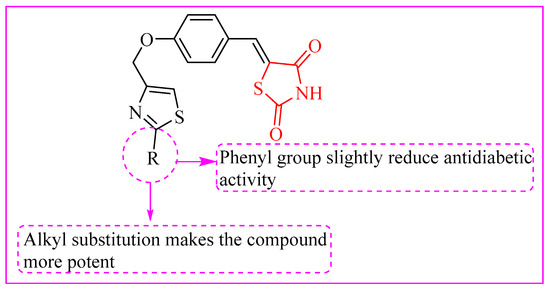
Figure 14.
SAR of 5-[4-(2-methyl/phenylthiazol-4-ylmethoxy) benzylidene]-thiazolidine-2, 4-diones.
Synthesis of 4-{2-[(5-aryl-4H-1, 2, 4-triazole-3-yl) thio] ethoxy} benzylidene-thiazolidinediones 76 has been completed with the help of toluene and piperidine acetate under reflux for 2–3 h via the synthetic route of 4-[2-(4H-[1,2,4]Triazol-3-ylsulfanyl)-ethoxy]-benzaldehyde 75 initiated from 4H-[1,2,4]Triazole-3-thiol 73 and 4-(2-Bromo-ethoxy)-benzaldehyde 74. Evaluation for the antidiabetic activity has been performed and all the compounds were tested for the on-basis activity with reference drug pioglitazone. Consequently, 5-(4-{2-[(5-Pyridin-3-yl-1,3,4-oxadiazol-2-yl)thio]ethoxy}benzylidene)-1,3-thiazolidine-2,4-dione and 5-(4-{2-[(5-Pyridin-4-yl-1,3,4-oxadiazol-2-yl)thio]ethoxy}benzylidene)-1,3-thiazoli dine-2,4-dione synthesized compounds shows high potency [61]. The synthesis is described in Scheme 14, and the SAR analysis is in Figure 15. The phenyl ring increases the potency, while the pyridyl ring increases insulin sensitivity.
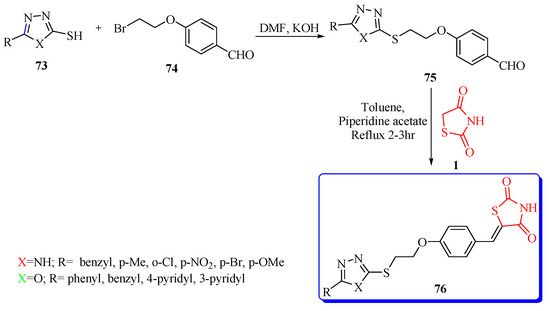
Scheme 14.
Synthesis of 4-{2-[(5-aryl-4H-1, 2, 4-triazole-3-yl) thio] ethoxy} benzylidene-thiazolidinediones derivatives.
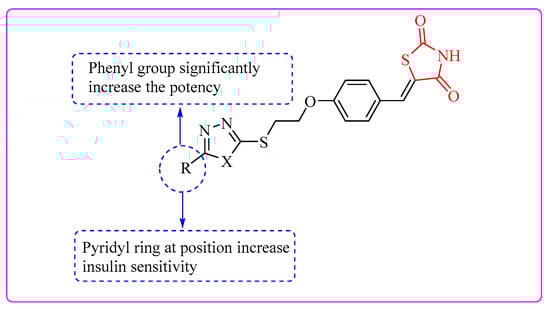
Figure 15.
SAR of 4-{2-[(5-aryl-4H-1, 2, 4-triazole-3-yl) thio] ethoxy} benzylidene-thiazolidinediones.
In this reaction 2, 4-thiazoldinedione derivatives 81(a–h) were synthesized, initiated from aldehydes 77 and phenyl hydrazine 78 in absolute alcohol and conc. HCl under reflux for 6–8 h. Further, this step gives the pioneer compound for the end product synthesis, using 1-Phenyl-1H-pyrazole-4-carbaldehyde as the intermediate 80. The intermediate compound reacts with piperidine in ethanol, leading to incorporation of the thiazolidinedione nucleus, as illustrated in Scheme 15. Most of the synthesized compounds were evaluated for activity. Among them, 5-((3-(Naphthalen-2-yl)-1-phenyl-1H-pyrazol-4-yl)methylene)-thiazolidine-2,4-dione exhibited high potency, comparable to the standard drugs rosiglitazone and pioglitazone. The SAR is shown in Figure 16 [62].
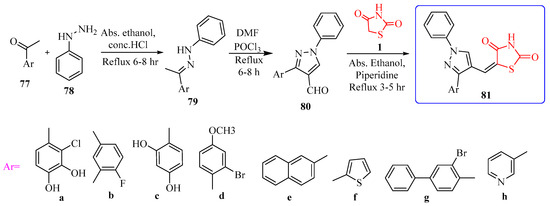
Scheme 15.
Synthesis of 2, 4-thiazoldinedione derivatives.
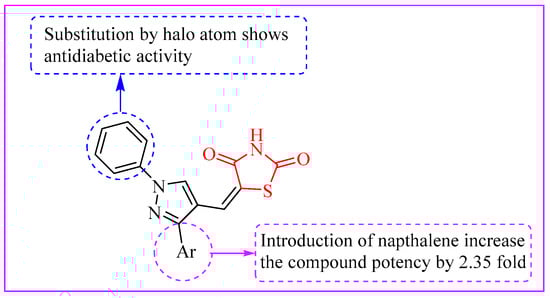
Figure 16.
SAR of 2, 4-thiazoldinedione derivatives.
In this study of the research, synthesis of [5-(substituted chromen-3-yl) methyl] thiazolidine-2,4-diones 85 and 86 was reported with the help of the Vilsmeier–Hack reaction initiated from 1-(2-hydroxy-phenyl)-ethanone 82 in the presence of DMF and POCl3 under the coolest temperature conditions. Further, the above reaction reacted with sodium acetate in acetic acid to give the end product as major and minor (Scheme 16). The synthesized compounds had maximal and moderate antidiabetic activity, but the most active compounds were 5[(6-methoxy-4-oxo-4H-chromen-3yl) methyl] thiazolidine-2, 4-dione, and 5[(6-chloro-4-oxo-4H-chromen-3yl) methyl] thiazolidine-2: 4-dione compared with standard drug pioglitazone and the detailed SAR is described in Figure 17. The substitution with different groups at the R position like OCH3 and Br shows significant activity, while substitution at the 6th position increases potency [63].
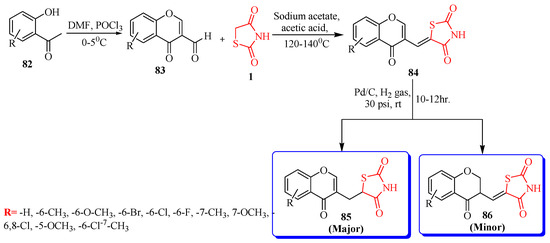
Scheme 16.
Schematic illustration of [5-(substituted chromen-3-yl) methyl] thiazolidine2, 4-diones.
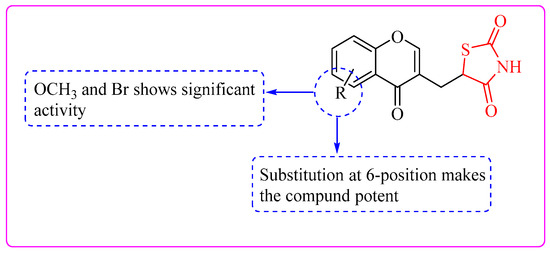
Figure 17.
SAR of [5-(substituted chromen-3-yl) methyl] thiazolidine2, 4-diones.
2,4-thiazolidinedione 1 and benzaldehyde derivative 87 were reacted in piperidine with ethanol as the reflux solvent, using thiazolidinedione as the starting material, resulting in the formation of [5-(substituted benzylidene)-2,4-dioxo-thiazolidin-3-yl] -acetic acid ethyl ester 89 using anhydrous DMF. Additionally, all of the above reactants yield the final product [5-(substituted benzylidene)-2, 4-dioxo-thiazolidin-3-yl]-acetic acids 90 (Scheme 17), with the structure–activity relationship depicted in Figure 18. The majority of the compounds were successfully synthesized; among them, 5-(3,4-dimethoxy)benzylidine-2,4-thiazolidinedione and 5-(3,4,5-trimethoxy)benzylidine-2,4-thiazolidinedione exhibit much more activity compared to pioglitazone [64].
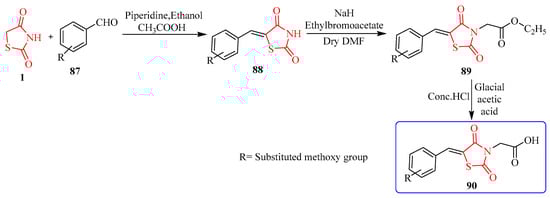
Scheme 17.
Synthesis of [5-(substituted benzylidene)-2, 4-dioxo-thiazolidin-3-yl]-acetic acids.
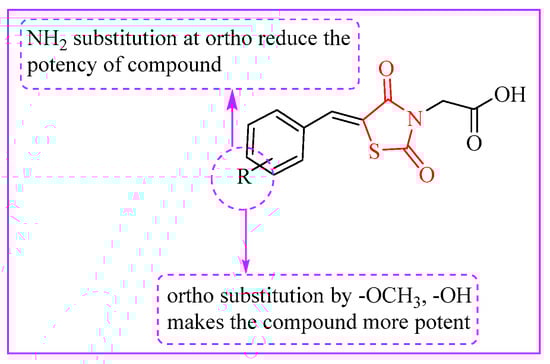
Figure 18.
SAR of [5-(substituted benzylidene)-2, 4-dioxo-thiazolidin-3-yl]-acetic acids.
Jawale et al. reported the synthesis of 1,3-diphenylpyrazolinyl-2,4-thiazolidinediones 93 via the condensation of 91 with 1, using 3-methyl-1-[3-(methyl-1H-imidazolium-1-yl)propyl]-1H-imidazolium dibromide 92 as a di-cationic ionic liquid at 80 °C for 2 h. The detailed procedure is described in Scheme 18, along with the SAR in Figure 19. Results indicate that the synthesized product 93 is biologically active and acts as a precursor of antidiabetic drugs. Substitution with CH3, Cl, or NO2 on the pyrazoline nucleus greatly enhances activity. Presence of both the core ring and the nature of substituents play a crucial role in optimizing biological effects [65].
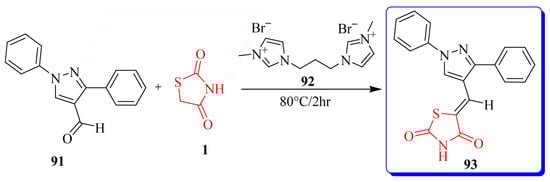
Scheme 18.
A synthetic route for synthesis of 1,3-diphenylpyrazolinyl-2,4-thiazolidinediones.
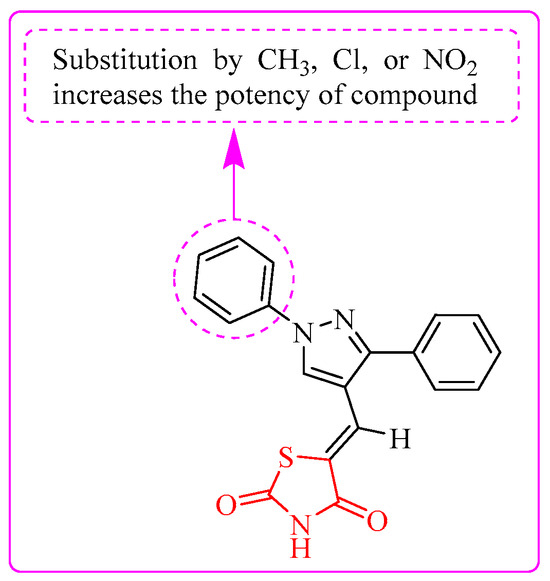
Figure 19.
SAR of 1,3-diphenylpyrazolinyl-2,4-thiazolidinediones.
Prashantha et al. reported the synthesis of substituted benzylidene thiazolidinedione acetic acid derivatives 97 through the reaction of thiazolidine-2,4-dione 1 and a benzaldehyde derivative 94, which undergo Knoevenagel condensation to yield benzylidene thiazolidinedione 95. Subsequent N-alkylation with ethyl bromoacetate produces alkyl 2,4-dioxothiazolidin-3-ethyl ester 96, which is then converted to the acid derivative 97 using concentrated HCl. This is predicted to exhibit significant antidiabetic properties. Their impact on hypoglycemic activity was assessed using a sucrose-loaded model. The findings demonstrate that the dimethoxy and trimethoxy compounds possess hypoglycemic properties comparable to the standard reference, pioglitazone. However, substituting one OCH3 group with an –OH group results in a decrease in hypoglycemic activity, as reported in Scheme 19 and Figure 20 for SAR analysis for compound 97. The replacement of OCH3 group with an OH group in the shown compound reduces its activity, which helps in designing more effective and safer drugs by guiding structural optimization [66].
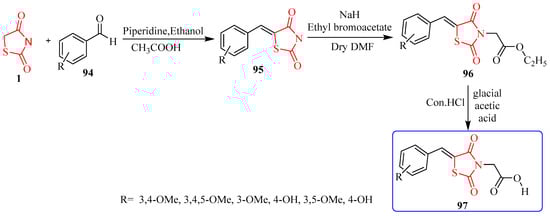
Scheme 19.
A schematic synthesis for substituted benzylidene thiazolidinedione acetic acid derivatives.
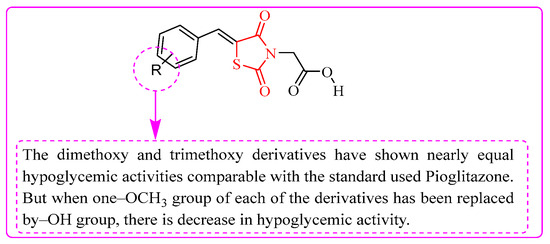
Figure 20.
SAR of substituted benzylidene thiazolidinedione acetic acid derivatives.
2.2. Anticancer Agents
Multiple TZDs have shown potential anticancer effects, and their structural frameworks have been extensively studied for therapeutic use. This presentation covers novel molecules developed for potential use as anticancer agents.
Da Silva and coworkers evaluated the anti-glioma activity and cytotoxicity of thiazolidin-4-ones. In this procedure, primary amine 98, aldehydes 99 or 101, and mercaptoacetic acid were reacted via one-pot MCR in the presence of BF3 and p-toluenesulfonic acid (PTSA) and formed derivatives of thiazolidin-4-one. Da Silva and colleagues assessed the anti-glioma activity and cytotoxic effects of thiazolidin-4-ones. This procedure involves the reaction of primary amine 98, aldehydes 99 or 101, and mercaptoacetic acid in a one-pot multicomponent reaction (MCR) utilizing boron trifluoride (BF3) and p-toluenesulfonic acid (PTSA), resulting in the formation of various thiazolidin-4-one derivatives 100 and 102, as shown in Scheme 20: the SAR activity is depicted in Figure 21. Among all synthesized derivatives, 100b, 100e, 100g, and 100e exhibited potent antitumor effects against reference cells. Introduction of an ethyl-pyridine group increases cytotoxicity, while replacing sulfur with SO2 enhances inhibition [67].
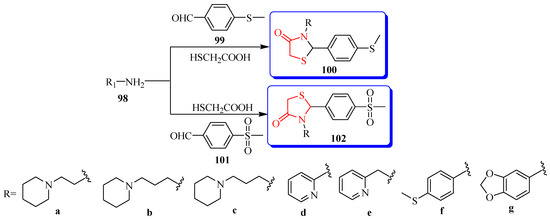
Scheme 20.
Synthetic strategy for thiazolidin-4-ones and their derivatives.
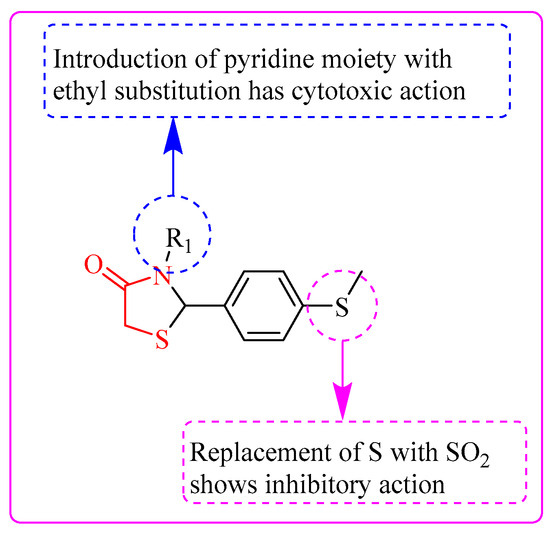
Figure 21.
SAR of thiazolidin-4-ones and their derivatives.
The synthesis of 2-heteroaryliino-1,3-thiazolidine-4-ones 105 and 109 using 3-amino thiophenes, chloroacetyl chloride, and ammonium thiocyanate, along with different solvents and catalysts, was reported by Revelant et al. inScheme 21. Introducing an aryl group at the N-3 position of the thiazolidinone ring significantly diminished the anticancer efficacy, while adding a benzylidene group at position 5 is crucial. It was observed that compounds with p-methoxybenzylidene, p-methylbenzylidene, p-dimethylaminobenzylidene, and 3,4-dimethoxybenzylidene exhibited the effect on HT29 cell growth inhibition. The SAR of 2-methoxyphenylino-1,3-thiazolidine-4-one shows increased cytotoxic activity, as depicted inFigure 22 [68].
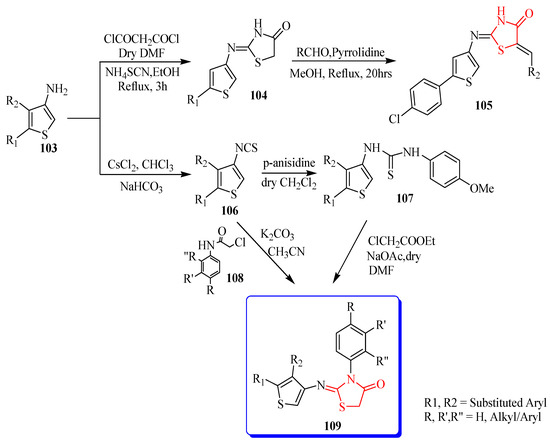
Scheme 21.
Synthesis of 2-heteroaryliino-1,3-thiazolidine-4-one derivatives.
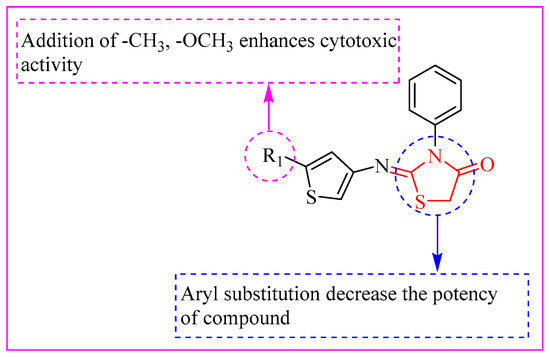
Figure 22.
SAR of 2-heteroaryliino-1,3-thiazolidine-4-ones.
Compound 111 was produced by the Knoevenagel condensation of thiazolidinedione 1 with 4-chlorobenzaldehyde 110 in the presence of 40% aqueous NaOH and absolute ethanol. Then, using potassium carbonate as a base, this molecule was alkylated with ethyl chloroacetate in acetone. The intermediate 113 was obtained by subsequent acidic hydrolysis, as mentioned in Scheme 22. By refluxing intermediate 113 with hydrazides of different phenoxyacetic acids in phosphoryl chloride (POCl3), the compound 114 and its derivatives were synthesized. In this study the results of PPAR-γ transactivation indicated that compounds substituted with 1-nphthyl and 2-naphthyl show maximum potency, enhancing PPAR-γ gene expression by 2.2- and 2.4-fold, respectively. These compounds also demonstrated notable cytotoxicity, with IC50 values ranging from 1.4 to 4.5 μM against MCF-7 cells and 1.8 to 8.4 μM against HCT-116 cells. The SAR in Figure 23 states that bromobenzene, methylnaphthalene, naphthyl, or coumarinyl groups significantly enhance the compound’s activity [69].
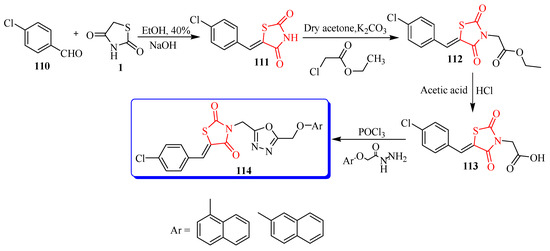
Scheme 22.
Synthetic scheme of thiazolidinedione derivatives.
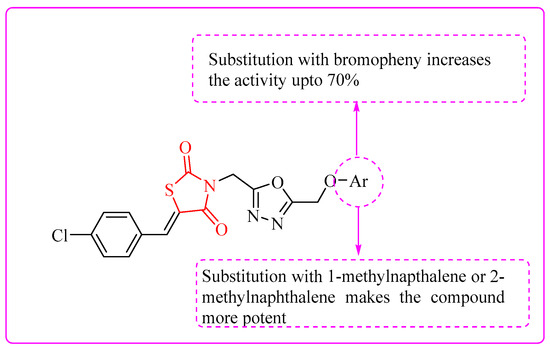
Figure 23.
SAR of thiazolidinedione derivatives.
A series of 5-benzylidene-2, 4-thiazolidinediones 120 were synthesized through the condensation of 5-(4-hydroxybenzylidene)-2, 4-thiazolidinedione 116 with chloroacetylated heteroaromatic amines or heterocyclic nitrogen-containing compounds 116. Initially, 5-(4-hydroxybenzylidene)-2, 4-thiazolidinedione 116 was synthesized through a Knoevenagel condensation reaction involving 4-hydroxybenzaldehyde 115 and 2, 4-thiazolidinedione 1. Secondly, chloroacetylated moieties 119 were synthesized through the acetylation of amines 117 with chloroacetyl chloride 118 under basic conditions, as illustrated in Scheme 23, with the structure–activity relationship (SAR) presented in Figure 24. The synthesized compounds were assessed for their anticancer activity across a targeted in vitro panel of seven cell lines: HEPG2 (hepatoma), HOP62 (lung cancer), KB (nasopharyngeal cancer), MCF7 (breast cancer), K562 (leukemia), and PC3 (prostate cancer). All derivatives demonstrate high potency against selective cancer cell lines [70].
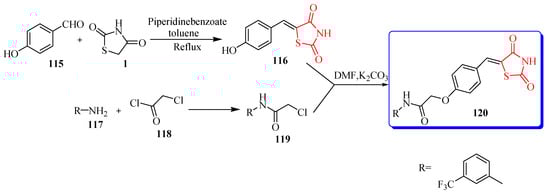
Scheme 23.
Synthetic scheme of 5-benzylidene-2, 4-thiazolidinediones synthesis.
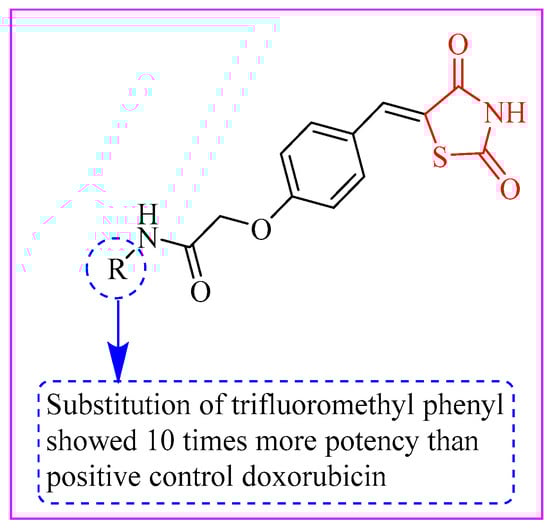
Figure 24.
SAR of 5-benzylidene-2, 4-thiazolidinediones.
According to the literature, the synthesis of chromonylthiazolidines 124(a–c) was performed in two steps. First, preparation of 3-formyl-7-methoxychromone 122 through the Vilsmeier–Haack reaction of 2-hydroxy-4-methoxybenzaldehyde 121 with dimethylformamide and phosphorus oxychloride. Then, in the presence of an appropriate base catalyst, such as piperidine, anhydrous sodium acetate, or glacial acetic acid, 3-formyl-7-methoxychromone 122 and thiazolidine derivatives 123 were reacted to obtain chromonylthiazolidines 124(a–c) (Scheme 24). Among all the derivatives, 5-((7-Methoxy-4-oxo-4H-chromen-3-yl) methylene) thiazolidine-2,4-dione and 5-((7-Methoxy-4-oxo-4H-chromen-3-yl)methylene)-3-methyl-thiazolidine-2,4-dione show the most selective cytotoxic effects towards the tested cancer cell lines, and the SAR is described in Figure 25. The substitution of the R group with H or CH3 in the shown compound increases cytotoxicity [71].
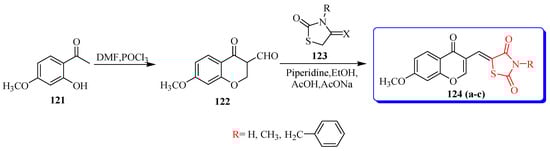
Scheme 24.
Synthetic framework for chromonylthiazolidines 169(a–c).
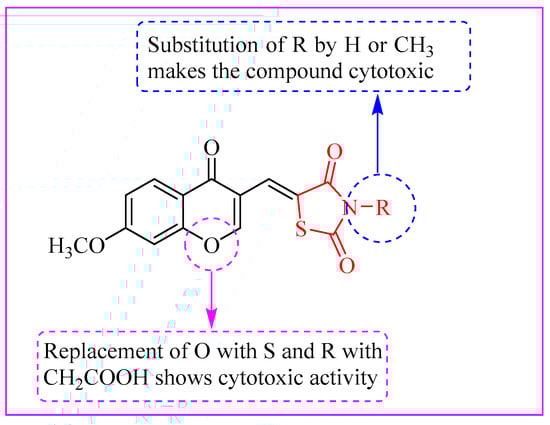
Figure 25.
SAR of chromonylthiazolidines 169(a–c).
Rego et al. documented the synthesis of 3-(4-nitrobenzyl)-thiazolidine-2,4-dione 128 through the condensation of thiazolidine-2,4-dione 1 with 4-nitrobenzyl bromide, utilizing KOH in ethanol as a catalyst. An equimolar mixture of 3-(4-nitrobenzyl)-thiazolidine-2,4-dione 125 and a suitably substituted ethyl-2-cyano-3-phenylacrylate 127 in ethanol with piperidine was stirred under reflux for 4 h and subsequently cooled to room temperature, as depicted in Scheme 25, with the structure–activity relationship presented in Figure 26. Among the three newly synthesized thiazolidinediones, (5Z)-5-(3-bromo-benzylidene)-3-(4-nitrobenzyl)-thiazolidine-2,4-dione had the most significant activity as it exhibited preferential cytotoxicity towards leukemia, lymphoma, hepatocarcinoma, and glioblastoma cell lines while sparing normal cells from toxicity [72].
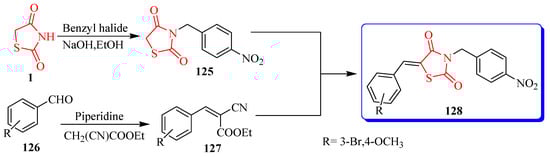
Scheme 25.
Synthesis of 3-(4-nitrobenzyl)-thiazolidine-2,4-dione and derivatives.
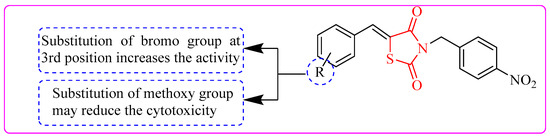
Figure 26.
SAR of 3-(4-nitrobenzyl)-thiazolidine-2,4-dione and derivatives.
2.3. Antimicrobial Activity
TZDs demonstrate considerable antimicrobial activity, and their synthesis processes are extensively described. This presentation presents new molecules intended for development as antimicrobial agents.
A series of novel substituted 2-(5-benzylidene-2,4-dioxothiazolidin-3-yl)-N-(phenyl)propanamides 132 were created by using 5-benzylidene-2,4-thiazolidinediones 130 (0.01 mol) and the corresponding substituted N-phenylpropanamides 131, as outlined in Scheme 26. All synthesized compounds were assessed for in vitro antibacterial activity against Gram-positive bacteria, Staphylococcus aureus (NCIM 2122) and Bacillus subtilis (MTCC 121), and Gram-negative bacteria, Escherichia coli (MTCC 118), Pseudomonas aeruginosa (MTCC 647), Salmonella typhi (NCIM 2501), Klebsiella pneumonia (MTCC 3384), and fungi: Candida albicans (MTCC 227), and Aspergillus niger (NCIM 1056), utilizing the two-fold serial dilution technique: ciprofloxacin and fluconazole were used as the standard for antibacterial and antifungal efficacy, respectively. The SAR is discussed in Figure 27 and it indicates that substitution with 4-nitro, chloro, or fluoro groups enhances activity, while bromo, methylnaphthalene, naphthyl, and coumarinyl groups significantly increase overall activity [73].
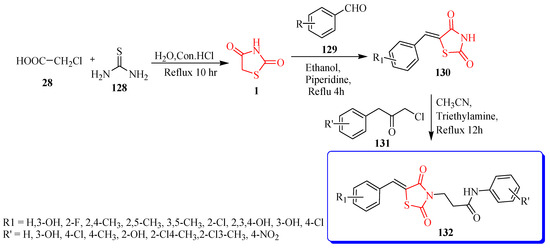
Scheme 26.
Synthesis of N-3-dialylaminomethyl-5-benzylidene-2, 4-thiazolidinediones.
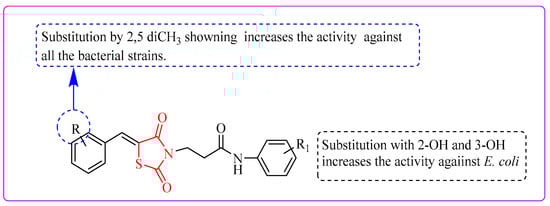
Figure 27.
SAR of N-3-dialylaminomethyl-5-benzylidene-2, 4-thiazolidinediones.
In this study, Knoevenagel condensation takes place between terephthalic aldehyde 179 and thiazolidinedione 1 to form (Z)-4-((2,4-Dioxothiazolidin-5-ylidene) methyl) benzaldehyde 180. Further, synthesis of (Z)-5-(4-((E)-3-oxo-3-phenylprop-1-en-1-yl) benzylidene) thiazolidine-2,4-dione 182 was performed via Claisen–Schmidt condensation between 180 and acetophenones 181. By refluxing 182 for 2 h in toluene with methyl 4-(bromomethyl) benzoate 185, using potassium carbonate as a base, the final derivative 4-(Substituted)-benzylidene) thiazolidine-3-yl) methyl) benzoic acid 187 (Scheme 27) was prepared and evaluated for its antimicrobial activity against Gram-positive (Staphylococcus aureus) and -negative strains (Escherichia coli). Most of the synthesized compounds are shown to be highly potent. It demonstrates that the substituted derivatives, specifically those with hydrogen, 2-chloro, 2-bromo, 2-methoxy, and 2-hydroxy groups, exhibit increased potency, showing MIC values ranging from 0.5 to 4 mg/mL against six different Gram-positive bacteria. In SAR the presence of an electron donating group (EDG) like CH3 increases electron density on the aromatic ring, while an electron withdrawing group like Cl and Br stabilizes the molecule (Figure 28) [74].
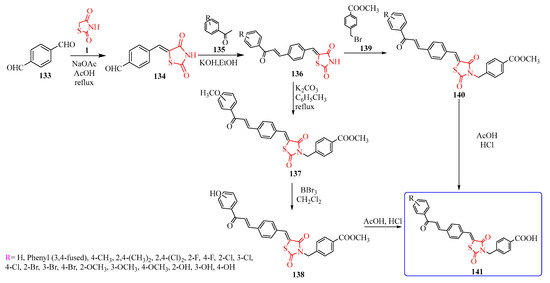
Scheme 27.
Synthetic scheme of 4-((5-((Z)-4-((E)-3-(substitutedphenyl)-3-oxoprop-1-en-1-yl)benzylidene)-2,4-dioxothiazolidin-3-yl)methyl)benzoic acid.
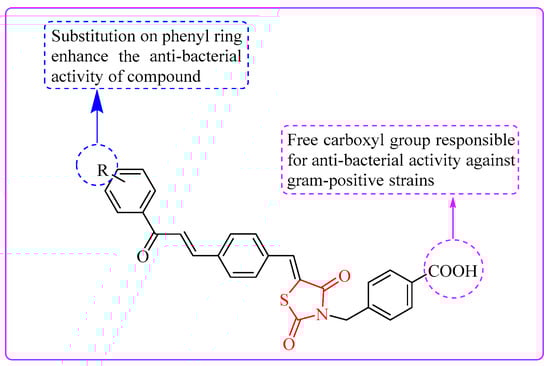
Figure 28.
SAR analysis for 4-((5-((Z)-4-((E)-3-(substitutedphenyl)-3-oxoprop-1-en-1-yl)benzylidene)-2,4-dioxothiazolidin-3-yl)methyl)benzoic acid.
According to the literature, 6,8-dichloro-4-oxo-4H-chromene-3-carbaldehyde 142 refluxed for 3 h with thiazolidinedione 1 and anhydrous sodium acetate in acetic acid, further produced the final compound [5-(6,8-dichloro-4-oxo-4H-chromen-3-ylmethyle55ne)-2,4-dioxo-thiazolidin-3-yl]-acetaldehyde 144 with the help of dimethylformamide (DMF) in KOH, as outlined in Scheme 28. All the derivatives were tested for their antimicrobial activity against Staphylococcus aureus ATCC 49444, Listeria monocytogenes ATCC 13932, Salmonella typhimurium ATCC 14028, Candida albicans ATCC 10231, and Escherichia coli ATCC 25922. The concentrations of 1 mg/mL, 5 mg/mL, and 10 mg/mL of compounds were used and these results were evaluated by the measurement of the inhibition zone diameters compared to gentamicin and fluconazole, respectively, as reference drugs. In this study compound, 4-{2-[5-(6, 8-Dichloro-4-oxo-4H-chromen-3-ylmethylene)—2,4-dioxo-thiazolidin-3-yl]-acetyl}-2-hydroxy-benzamide was found to be more active. The SAR analysis in Figure 29 shows that hydrogen substitution retains inhibitory activity, while methyl substitution enhances activity [75].
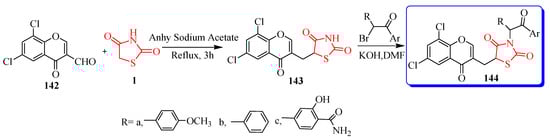
Scheme 28.
Schematic presentation of 5-((6,8-dichloro-4-oxo-4H-chromen-3-yl)methyl)-3-(1-substituted-2-oxo-2-arylethyl)thiazolidine-2,4-dione synthesis.
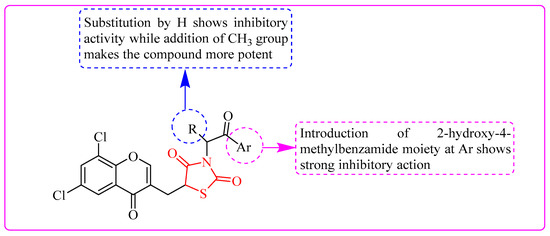
Figure 29.
SAR for 5-((6,8-dichloro-4-oxo-4H-chromen-3-yl)methyl)-3-(1-substituted-2-oxo-2-arylethyl)thiazolidine-2,4-dione.
Initially, thiazolidine-2,4-dione 1 was synthesized conventionally according to the literature procedure [40,41]. Thiazolidine-2,4-dione 1 was condensed with indole3-aldehyde to form 5-[(indol-3-yl)methylene]-thiazolidine-2,4-dione 146 under Knoevenagel reaction conditions [42]. Compound 146 was then coupled with formaldehyde and substituted aromatic amines under Mannich reaction conditions [43,44] to afford the desired final derivatives 147(a–c) [76], as described in Scheme 29. Compound 147c has demonstrated strong activity against Gram-positive bacteria (B. subtilis and S. aureus) at a concentration of 40 mg/mL, while compound 147e has shown effective activity against Gram-negative bacteria (E. coli and P. aeruginosa) at the same dosage. In vitro antioxidant tests indicated that compounds 147a and 147b exhibited significant antioxidant effects in both the DPPH assay and the hydrogen peroxide assay methods. Evaluation of in vivo hypoglycemic activity showed that compounds 147a and 147d displayed promising hypoglycemic effects in both acute and chronic studies. Molecular docking analysis indicated that compound 147a had the highest binding affinity for the PPARg receptor protein. The SAR in Figure 30 explains that the substitution with the nitro group (EWG) enhances activity against Gram-positive bacteria, and fluoro and chloro (EDG) show good antioxidant activity.
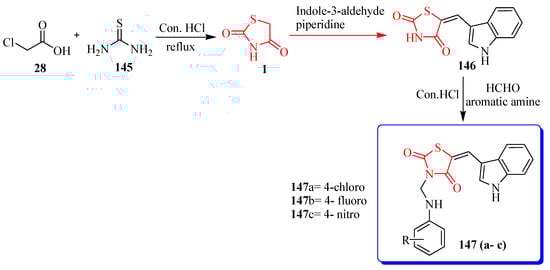
Scheme 29.
Synthesis of thiazolidinedione derivatives 147(a–c).
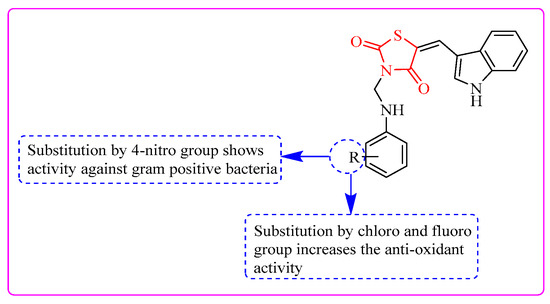
Figure 30.
SAR of thiazolidinedione derivatives 147(a–c).
2.4. Antioxidant Activity
The 5-(benzo[d][1,3]dioxol-5-ylmethylene) thiazolidine-2,4-dione 149 reacted with potassium hydroxide in DMF to give the potassium salt derivative 150, which is mentioned in Scheme 30 along with the SAR in Figure 31 [77].

Scheme 30.
Synthesis of potassium salt derivatives of thiazolidinedione scaffold.
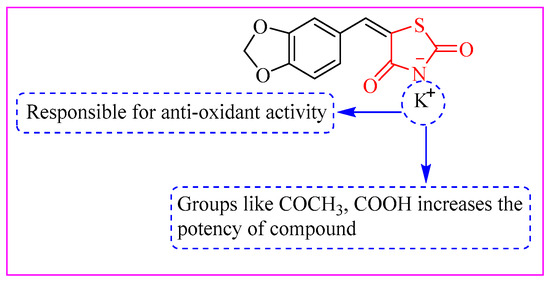
Figure 31.
SAR of potassium salt derivatives of thiazolidinedione scaffold.
5-aryl benzylidene-3-(4-substituted-benzyl)-thiazolidine-2,4-diones 152 has been synthesized (Scheme 31) with the help of nucleophilic addition reaction starting from 2,4-thiazolidinedione 1 with benzyl or phenacyl halides in a hot alcoholic medium, which further leads to final product formation via the appropriate route of pioneer intermediate compound 3-(4-Methyl-benzyl)-thiazolidine-2,4-dione 151 synthesis. Among all the synthesized compounds, 5-(2,4-Dimethoxy-benzylidene)-3-(4-methyl-benzyl)-thiazolidine-2,4-dione compound was found to be most active. The SAR (Figure 32) of the synthesized compound illustrated that the “R” group on the benzene ring with a 4-nitro group enhances antibacterial activity, while chloro or fluoro substitutions increase antioxidant properties [78].
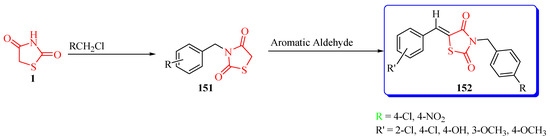
Scheme 31.
Synthesis of 5-aryl benzylidene-3-(4-substituted-benzyl)-thiazolidine-2,4-diones.
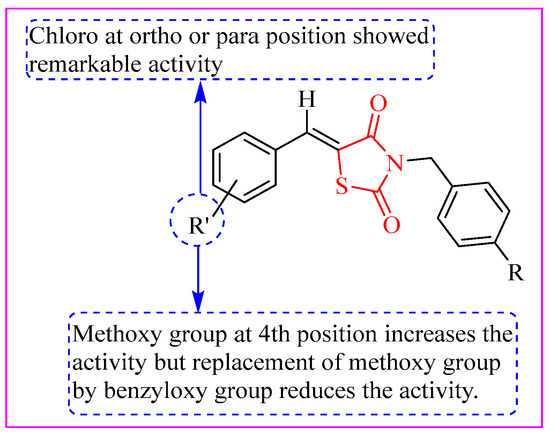
Figure 32.
SAR of 5-Benzylidene-3-(4-methyl-benzyl)-thiazolidine-2,4-diones.
2.5. Anti-Inflammatory Activity
The literature indicates that the reactants 1-phenylethan-1-one 153 and phenylhydrazine 154 were mixed in ethanol and glacial acetic acid to produce (2E)-1-phenyl-2-(1-phenylethylamine)hydrazine 155. The intermediate was subsequently treated to a Vilsmeier–Haack reaction to provide the important intermediate, substituted pyrazole carboxaldehyde 156.
Subsequently, 5-((1,3-substituted-1H-pyrazol-4-yl)methylene)thiazolidine-2,4-diones 157 was synthesized through the condensation of compound 156 with 2,4-thiazolidinedione 1 using piperidine and glacial acetic acid in anhydrous toluene. Compound 157 followed an additional reaction with allyl bromide and iodopropane in the presence of potassium carbonate in anhydrous DMF, yielding two products: 5-((3-substituted-1-phenyl-1H-pyrazol-4-yl)methylene)-3-propylthiazolidine-2,4-diones 158 and 3-allyl-5-((3-substituted-1-phenyl-1H-pyrazol-4-yl)methylene)thiazolidine-2,4-diones 159 (Scheme 32). Among all produced compounds were 5-((3-(4-chlorophenyl)-1-(4-nitrophenyl)-1H-pyrazol-4-yl)methylene)thiazolidine-2,4-dione and 3-allyl. -5-((3-(4-chlorophenyl)-1-phenyl-1H-pyrazol-4-yl)methylene)thiazolidine-2,4-dione has been identified as an effective inhibitor of COX-1 and COX-2. SAR indicates that the steric hindrance can negatively affect activity by inhibiting the ability to bind effectively to its target (Figure 33) [79,80].
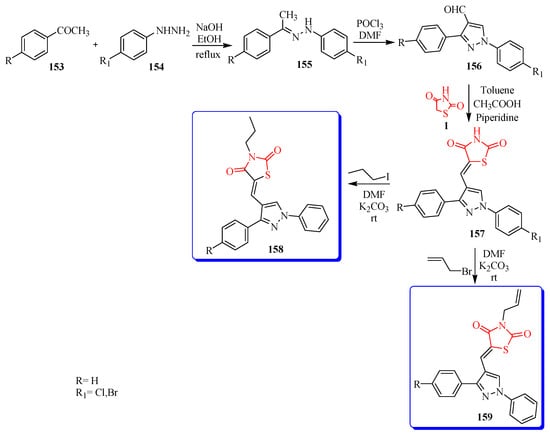
Scheme 32.
Schematic representation for synthesis of substituted thiazolidinediones and its derivatives.
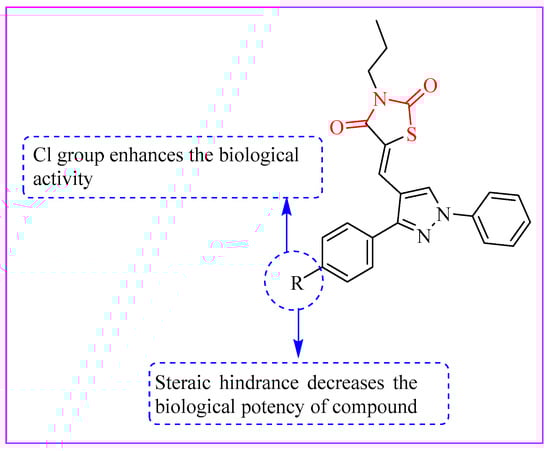
Figure 33.
SAR of substituted thiazolidinediones and its derivatives.
2.6. Miscellaneous Activity
Rahim et al. reported a new and effective approach for synthesizing aryl hydrazide-bearing thiazolidinediones and assessed their effectiveness as α-amylase and urease inhibitors (Scheme 33). In this protocol, 4-cyanobenzoate 160 and hydrazine hydrate 161 were refluxed with substituted aldehydes or acetophenones, resulting in the formation of the corresponding Schiff base 163. The intermediate was subsequently reacted with thioglycolic acid 164 in the presence of acetic acid to yield the final product, thiazolidinedione 165. Compounds with R groups like 3-methoxyphenol, 1,3-dichlorophenyl showed strong α-amylase inhibition (IC50: 0.8–1.3 μM). Other derivatives such as nitrophenyl and hydroxyphenyl showed moderate activity with higher IC50 values (4.1–19.8 μM). The detailed SAR is given in Figure 34 [81].
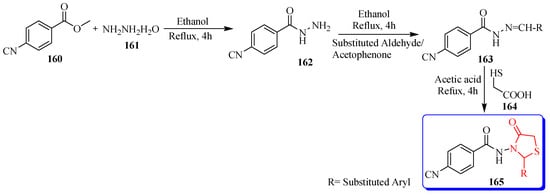
Scheme 33.
Synthesis of arylhydrazide-bearing thiazolidinone.
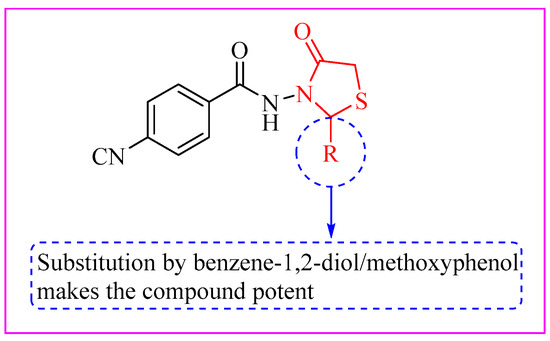
Figure 34.
SAR of arylhydrazide-bearing thiazolidinediones.
3. Patents Landscape (2015–2025)
Thiazolidinediones-containing compounds improve insulin sensitivity by offering key innovations in the molecular framework, providing promising drug design, discovery, and development. In this review, the synthesis of thiazolidinediones with diverse pharmacological profiles is explored, with a focus on patents filed between 2015 and 2025, as discussed in Table 1.

Table 1.
Overview of patents containing thiazolidinedione moiety from 2015 to 2025.
4. Clinical Trials and FDA Approved Drugs
Numerous methods were described in this review for the synthesis of thiazolidinedione and derivatives, and researchers continue to do their studies to determine pharmacological profiles along with their measuring safety and ensuring fewer side effects. Hence, employing the thiazolidinediones moiety in clinical trials. The clinical trial data of the compounds and FDA approved drugs of have been reported in Table 2 and Table 3.
Table 2.
Clinical trial data of some of the reported compounds.
Table 3.
FDA-approved drugs of class ‘glitazones’.
5. Conclusions
2, 4-thiazolidinedione has a versatile pharmacological profile, such as being antidiabetic, anti-inflammatory, anticancer, antimicrobial, etc. The review focuses on the synthesis of thiazolidinedione and its derivatives with their immense action on PPAR-γ activation via agonistic effects, which makes them important for their pharmacological actions. Different derivatives with their structure–activity relationship created interest in researchers for further research on different analogs of thiazolidinedione with high potency and low toxicity, which further helps in the new drug discovery process and research. The structural flexibility of the thiazolidinedione core permits significant modifications, resulting in a variety of derivatives with various biological activities. Comprehensive structure–activity relationship (SAR) analyses have yielded significant understanding of the impact of various substitutions on the pharmacological response, potency, and selectivity of these compounds. These findings have not only enhanced the understanding of their mechanism of action but have also generated significant interest among medicinal chemists in for the design and synthesis of novel analogs with improved efficacy and reduce toxicity. The continuing structure–activity relationship-driven modifications and mechanistic studies of thiazolidinedione analogs are expected to significantly enhance future progress in drug discovery and development.
6. Future Directions
As per the bibliometric graph suggestion, there are several research processes underway for the search for an optimal anticancer agent using thiazolidinedione as the core structure. Apart from this, the review also suggests the search for a more potent antidiabetic drug with positively altered pharmacological parameters for human consumption. Hence, the research using the thiazolidinedione heterocyclic ring needs to be expanded for future results. Despite significant progress in the identification of thiazolidinedione (TZD) derivatives, there are still several challenges to overcome and chances to seize. Future studies should focus on creating more selective and less harmful TZD analogs, particularly to address well-known side effects like weight gain and cardiovascular risks which are associated with PPAR-γ agonism. New TZD-based scaffolds with multi-target capabilities can be found more quickly using computational methods like molecular docking and AI-aided drug design. Furthermore, there are promising avenues for examining TZDs’ therapeutic potential in conditions other than diabetes, such as cancer, neurological diseases, and inflammation. The clinical potential of TZDs can be expanded by additional study on targeted drug delivery, nanocarrier systems, and hybrid compounds that combine TZDs with other pharmacophores. Finally, to translate in vitro findings into real therapeutic applications, more in vivo and clinical research needs to be performed.
Funding
This research received no external funding.
Institutional Review Board Statement
Not applicable.
Informed Consent Statement
Not applicable.
Data Availability Statement
Not applicable.
Acknowledgments
The author(s) acknowledge the Noida Institute of Engineering and Technology (Pharmacy Institute), Greater Noida for their collaborative support. The author also acknowledges all the co-authors for their contribution and efforts.
Conflicts of Interest
The authors declare no conflicts of interest, financial or otherwise.
Abbreviations
| PPAR-γ | Peroxisome proliferator-activated receptor gamma |
| TZDs | Thiazolidinediones |
| DMF | Dimethylformamide |
| PTSA | Para-toluenesulfonic acid |
| Cs2 | Carbon disulfide |
| ANOVA | Analysis of Variance |
| SOCl2 | Thionyl chloride |
| DCM | Dichloromethane |
| PEG | Polyethylene Glycol-600 |
| POCl3 | Phosphorus oxychloride |
| EtOH | Ethanol |
| Nrf2 | Nuclear factor erythroid 2 |
| IBD | Inflammatory bowel disease |
| NASH | Non-alcoholic steatohepatitis |
| NAFLD | Non-alcoholic fatty liver disease |
| DMD | Duchenne muscular dystrophy |
| LGMD | Limb-girdle muscular dystrophy |
| BMD | Becker muscular dystrophy |
| GHR | Growth hormone receptor |
| STAT5 | Signal transduction/transcription activator 5 |
| sIBM | sporadic inclusion body myositis |
| TNF | Tumor necrosis factor |
| IL | Interleukin |
| AMY2A | Amylase alpha 2A |
| GAA | Glucosidase alpha, acid |
| PPARG | Peroxisome proliferator-activated receptor gamma |
| PIK3CA | Phosphatidylinositol 4,5-biphosophate 3-kinase catalytic subunit alpha |
| PRKCB | Protein kinase C beta |
| INSR | Insulin Receptor |
| EDG | Electron donating group |
| EWG | Electron withdrawing group |
| CALYX | Cerebral adrenoleukodystrophy |
| SGLT-2 | Sodium–glucose cotransport 2 |
| DPP-4 | Dipeptidyl peptidase-4 |
| PEP-DM | Pharmacophore enhanced pharmacodynamic modeling |
| CVD | Cardiovascular disease |
References
- Quansah, E.; Peelaerts, W.; Langston, J.W.; Simon, D.K.; Colca, J.; Brundin, P. Targeting energy metabolism via the mitochondrial pyruvate carrier as a novel approach to attenuate neurodegeneration. Mol. Neurodeg. 2018, 13, 28. [Google Scholar] [CrossRef]
- Nanjan, M.J.; Mohammed, M.; Kumar, B.P.; Chandrasekar, M.J. Thiazolidinediones as antidiabetic agents: A critical review. Bioorg. Chem. 2018, 77, 548–567. [Google Scholar] [CrossRef]
- Naim, M.J.; Alam, M.J.; Ahmad, S.; Nawaz, F.; Shrivastava, N.; Sahu, M.; Alam, O. Therapeutic journey of 2,4-thiazolidinediones as a versatile scaffold: An insight into structure activity relationship. Eur. J. Med. Chem. 2017, 129, 218–250. [Google Scholar] [CrossRef]
- Kumar, A.; Kumar, S. Review on advances in the development of 2, 4-thiazolidinedione derivatives as therapeutic agents. Critical Rev. Pharma. Sci. 2016, 5, 1–27. [Google Scholar]
- Long, N.; Le Gresley, A.; Wren, S.P. Thiazolidinediones: An in–depth study of their synthesis and application to medicinal chemistry in the treatment of diabetes mellitus. ChemMedChem 2021, 16, 1717–1736. [Google Scholar] [CrossRef]
- Thangavel, N.; Al Bratty, M.; Javed, S.A.; Ahsan, W.; Alhazmi, H.A. Targeting peroxisome proliferator-activated receptors using thiazolidinediones: Strategy for design of novel antidiabetic drugs. Int. J. Med. Chem. 2017, 2017, 1069718. [Google Scholar] [CrossRef]
- Singh, R.; Kumar, P.; Sindhu, J.; Devi, M.; Kumar, A.; Lal, S.; Singh, D.; Kumar, H. Thiazolidinedione–triazole conjugates: Design, synthesis and probing of the α-amylase inhibitory potential. Future Med. Chem. 2023, 15, 1273–1294. [Google Scholar] [CrossRef]
- Bell, D.S.; Jerkins, T. In praise of pioglitazone: An economically efficacious therapy for type 2 diabetes and other manifestations of the metabolic syndrome. Diabetes Obes. Metab. 2023, 25, 3093–3102. [Google Scholar] [CrossRef] [PubMed]
- Allen, K.M.; Coughlan, K.A.; Mahmood, F.N.; Valentine, R.J.; Ruderman, N.B.; Saha, A.K. The effects of troglitazone on AMPK in HepG2 cells. Archives Biochem. Biophys. 2017, 623, 49–57. [Google Scholar] [CrossRef]
- de Paiva, R.K.C.; da Silva, J.F.; Moreira, H.A.; Pinto, O.G.; Camargo, L.T.F.M.; Naves, P.L.F.; Camargo, A.J.; Ribeiro, L.; Ramos, L.M. Synthesis, antimicrobial activity and structure-activity relationship of some 5-arylidene-thiazolidine-2,4-dione derivatives. J. Braz. Chem. Soc. 2018, 30, 164–172. [Google Scholar] [CrossRef]
- Gupta, S.; Jha, S.; Rani, S.; Arora, P.; Kumar, S. Medicinal Perspective of 2, 4-Thiazolidinediones Derivatives: An Insight into Recent Advancements. ChemistryOpen 2024, 13, e202400147. [Google Scholar] [CrossRef] [PubMed]
- Kothari, V.; Galdo, J.A.; Mathews, S.T. Hypoglycemic agents and potential anti-inflammatory activity. J. Inflam. Res. 2016, 9, 27–38. [Google Scholar] [CrossRef]
- Leslie, R.D.; Ma, R.C.; Franks, P.W.; Nadeau, K.J.; Pearson, E.R.; Redondo, M.J. Understanding diabetes heterogeneity: Key steps towards precision medicine in diabetes. Llancet Diabetes Endocrinol. 2023, 11, 848–860. [Google Scholar] [CrossRef] [PubMed]
- Norris, J.M.; Johnson, R.K.; Stene, L.C. Type 1 diabetes—Early life origins and changing epidemiology. Lancet Diabetes Endocrinol. 2020, 8, 226–238. [Google Scholar] [CrossRef]
- Khin, P.P.; Lee, J.H.; Jun, H.S. A brief review of the mechanisms of β-cell dedifferentiation in type 2 diabetes. Nutrients 2021, 13, 1593. [Google Scholar] [CrossRef]
- Sweeting, A.; Hannah, W.; Backman, H.; Catalano, P.; Feghali, M.; Herman, W.H.; Hivert, M.F.; Immanuel, J.; Meek, C.; Oppermann, M.L.; et al. Epidemiology and management of gestational diabetes. Lancet 2024, 404, 175–192. [Google Scholar] [CrossRef]
- Mohajan, D.; Mohajan, H.K. Peroxisome proliferator-activated receptor γ (PPAR γ): A systemic insulin sensitizer associated with decreased risk of type 2 diabetes. J. Innov. Med. Res. 2024, 3, 18–24. [Google Scholar] [CrossRef]
- Madhuri, P.L.; Rajitha, G. The Intriguing Thiazolidinediones as PPAR γ Agonists: A Review.(2023). Int. J. Life Sci. Pharma Res. 2023, 13, P25–P50. [Google Scholar] [CrossRef]
- Triana, R.; Dewi, N.M.; Darmayanti, S.; Herawati, E.; Novalentina, M.; Semadhi, M.P.; Rahman, M.N. PPAR-gamma Signaling in Metabolic Homeostasis. Indones. Biomed. J. 2016, 8, 147–156. [Google Scholar] [CrossRef][Green Version]
- Souza-Tavares, H.; Miranda, C.S.; Vasques-Monteiro, I.M.; Sandoval, C.; Santana-Oliveira, D.A.; Silva-Veiga, F.M.; Fernandes-da-Silva, A.; Souza-Mello, V. Peroxisome proliferator-activated receptors as targets to treat metabolic diseases: Focus on the adipose tissue, liver, and pancreas. World J. Gastroenterol. 2023, 29, 4136. [Google Scholar] [CrossRef]
- Czech, M.P. Insulin action and resistance in obesity and type 2 diabetes. Nat. Med. 2017, 23, 804–814. [Google Scholar] [CrossRef] [PubMed]
- Lebovitz, H.E. Thiazolidinediones: The forgotten diabetes medications. Curr. Diab. Rep. 2019, 19, 151. [Google Scholar] [CrossRef] [PubMed]
- Raveendran, A.V.; Fernandez, C.J.; Jacob, K. Efficacy and cardiovascular safety of thiazolidinediones. Curr. Drug Saf. 2021, 16, 233–249. [Google Scholar] [CrossRef] [PubMed]
- Hurren, K.M.; Dunham, M.W. Are thiazolidinediones a preferred drug treatment for type 2 diabetes? Expert Opin. Pharmacother. 2021, 22, 131–133. [Google Scholar] [CrossRef]
- Vaccaro, O.; Masulli, M.; Nicolucci, A.; Bonora, E.; Del Prato, S.; Maggioni, A.P.; Rivellese, A.A.; Squatrito, S.; Giorda, C.B.; Sesti, G.; et al. Effects on the incidence of cardiovascular events of the addition of pioglitazone versus sulfonylureas in patients with type 2 diabetes inadequately controlled with metformin (TOSCA. IT): A randomised, multicentre trial. Lancet Diabetes Endocrinol. 2017, 5, 887–897. [Google Scholar] [CrossRef]
- Cheng, D.; Gao, H.; Li, W. Long-term risk of rosiglitazone on cardiovascular events—A systematic review and meta-analysis. Endokrynol. Polska. 2018, 69, 381–394. [Google Scholar] [CrossRef]
- Hong, F.; Xu, P.; Zhai, Y. The opportunities and challenges of peroxisome proliferator-activated receptors ligands in clinical drug discovery and development. Int. J. Mol. Sci. 2018, 19, 2189. [Google Scholar] [CrossRef]
- Subramoniam, A. Plants with Anti-Diabetes Mellitus Properties; CRC Press: Boca, FL, USA, 2016. [Google Scholar] [CrossRef]
- Sinha, B.; Ghosal, S. Assessing the need for pioglitazone in the treatment of patients with type 2 diabetes: A meta-analysis of its risks and benefits from prospective trials. Sci. Rep. 2020, 10, 15781. [Google Scholar] [CrossRef]
- Yen, F.S.; Yang, Y.C.; Hwu, C.M.; Wei, J.C.; Huang, Y.H.; Hou, M.C.; Hsu, C.C. Liver-related long-term outcomes of thiazolidinedione use in persons with type 2 diabetes. Liver. Int. 2020, 40, 1089–1097. [Google Scholar] [CrossRef]
- Li, J.; Shen, X. Effect of rosiglitazone on inflammatory cytokines and oxidative stress after intensive insulin therapy in patients with newly diagnosed type 2 diabetes. Diabetol. Metab. Syndr. 2019, 11, 35. [Google Scholar] [CrossRef]
- Sameeh, M.Y.; Khowdiary, M.M.; Nassar, H.S.; Abdelall, M.M.; Amer, H.H.; Hamed, A.; Elhenawy, A.A. Thiazolidinedione derivatives: In silico, in vitro, in vivo, antioxidant and anti-diabetic evaluation. Molecules 2022, 27, 830. [Google Scholar] [CrossRef]
- Kajal, K.; Singh, G.; Pradhan, T.; Bhurta, D.; Monga, V. The medicinal perspective of 2, 4-thiazolidinediones based ligands as antimicrobial, antitumor and antidiabetic agents: A review. Arch. Pharm. 2022, 355, 2100517. [Google Scholar] [CrossRef]
- Ahmed, S.; Bhat, A.R.; Rahiman, A.K.; Dongre, R.S.; Hasan, A.H.; Niranjan, V.; Sheikh, S.A.; Jamalis, J.; Berredjem, M.; Kawsar, S.M. Green synthesis, antibacterial and antifungal evaluation of new thiazolidine-2, 4-dione derivatives: Molecular dynamic simulation, POM study and identification of antitumor pharmacophore sites. J. Biomol. Struct. Dyn. 2024, 42, 10635–10651. [Google Scholar] [CrossRef]
- Sharma, P.C.; Bansal, K.K.; Sharma, A.; Sharma, D.; Deep, A. Thiazole-containing compounds as therapeutic targets for cancer therapy. Eur. J Med. Chem. 2020, 188, 112016. [Google Scholar] [CrossRef]
- Zhong, W.Y.; Peng, H.; Li, H.; Shang, H.; Wei, Y.Q.; Fang, Z.H.; Zhao, X.B. Effect of thiazolidinedione amide on insulin resistance, creactive protein and endothelial function in young women with polycystic ovary syndrome. Trop. J. Pharm. Res. 2015, 14, 2287–2292. [Google Scholar] [CrossRef]
- Ranjan, G.; Ranjan, S.; Sunita, P.; Pattanayak, S.P. Thiazolidinedione derivatives in cancer therapy: Exploring novel mechanisms, therapeutic potentials, and future horizons in oncology. Naunyn Schmiedeberg’s Arch. Pharmacol. 2024, 398, 4705–4725. [Google Scholar] [CrossRef] [PubMed]
- Chi, T.; Wang, M.; Wang, X.; Yang, K.; Xie, F.; Liao, Z.; Wei, P. PPAR-γ modulators as current and potential cancer treatments. Front. Oncol. 2021, 11, 737776. [Google Scholar] [CrossRef] [PubMed]
- Jain, U.; Jain, N.; Amrutkar , S.; Kawade, D. 2,4-Thiazolidinedione in treating diabetes: A comprehensive overview—History, chemistry, advancements, challenges and future perspectives. Int. J. Pharm. Sci. Drug Res. 2025, 17, 203–213. [Google Scholar] [CrossRef]
- Saptarini, N.M.; Saputri, F.A.; Levita, J. Molecular modeling study of PPAR γ agonists: Dehydro-di-isoeugenol, macelignan, pioglitazone, netoglitazone, and rosiglitazone as antidiabetic drugs. Int. J. Chem. 2014, 6, 48–55. [Google Scholar] [CrossRef]
- Mandal, S.P.; Garg, A.; Prabitha, P.; Wadhwani, A.D.; Adhikary, L.; Kumar, B.P. Novel glitazones as PPARγ agonists: Molecular design, synthesis, glucose uptake activity and 3D QSAR studies. Chem. Cent. J. 2018, 12, 141. [Google Scholar] [CrossRef]
- Giglio, R.V.; Papanas, N.; Rizvi, A.A.; Ciaccio, M.; Patti, A.M.; Ilias, I.; Pantea Stoian, A.; Sahebkar, A.; Janez, A.; Rizzo, M. An update on the current and emerging use of thiazolidinediones for type 2 diabetes. Medicina 2022, 58, 1475. [Google Scholar] [CrossRef]
- Bailey, C.J. The origins of type 2 diabetes medications. Br. J. Diab. 2022, 22, 112–120. [Google Scholar] [CrossRef]
- Zhang, J.; Li, Q.; Yan, Y.; Sun, B.; Wang, Y.; Tang, L.; Wang, E.; Yu, J.; Nogoy, K.M.; Li, X.; et al. Effect of ciglitazone on adipogenic transdifferentiation of bovine skeletal muscle satellite cells. J. Anim. Sci. Technol. 2021, 63, 934. [Google Scholar] [CrossRef]
- Plissonnier, M.L.; Fauconnet, S.; Bittard, H.; Mougin, C.; Rommelaere, J.; Lascombe, I. Cell death and restoration of TRAIL-sensitivity by ciglitazone in resistant cervical cancer cells. Oncotarget 2017, 8, 107744. [Google Scholar] [CrossRef]
- Deng, Q.; Yang, Y.; Liu, Y.; Zou, M.; Huang, G.; Yang, S.; Li, L.; Qu, Y.; Luo, Y.; Zhang, X. Assessing immune hepatotoxicity of troglitazone with a versatile liver-immune-microphysiological-system. Front. Pharmacol. 2024, 15, 1335836. [Google Scholar] [CrossRef]
- Lewis, J.D.; Habel, L.A.; Quesenberry, C.P.; Strom, B.L.; Peng, T.; Hedderson, M.M.; Ehrlich, S.F.; Mamtani, R.; Bilker, W.; Vaughn, D.J.; et al. Pioglitazone use and risk of bladder cancer and other common cancers in persons with diabetes. JAMA 2015, 314, 265–277. [Google Scholar] [CrossRef] [PubMed]
- Leonard, C.E.; Brensinger, C.M.; Dawwas, G.K.; Deo, R.; Bilker, W.B.; Soprano, S.E.; Dhopeshwarkar, N.; Flory, J.H.; Bloomgarden, Z.T.; Gagne, J.J.; et al. The risk of sudden cardiac arrest and ventricular arrhythmia with rosiglitazone versus pioglitazone: Real-world evidence on thiazolidinedione safety. Cardiovasc. Diabetol. 2020, 19, 25. [Google Scholar] [CrossRef] [PubMed]
- Singh, G.; Kumar, R.; Desna, D.S.; Chaudhary, M.; Kaur, C.; Khurrana, N. Thiazolidinedione as a promising medicinal scaffold for the treatment of type 2 diabetes. Curr. Diab. Rev. 2024, 20, 89–109. [Google Scholar] [CrossRef] [PubMed]
- Shrivastava, S.K.; Batham, A.; Sinha, S.K.; Parida, T.K.; Garabadu, D.; Choubey, P.K. Design, synthesis and evaluation of novel thiazolidinedione derivatives as anti-hyperglycemic and anti-hyperlipidemic agents. Med. Chem. Res. 2016, 25, 2258–2266. [Google Scholar] [CrossRef]
- Sucheta; Tahlan, S.; Verma, P.K. Biological potential of thiazolidinedione derivatives of synthetic origin. Chem. Cent. J. 2017, 11, 130. [Google Scholar] [CrossRef]
- Thareja, S.; Verma, S.K.; Haksar, D.; Bhardwaj, T.R.; Kumar, M. Discovery of novel cinnamylidene-thiazolidinedione derivatives as PTP-1B inhibitors for the management of type 2 diabetes. RSC Adv. 2016, 6, 108928–108940. [Google Scholar] [CrossRef]
- Nikaljea, P.G.; Choudharia, S.; Une, H. Design, synthesis and hypoglycemic activity of novel 2-(4-((2, 4-dioxothiazolidin-5-ylidene) methyl)-2-methoxyphenoxy)-N-substituted acetamide derivatives. Pelagia. Res. Lib. 2012, 2, 1302–1314. [Google Scholar]
- Jawale, D.V.; Pratap, U.R.; Rahuja, N.; Srivastava, A.K.; Mane, R.A. Synthesis and antihyperglycemic evaluation of new 2, 4-thiazolidinediones having biodynamic aryl sulfonylurea moieties. Bioorg. Med. Chem. Lett. 2012, 22, 436–439. [Google Scholar] [CrossRef] [PubMed]
- Behrouz, S.; Rad, M.N.; Miralaei, Z.; Habibi, H.; Khoradmehr, A.; Behrouz, M. Design, synthesis, bioassay, and in silico studies of thiazolidinedione–morpholine hybrid ionic liquids as new antidiabetic agents. J. Mol. Liq. 2025, 423, 127050. [Google Scholar] [CrossRef]
- Gharge, S.; Alegaon, S.G.; Jadhav, S.; Ranade, S.D.; Kavalapure, R.S. Design, synthesis, characterization and Antidiabetic evaluation of 3, 5-substituted thiazolidinediones: Evidenced by network pharmacology, Molecular docking, dynamic simulation, in vitro and in vivo assessment. Eur. J. Med. Chem. Rep. 2024, 12, 100213. [Google Scholar] [CrossRef]
- Riyaz, S.; Naidu, A.; Dubey, P.K. PEG-600 Mediated One-Pot Synthesis of Quinolinylidinethiazolidine-2, 4-Diones as Potential Anti-Hyperglycemic Agents. 2012. Available online: http://nopr.niscpr.res.in/handle.123456789/14642 (accessed on 22 September 2025).
- Srivastava, A.R.; Bhatia, R.; Chawla, P. Synthesis, biological evaluation and molecular docking studies of novel 3, 5-disubstituted 2, 4-thiazolidinediones derivatives. Bioorg. Chem. 2019, 89, 102993. [Google Scholar] [CrossRef]
- Huiying, Z.; Guangying, C.; Shiyang, Z. Design, synthesis and biological activity evaluation of a new class of 2, 4-thiazolidinedione compounds as insulin enhancers. J. Enzyme Inhib. Med. Chem. 2019, 34, 981–989. [Google Scholar] [CrossRef]
- Hidalgo-Figueroa, S.; Estrada-Soto, S.; Ramírez-Espinosa, J.J.; Paoli, P.; Lori, G.; León-Rivera, I.; Navarrete-Vázquez, G. Synthesis and evaluation of thiazolidine-2, 4-dione/benzazole derivatives as inhibitors of protein tyrosine phosphatase 1B (PTP-1B): Antihyperglycemic activity with molecular docking study. Biomed. Pharmacother. 2018, 107, 1302–1310. [Google Scholar] [CrossRef]
- Iqbal, A.M.; Khan, A.Y.; Kalashetti, M.B.; Belavagi, N.S.; Gong, Y.D.; Khazi, I.A. Synthesis, hypoglycemic and hypolipidemic activities of novel thiazolidinedione derivatives containing thiazole/triazole/oxadiazole ring. Eur. J. Med. Chem. 2012, 53, 308–315. [Google Scholar] [CrossRef]
- Naim, M.J.; Alam, O.; Alam, M.J.; Shaquiquzzaman, M.; Alam, M.M.; Naidu, V.G.M. Synthesis, docking, in vitro and in vivo antidiabetic activity of pyrazole-based 2,4-thiazolidinedione derivatives as PPAR-γ modulators. Arch. Pharm. Chem. Life Sci. 2018, 351, 1700223. [Google Scholar] [CrossRef]
- Nazreen, S.; Alam, M.S.; Hamid, H.; Yar, M.S.; Dhulap, A.; Alam, P.; Pasha, M.A.; Bano, S.; Alam, M.M.; Haider, S.; et al. Thiazolidine-2, 4-diones derivatives as PPAR-γ agonists: Synthesis, molecular docking, in vitro and in vivo antidiabetic activity with hepatotoxicity risk evaluation and effect on PPAR-γ gene expression. Bioorg. Med. Chem. Lett. 2014, 24, 3034–3042. [Google Scholar] [CrossRef]
- Mishra, A.; Gautam, V.; Ghanshyam, B.S.; Sweemit, J.; Kumar, S. Synthesis and antidiabetic evaluation of some thiazolidine-2, 4-dione derivatives. Int. J. Pharm. Sci. Res. 2010, 1, 41–50. [Google Scholar]
- Jawale, D.V.; Pratap, U.R.; Lingampalle, D.L.; Mane, R.A. Dicationic Ionic Liquid Mediated Synthesis of 5-Arylidine-2, 4- thiazolidinediones. Chin. J. Chem. 2011, 29, 942–946. [Google Scholar] [CrossRef]
- Datar, P.A.; Aher, S.B. Design and synthesis of novel thiazolidine-2, 4-diones as hypoglycemic agents. J. Saudi Chem. Soc. 2016, 20, S196–S201. [Google Scholar] [CrossRef]
- da Silva, D.S.; da Silva, C.E.; Soares, M.S.; Azambuja, J.H.; de Carvalho, T.R.; Zimmer, G.C.; Frizzo, C.P.; Braganhol, E.; Spanevello, R.M.; Cunico, W. Thiazolidin-4-ones from 4-(methylthio) benzaldehyde and 4-(methylsulfonyl) benzaldehyde: Synthesis, antiglioma activity and cytotoxicity. Eur. J. Med. Chem. 2016, 124, 574–582. [Google Scholar] [CrossRef] [PubMed]
- Revelant, G.; Huber-Villaumje, S.; Dunand, S.; Kirsch, G.; Schohn, H.; Hesse, S. Synthesis and biological evaluation of novel 2-heteroarylimino-1,3-thiazolidin-4-ones as potential anti-tumor agents. Eur. J. Med. Chem. 2015, 94, 102–112. [Google Scholar] [CrossRef] [PubMed]
- Nazreen, S. Design, synthesis, and molecular docking studies of thiazolidinediones as PPAR-γ agonists and thymidylate synthase inhibitors. Arch. Pharm. 2021, 354, 2100021. [Google Scholar] [CrossRef]
- Patil, V.; Tilekar, K.; Mehendale-Munj, S.; Mohan, R.; Ramaa, C.S. Synthesis and primary cytotoxicity evaluation of new 5-benzylidene-2, 4-thiazolidinedione derivatives. Eur. J. Med. Chem. 2010, 45, 4539–4544. [Google Scholar] [CrossRef]
- Anh, H.L.; Cuc, N.T.; Tai, B.H.; Yen, P.H.; Nhiem, N.X.; Thao, D.T.; Nam, N.H.; Van Minh, C.; Van Kiem, P.; Kim, Y.H. Synthesis of chromonylthiazolidines and their cytotoxicity to human cancer cell lines. Molecules 2015, 20, 1151–1160. [Google Scholar] [CrossRef]
- Rêgo, M.J.; Galdino-Pitta, M.R.; Pereira, D.T.; da Silva, J.C.; Rabello, M.M.; Alves de Lima, M.D.; Hernandes, M.Z.; da Rocha Pitta, I.; Galdino, S.L.; da Rocha Pitta, M.G. Synthesis, in vitro anticancer activity and in silico study of new disubstituted thiazolidinedione derivatives. Med. Chem. Res. 2014, 23, 3220–3226. [Google Scholar] [CrossRef]
- Bahare, R.S.; Ganguly, S.; Choowongkomon, K.; Seetaha, S. Synthesis, HIV-1 RT inhibitory, antibacterial, antifungal and binding mode studies of some novel N-substituted 5-benzylidine-2, 4-thiazolidinediones. DARU J. Pharm. Sci. 2015, 23, 6. [Google Scholar] [CrossRef]
- Liu, X.F.; Zheng, C.J.; Sun, C.P.; Liu, X.L.; Piao, H.R. Synthesis of new chalcone derivatives bearing 2,4-thiazolidinedione and benzoic acid moieties as potential anti-bacterial agents. Eur. J. Med. Chem. 2011, 46, 3469–3473. [Google Scholar] [CrossRef]
- Nastasă, C.M.; Duma, M.; Pîrnău, A.; Vlase, L.; Tiperciuc, B.; Oniga, O. Development of new 5-(chromene-3-yl) methylene-2,4-thiazolidinediones as antimicrobial agents. Clujul. Med. 2016, 89, 122–127. [Google Scholar] [CrossRef]
- Kumar, K.S.; Rao, A.L.; Rao, M.B. Design, synthesis, biological evaluation and molecular docking studies of novel 3-substituted-5-[(indol-3-yl) methylene]-thiazolidine-2, 4-dione derivatives. Heliyon 2018, 4, e00807. [Google Scholar] [CrossRef] [PubMed]
- Sameeh, M.Y.; Khowdiary, M.M.; Nassar, H.S.; Abdelall, M.M.; Alderhami, S.A.; Elhenawy, A.A. Discovery potent of thiazolidinedione derivatives as antioxidant, α-amylase inhibitor, and antidiabetic agent. Biomedicines 2021, 10, 24. [Google Scholar] [CrossRef] [PubMed]
- Ankush, G.; Pooja, C.; Shubhini, S.A. Syntheses of some novel 5-substituted-arylidene-3-substituted-benzyl-thiazolidine-2, 4-dione analogues as anti-Hyperglycemic agents. Int. J. Drug Dev. Res. 2012, 4, 141–146. [Google Scholar]
- PrabhunathYogia, M.A.; Hussainb, N.; Khanamb, R.; Khanb, S.; Joshia, A. Synthesis of Pyrazoles via Vilsmeier Haack reaction and their pyrazolone, thiazolidinedione derivatives: A comparative study of conventional and microwave routes. Iranian J. Org. Chem. 2015, 7, 1515–1522. [Google Scholar]
- Youssef, A.M.; White, M.S.; Villanueva, E.B.; El-Ashmawy, I.M.; Klegeris, A. Synthesis and biological evaluation of novel pyrazolyl-2, 4-thiazolidinediones as anti-inflammatory and neuroprotective agents. Bioorg. Med. Chem. 2010, 18, 2019–2028. [Google Scholar] [CrossRef]
- Rahim, F.; Taha, M.; Ullah, H.; Wadood, A.; Selvaraj, M.; Rab, A.; Sajid, M.; Shah, S.A.A.; Uddin, N.; Gollapalli, M. Synthesis of new arylhydrazide bearing Schif bases/thiazolidinone: α-amylase, urease activities and their molecular docking studies. Bioorg. Chem. 2019, 91, 103112. [Google Scholar] [CrossRef]
- Dong, L.; Quan, H.; Liu, H.; Lian, X. Combination Product Containing Limonin Compound and Thiazolidinedione. European Patent EP4015000B1, 1 January 2025. [Google Scholar]
- Kahrs, B.C. Pharmaceutical Compositions Comprising Glitazones and Nrf2 Activators. US Patent US12083107B2, 10 September 2024. [Google Scholar]
- Sun, K.; Liu, Y.; Zheng, Y.; Zhao, B. A Thiazolidinedione Compound and Its Preparation Method and Application. China Patent CN116354901B, 26 April 2024. [Google Scholar]
- Colca, G.R. Thiazolidinedione Analogs for the Treatment of NAFLD and Metabolic Diseases. US Patent US11931345B2, 19 March 2024. [Google Scholar]
- DeWitt, S.; Vincent, J.; Leonardus, V.D.P. 5-deutero-2,4-thiazolidinedione Derivatives and Compositions Comprising and Methods of Using the Same. US Patent US11918569B2, 14 March 2024. [Google Scholar]
- Czarnik, A.W. Deuterium-Enriched Pioglitazone. US Patent US11918567B2, 5 March 2024. [Google Scholar]
- Nagy, L.; Sweeney, L.; Hammers, D.; Patsalos, A. Thiazolidinediones for the Treatment of Muscular Dystrophies. WIPO Patent WO2023244738A1, 4 December 2023. [Google Scholar]
- Navarre, L.F.V.; Gardette, E.; Bolze, S.; Dewitt, S.; Jacques. Crystalline Forms of Deuterium-Enriched Pioglitazone. European Patent EP4003514B1, 4 October 2023. [Google Scholar]
- Zhou, C.; Li, Z.; Yu, M.; Sun, H. Thiazolidinedione Bridged Metronidazole Berberine Compounds, and Preparation Method and Application Thereof. China Patent CN114702486B, 19 September 2023. [Google Scholar]
- Collazo, A.G.; Hoeve, W.; Koek, J.N.; Rewinkel, J.B.M.; Wilde, S.D. Process for Preparing 5-[[4-[2-[5-(1-hydroxyethyl)-2-pyridinyl]ethoxy]phenyl]-methyl]-2,4-thiazolidinedione and Salts Thereof. US Patent US11731963B2, 22 August 2023. [Google Scholar]
- Zhang, L.; Liu, Y.; Fu, X.; Wang, S. A Kind of Tripterine-Thiazolidinedione Derivative and Its Preparation Method and Application. China Patent CN115246869B, 28 July 2023. [Google Scholar]
- Zhang, C.; Zhao, Y.; Zhang, Y.; He, M. Application of Thiazolidinedione Compounds in Double-Target Treatment of Pituitary Growth Hormone Adenoma. China Patent CN108685916B, 4 July 2023. [Google Scholar]
- Sugarman, J.L. Glitazones for Topical Application. Canada Patent CA3037958C, 14 June 2022. [Google Scholar]
- Cho, H.; Yoon, E. Thiazolidinedione Derivative and Use Thereof. US Patent US10787425B2, 29 September 2020. [Google Scholar]
- Prost, S.; Kirszenbaum, M.; Dantek; Le, M.; Rousselot, P.; Lebrouche, P. Combination of an Anticancer Agent, such as a Tyrosine Kinase Inhibitor, and a STAT5 Antagonist, Preferably Thiazolidinedione, to Eliminate Blood Cancer Stem Cells In Vivo to Prevent the Recurrence of Blood Cancer. Japanese Patent JP6453224B2, 5 November 2019. [Google Scholar]
- Zeller, J.R.; Tanis, S.P.; Larsen, S.D.; Parker, T. New Synthesis of Thiazolidinedione Compounds. ES2610623T3, 28 April 2017. [Google Scholar]
- Tanis, S.P.; Parker, T.; Gardwood, R.C.; Atman, G.D., III; Zeller, J.R. Synthesis for thia-zolidinedione com-pounds. China Patent CN103180304B, 15 February 2017. [Google Scholar]
- Zhu, H.; Sun, J.; Wang, X.; Guo, F.; Zhang, Y. Phenylpiperazine Derivatives Containing Thiazolidinedione and Preparation Method Thereof and Purposes. China Patent CN104230915B, 17 August 2016. [Google Scholar]
- Goel, O.P. Thiazolidinediones of Omega-3 Polyunsaturated Acids as New Insulin Sensitizers for Treating Type2 Diabetes. US Patent US9364465B2, 14 June 2016. [Google Scholar]
- Nakamura, K.; Kiyoshima, K.; Nomura, J. Solid Preparation Comprising Alogliptin and Pioglitzone. Canada Patent CA2677201C, 17 November 2015. [Google Scholar]
- National Library of Medicine. Study of Pioglitazone in Sporadic Inclusion Body Myositis. Available online: https://clinicaltrials.gov/study/NCT03440034 (accessed on 19 March 2025).
- National Library of Medicine. Rosiglitazone in Treating Patients With Liposarcoma. Available online: https://clinicaltrials.gov/study/NCT00004180 (accessed on 19 March 2025).
- National Library of Medicine. Pharmacokinetic and Biomarker Study of Pioglitazone in Adolescents with Severe Sepsis and Septic Shock. Available online: https://clinicaltrials.gov/study/NCT01352182 (accessed on 19 March 2025).
- National Library of Medicine. Study of Rivoglitazone in Type 2 Diabetes Mellitus. Available online: https://clinicaltrials.gov/study/NCT00484198 (accessed on 19 March 2025).
- National Library of Medicine. Food Study of Pioglitazone HCL Tablets 45 mg to Actos Tablets 45 mg. Available online: https://clinicaltrials.gov/study/NCT00649012 (accessed on 19 March 2025).
- National Library of Medicine. Pioglitazone Hydrochloride in Preventing Head and Neck Cancer in Patients With Oral Leukoplakia. Available online: https://clinicaltrials.gov/study/NCT00099021 (accessed on 19 March 2025).
- National Library of Medicine. GlitazOne Treatment for Coronavirus HypoxiA, a Safety and Tolerability Open Label with Matching Cohort Pilot Study (GOTCHA). Available online: https://clinicaltrials.gov/study/NCT04473274 (accessed on 19 March 2025).
- National Library of Medicine. Comparison of Lobeglitazone With PIoglitazone as Initial Triple Therapy for Diabetes Management. Available online: http://clinicaltrials.gov/study/NCT02315287 (accessed on 20 March 2025).
- National Library of Medicine. Integrating the Genetic and Metabolic Faces of Obesity. Available online: https://clinicaltrials.gov/study/NCT00285844 (accessed on 20 March 2025).
- National Library of Medicine. Randomized, Double-Blind, Active-Controlled, Study of Rivoglitazone in Type 2 Diabetes Mellitus. Available online: https://clinicaltrials.gov/study/NCT00571519 (accessed on 20 March 2025).
- National Library of Medicine. Evaluate the Drug-drugs Interaction Between Lobeglitazone 0.5 mg and Empagliflozin 25 mg. Available online: https://clinicaltrials.gov/study/NCT04869800 (accessed on 20 March 2025).
- National Library of Medicine. Pioglitazone Versus Empaglifozin of Chronic Pancreatitis/Recurrent Acute Pancreatitis Associated Diabetes Mellitus (PEP-DM). Available online: https://clinicaltrials.gov/study/NCT06729996 (accessed on 21 March 2025).
- National Library of Medicine. Placebo and Active Controlled Study of Rivoglitazone in Type 2 Diabetes. Available online: https://clinicaltrials.gov/study/NCT00143520 (accessed on 21 March 2025).
- National Library of Medicine. TriMaster: Study of a DPP4 Inhibitor, SGLT2 Inhibitor and Thiazolidinedione as Third Line Therapy in Patients With Type 2 Diabetes. (TriMaster). Available online: https://clinicaltrials.gov/study/NCT02653209 (accessed on 20 March 2025).
- National Library of Medicine. Comparison of Dapagliflozin, Lobeglitzone, and Its combination in Efficacy and Safety (Location-F). Available online: https://clinicaltrials.gov/study/NCT05915949 (accessed on 21 March 2025).
- National Library of Medicine. Study to Evaluate the Safety, Tolerability and Efficacy of Three Dose Levels of Mitoglitazone in Type 2 Diabetic Patients. Available online: https://clinicaltrials.gov/study/NCT01103414 (accessed on 2 June 2025).
- National Library of Medicine. A Clinical Study to Assess the Efficacy and Safety of Leriglitazone in Adult Male Subjects with Cerebral Adrenoleukodystrophy (CALYX). Available online: https://clinicaltrials.gov/study/NCT05819866 (accessed on 2 June 2025).
- National Library of Medicine. Ciglitazone. Available online: https://go.drugbank.com/drugs/DB09201 (accessed on 2 June 2025).
- Pfützner, A.; Schneider, C.A.; Forst, T. Pioglitazone: An antidiabetic drug with cardiovascular therapeutic effects. Expert Rev. Cardiovasc. Ther. 2006, 4, 445–459. [Google Scholar] [CrossRef]
- Yu, L.; Chen, S.; Liang, Q.; Huang, C.; Zhang, W.; Hu, L.; Yu, Y.; Liu, L.; Chen, X.; Bao, H. Rosiglitazone reduces diabetes angiopathy by inhibiting mitochondrial dysfunction dependent on regulating HSP22 expression. iScience 2023, 26, 106194. [Google Scholar] [CrossRef]
- Smith, M.T. Mechanisms of troglitazone hepatotoxicity. Chem. Res. Toxicol. 2003, 16, 679–687. [Google Scholar] [CrossRef]
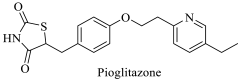
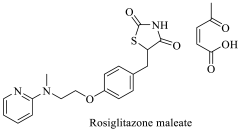
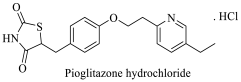
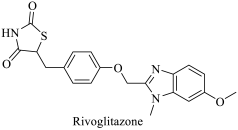
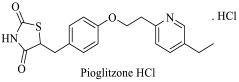
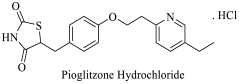
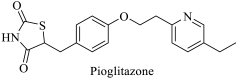
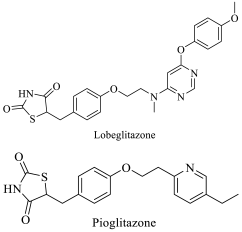
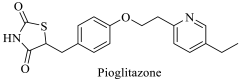
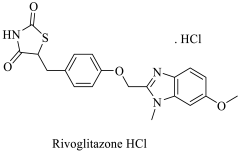
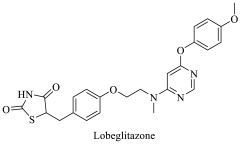
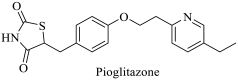
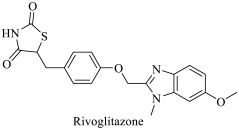
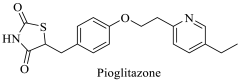
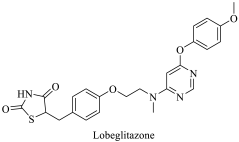
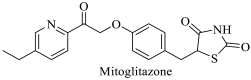
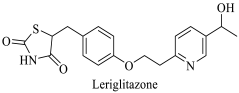
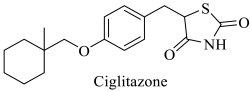
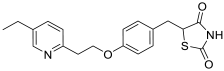
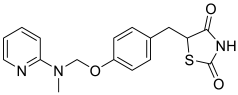
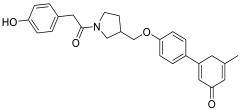
Disclaimer/Publisher’s Note: The statements, opinions and data contained in all publications are solely those of the individual author(s) and contributor(s) and not of MDPI and/or the editor(s). MDPI and/or the editor(s) disclaim responsibility for any injury to people or property resulting from any ideas, methods, instructions or products referred to in the content. |
© 2025 by the authors. Licensee MDPI, Basel, Switzerland. This article is an open access article distributed under the terms and conditions of the Creative Commons Attribution (CC BY) license (https://creativecommons.org/licenses/by/4.0/).