Role of the PhoP/PhoQ Two-Component Regulatory System in Biofilm Formation in Acid-Adapted Salmonella typhimurium

 ,
,
Abstract
1. Introduction
2. Materials and Methods
2.1. Bacterial Strains Activation and Preparation of Adapted and Non-Adapted Strains
2.2. Acid Resistance
2.3. Biofilm Formation Assay
2.4. Biofilm Cell Metabolic Activity
2.5. Cell Motility
2.6. Extracellular Polymeric Substances
2.7. CLSE & SEM Analyses
2.8. Transcriptomic Analysis
2.8.1. RNA Extraction
2.8.2. RNA-Seq Analysis
2.9. Quantitative Real-Time Polymerase Chain Reaction (qRT-PCR)
2.10. Statistical Analysis
3. Results
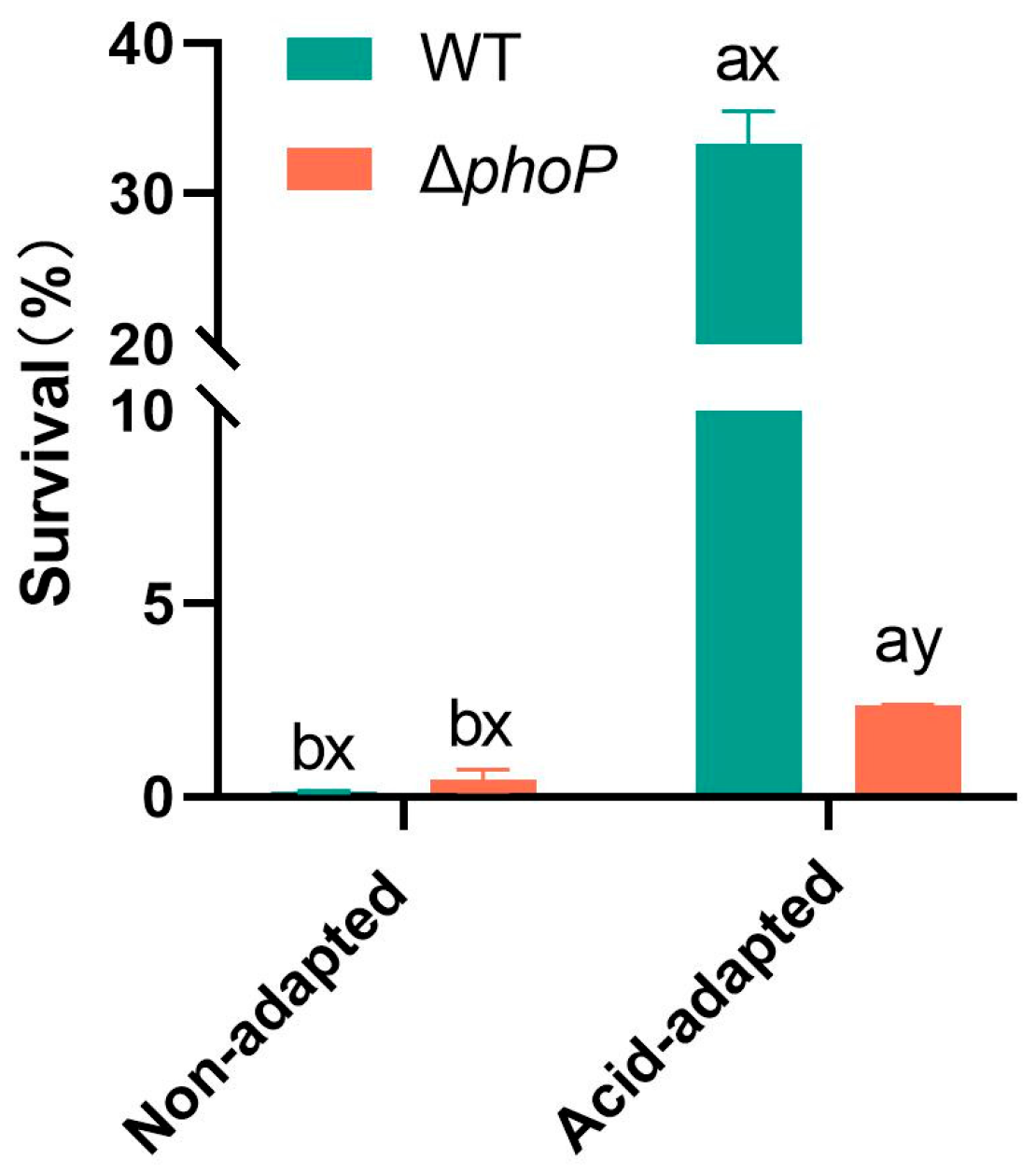
3.1. Acid Tolerance Response
3.2. Biofilm Formation Ability
3.3. Biofilm Metabolic Activity
3.4. Motility
3.5. Extracellular Polymeric Substance
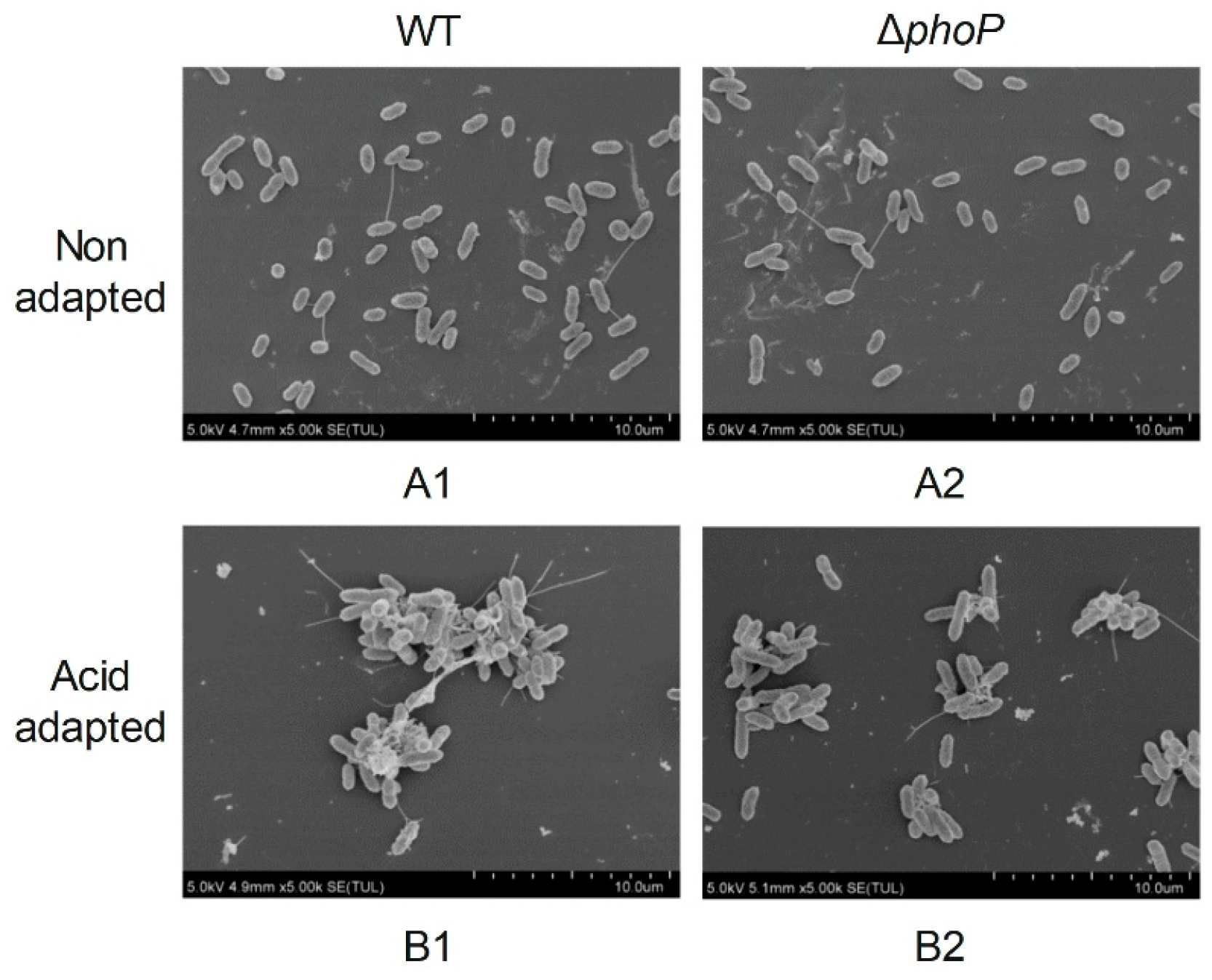
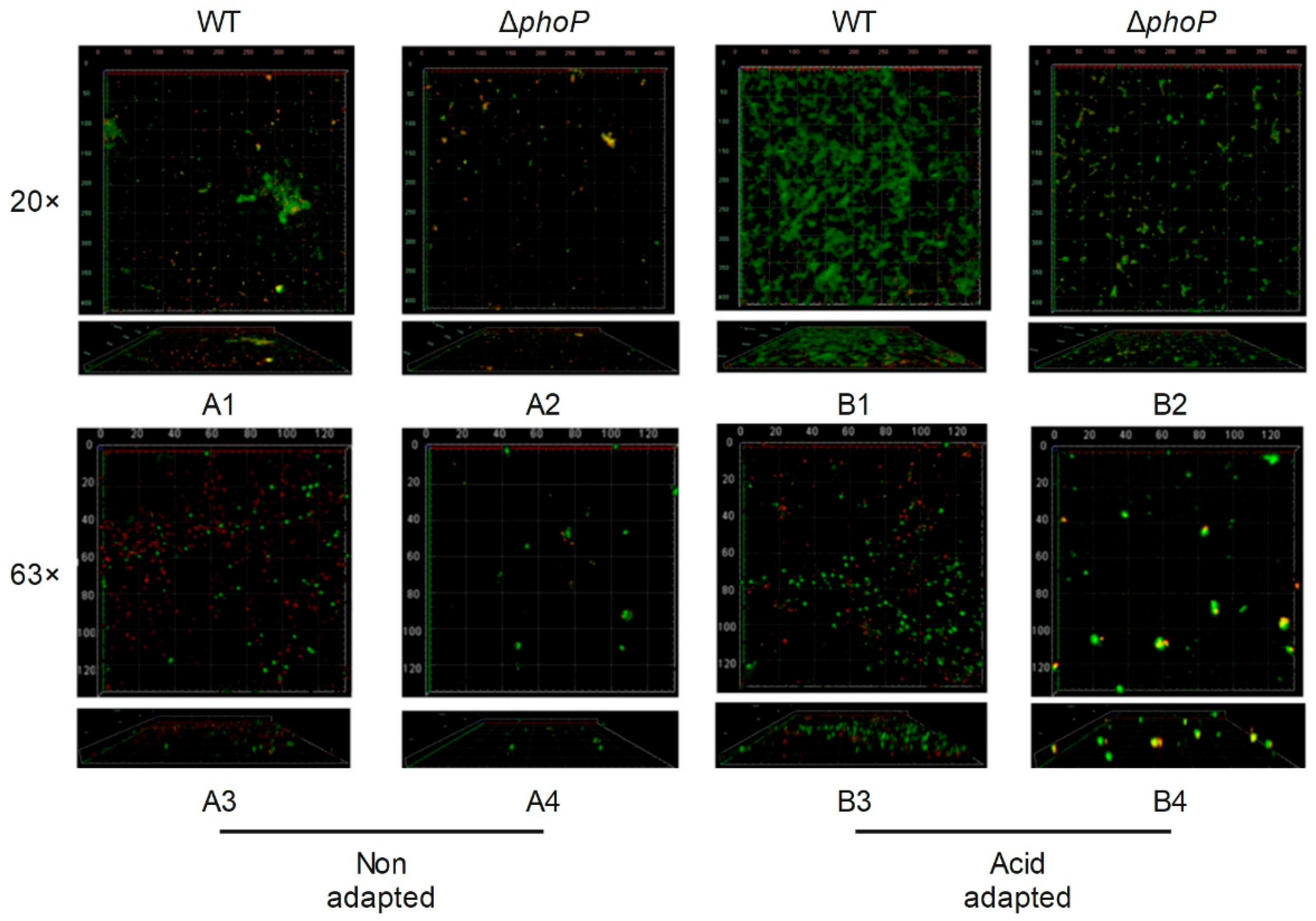
3.6. CLSM & SEM
3.7. RNA-Seq
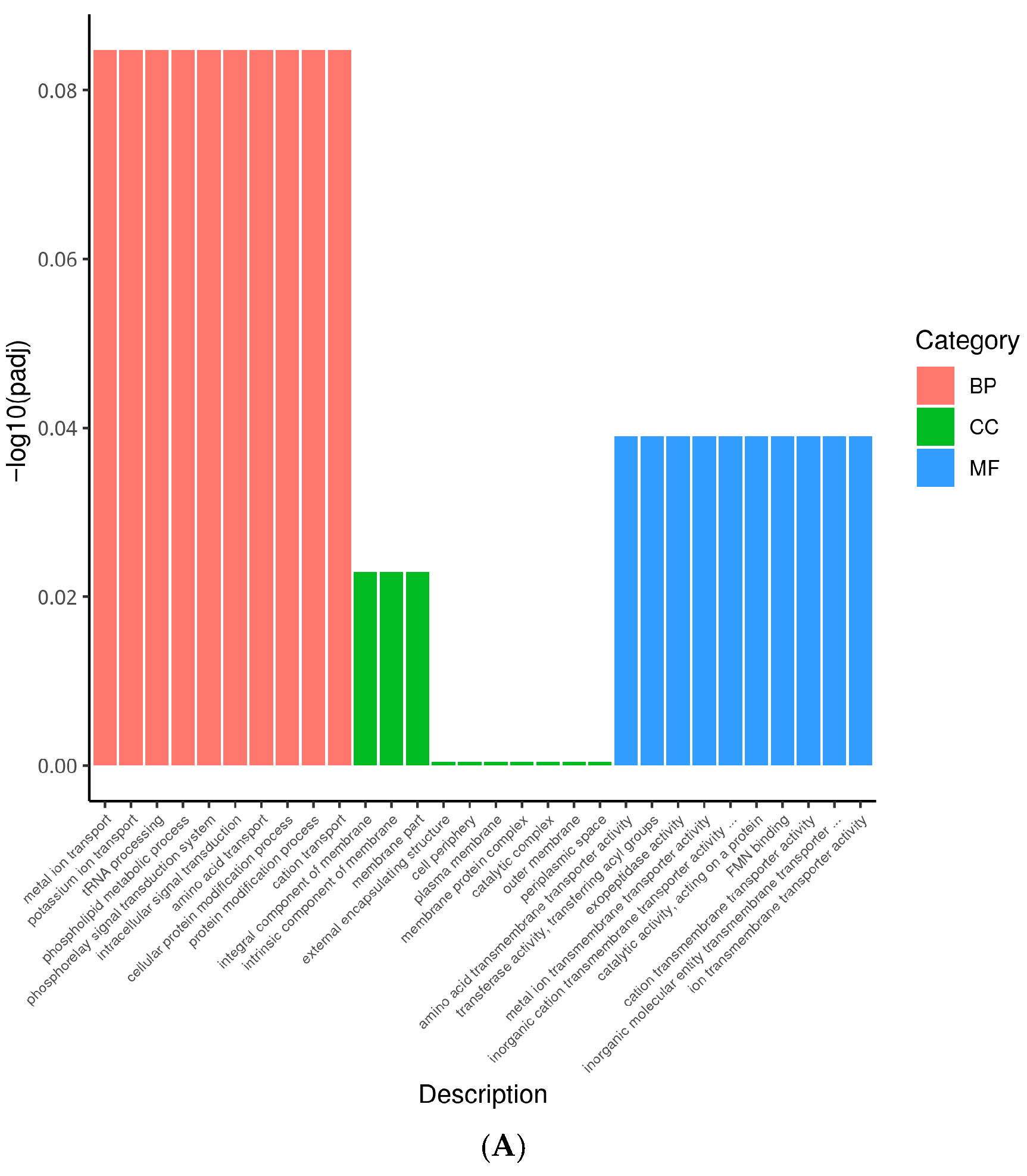
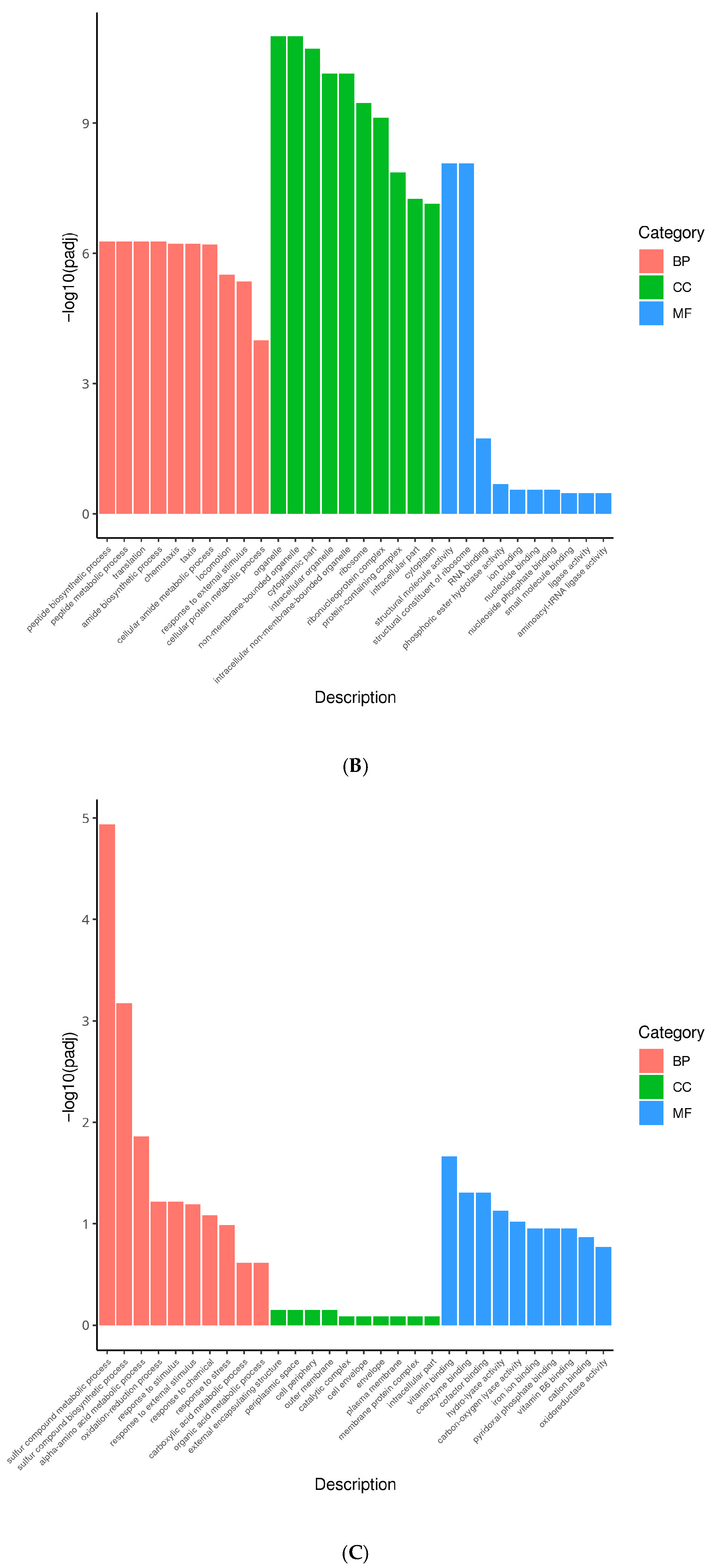
3.7.1. GO Enrichment Analysis
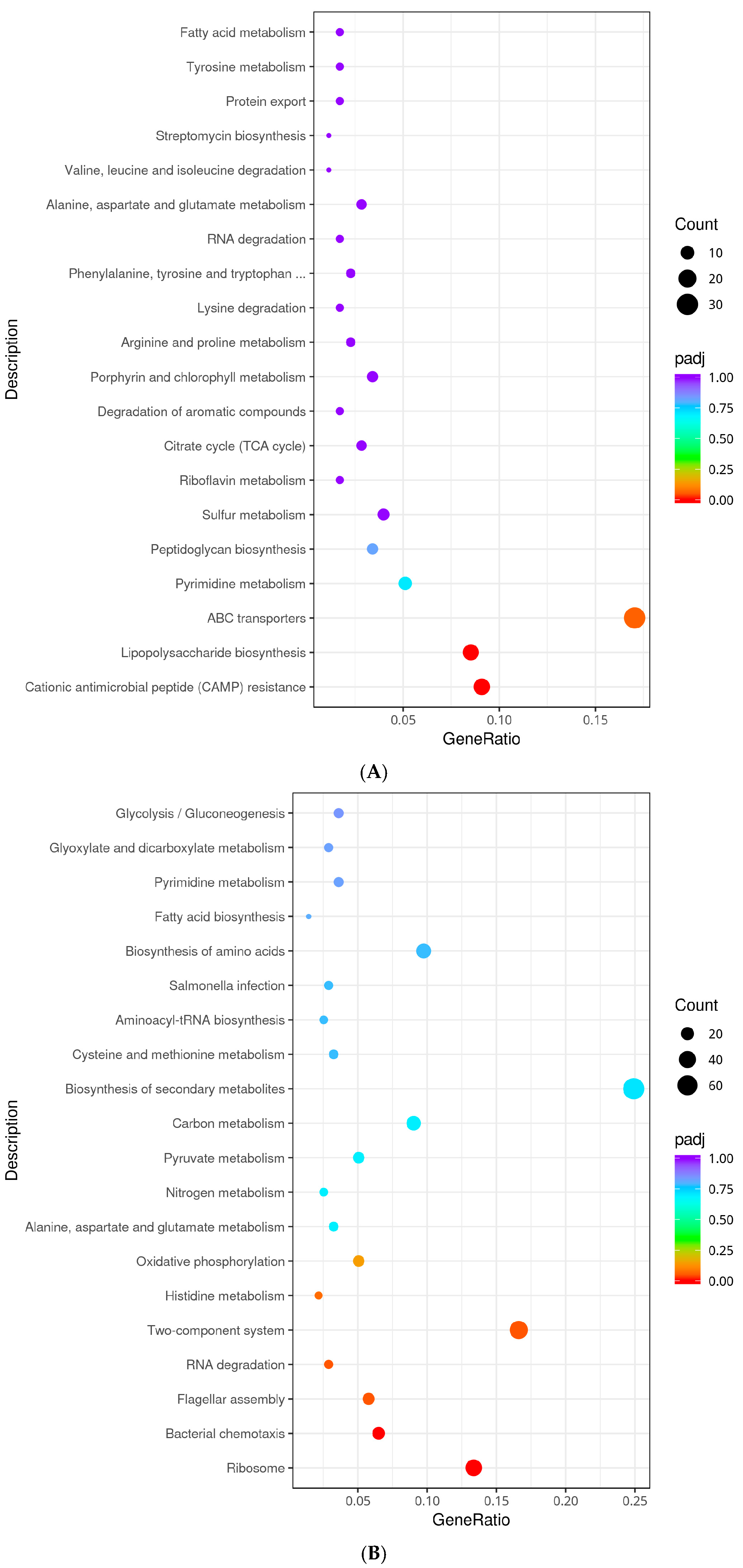
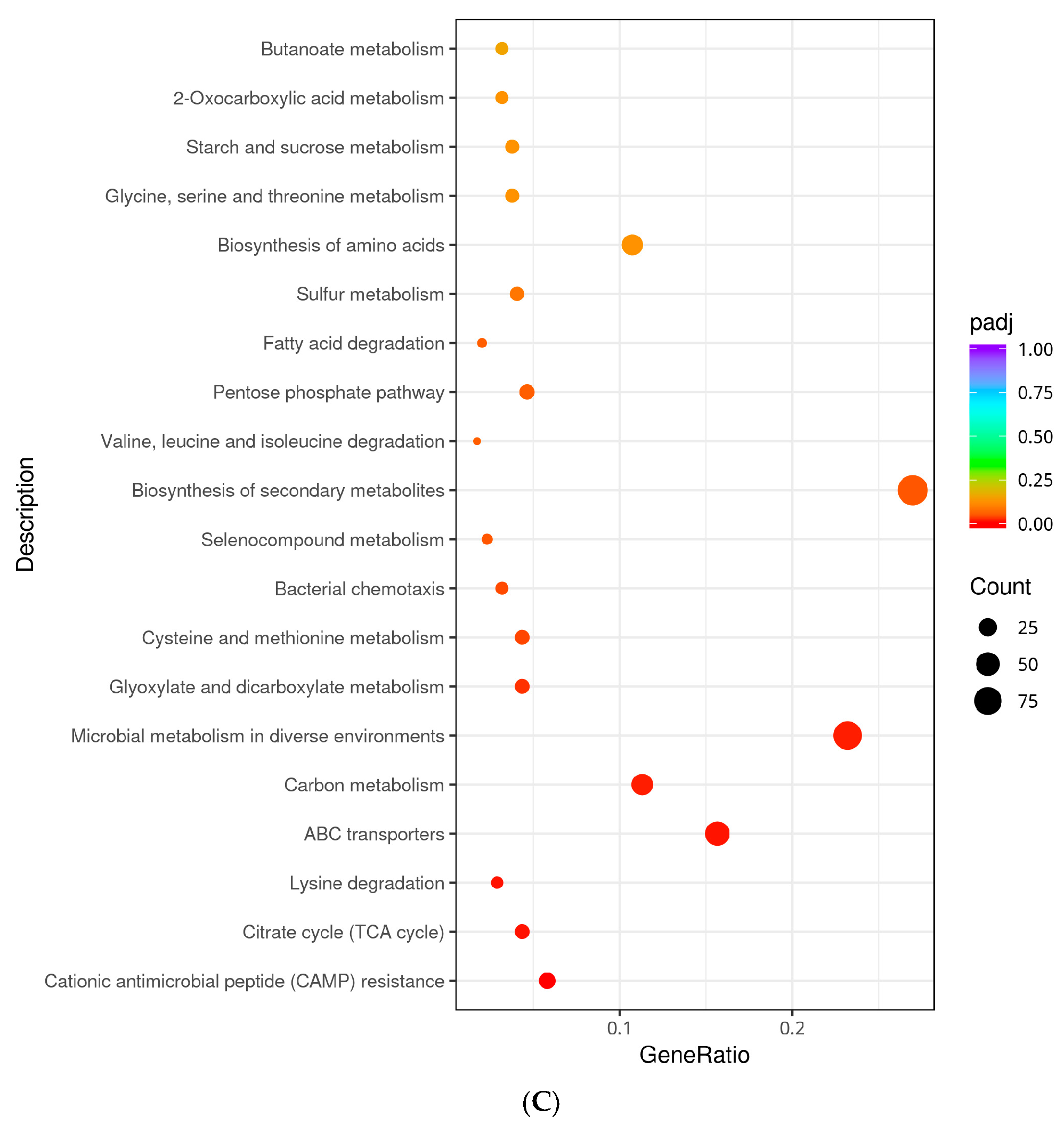
3.7.2. KEGG Enrichment Analysis
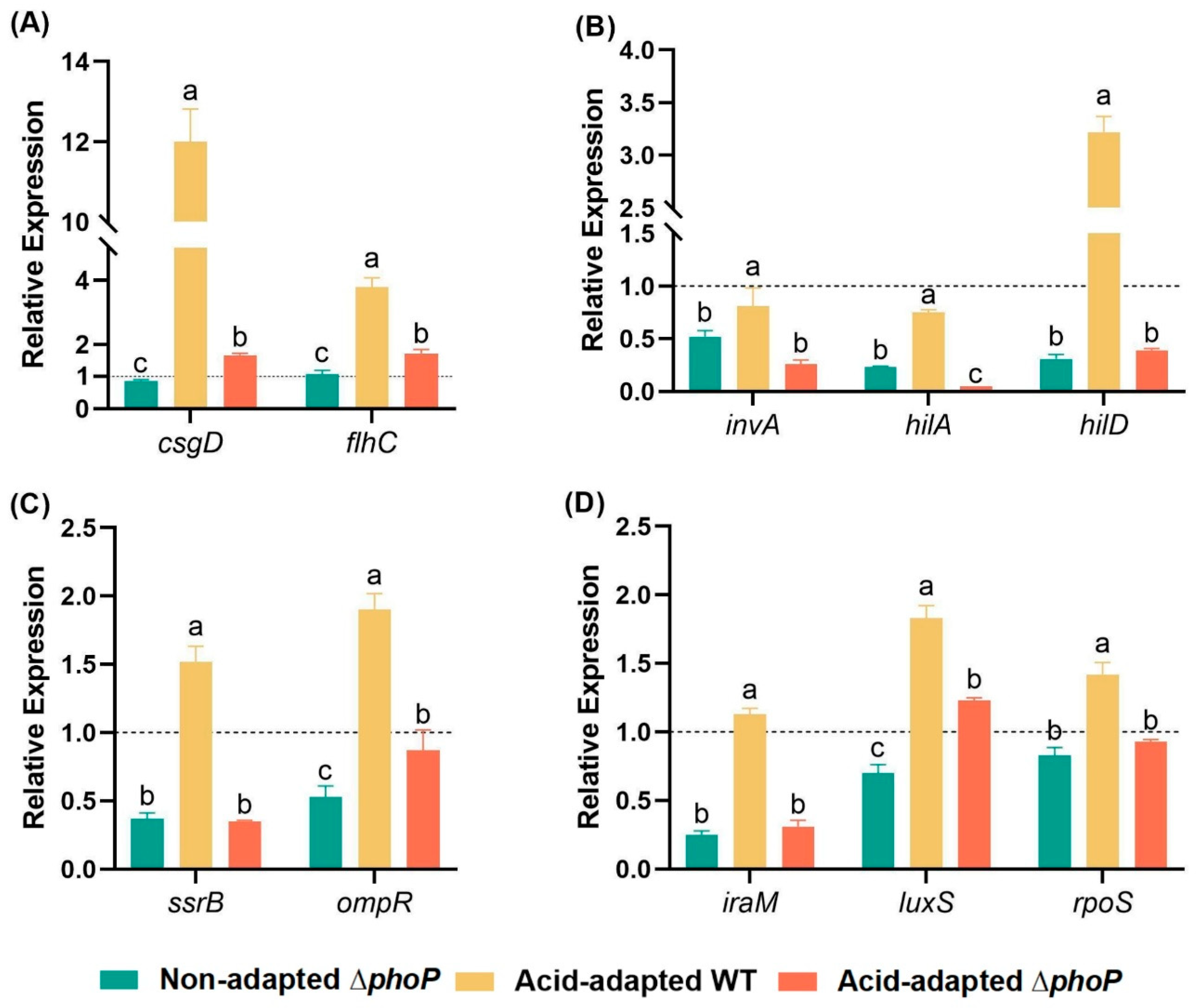
3.8. qRT-PCR
4. Discussion
5. Conclusions
Author Contributions
Funding
Institutional Review Board Statement
Informed Consent Statement
Data Availability Statement
Acknowledgments
Conflicts of Interest
Abbreviations
| CFU | Colony Forming Unit |
| BCA | Bicin-choninic Acid |
| ATR-FTIR | Attenuated Total Reflectance Fourier-Transform Infrared Spectroscopy |
Appendix A


| Gene | Primer | Sequence of Primers (5′–3′) |
|---|---|---|
| 16S rRNA | 16SrRNA-F | CAGCCACACTGGAACTGAGA |
| 16SrRNA-R | GTGCTTCTTCTGCGGGTAAC | |
| rpoS | rpoS-F | GTTGGACGCGACTCAGCTTT |
| rpoS-R | TTTTACCACCAGACGCAGGTT | |
| invA | invA-F | CCATCAGCAAGGTAGCAGTCA |
| invA-R | GTTCCGCAACACATAGCCAAG | |
| hilA | hilA-F | ACTCATACATTGGCGATACTTCCT |
| hilA-R | GGCAGTTCTTCGTAATGGTCAC | |
| hilD | hilD-F | CCTGGGATGTTGGTGCTCAAA |
| hilD-R | AAGTCGTTGCGTCGGTATCTC | |
| ompR | ompR-F | TCTGCTGACCCGTGAATCTTT |
| ompR-R | CTTCGCCGTGACCATAATGATC | |
| iraM | iraM-F | GGAATGGAAGGTCGTTGATACAGT |
| iraM-R | GGATGATAATGCTACCTGGAGGC | |
| csgD | csgD-F | TTCTGCGTGGCGAATGCTATT |
| csgD-R | CGATGAGTGAGTAATGCGGACT | |
| luxS | luxS-F | GATGGCGGATGTGCTGAAAGT |
| luxS-R | CTGAGCGAGTGCATCTGATACG | |
| flhC | flhC-F | TAGTTTATGCCAGCCGCCATC |
| flhC-R | GCCTGTTCGATCTGTTCATCCA | |
| ssrB | ssrB-F | CCGCAGGTGCTAATGGCTAT |
| ssrB-R | TTGGGTCAATGTAACGCTTGTT |
References
- European Food Safety Authority (EFSA). The European Union one health 2022 zoonoses report. EFSA J. 2023, 21, e8442. [Google Scholar]
- Canning, M.; Birhane, M.G.; Dewey-Mattia, D.; Lawinger, H.; Cote, A.; Gieraltowski, L.; Schwensohn, C.; Tagg, K.A.; Francois Watkins, L.K.; Park Robyn, M.; et al. Salmonella outbreaks linked to beef, United States, 2012–2019. J. Food Prot. 2023, 86, 100071. [Google Scholar] [CrossRef] [PubMed]
- Dong, P.; Zhu, L.; Mao, Y.; Liang, R.; Niu, L.; Zhang, Y.; Li, K.; Luo, X. Prevalence and profile of Salmonella from samples along the production line in Chinese beef processing plants. Food Control 2014, 38, 54–60. [Google Scholar] [CrossRef]
- Buncic, S.; Nychas, G.J.; Lee, M.R.; Koutsoumanis, K.; Hébraud, M.; Desvaux, M.; Antic, D. Microbial pathogen control in the beef chain: Recent research advances. Meat Sci. 2014, 97, 288–297. [Google Scholar] [CrossRef] [PubMed]
- Matarneh, S.K.; Scheffler, T.L.; Gerrard, D.E. Lawrie’s Meat Science, 9th ed.; Woodhead Publishing: Duxford, UK, 2023; pp. 159–194. [Google Scholar]
- Pradhan, D.; Negi, V.D. Stress-induced adaptations in Salmonella: A ground for shaping its Pathogenesis. Microbiol. Res. 2019, 229, 126311. [Google Scholar] [CrossRef] [PubMed]
- Liu, J.; Zhai, L.; Lu, W.; Lu, Z.; Bie, X. Amino acid decarboxylase-dependent acid tolerance, selected phenotypic, and virulence gene expression responses of Salmonella enterica serovar Heidelberg. Food Res. Int. 2017, 92, 33–39. [Google Scholar] [CrossRef]
- Gavriil, A.; Giannenas, I.; Skandamis, P.N. A current insight into Salmonella’s inducible acid resistance. Crit. Rev. Food Sci. Nutr. 2025, 65, 3835–3855. [Google Scholar] [CrossRef]
- Bai, X.; Nakatsu, C.H.; Bhunia, A.K. Bacterial biofilms and their implications in pathogenesis and food safety. Foods 2021, 10, 2117. [Google Scholar] [CrossRef]
- O’Leary, D.; McCabe, E.M.; McCusker, M.P.; Martins, M.; Fanning, S.; Duffy, G. Acid environments affect biofilm formation and gene expression in isolates of Salmonella enterica Typhimurium DT104. Int. J. Food Microbiol. 2015, 206, 7–16. [Google Scholar] [CrossRef]
- Counihan, K.L.; Tilman, S.; Uknalis, J.; Mukhopadhyay, S.; Niemira, B.A.; Bermudez-Aguirre, D. Attachment and Biofilm Formation of Eight Different Salmonella Serotypes on Three Food-Contact Surfaces at Different Temperatures. Microorganisms 2025, 13, 1446. [Google Scholar] [CrossRef]
- Li, Z.; Zhang, M.; Lei, G.; Lu, X.; Yang, X.; Kan, B. A single base change in the csgD promoter resulted in enhanced biofilm in swine-derived Salmonella typhimurium. Microorganisms 2024, 12, 1258. [Google Scholar] [CrossRef]
- Zhao, X.; Zhao, F.; Wang, J.; Zhong, N. Biofilm formation and control strategies of foodborne pathogens: Food safety perspectives. RSC Adv. 2017, 7, 36670–36683. [Google Scholar] [CrossRef]
- Yin, W.; Wang, Y.; Liu, L.; He, J. Biofilms: The microbial “protective clothing” in extreme environments. Int. J. Mol. Sci. 2019, 20, 3423. [Google Scholar] [CrossRef] [PubMed]
- Ahsan, R.; Kifayat, S.; Pooniya, K.K.; Kularia, S.; Adimalla, B.S.; Sanapalli, B.K.R.; Sigalapalli, D.K. Bacterial histidine kinase and the development of its inhibitors in the 21st century. Antibiotics 2024, 13, 576. [Google Scholar] [CrossRef] [PubMed]
- Liu, C.; Sun, D.; Zhu, J.; Liu, W. Two-component signal transduction systems: A major strategy for connecting input stimuli to biofilm formation. Front. Microbiol. 2019, 9, 3279. [Google Scholar] [CrossRef]
- Mao, M.; He, L.; Yan, Q. An updated overview on the bacterial PhoP/PhoQ two-component signal transduction system. Front. Cell. Infect. Microbiol. 2025, 15, 1509037. [Google Scholar] [CrossRef]
- Bearson, B.L.; Wilson, L.; Foster, J.W. A low pH-inducible, PhoPQ-dependent acid tolerance responseprotects Salmonella typhimurium against inorganic acid stress. J. Bacteriol. 1998, 180, 2409–2417. [Google Scholar] [CrossRef]
- Li, J.; Liu, S.; Su, Y.; Ren, J.; Sang, Y.; Ni, J.; Lu, J.; Yao, Y.F. Acetylation of PhoP K88 is involved in regulating Salmonella virulence. Infect. Immun. 2021, 89, e00588-20. [Google Scholar] [CrossRef]
- Velkinburgh, J.C.; Gunn, J.S. PhoP-PhoQ-regulated loci are required for enhanced bile resistance in Salmonella spp. Infect. Immun. 1999, 67, 1614–1622. [Google Scholar]
- Manjurul Haque, M.; Hirata, H.; Tsuyumu, S. Role of PhoP–PhoQ two-component system in pellicle formation, virulence and survival in harsh environments of Dickeya dadantii 3937. J. Gen. Plant Pathol. 2012, 78, 176–189. [Google Scholar] [CrossRef]
- Chambers, J.R.; Sauer, K. The MerR-like regulator BrlR impairs Pseudomonas aeruginosa biofilm tolerance to colistin by repressing PhoPQ. J. Bacteriol. 2013, 195, 4678–4688. [Google Scholar] [CrossRef] [PubMed]
- Li, Q.; Yin, L.; Xue, M.; Wang, Z.; Song, X.; Shao, Y.; Liu, H.; Tu, J.; Qi, K. The transcriptional regulator PhoP mediates the tolC molecular mechanism on APEC biofilm formation and pathogenicity. Avian Pathol. 2020, 49, 211–220. [Google Scholar] [CrossRef] [PubMed]
- Ma, Y.; Zhang, Y.; Shan, Z.; Wang, X.; Xia, X. Involvement of PhoP/PhoQ two-component system in biofilm formation in Cronobacter sakazakii. Food Control 2022, 133, 108621. [Google Scholar] [CrossRef]
- Liu, L.; Fang, N.; Sun, Y.; Yang, H.; Zhang, Y.; Han, Y.; Zhou, D.; Yang, R. Transcriptional regulation of the waaAE-coaD operon by PhoP and RcsAB in Yersinia pestis biovar Microtus. Protein Cell 2014, 5, 940–944. [Google Scholar] [CrossRef]
- Perez, J.C.; Shin, D.; Zwir, I.; Latifi, T.; Hadley, T.J.; Groisman, E.A. Evolution of a bacterial regulon controlling virulence and Mg2+ homeostasis. PLoS Genet. 2009, 5, e1000428. [Google Scholar] [CrossRef]
- Gao, X.; Han, J.; Zhu, L.; Nychas, G.J.E.; Mao, Y.; Yang, X.; Dong, P. The effect of the PhoP/PhoQ system on the regulation of multi-stress adaptation induced by acid stress in Salmonella Typhimurium. Foods 2024, 13, 1533. [Google Scholar] [CrossRef]
- Lang, C.; Zhang, Y.; Mao, Y.; Yang, X.; Wang, X.; Luo, X.; Dong, P.; Zhu, L. Acid tolerance response of Salmonella during simulated chilled beef storage and its regulatory mechanism based on the PhoP/Q system. Food Microbiol. 2021, 95, 103716. [Google Scholar] [CrossRef]
- Gu, D.; Xue, H.; Yuan, X.; Yu, J.; Xu, X.; Huang, Y.; Jiao, X. Genome-wide identification of genes involved in acid stress resistance of Salmonella Derby. Genes 2021, 12, 476. [Google Scholar] [CrossRef]
- Yin, B.; Zhu, L.; Zhang, Y.; Dong, P.; Mao, Y.; Liang, R.; Niu, L.; Xin, L. The characterization of biofilm formation and detection of biofilm-related genes in Salmonella isolated from beef processing plants. Foodborne Pathog. Dis. 2018, 15, 660–667. [Google Scholar] [CrossRef]
- Liu, Y.; Wu, L.; Han, J.; Dong, P.; Luo, X.; Zhang, Y.; Zhu, L. Inhibition of biofilm formation and related gene expression of Listeria monocytogenes in response to four natural antimicrobial compounds and sodium hypochlorite. Front. Microbiol. 2020, 11, 617473. [Google Scholar] [CrossRef]
- Yang, H.; Dong, P.; Huo, S.; Nychas, G.-J.E.; Luo, X.; Zhu, L.; Mao, Y.; Han, G.; Liu, M.; Liu, Y.; et al. Deciphering the inhibitory mechanisms of cinnamaldehyde on biofilm formation of Listeria monocytogenes and implement these strategies to control its transfer to beef surfaces. Food Res. Int. 2025, 204, 115946. [Google Scholar] [CrossRef] [PubMed]
- Zhuang, Z.; Yang, G.; Mai, Q.; Guo, J.; Liu, X.; Zhuang, L. Physiological potential of extracellular polysaccharide in promoting Geobacter biofilm formation and extracellular electron transfer. Sci. Total Environ. 2020, 741, 140365. [Google Scholar] [CrossRef] [PubMed]
- Kang, J.; Li, Q.; Liu, L.; Jin, W.; Wang, J.; Sun, Y. The specific effect of gallic acid on Escherichia coli biofilm formation by regulating pgaABCD genes expression. Appl. Microbiol. Biotechnol. 2018, 102, 1837–1846. [Google Scholar] [CrossRef] [PubMed]
- Prost, L.R.; Daley, M.E.; Le Sage, V.; Bader, M.W.; Le Moual, H.; Klevit, R.E.; Miller, S.I. Activation of the bacterial sensor kinase PhoQ by acidic pH. Mol. Cell 2007, 26, 165–174. [Google Scholar] [CrossRef]
- Gupta, P.; Sarkar, S.; Das, B.; Bhattacharjee, S.; Tribedi, P. Biofilm, pathogenesis and prevention--a journey to break the wall: A review. Arch. Microbiol. 2016, 198, 1–15. [Google Scholar] [CrossRef]
- Nahar, S.; Mizan, M.F.R.; Ha, A.J.W.; Ha, S.D. Advances and future prospects of enzyme-based biofilm prevention approaches in the food industry. Compr. Rev. Food Sci. Food Saf. 2018, 17, 1484–1502. [Google Scholar] [CrossRef]
- Hahn, M.M.; González, J.F.; Gunn, J.S. Salmonella biofilms tolerate hydrogen peroxide by a combination of extracellular polymeric substance barrier function and catalase enzymes. Front. Cell. Infect. Microbiol. 2021, 11, 683081. [Google Scholar] [CrossRef]
- Liu, Y.; Wu, H.; Sun, Z.; Xu, X.; Liu, F. Contamination and biofilm formation of foodborne and opportunistic pathogens in yellow-feathered chicken carcass. Foodborne Pathog. Dis. 2021, 18, 210–218. [Google Scholar] [CrossRef]
- Tsuneda, S.; Aikawa, H.; Hayashi, H.; Yuasa, A.; Hirata, A. Extracellular polymeric substances responsible for bacterial adhesion onto solid surface. FEMS Microbiol. Lett. 2003, 223, 287–292. [Google Scholar] [CrossRef]
- Ma, Y.; Zhang, Y.; Chen, K.; Zhang, L.; Xia, X. The role of PhoP/PhoQ two component system in regulating stress adaptation in Cronobacter sakazakii. Food Microbiol. 2021, 100, 103851. [Google Scholar] [CrossRef]
- Gunn, J.S.; Belden, W.J.; Miller, S.I. Identification of PhoP-PhoQ activated genes within a duplicated region of the Salmonella typhimurium chromosome. Microb. Pathog. 1998, 25, 77–90. [Google Scholar] [CrossRef] [PubMed]
- Guo, L.; Lim, K.B.; Gunn, J.S.; Bainbridge, B.; Darveau, R.P.; Hackett, M.; Miller, S.I. Regulation of lipid A modifications by Salmonella typhimurium virulence genes phoP-phoQ. Science 1997, 276, 250–253. [Google Scholar] [CrossRef] [PubMed]
- Tran, T.K.; Han, Q.Q.; Shi, Y.; Guo, L. A comparative proteomic analysis of Salmonella typhimurium under the regulation of the RstA/RstB and PhoP/PhoQ systems. Biochim. Biophys. Acta 2016, 1864, 1686–1695. [Google Scholar] [CrossRef] [PubMed]
- Xu, J.; Guo, L.; Zhao, N.; Meng, X.; Zhang, J.; Wang, T.; Wei, X.; Fan, M. Response mechanisms to acid stress of acid-resistant bacteria and biotechnological applications in the food industry. Crit. Rev. Biotechnol. 2023, 43, 258–274. [Google Scholar] [CrossRef]
- Bai, H.; Zhou, D.; Zhang, X.; Cao, Y.; Xiao, X.; Zhang, Y.; Yu, Y. The responses of Salmonella enterica serovar Typhimurium to vanillin in apple juice through global transcriptomics. Int. J. Food Microbiol. 2021, 347, 109189. [Google Scholar] [CrossRef]
- Huang, T.P.; Somers, E.B.; Wong, A.C. Differential biofilm formation and motility associated with lipopolysaccharide/exopolysaccharide-coupled biosynthetic genes in Stenotrophomonas maltophilia. J. Bacteriol. 2006, 188, 3116–3120. [Google Scholar] [CrossRef]
- Martynowycz, M.W.; Rice, A.; Andreev, K.; Nobre, T.M.; Kuzmenko, I.; Wereszczynski, J.; Gidalevitz, D. Salmonella membrane structural remodeling increases resistance to antimicrobial peptide LL-37. ACS Infect. Dis. 2019, 5, 1214–1222. [Google Scholar] [CrossRef]
- Winfield, M.D.; Groisman, E.A. Phenotypic differences between Salmonella and Escherichia coli resulting from the disparate regulation of homologous genes. Proc. Natl. Acad. Sci. USA 2004, 101, 17162–17167. [Google Scholar] [CrossRef]
- Gunn, J.S.; Ryan, S.S.; Van Velkinburgh, J.C.; Ernst, R.K.; Miller, S.I. Genetic and functional analysis of a PmrA-PmrB-regulated locus necessary for lipopolysaccharide modification, antimicrobial peptide resistance, and oral virulence of Salmonella enterica serovar typhimurium. Infect. Immun. 2000, 68, 6139–6146. [Google Scholar] [CrossRef]
- Zhou, Z.; Ribeiro, A.A.; Lin, S.; Cotter, R.J.; Miller, S.I.; Raetz, C.R. Lipid A modifications in polymyxin-resistant Salmonella typhimurium: PMRA-dependent 4-amino-4-deoxy-L-arabinose, and phosphoethanolamine incorporation. J. Biol. Chem. 2001, 276, 43111–43121. [Google Scholar] [CrossRef]
- Hua, J.; Jia, X.; Zhang, L.; Li, Y. The characterization of two-component system PmrA/PmrB in Cronobacter sakazakii. Front. Microbiol. 2000, 11, 903. [Google Scholar] [CrossRef] [PubMed]
- Tamayo, R.; Prouty, A.M.; Gunn, J.S. Identification and functional analysis of Salmonella enterica serovar Typhimurium PmrA-regulated genes. FEMS Immunol. Med. Microbiol. 2005, 43, 249–258. [Google Scholar] [CrossRef] [PubMed]
- Yu, L.; Wang, H.; Han, X.; Li, W.; Xue, M.; Qi, K.; Xue, T. The two-component system, BasSR, is involved in the regulation of biofilm and virulence in avian pathogenic Escherichia coli. Avian Pathol. 2020, 49, 532–546. [Google Scholar] [CrossRef] [PubMed]
- Martinez-Garcia, E.; Nikel, P.I.; Chavarria, M.; de Lorenzo, V. The metabolic cost of flagellar motion in Pseudomonas putida KT2440. Environ. Microbiol. 2014, 16, 291–303. [Google Scholar] [CrossRef]
- Chen, S.; Zhou, Q.; Tan, X.; Li, Y.; Ren, G.; Wang, X. The global response of Cronobacter sakazakii cells to amino acid deficiency. Front. Microbiol. 2018, 9, 1875. [Google Scholar] [CrossRef]
- Petrova, O.E.; Sauer, K. Escaping the biofilm in more than one way: Desorption, detachment or dispersion. Curr. Opin. Microbiol. 2016, 30, 67–78. [Google Scholar] [CrossRef]
- Fan, Y.; Qiao, J.; Lu, Z.; Fen, Z.; Tao, Y.; Lv, F.; Zhao, H.; Zhang, C.; Bie, X. Influence of different factors on biofilm formation of Listeria monocytogenes and the regulation of cheY gene. Food Res. Int. 2020, 137, 109405. [Google Scholar] [CrossRef]
- Hengge-Aronis, R. Signal transduction and regulatory mechanisms involved in control of the sigma(S) (RpoS) subunit of RNA polymerase. Microbiol. Mol. Biol. Rev. 2002, 66, 373–395. [Google Scholar] [CrossRef]
- Jesudhasan, P.R.; Cepeda, M.L.; Widmer, K.; Dowd, S.E.; Soni, K.A.; Hume, M.E.; Zhu, J.; Pillai, S.D. Transcriptome analysis of genes controlled by luxS/Autoinducer-2 in Salmonella enterica serovar Typhimurium. Foodborne Pathog. Dis. 2010, 7, 399–410. [Google Scholar] [CrossRef]
- Chorianopoulos, N.G.; Giaouris, E.D.; Kourkoutas, Y.; Nychas, G.J.E. Inhibition of the early stage of Salmonella enterica serovar Enteritidis biofilm development on stainless steel by cell-free supernatant of a Hafnia alvei culture. Appl. Environ. Microb. 2010, 76, 2018–2022. [Google Scholar] [CrossRef]
- Yan, Q.; Gao, W.; Wu, X.G.; Zhang, L.Q. Regulation of the PcoI/PcoR quorum-sensing system in Pseudomonas fluorescens 2P24 by the PhoP/PhoQ two-component system. Microbiology 2009, 155, 124–133. [Google Scholar] [CrossRef]


| Day (d) | WT (OD570 nm) | ∆phoP (OD570 nm) | ||
|---|---|---|---|---|
| Non-Adapted | Acid-Adapted | Non-Adapted | Acid-Adapted | |
| 1 | 0.15 ± 0.00 emx | 0.16 ± 0.01 fmx | 0.17 ± 0.00 emx | 0.17 ± 0.01 fmx |
| 2 | 0.22 ± 0.03 emx | 0.19 ± 0.00 fmx | 0.21 ± 0.02 demx | 0.26 ± 0.05 fmx |
| 3 | 0.40 ± 0.04 dmx | 0.42 ± 0.02 emx | 0.33 ± 0.01 cdmx | 0.43 ± 0.00 emx |
| 4 | 0.42 ± 0.03 dnx | 1.36 ± 0.04 dmx | 0.38 ± 0.02 cnx | 0.55 ± 0.00 dmy |
| 5 | 1.20 ± 0.05 cnx | 1.66 ± 0.05 cmx | 0.97 ± 0.03 bmy | 1.06 ± 0.04 cmy |
| 6 | 1.96 ± 0.04 bnx | 2.61 ± 0.08 bmx | 1.96 ± 0.02 amx | 1.87 ± 0.05 bmy |
| 7 | 2.14 ± 0.02 anx | 3.10 ± 0.10 amx | 2.02 ± 0.04 amx | 2.08 ± 0.11 amy |
| Day (d) | WT (OD450 nm) | ∆phoP (OD450 nm) | ||
|---|---|---|---|---|
| Non-Adapted | Acid-Adapted | Non-Adapted | Acid-Adapted | |
| 3 | 0.30 ± 0.02 bmx | 0.22 ± 0.01 cmx | 0.23 ± 0.07 bmx | 0.21 ± 0.08 cmx |
| 4 | 0.45 ± 0.05 anx | 0.97 ± 0.02 amx | 0.43 ± 0.03 anx | 0.60 ± 0.04 amy |
| 5 | 0.48 ± 0.01 anx | 0.88 ± 0.01 amx | 0.26 ± 0.01 bny | 0.38 ± 0.03 bmy |
| 7 | 0.45 ± 0.02 anx | 0.66 ± 0.06 bmx | 0.27 ± 0.03 bmy | 0.35 ± 0.02 bmy |
| EPS | Time (d) | WT | ∆phoP | ||
|---|---|---|---|---|---|
| Non-Adapted | Acid-Adapted | Non-Adapted | Acid-Adapted | ||
| Extracellular polysaccharides (ug/mL) | 4 | 60.64 ± 6.47 bnx | 141.8 ± 11.8 bmx | 37.32 ± 2.33 any | 77.00 ± 11.7 cmy |
| 5 | 101.8 ± 7.32 anx | 206.65 ± 11.6 amx | 70.92 ± 1.18 any | 114.06 ± 3.35 amy | |
| 7 | 93.14 ± 7.20 cnx | 150.58 ± 13.2 bmx | 80.80 ± 8.56 amx | 90.28 ± 1.28 bmy | |
| Extracellular protein (ug/mL) | 4 | 8.98 ± 1.77 bnx | 26.69 ± 0.94 cmx | 9.89 ± 4.44 bmx | 8.85 ± 3.43 bmy |
| 5 | 12.54 ± 2.07 bnx | 35.97 ± 3.07 bmx | 8.53 ± 2.18 bmx | 13.36 ± 1.32 bmy | |
| 7 | 53.68 ± 4.12 anx | 63.48 ± 4.42 amx | 35.67 ± 4.34 amy | 42.15 ± 2.62 amy | |
Disclaimer/Publisher’s Note: The statements, opinions and data contained in all publications are solely those of the individual author(s) and contributor(s) and not of MDPI and/or the editor(s). MDPI and/or the editor(s) disclaim responsibility for any injury to people or property resulting from any ideas, methods, instructions or products referred to in the content. |
© 2025 by the authors. Licensee MDPI, Basel, Switzerland. This article is an open access article distributed under the terms and conditions of the Creative Commons Attribution (CC BY) license (https://creativecommons.org/licenses/by/4.0/).
Share and Cite
Yang, H.; Jiang, X.; Nychas, G.-J.E.; Yang, K.; Dong, P.; Zhang, Y.; Zhu, L.; Liu, Y. Role of the PhoP/PhoQ Two-Component Regulatory System in Biofilm Formation in Acid-Adapted Salmonella typhimurium. Foods 2025, 14, 4344. https://doi.org/10.3390/foods14244344
Yang H, Jiang X, Nychas G-JE, Yang K, Dong P, Zhang Y, Zhu L, Liu Y. Role of the PhoP/PhoQ Two-Component Regulatory System in Biofilm Formation in Acid-Adapted Salmonella typhimurium. Foods. 2025; 14(24):4344. https://doi.org/10.3390/foods14244344
Chicago/Turabian StyleYang, Huixuan, Xueqing Jiang, George-John E. Nychas, Kehui Yang, Pengcheng Dong, Yimin Zhang, Lixian Zhu, and Yunge Liu. 2025. "Role of the PhoP/PhoQ Two-Component Regulatory System in Biofilm Formation in Acid-Adapted Salmonella typhimurium" Foods 14, no. 24: 4344. https://doi.org/10.3390/foods14244344
APA StyleYang, H., Jiang, X., Nychas, G.-J. E., Yang, K., Dong, P., Zhang, Y., Zhu, L., & Liu, Y. (2025). Role of the PhoP/PhoQ Two-Component Regulatory System in Biofilm Formation in Acid-Adapted Salmonella typhimurium. Foods, 14(24), 4344. https://doi.org/10.3390/foods14244344