Article

Combined Effects of Carrageenan and Konjac Gums on the Physicochemical Properties of a Plant-Based Smoked Salmon Analog


Department of Agronomy, Biotechnology and Food, Institute for Sustainability & Food Chain Innovation—ISFOOD, Universidad Pública de Navarra (UPNA), Campus de Arrosadia s/n, 31006 Pamplona, Navarra, Spain
*
Author to whom correspondence should be addressed.
Foods 2025, 14(21), 3793; https://doi.org/10.3390/foods14213793
Submission received: 29 September 2025 / Revised: 31 October 2025 / Accepted: 3 November 2025 / Published: 5 November 2025
(This article belongs to the Section Plant Foods)

Abstract

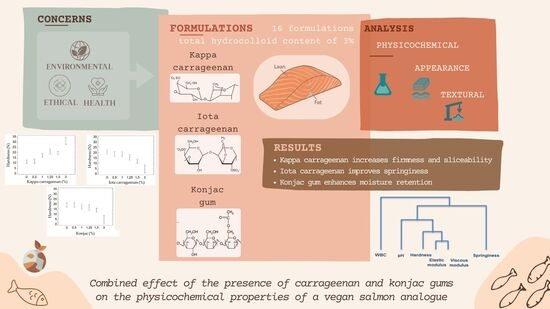
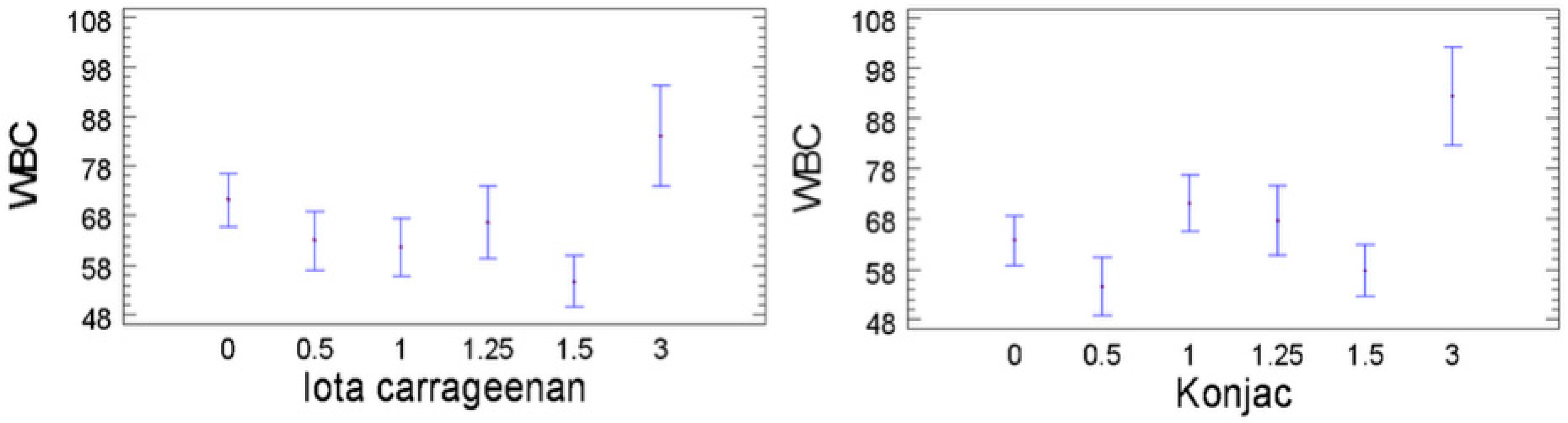
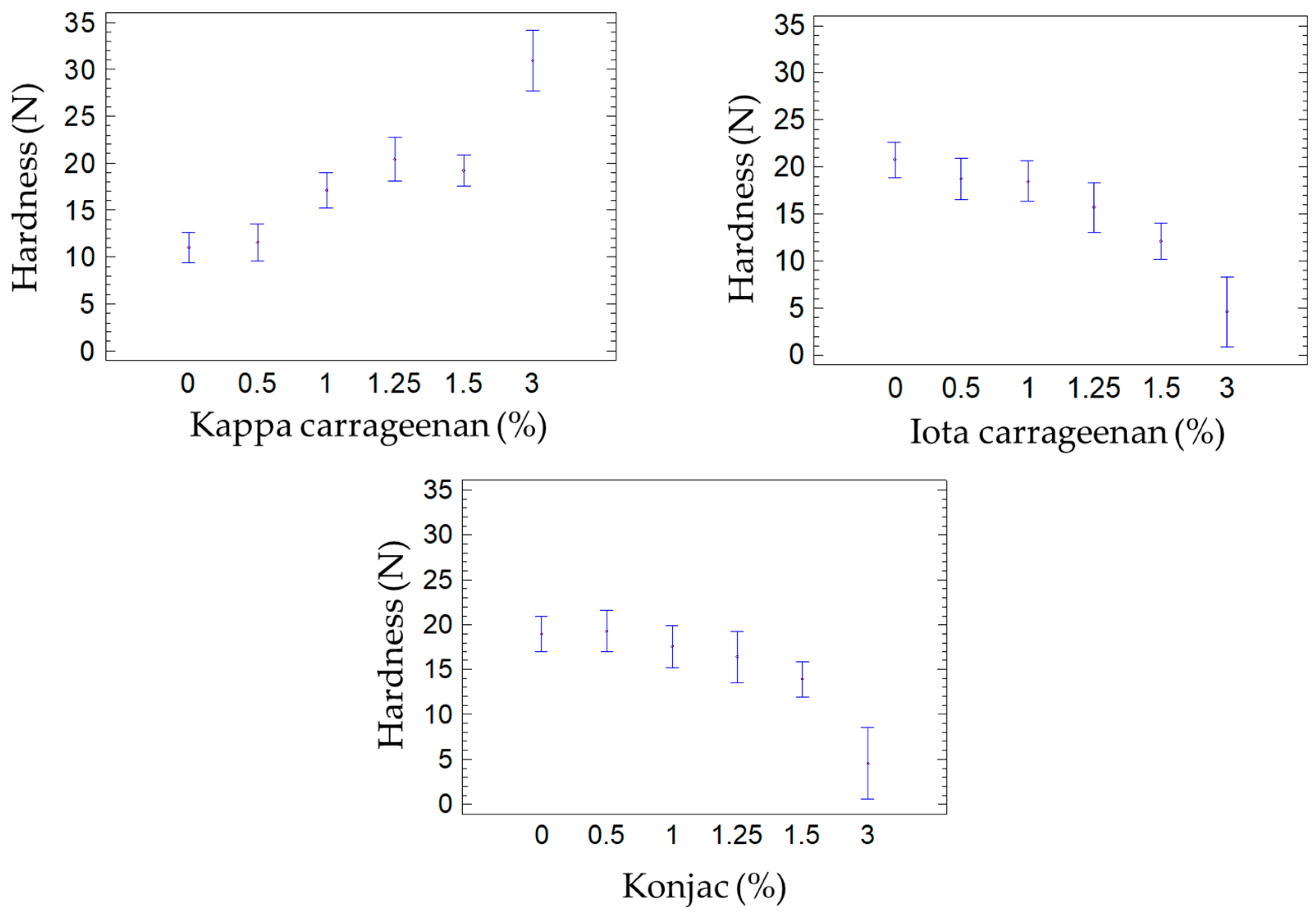
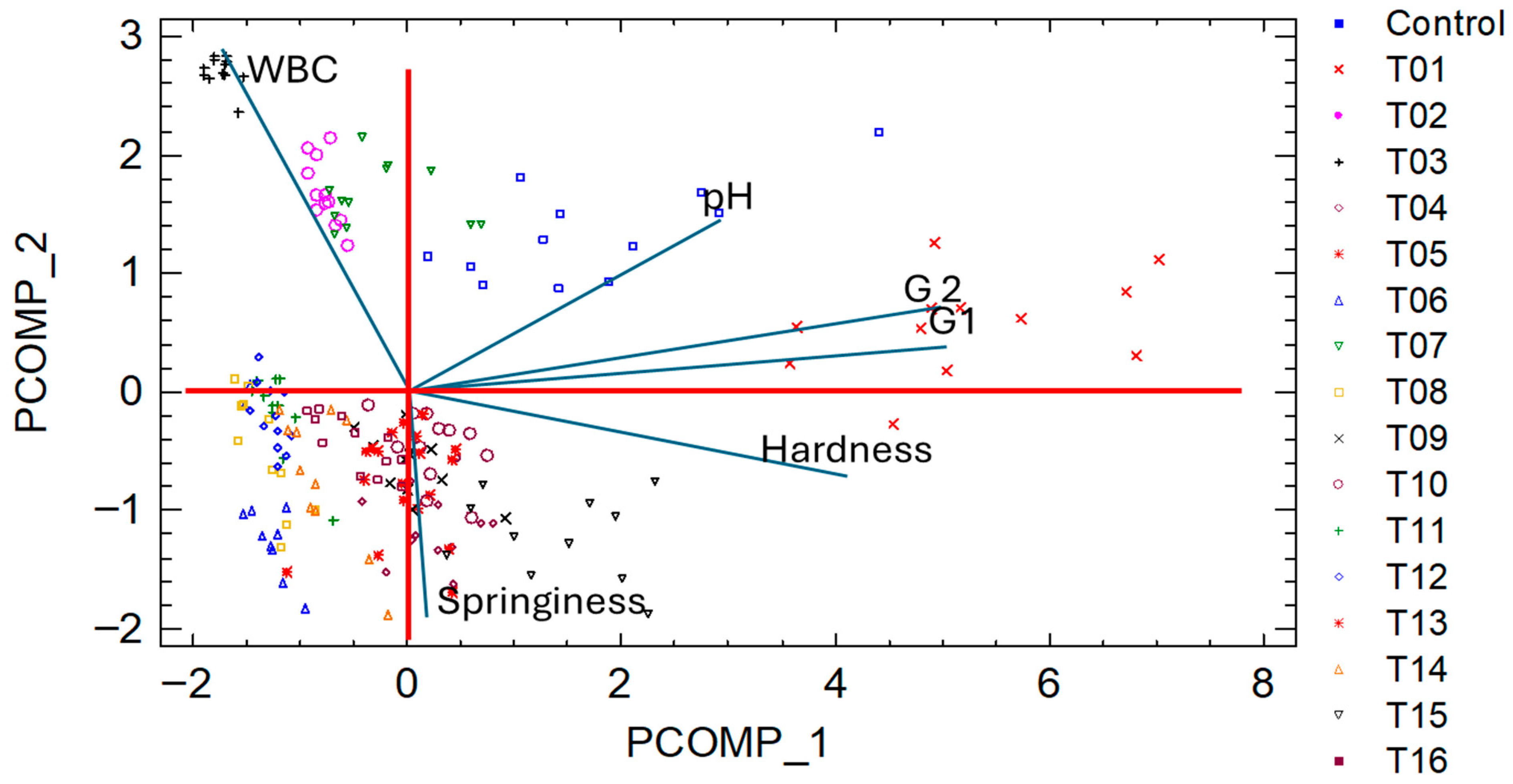
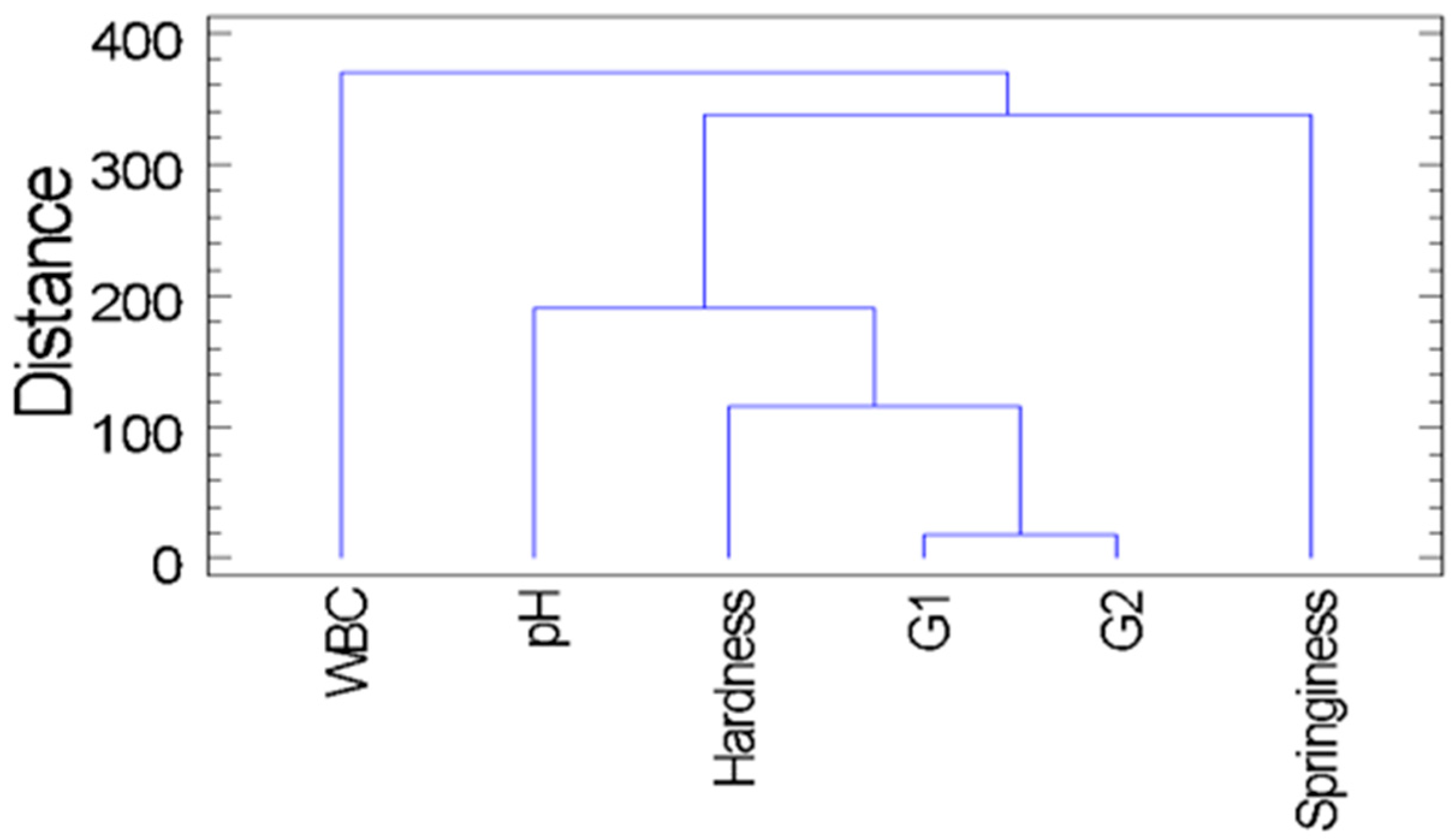
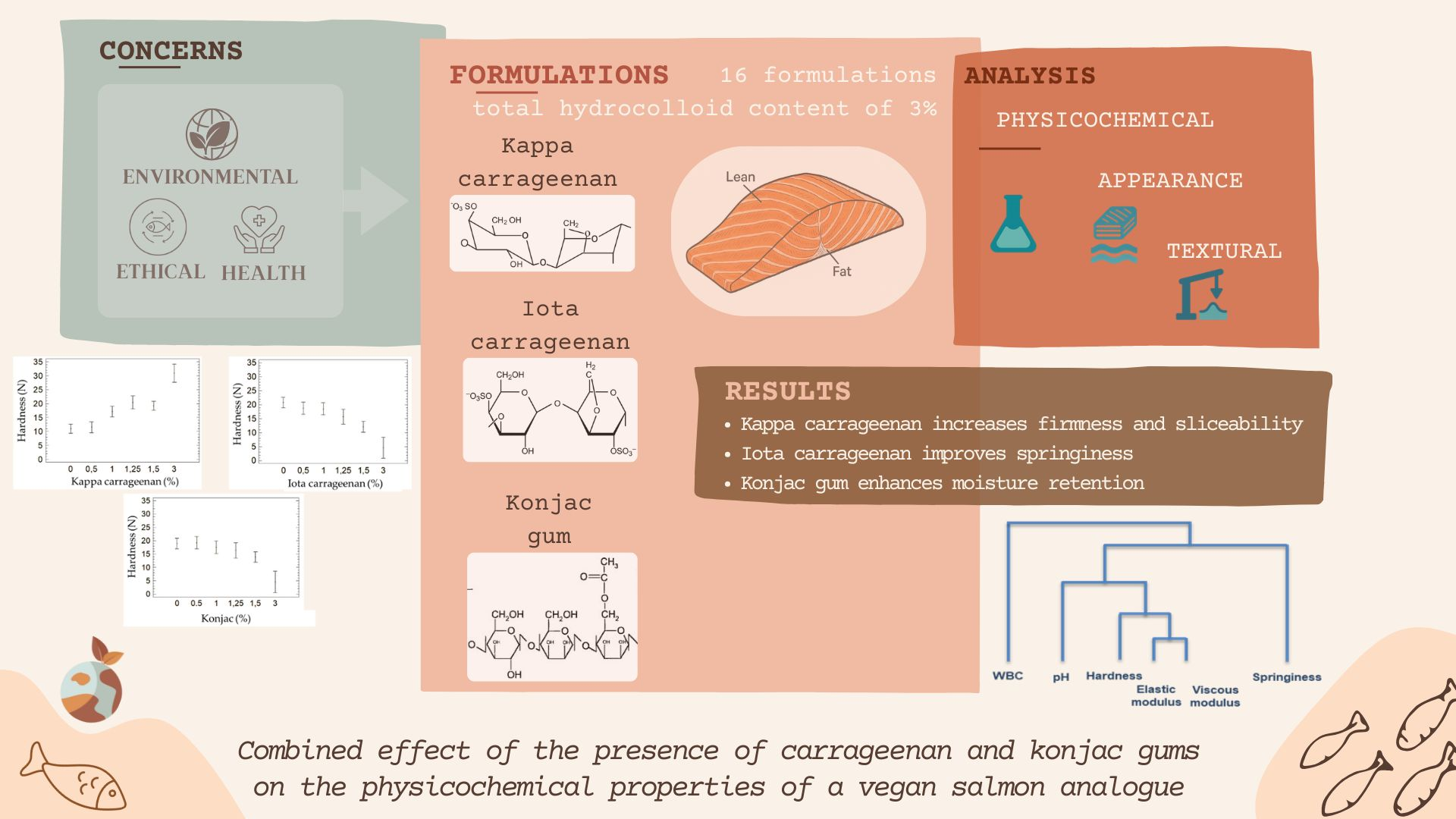
This study aimed to develop and characterize plant-based smoked salmon analogs by evaluating the effects of three hydrocolloids (kappa carrageenan, iota carrageenan, and konjac gum) on their physicochemical, textural, and functional properties. Sixteen formulations were prepared by varying the proportions of these gelling agents while maintaining a constant base formulation. Water-binding capacity (WBC), pH, hardness, springiness, viscoelastic moduli (elastic and viscous), sliceability, and layer definition were analyzed. Kappa carrageenan significantly increased firmness and improved slicing properties. Iota carrageenan enhanced springiness and structural definition. Although konjac gum improved moisture retention, high concentrations of it reduced structural integrity. Multivariate analyses, including principal component analysis (PCA) and hierarchical clustering (HCA), revealed an inverse relationship between mechanical properties (hardness and moduli) and WBC, while springiness formed an independent variable cluster. The first two components accounted for 72.52% of total variance; indicated by the PCA. Among the sixteen formulations, three stood out: T01 exhibited the highest firmness and sliceability; T02 presented excellent elasticity and moisture retention; and T16 achieved a well-balanced profile, closely resembling commercial smoked salmon in both texture and appearance. These findings demonstrate that tailored hydrocolloid combinations can effectively mimic the texture and appearance of smoked salmon, providing a novel formulation strategy for next-generation plant-based seafood alternatives.
Keywords: plant-based seafood; smoked salmon analog; hydrocolloids; carrageenans; konjac gum; textural properties; rheological analysis plant-based seafood; smoked salmon analog; hydrocolloids; carrageenans; konjac gum; textural properties; rheological analysis
Graphical Abstract