
Article

Simulation Study on the Instability of Microscopic Columnar Structures in TiN Coatings Prepared by Magnetron Sputtering

1
Research Center for Semiconductor Materials and Devices, Shaanxi University of Science and Technology, Xi’an 710021, China
2
Light Industrial Xi’an Mechanic Design Research Institute Co., Ltd., Xi’an 710086, China
3
Shaanxi SMC Semiconductor Co., Ltd., Xi’an 727031, China
*
Authors to whom correspondence should be addressed.
Inorganics 2026, 14(5), 137; https://doi.org/10.3390/inorganics14050137
Submission received: 17 March 2026 / Revised: 10 May 2026 / Accepted: 12 May 2026 / Published: 16 May 2026
(This article belongs to the Special Issue Novel Inorganic Coatings and Thin Films)

Abstract

To clarify the instability behavior of the columnar microstructure in RF magnetron sputtered TiN coatings under compressive loading, experimental characterization and finite element simulation were combined to investigate the microstructural features, mechanical properties, and linear and nonlinear buckling responses of the coating. TiN coatings were deposited on cemented carbide and Si substrates by RF magnetron sputtering using a 99.9% purity TiN target. The surface and cross-sectional morphologies were characterized by field-emission scanning electron microscopy, and the nanohardness and Young’s modulus were determined by nanoindentation. Based on the experimentally observed morphology and measured mechanical properties, a finite element model of the columnar structure was established in ABAQUS, and the instability responses predicted by solid, shell, and beam element models were comparatively analyzed. The results showed that the as-deposited TiN coating exhibited a dense and uniform surface and a distinct columnar microstructure in cross-section. Linear buckling analysis indicated that the first-order critical buckling loads predicted by different element models were different, among which the solid element model gave a value of 3.43 × 10⁻⁵ N, showing the closest agreement with the theoretical result. Furthermore, nonlinear buckling analysis was performed by introducing an initial geometric imperfection of 4 × 10⁻³ mm based on the first-order buckling mode of the solid element model. The results showed that the columnar structure became unstable at a load of 0.74 × 10⁻⁶ N, accompanied by irreversible deformation. These findings demonstrate that linking experimentally observed TiN columnar microstructures with microstructure-informed instability analysis provides a useful perspective for understanding the local instability behavior and potential failure tendency of sputtered coatings and offers theoretical support for the structural design and reliability evaluation of protective coatings for cutting tools.

1. Introduction

As the “teeth of industry,” cutting tools directly affect machining quality, production efficiency, and manufacturing cost. During high-speed cutting, dry cutting, and the machining of difficult-to-cut materials such as titanium alloys and nickel-based superalloys, the cutting edge is exposed to severe thermomechanical and tribochemical loads, which can induce abrasive wear, adhesive wear, oxidation, cracking, and coating delamination [1,2,3]. Therefore, hard protective coatings remain an important approach for improving tool performance and service life [1,2].
In recent years, numerical simulation has become an effective auxiliary tool for coating design and machining analysis because it can describe the evolution of temperature, stress, strain, and wear while reducing experimental trial-and-error [4,5,6]. Finite element methods have been widely used to evaluate the effects of coating type, coating thickness, cutting-edge geometry, and cutting parameters on coated tool performance [4,5,6,7,8,9]. For example, Upadhyay et al. investigated the influence of TiAlN coating thickness on dry machining behavior by combining finite element simulation with experiments [7], whereas Dou et al. analyzed the cutting performance of coated tools for nickel-based superalloys through numerical simulation [5]. Storchak et al. further showed that wear prediction in machining simulations is strongly influenced by the friction model employed [6], and Mirian et al. demonstrated the value of simulation-assisted optimization for reducing thermomechanical stress and temperature in coated carbide tools [8]. In addition, Oliveira et al. compared the thermal responses of TiN-coated and uncoated carbide tools, while Zhuang et al. highlighted the usefulness of modeling for understanding wear evolution in coated cutting systems [9,10,11]. These studies indicate that computational methods are increasingly valuable for optimizing coated tool structures and improving service reliability [4,5,8].
However, most current numerical studies still treat the coating as a homogeneous continuous body and mainly focus on macroscopic responses such as cutting force, temperature, and wear [4,6,11]. This simplification is useful for engineering prediction, but it is insufficient for explaining the initiation of local damage inside sputtered coatings. In practice, coating behavior is strongly affected by microstructural features such as grain morphology, columnar arrangement, density, defects, residual stress, and interface condition [12,13,14,15]. Recent studies have shown that sputtering route, process parameters, and structural design can significantly influence the morphology, hardness, adhesion, and tribological performance of TiN-based coatings [12,13,14,15,16,17,18,19]. For example, Mu et al. investigated the microstructure and performance of TiN coatings deposited by high power impulse magnetron sputtering [12], Xia et al. showed that sputtering parameters can markedly affect the physical properties of TiN coatings [13], and Gabor et al. reported that structural design strongly affects the mechanical and tribological behavior of reactive magnetron sputtered TiN coatings [14]. In addition, bias voltage, multilayer architecture, and soft–hard composite design have all been shown to modify the microstructure and performance of TiN-based coating systems [16,17,18,19]. Therefore, the microstructural characteristics of TiN coatings should not be neglected when discussing their deformation and failure behavior.
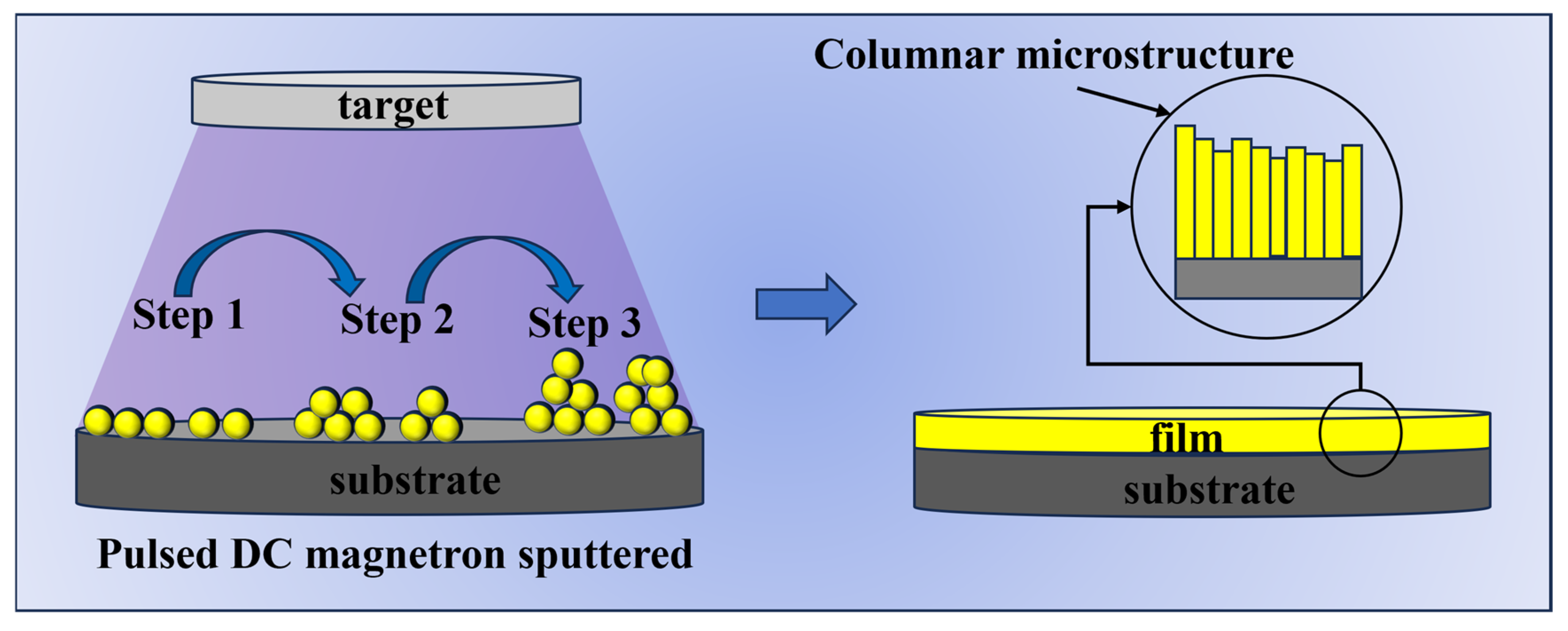
For TiN coatings prepared by magnetron sputtering, the deposited structure is usually not perfectly dense and uniform at the microscale. Because of the line-of-sight deposition characteristic of sputtering, competitive growth among nuclei, and shadowing-related microstructural evolution, sputtered TiN coatings often develop columnar or column-like architectures rather than an ideal continuous structure (as illustrated in Figure 1) [12,14,15]. Such structural heterogeneity is important because the local mechanical response of the coating may be controlled by the deformation and instability of individual columnar units. Once these local structures lose stability under compressive loading, damage can accumulate and eventually lead to crack propagation, interfacial failure, and overall coating degradation [18,20,21,22].
Figure 1. Schematic illustration of the formation of columnar microstructure in RF magnetron sputtered TiN coatings.
Inorganics 14 00137 g001
Although buckling and instability analyses have increasingly been developed for coating/substrate systems [20,21,22], most existing studies still focus on continuous coatings or idealized layered structures. By comparison, the compressive instability of internal columnar substructures in hard coatings for cutting tools has been rarely reported. Therefore, the objective of this study is to clarify the role of columnar microstructure in the compressive instability and failure of RF magnetron sputtered TiN coatings. In this work, TiN coatings were deposited on cemented carbide and Si substrates by RF magnetron sputtering, and their morphology and mechanical properties were characterized experimentally. Based on the observed columnar morphology, a finite element model was established to analyze the instability behavior of the internal columnar structure under compressive loading. The novelty of this work lies in linking experimentally observed sputtered TiN microstructures with microstructure-informed instability analysis, rather than simply treating the coating as a homogeneous continuous body. This study is expected to provide a more physically grounded explanation for the initiation of local failure in TiN coatings and to offer theoretical support for the structural design and reliability evaluation of hard coatings for cutting tools.

2. Results and Discussion

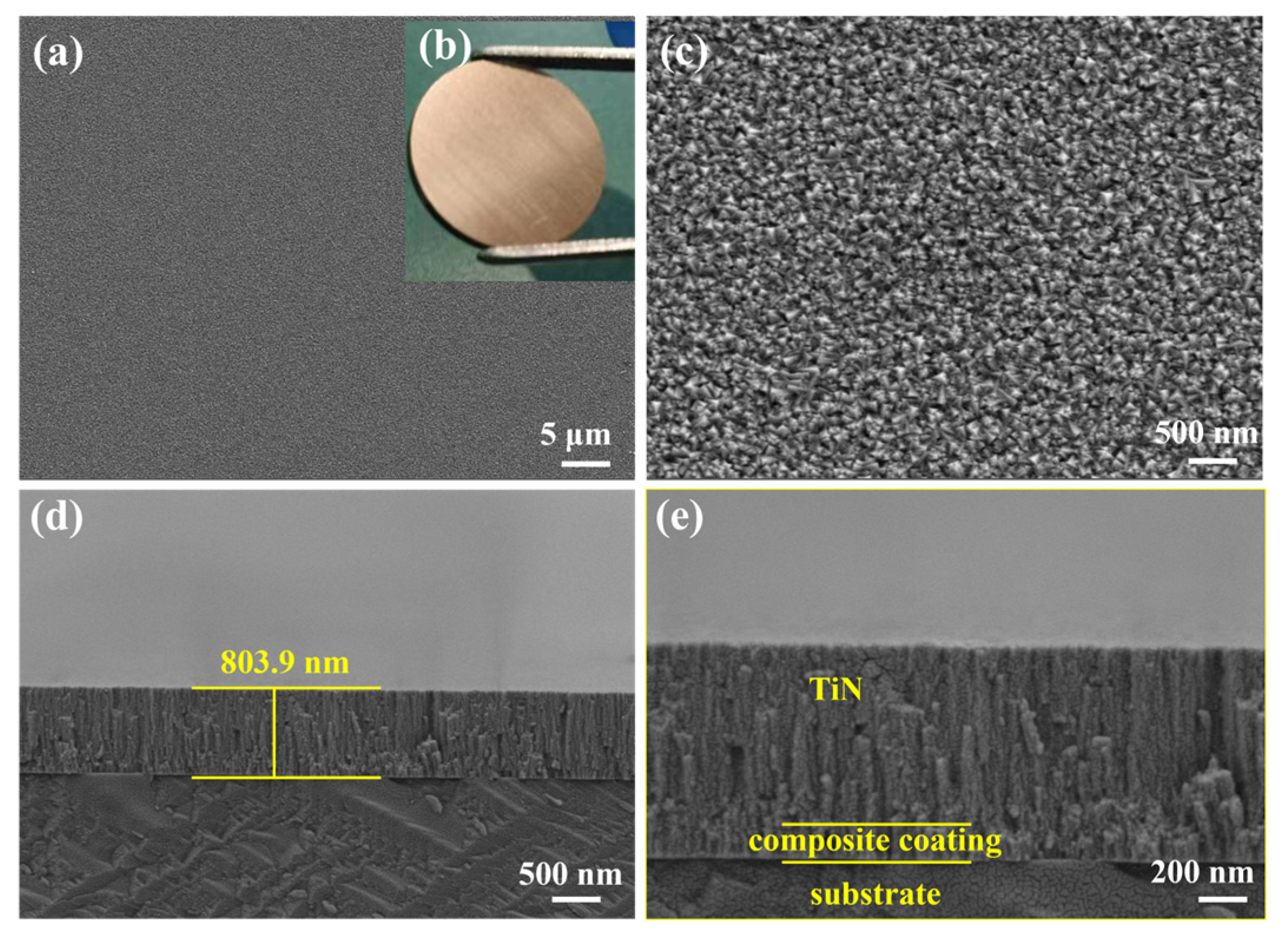
Figure 2 shows the surface and cross-sectional morphologies of the TiN coating at different magnifications. As can be seen from Figure 2b, the coating prepared using the TiN target exhibits a golden-yellow color. The coating is overall dense and uniform, with no obvious defects. “Pyramid-shaped” grains are closely packed and arranged on the coating surface. Consistent with previous reports [23,24], the cross-section of the TiN coating reveals a distinct columnar microstructure, with a clear coating/substrate interface and an overall thickness of approximately 800 nm. These observations indicate that the as-deposited coating cannot be regarded as an ideal homogeneous continuum at the microscale. Instead, it consists of identifiable columnar structural units, which provide the direct experimental basis for the subsequent simplified mechanical modeling.
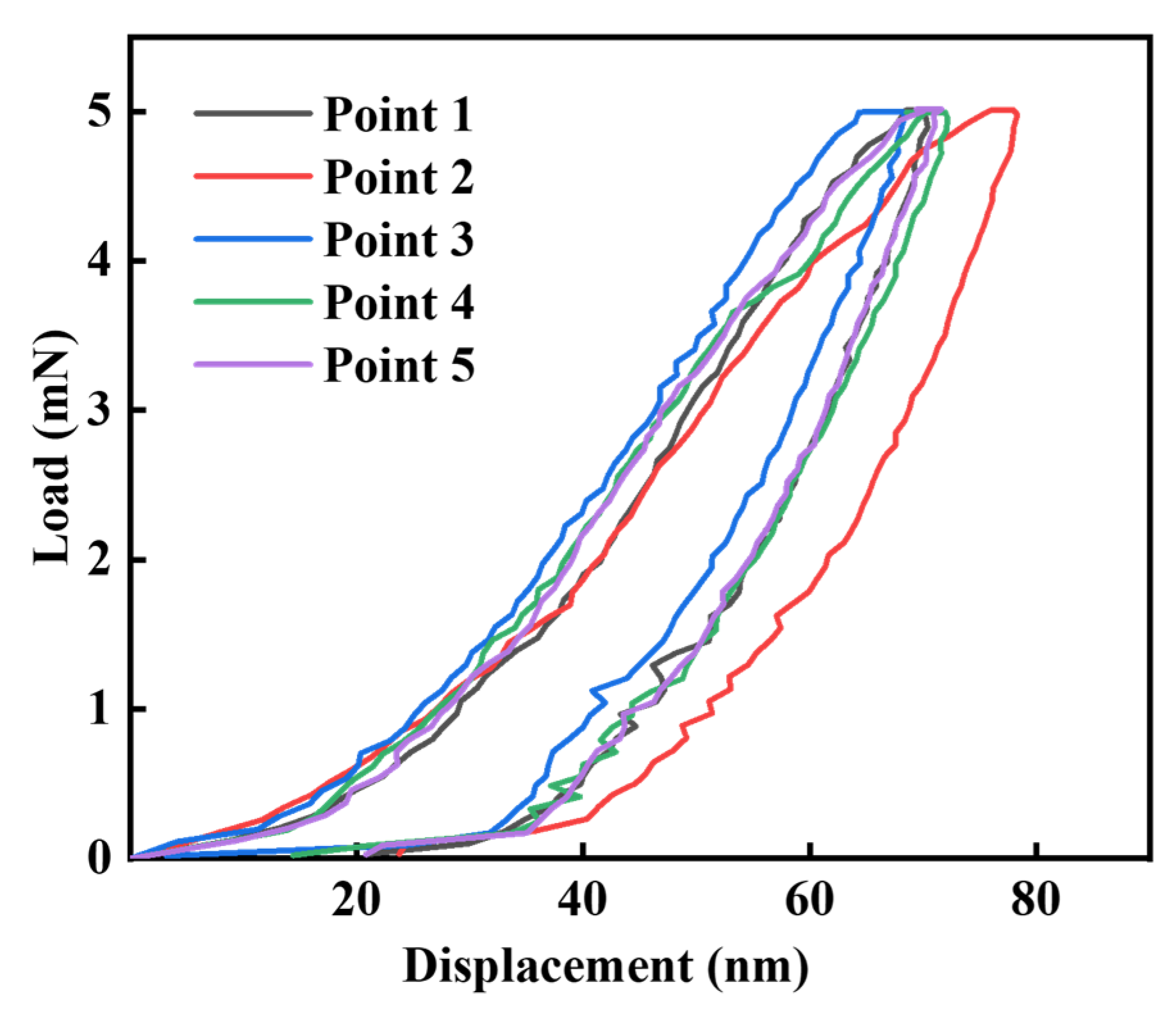
The accuracy of coating material properties significantly impacts numerical simulation results. Figure 3 presents the nanoindentation load–displacement curve for the TiN coating. The nanohardness and Young’s modulus of the coating can be obtained using the Oliver-Pharr (O-P) [25] The results indicate that the coating has a hardness of 17.3 GPa, a Young’s modulus of 474.451 GPa, and an average Poisson’s ratio of 0.32. These experimentally measured parameters were subsequently used as the input material properties in the finite element model. The slight fluctuation of the loading–unloading curve may be associated with local microstructural inhomogeneity and the elastic–plastic response of the coating during indentation. Overall, the nanoindentation results provide the mechanical-property basis for the modeling and analysis of the instability behavior of the TiN columnar structure.
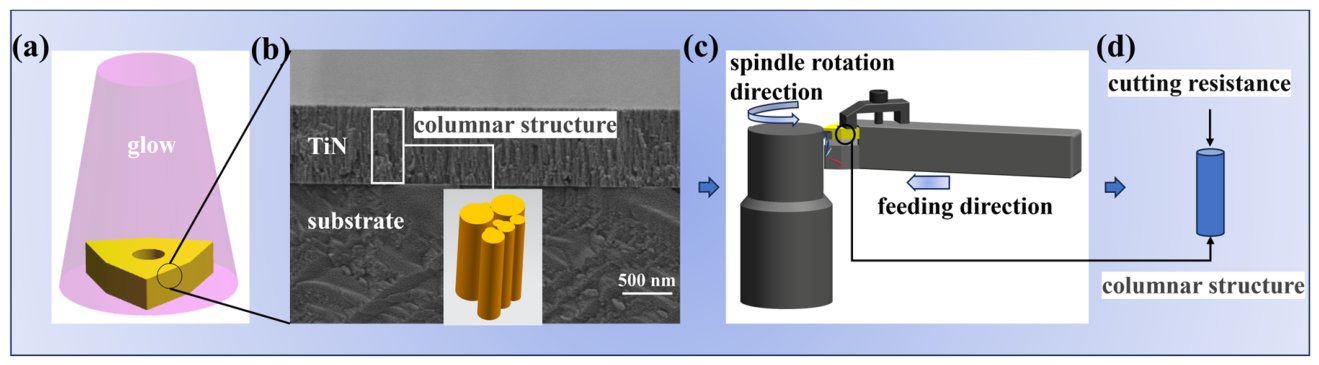
Because coating failure is governed by complex interactions within the coating/substrate system, the present work does not aim to directly predict coating service life. Instead, the instability analysis is used to evaluate the local failure tendency of a representative TiN columnar microstructure under compressive loading. Calculating critical stress or strain and comparing them with coating damage failure limits is a current research focus for determining coating service life. In numerical simulation studies of coating materials [26], researchers often equate the failure mode of coatings to the stability state of a continuous medium layer on a rigid body [27]. It is well known that the study and application of columnar structures (such as rods, beams, and shells) are well-established in engineering fields [28,29]. As a versatile simulation tool, ABAQUS is widely used for solving problems in structural analysis (stress/displacement) [30], soil mechanics [31], heat transfer [32,33], and mass diffusion. Furthermore, ABAQUS can automatically select suitable load increments and convergence criteria, making it adept at solving highly nonlinear problems. Therefore, ABAQUS was selected to analyze the instability behavior of the columnar structure. Using the experimentally prepared TiN coating as the prototype, a simplified columnar unit was extracted from the observed cross-sectional morphology and subjected to compressive loading analysis, as illustrated in Figure 4. Solid, shell, and beam elements were used to simulate the buckling behavior of the columnar structure, thereby evaluating its instability tendency and providing a theoretical basis for understanding the failure modes of TiN coatings. In this way, the model was directly linked to the experimentally observed coating morphology rather than being introduced as an isolated theoretical assumption. The use of a single-column model in the present work was intended to represent a simplified microstructural unit extracted from the experimentally observed columnar morphology, rather than the full coating/substrate system. This simplification was adopted to isolate the fundamental compressive instability tendency of the columnar microstructure and to establish a direct link between the experimentally observed structural feature and its mechanical response. In other words, the purpose of the model is not to reproduce the complete service state of the coating, but to clarify whether an individual columnar unit identified in the real coating is mechanically susceptible to instability under compressive loading.
The critical buckling load for an ideal column can be calculated using Euler’s formula:
F = π 2 E I ( K L ) 2
where F is the critical load; E is the Young’s modulus of the material; I is the minimum area moment of inertia of the column cross-section; L is the unsupported length of the column; K is the column effective length factor.
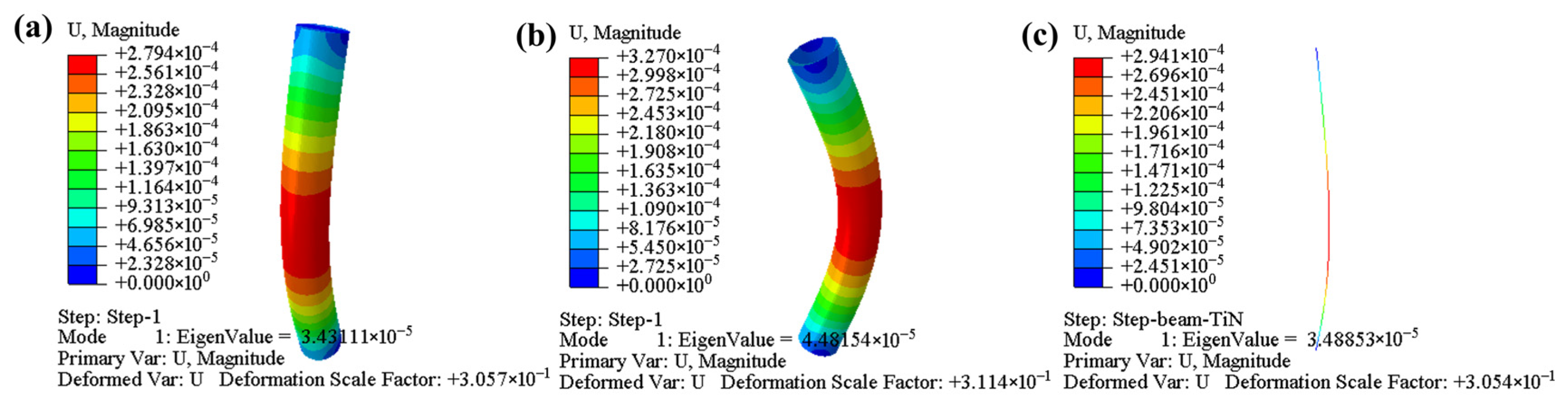
We first simulated the potential bending, twisting, or other deformation behaviors of this columnar structure under compression. The columnar structure had a longitudinal length of 800 nm and a base radius of 50 nm. It was discretized using solid, shell, and beam elements, resulting in 73,920, 10,080, and 1600 elements, respectively. The number of eigenvalues output was set to 6. Material properties were obtained from the measurements described above. Figure 5 displays the first-order buckling modes for the different element types. Based on the buckling load factors, the critical loads required to induce buckling in the columnar structure were calculated to be 3.43 × 10⁻⁵ N, 4.48 × 10⁻⁵ N, and 3.49 × 10⁻⁵ N, respectively.
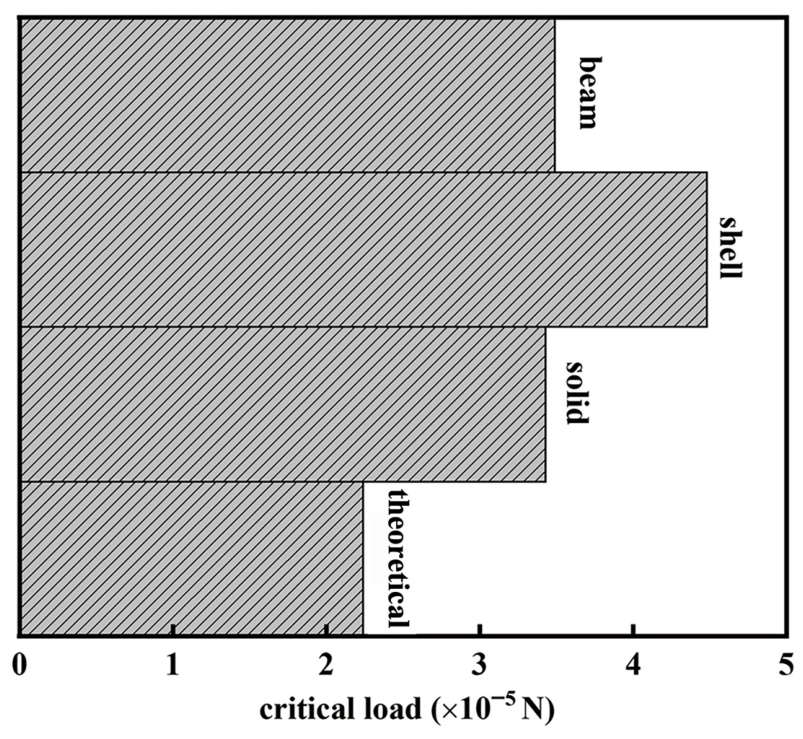
The critical load for buckling of an ideal columnar structure can be calculated using Euler’s formula. Figure 6 compares the critical loads obtained from the three element types with the theoretical value, and the solid element model shows the smallest deviation. Therefore, the solid element model was adopted in the subsequent nonlinear analysis. In the present study, linear buckling analysis was mainly used to identify the critical mode and estimate the instability threshold of an idealized defect-free columnar structure.
By contrast, nonlinear buckling analysis is more suitable for describing the response of a real columnar structure because it can incorporate initial imperfections and trace the post-buckling deformation process. In the present study, a representative initial geometric imperfection was introduced based on the first-order buckling mode obtained from the solid element model. Specifically, a displacement imperfection of 4 × 10⁻³ mm was applied to the mode shape. This treatment is also consistent with recent numerical studies of instability in thin-film systems, in which embedded or representative initial imperfections were introduced to trigger bifurcation and post-buckling evolution in three-dimensional finite element models. Therefore, the use of a representative geometric perturbation in the present work should be understood as a numerically tractable way to evaluate the imperfection sensitivity of the experimentally observed TiN columnar structure, rather than as a direct one-to-one reproduction of a measured physical defect [20,34]. This treatment was adopted to capture the imperfection sensitivity of the experimentally observed columnar structure in a physically meaningful and computationally tractable way. In the present study, a representative initial geometric perturbation was introduced based on the first-order buckling mode obtained from the solid element model. The purpose of this treatment was not to reproduce an experimentally measured defect amplitude one-to-one, but to trigger the nonlinear instability analysis in a numerically tractable manner and to evaluate the imperfection sensitivity of the columnar unit. Therefore, the adopted perturbation should be understood as a representative modeling parameter rather than a unique physical defect value. A systematic sensitivity analysis of imperfection amplitudes and mode shapes will be carried out in future work.
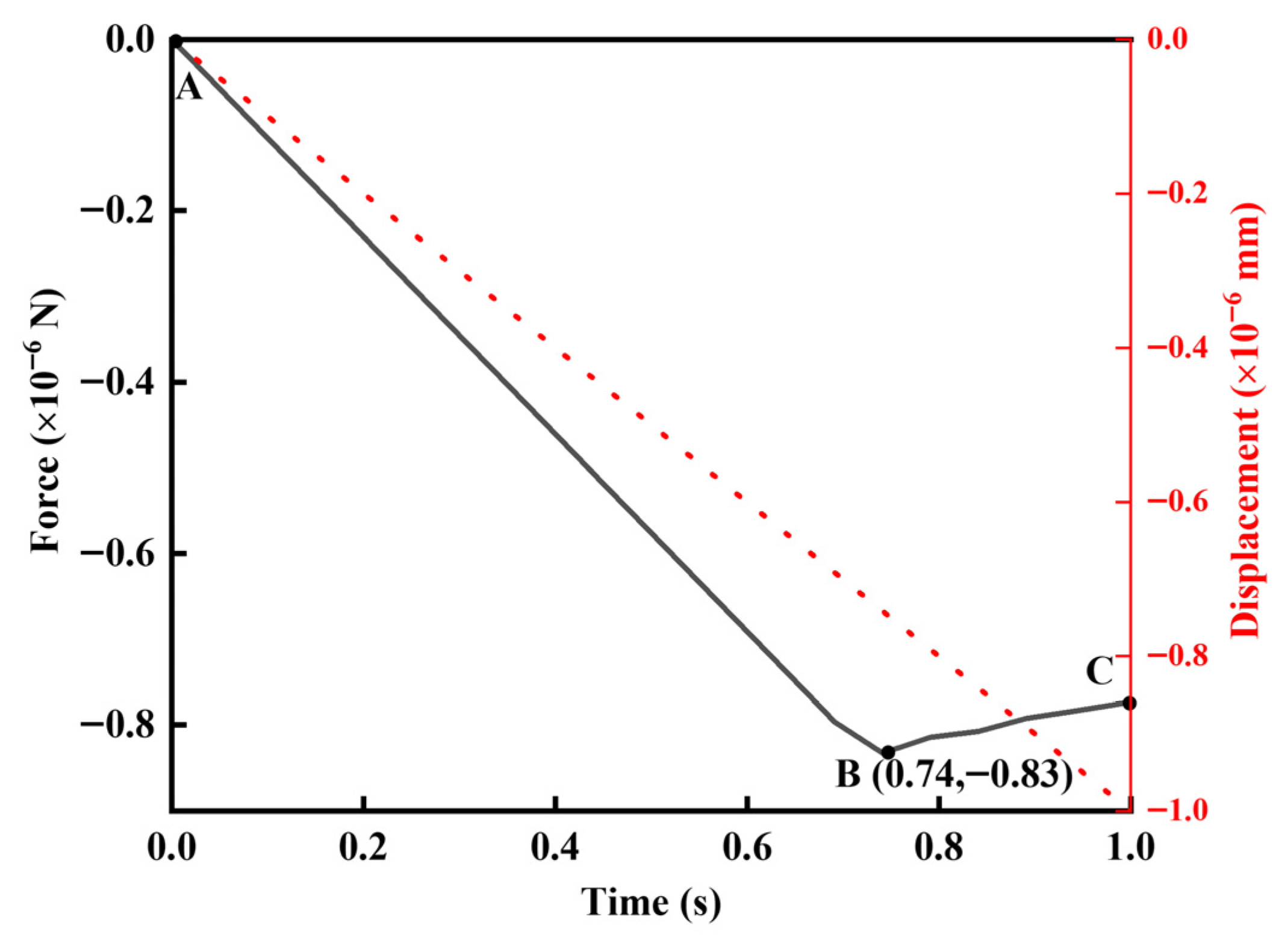
In sputtered TiN coatings, residual stress may arise from several coupled factors during non-equilibrium coating growth, including atomic peening, thermal mismatch between coating and substrate, grain-boundary evolution, defect accumulation, and microstructural coalescence [35,36]. Therefore, the real columnar structure is unlikely to be perfectly straight or defect-free. The critical load predicted by linear buckling analysis should be regarded as the instability threshold of an ideal structure. By contrast, nonlinear buckling analysis is more suitable for describing the response of the real columnar structure because it can incorporate initial imperfections and trace the post-buckling deformation process. To simulate this more realistic behavior, an initial geometric imperfection was introduced into the model based on the first-order linear buckling mode obtained from the solid element analysis. Specifically, a displacement imperfection of 4 × 10⁻³ mm was applied to the mode shape. The numerical analysis was then switched to a general static analysis step, with the maximum number of increments set to 10,000. The output point set was selected as the vertex of the structure, and time history outputs were requested for the vertical displacement and reaction force at this vertex. Figure 7 shows the variation in stress and displacement at the vertex of the columnar structure over time during the nonlinear buckling analysis. The stress curve exhibits a linear buckling stage (A–B) followed by a post-buckling stage (B–C). Point B corresponds to the onset of instability accompanied by irreversible deformation. The corresponding load is lower than that predicted by the linear buckling analysis, indicating that the introduction of initial imperfections reduces the load-bearing stability of the columnar structure. This result indicates that nonlinear analysis is more appropriate for evaluating the instability behavior of the real sputtered TiN columnar microstructure, whereas linear analysis mainly provides the critical mode and idealized instability threshold. From a physical point of view, the difference between the linear and nonlinear results reflects the imperfection-sensitive nature of the sputtered TiN columnar microstructure. Linear buckling analysis describes the instability threshold of an idealized straight columnar unit, whereas the lower instability load obtained from the nonlinear analysis indicates that the real columnar structure is more susceptible to instability once initial imperfection, residual stress, and local stress concentration are taken into account. In other words, when the columnar unit deviates from the ideal straight configuration, the load-bearing path becomes less stable, which promotes deformation localization and accelerates the onset of irreversible damage. This interpretation is qualitatively consistent with previous thin-film/coating instability studies, in which imperfections and structural heterogeneity were found to reduce structural stability and make the nonlinear response more representative of real systems [20,21,34]. Although the absolute critical load cannot be directly compared with those reported in the literature because of differences in material system, geometry, boundary condition, substrate constraint, and loading mode, the present results show good qualitative agreement with previous thin-film/coating instability studies. The linear buckling analysis in this work predicted critical loads of 3.43 × 10⁻⁵ N, 4.48 × 10⁻⁵ N, and 3.49 × 10⁻⁵ N for the solid, shell, and beam element models, respectively, with bending-type first-order instability modes. Similar studies have shown that critical loads and instability modes in film/coating systems are strongly affected by geometric constraint, boundary condition, and structural configuration [20,21,22]. In addition, the nonlinear analysis with an initial geometric imperfection produced a much lower instability load of 0.74 × 10⁻⁶ N, indicating that imperfections significantly reduce structural stability. This trend is consistent with previous numerical studies showing that initial imperfections and microstructural heterogeneity promote nonlinear deformation and reduce the apparent stability threshold of thin-film/coating systems [27,34]. Therefore, the present simulation results are reasonable at the qualitative level and provide a credible microstructure-based explanation for the local instability tendency of sputtered TiN coatings.
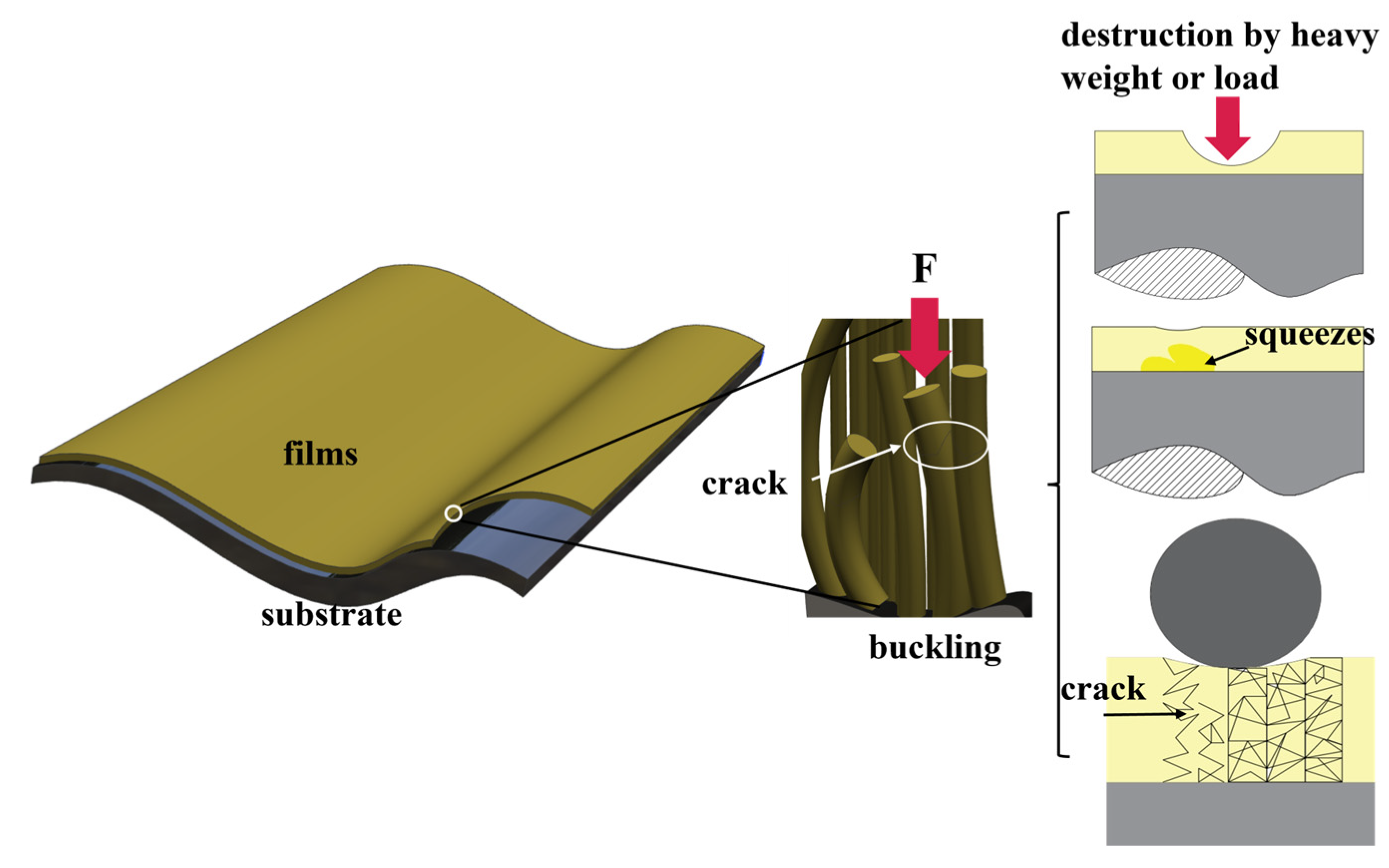
Figure 8 schematically illustrates the possible failure behavior of the sputtered TiN coating under compressive stress. Once the local columnar structure loses stability, deformation localization may occur and further evolve into local extrusion, crack initiation, crack propagation, or interfacial delamination, thereby weakening the protective function of the coating. Although the instability analysis of a columnar structure with initial imperfections is a complex process, it is necessary for the present coating system because the experimentally prepared TiN coating exhibits a pronounced columnar microstructure. Combined with the experimental observation of the columnar morphology in Figure 2 and the instability analysis in Figure 5, Figure 6 and Figure 7, it can be inferred that the experimentally observed microstructure is closely related to the mechanically predicted failure tendency. In other words, the experimental results define the structural object of the model, while the numerical results explain the mechanical consequence of that structure under compressive loading. Therefore, the combination of experimental characterization and instability simulation provides a more complete understanding of the failure mechanism of sputtered TiN coatings. These results also have implications for coating design and performance. The present analysis suggests that improving the structural reliability of sputtered TiN coatings should not rely only on increasing hardness or elastic modulus but should also involve suppressing the geometric instability tendency of the columnar microstructure. In practical terms, deposition strategies capable of reducing excessive columnar heterogeneity, lowering defect accumulation, and relieving unfavorable residual stress may be beneficial for enhancing coating stability. This interpretation is also in line with recent studies showing that sputtering route, structural design, and microstructural regulation can significantly influence the mechanical and tribological performance of TiN-based coatings [12,14,18]. Therefore, the present work provides not only a microstructure-level explanation of local instability initiation, but also a qualitative design guideline for improving the reliability of hard protective coatings. It should also be emphasized that the present model represents a simplified static-compression scenario intended to isolate the fundamental instability tendency of the TiN columnar microstructure. In actual service, coated tools are subjected to coupled thermal, tribological, and substrate-constrained conditions, which may further influence the onset and propagation of local instability. Therefore, the present results should be understood as a microstructure-level mechanical analysis under a representative compressive condition rather than a full service-environment simulation. In addition, the present single-column idealization does not explicitly account for interactions among adjacent columns, the quantitative constraint effect of the substrate, or more complex boundary conditions that may exist in the real coating system. These factors may affect the absolute instability load and deformation mode, but they do not change the value of the present model as a first-step analysis for identifying the intrinsic instability tendency of the experimentally observed columnar unit.

3. Materials and Methods

3.1. Equipment and Materials

The magnetron sputtering system used in this study was manufactured by Beijing Chuangshi Weina Technology Co., Ltd. (Beijing, China), model MSP-300B. To ensure the prepared coatings possessed stoichiometric characteristics and to eliminate arcing effects caused by reactive sputtering and the “nitrogen deficiency” phenomenon resulting from N2 flux fluctuations [37], this study employed a TiN target with an atomic ratio of N:Ti = 1:1 (purity 99.9%) for coating deposition. A Ti target (purity 99.999%) was used as an interlayer to mitigate interfacial effects between the coating and the substrate. The aforementioned targets were purchased from Zhongnuo New Materials (Beijing) Technology Co., Ltd. (Beijing, China), both with specifications of Φ60 × 3 mm. The substrates used in this study were Si (111) and YG8, which has high strength and good impact toughness [38]. Its main components are the hard phase WC and the binder phase Co (Co = 8 wt.%). Coatings deposited on Si (111) surfaces were used for micromorphology characterization and chemical composition analysis, while coatings prepared on YG8 were used for mechanical property testing.

3.2. Coating Deposition

The finely ground alloy substrates were sequentially cleaned ultrasonically in acetone and alcohol baths for 10 min each, followed by ultrasonic cleaning in deionized water for 15 min to remove surface impurities such as oxides and grease. All substrate materials were placed on the sample holder in the deposition chamber, with a target-to-substrate distance maintained at 100 mm. The base vacuum pressure was 7.5 × 10⁻⁴ Pa, achieving a high vacuum level to minimize the weakening of N-Ti bonds caused by the high electronegativity of oxygen. The specific sputtering process parameters are listed in Table 1. The working pressure and discharge power were selected based on our previous parameter-optimization study on TiN-target sputtering, together with preliminary experiments [39]. Our previous results showed that glow discharge stability deteriorated significantly below 0.5 Pa, whereas pressures above 1.5 Pa led to abnormal coarsening of the columnar grains, which was unfavorable for maintaining stable coating microstructure and performance. Therefore, the working pressure in the present study was chosen within this stable deposition window. In addition, to ensure stable sputtering of the TiN target, a controllable deposition rate, and good comparability among different experimental groups, the discharge power was fixed at 120 W. Accordingly, these deposition conditions were selected to obtain a stable and reproducible TiN coating with a dense surface, a distinct columnar microstructure, and reliable mechanical properties, thereby providing an appropriate experimental basis for the subsequent morphology characterization, nanoindentation measurement, and instability analysis.

3.3. Coating Characterization

A field emission scanning electron microscope (FE-SEM) (, Verios 460, FEI Corporation, Hillsboro, OR, USA) was used to characterize the surface and cross-sectional morphology of the coatings. The hardness and Young’s modulus of the nanoscale coatings were characterized using a nanoindenter. The UNHT3 nanoindentation tester eliminates the influence of thermal drift and frame stiffness on experimental results. The maximum applicable load is 50 or 100 mN, with a minimum load resolution of 0.003 µN. The indenter is a Berkovich triangular pyramid indenter, with an angle of 65.03° between the indenter surface and the central axis. The Young’s modulus of the indenter is 1141 GPa, and Poisson’s ratio is 0.07. Five indentation points were performed. The average values of the measured nanohardness and Young’s modulus were used to represent the actual mechanical property parameters of the coating. Finite element analysis was performed using Abaqus 2020 software (Dassault Systèmes Simulia Corp., Providence, RI, USA).

4. Conclusions

TiN protective coatings were successfully deposited on cemented carbide (YG8) and Si substrates by RF magnetron sputtering. The as-deposited coatings exhibited a dense and uniform surface with a golden-yellow appearance, a nanohardness of 17.3 GPa, and a Young’s modulus of 474.451 GPa. Cross-sectional characterization revealed a pronounced columnar microstructure in the coatings. Based on the experimentally observed columnar morphology and measured mechanical properties, finite element simulations were performed to investigate the instability behavior of a representative columnar unit under compressive loading. The linear buckling results showed that the solid element model provided the most representative first-order buckling mode, with a critical load of 3.43 × 10⁻⁵ N. The nonlinear analysis further indicated that, after introducing an initial geometric imperfection, the columnar structure became unstable at a lower load of 0.74 × 10⁻⁶ N, suggesting that initial imperfections can significantly reduce the structural stability of the coating microstructure. The novelty of this work lies in combining experimental characterization with numerical simulation to establish a link between the real columnar microstructure of RF-sputtered TiN coatings and its potential instability response. Unlike conventional studies that treat coatings as homogeneous continuous layers, this work highlights the role of columnar microstructural units in coating stability and provides a microstructure-based perspective for understanding the structural reliability and failure tendency of TiN protective coatings. Future work will extend the present framework to different imperfection modes and amplitudes, as well as thermomechanical loading, tribological contact conditions, and substrate-dependent constraints, so as to evaluate the instability behavior of sputtered TiN coatings under more realistic service environments.

Author Contributions

Conceptualization, Y.W. and H.L.; Methodology, Y.W., T.Y. and Y.X.; Software, T.Y.; Investigation, Y.W., T.Y., M.L., X.X., R., L.Y., X.G. and Y.X.; Resources, Y.W. and H.L.; Data curation, T.Y.; Writing—original draft, Y.W., T.Y., M.L. and F.H.; Writing—review & editing, Y.W. and Y.X. All authors have read and agreed to the published version of the manuscript.

Funding

This research was funded by [Innovation Capability Support Program of Shaanxi] grant number [2024CX-GXPT-21 and 2025ZC-KJXX-115].

Institutional Review Board Statement

Not applicable.

Informed Consent Statement

Not applicable.

Data Availability Statement

The original contributions presented in this study are included in the article. Further inquiries can be directed to the corresponding author.

Conflicts of Interest

Author Youqing Wang was employed by the company Light Industrial Xi’an Mechanic Design Research Institute Co., Ltd. Author Youqing Wang and Huixia Liao were employed by the company Shaanxi SMC Semiconductor Co., Ltd. The remaining authors declare that the research was conducted in the absence of any commercial or financial relationships that could be construed as a potential conflict of interest.

References

  1. Xi, Q.; Huang, S.Q.; Chang, J.; Wang, D.; Liu, X.D.; Wen, N.; Cao, X.; Lv, Y.G. Design, deposition, performance evaluation, and modulation analysis of nanocoatings for cutting tools: A review. Inorganics 2025, 13, 281. [Google Scholar] [CrossRef]
  2. Zhang, J.X.; Yan, L.; Jiang, F.; Deng, J.D.; Lin, L.L.; Chen, F.B.; Wang, F.Z.; Wu, X.; Jiang, Z.Y.; Xu, F.F. Self-adaptive coated cutting tools: A critical review. Int. J. Extrem. Manuf. 2026, 8, 032006. [Google Scholar] [CrossRef]
  3. Sharma, P.; Mishra, S.K.; Ramkumar, J. Characterization and wear performance of advanced AlTiSiN-based coated cutting tools in dry machining of Ti-6Al-4V alloy. J. Manuf. Process. 2025, 150, 485–500. [Google Scholar] [CrossRef]
  4. Mane, S.; Patil, R.B.; Siddiqui, M.I.H.; Chan, C.K.; Xu, Y. Effect of cutting parameters and tool coating on residual stress and cutting temperature in dry hard turning of AISI 52100 steel using finite element method. Front. Mater. 2025, 12, 1613630. [Google Scholar] [CrossRef]
  5. Dou, Z.L.; Zhao, L.Y.; Yan, H.J.; Yang, Y.; Liu, F.B. Numerical Simulation of Cutting Performance of Coated Tools for Nickel-Based Superalloys. Coatings 2025, 15, 1275. [Google Scholar] [CrossRef]
  6. Storchak, M.; Melnyk, O.; Stepchyn, Y.; Shyshkova, O.; Golubovskyi, A.; Vozniy, O. Effect of friction model type on tool wear prediction in machining. Machines 2025, 13, 904. [Google Scholar] [CrossRef]
  7. Upadhyay, C.; Rajput, S.S.; Bera, S.; Ju, H.B.; Bhide, R.; Gangopadhyay, S. Influence of TiAlN coating thickness in dry machining of AISI 1045 steel using Finite Element simulation and experiments. Surf. Coat. Technol. 2025, 495, 131496. [Google Scholar] [CrossRef]
  8. Mirian, M.H.; Silani, M.; Akbarzadeh, S.; Aghababaei, R. Multi-objective optimization of AlCrN coated carbide cutting tools for stress and temperature reduction. J. Manuf. Process. 2026, 158, 205–217. [Google Scholar] [CrossRef]
  9. Oliveira, V.H.M.; Ribeiro, S.S.; de Oliveira, J.R.F.; dos Santos, J.A., Jr.; da Silva, M.B.; Guimaraes, G. Comparative thermal analysis of TiN-coated and uncoated carbide cutting tools. Int. J. Adv. Manuf. Technol. 2026, 143, 663–675. [Google Scholar] [CrossRef]
  10. Zhuang, K.J.; Zhu, K.; Wei, X.Y.; Hu, C.; Liu, Z.S.; Gao, Z.M. A dual-stage wear rate model based on wear mechanisms analysis during cutting Inconel 718 with TiAlN coated tools. J. Manuf. Process. 2024, 126, 24–34. [Google Scholar] [CrossRef]
  11. Islam, C.; Altintas, Y. A Two-Dimensional Transient Thermal Model for Coated Cutting Tools. J. Manuf. Sci. Eng. 2019, 141, 071003. [Google Scholar] [CrossRef]
  12. Mu, C.L.; Lu, X.L.; Hao, J.Y.; Wang, Q. Microstructure and performances of TiN coatings deposited by high power impulse magnetron sputtering. Adv. Eng. Mater. 2025, 27, e202501621. [Google Scholar] [CrossRef]
  13. Xia, Y.; Wang, D. Effect of sputtering process parameters on physical properties and electron emission level of titanium nitride films. Inorganics 2025, 13, 201. [Google Scholar] [CrossRef]
  14. Gabor, C.; Surdu, V.A.; Borsan, I.; Pop, M.A.; Vaz, F.; Munteanu, D. The influence of the structural design on the mechanical and tribological properties of TiN thin films prepared by reactive magnetron sputtering. Surf. Coat. Technol. 2026, 520, 133012. [Google Scholar] [CrossRef]
  15. Behrangi, S.; Soucek, P.; Bursíová, V.; Fekete, M.; Vasina, P. Influence of bias voltage on the microstructure and mechanical properties of TiZrN coatings prepared by reactive magnetron sputtering in industrial conditions. Surf. Coat. Technol. 2025, 511, 132240. [Google Scholar] [CrossRef]
  16. Aringozhina, Z.; Magazov, N.; Rakhadilov, B.; Batanov, Y.; Serikbaikyzy, A.; Kussainov, A. Influence of layer configuration on the mechanical, tribological and corrosion performance of Ti/TiN multilayer coatings. Coatings 2025, 15, 1313. [Google Scholar] [CrossRef]
  17. Qiao, H.; Zhu, S.C.; Fan, S.X.; Kang, J.W.; Tian, P.C.; Yang, J.X.; Wang, Y.Q. Tribological performance of TiN–WS2 soft-hard multifunctional composite coatings deposited by magnetron sputtering. Coatings 2025, 15, 596. [Google Scholar] [CrossRef]
  18. Liu, H.Y.; Gong, Y.; Ma, D.; Jing, P.; You, L.; Wei, L.; Leng, Y. The adhesion strength and stability of TiN films deposited on magnesium substrate with different substrate roughness. Ceram. Int. 2024, 50, 21658–21666. [Google Scholar] [CrossRef]
  19. Xu, J.M.; Zhang, P.; Yu, J.J.; Ying, P.Y.; Yang, T.; Wu, J.B.; Wang, T.L.; Myshkin, N.; Levchenko, V. Tribological properties of MoN/TiN multilayer coatings prepared via high-power impulse magnetron sputtering. Lubricants 2025, 13, 319. [Google Scholar] [CrossRef]
  20. Yuan, X.B.; Zhao, P.Z.; Fan, Q.Q.; Wang, Y.S.; Li, X.Y. Theoretical and numerical analysis on buckling instability in a thin film sandwiched between two finite-thickness substrates under in-plane compression. Int. J. Solids Struct. 2024, 304, 113037. [Google Scholar] [CrossRef]
  21. Bi, H.H.; Li, W.J.; Wang, L.Y. Dynamic buckling analysis of thin film/polydimethylsiloxane substrate structures in curved state with finite thickness. Polymers 2026, 18, 411. [Google Scholar] [CrossRef] [PubMed]
  22. Yang, X.; Shi, C. Buckling of two-layer thin films embedded in compliant substrates. Mech. Adv. Mater. Struct. 2026, 33, 2642419. [Google Scholar] [CrossRef]
  23. Li, H.; Liu, Y.; Jiang, B.; Kan, J.; Liu, Z. The structure and toughness of TiN coatings prepared by modulated pulsed power magnetron sputtering. Vacuum 2016, 125, 165–169. [Google Scholar] [CrossRef]
  24. Kataria, S.; Srivastava, S.; Kumar, P.; Srinivas, G.; Khan, J.; Rao, D.S.; Barshilia, H.C. Nanocrystalline TiN coatings with improved toughness deposited by pulsing the nitrogen flow rate. Surf. Coat. Technol. 2012, 206, 4279–4286. [Google Scholar] [CrossRef]
  25. Oliver, W.C.; Pharr, G.M. An improved technique for determining hardness and elastic modulus using load and displacement sensing indentation experiments. J. Mater. Res. 2011, 7, 1564–1583. [Google Scholar] [CrossRef]
  26. Dash, R.; Bhattacharyya, K.; Bhattacharyya, A.S. Film failure at earlier and later stages of nanoindentation in static and sliding modes. Eng. Fail. Anal. 2023, 150, 107353. [Google Scholar] [CrossRef]
  27. Tilbrook, M.T.; Paton, D.J.; Xie, Z.; Hoffman, M. Microstructural effects on indentation failure mechanisms in TiN coatings: Finite element simulations. Acta Mater. 2007, 55, 2489–2501. [Google Scholar] [CrossRef]
  28. Hu, H.-T.; Schnobrich, W. Nonlinear finite element analysis of reinforced concrete plates and shells under monotonic loading. Comput. Struct. 1991, 38, 637–651. [Google Scholar] [CrossRef]
  29. Aboelseoud, M.A.; Myers, J.J. Finite-element modeling of hybrid composite beam bridges in Missouri. J. Bridge Eng. 2015, 20, 04014054. [Google Scholar] [CrossRef]
  30. Kim, S.-E.; Lee, D.-H. Second-order distributed plasticity analysis of space steel frames. Eng. Struct. 2002, 24, 735–744. [Google Scholar] [CrossRef]
  31. Songa, B.; Liu, J.-Y.; Liu, Y.; Hu, P. Generalization and implementation of hardening soil constitutive model in ABAQUS code. Geomech. Eng. 2024, 36, 355–366. [Google Scholar]
  32. Bencheikh, I.; Bilteryst, F.; Nouari, M. Modelling of the thermomechanical behaviour of coated structures using single and multi-level-set techniques coupled with the extended Finite Element Method. Finite Elem. Anal. Des. 2017, 134, 68–81. [Google Scholar] [CrossRef]
  33. Zhang, B.; Mei, J.; Cui, M.; Gao, X.-W.; Zhang, Y. A general approach for solving three-dimensional transient nonlinear inverse heat conduction problems in irregular complex structures. Int. J. Heat Mass Transf. 2019, 140, 909–917. [Google Scholar] [CrossRef]
  34. Nikravesh, S.; Shen, Y.L. Plasticity-mediated deformation instabilities in thin film-compliant substrate systems: Direct three-dimensional simulations. J. Mater. Sci. 2024, 59, 4882–4893. [Google Scholar] [CrossRef]
  35. Huff, M. Review paper: Residual stresses in deposited thin-film material layers for micro-and nano-systems manufacturing. Micromachines 2022, 13, 2084. [Google Scholar] [CrossRef]
  36. Tello, J.S.; Bower, A.F.; Chason, E.; Sheldon, B.W. Kinetic model of stress evolution during coalescence and growth of polycrystalline thin films. Phys. Rev. Lett. 2007, 98, 216104. [Google Scholar] [CrossRef]
  37. Zhou, T.; Liu, D.; Zhang, Y.; Ouyang, T.; Suo, J. Microstructure and hydrogen impermeability of titanium nitride thin films deposited by direct current reactive magnetron sputtering. J. Alloys Compd. 2016, 688, 44–50. [Google Scholar] [CrossRef]
  38. Xu, B.; Feng, T.; Xiao, Y.-C.; Wu, X.-Y.; Fu, L.-Y.; Zhao, H.; Lei, J.-G.; Zhao, C.-Y. Micro-EDM of micro-stepped hole in YG8 cemented carbide by using micro milling cutter. Int. J. Adv. Manuf. Technol. 2022, 121, 1015–1026. [Google Scholar] [CrossRef]
  39. Qiao, H.; Liu, M.H.; Xiang, Y.; Xu, X.L.; Wang, Z.; Wu, W.X.; Wang, Y.Q. Low-friction coatings grown on cemented carbides by modulating the sputtering process parameters of TiN targets. Coatings 2025, 15, 329. [Google Scholar] [CrossRef]
Figure 2. TiN coatings morphology: (a,c) show the surface microstructure at different magnifications; (b) shows the macroscopic surface morphology; (d,e) show the cross-sectional microstructure.
Inorganics 14 00137 g002
Figure 3. Nanoindentation loading–unloading curve of the TiN coating.
Inorganics 14 00137 g003
Figure 4. Mechanism of instability analysis for the columnar structure: (a) Schematic diagram of TiN coating preparation by RF magnetron sputtering; (b) Columnar structure of the TiN coating; (c) Schematic diagram of the protective coating’s function during machining; (d) Simplified diagram of the cutting force acting on the columnar structure.
Inorganics 14 00137 g004
Figure 5. First-order linear buckling modes corresponding to different element types: (a) solid elements, (b) shell elements, (c) beam elements.
Inorganics 14 00137 g005
Figure 6. Critical loads corresponding to different element types and theoretical buckling.
Inorganics 14 00137 g006
Figure 7. Stress and displacement curves obtained from the vertex point set output.
Inorganics 14 00137 g007
Figure 8. Schematic diagram of coating failure caused by the stability failure of the coating’s columnar structure.
Inorganics 14 00137 g008
Table 1. Magnetron sputtering process parameters.
Sputtering TargetAr Flow Rate/SccmAr Pressure/PaPower/WSputtering ModeDeposition
Temperature/°C
Presputtering Time/sSputtering Time/s
Ti301.5150DC3001801800
TiN200.5120RF3003007200
Disclaimer/Publisher’s Note: The statements, opinions and data contained in all publications are solely those of the individual author(s) and contributor(s) and not of MDPI and/or the editor(s). MDPI and/or the editor(s) disclaim responsibility for any injury to people or property resulting from any ideas, methods, instructions or products referred to in the content.