
Ligand Rigidity and π-Surface Modulate Biomolecular Interactions and Cytotoxicity in Ru(II) Polypyridyl Complexes

 ,
,  ,
,  , , , , ,
Abstract
1. Introduction
2. Results and Discussion
2.1. Characterization and Physicochemical Properties
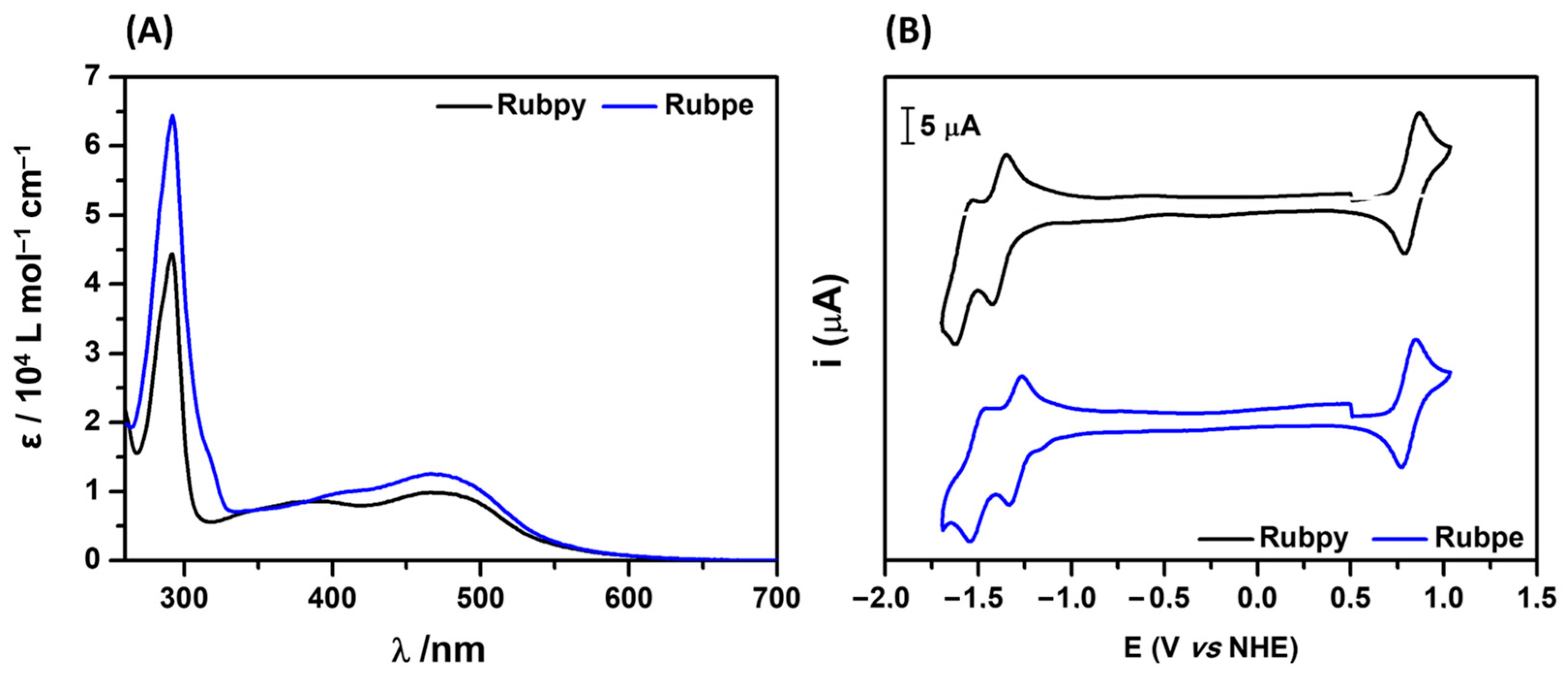
2.1.1. Electronic Structure and Redox Properties of the Ru(II) Complexes
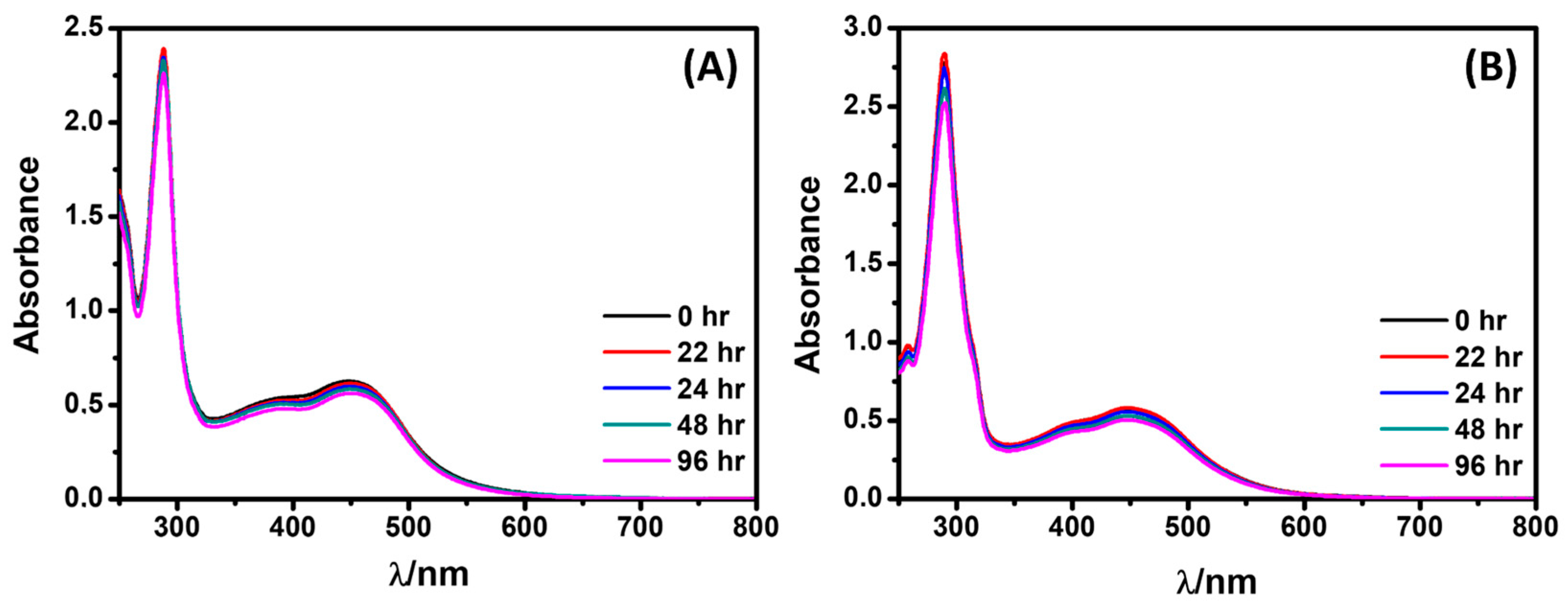
2.1.2. Stability of the Complexes in Aqueous and Physiological Media
2.2. Experimental Biomolecular Interactions
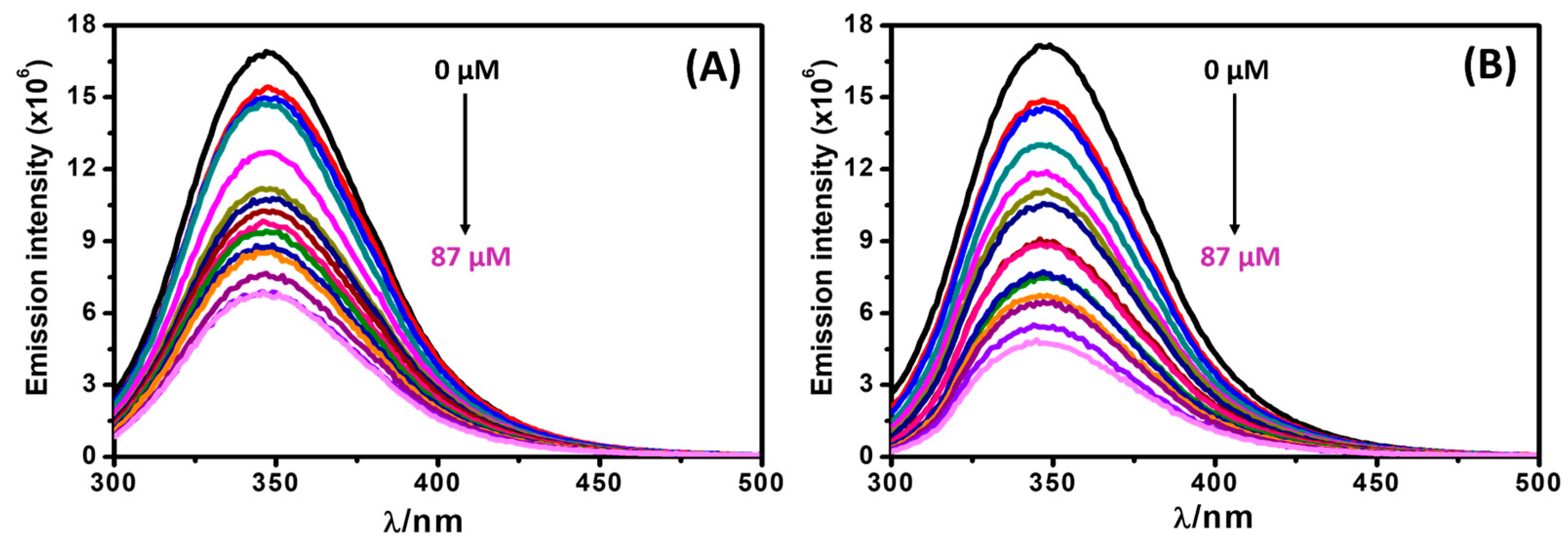
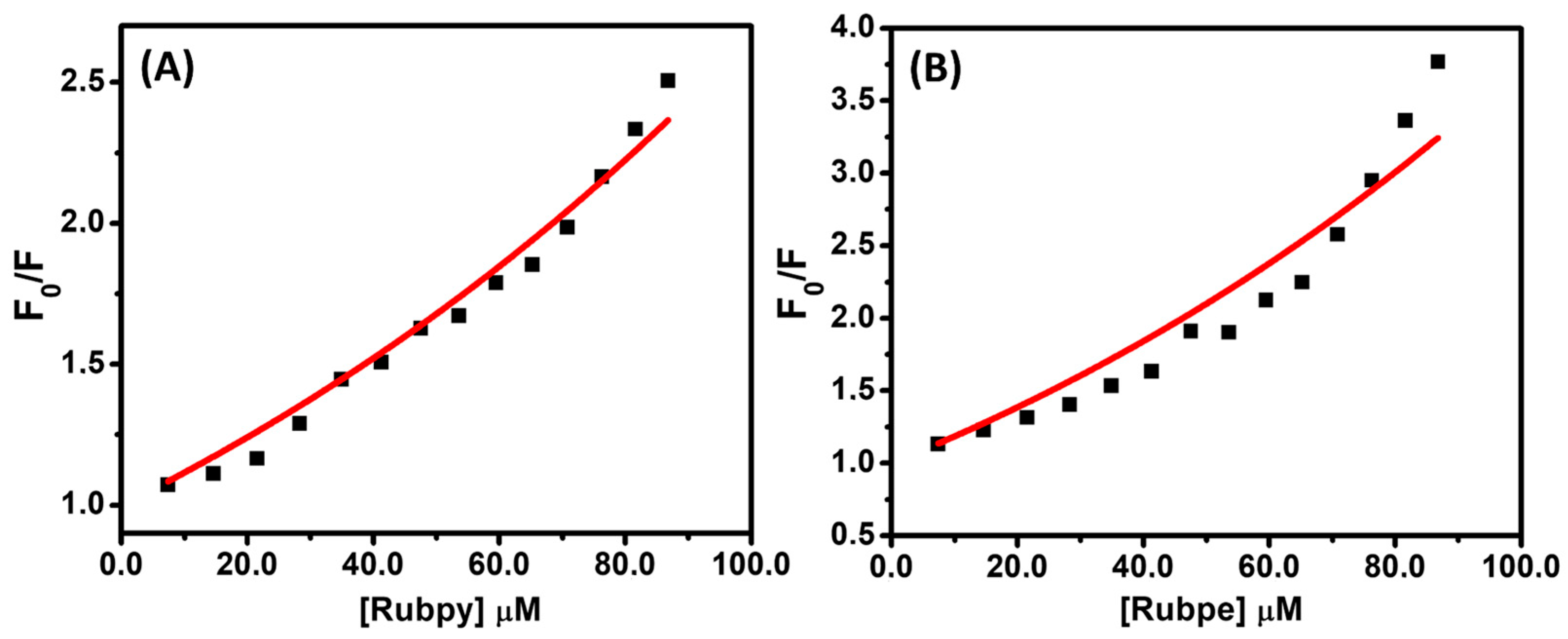
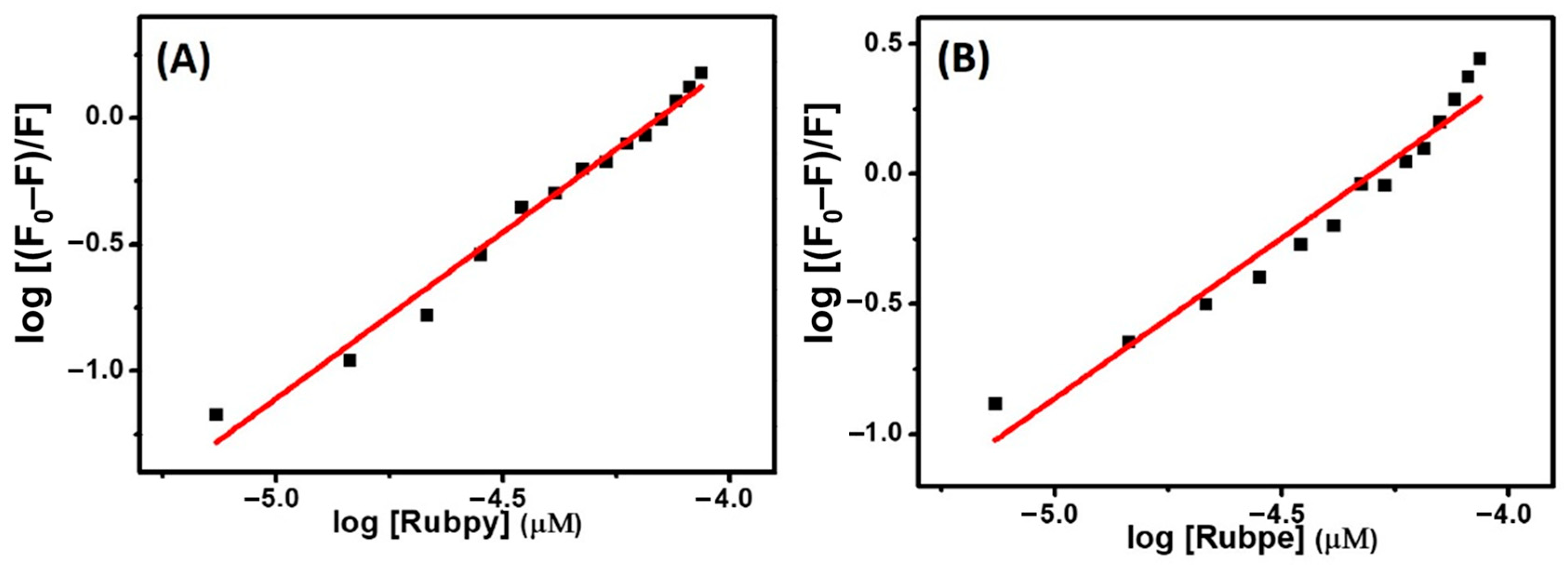
2.2.1. Interaction with Serum Albumin: Fluorescence Quenching and Binding Constants
2.2.2. DNA Interaction and Binding Constants (Kb) of Ruthenium Complexes
2.3. Computational Modeling of Biomolecular Binding
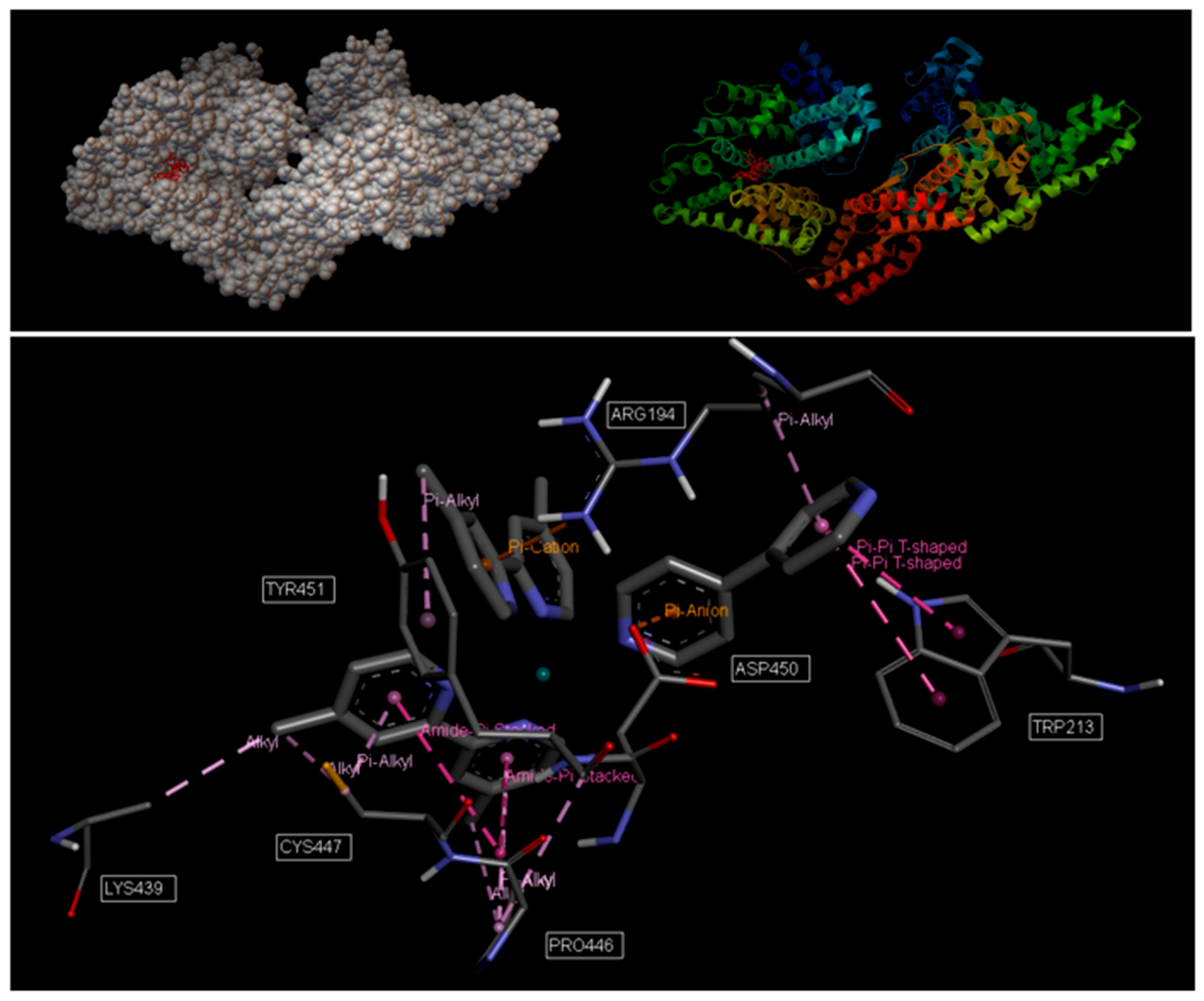
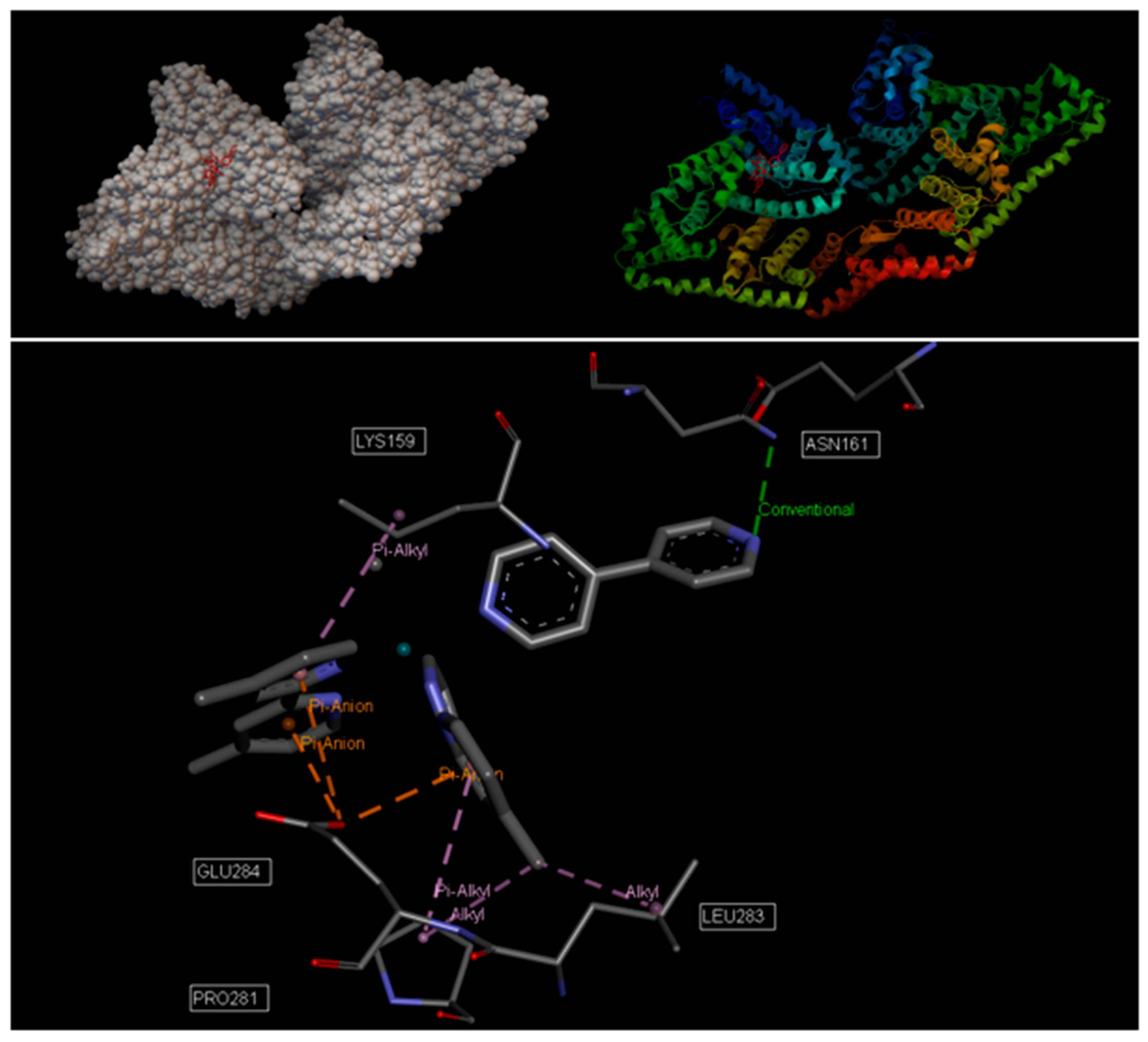
2.3.1. Docking to Serum Albumin: Structural Insights into Binding Sites I and II
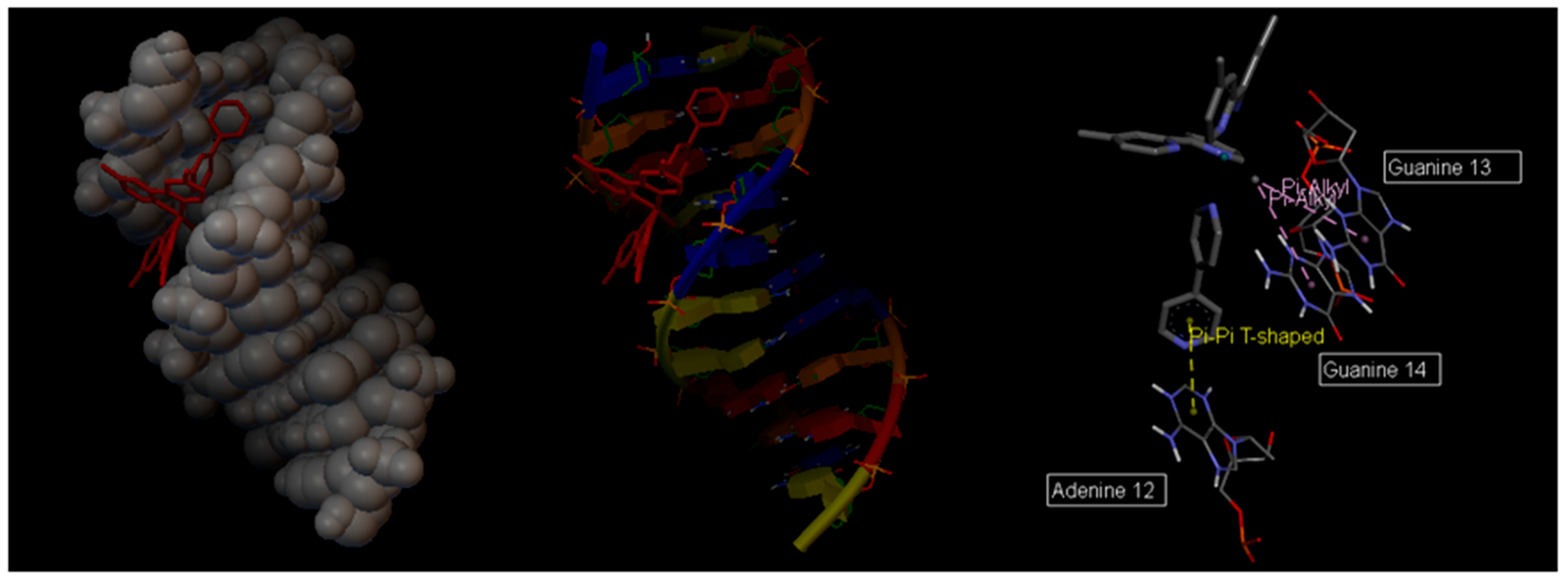
2.3.2. Docking to DNA: Predicted Binding Modes and Interaction Energies
2.4. Biological Consequences of DNA and Protein Interaction
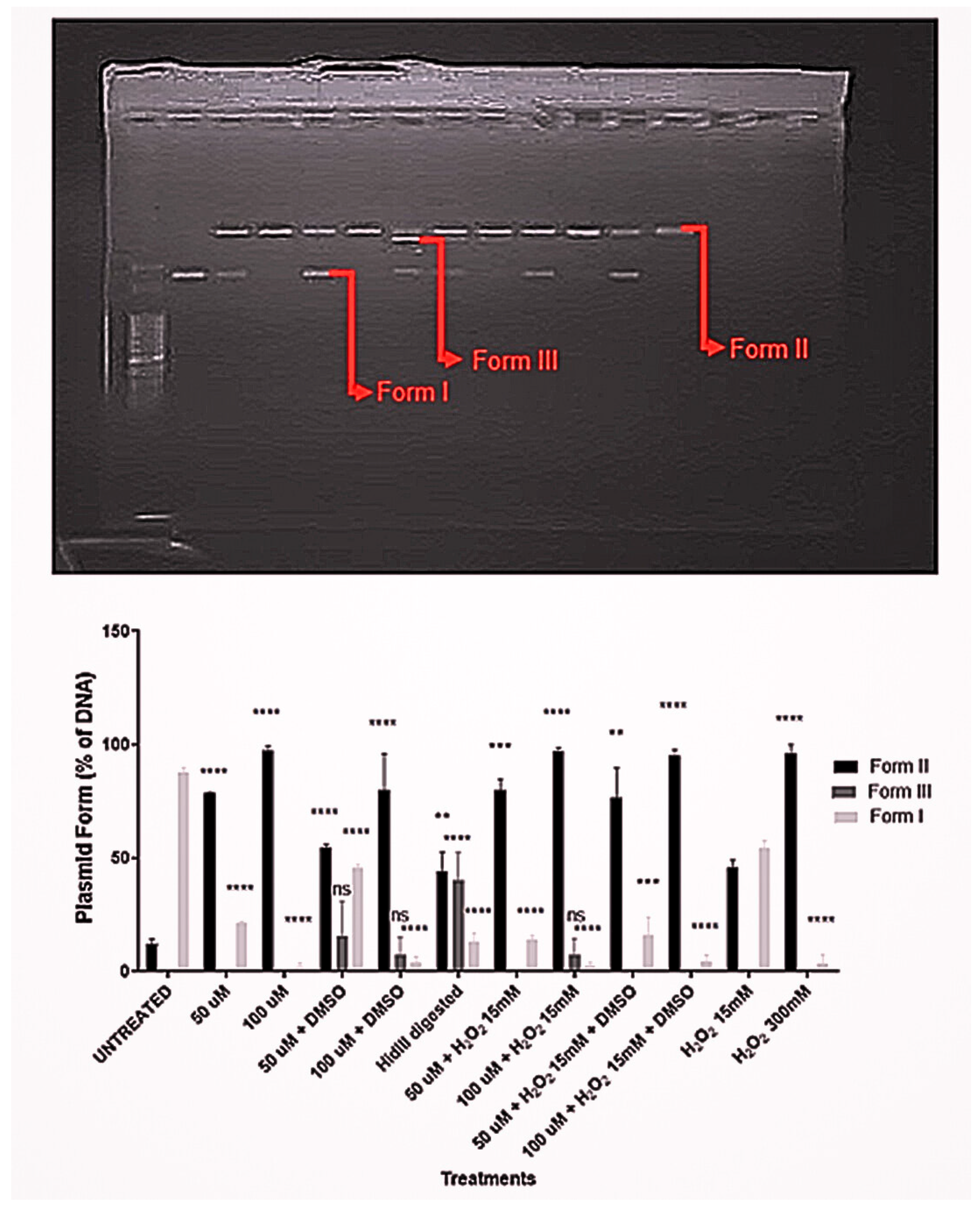
2.4.1. DNA Cleavage Activity of Ruthenium Complexes
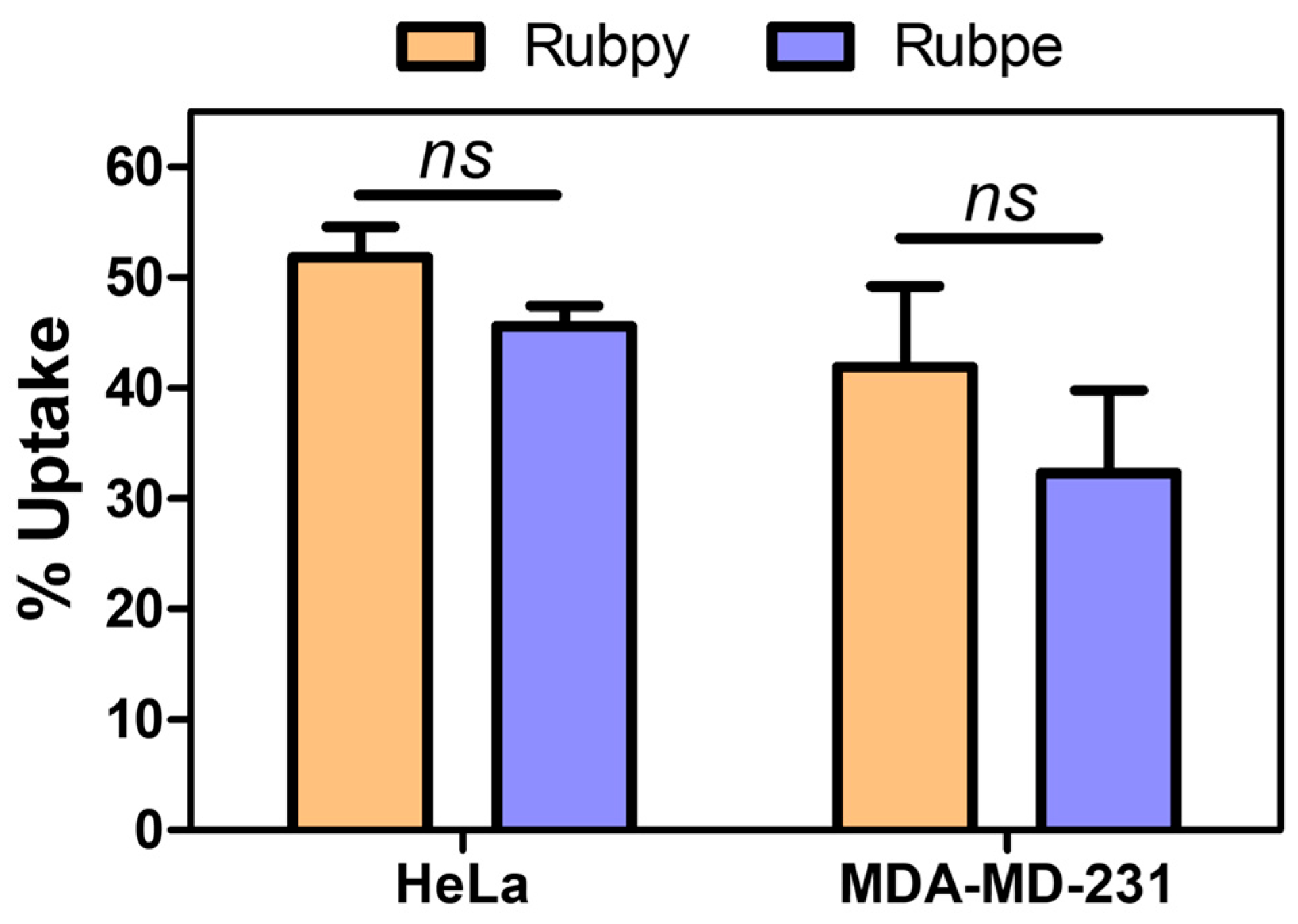
2.4.2. Cellular Uptake in Cancer Cell Lines
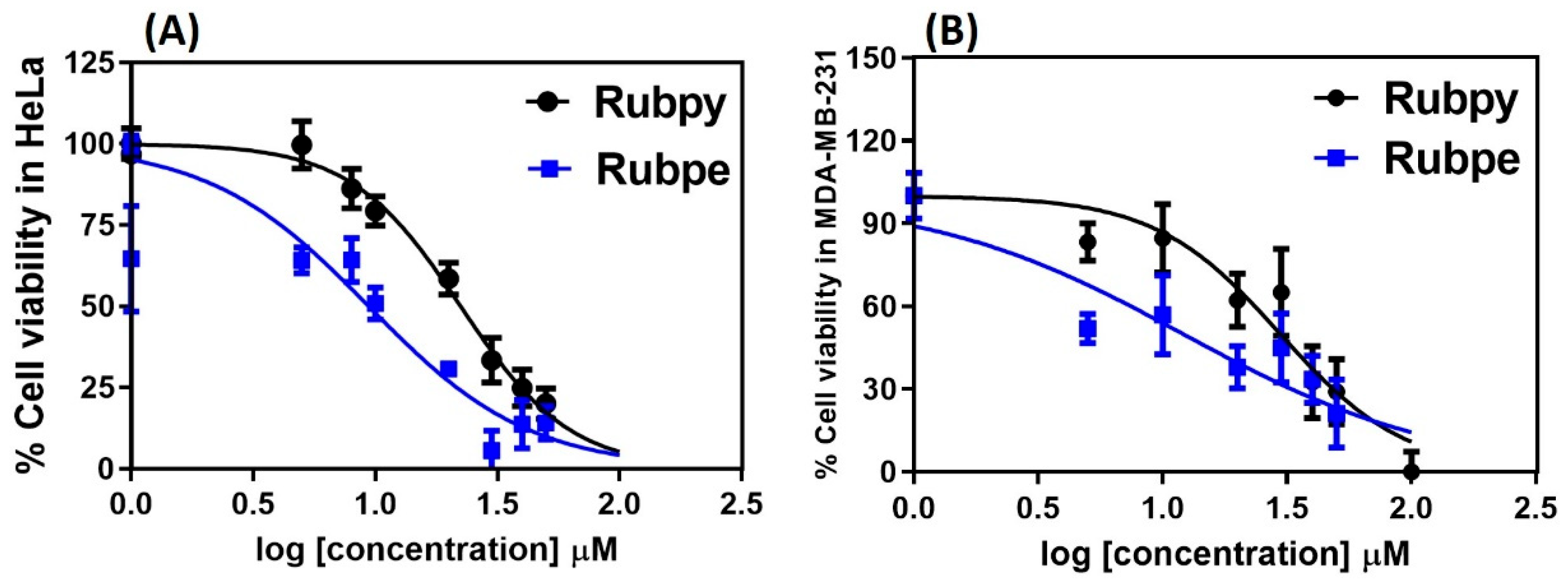
2.4.3. In Vitro Cytotoxicity Activity in HeLa and MDA-MB-231 Cells (MTT Assay)
3. Materials and Methods
3.1. Materials
3.2. Spectroscopic and Electrochemical Measurements
3.3. Studies of Complexes in Aqueous Solution
3.4. Molecular Docking Studies and Ligand Preparation
3.5. Albumin Binding Studies
3.6. Cell Culture
3.7. Cellular Uptake
3.8. Cytotoxicity Activity (MTT Assay)
3.9. DNA Interaction Assay by UV–Vis Spectroscopy
3.10. DNA Cleavage Studies
4. Conclusions
Supplementary Materials
Author Contributions
Funding
Data Availability Statement
Acknowledgments
Conflicts of Interest
Abbreviations
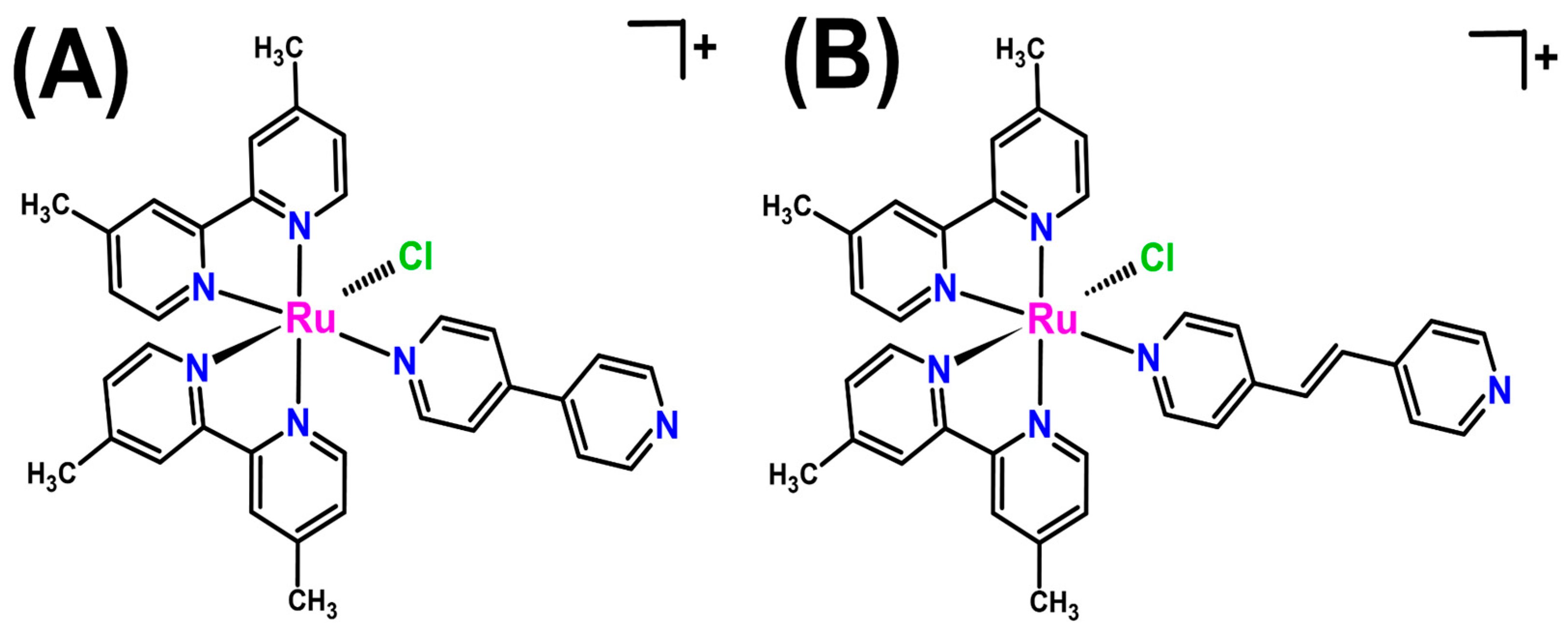
| Rubpy | cis-[Ru(dmbpy)2Cl(bpy)](PF6) |
| Rubpe | cis-[Ru(dmbpy)2Cl(bpe)](PF6) |
| MLCT | metal-to-ligand charge transfer |
| BSA | bovine serum albumin |
References
- Kelland, L. The resurgence of platinum-based cancer chemotherapy. Nat. Rev. Cancer 2007, 7, 573–584. [Google Scholar] [CrossRef] [PubMed]
- Thota, S.; Rodrigues, D.A.; Crans, D.C.; Barreiro, E.J. Ru(II) Compounds: Next-Generation Anticancer Metallotherapeutics? J. Med. Chem. 2018, 61, 5805–5821. [Google Scholar] [CrossRef] [PubMed]
- Alessio, E. Thirty Years of the Drug Candidate NAMI-A and the Myths in the Field of Ruthenium Anticancer Compounds: A Personal Perspective. Eur. J. Inorg. Chem. 2016, 2017, 1549–1560. [Google Scholar] [CrossRef]
- Bashir, M.; Mantoo, I.A.; Arjmand, F.; Tabassum, S.; Yousuf, I. An overview of advancement of organoruthenium (II) complexes as prospective anticancer agents. Coord. Chem. Rev. 2023, 487, 215169. [Google Scholar] [CrossRef]
- Rilak Simović, A.; Masnikosa, R.; Bratsos, I.; Alessio, E. Chemistry and reactivity of ruthenium(II) complexes: DNA/protein binding mode and anticancer activity are related to the complex structure. Coord. Chem. Rev. 2019, 398, 113011. [Google Scholar] [CrossRef]
- Baier, D.; Mendrina, T.; Schoenhacker-Alte, B.; Pirker, C.; Mohr, T.; Rusz, M.; Regner, B.; Schaier, M.; Sgarioto, N.; Raynal, N.J.; et al. The Lipid Metabolism as Target and Modulator of BOLD-100 Anticancer Activity: Crosstalk with Histone Acetylation. Adv. Sci. 2023, 10, e2301939. [Google Scholar] [CrossRef]
- Skoczynska, A.; Lewinski, A.; Pokora, M.; Paneth, P.; Budzisz, E. An Overview of the Potential Medicinal and Pharmaceutical Properties of Ru(II)/(III) Complexes. Int. J. Mol. Sci. 2023, 24, 9512. [Google Scholar] [CrossRef]
- Monro, S.; Colon, K.L.; Yin, H.; Roque, J., III; Konda, P.; Gujar, S.; Thummel, R.P.; Lilge, L.; Cameron, C.G.; McFarland, S.A. Transition Metal Complexes and Photodynamic Therapy from a Tumor-Centered Approach: Challenges, Opportunities, and Highlights from the Development of TLD1433. Chem. Rev. 2019, 119, 797–828. [Google Scholar] [CrossRef]
- Milutinovic, M.M.; Rilak, A.; Bratsos, I.; Klisuric, O.; Vranes, M.; Gligorijevic, N.; Radulovic, S.; Bugarcic, Z.D. New 4′-(4-chlorophenyl)-2,2′:6′,2″-terpyridine ruthenium(II) complexes: Synthesis, characterization, interaction with DNA/BSA and cytotoxicity studies. J. Inorg. Biochem. 2017, 169, 1–12. [Google Scholar] [CrossRef]
- Canovic, P.; Simovic, A.R.; Radisavljevic, S.; Bratsos, I.; Demitri, N.; Mitrovic, M.; Zelen, I.; Bugarcic, Z.D. Impact of aromaticity on anticancer activity of polypyridyl ruthenium(II) complexes: Synthesis, structure, DNA/protein binding, lipophilicity and anticancer activity. JBIC J. Biol. Inorg. Chem. 2017, 22, 1007–1028. [Google Scholar] [CrossRef] [PubMed]
- Lazic, D.; Arsenijevic, A.; Puchta, R.; Bugarcic, Z.D.; Rilak, A. DNA binding properties, histidine interaction and cytotoxicity studies of water soluble ruthenium(ii) terpyridine complexes. Dalton Trans. 2016, 45, 4633–4646. [Google Scholar] [CrossRef]
- Meng, X.; Leyva, M.L.; Jenny, M.; Gross, I.; Benosman, S.; Fricker, B.; Harlepp, S.; Hebraud, P.; Boos, A.; Wlosik, P.; et al. A ruthenium-containing organometallic compound reduces tumor growth through induction of the endoplasmic reticulum stress gene CHOP. Cancer Res. 2009, 69, 5458–5466. [Google Scholar] [CrossRef]
- Huang, H.; Zhang, P.; Yu, B.; Chen, Y.; Wang, J.; Ji, L.; Chao, H. Targeting nucleus DNA with a cyclometalated dipyridophenazineruthenium(II) complex. J. Med. Chem. 2014, 57, 8971–8983. [Google Scholar] [CrossRef]
- Khanvilkar, P.; Pulipaka, R.; Shirsath, K.; Devkar, R.; Chakraborty, D. Organometallic binuclear Ru(II) complexes: Design, synthesis, DNA/BSA binding interactions and in-vitro cytotoxicity against HeLa cell line. Inorg. Chem. Commun. 2019, 102, 134–140. [Google Scholar] [CrossRef]
- Matos, C.P.; Valente, A.; Marques, F.; Adão, P.; Paula Robalo, M.; de Almeida, R.F.M.; Pessoa, J.C.; Santos, I.; Helena Garcia, M.; Tomaz, A.I. New polydentate Ru(III)-Salan complexes: Synthesis, characterization, anti-tumour activity and interaction with human serum proteins. Inorganica Chim. Acta 2013, 394, 616–626. [Google Scholar] [CrossRef]
- Nehru, S.; Veeralakshmi, S.; Kalaiselvam, S.; Subin David, S.P.; Sandhya, J.; Arunachalam, S. Protein binding and antioxidant studies of diimine based emissive surfactant-ruthenium(II) complexes. J. Biomol. Struct. Dyn. 2021, 39, 1535–1546. [Google Scholar] [CrossRef]
- Toma, S.H.; Uemi, M.; Nikolaou, S.; Tomazela, D.M.; Eberlin, M.N.; Toma, H.E. {trans-1, 4-Bis [(4-pyridyl) ethenyl] benzene}(2, 2′-bipyridine) ruthenium (II) Complexes and Their Supramolecular Assemblies with β-Cyclodextrin. Inorg. Chem. 2004, 43, 3521–3527. [Google Scholar] [CrossRef] [PubMed]
- Meyer, T.J.; Huynh, M.H.V. The remarkable reactivity of high oxidation state ruthenium and osmium polypyridyl complexes. Inorg. Chem. 2003, 42, 8140–8160. [Google Scholar] [CrossRef] [PubMed]
- Schafer, F.Q.; Buettner, G.R. Redox environment of the cell as viewed through the redox state of the glutathione disulfide/glutathione couple. Free Radic. Biol. Med. 2001, 30, 1191–1212. [Google Scholar] [CrossRef]
- Rilak, A.; Bratsos, I.; Zangrando, E.; Kljun, J.; Turel, I.; Bugarcic, Z.D.; Alessio, E. New water-soluble ruthenium(II) terpyridine complexes for anticancer activity: Synthesis, characterization, activation kinetics, and interaction with guanine derivatives. Inorg. Chem. 2014, 53, 6113–6126. [Google Scholar] [CrossRef]
- Matias, T.A.; Mangoni, A.P.; Toma, S.H.; Rein, F.N.; Rocha, R.C.; Toma, H.E.; Araki, K. Catalytic Water-Oxidation Activity of a Weakly Coupled Binuclear Ruthenium Polypyridyl Complex. Eur. J. Inorg. Chem. 2016, 2016, 5547–5556. [Google Scholar] [CrossRef]
- Matias, T.A.; Rein, F.N.; Rocha, R.C.; Formiga, A.L.B.; Toma, H.E.; Araki, K. Effects of a strong pi-accepting ancillary ligand on the water oxidation activity of weakly coupled binuclear ruthenium catalysts. Dalton Trans. 2019, 48, 3009–3017. [Google Scholar] [CrossRef]
- Matias, T.A.; Parussulo, A.L.A.; Benavides, P.A.; Guimarães, R.R.; Dourado, A.H.B.; Nakamura, M.; de Torresi, S.I.C.; Bertotti, M.; Araki, K. Polymeric binuclear ruthenium complex as efficient electrocatalyst for oxygen evolution reaction. Electrochim. Acta 2018, 283, 18–26. [Google Scholar] [CrossRef]
- Sun, J.; Huang, Y.; Zheng, C.; Zhou, Y.; Liu, Y.; Liu, J. Ruthenium (II) complexes interact with human serum albumin and induce apoptosis of tumor cells. Biol. Trace Elem. Res. 2015, 163, 266–274. [Google Scholar] [CrossRef] [PubMed]
- Htun, T. A negative deviation from Stern–Volmer equation in fluorescence quenching. J. Fluoresc. 2004, 14, 217–222. [Google Scholar] [CrossRef] [PubMed]
- Kandagal, P.; Ashoka, S.; Seetharamappa, J.; Shaikh, S.; Jadegoud, Y.; Ijare, O.B. Study of the interaction of an anticancer drug with human and bovine serum albumin: Spectroscopic approach. J. Pharm. Biomed. Anal. 2006, 41, 393–399. [Google Scholar] [CrossRef]
- Straight, R.; Spikes, J. Photosensitized oxidation of biomolecules. Singlet O2 1985, 4, 143. [Google Scholar]
- Lakowicz, J.R. Principles of Fluorescence Spectroscopy; Springer: Boston, MA, US, 2006. [Google Scholar]
- Seedher, N.; Agarwal, P. Complexation of fluoroquinolone antibiotics with human serum albumin: A fluorescence quenching study. J. Lumin. 2010, 130, 1841–1848. [Google Scholar] [CrossRef]
- Eftink, M.R.; Ghiron, C.A. Fluorescence quenching studies with proteins. Anal. Biochem. 1981, 114, 199–227. [Google Scholar] [CrossRef]
- B Neto, G.L.; Baptista, E.A.M.; Becca, G.H.S.; Nakatani, H.S.; Souza, V.R.D. Interações competitivas de complexos de rutênio contendo dimetilsulfóxido e ligantes N-heterocíclicos com albumina de soro humao. Química Nova 2020, 43, 261–270. [Google Scholar]
- Lazniewska, J.; Agostino, M.; Hickey, S.M.; Parkinson-Lawrence, E.; Stagni, S.; Massi, M.; Brooks, D.A.; Plush, S.E. Spectroscopic and Molecular Docking Study of the Interaction between Neutral Re(I) Tetrazolate Complexes and Bovine Serum Albumin. Chem. –A Eur. J. 2021, 27, 11406–11417. [Google Scholar] [CrossRef]
- Sirajuddin, M.; Ali, S.; Badshah, A. Drug-DNA interactions and their study by UV-Visible, fluorescence spectroscopies and cyclic voltametry. J. Photochem. Photobiol. B Biol. 2013, 124, 1–19. [Google Scholar] [CrossRef]
- Rehman, S.U.; Sarwar, T.; Husain, M.A.; Ishqi, H.M.; Tabish, M. Studying non-covalent drug-DNA interactions. Arch. Biochem. Biophys. 2015, 576, 49–60. [Google Scholar] [CrossRef] [PubMed]
- Kumar, N.; Kaushal, R.; Awasthi, P. Non-covalent binding studies of transition metal complexes with DNA: A review. J. Mol. Struct. 2023, 1288, 135751. [Google Scholar] [CrossRef]
- de Lavor, T.S.; Teixeira, M.H.S.; de Matos, P.A.; Lino, R.C.; Silva, C.M.F.; do Carmo, M.E.G.; Beletti, M.E.; Patrocinio, A.O.T.; de Oliveira Junior, R.J.; Tsubone, T.M. The impact of biomolecule interactions on the cytotoxic effects of rhenium(I) tricarbonyl complexes. J. Inorg. Biochem. 2024, 257, 112600. [Google Scholar] [CrossRef] [PubMed]
- Zhang, P.; Wang, J.; Huang, H.; Qiao, L.; Ji, L.; Chao, H. Chiral ruthenium(II) complexes with phenolic hydroxyl groups as dual poisons of topoisomerases I and IIalpha. Dalton Trans. 2013, 42, 8907–8917. [Google Scholar] [CrossRef]
- Sun, D.; Liu, Y.; Liu, D.; Zhang, R.; Yang, X.; Liu, J. Stabilization of G-quadruplex DNA, inhibition of telomerase activity and live cell imaging studies of chiral ruthenium(II) complexes. Chem. –A Eur. J. 2012, 18, 4285–4295. [Google Scholar] [CrossRef]
- Nie, Y.; Dai, Z.; Fozia; Zhao, G.; Jiang, J.; Xu, X.; Ying, M.; Wang, Y.; Hu, Z.; Xu, H. Comparative studies on DNA-binding mechanisms between enantiomers of a polypyridyl ruthenium (II) complex. J. Phys. Chem. B 2022, 126, 4787–4798. [Google Scholar] [CrossRef]
- Zou, S.; Li, G.; Rees, T.W.; Jin, C.; Huang, J.; Chen, Y.; Ji, L.; Chao, H. Interfering with DNA High-Order Structures using Chiral Ruthenium(II) Complexes. Chem. –A Eur. J. 2018, 24, 690–698. [Google Scholar] [CrossRef]
- Wang, Y.C.; Qian, C.; Peng, Z.L.; Hou, X.J.; Wang, L.L.; Chao, H.; Ji, L.N. Dual topoisomerase I and II poisoning by chiral Ru(II) complexes containing 2-thiophenylimidazo[4,5-f][1,10]phenanthroline derivatives. J. Inorg. Biochem. 2014, 130, 15–27. [Google Scholar] [CrossRef]
- Dong, Z.; Liu, X.; Tan, L. Biophysical insights into the interaction of two enantiomers of Ru (II) complex [Ru (bpy) 2 (7-CH 3-dppz)] 2+ with the RNA poly (UA⁎ U) triplex. JBIC J. Biol. Inorg. Chem. 2020, 25, 1085–1095. [Google Scholar] [CrossRef]
- Gao, F.; Chao, H.; Wang, J.Q.; Yuan, Y.X.; Sun, B.; Wei, Y.F.; Peng, B.; Ji, L.N. Targeting topoisomerase II with the chiral DNA-intercalating ruthenium(II) polypyridyl complexes. JBIC J. Biol. Inorg. Chem. 2007, 12, 1015–1027. [Google Scholar] [CrossRef] [PubMed]
- Jiang, L.; Liu, X.; Tan, L. Synthesis and characterization of chiral Ru(II) polypyridyl complexes and their binding and stabilizing effects toward triple-helical RNA. J. Inorg. Biochem. 2020, 213, 111263. [Google Scholar] [CrossRef]
- Wang, J.Q.; Zhang, P.Y.; Qian, C.; Hou, X.J.; Ji, L.N.; Chao, H. Mitochondria are the primary target in the induction of apoptosis by chiral ruthenium(II) polypyridyl complexes in cancer cells. JBIC J. Biol. Inorg. Chem. 2014, 19, 335–348. [Google Scholar] [CrossRef]
- Yuan, F.; Chen, X.; Liu, Y.; Zhang, T.; Sun, D.; Liu, J. Chiral ruthenium complexes induce apoptosis of tumor cell and interact with bovine serum albumin. Chirality 2012, 24, 174–180. [Google Scholar] [CrossRef]
- Wen, B.; Liu, X.; Tan, L. Binding and stabilizating effect of RNA triplex poly(U)⋅poly(A)*poly(U) by enantiomers of ruthenium(II) polypyridyl complex [Ru(bpy)2(dppx)]2+. J. Biol. Inorg. Chem. 2023, 28, 509–517. [Google Scholar] [CrossRef]
- Xu, H.; Zheng, K.-C.; Chen, Y.; Li, Y.-Z.; Lin, L.-J.; Li, H.; Zhang, P.-X.; Ji, L.-N. Effects of ligand planarity on the interaction of polypyridyl Ru (II) complexes with DNA. Dalton Trans. 2003, 11, 2260–2268. [Google Scholar] [CrossRef]
- Zhen, Q.-X.; Ye, B.-H.; Zhang, Q.-L.; Liu, J.-G.; Li, H.; Ji, L.-N.; Wang, L. Synthesis, characterization and the effect of ligand planarity of [Ru(bpy)2L] 2+ on DNA binding affinity. J. Inorg. Biochem. 1999, 76, 47–53. [Google Scholar] [CrossRef]
- Kitchen, D.B.; Decornez, H.; Furr, J.R.; Bajorath, J. Docking and scoring in virtual screening for drug discovery: Methods and applications. Nat. Rev. Drug Discov. 2004, 3, 935–949. [Google Scholar] [CrossRef] [PubMed]
- Hu, X.; Liu, N.Y.; Deng, Y.Q.; Wang, S.; Liu, T.; Liu, X.W. Photoinduced DNA Cleavage and Photocytotoxic of Phenanthroline-Based Ligand Ruthenium Compounds. Molecules 2021, 26, 3471. [Google Scholar] [CrossRef] [PubMed]
- Sangeetha, S.; Murali, M. Cytotoxic Ruthenium(II) Complexes Containing a Dangling Pyridine: Selectivity for Diseased Cells Mediated by pH-Dependent DNA Binding. Inorg. Chem. 2022, 61, 2864–2882. [Google Scholar] [CrossRef]
- Sudhindra, P.; Ajay Sharma, S.; Roy, N.; Moharana, P.; Paira, P. Recent advances in cytotoxicity, cellular uptake and mechanism of action of ruthenium metallodrugs: A review. Polyhedron 2020, 192, 114827. [Google Scholar] [CrossRef]
- Chen, L.M.; Peng, F.; Li, G.D.; Jie, X.M.; Cai, K.R.; Cai, C.; Zhong, Y.; Zeng, H.; Li, W.; Zhang, Z.; et al. he studies on the cytotoxicity in vitro, cellular uptake, cell cycle arrest and apoptosis-inducing properties of ruthenium methylimidazole complex [Ru(MeIm)4(p-cpip)]2+. J. Inorg. Biochem. 2016, 156, 64–74. [Google Scholar] [CrossRef] [PubMed]
- Mehanna, S.; Mansour, N.; Audi, H.; Bodman-Smith, K.; Mroueh, M.A.; Taleb, R.I.; Daher, C.F.; Khnayzer, R.S. Enhanced cellular uptake and photochemotherapeutic potential of a lipophilic strained Ru(ii) polypyridyl complex. RSC Adv. 2019, 9, 17254–17265. [Google Scholar] [CrossRef] [PubMed]
- Piccolo, M.; Misso, G.; Ferraro, M.G.; Riccardi, C.; Capuozzo, A.; Zarone, M.R.; Maione, F.; Trifuoggi, M.; Stiuso, P.; D’Errico, G.; et al. Exploring cellular uptake, accumulation and mechanism of action of a cationic Ru-based nanosystem in human preclinical models of breast cancer. Sci. Rep. 2019, 9, 7006. [Google Scholar] [CrossRef]
- Tan, C.; Lai, S.; Wu, S.; Hu, S.; Zhou, L.; Chen, Y.; Wang, M.; Zhu, Y.; Lian, W.; Peng, W.; et al. Nuclear permeable ruthenium(II) beta-carboline complexes induce autophagy to antagonize mitochondrial-mediated apoptosis. J. Med. Chem. 2010, 53, 7613–7624. [Google Scholar] [CrossRef] [PubMed]
- Zhang, S.Q.; Meng, T.T.; Li, J.; Hong, F.; Liu, J.; Wang, Y.; Gao, L.H.; Zhao, H.; Wang, K.Z. Near-IR/Visible-Emitting Thiophenyl-Based Ru(II) Complexes: Efficient Photodynamic Therapy, Cellular Uptake, and DNA Binding. Inorg. Chem. 2019, 58, 14244–14259. [Google Scholar] [CrossRef]
- Omondi, R.O.; Ojwach, S.O.; Jaganyi, D. Review of comparative studies of cytotoxic activities of Pt(II), Pd(II), Ru(II)/(III) and Au(III) complexes, their kinetics of ligand substitution reactions and DNA/BSA interactions. Inorganica Chim. Acta 2020, 512, 119883. [Google Scholar] [CrossRef]
- Hess, J.; Huang, H.; Kaiser, A.; Pierroz, V.; Blacque, O.; Chao, H.; Gasser, G. Evaluation of the medicinal potential of two ruthenium (II) polypyridine complexes as one-and two-photon photodynamic therapy photosensitizers. Chem. –A Eur. J. 2017, 23, 9888–9896. [Google Scholar] [CrossRef]
- Srishailam, A.; Gabra, N.M.; Kumar, Y.P.; Reddy, K.L.; Devi, C.S.; Kumar, D.A.; Singh, S.S.; Satyanarayana, S. Synthesis, characterization; DNA binding and antitumor activity of ruthenium (II) polypyridyl complexes. J. Photochem. Photobiol. B Biol. 2014, 141, 47–58. [Google Scholar] [CrossRef]
- Deepika, N.; Devi, C.S.; Kumar, Y.P.; Reddy, K.L.; Reddy, P.V.; Kumar, D.A.; Singh, S.S.; Satyanarayana, S. DNA-binding, cytotoxicity, cellular uptake, apoptosis and photocleavage studies of Ru (II) complexes. J. Photochem. Photobiol. B Biol. 2016, 160, 142–153. [Google Scholar] [CrossRef]
- Wang, C.; Yu, Q.; Yang, L.; Liu, Y.; Sun, D.; Huang, Y.; Zhou, Y.; Zhang, Q.; Liu, J. Ruthenium (II) polypyridyl complexes stabilize the bcl-2 promoter quadruplex and induce apoptosis of Hela tumor cells. Biometals 2013, 26, 387–402. [Google Scholar] [CrossRef]
- Yu, Q.; Liu, Y.; Xu, L.; Zheng, C.; Le, F.; Qin, X.; Liu, Y.; Liu, J. Ruthenium (II) polypyridyl complexes: Cellular uptake, cell image and apoptosis of HeLa cancer cells induced by double targets. Eur. J. Med. Chem. 2014, 82, 82–95. [Google Scholar] [CrossRef]
- Zeng, L.; Chen, Y.; Huang, H.; Wang, J.; Zhao, D.; Ji, L.; Chao, H. Cyclometalated Ruthenium(II) Anthraquinone Complexes Exhibit Strong Anticancer Activity in Hypoxic Tumor Cells. Chem. –A Eur. J. 2015, 21, 15308–15319. [Google Scholar] [CrossRef]
- Erenburg, S.B.; Trubina, S.V.; Yukhin, Y.M.; Sharafutdinov, M.R. Structural characteristics of amorphous K-Bi citrate (De-Nol) and its aqueous solutions from EXAFS spectra. J. Inorg. Biochem. 2017, 166, 94–99. [Google Scholar] [CrossRef]
- Mendoza-Ferri, M.G.; Hartinger, C.G.; Mendoza, M.A.; Groessl, M.; Egger, A.E.; Eichinger, R.E.; Mangrum, J.B.; Farrell, N.P.; Maruszak, M.; Bednarski, P.J.; et al. Transferring the concept of multinuclearity to ruthenium complexes for improvement of anticancer activity. J. Med. Chem. 2009, 52, 916–925. [Google Scholar] [CrossRef]
- Giannini, F.; Paul, L.E.H.; Furrer, J.; Therrien, B.; Süss-Fink, G. Highly cytotoxic diruthenium trithiolato complexes of the type [(η6-p-MeC6H4Pri)2Ru2(μ2-SR)3]+: Synthesis, characterization, molecular structure and in vitro anticancer activity. New J. Chem. 2013, 37, 3503–3511. [Google Scholar] [CrossRef]
- Conti, L.; Macedi, E.; Giorgi, C.; Valtancoli, B.; Fusi, V. Combination of light and Ru (II) polypyridyl complexes: Recent advances in the development of new anticancer drugs. Coord. Chem. Rev. 2022, 469, 214656. [Google Scholar] [CrossRef]
- Zeng, L.; Gupta, P.; Chen, Y.; Wang, E.; Ji, L.; Chao, H.; Chen, Z.-S. The development of anticancer ruthenium (II) complexes: From single molecule compounds to nanomaterials. Chem. Soc. Rev. 2017, 46, 5771–5804. [Google Scholar] [CrossRef] [PubMed]
- Wang, J.-Q.; Zhao, Z.-Z.; Bo, H.-B.; Chen, Q.-Z. Synthesis, characterization, and antitumor properties of ruthenium(II) anthraquinone complexes. J. Coord. Chem. 2016, 69, 177–189. [Google Scholar] [CrossRef]
- Li, G.; Sun, L.; Ji, L.; Chao, H. Ruthenium(ii) complexes with dppz: From molecular photoswitch to biological applications. Dalton Trans. 2016, 45, 13261–13276. [Google Scholar] [CrossRef]
- Parussulo, A.L.A.; Matias, T.A.; Guimaraes, R.R.; Toma, S.H.; Araki, K.; Toma, H.E. Accessing the charge separation effects in dye-sensitized solar cells based on a vectorial planning of supramolecular ruthenium dyes. Inorganica Chim. Acta 2016, 453, 764–770. [Google Scholar] [CrossRef]
- Parker, C.; Barnes, W. Some experiments with spectrofluorimeters and filter fluorimeters. Analyst 1957, 82, 606–618. [Google Scholar] [CrossRef]
- Kumar Panigrahi, S.; Kumar Mishra, A. Inner filter effect in fluorescence spectroscopy: As a problem and as a solution. J. Photochem. Photobiol. C Photochem. Rev. 2019, 41, 100318. [Google Scholar] [CrossRef]
- MacDonald, B.C.; Lvin, S.J.; Patterson, H. Correction of fluorescence inner filter effects and the partitioning of pyrene to dissolved organic carbon. Anal. Chim. Acta 1997, 338, 155–162. [Google Scholar] [CrossRef]
- do Carmo, M.E.G.; de Matos, P.A.; Maia, P.I.S.; Machado, A.E.H.; Beletti, M.E.; Tsubone, T.M.; Patrocinio, A.O.T. The photophysics of Ir(III) cyclometalated complexes containing the 2-(2-pyridyl)benzimidazole ancillary ligand: Protonation effect and their potential as specific lysosome probes in cells. J. Photochem. Photobiol. A Chem. 2024, 448, 115339. [Google Scholar] [CrossRef]
- Tsubone, T.M.; Martins, W.K.; Pavani, C.; Junqueira, H.C.; Itri, R.; Baptista, M.S. Enhanced efficiency of cell death by lysosome-specific photodamage. Sci. Rep. 2017, 7, 6734. [Google Scholar] [CrossRef]
- Mosmann, T. Rapid colorimetric assay for cellular growth and survival: Application to proliferation and cytotoxicity assays. J. Immunol. Methods 1983, 65, 55–63. [Google Scholar] [CrossRef]
- Riss, T.; Niles, A.; Minor, L. Cell viability assays assay guidance manual. In Assay Guide Manual; Eli Lilly & Company: Bethesda, MD, USA, 2004. [Google Scholar]
- ISO 10993-5:2009; Biological Evaluation of Medical Devices—Part 5: Tests for In Vitro Cytotoxicity Standardization. International Organization for Standardization: Geneva, Switzerland, 2009.



| Complexes | KSV (×105 M−1) | Kb (×105 M−1) | n |
|---|---|---|---|
| Rubpy | 0.61 ± 0.02 | 2.89 ± 0.04 | 1.31 |
| Rubpe | 1.27 ± 0.08 | 1.97 ± 0.03 | 1.23 |
| Complexes | Kb (×103 M−1) |
|---|---|
| Rubpy | 1.47 ± 0.50 |
| Rubpe | 0.13 ± 0.03 |
| Complexes | IC50 (μM) | |
|---|---|---|
| HeLa | MDA-MB-231 | |
| Rubpy | 22.37 ± 0.03 | 29.69 ± 0.06 |
| Rubpe | 9.41 ± 0.04 | 12.08 ± 0.10 |
| Complexes | IC50 (μM) | Ref. |
|---|---|---|
| Rubpy | 22.37 ± 0.03 | This work |
| Rubpe | 9.41 ± 0.04 | This work |
| [Ru(phen)2(tip)]2+ | 18.56 ± 0.67 | [63] |
| [Ru(phen)2(bppp)]2+ | 32.0 ± 1.2 | [61] |
| [Ru(phen)2(5-idip)]2+ | 11.7 ± 1.2 | [64] |
| [Ru(phen)2BrIPC]2+ | 18.15 | [60] |
| [Ru(phen)2(dppz-7,8-(OMe)2)]2+ | 36.5 | [60] |
| Cisplatin | 12.0 ± 0.52 | [61] |
Disclaimer/Publisher’s Note: The statements, opinions and data contained in all publications are solely those of the individual author(s) and contributor(s) and not of MDPI and/or the editor(s). MDPI and/or the editor(s) disclaim responsibility for any injury to people or property resulting from any ideas, methods, instructions or products referred to in the content. |
© 2026 by the authors. Licensee MDPI, Basel, Switzerland. This article is an open access article distributed under the terms and conditions of the Creative Commons Attribution (CC BY) license.
Share and Cite
de Matos, P.A.; do Carmo, M.E.G.; Parussulo, A.L.A.; Silva, C.M.F.; Lino, R.C.; Toma, H.E.; Beletti, M.E.; de Oliveira Júnior, R.J.; Patrocinio, A.O.d.T.; Matias, T.A.; et al. Ligand Rigidity and π-Surface Modulate Biomolecular Interactions and Cytotoxicity in Ru(II) Polypyridyl Complexes. Inorganics 2026, 14, 63. https://doi.org/10.3390/inorganics14020063
de Matos PA, do Carmo MEG, Parussulo ALA, Silva CMF, Lino RC, Toma HE, Beletti ME, de Oliveira Júnior RJ, Patrocinio AOdT, Matias TA, et al. Ligand Rigidity and π-Surface Modulate Biomolecular Interactions and Cytotoxicity in Ru(II) Polypyridyl Complexes. Inorganics. 2026; 14(2):63. https://doi.org/10.3390/inorganics14020063
Chicago/Turabian Stylede Matos, Patrícia Alves, Marcos Eduardo Gomes do Carmo, André Luis Araújo Parussulo, Clara Maria Faria Silva, Ricardo Campos Lino, Henrique Eisi Toma, Marcelo Emílio Beletti, Robson José de Oliveira Júnior, Antônio Otávio de Toledo Patrocinio, Tiago Araújo Matias, and et al. 2026. "Ligand Rigidity and π-Surface Modulate Biomolecular Interactions and Cytotoxicity in Ru(II) Polypyridyl Complexes" Inorganics 14, no. 2: 63. https://doi.org/10.3390/inorganics14020063
APA Stylede Matos, P. A., do Carmo, M. E. G., Parussulo, A. L. A., Silva, C. M. F., Lino, R. C., Toma, H. E., Beletti, M. E., de Oliveira Júnior, R. J., Patrocinio, A. O. d. T., Matias, T. A., & Tsubone, T. M. (2026). Ligand Rigidity and π-Surface Modulate Biomolecular Interactions and Cytotoxicity in Ru(II) Polypyridyl Complexes. Inorganics, 14(2), 63. https://doi.org/10.3390/inorganics14020063