1. Introduction
Hydrogen, as an energy vector, offers a sustainable alternative to fossil fuels, addressing global challenges like climate change and rising energy demand [
1]. Its high gravimetric energy density, significantly higher than that of conventional fuels, makes it an attractive option for many practical applications. However, developing efficient storage systems remains critical for the widespread usage of hydrogen [
2,
3,
4].
Hydrogen is mainly stored in three primary forms: as a compressed gas, cryogenic liquid, or solid-state material. Compressed and liquid hydrogen storage face challenges such as high pressure, cryogenic temperature, and high costs. Solid-state storage in the form of metal hydrides could potentially provide safe storage with high volumetric density under relatively mild temperature and pressure conditions [
2,
5,
6]. Solid-state storage involves the storage of hydrogen, either on the surface of solids through Van der Waals interactions or within solids, by forming chemical bonds with the metal atoms to form metal hydrides [
7,
8].
Among metal hydrides, TiFe-based alloys are promising materials for hydrogen storage due to their abundance, low cost, and good reversibility during hydrogen absorption and desorption [
9,
10,
11,
12]. The TiFe alloy is a well-known AB-type intermetallic compound capable of storing approximately 1.86 wt% of hydrogen, first reported by Reilly and Wiswall in 1974 [
13].
A major limitation of TiFe alloys is the sluggish kinetics during the first hydrogenation. During air exposure, a surface oxide layer is naturally formed which acts as a barrier for hydrogen diffusion into the alloy. As a result, when TiFe alloy is exposed to hydrogen, a certain time is needed for penetration of hydrogen into the alloy and reaction with metal atoms. This period is known as the incubation time. Once this barrier is overcome, the hydrogenation can proceed [
14,
15].
To break the oxide layer, and start the hydrogen absorption reaction, Reilly and Wiswall used the method of heating the alloy to 400 °C, followed by cooling and applying a high hydrogen pressure of approximately 60 bars [
13]. This process had to be repeated several times until the alloy could be fully hydrided. This method has since been widely used in numerous studies on TiFe alloys [
16,
17].
Adding transition elements such as Zr [
18,
19], Mn [
20,
21,
22], Cr [
10,
20], and Y [
23] can significantly improve the first hydrogenation kinetics by promoting the formation of secondary phases that facilitate hydrogen diffusion. Mechanical deformation techniques like ball milling [
24,
25], cold rolling [
26,
27], and high-pressure torsion [
28] are also beneficial for improving first hydrogenation kinetics by creating grain boundaries and cracks, which act as pathways for hydrogen to penetrate the oxide layer. Furthermore, several studies have shown that powder processing methods like gas atomization could enhance the first hydrogenation properties of TiFe-based alloys by producing a finer microstructure [
27,
29,
30]. Ulate-Kolitsky et al. compared alloys synthesized by gas atomization and induction melting, concluding that gas atomization resulted in a much finer microstructure and a TiFe matrix with a more refined distribution of secondary phases [
27].
Previous research has indicated that the hydrogen absorption process generally follows an Arrhenius-type mechanism, and there have been attempts to calculate the activation energy of metal hydride formation in these alloys [
22,
31,
32,
33,
34]. Bowman and Tadlock [
33] investigated the hydrogen diffusion rate in TiFeH phase using nuclear magnetic resonance (NMR) techniques, and the temperature dependence of the proton relaxation rate suggested Arrhenius behavior, leading to the calculation of activation energy as 31.8 kJ/mol. Chung and Lee [
34] demonstrated that hydrogen absorption kinetics of TiFe alloys improve with partial substitution of Mn and Ni for Fe. They found that the hydriding rate depends on the difference between the applied pressure and the equilibrium pressure, and from Arrhenius plots of the rate constants versus 1/T, they calculated the activation energies to be 33.5 kJ/mol for TiFe, 32.6 kJ/mol for TiFe
0.85Mn
0.15, and 31.8 kJ/mol for TiFe
0.9Ni
0.1.
The above-mentioned studies calculated the activation energy associated with hydrogen absorption after the alloy had already been hydrogenated, and the incubation stage caused by the surface oxide layer was no longer present. However, the first hydrogenation, where the oxide is broken, is critical as it can significantly influence the cost and efficiency of metal hydride formation. In the present study, we systematically investigate the first hydrogenation behavior of a TiFe-based alloy (Ti
48.8Fe
46.0Mn
5.2) produced by gas atomization. This composition was selected because Mn substitution could promote the formation of secondary phases that facilitate hydrogen diffusion [
20,
21,
22]. Unlike previous works, which focused only on alloys that were already subjected to a few hydrogenation/dehydrogenation steps, this study focuses specifically on the first hydrogenation. The effects of temperature, constant driving force, and hydrogen pressure on the incubation time of the first hydrogenation were investigated. To our knowledge, this is the first systematic investigation of how working conditions influence the first hydrogenation of a TiFe-based alloy.
2. Results and Discussion
The microstructure, crystal structure, and first hydrogenation of Ti
48.8Fe
46.0Mn
5.2 alloy were reported in our earlier paper [
35]. It was found that the microstructure consisted of a main TiFe matrix and a filamentous Ti
2Fe-like phase. The main TiFe phase exhibited a BCC crystal structure with a lattice parameter of 2.9828 ± 0.0004 Å.
As reported in our previous study, the as-received atomized Ti48.8Fe46.0Mn5.2 alloy was unable to absorb hydrogen under two different test conditions: (i) at room temperature under 20 bars H2 pressure, and (ii) at 363 K under 45 bars H2. To activate the alloy, it was subjected to five passes of cold rolling (5CR) in the air. After cold rolling, the obtained flakes and powders were manually crushed in air into powder using a hardened steel mortar and pestle. The resulting powder had a particle size distribution ranging from 45 to 212 μm. This obtained powder was subsequently used for the hydrogenation tests. The 5CR alloy successfully absorbed hydrogen under both above-mentioned testing conditions. Given that cold rolling in air successfully activated the material, and considering the industrial collaboration of the research and the practical convenience of cold rolling in air, all further cold rolling steps were conducted in air.
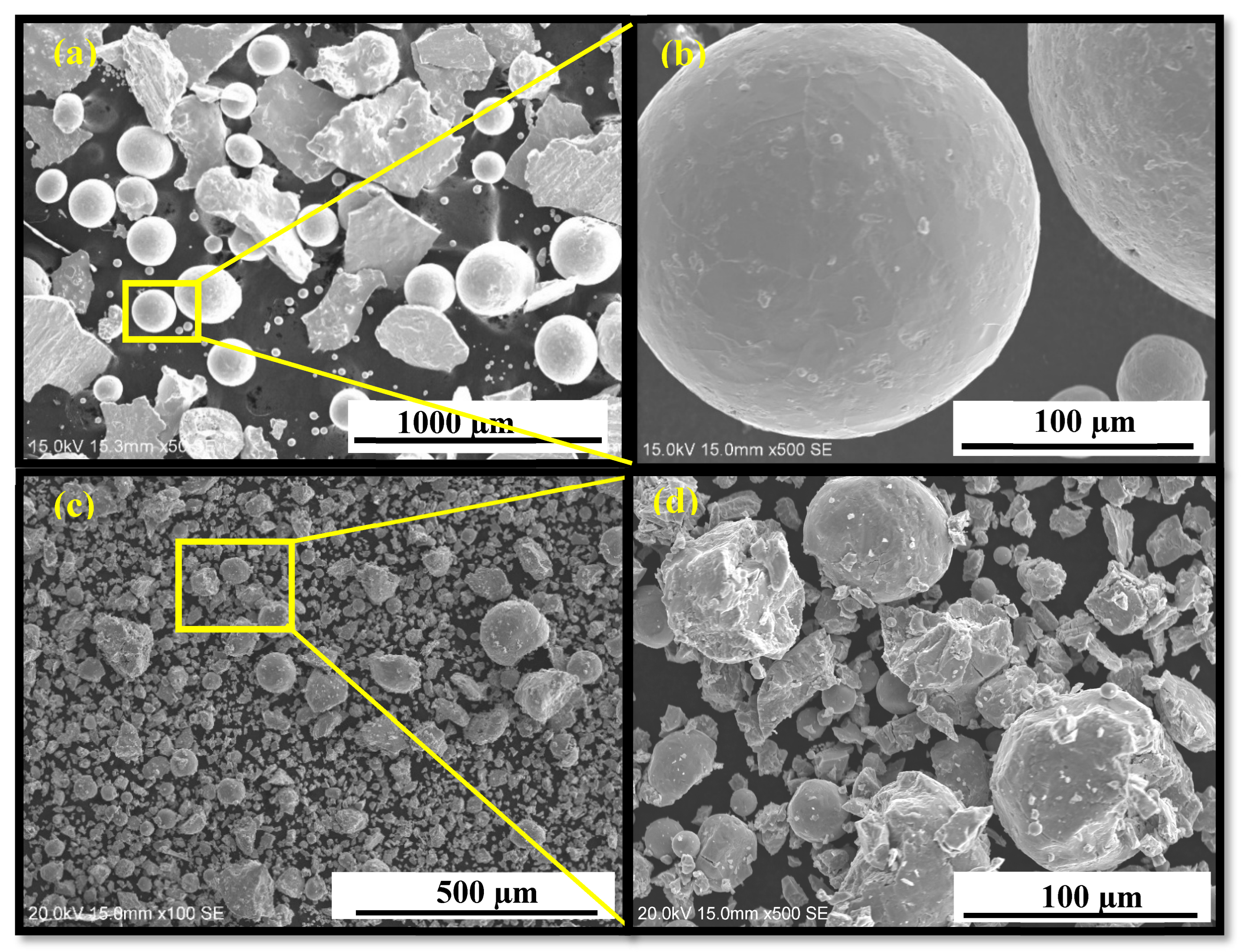
Figure 1 presents the morphology of the as-received and cold-rolled powders. A reduction in particle size is evident after cold rolling, along with the formation of cracks on the powder surfaces. As shown in
Figure 1a, a combination of spherical and non-spherical particles was observed in the atomized powder. The spherical particles have a size distribution from 20 µm up to 300 µm, while non-spherical particles fall within the 100–400 µm range.
Figure 1c shows that after five passes of cold rolling, the average particle size decreased significantly. Most particles were reduced to below 20 µm, although some larger particles (~100 µm) remained. In addition to the decrease in particle size, cold rolling introduced numerous cracks and surface defects which are clearly visible under the higher magnification of
Figure 1d. These morphological changes, including particle size reduction and the formation of cracks and defects, enhance hydrogen diffusion and facilitate hydrogen absorption. This effect has been observed in other alloys such as TiFe [
26,
27], LaNi
5 [
36], and Mg [
37,
38].
After finding that five passes of cold rolling effectively regenerate the Ti48.8Fe46.0Mn5.2 alloy for hydrogen absorption, the next step was to evaluate the first hydrogenation parameters systematically. In the following sections, we investigate the effects of temperature, constant driving force, and hydrogen pressure on the first hydrogenation behavior. To prepare the alloy for hydrogen absorption, all kinetic experiments were conducted on samples subjected to 5 cold rolling passes prior to each test.
2.1. Effect of Temperature on First Hydrogenation of Ti48.8Fe46.0Mn5.2-5CR
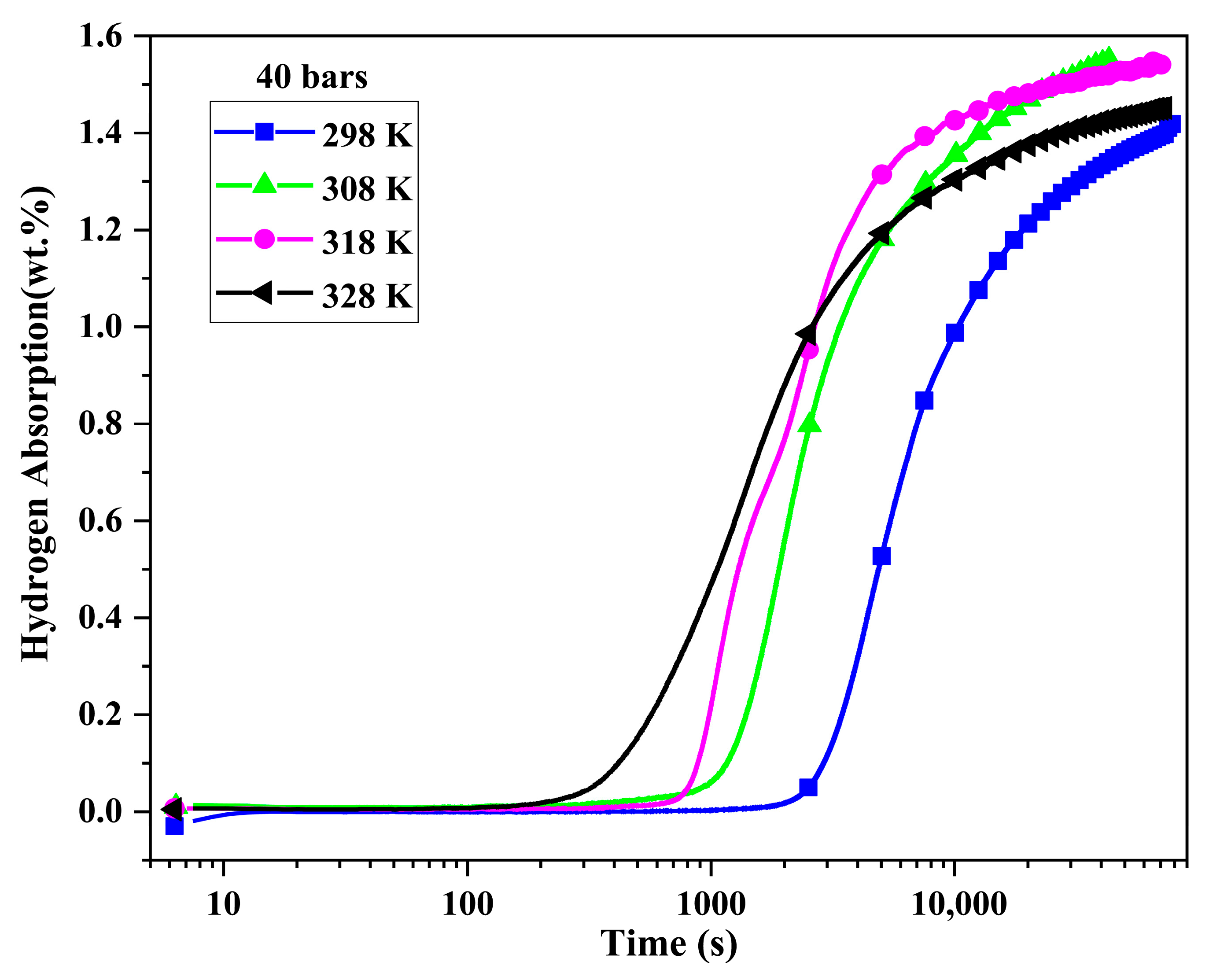
The effect of temperature on the first hydrogenation was investigated by measuring the incubation time at 298 K, 308 K, 318 K, and 328 K under a hydrogen pressure of 40 bars.
Figure 2 shows the first hydrogenation kinetics of the of Ti
48.8Fe
46.0Mn
5.2-5CR alloy at different temperatures under a hydrogen pressure of 40 bars. We see that the incubation time decreases with increasing temperature from approximately 3000 s at 298 K to 330 s at 328 K.
The fact that incubation time varies with temperature indicates that the process may follow an Arrhenius-type behavior. The Arrhenius equation describes the relationship between the rate of a chemical reaction and temperature, and is expressed as
where
k is the rate constant of the chemical reaction,
A is the pre-exponential factor or Arrhenius factor, a constant related to the frequency of collisions of reacting molecules (s−1),
Ea is the activation energy for the reaction (J/mol),
R is the universal gas constant (8.314 J/(mol K)),
T is the absolute temperature (K).
Since incubation time (t) is inversely proportional to the rate constant:
Then, Equation (1) could be written as
In
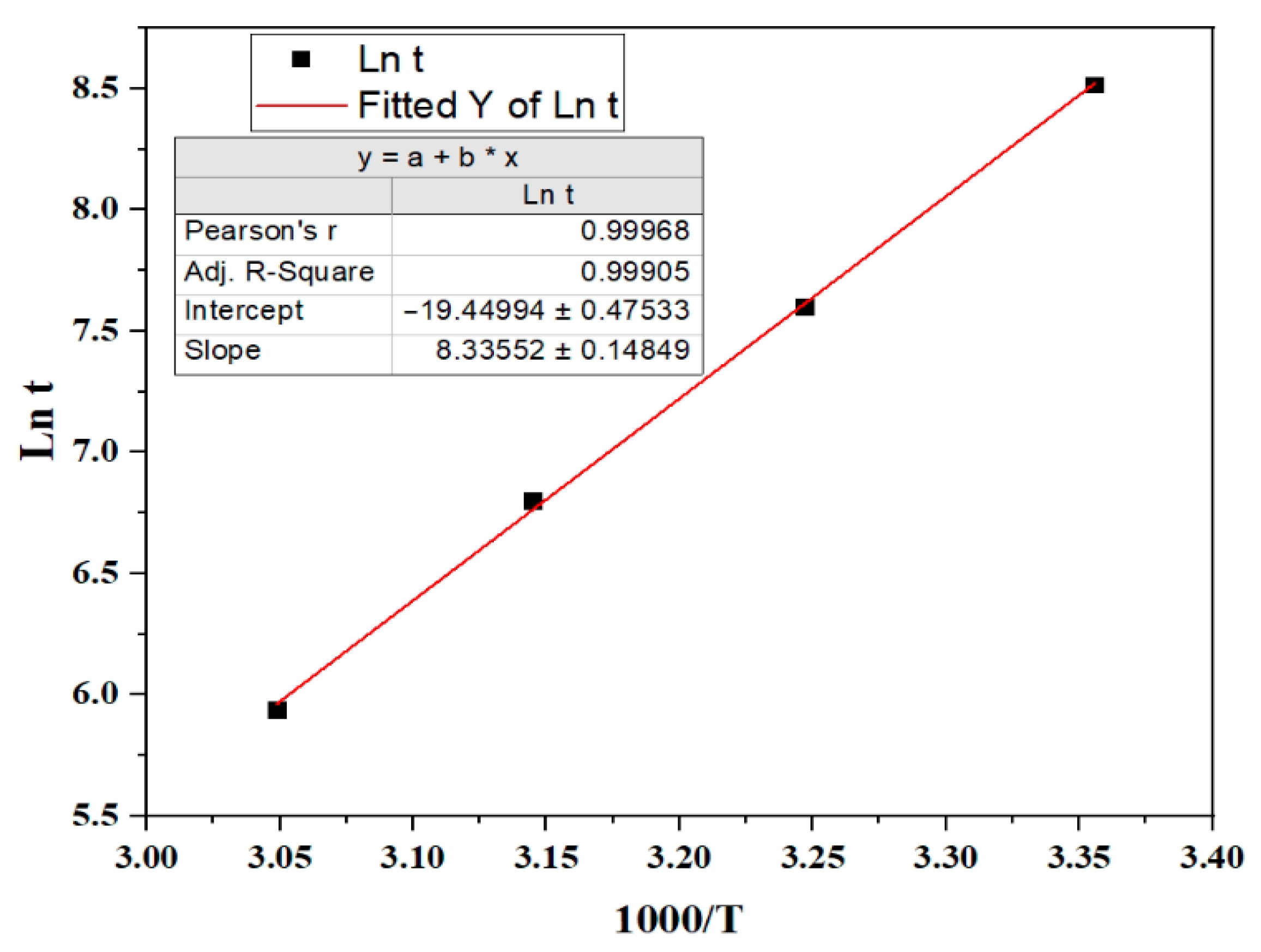
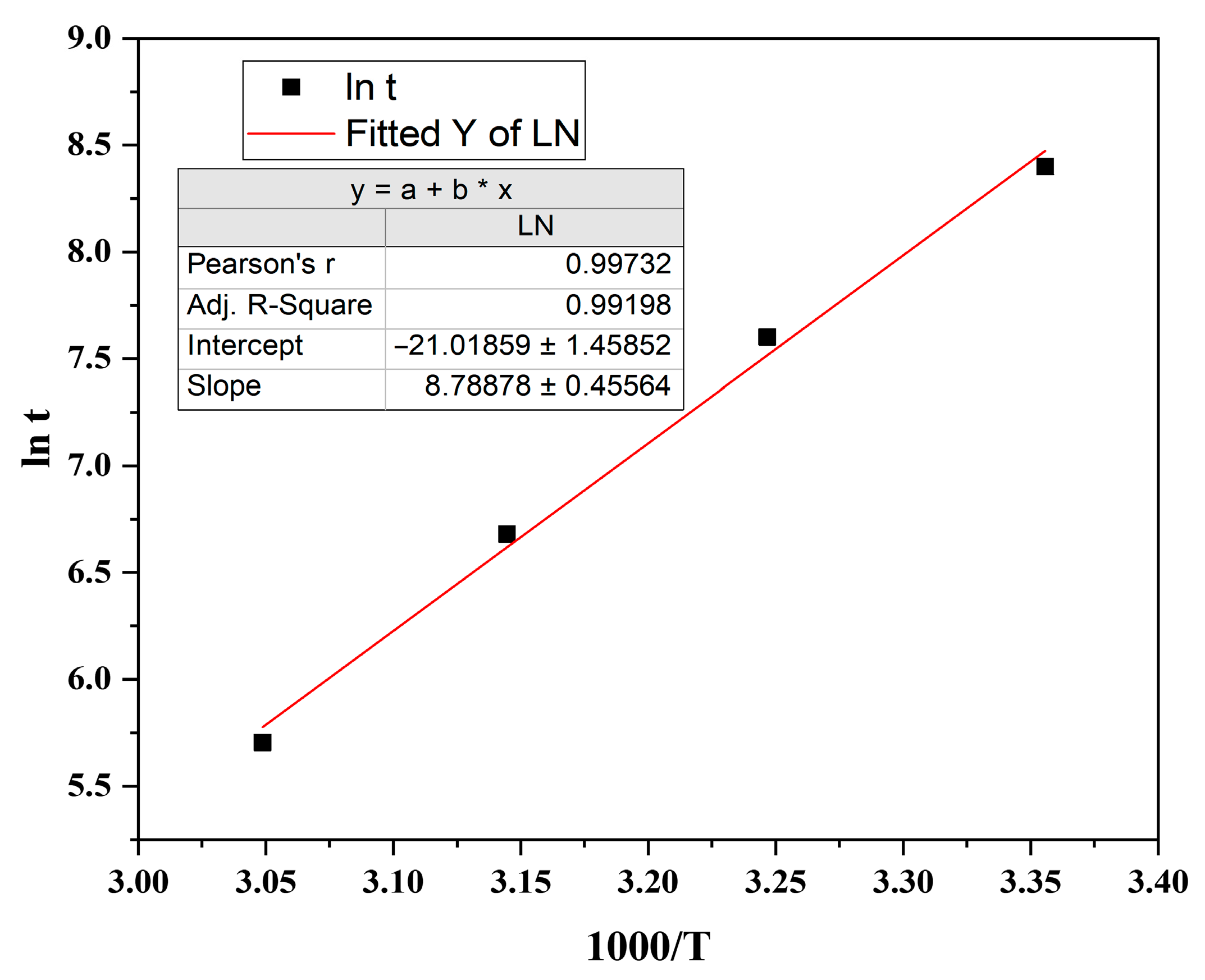
Figure 3, ln t is plotted as a function of 1000/T. From the slope of the fitted line, the activation energy is calculated to be E
a = 69 ± 1 kJ/mol H
2. Additionally, from the intercept, A is 2.7 × 10
8 s
−1 with a range from 1.6 × 10
8 to 4.2 × 10
8 s
−1.
2.2. First Hydrogenation Behavior Under a Constant Driving Force
In hydrogen absorption reactions, the difference between the applied pressure and the hydrogenation equilibrium pressure is defined as the driving force, which controls the reaction rate. Driving force can be characterized using the Rudman’s expression [
39]:
where c is the driving force, T is the temperature, P is the applied pressure, and P
e is the equilibrium pressure of the reaction. For the calculation, we used the literature thermodynamic values of the closely related composition Ti
1Fe
0.9Mn
0.1 [
40].
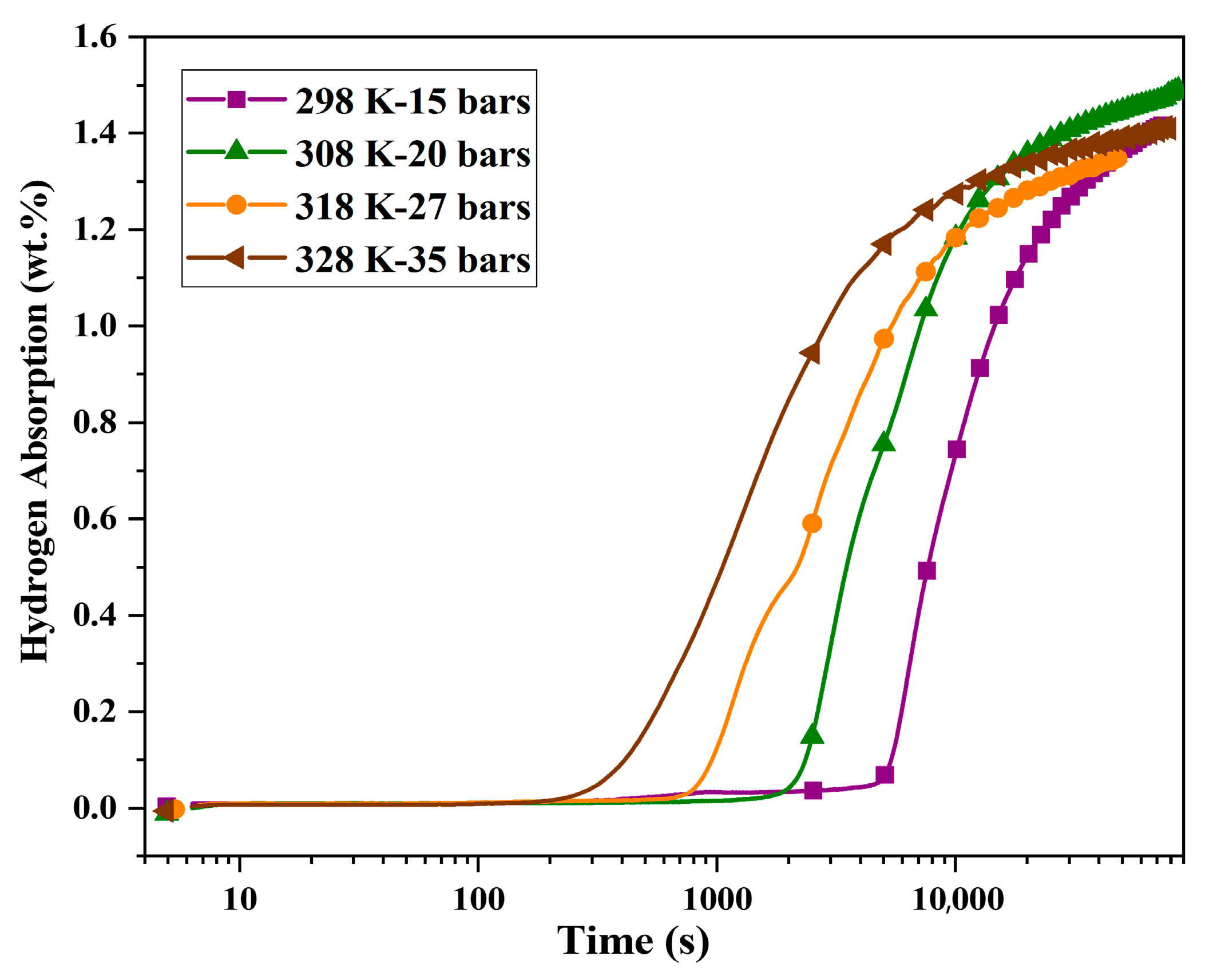
A higher C value indicates a stronger driving force for the hydrogen absorption reaction. In these experiments, the driving force was maintained constant as C = 175, and the hydrogen absorption tests were carried out at 298, 308, 318, and 328 K. The corresponding pressures were calculated as 15, 20, 27 and 35 bars, respectively. The results are shown in
Figure 4.
The incubation time is plotted as a function of 1000/T in
Figure 5 to determine whether the Arrhenius mechanism is still applicable. The linear fit demonstrates that the incubation time still obeys an Arrhenius law. The fitted slope yields an activation energy of E
a = 72 ± 4 kJ/mol H
2. The intercept reveals the pre-exponential factor (A) as 1.3 × 10
9 s
−1, with a range from 3.2 × 10
8 to 5.8 × 10
9 s
−1.
The activation energies obtained under constant pressure and constant driving force conditions overlap and fall within the same range. This observation suggests that the activation energy is an intrinsic property of the alloy and essentially constant across different testing conditions.
Regarding the pre-exponential factor (A), it represents the number of interactions per second, and obviously, this is pressure-dependent. For practical applications, it is important to have the pressure dependence of this factor because it will give the range of pressures required to have a reasonable incubation time. In a previous investigation on LaNi
5 alloy, it was also reported that the pre-exponential factor is pressure-dependent [
41].
The dependency of A on pressure can be expressed as
Here, A0 and x are constants, P represents the applied hydrogen pressure, and P0 = 1 bar.
2.3. Effect of Pressure on First Hydrogenation Behavior
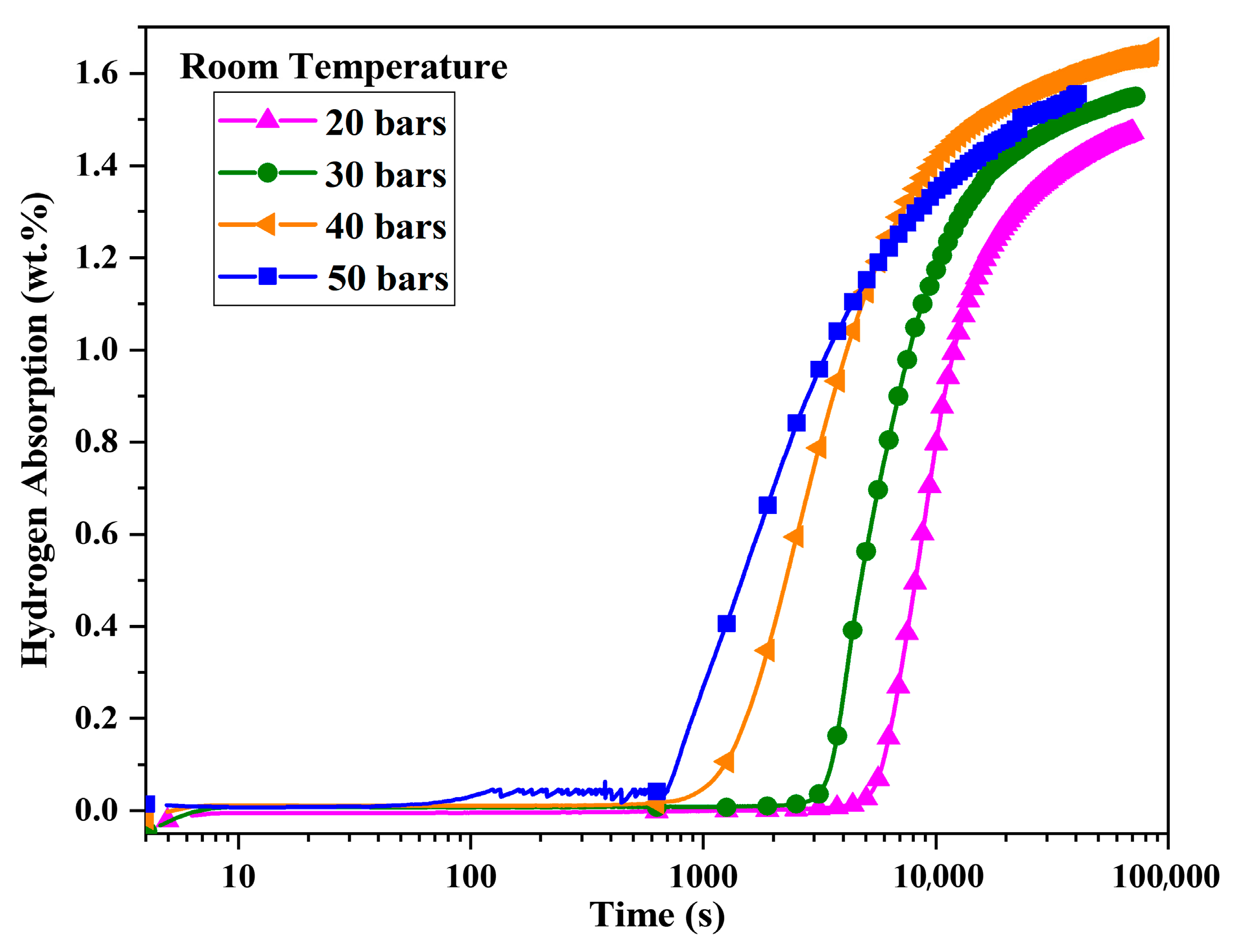
To study the effect of pressure on the pre-exponential factor, the first hydrogenation was performed at 298 K under 20, 30, 40, and 50 bars of hydrogen pressure. The hydrogenation curves are shown in
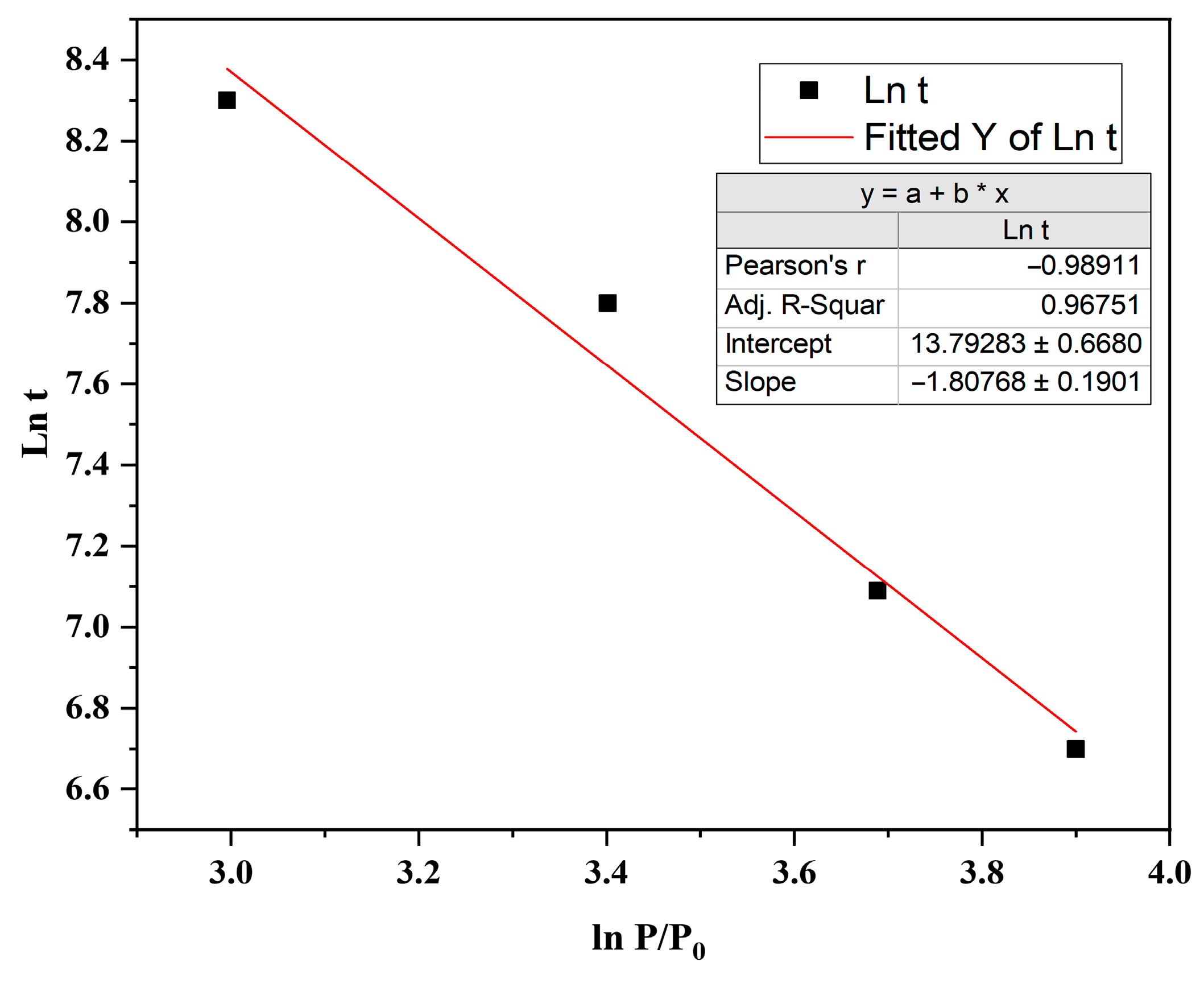
Figure 6. With increasing pressure, the incubation time decreased. The variation of ln t as a function of ln P/P
0 is shown in
Figure 7.
Considering Equation (5), Equation (3) can be written as:
From the fitted slope of
Figure 7, x = 1.8 ± 0.2, therefore, the dependence of pre-exponential factor (A) to applied pressure can be expressed as:
In summary, the activation energy for the first hydrogen absorption, calculated under both constant pressure and constant driving force conditions, remains essentially constant within the experimental error, with an average value of 71 kJ/mol. The pre-exponential factor (A) shows the dependence of the incubation time on the pressure, which follows the relationship , where A0 = 2.6 × 10⁶ s−1.
The activation energy reported in the literature has been on samples that were subjected to several hydrogenation/dehydrogenation cycles. Bowman and Tadlock [
33] prepared TiFeH by performing several hydriding–dehydriding cycles between room temperature and 400 °C. By using nuclear magnetic resonance (NMR) techniques, they observed that the proton relaxation rate exhibited Arrhenius-type temperature dependence. From the slope of their plot, they determined an activation energy of 31.8 kJ/mol, which is less than the activation energy found in our study. The activation energy reported by Bowman and Tadlock refers to the hydrogenation cycles after the material had been fully activated. Our study specifically focuses on the first hydrogenation process, which includes both the activation energy for hydrogen absorption and the additional activation energy required for the incubation process. Furthermore, Bowman and Tadlock’s study [
33] measured the activation energy of TiFe alloys without elemental substitution, whereas manganese (Mn) was partially substituted for iron (Fe) in the present study.
On the other hand, several studies have shown that Mn substitution facilitates hydrogen absorption kinetics but does not significantly affect the activation energy [
22,
34]. Chung and Lee [
34] prepared TiFe and TiFe
0.85Mn
0.15 alloys by arc melting and activated them through heat treatment at 400 °C under hydrogen atmosphere, followed by hydrogen absorption–desorption cycles at room temperature. They found that, for both alloys, the hydrogenation rate was proportional to the difference between the applied pressure and the equilibrium pressure, and it also followed an Arrhenius relationship. From their analysis, they measured activation energies of 33.5 kJ/mol for TiFe and 32.6 kJ/mol for TiFe
0.85Mn
0.15. Similarly, Padhee et al. [
22] employed Density Functional Theory (DFT) calculations to estimate the activation energy of TiFe and TiFe
0.875Mn
0.125, reporting values of 32.6 kJ/mol and 33.3 kJ/mol, respectively. These results also show that Mn substitution causes minimal changes in the activation energy.
Zeaiter et al. [
42] reported an activation energy of 19.43 ± 2.52 kJ/mol for TiFe
0.9Mn
0.1 after 12 absorption/desorption cycles, which is significantly lower than most values reported in the literature. This low activation energy may be attributed to the thermochemical treatment applied prior to the activation process, which involved heating the sample at 400 °C under 32 bar of hydrogen for 24 h in a reactor cell. Compared with the as-received powder, which exhibited an incubation time of approximately 6000 min, the thermochemically treated powder showed a much shorter incubation time of 1595 min. Unfortunately, the activation energy of the as-received powder was not reported, so a direct comparison between the two states is not possible.
Bakulin et al. [
43] calculated an activation energy of 59 kJ/mol for TiFe using density functional theory (DFT). They reported that the addition of dopant elements slightly reduces the activation energy; for example, the substitution of 5 at.% Mn decreased the activation energy to 58 kJ/mol.
Overall, the literature consistently reports activation energies lower than those in our study. The reason is that they evaluated the activation energy of the hydrogen absorption reaction after the first hydrogenation had occurred, without considering incubation time in first hydrogen absorption cycle. In contrast, our study measured the activation energy for both the incubation stage and hydrogen absorption. It is thus reasonable that the activation energy measured here is bigger than the activation energy reported in the literature, as it includes the activation energy needed to break the oxide layer on the particle’s surface, plus the hydrogenation activation energy.
3. Materials and Methods
The gas-atomized alloy, with an atomic composition of 48.8 Ti, 46.0 Fe, and 5.2 Mn, was provided by GKN Hoeganaes Innovation Centre and Advanced Materials. Gas atomization was carried out by GKN under pure argon using a VIGA-type furnace equipped with a free-fall atomization ring set-up. Following synthesis, the powder was stored in the air.
The atomized powder was subjected to five cold rolling passes before hydrogenation. Cold rolling was performed vertically in the air using a modified Durston DRM 130 rolling mill (High Wycombe, Buckinghamshire, UK). The powder was inserted between two 316 stainless steel plates to prevent contamination of the powder by the rollers.
The powder morphology before and after cold rolling was examined using a Hitachi SU1510 scanning electron microscope (SEM) (Hitachi High-Tech Canada, Toronto, ON, Canada).
The hydrogenation tests were carried out using a homemade Sievert’s apparatus. The measurements were conducted under various pressures ranging from 15 bars to 50 bars at temperatures of 298 K, 308 K, 318 K, and 328 K. Each hydrogenation test was conducted on about one gram of fresh sample. The samples were evacuated for 15 min at room temperature prior to kinetic measurements.
4. Conclusions
In this study, the first hydrogenation behavior of Ti48.8Fe46.0Mn5.2 alloy, synthesized via gas atomization, was investigated. It was found that the as-atomized alloy could not absorb hydrogen due to air exposure; however, after five passes of cold rolling in air, the alloy was successfully regenerated.
The effects of temperature, constant driving force, and hydrogen pressure on the first hydrogenation were studied. It was observed that increasing the temperature and pressure reduced the incubation time required for hydrogen absorption. Analysis of the kinetics data confirmed that the first hydrogenation follows an Arrhenius-type mechanism, with an average activation energy of 71 kJ/mol H2. This value reflects the activation energy for both the incubation stage, associated with breaking the oxide layer, and the hydrogen absorption process, and is higher than the average activation energies reported in previous studies, which were determined after the alloys had already undergone the first hydrogenation.
The effect of pressure on the pre-exponential factor (A) was found to vary as A = A0 (P/P0)1.8, where A0 equals 2.6 × 10⁶ s−1. These findings provide important insights for optimizing the first hydrogenation of TiFe-based alloys for hydrogen storage applications.
Author Contributions
Conceptualization, S.H. and J.H.; validation, S.H. and J.H.; formal analysis, S.H.; investigation, S.H.; writing—original draft preparation, S.H.; writing—review and editing, S.H., C.S. and J.H.; supervision, J.H.; project administration, J.H. and C.S. All authors have read and agreed to the published version of the manuscript.
Funding
This research was funded by GKN Hoeganaes Innovation Centre and Advanced Materials and MITACS.
Data Availability Statement
The original contributions presented in this study are included in the article. Further inquiries can be directed to the corresponding author.
Acknowledgments
Seyedehfaranak Hosseinigourajoubi acknowledges GKN Hoeganaes Innovation Centre and Advanced Materials and MITACS for the fellowship.
Conflicts of Interest
The authors declare no conflicts of interest.
References
- Lu, X.; Krutoff, A.-C.; Wappler, M.; Fischer, A. Key influencing factors on hydrogen storage and transportation costs: A systematic literature review. Int. J. Hydrogen Energy 2025, 105, 308–325. [Google Scholar] [CrossRef]
- Bosu, S.; Rajamohan, N. Recent advancements in hydrogen storage-Comparative review on methods, operating conditions and challenges. Int. J. Hydrogen Energy 2024, 52, 352–370. [Google Scholar] [CrossRef]
- Dincer, I. Renewable energy and sustainable development: A crucial review. Renew. Sustain. Energy Rev. 2000, 4, 157–175. [Google Scholar] [CrossRef]
- Umar, A.A.; Hossain, M.M. Hydrogen storage via adsorption: A review of recent advances and challenges. Fuel 2025, 387, 134273. [Google Scholar] [CrossRef]
- Von Colbe, J.B.; Ares, J.-R.; Barale, J.; Baricco, M.; Buckley, C.; Capurso, G.; Gallandat, N.; Grant, D.M.; Guzik, M.N.; Jacob, I. Application of hydrides in hydrogen storage and compression: Achievements, outlook and perspectives. Int. J. Hydrogen Energy 2019, 44, 7780–7808. [Google Scholar] [CrossRef]
- Greene, D.L.; Ogden, J.M.; Lin, Z. Challenges in the designing, planning and deployment of hydrogen refueling infrastructure for fuel cell electric vehicles. eTransportation 2020, 6, 100086. [Google Scholar] [CrossRef]
- Abe, J.O.; Popoola, A.P.I.; Ajenifuja, E.; Popoola, O.M. Hydrogen energy, economy and storage: Review and recommendation. Int. J. Hydrogen Energy 2019, 44, 15072–15086. [Google Scholar] [CrossRef]
- Schlapbach, L. Technology: Hydrogen-fuelled vehicles. Nature 2009, 460, 809–811. [Google Scholar] [CrossRef]
- Rachidi, S.; El Kassaoui, M.; Tahiri, N.; Mounkachi, O.; Ez-Zahraouy, H. Understanding degradation mechanisms and hydrogenation kinetics of intrinsic γ-FeTiH2. J. Energy Storage 2024, 104, 114571. [Google Scholar] [CrossRef]
- Chen, Z.; Guo, F.; Sunamoto, R.; Yin, C.; Miyaoka, H.; Ichikawa, T. Anti-oxidation effect of chromium addition for TiFe hydrogen storage alloys. J. Alloys Compd. 2024, 1008, 176634. [Google Scholar] [CrossRef]
- Schober, T.; Westlake, D.G. The activation of FeTi for hydrogen storage: A different view. Scr. Metall. 1981, 15, 913–918. [Google Scholar] [CrossRef]
- Lototsky, M.V.; Davids, M.W.; Fokin, V.N.; Fokina, E.E.; Tarasov, B.P. Hydrogen-Accumulating Materials Based on Titanium and Iron Alloys (Review). Therm. Eng. 2024, 71, 264–279. [Google Scholar] [CrossRef]
- Reilly, J.J.; Wiswall, R.H. Formation and properties of iron titanium hydride. Inorg. Chem. 1974, 13, 218–222. [Google Scholar] [CrossRef]
- Sartori, S.; Amati, M.; Gregoratti, L.; Jensen, E.H.; Kudriashova, N.; Huot, J. Study of Phase Composition in TiFe+ 4 wt.% Zr Alloys by Scanning Photoemission Microscopy. Inorganics 2023, 11, 26. [Google Scholar] [CrossRef]
- Miller, H.I.; Murray, J.; Laury, E.; Reinhardt, J.; Goudy, A.J. The hydriding and dehydriding kinetics of FeTi and Fe0.9TiMn0.1. J. Alloys Compd. 1995, 231, 670–674. [Google Scholar] [CrossRef]
- Zhu, H.; Wu, J.; Wang, Q. Reactivation behaviour of TiFe hydride. J. Alloys Compd. 1994, 215, 91–95. [Google Scholar] [CrossRef]
- Liu, H.; Zhang, J.; Sun, P.; Zhou, C.; Liu, Y.; Fang, Z.Z. The mechanistic role of Ti4Fe2O1-x phases in the activation of TiFe alloys for hydrogen storage. Int. J. Hydrogen Energy 2023, 48, 32011–32024. [Google Scholar] [CrossRef]
- Li, C.; Gao, X.; Liu, B.; Wei, X.; Zhang, W.; Lan, Y.; Wang, H.; Yuan, Z. Effects of Zr doping on activation capability and hydrogen storage performances of TiFe-based alloy. Int. J. Hydrogen Energy 2023, 48, 2256–2270. [Google Scholar] [CrossRef]
- Lv, P.; Liu, Z.; Dixit, V. Improved hydrogen storage properties of TiFe alloy by doping (Zr+2V) additive and using mechanical deformation. Int. J. Hydrogen Energy 2019, 44, 27843–27852. [Google Scholar] [CrossRef]
- Park, K.B.; Ko, W.-S.; Fadonougbo, J.O.; Na, T.-W.; Im, H.-T.; Park, J.-Y.; Kang, J.-W.; Kang, H.-S.; Park, C.-S.; Park, H.-K. Effect of Fe substitution by Mn and Cr on first hydrogenation kinetics of air-exposed TiFe-based hydrogen storage alloy. Mater. Charact. 2021, 178, 111246. [Google Scholar] [CrossRef]
- Dematteis, E.M.; Dreistadt, D.M.; Capurso, G.; Jepsen, J.; Cuevas, F.; Latroche, M. Fundamental hydrogen storage properties of TiFe-alloy with partial substitution of Fe by Ti and Mn. J. Alloys Compd. 2021, 874, 159925. [Google Scholar] [CrossRef]
- Padhee, S.P.; Roy, A.; Pati, S. Role of Mn-substitution towards the enhanced hydrogen storage performance in FeTi. Int. J. Hydrogen Energy 2022, 47, 9357–9371. [Google Scholar] [CrossRef]
- Han, Z.; Yuan, Z.; Zhai, T.; Feng, D.; Sun, H.; Zhang, Y. Effect of yttrium content on microstructure and hydrogen storage properties of TiFe-based alloy. Int. J. Hydrogen Energy 2023, 48, 676–695. [Google Scholar] [CrossRef]
- Emami, H.; Edalati, K.; Matsuda, J.; Akiba, E.; Horita, Z. Hydrogen storage performance of TiFe after processing by ball milling. Acta Mater. 2015, 88, 190–195. [Google Scholar] [CrossRef]
- Falcão, R.B.; Dammann, E.D.C.C.; Rocha, C.J.; Durazzo, M.; Ichikawa, R.U.; Martinez, L.G.; Botta, W.J.; Leal Neto, R.M. An alternative route to produce easily activated nanocrystalline TiFe powder. Int. J. Hydrogen Energy 2018, 43, 16107–16116. [Google Scholar] [CrossRef]
- Vega, L.; Leiva, D.; Neto, R.L.; Silva, W.; Silva, R.; Ishikawa, T.; Kiminami, C.; Botta, W. Mechanical activation of TiFe for hydrogen storage by cold rolling under inert atmosphere. Int. J. Hydrogen Energy 2018, 43, 2913–2918. [Google Scholar] [CrossRef]
- Ulate-Kolitsky, E.; Tougas, B.; Neumann, B.; Schade, C.; Huot, J. First hydrogenation of mechanically processed TiFe-based alloy synthesized by gas atomization. Int. J. Hydrogen Energy 2021, 46, 7381–7389. [Google Scholar] [CrossRef]
- Edalati, K.; Matsuda, J.; Iwaoka, H.; Toh, S.; Akiba, E.; Horita, Z. High-pressure torsion of TiFe intermetallics for activation of hydrogen storage at room temperature with heterogeneous nanostructure. Int. J. Hydrogen Energy 2013, 38, 4622–4627. [Google Scholar] [CrossRef]
- Park, K.B.; Fadonougbo, J.O.; Na, T.-W.; Lee, T.W.; Kim, M.; Lee, D.H.; Kwon, H.G.; Park, C.-S.; Do Kim, Y.; Park, H.-K. On the first hydrogenation kinetics and mechanisms of a TiFe0.85Cr0.15 alloy produced by gas atomization. Mater. Charact. 2022, 192, 112188. [Google Scholar] [CrossRef]
- Lee, D.H.; Kwon, H.G.; Park, K.B.; Im, H.-T.; Kwak, R.H.; Sohn, S.S.; Park, H.-K.; Fadonougbo, J.O. Phase formation behavior and hydrogen sorption characteristics of TiFe0.8Mn0.2 powders prepared by gas atomization. Int. J. Hydrogen Energy 2023, 48, 27697–27709. [Google Scholar] [CrossRef]
- Nong, Z.-S.; Zhu, J.-C.; Yang, X.-W.; Cao, Y.; Lai, Z.-H.; Liu, Y. First-principles study of hydrogen storage and diffusion in B2 FeTi alloy. Comput. Mater. Sci. 2014, 81, 517–523. [Google Scholar] [CrossRef]
- Lebsanft, E.; Richter, D.; Topler, J. Investigation of the hydrogen diffusion in FeTiHx by means of quasielastic neutron scattering. J. Phys. F Met. Phys. 1979, 9, 1057. [Google Scholar] [CrossRef]
- Bowman, R.C., Jr.; Tadlock, W.E. Hydrogen diffusion in β-phase titanium iron hydride. Solid State Commun. 1979, 32, 313–318. [Google Scholar] [CrossRef]
- Chung, H.; Lee, J.-Y. Effect of partial substitution of Mn and Ni for Fe in FeTi on hydriding kinetics. Int. J. Hydrogen Energy 1986, 11, 335–339. [Google Scholar] [CrossRef]
- Hosseinigourajoubi, S.; Schade, C.; Huot, J. The Effect of Annealing on the First Hydrogenation Behavior of Atomized Ti48.8Fe46.0Mn5.2 Alloy. Metals 2025, 15, 251. [Google Scholar] [CrossRef]
- Liu, Y.; Chabane, D.; Elkedim, O. Optimization of LaNi5 hydrogen storage properties by the combination of mechanical alloying and element substitution. Int. J. Hydrogen Energy 2024, 53, 394–402. [Google Scholar] [CrossRef]
- Lima, G.F.; Triques, M.R.M.; Kiminami, C.S.; Botta, W.J.; Jorge, A.M. Hydrogen storage properties of pure Mg after the combined processes of ECAP and cold-rolling. J. Alloys Compd. 2014, 586, S405–S408. [Google Scholar] [CrossRef]
- Floriano, R.; Leiva, D.R.; Carvalho, J.A.; Ishikawa, T.T.; Botta, W.J. Cold rolling under inert atmosphere: A powerful tool for Mg activation. Int. J. Hydrogen Energy 2014, 39, 4959–4965. [Google Scholar] [CrossRef]
- Rudman, P. Hydrogen-diffusion-rate-limited hydriding and dehydriding kinetics. J. Appl. Phys. 1979, 50, 7195–7199. [Google Scholar] [CrossRef]
- Huston, E.L.; Sandrock, G.D. Engineering properties of metal hydrides. J. Less Common Met. 1980, 74, 435–443. [Google Scholar] [CrossRef]
- Sleiman, S.; Shahgaldi, S.; Huot, J. Investigation of the First Hydrogenation of LaNi5. Reactions 2024, 5, 419–428. [Google Scholar] [CrossRef]
- Zeaiter, A.; Nardin, P.; Pour Yazdi, M.A.; Billard, A. Outstanding shortening of the activation process stage for a TiFe-based hydrogen storage alloy. Mater. Res. Bull. 2019, 112, 132–141. [Google Scholar] [CrossRef]
- Bakulin, A.V.; Kulkov, A.S.; Kulkova, S.E. Impurity influence on the hydrogen diffusivity in B2–TiFe. Int. J. Hydrogen Energy 2023, 48, 232–242. [Google Scholar] [CrossRef]
| Disclaimer/Publisher’s Note: The statements, opinions and data contained in all publications are solely those of the individual author(s) and contributor(s) and not of MDPI and/or the editor(s). MDPI and/or the editor(s) disclaim responsibility for any injury to people or property resulting from any ideas, methods, instructions or products referred to in the content. |