
ZrO2 Coating for Surface Functionalization of Jianshui Purple Pottery: A Sol-Gel Approach with Antibacterial Performance

Abstract
1. Introduction
2. Results
2.1. Particle Sizes of the Sols
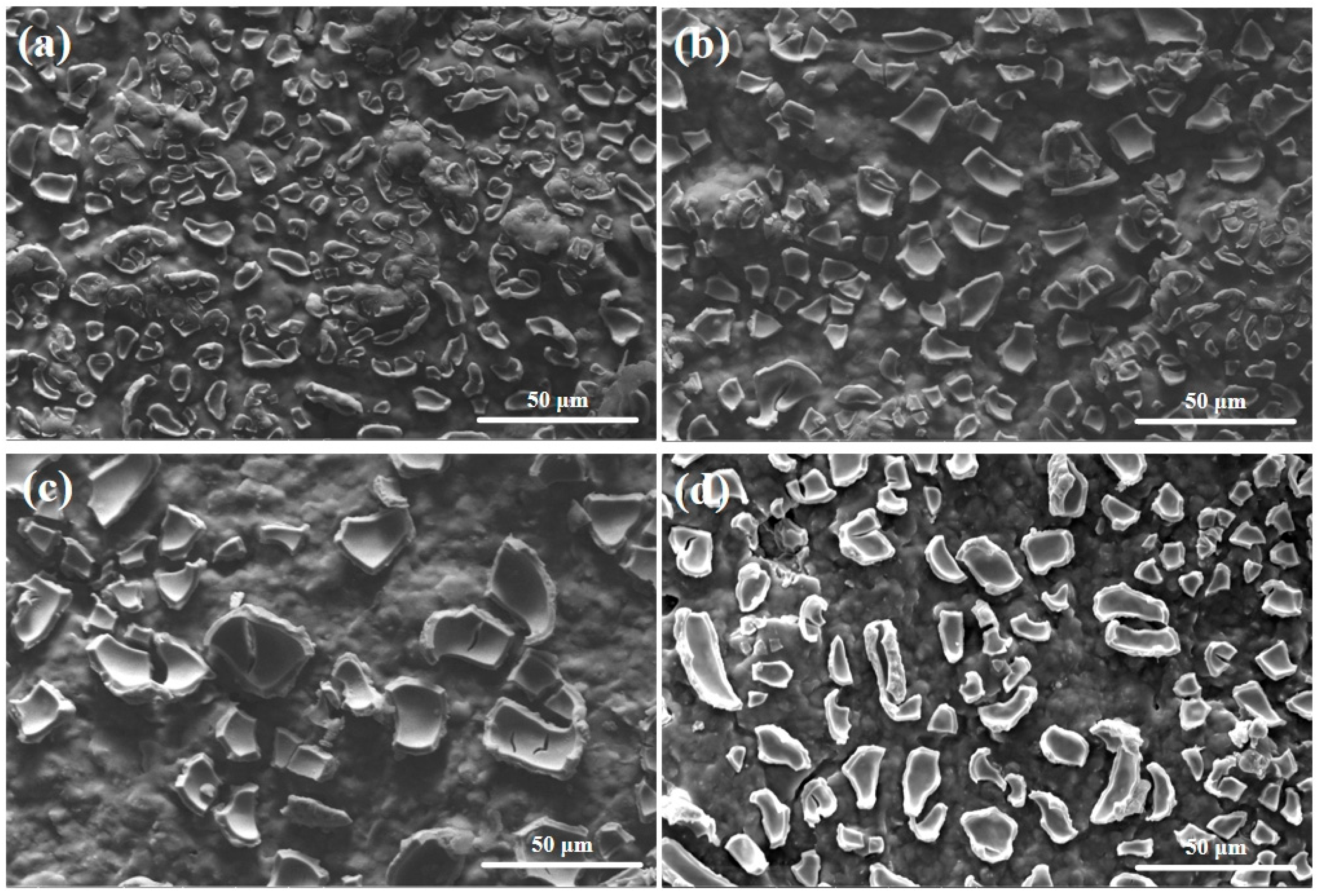
2.2. Morphologies of the Surface Coatings
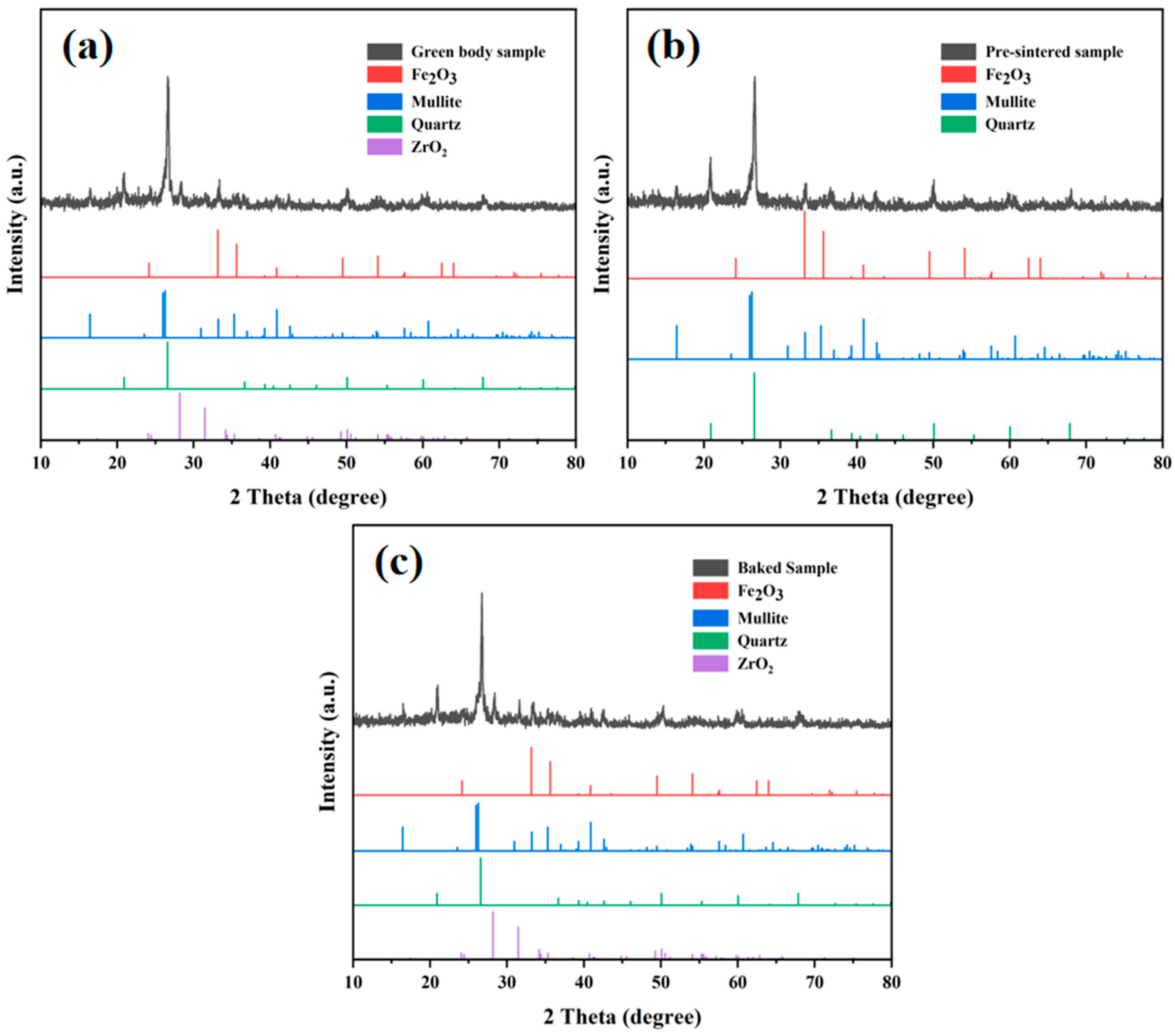
2.3. Phase Analysis of Surface Coatings (XRD)
2.4. Porosity and Pore Structure (Mercury Porosimetry)
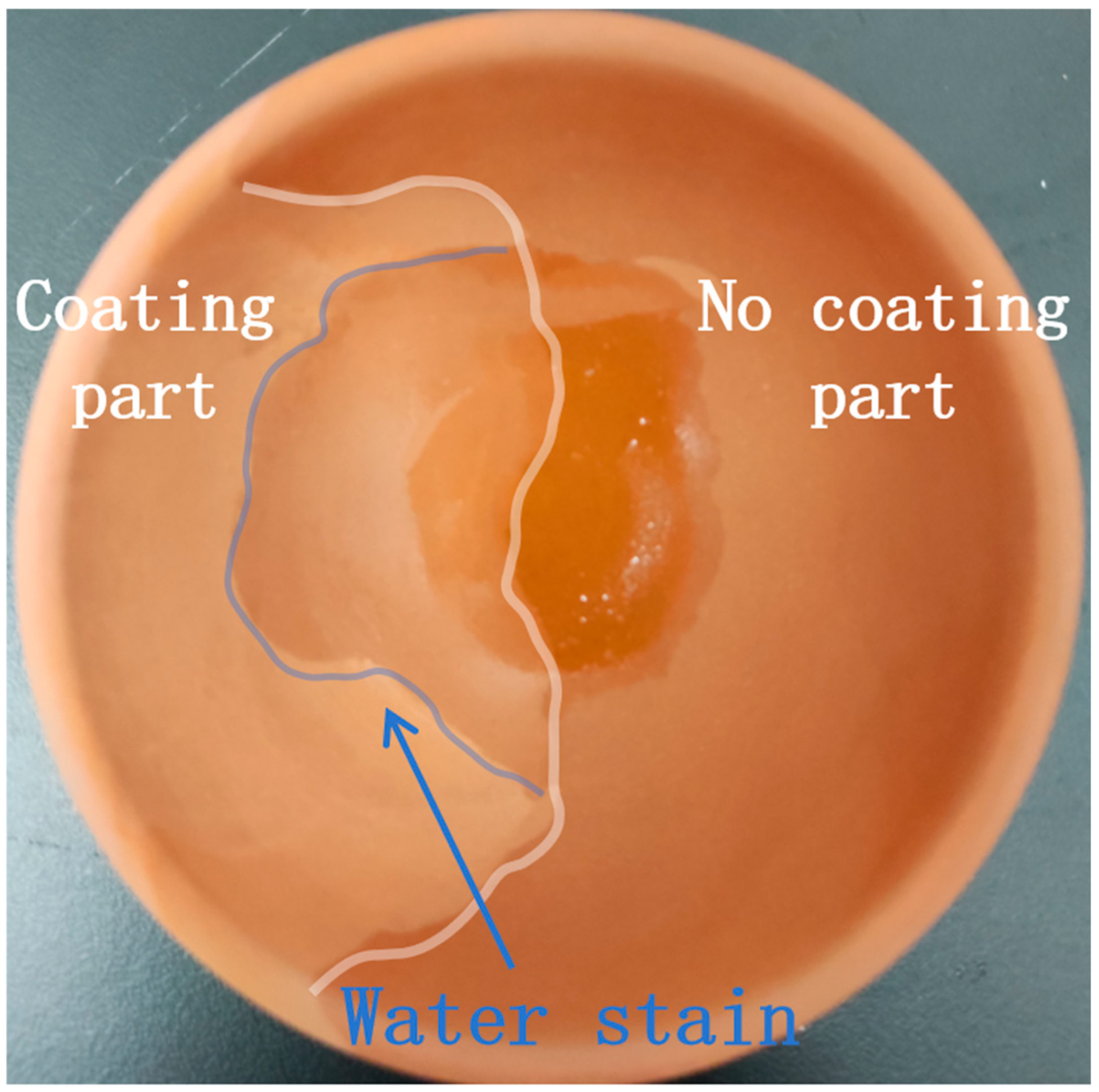
2.5. Surface Capillary Effect
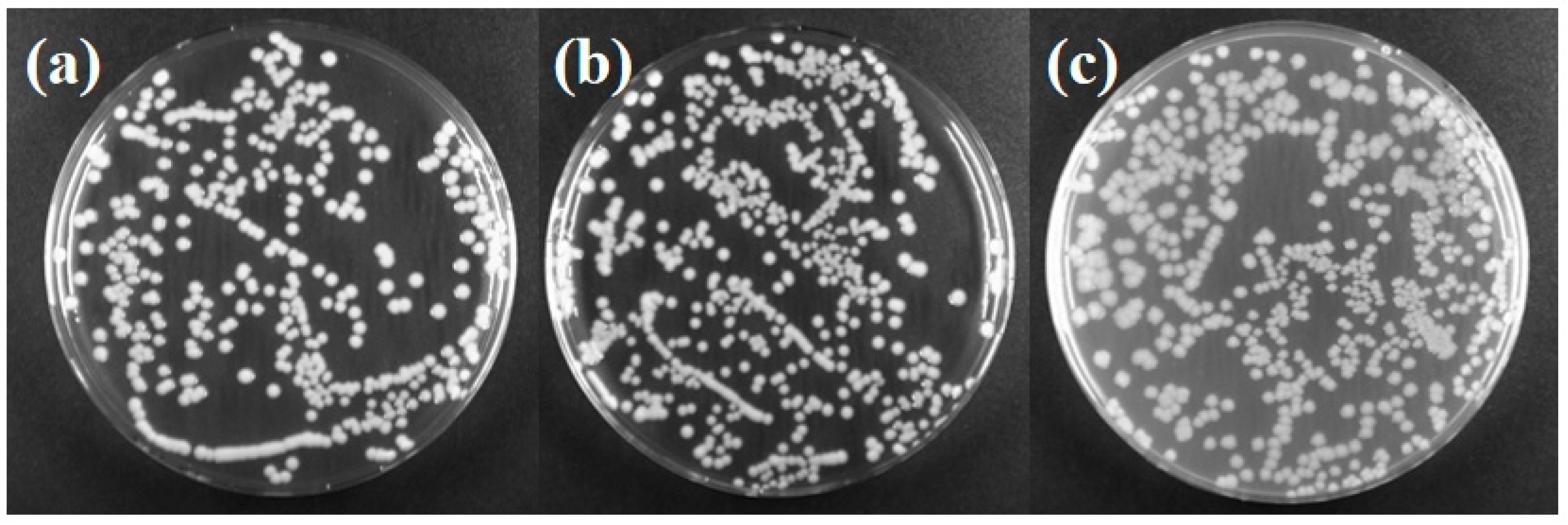
2.6. Antibacterial Performance
3. Discussion
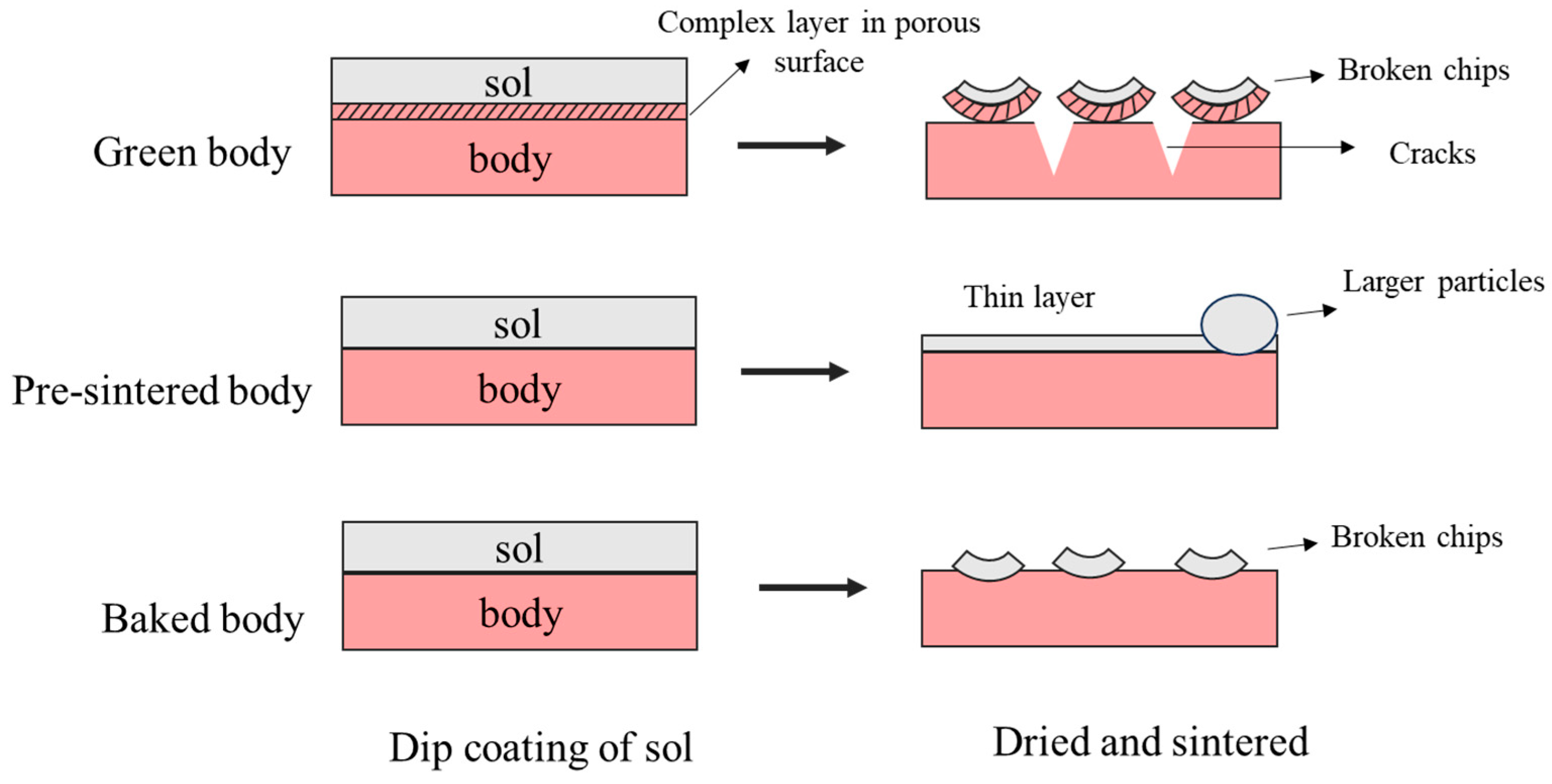
3.1. Mechanism of the Formation of Surface Coating Layer
3.2. Enhancement of Surface Properties and Functionality
4. Materials and Methods
4.1. Materials
4.2. Characterization
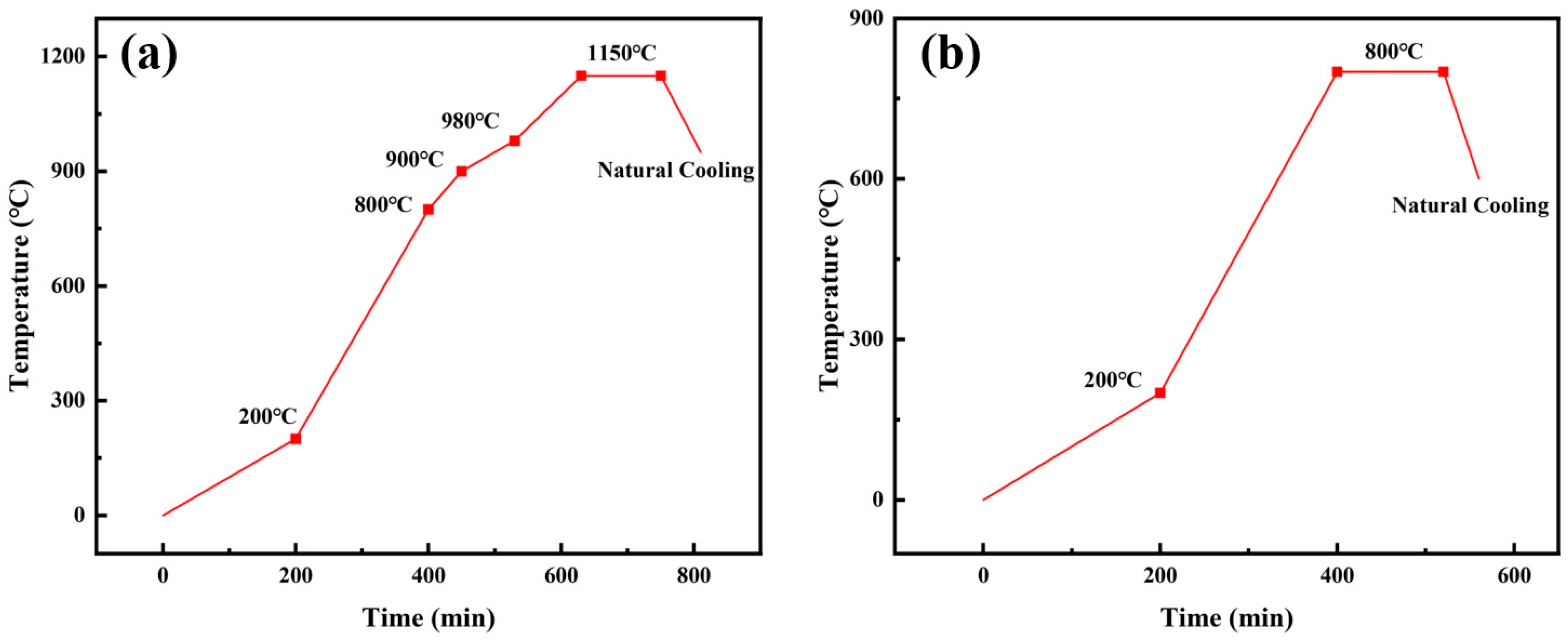
4.3. Preparation of Purple Pottery Samples
4.4. Preparation of Metal Oxide Coatings
- (1)
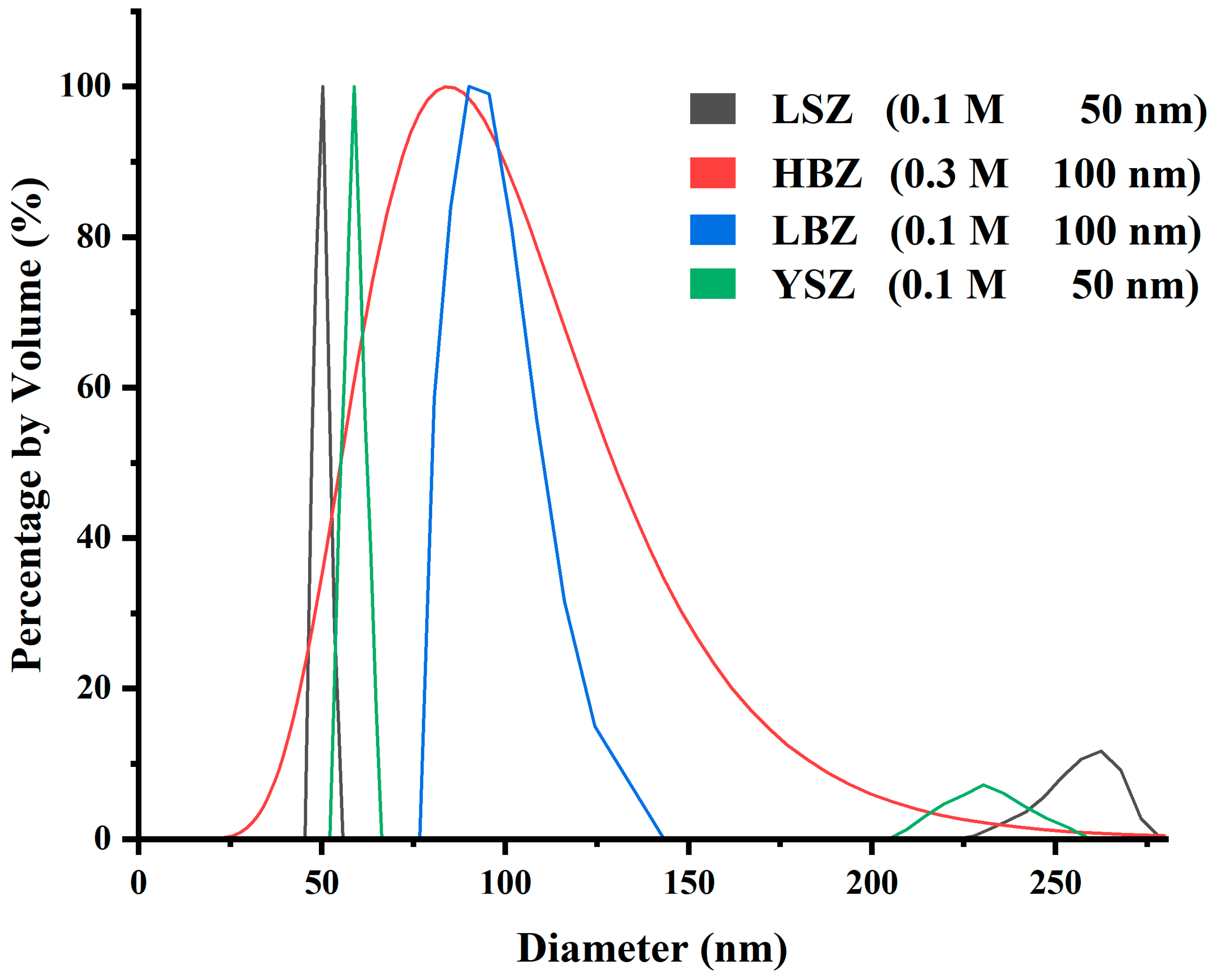
- Dissolve 4.293 g of Zr(NO3)4·5H2O in 100 mL of deionized water, heat to 60 °C with stirring until completely dissolved. Add 0.280 g of H2C2O4·2H2O, then raise the temperature to 90 °C and react for 24 h. Filter after reaction completion. The Zr concentration in the sol is 0.1 mol/L, and dynamic light scattering (DLS) testing showed a volume distribution around 50 nm. This sol has low colloid concentration and small particle size (low concentration and small size), designated as LSZ.
- (2)
- Dissolve 12.879 g of Zr(NO3)4·5H2O in 100 mL of deionized water, heat to 60 °C with stirring until completely dissolved. Add 0.420 g of H2C2O4·2H2O, then raise the temperature to 90 °C and react for 19 h. Filter after reaction completion. The Zr concentration in the sol is 0.3 mol/L, and DLS testing showed a volume distribution around 100 nm. This sol has high colloid concentration and large particle size (high concentration and big size), designated as HBZ.
- (3)
- Dissolve 4.293 g of Zr(NO3)4·5H2O in 100 mL of deionized water, heat to 60 °C with stirring until completely dissolved. Add 0.315 g of H2C2O4·2H2O, then raise the temperature to 90 °C and react for 24 h. Filter after reaction completion. The Zr concentration in the sol is 0.1 mol/L, and DLS testing showed a volume distribution around 100 nm. This sol has low colloid concentration and large particle size (low concentration and big size), designated as LBZ.
- (4)
- Dissolve 4.293 g of Zr(NO3)4·5H2O and 0.3788 g of Y(NO3)3·6H2O in 100 mL of deionized water, heat to 60 °C with stirring until completely dissolved. Add 0.280 g of H2C2O4·2H2O, then raise the temperature to 90 °C and react for 24 h. Filter after reaction completion. The Zr concentration in the sol is 0.1 mol/L, and DLS testing showed a volume distribution around 50 nm. This sol has low colloid concentration and small particle size and is an yttria-stabilized zirconia (YSZ) sol, designated as YSZ.
4.5. Sol Coating Methods
4.6. Antibacterial Ability Test Methods
5. Conclusions
Author Contributions
Funding
Institutional Review Board Statement
Informed Consent Statement
Data Availability Statement
Conflicts of Interest
References
- Kishitake, K.; Era, H.; Otsubo, F.; Sonoda, T. Improvement of the adhesion of a ceramic coating on a ceramic substrate. Therm. Spray. Tech. 1998, 7, 64–70. [Google Scholar] [CrossRef]
- Holländer, A.; Cosemans, P. Surface technology for additive manufacturing. Plasma Process. Polym. 2020, 17, 1900155. [Google Scholar] [CrossRef]
- Wei, Q.; Wang, D.; Zhang, S. Research Progress on Surface Modification Technology of Inorganic Ceramic Membranes. J. Funct. Mater. 1999, 601–603. [Google Scholar]
- Zhang, J.; Song, K.; Zhang, M.; Zhao, Z.; He, Q.; Li, Z. Development Trends of High-Performance Ceramic Coatings and Their Preparation Processes. Surf. Technol. 2017, 46, 96–103. [Google Scholar]
- Abdelrahman, M.M. Study of Plasma and Ion Beam Sputtering Processes. J. Phys. Sci. Appl. 2015, 5, 128–142. [Google Scholar] [CrossRef][Green Version]
- Hou, L.; Wang, H.; Zeng, L. Traditional Surface Modification Techniques of Ceramic Materials. Shandong Ceram. 2004, 21–25. [Google Scholar]
- Zhang, J.; Hou, Y.; Gao, L.; Li, F. Research on Surface Modification of Nanoscale SiC Powder by Non-uniform Nucleation Coating Method. J. Silic. Sci. 1998, 26, 762–767. [Google Scholar]
- Yin, Z.; Wang, S.; Fu, W.; Tan, X.; Tao, S.; Ding , C. Evolution and Prospect of Thermal Spraying Technology. J. Inorg. Mater. 2011, 26, 225–232. [Google Scholar] [CrossRef]
- Huang, C.; Yin, S.; Li, W.; Guo, X. Research Status and Prospects of Cold Spraying Technology and Its System. Surf. Technol. 2021, 50, 1–23. [Google Scholar]
- Brinker, C.J.; Frye, G.C.; Hurd, A.J.; Hurd, A.J.; Ashley, C.S. Fundamentals of Sol-gel Dip Coating. Thin Solid. Film. 1991, 201, 97–108. [Google Scholar] [CrossRef]
- Meng, Y. Technology of Nano Thin Aluminum Oxide Composite Micro-Diboride Titanium Conductive Coating. Kunming University of Science and Technology, Kunming, China, 2004. [Google Scholar]
- Liu, Y.W.; Nong, Z.S. Research Status of Ceramic Coatings Prepared by Sol-Gel Method. Cailiao Baohu 2023, 56, 173–179. [Google Scholar]
- Birnie, D.P.; Kaz, D.M.; Taylor, D.J. Surface Tension Evolution During Early Stages of Drying of Sol-gel Coatings. J. Sol-Gel Sci. Technol. 2009, 49, 233–237. [Google Scholar] [CrossRef]
- He, J.; Wang, Y.; Gan, Z.; He, Y.; Zhang, P.; Liu, J.; Na, Q.; Shan, A.; Gao, L. A Brief Analysis of the Composition and Firing Issues of Jianshui Purple Clay. Jiangsu Ceram. 2024, 57, 43–50. [Google Scholar]
- Feinberg, A.; Perry, C.H. Structural Disorder and Phase Transitions in ZrO2-Y2O3 System. J. Phys. Chem. Solids 1981, 42, 513–518. [Google Scholar] [CrossRef]
- Southon, P.D.; Bartlett, J.R.; Woolfrey, J.L.; Ben-Nissan, B. Formation and Characterization of an Aqueous Zirconium Hydroxide colloid. Chem. Mater. 2002, 14, 4313–4319. [Google Scholar] [CrossRef]



| Sample | Porosity/% | Dv/nm |
|---|---|---|
| Sample with baked coatings | 3.8 | 197,212.6 |
| Sample without coatings | 1.2 | 71.6 |
| Sample | Average Colony Count | Dilution Factor | Bacterial Suspension Concentration (CFU/mL) | Antibacterial Rate |
|---|---|---|---|---|
| Baked coated samples loaded with silver nanoparticles | 354 | 102 | 3.54 × 10⁵ | 32.7% |
| Uncoated samples loaded with silver nanoparticles | 469 | 102 | 4.69 × 10⁵ | 10.8% |
| Pre-sintered coated samples without silver nanoparticles loaded | 526 | 102 | 5.26 × 10⁵ | / |
Disclaimer/Publisher’s Note: The statements, opinions and data contained in all publications are solely those of the individual author(s) and contributor(s) and not of MDPI and/or the editor(s). MDPI and/or the editor(s) disclaim responsibility for any injury to people or property resulting from any ideas, methods, instructions or products referred to in the content. |
© 2026 by the authors. Licensee MDPI, Basel, Switzerland. This article is an open access article distributed under the terms and conditions of the Creative Commons Attribution (CC BY) license.
Share and Cite
Gan, Z.; He, J.; Liu, J.; Zhang, P.; Shan, A.; Na, Q.; He, Y.; Bao, Y.; He, Z.; Gao, L. ZrO2 Coating for Surface Functionalization of Jianshui Purple Pottery: A Sol-Gel Approach with Antibacterial Performance. Inorganics 2026, 14, 49. https://doi.org/10.3390/inorganics14020049
Gan Z, He J, Liu J, Zhang P, Shan A, Na Q, He Y, Bao Y, He Z, Gao L. ZrO2 Coating for Surface Functionalization of Jianshui Purple Pottery: A Sol-Gel Approach with Antibacterial Performance. Inorganics. 2026; 14(2):49. https://doi.org/10.3390/inorganics14020049
Chicago/Turabian StyleGan, Zhenwei, Jinlin He, Jing Liu, Peng Zhang, Aidang Shan, Qinxiao Na, Yu He, Yuan Bao, Zixuan He, and Lian Gao. 2026. "ZrO2 Coating for Surface Functionalization of Jianshui Purple Pottery: A Sol-Gel Approach with Antibacterial Performance" Inorganics 14, no. 2: 49. https://doi.org/10.3390/inorganics14020049
APA StyleGan, Z., He, J., Liu, J., Zhang, P., Shan, A., Na, Q., He, Y., Bao, Y., He, Z., & Gao, L. (2026). ZrO2 Coating for Surface Functionalization of Jianshui Purple Pottery: A Sol-Gel Approach with Antibacterial Performance. Inorganics, 14(2), 49. https://doi.org/10.3390/inorganics14020049