Article

Optimization of Green Pressurized Liquid Extraction of Phenolic Compounds with Inhibitory Capacity Reactive Oxygen Species from Crescentia alata Using a Box-Behnken Design


by
Paola Ester López-Díaz
1,*,
Honorio Torres-Aguilar
2,
Rodolfo Solano
1 and
Luicita Lagunez-Rivera
1,*
1
Laboratorio de Extracción y Análisis de Productos Naturales Vegetales, Centro Interdisciplinario de Investigación para el Desarrollo Integral Regional Unidad Oaxaca, Instituto Politécnico Nacional, Hornos 1003, Santa Cruz Xoxocotlán 71230, Oaxaca, Mexico
2
Laboratorio de Inmunología Básica y Clínica, Facultad de Ciencias Químicas, Universidad Autónoma “Benito Juárez” de Oaxaca (UABJO), Av. Universidad S/N, Cinco Señores 68120, Oaxaca, Mexico
*
Authors to whom correspondence should be addressed.
Separations 2025, 12(12), 331; https://doi.org/10.3390/separations12120331
Submission received: 10 October 2025 / Revised: 4 November 2025 / Accepted: 14 November 2025 / Published: 30 November 2025

Abstract

Crescentia alata is valued in traditional medicine for its anti-inflammatory and antimicrobial properties. However, research on its phytochemical composition and bioactivity is scarce. Phenolic compounds are of pharmacological interest because they reduce oxidative stress and inflammation. This study aimed to optimize the pressurized liquid extraction of phenolic compounds to enhance the cellular antioxidant activity of the fruit extract. Response Surface Methodology with a Box–Behnken Design was used. Three variables were evaluated at three levels: temperature (25, 37.5, and 50 °C), pressure (10, 30, and 50 bar), and time (10, 20, and 30 min). The effect of these variables was monitored on the total phenolic content, total flavonoid content, and the percentage of inhibition of reactive oxygen species. The optimal extraction conditions were 40.98 °C, 29.52 bar, and 16.89 min, which yielded a TPC of 28.27 mg GAE/g DW, TFC of 19.08 mg QE/g DW, and 72.05% ROS inhibition. This methodology proved to be effective for optimizing the extraction of phenolic compounds and revealed the influence of extraction conditions on their biological activity.

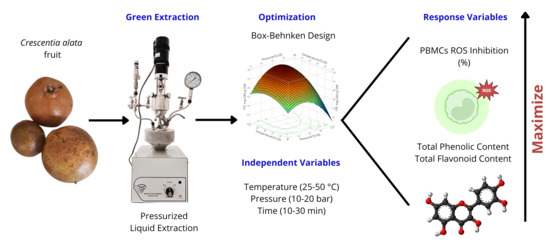
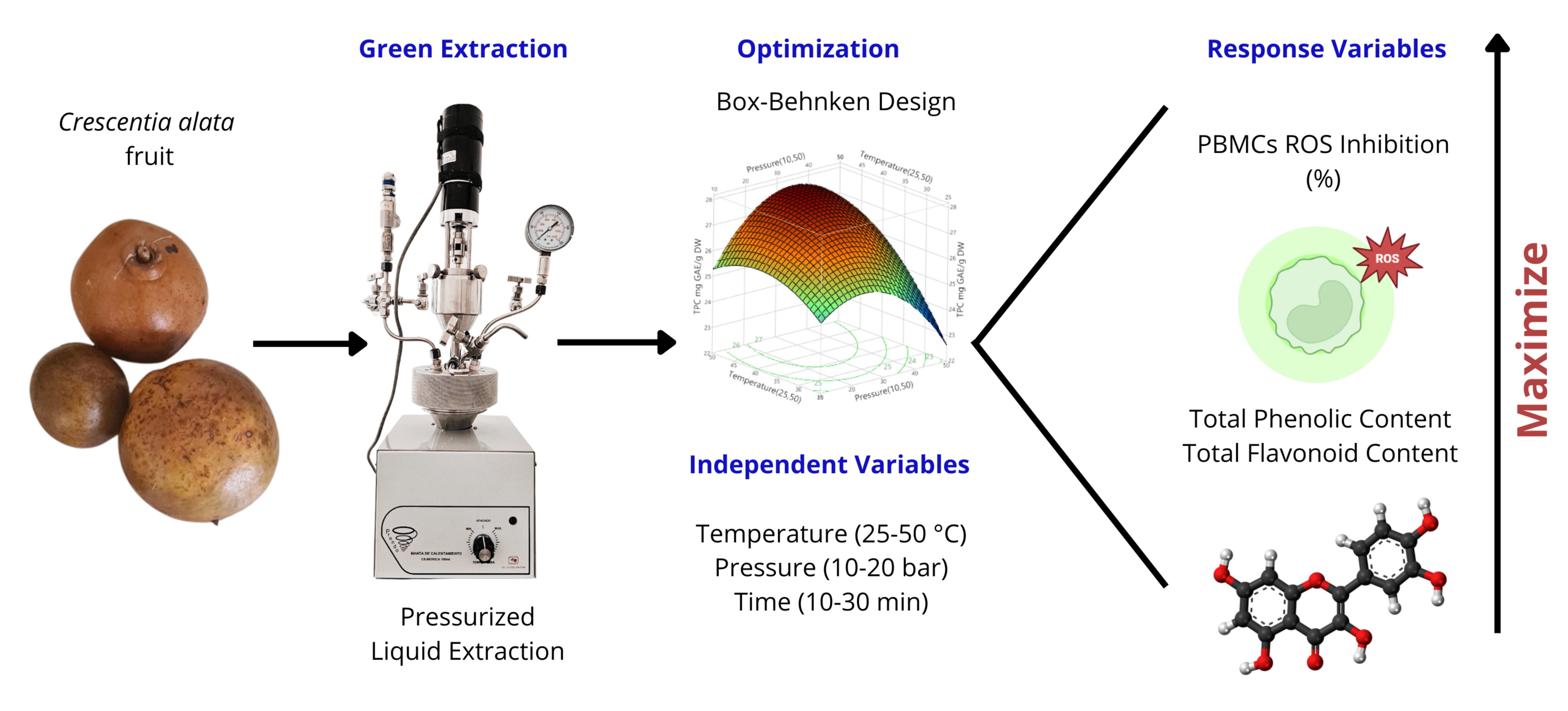
Graphical Abstract

1. Introduction

The species Crescentia alata Kunth is widely recognized in traditional medicine for its anti-inflammatory, analgesic, antitumor, and antimicrobial properties [1]. Its bioactivity is attributed to the content of phenolic compounds capable of preventing oxidative stress [2]. Although the fruit is the most commonly used part as a medicinal remedy [1,3,4,5,6], research focused on its bioactivity is scarce.
Phenolic compounds are secondary metabolites in plants whose primary function is to provide coloration and prevent damage caused by UV radiation or pathogens [7]. These compounds are of great interest to the pharmaceutical industry for their ability to neutralize free radicals, which are responsible for aging and the development of chronic diseases [8]. Additionally, they possess anti-inflammatory, anticancer, antimicrobial, cardioprotective, and neuroprotective properties [9,10,11].
The extraction of phenolic compounds is complex due to their lower abundance compared to other constituent molecules in plants. Furthermore, they are heat-sensitive, and exposure to high temperatures causes their degradation, the formation of unwanted compounds, and a loss of bioactivity [12,13,14]. To address the challenge of extracting heat-sensitive compounds, this study employed a green extraction methodology. Pressurized Liquid Extraction (PLE) was selected as an environmentally responsible technique for extracting natural products without relying on toxic solvents.
This method operates under controlled pressure and temperature conditions. As a result, the solvent maintains its liquid state throughout the extraction process and does not reach its critical point [15,16]. Elevated pressures enable improved solvent penetration into the plant matrix, thereby increasing solute solubility and mass transfer rates. The combined effect of pressure and temperature significantly decreases both solvent consumption and extraction duration (often reducing the timeframe from hours to minutes) while ensuring effective preservation of thermolabile compounds [7].
Compared to traditional approaches such as Soxhlet extraction or maceration, PLE presents notable benefits by minimizing hazardous organic solvent use, shortening extraction times, and mitigating the risk of thermal degradation to bioactive constituents [17,18]. Additionally, employing “Generally Regarded As Safe” (GRAS) solvents, like ethanol/water mixtures, further enhances the sustainability and overall efficiency of the PLE technique [19].
To improve the sustainability of the process, the PLE parameters were optimized using Response Surface Methodology (RSM) with a Box–Behnken Design (BBD). The BBD is a methodological tool commonly used to optimize various experimental processes across multiple fields, including electronics, biotechnology, aerospace, automotive, life sciences, agricultural environment, food industry, and manufacturing [20].
The design allows for the exploration of the relationship between multiple independent variables and a dependent response, with a detailed analysis of the linear, quadratic, and interactive effects of these variables [21]. This experimental design follows the principles of green chemistry by enabling the construction of predictive mathematical models that reduce the number of experiments in process optimization [22].
In this study, BBD allow to determine the optimal conditions to maximize the recovery and quality of the compounds of interest in the extract. Thus, extracts with an enriched bioactive composition, better stability, and greater bioavailability can be obtained, which are fundamental aspects for their industrial application.
The appropriate choice of solvent, time, pressure, temperature, and the characteristics of the chemical compound of interest are determining factors in the extraction process [23]. While there are studies exploring the influence of the physical variables of the PLE process on the yield of compounds [12,24,25], research on the influence of these variables on the biological effect of an extract is limited.
Most research uses in vitro colorimetric assays to study biological antioxidant activity, such as the ferric reducing antioxidant power (FRAP), 1,1-diphenyl-2-picrylhydrazyl (DPPH), and the 2,2′-azino-bis(3-ethylbenzothiazoline-6-sulfonic acid) (ABTS) radical scavenging assays [26,27,28]. However, these methods do not accurately reflect antioxidant capacity at the cellular level, as they do not consider the physiological conditions of a living organism [29].
The Cellular Antioxidant Activity (CAA) assay is a biologically relevant methodology for evaluating the antioxidant capacity of various compounds. This technique uses cell cultures exposed to peroxyl radicals. These radicals react with a fluorescent intracellular probe, dichlorofluorescein (DCF). If the antioxidant compound is absorbed by the cell, the fluorescent signal decreases. The results are expressed as a percentage of inhibition of reactive oxygen species. Unlike conventional in vitro tests, the CAA assay incorporates crucial factors such as cellular absorption, metabolism, and intracellular distribution of antioxidants. This feature positions it as a superior tool for elucidating the real bioactivity of phytochemicals in complex biological systems [30,31].
Therefore, the aim of this study was to optimize PLE parameters using the RSM-BBD in order to achieve maximal efficiency in the recovery of compounds with ex vivo cellular antioxidant capacity. This represents a significant advance in the characterization of this medicinal plant’s bioactivity against oxidative stress and its potential application in the pharmaceutical or food industry.

2. Materials and Methods

2.1. Reagents

The reagents used were: Folin–Ciocalteu reagent, 2′,7′-dichlorofluorescin diacetate (DCFH-DA), trypan blue, AlCl3, potassium acetate, gallic acid, and quercetin all from Sigma-Aldrich (St. Louis, MO, USA); Roswell Park Memorial Institute (RPMI) 1640 Medium Glutagro Corning (Corning, NY, USA); Dulbecco’s Phosphate-Buffered Saline (D-PBS); non-essential amino acid solutions, antibiotic-antimycotic, and sodium pyruvate Caisson Labs (Smithfield, UT, USA); Na2CO3 J.T. Baker (Phillipsburg, NJ, USA); ethanol 96% (v/v) (Mena, UAE); and Lymphoprep Stemcell Technologies (Vancouver, BC, Canada).

2.2. Sample Preparation

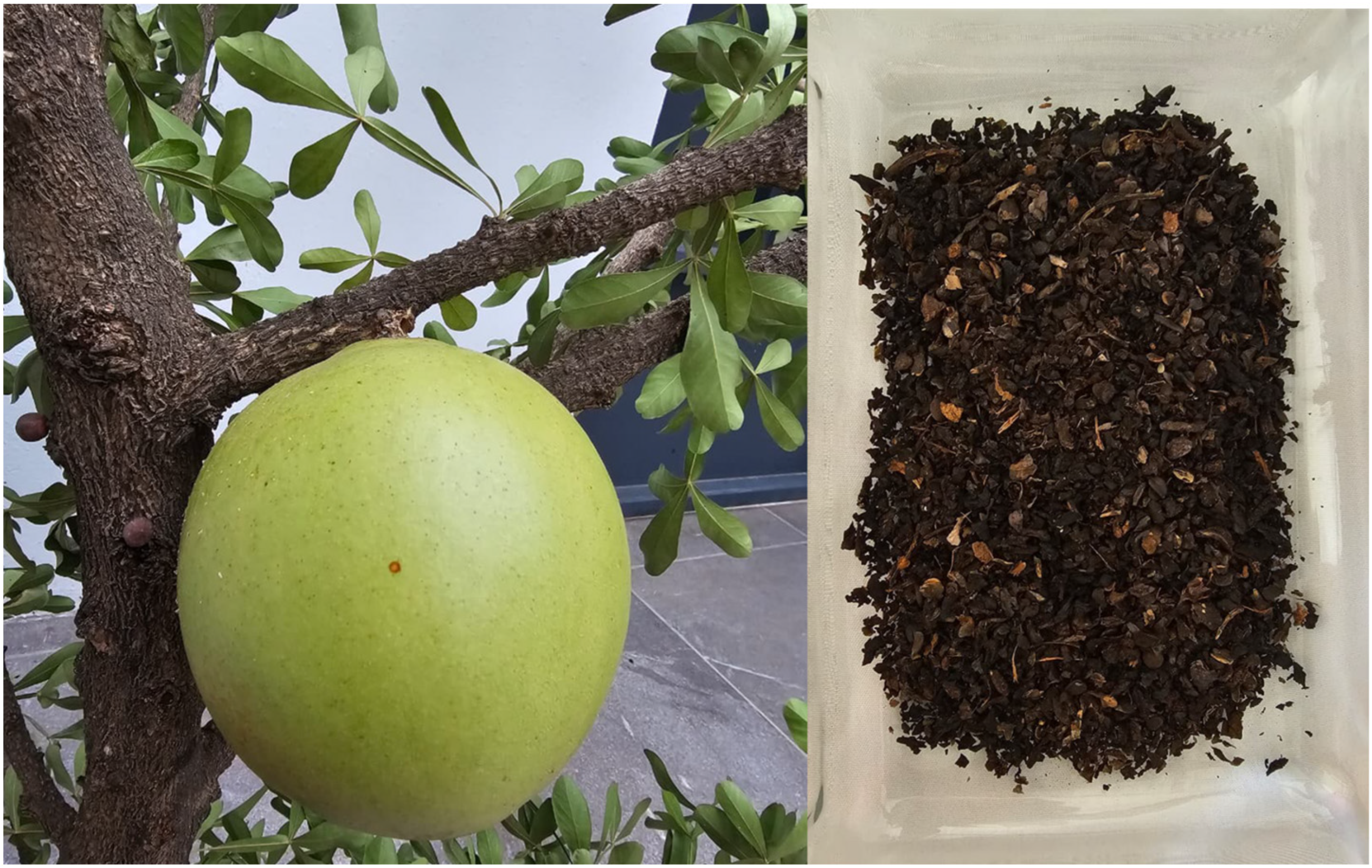
Mature fruits of Crescentia alata (Figure 1) were collected in the location of Santo Domingo Zanatepec, (16°28′38″ N, −94°21′9″ W), Oaxaca, Mexico, selected based on the ocher coloration and hardening of the peel. A voucher specimen was deposited in the herbarium OAX of CIIDIR-Oaxaca, Instituto Politécnico Nacional (Accession OAX-41913). The pulp was separated from the seeds, subsequently lyophilized in a Dry Ice Benchtop Freeze Dry System Labconco (Kansas, MO, USA) at −75 °C, 133 × 10−3 mBar for 72 h to achieve complete moisture removal, and stored at −20 °C until extraction.

2.3. Pressurized Liquid Extraction

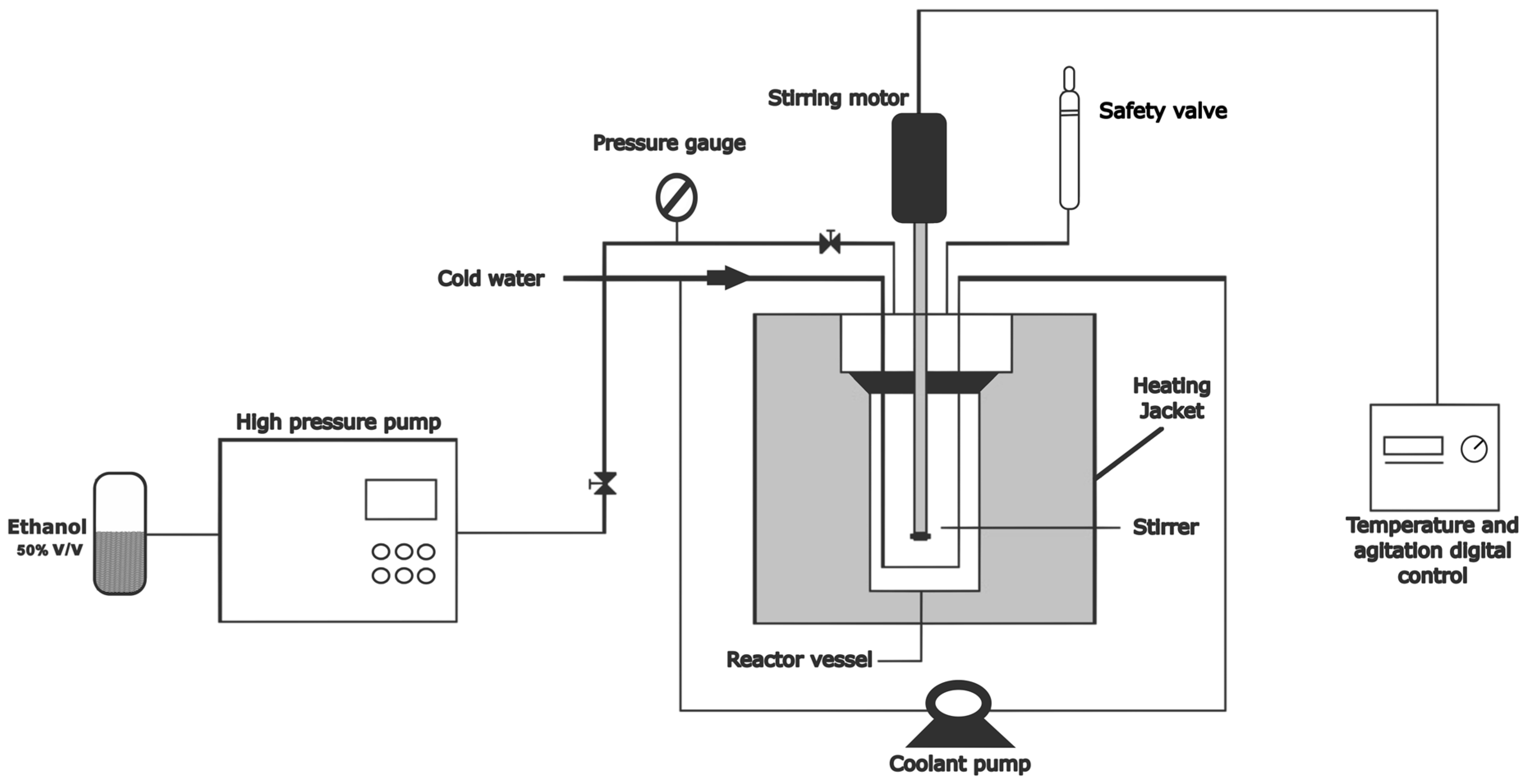
The extraction was carried out in a Prendo RAP-100 high-pressure reactor (Figure 2), equipped with a 230 mL capacity vessel and a mechanical stirrer. A solid–liquid ratio of 1:30 was maintained in each extraction, using 7 g of lyophilized Crescentia alata pulp per run. The solvent, 210 mL of ethanol at 50% (v/v), was pumped into the vessel at a flow rate of 9.00 mL/min. Once the reactor was filled and the programmed parameters were reached (Table 1), the extraction and stirring (set to 300 rpm) began. The resulting extracts were vacuum filtered, and the solvent was evaporated at room temperature in a fume hood. Finally, the solid extract was stored at −20 °C until use.

2.4. Box–Behnken Design

Response Surface Methodology with a three-level, three-factor Box–Behnken Design (BBD) was used, which included 15 runs with 3 replicates at the central point to estimate the experimental error [21].
To establish the working ranges for the BBD, preliminary one-factor-at-a-time (OFAT) experiments were conducted. These initial studies evaluated the effect of pressure (10 to 50 bar), temperature (25 to 100 °C), and time (5 to 60 min) on the TPC yield, allowing for the selection of the most effective ranges for optimization (data shown in Supplementary Material, Figure S1).
The independent variables (X) were encoded as −1, 0, and +1 for low, central, and high levels, respectively. Based on these preliminary findings, the pressure values used were 10, 30, and 50 bar; temperature, 25, 37.5, and 50 °C; and time, 10, 20, and 30 min (Table 1). The solid–liquid ratio (1:30) and the solvent (ethanol 50% v/v) were kept constant; these parameters were established based on previous reports [24,32]. The response variables were TPC, TFC, and the percentage of ROS inhibition. The experiments were conducted in random order to minimize variability.
The second-order polynomial model (Equation (1)) was used to fit the experimental data and predict the Y response (TPC, TFC, and percentage of ROS inhibition) based on the independent variables.
Y   =   B 0   +   B 1 X 1   +   B 2 X 2   +   B 3 X 3   +   B 11 X 1 2   +   B 22 X 2 2   +   B 33 X 3 2   +   B 12 X 1 X 2   +   B 12 X 1 X 3   +   B 23 X 2 X 3
where
  • Y: represents the predicted response (TPC, TFC, and percentage of ROS inhibition).
  • B0: is the constant value (the Y value when all independent variables are zero).
  • X1, X2, X3: are the independent variables coded for Pressure (X1), Temperature (X2) and Time (X3), respectively.
  • B1, B2, B3: are the linear coefficients (indicating the individual contribution of each independent variable on the response Y).
  • B11, B22, B33: are the quadratic coefficients (indicating the effect of the squared terms of the independent variables on the response).
  • B12, B13, B23: are the interaction coefficients (representing the interactions between the independent variables).
Optimal extraction conditions were estimated with the second-order quadratic polynomial model, multiple regression analysis, and three-dimensional response surface plots. Subsequently, three additional confirmatory experiments were performed with the optimal conditions calculated by the model to verify the validity of the statistical experimental strategies.

2.5. Total Phenolic Content

The TPC was measured using the Folin–Ciocalteu method, adapted from Gong et al. [32]. 1 mg of the extracts was diluted in 1 mL of deionized water. Subsequently, 0.2 mL of this dilution was mixed with 0.2 mL of the Folin–Ciocalteu reagent (50% v/v). After 5 min, 1.0 mL of sodium carbonate (8% w/v) and 2.6 mL of deionized water were added. The mixture was stirred and kept at room temperature for 1 h. The absorbance of the mixture was measured at 765 nm with a UV-Visible spectrophotometer. The total phenolic content was calculated from a standard curve of gallic acid diluted in deionized water in a range of 6.25–400 mg/L (regression equation: y = 0.0035x + 0.0423; R2 = 0.9884); and was expressed as miligram gallic acid equivalents (GAE) per gram of dry extract (mg GAE/g DW).

2.6. Total Flavonoid Content

The quantification of TFC was performed using the aluminum chloride colorimetric method [33]. 1 mg of the extracts was diluted in 80% ethanol. 0.5 mL of the dilution from each extract was taken and mixed with 1.5 mL of 80% ethanol, 0.1 mL of 10% aluminum chloride, 0.1 mL of 1 M potassium acetate, and 2.8 mL of distilled water. For the blank, 0.5 mL of 80% ethanol was added. The mixtures were incubated for 30 min at room temperature. The absorbance was measured at 415 nm using a UV spectrophotometer. The total flavonoid content was calculated based on the calibration curve made with a quercetin standard diluted in 80% ethanol in a range of 6.25–100 mg/mL (regression equation: y = 0.0098x − 0.0248; R2 = 0.9952). The results were expressed as quercetin equivalents per gram of dry extract (mg QE/g DW).

2.7. Cellular Antioxidant Activity

2.7.1. Human Samples

Peripheral blood samples were obtained from healthy donors, who agreed to be volunteers with prior informed consent, at the University Clinical Laboratory of the Faculty of Biochemical Sciences of the Autonomous University “Benito Juárez” of Oaxaca (UABJO) with authorization HRAEO-CIC-CEI 013/16 by the bioethics committee of the Regional High Specialty Hospital of Oaxaca (HRAEO).

2.7.2. Isolation of PBMCs

Peripheral blood mononuclear cells (PBMCs) were isolated from blood samples collected in EDTA tubes following the methodology of Ríos-Ríos et al., with slight modifications [34]. The obtained cells were resuspended in 2 mL of RPMI-1640 medium supplemented with 10% of decomplemented autologous plasma, 1 mM of sodium pyruvate, 0.1 mM of non-essential amino acids, 100 U/mL of penicillin, 100 μg/mL of streptomycin sulfate, and 0.25 μg/mL of amphotericin B. The determination of viability and the counting of PBMCs was performed by exclusion staining with trypan blue according to fabricant instructions.

2.7.3. Inhibition of Reactive Oxygen Species

2′,7′-Dichlorodihydrofluorescein diacetate (DCFH-DA) staining method for detection of reactive oxygen species by was adapted from Kim & Xue [35]. The isolated PBMCs were diluted to a concentration of 1 × 10⁶ cells/mL in a 50 μM solution of DCFH-DA in RPMI-1640 culture medium. In a 96-well dish, 190 μL of the DFCH-DA-stained cells and 10 μL of the extracts dissolved in 1% DMSO were added to obtain a final well concentration of 250 μg/mL [36]. For positive control of ROS inhibition, 10 μL of quercetin 1.1 mM dissolved in DMSO 1% was used [29], and 10 μL of DMSO at 1% was used as a negative control. Additionally, autofluorescence controls were included, for which 190 μL of PBMCs dissolved in RPMI-1640 culture medium were taken at a concentration of 1 × 10⁶ cells/mL without DFCH-DA and 10 μL of the previously mentioned extract and control solutions were added. These controls allowed the intrinsic basal fluorescence of the cells to be evaluated, distinguishing between the background signal and the signal derived from the oxidation of the fluorescent marker. The culture dish with the treatments and controls was incubated for 30 min at 37 °C, in an atmosphere of 5% CO2 and 95% humidity. It was then washed twice with 200 μL of PBS and centrifuged at 300× g for 10 min at 25 °C to remove the supernatant. To generate ROS and quantify the oxidation of DCFH-DA to DCF, 200 μL of 350 μM H2O2 dissolved in RPMI medium was added, and the plate was incubated again for 5 h. After incubation, the cells were washed twice with 200 μL of PBS and passed into cytometry tubes with 400 μL of 2% formaldehyde to measure fluorescence. Fluorescence readings were performed on a MACSQuant (Miltenyi Biotech, San Diego, CA, USA) flow cytometer, and the data obtained were analyzed in the FlowJo_V10 software. The results were expressed as percentage of ROS inhibition, using the Mean Fluorescence Intensity (MFI) of each treatment, and were calculated using the following equation:
ROS   Inhibition   ( % ) = ( M F I V e h )     ( M F I T x ) ( M F I V e h )   ×   100
where
  • MFIVeh = Mean fluorescence intensity of vehicle-treated PBMCs (DMSO 0.1%)
  • MFITX = Mean fluorescence intensity of extract or quercetin-treated PBMCs

2.8. Statistical Analysis

The analysis of the experimental design and the calculation of the forecasted data were performed in the JMP® Pro-17.0.0 software. The validity of the model was verified by an Analysis of Variance Test (ANOVA) with a confidence level of 95%. To evaluate the accuracy of the model, the coefficient of determination (R2) was calculated. The reliability of the regression coefficients was verified by the F-test with a significance level (p < 0.05).

3. Results and Discussion

3.1. Response Surface Methodology with Box–Behnken Design

The Box–Behnken design proved to be suitable for describing the relationship between the independent variables (temperature, time, and pressure) and their respective responses (TPC, TFC, and percentage of ROS inhibition) in the PLE of bioactive compounds from Crescentia alata. These factors not only influenced the release and solubilization of phenolic compounds and flavonoids from the plant matrix but also impacted the bioactivity of the obtained extracts.
The experimental data (Table 2) show a clear variability to different extraction conditions. Specifically, experiment 14 (30 bar, 37.5 °C, 20 min) achieved the maximum yield for TPC (27.66 mg GAE/g DW) and the highest percentage of ROS inhibition (60.21%). Meanwhile, experiment 11 (50 bar, 37.5 °C, 30 min) achieved the maximum yield for TFC (19.71 mg QE/g DW).
The results of the Analysis of Variance (ANOVA) indicated that the Box–Behnken model provided an accurate representation of the relationship for TPC, TFC, and the percentage of ROS inhibition. The lack-of-fit test was not significant for any of these models, with p-values greater than 0.05, which means the model fits the experimental data adequately and demonstrates sufficient predictive capability for the responses. Additionally, the relative standard deviation (RSD) for all responses was below 10%, indicating reliable and precise results (Table 3) [21,37].
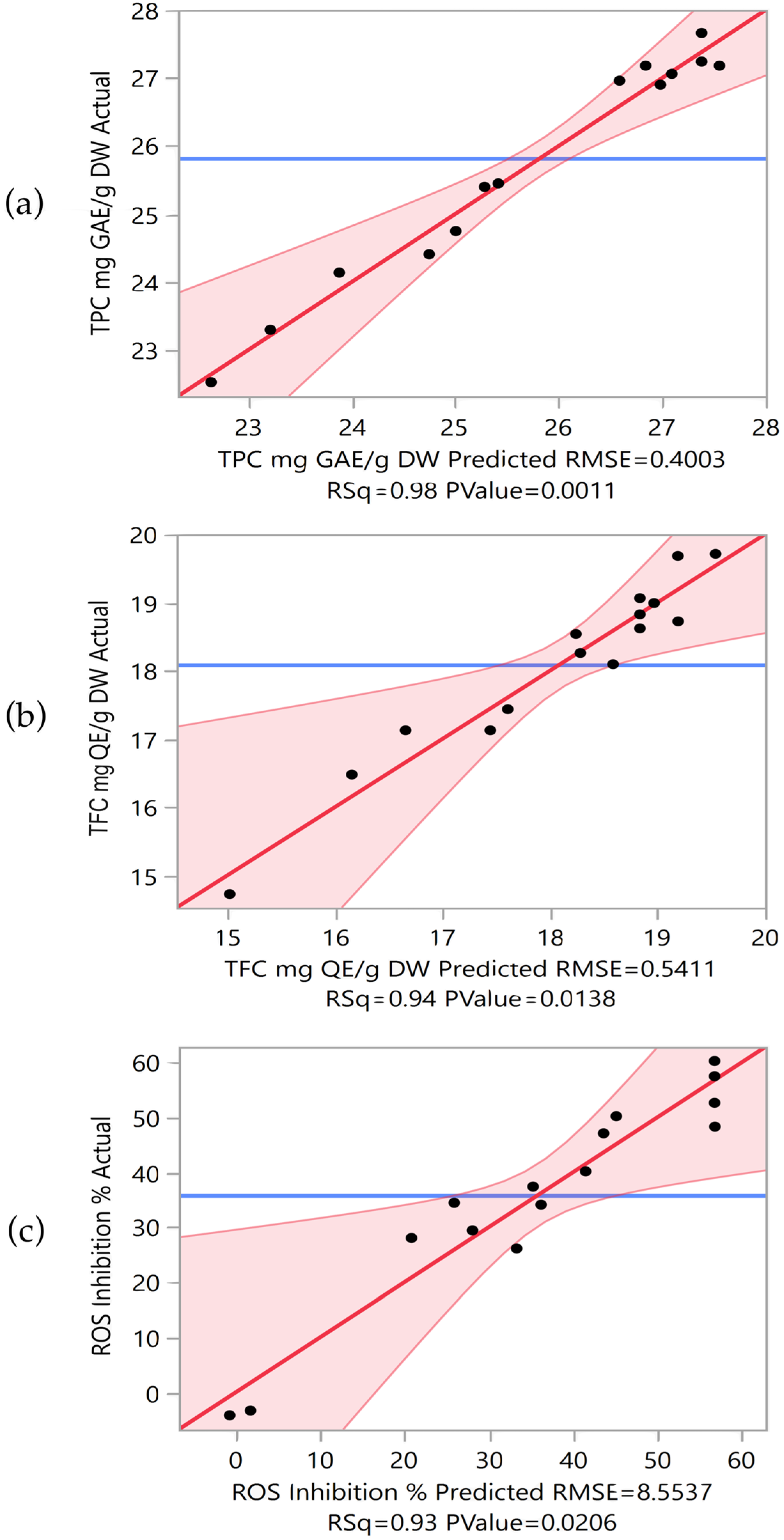
The values of the coefficients of determination (R2) and adjusted R2 provide information about the quality of the model. For TPC, the values of R2 = 0.9792 and adjusted R2 = 0.9418 indicate that the model is highly reliable for describing the effect of the variables on this response. Although the values were slightly lower for TFC (R2 = 0.9405 and adjusted R2 = 0.8334) and ROS inhibition (R2 = 0.9497 and adjusted R2 = 0.8593), the models were suitable for describing the relationship between the independent variables and their respective responses [37,38]. The non-significant lack of fit for these models confirms that most of the variation in the response can be explained by the polynomial quadratic equation, which indicates the effect of the 3 levels of each of the factors in their linear, quadratic and interaction function to predict the influence of the variables on the TPC. TFC and the percentage of ROS inhibition [21].
Figure 3 shows the correlation plots comparing the actual (experimental) values of TPC (a), TFC (b), and percentage of ROS inhibition (c) with the values predicted by the model. The proximity of the experimental points to the regression line in each panel and the narrowness of the confidence bands (shaded pink area) demonstrate an excellent fit and high predictive capability.

3.2. Multiple Quadratic Model and Influence of Extraction Parameters

From the Box–Behnken design, second-order equations were developed that express the relationship between the variables, allowing for the prediction of TPC (Equation (3)), TFC (Equation (4)), and the percentage of ROS inhibition (Equation (5)).
T P C = 0.00404 X 1 2 + 0.00366 X 1 X 2 + 0.00453 X 1 X 3 + 0.008 X 1 0.00565 X 2 2 + 0.00788 X 2 X 3 + 0.2508 X 2 0.00413 X 3 2 0.33625 X 3 + 24.9494
T F C = 0.00289 X 1 2 0.00225 X 1 X 2 + 0.00564 X 1 X 3 + 0.19278 X 1 0.00203 X 2 2 0.00021 X 2 X 3 + 0.19876 X 2 + 0.00080 X 3 2 0.25902 X 3 + 15.212
R O S   I n h i b i t i o n = 0.02882 X 1 2 + 0.01124 X 1 X 2 0.01406 X 1 X 3 + 1.19094 X 1   0.13413 X 2 2 0.04534 X 2 X 3 + 11.7641 X 2 0.06685 X 3 2   + 5.54438 X 3 259.9275
where
  • X1: Pressure
  • X2: Temperature
  • X3: Time
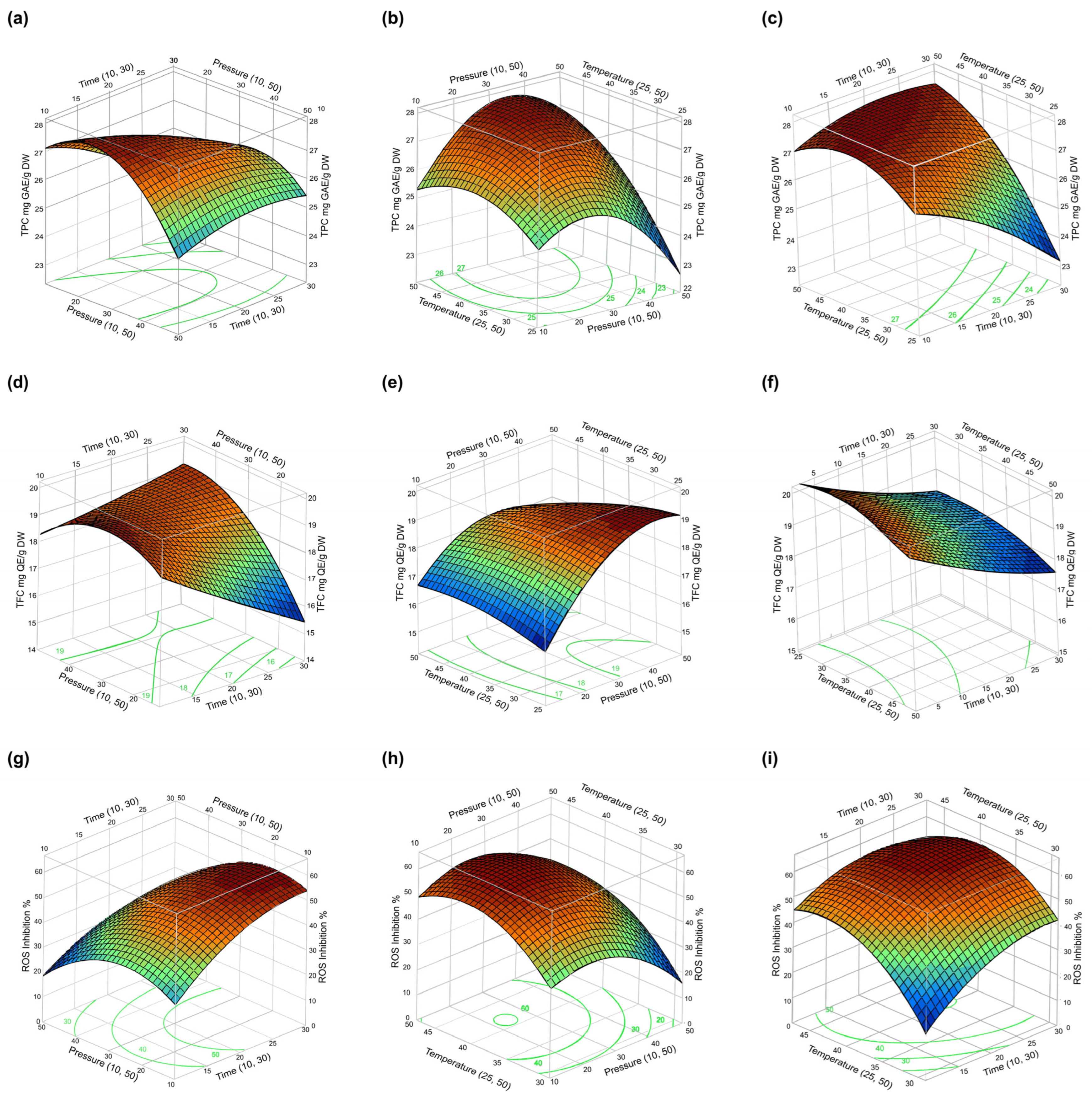
The results indicated that temperature was the most influential factor for the extraction of TPC. The temperature and time variables were statistically significant, both in their linear, quadratic, and interaction effects (Table 3). The model showed a high positive linear coefficient (+0.2508) (Equation (3)), suggesting that higher temperatures within the experimental range promote the extraction of phenolic compounds (Figure 4b,c). This finding is consistent with previous studies, which highlight how an increase in temperature increases the solubility and diffusion of phenolic compounds from the plant matrix to the solvent by promoting the hydrolysis of peptide and glycosidic bonds in the cell wall [24,39,40]. Conversely, very low temperatures can result in lower extraction efficiency for certain compounds due to their reduced solubility [41].
However, the quadratic term for temperature (−0.00565) indicated that an excessive increase in this variable has a negative effect on TPC extraction (Equation (3)) [25,42,43]. Several authors note that, although increasing temperature facilitates diffusion, it can also induce the thermal degradation of sensitive compounds such as phenolic acids (ferulic, caffeic, p-coumaric, and gallic) [12,13]. These findings highlight the need for careful optimization to balance extraction efficiency and the stability of bioactive compounds. Previous studies indicate that a longer contact time between the plant matrix and the solvent generally improves TPC yield; as indicated by the interaction coefficient of both variables (+0.00788) (Equation (3)); however, it is reported that prolonged extraction times at high temperatures can cause the degradation of thermolabile compound [44,45].
The pressure variable did not show a significant impact on TPC in the linear model, suggesting that its influence is secondary compared to temperature and time under the evaluated conditions. However, the quadratic and interaction models revealed that increasing pressure favors the extraction of TPC (Figure 4a,b). The increase in pressure facilitates the penetration of the solvent into the pores of the plant matrix to efficiently solubilize the analytes and allows for shorter extraction times (Figure 4a) [46,47].
In the model for TFC, pressure showed significant linear, quadratic, and interaction effects (Equation (4)) (Table 3) [26]. This is consistent with other authors who note that increasing pressure increases the density of the solvent and favors the extraction of flavonoids such as quercetin, catechin, epicatechin, rutin, myricetin, luteolin, and apigenin (Figure 4d) [48,49]. Compared to the extraction of TPC, the linear and quadratic effect of temperature was not statistically significant, indicating that flavonoids are less sensitive to higher temperature conditions (Figure 4e). Several studies report an increase in the recovery of flavonoids in a temperature range of 40 to 100 °C [13,50,51]. Time was significant in its linear effect, with a negative coefficient (−0.2590) indicating that increasing the extraction time does not increase the TFC (Figure 4f), and long extraction periods can lead to TFC degradation. Studies of PLE in Yerba mate (Ilex paraguariensis) report that increasing the extraction time to 15 min favors the extraction of flavonoids rutin and quercetin, while extraction times greater than 30 min decrease the extraction rate [52]. The interaction between pressure and time (+0.00564) (Equation (4)) was statistically significant, demonstrating that an adequate combination of these variables favors TFC extraction (Figure 4d).
For the percentage of ROS inhibition, temperature was again the most influential factor, with a high positive linear coefficient (+11.7641) (Equation (5)) and was statistically significant in its linear and quadratic effects (Table 3).
The negative quadratic terms for temperature (−0.13413) and pressure (−0.02882) were also statistically significant for the model, indicating that the extreme conditions of these variables have a negative impact on the antioxidant activity of extracts (Figure 4h). Our findings, visible in the surface graphs, confirm this trend. An excessive increase in pressure decreases antioxidant activity (Figure 4g), which could be attributed to a reduction in the solute-solvent contact surface. Similarly, the negative impact observed at high temperatures (Figure 4i) is a finding consistent with the literature [13,45], which reports that excessive temperatures can lead to the degradation of compounds, resulting in a deficient extraction process and, therefore, a decrease in antioxidant activity.
However, other investigations attribute the loss of antioxidant activity to the degradation of biologically active compounds. A higher yield of TPC is reported in extractions carried out at 100 °C, with a higher content of gallic acid, catechin, epicatechin, and epicatechin gallate, compared to extractions performed at 20 °C. Nevertheless, a higher TPC does not always imply an increase in antioxidant activity [42,53].
Several studies report that variations in PLE conditions can degrade compounds with greater antioxidant activity, for example, oligomeric proanthocyanidins are known to degrade at 100 °C using 50% ethanol, even with short extraction times (1 min), which is reflected in a decrease in the extract’s antioxidant capacity. To preserve these heat-sensitive compounds, optimal conditions have been reported at 20 °C, 75% ethanol, and an 11 min extraction time [42,54]. Furthermore, a positive correlation has been observed between cellular antioxidant activity and the presence of specific flavonoids, such as quercetin, kaempferol, and luteolin, in the extracts [55,56].
The mechanism of action of these phenolic compounds lies in their chemical structure, due to their multiple hydroxyl groups with an affinity to bind to cell membranes, which allows them to inhibit free radicals and lipid peroxidation caused by oxidative stress [30,31,57]. Therefore, to preserve antioxidant activity, it is recommended to perform extractions at low temperatures with longer extraction times to preserve the structure of the phenolic compounds that favor their binding to the membrane [30,31,42,58].
Collectively, these results underscore the complexity of extracting bioactive compounds and the need for an optimized approach to maximize both the yield and the functional activity of the extracts. The developed models offer a valuable tool for predicting the behavior of experimental variables and facilitating the design of efficient and sustainable processes [59].

3.3. Optimization and Model Validation

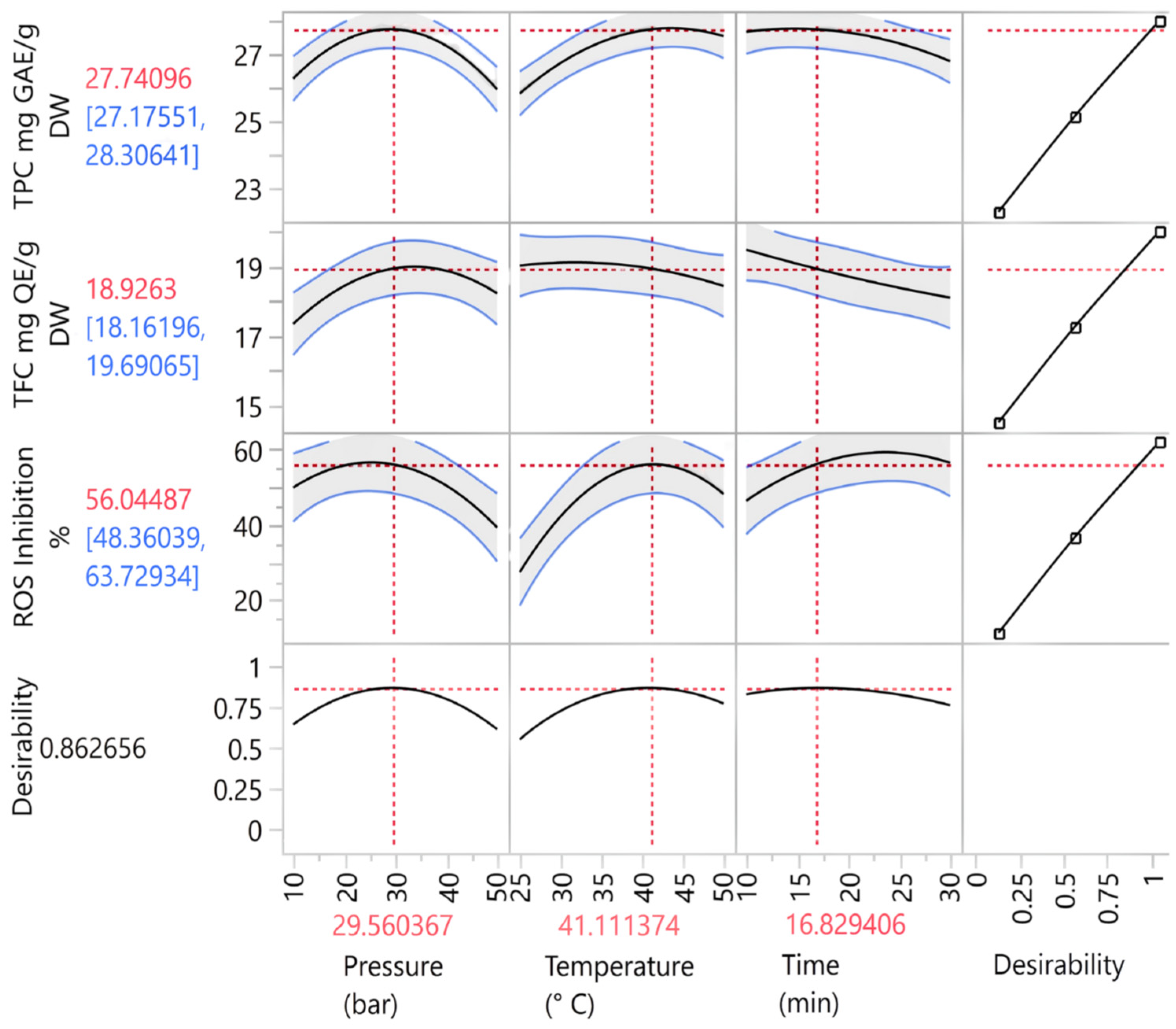
The optimal extraction conditions were determined to maximize the yield of TPC, TFC, and the percentage of ROS inhibition in extracts of Crescentia alata. Figure 5 presents the desirability profiler, which determines the optimal extraction conditions to simultaneously achieve the highest values for TPC, TFC, and the percentage of ROS inhibition. It shows how each variable (pressure, temperature, time) influences each response and the overall desirability.
The red lines indicate the optimal conditions identified: a pressure of 29.56 bar, a temperature of 41.11 °C, and a time of 16.83 min. Under these conditions, the model predicted maximum values of TPC (27.74 mg GAE/g DW), TFC (18.92 mg QE/g DW), and percentage of ROS inhibition (56.04%), with an overall desirability of 86.26%. This high desirability value confirms that the model has found a set of conditions that effectively balances the maximization of all considered responses.
To validate the model’s predictive accuracy under practical operating conditions, these parameters were adjusted to 30 bar, 40 °C, and 20 min. A set of five validation experiments (n = 5) was performed under these applied conditions. The results (Table 4) showed that the experimental values for TPC (28.27 ± 0.80 mg GAE/g DW), TFC (19.08 ± 0.61 mg QE/g DW), and percentage of ROS inhibition (72.05 ± 2.43%) were in strong agreement with the predictive values.
The TPC obtained under the optimized conditions of the PLE process reached 28.27 mg GAE/g DW, underscoring the effectiveness and competitiveness of this method. When compared to other green extraction techniques, such as Subcritical Water Extraction (SWE) applied to different plant matrices, the PLE method demonstrates superior performance. For example, SWE optimization for Pistacia atlantica (Bene) hull resulted in a TPC of 22.84 mg GAE/g DW at 196 °C, 52.6 min and 43.6:1 water ratio [60], while Coriandrum sativum (coriander) seeds yielded 25.45 mg GAE/g DW under similar conditions (200 °C, 30 bar and 28.3 min) [61].
Moreover, the TFC obtained from our validation (19.08 mg QE/g DW) presents a notable improvement, significantly exceeding the optimal value of 6.31 mg CE/g DW reported for coriander seeds [61]. Additionally, this result is directly comparable to the 19.98 mg RE/g DW achieved from Hippophaë rhamnoides (sea buckthorn) residue, which was optimized using SWE conditions of 120 °C for 36 min with a water-to-solid ratio of 20 [32].
This comparison highlights a key distinction in extraction strategies. The SWE method relies solely on water as the solvent, requiring temperatures exceeding 100 °C to sufficiently reduce the solvent’s dielectric constant for the extraction of less-polar compounds [16]. In contrast, the optimized PLE method achieves similar or superior yields at a substantially lower temperature of 40 °C, substituting the high thermal energy demands of SWE with a 50% ethanol-water solvent mixture.
This low-temperature procedure not only enhances energy efficiency but also significantly mitigates the risk of thermal degradation of heat-sensitive phytochemicals, which is a major concern in high-temperature SWE processes. Accordingly, the optimized PLE method offers a milder yet highly effective and environmentally friendly alternative for TPC and TFC extraction.
Extraction with pressurized liquid at low temperatures is a field of research with few studies and there is no information on the influence of extraction variables on antioxidant activity in an ex vivo model. The results of the study indicate that compounds with greater cellular antioxidant activity are obtained at moderate temperatures. Other studies also agree on the use of low temperatures in PLE to increase antioxidant activity. For example, in a study on the extraction of skin from grapes (Vitis vinifera, Vitis labrusca, Vitis amurensis), a Box–Behnken (BBD) design was used to optimize the extraction of TPC. The optimal conditions given by the model were an ethanol concentration of 48.8%, a temperature of 50.79 °C and an extraction time of 14.82 min. With these parameters, a total of 15.24 mg GAE/g with the highest in vitro antioxidant activity was obtained for the DPPH, ABTS and FRAP assays [62].
Another study used RSM with a Central Composite Design to prevent the degradation of TPC and betalains during PLE of fruit from O. dillenii. The best extraction conditions were 50% ethanol at 25 °C, which increased the in vitro antioxidant activity for the ORAC method [63]. On the other hand, the PLE of TPC from Fucus vesiculosus optimized antioxidant activity for DPPH and ABTS at temperatures of 137 °C, with 58% ethanol, and in 4.68 min, indicating that it is possible to use high extraction temperatures with short extraction times [64]. However, it is important to note that these studies did not consider pressure as a variable and were limited to maintaining the maximum operating pressure of their reactors constant (10 bar), which underscores the need to establish optimal conditions according to the matrix and the equipment.
The results of this study demonstrate the importance of optimization with the Box–Behnken Design (BBD) in green chemistry extraction processes. This methodology allowed for the efficient recovery of phenolic compounds and flavonoids with significant antioxidant capacity from the pulp of Crescentia alata without using toxic solvents, highlighting its potential as a source of safe bioactive compounds with therapeutic application for the inhibition of ROS (Reactive Oxygen Species). Preserving the bioactivity of these compounds will allow for the study of the therapeutic effects traditionally attributed to C. alata, such as the treatment of respiratory diseases and its anti-inflammatory properties in traditional medicine [1,3,6,65]
In addition to reinforcing the ethnomedicinal literature, this study complements previous research that identified melanins with antioxidant properties in the pulp of C. alata, suggesting a synergistic action between different classes of bioactive compounds to combat oxidative stress [66]. Future research could focus on the identification and characterization of the specific phenolic compounds responsible for its bioactivity, as well as the evaluation of their bioavailability and safety in in vivo models to pharmacologically validate the ethnomedicinal applications of C. alata.

4. Conclusions

This study optimized for the first time the pressurized liquid extraction conditions for the recovery of bioactive compounds from Crescentia alata using a response surface methodology with a Box–Behnken design, maximizing the extraction of phenolic compounds, total flavonoids, and the cellular antioxidant capacity by increasing the percentage of ex vivo inhibition of reactive oxygen species. The results demonstrated that the temperature, pressure, and time of extraction exert a significant influence on the yield of the compounds of interest and the ex vivo cellular antioxidant capacity of the extracts. The optimization analysis revealed that a proper balance of these variables is crucial to preserve the bioactive properties of the compounds. It was observed that temperature was the most influential factor, when using lower temperatures the extraction time increases, however this interaction is essential to preserve bioactivity. In contrast, increasing the pressure helps to shorten extraction times, as it promotes the solubilization of the analytes in the solvent. Together, these variables improve extraction efficiency. These findings provide valuable information for the potential use of Crescentia alata in functional applications, and highlight the advantages of PLE as an efficient, safe, and environmentally friendly method for the extraction of bioactive compounds.

Supplementary Materials

The following supporting information can be downloaded at: https://www.mdpi.com/article/10.3390/separations12120331/s1, Figure S1: Effect of individual variables on TPC yield determined by one-factor-at-a-time (OFAT) experiments.

Author Contributions

P.E.L.-D.: Writing—original draft, visualization, methodology, investigation, formal analysis, data curation. H.T.-A.: Resources, validation. R.S.: Writing—review and editing. L.L.-R.: Writing—review and editing, validation, resources, project administration, funding acquisition, conceptualization. All authors have read and agreed to the published version of the manuscript.

Funding

This work was supported by the Instituto Politécnico Nacional with the SIP project 2016-RE/50, SIP-20231479, SIP-20240944, SIP-20254787, CONACYT 270428 project and scholarship #827719 of the SECIHTI for doctoral studies of the student Paola Ester López Díaz.

Institutional Review Board Statement

The study was conducted in accordance with the Declaration of Helsinki and approved by the Bioethics Committee of the Regional High Specialty Hospital of Oaxaca (HRAEO) (protocol code HRAEO-CIC-CEI 013/16, 27 June 2016).

Informed Consent Statement

Informed consent was obtained from all subjects involved in the study.

Data Availability Statement

The original contributions presented in this study are included in the article/Supplementary Material. Further inquiries can be directed to the corresponding author(s).

Acknowledgments

The authors thank the National Cytometry Laboratory (LabNalCit), Oaxaca, the Laboratory of Extraction and Analysis of Natural Plant Products of the Interdisciplinary Research Center for Integral Regional Development (CIIDIR) Oaxaca, the Laboratory of Research in Basic and Clinical Immunology of the Faculty of Biochemical Sciences of the Benito Juárez Autonomous University of Oaxaca, William de Jesús Ríos-Ríos for his significant contributions and fundamental technical support in the flow cytometry analysis performed in this project, Gabriel Iván Ortega-López for his insightful advice and valuable input during the discussions and Alfredo Orozco from Santo Domingo Zanatepec, Oaxaca, Mexico; for the facilities granted to carry out the collection of samples to carry out the study.

Conflicts of Interest

The authors declare no conflicts of interest.

Abbreviations

The following abbreviations are used in this manuscript:
ABTS2,2′-azino-bis(3-ethylbenzothiazoline-6-sulfonic acid)
DPPH1,1-diphenyl-2-picrylhydrazyl
DWDry weight
FRAPFerric reducing antioxidant power
GAEGallic acid equivalents
PBMCsPeripheral blood mononuclear cells
pHPotential of hydrogen
PLEPressurized liquid extraction
QEQuercetin equivalents
RSM-BBDResponse Surface Methodology Box–Behnken
DFCH2′,7′-dichlorodihydrofluorescein
DFCH-DA2′,7′-dichlorodihydrofluorescein diacetate
DFC2′,7′-dichlorofluorescein
DMSODimethyl sulfoxide
D-PBSDulbecco’s Phosphate-Buffered Saline
EDTAEthylenediaminetetraacetic acid
MFIMean fluorescence intensity
RPMIMedio Roswell Park Memorial Institute

References

  1. Olivares-Pérez, J.; Rojas-Hernández, S.; Quiroz-Cardozo, F.; Camacho-Díaz, L.M.; Cipriano-Salazar, M.; Damián-Valdez, M.A.; Ávila-Morales, B.; Villa-Mancera, A. Diagnostic of Uses, Distribution and Dasometric Characteristics of the Cirian (Crescentia alata Kunth) Tree in Pungarabato Municipality, Guerrero, México. Polibotanica 2018, 45, 191–204. [Google Scholar] [CrossRef]
  2. Autore, G.; Rastrelli, L.; Lauro, M.R.; Marzocco, S.; Sorrentino, R.; Sorrentino, U.; Pinto, A.; Aquino, R. Inhibition of Nitric Oxide Synthase Expression by a Methanolic Extract of Crescentia alata and Its Derived Flavonols. Life Sci. 2001, 70, 523–534. [Google Scholar] [CrossRef] [PubMed][Green Version]
  3. Rojas, G.; Lévaro, J.; Tortoriello, J.; Navarro, V. Antimicrobial Evaluation of Certain Plants Used in Mexican Traditional Medicine for the Treatment of Respiratory Diseases. J. Ethnopharmacol. 2001, 74, 97–101. [Google Scholar] [CrossRef]
  4. Alonso-Castro, A.J.; Domínguez, F.; Zapata-Morales, J.R.; Carranza-Álvarez, C. Plants Used in the Traditional Medicine of Mesoamerica (Mexico and Central America) and the Caribbean for the Treatment of Obesity. J. Ethnopharmacol. 2015, 175, 335–345. [Google Scholar] [CrossRef]
  5. Coronado-Aceves, E.W.; Sánchez-Escalante, J.J.; López-Cervantes, J.; Robles-Zepeda, R.E.; Velázquez, C.; Sánchez-Machado, D.I.; Garibay-Escobar, A. Antimycobacterial Activity of Medicinal Plants Used by the Mayo People of Sonora, Mexico. J. Ethnopharmacol. 2016, 190, 106–115. [Google Scholar] [CrossRef]
  6. Solares Arenas, F. Etnobotánica y Usos Potenciales Del Cirián (Crescentia alata, H.B.K.) En El Estado de Morelos. Polibotanica 2004, 18, 13–31. [Google Scholar]
  7. Dai, J.; Mumper, R.J. Plant Phenolics: Extraction, Analysis and Their Antioxidant and Anticancer Properties. Molecules 2010, 15, 7313–7352. [Google Scholar] [CrossRef]
  8. Arulselvan, P.; Fard, M.T.; Tan, W.S.; Gothai, S.; Fakurazi, S.; Norhaizan, M.E.; Kumar, S.S. Role of Antioxidants and Natural Products in Inflammation. Oxid. Med. Cell Longev. 2016, 2016, 5276130. [Google Scholar] [CrossRef]
  9. Heleno, S.A.; Martins, A.; Queiroz, M.J.R.; Ferreira, I.C. Bioactivity of Phenolic Acids: Metabolites versus Parent Compounds: A Review. Food Chem. 2015, 173, 501–513. [Google Scholar] [CrossRef]
  10. Abbaszadeh, H.; Keikhaei, B.; Mottaghi, S. A Review of Molecular Mechanisms Involved in Anticancer and Antiangiogenic Effects of Natural Polyphenolic Compounds. Phytother. Res. 2019, 33, 2002–2014. [Google Scholar] [CrossRef] [PubMed]
  11. Roleira, F.M.F.; Tavares-Da-Silva, E.J.; Varela, C.L.; Costa, S.C.; Silva, T.; Garrido, J.; Borges, F. Plant Derived and Dietary Phenolic Antioxidants: Anticancer Properties. Food Chem. 2015, 183, 235–258. [Google Scholar] [CrossRef]
  12. Snoussi, A.; Bouacida, S.; Mitić, M.; Arsić, B.; Koubaier, H.B.H.; Chouaibi, M.; Janković, S.; Zlatanović, I.; Mrmošanin, J.; Stojanović, G.; et al. Thermal Degradation Kinetics of Myrtle Leaves Ethanol Extract (Myrtus communis L.): Effect on Phenolic Compounds Content and Antioxidant Activity. J. Food Meas. Charact. 2022, 16, 2119–2130. [Google Scholar] [CrossRef]
  13. Antony, A.; Farid, M. Effect of Temperatures on Polyphenols during Extraction. Appl. Sci. 2022, 12, 2107. [Google Scholar] [CrossRef]
  14. Moreira, S.A.; Alexandre, E.M.C.; Pintado, M.; Saraiva, J.A. Effect of Emergent Non-Thermal Extraction Technologies on Bioactive Individual Compounds Profile from Different Plant Materials. Food Res. Int. 2019, 115, 177–190. [Google Scholar] [CrossRef] [PubMed]
  15. Fraguela-Meissimilly, H.; Bastías-Monte, J.M.; Vergara, C.; Ortiz-Viedma, J.; Lemus-Mondaca, R.; Flores, M.; Toledo-Merma, P.; Alcázar-Alay, S.; Gallón-Bedoya, M. New Trends in Supercritical Fluid Technology and Pressurized Liquids for the Extraction and Recovery of Bioactive Compounds from Agro-Industrial and Marine Food Waste. Molecules 2023, 28, 4421. [Google Scholar] [CrossRef]
  16. Herrero, M.; Castro-Puyana, M.; Mendiola, J.A.; Ibañ Ez, E. Compressed Fluids for the Extraction of Bioactive Compounds. TrAC Trends Anal. Chem. 2013, 43, 67–83. [Google Scholar] [CrossRef]
  17. Picot-Allain, C.; Mahomoodally, M.F.; Ak, G.; Zengin, G. Conventional versus Green Extraction Techniques—A Comparative Perspective. Curr. Opin. Food Sci. 2021, 40, 144–156. [Google Scholar] [CrossRef]
  18. Da Silva, R.F.; Carneiro, C.N.; de Sousa, C.B.D.C.; Gomez, F.J.V.; Espino, M.; Boiteux, J.; de los Ángeles Fernández, M.; Silva, M.F.; de Souza Dias, F. Sustainable Extraction Bioactive Compounds Procedures in Medicinal Plants Based on the Principles of Green Analytical Chemistry: A Review. Microchem. J. 2022, 175, 107184. [Google Scholar] [CrossRef]
  19. Pimentel-Moral, S.; Borrás-Linares, I.; Lozano-Sánchez, J.; Alañón, M.E.; Arráez-Román, D.; Segura-Carretero, A. Pressurized GRAS Solvents for the Green Extraction of Phenolic Compounds from Hibiscus sabdariffa Calyces. Food Res. Int. 2020, 137, 109466. [Google Scholar] [CrossRef] [PubMed]
  20. Szpisják-Gulyás, N.; Al-Tayawi, A.N.; Horváth, Z.H.; László, Z.; Kertész, S.; Hodúr, C. Methods for Experimental Design, Central Composite Design and the Box–Behnken Design, to Optimise Operational Parameters: A Review. Acta Aliment. 2023, 52, 521–537. [Google Scholar] [CrossRef]
  21. Fukuda, I.M.; Pinto, C.F.F.; Moreira, C.D.S.; Saviano, A.M.; Lourenço, F.R. Design of Experiments (DoE) Applied to Pharmaceutical and Analytical Quality by Design (QbD). Braz. J. Pharm. Sci. 2018, 54, e01006. [Google Scholar] [CrossRef]
  22. De Leon, A.C.; Kidd, M.T.; Corzo, A. Box-Behnken Design: Alternative Multivariate Design in Broiler Nutrition Research. World’s Poult. Sci. J. 2010, 66, 699–706. [Google Scholar] [CrossRef]
  23. Cheng, Y.; Xue, F.; Yu, S.; Du, S.; Yang, Y. Subcritical Water Extraction of Natural Products. Molecules 2021, 26, 4004. [Google Scholar] [CrossRef]
  24. Essien, S.; Young, B.; Baroutian, S. Subcritical Water Extraction for Selective Recovery of Phenolic Bioactives from Kānuka Leaves. J. Supercrit. Fluids 2020, 158, 10421. [Google Scholar] [CrossRef]
  25. Rezaei, F.; Eikani, M.H.; Nosratinia, F.; Bidaroni, H.H. Optimization of Ethanol-Modified Subcritical Water Extraction of Curcuminoids from Turmeric (Curcuma longa L.) Rhizomes: Comparison with Conventional Techniques. Food Chem. 2023, 410, 135331. [Google Scholar] [CrossRef] [PubMed]
  26. Chatzimitakos, T.; Athanasiadis, V.; Kotsou, K.; Mantiniotou, M.; Kalompatsios, D.; Makrygiannis, I.; Bozinou, E.; Lalas, S.I. Optimization of Pressurized Liquid Extraction (PLE) Parameters for Extraction of Bioactive Compounds from Moringa oleifera Leaves and Bioactivity Assessment. Int. J. Mol. Sci. 2024, 25, 4628. [Google Scholar] [CrossRef]
  27. Grisales-Mejía, J.F.; Álvarez-Rivera, G.; Torres-Castañeda, H.G.; Andrade-Mahecha, M.M.; Martínez-Correa, H.A.; Mendiola, J.A.; Cifuentes, A.; Ibañez, E. Hass Avocado (Persea americana Mill.) Residues as a New Potential Source of Neuroprotective Compounds Using Pressurized Liquid Extraction. J. Supercrit. Fluids 2024, 204, 106–117. [Google Scholar] [CrossRef]
  28. Slimani, C.; Fadil, M.; Rais, C.; Ullah, R.; Iqbal, Z.; Santanatoglia, A.; Caprioli, G.; Benjelloun, M.; Lazraq, A.; Bouyahya, A. Optimization of Phenolic Compounds Extraction and Antioxidant Activity from Moroccan Crocus sativus L. by-Products Using Predictive Modeling and Box-Behnken Design. Microchem. J. 2025, 212, 113444. [Google Scholar] [CrossRef]
  29. Xiong, Y.; Damasceno Teixeira, T.V.; Zhang, P.; Warner, R.D.; Shen, S.; Fang, Z. Cellular Antioxidant Activities of Phenolic Extracts from Five Sorghum Grain Genotypes. Food Biosci. 2021, 41, 101068. [Google Scholar] [CrossRef]
  30. Wolfe, K.L.; Liu, R.H. Cellular Antioxidant Activity (CAA) Assay for Assessing Antioxidants, Foods, and Dietary Supplements. J. Agric. Food Chem. 2007, 55, 8896–8907. [Google Scholar] [CrossRef]
  31. Wolfe, K.L.; Liu, R.H. Structure-Activity Relationships of Flavonoids in the Cellular Antioxidant Activity Assay. J. Agric. Food Chem. 2008, 56, 8404–8411. [Google Scholar] [CrossRef]
  32. Gong, Y.; Zhang, X.; He, L.; Yan, Q.; Yuan, F.; Gao, Y. Optimization of Subcritical Water Extraction Parameters of Antioxidant Polyphenols from Sea Buckthorn (Hippophaë rhamnoides L.) Seed Residue. J. Food Sci. Technol. 2015, 52, 1534–1542. [Google Scholar] [CrossRef]
  33. Woisky, R.G.; Salatino, A. Analysis of Propolis: Some Parameters and Procedures for Chemical Quality Control. J. Apic. Res. 1998, 37, 99–105. [Google Scholar] [CrossRef]
  34. De Jesús Ríos-Ríos, W.; Sosa-Luis, S.A.; Almaraz-Arreortua, A.; Vargas-Benitez, P.; Bernardino-Hernández, H.U.; Vargas-Arzola, J.; Hernández-Osorio, L.A.; de los Ángeles Romero-Tlalolini, M.; Aguilar-Ruiz, S.R.; Torres-Aguilar, H. IFN-γ-Preconditioned Human Gingival-Derived Mesenchymal Stromal Cells Inhibit Plasmacytoid Dendritic Cells via Adenosine. Biomolecules 2024, 14, 658. [Google Scholar] [CrossRef]
  35. Kim, H.; Xue, X. Detection of Total Reactive Oxygen Species in Adherent Cells by 2′,7′-Dichlorodihydrofluorescein Diacetate Staining. J. Vis. Exp. 2020, 2020, e60682. [Google Scholar] [CrossRef]
  36. Barragán-Zarate, G.S.; Alexander-Aguilera, A.; Lagunez-Rivera, L.; Solano, R.; Soto-Rodríguez, I. Bioactive Compounds from Prosthechea karwinskii Decrease Obesity, Insulin Resistance, pro-Inflammatory Status, and Cardiovascular Risk in Wistar Rats with Metabolic Syndrome. J. Ethnopharmacol. 2021, 279, 114376. [Google Scholar] [CrossRef]
  37. Peng, X.; Yang, G.; Shi, Y.; Zhou, Y.; Zhang, M.; Li, S. Box–Behnken Design Based Statistical Modeling for the Extraction and Physicochemical Properties of Pectin from Sunflower Heads and the Comparison with Commercial Low-Methoxyl Pectin. Sci. Rep. 2020, 10, 3595. [Google Scholar] [CrossRef]
  38. Ferreira, S.L.C.; Bruns, R.E.; Ferreira, H.S.; Matos, G.D.; David, J.M.; Brandão, G.C.; da Silva, E.G.P.; Portugal, L.A.; dos Reis, P.S.; Souza, A.S.; et al. Box-Behnken Design: An Alternative for the Optimization of Analytical Methods. Anal. Chim. Acta 2007, 597, 179–186. [Google Scholar] [CrossRef] [PubMed]
  39. da Silva, P.S.; Viell, F.L.G.; Ineu, R.P.; Bona, E.; Dias, M.I.; Ferreira, I.C.F.R.; Barros, L.; Gonçalves, O.H.; Leimann, F.V.; Cardozo-Filho, L. Determination of an Optimum Extraction Region for the Recovery of Bioactive Compounds from Olive Leaves (Olea europaea L.) Using Green Dynamic Pressurized Liquid Extraction. Braz. J. Chem. Eng. 2022, 40, 843–861. [Google Scholar] [CrossRef]
  40. Guthrie, F.; Wang, Y.; Neeve, N.; Quek, S.Y.; Mohammadi, K.; Baroutian, S. Recovery of Phenolic Antioxidants from Green Kiwifruit Peel Using Subcritical Water Extraction. Food Bioprod. Process. 2020, 122, 136–144. [Google Scholar] [CrossRef]
  41. Bucić-Kojić, A.; Sovová, H.; Planinić, M.; Tomas, S. Temperature-Dependent Kinetics of Grape Seed Phenolic Compounds Extraction: Experiment and Model. Food Chem. 2013, 136, 1136–1140. [Google Scholar] [CrossRef]
  42. Nieto, J.A.; Santoyo, S.; de Sá, M.; Baoshan, S.; Reglero, G.; Jaime, L. Comprehensive Study of Sustainable Pressurized Liquid Extractions to Obtain Bioavailable Antioxidant Phenolic Compounds from Grape Seed By-Products. Processes 2024, 12, 2308. [Google Scholar] [CrossRef]
  43. Dos Santos, L.C.; de-Souza-Ribeiro, M.M.; Rodrigues, K.P.; Sanches, V.L.; Rostagno, M.A.; Martínez, J.; Viganó, J. Improving Pressurized Liquid Extraction of Passion Fruit (P. edulis) Bagasse: Exploring the Effects of High-Temperature, Particle Size, and Extraction Bed Dimensions. Sustain. Chem. Pharm. 2024, 41, 101686. [Google Scholar] [CrossRef]
  44. Plaza, M.; Turner, C. Pressurized Hot Water Extraction of Bioactives. TrAC Trends Anal. Chem. 2015, 71, 39–54. [Google Scholar] [CrossRef]
  45. Rodriguez, J.M.F.; Corazza, M.L.; Kruger, R.L.; Khalil, N.M.; de Campos, D.; da Silva, V.R. Pressurized Liquid Extraction as a Strategy to Recover Bioactive Compounds from Yerba Mate (Ilex paraguariensis St.-Hil.) Processing Waste. J. Supercrit. Fluids 2023, 203, 106088. [Google Scholar] [CrossRef]
  46. Lasta, H.F.B.; Lentz, L.; Rodrigues, L.G.G.; Mezzomo, N.; Vitali, L.; Ferreira, S.R.S. Pressurized Liquid Extraction Applied for the Recovery of Phenolic Compounds from Beetroot Waste. Biocatal. Agric. Biotechnol. 2019, 21, 101353. [Google Scholar] [CrossRef]
  47. De Novais, N.S.; de Souza Ribeiro, M.M.; Viganó, J.; Coelho, D.B.; de Souza Falcão, L.; de Moraes, M.A.; Veggi, P.C. High- and Low-Pressure Fixed Bed Extraction Behaviors to Obtain Phenolic Compounds from Barbatimão (Stryphnodendron adstringens) Bark. Sustain. Chem. Pharm. 2023, 36, 101314. [Google Scholar] [CrossRef]
  48. Bimakr, M.; Rahman, R.A.; Taip, F.S.; Ganjloo, A.; Salleh, L.M.; Selamat, J.; Hamid, A.; Zaidul, I.S.M. Comparison of Different Extraction Methods for the Extraction of Major Bioactive Flavonoid Compounds from Spearmint (Mentha spicata L.) Leaves. Food Bioprod. Process. 2011, 89, 67–72. [Google Scholar] [CrossRef]
  49. Tzanova, M.; Atanasov, V.; Yaneva, Z.; Ivanova, D.; Dinev, T. Selectivity of Current Extraction Techniques for Flavonoids from Plant Materials. Processes 2020, 8, 1222. [Google Scholar] [CrossRef]
  50. Atwi-Ghaddar, S.; Destandau, E.; Lesellier, E. Optimization of Supercritical Fluid Extraction of Polar Flavonoids from Robinia Pseudoacacia L. Heartwood. J. CO2 Util. 2023, 70, 102440. [Google Scholar] [CrossRef]
  51. Višnjevec, A.M.; Barp, L.; Lucci, P.; Moret, S. Pressurized Liquid Extraction for the Determination of Bioactive Compounds in Plants with Emphasis on Phenolics. TrAC Trends Anal. Chem. 2024, 173, 117620. [Google Scholar] [CrossRef]
  52. Zachová, Z.; Cuřínová, P.; Sajfrtová, M. The Kinetic Study of Pressurized Liquid Extraction of Pesticidal Active Secondary Metabolites from Leuzea carthamoides. Ind. Crops Prod. 2023, 196, 116511. [Google Scholar] [CrossRef]
  53. Vergara-Salinas, J.R.; Bulnes, P.; Zúñiga, M.C.; Pérez-Jiménez, J.; Torres, J.L.; Mateos-Martín, M.L.; Agosin, E.; Pérez-Correa, J.R. Effect of Pressurized Hot Water Extraction on Antioxidants from Grape Pomace Before and After Enological Fermentation. J. Agric. Food Chem. 2013, 61, 6929–6936. [Google Scholar] [CrossRef]
  54. Chamorro, S.; Goñi, I.; Hervert-Hernández, D.; Viveros, A.; Brenes, A. Changes in Polyphenolic Content and Antioxidant Activity After Thermal Treatments of Grape Seed Extract and Grape Pomace. Eur. Food Res. Technol. 2012, 234, 147–155. [Google Scholar] [CrossRef]
  55. Milinčić, D.D.; Stanisavljević, N.S.; Kostić, A.; Bajić, S.S.; Kojić, M.O.; Gašić, U.M.; Barać, M.B.; Stanojević, S.P.; Tešić, Ž.L.; Pešić, M.B. Phenolic Compounds and Biopotential of Grape Pomace Extracts from Prokupac Red Grape Variety. LWT 2021, 138, 110739. [Google Scholar] [CrossRef]
  56. Su, D.; Ti, H.; Zhang, R.; Zhang, M.; Wei, Z.; Deng, Y.; Guo, J. Structural Elucidation and Cellular Antioxidant Activity Evaluation of Major Antioxidant Phenolics in Lychee Pulp. Food Chem. 2014, 158, 385–391. [Google Scholar] [CrossRef]
  57. Zuo, A.R.; Dong, H.H.; Yu, Y.Y.; Shu, Q.L.; Zheng, L.X.; Yu, X.Y.; Cao, S.W. The Antityrosinase and Antioxidant Activities of Flavonoids Dominated by the Number and Location of Phenolic Hydroxyl Groups. Chin. Med. 2018, 13, 51. [Google Scholar] [CrossRef]
  58. Espada-Bellido, E.; Ferreiro-González, M.; Barbero, G.F.; Carrera, C.; Palma, M.; Barroso, C.G. Alternative Extraction Method of Bioactive Compounds from Mulberry (Morus nigra L.) Pulp Using Pressurized-Liquid Extraction. Food Anal. Methods 2018, 11, 2384–2395. [Google Scholar] [CrossRef]
  59. Belwal, T.; Ezzat, S.M.; Rastrelli, L.; Bhatt, I.D.; Daglia, M.; Baldi, A.; Devkota, H.P.; Orhan, I.E.; Patra, J.K.; Das, G.; et al. A Critical Analysis of Extraction Techniques Used for Botanicals: Trends, Priorities, Industrial Uses and Optimization Strategies. TrAC Trends Anal. Chem. 2018, 100, 82–102. [Google Scholar] [CrossRef]
  60. Shaddel, R.; Maskooki, A.; Haddad-Khodaparast, M.H.; Azadmard-Damirchi, S.; Mohamadi, M.; Fathi-Achachlouei, B. Optimization of Extraction Process of Bioactive Compounds from Bene Hull Using Subcritical Water. Food Sci. Biotechnol. 2014, 23, 1459–1468. [Google Scholar] [CrossRef]
  61. Zeković, Z.; Vidović, S.; Vladić, J.; Radosavljević, R.; Cvejin, A.; Elgndi, M.A.; Pavlić, B. Optimization of Subcritical Water Extraction of Antioxidants from Coriandrum sativum Seeds by Response Surface Methodology. J. Supercrit. Fluids 2014, 95, 560–566. [Google Scholar] [CrossRef]
  62. Li, J.; Zhang, S.; Zhang, M.; Sun, B. Novel Approach for Extraction of Grape Skin Antioxidants by Accelerated Solvent Extraction: Box–Behnken Design Optimization. J. Food Sci. Technol. 2019, 56, 4879–4890. [Google Scholar] [CrossRef] [PubMed]
  63. Gómez-López, I.; Mendiola, J.A.; Portillo, M.P.; Cano, M.P. Pressurized Green Liquid Extraction of Betalains and Phenolic Compounds from Opuntia stricta Var. Dillenii Whole Fruit: Process Optimization and Biological Activities of Green Extracts. Innov. Food Sci. Emerg. Technol. 2022, 80, 103066. [Google Scholar] [CrossRef]
  64. Sumampouw, G.A.; Jacobsen, C.; Getachew, A.T. Optimization of Phenolic Antioxidants Extraction from Fucus Vesiculosus by Pressurized Liquid Extraction. J. Appl. Phycol. 2021, 33, 1195–1207. [Google Scholar] [CrossRef]
  65. Pío-León, J.F.; Díaz-Camacho, S.P.; López-López, M.A.; Uribe Beltrán, M.d.J.; Willms, K.; López-Angulo, G.; Montes-Avila, J.; Delgado-Vargas, F. Actividad Antibacteriana de Extractos de Frutos de Nanchi (Byrsonima crassifolia (L.) Kunth), Arrayán (Psidium sartorianum (O. Berg) Nied.) y Ayale (Crescentia alata Kunth). Bol. Latinoam. Caribe Plantas Med. Aromat. 2013, 12, 356–364. [Google Scholar]
  66. Cuevas-Juárez, E.; Yuriar-Arredondo, K.Y.; Pío-León, J.F.; Montes-Avila, J.; López-Angulo, G.; Díaz-Camacho, S.P.; Delgado-Vargas, F. Antioxidant and α-Glucosidase Inhibitory Properties of Soluble Melanins from the Fruits of Vitex mollis Kunth, Randia echinocarpa Sessé et Mociño and Crescentia alata Kunth. J. Funct. Foods 2014, 9, 78–88. [Google Scholar] [CrossRef]
Figure 1. Fruit of Crescentia alata and lyophilized pulp utilized in this study.
Separations 12 00331 g001
Figure 2. Pressurized liquid extraction system.
Separations 12 00331 g002
Figure 3. Correlation between the actual and predicted values by the response surface models obtained through a Box–Behnken design with three factors (temperature, time, and pressure) in pressurized liquid extraction. (a) Total phenolic content, (b) Total flavonoid content, (c) Percentage of ROS inhibition. The red line represents the linear regression between the experimental and predicted data; the red shadow indicates the confidence interval of the model; the blue line represents the average of the real values; The black dots indicate the actual values obtained in each experiment. The coefficient of determination (R2), the root mean square error of prediction (RMSE), and the significance value (p) are shown, which indicate the level of fit and statistical significance of the model.
Separations 12 00331 g003
Figure 4. Three-dimensional response surface plots illustrating the combined effects of the extraction variables (pressure, time, and temperature) on TPC, TFC, and the percentage of intracellular ROS inhibition. The panels show: (a) TPC as a function of pressure and time, with temperature fixed at 37.5 °C. (b) TPC as a function of pressure and temperature, with time fixed at 20 min. (c) TPC as a function of temperature and time, with pressure fixed at 30 bar. (d) TFC as a function of pressure and time, with temperature fixed at 37.5 °C. (e) TFC as a function of pressure and temperature, with time fixed at 20 min. (f) TFC as a function of temperature and time, with pressure fixed at 30 bar. (g) Percentage of ROS inhibition as a function of pressure and time, with temperature fixed at 37.5 °C. (h) Percentage of ROS inhibition as a function of pressure and temperature, with time fixed at 20 min. (i) Percentage of ROS inhibition as a function of temperature and extraction time, with pressure fixed at 30 bar. The color gradient on the surfaces corresponds to the response value, ranging from blue (lowest) to red (highest).
Separations 12 00331 g004
Figure 5. Prediction profiler for optimal extraction conditions. The desirability plots show the optimal combination of extraction parameters (Pressure, temperature, and extraction time) to maximize the yield of total phenolic content (TPC), total flavonoids (TFC), and the percentage of ROS inhibition. Black lines represent the predicted mean response, while blue lines indicate the 95% confidence intervals. The red dashed vertical lines pinpoint the optimal factor settings, and the corresponding red dashed horizontal lines show the predicted response values at optimal settings. Optimal numerical values are presented in red text. The rightmost column shows the individual desirability functions for each response.
Separations 12 00331 g005
Table 1. Three-Factor, Three-Level Box–Behnken Experimental Design for Pressurized Liquid Extraction of Crescentia alata Pulp.
ExperimentX1
Pressure
(bar)
X2
Temperature
(°C)
X3
Time
(min)
130 (0)25 (−1)10 (−1)
210 (−1)25 (−1)20 (0)
310 (−1)50 (+1)20 (0)
430 (0)50 (+1)10 (−1)
550 (+1)50 (+1)20 (0)
610 (−1)37.5 (0)10 (−1)
730 (0)50 (+1)30 (+1)
850 (+1)37.5 (0)10 (−1)
950 (+1)25 (−1)20 (0)
1010 (−1)37.5 (0)30 (+1)
1150 (+1)37.5 (0)30 (+1)
1230 (0)25 (−1)30 (+1)
13 *30 (0)37.5 (0)20 (0)
14 *30 (0)37.5 (0)20 (0)
15 *30 (0)37.5 (0)20 (0)
The order of the experiments was carried out randomly. * Indicates experiments performed at the center point.
Table 2. Experimental results of the Box–Behnken model in the extraction of Crescentia alata pulp with pressurized liquids.
ExperimentTPC
(mg GAE/g DW)
TFC
(mg QE/g DW)
ROS Inhibition
(%)
126.9619.6813.29
224.4116.4728.03
325.4017.1247.06
426.9018.9840.14
527.1817.4350.17
627.0618.0934.08
727.1817.1226.12
824.7518.5334.43
922.5318.7214.15
1024.1414.7248.27
1125.4519.7137.37
1223.3018.2529.41
13 *27.2418.8257.44
14 *27.6618.6160.21
15 *27.2419.0652.60
The order of the experiments was carried out randomly. * Indicates experiments performed at the center point.
Table 3. Analysis of Variance (ANOVA) and adjustment statistics for the response variables (TPC, TFC and percentage of ROS Inhibition).
Analysis of Variance
SourceTPCTFCROS Inhibition
(p-Value)
Model0.0010.0140.009
Linear0.0010.0080.007
  Pressure0.3810.0040.032
  Temperature0.0000.1640.004
  Time0.0040.0190.037
Square0.0020.0410.005
  Pressure20.0010.0090.010
  Temperature20.0080.3110.002
  Time20.1040.7880.059
2-Factor Interaction0.0030.0290.642
  Pressure ∗ Temperature0.0060.0920.545
  Pressure ∗ Time0.0060.0090.349
  Temperature ∗ Time0.0040.9280.600
Lack of Fit0.2110.0990.285
Adjustment Statistics
Pure Error RSD (%)0.8861.186.79
R2 (Coef. of Determination)0.9792 0.94050.9497
adj-R20.94180.83350.8593
Table 4. Optimization of total phenolic content, total flavonoids, and percentage of reactive oxygen species inhibition.
Responses
(Y)
ObjetivePressure
(X1)
Temperature
(X2)
Time (X3)Predicted Response Experimental
TPC (mg GAE/g DW) ± SEMMaximize29.56 bar41.11 °C16.82 min27.7428.27 ± 0.80
TFC (mg QE/g DW) ± SEMMaximize18.9219.08 ± 0.61
% ROS Inhibition ± SEMMaximize56.0472.05 ± 2.43
Experimental values represent the mean ± SEM (Standard Error of the Mean) of five independent validation experiments at optimized conditions (n = 5).
Disclaimer/Publisher’s Note: The statements, opinions and data contained in all publications are solely those of the individual author(s) and contributor(s) and not of MDPI and/or the editor(s). MDPI and/or the editor(s) disclaim responsibility for any injury to people or property resulting from any ideas, methods, instructions or products referred to in the content.