Review

Green Innovation for Solid Post-Distillation Residues Valorization: Narrative Review of Circular Bio-Economy Solutions


1
Institute of Field and Vegetable Crops, Novi Sad—National Institute of the Republic of Serbia, Maksima Gorkog 30, 21000 Novi Sad, Serbia
2
Faculty of Sciences, University of Novi Sad, Trg Dositeja Obradovića 3, 21000 Novi Sad, Serbia
3
Faculty of Technology Novi Sad, University of Novi Sad, Bulevar Cara Lazara 1, 21000 Novi Sad, Serbia
4
Faculty of Technical Sciences, University of Novi Sad, Trg Dositeja Obradovica 6, 21000 Novi Sad, Serbia
*
Author to whom correspondence should be addressed.
Processes 2026, 14(2), 244; https://doi.org/10.3390/pr14020244
Submission received: 27 November 2025 / Revised: 26 December 2025 / Accepted: 6 January 2026 / Published: 9 January 2026
(This article belongs to the Special Issue Analysis and Processes of Bioactive Components in Natural Products)

Abstract

The production of essential oils generates substantial quantities of solid post-distillation residues, a largely unutilized waste stream rich in bioactive compounds (e.g., phenolics, flavonoids) as well as polysaccharides. Managing this organic waste presents both environmental and economic challenges. This review critically examines environmentally friendly green innovations and resource-efficient technologies within circular bio-economy strategies for valorizing these residues, focusing on four primary conversion pathways: physico-mechanical, thermochemical, biological, and chemical methods. We highlight their potential for practical applications, including the extraction of active compounds for food, cosmetic, and pharmaceutical industries, utilization in agriculture, incorporation into construction materials and wastewater treatment. Despite these opportunities, wider industrial adoption remains limited by high processing costs and the lack of scalable, cost-effective technologies. Key research gaps included the need for methods applicable at the farm level, optimization of the residue-specific conversion process, and life-cycle assessments to evaluate environmental and economic impacts. Addressing these gaps is crucial to fully exploit the economic and ecological potential of post-distillation solid residues and integrate them into sustainable circular bio-economy practices through various processes.

1. Introduction

Essential oils are natural liquids that are complex mixtures of volatile compounds with a powerful aroma and biological potential, widely used in perfumery, pharmacy, cosmetics, household products, the food and beverage industry, as well as in aromatherapy and agriculture [1]. Steam-distillation and hydro-distillation are the most extensively used methods for industrial extraction of essential oils, since more than 90% of essential oils are obtained in those two ways, while a smaller portion is obtained using other techniques, such as cold pressing (also known as expression), especially for citrus fruits [2,3].
Given that essential oil accounts for only a small mass fraction of aromatic plants, large quantities of residual plant material are generated, emphasizing the need for sustainable management strategies [4]. This highlights the dual nature of essential oil production: yielding both high-value oils and substantial residual materials. Essential oil distillation, in particular, produces three main types of residues: hydrolates, solid residues, and wastewater. Although often discarded, hydrolates from certain plants, such as lavender, are utilized in the cosmetic industry, while rose hydrolate is further processed to recover essential oil. The remaining water phase is marketed as rose water and used in both the cosmetic and food industries. Moreover, hydrolates can also be used as a source of antimicrobial compounds in active edible coatings due to their compatibility with hydrophilic biopolymer matrices, enabling prolongation of food product shelf life [5]. Valorisation of post-distillation solid residues, including the extraction of non-volatile bioactive compounds for pharmaceutical and food applications and the use of lignocellulosic biomass as a renewable feedstock for biocomposites, bioplastics, biofuels, and other applications, is crucial for advancing full biomass utilization, achieving zero-waste production, and supporting a circular bio-economy [6,7].
However, the objective of this review is to focus on solid residues remaining after distillation. The main reason for this is primarily because essential oil distillation is the most common method of processing medicinal and aromatic plants on farms. A secondary reason is that it generates the largest amount of residue compared to hydrolates and wastewater. Moreover, the accumulation of large quantities of solid residues necessitates appropriate waste management, which often involves costs for its disposal, rather than valorization towards the production of added-value products. To identify potential green and innovative solutions for the valorization of solid residues remaining after distillation within a circular bio-economy framework, we conducted a detailed literature search during October and November 2025 across four major databases: Web of Science, PubMed, Scopus, and Google Scholar. The search strategy employed a combination of the following phrases within article titles, abstract and keywords: “post-distillation waste”, “post-distillation residue”, and “essential oil solid waste”.
Although several reviews have examined the valorization of aromatic and medicinal plant residues within circular bio-economy frameworks [4,8,9,10,11,12,13,14,15], they predominantly emphasize downstream applications and industrial-scale processing routes. Consequently, the critical pretreatment steps required to enable such valorization, particularly those feasible at the farm level where essential oil distillation most commonly occurs, remain insufficiently addressed. Practical aspects such as residue handling, drying, size reduction, storage, energy demand, labor input, and equipment availability are often overlooked, despite their significant impact on economic viability and adoption by farmers. As a result, post-distillation solid residues, although representing a renewable and low-cost lignocellulosic feedstock rich in biopolymers and bioactive compounds [16], are largely underutilized and are commonly disposed of or only sporadically used as fuel [17].
The objective of this review is to provide a comprehensive overview of pretreatment processes for post-distillation plant material conducted at the farm level, as well as subsequent valorization of processed residues. Developing technologies and educating farmers on proper handling of these residues can transform them into a valuable resource, generate additional income, and reduce environmental pollution associated with residue accumulation.

2. Physico-Mechanical Processing

Physico-mechanical processing of post-distillation solid residues involves the application of physical and mechanical forces to modify the material’s structure, without altering its chemical composition. Typical methods include drying, particle size reduction (grinding and milling), and densification (pelletization and briquetting). In particular, drying, grinding, and milling are often crucial as pre-treatments to enhance the efficiency of subsequent thermochemical or biological processes, or to directly enable the use of residues as solid fuels for direct combustion, as soil amendments, or as raw materials for chemical processing and further application in pharmaceutical and food industries. A brief overview of all physico-mechanical processes is provided in Figure 1, which illustrates the types of post-distillation solid residue used to process the investigated plant species.
Feedstock characteristics such as moisture content and particle size have a significant role in the performance and efficiency of the thermochemical conversion processes. High moisture content increases the energy required for drying and evaporation prior to or during thermochemical conversion, which lowers net energy yield and can reduce process effectiveness in systems such as combustion, gasification, and pyrolysis; for instance, in gasification and combustion, high moisture generally decreases conversion efficiency and heating value, whereas low moisture is preferred to minimize incomplete reactions and energy losses [18,19]. Particle size affects heat and mass transfer rates during conversion: smaller particles provide a greater surface-to-volume ratio, enhancing heat penetration and kinetic reaction but requiring additional energy for size reduction, while larger particles may lead to slower conversion and reduced product yields [19,20]. Therefore, controlling moisture and particle size through appropriate pretreatment during feedstock preparation is essential to improve thermochemical efficiency, product distribution, and overall process performance [21].

2.1. Drying

After distillation, the solid residues retain a high moisture content as well. Thus, drying of post-distillation solid residues primarily ensures proper storage and stabilizes the biomass for further utilization. High moisture content must be reduced to prevent spoilage of organic mass and degradation of valuable compounds. The selection of a drying method depends on the desired properties of the final product. Natural drying, at ambient temperatures for several days, could provide a solution to remove excess water. If further reduction in moisture, e.g., to below 10%, is needed, forced drying is required. In previous studies, hot-air drying was applied at 40–60 °C to achieve a moisture content of 4–7% for solid residues and as low as 1–3% for powdered products via spray- or freeze-drying [22,23,24]. Key parameters influencing the drying process include temperature, airflow, material thickness, and drying time. Solid residues from lavender and oregano distillation have been used in gasification research and were appropriately dried to approximately 4–6% moisture content for this purpose [23]. Similarly, solid residues from rosemary, sage, and spearmint retained high antioxidant activity after mild drying, even when their moisture content was reduced to below 6% [22].

2.2. Particle Size Reduction

Particle size reduction, by grinding or milling, of post-distillation solid residues are important pre-processing step, which is determined by whether the residues are intended for direct combustion/gasification, or for further chemical extraction. Particle size reduction increases surface area, which improves heat and mass transfer, resulting in more complete combustion or gasification, with less unburned carbon [23]. For phenolic compound recovery, grinding enhances solvent accessibility and extraction efficiency, which is demonstrated with rosemary residues [25]. Milling improves downstream processing but increases energy use and dust generation, so particle size reduction must be optimized. Energy consumption rises sharply with finer milling: 0.0327 kWh/kg at 4 mm, 0.27 kWh/kg at 1 mm, and about 19.75 kWh/kg for ultrafine milling [26].

2.3. Densification

Densification is a process in which powdered or finely ground materials are compressed into small, dense, uniform aggregates, called pellets or briquettes. This technique improves material handling, storage, and transport by increasing bulk density, reducing dust formation and dispersion, and enhancing the efficiency of application (increased energy conversion and reduced emissions of pollutants). It is commonly used to prepare an appropriate form of biomass for direct combustion or gasification. Besides being used as an energy source, pellets can also be used in agriculture (as soil amendments and mulch), in the food and feed industries, and as raw materials for the pharmaceutical industry, whereas briquettes can be used as growing media and building materials.
If solid post-distillation solid biomass is used for energy recovery, dried post-distillation solid residue can be additionally mixed with fir or red pine sawdust to improve combustion properties [27,28,29,30]. According to the available literature, pellets made from the post-distillation residue of Rosa damascena, Lavandula angustifolia, Helichrysum stoechas, and Crithmum maritimum have so far been investigated exclusively for energy use. The post-distillation material demonstrated favorable combustion properties, making it suitable for fuel production, including use as co-combustion fuel or as feedstock for pellet manufacturing [27,31].

3. Thermochemical Processing

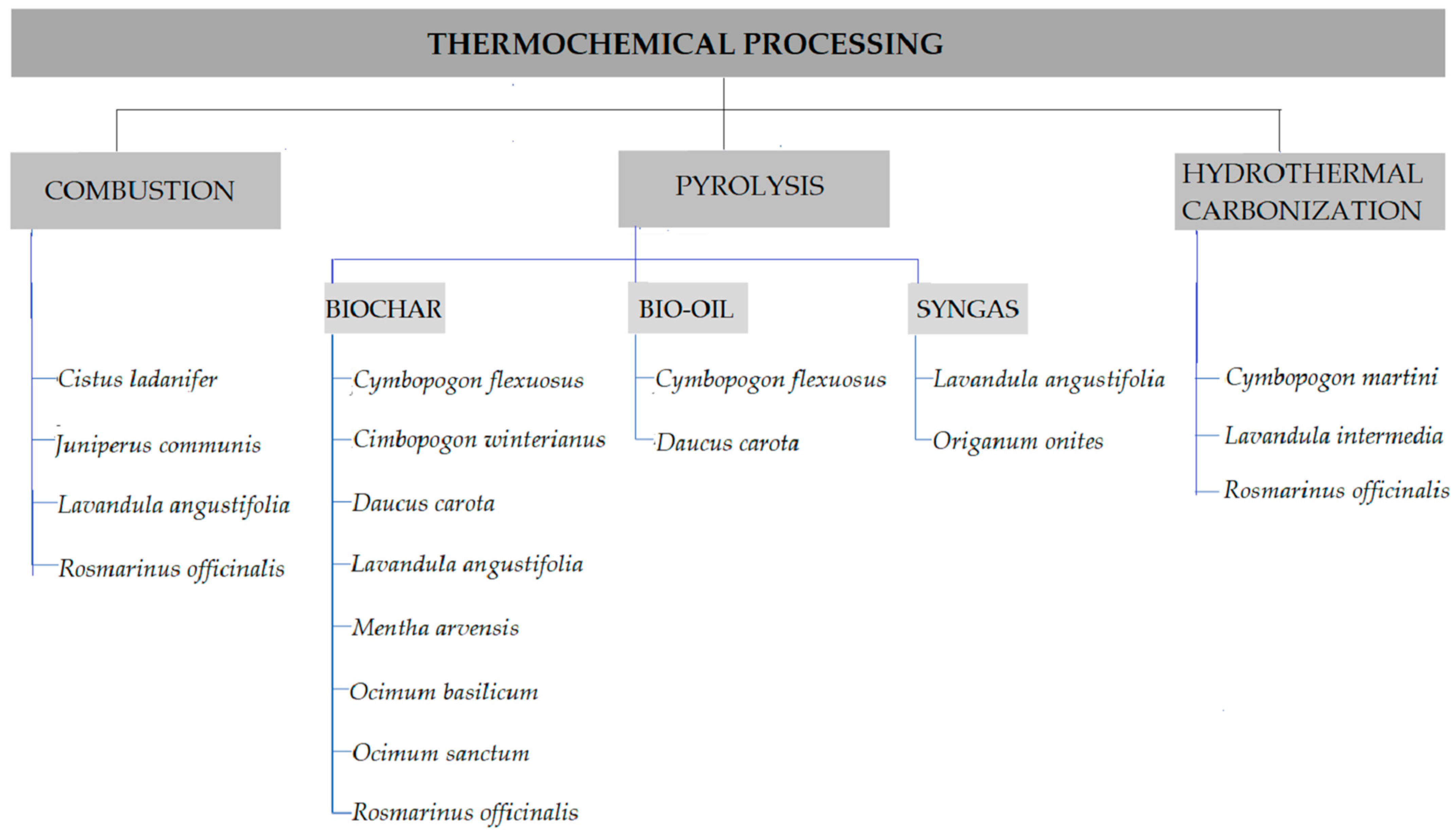
Post-distillation solid residue is rich in cellulose, hemicellulose, and lignin (often called lignocellulosic material) that can be converted by different thermochemical processes such as combustion, pyrolysis, and hydrothermal carbonization. A brief overview of all thermochemical processes is provided in Table 1 which summarizes major thermochemical biomass conversion processes, their operating conditions, main products and yields, as well as energy outputs expressed as HHV (Higher Heating Value), while Figure 2, which illustrates the post-distillation solid residue of the investigated plant species.
Thermochemical conversion of post-distillation solid residues presents both environmental opportunities and challenges. Biomass combustion can recover energy and reduce volumes of waste. Incomplete combustion and uncontrolled emissions contribute to air pollutants, such as particulate matter and greenhouse gases, reducing the potential air quality improvements unless proper emission controls are implemented [36]. Pyrolysis typically operates in the absence of oxygen, producing biochar and bio-oil with lower direct emissions and offering potential for carbon sequestration and soil amendment, thereby contributing to climate change mitigation when used appropriately [37]. Hydrothermal carbonization of biomass can convert wet residues into hydrochar with a reduced need for drying, and life-cycle assessments indicate environmental advantages over several conventional treatments. The impacts of process water treatment and hydrochar combustion still need to be considered [38,39].

3.1. Combustion

Direct combustion represents the predominant thermochemical pathway for the valorization of post-distillation solid residue, which is commonly utilized in its natural form, such as straw, without extensive preprocessing [40]. This, this utilization pathway is characterized by lower costs, but also lower energy conversion efficiencies and higher emissions of pollutants. Air-dried residues derived from species including Lavandula angustifolia, Cistus ladanifer, Juniperus communis, and Rosmarinus officinalis have been identified as high-quality biomass feedstocks, exhibiting favorable fuel characteristics that make them particularly suitable for energy recovery through combustion [40,41].

3.2. Pyrolysis

Pyrolysis represents a promising method for converting residue into valuable resources, such as biochar (which mitigates potential environmental risks), as well as bio-oil and syngas, which can be further utilized for clean energy production [42]. The pyrolysis process is carried out in specialized reactors designed to heat biomass in the absence, or very limited presence, of oxygen, allowing thermal decomposition instead of combustion [43,44]. However, the reactor design and operating conditions are optimized differently for each type of pyrolysis: slow, fast, and flash pyrolysis. In this review, we will focus on the main pyrolysis products, such as biochar, bio-oil, and syngas.

3.2.1. Biochar

Biochar represents a valuable renewable material capable of mitigating numerous environmental issues associated with the growing production of essential oils in recent decades, including post-distillation residue management, while providing additional benefits, including soil improvement. Additionally, biochar can be used in wastewater management to improve water quality by filtering contaminants and may serve as a renewable fuel or catalyst for energy production [45]. A literature review indicated that post-distillation solid residue from Cymbopogon flexuosus, Cymbopogon winterianus, Lavandula angustifolia, Mentha arvensis, Ocimum basilicum, Ocimum sanctum, and Rosmarinus officinalis has been used for biochar production to date.
Post-distillation solid residue from Mentha arvensis improved soil pH, cation exchange capacity, available macro-nutrients, and soil biological properties in terms of microbial biomass carbon and dehydrogenase activity [46]. The experiment in pots with post-distillation solid residue of Cymbopogon winterianus induced alterations in soil properties, i.e., improved soil carbon, cation exchange capacity, and availability of nitrogen and phosphorus, soil enzymatic properties, soil pH, and plant growth parameters [47]. Ocimum sanctum and O. basilicum post-distillation solid residue biochar also improves physicochemical properties (carbon content, porous surface morphology, and cation exchange capacity) [48]. Rosmarinus officinalis post-distillation solid residue was processed under different temperatures (six regimes from 400 to 900 °C), and the conclusion was that increasing temperature increases carbon content, and their possible application as fuels, agricultural amendments, cosmetics, and pharmaceuticals [49].
Additionally, biochar can be combined with fertilizers to produce a biochar–mineral complex, which further enhances its benefits by increasing mycorrhizal colonization, plant growth, and nutrient uptake [50]. Biochar derived from post-distillation solid residue of Cymbopogon flexuosus in combination with farm yard manure is considered a promising soil amendment to conserve carbon and nutrients and improve soil quality [51]. Solid residue from Daucus carota seeds, after essential oil extraction, was pyrolyzed at 500 °C to produce 25% biochar, which demonstrated superior adsorption capacity for dye removal from wastewater [52].
Pyrolysis of lavender straw at temperatures of 350–400 °C yields a higher calorific value than direct combustion, does not release harmful substances, and represents an environmentally friendly technology for Lavandula angustifolia post-distillation solid residue management [40].

3.2.2. Bio-Oil

Bio-oil is a form of liquid fuel produced from diverse feedstocks, among them solid post-distillation residue by thermochemical conversion techniques, including depolymerization and fragmentation of hemicellulose, cellulose, and lignin through a rapid increase in temperature [53]. Cymbopogon flexious post-distillation solid residue was used as a potential feedstock to produce bio-oil using fast pyrolysis technology [54]. The produced bio-oil was neutral and had good heating values (21.0–34.3 MJ/kg), which increased with rising pyrolysis temperature (from 450 to 850 °C). Post-distillation solid residue from Daucus carota seeds was valorized to produce bio-oil with a 45% yield, containing carboxylic acids, phenols, and aromatic and aliphatic hydrocarbons [52].

3.2.3. Syngas

Syngas, composed mainly of hydrogen and carbon monoxide, can also be produced from post-distillation solid residue through pyrolysis. However, it represents an intermediate step in the transition from carbon-based to hydrogen-based fuels, particularly methanol and diesel [55]. In addition, it is used to produce synthetic crude oil and lubricants, and has therefore attracted considerable research interest [56,57]. Additionally, the possibility of reusing exhausted plant material remaining after essential oil distillation offers dual benefits: sustainable residue management and conversion into syngas [23]. This is indicated by a study carried out in Turkey, where Lavandula angustifolia and Origanum onites post-distillation solid residues were processed using a fixed-bed gasification reactor heated at three different temperature regimes from 700 °C to 900 °C. The results indicated that higher temperatures and lower dry air flow rates increased both syngas yield and heating value. The hydrogen content in the syngas reached up to 40%, while the heating value ranged between 5 and 13 MJ/Nm3 [23].

3.3. Hydrothermal Carbonization

Hydrothermal carbonization is conducted in thermally pressurized water, where water acts as both a reactant and a solvent [58]. It is suitable for organic solid residue with high moisture content, requires no drying, and overcomes the limitation of feedstock not being usable for pyrolysis, and offers an alternative approach for recycling wet organic residue [59]. Biomass undergoes reactions such as dehydration, hydrolysis, aromatization, and polymerization, producing a carbon-rich solid (which can be further dried for lignin production or subjected to hydrothermal carbonization for hydrochar production), a liquid by-product or hydrolysate (from which monosaccharides such as glucose, xylose, and arabinose; carboxylic acids such as acetic, formic, and levulinic acids; and their esterified products, such as alkyl glucosides, can be obtained), and a CO2-rich gas phase [60,61,62].
Solid post-distillation residue remaining after Cymbopogon martini essential oil extraction was processed using Brønsted p-cymene-2-sulfonic acid pretreatment to recover ethyl glucosides and xylose, as well as a significant amount of lignin, which can be further valorized into biomaterials, hydrocarbons, and fuels [17]. Hydrochar produced from Lavandula × intermedia straws via hydrothermal carbonization showed that their properties approached those of sub-bituminous coal and lignite, and that temperature had a greater impact on fuel properties than retention time [63]. Converting Rosmarinus officinalis post-distillation solid residue into functional carbon materials with good adsorption capacity through citric acid-catalyzed hydrothermal carbonization indicates its potential for effectively removing organic pollutants [64].

4. Biological Processing

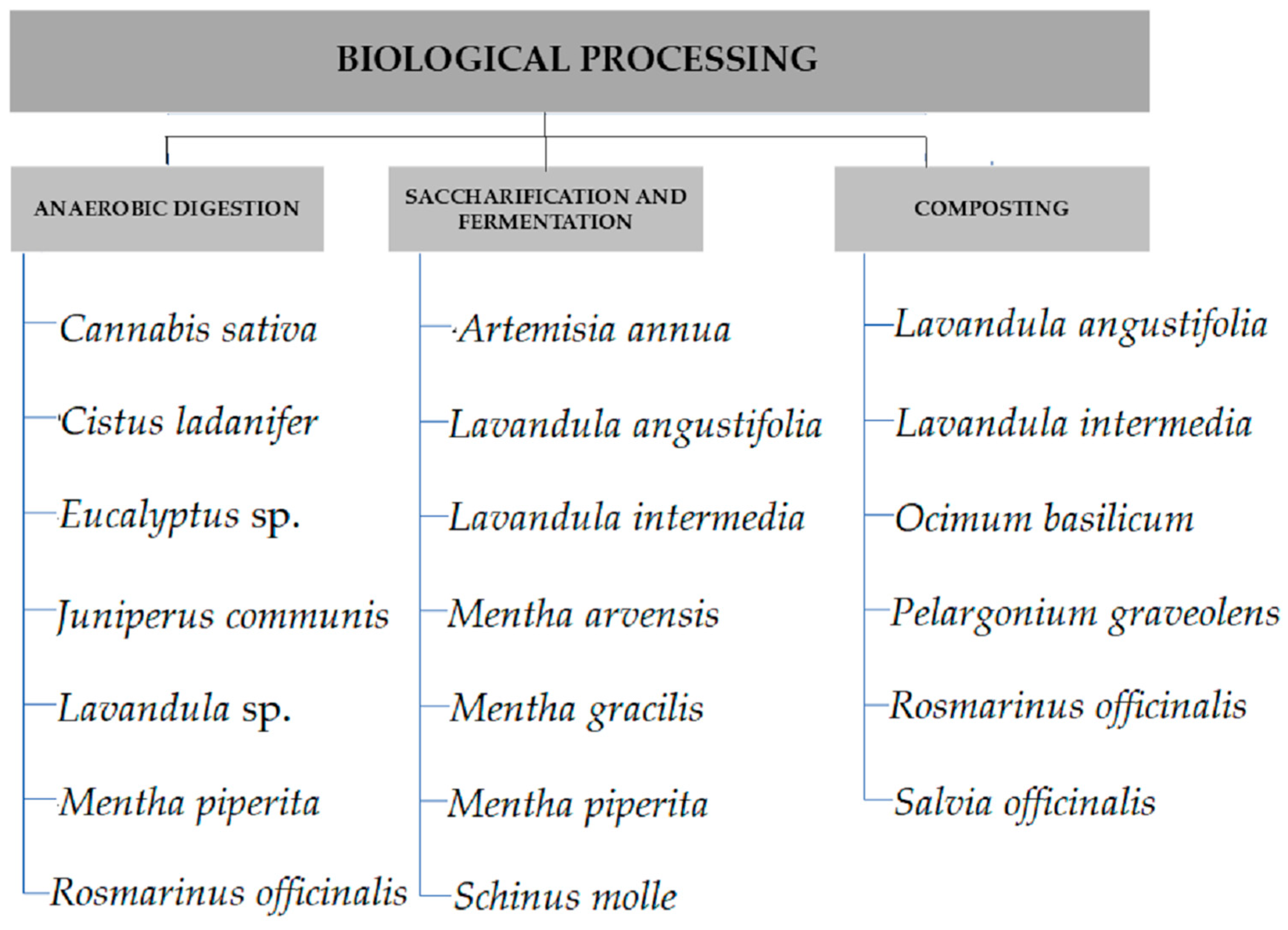
Biological processing of post-distillation solid residue involves the use of living organisms, such as microorganisms (bacteria, fungi, actinomycetes, yeasts), their enzymes, or earthworms, to transform the lignocellulosic residues remaining after essential oil extraction into fertilizers, biofuels, or biochemicals, providing a sustainable route for residue valorization. The main biological processes include anaerobic digestion, saccharification and fermentation, and composting (Figure 3, Table 2).

4.1. Anaerobic Digestion

Anaerobic digestion is a microorganism-driven process that breaks down residual biomass in four stages: hydrolysis, acidification, acetogenesis, and methanogenesis, to produce biogas (mainly methane, used for energy) and digestate (commonly used as fertilizer) [68]. An anaerobic digestion system typically includes interconnected tanks, mixers, covers, and heating units. This process is applied in both households and industry, as a method for sustainable residue management in biogas production (used for heating, electricity generation, and as a fuel source) [69]. However, the digestate produced as a by-product of this process can be valorized as fertilizer, which enhances the economic viability of its use in soil amendment [70].
An equal-mass mixture of solid post-distillation residue from Lavandula sp., Mentha piperita, Eucalyptus sp., and Rosmarinus officinalis was processed via anaerobic digestion [71]. The process yielded up to 300 kWh/ton of energy, with the best results obtained from fresh biomass without a one-week fermentation period. The approach shows promising potential for methane production, while the resulting digestate by-product can serve as an organic amendment to enhance agricultural productivity.
Anaerobic digestion of post-distillation solid residue from Lavandula sp. and Cannabis sativa demonstrated their suitability for renewable energy generation [72]. Notably, co-digestion of C. sativa post-distillation residues with oil cake resulted in a higher biomethane yield than that of Lavandula sp. post-distillation residue.
Wet post-distillation biomass can undergo anaerobic digestion without prior pretreatment for biogas generation [41]. Without prior processing anaerobic digestion of Cistus ladanifer and Juniperus communis demonstrated considerable biomethane production, with energy recovery reaching 25–45% of that obtained through combustion as solid fuel.
Following essential oil extraction from Eucalyptus globulus and Cistus ladanifer, the remaining solid post-distillation residues were processed by gasification, followed by methanation, which enabled the conversion of syngas into methane at a production rate of 30.42 kg/h [73]. The pre-feasibility assessment confirmed the viability of the proposed multi-product biorefinery, highlighting its economic potential and suggesting that further investigation into this investment opportunity is justified.

4.2. Saccharification and Fermentation

Saccharification is the hydrolysis of lignocellulosic biomass into fermentable sugars by acids or enzymes, serving as an intermediate step before fermentation [74,75]. In particular, complex polysaccharides in the biomass are enzymatically converted into fermentable sugars, which can subsequently be transformed into bioethanol or other value-added biochemicals via microbial fermentation [76].
Saccharification of Lavandula angustifolia and Lavandula × intermedia solid post-distillation residue material by Trichoderma reesei produces fermentable sugars, which are then used as substrates for microorganisms (e.g., Pycnoporus cinnabarinus), enabling the production of fungal enzymes and high-value compounds such as biofuels, phenolics, terpenoids, and potentially other bio-based chemicals [77]
Post-distillation solid residue from Mentha × piperita, Mentha × gracilis, Mentha arvensis, and Artemisia annua was used for bioenergy production via simultaneous saccharification and fermentation with Saccharomyces cerevisiae to produce ethanol, yielding results comparable to those obtained from Panicum virgatum, a well-known bioenergy crop [78]. This study supports the potential for dual utilization of these essential oil-bearing plants for both essential oil extraction and biofuel production.
Schinus molle post-distillation solid residue, processed through a combination of physical, chemical, and enzymatic hydrolysis and fermented by Saccharomyces cerevisiae and native yeast strains, produces ethanol, indicating its potential for dual utilization [79].
Pre-treatment of Mentha arvensis solid post-distillation residue (lignocellulosic feedstock) with the help of enzymes (Cellic CTec2) and microorganisms (Trichoderma reesei) can convert into glucose, which is crucial for further biotechnological applications [16].

4.3. Composting

Composting is a widely applied biological process in which post-distillation solid residue undergoes aerobic biodegradation, producing a stable, humus-like material known as compost that is rich in nutrients and organic matter, making it an effective organic fertilizer and soil conditioner while simultaneously reducing biomass residue [11]. For instance, post-distillation solid residue of Lavandula angustifolia was treated with Cellulomonas flavigena and Streptomyces viridosporus, together with cattle manure, over 161 days, resulting in a stable compost free of Salmonella and Escherichia coli, suitable for soil application [80]. Similarly, Lavandula × intermedia residues were used as a feed substrate for Eisenia andrei along with mature horse manure; over a 70-day vermicomposting period, higher ratios of the residue enhanced worm growth and reproduction, demonstrating the capacity of E. andrei to convert these residues into compost applicable within a circular economy framework [81]. Additionally, post-distillation solid residue of Ocimum basilicum, Rosmarinus officinalis, and Salvia officinalis has also been successfully composted, further highlighting the versatility of this method for various aromatic plant residues [82]. Vermicompost produced from post-distillation residue of Pelargonium graveolens, in combination with mineral fertilizer (NPK, 100:60:60), significantly improved soil health, positively influencing growth attributes, biomass, and oil yield of the same species [83]. This indicates that residue usually generated on one farm can be converted into high-quality vermicompost and returned to the plant nutrient chain.

5. Chemical Processing

After the essential oil distillation, the solid waste material still contains certain bioactive compounds that are non-volatile and not degraded by thermal processing [46]. According to available studies, several extraction methods are used for this purpose, such as maceration, Soxhlet extraction, and ultrasound-assisted extraction, with solvents of different polarities, including nonpolar (hexane and dichloromethane), moderately polar (methanol, ethanol, and acetone), and polar (water). A summary of the post-distillation solid waste from different plant residues, the extraction methods and solvents used, as well as the isolated compounds identified in the literature, is presented in Table 3. It should be highlighted that the valorization of post-distillation solid waste is aligned with circular economy principles and provides an approach for developing smart industrial systems that conserve natural resources and minimize waste through the application of environmentally friendly extraction technologies with the aim of recovering high-value bioactive compounds. Special emphasis should be placed on the selection of suitable extraction technology since it directly affects the yield and chemical profile of obtained extracts, as well as economic aspects and scalability of the process. Although conventional extraction techniques are widely applied, recent scientific focus has been aimed towards novel extraction techniques. Advanced extraction methods based on green solvents are especially appropriate since they are often able to improve yield and quality of the obtained extracts, and consequently satisfy growing consumer demands for products that are safe and sustainable. Accordingly, future exploitation of the discussed plant resources should focus on the adoption of emerging extraction technologies and next-generation solvents, notably natural deep eutectic solvents (NADES), subcritical water, and supercritical carbon dioxide.

5.1. Extraction of Phenolics and Flavonoids

Plant polyphenols represent a broad group of secondary metabolites characterized by the presence of multiple phenolic hydroxyl groups, which generally confer high polarity and strong affinity for polar and moderately polar solvents such as water and alcohols. They are generally non-volatile compounds, as their complex aromatic structures and multiple hydroxyl substitutions prevent evaporation under mild conditions. However, many polyphenols are thermally unstable—heat can cause oxidation or degradation, leading to reduced bioactivity. While certain flavonoids (especially some glycosides) may retain significant structural integrity during short-term exposure at 100 °C [101], many flavonoids demonstrate marked degradation under prolonged heating or at higher temperatures, indicating that their thermal stability is highly compound- and condition-dependent. Previous claims highlight polyphenolic compounds, including phenolic acids and flavonoids, as major candidates for the isolation of post-distillation solid waste generated from aromatic and medicinal plants. Available literature data presented in Table 3 suggest that plant species mostly from the Lamiaceae family could be utilized as a good source for both essential oils and polyphenolic compounds [102].
Valorization of three different types of post-distillation solid waste from Ammodaucus leucotrichus, processed by hydro-distillation, steam distillation, and microwave-assisted extraction, and subsequently re-extracted using ultrasonic-assisted extraction, retains valuable bioactive compounds for cosmetic and pharmaceutical applications [84].
Post-distillation solid waste from Cymbopogon flexuosus, C. martini, C. winterianus, Ocimum sanctum, O. basilicum, and Mentha arvensis shows great potential for the extraction of phenolic and flavonoid compounds [88]. The twice-extracted plant biomass can further serve as lignocellulosic feedstock for the production of bioethanol, biochar, compost, or growth media.
For recycling of distillation by-products, a different plant was studied: Mentha arvensis [46], Ocimum sanctum and O. basilicum [48].
The solid waste remaining after the distillation of Lavandula angustifolia and Lavandula × intermedia cv. Grosso was subjected to extraction with different solvents, including ethanol, methanol, water, ethyl acetate, and a hydroalcoholic mixture, in order to isolate phenolic and flavonoid compounds [89]. These extracts serve as valuable sources of bioactive molecules with potential applications in the food, cosmetics, and pharmaceutical sectors.
Hydrodistilled aerial parts of different populations of Salvia lavandulifolia were additionally extracted with ethanol in a Soxhlet apparatus for 48 h to evaluate phenolic content and composition, as well as antioxidant properties [99]. The obtained results indicated a wide range of variability in phenolics and antioxidant capacity, which is in line with plant material differences, i.e., variations among populations.
Post-distillation solid waste from oregano (Origanum vulgare), savory (Satureja thymbra), rosemary (Rosmarinus officinalis), and salvia (Salvia fructicosa) was dried using six different methods: microwave heating, infrared irradiation, oven drying, sun drying, shade drying, and freeze drying [96]. The content of bioactive compounds was then compared with the raw material before distillation. Results showed a high content of rosmarinic acid across all drying methods, indicating that these wastes could serve as potential sources of bioactive compounds for the food and pharmaceutical industries.
The solid residues remaining after the distillation of oregano (Origanum vulgare), rosemary (Rosmarinus officinalis), lemon balm (Melissa officinalis), and spearmint (Mentha spicata) were found to contain total phenolics and flavonoids in the range of 33.3 to 65.36 mg GAE/g [103]. These by-products were then incorporated into wheat bread formulations to evaluate their impact on physicochemical characteristics, sensory attributes, antioxidant potential, and volatile profiles. Breads enriched with 1% oregano or rosemary demonstrated the most favorable outcomes, indicating the potential of these materials as functional ingredients for producing antioxidant-enhanced wheat bread.
Similarly, phenolic extracts derived from the post-distillation solid residues of oregano (Origanum vulgare), rosemary (Rosmarinus officinalis), sage (Salvia fructicosa), lemon balm (Melissa officinalis), and spearmint (Mentha spicata), exhibited notable antioxidant and antimicrobial activities [94]. Among them, rosemary and sage showed the greatest potential as effective natural antimicrobials for application in the food industry.
The use of natural deep eutectic solvents (NADES) as co-solvents in the conventional hydrodistillation of Rosa damascena significantly enhanced essential oil yield [97]. Additionally, the solid post-distillation waste of rose petals, when further extracted with ethyl acetate, allowed for excellent recovery of high-value phenolic compounds such as gallic acid, catechin, quercetin, kaempferol, epicatechin, and others.

5.2. Extraction of Polysaccharides

Plant polysaccharides are typically composed of long chains of monosaccharide units linked by glycosidic bonds, giving them high polarity and strong affinity for polar solvents [104]. These macromolecules generally exhibit low volatility, as their large size and extensive hydrogen-bonding networks prevent them from vaporizing under normal conditions. They also display relatively good thermal stability, though the exact threshold depends on molecular weight, branching, and functional groups [105]. This suggests that polysaccharides are retained within the residual plant material treated by distillation and could potentially be recovered in further steps.
Post-distillation solid waste from Lavandula angustifolia was utilized as a source material after preparation of the alcohol-insoluble fraction [91]. Acid-soluble polysaccharides were extracted with a yield of 5.95% and exhibited a medium degree of methyl-esterification and a low degree of acetylation. Monosaccharide composition analysis indicated that galacturonic acid (619.17 µg/mg) was the predominant component. These acid-soluble polysaccharides were then incorporated into a hand cream formulation, resulting in increased apparent viscosity compared with the control. These findings suggest that L. angustifolia post-distillation solid wastes could serve as a natural source of functional polysaccharides suitable for cosmetic applications.
Matricaria chamomilla post-distillation waste material from steam and hydro-distillation was further processed for the potential extraction of polysaccharides using fractional extraction [93]. The overall yields were 11.66% and 9.87%, respectively, suggesting that the waste biomass is a rich source of pectic-type polysaccharides.

5.3. Extraction of Other Bioactive Compounds

It could be expected that other bioactive compounds might remain within the post-distillation solid waste. The type and amount of these compounds strongly depend on the plant material that was processed in the initial steps. Since distillation treatment represents an efficient procedure for the separation of volatile compounds, it could be expected that non-volatile compounds should be present in post-distillation waste. Furthermore, plant material is in contact with water or steam during the distillation process, which means that its lipophilic compounds should remain within the plant matrix. Considering the presence and the emergence of lipophilic non-volatile compounds (fatty acids, tocopherols, carotenoids and other bioactive lipids), these compounds could be interesting targets for further processing of the post-distillation solid waste derived from plant matrices with a high content of lipids.
The extraction of cannabinoids from Cannabis sativa cv. Futura post-distillation solid waste, using maceration with bioethanol followed by vacuum distillation, yielded approximately 1% CBD [86]. The remaining lignocellulosic residues were suitable for further processing. Moreover, post-distillation solid waste from seven industrial hemp cultivars (C. sativa subsp. sativa: Białobrzeskie, Henola, Santhica 27, Santhica 70, Earlina 8 fc, Kompolti, and Finola) was analyzed for chemical composition and thermophysical properties [87]. The residues showed substantial volatile matter, fixed carbon, ash, cellulose, hemicellulose, lignin, and extractives, as well as measurable heating values, indicating good potential for thermal and biochemical conversion. These results highlight the value of hemp post-distillation waste for biomass valorization and circular economy applications.
Lavandula × intermedia post-distillation solid waste was investigated in vitro on weed seeds (brome, annual ryegrass, goosefoot, and mat amaranth) and crop seeds (wheat, barley, lentil, and vetch) by mixing the solid waste with growing substrate [90]. The results showed an allelopathic effect, inhibiting the growth of both weeds and crops. This suggests its potential use in the development of effective and sustainable bioherbicides, due to the allelopathic activity of metabolites such as lysophosphatidylcholine, coumaroyl hexoside, and feruloyl hexoside.

6. Practical Application

The valorization of post-distillation solid plant residues represents an important step toward circular bio-economy principles and sustainable waste management within the essential oil industry [106,107]. These residues, rich in lignocellulosic material and bioactive compounds, can serve as valuable raw materials for a range of practical applications across multiple sectors. Recent studies have demonstrated their potential use as an energy source; as important resources in agriculture, including soil amendments, growing media, and mulching; in the construction industry as bio-based building materials; as an ecologically promising solution for wastewater treatment; and as sources of bioactive compounds for food, cosmetic and pharmaceutical industries.

6.1. Energy Source

Post-distillation solid residues represent a sustainable energy source due to their high lignocellulosic content and can be used for direct combustion [40,41], pellet and briquette production [28,29,30,108], bio-oil generation [52,54], syngas production [23], biogas production [41,71,72], and bioethanol production [16,77,78,79]. Taken together, these findings demonstrate that such residues offer substantial potential for integration into renewable energy systems, contributing to resource circularity, waste reduction, and enhancing the overall sustainability of essential oil production chains. Additionally, integrating post-distillation solid residues into circular value chains increases added value and reduces global warming potential [109].

6.2. Soil Amendments

Post-distillation solid residues provide valuable nutrients and can be converted into compost, vermicompost, or biochar, which can be used to enhance soil fertility, support plant growth, and contribute to carbon sequestration, thereby reducing greenhouse gas emissions [110]. Overall, they support sustainable restoration systems and play an important role in waste valorization within the circular bio-economy. Post-distillation solid residues from Cannabis sativa, Helichrysum italicum, Lavandula angustifolia, Origanum vulgare, Rosmarinus officinalis, and Salvia officinalis were incorporated into alkaline and calcareous soils at varying rates of 0, 1, 2, 4, and 8% [111]. The results indicated that the application of the residues led to significant increases in soil electrical conductivity, organic carbon, total nitrogen, C/N ratio, and available nutrients such as phosphorus, potassium, boron, copper, and manganese, particularly at the 4% and 8% application rates.

6.3. Growing Medium Production

Rosa damascena post-distillation residue material is a promising additive to the substrate for growing seedlings of the same species [112]. Moreover, attempts have been made to utilize post-distillation solid residue of Origanum dubium and Sideritis cypria, incorporated at varying ratios, as a peat substitute in growing media for Portulaca oleracea and Viola × wittrockiana [113,114]. Results showed that the post-distillation residue of the plants investigated has the potential to be used in the growing medium, but only at low ratios (up to 10%). Additionally, post-distillation solid residue of Lavandula angustifolia has been reported as a suitable lignocellulosic substrate for the cultivation of Ganoderma resinaceum [115].

6.4. Mulching

Organic mulch obtained from the post-distillation solid residue of Cymbopogon winterianus, C. flexuosus, and C. martinii was found to be more effective than other treatments, such as manual weeding or herbicide application, especially in perennial aromatic grasses (Cymbopogon spp.) during the first year of cultivation due to slow crop growth [116,117].

6.5. Building Material Production

Bio-based construction aggregates derived from post-distillation solid residue of lavender and a pozzolanic matrix showed promising thermal and hygric characteristics, but their mechanical strength was very weak [118]. Therefore, optimization of production parameters (such as the size of bio-based particles and the proportion of post-distillation residue material), as well as pretreatment of solid residue from lavender distillation (to reduce the detrimental impact of chemical interactions between the residue and the binder), should be further developed to achieve maximum performance of bio-based composites for building applications. In this context, lavender and black pine post-distillation solid residues were mixed with cement mortars, and the results showed that the addition of powdered post-distillation solid residue at 1.5–2.5% altered the properties of traditional mortars, including reduced capillary action, lower sorption rate, improved antimicrobial properties, reduced CO2 emissions, and maintained flexural strength [119]. Considering the high production of post-distillation solid residue, its incorporation into bio-based building materials provides an environmentally beneficial alternative and a sustainable approach to residue management.

6.6. Waste Water Treatment

Post-distillation solid plant residues serve as an effective, low-cost biosorbent for heavy metals due to their lignocellulosic structure and functional groups that support electrostatic attraction, ion exchange, complexation, and chelation. Its performance depends on factors such as particle size, pH, and metal concentration. Post-distillation solid residues from Cymbopogon nardus, C. flexuosus, C. martini, and Eucalyptus globulus efficiently adsorb Ni2+, Cd2+, and Pb2+, with eucalyptus proving effective even in multi-metal and continuous systems [120]. Residues of Melissa officinalis and Lavandula angustifolia show high Co2+ uptake at pH 4–4.5 with complete desorption [121], while immobilized Mentha arvensis removes Cu2+ and Zn2+ most effectively at pH 5, achieving 90% recovery [122]. Rosa centifolia residues adsorb Cu2+ and Cr3+ at pH 5 [123], and Mentha spicata biomass shows strong Pb2+ uptake with 99.7% recovery [124]. Post-distillation solid plant residues also adsorb organic dyes such as reactive Orange 16, using lavender waste [125], typically after simple drying, pulverization, or mild chemical modification. Pyrolysis further enhances adsorption capacity by converting plant waste into biochar with a highly porous, carbon-rich structure that enables both hydrophobic interactions and electrostatic or complexation-based adsorption. This makes biochar a versatile adsorbent for a wide range of pollutants [126]. Biochar produced from Mentha spp. distillation waste efficiently removes methylene blue [127]. However, distillation-waste biochar remains underexplored, particularly for removing complex pollutants like pesticides and emulsified oils. Additional research, including chemical and physical modifications such as magnetic functionalization and nanoparticle incorporation, is needed to expand its applicability.

6.7. Food and Pharmaceuticals

Bioactive compounds remaining in post-distillation solid residues, which are rich in phenolics and other bioactive compounds, can serve as a means to valorize waste into structurally stable delivery systems, providing insights for the development of functional ingredients for the food, cosmetic and pharmaceutical industries [89,128].

7. Disadvantages and Limitations

Post-distillation solid residues from aromatic plants possess considerable potential for applications in energy production, agriculture, construction, wastewater treatment, and as sources of bioactive compounds for the food, cosmetic, and pharmaceutical industries. Nevertheless, their utilization remains limited due to several constraints. High moisture content necessitates drying, while the heterogeneous and recalcitrant lignocellulosic structure requires intensive pretreatment (e.g., particle size reduction or chemical and biological processing) to enable conversion into biofuels, including bio-oil and syngas via pyrolysis, biogas through anaerobic digestion, and bioethanol via saccharification and fermentation. Without adequate pretreatment, the dense lignin matrix restricts fermentable sugar accessibility and increases processing costs [129]. Valorization into biochar or hydrochar further demands capital-intensive infrastructure, and the lack of comprehensive life-cycle and carbon-footprint assessments limits economic feasibility and upscaling [32]. Moreover, residues may contain phytotoxic compounds that inhibit plant growth, pose contamination risks due to heavy metal accumulation, and, at elevated application rates, can induce nitrogen immobilization in soils owing to unfavorable C/N ratios [111,114].
It is important to note that some applications have been validated at the commercial or industrial scale, such as direct burning for energy, composting, and biogas production under optimized anaerobic digestion conditions. In contrast, processes such as bioethanol production, hydrochar production via hydrothermal carbonization, or the extraction of high-value bioactive compounds remain largely at the experimental or laboratory scale. For these reasons, post-distillation solid residues are usually burned directly or used for composting, as these approaches require the lowest investment. Collectively, these limitations underscore the need for optimized processing strategies and systematic assessment to enable a sustainable and economically viable utilization of post-distillation aromatic plant residues. Addressing these gaps is essential to fully realize the economic and environmental value of these solid residues and to integrate them into sustainable circular bio-economy systems through multiple processing pathways, as outlined in Table 4.
In addition to technical and environmental constraints, the valorization of post-distillation solid residues is influenced by several socio-economic factors [133]. Farmer awareness and training are critical, as many smallholders may lack knowledge of available processing technologies, pretreatment methods, or potential value-added applications [134]. Market demand and value chains for products derived from residues, such as biochar, biogas, or extracted bioactive compounds, remain limited or poorly organized, which reduces economic incentives for adoption. Furthermore, policy and regulatory support for sustainable biomass management, waste valorization, and renewable energy utilization varies widely across regions and can either facilitate or hinder implementation [135]. Addressing these socio-economic barriers alongside technical and environmental challenges is essential to promote the widespread adoption of circular bio-economy practices for post-distillation aromatic plant residues [136].

8. Conclusions

Post-distillation solid residues, as a significant source of lignocellulosic and bioactive compounds, offer numerous opportunities for use within the circular bio-economy. Therefore, it is essential to educate agricultural producers on how to process these residues into high-quality raw materials suitable for other industries (through physico-mechanical processes such as drying, particle size reduction, and pelletization) in order to manage post-distillation solid waste sustainably while generating additional income. Additionally, potential investors should be informed about the economic benefits of processing post-distillation solid residues. Current technological developments demonstrate that post-distillation residues can be transformed from waste into valuable raw materials for a wide range of industries, including pharmaceutical, cosmetic, agricultural, construction, and wastewater treatment sectors. However, despite this clear technological potential, economic sustainability remains the main challenge. High investment costs for facilities intended for thermochemical, biological, or chemical processing continue to limit wider industrial adoption. Therefore, future research and development should prioritize cost-effective solutions that can be implemented decentrally, particularly through pilot-scale studies, techno-economic analyses, and on-farm or small-scale local processing trials.

Author Contributions

Conceptualization, M.A. and D.D.; methodology, A.L.M. and B.P.; validation, T.Z.; formal analysis, T.E.; investigation, M.A.; resources, A.L.M.; data curation, V.S.; writing—original draft preparation, M.A.; writing—review and editing, T.E.; visualization, T.Z.; supervision, D.D. and B.P.; project administration, M.A. and D.D.; funding acquisition, M.A. All authors have read and agreed to the published version of the manuscript.

Funding

This research received no external funding.

Data Availability Statement

The original contributions presented in this study are included in the article. Further inquiries can be directed to the corresponding author.

Acknowledgments

This article is based upon work from CA23123 (Non-chemical weed management in Medicinal and aromatic plants—Weeding MAPS), supported by COST (European Cooperation in Science and Technology) (M.A.); European Union’s Horizon Europe research and innovation programme, HORIZON-WIDERA-2021-ACCESS-02 [grant agreement ID 101060110] (A.L.M.), and RIBES (Regional Inclusive Biobased Entrepeneurship Solutions) [grant agreement ID: 101134911] (D.D.); Ministry of Education, Science and Technological Development of the Republic of Serbia [Grant numbers: 451-03-136/2025-03/200032 (M.A.; V.S.; T.Z.); 451-03-136/2025-03/200134 (T.E.); 451-03-137/2025-03/200134 (B.P.)].

Conflicts of Interest

The authors declare no conflicts of interest.

References

  1. Aćimović, M. Essential oils: Inhalation aromatherapy—A comprehensive review. J. Agron. Technol. Eng. Manag. 2021, 4, 547–557. [Google Scholar]
  2. Zhou, W.; Li, J.; Wang, X.; Liu, L.; Li, Y.; Song, R.; Zhang, M.; Li, X. Research progress on extraction, separation, and purification methods of plant essential oils. Separations 2023, 10, 596. [Google Scholar] [CrossRef]
  3. Machado, C.A.T.; Hodel, K.V.S.; Lepikson, H.A.; Machado, B.A.S. Distillation of essential oils: An innovative technological approach focused on productivity, quality and sustainability. PLoS ONE 2024, 19, e0299502. [Google Scholar] [CrossRef]
  4. Elguea-Culebras, G.O.; Bravo, E.M.; Sanchez-Vioque, R. Potential sources and methodologies for the recovery of phenolic compounds from distillation residues of Mediterranean aromatic plants. An approach to the valuation of by-products of the essential oil market—A review. Ind. Crops Prod. 2022, 175, 114261. [Google Scholar] [CrossRef]
  5. Erceg, T.; Šovljanski, O.; Tomić, A.; Aćimović, M.; Stupar, A.; Baloš, S. Comparison of the properties of pullulan-based active edible coatings implemented for improving sliced cheese shelf life. Polymers 2024, 16, 178. [Google Scholar] [CrossRef] [PubMed]
  6. Dessie, W.; Luo, X.; He, F.; Liao, Y.; Duns, G.J.; Qin, Z. Lignin valorization: A crucial step towards full utilization of biomass, zero waste and circular bioeconomy. Biocatal. Agric. Biotechnol. 2023, 51, 102777. [Google Scholar] [CrossRef]
  7. Mujtaba, M.; Fraceto, L.F.; Fazeli, M.; Mukherjee, S.; Savassa, S.M.; de Medeiros, G.A.; Pereira, A.E.S.; Mancini, S.D.; Lipponen, J.; Vilaplana, F. Lignocellulosic biomass from agricultural waste to the circular economy: A review with focus on biofuels, biocomposites and bioplastics. J. Clean. Prod. 2023, 402, 136815. [Google Scholar] [CrossRef]
  8. Lesage-Meessen, L.; Bou, M.; Sigoillot, J.C.; Faulds, C.B.; Lomascolo, A. Essential oils and distilled straw of lavender and lavandin: A review of current use and potential application in white biotechnology. Appl. Microbiol. Biotechnol. 2015, 99, 3375–3385. [Google Scholar] [CrossRef]
  9. Saha, A.; Basak, B.B. Scope of value addition and utilization of residual biomass from medicinal and aromatic plants. Ind. Crops Prod. 2020, 145, 111979. [Google Scholar] [CrossRef]
  10. Alexandri, M.; Christaki, S.; Gkatzionis, K.; Mourtzinos, I. Residual biomass from major aromatic and medicinal flora of the Mediterranean: Challenges towards sustainable integration into food systems within the circular bioeconomy. Trends Food Sci. Technol. 2023, 139, 104123. [Google Scholar] [CrossRef]
  11. Balkrishna, A.; Srivastava, S.; Srivastava, D.; Sharma, N.; Arya, V.; Gautam, A.K. Unleashing the potential of medicinal and aromatic plant wastes with particular consideration of vermicomposting: A comprehensive review of literature. J. Appl. Res. Med. Arom. Plants 2024, 39, 100527. [Google Scholar] [CrossRef]
  12. Khiri, S.; Ullah, N.; Boubal, Z.; Janati, W.; Amalich, S.; Lagaz, H.; Jacobsone, M.G.; Elmaaiden, E. Transforming essential oil extraction wastes: Sustainable valorization approaches for agricultural, industrial, and cosmetic application. Biomass Bioenergy 2025, 201, 108109. [Google Scholar] [CrossRef]
  13. Zakarya, A.Y.; Rasheed, D.M.; Farag, M.A. Valorization of aromatic plant distillation by-products (Solid biomass, wastewater, and aromatic water): Case study on the Lamiaceae family. Waste Biomass Valor. 2025. [Google Scholar] [CrossRef]
  14. Zotti, M.; Cecchi, G.; Canonica, L.; Di Piazza, S. A review of nature-based solutions for valorizing aromatic plants’ lignocellulosic waste through oyster mushroom cultivation. Sustainability 2025, 17, 4410. [Google Scholar] [CrossRef]
  15. Kolev, N.; Ivanova, M.; Balabanov, A.; Vlahova-Vangelova, D.; Kišova, A.; Vizzarri, F. Utilization of agro-industrial residues from the Rosa damascena Mill. oil industry: A literature review on biomass potential for food and feed ingredients. Processes 2025, 13, 1945. [Google Scholar] [CrossRef]
  16. Prakash, O.; Naik, M.; Katyar, R.; Naik, S.; Kumar, D.; Maji, D.; Shukla, A.; Nannaware, A.D.; Kalra, A.; Rout, P.K. Novel process for isolation of major bio-polymers from Mentha arvensis distilled biomass and saccharification of the isolated cellulose to glucose. Ind. Crops Prod. 2018, 119, 1–8. [Google Scholar] [CrossRef]
  17. Singh, M.; Pandey, N.; Negi, P.; Jyoti; Larroche, C.; Mishra, B.B. Solvothermal conversion of spent aromatic waste to ethyl glucosides. Chemosphere 2022, 292, 133428. [Google Scholar] [CrossRef] [PubMed]
  18. Tanger, P.; Field, J.L.; Jahn, C.E.; Defoort, M.W.; Leach, J.E. Biomass for thermochemical conversion: Targets and challenges. Front. Plant. Sci. 2013, 4, 218. [Google Scholar] [CrossRef]
  19. Kumar, B.; Mendoza-Martinez, C.; Ferenczi, T.; Nagy, G.; Koós, T.; Szamosi, Z. An experimental study to investigate the impact of solar drying on emission products of woody biomass in the torrefaction process. Energy Ecol. Environ. 2025, 10, 307–323. [Google Scholar] [CrossRef]
  20. Vidal, B.C., Jr.; Dien, B.S.; Ting, K.C.; Singh, V. Influence of feedstock particle size on lignocellulose conversion—A review. Appl. Biochem. Biotechnol. 2011, 164, 1405–1421. [Google Scholar] [CrossRef]
  21. Williams, C.L.; Westover, T.L.; Emerson, R.M.; Tumuluru, J.S.; Li, C. Sources of biomass feedstock variability and the potential impact on biofuels production. BioEnergy Res. 2016, 9, 1–14. [Google Scholar] [CrossRef]
  22. Christaki, S.; Bouloumpasi, E.; Lalidou, E.; Chatzopoulou, P.; Irakli, M. Bioactive profile of distilled solid by-products of rosemary, greek sage and spearmint as affected by distillation methods. Molecules 2022, 27, 9058. [Google Scholar] [CrossRef]
  23. Yılmaz Çinçin, R.G.; Öngen, A.; Ağdağ, O.N. Essential oil distillation residue as environmentally friendly feedstock in gasification: Effect of dry air flow rate and temperature on gasification performance. Biomass Conv. Bioref. 2025, 15, 11719–11733. [Google Scholar] [CrossRef]
  24. Vareltzis, P.; Fotiou, D.; Papatheologou, V.; Kyroglou, S.; Tsachouridou, E.; Goula, A.M. Optimized solid–liquid separation of phenolics from lavender waste and properties of the dried extracts. Separations 2024, 11, 67. [Google Scholar] [CrossRef]
  25. Psarrou, I.; Oreopoulou, A.; Tsimogiannis, D.; Oreopoulou, V. Extraction kinetics of phenolic antioxidants from the hydro distillation residues of rosemary and effect of pretreatment and extraction parameters. Molecules 2020, 25, 4520. [Google Scholar] [CrossRef]
  26. Elalami, D.; Carrère, H.; Abdelouahdi, K.; Oukarroum, A.; Dhiba, D.; Arji, M.; Barakat, A. Combination of dry milling and separation processes with anaerobic digestion of olive mill solid waste: Methane production and energy efficiency. Molecules 2018, 23, 3295. [Google Scholar] [CrossRef]
  27. Onur, M.E.; Ekinci, K.; Civan, M.; Bilgili, M.E.; Yurdakul, S. Quality properties and torrecaction characteristics of pellets: Rose oil distillation solid waste and red pine sawdust. Sustainability 2023, 15, 10971. [Google Scholar] [CrossRef]
  28. Cetinkaya, B.; Erkent, S.; Ekinci, K.; Civan, M.; Bilgili, M.E.; Yurdakul, S. Effect of torrefaction on fuel properties of biopellets. Heliyon 2024, 10, e23989. [Google Scholar] [CrossRef]
  29. Anestis, P.; Vasiliki, K. Utilization of aromatic plants residual biomass after distillation mixed with wood in solid biofuels production. Renew. Energy 2025, 248, 123198. [Google Scholar] [CrossRef]
  30. Kamperidou, V.; Terzopoulou, P. Co-pelletization of lavender waste and pine-wood for sustainable fuel pellet production. Forests 2025, 16, 1455. [Google Scholar] [CrossRef]
  31. Xin, S.; Huang, F.; Liu, X.; Mi, T.; Xu, Q. Torrefaction of herbal medicine wastes: Characterization of the physiocochemical properties and combustion behaviors. Bioresur. Technol. 2019, 287, 121408. [Google Scholar] [CrossRef]
  32. Marcelino, S.; Gaspar, P.D.; Paço, A. Sustainable waste management in the production of medicinal and aromatic plants—A systematic review. Sustainability 2023, 15, 13333. [Google Scholar] [CrossRef]
  33. Roig-Madrid, P.; Carmona-Cabello, M.; Perea-Moreno, A.-J.; Dorado, M.P.; David Munoz-Rodriguez, D. Thermochemical and elemental characterization of aromatic seed residues for solid biofuel applications in a circular economy context. Energy Nexus 2025, 20, 100594. [Google Scholar] [CrossRef]
  34. Vilas-Boas, A.C.M.; Tarelho, L.A.C.; Oliveira, H.S.M.; Silva, F.G.C.S.; Pio, D.T.; Matosa, M.A.A. Valorisation of residual biomass by pyrolysis: Influence of process conditions on products. Sustain. Energy Fuels 2024, 8, 379–396. [Google Scholar] [CrossRef]
  35. Gholizadeh, M.; Cristina Castro, C.; Fabrega, S.M.; Clarens, F. A review on thermochemical based biorefinery catalyst development progress. Sustain. Energy Fuels 2023, 7, 4758–4804. [Google Scholar] [CrossRef]
  36. Liu, W.J.; Yu, H.Q. Thermochemical conversion of lignocellulosic biomass into mass-producible fuels: Emerging technology progress and environmental sustainability evaluation. ACS Environ. Au 2021, 2, 98–114. [Google Scholar] [CrossRef] [PubMed]
  37. Durak, H. Comprehensive Assessment of thermochemical processes for sustainable waste management and resource recovery. Processes 2023, 11, 2092. [Google Scholar] [CrossRef]
  38. Berge, N.D.; Li, L.; Flora, J.R.; Ro, K.S. Assessing the environmental impact of energy production from hydrochar generated via hydrothermal carbonization of food wastes. Waste Manag. 2015, 43, 203–217. [Google Scholar] [CrossRef]
  39. Owsianiak, M.; Fozer, D.; Chrzanowski, Ł.; Renz, M.; Nowacki, B.; Ryberg, M. Evaluation of hydrothermal carbonization of biomass residues for bioenergy: A life-cycle based comparison against incumbent technologies. EFB Bioecon. J. 2024, 4, 100069. [Google Scholar] [CrossRef]
  40. Chakyrova, D.; Doseva, N. Analysis of the energy recovery posibilities of energy from lavender straws after a steam distillation process. In Proceedings of the International Scientific Conference of Communications, Information, Electronic and Energy Systems (CIEES 2020), Borovets, Bulgaria, 26–29 November 2020. [Google Scholar] [CrossRef]
  41. Alvaro, A.G.; Mediavilla, I.; Palomar, C.R.; Esteban, L.S.; Crespo, I.G. Energy valorization of solid residue from steam distillation of aromatic shrubs. Ind. Crops Prod. 2024, 222, 119485. [Google Scholar] [CrossRef]
  42. Biney, M.A.; Gusiatin, M.Z.; Trakal, L.; Mosko, J.; Pohorelý, M. Utilization of co-substrates in municipal sewage sludge co-pyrolysis: Yields and characterization of biochar, bio-oil, and syngas, with economic feasibility analysis. J. Anal. Appl. Pyrolysis. 2025, 189, 107091. [Google Scholar] [CrossRef]
  43. Garcia-Nunez, J.A.; Pelaez-Samaniego, M.R.; Garcia-Perez, M.E.; Fonts, I.; Abrego, J.; Westerhof, R.J.M.; Garcia-Perez, M. Historical developments of pyrolysis reactors: A review. Energy Fuels 2017, 31, 5751–5775. [Google Scholar] [CrossRef]
  44. Safdari, M.S.; Amini, E.; Weise, D.R.; Fletcher, T.H. Heating rate and temperature effects on pyrolysis products from live wildland fuels. Fuel 2019, 242, 295–304. [Google Scholar] [CrossRef]
  45. Varkolu, M.; Gundekari, S.; Omvesh; Palla, V.C.S.; Kumar, P.; Bhattacharjee, S.; Vinodkumar, T. Recent advances in biochar production, characterization, and environmental applications. Catalysts 2025, 15, 243. [Google Scholar] [CrossRef]
  46. Saha, A.; Basak, B.B.; Banerjee, A. In-vitro antioxidant evaluation and production of biochar from distillation waste biomass of Mentha arvensis. J. Appl. Res. Med. Arom. Plants 2022, 31, 100428. [Google Scholar] [CrossRef]
  47. Yadav, V.; Khare, P.; Deshmukh, Y.; Shanker, K.; Nigam, N.; Karak, T. Performance of biochar derived from Cymbopogon winterianus waste at two temperatures on soil properties and growth of Bacopa manneri. Commun. Soil Sci. Plant Anal. 2018, 49, 2741–2764. [Google Scholar] [CrossRef]
  48. Sarkar, R.; Basak, B.B.; Banerjee, A.; Kumar, S. Recycling of distillation by-products of Ocimum sp. as potential source of antioxidants as well as feedstock for biochar. J. Mater. Cycles Waste Manag. 2023, 25, 2171–2186. [Google Scholar] [CrossRef]
  49. Dira, A.; Elmouwahidi, A.; Khouja, S.; Boufetacha, M.; Bailon-Garcia, E.; Barakat, A.; Tayibi, S.; Carrasco-Marin, F.; Gharibi, E. Feedstock type and pyrolysis temperature of rosemary wastes in fixed-bed reactor affect the characteristics and application potentials of the bio-char. J. Anal. Appl. Pyrolysis 2024, 182, 106697. [Google Scholar] [CrossRef]
  50. Blackwell, P.; Joseph, S.; Munroe, P.; Anawar, H.M.; Storer, P.; Gilkes, R.J.; Solaiman, Z.M. Influences of biochar and biochar-mineral complex on mycorrhizal colonisation and nutrition of wheat and sorghum. Pedosphere 2015, 25, 686–695. [Google Scholar] [CrossRef]
  51. Basak, B.B.; Saha, A.; Sarkar, B.; Kumar, B.P.; Gajbhiye, N.A.; Banerjee, A. Repurposing distillation waste biomass and low-value mineral resources through biochar-mineral-complex for sustainable production of high-value medicinal plants and soil quality improvement. Sci. Total Environ. 2021, 760, 143319. [Google Scholar] [CrossRef]
  52. Modak, S.; Katiyar, P.; Yadav, S.; Hans, A. Valorization of lignocellulosic waste obtained from essential oil industry for bio-oil production and dye-removal. Water Pract. Technol. 2023, 18, 2384. [Google Scholar] [CrossRef]
  53. Lachos-Perez, D.; Martins-Vieira, J.C.; Missau, J.; Anshu, K.; Siakpebru, O.K.; Thengane, S.K.; Morais, A.R.C.; Tanabe, E.H.; Bertuol, D.A. Review on biomass pyrolysis with a focus on bio-oil upgrading techniques. Analytica 2023, 4, 182–205. [Google Scholar] [CrossRef]
  54. Deshmukh, Y.; Yadav, V.; Nigam, N.; Yadav, A.; Khare, P. Quality of bio-oil by pyrolysis of distilled spent of Cymbopogon flexuous. J. Anal. Appl. Pyrolysis 2015, 115, 43–50. [Google Scholar] [CrossRef]
  55. Khosravani, H.; Meshksar, M.; Rahimpour, H.R.; Rahimpour, M.R. Introduction to syngas products and applications. In Advances in Synthesis Gas: Methods, Technologies and Applications; Rahimpour, M.R., Makarem, M.A., Meshksar, M., Eds.; Elsevier: Amsterdam, The Netherland, 2023; Volume 3, pp. 3–25. [Google Scholar] [CrossRef]
  56. Fiore, M.; Magi, V.; Viggiano, A. Internal combustion engines powered by syngas: A review. Appl. Energy 2020, 276, 115415. [Google Scholar] [CrossRef]
  57. Dhairiyasamy, R.; Dixit, S.; Varshney, D.; Gabiriel, D. Renewable syngas and biodiesel dual fuel applications for enhanced engine performance and emission control. Ind. Crops Prod. 2025, 225, 120509. [Google Scholar] [CrossRef]
  58. Wang, X.; Duo, J.; Jin, Z.; Yang, F.; Lai, T.; Collins, E. Effects of hydrothermal carbonization conditions on the characteristics of hydrochar and its application as a soil amendment: A review. Agronomy 2025, 15, 327. [Google Scholar] [CrossRef]
  59. Luo, Y.; Mi, T.; Huang, F.; Liu, Y.; Liu, Q.; Xin, S.; Liu, X. Hydrothermal carbonization of herbal medicine waste: Process parameters optimization, secondary char formation and its effect on hydrochar properties. J. Environ. Manag. 2025, 379, 124819. [Google Scholar] [CrossRef]
  60. Singh, M.; Padey, N.; Dwivedi, P.; Kumar, V.; Mishra, B.B. Production of xylose, levulinicacis, and lignin from spent aromatic biomass with a recyclable Bronsted acid synthesized from d-limonene as a renewable feedstock from citrus waste. Bioresour. Technol. 2019, 293, 122105. [Google Scholar] [CrossRef]
  61. Ischia, G.; Fiori, L. Hydrothermal carbonization of organic waste and biomass: A review on process, reactor, and plant modeling. Waste Biomass Valor. 2021, 12, 2797–2824. [Google Scholar] [CrossRef]
  62. Satira, A.; Paone, E.; Bressi, V.; Iannazzo, D.; Marra, F.; Calabrò, P.S.; Mauriello, F.; Espro, C. Hydrothermal carbonization as sustainable process for the complete upgrading of orange peel waste into value-added chemicals and bio-carbon materials. Appl. Sci. 2021, 11, 10983. [Google Scholar] [CrossRef]
  63. Li, X.; Baran, S.S.; Orange, F.; Bonjour, E.; Jame, P.; Verger-Dubois, G.; Mija, A.; Lomenech, C.; Kuzhir, P.; Hurel, C. Conversion of Lavandula straw into high-quality solid fuel: Effect of hydrothermal carbonization conditions on fuel characteristics. Bioenerg. Res. 2023, 16, 1156–1172. [Google Scholar] [CrossRef]
  64. Ouadrhiri, F.E.; Saleh, E.A.M.; Husain, K.; Adachi, A.; Hmamou, A.; Hassan, I.; Moharam, M.M.; Lahkimi, A. Acid assisted-hydrothermal carbonization of solid waste from essential oils industry: Optimization using I-optimal experimental design and removal dye application. Arabian J. Chem. 2023, 16, 104872. [Google Scholar] [CrossRef]
  65. Sayara, T.; Sánchez, A. A review on anaerobic digestion of lignocellulosic wastes: Pretreatments and operational conditions. Appl. Sci. 2019, 9, 4655. [Google Scholar] [CrossRef]
  66. Tsegaye, B.; Balomajumder, C.; Roy, P. Microbial delignification and hydrolysis of lignocellulosic biomass to enhance biofuel production: An overview and future prospect. Bull. Natl. Res. Cent. 2019, 43, 51. [Google Scholar] [CrossRef]
  67. Lohri, C.R.; Diener, S.; Zabaleta, I.; Mertenat, A.; Zurbrügg, C. Treatment technologies for urban solid biowaste to create value products: A review with focus on low- and middle-income settings. Rev. Environ. Sci. Biotechnol. 2017, 16, 81–130. [Google Scholar] [CrossRef]
  68. Fu, Z.; Liu, F.; Li, P.; Zhang, Y.; Chen, J. Converting cellulose to biogas with anaerobic digestion at incubation temperatures of 5 °C difference in the effort for efficiency and low carbon emission. Ind. Crops Prod. 2025, 224, 120354. [Google Scholar] [CrossRef]
  69. Ni, J.Q. A review of household and industrial anaerobic digestion in Asia: Biogas development and safety incidents. Renew. Sust. Energ. Rev. 2024, 197, 114371. [Google Scholar] [CrossRef]
  70. Awadalla, O.A.; Atawy, W.A.; Bedaiwy, M.Y.; Ali, S.S.; Mahmoud, Y.A.G. Anaerobic digestion of lignocellulosic waste for enhanced methane production and biogas-digestate utilization. Ind. Crops Prod. 2023, 195, 116420. [Google Scholar] [CrossRef]
  71. Hjouji, K.; Haldhar, R.; Alobaid, A.A.; Taleb, M.; Rais, Z. Maximizing resource recovery: Anaerobic digestion of residual biomass from essential oil extraction in four aromatic and medicinal plants. Ind. Crops Prod. 2024, 216, 118820. [Google Scholar] [CrossRef]
  72. Kontodimos, I.; Papadelis, C.E.; Margaritis, N.; Grammelis, P. Valorization of medicinal plants residues through anaerobic digestion. Waste Biomass Valor. 2025, 16, 119–129. [Google Scholar] [CrossRef]
  73. Carmo-Calado, L.; Mota-Panizio, R.; Assis, A.C.; Nobre, C.; Alves, O.; Lourinho, G.; Brito, P. Pre-feasibility study of multy-product biorefinery for the production of essential oils and biomethane. C 2023, 9, 2. [Google Scholar] [CrossRef]
  74. Nhat, P.V.H.; Ngo, H.H.; Guo, W.S.; Chang, S.W.; Nguyen, D.D.; Nguyen, P.D.; Bui, X.T.; Zhang, X.B.; Guo, J.B. Can algae-based technologies be an affordable green process for biofuel production and wastewater remediation? Bioresour. Technol. 2018, 256, 491–501. [Google Scholar] [CrossRef] [PubMed]
  75. Gandam, P.K.; Chinta, M.L.; Pabbathi, N.P.P.; Baadhe, R.R.; Sharma, M.; Thakur, V.K.; Sharma, G.D.; Ranjitha, J.; Gupta, V.K. Second-generation bioethanol production from corncob—A comprehensive review on pretreatment and bioconversion strategies, including techno-economic and lifecycle perspective. Ind. Crops Prod. 2022, 186, 115245. [Google Scholar] [CrossRef]
  76. Brown, J.; Lindstrom, J.K.; Ghosh, A.; Rollag, S.A.; Brown, R.C. Production of sugars from lignocellulosic biomass via biochemical and thermochemical routes. Front. Energy Res. 2024, 12, 1347373. [Google Scholar] [CrossRef]
  77. Lesage-Meessen, L.; Bou, M.; Ginies, C.; Chevert, D.; Navarro, D.; Drula, E.; Bonnin, E.; del Rio, J.C.; Odinot, E.; Bisotto, A.; et al. Lavender- and lavandin-distilled straws: An untapped feedstock with great potential for the production of high-added value compounds and fungal enzymes. Biotechnol. Biofuels 2018, 11, 217. [Google Scholar] [CrossRef]
  78. Zheljazkov, V.D.; Stewart, C.N., Jr.; Joyce, B.; Baxter, H.; Cantrell, C.L.; Astatkie, T.; Jeliazkova, E.A.; Poovaiah, C.R. Dual utilization of medicinal and aromatic crops as bioenergy feedstocks. J. Agric. Food Chem. 2018, 66, 8744–8752. [Google Scholar] [CrossRef]
  79. Solis, J.L.; Davila, R.; Sandoval, C.; Guzman, D.; Guzman, H.; Alejo, L.; Kiros, Y. Ethanol production from Schinus molle essential oil extraction residues. Waste Biomass Valor. 2020, 11, 4053–4065. [Google Scholar] [CrossRef]
  80. Greff, B.; Szigeti, J.; Varga, Á.; Lakatos, E.; Sáhó, A.; Varga, L. Effect of bacterial inoculation on co-composting of lavender (Lavandula angustifolia Mill.) waste and cattle manure. 3 Biotech 2021, 11, 306. [Google Scholar] [CrossRef]
  81. González-Moreno, M.Á.; García Gracianteparaluceta, B.; Marcelino Sádaba, S.; Prieto Cobo, E.; Seco Meneses, A. Vermicomposting of lavender waste: A biological laboratory investigation. Agronomy 2022, 12, 2957. [Google Scholar] [CrossRef]
  82. Zaccardelli, M.; Roscigno, G.; Pane, C.; Celano, G.; Di Matteo, M.; Mainente, M.; Vuotto, A.; Mencherini, T.; Esposito, T.; Vitti, A.; et al. Essential oils and quality composts sourced by recycling vegetable residues from the aromatic plant supply chain. Ind. Crops Prod. 2021, 162, 113255. [Google Scholar] [CrossRef]
  83. Verma, R.K.; Verma, R.S.; Rahman, L.U.; Yadav, A.; Patra, D.D.; Kalra, A. Utilization of distillation waste-based vermicompost and other organic and inorganic fertilizers on improving production potential in geranium and soil health. Commun. Soil Sci. Plant Anal. 2014, 45, 141–152. [Google Scholar] [CrossRef]
  84. Khiri, S.; El-Mrabet, A.; Boubal, Z.; Ullah, N.; Ullah, A.; Janati, W.; Gueddari, L.E.; Chafik, A.; Lgaz, H.; Amalich, S.; et al. Valorization of residual biomass from essential oil extraction of Ammodaucus leucotrichus: A step towards sustainable cosmetic and pharmaceutical applications. Biomass Bioenergy 2025, 197, 107820. [Google Scholar] [CrossRef]
  85. Slavov, A.; Ognyanov, M.; Vasileva, I. Pectic polysaccharides extracted from pot marigold (Calendula officinalis) industrial waste. Food Hydrocoll. 2020, 101, 105545. [Google Scholar] [CrossRef]
  86. Fiorito, D.; Tessaro, D.; Sangalli, F.; Nobbio, C.; Nebuloni, M.; Vezzini, M.; Brenna, E.; Parmeggiani, F. Valorization of the industrial hemp residue from essential oil production by recovery of cannabidiol and chemo-enzimatic conversion to cannabielsoin. Green Chem. 2024, 26, 5211. [Google Scholar] [CrossRef]
  87. Dudziec, P.; Warminski, K.; Stolarski, M.J. Industrial hemp solid hydro-distillation residue-properties and diversity. Ind. Crops Prod. 2025, 235, 121800. [Google Scholar] [CrossRef]
  88. Sarkar, R.; Basak, B.B.; Banerjee, A.; Mossaffa, E.; Bhowmik, A. Recycling of residual biomass of medicinal and aromatic plants: A valuable alternative towards bio-refinery. J. Appl. Res. Med. Arom. Plants 2025, 45, 100624. [Google Scholar] [CrossRef]
  89. Truzzi, E.; Chaouch, M.A.; Rossi, G.; Tagliazucchi, L.; Bertelli, D.; Benvenuti, S. Characterization and valorization of the agricultural waste obtained from Lavandula steam distillation for its reuse in the food and pharmaceutical fields. Molecules 2022, 27, 1613. [Google Scholar] [CrossRef]
  90. Poveda, J.; Vítores, D.; Sánchez-Gómez, T.; Santamaría, Ó.; Velasco, P.; Zunzunegui, I.; Rodríguez, V.M.; Herrero, B.; Martín-García, J. Use of by-products from the industrial distillation of lavandin (Lavandula × intermedia) essential oil as effective bioherbicides. J. Environ. Manag. 2025, 373, 123723. [Google Scholar] [CrossRef] [PubMed]
  91. Marovska, G.; Vasileva, I.; Petkova, N.; Ognyanov, M.; Gandova, V.; Stoyanova, A.; Merdzhanov, P.; Simitchiev, A.; Slavov, A. Lavender (Lavandula angustifolia Mill.) industrial by-products as a source of polysaccharides. Ind. Crops Prod. 2022, 188, 115678. [Google Scholar] [CrossRef]
  92. Pérez-Magarino, S.; Bueno-Herrera, M.; Asensio-S.-Manzanera, M.C. Characterization of bioactive phenolic compounds extracted from hydro-distillation by-products of Spanish Lamiaceae plants. Molecules 2024, 29, 5285. [Google Scholar] [CrossRef]
  93. Slavov, A.; Yantcheva, N.; Vasileva, I. Chamomile wastes (Matricaria chamomilla): New source of polysaccharides. Waste Biomass Valor. 2019, 10, 2583–2594. [Google Scholar] [CrossRef]
  94. Bouloumpasi, E.; Hatzikamari, M.; Christaki, S.; Lazaridou, A.; Chatzopoulou, P.; Biliaderis, C.G.; Irakli, M. Assessment of antioxidant and antibacterial potential of phenolic extracts from post-distillation solid residues of oregano, rosemary, sage, lemon balm, and spearmint. Processes 2024, 12, 140. [Google Scholar] [CrossRef]
  95. Gavarić, N.; Radovanović, K.; Kladar, N.; Hitl, M.; Srđenović Čonić, B.; Mijatović Jovin, V.; Samojlik, I. Can we use Melissa officinalis (lemon balm) postdistillation waste extracts in pharmacy? In vivo pharmacodynamic studies. S. Afr. J. Bot. 2024, 172, 396–406. [Google Scholar] [CrossRef]
  96. Skendi, A.; Bouloumpasi, E.; Chatzopoulou, P.; Biliaderis, C.C.; Irakli, M. Comparison of drying methods for the retention of phenolic antioxidants in post-distillation solid residues of aromatic plants. LWT 2023, 189, 115463. [Google Scholar] [CrossRef]
  97. Anmol; Aggarwal, G.; Shivani; Gupta, M.K.; Sharma, M.; Sharma, U. Natural deep euteric solvents-based concurent approach for qualitative and quantitative enhancement of Rosa damascena essential oil and recovery of phenolics from distilled rose petals. Sep. Purif. Technol. 2025, 354, 128699. [Google Scholar] [CrossRef]
  98. Nilofar; Dall’Acqua, S.; Sut, S.; Baskose, I.; Kargılı, U.; Orlando, G.; Zengin, G. Exploring the effects of post-distillation and post-supercritical CO2 extraction on chemical profile and biological activities of two Salvia species (S. chrysophylla and S. microstegia). Microchem. J. 2024, 198, 110183. [Google Scholar] [CrossRef]
  99. Sanchez-Vioque, R.; Izquierdo-Melero, M.E.; Quilez, M.; Herraiz-Penalver, D.; Santana-Meridas, O.; Jordan, M.J. Solid residues from distillarion of Salvia lavandulifolia Vahl. as a natural source of antioxidant compounds. J. Am. Oil Chem. Soc. 2018, 95, 1277–1284. [Google Scholar] [CrossRef]
  100. Gavarić, N.; Kladar, N.; Mišan, A.; Nikolić, A.; Samojlik, I.; Mimica-Dukić, N.; Božin, B. Postdistillation waste material of thyme (Thymus vulgaris L., Lamiaceae) as a potential source of biologically active compounds. Ind. Crops Prod. 2015, 74, 457–464. [Google Scholar] [CrossRef]
  101. Hostetler, G.L.; Riedl, K.M.; Schwartz, S.J. Effects of food formulation and thermal processing on flavones in celery and chamomile. Food Chem. 2013, 141, 1406–1411. [Google Scholar] [CrossRef]
  102. Tzima, K.; Brunton, N.P.; Rai, D.K. Qualitative and quantitative analysis of polyphenols in Lamiaceae plants—A review. Plants 2018, 7, 25. [Google Scholar] [CrossRef]
  103. Nouska, C.; Irakli, M.; Georgiou, M.; Lytou, A.E.; Skendi, A.; Bouloumpasi, E.; Chatzopoulou, P.; Biliaderis, C.G.; Lazaridou, A. Physicochemical characteristics, antioxidant properties, aroma profile, and sensory qualities of value-added wheat breads fortified with post-distillation solid wastes of aromatic plants. Foods 2023, 12, 4007. [Google Scholar] [CrossRef]
  104. Benalaya, I.; Alves, G.; Lopes, J.; Silva, L.R. A review of natural polysaccharides: Sources, characteristics, properties, food, and pharmaceutical applications. Int. J. Mol. Sci. 2024, 25, 1322. [Google Scholar] [CrossRef]
  105. Tang, J.; Li, X.; Xu, D.; Liu, G.; Zhang, X.; Xiong, X.; Yang, X.; Qin, X.; Deng, Y.; Hou, C.; et al. Physicochemical, functional, and antioxidant properties of pectic polysaccharides extracted from three bast fibrous plants. Life 2025, 15, 1618. [Google Scholar] [CrossRef]
  106. Navarrete, A.; Herrero, M.; Martín, A.; Cocero, M.J.; Ibáñez, E. Valorization of solid wastes from essential oil industry. J. Food Eng. 2011, 104, 196–201. [Google Scholar] [CrossRef]
  107. Almeida, H.H.; Crugeira, P.J.; Santamaria-Echart, A.; Amaral, J.S.; Finimundy, T.C.; Barros, L.; Rodrigues, A.E.; Barreiro, M.F. Circular valorisation of essential oil post-distillation by-products for enhanced xanthan gum bioproduction and antimicrobial treatments against Staphylococcus aureus. Waste Biomass Valor. 2025. [Google Scholar] [CrossRef]
  108. Agustina, S.E.; Kholifah, L.S. Prospect of Essential Oil Industrial Waste as Energy Resources for Essential Oil Production Process. In Proceedings of the 4th International Conference on Agricultural Technology, Engineering, and Environmental Sciences (ICATES-2022), Banda Aceh, Indonesia, 9–10 August 2022. [Google Scholar] [CrossRef]
  109. Jensch, C.; Strube, J. Proposal of a new green process for waste valorization and cascade utilization of essential oil plants. Sustainability 2022, 14, 3227. [Google Scholar] [CrossRef]
  110. Yadav, D.; Yadav, A.; Singh, M.; Khare, P. Cultivation of aromatic plant for nature-based sustainable solutions for the management of degraded/marginal lands: Techno-economics and carbon dynamic. Carbon Res. 2023, 2, 27. [Google Scholar] [CrossRef]
  111. Karagianni, A.-G.; Paraschou, A.; Matsi, T. A preliminary evaluation of the use of solid residues from the distillation of medicinal and aromatic plants as fertilizers in mediterranean soils. Agronomy 2025, 15, 1903. [Google Scholar] [CrossRef]
  112. Malahi, S.E.; Irahoui, L.; Mokhtari, W.; Ennami, M.M.; Taimourya, H.; Zim, J.; Zayani, A.; Zakri, B.; Dhassi, K.; Mokhtari, M.; et al. Exploring the synergistic effect of rose distillation waste and biostimulant beside other organic amendments on Rosa damascena seedlings’ growth. Int. J. Rec. Org. Waste Agric. 2024, 13, 132416. [Google Scholar]
  113. Chrysargyris, A.; Louka, S.; Petropoilos, S.A.; Tzortzakis, N. Soilless cultivation of Portulaca oleracea using medicinal and aromatic plant residues for partial peat replacement. Horticulturae 2023, 9, 474. [Google Scholar] [CrossRef]
  114. Chrysargyris, A.; Tzortzakis, N. Residues from medicinal and aromatic plants after fistillation can be used in replace some peat in the growing media for Viola × wittrockiana production. Agronomy 2024, 14, 187. [Google Scholar] [CrossRef]
  115. Angelova, G.; Brazkova, M.; Stefanova, P.; Blazheva, D.; Vladev, V.; Petkova, N.; Slavov, A.; Denev, P.; Karashanova, D.; Zaharieva, R.; et al. Waste rose flower and lavender straw biomass—An innovative lignocellulose feedstock for mycelium bio-materials development using newly isolated Ganoderma resinaceum GA1M. J. Fungi 2021, 7, 866. [Google Scholar] [CrossRef] [PubMed]
  116. Singh, A.; Singh, K.; Singh, V. Sustainability of organic mulch (distillation waste) and herbicides for weed management in perenial aromatic grasses. Trop. Pest Manag. 1991, 37, 162–165. [Google Scholar] [CrossRef]
  117. Singh, A.; Singh, M.; Singh, S. Effective utilization of distillation waste as organic mulch for weed management in the aromatic grass, Citronella java. Int. J. Pest Manag. 2001, 47, 253–257. [Google Scholar] [CrossRef]
  118. Ratiarisoa, R.V.; Magniont, C.; Ginestet, S.; Oms, C.; Escadeillas, G. Assessment of distilled lavender stalks as bioaggregate for building materials: Hygrothermal properties, mechanical performance and chemical interactions with mineral pozzolanic binder. Constr. Build. Mater. 2016, 124, 801–816. [Google Scholar] [CrossRef]
  119. Strzałkowski, J.; Kampragkou, P.; Stefanidou, M.; Markowska-Szczupak, A.; Horszczaruk, E.; Głowacka, A. Lavender and black pine waste as additives enhancing selected mechanical and hygrothermal properties of cement mortars. Materials 2024, 17, 5475. [Google Scholar] [CrossRef]
  120. Feisther, V.A.; Scherer Filho, J.; Hackbarth, F.V.; Mayer, D.A.; de Souza, A.A.U.; de Souza, S.M.A.G.U. Raw leaves and leaf residues from the extraction of essential oils as biosorbents for metal removal. J. Environ. Chem. Eng. 2019, 7, 103047. [Google Scholar] [CrossRef]
  121. Ivanova, L.; Vassileva, P.; Detcheva, A.; Koleva, V.; Avramova, I. Plant-based biosorbents for copper(II) removal: A comparative study of biomass and essential oil residues. Appl. Sci. 2025, 15, 7695. [Google Scholar] [CrossRef]
  122. Hanif, A.; Bhatti, H.N.; Hanif, M.A. Removal and recovery of Cu(II) and Zn(II) using immobilized Mentha arvensis distillation waste biomass. Ecol. Eng. 2009, 35, 1427–1434. [Google Scholar] [CrossRef]
  123. Iftikhar, A.R.; Bhatti, H.N.; Hanif, M.A.; Nadeem, R. Kinetic and thermodynamic aspects of Cu(II) and Cr(III) removal from aqueous solutions using rose waste biomass. J. Hazard. Mater. 2009, 161, 941–947. [Google Scholar] [CrossRef]
  124. Riaz, B.; Ansari, T.M.; Hanif, M.A.; Riaz, S.; Khan, M.A.; Riaz, M.; Jilani, M.I. Utilization of extensively available environmental waste Mentha spicata for uptake of Pb(II) from aqueous solutions. Asian J. Chem. 2013, 25, 4551–4555. [Google Scholar] [CrossRef]
  125. Tanasa, A.; Puitel, A.C.; Zaharia, C.; Suteu, D. Sorption of reactive dyes from aqueous media using the lavender waste as biosorbent. Desalination Water Treat. 2021, 236, 348–358. [Google Scholar] [CrossRef]
  126. Tadesse, A.W.; Huang, M.; Zhou, T. Biochar for wastewater treatment: Preparation, modification, characterization, and its applications. Molecules 2025, 30, 4288. [Google Scholar] [CrossRef] [PubMed]
  127. Rawat, A.P.; Kumar, V.; Singh, D.P. A combined effect of adsorption and reduction potential of biochar derived from Mentha plant waste on removal of methylene blue dye from aqueous solution. Separation Sci. Technol. 2019, 55, 907–921. [Google Scholar] [CrossRef]
  128. Solomakou, N.; Fotiou, D.; Tsachouridou, E.; Goula, A.M. Valorization of waste from lavender distillation through optimized encapsulation processes. Foods 2025, 14, 2684. [Google Scholar] [CrossRef] [PubMed]
  129. Ahamefule, C.S.; Osilo, C.; Ahamefule, B.C.; Madueke, S.N.; Moneke, A.N. Simultaneous production of biofuel from agricultural wastes and bioremediation of the waste substrates: A review. Curr. Res. Microb. Sci. 2024, 7, 100305. [Google Scholar] [CrossRef]
  130. Yameen, M.Z.; Naqvi, S.R.; Juchelková, D.; Khan, M.N.A. Harnessing the power of functionalized biochar: Progress, challenges, and future perspectives in energy, water treatment, and environmental sustainability. Biochar 2024, 6, 25. [Google Scholar] [CrossRef]
  131. Motola, V.; Scarlat, N.; Buffi, M.; Hurtig, O.; Rejtharova, J.; Georgakaki, A.; Mountraki, A.; Letout, S.; Salvucci, R.; Rózsai, M.; et al. Clean Energy Technology Observatory: Bioenergy in the European Union—2024 Status Report on Technology Development, Trends, Value Chains and Markets; Publications Office of the European Union: Luxembourg, 2024. [CrossRef]
  132. Alcocer-García, H.; Sánchez-Ramírez, E.; García-García, E.; Ramírez-Márquez, C.; Ponce-Ortega, J.M. Unlocking the potential of biomass resources: A review on sustainable process design and intensification. Resources 2025, 14, 143. [Google Scholar] [CrossRef]
  133. Ahmed, I.; Zia, M.A.; Afzal, H.; Ahmed, S.; Ahmad, M.; Akram, Z.; Sher, F.; Iqbal, H.M.N. Socio-economic and environmental impacts of biomass valorisation: A strategic drive for sustainable bioeconomy. Sustainability 2021, 13, 4200. [Google Scholar] [CrossRef]
  134. Yazdani, M.; Chatterjee, P.; Montero-Simo, M.J.; Araque-Padilla, R.A. An Integrated multi-attribute model for evaluation of sustainable mobile phone. Sustainability 2019, 11, 3704. [Google Scholar] [CrossRef]
  135. Gavrilas, S.; Rat, M.; Munteanu, F.-D. Biowaste valorisation and its possible perspectives within sustainable food chain development. Processes 2025, 13, 2085. [Google Scholar] [CrossRef]
  136. Roszkowska, S.; Szubska-Włodarczyk, N. What are the barriers to agricultural biomass market development? The case of Poland. Environ. Syst. Decis. 2022, 42, 75–84. [Google Scholar] [CrossRef]
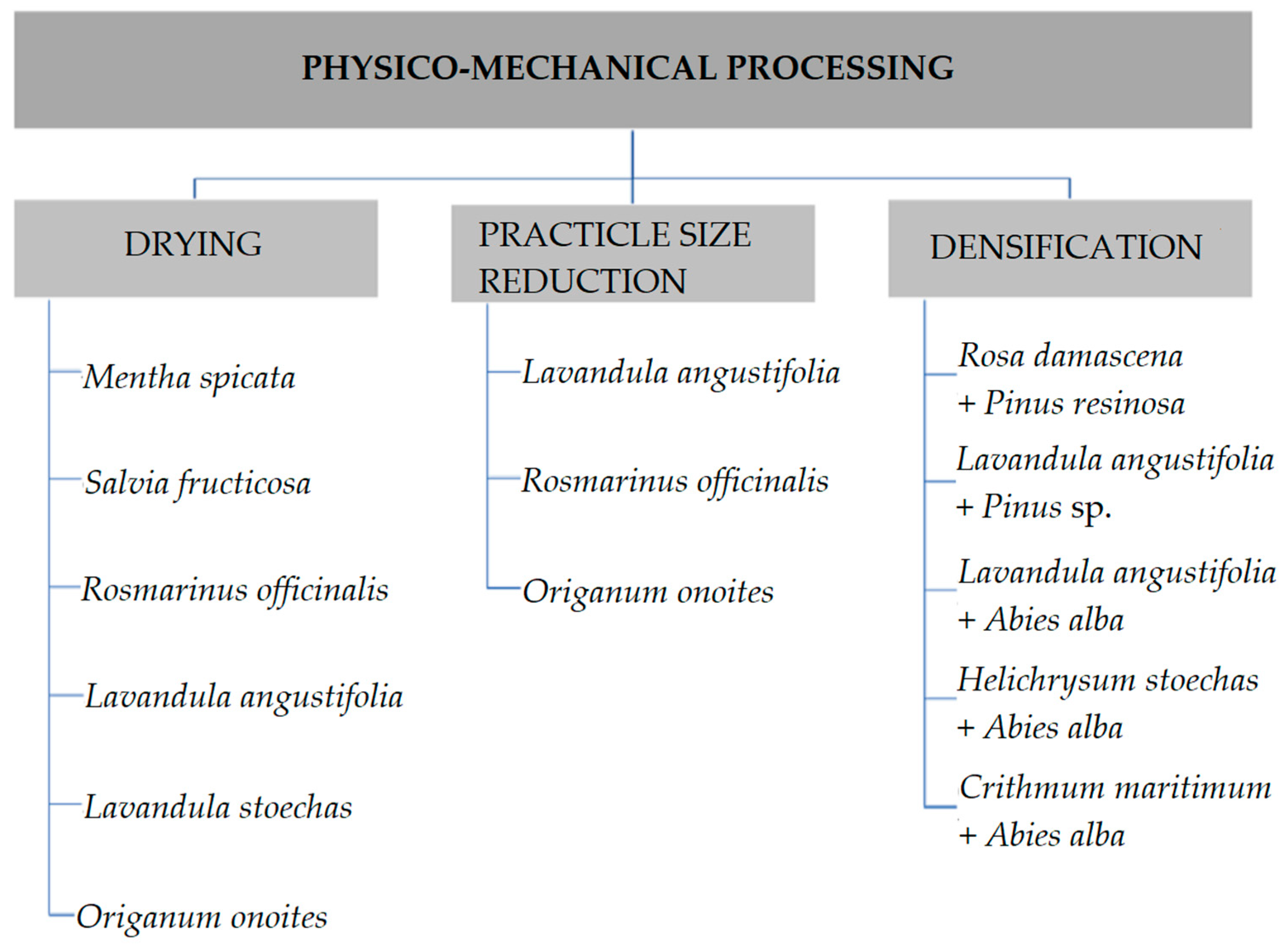
Figure 1. Physico-mechanical processing of post-distillation solid residue from the investigated plant species.
Processes 14 00244 g001
Figure 2. Thermochemical processing of post-distillation solid residue from the investigated plant species.
Processes 14 00244 g002
Figure 3. Biological processing of post-distillation solid residue from the investigated plant species.
Processes 14 00244 g003
Table 1. Summary of thermochemical conversion pathways applicable to post-distillation aromatic plant residues.
ProcessTypical ConditionsMain Products & Yields (Typical)Energy ParametersReference
Combustion>800 °CSolid fuel for direct heatHHV 15–20 MJ/kg
HHV 13.55–20.31 MJ/kg
[32,33]
Biochar productionDominantly as in pyrolysisBiochar (carbon-rich char) 25–50%HHV 25–34 MJ/kg[34]
Bio-oil productionFast pyrolysisBio-oil 60–75%HHV 15–32 MJ/kg[35]
Syngas production (via gasification)700–1000 °CCO, H2, CH4Syngas for heat/electricity (energy content process dependent)[32]
HHV—Higher Heating Value.
Table 2. Comparison of biological post-distillation waste treatment processes: anaerobic digestion, saccharification and fermentation, and composting.
Oxygen RequirementCommunityTime ScaleMain ProductReference
Anaerobic digestionAnaerobicAnaerobic bacteriaWeeks to monthsBiogas (CH4 and CO2), digestate[65]
Saccharification and fermentationAnaerobic—fermentation, limited oxygen—saccharification (for enzymatic activity)Yeast (Saccharomyces), bacteriaHours to daysEthanol, organic acids, or other biochemicals[66]
CompostingAerobicAerobic bacteria and fungi, earthwormsWeeks to monthsCompost (humus-like material)[67]
Table 3. Summary of the post-distillation solid waste from different plant residues, the extraction methods, the used solvents, and the obtained bioactive compounds.
Plant SpeciesPlant PartEssential Oil Distillation TechniqueMethod for Recovery of Bioactive Compounds from Post-Distillation WasteExtraction SolventObtained Bioactive CompoundsReference
Ammodaucus leucotrichusLeaves and stemsHD, SDMicrowave-assisted extractionWater Flavonoids [84]
Calendula officinalisFlowers HDPretreatment (ethanol, filtration, drying)HClPolysaccharides[85]
Cannabis sativaApical partsSDDynamic maceration, Soxhlet extractionMethanol, ethanol, n-heptane, chloroformCannabidiols[86]
Cannabis sativaApical partsHDMacerationWater Cellulose, hemicellulose, lignin[87]
Cymbopogon flexuosusLeaves HDPretreatment (NaOH, ethanol, filtration, drying)HClCellulose, hemicellulose, lignin[88]
Ultrasound-assisted extractionhexane, chloroform, ethyl acetate, acetone, methanol, waterPhenolics, flavonoids
Cymbopogon martiniLeavesHDPretreatment (NaOH, ethanol, filtration, drying)HClCellulose, hemicellulose, lignin[88]
Ultrasound-assisted extractionhexane, chloroform, ethyl acetate, acetone, methanol, waterPhenolics, flavonoids
Cymbopogon winterianusLeavesHDPretreatment (NaOH, ethanol, filtration, drying)HClCellulose, hemicellulose, lignin[88]
Ultrasound-assisted extractionhexane, chloroform, ethyl acetate, acetone, methanol, waterPhenolics, flavonoids
Lavandula × intermediaAerial partsSDDynamic macerationEthanol, methanol, water, ethyl acetatePhenolics, flavonoids[89]
Lavandula × intermediaAerial partsSDUltrasound-assisted extractionMethanol Phospholipids, Phenolics[90]
Lavandula angustifoliaAerial partsSDDynamic macerationEthanol, methanol, water, ethyl acetatePhenolics, flavonoids[89]
Lavandula angustifoliaStems and flowersSDStirring-assisted extractionHClPolysaccharides [91]
Lavandula sp.Aerial partsHDOrbital shaker extractionMethanolPhenolics, flavonoids[92]
Matricaria chamomillaFlowers SD, HDPretreatment (ethanol, filtration, drying)HClPolysaccharides[93]
Melissa officinalisAerial partsSDUltrasound-assisted extractionEthanolPhenolics, flavonoids[94]
Melissa officinalisLeavesHDMaceration Ethanol Phenolics, flavonoids[95]
Mentha arvensisLeavesHDPretreatment (NaOH, ethanol, filtration, drying)HClCellulose, hemicellulose, lignin[88]
Ultrasound-assisted extractionhexane, chloroform, ethyl acetate, acetone, methanol, waterPhenolics, flavonoids
Mentha arvensisAerial partsHDSoxhlet extractionMethanol, ethanol, acetone, waterPhenolics, flavonoids[46]
Mentha spicataAerial partsSDUltrasound-assisted extractionEthanolPhenolics, flavonoids[94]
Ocimum basilicumLeavesHDPretreatment (NaOH, ethanol, filtration, drying)HClCellulose, hemicellulose, lignin[88]
Ultrasound-assisted extractionhexane, chloroform, ethyl acetate, acetone, methanol, waterPhenolics, flavonoids
Ocimum basilicumLeavesHDUltrasound-assisted extractionHexane, dichloromethane, acetone, ethyl acetate, methanol, waterPhenolics, flavonoids[48]
Ocimum sanctumLeavesHDPretreatment (NaOH, ethanol, filtration, drying)HClCellulose, hemicellulose, lignin[88]
Ultrasound-assisted extractionhexane, chloroform, ethyl acetate, acetone, methanol, waterPhenolics, flavonoids
Ocimum sanctumLeavesHDUltrasound-assisted extractionHexane, dichloromethane, acetone, ethyl acetate, methanol, waterPhenolics, flavonoids[48]
Origanum vulgareAerial partsSDUltrasound-assisted extractionEthanolPhenolics, flavonoids[94]
Origanum vulgareAerial partsSDUltrasound-assisted extractionMethanolPhenolics[96]
Rosa damascenaPetals HDUltrasound-assisted extractionMethanolPhenolics[97]
Rosmarinus officinalisAerial partsSDUltrasound-assisted extractionEthanolPhenolics, flavonoids[94]
Rosmarinus officinalisAerial partsSDUltrasound-assisted extractionMethanolPhenolics[96]
Rosmarinus officinalisAerial partsHDOrbital shaker extractionMethanolPhenolics, flavonoids[92]
Salvia chrysophyllaAerial partsHDMacerationMethanolPhenolics, flavonoids[98]
Salvia fructicosaAerial partsSDUltrasound-assisted extractionEthanolPhenolics, flavonoids[94]
Salvia fructicosaAerial partsSDUltrasound-assisted extractionMethanolPhenolics[96]
Salvia lavandulifoliaAerial partsHDSoxhletEthanol Phenolics, flavonoids[99]
Salvia lavandulifoliaAerial partsHDOrbital shaker extractionMethanolPhenolics, flavonoids[92]
Salvia microstegiaAerial partsHDMacerationMethanolPhenolics, flavonoids[98]
SaturejathymbraAerial partsSDUltrasound-assisted extractionMethanolPhenolics[96]
Thymus mastichinaAerial partsHDOrbital shaker extractionMethanolPhenolics, flavonoids[92]
Thymus vulgarisLeaves HDMaceration Ethanol Phenolics, flavonoids[100]
HD—hydro-distillation; SD—steam-distillation.
Table 4. Technology readiness level (TRL) of different valorization pathways for post-distillation solid residues.
ProcessTLR RangeDescriptionReference
Drying9Commercially mature
Particle size reduction (grinding/milling)9Commercially mature; Standard industrial pretreatment for biomass
Densification (pellets/briquettes)9Commercially used for biomass solid fuels
Combustion9Fully mature
Pyrolysis7–9Mature for wood, but variable for novel biomass resources[35]
Biochar production (via pyrolysis)7–9Commercially mature; Plants are growing globally[130]
Bio-oil production (via pyrolysis)6–8Pilot and demo scale for biomass bio-oil[35]
Syngas production (gasification)7–8Commercial pilots[35]
Hydrothermal carbonization (HTC)6–9Commercial; Technology spreading to wet biomass[130]
Anaerobic digestion9Commercially mature[131]
Saccharification + fermentation5–8For lignocellulosic substrates in pilot to early commercial stages[132]
Composting9Commercially mature
TLR—Technology Readiness Level.
Disclaimer/Publisher’s Note: The statements, opinions and data contained in all publications are solely those of the individual author(s) and contributor(s) and not of MDPI and/or the editor(s). MDPI and/or the editor(s) disclaim responsibility for any injury to people or property resulting from any ideas, methods, instructions or products referred to in the content.