


Abstract
The worldwide transition to renewable energy systems is motivated by diminishing fossil fuel availability and the intensifying consequences of climate change. This study presents a Mixed-Integer Linear Programming (MILP) model for designing and optimising the bio-fuel and electricity supply chain in Colombia, using sugarcane as the main feedstock and integrating microalgae cultivation in vinasse. Six alternative biorefinery configurations and four microalgae conversion pathways were evaluated to inform strategic planning. The optimisation results indicate that microalgae achieve higher energy yields per unit of land than sugarcane. Ethanol production from sugarcane could meet all of Colombia’s gasoline demand, while diesel and sustainable aviation fuel derived from microalgae could supply around 9% and 16%, respectively, of the country’s consumption. Further-more, pelletised bagasse emerges as a viable alternative to replace part of the coal used in thermoelectric plants. From an economic perspective, all scenarios achieve a positive net present value, confirming their profitability. Sensitivity analysis highlights the critical factors influencing the deployment of distilleries as ethanol price, algae productivity, and sugarcane cost. Furthermore, transportation costs play a decisive role in the geographic location of microalgae-based facilities and the distribution of their products.
1. Introduction
Biomass-derived products and by-products can be effectively valorised through the biorefinery concept, which has gained considerable interest as an advanced technological framework for converting diverse biomass resources into a wide range of valuable products [1]. It is widely recognised as a crucial pathway for reducing dependence on fossil resources and mitigating greenhouse gas emissions [2].
Essentially, a biorefinery constitutes an integrated system in which various biomass conversion processes and unit operations are interconnected within a coordinated network of facilities. By producing a diverse array of products, biorefineries enhance the overall value derived from biomass while enabling more efficient utilisation of feedstocks [3]. The interplay between system inputs and outputs facilitates synergies with other industrial sectors, promoting industrial symbiosis. Currently, biomass valorisation relies on thermochemical, biochemical, biological, and chemical conversion pathways, enabling the production of bioenergy and a wide range of value-added products such as biogas, bioethanol, biodiesel, bioelectricity, and fertilisers. In addition, these pathways can generate advanced biofuels (SAF, green diesel, and green gasoline), platform biochemicals (lactic, succinic, and levulinic acids, HMF, and furfural), bioplastics (PLA, PHA), biomaterials (biochar, activated carbon), and high-value compounds derived from microalgae, including proteins, pigments, and omega-3 fatty acids. The integration of these products significantly enhances the economic performance and overall profitability of biorefinery systems [4,5].
However, biorefineries based on microalgae present significant design challenges. One major difficulty is determining the optimal combination of processes, units, and operations that result in feasible technological solutions [6]. The intrinsic complexity of these systems requires the use of optimisation tools, which allow multiple objectives to be addressed simultaneously, including minimising environmental impacts, lowering resource consumption, reducing waste generation, and maximising economic returns [7]. In this regard, mathematical programming and optimisation models have become indispensable methodologies for the efficient design of advanced biorefinery systems [8,9].
Sugarcane-based biorefineries have been extensively studied in the literature [10,11,12,13,14,15]. Grown across most tropical and subtropical regions worldwide, sugarcane is a key agricultural commodity and an essential feedstock for the agro-industrial sector. The sugarcane agro-industrial chain generates a wide range of main products and co-products, including sugar, ethanol, molasses, paper, electricity, and bagasse. Among these, sugarcane bagasse stands out as a lignocellulosic by-product with a high polysaccharide content and is widely recognised as one of the most abundant agricultural residues worldwide [16,17], and represents a highly promising raw material for the production of biofuels, bioenergy, and various biomaterials [18,19].
Among the by-products of ethanol production, vinasse stands out due to its significant volume. The generation of vinasse typically ranges from 12 to 15 L for each litre of ethanol produced [20,21]. This effluent is characterised by its dark colour, acidic pH (3.5–5) [22], and high chemical oxygen demand (COD ≈ 30,000 mg/L O2) and biochemical oxygen demand (BOD ≈ 15,000 mg/L O2) [23].
Conversely, microalgae are photosynthetic aquatic microorganisms that can transform carbon dioxide, nutrients, and water into biomass and energy. They are recognised as a promising third-generation biofuel feedstock due to their rapid growth, high lipid content, significant greenhouse gas fixation potential, and the possibility of cultivation on non-arable land [24,25,26,27].
The cultivation of microalgae using vinasse enables the removal of nutrients while converting them into microalgal biomass through carbon dioxide sequestration via photosynthesis [28]. This cultivation approach has been investigated in recent years, yielding promising results. Marques et al. [29] investigated the cultivation of Chlorella sp. using different growth media. Their findings indicated that when anaerobically treated sugarcane vinasse was employed, the microalgal biomass productivity reached 70 mg/L·day, while the residual chemical oxygen demand (COD) of the treated effluent was approximately 300 mg/L. Similarly, Ramirez et al. [30] applied a factorial experimental design to optimise key operating variables—namely temperature (20–35 °C), light intensity (2400–10,000 lx), and vinasse concentration (0–50% v/v)—for the cultivation of Scenedesmus microalgae using sugarcane vinasse as an alternative culture medium. Under optimal conditions, the maximum biomass productivity achieved was 70 mg/L·day, corresponding to the addition of 10% vinasse to a modified Guillard medium. In another study, Dos Santos et al. [31] developed a two-step cultivation strategy (12:12 h) for the production of Spirulina maxima. The approach involved an autotrophic growth phase under illumination, followed by a heterotrophic phase using vinasse at a concentration of 3% (v/v). Under these conditions, biomass productivities between 70 and 87 mg/L·day were reported. Likewise, Serejo et al. [32] evaluated microalgal growth in a mixed consortium dominated by Chlorella vulgaris, employing anaerobically digested vinasse as the growth medium. Their results indicated that when the vinasse was highly diluted with distilled water (98% v/v), the microalgal biomass productivity reached approximately 79 mg/L·day.
Microalgae face notable economic challenges in biofuel production, largely due to the high costs associated with their processing. Consequently, when designing microalgae-based biofuel systems, it becomes essential to recover and upgrade as many by-products and residues as possible to enhance biomass productivity. This approach also promotes the adoption of integrated conversion strategies within biorefinery frameworks, enabling more efficient and sustainable utilisation of algal resources [7].
Modelling and optimisation based on superstructures applies mathematical programming techniques to determine the optimal configuration of a system according to a defined objective function [28]. Such optimisation frameworks incorporate not only an objective function, but also a structured set of constraints, decision variables, and parameters [33]. Numerous studies employing superstructure-based optimisation have implemented linear programming (LP), mixed-integer linear programming (MILP), or mixed-integer nonlinear programming (MINLP) approaches to represent and evaluate the flows of feedstocks, biofuels, and co-products within integrated systems.
Tahereh Haghpanah et al. [34] developed a multi-objective optimisation model for designing microalgae biorefineries that integrates economic and environmental criteria. The study employs a superstructure that enables the evaluation of various processing routes, taking into account the profitability and sustainability of the process. The results suggest that optimising these aspects simultaneously can significantly enhance the biorefinery’s overall performance, balancing biofuel production with minimising environmental impact. Rizwan et al. [35] proposed a mixed-integer linear programming (MILP) model to identify the optimal pathway for biodiesel production from microalgae. Solis et al. [7] developed a multi-objective optimisation model that simultaneously seeks to maximise economic efficiency and minimise environmental impact. This biorefinery model uses microalgae as the raw material and employs a resource recovery and recirculation approach. In another study, Gupta et al. [36] developed an MILP model to identify the optimal production route for biodiesel and its value-added co-products, with the aim of minimising the biorefinery’s annualised life cycle cost (ALCC). Shirazaki et al. [37] applied a two-stage optimisation model to the microalgae biofuel supply chain. This included designing the CO2 capture, transport and storage (CCUS) network, as well as optimising the configuration of the biorefinery using a superstructure. Their results suggest that, given the analysed conditions, the cost of producing biodiesel remains higher than the price of conventional diesel; however, this could be significantly reduced by improving biomass productivity.
Implementing a biofuel supply chain involves several challenges, including inventory management, plant location, environmental impact, transportation, feedstock selection, and profit maximisation [28]. Numerous studies have focused on designing networks for such supply chains, considering multiple time periods, the production of various biofuels, and the use of different types of biomass. The literature emphasises the importance of integrating economic, environmental, and social criteria. For instance, Giarola et al. [38] developed an MILP model to simultaneously optimise the financial and environmental performance of bioethanol production, aiming to identify the configuration that maximises economic profitability while minimising greenhouse gas emissions. Santibáñez-Aguilar et al. [39] proposed a multi-objective, multi-period MILP to design and plan first- and second-generation biorefineries, incorporating economic, environmental, and social considerations. Infante et al. [8] conducted a case study in Brazil in which an MILP model was used to optimise the supply chain for sustainable aviation fuel (SAF), green diesel, and green petrol, all of which were produced from microalgae cultivated in sugarcane vinasse using hydrothermal liquefaction technology.
Kim et al. [40] formulated an MILP model to design an optimal transportation network, accounting for various costs and aiming to maximise profits. Likewise, Duarte et al. [41] presented an MILP-based optimisation model for the design and configuration of supply chain processes, focused on locating second-generation bioethanol plants in different regions of Colombia using coffee residues as feedstock.
However, despite the numerous advances in the modelling and optimisation of biofuel supply chains, important research gaps remain regarding the integration of multiple biomass sources and waste valorisation pathways within a unified decision framework.
Building upon these foundations, this study addresses the existing gap by developing a mixed-integer linear programming (MILP) model that explicitly integrates sugarcane and microalgae subsystems through the valorisation of vinasse, thus coupling generation biofuel pathways within a single optimisation framework. The model considers multiple processing routes, allowing for the simultaneous selection of optimal process configurations, plant scales, and resource allocation decisions. The primary objective is to evaluate the operational conditions of the supply chain for the production of biofuels and electricity, considering both economic performance and environmental impact. In addition, the model incorporates the effect of carbon credit pricing on the supply chain. This approach provides a comprehensive decision support tool for assessing trade-offs among profitability, emissions reduction, and resource efficiency in integrated biorefineries.
2. Materials and Methods
Superstructure-based optimisation involves evaluating a comprehensive set of design alternatives, where multiple process pathways are considered to identify the most suitable configuration based on specific objectives. This study aims to develop an optimisation model for biofuel production within an integrated biorefinery using sugarcane as the primary feedstock. The methodology is structured in three main stages: (1) collection and estimation of relevant data from literature and experimental sources to parameterize the model, (2) formulation of the mathematical programming model, and (3) execution of the optimisation procedure to determine the optimal process configuration [28].
The developed superstructure comprises six primary processing stages: (1) distillation, (2) vinasse biodigestion, (3) microalgae cultivation, (4) harvesting and dewatering, (5) conversion of microalgal biomass into biofuels, and (6) transformation of waste and intermediate streams into value-added products. The selection of units and processes at each stage is determined based on the configuration under evaluation and the specified objective function. Economic performance is assessed through capital costs (CCs), fixed costs (FCs), resource costs (RCs), service costs (SCs), labour costs (LCs), maintenance costs (MCs), transportation costs (TCs), and other associated costs (OCs), while environmental performance considers both emissions generated—mainly from the consumption of sugarcane, electricity, aluminium sulphate, water, oxalic acid, and fossil diesel—and emissions avoided through the substitution of fossil fuels by bio-based products such as bioethanol, green diesel, green gasoline, SNG, bioelectricity, bagasse pellets, and biochar [28]. Figure 1 illustrates the process flow diagram of the integrated sugarcane–microalgae biorefinery for the production of bioethanol, electricity, bagasse pellets, synthetic natural gas (SNG), green diesel, green gasoline, jet fuel, and biochar. A comprehensive description of each processing stage is provided in the following sections. The main parameters used in all biorefinery units are provided in the Supplementary Materials (Table S1).
Figure 1.
Sugarcane–microalgae biorefinery process flow.
2.1. Distillery
The integrated biorefinery superstructure is initiated from an autonomous bioethanol distillery. In this stage, the consumption and generation of resources were determined using the process ratios reported by Pina et al. [42], based on a first-generation bioethanol distillery model operating without a cogeneration system.
2.2. Vinasse Biodigestion
The vinasse generated during the distillation process can be utilised either for fertigation or subjected to anaerobic biodigestion to produce biogas while simultaneously treating the effluent. The treated vinasse can subsequently serve as a nutrient-rich medium for microalgae cultivation. Key parameters for this unit include a typical chemical oxygen demand (COD) of vinasse of 33.25 kg/m3 [43], a COD removal efficiency in the UASB reactor of 62.5% [43,44], a methane content of 60% in the produced biogas, and a biogas yield of 0.234 m3 of CH4 per kg of COD removed [44].
2.3. Microalgae Cultivation System
Microalgae can be cultivated in either open or closed systems, with the choice depending on the intended use of the biomass and the environmental conditions at the production site [45,46]. In this study, open pond cultivation was selected due to its lower energy consumption and capital costs compared to closed photobioreactors [34,47,48]. Biodigested vinasse and process wastewater from the distillery were used as the culture medium, with a reference vinasse concentration of 5% by volume. The system was modelled as a high-rate algae pond (HRAP), maintaining a constant concentration of 0.56 g/L during harvesting periods and a hydraulic retention time of 8 days, corresponding to a biomass productivity of 70 mg/L·day (dry ash-free basis) [29]. Water loss through evaporation is influenced by climatic factors such as temperature and humidity. For the system location in Colombia, Guieysse et al. [49] reported that in tropical climates, the annual water loss is approximately 0.476 m3/m2·year.
2.4. Harvesting and Dewatering
After microalgal growth, the culture suspensions are highly diluted. Harvesting and dewatering can be performed using various technologies, including flocculation, filtration, sedimentation, decantation, flotation, and centrifugation [50]. In this study, biomass collection and dewatering are carried out in three sequential steps: decantation, flocculation, and centrifugation.
2.4.1. Decantation
At an initial concentration of 0.56 g/L, the biomass from the ponds was collected and partially dewatered to remove excess water. The decantation system increased the algae concentration from 0.56 g/L to 20 g/L, with an assumed operational efficiency of 95% and a processing time of 4 h [51].
2.4.2. Flocculation
Following decantation, chemical flocculation was employed to further increase the biomass concentration to 7.5% wt. In the flocculation tank, aluminium sulphate was added at a dosage of 0.15 g/L [52]. This step achieved a biomass recovery of 98%, with an energy consumption of 0.15 kWh/m3 of feed, and was assumed to take 4 h [53].
2.4.3. Centrifugation
The flocculated biomass suspension was then concentrated by centrifugation to a final solids concentration of 200 g/L. The centrifugation step achieved a cell recovery efficiency of 99% [53].
2.5. Anaerobic Digestion (7.5% Microalgae Biomass)
The quantitative parameters for this stage were derived from the analysis presented in [54]. It should be noted that this configuration excludes any consideration of electrical power usage or thermal energy demands.
2.6. Hydrothermal Liquefaction
Following centrifugation, the concentrated microalgal slurry, containing approximately 20% (w/w) solids, is directed to a hydrothermal liquefaction (HTL) unit for the conversion of biomass into green diesel, sustainable aviation fuel (jet fuel), and green gasoline. The HTL process representation and assumptions adopted in this study are based on the methodologies and parameters reported by Zhu et al. [55] and Snowden-Swan et al. [56].
2.7. Hydrothermal Carbonisation
The hydrothermal carbonization (HTC) step generates two distinct outputs: a solid fraction (biochar) and a liquid effluent. The solid product can be applied as a solid biofuel, soil amendment, or for wastewater treatment purposes [57]. In this work, following the flocculation stage, the algal biomass is processed through HTC to obtain biochar, using a slurry concentration of 75 g/L. The HTC operation was simulated based on the conditions reported by Heilmann et al. [58] namely 203 °C and a residence time of 2 h, with oxalic acid added at 2.3% of the dry biomass. Under these conditions, the resulting biochar achieves a mass yield of 39% (dry basis) and exhibits a calorific value of 31.58 MJ/kg. Because the HTC liquid stream contains recoverable resources and energy, its utilisation is essential. This aqueous phase contains approximately 0.01819 t of carbon per m3 of liquid, according to the data reported in [58]. In this study, the carbon-rich effluent was directed to an anaerobic digestion process for biogas generation. For this conversion step, a chemical oxygen demand (COD) removal efficiency of 55% and a methane production of 195.8 mL CH4 per gram of COD removed were assumed [59]. Incorporating the valorisation of the HTC aqueous phase increases the overall process efficiency to 58%.
2.8. Supercritical Water Gasification
Following the centrifugation step, the concentrated microalgal biomass is directed to a hydrothermal gasification unit, where a 15% solids slurry undergoes thermochemical conversion—via hydrolysis and supercritical gasification—yielding syngas while enabling the separation of inorganic salts. The generated syngas is subsequently purified through an absorption column and a membrane-based separation system. Electrical power is produced through multiple subsystems, including liquid and vapour expanders, the steam network, and auxiliary power units. The overall configuration and performance of this pathway were simulated using experimental and modelling data from the study conducted by Mian et al. [60].
2.9. Hydrogen Production
Since the hydrothermal liquefaction process demands an external hydrogen supply, this study incorporates two alternative hydrogen production pathways within the superstructure: (1) alkaline electrolysis (AEL) and (2) proton exchange membrane (PEM) electrolysis. For both technologies, the corresponding consumption and production coefficients were determined using the data provided by the Hyjack model [61].
2.10. Dry Torrefaction and Pelletisation
The purpose of this unit is to convert sugarcane bagasse into densified pellets. The material and energy consumption factors associated with this process were derived from the modelling data reported by Jarunglumlert et al. [62].
2.11. Biogas Upgrading
Biogas upgrading involves a purification step aimed at increasing the methane content of raw biogas to produce biomethane. Several upgrading technologies are available, including cryogenic separation, amine-based chemical absorption, pressure swing adsorption (PSA), and water scrubbing [63]. In this work, PSA was selected to obtain biomethane with a purity of 99%. The specific energy demand of the unit is 0.31 kWh per Nm3 of biogas processed. Additionally, a CO2 removal efficiency of 99% and methane losses of 3.5% were assumed [64].
2.12. Other Units
All bagasse generated in the distillery can be directed to four potential pathways: (1) a boiler for heat production, (2) a cogeneration system for combined heat and power generation, (3) a thermoelectric unit dedicated to electricity production, and (4) a dry-torrefaction facility for producing bagasse pellets. Similarly, the biogas produced across the various biorefinery units can be routed to four options: (1) a boiler for thermal energy supply, (2) a cogeneration plant for simultaneous heat and power generation, (3) a thermoelectric system for electricity production, and (4) an upgrading unit to generate synthetic natural gas. Within the superstructure, both a cogeneration unit and a diesel-fired boiler are included to ensure the provision of thermal and electrical energy required by the integrated biorefinery.
2.12.1. Combined Heat and Power—CHP
The cogeneration system is responsible for the simultaneous generation of thermal and electrical energy. It can operate using various fuel inputs, including fossil diesel, biogas, and sugarcane bagasse. In this study, the overall efficiency of the cogeneration unit is taken as 90%, distributed between electricity production (30%) and useful heat recovery (60%).
2.12.2. Boiler
A boiler operating on bagasse, biogas, and/or fossil diesel was employed to supply the high-temperature thermal energy requirements (above 250 °C) of the hydrothermal liquefaction and carbonization units. The boiler was assumed to operate with an efficiency of 90% on a higher heating value (HHV) basis.
2.12.3. Bagasse Power and Biogas Power
As an additional option for supplying electricity to the integrated biorefinery—beyond the sources previously described—biogas and bagasse can be utilised as fuel. In this study, the power generation unit based on these feedstocks was assumed to operate with an efficiency of 35% on a higher heating value (HHV) basis.
2.12.4. Solar Plant
The solar plant is intended to provide the electricity demand of the hydrogen production units. The photovoltaic array is assumed to operate at an efficiency of 18%, while power conversion and transmission losses between the solar panels and the electrolysis systems are considered to be 5% [61].
3. Mathematical Formulation
The optimisation framework is formulated as a mixed-integer linear programming (MILP) model derived from the superstructure illustrated in Figure 1. In addition, Figure 2 outlines the main components, structure, and overall formulation of the optimisation problem applied to the biorefinery system. Decision making in the supply chain involves strategic, tactical and operational decisions, so the core aim of the optimisation process is to address economic, environmental and logistical aspects.
Figure 2.
Schematic representation of optimisation model.
The objective is to minimise costs. The difference between the cost of the entire biorefinery and the revenue is the profit in the model. The total revenue depends not only on the service cost (SC) of bioethanol, electricity and bagasse pellets, but also on the generated green credits (CCs). The costs depend on investment costs (ICs), resource cost (RC) and distribution transportation costs (TCs) from a production region to a consumption region. Equation (1) shows the objective function addressed in the study.
Equations (2)–(6) explain the calculations of investment costs, material purchase costs, distribution transportation costs, sales cost and green credits. UCre,cl,u it is a parameter that represents the cost of the unit, while AF, MC, OC and LC represent the annualization factor, maintenance cost, operational cost and labour cost, respectively. RCr represents the cost of the resource, rpre,cl,r is the total consumption of the resource in one year and ORr,s is a parameter of the reference flow leaving the resource. The transportation cost (Equation (4)) is determined by the quantity of a resource transported by a modal m from a location re to c (sicre,cl,c,s,p), its distance (DISre,c) and the modal cost (MoCs). SCse represents the market price of the service, spre,cl,se is the total production of the service and ISse,s is a parameter of the reference flow entering the service. EEr is the quantity of carbon dioxide emitted by resource, ets represens the emissions generated by transport, EAse is the quantity of carbon dioxide avoided by service and CCP is the Carbon Footprint Selling Price.
Equation (7) refers to the emission restriction generated by the transported services, where FET is the transport emission factor. Transportation is performed according to Equations (8)–(10), where sepre,cl,s,p is the flow exported during a period, Ts is a parameter used to indicate what can be transported, DCs,c is the total demand of a flow for a consumer during the year and tscp,c,s is the amount of flow exported by consumers. The superstructure resource balance is performed by Equation (11), where uppre,cl,u,l,p is the quantity produced during a period, OUu,s is a parameter of the reference flow leaving the unit, rppre,cl,r,p is the total consumption of the resource in a year, RACre,cl,r,p is the availability of resources in the regions, uppre,cl,u,l,p is the quantity produced during a period, IUu,s is a parameter of the reference flow entering the unit, sppre,cl,se,p is the total production of the service in a year. The model constraint regarding the demand for consumer streams is shown in Equation (12): the total quantity of each stream produced in the biorefinery must be greater than or equal to the consumer demand for each stream.
Equations (13) and (14) indicate the restrictions on the amount of resources, where rqcre,cl,r, is the amount of resource depending on the units per region and RQre,r is the quantity of resources available in the regions. Equations (15) and (16) indicate the resource quantity balance constraints, where yrps is the total resource consumption by all regions. Equations (17)–(19) indicate the restrictions of the balance of services produced, where ysps is the total production of the service by all regions. Equations (20)–(23) are constraints used in the model for the units, where uure,cl,u and uulre,cl,u,l are binary variables, umlre,cl,u,l is a multiplier variable to know the amount of input and output in the unit in a level, MAXCu,l is the maximum capacity of a unit depending on the level, MINCu,l is the Minimum capacity of a unit depending on the level, CEu,l is the equipment cost per unit of capacity and FCu,l is the fixed cost of technology per unit of capacity. The sets addressed in the model are shown in Table 1.
Table 1.
List of sets.
3.1. Cost
The optimisation model incorporated the following cost components: capital costs (CCs), fixed costs (FCs), resource costs (RCs), service costs (SCs), labour costs (LCs), maintenance costs (MCs), transport costs (TCs), and other costs (OCs). Capital costs represent the upfront investment required to construct the biorefinery process units and are expressed on a cost-per-unit basis. To estimate these capital expenditures, data reported in the literature for facilities with known capacities were used. Since unit costs change over time, the cost values gathered from the literature were updated to their 2020 equivalents using the Chemical Engineering Plant Cost Index (CEPCI). The cost adjustment was performed using Equation (24).
where:
C1 = the capital cost of the equipment in the first year; C2 = the corresponding equipment cost in the second year; INDEX1 = the cost escalation index for year 1; INDEX2 = the cost index applied for year 2.
The investment cost of a new facility with the desired capacity is calculated by scaling from the known cost of a similar plant operating at a different capacity, using the exponential cost–capacity relationship presented in Equation (25).
where:
CE = Equipment cost for capacity Q; CB = Base Equipment cost for capacity QB; n = scaling factor, which is an exponent between 0.3 and 1.0.
In this study, an exponent value of 0.6 was applied for all units, with the exception of hydrogen production technologies, for which an exponent of 0.77 was used [61], the solar plant, which used an exponent of 0.82 [61], and the decanter, which was assigned an exponent of 1 due to its modular design. To obtain a linear approximation of the costs, a linearisation procedure was performed. The steps were as follows: (1) Equation (25) was used to compute equipment costs across a range of capacities, generating a cost–capacity curve; (2) this curve was divided into three segments; and (3) for each segment, the slope and the y-intercept of the corresponding linear function were determined. These parameters represent, respectively, the equipment cost (CE) and the fixed cost (FC). The costs of units are presented in the Supplementary Materials (Table S2).
The cost of transporting bioethanol, bagasse pellets, and diesel by road was estimated through a simulation conducted using information from the Colombian Ministry of Transport [65]. This simulation incorporated several variables, including truck configuration, type of transport unit, loading and unloading waiting times, and the specific origin–destination pairs. The outcome yielded an estimated cost of 0.076 US$/t·km. For overland transport of SNG, Tractebel Engineering S.A. [66] reported a cost of 10.46 US$/MMBTU for a haul distance of 1000 miles. Additionally, DeSantis et al. [67] indicated that electricity transmission costs amounted to 0.0415 US$/MWh·mile. The economic parameters for feedstocks, chemicals, solvents, final products, utilities, labour, maintenance, transportation modes, and miscellaneous expenses are summarised in the Supplementary Materials (Table S3).
3.2. Emission
Table S4 in the Supplementary Materials presents the quantities of carbon dioxide equivalent avoided per unit of service delivered, as well as the emissions generated per unit of resource consumed. Given the typical transport conditions in Colombia, freight movement was assumed to occur using two-axle trucks, which emit approximately 0.000123 t CO2-eq per t·km, according to the findings reported in [68]. For emissions associated with electricity transmission, it was considered that high-voltage lines (±800 kV) experience losses of roughly 7% for every 1000 km in the case of alternating-current systems [69]. Based on this assumption, the corresponding emissions from electricity transport were estimated at 0.00001421 t CO2-eq per MWh·km.
4. Case Study
Colombia possesses significant energy-related advantages due to its location in the equatorial region, its high biodiversity, and its broad availability of crops and natural resources. These conditions make the assessment of biorefinery systems in the country particularly relevant for developing alternative energy pathways. The nation also has a well-established sugarcane-producing zone in the southeast. To test the effectiveness of the optimisation framework proposed in this work, a Colombian case study was selected, given the country’s strong potential for both sugarcane cultivation and microalgae production. According to the Information System for Rural Agricultural Planning (SIPRA), Colombia has approximately 2,800,578 hectares classified as highly suitable for sugarcane, 3,388,367 hectares considered moderately suitable, and 6,415,574 hectares with low suitability. Reported average yields for these categories are roughly 120 t/ha, 90 t/ha·year, and 65 t/ha·year for high-, medium-, and low-suitability areas, respectively [70]. For the purposes of this study, five Colombian regions with high suitability and productivity levels (120 t/ha) were chosen. Table 2 summarises the sugarcane production potential for each selected region. To mitigate risks associated with monoculture and land use change impacts, no more than 10% of the land area in each region was assumed available for sugarcane cultivation.
Table 2.
Sugarcane production potential.
The following assumptions were applied to determine the potential consumption regions: (1) National demand for bioethanol and renewable diesel was assumed to substitute the use of gasoline and diesel, respectively, throughout Colombia, except in the departments of Amazonas, Guainía, and Vaupés, which were excluded due to the lack of reliable logistical information and limited road access. (2) Electricity demand was considered for the departmental capitals where biorefineries could be installed, as well as for the 15 most populated cities in the country. Transmission losses were set at 7%. (3) The demand for synthetic natural gas (SNG) was assumed to replace natural gas consumption in gas-fired thermoelectric power plants and/or in diesel engines used for transportation. (4) Jet fuel demand was considered to substitute current jet fuel consumption at Colombia’s major airports. (5) THE Demand for biochar and bagasse pellets was assumed to replace coal consumption in Colombia’s coal-fired thermoelectric plants.
The service demand values for each of the evaluated regions are provided in the Supplementary Materials (Table S5). Distances from each producing region’s capital city to the potential consumption regions, as well as the distance to possible biorefinery locations, were estimated using Google Maps [71] and calculated following Equation (26).
where:
A represents the surface area of the producing region. The corresponding radius r derived from this area was incorporated into the distances obtained from Google Maps. To estimate the transport distance between a potential biorefinery location within a producing region and a given consuming department, the distance between the respective capital cities was first determined. Subsequently, half of the radius of both the producing region and the consuming department was added to this base distance to account for intra-regional dispersion. It is important to note that the distances between regional capitals used in this study were obtained directly from Google Maps, which accounts for the actual road network and the mountainous topography of the Colombian Andes. Equation (26) was applied exclusively as a simplified intraregional correction to approximate internal transportation within producing and consuming regions. This approximation is intended for regional-scale logistics modelling and does not aim to fully capture local terrain effects, which are acknowledged as a limitation of this study.
The model was developed using LINGO version 20.0 [72]. The optimisation results yielded comprehensive insights into the biorefinery system under the defined parameter settings, which enabled a detailed evaluation of the associated operational activities. Table 3 shows six configurations of biorefineries were considered, all of them producing bioethanol from sugarcane juice and biogas from vinasse biodegradation. In the first configuration, biogas production from vinasse biodigestion and bagasse from the distillery is used for electricity production (biogas upgrading and dry torrefaction and pelletisation cannot be activated for the production of SNG and bagasse pellets, respectively), while in the second configuration the production of biogas from the biodigestion of vinasse can be used for the production of electricity and/or SNG; in addition, the bagasse from the distillery can be used for the production of electricity and/or for bagasse pellets. In both configuration 1 and configuration 2, bagasse can be used to produce heat and electricity in the BagasseCHP unit. Bagasse is currently used for the production of heat and electricity, but it can also be used as a raw material for the production of pellets. In the case of Colombia, bagasse pellets are an excellent option for replacing coal. For configurations 3–6, different wet routes of microalgae were studied; these types of routes are more energy-efficient compared to dry routes as they do not require a drying process.
Table 3.
Biorefinery configurations.
All process configurations include the anaerobic digestion of vinasse. The six biorefinery alternatives were assessed assuming a carbon credit value of 25 US$/t CO2-eq.
5. Discussion
Across all configurations analysed, the model installs nine biorefineries—three in Antioquia, two in Santander, two in Valle del Cauca, one in Cauca, and one in Caldas. The only exception is configuration 2, in which ten biorefineries are installed: three in Antioquia, two in Santander, two in Valle del Cauca, two in Cauca, and one in Caldas. This variation indicates that the number and location of biorefineries depend on the specific configuration, reflecting how different economic and logistical assumptions influence the optimal spatial distribution of the facilities.
5.1. Results of Evaluated Configurations
In configuration 1, the distilleries’ thermal demand is entirely supplied by the heat generated in the bagasse-fuelled CHP unit. Electricity generation is shared among three sources: the bagasse-fired thermoelectric plant, which delivers 50.63% of the total output; the bagasse-based CHP facility, responsible for 42.21%; and the biogas CHP unit, which contributes the remaining 7.17%. All biogas produced from the anaerobic digestion of stillage is exclusively used for power generation in this biogas CHP system. Regarding biomass flows, 137,720,000 t of sugarcane are processed across the five Colombian producing regions, resulting in 8,924,256 t of bioethanol and 27,801,436 MWh of electricity. The bagasse generated in the distilleries is split between two destinations: 49.31% is sent to the CHP plant to co-produce heat and electricity, while 50.69% is allocated to the dedicated bagasse-fired thermoelectric plant. Of the total electricity produced, distillery operations require 13.87%, and the remaining surplus is delivered to regions where electricity demand is not fully met.
Configuration 2 introduces a structural change in biogas use, incorporating upgrading systems to produce SNG, which significantly alters the energy balance. In this case, electricity generation is reduced to 23.70 TWh due to the diversion of biogas from cogeneration to synthetic gas purification. Simultaneously, the system generates 408,527 t of SNG and 2.34 Mt of bagasse pellets, products not present in the previous configuration. This diversification leads to an increase in internal electricity consumption, primarily due to the requirements of the upgrading, torrefaction, and pelletising systems. The reallocation of bagasse to these new uses explains the reduction in exportable electricity surplus, demonstrating a transition from a highly energy-intensive platform to a biorefinery geared towards multiple energy products.
Configuration 3 further diversifies this process by integrating anaerobic digestion of microalgae into nine of the biorefineries, increasing biogas availability and, consequently, SNG production. The system achieves 578,734 t of SNG, representing a 41.7% increase compared to configuration 2. However, electricity generation decreases to 21.84 TWh, as a larger proportion of bagasse is directed to cogeneration to meet the additional thermal demand associated with microalgae cultivation, flocculation, and processing. Similarly, pellet production decreases to 1.74 Mt due to the reduced availability of bagasse for torrefaction. Overall, this configuration incorporates a new biomass stream that expands the energy portfolio but reduces the system’s capacity to generate surplus electricity. Figure 3 depicts how the bagasse produced in the plants is distributed.
Figure 3.
Bagasse consumption for the evaluated configurations.
Configuration 4 modifies the microalgae utilisation route, replacing anaerobic digestion with supercritical water gasification (SCW). As a result, part of the SNG now comes from the synthesis gas produced during gasification, while the remainder is generated via vinasse biogas upgrading. Under this strategy, SNG production remains at intermediate levels (547,607 t of SNG), although electricity generation decreases to 20.72 TWh due to the higher internal energy consumption of the SCW process and the reallocation of bagasse to cogeneration to meet the thermal demands of this process. The larger proportion of bagasse dedicated to pelletising (2.34 Mt) compared to configuration 3 contributes to greater diversification of solid products, while the electricity surplus remains comparable to that of Configuration 3. This scheme represents an advanced technological alternative that trades electrical efficiency for greater flexibility in renewable gas production. Electricity use within the biorefineries is led by the distilleries, which consume 18.61% of the total electricity generated. The cultivation and flocculation stages, together with biogas upgrading and the torrefaction–pelletisation processes, account for an additional 5.11%. The remaining 76.28% of electricity is exported to regions with demand—values comparable to those observed in configuration 3. Of the total SNG output, 66% is supplied by the purification units, with the balance produced via supercritical water gasification. Regarding bagasse allocation, 55.63% is directed to the CHP plant to generate both electricity and thermal energy, 18.36% is used for pellet production, and the remainder is utilised for electricity generation. The heat produced by the CHP facility covers the thermal requirements of the distilleries (89%) and the torrefaction–pelletisation units (11%). Figure 4 and Figure 5 illustrate the electricity generation and consumption patterns across the various biorefinery units.
Figure 4.
Electricity production for the evaluated configurations.
Figure 5.
Electrical energy demand associated with the assessed configurations.
For configuration 5, the outcomes show that nine distilleries operate at their nominal capacity, while nine integrated biorefineries simultaneously generate jet fuel, green gasoline, and green diesel through hydrothermal liquefaction, in addition to producing electricity, bagasse pellets, and synthetic natural gas (SNG). The hydrogen needed for the liquefaction process is supplied by alkaline electrolysis (AEL). The allocation of bagasse indicates that 4.02% is sent to a bagasse-fired boiler to meet the high-temperature heat requirements of the liquefaction unit, 49.34% is fed to the combined heat and power (CHP) system for co-production of electricity and thermal energy, 32.87% is directed to a thermoelectric plant for electricity generation, and the remaining fraction is processed into bagasse pellets. Electricity produced within the system is consumed by distillation facilities, microalgae cultivation units, centrifugation and flocculation stages, biogas upgrading systems, the hydrothermal liquefaction unit, and torrefaction–pelletisation plants. Notably, the electricity demand associated with hydrogen generation is fully supplied by a solar power installation. Overall, 76.66% of the total electricity generated—equivalent to 15,995,907 MWh—is exported to regions with unmet electricity demand. In aggregate, the biorefinery network produces 8,924,256 t of bioethanol, 20,867,099 MWh of electricity, 362,983 t of SNG, 1,756,561 t of bagasse pellets, 136,692 t of green diesel, 98,210 t of jet fuel, and 64,174 t of green gasoline.
Finally, configuration 6 replaces the HTL platform with a thermomaterial route based on carbonization, with biochar production and digestion of the aqueous effluent. This scheme generates 419.8 kt of biochar and 393.8 kt of SNG—a higher value than configuration 5, but lower than that observed with microalgae in configuration 3—thanks to the combined digestion of vinasse and the post-carbonization liquid effluent. Electricity production reaches 21.04 TWh, recovering some of the capacity lost in configurations 3, 4, and 5 due to lower bagasse competitiveness for heat-intensive processes. The bagasse is distributed among CHP (53%), thermoelectric power (30%), torrefaction-pelleting (13%), and a boiler dedicated to supplying heat for carbonization (4%). Overall, this route maximises solid carbon recovery and maintains intermediate electricity production, positioning itself as a balanced alternative between material and energy production. Figure 6 illustrates the energy output for all configurations evaluated.
Figure 6.
Energy generation within the biorefinery across the analysed configurations.
As shown in Table 4, all evaluated conversion configurations yield nearly identical energy production per unit of land area. For this reason, the marginal energy production—defined as the additional energy generated when one more hectare is allocated to a particular energy source—was calculated for the configurations that incorporate microalgae. The results indicate that microalgae deliver between 2.1 and 2.88 times more energy per hectare than sugarcane.
Table 4.
Energy production by area.
5.2. Economic Analysis
The economic assessment of the different configurations yields negative values for the objective function, meaning that all biorefinery setups generate positive profits at the considered processing scale. These profits are influenced by both total revenues and the associated costs. Total revenue is determined not only by product sales but also by the green credits obtained. Costs, in turn, are driven by unit investment expenses, operational costs, transportation and distribution costs between production and consumption regions, and the purchase of required materials. The economic indicators calculated include the discounted cash flow (Equation (27)), net present value (Equation (28)), internal rate of return (Equation (29)), and discounted payback period (Equation (30)).
where:
Discount rate = 14% [73]; NPV = Net Present Value; IRR = internal rate of return.
Table 5 shows the economic results for the whole supply chain. The investment costs for the different configurations vary between 3850.39 MUS$ and 4992.12 MUS$. Configuration 1 has the lowest investment cost, implying lower initial financial risk but potentially affecting scale or results, while configuration 5 has the highest initial cost, potentially indicating higher scale or complexity. Configuration 2 shows the highest transportation cost (437.29 MUS$/year), possibly due to greater distances or volumes transported, and configuration 5 has the lowest cost (312.73 MUS$/year), suggesting more efficient logistics. Configuration 2 shows the highest annual cash flow (929.95 MUS$/year), potentially making it financially attractive, and configuration 1 has the lowest cash flow (792.37 MUS$/year), possibly due to higher costs. All configurations indicate a positive net present value, i.e., the project or investment is profitable for all configurations, since the discounted cash flows are greater than the initial investment. Configuration 2 has the lowest DPb (7.87 years), indicating a faster payback, while configuration 5 has the highest DPb (12.07 years), reflecting higher financial risk. Configuration 2 is the best financial option because it has the highest net present value, the highest IRR and the lowest discounted payback. In terms of profitability, efficiency and fast payback, despite the higher costs in transportation and operation, the high efficiency in cash flow and income from carbon credits make it the most profitable option. Configuration 5 has the highest initial cost and the worst return indicators, being less financially attractive. Finally, configuration 1 is a more conservative option, as it has lower costs and reduced financial risk.
Table 5.
Economic results of entire supply chain.
The value of carbon credits significantly influences economic feasibility; therefore, higher carbon credit prices translate into greater returns and shorter payback periods. As of January 2023, Colombia’s carbon tax was 20,500 Colombian pesos (approximately 4.532 USD per t of CO2 eq). In contrast, the carbon price in Europe reached 99 EUR per t of CO2 eq, while in China it remained below 10 USD per t of CO2 eq. As shown in Figure 7, resource costs represent 89% of the total cost across all configurations, with transportation being the second-largest cost component. Operating costs contribute less than 1.5% of the total. On the revenue side, the sale of services accounts for 89% of the total income.
Figure 7.
Representation of costs for different configurations.
These findings have direct implications for regional and national energy policy in Colombia. The demonstrated sensitivity of economic performance to carbon credit pricing highlights the importance of stable and predictable policy mechanisms to incentivize low-carbon fuel adoption and long-term investments in bioenergy infrastructure. Moreover, the integration of microalgae valorisation pathways within sugarcane-based systems provides a replicable model for circular bioeconomy strategies, where industrial residues such as vinasse are converted into high-value energy carriers. This not only enhances resource efficiency but also supports compliance with Colombia’s climate commitments, including the Nationally Determined Contribution (NDC) targets for 2030. At the regional level, the deployment of integrated biorefineries could strengthen energy security by reducing dependence on imported fossil fuels, diversify rural income through new biomass markets, and stimulate local technological innovation and employment.
5.3. Emissions
A further key element of the biorefinery assessment is the estimation of carbon dioxide equivalents as an indicator of greenhouse gas emissions. Table 6 reports the avoided CO2 emissions, together with emissions linked to resource use and transportation, for the configurations under study. Emissions arising from the transport of the produced services represent approximately 23–28% of the total emissions generated.
Table 6.
Quantity of emissions.
The displacement of fossil gasoline by anhydrous bioethanol results in the largest contribution to avoided emissions when compared with the other products considered. For the microalgae-based pathways (configurations 3–6), the magnitude of avoided emissions remains relatively consistent among the different cases. Moreover, higher carbon credit prices are associated with greater avoided emissions, as they incentivize the production of a larger volume of services. The mathematical expression used to compute the Actual Emission Reduction (AER) is given in Equation (31).
where:
AER = Actual Emission Reduction; Av = Avoided; ER = Emitted by resource; and ET = Emitted by transport.
The effective reduction in emissions achieved is estimated to lie between 93% and 94%. Looking ahead to 2030, Colombia has pledged to cut its national CO2 emissions by 51%, setting an upper limit of 169.4 million t of CO2 annually. According to the outcomes of this study, the carbon dioxide emissions avoided by the evaluated configurations amount to approximately 25–31 million t per year, which corresponds to about 14.2–17.7% of the total emissions reduction target established by the Colombian government.
Different outcomes have been considered to assess the reliability of the model’s predictions. While large-scale industrial data for integrated sugarcane and microalgae biorefineries in Colombia are limited, the model’s results have been compared with production yields, energy output, and resource consumption reported for similar industrial biorefineries internationally, as well as with literature values for sugarcane ethanol, electricity generation from bagasse, synthetic natural gas (SNG), and biofuel production. Infante et al. [18] developed a Mixed-Integer Linear Programming (MILP) model to optimise the supply chain for producing bioethanol, electricity, and sugarcane bagasse pellets in Colombia. The optimal configuration includes 17 biorefineries across 13 regions, demonstrating the potential to fully replace national gasoline consumption with bioethanol and substitute coal in thermoelectric plants with bagasse pellets. The system achieves substantial environmental benefits, with avoided emissions equivalent to 25.17% of Colombia’s reduction target, while transport emissions represent only 2.62% of the total. In other study, Fernandes Garcia and Viana Ensinas [74] developed an MILP optimisation model to design the best configuration of a sugarcane-based biorefinery, integrating both process selection and heat recovery. Several production routes were compared, including ethanol, methanol (via bagasse gasification), and CO2 hydrogenation. The model minimised total annualised cost while ensuring energy balance through heat integration. The results show that the ethanol route had the shortest payback period (3.25 years), while methanol production by bagasse gasification presented the lowest total annual cost (≈US$7.36 × 10⁷/year) and an energy efficiency of 66.7%, standing out as the most advantageous option.
5.4. Supply Chain Planning and Configuration
For the supply chain assessment, all generated services are, as expected, assigned to the consumption region located at the shortest geographical distance from the corresponding production site. A comprehensive description of the transported volumes between production and demand regions, together with the complete supply chain structure, is reported in the Supplementary Materials (Tables S6–S10).
In the electricity supply chain (Configuration 1), nine biorefineries are in operation, delivering electricity to twelve urban areas. Full electricity demand is satisfied in all consuming cities, except for Bogotá, where only 60% of the required supply is covered.
Under Configuration 2, biorefineries situated in Antioquia supply the regions of Sucre, Cundinamarca, Chocó, Córdoba, Caldas, Bolívar, Bogotá, and Atlántico, whereas facilities located in Caldas provide bioethanol exclusively to Cundinamarca and Bogotá. At the national scale, bioethanol production accounts for 97.33% of Colombia’s total gasoline demand. While most regions achieve complete demand coverage, partial supply is observed in Chocó (98%), Atlántico (84%), and La Guajira (10%), and no bioethanol is delivered to remote areas such as Vichada and Guaviare.
Regarding the jet fuel distribution network, the model activates nine microalgae-based biorefineries; however, only two demand centres—Palmira and Rionegro—receive jet fuel. Facilities located in Valle del Cauca and Cauca supply Palmira, whereas biorefineries in Antioquia, Caldas, and Santander serve Rionegro. As a result, 90% of the jet fuel demand in Palmira and 45% in Rionegro is fulfilled.
Finally, in configuration 6, which addresses the supply chain for bagasse pellets and biochar, the results indicate that production is capable of meeting 22.13% of the national mineral coal demand in thermoelectric generation. Pellet demand is supplied to three regions—San Cayetano, Tocancipá, and Puerto Libertador—covering 82%, 25%, and 19% of their respective requirements.
5.5. Sensitivity Analysis
A sensitivity analysis was performed to assess how variations in key parameters affect the system’s discounted payback period. Specifically, transportation costs, the carbon credit price (CC price), microalgae productivity, the bioethanol price, and the sugarcane price were modified by ±25% and ±50%, and the optimisation model was resolved for each scenario. Since all configurations showed very similar percentage variations, the analysis highlights the dominant role of sugarcane raw material cost as the main economic driver, while parameters related to microalgae productivity have a comparatively limited effect. This behaviour is explained by the fact that ethanol and electricity sales remain the main sources of revenue in all configurations, while microalgae contribute only marginally to total revenue. Consequently, the implications of these trends for net present value and discounted payback period are minimal, reinforcing the interpretation of the sensitivity analysis and the robustness of the overall conclusions. The results of the sensitivity analysis for all configurations are shown in the Supplementary Materials (Tables S11–S16).
Eliminating transportation costs for the delivered services leads to a marked restructuring of the supply network. For example, under Configuration 1, electricity generation rises by 13%, since all distilleries become economically attractive and are therefore brought into operation. Consequently, Bogotá is able to cover 84% of its electricity requirements, a substantially higher share than in the reference scenario. In Configuration 5, the jet fuel distribution system exhibits a similar response, with jet fuel output increasing by 13%, which enables Palmira and Rionegro to satisfy 100% and 50% of their respective jet fuel demand. In the case of the bagasse pellet and biochar supply chain, total production reaches 5,928,712 t per year, corresponding to a 149% increase compared with the baseline case. Under this scenario, Tocancipá, San Cayetano, Paipa, and Puerto Libertador supply 100%, 82%, 73%, and 45% of their solid biofuel demand, respectively.
With respect to synthetic natural gas (SNG), in the base scenario, all SNG produced by the biorefineries is directed to cities with diesel demand, since SNG replaces diesel in the transport sector and diesel commands a selling price that is approximately 66% higher than that of SNG on an energy basis. To explore alternative market conditions, the SNG selling price was increased to three times its original value (843 USD/t or 0.015 USD/MJ), making SNG competitive with natural gas for electricity generation. Under this revised pricing assumption, the model reallocates SNG production to regions with natural gas demand rather than to diesel substitution. As a result, the supply chain assigns SNG to four consuming regions—Palmira, La Dorada, Barrancabermeja, and Puerto Nare—meeting 100%, 100%, 97%, and 9% of their respective SNG requirements.
6. Conclusions
This study presents an MILP optimisation framework for an integrated biorefinery that utilises sugarcane and microalgae to produce multiple biofuels and electricity. The model is applied to a Colombian case study and, in contrast with earlier optimisation efforts, it incorporates an extensive set of processing routes and configuration options, allowing for the design of a holistic system that maximises the valorisation of all generated residues. The objective function seeks to minimise total system costs. The optimisation outcomes offer several important insights for strategic planning. First, microalgae-based vinasse treatment stands out as a highly favourable alternative, as microalgae can efficiently assimilate nitrogen and phosphorus while generating biomass that can be processed into various valuable products. Additionally, microalgal cultivation offers superior energy productivity per unit of land relative to sugarcane. This advantage becomes particularly evident when land use efficiency is explicitly evaluated. Microalgae-based pathways deliver between 2.1 and 2.88 times more energy per hectare than sugarcane-based systems. This result highlights the strategic importance of integrating microalgae into bioenergy systems, especially in regions where land availability is constrained or subject to competing agricultural and environmental demands. From a planning perspective, higher energy yields per unit of land enable a more efficient allocation of resources, supporting the deployment of integrated biorefineries that maximise energy output while minimising land use pressures. Second, the production of biofuels and electricity from sugarcane was found to be both economically and environmentally advantageous, with discounted payback periods ranging between 7.87 and 11.31 years for all evaluated scenarios. All configurations also yielded positive net present values, confirming their financial attractiveness. Third, emissions from transporting the produced energy account for 23–28% of the total system emissions, underscoring the relevance of spatial planning, infrastructure, and logistics. Employing alternative transport modes could further reduce these emissions and strengthen the sustainability of the supply chain. The maximum avoided emissions reached 31,245,471 t of CO2 eq per year, corresponding to 17.7% of Colombia’s 2030 reduction target. Additional emission reductions could be achieved by increasing the availability of sugarcane—thereby expanding biofuel output—although this study did not include other potential production regions. Finally, transport costs play a decisive role in determining the siting of microalgae biorefineries, the distribution of services, and the quantities produced. Moreover, the synthetic natural gas (SNG) generated in the system is most competitive for transport applications, where it can replace diesel in heavy-duty engines. The comparatively low market price of natural gas, however, restricts the economic viability of using renewable methane for electricity generation in power plants. Building on the findings of this study, several avenues for future research emerge. Extending the optimisation framework to incorporate uncertainty in techno-economic and policy-related parameters would enable a more robust assessment of system performance under changing market and regulatory conditions. In addition, introducing temporal resolution through multi-period or dynamic formulations could capture seasonal variability in biomass availability, energy demand, and infrastructure utilisation. Further developments may also explore the integration of broader sustainability dimensions by complementing economic and environmental objectives with social indicators, thereby supporting more comprehensive decision making. Finally, applying the proposed framework to alternative geographical contexts with different resource endowments, climatic conditions, and infrastructure characteristics would help assess its adaptability and relevance beyond the Colombian case study.
Supplementary Materials
The following supporting information can be downloaded at https://www.mdpi.com/article/10.3390/pr14020188/s1, Table S1: Key data used in the biorefinery, Table S2: Cost units, Table S3: Cost used in the economic analysis, Table S4: Amount of CO2 eq avoided by services and amount of CO2 eq emitted by resources, Table S5: Demand of services, Table S6: Supply chain of electricity (Configuration 1) (MWh/y), Table S7: Bioethanol supply chain for Configuration 2 (t/y), Table S8: Jet fuel distribution network for Configuration 5 (t/y), Table S9: Diesel and SNG supply chain associated with Configuration 5 (t/y), Table S10: Pellet and biochar supply chain for Configuration 6 (t/y), Tables S11–S16: Economic results for sensitivity analysis and Table S17: Heating value data applied in the model calculations.
Author Contributions
Conceptualization, J.E.I.C., V.F.G., R.P., D.J.R.O. and A.V.E.; methodology, J.E.I.C., V.F.G. and A.V.E.; validation, J.E.I.C., V.F.G. and A.V.E.; formal analysis, J.E.I.C., V.F.G., H.K., R.P. and A.V.E.; investigation, J.E.I.C., V.F.G., R.P., D.J.R.O. and A.V.E.; resources, A.V.E.; data curation, J.E.I.C., H.K. and A.V.E.; writing—original draft preparation, J.E.I.C., V.F.G., R.P. and A.V.E.; writing—review and editing, J.E.I.C., V.F.G., H.K., R.P. and A.V.E.; supervision, R.P., D.J.R.O. and A.V.E.; project administration, A.V.E.; funding acquisition, A.V.E. All authors have read and agreed to the published version of the manuscript.
Funding
This research was funded by CNPq, grant number 405602/2023-5 and 442025/2023-8 and the Research Support Foundation of the State of Minas Gerais (FAPEMIG), grant number 37738768/2021.
Data Availability Statement
The original contributions presented in this study are included in this article/Supplementary Materials, and further inquiries can be directed to the corresponding author.
Acknowledgments
The authors wish to thank CNPq and the Research Support Foundation of the State of Minas Gerais (FAPEMIG) for their support. This manuscript is partially based on the master’s dissertation of the first author, Jorge Eduardo Infante Cuan, previously published as Reference [28].
Conflicts of Interest
The authors declare no conflicts of interest.
Abbreviations
The following abbreviations are used in this manuscript:
| MILP | Mixed-Integer Linear Programming |
| GHG | Greenhouse Gas |
| COD | Chemical Oxygen Demand |
| BOD | Biochemical Oxygen Demand |
| LP | Linear Programming |
| MINLP | Mixed-Integer Nonlinear Programming |
| ALCC | Annualised Life Cycle Cost |
| SAF | Sustainable Aviation Fuel |
| HRAP | High-Rate Algae Pond |
| CHP | Combined heat and power |
| CEPCI | Chemical Engineering Plant Cost Index |
| HHV | High Heating Value |
| NPV | Net Present Value |
| PSA | Pressure Swing Adsorption |
| IRR | Internal Rate of Return |
| AER | Actual Emission Reduction |
| SNG | Synthetic Natural Gas |
References
- Thomassen, G.; Van Dael, M.; Van Passel, S. The Potential of Microalgae Biorefineries in Belgium and India: An Environmental Techno-Economic Assessment. Bioresour. Technol. 2018, 267, 271–280. [Google Scholar] [CrossRef] [Scilit] [PubMed]
- Bressanin, J.M.; Klein, B.C.; Chagas, M.F.; Watanabe, M.D.B.; Sampaio, I.L.D.M.; Bonomi, A.; Morais, E.R.D.; Cavalett, O. Techno-Economic and Environmental Assessment of Biomass Gasification and Fischer–Tropsch Synthesis Integrated to Sugarcane Biorefineries. Energies 2020, 13, 4576. [Google Scholar] [CrossRef] [Scilit]
- Santiago, Y.C.; Guimaraes, H.R.; Chagas, M.F.; Bressanin, J.M.; Simoes, D.A.; Bonomi, A. Production of Sustainable Aviation Fuel in Brazil Integrating Biochemical and Thermochemical Routes. Techno-Economic and Environmental Assessment Considering Alcohol to Jet and Fischer-Tropsch Strategies. Chem. Eng. Trans. 2024, 109, 73–78. [Google Scholar] [CrossRef] [Scilit]
- Song, B.; Lin, R.; Lam, C.H.; Wu, H.; Tsui, T.-H.; Yu, Y. Recent Advances and Challenges of Inter-Disciplinary Biomass Valorization by Integrating Hydrothermal and Biological Techniques. Renew. Sustain. Energy Rev. 2021, 135, 110370. [Google Scholar] [CrossRef] [Scilit]
- Nizamuddin, S.; Baloch, H.A.; Griffin, G.J.; Mubarak, N.M.; Bhutto, A.W.; Abro, R.; Mazari, S.A.; Ali, B.S. An Overview of Effect of Process Parameters on Hydrothermal Carbonization of Biomass. Renew. Sustain. Energy Rev. 2017, 73, 1289–1299. [Google Scholar] [CrossRef] [Scilit]
- Sen Gupta, S.; Shastri, Y.; Bhartiya, S. Model-Based Optimisation of Biodiesel Production from Microalgae. Comput. Chem. Eng. 2016, 89, 222–249. [Google Scholar] [CrossRef] [Scilit]
- Solis, C.M.A.; San Juan, J.L.G.; Mayol, A.P.; Sy, C.L.; Ubando, A.T.; Culaba, A.B. A Multi-Objective Life Cycle Optimization Model of an Integrated Algal Biorefinery toward a Sustainable Circular Bioeconomy Considering Resource Recirculation. Energies 2021, 14, 1416. [Google Scholar] [CrossRef] [Scilit]
- Infante Cuan, J.E.; Fernández García, V.; Palacios, R.; Viana Ensinas, A. Optimisation for Sustainable Supply Chain of Aviation Fuel, Green Diesel, and Gasoline from Microalgae Cultivated in Sugarcane Vinasse. Processes 2025, 13, 1326. [Google Scholar] [CrossRef] [Scilit]
- Garcia, V.F.; Palacios, R.; Ensinas, A. Optimisation of Ammonia Production and Supply Chain from Sugarcane Ethanol and Biomethane: A Robust Mixed-Integer Linear Programming Approach. Processes 2024, 12, 2204. [Google Scholar] [CrossRef] [Scilit]
- Ortiz-Sanchez, M.; Piedrahita-Rodríguez, S.; Solarte-Toro, J.C.; Moustakas, K.; Cardona Alzate, C.A. Sustainability Analysis of Biorefineries Applying Biotechnological Routes to Convert Bagasse from Non-Centrifugal Sugar Production for Rural Economic Development in Colombia. Biomass Convers. Biorefinery 2025, 15, 24885–24907. [Google Scholar] [CrossRef] [Scilit]
- Guimaraes, H.R.; Bressanin, J.M.; Motta, I.L.; Chagas, M.F.; Bonomi, A.; Filho, R.M.; Watanabe, M.D.B. Techno-Economic and Environmental Assessments of Thermochemical Routes Integrated Into the Brazilian Sugarcane Sector for the Production of Renewable Jet Fuel. Chem. Eng. Trans. 2022, 92, 115–120. [Google Scholar] [CrossRef]
- Adarme, O.F.H.; Baêta, B.E.L.; Filho, J.B.G.; Gurgel, L.V.A.; de Aquino, S.F. Use of Anaerobic Co-Digestion as an Alternative to Add Value to Sugarcane Biorefinery Wastes. Bioresour. Technol. 2019, 287, 121443. [Google Scholar] [CrossRef] [Scilit]
- Khatiwada, D.; Leduc, S.; Silveira, S.; McCallum, I. Optimizing Ethanol and Bioelectricity Production in Sugarcane Biorefineries in Brazil. Renew. Energy 2016, 85, 371–386. [Google Scholar] [CrossRef] [Scilit]
- Moncada, J.; El-Halwagi, M.M.; Cardona, C.A. Techno-Economic Analysis for a Sugarcane Biorefinery: Colombian Case. Bioresour. Technol. 2013, 135, 533–543. [Google Scholar] [CrossRef] [Scilit] [PubMed]
- Hamann, M.L.; Bedzo, O.K.K.; Diedericks, D.; Van Rensburg, E.; Görgens, J.F. Autocatalyzed Steam Pretreatment in a Sugarcane Biorefinery: Optimising for Preferred Sugar Products from Bagasse and Harvest Residues. Biomass Convers. Biorefinery 2024, 14, 16107–16120. [Google Scholar] [CrossRef] [Scilit]
- Molina-Cortés, A.; Quimbaya, M.; Toro-Gomez, A.; Tobar-Tosse, F. Bioactive Compounds as an Alternative for the Sugarcane Industry: Towards an Integrative Approach. Heliyon 2023, 9, e13276. [Google Scholar] [CrossRef] [Scilit] [PubMed]
- Pandey, A.; Soccol, C.R.; Nigam, P.; Soccol, V.T. Biotechnological Potential of Agro-Industrial Residues. I: Sugarcane Bagasse. Bioresour. Technol. 2000, 74, 69–80. [Google Scholar] [CrossRef] [Scilit]
- Infante Cuan, J.E.; Fernandes Garcia, V.; Ensinas, A.V. Optimal Biorefinery Design and Supply Chain for the Production of Sugarcane Bagasse Pellets, Electricity and Bioethanol in Colombia. Int. J. Sustain. Energy Plan. Manag. 2025, 45, 5–22. [Google Scholar] [CrossRef] [Scilit]
- Martinez-Hernandez, E.; Amezcua-Allieri, M.A.; Sadhukhan, J.; Anell, J.A.; Martinez-Hernandez, E.; Amezcua-Allieri, M.A.; Sadhukhan, J.; Anell, J.A. Sugarcane Bagasse Valorization Strategies for Bioethanol and Energy Production. In Sugarcane—Technology and Research; IntechOpen: London, UK, 2017; ISBN 978-1-78923-151-9. [Google Scholar]
- Montiel-Rosales, A.; Montalvo-Romero, N.; García-Santamaría, L.E.; Sandoval-Herazo, L.C.; Bautista-Santos, H.; Fernández-Lambert, G. Post-Industrial Use of Sugarcane Ethanol Vinasse: A Systematic Review. Sustainability 2022, 14, 11635. [Google Scholar] [CrossRef] [Scilit]
- Bettani, S.R.; De Oliveira Ragazzo, G.; Leal Santos, N.; Kieckbusch, T.G.; Gaspar Bastos, R.; Soares, M.R.; Altenhofen Da Silva, M. Sugarcane Vinasse and Microalgal Biomass in the Production of Pectin Particles as an Alternative Soil Fertilizer. Carbohydr. Polym. 2019, 203, 322–330. [Google Scholar] [CrossRef] [Scilit] [PubMed]
- Calvo, D.A.; Ravelo, M.R.; Cadavid, C.A.P.; Gutiérrez-Montero, D.J. Evaluación de producción de biogás y reducción de carga orgánica de vinazas mediante digestión anaerobia. Rev. Colomb. Biotecnol. 2019, 21, 118–130. [Google Scholar] [CrossRef] [Scilit]
- Fuess, L.T.; Garcia, M.L.; Zaiat, M. Seasonal Characterization of Sugarcane Vinasse: Assessing Environmental Impacts from Fertirrigation and the Bioenergy Recovery Potential through Biodigestion. Sci. Total Environ. 2018, 634, 29–40. [Google Scholar] [CrossRef] [Scilit] [PubMed]
- Chu, R.; Li, S.; Zhu, L.; Yin, Z.; Hu, D.; Liu, C.; Mo, F. A Review on Co-Cultivation of Microalgae with Filamentous Fungi: Efficient Harvesting, Wastewater Treatment and Biofuel Production. Renew. Sustain. Energy Rev. 2021, 139, 110689. [Google Scholar] [CrossRef] [Scilit]
- Gondi, R.; Kavitha, S.; Yukesh Kannah, R.; Kumar, G.; Rajesh Banu, J. Wastewater Based Microalgae Valorization for Biofuel and Value-Added Products Recovery. Sustain. Energy Technol. Assess. 2022, 53, 102443. [Google Scholar] [CrossRef] [Scilit]
- Habibi, F.; Chakrabortty, R.K.; Abbasi, A. Towards Facing Uncertainties in Biofuel Supply Chain Networks: A Systematic Literature Review. Environ. Sci. Pollut. Res. 2023, 30, 100360–100390. [Google Scholar] [CrossRef] [Scilit] [PubMed]
- Soares, L.T.; Vilas-Bôas, R.N.; Mendes, M.F.; De Mendonça, H.V. Assessment of Biofuel Production Yield Using Microalgae Biomass in Cattle Wastewater. Sustain. Water Resour. Manag. 2024, 10, 135. [Google Scholar] [CrossRef] [Scilit]
- Infante Cuan, J.E. Otimização de Biorrefinarias Integradas de Cana-de-Açucar e Microalgas Utilizando Programação Linear Inteira Mista. Master’s Thesis, Universidade Federal de Lavras, Lavras, Minas Gerais, Brasil, 2023. Available online: https://repositorio.ufla.br/handle/1/58539 (accessed on 12 September 2025).
- Marques, S.S.I.; Nascimento, I.A.; De Almeida, P.F.; Chinalia, F.A. Growth of Chlorella Vulgaris on Sugarcane Vinasse: The Effect of Anaerobic Digestion Pretreatment. Appl. Biochem. Biotechnol. 2013, 171, 1933–1943. [Google Scholar] [CrossRef] [Scilit]
- Ramirez, N.N.V.; Farenzena, M.; Trierweiler, J.O. Growth of Microalgae Scenedesmus sp in Ethanol Vinasse. Braz. Arch. Biol. Technol. 2014, 57, 630–635. [Google Scholar] [CrossRef] [Scilit]
- dos Santos, R.R.; Araújo, O.d.Q.F.; de Medeiros, J.L.; Chaloub, R.M. Cultivation of Spirulina Maxima in Medium Supplemented with Sugarcane Vinasse. Bioresour. Technol. 2016, 204, 38–48. [Google Scholar] [CrossRef] [Scilit]
- Serejo, M.L.; Ruas, G.; Braga, G.B.; Paulo, P.L.; Boncz, M.À. Chlorella Vulgaris Growth on Anaerobically Digested Sugarcane Vinasse: Influence of Turbidity. An. Acad. Bras. Cienc. 2021, 93, e20190084. [Google Scholar] [CrossRef] [Scilit] [PubMed]
- Rizwan, M.; Almansoori, A.; Elkamel, A. An Overview on Synthesis and Design of Microalgal Biorefinery Configurations by Employing Superstructure-Based Optimization Approach. Energy Syst. 2019, 10, 941–966. [Google Scholar] [CrossRef] [Scilit]
- Haghpanah, T.; Sobati, M.A.; Pishvaee, M.S. Multi-Objective Superstructure Optimization of a Microalgae Biorefinery Considering Economic and Environmental Aspects. Comput. Chem. Eng. 2022, 164, 107894. [Google Scholar] [CrossRef] [Scilit]
- Rizwan, M.; Lee, J.H.; Gani, R. Optimal Processing Pathway for the Production of Biodiesel from Microalgal Biomass: A Superstructure Based Approach. Comput. Chem. Eng. 2013, 58, 305–314. [Google Scholar] [CrossRef] [Scilit]
- Gupta, S.S.; Shastri, Y.; Bhartiya, S. Optimization of Integrated Microalgal Biorefinery Producing Fuel and Value-added Products. Biofuels Bioprod. Biorefining 2017, 11, 1030–1050. [Google Scholar] [CrossRef] [Scilit]
- Shirazaki, S.; Pishvaee, M.S.; Sobati, M.A. Integrated Supply Chain Network Design and Superstructure Optimization Problem: A Case Study of Microalgae Biofuel Supply Chain. Comput. Chem. Eng. 2024, 180, 108468. [Google Scholar] [CrossRef] [Scilit]
- Giarola, S.; Zamboni, A.; Bezzo, F. Spatially Explicit Multi-Objective Optimisation for Design and Planning of Hybrid First and Second Generation Biorefineries. Comput. Chem. Eng. 2011, 35, 1782–1797. [Google Scholar] [CrossRef] [Scilit]
- Santibañez-Aguilar, J.E.; González-Campos, J.B.; Ponce-Ortega, J.M.; Serna-González, M.; El-Halwagi, M.M. Optimal Planning and Site Selection for Distributed Multiproduct Biorefineries Involving Economic, Environmental and Social Objectives. J. Clean. Prod. 2014, 65, 270–294. [Google Scholar] [CrossRef] [Scilit]
- Kim, J.; Realff, M.J.; Lee, J.H.; Whittaker, C.; Furtner, L. Design of Biomass Processing Network for Biofuel Production Using an MILP Model. Biomass Bioenergy 2011, 35, 853–871. [Google Scholar] [CrossRef] [Scilit]
- Duarte, A.E.; Sarache, W.A.; Costa, Y.J. A Facility-Location Model for Biofuel Plants: Applications in the Colombian Context. Energy 2014, 72, 476–483. [Google Scholar] [CrossRef] [Scilit]
- Pina, E.A.; Palacios-Bereche, R.; Chavez-Rodriguez, M.F.; Ensinas, A.V.; Modesto, M.; Nebra, S.A. Reduction of Process Steam Demand and Water-Usage through Heat Integration in Sugar and Ethanol Production from Sugarcane—Evaluation of Different Plant Configurations. Energy 2017, 138, 1263–1280. [Google Scholar] [CrossRef] [Scilit]
- Santos, R.F.; Borsoi, A.; Secco, D.; Melegari De Souza, S.N.; Constanzi, R.N. Brazil’s Potential for Generating Electricity from Biogas from Stillage. In Proceedings of the World Renewable Energy Congress, Linköping, Sweden, 8–13 May 2011; pp. 425–432. [Google Scholar]
- Fuess, L.T.; Zaiat, M. Economics of Anaerobic Digestion for Processing Sugarcane Vinasse: Applying Sensitivity Analysis to Increase Process Profitability in Diversified Biogas Applications. Process Saf. Environ. Prot. 2018, 115, 27–37. [Google Scholar] [CrossRef] [Scilit]
- Singh, B.; Guldhe, A.; Rawat, I.; Bux, F. Towards a Sustainable Approach for Development of Biodiesel from Plant and Microalgae. Renew. Sustain. Energy Rev. 2014, 29, 216–245. [Google Scholar] [CrossRef] [Scilit]
- Moreno-Garcia, L.; Adjallé, K.; Barnabé, S.; Raghavan, G.S.V. Microalgae Biomass Production for a Biorefinery System: Recent Advances and the Way towards Sustainability. Renew. Sustain. Energy Rev. 2017, 76, 493–506. [Google Scholar] [CrossRef] [Scilit]
- Collet, P.; Hélias, A.; Lardon, L.; Ras, M.; Goy, R.-A.; Steyer, J.-P. Life-Cycle Assessment of Microalgae Culture Coupled to Biogas Production. Bioresour. Technol. 2011, 102, 207–214. [Google Scholar] [CrossRef] [Scilit]
- Chisti, Y. Biodiesel from Microalgae. Biotechnol. Adv. 2007, 25, 294–306. [Google Scholar] [CrossRef] [Scilit]
- Guieysse, B.; Béchet, Q.; Shilton, A. Variability and Uncertainty in Water Demand and Water Footprint Assessments of Fresh Algae Cultivation Based on Case Studies from Five Climatic Regions. Bioresour. Technol. 2013, 128, 317–323. [Google Scholar] [CrossRef] [Scilit]
- Arabi, M.; Yaghoubi, S.; Tajik, J. Algal Biofuel Supply Chain Network Design with Variable Demand under Alternative Fuel Price Uncertainty: A Case Study. Comput. Chem. Eng. 2019, 130, 106528. [Google Scholar] [CrossRef] [Scilit]
- Zamalloa, C.; Vulsteke, E.; Albrecht, J.; Verstraete, W. The Techno-Economic Potential of Renewable Energy through the Anaerobic Digestion of Microalgae. Bioresour. Technol. 2011, 102, 1149–1158. [Google Scholar] [CrossRef] [Scilit]
- Stephenson, A.L.; Kazamia, E.; Dennis, J.S.; Howe, C.J.; Scott, S.A.; Smith, A.G. Life-Cycle Assessment of Potential Algal Biodiesel Production in the United Kingdom: A Comparison of Raceways and Air-Lift Tubular Bioreactors. Energy Fuels 2010, 24, 4062–4077. [Google Scholar] [CrossRef] [Scilit]
- Fasaei, F.; Bitter, J.H.; Slegers, P.M.; Van Boxtel, A.J.B. Techno-Economic Evaluation of Microalgae Harvesting and Dewatering Systems. Algal Res. 2018, 31, 347–362. [Google Scholar] [CrossRef] [Scilit]
- Torres, A.; Padrino, S.; Brito, A.; Díaz, L. Biogas Production from Anaerobic Digestion of Solid Microalgae Residues Generated on Different Processes of Microalgae-to-Biofuel Production. Biomass Convers. Biorefinery 2023, 13, 4659–4672. [Google Scholar] [CrossRef] [Scilit]
- Zhu, Y.; Xu, Y.; Schmidt, A.; Thorson, M.; Cronin, D.; Santosa, D.; Edmundson, S.; Li, S.; Snowden-Swan, L.; Valdez, P. Microalgae Hydrothermal Liquefaction and Biocrude Upgrading: 2022 State of Technology; PNNL-34032; Pacific Northwest National Laboratory: Richland, WA, USA, 2023.
- Snowden-Swan, L.; Billing, J.; Thorson, M.; Schmidt, A.; Santosa, M.; Jones, S.; Hallen, R. Wet Waste Hydrothermal Liquefaction and Biocrude Upgrading to Hydrocarbon Fuels: 2019 State of Technology; Pacific Northwest National Laboratory: Richland, WA, USA, 2020.
- Tarhan, S.Z.; Koçer, A.T.; Özçimen, D.; Gökalp, İ. Cultivation of Green Microalgae by Recovering Aqueous Nutrients in Hydrothermal Carbonization Process Water of Biomass Wastes. J. Water Process Eng. 2021, 40, 101783. [Google Scholar] [CrossRef] [Scilit]
- Heilmann, S.M.; Davis, H.T.; Jader, L.R.; Lefebvre, P.A.; Sadowsky, M.J.; Schendel, F.J.; von Keitz, M.G.; Valentas, K.J. Hydrothermal Carbonization of Microalgae. Biomass Bioenergy 2010, 34, 875–882. [Google Scholar] [CrossRef] [Scilit]
- Ipiales, R.P.; de la Rubia, M.A.; Diaz, E.; Mohedano, A.F.; Rodriguez, J.J. Integration of Hydrothermal Carbonization and Anaerobic Digestion for Energy Recovery of Biomass Waste: An Overview. Energy Fuels 2021, 35, 17032–17050. [Google Scholar] [CrossRef] [Scilit]
- Mian, A.; Ensinas, A.V.; Marechal, F. Multi-Objective Optimization of SNG Production from Microalgae through Hydrothermal Gasification. Comput. Chem. Eng. 2015, 76, 170–183. [Google Scholar] [CrossRef] [Scilit]
- Hyjack Hyjack: Hydrogen Online. Available online: https://hyjack.tech/login (accessed on 14 September 2024).
- Jarunglumlert, T.; Bampenrat, A.; Sukkathanyawat, H.; Pavasant, P.; Prommuak, C. Enhancing the Potential of Sugarcane Bagasse for the Production of ENplus Quality Fuel Pellets by Torrefaction: An Economic Feasibility Study. Biofuel Res. J. 2022, 9, 1707–1720. [Google Scholar] [CrossRef] [Scilit]
- Silva, A.F.R.; Brasil, Y.L.; Koch, K.; Amaral, M.C.S. Resource Recovery from Sugarcane Vinasse by Anaerobic Digestion—A Review. J. Environ. Manag. 2021, 295, 113137. [Google Scholar] [CrossRef] [Scilit] [PubMed]
- Sánchez, F.J.G. Producción de Biometano a Partir de Biogás de Vertedero. Master’s Thesis, Universidad de Sevilla, Seville, Spain, 2016. [Google Scholar]
- Ministerio de Transporte Costos Eficientes. Available online: https://plc.mintransporte.gov.co/Runtime/empresa/ctl/SiceTAC/mid/417 (accessed on 17 July 2023).
- Tractebel Engineering, S.A. CNG for Commercialization of Small Volumes of Associated Gas (Vol. 2). Available online: http://documents.worldbank.org/curated/en/210571472125529218 (accessed on 29 November 2024).
- DeSantis, D.; James, B.D.; Houchins, C.; Saur, G.; Lyubovsky, M. Cost of Long-Distance Energy Transmission by Different Carriers. iScience 2021, 24, 103495. [Google Scholar] [CrossRef] [Scilit]
- Zamboni, A.; Shah, N.; Bezzo, F. Spatially Explicit Static Model for the Strategic Design of Future Bioethanol Production Systems. Energy Fuels 2009, 23, 5121–5133. [Google Scholar] [CrossRef] [Scilit]
- ETSAP Electricity Transmission and Distribution. Available online: https://iea-etsap.org/index.php/training/10-home/66-electricity-transmission-and-distribution (accessed on 12 June 2023).
- Sistema de Información para la Planificación Rural Agropecuaria Planificación Rural Agropecuaria. Available online: https://sipra.upra.gov.co/nacional (accessed on 3 November 2023).
- Google Maps. Available online: https://www.google.com/maps/ (accessed on 22 April 2025).
- LINGO Lingo Systems Inc. 2022. Available online: https://www.lindo.com/index.php/ls-downloads/try-lingo (accessed on 26 April 2023).
- CEIC Colombia CO. Discount Rate: End of Period. Available online: https://www.ceicdata.com/en/colombia/money-market-and-policy-rates-annual/co-discount-rate-end-of-period (accessed on 29 November 2024).
- Garcia, V.F.; Ensinas, A.V. A new milp-based superstructure for biorefinery optimization considering heat integration—A sugarcane biorefinery case study. In Proceedings of the International Symposium on Energy, Energy Transition, Green Hydrogen and Sustainable Industry, Santo André, Brazil, 22–23 November 2023; Volume 1. [Google Scholar] [CrossRef] [Scilit]
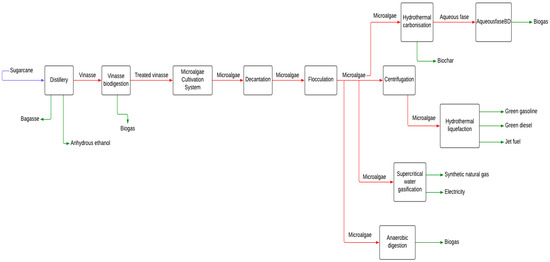
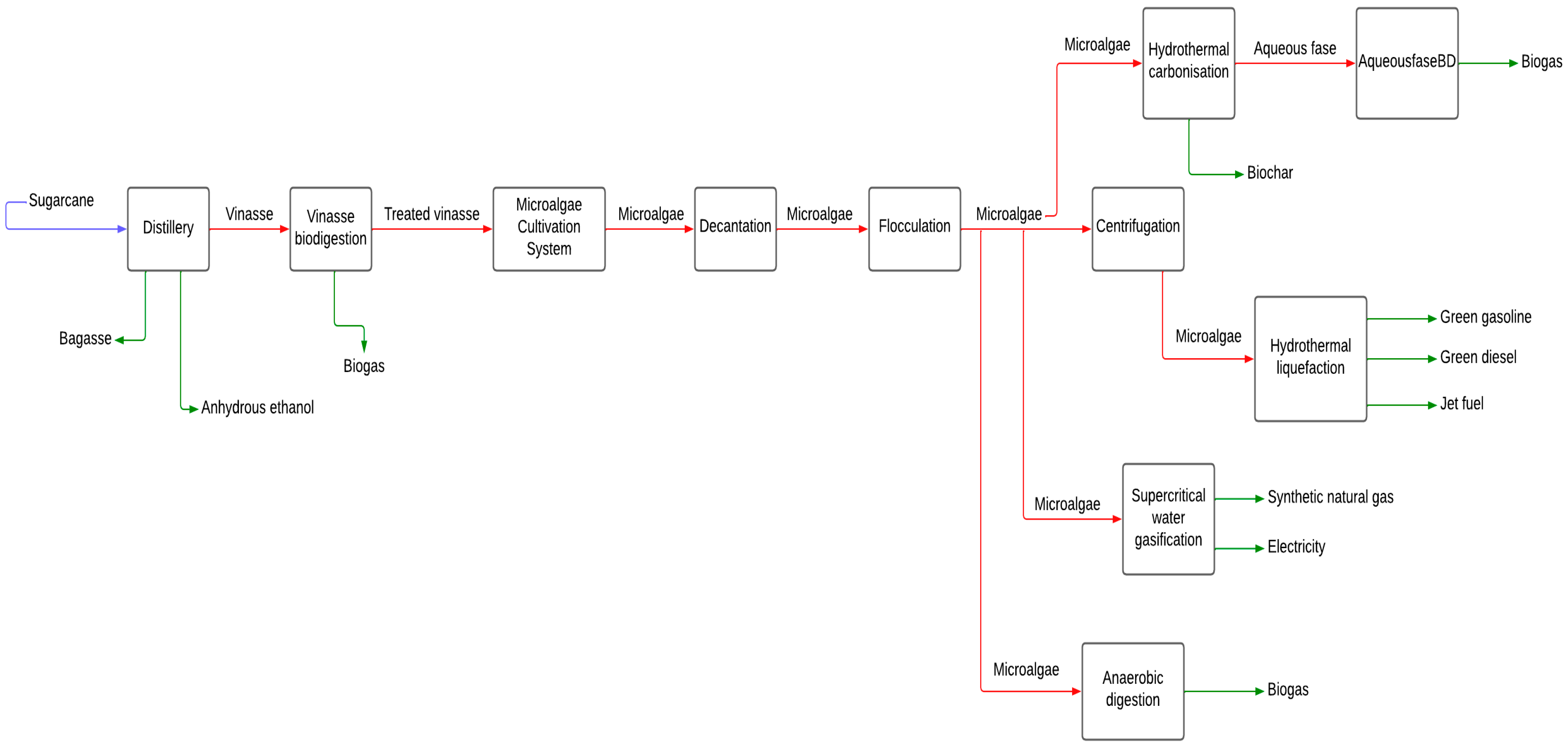
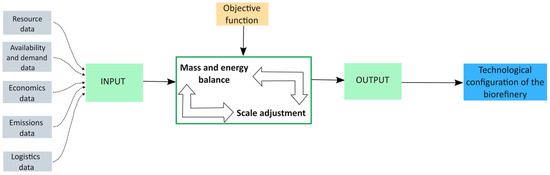
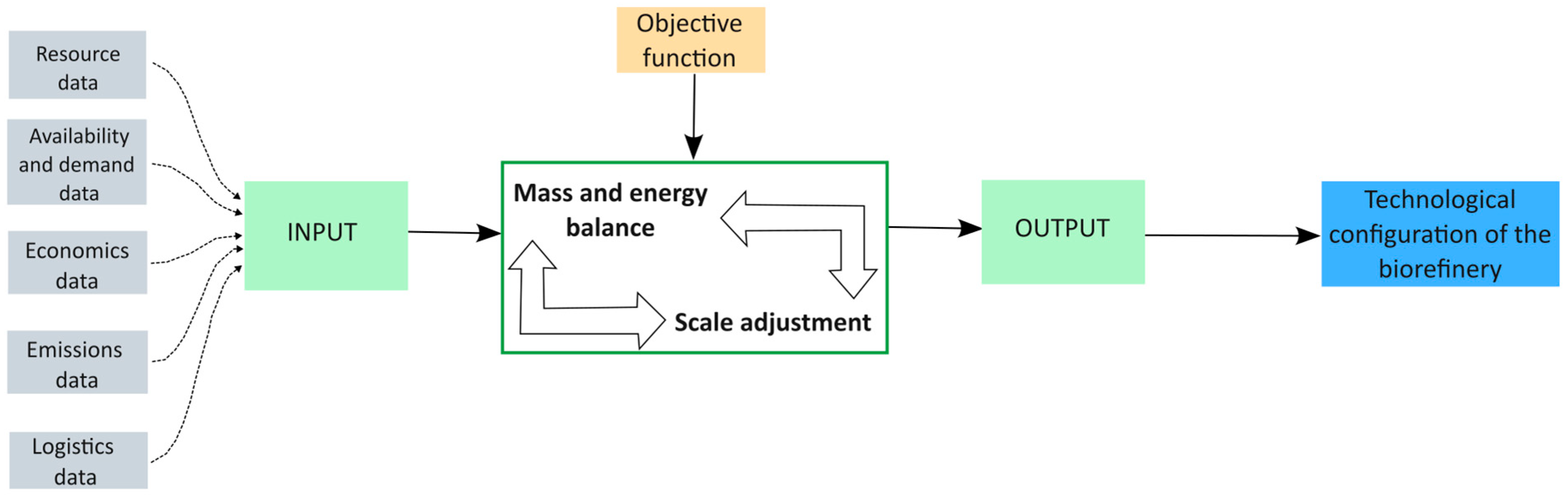
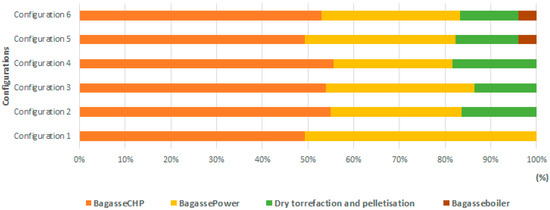
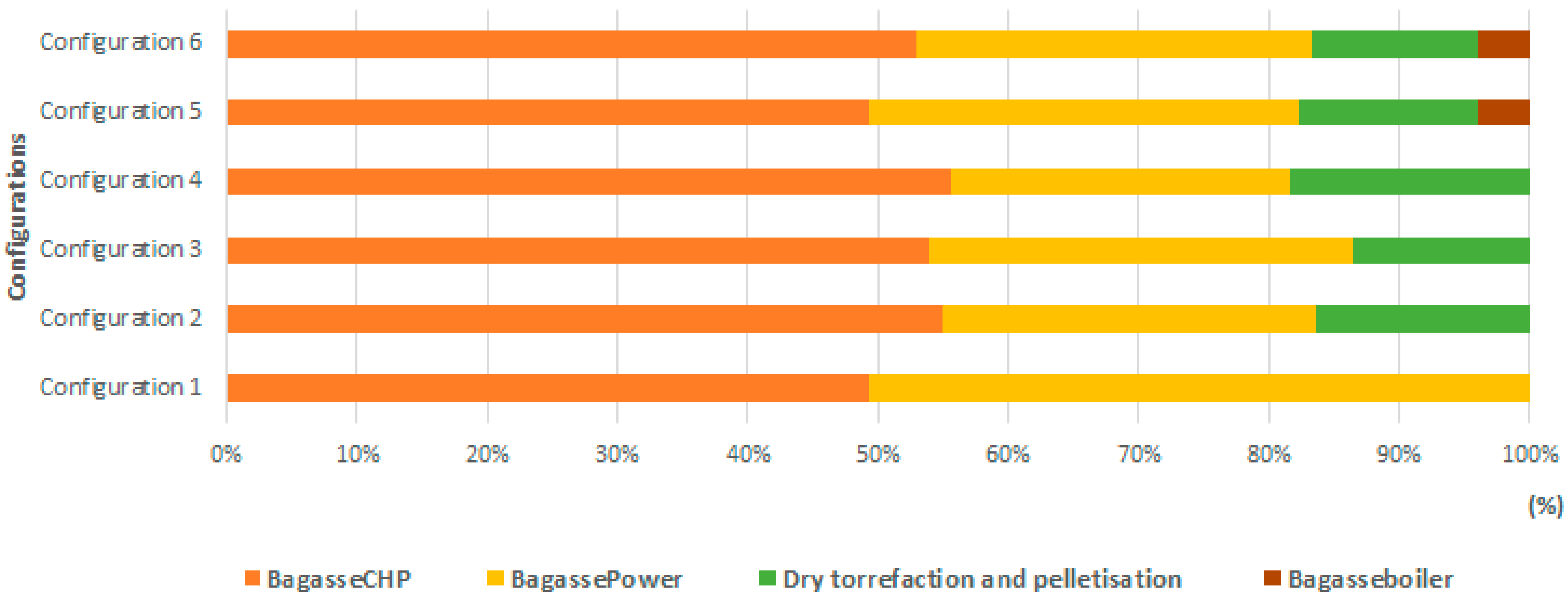
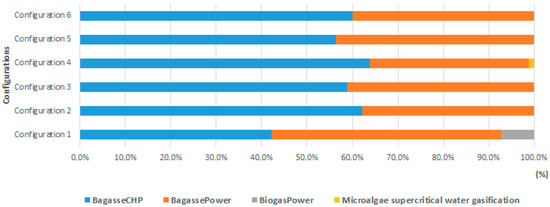
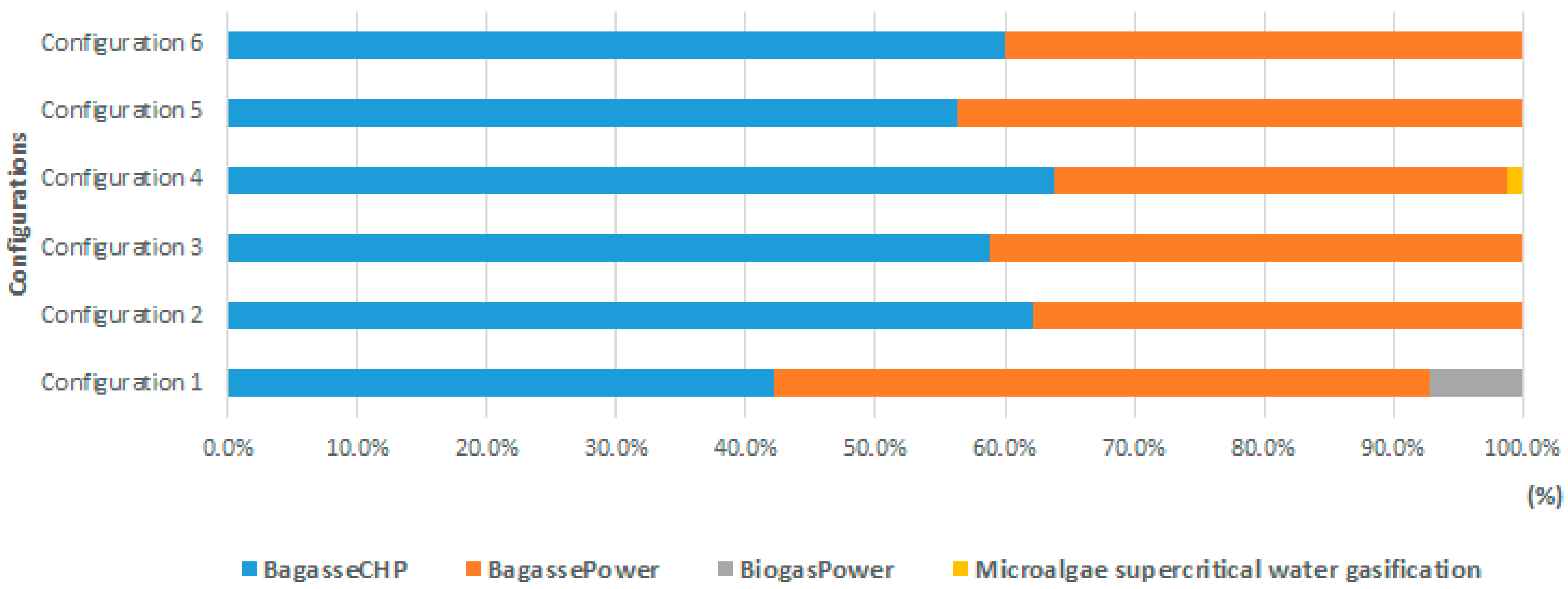
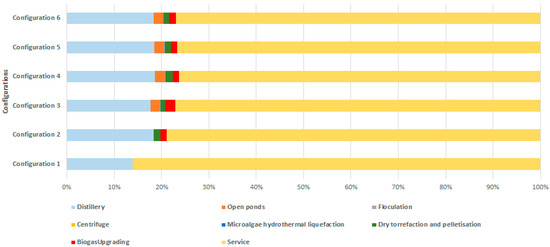
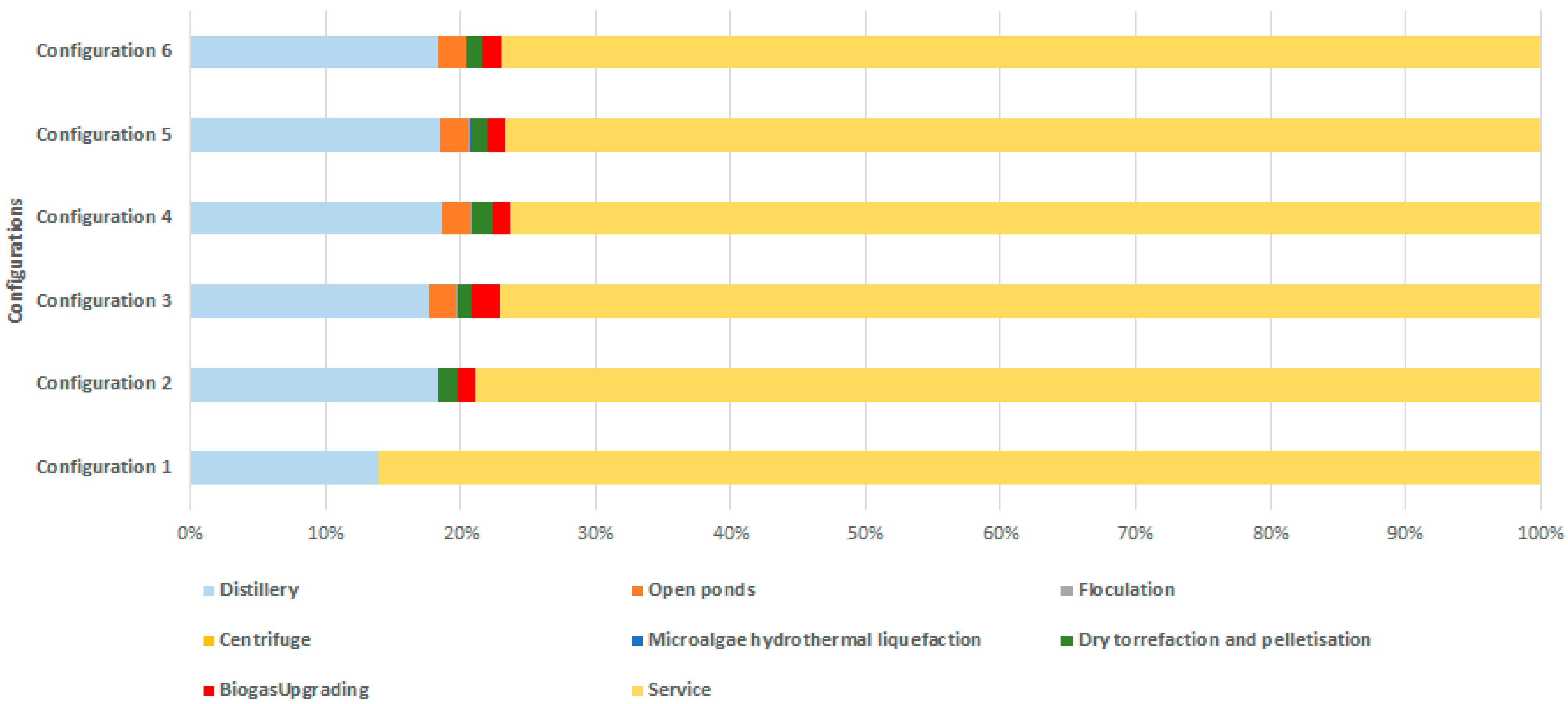
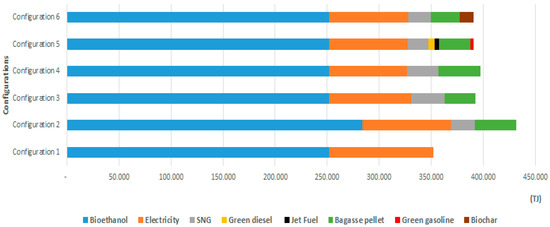
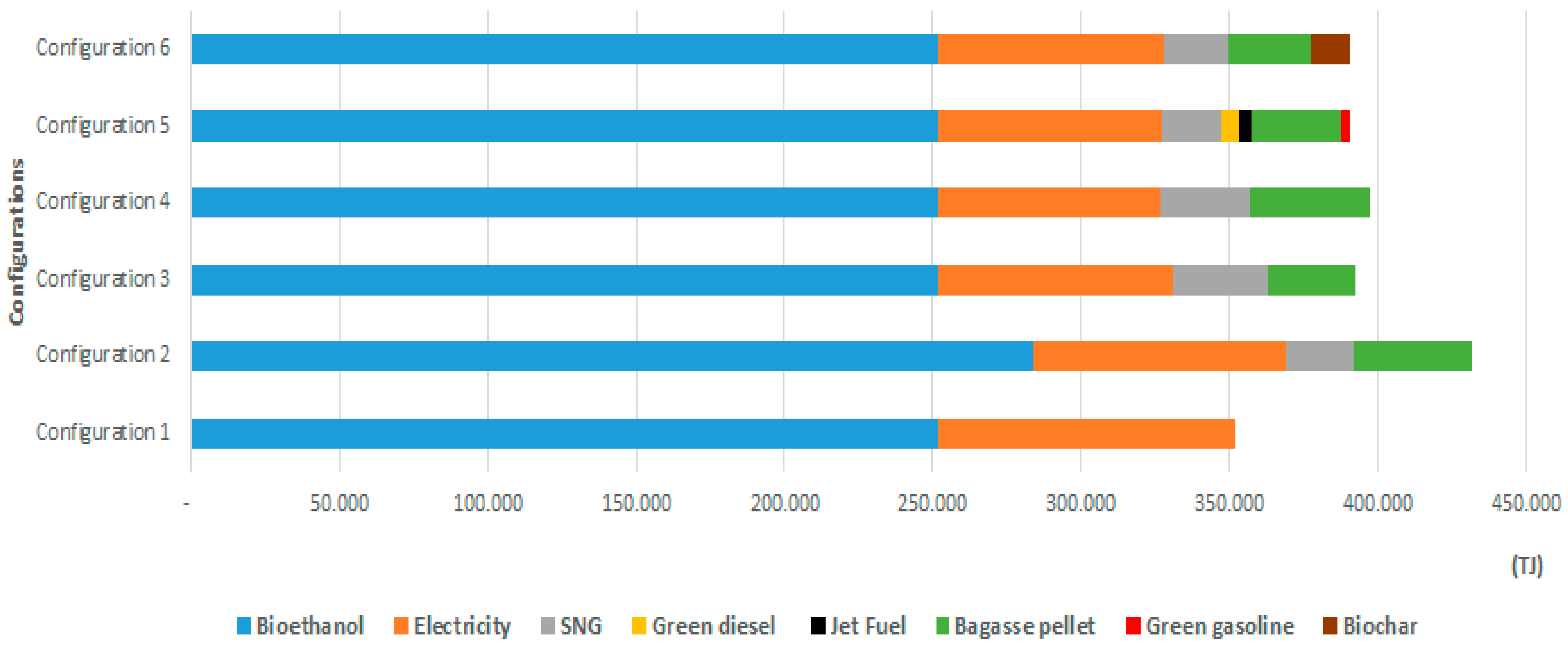
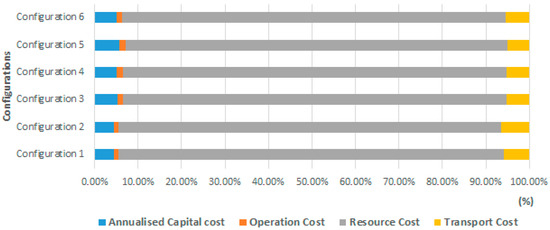
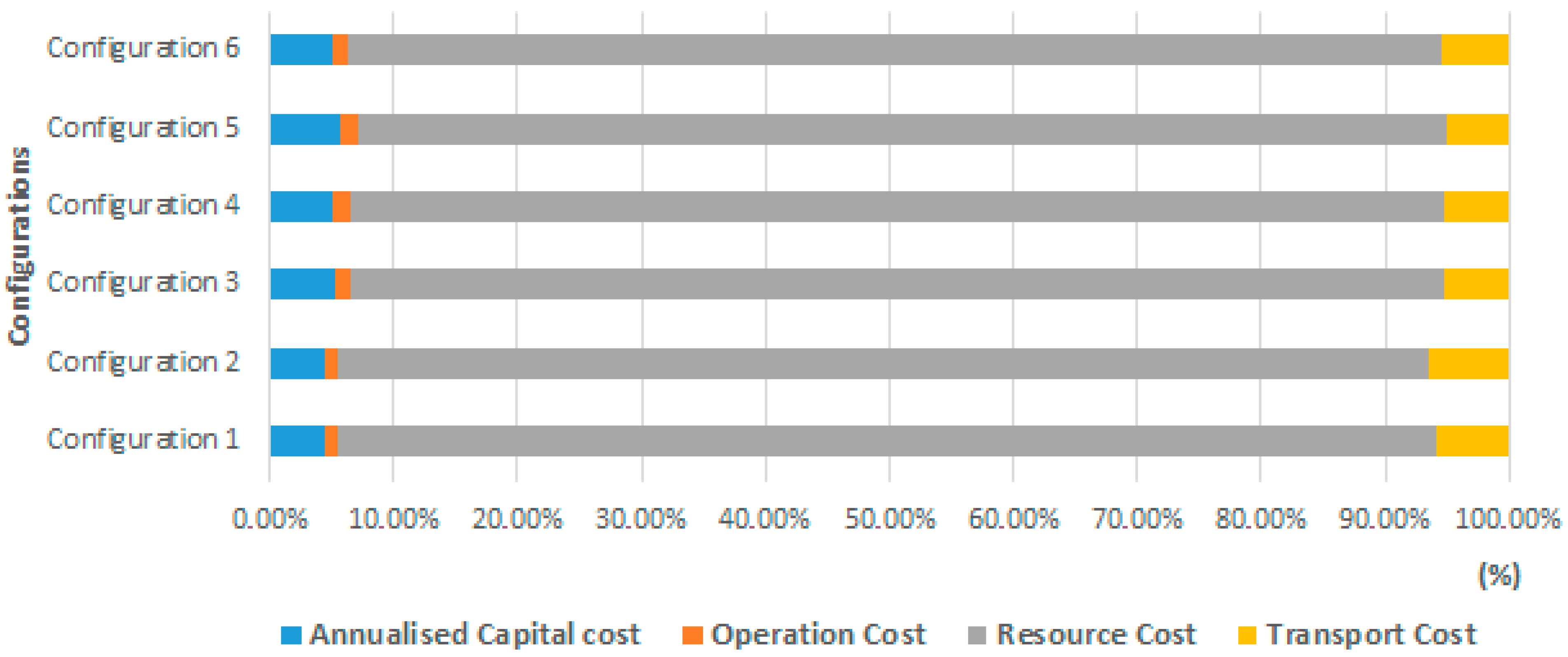

Disclaimer/Publisher’s Note: The statements, opinions and data contained in all publications are solely those of the individual author(s) and contributor(s) and not of MDPI and/or the editor(s). MDPI and/or the editor(s) disclaim responsibility for any injury to people or property resulting from any ideas, methods, instructions or products referred to in the content. |
© 2026 by the authors. Licensee MDPI, Basel, Switzerland. This article is an open access article distributed under the terms and conditions of the Creative Commons Attribution (CC BY) license.