1. Introduction
Wastewater treatment plants (WWTPs) worldwide generate substantial quantities of excess sludge (i.e., waste activated sludge (WAS)) daily [
1,
2], which contains a complex mixture of pathogens, nutrients, biodegradable organic matter, and potentially hazardous substances, including heavy metals [
2]. Such characteristics necessitate careful handling and effective volume reduction before disposal or reuse, with treatment and disposal costs often accounting for 50–60% of total operational expenditures in WWTPs [
1,
2,
3,
4,
5]. Regulatory frameworks for sewage sludge management vary by country, but generally emphasize sustainable, cost-effective practices supported by research and innovation [
2,
5]. Given its high content of degradable organic matter, sewage sludge represents a promising source of renewable bioenergy. It is increasingly recognized as a key contributor to environmentally and socially sustainable energy systems [
2].
Among the technologies available for sewage sludge treatment (i.e., alkaline stabilization, aerobic digestion, anaerobic digestion (AD), composting, landfilling, and incineration) [
2,
6,
7], AD is the most widely adopted due to its multiple advantages, including sludge stabilization, odour and pathogen reduction, volume minimization, and the recovery of methane as renewable energy [
1,
2,
3,
5,
8]. Despite these benefits, AD is often constrained by long retention times, low degradation efficiency, susceptibility to temperature and pH fluctuations, and organic loading, inhibitory compounds, and limited biogas yields [
1,
2,
3]. These limitations are largely associated with the hydrolysis stage, which is considered the rate-limiting step of thickened waste activated sludge (TWAS) [
1,
3,
4,
6], as the complex and rigid structure of WAS hinders the breakdown of particulate organic matter into soluble compounds [
5]. Hydrolysis involves the rupture of microbial cell walls and degradation of extracellular polymeric substances (EPS), releasing readily biodegradable organics for acidogenic microorganisms, a mechanism particularly important for sludge dominated by microbial biomass [
3,
9].
To overcome hydrolysis limitations, various pretreatment strategies have been developed to induce cell lysis and accelerate the conversion of particulate organics into low-molecular-weight, soluble compounds [
1,
3,
5,
10]. These methods can be broadly categorized as physical (i.e., ultrasonication (US)), chemical (i.e., alkaline or acidic treatments), thermal (e.g., Hydrothermal pretreatment (HTP)), biological (e.g., enzymatic or bioaugmentation), or combined/hybrid approaches [
1,
2,
5,
11,
12,
13,
14].
HTP has been widely implemented as an effective method to enhance hydrolysis [
2], solubilize macromolecular components (i.e., carbohydrates, proteins, lipids) [
3], disrupt microbial cell walls, releasing intracellular materials into a homogenized mixture, where lysed cells become substrates for further microbial metabolism and growth [
2]. Such improvements enhance sludge kinetics, reduce digestion time, lower sludge volume, enhance biodegradability, and increase methane yield [
2,
3,
4]. However, digesters fed exclusively with thermally pretreated TWAS can experience elevated pH levels due to increased protein solubilization and subsequent ammonia production, potentially inhibiting methanogenic activity [
3]. According to the literature, HTP has been investigated across a broad range of temperatures (50–250 °C) and exposure times (10–120 min), with or without steam explosion. Based on operating temperature, HTP is categorized as low-temperature HTP (<100 °C) or high-temperature HTP (≥100 °C). While numerous studies have reported significant sludge solubilization and enhanced methane production following high-temperature HTP, some concerns have been raised about the potential formation of recalcitrant and inhibitory compounds, such as melanoidins, during the process [
15].
Similarly, ultrasonic pretreatment has been demonstrated to be environmentally benign while effectively disintegrating sludge and accelerating AD [
14,
16]. The ultrasonic pretreatment process facilitates the disruption of sludge flocs and lysis of microbial cells by generating extreme conditions through acoustic cavitation [
16]. US sludge disintegration offers several inherent advantages, including minimal secondary pollution, reduced sludge retention time, and improved sludge dewaterability and biodegradability. For example, the application of US at a specific energy input of 2000 kJ kg
−1 total suspended solids (TSS) increased the destruction of volatile suspended solids (VSS) by 22% and enhanced biogas production by 12% during the anaerobic fermentation process [
16]. Moreover, it has been reported that the concentration of soluble organics is strongly influenced by US energy input, with energy levels ranging from 500 to 26,000 kJ kg
−1 TS resulting in increases in total dissolved solids of 2.89–45.76%. At a specific energy input of 15,000 kJ kg
−1 TS, US disintegration reduced the average sludge particle size from 33.8 to 10.1 μm. These changes enhance the biological transformation and degradation of sludge organics, leading to improved AD performance, as evidenced by increased methane production and greater volatile solids (VS) reduction [
17].
Acidic pretreatment using mineral acids is commonly employed to enhance anaerobic fermentation. For instance, the application of hydrochloric acid (HCl) to adjust the pH to 4.2 during WAS fermentation resulted in a 178% increase in maximum acetate yield and a 19% increase in cumulative methane production. Similarly, HCl pretreatment at a pH of 3.8 was shown to enhance both the overall volatile fatty acids (VFAs) yield and the initial rate of VFAs production [
9]. On the other hand, alkaline pretreatment, commonly achieved using sodium hydroxide (NaOH), offers operational simplicity, high methane conversion efficiency, and improved susceptibility of sludge biopolymers to enzymatic hydrolysis by disrupting sludge flocs and inducing swelling of particulate organics. For instance, it was reported that sludge pretreated at pH 10 for eight days achieved the highest cumulative methane yield of 398 mL/VSS, which was 3.5- and 3.1-fold higher than yields from US and thermal pretreatments, respectively [
5]. Moreover, alkali addition leads to VSS solubilization and sludge disintegration [
8].
Biological pretreatments, particularly those employing hydrolytic enzymes or bioaugmentation with specialized microbial consortia, offer an eco-friendly alternative [
1,
12,
16]. They operate under mild conditions, require lower energy input, and produce non-toxic by-products [
12]. Enzymatic and bioaugmentation approaches accelerate hydrolysis by targeting lignocellulosic and recalcitrant components, increase microbial activity and diversity, and enhance VFAs production, soluble chemical oxygen demand (SCOD), and methane yield [
11,
12]. Hydrolytic microorganisms release enzymes such as lysozyme, protease, amylase, and lipase, which accelerate cell wall disruption and convert insoluble substrates into more readily biodegradable soluble organic compounds. Previous research showed that applying amylase for 7 h increased SCOD and short-chain fatty acids (SCFAs) by 78.2% and 129.6%, respectively [
16]. Despite these advantages, biological pretreatments are slower and require well-controlled conditions, and their large-scale application and economic feasibility remain underexplored [
11,
13]. The YDRO Process
® (YDRO
®) is a novel microbial consortium developed by Hydrotech Environmental L.P. and TradeWorks Environmental Inc. (Mississauga, ON, Canada) that comprises a carefully formulated microbial consortium combined with essential nutrients, trace elements, bio-enhancers, and hydrolytic enzymes. It is designed to optimize the treatment of organic residues from slaughterhouses, meat processing plants, pig and cattle farms, and similar anaerobic digesters [
11].
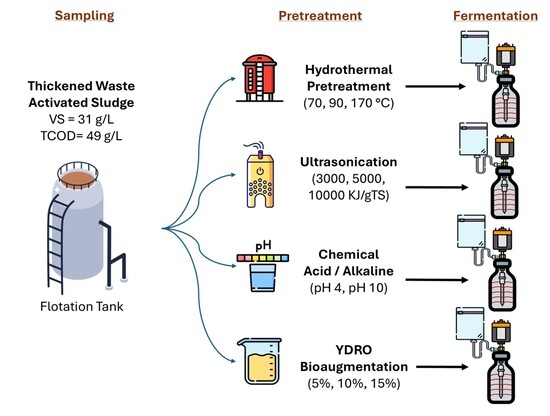
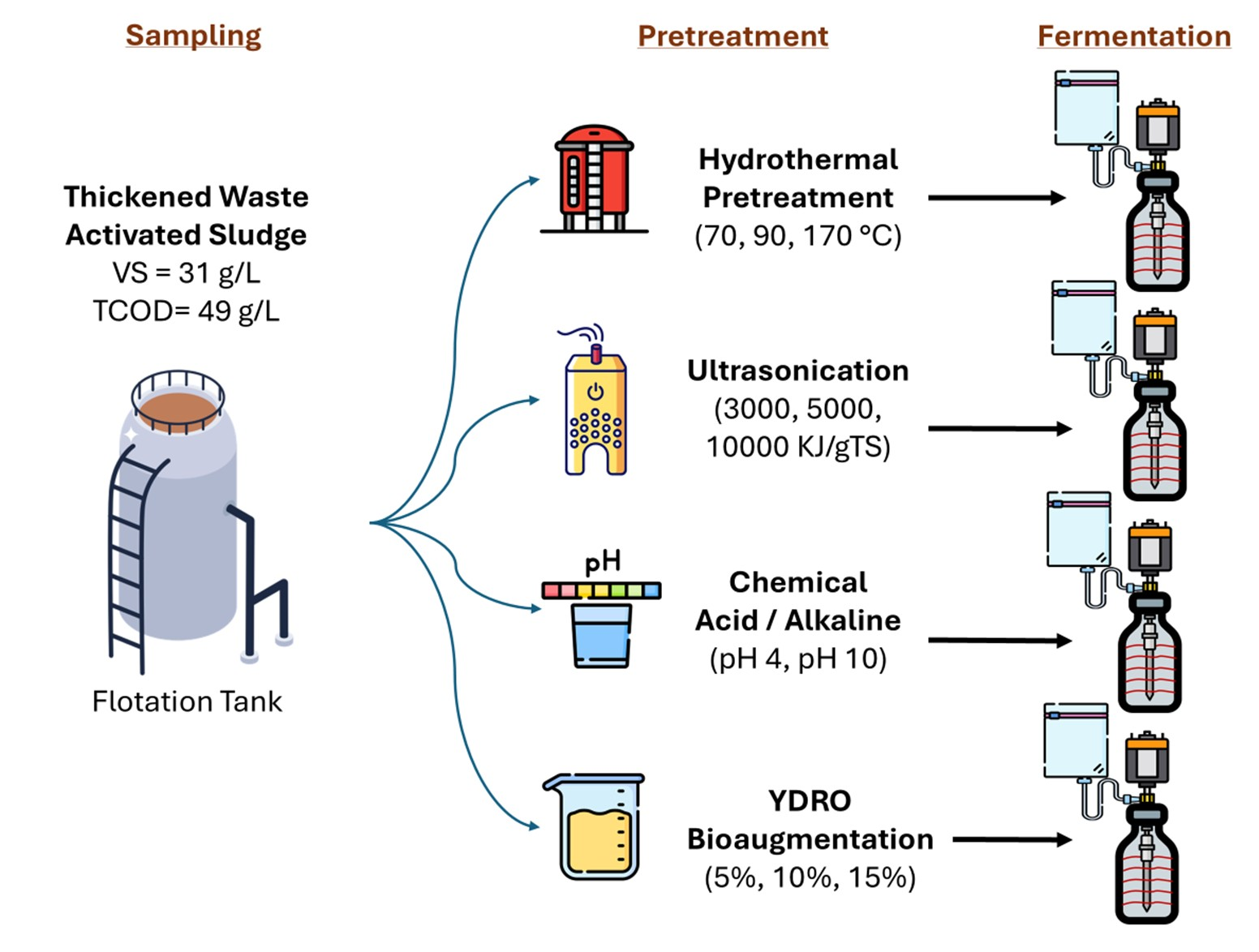
The objective of this study is to systematically evaluate and compare the effects of five different pretreatment methods: thermal, US, acidic, alkaline, and YDRO® bioaugmentation, on the short-term anaerobic fermentation of TWAS over 3 days. The focus is on key early-stage indicators, including sludge solubilization and VFAs production, under controlled mesophilic batch conditions. Unlike most previous studies that assess pretreatments individually, this work provides a direct, side-by-side comparison under identical experimental conditions, enabling a clearer evaluation of their relative effectiveness during the hydrolysis and acidogenesis stages. In particular, the inclusion of YDRO® bioaugmentation alongside conventional pretreatment methods offers new insight into its potential role in enhancing early-stage sludge conversion as a novel pretreatment method. It is important to note that the findings are based on short-term batch fermentation and are therefore intended to reflect initial process responses rather than full-scale anaerobic digestion performance. Nevertheless, the results contribute to a better understanding of pretreatment impacts on hydrolysis efficiency and provide a basis for future studies on process optimization and scale-up.
3. Results and Discussion
3.1. Effect of Pretreatment on TWAS Feedstock Characteristics
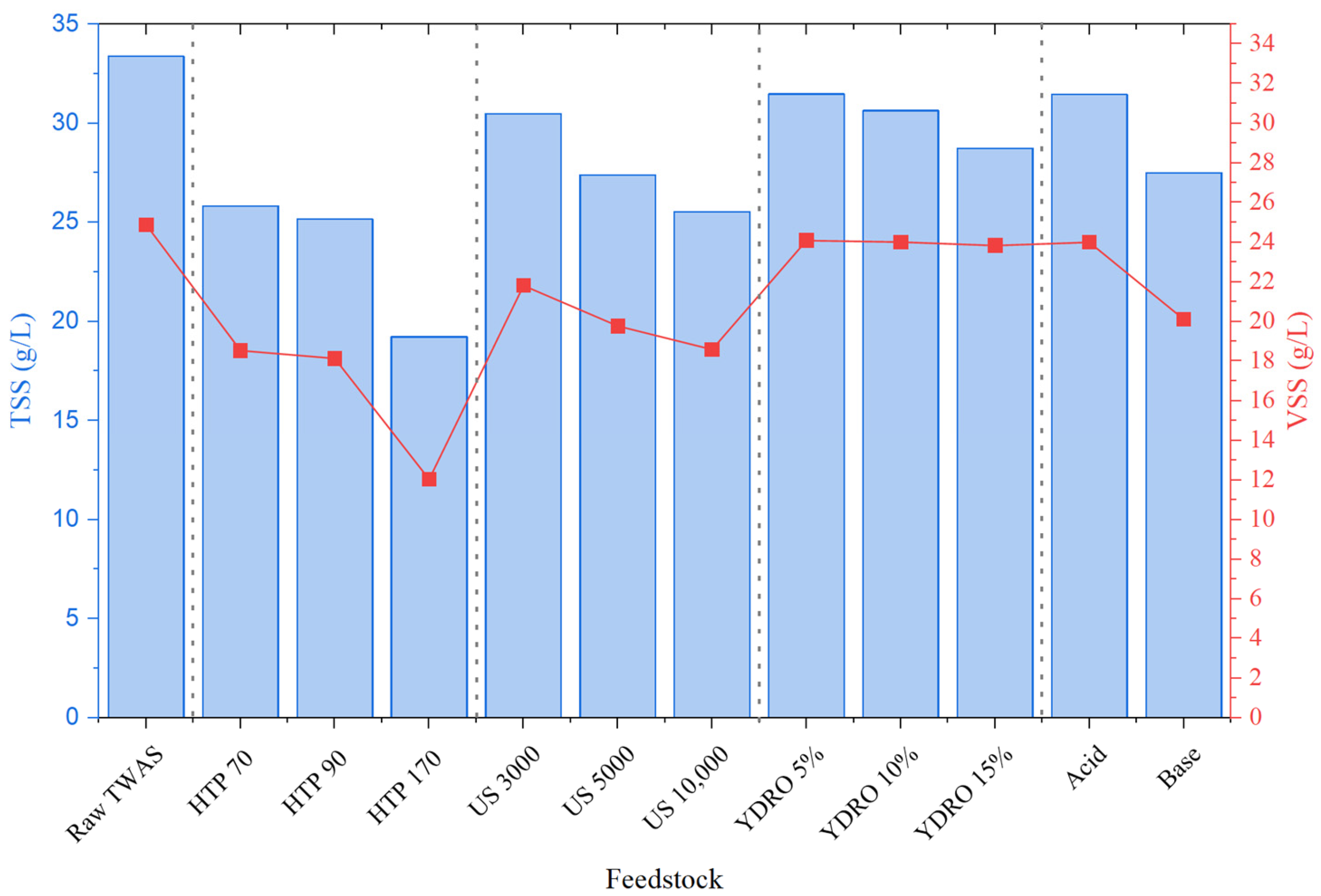
Pretreatment substantially altered the physicochemical characteristics of TWAS, with each method influencing solids reduction, COD solubilization, and nutrient release to varying degrees. Relative to the control, HTP at all tested temperatures (70, 90, and 170 °C) markedly showed a clear temperature-dependent improvement in sludge disintegration. However, at the three temperatures, a constant 20% decrease in TS and VS relative to the control was observed due to loss of solids in the thermal reactor. A previous study reported a similar decrease in TS due to the formation of scale on the reactor internals at high temperatures [
2]. At 70 °C, TSS and VSS decreased by 23% and 26%, respectively (
Figure 1), indicating moderate solubilization of solids. Increasing the temperature to 90 °C led to slightly higher reductions of 24.6% (TSS) and 27.1% (VSS), demonstrating enhanced cell disruption. The most substantial impact was observed at 170 °C, where TSS decreased by 42.4% and VSS by 51.6%, confirming that high-temperature hydrolysis effectively disrupts sludge structure and releases a large fraction of biodegradable organic material. The decrease in solids content confirms the partial breakdown and solubilization of organic particulates, reflecting enhanced hydrolytic activity during pretreatment.
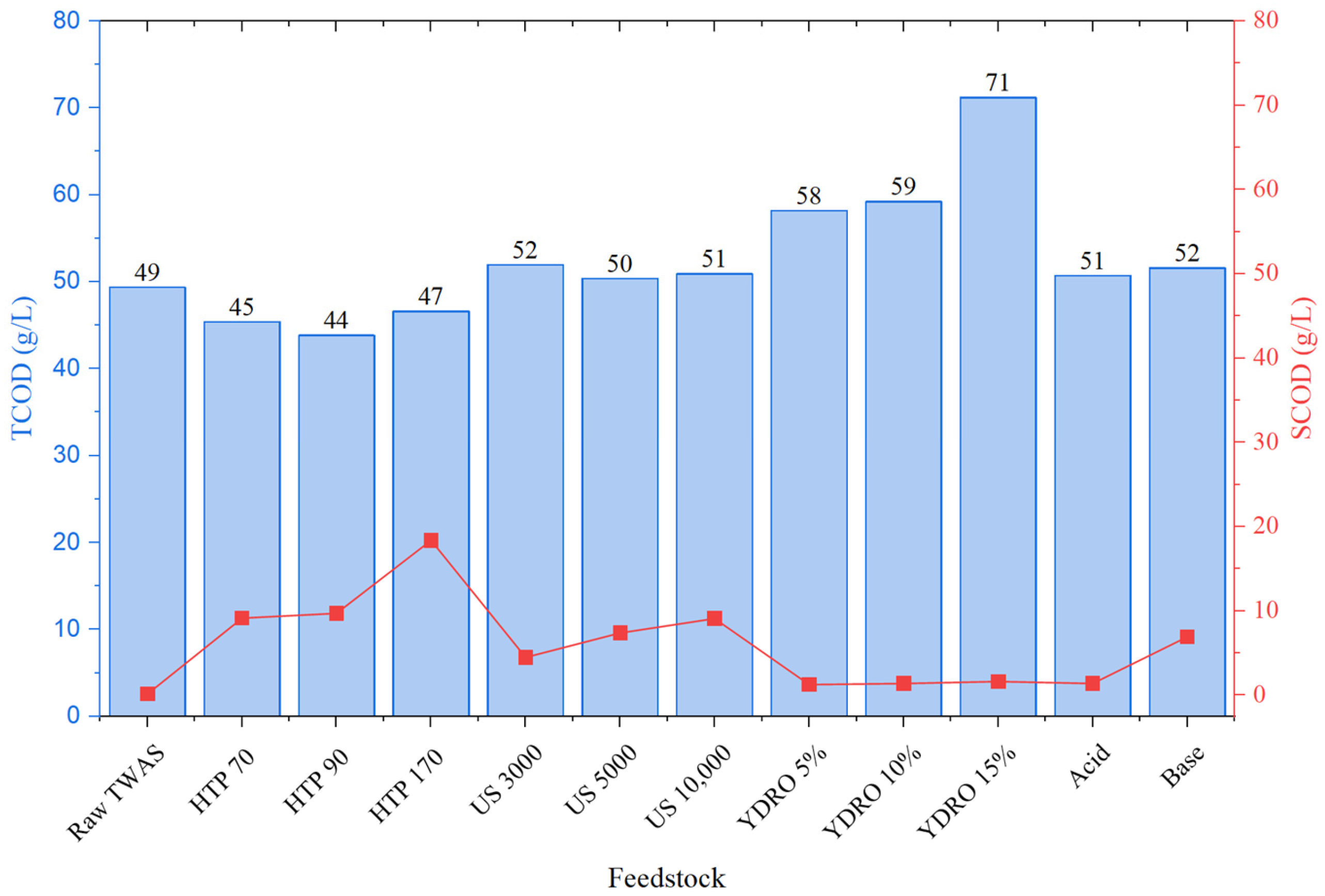
HTP treatments produced the highest SCOD (
Figure 2), with HTP 170 increasing SCOD from 0.16 g/L in the control to 18 g/L, corresponding to the highest solubilization degree of 37% (TCOD base). Ref. [
2] also reported around a 20% increase in SCOD in 5% TS WAS after 180 °C HTP. This pretreatment also caused significant release of soluble nitrogen (SN), increasing from 0.02 g/L (control) to 8.8 g/L. The solubilization of TWAS at higher temperature was further confirmed by a 55% increase in NH3-N levels on HTP 170. Moreover, HTP led to extremely high VFAs concentrations (up to 1.4 g/L as acetate in HTP 170 and 2.7 g/L in HTP 70). Corresponding to the increase in the VFAs pH of the HTP TWAS also decreased from 7 to 6.4 (HTP 170). Elevated VFAs concentrations could be explained by the enhanced hydrolysis of unsaturated lipids into smaller, more readily fermentable intermediates [
2]. These results confirm that HTP (especially at 170 °C) was the most effective method for solubilization.
US pretreatments caused moderate improvements in solubilization and solids disruption. Results showed increasing effectiveness with higher energy input. At 3000 kJ/kg TS, reductions of 8.7% in TSS and 12.3% in VSS were observed (
Figure 1), reflecting mild mechanical disruption. At 5000 kJ/kg TS, the reductions increased to 18.0% (TSS) and 20.5% (VSS), consistent with stronger cavitation forces enhancing particle breakdown. The highest energy level, 10,000 kJ/kg TS, achieved 23.5% TSS and 25.3% VSS reduction, confirming that more intense US substantially improves sludge solubilization and organic matter release. Additionally, US 3000, 5000, and 10,000 energies increased SCOD to 5–9 g/L, resulting in ∆SCOD values of 4–9 g/L and solubilization degrees of 9–18%, depending on ultrasonic intensity. Nutrient release followed the same trend, with US 5000 and US 10,000 producing the highest soluble nitrogen concentrations (12 and 11 g/L, respectively). VFAs production also increased significantly, particularly for US 10,000, which achieved 0.6 g/L, indicating enhanced hydrolysis under higher ultrasonic energy input. These results align with reported studies indicating that ultrasonication greatly increases the solubilization of WAS and enhances the fermentation process [
16].
Biological pretreatment with YDRO
® resulted in modest reductions in solids relative to thermal and ultrasonic methods. The 5% dose produced a 5.7% reduction in TSS and a 3.2% reduction in VSS, indicating mild enzymatic hydrolysis (
Figure 1). Increasing the dose to 10% led to slightly higher reductions of 8.2% (TSS) and 3.5% (VSS). The 15% doses produced the greatest effect within this group, achieving 13.9% TSS and 4.2% VSS reduction; however, overall reductions remained comparatively small, suggesting that YDRO
® mainly enhances biochemical accessibility rather than causing substantial particulate breakdown, yet SCOD increased to 1.6 g/L, corresponding to low solubilization degrees of 2–3% (
Figure 2). The observed increase in SCOD reflects microbial and enzymatic activity that disrupted cell walls and EPS, promoting the release of intracellular organic compounds, which typically accelerates hydrolysis and methane production in AD [
25]. Comparable enhancements in solubilization have been reported with YDRO
® for TWAS, where SCOD increased primarily due to higher VFAs levels, driven by intensified microbial activity and hydrolytic enzyme activity [
11]. Additionally, bioaugmentation enzymes, including cellulases, hemicelluloses, and lignin-degrading enzymes, aid in breaking down complex organic macromolecules into simpler, more bioavailable forms [
25]. Increasing the dose to 15% led to more pronounced shifts, including increases in TCOD of 18, 20, and 44% for YDRO
® dosages of 5%, 10%, and 15%, respectively, compared to the control. This increase is consistent with earlier research, which reported that applying a bioaugmentation dose, such as the YDRO
® dose of 10% to TWAS, produced a comparable rise in TCOD [
11]. In this study, the observed TCOD enrichment is primarily attributed to the direct addition of YDRO
® itself during pretreatment, as YDRO
® introduces a volume of microbial culture and associated organic matter into the system and therefore elevates TCOD relative to untreated control. This effect reflects the nature of YDRO
® as an exogenous organic input, in contrast to physical or chemical pretreatments that do not add significant external organic matter. The TCOD enrichment of the YDRO
® mixtures highlights their potential to enhance the soluble organic fraction available for microbial conversion during AD, aligning with previous reports on enzymatic or bioaugmentation-based pretreatments that accelerate hydrolysis and fermentation efficiency [
26,
27,
28]. Although YDRO
® pretreatment did not achieve the strong disintegration observed in thermal or ultrasonic methods, it did substantially elevate VFA concentrations, especially at 15%, reaching 0.3 g/L, showing that biological/enzymatic activation selectively enhanced fermentable substrate availability. Additionally, YDRO
® pretreatment resulted in the greatest rise in NH
3-N levels (up to a 347% increase at a 5% YDRO
® dose), reflecting the degradation of nitrogen-containing compounds, including proteins and amino acids, into NH
3-N [
29].
Chemical pretreatments exhibited varying effectiveness depending on pH conditions. Acid treatment led to a 5.8% reduction in TSS and a 3.5% reduction in VSS, indicating limited hydrolysis under acidic conditions. In contrast, alkaline pretreatment caused 17.6% TSS and 19.2% VSS reductions (
Figure 1), consistent with enhanced solubilization due to disruption of EPS. The results demonstrate that alkaline conditions promote stronger particulate degradation compared to acidic treatment. Moreover, acid treatment resulted in a moderate increase of SCOD to 1 g/L (
Figure 2), corresponding to a solubilization degree of 3%. Although COD solubilization was limited, acid treatment caused the highest increases in phosphate release (SP of 1 g/L). This effect occurred because acidification promotes the conversion of polyphosphate in sludge pellets into soluble phosphate, as demonstrated by studies showing that lowering the pH to 3 can increase total dissolved phosphate by more than 37-fold relative to natural pH [
30].
Base pretreatment produced greater solubilization than acid pretreatment, with an SCOD increase of 7 g/L and a degree of solubilization of 14% and induced extremely higher VFAs (0.6 g/L) than acid pretreatment and the highest alkalinity levels of 0.9 mg/L CaCO3, suggesting substantial cell-wall rupture and chemical hydrolysis.
3.2. Effect of Fermentation on TWAS Feedstock
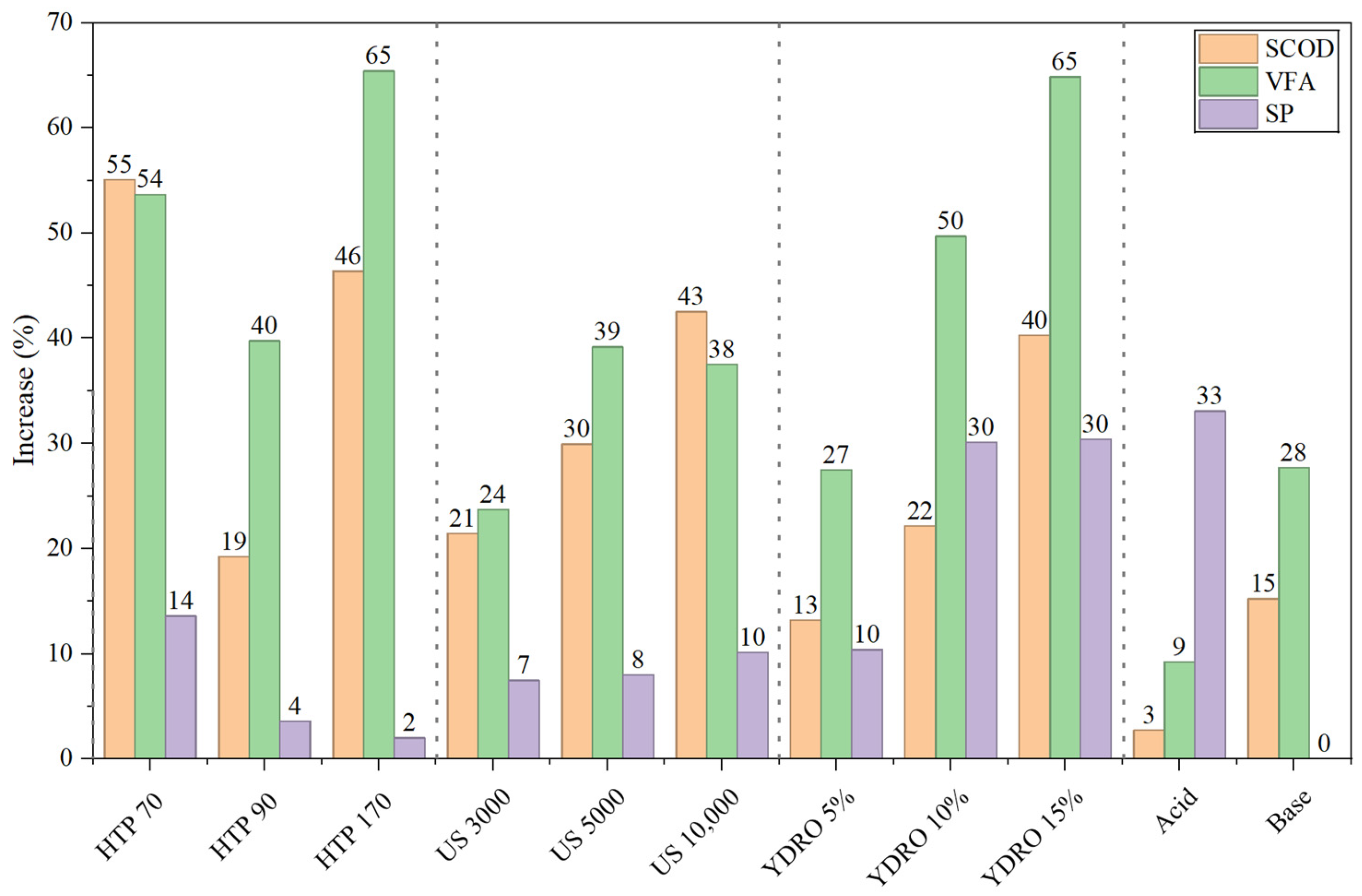
Fermentation substantially altered the physicochemical characteristics of TWAS across all pretreatments, with distinct trends in solids reduction, solubilization, nitrogen release, and acidification. The results of the increase in SCOD, VFAs, and SP after the fermentation of each pretreated TWAS with respect to the control are depicted in
Figure 3. HTP experienced more pronounced shifts during fermentation. HTP 70 °C resulted in slight reductions in TS (1%), VS (2%), and TSS (3%), alongside a substantial 55% increase in SCOD, demonstrating active solubilization of remaining particulate matter. VFAs increased by 54% (from 1.6 to 2.4 g/L), while alkalinity decreased by 10%, suggesting enhanced acidogenesis that partially consumed buffering capacity. HTP 90 °C displayed similar behaviour, with moderate solids reductions (up to 4% in TSS) and a 19% rise in SCOD. VFAs increased by 40%, indicating strong fermentation activity, though less intense than at 70 °C. These trends are consistent with prior studies showing that HTP enhances sludge fermentability by disrupting floc structure and releasing intracellular organic matter, which increases soluble substrate availability for acidogenic microorganisms. Low-temperature HTP has been reported to promote SCOD release and improve fermentation acid production, with 70 °C often marking the onset of meaningful sludge disintegration and solubilization. The accompanying rise in VFAs after fermentation indicates that the soluble fraction generated during pretreatment was effectively converted into fermentation products, supporting the idea that pretreatment shifted the rate-limiting step from hydrolysis toward acidogenesis [
31,
32].
At HTP 170 °C, fermentation acted more on the already-disrupted solids, evidenced by the notable highest declines in TSS (13%) and VSS (16%), paired with a 46% increase in SCOD. This treatment achieved the highest VFAs production among thermal conditions and pretreatment types studied (2.6 g/L, and 65% increase), highlighting strong utilization of solubilized organics. The stronger response observed at HTP 170 °C is also in line with reports that higher HTP severity generally produces greater COD solubilization and improves downstream VFAs formation, especially when fermentation follows pretreatment. At elevated temperatures, sludge structure becomes more extensively disrupted, exposing previously inaccessible organics to microbes [
31].
US pretreatments demonstrated diverse fermentation responses. US 3000 showed an increase in SCOD by 21%, while VFAs increased by 24%, reflecting active hydrolysis and acidogenesis. US 5000 produced increases of 30% in SCOD and 39% in VFAs. The strongest US condition, US 10,000, also enhanced solubilization, increasing SCOD by 43% and VFAs by 38%. Together, these results indicate that higher ultrasonication levels improved fermentability by increasing substrate accessibility. These trends align with literature showing that ultrasonication progressively disrupts sludge flocs and cell walls with increasing energy input, releasing intracellular organics that enhance both SCOD solubilization and subsequent acidogenesis [
33,
34]. Higher US intensities thus improve fermentability by increasing the pool of readily accessible substrates for fermentative bacteria [
35].
Biological pretreatment with YDRO
® exhibited dose-dependent effects on fermentation. At 5%, SCOD rose by 13%, with VFAs increasing by 27%. The 10% YDRO
® treatment promoted stronger solubilization (SCOD 22%) and generated substantial VFAs (50%). YDRO
® 15% produced the most significant fermentative shifts among the 3 doses, with SCOD increasing by 40% and VFAs generation rising by 65% relative to initial conditions. Although YDRO
® is a novel pretreatment in this study, the observed increase in SCOD and VFAs is consistent with prior work on biological pretreatments, which have been shown to enhance sludge solubilization and improve fermentative conversion of released organics. In particular, biological hydrolysis approaches have been reported to increase the bioavailability of released carbon and support higher VFAs accumulation during anaerobic fermentation [
11]. Declines in alkalinity (37%) suggest intense acid formation that exceeded buffering capacity, consistent with high fermentative activity.
Chemical pretreatments led to contrasting fermentation outcomes. Acid-treated TWAS exhibited low increases in SCOD (3%) and VFAs (9%). In contrast, base-treated TWAS showed moderate increases in SCOD (15%) and VFAs enhancement (28%). The increase in alkalinity (8%) following fermentation indicates that base pretreatment sustained a strong buffering environment even after acidogenesis, allowing more stable fermentation conditions. Such a contrast is consistent with literature showing that acidic pretreatment may enhance hydrolysis only modestly when substrate solubilization is limited, whereas alkaline pretreatment more effectively disrupts sludge structure and promotes release of fermentable organics [
36]. The higher alkalinity observed after fermentation also suggests that the base-treated TWAS retained sufficient buffering capacity to stabilize acidogenesis, which can favor VFAs accumulation over pH inhibition [
37].
3.3. Effect of Pretreatment and Fermentation on Solubilization
The VS/TS ratio of the sludge samples ranged from 0.71 to 0.8, indicating a high organic fraction and confirming that the sludge was predominantly composed of biodegradable organic matter. This was consistent with other findings [
2]. The control exhibited a very low SCOD/TCOD ratio of 0.003, indicating minimal organic matter solubilization under untreated conditions. In contrast, HTP resulted in the highest levels of solubilization among all methods. At 70 °C, the SCOD/TCOD ratio increased to 0.20, rising slightly to 0.22 at 90 °C, and reaching a maximum of 0.39 at 170 °C, demonstrating a clear temperature-dependent enhancement in organic matter disruption and solubilization. The US also led to substantial improvements compared with the control, though lower than HTP. The SCOD/TCOD ratio increased to 0.09 at 3000 kJ/kg TS, 0.15 at 5000 kJ/kg TS, and 0.18 at 10,000 kJ/kg TS, reflecting the progressive effect of increasing energy input on cell lysis and release of soluble organics. Bioaugmentation produced modest increases in solubilization compared to physical pretreatments. All three doses yielded nearly identical ratios of 0.02, indicating limited enhancement of SCOD relative to TCOD despite observed biological activity. Chemical pretreatments showed intermediate performance. Acid treatment resulted in an SCOD/TCOD ratio of 0.03, demonstrating a slight improvement over bioaugmentation but substantially lower solubilization than thermal or ultrasonication. Base treatment, however, performed markedly better, yielding a ratio of 0.13, suggesting that alkaline conditions facilitated significant cell wall disruption and the solubilization of organic matter.
Solubilization patterns varied widely across pretreatments, and separating the contributions from pretreatment and fermentation provides insight into how each stage enhances or diminishes solids disintegration. The control maintained a low overall solubilization degree of 7.8%, all of which arose during fermentation, since no intentional pretreatment was applied. This baseline reflects the limited capacity of untreated TWAS to undergo hydrolysis under unconditioned conditions.
High-temperature pretreatments produced the largest improvements in solubilization during the pretreatment stage. HTP 70 °C, HTP 90 °C, and HTP 170 °C achieved pretreatment solubilization levels of 19.4%, 21.1%, and 38.6%, respectively, representing the highest among all methods. However, fermentation did not contribute to the solubilization of these feedstocks. Ultrasonic pretreatments generated moderate solubilization. During pretreatment alone, US 3000, US 5000, and US 10,000 achieved solubilization degrees of 8.5%, 14.5%, and 17.8%, respectively. Fermentation yielded mixed results: US 3000 slightly increased solubilization (0.3%), whereas US 5000 and US 10,000 experienced no increase in solubilization. These patterns suggest that ultrasonication improved hydrolysis efficiency by opening cell structures and dispersing particulates. Overall solubilization in these treatments remained higher than the control (9.5, 10.5, and 11.6% respectively, vs. 7.8% for the control).
Biological treatment with YDRO® produced a contrasting pattern. Pretreatment itself resulted in very low solubilization (only 2.0–2.4%), reflecting the mild, biologically driven mechanism of sludge treatment. However, fermentation following YDRO® pretreatment substantially enhanced solubilization: 5.7% at 5% dose, 6.1% at 10%, and 6.5% at 15%. These were among the few treatments where fermentation increased solubilization. The overall solubilization levels achieved (7.8–9.1%) approached the control or slightly surpassed it, indicating that YDRO® mainly facilitated solubilization indirectly by creating a more fermentable substrate rather than directly breaking down particulates.
Chemical pretreatments showed similarly differentiated behaviour. Acid treatment resulted in minimal pretreatment solubilization (2.5%), followed by a fermentation-driven increase of 5.2%, yielding an overall solubilization of 7.9%, very close to the untreated control. In contrast, base pretreatment achieved a relatively strong pretreatment solubilization of 13.3%, but like the thermal and high-intensity ultrasonic methods, fermentation did not contribute to the solubilization. This indicates that alkaline hydrolysis was effective at releasing soluble organics, but fermentation did not further improve solubilization.
Across all treatments, two overarching trends emerged; (i) Strong pretreatment methods (thermal, alkaline, high ultrasonic intensity) produced high initial solubilization but tended to show negative solubilization contributions during fermentation; (ii) Mild pretreatments (YDRO
®, acid) produced low pretreatment solubilization but positive fermentation solubilization, indicating sustained hydrolysis throughout fermentation; (iii) HTP 170 °C delivered the highest pretreatment solubilization (38.6%), whereas YDRO
® 15% offered the greatest fermentation-driven solubilization increase (6.5%). Together, these results show that pretreatment intensity dictates the balance between pretreatment-driven solubilization and fermentation-driven conversion of SCOD. This pattern is consistent with prior studies showing that stronger pretreatments generally produce greater initial sludge disintegration and SCOD release but can leave less additional solubilization available during fermentation. In contrast, milder pretreatments often preserve more residual particulate organics for conversion during fermentation, which explains why fermentation-driven solubilization remained positive for YDRO
® and acid-treated TWAS [
38].
The solubilization of VFAs and NH3-N was also assessed to determine whether their increases were directly associated with pretreatment or with the fermentation process. The effect of pretreatment on VFAs generation showed substantial variability across methods. HTP produced the largest increases in VFAs during the pretreatment stage, with HTP 70 achieving the highest relative increase (2453-fold), followed by HTP 90 (2173-fold) and HTP 170 (1320-fold). However, during fermentation, low-temperature HTP treatments (70 °C and 90 °C) showed slight declines in VFAs (−10% and −5%, respectively), suggesting rapid initial solubilization. In contrast, HTP 170 showed a further 78% increase during fermentation, indicating continued hydrolysis and acidogenesis. Ultrasonication resulted in moderate increases in VFAs during pretreatment (325 to 470-fold), with higher energy inputs yielding the strongest responses. During fermentation, all US treatments showed substantial additional VFAs increases, ranging from 287% (US 10,000) to 472% (US 5000), confirming effective disruption of organic matrices and sustained fermentability of released substrates. YDRO® treatments demonstrated comparatively low VFAs increases during pretreatment (128–202 -fold), consistent with their lower solubilization profiles. Nonetheless, during fermentation, they showed very strong increases in VFAs (9 to 12-fold), highlighting that biological additives enhance downstream microbial conversion even when initial solubilization is modest. Chemical pretreatments produced the most contrasting behaviors. Acid pretreatment yielded the lowest pretreatment VFAs increase (38-fold) but showed the single highest fermentation-stage increase (39-fold), implying that acid-conditioned substrates become highly fermentable once pH is neutralized. Alkaline pretreatment produced moderate increases at both stages (519-fold during pretreatment; 3.2-fold during fermentation).
Regarding NH
3-N release, the patterns differed markedly from those of VFAs. HTP 70 and YDRO
® 10% showed negative pretreatment NH
3-N changes, indicating nitrogen immobilization or limited hydrolysis at those stages. Other HTP and US treatments caused substantial increases during pretreatment, with US 5000 producing the highest rise (341%). Fermentation consistently led to sharp increases in NH
3-N across all samples. The largest increases in fermentation stage were observed for YDRO
® 10% (84.5-fold), HTP 70 (73.5-fold), and the control (23-fold), illustrating strong ammonification during fermentation. Acid and base pretreatments showed moderate pretreatment increases (139% and 3%) but high fermentation increases (9-fold and 23-fold), reflecting delayed nitrogen solubilization. These NH
3-N trends suggest that nitrogen release was governed not only by pretreatment severity but also by the extent to which proteins and cell-bound nitrogen remained available for later microbial deamination during fermentation, which is interlinked with EPS protein content. Mild pretreatments such as HTP 70 and YDRO
® 10% showed little or negative NH
3-N release initially, suggesting limited protein hydrolysis, while stronger US and thermal treatments promoted earlier nitrogen solubilization [
39].
3.4. EPS
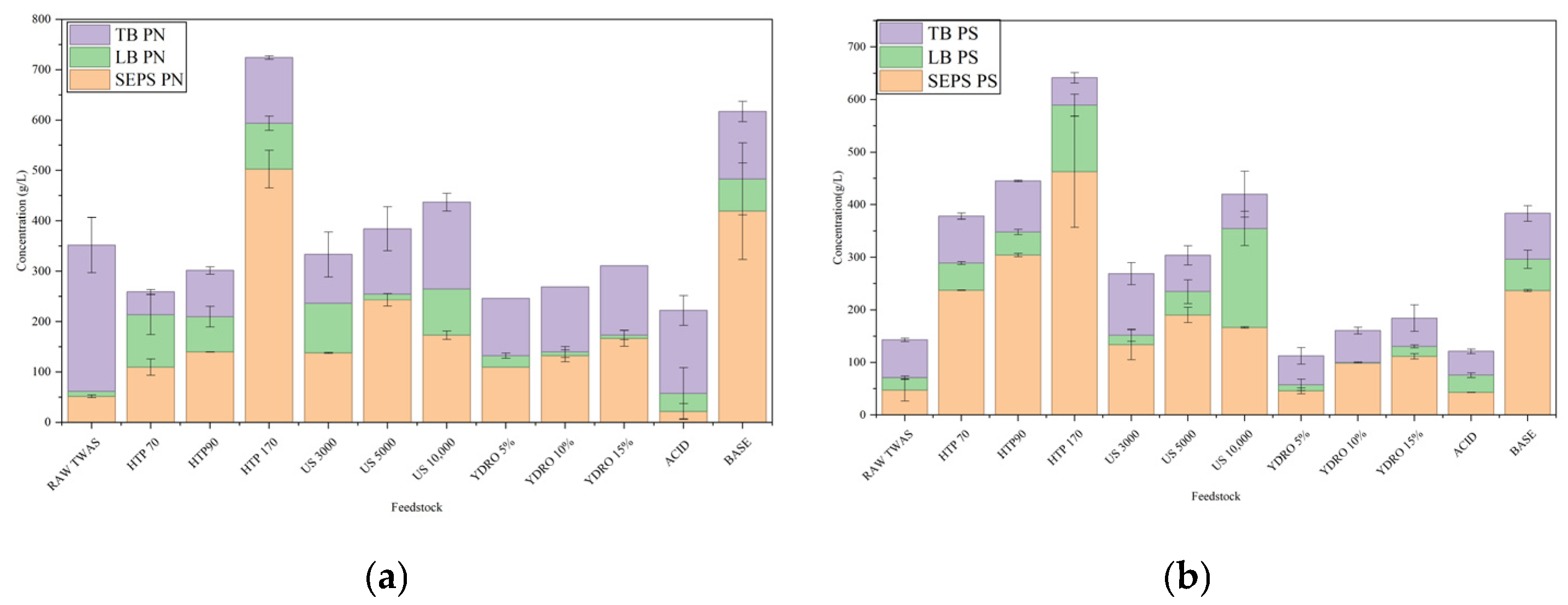
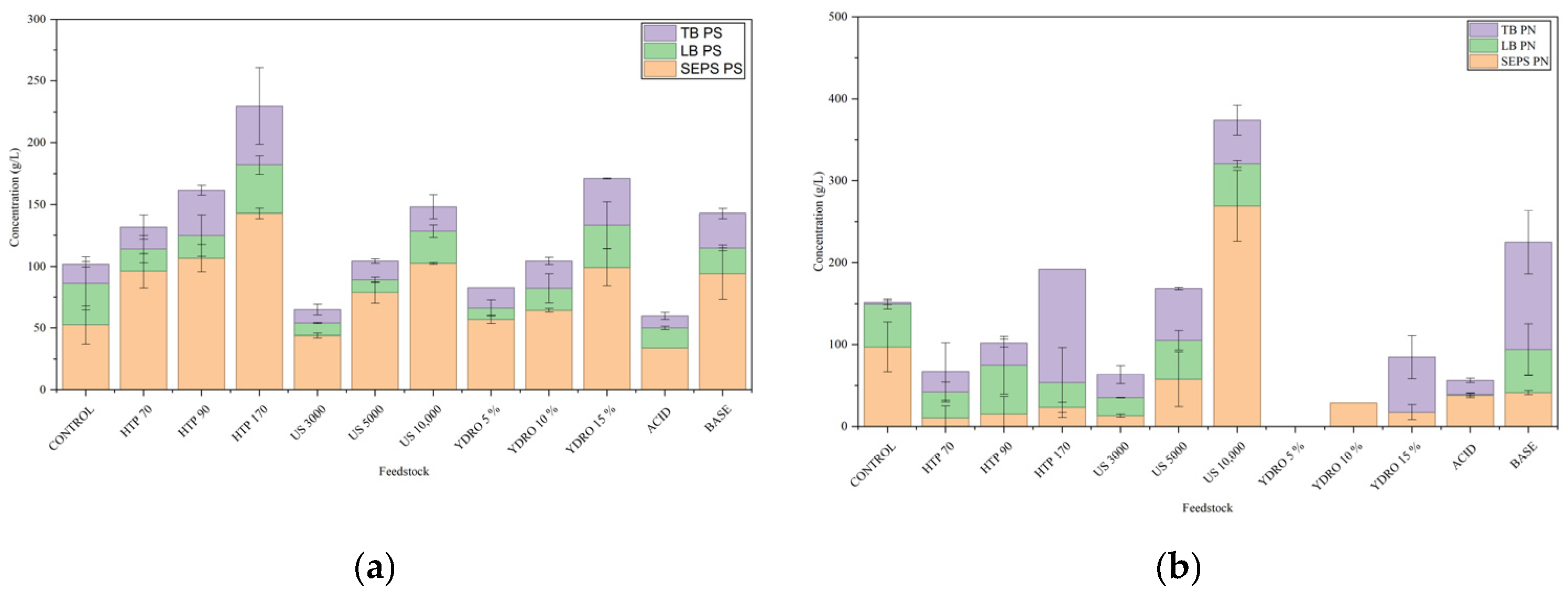
The EPS content was analyzed for PS and PN for each pretreatment to understand changes in polymer secretion across feedstocks (
Figure 4). EPS often protects organic matter and can therefore lower its accessibility for recovery and the efficiency of anaerobic digestion [
40]. Pretreatments can accelerate hydrolysis by breaking down cell structures, walls, and membranes via lysis [
41]. When the cells are destroyed, the contents within the cells escape, and EPS is secreted, which in turn releases the nutrients that were protected by the EPS back into the feedstock for use and recovery. These recovered nutrients can be used to produce VFAs and methane [
42,
43,
44,
45,
46]. EPS can be organized into three fractions: sEPS, LB-EPS, and TB-EPS.
Figure 4 shows the initial PN and PS immediately after pretreatment was applied, respectively. With respect to PS, HTP was the most effective at solubilizing the PS content compared to Raw TWAS, with HTP 70, 90, and 170 showing solubilization increases of 5-fold, 6.5-fold, and 10-fold, respectively, in the sEPS. HTP 170 saw the largest increase in sEPS PN, at 10-fold. The thermal pretreatments continued to show high release of soluble matter and breakdown of EPS during the fermentation process (
Figure 5), indicating that it was the most effective at transferring the PN and PS from the TB and LB EPS to the sEPS, thereby making the organics accessible during fermentation to produce VFAs.
Notably, the alkaline-pretreated feedstock exhibited a significant increase in EPS solubility, with PS increasing by 5-fold and PN by 8-fold. This is due to the high pH of NaOH, which immediately breaks down cell walls [
41]. This is in line with the last step of chemical EPS extraction using NaOH to extract the TB-EPS. Alkaline pretreatments have proven highly efficient at disrupting sludge flocs and cells, releasing the inner organic matter protected by EPS [
47,
48]. YDRO
® showed. In contrast, the effect of solubility on the other pretreatments was observed after fermentation, rather than higher PN and PS solubility during termination than immediately after the pretreatment. In contrast, the effect of solubility on the other pretreatments was observed after the fermentation rather than during the pretreatment alone.
4. Conclusions
This study aims to address this limitation by investigating various pretreatment strategies to enhance the solubilization of organic matter before methanogenesis. This study evaluated the impact of various pretreatments on the AD fermentation phase using TWAS. Feedstocks were subjected to HTP (70 °C, 90 °C, and 170 °C), ultrasonication (US; 3000, 5000, and 10,000 KJ/kg TS), and alkaline or acidic conditioning, as well as YDRO® biological dosing (5%, 10%, 15%).
Feedstock pretreatments markedly altered physicochemical properties. HTP (70–170 °C) significantly increased SCOD (9–18 g/L) with HTP 70 reaching 2.7 g/L as acetate VFAs, and enhanced SP release (up to 1 g/L SP). Ultrasonication produced moderate SCOD gains (4–9 g/L) but high soluble phosphorus and elevated ammonia. Although YDRO® treatments yielded the highest TCOD (58–71 g/L), they had the lowest soluble results among the measured parameters. Acid treatment (pH 4.9) maximized SP (1 g/L) yet inhibited VFAs (0.04 g/L CH3COOH) and showed the lowest alkalinity (400 Mg/L CaCO3). Overall, thermal pretreatments, especially HTP 70 and HTP 170, were most effective for enhancing soluble fractions and VFAs production. These were also consistent with EPS results: protein (502 µg/mL for HTP 170) and polysaccharide (236–462 µg/mL) samples showed a high SEPS immediately upon addition to the feedstock. The alkaline chemical pretreatment showed notably high SEPS levels, which are correlated with a high pH and break down cell walls immediately.
After fermentation, HTP 70 and 170 continued to show strong performance, with HTP 170 achieving the highest VFAs concentration (2.6 g/L acetate), both paired with elevated SCOD (6.5–6.9 g/L). Ultrasonication produced moderate to high VFAs (2–2.2 g/L CH3COOH) and SCOD levels of up to 6.3 g/L, with US 5000 yielding the best VFAs production. YDRO® 15% yielded VFAs comparable to thermal treatments (2.6 g/L CH3COOH) despite the lowest alkalinity. Acid treatment maintained the highest SP (0.8 g/L) but the lowest VFAs production (1.7 g/L CH3COOH), while alkaline treatment preserved the highest alkalinity (0.9 mg/L) with moderate VFAs (2 g/L CH3COOH). EPS results showed that YDRO® had no proteins present (0 mg/L), indicating that proteins were broken down. The thermal pretreatments continued to show high release of soluble matter and breakdown of EPS during the fermentation process, showing that PN and PS were used up during fermentation. Base pretreatment samples showed considerably low EPS concentrations at termination, underscoring that high pH and chemicals break down EPS over time.
Overall, results demonstrate that targeted pretreatments substantially improve organic matter solubilization and VFAs yields during fermentation, with high-temperature treatments showing the greatest potential for enhancing AD fermentation and acidogenesis. This study provides valuable insights into optimizing the pre-methanogenic phase of AD, with implications for improving startup performance, fermentation-driven resource recovery, and overall process stability in sludge management systems.




 ,
,