Experimental Research on Surfactant Flooding and Design of Integrated Schemes for Energy Storage Fracturing and Production in Tight Sandstone Reservoirs


 , ,
, ,
Abstract
1. Introduction
2. Field Background
2.1. Geological Structure
2.2. Physical Properties of the Reservoir
2.3. Temperature and Pressure Characteristics
3. Materials and Methods
3.1. Experimental Materials
- (1)
- The following are examples of surfactants: sodium dodecyl diphenyl ether sulfonate (also known as “DB-45”), lauramidopropyl betaine (known as “LHSB”), tween 80 (known as “T-80”), dodecyl dimethyl betaine (known as “BS-12”), and ammonium lauryl polyether sulfate (known as “ALES”). The effective contents of the five surfactants are close, approximately ranging from 40% to 50%, and the concentrations of their solutions are 0.5%.
- (2)
- The experimental water was simulated formation water configured according to the salinity of the WZ12 oilfield. The salinity composition is shown in Table 1. The experimental oil was formulated from crude oil and kerosene. At a temperature of 60 °C, the viscosity of the degassed crude oil was 3.33 mPa ·s.
- (3)
- Core: The columnar cores used in the experiment have an average cross-section diameter of 2.50 cm and an average length of 9.71 cm. Their dry weights are about 89.05 g. The average porosity of the core is 14.82%, which is comparable to the reservoir’s physical characteristics.
3.2. Multiphase Interfacial Experiment
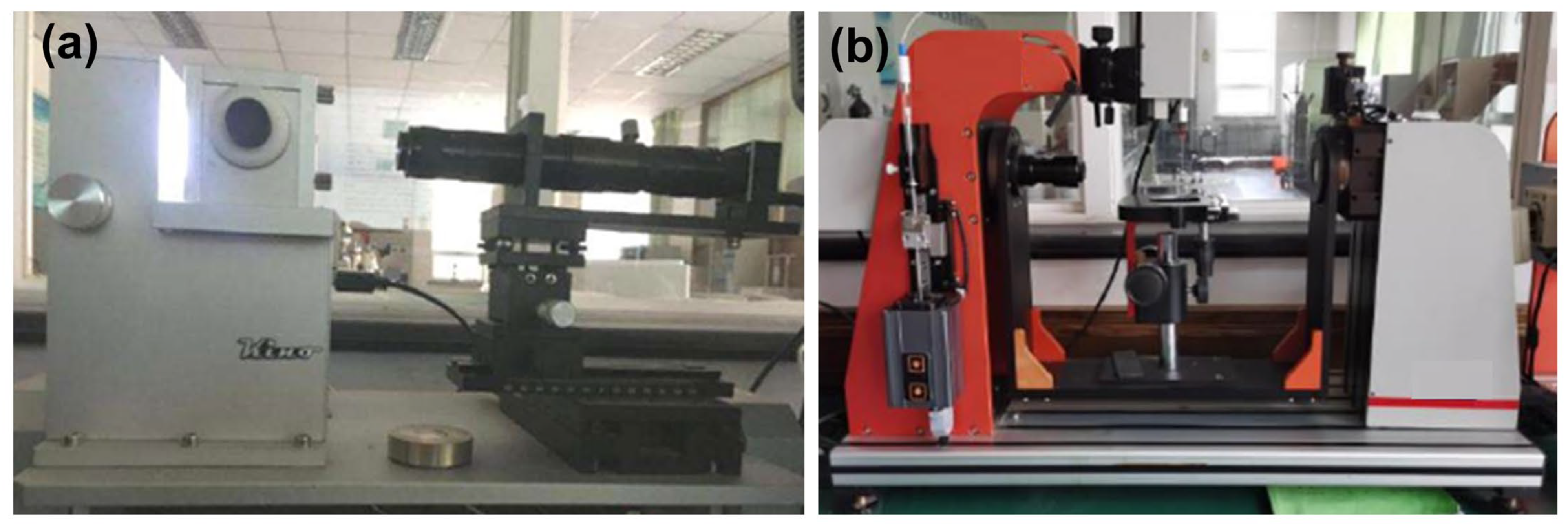
3.2.1. Measurement Procedures for Interfacial Tension
- (1)
- Activate the computer, the instrument, and the test program.
- (2)
- The sample tube should be cleaned with distilled water before a specific surfactant to be evaluated is injected using a syringe from underneath. Then, the oil phase is gradually pushed into the tube with another syringe, taking care to avoid air bubbles in the process.
- (3)
- After inserting the sample tube into the test chamber, firmly press and fix the protective cover in place.
- (4)
- Set the temperature and rotational speed to a tiny initial value, and the machine began to rotate according to the instructions, once the temperature of the internal and external phases in the sample tube is constant.
- (5)
- Enter the necessary speed into the computer, press the start button, and rotate the button until the oil droplets are visible in the center of the image. When the rotational speed reaches the set value, we begin to observe and document the development of cylindrical oil phase droplets in the surfactant solution, and use the software to determine the interfacial tension value between the oil and water.
- (6)
- Repeat steps (2) to (5) after removing the sample tube for cleaning, until all of the surfactants that need to be tested have been measured.
3.2.2. Measurement Procedures for Contact Angle
- (1)
- The core column was cut, cleaned repeatedly with distilled water, and finally placed in a drying box with a constant temperature.
- (2)
- A few droplets of designed simulated formation water were applied to the core pieces to obtain the contact angle before immersion, followed by a rinse with distilled water and another drying.
- (3)
- Immerse the core pieces in various surfactant solutions for two hours, and take them out for aging in a drying box with a constant temperature. After that, measure the core surface’s contact angle.
- (4)
- Determine the ability of surfactants to change the wettability of rocks based on the difference in contact angle changes.
3.3. Oil Displacement Experiment
- (1)
- Dry the core and then vacuum it to saturate with water, record the dry and wet weights before and after the operation. The saturated volume and porosity of the core were determined by utilizing the difference between the two, as well as the density of the water phase (Table 2).
- (2)
- The permeability of water was measured at a constant flow rate of 0.1 mL/min while the experimental temperature was maintained at 60 °C.
- (3)
- Oil flooding was carried out in a constant temperature box at 60 °C to establish bound water and saturated simulated oil. Oil saturation was calculated after recording the water output, and the core was placed for aging for 24 h.
- (4)
- The water flooding experiment was then initiated at an inlet rate of 0.1 mL/min after the surfactant fracturing fluid system prepared with formation water was put in an intermediate container.
- (5)
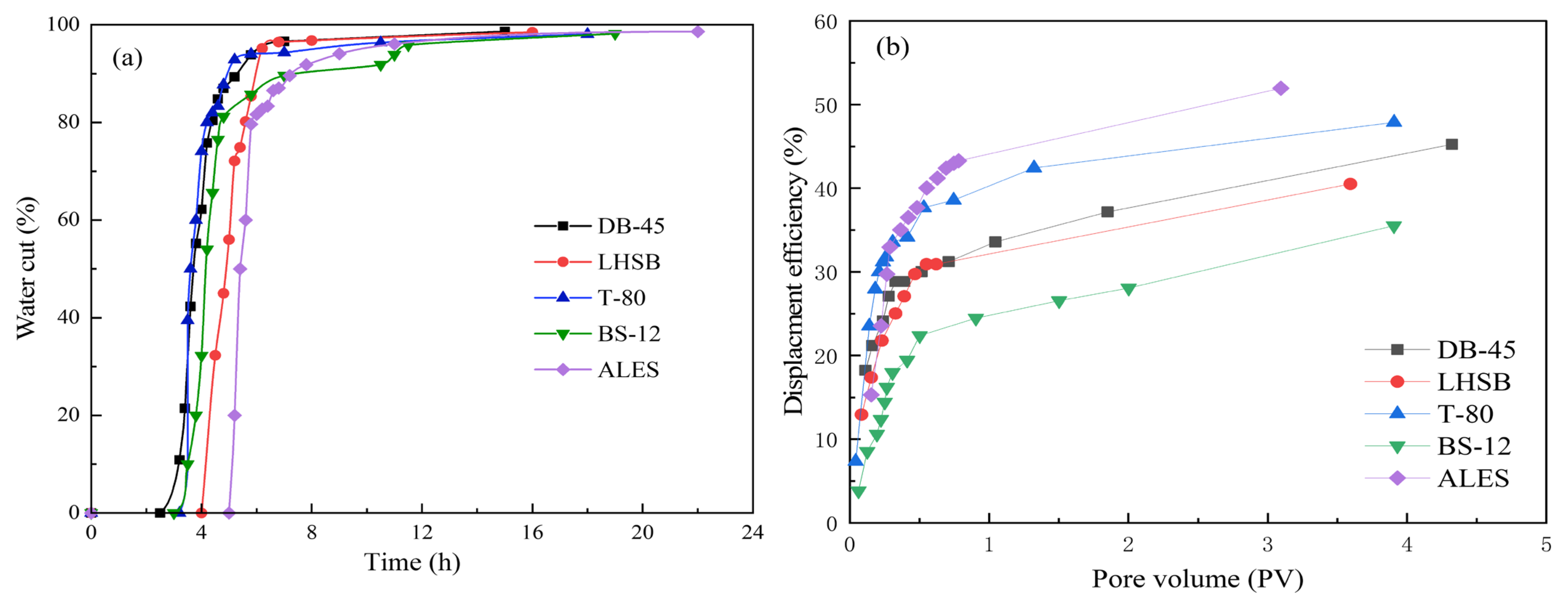
- Production of water and oil was recorded every ten minutes, and the water flooding process was continued until the outlet end of the core reached a high water cut of 98%.
3.4. Numerical Simulation of Integrated Energy Storage Fracturing
3.4.1. Governing Equations
3.4.2. Model Settings
3.4.3. Parameter Optimization Design
4. Results and Discussions
4.1. Multiphase Interfacial Experiment Results
4.1.1. Measurement for Interfacial Tension
4.1.2. Measurement for Contact Angle
4.2. Oil Displacement Experiment Results
4.2.1. Relative Permeability Curves
4.2.2. Water Cut and Recovery Curves
4.3. Simulation Results of Integrated Energy Storage Fracturing
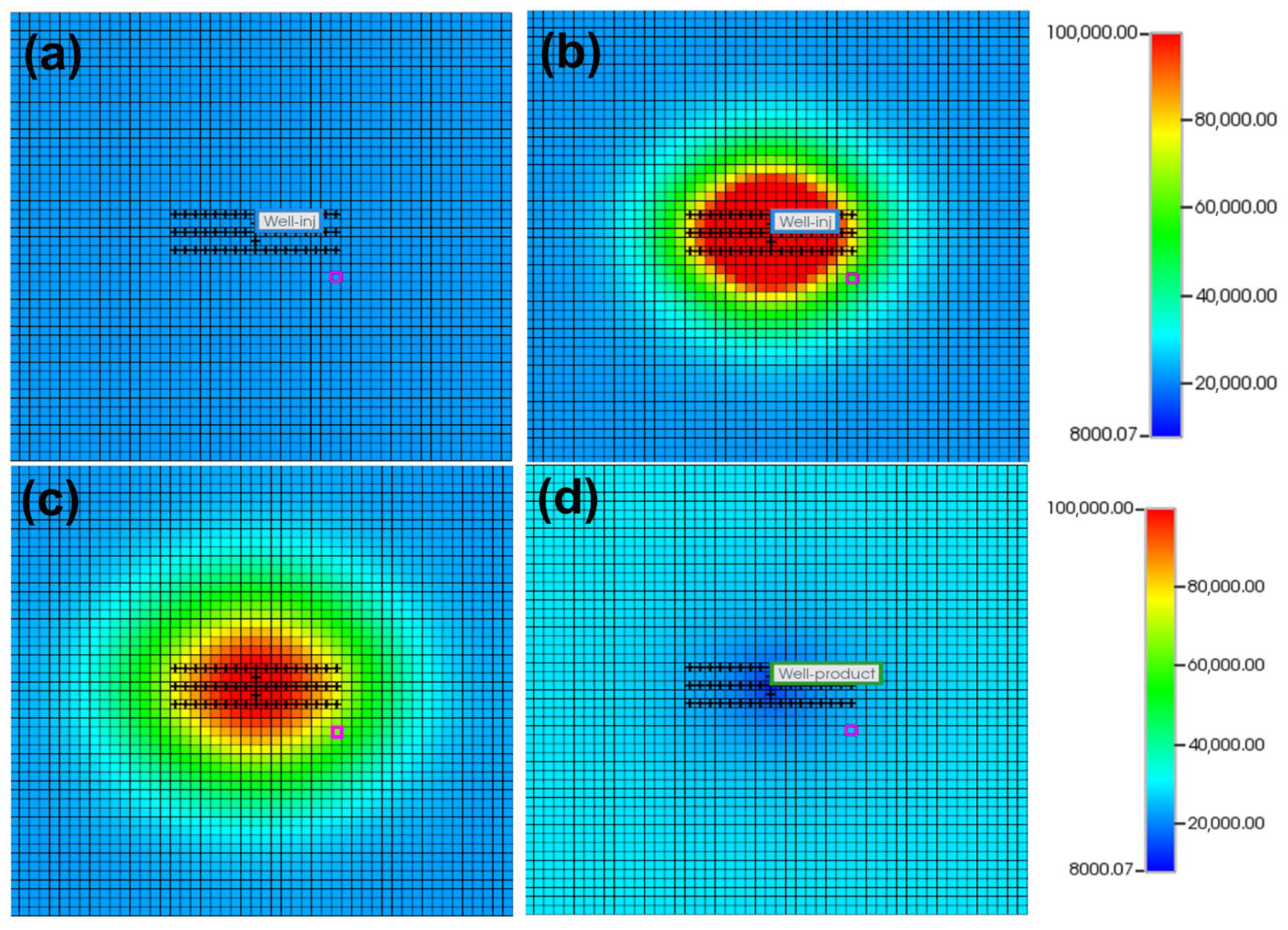
4.3.1. Pressure Characteristic
4.3.2. Parameter Optimization Results
- (1)
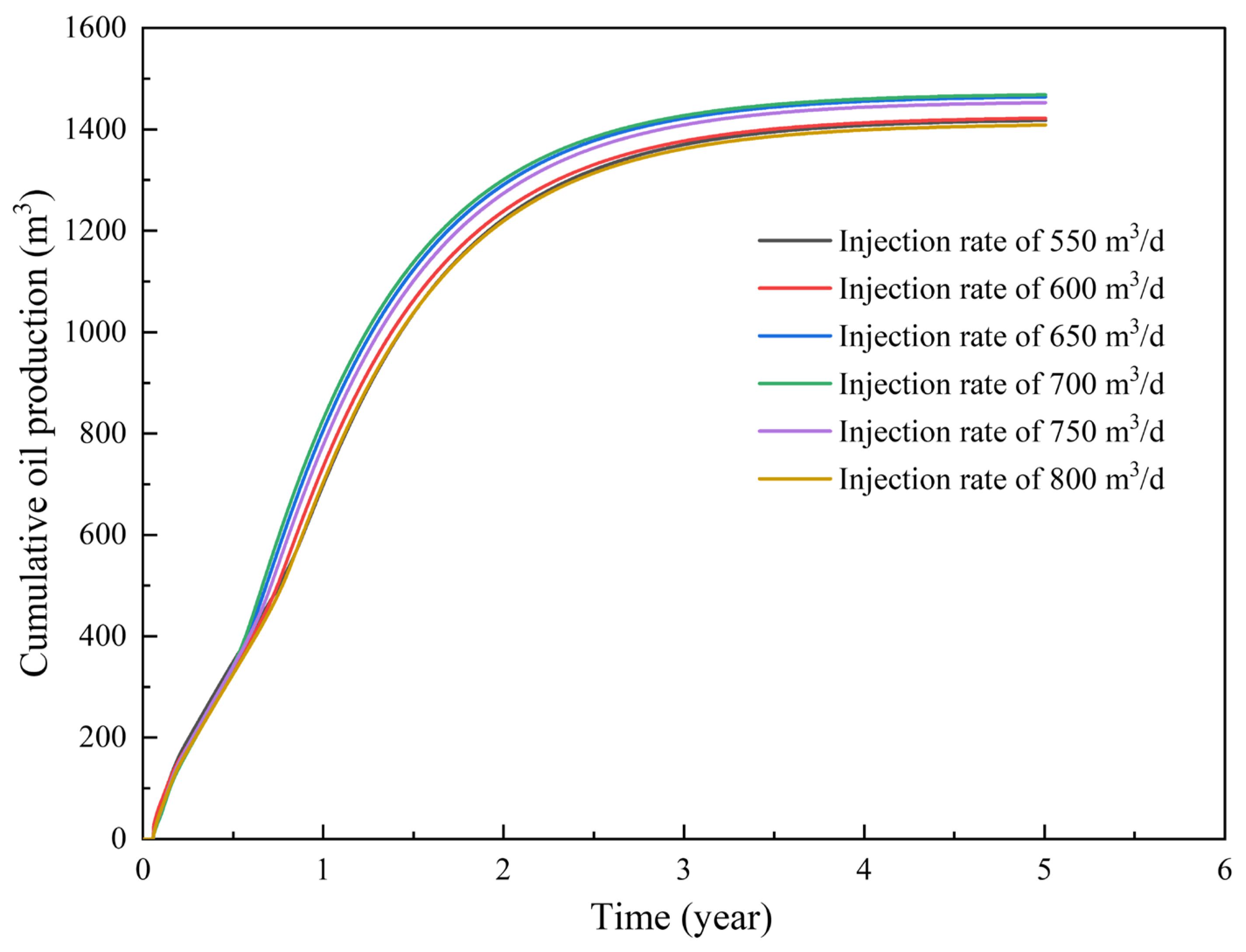
- Injection rate
- (2)
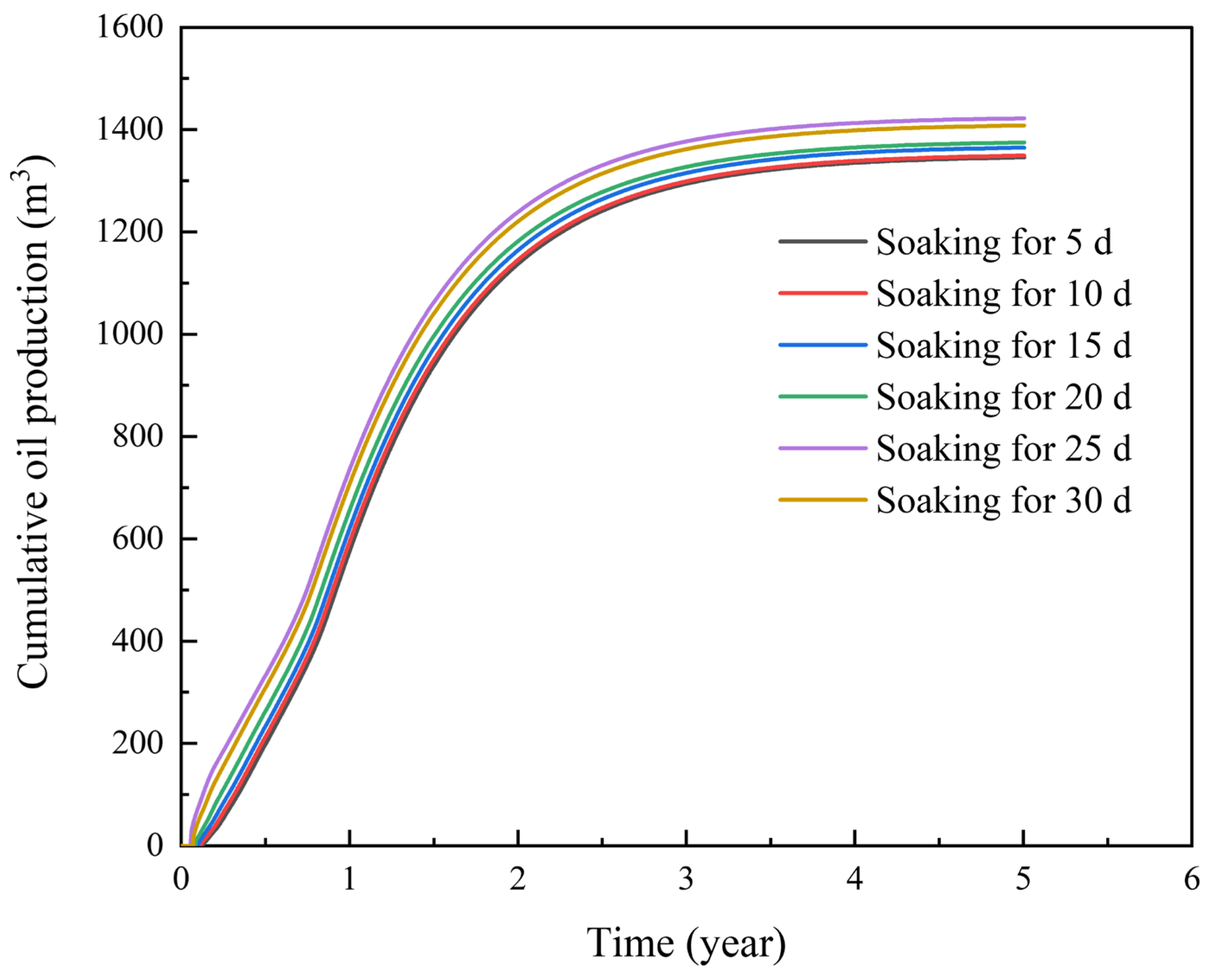
- Soaking time
- (3)
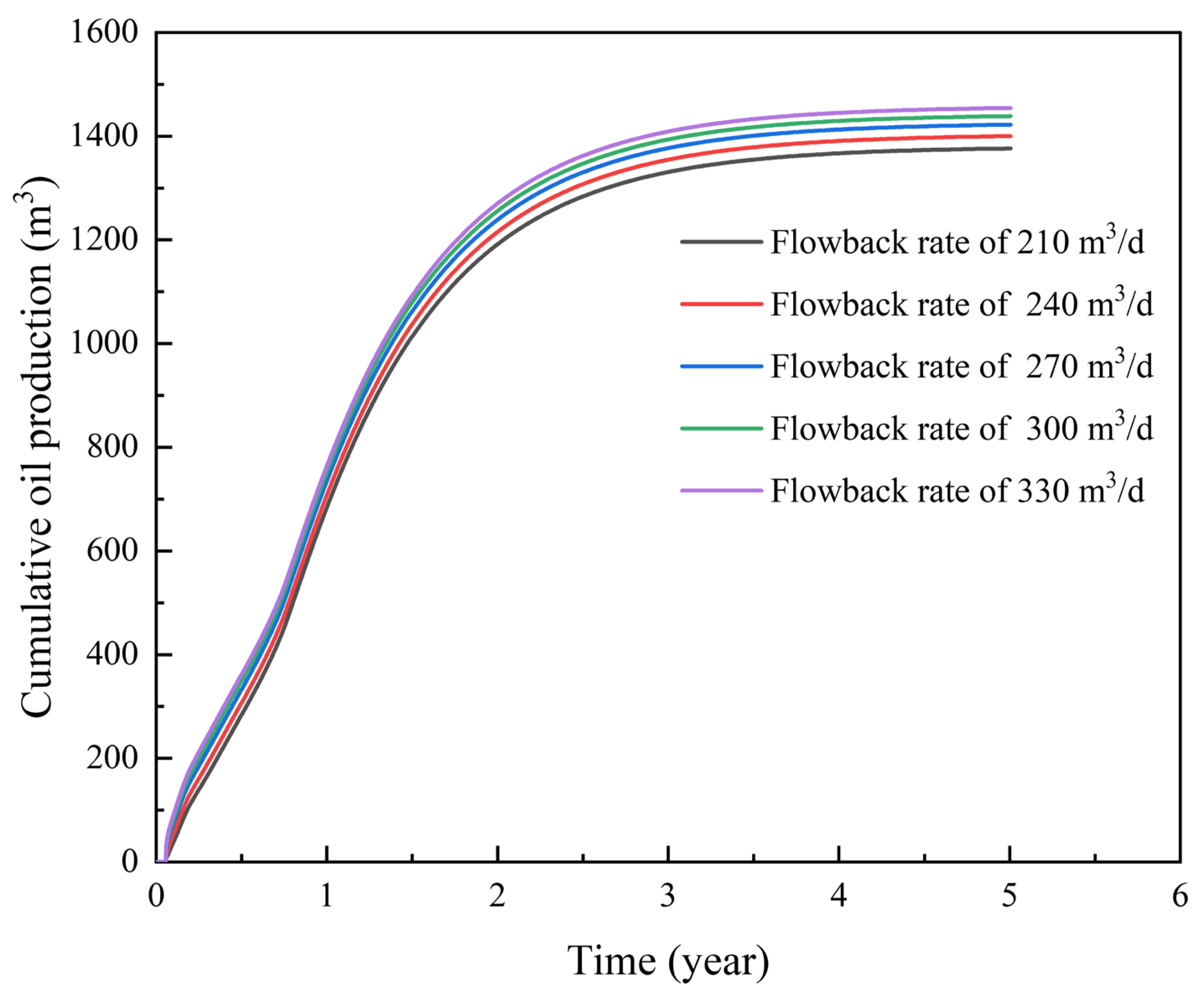
- Flowback rate
5. Conclusions
Author Contributions
Funding
Data Availability Statement
Acknowledgments
Conflicts of Interest
Abbreviations
| Character | Meaning and Units |
| μo, μw | the viscosities of oil and water, mPa·s |
| Bo, Bw | the volume coefficients of oil and water, dimensionless |
| K | the permeability of reservoir, m2; |
| Kro, Krw | the relative permeabilities of oil and water, dimensionless |
| Po, Pw | the pressures of oil and water, Pa |
| ρo, ρw | the densities of oil and water, kg/m3 |
| g | the acceleration of gravity, m/s2 |
| H | the acceleration of gravity, m/s2 |
| the thickness of oil layer, m | |
| So, Sw | the saturations of oil and water, %; |
| Qmf | represents the cross-flow rate |
| σ | the surfactant concentration |
| ρR | the rock density |
| cs | the salinity |
| a(cs, ci) | the adsorbed concentration of surfactant on the rock |
References
- Li, Y.; Pan, L.; Zhang, K.; Hu, L.; Wang, J.; Guo, C. Numerical Modeling Study of a Man-Made Low-Permeability Barrier for the Compressed Air Energy Storage in High-Permeability Aquifers. Appl. Energy 2017, 208, 820–833. [Google Scholar] [CrossRef]
- Hui, G.; Chen, S.; He, Y.; Wang, H.; Gu, F. Machine Learning-Based Production Forecast for Shale Gas in Unconventional Reservoirs via Integration of Geological and Operational Factors. J. Nat. Gas Sci. Eng. 2021, 94, 104045. [Google Scholar] [CrossRef]
- Liao, Q.; Wang, B.; Chen, X.; Tan, P. Reservoir Stimulation for Unconventional Oil and Gas Resources: Recent Advances and Future Perspectives. Adv. Geo-Energy Res. 2024, 13, 7–9. [Google Scholar] [CrossRef]
- Zhao, H.; Zhang, M.; Sheng, G.; Liu, X.; Liu, B.; Sun, J.; Deng, H.; Liu, Y. A New Approach for Fracture Parameters Optimization of Multi-Fractured Horizontal Wells: Virtual Boundary Method. Geoenergy Sci. Eng. 2024, 243, 213184. [Google Scholar] [CrossRef]
- Pi, Z.; Hui, G.; Wang, Y.; Chen, Z.; Li, J.; Qin, G.; Meng, F.; Song, Y.; Yao, F.; Bao, P.; et al. Coupled 4D Flow-Geomechanics Simulation to Characterize Dynamic Fracture Propagation in Tight Sandstone Reservoirs. ACS Omega 2025, 10, 1735–1747. [Google Scholar] [CrossRef]
- Lei, Z.; Meng, S.; Peng, Y.; Tao, J.; Liu, Y.; Liu, H. Evaluation of the adaptability of CO2 pre-fracturing to Gulong shale oil reservoirs, Songliao Basin, NE China. Pet. Explor. Dev. 2025, 52, 459–470. [Google Scholar] [CrossRef]
- Li, N.; Yu, J.; Wang, C.; Zhang, S.; Liu, X.; Jia, K.; Yuan, W.; Dai, Y. Fracturing Technology with Carbon Dioxide: A Review. J. Pet. Sci. Eng. 2021, 205, 108793. [Google Scholar] [CrossRef]
- Zhang, D.; Ma, S.; Zhang, J.; Zhu, Y.; Wang, B.; Zhu, J.; Fan, X.; Yang, H.; Liang, T. Field Experiments of Different Fracturing Designs in Tight Conglomerate Oil Reservoirs. Sci. Rep. 2022, 12, 3220. [Google Scholar] [CrossRef]
- Li, Q.; Li, Q.; Wang, F.; Wu, J.; Wang, Y.; Jin, J. Effects of Geological and Fluid Characteristics on the Injection Filtration of Hydraulic Fracturing Fluid in the Wellbores of Shale Reservoirs: Numerical Analysis and Mechanism Determination. Processes 2025, 13, 1747. [Google Scholar] [CrossRef]
- Rajbongshi, A.; Gogoi, S.B. A Review on Oilfield Produced Water and Its Treatment Technologies. Pet. Res. 2024, 9, 640–656. [Google Scholar] [CrossRef]
- Soleiman Asl, T.; Habibi, A.; Yassin, M.R.; Ezulike, O.D.; Dehghanpour, H. An Experimental and Field Case Study to Evaluate the Effects of Shut-in on Well Performance. J. Pet. Sci. Eng. 2022, 208, 109318. [Google Scholar] [CrossRef]
- Wang, J.; Zhang, Z.; Chen, X.; Jin, X.; You, X. Research on the Impact of Overflow Well Shut-in on Wellbore Integrity and Safety. Geoenergy Sci. Eng. 2024, 243, 213304. [Google Scholar] [CrossRef]
- Hui, G.; Chen, S.; Gu, F. Strike–Slip Fault Reactivation Triggered by Hydraulic-Natural Fracture Propagation during Fracturing Stimulations near Clark Lake, Alberta. Energy Fuels 2024, 38, 18547–18555. [Google Scholar] [CrossRef]
- Wu, Q.; Xu, Y.; Wang, X.; Wang, T.; Zhang, S. Volume Fracturing Technology of Unconventional Reservoirs: Connotation, Design Optimization and Implementation. Pet. Explor. Dev. 2012, 39, 377–384. [Google Scholar] [CrossRef]
- Wang, B.; Cao, R.; Pi, Z.; Cheng, L.; Jia, Z.; Hu, J. Displacement-Imbibition Coupling Mechanisms between Matrix and Complex Fracture during Injecting-Shut in-Production Process Using Pore-Scale Simulation and NMR Experiment. Geoenergy Sci. Eng. 2024, 242, 213254. [Google Scholar] [CrossRef]
- Li, N.; Zhu, S.; Li, Y.; Zhao, J.; Long, B.; Chen, F.; Wang, E.; Feng, W.; Hu, Y.; Wang, S.; et al. Fracturing-Flooding Technology for Low Permeability Reservoirs: A Review. Petroleum 2024, 10, 202–215. [Google Scholar] [CrossRef]
- Qu, G.; Su, J.; Zhao, M.; Bai, X.; Yao, C.; Peng, J. Optimizing Composition of Fracturing Fluids for Energy Storage Hydraulic Fracturing Operations in Tight Oil Reservoirs. Energies 2022, 15, 4292. [Google Scholar] [CrossRef]
- Shen, Z.; Jia, C.; Xia, Y.; Xu, S.; Xia, X.; Cai, J. Interaction between Fracturing Fluids and Shale from the Ziliujing Formation of the Jurassic in the Sichuan Basin and the Mechanism of Imbibition-Driven Oil Displacement. Energy Fuels 2025, 39, 7285–7304. [Google Scholar] [CrossRef]
- Lv, J.; Hou, B. Fractures Interaction and Propagation Mechanism of Multi-Cluster Fracturing on Laminated Shale Oil Reservoir. Pet. Sci. 2024, 21, 2600–2613. [Google Scholar] [CrossRef]
- Li, S.; Ding, Y.; Cai, B.; Lu, Y.; He, C. Wettability Reversal Experiment and Simulation in Tight Reservoir with Volume Stimulation. Spec. Oil Gas Reserv. 2016, 23, 107–110+146–147. [Google Scholar]
- Tu, J.; Sheng, J.J. Experimental and Numerical Study of Surfactant Solution Spontaneous Imbibition in Shale Oil Reservoirs. J. Taiwan Inst. Chem. Eng. 2020, 106, 169–182. [Google Scholar] [CrossRef]
- Zhang, J.; Liang, C.; Chen, Y.; Xu, T.; Xu, Z. Influence Factors of Surfactant on High-temperature and High-pressure Imbibition Displacement Effect of Shale Oil Reservoir. Geol. Dev. Daqing 2023, 42, 167–174. [Google Scholar] [CrossRef]
- Li, G.; Gao, H.; Qi, Y.; Zhang, C.; Cheng, Z.; Li, T.; Wang, C.; Li, H. Study on imbibition displacement mechanism of clear fracturing fluid in tight oil reservoir based on 2D NMR. Pet. Sci. Bull. 2025, 10, 283–297. [Google Scholar]
- Zolfaghari Sharak, A.; Noel, M.; Dehghanpour, H.; Bearinger, D. Understanding the Origin of Flowback Salts: A Laboratory and Field Study. In Proceedings of the SPE/CSUR Unconventional Resources Conference, Calgary, AB, Canada, 30 September–2 October 2014; p. D011S002R005. [Google Scholar]
- You, L.; Xie, B.; Kang, Y.; Yang, B. The Synergistic Effect of hydration fracture and imbibition in Shale Gas Well Shut-in Process. In Proceedings of the 2018 National Natural Gas Academic Conference (03 Unconventional Gas Reservoirs), Fuzhou, China, 14–16 November 2018; pp. 13–19. [Google Scholar] [CrossRef]
- Wang, R. Numerical Simulation Study on the Law of Energy Storage in Shut-In Schedule after Fracturing of Tight Oil. Bachelor’s Thesis, China University of Petroleum, Beijing, China, 2019. [Google Scholar] [CrossRef]
- Wang, F.; Chen, Q.; Ruan, Y. Hydrodynamic Equilibrium Simulation and Shut-In Time Optimization for Hydraulically Fractured Shale Gas Wells. Energies 2020, 13, 961. [Google Scholar] [CrossRef]
- Wei, S.; Jin, Y.; Xia, Y.; Xu, D.; Zeng, P. Influence of Spontaneous Imbibition on Post-fracturing Well Soaking in the Shale Oil Reservoirs. Oil Drill. Prod. Technol. 2023, 45, 756–765. [Google Scholar]
- Wang, X. Research and Application of Energy Storage Fracturing Technology in Well Block Bei 83 of Zhundong Oilfield. Technol. Superv. Pet. Ind. 2025, 9, 62–66. [Google Scholar] [CrossRef]
- Zhao, J.; Wang, Q.; Hu, Y.; Ren, L.; Zhao, C. Numerical Investigation of Shut-in Time on Stress Evolution and Tight Oil Production. J. Pet. Sci. Eng. 2019, 179, 716–733. [Google Scholar] [CrossRef]
- Golparvar, A.; Zhou, Y.; Wu, K.; Ma, J.; Yu, Z. A Comprehensive Review of Pore Scale Modeling Methodologies for Multiphase Flow in Porous Media. Adv. Geo-Energy Res. 2018, 2, 418–440. [Google Scholar] [CrossRef]
- Hui, G.; Chen, Z.; Wang, Y.; Zhang, D.; Gu, F. An Integrated Machine Learning-Based Approach to Identifying Controlling Factors of Unconventional Shale Productivity. Energy 2023, 266, 126512. [Google Scholar] [CrossRef]
- Chen, G. Origin and Distribution Prediction of Anomalously High Permeability Zones in Sandstone Reservoir—A Example in Weizhou 12-X Oilfield, Weixinan Sag, Beibu Gulf Basin. Ph.D. Thesis, Northeast Petroleum University, Daqing, China, 2022. [Google Scholar] [CrossRef]
- Bao, P.; Hui, G.; Hu, Y.; Song, R.; Chen, Z.; Zhang, K.; Pi, Z.; Li, Y.; Ge, C.; Yao, F.; et al. Comprehensive Characterization of Hydraulic Fracture Propagations and Prevention of Pre-Existing Fault Failure in Duvernay Shale Reservoirs. Eng. Fail. Anal. 2025, 173, 109461. [Google Scholar] [CrossRef]
- Wang, Q.; Zhao, J.; Hu, Y.; Ren, L.; Zhao, C. Shut-in Time Optimization after Fracturing in Shale Oil Reservoirs. Pet. Explor. Dev. 2022, 49, 671–683. [Google Scholar] [CrossRef]
- Preux, C.; Malinouskaya, I.; Nguyen, Q.-L.; Flauraud, E.; Ayache, S. Reservoir-Simulation Model with Surfactant Flooding Including Salinity and Thermal Effect, Using Laboratory Experiments. SPE J. 2020, 25, 1761–1770. [Google Scholar] [CrossRef]
- Hui, G.; Chen, Z.; Schultz, R.; Chen, S.; Song, Z.; Zhang, Z.; Song, Y.; Wang, H.; Wang, M.; Gu, F. Intricate Unconventional Fracture Networks Provide Fluid Diffusion Pathways to Reactivate Pre-Existing Faults in Unconventional Reservoirs. Energy 2023, 282, 128803. [Google Scholar] [CrossRef]
- Gan, L.; Dang, L.; Zhang, H.; Bai, S.; Duan, C.; Wang, C.; Deng, R. A Method for Calculating the Relative Permeability of Tight Sandstone Oil Reservoirs Based on Nuclear Magnetic Resonance Logging. SPE J. 2025, 30, 4252–4270. [Google Scholar] [CrossRef]
- Yu, Q.; Mu, Z.; Liu, P.; Hu, X.; Li, Y. A New Evaluation Method for Determining Reservoir Parameters for the Development of Edge-Water-Driven Oil Reservoirs. J. Pet. Sci. Eng. 2019, 175, 255–265. [Google Scholar] [CrossRef]
- Hu, J.; Zhao, H.; Du, X.; Zhang, Y. An Analytical Model for Shut-in Time Optimization after Hydraulic Fracturing in Shale Oil Reservoirs with Imbibition Experiments. J. Pet. Sci. Eng. 2022, 210, 110055. [Google Scholar] [CrossRef]
- Huang, T.; Su, L.; Da, Y.; Yang, L. Research and Field Test on Energy Storage Fracturing Mechanism of Horizontal Wells in Ultra-Low Permeability Reservoirs. Pet. Drill. Tech. 2020, 48, 80–84. [Google Scholar]
- Yang, C.; Liu, J. Petroleum Rock Mechanics: An Area Worthy of Focus in Geo-Energy Research. Adv. Geo-Energy Res. 2021, 5, 351–352. [Google Scholar] [CrossRef]
- Cheng, Y. Impact of Water Dynamics in Fractures on the Performance of Hydraulically Fractured Wells in Gas-Shale Reservoirs. J. Can. Pet. Technol. 2012, 51, 143–151. [Google Scholar] [CrossRef]
- Li, L.; Zhang, D.; Su, Y.; Zhang, X.; Lu, M.; Wang, H. Microfluidic Insights into CO2 Sequestration and Enhanced Oil Recovery in Laminated Shale Reservoirs: Post-Fracturing Interface Dynamics and Micro-Scale Mechanisms. Adv. Geo-Energy Res. 2024, 13, 203–217. [Google Scholar] [CrossRef]
- Eltahan, E.; Rego, F.B.; Yu, W.; Sepehrnoori, K. Impact of Well Shut-in after Hydraulic-Fracture Treatments on Productivity and Recovery of Tight Oil Reservoirs. J. Pet. Sci. Eng. 2021, 203, 108592. [Google Scholar] [CrossRef]
- Mu, Y.; Zou, C.; Hu, Z.; Duan, X.; Guo, Q.; Jing, Z. Impacts of Multi-Scale Water-Rock Interaction on Mineral Alteration, Mechanical Weakening and Pore-Fracture Evolution in Marine Shales. Adv. Geo-Energy Res. 2025, 17, 68–81. [Google Scholar] [CrossRef]
- Zolfaghari, A.; Dehghanpour, H.; Noel, M.; Bearinger, D. Laboratory and Field Analysis of Flowback Water from Gas Shales. J. Unconv. Oil Gas Resour. 2016, 14, 113–127. [Google Scholar] [CrossRef]



| Cation (mg/L) | Anion (mg/L) | Total Salinity (mg/L) | |||||
|---|---|---|---|---|---|---|---|
| Na+, K+ | Ca2+ | Mg2+ | HCO3− | Cl− | SO42− | CO32− | |
| 7694 | 245 | 52 | 458 | 11,876 | 312 | 60 | 20,697 |
| Properties | Diameter d/cm | Lengths l/cm | Dry Weight m0/g | Wet Weight m1/g | /% | |
|---|---|---|---|---|---|---|
| Number | ||||||
| 181229A-16 | 2.50 | 9.68 | 88.74 | 95.51 | 14.25 | |
| 181229A-30 | 2.49 | 9.74 | 89.84 | 96.47 | 13.99 | |
| 181229A-23 | 2.47 | 9.73 | 88.75 | 96.6 | 16.85 | |
| 181229A-7 | 2.51 | 9.71 | 88.78 | 96.14 | 15.33 | |
| 181229A-9 | 2.52 | 9.71 | 89.13 | 95.75 | 13.68 | |
| Average | 2.50 | 9.71 | 89.05 | 96.09 | 14.82 | |
| Name | Value | Name | Value |
|---|---|---|---|
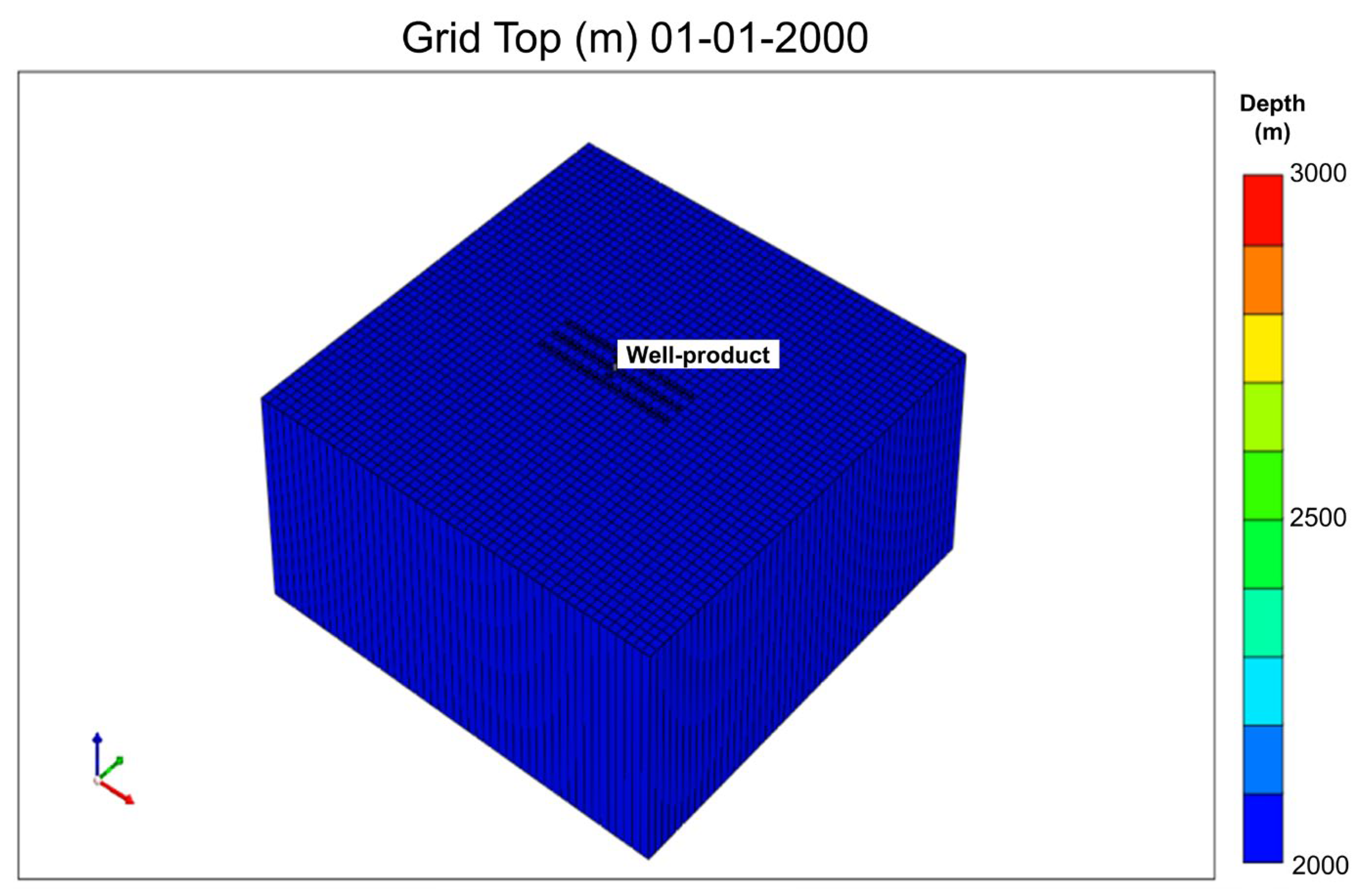
| Depth, m | 2000 | Permeability, 10−3 μm2 | 3 |
| Pressure, MPa | 22 | Porosity, % | 15 |
| Oil density, kg/m3 | 800 | Initial oil saturation, % | 60 |
| Water density, kg/m3 | 1000 |
| Number | Injection Rate (m3/d) | Injection Volume (m3) | Well Soaking Time (d) | Flowback Rate (m3/d) | Comment |
|---|---|---|---|---|---|
| 1 | 600 | 6600 | 25 | 270 | Base case |
| 2 | 550 | 6050 | 25 | 270 | Different injection rate programs |
| 3 | 650 | 7150 | 25 | 270 | |
| 4 | 700 | 7700 | 25 | 270 | |
| 5 | 750 | 8250 | 25 | 270 | |
| 6 | 800 | 8800 | 25 | 270 | |
| 7 | 600 | 6600 | 5 | 270 | Different soaking time programs |
| 8 | 600 | 6600 | 10 | 270 | |
| 9 | 600 | 6600 | 15 | 270 | |
| 10 | 600 | 6600 | 20 | 270 | |
| 11 | 600 | 6600 | 30 | 270 | |
| 12 | 600 | 6600 | 25 | 210 | Different flowback rate programs |
| 13 | 600 | 6600 | 25 | 240 | |
| 14 | 600 | 6600 | 25 | 300 | |
| 15 | 600 | 6600 | 25 | 330 |
| Name | Surfactant Types | Interfacial Tension (10−2 mN/m) | Contact Angle Results (°) |
|---|---|---|---|
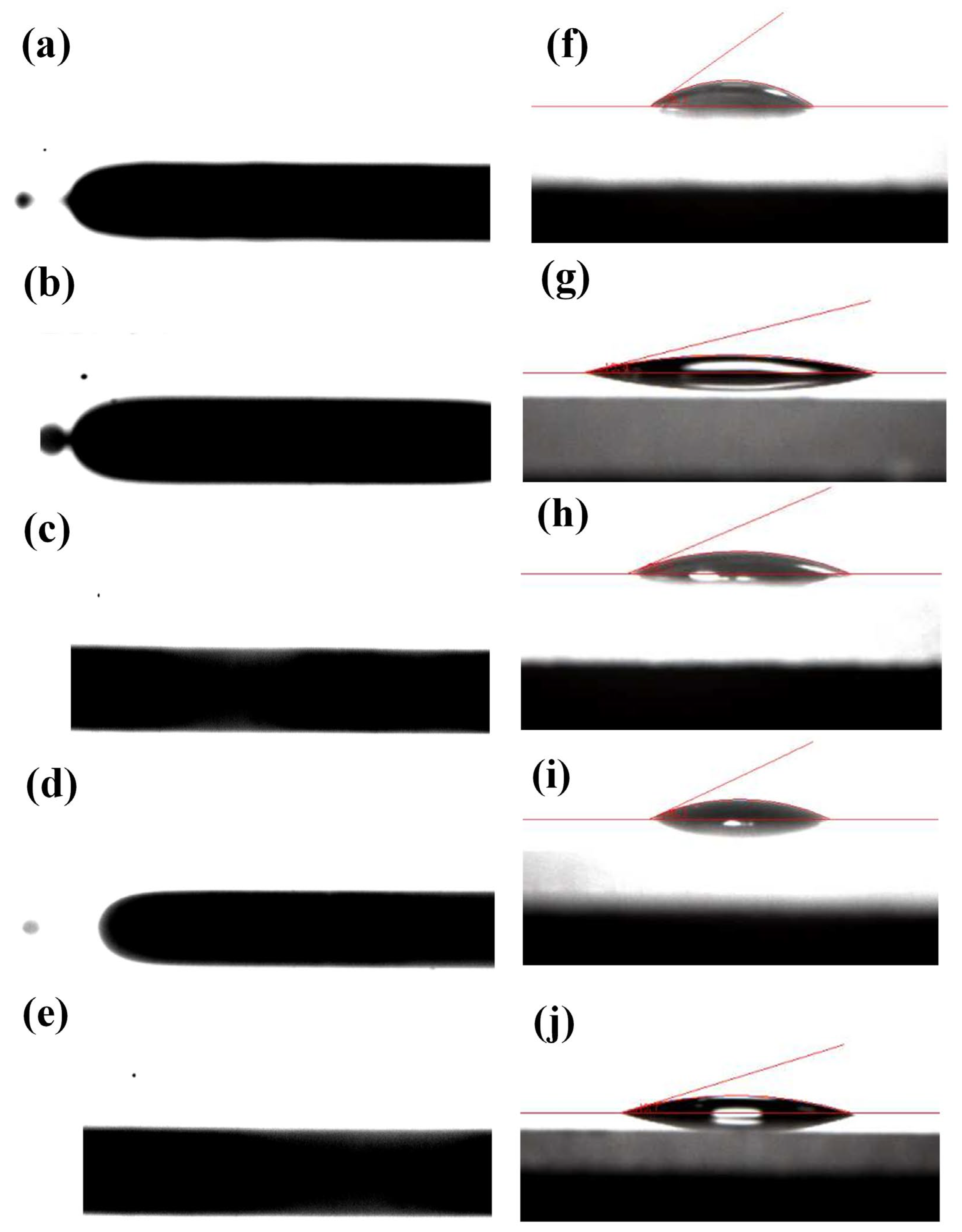
| Sodium dodecyl diphenyl ether sulfonate (DB-45) | ionic | 2.9 | 35.13 |
| Lauramidopropyl betaine (LHSB) | zwitterionic | 4.2 | 15.43 |
| Tween 80 (T-80) | non-ionic | 1.9 | 25.15 |
| Dodecyl dimethyl betaine (BS-12) | zwitterionic | 2.3 | 25.28 |
| Ammonium lauryl polyether sulfate (ALES) | ionic | 1.7 | 20.07 |
Disclaimer/Publisher’s Note: The statements, opinions and data contained in all publications are solely those of the individual author(s) and contributor(s) and not of MDPI and/or the editor(s). MDPI and/or the editor(s) disclaim responsibility for any injury to people or property resulting from any ideas, methods, instructions or products referred to in the content. |
© 2025 by the authors. Licensee MDPI, Basel, Switzerland. This article is an open access article distributed under the terms and conditions of the Creative Commons Attribution (CC BY) license (https://creativecommons.org/licenses/by/4.0/).
Share and Cite
Zhang, Y.; Pi, Z.; Hui, G.; Zhang, R.; Ni, F.; Li, Y.; Ge, C.; Bao, P.; Zhang, Y.; Yang, X.; et al. Experimental Research on Surfactant Flooding and Design of Integrated Schemes for Energy Storage Fracturing and Production in Tight Sandstone Reservoirs. Processes 2025, 13, 4031. https://doi.org/10.3390/pr13124031
Zhang Y, Pi Z, Hui G, Zhang R, Ni F, Li Y, Ge C, Bao P, Zhang Y, Yang X, et al. Experimental Research on Surfactant Flooding and Design of Integrated Schemes for Energy Storage Fracturing and Production in Tight Sandstone Reservoirs. Processes. 2025; 13(12):4031. https://doi.org/10.3390/pr13124031
Chicago/Turabian StyleZhang, Yujie, Zhiyang Pi, Gang Hui, Ruihan Zhang, Feng Ni, Ye Li, Chenqi Ge, Penghu Bao, Yujie Zhang, Xing Yang, and et al. 2025. "Experimental Research on Surfactant Flooding and Design of Integrated Schemes for Energy Storage Fracturing and Production in Tight Sandstone Reservoirs" Processes 13, no. 12: 4031. https://doi.org/10.3390/pr13124031
APA StyleZhang, Y., Pi, Z., Hui, G., Zhang, R., Ni, F., Li, Y., Ge, C., Bao, P., Zhang, Y., Yang, X., Wu, D., Lu, Y., & Gu, F. (2025). Experimental Research on Surfactant Flooding and Design of Integrated Schemes for Energy Storage Fracturing and Production in Tight Sandstone Reservoirs. Processes, 13(12), 4031. https://doi.org/10.3390/pr13124031