


Abstract
In the present context of climate changes, multipurpose and stress-resistant crops tend to be widely grown in areas with severe environmental conditions, such as drought and saline-alkali land. Due to its effective adaptation to high-temperature dry conditions, Sorghum bicolor (L.) Moench is a highly resistant and versatile crop. Sorghum is cultivated as a grain, sweet stem, forage material, and broomcorn, and is a source of fuel, alcoholic and non-alcoholic beverages, and building materials. Sorghum could be part of an integrated circular economy due to its special manufacturing possibilities. Despite having plenty of beneficial properties, sorghum is not very popular all over the world. Thus, the main purpose of our study is to reveal its benefits and various manufacturing possibilities. Currently known more for being used as animal feed and for biofuel production, once popularized, sorghum could become an important vector of food security. The present study reviews the latest data, highlighting the potential of sorghum to develop new food products, noting the functional and health properties of sorghum in foods and the processing possibilities of sorghum-based products.
1. Introduction
Sorghum is one of the oldest [1] and most important cereal crops in the world. Despite an oscillating trend in its cultivation during recent years, sorghum still attracts the attention of scientists due to its high adaptability to adverse climate conditions and versatility. Some authors [2] consider sorghum to be a “star” crop, with significant potential to address global food security. They assess factors such as its potential as human food, livestock feed, biofuel, and forage, as well as its high returns and better resilience to adverse climate conditions compared to other crops. From a nutritional point of view, sorghum is rich in carbohydrates, proteins, vitamins, and minerals. It is gluten-free and contains health-promoting components [3], making it attractive for food processors. It is suitable for people with special dietary needs.
The scientific literature is abundant with articles regarding sorghum, indicating a high interest for this crop, from cultivation to its processing possibilities and health benefits. The potential of sorghum as a staple food crop, its genetic diversity, and the challenges of sorghum breeding with the most advanced breeding technologies were investigated by [4]. Stoicea et al. [5] identified major sorghum producers all over the world and examined their production levels, yield, land utilization and climate compatibility. Hossain et al. [6] reviewed the potential of sorghum as a promising crop for food security. They outlined the key challenges in achieving food security, the botanical structure of the plant, the prospects of sorghum as a diet crop, and its role in global food security, as well as the factors influencing sorghum cultivation. A study by Bakari et al. [7] outlined the biochemical composition of sorghum and its potential as food and as a source of valuable by-products. At the same time, Rumler et al. [8] focused on the potential of sorghum to be used in the Western diet, focusing on its incorporation in bread. Numerous experimental studies investigated sorghum composition, as influenced by the variety, using modern technologies. One of the most recent studies on this subject was reported by Pontieri et al. [9], who analyzed the composition of three sorghum varieties grown in the Mediterranean region.
The interactions among the main components of sorghum have attracted the interest of scientists due to their implications for human health. Kafirin proteins in sorghum form a matrix that limits the accessibility of starch granules to digestive enzymes such as alpha amylase. This interaction is a major cause of sorghum’s low starch digestibility [10,11], leading to limited nutritional value unless it is cooked. On the other hand, this digestibility lowers the glycemic index, which is beneficial for people suffering from diabetes. Phenolic compounds can form inclusion complexes with amylose in starch, via hydrogen bonds and other interactions, thereby decreasing starch digestibility. They can also form hydrogen and covalent bonds with kafirin proteins. These can decrease protein digestibility and alter the functional properties of the protein [12,13]. Thus, it becomes crucial to identify how sorghum’s physical structures (such as starch granules, pericarp, and cell walls) are shaped by biological processes (such as growth, development, and genetic expression). These ultimately determine its functions, including nutritional value, and processing characteristics [14,15,16]. For example, the crystalline structure and size of starch granules (structure) affect their gelatinization behavior when heated (process), which in turn dictates their performance in food products (function).
The present study aims to compile the most recent information on sorghum’s composition, health benefits, and processing possibilities in order to develop new food products and technologies.
2. Research Methodology
The Web of Science Platform (also known as Clarivate), Google Scholar, and Scopus were the main databases used to select the necessary studies forming the documentation base for this review. Moreover, official websites were consulted to obtain information on sorghum grain.
A systematic research of the literature on sorghum characterization and valorization, with emphasis on health implications, was used as inclusion criteria for selecting sources for the present review. Further on, the authors ensured that all the references report transparent and reproducible research addressing clearly formulated research questions or hypotheses.
In total, 64 original articles, 4 book chapters, and 10 websites presenting official data or communications published between 2015 and 2025 (with the exception of two references dating from 2006 and 2011) and written only in the English language were included. The distribution of the selected literature sources is presented in Figure 1.
Figure 1.
The diversity of the available literature.
The manuscripts were selected using several specific keywords (sorghum botany, sorghum taxonomy, sorghum processing, sorghum nutrients, sorghum health benefits, sorghum phenolic components, sorghum antioxidant activity, anticancer potential of sorghum, sorghum anti-inflammatory activity, antidiabetic potential of sorghum), reading selected papers titles and abstracts, and by a full-text review. In order to process the official data, FAO (Food and Agriculture Organization of the United Nations) platform (https://www.fao.org/faostat/en/#data/QCL; accessed on 10 October 2025) was accessed, selecting sorghum (as crop), the world, Europe, and the European Union (as regions), area harvested and production (as elements), and 2010–2023 (the most recent data available) as years. Data were saved as an Excel file and processed in order to generate column charts.
The selected publications were grouped by type of chapter or subchapter interest in order to consolidate the current advances in the use of sorghum for human consumption.
Generative artificial intelligence (GenAI) has not been used in this paper, including in the literature selection, conceptualization, or description.
3. Main Findings
3.1. Botanical Description
Sorghum exhibits various morphophysiological traits and a wide variation in floral morphologies.
It was first recognized taxonomically with the genus Holcus, under the family Poaceae, tribe Andropogoneae, subtribe Sorghinae, genus Sorghum Moench [17].
Generally, Sorghum bicolor subspp. bicolor contains all of the cultivated sorghum varieties. It is known by numerous common names: black amber, broomcorn, broomcorn, chicken corn, great millet, milo, Rhodesian Sudan grass, shattercane, sorghum, sorgum, and wild cane [18].
Sorghum bicolor (L.) was classified into five basic and ten hybrid races. The five basic races are as follows: Bicolor, Guinea, Caudatum, Kafir, and Durra.
The identification of the race could be easily performed without equivocation by analyzing the head characteristics or even spikelet morphology.
Thereby, Bicolor grains are elongated, sometimes slightly obovate, almost dorsoventrally symmetrical; Guinea grains are dorsoventrally flattened sublenticular in outline, twisted at maturity; Caudatum grains are markedly symmetrical; Kafir’s grains are approximately symmetrical and more or less spherical; and Durra grains are rounded, obovate, and wedge-shaped at the base [17].
The sorghum grain consists of 3–6% pericarp, 84–90% endosperm, and 5–10% germ [19].
The pericarp is the outermost structure, and it is divided into three sub-tissues: epicarp, mesocarp, and endocarp. Beneath the endocarp is the testa layer, also named the seed coat.
The endosperm plays the role of storage tissue and constitutes the major portion of the sorghum grain, while the germ is divided into two major parts: the embryonic axis and the scutellum [20].
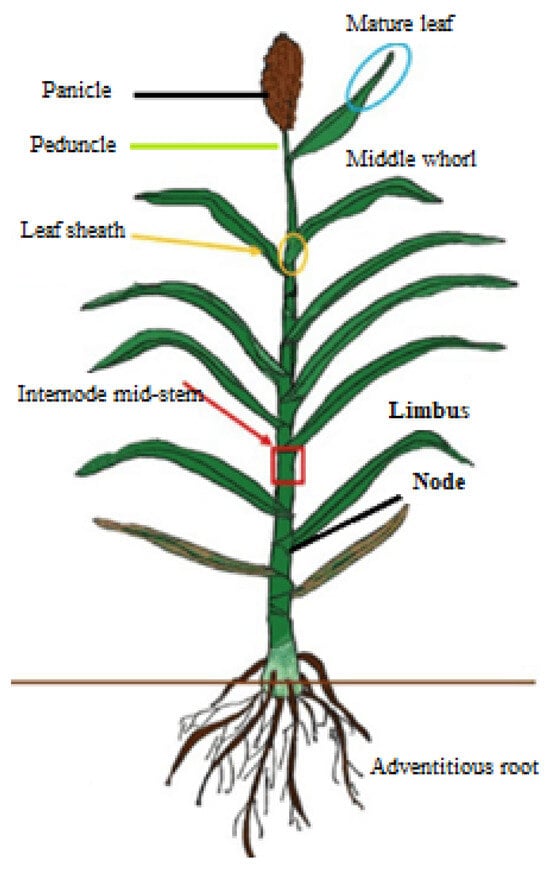
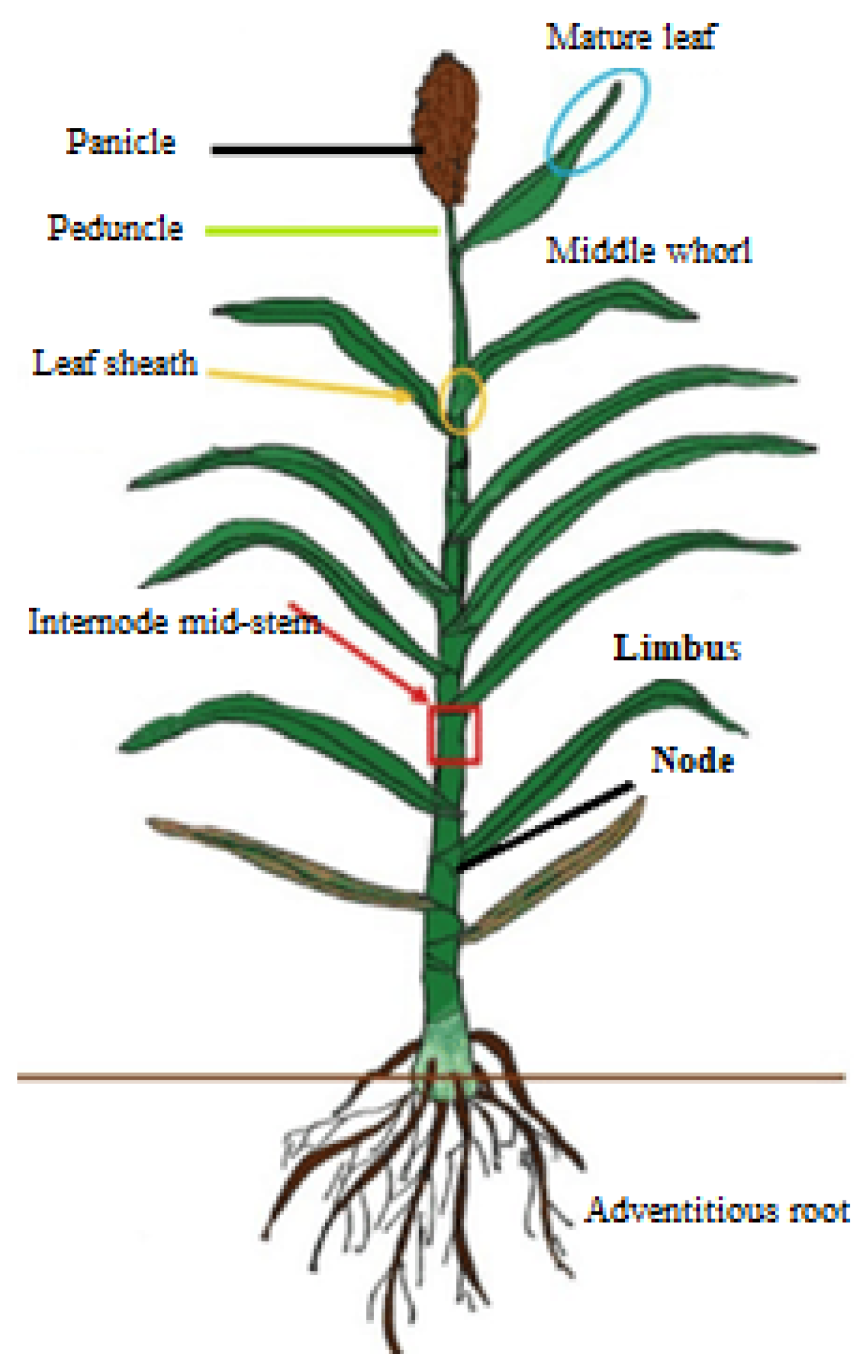
In Figure 2, the botanical parts of sorghum plant are presented: panicle, peduncle, middle whorl, leaf sheath, internode mid-stem, limbus, node, and adventitious root.
Figure 2.
Botanical parts of the sorghum plant adapted from [21].
The primary axis of the panicle is angular, and the secondary axes are arranged in whorls around it. The peduncle is almost always straight. The panicle size varies from 75 to 500 millimeters in length and from 40 to 200 millimeters in width. A single panicle contains between 800 and 3000 seeds, which are usually partly covered by black, red, or brown glumes. The leaf sheath surrounds the stem, and also some powdery waxy deposits are found in the upper part of the leaf sheath. Near to the node, short white hairy parts are distinguishable [22].
The root of sorghum is similar in organization to that of maize (Zea mays). The primary root originates from the radicle (embryonic root) and continues by an elongation; seminal roots (seed roots) also develop from the embryo. Both primary and seminal roots are temporary, as their function is taken over by adventitious roots that develop from the stem [23].
3.2. Sorghum Composition
3.2.1. Sorghum Chemical and Nutritional Composition
Like any other biological material, sorghum shows compositional variations among its varieties. A synthesis of these is highlighted as it follows: white sorghum is cultivated mainly for its carbohydrate content and has the highest moisture and ash contents, but it is relatively low in proteins and fiber; yellow-pale sorghum is rich in healthy lipids and proteins; and red sorghum seems to have the highest fiber content, counterbalanced by the lowest ash and carbohydrate levels [24].
Full of benefits, with a complex composition comprising macronutrients, micronutrients, and bioactive compounds, sorghum could be considered a miracle cereal with an energy value of 329 kcal/100 g.
Table 1 presents the comparative chemical composition of several grains, namely sorghum, wheat, maize, and millet.
Table 1.
Comparative chemical composition of several grains (sorghum, wheat, maize, and millet) according to the U.S. Department of Agriculture USDA, 2018 [25,26].
Sorghum has a high nutritional value due to the presence of large quantities of nutrients and phytochemicals such as fibers, proteins, fat, carbohydrate, vitamins, phenolics, and minerals.
Its moisture content is 12.40 g/100 g, the highest among all the analyzed cereals. By comparison, wheat, maize, and millet protein content is lower 10.60 g/100 g. Also, sorghum is relatively low in lipids. Ranked third after wheat and maize, it is nonetheless a good source of carbohydrates, supported especially by the high quantity of total dietary fibers 6.70 g/100 g.
The main carbohydrate in sorghum is starch, which is the major component of the grain and is especially located in the endosperm. There is an exception: some starch granules are located in the pericarp of the grain [27].
Sorghum starch is made up of two biopolymers, amylose and amylopectin. Their ratio influences gelatinization behavior, pastes viscosity, digestibility, syneresis degree, etc. [28].
Some sorghum genotypes are considered potential sources of resistant starch [29].
Sorghum is a very interesting source of protein, especially because it is a gluten-free and non-allergenic cereal. Proteins, representing about 7–15% of the grain and located mostly in the endosperm, include albumins, globulins, glutelins, and kafirins. Kafirins account for 50–80% of the total proteins, while glutelins are second most abundant fraction [30].
Sorghum grain lipids (3%) found in the scutellum have a typical fatty acid profile represented by 49% linoleic, 31% oleic, 14% palmitic, 2.7% linolenic, and 2.1% stearic acids [31].
Other several important micronutrients such as sodium, zinc, copper, manganese, selenium, B vitamin complex, vitamin E, etc., are present in small quantities in sorghum grain.
Sorghum could also be considered a source of calcium 13.00 mg/100 g and a very good source of magnesium 165.00 mg/100 g, as well as phosphorus and potassium, with a content of 289.00 mg/100 g and 363.00 mg/100 g, respectively.
The pericarp contains significant amounts of non-starch polysaccharides, phenolic 3-deoxyanthocyanidins, tannins, phenolic acids, and carotenoids. The germ is composed of lipids, fat-soluble vitamins, B-complex vitamins, and minerals. Proteins and carbohydrates are originated from the endosperm.
3.2.2. Phytochemical Composition of Sorghum
When talking about the health benefits of sorghum consumption, the main factors involved are the bioactive compounds, which are directly involved in antioxidant activity potential. Antioxidants act like free radical scavengers: quenchers of singlet oxygen formation by reducing harmful agents for the human body.
Among the most important phytochemicals in sorghum are phenolic compounds, which are naturally bio-synthesized in plants.
All sorghum varieties contain phenolic acids, which are located in the pericarp, testa, aleurone layer, and endosperm. Thus, in a study on sorghum, Mawouma et al. [24] highlighted the richness of red sorghum in total polyphenols, total flavonoids (including flavonones, flavonols, anthocyanins, and tannins, known as proanthocyanidins), as well as total 3-deoxyanthocyanidin. Unlike 3-deoxyanthocyanidin, they are unique since they do not contain the hydroxyl group in the 3-position of the C-ring [31].
Several studies have indicated that the main flavonoids in sorghum are related to luteolin, apigenin, eriodictyol, and naringenin [32]. But it seems that they are not the only ones: luteolinidin, apigeninidin, 5-methoxyluteolinidin, and 7-methoxy apigeninidin are actually part of 3-deoxyanthocyanidin [32,33].
On the other hand, white sorghum is a good source of total carotenoids. Consistent with this, its antioxidant activity, expressed as DPPH (2,2-difenil-1-picrilhidrazil), inhibition was very high: 93.14% for yellow-pale sorghum and 86.43% for red sorghum.
The highest β-carotene content has also been found in accessions with a brown pericarp. Recently, five carotenoids (α-carotene, β-carotene, lutein, zeaxanthin, and β-cryptoxanthin) have been identified and quantitated in sorghum [34].
In another study, Xu et al. [35] noted that the predominant flavonoids in sorghum include luteolin, apigenin, eriodictyol, and naringenin. At the same time, the major phenolic acids are dominated by caffeic, ferulic, vanillic, cinnamic, gallic, salicylic, and p-coumaric acids.
Anthocyanins, which are produced by plants as a protective mechanism against environmental stress, namely cold temperatures, drought, and ultraviolet (UV) light, are also present in sorghum varieties.
Pigmented sorghums are also potentially rich sources of unique anthocyanins. They have been identified and quantified in different anatomical parts of the sorghum plant [36].
3.3. Global Production
The main advantage of sorghum cultivation comes from its resistance to drought and heat tolerance, making it attractive in predicted climate changes. However, it should be emphasized that only about 20% of the sorghum harvested in the world comes from developed countries, which have the possibility to use both high-yielding cultivars [37] and modern technologies that increase production.
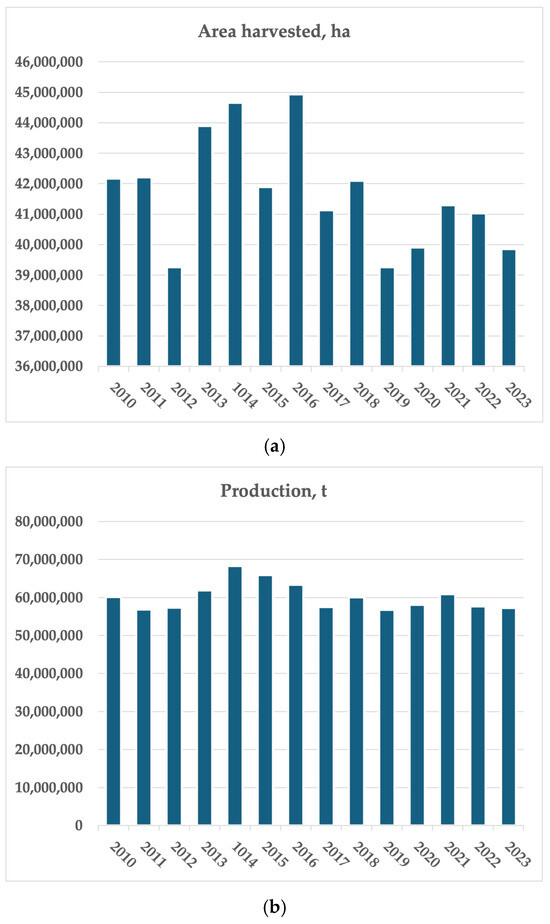
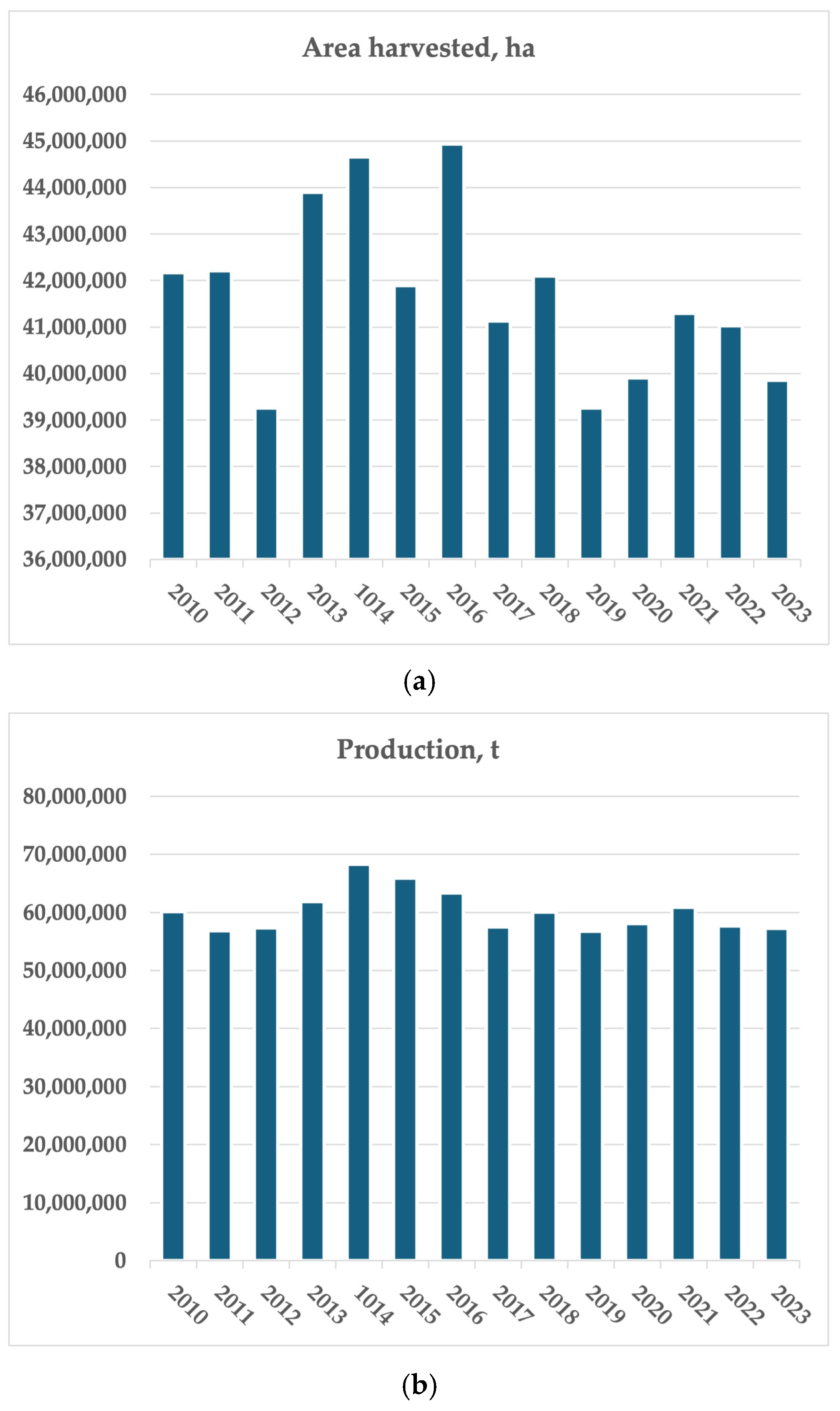
Figure 3 presents the statistics on the global harvested area (ha) and sorghum production (t) for the period 2010–2023. The data were obtained from the Food and Agriculture Organization (FAO) (https://www.fao.org/faostat/en/#data/QCL; accessed on 10 October 2025) [38]. It can be noticed that, in the analyzed period, the largest harvested area (44,934,103 ha) occurred in 2016, while the highest production (68,300,901.55 t) occurred in 2014. These variations are related to the climatic conditions and the productivity of the cultivars. According to [3], the decrease in sorghum cultivation could be explained by its perception as “food for the poor” and by its lower processing quality compared to maize and rice. However, data on sorghum production for 2024 and 2025 are not yet available.
Figure 3.
World sorghum area harvested (a) and production (b) during 2010–2023 (according to https://www.fao.org/faostat/en/#data/QCL; accessed on 10 October 2025).
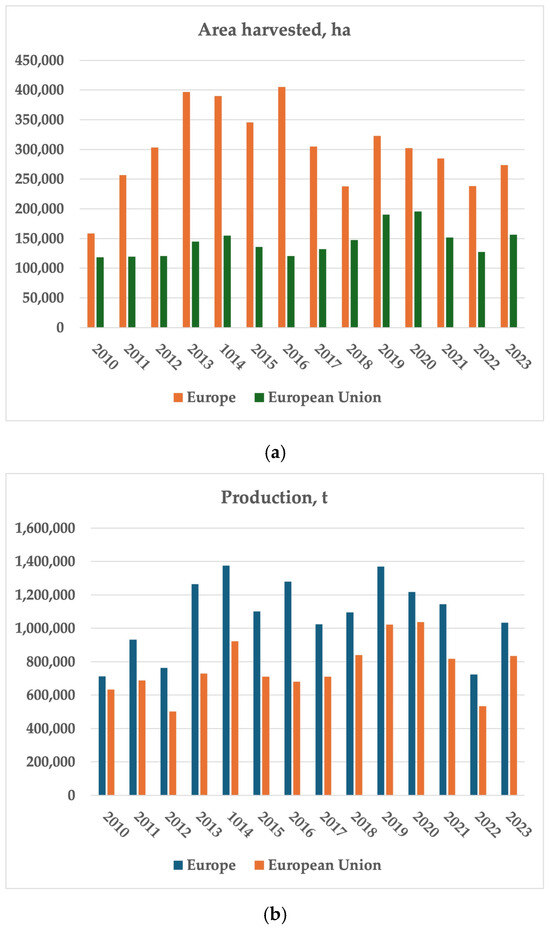
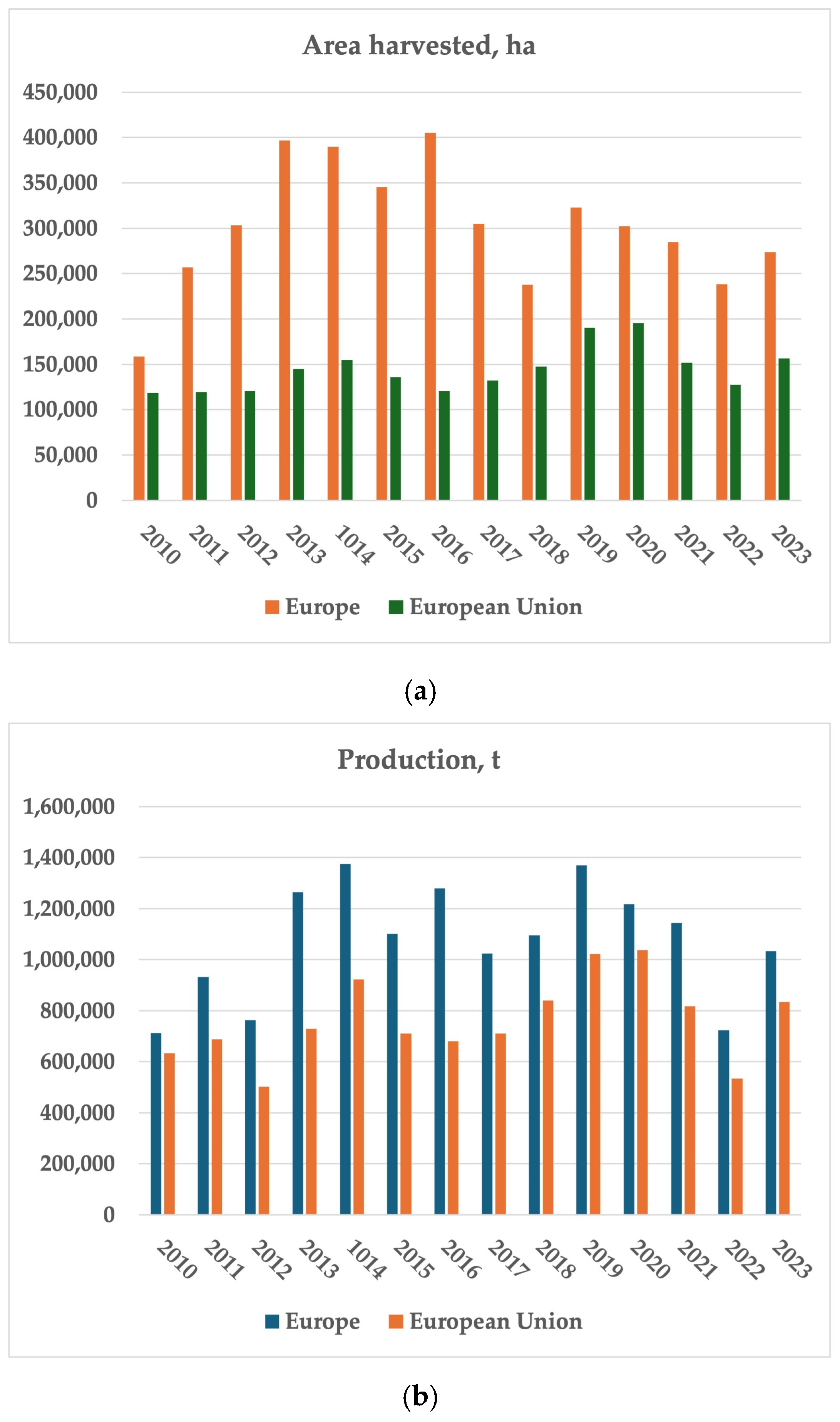
Figure 4 illustrates the evolution of sorghum cultivation (harvested area, ha, and production quantity, t) in Europe and the European Union between 2010 and 2023. Data were obtained from FAO (https://www.fao.org/faostat/en/#data/QCL; accessed on 10 October 2025). The largest harvested area in Europe (405,383 ha) was recorded in 2016, while in the European Union, the maximum (195,740 ha) was reached in 2020. In 2022, a decrease in harvested area and production was observed both in Europe and in the European Union. This decrease represented almost the lowest levels in the period analyzed. The year 2023 seems to be more promising, since a slight increase may be noticed both for harvested area and production.
Figure 4.
Sorghum area harvested (a) and production (b) in Europe and the European Union between 2010 and 2023 (according to https://www.fao.org/faostat/en/#data/QCL; accessed on 10 October 2025).
3.4. Manufacturing Potential
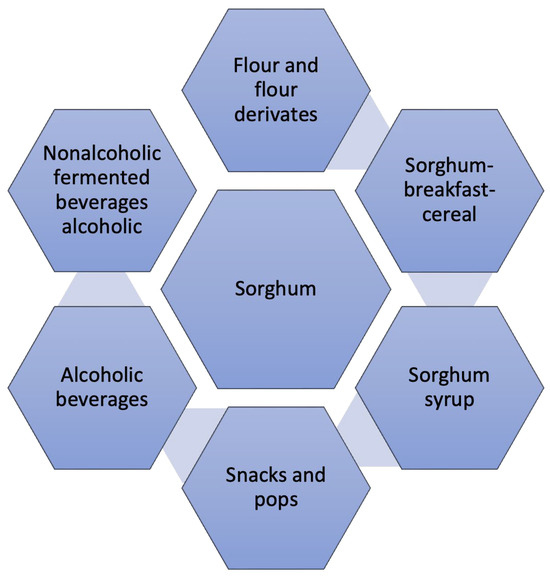
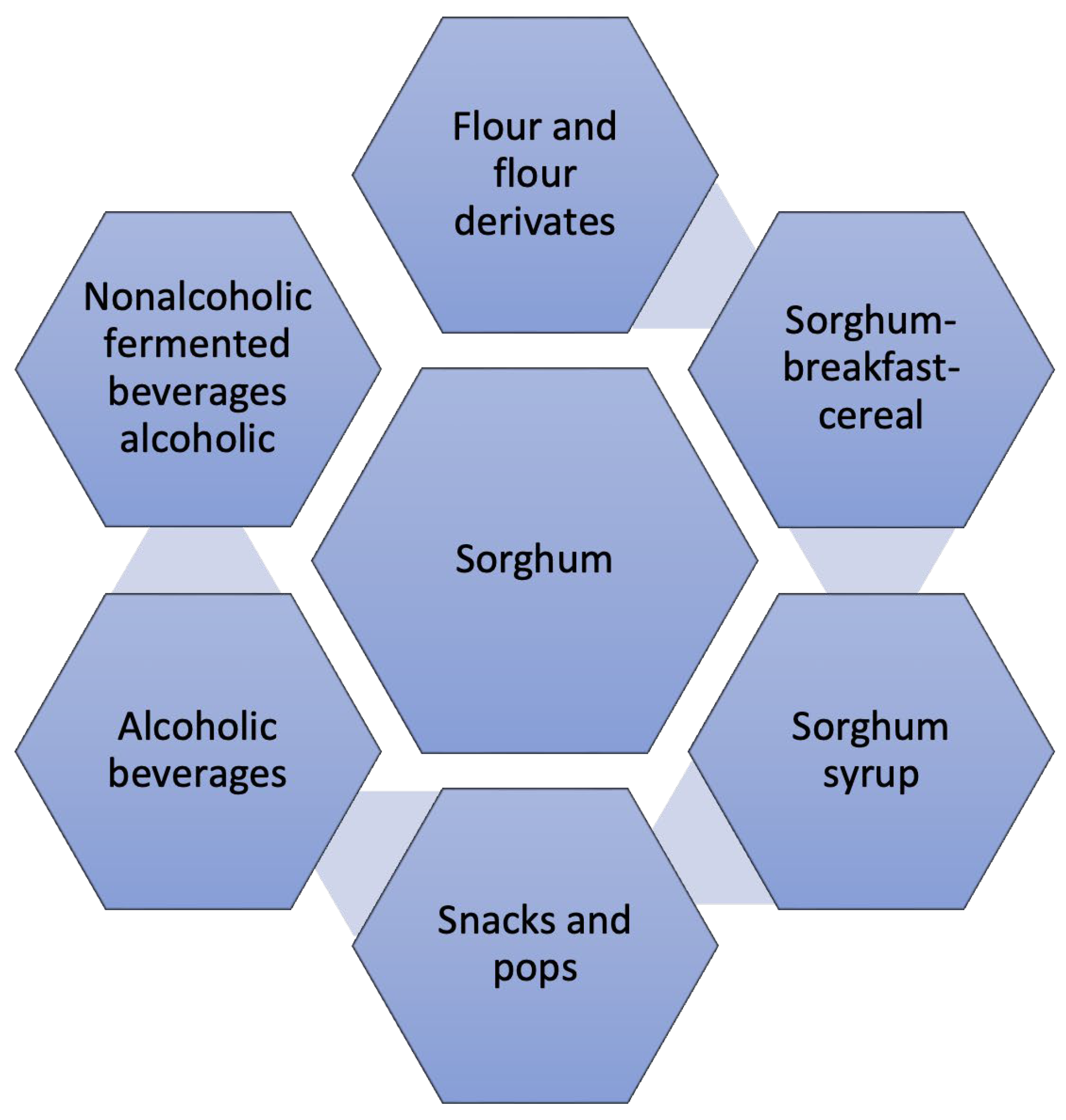
Sorghum’s manufacturing potential will be detailed below. A summary of its main industrial applications is presented in Figure 5.
Figure 5.
Summarized illustration of the manufacturing processing of sorghum grain.
3.4.1. Sorghum Valorization: Possibilities and Challenges
Sorghum promises extensive valorization potential. As an important source of energy, sorghum could be processed in many ways.
As a gluten-free cereal, it is easily accepted by consumers, but this healthy characteristic could also entail some technological challenges.
Its techno-functional properties recommend sorghum as a desirable ingredient in food products by itself. It is also an adjuvant in viscosity, texture, or even shelf-life improvement.
Despite its rich nutrient profile and non-allergenic proteins, sorghum, especially its pigmented grains, due to the presence of multiple antinutritional components (tannins, phytic acid, trypsin inhibitor, and protein cross-linker), needs more attention in the production of human health [39]. Fortunately, simple manufacturing operations such as germination, fermentation, soaking, different types of cooking, or steaming minimize this impediment.
Additionally, these technological processes can improve the quality of sorghum grains and derived products, including flour, bread, cake, porridges, starch, pasta, sweet syrup, alcoholic and non-alcoholic beverages, etc. [40].
3.4.2. Sorghum Processing into Flour and Flour Derivates
The properties and quality of sorghum flour are vital for all of the derived products, such as pasta and noodles. This statement could be sustained by the technological specificity of pasta, which is generally produced from tetraploid wheat (durum wheat) by extrusion or by sheeting and cutting. Thus, the raw material should exhibit firmness, low adhesiveness, which could contribute to low cooking losses, and a large diversity of shapes and tolerance to overcooking [41].
The results of the study on sorghum pasta and noodles revealed that the sorghum containing 40% amylose could be a proper alternative to traditional pasta by using 5–100% sorghum. Pasta obtained using different extrusion technologies showed low cooking losses and high water absorption. Moreover, compared to wheat- and gluten-free products without sorghum, sorghum pasta and noodles showed an improved nutritional profile [42].
Bread is also based on the qualities of flour, especially the dough capacity of fermentation. Bread remains one of the most popular products all over the world, with its consumption increasing consistently. Some researchers were concerned with the development of bread variants such as kissra bread, sourdough bread (SDB), flatbread, khamir bread, and frybread [43]. The conclusion of all the studies is directly related to the absence of gluten, which negatively impacts dough fermentation properties; however, with some additional ingredients similar to those added for sourdough production the technological performance could be essentially improved.
3.4.3. Sorghum-Breakfast-Cereal
Full of color, texture, and flavor, and could be a proper potential grain for breakfast cereals, porridges, flakes, or snacks.
Sorghum-based breakfast-cereal had better sensory acceptance (70.6%) than wheat-based breakfast-cereal (41.18%) [43]. The main aroma of cooked sorghum is given by the aldehydes usually formed in lipid oxidation. Saturated fatty aldehydes are aromatics, so they contribute to the aroma of sorghum cereal products described as similar to almond, malt, pungent, grassy, green and fatty, citrus and rancid, soapy and green, fatty, and citrus and green [44].
Like other similar cereal grains, sorghum can be processed into flakes. The process consists first in roasting, followed by flaking into thin pieces [45].
Among porridges, ogi-baba, produced from wet-milled fermented sorghum, is considered one of the most valuable cereal breakfast alternatives due to its probiotic properties and its unique smooth, creamy, free-flowing texture [46].
3.4.4. Sorghum Syrup
Sorghum is a climate resilient plant with carbon fixation pathway (C4) photosynthetic pathway, which makes it suitable as a sugar-producing crop, just like sugar cane or beet. The sugar syrup, known as sorghum molasses, sorgho, or sorgo, is extracted from the sorghum stalk processed by boiling.
The sugar content in the juice extracted from sorghum ranges from 16 to 23 °Brix, being a good source to obtain syrup or to be used in ethanol production [47]. The syrup is generally dark amber, sweet and sticky with a thick consistency. Similarly to honey, sorghum syrup crystallizes at lower temperatures and liquefies when heated.
Importantly, no chemicals are added during traditional sorghum syrup production. By contrast, the manufacture of sugarcane molasses normally involves various chemicals, which are mainly added to improve the color of the product.
An Indian study [48] on chemical-free sorghum syrup manufacturing concluded that sorghum syrup is a better source of calcium than honey. Sweet sorghum can therefore be used as a substitute for sugarcane, with lower production costs and economic growth.
3.4.5. Sorghum in the Production of Nonalcoholic Fermented Beverages or Alcoholic Ones
Sorghum is used in the production of nonalcoholic fermented beverages or alcoholic ones. Fermentation with yeasts or lactic acid bacteria could improve digestibility and the amino acid profile.
A randomized single-blind pilot study presents the development and effects of non-dairy symbiotic beverages obtained from whole-grain sorghum fermented with Lactobacillus paracasei. The obtained beverage is full of soluble and insoluble dietary fibers and a lower carbohydrate content. Moreover, an in vivo study highlighted that the development of this type of product is very important especially for consumers with special dietary needs, such as vegans, lactose-intolerant individuals, or those with milk protein allergies [49].
Obiolor, another type of non-alcoholic beverage, originating from Nigeria, is obtained from germinated sorghum and millet grains. In the same study, pito, a beer-like beverage, was obtained from sorghum. The study by Ajiboye et al. [50] revealed that sorghum could serve as a raw material to obtain energy dense functional foods with high antioxidant activities and capabilities to prevent the oxidation of lipids and proteins, which is the main responsible for cellular and tissue damage.
Nge and Ballo [51] reported the production and characterization of a wine-like alcoholic beverage obtained from sorghum fermented for 21 days using Saccharomyces Cerevisiae yeast. The results of the study indicate that the yeast quantity significantly influenced the alcohol content. The beverage also exhibited antioxidant benefits and good sensory acceptability among panelists.
Another study [52] presents the production of sorghum-based beverages by single- and two-stage acid, α-amylase enzyme, and germination treatments. The results show that the germination increased technological yield, especially protein, carbohydrate, and phenolic content together, with a good overall acceptability. On the other hand, the use of acids decreased the antioxidant activity of the samples compared to the control. These findings suggest that these treatments caused high digestion of the sorghum grain cell wall, therefore enhancing the nutritional and functional properties of these beverages.
Additionally, ref. [53] present the results of a study on the malting process of sorghum with important outcomes associated with the daily protein intake requirements. The obtained beverages have high protein content, low carbs (depending on the malting period), aromatic compounds (influenced by the fermentation process), and high iron and zinc content. Also, phenols recorded an increase which was expected due to the hydrolysis of the glycosidic bonds. This positively impact the functional properties of the beverage and their colloidal stability, flavor, and color [54].
3.4.6. Sorghum Snacks and Pops
Sorghum is known to have low digestibility directly influenced by cooking. However, sorghum digestibility could be increased by several processes like fermentation, flaking, extrusion, and popping [45].
Extrusion could be another process to obtain snacks or pops. Extrusion utilizes a simple adiabatic friction and is relatively low cost. The results obtained from sorghum extrusion are similar to those from corn meal. Not all types of sorghum are suitable for popping; even so, it could pop just like other similar grains. When compared to popped corn, popped sorghum is more tender than popcorn, contains less hull, does not obstruct the spaces between the teeth, and produces less noise when eaten [55].
Another extremely consumed product, especially in Algeria, is couscous, which is obtained from every cultivated local grain. Its production involves a series of unit operations such as mixing and rolling, and hydrothermal treatments. It also includes hydration, steaming, and drying. Regular grain size and sensorial characteristics are crucial for consumer acceptance. In a study on this topic [56], the authors present the excellent cooking properties of sorghum grain processed into couscous. Also, they noted the effective agro-ecological benefits in sustaining the small local farmers. This can be performed by using naturally raw materials in the production of affordable foods for consumers.
3.4.7. Future Research Directions for Sorghum
A focused bibliometric study will help in identifying the current needs of sorghum and provide a nuanced understanding of existing work and guide future research directions. Furthermore, future research in the development of innovative sorghum-based products is needed, especially due to the expansion of the global warming phenomenon, population growth, associated threads to food security, and the targeting group of consumers allergic to gluten.
Future perspectives range from the deliberate expansion of sorghum cultivation areas in Europe to its use in biological nitrification inhibition and to the exploration of novel applications in food industry, biodegradable packaging, and nutraceuticals.
Additional strategies from governmental and non-governmental organizations could be implemented to support future demand for sorghum and to promote an integrated approach to its valorization.
Seeds policies are in a continuous development in order to protect and support food security in a constantly changing world.
Crops are viewed today as a powerful mechanism to alleviate poverty and hunger and ensure food security. They also sustain the livelihoods of poor communities worldwide rather than just a means of increasing productivity [57].
In addition, major advances in science and analytical tools could be used for the evaluation, selection, screening, and development of new cultivars and their applications.
Progress in digitalization could further facilitate the dissemination of knowledge and technology by creating networks and partnerships.
3.5. Health Benefits
The main health benefits of sorghum and sorghum-based products are attributed to their functional compounds, which could be found in different forms and concentrations, depending on the sorghum variety, growing conditions, the anatomical part of the plant or the processing technology.
3.5.1. Antioxidant Activity
One of the most important properties of sorghum is its antioxidant activity, which is attributed to phenolic acids, proanthocyanidins, and flavonoids. These compounds work by scavenging free radicals, neutralizing oxidative stress to protect cells from damage. Some compounds can also act as metal chelators, preventing metal-catalyzed oxidation. Shen et al. [58] analyzed eight varieties of sorghum grains and identified a series of phenolic compounds: caffeic acid (3.49–8.17 mg/100 g grain), p-Coumaric acid (1.51–8.17 mg/100 g grain), ferulic acid (2.40–86.84 mg/100 g grain), protocatechuic acid (0.57–11.87 mg/100 g grain), luteolinidin (0.50–2.47 mg/100 g grain), apigeninidin (0.70–4.77 mg/100 g grain), luteolin (1.21–4.98 mg/100 g grain), apigenin (0.67–3.97 mg/100 g grain), taxifolin (1.37–44.62 mg/100 g grain), and naringenin (0.50–1.38 mg/100 g grain). They associated these compounds with high antioxidant activity. Other studies reviewed by [35] demonstrated the implication of sorghum functional compounds from sorghum into the antioxidant activity through different mechanisms.
Hong et al. [59] characterized the phenolic content of two black-seeded sorghum lines and, apart from evaluating their antioxidant activity, they also demonstrated anti-inflammatory activity in Lipopolysaccharide-induced RAW 264.7 macrophages. This potential of sorghum extracts was also demonstrated by [60,61,62], to mention just a few of the latest studies.
3.5.2. Anticancer Potential
According to many reports, sorghum exhibits anticancer potential, largely due to its high content of phenolic compounds, which act as antioxidants to protect against oxidative stress. These compounds also inhibit cancer cell growth by inducing cell cycle arrest and triggering apoptosis (programmed cell death). Additionally, sorghum polyphenols have been shown to interfere with cancer-related cellular pathways, such as suppressing the activity of the β-catenin protein. Ham et al. [60] studied the effects of diverse Sorghum bicolor seed extracts on cell morphology, viability, and apoptosis-related gene expression in human gastric (AGS) and colon (HCT116) cancer cells. They noticed the inhibition of cell growth and the expression of apoptosis-related genes. Another study reported by Espitia-Hernández et al. [63] demonstrated cytotoxicity and antiproliferative effect of different extracts of sorghum on human lung carcinoma (A549) and mouse embryonic fibroblast (NIH-3T3). These effects were more intense in the case of extracts obtained by solid state fermentation, comparing to those prepared using ultrasound or microwave extractions. Chen et al. [64] extracted polyphenols from sorghum pericarp and observed cytostatic and apoptotic activity against hepatocarcinoma and colorectal adenocarcinoma. Other studies investigated the possibilities to obtain new compounds useful for anticancer treatment from sorghum leaf extracts [65] or from kafirin-based nanoparticles [66].
3.5.3. Antidiabetic Activity
Another health benefit of sorghum is related to the antidiabetic effect induced through its phenolic compounds and tannins, which inhibit carbohydrate-digesting enzymes like α-amylase and α-glucosidase. It also improves insulin sensitivity by influencing the peroxisome proliferator-activated receptor gamma (PPAR-γ) pathway [67], reducing inflammatory markers, and increasing adiponectin levels. Additionally, sorghum can prevent the formation of advanced glycation end-products (AGEs). Senevirathne et al. [68] evaluated antiamylase, antiglucosidase, and early- and middle-stage antiglycation and glycation-reversing activities in vitro using methanolic extracts of whole sorghum grains. They stated that the samples obtained from pigmented sorghum exhibited significantly high (p < 0.05) antiamylase and early- and middle-stage antiglycation and glycation reversing activities compared to other millet and sorghum samples. Indrianingsih et al. [69] soaked red and white sorghum before processing it into flour. They stated that both types of flour presented approximately 97% alpha-glucosidase inhibitory effect. Ofosu et al. [70] reported α-glucosidase and α-amylase inhibition, as well as anti-glycation properties, in eight brown sorghum genotypes. The antidiabetic action of sorghum could be further enhanced by fermentation, as [71,72] stated.
3.5.4. Anti-Obesity Effects
The functional compounds in sorghum reduced intracellular lipid accumulation and the expression of adipogenic and lipogenic proteins in a dose-dependent manner in differentiated 3T3-L1 cells [73]. It proved to be efficient in hyperlipidemia management of high-fat diet-induced obese rats [74]. The underlying mechanisms for reducing obesity are not fully elucidated yet, but they thought to be related to increased satiety, reduced fat accumulation, inhibition of fat cell development, or the difficulty in digesting resistant starch.
4. Conclusions and Outlook
Sorghum is a resistant, versatile cereal crop with significant potential for valorization, especially in the current context of integrated and circular economy models.
At present, sorghum grain could be considered a viable cereal grain alternative to wheat, sugar cane, or other cereal grains for the development of innovative food products for human consumption.
Along with its many functional properties, sorghum also holds promise as a contributor to the health-promoting potential of food products.
However, studies on sorghum-based products are still scarce in many countries. Further research is required to investigate the industrial applications of sorghum revalorization.
Additionally, the use of sorghum as a gluten-free substitute for highly refined grains could greatly increase the nutritional profile of innovative grain-based products while maintaining the taste and texture that consumers expect.
Author Contributions
Conceptualization, D.-G.A. and O.-V.N.; methodology, D.-G.A. and O.-V.N.; validation, D.-G.A. and O.-V.N.; investigation, D.-G.A. and O.-V.N.; resources, D.-G.A. and O.-V.N.; data curation, D.-G.A. and O.-V.N.; writing—original draft preparation, D.-G.A. and O.-V.N.; writing—review and editing, D.-G.A. and O.-V.N.; visualization, D.-G.A. and O.-V.N.; supervision, D.-G.A. and O.-V.N. All authors have read and agreed to the published version of the manuscript.
Funding
This research received no external funding.
Data Availability Statement
Due the fact that this is a review article, the data are available through the listed references and could be consulted online or by request.
Acknowledgments
The linguistic review of the present article was made by Cocu Iulia Veronica, member of the Research Center “Interface Research of the Original and Translated Text. Cognitive and Communicative Dimensions of the Message”, Faculty of Letters, “Dunărea de Jos” University of Galați, Romania.
Conflicts of Interest
The authors declare no conflicts of interest.
References
- Winchell, F.; Stevens, C.J.; Murphy, C.; Champion, L.; Fuller, D.Q. Evidence for Sorghum Domestication in Fourth Millennium BC Eastern Sudan: Spikelet Morphology from Ceramic Impressions of the Butana Group. Curr. Anthropol. 2017, 58, 673–683. [Google Scholar] [CrossRef] [Scilit]
- Khalifa, M.; Eltahir, E.A.B. Assessment of Global Sorghum Production, Tolerance, and Climate Risk. Front. Sustain. Food Syst. 2023, 7, 1184373. [Google Scholar] [CrossRef] [Scilit]
- George, T.T.; Obilana, A.O.; Oyenihi, A.B.; Obilana, A.B.; Akamo, D.O.; Awika, J.M. Trends and Progress in Sorghum Research over Two Decades, and Implications for Global Food Security. S. Afr. J. Bot. 2022, 151, 960–969. [Google Scholar] [CrossRef] [Scilit]
- Mwamahonje, A.; Mdindikasi, Z.; Mchau, D.; Mwenda, E.; Sanga, D.; Garcia-Oliveira, A.L.; Ojiewo, C.O. Advances in Sorghum Improvement for Climate Resilience in the Global Arid and Semi-Arid Tropics: A Review. Agronomy 2024, 14, 3025. [Google Scholar] [CrossRef] [Scilit]
- Stoicea, P.; Iorga, A.M.; David, L.; Bucur, C.G. Sorghum, the Crop of the Future under Climate Change Conditions. Sci. Pap. Ser. Manag. Econ. Eng. Agric. Rural Dev. 2025, 25, 789–803. [Google Scholar]
- Hossain, M.S.; Islam, M.N.; Rahman, M.M.; Mostofa, M.G.; Khan, M.A.R. Sorghum: A Prospective Crop for Climatic Vulnerability, Food and Nutritional Security. J. Agric. Food Res. 2022, 8, 100300. [Google Scholar] [CrossRef] [Scilit]
- Bakari, H.; Djomdi; Ruben, Z.F.; Roger, D.D.; Cedric, D.; Guillaume, P.; Pascal, D.; Philippe, M.; Gwendoline, C. Sorghum (Sorghum bicolor L. Moench) and Its Main Parts (By-Products) as Promising Sustainable Sources of Value-Added Ingredients. Waste Biomass Valor. 2023, 14, 1023–1044. [Google Scholar] [CrossRef] [Scilit]
- Rumler, R.; Bender, D.; Schönlechner, R. Sorghum and Its Potential for the Western Diet. J. Cereal Sci. 2022, 104, 103425. [Google Scholar] [CrossRef] [Scilit]
- Pontieri, P.; Troisi, J.; Calcagnile, M.; Bean, S.R.; Tilley, M.; Aramouni, F.; Boffa, A.; Pepe, G.; Campiglia, P.; Del Giudice, F.; et al. Chemical Composition, Fatty Acid and Mineral Content of Food-Grade White, Red and Black Sorghum Varieties Grown in the Mediterranean Environment. Foods 2022, 11, 436. [Google Scholar] [CrossRef] [Scilit] [PubMed]
- Haziman, M.L.; Ishaq, M.I.; Qonit, M.A.H.; Lestari, E.G.; Susilawati, P.N.; Widarsih, W.; Syukur, C.; Herawati, H.; Arief, R.; Santosa, B.; et al. Sorghum Starch Review: Structural Properties, Interactions with Proteins and Polyphenols, and Modification of Physicochemical Properties. Food Chem. 2025, 463, 139810. [Google Scholar] [CrossRef] [Scilit]
- Baah, R.O.; Duodu, K.G.; Harasym, J.; Emmambux, M.N. Nutritional and Functional Properties of Decorticated and Microwave Heat Moisture Treated White Sorghum Meal with Added Non-Tannin and Tannin Phenolic Extract. Food Chem. 2025, 475, 143261. [Google Scholar] [CrossRef] [Scilit]
- Jannasch, A.; Wang, Y.-J.; Lee, S.-O.; Liyanage, R.; Alraawi, Z.; Thallapuranam, S.; Rooney, W.L. Polyphenol-Induced Protein Structural Modifications in Sorghum on Pasting Properties. LWT 2024, 210, 116881. [Google Scholar] [CrossRef] [Scilit]
- Xu, L.; Song, X.; Yao, D.; Wang, C.; Yao, X.; Li, Z. Dynamic Migration of Phenolics in Microwaved Combined Cooked Sorghum: Focus on the Polyphenols Interact with Starch/Protein. Food Chem. X 2025, 27, 102342. [Google Scholar] [CrossRef] [Scilit]
- Yang, C.; Lv, P.; Han, H.; Xiao, X.; Xu, C.; Gilbert, R.G.; Li, E. Investigation of Changes in the Fine Structure of Sorghum Starch in the Baijiu Fermentation Process. Food Hydrocoll. 2024, 152, 109905. [Google Scholar] [CrossRef] [Scilit]
- Zhang, K.; Ke, F.; Zhou, H.; Wang, J.; Ma, Z.; Zhang, F.; Wang, Y.; Zhang, Z.; Lu, F.; Duan, Y.; et al. The Correlation of Starch Composition, Physicochemical and Structural Properties of Different Sorghum Grains. Front. Plant Sci. 2025, 16. [Google Scholar] [CrossRef] [Scilit]
- Kang, X.; Gao, W.; Cheng, Y.; Yu, B.; Cui, B.; Abd El-Aty, A.M. Investigating Structural and Property Modifications in Starch from Waxy, Stick, and H37 Sorghum Varieties: Advancing Starch Structure Understanding and Applications. Ind. Crops Prod. 2023, 203, 117239. [Google Scholar] [CrossRef] [Scilit]
- Kumar, A.A. Botany, Taxonomy and Breeding. In The Sorghum Genome; Rakshit, S., Wang, Y.-H., Eds.; Springer International Publishing: Cham, Switzerland, 2016; pp. 27–45. ISBN 978-3-319-47789-3. [Google Scholar]
- Taxon: Sorghum Bicolor. Available online: https://acir.aphis.usda.gov/s/cird-taxon/a0ut0000000rAYjAAM/sorghum-bicolor (accessed on 6 November 2025).
- Rooney, L.W.; Rooney, W.L.; Saldivar, S.O.S. Sorghum. Ref. Modul. Food Sci. 2016. [Google Scholar] [CrossRef] [Scilit]
- Khoddami, A.; Messina, V.; Vadabalija Venkata, K.; Farahnaky, A.; Blanchard, C.L.; Roberts, T.H. Sorghum in Foods: Functionality and Potential in Innovative Products. Crit. Rev. Food Sci. Nutr. 2023, 63, 1170–1186. [Google Scholar] [CrossRef] [Scilit]
- Xue, W.; Yang, S.; Liu, X.; Qian, M.; Wang, H.; Yang, H.; Liu, X.; Shen, Y.; Li, J.; Sun, Z. Enhanced Sweet Sorghum Growth and Soil Quality in Coastal Saline–Alkali Soils Through Organic Acid-Containing Bio-Based Materials and Microbial Synergy. Agronomy 2025, 15, 56. [Google Scholar] [CrossRef] [Scilit]
- The Sorghum Plant. Available online: https://sorghumtrust.co.za/the-sorghum-plant/ (accessed on 6 November 2025).
- Sorghum Morphology and Anatomy. Available online: https://evolution.earthathome.org/grasses/andropogoneae/sorghum-morphology/ (accessed on 6 November 2025).
- Mawouma, S.; Condurache, N.N.; Turturică, M.; Constantin, O.E.; Croitoru, C.; Rapeanu, G. Chemical Composition and Antioxidant Profile of Sorghum (Sorghumbicolor (L.) Moench) and Pearl Millet (Pennisetumglaucum (L.) R.Br.) Grains Cultivated in the Far-North Region of Cameroon. Foods 2022, 11, 2026. [Google Scholar] [CrossRef] [Scilit] [PubMed]
- Food Search|USDA FoodData Central. Available online: https://fdc.nal.usda.gov/food-search?query=sorghum (accessed on 6 November 2025).
- Jocelyne, R.E.; Béhiblo, K.; Ernest, A.K. Comparative Study of Nutritional Value of Wheat, Maize, Sorghum, Millet, and Fonio: Some Cereals Commonly Consumed in Côte d’Ivoire. Eur. Sci. J. 2020, 16, 118. [Google Scholar] [CrossRef] [Scilit]
- Taylor, J.R.; Duodu, K.G. Effects of Processing Sorghum and Millets on Their Phenolic Phytochemicals and the Implications of This to the Health-Enhancing Properties of Sorghum and Millet Food and Beverage Products. J. Sci. Food Agric. 2015, 95, 225–237. [Google Scholar] [CrossRef] [Scilit]
- Dadnia, M.R.; Mojaddam, M.; Ayaran, A. Role of Copper on Physiological Parameters and Salt Tolerance in Sweet Sorghum (Sorghum bicolor L.) Cultivars. J. Crop Nutr. Sci. 2018, 4, 47–59. [Google Scholar]
- Moraes, É.A.; da Marineli, R.S.; Lenquiste, S.A.; Queiroz, V.A.V.; Camargo, R.L.; Borck, P.C.; Carneiro, E.M.; Maróstica Júnior, M.R. Whole Sorghum Flour Improves Glucose Tolerance, Insulin Resistance and Preserved Pancreatic Islets Function in Obesity Diet-Induced Rats. J. Funct. Food. 2018, 45, 530–540. [Google Scholar] [CrossRef] [Scilit]
- Pontieri, P.; Del Giudice, L. Sorghum: A Novel and Healthy Food. Int. J. Food Sci. 2016, 33–42. [Google Scholar] [CrossRef] [Scilit]
- Dykes, L.; Rooney, L.W. Sorghum and Millet Phenols and Antioxidants. J. Cereal Sci. 2006, 44, 236–251. [Google Scholar] [CrossRef] [Scilit]
- Dykes, L.; Peterson, G.C.; Rooney, W.L.; Rooney, L.W. Flavonoid Composition of Lemon-Yellow Sorghum Genotypes. Food Chem. 2011, 128, 173–179. [Google Scholar] [CrossRef] [Scilit]
- Davis, H.; Xiaoyu, S.; Yanting, S.; Jingwen, X.; Donghai, W.; Scott, S.; Fadi, A.; Weiqung, W. Phenotypic Diversity of Colored Phytochemicals in Sorghum Accessions with Various Pericarp Pigments. In Polyphenols in Plants; Academic Press: Cambridge, MA, USA, 2019; pp. 123–131. [Google Scholar]
- Shen, Y.; Su, X.; Rhodes, D.; Herald, T.; Xu, J.; Chen, X.; Smith, S.; Wang, W. The Pigments of Sorghum Pericarp Are Associated with the Contents of Cartenoids and Pro-Vitamin A. Int. J. Food Nutrit. Sci. 2017, 6, 48–56. [Google Scholar]
- Xu, J.; Wang, W.; Zhao, Y. Phenolic Compounds in Whole Grain Sorghum and Their Health Benefits. Foods 2021, 10, 1921. [Google Scholar] [CrossRef] [Scilit]
- Wallace, T.C. Anthocyanins in Cardiovascular Disease. Adv. Nutr. 2011, 2, 1–7. [Google Scholar] [CrossRef] [Scilit]
- Thilakarathna, R.C.N.; Madhusankha, G.D.M.P.; Navaratne, S.B. Potential Food Applications of Sorghum (Sorghum bicolor) and Rapid Screening Methods of Nutritional Traits by Spectroscopic Platforms. J. Food Sci. 2022, 87, 36–51. [Google Scholar] [CrossRef] [Scilit]
- FAOSTAT. Available online: https://www.fao.org/faostat/en/#data/QCL (accessed on 7 November 2025).
- Afify, A.E.-M.M.R.; El-Beltagi, H.S.; El-Salam, S.M.A.; Omran, A.A. Protein Solubility, Digestibility and Fractionation after Germination of Sorghum Varieties. PLoS ONE 2012, 7, e31154. [Google Scholar] [CrossRef] [Scilit]
- Palacios, C.E.; Nagai, A.; Torres, P.; Rodrigues, J.A.; Salatino, A. Contents of Tannins of Cultivars of Sorghum Cultivated in Brazil, as Determined by Four Quantification Methods. Food Chem. 2021, 337, 127970. [Google Scholar] [CrossRef] [Scilit]
- Wang, L.; Duan, W.; Zhou, S.; Qian, H.; Zhang, H.; Qi, X. Effects of Extrusion Conditions on the Extrusion Responses and the Quality of Brown Rice Pasta. Food Chem. 2016, 204, 320–325. [Google Scholar] [CrossRef] [Scilit] [PubMed]
- Palavecino, P.M.; Curti, M.I.; Bustos, M.C.; Penci, M.C.; Ribotta, P.D. Sorghum Pasta and Noodles: Technological and Nutritional Aspects. Plant Foods Hum. Nutr. 2020, 75, 326–336. [Google Scholar] [CrossRef] [Scilit] [PubMed]
- Rashwan, A.K.; Yones, H.A.; Karim, N.; Taha, E.M.; Chen, W. Potential Processing Technologies for Developing Sorghum-Based Food Products: An Update and Comprehensive Review. Trends Food Sci. Technol. 2021, 110, 168–182. [Google Scholar] [CrossRef] [Scilit]
- Chen, S.; Wang, L.; Ni, D.; Lin, L.; Wang, H.; Xu, Y. Characterization of Aroma Compounds in Cooked Sorghum Using Comprehensive Two-Dimensional Gas Chromatography-Time-of-Flight Mass Spectrometry and Gas Chromatography-Olfactometry-Mass Spectrometry. Molecules 2021, 26, 4796. [Google Scholar] [CrossRef] [Scilit]
- Ratnavathi, C. Sorghum Processing and Utilization. In Sorghum Biochemistry: An Industrial Perspective; Academic Press: Cambridge, MA, USA, 2016; ISBN 978-0-12-803182-7. [Google Scholar]
- Adebo, O. African Sorghum-Based Fermented Foods: Past, Current and Future Prospects. Nutrients 2020, 12, 1111. [Google Scholar] [CrossRef] [Scilit]
- Mazumdar, S.D.; Poshadri, A.; Srinivasa Rao, P.; Ravinder Reddy, C.; Reddy, B.V.S. Innovative Use of Sweet Sorghum Juice in the Beverage Industry. Int. Food Res. J. 2012, 19, 1361–1366. [Google Scholar]
- Nimbkar, N.; Kolekar, N.M.; Akade, J.H.; Rajvanshi, A.K. Syrup Production from Sweet Sorghum. Natl. Agric. Res. Inst. 2006, 1–10. [Google Scholar]
- da Silva, L.A.; de São José, V.P.B.; Rodrigues, L.A.; do Prado, P.V.C.; Toledo, R.C.L.; de Barros, F.A.R.; de Souza, A.M.; Antoniassi, R.; de Carvalho, C.W.P.; Queiroz, V.A.V.; et al. Effects of a Sorghum Beverage with Lacticaseibacillus paracasei on Body Composition, Lipid Profiles, and Intestinal Health in Overweight and Obese Adults: A Randomized Single-Blind Pilot Study. Foods 2024, 13, 3128. [Google Scholar] [CrossRef] [Scilit]
- Ajiboye, T.O.; Iliasu, G.A.; Adeleye, A.O.; Abdussalam, F.A.; Akinpelu, S.A.; Ogunbode, S.M.; Jimoh, S.O.; Oloyede, O.B. Nutritional and Antioxidant Dispositions of Sorghum/Millet-Based Beverages Indigenous to Nigeria. Food Sci. Nutr. 2014, 2, 597–604. [Google Scholar] [CrossRef] [Scilit]
- Nge, S.T.M.; Ballo, A. Development of Functional Beverages Based on Sorghum (Sorghum bicolor) Sap Through Controlled Fermentation. J. Pendidik. IPA Indones. 2025, 11, 793–801. [Google Scholar] [CrossRef] [Scilit]
- Sajjadi Alhashem, S.H.; Ehsani, M.R.; Akhondzadeh Basti, A.; Sharifan, A. Functional, Nutritional, and Sensorial Evaluation of Sorghum-Based Beverages Produced by Single- and Two-Stage Acid, α-Amylase Enzyme, and Germination Treatments. Food Sci. Nutr. 2024, 12, 8129–8136. [Google Scholar] [CrossRef] [Scilit]
- Bwamu, K.E.; Nkirote, K.C.; Kahiu, N.E.; Edgar, K.D. Optimization of Fermentation and Malting Process of Sorghum Beverage and Effects on Nutritional Quality. Afr. J. Food Sci. 2022, 16, 252–260. [Google Scholar] [CrossRef] [Scilit]
- Adebo, O.A.; Gabriela Medina-Meza, I. Impact of Fermentation on the Phenolic Compounds and Antioxidant Activity of Whole Cereal Grains: A Mini Review. Molecules 2020, 25, 927. [Google Scholar] [CrossRef] [Scilit] [PubMed]
- Balasubramanian, S.; Patil, R. Modern Processing Technologies for Sorghum Products. Process. Food Ind. 2011, 13–18. Available online: https://www.researchgate.net/publication/278686120_Modern_processing_technologies_for_sorghum_products (accessed on 6 November 2025).
- Belmouloud, R.; Bourekoua, H.; Chemache, L.; Mitrus, M.; Benatallah, L.; Różyło, R.; Wójtowicz, A. Application of Fermented Wheat, Acorns, and Sorghum in Processing of Couscous: Effect on Culinary Quality, Pasting Properties, and Microstructure. Appl. Sci. 2025, 15, 7418. [Google Scholar] [CrossRef] [Scilit]
- Bantilan, M.C.S.; Deb, U.K.; Gowda, C.L.L.; Reddy, B.V.S.; Obilana, A.B.; Evenson, R.E. Future Directions for Food Security and Diversity Partnership and Research Strategy for Sorghum. In Sorghum Genetic Enhancement: Research Process, Dissemination and Impacts; International Crops Research Institute for the Semi-Arid Tropics (ICRISAT): Patancheru, India, 2004; pp. 263–268. ISBN 978-92-9066-470-3. [Google Scholar]
- Shen, S.; Huang, R.; Li, C.; Wu, W.; Chen, H.; Shi, J.; Chen, S.; Ye, X. Phenolic Compositions and Antioxidant Activities Differ Significantly among Sorghum Grains with Different Applications. Molecules 2018, 23, 1203. [Google Scholar] [CrossRef] [Scilit]
- Hong, S.; Pangloli, P.; Perumal, R.; Cox, S.; Noronha, L.E.; Dia, V.P.; Smolensky, D. A Comparative Study on Phenolic Content, Antioxidant Activity and Anti-Inflammatory Capacity of Aqueous and Ethanolic Extracts of Sorghum in Lipopolysaccharide-Induced RAW 264.7 Macrophages. Antioxidants 2020, 9, 1297. [Google Scholar] [CrossRef] [Scilit]
- Ham, D.Y.; Seo, J.W.; Choi, H.J.; Park, J.; Kim, N.Y.; Kim, M.J.; Yu, C.Y.; Seong, E.S. Evaluation of Anti-Inflammatory Activity in Methanolic Seed Extracts of International Sorghum bicolor L. Resources. Agronomy 2024, 14, 997. [Google Scholar] [CrossRef] [Scilit]
- Reyna-Reyna, L.Y.; Montaño-Leyva, B.; Valencia, D.; Cinco-Moroyoqui, F.J.; González-Vega, R.I.; Bernal-Mercado, A.T.; Ballesteros-Monrreal, M.G.; Mendez-Encinas, M.A.; Del-Toro-Sánchez, C.L. Antioxidant, Antibacterial, Anti-Inflammatory, and Antiproliferative Activity of Sorghum Lignin (Sorghum bicolor) Treated with Ultrasonic Pulses. Metabolites 2023, 13, 394. [Google Scholar] [CrossRef] [Scilit] [PubMed]
- Seo, J.; Lee, J.; Ghimire, B.; Kim, M.; Yu, C.; Seong, E. Characterization of Antioxidant and Anti-Inflammatory Activities in the Grains of Collected Sorghum bicolor Varieties. J. Appl. Biol. Chem. 2023, 66, 227–235. [Google Scholar] [CrossRef] [Scilit]
- Espitia-Hernández, P.; Esparza-González, S.C.; Rodríguez-Herrera, R.; Dávila-Medina, M.D.; Chávez-González, M.L.; Ruelas-Chacón, X.; Ascacio-Valdés, J.A.; Flores-Naveda, A.; Sepúlveda, L. Evaluation of Antimicrobial and Antiproliferative Activities of Sorghum Extracts Obtained by Green Extraction Technologies and Solid-State Fermentation. Food Bioprocess. Technol. 2025. [Google Scholar] [CrossRef] [Scilit]
- Chen, X.; Shen, J.; Xu, J.; Herald, T.; Smolensky, D.; Perumal, R.; Wang, W. Sorghum Phenolic Compounds Are Associated with Cell Growth Inhibition through Cell Cycle Arrest and Apoptosis in Human Hepatocarcinoma and Colorectal Adenocarcinoma Cells. Foods 2021, 10, 993. [Google Scholar] [CrossRef] [Scilit]
- Msimango, L.D.; Ogwuegbu, M.C.; Mthiyane, D.M.N.; Onwudiwe, D.C. Biogenic α-Fe2O3 Nanoparticles from Sorghum Bicolor Leaf Extracts and Assessment of the Anticancer and Antioxidant Properties. Discov. Nano 2025, 20, 113. [Google Scholar] [CrossRef] [Scilit]
- Petchimuthu, P.; Kunjiappan, S.; Pandian, S.R.K.; Sankaranarayanan, M.; Sundar, K. Sorghum Grain-Derived Kafirin Nanoparticles for Effective Delivery of Corosolic Acid into Breast Cancer Cells for Potential Treatment of Breast Cancer. J. Clust. Sci. 2025, 36, 81. [Google Scholar] [CrossRef] [Scilit]
- Park, J.H.; Lee, S.H.; Chung, I.-M.; Park, Y. Sorghum Extract Exerts an Anti-Diabetic Effect by Improving Insulin Sensitivity via PPAR-γ in Mice Fed a High-Fat Diet. Nutr. Res. Pract. 2012, 6, 322–327. [Google Scholar] [CrossRef] [Scilit]
- Senevirathne, I.G.N.H.; Abeysekera, W.K.S.M.; Abeysekera, W.P.K.M.; Jayanath, N.Y.; Galbada Arachchige, S.P.; Wijewardana, D.C.M.S.I. Antiamylase, Antiglucosidase, and Antiglycation Properties of Millets and Sorghum from Sri Lanka. Evid. -Based Complement. Altern. Med. 2021, 2021, 5834915. [Google Scholar] [CrossRef] [Scilit] [PubMed]
- Indrianingsih, A.W.; Khasanah, Y.; Noviana, E.; Rahayu, E.; Hastuti, H.P.; Ni’maturrohmah, D.; Suryani, A.E.; Darsih, C.; Windarsih, A.; Handayani, S. The Effect of Soaking of White and Red Varieties of Sorghum bicolor Flour on Its Antioxidant, Antidiabetic and Physicochemical Properties. Food Humanit. 2023, 1, 1531–1538. [Google Scholar] [CrossRef] [Scilit]
- Ofosu, F.K.; Elahi, F.; Daliri, E.B.-M.; Tyagi, A.; Chen, X.Q.; Chelliah, R.; Kim, J.-H.; Han, S.-I.; Oh, D.-H. UHPLC-ESI-QTOF-MS/MS Characterization, Antioxidant and Antidiabetic Properties of Sorghum Grains. Food Chem. 2021, 337, 127788. [Google Scholar] [CrossRef] [Scilit] [PubMed]
- Arunraj, K.; Gokhale, J.S. Enhancing the Antidiabetic and Antioxidant Potential of Yellow Sorghum via Lactic Acid Bacteria Fermentation. J. Cereal Sci. 2025, 126, 104262. [Google Scholar] [CrossRef] [Scilit]
- Ofosu, F.K.; Elahi, F.; Daliri, E.B.-M.; Han, S.-I.; Oh, D.-H. Impact of Thermal Treatment and Fermentation by Lactic Acid Bacteria on Sorghum Metabolite Changes, Their Antioxidant and Antidiabetic Activities. Food Biosci. 2022, 45, 101502. [Google Scholar] [CrossRef] [Scilit]
- Lee, H.-S.; Santana, Á.L.; Peterson, J.; Yucel, U.; Perumal, R.; De Leon, J.; Lee, S.-H.; Smolensky, D. Anti-Adipogenic Activity of High-Phenolic Sorghum Brans in Pre-Adipocytes. Nutrients 2022, 14, 1493. [Google Scholar] [CrossRef] [Scilit] [PubMed]
- Aluko, O.O.; Ajayi, O.B. Investigation of Antilipidemic Efficacy of Condensed Tannins from Three Varieties of Sorghum Bicolor Seeds on High-Fat Diet-Induced Obese Rats. Comp. Clin. Pathol. 2023, 32, 847–858. [Google Scholar] [CrossRef] [Scilit]



Disclaimer/Publisher’s Note: The statements, opinions and data contained in all publications are solely those of the individual author(s) and contributor(s) and not of MDPI and/or the editor(s). MDPI and/or the editor(s) disclaim responsibility for any injury to people or property resulting from any ideas, methods, instructions or products referred to in the content. |
© 2025 by the authors. Licensee MDPI, Basel, Switzerland. This article is an open access article distributed under the terms and conditions of the Creative Commons Attribution (CC BY) license (https://creativecommons.org/licenses/by/4.0/).