The Management of IgG4-Related Disease in Children: A Systematic Review
 ,
,  , , ,
, , , 
Abstract
1. Introduction
2. Materials and Methods
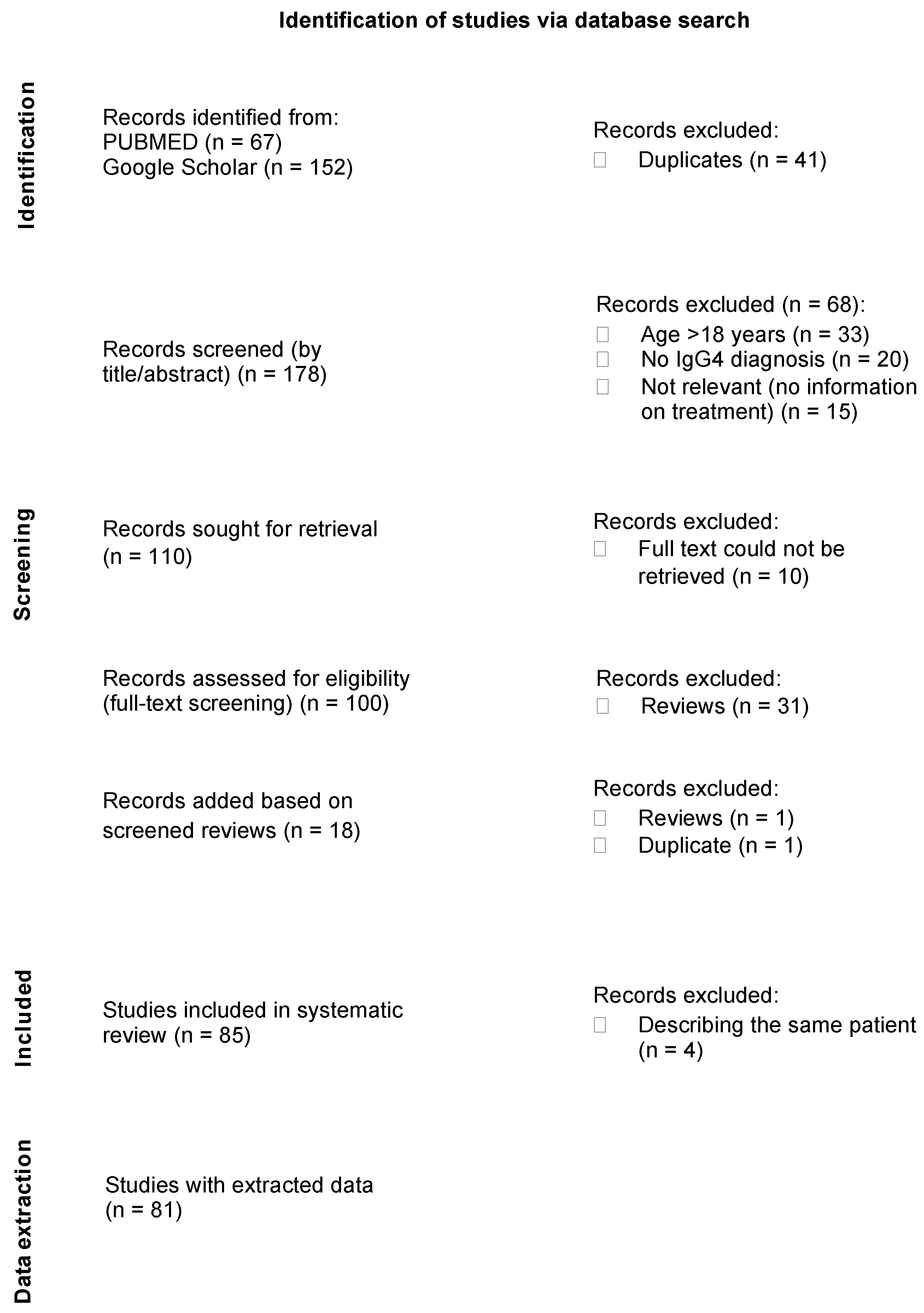
2.1. Search Strategy
2.2. Data Collection and Handling
2.3. Risk of Bias Assessment
3. Results
3.1. Patients
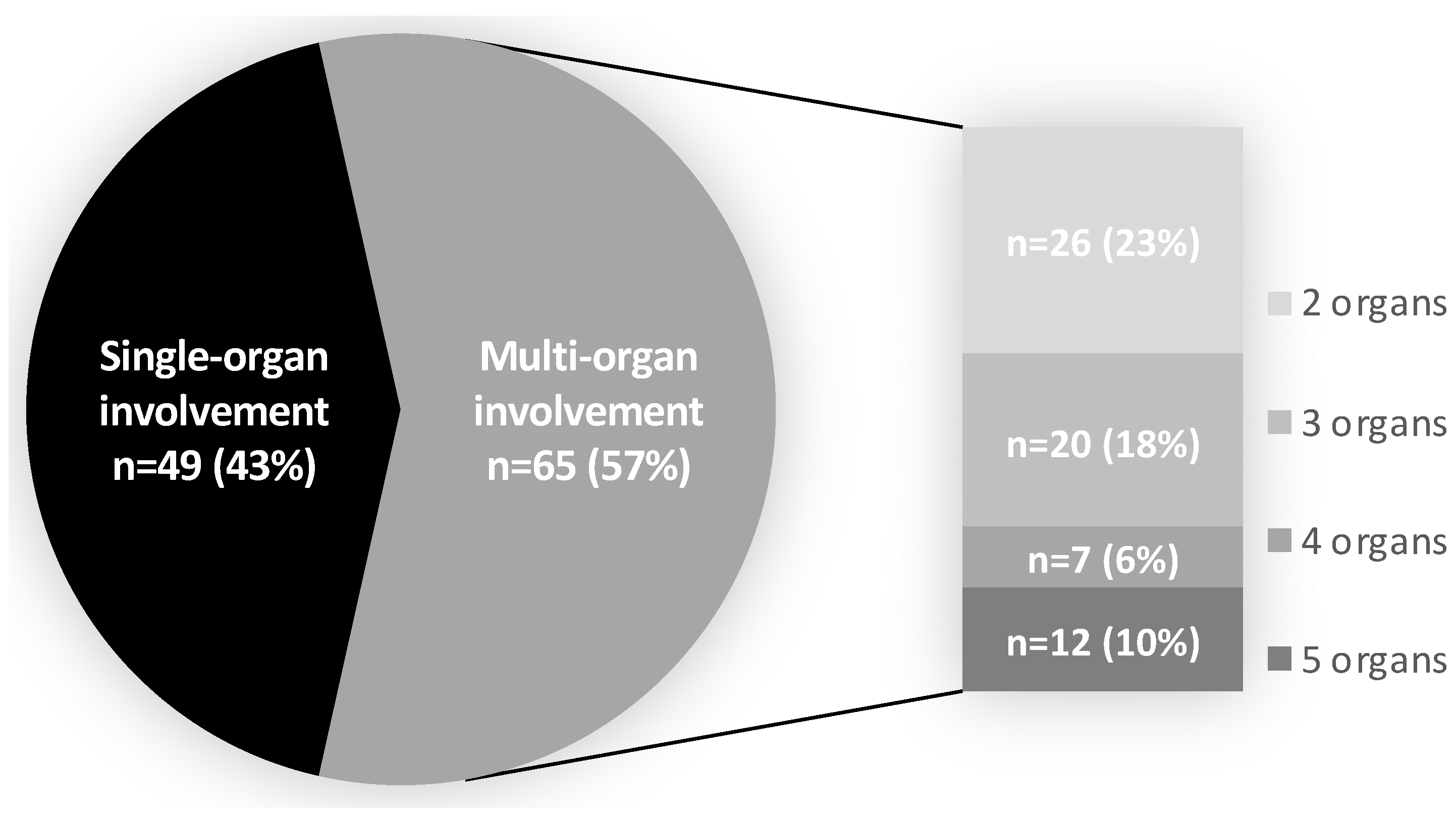
3.2. Organ Manifestation
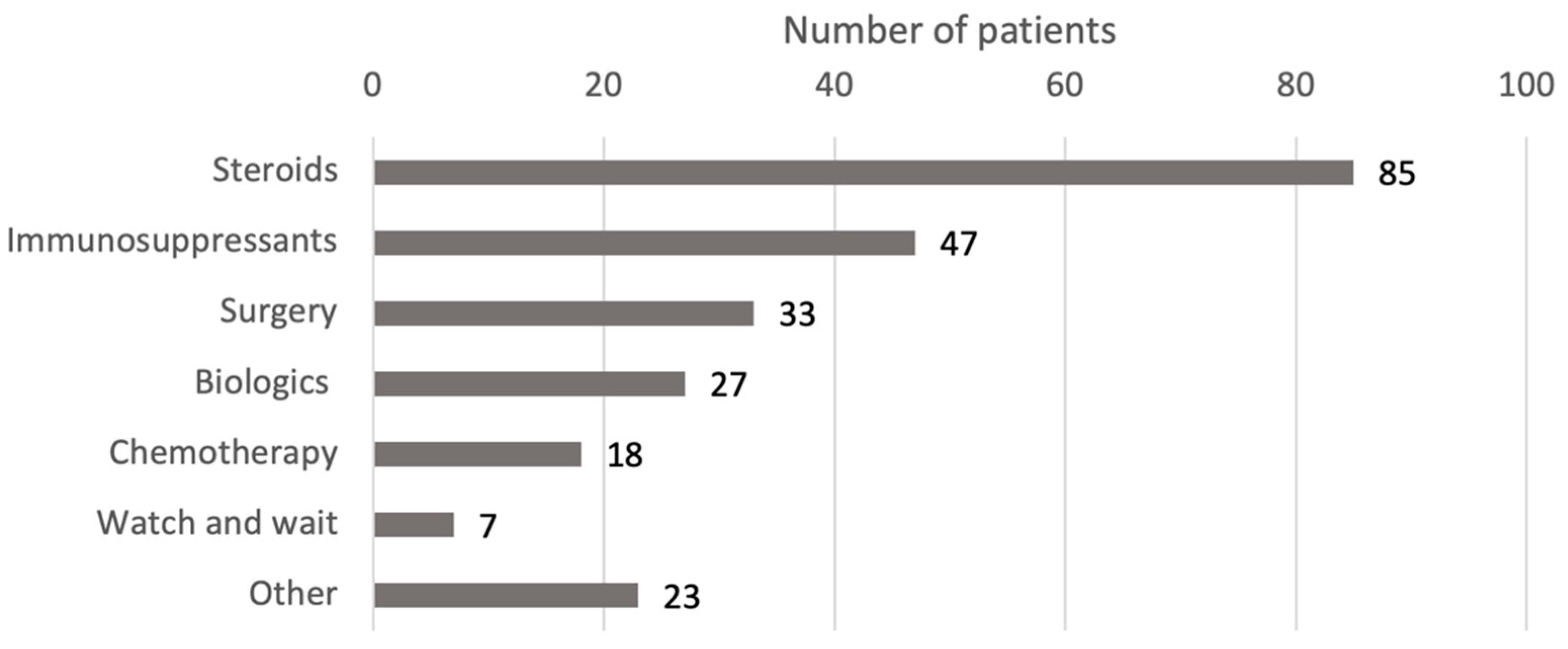
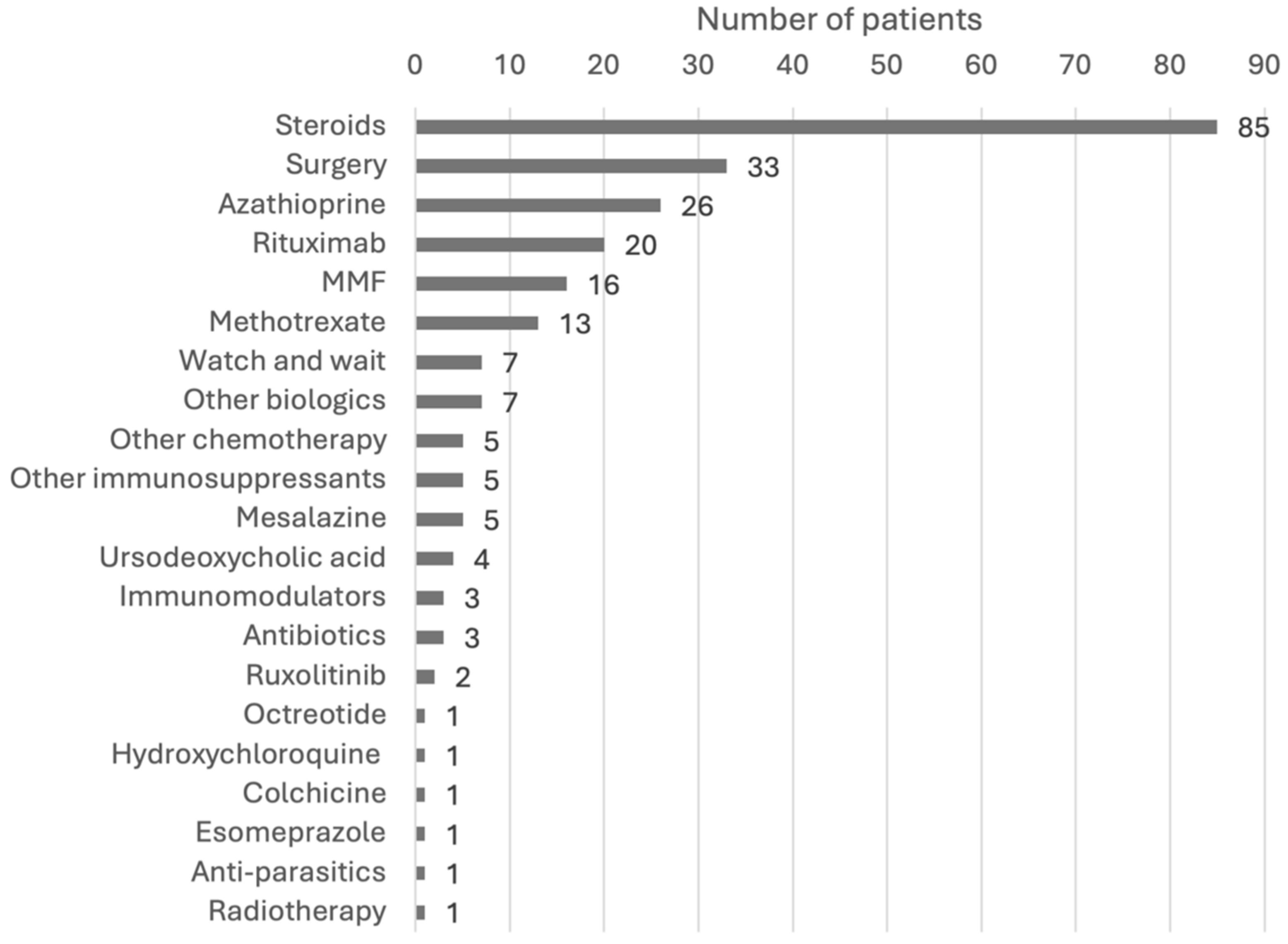
3.3. Therapeutic Approaches
3.3.1. Steroids
3.3.2. Immunosuppressants
3.3.3. Surgical Intervention
3.3.4. Biologics
3.3.5. Chemotherapy
3.3.6. Other Treatments
3.3.7. Watch-and-Wait Strategy
3.4. Age and Sex
4. Discussion
4.1. Limitations
4.2. Conclusions and Future Perspectives
Author Contributions
Funding
Institutional Review Board Statement
Informed Consent Statement
Data Availability Statement
Conflicts of Interest
References
- Hamano, H.; Kawa, S.; Horiuchi, A.; Unno, H.; Furuya, N.; Akamatsu, T.; Fukushima, M.; Nikaido, T.; Nakayama, K.; Usuda, N.; et al. High serum IgG4 concentrations in patients with sclerosing pancreatitis. N. Engl. J. Med. 2001, 344, 732–738. [Google Scholar] [CrossRef] [Scilit]
- Deshpande, V.; Zen, Y.; Chan, J.K.; Yi, E.E.; Sato, Y.; Yoshino, T.; Klöppel, G.; Heathcote, J.G.; Khosroshahi, A.; Ferry, J.A.; et al. Consensus statement on the pathology of IgG4-related disease. Mod. Pathol. 2012, 25, 1181–1192. [Google Scholar] [CrossRef] [Scilit] [PubMed]
- Wallace, Z.; Khosroshahi, A.; Carruthers, M.D.; Perugino, C.A.; Choi, H.; Campochiaro, C.; Culver, E.L.; Cortazar, F.; Della-torre, E.; Ebbo, M.; et al. An international multispecialty validation study of the IgG4-related disease responder index. Arthritis Care Res. 2018, 70, 1671–1678. [Google Scholar] [CrossRef] [Scilit] [PubMed]
- Khosroshahi, A.; Wallace, Z.; Crowe, J.; Akamizu, T.; Azumi, A.; Carruthers, M.N.; Chari, S.T.; Della-Torre, E.; Frulloni, L.; Goto, H.; et al. International consensus guidance statement on the management and treatment of IgG4-related disease. Arthritis Rheumatol. 2015, 67, 1688–1699. [Google Scholar] [CrossRef] [Scilit] [PubMed]
- Wallace, Z.S.; Naden, R.P.; Chari, S.; Choi, H.; Della-Torre, E.; Dicaire, J.; Hart, P.A.; Inoue, D.; Kawano, M.; Khosroshahi, A.; et al. The 2019 American College of Rheumatology/European League against Rheumatism classification criteria for IgG4-related disease. Arthritis Rheumatol. 2019, 72, 7–19. [Google Scholar] [CrossRef] [Scilit] [PubMed]
- Hara, S.; Yoshida, M.; Sanada, H.; Suzuki, Y.; Sato, Y.; Mizushima, I.; Kawano, M. Pediatric IgG4-related disease: A descriptive review. Expert. Rev. Clin. Immunol. 2024, 20, 97–119. [Google Scholar] [CrossRef] [Scilit] [PubMed]
- Floreani, A.; Okazaki, K.; Uchida, K.; Gershwin, M.E. IgG4-related disease: Changing epidemiology and new thoughts on a multisystem disease. J. Transl. Autoimmun. 2020, 4, 100074. [Google Scholar] [CrossRef] [Scilit]
- Zongfei, J.; Lingli, C.; Ying, S.; Lingying, M.; Lijuan, Z.; Dongmei, L.; Xiaomin, D.; Yingyong, H.; Huiyong, C.; Lili, M.; et al. Clinical and pathological predictors of relapse in IgG4-related disease. Arthritis Res. Ther. 2022, 24, 106. [Google Scholar] [CrossRef] [Scilit]
- Patel, U.; Saxena, A.; Patel, D.; Ayesha, I.E.; Monson, N.R.; Klair, N.; Yu, A.K. Therapeutic uses of rituximab and clinical features in immunoglobulin G4-related disease: A systematic review. Cureus 2023, 15, e45044. [Google Scholar] [CrossRef] [Scilit] [PubMed]
- Sane, M.; Chelnis, J.; Kozielski, R.; Fasiuddin, A. Immunoglobulin G4-related sclerosing disease with orbital inflammation in a 12-year-old girl. J. AAPOS 2013, 17, 548–550. [Google Scholar] [CrossRef] [Scilit]
- Jariwala, M.P.; Agarwal, M.; Mulay, K.; Sawhney, S. IgG4-related orbital inflammation presenting as unilateral pseudotumor. Indian. J. Pediatr. 2014, 81, 1108–1110. [Google Scholar] [CrossRef] [Scilit] [PubMed]
- Kaya Akca, Ü.; Atalay, E.; Kasap Cüceoğlu, M.; Şener, S.; Balık, Z.; Başaran, Ö.; Batu, E.D.; Karadağ, Ö.; Özen, S.; Bilginer, Y. IgG4-related disease in pediatric patients: A single-center experience. Rheumatol. Int. 2022, 42, 1177–1185. [Google Scholar] [CrossRef] [Scilit] [PubMed]
- Mulay, K.; Aggarwal, E.; Jariwala, M.; Honavar, S.G. Orbital immunoglobulin-G4-related disease: Case series and literature review. Clin. Exp. Ophthalmol. 2014, 42, 682–687. [Google Scholar] [CrossRef] [Scilit]
- Demir, A.M.; Aydin, F.; Acar, B.; Kurt, T.; Poyraz, A.; Kiremitci, S.; Gülleroglu, B.; Azili, M.N.; Bayrakci, U.S. IgG4-related disease and ANCA positive vasculitis in childhood: A case-based review. Clin. Rheumatol. 2021, 40, 3817–3825. [Google Scholar] [CrossRef] [Scilit] [PubMed]
- Akkelle, B.Ş.; Tutar, E.; Ergelen, R.; Çelikel, Ç.A.; Ertem, D. IgG4 related disease in a seven-year-old girl with multiple organ involvement: A rare presentation. Turk. Pediatri Ars. 2020, 55, 191–194. [Google Scholar] [CrossRef] [Scilit]
- Basu, S.; Utpat, K.; Joshi, J. 18F-FDG PET/CT imaging features of IgG4-related pulmonary inflammatory pseudotumor at initial diagnosis and during early treatment monitoring. J. Nucl. Med. Technol. 2016, 44, 207–209. [Google Scholar] [CrossRef] [Scilit] [PubMed]
- Batu, E.D.; Arici, Z.S.; Orhan, D.; Kiratli, H.; Özen, S. Immunoglobulin G4-related orbital disease: Report of two pediatric cases. Clin. Exp. Rheumatol. 2015, 33, 409–410. [Google Scholar]
- Bélissant, O., Jr.; Guernou, M.; Rouvier, P.; Compain, C.; Bonardel, G. IgG4-related tubulointerstitial nephritis pattern in 18F-FDG PET/CT. Clin. Nucl. Med. 2015, 40, 808–809. [Google Scholar] [CrossRef] [Scilit]
- Bloria, S.D.; Kataria, K.; Luthra, A.; Bloria, P. Anesthetic considerations in a child with IgG4 disease. MAMC J. Med. Sci. 2018, 4, 142–144. [Google Scholar] [CrossRef] [Scilit]
- Bolia, R.; Chong, S.Y.; Coleman, L.; MacGregor, D.; Hardikar, W.; Oliver, M.R. Autoimmune pancreatitis and IgG4-related disease in three children. ACG Case Rep. J. 2016, 3, e115. [Google Scholar] [CrossRef] [Scilit] [PubMed]
- Bu, F.; Koo, S.C. Clinicopathologic characterization of IgG4-rich pediatric head and neck lesions. Arch. Pathol. Lab. Med. 2022, 146, 611–618. [Google Scholar] [CrossRef] [Scilit]
- Bullock, D.R.; Miller, B.S.; Clark, H.B.; Hobday, P.M. Rituximab treatment for isolated IgG4-related hypophysitis in a teenage female. Endocrinol. Diabetes Metab. Case Rep. 2018, 2018, 18-0135. [Google Scholar] [CrossRef] [Scilit]
- Caso, F.; Fiocco, U.; Costa, L.; Sfriso, P.; Punzi, L.; Doria, A. Successful use of rituximab in a young patient with immunoglobulin G4-related disease and refractory scleritis. Jt. Bone Spine 2014, 81, 190–192. [Google Scholar] [CrossRef] [Scilit] [PubMed]
- Chakrabarti, S.; Pal, P.; Dutta, S.; Nada, R. IgG4-related disease at rectovesical pouch mimicking inflammatory myofibroblastic tumor. Indian. Pediatr. 2019, 56, 1059–1061. [Google Scholar] [CrossRef] [Scilit]
- Chen, C.; Chen, K.; Huang, X.; Wang, K.; Qian, S. Concurrent eosinophilia and IgG4-related disease in a child: A case report and review of the literature. Exp. Ther. Med. 2018, 15, 2739–2748. [Google Scholar] [CrossRef] [Scilit] [PubMed]
- Cinar, O.K.; Khaosut, P.; Sebire, N.; Eleftheriou, D.; Al-Obaidi, M. P43 Immunoglobulin G4-related disease in a 10 year-old girl with multisystem involvement. Rheumatology 2019, 58 (Suppl. S4), kez416.010. [Google Scholar] [CrossRef] [Scilit]
- Corujeira, S.; Ferraz, C.; Nunes, T.; Fonseca, E.; Vaz, L.G. Severe IgG4-related disease in a young child: A diagnosis challenge. Case Rep. Pediatr. 2015, 2015, 140753. [Google Scholar] [CrossRef] [Scilit]
- Decker, L.; Crawford, A.M.; Lorenzo, G.; Stippler, M.; Konstantinov, K.N.; SantaCruz, K. IgG4-related hypophysitis: Case report and literature review. Cureus 2016, 8, e907. [Google Scholar] [CrossRef] [Scilit]
- Samundeeswari, D.; Warrier, K.; Camina, N.; Eveleigh, C. Orbital mass in a 9-year-old girl. Rheumatology 2018, 57 (Suppl. S8), key273.024. [Google Scholar] [CrossRef] [Scilit]
- Díaz-Ramírez, G.S.; Medina-Quintero, L.F.; Salinas-César, A.; Zea-Vera, A.F. Dacryoadenitis associated with IgG4-related disease in an Afro-Colombian adolescent. Reumatol. Clin. (Engl. Ed.) 2018, 14, 164–167. [Google Scholar] [CrossRef] [Scilit] [PubMed]
- Dincă, O.M.; Bucur, A.; Zurac, S.A.; Niţă, T.; Jugulete, G.; Vlădan, G.C.; Pădurariu, L.C. Chronic sclerosing sialadenitis of the bilateral submandibular glands in childhood—A diagnostic dilemma. Rom. J. Morphol. Embryol. 2024, 65, 113–118. [Google Scholar] [CrossRef] [Scilit]
- Dylewska, K.; Kobusińska, K.; Kurylak, A. Tumor of the orbit and pterygopalatine fossa: Delayed recognition of possible IgG4-related disease. Contemp. Oncol. 2020, 24, 136–139. [Google Scholar] [CrossRef] [Scilit]
- Emiroglu, M.; Bozkurt, B.; Emiroglu, H.H. IgG4-related disease and ligneous conjunctivitis in a girl: A coexistence or a relationship? Eur. J. Allergy 2019, 74, 379. [Google Scholar]
- Ewing, D.; Hammer, R. IgG4-related disease simulating Hodgkin lymphoma in a child. Am. J. Clin. Pathol. 2014, 142 (Suppl. S1), A111. [Google Scholar] [CrossRef] [Scilit]
- Ferreira da Silva, R.C.; Lieberman, S.M.; Hoffman, H.T.; Policeni, B.; Bashir, A.; Smith, R.J.; Sato, T.S. IgG4-related disease in an adolescent with radiologic-pathologic correlation. Radiol. Case Rep. 2016, 12, 196–199. [Google Scholar] [CrossRef] [Scilit] [PubMed]
- Friedlander, J.; Quiros, J.A.; Morgan, T.; Zhang, Z.; Tian, W.; Kehr, E.; Shackleton, D.V.; Zigman, A.; Stenzel, P. Diagnosis of autoimmune pancreatitis vs neoplasms in children with pancreatic mass and biliary obstruction. Clin. Gastroenterol. Hepatol. 2012, 10, 1051–1055.e1. [Google Scholar] [CrossRef] [Scilit]
- Gabrovska, N.; Velizarova, S.; Spasova, A.; Kostadinov, D.; Yanev, N.; Shivachev, H.; Rangelov, E.; Pahnev, Y.; Antonova, Z.; Kartulev, N.; et al. A case of tracheal stenosis as an isolated form of immunoproliferative hyper-IgG4 disease in a 17-year-old girl. Children 2021, 8, 589. [Google Scholar] [CrossRef] [Scilit] [PubMed]
- Galloway, D.P.; Wallihan, D.; Smith, M.T.; Abu-El-Haija, M. An unusual presentation of pediatric autoimmune pancreatitis. Pancreas 2016, 45, e1–e2. [Google Scholar] [CrossRef] [Scilit] [PubMed]
- Gillispie, M.C.; Thomas, R.D.; Hennon, T.R. Successful treatment of IgG-4 related sclerosing disease with rituximab: A novel case report. Clin. Exp. Rheumatol. 2015, 33, 549–550. [Google Scholar]
- Goag, E.K.; Park, J.E.; Lee, E.H.; Park, Y.M.; Kim, C.Y.; Lee, J.M.; Kim, Y.J.; Kim, Y.S.; Kim, S.K.; Chang, J.; et al. A case of extensive IgG4-related disease presenting as massive pleural effusion, mediastinal mass, and mesenteric lymphadenopathy in a 16-year-old male. Tuberc. Respir. Dis. 2015, 78, 396–400. [Google Scholar] [CrossRef] [Scilit]
- Griepentrog, G.J.; Vickers, R.W.; Karesh, J.W.; Azari, A.A.; Albert, D.M.; Bukat, C.N. A clinicopathologic case study of two patients with pediatric orbital IgG4-related disease. Orbit 2013, 32, 389–391. [Google Scholar] [CrossRef] [Scilit]
- Hasosah, M.Y.; Satti, M.B.; Yousef, Y.A.; Alzahrani, D.M.; Almutairi, S.A.; Alsahafi, A.F.; Sukkar, G.A.; Alzaben, A.A. IgG4-related sclerosing mesenteritis in a 7-year-old Saudi girl. Saudi J. Gastroenterol. 2014, 20, 385–388. [Google Scholar] [CrossRef] [Scilit]
- Hsu, C.-T.; Jeng, Y.-M.; Wu, J.-F. Immunoglobulin G4-related sclerosing cholangitis in a 3-year-old boy. Adv. Dig. Med. 2021, 8, 59–63. [Google Scholar] [CrossRef] [Scilit]
- Huelsen, A.; Bailey, W.; Whitehead, M.; Chalmers-Watson, T. Autoimmune pancreatitis and primary sclerosing cholangitis in a 16-year-old boy with inflammatory bowel disease. Clin. J. Gastroenterol. 2012, 5, 131–135. [Google Scholar] [CrossRef] [Scilit] [PubMed]
- Jalaj, S.; Dunbar, K.; Campbell, A.; Kazim, M. Treatment of pediatric IgG4-related orbital disease with TNF-α inhibitor. Ophthalmic Plast. Reconstr. Surg. 2018, 34, e10–e12. [Google Scholar] [CrossRef] [Scilit]
- Johnson, J.S.; Saltzman, A.F.; Treece, A.L.; Cost, N.G. A case of IgG4-related renal pseudotumor in a child with history of Wilms tumor. Urol. Case Rep. 2018, 21, 107–109. [Google Scholar] [CrossRef] [Scilit]
- Jordan, V.A.; Herrera Hernandez, L.P.; Cofer, S.A.; Roby, B.B. Pediatric laryngeal expression and surgical treatment of IgG4-related disease. JAMA Otolaryngol. Head. Neck Surg. 2018, 144, 1183–1184. [Google Scholar] [CrossRef] [Scilit] [PubMed]
- Kalapesi, F.B.; Garrott, H.M.; Moldovan, C.; Williams, M.; Ramanan, A.; Herbert, H.M. IgG4 orbital inflammation in a 5-year-old child presenting as an orbital mass. Orbit 2013, 32, 137–140. [Google Scholar] [CrossRef] [Scilit]
- Karim, A.F.; Bansie, R.D.; Rombach, S.M.; Paridaens, D.; Verdijk, R.M.; van Hagen, P.M.; Van Laar, J.A.M. The treatment outcomes in IgG4-related disease. Neth. J. Med. 2018, 76, 275–285. [Google Scholar]
- Kato, D.; Uchida, H.; Hinoki, A.; Sumida, W.; Shirota, C.; Makita, S.; Okamoto, M.; Takimoto, A.; Takada, S.; Nakagawa, Y. IgG4-related disease of duodenal obstruction due to multiple ulcers in a 12-year-old girl. BMC Pediatr. 2023, 23, 376. [Google Scholar] [CrossRef] [Scilit]
- Kaur, R.; Mitra, S.; Rajwanshi, A.; Das, A.; Nahar Saikia, U.; Dey, P. Fine needle aspiration cytology of IgG4-related disease: A potential diagnostic pitfall? Diagn. Cytopathol. 2016, 45, 14–21. [Google Scholar] [CrossRef] [Scilit] [PubMed]
- Kemp, W.; Majeed, A.; Mitchell, J.; Majumdar, A.; Tse, E.; Skoien, R.; Croagh, D.; Dev, A.; Gao, H.; Weltman, M.; et al. Management, outcomes, and survival of an Australian IgG4-SC cohort: The MOSAIC study. Liver Int. 2021, 41, 2934–2943. [Google Scholar] [CrossRef] [Scilit] [PubMed]
- Kozlova, A.; Burlakov, V.; Abramov, D.; Laberko, A.; Sagoyan, G.; Shcherbina, A. AB1082 Characterisation of a group of patients with Igg4-related disease: Single centre experience. Ann. Rheum. Dis. 2018, 77, 1651. [Google Scholar] [CrossRef] [Scilit]
- La Porta, E.; Pierri, F.; Pisani, I.; Pilato, F.P.; Lanino, E.; Lanino, L.; Sementa, A.R.; Verrina, E.E. IGG4-related disease: Nephropathy and bone marrow failure in a 2-year-old child. Nephrol. Dial. Transplant. 2020, 35 (Suppl. S3), gfaa142.P1832. [Google Scholar] [CrossRef] [Scilit]
- Mainardi, C.; Pizzi, M.; Marzollo, A.; Carraro, E.; Boaro, M.P.; Mussolin, L.; Massano, D.; Tazzoli, S.; Onofrillo, D.; Cesaro, S.; et al. Pediatric IgG4-related lymphadenopathy: A rare condition associated with autoimmunity and lymphoproliferative disorders. Pediatr. Allergy Immunol. 2020, 31, 332–336. [Google Scholar] [CrossRef] [Scilit] [PubMed]
- Manojlović, M.; Lazarević, D.; Ratković Janković, M.; Stanković, S.; Golubović, E.; Vojinović, J. Immunoglobulin G4 (IgG4) related disease and granulomatosis with polyangiitis (Gpa) in childhood: A case report of new overlap syndrome. Acta Medica Median. 2023, 62, 103–107. [Google Scholar] [CrossRef] [Scilit]
- Marissen, J.; Pagel, J.; Steinmetz, A.; Härtel, C.; Lauten, M. IgG4-related disease and successful treatment with rituximab in a three-year-old boy. Ann. Hematol. Oncol. 2021, 8, 1334. [Google Scholar]
- Meli, M.; Arrabito, M.; Salvatorelli, L.; Soma, R.; Presti, S.; Licciardello, M.; Miraglia, V.; Scuderi, M.G.; Belfiore, G.; Magro, G.; et al. Report of two cases of pediatric IgG4-related lymphadenopathy (IgG4-LAD): IgG4-related disease (IgG4-RD) or a distinct clinical pathological entity? Children 2022, 9, 1472. [Google Scholar] [CrossRef] [Scilit]
- Melo, J.C.; Kitsko, D.; Reyes-Múgica, M. Pediatric chronic sclerosing sialadenitis: Küttner tumor. Pediatr. Dev. Pathol. 2012, 15, 165–169. [Google Scholar] [CrossRef] [Scilit]
- Mittal, R.; Ganguly, A.; Rath, S.; Das, B.; Mishra, A. IgG4-related orbital inflammation presenting as bilateral proptosis in a child. Eye 2014, 28, 1264–1266. [Google Scholar] [CrossRef] [Scilit] [PubMed]
- Naghibi, M.; Ahmed, A.; al Badri, A.M.; Bateman, A.C.; Shepherd, H.A.; Gordon, J.N. The successful treatment of IgG4-positive colitis with adalimumab in a patient with IgG4-related sclerosing disease—A new subtype of aggressive colitis? J. Crohns Colitis 2013, 7, e81–e84. [Google Scholar] [CrossRef] [Scilit]
- Nair, N.; Abraham, S.; Ganesh, S.K. Recurrent posterior scleritis with secondary choroidal osteoma in a child. Indian. J. Ophthalmol. 2020, 68, 2509–2511. [Google Scholar] [CrossRef] [Scilit] [PubMed]
- Nambirajan, A.; Sharma, M.C.; Garg, K.; Sriram, S.; Boorgula, M.T.; Suri, V. Large dural-based mass with bony hyperostosis in a 16-year-old male: IgG4-related disease mimicking lymphoplasmacyte-rich meningioma. Childs Nerv. Syst. 2019, 35, 1423–1427. [Google Scholar] [CrossRef] [Scilit]
- Nastri, M.M.F.; Novak, G.V.; Sallum, A.E.M.; Campos, L.M.A.; Teixeira, R.A.P.; Silva, C.A. Immunoglobulin G4-related disease with recurrent uveitis and kidney tumor mimicking childhood polyarteritis nodosa: A rare case report. Acta Reumatol. Port. 2018, 43, 226–229. [Google Scholar] [PubMed]
- Nayak, H.K.; Bhat, S.J.; Panigrahi, M.K.; Chouhan, I.; Kumar, C.; Samal, S.C. IgG4-related sclerosing cholangitis: A great mimicker. Indian. J. Gastroenterol. 2020, 39, 614–618. [Google Scholar] [CrossRef] [Scilit]
- Nelson, M.B.; Schocken, D.; De Guzman, M. Is pediatric IgG4-related disease distinct from its adult counterpart? A single center case series. In Proceedings of the Pediatric Research Symposium, Baylor College of Medicine—Texas Children’s Hospital, Jan and Dan Duncan Neurological Research Institute, Houston, TX, USA, 24 March 2020. [Google Scholar]
- Orlicka, J.; Turowska-Heydel, D.; Żuber, K.A. IgG4-related disease (IgG4-RD) in developmental age—Diagnostic and therapeutic problems. Forum Reumatol. 2019, 5, 149–153. [Google Scholar] [CrossRef] [Scilit]
- Özdel, S.; Ekim, M.; Kaygusuz, G.; Çelikel, E.; Vatansever, G.; Taçyıldız, N. A new location for pediatric immunoglobulin G4-related disease: The biceps muscle. Turk. J. Pediatr. 2020, 62, 495–497. [Google Scholar] [CrossRef] [Scilit] [PubMed]
- Pal, R.; Chatterjee, D.; Singla, R.; Jain, N.; Bhansali, A.; Dutta, P. Co-occurrence of craniopharyngioma and IgG4-related hypophysitis: An epiphenomenon or a mere coincidence? World Neurosur. 2020, 136, 193–197. [Google Scholar] [CrossRef] [Scilit]
- Pasic, S.; Ristic, G.; Djuricic, S. PReS-FINAL-2276: IgG4 related disease in a 10-year-old girl. Pediatr. Rheumatol. Online J. 2013, 11 (Suppl. S2), P266. [Google Scholar] [CrossRef] [Scilit]
- Pifferi, M.; Di Cicco, M.; Bush, A.; Caramella, D.; Chilosi, M.; Boner, A.L. Uncommon pulmonary presentation of IgG4-related disease in a 15-year-old boy. Chest 2013, 144, 669–671. [Google Scholar] [CrossRef] [Scilit]
- Prabhu, S.M.; Yadav, V.; Irodi, A.; Mani, S.; Varghese, A.M. IgG4-related disease with sinonasal involvement: A case series. Indian J. Radiol. Imaging 2014, 24, 117–120. [Google Scholar] [CrossRef] [Scilit] [PubMed]
- Qing, P.; Lu, C.; Yan, B.; Liu, C.; Fox, D.A.; Zhao, Y.; Liu, Y.; Tan, C. Case report: IgG4-related intracranial lesions mimicking multiple sclerosis in a 14-year-old girl. Front. Neurol. 2022, 13, 1007153. [Google Scholar] [CrossRef] [Scilit] [PubMed]
- Rakesh, Κ.; Rawat, A.; Gupta, A.; Guleria, S.; Nameirakpam, J.; Suri, D.; Gupta, A.; Nada, R.; Singh, S. SAT0504 IgG4 related disease in children: A single centre experience from North-West India. Ann. Rheum. Dis. 2019, 78 (Suppl. S2), 1341. [Google Scholar] [CrossRef] [Scilit]
- Rojas-Ramirez, O.; Nunez-Velazquez, M.; Acosta-Jimenez, E.; Vargas-Caro, A. IgG4-related ophthalmic disease in children: A case report. Ann. Allergy Asthma Immunol. 2016, 117 (Suppl. S5), S6. [Google Scholar] [CrossRef] [Scilit]
- Rosen, D.; Thung, S.; Sheflin-Findling, S.; Lai, J.; Rosen, A.; Arnon, R.; Chu, J. IgG4-sclerosing cholangitis in a pediatric patient. Semin. Liver Dis. 2015, 35, 89–94. [Google Scholar] [CrossRef] [Scilit]
- Saad, M.A.; Ahmed, H.; Elgohary, R.; El Gendy, H.I. IgG4-related pericardium and lung disease in pediatric patient complicated with fatal massive hemoptysis: A case report and review of literature. Pediatr. Rheumatol. Online J. 2023, 21, 16. [Google Scholar] [CrossRef] [Scilit] [PubMed]
- Salama, O.H.; Ibrahim, E.N.A.; Hussein, M.O.; Alkady, A.M.M.; Abd El-Salam, M.E.; Ghanem, S. IgG4-related dacryoadenitis in Egyptian patients: A retrospective study. Clin. Ophthalmol. 2022, 16, 2765–2773. [Google Scholar] [CrossRef] [Scilit] [PubMed]
- Shakeri, A.; Kindley, K.J.; Noland, M.M.; Gru, A.A. IgG4-related skin disease presenting as a pseudolymphoma in a white adolescent girl. Am. J. Dermatopathol. 2019, 41, 675–679. [Google Scholar] [CrossRef] [Scilit] [PubMed]
- Sozeri, B.; Kalin, S.; Cakan, M. Pachymeningitis in a pediatric case of IgG4-related disease successfully treated with mycophenolate mofetil. North. Clin. Istanb. 2024, 11, 359–360. [Google Scholar] [CrossRef] [Scilit] [PubMed]
- Szczawinska-Poplonyk, A.; Wojsyk-Banaszak, I.; Jonczyk-Potoczna, K.; Breborowicz, A. Pulmonary manifestation of immunoglobulin G4-related disease in a 7-year-old immunodeficient boy with Epstein-Barr virus infection: A case report. Ital. J. Pediatr. 2016, 42, 58. [Google Scholar] [CrossRef] [Scilit]
- Tille, L.; Schnabel, A.; Laass, M.W.; Hahn, G.; Taut, H.; Leszczynska, A.; Pablik, J.; Berner, R.; Brück, N.; Hedrich, C.M. Orbital inflammation and colitis in pediatric IgG4-related disease: A case report and review of the literature. Eur. J. Rheumatol. 2020, 7 (Suppl. S1), S21–S27. [Google Scholar] [CrossRef] [Scilit]
- Timeus, F.; Calvo, M.M.; Caci, A.M.; Gallone, G.O.; Vittone, F. IgG4-related chronic sclerosing sialadenitis in a child with recurrent parotitis: A case report. BMC Pediatr. 2021, 21, 586. [Google Scholar] [CrossRef] [Scilit]
- Tong, J.Y.; Leahy, K.E.; Wong, M.; Krivanek, M.; Tumuluri, K. IgG4-related disease of the orbit in an infant. J. AAPOS 2021, 25, 255–257. [Google Scholar] [CrossRef] [Scilit] [PubMed]
- Vakrakou, A.G.; Evangelopoulos, M.E.; Boutzios, G.; Tzanetakos, D.; Tzartos, J.; Velonakis, G.; Toulas, P.; Anagnostouli, M.; Andreadou, E.; Koutsis, G.; et al. Recurrent myelitis and asymptomatic hypophysitis in IgG4-related disease: Case-based review. Rheumatol. Int. 2020, 40, 337–343. [Google Scholar] [CrossRef] [Scilit] [PubMed]
- Vasudevan, A.K.; Kumar, G.A.; Rajesh, S.; Ahamed, M.Z. IgG4-related coronary aneurysm in a child. Indian J. Pediatr. 2021, 88, 593. [Google Scholar] [CrossRef] [Scilit]
- Wan, Q.; Xu, Z.; Liu, X.; Wu, Z.; Zhong, Q.; Wu, C. A case report of IgG4-related hepatic inflammatory pseudotumor in a 3-year-old boy. Front. Immunol. 2024, 15, 1376276. [Google Scholar] [CrossRef] [Scilit] [PubMed]
- Wu, P.C.; Tien, P.T.; Li, Y.H.; Chen, R.Y.; Cho, D.Y. IgG4-related cerebral pseudotumor with perineural spreading along branches of the trigeminal nerves causing compressive optic neuropathy: A case report. Medicine 2017, 96, e8709. [Google Scholar] [CrossRef] [Scilit]
- Karim, A.F.; Eurelings, L.E.M.; Bansie, R.D.; van Hagen, P.M.; van Laar, J.A.M.; Dik, W.A. Soluble interleukin-2 receptor: A potential marker for monitoring disease activity in IgG4-related disease. Mediat. Inflamm. 2018, 2018, 6103064. [Google Scholar] [CrossRef] [Scilit]
- Wallace, Z.S.; Mattoo, H.; Mahajan, V.S.; Kulikova, M.; Lu, L.; Deshpande, V.; Choi, H.K.; Pillai, S.; Stone, J.H. Predictors of disease relapse in IgG4-related disease following rituximab. Rheumatology 2016, 55, 1000–1008. [Google Scholar] [CrossRef] [Scilit]
- Peng, Y.; Li, J.Q.; Zhang, P.P.; Zhang, X.; Peng, L.Y.; Chen, H.; Zhou, J.X.; Zhang, S.Z.; Yang, H.X.; Liu, J.J.; et al. Clinical outcomes and predictive relapse factors of IgG4-related disease following treatment: A long-term cohort study. J. Intern. Med. 2019, 286, 542–552. [Google Scholar] [CrossRef] [Scilit]
- Karim, F.; Loeffen, J.; Bramer, W.; Westenberg, L.; Verdijk, R.; van Hagen, M.; van Laar, J. IgG4-related disease: A systematic review of this unrecognized disease in pediatrics. Pediatr. Rheumatol. Online J. 2016, 14, 18. [Google Scholar] [CrossRef] [Scilit]
- Kamisawa, T.; Zen, Y.; Pillai, S.; Stone, J.H. IgG4-related disease. Lancet 2015, 385, 1460–1471. [Google Scholar] [CrossRef] [Scilit] [PubMed]
- Ding, H.; Zhou, L.; Zheng, L.; Wang, J.; Zhai, Y.; Zhou, X.; Zhao, P. Clinical patterns and risk factors for multiorgan involvement in IgG4-related disease patients. Heliyon 2023, 10, e23433. [Google Scholar] [CrossRef] [Scilit]
- Wallace, Z.S.; Zhang, Y.; Perugino, C.A.; Naden, R.; Choi, H.K.; Stone, J.H.; ACR/EULAR IgG4-RD Classification Criteria Committee. Clinical phenotypes of IgG4-related disease: An analysis of two international cross-sectional cohorts. Ann. Rheum. Dis. 2019, 78, 406–412. [Google Scholar] [CrossRef] [Scilit] [PubMed]
- Abraham, M.; Khosroshahi, A. Diagnostic and treatment workup for IgG4-related disease. Expert. Rev. Clin. Immunol. 2017, 13, 867–875. [Google Scholar] [CrossRef] [Scilit] [PubMed]
- Brito-Zerón, P.; Kostov, B.; Bosch, X.; Acar-Denizli, N.; Ramos-Casals, M.; Stone, J.H. Therapeutic approach to IgG4-related disease: A systematic review. Medicine 2016, 95, e4002. [Google Scholar] [CrossRef] [Scilit]
- Deshmukh, C.T. Minimizing side effects of systemic corticosteroids in children. Indian. J. Dermatol. Venereol. Leprol. 2007, 73, 218–221. [Google Scholar] [CrossRef] [Scilit]
- Yunyun, F.; Yu, P.; Panpan, Z.; Xia, Z.; Linyi, P.; Jiaxin, Z.; Li, Z.; Shangzhu, Z.; Jinjing, L.; Di, W.; et al. Efficacy and safety of low-dose mycophenolate mofetil treatment for immunoglobulin G4-related disease: A randomized clinical trial. Rheumatology 2019, 58, 52–60. [Google Scholar] [CrossRef] [Scilit]
- Omar, D.; Chen, Y.; Cong, Y.; Dong, L. Glucocorticoids and steroid-sparing medications monotherapies or in combination for IgG4-RD: A systematic review and network meta-analysis. Rheumatology 2020, 59, 718–726. [Google Scholar] [CrossRef] [Scilit]
- Wang, L.; Zhang, P.; Wang, M.; Feng, R.; Lai, Y.; Peng, L.; Fei, Y.; Zhang, X.; Zhao, Y.; Zeng, X.; et al. Failure of remission induction by glucocorticoids alone or in combination with immunosuppressive agents in IgG4-related disease: A prospective study of 215 patients. Arthritis Res. Ther. 2018, 20, 65. [Google Scholar] [CrossRef] [Scilit] [PubMed]
- Khan, S.; Gordins, P.; Durairaj, S. JAK inhibition as a therapeutic strategy for IgG4-RD. J. Investig. Allergol. Clin. Immunol. 2021, 31, 280–281. [Google Scholar] [CrossRef] [Scilit] [PubMed]



| Study Type | N(P) | Treatment | Dose/Duration | Age | Sex | Organ Involvement | n(O) | Diagnosis | Treatment Outcome | Citation |
|---|---|---|---|---|---|---|---|---|---|---|
| Case report | 1 | UDCA; IVMP plus oral mesalazine | UDCA: 15 mg/kg; IVMP 1.5 mg/kg/day, tapered to 4 mg/day over 10 weeks, plus mesalazine 60 mg/kg/day | 7 | F | Pancreas (AIP 1), liver (sclerosing cholangitis), lacrimal glands, intestine (IBD) | 4 | IgG4-RD | No response to USDA. Complete resolution of pancreatic enlargement with prednisone/mesalazine. Normalization of IgG4 and inflammatory markers, no relapse during 12 months of follow up | [15] |
| Case report | 1 | Corticosteroids; surgery (tumor removal) | Steroids: DNS, 6 months | 12 | M | Lung (IPT) | 1 | IgG4-RD pulmonary IPT | Symptom improvement with steroids, complete remission after surgery | [16] |
| Case report | 1 | OP; MTX | OP: DNS, discontinued after 1.5 months. Restarted upon relapse, tapered. MTX: DNS; added at 2nd month as an SSA | 14 | F | Orbital involvement (right eye) | 1 | IgG4-ROD | Initial response to OP but relapse 1 week after discontinuation. Good control of symptoms after OP restart. No relapse at the 4-month follow up | [17] |
| Case report | 1 | Prednisolone, MTX, MMF; pulse MP plus cyclophosphamide | Prednisolone, MTX, MMF: DNS; discontinued due to lack of response. Pulse MP plus cyclophosphamide: DNS | 9 | F | Orbital involvement (right eye) | 1 | IgG4-ROD | No response to prednisolone, MTX, or MMF. Stable disease after pulse MP plus cyclophosphamide up to the 2-year follow up | [17] |
| Case report | 1 | No treatment, later renal biopsy | NA | 17 | F | Kidneys (tubulointerstitial nephritis), lymph nodes, salivary glands | 3 | IgG4-RD | Diagnosis of IgG4-RD following biopsy; no systemic treatment introduced. Worsening of kidney uptake by PET/CT after 7 months; no further outcomes reported | [18] |
| Case report | 1 | Prednisolone | DNS | 7 | M | Pancreas (AIP), cervical lymph nodes, liver (sclerosing cholangitis) | 3 | IgG4-RD | Sclerosis cholangitis occurred 1.5 year after prednisolone treatment | [19] |
| Case report | 1 | UDCA; corticosteroids; corticosteroids plus AZA | DNS; AZA started 1.5 year after start of corticosteroids | 14 | M | Liver (hepatomegaly), pancreas, biliary ducts, lymph nodes; ulcerative colitis | 5 | IgG4-RD/AIP | Partial improvement with UDCA, later relapse treated with prednisolone, and AZA added 1.5 years later due to frequent relapses | [20] |
| Case report | 1 | Prednisolone, AZA, tacrolimus, infliximab, MTX | DNS | 11 | F | Liver (hepatomegaly), bilateral cervical and inguinal lymph nodes, pancreas (mass), biliary ducts, colitis | 5 | IgG4-RD/AIP | Initial improvement with corticosteroids not sustained; relapse on AZA treated with multiple immunosuppressants, resulting in complete resolution of gastrointestinal disease and improvement in pancreatic mass; persisting changes in biliary ducts | [20] |
| Case report | 1 | Steroids and UDCA, added AZA | DNS | 7 | M | Pancreas, liver (chronic cholangitis), lymph nodes | 3 | IgG4-RD/AIP | Complete resolution of pancreatic enlargement. Patient followed for IBD | [20] |
| Case series | 1 | Rituximab | DNS | 11 | F | Bilateral orbit, lungs (nodules) | 2 | IgG4-RD | Marked improvement in swelling after 9-month follow-up | [21] |
| Case series | 1 | High-dose systemic steroids | DNS | 15 | F | Right orbit | 1 | IgG4-RD | Symptom improvement, no worsening of swelling after 16-month follow-up | [21] |
| Case series | 1 | High-dose systemic steroids, resection | DNS, steroids tapered following resection of eye swelling/mass | 10 | F | Right orbit (swelling, mass) | 1 | IgG4-RD | No recurrence after 32-month follow-up | [21] |
| Case series | 1 | Neck mass resection | NA | 11 | M | Extrathyroidal neck soft tissue | 1 | IgG4-RD | Mild persistent lymphadenopathy, otherwise asymptomatic after 11-month follow-up | [21] |
| Case report | 1 | Surgical resection; prednisolone, added rituximab; desmopressin for diabetes insipidus | Prednisolone (1 mg/kg/day for 3.5 weeks, tapered over 6 months), Rituximab added 1 month after prednisolone (1000 mg IV, 2 doses, 3 weeks apart) | 14 | F | Pituitary (mass, hypophysitis) | 1 | Isolated IgG4-related hypophysitis | Significant improvement, sustained remission after 20-month post-resection; patient lost to follow-up | [22] |
| Case report | 1 | Prednisone; MTX; cyclosporine; MMF, rituximab plus prednisone | Prednisone: up to 25 mg/day for 24 months; MTX: 15 mg/week; cyclosporine: 4 mg/kg/day; MMF: 2 g/day, stopped after scleritis relapse; rituximab: 1 g, IV, twice, 2 weeks apart plus prednisone 10 mg/day | 17 | M | Retroperitoneal lymph node, eye (scleritis) | 2 | IgG4-RD | Relapses with most treatments; improvement of scleritis and normal serum inflammatory biomarkers with rituximab plus prednisone | [23] |
| Case report | 1 | Surgery (excision of rectovesical pouch mass) | NA | 9 | M | Rectovesical pouch | 1 | IgG4-RD | Complete remission after mass excision, asymptomatic after 12-month follow-up | [24] |
| Case report | 1 | Prednisone | Prednisone: 0.6 mg/kg/day (20 mg/day) for 1 week, tapered over 6 months and stopped | 9 | M | Lymph nodes, liver, spleen, thalamus, lungs | 5 | Probable IgG4-RD | Significant improvement in eosinophil count and IgG4 levels, asymptomatic at last follow-up (about 1 year after treatment start) | [25] |
| Case report | 1 | IVMP, rituximab; MMF | IVMP: DNS, tapered; rituximab: DNS; MMF for maintenance (DNS) | 10 | F | Lacrimal glands, salivary glands, submandibular glands, lymph nodes | 4 | IgG4-RD | Significant improvement, remission maintained with MMF | [26] |
| Case report | 1 | Thoracoscopic partial resection; prednisone | Prednisone: 2 mg/kg, tapered over 6 months | 1.8 | F | Lungs (recurrent infections, bronchial compression), mediastinal mass, lymph nodes | 3 | IgG4-RD | Worsening of symptoms and mass size after resection. Significant improvement and mass reduced after prednisone treatment; stable for 12 months after stopping therapy | [27] |
| Case report | 1 | Desmopressin, surgical resection; steroid replacement | Desmopressin: 0.05 mg/BID; steroid replacement type not reported | 16 | F | Pituitary gland, suprasellar mass compressing optic chiasm | 2 | IgG4-related hypophysitis | Significant improvement after lesion resection, continued on steroid replacement and desmopressin; lost to follow-up | [28] |
| Case report | 1 | Steroids, subcutaneous MTX | MTX: 15 mg/m2/week plus weaning course of steroids | 9 | F | Orbit (right upper eyelid swelling, intra-orbital mass), right cheek | 2 | Provisional diagnosis of IgG4-ROD | Very good response | [29] |
| Case report | 1 | Pulse IVMP, cyclophosphamide; OP plus rituximab as maintenance | Pulse IVMP: 20 mg/kg for 5 days; added cyclophosphamide: 500 mg/m2/month as pulse, stopped at 6 months. Prednisolone: 10 mg/day plus rituximab 375 mg/m2/week for 4 weeks as maintenance and repeated 6 months after first infusion; prednisolone tapered to 5 mg/day | 16 | F | Pancreas, kidneys (glomerulonephritis), parotid gland, eye (episcleritis), purpura legs | 5 | IgG4-RD/AIP1 | No clinical improvement with IVMP. Partial response with cyclophosphamide. Significant improvement, no recurrence after 20 months with prednisolone plus rituximab | [14] |
| Case report | 1 | Prednisone; AZA | Prednisone; 50 mg/day for 9 months, dose reduction with addition of AZA (DNS) | 13 | F | Right-eye proptosis, Lacrimal gland | 1 | IgG4-related dacryoadenitis | Significant improvement with AZA, sustained clinical and radiological improvement | [30] |
| Case report | 1 | Surgery (bilateral submandibular gland excision) | NA | 5 | M | Bilateral submandibular glands | 1 | Chronic sclerosing sialadenitis IgG4-related | No complications post-surgery, no recurrence on follow-up | [31] |
| Case report | 1 | Prior steroid courses; surgery; prednisone | Prednisone 0.6 mg/kg tapered to 5 mg, then again at 10 mg/day | 13 | M | Orbit (mass), rectus muscle, pterygopalatine fossa, lymph nodes, liver, spleen | 5 | Probable/possible IgG4-RD | Initial improvement, relapse after tapering to 5 mg, stabilized with 10 mg/day | [32] |
| Case report | 1 | OP; prednisone plus AZA | Prednisone: 0.6 mg/kg/day as induction, tapered after 4 weeks to 5 mg/day over 3 months; prednisone 7.5 mg/day plus AZA 2 mg/kg/day started upon relapse 12 months later | 7 | F | Pancreas, liver (sclerosing cholangitis); lungs | 3 | IgG4-RD definite diffuse = type AIP, definite sclerosing cholangitis, probable lung involvement | Partial symptoms improvement after prednisone, but relapse occurred needing restart of steroids plus AZA. Patient under partial remission for 3 years | [33] |
| Case report | 1 | Surgery (excision of right neck mass and lymph node) | NA | 13 | F | Right cervical lymph nodes (PTGC; right neck mass) | 1 | IgG4-related LAD | Outcomes not reported | [34] |
| Case report | 1 | OP | Prednisone: 40 mg/day for 2 weeks, tapered over 4 weeks | 16 | M | Bilateral submandibular gland (enlargement) | 1 | IgG4-RD, chronic sialadenitis | Significant improvement in swelling after 1 year of follow-up | [35] |
| Case report | 1 | Whipple procedure, pancreatic enzyme replacement | NA | 10 | M | Pancreas (mass in pancreatic head), bile ducts (dilation) | 2 | AIP 1 (based on IgG4 plasma cells), AIP 2 (based on GELS) | No recurrence for 7 years, no autoimmune conditions | [36] |
| Case report | 1 | Stent placement; prednisone | Prednisone: 40 mg/day for 1 month, tapering 5 mg/week | 15 | M | Pancreas (mass in pancreatic head), biliary dilation | 2 | AIP 1 | Resolution of stricture and shrinking of mass within 8 weeks of treatment. No recurrence for 13 months off steroids, developed celiac disease 1 year after diagnosis | [36] |
| Case report | 1 | Prednisone; then 6-mercaptopurine and amitriptyline | DNS | 11 | F | Pancreas (enlarged, ductal stricture, dilated pancreatic duct) | 1 | AIP 1 | Relapse after prednisone. Symptoms controlled with 6-mercaptopurine, no recurrence of pancreatitis for 5 years; IgG4 levels remain high | [36] |
| Case report | 1 | MP; resection of stenotic fibers | MP: first systemic then oral reaching 8 mg/day for maintenance | 17 | F | Trachea (stenosis) | 1 | Hyper IgG4-RD | Significant improvement in tracheal patency, asymptomatic after 2 years but developed iatrogenic Cushing after long steroid treatment; oral steroids continued as maintenance | [37] |
| Case report | 1 | Prednisone | Prednisone: 20 mg/day (0.7 mg/kg/day) for 3 weeks, tapered over 2 months | 8 | F | Pancreas (chronic pancreatitis, pancreatic atrophy) | 1 | Probable AIP 1 | Complete resolution of symptoms (diarrhea, weight loss, abdominal pain), IgG4 level reduction, remains asymptomatic after 6 months | [38] |
| Case report | 1 | Steroids; rituximab; pulse IVMP plus rituximab | Steroids: DNS, long tapering; rituximab: 1 g (750 mg/m2) IV, 2 doses, 2 weeks apart; high-dose IVMP plus rituximab at same doses as before upon relapse | 7 | F | Kidney (nephrotic syndrome), eye (exophthalmos, optic nerve), arm (soft tissue edema); 3rd nerve palsy | 4 | IgG4-related sclerosing disease | Almost complete remission after rituximab; relapse; complete resolution of symptoms observed after second round of rituximab treatment combined with steroids | [39] |
| Case report | 1 | Prednisolone; prednisolone plus AZA; octreotide; surgery | Prednisolone: 1 mg/kg; AZA (DNS); Octreotide (DNS) | 16 | M | Pleura, mediastinum (mass), mesenteric lymph nodes | 3 | IgG4-RD | Initial partial response, but persistent pleural effusion only improved after surgery | [40] |
| Case report | 1 | OP; MMF | Prednisone: DNS, for 2 months. MMF: dose unspecified, started upon prednisone relapse | 14 | F | Orbit (right eye; mass) | 1 | IgG4-ROD | Decrease in orbital mass size and marked decrease in swelling but relapse after 2 months. Complete remission with MMF. Follow-up date not specified | [41] |
| Case report | 1 | Partial surgical debulking | NA | 10 | F | Orbit (right eye; swelling, mild ptosis, proptosis) | 1 | IgG4-ROD | Complete remission up to 18 months of follow up | [41] |
| Case report | 1 | Colchicine, esomeprazole, prednisolone, AZA | DNS; maintenance with prednisolone 5 mg/day | 7 | F | Small-bowel mesentery (sclerosing mesenteritis), lymph nodes, pericardium | 3 | IgG4-related sclerosing mesenteritis | Complete remission after 6 months, no recurrence after 24-month follow-up | [42] |
| Case report | 1 | Prednisolone plus UDCA; added AZA, mesalazine | Prednisolone: 1 mg/kg/day at diagnosis, 1.5 mg/kg/day 1 month after, weaned over 6 months and maintained at 0.1 mg/kg/day; UDCA (10 mg/kg/day), AZA (0.5 mg/kg/day), and mesalazine (50 mg/kg/day) added 1 month after diagnosis and maintained. | 3 | M | Liver (sclerosing cholangitis), colon (ulcerative colitis), bile ducts | 3 | IgG4 sclerosing cholangitis | Significant improvement already after 1 year of treatment and patient remains stable after 2 years of treatment with further improvements in ALT, AST, and bilirubin | [43] |
| Case report | 1 | Mesalazine, AZA, hydrocortisone, prednisone, adalimumab | Mesalazine: 2 g/BID, discontinued as the causative drug for pancreatitis; AZA: 100 mg/day; hydrocortisone: 100 mg 4 times/day; prednisone: 10 mg/day for 6 months; adalimumab: initiated after steroid weaning (DNS) | 16 | M | Colon (IBD), liver (primary sclerosing cholangitis), bile ducts, pancreas, kidney (lesions) | 5 | AIP 1 | No response to mesalazine and AZA. Rapid response to steroids but relapse after steroid tapering. Rapid resolution of symptoms with adalimumab and normal bowel and liver function tests. Patient remains on adalimumab | [44] |
| Case report | 1 | Prednisone, adalimumab off-label | Prednisone: 40 mg/day, 7 days, tapered within 3 months; adalimumab: 40 mg subcutaneous, biweekly | 9 | F | Orbit (right eye, lacrimal gland enlargement, proptosis, swelling, mass) | 1 | IgG4-ROD | Initial resolution of symptoms but relapse upon steroid tapering. Complete resolution with adalimumab, no relapse for 1 year of follow up | [45] |
| Case report | 1 | Albendazole, followed by praziquantel and prednisolone; pulse MP; prednisolone plus AZA | Prednisolone: 1 mg/kg/day plus AZA 2 mg/kg/day; DNS for other treatments | 7 | M | Orbit (pseudotumor, left eye) | 1 | IgG4-ROD | Relapse occurred after pulse prednisolone but significant improvement with prednisolone and AZA | [11] |
| Case report | 1 | Partial nephrectomy with regional lymph node dissection | NA | 11 | M | Kidney (right upper pole mass) | 1 | Probable IgG4-RD | No recurrence 5 years post-resection, continues to be managed for stage III chronic kidney disease | [46] |
| Case report | 1 | High-dose steroids and rituximab, surgical intervention (biopsies) | DNS | NR | F | Larynx, paratracheal tissues, upper mediastinum | 3 | IgG4-RD | Stabilization of disease for 18 months, reduction in laryngeal findings after surgical intervention, clinical resolution of symptoms after treatment. | [47] |
| Case report | 1 | Debulking; OP plus MMF | Prednisone (1 mg/kg) plus MMF (600 mg/m2) BID; prednisone weaned, MMF maintained | 5 | F | Orbit (proptosis, orbital mass), left periocular swelling | 1 | IgG4-RD | Significant improvement; reduced proptosis and swelling post-treatment. Left periorbital swelling recurred intermittently upon steroids cessation | [48] |
| Retrospective (Case 14) | 1 | Dexamethasone plus AZA (initial treatment); AZA; dexamethasone plus rituximab; rituximab | DNS; rituximab for maintenance every 6 months | 17 | M | Lung, lymph nodes, brain | 3 | IgG4-RD | No response to initial treatment. Partial response to dexamethasone and rituximab followed by relapse, remains on rituximab maintenance | [49] |
| Case report | 1 | Pancreaticoduodenectomy | NA | 12 | F | Duodenum (obstruction due to multiple ulcers) | 1 | Isolated duodenal IgG4-RD | Surgery performed, significant improvement, doing well at 1-month follow-up | [50] |
| Retrospective (Case 9) | 1 | Steroids | DNS | 10 | M | Liver (mass, hepatomegaly), lymph nodes | 2 | IgG4-RD | Partial resolution of liver mass and improvement in biochemical parameters | [51] |
| Observational | 1 | OPL, MTX | Prednisolone: 1 mg/kg/day, tapered over 5 months; MTX for 12 months | 14 | F | Orbit (unilateral swelling, proptosis, lateral rectus muscle inflammation) | 1 | Probable IgG4-RD | Clinical and radiological improvement, no relapse | [12] |
| Observational | 1 | OPL, MTX | Prednisolone: 1 mg/kg/day, tapered over 4.5 months; MTX for 23 months | 13.6 | M | Orbit (unilateral swelling), lacrimal gland | 2 | Probable IgG4-RD | Clinical and radiological response, regression in the right lacrimal gland and eyelid findings on follow-up MRI at 5 months of treatment; no relapse | [12] |
| Observational | 1 | None initially; pulse MP, prednisolone | Pulse MP: DNS Prednisolone: 1 mg/kg/day for 1.5 months, tapered and stopped | 16 | F | Orbit (unilateral swelling) | 1 | Possible IgG4-RD | Spontaneous regression, but relapse 38 months after diagnosis treated with pulse MP, followed by prednisolone, tapered and stopped (outcome not reported) | [12] |
| Observational | 1 | Pulse MP; OPL plus AZA | Pulse MP: DNS; OPL (DNS) plus AZA (1.2 mg/kg/day) | 10 | M | Orbit (unilateral swelling, proptosis, eyelid swelling) | 1 | Possible IgG4-RD | No relapse after treatment | [12] |
| Observational | 1 | MP | Scheduled to receive MP for 3 days, DNS | 13.3 | F | Orbit (unilateral swelling and eyelid tenderness, soft tissue mass); lungs (nodules) | 2 | Probable IgG4-RD | Lost to follow-up | [12] |
| Observational | 1 | OPL, AZA; rituximab plus pulse MP; radiotherapy; AZA/OPL | OP, AZA: 1.3 mg/kg/day; rituximab + pulse MP after first relapse, DNS; radiotherapy for 10 days; maintenance: low-dose (DNS) prednisolone (discontinued at 20 months) plus AZA (DNS); second-course radiotherapy; AZA/OPL: maintenance, DNS | 9.3 | F | Orbit (unilateral swelling, proptosis), 5th cranial nerve | 2 | Probable IgG4-RD | No symptoms regression with OPL/AZA, stable lesions. Relapse after 27 months of pulse MP plus rituximab. Relapse at 29 months after radiotherapy. Resistance to OPL, rituximab, and AZA treatments. Remission after second course of radiotherapy. Remains on AZA and OPL | [12] |
| Observational | 1 | OPL plus AZA, MTX | AZA: 1.2 mg/kg/day, prednisolone: 0.2 mg/kg/day | 4.2 | M | Mesenteric lymph nodes, mesenteric mass | 1 | Probable IgG4-RD | Clinical response and partial radiological response, no relapse; remains on treatment | [12] |
| Observational | 1 | Pulse MP, followed by OPL; AZAmesalazine | OPL: 0.6 mg/kg/day, tapered and discontinued at 13 months; AZA: 1.2 mg/kg/day; mesalazine: DNS | 15.4 | M | Colon (ulcerative colitis), lymph nodes (cervical, mediastinal, and mesenteric); pancreas (pancreatitis), lungs | 4 | Definite IgG4-RD | Clinical response, partial regression of hepatosplenomegaly; no lymphadenopathy and normal spirometry at 13 months. No relapse. Remains on treatment with AZA and mesalazine | [12] |
| Retrospective | 1 | Prednisolone (start and maintenance in >90%), surgery (n = 4); not specified for the adolescent patient | Prednisolone: median starting dose 40 mg/day (range 15–60 mg), median treatment duration 153 days (range 8–1402 days). | 14.5 | M | Biliary system, Liver | 2 | IgG4 sclerosing cholangitis | Partial or complete response occurred in 95% of subjects; relapse in 42%. Outcomes not specified for the adolescent patient | [52] |
| Case series | 5 | Rituximab (n = 1), rituximab + sirolimus (n = 1), ruxolitinib (n = 2), surgery (n = 1) | NS | Median 13.6 | F(1) M(4) | Orbit, hip muscle, peripancreatic tissue (n = 3); lymph nodes (polylymphadenopathy), pulmonary, renal and hepatic foci, dacryoadenitis with oedema of the eyelids (n = 2) | 3 (n = 3), 5 (n = 2) | IgG4-RD | Rituximab successful in 2 cases, JAK inhibitors (ruxolitinib) effective in localized cases, surgery positive for 1 | [53] |
| Case report | 1 | Steroids, bone marrow transplant | Steroids (1 mg/kg/day), bone marrow transplant from HLA-identical donor | 2 | NR | Kidney (membranous glomerulopathy, TIN), bone marrow (failure) | 2 | IgG4 related kidney disease | No clinical response to steroids, bone marrow transplant performed | [54] |
| Case series | 1 | None (watch-and-wait) | NA | 15.9 | F | Laterocervical lymph nodes | 1 | IgG4-related LAD | Asymptomatic, no clinical evolution (3.3 years of follow-up) | [55] |
| Case series | 1 | Prednisone, sirolimus | Prednisone: 1 mg/kg/day, Sirolimus for ALPS | 15.4 | M | Laterocervical lymph nodes, immune system (ALPS) | 1 | IgG4-related LAD, ALPS | Initial complete response, recurrence after steroid withdrawal, stable with sirolimus | [55] |
| Case series | 1 | Chemotherapy(prednisone, vinblastine, cyclophosphamide) | According to national protocol for NLPHL | 11.8 | M | Laterocervical lymph nodes (PTGC), Hodgkin lymphoma | 2 | IgG4-related LAD | Complete remission (2.6 years of follow-up) | [55] |
| Case series | 1 | Steroids, immunoglobulins, MMF | Steroids (DNS), MMF | 13.7 | M | Inguinal lymph nodes | 1 | IgG4-related LAD | Autoimmune cytopenias, responsive to immunosuppressants (3.3 years of follow-up) | [55] |
| Case series | 1 | None (watch-and-wait) | NA | 17.5 | F | Laterocervical lymph nodes | 1 | IgG4-related LAD | Asymptomatic, no clinical evolution (0.2 years of follow-up) | [55] |
| Case series | 1 | None (watch-and-wait) | NA | 11.4 | F | Laterocervical lymph nodes | 1 | IgG4-related LAD | Asymptomatic, no clinical evolution (0.8 years of follow-up) | [55] |
| Case series | 1 | None (watch-and-wait) | NA | 12.6 | F | Submandibular lymph nodes | 1 | IgG4-related LAD | Asymptomatic, no clinical evolution (2.1 years of follow-up) | [55] |
| Case report | 1 | Prednisolone; surgical tumor removal; MP and cyclophosphamide, MMF plus HCQ and MTX | Prednisolone: 20 mg/day, tapered; MP and cyclophosphamide for 6 months (steroids tapered over 2 years); MMF (2 g/day), HCQ (200 mg/day), MTX (15 mg/week, orally); MTX (10 mg/week) plus MMF (1 g) plus HCQ (200 mg/day) for maintenance | 8 | F | Orbit (pseudotumor), kidney (glomerulonephritis), sinusitis, lungs, skin | 5 | IgG4-RD | Relapse of orbital mass post-surgical removal. Good clinical response with MP plus cyclophosphamide, stable remission with MMF and HCQ. Exacerbation of chronic sinusitis in the following years treated with MTX. Stable remission maintained under immunosuppressive therapy | [56] |
| Case report | 1 | Surgical resection; OPL; rituximab added upon further symptoms | Prednisolone: 1 mg/kg/day tapering after 10 weeks, to 6 mg/m2, continued at 4 mg/day for another 5 months; rituximab: 4 doses (375 mg/m2/week) | 3 | M | Left lung (mediastinal large B-cell lymphoma), pleural and pericardial effusion | 2 | IgG4-RD | Complete remission within 10 months of rituximab initiation, no signs of disease after follow-up at 27 months after therapy onset and 6 months after prednisolone cessation | [57] |
| Case report | 1 | None (wait-and-see) | NA | 16 | M | Liver (hepato-splenomegaly), mesenteric and abdominal lymph nodes | 2 | IgG4-related LAD | No treatment required, patient stable after 4 years of follow-up | [58] |
| Case report | 1 | None (wait-and-see) | NA | 14 | M | Bilateral submandibular lymph nodes | 1 | IgG4-related LAD | No treatment administered, spontaneous resolution and no relapse over 8 years of follow-up | [58] |
| Case report | 1 | Surgery only | NA | 11 | M | Right submandibular gland | 1 | Chronic sclerosing sialadenitis IgG4-related | No recurrence after surgical removal and 1 year of follow-up | [59] |
| Case report | 1 | Oral steroids | Steroids: 0.6 mg/kg | 14 | M | Eye (bilateral proptosis, extraocular muscles) | 1 | IgG4-ROD | Initial improvement, but lost to follow-up | [60] |
| Case series (Case 3) | 1 | Prednisolone plus AZA | Prednisolone (1 mg/kg/day) plus AZA (2 mg/kg/day); prednisolone (0.5 mg/kg/day) plus AZA (1 mg/kg/day) post relapse | 7 | M | Orbit (left, swelling and proptosis, orbital mass), lacrimal glands, soft tissue, rectus muscle | 2 | IgG4-ROD | Initial improvement, relapse after 9 months, retreated with steroids plus AZA (outcome not reported) | [13] |
| Case series (Case 6) | 1 | Pulse IVMP | IVMP: 500 mg for 3 days, then 500 mg as IV bolus every 3 weeks for 6 courses, then tapered | 7 | M | Orbit (proptosis), lacrimal gland | 2 | IgG4-ROD | Complete response with relapse upon discontinuation | [13] |
| Case report | 1 | OPL plus mesalazine; prednisolone plus AZA; infliximab; hydrocortisone; adalimumab | OPL (0.5 mg/kg/day, tapered) plus mesalazine (2 g BID); AZA (2.5 mg/kg/day) plus prednisolone; hydrocortisone (IV 100 mg/day); infliximab (5 mg/kg, IV, as rescue therapy, 3 doses, every 2 weeks); adalimumab (160/80 mg induction, 40 mg/week maintenance) | 16 | F | Colon, pancreas (autoimmune pancreatitis), bile ducts | 3 | IgG4-sclerosing disease | Initial response to prednisolone but relapse upon tapering. Initial response to AZA plus prednisolone but another relapse upon steroid tapering. No response to hydrocortisone. Initial rapid clinical improvement with infliximab but symptom recurrence already before the second dose. Complete remission with adalimumab, remains in remission 12 months later | [61] |
| Case report | 1 | Oral steroids | DNS, steroids tapered | 12 | M | Right eye (posterior scleritis, choroidal osteoma) | 1 | Possible IgG4-ROD | Vision stabilized with regular follow-up | [62] |
| Case report | 1 | Surgery (gross total resection) | NA | 16 | M | CNS (dural-based mass, hyperostosis) | 1 | IgG4-RD | Asymptomatic for 16 months after surgery, no recurrence | [63] |
| Case report | 1 | Prednisone plus AZA; prednisone plus cyclosporine; left nephrectomy; added MMF | Prednisone (1 mg/kg/day, tapered) plus AZA (1 mg/kg/day); prednisone (1 mg/kg/day) plus cyclosporine (5 mg/kg/day), added MMF (2 g/day) | 7 | M | Kidney (tumor), skin (vasculitis), eye (uveitis) | 3 | IgG4-RD | Nephrectomy for kidney tumor; uveitis improved with combination of prednisone, cyclosporine, and MMF | [64] |
| Case report | 1 | Budesonide; prednisolone plus AZA | Budesonide: 9 mg/day, 1 month; prednisolone (1 mg/kg/day, tapered over 4 months) plus AZA (1.5 mg/kg/day, maintenance at same dose) | 16 | M | Liver, pancreas | 2 | IgG4-related cholangitis | Relapse after budesonide tapering. Complete resolution of strictures and normalization of liver function tests after prednisolone + AZA. No relapse at the 5-month follow-up | [65] |
| Case series | 4 | Oral/IV steroids (n = 4), MTX plus rituximab (n = 2), MMF plus rituximab (n = 1) | DNS | Median: 13.2 | F(3) M(1) | Eye (ocular disease) (n = 3); salivary glands (Sialadenitis) (n = 1) | 1 (n = 4) | All in remission after rituximab (n = 3); 1 patient (treated with MMF/rituximab) was later diagnosed with Hodgkin’s lymphoma | [66] | |
| Case report | 1 | Prednisone, MTX | Prednisone: 0.4 mg/kg/day, tapered and discontinued; MTX added in follow-up visits (DNS) | 10.5 | M | Bilateral submandibular salivary glands, cervical lymph nodes, hip joints, lungs | 4 | IgG4-RD | Significant improvement with prednisone, albeit with remaining inflammation in hip joint. Complete remission with the addition of MTX; no relapse after 12 months | [67] |
| Case report | 1 | Prednisolone; prednisolone plus MMF; rituximab added to the above | Prednisolone only (2 mg/kg/day, tapered over 4 months), then plus MMF (1200 mg/m2/day) for 3 months; rituximab added after 3 months of MMF, prednisolone stopped | 14 | F | Biceps muscle, lymph nodes, liver, spleen | 4 | IgG4-RD | Relapse upon prednisolone tapering, poor response to MMF. Significant improvement with rituximab, mass regression | [68] |
| Case report | 1 | Surgery (pterional craniotomy) | NA | 16 | M | Pituitary, dura mater, craniopharyngioma | 2 | Secondary IgG4-related hypophysitis | Headache resolved, vision not regained, no residual tumor on follow-up | [69] |
| Case report | 1 | Antibiotics only (Cefixime) | DNS | 10 | F | Parotid and submandibular salivary glands, lymph nodes, lacrimal glands, skin | 5 | IgG4-RD | Partial regression of lymph nodes, followed by relapse | [70] |
| Case report | 1 | Prednisolone | 0.6 mg/kg/day for 4 weeks | 15 | M | Lungs (bronchiectasis, recurrent hemoptysis) | 1 | Pulmonary IgG4-RD | Hemoptysis resolved, IgG4 levels declined; no relapse | [71] |
| Case series | 1 | Prednisolone | DNS | 15 | F | Sinonasal region (nasal septum, inferior turbinate, maxillary sinus) | 1 | IgG4-RD | Not reported; patient on follow-up | [72] |
| Case series | 1 | Prednisolone; rituximab | Prednisolone: 1 mg/kg/day; rituximab (two IV infusions of 600 mg, 15 days apart) | 15 | F | Sinonasal region (nasal cavity, maxillary and cavernous sinus), orbit (proptosis), retroperitoneum (fibrosis) | 3 | IgG4 sclerosing disease | Partial response to prednisolone, further improvement with rituximab, still under follow-up | [72] |
| Case report | 1 | Oral glucocorticoids plus cyclosporine, prednisone and IVIG; pulse MP, recombinant IFNb-1b; teriflunomide; MMF | Glucocorticoids plus cyclosporine (stopped after 3 months); prednisone and IVIG; MP 1 g for 5 days, followed by prednisone 70 mg/day (tapered); recombinant IFN b-1b every 2 days for 6 months, subcutaneously; teriflunomide 14 mg daily; OP 40 mg/day with MMF 750 mg BID | 14 | F | Eye (eyelid ptosis), lacrimal glands, brain parenchyma, spinal cord, lymph nodes | 5 | IgG4-RD | Improvement in eye ptosis and diplopia with prednisone plus IVIG. No relapse for over a year after prednisone tapering and administration of IFNb-1b. No response to teriflunomide for lymph node enlargement; Good response of lymphadenopathy to prednisone plus MMF. At the 7-month follow up: numbness/weakness resolved, intracranial lesions shrank | [73] |
| Retrospective case series | 1 | OPL (possible AZA as maintenance, not specified for which patients) | OPL: 1–2 mg/kg/day, subsequently tapered | 10 | M | Liver (mass) | 1 | IgG4 related hepatic mass | Good clinical response | [74] |
| Retrospective case series | 1 | OPL (possible AZA as maintenance, not specified for which patients) | OPL: 1–2 mg/kg/day, subsequently tapered | 12 | F | Abdomen (mass) | 1 | IgG4-RD | Good clinical response | [74] |
| Retrospective case series | 1 | OPL (possible AZA as maintenance, not specified for which patients) | OPL: 1–2 mg/kg/day, subsequently tapered | 7 | F | Kidney | 1 | IgG4-related TIN | Good clinical response | [74] |
| Retrospective case series | 1 | OPL (possible AZA as maintenance, not specified for which patients) | OPL: 1–2 mg/kg/day, subsequently tapered | 14 | M | Right eye (proptosis, orbital mass), lacrimal gland | 2 | IgG4-RD | Good clinical response | [74] |
| Case report | 1 | OPL, MMF | OPL: 50 mg/day for 1 month, tapered and restarted after relapse; retapering at 5 mg/day. MMF as SSA: 300 mg/m2 BID | 9 | F | Eye (bipalpebral volume increase, right predominance exophthalmos) lacrimal gland | 2 | IgG4-related ophthalmic disease | Initial response to prednisone but relapse after tapering. Prednisone restarted and Cushing syndrome developed at the 3rd month of treatment. MMF allowed prednisone tapering to 5 mg/day and disease control up to the 5-month follow-up | [75] |
| Case report | 1 | Prednisone | Prednisone: 30 mg/day (0.5 mg/kg/day), tapered over 3 months | 17 | M | Liver, bile ducts (multiple intrahepatic strictures) | 2 | IgG4 sclerosing cholangitis | Improvement in liver enzymes and symptoms after 1 month, stable after prednisone weaning | [76] |
| Case report | 1 | Prednisone plus AZA; MMF plus steroids, pulse MP plus rituximab; rituximab maintenance dose plus prednisolone | Prednisone 0.6 mg/kg/day plus AZA 2.5 mg/kg/day; MMF DNS; rituximab: 500 mg IV, 4 doses, once weekly, maintenance dose 500 mg once plus prednisolone 1 mg/kg | 13 | F | Pericardium, pleura, lungs | 3 | IgG4-RD | Initial improvement with prednisone plus AZA and remained symptom free for 2 years with MMF; marked initial improvement with rituximab but relapsed again after 6 months; died from massive hemoptysis after relapse | [77] |
| Retrospective (Case 6) | 1 | Oral steroids; not specified for the pediatric patient | 1 mg/kg/day | 8 | F | Submandibular salivary glands | 1 | IgG4-RD | Response to steroids in most cases; not specified for the pediatric patient | [78] |
| Case report | 1 | OP; pulse IVMP; rituximab | OP: 40 mg/day, tapered to 10 mg in 1 month; IVMP: 250 mg every 6 h for 3 days; rituximab: 1 g IV, 2 doses 2 weeks apart | 12 | F | Right orbit (proptosis, orbital mass), left oculomotor nerve, sinuses, cavernous sinus | 3 | IgG4-related sclerosing disease | Initial improvement with OP but relapse occurred during tapering. Minimal clinical improvement with IVMP. Complete resolution of ptosis and normalization of eye movement with rituximab; no relapse up to 1 year of follow-up | [10] |
| Case report | 1 | Surgery, no further treatment | NA | 16 | F | Skin (pseudolymphoma), thighs, abdominal wall | 3 | IgG4-RD | No recurrence after surgical removal and follow-up | [79] |
| Case report | 1 | Corticosteroids; corticosteroids plus MMF | Corticosteroids (initial DNS, discontinued after 6 weeks), MMF plus steroids (discontinued after 4 months); MMF for maintenance | 17 | F | Right optic disc, CNS (pachymeningitis, dural thickening [frontotemporal regions]), 6th nerve palsy | 3 | IgG4-RD | Initial resolution of ocular symptoms with corticosteroids but relapse after 4 months. Complete remission after MMF plus steroids, no relapse after 2 years of follow-up | [80] |
| Case report | 1 | Surgical excision | NA | 7 | M | Lung (IPT) | 1 | IgG4-RD | Symptom-free post-surgery with limited fibrotic changes | [81] |
| Case report | 1 | OPL, MTX plus TGF-b2 (Modulen) | OPL: 2 mg/kg/day, slow tapering for >4 months; MTX 12.7 mg/m2 (discontinued after 3 months) plus Modulen 2.5–3 L/day for 8 weeks | 16 | F | Left eye (orbital inflammation), colon (colitis) | 2 | IgG4-RD | Improvement in ophthalmic symptoms with prednisolone but disease progression after 9 months with intestinal involvement. Significant improvement in symptoms and weight gain. Patient lost to follow-up | [82] |
| Case report | 1 | Antibiotics (ceftriaxone, then cefixime and azithromycin); surgery; cefpodoxime plus betamethasone; cephalosporins and corticosteroids | Antibiotic courses followed by partial resection of parotid gland, followed by another antibiotic plus betamethasone—DNS | 6 | M | Parotid gland (swelling, recurrent parotitis), lymph nodes | 2 | Chronic sclerosing sialadenitis IgG4-related | Good response to antibiotics and steroids; no relapse at 2-month follow up | [83] |
| Case report | 1 | Prednisone; added AZA and antibiotic prophylaxis (trimethoprim/sulfamethoxazole); MMF | Prednisone: 1 mg/kg/day for 3 weeks, then tapered; AZA and MMF: DNS | 1.25 | M | Left orbit (medial and inferior; mass), rectus muscle | 2 | IgG4-ROD | Orbital disease settled at 1-year follow-up, maintained on low-dose prednisone and MMF | [84] |
| Case report | 1 | Pulse IVMP; AZA | IVMP: 1 g/day for 5 days; AZA: 2 mg/kg/day, 2 months later; IV glucocorticoids administered again 2 years later upon relapse and stopped, AZA continued | 17 | F | Spinal cord (longitudinally extensive transverse myelitis), pituitary (asymptomatic hypophysitis) | 2 | Possible IgG4-related hypophysitis | Significant improvement, relapse 2 years after initial treatment, stable remission with AZA up to 5 years follow-up | [85] |
| Case report | 1 | Corticosteroid (Deflazacort) | Equivalent to 1 mg/kg/day prednisolone for 7 months | 13 | M | Mediastinal lymph nodes, thymus (hyperplasia), heart (coronary artery aneurysm, aortitis, pericardial effusion) | 4 | IgG4-RD | ESR and CRP normalized, IgG4 decreased to 143 mg/dL, coronary artery size returned to normal on cardiac MRI, no relapse at 1-year follow-up | [86] |
| Case report | 1 | Prednisone and MMF | Prednisone: 1 mg/kg/day; MMF: 0.25 g/day; Treatment lasted over 8 months | 3 | M | Liver (hepatic IPT) | 1 | IgG4-related hepatic IPT | Reduction in hepatic mass and improvement in anemia | [87] |
| Case report | 1 | Craniotomy (tumor removal); pulse MP, rituximab, cyclophosphamide; prednisolone | MP (500 mg/day for 3 days), rituximab (500 mg IV every 2 weeks, 2 doses), cyclophosphamide (500 mg IV/month, 3 doses); prednisolone 10 mg/day for maintenance | 17 | F | Brain (cerebral pseudotumor), trigeminal nerve (perineural spreading), optic nerve (compression), bilateral submandibular gland, lymph nodes (neck, right side) | 5 | IgG4-related cerebral pseudotumor with compressive optic neuropathy | Significant visual improvement; MRI showed almost complete disappearance of the lesions after immunosuppressive therapy | [88] |
Disclaimer/Publisher’s Note: The statements, opinions and data contained in all publications are solely those of the individual author(s) and contributor(s) and not of MDPI and/or the editor(s). MDPI and/or the editor(s) disclaim responsibility for any injury to people or property resulting from any ideas, methods, instructions or products referred to in the content. |
© 2025 by the authors. Licensee MDPI, Basel, Switzerland. This article is an open access article distributed under the terms and conditions of the Creative Commons Attribution (CC BY) license (https://creativecommons.org/licenses/by/4.0/).
Share and Cite
Sapountzi, E.; Kotanidou, E.P.; Tsinopoulou, V.-R.; Fotis, L.; Fidani, L.; Galli-Tsinopoulou, A. The Management of IgG4-Related Disease in Children: A Systematic Review. Children 2025, 12, 213. https://doi.org/10.3390/children12020213
Sapountzi E, Kotanidou EP, Tsinopoulou V-R, Fotis L, Fidani L, Galli-Tsinopoulou A. The Management of IgG4-Related Disease in Children: A Systematic Review. Children. 2025; 12(2):213. https://doi.org/10.3390/children12020213
Chicago/Turabian StyleSapountzi, Evdoxia, Eleni P. Kotanidou, Vasiliki-Rengina Tsinopoulou, Lampros Fotis, Liana Fidani, and Assimina Galli-Tsinopoulou. 2025. "The Management of IgG4-Related Disease in Children: A Systematic Review" Children 12, no. 2: 213. https://doi.org/10.3390/children12020213
APA StyleSapountzi, E., Kotanidou, E. P., Tsinopoulou, V.-R., Fotis, L., Fidani, L., & Galli-Tsinopoulou, A. (2025). The Management of IgG4-Related Disease in Children: A Systematic Review. Children, 12(2), 213. https://doi.org/10.3390/children12020213