Green Strategies and Decision Tools for Sustainability Assessment of Molecularly Imprinted Polymer Sensors: Review


Abstract
1. Introduction
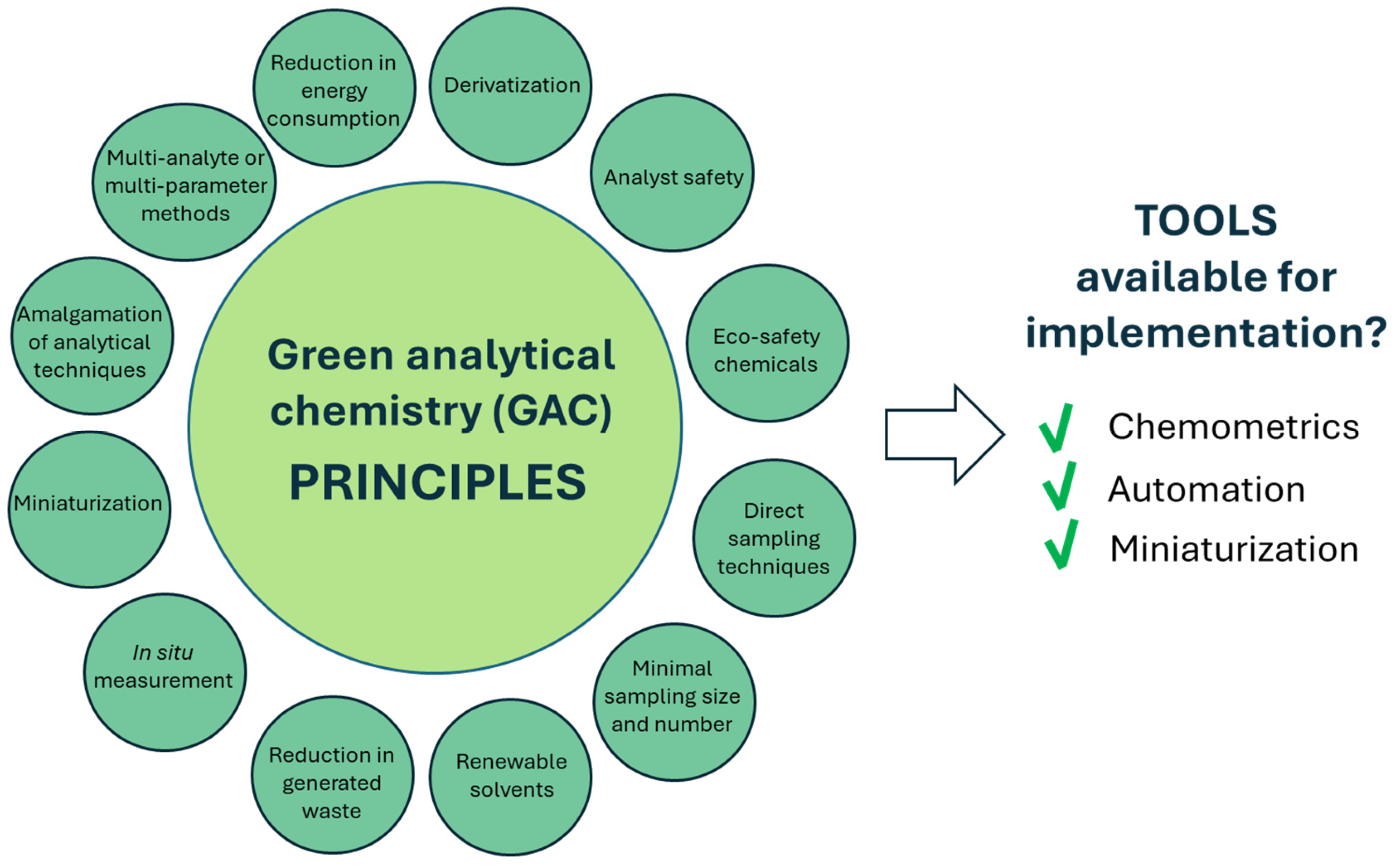
2. Principles of “Green Analytical Chemistry” Applied to MIPs
2.1. Theoretical Studies and Integrated Chemometric Problems
2.2. Automation in MIP Design
2.3. Miniaturization and Advanced Smart Artificial Intelligence in MIP Scenarios
3. Green Strategies in MIP Synthesis
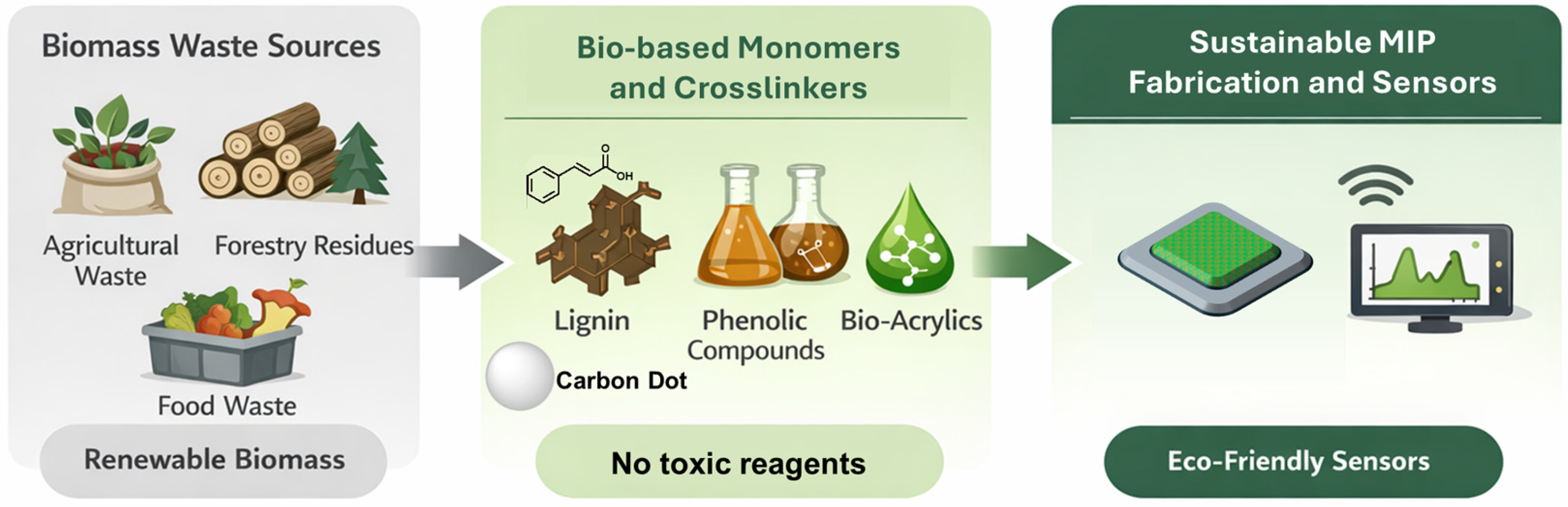
3.1. Biomass-Derived Functional Monomers and Additives During MIP Synthesis
3.2. Sustainable and Alternative Solvents in MIP Synthesis
3.3. Alternative Routes in MIP Production
4. Sustainability Assessment Tools for MIP Production
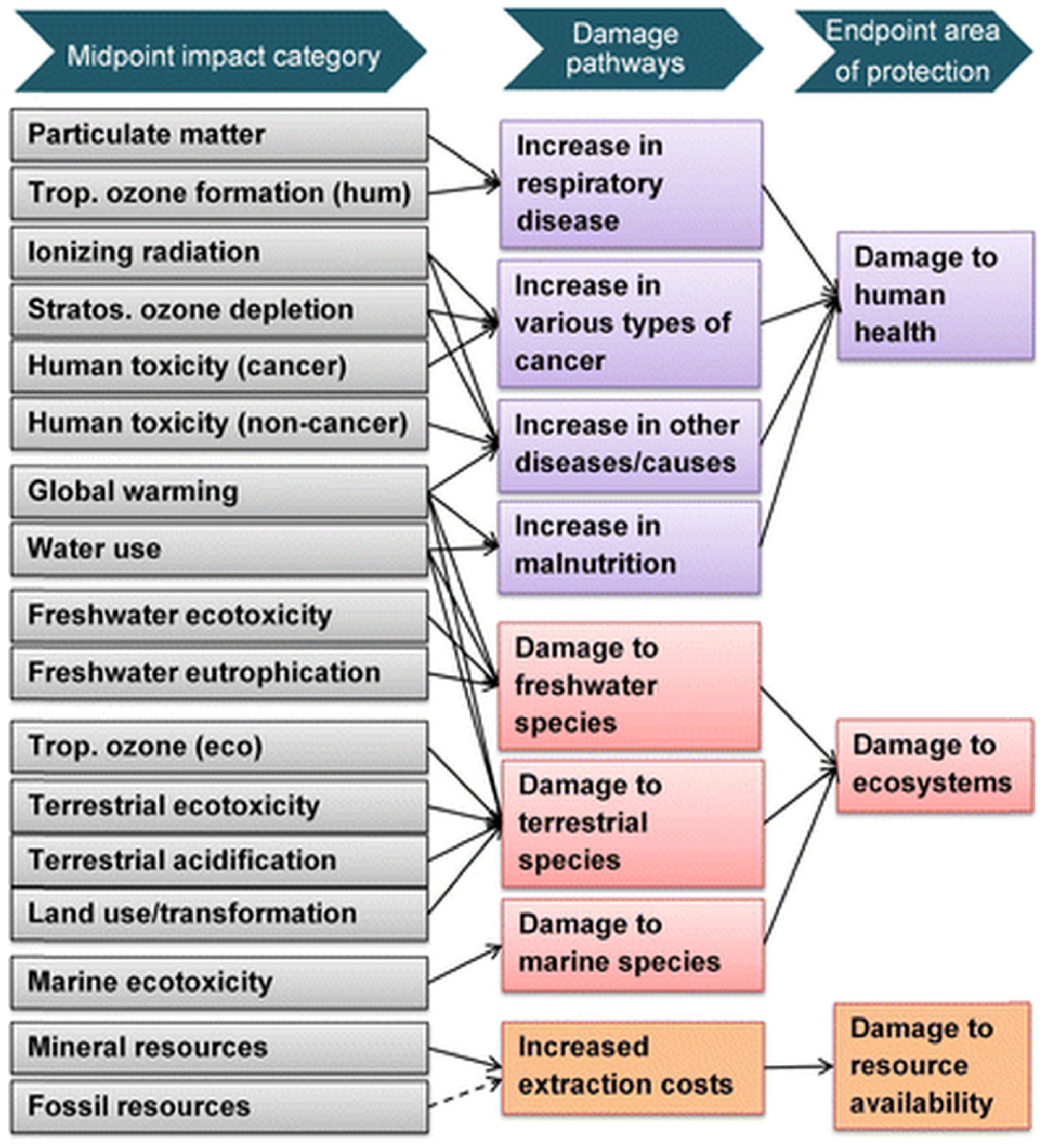
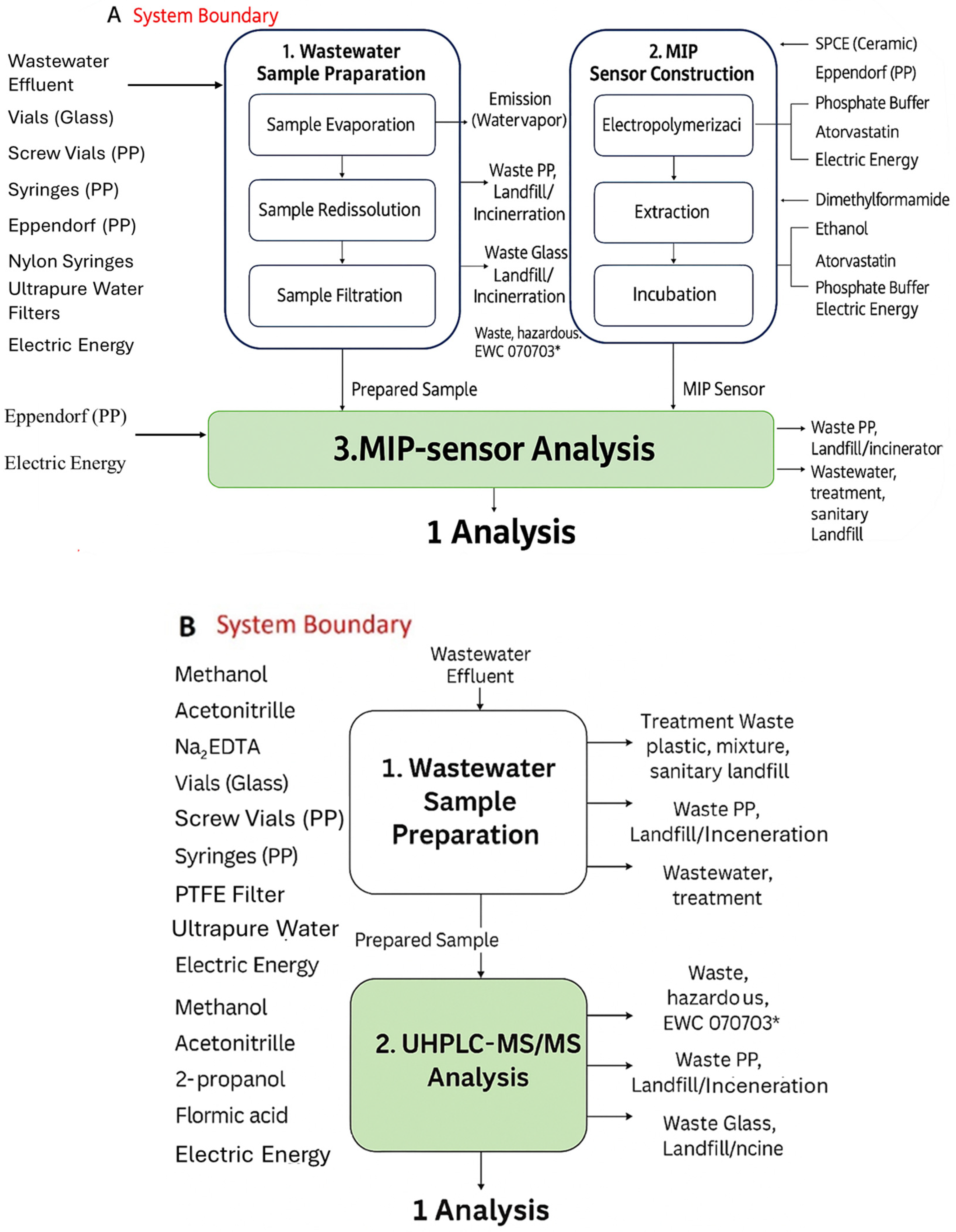
4.1. The ReCiPe Method
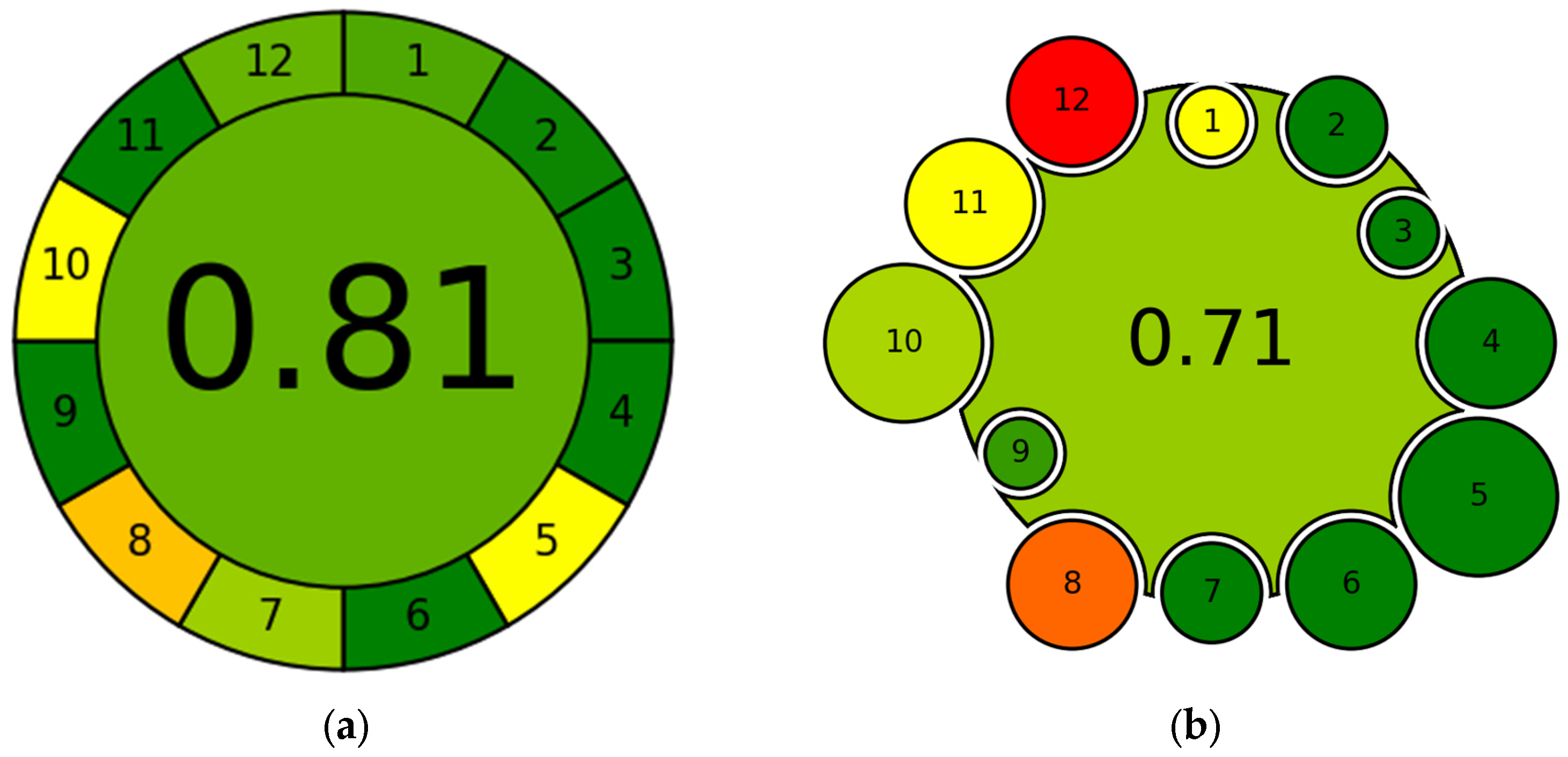
4.2. AGREE Methods
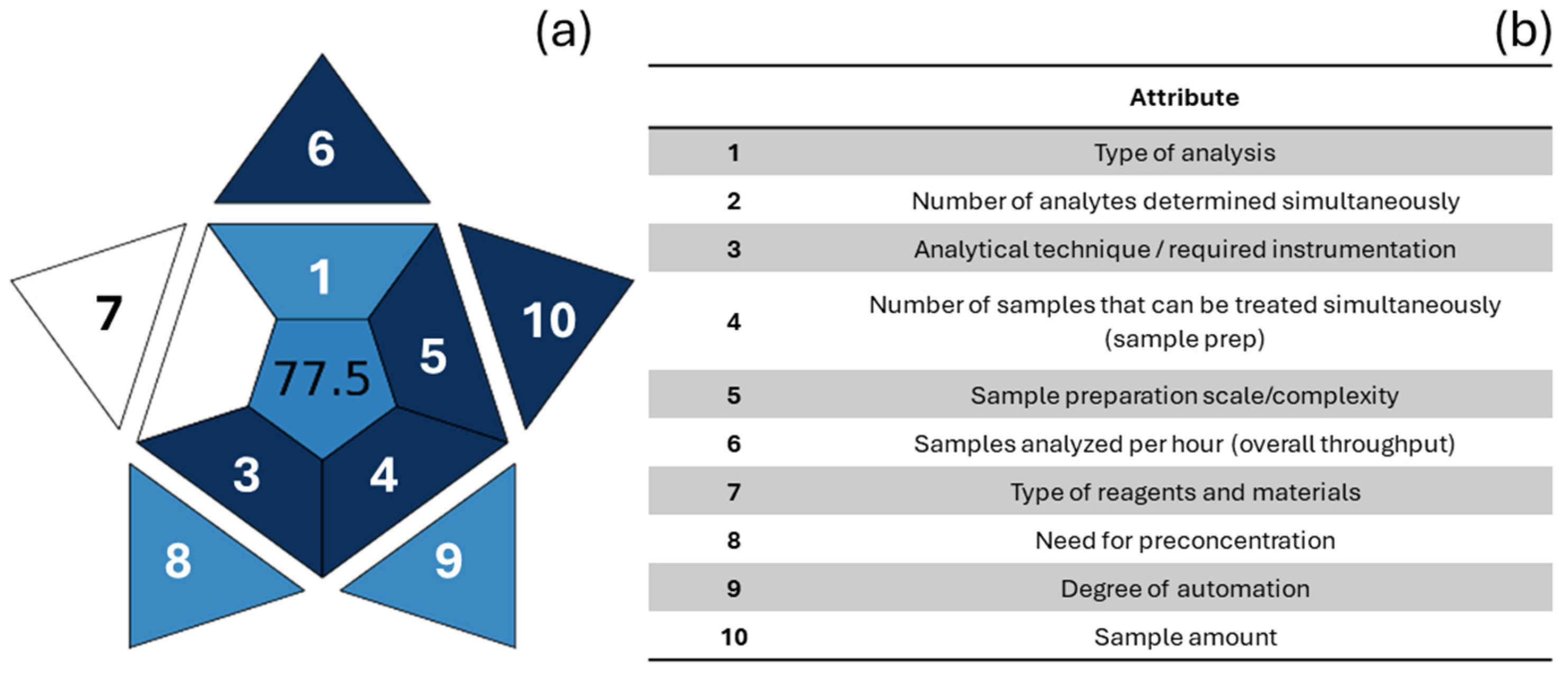
4.3. BAGI Method
4.4. Complementarity and Conflicts Between Lifecycle Metrics
5. Conclusions and Future Outlooks
Author Contributions
Funding
Institutional Review Board Statement
Informed Consent Statement
Data Availability Statement
Conflicts of Interest
Abbreviations
| AGREE | Analytical GREEnness metric approach and software |
| AGREEMIP | Analytical greenness assessment tool for molecularly imprinted polymer synthesis |
| AGREEprep | Analytical greenness metric for sample preparation |
| AI/ML | Artificial intelligence/machine learning |
| AM | Additive manufacturing |
| AMVI | Analytical method volume intensity |
| APTES | (3-aminopropyl)triethoxysilane |
| ATV | Atorvastatin |
| Au NPs | Gold nanoparticles |
| BAGI | Blue applicability grade index |
| BBD | Box–Behnken design |
| CC | Creative Commons |
| CC BY | Creative Commons Attribution license |
| CCD | Central composite design |
| CML | Centrum voor Milieukunde (Institute of Environmental Sciences, Leiden University) |
| CQD(s) | Carbon quantum dot(s) |
| DA | Dopamine |
| DES(s) | Deep eutectic solvent(s) |
| DFT | Density functional theory |
| DJ-1 | Parkinson’s disease protein 7 (DJ-1 biomarker) |
| DLP | Digital light processing |
| DOE | Design of experiments |
| ED | Emodin |
| ESOA | Epoxidized soybean oil acrylate |
| FIA | Flow injection analysis |
| GAC | Green analytical chemistry |
| GC | Green chemistry |
| GCE | Glassy carbon electrode |
| HIR | Hydrophilic imprinted resin |
| HMTA | Hexamethylenetetramine |
| IoT | Internet of things |
| JAK | Janus kinase |
| LCA | Lifecycle assessment |
| LCIA | Lifecycle impact assessment |
| LOD | Limit of detection |
| LSTM | Long short-term memory (neural network) |
| MD | Molecular docking |
| MIP(s) | Molecularly imprinted polymer(s) |
| MIR | Molecularly imprinted resin (as used in PDA@MIR) |
| MW | Microwave |
| NADES(s) | Natural deep eutectic solvent(s) |
| NANOTEC | CNR NANOTEC—Institute of Nanotechnology |
| NBO | Natural bond orbital |
| NCI | Non-covalent interaction |
| OFAT | One factor at a time |
| PBS | Phosphate-buffered saline |
| PDA | Polydopamine |
| PDA@MIR | Polydopamine molecularly imprinted resin |
| PEGDA | Poly(ethylene glycol) diacrylate |
| PLoS | Public Library of Science |
| PSPs | Polygonatum sibiricum polysaccharides |
| ReCiPe | ReCiPe lifecycle impact assessment method |
| rGO | Reduced graphene oxide |
| RIVM | National Institute for Public Health and the Environment (Netherlands) |
| RMSD | Root mean square deviation |
| RMSF | Root mean square fluctuation |
| RT | Room temperature |
| SAM | Short amylose |
| scCO2 | Supercritical carbon dioxide |
| SI | Solvent intensity |
| SIA | Sequential injection analysis |
| SPE | Solid-phase extraction |
| SPE–GC/MS | Solid-phase extraction–gas chromatography/mass spectrometry |
| SPR | Surface plasmon resonance |
| SVM | Support vector machine |
| TD-DFT | Time-dependent density functional theory |
| TEOS | Tetraethyl orthosilicate (tetraethoxysilane) |
| UHPLC–MS/MS | Ultra-high-performance liquid chromatography–tandem mass spectrometry |
| UV | Ultraviolet |
| WCP | Whatman Grade 1 chromatography paper |
| WFP | Whatman Grade 1 filter paper |
Appendix A

| Criteria | |
|---|---|
| 1 | Direct analytical techniques should be applied to avoid sample treatment. |
| 2 | Minimal sample size and minimal number of samples are goals. |
| 3 | If possible, measurements should be performed in situ. |
| 4 | Integration of analytical processes and operations saves energy and reduces the use of reagents. |
| 5 | Automated and miniaturized methods should be selected. |
| 6 | Derivatization should be avoided. |
| 7 | Generation of a large volume of analytical waste should be avoided, and proper management of analytical waste should be provided. |
| 8 | Multi-analyte or multi-parameter methods are preferred versus methods using one analyte at a time. |
| 9 | The use of energy should be minimized. |
| 10 | Reagents obtained from renewable sources should be preferred. |
| 11 | Toxic reagents should be eliminated or replaced. |
| 12 | Operator’s safety should be increased. |
| Criterion | Weight | |
|---|---|---|
| 1. | Removal of polymerization inhibitors | 1 |
| Waste generation | ||
| 2. | Functional monomer | 2 |
| Total mass of the functional monomer | ||
| 3. | Template | 1 |
| Total mass of the template | ||
| 4. | Crosslinking agent | 3 |
| Total mass of the crosslinking agent | ||
| 5. | Porogen/solvent | 4 |
| Total mass of the porogen/solvent | ||
| 6. | Other reagents, adjuvants, or carriers | 3 |
| Total mass of other reagents, adjuvants, or carriers | ||
| 7. | Core/particle preparation and surface modification | 2 |
| Mass of reagents used in core/particle preparation, surface modification, or both | ||
| 8. | Polymerization initiation | 3 |
| Initiator | ||
| 9. | Size of polymer particles | 1 |
| Grain size range | ||
| 10. | Template elution solvent | 4 |
| No. of distinct hazards | ||
| 11. | Template elution technique | 3 |
| Elution technique | ||
| 12. | Final product reusability | 3 |
| Times the end products can be reused |
| Criterion | Description | Score | |
|---|---|---|---|
| 1 | Favor in situ sample preparation | Prioritize in-line/on-line in situ operations to minimize transport, storage and additional materials/energy. | In-line/In situ = 1.00; On-line/In situ = 0.66; On site = 0.33; Ex situ (lab after transport) = 0.00. |
| 2 | Use safer solvents and reagents | Prefer solvent-free/reagent-less; otherwise select low-toxicity, non-persistent/non-bioaccumulative chemicals. | Score 1.00 for solvent/reagent-free; 0.00 if >50 mL/g of hazardous solvents/reagents; intermediate values computed via a logarithmic function of hazardous amount. |
| 3 | Target sustainable, reusable, and renewable materials | Favor bio-based/renewable and reusable materials; promote regeneration/reuse over disposables. | Only sustainable and reusable materials used several times = 1.00; >75% sustainable/renewable = 0.75; 50–75% sustainable (single-use) = 0.50; non-sustainable but reusable = 0.50; 25–50% sustainable = 0.25; <25% sustainable (single-use) = 0.00. |
| 4 | Minimize waste | Reduce total mass/volume of waste (solvents, reagents, consumables; include sample when contaminated). | Score computed via logarithmic function of total generated waste; <1 g of waste typically yields > 0.5. |
| 5 | Minimize sample, chemical and material amounts | Smaller sample sizes and minimal chemicals/materials reduce time, energy, costs; ensure representativeness. | Score computed via logarithmic function of total amounts (sample + chemicals + materials); passive sampling can yield score 1.00. |
| 6 | Maximize sample throughput | Increase speed and/or parallelization (e.g., multi-well formats) to prepare more samples per hour. | Score computed via logarithmic function of number of samples prepared per hour (series or parallel). |
| 7 | Integrate steps and promote automation | Simplify workflows by reducing steps and increasing automation to lower reagents, energy and exposure. | Two sub-scores: steps (≤2 = 1.00; 3 = 0.75; 4 = 0.50; 5 = 0.25; ≥6 = 0.00) × automation (fully = 1.00; semi = 0.50; manual = 0.25); final score = product. |
| 8 | Minimize energy consumption | Lower total energetic requirement expressed as Wh per sample (normalize by parallel processing). | Score increases as Wh per sample decreases; e.g., <10 Wh/sample ≈ 1.00; intermediate values calculated via function; divide device Wh by samples processed simultaneously. |
| 9 | Choose the greenest post-sample preparation configuration for analysis | Prefer analytical configurations that avoid additional high-impact steps and are compatible with low-impact detection. | Score reflects the downstream analytical setup’s greenness (for example, avoids hazardous derivatization, uses low-energy detection). |
| 10 | Ensure safe procedures for the operator | Minimize operator exposure; adopt PPE and designs that reduce contact with hazardous substances. | Score derived from hazard assessment (e.g., MSDS pictograms) and procedure safety; fewer hazards and better protection give higher score. |
| Attribute | Options | Purpose | Score | |
|---|---|---|---|---|
| 1 | Type of analysis | Qualitative | Identifies a substance based on chemical/biological/physical properties, without quantifying it. | 2.5 |
| Screening | Detects the presence of a substance/class at the level of interest; designed to avoid false “compliant” results. | 5.0 | ||
| Quantitative | Determines the amount or mass fraction as a numerical value with appropriate units. | 7.5 | ||
| Quantitative + confirmatory | Quantifies and unequivocally identifies the analyte (structural information; aligned with EC 657/2002). | 10.0 | ||
| 2 | Number of analytes determined simultaneously | >15 analytes | Rewards multi-analyte methods: more analytes per run = higher practicality/applicability. | 10.0 |
| 6–15 (same class) or 2–15 (different classes) | 7.5 | |||
| 2–5 (same class) | 5.0 | |||
| 1 analyte | 2.5 | |||
| 3 | Analytical technique/required instrumentation | Portable, easy-to-operate instrumentation | Assesses accessibility/realism of instrumentation for routine labs (portability, widespread availability vs. rare/advanced equipment). | 10.0 |
| “Common” instrumentation (available in most labs) | 7.5 | |||
| Sophisticated instrumentation (e.g., MS, home-made interfaces/advanced systems) | 5.0 | |||
| Instrumentation not commonly available | 2.5 | |||
| 4 | Number of samples that can be treated simultaneously (sample prep) | >96 | Evaluates the ability to parallelize sample preparation (high-throughput), reducing the sample prep bottleneck. | 10.0 |
| 13–95 | 7.5 | |||
| 2–12 | 5.0 | |||
| 1 | 2.5 | |||
| 5 | Sample preparation scale/complexity | On-site sample prep or no sample preparation required | Captures time/cost/complexity of sample preparation, favoring simple or no-prep approaches. | 10.0 |
| Simple, low-cost preparation | 7.5 | |||
| Miniaturized extraction | 5.0 | |||
| Conventional multi-step preparation | 2.5 | |||
| 6 | Samples analyzed per hour (overall throughput) | >10 samples/hour | Measures real productivity including all steps (prep → determination). | 10.0 |
| 5–10 samples/hour | 7.5 | |||
| 2–4 samples/hour | 5.0 | |||
| ≥1 h per single sample | 2.5 | |||
| 7 | Type of reagents and materials | Common, readily purchasable (e.g., MeOH, ACN, HNO3, common gases…) | Assesses practicality of sourcing/using reagents and materials (relevant for accredited and routine labs). | 10.0 |
| Commercial but “uncommon” in QC labs (derivatization reagents, SPE cartridges, SPME fibers…) | 7.5 | |||
| Must be synthesized in-house (simple procedure, common lab equipment) | 5.0 | |||
| Must be synthesized in-house (requires advanced know-how/equipment, e.g., MOFs…) | 2.5 | |||
| 8 | Need for preconcentration | No preconcentration | Evaluates fit-for-purpose without extra steps; if needed, integrated one-step preconcentration is preferred. | 10.0 |
| Preconcentration in one step | 7.5 | |||
| Multi-stage preconcentration (e.g., extraction + evaporation + reconstitution) | 2.5 | |||
| 9 | Degree of automation | Fully automated | Rewards reduced human intervention (fewer errors, lower analyst exposure), distinguishing standard vs. custom automation. | 10.0 |
| Semi-automated with common devices (e.g., HPLC autosampler) | 7.5 | |||
| Semi-automated with special/home-made systems | 5.0 | |||
| Manual | 2.5 | |||
| 10 | Sample amount | Very low (bio: <100 µL or <100 mg; food/env: <10 mL or <10 g) | Considers sample availability and impact on sensitivity/waste; distinguishes bioanalytical matrices from food/environmental matrices. For “hybrid” matrices (e.g., cosmetics, plastic leachates), classify case by case based on availability. | 10.0 |
| Low–medium (bio: 101–500 µL; food/env: 10.1–50 mL or g) | 7.5 | |||
| Medium–high (bio: 501–1000 µL; food/env: 51–100 mL or g) | 5.0 | |||
| High (bio: >1000 µL; food/env: >100 mL or g) | 2.5 |
| Tool | LCA (ReCiPe 2016) | AGREE | AGREEprep | AGREEMIP | BAGI |
|---|---|---|---|---|---|
| Output | Midpoint (17 categories) and endpoint; normalized/weighted results | 0–1 score on the 12 GAC principles (radar plot) | 0–1 score on 10 criteria dedicated to sample preparation | 0–1 score on 12 criteria specific to MIP synthesis (monomers, solvents, energy, elution, reuse) | Applicability/practicality (score 0–100; recommended threshold > 60) across 10 criteria |
| System boundary | Cradle-to-grave (if inventory is complete): materials, energy, use phase, waste | Analytical method as a whole (measurement and workflow) | Sample preparation only | Synthesis of the MIP receptor | Analytical method (transferability to routine) |
| Informative at lifecycle stage | Entire lifecycle; particularly useful for use/regeneration and consumables | Use phase and method organization (in situ, automation, miniaturization) | Sample preparation (solvents, waste, energy, automation) | Synthesis stage (monomers/crosslinkers, solvents, template removal, reusability) | Transferability and routine use (instrumentation, throughput, automation) |
| Strengths | Quantitative comparison across methods; highlights hotspots | Fast, visual; guides operational choices | Fills AGREE gaps in sample preparation | First MIP-specific metric; highlights actionable levers | Easy to use; complementary to greenness |
| Limitations | Relies on databases; green reagents sometimes not covered; requires accurate inventories | No quantitative environmental impacts; does not detail receptor synthesis | Does not consider MIP synthesis; no LCA quantification | Does not cover sample prep and use; depends on lab data not standardized | Not an environmental metric; may reward practical solutions that are not green |
| Example of typical conflicts | May contradict “green” scores if the use phase dominates impacts [104] | Can diverge from AGREEMIP: method not green even if synthesis is green | Can be low even when AGREEMIP score is high (green synthesis, onerous prep) | Typical conflict with AGREE/AGREEprep (good synthesis, other method less green) | Trade-off with AGREE: very practical method may have higher impact or vice versa |
References
- Ramajayam, K.; Ganesan, S.; Ramesh, P.; Beena, M.; Kokulnathan, T.; Palaniappan, A.J.B. Molecularly imprinted polymer-based biomimetic systems for sensing environmental contaminants, biomarkers, and bioimaging applications. Biomimetics 2023, 8, 245. [Google Scholar] [CrossRef] [PubMed]
- Mostafa, A.M.; Barton, S.J.; Wren, S.P.; Barker, J. Review on molecularly imprinted polymers with a focus on their application to the analysis of protein biomarkers. TrAC Trends Anal. Chem. 2021, 144, 116431. [Google Scholar] [CrossRef]
- Hammad, S.F.; Hamid, M.A.A.; Adly, L.; Elagamy, S.H. Comprehensive review of greenness, whiteness, and blueness assessments of analytical methods. Green Anal. Chem. 2025, 12, 100209. [Google Scholar] [CrossRef]
- Marć, M.; Wojnowski, W.; Pena-Pereira, F.; Tobiszewski, M.; Martín-Esteban, A. AGREEMIP: The Analytical greenness assessment tool for molecularly imprinted polymers synthesis. ACS Sustain. Chem. Eng. 2024, 12, 12516–12524. [Google Scholar] [CrossRef]
- Rao, T.R.; Srilaxmi, B. Green Analytical Chemistry: A Comprehensive Review of Eco-Scale, Greenness Metrics, and Sustaina-bility Approaches. J. Drug Deliv. Ther. 2025, 15, 179–182. [Google Scholar]
- Armenta, S.G.S.; de la Guardia, M. Green Analytical Chemistry. Trends Anal. Chem. 2008, 27, 497–511. [Google Scholar] [CrossRef]
- Malissa, H.; Roth, E. Euroanalysis VI: Reviews on Analytical Chemistry; RothLes, E., Ed.; Editions de Physique: Les Ules, France, 1987. [Google Scholar]
- Pimentel, G.C.; Coonrod, J.A.J. Opportunities in Chemistry: Today and Tomorrow; National Academy Press: Washington, DC, USA, 1987. [Google Scholar]
- Anastas, P.T. Green chemistry and the role of analytical methodology development. Crit. Rev. Anal. Chem. 1999, 29, 167–175. [Google Scholar] [CrossRef]
- Garrigues, S. The concept of green analytical chemistry. In Handbook of Green Analytical Chemistry; Wiley: Hoboken, NJ, USA, 2012; pp. 1–16. [Google Scholar]
- Tamandani, M.; Hashemi, S.H. Central composite design (CCD) and Box-Behnken design (BBD) for the optimization of a molecularly imprinted polymer (MIP) based pipette tip micro-solid phase extraction (SPE) for the spectrophotometric determination of chlorpyrifos in food and juice. Anal. Lett. 2022, 55, 2394–2408. [Google Scholar] [CrossRef]
- Wang, M.; Cetó, X.; del Valle, M. A sensor array based on molecularly imprinted polymers and machine learning for the analysis of fluoroquinolone antibiotics. ACS Sens. 2022, 7, 3318–3325. [Google Scholar] [CrossRef]
- Geng, L.; Wang, H.; Li, Z.; Huang, J.; Sun, X.; Guo, Y.; Du, F. Research progress on molecularly imprinted polymers (MIPs)-based sensors for the detection of organophosphorus pesticides. Food Chem. 2025, 490, 145137. [Google Scholar] [CrossRef]
- Di Masi, S.; De Benedetto, G.E.; Malitesta, C. Optimisation of electrochemical sensors based on molecularly imprinted polymers: From OFAT to machine learning. Anal. Bioanal. Chem. 2024, 416, 2261–2275. [Google Scholar] [CrossRef]
- Di Masi, S.; Rodriguez, N.A.M.; Costa, M.; De Benedetto, G.E.; Malitesta, C. Rational design of a portable chemometric-assisted voltammetric sensor based on ion-imprinted polymeric film for Co(II) determination in water. Nanomaterials 2024, 14, 536. [Google Scholar] [CrossRef]
- Mohsenzadeh, E.; Ratautaite, V.; Brazys, E.; Ramanavicius, S.; Zukauskas, S.; Plausinaitis, D.; Ramanavicius, A. Design of molecularly imprinted polymers (MIP) using computational methods: A review of strategies and approaches. WIREs Comput. Mol. Sci. 2024, 14, e1713. [Google Scholar] [CrossRef]
- Kumar, M.D.; Karthikeyan, M.; Kaniraja, G.; Muthukumar, K.; Muneeswaran, G.; Karunakaran, C. Computational modelling and optimization studies of electropentamer for molecular imprinting of DJ-1. J. Mol. Graph. Model. 2024, 128, 108715. [Google Scholar] [CrossRef]
- Dhanalakshmi, E.; Rajesh, P.; Suresh, S.; Priyadharshini, M.; Prabhaharan, M. Green synthesis, spectroscopic investigation, quantum chemical and molecular docking studies of 3-methylisoxazolo [4,5-b]pyridine. J. Mol. Struct. 2024, 1298, 136964. [Google Scholar] [CrossRef]
- Isravel, A.D.; Jeyaraj, J.K.; Thangasamy, S.; John, W.J. DFT, NBO, HOMO-LUMO, NCI, stability, Fukui function and hole–Electron analyses of tolcapone. Comput. Theor. Chem. 2021, 1202, 113296. [Google Scholar] [CrossRef]
- Beigmoradi, F.; Moghadam, M.R.; Bazmandegan-Shamili, A. Molecular Docking and Density Functional Studies of Selective Molecularly Imprinted Polymers Combined with an Electrochemical Sensor for the Detection of Malathion. J. Anal. Chem. 2024, 79, 1143–1158. [Google Scholar] [CrossRef]
- Růžička, J.; Hansen, E.H. Flow Injection Analysis; Wiley-Interscience: Hoboken, NJ, USA, 1988. [Google Scholar]
- Ruzicka, J.; Marshall, G.D. Sequential injection: A new concept for chemical sensors, process analysis and laboratory assays. Anal. Chim. Acta 1990, 237, 329–343. [Google Scholar] [CrossRef]
- Reis, B.F.; Giné, M.F.; Zagatto, E.A.; Lima, J.L.F.; Lapa, R.A. Multicommutation in flow analysis. Part Binary sampling: Concepts, instrumentation and spectrophotometric determination of iron in plant digests. Anal. Chim. Acta 1994, 293, 129–138. [Google Scholar] [CrossRef]
- Lerch, O.; Temme, O.; Daldrup, T. Comprehensive automation of the solid phase extraction gas chromatographic mass spectrometric analysis (SPE-GC/MS) of opioids, cocaine, and metabolites from serum and other matrices. Anal. Bioanal. Chem. 2014, 406, 4443–4451. [Google Scholar] [CrossRef]
- Grieshaber, D.; MacKenzie, R.; Vörös, J.; Reimhult, E. Electrochemical biosensors-sensor principles and architectures. Sensors 2008, 8, 1400–1458. [Google Scholar] [CrossRef]
- Zhang, Y.; Hu, Y.; Jiang, N.; Yetisen, A.K. Wearable artificial intelligence biosensor networks. Biosens. Bioelectron. 2022, 219, 114825. [Google Scholar] [CrossRef]
- Sohrabi, H.; Hemmati, A.; Majidi, M.R.; Eyvazi, S.; Jahanban-Esfahlan, A.; Baradaran, B.; Adlpour-Azar, R.; Mokhtarzadeh, A.; de la Guardia, M. Recent advances on portable sensing and biosensing assays applied for detection of main chemical and biological pollutant agents in water samples: A critical review. TrAC Trends Anal. Chem. 2021, 143, 116344. [Google Scholar] [CrossRef]
- Parihar, A.; Sharma, P.; Choudhary, N.K.; Khan, R.; Mostafavi, E. Internet-of-things-integrated molecularly imprinted polymer-based electrochemical nano-sensors for pesticide detection in the environment and food products. Environ. Pollut. 2024, 351, 124029. [Google Scholar] [CrossRef]
- Zhao, X.; Li, P.; Xiao, K.; Meng, X.; Han, L.; Yu, C. Sensor Drift Compensation Based on the Improved LSTM and SVM Multi-Class Ensemble Learning Models. Sensors 2019, 19, 3844. [Google Scholar] [CrossRef]
- Badawi, D.; Agambayev, A.; Ozev, S.; Cetin, A.E. Real-time low-cost drift compensation for chemical sensors using a deep neural network with hadamard transform and additive layers. IEEE Sens. J. 2021, 21, 17984–17994. [Google Scholar] [CrossRef]
- Giordano, G.F.; Ferreira, L.F.; Bezerra, Í.R.S.; Barbosa, J.A.; Costa, J.N.Y.; Pimentel, G.J.C.; Lima, R.S. Machine learning toward high-performance electrochemical sensors. Anal. Bioanal. Chem. 2023, 415, 3683–3692. [Google Scholar] [CrossRef]
- Cancelliere, R.; Molinara, M.; Licheri, A.; Maffucci, A.; Micheli, L. Artificial intelligence-assisted electrochemical sensors for qualitative and semi-quantitative multiplexed analyses. Digit. Discov. 2025, 4, 338–342. [Google Scholar] [CrossRef]
- Beduk, T.; Gomes, M.; Filho, J.I.D.O.; Shetty, S.S.; Khushaim, W.; Garcia-Ramirez, R.; Durmus, C.; Lahcen, A.A.; Salama, K.N. A portable molecularly imprinted sensor for on-site and wireless environmental bisphenol a monitoring. Front. Chem. 2022, 10, 833899. [Google Scholar] [CrossRef]
- Peng, S.; Wang, A.; Lian, Y.; Zhang, X.; Zeng, B.; Chen, Q.; Yang, H.; Li, J.; Li, L.; Dan, J.; et al. Smartphone-based molecularly imprinted sensors for rapid detection of thiamethoxam residues and applications. PLoS ONE 2021, 16, e0258508. [Google Scholar] [CrossRef]
- Fu, L.; Zhang, X.; Zhao, X.; Wang, L.; Fu, Y. Advances in biomass-based molecularly imprinted polymers: From sustainable design to diverse applications. Green Chem. 2025, 27, 9055–9093. [Google Scholar] [CrossRef]
- Del Sole, R.; Mele, G.; Bloise, E.; Mergola, L. Green aspects in molecularly imprinted polymers by biomass waste utilization. Polymers 2021, 13, 2430. [Google Scholar] [CrossRef]
- Sarnaghi, S.P.; Ayazi, Z. Synthesis of Chitosan-Based Molecularly Imprinted Biopolymer for Thin-Film Solid-Phase Microextraction of Tramadol Followed by Its On-Site Detection Using Digital Image Colorimetry. Anal. Chim. Acta 2025, 1369, 344335. [Google Scholar] [CrossRef] [PubMed]
- Liu, S.; Tang, N.; Huang, H.; Zhang, X.; Lu, R.; Li, Y. Green and eco-friendly porous imprinted hydrogels with cellulose nanocrystals-based precise-designed hyperbranched sites for high-accuracy separation and purification of naringin. Chem. Eng. J. 2024, 493, 152821. [Google Scholar] [CrossRef]
- Keçili, R.; Hussain, C.G.; Hussain, C.M. Emerging trends in green carbon dots coated with molecularly imprinted polymers for sensor platforms. Trends Anal. Chem. 2023, 166, 117205. [Google Scholar] [CrossRef]
- Guo, X.; Yang, D.; Su, Y.; Chen, Y.; Ding, J.; Ding, L.; Song, D. High selectivity molecularly imprinted polymer based on short amylose as bio-based functional monomers for selective extraction of λ-cyhalothrin. Int. J. Biol. Macromol. 2024, 271, 132566. [Google Scholar] [CrossRef]
- Ortega, F.; Versino, F.; López, O.V.; García, M.A. Biobased composites from agro-industrial wastes and by-products. Emergent Mater. 2022, 5, 873–921. [Google Scholar] [CrossRef]
- Hawash, H.B.; Hagar, M.; Elkady, M.F.; Moneer, A.A.; El-Qelish, M.; El-Tahawy, M.M.; Kassem, T.S. Microwave-assisted supramolecular double crosslinked chitosan-based molecularly imprinted polymer for synergistic recognition and selective recovery of Cd(II) and As(V) from water: Performance and mechanistic insights. Int. J. Biol. Macromol. 2024, 281, 136263. [Google Scholar] [CrossRef]
- Le Goff, N.; Fomba, I.; Prost, E.; Merlier, F.; Haupt, K.; Duma, L.; Fayeulle, A.; Falcimaigne-Cordin, A. Renewable plant oil-based molecularly imprinted polymers as biopesticide delivery systems. ACS Sustain. Chem. Eng. 2020, 8, 15927–15935. [Google Scholar] [CrossRef]
- Yin, R.; Chen, L.; Ma, L. Extraction of matrine from soil with matrix solid-phase dispersion by molecularly imprinted polymers derived from lignin-based Pickering emulsions. J. Sep. Sci. 2019, 42, 3563–3570. [Google Scholar] [CrossRef]
- Díaz-Álvarez, M.; Martín-Esteban, A. Molecularly imprinted polymer-quantum dot materials in optical sensors: An overview of their synthesis and applications. Biosensors 2021, 11, 79. [Google Scholar] [CrossRef]
- Wang, Z.; Zhou, C.; Wu, S.; Sun, C. Ion-imprinted polymer modified with carbon quantum dots as a highly sensitive copper(II) ion probe. Polymers 2021, 13, 1376. [Google Scholar] [CrossRef]
- Kazemifard, N.; Ensafi, A.A.; Rezaei, B. Green synthesized carbon dots embedded in silica molecularly imprinted polymers, characterization and application as a rapid and selective fluorimetric sensor for determination of thiabendazole in juices. Food Chem. 2020, 310, 125812. [Google Scholar] [CrossRef] [PubMed]
- Liu, H.; Ding, L.; Chen, L.; Chen, Y.; Zhou, T.; Li, H.; Xu, Y.; Zhao, L.; Huang, N. A facile, green synthesis of biomass carbon dots coupled with molecularly imprinted polymers for highly selective detection of oxytetracycline. J. Ind. Eng. Chem. 2019, 69, 455–463. [Google Scholar] [CrossRef]
- Moreira, B.; Calvet, S.; Marques, A.; Martins, G.V. Chitosan-based molecularly imprinted polymers for point-of-care C-reactive protein detection. Talanta 2026, 296, 128465. [Google Scholar] [CrossRef]
- Xiao, W.; Wang, L.; Wei, X.; Li, J. Chitosan-based molecularly imprinted photoelectric sensor with ZnO/Bi2O3/Bi2S3 sensing layer for thiamethoxam determination. Microchim. Acta 2022, 189, 247. [Google Scholar] [CrossRef]
- Zouaoui, F.; Bourouina-Bacha, S.; Bourouina, M.; Jaffrezic-Renault, N.; Zine, N.; Errachid, A. Electrochemical sensors based on molecularly imprinted chitosan: A review. TrAC Trends Anal. Chem. 2020, 130, 115982. [Google Scholar] [CrossRef]
- Yao, X.; Zhang, S.; Wei, N.; Qian, L.; Coseri, S. Cellulose-based conductive hydrogels for emerging intelligent sensors. Adv. Fiber Mater. 2024, 6, 1256–1305. [Google Scholar] [CrossRef]
- Yang, L.; Yuan, Q.-Y.; Lou, C.-W.; Li, T.-T.; Lin, J.-H. Modified nanocellulose hydrogels and applications in sensing fields. Gels 2025, 11, 140. [Google Scholar] [CrossRef]
- El-Husseini, D.M.; Elmasry, D.M.A.; Hatab, E.M.A.; Kassem, S. Development of a paper-based fluorescent carbon quantum dots MIPs sensor for selective detection of lumpy skin disease virus. RSC Adv. 2024, 14, 27438–27448. [Google Scholar] [CrossRef]
- Kamal, A.; Hong, S.; Ju, H. Carbon quantum dots: Synthesis, characteristics, and quenching as biocompatible fluorescent probes. Biosensors 2025, 15, 99. [Google Scholar] [CrossRef] [PubMed]
- van Wissen, G.; Lowdon, J.W.; Cleij, T.J.; Eersels, K.; van Grinsven, B. Porogenic solvents in molecularly imprinted polymer synthesis: A comprehensive review of current practices and emerging trends. Polymers 2025, 17, 1057. [Google Scholar] [CrossRef] [PubMed]
- Sellergren, B. Molecularly Imprinted Polymers: Man-Made Mimics of Antibodies and Their Application in Analytical Chemistry; Elsevier: Amsterdam, The Netherlands, 2000. [Google Scholar]
- Mosbach, K.; Ramström, O. The emerging technique of molecular imprinting and its future impact on biotechnology. Nat. Biotechnol. 1996, 14, 163–170. [Google Scholar] [CrossRef]
- Pan, G.; Ma, Y.; Zhang, Y.; Guo, X.; Li, C.; Zhang, H. Controlled synthesis of water-compatible molecularly imprinted polymer microspheres with ultrathin hydrophilic polymer shells via surface-initiated reversible addition-fragmentation chain transfer polymerization. Soft Matter 2011, 7, 8428–8439. [Google Scholar] [CrossRef]
- Surapong, N.; Santaladchaiyakit, Y.; Burakham, R. A water-compatible magnetic dual-template molecularly imprinted polymer fabricated from a ternary biobased deep eutectic solvent for the selective enrichment of organophosphorus in fruits and vegetables. Food Chem. 2022, 384, 132475. [Google Scholar] [CrossRef]
- Costa, M.; Di Masi, S.; Garcia-Cruz, A.; Piletsky, S.A.; Malitesta, C. Disposable electrochemical sensor based on ion imprinted polymeric receptor for Cd(II) ion monitoring in waters. Sens. Actuators B Chem. 2023, 383, 133559. [Google Scholar] [CrossRef]
- Smolinska-Kempisty, K.; Cowen, T.; Duda, J.; Bryjak, M. Environmentally friendly molecularly imprinted polymers as an insert for SPE type columns in the gentamicin monitoring process. Talanta 2025, 282, 126966. [Google Scholar] [CrossRef]
- Furtado, A.I.; Lobato, D.; Bonifácio, V.D.; Viveiros, R.; Casimiro, T. Sustainable development of dual–templating molecularly imprinted polymers for biopurification. Mater. Today Chem. 2025, 44, 102586. [Google Scholar] [CrossRef]
- Santana, A.P.; Mora-Vargas, J.A.; Guimarães, T.G.; Amaral, C.D.; Oliveira, A.; Gonzalez, M.H. Sustainable synthesis of natural deep eutectic solvents (NADES) by different methods. J. Mol. Liq. 2019, 293, 111452. [Google Scholar] [CrossRef]
- Porfireva, A.; Goida, A.; Evtugyn, V.; Evtugyn, G. Impedimetric sensor based on molecularly imprinted polythionine from deep eutectic solvent for epinephrine determination. Green Anal. Chem. 2024, 9, 100113. [Google Scholar] [CrossRef]
- Wang, M.; Zhou, L.; Qiao, F.; Yan, H. Facile and green synthesis of a hydrophilic imprinted resin in a deep eutectic solvent–water medium for the specific molecular recognition of tumor biomarkers in complex biological matrices. Green Chem. 2024, 26, 2000–2010. [Google Scholar] [CrossRef]
- González-Laredo, R.F.; Sayago-Monreal, V.I.; Moreno-Jiménez, M.R.; Rocha-Guzmán, N.E.; Gallegos-Infante, J.A.; Landeros-Macías, L.F.; Rosales-Castro, M. Natural deep eutectic solvents (NaDES) as an emerging technology for the valorisation of natural products and agro-food residues: A review. Int. J. Food Sci. Technol. 2023, 58, 6660–6673. [Google Scholar] [CrossRef]
- Camilli, E.; Bertana, V.; Frascella, F.; Cocuzza, M.; Marasso, S.L.; Roppolo, I. Digital light processing 3D printing of molecularly imprinted polymers for antibiotic removal. React. Funct. Polym. 2025, 208, 106164. [Google Scholar] [CrossRef]
- Yıldız, Ü.Y.; Hussain, C.G.; Keçili, R.; Hussain, C.M. Green approaches for the preparation of molecularly imprinted polymers. In Green Imprinted Materials; Elsevier: Amsterdam, The Netherlands, 2024; pp. 69–94. [Google Scholar]
- Saidi, K.; Elfadil, D.; Amine, A. Towards the Mass Production of Molecularly Imprinted Polymers via Cost-Effective Photopolymerization Synthesis and Colorimetric Detection via Smartphone. Chemosensors 2024, 12, 232. [Google Scholar] [CrossRef]
- Chen, H.; Son, S.; Zhang, F.; Yan, J.; Li, Y.; Ding, H.; Ding, L. Rapid preparation of molecularly imprinted polymers by microwave-assisted emulsion polymerization for the extraction of florfenicol in milk. J. Chromatogr. B 2015, 983–984, 32–38. [Google Scholar] [CrossRef]
- Astuti, E.J.; Ibrahim, S.; Zulfikar, M.A.; Damayanti, S. Preparation and evaluation of enoxaparin-imprinted polymer via precipitation polymerization using microwave irradiation and conventional stirring methods. React. Funct. Polym. 2025, 216, 106444. [Google Scholar] [CrossRef]
- Teixeira, S.P.B.; Reis, R.L.; Peppas, N.A.; Gomes, M.E.; Domingues, R.M.A. Epitope-imprinted polymers: Design principles of synthetic binding partners for natural biomacromolecules. Sci. Adv. 2021, 7, abi9884. [Google Scholar] [CrossRef]
- Erdőssy, J.; Kassa, E.; Farkas, A.; Horváth, V. Enzymatic digestion as a tool for removing proteinaceous templates from molecularly imprinted polymers. Anal. Methods 2017, 9, 4496–4503. [Google Scholar] [CrossRef]
- Akgönüllü, S.; Kılıç, S.; Esen, C.; Denizli, A. Molecularly imprinted polymer-based sensors for protein detection. Polymers 2023, 15, 629. [Google Scholar] [CrossRef]
- Pasquardini, L.; Bossi, A.M. Molecularly imprinted polymers by epitope imprinting: A journey from molecular interactions to the available bioinformatics resources to scout for epitope templates. Anal. Bioanal. Chem. 2021, 413, 6101–6115. [Google Scholar] [CrossRef]
- Canfarotta, F.; Poma, A.; Guerreiro, A.; Piletsky, S. Solid-phase synthesis of molecularly imprinted nanoparticles. Nat. Protoc. 2016, 11, 443–455. [Google Scholar] [CrossRef]
- Meng, F.; Duan, M.; Wu, W.; Shao, S.; Qin, Y.; Zhang, M. Enzymatic construction Au NPs-rGO based MIP electrochemical sensor for adulteration detection of bovine-derived allergen in camel milk. Food Chem. 2024, 436, 137638. [Google Scholar] [CrossRef] [PubMed]
- Heissel, S.; Frederiksen, S.J.; Bunkenborg, J.; Højrup, P. Enhanced trypsin on a budget: Stabilization, purification and high-temperature application of inexpensive commercial trypsin for proteomics applications. PLoS ONE 2019, 14, e0218374. [Google Scholar] [CrossRef] [PubMed]
- Lamaoui, A.; Mani, V.; Durmus, C.; Salama, K.N.; Amine, A. Molecularly imprinted polymers: A closer look at the template removal and analyte binding. Biosens. Bioelectron. 2024, 243, 115774. [Google Scholar] [CrossRef] [PubMed]
- Martín-Esteban, A. Green molecularly imprinted polymers for sustainable sample preparation. J. Sep. Sci. 2022, 45, 233–245. [Google Scholar] [CrossRef]
- Huijbregts, M.A.J.; Steinmann, Z.J.N.; Elshout, P.M.F.; Stam, G.; Verones, F.; Vieira, M.; Zijp, M.; Hollander, A.; van Zelm, R. ReCiPe2016: A harmonised life cycle impact assessment method at midpoint and endpoint level. Int. J. Life Cycle Assess. 2017, 22, 138–147. [Google Scholar] [CrossRef]
- Rebelo, P.; Seguro, I.; Surra, E.; Paíga, P.; Pacheco, J.G.; Delerue-Matos, C. Analysis of atorvastatin in environmental waters: Validation of an electrochemical molecularly imprinted polymer sensor with application of life cycle assessment. Sci. Total Environ. 2024, 921, 171169. [Google Scholar] [CrossRef]
- Goedkoop, M.; Heijungs, R.; Huijbregts, M.; De Schryver, A.; Struijs, J.; Van Zelm, R. ReCiPE 2008: A Life Cycle Impact as-Sessment Method Which Comprises Harmonised Category Indicators at the Midpoint and the Endpoint Level; First Edition Report I: Characterisation; Dutch Ministry of Housing, Spatial Planning and Environment (VROM): Den Haag, The Netherlands, 2009; Volume 1, pp. 1–126. [Google Scholar]
- Altintas, Z.; Guerreiro, A.; Piletsky, S.A.; Tothill, I.E. NanoMIP based optical sensor for pharmaceuticals monitoring. Sens. Actuators B Chem. 2015, 213, 305–313. [Google Scholar] [CrossRef]
- Pena-Pereira, F.; Wojnowski, W.; Tobiszewski, M. AGREE—Analytical GREEnness metric approach and software. Anal. Chem. 2020, 92, 10076–10082. [Google Scholar] [CrossRef]
- Wojnowski, W.; Tobiszewski, M.; Pena-Pereira, F.; Psillakis, E. AGREEprep—Analytical greenness metric for sample preparation. TrAC Trends Anal. Chem. 2022, 149, 116553. [Google Scholar] [CrossRef]
- Njoku, D.I.; Dai, W.; Chen, J.; Gao, Y.; Sun, H.; Mao, G.; Peng, Y.-K.; Chen, J.L. Fluorescence-Enabled Portable Droplet Microfluidic Paper-based Analytical Device for Rapid and Sensitive Biotoxicity Assay. J. Environ. Chem. Eng. 2025, 13, 116784. [Google Scholar] [CrossRef]
- Feng, H.; Xu, J.; Xu, J.; Zou, H. Green β-cyclodextrin-based molecularly imprinted polymer for selective adsorption of sulfa-methoxazole. Environ. Res. 2025, 287, 123135. [Google Scholar] [CrossRef] [PubMed]
- Zhang, M.; Chen, K.; Tian, M.; Yang, X.; Gong, J.; Liang, Q.; Xie, X.; Li, C.; Zhao, C. A boronate-affinity thermoresponsive molecularly imprinted resin as a green solid-phase extraction filler for highly selective adsorption of psoralen. Chem. Eng. J. 2025, 517, 164219. [Google Scholar] [CrossRef]
- Feliciano, C.d.R.; Marques, T.; Coelho, Y.L.; da Silva, L.H.M.; Gorup, L.F.; de Moura, A.R.; Virtuoso, L.S.; Santos, M.G. A novel fluorescent and magnetic molecularly imprinted sensor for the determination of glyphosate in environmental and potable water samples. Chem. Eng. J. 2025, 507, 160340. [Google Scholar] [CrossRef]
- Purwaningsih, D.R.; Patikorn, C.; Hasan, F.; Karuwan, C.; Kraiya, C.; Ozkan, S.A.; Alahmad, W. A green, portable, and highly selective MIP-based graphene electrochemical sensor for rapid screening and detection of ethylene glycol contamination in medicine products. Microchem. J. 2025, 216, 114723. [Google Scholar] [CrossRef]
- Isa, A.; Banevičiūtė, E.; Piskin, E.; Cetinkaya, A.; Atici, E.B.; Ramanaviciene, A.; Ozkan, S.A. Design of an electrochemical sensor based on molecularly imprinted polymers for sensitive and selective detection of the JAK inhibitor baricitinib. J. Pharm. Biomed. Anal. 2025, 267, 117154. [Google Scholar] [CrossRef]
- Abdulsalam, M.A.A.; Karcioglu, N.; Cetinkaya, A.; Caglayan, M.G.; Ozkan, S.A. A highly selective and sensitive detection of scopolamine using a functionalized gold nanoclusters-assisted molecularly imprinted polymer-based electrochemical sensor. Microchem. J. 2025, 209, 112773. [Google Scholar] [CrossRef]
- Li, C.; Gong, J.; Tian, M.; Ge, H.; Xie, X.; Liang, Q.; Yang, Y.; Zhao, C.; Liu, Y. A green and sustainable synthesis of polydopamine molecularly imprinted resin for selective recognition emodin in Rumex acetosa L.: Experiments and simulation. Food Biosci. 2025, 68, 106674. [Google Scholar] [CrossRef]
- Samanci, S.N.; Kaya, S.I.; Unal, M.A.; Ozkan, S.A. Eco-friendly nanoscale recognition: A MIP-based electrochemical sensor for selective determination of abacavir in pharmaceutical and serum samples. Anal. Bioanal. Chem. 2025, 1–17. [Google Scholar] [CrossRef]
- Birari, K.A.; Patil, P.O.; Taleuzzaman, M.; Alam, S.; Wahab, S.; Khalid, M.; Khan, Z.G. Design and optimization of a novel fluorescent molecularly imprinted polymer for selective niclosamide sensing in real samples: Greenness assessment of MIP synthesis using AGREEMIP. Microchim. Acta 2025, 192, 242. [Google Scholar] [CrossRef]
- de Paula, D.D.M.; da Silva, R.C.S.; Dinali, L.A.F.; Silva, C.F.; de Oliveira, M.A.L.; Pereira, A.C.; Borges, K.B. Magnetic solid phase extraction based on restricted access molecularly imprinted polymer with dually coated for enantioselective determina-tion of tramadol in human plasma by capillary electrophoresis with ultraviolet detection. Talanta 2025, 288, 127676. [Google Scholar] [CrossRef]
- Sun, B.; Wang, X.; Sun, Y.; Qin, C.; Da, X.; Zhou, M.; He, H.; Kang, J.; Wu, Y.; Li, H.; et al. A green molecularly imprinted electrochemical sensor strategy: Toward rapid detection of Polygonatum sibiricum polysaccharides. Microchem. J. 2025, 216, 114834. [Google Scholar] [CrossRef]
- Chansud, N.; Bunkoed, O. A magnetic molecularly imprinted polymer enhanced by incorporating nitrogen-doped graphene quantum dots and mesoporous silica for the selective extraction of triazine herbicides. Talanta 2025, 297, 128748. [Google Scholar] [CrossRef]
- Mokbel, S.A.; Abdel-Halim, M.; Dinc, M.; Mizaikoff, B.; El Gohary, N.A. Development of a magnetic molecularly imprinted polymer for the removal of dexamethasone from river nile water. Sci. Rep. 2025, 15, 45661. [Google Scholar] [CrossRef]
- Manousi, N.; Wojnowski, W.; Płotka-Wasylka, J.; Samanidou, V. Blue applicability grade index (BAGI) and software: A new tool for the evaluation of method practicality. Green Chem. 2023, 25, 7598–7604. [Google Scholar] [CrossRef]
- Shehabeldeen, M.T.; Mansour, F.R.; El-Malla, S.F.; Abdella, A.A. Automated MIP-based In-tip Dispersive Micro-solid Phase Extraction for Determination of Ketoprofen in Environmental Water: A Proof of Concept and Performance Evaluation. Talanta Open 2025, 12, 100522. [Google Scholar] [CrossRef]
- van Zelm, R.; Hennequin, T.; Huijbregts, M.A.J. Performing life cycle impact assessment with the midpoint and endpoint method ReCiPe. Nat. Protoc. 2025, 20, 3400–3411. [Google Scholar] [CrossRef]


| Analyte/Target | Green Strategy | Score | Ref. | ||
|---|---|---|---|---|---|
| AGREE | AGREEprep | AGREEMIP | |||
| Enterococcus faecalis | WFP and WCP substrate; resazurin as metabolic indicator, microplate reader (20 μL sample). | N/A | N/A | 0.83 | [88] |
| Sulfamethoxazole | β-cyclodextrin-based MIP; aqueous template removal; 5@reusable. | N/A | N/A | 0.68 | [89] |
| Psoralen | Optimized substrate; reduced solvent use; PEGDA as crosslinker; adsorption/desorption by thermal control. | N/A | N/A | 0.81 | [90] |
| Glyphosate | Water washing; 2 min incubation; low amount of sample (≤90.0 μL); reduction in energy-intensive operations; reusable device. | N/A | 0.76 | 0.71 | [91] |
| Ethylene glycol | oPD electropolymerization; optimized washing solution; electrochemical instrument; 10@reusable. | N/A | N/A | 0.76 | [92] |
| Baricitinib | PBS media of polymerization (5 scans); 30’ template removal via electrochemistry in PBS; regeneration and reuse for multiple cycles. | 0.62 | N/A | 0.87 | [93] |
| Scopolamine | UV photopolymerization (5–10 min); synthesis optimization (monomer ratio, drop volume, photopolymerization time, solution removal and removal time, and template molecule rebinding time). | 0.53 | N/A | 0.85 | [94] |
| Rumex acetosa L. | DA self-polymerization into PDA without initiators/solvents; low-energy electrochemistry; PDA@MIR adsorption/separation; 10@reusable. | N/A | N/A | 0.86 | [95] |
| Abacavir | MD; UV photopolymerization (10 min—0.5 μL of polymerization mixture). | 0.66 | 0.63 | 0.75 | [96] |
| Niclosamide | Minimal waste production; efficient use of resources. | N/A | N/A | 0.72 | [97] |
| Tramadol | Mass or volume of sample; low energy consumption. | 0.61 | 0.5 | N/A | [98] |
| Polygonatum sibiricum | Robust green credentials. | 0.77 | 0.7 | 0.9 | [99] |
| Triazine | One hazard solvent used. | N/A | 0.31 | N/A | [100] |
| Dexamethasone | APBA-based MMIP on Fe3O4@SiO2; immobilization in PBS/UPW; magnetic MSPE; SI = 3.5 mL, AMVI = 9.0 mL; polymerization at RT (2 h). | N/A | 0.51 | 0.63 | [101] |
Disclaimer/Publisher’s Note: The statements, opinions and data contained in all publications are solely those of the individual author(s) and contributor(s) and not of MDPI and/or the editor(s). MDPI and/or the editor(s) disclaim responsibility for any injury to people or property resulting from any ideas, methods, instructions or products referred to in the content. |
© 2026 by the authors. Licensee MDPI, Basel, Switzerland. This article is an open access article distributed under the terms and conditions of the Creative Commons Attribution (CC BY) license.
Share and Cite
Costa, M.; Di Masi, S.; De Benedetto, G.E. Green Strategies and Decision Tools for Sustainability Assessment of Molecularly Imprinted Polymer Sensors: Review. Chemosensors 2026, 14, 49. https://doi.org/10.3390/chemosensors14020049
Costa M, Di Masi S, De Benedetto GE. Green Strategies and Decision Tools for Sustainability Assessment of Molecularly Imprinted Polymer Sensors: Review. Chemosensors. 2026; 14(2):49. https://doi.org/10.3390/chemosensors14020049
Chicago/Turabian StyleCosta, Marco, Sabrina Di Masi, and Giuseppe Egidio De Benedetto. 2026. "Green Strategies and Decision Tools for Sustainability Assessment of Molecularly Imprinted Polymer Sensors: Review" Chemosensors 14, no. 2: 49. https://doi.org/10.3390/chemosensors14020049
APA StyleCosta, M., Di Masi, S., & De Benedetto, G. E. (2026). Green Strategies and Decision Tools for Sustainability Assessment of Molecularly Imprinted Polymer Sensors: Review. Chemosensors, 14(2), 49. https://doi.org/10.3390/chemosensors14020049