Article

Dynamic Characteristics of Primary and Secondary Polar Metabolites in Cabernet Sauvignon Grapes at Different Growth Stages in the Ningxia Wine Region

1
College of Pharmacy, Ningxia Medical University, Yinchuan 750004, China
2
Key Laboratory of Ningxia Minority Medicine Modernization, Ministry of Education, Yinchuan 750004, China
3
Key Laboratory of Quality and Safety of Wolfberry and Wine for State Administration for Market Regulation, Ningxia Food Testing and Research Institute, Yinchuan 750004, China
*
Authors to whom correspondence should be addressed.
These authors contributed equally to this work.
Chemosensors 2026, 14(2), 50; https://doi.org/10.3390/chemosensors14020050

Submission received: 11 December 2025 / Revised: 9 February 2026 / Accepted: 13 February 2026 / Published: 15 February 2026

Abstract

This study focuses on the Helan Mountain East Foothills region of Ningxia, a typical continental climate wine-growing area, with Cabernet Sauvignon grapes as the subject. It combines trimethylsilyl derivatization–Gas Chromatography–Mass Spectrometry (TMS-GC-MS) technology and the independently developed AntDAS-GCMS data analysis platform. The aim was to systematically characterize the temporal dynamics of primary and secondary polar metabolites throughout the entire growth cycle of Cabernet Sauvignon in this region. Results identified 50 metabolites exhibiting significant differences (fold change ≥1, p < 0.05) across growth stages, primarily comprising organic acids (18), sugars (7), and amino acids (13). Metabolite accumulation demonstrated distinct stage-specific patterns: organic acids (e.g., tartaric acid, malic acid) peaked before veraison and then declined significantly, while sugars (e.g., fructose) exhibited a marked increase in abundance during the late maturation stage. The underlying mechanisms of the relevant metabolic pathways require further validation through multi-omics approaches. This study elucidates the dynamic characteristics of primary and secondary metabolites throughout the entire growth stages of Cabernet Sauvignon in the region of Ningxia. It provides data support for understanding the metabolic basis of flavor development in grapes from this area and offers practical references for quality regulation and harvest timing optimization in local grape cultivation management.

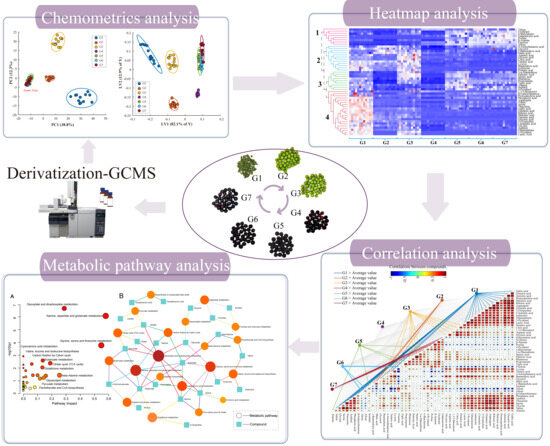
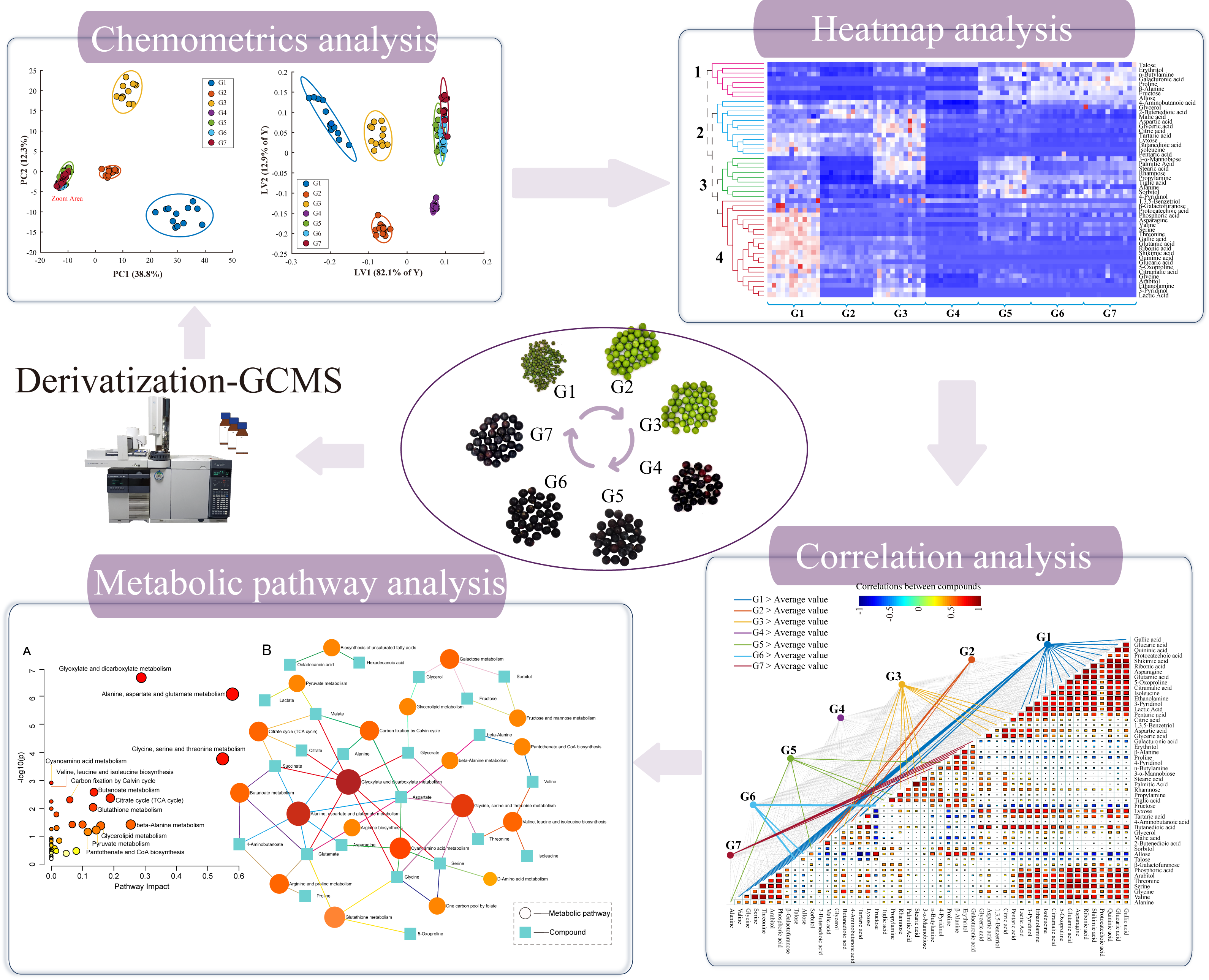
Graphical Abstract

1. Introduction

The Eastern Foot of Helan Mountain (EFH) in Ningxia is one of the Wine Geographical Indication Product Protection Areas in China [1], with increasing recognition in the international wine grape cultivation and winemaking sector [2]. This wine region is characterized by its semi-arid continental climate, abundant sunshine, and significant diurnal temperature variation [3]. Combined with its gravelly soils, the terroir creates exceptional natural conditions for grape growth and the development of wine flavors [4]. Indeed, the flavor characteristics of wine primarily originate from metabolites within the grapes [5,6]. These metabolites exhibit systematic dynamic variations throughout grape development, regulating sugar–acid balance, phenolic compound accumulation, and the formation of aroma precursors, which ultimately determine the sensory quality of the wine [7]. Consequently, an investigation into the dynamic variations of grape metabolites in this region across different growth stages is of significant scientific value and practical importance for enhancing wine quality.
Currently, several studies have focused on the quality of grapes and wines from EFH. In terms of component analysis, Chen et al. systematically analyzed the anthocyanin profiles of 14 grape varieties from this region, clarifying the distribution of anthocyanins and color attributes across varieties, and revealing their impact on wine color characteristics and overall quality [8]. In terms of cultivation regulation, Ju et al. investigated the effects of deficit irrigation on fatty acids and their volatile derivatives in Cabernet Sauvignon grapes and wine through two consecutive years of field trials [9]. Additionally, Deng et al. focused on the post-harvest stage, discovering that low-temperature storage promotes the accumulation of phenolic compounds and volatile substances in wine grapes after harvest, which enhances sensory quality [10]. Gu et al. focused on maturity monitoring, comparing the dynamic changes in four red grape varieties in terms of sugar-acid ratios, free and bound volatile compounds, and IBMP content before and after harvest [11]. At the nutritional physiology level, another study systematically tracked dry matter accumulation and mineral element dynamics across different organs of Cabernet Sauvignon, providing a basis for precise nutritional management [12]. Although Deluc et al. [7] and other researchers have systematically tracked grape developmental metabolism across different varieties and regions, studies on EFH region of Ningxia have primarily focused on maturity stages, varietal characteristics, or individual agronomic practices. Systematic tracking of metabolites throughout the entire grape growth cycle remains relatively scarce. Furthermore, the synergistic variations in sugar, acid, and amino acid profiles within CS fruit under the unique environmental conditions of the EFH region remain poorly understood. Therefore, conducting metabolomics analysis throughout the entire growth stage to reveal the dynamic patterns of metabolites in CS from this region can provide foundational data support for understanding the role of local terroir in shaping grape metabolic characteristics.
Primary metabolites such as sugars, amino acids, and organic acids serve as core components of grape berries. Their accumulation and transformation throughout the entire berry growth stage are critical factors determining the sensory quality of grapes and wine [13]. In addition, most of these metabolites exhibit high polarity and low volatility. Current analysis of these metabolites is mainly based on targeted national standard methods [14,15]. Although these methods offer high accuracy, they suffer from complex pretreatment, limited coverage of indicators and low analytical efficiency, which are not suitable for comprehensively characterizing metabolic changes during grape growth stages. Trimethylsilylation (TMS) derivatization is currently the most widely used pretreatment strategy, which can effectively enhance the volatility of compounds containing functional groups such as hydroxyl, carboxyl, and amino groups [16]. Therefore, in this study, the non-volatile primary metabolites were converted into volatile TMS-derivatives suitable for gas chromatography-mass spectrometry (GC-MS) analysis through this method. However, derivatization also introduces challenges in data analysis, such as increased co-elution peaks and difficulties in compound identification. Currently, several methods exist for preprocessing and feature extraction of GC-MS data, including tools like XCMS [17], MZmine [18], and MS-DIAL [19]. The AntDAS-GCMS platform, independently developed by our research team, has been validated and demonstrated its performance advantages in previously published methodological and applied studies [20,21], capable of achieving total ion chromatogram detection, peak resolution, time drift correction, component registration, statistical analysis, and compound identification. It provides a reliable new approach for systematically analyzing metabolite dynamics throughout the entire grape growth stage.
This study focuses on the unique terroir conditions of EFH in Ningxia, aiming to systematically investigate the accumulation dynamics of core primary metabolites (sugars, amino acids, organic acids) in CS fruit from this region and their potential associations with typical environmental factors. To this end, using CS grapes from the EFH region as study material, this research employs non-targeted metabolomics technology combining TMS derivatization with GC-MS. By integrating the self-developed AntDAS-GCMS data analysis platform, it systematically analyzes the dynamic metabolic variations during seven key growth stages of the berries. The specific objectives of this study are as follows: (i) Construct a dynamic accumulation profile of primary metabolites throughout the entire growth stages of Cabernet Sauvignon in the EFH region; (ii) Screen for differentially expressed metabolites at different developmental stages and clarify their stage-specific accumulation patterns. The findings will provide fundamental data support for elucidating the metabolic regulatory mechanisms underlying flavor formation in grapes from the EFH region. Additionally, they will offer practical references for precision management of grape cultivation and characteristic flavor regulation in wines from this region.

2. Materials and Methods

2.1. Plant Materials and Sampling

This study was conducted during the growing season of 2022 at Liushi winery (38°27′ N, 106°02′ E) in the Helan Mountain East Foothills wine region of Ningxia. The region’s climate is characterized by a continental pattern, with low annual precipitation (approximately 200 mm), abundant sunshine (annual sunshine duration exceeding 3000 h), and significant diurnal temperature variation [22]. These conditions provide a unique terroir conducive to the accumulation of phenolic compounds and flavor substances in grape fruits. The present study concentrated on the wine grape variety CS. The sampling points were systematically established at 21-day intervals post-veraison, with samples were collected at seven key growth stages: berry initiation stage (G1, 2 June 2022), fruit enlargement stage (G2, 23 June 2022), pre-veraison (G3, 14 July 2022), full veraison (G4, 4 August 2022), maturity stage (G5, 25 August 2022), 21 days post-maturity (G6, 15 September 2022), and 34 days post-maturity (G7, 28 September 2022). Specifically, an assessment was conducted that examined the impact of delayed harvest on fruit quality. At each scheduled grape growth stage, select three representative rows of vines within the experimental plot for sampling. Each row is uniformly divided into four sections, with one vine exhibiting consistent growth selected as the sample plant from each section. From the mid-canopy layer of all selected vines, randomly pick grape clusters that are healthy, free from sunscald, disease, pests, and mechanical damage. A total of 12 biological replicates (3 rows × 4 plants/row) were collected per growth stage, resulting in 84 samples in total. During sampling, fruits were harvested using sterilized scissors and immediately destemmed. All collected fruits were placed in sterile sealed bags, rapidly transported to the laboratory in ice packs, immediately flash-frozen in liquid nitrogen. Thereafter, the samples were subjected to drying using a vacuum freeze dryer (Shanghai Yituo Technology Co., Ltd., Shanghai, China). During the freeze-drying process, the vacuum pressure was maintained at 2 Pa, the cold trap temperature was set to −75 °C, and the sample temperature was adjusted to −40 °C. Samples in stages G1 and G2 underwent freeze-drying for 48 h, while samples in stages G3 to G7 required extended freeze-drying to 72 h due to fruit sugar accumulation. The samples were then ground into a uniform fine powder using a high-speed universal grinder (Tianjin Taisite Instrument Co., Ltd., Tianjin, China.) and stored in a −80 °C freezer for subsequent analysis.
The quality control (QC) sample preparation method in this study is as follows: A total of 84 grape powder samples from different growth stages were selected, and an equal amount (30 mg) of powder was precisely weighed from each sample. After thorough mixing, the blended powder underwent the same pretreatment, derivatization, and instrument analysis procedures as the test samples, with all steps completed in parallel with the test samples. During the experiment, QC samples were introduced into the instrument at a ratio of “1 QC sample per 10 test samples.” This enabled real-time quality control of instrument stability, sample pretreatment, and derivatization repeatability, ensuring overall system stability throughout the experimental workflow.

2.2. Chemicals and Reagents

In this study, methanol of chromatographic grade was purchased from Fisher Scientific Company, L.L.C., Pittsburgh, PA, USA. Isopropyl alcohol and acetonitrile of chromatographic grade were obtained from Thermo Fisher Scientific Co., Ltd., Shanghai, China. Standard samples of n-alkanes (C8–C40) for retention index calibration in gas chromatography-mass spectrometry analysis were acquired from Accustandard, Inc. (New Haven, CT, USA). Furthermore, the derivatization reagents (including methoxamine hydrochloride, N, O-bis(trimethylsilyl)trifluoroacetamide (BSTFA), and pyridine) were all supplied by Sigma-Aldrich (St. Louis, MO, USA).

2.3. Extraction of Primary and Secondary Polar Metabolites

The sample powder (20 mg, ±0.1 mg) should be accurately weighed and transferred into a 2 mL centrifuge tube. Thereafter, add 1.5 mL of the mixed extraction solvent (isopropanol:acetonitrile:water = 3:2:1, v/v/v). Ultrasonic extraction was then performed for 30 min using an ultrasonic water bath (KQ-250B, Kunshan Ultrasonic Instrument Co., Ltd., Jiangsu, China) with an ultrasonic power of 250 W, a fixed frequency of 40 KHz, and ambient temperature operation, followed by vortexing for 2 min on a vortex mixer (ZH-2BLENDER, Pharmacopoeia Standard Instrument Factory, Tianjin, China). Following this, the sample was centrifuged for 10 min in a centrifuge (Legend Micro 17, Thermo Fisher Scientific (China) Co., Ltd.; rotational speed: 13,000 rpm). Thereafter, 200 μL of the supernatant was transferred to a chromatographic vial, and an evaporation process was initiated using a vacuum centrifugal concentrator (CV200, Giam Scientific Technology Co., Ltd., Beijing, China). After concentration, the dried substance was obtained by adding 100 μL of a methoxamine hydrochloride pyridine solution (20 mg/mL). Further vortexing for 2 min was required for resuspension, and derivatization for 100 min in a 70 °C metal bath (DB100-2P, Qunan Scientific Instrument Co., Ltd., Zhejiang, China). Subsequently, 100 μL of BSTFA was added, allowing the reaction to be continued at 70 °C for 100 min to obtain stable, highly volatile metabolite derivatives. Once the above steps were completed, the reaction mixture was transferred to a centrifuge tube. Following centrifugation, 100 μL of the supernatant was transferred into a brown chromatographic vial equipped with an inner liner tube. The sample was equilibrated at room temperature for 6 h before GC-MS analysis was performed. All QC samples were extracted and derivatized using the same procedure as the grape samples. This study specifically targets the TMS-derivatizable polar metabolite fraction. Herein, the terms ‘polar metabolites’ and ‘metabolites’ are used synonymously to describe this set of compounds.

2.4. Instrumental Analysis

This study employed an Agilent 7890B-7000C gas chromatography-mass spectrometry system (Agilent Technologies, Santa Clara, CA, USA) to analyze primary and secondary polar metabolites in Cabernet Sauvignon samples at different growth stages. Specific instrument parameters are set as follows.
Gas chromatography conditions: An Agilent DB-5 MS capillary column (30 m × 0.25 mm × 0.25 μm) (Agilent Technologies, Santa Clara, CA, USA) was used for the separation of compounds. The injector port temperature was set to 250 °C. The carrier gas was high-purity helium (99.999% purity), and the flow rate was controlled at 1.0 mL/min. The injection mode was configured to operate in split mode, with a split ratio of 10:1. The temperature ramp program was configured as follows: an initial temperature of 50 °C was held for 3 min, followed by a ramp to 250 °C at 4 °C/min and held for 5 min, then a further ramp to 300 °C at the same rate and held for 5 min. It is also noteworthy that a post-run programme (50 °C held for 10 min) was executed after each acquisition to eliminate potential residues and ensure system stability.
Mass spectrometry conditions: An electron impact ion source was employed with an ionization energy of 70 eV. The ion source, quadrupole, and transmission line temperatures were maintained at 230 °C, 150 °C, and 250 °C, respectively. Data acquisition employed full-scan mode with a mass range of m/z 50–500 and a scan rate of 1562 μ/s. Additionally, a solvent delay time of 7 min was set to minimize solvent interference. For all test samples and QC samples analyzed in this study, the injection volume was 2 μL.

2.5. Data Analysis and Visualization

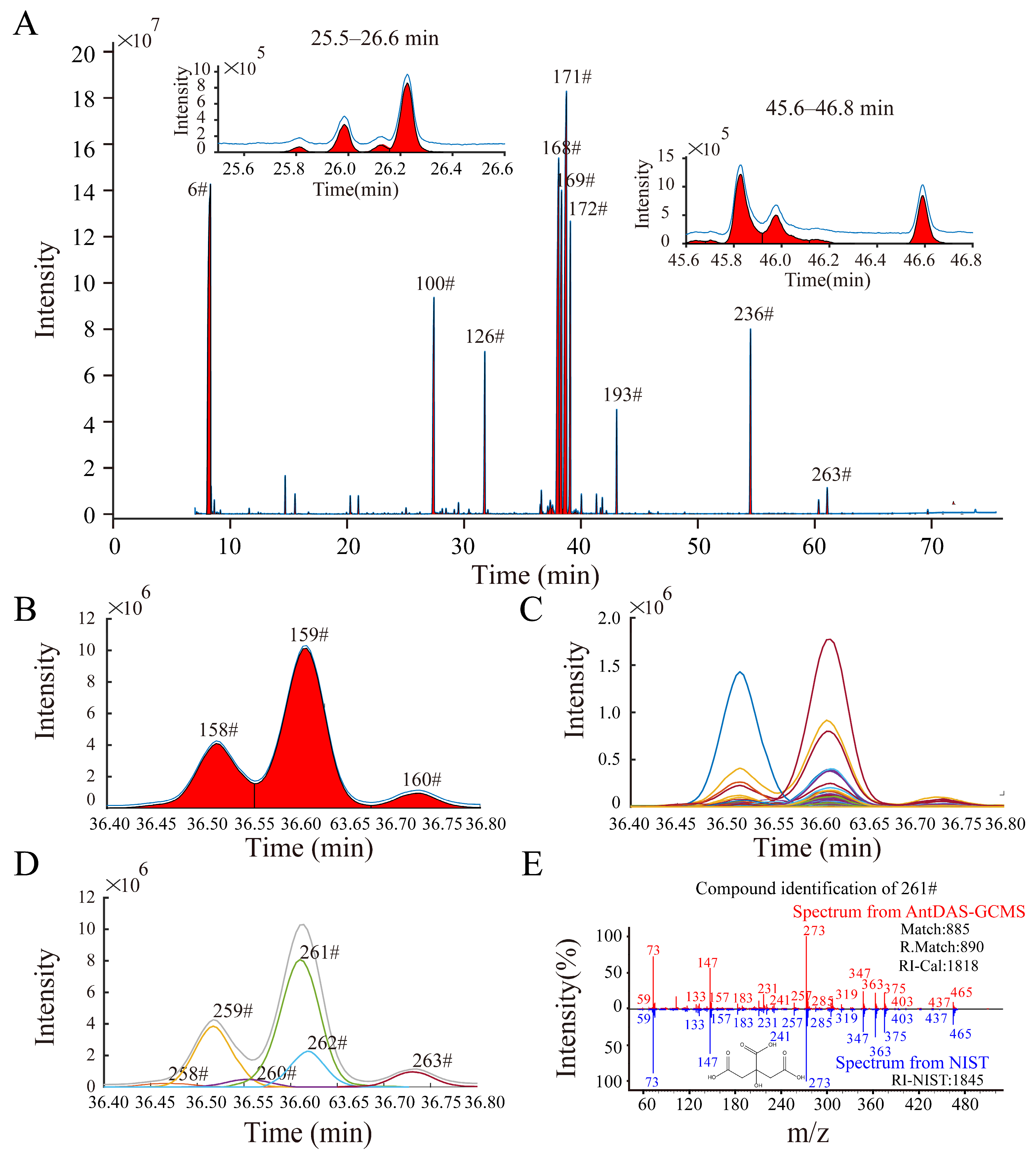
The present study employed AntDAS-GCMS (http://www.pmdb.org.cn/antdasgcms) (accessed on 10 February 2026), an automated GC-MS data analysis platform developed by our research group, to systematically analyze primary and secondary polar active compounds in CS at different growth stages. The specific data processing workflow is illustrated in Figure 1. Initially, the raw data files for each sample obtained from the GC-MS system were imported into Agilent MassHunter software (Version 10.0, Agilent Technologies, USA), converting the file format from “. d” to “mzdata.xml”. The converted data files are then imported into AntDAS-GCMS for analysis, generating a sample registration list of compound peak areas for subsequent statistical analysis. Concurrently, MSP format files for compounds were automatically generated to facilitate import into the National Institute of Standards and Technology (NIST) mass spectrometry library for precise compound identification. This platform is equipped with a range of fully automated functions, including total ion current (TIC) and extracted ion current (EIC) peak extraction, TIC peak resolution, retention time drift correction and peak registration. Figure 1 shows that the TIC spectrum of the CS sample detected a total of 448 chromatographic peaks. Figure 1A shows the extraction results of low-intensity TIC peaks across two elution time periods.
However, in the actual analysis of complex derivatized CS samples, co-elution remains in chromatograms, which makes it harder to extract and identify compound information accurately. To improve the accuracy of resolving complex co-eluting components, AntDAS-GCMS employs the Multivariate Curve Resolution-Alternating Least Squares (MCR-ALS) algorithm to perform deconvolution processing on TIC chromatographic peaks. Figure 1B–D illustrate an example of typical TIC peak deconvolution. As illustrated in Figure 1B, three TIC chromatographic peaks (designated 158#–160#) were extracted within a specified elution time range. Figure 1C,D further display all EIC peak information corresponding to each TIC peak after baseline correction within this interval, from which three co-eluting components can be clearly identified. The mass spectra of the six resolved compounds were imported into the NIST database for identification. Compounds 259#, 260#, 261#, and 262# were ultimately confirmed as shikimic acid, protocatechuic acid, citric acid, and isocitric acid, respectively. Figure 1E presents an example of the identification results for compound 261#. These findings demonstrate that the AntDAS-GCMS platform enables efficient, high-throughput, automated analysis of primary and secondary polar active components in CS.
The visualizations presented in this study were generated specifically from our experimental data. Chemometric analysis was performed using the AntDAS-GCMS platform, which operates within the MATLAB environment. Heatmaps, correlation analyses, and corresponding plots were generated directly by executing custom scripts in MATLAB (R2023a) on the experimental data obtained in this study. Metabolic pathway analysis and its visualization were conducted using the online platform MetaboAnalyst 6.0 (https://www.metaboanalyst.ca/) (accessed on 10 February 2026).

3. Results and Discussion

3.1. Analysis of Components in CS at Different Growth Stages

To investigate the primary and secondary metabolomics in Ningxia CS grapes, information was collected using GC-MS technology for samples from seven growth stages. Figure 2A displays the TICs of representative Cabernet Sauvignon samples from each growth stage. Results indicate that TICs from all growth stages contain complex compound information. Further analysis using AntDAS-GCMS software showed peak area and peak count results as depicted in Figure 2B. The figure indicates that the highest number of primary and secondary metabolites was identified in the pre-veraison stage, while the lowest number was found in samples collected 21 days post-maturity. These results demonstrate significant variations in the composition and relative abundance of components across different growth stages of CS.
Based on these preliminary findings of the differences across growth stages, to systematically explore the overall characteristics of primary and secondary polar compounds in Ningxia CS grapes, GC-MS data from 92 CS samples were automatically analyzed using AntDAS-GCMS. The analysis resulted in a 3533 × 92 compound registration list, where 3533 represents the total number of registered compounds, and 92 includes 84 CS samples and 8 quality control (QC) samples. To ensure the validity of subsequent analysis, the study calculated the percentage of the 3533 registered compounds present across all samples. The maximum percentage within each group was used as the characterization result for each compound. Compounds detectable in over 80% of samples were selected as valid components, as shown in the screening results in Figure 2C. Ultimately, 661 effective components were screened. The resulting 661 × 92 registered compound list served as the core effective component information foundation for subsequent differential compound screening.
A total of 636 differentially expressed compounds were identified using analysis of variance (ANOVA) with a fold change threshold of ≥1 and a significance level of p < 0.05. Subsequent to this, chemometric analysis was employed to perform discriminant analysis on 84 CS samples from varying growth stages, to explore metabolite variations among the samples comprehensively. The results of the PCA are displayed in Figure 2D and show that the first two principal components (PC1 and PC2) collectively explained 51.1% of the total data variation. Sample distribution exhibited trends correlated with growth stages. Samples from the berry initiation stage (G1), fruit enlargement stage (G2), and pre-veraison (G3) showed relatively dispersed positions. Conversely, from the stage of full veraison (G4) through subsequent maturity stages (G5–G7), sample points displayed a relatively clustered distribution pattern (Figure 2E). To more precisely reveal metabolic differences across growth stages, supervised partial least squares discriminant analysis (PLS-DA) was employed. The PLS-DA model constructed in this study demonstrated excellent performance (R2Y = 0.9980, Q2 = 0.9827). The PLS-DA score plot (Figure 2F) clearly shows a distinct separation trend among samples from different growth stages. Notably, G4 (full veraison) also exhibits a significant independent separation trend. Moreover, samples from G5–G7 (maturation stage) cluster together, reflecting the physiological tendency toward metabolic stability during late maturation.

3.2. Identification of Differential Metabolites

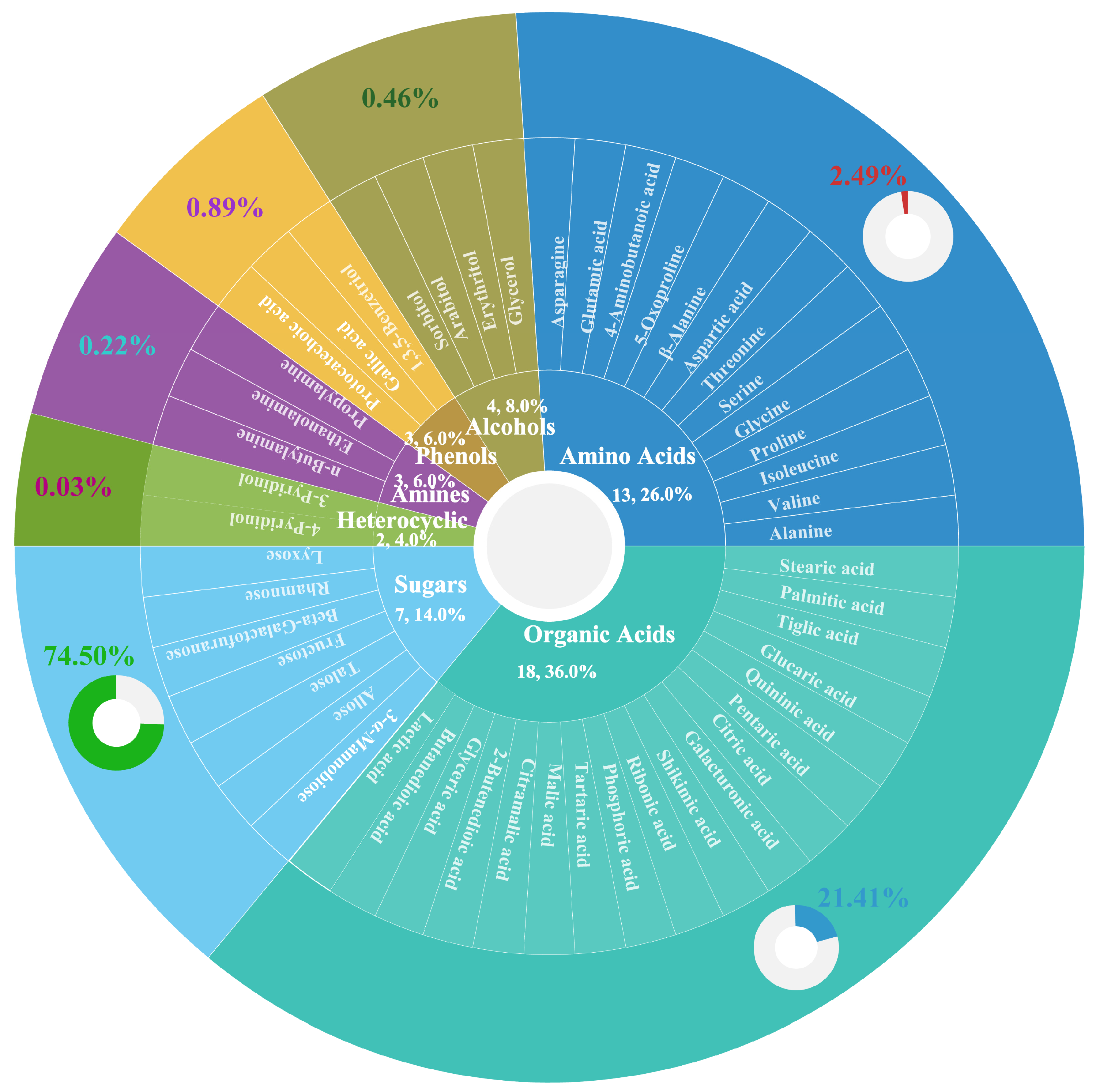
For the 636 differentially expressed metabolites screened through variance analysis, this study further conducted compound identification work. First, the metabolite mass spectrometry data obtained through the AntDAS-GCMS platform were organized into MSP format files and imported into the NIST mass spectrometry database for preliminary comparison analysis. To enhance identification accuracy, n-alkane standard mixtures were analyzed concurrently during experiments to establish retention index calculation models. During compound identification, the retention indices calculated by the AntDAS software were required to deviate by no more than 30 units from the reference values in the NIST database, while the mass spectral matching scores had to exceed 0.7. Based on these dual validation criteria, 50 metabolites were ultimately identified as significantly differentially expressed. The detailed information of the identified compounds is presented in Table 1. From a chemical classification perspective (Figure 3), the 50 identified differential metabolites primarily encompass organic acids, amino acids, sugars, phenols, alcohols, amines, and heterocyclic compounds. Among these, organic acids (18), amino acids (13), and sugars (7) were the most abundant, collectively accounting for 80% of all identified metabolites. The third layer of the Sunrise Plot was analyzed further, integrating the total peak area contributions of each compound class. The results showed that sugars, comprising only seven compounds, accounted for 74.50% of the total peak area, which is significantly higher than that of the other classes. In contrast, organic acids and amino acids, despite their greater numbers, contribute only 21.41% and 2.49%, respectively. This directly reflects the metabolic properties of sugars, which act as translocation products derived from source–sink relationships during berry development [23]. During fruit ripening, they are extensively transported through the vascular system and stored as soluble sugars [24], leading to their high abundance.

3.3. Dynamics of Primary and Secondary Metabolomics in CS at Different Growth Stages

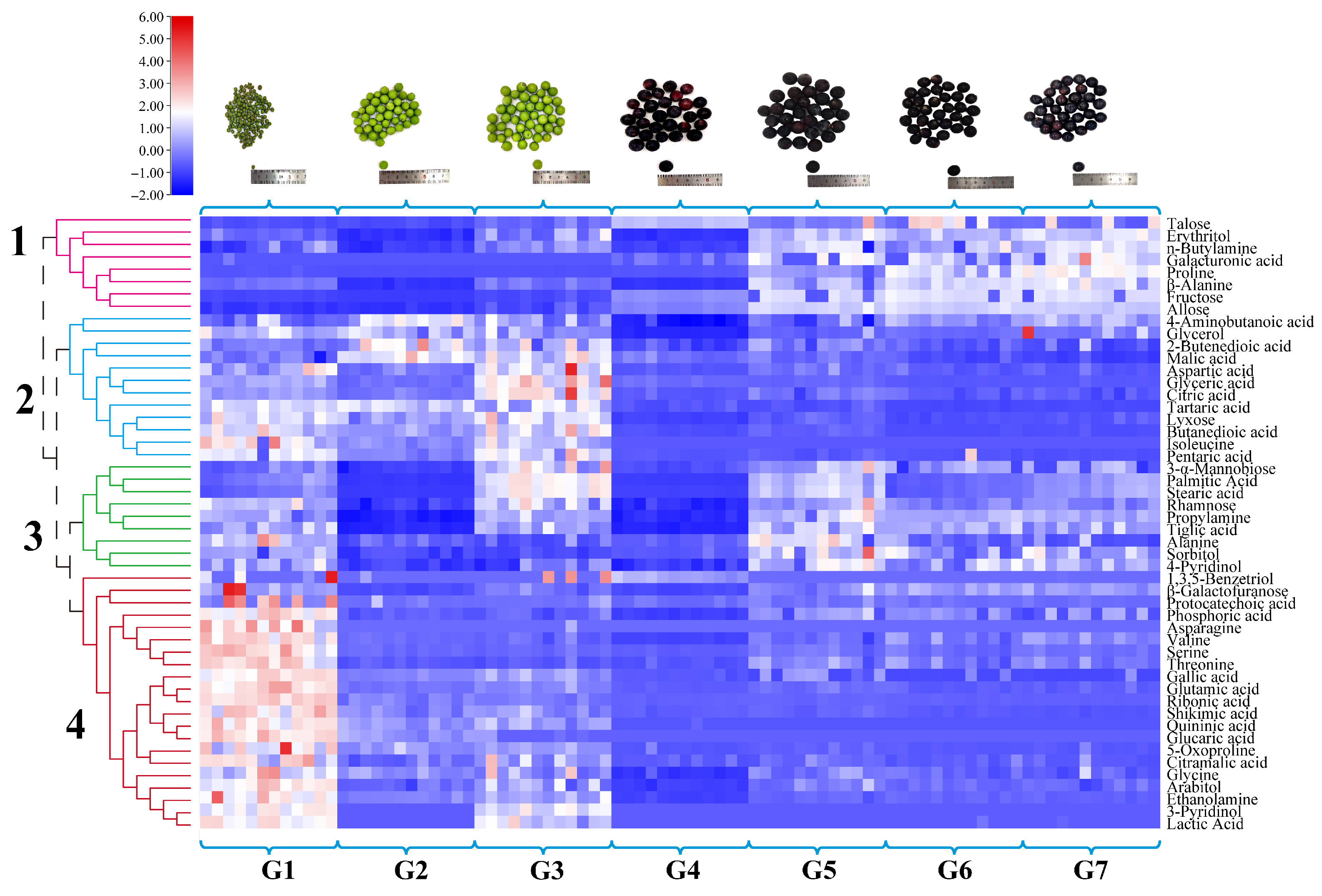
To systematically clarify the accumulation dynamics of primary and secondary metabolomics in CS across different growth stages, this study performed a heatmap analysis based on peak area data from 50 identified compounds that were differentially expressed (Figure 4). For analysis, the data were Z-score normalized per metabolite and thus reflect changes in relative levels, not absolute concentrations. The results indicate that metabolite accumulation exhibits significant stage-specificity, clearly revealing that changes in compound relative abundance are closely correlated with the growth and development of grapes. As shown in Figure 4, during the berry initiation stage of CS grapes, several amino acids (such as glutamic acid, threonine, serine, and valine) exhibited higher relative abundance. This trend aligns with the metabolic characteristics observed in the early growth stages of other horticultural fruits like strawberries [25]. In a study exploring the influence of soil on grape berry quality in EFH, it was found that soil organic matter showed a significant positive correlation with total nitrogen [26]. The abundant soil organic matter in this region could contribute to enhanced nitrogen cycling, which in turn could offer a sufficient nitrogen source for grapevines, thereby possibly facilitating the biosynthesis of nitrogen-containing metabolites like amino acids. Simultaneously, shikimic acid, a key precursor for the biosynthesis of aromatic amino acids and flavonoid compounds [27], also reaches its maximum relative abundance during the berry initiation stage. As berries progress into the pre-veraison stage, representative organic acids such as tartaric acid, malic acid, and citric acid begin to accumulate, constituting the primary sources of grape acidity. Following a complete color change, the metabolic focus of the berries further shifted toward sugar accumulation. Sugars, including allose, fructose, and talose, displayed continuous accumulation during the maturation stage. This process primarily relies on the concentrated transport and storage of photosynthetic products from leaves to the berries. Moreover, proline, an osmotic regulator and one of the most abundant amino acids in grape berries, increased in relative abundance during the late maturation stage under both biotic and abiotic stress condition [28,29]. Specifically, it should be clarified that the observed metabolic dynamics reflect the developmental characteristics of Cabernet Sauvignon in the Ningxia wine region under the climatic conditions of 2022. These patterns require validation with multi-year data to confirm their universality across different vintages.

3.4. Correlational Analysis Among Metabolites

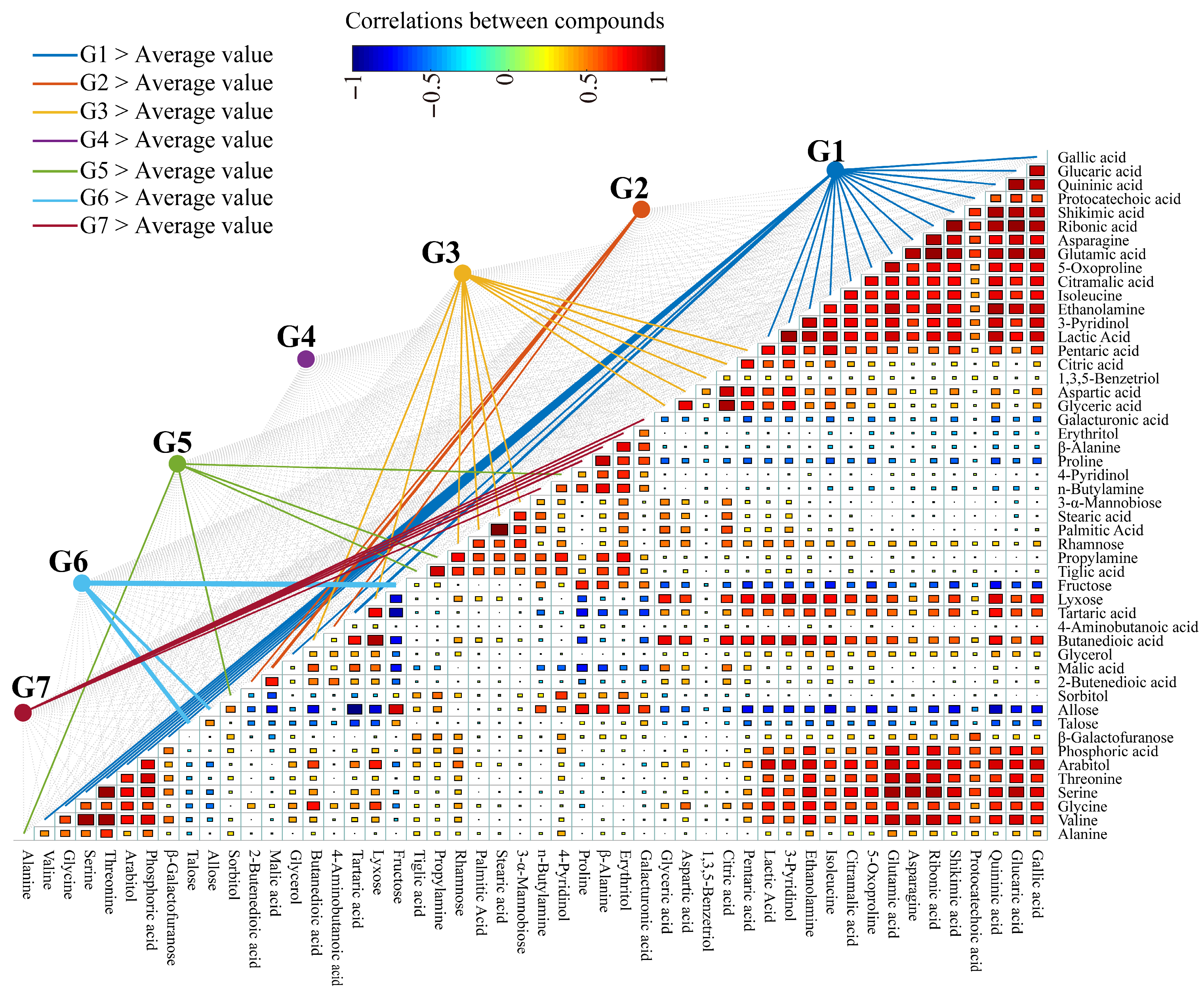
Based on the identified timing patterns of metabolite accumulation, correlation analysis and visualization were performed on the differentially expressed compounds further to clarify their interrelationships during the grape growth process. Figure 5 shows a heatmap of the network displaying the association between compounds and grape growth stages. The horizontal and vertical axes list the identified compounds, including lipid derivatives (e.g., palmitic acid), aromatic compounds (e.g., 1,3,5-benzenetriol), nitrogen-containing compounds (e.g., various amino acids) and other substances that are important for grape aroma, flavor and physiological metabolism. The left panel, labelled G1 to G7, corresponds to seven growth stages. Connections in different colors link these stages to the compound matrix, visually illustrating the unique associations between particular periods and compounds. Solid colored lines indicate high expression of the compound within its respective group, while gray dashed lines indicate less prominent expression across these groups. Additionally, the color of each block indicates the value and sign of the correlation coefficient, with the size of the block encoding the absolute value of the correlation coefficient.
Based on the correlation characteristics of compounds, G1 represents the initiation stage for the synthesis and accumulation of multiple compounds. This stage is associated with various compounds, including sugar derivatives such as β-Galactofuranose, aromatic compounds like Protocatechuic acid, and amino acids such as Glutamic acid. It suggests that the internal changes in compounds during the berry initiation stage may lay the foundation for the subsequent formation of flavor compounds in CS. After entering the fruit enlargement stage (G2), it was found that certain compounds overlapped with the G1 stage (e.g., sugars and amino acids). It was therefore indicated that metabolic pathways from the preceding stage continued into this phase. During the pre-veraison (G3) stage, the presence of aromatic compounds such as 1,3,5-benzetriol and terpenoid precursors has been observed, suggesting that the fruit begins to accumulate essential precursors for aroma synthesis. By the full veraison stage (G4), the number of associated compounds decreases significantly, with metabolic activity showing a trend of concentration. During the maturity stage (G5), the number of related compounds increased, including protocatechuic acid and glutamic acid. By 21 days post-maturity (G6), the association strength further intensified. However, at 34 days post-maturity (G7), only a few compounds remained associated, indicating that primary and secondary metabolic activity had significantly decreased at this stage.

3.5. Metabolic Pathway Interaction Analysis

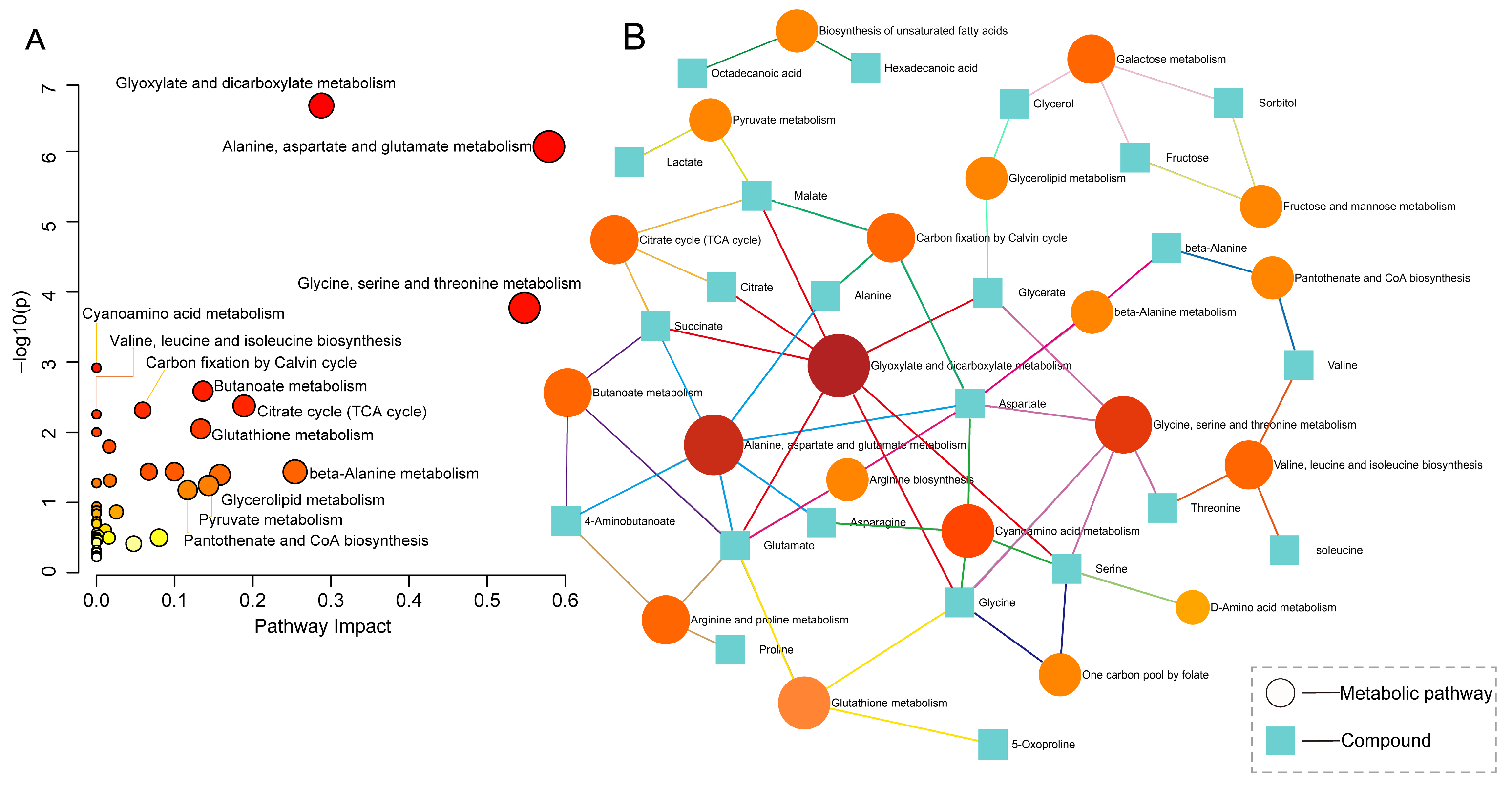
After clarifying the interactions among compounds in CS across different growth stages, pathway enrichment analysis was employed to link discrete compounds to specific metabolic pathways, which further revealed the underlying pathways of their dynamic metabolic regulation. Figure 6A presents a metabolic pathway analysis bubble plot based on two dimensions: pathway enrichment significance (−log10(p-value)) and pathway impact, aiming to identify key metabolic pathways. The size of each circle is proportional to the Pathway Impact value, indicating the more central influence of the compound within the pathway. The intensity of the circle’s color is proportional to −log10(p-value), representing the significance level of pathway enrichment. Based on the comprehensive evaluation of the above indicators, this study screened 13 core metabolic pathways, each labeled individually in Figure 6A. These pathways collectively form a closely interconnected regulatory network that dominates the dynamic accumulation and transformation of primary and secondary metabolites during CS grape development. According to the fundamental biological functions of 13 metabolic pathways, they can be categorized into three primary groups, which are characterized by clearly defined functions and interconnected logical relationships. Firstly, the Amino Acid Metabolism category encompasses five pathways: Alanine, Aspartate, and Glutamate Metabolism; Beta-Alanine Metabolism; Cyanoamino Acid Metabolism; Glycine, Serine, and Threonine Metabolism; and Valine, Leucine, and Isoleucine Biosynthesis. These pathways form the foundation of protein synthesis. The next category is Energy and Carbon Metabolism. Serving as the core hub of the metabolic network, this category encompasses six pathways: Butanoate metabolism, Carbon fixation by Calvin cycle, Citrate cycle (TCA cycle), Glyoxylate and dicarboxylate metabolism, Pyruvate metabolism, and Glutathione metabolism. Furthermore, the Lipid and Coenzyme Metabolism category includes two pathways: Glycerolipid metabolism and Pantothenate and CoA biosynthesis.
Figure 6B illustrates the pathway-metabolite interaction network, showing the collaborative relationships within metabolic processes. The circles in the figure represent pathways, the blue squares represent metabolites, and the differently colored lines indicate the relationships between different pathways and compounds. In terms of network structure, glyoxylate and dicarboxylate metabolism is a central node. The distinct diurnal temperature variation in this region may influence carbohydrate metabolic rates, thereby affecting downstream glutamate and organic acid synthesis by regulating the glyoxylate and dicarboxylate metabolism [30]. The glutamate produced by this pathway not only serves as a metabolic link but also acts as an essential flavor compound (umami taste) [31] and a direct precursor to glutathione. The network plot reveals a straightforward metabolic pathway from glutamic acid to glutathione, providing metabolomic insights into the accumulation patterns of potential antioxidant-related metabolites in CS grapes. Additionally, organic acids such as citric acid and malic acid serve as intermediates in carbon metabolism, while being intrinsically linked to grape acidity and flavor [32,33]. Moreover, the synthesis of glycine by the glycine-serine-threonine metabolic pathway not only serves as a unit for glutathione synthesis but also has been reported to possess anti-inflammatory, cytoprotective, and immunomodulatory properties [34]. This suggests that the activity of this metabolic pathway may indirectly support the synthesis of multiple bioactive substances. Furthermore, the valine-leucine-isoleucine biosynthesis pathway is integrated into the network through its connection with threonine. These three branched-chain amino acids (BCAAs) are essential nutrients, with recent research revealing their critical physiological roles in regulating protein synthesis, metabolism, food intake, and aging [35]. In general, this network reflects the characteristics of core pathway hubs and cross-pathway associations of metabolites in CS grape growth, providing a metabolic basis for explaining the differential accumulation of primary and secondary metabolites at different stages. Future studies may employ isotope tracing or enzyme activity assays to further validate the actual flux of these key metabolic pathways and their environmental regulatory mechanisms, providing a more systematic understanding of the metabolic basis underlying the synergistic development of grape flavor and stress resistance in the EFH wine region of Ningxia.

4. Conclusions

This study systematically revealed dynamic metabolic variations during CS grape development in Ningxia, uncovering stage-specific patterns of metabolic accumulation. Active synthesis of amino acids and specific organic acids was observed during the berry initiation stage. Pre-veraison was characterized by substantial organic acid accumulation, establishing the foundation for fruit acidity. Metabolism shifted toward rapid sugar accumulation during ripening. These systematic temporal changes in metabolites are linked to core pathways including amino acid metabolism, energy metabolism, and carbon metabolism. This study provides metabolomic evidence and practical references while establishing a critical data foundation for understanding regional metabolic characteristics of grapes in Ningxia. However, these findings require further validation and refinement across broader temporal and spatial dimensions. Future research directions include: i) expanding sampling to include multiple vintages and climatic conditions to validate the universality of observed metabolic patterns; ii) employing targeted metabolomics for confirmatory quantitative analysis to validate absolute quantification results of key metabolites identified in this study; and iii) integrating multi-omics data such as transcriptomics to systematically analyze underlying regulatory networks, elucidating the potential contributions and formation mechanisms of these metabolic characteristics in defining the distinctive flavor profiles of Ningxia wines.

Author Contributions

F.-L.M.: Writing—original draft, Writing—review & editing, Visualization; J.-N.W.: Formal analysis, Visualization, Data curation. X.-T.G.: Writing—review & editing, Visualization; H.L.: Writing—review & editing; J.-J.F.: Writing—review & editing; G.-J.M.: Writing—review & editing, Supervision; L.-H.T.: Writing—review & editing; Y.L.: Investigation, Writing—review & editing; Y.-J.Y.: Supervision, Investigation, Methodology, Conceptualization. All authors have read and agreed to the published version of the manuscript.

Funding

This work was supported by the National Natural Science Foundation of China (22378214), the Science and Technology Plan Program of State Administration for Market Regulation (2023MK125, 2023MK124). Key Research and Development Program of Ningxia Province (2025BEG02027, 2022BEG03170).

Institutional Review Board Statement

Not applicable.

Informed Consent Statement

Not applicable.

Data Availability Statement

The metabolomics data generated in this study have been deposited in the MetaboLights repository under the accession number MTBLS13742. The data are publicly available at: https://www.ebi.ac.uk/metabolights/MTBLS13742 (accessed on 10 February 2026).

Conflicts of Interest

The authors declare no conflicts of interest.

References

  1. Zhang, Z.; Zhang, Q.; Yang, H.; Sun, L.; Xia, H.; Sun, W.; Wang, Z.; Zhang, J. Bacterial Communities Related to Aroma Formation during Spontaneous Fermentation of ‘Cabernet Sauvignon’ Wine in Ningxia, China. Foods 2022, 11, 2775. [Google Scholar] [CrossRef] [PubMed]
  2. Hu, J.; Zhang, Y.; Zhang, X.; Wang, R. Characteristics and evaluation of soil fertility in different grape production areas at the eastern foot of Helan Mountain, Ningxia. Soil Fertil. Sci. China 2021, 6, 35–41. [Google Scholar]
  3. Lei, W.; Xiaohua, H.; Hu, Y.; Yajuan, L. What influences the development of wine-producing regions? New economic opportunities in the eastern foothills of the Helan Mountains in China. J. Rural. Stud. 2024, 112, 16. [Google Scholar] [CrossRef]
  4. Zhang, Q.; Ma, S.; Wang, R.; Li, L.; Zhang, Q.; Ju, M.; Gu, P. Diversity and drivers of arbuscular mycorrhizal fungi in the rhizosphere soil of wine grape in the eastern foot of Helan Mountain in Ningxia of China. Front. Microbiol. 2025, 16, 1700411. [Google Scholar] [CrossRef]
  5. Zhao, M.; Guan, R.; Wang, K.; Zhang, X.; Mou, M.; Li, M.; Sam, F.E.; Jiang, Y. Pre-harvest Chitooligosaccharide application enhances phenolic composition, antioxidant capacity, and sensory quality of cabernet Gernischt grapes (Vitis vinifera L.) and wine. Food Chem. X 2025, 29, 102853. [Google Scholar] [CrossRef] [PubMed]
  6. Zang, X.; Du, Q.; Jiang, J.; Liang, Y.Y.; Ye, D.; Liu, Y. Impact of combined grape maturity and selected Saccharomyces cerevisiae on flavor profiles of young ‘cabernet sauvignon’ wines. Food Chem. X 2025, 25, 102066. [Google Scholar] [CrossRef]
  7. Deluc, L.G.; Grimplet, J.M.; Wheatley, M.D.; Tillett, R.L.; Quilici, D.R.; Osborne, C.; Schooley, D.A.; Schlauch, K.A.; Cushman, J.C.; Cramer, G.R. Transcriptomic and metabolite analyses of Cabernet Sauvignon grape berry development. BMC Genom. 2007, 8, 429. [Google Scholar] [CrossRef]
  8. Chen, H.; Wang, M.; Zhang, L.; Ren, F.; Li, Y.; Chen, Y.; Liu, Y.; Zhang, Z.; Zeng, Q. Anthocyanin profiles and color parameters of fourteen grapes and wines from the eastern foot of Helan Mountain in Ningxia. Food Chem. X 2024, 24, 102034. [Google Scholar] [CrossRef]
  9. Ju, Y.-L.; Liu, M.; Tu, T.-Y.; Zhao, X.-F.; Yue, X.-F.; Zhang, J.-X.; Fang, Y.-L.; Meng, J.-F. Effect of regulated deficit irrigation on fatty acids and their derived volatiles in ‘Cabernet Sauvignon’ grapes and wines of Ningxia, China. Food Chem. 2018, 245, 667–675. [Google Scholar] [CrossRef]
  10. Deng, Z.; Cheng, G.; Li, W.; Yang, P.; Zhang, K.; Chen, K.; Fang, Y. The Effect of Varying Durations of Post-Harvest Cryogenic Treatments on the Quality of Cabernet Sauvignon Wines. Foods 2025, 14, 1972. [Google Scholar] [CrossRef]
  11. Gu, X.; Zhang, X.; Wang, K.; Lv, X.; Li, R.; Ma, W. GC–MS Untargeted Analysis of Volatile Compounds in Four Red Grape Varieties (Vitis vinifera L. cv) at Different Maturity Stages near Harvest. Foods 2022, 11, 2804. [Google Scholar] [CrossRef]
  12. Chen, X.; Zhang, J.; Yan, P.; Wang, Z.; Gong, Y.; Wang, R.; Wang, Y. Comprehensive study on the nutrient concentration and uptake in various organs of cabernet sauvignon across all growth stages. Ind. Crops Prod. 2025, 227, 120842. [Google Scholar] [CrossRef]
  13. Murcia, G.; Fontana, A.; Pontin, M.; Baraldi, R.; Bertazza, G.; Piccoli, P.N. ABA and GA3 regulate the synthesis of primary and secondary metabolites related to alleviation from biotic and abiotic stresses in grapevine. Phytochemistry 2017, 135, 34–52. [Google Scholar] [CrossRef] [PubMed]
  14. Scettri, A.; Baroldi, I.; Allari, L.; Bolognini, L.; Guardini, K.; Schievano, E. NMR sugar-profile in genuine grape must. Food Chem. 2024, 451, 139374. [Google Scholar] [CrossRef] [PubMed]
  15. Kim, M.-A.; Kim, D.-Y.; Yun, C.-I.; Kim, Y.-J. Validation, measurement uncertainty, and application of HPLC and LC-MS/MS analysis methods for determining organic acids in processed food products. J. Food Compos. Anal. 2025, 141, 107335. [Google Scholar] [CrossRef]
  16. Foguet-Romero, E.; Samarra, I.; Guirro, M.; Riu, M.A.-O.; Joven, J.; Menendez, J.A.; Canela, N.A.-O.; DelPino-Rius, A.; Fernández-Arroyo, S.A.-O.; Herrero, P. Optimization of a GC-MS Injection-Port Derivatization Methodology to Enhance Metabolomics Analysis Throughput in Biological Samples. J. Proteome Res. 2022, 21, 2555–2565. [Google Scholar] [CrossRef]
  17. Smith, C.A.; Want, E.J.; O’Maille, G.; Abagyan, R.; Siuzdak, G. XCMS: Processing mass spectrometry data for metabolite profiling using nonlinear peak alignment, matching, and identification. Anal. Chem. 2006, 78, 779–787. [Google Scholar] [CrossRef]
  18. Heuckeroth, S.A.-O.; Damiani, T.; Smirnov, A.; Mokshyna, O.; Brungs, C.A.-O.; Korf, A.; Smith, J.D.; Stincone, P.; Dreolin, N.; Nothias, L.A.-O.; et al. Reproducible mass spectrometry data processing and compound annotation in MZmine 3. Nat. Protoc. 2024, 19, 2597–2641. [Google Scholar] [CrossRef]
  19. Tsugawa, H.; Cajka, T.; Kind, T.; Ma, Y.; Higgins, B.; Ikeda, K.; Kanazawa, M.; VanderGheynst, J.; Fiehn, O.; Arita, M. MS-DIAL: Data-independent MS/MS deconvolution for comprehensive metabolome analysis. Nat. Methods 2015, 12, 523–526. [Google Scholar] [CrossRef]
  20. Ma, G.M.; Wang, J.N.; Wang, X.C.; Ma, F.L.; Wang, W.X.; Li, S.A.-O.; Liu, P.P.; Lv, Y.; Yu, Y.A.-O.; Fu, H.A.-O.; et al. AntDAS-GCMS: A New Comprehensive Data Analysis Platform for GC-MS-Based Untargeted Metabolomics with the Advantage of Addressing the Time Shift Problem. Anal. Chem. 2024, 96, 9379–9389. [Google Scholar] [CrossRef]
  21. Wen, Y.-J.; Wang, L.-H.; Zhai, M.; Ma, H.; Cui, H.-P.; Han, L.; Chai, G.-B.; Lv, Y.; Zheng, Q.-X.; Yu, Y.-J.; et al. Integrating HS-SPME-GCMS with chemometrics for identifying adulterated flaxseed oils and tracing origins of additives. Food Control 2025, 176, 111391. [Google Scholar] [CrossRef]
  22. Fu, X.; Chen, X.; Chen, Y.; Hui, Y.; Wang, R.; Wang, Y. Foliar Co-Applications of Nitrogen and Iron on Vines at Different Developmental Stages Impacts Wine Grape (Vitis vinifera L.) Composition. Plants 2024, 13, 2203. [Google Scholar] [CrossRef] [PubMed]
  23. Coombe, B.G.; McCarthy, M.G. Dynamics of grape berry growth and physiology of ripening. Aust. J. Grape Wine Res. 2000, 6, 131–135. [Google Scholar] [CrossRef]
  24. Agasse, A.; Vignault, C.; Kappel, C.; Conde, C.; Gerós, H.; Delrot, S. Sugar Transport & Sugar Sensing in Grape. In Grapevine Molecular Physiology & Biotechnology; Roubelakis-Angelakis, K.A., Ed.; Springer Netherlands: Dordrecht, The Netherlands, 2009; pp. 105–139. [Google Scholar]
  25. Zhang, J.; Wang, X.; Yu, O.; Tang, J.; Gu, X.; Wan, X.; Fang, C. Metabolic profiling of strawberry (Fragaria×ananassa Duch.) during fruit development and maturation. J. Exp. Bot. 2011, 62, 1103–1118. [Google Scholar] [CrossRef]
  26. Li, Y.; Xiao, J.; Yan, Y.; Liu, W.; Cui, P.; Xu, C.; Nan, L.; Liu, X. Multivariate Analysis and Optimization of the Relationship between Soil Nutrients and Berry Quality of Vitis vinifera cv. Cabernet Franc Vineyards in the Eastern Foothills of the Helan Mountains, China. Horticulturae 2024, 10, 61. [Google Scholar] [CrossRef]
  27. Paradiso, F.; Latorraca, M.; Tamborra, M.; Bolettieri, D.; Savino, M.; Tamborra, P. The shikimic acid: An important metabolite for the Aglianico del Vulture wines. Ital. J. Agron. 2014, 9, 615. [Google Scholar] [CrossRef]
  28. Leng, F.; Duan, S.; Song, S.; Zhao, L.; Xu, W.; Zhang, C.; Ma, C.; Wang, L.; Wang, S. Comparative Metabolic Profiling of Grape Pulp during the Growth Process Reveals Systematic Influences under Root Restriction. Metabolites 2021, 11, 377. [Google Scholar] [CrossRef]
  29. Verbruggen, N.; Hermans, C. Proline accumulation in plants: A review. Amino Acids 2008, 35, 753. [Google Scholar] [CrossRef]
  30. Ruimin, N.I.U.; Zehua, X.U.; Tian, S.; Xiaojing, H.; Weiping, C. Analysis on Fruit Ripening Process and Quality Difference of Cabernet Sauvignon at the Eastern Foot of Helan Mountain. Sci. Technol. Food Ind. 2022, 43, 125−131. [Google Scholar]
  31. Matsumoto, H.; Miyamoto, L.; Matsumoto, T.; Blachier, F. The Role of L-Glutamate as an Umami Substance for the Reduction of Salt Consumption: Lessons from Clinical Trials. Nutrients 2025, 17, 1684. [Google Scholar] [CrossRef] [PubMed]
  32. van Wyk, N.; Scansani, S.; Beisert, B.; Brezina, S.; Fritsch, S.; Semmler, H.; Pretorius, I.S.; Rauhut, D.; von Wallbrunn, C. The Use of Hanseniaspora occidentalis in a Sequential Must Inoculation to Reduce the Malic Acid Content of Wine. Appl. Sci. 2022, 12, 6919. [Google Scholar] [CrossRef]
  33. Li, D.; Yang, J.; Dai, Z.; Chen, Y.; Shao, Z.; Wang, C.; Jin, X.; Wang, Y.; Feng, L. Prohexadione-calcium improves grape quality by regulating endogenous hormones, sugar and acid metabolism and related enzyme activities in grape berries. BMC Plant Biol. 2024, 24, 122. [Google Scholar] [CrossRef] [PubMed]
  34. Aguayo-Cerón, K.A.; Sánchez-Muñoz, F.; Gutierrez-Rojas, R.A.; Acevedo-Villavicencio, L.N.; Flores-Zarate, A.V.; Huang, F.; Giacoman-Martinez, A.; Villafaña, S.; Romero-Nava, R. Glycine: The Smallest Anti-Inflammatory Micronutrient. Int. J. Mol. Sci. 2023, 24, 11236. [Google Scholar] [CrossRef] [PubMed]
  35. Couteur, D.; Solon-Biet, S.M.; Cogger, V.; Ribeiro, R.; Cabo, R.; Raubenheimer, D.; Cooney, G.; Simpson, S. Branched chain amino acids, aging and age-related health. Ageing Res. Rev. 2020, 64, 101198. [Google Scholar] [CrossRef] [PubMed]
Figure 1. Data analysis workflow with AntDAS-GCMS. (A) TIC peaks detected in the QC sample of CS by GC-MS; (B) three TIC peaks extracted by AntDAS-GCMS; (C) EIC curves under the three TIC peaks; (D) six components resolved under the three TIC peaks; (E) identification result of compound #261.
Chemosensors 14 00050 g001
Figure 2. (A) The TICs of representative CS samples at different growth stages; (B) Total peak area of detectable components from TIC resolution; (C) Sample percentage of registered compounds; (D) PCA analysis based on differential metabolite; (E) Magnified view of the PCA score plot (corresponding to the red dashed box in (D); (F) PLS-DA score plot of CS samples at different growth stages (Model: R2Y = 0.9980, Q2 = 0.9827).
Chemosensors 14 00050 g002
Figure 3. Identification results of differential compounds (from inner to outer: the first circle shows the number and proportion of compound classes; the second circle shows the compounds; the third circle shows the total peak area proportion of each compound class).
Chemosensors 14 00050 g003
Figure 4. Visual heatmap of differential compounds in CS grapes across different growth stages at EFH (Shown above are phenotypic photographs of CS grapes at seven growth stages).
Chemosensors 14 00050 g004
Figure 5. Correlation network heatmap based on differentiated compounds.
Chemosensors 14 00050 g005
Figure 6. (A) Compound enrichment pathway bubble plot; (B) metabolite-mediated pathway interactions (The colored lines indicate different pathways and their interrelationships with the compounds). This visualization was generated using the MetaboAnalyst platform (https://www.metaboanalyst.ca/) (accessed on 10 February 2026).
Chemosensors 14 00050 g006
Table 1. Detailed information on compound identification results.
No.RT (min)RI-Cal aRI-Ref bMF cCompoundFormulaCASClass
110.901015 10140.85Tiglic acidC5H8O280-59-1Organic acids
212.441057 10550.76PropylamineC3H9N107-10-8Amines
312.611062 10660.87Lactic AcidC3H6O350-21-5Organic acids
413.641089 11230.88n-ButylamineC4H11N109-73-9Amines
514.191104 11000.90AlanineC3H7NO256-41-7Amino acids
615.221132 11340.913-PyridinolC5H5NO109-00-2Heterocyclic compounds
715.881150 11500.834-PyridinolC5H5NO626-64-2Heterocyclic compounds
818.211214 12240.92ValineC5H11NO272-18-4Amino acids
919.941265 12620.94EthanolamineC2H7NO141-43-5Amines
1020.361277 12890.83GlycerolC3H8O356-81-5Alcohols
1120.871292 13010.86IsoleucineC6H13NO273-32-5Amino acids
1220.941294 13050.91ProlineC5H9NO2147-85-3Amino acids
1321.261303 13140.89GlycineC2H5NO256-40-6Amino acids
1421.681316 13210.91Butanedioic acidC4H6O4110-15-6Organic acids
1522.221332 13440.87Glyceric acidC3H6O4473-81-4Organic acids
1622.931353 13530.822-Butenedioic acidC4H4O4110-17-8Organic acids
1723.221361 13680.91SerineC3H7NO356-45-1Amino acids
1824.031385 13670.90ThreonineC4H9NO372-19-5Amino acids
1925.221422 14200.88Aspartic acidC4H7NO456-84-8Amino acids
2025.301425 14380.90β-AlanineC3H7NO2107-95-9Amino acids
2126.641469 14870.81Citramalic acidC5H8O5597-44-4Organic acids
2227.351492 14970.97Malic acidC4H6O56915-15-7Organic acids
2327.931511 15080.93ErythritolC4H10O480-59-1Alcohols
2428.101517 15220.925-OxoprolineC5H7NO3149-87-1Amino acids
2528.431527 15320.924-Aminobutanoic acidC4H9NO298-79-3Amino acids
2628.591533 15270.89Glutamic acidC5H9NO456-86-0Amino acids
2730.421593 15890.80AsparagineC4H8N2O370-47-3Amino acids
2831.761641 16650.94Tartaric acidC4H6O670-47-3Organic acids
2931.891645 16630.921,3,5-BenzetriolC6H6O387-69-4Phenols
3032.231658 16520.77LyxoseC5H10O565-42-9Sugars
3133.311697 17100.74ArabitolC5H12O3488-82-4Alcohols
3233.841716 17060.85RhamnoseC6H12O57643-75-6Sugars
3335.121763 17780.86Phosphoric acidH3O4P3615-41-6Organic acids
3435.261768 18520.85β-GalactofuranoseC6H12O67045-51-4Sugars
3535.331771 17990.81Ribonic acidC5H10O641846-91-7Organic acids
3636.491814 18430.87Shikimic acidC7H10O5642-98-8Organic acids
3736.521815 18350.83Protocatechoic acidC7H6O4138-59-0Phenols
3836.581818 18450.89Citric acidC6H8O799-50-3Organic acids
3936.691822 18400.85Pentaric acidC6H8O777-92-9Organic acids
4037.521856 18510.87Quininic acidC11H9NO333012-62-3Organic acids
4137.921872 18750.88FructoseC6H12O657-48-7Sugars
4238.551897 18790.84TaloseC6H12O623567-25-1Sugars
4338.951913 18860.84AlloseC6H12O62595-97-3Sugars
4439.071918 19400.74Glucaric acidC6H10O82595-97-3Organic acids
4539.351929 19200.83SorbitolC6H14O650-70-4Alcohols
4639.421932 19430.78Galacturonic acidC6H10O714982-50-4Organic acids
4739.991955 19870.93Gallic acidC7H6O5149-91-7Phenols
4842.152045 20500.86Palmitic AcidC16H32O257-10-3Organic acids
4946.562242 22460.88Stearic acidC18H36O257-11-4Organic acids
5054.692635 26560.763-α-MannobioseC12H22O1123745-85-9Sugars
Notes: a RI-Cal: Retention index calculated by the AntDAS-GCMS platform. b RI-Ref: Retention index from the NIST library. c Match Factor (MF): Represents the matching degree between the experimentally obtained mass spectra and the reference spectra in the NIST library.
Disclaimer/Publisher’s Note: The statements, opinions and data contained in all publications are solely those of the individual author(s) and contributor(s) and not of MDPI and/or the editor(s). MDPI and/or the editor(s) disclaim responsibility for any injury to people or property resulting from any ideas, methods, instructions or products referred to in the content.