3.1. Laser-Trimmed Four-Bores
In efforts to better understand the complex causes of neurodegeneration, it is critically important to develop analytical systems capable of capturing ultrafast neurochemical events with high selectivity and sensitivity. Moreover, these systems must be made accessible globally, particularly in economically challenged regions, where access to quality healthcare remains limited. For multi-analyte detection tools, especially those intended for in vivo applications, several design considerations are essential. The sensor material must be biocompatible and cause minimal tissue damage upon implantation, necessitating an ultra-small electrode size. However, as the electrode size decreases, the sensitivity must not be compromised, since detecting ultra-low concentrations of neurotransmitters and other analytes is essential. Temporal resolution must also remain high to capture rapid neurochemical fluctuations occurring in the brain or in the body fluids. Meeting all these criteria simultaneously is technically demanding, and this complexity is a major reason why such advanced sensing systems are not yet widely available in clinical settings.
Although promising FSCV based multi-analyte sensing systems have been reported [
27,
28], most are limited to detecting only two or three analytes and typically require intricate, time-consuming fabrication steps involving highly specialized laboratory environments. These factors make such systems less accessible in resource-limited settings. To address these challenges, we developed a four-bore CFM using a straightforward, cost-effective fabrication process (
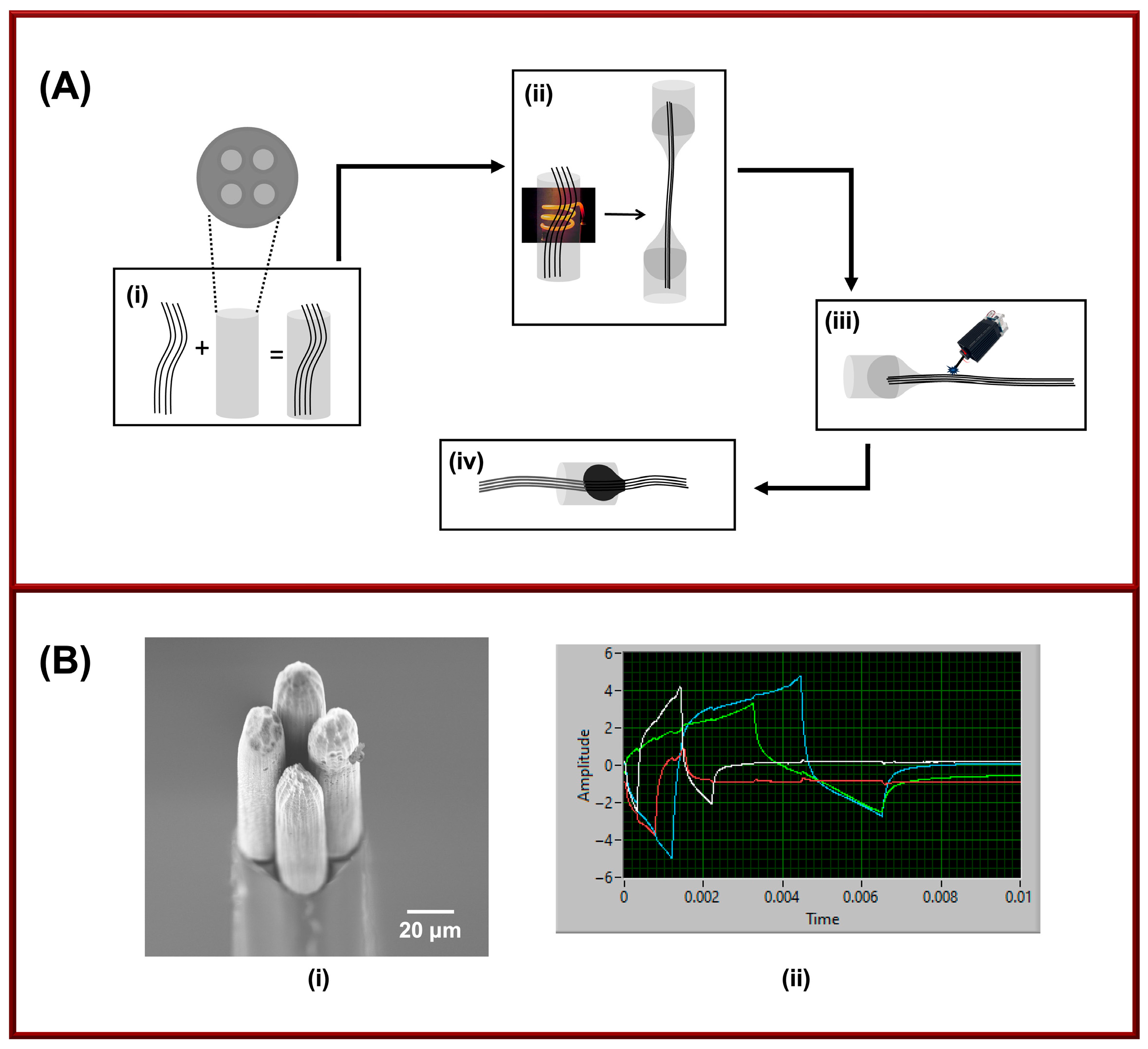
Figure 1A). Building on our previously published work with double-bore CFMs, we determined that a minimum inter bore spacing of ~485 µm is critical for maintaining proper separation between carbon fibers, especially during high scan rate cycling. Based on this, we selected, customized four-bore glass capillaries with inter-bore gaps of ~485 µm. Individual carbon fibers were inserted into each bore, and the filled glass capillary was pulled into two halves using a vertical puller, allowing gravity to assist the separation while melting the glass to form a seal. Although inserting four carbon fibers may appear to be a straightforward extension of the two-fiber process, this step is quite challenging, as the fibers naturally attract and tend to tangle with one another. Therefore, special care was required to ensure that all four fibers remained properly separated throughout the process.
Initially, we attempted to trim all four fibers manually using a scalpel under a microscope. While some success was achieved, the overall success rate was below 50 percent, and most attempts led to breakage of the glass seal. Manual trimming works well for single- and double-bore CFMs, where fibers can be cut against the glass to preserve the seal. However, in the four-bore configuration, the spatial arrangement of the fibers makes this method unreliable, as not all fibers can be simultaneously positioned against the glass for trimming. We also tried spark trimming, previously applied to single-bore CFMs [
29], but it failed to yield fibers of the desired length and often melted the glass due to high voltage.
Ultimately, we found success using a simple optical laser system under the microscope. Although the laser setup lacked advanced controls, we optimized the working distance and orientation to trim all four fibers to a consistent length of ~30 to 40 µm, without damaging the glass seal. The entire trimming process takes only 10 to 20 s. While Amemiya’s group has demonstrated laser milling for CFMs using a highly focused ion beam system [
30] with a gallium source, their method, though capable of producing smooth, uniform electrode surfaces, is expensive and labor-intensive, making it less suitable for laboratories with limited resources. In contrast, our approach is both economical and efficient.
SEM images confirmed that our laser-trimmed four-bore CFMs maintained intact carbon glass seals and consistent fiber lengths. Interestingly, the laser created micro-holes on the carbon fibers (
Figure 1(Bi)), thereby increasing the surface area, an effect that has previously been achieved using chemical treatments such as potassium hydroxide etching [
31]. This increase in surface area is expected to enhance analyte sensitivity, which is advantageous for real-time multi-analyte detection relevant to neurodegenerative disease research. Furthermore, when we applied four different waveforms to the four individual carbon fibers in tris buffer, the electrodes retained a stable gap and showed no signal interference, further confirming the mechanical and electrochemical stability of our design (
Figure 1(Bii)).
3.2. Analysis of Metal Ion Mixtures
One of the central objectives of our research group is to investigate the fate and neurotoxicity of heavy metals in biological systems, particularly their role in the onset and progression of neurodegenerative disorders. Toxic metals such as As
3+, Cd
2+, and Cu
2+ have been consistently associated with harmful health outcomes, including damage to vital organs and the central nervous system [
32,
33]. With the rising use of these metals in industrial applications, electronic manufacturing, and agricultural pesticides, their environmental concentrations have significantly increased. This, in turn, elevates the risk of human exposure through air, water, and food sources. Given their potential to accumulate in neural tissue and disrupt neurochemical homeostasis, it is essential to develop sensitive and selective analytical tools capable of detecting these ions in real-time and under physiologically relevant conditions for future in vivo investigations.
After verifying the structural stability and functional integrity of our newly developed four-bore CFMs, especially their ability to sustain separate potential windows while maintaining spatial separation between fibers, we proceeded to assess their electrochemical performance in detecting toxic metal ion mixtures. To date, FSCV waveform parameters have been optimized for four specific metal ions: Cu
2+ [
34], Pb
2+ [
35], Cd
2+ [
36], and As
3+ [
37]. Among these, Hashemi’s group previously demonstrated that Pb
2+ detection in tris buffer, commonly used as an analog for artificial cerebrospinal fluid, was ineffective [
35]. Their work required the formulation of a specialized buffer system to support Pb
2+ measurements, which complicates standardization for broader use. Considering the objective of developing a method that is both reproducible and compatible with physiologically relevant buffers, we excluded Pb
2+ from our analysis and focused instead on Cu
2+, As
3+, and Cd
2+ as our model analytes. Additionally, DA was included as a fourth analyte to be detected with the remaining carbon fiber, enabling us to investigate possible interactions between DA and these toxic metal ions. Since the detection of As
3+ requires mildly acidic conditions [
37] for optimal electrochemical response, the pH of tris buffer was adjusted to 6.5 for all experiments in this study.
Achieving high analyte selectivity during simultaneous multi-analyte detection, especially in complex biological matrices, presents a significant challenge. Selectivity can be enhanced by applying distinct waveforms for each analyte or through electrode surface modification strategies that enhance sensitivity toward target molecules. In this study, the detection of Cd
2+ necessitated modifying the electrode surface with AuNPs [
36], a method shown to enhance Cd
2+ sensitivity through catalytic effects. Following a procedure reported by the Zestos group [
28], we selectively electrodeposited AuNPs onto one of the four carbon fibers, while leaving the remaining three electrodes unmodified.
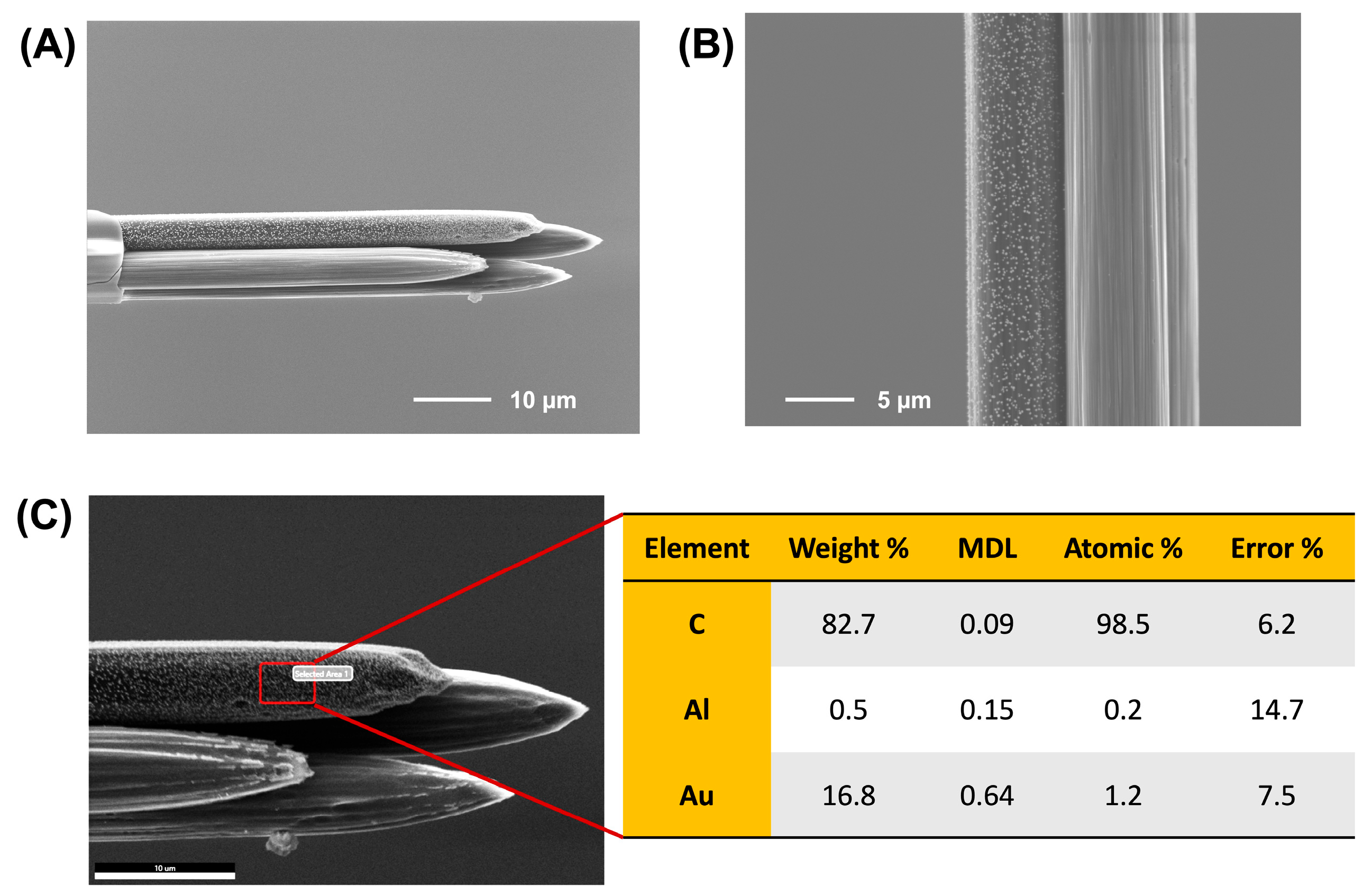
To confirm successful surface modification, we employed SEM, which clearly revealed a distinct layer of AuNPs deposited on the modified electrode. The other three electrodes retained their native striated morphology characteristic of bare CFMs (
Figure 2A). EDX analysis was also performed to quantify the elemental composition of each electrode. As shown in
Figure 2B and
Figure S1, the AuNP-modified electrode displayed a significant gold signal, with a weight percentage of ~16.8%. In contrast, the remaining three electrodes showed no detectable gold, confirming the absence of AuNPs on those surfaces. These findings are significant as they not only demonstrate the successful fabrication of a four-bore CFM system but also validate our ability to achieve precise, selective surface modification of individual electrodes spaced only ~600 nm apart. This level of control is crucial for enabling targeted analyte detection in complex environments and represents a major step forward in developing advanced, real-time electrochemical sensors for neurotoxicology applications.
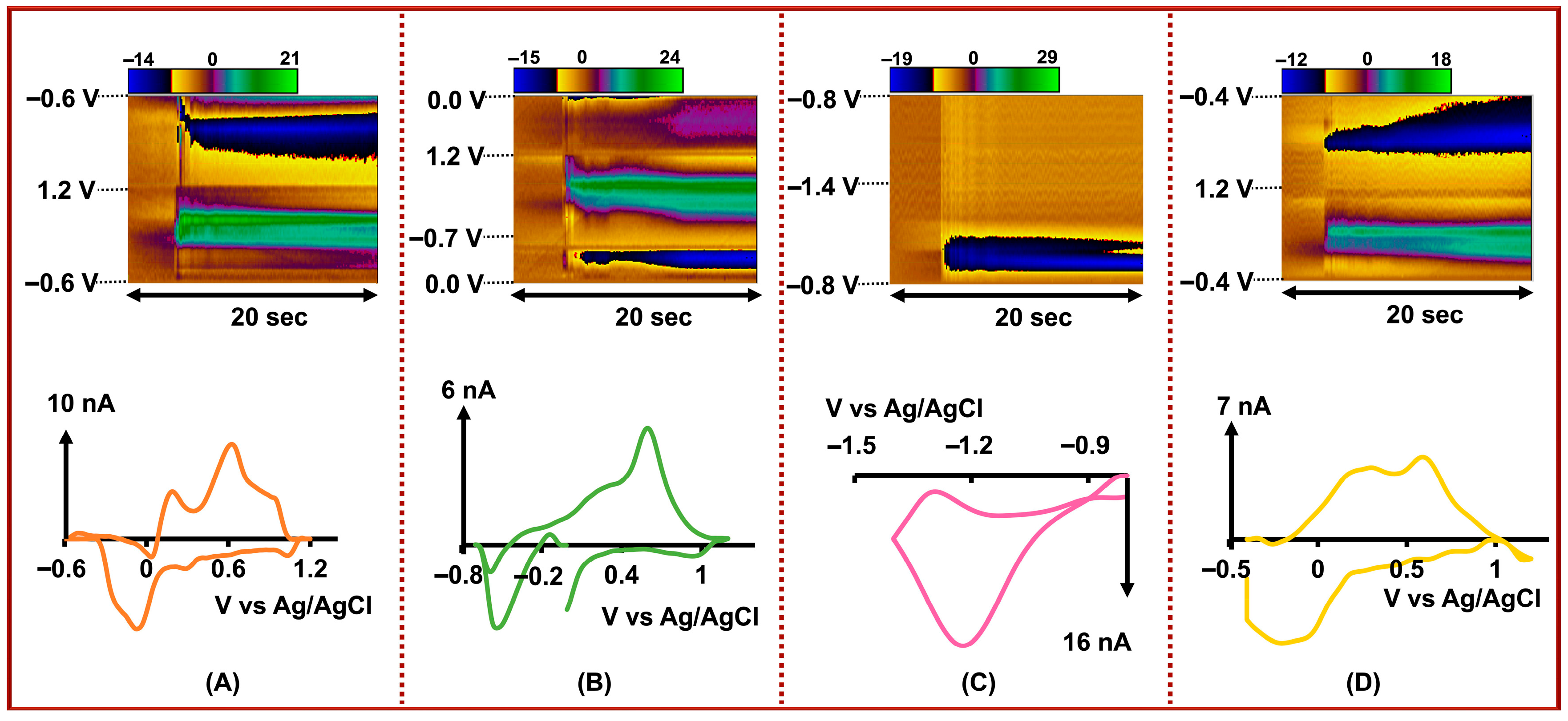
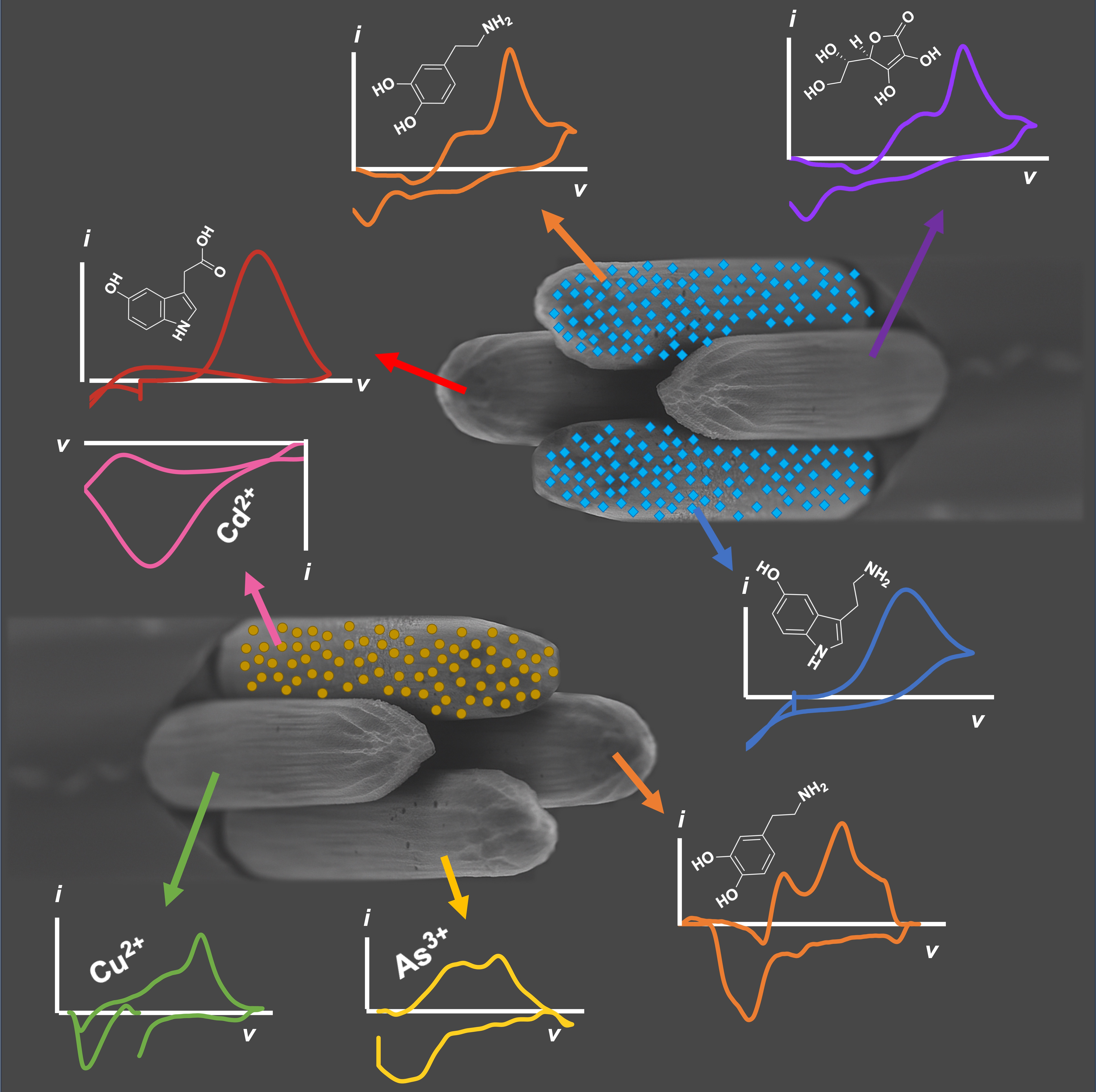
After confirming the successful surface modification required for Cd2+ detection, we proceeded to evaluate the performance of our four-bore CFM in detecting complex mixtures of neurotransmitters and toxic metal ions. Specifically, we prepared solutions in tris buffer containing various concentration ratios of Cu2+, As3+, Cd2+, and DA and applied optimized, distinct FSCV waveforms to each of the four electrodes for simultaneous detection. In FSCV, the forward scan is typically used for both qualitative identification and quantitative analysis, as it often contains the most distinguishable redox signals for target analytes. This is primarily because during the forward scan the electrode surface is cleaner, allowing the analyte to undergo oxidation or reduction more effectively, whereas on the backward scan, the analyte interacts with an already contaminated surface. Therefore, in our experiments, we focused on the reduction peaks of Cu2+ and Cd2+ that appear during the forward scan, and the oxidation peaks of DA and As3+ that also manifest during the forward sweep. Due to the complexity of the mixture and the similarity in redox potentials of some of these species, we anticipated potential signal overlap on the resulting cyclic voltammograms (CVs).
As shown in
Figure 3, the CV for Cd
2+ exhibited a sharp and distinct reduction peak around −1.2 V, attributed to the reduction of Cd
2+ to Cd
0, consistent with our previous observations using single CFMs [
36]. This consistency demonstrates that our selective surface modification with AuNPs not only maintained but enhanced the electrode’s ability to detect Cd
2+, likely due to improved electron transfer kinetics and increased electroactive surface area. Moreover, the waveform used for Cd
2+ detection is notably different from those used for the other analytes, which helps to minimize crosstalk or interference between adjacent channels. Similarly, a reduction peak corresponding to the conversion of Cu
2+ to Cu
0 was observed on the forward scan around −0.5 V, although some overlapping oxidation signals were present on the reverse scan. These secondary features may be attributed to the oxidation of DA and As
3+; however, since Cu
2+ quantification relies solely on the reduction peak in the forward scan, these overlapping signals do not interfere with our analytical interpretation.
In the case of DA, we consistently observed a primary oxidation peak near +0.6 V, corresponding to the oxidation of DA to dopamine-o-quinone, accompanied by a secondary peak around +0.25 V at lower concentrations. We attribute this pre-peak to the oxidation of As
3+ to As
5+, which shares some similarities in electrochemical behavior with DA under the applied conditions. A similar dual-peak pattern was observed when using the waveform specific to As
3+, reinforcing the hypothesis that the overlapping peaks result from close waveform characteristics and similar oxidation potentials. Interestingly, the peak currents corresponding to both DA and As
3+ increased proportionally with increasing analyte concentrations up to 1 μM for DA and 5 μM for As
3+. However, beyond these concentrations, the oxidation peak for As
3+ diminished, and the CVs were dominated by the DA signal alone, as shown in
Figure S2. This disappearance of the As
3+ peak at higher concentrations may be attributed to competitive adsorption at the carbon fiber surface. Since DA is known to strongly adsorb to carbon-based electrodes, it likely outcompetes As
3+ for the limited active sites on the CFM, effectively suppressing the As
3+ signal. This phenomenon highlights the importance of surface interactions in multi-analyte detection systems and the necessity for precise surface tuning when working in complex matrices. Furthermore, the inability to detect As
3+ at higher concentrations is not a major limitation in our context, as the primary objective of this work is to develop a sensor capable of detecting low concentrations of these analytes under physiologically relevant in vivo conditions.
When the same analyte mixtures were tested using single-bore CFMs, with each waveform applied sequentially, CVs were observed only for DA, Cu
2+, and Cd
2+. Notably, no clear or distinguishable CV was obtained for As
3+, and the signal obtained for Cd
2+ appeared highly distorted (
Figure S3); no reproducible and stable CVs were observed for Cd
2+ at higher concentrations. These observations highlight several limitations of traditional single-bore CFMs in complex multi-analyte systems. In particular, the lack of resolution for As
3+ suggests significant signal suppression, likely due to interference from coexisting analytes or overlapping electrochemical windows. Additionally, the distorted Cd
2+ signal may result from adsorption competition, or poor electrode surface compatibility when analytes are detected sequentially using a single waveform.
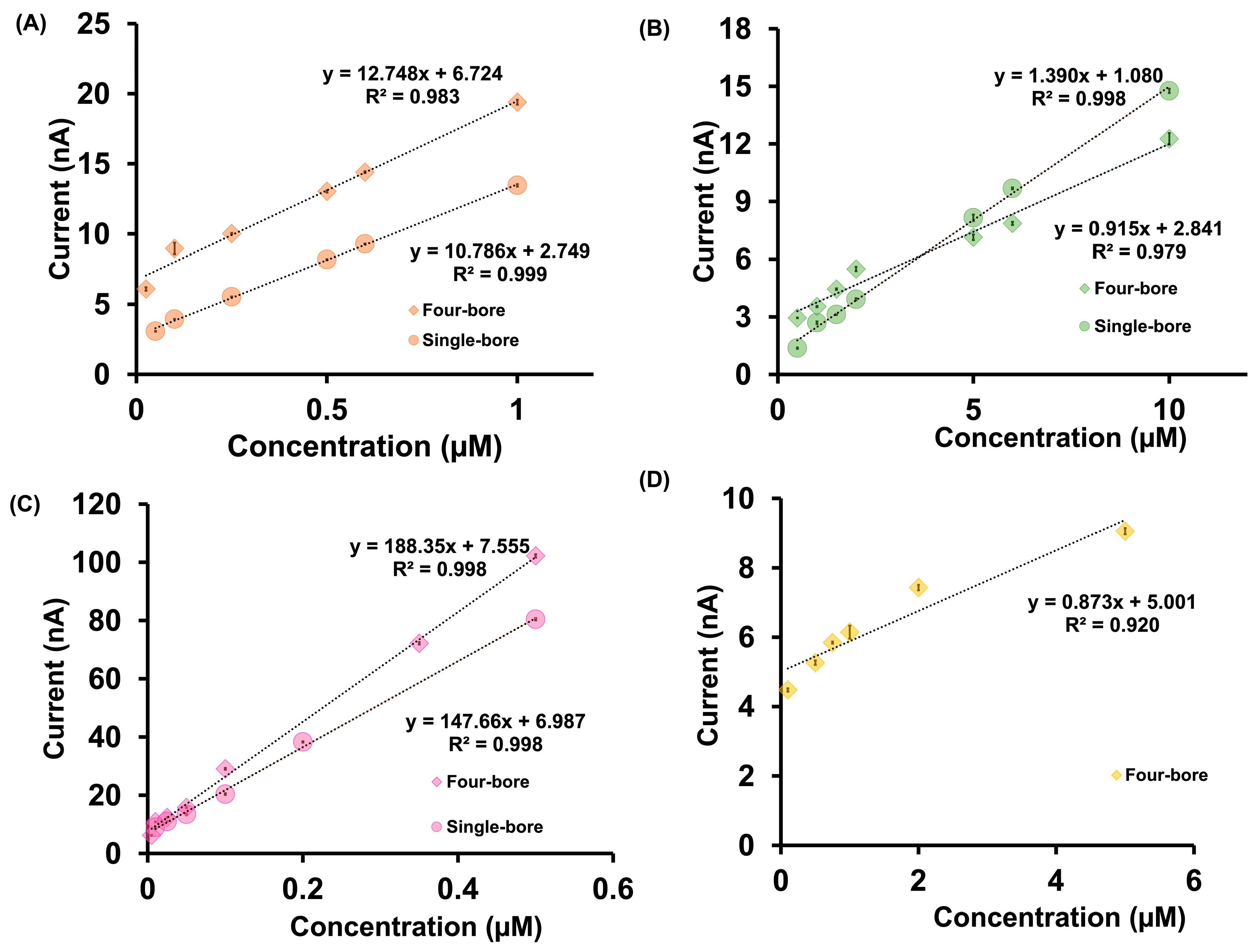
Figure 4 compares the linear calibration ranges obtained for DA, Cu
2+, Cd
2+, and As
3+ using both four-bore and single-bore CFMs. Full calibration plots are provided in
Figures S4 and S5. One of the most notable observations is the improved detection of As
3+ using the four-bore configuration. When using single-bore CFMs, it was not possible to generate a reliable linear calibration curve for As
3+ in mixed-analyte solutions due to the absence of distinguishable electrochemical signals attributable to As
3+. This is likely due to signal suppression or peak overlap arising from coexisting analytes in the mixture. In contrast, the four-bore CFMs produced a well-defined and reproducible linear calibration curve for As
3+ in the range of 0.1 µM to 5.0 µM, with a sensitivity of 0.873 nA µM
−1. This enhanced performance is attributed to the spatial separation of the electrodes and the ability to apply individualized waveforms, which minimizes interference and competitive adsorption, especially for analytes with inherently weak redox activity or overlapping potential windows. In addition to As
3+, notable sensitivity improvements were observed for other analytes as well. As shown in
Table S1, the normalized sensitivity for DA increased by ~12%, from 10.786 to 12.748 nA µM
−1, while Cd
2+ demonstrated a 28% increase in sensitivity (from 147.660 to 188.350 nA µM
−1). These improvements are likely the result of enhanced electrode surface utilization due to the laser-trimming process and the capability of the four-bore configuration to perform waveform multiplexing. Although the raw currents were lower due to shorter electrode lengths, normalizing current by length highlighted the true electrochemical advantage offered by the four-bore design. Interestingly, Cu
2+ showed a 32% decrease in sensitivity (from 1.390 to 0.915 nA µM
−1). This reduction may be explained by Cu
2+’s propensity to form complexes with DA in solution, leading to a reduced concentration of free Cu
2+ available for redox reactions at the electrode surface.
The LOD values further validate the analytical strength of the four-bore CFM platform. While Cu2+ showed no significant improvement in LOD, both DA and Cd2+ exhibited twofold reductions in their detection limits, from 0.05 µM to 0.025 µM for DA and from 0.01 µM to 0.005 µM for Cd2+. Notably, the four-bore CFMs uniquely enabled the quantification of As3+ in complex mixtures with an LOD of 0.1 µM, an achievement that was not feasible with single-bore CFMs under identical experimental conditions. Together, these findings demonstrate that the four-bore CFM architecture provides superior analytical performance compared to traditional single-bore CFMs. The ability to simultaneously and selectively detect multiple analytes, even those prone to signal overlap or suppression, marks a significant advancement in electrochemical sensing, especially in complex biological and environmental matrices.
3.3. Analysis of Neurotransmitter Mixtures
Next, we evaluated the performance of our four-bore CFM system for simultaneous detection of DA, AA, 5-HT, and 5-HIAA in tris buffer (pH 7.4). DA and 5-HT play critical roles as neurotransmitters, while AA and 5-HIAA are commonly encountered interferents in electrochemical detection due to their similar oxidation potentials [
38,
39]. In particular, the oxidation peak of AA closely overlaps with that of DA (~+0.6–0.7 V), and 5-HIAA exhibits an oxidation potential very similar to that of 5-HT (~+0.8 V) [
23,
40]. Compounding this challenge, AA and 5-HIAA are typically present in significantly higher concentrations than DA and 5-HT in biological systems, which can easily mask the signal of the neurotransmitters of interest. To address this, previous studies, notably Hashemi et al., have demonstrated that modifying CFMs with Nafion [
23], a sulfonated tetrafluoroethylene-based fluoropolymer, can greatly enhance selectivity. Nafion acts as a cation-exchange membrane: since 5-HIAA and AA are negatively charged under physiological pH, the Nafion layer effectively repels them while allowing positively charged neurotransmitters like 5-HT and DA to reach the electrode surface. This selectivity dramatically reduces signal interference, enabling clearer and more reliable detection of the target analytes. Building upon this approach, we aimed to investigate whether Nafion could be selectively electrodeposited onto two of the four electrodes within our four-bore CFM to enable electrochemical discrimination of DA from AA and 5-HT from 5-HIAA.
Following a previously reported protocol by the Hashemi group [
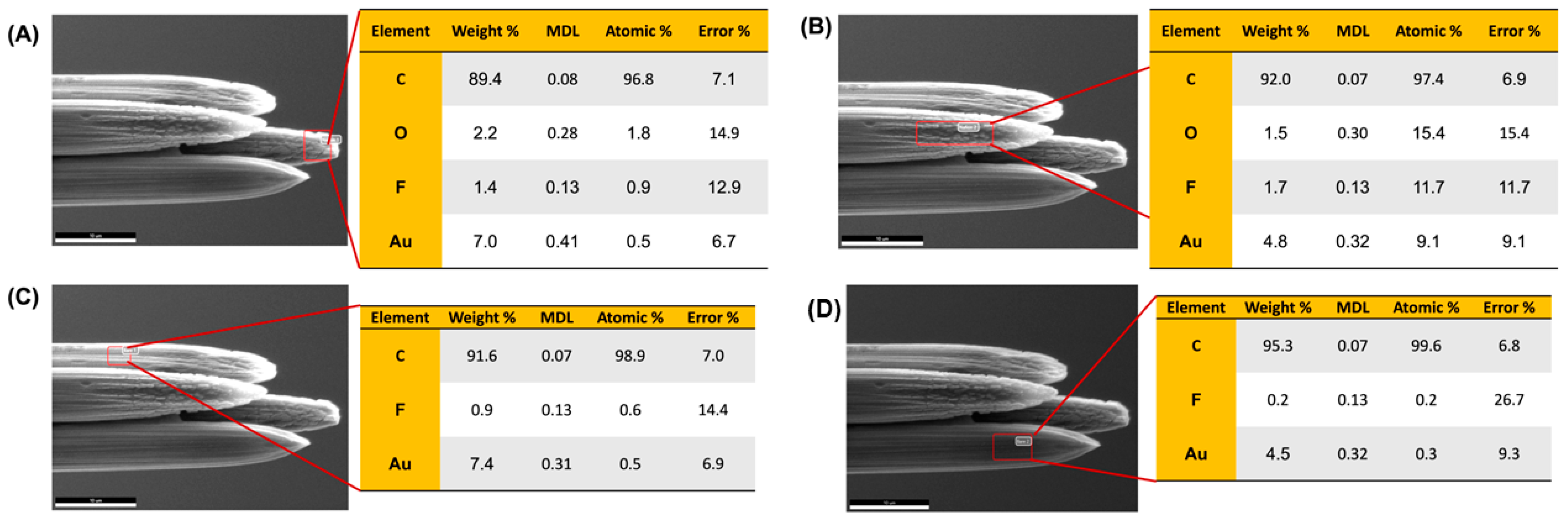
23], Nafion was electrodeposited on two diagonally positioned carbon fibers within the four-bore assembly. We initially anticipated that Nafion would be deposited exclusively on these two targeted electrodes. However, subsequent surface characterization revealed partial cross-contamination. SEM images (
Figure 5) showed that three of the four carbon fibers exhibited a thin Nafion film, while the fourth electrode displayed the typical bare striations characteristic of unmodified CFMs. This was further confirmed by EDX spectroscopy. The EDX analysis identified high fluorine (F) and oxygen (O) signals, hallmarks of Nafion on the two electrodes that were intentionally modified, as expected. However, a relatively smaller F signal was also detected on one of the adjacent unmodified electrodes, suggesting limited diffusion or splash-over of Nafion during the electrodeposition process. Importantly, unlike in our previous AuNP surface modification study, the current set of electrodes was gold-sputtered prior to SEM imaging to enhance surface resolution. Consequently, elemental Au was also detected in all four electrodes, as expected, and was not associated with surface functionalization in this case. Although the Nafion coating was not as spatially selective as our prior modification with AuNPs, the differences in surface coverage were still sufficient to proceed with electrochemical characterization. The varying Nafion distribution, as evidenced by the differing F and O signals across electrodes, suggested a gradient in surface properties that could still allow us to explore the sensor’s capability to resolve DA from AA and 5-HT from 5-HIAA in a simultaneous detection format. Therefore, we advanced to functional testing to assess the electrochemical performance of the partially modified four-bore CFM in a complex multi-analyte system.
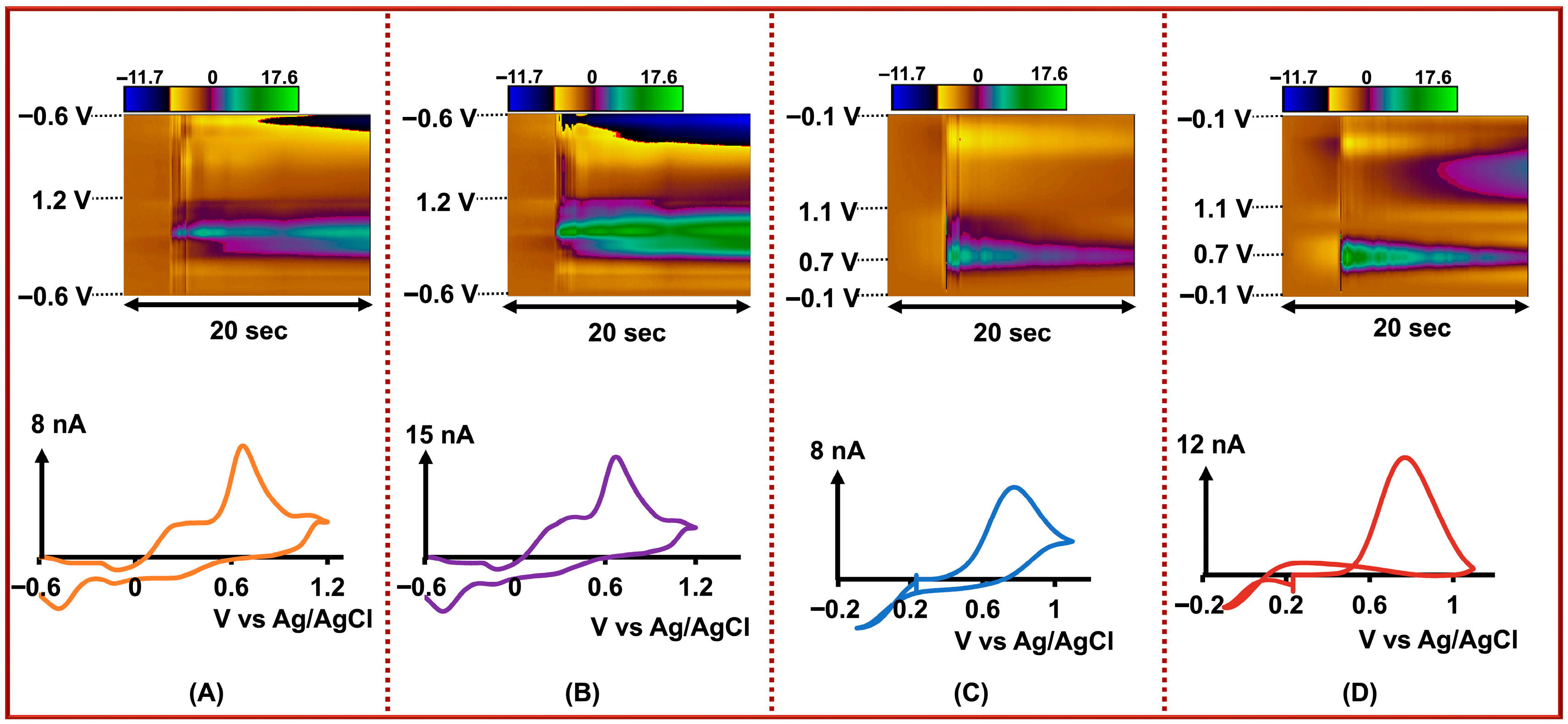
Here, we conducted FSCV experiments using mixtures of DA, AA, 5-HT, and 5-HIAA prepared in the tris buffer (pH 7.4). To assess the selectivity of our four-bore CFMs, we strategically applied the DA waveform to two electrodes, one modified with Nafion and one left unmodified. Based on the charge-selective nature of Nafion, which repels negatively charged interferents, we expected only DA to be detected on the Nafion-coated electrode, while both DA and AA would be detected on the bare carbon fiber. Similarly, the 5-HT waveform was applied to the other two electrodes, with the expectation that 5-HT would be selectively detected on the Nafion-modified electrode and both 5-HT and 5-HIAA would be detected on the uncoated electrode.
As shown in
Figure 6, CVs obtained from the four-bore CFM confirmed our predictions. The DA CV recorded from the Nafion-coated electrode closely matched the expected shape and oxidation peak, while the CV from the bare electrode showed the combined oxidation responses of DA and AA, which are known to have closely overlapping potentials. Similarly, the 5-HT waveform produced clean, well-resolved CVs from the Nafion-coated electrode, and the corresponding electrode without Nafion coating exhibited overlapping signals from both 5-HT and its common metabolite, 5-HIAA. These results clearly demonstrate the benefit of Nafion modification in enhancing the selectivity for positively charged neurotransmitters in the presence of common negatively charged interferents. For comparison, we performed the same experiment using single-bore CFMs, one modified with Nafion and one bare. As illustrated in
Figure S6, while the CV for DA obtained using the Nafion-modified single-bore electrode was consistent with expectations, the remaining three CVs were distorted with extra peaks. These distorted responses likely result from signal interference and the lack of spatial separation, which limit the performance of single-channel systems.
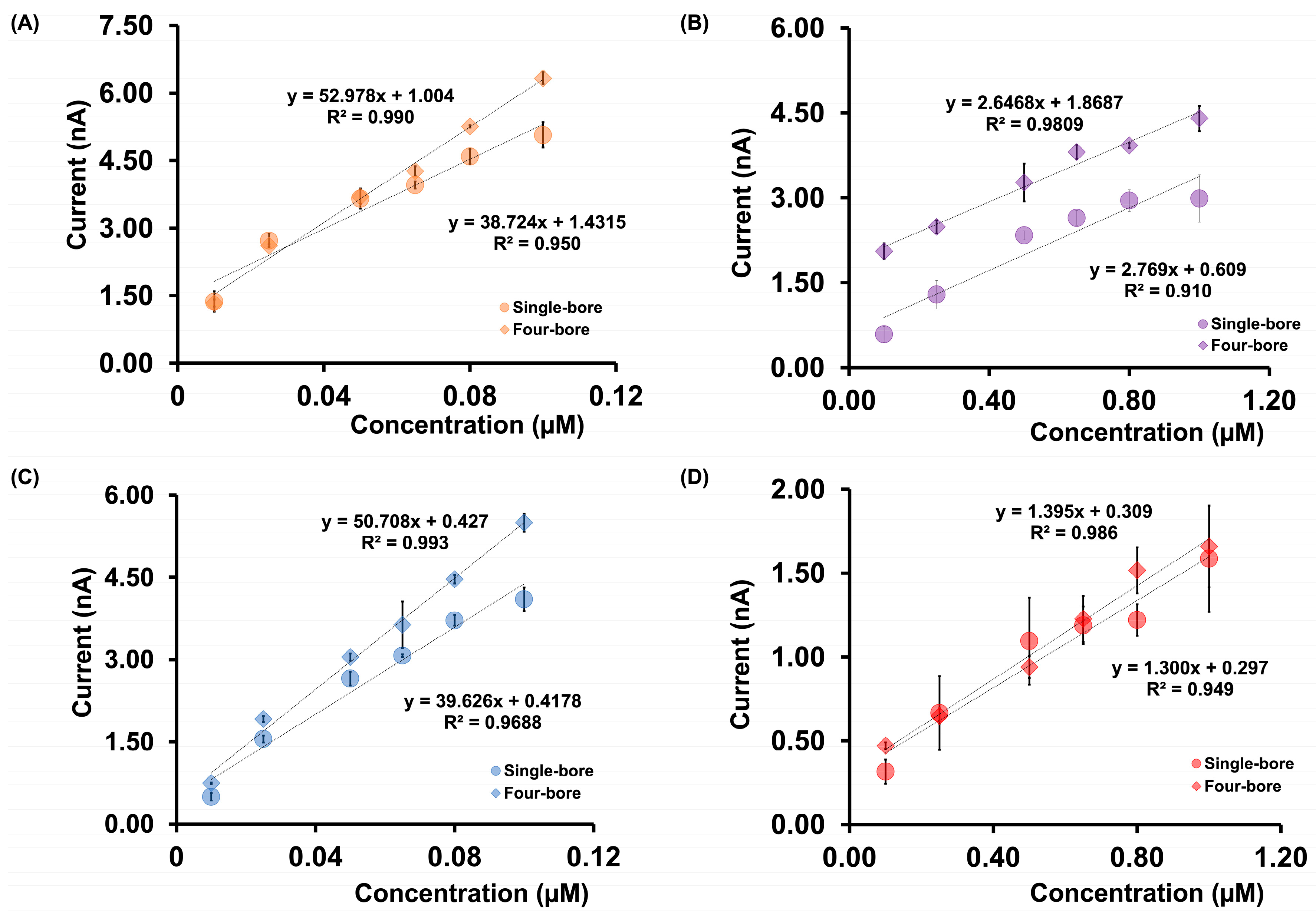
Figure 7 depicts the calibration data, specifically, the linear ranges obtained using our four-bore CFMs with those collected from the single-bore CFMs. Full calibration plots for both electrode types are provided in
Figures S8 and S9. Although no significant differences were observed in the LOD or the linear dynamic ranges, a notable enhancement in sensitivity was seen for DA and serotonin 5-HT when using the four-bore configuration. Specifically, the sensitivity for DA increased by ~37%, from 38.724 to 52.978 nA µM
−1, and for 5-HT by about 28%, from 39.626 to 50.708 nA µM
−1. This improvement in sensitivity can likely be attributed to Nafion surface modification. Nafion, a cation-exchange polymer, repels negatively charged species such as AA and 5-HIAA, thereby enhancing the availability of electroactive surface sites for positively charged analytes like DA and 5-HT. Interestingly, the sensitivities for AA and 5-HIAA remained largely unchanged between the single-bore and four-bore systems. It is also important to note that the spatial selectivity of Nafion deposition in our four-bore CFM was not as precise as initially intended. SEM and EDX analysis revealed trace Nafion presence on fibers that were not targeted for modification. This unintended polymer deposition may have partially inhibited the adsorption of negatively charged analytes on the supposedly unmodified fibers, potentially diminishing their current response. Despite these limitations, the observed improvements in DA and 5-HT sensitivity highlight the advantages of the four-bore CFM architecture. Its ability to incorporate targeted surface modifications and apply distinct waveforms enables enhanced multi-analyte detection in complex matrices, where signal separation and electrode specificity are essential.



 ,
,