Article

Data-Driven Computation Scheme for Duncan–Chang EB Model

1
PowerChina Guiyang Engineering Corporation Limited, Guiyang 550081, China
2
College of Water Conservancy and Hydropower Engineering, Hohai University, Nanjing 210098, China
3
State Key Laboratory of Water Disaster Prevention, Nanjing 210098, China
4
State Key Laboratory of Hydroscience and Engineering, Tsinghua University, Beijing 100084, China
*
Author to whom correspondence should be addressed.
Mathematics 2026, 14(5), 751; https://doi.org/10.3390/math14050751
Submission received: 15 January 2026 / Revised: 6 February 2026 / Accepted: 21 February 2026 / Published: 24 February 2026

Abstract

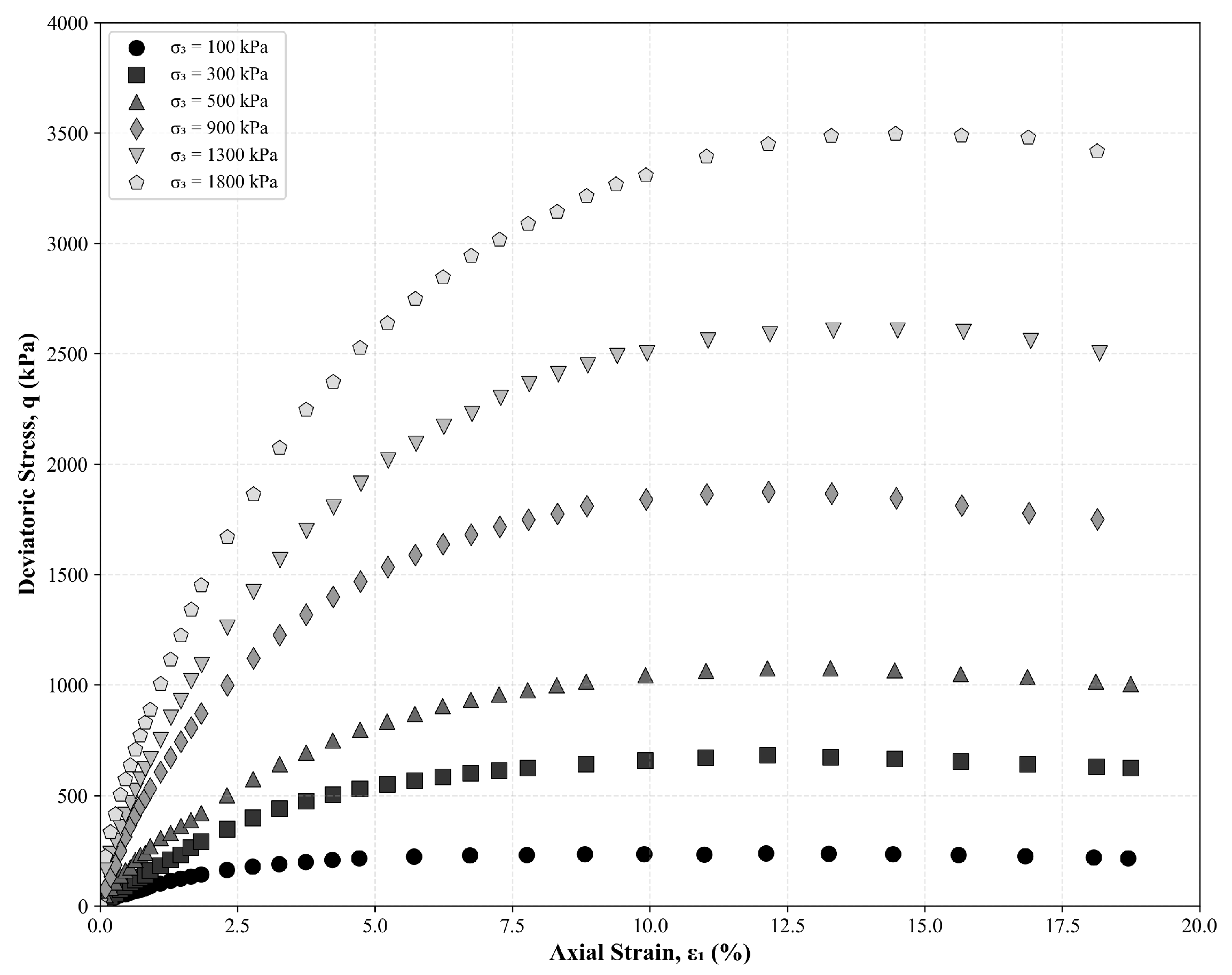
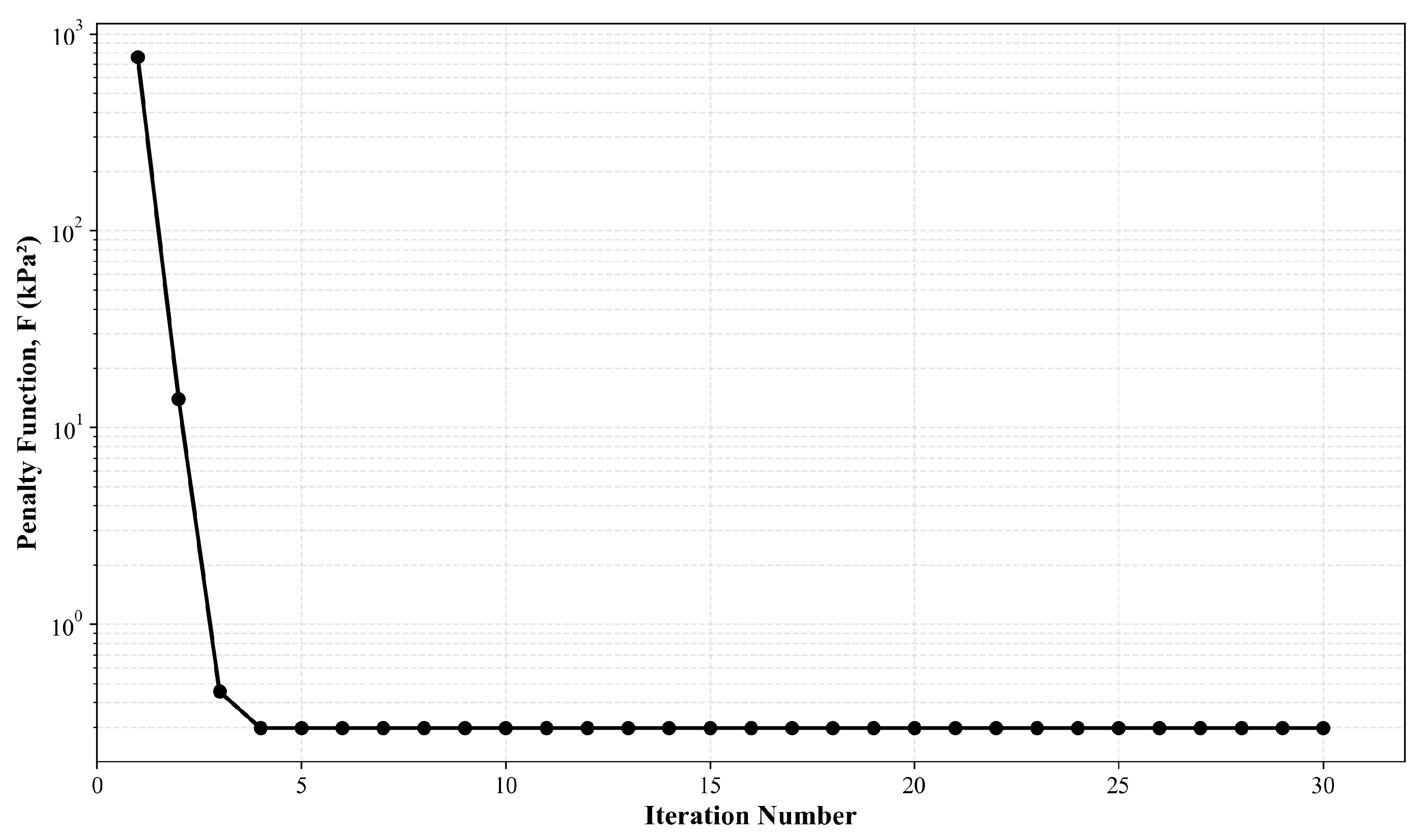
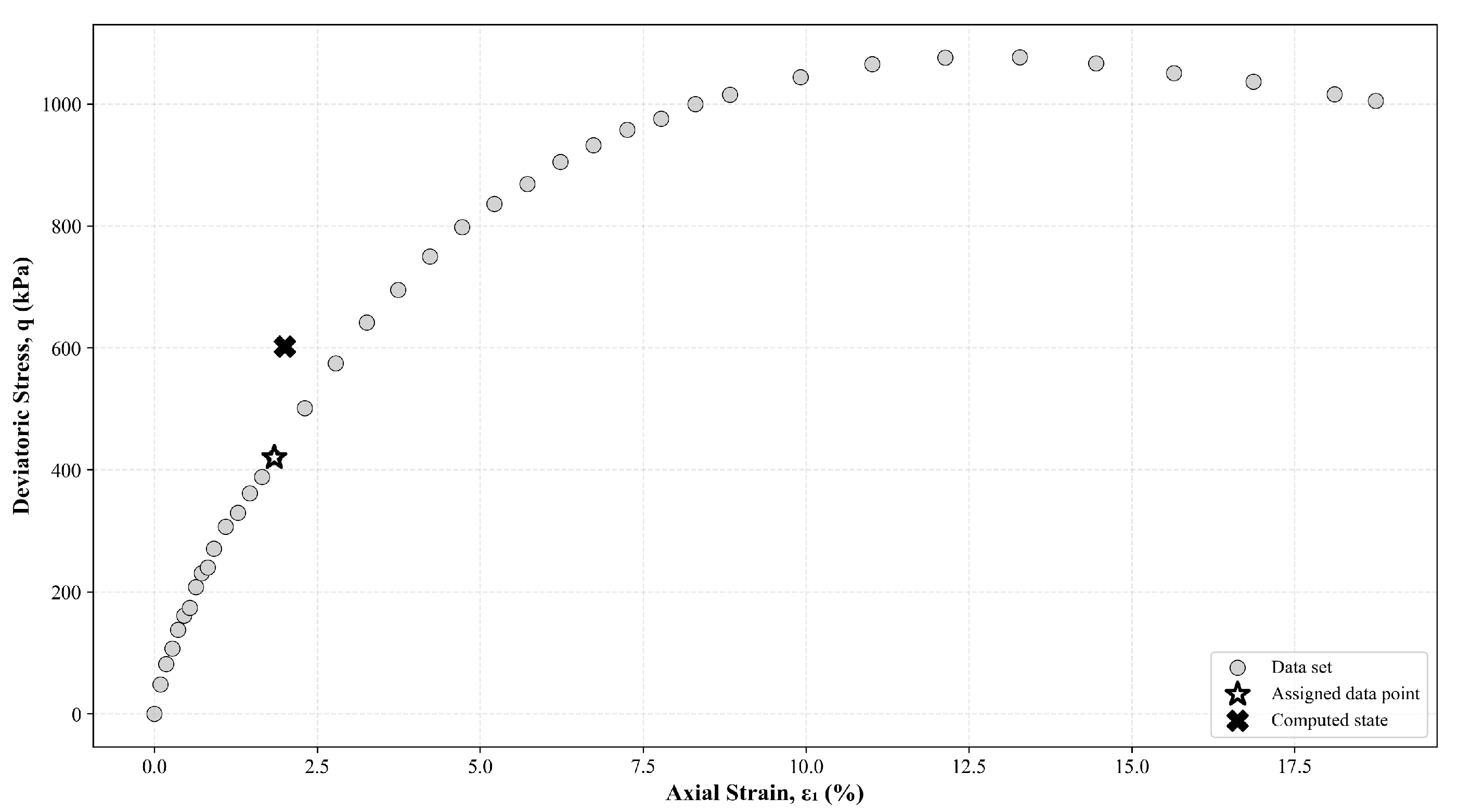
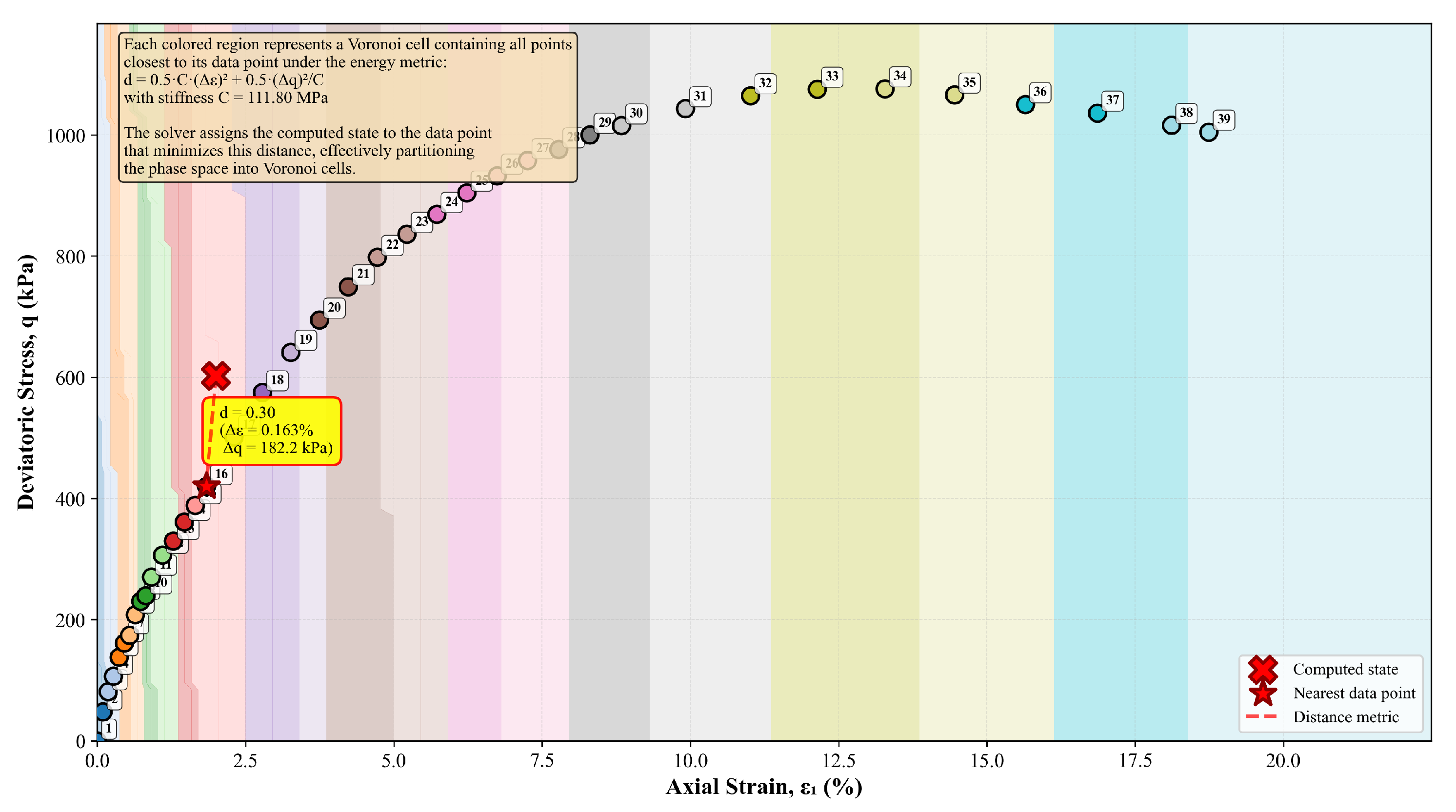
This paper extends the data-driven computational mechanics paradigm to nonlinear materials characterized by the Duncan–Chang Elastic-Bulk (E-B) constitutive model. Unlike in linear elastic systems, geotechnical media exhibit stress-dependent tangent moduli and non-convex constitutive manifolds. We propose a recursive nested data-driven solver that dynamically adapts the phase-space distance metric to account for pressure-dependent hardening. A rigorous mathematical analysis of convergence is provided, demonstrating that the solver’s performance is governed by the local transversality between the conservation law constraint set and the nonlinear material manifold. We derive explicit error bounds that couple spatial discretization resolution with material data density. Numerical experiments using triaxial test data from a high-altitude region validate the theoretical predictions, showing that the proposed scheme demonstrates convergence in single-element tests.
Keywords: data-driven computation; Duncan–Chang EB model; stress-dependent stiffness; Voronoi tessellation; convergence analysis; geotechnical engineering data-driven computation; Duncan–Chang EB model; stress-dependent stiffness; Voronoi tessellation; convergence analysis; geotechnical engineering