1. Introduction
Engineering education is undergoing a broad transformation shaped by the European Higher Education Area (EHEA), which emphasizes competency-based learning and assessable outcomes. This shift reflects the need to prepare professionals for complex, interdisciplinary, and dynamic challenges in the twenty-first century, where technical knowledge alone is insufficient. Within this paradigm, transferable competencies—creativity, problem-solving, ethical reasoning, sustainability awareness, and adaptability—have become integral to program goals (
Galdames-Calderón et al., 2024;
Requies et al., 2024). However, technical subjects in mechanical engineering often remain highly theoretical, limiting opportunities for applied learning and the integration of sustainability. This gap highlights the need for active methodologies that incorporate emerging technologies and promote a critical approach to decision-making.
The present study is motivated by the need to determine whether a challenge-based activity can effectively foster competencies related to sustainability, artificial intelligence, and core engineering skills. In addition, this experience seeks to demonstrate its potential for adaptation in other engineering or construction programs, offering a transferable model that universities can integrate into their courses.
This study focuses on Challenge-Based Learning (CBL), an active methodology that engages students in solving real-world problems through collaborative, iterative processes; Artificial Intelligence (AI), which encompasses computational tools that support design, analysis, and decision-making in engineering contexts; and the Sustainable Development Goals (SDGs), a global framework for addressing environmental, social, and economic challenges that guide the integration of sustainability into technical education.
Consequently, this study seeks to contribute to the international discussion on integrating CBL, AI, and the SDGs into technical education by providing empirical evidence and practical guidelines for implementation in university contexts.
The research is guided by the following questions:
To what extent does the integration of CBL, AI tools, and SDGs in a core mechanical engineering course foster the development of technical and transversal competencies?
How do students perceive the role of AI tools in supporting design and documentation processes within a challenge-based learning framework?
What impact does the explicit incorporation of SDGs have on students’ motivation and on their consideration of sustainability, accessibility, and equity in the proposed designs?
What limitations and opportunities are identified by students and faculty for improving the integration of CBL, AI, and SDGs in technical courses?
In response to these pedagogical and societal needs, this study presents an educational innovation within the UMH Bachelor’s program, specifically in Mechanical Technology. The intervention combines three elements; CBL, AI tools, and SDG integration—in a structured experience designed to promote active, contextualized, and ethically engaged learning. The initiative took the form of a mandatory design challenge for students on the continuous-assessment track. A total of 48 students, working in teams of two to four members, developed mechanical artifacts using laboratory resources, prepared technical reports, and justified decisions regarding design, materials, and manufacturing processes. This team size was chosen because small groups foster active participation, equitable workload distribution, and richer interaction, while minimizing coordination issues, an approach supported by empirical evidence in engineering education and collaborative learning contexts (
Chou & Chang, 2018;
M. Wang et al., 2023;
Shimazoe & Aldrich, 2010). The activity included academic incentives and the opportunity to fabricate the winning prototype, which increased motivation and engagement.
Evaluation followed a mixed-methods approach, combining quantitative analysis of academic performance with qualitative surveys on students’ perceptions of learning, competency development, and engagement. Results indicate meaningful gains in both technical and transferable competencies, as well as higher motivation and active participation. Beyond providing empirical evidence for the combined use of CBL, AI, and the SDGs in a technical context, this experience offers practical guidance for implementation in core engineering courses and informs curriculum design aimed at preparing graduates for technological, ethical, and sustainability challenges in a globalized environment.
The remainder of this article is structured as follows:
Section 2 reviews the literature on ethics, active methodologies, AI, and sustainability in engineering education.
Section 3 outlines the educational objectives.
Section 4 describes the research methodology.
Section 5 presents the results, followed by discussion in
Section 6 and conclusions in
Section 7.
2. Literature Review
The body of work addressing ethics, social responsibility, and the SDGs in engineering education is extensive and continues to expand. In parallel, research on active methodologies—particularly project-based learning (PBL) and CBL and on the integration of AI into sustainability-oriented engineering education—has grown markedly in recent years. Together, these strands reflect sustained and increasing scholarly attention to how engineering programs can connect technical training with ethical, social, and environmental commitments.
These challenges are not unique to Spain; they are shared across Europe, Latin America, and other regions. The experience at Miguel Hernández University of Elche (UMH), situated within an official program governed by national regulations, offers a concrete example of how this transformation can be addressed through a structured and transferable model. Aligning competencies, active methodologies, and sustainability criteria helps bridge local and global contexts and contributes to the international conversation on renewing engineering education.
In Spain, official degree programs, such as the Bachelor’s Degree in Mechanical Engineering at UMH, seek alignment with national and European frameworks. The School of Engineering of Elche offers undergraduate and master’s degrees in industrial, telecommunication, and computer engineering. The mechanical engineering program, which qualifies graduates as Industrial Technical Engineers specializing in mechanics, is organized around basic, general, and specific competencies established by Royal Decree 861/2010, Royal Decree 1027/2011, and Order CIN/351/2009 (
Gobierno de España, 2009,
2010,
2011). The curriculum includes foundational coursework in science and technology, compulsory training in industrial and technological fields, and elective courses for specialization, culminating in a bachelor’s thesis as a synthesis of acquired competencies.
Within this framework, Mechanical Technology is a pivotal third-year course (6 ECTS; 150 h of student work) that introduces manufacturing systems, machine tools, and the fundamentals of metrology and quality control. Although its technical content is essential, students have often perceived the course as overly theoretical, which encourages memorization strategies and limits opportunities to develop applied skills. This disconnect underscores the need for methodological change that supports active, meaningful, and contextualized learning aligned with program objectives and professional demands.
To provide a coherent and rigorous synthesis, this review is organized into four thematic subsections.
Section 2.1 examines the ethical and social foundations of engineering education and their alignment with the SDGs.
Section 2.2 analyzes the role of active methodologies as pedagogical responses to sustainability challenges.
Section 2.3 explores the transformative potential of AI in student-centered and sustainability-oriented learning environments. Finally,
Section 2.4 presents a focused review of studies that integrate these three dimensions, PBL/CBL, AI, and the SDGs, within industrial and mechanical engineering. This structure reflects the conceptual pillars of the present study and helps situate the proposed methodology within current trajectories of educational innovation in engineering.
2.1. Ethics, Social Responsibility, and the SDGs in Engineering Education
The urgency of environmental, social, and economic challenges has accelerated the incorporation of the SDGs into university curricula, including engineering programs. In mechanical engineering, the SDGs provide a cross-cutting framework that situates technical content within discussions of environmental impact, energy efficiency, circularity, and social equity (
UNESCO, 2021;
Leal Filho et al., 2023). Active approaches such as project-based learning and CBL are particularly effective for building sustainability awareness and related competencies (
Ramírez de Dampierre et al., 2024;
Lozano et al., 2019). However, systematic integration into core subjects remains limited, and rigorous assessment of sustainability-related outcomes is still developing (
Molderez & Fonseca, 2018;
Segalàs et al., 2020). Aligning technical content with sustainability criteria can therefore enhance the social relevance of engineering education and strengthen its international projection by connecting academic programs to the global challenges defined by the United Nations.
While engineering has historically been associated with technological and industrial development, contemporary contexts demand that future professionals reflect critically on the ethical, social, and environmental impact of their decisions.
Van den Hoven (
2019) argues that the SDGs require a comprehensive ethical approach that addresses global challenges from systemic, intersectional, and multidisciplinary perspectives, moving beyond narrow technical framings.
This broader vision is reinforced by recent research advocating for a substantive transformation of engineering education.
Leydens and Lucena (
2017) develop the notion of “engineering for justice,” emphasizing co-creation with communities, critical systems analysis, and the explicit integration of ethical values into technical design processes. Their proposal exceeds the treatment of ethics as isolated dilemmas and calls for curricular reconfiguration that renders visible structures of power, inequality, and the social consequences of engineering practice.
In the same vein,
Hess and Lin (
2024) conduct a systematic review examining explicit connections between ethics and principles of diversity, equity, and inclusion (DEI) in engineering education. They identify three key dimensions: theoretical frameworks linking ethics and DEI (e.g., social justice, professional ethics), the cultural and institutional roots shaping their integration, and pedagogical strategies that promote situated and engaged ethical practice. The review concludes that the persistent disconnect between ethics and DEI fosters a culture of detachment and technocracy, and it proposes their integration as a prerequisite for authentic ethical engagement.
Mitcham (
2022) adds a historical–philosophical perspective that questions the limits of traditional professional ethics in engineering. While codes of conduct are necessary, he argues they are insufficient to prepare professionals for responsible action under conditions of high complexity and uncertainty. Rather than focusing solely on safety or legality, he advocates an ethics oriented toward the common good, intercultural dialogue, and democratic deliberation, thereby broadening the normative horizon of engineering decision-making.
From an institutional vantage point,
Martin et al. (
2021) propose a multi-level review of ethics education in engineering, identifying structural barriers at individual, curricular, political, and cultural levels. Their analysis shows that, despite incremental progress in including ethical content, approaches often remain fragmented and misalignments persist between stated educational objectives and actual teaching practices.
Taken together, this literature converges on the idea that ethics education in engineering should not be confined to isolated modules or the resolution of abstract cases. Instead, it should be integrated across the curriculum as a core competency of twenty-first-century engineers. The key question for higher education institutions is therefore not only how to teach ethics, but how to transform educational culture so that ethics, social responsibility, and the SDGs become foundational pillars of engineering training and professional identity.
AI’s educational promise must be balanced with ethical and pedagogical safeguards. Overreliance on automated tools, variability in performance, and equitable access remain central concerns (
Holmes et al., 2022;
Luckin, 2021). Integrating AI within a CBL framework offers a way to harness technological benefits while reinforcing autonomy, critical thinking, and informed decision-making in authentic engineering contexts.
2.2. Active Methodologies: Project-Based and Challenge-Based Learning
The ongoing shift toward competency-based and sustainability-oriented models in engineering education has encouraged the adoption of active methodologies that promote experiential, interdisciplinary, and problem-centered learning. Among these approaches, PBL and CBL have become central strategies for preparing engineers to address complex twenty-first-century challenges in authentic contexts.
2.2.1. Project-Based Learning (PBL)
PBL has been widely implemented in engineering programs because it integrates technical knowledge with transferable skills such as communication, teamwork, and decision-making. The systematic review by
Lavado-Anguera et al. (
2024), which analyzes 54 studies, proposes a holistic pedagogical model grounded in seven pillars: technology, integrated curriculum, internationalization, sustainability, multidisciplinarity, simulation, and professional environments. The authors emphasize aligning PBL with authentic, complex contexts that mirror professional practice.
Sundman et al. (
2025) report that experiential learning in sustainability, including PBL, fosters intersectoral collaboration and systems thinking. However, they note that affective and socio-emotional dimensions remain underexplored. This limitation is echoed by
Sukackė et al. (
2022), who point out that sustainability-focused PBL implementations often privilege environmental aspects while neglecting social and economic dimensions; assessment practices also continue to rely heavily on traditional summative approaches.
From a critical perspective,
Gabelaia et al. (
2025) argue that although PBL effectively develops technical competencies, its transformative potential is constrained by a lack of systemic vision and limited integration of frameworks such as the SDGs or social justice. In response,
Hariharasakthisudhan et al. (
2025) propose a hybrid model that combines PBL with design thinking and CDIO, demonstrating that deliberate methodological structuring is key to achieving meaningful, sustainable learning outcomes.
2.2.2. Challenge-Based Learning (CBL)
CBL extends PBL by placing students before open-ended, real-world challenges with social impact. Whereas PBL typically begins with a defined task, CBL starts with broad, ill-structured problems that students must frame, investigate, and address, often in collaboration with external stakeholders.
Despite regulatory and structural advances, many engineering curricula still prioritize theoretical coverage, with limited integration of active methodologies or emerging technologies. Lecture-centered teaching and memorization-based assessment can constrain applied learning and critical thinking, particularly in technical subjects where the gap between theory and practice is salient (
Felder & Brent, 2016). Research indicates that CBL can help address these limitations by promoting student engagement, interdisciplinary collaboration, and contextualized application of knowledge (
Galdames-Calderón et al., 2024).
In mechanical engineering, CBL is especially well-suited to linking technical content with real-world challenges in design, manufacturing, and sustainability. Effective implementation, however, requires careful planning, adequate resources, and alignment between learning outcomes and assessment criteria—conditions that remain demanding for many institutions (
López-Fernández et al., 2020). Consequently, pedagogical innovation must adapt to local contexts while aligning with international trends toward holistic, ethical, and sustainable training.
The systematic review by
Doulougeri et al. (
2024b), using van den Akker’s “curricular spider web” framework, analyzes 48 empirical studies on CBL in engineering. The authors highlight diversity in how challenges are formulated, the extent of stakeholder involvement, and the variability of assessment approaches. While CBL consistently promotes engagement and the development of transferable competencies, it also presents design and implementation challenges related to curriculum integration, faculty preparation, and institutional sustainability.
Complementarily,
Galdames-Calderón et al. (
2024) identify four key dimensions in teaching practices associated with CBL: pedagogical approaches, technological integration, industry engagement, and student development support. Their review underscores the need for targeted faculty training to shift from transmissive roles to facilitation and co-creation, as well as the importance of explicit alignment between intended learning outcomes and assessment criteria.
Taken together, the available evidence shows that both PBL and CBL are powerful methodologies for integrating sustainability and transferable competencies into engineering education. However, their effectiveness depends on context-sensitive implementation supported by institutional structures that promote pedagogical innovation, formative assessment, and collaboration with external stakeholders.
2.3. The Role of AI in Sustainable Engineering Education
AI is transforming both technical and educational environments, offering significant opportunities to advance sustainability within engineering education. Its capacity to process complex data, model solutions, and optimize processes enhances the design, planning, and evaluation of projects from a sustainability perspective. Beyond technical applications, AI has deep pedagogical implications by enabling more personalized, adaptive, and student-centered learning experiences (
El Hadri et al., 2025;
Hallmark & Nguyen, 2025).
From an educational standpoint, AI enables sustainability criteria to be incorporated as assessable elements in the classroom rather than treated solely as theoretical content. Recent studies indicate that AI-based tools can improve conceptual understanding, foster critical thinking, and support ethical decision-making in active learning contexts (
Melisa et al., 2025;
Abulibdeh, 2025). Moreover, integration within methodologies such as CBL can enhance project planning, simulation of technical solutions, and impact assessment, while also promoting transferable competencies such as autonomy, collaboration, and digital literacy.
Research has likewise explored how AI can shape classroom dynamics and instructional quality.
Hu et al. (
2024) demonstrate the use of real-time behavior analysis to improve engagement and learning outcomes in engineering education, while
Wan et al. (
2025) examine how intelligent mixed-reality devices influence teachers’ attitudes and intentions toward technology-enhanced learning. A systematic review by
Chaudhry et al. (
2025) identifies five key dimensions of generative AI use in higher engineering education: personalized learning, pedagogical redesign, ethical implications, transformation of the teaching role, and outcome evaluation. These findings align with those of
Mosly (
2024), who emphasizes that effective AI integration requires not only technological infrastructure but also clear institutional frameworks, targeted faculty training, and sustained attention to algorithmic bias and equitable access.
In this regard,
Wittig McPhee and Jerowsky (
2025) propose a circular pedagogical framework grounded in Vygotsky’s sociocultural theory and Freire’s critical consciousness, linking AI literacy with metacognitive reflection and critical evaluation of intelligent systems. Such an approach is particularly salient in engineering, where technical understanding must be accompanied by ethical and social awareness of the impacts of emerging technologies.
Additionally, studies by
Lee and Palmer (
2025) and
Walter (
2024) highlight the importance of teaching specific skills such as prompt engineering and strategic interaction with generative models—competencies increasingly incorporated into engineering curricula to prepare students for rapidly evolving technological environments. In the context of the SDGs, AI exhibits a dual potential: it can accelerate progress toward goals related to quality education, equality, and innovation; however, it also raises ethical and social challenges that must be addressed through a critical and appropriately regulated perspective (
Ferk Savec & Jedrinović, 2025;
Apata et al., 2025).
Ultimately, AI should not be understood merely as a technical tool but as a catalyst for pedagogical change that links technical training with global challenges. Its integration into sustainable engineering education requires a systemic, interdisciplinary, and ethically informed approach, one that positions students as active agents in the construction of responsible, context-aware solutions.
2.4. Convergence of Active Methodologies, AI, and Sustainability in Industrial and Mechanical Engineering Education
The joint integration of CBL, AI tools, and the SDGs represents an emerging line of research with significant transformative potential. This convergence aims to prepare professionals who approach technical problems with ethical awareness and social responsibility while making judicious use of emerging technologies in authentic contexts. Recent studies document experiences that bring together these three elements in technical settings, promoting contextualized, ethical, and problem-oriented learning. For example,
Zéraï and Mosbeh (
2024) report CBL implementations in AI engineering courses where students develop SDG-aligned projects in collaboration with local organizations, fostering technical, communication, and intercultural competencies. A systematic review by
Doulougeri et al. (
2024b) highlights CBL’s capacity to address complex sociotechnical challenges, particularly when linked to the SDGs, and emphasizes the value of external stakeholders, interdisciplinarity, and flexible curricular frameworks. From a Latin American perspective,
Pérez-Rodríguez et al. (
2022) propose a framework that combines CBL, project-based learning, and CAx tools to strengthen SDG-related competencies in industrial engineering. In parallel,
Ocen et al. (
2025) synthesize evidence on AI in higher education, underscoring its potential for personalization, efficiency, and accessibility, along with the need for responsible, equitable implementation.
In recent years, a growing body of literature has explored the intersection of active methodologies, such as PBL and CBL, AI, and the SDGs in engineering education, particularly within industrial and mechanical disciplines. This convergence reflects the need to train professionals capable of addressing complex problems from technical, ethical, and sustainability-oriented perspectives.
The systematic review by
Lavado-Anguera et al. (
2024) identifies seven pedagogical pillars in the implementation of PBL in engineering, including sustainability and technological integration. However, the authors note that the connection between these two dimensions remains emergent rather than fully consolidated. In parallel,
Hidayat et al. (
2024) conduct a 21-year meta-analysis on the impact of PBL on higher-order thinking skills (HOTS), concluding that effectiveness increases significantly when PBL is combined with emerging technologies such as AI.
In the specific field of mechanical engineering,
Alghazo et al. (
2025) present a systematic review of 228 publications documenting the use of AI in this discipline. Their findings highlight applications such as personalized learning, intelligent simulation, adaptive tutoring, and automated assessment—all of which have strong potential for integration into active learning environments aligned with the SDGs.
From a more integrated perspective,
Isaza Domínguez et al. (
2024) develop an educational tool based on AI and neural networks to personalize engineering instruction aligned with SDGs 4, 8, 10, and 12. Their study demonstrates that combining AI with active pedagogical approaches can enhance equity, efficiency, and sustainability in the learning process, even in resource-constrained contexts. Similarly,
Molina et al. (
2021) propose a pedagogical framework that combines CBL, PBL, and computer-aided technologies in industrial engineering with the explicit goal of developing competencies linked to the SDGs through interdisciplinary, real-world projects supported by digital tools and sustainability criteria.
Collectively, these studies converge on the idea that integrating AI, active methodologies, and sustainability is not only feasible but also desirable for transforming engineering education. At the same time, they highlight persistent challenges: limited faculty training, insufficient curricular alignment, and the need for robust ethical frameworks to guide the use of AI in educational settings. This literature provides a solid conceptual and empirical foundation for the educational intervention described in the following sections, which integrates CBL, AI, and the SDGs within a core mechanical engineering course.
3. Educational Objectives
The challenge proposed in this study is designed to be applicable to undergraduate and master’s engineering programs that involve the development of industrial or construction-oriented projects. In this implementation, it was integrated into the Bachelor’s Degree in Mechanical Engineering at UMH.
The mechanical artifact design competition targeted teams of two to four third-year students enrolled in the Mechanical Technology course. Its primary objective was to move beyond the traditionally theoretical approach often adopted when preparing for assessments and to stimulate engagement through a practical, creative learning experience. The competition asked students to examine the technical and economic feasibility of a real-world problem while also promoting awareness of the SDGs and the use of AI tools.
Although Gemini and Copilot were the officially supported platforms, students retained full autonomy to explore any AI tools they considered useful. As a result, a variety of tools were employed, including ChatGPT v.3.0 (free version), Artguru (beta version), DeepSeek- V2.5, and combinations such as DeepSeek with Copilot or ChatGPT with Copilot. These tools were used for idea generation, drafting technical documentation, proposing manufacturing processes, estimating costs, and preparing the final report. Students were encouraged to iterate and refine their proposals using these tools while validating the technical feasibility of their designs.
To support the process, faculty provided a reference document outlining all required components of the final submission, including the manufacturing process report and technical feasibility analysis. Because students had already acquired foundational theoretical knowledge in Mechanical Technology, they were expected to evaluate AI-generated outputs critically and to use these tools as support instruments rather than unquestioned sources.
No formal ethical code specific to AI was imposed; however, ethical use was implicitly promoted through alignment with the SDGs. The focus on sustainability, feasibility, and responsible innovation encouraged students to reflect on the social and environmental implications of their designs and on the tools used to develop them.
4. Research Methodology
This study adopts a mixed-methods design that combines quantitative and qualitative data to analyze the educational impact of a challenge-based learning (CBL) intervention supported by AI tools and aligned with the SDGs. This study is best described as a pilot study, aimed at exploring the feasibility and educational impact of integrating CBL, AI tools, and the Sustainable Development Goals (SDGs) in a core mechanical engineering course. Findings should therefore be interpreted within the scope of an exploratory design and a limited sample size. The quantitative component is based on structured performance evaluations carried out by a multidisciplinary panel during a mechanical artifact design competition. The qualitative component draws on students’ self-reported perceptions collected through a structured questionnaire. The intervention was implemented during the 2024–2025 academic year in the Mechanical Technology course, a third-year subject in the Bachelor’s Degree in Mechanical Engineering at UMH. All 48 students were enrolled in the Mechanical Technology course at the beginning of the semester and completed both the design project and the final questionnaire.
The course (6 ECTS; 150 h) introduces manufacturing systems, production processes, and quality control. Given its traditionally theory-heavy orientation, the intervention sought to enhance student engagement, promote practical application of knowledge, and foster the development of both technical and transferable competencies.
The methodological design provides a clear account of procedures and a robust empirical basis by combining objective performance indicators with students’ perceptions. Implementation was structured around two complementary components:
Quantitative Evaluation: The central learning activity was a mechanical artifact design competition in which student teams developed and presented functional prototypes addressing real-world challenges linked to selected SDGs. Outcomes were assessed by a multidisciplinary panel composed of faculty members and a technical expert, using predefined analytic rubrics focused on technical quality, innovation, and relevance to sustainability.
Qualitative Evaluation: In parallel, a structured self-perception questionnaire was administered to all participants (n = 48), who took part in the intervention within the continuous assessment framework. The instrument included:
Closed-ended items (Likert-scale and multiple-choice) to gather data on students’ perceptions of AI tools, SDG integration, and competency development.
Open-ended questions to elicit reflective insights on the learning experience and the perceived impact of the methodology.
This dual strategy enabled a comprehensive analysis of the intervention by integrating pedagogical and technological dimensions and providing a more nuanced understanding of the learning process.
4.1. Competition Design
The core of the educational intervention was a mechanical artifact design competition implemented as a mandatory, project-based activity within the Mechanical Technology course. This competition served as the central element of the pedagogical strategy, aiming to foster active learning, collaborative problem-solving, and the application of theoretical knowledge to real-world challenges.
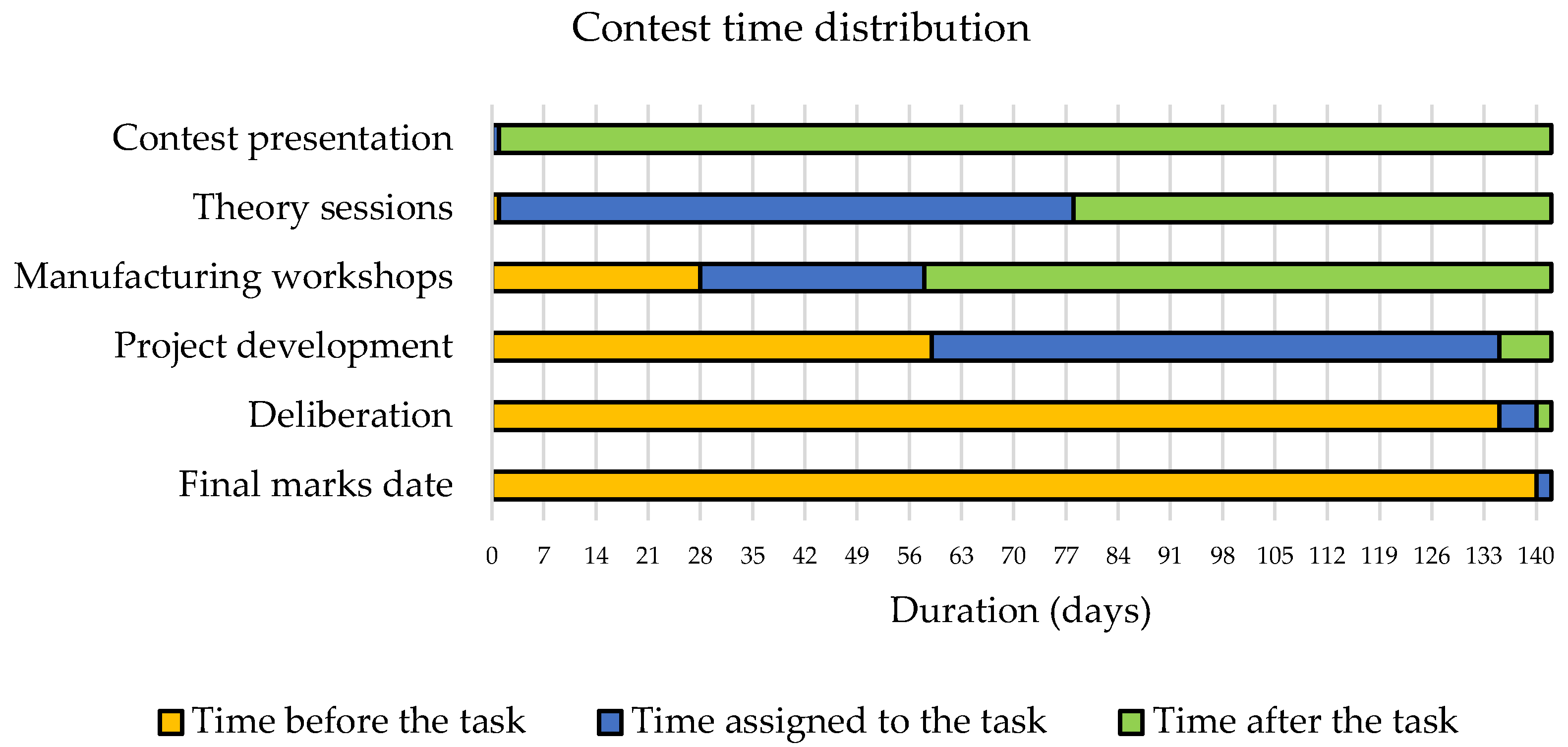
The competition was structured into five sequential stages, each with clearly defined pedagogical goals and time allocations. The timeline and workload distribution are shown in
Figure 1, which presents a Gantt chart detailing the temporal structure of the contest phases. The chart distinguishes preparation time, active task periods, and post-task reflection or evaluation, providing a clear view of how the intervention was integrated into the semester schedule.
4.1.1. Stage 1: Context Presentation
The competition was introduced during the first session of the course, where students received a comprehensive briefing on objectives, structure, deliverables, and evaluation criteria. Participation was mandatory for students on the continuous-assessment track, and the activity accounted for 10% of the final course grade.
To enhance motivation, a system of academic incentives was established:
+1.0 points for the winning team.
+0.7 points for the second-place team.
+0.3 points for the third-place team.
In addition, the winning prototype was eligible for fabrication using university laboratory resources, with funding provided by the innovation project and technical supervision from faculty and laboratory staff. This tangible outcome reinforced the authenticity and relevance of the challenge, in line with established practices in experiential and challenge-based learning. (
Galdames-Calderón et al., 2024).
4.1.2. Stage 2: Theoretical Foundations
During the initial weeks, lecture sessions were used both to cover the standard syllabus and to contextualize the challenge within manufacturing technologies. Emphasis was placed on:
Principles of manufacturing processes (e.g., machining, casting, welding, additive manufacturing)
Technical capabilities and limitations of the laboratory equipment available at UMH
Criteria for selecting materials and processes based on sustainability, cost, and feasibility
This stage ensured that students had the foundational knowledge required for informed design decisions and for critically evaluating AI-generated outputs. It also laid the groundwork for aligning technical decisions with SDG-related criteria such as energy efficiency, material reuse, and social impact.
4.1.3. Stage 3: Practical Demonstrations
To bridge the gap between theoretical instruction and practical application, a series of hands-on demonstrations were conducted in the university’s manufacturing laboratories. These sessions enabled students to:
Interact directly with industrial equipment (e.g., CNC machines, welding stations, 3D printers)
Understand operational capabilities and limitations of each process
Evaluate the feasibility of design ideas based on available tools and materials
This stage was essential for promoting experiential learning and design realism, encouraging iterative refinement in response to practical constraints and supporting the development of technical judgment.
4.1.4. Stage 4: Project Development
In this central phase, students worked in self-organized teams of two to four members to develop their mechanical artifact proposals. The design brief required teams to:
Identify a real-world problem with social or environmental relevance
Propose a mechanical solution aligned with one or more SDGs
Integrate AI tools throughout the design process, from ideation to final documentation
Each team submitted a comprehensive project dossier that included:
A descriptive report outlining the problem, objectives, and design rationale
Initial sketches and 3D models of the proposed artifact
A technical and economic feasibility analysis, including material selection and manufacturing processes
An estimated budget
A justification of AI use (platforms employed and how they supported the design)
A reflection on ethical, social, and environmental considerations, including accessibility and inclusivity
The projects addressed diverse themes such as assistive devices for people with reduced mobility, energy-efficient solutions, and sustainability-oriented designs (e.g., solar dehydrators, multifunctional tables, smart canes).
To support this process, students received a report template and visual examples of expected sketches and design representations. These resources clarified expectations and scaffolded the development of professional documentation skills.
4.1.5. Stage 5: Evaluation and Deliberation
The final stage involved a multi-criteria evaluation of the submitted projects by a jury panel composed of eight faculty members and one laboratory technician. The analytic rubric (see
Table 1) was designed to ensure balanced assessment across technical, creative, and ethical dimensions. Criteria and weightings were as follows:
Projects that demonstrated strong alignment with multiple SDGs, innovative use of AI, and feasible, inclusive designs received the highest scores.
4.2. Questionnaire
To evaluate the impact of the competition on the development of technical and transferable competencies and on students’ knowledge and application of AI tools and SDGs, a structured questionnaire was designed and administered via Google Forms. The instrument was applied at the end of the project and organized into three thematic blocks: (1) use of AI, (2) alignment with the SDGs, and (3) development of degree-specific competencies. Items used Likert-scale and multiple-choice formats to capture students’ perceptions of different aspects of the learning process.
In addition to closed-ended items (Likert scale and multiple choice), the questionnaire included options for open-ended input. For closed questions, an “Other” category was provided to allow students to indicate responses not initially listed (e.g., DeepSeek, Artguru). Furthermore, open-ended questions were placed at the end of each section, such as “Any comments you wish to make regarding the use of AI,” “Remarks on the work in relation to the SDGs,” and “Suggestions to improve this initiative for future students.” These questions generated 19 comments related to AI, 9 to SDGs, and several suggestions about the activity, which were analyzed descriptively and integrated into the discussion to complement the quantitative results.
4.2.1. Questionnaire on the Use of AI Tools
The first section examined the extent of use and students’ perceptions of the AI tools employed during the project. Questions identified which platforms were used (e.g., Copilot, ChatGPT, Gemini, DeepSeek, among others) and assessed the perceived quality of AI-generated responses, the need for prior subject knowledge to validate information, and the level of support provided by AI across project phases—idea generation, report writing, definition of manufacturing processes, budget development, and creation of visual representations.
Table 2 presents the questions related to the use of AI tools. This section provided insight into the degree of AI integration within the design process, and its effectiveness as a technical, creative, and communicative support resource.
This section enabled the assessment of the degree of AI integration in the design process as well as its usefulness as a technical, creative, and communicative support tool. The responses provide insight into students’ critical thinking when interacting with AI systems and their ability to use these technologies in an autonomous, strategic manner.
4.2.2. Questionnaire on Alignment with the Sustainable Development Goals (SDGs)
The second section addressed students’ understanding and application of the SDGs within the project context. It assessed both prior and acquired knowledge of the SDGs, the identification of specific goals aligned with the proposed design, and the consideration of sustainability criteria in selecting materials and manufacturing processes. In addition, items asked about the incorporation of equality, diversity, and accessibility in the artifact’s design.
Table 3 presents the questions used to assess the alignment of the proposed project with the SDGs.
4.2.3. Questionnaire on the Development of Degree-Specific Competencies
The third section focused on competencies specific to the Bachelor’s Degree in Mechanical Engineering, grouped into three categories: transferable competencies; basic and common industrial-field competencies; and competencies specific to mechanical technology. The items—presented in
Table 4,
Table 5 and
Table 6—captured students’ perceptions of their progress in project management, creative problem-solving, decision-making, graphic representation, knowledge of materials and manufacturing processes, and the use of calculation and design tools.
Including these items offered a detailed view of the competition’s educational impact, particularly in terms of competency acquisition relevant to professional engineering practice. In addition to the previous sections, a final, transversal question, presented in
Table 7, assessed students’ perceptions of their critical-thinking development throughout the project. Although not linked to a single, specific degree competency, this item probes the overall impact of the experience in terms of reflection, analysis, and informed decision-making.
This final item served as a reflective closure to the questionnaire, inviting students to consider how the integration of emerging technologies, sustainability, and original design contributed to analytical and critical judgment—competencies essential to contemporary engineering practice.
4.3. Instrument Design and Reliability Analysis
The questionnaire used in this study was specifically designed to evaluate three dimensions of the educational intervention: (a) students’ use and perception of AI tools, (b) understanding and integration of the Sustainable Development Goals (SDGs), and (c) the development of transversal, basic, and mechanical technology competencies.
Item construction followed a structured process grounded in a review of prior validated instruments on AI literacy, sustainability education, and competency development in engineering. Items were aligned with the learning outcomes of the Mechanical Technology course and with the competency framework of the Bachelor’s Degree in Mechanical Engineering at UMH.
Content validity was ensured through expert review: two faculty members in Mechanical Engineering and one specialist in educational measurement evaluated item clarity, relevance, and alignment with course outcomes. Minor wording adjustments were made based on their feedback. Although no external pilot test was formally conducted, internal piloting within the teaching team confirmed adequate comprehension and response time.
Reliability analyses were conducted for all sections comprising Likert-type items. Cronbach’s alpha values indicated acceptable to very good internal consistency across subscales, considering the sample size (n = 48) and the exploratory nature of the study.
AI use subscale (6 items): α = 0.699, acceptable for exploratory research.
Transversal competencies (5 items): α = 0.851, very good internal consistency.
Basic and industrial engineering competencies (4 items): α = 0.607, moderate reliability, common in early-stage studies with heterogeneous content.
Mechanical technology competencies (3 items): α = 0.847, very good consistency.
Overall questionnaire (all Likert items combined): α = 0.813, good internal consistency.
The critical-thinking question was excluded from the reliability analysis because it consisted of a single item, which does not allow for internal-consistency estimation and is therefore not included in the calculation of any subscale or in the overall reliability coefficient.
Cronbach’s alpha was selected as the reliability indicator because it is widely recognized as appropriate for Likert-type items and small samples in exploratory studies, providing a robust measure of internal consistency under these conditions.
4.4. Methodological Improvement Proposals: Toward More Effective Integration of Challenge-Based Learning, AI, and the SDGs in Mechanical Technology Education
Experience in the Mechanical Technology course suggests that CBL is an effective strategy for fostering student engagement and developing relevant engineering competencies. However, analysis of the implementation reveals areas for improvement, especially regarding the integration of AI tools and the connection with the Sustainable Development Goals (SDGs).
With respect to the SDGs, some challenges addressed sustainability-related topics, but clear indicators were not always established to evaluate contributions to specific goals objectively. Future iterations should sharpen this alignment by defining measurable indicators and explicit rubrics for SDG-related outcomes.
In parallel, faculty training should be strengthened in the pedagogical use of AI and in designing SDG-oriented challenges to consolidate teaching practices aligned with current demands in engineering education. Targeted development may include guidance on selecting appropriate AI tools, validating AI outputs, managing data ethics, and embedding SDG criteria in assessment.
Taken together, these proposals support the progressive refinement of the approach so that technology and sustainability are integrated more systematically into the design and development of challenges, fostering a learning experience that is both contextualized and pedagogically robust.
5. Results
To evaluate the impact of the educational intervention on the development of technical and transferable competencies as well as on the integration of AI tools and the Sustainable Development Goals (SDGs), a structured questionnaire was administered to all participating students at the end of the activity. The instrument gathered qualitative data on students’ perceptions across thematic blocks. The sample comprised 48 third-year students from the Bachelor’s Degree in Mechanical Engineering at the public Miguel Hernández University of Elche. As such, the results may not be generalizable to broader educational contexts. Nevertheless, the experience provides valuable insights into student learning, and the sample will be expanded in future academic years to enhance the robustness and external validity of the findings. The results are presented below by areas of analysis to provide a detailed overview of the educational impact of the experience.
5.1. Results on the Use of AI Tools
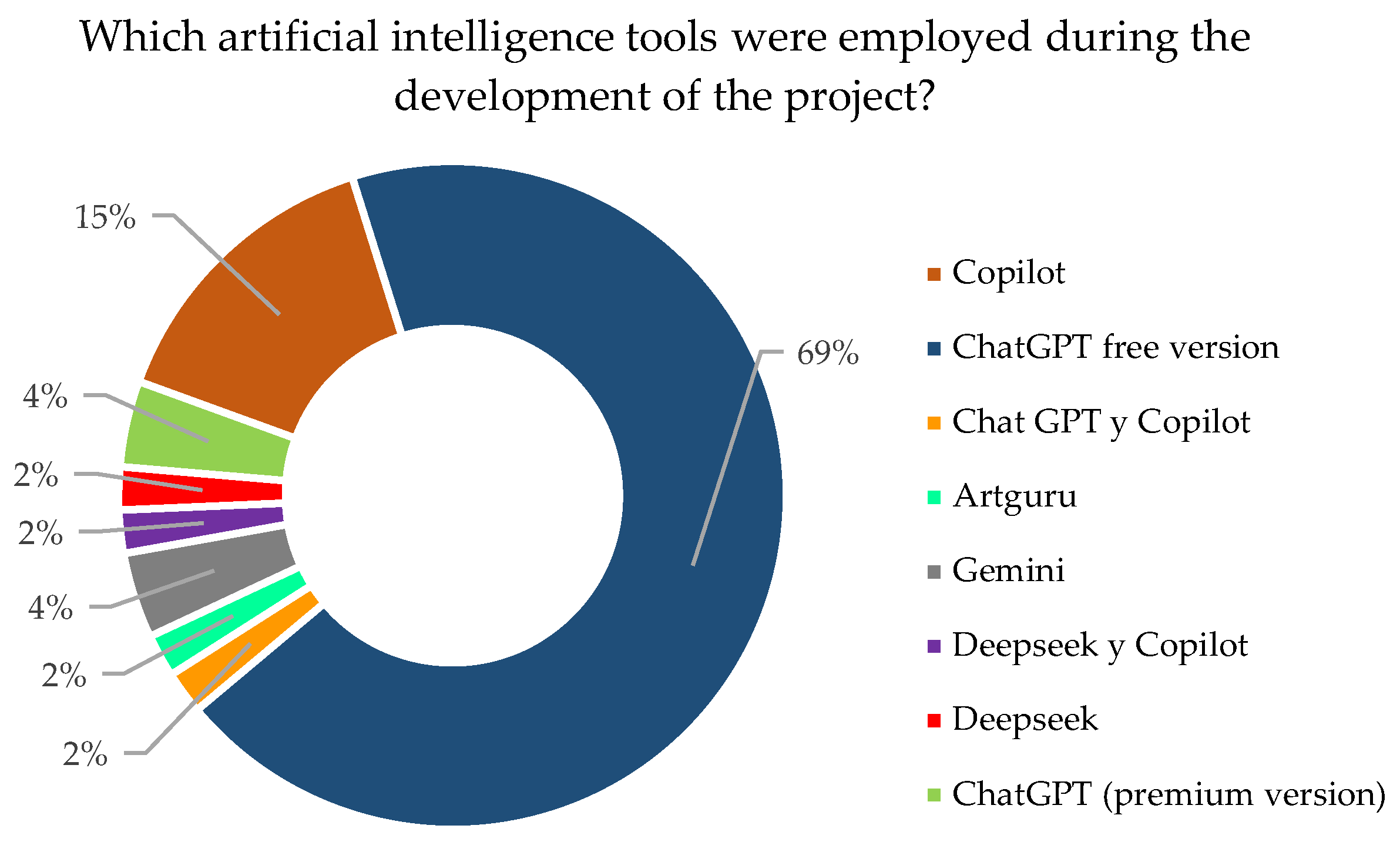
Figure 2 presents questionnaire results regarding the widespread use of AI tools during project development. With respect to platforms, most students reported using the free version of ChatGPT (69%), followed by Copilot (15%) and a ChatGPT + Copilot combination (4%). Other tools (Gemini, DeepSeek, and Artguru) were mentioned marginally (2% each), suggesting a clear preference for accessible and widely known platforms.
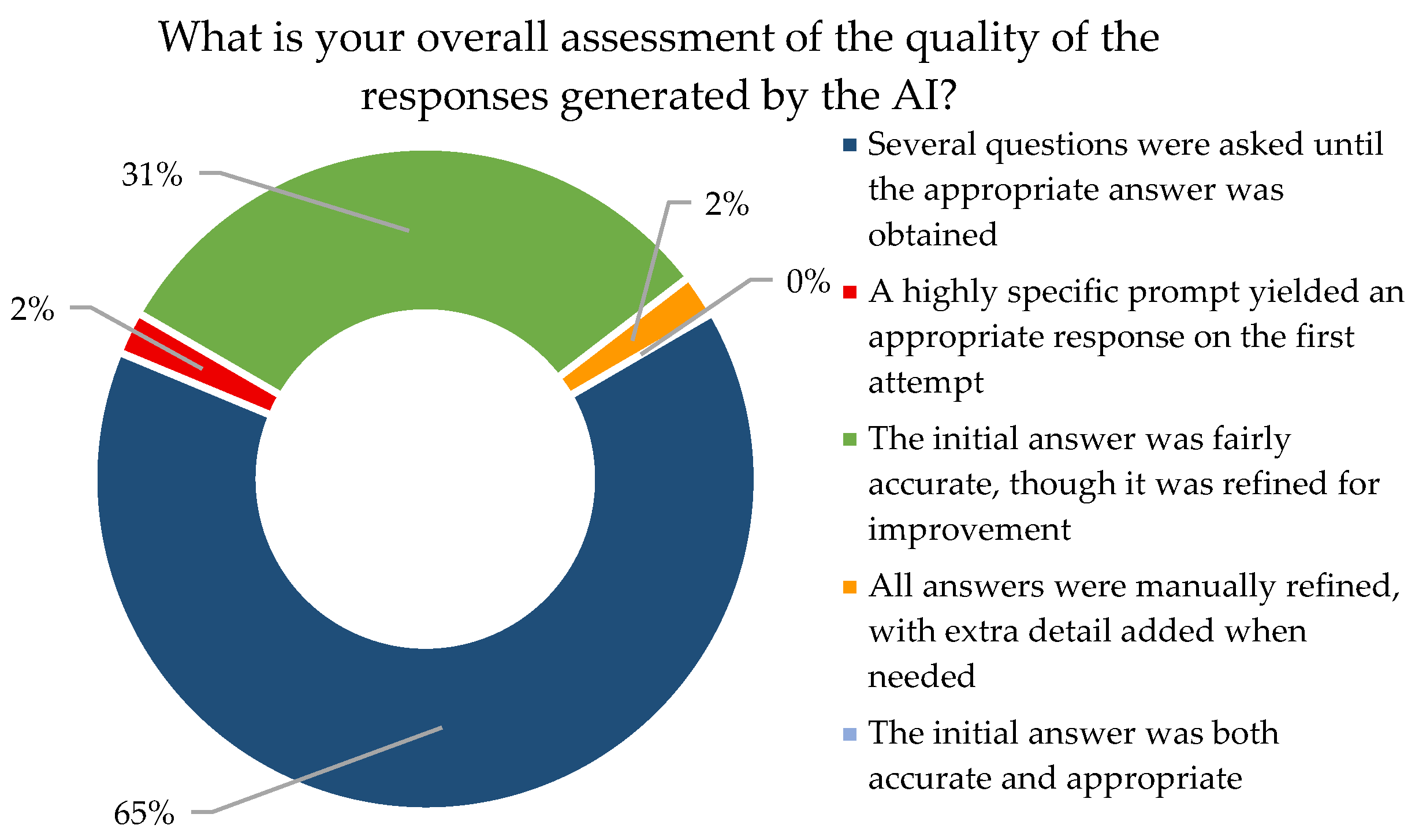
Regarding overall quality,
Figure 3 shows that 65% of students indicated that it was necessary to ask several questions before obtaining a suitable answer, while 31% stated that a very specific prompt was sufficient to receive a useful response on the first attempt. Only 2% considered the initial responses accurate and appropriate without adjustments, reflecting a critical and iterative approach to interacting with these tools.
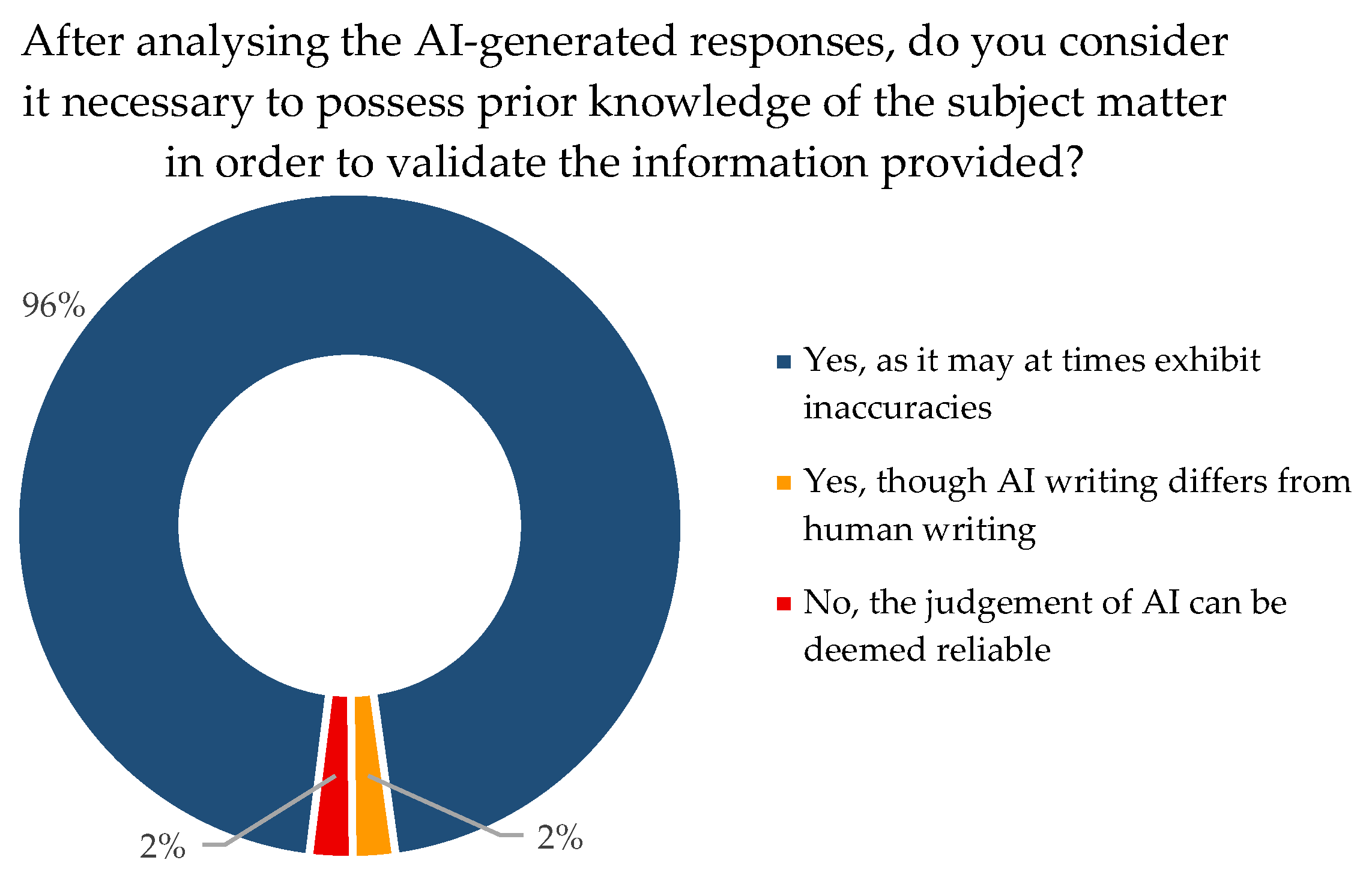
Figure 4 shows that 96% of respondents considered prior subject knowledge necessary to validate AI outputs, either due to potential inaccuracies (the majority response) or differences between AI-generated and human-written content. Only 2% believed AI-generated responses could be considered reliable without additional validation.
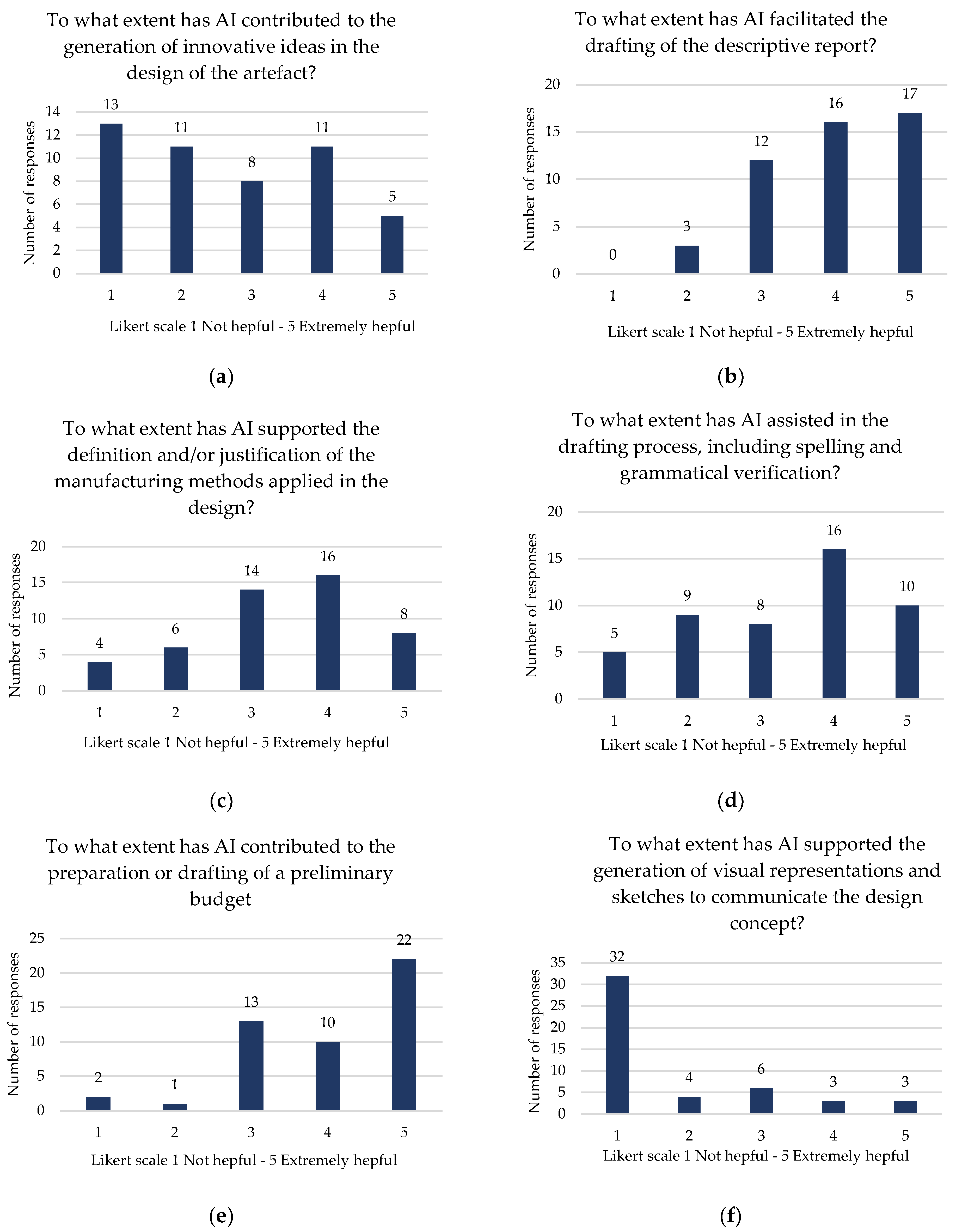
The data reveals a nuanced, task-dependent perception of AI’s role. In the ideation phase (
Figure 5a), opinions were polarized: 13 students rated AI as “Not useful at all” and 11 as “Slightly useful”, while 16 students selected higher usefulness levels (4 or 5). This suggests that some teams leveraged AI as a creative catalyst whereas others did not find it substantively helpful at this stage.
By contrast, report writing (
Figure 5b) emerged as one of the phases where AI was perceived as most beneficial: 33 students assigned high ratings (4 or 5), indicating substantial support for structuring and drafting technical documents. This trend was reinforced in language correction (
Figure 5d), where 26 students reported high dependence on AI to ensure clarity and accuracy.
When justifying manufacturing methods (
Figure 5c), opinions varied. While 24 students acknowledged AI’s usefulness (4 or 5), 14 were neutral and 10 found it less helpful (1 or 2). This disparity may reflect the technical complexity and contextual demands of the processes involved, which require reasoning that current tools do not consistently address.
Perceived limitations were clearer in technical and visual tasks. For budget preparation (
Figure 5e), most students agreed that AI did not provide significant support: 32 students rated usefulness at the lowest levels (1 or 2), and only 6 selected high usefulness levels (4 or 5). A similar pattern appeared in visual representations/sketches (
Figure 5f), where low usefulness predominated (36 students rated 1 or 2, and only 6 rated 4 or 5).
Overall, students demonstrated strategic and selective use of AI, recognizing strengths in textual and conceptual support and limits in tasks requiring technical precision or visual creativity. This critical stance toward technology constitutes, in itself, a valuable competency in contemporary engineering education.
5.2. Results on Alignment with the Sustainable Development Goals (SDGs)
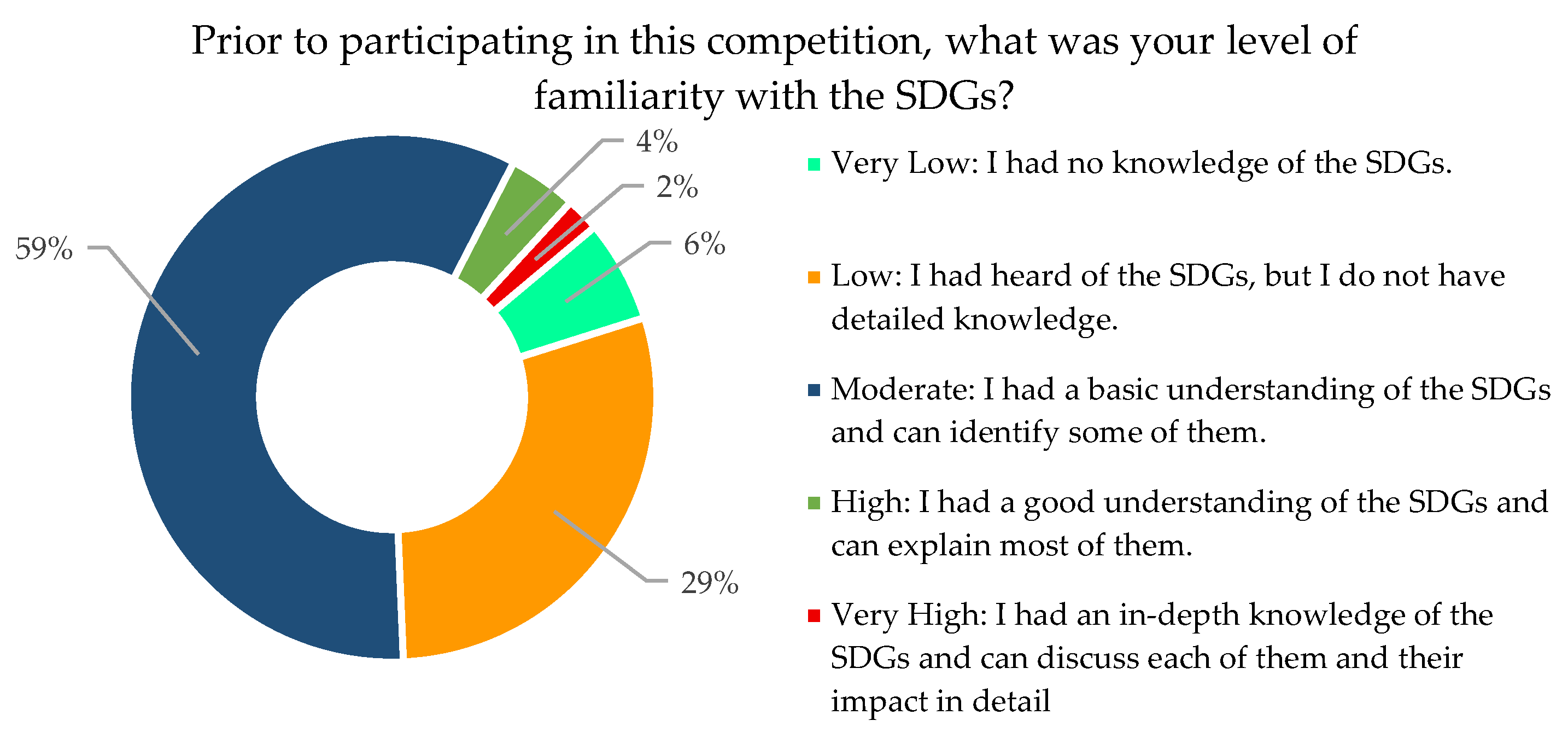
Figure 6 shows a limited baseline familiarity with the SDGs: 59% reported a moderate understanding, 29% indicated low knowledge, and 6% very low. Only 6% reported a high/very high level.
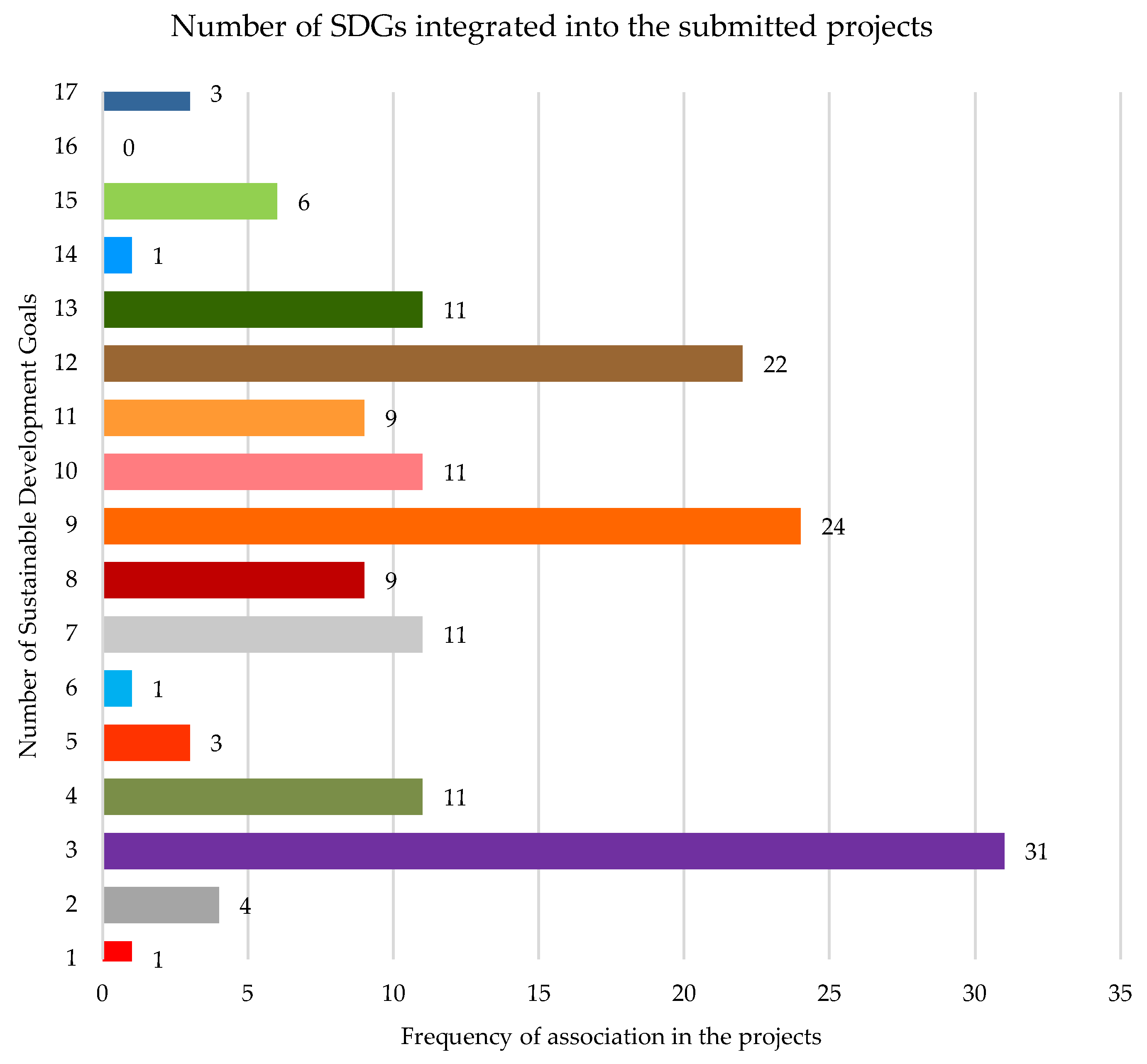
Figure 7 illustrates the frequency with which each Sustainable Development Goal (SDG) was associated with the submitted projects, expressed in absolute numbers of occurrences.
With respect to the SDGs integrated into submissions, the results (
Figure 7) reveal broad diversity. 31 projects identified three to five aligned SDGs, 11 projects indicated six to eight, and only 1 project reported a single SDG—demonstrating sustained efforts to incorporate multiple sustainability dimensions into artifact design.
Frequently mentioned goals included SDG 3 (Good Health and Well-being) with 24 associations, SDG 4 (Quality Education) and SDG 12 (Responsible Consumption and Production) with 22 associations each, and SDG 7 (Affordable and Clean Energy) and SDG 13 (Climate Action) with 11 associations each. SDG 9 (Industry, Innovation and Infrastructure) was the most cited, appearing in 24 projects. These goals are closely connected to technological and engineering domains. References also appeared to SDG 5 (Gender Equality) and SDG 10 (Reduced Inequalities), with 9 associations each, indicating growing awareness of social and environmental dimensions.
Displaying all 17 SDGs on the vertical axis of the graph helped visualize this diversity and underscored the project’s potential to promote a comprehensive, committed view of engineering in the context of global challenges.
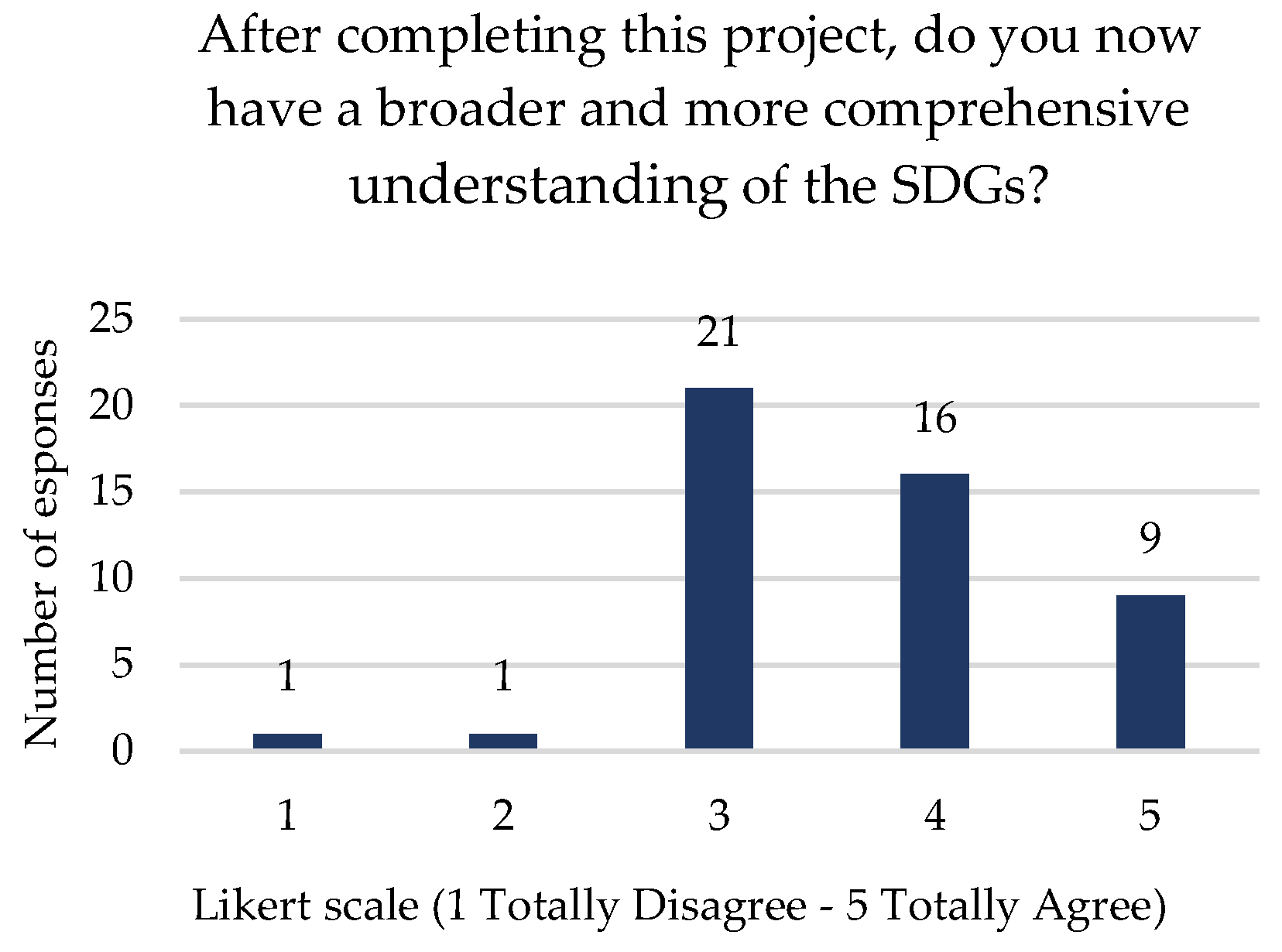
After the project, 25 students agreed or strongly agreed that they had a broader and deeper understanding of the SDGs, suggesting a positive impact on sustainability awareness (
Figure 8). Specifically, 16 students selected “Agree” (score 4) and 9 students selected “Strongly Agree” (score 5), while 21 students remained neutral (score 3). Only 2 students expressed disagreement (scores 1–2), indicating that the majority perceived a meaningful improvement in their understanding of the SDGs.
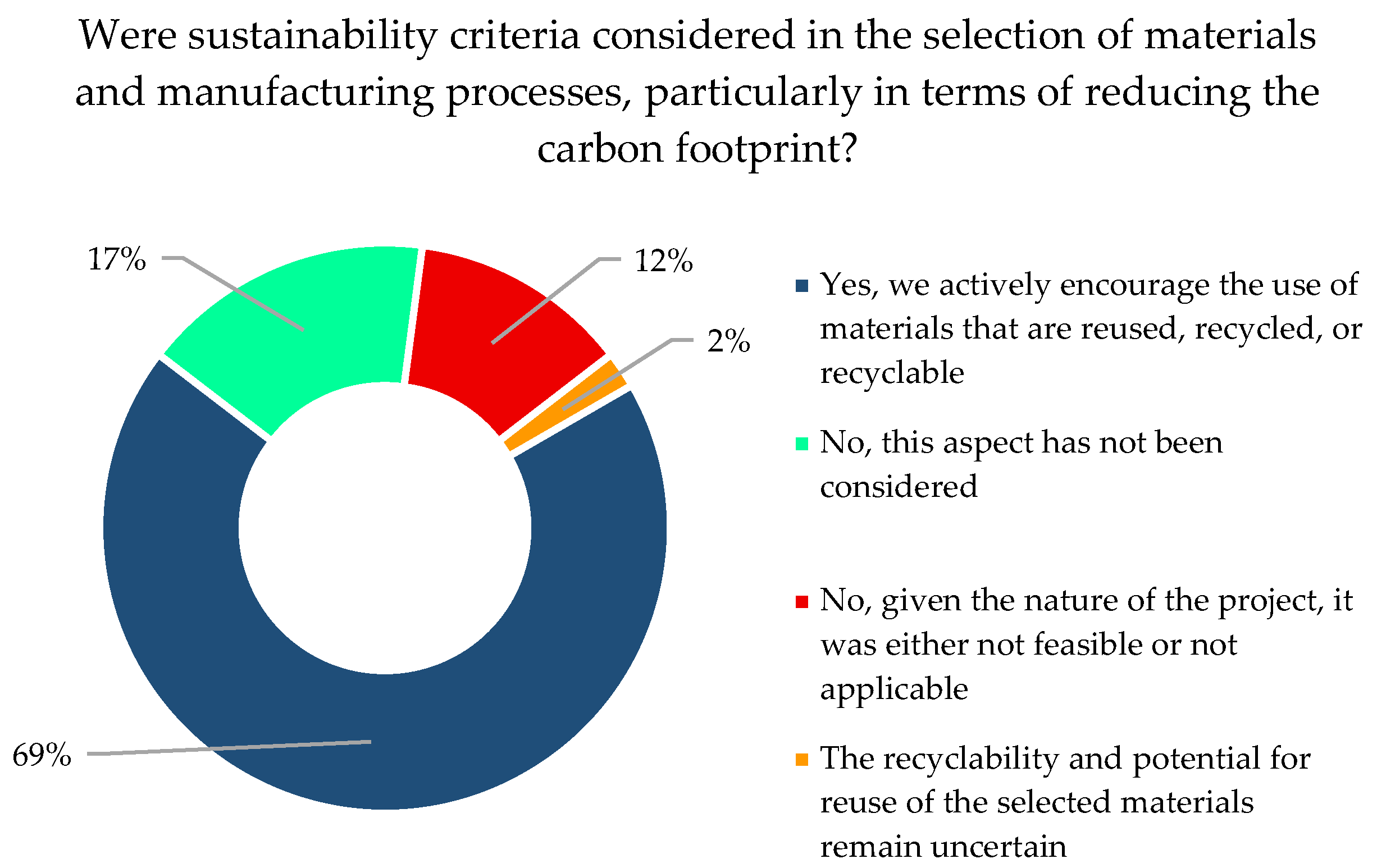
Figure 9 shows that 69% reported actively promoting the use of reused, recycled, or recyclable materials; 17% indicated the aspect was not considered; and 12% reported it was not applicable/feasible.
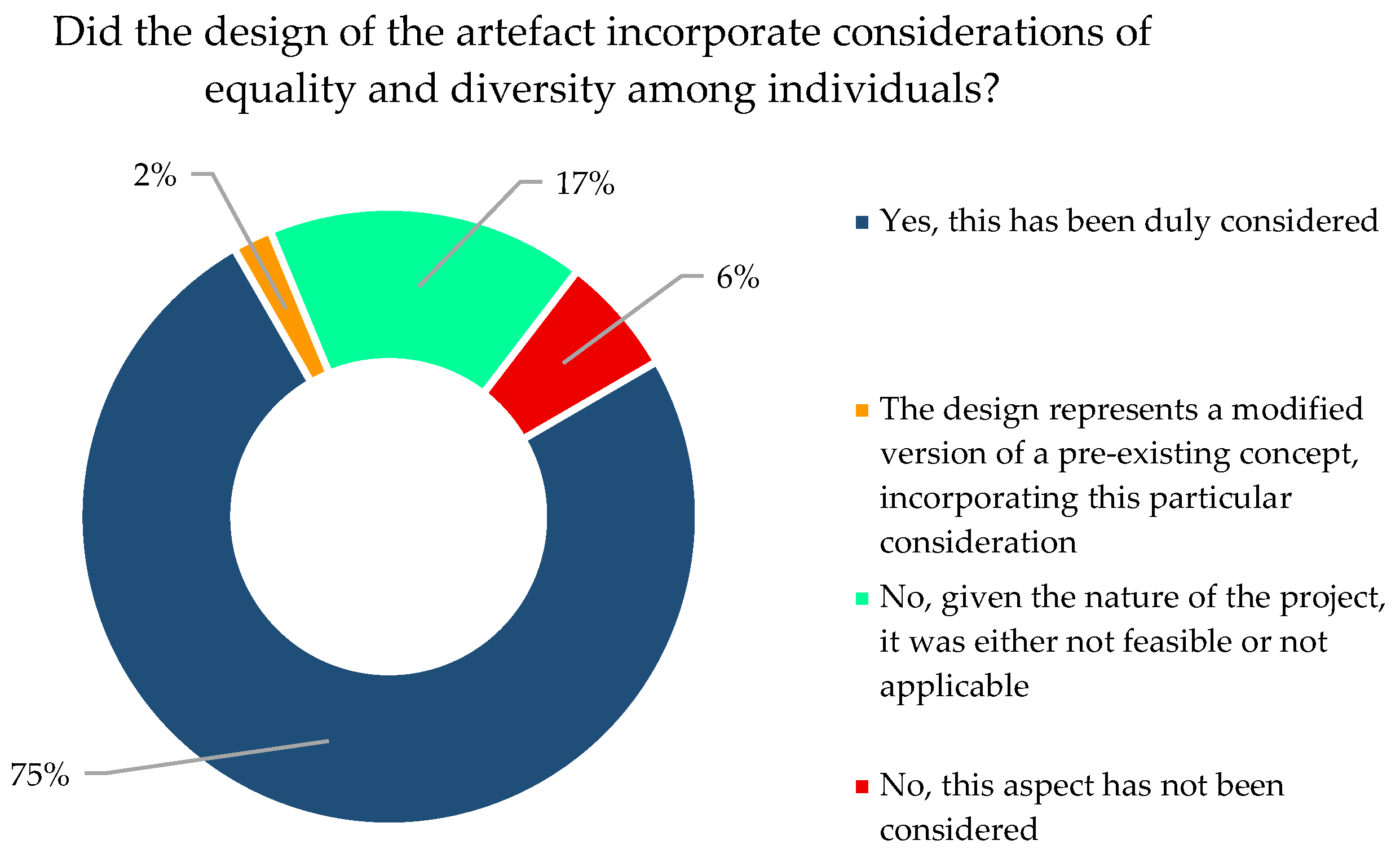
Figure 10 shows that, regarding the inclusion of equality and diversity aspects, 75% of participants stated that they had taken these criteria into account in the design of the artifact, while 17% indicated that, although the design was based on a pre-existing idea, relevant improvements were incorporated. Only 6% considered it not applicable or did not take it into account.
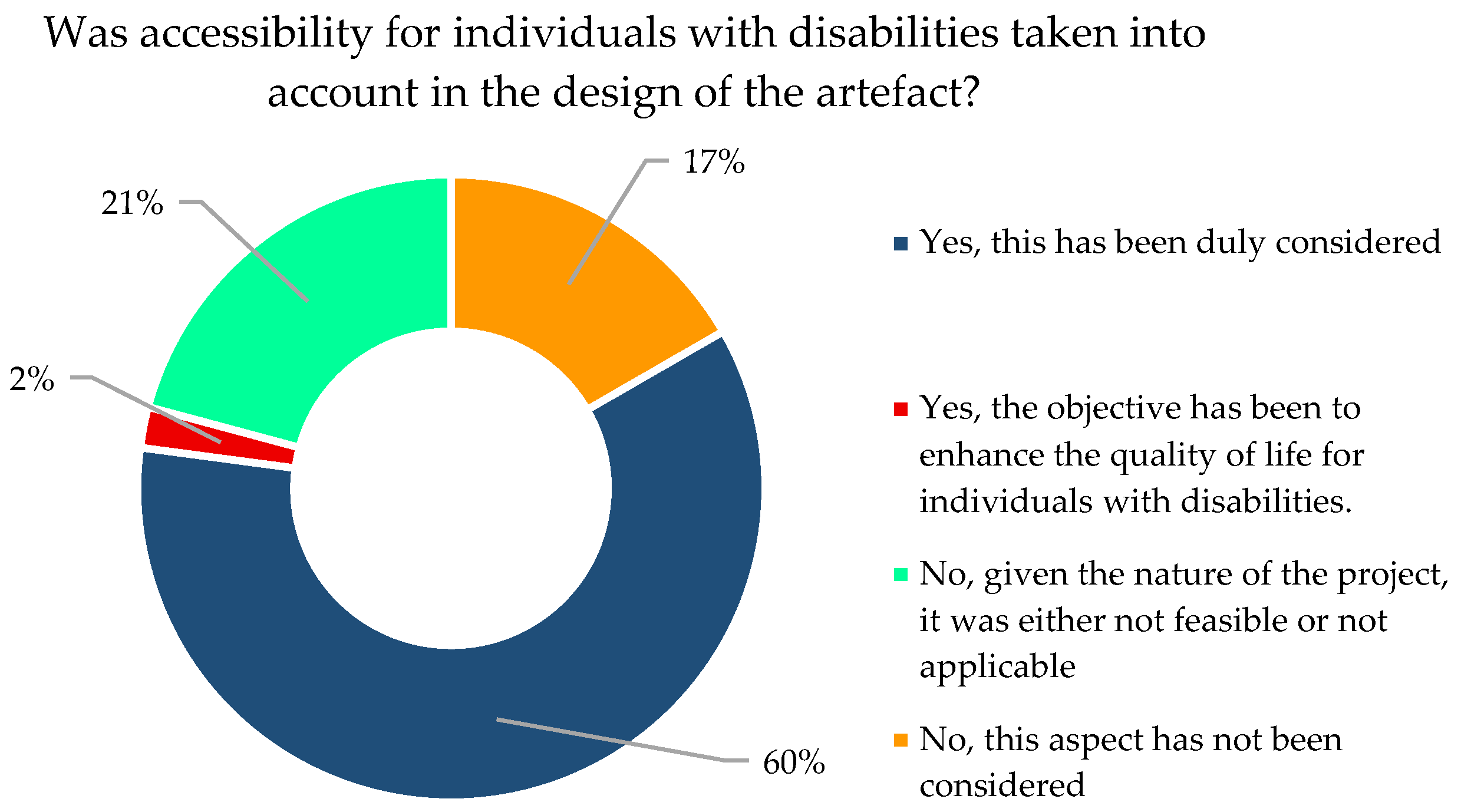
For accessibility, 60% considered this aspect; 21% reported that improving quality of life for this group was a project goal; 17% deemed it not applicable; and 2% acknowledged not having considered it. Overall, the results reflect a high level of awareness and commitment to sustainability, equity, and accessibility promoted through SDG integration (
Figure 11).
In summary, the most frequently addressed goals were SDG 3, SDG 9, and SDG 12. The evaluation rubric explicitly included a 15% weight for SDG alignment, encouraging early and sustained integration of sustainability criteria. The highest score was awarded to teams justifying connections to five or more SDGs. This emphasis shaped project themes, which included assistive devices (e.g., walkers; autonomous lifting aids for people with reduced mobility; multifunctional adjustable tables; smart canes for visually impaired users) and energy/environmental solutions (e.g., solar dehydrators for fruits and vegetables; calisthenics equipment generating 12 V electricity for charging mobile devices). These examples illustrate a deliberate, well-informed effort to embed sustainability, equity, and accessibility into the engineering design process.
5.3. Results on the Development of Competencies Specific to the Bachelor’s Degree in Mechanical Engineering
The challenge-based project enabled an assessment of perceived impact on key competencies in the degree program. Items were grouped by competency blocks, with responses collected on a Likert scale, where 1 = Strongly Disagree (SD), 2 = Disagree (D), 3 = Neutral (N), 4 = Agree (A), and 5 = Strongly Agree (SA). Results are presented by subcategory with interpretive commentary.
5.3.1. Results in Transversal Competencies
Table 8 presents the distribution of responses for five transversal competencies evaluated. The data confirm a generally positive perception among students regarding the impact of the activity on their professional and personal growth.
For project management, 30 students (categories 4 and 5) reported improvements in their ability to plan and manage manufacturing projects, suggesting that the CBL approach facilitated contextual application of technical knowledge and reinforced applied engineering skills through authentic problem-solving scenarios (
Okada et al., 2025).
Regarding adaptability, 33 students expressed agreement or strong agreement, highlighting the role of autonomous use of AI-based tools and sustainability criteria in fostering flexibility—competencies increasingly relevant in interdisciplinary and evolving professional contexts. This finding aligns with studies confirming that adaptive learning environments and AI-enhanced feedback mechanisms improve engagement and adaptability (
Yaseen et al., 2025).
For creative problem-solving, 30 students rated positively, consistent with research emphasizing how AI-mediated learning promotes divergent thinking and ethical reasoning when students address complex, real-world challenges (
Deroncele-Acosta et al., 2025).
In decision-making and communication, 27 students indicated improvement, underscoring the importance of these skills in collaborative and multicultural environments where clarity and assertiveness in technical expression directly influence team performance. This result resonates with the transversal competencies framework proposed by UNESCO and the CARE-KNOW-DO pedagogical model, which emphasizes ethical awareness and responsible agency in AI-enhanced learning ecosystems (
Okada et al., 2025).
Finally, analysis of social and environmental impact was positively assessed by 31 students, reflecting a growing awareness of sustainability and ethical responsibility—central to the 2030 Agenda and to the integration of digital technologies in education for sustainable development. These results suggest that students are not only acquiring technical knowledge but also developing a reflective and critical stance toward the societal implications of engineering practice.
5.3.2. Results in Basic and Common Industrial Field Competencies
Table 9 presents the distribution of student responses regarding the development of basic training competencies and those common to the industrial engineering field after participating in the educational project. The data provide insights into how students perceived improvements in spatial ability, theoretical knowledge, material selection, and understanding of production systems.
For spatial ability and graphic representation, most students expressed agreement: 24 selected “Agree” and 9 “Strongly Agree”, while 11 remained neutral and only 4 expressed disagreement (categories 1–2). This strong positive trend (33 students in 4–5) highlights the effectiveness of designing from scratch as a pedagogical strategy to strengthen visual and technical skills fundamental in engineering practice.
Regarding knowledge in the theory of machines and mechanisms, responses were limited to 27 students because the questionnaire was designed so that only those whose project involved the design of a machine or mechanism answered this item. Among these, 6 students agreed and 3 strongly agreed, while 14 remained neutral and 4 expressed disagreement (categories 1–2). The concentration of responses in the neutral category suggests that this competency may have been addressed indirectly or with insufficient depth during the project, potentially limiting its educational impact.
For material selection based on mechanical properties, 36 students rated positively (18 “Agree” and 18 “Strongly Agree”), 10 were neutral, and only 2 expressed disagreement. This distribution demonstrates an effective transfer of theoretical knowledge to practice—an essential aspect of training engineers with strong analytical capabilities.
Finally, in production and manufacturing systems, 20 students agreed or strongly agreed (11 and 9, respectively), while 18 were neutral and 10 expressed disagreement. Although the majority acknowledged improvement, the dispersion observed in responses suggests variability in student engagement or project complexity, which may have influenced perceptions of learning for this competency.
Overall, the data indicate that the educational intervention was particularly effective in enhancing spatial ability and material selection skills, while competencies related to theoretical knowledge of mechanisms and production systems showed more heterogeneous results, pointing to areas for improvement in future iterations of the project.
5.3.3. Results in Specific Technology Competences (Mechanical Engineering)
Table 10 presents the distribution of student responses regarding the development of specific mechanical engineering competencies after participating in the educational project. These items were conditional questions, answered only by students whose projects involved the corresponding tasks (e.g., 3D design, kinematic/dynamic calculations, or elasticity and strength analysis), which explains the variation in total responses across items.
For graphic engineering techniques, 18 students expressed agreement or strong agreement (8 “Agree” and 10 “Strongly Agree”), while 6 were neutral and only 2 disagreed (categories 1–2). This positive trend among the 26 respondents confirms the effectiveness of the project in strengthening technical skills related to computer-aided design (CAD) and visual representation—competencies essential in mechanical engineering practice.
Regarding calculation, design, and testing of machines, responses were limited to 11 students because only those whose projects involved these tasks were required to answer. Among them, 4 students rated positively (1 “Agree” and 3 “Strongly Agree”), 6 were neutral, and 1 expressed strong disagreement. The predominance of neutral ratings suggests that this competency may have been addressed indirectly or with insufficient depth, pointing to the need for more targeted instructional support in future iterations.
For fundamentals of elasticity and material strength, 7 students rated positively (4 “Agree” and 3 “Strongly Agree”), 5 were neutral, and 2 expressed strong disagreement. This more balanced distribution among 14 respondents indicates that, although the competency was introduced, its development could benefit from clearer and more structured reinforcement.
Overall, the data reveal that the project was particularly effective in enhancing graphic engineering skills, while competencies related to machine design and strength of materials showed more heterogeneous results, largely due to the technical complexity of these tasks and their selective application within the projects.
5.3.4. Results on the Development of Critical Thinking
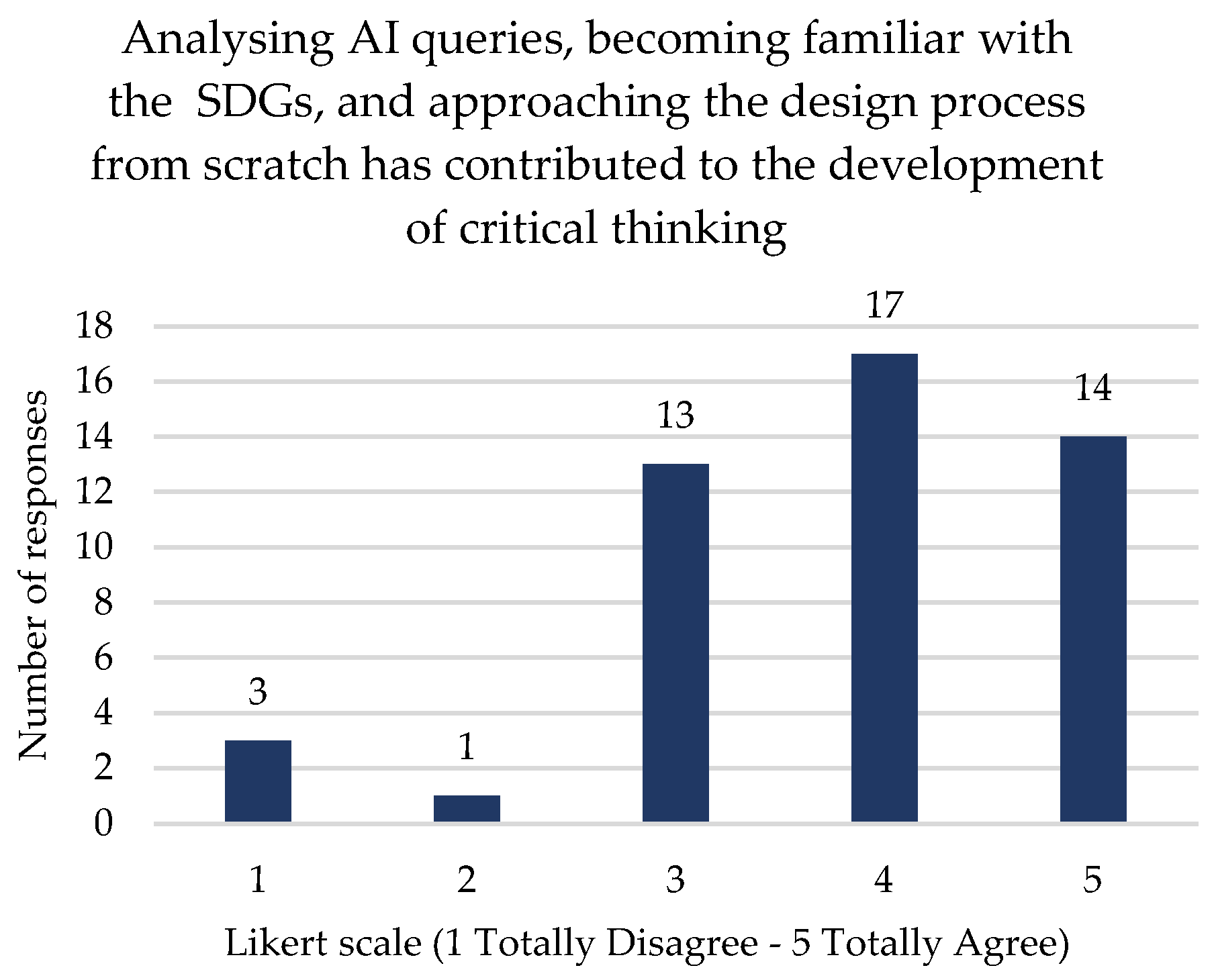
Figure 12 illustrates students’ perceptions regarding the development of critical thinking as a result of their participation in the educational project. A total of 31 students positively evaluated this competency (levels 4–5), suggesting that analyzing AI-generated outputs, engaging with the Sustainable Development Goals (SDGs), and the design-from-scratch approach significantly contributed to fostering a reflective and analytical mindset. Specifically, 17 students selected “Agree” (score 4) and 14 students selected “Strongly Agree” (score 5), while 13 students remained neutral (score 3). Only 4 students expressed disagreement (scores 1–2), indicating that the moderate dispersion in responses may be influenced by individual factors such as level of engagement or prior experience with critical reasoning processes.
5.4. Limitations of the Study
While the findings provide valuable insights into the development of transversal, basic, and specific competencies in mechanical engineering education, several limitations should be acknowledged.
First, data were collected through self-reported questionnaires completed voluntarily by students enrolled in Mechanical Technology during the 2024–2025 academic year. Although anonymity was preserved and participation encouraged, the voluntary nature of responses may introduce self-selection bias, potentially favoring students with a more positive perception of the experience.
Second, the study lacks objective measures such as pre/post-tests or standardized performance metrics—that would allow for a more precise assessment of skill acquisition. The current course design does not include instruments to quantitatively evaluate competencies related to AI or the Sustainable Development Goals (SDGs), although future iterations may explore ways to integrate such measures. Additionally, the intervention did not incorporate a formal diagnostic test to assess students’ prior knowledge of AI or SDGs, which could have been addressed transversally in other courses. However, a detailed analysis of the Mechanical Engineering curriculum confirmed that, according to its structure, students should not possess advanced technical knowledge in the Mechanical Technology course beyond what is typically acquired in secondary education or through personal experience.
Third, the research was conducted within a single academic institution and focused on a specific cohort of students. The sample was limited to 48 third-year students from the Bachelor’s Degree in Mechanical Engineering at Miguel Hernández University of Elche. As such, generalizability to other contexts, disciplines, or educational systems may be limited.
Fourth, although the project-based learning approach was designed to integrate multiple competencies, some areas—such as theoretical knowledge in mechanics or strength of materials—may not have been addressed with the same depth across all projects. This variability could have influenced the perceived development and consolidation of certain competencies.
Fifth, the study did not include a control group or a pre–post evaluation design, which constrains the ability to establish causal relationships between the intervention and the reported outcomes.
Finally, the study did not specifically control for potential confounding factors such as team dynamics or students’ prior knowledge related to the SDGs, technical design, or the use of AI tools. Although all participants had completed key courses in the curriculum (e.g., Fundamentals of Engineering, Engineering Graphics), there may have been meaningful differences in prior experience, motivation, or digital skills. Furthermore, team composition was self-selected, which could have influenced task distribution and overall project quality. These aspects were not quantified and should be considered when interpreting the results and when assessing the scope and transferability of the conclusions.
Although the questionnaire included open-ended questions and “Other” options to capture qualitative contributions, the analysis performed was descriptive and did not apply systematic coding techniques (e.g., thematic analysis). Future research could explore these responses in greater depth using more rigorous qualitative methods to enrich the interpretation of perceptions and improvement proposals.
As a pilot study, the results are context-specific and based on a single cohort. Although the questionnaire demonstrated acceptable reliability, future studies should further refine and validate the instrument using larger samples and complementary qualitative analyses to strengthen generalizability and methodological rigor.
6. Discussion
The findings of this study confirm the potential of combining CBL, AI tools, and the explicit integration of the Sustainable Development Goals (SDGs) to foster both technical and transversal competencies in engineering education. Beyond this confirmation, it is essential to interpret these results in light of previous research and consider their broader implications.
First, the improvement perceived in transversal skills—such as project management, creative problem-solving, and decision-making aligns with evidence reported by
Galdames-Calderón et al. (
2024) and
Doulougeri et al. (
2024a), who emphasize the capacity of CBL to promote autonomy and critical thinking in authentic learning environments. Our results reinforce this trend but add an important nuance: AI did not replace disciplinary knowledge; rather, it served as a complementary resource, particularly in tasks related to drafting and structuring technical reports. This observation is consistent with
Chaudhry et al. (
2025) and
Fan et al. (
2025), who argue that AI provides value when used strategically, not as a substitute for technical reasoning.
From a psychological perspective, studies such as
X. Wang and Zou (
2023) highlight the importance of emotional and cognitive factors in shaping students’ engagement and adaptability, aligning with the motivational outcomes observed in this challenge-based learning experience.
Second, the usefulness of AI varied significantly depending on the stage of the project. Students reported clear benefits for writing and language refinement, while its contribution to calculations, process justification, and graphic representation was more limited. This pattern reflects findings by
Mosly (
2024) and
Wittig McPhee and Jerowsky (
2025), which point to the strengths of generative tools in textual tasks and their current limitations in areas requiring technical precision and advanced visualization. These results highlight the need for targeted training to optimize AI use in engineering design processes.
The open-ended responses included in the questionnaire complemented the quantitative data by providing insights into students’ perceptions. Comments highlighted the usefulness of AI for speeding up tasks, the need to validate outputs, and limitations in image generation. Regarding SDGs, students emphasized the educational value of integrating sustainability and accessibility. Suggestions for improvement focused on adjusting academic workload and expanding practical resources. These contributions enrich the interpretation of results and guide future methodological refinements.
Regarding sustainability, incorporating SDGs as an explicit evaluation criterion encouraged students to consider environmental, social, and accessibility aspects in their designs. This outcome is consistent with studies by
Lozano et al. (
2019) and
Leal Filho et al. (
2023), which underline the effectiveness of embedding sustainability into assessment practices to foster awareness and commitment. However, the absence of objective indicators to measure contributions to specific SDGs limits the possibility of rigorous comparisons, a challenge also noted by
Segalàs et al. (
2020) in their review of curriculum innovation.
Finally, the positive perception of critical-thinking development suggests that combining CBL, AI, and SDGs creates a learning environment conducive to reflection and informed decision-making. This finding resonates with
Melisa et al. (
2025), who highlight that interaction with AI in active learning contexts can stimulate critical evaluation of information. Nevertheless, the variability observed in responses indicates that this competency depends largely on individual engagement and the level of instructional support, reinforcing the need for more explicit scaffolding strategies.
Taken together, these results not only confirm trends identified in the literature but also provide evidence of the feasibility of integrating AI and sustainability into active methodologies in technical courses. To consolidate this approach, several actions are recommended: (a) strengthen faculty training in the pedagogical use of AI and in designing SDG-oriented challenges, (b) develop specific indicators to assess sustainability outcomes, and (c) explore tools that extend AI functionality for technical analysis and visual representation tasks. These steps would contribute to advancing educational models that respond effectively to the technological, ethical, and social demands of contemporary engineering practice.
7. Conclusions
This study demonstrates the pedagogical value of integrating active methodologies, specifically CBL, with AI tools and the Sustainable Development Goals (SDGs) in the teaching of technical subjects within the Mechanical Engineering degree program. The implemented experience not only enhanced students’ motivation and engagement but also supported the development of key competencies relevant to their future professional practice.
Results from the questionnaire reveal a predominantly positive perception of gains in transversal, basic, and specific competencies. In particular, students reported notable improvement in project management, creative problem-solving, the application of technical criteria to the design and manufacturing of artifacts, and reflection on the social and environmental impact of engineering decisions. The positive perception of critical-thinking development reinforces the idea that combining emerging technologies, sustainability, and design-from-scratch provides a conducive environment for reflection, analysis, and well-founded decision-making. Evidence suggests that students learned to scrutinize AI outputs, articulate trade-offs in design decisions, and relate technical choices to social and environmental implications—skills that are central to professional judgment (
Flores-Vivar & García-Peñalvo, 2023).
Moreover, integrating the SDGs as an explicit evaluation criterion contributed to raising students’ awareness of the ethical, social, and environmental dimensions of engineering. Most participants reported considering material sustainability, accessibility, and equity in their designs, suggesting an internalization of these principles throughout the project. This finding is consistent with the literature advocating for engineering education oriented toward sustainability and social responsibility. The rubric weight assigned to SDG alignment appears to have incentivized early and sustained attention to sustainability criteria, which, in turn, shaped design choices and documentation practices.
The methodological approach proved both feasible and effective in a technical education context and may serve as a replicable model for other courses and engineering programs. At the same time, areas for improvement were identified, including the need to reinforce specific technical content (e.g., machine calculations and strength of materials) and to expand pedagogical support for AI use so that students can better validate outputs, justify design choices, and manage data ethics within authentic project workflows. Future iterations could also incorporate targeted mini-tutorials, guided problem sets, or checkpoints focused on analytical justification and verification to strengthen specialized technical domains.
Future research should complement these findings with longitudinal analyses to examine medium- and long-term impacts on learning and professional readiness, as well as explore interdisciplinary applications and extensions to workplace settings. Expanding the sample across institutions and introducing objective performance measures (e.g., pre–post-tests, rubric-aligned analytics) would further clarify how CBL, AI, and SDG integration can be scaled while maintaining rigor, relevance, and sustainability-centered practice in core engineering education.




 ,
,