
Article

Parametric Geometry Modeling for Conceptual Design of Supersonic Tailless Combat Aircraft

by
Jian Xu
and
Xiongqing Yu
*
College of Aerospace Engineering, Nanjing University of Aeronautics and Astronautics, Nanjing 210016, China
*
Author to whom correspondence should be addressed.
Aerospace 2026, 13(1), 17; https://doi.org/10.3390/aerospace13010017

Submission received: 13 October 2025 / Revised: 13 December 2025 / Accepted: 15 December 2025 / Published: 25 December 2025
(This article belongs to the Special Issue Aircraft Conceptual Design: Tools, Processes and Examples)

Abstract

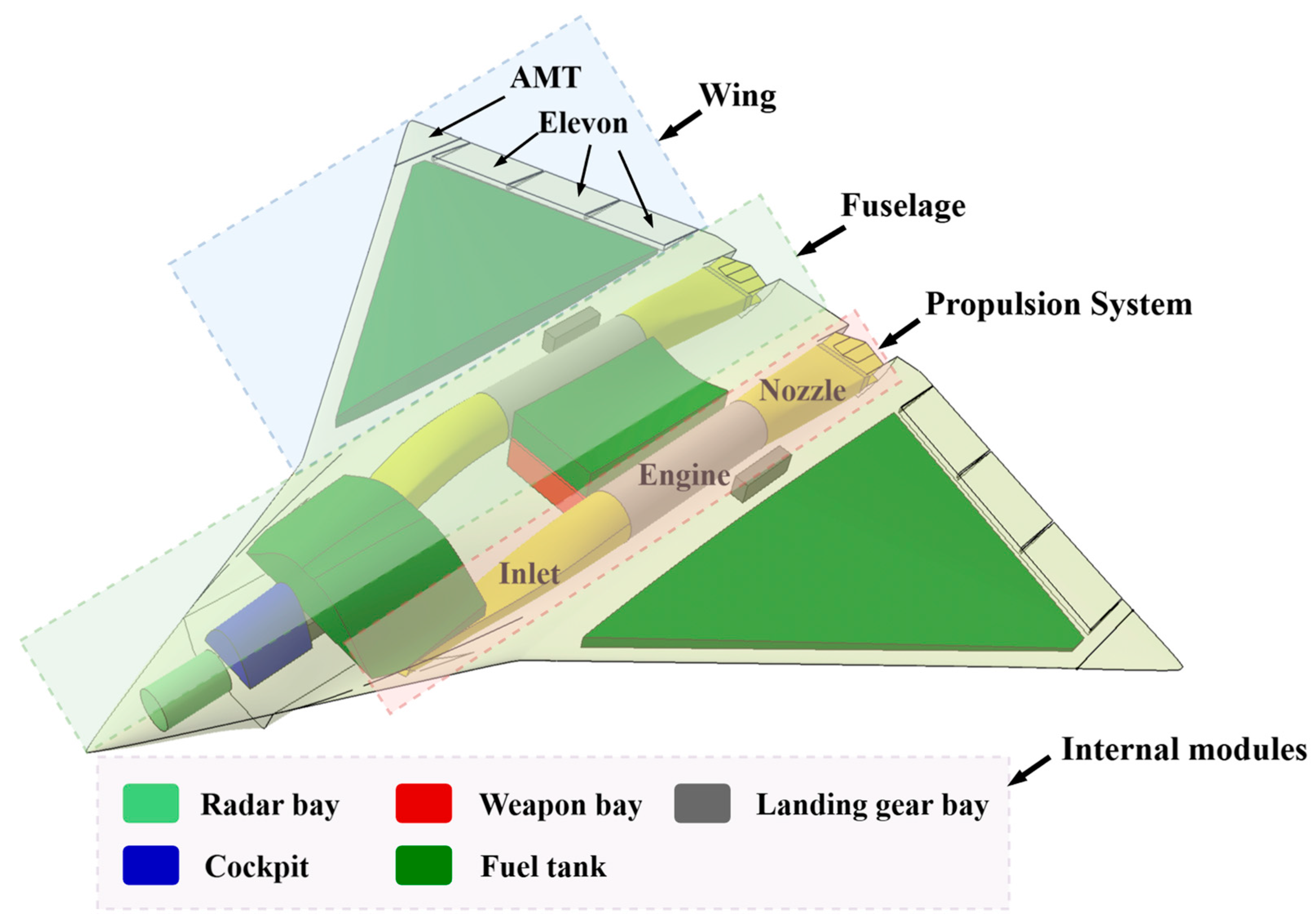
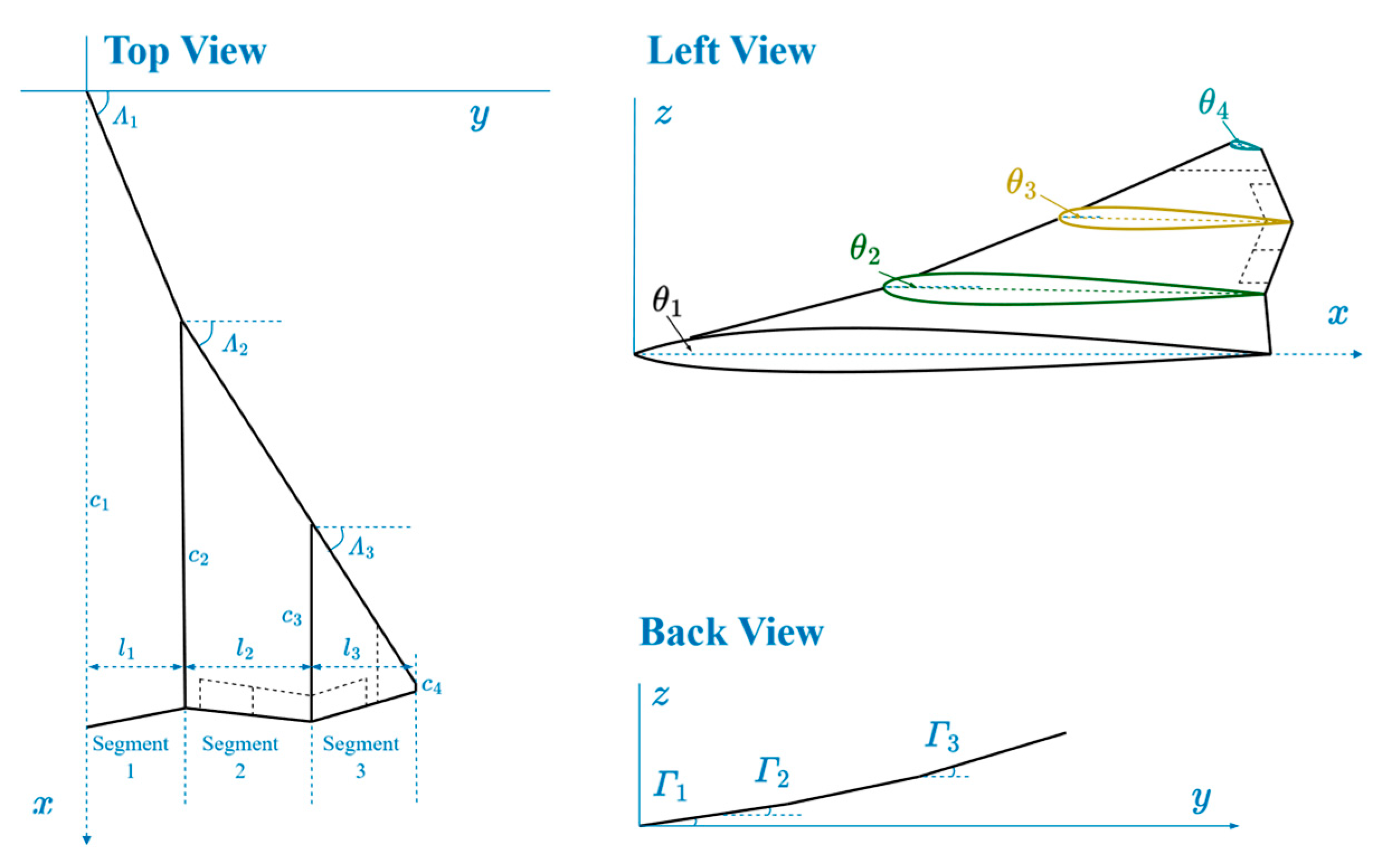
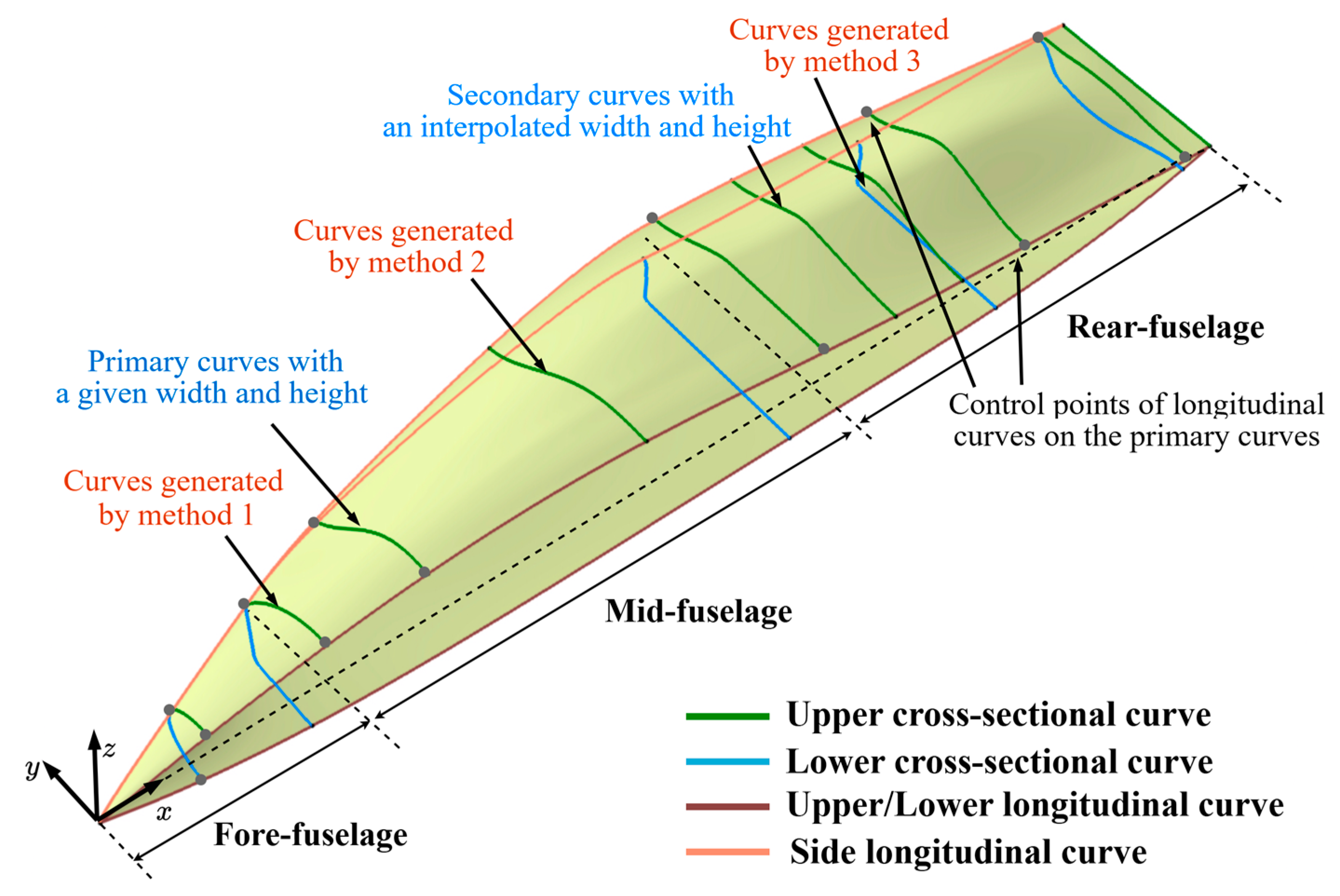
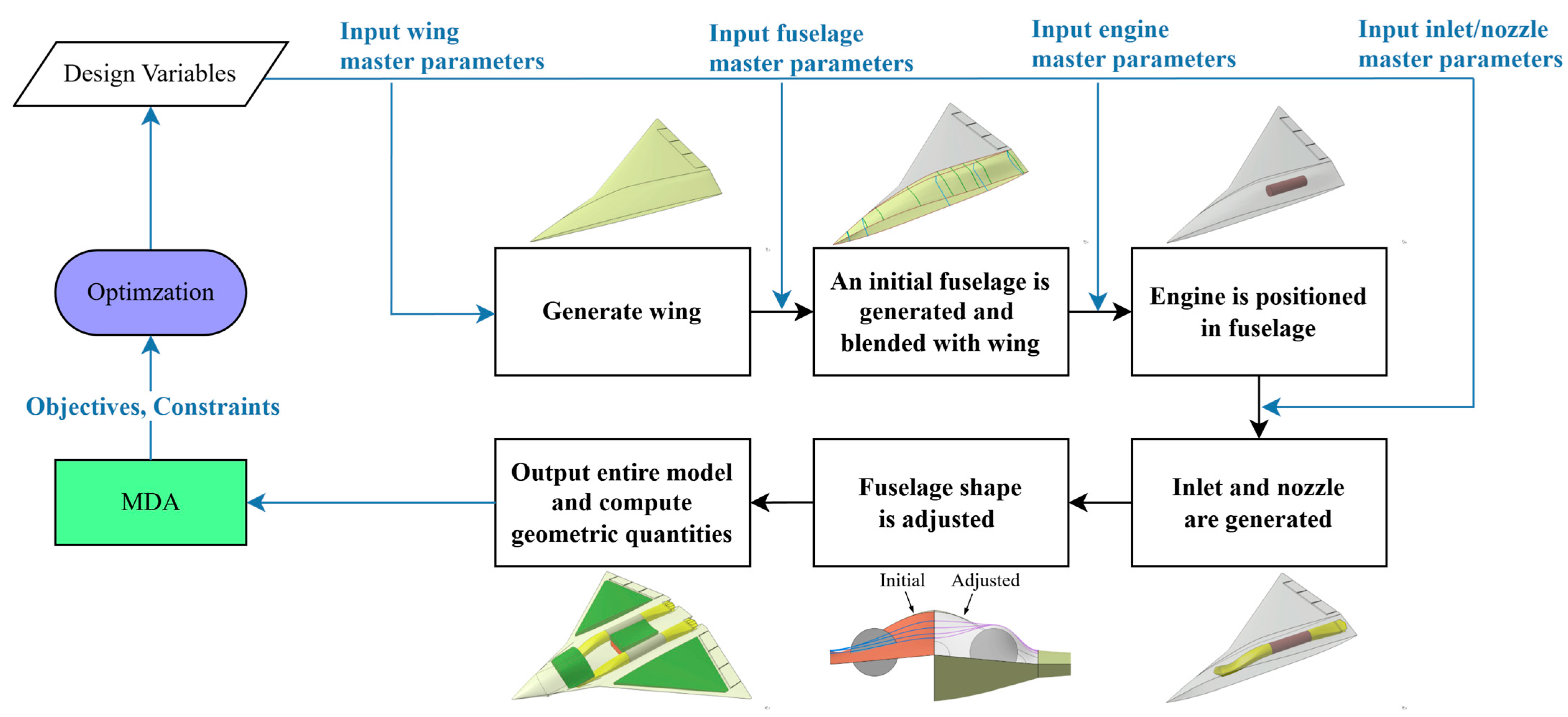
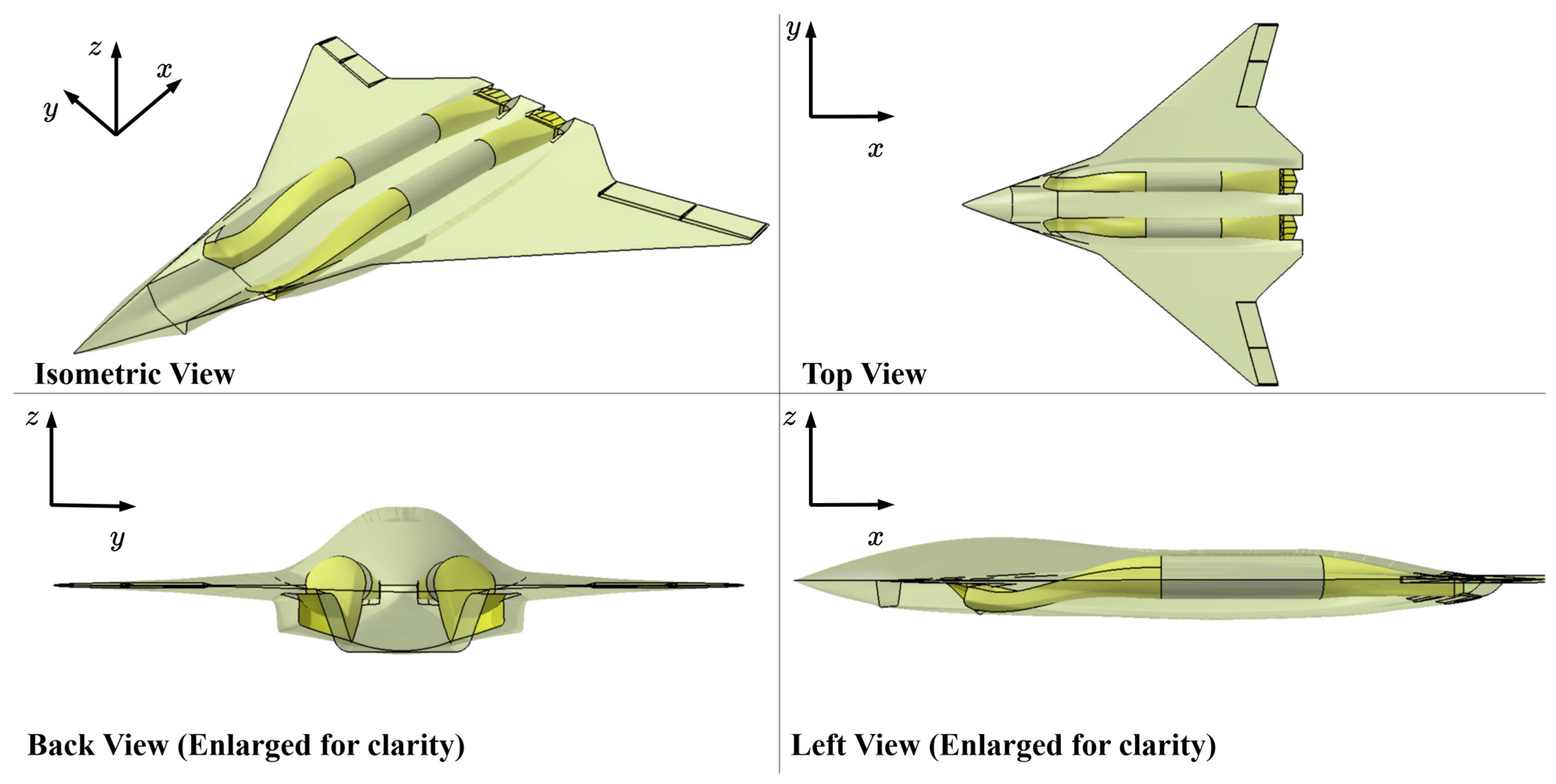
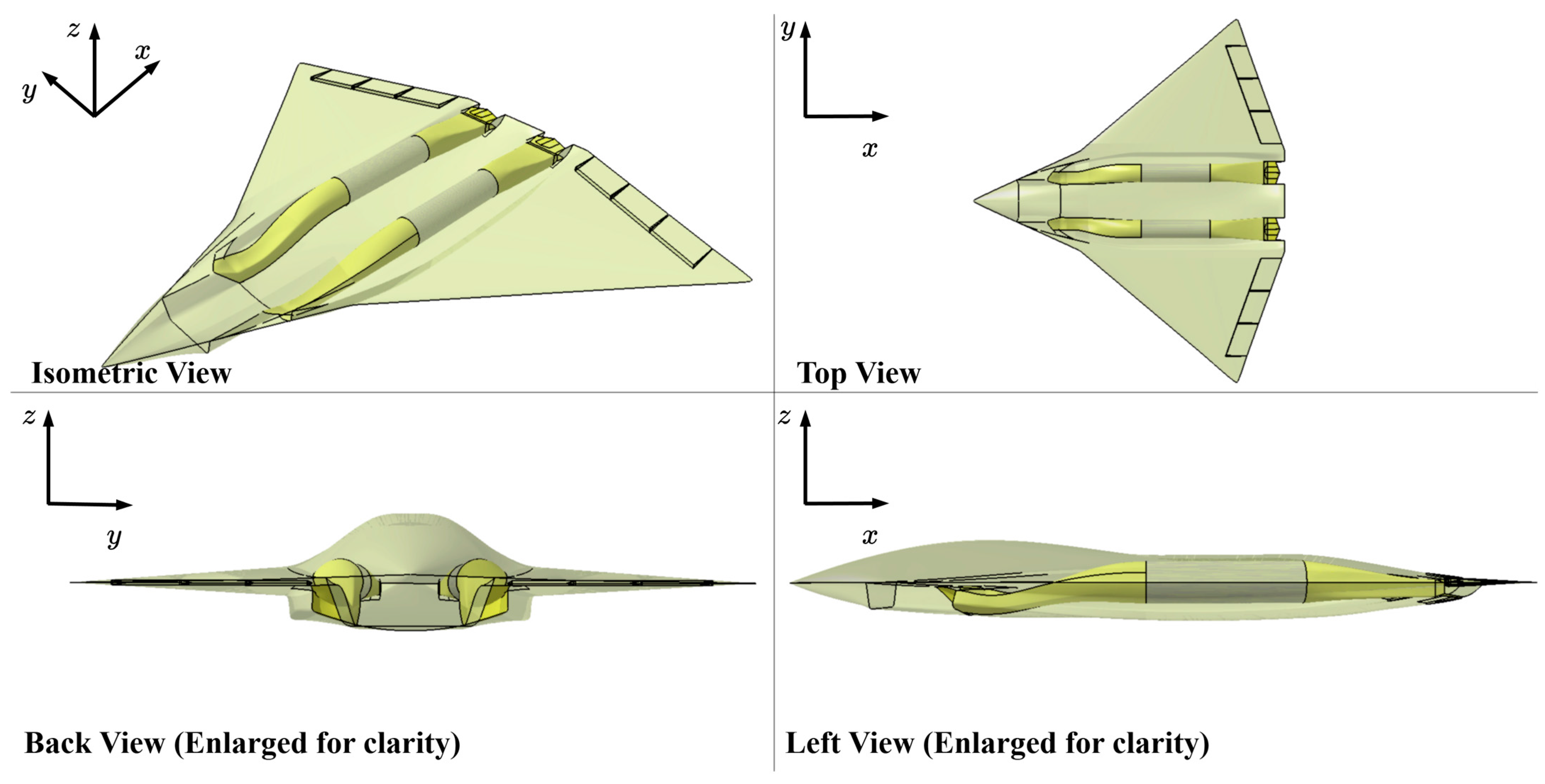
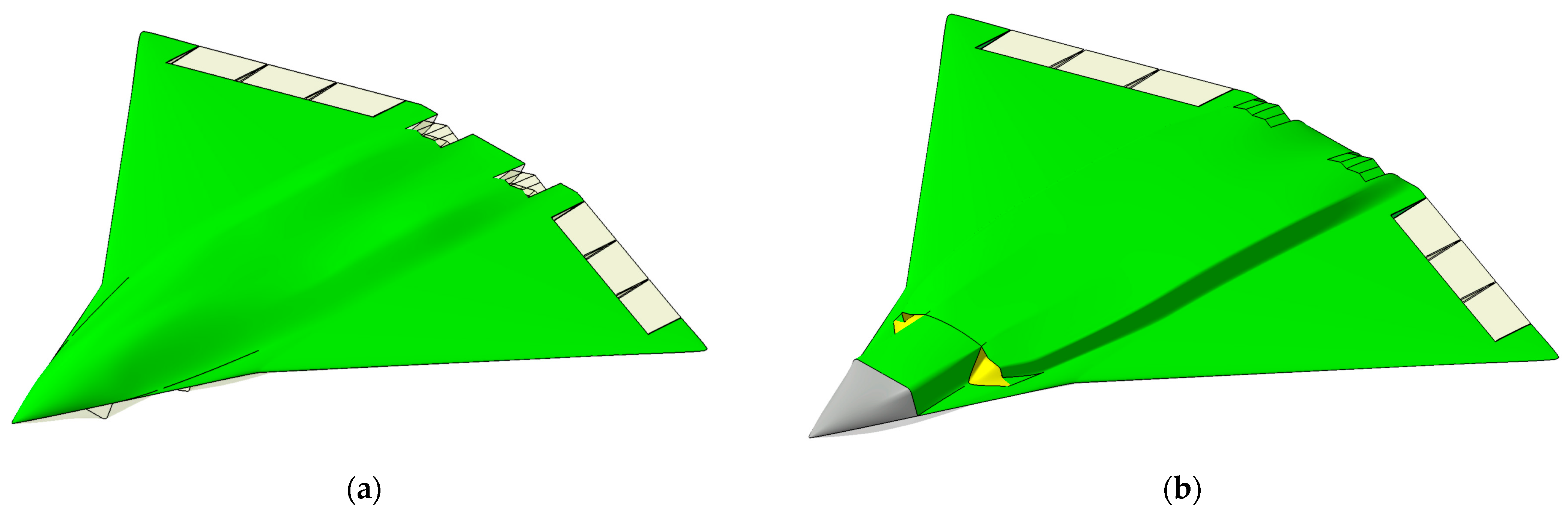
The fully tailless configuration has lower observability, less structural weight and less drag, and it is considered one of the preferred designs for the next generation of efficient supersonic combat aircraft. In the conceptual design of such novel aircraft, a parametric geometry model is essential for multidisciplinary design analysis and optimization (MDAO). This paper presents a parametric three-dimensional (3D) geometry modeling methodology and tool for MDAO in the conceptual design of a notional supersonic tailless combat aircraft (STCA). The geometries of the STCA components (wing, fuselage and propulsion) are defined specifically by a set of parameters. In particular, the inlet and nozzle geometries are defined with the required details. Based on the geometric relationships among the STCA components, an approach involving master-dependent parameters is proposed. The geometry model generated by the approach has features such as the fuselage being blended smoothly with the wing and the propulsion being well integrated with the fuselage. Moreover, the geometry model can be generated by simply specifying the values of the master parameters, and the number of parameters required to generate the geometry model is reduced substantially. Based on the methodology, a parametric geometry modeling tool for the STCA conceptual design is developed using a Visual Basic (VB) script in the CATIA V5 platform. The applicability of the tool is validated with several case studies.
Keywords: aircraft conceptual design; outer mold line (OML); parametric geometry model; tailless configuration; supersonic aircraft; airframe propulsion integration aircraft conceptual design; outer mold line (OML); parametric geometry model; tailless configuration; supersonic aircraft; airframe propulsion integration