
Preliminary Validation of Nitinol Rod Driven Discrete Continuum Robot for Transoral Surgery by Planar Path Planning with CT Images


Abstract
1. Introduction
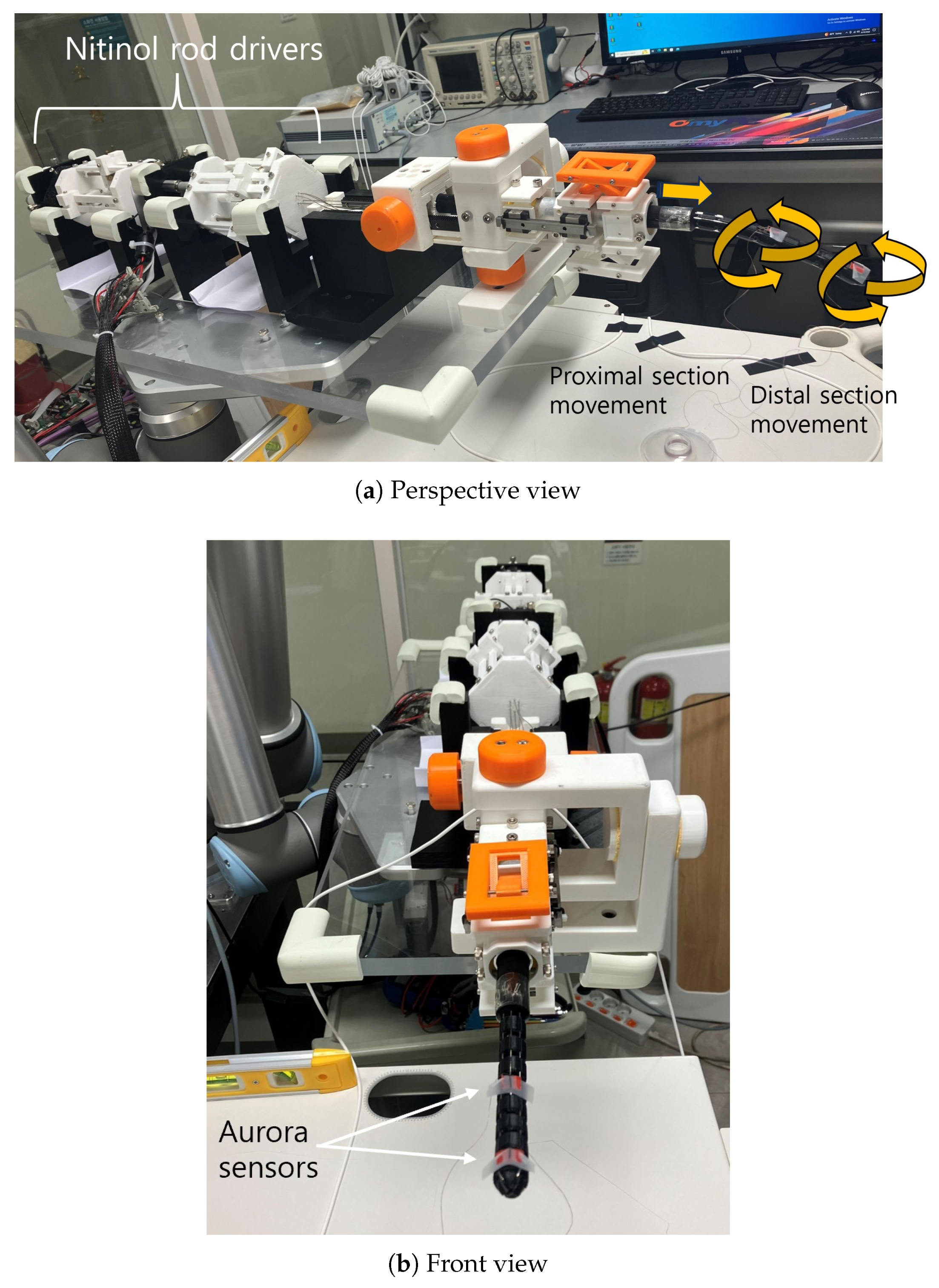
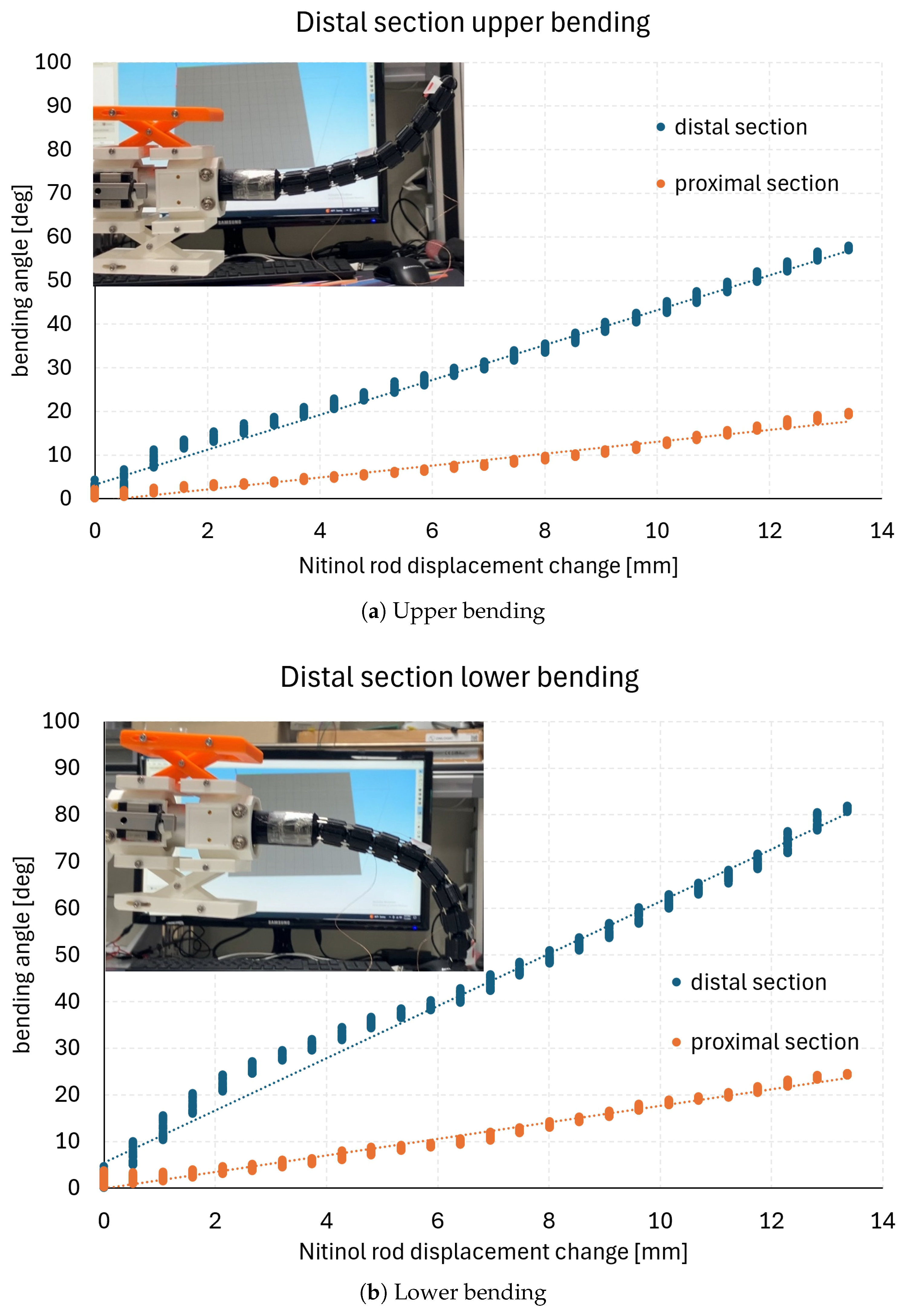
- Development of a superelastic Nitinol rod-driven discrete continuum robot prototype for transoral surgery: The robot has two sections and eight units, each section providing 2 DOF. Both configuration and stiffness are independently controllable. Section bending tests were performed to characterize the relationship between bending angle and Nitinol rod length change (forward kinematics).
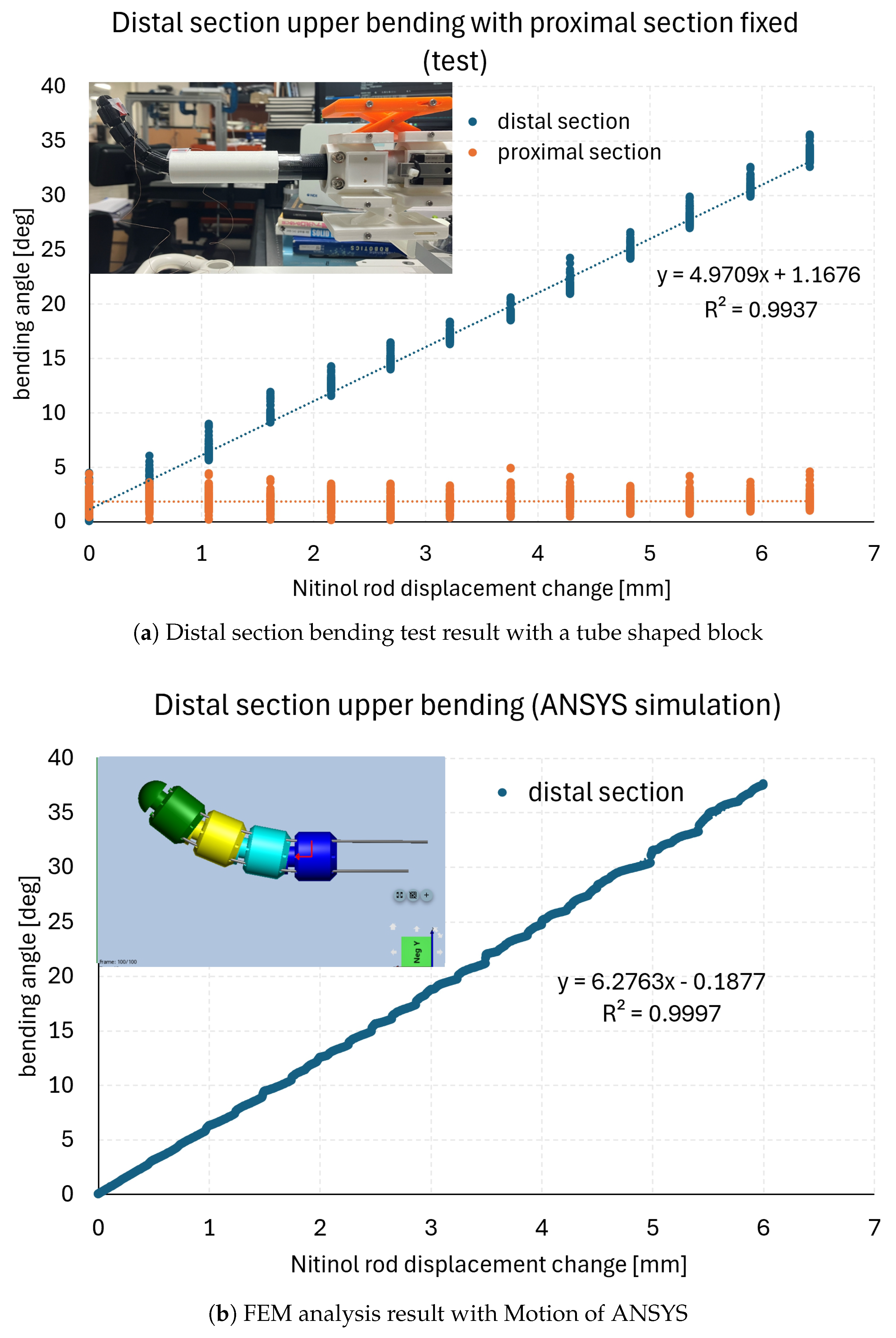
- Validation of section bending behavior through experimental tests under fixed proximal conditions, supported by numerical ANSYS analysis: The experimental and simulation results confirm the accuracy of motion control and kinematic modeling.
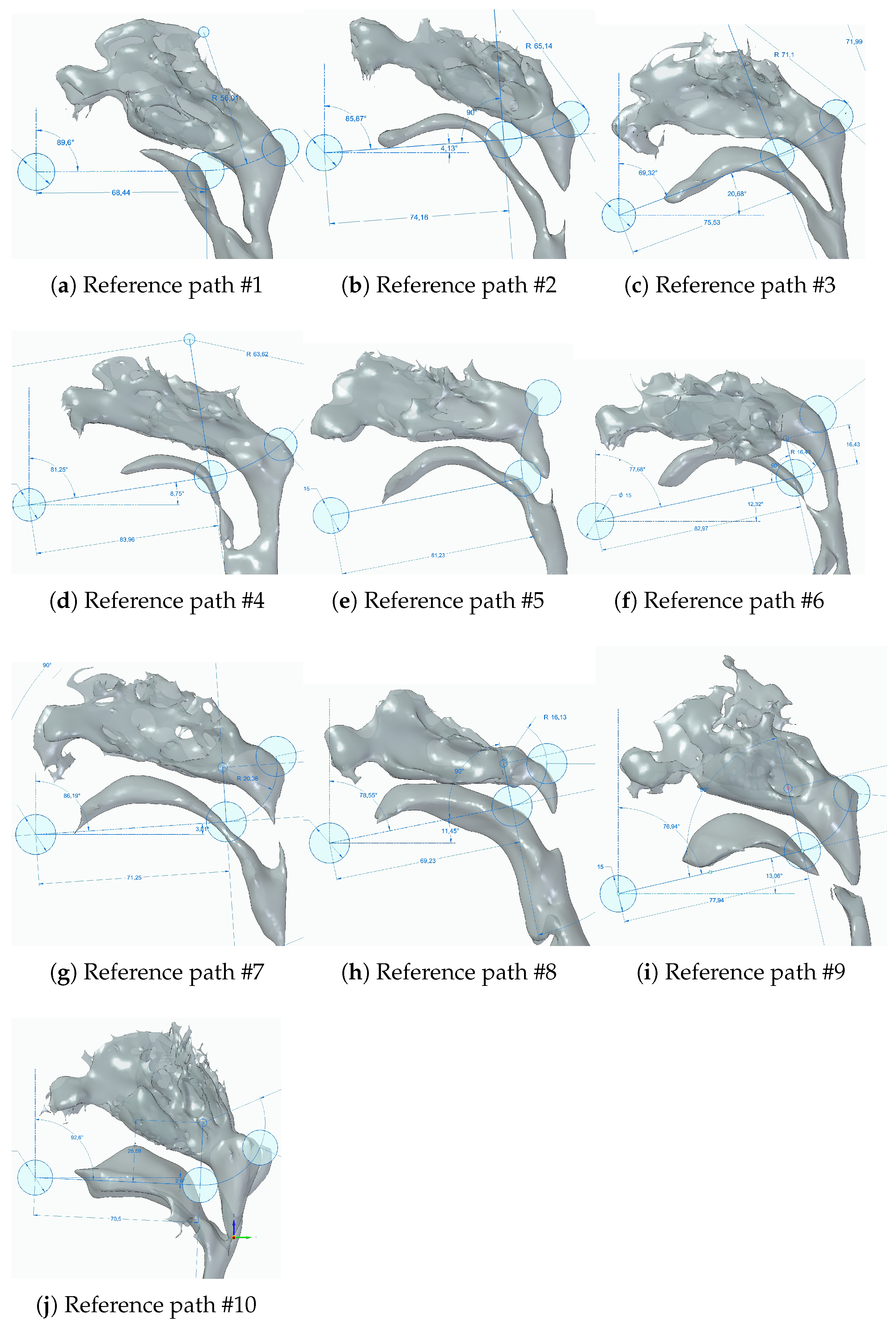
- Manual segmentation of open-source patient CT images to generate three-dimensional point clouds: Reference sagittal transoral passages from lips to oropharynx were extracted for ten patients. Path planning simulations were performed to evaluate the clinical applicability of the robot.
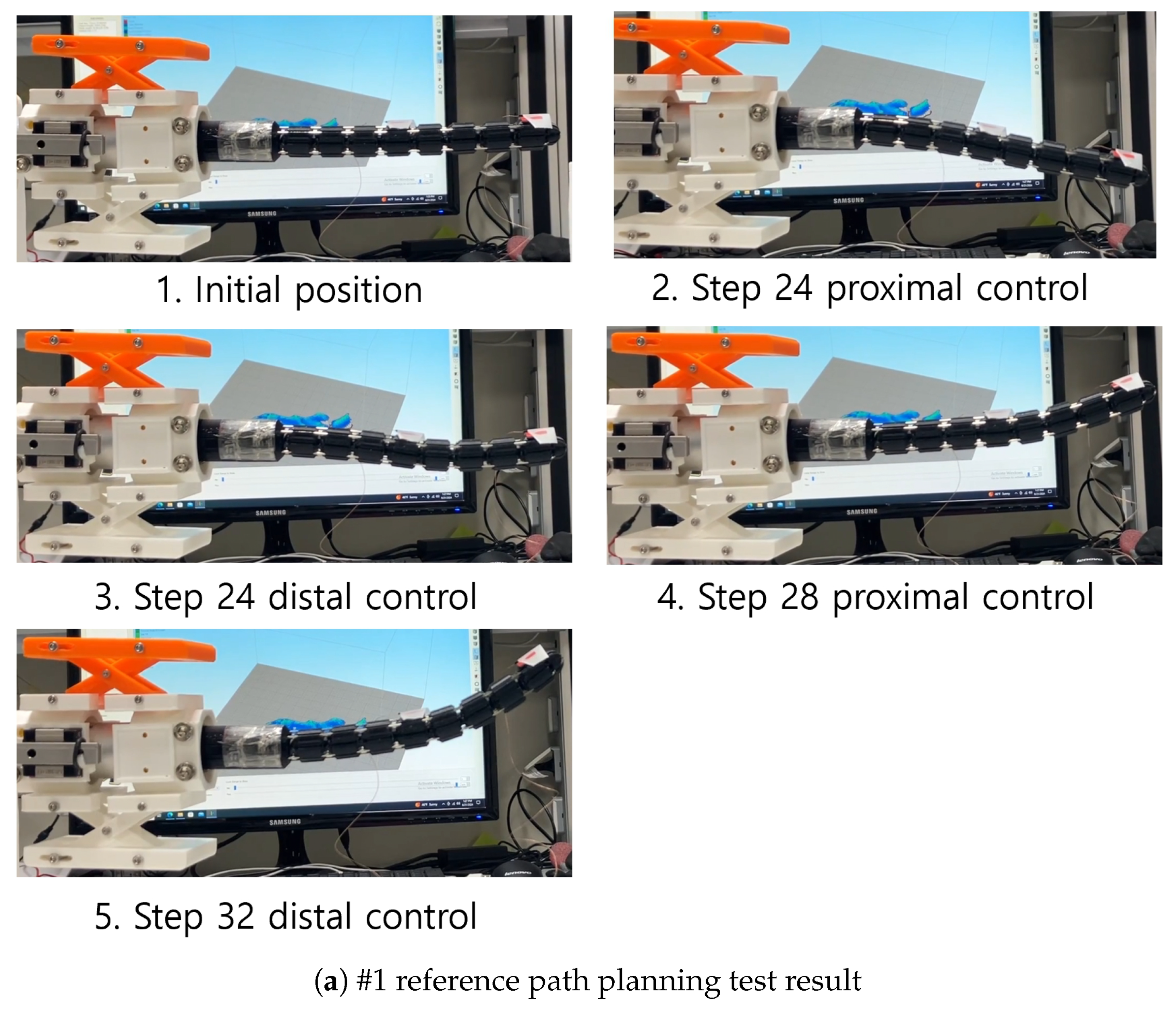
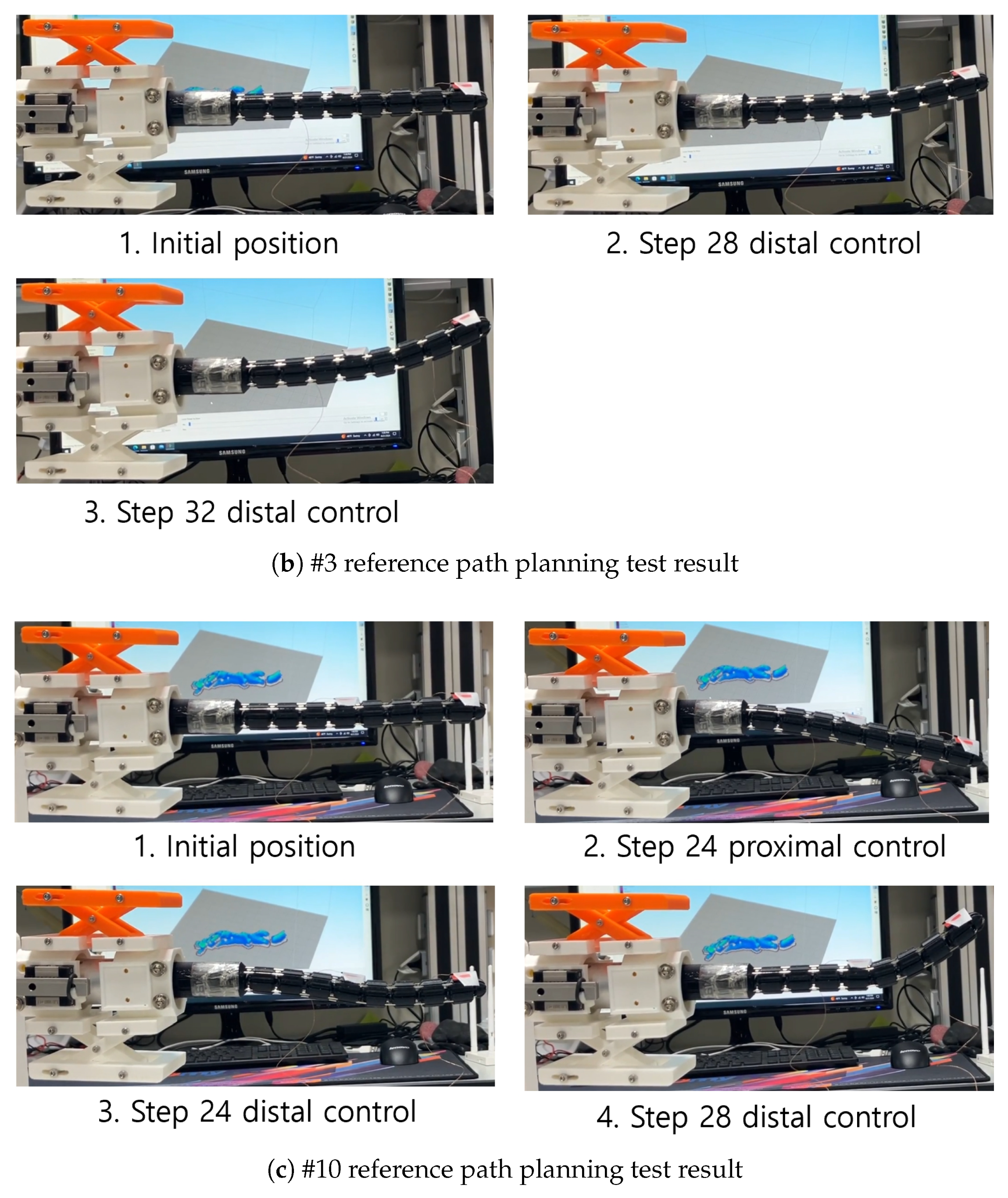
- Path planning experiments using three reference passages with experimentally induced kinematics, demonstrating the robot’s reference path-following capability.
2. Nitinol Rod-Driven Discrete Continuum Robot
3. Planar Section Bending Control and Experimentally Induced Section Kinematics
- The six Nitinol rods are position-controlled.
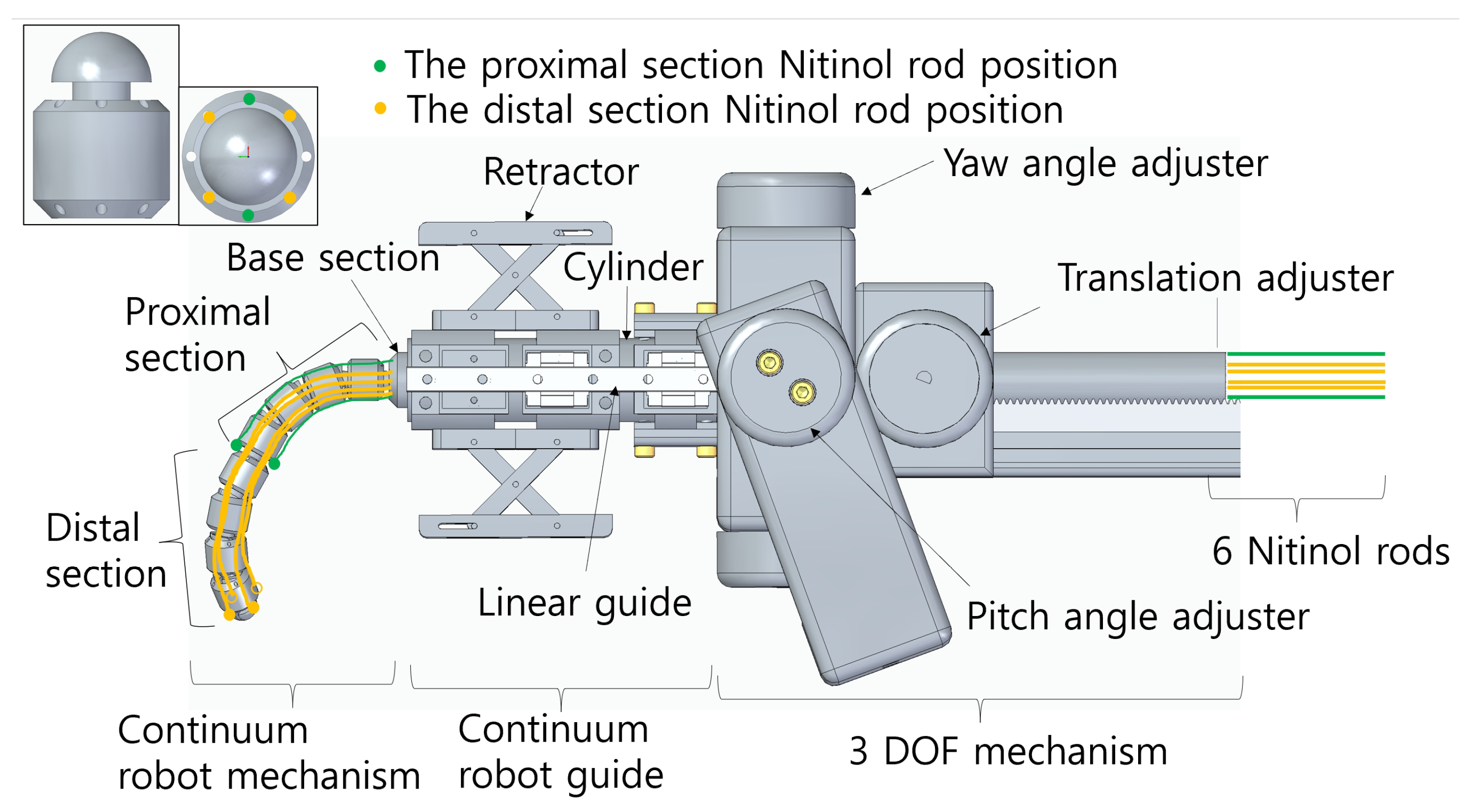
- For planar distal section bending, the two upper (orange) and two lower Nitinol rods in the upper-left image of Figure 2 are paired and displaced by equal amounts. For upward bending, the upper rods are pulled (shortened) while the lower rods are released (elongated); the inverse occurs for downward bending.
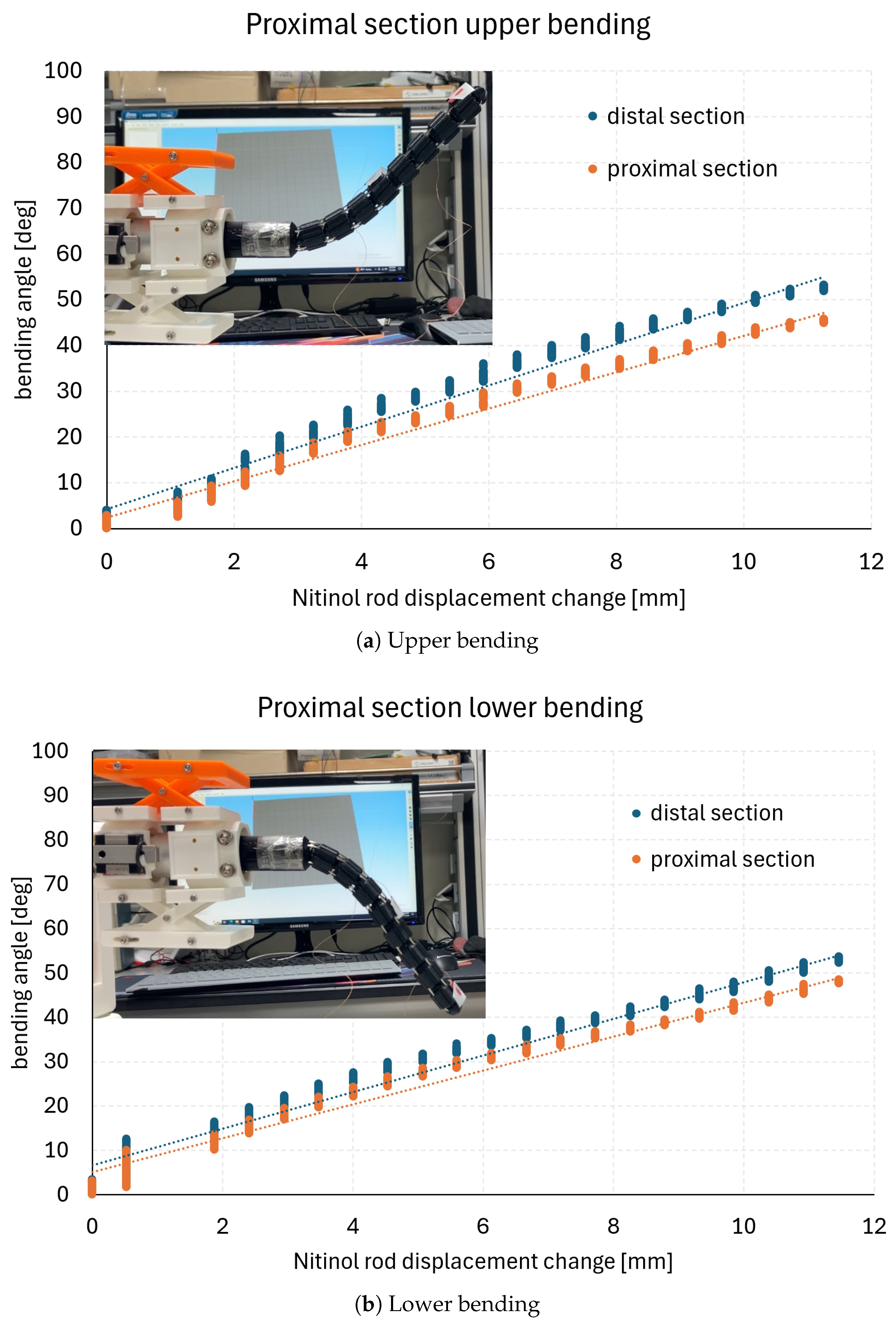
- For planar proximal section bending, the green Nitinol rods in Figure 2 are symmetrically actuated with equal displacement. For upward bending, the upper rods are pulled (shortened) while the lower rods are released (elongated); the opposite occurs for downward bending.
- Because the four orange rods for distal actuation pass through the proximal section, an adjustment factor is required. During proximal actuation, the distal rods are displaced by of the proximal rod displacement, since
4. Ansys Simulation of the Planar Distal Section Bending
5. Nitinol Rod-Driven Discrete Continuum Robot Path Planning Simulation
5.1. Two-Dimensional Reference Passage Construction by Manually Segmented CT Images
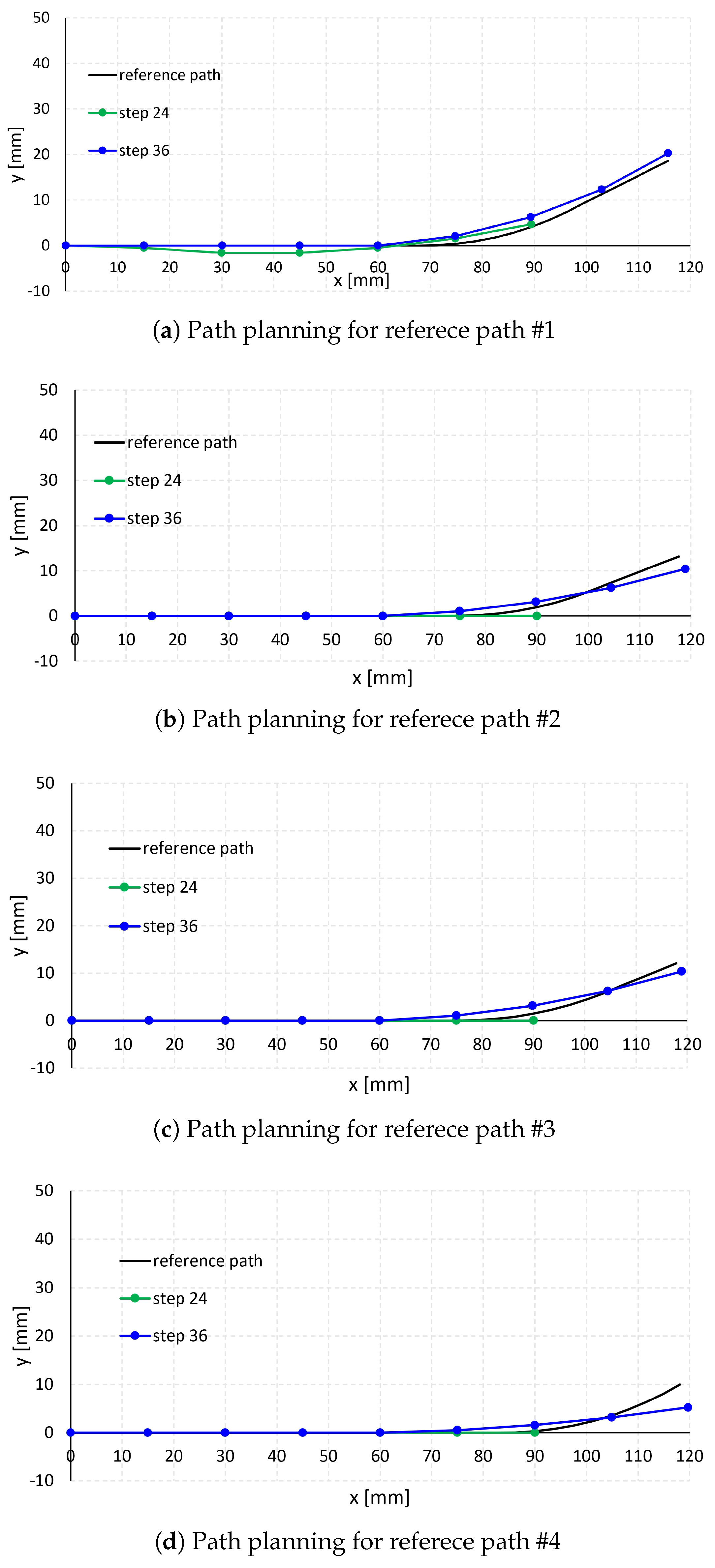
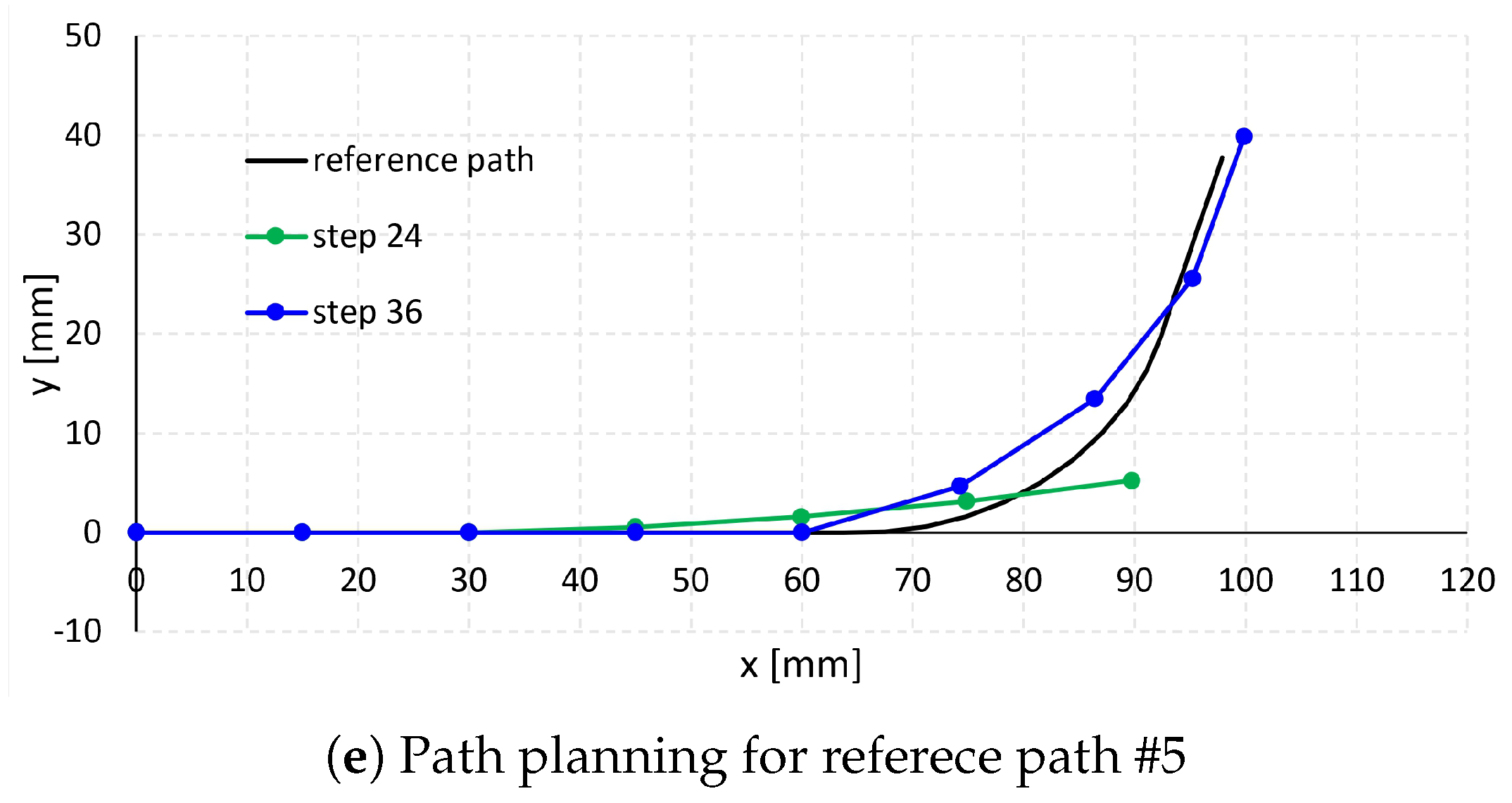
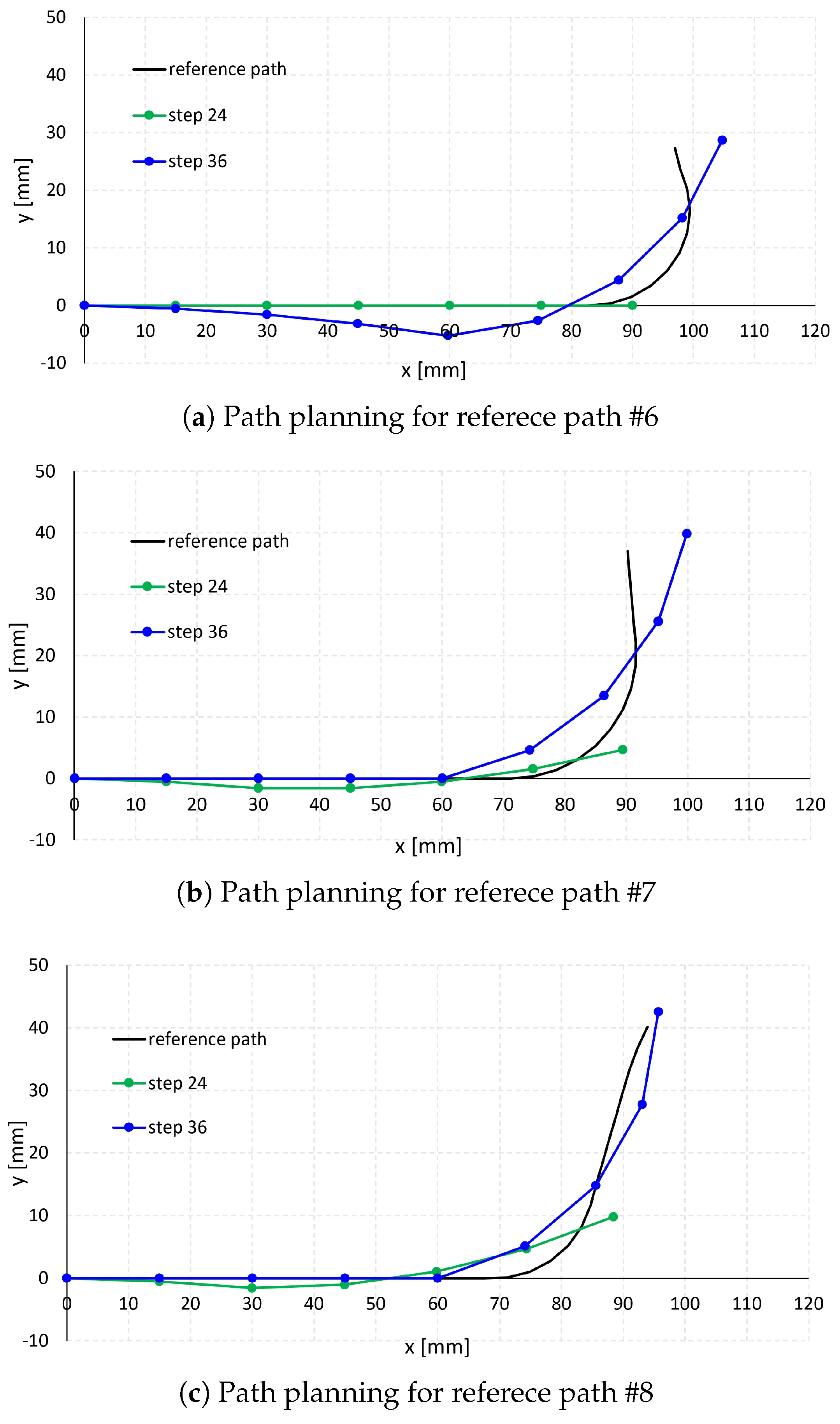
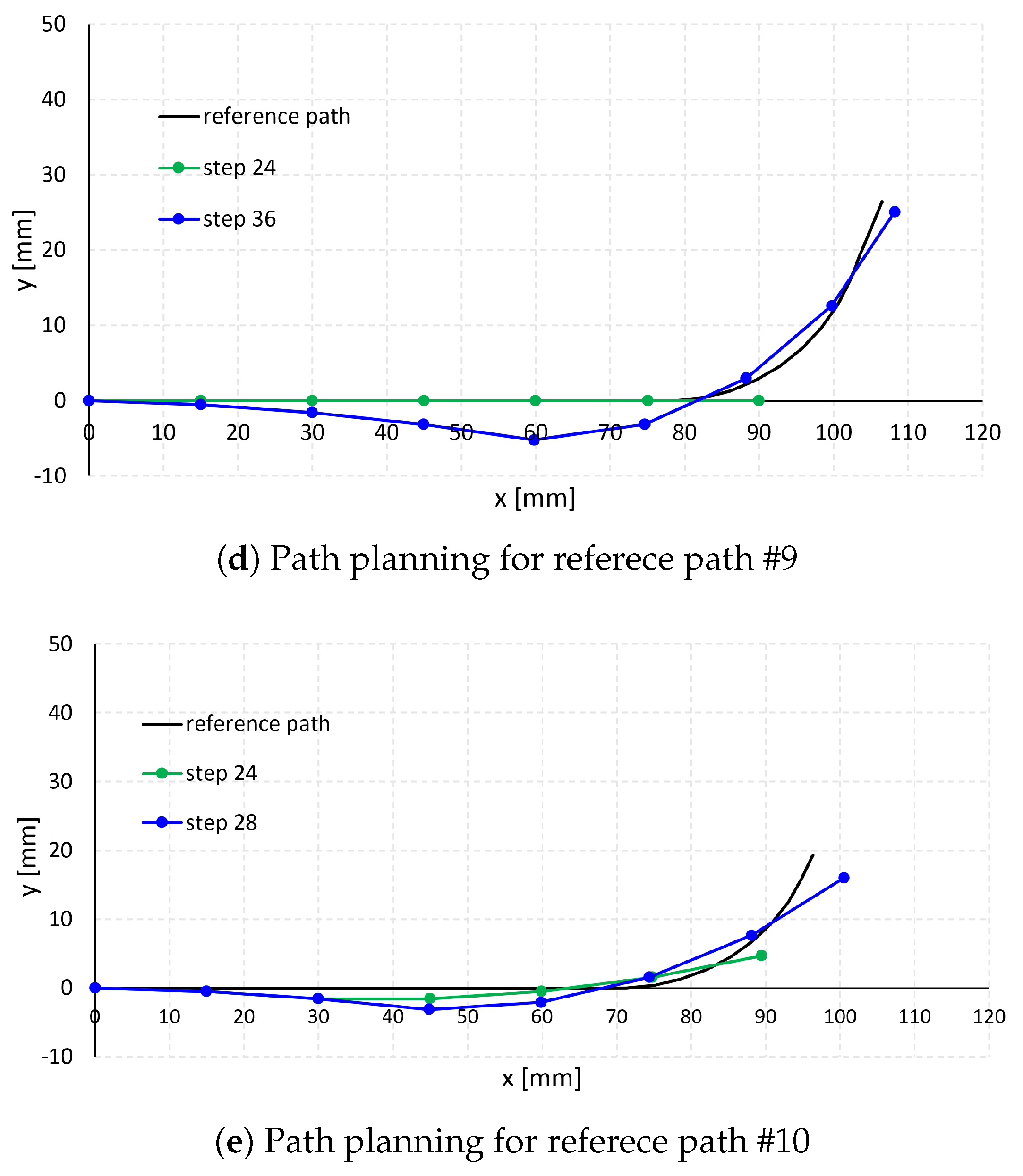
5.2. Planar Path Planning Simulation with 2D Reference Passages
- The discrete continuum robot mechanism was aligned in a straight configuration.
- The tip of the distal section was positioned at the starting point of the reference path.
- The orientation of the robot was aligned with the entrance angle specified in Table 2.
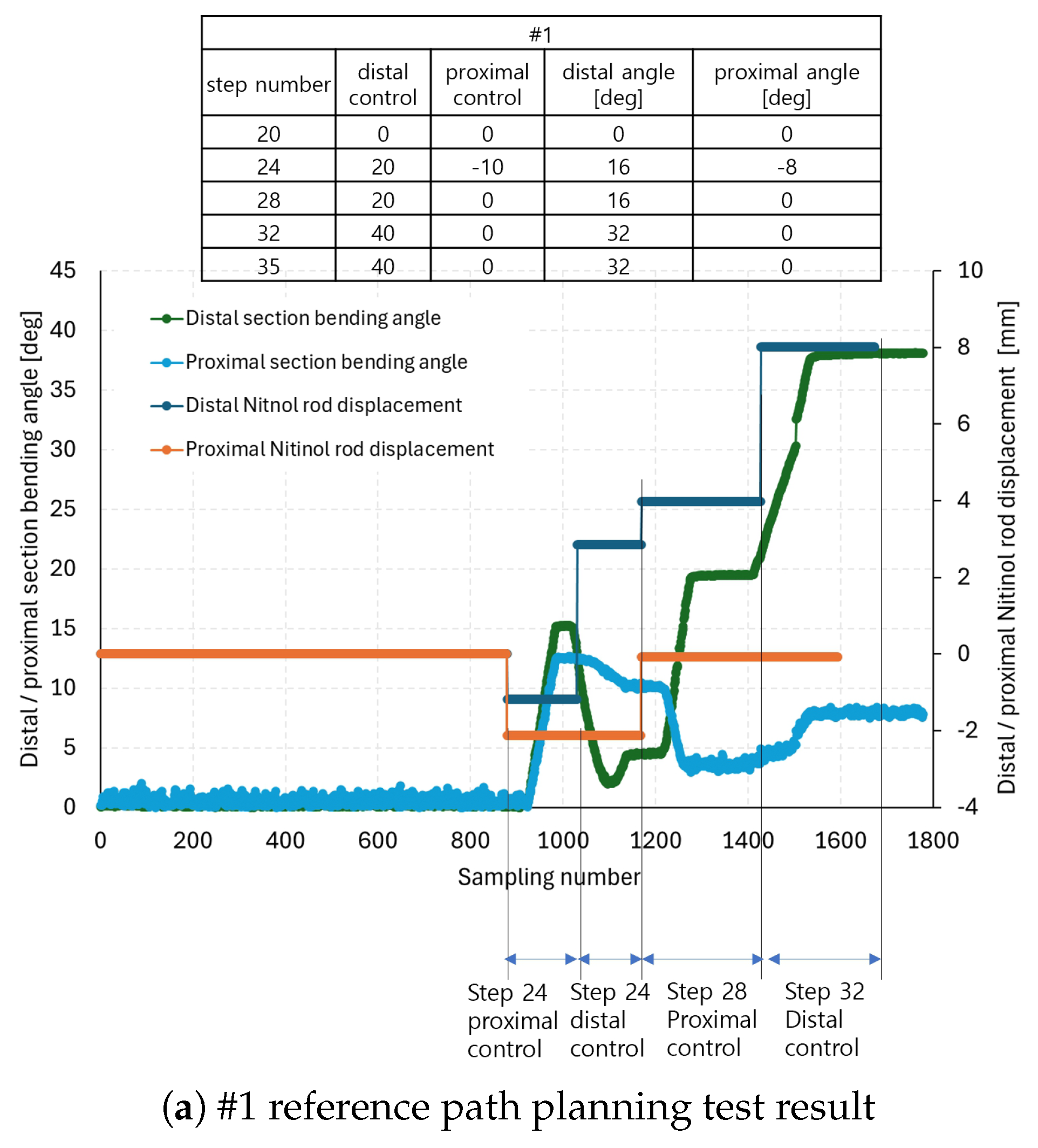
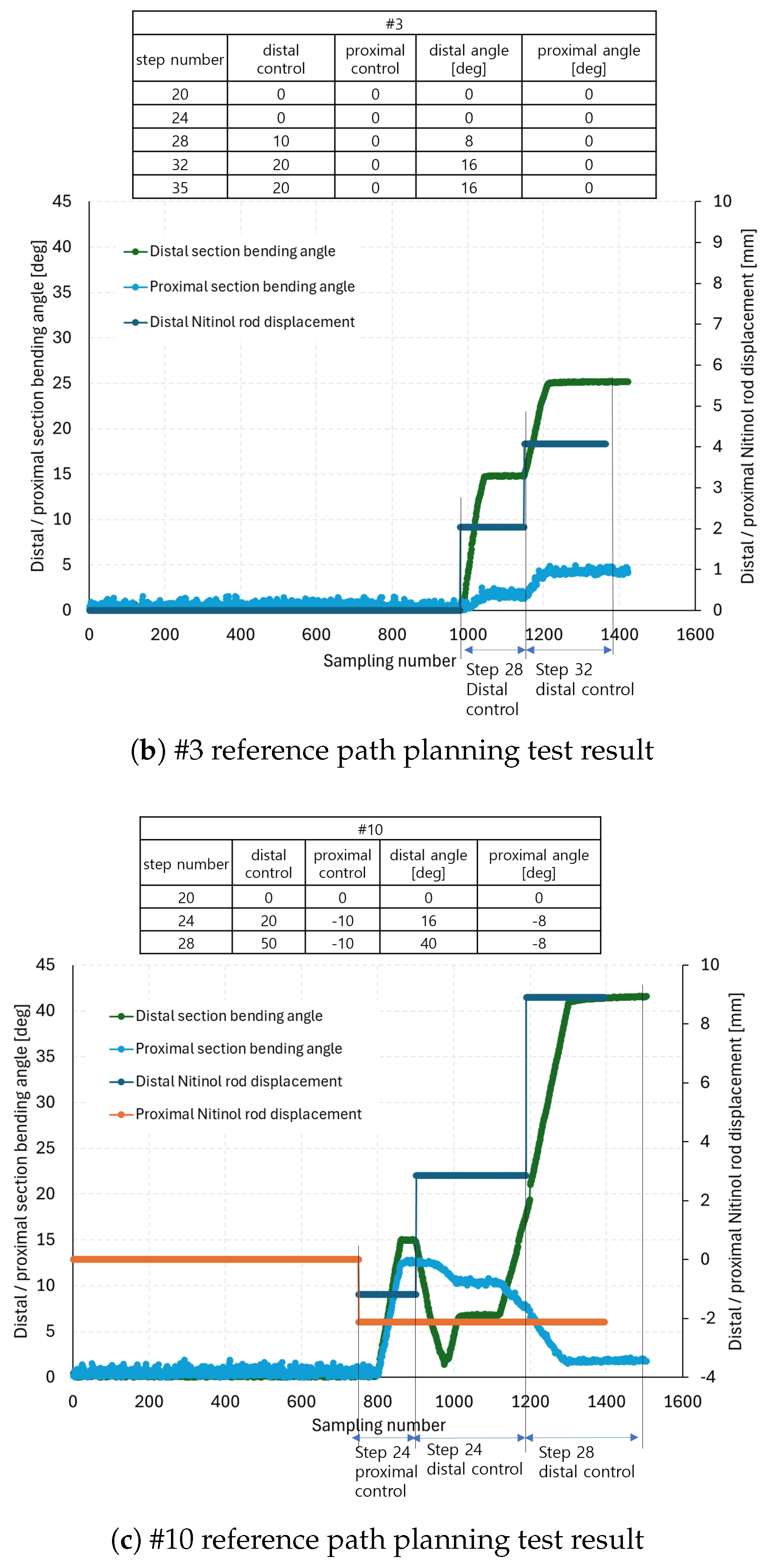
6. Nitinol Rod-Driven Discrete Continuum Robot Path Planning Test
7. Conclusions and Discussions
- The robot was validated through path-planning experiments using experimentally induced kinematics and the control sequences derived from simulations. While the results are sufficient to demonstrate feasibility for master–slave operation in clinical settings, the experimentally induced kinematics in Table 1 do not precisely represent the true section kinematics. Future work will establish a theoretical relationship between Nitinol rod displacements and section bending angles to enable more accurate and automated control. Extending planar inverse kinematics to 3D inverse kinematics using four rods must also be pursued for future 3D navigation.
- Several design parameters significantly influence the independent controllability of each section:
- (a)
- As noted in Section 3, when the number of actuating rods differs between proximal and distal sections, proximal bending occurs unintentionally during distal actuation due to compressive forces transmitted through the rods. Therefore, for stable independent planar bending, the number of rods in both sections should be equal.
- (b)
- The eight holes through which the 0.89 mm Nitinol rods pass (Figure 2) have a diameter of 1.2 mm, leaving a clearance of 0.31 mm. This clearance has an important influence on the rod displacement-to-bending angle characteristics described in Section 3, as friction between the rods and hole edges induces additional tensile forces and elongation. Optimizing hole diameter is therefore necessary to minimize friction and maximize section bending efficiency.
- In the current prototype, the 3-DOF positioning mechanism is manually actuated via yaw, pitch, and translation adjusters (Figure 2). For precise robot control, this mechanism should be motorized. Motorization, combined with appropriate actuator gear mechanisms, would significantly enhance resolution and repeatability.
- Path planning was validated using CT images from only 10 patients selected from a publicly available dataset. While this sufficed to demonstrate feasibility, the small dataset does not capture the full anatomical variability of head and neck structures. Broader validation with larger and more diverse patient cohorts is required to generalize the findings to clinical settings.
- In this study, a rigid-module assumption was employed under the current load range, as section stiffness was dominant. Future work will extend FEM analysis to fully flexible modules and quantify compliance through mesh- and parameter-sensitivity studies. A systematic mesh-convergence (h-refinement) analysis will also be performed when investigating higher loads or strongly nonlinear regimes.
Author Contributions
Funding
Data Availability Statement
Conflicts of Interest
References
- Gormley, M.; Creaney, G.; Schache, A.; Ingarfield, K.; Conway, D.I. Reviewing the epidemiology of head and neck cancer: Definitions, trends and risk factors. Br. Dent. J. 2022, 233, 780–786. [Google Scholar] [CrossRef]
- Van Abel, K.M.; Yin, L.X.; Price, D.L.; Janus, J.R.; Kasperbauer, J.L.; Moore, E.J. One-year outcomes for da Vinci single port robot for transoral robotic surgery. Head Neck 2020, 42, 2077–2087. [Google Scholar] [CrossRef]
- Hussain, T.; Lang, S.; Haßkamp, P.; Holtmann, L.; Höing, B.; Mattheis, S. The Flex robotic system compared to transoral laser microsurgery for the resection of supraglottic carcinomas: First results and preliminary oncologic outcomes. Eur. Arch. Oto-Rhino-Laryngol. 2020, 277, 917–924. [Google Scholar] [CrossRef]
- Sethi, N.; Gouzos, M.; Padhye, V.; Ooi, E.H.; Foreman, A.; Krishnan, S.; Hodge, J.C. Transoral robotic surgery using the Medrobotic Flex® system: The Adelaide experience. J. Robot. Surg. 2020, 14, 109–113. [Google Scholar] [CrossRef] [PubMed]
- Gu, X.; Li, C.; Xiao, X.; Lim, C.M.; Ren, H. A Compliant Transoral Surgical Robotic System Based on a Parallel Flexible Mechanism. Ann. Biomed. Eng. 2019, 47, 1329–1344. [Google Scholar] [CrossRef] [PubMed]
- Li, C.; Gu, X.; Xiao, X.; Lim, C.M.; Ren, H. Compliant and Flexible Robotic System with Parallel Continuum Mechanism for Transoral Surgery: A Pilot Cadaveric Study. Robotics 2022, 11, 135. [Google Scholar] [CrossRef]
- Li, C.; Gu, X.; Xiao, X.; Lim, C.M.; Ren, H. Cadaveric feasibility study of a teleoperated parallel continuum robot with variable stiffness for transoral surgery. Med. Biol. Eng. Comput. 2020, 58, 2063–2069. [Google Scholar] [CrossRef]
- Hu, Z.; Li, J.; Wang, S. Design and Kinematics of a Robotic Instrument for Natural Orifice Transluminal Endoscopic Surgery. IEEE/ASME Trans. Mechatronic 2023, 28, 2840–2851. [Google Scholar] [CrossRef]
- Luo, H.; Ding, J.; Wang, S. A master-slave robot system for minimally invasive laryngeal surgery. In Proceedings of the 2009 IEEE International Conference on Robotics and Biomimetics (ROBIO), Guilin, China, 19–23 December 2009; pp. 782–787. [Google Scholar] [CrossRef]
- Simaan, N.; Xu, K.; Wei, W.; Kapoor, A.; Kazanzides, P.; Taylor, R.; Flint, P. Design and Integration of a Telerobotic System for Minimally Invasive Surgery of the Throat. Int. J. Robot. Res. 2009, 28, 1134–1153. [Google Scholar] [CrossRef]
- Wang, H.; Wang, X.; Yang, W.; Du, Z. Design and Kinematic Modeling of a Notch Continuum Manipulator for Laryngeal Surgery. Int. J. Control Autom. Syst. 2020, 18, 2966–2973. [Google Scholar] [CrossRef]
- Feng, F.; Zhou, Y.; Hong, W.; Li, K.; Xie, L. Development and experiments of a continuum robotic system for transoral laryngeal surgery. Int. J. Comput. Assist. Radiol. Surg. 2022, 17, 497–505. [Google Scholar] [CrossRef] [PubMed]
- Berthet-Rayne, P.; Leibrandt, K.; Gras, G.; Fraisse, P.; Crosnier, A.; Yang, G.Z. Inverse Kinematics Control Methods for Redundant Snakelike Robot Teleoperation During Minimally Invasive Surgery. IEEE Robot. Autom. Lett. 2018, 3, 2501–2508. [Google Scholar] [CrossRef]
- Zhao, M.; Vrielink, T.J.C.O.; Kogkas, A.A.; Runciman, M.S.; Elson, D.S.; Mylonas, G.P. LaryngoTORS: A Novel Cable-Driven Parallel Robotic System for Transoral Laser Phonosurgery. IEEE Robot. Autom. Lett. 2020, 5, 1516–1523. [Google Scholar] [CrossRef]
- Shi, Y.; Lou, Y.; Shirai, I.; Wu, X.; Paydarfar, J.A.; Halter, R.J. Surgical navigation system for image-guided transoral robotic surgery: A proof of concept. In Proceedings of the Medical Imaging 2022: Image-Guided Procedures, Robotic Interventions, and Modeling, San Diego, CA, USA, 20 February–28 March 2022; SPIE: Bellingham, WA, USA, 2022; Volume 12034, pp. 43–48. [Google Scholar] [CrossRef]
- Kim, S.H.; Seo, J.T.; Woo, J.H.; Yoon, H.S.; Tae, K.; Yi, B.J. System Design and Experiment of a Laryngeal Surgical Robotic System. In Proceedings of the 2018 15th International Conference on Ubiquitous Robots (UR), Honolulu, HI, USA, 26–30 June 2018; pp. 44–47. [Google Scholar] [CrossRef]
- Friedrich, D.T.; Modes, V.; Hoffmann, T.K.; Greve, J.; Schuler, P.J.; Burgner-Kahrs, J. Teleoperated tubular continuum robots for transoral surgery - feasibility in a porcine larynx model. Int. J. Med. Robot. Comput. Assist. Surg. MRCAS 2018, 14, e1928. [Google Scholar] [CrossRef]
- Hong, W.; Zhou, Y.; Cao, Y.; Feng, F.; Liu, Z.; Li, K.; Xie, L. Development and validation of a two-segment continuum robot for maxillary sinus surgery. Int. J. Med. Robot. Comput. Assist. Surg. 2022, 18, e2340. [Google Scholar] [CrossRef]
- Kim, Y.J.; Choi, J.; Choi, J.; Moon, Y. Genetic Algorithm-based Discrete Continuum Robot Design Methodology for Transoral Slave Robotic System. Int. J. Control. Autom. Syst. 2022, 20, 3361–3371. [Google Scholar] [CrossRef]
- Kim, Y.J.; Hyun, J.H.; Lee, D.H.; Yang, B.M.; Choi, J.E.; Choi, J.S.; Moon, Y.J. Preliminary design of the continuum robot module with the ball-socket joint in the development of transoral surgery robot. In Proceedings of the 19th International Conference on Control, Automation, and Systems (ICCAS 2019), Jeju, Republic of Korea, 15–18 October 2019. [Google Scholar]
- Kim, Y.J.; Wi, D. Planar Inverse Statics and Path Planning for a Tendon-Driven Discrete Continuum Robot. Robotics 2025, 14, 91. [Google Scholar] [CrossRef]
- Chen, J.; Yan, J.; Qiu, Y.; Fang, H.; Chen, J.; Cheng, S.S. A Cross-Entropy Motion Planning Framework for Hybrid Continuum Robots. IEEE Robot. Autom. Lett. 2023, 8, 8200–8207. [Google Scholar] [CrossRef]
- Meng, B.H.; Godage, I.S.; Kanj, I. RRT*-Based Path Planning for Continuum Arms. IEEE Robot. Autom. Lett. 2022, 7, 6830–6837. [Google Scholar] [CrossRef]
- Niu, G.; Zhang, Y.; Li, W. Path Planning of Continuum Robot Based on Path Fitting. J. Control Sci. Eng. 2020, 2020, e8826749. [Google Scholar] [CrossRef]
- Seleem, I.A.; El-Hussieny, H.; Ishii, H. Imitation-based Path Planning and Nonlinear Model Predictive Control of a Multi-Section Continuum Robots. J. Intell. Robot. Syst. 2023, 108, 9. [Google Scholar] [CrossRef]
- Seleem, I.A.; Assal, S.F.M.; Ishii, H.; El-Hussieny, H. Demonstration-Guided Pose Planning and Tracking for Multi-Section Continuum Robots Considering Robot Dynamics. IEEE Access 2019, 7, 166690–166703. [Google Scholar] [CrossRef]
- Cao, Y.; Liu, Z.; Liu, Z.; Wang, S.; Xie, L. Design and path tracking control of a continuum robot for maxillary sinus surgery. Int. J. Comput. Assist. Radiol. Surg. 2023, 18, 753–761. [Google Scholar] [CrossRef]
- Parvaresh, A.; Moosavian, S.A.A. Dynamics and path tracking of continuum robotic arms using data-driven identification tools. Robotica 2022, 40, 1098–1124. [Google Scholar] [CrossRef]



| Test | Maximum Bending Angle [deg] | ||
| Distal Section | Proximal Section | ||
| Distal section | Upper bending | 57.6 | 19.1 |
| Lower bending | 81.8 | 24.2 | |
| Proximal section | Upper bending | 51.8 | 44.8 |
| Lower bending | 52.2 | 47.6 | |
| Test | Linear Fitting Result (y: , x: ) | ||
| Distal Section | Proximal Section | ||
| Distal section | Upper bending | y = 4.005x + 3.2075 R2 = 0.995 | y = 1.3674x − 0.5939 R2 = 0.9706 |
| Lower bending | y = 5.5982x + 5.4714 R2 = 0.9902 | y = 1.7721x − 0.0874 R2 = 0.9859 | |
| Proximal section | Upper bending | y = 4.507x + 4.2509 R2 = 0.9811 | y = 3.9707x + 2.4549 R2 = 0.9859 |
| Lower bending | y = 4.1284x + 6.6383 R2 = 0.9819 | y = 3.8195x + 5.0889 R2 = 0.9842 | |
| Reference Passage Number | Line (From Lip to Soft Palate) | Arc (From Soft Palate to NT *) | Line + Arc (From Lip to NT *) | ||
|---|---|---|---|---|---|
| Entrance Angle [deg] | Line Length [mm] | Radius [mm] | Angle [deg] | Total Length [mm] | |
| #1 | 0.4 | 68.4 | 56 | 32.7 | 100.4 |
| #2 | 4.1 | 74.1 | 65.1 | 25.7 | 103.3 |
| #3 | 20.6 | 75.5 | 71.1 | 25.5 | 107.1 |
| #4 | 8.7 | 83.9 | 63.6 | 32.2 | 119.7 |
| #5 | 18.6 | 65.5 | 28 | 76.3 | 102.9 |
| #6 | 12.3 | 82.9 | 16.4 | 114.5 | 115.8 |
| #7 | 3.8 | 71.2 | 20.3 | 97.8 | 106 |
| #8 | 11.4 | 69.2 | 16.1 | 78.3 | 91.2 |
| #9 | 13 | 77.9 | 26.4 | 72.4 | 111.3 |
| #10 | −2.6 | 70.5 | 26.5 | 69.2 | 102.6 |
| Reference Path Number | Step Number (Robot Introducing Length) | |||
|---|---|---|---|---|
| 24 (90 mm) | 36 (28) (135 (105) mm) | |||
| Distal Control | Proximal Control | Distal Control | Proximal Control | |
| #1 | 20 | −10 | 40 | 0 |
| #2 | 0 | 0 | 20 | 0 |
| #3 | 0 | 0 | 20 | 0 |
| #4 | 0 | 0 | 10 | 0 |
| #5 | 10 | 0 | 90 | 0 |
| #6 | 0 | 0 | 90 | −10 |
| #7 | 20 | −10 | 90 | 0 |
| #8 | 30 | −10 | 100 | 0 |
| #9 | 0 | 0 | 80 | −10 |
| #10 | 20 | −10 | 50 | −10 |
| Reference Path Number | Step Number (Robot Introducing Length) | |
|---|---|---|
| 24 (90 mm) | 36 (28) (135 (105) mm) | |
| #1 | 1.08 | 1.15 |
| #2 | 0.46 | 0.98 |
| #3 | 0.34 | 0.85 |
| #4 | 0.05 | 1.19 |
| #5 | 1.62 | 2.1 |
| #6 | 0.31 | 3.19 |
| #7 | 1.31 | 3.88 |
| #8 | 1.92 | 2.53 |
| #9 | 0.62 | 2.37 |
| #10 | 1.13 | 2.62 |
| Average | 0.89 | 1.97 |
| path number | step number | distal control | proximal control | distal angle [deg] | measured distal angle [deg] |
| #1 | 24 | 20 | −10 | 8 | 4.5 |
| 28 | 20 | 0 | 16 | 19.4 | |
| 32 | 40 | 0 | 32 | 38.1 | |
| #3 | 28 | 10 | 0 | 8 | 14.9 |
| 32 | 20 | 0 | 16 | 25.1 | |
| #10 | 24 | 20 | −10 | 8 | 6.8 |
| 28 | 50 | −10 | 32 | 41.6 | |
| path number | step number | proximal angle [deg] | measured proximal angle [deg] | distal angle abs. diff.* | proximal angle abs. diff.* |
| #1 | 24 | −8.0 | (−)10.27 | 3.5 | 2.3 |
| 28 | 0.0 | (−)3.39 | 3.4 | 3.4 | |
| 32 | 0.0 | 8.1 | 6.1 | 8.1 | |
| #3 | 28 | 0.0 | 2.0 | 6.9 | 2.0 |
| 32 | 0.0 | 4.3 | 9.1 | 4.3 | |
| #10 | 24 | −8.0 | (−)10.37 | 1.2 | 2.4 |
| 28 | −8.0 | (−)1.73 | 9.6 | 6.3 |
Disclaimer/Publisher’s Note: The statements, opinions and data contained in all publications are solely those of the individual author(s) and contributor(s) and not of MDPI and/or the editor(s). MDPI and/or the editor(s) disclaim responsibility for any injury to people or property resulting from any ideas, methods, instructions or products referred to in the content. |
© 2025 by the authors. Licensee MDPI, Basel, Switzerland. This article is an open access article distributed under the terms and conditions of the Creative Commons Attribution (CC BY) license (https://creativecommons.org/licenses/by/4.0/).
Share and Cite
Kim, Y.-J.; Oh, J.E.; Wi, D. Preliminary Validation of Nitinol Rod Driven Discrete Continuum Robot for Transoral Surgery by Planar Path Planning with CT Images. Robotics 2025, 14, 140. https://doi.org/10.3390/robotics14100140
Kim Y-J, Oh JE, Wi D. Preliminary Validation of Nitinol Rod Driven Discrete Continuum Robot for Transoral Surgery by Planar Path Planning with CT Images. Robotics. 2025; 14(10):140. https://doi.org/10.3390/robotics14100140
Chicago/Turabian StyleKim, Yeoun-Jae, Ji Eun Oh, and Daehan Wi. 2025. "Preliminary Validation of Nitinol Rod Driven Discrete Continuum Robot for Transoral Surgery by Planar Path Planning with CT Images" Robotics 14, no. 10: 140. https://doi.org/10.3390/robotics14100140
APA StyleKim, Y.-J., Oh, J. E., & Wi, D. (2025). Preliminary Validation of Nitinol Rod Driven Discrete Continuum Robot for Transoral Surgery by Planar Path Planning with CT Images. Robotics, 14(10), 140. https://doi.org/10.3390/robotics14100140