1. Introduction
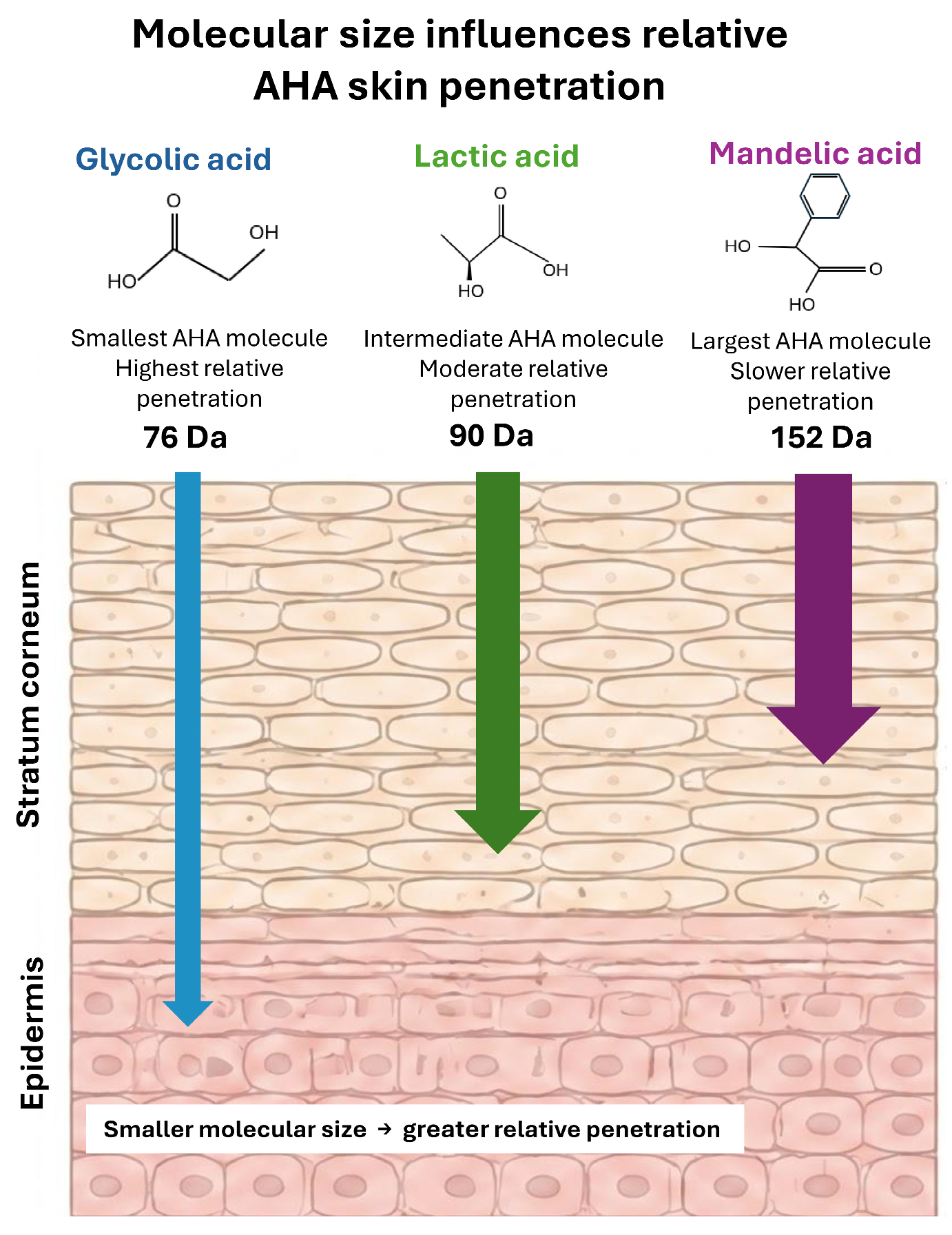
Glycolic acid (GA) (hydroxyacetic acid) is the smallest alpha-hydroxy acid (AHA) and one of the most widely used agents for chemical peels in dermatology [
1,
2]. With its compact two-carbon structure (C
2H
4O
3; molecular weight 76 Da), GA penetrates the skin more effectively than other AHAs, such as lactic acid (90 Da) and mandelic acid (152 Da) [
1,
3,
4,
5], the latter showing notably slower skin uptake [
6].
Figure 1 summarizes this relationship by comparing the molecular weights of glycolic, lactic, and mandelic acids and their relative penetration through the stratum corneum and epidermis. Its application induces exfoliation of the epidermis (keratolysis) and stimulates epidermal renewal, making it useful for treating photoaging, hyperpigmentation, acne, and other skin conditions [
2,
7,
8].
GA is widely used in cosmetic and cosmeceutical products, including facial cleansers, exfoliants, moisturizers, creams, gels, lotions, and anti-aging serums [
4,
9]. These products are formulated to provide mild exfoliation, refine skin texture, promote a more uniform skin tone, reduce the visibility of superficial wrinkles, and help manage acne, hyperpigmentation, and photoaging [
4,
9,
10]. A key distinction should be made between professional GA peels and cosmetic/cosmeceutical daily use formulations. Professional peels generally use higher GA concentrations and lower pHs to promote controlled skin renewal. In contrast, daily use cosmetic products typically contain lower GA concentrations, commonly around 5–10%, and a higher pH (≥3.5) to provide gradual exfoliation and improve tolerability, helping to minimize local discomfort, in line with international safety guidelines [
4,
9].
As a class of superficial chemical peels, alpha-hydroxy acid (AHA) formulations have been shown to significantly enhance cutaneous hydration and alter selected skin parameters [
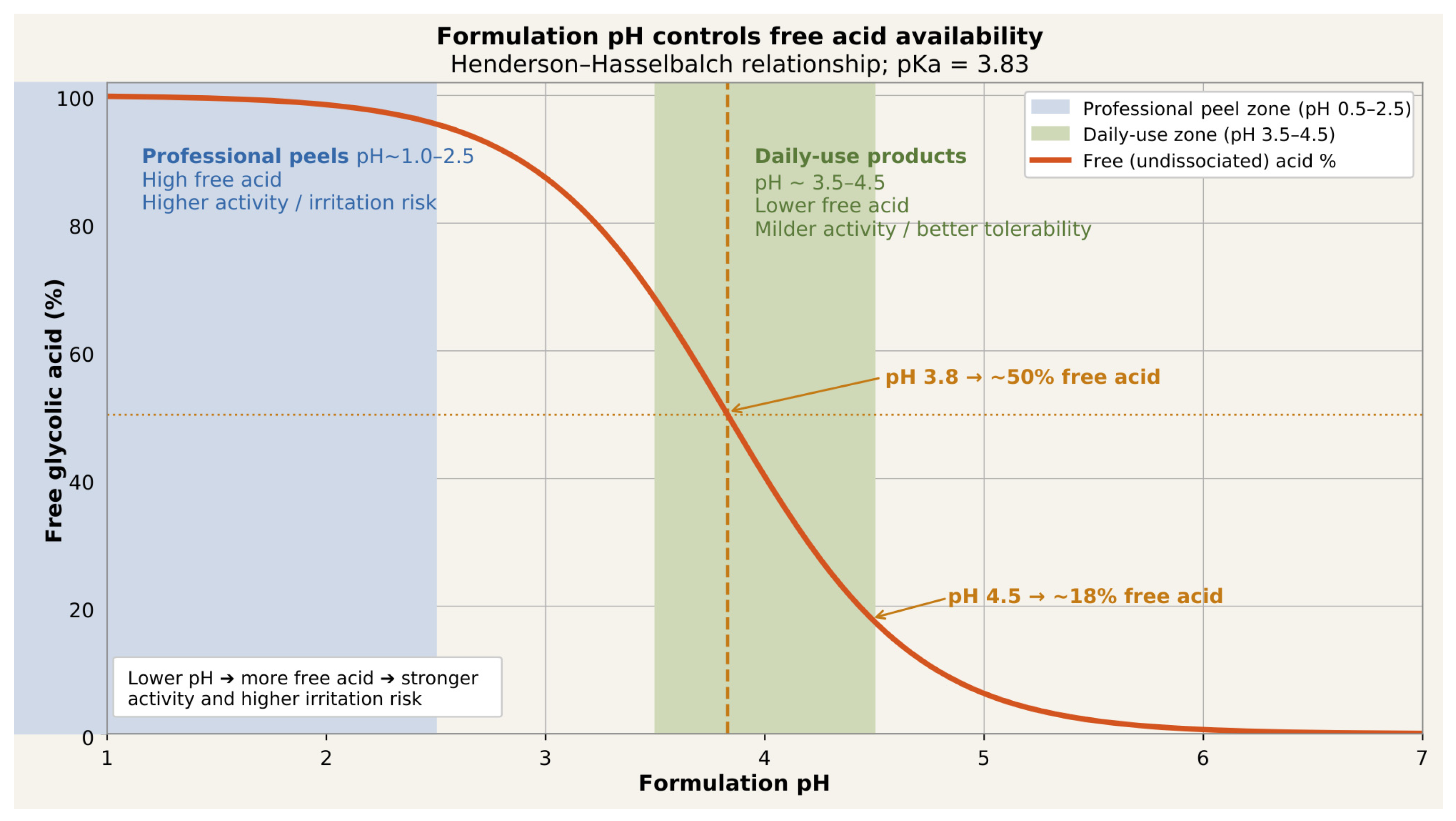
6]. However, the biological effects and safety profiles of glycolic acid are not determined by molecular size alone. They also depend on the acid concentration, formulation pH, and pKa (~3.8), which regulate the fraction of free, undissociated acid available for skin interaction [
9,
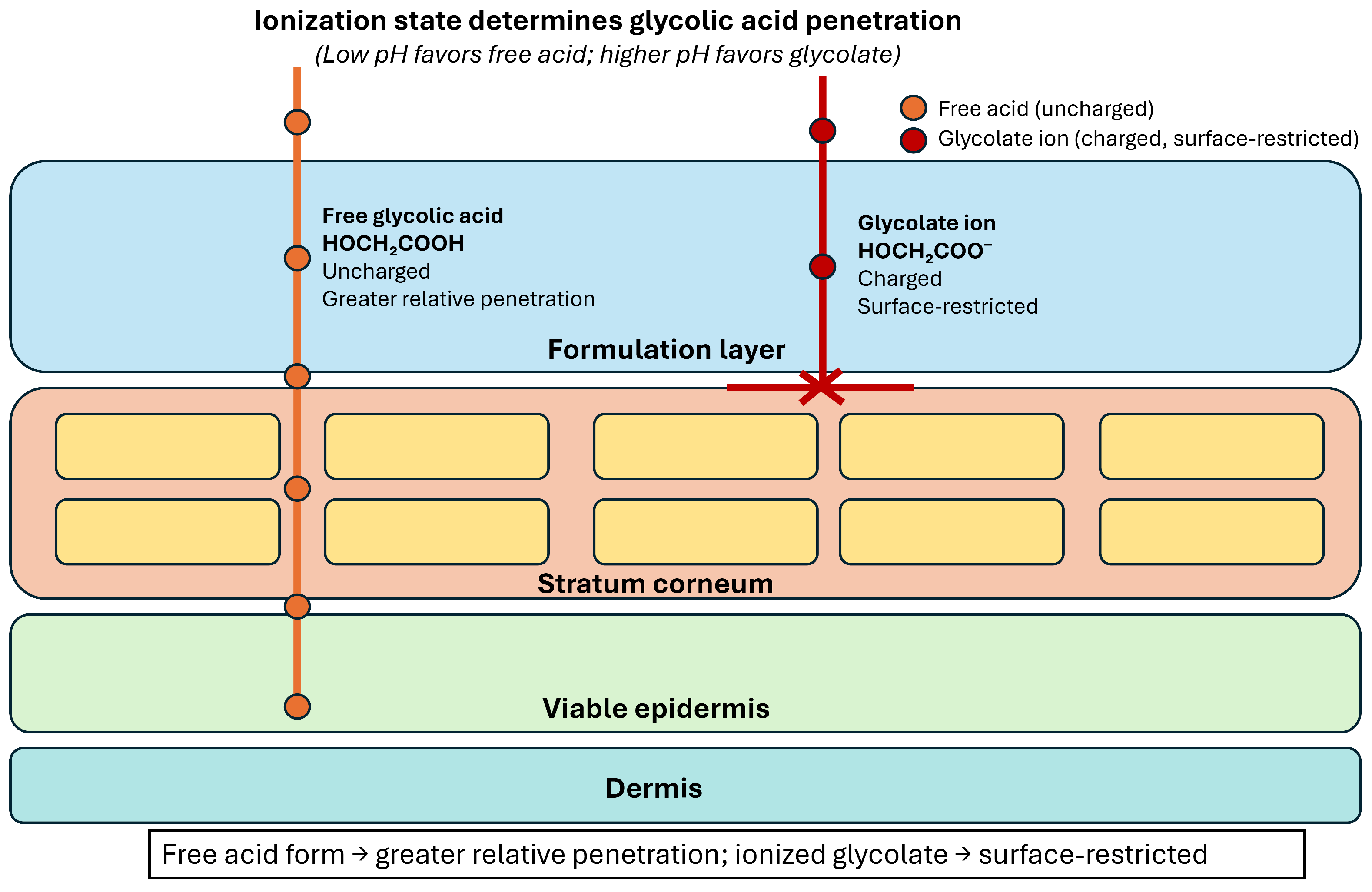
10]. In this review, the term ‘free acid form’ refers to the undissociated, protonated, and electrically uncharged form of glycolic acid. This form is distinguished from the ionized glycolate anion and is more relevant for skin penetration and biological activity.
The skin penetration of topical compounds is influenced by the physicochemical properties of the active molecules, the composition of the formulation vehicle, and the condition of the epidermal barrier [
11,
12]. In general, compounds with low molecular weights (typically < 500 Da) and appropriate solubility and lipophilicity exhibit enhanced diffusion through the stratum corneum [
11,
12]. In addition, ionization state, pKa, and formulation pH determine the fraction of unionized compounds available for passive penetration [
13].
Other factors may also influence the topical delivery. These include drug concentration, chemical stability, temperature, vehicle type, and the balance between lipophilicity and hydrophilicity of the drug. Together, these factors affect drug release, skin retention, and transdermal permeation [
5,
11,
12,
14]. Therefore, barrier integrity, stratum corneum hydration, and product composition are key determinants of topical efficacy and tolerability [
11,
12,
15].
From a formulation perspective, the skin surface pH can range from approximately 4.0 to 7.0 [
13]. This depends on factors such as anatomical location, age, skin condition, barrier integrity, and external exposure to soaps, detergents, and cosmetic products [
16]. Such pH variations are critical because cutaneous pH influences essential skin functions, such as stratum corneum structural organization, antimicrobial defense, barrier function, and microbial homeostasis [
16,
17]. Higher skin surface pH values have been associated with the disruption of the functional integrity of the stratum corneum barrier [
16]. This is particularly relevant for glycolic acid formulations because it determines the proportion of undissociated free acid available for skin penetration and biological activity, given that glycolic acid has a pKa of approximately 3.8 [
18]. In glycolic acid formulations, lower pH values increase the peeling intensity, whereas excessively low pH values may increase irritation and the risk of tissue damage [
17]. Therefore, the formulation pH should be optimized to balance efficacy, penetration, and tolerability.
Table 1 summarizes the approximate relationship between glycolic acid concentration, formulation pH, free acid availability, and typical clinical or cosmetic use of glycolic acid.
Review Scope and Methodology
This manuscript is structured as a narrative review rather than a PRISMA-guided systematic review. This review does not include a formal risk-of-bias assessment or meta-analysis. This review examines GA chemistry and formulation-relevant factors, focusing on pH/pKa-dependent activity and how these factors influence skin penetration, tolerability, transepidermal water loss, controlled release, amphoteric systems, vehicle effects, and clinical or cosmetic applications.
Free acid availability increases as the formulation pH decreases below the pKa of glycolic acid (~3.83) [
13,
19,
28]. The categories shown are approximate and may overlap because peel intensity depends not only on GA concentration and pH, but also on buffering/neutralization, vehicle composition, contact time, number of coats, skin preparation, and individual barrier conditions [
1,
2,
13,
17,
22,
29,
30].
4. Mechanism of Action: Keratolysis and Skin Renewal
GA has a keratolytic (exfoliative) effect on the epidermis, promoting desquamation of the stratum corneum [
31]. Initially, AHAs were regarded as nonspecific caustic agents that facilitated the dissociation of intercellular adhesive interactions among keratinocytes. GA and other AHAs can facilitate the chelation of calcium ions in the epidermis, particularly within desmosomes, which are calcium-dependent adhesive structures that hold corneocytes together. Through the localized reduction of calcium bioavailability, AHAs may destabilize cadherin-based interactions required for desmosomal adhesion. This reduces corneocyte cohesion and promotes desquamation, or shedding of the outermost cells [
22,
32]. This mechanism of calcium chelation explains how AHAs exfoliate without necessarily causing significant inflammatory activity; they alter the epidermal ionic environment rather than relying on acid burns [
22].
The mechanism of action of GA differs from that of conventional chemical permeation enhancers. Surfactants, fatty acids, alcohols, and glycols may facilitate penetration by modifying the lipid organization of the stratum corneum. These compounds may improve drug partitioning, increase solubility within lipid domains, or disrupt the skin barrier [
25]. Non-ionic surfactants may act through micellization, lipid-bilayer disordering, and interaction with keratin, whereas ethanol can enhance penetration by extracting skin lipids and dehydrating the stratum corneum [
9,
30]. In contrast, GA acts primarily as a pH-dependent keratolytic agent, and its cutaneous uptake and biological activity are influenced by its low molecular weight, formulation pH, and the pKa-dependent proportion of GA in the free acid form [
4,
9]. Additionally, its biological activity is associated with reduced corneocyte cohesion, corneodesmosome disruption, and exfoliation [
8,
9,
10]. Therefore, GA acts more appropriately as a formulation-dependent keratolytic agent with permeation-supporting effects, rather than as a traditional lipid-disrupting permeation enhancer.
Calcium is a key regulator of epidermal differentiation. Lower calcium concentrations in the upper epidermis tend to stimulate keratinocyte proliferation and attenuate differentiation, resulting in a thinner stratum corneum and a thicker viable epidermis over time [
32]. Consequently, repeated AHA use thins the stratum corneum and thickens the living epidermis as old, damaged cells are shed and replaced by newer, more organized cells [
24].
Van Scott and Yu [
28], pioneers in AHA research, observed that AHAs normalize hyperkeratinization disorders by diminishing corneocyte cohesion in conditions such as ichthyosis. Histological studies of photoaged skin treated with glycolic acid showed a restored granular layer and an increase in epidermal thickness of approximately 20–30% after months of use [
24,
33]. Epidermal renewal leads to a smoother skin texture and a reduction in fine lines and pigment irregularities with continued treatment [
2,
24]. Consistently, glycolic acid has been shown to improve skin roughness in photoaged skin [
34]. In addition to these epidermal effects, GA influences the dermis, contributing to its rejuvenating effects. It may stimulate dermal fibroblasts to generate collagen fibers, elastic proteins, and glycosaminoglycans (GAGs), which are essential components of the dermal extracellular matrix [
20,
21,
33]. Clinically, these effects are associated with reduced wrinkle visibility and improved overall skin appearance [
23].
Dermal improvements can occur even in the absence of clinically visible irritation. For example, an ex vivo skin study demonstrated that GA adjusted to pH 4, meaning partially neutralized with a low free acid level, increased collagen production and epidermal proliferation without increasing pro-inflammatory cytokines such as TNF-α [
20]. This suggests a direct stimulatory effect on the cells rather than an injury-healing response. Clinically, long-term use of moderate-strength GA, as in daily home-use products, is associated with increased dermal GAG content and collagen density in the papillary dermis [
2,
24]. In a small clinical, histological, and ultrastructural study, treatment with alpha-hydroxy acids was associated with increased dermal collagen, improved elastic fiber quality, and some clinical improvements in photodamaged skin [
33]. However, because these findings were obtained under specific experimental conditions, their applicability to other formulations and treatment settings remains uncertain.
These changes indicate that the dermal effects of GA are concentration-dependent and strongly influenced by the formulation and treatment protocol [
35]. Stronger formulations or repeated peels that reach the dermis may induce dermal remodeling more quickly, partly through wound-healing cascades. In contrast, milder over-the-counter products mainly affect the epidermis, although gradual dermal effects may occur over time. In summary, GA acts mainly through epidermal exfoliation, involving calcium chelation and reduced corneocyte cohesion, and by stimulating dermal matrix components, including collagen and GAGs.
5. Transepidermal Water Loss (TEWL) and Barrier Function
TEWL is an important indicator of skin barrier integrity. TEWL measures the passive evaporation of water through the stratum corneum, which serves as the principal barrier against water loss [
15,
36].
Optimizing the performance of topical formulations requires balancing skin uptake with TEWL. Skin permeation data help determine whether an active compound can permeate the stratum corneum and reach the intended target area in sufficient amounts to be effective [
11,
12,
15]. This is particularly important for GA formulations because cutaneous uptake is influenced by the acid concentration, formulation pH, free acid fraction, and vehicle composition [
5,
12,
15]. TEWL is a practical indicator of barrier integrity and tolerability [
4,
5,
37]. Monitoring TEWL helps determine whether enhanced penetration is accompanied by excessive barrier disruption. Maintaining a balance between these two parameters is crucial for product development. Penetration enhancers and some excipients may alter stratum corneum lipid organization; however, excessive disruption may increase TEWL, local discomfort, dehydration, and inflammatory responses, especially in sensitive or compromised skin [
11,
12].
GA peels, which contain a high proportion of GA in the free acid form at a low pH, can compromise barrier integrity and cause a significant increase in TEWL immediately after treatment [
38]. Clinical studies have shown that superficial peels with 30–70% glycolic acid produce an acute and marked elevation in TEWL (and corresponding barrier impairment) in the hours following application. However, in healthy participants, skin barrier function typically recovers fully within 24 h of treatment [
38]. Subjects are generally advised to apply bland-emollient moisturizers and occlusive barriers immediately after the peel procedure to minimize transepidermal water loss, promote rapid barrier repair, and preserve cutaneous hydration during stratum corneum regeneration [
5,
39]. Formulations containing physiological lipids may promote the restoration of lipid organization in the stratum corneum and improve skin barrier function [
37].
In contrast, the daily use of GA products at lower concentrations and with buffered pH has a much milder effect on the skin barrier. For example, daily application of a moderate glycolic acid formulation (e.g., 5–12% at pH ~3.5–4.0) is associated with a marginal and transitory increase in TEWL [
40]. This effect typically manifests as mild dryness or fine flaking at the start of treatment. As these daily use formulations are buffered to a higher pH and utilize lower acid concentrations, the resulting barrier disruption is much less than that with a peel, allowing for physiological stabilization of the skin. For instance, a study found that 2 weeks of application of a 12% glycolic acid cream resulted in a small increase in TEWL during use, but TEWL quickly reverted to normal upon discontinuation, indicating that the disruption of barrier integrity was minimal and rapidly reversible [
40]. In comparison, the same study noted that topical retinoic acid was associated with a more intense and persistent rise in TEWL. Additionally, many glycolic cream formulations incorporate lipophilic agents and humectants to reinforce the skin barrier [
18]. These ingredients provide benefits for mitigating TEWL and reducing dryness, as occlusive conditions improve skin hydration by preventing transepidermal water loss [
41]. In contrast, glycolic gel formulations, often water-based and oil-free, may lack sufficient occlusive ingredients, may contain fewer occlusive ingredients, allowing slightly greater evaporation and increasing patient-reported dryness after application. However, the increase in TEWL from well-formulated daily glycolic gels or lotions is typically smaller and more gradual than that from the post-peel surge.
6. Amphoteric Formulations and Controlled Release
One advanced strategy to minimize GA-induced local intolerance is the use of amphoteric complexes, wherein GA is paired with a second molecule, often an amino acid or another basic compound, to moderate its release. This concept was introduced by Yu and Van Scott in 1992, who described the formation of an “amphoteric” complex of an AHA with an amino acid to raise the formulation pH and create a stabilized molecular pair [
39]. Partial neutralization and complex formation moderate GA activity in the free acid form. The acid is released more slowly into the skin, reducing the instantaneous concentration available for interaction with the tissues [
42]. GA is buffered not only by a higher pH but also by association with a larger molecular assembly; this increases the effective molecular size, slows skin penetration, and decreases the free acid load on the skin at any given time.
A notable example is the arginine–GA complex. In this system, arginine, a basic amino acid, forms an ionic interaction with GA, yielding a salt that gradually dissociates after application to the skin. According to manufacturer-reported information, arginine–glycolate complexes were introduced as controlled-release exfoliants in the early 2000s [
42]. However, independent peer-reviewed studies evaluating their release kinetics and clinical performance remain limited. Therefore, the proposed time-release effect should be regarded as a formulation concept rather than a well-established clinical advantage.
Previous investigations have suggested the potential benefits of using the arginine–glycolate complex, including skin rejuvenation effects and reduced stinging. These effects have been described as comparable to those of non-complexed glycolic acid, such as increased cell turnover and a smoother stratum corneum [
43]. However, because comparative clinical data remain limited, these claims should be interpreted with caution. In general, controlled and sustained exfoliation may be achieved using salt formation or polymeric carriers, although GA-specific evidence remains insufficient [
44].
Amphoteric systems, such as ampholytic polymeric carriers with both anionic and cationic groups, represent a promising approach for regulating glycolic acid availability and supporting its controlled release [
45]. Polymeric networks can be produced in ampholytic hydrogels by copolymerizing anionic and cationic monomers or by incorporating zwitterionic monomers such as SPE. Their pH-responsive structural changes, including the swelling or contraction of the polymeric network, can regulate the release of active compounds [
45]. For glycolic acid, this approach is relevant because its penetration, biological activity, and tolerability are influenced by formulation pH and the resulting free acid fraction [
24,
43,
46]. Therefore, pairing glycolic acid with amphoteric compounds may help moderate free acid availability and prolong its release after application. However, several knowledge gaps persist, including inconsistent terminology for complex topical carriers [
5], limited direct comparative data on the release kinetics and skin tolerability of amphoteric AHA formulations, and unresolved challenges related to physicochemical stability, reproducibility, and large-scale manufacturing [
11,
45]. Future studies should systematically compare the release kinetics, skin penetration, tolerability, and clinical outcomes of amphoteric AHA complexes with those of conventional free acid formulations. Additional work is needed to evaluate the stability of arginine–glycolate complexes across skin-relevant pH conditions and their suitability for individuals with weakened skin barriers.
7. Vehicle Effects: Water-Based vs. Alcohol-Based Formulations
The selection of an aqueous or alcohol-based vehicle for GA significantly affects skin permeability and cutaneous tolerability [
18]. Ethanol can extract cutaneous lipids and dehydrate the stratum corneum because of its rapid evaporation [
30]. Experimental studies have also shown that alcohol and related solvents may induce dehydration of the stratum corneum [
12]. Because GA is highly water-soluble, it is most often formulated using aqueous vehicles or gel-based carriers for topical use.
Water-based glycolic acid peels and creams provide a more controlled release of GA. These vehicles support moderate diffusion, hydrate the stratum corneum, help preserve essential skin lipids, and maintain barrier function. Because water-based carriers do not evaporate rapidly, they support a gradual GA release. This helps prevent rapid delivery peaks that may trigger irritation or cause barrier stress. Consequently, water-based peels may provide more uniform and controlled exfoliation.
In contrast, formulations containing alcohol behave differently than those without, as ethanol can enhance phospholipid bilayer fluidity and facilitate drug distribution in the stratum corneum [
14,
47]. The interaction of glycolic acid changes when water is replaced with ethanol or isopropanol as the primary solvent. These lipid-solubilizing solvents enhance glycolic acid permeation [
48]. This accelerated penetration may increase irritation and discomfort after application. Initially, alcohol temporarily decreases the stratum corneum barrier by dissolving and removing cutaneous lipids [
5]. This effect accelerates the permeation of the acid into deeper layers [
46]. Second, alcohol volatilizes rapidly after application. As it evaporates, non-volatile GA becomes concentrated on the skin surface. This can create a rapid acid “burst”. These combined effects promote faster and potentially deeper penetration of glycolic acid compared with a water vehicle. Alcohol-based peels can be useful because the solvent pre-cleanses excess sebum and may enhance uniform acid penetration. However, ethanol-based formulations are associated with stinging and burning, which may reduce tolerability in patients with sensitive skin [
49]. Future studies on topical vehicles should correlate penetration data with tolerability outcomes rather than reporting permeability alone. For example, aqueous gels, polyol-containing vehicles, emulsion systems, and controlled-release carriers should be compared using skin uptake parameters and clinical endpoints such as TEWL, erythema, burning, and dryness.
8. Clinical Use: Peels vs. Daily Products
GA peels are typically prepared with total GA concentrations of approximately 20–70% and formulated at a very low pH, of approximately 1.0–2.5, where the overwhelming majority of GA is present in the free acid form [
1,
2]. At these pH levels, which are well below the pKa, the high free acid availability gives the peel a powerful keratolytic effect. The peel is applied for only a few minutes under supervision. This produces a controlled chemical injury that provokes uniform epidermal exfoliation. At higher concentrations, this effect may extend into the papillary dermis.
Superficial peels, such as 20–30% GA for 2–5 min, primarily affect the epidermis, whereas higher concentrations, such as 50–70%, and/or longer application times, up to approximately 4–6 min, can achieve a medium-depth effect in the upper dermis [
2,
25]. Clinicians usually pre-treat the skin for days to weeks before a peel, for example, using a low-strength AHA or retinoid to thin the stratum corneum. They also degrease the skin on the day of peeling to ensure even skin uptake [
2]. During application, patients experience a stinging or burning sensation as the acid penetrates their skin. The endpoint of a glycolic peel is either a timed duration, commonly 3–5 min, or the observation of uniform erythema, or redness, whichever occurs first. It is critical to note that GA does not self-neutralize. It continues to penetrate and causes tissue damage as long as it remains active on the skin. Therefore, neutralization is vital to this procedure. The practitioner neutralizes the treated areas with water, saline, or a basic solution, such as 5–10% sodium bicarbonate [
2,
50]. Neutralization abruptly increases the skin pH, converting GA to its inactive glycolate salt and halting the exfoliative process. This immediately diminishes the burning sensation and prevents the peel from deepening. Indeed, a histological comparison by Becker et al. found that glycolic solutions with a pH < 2, containing almost entirely free acid, could induce focal epidermal necrosis and crusting, whereas partially neutralized solutions of the same concentration, with a pH > 2, did not cause necrosis or scarring [
1]. The authors concluded that using partially buffered (neutralized) GA peels is “prudent” for safety, as these peels achieve epidermal exfoliation with a significantly reduced risk of deeper tissue damage [
1].
During the initial sessions, dermatologists often begin treatment with lower concentrations and shorter contact times, such as 20–30% for 2–3 min. Peel intensity or contact time can then be gradually increased as cutaneous tolerance improves [
2,
46]. To achieve gradual improvements in skin texture and tone, peel treatments are often performed as serial applications, such as one session every 2–4 weeks for four to six sessions [
23,
25]. In clinical trials, high-concentration glycolic acid peels have been administered in sequential sessions at 2-week intervals [
26]. In skin rejuvenation protocols, it is common to integrate glycolic peels with other procedures (such as microdermabrasion, retinoids, and lasers). However, in such cases, it is necessary to manage the treatment parameters to mitigate excessive cutaneous reactivity.
Several contextual factors should be considered when interpreting the clinical and experimental evidence on GA peels. Glycolic acid peels are well-established AHA-based peeling treatments. Their modern clinical use became prominent in the late 20th century after earlier chemical peeling practices, including lactic-acid-containing sour milk and Jessner’s peel [
4,
8,
10]. The cited studies used ex vivo human abdominal skin, human skin explants, Franz diffusion systems, and animal models, including porcine, rat, and mouse skin [
5,
8,
18,
41]. Although useful for penetration and tolerability studies, these models have limitations in extrapolating facial skin sensitivity or clinical peel responses [
5,
8,
41]. Clinical evidence includes Asian, Indian, Egyptian, and other skin-of-color populations [
4]. However, data remain limited for Black, African American, and Afro-Caribbean patients [
10,
51].
In contrast, daily use GA products are designed for regular, long-term application and are therefore less aggressive than professional peels. Most over-the-counter (OTC) or cosmeceutical glycolic formulations contain approximately 5–15% GA and are buffered to a pH of approximately 3.5–4.5, or partially neutralized, for safety [
21,
33]. For instance, at pH 4, the majority of glycolic acid is in the glycolate form, yielding only mild exfoliation without an acute burning sensation. These products, including creams, gels, and toners, can be applied at night or a few times per week to gradually resurface the skin. In most cases, they do not produce an obvious “peel” or immediate shedding. Instead, they produce incremental smoothing, increased epidermal turnover, and improved skin hydration. Nevertheless, clinical studies have shown that consistent daily use of GA can significantly improve photodamaged skin over time [
20]. For example, Stiller et al. demonstrated that nightly application of an 8% GA cream at a pH of approximately 4 for several months led to smoother skin, reduced fine wrinkles, and histological evidence of a thicker epidermis and increased collagen compared with a placebo vehicle, all with minimal local intolerance [
21]. In another trial, a 10% GA lotion used daily for three months significantly improved mild acne and skin texture in patients, illustrating the utility of buffered glycolic acid formulations for home use [
2].
Because these products have low free acid availability, they are sometimes marketed as “no-sting” or “no-burn” formulations. The acid is mostly neutralized. Therefore, users may experience only slight tingling, if any sensation occurs. The trade-off is that their effects are gradual and less dramatic than those of professional peel. However, long-term use can improve hyperpigmentation, fine lines, and skin smoothness by gently stimulating cell renewal and dermal remodeling [
24]. Recent clinical meta-analytic evidence also supports the relevance of topical interventions for facial photoaging, although glycolic acid-specific outcomes remain formulation- and protocol-dependent [
34].
In clinical practice, a combination regimen is commonly used. Patients may use a daily GA cream or toner, for example, 5–10% at pH approximately 4, for maintenance and skin conditioning and undergo stronger glycolic peels in the office at intervals for more intensive treatment of wrinkles or dyschromias [
2]. Using daily AHA products before peeling can precondition the skin by thinning the stratum corneum and enhancing uniform acid distribution, potentially improving peel efficacy and reducing the risk of unexpected reactions.
It should be noted that regulatory agencies and scientific committees, including the US Food and Drug Administration/Cosmetic Ingredient Review (FDA/CIR), the European Union Scientific Committee on Consumer Safety/Scientific Committee on Cosmetic Products and Non-Food Products Intended for Consumers (SCCS/SCCNFP), and Australia’s National Industrial Chemicals Notification and Assessment Scheme/Australian Safety and Compensation Council (NICNAS/ASCC), provide region-specific guidance on AHA concentration, formulation pH, and safety precautions [
4,
52]. In the United States, FDA/CIR-based guidance recommends that over-the-counter AHA products contain no more than 10% AHA at pH ≥ 3.5, whereas professional-use products may use higher concentrations under trained supervision [
4]. In contrast, the EU SCCS/SCCNFP recommendations are more restrictive, advising that GA is safe for at-home use at concentrations up to 4% when formulated at pH ≥ 3.8, with warnings to avoid UV exposure [
52]. Australia’s NICNAS/ASCC guidance is comparatively more flexible, allowing glycolic acid up to 20% in skincare products, or up to 10% around the eyes, when formulated at pH ≥ 3.5 [
4]. These regional differences show that regulatory classification depends on concentration, pH, product category, application site, intended use, and level of supervision. These differences indicate that regulatory limits for concentration are not fully standardized across jurisdictions. For international formulation development, the European Union limit of 4% GA at pH ≥ 3.8 is more restrictive than the United States recommendation of up to 10% AHA at pH ≥ 3.5. Therefore, a product approved in one market may need reformulation or revised labeling to meet requirements in another.
Although regulations exist, the availability of high-concentration glycolic acid (GA) products through online retail platforms creates a risk of inappropriate consumer use, especially when professional-strength formulations are applied at home without appropriate skin preparation, contact time control, neutralization, or UV protection [
4,
53]. Improper application of these products may increase irritation, excessive desquamation, barrier disruption, post-inflammatory hyperpigmentation, and the risk of chemical injury. Consequently, low-concentration formulations should remain the standard for gradual home maintenance, whereas high-strength, low-pH peels require professional oversight and explicit instructions for patients [
4,
52].
9. Side Effects and Safety Considerations
The side effects of GA largely depend on free acid availability and the depth of acid penetration into the skin [
8]. Irritation is a common acute reaction. When low-pH GA contacts the skin, it may cause brief burning, stinging, and redness. These effects are related to activation of epidermal nerve endings and denaturation of superficial skin proteins [
2]. In the context of a controlled peel, acute irritation is expected and is usually tolerable with a brief application. Redness, mild edema, and flaking are typical reactions after glycolic acid peeling. In addition, the reported minor side effects of peels include temporary erythema, stinging, skin tightness, dryness, and pruritic sensations [
2,
21,
36]. These effects are generally short-lived and indicate normal exfoliation.
Excessive local reactivity can occur if the peel is too strong, applied for too long, or inappropriately layered. The risk may increase when patients use sensitizing products, such as retinoids or abrasive scrubs, that compromise the skin barrier [
27,
32]. Unbuffered, high-concentration GA at pH < 2 can cause severe chemical burns if misused. If the acid is not neutralized at the appropriate time or if it moves too deeply, it can induce epidermolysis, or skin blistering, and even cause dermal injury. There have been case reports of blisters, erosions, or scarring resulting from improper use of strong glycolic peels, for example, medical-strength peels applied by untrained individuals or left on for excessive contact time [
2].
Pigmentary changes are also a notable side effect. Post-inflammatory hyperpigmentation (PIH) can occur after skin injury or inflammation [
25,
35]. This risk is higher in individuals with darker skin phototypes (Fitzpatrick IV–VI), especially when the peel causes significant inflammation or injury [
33]. PIH appears as transient brown macules or patches in the peeled areas and may take weeks to months to fade. The risk of PIH can be reduced by using conservative strengths in darker-skinned patients, ensuring proper techniques (avoiding deeper-than-intended injury), and practicing strict sun avoidance and sunscreen use after chemical peeling. In most cases, superficial glycolic peels have a low risk of permanent pigment change or hypopigmentation when used appropriately; unlike deeper phenol or high-TCA peels, GA typically does not destroy melanocytes [
22]. Other rare side effects reported with glycolic peels include herpetic activation in susceptible individuals, contact urticaria, and temporary acne flares in acne-prone individuals [
2,
33].
With appropriate patient selection, conservative concentration and pH choices, and strict contact-time control, the risk of adverse outcomes can be minimized while preserving the exfoliative and dermal-remodeling benefits of glycolic acid.
10. Conclusions
Despite the rise in newer acids, GA continues to be the predominant alpha hydroxy acid used in chemical peels and cosmetic dermatology because of its keratolytic and skin-renewing properties. This predominance is explained by its chemical profile: GA is a small AHA molecule with a pKa of approximately 3.8, which underpins its mechanism of action and optimal use. This characteristic is particularly evident in professional peels, where the pH is below the pKa. Under these conditions, GA is mainly present in the free acid form. This produces powerful epidermal exfoliation and promotes regenerative changes in the epidermis and dermis. Polyhydroxy acids, mandelic acid, gluconolactone, and lactobionic acid are frequently described as less irritating alternatives to AHAs. However, their tolerability depends on factors such as molecular size, pH, free acid availability, and vehicle design. In this context, GA remains clinically relevant not because it is inherently less irritating, but because formulation parameters allow practitioners to control its activity.
The main challenge in formulating glycolic acid is to achieve an optimal balance between skin penetration, irritation, and therapeutic outcomes. Efficacy and tolerability depend on controlling key factors, such as pH, concentration, and vehicle selection, as these factors directly affect GA absorption and activity. Understanding how to manage these parameters allows treatment to be adapted to different clinical indications, patient characteristics, and regulatory requirements. For products targeting international markets, formulators should adhere to the strictest relevant regulatory requirements to ensure compliance across jurisdictions.
Therefore, the current literature should be interpreted with caution. Findings from in vitro assays, Franz diffusion models, ex vivo skin explants, and clinical studies offer complementary but non-equivalent information [
5,
8]. Evidence suggesting that glycolic acid may influence collagen-related pathways remains heterogeneous and depends on factors such as the model type, study design, concentration, pH, and vehicle composition [
4,
8,
9]. Considering these limitations, such findings should be considered preliminary and not generalizable. The available evidence is also limited by inconsistent terminology for delivery systems, heterogeneous study designs, short follow-up periods, limited direct comparative trials, insufficiently standardized outcome measures, and limited representation of different skin types and ethnic groups [
4,
5,
10].
Further research is needed to investigate innovative AHA delivery formulations that maintain efficacy while enhancing tolerability. For example, encapsulation carriers, including liposomes, ethosomes, and solid nanoparticles, offer promising opportunities to improve AHA stability, reduce rapid free acid peaks, enhance skin delivery, and reduce irritation [
9]. Another possible direction is the development of innovative delivery systems, including pH-responsive nanogels, thermoresponsive hydrogels, and electrically triggered delivery systems [
4,
5,
11]. Future studies should explore vehicle systems that improve glycolic acid delivery while limiting local intolerance and barrier disruption. Some promising strategies are flexible vesicular carriers, such as ethosomes and transferosomes [
15,
44], Polyaphron Dispersion technology with reduced surfactant requirements [
41], and hybrid systems such as nanoemulgels, bigels, and modified phospholipid gels [
5,
45,
47].
Comparative studies are required to evaluate controlled-release glycolic acid formulations against conventional free acid products. These studies should use standardized parameters such as release kinetics, skin penetration, barrier function, local tolerance, and clinical efficacy. They should also include long-term assessments of tolerability and skin barrier function during maintenance regimens. Among these priorities, the most critical unmet need is the lack of validated in vitro–in vivo correlation models for GA formulations. Without such models, key formulation decisions regarding pH, free acid fractions, vehicle selection, penetration, and tolerability remain largely empirical rather than predictive. Finally, practical applications will depend on physicochemical stability, batch-to-batch reproducibility, and scalable production [
11,
51].





 ,
,