


Abstract
Melanin accumulation is the primary cause of skin hyperpigmentation, and most existing cosmetic agents address this process by inhibiting melanogenesis. In contrast, strategies that directly decolorize or degrade melanin remain largely unexplored. In this study, we report a novel biobased cosmetic ingredient derived from onion (Allium cepa) associated endophytic fungi that exhibits direct melanin decolorization alongside skin-whitening and anti-aging activities. Endophytic fungi were isolated from onion tissues, and aqueous extracts were prepared to ensure cosmetic-grade compatibility. Preliminary screening demonstrated exceptional melanin-reducing capacity among the isolates, with a maximum reduction of 97.83%, highlighting their strong melanin degrading potential. A selected isolate, identified as Aspergillus brasiliensis (ACL05), was further investigated to elucidate the influence of sterilization methods on bioactivity. The autoclaved culture filtrate retained substantial melanin-reducing activity (62.85%), whereas ultrasonication-based cell inactivation resulted in significantly lower activity (32.54%), indicating that heat-stable extracellular metabolites are primarily responsible for melanin decolorization. A cosmetic essence formulated using the sterile ACL05 extract achieved a measurable melanin decolorization of 15.39%, demonstrating formulation feasibility and functional efficacy. Beyond melanin decolorization, the ACL05 extract exhibited multifunctional anti-aging properties, including inhibitory activities against tyrosinase, collagenase, and elastase, as well as significant antioxidant capacity as determined by the DPPH assay. Collectively, these findings reveal, for the first time, the potential of onion-derived endophytic Aspergillus brasiliensis as a sustainable source of multifunctional cosmetic bioactives. This work introduces a new paradigm for skin-whitening based on direct melanin decolorization while simultaneously addressing skin aging, supporting the development of next-generation biobased cosmetic ingredients.
1. Introduction
Endophytes are a diverse group of microorganisms that establish an endosymbiotic relationship with their plant host, residing either intercellularly or intracellularly without causing obvious symptoms of tissue damage (Promputtha et al., 2005) [1]. Recognized globally, endophytes are emerging as a novel source of therapeutic agents due to the diverse chemical compounds they produce, which exhibit significant anticancer, antimicrobial, antioxidant and many other therapeutic activities (Aly et al., 2011) [2]. Numerous reports available on the pharmaceutical potential of endophytes have driven scientists globally to intensify the exploration for novel bioactive products that are suitable to be used in new pharmaceutical formulations (Ruma et al., 2013, Cui et al., 2015) [3,4]. Endophyte-derived compounds, known for their significant antioxidant potential, are valuable in both food and pharmaceutical applications. Their ability to counter oxidative stress makes them excellent candidates for managing skin conditions, including wrinkles and skin inflammations. This research is specifically designed to investigate the melanin-reducing properties of endophytes isolated from onion and to chemically characterize their phytochemical profiles. Among endophytes, endophytic fungi represent a specialized niche with significant potential for cosmetic product development. The eukaryotic origin of these fungal metabolites often considered to possess safety and efficacy in human applications. This characteristic makes endophyte-derived products a promising and effective resource for the future development of cosmetic agents. Compared to traditional methods, the microbial bioprospecting of endophytic fungi is less time-consuming and energy-intensive than plant extraction. This inherent efficiency allows it to more feasibly cater to industrial demand for bioactive compounds (Chandra et al., 2024, Vishwakarma et al., 2024) [5,6]. As the largest organ of the human body, the skin is organized into three principal layers: the epidermis, dermis, and hypodermis, with each layer exhibiting a unique anatomy (Yousef et al., 2025) [7]. Situated between the stratum basale (the deepest layer of the five layers of epidermis) and the dermis is the basement membrane (basal lamina). The cells within the stratum basale are mitotically active stem cells, which constantly produce new keratinocytes cells involved in keratinization. In addition to these, the epidermis contains a variety of specialized cells, such as melanocytes (which produce pigment), Langerhans cells, mastocytes, and Merkel cells. The epidermis is closely connected to the underlying dermis by the basement membrane. The dermis itself is composed of two main layers: the papillary layer (which is primarily loose connective tissue) and the reticular layer (which consists of dense connective tissue). This layer contains fibroblasts—responsible for producing collagen, elastin, and glycosaminoglycans (GAGs)—as well as numerous blood vessels, nerve endings, and appendages such as hair follicles, sweat, and sebaceous glands. The skin serves as the first layer of defense against various external threats, including biological and chemical agents, and physical factors such as sunlight, ionizing radiation, infrared radiation, and mechanical and thermal stressors. One crucial aspect of this protection is photoprotection. Within this process, melanin—a natural skin pigment and stable free radical resulting from complex biochemical conversions in melanocytes catalyzed by the enzyme tyrosinase—plays a vital role. However, the overproduction of melanin can contribute to hyperpigmentation disorders as well as the initiation of melanomas (Michalak et al., 2021, Mostert, 2021) [8,9].
Melanin is a large molecule produced by oxidative polymerization of mostly phenolic or indolic compounds. It has hydrophobic properties (hydrophobic) and has a negative charge (Langfelder et al., 2003) [10]. The synthesis of melanin begins with the enzyme tyrosinase catalyzing hydroxylation, converting L-tyrosine (L-tyrosine) to 3,4-dihydroxyphenylalanine (3,4-dihydroxyphenylalanine, L-DOPA), which is oxidized to dopaquinone (DOP Aquinone) and then further synthesized into melanin. In general, skin pigmentation helps to protect our skin from detrimental ultraviolet irradiation, but the high level of melanin leads to melasma, skin cancer, DNA damage, and gene mutation.
Onion plants (Allium cepa) have been widely utilized as both medicinal plants and a food additive by many civilizations since ancient times. Their primary bioactive constituents include phenolic and sulfur-containing compounds, such as onionin A, cysteine sulfoxides, quercetin, and quercetin glucosides, which are recognized as the major contributors to onion’s biological activities.
Melanogenesis is the biochemical process responsible for skin pigmentation. Physicians most frequently prescribe the following agents for skin lightening: Azelaic acid, Kojic acid, and members of the retinoid family, which include tretinoin, adapalene, tazarotene, and isotretinoin. They are well known in the market as tyrosinase inhibitors (Marino et al., 2011) [11]. The depigmentation activity of azelaic acid is mediated by antiproliferative and cytotoxic effects on the melanocytes. Its most frequent side effects include transient erythema and cutaneous irritation, characterized by scaling, itching, and burning, which generally resolve after 2–4 weeks of application (Rusu et al., 2025) [12]. Kojic acid acts as a free radical scavenger and antioxidant, and it decreases the melanin content in melanocytes by inhibiting the conversion of melanin precursor to melanin (Saeedi et al., 2019) [13].
Face creams (or essences) are highly prevalent cosmetic products used for skin rejuvenation. Their role in mitigating the skin aging process includes improving elasticity, firmness, hydration, and color, while also decreasing wrinkles and senile dryness. Essence cosmetics keep skin moist and remove sebum from the skin to maintain proper skin health. The use of suitable cosmetics based on facial skin type results in healthy skin and the use of sleeping mask with specific bioactive ingredients is beneficial for cosmetics as it helps nourish facial skin and restore skin problems by delivering therapeutic compounds directly to the affected site. Natural ingredients and pharmaceutical compounds offer effective alternatives for skin nourishment, as their bioactive agents can be formulated into essences for improved performance. However, to achieve optimal skin health, the selection of the essence should be customized according to individual skin type. Creams are considered an important part of cosmetic products and have been used as long-standing topical preparations. Their importance is primarily attributed to the ease of application and removal from the skin. (Chauhan and Gupta 2020) [14]. Beyond cosmetic purposes, pharmaceutical creams have a wide variety of applications. These range from cleansing, beautifying, altering appearance, and moisturizing to provide skin protection against bacterial and fungal infections, as well as facilitating the healing of cuts, burns, and wounds on the skin.
Given the diverse array of bioactive ingredients present in endophytic fungal extracts, these extracts—as well as their isolated components—are being widely adopted as natural ingredients in the cosmetic industry for their intended beneficial properties. For example, ingredients with properties like tartaric acid, kojic acid and antioxidant activities are widely utilized. Nowadays, the cosmetic industry includes anti-collagenase, anti-elastase, and anti-tyrosinase agents, or different mixtures of their components, in various product ranges. These agents are incorporated either as active ingredients or as preservatives in products like moisturizers, lotions, cleansers (in skincare), and conditioners (in haircare). However, the unique chemical profile of each compound necessitates caution, making it difficult to generalize their potential cosmetic applications.
2. Materials and Method
2.1. Sample Collection and Isolation of Endophytic Fungi
Plant tissue samples (onion and tomato) were collected from Chiang Mai Province in Thailand. Prior to sterilization, asymptomatic tissue samples were cut into small pieces, approximately 1.0 cm2, using sterile pinch cutter, so they would fit into the sterilization containers which were later used during the sterilization procedure. Initially samples were washed in running tap water to remove large debris and were immersed in 70% ethanol for 2–3 min. The sample surfaces were disinfected with 1% sodium hypochlorite (NaOCl) for 1 min, followed by rinsing thrice with autoclaved distilled water (Sahu et al., 2022) [15]. Later, samples were allowed to dry under aseptic conditions, and when the purified fungi grew up to 5 cm to 8 cm in diameter, their colony characteristics (growth rate, shape, edge, color, texture, elevation, transparency, etc.) were examined.
2.2. Efficacy Testing of Endophyte Extracts on Melanin Content
Endophyte isolates were initially cultured on potato dextrose agar (PDA) medium for 5–7 days. Three (3) plugs of the mycelium from each isolation (approximately 6 mm in diameter each) were cut and used as the inoculum for 6 mL of the potato dextrose broth medium (PDB). The cultures were then incubated at 150 rpm on a rotary shaker at 30–37 °C for 7 days. Following incubation, fungal broth was separated into mycelial mat and culture filtrate using Whatman No. 1 filter paper. The resultant filtration containing the extracellular metabolites was retained for testing the melanin decolorization activity (Huang, et al., 2014) [16].
Melanin concentration 0.002 mg/mL was prepared by dissolved 0.1 milligrams of melanin (M8631, Synthetic CAS No.:8049-97-6, EC No.:232-473-6, Sigma-Aldrich, St. Louis, MO, USA) in 5 mL of 1 M NaOH completely, then added sterile distill water until the final volume 50 mL. It was then measured by reading the light absorbance value under 280 nm wavelength using a microplate spectrophotometer. The initial light absorbance value was maintained between 0.4–0.6. In each tube containing melanin concentration, an inoculum of three plugs of fungal mycelium colony (approximately 6 mm diameter) was added into the tube. Incubated on a rotary incubator shaker at 150 rpm for 7 days. After the 7-day incubation period, the broth was centrifuged at 6000 g for 10 min to separate the culture filtrate. The light absorbance of the supernatant was then measured at 280 nm wavelength using the microplate spectrophotometer. The degree of melanin reduction was calculated and expressed as the percentage of decolorization.
2.3. Effect of Sterilization on the Melanin Decolorization Activity
Sterilization using an autoclave was accomplished with the following method. A volume 0.5 mL of sterilized endophyte culture medium (sterilized in an autoclave at 100 °C, 15 psi pressure for 15 min) was transferred into a test tube containing 0.5 mL of melanin (total volume 1 mL). The absorbance was measured at 280 nm using a microplate spectrophotometer. The melanin color intensity in the test tube was determined to be approximately 0.4–0.6. The solution was incubated at 37 °C. The ability to reduce melanin color was tested.
Sterilization using an ultrasonic device was accomplished with the following method. Three tubes of 0.5 mL endophyte culture medium were sterilized using an ultrasonic device at 50/60 Hz for 1, 2, and 3 h at approximately 40 °C. Microbial growth was tested using the spread plate method on PDA. A volume of 0.5 mL of endophyte culture medium was added to 0.5 mL of melanin in each test tube, for a total volume of 1 mL. The absorbance was measured at 280 nm using a microplate spectrophotometer. The melanin color intensity in the test tube was determined to be approximately 0.4–0.6. The solution was incubated at 37 °C. The ability to reduce melanin color was tested by measuring the absorbance at 280 nm for 7 consecutive days.
2.4. Screening and Identification of the Endophytic Fungi
The isolates were placed on Petri dishes containing potato PDA and were further incubated at 30–37 °C for 7 days. Identification was done based on the culture characteristics, spore morphology, and microscopic studies. Fungal spores were examined under a microscope using an oil immersion lens at 100× magnification for detailed study. A unique code number was assigned to each of the isolates for downstream analysis.
Following preliminary screening, the selected organism was molecularly identified. Genomic DNA was extracted according to the method described by Suwannarach et al. (2019) [17]. The DNA was then subjected to amplification using the following gene regions and primer pairs, ITS (ITS1-5.8S-ITS2):Primers ITS4 and ITS5, Large subunit ribosomal RNA (LSU):Primers LROR and LR5, β-tubulin (BenA): Primers Bt2a and Bt2b, Calmodulin (CAM): Primers CF1 and CF4, RNA polymerase II second largest subunit (RPB2): Primers bRPB2-6F and bRPB2-7.1R, translation elongation factor 1-α (Tef1): Primers A-TEF_F and A-TEF_R. Following purification, the sequencing of the PCR products was performed. The sequences were submitted to the NCBI GenBank and the resulting accession number was obtained.
2.5. Preparation for Endophytic Fungal Extract
Endophytic fungal isolation was inoculated into a 500 mL Erlenmeyer flask containing 100 mL of PDB. All shake flasks were incubated at 25 °C for 7 days on a rotary shaker at 180 rpm. Following incubation, the selected fungal culture was separated into the mycelia mat and culture filtrate using Whatman No. 1 filter paper. The resulting filtrate was then concentrated by rotary evaporation to yield the crude extract.
2.6. Experimental Design of Antioxidant Activity Assay (DPPH Free Radical Scavenging Assay)
The free radical scavenging activity of endophytic fungal extract was measured in terms of hydrogen donating ability by using DPPH radical assay. The procedure was adapted from the methods described by Zhao et al. (2012) [18]. Briefly, 50 µL of endophytic fungal extracts at various concentrations (1.5625–1000 mg/mL) were mixed with 150 µL of 0.325 mM DPPH solution in methanol. The mixture was immediately shaken before incubated in the dark at room temperature for 15 min. The absorbance of the reaction mixture was measured at 517 nm with a microplate reader (Sunrise™ microplate reader (Tecan Group Ltd., Männedorf, Switzerland). Gallic acid with concentrations ranging from 0.002–0.20 mg/mL was used as a standard while ethanol served as the control treatment. The percentage of DPPH radical scavenge activity (% inhibition) of the extracts was calculated using the following equation: DPPH radical scavenging activity (%) = [(A1 − A2) × 100]/A1, where A1 = absorbance of the control and A2 = absorbance of the sample. The IC50 value (half maximal inhibitory concentration) was estimated by plotting the percentage inhibition against corresponding extract concentrations and comparing the resultant graph with that of the standard.
2.7. In Vitro Anti-Aging Assays
2.7.1. Anti-Collagenase Assay
The anti-collagenase assay was performed spectrophotometrically according to the method described by Thring et al. (2009) [19] with minor modifications. The assay was carried out in 50 mM Tricine buffer (pH 7.5 with 10 mM CaCl2 and 400 mM NaCl). Collagenase produced by the bacterium Clostridium histolyticum was first dissolved in the buffer to an initial concentration of 0.8 unit/mL based on the supplier’s activity data. N-[3-(2-furyl) acryloyl]-Leu–Gly–Pro–Ala (FALGPA) was used as a synthetic substrate, dissolved in Tricine buffer to a concentration of 2 mM. The samples in a concentration range of 1000–7.81 µg/mL were pre-incubated with the prepared collagenase enzyme in Tricine buffer at room temperature for 15 min. Subsequently, the synthetic substrate was added to the samples to initiate the reaction. The absorbance values were measured at 335 nm using a microplate reader (TECAN, Inc., Durham, NC, USA). A positive control of Epigallocatechin gallate (EGCG) was used, while the negative control consisted of water. The percentage of collagenase inhibition was calculated according to (%) = [1 − (S/C) × 100], where “S” is the corrected absorbance of the tested samples, while “C” is the corrected absorbance of the controls (in the absence of a sample). The half maximal inhibitory concentration (IC50) was determined by plotting the dose–response curve for each sample and estimating the concentration required for 50% inhibition.
2.7.2. Anti-Elastase Assay
The anti-elastase assay was performed spectrophotometrically as previously reported by Kim et al. (2004) [20] with minor modifications. Elastase from pancreatic porcine was dissolved in sterile water to obtain a stock solution at a concentration of 3.33 mg/mL. N-succinyl Ala–Ala–Ala–p-nitroanilide (AAAPVN), dissolved in Tris-HCL buffer (pH 8) at 1.6 mM, was used as the substrate. The samples in a concentration range of 7.81–1000 µg/mL were incubated at room temperature for 15 min with the prepared elastase solution in the buffer. The reaction was then initiated by adding the synthetic substrate. The final reaction mixture with a total volume of 250 µL, contained the following components: buffer, 0.8 mM of the substrate (AAAPVN), 25 µg of test extract, and 1 µg/mL of porcine pancreatic elastase enzyme (PE). A positive control of Epigallocatechin gallate (EGCG) was used, while the negative control consisted of water. The absorbance was measured at 410 nm in a 96-well microtiter plate using a microplate reader. The percentage of elastase inhibition was calculated according to (%) = [1 − (S/C) × 100], where “S” is the corrected absorbance of the tested samples, while “C” is the corrected absorbance of the controls (in the absence of a sample). The half maximal inhibitory concentration (IC50) was estimated by plotting the dose–response curve for each sample concentration.
2.7.3. Anti-Tyrosinase Assay
This assay was performed spectrophotometrically by Batubara et al. (2010) [21]. L-DOPA was utilized as the substrate. The reaction mixture, which had a total volume of 1000 µL contained 15 µL of mushroom tyrosinase (2500 U/mL), 685 µL of phosphate buffer (pH 6.5, 0.05 M), 100 µL of 5 mM L-DOPA, and 200 µL of the samples in the concentration range of 7.81–1000 µg/mL The positive control used was kojic acid, whereas the negative control consisted of water. After the addition of the substrate (L-DOPA), the absorbance was immediately measured at 475 nm using a microplate reader. Each measurement was carried out in triplicate. The percentage of tyrosinase inhibition was calculated according to (%) = [1 − (S/C) × 100], where “S” is the corrected absorbance of the tested sample, while “C” is the corrected absorbance of the controls (in the absence of a sample). The half maximal inhibitory concentration (IC50) was then estimated from the graph plots of the dose–response curves at each sample concentration. The IC50 is defined as the concentration of the sample required to inhibit 50% of the tyrosinase activity under the used assay conditions.
2.8. Development of a Facial Essence Containing Selected Endophyte Fungal Culture Media to Melanin Decolorization
Aloe vera gel was mixed with synthetic melanin until homogeneous. Then, 0.5 mL each of sterile endophyte fungal culture media from the process yielding the highest % decolorization value and non-sterile endophyte fungal culture media were added to test tubes containing 0.5 mL of the Aloe vera gel mixed with synthetic melanin, for a total volume of 1 mL, for comparison. The mixture was thoroughly combined using a vortex mixer. Absorbance measurements at 280 nm were taken using a microplate spectrophotometer. The melanin color intensity in the test tubes was approximately 0.4–0.6. The essence was incubated at 37 °C. The melanin decolorization was tested by measuring absorbance at 280 nm on days 7, 14, 21, and 28.
2.9. Stability Testing of the Endophyte Fungal Culture Essence Product Under Accelerated Conditions
The essence product was placed in a test tube with a volume of 0.7 mL. A centrifugation test was performed using a 3000 rpm centrifuge for 30 min. Accelerated incubation was then performed using a heating–cooling cycle, alternating between storage at 4 °C for 12 h and 45 °C for 12 h (one cycle). A freeze–thaw cycle was then performed, alternating between storage at −20 °C for 12 h and storage at room temperature for 12 h (one cycle) (Moussa and Haushey, 2015) [22]. A further centrifugation test was performed to determine separation. Physical characteristics of the essence, including color, odor, separation, viscosity, and pH, were observed in cycles 0, 3, and 6.
3. Results
3.1. Sample Collection and Isolation of Endophytic Fungi
The total of endophytic fungal isolates from onion and tomato were 38 isolates. Endophytic fungal isolates (ACL1-ACL20) were obtained from the onion samples. For tomato samples, 8 isolates (LEL1-LEL8) were isolated from tomato leaves, while 10 isolates (LES1-LES10) were isolated from stems.
3.2. Efficacy Testing of Endophyte Extracts on Melanin Decolorization
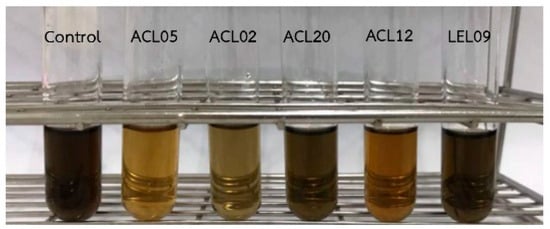
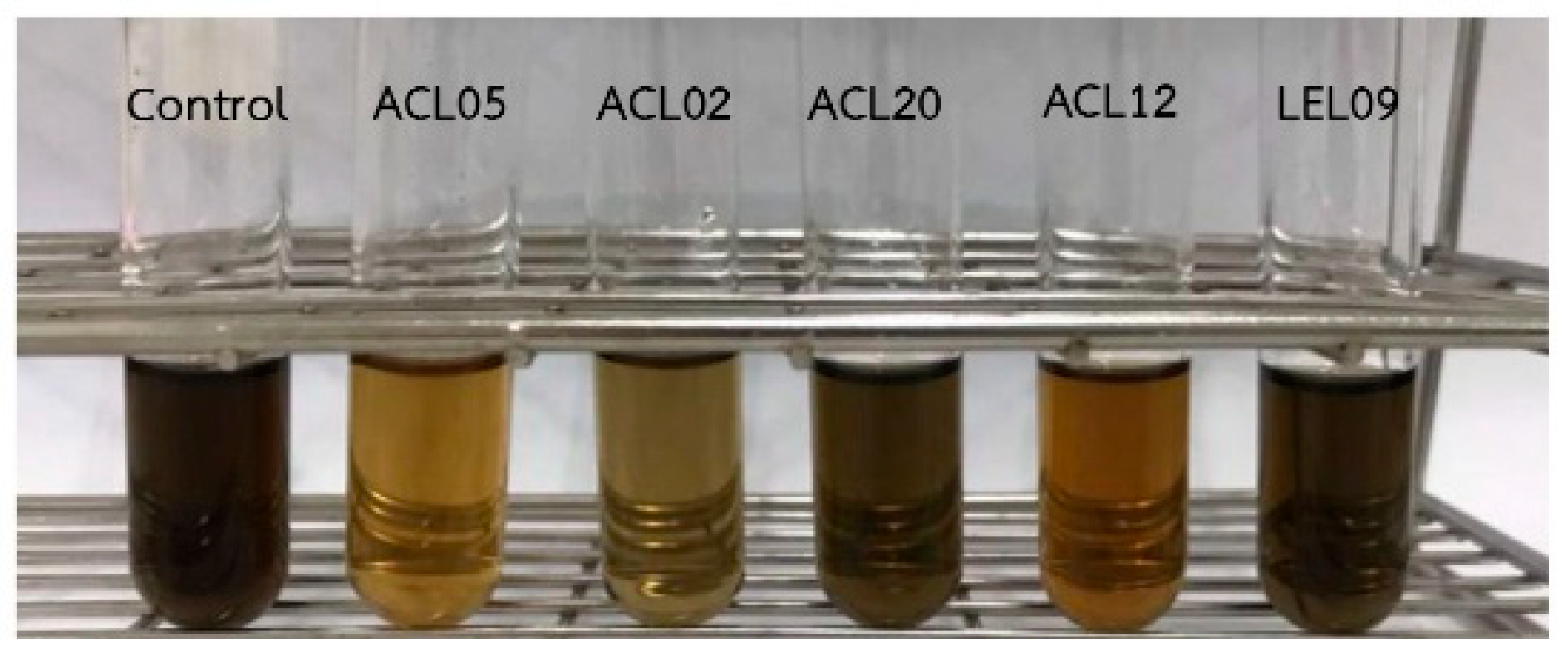
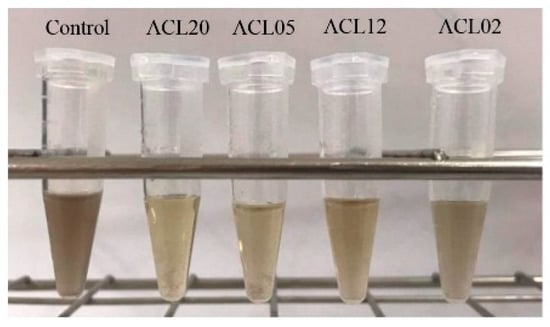
The percentage decolorization values for all 38 fungal isolates in PDB supplemented with melanin show in Table 1. Four isolates achieved a percentage of decolorization greater than 40%, and one additional isolate was included due to its decolorization percentage being marginally close to the 40% threshold. Four selected fungal isolates, ACL05, ACL02, ACL20, and ACL12, exhibited a high melanin decolorization of 76.52%, 57.44%, 45.99%, and 40.07%, respectively (Figure 1). This summary includes their corresponding light absorbance values (280 nm), which were used to derive the final percentage of melanin decolorization.
Table 1.
Melanin decolorization efficacy of endophytic fungal isolates.
Figure 1.
Comparison of melanin decolorization activity among selected endophytic fungal isolates relative to control.
The macroscopic characteristics of the five selected fungal isolates were recorded after 5–7 days of the growth on PDA at 25 °C that the identification based on observable features such as colony color, texture, diameter, and pigmentation (Table 2).
Table 2.
Colony morphology of five selected fungal isolates grown on potato dextrose agar incubated at 25 °C for 5–7 days.
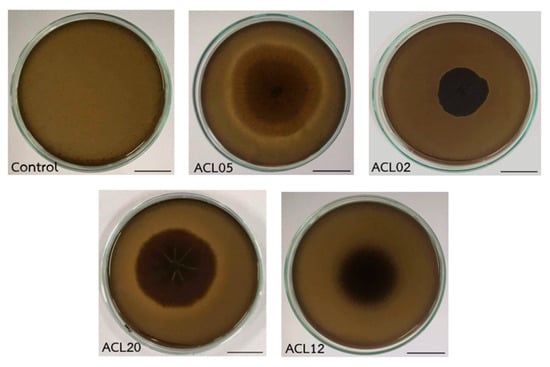
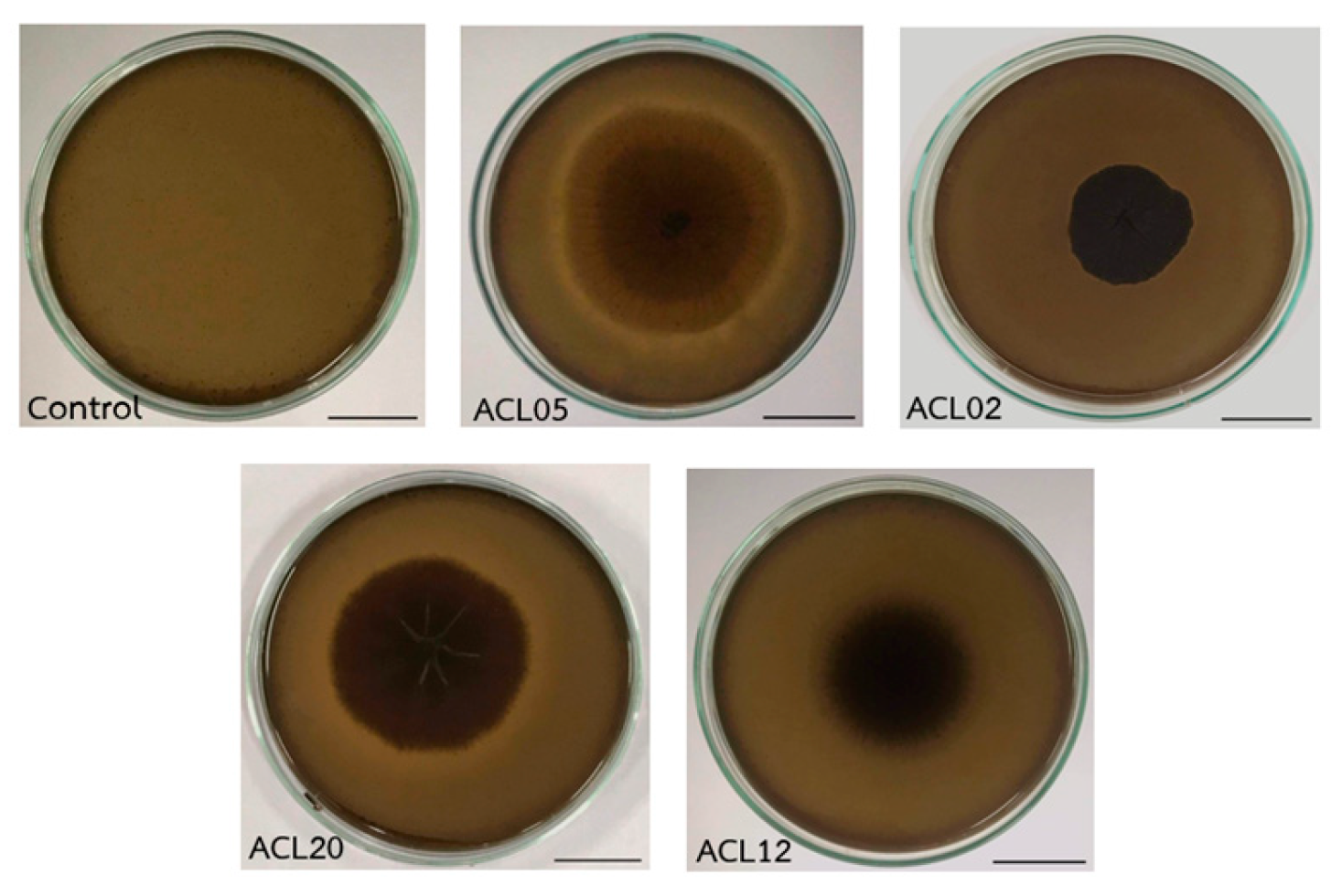
Endophyte isolates exhibited a decolorization percentage (% decolorization) greater than 40% that were selected to culture on PDA supplemented with melanin for visual confirmation. It was found that the color was visible around all four isolates. The most visible isolate was ACL05 (Figure 2). Five selected isolates consistently produced a clear zone surrounding the colony, which confirmed their melanin decolorization observed in the initial liquid screening (Figure 3) (Table 3).
Figure 2.
The culture colony of endophytic fungal isolates; ACL05, ACL02, ACL20, and ACL12 on potato dextrose agar incubate at 25 °C for 5–7 days (scale bars = 2 cm).
Figure 3.
Comparison with melanin decolorization activity of four selected endophytic fungal isolates cultured in PDB and comparison to melanin control.
Table 3.
% decolorization melanin by endophytic fungal isolates.
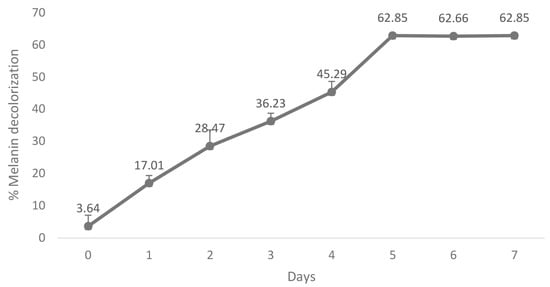
The culture of ACL05 was selected for tested its ability to reduce melanin color over time. PDB exhibited effective melanin decolorization, reaching a maximum percentage of decolorization of 62.85% at day 5 of the curing period. The decolorization activity then maintained a stable trend from day 6 onwards (Figure 4 and Figure 5).
Figure 4.
Time-course analysis of melanin decolorization by ACL05 culture filtrate for 7 days of incubation period.
Figure 5.
Final melanin decolorization efficacy of ACL05 culture filtrate after 7 days of incubation.
When the culture medium of endophyte fungal isolate ACL05 was tested for its ability to decolorize melanin, it was found that the cell culture medium could decolorize melanin to the maximum extent on day 5 of incubation, with a % decolorization value of 62.85%, and tended to remain constant from day 6 onwards, as shown in Figure 4.
3.3. Effect of Sterilization on the Melanin Decolorization Activity
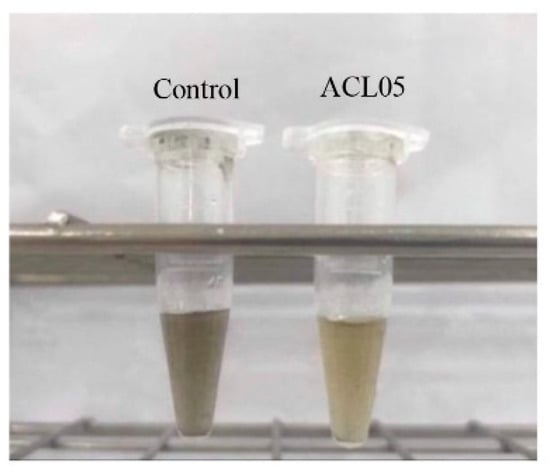
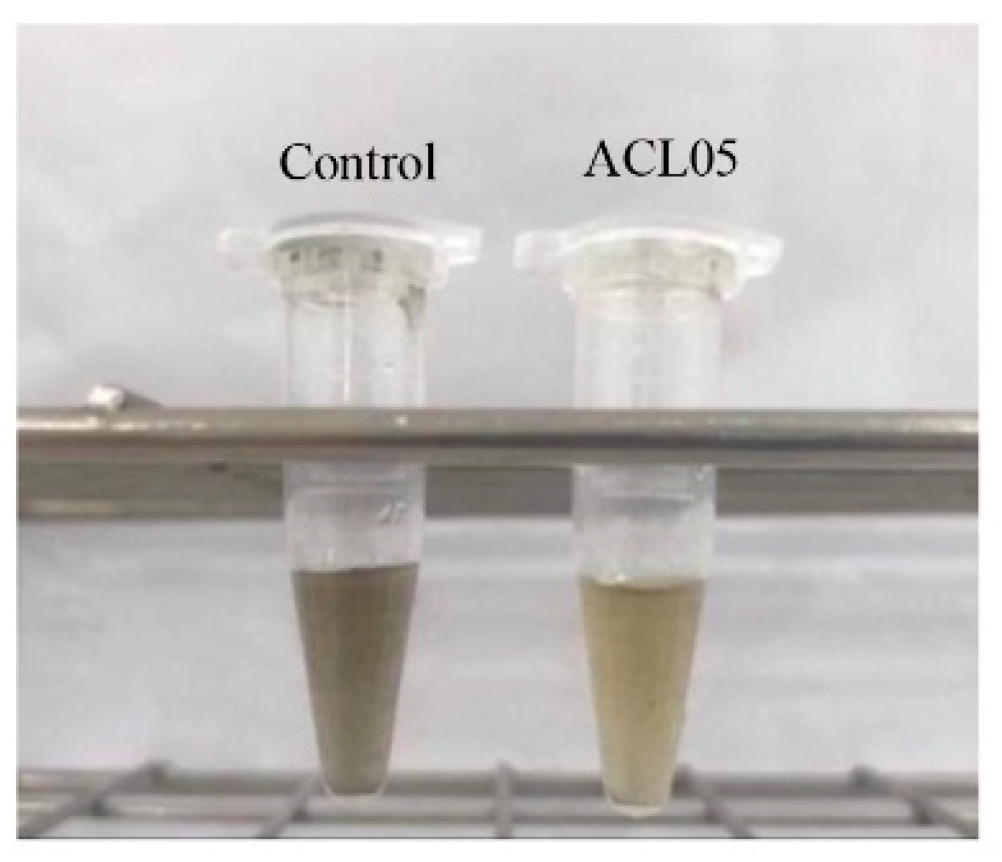
The effectiveness of PDB from ACL05 in reducing melanin by autoclave. The heat stability of the ACL05 culture filtrate metabolites was evaluated by treating a portion of the PDB with autoclaving at the standard conditions. Subsequent testing of the sterilized filtrate showed that the efficacy of melanin decolorization significantly (Figure 6). The remaining activity resulted in only 0.57% decolorization within four days, which then showed a stable, non-decreasing trend by day five (Table 4). Critically, this residual activity was not statistically significant when compared to the negative control, indicating that the primary melanin decolorization compound is likely heat-labile.
Figure 6.
Final melanin decolorization efficacy of ACL05 culture filtrate (PDB) after 7 days of incubation by autoclave.
Table 4.
% Decolorization melanin by endophytic fungal isolates after sterilization.
3.4. The Effectiveness of PDB from ACL05 in Melanin Decolorization by Ultrasonic
Ultrasonication was employed as a non-thermal sterilization method. The ACL05 culture filtrate (PDB) was subjected to ultrasonication for three different time intervals: 1 h, 2 h, and 3 h. The effectiveness of sterilization (viability) at each time point was subsequently verified by conducting a spread plate assay on PDA. The results demonstrated that the 1 h ultrasonication period was insufficient, as the endophyte could still grow (i.e., microbial viability was maintained). Conversely, no microbial growth was detected following the 2 h and 3 h treatments, confirming that ultrasonication for 2 h or longer achieved complete sterilization of the culture filtration (Figure 7).
Figure 7.
Assessment of microbial viability in ACL05 culture filtrate (PDB) following ultrasonication. Spread plates were performed on PDA medium for treatments: (A) 1 h, (B) 2 h, and (C) 3 h.
Sterilization Using Ultrasonic Treatment and Evaluation of Melanin Decolorization Activity
The culture filtrate of endophytic fungal isolate ACL05 was sterilized using an ultrasonic bath operating at a frequency of 40 kHz. Aliquots of the culture filtrate were subjected to ultrasonic treatment for 1, 2, and 3 h. To prevent temperature increase during prolonged ultrasonic exposure, the samples were maintained in an ice bath, and the temperature was kept below 30 °C throughout the treatment.
Following ultrasonic treatment, sterility of the culture filtrates was verified using the spread plate method. Briefly, 100 µL of each treated sample was spread onto PDA plates and incubated at 28 °C for 5–7 days. The absence of microbial growth was used to confirm successful sterilization.
The sterilized culture filtrates obtained from ultrasonic treatment for 2 and 3 h were subsequently evaluated for their ability to decolorize synthetic melanin. The reaction mixture consisted of synthetic melanin solution and sterilized culture filtrate at an appropriate ratio. The mixtures were incubated under controlled conditions, and samples were collected at defined time intervals to measure melanin decolorization.
Melanin decolorization was quantified by measuring the absorbance at 280 nm using a UV–Vis spectrophotometer. The percentage of melanin decolorization (% Decolorization) was calculated using the following formula:
- Acontrol = absorbance of melanin without culture filtrate.
- Asample = absorbance of melanin treated with culture filtrate.
All experiments were performed in triplicate, and the results were expressed as mean ± standard deviation. Visual observation of melanin color change was also recorded and compared with the untreated control.
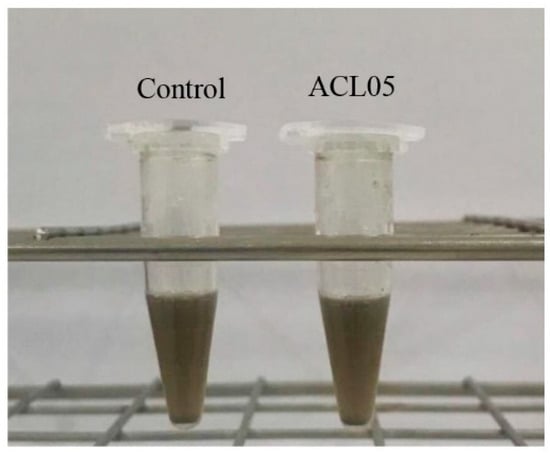
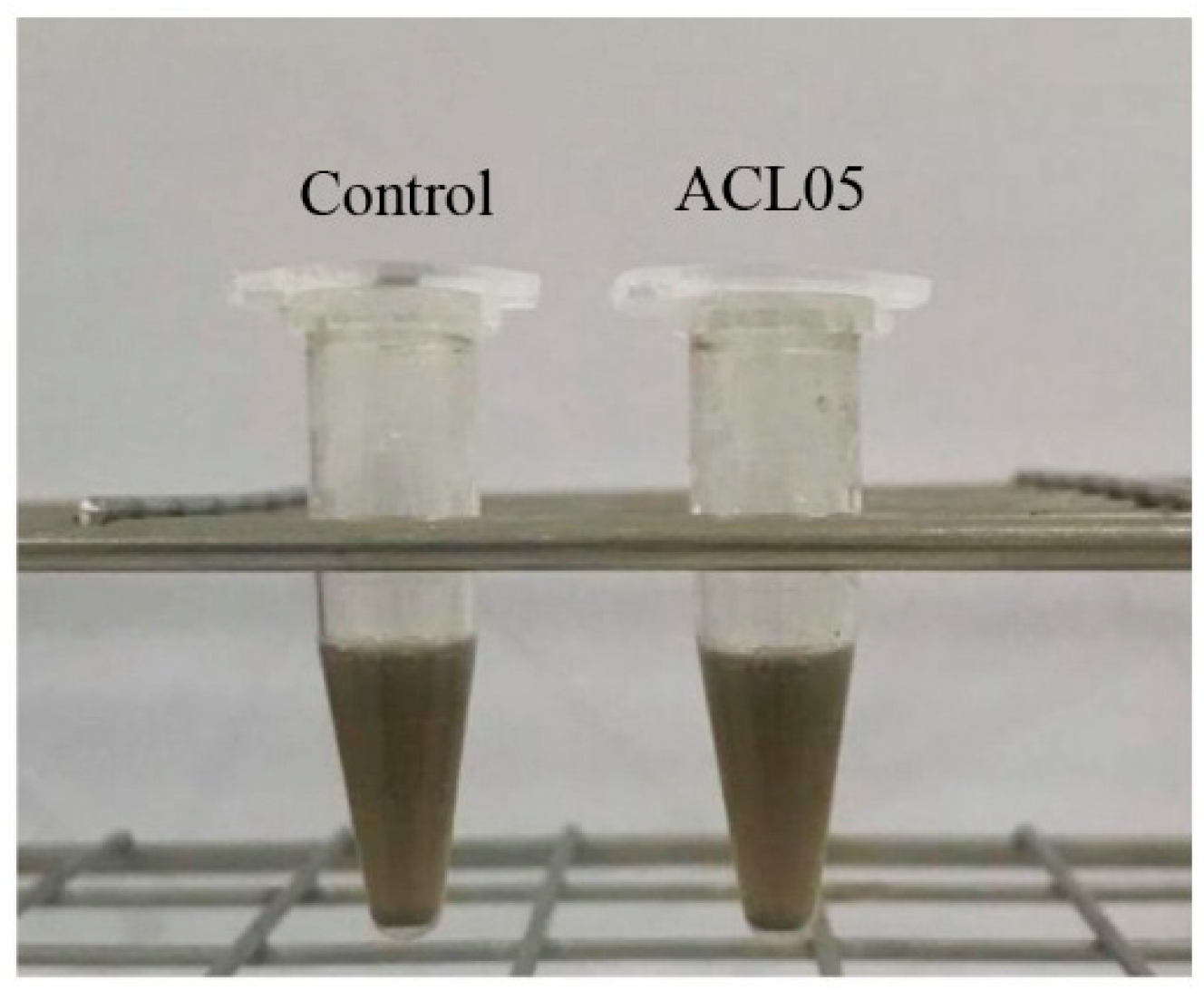
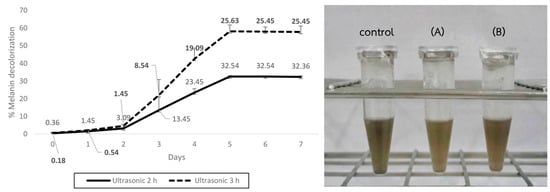
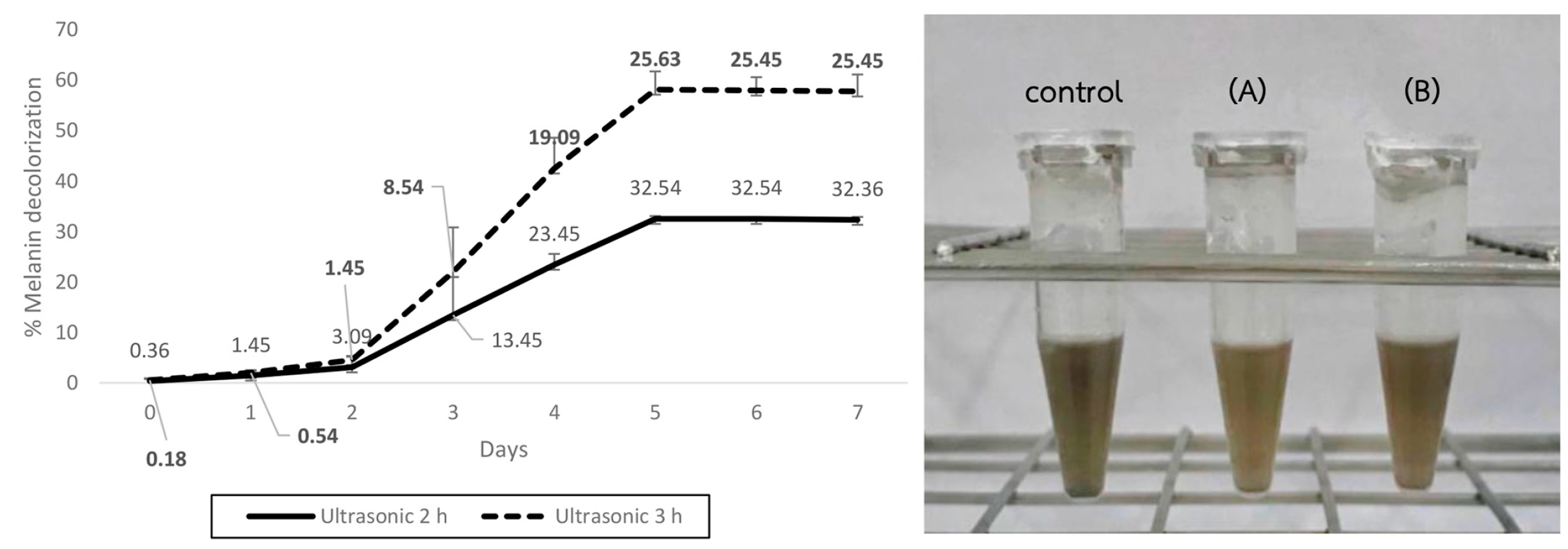
The effectiveness of PDB from ACL05 in reducing melanin by ultrasonic treatment sterilized for 2 h showed a melanin decolorization of 32.54%. The treatment sterilized for 3 h resulted in a lower efficacy, achieving 25.63% decolorization. This demonstrates that the culture filtrate sterilized by ultrasonication for 2 h retained greater melanin decolorization than the filtrate treated for 3 h, suggesting that the longer treatment duration potentially denatured or degraded some of the bioactive metabolites (Figure 8).
Figure 8.
Comparison of melanin decolorization activity of ACL05 culture filtrate (PDB) following sterilization by ultrasonication at two optimized durations: (A) (2 h) and (B) (3 h).
3.5. Screening and Identification of the Endophytic Fungi
Following preliminary screening, the selected organism was molecularly identified. Genomic DNA was extracted according to the method described by Suwannarach et al. (2019) [17]. The mycelium showed typical Aspergillus characteristics, including mycelial growth and sporulation within the 7-day period. Microscopic examination confirmed features consistent with the genus Aspergillus. The observed conidia were hyaline, aseptate, and fusiform. The conidiophores were noted to be long, large, and rough, mostly on the distal part. Cell walls were thick. Furthermore, the vesicles were oblong, almost radiate, and showed both uni- and biseriate arrangements. Finally, the conidia were organized in long chains. Finally, it was confirmed through molecular identification based on multi-locus sequence data. The DNA sequences were checked for similarity by the BLAST+ 2.17.0 tool at the NCBI and the isolate demonstrated a 100% sequence similarity match with Aspergillus brasiliensis (Accession No. MH862749), confirming its identity (Table 5).
Table 5.
Multi-locus sequence analysis for the identification of selected endophytic isolate.
To confirm the identification of the selected isolate, multi-locus sequencing was performed. The sequences for five different gene regions were analyzed, and all showed 100% sequence similarity to Aspergillus brasiliensis in the NCBI database.
3.6. Experimental Design of Antioxidant Activity Assay
Evaluation of Cosmetic Bioactivities (Antioxidant and Enzyme Inhibition) of Endophytic Extracts
The antioxidant activity of the ACL05 endophytic extract was evaluated using the DPPH radical scavenging assay, and the results were compared to the standard gallic acid, which served as a representative water-soluble antioxidant. Gallic acid was found to be the most potent DPPH radical scavenger tested, a result that was statistically significant (p < 0.05). The DPPH radical scavenging activity is expressed as the half maximal inhibitory concentration (IC50), which is the concentration of the extract required to inhibit 50% of the initial free radicals. The IC50 value for the ACL05 extract was determined to be 5.21 ± 1.85 mg/mL. In contrast, the IC50 value for the standard gallic acid was 0.08 ± 2.25 mg/mL. These results indicate that the ACL05 extract exhibits free radical scavenging activity, though at a significantly lower potency compared to the standard, given that lower IC50 values are indicative of higher antioxidant activity (Table 6).
Table 6.
IC50 values for antioxidant and anti-enzymatic activities of ACL05 extract.
The enzyme inhibitory potential of ACL05 was assessed through anti-collagenase, anti-elastase and anti-tyrosinase assays with results expressed as half maximal inhibitory concentration (IC50). For anti-elastase activity, the IC50 value is determined to be 8.33 mg/mL, whereas anti-collagenase activity was found to be 113.63 g/mL and anti-tyrosinase activity to be 37.31 mg/mL. The aqueous extract of ACL05 demonstrated superior anti-elastase activity with compared to the EGCG standard (IC50 = 10.2 mg/mL). Since lower IC50 values indicate higher enzyme inhibitory activity, the ACL05 extract is considered a more potent anti-elastase agent than EGCG and shows promising potential as an anti-aging compound.
3.7. Formulation of Topical Essence Containing Melanin Decolorization Endophytic Extract
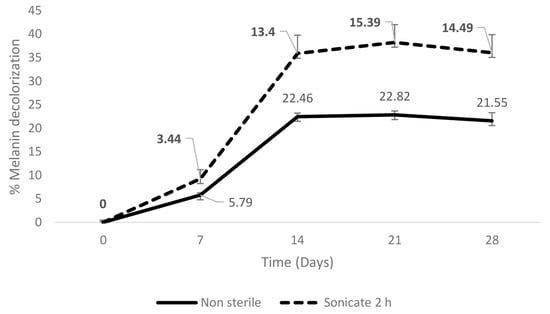
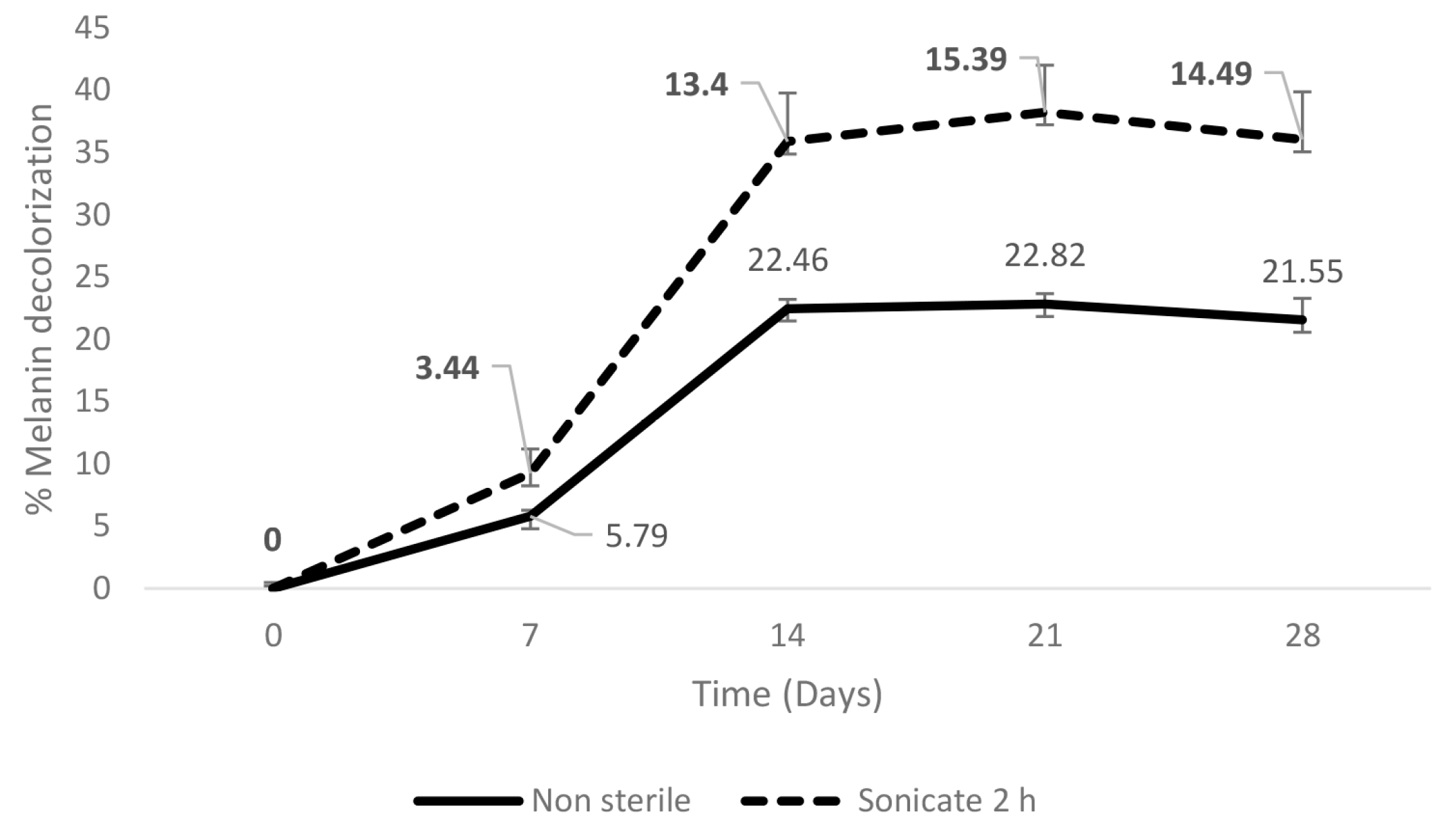
The facial essence was formulated containing two different preparations of the melanin decolorization endophytic fungal extract: (Formula 1) non-sterile fungal cell and (Formula 2) sterile fungal cell (ultrasonication for 2 h). Both the formulas were tested for the efficacy of reducing synthetic melanin over an incubation period of 28 days, with the percentage of decolorization measured weekly via light absorbance (Figure 9 and Figure 10). Both the formulas showed the highest efficiency in reducing melanin content on the 21st day of incubation, after which the trend remained constant until the day 28th. Formula 1 (Non-sterile) demonstrated a maximum % decolorization of 22.82%, while Formula 2 (Sterile) achieved 15.39% (Figure 11). Despite the slightly lower efficiency, Formula 2 was ultimately selected for subsequent stability testing. This choice prioritized the microbial safety and shelf stability of the final product by using the extract guaranteed to be sterile.
Figure 9.
Comparative melanin decolorization of endophyte-based.
Figure 10.
Visual assessment of synthetic melanin decolorization by ACL05 essence formulations. The image presents the color reduction of synthetic melanin over a 28-day incubation period (measured at 0, 7, 14, 21, and 28 days). The efficacy is compared between: (A) essence formula containing non-sterile ACL05 extract and (B) essence formula containing sterile ACL05 extract (Control: melanin only). Stability testing of essence products mixed with sterile endophyte metabolites (Formula 2).
Figure 11.
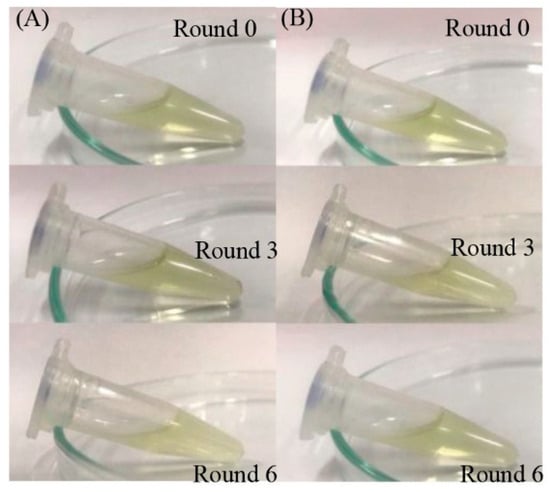
Physical stability of essence products formulated with sterile endophyte after testing under accelerated conditions (A) heating–cooling cycle (B) freeze–thaw cycle.
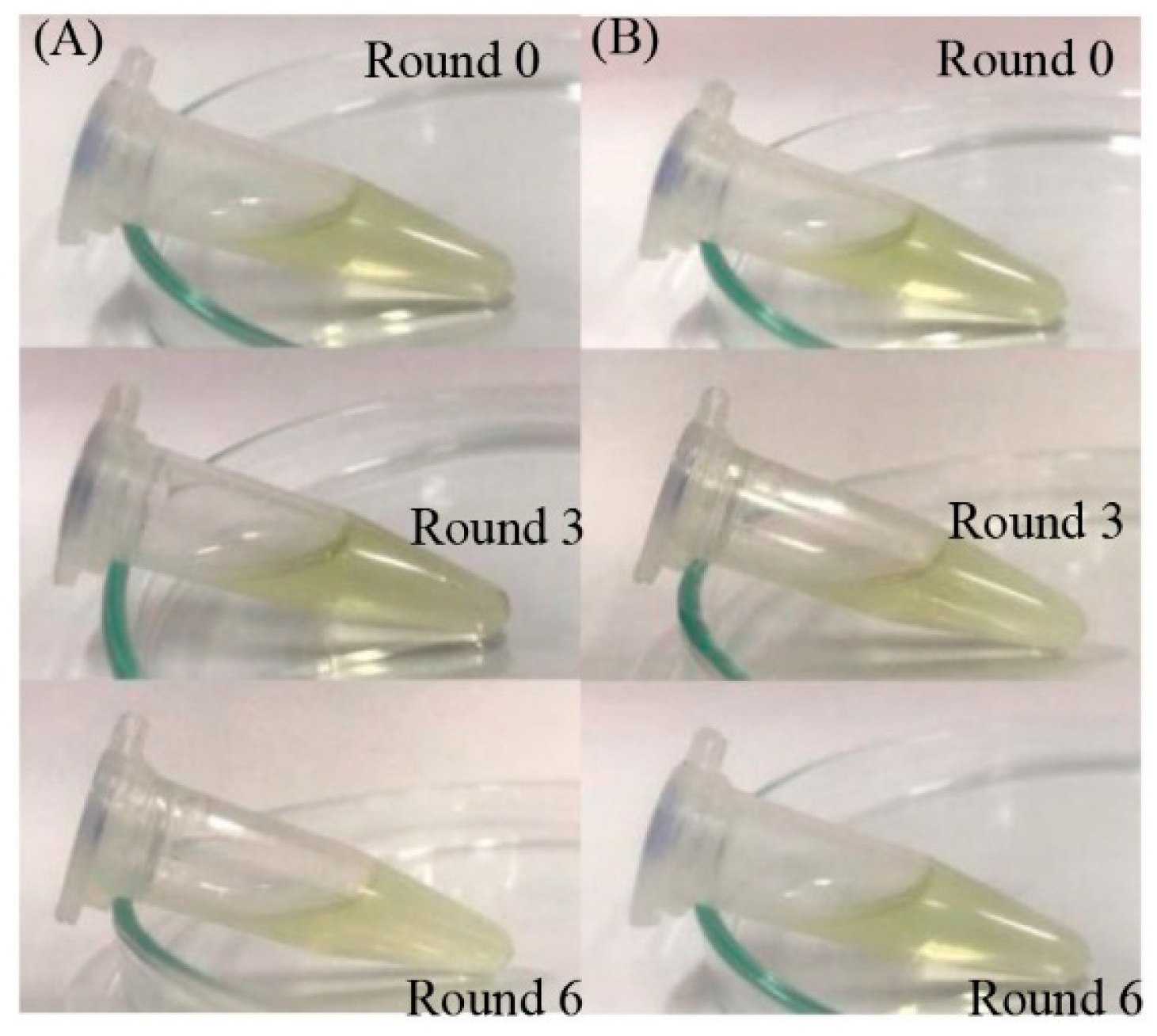
The essence formulation containing the sterile endophytic extract (Formula 2) underwent initial stability assessment via centrifugation, which demonstrated good physical stability as the product showed no phase separation. This robust initial stability was further tested under accelerated conditions. The product was subjected to an alternating heating–cooling cycle (0, 3, and 6 cycles) (Table 7). While the product’s color, odor, and pH remained unchanged across all cycles, a noticeable physical change occurred: the viscosity was significantly reduced after cycles 3 and 6, resulting in a more liquid texture. Crucially, the gel did not show any separation into layers throughout the heating–cooling treatment. In the second accelerated assessment, the product was tested under a freeze–thaw cycle (0, 3, and 6 cycles) (Table 8, Figure 12). This method showed excellent compatibility with the formula, as the color, odor, viscosity, and pH all remained unchanged. Furthermore, the gel texture did not separate into layers. Based on the formula’s complete resistance to layer separation across all accelerated conditions, Formula 2 is considered to possess good overall stability. Following this successful validation, the final gel content was prepared and packaged.
Table 7.
Physical characteristics of sterile essence product after accelerating thermal cycling (4 °C to 45 °C).
Table 8.
Physical characteristics of the sterile essence product after accelerated freeze–thaw cycle, (−20 °C and room temperature).
Figure 12.
Physical integrity of non-separation of essence products formulated with sterile endophyte after testing of centrifugation test (A) heating–cooling cycle (B) freeze–thaw cycle.
4. Discussion
Endophytic fungi are well-known sources of bioactive secondary metabolites (Schuz et al., 2002; Strobel et al., 2003, Sadagat et al., 2020) [23,24,25]. These endophytes are reported to be a reservoir of novel metabolites exhibiting distinctive bioactivities (Tan and Zou 2001) [26]. Consequently, the screening of crude endophyte extracts is crucial for determining their potential for further analysis and characterization of these valuable bioactive molecules. Common endophytes, such as Aspergillus, Botryosphaeria, Phomopsis, and Pestalotiopsis spp., occur in a wide variety of distantly related host species (Tejesvi et al., 2006) [27]. Ruma et al. (2012) [28] similarly reported the recurrence of genera like Aspergillus, Trichoderma, Fusarium, and Pestalotiopsis spp. in Garcinia spp. While several bioactive secondary metabolites have been isolated and characterized directly from Garcinia species, there are limited reports available on associated fungal endophytes and their bioprospecting (Phongpaichit et al., 2006) [29].
In this study, endophytic fungi were isolated using potato dextrose agar medium, resulting in a total of 38 isolates. These isolates were recovered from various sources, including 20 from onion, 8 from tomato leaves, and 10 from tomato stems. The endophytic fungal diversity is high in roots while the new leaves show the lowest diversity (Davis & López, 2021) [30]. The ACL05 isolation shows which demonstrated diversity (highest potential) with all required biological activities (antioxidant, anti-enzymatic etc.) originating from onion tissues (a root-derived structure). This preferential recovery of highly potent endophytes from root or below-ground tissues suggests these environments select for microorganisms that are ecologically critical and potentially metabolically richer, thus enhancing the likelihood of finding compounds with significant bioactivity.
Initial screening demonstrated that the endophytic fungi possessed significant melanin decolorization. Overall, the fungal isolates achieved a maximum melanin decolorization efficiency of 74%. Further assessment of the fungal culture filtrates revealed that four specific isolates exhibited high potential, achieving a percentage of melanin decolorization greater than 40%. This activity was recorded after 7 days of incubation in liquid medium supplemented with synthetic melanin. The ability to reduce melanin color was further confirmed on PDA plates containing melanin, indicating that the decolorization activity is robust and independent of the physical growth medium.
The selected endophytic isolates, ACL20, ACL05, ACL12, and ACL02, were tested for their ability to melanin decolorization. The results demonstrated that the endophytic fungi did not reduce melanin color by absorbing it into their cells. Instead, the fungi effectively reduced the color by secreting melanin-degrading substances outside the fungal cells. This mechanism aligns with previous reports indicating that endophytic fungi produce enzymes capable of melanin degradation, such as lignin-degrading enzymes. These enzymes include lignin peroxidase (Sadaget et al., 2020, Woo et al., 2004) [24,31] and laccase peroxidase (Shin et al., 2019) [32], which act primarily to degrade lignin but are known to exhibit broad substrate specificity toward other complex pigments like melanin.
The efficacy of endophytes in reducing melanin color is biologically reasonable due to the structural similarity between melanin pigment and lignin, an organic compound found in plant cell walls. This close structural resemblance means that lignin-degrading enzymes produced by endophytes possess the necessary activity to also break down melanin molecules. Indeed, specific peroxidases capable of bleaching melanin have been previously identified (Nagasaki et al., 2008) [33]. Although the production of such plant component-degrading enzymes is conventionally associated with saprophytic fungi, endophytic fungi are recognized as another significant source, often linked to their capacity to transition into saprobic forms (Lumyong et al., 2002; Promputtha et al., 2007) [34,35]. Studies have characterized the optimal conditions for these enzymes: lignin peroxidase, for instance, maximally reduced synthetic melanin at a low pH (2–3) and 40 °C (Sadaget et al., 2020, Lim, 2009) [24,36]. While general optimal activity is often near 30 °C, enzyme activity can remain maximal for up to 2 h across a broad temperature range of 20 °C to 60 °C, suggesting the enzymes are thermostable as activity only decreases gradually even up to 70 °C (Sahadevan et al., 2016) [37].
In addition to the melanin-degrading potential of lignin-degrading enzymes, the efficacy of the extract is likely supported by other bioactive compounds. Further supporting the potential thermal tolerance of the final essence product is the stability profile of quercetin, a major flavonoid found in the onion host tissue. Previous studies have reported that quercetin exhibits high thermal stability, withstanding temperatures of 180 °C for over 60 min under roasting conditions (Rohn et al., 2007) [38]. This resistance to heat is crucial for processing raw extract. It is important to note, however, that the molecular stability of quercetin varies depending on the specific structure of its glycosides (quercetin glucosides), a factor that may influence the stability of the compound in the final extract.
Initial efforts to sterilize the ACL05 crude filtrate using a hot steam autoclave resulted in a complete loss of melanin-reducing efficacy. This failure is attributed to the high temperature of the autoclave, which rapidly destroys most fungi and bacteria (typically 60–70 °C; Burge, 2006) [39] but simultaneously denatures the crucial protein-based melanin-degrading enzymes.
To preserve biological activity, sterilization was performed using an ultrasonic machine. Short sonication periods (1 h at 40 °C) proved insufficient to destroy molds and bacteria. However, increasing the duration to 2 and 3 h successfully achieved sterility through the following mechanism: High-frequency waves create rapid pressure changes that induce cavitation (liquid-free zones), leading to cell lysis when these cavities collapse. This shock wave propagation effectively ruptures the cellular walls (40 °C). Furthermore, the use of a tank-type apparatus minimized the risk of contamination by eliminating direct probe-sample contact (Mohammad et al., 2007) [40].
The melanin decolorization efficacy of the sterile filtrate was evaluated for both the 2 h and 3 h sonication protocols. Sterilization for 2 h demonstrated greater effectiveness, resulting in a melanin decolorization reduction of 32.54%. The anticipated diminished efficacy compared to the non-sterile control is likely attributed to the influence of the high-frequency waves and temporal duration required for microorganism eradication. Investigations have shown that the frequency and duration of sonication significantly impact the structural and functional attributes of proteins, causing the disruptive action of high-frequency waves to break physical bonds within protein molecules, leading to their separation or aggregation (Zhu et al., 2018) [41]. This suggests the 3 h sonication period caused greater damage to the functional melanin-degrading enzymes than the 2 h period.
Impact of Sonication on Enzyme Stability. The findings suggest that the diminished efficacy observed with prolonged sonication (3 h) is due to the impact of high-frequency waves on the structural integrity of the active enzymes. This aligns with external research demonstrating that high-frequency waves significantly influence the stability of enzymes and the kinetics of enzymatic cessation (Ozbek et al., 2000) [42]. Therefore, if a protein or enzyme is confirmed as the key contributor to melanin reduction in the fungal medium, it is imperative to conduct further experimentation to adjust sonication parameters (frequency level and duration) within the optimal range to maximize sterility while preserving activity.
Metabolite Thermal Stability. The thermal stability of the metabolites must also be considered. It was observed that prolonged exposure of the fungal culture fluid to 40 °C does not induce denaturation of the melanin-reducing metabolites, affirming their stability at this temperature. This contrasts sharply with conventional proteins, which often undergo nearly complete denaturation at temperatures around 94 °C to 95 °C after 30 min (Jiang et al., 2018) [43].
Melanin Decolorization Screening. Melanin decolorization capabilities were initially investigated using various fungal strains on solid medium (PDA) and liquid medium (PDB) containing melanin. Following seven days of incubation, the Aspergillus ACL05 isolate exhibited significant melanin decolorization capabilities making it the primary focus for subsequent assays.
Enzyme Assay Conditions. Optimal conditions, including pH levels, were explored to maximize melanin decolorization. For the purified enzyme derived from Aspergillus ACL05, in vitro decolorization assays using synthetic melanin were conducted under diverse conditions, specifically at temperatures ranging from 30 °C to 37 °C, over a 6 h incubation period. The results, particularly for the sterile endophytic material, demonstrated the general trend of melanin decolorization.
Formulation Development and Stability Assessment. Upon incorporating the ultrasonically sterilized ACL05 fungal supernatant extract into the melanin color-reducing essence formula (Formula 2), the melanin-reducing effect remained present, though less effective (15.39%) compared to the unsterilized formula (22.82%). Despite the marginal reduction in efficacy, Formula 2 (sterile extract) was preferentially selected for final development. This decision prioritizes microbiological safety as mandated by the Ministry of Public Health announcement of 2016, which strictly prohibits the presence of pathogenic microorganisms (e.g., Pseudomonas aeruginosa, Staphylococcus aureus, Candida albicans, and Clostridium spp.) and limits the total aerobic plate count to 1000 CFU/g or mL for products applied to human skin.
Stability assessments were conducted on the selected sterile essence product (Formula 2) under accelerated conditions to predict shelf-life. The product demonstrated robust performance across both thermal challenges. In the heating–cooling cycle (4 °C to 45 °C), the product’s color, odor, and pH remained unaltered. Although a marginal decrease in gel viscosity was observed after cycles 3 and 6 (Figure 11), the product’s physical integrity was maintained as no phase separation occurred (Figure 12). Similarly, the freeze–thaw cycle (–20 °C to room temperature) revealed excellent stability, showing no changes in color, odor, viscosity, or pH, and also maintaining complete physical integrity with no observed layer separation (Table 8). These findings collectively underscore the robust stability of the final formula, suggesting a reliable shelf-life prediction of approximately 1–2 years.
The observed anti-elastase activity of the ACL05 extract is highly promising, demonstrating superior efficacy when compared to several established natural anti-aging components. Specifically, the ACL05 extract was found to be more effective than extracts derived from plants such as Areca catechu, Cinnamomum cassia, Myristica fragrans, Curcuma longa, Alpinia katsumadai, and Dryopteris crassirhizoma (Ruma et al., 2013) [3].
Free radicals pose a significant threat to cellular components by causing damage to the cell membrane, organelles, and DNA through the mechanism of electron pairing, which contributes to a variety of pathological effects (Seifried et al., 2007) [44]. The antioxidant potential of the Aspergillus ACL05 extract was assessed using the DPPH radical scavenging ability assay. This method evaluates the inhibition of the stable DPPH radical, which often exhibits bi-phasic kinetic reactions with many antioxidants, typically due to solubility differences. In the present study, the ACL05 extract was identified as a potent source of antioxidants, demonstrating an IC50 value of 5.21 mg/mL against the DPPH radical. This strong activity justified the selection of the extract for subsequent analysis of its bioactive metabolites. Similar studies in the recent past have also reported endophytes exhibiting potent antioxidant activity.
5. Conclusions
This is the first study to reveal the potential of endophytic extract ACL05 as an anti-aging property. The extract inhibited collagenase, elastase, and tyrosinase of 113.63 ± 3.85 mg/mL, 8.33 ± 4.25 mg/mL, and 37.3 ± 2.59 mg/mL, respectively. Among all isolated fungal strains, the ACL05 isolate consistently demonstrated superior efficacy in reducing the color of both natural and synthetic melanin. The supernatant extract of the ultrasonically sterilized endophytic fungus ACL05, when subjected to a 2 h sterilization process, retains its efficacy in reducing melanin coloration by up to 32.54%. Upon formulation into a facial essence, it demonstrates commendable stability under accelerated conditions and maintains its effectiveness in melanin reduction, achieving up to 15.39%. However, it is imperative to note that this product has not undergone testing for efficacy on laboratory animals or human volunteers. Preliminary assessments of potential skin irritation and toxicity, both in the short term and long term, are prerequisites before further evaluations can be conducted. An exploration of the melanin-producing capacity of endophytic fungi warrants thorough investigation. The study of the melanin-reducing ability of endophytic fungi requires thorough investigation. Initial screening measures, including classification and identification of the identified compounds, are crucial. This classification enhances the safety of fungal metabolites incorporated into cosmetic formulations and may lead to the discovery of novel metabolites.
Author Contributions
Conceptualization, N.C., P.P., G.D.N.M., S.P. and N.U.-o.; methodology, data curation, formal analysis, resources, writing—original draft preparation, N.C., P.P., G.D.N.M. and T.K.; software, validation, investigation, writing—review and editing, visualization and supervision, N.S., J.K., S.J. and I.P. All authors have read and agreed to the published version of the manuscript.
Funding
This research was funded by CMU Proactive Researcher grant of Chiang Mai University (grant number EX010059) and Chiang Mai University and The APC are funded by the Office of Research Administration, Chiang Mai University, Chiang Mai, 50200, Thailand.
Institutional Review Board Statement
Not applicable.
Informed Consent Statement
Not applicable.
Data Availability Statement
All sequences generated in this study were submitted to GenBank.
Acknowledgments
This research work was partially supported by Chiang Mai University. Napalai Chaiwan would like to thank the CMU Proactive Researcher, Chiang Mai University [grant number: EX010059] and the Center of Excellence in Microbial Diversity and Sustainable Utilization, Chiang Mai University. The authors would like to thank the Natural Extracts and Innovative Products for Alternative Healthcare Research Group, Chiang Mai University, Chiang Mai, Thailand.
Conflicts of Interest
The authors declare no conflicts of interest.
References
- Promputtha, I.; Jeewon, R.; Lumyong, S.; Mckenzie, E.; Hyde, K.D. Ribosomal DNA Fingerprinting in the Identification of Non Sporulating Endophytes from Magnolia liliifera (Magnoliaceae). Fungal Divers. 2005, 20, 167–186. [Google Scholar]
- Aly, A.H.; Debbab, A.; Kjer, J.; Proksch, P. Fungal Endophytes from Higher Plants: A Prolific Source of Phytochemicals and Other Bioactive Natural Products. Fungal Divers. 2010, 41, 1–16. [Google Scholar] [CrossRef] [Scilit]
- Ruma, K.; Sunil, K.; Prakash, H.S. Antioxidant, Anti-Inflammatory, Antimicrobial and Cytotoxic Properties of Fungal Endophytes from Garcinia Species. Int. J. Pharm. Pharm. Sci 2013, 5, 889–897. [Google Scholar]
- Cui, J.-L.; Guo, T.-T.; Ren, Z.-X.; Zhang, N.-S.; Wang, M.-L. Diversity and Antioxidant Activity of Culturable Endophytic Fungi from Alpine Plants of Rhodiola crenulata, R. angusta, and R. sachalinensis. PLoS ONE 2015, 10, e0118204. [Google Scholar] [CrossRef] [Scilit]
- Chandra, H.; Yadav, A.; Prasad, R.; Kalra, S.J.S.; Singh, A.; Bhardwaj, N.; Gupta, K.K. Fungal Endophytes from Medicinal Plants Acting as Natural Therapeutic Reservoir. Microbe 2024, 3, 100073. [Google Scholar] [CrossRef] [Scilit]
- Vishwakarma, S.; Chaudhry, V.; Chand, S.; Sagar, K.; Gupta, K.K.; Bhardwaj, N.; Prasad, R.; Kumar, P.; Chandra, H. The potential of fungal endophytes in plants: Sources of bioactive compounds. Indian J. Microbiol. 2024, 65, 1813–1827. [Google Scholar] [CrossRef] [Scilit] [PubMed]
- Yousef, H.; Alhajj, M.; Fakoya, A.O.; Sharma, S. Anatomy, Skin (Integument), Epidermis. In StatPearls; StatPearls Publishing: Treasure Island, FL, USA, 2025. [Google Scholar]
- Michalak, M.; Pierzak, M.; Kręcisz, B.; Suliga, E. Bioactive Compounds for Skin Health: A Review. Nutrients 2021, 13, 203. [Google Scholar] [CrossRef] [Scilit]
- Mostert, A.B. Melanin, the What, the Why and the How: An Introductory Review for Materials Scientists Interested in Flexible and Versatile Polymers. Polymers 2021, 13, 1670. [Google Scholar] [CrossRef] [Scilit]
- Langfelder, K.; Streibel, M.; Jahn, B.; Haase, G.; Brakhage, A.A. Biosynthesis of Fungal Melanins and Their Importance for Human Pathogenic Fungi. Fungal Genet. Biol. 2003, 38, 143–158. [Google Scholar] [CrossRef] [Scilit]
- Marino, S.M.; Fogal, S.; Bisagilia, M.; Moro, S.; Scartabelli, G.; Gioia, L.D.; Spada, A.; Monzani, E.; Casella, L.; Mammi, S.; et al. Investigation of Streptomycesantibioticus Tyrosinase Reactivity toward Chlorophenols. Arch. Biochem. Biophys. 2011, 505, 67–74. [Google Scholar] [CrossRef] [Scilit] [PubMed]
- Rusu, A.; Farcaș, A.-M.; Oancea, O.-L.; Tanase, C. Cannabidiol in Skin Health: A Comprehensive Review of Topical Applications in Dermatology and Cosmetic Science. Biomolecules 2025, 15, 1219. [Google Scholar] [CrossRef] [Scilit] [PubMed]
- Saeedi, M.; Eslamifar, M.; Khezri, K. Kojic Acid Applications in Cosmetic and Pharmaceutical Preparations. Biomed. Pharmacother. 2019, 110, 582–593. [Google Scholar] [CrossRef] [Scilit]
- Chauhan, L.; Gupta, S. Creams: A review on classification, preparation methods, evaluation and its applications. J. Drug Deliv. Ther. 2020, 10, 281–289. [Google Scholar] [CrossRef] [Scilit]
- Sahu, P.K.; Tilgam, J.; Mishra, S.; Hamid, S.; Gupta, A.; K, J.; Verma, S.K.; Kharwar, R.N. Surface Sterilization for Isolation of Endophytes: Ensuring What (Not) to Grow. J. Basic Microbiol. 2022, 62, 647–668. [Google Scholar] [CrossRef] [Scilit]
- Huang, X.; Yang, N.; Cao, M.; Sun, H. Lycium chinense root supercritical fluid extract inhibits melanogenesis by down-regulating tyrosinase activity, tyrosinase-related proteins, and microphthalmia-associated transcription factor in B16F10 melanoma cells. BMC Complement. Altern. Med. 2014, 14, 208. [Google Scholar]
- Suwannarach, N.; Kumla, J.; Nishizaki, Y.; Sugimoto, N.; Meerak, J.; Matsui, K.; Lumyong, S. Optimization and Characterization of Red Pigment Production from an Endophytic Fungus, Nigrospora aurantiaca CMU-ZY2045, and Its Potential Source of Natural Dye for Use in Textile Dyeing. Appl. Microbiol. Biotechnol. 2019, 103, 6973–6987. [Google Scholar] [CrossRef] [Scilit]
- Zhao, J.T.; Fu, Y.J.; Luo, M.; Zu, Y.G.; Wang, W.; Zhao, C.; Gu, C. Endophytic fungi from pigeon pea [Cajanus cajan (L.) Mill sp.] produce antioxidant cajaninstilbene acid. J. Agr. Food Chem. 2012, 60, 4314–4319. [Google Scholar] [CrossRef] [Scilit]
- Thring, T.S.A.; Hili, P.; Naughton, D.P. Anti-Collagenase, Anti-Elastase and Anti-Oxidant Activities of Extracts from 21 Plants. BMC Complement. Altern. Med. 2009, 9, 27. [Google Scholar] [CrossRef] [Scilit] [PubMed]
- Kim, Y.-J.; Uyama, H.; Kobayashi, S. Inhibition Effects of (+)-Catechin–Aldehyde Polycondensates on Proteinases Causing Proteolytic Degradation of Extracellular Matrix. Biochem. Biophys. Res. Commun. 2004, 320, 256–261. [Google Scholar] [CrossRef] [Scilit] [PubMed]
- Batubara, I.; Darusman, L.K.; Mitsunaga, T.; Rahminiwati, M.; Djauhari, E. Potency of Indonesian medicinal plants as tyrosinase inhibitor and antioxidant agent. J. Biol. Sci. 2010, 10, 138–144. [Google Scholar] [CrossRef] [Scilit]
- Moussa, N.; Haushey, L.A. The shelf life of vitamin c in a w/o emulsion according to the Q10 method. Int. J.Pharm. Sci. Rev. Res. 2015, 30, 33–39. [Google Scholar]
- Schulz, B.; Boyle, C.; Draeger, S.; Römmert, A.-K.; Krohn, K. Endophytic fungi: A source of novel biologically active secondary metabolites. Mycol. Res. 2002, 106, 996–1004. [Google Scholar] [CrossRef] [Scilit]
- Sadagat, B.; Khatoon, N.; Malik, A.Y.; Jamal, A.; Farooq, U.; Ali, M.I.; He, H.; Liu, F.-J.; Guo, H.; Urynowicz, W.; et al. Enzymatic Decolonization of Melanin by Lignin Peroxidase from Phanerochaete chrysosporium. Sci. Rep. 2020, 10, 20240. [Google Scholar] [CrossRef] [Scilit]
- Strobel, G.A.; Daisy, B. Bioprospecting for microbial endophytes and their natural products. Microbiol. Mol. Biol. Rev. 2003, 67, 491–502. [Google Scholar] [CrossRef] [Scilit]
- Tan, R.X.; Zou, W.X. Endophytes: A rich source of functional metabolites. Nat. Prod. Rep. 2001, 18, 448–459. [Google Scholar] [CrossRef] [Scilit]
- Tejesvi, M.V.; Kini, K.R.; Prakash, H.S.; Subbiah, V.; Shetty, H.S. Genetic diversity and antifungal activity of species of Pestalotiopsis isolated as endophytes from medicinal plants. Fungal Divers. 2007, 24, 37–54. [Google Scholar]
- Ruma, K.; Shailasree, S.; Sampath, K.K.; Niranjana, S.R.; Prakash, H.S. Endophytic fungal assemblages in Calophyllum and Garcinia spp. (Clusiaceae) in the Western Ghats, India. Curr. Biotechnol. 2016, 1, 99–108. [Google Scholar] [CrossRef] [Scilit]
- Phongpaichit, S.; Nikom, J.; Rungjindamai, N.; Sakayaroj, J.; Hutadilok-Towatana, N.; Rukachaisirikul, V.; Kirtikara, K. Biological activities of extracts from endophytic fungi isolated from Garcinia plants. FEMS Immunol. Med. Microbiol. 2007, 51, 517–525. [Google Scholar] [CrossRef] [Scilit] [PubMed]
- Davis, J.; López, L. Tissue-specific diversity of fungal endophytes isolated from Solanaceae crops. J. Mycol. Plant Pathol. 2021, 51, 307–319. [Google Scholar]
- Woo, S.H.; Cho, J.S.; Lee, B.S.; Kim, E.K. Decolorization of melanin by lignin peroxidase from Phanerochaete chrysosporium. Biotechnol. Bioprocess. Eng. 2004, 9, 256. [Google Scholar]
- Shin, S.K.; Hyoen, J.; Joo, Y.; Jeong, S.; You, S.; Han, S. Effective melanin degradation by a synergistic laccase-peroxidase enzyme complex for skin whitening and other practical applications. Int. J. Biol. Macromol. 2019, 129, 181–186. [Google Scholar] [CrossRef] [Scilit] [PubMed]
- Nagasaki, K.; Kumazawa, M.; Murakami, S.; Takenaka, S.; Koike, K.; Aoki, K. Purification, characterization, and gene cloning of Ceriporiopsis sp. Strain MD-1 peroxidases that decolorize human hair melanin. Appl. Environ. Microbiol. 2008, 74, 5106–5112. [Google Scholar] [CrossRef] [Scilit]
- Lumyong, S.; Lumyong, P.; McKenzie, E.H.C.; Hyde, K.D. Enzymatic Activity of Endophytic Fungi of Six Native Seedling Species from Doi Suthep-Pui National Park, Thailand. Can. J. Microbiol. 2002, 48, 1109–1112. [Google Scholar] [CrossRef] [Scilit]
- Promputtha, I.; Lumyong, S.; Dhanasekaran, V.; McKenzie, E.H.C.; Hyde, K.D.; Jeewon, R. A Phylogenetic Evaluation of Whether Endophytes Become Saprotrophs at Host Senescence. Microb. Ecol. 2007, 53, 579–590. [Google Scholar] [CrossRef] [Scilit]
- Lim, Y.-J. Inhibitory effects of arbutin on melanin biosynthesis of α-melanocyte stimulating hormone-induced hyperpigmentation in cultured brownish guinea pig skin tissues. Arch. Pharmacal Res. 2009, 32, 367–373. [Google Scholar]
- Sahadevan, L.M.; Misra, C.S.; Thankamani, V. Characterization of lignin degrading enzymes (LDEs) from a dimorphic novel fungus and identification of products of enzymatic breakdown of lignin. 3 Biotech 2016, 6, 56. [Google Scholar] [CrossRef] [Scilit]
- Rohn, S.; Buchner, N.; Driemel, G.; Rauser, M.; Kroh, L.M. Thermal degradation of onion quercetin glucosidase under roasting conditions. J. Agric. Food Chem. 2007, 55, 1568–1573. [Google Scholar] [CrossRef] [Scilit]
- Burge, H. How dose heat affect fungi? FEMS Microbial. Ecol. 2006, 3, 49–58. [Google Scholar]
- Mohammad, H.D.; Amir, H.M.; Gholam, R.J.; Razieh, S. Investigation and Evaluation of Ultrasound Reactor for Reduction of Fungi from Sewage. J. Zhejiang Univ. Sci. B 2007, 8, 493–497. [Google Scholar]
- Zhu, Z.; Zhu, W.; Yi, J.; Liu, N.; Cao, Y.; Lu, J.; Decker, E.A.; McClements, D.J. Effects of Sonication on the Physicochemical and Functional Properties of Walnut Protein Isolate. Food Res. Int. 2018, 106, 853–861. [Google Scholar] [CrossRef] [Scilit] [PubMed]
- Özbek, B.; Ülgen, K.Ö. The Stability of Enzymes after Sonication. Process Biochem. 2000, 35, 1037–1043. [Google Scholar] [CrossRef] [Scilit]
- Jiang, Q.; Han, J.; Gao, P.; Yu, L.; Xu, Y.; Xia, W. Effect of Heating Temperature and Duration on the Texture and Protein Composition of Bighead Carp (Aristichthys nobilis) muscle. Int. J. Food Prop. 2018, 21, 2110–2120. [Google Scholar] [CrossRef] [Scilit]
- Seifried, H.E.; Anderson, D.E.; Fisher, E.I.; Milner, J.A. A review of the interaction among dietary antioxidants and reactive oxygen species. J. Nutr. Biochem. 2007, 18, 67–79. [Google Scholar] [CrossRef] [Scilit] [PubMed]









Disclaimer/Publisher’s Note: The statements, opinions and data contained in all publications are solely those of the individual author(s) and contributor(s) and not of MDPI and/or the editor(s). MDPI and/or the editor(s) disclaim responsibility for any injury to people or property resulting from any ideas, methods, instructions or products referred to in the content. |
© 2026 by the authors. Licensee MDPI, Basel, Switzerland. This article is an open access article distributed under the terms and conditions of the Creative Commons Attribution (CC BY) license.