Article

Business Intelligence Capabilities and SME Innovation: The Mediating Role of Knowledge Management Capability and the Moderating Effect of Data-Driven Decision Making

by
Hashim Rakan Alshareef
* and
Okechukwu Lawrence Emeagwali
Faculty of Business and Economics, Girne American University, Kyrenia 99320, Turkey
*
Author to whom correspondence should be addressed.
Systems 2026, 14(4), 339; https://doi.org/10.3390/systems14040339
Submission received: 6 February 2026 / Revised: 13 March 2026 / Accepted: 17 March 2026 / Published: 24 March 2026

Abstract

Small- and medium-sized enterprises (SMEs) increasingly rely on digital technologies to sustain innovation, yet limited empirical evidence explains how business intelligence capabilities translate into superior innovation outcomes, particularly in emerging economy contexts. Addressing this gap, this study examines the direct and indirect effects of business intelligence capabilities on innovation performance by unpacking the mediating role of knowledge management capability and the moderating role of data-driven decision making within an integrated Resource-Based View and Knowledge-Based View framework. Conceptually, the study advances prior research by clarifying the complementary roles of these theoretical perspectives: the Resource-Based View explains what strategic digital resources firms possess, the Knowledge-Based View explains how these resources are transformed into organizational knowledge through knowledge management capability, and data-driven decision making explains when these capabilities are effectively converted into innovation outcomes. Data were collected through a survey of 316 owners and senior managers of small- and medium-sized hotels operating in Amman, Jordan, and analyzed using partial least squares structural equation modeling (PLS-SEM) as the primary analytical technique. The results indicate that business intelligence capabilities exert a significant positive effect on innovation performance, with this relationship largely transmitted through knowledge management capability, demonstrating that the value of business intelligence lies in its integration into organizational knowledge processes rather than in data availability alone. Moreover, data-driven decision making strengthens the relationship between business intelligence capabilities and innovation performance, functioning as an execution-level capability that enhances the conversion of digital and knowledge-based resources into innovation outcomes. To further validate the robustness of the findings, a post-hoc moderated mediation analysis using Hayes’ PROCESS macro version 4.2 was conducted as a confirmatory analysis. By conceptualizing business intelligence, knowledge management, and data-driven decision making as an interconnected socio-technical capability system, this study advances digital innovation theory and offers actionable insights for SME managers seeking to orchestrate capabilities for innovation under resource constraints.

1. Introduction

The rapid diffusion of digital technologies has fundamentally reshaped how organizations create value, compete, and innovate. Technologies such as business intelligence (BI), big data analytics, artificial intelligence, and cloud-based platforms have moved from peripheral support tools to core components of organizational systems [1]. For small- and medium-sized enterprises (SMEs), this transformation is particularly consequential. Unlike large firms, SMEs typically operate under severe resource constraints, limited managerial slack, and high environmental uncertainty, making the effective orchestration of digital resources both challenging and more critical [2,3]. Within this context, digital innovation is no longer optional; it has become a systemic necessity for sustaining competitiveness and enabling business model transformation. From a systems perspective, digital innovation in SMEs cannot be understood as the isolated adoption of individual technologies [4]. Rather, it emerges from complex interactions among technological capabilities, organizational knowledge processes, and decision-making structures embedded within broader socio-technical systems [5]. Prior research increasingly emphasizes that the performance implications of digital technologies depend less on mere availability and more on how firms integrate, govern, and leverage digital resources across organizational subsystems [6,7]. Consequently, understanding how SMEs convert data into actionable knowledge and innovation outcomes remains a central challenge for research.
Despite substantial investments in digital technologies, many SMEs struggle to realize tangible innovation benefits. Business intelligence capabilities (BIC) enable firms to collect, process, and analyze large volumes of data, yet evidence suggests that data abundance alone does not guarantee superior innovation performance [8]. A recurring problem is the inability of SMEs to translate data-driven insights into organizational knowledge that supports innovation-related decisions. This challenge is exacerbated by weak decision governance structures and limited data-driven decision making (DDDM) practices, which often result in fragmented insights and underutilized analytical outputs [9]. From a systems viewpoint, innovation performance is an emergent outcome of interdependent subsystems rather than a direct output of any single capability. When BI systems, knowledge management processes, and decision-making mechanisms are misaligned, SMEs risk falling into what has been described as the “digital productivity paradox,” where digital investments fail to generate proportional performance returns [10,11,12,13].
The persistence of this paradox suggests that the central challenge is not merely the adoption of digital technologies but the effective orchestration of complementary organizational capabilities that transform data into actionable innovation outcomes. In other words, digital technologies generate value only when supported by organizational mechanisms that convert analytical insights into shared knowledge and guide managerial decision processes [14,15,16]. This perspective highlights the importance of examining how business intelligence capabilities interact with knowledge management capability and data-driven decision making as an integrated capability system. By linking the digital productivity paradox to capability misalignment, this study argues that innovation performance in SMEs depends on how digital analytics capabilities, knowledge processes, and decision-making structures operate jointly within organizational systems [17,18,19,20].
While prior studies have examined the effects of business intelligence, big data analytics, and digital capabilities on firm performance, several important gaps remain. First, existing research predominantly focuses on large organizations, leaving SME-specific dynamics underexplored despite the distinct structural and resource characteristics of SMEs [21]. Second, many studies model digital capabilities as direct antecedents of performance, paying insufficient attention to the internal knowledge processes through which data-driven insights are transformed into innovative outcomes [22]. Third, although knowledge management capability (KMC) has been widely recognized as a strategic asset, its mediating role in linking BI capabilities to innovation performance remains under-theorized, particularly in SME contexts [23]. Fourth, limited attention has been given to data-driven decision making as a systemic governance mechanism that shapes how digital and knowledge resources are deployed [24]. Existing studies often treat decision-making implicitly rather than examining its moderating influence on capability–performance relationships. Finally, from a systems theory perspective, there is a lack of integrative models that capture the combined effects of digital capabilities, knowledge management, and decision-making processes on innovation performance [25]. Addressing these gaps requires a multilevel, capability-based framework that reflects the interconnected and dynamic nature of digital innovation systems in SMEs.
This study is supported primarily in the resource-based view (RBV) and the knowledge-based view (KBV) of the firm. RBV posits that firms achieve competitive advantage by developing valuable, rare, inimitable, and non-substitutable resources, including digital and analytical capabilities [26]. Within this perspective, business intelligence capabilities represent higher-order digital resources that enable firms to sense and respond to environmental changes. KBV extends RBV by positioning knowledge as the most strategically significant resource of the firm [8]. From a KBV standpoint, the value of BI capabilities lies not in data processing per se, but in their ability to support knowledge creation, integration, and application. Knowledge management capability thus functions as a critical mechanism through which data-driven insights are converted into innovation-related actions [27].
In addition, organizational agility is incorporated as a complementary interpretive lens rather than an empirically tested construct. Agility provides theoretical insight into how SMEs dynamically reconfigure digital and knowledge resources in response to environmental changes and innovation opportunities [28,29]. In the present study, agility is used to interpret how the alignment of BI capabilities, knowledge management capability, and data-driven decision making enhances the adaptive capacity of SMEs within complex organizational systems, rather than being modeled as an independent variable.
The purpose of this study is to develop and test a systems-based model explaining how business intelligence capabilities influence innovation performance in SMEs through knowledge management capability, and how data-driven decision making strengthens these relationships.
This study contributes to digital innovation and systems research in several ways. First, it advances theoretical understanding by integrating RBV and KBV within a moderated mediation framework that explains how digital analytics capabilities are transformed into innovation outcomes through organizational knowledge processes. Second, the study conceptualizes data-driven decision making as a systemic governance mechanism that conditions the effectiveness of digital and knowledge-based capabilities. Third, the empirical focus on SME hotels operating in Amman, Jordan provides theoretical insights into digital capability deployment in emerging economy contexts. In service-intensive industries such as hospitality, innovation relies heavily on real-time customer data, operational knowledge integration, and managerial responsiveness. Consequently, SME hotels represent a particularly suitable context for examining how digital analytics capabilities translate into innovation outcomes through knowledge processes and decision routines. Moreover, because SMEs in emerging economies typically operate under resource constraints and less formalized digital infrastructures, capability interdependencies become more visible than in large organizations with abundant technological resources. By examining this context, the study reveals how digital analytics capabilities, knowledge management capability, and decision governance interact to support innovation in resource-constrained organizational environments. To achieve the study objectives, the study addresses the following research questions:
  • RQ1. How do business intelligence capabilities influence innovation performance in SMEs?
  • RQ2. What role does knowledge management capability play in mediating the relationship between business intelligence capabilities and innovation performance?
  • RQ3. How does data-driven decision making moderate the relationships between business intelligence capabilities, knowledge management capability, and innovation performance?
  • RQ4. How do business intelligence capabilities, knowledge management capability, and data-driven decision making jointly operate as an integrated capability system influencing innovation performance in SMEs?
The remainder of this paper proceeds by reviewing the relevant literature and developing hypotheses, followed by a description of the research methodology, presentation of the empirical results, discussion of the findings, and concluding implications for theory and practice.

2. Theoretical Background, Literature Review and Hypotheses

2.1. Underpinning Theories

This study is theoretically grounded in the resource-based view (RBV) and the knowledge-based view (KBV) of the firm, which together provide a robust and complementary foundation for explaining digital innovation systems in SMEs [30]. Both frameworks emphasize the role of internally developed firm-specific capabilities as primary sources of sustainable competitive advantage, making them particularly suitable for examining how business intelligence capabilities (BIC), knowledge management capability (KMC), and data-driven decision making (DDDM) jointly influence innovation performance [31]. From a systems perspective, RBV and KBV provide an integrative lens for understanding how digital resources, knowledge processes, and decision-making structures interact within complex and adaptive organizational systems.
The RBV posits that competitive advantage arises when firms acquire, develop, and orchestrate resources that are valuable, rare, inimitable, and non-substitutable [32]. Within the context of digital transformation, RBV has evolved to conceptualize digital and analytics-based capabilities as strategic resources rather than merely technical tools. Business intelligence capabilities exemplify such resources by enabling SMEs to collect, integrate, and analyze large volumes of data to support organizational sensing and strategic awareness [33]. Through dashboards, analytical tools, and data integration infrastructures, BICs allow firms to detect environmental changes, monitor performance indicators, and identify emerging opportunities. By framing BIC as higher-order digital resources, RBV explains how SMEs can mobilize scarce digital and analytical assets to strengthen their competitive position in uncertain and dynamic markets [34].
The KBV extends RBV by positioning knowledge as the most strategically significant resource of the firm and emphasizing the processes through which information is transformed into actionable insights [35]. From this perspective, the value of business intelligence lies not simply in data processing but in its ability to facilitate knowledge creation, integration, and application across the organization. Knowledge management capability therefore represents the organizational routines through which firms acquire, share, interpret, and apply knowledge generated from digital analytics. Through mechanisms such as knowledge sharing practices, cross-functional learning, and knowledge integration processes, KMC enables organizations to transform analytical insights into innovative ideas and operational improvements [36].
To clarify the conceptual boundaries among the constructs examined in this study, BIC, KMC, and DDDM operate at distinct but complementary layers within organizational systems. Business intelligence capabilities represent the digital analytical infrastructure and sensing capability that enables firms to collect and analyze data [37]. Knowledge management capability operates at the organizational process level, encompassing the routines and mechanisms through which data-derived insights are transformed into shared knowledge and applied across organizational activities [38]. In contrast, data-driven decision making represents the governance and managerial practice layer that determines how analytical insights and organizational knowledge are incorporated into strategic and operational decision processes [31]. By distinguishing these three layers—digital capability (BIC), knowledge process capability (KMC), and decision governance practice (DDDM)—the study reduces conceptual redundancy and clarifies how digital analytics capabilities translate into innovation outcomes through organizational knowledge processes and managerial decision routines.
In addition, organizational agility is incorporated as a complementary interpretive theoretical lens rather than an empirically tested construct. Agility provides conceptual insight into how firms dynamically reconfigure digital and knowledge-based capabilities in response to environmental changes [39,40]. However, agility is not measured or modeled directly in the empirical analysis of this study. Instead, it serves as a discussion-level framework that helps interpret how the alignment of BIC, KMC, and DDDM enables SMEs to adapt to changing market conditions and support innovation emergence [23,41,42].
Collectively, the RBV–KBV framework, supplemented by agility as an interpretive lens, provides a systems-oriented foundation for examining the interplay of digital resources, knowledge processes, and decision governance mechanisms in driving innovation performance.

2.2. Business Intelligence Capabilities and Innovation Performance

Business intelligence capabilities (BIC) refer to a firm’s ability to collect, integrate, analyze, and visualize large volumes of structured and unstructured data to support timely and informed managerial decisions [43]. In the context of SMEs, BICs typically encompass data integration, analytical tools, reporting systems, and user-oriented dashboards that transform raw data into actionable insights. Recent studies emphasize that BICs are not merely technological assets but dynamic organizational capabilities that enable firms to sense market changes, identify emerging opportunities, and respond proactively [44,45,46].
Innovation performance (IP) reflects a firm’s ability to develop new products, services, processes, or business models and successfully implement them in the market. For SMEs, innovation performance is particularly critical due to resource constraints, competitive pressure, and rapidly changing customer demands. Prior research increasingly highlights data-driven insights as a key enabler of innovation by reducing uncertainty and enhancing opportunity recognition [47].
BIC enhances innovation performance by improving environmental scanning, supporting experimentation, and enabling evidence-based evaluation of innovative ideas. Advanced analytics allow SMEs to uncover hidden customer needs, predict demand trends, and assess innovative outcomes more accurately [48]. Recent empirical evidence suggests that firms with strong BI capabilities demonstrate higher levels of exploratory and exploitative innovation, faster innovation cycles, and superior innovation outcomes [49,50,51].
Moreover, BIC supports cross-functional collaboration by providing shared data platforms, which further stimulates idea generation and innovation implementation. In SMEs, where managerial intuition often dominates decision-making, BIC provides a structured analytical foundation that enhances the quality of strategic and operational innovation decisions. However, the value generated by analytical insights ultimately depends on whether these insights are incorporated into managerial decision processes and organizational actions. In this sense, analytics capabilities primarily provide the informational basis for innovation, while the translation of these insights into concrete innovation outcomes depends on the organizational decision context in which they are used [52,53,54].
Consequently, BIC is expected to play a pivotal role in enhancing innovation performance by enabling SMEs to identify innovation opportunities, evaluate alternative solutions, and implement more informed innovation strategies. Therefore, business intelligence capabilities are expected to positively influence innovation performance.
H1. 
Business intelligence capabilities (BIC) positively influence innovation performance (IP) in SMEs.

2.3. Business Intelligence Capabilities and Knowledge Management Capability

Knowledge management capability (KMC) refers to a firm’s ability to acquire, store, share, and apply knowledge effectively across organizational boundaries [55]. In SMEs, KMC is crucial for leveraging both explicit data and tacit knowledge embedded in employees’ experience and routines. Recent literature positions KMC as a higher-order capability that transforms data and information into organizational knowledge that supports learning and performance [56].
While knowledge management capability reflects organizational routines and processes for managing knowledge, business intelligence capabilities provide the technological and analytical infrastructure that generates the informational inputs required for those processes [57]. In this sense, BIC and KMC represent distinct but complementary capabilities. BIC focuses on data acquisition and analytical processing, whereas KMC governs how insights derived from data are integrated, shared, and applied within the organization [58].
Business intelligence capabilities provide the technological and analytical infrastructure necessary for effective knowledge management. By integrating data from multiple internal and external sources, BI systems facilitate knowledge acquisition and codification. Analytical tools support knowledge creation by identifying patterns, correlations, and insights that would otherwise remain hidden [59]. Visualization and reporting functionalities enhance knowledge sharing by making insights accessible and understandable to non-technical users [60].
Recent studies indicate that BIC strengthens KMC by enabling systematic knowledge capture and continuous organizational learning [61]. BI-driven platforms enhance knowledge repositories, support communities of practice, and foster data-informed dialogue among employees [62]. Through these mechanisms, analytical insights generated by BI systems can be translated into shared organizational understanding, thereby supporting collective learning and knowledge integration [63].
In SMEs, where knowledge is often fragmented and informally managed, BIC plays a critical role in institutionalizing knowledge processes and reducing knowledge loss. Furthermore, BIC enables real-time knowledge updates, allowing SMEs to adapt rapidly to environmental changes. By facilitating the transformation of dispersed data into structured and accessible insights, business intelligence systems strengthen the routines through which organizations capture, disseminate, and apply knowledge [29,64].
This dynamic interaction between BI capabilities and knowledge management processes enhances organizational learning capacity and supports more systematic knowledge utilization across the firm. Accordingly, firms with stronger BIC are better positioned to develop robust KMC.
Consequently, the following hypothesis is proposed:
H2. 
Business intelligence capabilities (BIC) positively influence knowledge management capability (KMC) in SMEs.

2.4. Knowledge Management Capability and Innovation Performance

Knowledge management capability is widely recognized as a fundamental driver of innovation performance. By enabling the effective flow and application of knowledge, KMC supports creativity, problem-solving, and the recombination of existing knowledge into novel solutions. In SMEs, where innovation often relies on experiential learning and close customer interaction, KMC is particularly influential [55].
KMC enhances innovation performance by facilitating both incremental and radical innovation. Knowledge acquisition allows firms to access new ideas and technologies, while knowledge sharing promotes collaboration and cross-fertilization of ideas. Knowledge application ensures that insights are translated into innovative outputs, improving the efficiency and effectiveness of innovation processes [65]. Through these mechanisms, firms are able to integrate dispersed knowledge, combine internal and external insights, and transform accumulated knowledge into innovative products, services, or processes [66,67].
Recent empirical research confirms a strong positive relationship between KMC and innovation outcomes, including product innovation, process innovation, and innovation speed [68]. In particular, organizations with well-developed knowledge management capabilities are better able to absorb analytical insights, integrate them with existing organizational knowledge, and apply them to problem-solving and opportunity recognition [69].
Moreover, KMC enables firms to leverage data-driven insights generated by BI systems, suggesting a mediating role between BIC and innovation performance. While BIC provides analytical insights, KMC ensures that these insights are absorbed, disseminated, and exploited across the organization [57]. Thus, knowledge management capability functions as the organizational mechanism that converts analytical insights into actionable knowledge that can support innovation activities [70,71].
Without strong KMC, the potential value of BI insights may remain underutilized, limiting their impact on innovative outcomes. In other words, while analytical capabilities generate valuable information, innovation outcomes depend on the organization’s ability to integrate, interpret, and apply that knowledge in its innovation processes. Therefore, the following hypotheses are proposed:
H3. 
Knowledge management capability (KMC) positively influences innovation performance (IP) in SMEs.
H4. 
Knowledge management capability (KMC) mediates the relationship between business intelligence capabilities (BIC) and innovation performance (IP).

2.5. Data-Driven Decision Making as a Moderator

Data-driven decision making (DDDM) refers to the extent to which managerial decisions are guided by systematic data analysis and empirical evidence rather than intuition or experience alone [72]. Recent literature highlights DDDM as an important organizational capability that determines how effectively analytical resources and knowledge assets are translated into managerial actions and organizational outcomes [31]. In this sense, DDDM represents a decision-execution capability that governs how analytical insights and organizational knowledge are utilized in strategic and operational decision processes [73].
Importantly, DDDM primarily operates at the stage where organizational capabilities are converted into concrete managerial actions and innovation outcomes. While analytical and knowledge capabilities generate insights and shared understanding, innovation outcomes ultimately depend on whether these insights are incorporated into managerial decision processes and implemented through organizational actions [74]. Firms with strong DDDM practices are therefore better positioned to translate analytical insights and organizational knowledge into effective strategic choices, experimentation activities, and innovation initiatives.
Although DDDM may encourage the systematic use of analytical insights within organizations, its influence on the formation of knowledge management capability may be indirect rather than structural. Knowledge management capability is primarily shaped by organizational learning routines, knowledge-sharing practices, and knowledge integration mechanisms. By contrast, DDDM mainly affects how existing knowledge and analytical insights are applied during decision-making and innovation execution [58]. Consequently, the moderating influence of DDDM is theoretically expected to be stronger in relationships where capabilities are translated into innovation outcomes rather than in relationships related to the formation of knowledge management processes.
Consistent with this reasoning, DDDM is expected to amplify the direct relationship between business intelligence capabilities and innovation performance. Firms with strong data-driven decision cultures are more capable of using analytics to evaluate innovation opportunities, allocate resources effectively, and reduce uncertainty associated with innovation initiatives. Analytical insights generated by BI systems are more likely to be incorporated into strategic decisions, enabling firms to pursue more informed innovation strategies and experimentation processes [58].
Similarly, DDDM may strengthen the relationship between knowledge management capability and innovation performance. When managerial decisions rely on systematic evidence and analytical reasoning, knowledge generated within the organization is more likely to be mobilized during decision-making processes, thereby increasing its impact on innovation outcomes [75]. In such contexts, knowledge repositories, collaborative learning, and knowledge-sharing mechanisms are more effectively translated into innovation-related actions [76].
Recent research also emphasizes that digital technologies increasingly support managerial judgment rather than fully replacing it. For instance, studies on AI-enabled decision environments highlight the growing interplay between human managerial judgment and technology-generated insights in organizational decision-making processes [77,78]. Similarly, the automation–augmentation perspective suggests that analytical technologies often augment managerial decision-making rather than substitute for it, enabling managers to combine data-driven insights with contextual expertise when making strategic choices [79]. These perspectives further support the view that the organizational value of analytical and knowledge capabilities depends heavily on decision practices that determine how insights are interpreted and acted upon.
Finally, DDDM is expected to strengthen the indirect relationship between business intelligence capabilities and innovation performance through knowledge management capability. When firms emphasize data-driven decision practices, analytical insights generated by BI systems are more effectively integrated into knowledge processes and subsequently utilized during innovation-related decision-making [80,81]. As a result, the mediating pathway through knowledge management capability becomes stronger because knowledge is not only generated and shared but also actively incorporated into strategic innovation decisions. Therefore, higher levels of DDDM should amplify the overall capability-to-innovation pathway linking BIC, KMC, and innovation performance.
Accordingly, the following hypotheses are proposed:
H5. 
Data-driven decision making (DDDM) positively moderates the relationship between business intelligence capabilities (BIC) and knowledge management capability (KMC).
H6. 
Data-driven decision making (DDDM) positively moderates the relationship between business intelligence capabilities (BIC) and innovation performance (IP).
H7. 
Data-driven decision making (DDDM) positively moderates the indirect effect of business intelligence capabilities (BIC) on innovation performance (IP) through knowledge management capability (KMC).

2.6. Control Variables: Firm Age and Firm Size

Firm age and firm size are included as control variables due to their established influence on innovation and capability development [82]. Firm age reflects accumulated experience, routines, and learning, which may enhance or constrain innovation depending on organizational rigidity. Older SMEs may benefit from established knowledge bases but may also face inertia that limits innovation flexibility [83]. Firm size, typically measured by number of employees, affects resource availability, technological investment capacity, and formalization of processes [84]. Larger SMEs often possess greater financial and human resources to invest in BI systems and KM initiatives, potentially enhancing innovation performance [19]. Controlling these variables ensures that the observed effects of BIC, KMC, and DDDM on innovation performance are not confounded by structural firm characteristics.

2.7. Conceptual Framework

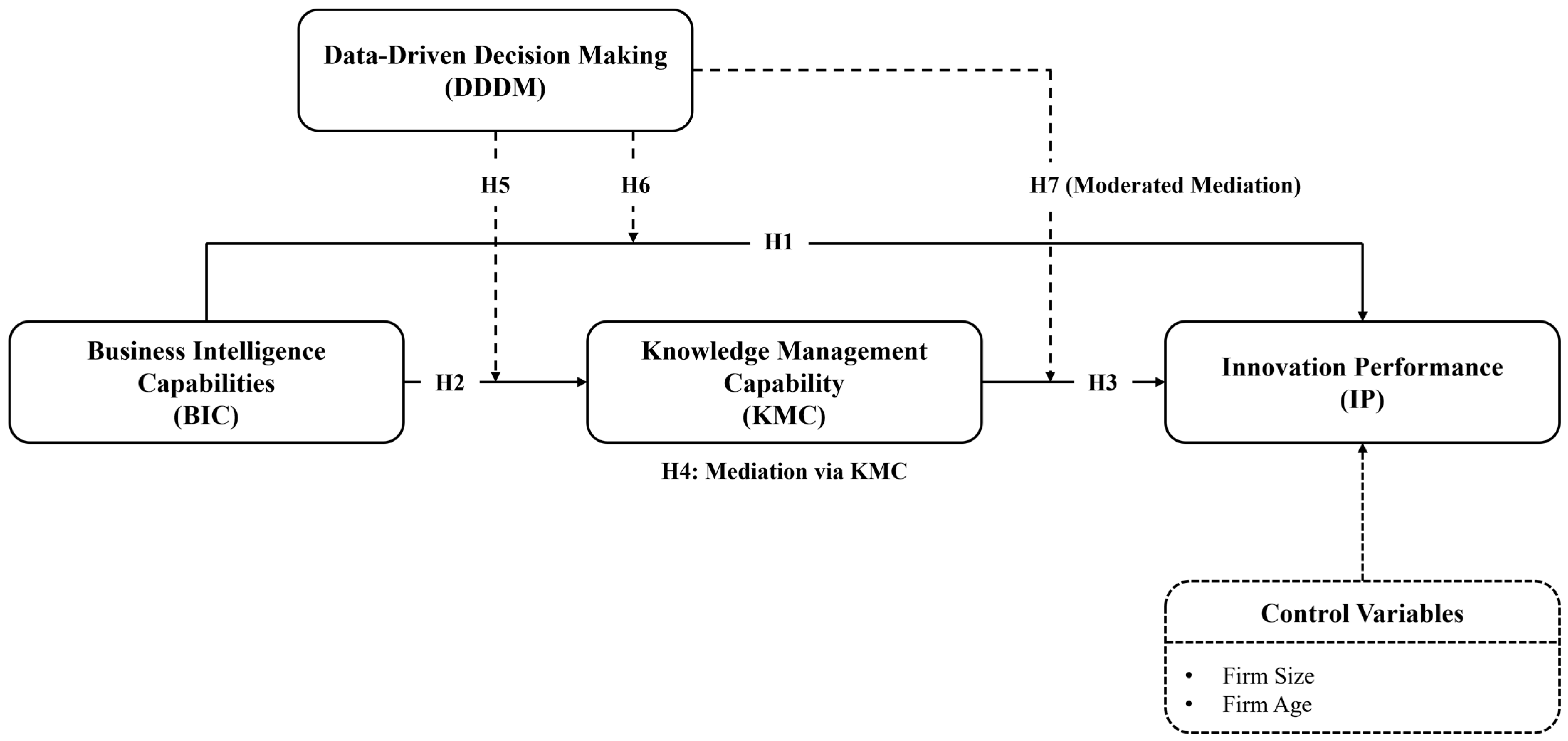
As illustrated in Figure 1, the conceptual framework integrates business intelligence capabilities, knowledge management capability, and innovation performance within a data-driven decision-making context. The model proposes that BICs directly enhance innovation performance and indirectly influence innovation through KMC. KMC functions as a central mediating mechanism that transforms analytical insights into actionable knowledge and innovative outcomes. Furthermore, data-driven decision making is positioned as a moderating variable that strengthens both the direct and indirect relationships, emphasizing the role of managerial behavior and organizational culture in leveraging BI investments. By incorporating moderated mediation, the framework offers a nuanced understanding of how and under what conditions BI capabilities translate into superior innovation performance in SMEs.
From a broader perspective, the framework can also be interpreted through a systems lens in which digital capabilities, knowledge processes, and managerial decision practices operate as interdependent components of an organizational capability system. In this system, business intelligence capabilities provide analytical inputs, knowledge management capability transforms these inputs into shared organizational knowledge, and data-driven decision making determines how effectively this knowledge is mobilized in innovation-related decisions. The framework therefore reflects several key system properties. First, complementarity arises from the mutually reinforcing interaction between analytical capabilities, knowledge processes, and decision practices. Second, bottlenecks may occur when one component of the system is underdeveloped, limiting the ability of other capabilities to generate innovation outcomes. Third, amplification effects emerge when strong decision practices enable organizations to more effectively convert analytical insights and knowledge resources into innovation performance. Finally, misalignment risks may arise when investments in digital analytics are not accompanied by appropriate knowledge processes or decision practices, reducing the overall effectiveness of the capability system. While the empirical model is estimated as a moderated-mediation structure, it analytically captures how the alignment of these complementary capabilities shapes innovation performance in SMEs.

3. Methodology

3.1. Study Context

SMEs represent a critical engine of economic growth, innovation, and employment in both developed and emerging economies. In service-dominated sectors such as hospitality, SMEs operate as complex socio-technical systems in which digital technologies, human knowledge, and decision-making structures interact to shape organizational performance. From a systems theory perspective, organizations can be understood as interdependent configurations of technological, human, and organizational subsystems whose effectiveness depends on the alignment and interaction among these components. Foundational systems theory emphasizes that organizational outcomes emerge from the coordinated functioning of these interconnected elements rather than from isolated technological adoption alone [85,86,87]. The hotel industry, in particular, is highly information-intensive and increasingly dependent on digital systems for managing customer relationships, pricing strategies, service customization, and operational efficiency [88]. However, unlike large hotel chains, SME hotels typically lack slack resources and formalized innovation infrastructures, making their performance outcomes more sensitive to how effectively digital capabilities are integrated into internal organizational processes [89]. This systemic view also aligns with innovation cooperation research, which suggests that innovation capability often emerges from the interaction of multiple knowledge sources and organizational actors rather than from single technological investments [90]. From a systems perspective, innovation performance in SMEs is therefore not driven solely by technology adoption, but by the alignment between business intelligence capabilities, knowledge management processes, and managerial decision-making routines embedded within the firm [19,91,92].
This study focuses on SME hotels operating in Jordan, an emerging economy where tourism constitutes a major contributor to economic activity and organizational survival depends heavily on adaptive innovation and strategic flexibility. Jordanian SME hotels face pronounced environmental uncertainty, demand volatility, and competitive pressures, while simultaneously operating under constraints related to financial capital, technological expertise, and skilled human resources [93]. Prior research suggests that such conditions amplify the importance of business intelligence capabilities as a mechanism for sense-making, opportunity recognition, and innovation-oriented decision support [94]. Yet, systems and innovation management literature consistently emphasizes that the performance impact of digital analytics depends on complementary organizational capabilities—particularly knowledge management capability and data-driven decision making—which enable firms to absorb, interpret, and act upon analytical insights [95,96,97]. Accordingly, Jordanian SME hotels provide a theoretically appropriate and empirically relevant context for examining how business intelligence capabilities are embedded within organizational systems to drive innovation performance.

3.2. Sample and Data Collection

This study adopted a quantitative research design using a structured questionnaire to empirically examine the relationships among business intelligence capabilities, knowledge management capability, data-driven decision making, and innovation performance in SMEs. The empirical context consists of small- and medium-sized hotels operating in Jordan, with a specific focus on hotels located in the capital city, Amman. Amman represents the core hub of tourism and hospitality activities in the country, hosting the largest concentration of SME hotels and serving as a focal point for digital adoption and competitive innovation in the sector [98]. Consistent with prior research on digital transformation and innovation in SMEs, hotel owners and senior managers were selected as key informants, as they are directly involved in strategic decision making, technology adoption, and the coordination of organizational resources [94,99,100,101]. Their positions enable them to provide informed assessments of business intelligence use, knowledge management practices, and innovation-related outcomes.
The sampling frame was developed based on official listings provided by the Jordanian Ministry of Tourism and Antiquities, which identifies registered hotels operating within the capital city. A simple random sampling technique was employed to ensure that all eligible SME hotels had an equal probability of selection, thereby reducing selection bias and enhancing the generalizability of the findings. Specifically, hotels were first randomly selected from the official registry using a random number procedure. After the random selection stage was completed, the selected hotel managers were contacted to introduce the study, explain the research objectives, and clarify the meaning of business intelligence within the context of hotel operations. This clarification step was conducted after the random sampling process and was intended to ensure that respondents clearly understood the survey concepts rather than to influence the selection of participants.
Data were collected through an online survey distributed via email, accompanied by a cover letter outlining the research objectives, confidentiality assurances, and voluntary participation [102]. A total of approximately 800 questionnaires were distributed, resulting in 328 returned responses. After excluding incomplete questionnaires and those that did not meet the inclusion criteria, 316 valid responses were retained for analysis, yielding an effective response rate of approximately 39.5%. This response rate is consistent with comparable survey-based studies in SME and digital innovation research and is considered adequate for multivariate analysis using structural equation modeling [89,94].
To assess the potential impact of non-response bias, an early–late respondent comparison was conducted following the procedure suggested by Armstrong and Overton [103]. Responses collected during the initial stage of data collection were compared with those obtained at later stages using independent sample t-tests across the main study constructs. The results indicated no statistically significant differences between early and late respondents, suggesting that non-response bias is unlikely to pose a serious threat to the validity of the findings.

3.3. Measures

All study constructs were measured using established multi-item scales adapted from prior research in business intelligence, knowledge management, data-driven decision making, and innovation performance to ensure content validity and theoretical consistency. Given that the respondents’ primary language was Arabic, the questionnaire was translated from English into Arabic and subsequently back-translated following Brislin’s [104] procedure to preserve semantic and conceptual equivalence. The translated instrument was reviewed by academic experts and industry practitioners in the hotel sector to assess clarity, relevance, and contextual appropriateness. A pilot test with SME hotel managers was conducted prior to full data collection, and minor wording adjustments were made based on their feedback. All measurement items were assessed using a five-point Likert scale ranging from 1 (“strongly disagree”) to 5 (“strongly agree”), consistent with common practice in organizational and information systems research. For transparency and to facilitate future replication, the full list of measurement items used in this study is provided in Appendix A (Table A1).
Business intelligence capabilities (BIC) were measured using a six-item scale capturing the firm’s ability to integrate heterogeneous data sources, ensure data consistency, conduct continuous business analysis, codify business knowledge, and facilitate cross-functional knowledge sharing. These items were adapted from Cheng et al. [29] and Alzghoul et al. [105], who conceptualize BI capabilities as higher-order organizational capabilities that enable firms to transform data into actionable insights. Knowledge management capability (KMC) was measured with seven items reflecting organizational processes for acquiring, generating, sharing, accessing, and applying knowledge for innovation-related activities. This scale was adapted from Mao et al. [38] and Gui et al. [71], in line with the KBV, which emphasizes the role of structured knowledge processes in converting information into innovation outcomes.
Data-driven decision making (DDDM) was measured using four items adapted from Cao et al. [106] and Goraya et al. [107], which conceptualize DDDM as an organizational practice reflecting the extent to which managerial decisions and innovation-related actions are guided by data-based insights rather than intuition alone. The items capture the firm’s reliance on analytical insights for service and product development, openness to data-informed idea generation, and the availability of data to support strategic and operational decision making. Innovation performance (IP) was operationalized as a multidimensional construct encompassing both product innovation performance and process innovation performance. Product innovation performance was measured using five items capturing novelty, technological advancement, development speed, and market introduction of new products and services, while process innovation performance was measured using four items reflecting technological competitiveness, process renewal, and speed of adopting new process technologies. These measures were adapted from Prajogo and Ahmed [108], Troise et al. [40], and Wang and Zhang [109]. Firm size (number of employees) and firm age (years of operation) were included as control variables, as they are commonly associated with differences in innovation capability and resource availability among SMEs [110].

3.4. Common Method Bias

Given that data for the independent, mediating, moderating, and dependent variables were collected from the same respondents using a single survey instrument, the potential for common method bias (CMB) was carefully addressed following recommended procedural and statistical remedies in the organizational and information systems literature [111]. Procedurally, several ex ante measures were implemented during the research design and data collection stages to minimize respondents’ evaluation apprehension and method-related artifacts. Specifically, respondents were assured of anonymity and confidentiality, reducing social desirability bias and encouraging candid responses [112]. The questionnaire was carefully structured to avoid ambiguous wording, double-barreled items, and common scale anchors that could induce response patterns. In addition, constructs were conceptually separated within the survey, and the study purpose was framed broadly to prevent respondents from inferring hypothesized relationships among variables [113].
To complement these procedural controls, multiple ex post statistical tests were conducted to assess the presence of CMB in the PLS-SEM context. First, Harman’s single-factor test was performed by loading all measurement items into an unrotated exploratory factor analysis. The results indicated that no single factor accounted for the majority of variance, suggesting that common method variance was unlikely to be a serious concern [112]. Second, following recent recommendations for variance-based SEM, full collinearity variance inflation factors (VIFs) were examined for all latent constructs. All VIF values were below the conservative threshold of 3.3, indicating the absence of pathological collinearity and providing further evidence that CMB did not substantially bias the model estimates [114].
Third, to provide a more rigorous assessment of potential method bias in the PLS-SEM framework, the unmeasured latent method construct (ULMC) technique was applied [115]. Following established procedures [116], all measurement items were linked to a common latent method factor in addition to their theoretical constructs. The results indicated that the method factor explained only a small proportion of the total variance (less than 5%), while the substantive structural path coefficients remained largely unchanged after controlling for the potential method factor [117]. These findings indicate that common method bias does not materially affect the relationships among the study constructs.
Taken together, the combination of procedural safeguards and multiple statistical assessments—including Harman’s single-factor test, full collinearity VIF analysis, and the ULMC approach—provides strong assurance that common method bias is unlikely to threaten the validity of the study’s findings.

3.5. Data Analysis Strategy

To test the proposed direct, indirect, and moderating relationships among business intelligence capabilities, knowledge management capability, data-driven decision making, and innovation performance, this study employed a two-stage analytical strategy combining Partial Least Squares Structural Equation Modeling (PLS-SEM) and Hayes’ PROCESS macro version 4.2. PLS-SEM was conducted using SmartPLS version 4.1.1.6, which is well suited for prediction-oriented information systems (IS) research, complex models involving mediation and moderation, and SME contexts characterized by moderate sample sizes and non-normal data distributions [118,119]. The analysis followed established PLS-SEM procedures by first assessing the measurement model (indicator reliability, internal consistency, convergent validity, and discriminant validity) and then evaluating the structural model through path coefficients, explained variance (R2), effect sizes (f2), predictive relevance (Q2), and collinearity diagnostics [120]. Direct, mediating, and moderating effects were tested using a bootstrapping procedure in SmartPLS version 4.1.1.6 with 5000 resamples to ensure robust statistical inference.
While PLS-SEM provides a comprehensive framework for simultaneously estimating measurement and structural relationships among latent constructs, Hayes’ PROCESS macro offers additional advantages for examining conditional process models using ordinary least squares (OLS) regression [121,122]. Specifically, PROCESS Model 59 allows for explicit probing of moderated mediation effects, including the estimation of conditional indirect effects at different levels of the moderator and the calculation of the index of moderated mediation, which provides a formal statistical test of whether the indirect effect varies significantly across levels of the moderator [123].
To further validate the conditional process structure of the model and strengthen the robustness of the findings, Hayes’ PROCESS macro (Model 59) was therefore employed as a complementary analysis to examine moderated mediation effects using ordinary least squares regression with 5000 bootstrap samples [123]. This complementary approach allows the study to leverage the strengths of both techniques: PLS-SEM for latent variable modeling and theory testing, and PROCESS Model 59 for detailed probing and confirmation of moderated mediation mechanisms. The combined use of SmartPLS 4 and PROCESS Model 59 provides a rigorous analytical framework consistent with best practices in contemporary IS research for examining how digital capabilities and data-driven decision-making practices jointly drive innovation performance in SMEs.

4. Results

4.1. Measurement Model Assessment

The measurement model was evaluated to assess indicator reliability, internal consistency reliability, convergent validity, and discriminant validity, following established PLS-SEM guidelines for variance-based SEM. This step is essential to ensure that the latent constructs adequately capture the underlying theoretical concepts before testing the structural relationships. In this study, innovation performance (IP) was conceptualized as a hierarchical construct composed of two first-order dimensions—product innovation performance (PROD) and process innovation performance (PROC) [108]. Consistent with prior innovation research, IP was modeled as a reflective–reflective second-order construct in the PLS-SEM framework, where both the higher-order construct and its dimensions are specified reflectively [124]. This specification assumes that the two dimensions represent manifestations of the broader innovation performance capability of the firm and therefore covary as outcomes of the same underlying construct.
Indicator reliability was first examined by inspecting standardized outer loadings and variance inflation factors (VIF). As reported in Table 1, all item loadings exceeded the recommended threshold of 0.70, indicating that each indicator explains a substantial portion of its corresponding construct variance [125]. Loadings ranged from 0.709 to 0.953, demonstrating strong indicator reliability across all constructs. In addition, all VIF values were below the conservative threshold of 3.3, suggesting that multicollinearity is not a concern and that common method variance is unlikely to bias the estimates [114].
Internal consistency reliability was assessed using Cronbach’s alpha (α) and composite reliability (CR). As shown in Table 1, Cronbach’s alpha values ranged from 0.881 to 0.954, while CR values ranged from 0.914 to 0.967. These values exceed the recommended minimum of 0.70, indicating a high level of internal consistency among the indicators of each construct [120]. This finding confirms that the measurement items reliably capture business intelligence capabilities, knowledge management capability, data-driven decision making, and innovation performance.
Convergent validity was evaluated using the average variance extracted (AVE). All constructs exhibited AVE values above the threshold of 0.50, ranging from 0.652 to 0.878, demonstrating that each construct explains more than half of the variance of its indicators [126]. This provides strong evidence of convergent validity and supports the adequacy of the measurement scales in capturing the intended latent variables.
Discriminant validity was assessed using the heterotrait–monotrait ratio (HTMT), which is considered a robust criterion for evaluating construct distinctiveness. As presented in Table 2, all HTMT values were below the conservative threshold of 0.85, indicating satisfactory discriminant validity among the constructs [127]. The highest HTMT value was observed between BIC and KMC (HTMT = 0.769). Although this value approaches the conservative threshold, it remains well below the recommended cutoff of 0.85, indicating acceptable discriminant validity [120]. The relatively strong association between these constructs is theoretically plausible because business intelligence capabilities provide the analytical infrastructure that facilitates knowledge acquisition, integration, and sharing processes within organizations [57,58,128]. However, despite their close relationship, BIC and KMC represent conceptually distinct capabilities: BIC primarily reflects technological and analytical capabilities for transforming data into insights, whereas KMC captures organizational processes for creating, disseminating, and applying knowledge across the firm.
Overall, the results of the measurement model assessment demonstrate that the constructs exhibit adequate reliability and validity, providing a solid foundation for subsequent evaluation of the structural model and hypothesis testing.

4.2. Structural Model Assessment

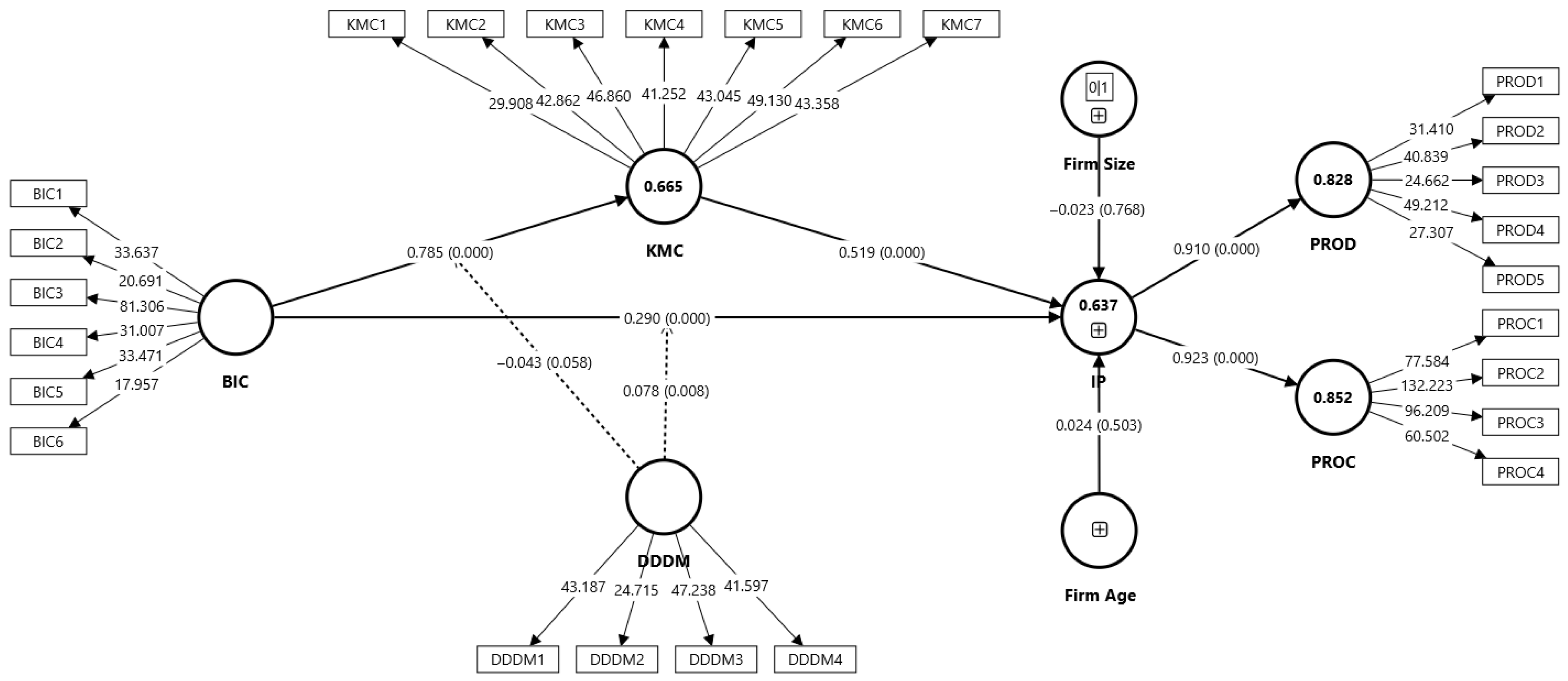
The structural model was evaluated using PLS-SEM with 5000 bootstrap resamples to examine the proposed direct, indirect (mediation), and interaction (moderation) effects [120]. Figure 2 presents the standardized path coefficients of the estimated model, while Table 3 reports the corresponding path estimates, standard errors, t-values, and significance levels.
The results provide strong support for the hypothesized direct relationships. BICs exert a significant and positive effect on IP (β = 0.290, t = 4.628, p < 0.001), supporting H1 and indicating that SMEs with stronger BI capabilities achieve higher levels of innovation outcomes. BICs also show a substantial positive influence on KMC (β = 0.785, t = 17.455, p < 0.001), providing robust support for H2 and underscoring the role of BI as a foundational digital capability that strengthens organizational knowledge processes. In turn, KMC significantly enhances IP (β = 0.519, t = 8.408, p < 0.001), supporting H3 and highlighting the importance of structured knowledge acquisition, sharing, and application for innovation performance in SMEs.
Regarding the control variables, neither firm age (β = 0.024, p = 0.503) nor firm size (β = −0.023, p = 0.768) exhibits a significant relationship with IP. These results suggest that, within the sampled SMEs, innovation performance is driven more by digital and knowledge-based capabilities than by structural firm characteristics.

4.3. Mediation Analysis

The mediation analysis confirms the indirect effect of BIC on IP through KMC. As shown in Table 3, the indirect path from BIC to IP via KMC is positive and statistically significant (β = 0.405, t = 7.998, p < 0.001), supporting H4. This finding indicates that a substantial portion of BI’s impact on innovation performance is transmitted through enhanced knowledge management capability, suggesting that BI-driven insights translate into innovation primarily when embedded within effective organizational knowledge processes.

4.4. Moderation Analysis

The moderating role of DDDM was examined by estimating interaction effects. The interaction between DDDM and BIC on KMC is negative and marginally insignificant (β = −0.043, t = 1.894, p = 0.058), leading to the rejection of H5. This result suggests that DDDM does not significantly alter the extent to which BI capabilities strengthen knowledge management processes. Although the interaction coefficient is not statistically significant, the negative direction of the coefficient is theoretically noteworthy. One possible explanation is that strong data-driven decision cultures may emphasize the rapid translation of analytical insights into managerial decisions and operational actions rather than the broader development of organizational knowledge processes [129,130,131]. In such contexts, BI outputs may be used primarily for immediate decision execution rather than for systematic knowledge sharing, codification, or learning activities that underpin knowledge management capability. This interpretation is consistent with the view that DDDM operates primarily at the decision-execution layer of organizational systems, strengthening the conversion of capabilities into performance outcomes rather than influencing the formation of knowledge processes themselves [74].
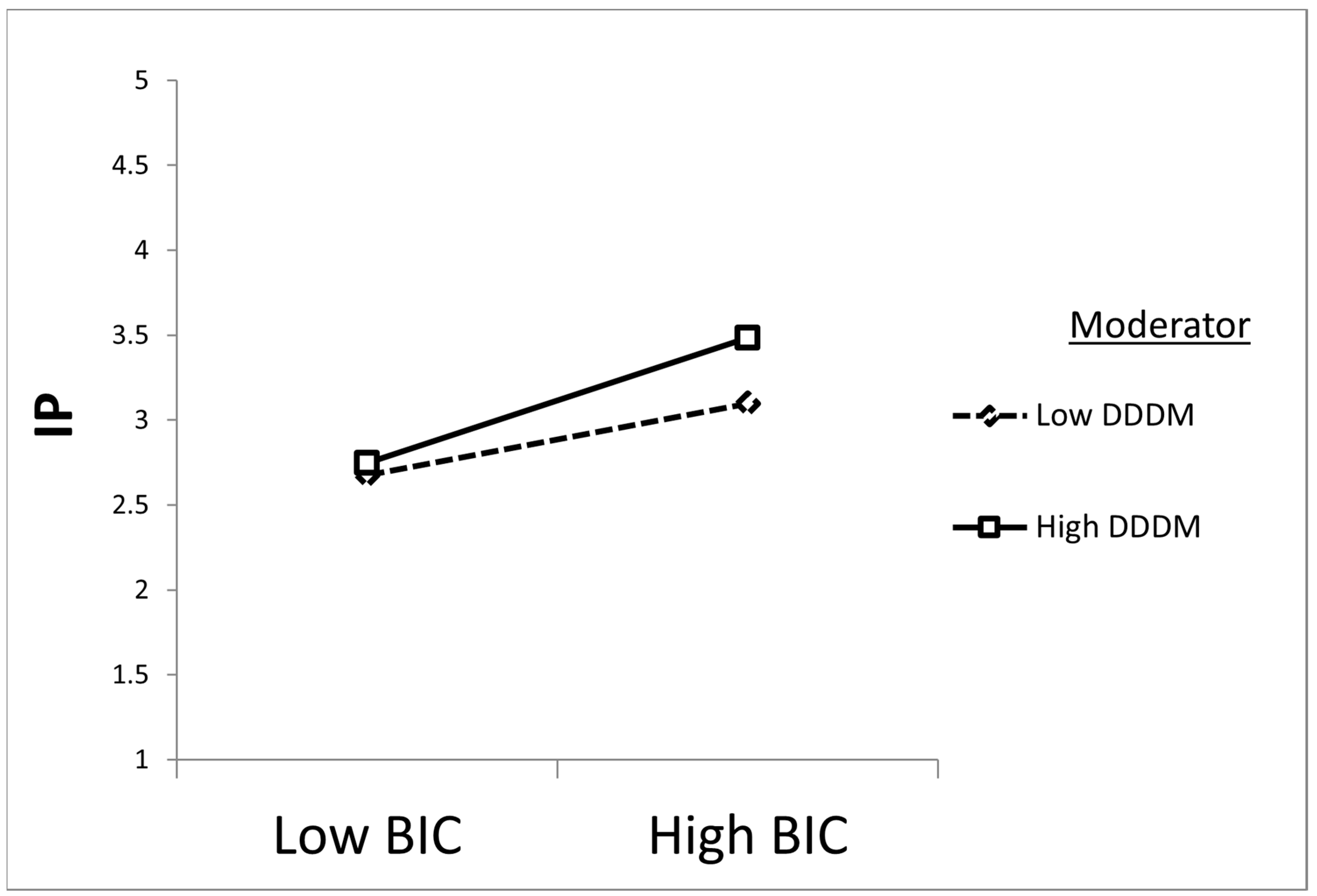
In contrast, the interaction between DDDM and BIC on IP is positive and statistically significant (β = 0.078, t = 2.635, p = 0.008), providing support for H6. As illustrated in Figure 3, higher levels of DDDM amplify the positive effect of BI capabilities on innovation performance, indicating that SMEs that rely more heavily on data-based insights are better able to convert BI capabilities into tangible innovation outcomes. The simple slope pattern presented in Figure 3 shows that the relationship between BIC and innovation performance is stronger under high levels of DDDM than under low levels of DDDM. The statistical significance of this slope difference is confirmed by the bootstrapped interaction effect reported in Table 3, which indicates that the moderating influence of DDDM on the BIC–innovation performance relationship is positive and significant.

4.5. Structural Model Predictive Power

In addition to the path coefficient analysis, the explanatory and predictive power of the structural model was assessed using coefficients of determination (R2), effect sizes (f2), and predictive relevance (Q2). The model explains a substantial proportion of variance in both endogenous constructs, with R2 values of 0.665 for KMC and 0.637 for IP, indicating strong explanatory power in line with recommended thresholds for PLS-SEM [120,125]. To account for model complexity and the inclusion of interaction terms, adjusted R2 values were also examined. The adjusted R2 values were 0.662 for KMC and 0.629 for IP, which are very close to the corresponding R2 estimates. This small difference indicates that the explanatory power of the model is not artificially inflated by the number of predictors and suggests that the model maintains good parsimony.
Predictive relevance assessment further confirms the model’s robustness, as Q2 values exceed zero for both KMC (Q2 = 0.777) and IP (Q2 = 0.626), demonstrating high out-of-sample predictive capability. Effect size analysis reveals that BICs exert a large effect on KMC (f2 = 0.897), underscoring the foundational role of BI in shaping organizational knowledge processes. In contrast, the direct effect of BIC on IP is small to moderate (f2 = 0.091), while KMC shows a medium effect on IP (f2 = 0.246). Collectively, these results indicate that BICs primarily influence IP through their strong impact on KMC, reinforcing the centrality of knowledge-based mechanisms in translating digital capabilities into innovation outcomes in SMEs. Moreover, the minimal difference between R2 and adjusted R2 values suggests that the inclusion of interaction terms does not lead to model overfitting, supporting the overall parsimony and stability of the structural model.

4.6. Post-Hoc Analysis: Moderated Mediation

To further validate the robustness of the PLS-SEM findings and to examine the conditional indirect effect proposed in H7, a post-hoc moderated mediation analysis was conducted using Hayes’ PROCESS macro (Model 59) with 5000 bootstrap samples [123,132]. This additional analysis was employed to verify whether DDDM conditions the indirect effect of BIC on IP through KMC.
The results indicate that BIC exerts a strong positive effect on KMC (β = 0.842, p < 0.001), while the interaction term between BIC and DDDM on KMC was not statistically significant (β = −0.053, p = 0.129), consistent with the PLS-SEM moderation results. In the outcome model, both BIC (β = 0.269, p < 0.001) and KMC (β = 0.407, p < 0.001) had significant positive effects on IP. Importantly, the interaction effects of BIC × DDDM (β = 0.206, p < 0.001) and KMC × DDDM (β = 0.130, p = 0.003) on IP were significant, supporting the presence of conditional effects in the second stage of the model.
The conditional indirect effects of BIC on IP via KMC increased systematically across levels of DDDM. Specifically, the indirect effect was weakest at low DDDM (β = 0.237, 95% CI [0.115, 0.353]), moderate at mean DDDM (β = 0.384, 95% CI [0.297, 0.474]), and strongest at high DDDM (β = 0.546, 95% CI [0.392, 0.700]). As all confidence intervals excluded zero, H7 is supported, indicating a significant moderated mediation effect. These findings demonstrate that higher levels of data-driven decision making amplify the extent to which BI-enabled knowledge management translates into superior innovation performance.
Although the conditional effects of BIC on KMC appear to vary across levels of DDDM, this pattern should be interpreted cautiously because the interaction term (BIC × DDDM → KMC) remains statistically non-significant. This indicates that DDDM does not meaningfully alter the strength of the BIC–KMC relationship. Instead, the observed differences across conditional estimates primarily reflect the strong main effect of BIC on KMC combined with the direct influence of DDDM within the model. In other words, DDDM does not significantly moderate the knowledge-creation stage (BIC → KMC), but rather strengthens the subsequent conversion of capabilities into innovation outcomes, as evidenced by the significant interactions observed in the second-stage relationships (BIC × DDDM → IP and KMC × DDDM → IP). This interpretation is consistent with the theoretical argument that data-driven decision making primarily operates at the decision-execution level rather than the knowledge-generation stage. The results of the moderated mediation analysis are summarized in Table 4.

5. Discussion and Implications

5.1. Discussion of Key Findings

This study advances digital innovation research in SMEs by demonstrating that BICs function as a strategic resource whose value is realized primarily through knowledge-based mechanisms, thereby offering a clear integration of the resource-based view (RBV) and the knowledge-based view (KBV). Consistent with RBV, the significant direct effect of business intelligence capabilities (BIC) on innovation performance confirms that BIC constitute valuable, firm-specific digital resources that enhance SMEs’ ability to sense opportunities and support innovation-oriented activities [1,19,29]. However, the comparatively stronger indirect effect through knowledge management capability (KMC) reveals an important boundary condition of RBV; digital resources alone do not generate sustained innovation advantages unless they are embedded in organizational knowledge processes. This finding reinforces recent arguments that the strategic value of digital technologies lies not in their possession, but in how they are internally mobilized and recombined [3,4].
From a KBV perspective, the results clearly position knowledge management capability as the central mechanism that transforms BI-enabled data into innovation outcomes. The strong mediation effect indicates that BI capabilities enhance innovation performance primarily by strengthening firms’ abilities to acquire, share, and apply knowledge across organizational boundaries. This supports the view that knowledge integration, rather than information availability per se, is the key driver of innovation in resource-constrained SMEs [9,38,91]. By empirically validating this pathway, the study bridges RBV and KBV by showing that BI capabilities represent a digital input, while KMC constitutes the organizational process through which that input is converted into innovation performance [26,93].
Although the discriminant validity assessment confirms that business intelligence capabilities and knowledge management capability represent distinct constructs, the relatively strong correlation observed between them reflects their complementary roles within digital innovation systems. BI capabilities primarily represent the technological and analytical infrastructure that enables firms to collect, integrate, and analyze large volumes of data, whereas knowledge management capability captures the organizational routines that transform these insights into shared knowledge and actionable practices [57,58,95,128,133]. In this sense, BI capabilities provide the informational foundation, while KMC governs how that information is internalized, disseminated, and applied across the organization. The strong association between the two constructs therefore reflects functional complementarity rather than conceptual redundancy, which is consistent with RBV and KBV perspectives emphasizing that digital resources and knowledge processes jointly shape innovation outcomes in organizations undergoing digital transformation.
The findings further refine this integrated perspective by clarifying the role of data-driven decision making (DDDM). While DDDM does not significantly alter the relationship between BIC and KMC, it positively moderates both the direct and indirect effects of BIC on innovation performance. This pattern suggests that DDDM operates not as a foundational knowledge-building capability, but as a decision-execution mechanism that amplifies the performance returns of existing digital and knowledge-based resources. In RBV–KBV terms, DDDM enhances the deployment efficiency of BI-enabled knowledge rather than reshaping its creation. This interpretation aligns with systems and innovation research emphasizing that data-driven decision practices improve innovation by accelerating feedback loops, reducing interpretive ambiguity, and strengthening the alignment between analytical insights and strategic action [7,106,107].
The non-significant interaction between DDDM and BIC in predicting KMC also provides an informative insight. Although the coefficient was negative and marginally insignificant, this pattern may reflect the possibility that highly structured data-driven decision routines do not necessarily stimulate the formation of organizational knowledge processes. In SMEs, knowledge creation and sharing often emerge through informal interactions, experiential learning, and collaborative sense-making rather than purely analytical decision routines. Excessive reliance on formal data-driven procedures may therefore unintentionally constrain exploratory knowledge exchanges by emphasizing efficiency and evidence-based validation over experimentation [134,135,136,137]. In addition, several contextual and methodological factors may help explain this pattern. First, the measurement of DDDM captures managerial reliance on analytical insights for decision making, which may influence innovation execution more strongly than internal knowledge generation processes. Second, the cross-sectional nature of the study may not fully capture the temporal dynamics through which data-driven practices gradually shape organizational knowledge routines. Third, contextual conditions specific to SMEs in emerging economies may limit the integration of data analytics into everyday knowledge-sharing practices, particularly when digital skills and analytical capabilities remain unevenly distributed across employees.
Finally, the absence of significant effects associated with firm size and age reinforces the empirical insight that innovation performance in SMEs is shaped less by structural endowments and more by how effectively digital and knowledge-based capabilities are orchestrated within the firm. This finding supports emerging systems-oriented views that SMEs compete through adaptive capability configurations rather than scale-based advantages [10,29,94]. Collectively, the study contributes to the systems literature by offering a coherent RBV–KBV framework that explains how BI capabilities, knowledge management capability, and data-driven decision making interact as a socio-technical system to drive innovation performance in SMEs undergoing digital transformation.

5.2. Theoretical Implications

This study makes several important theoretical contributions by advancing and integrating the RBV and the KBV to explain how business intelligence capabilities translate into innovation performance in SMEs. While RBV has long emphasized that firm-specific resources such as digital technologies and analytics capabilities can be sources of competitive advantage, it offers only a partial explanation of how such resources are converted into sustained innovation outcomes in practice [138,139,140]. This study shows that although business intelligence capabilities can directly support innovation performance, their strategic value cannot be fully understood without accounting for the internal mechanisms through which digital resources are transformed into organizational knowledge. This highlights a key limitation of RBV when applied in isolation; possessing valuable digital resources is insufficient to explain sustained innovation performance unless the internal processes that enable knowledge conversion are explicitly theorized [3,4].
Second, the study extends KBV by empirically validating knowledge management capability as the central micro-foundation that operationalizes the value of digital resources. The strong mediating role of KMC shows that BI-enabled data only enhances innovation performance when firms are capable of systematically acquiring, sharing, integrating, and applying knowledge across organizational functions. This finding advances KBV by moving beyond abstract claims about knowledge as a strategic asset and demonstrating how structured knowledge processes function as the missing link between digital inputs and innovation outputs, particularly in resource-constrained SME contexts [9,38,91,141]. In doing so, the study clarifies that knowledge management capability is not merely complementary to digital resources, but constitutive of their innovation value.
Third, this research contributes to the emerging systems-oriented literature by theorizing DDDM as a boundary condition that governs the effectiveness of RBV–KBV integration. The moderation and moderated mediation results indicate that DDDM does not significantly influence the formation of knowledge management capability, but it does amplify both the direct and indirect effects of BI capabilities on innovation performance. This distinction refines existing theory by showing that DDDM operates at the decision-execution level rather than the knowledge-creation level, enhancing the conversion of BI-enabled knowledge into innovative outcomes [78,79]. This insight complements recent arguments that decision-making practices shape the performance returns of digital and knowledge-based capabilities without necessarily altering their underlying structure [7,106,107].
From a systems perspective [85,86,87], the findings further demonstrate that digital innovation in SMEs emerges from the interaction of multiple organizational subsystems rather than from isolated capabilities. Business intelligence capabilities function as the technological subsystem that generates analytical insights, knowledge management capability represents the organizational learning subsystem that transforms these insights into usable knowledge, and data-driven decision making reflects the managerial subsystem that determines whether such knowledge is effectively translated into innovation outcomes [58,142,143]. The empirical results show that innovation performance is strengthened when these subsystems operate in alignment, illustrating the system properties of complementarity and amplification within the organizational capability architecture. At the same time, the non-significant moderation of the BIC–KMC relationship suggests that certain subsystem interactions remain structurally independent, highlighting potential bottlenecks or boundaries in how digital insights are transformed into organizational knowledge. In this sense, the study advances systems thinking about digital innovation by demonstrating how the alignment of technological, knowledge, and managerial subsystems generates emergent innovation outcomes that cannot be explained by any single capability alone.
Finally, the analysis also indicates that the control variables—firm size and firm age—were not statistically significant predictors of innovation performance within the estimated model. Rather than suggesting that these structural characteristics have no influence on innovation outcomes, this result may indicate that the digital and knowledge-based capabilities examined in this study capture a substantial portion of the variance typically associated with firm characteristics. This finding suggests that the effectiveness of innovation in SME contexts may depend more strongly on capability configuration and organizational processes than on structural attributes alone, supporting a capability orchestration perspective in which SMEs compete through the systemic alignment of digital resources, knowledge processes, and decision-making practices rather than through structural endowments alone [2,109,144]. Overall, this study advances theory by showing that RBV explains the “what” of digital advantage, KBV explains the “how,” and data-driven decision making explains the “when” such advantages materialize, offering a more complete and integrative explanation of innovation performance in digitally transforming SMEs.

5.3. Practical Implications

This study offers clear and actionable implications for SME managers seeking to orchestrate digital, knowledge-based, and decision-making capabilities to enhance innovation performance. First, the findings suggest that investments in business intelligence (BI) technologies should not be treated as standalone IT initiatives. Instead, SME managers need to orchestrate BI capabilities as strategic resources by embedding them into everyday managerial routines, innovation processes, and cross-functional workflows. Simply acquiring dashboards, analytics tools, or reporting systems is unlikely to yield innovation benefits unless these tools are deliberately aligned with how knowledge is created, shared, and applied within the organization. In practice, this requires managers to institutionalize simple routines that ensure BI outputs are regularly used in operational discussions. For example, SME hotels can implement short weekly dashboard review meetings in which managers examine key customer, pricing, and service performance indicators generated by BI systems. Assigning clear data ownership—such as designating department heads responsible for interpreting specific metrics—can further strengthen accountability and ensure that analytical insights inform daily operational decisions. Managers should therefore prioritize BI solutions that support integration across departments and translate data into actionable insights relevant to service design, process improvement, and customer experience innovation.
Second, the strong mediating role of KMC highlights the importance of developing organizational mechanisms that transform BI-generated data into usable knowledge. For SME managers, this means investing in lightweight but effective knowledge practices that fit resource-constrained environments. Examples of such practices include short cross-department learning sessions where managers discuss customer feedback trends identified through BI reports, structured post-service debrief meetings following major operational events (e.g., peak tourist seasons or promotional campaigns), and the use of simple shared digital repositories where operational insights and best practices are documented. Rather than adopting complex or costly knowledge management systems, SME hotels can focus on fostering routines that encourage employees to interpret data collectively, reflect on customer and operational insights, and apply lessons learned to innovation-related decisions. These lightweight routines allow organizations to convert dispersed operational experiences into shared organizational knowledge without requiring sophisticated knowledge management infrastructure. In this sense, KMC acts as the organizational “bridge” that allows BI investments to translate into tangible innovation outcomes.
Third, the findings underscore the role of data-driven decision making (DDDM) as a critical execution-level capability that strengthens the impact of BI on innovation performance. Managers should actively cultivate decision-making practices that rely on data-based insights when evaluating new service ideas, refining operational processes, or responding to market changes. One practical approach is to introduce simple decision checkpoints in which major operational or innovation-related decisions—such as pricing changes, service design modifications, or marketing campaigns—must be supported by relevant data evidence generated through BI systems. Establishing such decision checkpoints encourages managers to justify proposals using customer analytics, occupancy trends, or operational performance indicators rather than relying solely on intuition. Importantly, the results indicate that DDDM amplifies innovation outcomes even when it does not directly enhance knowledge management capability. This suggests that managers should emphasize the systematic use of analytical evidence during decision execution, for example by integrating BI reports into routine management meetings, innovation planning discussions, and service improvement reviews. Encouraging managers and frontline supervisors to challenge intuition-based decisions with evidence can significantly improve the returns from existing BI and knowledge resources.
Finally, the findings indicate that innovation performance in SMEs is driven less by structural conditions and more by how effectively managers orchestrate digital, knowledge, and decision-making capabilities. This insight is particularly valuable for SME managers operating in emerging economies, where scaling resources is often difficult. The study demonstrates that SMEs can compete effectively by strategically aligning BI capabilities, knowledge management processes, and data-driven decision practices, regardless of organizational size or maturity. In practical terms, SME hotels can achieve this alignment by combining regular BI dashboard reviews, structured knowledge-sharing routines, and evidence-based decision checkpoints within their managerial workflows. These relatively simple managerial routines allow organizations to leverage existing digital and knowledge resources more effectively without requiring substantial financial investments. By adopting a systemic mindset toward capability orchestration, SME managers can enhance innovation performance while operating within the financial and organizational constraints typical of small and medium-sized enterprises.

5.4. Limitations and Future Research

Despite its contributions, this study has several limitations that open avenues for future research. First, the use of a cross-sectional research design limits the ability to make strong causal inferences about the dynamic relationships among business intelligence capabilities, knowledge management capability, and innovation performance. Future studies could employ longitudinal or panel data designs to capture how these capabilities co-evolve over time and how capability orchestration unfolds during different stages of digital transformation in SMEs. Second, the study relies on self-reported perceptual measures collected from SME managers, which may be subject to common method bias and subjective evaluation, despite the procedural and statistical remedies applied. Moreover, the use of single-source data implies that the same respondents provided information on both organizational capabilities and innovation outcomes, which may introduce perceptual bias when managers assess their firm’s innovation performance relative to competitors. Although managers are typically well positioned to evaluate strategic capabilities and innovation activities within their organizations, such subjective assessments may not always fully capture objective competitive performance. Consequently, future research could strengthen construct validity by integrating multi-source data, such as objective innovation indicators, archival performance records, or matched data from employees, customers, or external partners. Third, the empirical context focuses on SMEs within a specific service-oriented and emerging economy setting, which may limit the generalizability of the findings. Replication studies across different industries (e.g., manufacturing, technology-intensive sectors) and institutional environments would help assess the boundary conditions of the proposed RBV–KBV framework. Finally, future research could extend the model by examining additional capability configurations, such as organizational agility, learning orientation, or digital leadership, as complementary mechanisms through which BI-enabled knowledge translates into sustained innovation outcomes in SMEs.

Author Contributions

Writing—original draft, H.R.A.; Supervision, O.L.E.; Validation, H.R.A. and O.L.E.; Writing—review and editing, H.R.A. All authors have read and agreed to the published version of the manuscript.

Funding

This research received no external funding.

Institutional Review Board Statement

The study was conducted in accordance with the Declaration of Helsinki and approved by the Girne American University, Social Sciences Ethics Committee.

Informed Consent Statement

All participants in this study provided their informed consent.

Data Availability Statement

The data from this study can be requested from the corresponding author, Hashim Rakan Alshareef.

Conflicts of Interest

The authors report no conflicts of interest.

Appendix A. Measurement Items

Table A1. Measurement Items Used in the Study.
ConstructCodeMeasurement ItemsSource
Business Intelligence Capabilities (BIC)Cheng et al. [29]; Alzghoul et al. [105]
BI1Compared with competitors, we can integrate diversified available data better.
BI2The data from different data sources in our hotel is more mutually consistent than competitors.
BI3Compared with competitors, our hotel is well synchronized with other organizational databases in targeted markets.
BI4Compared with competitors, we comprehensively analyze business information on an ongoing basis.
BI5Compared with competitors, we have a better ability for business knowledge codification.
BI6Compared with competitors, employees from different departments in our hotel share knowledge and insights smoothly.
Knowledge Management Capability (KMC)Mao et al. [38]; Gui et al. [71]
KMC1My hotel has processes to gain knowledge about suppliers, customers, and partners.
KMC2My hotel can generate new knowledge from existing knowledge.
KMC3My hotel has processes in place to distribute knowledge throughout the organization.
KMC4My hotel holds periodic meetings to inform employees about the latest innovations.
KMC5My hotel has formal processes to share best practices across different activities.
KMC6In my hotel, knowledge is accessible to those who need it.
KMC7My hotel has processes for using knowledge to develop new products or services.
Data-Driven Decision Making (DDDM)Cao et al. [106]; Goraya et al. [107]
DDDM1We use data-based insights for the creation of new services or products.
DDDM2We depend on data-based insights when making important decisions.
DDDM3We are open to new ideas that challenge current practices when supported by data-driven insights.
DDDM4Our hotel has sufficient data available to support decision making.
Product Innovation Performance (PROD)Prajogo and Ahmed [108]; Troise et al. [40]
PROD1The level of novelty of our hotel’s new products and services.
PROD2The use of latest technological innovations in new products and services.
PROD3The speed of new product and service development.
PROD4The number of new products and services introduced to the market.
PROD5The number of new products and services that are first-to-market.
Process Innovation Performance (PROC)Prajogo and Ahmed [108]; Troise et al. [40]
PROC1The technological competitiveness of our hotel’s processes.
PROC2The speed at which the hotel adopts new process technologies.
PROC3The novelty of technologies used in organizational processes.
PROC4The rate of change in processes, techniques, and technologies.

References

  1. Olszak, C.M. Business Intelligence Systems for Innovative Development of Organizations. Procedia Comput. Sci. 2022, 207, 1754–1762. [Google Scholar] [CrossRef]
  2. Chen, S.; Cai, J.; Bogatyreva, K.; Quansah, E. Digital Transformation of SMEs in Times of Uncertainty: Effectuation Perspective. J. Entrep. Emerg. Econ. 2024, 17, 483–506. [Google Scholar] [CrossRef]
  3. Feliciano-Cestero, M.M.; Ameen, N.; Kotabe, M.; Paul, J.; Signoret, M. Is Digital Transformation Threatened? A Systematic Literature Review of the Factors Influencing Firms’ Digital Transformation and Internationalization. J. Bus. Res. 2023, 157, 113546. [Google Scholar] [CrossRef]
  4. Ramdani, B.; Raja, S.; Kayumova, M. Digital Innovation in SMEs: A Systematic Review, Synthesis and Research Agenda. Inf. Technol. Dev. 2022, 28, 56–80. [Google Scholar] [CrossRef]
  5. Upham, P.; Kaufman, S.; Bögel, P.M.; Raven, R. Behaviours and Practices in Socio-Technical Systems and Sustainability Transitions: Editorial to the Virtual Special Issue. J. Clean. Prod. 2025, 511, 145674. [Google Scholar] [CrossRef]
  6. Elsa, D.; Indrawati, H.; Caska, C. Digital Transformation in SMEs: Global Maps and Trends of Research. Strategy Leadersh. 2025, 53, 132–159. [Google Scholar] [CrossRef]
  7. Zhang, M.; Wang, Y.; Wang, W. Big Data Analytics Managerial Skills and Organizational Agility: A Moderated Mediation Model. Ind. Manag. Data Syst. 2024, 125, 168–191. [Google Scholar] [CrossRef]
  8. Durman, S.; Iyiola, K.; Alzubi, A.B.; Aljuhmani, H.Y. Dynamic Capabilities in Action: Digital Capability, Business Model Innovation and Absorptive Capacity. Manag. Decis. 2025. [Google Scholar] [CrossRef]
  9. Secundo, G.; De Turi, I.; Garzoni, A.; Posa, M.; Barile, D. Unveiling Knowledge Practices and Microfoundations of Knowledge-Based Dynamic Capabilities for Digital Transformation in SMEs through Industry–University Perspective. J. Knowl. Manag. 2025. [Google Scholar] [CrossRef]
  10. Sagala, G.H.; Őri, D. Toward SMEs Digital Transformation Success: A Systematic Literature Review. Inf. Syst. E-Bus. Manag. 2024, 22, 667–719. [Google Scholar] [CrossRef]
  11. Dung, L.T.; Tien, H.T.; Linh, T.M.; Diep, N.T.N.; Hieu, H.V.; Chon, L.V. Going International by Going Digital: Digital Capabilities, Transformation, and Leadership in Export Performance. Glob. Bus. Org. Exc. 2026, 45, 280–302. [Google Scholar] [CrossRef]
  12. Denicolai, S.; Zucchella, A.; Magnani, G. Internationalization, Digitalization, and Sustainability: Are SMEs Ready? A Survey on Synergies and Substituting Effects among Growth Paths. Technol. Forecast. Soc. Change 2021, 166, 120650. [Google Scholar] [CrossRef]
  13. Holl, A.; Rama, R. Spatial Patterns and Drivers of SME Digitalisation. J. Knowl. Econ. 2024, 15, 5625–5649. [Google Scholar] [CrossRef]
  14. Volpentesta, T.; Spahiu, E.; De Giovanni, P. A Survey on Incumbent Digital Transformation: A Paradoxical Perspective and Research Agenda. Eur. J. Innov. Manag. 2023, 26, 478–501. [Google Scholar] [CrossRef]
  15. Meng, X.; Wang, Z.; Tian, Q.; Fan, X. Paradox or Synergy Between Digital Capability and Corporate Social Responsibility to Achieve Ambidextrous Innovation in Chinese Firms. Sustainability 2025, 17, 7713. [Google Scholar] [CrossRef]
  16. Fang, Z.; Hattakitpanitchakul, W.; Khunthong, U. Resolving the Technology–Performance Paradox: A Capability–Technology–Performance Model of SME Digital Transformation. Edelweiss Appl. Sci. Technol. 2025, 9, 517–540. [Google Scholar] [CrossRef]
  17. Obitade, O.P. The Mediating Role of Knowledge Management and Information Systems Selection Management Capability on Big Data Analytics Quality and Firm Performance. J. Decis. Syst. 2022, 32, 201–241. [Google Scholar] [CrossRef]
  18. Chen, L.; Fong, P.S.W. Revealing Performance Heterogeneity through Knowledge Management Maturity Evaluation: A Capability-Based Approach. Expert Syst. Appl. 2012, 39, 13523–13539. [Google Scholar] [CrossRef]
  19. Alharthi, S. Harnessing Knowledge: The Robust Role of Knowledge Management Practices and Business Intelligence Systems in Developing Entrepreneurial Leadership and Organizational Sustainability in SMEs. Sustainability 2025, 17, 6264. [Google Scholar] [CrossRef]
  20. Orero-Blat, M.; Palacios-Marqués, D.; Leal-Rodríguez, A.L.; Ferraris, A. Beyond Digital Transformation: A Multi-Mixed Methods Study on Big Data Analytics Capabilities and Innovation in Enhancing Organizational Performance. Rev. Manag. Sci. 2025, 19, 649–685. [Google Scholar] [CrossRef]
  21. Ndlovu, M.N.; Ndlovu, E.N.; Ebewo, P.E. The Intersection of Business Models and SME Performance: A Bibliometric Analysis of Research Trends. Adm. Sci. 2025, 15, 143. [Google Scholar] [CrossRef]
  22. Lozada, N.; Arias-Pérez, J.; Henao-García, E.A. Unveiling the Effects of Big Data Analytics Capability on Innovation Capability through Absorptive Capacity: Why More and Better Insights Matter. J. Enterp. Inf. Manag. 2023, 36, 680–701. [Google Scholar] [CrossRef]
  23. Mata, M.N.; Moleiro Martins, J.; Inácio, P.L. Collaborative Innovation, Strategic Agility, & Absorptive Capacity Adoption in SMEs: The Moderating Effects of Customer Knowledge Management Capability. J. Knowl. Manag. 2024, 28, 1116–1140. [Google Scholar] [CrossRef]
  24. Biagi, V.; Russo, A. Data Model Design to Support Data-Driven IT Governance Implementation. Technologies 2022, 10, 106. [Google Scholar] [CrossRef]
  25. Bocoya-Maline, J.; Calvo-Mora, A.; Rey Moreno, M. Predictive and Mediation Model for Decision-Making in the Context of Dynamic Capabilities and Knowledge Management. Manag. Decis. 2023, 62, 2164–2188. [Google Scholar] [CrossRef]
  26. Cuthbertson, R.W.; Furseth, P.I. Digital Services and Competitive Advantage: Strengthening the Links between RBV, KBV, and Innovation. J. Bus. Res. 2022, 152, 168–176. [Google Scholar] [CrossRef]
  27. Huynh, A.N.Q.; Phan, N.T.B. Digitalization, Innovation and Firm Outcomes: A Systematic Review. J. Financ. Econ. Policy 2025. [Google Scholar] [CrossRef]
  28. Arno, P. SME Business Agility Framework: A Comprehensive Review of Capabilities, Dimensions, and Enablers. IEEE Access 2025, 13, 91161–91181. [Google Scholar] [CrossRef]
  29. Cheng, C.; Zhong, H.; Cao, L. Facilitating Speed of Internationalization: The Roles of Business Intelligence and Organizational Agility. J. Bus. Res. 2020, 110, 95–103. [Google Scholar] [CrossRef]
  30. Gao, S.; Teh, P.-L.; Ho, H.H.P. Digital Transformation and Innovation in Small and Medium Enterprises (SMEs): A Systematic Review and Future Research Agenda. Cogent Bus. Manag. 2026, 13, 2612775. [Google Scholar] [CrossRef]
  31. Kampoowale, I. Linking Big Data Analytics Capabilities to Organizational Learning through Knowledge Management and Data-Driven Decision-Making. TQM J. 2025. [Google Scholar] [CrossRef]
  32. Chishamba, J. Conceptualizing Sustainable Competitive Advantage: Theories, Themes, and Varying Perspectives. Acta Univ. Danubius. Acon. 2024, 20, 191–215. [Google Scholar]
  33. De Bernardi, P.; Forliano, C.; Bertello, A. Digital Transformation in SMEs: A Systematic Review and Future Directions. In Proceedings of the Euromed Academy of Business Conference Book of Proceedings; EuroMed Press: Copenhagen, Denmark, 2020; ISBN 978-9963-711-89-5. [Google Scholar]
  34. Hoang, D.V.; Duy, H.A.; Thuy, D.T.; Giang, D.T.; Chau, V.N.M.; Ngoc, N.L.M.; Quynh, V.H. Digital Capabilities and Competitive Advantage in the Context of Technological Uncertainty: Evidence from Emerging Market SMEs. Int. J. Innov. Manag. 2025, 29, 2550018. [Google Scholar] [CrossRef]
  35. Zhang, P.; Thurasamy, R. Bridging Big Data Analytics Capability and Competitive Advantage in China’s Agribusiness: The Mediator of Absorptive Capacity. Systems 2024, 13, 3. [Google Scholar] [CrossRef]
  36. Xu, M.; Zhang, Y.; Sun, H.; Tang, Y.; Li, J. How Digital Transformation Enhances Corporate Innovation Performance: The Mediating Roles of Big Data Capabilities and Organizational Agility. Heliyon 2024, 10, e34905. [Google Scholar] [CrossRef]
  37. Chen, Y.; Lin, Z. Business Intelligence Capabilities and Firm Performance: A Study in China. Int. J. Inf. Manag. 2021, 57, 102232. [Google Scholar] [CrossRef]
  38. Mao, H.; Liu, S.; Zhang, J.; Deng, Z. Information Technology Resource, Knowledge Management Capability, and Competitive Advantage: The Moderating Role of Resource Commitment. Int. J. Inf. Manag. 2016, 36, 1062–1074. [Google Scholar] [CrossRef]
  39. Medeiros, M.M.d.; Maçada, A.C.G. Competitive Advantage of Data-Driven Analytical Capabilities: The Role of Big Data Visualization and of Organizational Agility. Manag. Decis. 2021, 60, 953–975. [Google Scholar] [CrossRef]
  40. Troise, C.; Corvello, V.; Ghobadian, A.; O’Regan, N. How Can SMEs Successfully Navigate VUCA Environment: The Role of Agility in the Digital Transformation Era. Technol. Forecast. Soc. Change 2022, 174, 121227. [Google Scholar] [CrossRef]
  41. Mele, G.; Capaldo, G.; Secundo, G.; Corvello, V. Revisiting the Idea of Knowledge-Based Dynamic Capabilities for Digital Transformation. J. Knowl. Manag. 2023, 28, 532–563. [Google Scholar] [CrossRef]
  42. Chan, C.M.L.; Teoh, S.Y.; Yeow, A.; Pan, G. Agility in Responding to Disruptive Digital Innovation: Case Study of an SME. Inf. Syst. J. 2019, 29, 436–455. [Google Scholar] [CrossRef]
  43. Božič, K.; Dimovski, V. Business Intelligence and Analytics for Value Creation: The Role of Absorptive Capacity. Int. J. Inf. Manag. 2019, 46, 93–103. [Google Scholar] [CrossRef]
  44. Zahra, S.A.; Petricevic, O.; Luo, Y. Toward an Action-Based View of Dynamic Capabilities for International Business. J. Int. Bus. Stud. 2022, 53, 583–600. [Google Scholar] [CrossRef]
  45. Konlechner, S.; Müller, B.; Güttel, W.H. A Dynamic Capabilities Perspective on Managing Technological Change: A Review, Framework and Research Agenda. Int. J. Technol. Manag. 2018, 76, 188–213. [Google Scholar] [CrossRef]
  46. Santoro, G.; Thrassou, A.; Bresciani, S.; Giudice, M.D. Do Knowledge Management and Dynamic Capabilities Affect Ambidextrous Entrepreneurial Intensity and Firms’ Performance? IEEE Trans. Eng. Manag. 2021, 68, 378–386. [Google Scholar] [CrossRef]
  47. Jøranli, I.; Breunig, K.J. Unlocking Data’s Potential: Navigating the Challenges of Data-Driven Innovation for Start-Ups. Meas. Bus. Excell. 2024, 28, 334–346. [Google Scholar] [CrossRef]
  48. Kang, P.S.; McWhirter, B.; Bhawna, B.; Law, A.Y.M. Improving Business Process Performance in SMEs through Predictive Modeling: A Comparative Study of Statistical and Machine Learning Models. Bus. Process Manag. J. 2025. [Google Scholar] [CrossRef]
  49. Wang, Y.; Song, M.; Zhang, H. Explorative or Exploitative Innovation? The Moderating Effect of Big Data Marketing Capability. J. Bus. Ind. Mark. 2025, 40, 1065–1083. [Google Scholar] [CrossRef]
  50. Nuryakin; Qamari, I.N. The Mediating Role of Innovation Capability and Technological Capability in the Relationship between Absorptive Capacity and SMEs’ Business Performance. Int. J. Innov. Stud. 2026, 10, 65–79. [Google Scholar] [CrossRef]
  51. Hwang, B.-N.; Jitanugoon, S.; Puntha, P. Unraveling the Impact of IT Resources on Firm Performance: A Mediated-Moderated Model. Eur. J. Innov. Manag. 2025. [Google Scholar] [CrossRef]
  52. Alfaro-García, V.G. Business Innovation: Measurement, Treatment and Decision Making in Uncertain Environments. Ph.D. Thesis, Universitat de Barcelona, Barcelona, Spain, 2017. [Google Scholar]
  53. Horani, O.M.; Al-Adwan, A.S.; Al-Rahmi, W.M.; Alkhalifah, A. Enabling Innovation with Big Data Analytics Capabilities: The Moderating Role of Organizational Learning Culture. Data Sci. Manag. 2025. [Google Scholar] [CrossRef]
  54. Lozada, N.; Arias-Pérez, J.; Perdomo-Charry, G. Big Data Analytics Capability and Co-Innovation: An Empirical Study. Heliyon 2019, 5, e02541. [Google Scholar] [CrossRef]
  55. Alo, O.A.; Hoque, M.T.; Arslan, A. Leadership, Knowledge Management Capability (KMC) and Process Innovation in African SMEs during and after the Crisis. J. Knowl. Manag. 2025, 29, 1708–1729. [Google Scholar] [CrossRef]
  56. Chen, S.; Yu, D. Exploring the Impact of Knowledge Management Capability on Firm Performance: The Mediating Role of Business Model Innovation. Kybernetes 2023, 53, 3591–3620. [Google Scholar] [CrossRef]
  57. Herschel, R.T.; Jones, N.E. Knowledge Management and Business Intelligence: The Importance of Integration. J. Knowl. Manag. 2005, 9, 45–55. [Google Scholar] [CrossRef]
  58. Qhal, E.M.A. Integrating Knowledge Management and Business Intelligence for Advancing Data-Driven Decision Making in the Fourth Industrial Revolution. J. Posthumanism 2025, 5, 1651–1669. [Google Scholar] [CrossRef]
  59. Zhou, Q.; Wang, S.; Wang, L.; Xu, W. Knowledge Governance and Innovation Ambidexterity in the Platform Context: Exploring the Role of Knowledge Transformation. J. Knowl. Manag. 2025, 29, 1301–1329. [Google Scholar] [CrossRef]
  60. He, C.; Elmqvist, N.; Bellucci, A.; Munshi, M.; Jacucci, G. Systemization of Knowledge (SoK): Visualization Insight—Two Decades of Research, Practice, and Future Directions. ACM Comput. Surv. 2026, 58, 1–37. [Google Scholar] [CrossRef]
  61. Zawaideh, F.; Bataineh, B. ICAIMT-Machine Learning-Driven Innovations in Knowledge Management: Integrating Business Intelligence, e-Learning and Organizational Culture for AI Management Trends. J. Info. Know. Mgmt. 2025, 24, 2550057. [Google Scholar] [CrossRef]
  62. de Oliveira, T.H.M.; de Castro Neto, M.; Costa, E.G.; Simões, M.Q.; Sousa, C. Rewiring Governance: Building a Data-Centric Ecosystem for Higher Education Strategic (and Digital) Transformation. In Proceedings of the Future Technologies Conference (FTC) 2025; Arai, K., Ed.; Springer Nature: Cham, Switzerland, 2026; Volume 2, pp. 38–60. [Google Scholar]
  63. Martins, A.; Aguiar, M.T.B.d.; Sambento, M.; Branco, M.C. Business Intelligence System Adoption and the Leveraging of Reporting Process Capabilities. J. Account. Amp Organ. Change 2024. ahead-of-print. [Google Scholar] [CrossRef]
  64. Malawani, L.; Sanguinoa, R.; Jiménez, J.L.T. A Systematic Literature Review on the Impact of Business Intelligence on Organization Agility. Adm. Sci. 2025, 15, 250. [Google Scholar] [CrossRef]
  65. Zhu, L.; Liu, C.; Xu, X. Unlocking Synergy of Knowledge in the Digital Era: Inter-Team Collaboration, Network Position, and Knowledge Creation. J. Knowl. Manag. 2025, 30, 1–29. [Google Scholar] [CrossRef]
  66. Enad Al-Qaralleh, R.; Atan, T. Impact of Knowledge-Based HRM, Business Analytics and Agility on Innovative Performance: Linear and FsQCA Findings from the Hotel Industry. Kybernetes 2022, 51, 423–441. [Google Scholar] [CrossRef]
  67. Elayan, M.B.; Hayajneh, J.A.M.; Abdellatif, M.A.M.; Abubakar, A.M. Knowledge-Based HR Practices, π-Shaped Skills and Innovative Performance in the Contemporary Organizations. Kybernetes 2023, 52, 3102–3118. [Google Scholar] [CrossRef]
  68. Erena, O.T.; Kalko, M.M.; Debele, S.A. Organizational Factors, Knowledge Management and Innovation: Empirical Evidence from Medium- and Large-Scale Manufacturing Firms in Ethiopia. J. Knowl. Manag. 2022, 27, 1165–1207. [Google Scholar] [CrossRef]
  69. Waseel, A.H.; Zhang, J.; Zia, U.; Mohsin, M.M.; Hussain, S. Leadership, Knowledge Dynamics and Dual-Path Innovation: Unravelling the Synergy in Pakistan’s Manufacturing Sector. J. Bus. Ind. Mark. 2024, 39, 2104–2122. [Google Scholar] [CrossRef]
  70. Nguyen, L.T.; Le, P.B. How Knowledge-Based HRM Practices Affects Aspects of Innovation Capability through Knowledge Management: The Moderating Role of Innovative Culture. Glob. Knowl. Mem. Commun. 2024. [Google Scholar] [CrossRef]
  71. Gui, L.; Lei, H.; Le, P.B. Fostering Product and Process Innovation through Transformational Leadership and Knowledge Management Capability: The Moderating Role of Innovation Culture. Eur. J. Innov. Manag. 2022, 27, 214–232. [Google Scholar] [CrossRef]
  72. Mucci, T. What Is Data-Driven Decision-Making? Available online: https://www.ibm.com/think/topics/data-driven-decision-making (accessed on 6 March 2026).
  73. Ashaari, M.A.; Singh, K.S.D.; Abbasi, G.A.; Amran, A.; Liebana-Cabanillas, F.J. Big Data Analytics Capability for Improved Performance of Higher Education Institutions in the Era of IR 4.0: A Multi-Analytical SEM & ANN Perspective. Technol. Forecast. Soc. Change 2021, 173, 121119. [Google Scholar] [CrossRef]
  74. Abdou, A.H.; Shehata, H.S. Digital Synergy for Hospitality Sustainability: A Moderated Mediation Model of IoT, Data-Driven Decision-Making, AI, and Hotel Sustainable Performance. Front. Sustain. 2026, 6, 1727952. [Google Scholar] [CrossRef]
  75. Srivastava, S.; Dixit, G. Value of Analytics for Decision-Making: Role of Managers and Analysts. J. Comput. Inf. Syst. 2025, 65, 28–46. [Google Scholar] [CrossRef]
  76. Nguyen, V.V.; Nguyen, P.V.; Nguyen, S.T.N.; Vrontis, D. From Data to Decisions: Enhancing Ambidexterity and Performance through Big Data Analytics Capability and Organizational Foresight. J. Asia Bus. Stud. 2025, 20, 220–241. [Google Scholar] [CrossRef]
  77. Neiroukh, S.; Emeagwali, O.L.; Aljuhmani, H.Y. Artificial Intelligence Capability and Organizational Performance: Unraveling the Mediating Mechanisms of Decision-Making Processes. Manag. Decis. 2025, 63, 3501–3532. [Google Scholar] [CrossRef]
  78. He, X.; Burger-Helmchen, T. Evolving Knowledge Management: Artificial Intelligence and the Dynamics of Social Interactions. IEEE Eng. Manag. Rev. 2025, 53, 215–231. [Google Scholar] [CrossRef]
  79. Raisch, S.; Krakowski, S. Artificial Intelligence and Management: The Automation–Augmentation Paradox. Acad. Manag. Rev. 2021, 46, 192–210. [Google Scholar] [CrossRef]
  80. Akter, S.; Bandara, R.; Hani, U.; Fosso Wamba, S.; Foropon, C.; Papadopoulos, T. Analytics-Based Decision-Making for Service Systems: A Qualitative Study and Agenda for Future Research. Int. J. Inf. Manag. 2019, 48, 85–95. [Google Scholar] [CrossRef]
  81. Hedgebeth, D. Data-driven Decision Making for the Enterprise: An Overview of Business Intelligence Applications. VINE J. Inf. Knowl. Manag. Syst. 2007, 37, 414–420. [Google Scholar] [CrossRef]
  82. Leyva-de la Hiz, D.I.; Bolívar-Ramos, M.T. The Inverted U Relationship between Green Innovative Activities and Firms’ Market-Based Performance: The Impact of Firm Age. Technovation 2022, 110, 102372. [Google Scholar] [CrossRef]
  83. Anzules-Falcones, W.; Novillo-Villegas, S. Innovation Capacity, Entrepreneurial Orientation, and Flexibility: An Analysis from Industrial SMEs in Ecuador. Sustainability 2023, 15, 10321. [Google Scholar] [CrossRef]
  84. Ali, K.; Johl, S.K. Impact of Total Quality Management on Industry 4.0 Readiness and Practices: Does Firm Size Matter? Int. J. Comput. Integr. Manuf. 2023, 36, 567–589. [Google Scholar] [CrossRef]
  85. von Bertalanffy, L. General Systems Theory as Integrating Factor in Contemporary Science. In Akten des XIV. Internationalen Kongresses für Philosophie; Herder & Co.: Freiburg im Breisgau, Germany, 1968; pp. 335–340. ISBN 978-1-63435-003-7. [Google Scholar]
  86. Bertalanffy, L.v.; Hofkirchner, W.; Rousseau, D. General System Theory: Foundations, Development, Applications; George Braziller Inc.: New York, NY, USA, 2015; ISBN 978-0-8076-0015-3. [Google Scholar]
  87. Kast, F.E.; Rosenzweig, J.E. General System Theory: Applications for Organization and Management. Acad. Manag. J. 1972, 15, 447–465. [Google Scholar] [CrossRef]
  88. Xiang, Z.; Schwartz, Z.; Gerdes, J.H.; Uysal, M. What Can Big Data and Text Analytics Tell Us about Hotel Guest Experience and Satisfaction? Int. J. Hosp. Manag. 2015, 44, 120–130. [Google Scholar] [CrossRef]
  89. Yadegaridehkordi, E.; Nilashi, M.; Shuib, L.; Hairul Nizam Bin Md Nasir, M.; Asadi, S.; Samad, S.; Fatimah Awang, N. The Impact of Big Data on Firm Performance in Hotel Industry. Electron. Commer. Res. Appl. 2020, 40, 100921. [Google Scholar] [CrossRef]
  90. Silva, M.J.; Leitao, J. Cooperation in Innovation Practices among Firms in Portugal: Do External Partners Stimulate Innovative Advances? Int. J. Entrep. Small Bus. 2009, 7, 391. [Google Scholar] [CrossRef]
  91. Durst, S.; Edvardsson, I.R.; Foli, S. Knowledge Management in SMEs: A Follow-up Literature Review. J. Knowl. Manag. 2023, 27, 25–58. [Google Scholar] [CrossRef]
  92. Cardoni, A.; Zanin, F.; Corazza, G.; Paradisi, A. Knowledge Management and Performance Measurement Systems for SMEs’ Economic Sustainability. Sustainability 2020, 12, 2594. [Google Scholar] [CrossRef]
  93. Al Rawashdeh, K.; Saleh, S.; Thneibat, H. Integrating Business Intelligence and Knowledge Management to Enhance Innovation Capability: Evidence from Jordanian Manu Facturing SMEs. J. Logist. Inform. Serv. Sci. 2025, 12, 36–52. [Google Scholar] [CrossRef]
  94. Lutfi, A.; Al-Khasawneh, A.L.; Almaiah, M.A.; Alshira’h, A.F.; Alshirah, M.H.; Alsyouf, A.; Alrawad, M.; Al-Khasawneh, A.; Saad, M.; Ali, R.A. Antecedents of Big Data Analytic Adoption and Impacts on Performance: Contingent Effect. Sustainability 2022, 14, 15516. [Google Scholar] [CrossRef]
  95. Herschel, R.; Yermish, I. Knowledge Management in Business Intelligence. In Knowledge Management and Organizational Learning; King, W.R., Ed.; Springer: Boston, MA, USA, 2009; pp. 131–143. ISBN 978-1-4419-0011-1. [Google Scholar]
  96. Saunila, M. Understanding Innovation Performance Measurement in SMEs. Meas. Bus. Excell. 2017, 21, 1–16. [Google Scholar] [CrossRef]
  97. Samara, D.; Magnisalis, I.; Peristeras, V. Artificial Intelligence and Big Data in Tourism: A Systematic Literature Review. J. Hosp. Tour. Technol. 2020, 11, 343–367. [Google Scholar] [CrossRef]
  98. Albahrat, F.; Farhan, I.; Mahafdah, M.S.; Khawaldeh, B.; Hidmi, T. Digital Transformation for Petra Tourism: Overcoming Challenges and Seizing Opportunities in Southern Jordan. Cogent Soc. Sci. 2024, 10, 2426701. [Google Scholar] [CrossRef]
  99. Al-Sabi, S.M.; Al-Ababneh, M.M.; Masadeh, M.A.; Elshaer, I.A. Enhancing Innovation Performance in the Hotel Industry: The Role of Employee Empowerment and Quality Management Practices. Adm. Sci. 2023, 13, 66. [Google Scholar] [CrossRef]
  100. Jaaffar, A.H.; Alzoubi, R.H.; Alkharabsheh, O.H.M.; Rajadurai, J. Leadership and Crisis Management and Their Link to Improvement of Hotel Performance: A Study of the Jordanian Hotel Sector. Heliyon 2023, 9, e17839. [Google Scholar] [CrossRef] [PubMed]
  101. Rios Obando, J.F.; Sánchez, A.R. ICT Adoption and Use as Drivers of Knowledge Acquisition, Organizational Performance, and Corporate Entrepreneurship: Evidence from Tourism SMEs in Colombia. Cogent Soc. Sci. 2025, 12, 2599576. [Google Scholar] [CrossRef]
  102. Aljuhmani, H.Y.; Emeagwali, O.L.; Ababneh, B. The Relationships between CEOs’ Psychological Attributes, Top Management Team Behavioral Integration and Firm Performance. Int. J. Organ. Theory Behav. 2021, 24, 126–145. [Google Scholar] [CrossRef]
  103. Armstrong, J.S.; Overton, T.S. Estimating Nonresponse Bias in Mail Surveys. J. Mark. Res. 1977, 14, 396–402. [Google Scholar] [CrossRef]
  104. Brislin, R.W. Translation and Content Analysis of Oral and Written Materials. In Handbook of Cross-Cultural Psychology: Methodology; Allyn and Bacon: Boston, MA, USA, 1980; Volume 2, pp. 389–444. [Google Scholar]
  105. Alzghoul, A.; Khaddam, A.A.; Abousweilem, F.; Irtaimeh, H.J.; Alshaar, Q. How Business Intelligence Capability Impacts Decision-Making Speed, Comprehensiveness, and Firm Performance. Inf. Dev. 2024, 40, 220–233. [Google Scholar] [CrossRef]
  106. Cao, G.; Duan, Y.; Li, G. Linking Business Analytics to Decision Making Effectiveness: A Path Model Analysis. IEEE Trans. Eng. Manag. 2015, 62, 384–395. [Google Scholar] [CrossRef]
  107. Goraya, M.A.S.; Kemal, A.A.; Xu, M.; Shareef, M.A.; Akram, M.S. Leveraging Digital Transformation Strategy and Data-Driven Decision-Making to Improve Organisational Performance in a Hostile Environment. Ind. Manag. Data Syst. 2025, 126, 650–677. [Google Scholar] [CrossRef]
  108. Prajogo, D.I.; Ahmed, P.K. Relationships between Innovation Stimulus, Innovation Capacity, and Innovation Performance. R&D Manag. 2006, 36, 499–515. [Google Scholar] [CrossRef]
  109. Wang, S.; Zhang, H. Digital Transformation and Innovation Performance in Small- and Medium-Sized Enterprises: A Systems Perspective on the Interplay of Digital Adoption, Digital Drive, and Digital Culture. Systems 2025, 13, 43. [Google Scholar] [CrossRef]
  110. Benitez, J.; Arenas, A.; Castillo, A.; Esteves, J. Impact of Digital Leadership Capability on Innovation Performance: The Role of Platform Digitization Capability. Inf. Manag. 2022, 59, 103590. [Google Scholar] [CrossRef]
  111. Craighead, C.W.; Ketchen, D.J.; Dunn, K.S.; Hult, G.T.M. Addressing Common Method Variance: Guidelines for Survey Research on Information Technology, Operations, and Supply Chain Management. IEEE Trans. Eng. Manag. 2011, 58, 578–588. [Google Scholar] [CrossRef]
  112. Podsakoff, P.M.; MacKenzie, S.B.; Lee, J.-Y.; Podsakoff, N.P. Common Method Biases in Behavioral Research: A Critical Review of the Literature and Recommended Remedies. J. Appl. Psychol. 2003, 88, 879–903. [Google Scholar] [CrossRef]
  113. Chang, S.-J.; van Witteloostuijn, A.; Eden, L. From the Editors: Common Method Variance in International Business Research. J. Int. Bus. Stud. 2010, 41, 178–184. [Google Scholar] [CrossRef]
  114. Kock, N. Common Method Bias in PLS-SEM: A Full Collinearity Assessment Approach. Int. J. e-Collab. 2015, 11, 10. [Google Scholar] [CrossRef]
  115. Lowry, P.B.; Gaskin, J. Partial Least Squares (PLS) Structural Equation Modeling (SEM) for Building and Testing Behavioral Causal Theory: When to Choose It and How to Use It. IEEE Trans. Prof. Commun. 2014, 57, 123–146. [Google Scholar] [CrossRef]
  116. Gaskin, J.E.; Lowry, P.B.; Rosengren, W.; Fife, P.T. Essential Validation Criteria for Rigorous Covariance-Based Structural Equation Modelling. Inf. Syst. J. 2025, 35, 1630–1661. [Google Scholar] [CrossRef]
  117. Karimi, L.; Meyer, D. An Evaluation of Common Method Variance-Bias in Psychology. Int. J. Psychol. Stud. 2019, 11, 83. [Google Scholar] [CrossRef]
  118. Akter, S.; Fosso Wamba, S.; Dewan, S. Why PLS-SEM Is Suitable for Complex Modelling? An Empirical Illustration in Big Data Analytics Quality. Prod. Plan. Control 2017, 28, 1011–1021. [Google Scholar] [CrossRef]
  119. Hair, J.; Hollingsworth, C.L.; Randolph, A.B.; Chong, A.Y.L. An Updated and Expanded Assessment of PLS-SEM in Information Systems Research. Ind. Manag. Data Syst. 2017, 117, 442–458. [Google Scholar] [CrossRef]
  120. Hair, J.F.; Risher, J.J.; Sarstedt, M.; Ringle, C.M. When to Use and How to Report the Results of PLS-SEM. Eur. Bus. Rev. 2019, 31, 2–24. [Google Scholar] [CrossRef]
  121. Hayes, A.F.; Montoya, A.K.; Rockwood, N.J. The Analysis of Mechanisms and Their Contingencies: PROCESS versus Structural Equation Modeling. Australas. Mark. J. 2017, 25, 76–81. [Google Scholar] [CrossRef]
  122. Sarstedt, M.; Hair, J.F.; Nitzl, C.; Ringle, C.M.; Howard, M.C. Beyond a Tandem Analysis of SEM and PROCESS: Use of PLS-SEM for Mediation Analyses! Int. J. Mark. Res. 2020, 62, 288–299. [Google Scholar] [CrossRef]
  123. Hayes, A.F. Introduction to Mediation, Moderation, and Conditional Process Analysis: A Regression-Based Approach. In Methodology in the Social Sciences, 3rd ed.; The Guilford Press: New York, NY, USA, 2022; ISBN 978-1-4625-4903-0. [Google Scholar]
  124. Sarstedt, M.; Hair, J.F.; Cheah, J.-H.; Becker, J.-M.; Ringle, C.M. How to Specify, Estimate, and Validate Higher-Order Constructs in PLS-SEM. Australas. Mark. J. 2019, 27, 197–211. [Google Scholar] [CrossRef]
  125. Hair, J.; Hult, G.T.M.; Ringle, C.M.; Sarstedt, M. A Primer on Partial Least Squares Structural Equation Modeling, 3rd ed.; SAGE Publications, Inc.: Los Angeles, CA, USA, 2021; ISBN 978-1-5443-9640-8. [Google Scholar]
  126. Fornell, C.; Larcker, D.F. Evaluating Structural Equation Models with Unobservable Variables and Measurement Error. J. Mark. Res. 1981, 18, 39–50. [Google Scholar] [CrossRef]
  127. Henseler, J.; Ringle, C.M.; Sarstedt, M. A New Criterion for Assessing Discriminant Validity in Variance-Based Structural Equation Modeling. J. Acad. Mark. Sci. 2015, 43, 115–135. [Google Scholar] [CrossRef]
  128. Rostami, N.A. Integration of Business Intelligence and Knowledge Management—A Literature Review. J. Intell. Stud. Bus. 2014, 4, 30–40. [Google Scholar] [CrossRef]
  129. Ghasemaghaei, M.; Turel, O. Possible Negative Effects of Big Data on Decision Quality in Firms: The Role of Knowledge Hiding Behaviours. Inf. Syst. J. 2021, 31, 268–293. [Google Scholar] [CrossRef]
  130. Abed Alhameed, A.A.; Emeagwali, O.L. Strategic Digital Leadership for Sustainable Transformation: The Roles of Organizational Agility, Digitalization, and Culture in Driving Superior Performance. Sustainability 2026, 18, 837. [Google Scholar] [CrossRef]
  131. Cheng, C.-H.; Li, M.-H.; Tang, B.-J.; Cheng, Y.-R. The Impact of Knowledge Management and Organizational Learning Promotion in Small and Medium Enterprises on the Implementation of Industry 4.0 and Competitiveness. Adm. Sci. 2024, 14, 161. [Google Scholar] [CrossRef]
  132. Hayes, A.F.; Rockwood, N.J. Regression-Based Statistical Mediation and Moderation Analysis in Clinical Research: Observations, Recommendations, and Implementation. Behav. Res. Ther. 2017, 98, 39–57. [Google Scholar] [CrossRef]
  133. Abusweilem, M.A.; Abualous, S. The Impact of Knowledge Management Process and Business Intelligence on Organizational Performance. Manag. Sci. Lett. 2019, 9, 2143–2156. [Google Scholar] [CrossRef]
  134. Supyuenyong, V.; Islam, N.; Kulkarni, U. Influence of SME Characteristics on Knowledge Management Processes: The Case Study of Enterprise Resource Planning Service Providers. J. Enterp. Inf. Manag. 2009, 22, 63–80. [Google Scholar] [CrossRef]
  135. Luan, S.; Hewitt-Dundas, N.; Roper, S. Innovation Grant (S)Hopping: Unpacking SMEs’ Support Choices between Multiple Potential Funding Sources. Res. Policy 2026, 55, 105364. [Google Scholar] [CrossRef]
  136. Grimsdottir, E.; Edvardsson, I.R.; Durst, S. Knowledge Creation in Knowledge-Intensive Small and Medium Sized Enterprises. Int. J. Knowl.-Based Dev. 2019, 10, 75–94. [Google Scholar] [CrossRef]
  137. Tawil, A.-R.H.; Mohamed, M.; Schmoor, X.; Vlachos, K.; Haidar, D. Trends and Challenges towards Effective Data-Driven Decision Making in UK Small and Medium-Sized Enterprises: Case Studies and Lessons Learnt from the Analysis of 85 Small and Medium-Sized Enterprises. Big Data Cogn. Comput. 2024, 8, 79. [Google Scholar] [CrossRef]
  138. D’Oria, L.; Crook, T.R.; Ketchen, D.J., Jr.; Sirmon, D.G.; Wright, M. The Evolution of Resource-Based Inquiry: A Review and Meta-Analytic Integration of the Strategic Resources–Actions–Performance Pathway. J. Manag. 2021, 47, 1383–1429. [Google Scholar] [CrossRef]
  139. Cooper, S.C.; Pereira, V.; Vrontis, D.; Liu, Y. Extending the Resource and Knowledge Based View: Insights from New Contexts of Analysis. J. Bus. Res. 2023, 156, 113523. [Google Scholar] [CrossRef]
  140. Pereira, V.; Bamel, U. Extending the Resource and Knowledge Based View: A Critical Analysis into Its Theoretical Evolution and Future Research Directions. J. Bus. Res. 2021, 132, 557–570. [Google Scholar] [CrossRef]
  141. Panda, S. Effects of Information Technology and Knowledge Management Capabilities on Organizational Innovation: The Mediating Role of Organizational Agility. VINE J. Inf. Knowl. Manag. Syst. 2025, 55, 1527–1552. [Google Scholar] [CrossRef]
  142. Luciano, M. Business Intelligence Systems as innovation tool in the SMEs’ Business Control Systems: A Bibliometric Literature Review. In Società Italiana dei Docenti di Ragioneria e di Economia Aziendale; Springer: Berlin/Heidelberg, Germany, 2025. [Google Scholar]
  143. Ali, S.; Miah, S.J.; Khan, S. Analysis of Interaction between Business Intelligence and SMEs: Learn from Each Other. JISTEM—J. Inf. Syst. Technol. Manag. 2017, 14, 151–168. [Google Scholar] [CrossRef]
  144. Zhu, X.; Li, Y. The Use of Data-Driven Insight in Ambidextrous Digital Transformation: How Do Resource Orchestration, Organizational Strategic Decision-Making, and Organizational Agility Matter? Technol. Forecast. Soc. Change 2023, 196, 122851. [Google Scholar] [CrossRef]
Figure 1. Conceptual research model. Note: Solid arrows represent direct effects, while dashed arrows represent moderating effects and dotted arrows represent control variables effects.
Systems 14 00339 g001
Figure 2. Path Analysis Results. Note: Business Intelligence Capabilities (BIC); Data-Driven Decision Making (DDDM); Innovation Performance (IP); Knowledge Management Capability (KMC). Solid arrows represent direct effect results, while dotted arrows represent moderating effect results.
Systems 14 00339 g002
Figure 3. DDDM strengthens the positive relationship between BIC and IP (H6).
Systems 14 00339 g003
Table 1. Measurement Model Results.
ConstructIndicatorLoadingVIFCronbach’s Alpha (α)CRAVE
Business Intelligence Capabilities (BIC)0.8990.9230.667
BI10.8362.420
BI20.7561.875
BI30.9012.583
BI40.8442.634
BI50.8382.485
BI60.7091.710
Knowledge Management Capability (KMC)0.9250.9400.690
KMC10.7742.295
KMC20.8351.841
KMC30.8451.726
KMC40.8371.733
KMC50.8422.103
KMC60.8402.297
KMC70.8392.060
Data-Driven Decision Making (DDDM)0.8980.9290.766
DDDM10.8902.660
DDDM20.8432.237
DDDM30.8842.732
DDDM40.8832.931
Innovation Performance (IP)0.9330.9440.652
Product Innovation Performance (PROD)0.8810.9140.679
PROD10.8082.049
PROD20.8662.135
PROD30.7831.905
PROD40.8632.827
PROD50.7961.837
Process Innovation Performance (PROC)0.9540.9670.878
PROC10.9201.927
PROC20.9532.757
PROC30.9402.688
PROC40.9352.005
Table 2. HTMT Ratios.
ConstructsBICDDDMIPKMC
Business Intelligence Capabilities (BIC)-
Data-Driven Decision Making (DDDM)0.133-
Innovation Performance (IP)0.6640.298-
Knowledge Management Capability (KMC)0.7690.2210.649-
Table 3. Structural Model Results.
HypothesisRelationshipβS.E.t-ValueCIsp-ValueDecision
Lower 2.5%Upper 97.5%
H1BIC → IP0.2900.0634.6280.1670.4130.000Supported
H2BIC → KMC0.7850.04517.4550.7340.8300.000Supported
H3KMC → IP0.5190.0628.4080.3960.6370.000Supported
H4BIC → KMC → IP0.4050.0517.9980.3090.5070.000Supported
H5DDDM × BIC → KMC−0.0430.0231.894−0.0880.0010.058Not Supported
H6DDDM × BIC → IP0.0780.0302.6350.0210.1370.008Supported
ControlFirm Age → IP0.0240.0350.670−0.0460.0920.503NS
ControlFirm Size → IP−0.0230.0770.294−0.1700.1270.768NS
Notes: BIC = Business Intelligence Capabilities, DDDM = Data-Driven Decision Making, IP = Innovation Performance, KMC = Knowledge Management Capability, NS = not significant, CIs = Confidence Intervals.
Table 4. Post-Hoc Moderated Mediation Results.
PathβS.E.t-Valuep-Value95% CI
Model 1: Dependent Variable—Knowledge Management Capability (KMC)
BIC → KMC0.8420.05415.4210.001[0.655, 0.908]
DDDM → KMC−0.1610.037−4.3980.001[−0.234, −0.089]
BIC × DDDM → KMC−0.0530.035−1.5210.129 (ns)[−0.121, 0.016]
Conditional Effect of BIC on KMC at Different Levels of DDDM
Low DDDM (−1 SD)0.0480.0820.5850.559 (ns)[−0.113, 0.208]
Mean DDDM0.2690.0554.8560.001[0.160, 0.378]
High DDDM (+1 SD)0.4900.0756.5000.001[0.341, 0.638]
Model 2: Dependent Variable—Innovation Performance (IP)
BIC → IP0.2690.0554.8560.001[0.160, 0.378]
KMC → IP0.4070.0468.8990.001[0.317, 0.498]
DDDM → IP0.0990.0302.9850.001[0.040, 0.157]
BIC × DDDM → IP0.2060.0523.9660.001[0.104, 0.307]
KMC × DDDM → IP0.1300.0442.9850.003[0.044, 0.215]
Conditional Indirect Effect (H7): BIC → KMC → IP at Different Levels of DDDM
Low DDDM (−1 SD)0.2370.060--[0.115, 0.353]
Mean DDDM0.3840.045--[0.297, 0.474]
High DDDM (+1 SD)0.5460.078--[0.392, 0.700]
Notes: BIC = Business Intelligence Capabilities, DDDM = Data-Driven Decision Making, IP = Innovation Performance, KMC = Knowledge Management Capability, Bootstrap resamples = 5000, Confidence intervals are bias-corrected, ns = not significant.
Disclaimer/Publisher’s Note: The statements, opinions and data contained in all publications are solely those of the individual author(s) and contributor(s) and not of MDPI and/or the editor(s). MDPI and/or the editor(s) disclaim responsibility for any injury to people or property resulting from any ideas, methods, instructions or products referred to in the content.