Article

Investigating Systems Complexity with the Venus Flytrap (Dionaea muscipula) Using Multiple Models: Introducing High School Students to Approaches in Mechanobiology


1
The Center for Engineering MechanoBiology, University of Pennsylvania, Philadelphia, PA 19104, USA
2
Graduate School of Education, University of Pennsylvania, Philadelphia, PA 19104, USA
3
Department of English, Community College of Philadelphia, Philadelphia, PA 19130, USA
4
Department of Medicine, Perelman School of Medicine, University of Pennsylvania, Philadelphia, PA 19104, USA
*
Author to whom correspondence should be addressed.
Systems 2026, 14(3), 331; https://doi.org/10.3390/systems14030331

Submission received: 31 December 2025 / Revised: 11 March 2026 / Accepted: 16 March 2026 / Published: 23 March 2026
(This article belongs to the Special Issue Systems Thinking in STEM Education: Pedagogies and Applications)

Abstract

Understanding and developing habits in complex systems thinking using STEM-integrated perspectives is essential in addressing education and workforce needs in society. In this study, we investigated a learning intervention that incorporated multiple models designed to improve engineering students’ understanding of complex systems through investigating the mechanobiology of the Venus flytrap. Mechanobiology is a transdisciplinary field that integrates biology, engineering, chemistry, and physics to explore how cells and tissues sense and respond to forces in their environment. We used an exploratory, mixed-methods approach to examine the impact of this new curriculum on investigating flytrap closure and prey digestion. We then evaluated students’ understanding of complex systems characteristics (i.e., many interacting parts, decentralization, non-linear interactions, emergence, and adaptation) and in their ability to transfer these principles to other systems. Qualitative analyses demonstrate that students articulated key systems principles in relation to their understanding of flytrap mechanobiology, while descriptive summaries of pre- and post-surveys suggest broader conceptual gains. Furthermore, students demonstrated the transfer of systems thinking to other contexts and reported an enhanced understanding of real-world STEM research.

1. Introduction

Incorporating the current practices and research frameworks of scientists and engineers into K-12 STEM learning is a critical means to promoting a competitive and creative STEM workforce, as well as a scientifically literate citizenry [1,2]. Importantly, the increasingly branched nature of STEM fields into more multidisciplinary specializations that are well established subfields (e.g., bioengineering, bioinformatics) necessitates that education also shift to reflect the interdisciplinary and technological transformations happening in real-world research [3,4]. These conditions call for the integration of STEM disciplines in classrooms, which can lead to increased learning, achievement, and interest in STEM (e.g., [5,6]). However, at the high school or secondary level, subjects tend to remain siloed, with interdisciplinary connections and crosscutting concepts not being explicitly emphasized during learning [7].
One way to address this is to use complex systems thinking as a framework to help explicate the natural connections across these newer, more integrated subfields with the goal of aligning curricula to current STEM research and crosscutting concepts [8,9]. For example, multiple educational agendas have called for the inclusion of systems thinking and modeling as core competencies for engaging with current complexity issues, such as climate change and sustainability [1,10]. As a result, agent-based computational models have been important design features in complex systems learning environments spanning decades of educational research (e.g., [11,12,13]). This pedagogical approach is effective in integrating various STEM domains and allows students to construct a deeper understanding of the content, in addition to fostering the transfer of complex systems principles to a range of other scientific and even social systems [14,15].
In fact, using multiple models or representations can make abstract concepts visible and lead to analogical transformations, or the ability to apply knowledge across diverse systems or situations; thus, multiple representations are argued to be central elements in improving STEM-integrated learning [16,17,18]. Moreover, designing and evaluating multiple models—whether computational, three-dimensional, or picture-based—is a common practice of STEM professionals, and can help impart the critical thinking skills needed to understand complex systems and new areas of STEM research alike [19,20].
In this study, we combined these key design elements (i.e., complex systems thinking and multiple models) to scaffold and complement learning about the prominent, STEM-integrated field of mechanobiology at the high school level. Mechanobiology integrates biology, engineering, chemistry, and physics to explore how cells and tissues sense and respond to forces in their environment [21,22]. This approach can lead to diverse advancements in, for example, constructing engineered tissues and organs, providing therapy for diseases, and improving agricultural practices. It is therefore an ideal focus for an intervention aimed at promoting a genuine understanding of STEM integration. The mechanobiology of the Venus flytrap, or more specifically, the plant’s ability to “count” the number of mechanical stimuli of its trigger hair(s) to rapidly close its “mouth” to capture and digest prey, has intrigued scientists for centuries [23,24,25,26] and provides an engaging entry point to learning about mechanobiology and complexity. We elaborate on the theoretical considerations informing this educational study in the following section. The overarching aim of this research was to evaluate this intervention’s efficacy in fostering systems-level understanding through studying plant mechanobiology. We were guided by the following research questions:
(1)
To what extent does the multi-model intervention stimulate student understanding of complex systems principles (e.g., many interacting parts, decentralization, non-linearity, emergence, adaptation) in relation to the Venus flytrap?
(2)
In what ways do students articulate systems-level connections across contexts and/or demonstrate an increased appreciation for STEM-integrated fields?

1.1. Using Complex Systems Thinking and Multiple Models to Support Learning About Venus Flytrap Mechanobiology

1.1.1. Complex Systems Thinking: A Unifying Approach for Interdisciplinary Learning

In this study, we use complex systems thinking as a lens for examining the many interacting parts of real-world systems, their dynamic relationships to one another, and the behaviors that emerge from those interactions [27]. A clear benefit to incorporating such an approach during STEM-integrated learning is the ability to draw on domain-general principles of complex phenomena that provide a conceptual interconnectedness across different STEM disciplines and beyond [19,28]. In other words, complex systems thinking is on its own an interdisciplinary framework. Indeed, common principles of complex systems, such as many interacting parts, decentralization, non-linear interactions, adaptation, and emergence, have been integrated into the working conceptual frameworks of not only STEM professions, but also in economics, law, and education [14,29]. This can provide learners with a unifying framework allowing for a deeper understanding of complexity [30]. Other benefits related to using a systems thinking approach that are relevant to STEM-integrated learning include increased retention, improved critical thinking, and stronger problem-solving skills [9,27].
Despite such benefits, there is relatively little exposure to complex systems thinking in primary- and secondary-level public schools when compared to university-level schooling [9,15]. Furthermore, there is a need for more research encompassing diverse knowledge domains (e.g., physics and engineering) where this complex systems framework is applied, as most research has tended to focus on applications in biology, or life sciences more generally [9,28,31]. Yet studies to date demonstrate that the concepts of emergence, non-linear interactions, and decentralized control have been challenging for students to comprehend during classroom learning [8,15]. Therefore, students need appropriate scaffolding to develop the cognitive skills that would allow them to understand the variables at work, how they relate to one another on micro- and macro-scales, and ultimately to predict the complex behavior that is likely to emerge from those relationships [27,32]. In terms of how a flytrap hunts and consumes its prey, students might be able to easily observe that a flytrap can open and close when its trigger hairs are pushed, but underlying this behavior is a multitude of invisible micro-level interactions that lead to the macro-level flytrap phenomenon, which can be challenging to conceptualize. Thus, appropriate learning activities, such as those that incorporate multiple explanatory models or representations, can help students grasp the underlying complexity that leads to trap closure and digestion.

1.1.2. Multiple External Representations (MERs): An Effective Design Feature of STEM-Integrated Learning Environments

STEM professions, and by extension STEM education, require individuals to interpret and evaluate complicated systems-level processes that involve multiple scales, which cannot be easily captured through one type of representation—or model [18,33]. Multiple External Representations (MERs), specifically those involving computational or agent-based modeling, have been well documented to support cognitive processes in learning about and problem-solving with complex systems [8,18,34]. They have also been identified as effective tools for facilitating STEM learning [17,20,35,36]. However, STEM integration poses several known challenges, such as (1) integration needing to be made explicit for students (i.e., making crosscutting connections is not an automatic process and must be fostered); (2) a foundational understanding within individual STEM disciplines is necessary before concepts can be integrated; and (3) combining these without carefully considering the cognitive benefits and potential difficulties may at times hinder learning [2]. Thus, more representations are not always better and such challenges should be addressed in the design of the learning environment [17,36].
When used strategically, MERs can encourage learners to develop a deeper understanding of a situation or mechanism by facilitating and enhancing learning [34]. They do so by activating different cognitive processes, such as (1) abstraction (reducing complex phenomena into simplified, fundamental elements); (2) extension (extending knowledge to other representations); and (3) relational understanding (emphasizing fundamental connections across models; [37]). In this way, MERs allow learners to achieve a depth of knowledge and an understanding of complexity that would be difficult to attain if learning with only one representation [36].
While earlier research has supported the effectiveness of MERs for improving learning outcomes in STEM subjects (e.g., [38,39,40]), this is not always the case (e.g., [34,41]. The factors that contribute to MERs promoting, or in some cases, even hindering, learning are not fully understood [34,42]. For example, MERs have been shown to increase cognitive load due to the added processing required to integrate concepts across representations [43,44,45]. In the absence of appropriate scaffolding and prior knowledge, students may overload their working memory with novel information, which impedes learning [46].
Furthermore, MERs cannot be considered independently. Representations presented within a learning activity will interact with one another to complement or constrain systems-level knowledge in what Ainsworth [37] describes as “a form of representational chemistry”. Given the wide variation in the form of MERs (e.g., pictures, simulations, animations, equations, and graphs), it can be difficult to untangle influences and link specific design features to learning outcomes. Because of such contextualized effects, self-reflections into one’s learning process when problem-solving with MERs would be useful in highlighting potential linkages. Therefore, a central feature of this study is to explore in-depth how students use MERs to develop complex systems thinking through a fine-grained analysis of students’ reflections on their own learning.
In the design of this learning environment, the salient MERs we incorporated consisted of three models students used to explore how the Venus flytrap responds to physical forces to capture prey: (1) a living plant with electrodes and a circuit box to measure the action potential (the electrical impulse) generated when a trigger hair is pushed on; (2) an agent-based model showing how calcium and potassium ions move in and out of a single cell in response to physical forces acting on the trigger hair; and (3) a 3D Rube Goldberg machine that depicts the threshold-based response regulating trap closure through the use of a seesaw that fills and leaks to some degree but ultimately can trigger the “mouth” of the flytrap to close (on a balloon/prey item) when a critical level of water is dispensed into the vessel. We further detail the models and the complex systems principles underlying how the Venus flytrap operates and how these are being represented below in Section 2.2.
While the use of agent-based models has been established as a particularly effective tool in learning about complex systems [12], we further advance our understanding of effective learning tools by having students also experiment with the living system and with a “machine” traditionally associated with engineering learning environments (i.e., the flytrap and the Rube Goldberg, respectively). Overall, we aim to explore how students integrate new STEM-integrated topics, like mechanobiology, into their schema through a fine-grained analysis of the learning processes and student learning outcomes associated with this intervention.

2. Materials and Methods

We employed a mixed-methods exploratory research design to investigate how high school students develop their understanding of complex systems through engaging in a mechanobiology-based curriculum centered on the Venus flytrap. The intervention aimed to integrate biological, physical, and engineering concepts using MERs to facilitate STEM-integrated learning, while also scaffolding students’ development of key characteristics of complex systems (many interacting parts, decentralization, non-linear interactions, emergence, and adaptation). Data sources included post-intervention interviews with students and pre- and post-surveys. Informed consent for this IRB-approved study was obtained from all participants involved.

2.1. Participants

All lessons were co-taught by an engineering teacher of 9 years (pseudonym: Nick) and members of the research team. Nick collaborated with the research team to implement the mechanobiology curriculum with consistency to ensure that all students engaged with the same sequence of hands-on experiments, models, and classroom discussions. To capture in-depth how students understood mechanobiology using complex systems thinking, we focused on a small group of 10th and 11th grade students (n = 28) studying engineering in a Career and Technical Education (CTE) Program that emphasizes project-based learning. Students attended a large, urban public school district in the northeastern U.S., where 49% of the students identified as male and 51% female. Most students identified as Black or African American (72%), whereas 15% identified as multiple races, 11% as White, and 2% as Asian. Participation in the study was voluntary and while everyone in the class was invited to participate, a subset of 16 students volunteered for individual interviews. This approach follows prior research that emphasizes the value of observing students as they articulate ideas during complex problem-solving [47].

2.2. Context

This study was situated in a broader research effort our team has been focusing on to enhance adolescent students’ awareness and understanding of mechanobiology through interdisciplinary and hands-on instruction. In this study, we focused on a short but immersive instructional mechanobiology unit, exploring how high school students understand the interrelationship between mechanical forces and biological response through observation, experimentation, and modeling. We designed this unit to highlight key characteristics of how the Venus flytrap operates as a complex system— with many interacting parts, decentralized control, non-linear interactions, emergence, and adaptation— while supporting students’ conceptual development of mechanobiology concepts through MERs and hands-on learning.
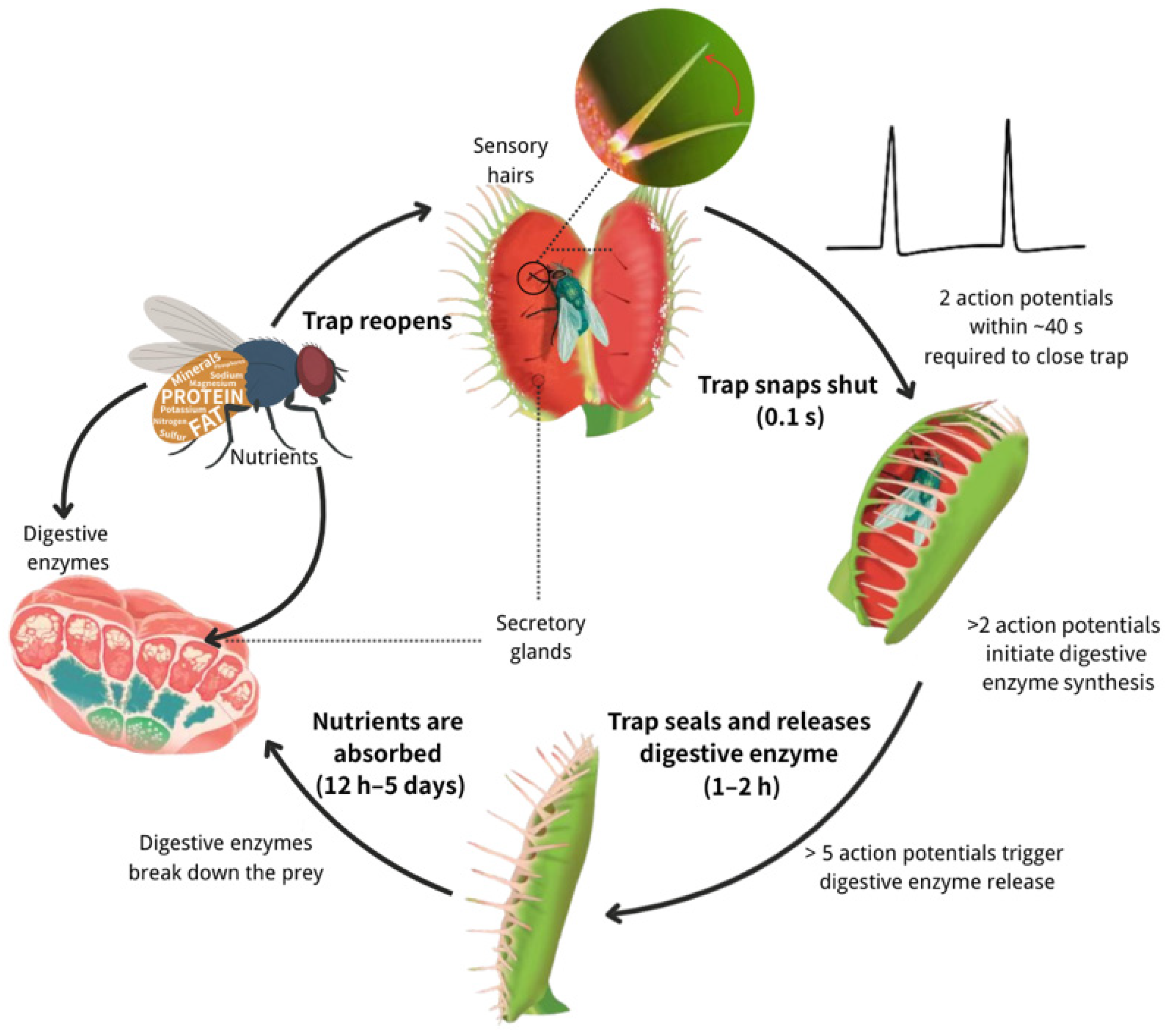
We implemented the curriculum across two double-period classes in March 2025, with each lasting approximately 120 min. Before introducing students to the three models (the live flytrap, the agent-based model, and the Rube Goldberg machine), we helped students build a cognitive framework by eliciting prior knowledge (e.g., discussing what they already knew about the flytrap). We then provided an overview of the hunting cycle of the Venus flytrap through a time lapse video from YouTube and a figure we adapted from Hedrich & Neher [23] that details the hunting cycle of the flytrap (Figure 1). This introduced the students to some of the macro- and micro-level parts involved in the flytrap closing mechanism and set the stage for students to experiment with the live flytrap.
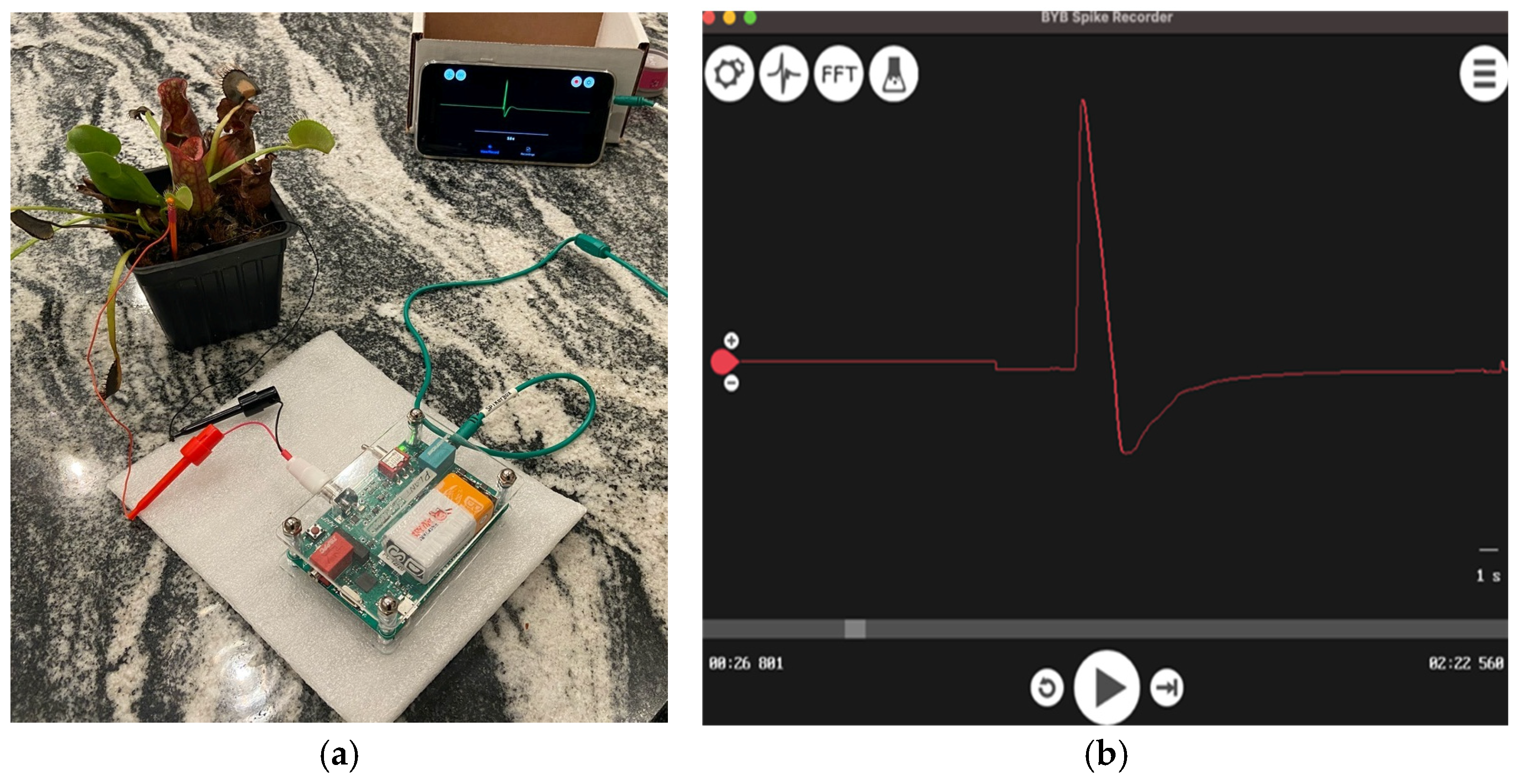
Next, students conducted the live flytrap experiment (Figure 2). They began by reviewing the flytrap anatomy, followed by setting up Plant SpikerBox kits (Backyard Brains, Ann Arbor, MI, USA) to measure electrical signals/action potentials when the trigger hairs were touched [48]. Students were prompted to “Think like a group of scientists and engineers working together to experiment with the plant!” and they were all given the following research question to investigate: “We know that flytrap sensory hairs need to be triggered twice within a set time interval in order to close. How might you determine how long your flytrap can remember an initial touch of its trigger hair?” Next, they discussed and planned their investigation together before starting (“Which hair will you trigger 1st and how will you trigger it? How long will you wait before triggering another hair? What data do you think you need to record?”) and assigned group roles (i.e., data recorder, SpikerBox operator, timer). The live plant model was effective in capturing students’ engagement and in emphasizing key science and engineering practices (e.g., planning investigations, collecting and analyzing data) but demonstrated limited accessibility (i.e., living flytraps are difficult to maintain, sometimes they do not react to touch, and once a trap closes, it does not reopen for at least 24 h).
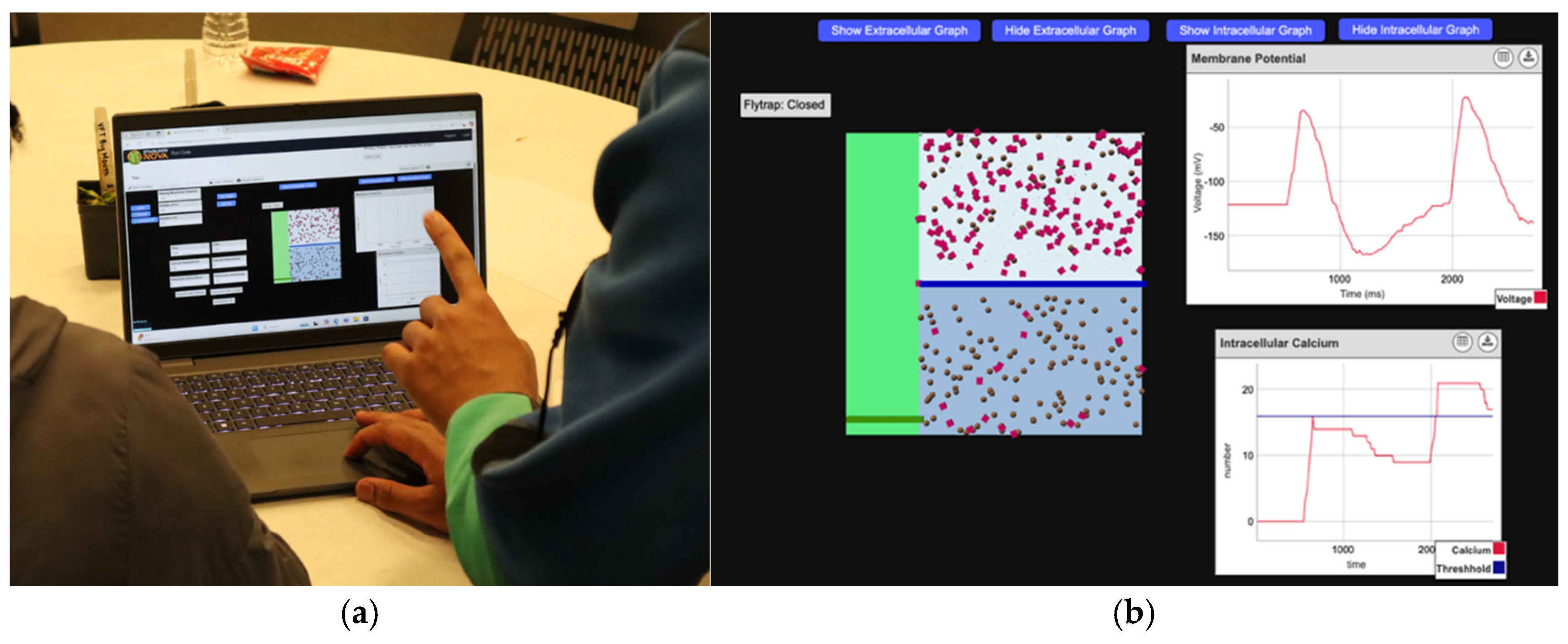
In the second section of the 1st double period, we reviewed physics concepts such as “thermodynamics” and “diffusion” and then introduced students to terms like “mechanotransduction” and “action potential” to highlight the connections of these concepts to biological examples they were likely already familiar with (e.g., the human brain, heart, and ear canal). Then students engaged in experimentation using the agent-based simulation to explore the flow of ions inside of a Venus flytrap cell once a hair is triggered (Figure 3). In this model, students were prompted to make predictions and analyze data based on multiple simulation runs. The simulation interface highlighted the micro-level interactions of this system, showing the movement of ions in and out of one cell and featured two dynamic graphs that showed voltage change over time (i.e., action potential) and number of intracellular calcium ions over time (Figure 3). The agent-based model was effective in revealing invisible ion dynamics which leads to electrical energy transformations in the cell; however, unlike the live plant, it was not as effective in conveying macro-level emergent behaviors.
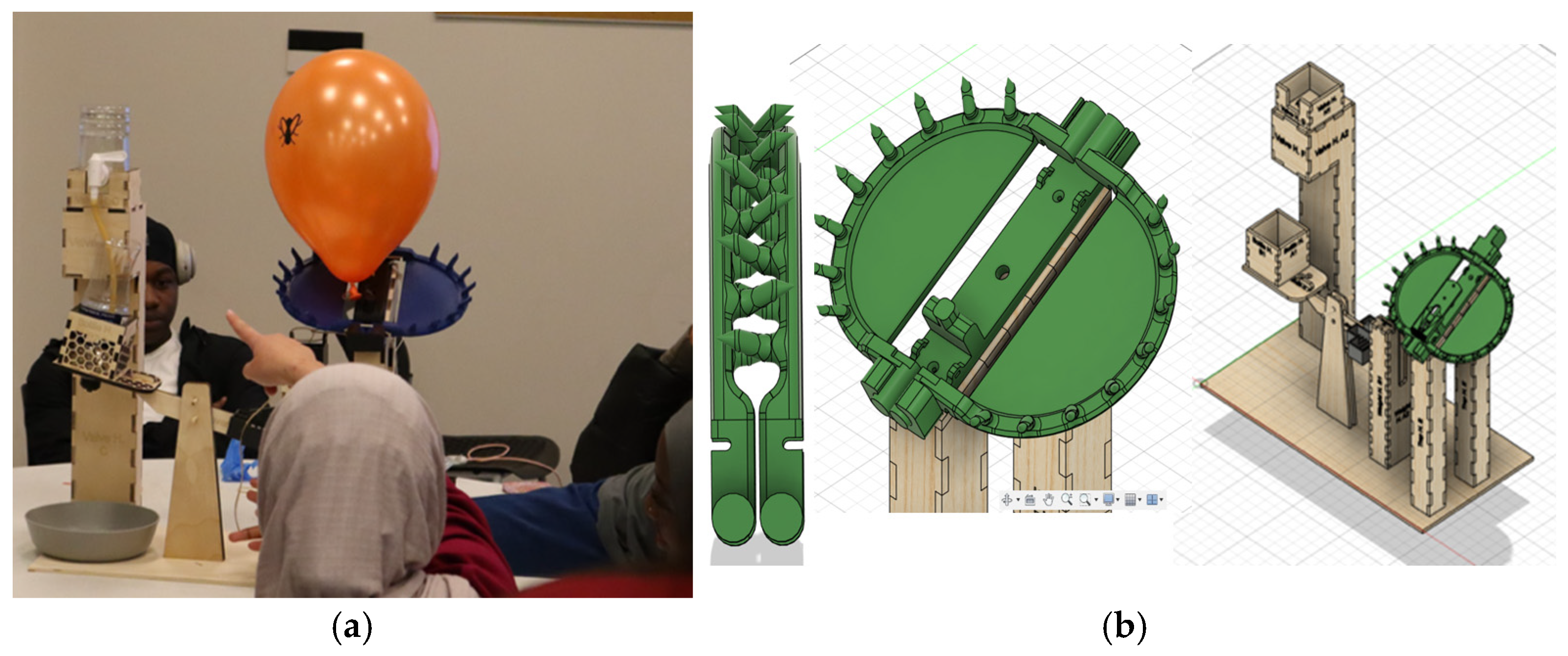
Next, the students worked together to assemble the Rube Goldberg machine, which conveyed (through a mechanical analogy) the calcium ion flow and threshold-based response that ultimately leads to trap closure (Figure 4). This machine modeled both micro- and macro-level interactions through combining mechanical design principles with the biological functioning of the flytrap. Overall, the Rube Goldberg model made visible the threshold-triggered closure in an engaging way (i.e., the signal accumulates on one end of the seesaw, causing the other side to lift up, which then knocks down a weight and provides the force needed for the trap to snap shut), although unlike the agent-based model, it does not model the process of mechanotransduction accurately. Instead, it shows gravitational potential energy as the motive force behind trap closure, while in living systems, it is chemical potential energy and turgor pressure driving trap closure. However, this representation was not designed to mirror the exact physical laws of mechanotransduction, but to provide a tangible analogical bridge allowing students to visualize the connectivity between decentralized micro- and macro-level components. While each model had associated limitations in conveying systems-level concepts, taken together, they complemented one another to support students’ multi-level reasoning. During this class period, students worked in groups of 4–5 with all three models to explore the mechanisms underlying trap closure in-depth and were prompted to make sense of what the models conveyed about Venus flytrap mechanobiology.
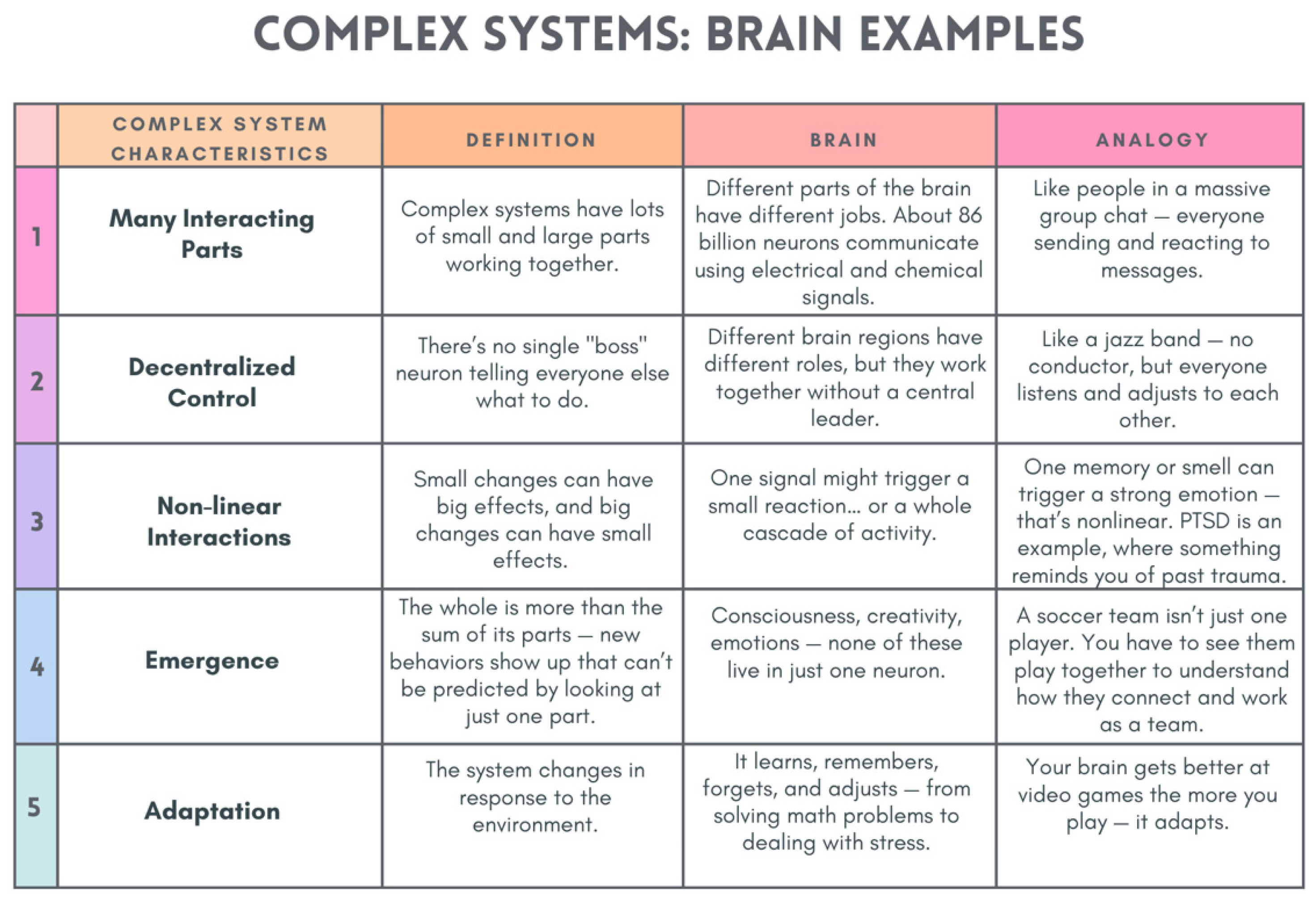
In the second double period class, we introduced students to the construct of complex systems. We defined the term “as anything composed of many parts that interact in such a way that the overall behavior of the system is entirely dependent on those many interactions; where small-scale actions/movements lead to a larger, unexpected outcome.” We provided students examples of how the brain operates as a complex system, focusing on the five focal principles mentioned above, and engaged students in a class-wide discussion to unpack each of the terms and generate analogies to familiar scenarios (Figure 5). We then gave them the following two prompts before conducting 16 individual, post-intervention interviews:
  • Think about the different layers/scales (what are the smaller parts doing) and how they affected the behavior of the trap;
  • Determine if/to what extent the Venus flytrap operates as a complex system.
We applied concreteness fading [50] in sequencing the three models, where students moved from directly working with the organism to working with more abstract and simplified representations (i.e., the computer-based model and then the tangible, Rube Goldberg device). Throughout the unit, students collaborated to record phenomena, make inferences, and reason scientifically. In this way, we aligned the unit with the Next Generation Science Standards (NGSS), targeting Disciplinary Core Ideas (DCIs) related to systems and system models, and Science and Engineering Practices (SEPs) such as planning and carrying out investigations, analyzing and interpreting data, and constructing explanations [1]. Through experimentation, modeling, and discussion, students studied the mechanobiology of the Venus flytrap through multiple approaches with the goal of promoting a grasp of interdisciplinary, complex systems thinking.
To further clarify the incremental contributions of each MER, we developed a representational matrix (Table 1) that maps the five core complex systems principles onto the specific affordances of the three MERs. This matrix highlights how the MERs provide complementary perspectives across length scales, which we reasoned would contribute to students’ overall integration of concepts across the models, while managing cognitive load. We structured the three focal MERs according to specific representational roles that target different levels of organizational complexity. MER 1 allows students to observe real-world macro-level patterns, such as the specialized tissues and the visible response of trap closure, though the underlying causal mechanisms remained invisible. MER 2 used an agent-based model to reveal the “hidden information” of microscopic ion flow and membrane potentials that drive these macro-level behaviors. Finally, MER 3 served as a bridge between these scales by allowing students to physically model the connectivity between multilevel parts and observe how global coordination emerges from decentralized, threshold-based interactions.

2.3. Data Sources and Analysis

We conducted, recorded, and transcribed individual, semi-structured interviews with 16 students at the end of the unit (209 total minutes of interviews, lasting 13 min each on average). Interview questions prompted students to articulate what they knew about how the Venus flytrap responds to physical forces. We also asked students if they saw any connections between the Venus flytrap and complex systems and gave them access to the complex systems heuristic (Figure 5) if they wanted. Last, we aimed to understand the extent to which students could transfer their learning to other contexts: we asked students whether they thought understanding complex systems was important in life and if they could think of a real-world problem where this kind of thinking would be helpful.
The interview data went through a systematic process of validation to identify students’ depth of understanding of complex systems principles. Before implementing instruction, the research team collaborated with Nick to hypothesize how the flytrap exemplified the 5 complex systems principles highlighted and this served as an initial codebook. We also incorporated aspects of a grounded theory approach in evaluating this data source and further developing the code definitions (Table 2), where we refined and deconstructed how the flytrap hunting behavior exemplified complex systems principles based on student responses and insights. Using a constant comparative method of analysis, the first author analyzed the first interview where information that related to each of those five principles was derived, and that information was then compared to and triangulated with each subsequent interview to validate that a particular finding emerged from multiple sources [51]. The first author identified and coded 71 instances that revealed students’ complex systems understanding (derived from the analysis of 13 of 16 interviews). To ensure the reliability of the coding process, Authors 2 and 3 were trained on this preliminary codebook and independently coded the remaining interviews with a 61% agreement rate. Consensus was later reached on all code definitions based on several follow up discussions with the research team, and author 1 revised all code designations accordingly. To formally validate the instrument’s reliability, we conducted a secondary Inter-Rater Reliability (IRR) assessment. Authors 2 and 5 independently coded a blinded portion of the dataset, which neither had seen before (n = 37 or 41% of all coded instances). Statistical analysis of their agreement level yielded a Cohen’s Kappa of κ = 0.645 [52,53], which represents substantial agreement [54].
Furthermore, we augmented this analysis with pre- and post-surveys, where we aimed to survey students (n = 28) more broadly to assess their prior knowledge, complex systems understanding, flytrap mechanobiology understanding, and their future career/academic plans. For example, we asked students what they knew about flytraps and what they thought might cause the trap to close in the pre-survey. Then in the post-survey, we asked students what they learned about how the flytrap responds to external forces and if they thought the flytrap operated as a complex system. We also asked students to indicate their plans post-high school and whether they would go to college or trade school and if so, what subjects they would continue to study.

3. Results

In this section, we focus primarily on the findings from the student interviews (n = 16) that occurred at the end of the intervention. We include supplemental findings from survey data (n = 28) as relevant to the four main themes that emerged from this analysis: (1) students articulated an in-depth understanding of how the flytrap operates as a complex system, (2) they linked their understanding of this based on their learning experience with the MERs, (3) they were able to transfer systems thinking to other familiar contexts, and (4) they articulated an appreciation of STEM integration in the classroom and its connection to real-world research.

3.1. Articulating an In-Depth Understanding of How the Flytrap Operates as a Complex System

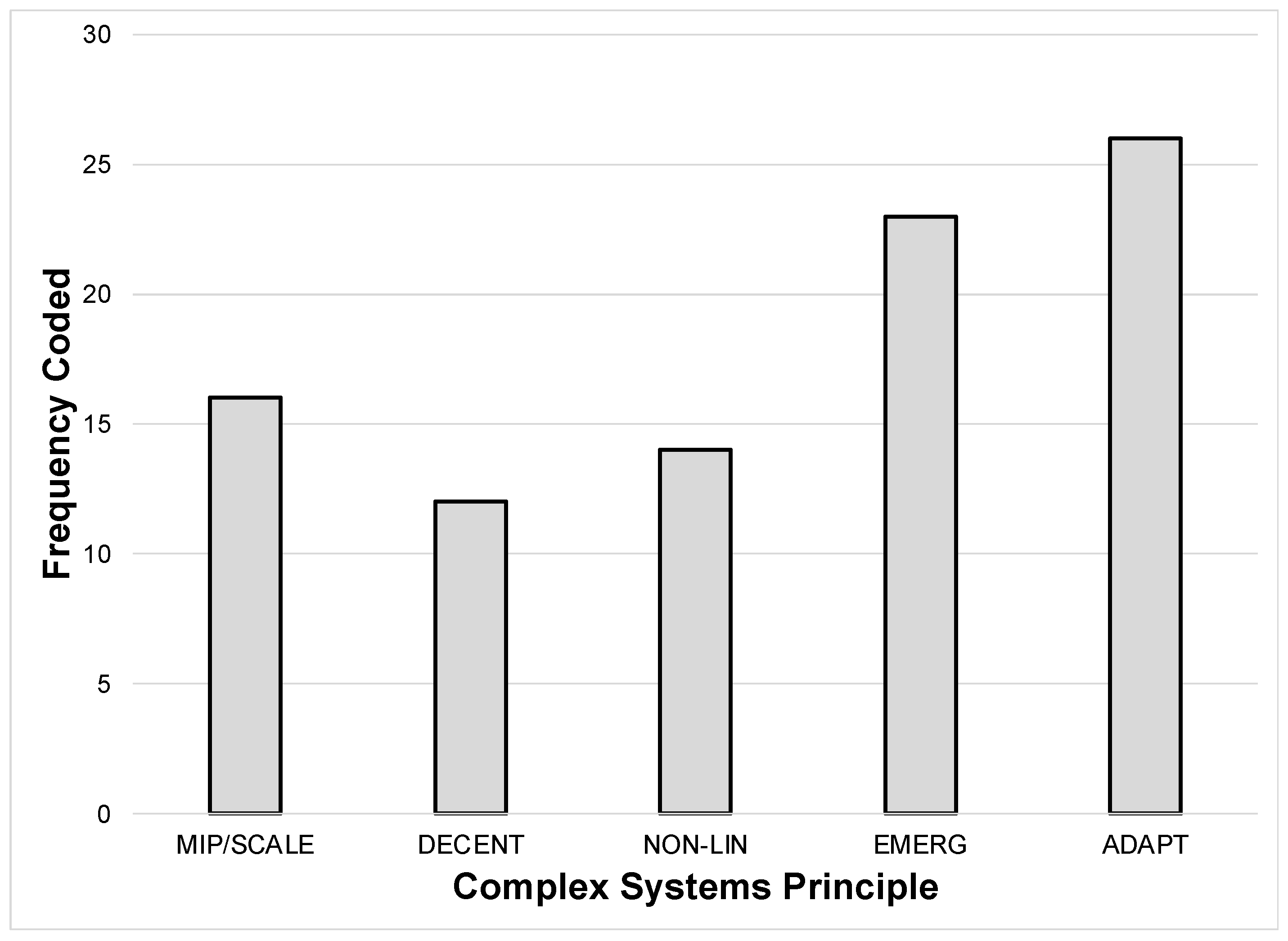
Our analysis yielded 89 codable instances in total, with adaptation being coded most frequently (Figure 6). In total, 100% of all students interviewed identified at least one of the three aspects related to adaptation (Table 2); 94% identified at least one of the three aspects related to emergence; and more than half identified the trap closing as an emergent behavior, with the other two aspects less frequently connected to the principle of emergence by students. In all, the principles of both adaptation and emergence were effectively conveyed through this intervention. This is noteworthy considering that 20% of students conveyed in the pre-survey that they had limited understanding of how the flytrap responds to external forces (e.g., some students responded they did not know what causes the trap to close; others incorrectly hypothesized it was a defensive mechanism). Yet the number of aspects for a given principle articulated by students varied widely. For example, 31% of students did not articulate any aspects of non-linear interactions during interviews, yet 19% of students articulated two aspects (outlined in bullet points, Table 2). While all students articulated at least one aspect of adaptation, 50% were able to recognize two or more (bullet points, Table 2). This suggests that deeper learning took place for some students.
All students were able to identify many of the interacting parts listed in the codebook (e.g., ions, trigger hairs, prey, etc.). Across the 16 interviews, we tabulated the number of either micro- or macro-level parts students described as interacting within the flytrap. Students identified on average at least two macro-level parts and one micro-level part when discussing how the flytrap operates. Moreover, 50% identified four or more interacting parts across length scales, demonstrating a more comprehensive appreciation for the role of several variables underlying the closing mechanism of the flytrap.
Regarding the principle of decentralized control, 75% explicitly noted in their interviews that this aspect was apparent. For example, Student 8 reasoned that “nothing [is] telling the Venus flytrap what to do, but there’s little things that make it work in one specific way and [it is the] little things that work together to help feed it.” However, some were uncertain or expressed hesitation in linking this aspect to what they understood about the flytrap. Two students mentioned they thought the trigger hairs could be considered “the boss” because it “technically tells the flytrap, okay, this is food, now you can close for this.” Thus, there was variability in levels of understanding related to this principle.
The final complex systems characteristic examined, non-linear interactions, was coded in 69% of interviews. Most students responded that the time interval between triggers, which was associated with a decay/accumulation/threshold of calcium signaling, represented non-linearity. Furthermore, many students cited the Rube Goldberg machine when connecting their understanding of the flytrap to the principle of non-linear interactions. For example, Student 12 elaborated:
When we put the water in the model…it showed how it kept dripping and after a certain time…that it’ll eventually cause something to move and cause for it to snap shut…[it reached] the threshold to close.
Thus, some students directly linked their complex systems understanding to how the information was represented in the three models (Figure 2, Figure 3 and Figure 4). We discuss the findings related to this in more detail in the next section.
Additionally, students who were not interviewed identified multiple aspects of how flytraps operated as a complex system, as evidenced in the post-survey responses to the open-ended question: “What did you learn about how the flytrap responds to external forces? Describe what you think causes the trap to close.” One student wrote, “I learned that the Venus fly trap had adapted to its environment so that it can score the maximum amount of flies with the least amount of energy,” which demonstrates a solid understanding of adaptation and perhaps alludes to emergence (in reference to “scoring flies”). Another described emergence in that the trap closes to extract nutrients from prey: “The Venus flytrap…uses tiny hairs to sense movement, triggers an electric signal to close its leaves, and then digests the trapped insect for nutrients.” Overall, these results show that high school students were able to understand the many interacting parts underlying the mechanism of flytrap closure through the lens of complex systems thinking.

3.2. Varying Modalities of MERs Were Effective in Promoting Complex Systems Understanding

The three models represent different visual and hands-on modalities to help students build an understanding of how the flytrap operates as a complex system. In total, 60% of the students interviewed responded that the Rube Goldberg machine (Figure 4) was the single most effective model that was helpful for their learning. This was likely due at least in part to their prior experiences designing their own Rube Goldberg machines as part of their mechanical engineering curriculum, as they stated this model “made more sense” and although “simplified” and “not an exact replica”, it was an engaging tool for visualizing what “goes on in the inside” of the plant. Most students also reported that “seeing how all the parts intersected…was super helpful” in this model. Student 8 elaborated on this point, stating:
The little parts…led up to the actual big closing of the actual trap…[Similar to] the trigger hair, you had to pour the water in the cup and then [the weight] fell down and then it let off another thing. And it all led to a little process. Just like when the insect touches one of the hairs, then it leads to the trap…sensing that it’s something there and then it has to hit something else for it actually to fully work.
Indeed, the Rube Goldberg machine was effective in promoting student understanding of how many interacting parts, including the normally invisible micro-level parts of the flytrap, work together to cause the trap to close.
The remaining students interviewed (40%) said two or more models were most helpful in their learning. These students discussed aspects of the representational chemistry across the models that reinforced and complemented their learning, not only by imparting a sense of the interacting parts, but also a realization of the non-linear interactions occurring within the flytrap system. For example, Student 8 stated:
I like the computer model that actually shows the calcium buildup and the threshold line and how there’s some decay. And I like how the physical model represents that decay through the water dripping down. There’s a small hole where the water drips down, so [if] there isn’t enough buildup within a period of time, there’s no action.
Here the student is relating the information in two of the models and specifically references the relationship between a graph (of intracellular calcium level) from the agent-based model (Figure 3) to the dripping water bottle from the Rube Goldberg machine (Figure 4). Student 15 extended that connection by citing their experience of working with all three models as helpful for their learning and in understanding emergent behaviors of the plant (i.e., either closing in response to force or not).
[The agent-based model] helped me visualize the chemical transformation and how it’s being triggered and why it’s being triggered. And then [the Rube Goldberg machine] helped me visualize a bit more why it happens like that, where it has enough calcium to finally trigger it and make it shut. I think that was a really good representation of it. And then for when we actually [triggered a living flytrap], I think it was just good to put those references back to the actual plant and see how it actually functions with the plant. And I think that really helped because when we were doing…[we experienced] trial and error because when my group did it, the first [flytrap plant] that we [experimented with], it didn’t close. So we were kind of like, why didn’t it close? But then…the second one closed…And so I think if we would’ve only did that one, I don’t think we would’ve understood quite how it works because one of them didn’t close…But with the [three] models [together], I think it really helped.
Taken together, these findings show that most students cited the more familiar Rube-Goldberg machine as contributing to their learning of how the flytrap operates as a complex system. For those who integrated their experiences of working with two or more models, the MERs served to complement and reinforce students’ understanding of the micro-level parts and non-linear interactions working together to cause the trap to close.

3.3. Transferring Complex Systems Thinking to Familiar Contexts

In the interviews with 16 students, we recorded 33 total instances of reference to the variety of ways that complex systems thinking could transfer to other examples from their daily lives. For example, seven students related the principles of complex systems to the way that a school functions or their own experiences in school. Student 3 stated:
You definitely have to work together as a team to achieve anything, especially if you want it to become a really great thing…in [55] class…when you work on projects with other people, sometimes it’s really hard, especially if you’re not friends with that person and you guys are arguing over what to choose, who to work with, what we should do. So this definitely helps. It kind of opens up the brain of a person to understand more things and to get different perspectives of something complex.
This student related complex systems thinking to inform how to approach collaborating on group project work in class. Student 11 described school-level variables that, although seemingly small taken on their own, could have consequential downstream effects, i.e., emergent behaviors:
Well, the fact that our bodies function is a complex system. The fact that we get out of bed in the morning and then we have all these different routines that we do. We have to brush our teeth, we have to get dressed and do all that stuff, and then we have to go get on the bus or get in the car and go to school. And then once we’re here, we have super strict schedules that we have to follow. And if we don’t follow them, it’s bad for our attendance and attendance matters for college [admissions]. It’s all these little things we don’t think of as being relevant at all that are super… relevant and make a big difference.
Furthermore, Student 4 made multiple complex systems connections across disciplines by linking the concepts to schooling, engineering, and biological systems:
School Systems: “Getting your education to get one big degree…Going through [individual] classes, but in the end you get your one big [degree].”
Engineering Systems: “I think of it as…what I did previously, Rube Goldberg, all each individual systems that cause one big outcome. And that’s important to understand because we decide our own actions and our own actions while they’re small now can lead to a bigger effect.”
Biological Systems: “Carbon emissions, carbon dioxide…I think about it, a lot of people don’t think about the effects it has now and we kind of breeze by it. And that’s a ‘small thing right now’, but it’s shaping the future of our world and what future generations are going to have to face. The big problem that is global warming.”
In other examples, students appeared to connect their understanding of complexity across more biological systems, based on principles that were salient in the Venus flytrap curriculum. For example, students were interested to learn that the flytrap evolved carnivorism as an adaptation to the low nutrient, acidic swamp soils that they inhabit [56]. Student 16 then connected this concept of evolutionary adaptation to how “crocodiles…went from being just a land animal into being in water…they adapted to it…to find [a] better place in order to survive in this environment.” Student 8 connected complexity to the symbiotic relationship between plants and pollinators in stating “Like bees, pollinating [with] pollen, they work together, they get pollen off of flowers and then they sprinkle it around and that all helps with the growing of plants.” Moreover, Student 15 stated that the MERs helped her make connections between complex systems and everyday life:
I think also the different forms…with the [Rube Goldberg machine]…and then [the agent-based model] shows us how different results can be, or the same conclusion can be made from different experiments and stuff like that. And also…the fact that we can find a correlation between Venus fly traps and your everyday life, or these complex systems.”
Overall, these examples highlight connections students made between the flytrap curriculum and a broader understanding of complex systems and demonstrate the relative ease with which students extended their complex systems thinking to daily phenomena and existing knowledge. This could be due, in part, to having familiarity with complex systems principles before they started the flytrap unit, even if they had never formally heard the term “complex systems” beforehand. In the pre-survey, only 11% of students were unable to respond to the question “Can you think of an example of a system where small individual actions lead to a larger, unexpected outcome?” In most pre-survey responses to this question, students correctly identified complex systems like Rube Goldberg machines, ant colony marching, a launcher they built in class, and a classroom/school as examples of systems with emergent characteristics. This suggests that students were already aware of systems-level thinking and how it applied to their own experiences/knowledge (particularly as it applied to their engineering curriculum).
However, pre-survey responses also suggested that many students held intuitive but underdeveloped ideas about complex systems. For example, students responded to this question before starting the unit: “Can you think of an example of a system where small individual actions lead to a larger, unexpected outcome?” In general, student responses were brief and/or inaccurate (e.g., “misinformation being spread online”, “completing step-by-step parts of a big project”, or “broken glass”) and perhaps only identified a couple of interacting parts (e.g., “a simple error in the code could wreck everything, like that one spacecraft that crashed”). These responses captured some bigger picture ideas of how interacting parts could lead to unexpected outcomes, which seemed to lay the groundwork for more refined systems thinking during learning.

3.4. Perceptions of STEM Relevance, Authenticity, and Interconnectedness in the Classroom

Students also elaborated on how they connected aspects of the flytrap unit to real-world STEM research. Multiple students (n = 6) cited that experimenting with the living plant (e.g., “hooking up” electrodes to measure action potentials, using an app to collect data, making predictions and testing it out) and “doing it physically” “helped [them] to see [a] real-world connection to STEM research”. Thus, the inquiry component embedded into working with the living plant incorporated key scientific practices related to the NGSS science and engineering practices and was perceived as an authentic research environment by many students.
Furthermore, students made explicit connections to interdisciplinary learning related to this curriculum. For instance, Student 5 connected working with the live flytrap to experimentation in their school physics lab:
I had physics last year. We always had to build different things to see how they responded. We recorded our responses. So, I feel like [hooking] the phone up [to record action potentials] was a way to see what we did and record the reactions. And I would just say that obviously relates to physics because we always have to record what we do. If we don’t record what we do, we just don’t know how it changed over time. So I feel like us being able to see the [voltage change over time]. It went up and down as we put the thing in the Venus flytrap’s mouth. It was just a good way to record. And I feel like that ties into physics.
Beyond considering their high school experience, multiple students acknowledged that STEM-integrated perspectives are necessary to consider for their future learning and even careers. Student 11 elaborated:
All the sciences and biology and engineering, it’s all super interconnected. And thinking about it as like, oh, I have to go study just one discipline in college, especially because I’m trying to figure out what I want to major in and stuff…thinking about just one discipline is so limiting. And I actually think all of that is really…relevant to us right now. And just knowing that wherever you end up, you’re definitely not going to be just working within one thing. Even if you go into civil engineering and you go into architecture or whatever, you’re still going to be working with people and you’re going to be working with, say someone wants a garden or whatever, or a built-in garden or something like that. Then you’re working with biology and it’s like, yeah, it’s all very intertwined, and I don’t think there’s enough emphasis put on that in school.
This student highlighted the “interconnected” aspect of STEM in future careers and how that knowledge was impacting their current thinking regarding what to study in college. Student 15, who expressed a prior interest in studying the physics of cancer, also emphasized the relevance of mechanobiology in their field of interest, oncology:
In…radiology oncology, there’s not just one single person, there’s the physicist, there’s the research scientist, there’s the therapist, there’s the doctor, there’s the nurse, there’s the people at the front desk, there’s a whole system that goes into doing this. And actually, I went into the research lab and the [research scientist] was showing us the actual cancer cell inside of a rat and took a sample from the rat and how it was developing inside of it and growing and stuff like that…there’s a lot of different things that trigger cancer, and there’s a lot of different things that happens with that. So I was thinking of the correlation with that and kind of how the body is working to build up these cancer cells or to fight them away…I think that could definitely relate to mechanobiology and the way that [cancer develops].
Taken together, these data demonstrate that the unit helped students perceive the relevance of STEM integration in their future studies. In addition, survey results showed that most students (82%) agreed or strongly agreed that they would be pursuing a college major in STEM both before and after this unit. This group of students already had high interest levels in pursuing STEM, and their exposure to the Venus flytrap mechanobiology helped to reinforce connections across disciplines.
To assess the quantitative impact of the intervention, we analyzed survey data for shifts in students’ educational aspirations, STEM confidence, and perspectives toward current STEM research. The resulting descriptive statistics are detailed in Table S1 of the Supplemental Materials. Since the sample size (n = 28) did not provide sufficient statistical power for a formal factor analysis [57], we treated these metrics as exploratory indicators of descriptive trends to be validated in future studies. We conducted paired t-test analyses, and while the current sample did not result in significant shifts in these metrics (i.e., p > 0.05), we note a few descriptive trends in the intended direction. For example, students’ self-reported familiarity with current STEM research (item #6) showed the most prominent gain (+0.35 on average from pre-score), alongside a downward shift in the perception of engineering as a separate, disconnected field (−0.31 on average from pre-score) and a downward shift in the perception that mechanobiology has little relation to real-world experiences (−0.24 on average from pre-score). These trends were supported in the one-on-one interviews, where many students articulated an appreciation for authentic research, interdisciplinary connections, and mechanobiology when reflecting on learning through the MERs.

4. Discussion

This study demonstrated that, among high school students, the three-MER curriculum fostered a nuanced understanding of the Venus flytrap as a complex system, particularly regarding the principles of adaptation and emergence. The MERs, especially the agent-based model and the Rube Goldberg machine, were highly effective in visualizing micro-level interactions and non-linear dynamics. Students readily transferred their complex systems thinking to various familiar contexts, highlighting the broader applicability of these principles beyond the learning environment. Overall, these findings suggest that the MERs scaffolded students’ integration of complex systems principles, as well as facilitated the transfer of systems-level thinking across diverse contexts.
Furthermore, the research experience, particularly in experimenting with the live flytrap, enhanced students’ appreciation for STEM integration and its relevance to real-world research. Students not only articulated systems-level mechanisms in interviews but also extended their reasoning to novel real-world contexts, indicating conceptual transfer [32,50]. These results collectively underscore the efficacy of this intervention in promoting learning and engagement in both mechanobiology and systems thinking principles.
However, findings also revealed learning challenges. Some students struggled to identify the role of decentralization in the flytrap, instead attributing central control to the trigger hair, while other students, in working with the live flytraps, noted that triggering the hairs twice in a 20 s interval did not always result in trap closure, and that sometimes, the flytrap did not respond at all. This variability, which every student group experienced with the live flytrap but not all recalled, could be made more explicit in future iterations to emphasize the principle of decentralization. Additional design guidance to further scaffold connections to the decentralization principle could include emphasizing the lateral propagation of the action potential from cell to cell, which can only be triggered within any given cell once its neighboring cell is depolarized. This feature demonstrates how the rapid closure of the trap is a global behavior that emerges from simpler, localized threshold “rules” distributed across the cells of the plant tissue. Furthermore, students could be explicitly prompted to explain the trap closing mechanism using only knowledge of micro-level agents and interactions, which may scaffold a conceptual shift toward localized rules generating emergent behavior. Overall, these results are consistent with other studies as this concept has been challenging for students to grasp in other classroom contexts [8,15,28,58]. In contrast to other studies [32], students here articulated understandings of non-linear interactions and emergence, with individuals often identifying multiple connections within these two categories (see Table 2). Thus, this three-MER curriculum was effective in scaffolding student understanding of most, but not all, complex systems principles emphasized here.
Students also demonstrated an ability to transfer this new knowledge to familiar contexts, often connecting complex systems thinking to what they knew about school systems, organismal systems, or government systems. These examples reflected a growing awareness of complexity in the world around them. The two pedagogical approaches implemented here (using MERs and a complex systems thinking framework) have been shown to foster transfer [15,16,59] and these were likely effective design features mediating that effect. Indeed, the use of MERs is generally known to engage and motivate learners as well as help them to develop deeper levels of understanding [37]. A proposed mechanism behind this effect is the role MERs may serve in reducing cognitive load in the working memory by (1) making abstract concepts visible and (2) complementing and reinforcing information across representations [18,37,60,61]. Furthermore, students had representational familiarity with the Rube Goldberg machine, having designed their own as part of their standard engineering curriculum, which may have lowered the cognitive demands in interpreting the similarities across models [37].
Yet while our results suggest that the three MERs supported student understanding of the Venus flytrap as a complex system, it is important to acknowledge that more representations are not inherently better. Some adverse mechanisms that have been documented to inhibit learning include representational overload, non-optimal sequencing, and lack of representational familiarity [17,45,46]. Since students had high familiarity with the Rube Goldberg representation, it likely helped this population to make systems-level connections more salient, as many identified it as the model that was most helpful for their learning.
In the representational matrix (Table 1), we describe the abstract Rube Goldberg machine as a mechanical analogy that allows students to visually connect micro-components made visible in MER 2 to the macro-level parts and system behaviors in MER 1. Interestingly, student coded responses (Table 2) revealed learning gains in areas not explicitly scaffolded by the focal MERs. For example, students had identified the emergent behavior of digesting prey and extracting nutrients to grow as well as the adaptive evolutionary behavior of plant carnivory in response to environmental conditions, neither of which were apparent within the three MERs. This unexpected synthesis demonstrates that students retained information from the background information presented and were able to incorporate it into a unified mental model of the organism. This suggests that the focal MERs served as generative scaffolds that promoted students’ connection of complex systems principles within a broader biological context.
Regardless of the underlying cognitive mechanisms, learning outcomes are shaped not only by the sequence and design of the individual models, but also by how students integrate them into their existing schema [18,55]. Given this, we also noticed that the depth of comprehension varied between the 28 students in this study, which prevents generalizability; however, this approach did enable a rich analysis of students’ reasoning processes in a natural classroom setting, shedding light on the potential processes underlying learning and cognition [62].
Other notable learning outcomes include reinforcing students’ scientific practices and critical thinking skills by implementing hands-on experimentation, data analysis, and interpretation in mechanobiology using the living flytrap. Many students connected this component, which allowed them to observe biological phenomenon firsthand to answer a research question, to their perceptions of contemporary STEM research. This feature is important as it is increasingly critical that classroom learning mirrors the practices of real-world STEM researchers [2]. Furthermore, recent research has demonstrated a positive feedback relationship between engagement in authentic practices and understanding conceptually challenging STEM content—participation in real science and/or engineering practices helps students make sense of new concepts, which in turn enhances proficiency in those practices [4,62]. This was supported here when students articulated that the action of setting up electrodes to record voltage changes in the plant reinforced their understanding of mechanobiology and the value of interdisciplinary perspectives. Furthermore, students’ reflections on career relevance also underscore the motivational potential of authentic, interdisciplinary inquiry to broaden participation in STEM pathways. This suggests that repeated exposure to hands-on, STEM-integrated activities, where students design experiments and use scientific instruments to answer a research question, would further increase student interest in STEM-related career pursuits, and such approaches should be incorporated into K-12 curricula when possible.

Limitations and Next Steps

We also acknowledge that the findings here are not generalizable due to the small sample of students who selected to attend an urban magnet school that emphasizes project-based learning and technology. Further, given that this population displayed high STEM interest before the intervention, it is likely they were more receptive to learning about complex systems principles and plant mechanobiology than typical upper-level post-secondary students. In fact, previous research has shown that pre-existing career interest in early learning is an important predictor of future persistence in STEM [63], so it is plausible that these prior motivations significantly influenced how students engaged with the unit [55]. Therefore, these findings should be interpreted as resulting from an exploratory investigation which describes how motivated student populations engage with mechanobiology and complex systems learning through MERs.
In future research, we aim to replicate these methods in classrooms of students with varying levels of prior experience and initial interest in pursuing STEM to determine whether the learning trends described here are more widespread. Another worthwhile approach would be to employ a comparative experimental design (where one MER is removed at a time) to isolate the differential impact of each representation on learning, or to examine whether the sequence in which the MERs are presented influences learning outcomes. Furthermore, while we conducted an interview analysis to assess the power of students’ schemata, or mental models [60], of Venus flytrap mechanobiology and complex systems, other measures—such as incorporating assessments of more formal cellular biology content knowledge and using newly formed knowledge connections to solve novel tasks and assessing performance—might provide deeper insight into the accuracy and strength of students’ understanding (e.g., [18]).
Our next steps include implementing variations of the three-MER curriculum (e.g., resequencing the MER presentation, or removing the Rube Goldberg model to isolate its effects across different populations of students (e.g., across schools, subjects, and grade levels) and evaluating student experiences and learning outcomes to determine whether the trends described here persist. We aim to uncover broad differentiated instruction strategies as well as adaptations needed to customize learning based on students’ prior knowledge and skills and interests (e.g., [64,65]) in order to support teachers in implementing STEM-integrated curricula effectively across classroom environments. Throughout the process, we will continue to engage teachers as co-designers to ensure that the content and pedagogy developed around mechanobiology topics, and STEM integration more generally, are aligned with the goals and needs of their students.

5. Conclusions

Overall, this exploratory study supports the value of MERs in promoting systems thinking within the context of the STEM-integrated field of mechanobiology. Instruction included explicit cross-disciplinary connections throughout the unit and as a result, students viewed their learning as more authentic and were able to articulate connections across STEM fields that were based in their own experiences. Students demonstrated an accurate and (for some) in-depth understanding of complex systems principles and flytrap mechanobiology as the result of a relatively short, two-day classroom intervention. This work represents an effective and engaging STEM-integrated module on complex systems thinking that can be reproduced and adapted across contexts. It also serves as an example of how K-12 curriculum can be intentionally designed to follow the approaches of real scientists and engineers, where interdisciplinary teams work across micro- and macro-level scales to generate knowledge. This can raise students’ awareness of cutting-edge career pathways in the rapidly changing landscape of real-world STEM research, confirming the value of embedding systems-level thinking in helping to foster STEM literacy for all, as well the next generation of transdisciplinary experts.

Supplementary Materials

The following supporting information can be downloaded at: https://www.mdpi.com/article/10.3390/systems14030331/s1, Table S1: Descriptive statistics for pre- and post-survey items (n = 28). Students rated their likelihood (on a 5-point scale from definitely not/very unlikely to certain/very likely) of pursuing the choices outline in items 1–5, as well as their agreement level (on a 5-point scale from strongly disagree to agree) with the statements in items 6–14.

Author Contributions

Conceptualization, A.M.C. and S.A.Y.; methodology, A.M.C., Z.B., and J.Z.; validation, A.M.C., S.A.Y., J.Z., Z.B., H.L., T.K., and R.G.W.; formal analysis, A.M.C., J.Z., Z.B., and T.K.; writing—original draft preparation, A.M.C., Z.B., and J.Z.; writing—review and editing, S.A.Y., Z.B., H.L., T.K., and R.G.W.; graphic design, Z.B.; project administration, A.M.C. and R.G.W.; funding acquisition, R.G.W. All authors have read and agreed to the published version of the manuscript.

Funding

This work was supported by the Center for Engineering MechanoBiology (CEMB), an NSF Science and Technology Center, under grant agreement CMMI: 15-48571.

Institutional Review Board Statement

This study was conducted according to the federal guidelines for Human Subjects Research in the U.S.A. and approved by the Institutional Review Board of the University of Pennsylvania (protocol # 834795 approved on 21 January 2020).

Informed Consent Statement

Informed consent was obtained from all subjects involved in the study. All research activities were performed in accordance with the approved protocol and University of Pennsylvania IRB regulations regarding the protection of participant confidentiality and data integrity.

Data Availability Statement

The original contributions presented in this study are included in the article. Further inquiries can be directed to the corresponding author.

Acknowledgments

The authors would like to thank the developers of the agent-based modeling tool and other researchers who have been involved in various aspects of this work, including Annie Jeong, Yen Nguyen, Ezana Rivers, Ryan McCarthy, Maximillian Lawrence, Patricia Widder, James McGonigle, Guy Genin, Michael Rosario, John Kamal, and Phillip Nelson. This work is dedicated to the memory of Barbara G. Pickard, Queen of Plant Electrophysiology and Mechanosensory Biology, who developed the original flytrap model for classroom use.

Conflicts of Interest

The authors declare no conflicts of interest.

Abbreviations

The following abbreviations are used in this manuscript:
STEMScience, Technology, Engineering, and Mathematics
MERsMultiple External Representations

References

  1. States, N.L. Next Generation Science Standards: For States, by States; National Academies Press: Washington, DC, USA, 2013. [Google Scholar]
  2. Council, N.R. STEM Integration in K-12 Education: Status, Prospects, and an Agenda for Research; National Academies Press: Washington, DC, USA, 2014. [Google Scholar]
  3. Nagle, B. Preparing high school students for the interdisciplinary nature of modern biology. CBE Life Sci. Educ. 2013, 12, 144–147. [Google Scholar] [CrossRef]
  4. Dabholkar, S.; Irgens, G.A.; Wilensky, U. Characterizing Integrated Learning of Disciplinary Core Ideas and Science Practices in a Computational Thinking (CT)–Integrated Biology Curriculum. J. Sci. Educ. Technol. 2025, 34, 1039–1054. [Google Scholar] [CrossRef]
  5. Brand, B.R. Integrating science and engineering practices: Outcomes from a collaborative professional development. Int. J. STEM Educ. 2020, 7, 13. [Google Scholar] [CrossRef]
  6. Acar, D.; Büyükşahin, Y. Awareness and views of teachers who received in-service STEM training about STEM. Int. J. Progress. Educ. 2021, 17, 473–490. [Google Scholar] [CrossRef]
  7. Yoon, S.A.; Miller, K.M.; Richman, T.; Noushad, N.; Hageman, G.; Liu, Y.; Zhang, W.; Cottone, A.M. Developing teachers’ disciplinary knowledge for high school STEM integration: A review of a decade of educational research. Rev. Educ. Res. 2024, 95, 1337–1378. [Google Scholar] [CrossRef]
  8. Yoon, S.; Goh, S.; Yang, Z. Toward a learning progression for understanding complex systems in science education. Complicity 2019, 16, 1–19. [Google Scholar] [CrossRef]
  9. Bielik, T.; Dalen, I.; Krell, M.; Ben-Zvi Assaraf, O. Characterising the literature on the teaching and learning of systems thinking and complexity in STEM education: A bibliometric analysis and research synthesis. Int. J. STEM Educ. 2023, 6, 199–231. [Google Scholar] [CrossRef]
  10. UNESCO. Education for Sustainable Development Goals: Learning Objectives; UNESCO: Paris, France, 2017. [Google Scholar]
  11. Wilensky, U.; Resnick, M. Thinking in levels: A dynamic systems perspective to making sense of the world. J. Sci. Educ. Technol. 1999, 8, 3–19. [Google Scholar] [CrossRef]
  12. Yoon, S.; Klopfer, E.; Anderson, E.; Koehler-Yom, J.; Sheldon, J.; Schoenfeld, I.; Wendel, D.; Sheintaub, H.; Oztok, M.; Evans, C.; et al. Designing computer-supported complex systems curricula for the Next Generation Science Standards in high school science classrooms. Systems 2016, 4, 38. [Google Scholar] [CrossRef]
  13. Cottone, A.M.; Yoon, S.A.; Coulter, B.; Shim, J.; Carman, S. Evaluating the apt epistemic processes of data literacy in elementary school students. Instr. Sci. 2023, 51, 1–37. [Google Scholar] [CrossRef]
  14. Capra, F.; Luisi, P. The Systems View of Life: A Unifying Vision; Cambridge University Press: Cambridge, UK, 2014. [Google Scholar]
  15. Jacobson, M.J.; Wilensky, U. Introduction to Complexity: A First Course; Springer Nature: Cham, Switzerland, 2021. [Google Scholar]
  16. Pande, P.; Chandrasekharan, S. Representational competence: Towards a distributed and embodied cognition account. Stud. Sci. Educ. 2017, 53, 1–43. [Google Scholar] [CrossRef]
  17. Rau, M.A. A cognitive analysis of learning with multiple external representations. Educ. Psychol. Rev. 2017, 29, 817–843. [Google Scholar] [CrossRef]
  18. Rexigel, E.; Kuhn, J.; Becker, S.; Malone, S. The more the better? A systematic review and meta-analysis of the benefits of more than two external representations in STEM education. Educ. Psychol. Rev. 2024, 36, 124. [Google Scholar] [CrossRef]
  19. Bielik, T.; Krell, M.; Zangori, L.; Ben Zvi Assaraf, O. Editorial: Investigating complex phenomena: Bridging between systems thinking and modeling in science education. Front. Educ. 2023, 8, 1308241. [Google Scholar] [CrossRef]
  20. Bowers, J.; Eidin, E.; Stephens, L.; Brennan, L. Examining student testing and debugging within a computational systems modeling context. J. Sci. Educ. Technol. 2023, 32, 607–628. [Google Scholar] [CrossRef]
  21. Kim, T.J. Mechanobiology: A new frontier in biology. Biology 2021, 10, 570. [Google Scholar] [CrossRef] [PubMed]
  22. Nelson, P. Physical Models of Living Systems; Chiliagon Science: Philadelphia, PA, USA, 2022. [Google Scholar]
  23. Hedrich, R.; Neher, E. Venus flytrap: How an excitable, carnivorous plant works. Trends Plant Sci. 2018, 23, 220–234. [Google Scholar] [CrossRef]
  24. Li, Y.; Lenaghan, S.C.; Zhang, M. Nonlinear Dynamics of the Movement of the Venus Flytrap. Bull. Math. Biol. 2012, 74, 2446–2473. [Google Scholar] [CrossRef]
  25. Scherzer, S.; Bohm, J.; Huang, S.; Böhm, J.; Iosip, A.L.; Kreuzer, I.; Becker, D.; Heckmann, M.; Al-Rasheid, K.A.; Dreyer, I.; et al. A unique inventory of ion transporters poises the Venus flytrap to fast-propagating action potentials and calcium waves. Curr. Biol. 2022, 32, 4255–4263.e5. [Google Scholar] [CrossRef]
  26. Volkov, A.G.; Carrell, H.; Baldwin, A.; Markin, V.S. Electrical memory in Venus flytrap. Bioelectrochemistry 2009, 75, 142–147. [Google Scholar] [CrossRef]
  27. York, S.; Lavi, R.; Dori, Y.; Orgill, M. Applications of systems thinking in STEM education. J. Chem. Educ. 2019, 96, 2742–2751. [Google Scholar] [CrossRef]
  28. Yoon, S.A.; Goh, S.E.; Park, M. Teaching and learning about complex systems in K–12 science education: A review of empirical studies 1995–2015. Rev. Educ. Res. 2018, 88, 285–325. [Google Scholar] [CrossRef]
  29. Jacobson, M.J.; Levin, J.A.; Kapur, M. Education as complex system: Conceptual and methodological implications. Educ. Res. 2019, 48, 112–119. [Google Scholar] [CrossRef]
  30. Sabelli, N.H. Complexity, technology, science, and education. J. Learn. Sci. 2006, 15, 5–9. [Google Scholar] [CrossRef]
  31. English, L.D. STEM education K-12: Perspectives on integration. Int. J. STEM Educ. 2016, 3, 3. [Google Scholar] [CrossRef]
  32. Chi, M.; Roscoe, R.D.; Slotta, J.; Roy, M.; Chase, C.C. Misconceived Causal Explanations for Emergent Processes. Cogn. Sci. 2012, 36, 1–61. [Google Scholar] [CrossRef]
  33. Kozma, R. Use of multiple representations by experts and novices. In Handbook of Learning with Multiple Representations and Perspectives; Van Meter, P., List, A., Lombardi, D., Kendeou, P., Eds.; Routledge: New York, NY, USA, 2020. [Google Scholar]
  34. Ainsworth, S. Multiple representations and multimedia learning. In The International Handbook of the Learning Sciences; Fischer, F., Hmelo-Silver, C.E., Goldman, S.R., Reimann, P., Eds.; Routledge Press: New York, NY, USA, 2018; pp. 96–105. [Google Scholar]
  35. National Research Council. STEM Learning Is Everywhere: Summary of a Convocation on Building Learning Systems; National Academies Press: Washington, DC, USA, 2014.
  36. Rau, M.A. Comparing multiple theories about learning with physical and virtual representations: Conflicting or complementary effects? Educ. Psychol. Rev. 2020, 32, 297–325. [Google Scholar] [CrossRef]
  37. Ainsworth, S. DeFT: A conceptual framework for considering learning with multiple representations. Learn. Instr. 2006, 16, 183–198. [Google Scholar] [CrossRef]
  38. Mayer, R.E.; Sims, V.K. For whom is a picture worth 1000 words: Extensions of a dual-coding theory of multimedia learning. J. Educ. Psychol. 1994, 86, 389–401. [Google Scholar] [CrossRef]
  39. Olympiou, G.; Zacharia, Z.; de Jong, T. Making the invisible visible: Enhancing students’ conceptual understanding by introducing representations of abstract objects in a simulation. Instr. Sci. 2013, 41, 575–596. [Google Scholar] [CrossRef]
  40. Taramopoulos, A.; Psillos, D. Complex phenomena understanding in electricity through dynamically linked concrete and abstract representations. J. Comput. Assist. Learn. 2017, 33, 151–163. [Google Scholar] [CrossRef]
  41. Friel, S.N.; Curcio, F.R.; Bright, G.W. Making sense of graphs: Critical factors influencing comprehension and instructional implications. J. Res. Math. Educ. 2001, 32, 124–158. [Google Scholar] [CrossRef]
  42. Olympiou, G.; Zacharia, Z.C. Examining students’ actions while experimenting with a blended combination of physical manipulatives and virtual manipulatives in Physics. In Research on e-Learning and ICT in Education; Mikropoulos, T., Ed.; Springer: Cham, Switzerland, 2018; pp. 225–237. [Google Scholar]
  43. Kalyuga, S.; Sweller, J.; Mayer, R.E. The redundancy principle in multimedia learning. In The Cambridge Handbook of Multimedia Learning; Cambridge University Press: New York, NY, USA, 2014; pp. 247–262. [Google Scholar]
  44. Sweller, J. Cognitive load theory. In The Psychology of Learning and Motivation: Cognition in Education; Mestre, P., Ross, B.H., Eds.; Academic Press: San Diego, CA, USA, 2011; Volume 55, pp. 37–76. [Google Scholar]
  45. Seufert, T.; Brünken, R. Supporting coherence-building in multimedia learning. Learn. Instr. 2003, 13, 227–237. [Google Scholar] [CrossRef]
  46. Ainsworth, S. The multiple representations principle in multimedia learning. In The Cambridge Handbook of Multimedia Learning, 3rd ed.; Mayer, R.E., Fiorella, L., Eds.; Cambridge University Press: New York, NY, USA, 2021; pp. 141–151. [Google Scholar]
  47. Sandoval, W.A.; Greene, J.A.; Bråten, I. Understanding and Promoting Thinking about Knowledge: Origins, Issues, and Future Directions of Research on Epistemic Cognition. Rev. Res. Educ. 2016, 40, 457–496. [Google Scholar] [CrossRef]
  48. Kuenzel, T. Backyard-Brains-Plant-Spiker-Box-Experiments. 2023. Available online: https://backyardbrains.com/pages/experiment-venus-flytrap-electrophysiology (accessed on 15 March 2026).
  49. MIT Scheller Teacher Education Program (STEP), StarLogo Nova; Massachusetts Institute of Technology: Cambridge, MA, USA, 2014; Available online: https://www.slnova.org/nguyeny/projects/894343/ (accessed on 15 March 2026).
  50. Goldstone, R.L.; Son, J.Y. The transfer of scientific principles using concrete and idealized simulations. J. Learn. Sci. 2005, 14, 69–110. [Google Scholar] [CrossRef]
  51. Glaser, B. The constant comparative method of qualitative analysis. Grounded Theory Rev. 2008, 7, 3–12. [Google Scholar]
  52. R Core Team. R: A Language and Environment for Statistical Computing; R Foundation for Statistical Computing: Vienna, Austria, 2023. [Google Scholar]
  53. Gamer, M.; Lemon, J.; Singh, I.F. irr: Various Coefficients of Interrater Reliability and Agreement, version 0.84.1 ed; University of Hamburg: Hamburg, Germany, 2019; Available online: https://CRAN.R-project.org/package=irr (accessed on 15 March 2026).
  54. Landis, J.R.; Koch, G.G. The measurement of observer agreement for categorical data. Biometrics 1977, 33, 159–174. [Google Scholar] [CrossRef] [PubMed]
  55. National Academies of Sciences; Engineering and Medicine. How People Learn II: Learners, Contexts, and Cultures; National Academies Press: Washington, DC, USA, 2018. [Google Scholar]
  56. Ellison, A.M.; Gotelli, N.J. Energetics and the evolution of carnivorous plants—Darwin’s ‘most wonderful plants in the world’. J. Exp. Bot. 2009, 60, 19–42. [Google Scholar] [CrossRef]
  57. Wolf, E.J.; West, A.B.; Varanezkaya, L.; Asnaani, A. Sample size requirements for structural equation models: An evaluation of power, bias, and appropriateness of model complexity. Educ. Psychol. Meas. 2013, 73, 913–934. [Google Scholar] [CrossRef]
  58. Taber, K.S.; García Franco, A. Learning processes in chemistry: Drawing upon cognitive resources to learn about the particulate structure of matter. J. Learn. Sci. 2010, 19, 99–142. [Google Scholar] [CrossRef]
  59. Samarapungavan, A.; Wills, J.; Bryan, L.A. Exploring the scope and boundaries of inquiry strategies: What do young learners generalize from inquiry-based science learning? In Promoting Spontaneous Use of Learning and Reasoning Strategies: Theory, Research, and Practice for Effective Transfer; Manalo, E., Uesaka, Y., Chinn, C.A., Eds.; Routledge: London, UK, 2018; pp. 260–275. [Google Scholar]
  60. Mayer, R.E. Cognitive theory of multimedia learning. In The Cambridge Handbook of Multimedia Learning, 3rd ed.; Fiorella, L., Mayer, R.E., Eds.; Cambridge University Press: New York, NY, USA, 2021; pp. 57–72. [Google Scholar]
  61. Schnotz, W. Integrated model of text and picture comprehension. In The Cambridge Handbook of Multimedia Learning, 3rd ed.; Fiorella, L., Mayer, R.E., Eds.; Cambridge University Press: New York, NY, USA, 2021; pp. 82–99. [Google Scholar]
  62. Gao, L.; Jong, M.S.Y.; Chai, C.S.; Li, K. STEM education: Understanding secondary students’ epistemic cognition in the design process with the support of a personalized multi-agent system. Comput. Educ. 2025, 194, 105504. [Google Scholar] [CrossRef]
  63. Tai, R.H.; Liu, C.Q.; Maltese, A.V.; Fan, X. Planning early for careers in science. Science 2006, 312, 1143–1144. [Google Scholar] [CrossRef] [PubMed]
  64. Al-Shehri, M.S. Effect of differentiated instruction on the achievement and development of critical thinking skills among sixth-grade science students. Int. J. Learn. Teach. Educ. Res. 2020, 19, 77–99. [Google Scholar] [CrossRef]
  65. Goyibova, N.; Muslimov, N.; Sabirova, G.; Kadirova, N.; Samatova, B. Differentiation approach in education: Tailoring instruction for diverse learner needs. MethodsX 2025, 14, 103163. [Google Scholar] [CrossRef] [PubMed]
Figure 1. Hunting cycle of the Venus flytrap. The top of the diagram going clockwise shows that two mechanical stimuli within a certain time interval (~40 s) will fire two action potentials and cause the trap to close. Once closed, the trap requires at least 7 or more actional potentials from struggling prey to turn on the gene expression of the enzymes needed to digest the prey item. Nutrients are extracted over the next few days and ultimately the trap will open again to repeat the process.
Systems 14 00331 g001
Figure 2. Model 1 used to stimulate complex systems thinking in relation to the mechanobiology of the Venus flytrap. (a) Students conduct electrophysiology experiments on live plants using SpikerBoxes (left); (b) a smartphone “Spike Recorder App” is used to measure the electrical wave in real time (right) [48].
Systems 14 00331 g002
Figure 3. Model 2 used to stimulate complex systems thinking in relation to the mechanobiology of the Venus flytrap. (a) Students experiment with the StarLogo Nova [49] computational model (left); (b) model includes dynamic graphs (right) that depict ion flow in response to force at the micro-level, with one graph highlighting the electrical impulses (top right), and the other highlighting the level of intracellular calcium over time (bottom right).
Systems 14 00331 g003
Figure 4. Model 3 Used to stimulate complex systems thinking in relation to the mechanobiology of the Venus flytrap. (a) Students build a flytrap device that demonstrates the threshold-based response that leads to trap closure (left); (b) a Fusion 360 model of the machine (right).
Systems 14 00331 g004
Figure 5. Complex systems heuristic. These 5 complex systems principles and examples were used as a basis for students’ introduction to the construct and were available for students to refer to during individual interviews.
Systems 14 00331 g005
Figure 6. Frequency of codes (n = 89) by complex systems principles. Aspects of emergence and adaptation principles were most frequently referenced by students after the intervention.
Systems 14 00331 g006
Table 1. Representational matrix mapping targeted complex systems principles across the three focal Multiple External Representations (MERs). * Each model sequentially increases in abstractness.
Complex Systems PrincipleMER 1: Living Venus Flytrap (Macro-Level Phenomenon)MER 2: Agent-Based Model (Micro-Level Interactions)MER 3: Rube Goldberg (Mechanical Analogy and Integration)
     Concreteness Fading Sequencing *------------------------->
Many Interacting PartsShows specialized macro-level anatomical and sensory structures (e.g., trigger hairs, plant “mouth”)Shows otherwise invisible microscopic components (e.g., ion flow, membrane potential)Connects micro- (i.e., Ca2+/water flow) to macro-components, showing how outcomes emerge through interdependent parts
Decentralization Shows lack of a centralized control through variable responses to stimuli; students observe that the trigger hair does not exercise total control over the leafShows decentralized ion flow across the cell membrane, illustrating how the response is a product of distributed cellular states, over time and distance, rather than a central commandShows a multi-level pathway where global coordination (trap closure) fails unless all components operate correctly (e.g., weight drops, but trap does not always close)
Non-linear interactionsShows that a single stimulus is insufficient, and >1 action potentials are required for a global response Quantifies non-linear relationships through real-time graphing of membrane potential and calcium accumulation (see Figure 3, right panel)Connects macro-level triggers to the underlying threshold-based accumulation of the signal (i.e., Ca2+/water level threshold)
EmergenceProvides the real-world macro-level pattern (trap closure) without initially revealing the underlying causal mechanismsReveals the invisible mechanism of how micro-level ion dynamics aggregate to produce the macro-level behavior observed in MER 1Reinforces the micro to macro link by showing how the mechanical synchronization of many parts results in the emergent capture of prey (i.e., balloon pops)
AdaptationShows how the system resets or remains open based on the timing and interval of mechanical stimuliAllows for infinite permutations of initial conditions to visualize how the system returns to resting potential or adapts to different variable patternsReinforces how an underlying signal, which accumulates and decays over time, is ultimately what causes the trap to close or remain open
Table 2. Complex systems category code descriptions.
Code and DefinitionExamples
1. Many Interacting Parts/Scale
(MIP/Scale)

General description:
The system (i.e., the flytrap) has components at different length scales—small and large parts all working together to help the system function.


Flytrap-specific description:
Students articulate their understanding of the multiple components in the flytrap and their different functions. We classified these components/parts into either micro- (not observable with the naked eye, except for in models B and C in Figure 1) or macro-level (observable with the naked eye on a living flytrap).
Micro-level parts included mention of:
  • Calcium ions;
  • Potassium ions;
  • Membrane potential;
  • Cells;
  • Signals, electrical signals, or mechanotransduction (i.e., the process in which cells convert a mechanical stimulus into an electrical or chemical signal).
Macro-level parts included:
  • Nectar to attract prey;
  • Trigger hairs;
  • Flytrap “mouth”;
  • Digestive juices/enzymes
  • The prey itself or whatever stimulates the trigger hair.
“There’s a bunch of small little things that happen to make the whole thing close…There’s six different hairs located on the Venus Fry trap and a fly or a bug triggers [it to close].”
Student 8 identifies two macro-level parts in this response: trigger hairs and prey.

“They have multiple parts…we have the trigger, we have the calcium, which causes the trap to close. There would be…the animal, the fly that comes…And then all those parts play a different role in the way they eat the fly.”
Student 10 identifies two macro-level parts (trigger hairs, prey) and one micro-level part (calcium).

“The flytrap perceives the physical force with the six hairs that it has inside, and then it takes that physical energy and turns into electrical energy. And basically, it measures the amount of contact points that it has with an animal or an insect. And then based on that it releases calcium so that way it could start, have enough, have energy to start closing, and then when one is triggered, only a little bit of calcium is released, which is not enough to fully close it. And then if another hair is released in a certain amount of time, then more calcium is released, and it causes it to shut.”
Student 15 identifies two macro-level parts (hairs, prey) and two micro-level parts (electrical signal, calcium).

“You have to make sure that the thing that’s going to get eaten has the nectar. That’s the only thing it’s going to get attracted by. And I also feel like the nectar works with the trigger hairs to when the thing is eating nectar, they know, so when the animal touches the trigger hair within the intervals, it kind of sends it to the system to say that, oh, this is an actual animal, we can eat this.”
Student 3 identifies the macro-level parts (nectar, hairs, prey).

“The main thing that we learned was that flytraps sent electrical waves in order to capture [prey] and they use signals.”
Student 16 identifies micro-level part of electrical signaling.
2. Decentralized Control (DC)

General description:
There’s no single “boss” telling everything else in the system what to do.


Flytrap-specific description:
Students articulate an understanding that there is no leader or boss in the flytrap for it to function properly. They may also elaborate that the many parts contribute unequal work or have different functions/jobs. This could be coded only once for any individual.
“So he depends on others, but they also depend on him. So it’s like a mutual connection. So there’s not a single boss. They share their interest, they have the same interest, so they cannot, they have to work together.”
Student 16 articulates that the parts are connected by a shared interest and so there is no “boss”.

“There is no single boss. There are multiple things that have to be set off for one thing to happen.”
Student 12 reasons that since many parts are required for “one thing to happen”, there was not one single component that controlled the behavior of the plant.

“Well, I mean the plant is kind of working as one thing, but each part functions individually. So, I want to say that there’s one thing that can occur without the other happening”
Student 9 articulates that the whole plant consists of parts that function individually, without centralized control from another part.
3. Non-linear interactions
(NON-LIN INTX)

General description:
Small changes can have big effects, and big changes can have small effects.


Flytrap-specific description:
Students articulate an understanding that there is a time component to the strength of the signals that are sent (e.g., mention how signals accumulate, or thresholds need to be reached) within a certain time interval (e.g., 20 s). This could be coded up to 3× for any individual based on the categories below.
  • Accumulating or decaying signals, thresholds; if not triggered within the 20 s (or a certain) interval, it “starts/cycles over” or “resets”.
  • All parts work but don’t always get the same outcome (e.g., the prey may escape or the flytrap can simply stop responding to stimuli).
  • A mechanical stimulus must be of sufficient force for an action potential to fire.
“I know that when the Venus flytrap has hairs on the inside and when those are triggered it sends a signal. And that signal, it’s a form of I think, calcium. And if that calcium becomes greater than a certain threshold, which usually it needs a second tap of the hair and within a certain time period, then that signal tells the Venus flytrap that there’s food inside and then it closes.”
Student 9 explains that the accumulating calcium signal (i.e., micro-level component) is needed for the flytrap to close.

“[It’s] like a cycle, the big change, the big change gives, which is the closing [of the flytrap’s] mouth and digestion is giving the energy to be able to do that again with… [to capture] another fly or something like that. And then redoing that process over and over again.”
Student 2 describes the cyclic process that allows the flytrap to catch prey.

“When [we tried to get the Rube Goldberg model to pop the balloon]…the balloon was too big to pop. And so, it kind of made me think even though all the steps were followed, there is still something that prevented it, or something that was a factor that was happening that wasn’t quite correct for it to react. So even though you had all those parts and they were correct, the end goal wasn’t the same.”
Student 15 invokes the physical model in their reasoning to how the flytrap behavior might be unexpected.
4. Emergence (EMERG)

General Description:
The whole is more than the sum of its parts. New behaviors show up that cannot be predicted by looking at just one part.


Flytrap-specific description:
Students explicitly relate the following aspects of the flytrap mechanobiology to the characteristic of emergence from the interaction of many smaller parts (note: MIP/Scale would be coded prior to identifying the following behaviors as representative of emergence). They often identify the emergent behavior as the “goal” of the plant. This could be coded up to 3× for any individual based on the categories below.
  • Flytrap closes and/or catches prey.
  • Flytrap produces digestive enzymes and/or decides whether to digest what is inside and will open back up without producing enzymes if more action potentials/signals are not detected after closure.
  • Flytrap extracts nutrients from prey to help it grow.
“[The emergent aspect would be] I guess the Venus flytrap closing. And that’s the sum of all the little interactions beforehand that actually cause it to happen…the hair, the calcium…Each part kind of builds off each other. There’s the stimulus from the hair and then that causes calcium buildup within the plant. And then if there’s enough of that, it causes the fly trap to close and then that accomplishes its goal of catching prey.”
Student 9 describes the behavior of closing to capture prey as emergence in the flytrap.

“From my understanding [of emergence], maybe it’d be the nutrients that it’s receiving and it’s helping the plant grow. So, of course it is closing to capture that insect, or whatever, but what is it getting from that insect? And that answer would be the nutrients and the food from it. So that’s how I kind of perceived it, where of course all these reactions happen, but why is it happening and what is the benefit from it happening?”
Student 15 relates two emergent behaviors to the flytrap system: to catch prey and to extract nutrients for growth.

“Emergence talks about the whole being more than the sum of its parts, [and] that kind of reminded me of the Venus flytrap because there’s multiple parts to it. And when you look at just the Venus flytrap, it’s hard to tell how time plays into the time between hair triggers and how the Venus fly trap reacts to that and the balance in the cells…the imbalance in the cells, but there’s a lot of cells where some things are out of balance. So that alone doesn’t exactly tell you how the Venus flytrap works. And when you look at how it reacts to just one hair triggering and nothing happens, that also doesn’t alone tell you how it works. You need to look at the whole process and how all these parts play in together to tell it when to release enzymes and when to close.”
Student 1 refers to two emergent behaviors in the flytrap as being (1) when/if to close and then (2) when/if to release digestive enzymes after closing.
5. Adaptation (ADAPT)

General description: A system can change its behaviors in response to the environment.


Flytrap-specific description:
Here students articulate their understanding that the following aspects of the flytrap mechanobiology signify an adaptation (note: this occurs across different time scales and relates to improving survival outcomes and conserving energy). This could be coded up to 3× for any individual based on the categories below.
  • Flytrap does not waste energy if not going to get nutrients; guards against false alarms; counts the number of hair triggers; learns/counts/senses action potentials and can respond accordingly.
  • Flytrap evolved over time to be carnivorous due to a lack of nutrients in the soil.
  • Flytrap can regulate when/if and how much of its digestive enzymes to produce (prey needs to keep struggling once the trap closes).
“So I guess…it having an interval system in it and not snapping shut immediately when the hair is touched. It learned from past mistakes. It must have evolved from it automatically snapping shut from one interaction. It learned that not all the time…it’s [prey]… and now it has a nice system where they know when to get the [flytrap] to snap shut and get the nutrients…since they weren’t getting nutrients from the soil”
Student 12 describes two aspects of adaptation in relation to the flytrap: it can guard against false alarms in the moment, and it adapted over evolutionary time to do this and thereby improved its survival in a low nutrient environment.

“How the fly trap actually came into existence is a big…part of adaptation. It had to figure out how to get the nutrients that [it] needed if the soil didn’t have them. So I think it’s important to remember that. But also the two-touch mechanism was something it developed to make sure it wasn’t just catching random things. So …the internal mechanisms, having to touch the hair five more times is a huge adaptation that it wasn’t…catching prey it didn’t want.”
Student 11 describes the flytrap evolving over time to adapt to low nutrient soil and to also catch prey by counting the number of hair triggers.

“The Venus flytrap with the lack of essentially a brain, how it knows …when to close its mouth for food or whether something is a false signal or not…It’s like the six trigger hairs. You have to trigger them with a certain amount of pressure in a certain amount of time, twice at least for it to close. And then another about five or so times for it to release the stomach juices for it to digest.”
Student 2 articulates two adaptive aspects of the flytrap’s hunting cycle: the threshold-based response required to close and the continued counting to regulate whether digestive enzyme production is initiated based on more signals being fired.
Disclaimer/Publisher’s Note: The statements, opinions and data contained in all publications are solely those of the individual author(s) and contributor(s) and not of MDPI and/or the editor(s). MDPI and/or the editor(s) disclaim responsibility for any injury to people or property resulting from any ideas, methods, instructions or products referred to in the content.