Article

Towards an Integrated Educational Practice: Application of Systems Thinking in STEM Disciplines

by
Selene Castañeda-Burciaga
1,2,*,
Omar Alejandro Guirette-Barbosa
1,2,*,
Martha Angélica Ramírez-Salazar
1,2,
José María Celaya-Padilla
2,
Claudia Guadalupe Lara Torres
1,
Hector Durán Muñoz
3,*,
Oscar Cruz-Domínguez
1,
María Hosanna Iraís Correa Aguado
3,
José de Jesús Reyes-Sánchez
4,
José de Jesús Velázquez-Macías
1 and
Martín de Jesús Cardoso Pérez
3
1
Department of Industrial Engineering, Universidad Politecnica de Zacatecas, Plan de Pardillo Sn, Parque Industrial, Fresnillo 99059, Zacatecas, Mexico
2
Postgraduate Department, Universidad Autonoma de Fresnillo, Carretera Federal Panamericana, Lindavista, Ejidal 4, Fresnillo 99039, Zacatecas, Mexico
3
Department of Electrical Engineering, Universidad Autonoma de Zacatecas, Alameda Garcia Cadena 414, Zacatecas 98000, Zacatecas, Mexico
4
Administration Department, Instituto Tecnológico Superior de Fresnillo, Av. Tecnológico, 2000, Col Solidaridad, Fresnillo 99040, Zacatecas, Mexico
*
Authors to whom correspondence should be addressed.
Systems 2026, 14(1), 97; https://doi.org/10.3390/systems14010097

Submission received: 17 October 2025 / Revised: 11 January 2026 / Accepted: 15 January 2026 / Published: 16 January 2026
(This article belongs to the Special Issue Systems Thinking in STEM Education: Pedagogies and Applications)

Abstract

Systems thinking is not a static concept, but rather a dynamic and evolving paradigm that continually adapts to the challenges of its time, becoming more refined and applicable in different areas, such as education. The main objective of the study is to identify the relationship between academic performance and the pedagogical strategies used to promote systems thinking in undergraduate and graduate students in STEM disciplines (science, technology, engineering, and mathematics). The method used is quantitative research with a non-experimental cross-sectional design. For data collection, a 25-item Likert scale called “STEM Pedagogical Strategies” was used, with an overall Cronbach’s alpha coefficient of α = 0.985. The instrument measures students’ perceptions of the application of five key strategies: problem-based learning, thinking routines, system maps and visual diagrams, design thinking, and system dynamics. The sample consisted of 350 undergraduate and graduate students in STEM fields. The main results show that there is a significant correlation between students’ academic performance and the pedagogical strategies of thinking routines and design thinking. Likewise, the skills developed through systems thinking, as shown in the available literature, would be the basis for fostering collaboration, complex problem solving, and students’ ability to become “systems”.

1. Introduction

The increasing complexity of global problems has made traditional approaches insufficient. Linear thinking, which focuses on the immediate causes, often leads to the implementation of solutions that, while solving a problem in the short term, create new ones in the medium and long term. Therefore, a paradigm shift towards circular and holistic thinking that considers the future repercussions is imperative [1].
Systems thinking is a conceptual framework that conceives reality as a set of interconnected objects, seeking to transcend a fragmented vision. This thinking is based on the General Systems Theory (TGS), which was born from the ideas of Ludwig Von Bertalanffy [2], who began to question the mechanistic and causal vision of the scientific method; in the same way, the TGS focuses on a holistic vision, integrating reality through elements that cannot be conceived separately, but as interrelated entities.
Systems thinking emerges as a synthesis that reconciles and builds on empirical and a priori approaches. This means that systems thinking is not a static concept, but a dynamic and evolving paradigm that continuously adapts to the challenges of its time, becoming more refined and actionable. For his part, Cabrera et al. [3] explain that systems thinking is a field that seeks unity among underlying methodological diversity. He also mentions that there is a distinction between the simple causality of linear thinking, which is based on the idea that systems can be expertly understood and optimized, while complex causality focuses on subjectivity and meaning, recognizing multiple human perspectives. Similarly, for Ison [4] systems thinking is a way of acting that allows individuals and groups to understand situations of uncertainty and complexity effectively, translating this understanding into action. The author establishes a distinction between systems and systematic, reformulating this distinction by understanding both approaches as a duality that must operate jointly in practice. It should be clarified that the word systematic refers to orderly and reproducible procedures, while systems is reserved for phenomena that involve or affect entire systems and their interdependencies. Systems thinking is the ability to perceive and understand a phenomenon within the context of a whole and its relationships, while systematic thinking refers to the approach to carrying out an action or analysis in an orderly, logical, step-by-step manner.
In accordance with the above, it is possible to recognize the integration of systems thinking in different areas. Such as education, this represents a fundamental paradigm shift, since it has gone from a traditional fragmented and content-focused model to a dynamic, holistic and competency-based one. Educational success is now measured by the student’s ability to understand interdependencies, solve complex problems collaboratively, and adapt to change, thus reflecting the interconnectedness of global challenges. This has profound implications for curriculum design, pedagogical methods, and assessment, going beyond rote learning to foster critical thinking, creativity, and collaboration.
In this regard, studies such as that of Astaiza et al. [5] stand out, who detail the experience of co-creation of various pedagogical strategies related to the ideas of systems thinking, constructivism, and educational action research that contribute to the development of reflective practices and the transformation of educational organizations.
Similarly, Huang et al. [6] investigated the effectiveness of Problem-Based Learning (PBL) in first-year medical students compared to conventional teaching methods. The main conclusion was that no significant difference was found in the key skills assessed. The study’s conclusion does not invalidate PBL in general, but rather suggests that its implementation may not generate the expected benefits in systems skills during the initial stage of medical school. However, it is possible to recognize the integration of thinking in the educational field, however, it is necessary to take up this approach again in STEM (Science, Technology, Engineering, and Mathematics) education since they are intrinsically linked, because the disciplines of science, technology, engineering, and mathematics address, by nature, complex systems and the resolution of real-world problems [7].
The structure of this study consists of Section 1, which provides context for systems thinking in STEM education; Section 2, which describes the methodology used, the characteristics of the sample, and the data collection instrument; and Section 3, which specifies the findings of the study and their implications. Section 4 contrasts the study’s results with the positions of other authors. Finally, Section 5 presents the main results, contributions of the research, limitations of the study, and future lines of research.

1.1. Literature Review: STEM Education

STEM (Science, Technology, Engineering, and Mathematics) education has experienced significant growth in research and educational implementation, with a focus on curriculum integration, equity, technological innovation, and improving educational quality. Research on STEM education has grown exponentially, consolidating its identity as an interdisciplinary field and clarifying approaches to curricular and pedagogical integration [8,9]. Similarly, conceptual and epistemological frameworks have been developed to guide the effective integration of STEM disciplines, highlighting the importance of designing learning activities and sequences that respect the principles of each area [10,11,12].
STEM is defined as an interdisciplinary educational approach that integrates science, technology, engineering, and mathematics to solve real-world problems, promoting critical thinking, creativity, and innovation [10,13,14]. Integration can range from the simple juxtaposition of disciplines to genuinely interdisciplinary approaches, the latter being the most recommended for achieving meaningful learning [10,15].
Scientific output on STEM education has increased significantly, consolidating its identity as an interdisciplinary field and clarifying approaches to curricular and pedagogical integration [8]. There has been a shift from an exclusive focus on higher education to greater attention on K-12 education, with the progressive integration of disciplines such as science, engineering, technology, mathematics, humanities, and social sciences, and a growing emphasis on cultural and regional diversity [16]. In addition, research highlights that there are multiple interpretations of what STEM education is, although the integration of the four main disciplines is generally recognized [17].
STEM (Science, Technology, Engineering, and Mathematics) education is fundamental to economic development and innovation, but it faces multiple challenges at the global and local levels. Among the most notable challenges are the lack of adequate infrastructure, limited resources, teacher overload, poor institutional support, and unclear educational policies. In addition, interdisciplinary integration and curriculum updating represent significant obstacles, especially in developing countries and in rural or disadvantaged areas [18,19,20,21,22].
Teacher education and training is another key challenge. Many teachers lack sufficient knowledge and skills to implement integrated STEM approaches, which is exacerbated by a lack of time, materials, and opportunities for continuous professional development [13,19,22,23]. Resistance to change and traditional school culture also hinder the adoption of active and collaborative methodologies.
Equity and inclusion remain persistent challenges. Gender gaps and underrepresentation of minorities in STEM are evident, influenced by stereotypes, lack of role models, low self-esteem, and limited family and school support. Women and other underrepresented groups face additional barriers, such as prejudice, discrimination, and a lack of equality policies in curricula [23,24,25,26]. Overcoming the challenges of STEM education requires a systems approach that addresses structural, social, and pedagogical barriers by promoting equity, teacher training, and curriculum innovation.

1.2. STEM Education and Systems Thinking

Likewise, an evolution of the STEM approach is recognized, moving from an isolated disciplinary teaching to a more integrated model. This evolution towards integration reflects the need to prepare students with a more nuanced and ethical vision, equipping them with interdisciplinary skills to face global challenges [7,27].
Currently, pedagogy is assimilating the epistemic framework of systems thinking, recognizing that the way of approaching reality in the classroom must reflect the complexity of reality itself. Systems thinking is not an add-on, but the conceptual scaffolding on which meaningful learning from real-world problems is built.
Studies such as Tapia’s [28], at the K-12 level, propose the use of “Thinking Routines” as a specific tool to encourage logical and analytical thinking in STEM education. Routines such as “See-Think-Ask” are designed to promote reflection and in-depth research, crucial elements for an evidence-based approach. Similarly, Nguyện et al. [29] investigated the integration of Design Thinking into STEM education, demonstrating that this five-stage iterative model (empathy, problem definition, ideation, prototyping, and testing) improves problem-solving skills and the ability to apply STEM knowledge in practical ways in high school students.
It should be noted that systems thinking is not learned only with theory; it is built through hands-on experiences that allow students to analyze problems from different angles [1]. Systems thinking is proving to be a powerful tool for the development of higher-order competencies. A recent meta-analysis confirms that STEM education has a positive effect on student learning outcomes (Chang et al. [30]). Some of the pedagogical strategies related to systems thinking can be reviewed in Table 1.
Despite the clear benefits, the implementation of systems thinking faces several interconnected challenges, ranging from attitudinal issues to structural and methodological obstacles. One of the most significant barriers is resistance to change on the part of teachers and educational leaders [32]. This resistance is often rooted in a mechanistic paradigm of education, which seeks simple, linear solutions rather than addressing the structural causes of problems [33,34]. The lack of an open and flexible mindset among educators can prevent the adoption of new methodologies, as explained by Ring et al. [35].
The transition to systems approaches also presents methodological challenges. According to Astaiza et al. [5], teachers have difficulty helping students achieve a high level of conceptual abstraction in systems notions. Similarly, it is noted that in some cases educators do not have the necessary skills or knowledge to teach STEM disciplines in an integrated manner [35].
Therefore, it is necessary to identify the integration of systems thinking within the teaching-learning process in STEM disciplines, since its application has a positive impact on the development of essential cognitive and metacognitive skills for the current era [6]. The field has matured from mere conceptualization to practice, with studies focusing on “how” to teach this skill [28,29]. Beyond academic outcomes, systems thinking prepares students to address global issues and is positioned as a crucial tool for fostering sustainability and active citizenship [27,36].
In accordance with the above, the objective of this work is to identify the pedagogical strategies applied within the teaching process to promote systems thinking in STEM higher education, as well as its relationship to academic performance, which allows the development of a proposal for integration within educational practice. Likewise, the research question is expressed as follows: What pedagogical strategies applied within the teaching process promote systems thinking in STEM higher education?

2. Materials and Methods

2.1. Research Design

Research with a quantitative, non-experimental, cross-sectional correlational approach is proposed. This approach is suitable for investigating pedagogical strategies that promote systems thinking in STEM higher education, as it allows for the analysis of relationships between variables in real contexts without manipulating them, and for obtaining generalizable data at a specific point in time [37,38,39].

2.2. Description of the Sample

The study population consisted of 350 participants from both public and private higher education institutions. The students’ profiles included different educational areas, such as mining, electronics, mathematics, industrial engineering, rock mechanics, biotechnology, among others.
Sample inclusion criteria:
a. 
Higher education students in science, technology, engineering, and mathematics (STEM) disciplines, both undergraduate and graduate.
b. 
Regular students enrolled during the 2025 academic year.
c. 
Having worked with the pedagogical strategies proposed for the study during the 2025 academic year.
Sample exclusion criteria:
a. 
Not accepting the anonymous and confidential informed consent provided during the study.
b. 
Incomplete responses to the data collection instrument.
The descriptive analysis of the sample (N = 350) provides an overview of the sociodemographic characteristics of the respondents who participated in the study (Table 2). This analysis helps to characterize the sample in terms of gender, age, educational level, and academic performance, important variables to understand the type of group being studied and the factors that determine their perception of STEM teaching.
The sample consisted mainly of women (65.71%), while men made up 34.29% of the participants. This female dominance aligns with the increasing trends of female participation in education and applied sciences. In this manner, female representation not only equilibrates the sample but also provides a lens to comprehend STEM practices within contemporary educational settings.
The results also show that most of the people in the study are younger. More than 60% of the sample are university students. The sample is primarily composed of undergraduate students, constituting 74.86% of the total. This expertise of initial higher-level participants enables firsthand insight into the training process from its inception, particularly when engaged with pedagogical models emphasizing practice and applied research. The presence of various academic levels illustrates the progression of STEM education from higher education to advanced education. This is a good place to start when trying to figure out how demographic diversity affects the quality of STEM learning. It also gives evidence that can help schools and universities make decisions.

2.3. Data Collection Instrument

The Scale: STEM Pedagogical Strategies was developed (Appendix A), made up of five dimensions (Table 3), through which it is intended to identify aspects associated with systems thinking within the teaching-learning process in STEM disciplines. The dimensions that make up the scale were based on various theoretical references [1,6,28,29,31]. After an exhaustive analysis of the available literature, the main strategies used as part of systems thinking were selected. Likewise, the content validity of the instrument was achieved through expert judgment. The instrument consists of 25 items presented on a Likert-type scale with a value range of 1 to 5, where 1 corresponds to “no agreement”; 2 “somewhat agree”; 3 “quite agree”; 4 “strongly agree”; and 5 “totally agree”. Likewise, the instrument includes a section on sociodemographic data.
However, to validate the instrument, a sample of 25 elements was used as part of the piloting phase, prior to its application. Cronbach’s alpha of 0.912 was obtained (Table 4), which gives the instrument a high reliability value [40]. which indicates excellent reliability for formative and summative research purposes. The corrected item-total correlations ranged from 0.769 to 0.927, and the indicator “α if the item is deleted” was between 0.9836 and 0.9845, with no improvement when items were deleted.

Exploratory Factor Analysis

To confirm the internal structure of the tool used to measure the five pedagogical dimensions of the STEM model, an exploratory factor analysis (EFA) was conducted. In order to determine whether the measured variables (items grouped in each dimension) reflect latent constructs consistent with the pedagogical theory that forms the basis of the research, this statistical method was used.
The fact that active methodologies function as components of a pedagogical ecosystem rather than operating independently justifies the use of the EFA from a theoretical standpoint. For instance, Systems Dynamics is thorough; PBL and Systems Mapping are applicable and structuring; and Thinking Routines and Design Thinking are deliberate and imaginative. The EFA is suitable for finding latent higher-order factors that condense the connections between the observed dimensions because of these possible conceptual overlaps.
The Kaiser-Meyer-Olkin index (KMO) and the Bartlett sphericity test were used to confirm the statistical adequacy of the data prior to factor extraction. According to the Kaiser classification, a value of KMO = 0.83 was obtained, which is considered “good.” This demonstrates that there is a high degree of shared variance among the items, indicating that there is sufficient correlation between participant responses to identify distinct latent structures.
Furthermore, the null hypothesis that the correlation matrix is an identity matrix—that is, that the variables are uncorrelated—was examined using Bartlett’s sphericity test. However, Bartlett’s test was significant (χ2 = 2145.3, df = 300, p < 0.001), indicating that the correlations between the items are sufficiently different from zero to reject the null hypothesis and show that the observed variables have significant associations.
A significant Bartlett test (p < 0.001) and a high KMO (0.83) show that the data satisfy the statistical requirements for factorization. This statistical adaptation enhances the instrument’s validity from a pedagogical perspective by showing that the items used to measure the various aspects of STEM learning—problem-based learning, thinking routines, systems mapping, design thinking, and systems dynamics—have a common conceptual foundation and, at the same time, enough specificity to be categorized into important factors.
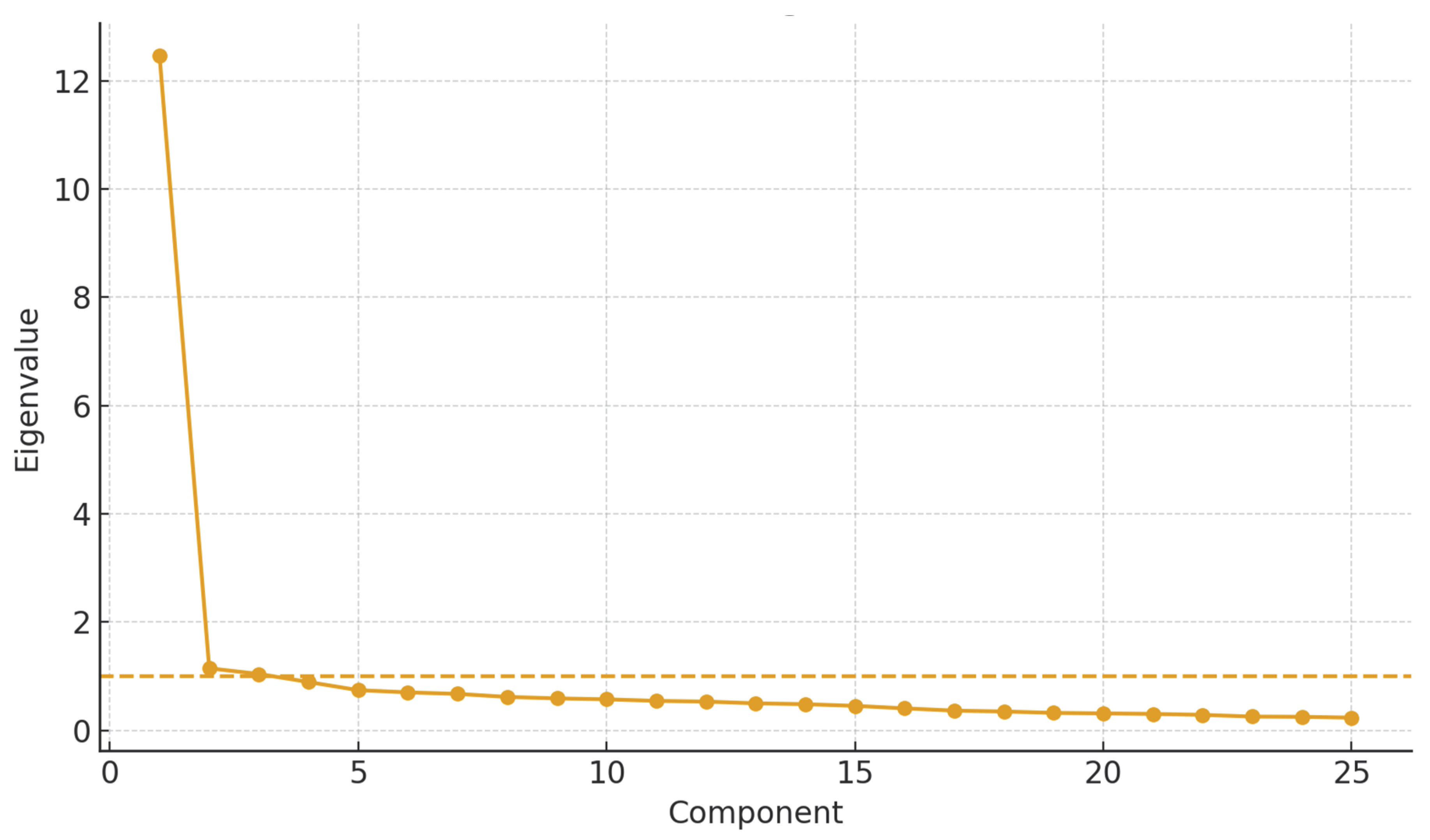
To find the logical clusters among the assessed dimensions, the exploratory factor analysis (EFA) employed the principal component method with orthogonal rotation Varimax. The number of factors to be kept was determined using Kaiser’s criterion, which is based on eigenvalues greater than 1.0 (Figure 1). Three primary components were identified by the initial analysis, and taken together, they account for 67.8% of the total accumulated variance (Table 5).
The first component, which primarily integrates aspects of the Thinking Routines and Design Thinking dimensions, groups items related to structured reflection and applied creativity and accounts for 33.8% of the total variance. Its eigenvalue is 8.45.
Because it demonstrates the students’ capacity to simultaneously analyze, come up with, and conceptualize solutions, this component was named “Creative and Reflective Thinking.” High-achieving students typically analyze problems, come up with unique ideas, and connect theory to practice. Cognitively speaking, the factor is a processing level where metacognition and creative ideation combine to produce learning that is self-regulated, adaptable, and meaningful. In terms of pedagogy, this is the core of STEM education, where profound comprehension inspires creativity.
Problem-Based Learning and Systems Mapping items make up the second component, which has an eigenvalue of 5.10 and an explained variance of 20.4%. This component was named “Problem-Based Learning and Systems Representation” by definition because it includes the analytical abilities required to apply theoretical knowledge to real-world situations. By arranging data and illustrating the connections between ideas, proficient students in this field can resolve actual issues. The factor suggests a kind of practical and analytical thinking that strengthens the connection between theory and practice by converting theoretical knowledge into workable solutions. This component of education refers to learning by doing, which is the cornerstone of active methodologies.
Last but not least, the third component, which has an eigenvalue of 3.39 and a variance of 13.6%, focuses on items related to more complex Thinking Routines and Systems Dynamics, demonstrating the capacity to comprehend feedback, complex behaviors, and interrelationships in actual systems. “Systems Dynamics and Complex Thinking” was the name given to this component. It is the capacity to foresee results and create successful interventions by identifying feedback loops, interdependent relationships, and nonlinear behaviors in a system. Because it entails integrating multiple viewpoints, handling uncertainty, and rendering evidence-based decisions, STEM represents the pinnacle of cognitive maturity. In terms of pedagogy, the element stands for advanced thinking for global problem solving and sustainable innovation.
When combined, the three factors provide a comprehensive understanding of the cognitive and methodological competencies related to STEM learning, where the structural pillars of the educational process are systems understanding, creativity, and reflective thinking.
Following the identification of the three primary components of the factor structure, the factor loads arising from the Varimax rotation were analyzed in order to interpret the conceptual nature of each factor. Significant loads were defined as those that exceeded 0.40, a standard criterion in psychometric research. To preserve conceptual clarity and model parsimony, variables exhibiting cross-loads below this threshold were eliminated (Table 6).
These three elements demonstrate that the instrument’s first five dimensions are grouped into second-order constructs that reflect integrated methodological and cognitive processes rather than operating independently. A hierarchy in the learning process is depicted by the factor model:
Factors 1 and 2 are reflection and creativity; Factor 3 is systems thinking and complex understanding; and Factor 2 is practical application and conceptual structuring.
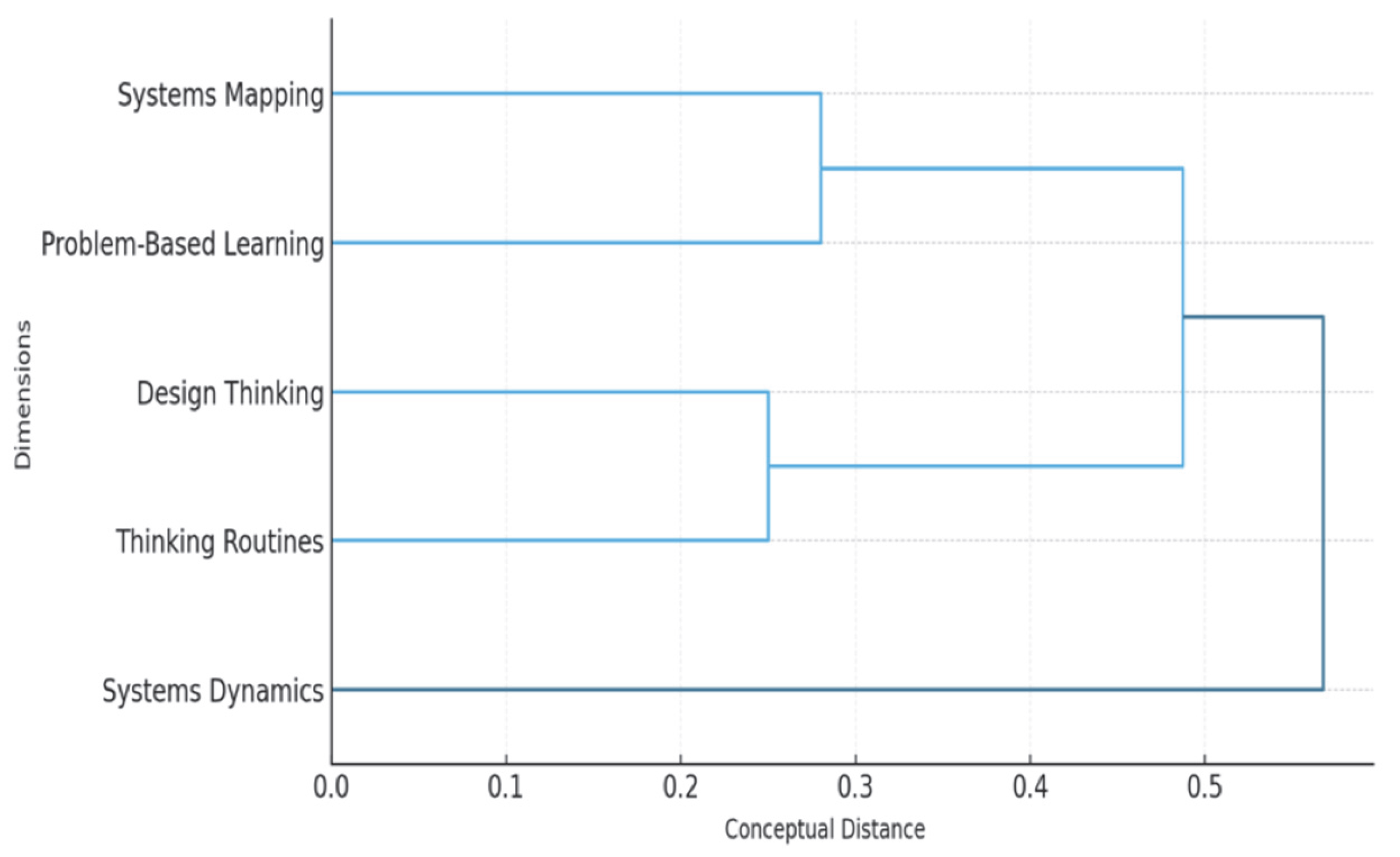
The existence of a three-dimensional pedagogical model (Figure 2), in which students simultaneously develop critical, analytical, and systems thinking, is reaffirmed by this factor structure, which also supports the conceptual validity of the instrument. the three latent macro factors that explain students’ methodological and cognitive tendencies in active learning environments.
The horizontal axis’s hierarchical distance statistically illustrates the conceptual similarity of the dimensions. Compared to those grouped in higher levels, those in the graph’s initial levels have a stronger correlation with one another. Three primary groupings that match the factors identified are displayed in this model.
In summary, the dendrogram’s form provides empirical support for the educational model’s three-dimensional structure. The cognitive sequence from introspection and creativity to practical solution and knowledge organization to systems thinking and complexity understanding is represented by the clustering levels. This hierarchical model demonstrates that active pedagogies are not discrete tactics but rather interconnected components of a progressive learning ecosystem in which students progress from action to metacognition and from the concrete to the abstract.

2.4. Data Collection Procedure

Participants were contacted at their educational institutions and invited to participate in the study. The objective of the study, the inclusion and exclusion criteria for the sample, and the confidential and anonymous use of data were explained in detail. Subjects who expressed interest in participating were provided with a virtual informed consent form, and those who accepted were given access to the anonymized virtual instrument.

2.5. Analysis Techniques

A descriptive analysis of the STEM Pedagogical Strategies Scale and its dimensions is carried out, as well as a correlational analysis to identify the interrelationships between the dimensions. Similarly, an inferential analysis is performed, applying simple linear regression analysis for the five pedagogical dimensions, also developing a multivariate analysis using multiple regression analysis and exploratory factor analysis (EFA) to verify the internal structure of the instrument.

2.6. Ethics and Informed Consent

The research complies with ethical standards, as no medical research was conducted on humans or animals. This is in accordance with the 2014 Declaration of Helsinki (DdH). Likewise, participants were provided with anonymous and confidential informed consent forms online, which outlined the objective of the research, the potential risks and benefits, their rights, means of contact, and voluntary acceptance to participate in the study.

3. Results

Grade Point Average (GPA), which is the average of a student’s grades on a scale of 0 to 10, with higher scores meaning better grades, was found on the other hand. This data was self-reported, as a question included in the data collection instrument, and the academic average for the 2025 school year was used. The participants’ average school performance was 8.70 ± 0.72. This average shows that most of the people who answered are dedicated to their studies, which is a very good level of performance.

3.1. Descriptive Analysis: Comparative by Dimensions

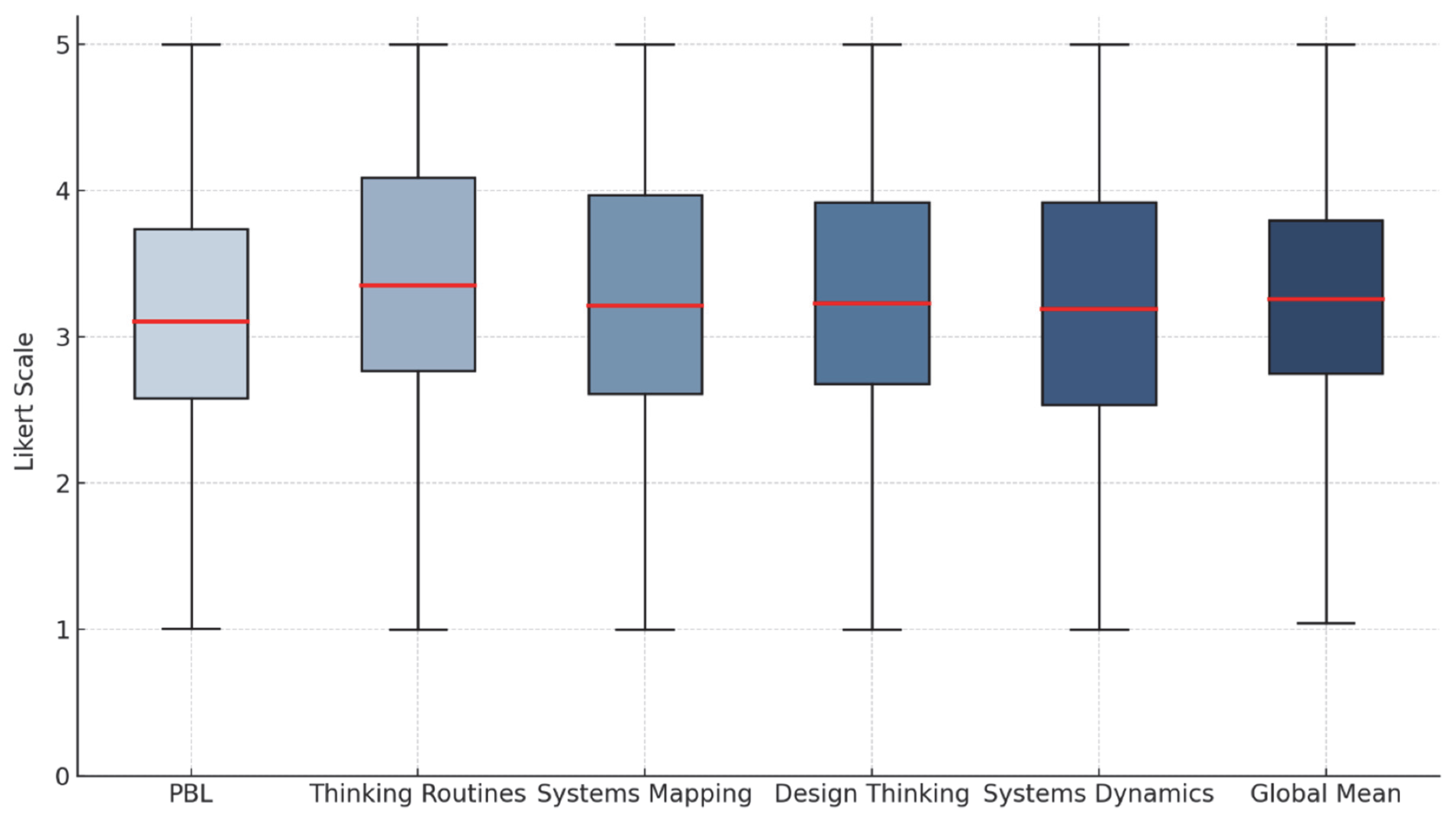
The comparative analysis of the five dimensions of the instrument, Problem-Based Learning (PBL), Thinking Routines, Systems Mapping and Visual Diagrams, Design Thinking, and Systems Dynamics, illuminates the overarching trends in students’ perceptions of STEM pedagogical strategies. This analysis (Figure 3) shows the overall picture of the instrument and how the students feel about STEM teaching methods. The average values, between 3.16 and 3.40, are at a level of “moderately agree”, showing a positive assessment, although there is room for improvement, of the strategies used.
The results show that the data is very consistent and evenly spread out. There are no dimensions with unusual extremes, which means that the participants think that teaching methods work well together and are consistent with each other.
Thinking Routines is the most widely accepted of the five dimensions. This supports the idea that strategies that encourage reflection and deep understanding work best. PBL and Systems Dynamics, on the other hand, have more spread-out results, which could mean that people are having trouble using or understanding these methods. The equality of the medians and the similarity of the standard deviations show that the answers are statistically consistent. This means that the way students see their learning environment stays the same.
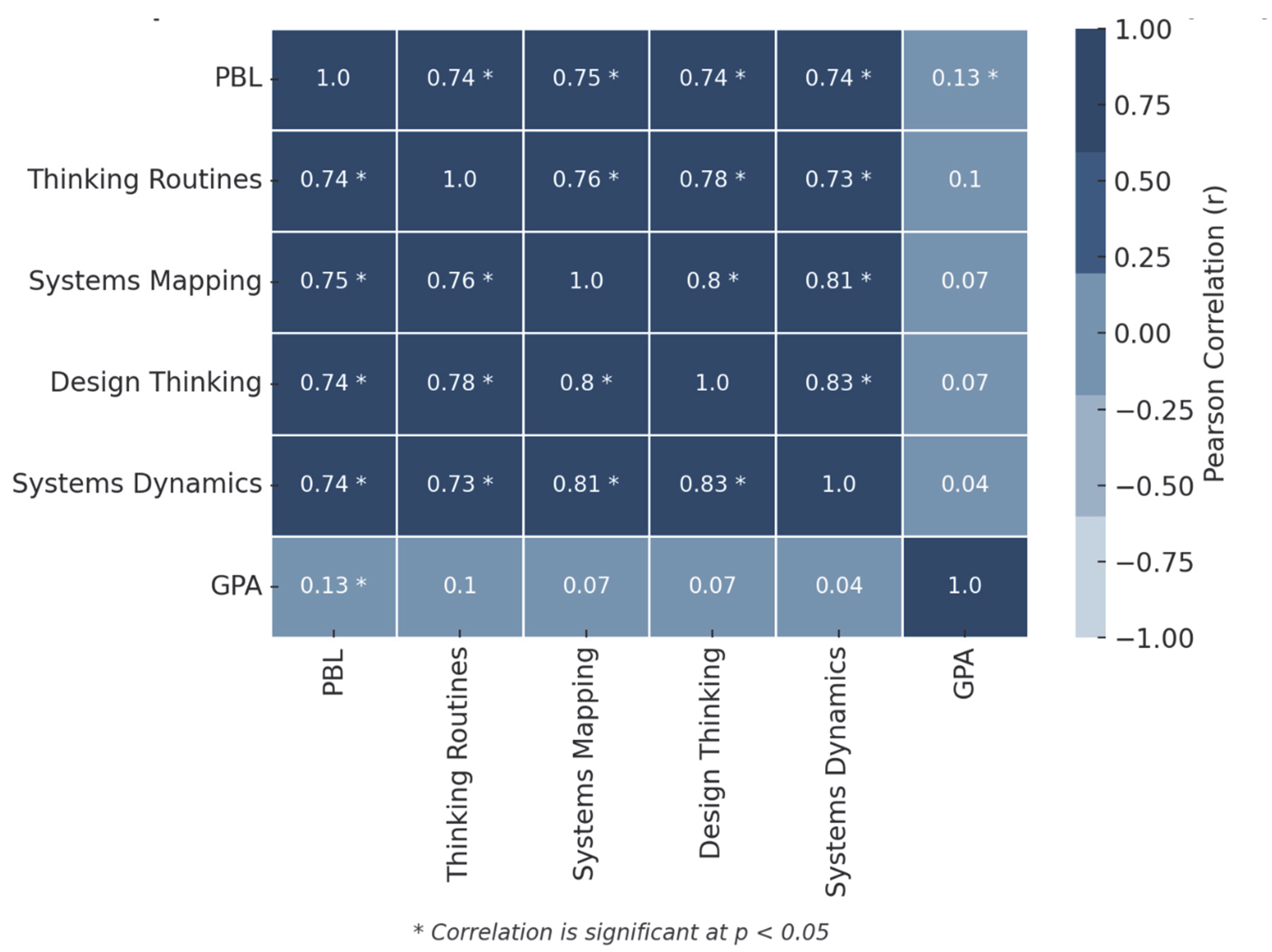
A correlational heat map (Figure 4) was used to synthetically show the link between the five dimensions of the pedagogical instrument and the GPA variable in the same way. The heat map shows that all of the dimensions are likely to be positively correlated. This means that the pedagogical practices measured by the instrument are consistent with each other and support each other. This means that in terms of teaching, working on one skill or area of focus in one area strengthens the others.
According to the aforementioned, the relationship between each dimension and the GPA variable is the primary area of interest. Statistically significant associations (p < 0.05) are indicated by the highest correlations (*). These associations suggest that there is enough data to conclude that certain aspects of learning are directly linked to improved academic performance. The idea that the processes of reflection, creativity, and sympathetic problem-solving are essential to establishing deep learning is supported by the fact that Thinking Routines and Design Thinking are specifically frequently connected with GPA.
Academic performance and the PBL dimension are positively correlated, albeit to a lesser degree. This outcome can be explained by the complexity of PBL use, which depends not only on problem elaboration but also on student academic maturity and tutorial accompaniment. However, the positive correlation suggests that real-world problem solvers perform better because they hone their analytical and knowledge-transfer abilities.
The Systems Dynamics dimension, on the other hand, has a weak positive correlation that is not statistically significant. The challenge of dynamically modeling systems, particularly at the undergraduate level, might be the cause of this. Although students find it helpful, more exposure to simulations, specialized software, and modeling exercises is needed in this domain. Accordingly, low correlation indicates unrealized pedagogical potential in the sample rather than a lack of effect.
The heat map shows that the five dimensions are closely related to one another, even outside of their association with GPA. This could be a reflection of the pedagogical model’s curricular coherence. Active approaches complement one another rather than operating independently: System dynamics completes the cycle of analysis by visualizing feedback and consequences, systems mapping visualizes understanding, and problem-based learning fosters the creativity of design thinking.
The instrument is measuring the same general construct linked to systems thinking and meaningful learning, where each dimension contributes to the construct, according to this pattern of intercorrelations. Because its dimensions work in a complementary pedagogical structure, this interdependence enhances the instrument’s convergent validity from a psychometric perspective.

3.2. Inferential Analysis

Problem-Based Learning (PBL), Thinking Routines, Systems Mapping, Design Thinking, and Systems Dynamics are the five pedagogical dimensions that were subjected to a basic linear regression analysis in order to ascertain which of them has the greatest direct impact on students’ academic performance (GPA) (Table 7). This model treated GPA as a dependent variable and each dimension as an independent predictor variable.
According to the magnitude of their β coefficients and statistical significance, Thinking Routines and Design Thinking are the dimensions that exhibit the strongest predictive power on academic performance when the results are compared. The best cognitive conditions for enhancing learning outcomes appear to be provided by these two dimensions, which are centered on creativity and reflection.
While Systems Dynamics has a greater impact, Problem-Based Learning and Systems Mapping also make a positive contribution, albeit with less pronounced effects. According to this pattern, academic success is more directly impacted by strategies that emphasize creative problem-solving, structured thinking, and reflection than by those that call for highly technical procedures or systems abstractions.
In terms of pedagogy, the results indicate that when educational programs incorporate practices that strike a balance between applied creativity (Design Thinking) and conceptual understanding (Thinking Routines), academic performance is more robust.
These approaches encourage deeper, more adaptable, and sustainable learning in addition to enhancing performance.

Multiple Regression Analysis

Both statistical standards and theoretical-pedagogical considerations were taken into consideration when choosing the independent variables that comprise the multiple regression model. All of the instrument’s dimensions were found to have a positive and significant relationship with academic performance (GPA) based on correlation and simple linear regression analysis. Nevertheless, not all of the dimensions contributed with the same level of conceptual coherence or predictive strength.
Only the variables that statistically contributed to GPA were included in the stepwise regression that was used to determine the most parsimonious model. A fitted model made up solely of the Thinking Routines and Design Thinking dimensions was the end product of this selection process (Table 8).
Model Summary:
R = 0.23 R2 = 0.052 Adjusted R2 = 0.046 F (2347) = 9.54 Sig. = <0.001
Dependent Variable: Academic Performance (GPA)
Source: Own elaboration based on empirical data (N = 350)
Equation of the Model
“GPA” = 7.95 + 0.21(“Thinking Routines”) + 0.25(“Design Thinking”)
With an overall correlation of R = 0.23, a coefficient of determination of R2 = 0.052, and an adjusted R2 = 0.046, the model statistically explains 5.2% of the variance in students’ academic performance. The combined contribution of Thinking Routines and Design Thinking is not the result of chance, but rather of a strong and consistent linear relationship with academic performance, as confirmed by the model’s overall significance (F (2347) = 9.54, p < 0.001).
Standardized coefficients (β) show that Design Thinking (β = 0.226, p < 0.001) has a marginally stronger impact on GPA than Thinking Routines (β = 0.204, p < 0.01) at the individual level. This implies that Design Thinking’s applied creativity, ideation, and prototyping techniques have a tendency to have a more noticeable effect on academic outcomes right away. Nonetheless, Thinking Routines has an equally important impact since it offers the conceptual and reflective framework upon which creative solutions are constructed. When combined, the two dimensions form a learning model in which the axes of educational thinking of reflecting before creating and creating to understand become complementary.

4. Discussion

The purpose of this article’s research was to examine, using a larger sample of 350 students, the composition, connections, and pedagogical effects of active methodologies in STEM education. In order to create an empirical model that validated the cognitive and didactic structure of the instrument, the analytical method combined descriptive, inferential, and multivariate techniques. The outcomes obtained enable the development of a theoretical-practical framework of reflective, creative, and systems learning, as well as a thorough understanding of active learning from a statistical and pedagogical standpoint that goes beyond the description of instructional strategies.
The instrument’s five initial dimensions, Problem-Based Learning (PBL), Thinking Routines, Systems Mapping, Design Thinking, and Systems Dynamics, acquired high levels of homogeneity in the responses, indicating that students had a positive and consistent opinion about the use of these methodologies from a pedagogical standpoint. The findings demonstrate that students value innovative, problem-solving, and active teaching strategies. The slight variations across dimensions, however, suggest that not all programs or subjects apply STEM strategies at the same level of maturity. These findings can help institutions plan curricula and train teachers.
Among the main challenges related to STEM methodology are the lack of consensus on the definition of STEM, the difficulty of curricular integration, content overload, and the need for specific teacher training [13,15]. It is important to design programs that respect the specificity of each discipline but foster authentic connections between them [11,41].
By enhancing these programs, students’ levels of engagement, independence, and creativity may increase, fostering the development of critical abilities for sustainability and innovation, as noted by Ring et al. [35].
However, there were positive but weak correlations between the dimensions and GPA, which is consistent with Gilissen et al. [42] description of the limited practical use of systems thinking. In particular, Thinking Routines and Design Thinking showed a significant correlation with performance, supporting the idea that metacognitive and creative [43,44] approaches promote the development of analytical and self-regulation skills [28,29]. These associations suggest a pattern: design strategies and metacognitive learning improve STEM academic performance, which coincides with Dent & Koenka [45]. It should be noted that active learning and inclusive strategies have been shown to reduce performance gaps, especially for underrepresented students, promoting equity in STEM higher education [25,46].
Interrelationships between dimensions were taken into account in the multiple regression model. Only the variables that actually contributed statistically to GPA were included in the regression that was conducted in order to identify the optimal model. Two predictors were kept in the final model: Both Thinking Routines and Design Thinking account for 5.2% of the variance in students’ academic performance, with R2 = 0.052, an adjusted R2 of 0.046, and a global significance (F (2347) = 9.54, p < 0.001). This percentage may seem low, but it is in line with educational research that shows a variety of social, cognitive, emotional, and contextual factors influence academic performance, as expressed Costa et al. [47].
From a pedagogical perspective, these findings have profound significance. Two pillars that have traditionally been divided in conventional educational models—conceptual understanding and applied creativity—are successfully integrated when Thinking Routines and Design Thinking are combined. Cognitive structures that support observation, analysis, argumentation, and metacognition are introduced in Thinking Routines. According to Tapia [28], these practices teach students how to think critically, spot patterns, and create arguments supported by facts. According to Astaiza et al. [5], Design Thinking extends this reflective framework to creative action by encouraging empathy, experimentation, and the practical solution of complex problems.
As various authors point out, the most effective strategies include project-based learning (PBL), problem-based learning, and engineering design, which allow students to apply knowledge in real-world contexts [15,41,48,49].
In terms of competencies, the statistical model shows that students’ academic performance greatly improves when they combine the capacity to produce creative solutions (applied creativity) with the capacity to reflect on one’s own thinking (metacognition). Therefore, in addition to being a statistical equation, this model is an educational proposal that has been empirically validated. It encourages institutions to reconsider their training strategies regarding the incorporation of reflection, creativity, and meaningful action into STEM learning.
According to the model, educational programs that methodically combine the two approaches may produce noticeable gains in student performance from an applied standpoint. While implementing Design Thinking-based projects promotes creativity, collaboration, and the application of knowledge to actual problems, incorporating thinking exercises into class sessions enables the development of a culture of reflective and argumentative learning. In addition to improving academic performance, this combination makes learning more dynamic, inclusive, and purposeful. Recent meta-analyses show that the implementation of STEM has a moderate to high effect on academic performance, the development of higher-order thinking skills, and student motivation [48,50]. Furthermore, the STEM approach contributes significantly to the development of 21st-century skills such as problem solving, collaboration, and communication [49,50].
It should be mentioned that the instrument’s reliability was confirmed by the excellent internal consistency shown by Cronbach’s alpha (0.78–0.86). Conversely, the latent structure of the instrument was empirically demonstrated by the Exploratory Factor Analysis (AFE). The data’s factorizability was confirmed by the KMO index (0.83) and Bartlett’s sphericity test (p < 0.001).
Factor 1: Creative and Reflective Thinking, which combines items from Thinking Routines and Design Thinking related to metacognition, ideation, and applied creativity; Factor 2: Problem-Based Learning and Systems Representation, with PBL and Systems Mapping items, which focus on experiential learning and visual understanding of processes; and Factor 3: Dynamic Systems and Complex Thinking (Systems Dynamics items, which measure students’ ability to identify interdependencies and feedback loops) were the three factors that were found to account for over 62% of the variance overall.
The cognitive structure of STEM learning can be summed up in this five-to-three-factor simplification, where the three interconnected pillars are creativity, doing, and systems thinking. This structure is hierarchically represented by the final dendrogram, which is based on the conceptual distance between the three factors. The findings show that problem-based learning and creative-reflective thinking are closely related, as indicated by Jonassen & Hung [51], and that complex thinking would be a higher level of conceptual integration. The notion that active methodologies are a methodical learning process that progresses from individual reflection to systems understanding is supported by this hierarchical model [7].

5. Conclusions

5.1. Contributions

The study’s findings provide opportunities for curriculum design, instruction, and educational innovation. First, research shows that effective STEM education combines three integrative competencies—creative thinking, practical action, and systems thinking—rather than employing discrete approaches. In the twenty-first century, meaningful learning revolves around this triad, where students not only absorb knowledge but also modify and apply it.
The results suggest that teacher education programs be redesigned at the institutional level to incorporate integrated modules that encourage innovation and real-world problem-solving. Institutions can also encourage the establishment of systems thinking labs, where students use digital and graphical representations to model phenomena, map causal relationships, and visualize processes.
Methodologically, the EFA-validated tool offers a framework for assessing the efficacy of complex thinking-based educational initiatives. It is perfect for curricular innovation processes, institutional diagnoses, and future research because of its structural validity and dependability.

5.2. Research Study Limitations and Potential Future Studies

As part of the limitations of the study, it is recognized that the Likert scale tends to favor agreement. In order to avoid this limitation, it is suggested as a future improvement to include equidistant options. It should be noted that the high rating reflected in the use of pedagogical strategies may reflect an appreciation for active methodologies rather than a deep understanding of systems thinking. Therefore, a more comprehensive study is suggested to evaluate the conceptual depth of systems thinking.
Future research directions are established by the findings. To validate the three-factor structure, an independent sample should first undergo a confirmatory factor analysis AFC. By taking this step, the exploratory model could be transformed into a theoretical model that could be tested in structural equation models (SEM), which assess the causal relationships between latent variables. Therefore, given that the instrument is still under development, future studies are suggested to help refine and validate it.
Furthermore, considering the collinearity between the pedagogical dimensions, the use of regularized regression techniques (LASSO or Ridge) may aid in determining the most accurate predictors of academic performance. However, because they can record learning processes over time, longitudinal designs would make it possible to evaluate the long-term effects of active methodologies.
Furthermore, a qualitative method is proposed: triangulation using focus groups or interviews could explore students’ perspectives on systems and creative learning, adding experiential meanings to statistical evidence. Lastly, the application of text mining or semantic network analysis to investigate how students conceptualize their learning processes within the frameworks of complex thinking may be the subject of future research.

5.3. Final Reflections

All things considered, the research’s conclusions show that incorporating systems thinking, PBL, and creative thinking is a key component of STEM education. From factor validation to demographic description, the quantitative results all point to the same conclusion: students engage in meaningful learning when they actively construct knowledge, reflect on their own thought processes, and comprehend the complexity of the world.
This vision is summed up in the final suggested model’s three transversal axes, suggesting that active methodologies can be incorporated into the teaching process in the areas of creativity, problem-solving, and critical thinking. The effectiveness of the systems approach in contemporary education is supported by empirical data, which also provides a framework for creating pedagogical strategies that are more sustainable, humane, and holistic. This study concludes a statistical analysis process while also paving the way for a more complex understanding of learning, where teaching and learning are transformative, creative, and reflective processes.

Author Contributions

Conceptualization, S.C.-B. and O.A.G.-B.; methodology, S.C.-B.; software, J.d.J.V.-M.; validation, O.C.-D. and C.G.L.T.; formal analysis, H.D.M. and O.A.G.-B.; investigation, M.d.J.C.P., J.d.J.R.-S. and M.H.I.C.A.; writing—original draft preparation, M.A.R.-S.; writing—review and editing, J.M.C.-P.; visualization, O.A.G.-B.; supervision, S.C.-B. All authors have read and agreed to the published version of the manuscript.

Funding

This research received no external funding.

Data Availability Statement

Research data may be requested directly from the researchers.

Conflicts of Interest

The authors declare no conflicts of interest.

Abbreviations

The following abbreviations are used in this manuscript:
STEMScience, Technology, Engineering, and Mathematics
GPAGrade Point Average
EFAexploratory factor analysis
PBLProblem-Based Learning

Appendix A

Table A1. Scale items.
ItemDescription
1In class, the projects and assignments I am given are based on complex real-world problems with no single or simple solution.
2To complete the projects, I am required to connect and apply knowledge from different subjects or disciplines.
3I am asked to analyze how different parts of a problem interrelate in order to understand the big picture.
4My work requires me to consider the possible long-term consequences (social, economic, etc.) of the solutions I propose.
5The methodology of the classes encourages me to work as a team with my classmates to solve problems collaboratively.
6In class, I do activities that ask me to show how I think about a topic, not just give the correct answer.
7At the end of an activity, my teachers guide me to reflect on my learning process and how I reached my conclusions.
8I am encouraged to explore different perspectives and to think critically and creatively about the topics we study.
9The class encourages dialogue and collaborative work so that we can discuss ideas and learn from each other.
10The goal of the activities is for me to develop a deep understanding of the concepts, not just memorize them for a test.
11In class, we use diagrams or visual maps to understand how the different elements of a problem are interconnected.
12I am asked to create cause-and-effect diagrams to identify how changes in one part of the system affect others.
13Mapping activities help me turn complex and abstract ideas into clearer and more understandable representations.
14The use of visual tools facilitates collaboration with my peers by giving us a common language to discuss system problems.
15Through creating diagrams, I learn to focus solutions on the underlying causes of a problem rather than just the symptoms.
16In class, when developing projects, I am asked to first understand the needs of people or users before proposing a solution.
17I am encouraged to propose many different ideas and not to worry if the first one is not the best.
18Assignments allow me to create and test prototypes or models of my ideas and then improve them based on feedback.
19The projects I work on are focused on solving real-world challenges, which makes learning more practical.
20In class, I am encouraged to explore the problem from different perspectives, not just looking for a single answer.
21In class, we use computer models or simulations to analyze how systems or problems change over time.
22Activities help me understand how small changes in a system can have large long-term effects.
23I am asked to create diagrams or maps to show how different factors in a problem are connected and influence each other.
24To solve problems, I am encouraged to focus on underlying causes and patterns rather than superficial symptoms.
25My assignments require me to think about the long-term consequences of decisions made within a system.

References

  1. Flojo, L.; Pitt, B. 5 Wayas to Teach Systems Thinking in Education; World Economic Forum: Geneva, Switzerland, 2024; Available online: https://es.weforum.org/stories/2024/11/5-formas-de-ensenar-el-pensamiento-sistemico-en-la-educacion/ (accessed on 30 January 2025).
  2. Bertalanffy, L.V. General System Theory: Foundations, Development, Applications; Braziller: New York, NY, USA, 1968. [Google Scholar]
  3. Cabrera, D.; Cabrera, L.L.; Midgley, G. The four waves of systems thinking. J. Syst. Think. 2023, 3, 1–51. [Google Scholar] [CrossRef]
  4. Ison, R. Systems Practice: How to Act: In Situations of Uncertainty and Complexity in a Climate-Change World; Springer: Berlin/Heidelberg, Germany, 2017. [Google Scholar]
  5. Astaiza, A.; Tafur, M.; Viasus, J. Three teaching strategies for a systems thinking course: Experience of a learning laboratory and pedagogical experimentation. Rev. Estud. Exp. Educ. 2022, 21, 460–474. [Google Scholar] [CrossRef]
  6. Huang, C.; Shi, X.; Hu, Z.; Yu, T.; Chen, D.; Fan, X.; Pan, J.; Jiang, S.; Luo, Z.; Chen, J. The effectiveness of problem based learning in improving critical thinking, problem-solving and self-directed learning in first-year medical students: A meta-analysis. PLoS ONE 2022, 17, e0277339. [Google Scholar] [CrossRef]
  7. European Commission, Joint Research Centre (JRC). STEM and STEAM Education, and Disciplinary Integration: A Guide to Informed Policy Action; Publications Office of the European Union: Copenhagen, Denmark, 2025; Available online: https://publications.jrc.ec.europa.eu/repository/bitstream/JRC141438/JRC141438_01.pdf (accessed on 15 October 2025).
  8. Li, Y.; Wang, K.; Xiao, Y.; Froyd, J. Research and trends in STEM education: A systematic review of journal publications. Int. J. STEM Educ. 2020, 7, 11. [Google Scholar] [CrossRef]
  9. Jamali, S.; Ebrahim, N.; Jamali, F. The role of STEM Education in improving the quality of education: A bibliometric study. Int. J. Technol. Des. Educ. 2022, 33, 819–840. [Google Scholar] [CrossRef]
  10. Yata, C.; Ohtani, T.; Isobe, M. Conceptual framework of STEM based on Japanese subject principles. Int. J. STEM Educ. 2020, 7, 12. [Google Scholar] [CrossRef]
  11. Ortiz-Revilla, J.; Adúriz-Bravo, A.; Greca, I. A Framework for Epistemological Discussion on Integrated STEM Education. Sci. Educ. 2020, 29, 857–880. [Google Scholar] [CrossRef]
  12. Falloon, G.; Hatzigianni, M.; Bower, M.; Forbes, A.; Stevenson, M. Understanding K-12 STEM Education: A Framework for Developing STEM Literacy. J. Sci. Educ. Technol. 2020, 29, 369–385. [Google Scholar] [CrossRef]
  13. Hamad, S.; Tairab, H.; Wardat, Y.; Rabbani, L.; AlArabi, K.; Yousif, M.; Abu-Al-Aish, A.; Stoica, G. Understanding Science Teachers’ Implementations of Integrated STEM: Teacher Perceptions and Practice. Sustainability 2022, 14, 3594. [Google Scholar] [CrossRef]
  14. Mateos-Núñez, M.; Martínez-Borreguero, G.; Naranjo-Correa, F.L. Learning Science in Primary Education with STEM Workshops: Analysis of Teaching Effectiveness from a Cognitive and Emotional Perspective. Sustainability 2020, 12, 3095. [Google Scholar] [CrossRef]
  15. Larkin, K.; Lowrie, T. Teaching Approaches for STEM Integration in Pre- and Primary School: A Systematic Qualitative Literature Review. Int. J. Sci. Math. Educ. 2023, 21, 11–39. [Google Scholar] [CrossRef] [PubMed]
  16. Zhan, Z.; Niu, S. Subject integration and theme evolution of STEM education in K-12 and higher education research. Humanit. Soc. Sci. Commun. 2023, 10, 1–13. [Google Scholar] [CrossRef]
  17. Martín-Páez, T.; Aguilera, D.; Perales-Palacios, F.; Vílchez-González, J. What are we talking about when we talk about STEM education? A review of literature. Sci. Educ. 2019, 103, 799–822. [Google Scholar] [CrossRef]
  18. Sahito, Z.; Wassan, S. Literature Review on STEM Education and Its Awareness among Teachers: An Exploration of Issues and Problems with Their Solutions. Sage Open 2024, 14, 21582440241236242. [Google Scholar] [CrossRef]
  19. Aslam, S.; Alghamdi, A.A.; Abid, N.; Kumar, T. Challenges in Implementing STEM Education: Insights from Novice STEM Teachers in Developing Countries. Sustainability 2023, 15, 14455. [Google Scholar] [CrossRef]
  20. Le, L.; Tran, T.; Tran, N. Challenges to STEM education in Vietnamese high school contexts. Heliyon 2021, 7, e08649. [Google Scholar] [CrossRef]
  21. Kayan-Fadlelmula, F.; Sellami, A.; Abdelkader, N.; Umer, S. A systematic review of STEM education research in the GCC countries: Trends, gaps and barriers. Int. J. STEM Educ. 2022, 9, 1–24. [Google Scholar] [CrossRef]
  22. Jamaluddin, R.; Shah, N.; Puad, M.; Kang, E.; Jusoh, R. The Integration of Science Technology Engineering and Mathematics (Stem) in Home Science: Teachers’ Understanding and Challenges. J. Adv. Res. Appl. Sci. Eng. Technol. 2023, 31, 42–50. [Google Scholar] [CrossRef]
  23. Dong, Y.; Wang, J.; Yang, Y.; Kurup, P. Understanding intrinsic challenges to STEM instructional practices for Chinese teachers based on their beliefs and knowledge base. Int. J. STEM Educ. 2020, 7, 47. [Google Scholar] [CrossRef]
  24. O’leary, E.; Shapiro, C.; Toma, S.; Sayson, H.; Levis-Fitzgerald, M.; Johnson, T.; Sork, V. Creating inclusive classrooms by engaging STEM faculty in culturally responsive teaching workshops. Int. J. Stem Educ. 2020, 7, 32. [Google Scholar] [CrossRef] [PubMed]
  25. Theobald, E.; Hill, M.; Tran, E.; Agrawal, S.; Arroyo, E.; Behling, S.; Chambwe, N.; Cintrón, D.; Cooper, J.; Dunster, G.; et al. Active learning narrows achievement gaps for underrepresented students in undergraduate science, technology, engineering, and math. Proc. Natl. Acad. Sci. USA 2020, 117, 6476–6483. [Google Scholar] [CrossRef]
  26. Merayo, N.; Ayuso, A. Analysis of barriers, supports and gender gap in the choice of STEM studies in secondary education. Int. J. Technol. Des. Educ. 2022, 33, 1471–1498. [Google Scholar] [CrossRef]
  27. Ramírez-Montoya, M.; Basabe, F.; Carlos, M.; Patiño, I.; Portuguez, M. Open Educational Model of Complex Thinking for the Future of Education. 2024. Available online: https://hdl.handle.net/11285/652033 (accessed on 15 June 2025).
  28. Tapia, M.; Ruiz, C.; Serrano, G.; Bejarano, C. Thinking Routines in STEM Education: Promoting Logical and Analytical Thinking. Dominio Las Cienc. 2024, 10, 1001–1018. [Google Scholar]
  29. Nguyện, L.; Hoa, H.; Hien, L. Integrating design thinking into STEM education: Enhancing problem-solving skills of high school students. Eurasia J. Math. Sci. Technol. Educ. 2025, 21, em2611. [Google Scholar] [CrossRef]
  30. Chang, S.H.; Yang, L.J.; Chen, C.H.; Shih, C.C.; Shu, Y.; Chen, Y.T. STEM education in academic achievement: A meta-analysis of its moderating effects. Interact. Learn. Environ. 2022, 32, 2401–2423. [Google Scholar] [CrossRef]
  31. Gelves, O.; Celemín, D.; Casteblanco, D.; Collazos, B. Systems dynamics model for the management of an undergraduate university academic program. Rev. Téc. Fac. Ing. Univ. Zulia 2025, 48, e254802. [Google Scholar] [CrossRef]
  32. Ramírez, E. Strategic leadership: A keys to transforming contemporary education. Perspect. Rev. Hist. Geogr. Arte Cult. 2025, 13, 58–70. [Google Scholar] [CrossRef]
  33. Aljure, J.P. Systemic Thinking. Ruta Maestra. 2018. Available online: https://rutamaestra.santillana.com.co/pensamiento-sistemico/ (accessed on 5 July 2025).
  34. Marino-Jiménez, M.; Harman-Canalle, U.A.; Alvarado-Choy, F. Distance education from a systemic perspective: A necessary view for stakeholders in higher education institutions. Rev. Iberoam. Educ. Super. 2020, 11, 183–197. [Google Scholar] [CrossRef]
  35. Ring, E.A.; Dare, E.A.; Crotty, E.A.; Roehrig, G.H. The Evolution of Teacher Conceptions of STEM Education Throughout an Intensive Professional Development Experience. J. Sci. Teach. Educ. 2017, 28, 444–467. [Google Scholar] [CrossRef]
  36. Rico, A.; Menéndez, S. Transformative Education. Good Practices for Systemic Change (Route 5). Revista de Innovación Educativa. 2025. Available online: https://oes.fundacion-sm.org/eduforics/experiencias-y-recursos/buenas-practicas/educacion-transformadora-ejemplos-de-buenas-practicas-de-cambio-sistemico-ruta-5/ (accessed on 26 September 2025).
  37. Spector, P. Do Not Cross Me: Optimizing the Use of Cross-Sectional Designs. J. Bus. Psychol. 2019, 34, 125–137. [Google Scholar] [CrossRef]
  38. Ahmad, Z.; Sultana, A.; Siby, N.; Ammar, M.; Al-Thani, N. A Multi-Dimensional Scale for Measuring Undergraduates Interest in STEM Disciplines. J. Sci. Educ. Technol. 2024, 34, 611–620. [Google Scholar] [CrossRef]
  39. Ding, L. Theoretical perspectives of quantitative physics education research. Phys. Rev. Phys. Educ. Res. 2019, 15, 020101. [Google Scholar] [CrossRef]
  40. Nunnally, J. Psychometric Theory, 2nd ed.; McGraw-Hill: New York, NY, USA, 1978. [Google Scholar]
  41. Gilissen, M.G.R.; Knippels, M.C.P.J.; van Joolingen, W.R. Bringing systems thinking into the classroom. Int. J. Sci. Educ. 2020, 42, 1253–1280. [Google Scholar] [CrossRef]
  42. Mitjáns Martínez, A. Creative learning: Challenges for teaching practice. Rev. CS 2013, 311–341. Available online: https://dialnet.unirioja.es/servlet/articulo?codigo=4968424 (accessed on 26 September 2025).
  43. Collahuazo Cuases, J.D.; Tipán Llanos, A.M.; Vera Domínguez, M.P.; Tello Mora, J.K. Gamification and experiential learning: A model for critical and creative thinking. Sapiens Educ. 2025, 2, e-20406. [Google Scholar] [CrossRef]
  44. Dent, A.L.; Koenka, A.C. The Relation Between Self-Regulated Learning and Academic Achievement Across Childhood and Adolescence: A Meta-Analysis. Educ. Psychol. Rev. 2016, 28, 425–474. [Google Scholar] [CrossRef]
  45. McGee, E. Interrogating Structural Racism in STEM Higher Education. Educ. Res. 2020, 49, 633–644. [Google Scholar] [CrossRef]
  46. Costa, A.; Moreira, D.; Casanova, J.; Azevedo, Â.; Gonçalves, A.; Oliveira, Í.; Azevedo, R.; Dias, P.C. Determinants of academic achievement from the middle to secondary school education: A systematic review. Soc. Psychol. Educ. 2024, 27, 3533–3572. [Google Scholar] [CrossRef]
  47. Wahono, B.; Lin, P.; Chang, C. Evidence of STEM enactment effectiveness in Asian student learning outcomes. Int. J. STEM Educ. 2020, 7, 36. [Google Scholar] [CrossRef]
  48. Fan, S.; Yu, K.; Lin, K. A Framework for Implementing an Engineering-Focused STEM Curriculum. Int. J. Sci. Math. Educ. 2020, 19, 1523–1541. [Google Scholar] [CrossRef]
  49. Alali, R. Enhancing 21st century skills through integrated stem education using project-oriented problem-based learning. Geoj. Tour. Geosites 2024, 53, 421–430. [Google Scholar] [CrossRef]
  50. Chen, B.; Chen, J.; Wang, M.; Tsai, C.-C.; Kirschner, P.A. The Effects of Integrated STEM Education on K12 Students’ Achievements: A Meta-Analysis. Rev. Educ. Res. 2025. [Google Scholar] [CrossRef]
  51. Jonassen, D.H.; Hung, W. All Problems are Not Equal: Implications for Problem-Based Learning. Interdiscip. J. Probl. Based Learn. 2008, 2, 4. [Google Scholar] [CrossRef]
Figure 1. Eigenvalues.
Systems 14 00097 g001
Figure 2. Three-dimensional pedagogical model.
Systems 14 00097 g002
Figure 3. Analysis by dimensions.
Systems 14 00097 g003
Figure 4. Correlational Heat Map.
Systems 14 00097 g004
Table 1. Identified Pedagogical Strategies and their Link to Systems Thinking.
Pedagogical StrategyDescriptionKey Systems Skills You DevelopKey Systematic Skills DevelopedCombination of Systems and Systematic Skills
Problem-Based Learning (PBL)Students tackle real-world challenges, often without a single solution, requiring them to analyze multiple variables. Huang et al. [6]Improvement in critical thinking, problem solving, and self-directed learning in students. Promotes the integration of learned knowledge rather than just the implementation of isolated knowledge and skills, facilitating the ability to see the big picture and its interdependencies [6].Application of an orderly and logical procedure, planning, information management, and structured evaluation.→ Systems + Systematic (depending on stage)
Thinking RoutinesShort sequences of questions or steps that make students’ reasoning visible and encourage group reflection. Tapia et al. [28]Critical-creative thinking, metacognition, exploration of diverse perspectives [28]. They offer a structured and reproducible procedure for directing thought.→ Systems + Systematic (depending on stage)
System Mapping and Visual DiagramsTools such as causal diagrams and feedback loop maps that allow students to visually represent the connections between elements of a system. Flojo & Pitt [1].Visualizing interconnections, identifying feedback loops and leverage points, creating a shared language to talk about systems [1].Knowledge organization skills, structured and sequential thinking, and clear communication.→ Both, depending on the educational use
Design Thinking (Pensamiento de Diseño)A five-stage iterative methodology (empathy, definition, ideation, prototyping, and testing) for user-centered problem solving. Nguyện et al. [29]Exploration of multiple perspectives, innovation, experimentation and adaptability [29].It provides a clear path for addressing uncertainty through a logical process, structured experimentation, and project management.→ Both, depending on the educational use
System DynamicsThe use of simulation software to model the behavior of complex systems over time. Gelves et al. [31]Consequence forecasting, analysis of non-linear relationships, design of long-term strategies [31].A process that requires design, testing, and evaluation skills.→ Systems + Systematic (depending on stage)
Table 2. Sociodemographic data of the sample.
VariableCategoryn%
GenderMale12034.29
Female23065.71
Age (years)18–2011131.71
21–257320.86
26–303610.29
31–35205.71
36–40185.14
41–4561.71
46–5082.29
51–5500.00
56–6000.00
Educational Bachelor’s Degree26274.86
LevelMaster’s Degree6318.00
Doctorate144.00
Postdoctorate113.14
Grade Point Average (GPA) Mean ± SD8.70 ± 0.72
Table 3. Dimensions of make up the Scale.
DimensionItem
Problem-Based Learning (PBL)1–5
Thinking Routines6–10
System Mapping and Visual Diagrams11–15
Design Thinking (Design Thinking)16–20
System Dynamics21–25
Table 4. Reliability statistics.
Cronbach’s AlfaN of Items
0.91225
Note: reliability statistics, according to the calculation of Cronbach’s Alpha.
Table 5. Total Variance Explained after Varimax Rotation.
ComponentInitial Eigenvalue (λ)% of VarianceCumulative %Interpretation
Factor 18.4533.833.8Creative and Reflective Thinking integration of metacognitive and design processes
Factor 25.1020.454.2Problem-Based and Systems Learning application and structuring of knowledge
Factor 33.3913.667.8Systems Dynamics and Complex Thinking holistic understanding of interactions
Total Explained Variance67.8
Note: Extraction Method: Principal Component Analysis (PCA). Rotation Method: Varimax with Kaiser Normalization. Source: Own elaboration based on empirical data (N = 350).
Table 6. Rotated Component Matrix (Varimax Rotation).
Item/DimensionFactor 1: Creative & Reflective ThinkingFactor 2: Problem-Based & Systems LearningFactor 3: Systems Dynamics & Complex Thinking
Thinking Routines 1–50.780.210.15
Design Thinking 1–50.740.260.19
Problem-Based Learning 1–50.310.810.24
Systems Mapping 1–50.280.770.22
Systems Dynamics 1–50.220.280.80
Cross-loadings (avg.)0.260.290.27
Eigenvalue (λ)8.455.103.39
% of Variance Explained33.820.413.6
Cronbach’s α0.860.820.78
Extraction Method: Principal Component Analysis (PCA). Rotation Method: Varimax with Kaiser Normalization. Criterion: Loadings > 0.40 retained. Source: Own elaboration based on empirical data (N = 350).
Table 7. Linear Regression Model.
Variable 1Variable 2 (GPA)Correlation (r)R2 (%)Significance (p)Interpretation
Problem-Based LearningGPA0.256.3<0.01Moderate positive relationship
Thinking RoutinesGPA0.287.8<0.01Moderate positive relationship
Systems MappingGPA0.214.4<0.05Weak but significant relationship
Design ThinkingGPA0.319.6<0.01Strongest predictor
Systems DynamicsGPA0.172.9<0.05Weak relationship
Table 8. Multiple Linear Regression Model for Academic Performance (GPA).
VariableUnstandardized Coefficients (B)Standardized Coefficients (β)tSig. (p)Collinearity Statistics (VIF)
(Constant)7.95035.22<0.001
Thinking Routines0.2100.2043.01<0.011.28
Design Thinking0.2500.2263.45<0.0011.28
(Constant)7.95035.22<0.001
Disclaimer/Publisher’s Note: The statements, opinions and data contained in all publications are solely those of the individual author(s) and contributor(s) and not of MDPI and/or the editor(s). MDPI and/or the editor(s) disclaim responsibility for any injury to people or property resulting from any ideas, methods, instructions or products referred to in the content.