Transcriptome Profiling and Weighted Gene Correlation Network Analysis Reveal Hub Genes and Pathways Involved in the Response to Polyethylene-Glycol-Induced Drought Stress of Two Citrus Rootstocks
by
 , ,
, ,
Emanuele Scialò
, 
Angelo Sicilia
,
Alberto Continella
 ,
,
Alessandra Gentile
and
Angela Roberta Lo Piero
*
Department of Agriculture, Food and Environment, University of Catania, 951213 Catania, Italy
*
Author to whom correspondence should be addressed.
Biology 2024, 13(8), 595; https://doi.org/10.3390/biology13080595
Submission received: 24 June 2024
/
Revised: 2 August 2024
/
Accepted: 6 August 2024
/
Published: 7 August 2024
(This article belongs to the Section Genetics and Genomics)
Simple Summary
Climate change poses a significant threat to agriculture, primarily through the increased frequency and severity of droughts. These extreme weather conditions reduce water availability, impacting crop yields and biomass production. Drought stress is particularly challenging for regions already prone to water scarcity, compromising food security. Addressing these issues requires innovative strategies and a thorough understanding of plant responses to water deficit conditions. This study aims to unravel the molecular mechanisms underlying drought tolerance in Citrus, crucial for developing adaptive strategies. The findings show that Bitters (C22) exhibits greater drought tolerance than Carrizo Citrange and identify key genes involved in responding to water scarcity. In conclusion, this research enhances our understanding of how citrus plants respond to water stress and identifies promising candidate genes. These insights will guide future research aimed at developing drought-tolerant plants.
Abstract
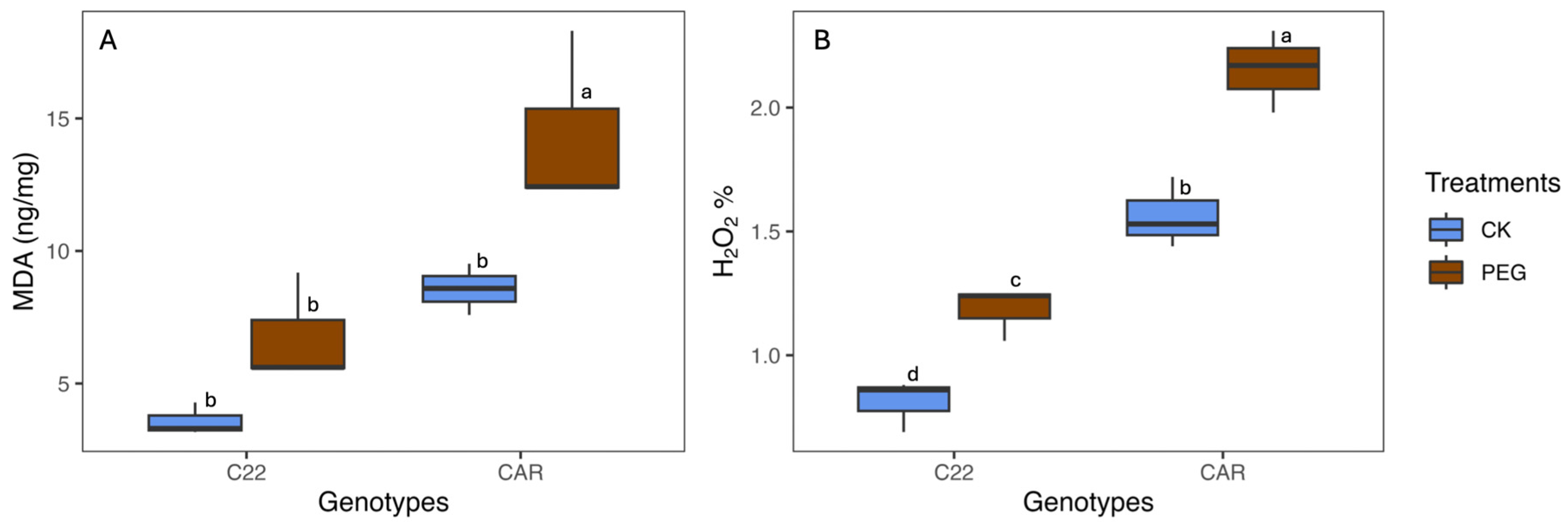
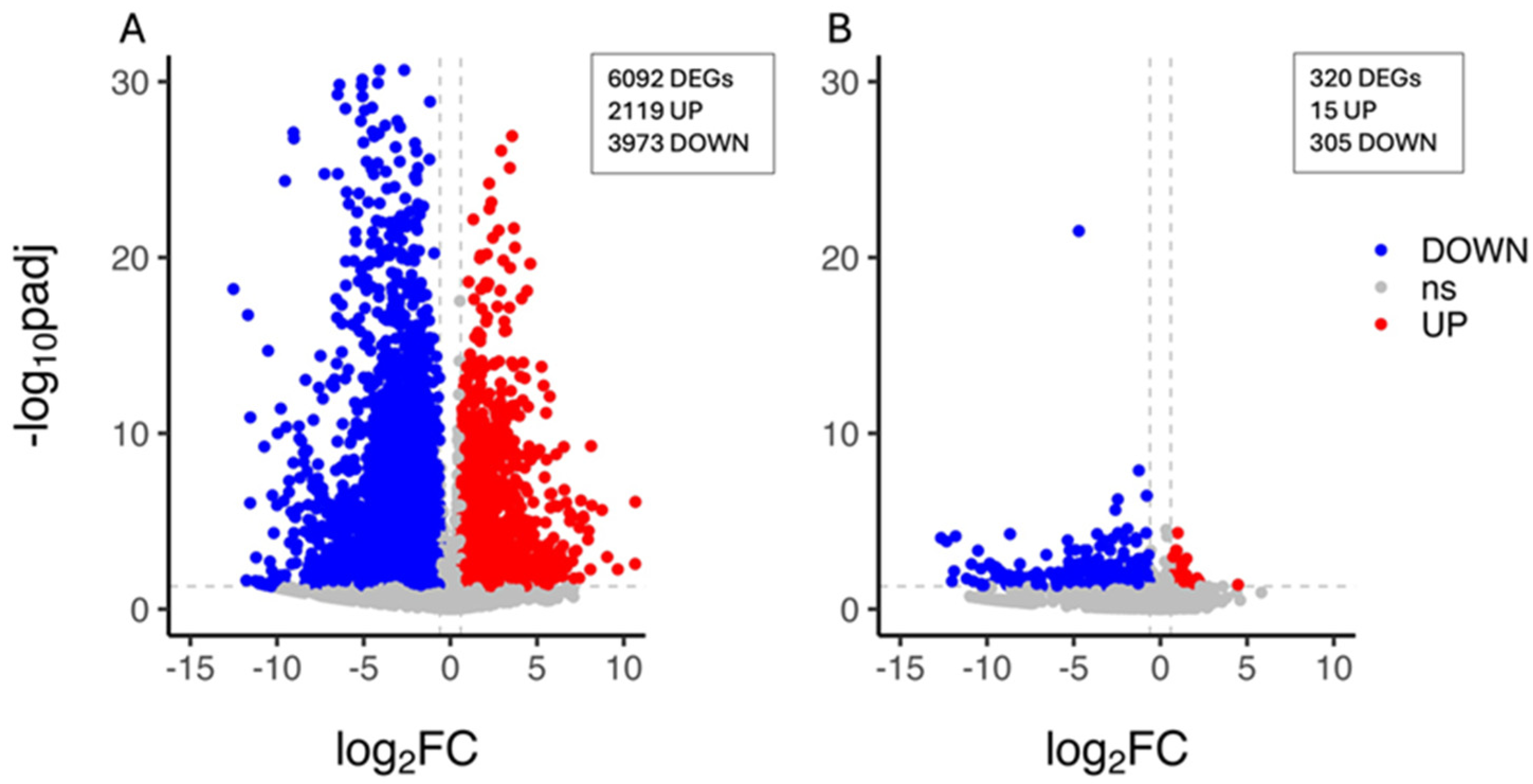
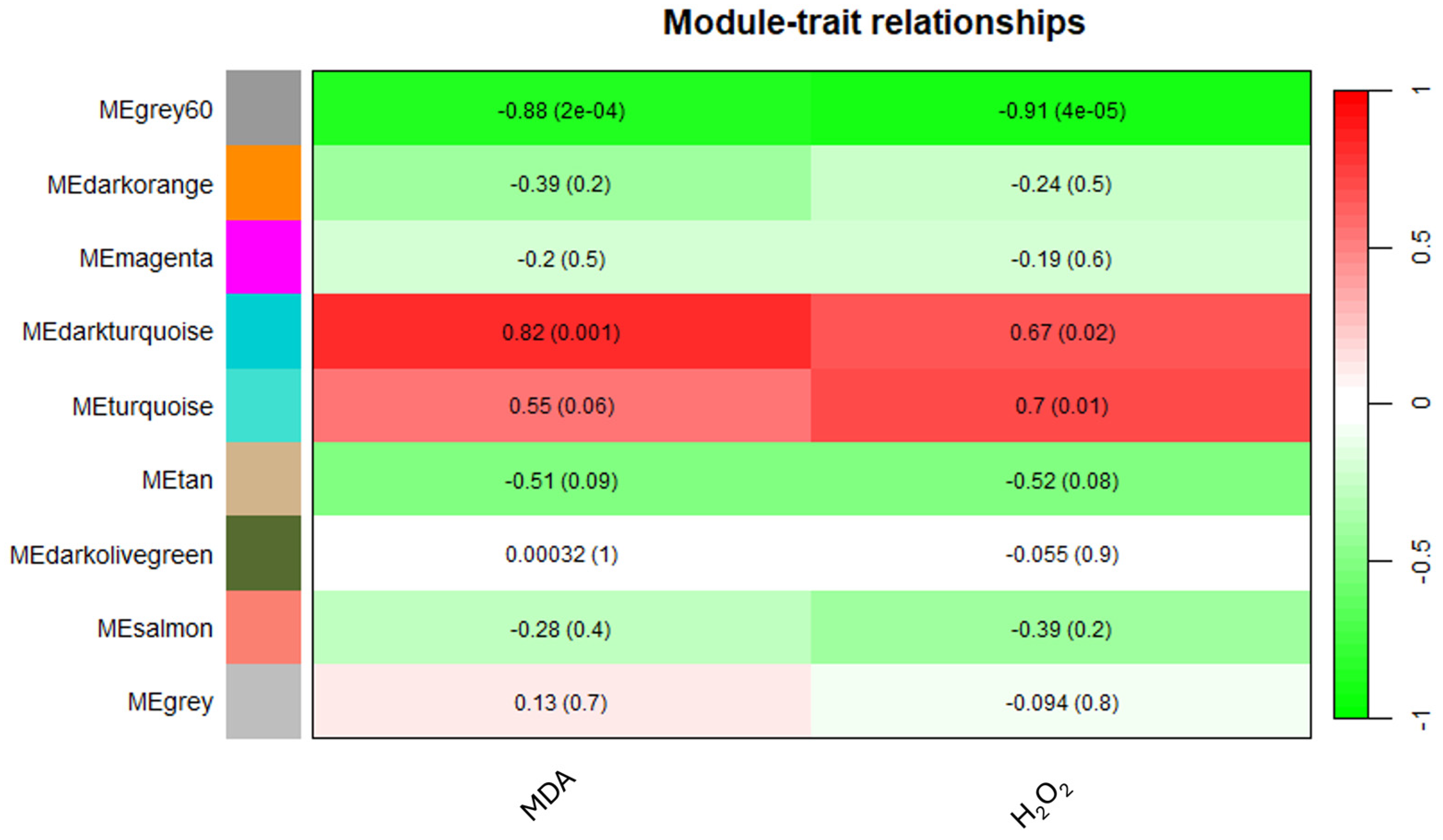
Agriculture faces the dual challenge of increasing food production and safeguarding the environment. Climate change exacerbates this challenge, reducing crop yield and biomass due to drought stress, especially in semi-arid regions where Citrus plants are cultivated. Understanding the molecular mechanisms underlying drought tolerance in Citrus is crucial for developing adaptive strategies. Plants of two citrus rootstocks, Carrizo Citrange and Bitters (C22), were grown in aerated half-strength Hoagland’s nutrient solution. Post-acclimation, the plants were exposed to a solution containing 0% (control) or 15% PEG-8000 for 10 days. Leaf malonyl dialdehyde (MDA) and hydrogen peroxide (H2O2) content were measured to assess the reached oxidative stress level. Total RNA was extracted, sequenced, and de novo-assembled. Weighted Gene Correlation Network Analysis (WGCNA) was conducted to examine the relationship between gene expression patterns and the levels of MDA and H2O2 used as oxidative stress indicators. Plant visual inspection and MDA and H2O2 contents clearly indicate that Bitters is more tolerant than Carrizo towards PEG-induced drought stress. RNA-Seq analysis revealed a significantly higher number of differentially expressed genes (DEGs) in Carrizo (6092) than in Bitters (320), with most being associated with drought sensing, ROS scavenging, osmolyte biosynthesis, and cell wall metabolism. Moreover, the WGCNA identified transcription factors significantly correlated with MDA and H2O2 levels, thus providing insights into drought-coping strategies and offering candidate genes for enhancing citrus drought tolerance.