
Hydrogel Microcapsules for Stimuli-Responsive Textiles



Highlights
- Our review analyzes design, synthesis, and textile integration of stimuli-responsive hydrogels and microcapsules with a special emphasis on how moisture, pH, temperature, light, and chemical triggers are leveraged to produce adaptive, multifunctional textile systems at the intersection of these technologies.
- Our findings highlight key opportunities for advancing smart textiles in healthcare, comfort regulation, controlled release, and filtration applications, with particular focus on underutilized properties of hydrogel and microcapsule systems, in the context of key challenges in durability, scalability, and sustainability.
Abstract
1. Introduction
2. Current Research
2.1. Hydrogels
2.1.1. Hydrogel Theory
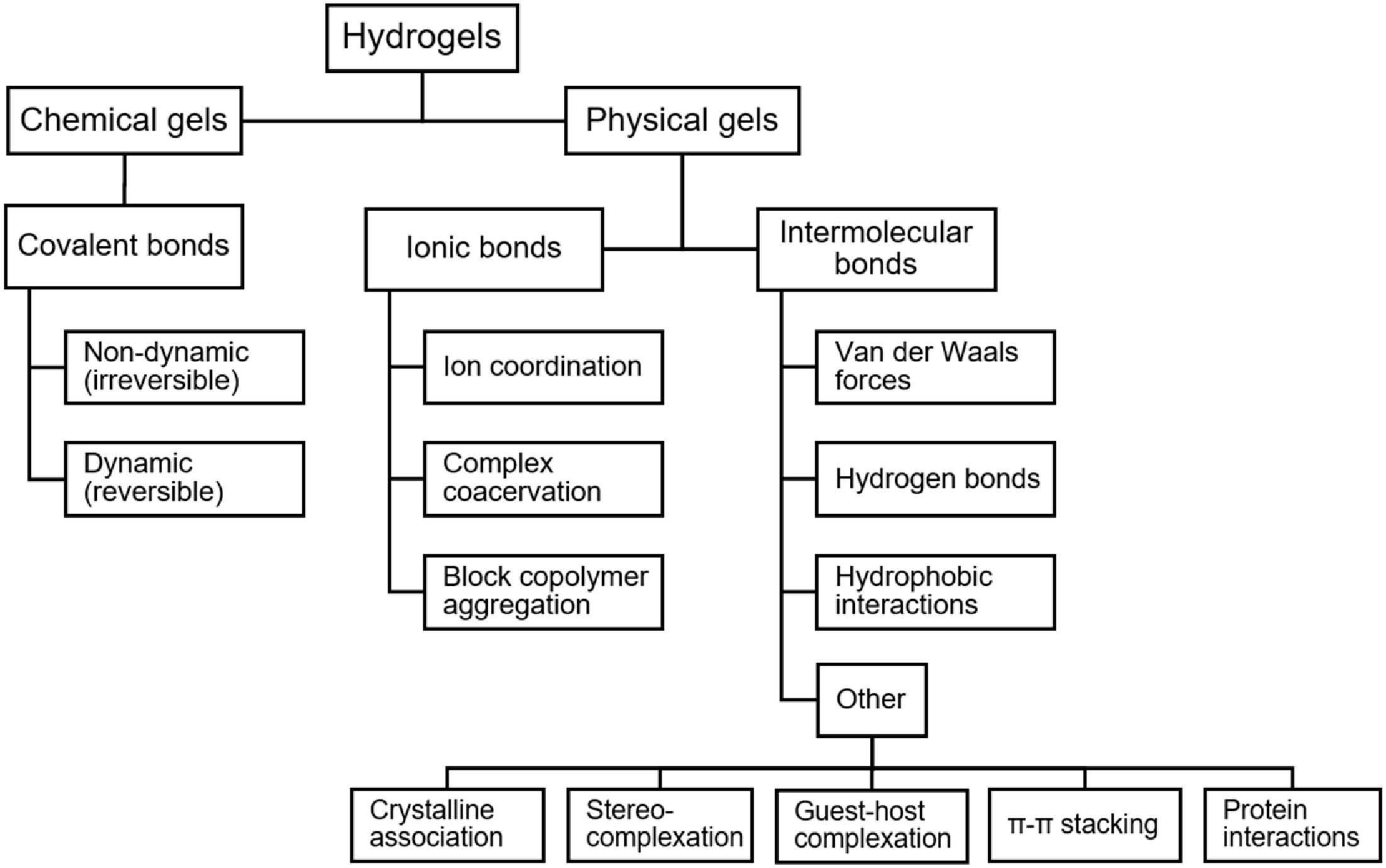
Chemical Gels
Physical Gels
Hydrogel Composition

| Synthetic | Natural | |
|---|---|---|
| Anionic | Poly(acrylic acid) (PAA) Poly(methacrylic acid) (PMAA) | Alginate Hyaluronan Pectin Carrageenan Albumin Carboxymethyl cellulose |
| Cationic | Poly(2-(dimethylamino)ethyl methacrylate) (PDMAEMA) Poly(2-(diethylamino)ethyl methacrylate) (PDEAEMA) Poly(N,N-dimethylallylamine) (PDMAAm) | Chitosan Poly(lysine) |
| Neutral | Poly(ethylene glycol) (PEG) Poly(vinyl alcohol) (PVA) Poly(hydroxyethyl methacrylate) (pHEMA) Poly(N-(2-hydroxypropyl)methacrylamide) (PHPMA) Polyvinylpyrrolidone (PVP) Polyacrylamide (PAM) Poly(N-isopropylacrylamide) (PNIPAAm) | Agarose Dextran Pullulan Methylcellulose |
| Amphipathic | Pluronic F127 | Collagen Gelatin Fibrin |
Water in Hydrogels
History and Applications
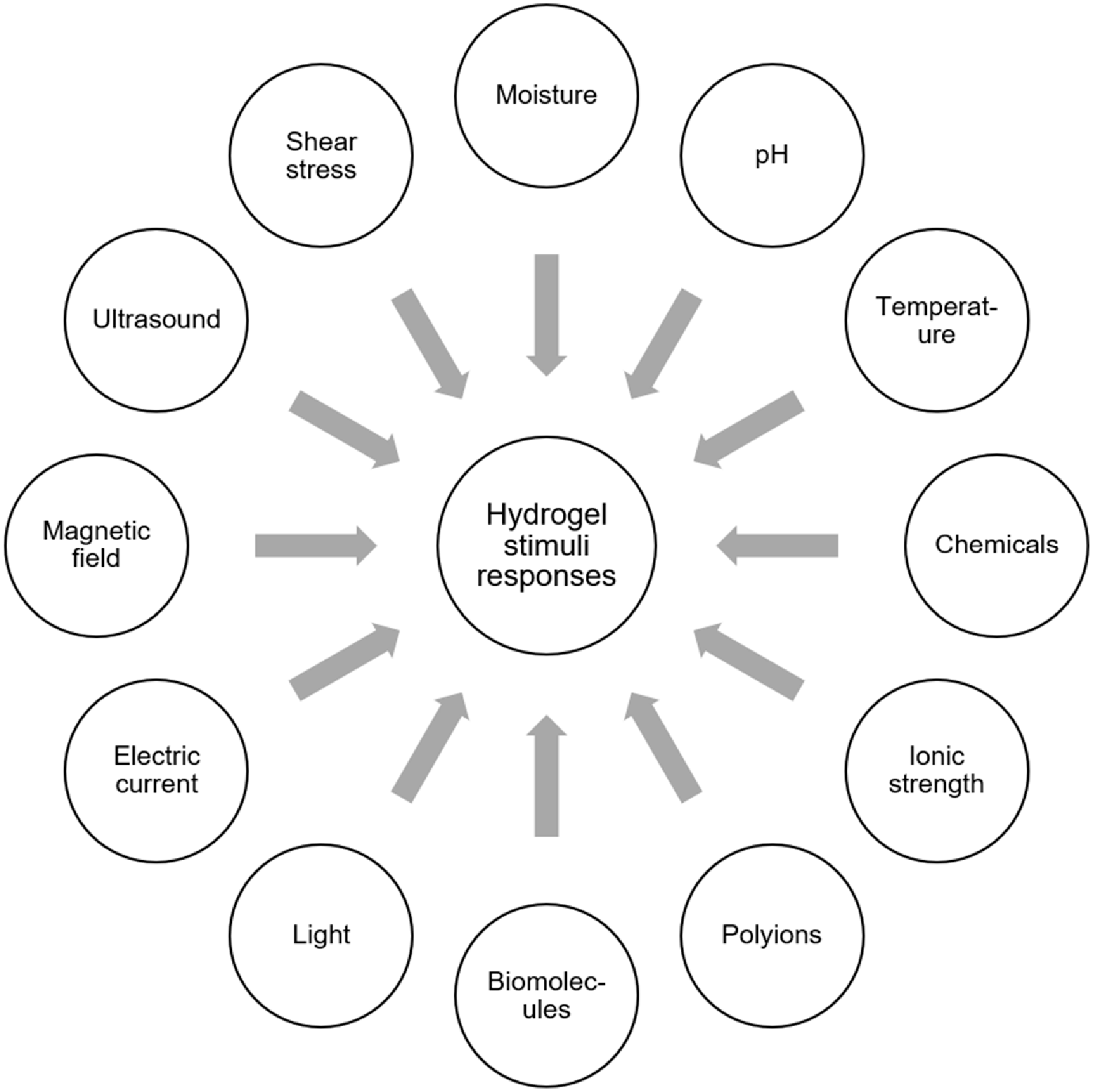
2.1.2. Responsive Behavior of Hydrogels
Moisture
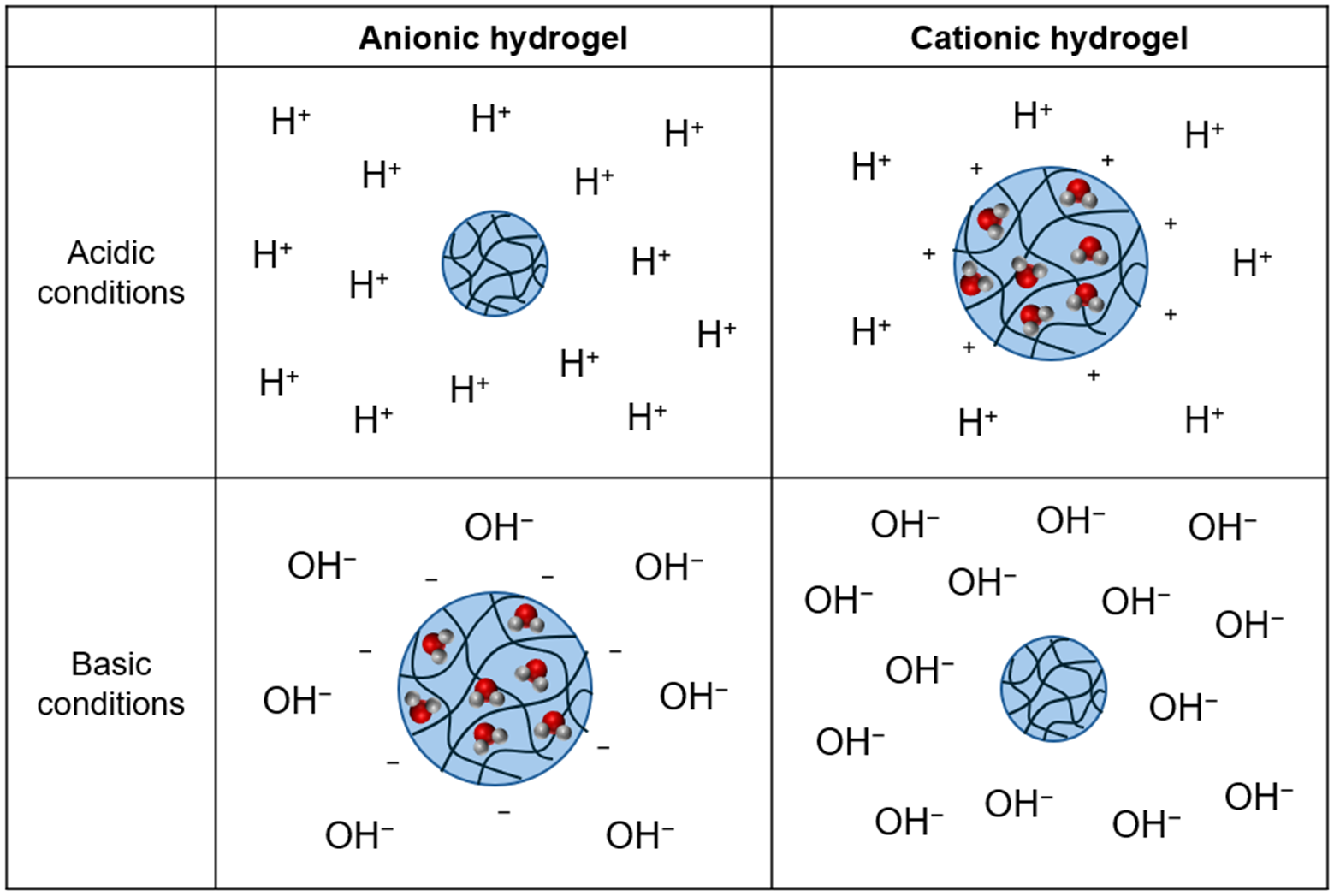
pH
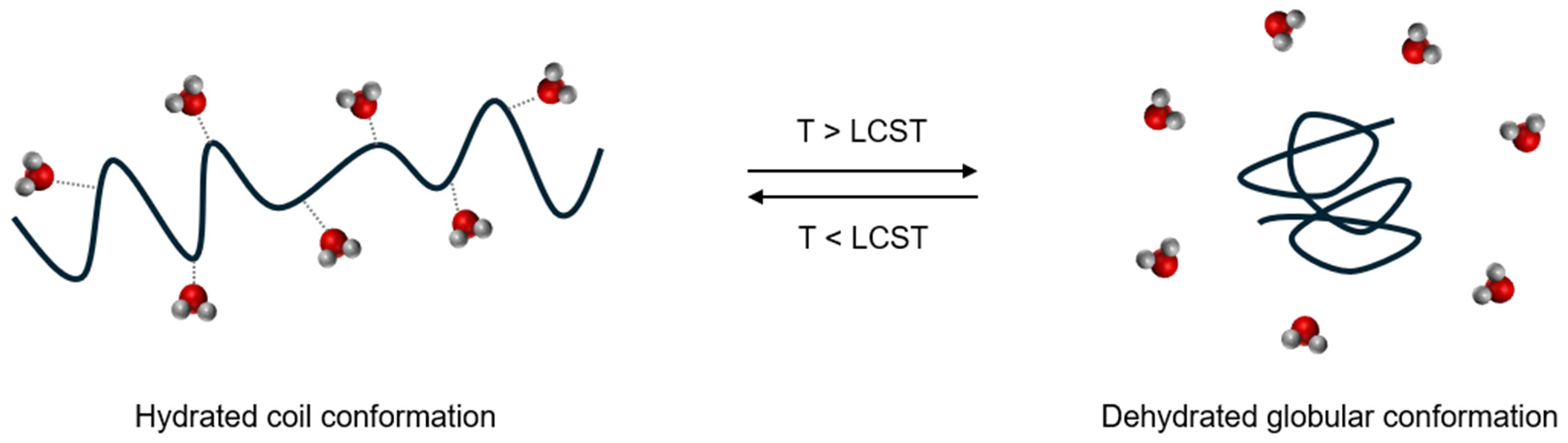
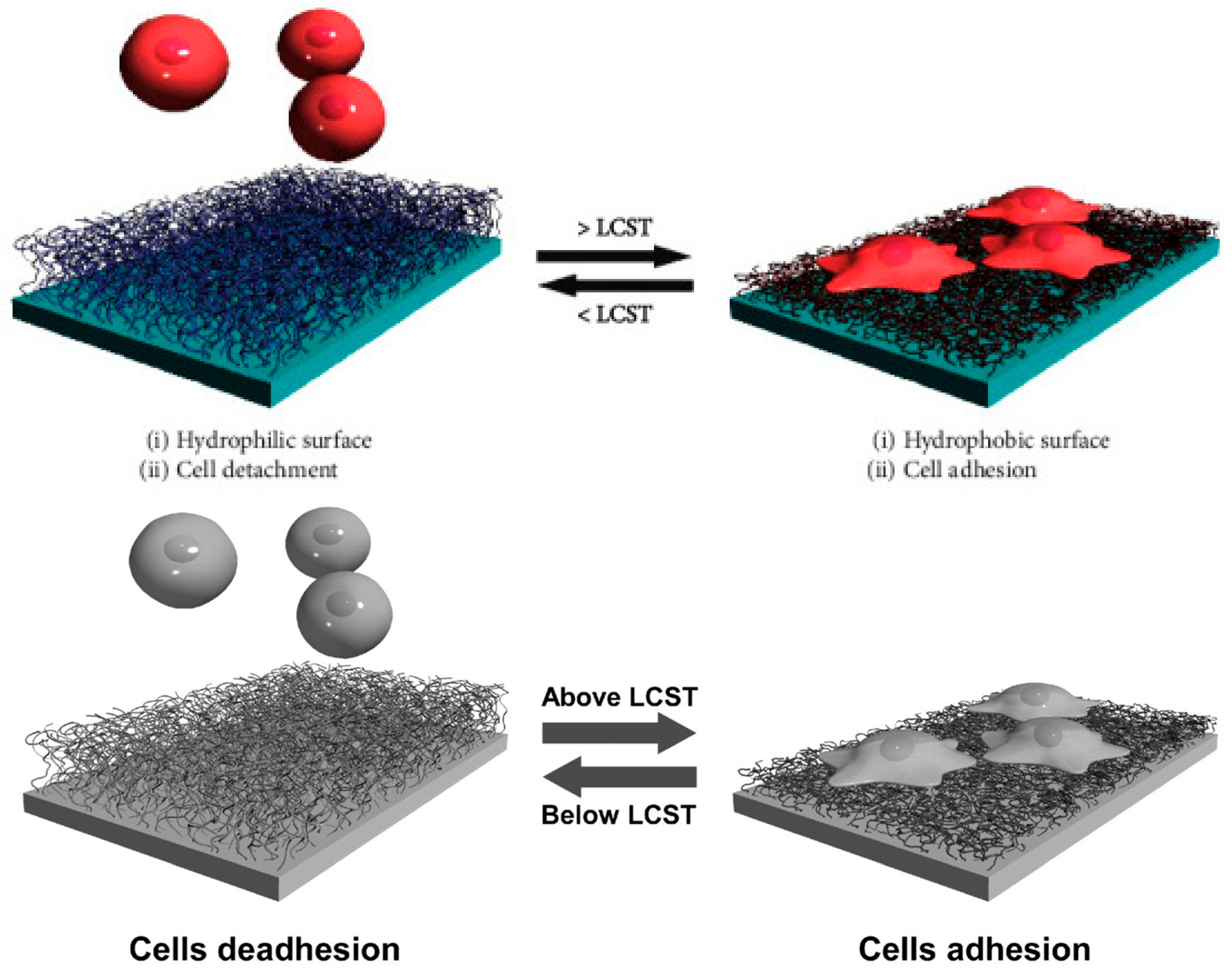
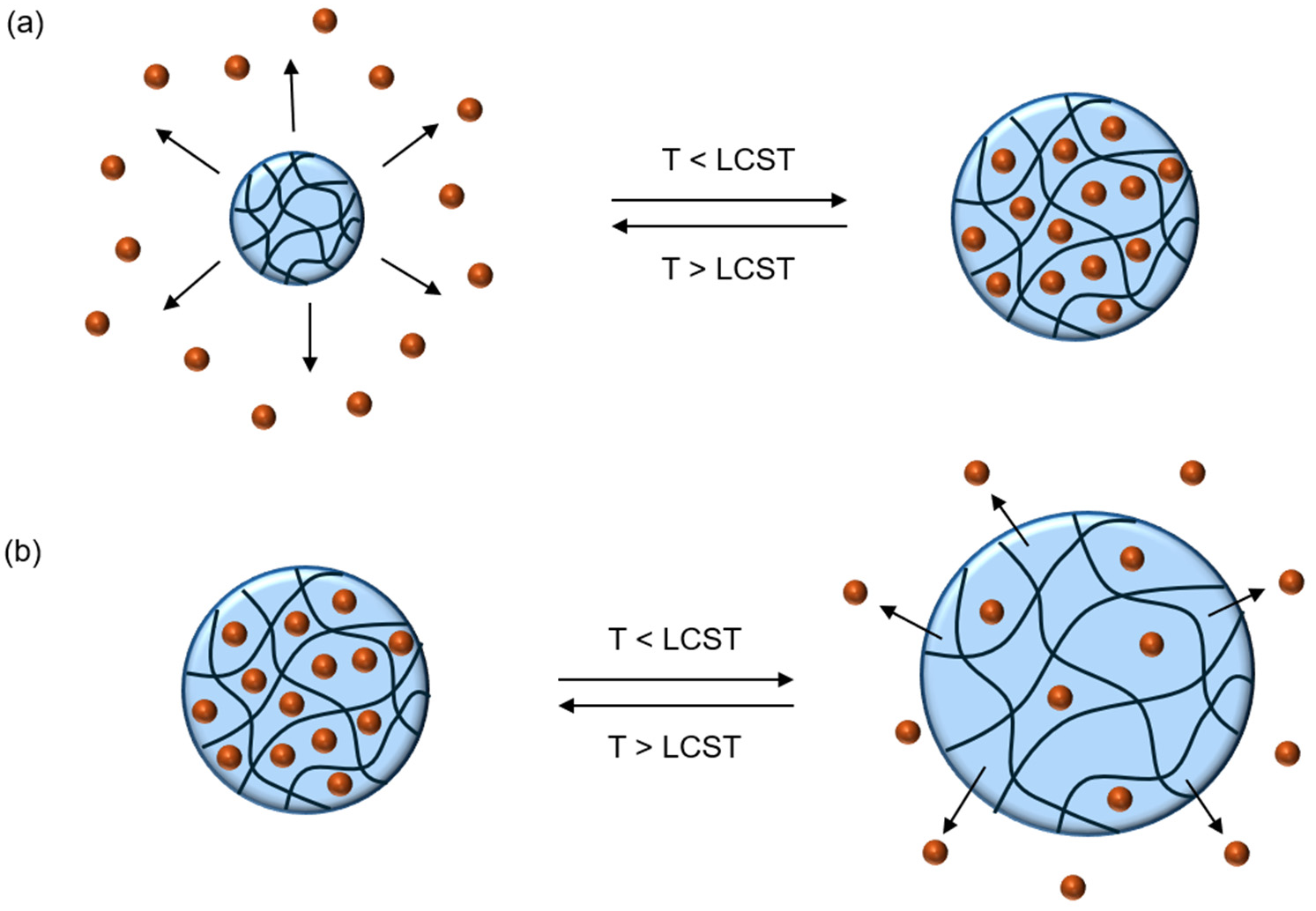
Temperature
Chemicals and Biomolecules
Ionic Strength and Polyions
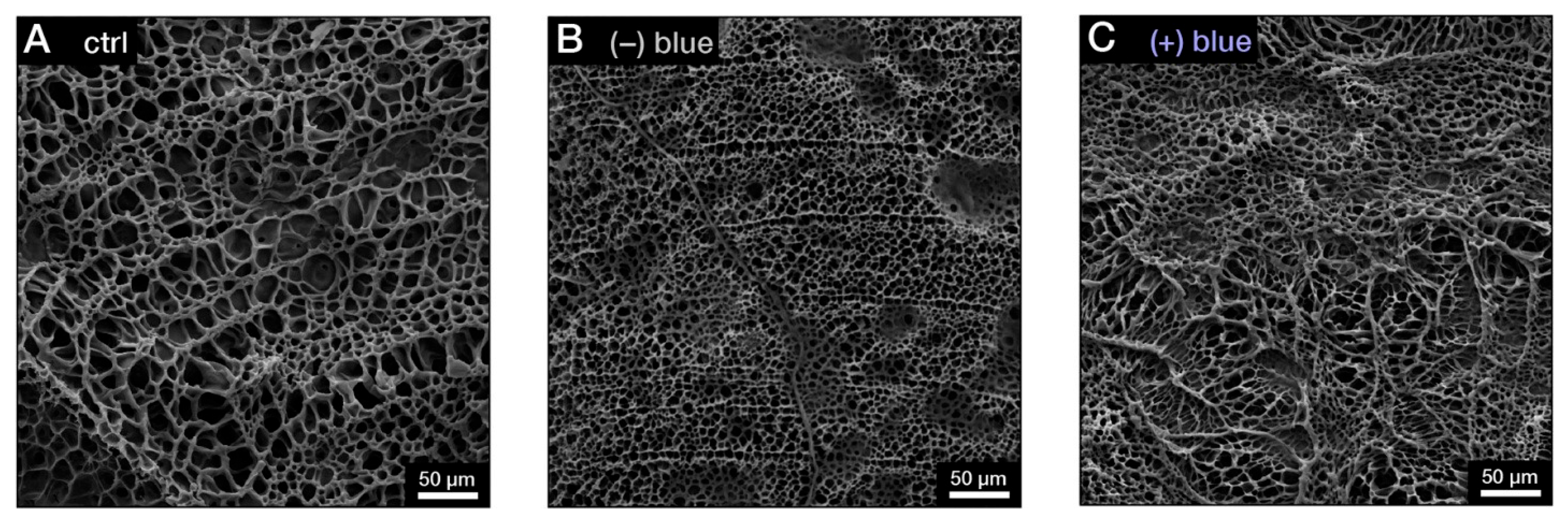
Light
Electric Current
Magnetic Field
Ultrasound
Shear Stress
2.1.3. Bulk Hydrogels for Smart Textiles
2.2. Microencapsulation
2.2.1. Introduction to Microencapsulation
2.2.2. Microencapsulation Techniques
| Chemical Processes | Physical Processes | |
|---|---|---|
| Physico-chemical | Physico-mechanical | |
|
|
|
2.2.3. Materials
| Synthetic Polymers | Natural Polymers | Inorganic Materials |
|---|---|---|
Melamine resins
| Polysaccharides
| Metals, Oxides, and Hydroxides
|
2.2.4. Release Mechanisms
Mechanical Force

Chemicals and Biomolecules
Temperature

Light
Electric and Magnetic Fields
2.2.5. Modifying Release Behavior
2.3. Microencapsulation in Textiles
2.3.1. Role of Microcapsules in Textiles
2.3.2. Integration of Microcapsules into Textile Materials
2.3.3. Microencapsulation for Stimuli-Responsive Textiles
| Application | Active Compounds | Reviews | Studies |
|---|---|---|---|
| Thermoregulation | Phase-change materials (PCMs) | [141,151] | [139,144] |
| Colorants | Dyes, pigments, and thermo/photochromic compounds | [102,133] | [142,143] |
| Fragrance release | Fragrance oils, perfumes, and deodorants | [126] | [145,146] |
| Cosmetotextiles | Moisturizers, vitamins, sunscreens, retinoids, antioxidants, cooling agents, antiaging agents, depigmenting agents, anticellulite agents, and subcutaneous fat controllers | [98,147,148] | |
| Drug delivery | Drugs, antibacterials, antifungals, essential oils, pain relief, blood circulation stimulants, itch suppression, and decontamination/self-cleaning agents | [113,152] | [149,150] |
2.4. Hydrogel Microcapsules in Textiles
2.4.1. Introduction to Hydrogel Microcapsules
2.4.2. Stimuli-Responsive Hydrogel Microcapsules
2.4.3. Stimuli-Responsive Hydrogel Microcapsules for Smart Textiles
3. Challenges and Future Perspectives
4. Conclusions
Author Contributions
Funding
Data Availability Statement
Conflicts of Interest
References
- Koetting, M.C.; Peters, J.T.; Steichen, S.D.; Peppas, N.A. Stimulus-Responsive Hydrogels: Theory, Modern Advances, and Applications. Mater. Sci. Eng. R Rep. 2015, 93, 1–49. [Google Scholar] [CrossRef] [PubMed]
- Hoffman, A.S. Hydrogels for Biomedical Applications. Adv. Drug Deliv. Rev. 2002, 54, 3–12. [Google Scholar] [CrossRef] [PubMed]
- Jocic, D. Smart Textile Materials by Surface Modification with Biopolymeric Systems. Res. J. Text. Appar. 2008, 12, 58–65. [Google Scholar] [CrossRef]
- Chelu, M.; Musuc, A.M. Polymer Gels: Classification and Recent Developments in Biomedical Applications. Gels 2023, 9, 161. [Google Scholar] [CrossRef]
- Horkay, F.; Douglas, J.F. Polymer Gels: Basics, Challenges, and Perspectives. In Gels and Other Soft Amorphous Solids; ACS Symposium Series; American Chemical Society: Washington, DC, USA, 2018; Volume 1296, pp. 1–13. [Google Scholar]
- Neumann, M.; di Marco, G.; Iudin, D.; Viola, M.; van Nostrum, C.F.; van Ravensteijn, B.G.P.; Vermonden, T. Stimuli-Responsive Hydrogels: The Dynamic Smart Biomaterials of Tomorrow. Macromolecules 2023, 56, 8377–8392. [Google Scholar] [CrossRef]
- Richtering, W.; Saunders, B.R. Gel Architectures and Their Complexity. Soft Matter 2014, 10, 3695–3702. [Google Scholar] [CrossRef]
- Lapitsky, Y. Ionically Crosslinked Polyelectrolyte Nanocarriers: Recent Advances and Open Problems. Curr. Opin. Colloid Interface Sci. 2014, 19, 122–130. [Google Scholar] [CrossRef]
- Wang, C.-G.; Surat’man, N.E.B.; Chang, J.J.; Ong, Z.L.; Li, B.; Fan, X.; Loh, X.J.; Li, Z. Polyelectrolyte Hydrogels for Tissue Engineering and Regenerative Medicine. Chem.—Asian J. 2022, 17, e202200604. [Google Scholar] [CrossRef]
- Seitz, M.E.; Burghardt, W.R.; Faber, K.T.; Shull, K.R. Self-Assembly and Stress Relaxation in Acrylic Triblock Copolymer Gels. Macromolecules 2007, 40, 1218–1226. [Google Scholar] [CrossRef]
- Bustamante-Torres, M.; Romero-Fierro, D.; Arcentales-Vera, B.; Palomino, K.; Magaña, H.; Bucio, E. Hydrogels Classification According to the Physical or Chemical Interactions and as Stimuli-Sensitive Materials. Gels 2021, 7, 182. [Google Scholar] [CrossRef]
- Appel, E.A.; del Barrio, J.; Loh, X.J.; Scherman, O.A. Supramolecular Polymeric Hydrogels. Chem. Soc. Rev. 2012, 41, 6195–6214. [Google Scholar] [CrossRef]
- Holloway, J.L.; Lowman, A.M.; Palmese, G.R. The Role of Crystallization and Phase Separation in the Formation of Physically Cross-Linked PVA Hydrogels. Soft Matter 2012, 9, 826–833. [Google Scholar] [CrossRef]
- Slager, J.; Domb, A.J. Biopolymer Stereocomplexes. Adv. Drug Deliv. Rev. 2003, 55, 549–583. [Google Scholar] [CrossRef]
- Li, J.; Harada, A.; Kamachi, M. Sol–Gel Transition During Inclusion Complex Formation Between A-Cyclodextrin and High Molecular Weight Poly(Ethylene Glycol)s in Aqueous Solution. Polym. J. 1994, 26, 1019–1026. [Google Scholar] [CrossRef]
- Xu, Y.; Wu, Q.; Sun, Y.; Bai, H.; Shi, G. Three-Dimensional Self-Assembly of Graphene Oxide and DNA into Multifunctional Hydrogels. ACS Nano 2010, 4, 7358–7362. [Google Scholar] [CrossRef] [PubMed]
- Lee, K.Z.; Jeon, J.; Jiang, B.; Subramani, S.V.; Li, J.; Zhang, F. Protein-Based Hydrogels and Their Biomedical Applications. Molecules 2023, 28, 4988. [Google Scholar] [CrossRef] [PubMed]
- Li, J.; Jia, X.; Yin, L. Hydrogel: Diversity of Structures and Applications in Food Science. Food Rev. Int. 2021, 37, 313–372. [Google Scholar] [CrossRef]
- Cao, Y.; Li, H. Engineering Tandem Modular Protein Based Reversible Hydrogels. Chem. Commun. 2008, 35, 4144–4146. [Google Scholar] [CrossRef]
- Lu, H.D.; Charati, M.B.; Kim, I.L.; Burdick, J.A. Injectable Shear-Thinning Hydrogels Engineered with a Self-Assembling Dock-and-Lock Mechanism. Biomaterials 2012, 33, 2145–2153. [Google Scholar] [CrossRef]
- Omidian, H.; Park, K. Introduction to Hydrogels. In Biomedical Applications of Hydrogels Handbook; Ottenbrite, R.M., Park, K., Okano, T., Eds.; Springer: New York, NY, USA, 2010; pp. 1–16. [Google Scholar]
- Chattergjee, S.; Hui, P.C. Review of Stimuli-Responsive Polymers in Drug Delivery and Textile Application. Molecules 2019, 24, 2547. [Google Scholar] [CrossRef]
- Štular, D.; Tomšič, B. Stimuli-Responsive Hydrogels for Textile Functionalisation: A Review. Tekstilec 2017, 60, 76–96. [Google Scholar] [CrossRef]
- Schott, H. Kinetics of Swelling of Polymers and Their Gels. J. Pharm. Sci. 1992, 81, 467–470. [Google Scholar] [CrossRef] [PubMed]
- Boruah, M.; Sarma, A. Dry Gels: Concept, Current Trends, and New Avenues in Drug Delivery and Biomedical Application. Adv. Healthc. Mater. 2025, 14, e00863. [Google Scholar] [CrossRef]
- Abdul Khalil, H.P.S.; Yahya, E.B.; Tajarudin, H.A.; Balakrishnan, V.; Nasution, H. Insights into the Role of Biopolymer-Based Xerogels in Biomedical Applications. Gels 2022, 8, 334. [Google Scholar] [CrossRef] [PubMed]
- Fiorati, A.; Caridi, F.; Paladini, G. Editorial on the Special Issue: “Advances in Xerogels: From Design to Applications”. Gels 2023, 9, 446. [Google Scholar] [CrossRef]
- Bashari, A.; Hemmati Nejad, N.; Pourjavadi, A. Applications of Stimuli Responsive Hydrogels: A Textile Engineering Approach. J. Text. Inst. 2013, 104, 1145–1155. [Google Scholar] [CrossRef]
- Flory, P.J.; Rehner, J., Jr. Statistical Mechanics of Cross-Linked Polymer Networks I. Rubberlike Elasticity. J. Chem. Phys. 1943, 11, 512–520. [Google Scholar] [CrossRef]
- Flory, P.J.; Tatara, Y.-I. The Elastic Free Energy and the Elastic Equation of State: Elongation and Swelling of Polydimethylsiloxane Networks. J. Polym. Sci. Polym. Phys. Ed. 1975, 13, 683–702. [Google Scholar] [CrossRef]
- Fennell, E.; Huyghe, J.M. Chemically Responsive Hydrogel Deformation Mechanics: A Review. Molecules 2019, 24, 3521. [Google Scholar] [CrossRef] [PubMed]
- Wichterle, O.; Lím, D. Hydrophilic Gels for Biological Use. Nature 1960, 185, 117–118. [Google Scholar] [CrossRef]
- Yannas, I.V.; Lee, E.; Orgill, D.P.; Skrabut, E.M.; Murphy, G.F. Synthesis and Characterization of a Model Extracellular Matrix That Induces Partial Regeneration of Adult Mammalian Skin. Proc. Natl. Acad. Sci. USA 1989, 86, 933–937. [Google Scholar] [CrossRef]
- Krasnopeeva, E.L.; Panova, G.G.; Yakimansky, A.V. Agricultural Applications of Superabsorbent Polymer Hydrogels. Int. J. Mol. Sci. 2022, 23, 15134. [Google Scholar] [CrossRef]
- Völlmecke, K.; Afroz, R.; Bierbach, S.; Brenker, L.J.; Frücht, S.; Glass, A.; Giebelhaus, R.; Hoppe, A.; Kanemaru, K.; Lazarek, M.; et al. Hydrogel-Based Biosensors. Gels 2022, 8, 768. [Google Scholar] [CrossRef]
- Liu, J.; Qu, S.; Suo, Z.; Yang, W. Functional Hydrogel Coatings. Natl. Sci. Rev. 2020, 8, nwaa254. [Google Scholar] [CrossRef]
- Yang, Y.; Liang, Z.; Zhang, R.; Zhou, S.; Yang, H.; Chen, Y.; Zhang, J.; Yin, H.; Yu, D. Research Advances in Superabsorbent Polymers. Polymers 2024, 16, 501. [Google Scholar] [CrossRef] [PubMed]
- Mitura, S.; Sionkowska, A.; Jaiswal, A. Biopolymers for Hydrogels in Cosmetics: Review. J. Mater. Sci. Mater. Med. 2020, 31, 50. [Google Scholar] [CrossRef] [PubMed]
- Nath, P.C.; Debnath, S.; Sridhar, K.; Inbaraj, B.S.; Nayak, P.K.; Sharma, M. A Comprehensive Review of Food Hydrogels: Principles, Formation Mechanisms, Microstructure, and Its Applications. Gels 2022, 9, 1. [Google Scholar] [CrossRef]
- Kandile, N.G.; Nasr, A.S. Environment Friendly Modified Chitosan Hydrogels as a Matrix for Adsorption of Metal Ions, Synthesis and Characterization. Carbohydr. Polym. 2009, 78, 753–759. [Google Scholar] [CrossRef]
- Rasool, A.; Ata, S.; Islam, A. Stimuli Responsive Biopolymer (Chitosan) Based Blend Hydrogels for Wound Healing Application. Carbohydr. Polym. 2019, 203, 423–429. [Google Scholar] [CrossRef]
- Saptaji, K.; Iza, N.R.; Widianingrum, S.; Mulia, V.K.; Setiawan, I. Poly(2-Hydroxyethyl Methacrylate) Hydrogels for Contact Lens Applications—A Review. Makara J. Sci. 2021, 25, 3. [Google Scholar] [CrossRef]
- Akbari, M.; Tamayol, A.; Laforte, V.; Annabi, N.; Najafabadi, A.H.; Khademhosseini, A.; Juncker, D. Composite Living Fibers for Creating Tissue Constructs Using Textile Techniques. Adv. Funct. Mater. 2014, 24, 4060–4067. [Google Scholar] [CrossRef] [PubMed]
- Sayed, U.; Deshmukh, I. Hydrogels for Textile Applications—Review. Int. J. Adv. Sci. Eng. 2021, 7, 1968–1974. [Google Scholar] [CrossRef]
- Goodarzi, H.; Jadidi, K.; Pourmotabed, S.; Sharifi, E.; Aghamollaei, H. Preparation and in Vitro Characterization of Cross-Linked Collagen–Gelatin Hydrogel Using EDC/NHS for Corneal Tissue Engineering Applications. Int. J. Biol. Macromol. 2019, 126, 620–632. [Google Scholar] [CrossRef] [PubMed]
- Chang, Y.; Xiao, L.; Tang, Q. Preparation and Characterization of a Novel Thermosensitive Hydrogel Based on Chitosan and Gelatin Blends. J. Appl. Polym. Sci. 2009, 113, 400–407. [Google Scholar] [CrossRef]
- Patel, V.R.; Amiji, M.M. Preparation and Characterization of Freeze-Dried Chitosan-Poly(Ethylene Oxide) Hydrogels for Site-Specific Antibiotic Delivery in the Stomach. Pharm. Res. 1996, 13, 588–593. [Google Scholar] [CrossRef] [PubMed]
- Kwon, S.S.; Kong, B.J.; Park, S.N. Physicochemical Properties of pH-Sensitive Hydrogels Based on Hydroxyethyl Cellulose–Hyaluronic Acid and for Applications as Transdermal Delivery Systems for Skin Lesions. Eur. J. Pharm. Biopharm. 2015, 92, 146–154. [Google Scholar] [CrossRef]
- Ding, A.; Jeon, O.; Tang, R.; Lee, Y.B.; Lee, S.J.; Alsberg, E. Cell-Laden Multiple-Step and Reversible 4D Hydrogel Actuators to Mimic Dynamic Tissue Morphogenesis. Adv. Sci. 2021, 8, 2004616. [Google Scholar] [CrossRef]
- Ding, A.; Jeon, O.; Cleveland, D.; Gasvoda, K.L.; Wells, D.; Lee, S.J.; Alsberg, E. Jammed Micro-Flake Hydrogel for Four-Dimensional Living Cell Bioprinting. Adv. Mater. 2022, 34, 2109394. [Google Scholar] [CrossRef]
- Ji, X.; Li, X.; Liu, J.; Wu, D.; Liang, Q.; Zhu, B.; Fang, W.; Qiu, S.; Zhang, Q.; Li, D.; et al. Smart Hydrogel Composite for Microenvironmental Humidity Regulation in Cigar Storage. RSC Adv. 2024, 14, 24712–24724. [Google Scholar] [CrossRef]
- Yang, Z.; Zeng, Z.; Xiao, Z.; Ji, H. Preparation and Controllable Release of Chitosan/Vanillin Microcapsules and Their Application to Cotton Fabric. Flavour Fragr. J. 2014, 29, 114–120. [Google Scholar] [CrossRef]
- Delipinar, T.; Shafique, A.; Gohar, M.S.; Yapici, M.K. Fabrication and Materials Integration of Flexible Humidity Sensors for Emerging Applications. ACS Omega 2021, 6, 8744–8753. [Google Scholar] [CrossRef]
- Hu, Y. Hydrogel Actuators: From Building Blocks Selection, Anisotropic Structures Design to Multifunctional Applications. Soft Sci. 2025, 5, 41. [Google Scholar] [CrossRef]
- Pflumm, S.; Wiedemann, Y.; Fauser, D.; Safaraliyev, J.; Lunter, D.; Steeb, H.; Ludwigs, S. Autonomous Adaption of Intelligent Humidity-Programmed Hydrogel Patches for Tunable Stiffness and Drug Release. Adv. Mater. Technol. 2023, 8, 2300937. [Google Scholar] [CrossRef]
- Pasche, S.; Angeloni, S.; Ischer, R.; Liley, M.; Luprano, J.; Voirin, G. Wearable Biosensors for Monitoring Wound Healing. Adv. Sci. Technol. 2008, 57, 80–87. [Google Scholar] [CrossRef]
- Qiu, Y.; Park, K. Environment-Sensitive Hydrogels for Drug Delivery. Adv. Drug Deliv. Rev. 2012, 64, 49–60. [Google Scholar] [CrossRef]
- Kozlovskaya, V.; Sukhishvili, S.A. pH-Controlled Permeability of Layered Hydrogen-Bonded Polymer Capsules. Macromolecules 2006, 39, 5569–5572. [Google Scholar] [CrossRef]
- Vijeth, S.; Kariduraganavar, M.Y.; Geetha, B. Heggannavar Encapsulating Wall Materials for Micro-/Nanocapsules. In Microencapsulation—Processes, Technologies and Industrial Applications; IntechOpen: London, UK, 2019. [Google Scholar]
- Okano, T.; Bae, Y.H.; Jacobs, H.; Kim, S.W. Thermally On-Off Switching Polymers for Drug Permeation and Release. J. Control. Release 1990, 11, 255–265. [Google Scholar] [CrossRef]
- Kataoka, K.; Miyazaki, H.; Bunya, M.; Okano, T.; Sakurai, Y. Totally Synthetic Polymer Gels Responding to External Glucose Concentration: Their Preparation and Application to On−Off Regulation of Insulin Release. J. Am. Chem. Soc. 1998, 120, 12694–12695. [Google Scholar] [CrossRef]
- Sershen, S.R.; Westcott, S.L.; Halas, N.J.; West, J.L. Temperature-Sensitive Polymer–Nanoshell Composites for Photothermally Modulated Drug Delivery. J. Biomed. Mater. Res. 2000, 51, 293–298. [Google Scholar] [CrossRef] [PubMed]
- Rana, M.M.; De la Hoz Siegler, H. Tuning the Properties of PNIPAm-Based Hydrogel Scaffolds for Cartilage Tissue Engineering. Polymers 2021, 13, 3154. [Google Scholar] [CrossRef]
- Kushida, A.; Yamato, M.; Konno, C.; Kikuchi, A.; Sakurai, Y.; Okano, T. Temperature-Responsive Culture Dishes Allow Nonenzymatic Harvest of Differentiated Madin-Darby Canine Kidney (MDCK) Cell Sheets. J. Biomed. Mater. Res. 2000, 51, 216–223. [Google Scholar] [CrossRef]
- Akiyama, Y. Design of Temperature-Responsive Cell Culture Surfaces for Cell Sheet Engineering. Cyborg Bionic Syst. 2021, 2021, 5738457. [Google Scholar] [CrossRef]
- Li, X.; Gao, Y.; Serpe, M.J. Stimuli-Responsive Assemblies for Sensing Applications. Gels 2016, 2, 8. [Google Scholar] [CrossRef]
- Wang, S.; Jiao, C.; Gerlach, G.; Körner, J. Porosity Engineering of Dried Smart Poly(N-Isopropylacrylamide) Hydrogels for Gas Sensing. Biomacromolecules 2024, 25, 2715–2727. [Google Scholar] [CrossRef]
- Liu, J.; Jiang, L.; He, S.; Zhang, J.; Shao, W. Recent Progress in PNIPAM-Based Multi-Responsive Actuators: A Mini-Review. Chem. Eng. J. 2022, 433, 133496. [Google Scholar] [CrossRef]
- Teng, X.; Gao, Z.; Feng, X.; Zhu, S.; Yang, W. Photothermal and Magnetic Actuation of Multimodal PNIPAM Hydrogel-Based Soft Robots. Gels 2025, 11, 692. [Google Scholar] [CrossRef]
- Tang, Z.; Okano, T. Recent Development of Temperature-Responsive Surfaces and Their Application for Cell Sheet Engineering. Regen. Biomater. 2014, 1, 91–102. [Google Scholar] [CrossRef]
- Wilcox, K.G.; Kozawa, S.K.; Morozova, S. Fundamentals and Mechanics of Polyelectrolyte Gels: Thermodynamics, Swelling, Scattering, and Elasticity. Chem. Phys. Rev. 2021, 2, 041309. [Google Scholar] [CrossRef]
- Ball, V. Specific Ion Effects in Hydrogels. Molecules 2024, 29, 5990. [Google Scholar] [CrossRef] [PubMed]
- Gong, J.; Schuurmans, C.C.L.; van Genderen, A.M.; Cao, X.; Li, W.; Cheng, F.; He, J.J.; López, A.; Huerta, V.; Manríquez, J.; et al. Complexation-Induced Resolution Enhancement of 3D-Printed Hydrogel Constructs. Nat. Commun. 2020, 11, 1267. [Google Scholar] [CrossRef]
- Lee, I.-N.; Dobre, O.; Richards, D.; Ballestrem, C.; Curran, J.M.; Hunt, J.A.; Richardson, S.M.; Swift, J.; Wong, L.S. Photoresponsive Hydrogels with Photoswitchable Mechanical Properties Allow Time-Resolved Analysis of Cellular Responses to Matrix Stiffening. ACS Appl. Mater. Interfaces 2018, 10, 7765–7776. [Google Scholar] [CrossRef] [PubMed]
- Cao, Z.; Li, Q.; Wang, G. Photodegradable Polymer Nanocapsules Fabricated from Dimethyldiethoxysilane Emulsion Templates for Controlled Release. Polym. Chem. 2017, 8, 6817–6823. [Google Scholar] [CrossRef]
- Weinstain, R.; Slanina, T.; Kand, D.; Klán, P. Visible-to-NIR-Light Activated Release: From Small Molecules to Nanomaterials. Chem. Rev. 2020, 120, 13135–13272. [Google Scholar] [CrossRef]
- Xu, X.; Bai, B.; Wang, H.; Suo, Y. A Near-Infrared and Temperature-Responsive Pesticide Release Platform through Core–Shell Polydopamine@PNIPAm Nanocomposites. ACS Appl. Mater. Interfaces 2017, 9, 6424–6432. [Google Scholar] [CrossRef]
- Chen, K.; Zhou, S. Fabrication of Ultraviolet-Responsive Microcapsules Via Pickering Emulsion Polymerization Using Modified Nano-Silica/Nano-Titania as Pickering Agents. RSC Adv. 2015, 5, 13850–13856. [Google Scholar] [CrossRef]
- Murdan, S. Electro-Responsive Drug Delivery from Hydrogels. J. Control. Release 2003, 92, 1–17. [Google Scholar] [CrossRef]
- Li, Z.; Li, Y.; Chen, C.; Cheng, Y. Magnetic-Responsive Hydrogels: From Strategic Design to Biomedical Applications. J. Control. Release 2021, 335, 541–556. [Google Scholar] [CrossRef]
- Yeingst, T.J.; Arrizabalaga, J.H.; Hayes, D.J. Ultrasound-Induced Drug Release from Stimuli-Responsive Hydrogels. Gels 2022, 8, 554. [Google Scholar] [CrossRef] [PubMed]
- Loebel, C.; Rodell, C.B.; Chen, M.H.; Burdick, J.A. Shear-Thinning and Self-Healing Hydrogels as Injectable Therapeutics and for 3D-Printing. Nat. Protoc. 2017, 12, 1521–1541. [Google Scholar] [CrossRef] [PubMed]
- Kulkarni, A.; Tourrette, A.; Warmoeskerken, M.M.C.G.; Jocic, D. Microgel-Based Surface Modifying System for Stimuli-Responsive Functional Finishing of Cotton. Carbohydr. Polym. 2010, 82, 1306–1314. [Google Scholar] [CrossRef]
- Wang, X.; Hu, H.; Yang, Z.; He, L.; Kong, Y.; Fei, B.; Xin, J.H. Smart Hydrogel-Functionalized Textile System with Moisture Management Property for Skin Application. Smart Mater. Struct. 2014, 23, 125027. [Google Scholar] [CrossRef]
- Hu, J.; Liu, W.; Liu, B. Fabric-Supported Chitosan Modified Temperature Responsive PNIPAAm/PU Hydrogel and the Use Thereof in Preparation of Facial Mask. U.S. Patent US7780979B2, 24 August 2010. [Google Scholar]
- Wang, W.; Wat, E.; Hui, P.C.L.; Chan, B.; Ng, F.S.F.; Kan, C.-W.; Wang, X.; Hu, H.; Wong, E.C.W.; Lau, C.B.S.; et al. Dual-Functional Transdermal Drug Delivery System with Controllable Drug Loading Based on Thermosensitive Poloxamer Hydrogel for Atopic Dermatitis Treatment. Sci. Rep. 2016, 6, 24112. [Google Scholar] [CrossRef] [PubMed]
- Wang, B.; Wu, X.; Li, J.; Hao, X.; Lin, J.; Cheng, D.; Lu, Y.; Wang, B.; Wu, X.; Li, J.; et al. Thermosensitive Behavior and Antibacterial Activity of Cotton Fabric Modified with a Chitosan-Poly(N-Isopropylacrylamide) Interpenetrating Polymer Network Hydrogel. Polymers 2016, 8, 110. [Google Scholar] [CrossRef] [PubMed]
- Zhou, B.C.-E.; Kan, C.; Sun, C.; Du, J.; Xu, C. A Review of Chitosan Textile Applications. AATCC J. Res. 2019, 6, 8–14. [Google Scholar] [CrossRef]
- Jiang, C.; Wang, Q.; Wang, T. Thermoresponsive PNIPAAm-Modified Cotton Fabric Surfaces That Switch Between Superhydrophilicity and Superhydrophobicity. Appl. Surf. Sci. 2012, 258, 4888–4892. [Google Scholar] [CrossRef]
- Cao, Y.; Liu, N.; Fu, C.; Li, K.; Tao, L.; Feng, L.; Wei, Y. Thermo and pH Dual-Responsive Materials for Controllable Oil/Water Separation. ACS Appl. Mater. Interfaces 2014, 6, 2026–2030. [Google Scholar] [CrossRef]
- Li, X.; Chen, Y.; Chen, Y.; Chen, D.; Wang, Q.; Wang, Y. Superhydrophilic and Underwater Superoleophobic Cotton Fabric for Oil–Water Separation and Removal of Heavy-Metal Ion. ACS Omega 2022, 7, 30184–30196. [Google Scholar] [CrossRef]
- Lobel, B.T.; Baiocco, D.; Al-Sharabi, M.; Routh, A.F.; Zhang, Z.; Cayre, O.J. Current Challenges in Microcapsule Designs and Microencapsulation Processes: A Review. ACS Appl. Mater. Interfaces 2024, 16, 40326–40355. [Google Scholar] [CrossRef]
- Ghosh, S.K. Functional Coatings and Microencapsulation: A General Perspective. In Functional Coatings; John Wiley & Sons, Ltd.: Hoboken, NJ, USA, 2006; pp. 1–28. [Google Scholar]
- Meirowitz, R. Microencapsulation Technology for Coating and Laminating. In Smart Textile Coatings and Laminates; The Textile Institute Book Series; Woodhead Publishing: Cambridge, UK, 2019; pp. 117–154. [Google Scholar]
- Nelson, G. Microencapsulation in Textile Finishing. Rev. Prog. Color. Relat. Top. 2001, 31, 57–64. [Google Scholar] [CrossRef]
- Peng, X.; Umer, M.; Pervez, M.D.N.; Hasan, K.M.F.; Habib, M.A.; Islam, M.D.S.; Lin, L.; Xiong, X.; Naddeo, V.; Cai, Y. Biopolymers-Based Microencapsulation Technology for Sustainable Textiles Development: A Short Review. Case Stud. Chem. Environ. Eng. 2023, 7, 100349. [Google Scholar] [CrossRef]
- Green, B.K.; Lowell, S. Oil-Containing Microscopic Capsules and Method of Making Them. U.S. Patent US2800457A, 23 July 1957. [Google Scholar]
- Cheng, S.Y.; Yuen, C.W.M.; Kan, C.W.; Cheuk, K.K.L. Development of Cosmetic Textiles Using Microencapsulation Technology. Res. J. Text. Appar. 2008, 12, 41–51. [Google Scholar] [CrossRef]
- Rodrigues, S.N.; Martins, I.M.; Fernandes, I.P.; Gomes, P.B.; Mata, V.G.; Barreiro, M.F.; Rodrigues, A.E. Scentfashion®: Microencapsulated Perfumes for Textile Application. Chem. Eng. J. 2009, 149, 463–472. [Google Scholar] [CrossRef]
- Tomaro-Duchesneau, C.; Saha, S.; Malhotra, M.; Kahouli, I.; Prakash, S. Microencapsulation for the Therapeutic Delivery of Drugs, Live Mammalian and Bacterial Cells, and Other Biopharmaceutics: Current Status and Future Directions. J. Pharm. 2013, 2013, 103527. [Google Scholar] [CrossRef]
- Calderón-Oliver, M.; Ponce-Alquicira, E. The Role of Microencapsulation in Food Application. Molecules 2022, 27, 1499. [Google Scholar] [CrossRef]
- Nelson, G. Microencapsulated Colourants for Technical Textile Application. In Advances in the Dyeing and Finishing of Technical Textiles; Woodhead Publishing: Cambridge, UK, 2013; pp. 78–104. [Google Scholar]
- Bourgeat-Lami, E.; Duguet, E. Polymer Encapsulation of Inorganic Particles. In Functional Coatings; John Wiley & Sons, Ltd.: Hoboken, NJ, USA, 2006; pp. 85–152. [Google Scholar]
- Shukla, P.G. Microencapsulation of Liquid Active Agents. In Functional Coatings; John Wiley & Sons, Ltd.: Hoboken, NJ, USA, 2006; pp. 153–186. [Google Scholar]
- Valdes, A.; Ramos, M.; Beltran, A.; Garrigos, M.C. Recent Trends in Microencapsulation for Smart and Active Innovative Textile Products. Curr. Org. Chem. 2018, 22, 1237–1248. [Google Scholar] [CrossRef]
- van Driessche, I.; Hoste, S. Encapsulations Through the Sol-Gel Technique and Their Applications in Functional Coatings. In Functional Coatings; John Wiley & Sons, Ltd.: Hoboken, NJ, USA, 2006; pp. 259–296. [Google Scholar]
- Massella, D.; Giraud, S.; Guan, J.; Ferri, A.; Salaün, F. Manufacture Techniques of Chitosan-Based Microcapsules to Enhance Functional Properties of Textiles. In Sustainable Agriculture Reviews 35: Chitin and Chitosan: History, Fundamentals and Innovations; Crini, G., Lichtfouse, E., Eds.; Springer International Publishing: Cham, Switzerland, 2019; pp. 303–336. [Google Scholar]
- Lee, J.; Ngo, H.V.; Jin, G.; Park, C.; Park, J.-B.; Tran, P.H.L.; Tran, T.T.D.; Nguyen, V.H.; Lee, B.-J. Effect of pH Adjustment and Ratio of Oppositely Charged Polymers on the Mechanistic Performance and Sustained Release of Volatile Perfume in Interpolyelectrolyte Complex Microcapsules. Int. J. Pharm. 2021, 604, 120672. [Google Scholar] [CrossRef]
- Yang, Q.; Hu, G.; Qiu, H.; Mia, R.; Zhang, H.; Pei, L.; Wang, J. Temperature-Sensitive Fragrance Microcapsules with Double Capsule Walls: A Study on Preparation and Sustained Release Mechanism. Polymers 2023, 15, 3686. [Google Scholar] [CrossRef]
- Abdelrahman, M.S.; Nassar, S.; Mashaly, H.; Mahmoud, S.; Maamoun, D. Textiles Printing Using Microencapsulated Pigments in Biodegradable Thickeners. J. Adv. Chem. 2018, 15, 6122–6129. [Google Scholar] [CrossRef]
- Arslan, D.; Tang, R.; Bouldin, R.; Mosurkal, R.; Sun, Y.; Orbey, N. Investigation of the Synergistic Effect of Combined Antimicrobial Agents and Insect Repellent Microcapsules on Fabrics. Ind. Eng. Chem. Res. 2025, 64, 8202–8210. [Google Scholar] [CrossRef]
- Butstraen, C.; Salaün, F.; Devaux, E.; Giraud, S.; Vroman, P. Application of Flame-Retardant Double-Layered Shell Microcapsules to Nonwoven Polyester. Polymers 2016, 8, 267. [Google Scholar] [CrossRef] [PubMed]
- Georgievska, T.; Trajkovikj, S.; Atkovska, K.; Lisichkov, K. Recent Advances in Textile Functionalization Using Essential Oil-Based-Microcapsules with Antimicrobial Properties. Tekstilec 2025, 68, 121–131. [Google Scholar] [CrossRef]
- Meng, Q.; Zhong, S.; He, S.; Gao, Y.; Cui, X. Constructing of pH and Reduction Dual-Responsive Folic Acid-Modified Hyaluronic Acid-Based Microcapsules for Dual-Targeted Drug Delivery Via Sonochemical Method. Colloid. Interface Sci. Commun. 2021, 44, 100503. [Google Scholar] [CrossRef]
- Hou, T.; Ma, S.; Wang, F.; Wang, L. A Comprehensive Review of Intelligent Controlled Release Antimicrobial Packaging in Food Preservation. Food Sci. Biotechnol. 2023, 32, 1459–1478. [Google Scholar] [CrossRef]
- Wang, X.; Ding, T. A Review on the Current State of Microcapsule-Based Self-Healing Dental Composites. J. Funct. Biomater. 2024, 15, 165. [Google Scholar] [CrossRef]
- Van Parys, M. Smart Textiles Using Microencapsulation Technology. In Functional Coatings; John Wiley & Sons, Ltd.: Hoboken, NJ, USA, 2006; pp. 221–258. [Google Scholar]
- Kozlovskaya, V.; Kharlampieva, E.; Mansfield, M.L.; Sukhishvili, S.A. Poly(Methacrylic Acid) Hydrogel Films and Capsules: Response to pH and Ionic Strength, and Encapsulation of Macromolecules. Chem. Mater. 2006, 18, 328–336. [Google Scholar] [CrossRef]
- Dong, L.; Xia, S.; Wu, K.; Huang, Z.; Chen, H.; Chen, J.; Zhang, J. A pH/Enzyme-Responsive Tumor-Specific Delivery System for Doxorubicin. Biomaterials 2010, 31, 6309–6316. [Google Scholar] [CrossRef]
- Cuscó, C.; Garcia, J.; Nicolás, E.; Rocas, P.; Rocas, J. Multisensitive Drug-Loaded Polyurethane/Polyurea Nanocapsules with pH-Synchronized Shell Cationization and Redox-Triggered Release. Polym. Chem. 2016, 7, 6457–6466. [Google Scholar] [CrossRef]
- Glinel, K.; Sukhorukov, G.B.; Möhwald, H.; Khrenov, V.; Tauer, K. Thermosensitive Hollow Capsules Based on Thermoresponsive Polyelectrolytes. Macromol. Chem. Phys. 2003, 204, 1784–1790. [Google Scholar] [CrossRef]
- Okahata, Y.; Noguchi, H.; Seki, T. Thermoselective Permeation from a Polymer-Grafted Capsule Membrane. Macromolecules 1986, 19, 493–494. [Google Scholar] [CrossRef]
- Bojana, B.P.; Marica, S. Microencapsulation Technology and Applications in Added-Value Functional Textiles. Phys. Sci. Rev. 2016, 1, 20150003. [Google Scholar] [CrossRef]
- Wang, X.; Hu, J.; Liu, G.; Tian, J.; Wang, H.; Gong, M.; Liu, S. Reversibly Switching Bilayer Permeability and Release Modules of Photochromic Polymersomes Stabilized by Cooperative Noncovalent Interactions. J. Am. Chem. Soc. 2015, 137, 15262–15275. [Google Scholar] [CrossRef] [PubMed]
- Radt, B.; Smith, T.A.; Caruso, F. Optically Addressable Nanostructured Capsules. Adv. Mater. 2004, 16, 2184–2189. [Google Scholar] [CrossRef]
- Xiao, Z.; Sun, P.; Liu, H.; Zhao, Q.; Niu, Y.; Zhao, D. Stimulus Responsive Microcapsules and Their Aromatic Applications. J. Control. Release 2022, 351, 198–214. [Google Scholar] [CrossRef] [PubMed]
- Jeon, L.; Kim, Y.; Yoon, J.; Seo, H.; Lee, H. One-Step Synthesis of Hydrogen-Bonded Microcapsules for pH-Triggered Protein Release. Small Struct. 2023, 4, 2300200. [Google Scholar] [CrossRef]
- Sanchez-Ballester, N.M.; Soulairol, I.; Bataille, B.; Sharkawi, T. Flexible Heteroionic Calcium-Magnesium Alginate Beads for Controlled Drug Release. Carbohydr. Polym. 2019, 207, 224–229. [Google Scholar] [CrossRef]
- Hale, D.V.; Hoover, M.J.; Oneill, M.J. Phase Change Materials Handbook; Lockheed Missiles and Space Company: Huntsville, AL, USA, 1971. [Google Scholar]
- Oulast Technologies, Inc. Named to the “Space Hall of Fame”. Blue. pp. 1–3. Available online: https://www.hollandhart.com/blue/outlast.pdf (accessed on 4 February 2026).
- Sagar, B.; Wales, D.; Nelson, G. Treating Materials. 1991. [Google Scholar]
- Nelson, G. Application of Microencapsulation in Textiles. Int. J. Pharm. 2002, 242, 55–62. [Google Scholar] [CrossRef]
- Nelson, G. Microencapsulates in Textile Coloration and Finishing. Rev. Prog. Color. Relat. Top. 1991, 21, 72–85. [Google Scholar] [CrossRef]
- Jocic, D.; Tourrette, A.; Glampedaki, P.; Warmoeskerken, M.M.C.G. Application of Temperature and pH Responsive Microhydrogels for Functional Finishing of Cotton Fabric. Mater. Technol. 2009, 24, 14–23. [Google Scholar] [CrossRef]
- Tourrette, A.; De Geyter, N.; Jocic, D.; Morent, R.; Warmoeskerken, M.M.C.G.; Leys, C. Incorporation of Poly(N-Isopropylacrylamide)/Chitosan Microgel Onto Plasma Functionalized Cotton Fibre Surface. Colloids Surf. A Physicochem. Eng. Asp. 2009, 352, 126–135. [Google Scholar] [CrossRef]
- Li, S.; Boyter, H., Jr.; Qian, L. UV Curing for Encapsulated Aroma Finish on Cotton. J. Text. Inst. 2005, 96, 407–411. [Google Scholar] [CrossRef]
- Sill, T.J.; von Recum, H.A. Electrospinning: Applications in Drug Delivery and Tissue Engineering. Biomaterials 2008, 29, 1989–2006. [Google Scholar] [CrossRef]
- Guo, Y.; Hou, T.; Wang, J.; Yan, Y.; Li, W.; Ren, Y.; Yan, S. Phase Change Materials Meet Microfluidic Encapsulation. Adv. Sci. 2023, 11, 2304580. [Google Scholar] [CrossRef]
- Kim, J.; Cho, G. Thermal Storage/Release, Durability, and Temperature Sensing Properties of Thermostatic Fabrics Treated with Octadecane-Containing Microcapsules. Text. Res. J. 2002, 72, 1093–1098. [Google Scholar] [CrossRef]
- Shin, Y.; Yoo, D.-I.; Son, K. Development of Thermoregulating Textile Materials with Microencapsulated Phase Change Materials (PCM). II. Preparation and Application of PCM Microcapsules. J. Appl. Polym. Sci. 2005, 96, 2005–2010. [Google Scholar] [CrossRef]
- Pritom, M.M.; Islam, M.d.A.; Moshwan, M.d.M.; Hossain, A.; Hasan, M.d.Z.; Siddiquee, M.d.A.B.; Ayatullah Hosne Asif, A.K.M. Phase Change Materials in Textiles: Synthesis, Properties, Types and Applications—A Critical Review. Text. Res. J. 2024, 94, 2763–2779. [Google Scholar] [CrossRef]
- Chowdhury, M.A.; Butola, B.S.; Joshi, M. Application of Thermochromic Colorants on Textiles: Temperature Dependence of Colorimetric Properties. Color. Technol. 2013, 129, 232–237. [Google Scholar] [CrossRef]
- Yang, L.; Meng, J.; Yu, L.; Gao, X.; Chen, Y.; Wang, Y.; Xue, T.; Liu, Y.; Zhi, C. Reversible Dual-Responsive Color-Changing Fabric Based on Thermochromic Microcapsules for Textile Fashion and Intelligent Monitoring. Dye. Pigment. 2024, 231, 112397. [Google Scholar] [CrossRef]
- Huo, Z.; Liu, J.; Yan, J.; Wang, S.; Yang, W.; Shan, J.; Hu, X. A Novel Dual-Chamber Microcapsule Inspired by Lotus Seedpod for Temperature-Controlled Fragrance Release and Thermal-Regulation of Fabrics. Colloids Surf. A Physicochem. Eng. Asp. 2025, 717, 136739. [Google Scholar] [CrossRef]
- Lu, Z.; Wang, X.; Zhang, T.; Zhang, L.; Yang, J.; Li, Y.; Shen, J.; Wang, J.; Niu, Y.; Xiao, Z.; et al. Cationic and Temperature-Sensitive Liposomes Loaded with Eugenol for the Application to Silk. Chin. Chem. Lett. 2020, 31, 3139–3142. [Google Scholar] [CrossRef]
- Chen, K.; Xu, C.; Zhou, J.; Zhao, R.; Gao, Q.; Wang, C. Multifunctional Fabric Coatings with Slow-Releasing Fragrance and UV Resistant Properties from Ethyl Cellulose/Silica Hybrid Microcapsules. Carbohydr. Polym. 2020, 232, 115821. [Google Scholar] [CrossRef]
- Bezerra, F.M.; Zurita, M.E.P.P.; Volante, E.K.T.S.; Moisés, M.P.; Lis, M.J. Microcapsules and Biofunctionality: Enhancing Textile and Dermocosmetic Properties Through Microencapsulation. J. Appl. Polym. Sci. 2025, 142, e57036. [Google Scholar] [CrossRef]
- Alvarez, V.A.; Muñoz, V.; Gonzalez, J.S.; Martinez, M.A. Functional Textiles for Skin Care by Active Substance Encapsulation. J. Text. Eng. Fash. Technol. 2017, 2, 538–545. [Google Scholar] [CrossRef]
- Özsevinç, A.; Alkan, C. Ethylene Glycol Based Polyurethane Shell Microcapsules for Textile Applications Releasing Medicinal Lavender and Responding to Mechanical Stimuli. Colloids Surf. A Physicochem. Eng. Asp. 2022, 652, 129888. [Google Scholar] [CrossRef]
- Zhao, Z.; Li, Q.; Gong, J.; Li, Z.; Zhang, J. A Poly(Allylamine Hydrochloride)/Poly(Styrene Sulfonate) Microcapsule-Coated Cotton Fabric for Stimulus-Responsive Textiles. RSC Adv. 2020, 10, 17731–17738. [Google Scholar] [CrossRef]
- Keyan, K.; Ramachandran, T.; Shamugasundaram, O.L.; Balasubramaniam, M.; Ragavendra, T. Microencapsulation of PCMs in Textiles: A Review. J. Text. Appar. Technol. Manag. 2012, 7. Available online: https://jtatm.textiles.ncsu.edu/index.php/JTATM/article/view/2414 (accessed on 4 February 2026).
- Massella, D.; Argenziano, M.; Ferri, A.; Guan, J.; Giraud, S.; Cavalli, R.; Barresi, A.A.; Salaün, F. Bio-Functional Textiles: Combining Pharmaceutical Nanocarriers with Fibrous Materials for Innovative Dermatological Therapies. Pharmaceutics 2019, 11, 403. [Google Scholar] [CrossRef]
- Lim, F.; Sun, A.M. Microencapsulated Islets as Bioartificial Endocrine Pancreas. Science 1980, 210, 908–910. [Google Scholar] [CrossRef]
- Brun-Graeppi, A.K.A.S.; Richard, C.; Bessodes, M.; Scherman, D.; Merten, O.-W. Cell Microcarriers and Microcapsules of Stimuli-Responsive Polymers. J. Control. Release 2011, 149, 209–224. [Google Scholar] [CrossRef]
- Uludag, H.; De Vos, P.; Tresco, P.A. Technology of Mammalian Cell Encapsulation. Adv. Drug Deliv. Rev. 2000, 42, 29–64. [Google Scholar] [CrossRef] [PubMed]
- Murua, A.; Orive, G.; Hernández, R.M.; Pedraz, J.L. Xenogeneic Transplantation of Erythropoietin-Secreting Cells Immobilized in Microcapsules Using Transient Immunosuppression. J. Control. Release 2009, 137, 174–178. [Google Scholar] [CrossRef] [PubMed]
- Albertini, B.; Vitali, B.; Passerini, N.; Cruciani, F.; Di Sabatino, M.; Rodriguez, L.; Brigidi, P. Development of Microparticulate Systems for Intestinal Delivery of Lactobacillus acidophilus and Bifidobacterium lactis. Eur. J. Pharm. Sci. 2010, 40, 359–366. [Google Scholar] [CrossRef]
- Huang, L.; Sui, W.; Wang, Y.; Jiao, Q. Preparation of Chitosan/Chondroitin Sulfate Complex Microcapsules and Application in Controlled Release of 5-Fluorouracil. Carbohydr. Polym. 2010, 80, 168–173. [Google Scholar] [CrossRef]
- Kozlovskaya, V.; Shamaev, A.; Sukhishvili, S.A. Tuning Swelling pH and Permeability of Hydrogel Multilayer Capsules. Soft Matter 2008, 4, 1499–1507. [Google Scholar] [CrossRef]
- Jeong, H.-S.; Kim, E.; Park, J.P.; Lee, S.-J.; Lee, H.; Choi, C.-H. Broad-Temperature-Range Mechanically Tunable Hydrogel Microcapsules for Controlled Active Release. J. Control. Release 2023, 356, 337–346. [Google Scholar] [CrossRef] [PubMed]
- Ichikawa, H.; Fukumori, Y. A Novel Positively Thermosensitive Controlled-Release Microcapsule with Membrane of Nano-Sized Poly(N-Isopropylacrylamide) Gel Dispersed in Ethylcellulose Matrix. J. Control. Release 2000, 63, 107–119. [Google Scholar] [CrossRef] [PubMed]
- Wei, J.; Ju, X.-J.; Zou, X.-Y.; Xie, R.; Wang, W.; Liu, Y.-M.; Chu, L.-Y. Multi-Stimuli-Responsive Microcapsules for Adjustable Controlled-Release. Adv. Funct. Mater. 2014, 24, 3312–3323. [Google Scholar] [CrossRef]
- Anumolu, S.S.; Menjoge, A.R.; Deshmukh, M.; Gerecke, D.; Stein, S.; Laskin, J.; Sinko, P.J. Doxycycline Hydrogels with Reversible Disulfide Crosslinks for Dermal Wound Healing of Mustard Injuries. Biomaterials 2011, 32, 1204–1217. [Google Scholar] [CrossRef]
- Gong, C.; Wu, Q.; Wang, Y.; Zhang, D.; Luo, F.; Zhao, X.; Wei, Y.; Qian, Z. A Biodegradable Hydrogel System Containing Curcumin Encapsulated in Micelles for Cutaneous Wound Healing. Biomaterials 2013, 34, 6377–6387. [Google Scholar] [CrossRef]
- Feng, P.; Huang, G.; Fan, C.; Li, Y.; Xu, C.; Fu, L.; Lin, B. A Dual Stimuli-Responsive and Safer Controlled Release Platform of Pesticide Through Constructing UiO-66-Based Alginate Hydrogel. Polym. Test. 2021, 97, 107152. [Google Scholar] [CrossRef]
- Sun, X.-Z.; Wang, X.; Wu, J.-Z.; Li, S.-D. Development of Thermosensitive Microgel-Loaded Cotton Fabric for Controlled Drug Release. Appl. Surf. Sci. 2017, 403, 509–518. [Google Scholar] [CrossRef]
- Petrusic, S.; Jovancic, P.; Lewandowski, M.; Giraud, S.; Grujic, S.; Ostojic, S.; Bugarski, B.; Koncar, V. Properties and Drug Release Profile of Poly(N-Isopropylacrylamide) Microgels Functionalized with Maleic Anhydride and Alginate. J. Mater. Sci. 2013, 48, 7935–7948. [Google Scholar] [CrossRef]
- Khattab, T.A.; Fouda, M.M.G.; Abdelrahman, M.S.; Othman, S.I.; Bin-Jumah, M.; Alqaraawi, M.A.; Al Fassam, H.; Allam, A.A. Co-Encapsulation of Enzyme and Tricyanofuran Hydrazone into Alginate Microcapsules Incorporated Onto Cotton Fabric as a Biosensor for Colorimetric Recognition of Urea. React. Funct. Polym. 2019, 142, 199–206. [Google Scholar] [CrossRef]
- Abdelrahman, M.S.; Fouda, M.M.G.; Ajarem, J.S.; Maodaa, S.N.; Allam, A.A.; Khattab, T.A. Development of Colorimetric Cotton Swab Using Molecular Switching Hydrazone Probe in Calcium Alginate. J. Mol. Struct. 2020, 1216, 128301. [Google Scholar] [CrossRef]
- Souza, J.M.; Caldas, A.L.; Tohidi, S.D.; Molina, J.; Souto, A.P.; Fangueiro, R.; Zille, A. Properties and Controlled Release of Chitosan Microencapsulated Limonene Oil. Rev. Bras. Farmacogn. 2014, 24, 691–698. [Google Scholar] [CrossRef]
- Sharkawy, A.; Fernandes, I.P.; Barreiro, M.F.; Rodrigues, A.E.; Shoeib, T. Aroma-Loaded Microcapsules with Antibacterial Activity for Eco-Friendly Textile Application: Synthesis, Characterization, Release, and Green Grafting. Ind. Eng. Chem. Res. 2017, 56, 5516–5526. [Google Scholar] [CrossRef]
- Ristić, T.; Zabret, A.; Zemljič, L.F.; Peršin, Z. Chitosan Nanoparticles as a Potential Drug Delivery System Attached to Viscose Cellulose Fibers. Cellulose 2017, 24, 739–753. [Google Scholar] [CrossRef]
- Rehan, M.; Ahmed-Farid, O.A.; Ibrahim, S.R.; Hassan, A.A.; Abdelrazek, A.M.; Khafaga, N.I.M.; Khattab, T.A. Green and Sustainable Encapsulation of Guava Leaf Extracts (Psidium guajava L.) into Alginate/Starch Microcapsules for Multifunctional Finish over Cotton Gauze. ACS Sustain. Chem. Eng. 2019, 7, 18612–18623. [Google Scholar] [CrossRef]
- Pratiwi, L.; Eddy, D.R.; Anshori, J.A.; Harja, A.; Wahyudi, T.; Mulyawan, A.S.; Julaeha, E. Microencapsulation of Citrus Aurantifolia Essential Oil with the Optimized CaCl2 Crosslinker and Its Antibacterial Study for Cosmetic Textiles. RSC Adv. 2022, 12, 30682–30690. [Google Scholar] [CrossRef]
- Singh, N.; Sheikh, J. Novel Chitosan-Gelatin Microcapsules Containing Rosemary Essential Oil for the Preparation of Bioactive and Protective Linen. Ind. Crops Prod. 2022, 178, 114549. [Google Scholar] [CrossRef]
- Bruyninckx, K.; Dusselier, M. Sustainable Chemistry Considerations for the Encapsulation of Volatile Compounds in Laundry-Type Applications. ACS Sustain. Chem. Eng. 2019, 7, 8041–8054. [Google Scholar] [CrossRef]





Disclaimer/Publisher’s Note: The statements, opinions and data contained in all publications are solely those of the individual author(s) and contributor(s) and not of MDPI and/or the editor(s). MDPI and/or the editor(s) disclaim responsibility for any injury to people or property resulting from any ideas, methods, instructions or products referred to in the content. |
© 2026 by the authors. Licensee MDPI, Basel, Switzerland. This article is an open access article distributed under the terms and conditions of the Creative Commons Attribution (CC BY) license.
Share and Cite
Taylor, C.M.; Lucia, L.A. Hydrogel Microcapsules for Stimuli-Responsive Textiles. Fibers 2026, 14, 22. https://doi.org/10.3390/fib14020022
Taylor CM, Lucia LA. Hydrogel Microcapsules for Stimuli-Responsive Textiles. Fibers. 2026; 14(2):22. https://doi.org/10.3390/fib14020022
Chicago/Turabian StyleTaylor, Chloe M., and Lucian A. Lucia. 2026. "Hydrogel Microcapsules for Stimuli-Responsive Textiles" Fibers 14, no. 2: 22. https://doi.org/10.3390/fib14020022
APA StyleTaylor, C. M., & Lucia, L. A. (2026). Hydrogel Microcapsules for Stimuli-Responsive Textiles. Fibers, 14(2), 22. https://doi.org/10.3390/fib14020022