
Article

Research on the Preparation of Red Mud High-Performance Cement Mortar and the Corresponding Resistance to Dry–Wet Alternation Cycles of Exposure to Chloride and Sulfate Solutions


1
School of Architectural Engineering, North China Institute of Aerospace Engineering, Langfang 065000, China
2
School of Public & Policy Management, China University of Mining and Technology, Xuzhou 221116, China
3
Huaxia Spatial Planning Institute (Beijing) Co., Ltd., Beijing 100176, China
4
School of Construction Engineering, Qingdao Agricultural University, Qingdao 266000, China
5
School of Civil Engineering, Chongqing University, Chongqing 400044, China
6
Zhejiang Lianghe Communications Construction Co., Ltd., Ningbo 315000, China
*
Authors to whom correspondence should be addressed.
Coatings 2026, 16(4), 484; https://doi.org/10.3390/coatings16040484

Submission received: 27 February 2026 / Revised: 10 April 2026 / Accepted: 14 April 2026 / Published: 17 April 2026

Abstract

The accumulation of highly alkaline red mud poses serious environmental risks due to land occupation and potential soil/groundwater contamination. Recycling red mud as a secondary resource offers an eco-friendly solution, yet its influence on the performance of high-performance mortar (HPM) remains incompletely understood, particularly in aggressive environments. This study aims to systematically evaluate the effects of red mud on the fresh and hardened properties of HPM, including rheological parameters, setting time, mechanical strength, drying shrinkage, and sulfate dry–wet erosion resistance. The novelty lies in (1) quantifying the nonlinear relationships between red mud content and rheological/setting behaviors, (2) revealing the dual effect of red mud with curing age, and (3) using XRD/SEM-EDS to elucidate the micro-mechanisms related to hydration products and elemental changes (Al and Fe). The results show that increasing red mud content reduces slump flow (max 76.03%), plastic viscosity (46.7%), and yield stress (42.3%) while also shortening initial/final setting times (67.91% and 76.18% max reductions). At curing ages below 7 days, flexural and compressive strength increase (up to 64.53% and 33.35%, respectively), following cubic functions; however, at 7 and 28 days, both strength values decrease (max reductions of 13.43% and 12.98%). Red mud increases drying shrinkage and delays sulfate-induced degradation. Microstructural analysis reveals improved compactness of hydration products at early ages but reduced compactness at later ages, accompanied by increased Al/Fe content and enhanced SiO2/calcium silicate hydrate crystals. These findings provide valuable insights for applying red mud HPM in marine environments.

1. Introduction

Red mud is a highly alkaline solid waste generated as a byproduct during the extraction of alumina from bauxite ore [1,2,3]. Approximately 1 to 1.5 tons of red mud is produced per ton of alumina [4]. Due to its strong alkalinity, the accumulation of red mud leads to inefficient use of land resources. Moreover, the alkaline leachate can infiltrate soil and groundwater, causing severe contamination of the surrounding ecological environment at disposal sites [5,6]. In recent years, red mud has been utilized in ceramics production, adsorption processes, the development of novel functional materials, and the extraction of iron, aluminum, titanium, sodium, and rare metals [7,8]. However, the overall utilization rate of red mud remains low.
The principal chemical constituents of red mud include silicon dioxide, calcium oxide, aluminum oxide, and iron oxide, which correspond to the primary chemical components found in raw materials used for Portland cement production [9,10]. From a physical perspective, red mud is characterized by a substantial presence of dicalcium silicate, a key phase in cement manufacturing [11,12]. Additionally, cement clinker functions as a nucleating agent, facilitating the calcination process of cement. Consequently, red mud has potential application as an admixture in cement-based materials [13].
In recent years, red mud has gained recognition as a promising supplementary cementitious material [14,15,16,17]. Ordinary Portland cement-based materials can deteriorate significantly under aggressive environments, such as chloride salt and sulfate attack. For instance, Pyzalski et al. reported a 10%–16% strength loss in ordinary Portland cement paste after 10 months of exposure to liquid waste from livestock production, which was attributed to thaumasite formation and calcium silicate hydrate (C-S-H) decomposition [18]. In contrast, evidence shows that substituting a portion of cement with red mud can enhance compressive strength by up to 20% [19,20,21,22]. Moreover, red mud has been shown to significantly improve frost resistance, chloride ion impermeability, and sulfate attack resistance in cement-based materials [23,24,25]. Ma et al. found that 10% red mud reduces the immersion and freeze–thaw compressive strength loss rates of magnesium potassium phosphate cement by 20.28% and 31.6%, respectively [26,27]. Qureshi et al. demonstrated that increasing red mud content lowers water absorption and enhances chloride penetration resistance, due to its micro-filling and pozzolanic effects [28,29,30,31]. Limited research has explored the synergistic effects of red mud in cement systems under marine-specific stressors, with most studies neglecting the interplay between age-dependent performance shifts and microstructural evolution in chloride-rich, dry–wet cycling environments.
This study investigates the influence of red mud (0%–35% by mass of binder materials) on the performance of high-performance mortar (HPM). The rheological properties (slump flow, plastic viscosity, and yield stress), setting times (initial and final), mechanical strength, and drying shrinkage of hardened mortar are systematically examined. Additionally, the performance degradation caused by chloride salt and sulfate attack under cyclic dry–wet conditions is evaluated. To elucidate the underlying mechanisms, scanning electron microscopy–energy dispersive spectroscopy (SEM-EDS) and X-ray diffraction (XRD) are employed. This study conducts an in-depth analysis of red mud utilization in cement-based materials for marine applications. Additionally, it performs an initial feasibility assessment of incorporating red mud into environmentally sustainable mortar formulations specifically designed for marine environments.

2. Materials and Methods

2.1. Raw Materials

Silica fume (SF) and class II fly ash (FA) were supplied by Jiuqi Building Materials Co., Ltd. (Weifang, China). FA exhibited a density of 2.3 g/cm3, while SF had a specific surface area of 14.8 m2/g, with a density of 2.2 g/cm3. Red mud, an insoluble residue derived from the Bayer process for alumina extraction, was supplied by Shandong Xinfa Group Co., Ltd., Rongcheng City, China. Red mud was subjected to physical pre-grinding and exhibited a density of 2.66 g/cm3. Ordinary Portland cement (OPC) with a strength grade of 42.5 MPa was produced by Xiangshan Conch Cement Co., Ltd., Xiangshan, China. Cement had a specific surface area of 357 m2/kg and a standard consistency water demand of 0.264. The initial and final setting times of this cement are 203 min and 250 min, respectively. The aggregate consisted of quartz sand with particle sizes of 0.68–1.21 mm, 0.33–0.61 mm and 0.14–0.31 mm, in a mass ratio of 1:1.5:0.8. Quartz sand contained 99.66% SiO2 and 0.02% Fe2O3. A tea-colored polycarboxylate-based microemulsion water-reducing agent having a water reduction rate of 40%, supplied by Hunan Zhongyan Building Materials Technology Co., Ltd., Changsha, China, was employed to modify the workability of the fresh HPM. The chemical composition and particle size distribution of the cementitious materials are presented in Table 1 and Table 2, respectively.

2.2. Sample Manufacturing

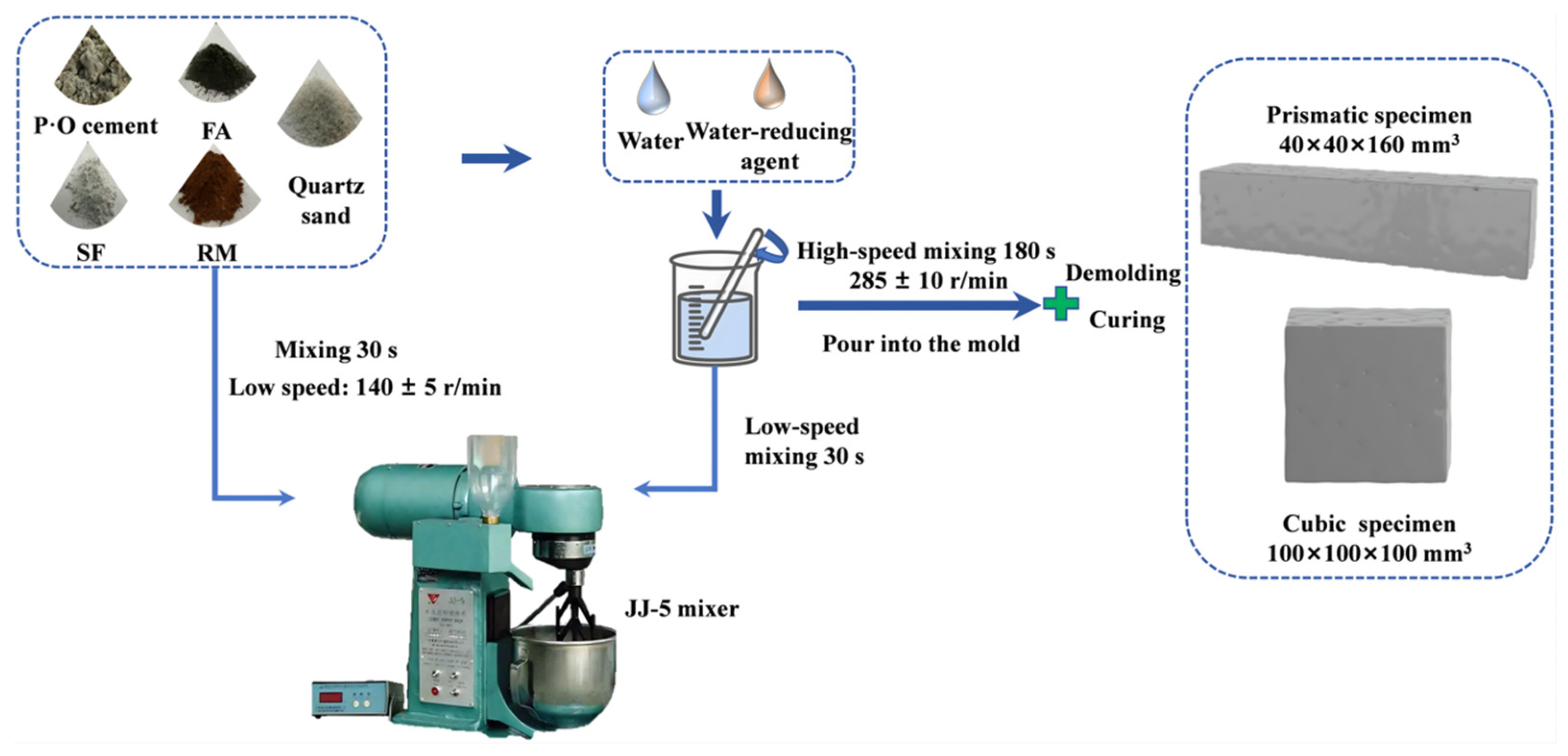
The mixing proportions for HPM are listed in Table 3. The cementitious materials, quartz sand, water, and the water-reducing agent were firstly weighed using an electronic balance. The water-reducing agent was pre-mixed with water and stirred with a glass rod to form a homogeneous solution of water and water-reducing agent. Mixing was performed in a JJ-5 planetary mortar mixer. The weighed materials were sequentially poured into the mixer and then dry-mixed at a low speed of 140 ± 5 r/min for 30 s to achieve a uniform mixture. Subsequently, the pre-mixed solution of water and water-reducing agent was added gradually, with mixing continuing at low speed for an additional 30 s. Then, a high-speed mixing phase at 285 ± 10 r/min was conducted for 180 s.
After mixing, a portion of the fresh HPM paste was used to measure slump flow, plastic viscosity and yield shear stress. The remaining mixture was cast into oiled molds. Two specimen sizes were prepared: 40 × 40 × 160 mm3 and 100 × 100 × 100 mm3. All cast specimens were sealed with plastic film and cured at ambient temperature for 24 h before demolding. After demolding, specimens were placed under standard curing conditions of 20 ± 2 °C and a relative humidity above 95%, following Chinese standard GB/T 50204–2015 [32]. The 40 × 40 × 160 mm3 prismatic specimens were used to determine flexural strength, compressive strength and drying shrinkage. The 100 × 100 × 100 mm3 cubic specimens were reserved for leaching tests to evaluate the release of toxic metal ions. Figure 1 outlines the HPM specimen manufacturing process.

2.3. Measurement Methods

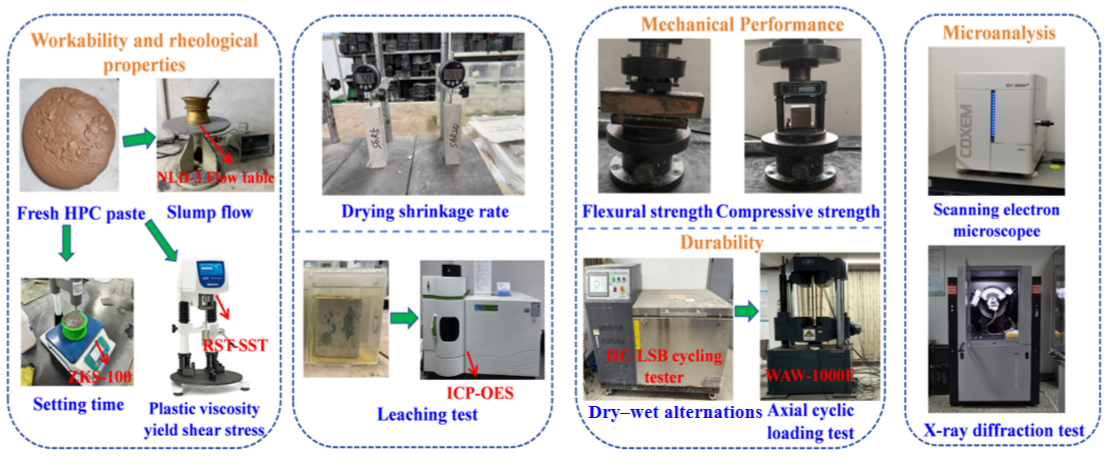
Figure 2 illustrates the apparatus and procedure employed in the experiments. The subsequent section offers a comprehensive overview of the research methodologies employed. The detailed introduction process has been elaborated in Section 2.3.1, Section 2.3.2, Section 2.3.3, Section 2.3.4, Section 2.3.5, Section 2.3.6 and Section 2.3.7.

2.3.1. Properties of Fresh HPM

The slump flow was measured by the jumping table method using an NLD-3 cement mortar flowability tester was provided by Zhekun Instrument Co., Ltd., Shaoxing, China. The setting time was determined with a ZKS-100 tester was provided by Beijing Zhongjiaojianyi Technology Development Co., Ltd., Beijing, China; the initial setting time and finial setting time were defined as the moments when the penetration resistance reached 0.3 MPa and 0.7 MPa respectively. The penetration resistance value was determined by Equation (1). The measurement processes complied with Chinese standards GB/T 2419-2005 and JGJ/T70-2009, respectively, along with the relevant references [33,34].
f p = N p A p
where fp is the penetration resistance (MPa) and Np is the static pressure at a penetration depth of up to 25 mm (N). Ap is the area of the penetration test needle (30 mm2).

2.3.2. Measurements of Plastic Viscosity and Yield Shear Stress

The yield shear stress and plastic viscosity of the fresh HPM paste were determined using a Brookfield RST-SST rheometer supplied by Beiying Electronic Technology Co., Ltd., Shanghai, China. The rheological measurements were performed based on a previous study [35,36]. The paste was transferred into the rheometer cup. The sample was firstly pre-sheared at a constant rate of 100 s−1 for 30 s and then allowed to rest for 15 s. Subsequently, the shear rate was linearly decreased from 100 s−1 to 0.001 s−1, while the corresponding shear stress was recorded in real time. The yield stress and plastic viscosity were calculated by linearly fitting the obtained flow curve using the Bingham model (Equation (2)).
τ = τ 0 + μ γ
where τ, γ, τ0, and μ denote the shear stress (Pa), shear rate (s−1), yield stress (Pa) and plastic viscosity (Pa·s), respectively.

2.3.3. Measurement of Drying Shrinkage Rate

The drying shrinkage test was conducted with reference to previous studies [37,38]. Drying shrinkage was measured with a shrinkage rod. Each specimen was positioned against the dial indicator at one end prior to measurement. During curing, the displacement was obtained with an IP54 dial indicator by Shengtai Xin Electronic Technology Co., Ltd., Huzhou, China. Equation (3) was used to calculate the drying shrinkage rate (DSR).
D S R = L L 0 L 0
where L0 and L denote the original length and the length during the curing of the specimen, respectively. From this calculation, the drying shrinkage rate was obtained.

2.3.4. Mechanical Performance Testing

The mechanical strength under flexure and compression of the cured prismatic specimens (40 × 40 × 160 mm3) was measured with a WAW-600C microcomputer-controlled electro-hydraulic servo universal testing machine. This machine was supplied by Jinan Shijin Group Co., Ltd., Jinan, China. The tests were conducted in force-control mode. The flexural strength was determined by center-point loading at a constant rate of 0.05 kN/s, with the peak load recorded for calculation. Subsequently, the compressive strength of two halves of each fractured specimen was measured by applying axial load at a speed of 2.4 kN/s. For each mixture, three flexural tests and six compressive tests were performed, and the average value was reported as the final strength. The testing procedure followed Chinese standard GB/T 17671-2021 [39].

2.3.5. Sulfate Dry–Wet Alternation and Axial Cyclic Loading

Before conducting the dry–wet alternation (D-A) test, the specimens were cured in a standard curing room for 26 days. After curing, they were removed, surface-dried, and then oven-dried at 80 ± 5 °C for 48 h. Following this, the specimens were cooled to room temperature in a dry environment. Sulfate exposure was conducted using an HC-LSB concrete cycling tester from Hangzhou Guanli Intelligent Technology Co., Ltd., Hangzhou, China. A 5% sodium sulfate (Na2SO4) solution by mass was used as the exposure medium. Each 24 h cycle, conducted in accordance with GB/T 50082–2009, entailed immersion for 15 h, air-drying for 1 h, oven-drying at 80 °C for 6 h, and cooling at 20 °C for 2 h [40]. The specimens were removed for testing after completing 10, 20, and 30 D-As, respectively.
After completing the specified number of D-As, specimens were subjected to axial compressive cyclic loading using a WAW-1000F electro-hydraulic servo universal testing machine. The loading was applied at a maximum stress of 45% of the mortar’s compressive strength, at a frequency of 100 Hz, for a duration of 10 min.

2.3.6. Leaching Test for Toxic Heavy Metals

Toxic heavy-metal leaching was evaluated using (100 × 100 × 100) mm specimens, which were immersed in deionized water for six months. The immersion solution was collected monthly and analyzed for dissolved concentrations of toxic metal ions using an inductively coupled plasma optic emission spectrometer (ICP-OES). The instrument was supplied by Shanghai Meixi Instrment Co., Ltd., Shanghai, China. Three specimens were tested per mix proportion, and the average value was reported for each measurement.

2.3.7. Microscopic Performance Testing

The X-ray diffraction (XRD) and scanning electron microscopy–energy dispersive spectrometer (SEM-EDS) experiments were conducted according to the following procedure: Prior to testing, the samples underwent drying in an oven. Small, flat fragments were collected from the interior of the specimens for SEM-EDS analysis, with the remainder was ground into powder for XRD analysis. The fragments were gold-sputtered and examined under vacuum using a COXEM EM-30AX Plus scanning electron microscope (SEM) by Coxem Co., Ltd., Seoul, Republic of Korea, operating at an accelerating voltage of 15 keV. Elemental composition analysis was performed using an attached EDS spectrometer. For the XRD analysis, the ground powder samples were examined using a D8 ADVANCE X-ray diffractometer by Bruker (Beijing) Technology Co., Ltd., Beijing, China. The system operated at 40 kV and 40 mA and was scanned at 0.6°/min across the 5–90° range.

3. Results and Discussion

3.1. Rheological Performance Parameters and Setting Time

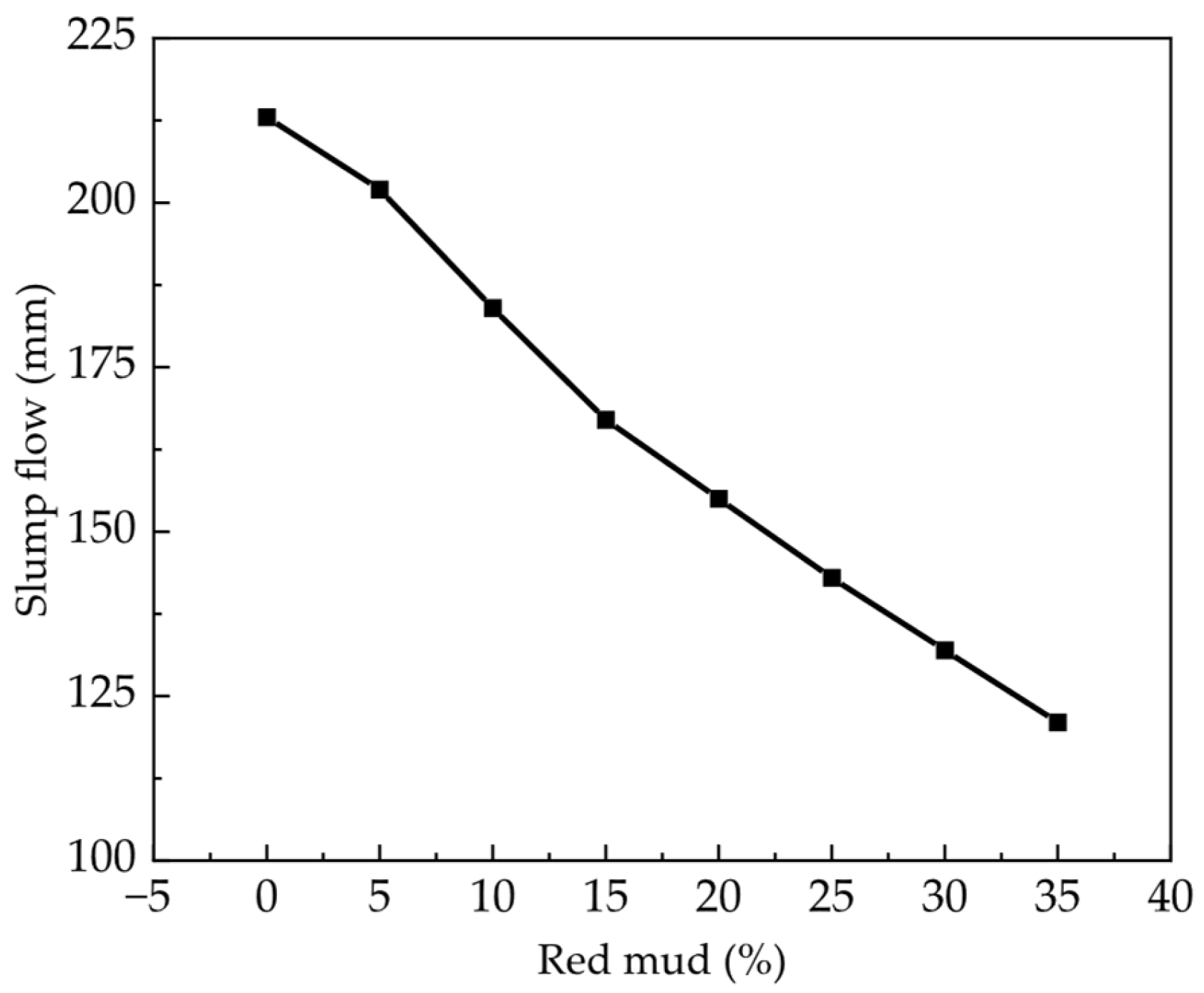
Figure 3 illustrates the slump flow of fresh HPM with the mass ratio of the red mud varying from 0% to 35% by mass of total binder materials. As the proportion of red mud increases, the slump flow decreases, with reductions ranging from 9.09% to 76.03%. This reduction is attributed to the larger specific surface area of red mud, which leads to higher absorption of free water, thereby decreasing the water available for lubrication [41]. Furthermore, the pore structure inherent to red mud occupies volume within the cement paste, restricting the mobility and rearrangement of cement particles [42]. In addition, the angular and irregular morphology of red mud particles contributes to heightened internal friction, which further impairs slump flow [43]. Consequently, the incorporation of red mud adversely affects the fluidity of fresh HPM.
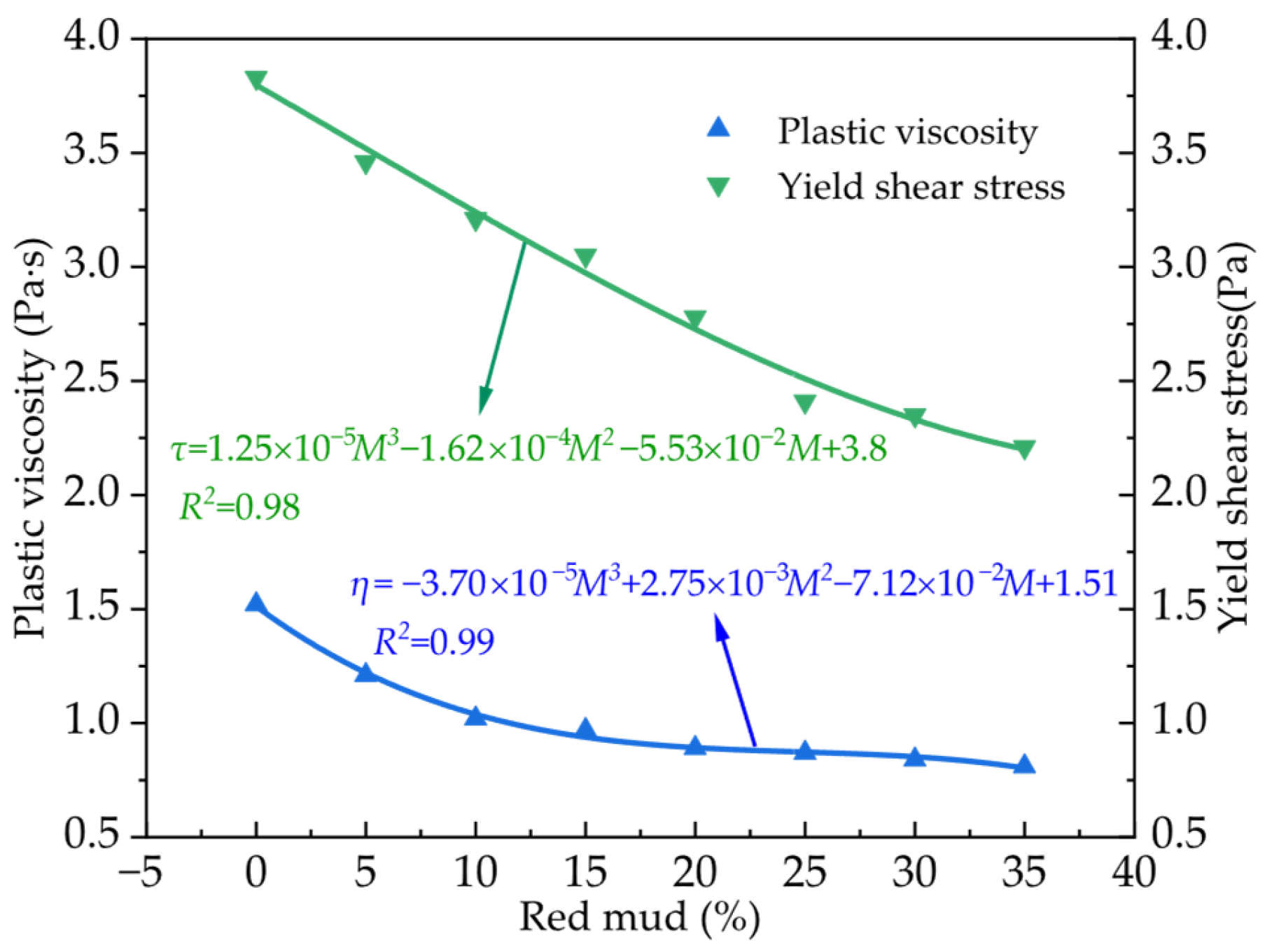
Figure 4 illustrates the variation patterns of plastic viscosity and yield shear stress in fresh HPM with red mud mass ratios ranging from 0% to 35%. Both rheological parameters demonstrate a cubic functional relationship with the mass ratio of red mud by mass of total binder materials with goodness-of-fit (R2) values of 0.98 and 0.99, respectively, indicating the validity of the fitting equations. The incorporation of red mud increases the yield shear stress by 3.7%~87.65% and the plastic viscosity by 6.33%~73.3% in HPM. Compared with cement, red mud exhibits a significantly larger specific surface area and smaller particle size, enabling it to adsorb more free water. As the dosage of red mud in HPM increases, both plastic viscosity (η) and yield stress (τ) rise concomitantly, confirming its efficacy as a viscosity-modifying agent [44]. The cubic function is selected due to its optimal fit to the experimental data and its capacity to capture the nonlinear characteristics of hydration kinetics. The data are obtained using the least squares method, and the goodness of fit was evaluated based on the residual sum of squares.
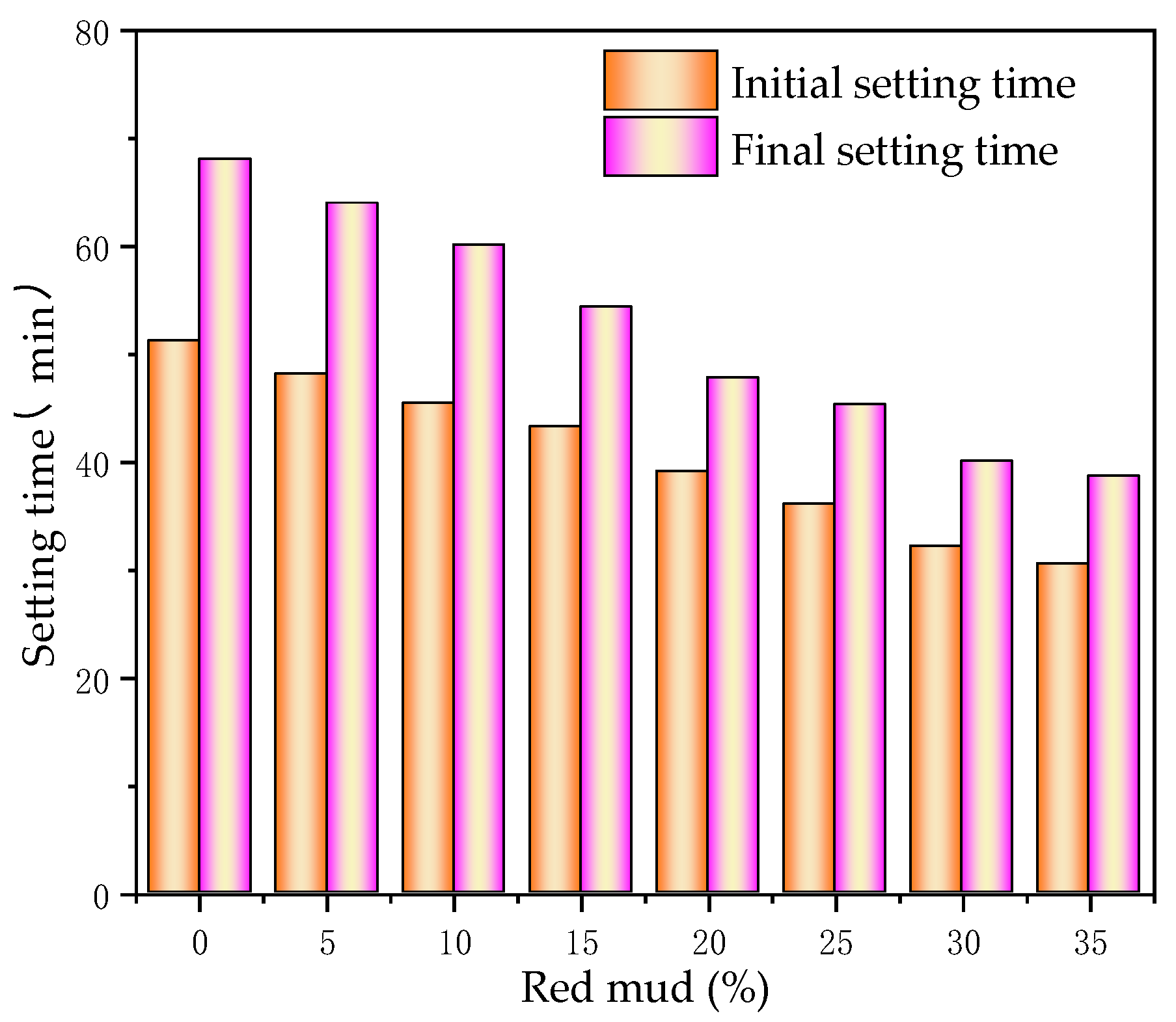
Figure 5 presents the initial and final setting times of fresh HPM incorporating red mud. The data reveal that increasing the red mud mass ratio results in reduced setting times, with maximum decreases of 67.91% for initial setting and 76.18% for final setting. This reduction stems primarily from the high tricalcium aluminate content in red mud, a hydraulic phase known for its rapid hydration kinetics [45]. Furthermore, hydration products accumulate more rapidly on red mud surfaces compared with cement particles, accelerating the overall hydration process [46]. Consequently, red mud incorporation decreases both initial and final setting times in fresh HPM.

3.2. Mechanical Strength

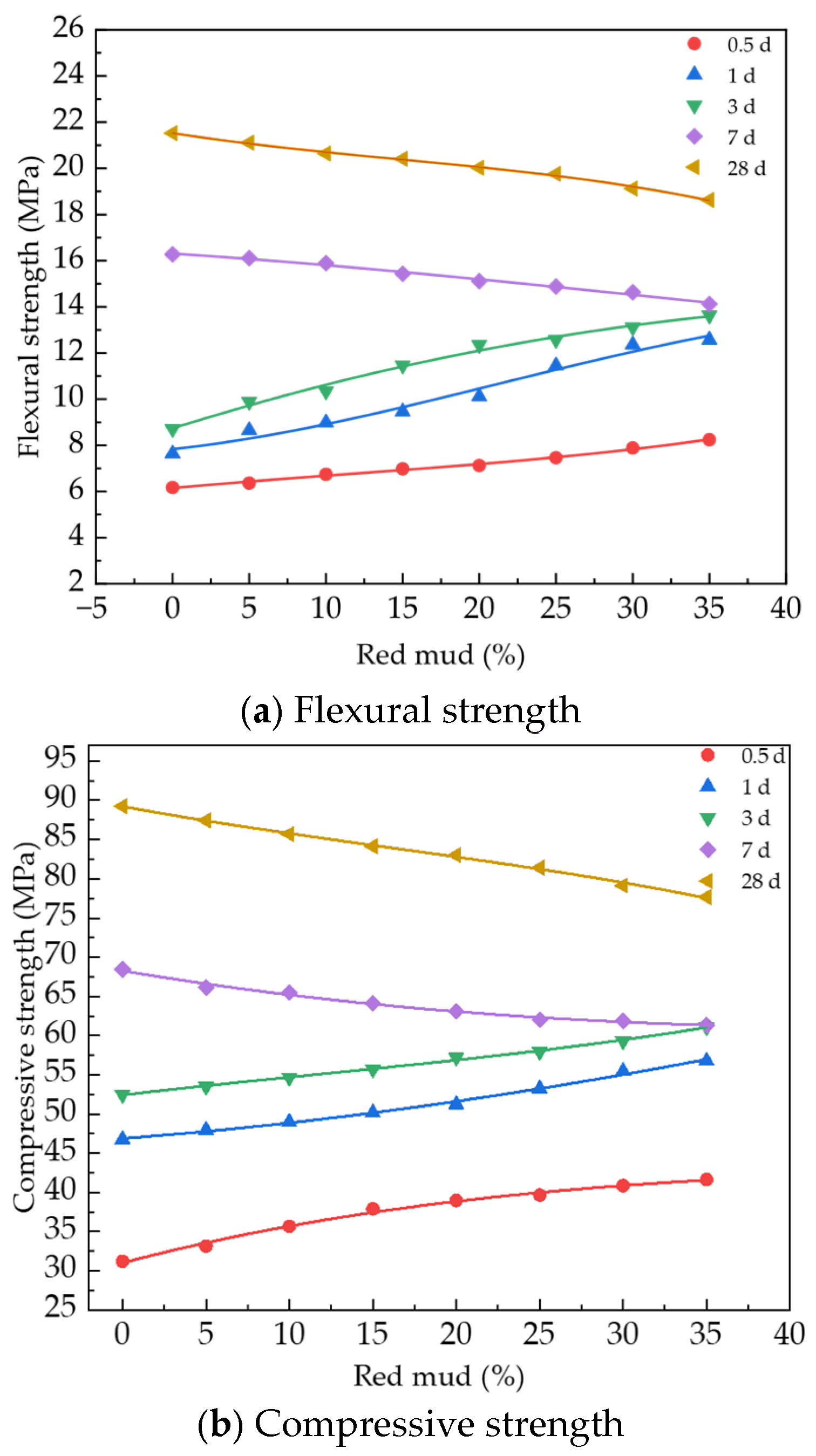
The mechanical strength of red mud HPM is presented in Figure 6. Figure 6a depicts the flexural strength (ft) evolution of red mud HPM. Figure 6b depicts the compressive strength (fcu) evolution of red mud HPM. At early curing ages of 0.5 day, 1 day, and 3 days, flexural strength increases by 3.08%~33.55%, 13.22%~64.53%, and 13.55%~56.49%, respectively. This enhancement is primarily attributed to the accelerated hydration of calcium aluminate in red mud, which promotes early-age mechanical development [47]. Conversely, at later curing ages of 7 and 28 days, the flexural strength shows reductions of 0.98%~13.21% and 1.91%~13.43%, respectively. The late-stage strength reduction may be attributed to the formation of calcium aluminate hydrates, which increases early hydration heat. This thermal activity induces microcracking, ultimately compromising the long-term mechanical integrity of red mud HPM [48]. At early curing ages of 0.5 day, 1 day, and 3 days, compressive strength increases by 6.11%~33.35%, 2.54%~21.38%, and 1.96%~16.46%, respectively, while at later curing ages of 7 days and 28 days, the compressive strength decreases by 3.39%~10.37% and 2.06%~12.98%. This trend stems from the dilution of cement clinker proportion as red mud content rises, coupled with the inherently low pozzolanic reactivity of untreated red mud, which reduces the quantity of active cementitious components and limits later-age strength development [49]. Consequently, red mud acts as an early-strength enhancer through accelerated hydration but may compromise long-term strength as the mortar ages due to reduced cementitious activity [50]. Table 4 provides the fitting functions between mechanical strength and the mass ratio of red mud by mass of total binder materials. The results indicate that the mechanical strength exhibits cubic functions with the mass ratio with R2 higher than 0.96, signifying reasonable correlations.

3.3. The Leached Concentrations of Cr and Zn

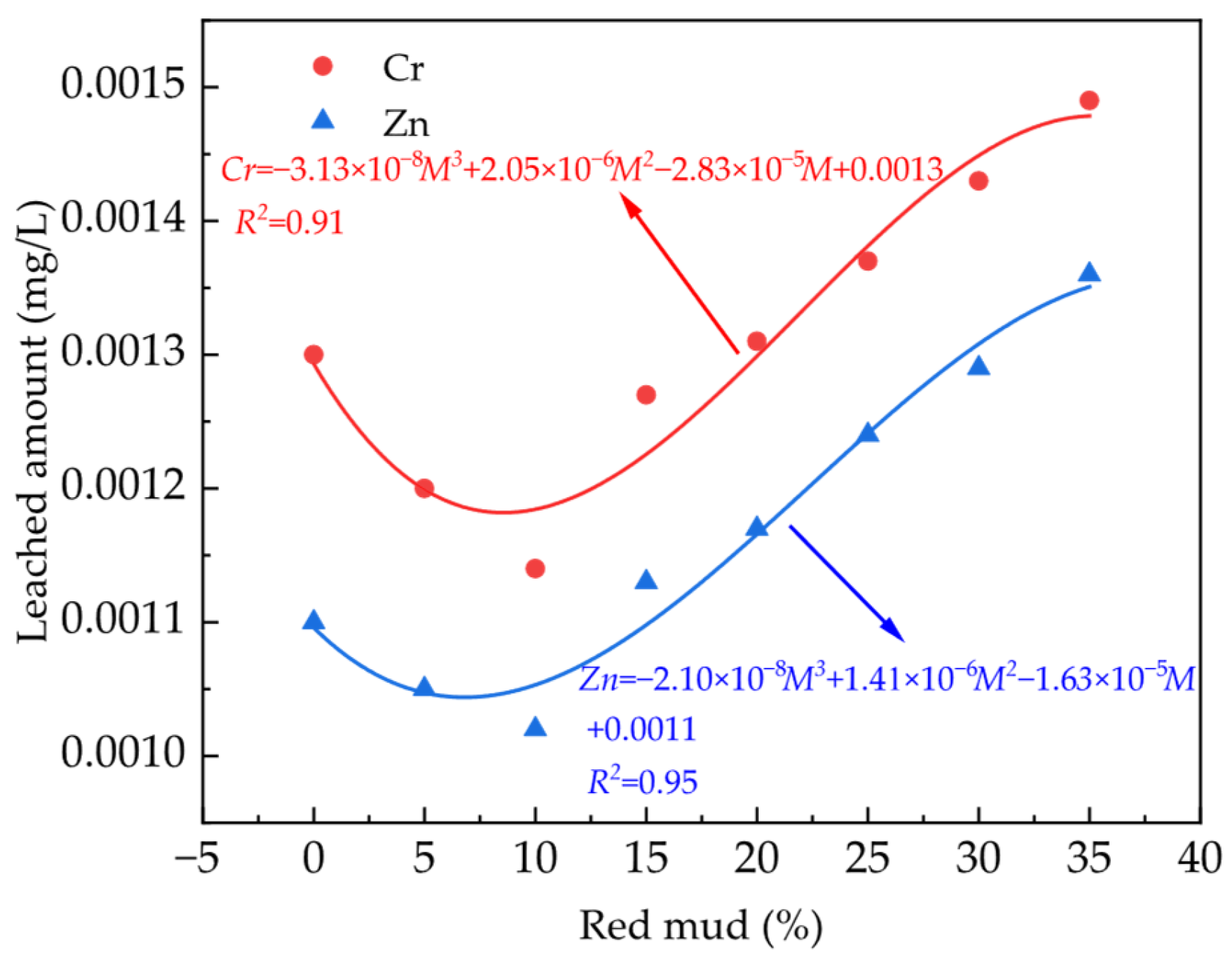
Figure 7 depicts the leached concentrations of chromium (Cr) and zinc (Zn) in red mud HPM, revealing cubic functional relationships with red mud mass ratios (M) with R2 values of 0.91 and 0.95, respectively, which verifies the rationality of the fitting functions. Minimum leached concentrations for both metals occur at 10% mass ratio of red mud by mass of total binder materials. Within the 5%~10% range, Cr and Zn leaching decreases by up to 12.3% and 7.3%, respectively, attributed to red mud’s superior specific surface area compared with C-S-H gel, which enhances heavy-metal ion adsorption through physicochemical interactions [14]. However, beyond the mass ratio of 15%, the dilution of cementitious phases and potential microstructural defects reduce this immobilization capacity, while the intrinsic heavy metals in red mud contribute to increased leaching [51]. Compared with relevant regulatory limits and values reported in the literature, the leached concentrations in this study are significantly lower, confirming the environmental safety of red mud mortar for practical applications [37].

3.4. Drying Shrinkage Rate

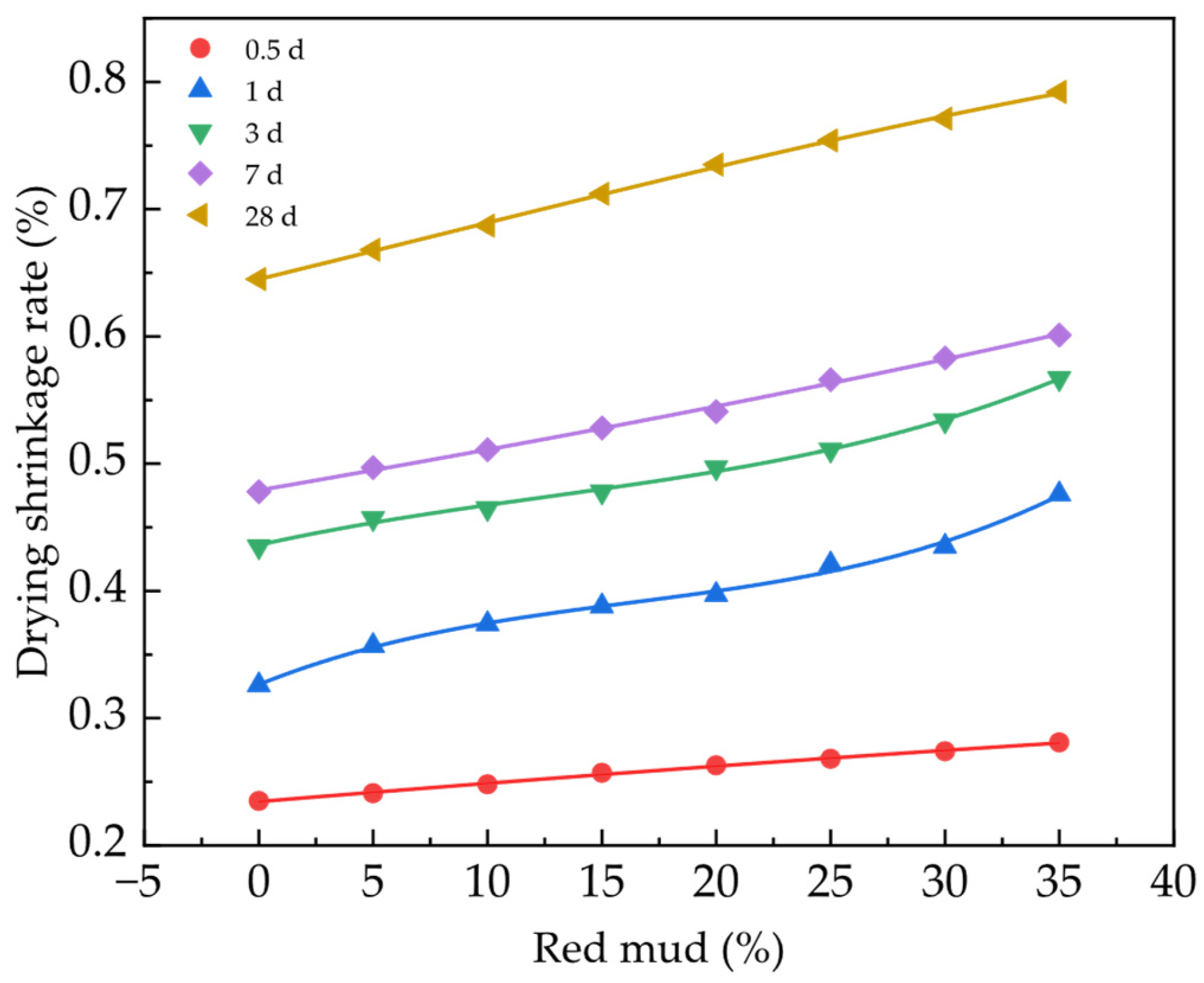
Figure 8 illustrates the drying shrinkage rate (DSR) of HPM with red mud. The drying shrinkage rate increases by 2.55%~19.57%, 9.51%~46.01%, 5.06%~30.34%, 3.97%~25.73%, and 3.57%~22.79%. The aluminate compounds in red mud accelerate cement hydration kinetics, consuming free water and generating refined pore structures that increase capillary tension during drying [52]. Simultaneously, elevated red mud content introduces abundant micropores into the mortar matrix, creating additional pathways for water evaporation and volume reduction [53]. Increased drying shrinkage promotes crack growth, which facilitates the ingress of harmful ions (e.g., chloride and sulfate ions) and accelerates reinforcement corrosion, thereby potentially reducing the service life of the mortar structure. Table 5 provides the fitting functions between the DSR of HPM and the mass ratio of red mud by mass of total binder materials. The results indicate that the DSR exhibits cubic functions with the mass ratio with R2 higher than 0.99, which verifies the rationality of the fitting results.

3.5. Salt Dry–Wet Alternation Erosion

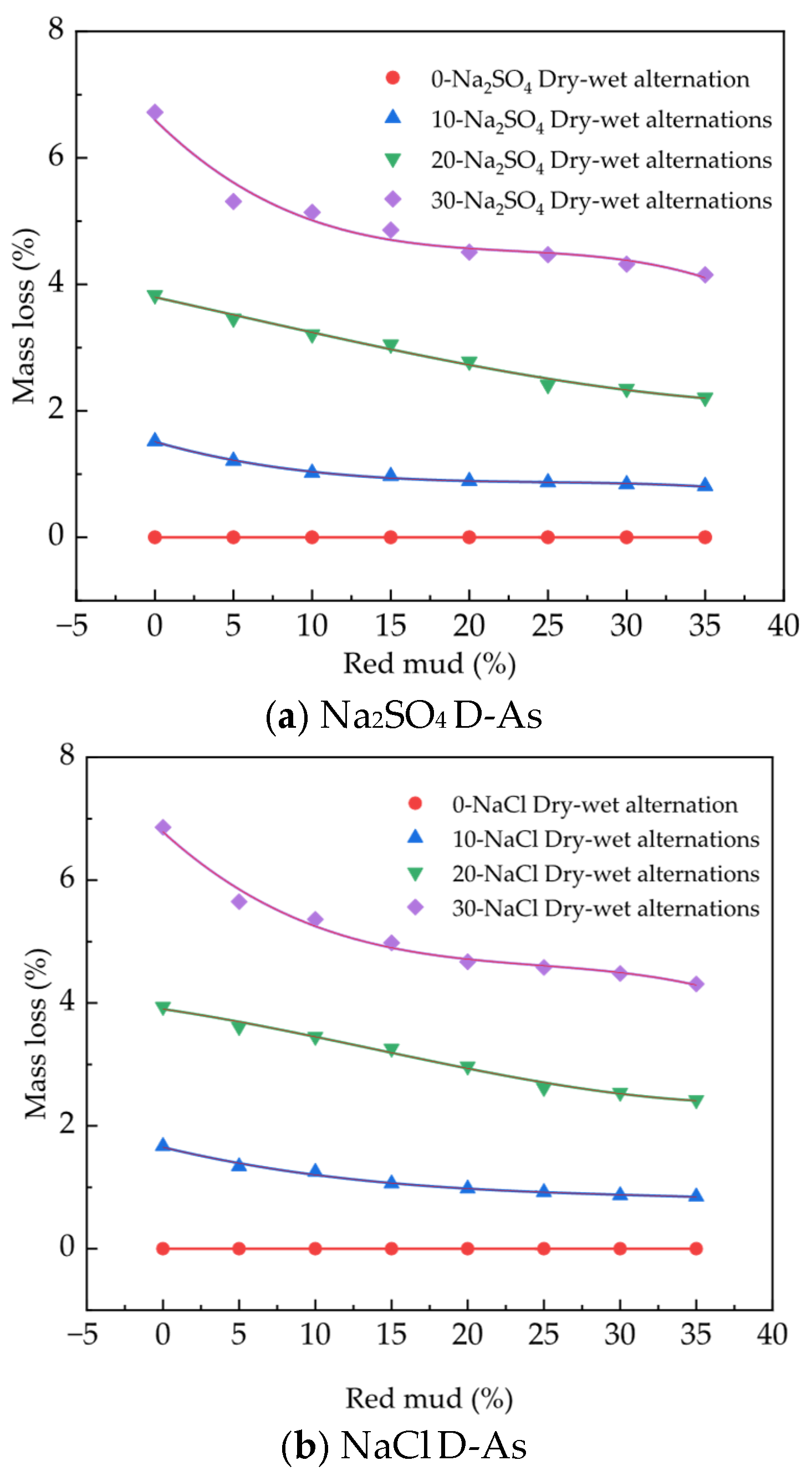
Figure 9 shows the mass loss rate of red mud HPM (0%–35% red mud) after 10, 20, and 30 dry–wet alternation (D-A) cycles in NaCl and Na2SO4 solutions. For specimens under NaCl D-A cycles, the rates of mass loss reduction at 10, 20, and 30 cycles are 19.76%~49.1%, 8.38%~38.58%, and 17.64%~37.18%, respectively. Under Na2SO4 D-A cycles, the corresponding reduction rates are 20.4%~46.7%, 9.7%~42.3%, and 20.9%~38.2%. The enhanced sulfate resistance in red mud mixtures arises from dual mechanisms: micro-filling effects that densify the microstructure to restrict sulfate penetration, alongside supplementary aluminate phases which sequester sulfate ions through the formation of secondary calcium sulfoaluminate (AFt) [54]. Table 6 provides the fitting functions between the mass loss rate of HPM under D-A cycles and the mass ratio of red mud by mass of total binder materials. The results indicate that the mass loss rate of HPM under D-A cycles exhibits cubic functions with the mass ratio with R2 higher than 0.94, which confirms the rationality of the fitted equations.
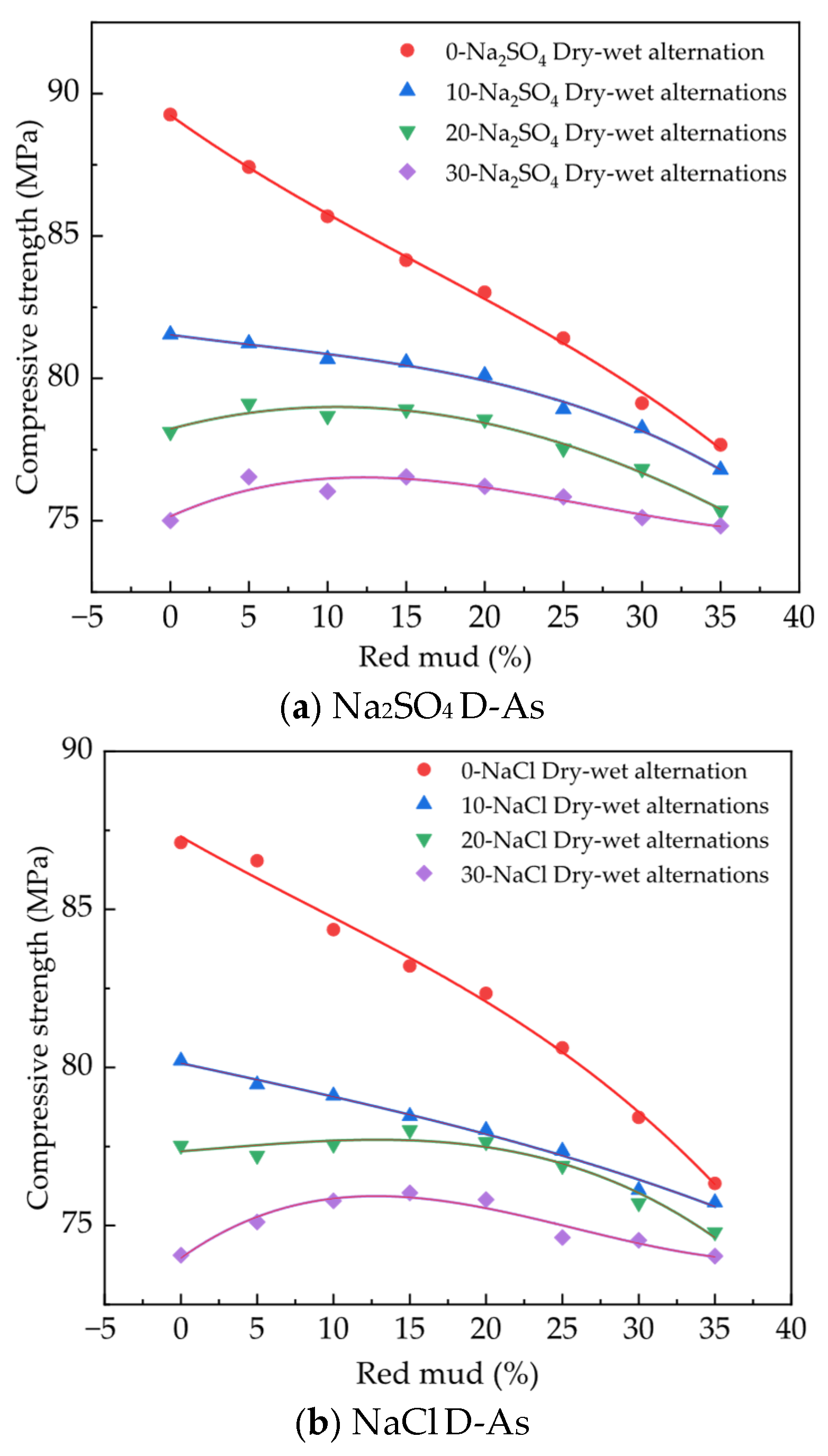
Figure 10 illustrates the compressive strength variation of red mud HPM with 0%–35% red mud. After 0, 10, 20, and 30 Na2SO4 dry–wet alternation (D-A) cycles, compressive strength decreases by 2.06%~12.98% and 0.38%~5.83%, respectively. Among all mixtures, the mortar with 5% red mud shows the best compressive strength retention, outperforming the control group by 1.27% after 10 cycles and by 2.04% after 20 cycles. Under NaCl D-A cycles, the compressive strength decreases by 2.34% and 4.15%, respectively. The drying process leads to the contraction of the microstructure of the cement matrix and the generation of microcracks. These microcracks provide more channels for chloride ions to penetrate, further intensifying the corrosion [55]. Table 7 provides the fitting functions between the compressive strength of HPM under D-A cycles and the mass ratio of red mud by mass of total binder materials. The results indicate that the compressive strength exhibits cubic functions with the mass ratio with R2 higher than 0.86, which verifies the fitting rationality.
An optimal red mud content of 5% has been determined to maximize sulfate resistance. At this concentration, the leached concentrations of chromium (Cr) and zinc (Zn) are minimized, while drying shrinkage remains at a moderate level. Consequently, low mass ratio levels of red mud are recommended to utilize its micro-filling properties, which enhance durability through pore refinement, stabilize heavy metals via chemical bonding, and control shrinkage without exceeding acceptable limits.
Following 30 cycles of sulfate dry–wet exposure, the compressive strength exhibits a reduction of 12.98% at a red mud content of 35%, concomitant with a 23.6% increase in zinc leaching. These findings indicate that excessive incorporation of red mud induces microstructural defects, thereby undermining both the mechanical performance and durability of the material. Importantly, the optimal red mud proportion for enhancing sulfate resistance was identified as 5%, whereas the maximum compressive strength at 28 days was observed at 0% red mud content.

3.6. Microscopic Analysis Results

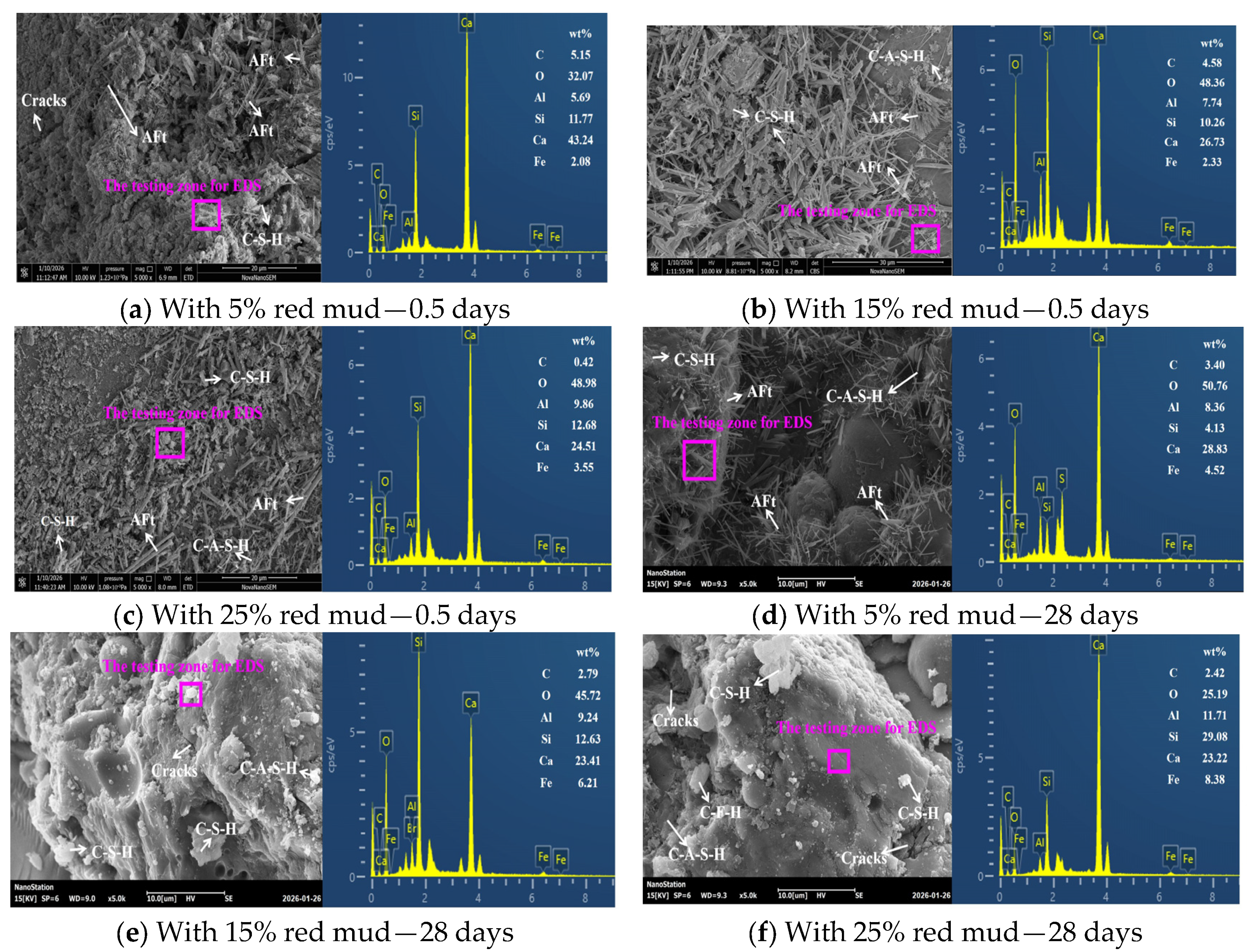
Figure 11 presents scanning electron microscopy–energy dispersive spectroscopy (SEM-EDS) images of red mud HPM after 0.5-day and 28-day curing periods. Hydration products, including calcium sulfoaluminate (AFt), calcium silicate hydrate (C-S-H), and calcium aluminosilicate hydrate (C-A-S-H), are observed in the figure. When the curing age is 0.5 day, EDS analysis shows that the Al and Fe contents are increased by 4.17% and 1.47% when the mass ratio of red mud by mass of total binder materials is raised from 5% to 25%. This indicates that higher red mud content introduces more Al and Fe into the hydration system, thereby promoting the formation of additional AFt and C-S-H that fill pores and densify the matrix [56]. This phenomenon indicates that red mud can enhance the early strength of HPM. At 28 days of curing, the 5% red mud mixture retains a relatively dense structure, consistent with its balanced mechanical performance. However, at 25% red mud, EDS analysis shows that the Al and Fe contents are increased by 1.85% and 4.83% compared with the 5% red mud sample. The excess Al and Fe are not fully incorporated into stable hydration products, which disrupts the C-S-H structure and leads to the loosening of the hydration products and an increase in cracks [57]. This confirms that excessive red mud compromises later-age mechanical performance. Figure 11 further reveals that red mud HPM contains C, O, Al, Si, Ca, and Fe. The addition of red mud increases Al and Fe contents, whereas C and Ca contents decrease.
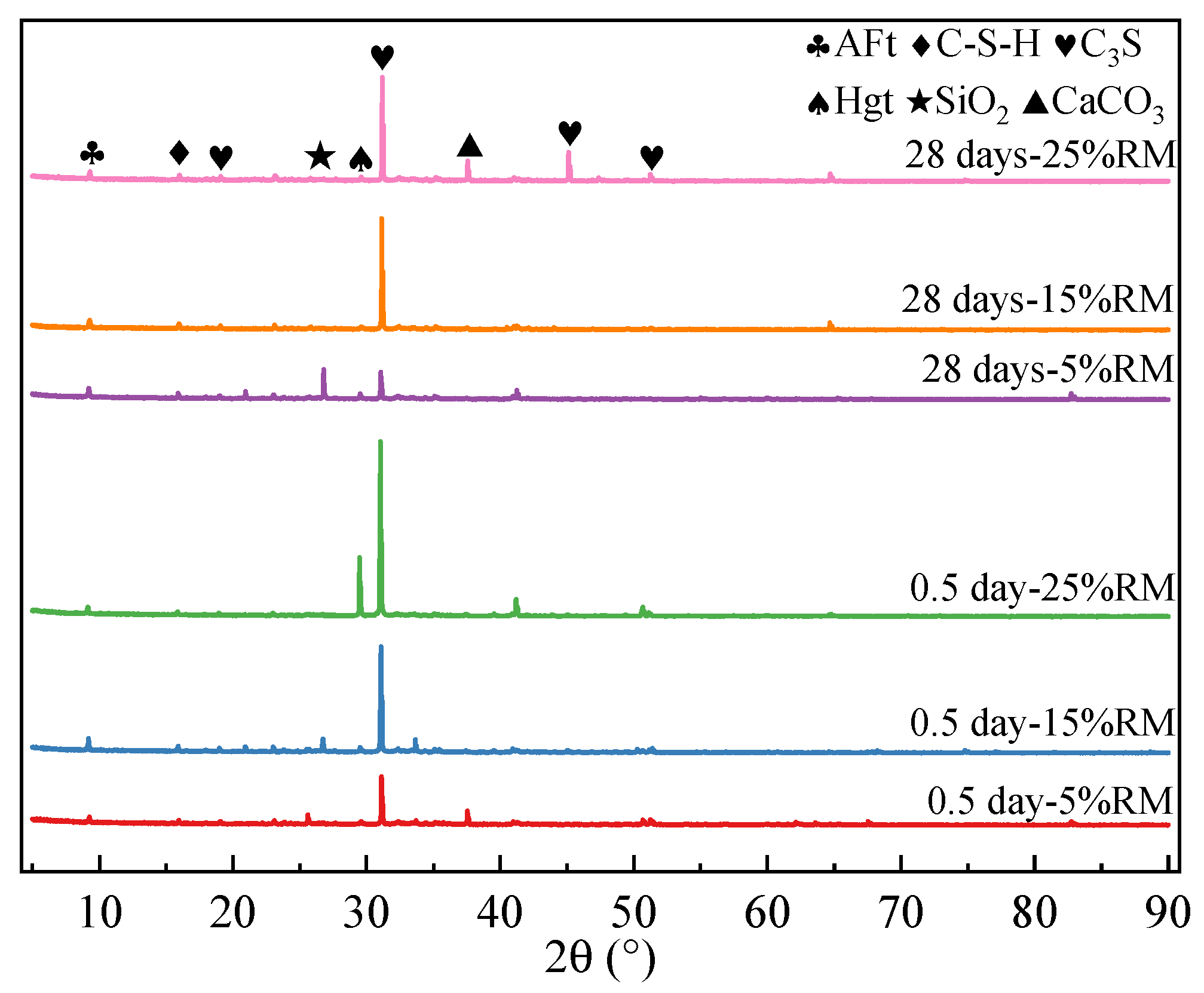
The X-ray diffraction (XRD) curves of the 0.5-day and 28-day samples are shown in Figure 12. Crystals of AFt, C-S-H, hydrogarnet (Hgt), tricalcium silicate (C3S), SiO2, and CaCO3 are identified. The addition of red mud increases the contents of C3S, CaCO3, Hgt, and AFt, whereas it decreases the contents of SiO2 and C-S-H. The increase in AFt content is attributed to the high concentration of reactive alumina in red mud [58]. The decrease in C-S-H peak intensity is primarily due to the dilution effect of red mud on cement clinker. These XRD observations explain the macroscopic performance of red mud HPM at the microstructural level. The increase in AFt (ettringite) and Hgt (hydrogarnet) contributes to early-age strength gain, whereas the decrease in C-S-H content accounts for the lower later-age strength. The higher residual C3S indicates incomplete hydration, which is consistent with the dilution effect.
Table 8 shows the results of comparison of red mud mortar properties with the literature.

4. Conclusions

This study systematically analyzes the performance of HPM affected by red mud. The conclusions are obtained as follows:
(1)
The incorporation of red mud reduces the slump spread of HPM and increases yield stress and plastic viscosity. The rheological parameters of HPM are in a cubic function relationship with the mass ratio of red mud. In addition, the setting time is shortened when red mud is introduced into HPM.
(2)
The addition of red mud can enhance the early flexural and compressive strength of HPM, with 3-day flexural and compressive strength increasing by up to 56.5% and 16.5% respectively. However, red mud is detrimental to the development of the later strength of HPM, with the 3-day flexural and compressive strength potentially decreasing by approximately 10%.
(3)
By adding up to 35% HPM, leached chromium and zinc are both within the established safety threshold range, thereby confirming that red mud mortar complies with regulatory standards and previous reported data in terms of environmental applicability.
(4)
The drying shrinkage rate of HPM increases in a cubic manner with the increase in the red mud mass ratio. In addition, the addition of red mud can improve the resistance of HPM to dry and wet sulfate erosion.
This study confirms that red mud can be used as a supplementary cementitious material for high-performance mortar, achieving the resource utilization of solid waste. The results show that the addition of 5% red mud can effectively enhance the mortar’s resistance to sulfate and chloride ion penetration, making it suitable for applications with high durability requirements such as marine engineering.

Author Contributions

Conceptualization, L.B. and J.L.; methodology, C.Z. and L.B.; software, L.B.; validation, J.Z., C.Z. and J.W.; formal analysis, K.X.; investigation, L.B.; resources, F.S.; data curation, H.T.; writing—original draft preparation, L.B.; writing—review and editing, J.L.; visualization, L.B.; supervision, J.L.; project administration, F.S.; funding acquisition, C.Z. and J.L. All authors have read and agreed to the published version of the manuscript.

Funding

This research study was funded by Ningbo Public Welfare Projects 2025S103.

Institutional Review Board Statement

Not applicable.

Informed Consent Statement

Not applicable.

Data Availability Statement

The data used to support the findings of this study are available upon request.

Conflicts of Interest

Author Jian Zhang was employed by the company Huaxia Spatial Planning Institute (Beijing) Co., Ltd., author Huihui Tong was employed by the company Zhejiang Lianghe Communications Construction Co., Ltd. The remaining authors declare that the research was conducted in the absence of any commercial or financial relationships that could be construed as a potential conflict of interest.

References

  1. Vielma, C.; Svobodova-Sedlackova, A.; Chimenos, J.; Fernandez, A.; Berlanga, C.; Rodriguez, R.; Barreneche, C. Valorisation of red mud: Disclosing the potential of an abundant residue. Sustainability 2025, 17, 1849. [Google Scholar] [CrossRef]
  2. Meshram, N.; Lini Dev, K. Sustainable utilization of red mud as recycled waste: A critical review and future research directions. Indian Geotech. J. 2026, 56, 408–423. [Google Scholar] [CrossRef]
  3. Ilahi, K.; Debbarma, S.; Mathew, G.; Inyang, H.I. Carbon capture and mineralisation using red mud: A systematic review of its principles and applications. J. Clean. Prod. 2024, 473, 143458. [Google Scholar] [CrossRef]
  4. Lyu, Z.; Li, Y.; Fan, M.; Huang, Y.; Li, C. Analysis of calcined red mud properties and related mortar performances. Fluid Dyn. Mater. Process. 2024, 20, 901–913. [Google Scholar] [CrossRef]
  5. Karimi, Z.; Rahbar-Kelishami, A. Efficient utilization of red mud waste via stepwise leaching to obtain α-hematite and mesoporous γ-alumina. Sci. Rep. 2023, 13, 8527. [Google Scholar] [CrossRef]
  6. Stapić, S.; Kostić, D.; Perušić, M.; Schneider, R.; Souza Filho, I.; Mitrašinović, A.; Friedrich, B. Comparative Analysis of Reduction Techniques Aiming for the Minimization of Contaminated Soil with Red Mud. Minerals 2025, 15, 470. [Google Scholar] [CrossRef]
  7. Pentari, D.; Tournavitou, A.; Stratakis, A. Synthesis characterization and sorption properties of nanoscale zero valent iron using red mud as the iron source: Cadmium removal from spiked aqueous solutions. Glob. NEST J. 2024, 26, 05807. [Google Scholar]
  8. Vuković, J.; Perušić, M.; Stopić, S.; Kostić, D.; Smiljanić, S.; Filipović, R.; Damjanović, V. A review of the red mud utilization possibilities. Ovidius Univ. Ann. Chem. 2024, 35, 165–173. [Google Scholar] [CrossRef]
  9. Liu, R.; Lin, Z.; Fan, S.; Cheng, Y.; Li, Y.; Li, J.; Zou, H.; Chen, Y.; Zheng, L.; Li, J. Research on the Effect of Calcium Alginate-Red Mud Microspheres on the Performance of Cement Mortar by Partially Replacing Standard Sand. Materials 2025, 18, 3326. [Google Scholar] [CrossRef]
  10. Yang, L.; Wang, P.; Luo, S.; Wang, Y.; Xu, S. Performance and mechanism of polycarboxylate superplasticizer in red mud blended cementitious materials. Polymers 2025, 17, 1738. [Google Scholar] [CrossRef]
  11. Wang, S.; Zou, F.; Luo, H. An all solid waste CO2 sequestration material consist of multiple calcium silicate clinkers by carbide slag, copper tailing and red mud: Clinker crystal transformation and carbonation hardening properties. Constr. Build. Mater. 2024, 450, 138534. [Google Scholar] [CrossRef]
  12. Yang, X.; Zhang, J.; Su, X.; Huang, Z.; Li, H. Feasibility evaluation of mechanical and environmental properties for red mud based rapid setting filling support material. Sci. Rep. 2025, 15, 7255. [Google Scholar] [CrossRef] [PubMed]
  13. Dong, P.; Yin, D.; Han, Y. Improvement of red mud activity and its effect on the properties of cement clinker. New Build. Mater. 2022, 49, 28–30. [Google Scholar]
  14. Gu, H.; Tang, M.; Wu, S.; Wang, H.; Meng, Z. Performance of cementitious composites with bayer red mud as a partial cement replacement. Sci. Rep. 2025, 15, 44628. [Google Scholar] [CrossRef] [PubMed]
  15. Vishwakarma, R.; Bhoi, G.; Patel, M.R. Suitability and utilization of neutralized red mud and hydrated lime as a partial replacement of cement in concrete. Int. J. Res. Appl. Sci. Eng. Technol. 2022, 10, 2321–9653. [Google Scholar] [CrossRef]
  16. Peng, B.; Wang, L.; Li, Z.; Xu, Y.; Zhang, W.; Li, Y. Basic research on the preparation of electrolytic manganese residue–red mud–ground granulated blast furnace slag–calcium hydroxide composite cementitious material and its mechanical properties. Materials 2025, 18, 1218. [Google Scholar] [CrossRef]
  17. Murali Mohan, N.; Gondu, V.R.; Yamsani, S.K.; Varudu, R.M. Red mud stabilization using alternate industrial waste materials- mechanical and microstructural properties. J. Environ. Manag. 2025, 391, 126511. [Google Scholar] [CrossRef]
  18. Sujak, A.; Pyzalski, M.; Durczak, K.; Brylewski, T.; Murzyn, P.; Pilarski, K. Studies on cement pastes exposed to water and solutions of biological waste. Materials 2022, 15, 1931. [Google Scholar] [CrossRef]
  19. Sun, D.M.; Beulah, M.; Saji, J. Sustainable synergies: Performance evaluation of cement mortar with red mud and industrial by- products. Next Mater. 2026, 10, 101479. [Google Scholar] [CrossRef]
  20. Liu, W.; Zhou, Z.; Li, H.; Zhang, T.; Mai, Q.; Li, C. Research on the performance of low carbon mine filling cementing material based on red mud: A comprehensive review. Case Stud. Constr. Mater. 2025, 22, e04375. [Google Scholar] [CrossRef]
  21. Choe, G.; Kang, S.; Kang, H. Mechanical properties of concrete containing liquefied red mud subjected to uniaxial compression loads. Materials 2020, 13, 584. [Google Scholar] [CrossRef] [PubMed]
  22. Kale, A.V.; Kharmate, A.V.; Kumar, M. Utilizing red mud as a partial replacement for cement in high-performance concrete: Assessing mechanical and durability properties. Int. J. Adv. Res. Sci. Commun. Technol. 2023, 3, 692–696. [Google Scholar] [CrossRef]
  23. Kang, S.; Kim, S.; Hong, S.; Lee, B. Properties of red mud neutralized with sulfuric acid and effects on cement mortar. Materials 2023, 16, 4730. [Google Scholar] [CrossRef] [PubMed]
  24. Athira, K.; Shanmugapriya, T. Investigation on effect of colloidal nano-silica on the strength and durability characteristics of red mud blended Portland cement paste through tortuosity. Mater. Constr. 2022, 72, e293. [Google Scholar] [CrossRef]
  25. Azad, N.; Samarakoon, S. Utilization of industrial by-products/waste to manufacture geopolymer cement/concrete. Sustainability 2021, 13, 873. [Google Scholar] [CrossRef]
  26. Ma, S.; Cao, Z.; Wei, C.; Shao, Y.; Wu, P.; Zhang, Z.; Liu, X. Red mud magnesium potassium phosphate cement used as rapid repair materials: Durability, bonding property, volume stability and environment performance optimization. Constr. Build. Mater. 2024, 415, 135144. [Google Scholar] [CrossRef]
  27. Ortega, J.M.; Cabeza, M.; Tenza-Abril, A.J.; Real-Herraiz, T.; Climent, M.A.; Sanchez, I. Effects of red mud addition in the microstructure, durability and mechanical performance of cement mortars. Appl. Sci. 2019, 9, 984. [Google Scholar] [CrossRef]
  28. Qureshi, H.J.; Ahmad, J.; Majdi, A.; Saleem, M.U.; Al Fuhaid, A.F.; Arifuzzaman, M. A study on sustainable concrete with partial substitution of cement with red mud: A review. Materials 2023, 16, 7761. [Google Scholar] [CrossRef]
  29. Nie, Q.; Li, H.; Yang, H.; Zhang, R.; Shang, W.; Wang, R. Enhancing properties of Bayer red mud–Class F fly ash geopolymer composites via ground granulated blast furnace slag and calcium carbide slag incorporation. Buildings 2025, 15, 4013. [Google Scholar] [CrossRef]
  30. Anwar, M.T.; Panday, P. Experimental study on the partial replacement of cement with red mud in concrete. Int. J. Sci. Res. Sci. Technol. 2022, 9, 642–646. [Google Scholar] [CrossRef]
  31. Zhu, J.; Hu, S.; Zhang, Y.; Liu, L.; Guo, W.; Li, Q.; Wang, S. Study on hydration mechanism and environmental safety of thermal activated red mud-based cementitious materials. Environ. Sci. Pollut. Res. 2023, 30, 55905–55921. [Google Scholar] [CrossRef] [PubMed]
  32. GB/T 50204-2015; Code for Acceptance of Constructional Quality of Concrete Structures. Ministry of Housing and Urban-Rural Development, People’s Republic of China: Beijing, China, 2015.
  33. GB/T 2419-2005; Test Method for Fluidity of Cement Mortar. National Cement Standardization Technical Committee: Beijing, China, 2005.
  34. JGJ/T 70-2009; Standard for Test Method of Basic Properties of Construction Mortar. Ministry of Housing and Urban-Rural Development, People’s Republic of China: Beijing, China, 2009.
  35. Wang, H.; Wang, A.; Wang, J.; Zhang, J.; Du, T.; Shen, J. Optimizing quaternary chemical additives and steel fiber dispersion in CSA cement based HPC for rapid repair engineering. Constr. Build. Mater. 2025, 489, 142265. [Google Scholar] [CrossRef]
  36. Hou, J.; Zhang, X.; Zhang, C.; Wang, J.; Zheng, P.; Huang, J.; Feng, S.; Wang, J.; Duan, G. Adjusting the Early Rheology of Alkali-Activated Slag by Sodium Silicate. Case Stud. Constr. Mater. 2024, 21, e03995. [Google Scholar] [CrossRef]
  37. Xu, F.; Zhou, J.; Chang, R.; Zhang, D.; Wang, H.; Tian, X. The Mechanical and Self-Sensing Performance of Reactive Powder Cement Concrete with Nano-Stainless Steel Powder. Coatings 2023, 13, 1153. [Google Scholar] [CrossRef]
  38. Xu, J.; Wang, H.; Wang, W.; Shi, F. The Influence of CO2-Cured Incinerated Waste Fly Ash on the Performance of Reactive Powder Concrete. Coatings 2023, 13, 709. [Google Scholar] [CrossRef]
  39. GB/T 17671-2021; Method for Testing the Strength of Cement Mortar. National Cement Standardization Technical Committee: Beijing, China, 2021.
  40. GB/T 50082-2009; Standard for Test Methods of Long-Term Performance and Durability of Ordinary Concrete. Ministry of Housing and Urban-Rural Development, People’s Republic of China: Beijing, China, 2009.
  41. Raj, R.; Yadav, B.; Yadav, J.S.; Kumar, S. Red mud utilisation for sustainable construction and soil improvement: A comprehensive review. Discov. Sustain. 2024, 5, 398. [Google Scholar] [CrossRef]
  42. Tang, W.C.; Wang, Z.; Donne, S.W.; Forghani, M.; Liu, Y. Influence of red mud on mechanical and durability performance of self-compacting concrete. J. Hazard. Mater. 2019, 379, 120802. [Google Scholar] [CrossRef]
  43. Inayathulla, M.; Ahmad, S.; Iqbal, T.; Al-Osta, M.A.; Najamuddin, S.K.; Hanif, A. High-strength self-compacting concrete incorporating red mud: Development and comprehensive performance evaluation. Case Stud. Constr. Mater. 2026, 24, e05714. [Google Scholar] [CrossRef]
  44. Wu, C.; Tang, W.; Zhan, B.; Kou, S. Feasibility study on using red mud as a viscosity-modifying agent for self-compacting concrete. Constr. Build. Mater. 2024, 445, 137871. [Google Scholar] [CrossRef]
  45. Shi, N.; Ma, Y.; Zhang, X.; Li, J.; Lu, X.; Zhang, L.; Cheng, X. The effect of calcium sulfate on the hydration and properties of red mud-based calcium ferroaluminate cement clinker. Materials 2024, 17, 5064. [Google Scholar] [CrossRef]
  46. Cui, W.; Dong, X.; Liu, X.; Zhao, R.; He, G.; Zhang, M.; Zhou, L.; Wu, X. Hydration kinetics and hydration mechanism of red mud-based cementitious materials. Rock. Soil. Mech. 2025, 46, 867–880. [Google Scholar]
  47. Venkatesh, C.; Sonali Sri Durga, C.; Sujatha, T.; Bellum, R.R.; Krishna Chaitanya, B.; Meharie, M.G. Microstructural evolution and mechanical property enhancement of red mud incorporated high strength concrete. Sci. Rep. 2025, 15, 26794. [Google Scholar] [CrossRef]
  48. Hou, K.; Chen, P.; Chen, W.; Li, Y.; Yang, Y.; Zhang, C. Activated red mud-based low-carbon cementitious composite: Hydration mechanism, mechanical properties, and carbon emissions. Sustain. Chem. Pharm. 2025, 48, 102255. [Google Scholar] [CrossRef]
  49. Viyasun, K.; Anuradha, R.; Thangapandi, K.; Santhosh Kumar, D.; Sivakrishna, A.; Gobinath, R. Investigation on performance of red mud based concrete. Mater. Today Proc. 2021, 39, 796–799. [Google Scholar] [CrossRef]
  50. Liu, X.; Sun, J.; Chen, H.; Liu, C.; Yang, Y.; Wang, X.; Zhang, Y. 3D printed concrete with red mud incorporation: Influence of red mud manufacturing procedures on mechanical properties at elevated temperatures. J. Mater. Res. Technol. 2025, 39, 8272–8291. [Google Scholar] [CrossRef]
  51. Boros, A.; Pinter, L.; Korim, T. Sustainable utilization of red mud and glass waste in alkali-activated cements: Design and performance of products. Period. Polytech. Civ. Eng. 2025, 69, 1393–1408. [Google Scholar] [CrossRef]
  52. Ćećez, M.; Šahinagić-Isović, M.; Serdar, M. Autogenous shrinkage of cementitious composites incorporating red mud. Rev. Adv. Mater. Sci. 2025, 64, 20250136. [Google Scholar] [CrossRef]
  53. Lee, H.J.; Kim, S.K.; Lee, H.S.; Kim, W. A study on the drying shrinkage and mechanical properties of fiber reinforced cement composites using cellulose nanocrystals. Int. J. Concr. Struct. Mater. 2019, 13, 39. [Google Scholar] [CrossRef]
  54. Huang, J.; Yan, G.; Kong, S.; Bai, X.; Zhang, J.; Ge, Z. Study on the microscale mechanisms of multi-source solid waste synergy in enhancing physicochemical properties of red mud-based backfill materials. Materials 2025, 18, 1822. [Google Scholar] [CrossRef]
  55. Wang, J.; Song, S.; Zhang, Y.; Xing, T.; Ma, Y.; Qian, H. Hydration and mechanical properties of calcium sulphoaluminate cement containing calcium carbonate and gypsum under NaCl solutions. Materials 2022, 15, 816. [Google Scholar] [CrossRef]
  56. Vladić Kancir, I.; Serdar, M. Contribution to understanding of synergy between red mud and common supplementary cementitious materials. Materials 2022, 15, 1968. [Google Scholar] [CrossRef]
  57. Liu, X.; Zhang, N.; Yao, Y.; Sun, H.; Feng, H. Micro-structural characterization of the hydration products of bauxite-calcination-method red mud-coal gangue based cementitious materials. J. Hazard. Mater. 2013, 262, 428–438. [Google Scholar] [CrossRef]
  58. Yan, Y.; Yang, S.Y.; Miron, G.D.; Collings, I.E.; L’Hôpital, E.; Skibsted, J.; Winnefeld, F.; Scrivener, K.; Lothenbach, B. Effect of alkali hydroxide on calcium silicate hydrate (C-S-H). Cem. Concr. Res. 2022, 151, 106636. [Google Scholar] [CrossRef]
  59. Song, W.; Guo, T.; Han, P.; Wang, X.; Ma, F.; He, B. Durability study and mechanism analysis of red mud-coal metakaolin geopolymer concrete under a sulfate environment. Constr. Build. Mater. 2023, 409, 133990. [Google Scholar] [CrossRef]
Figure 1. The manufacturing process of HPM specimens.
Coatings 16 00484 g001
Figure 2. Apparatus and experimental procedure.
Coatings 16 00484 g002
Figure 3. The slump flow of fresh HPM with 0%~35% red mud.
Coatings 16 00484 g003
Figure 4. Yield shear stress and plastic viscosity of fresh HPM with 0%~35% red mud.
Coatings 16 00484 g004
Figure 5. The initial and final setting times for fresh HPM with 0%~35% red mud.
Coatings 16 00484 g005
Figure 6. The mechanical strength of HPM with 0%~35% red mud.
Coatings 16 00484 g006
Figure 7. The leached concentrations of Cr and Zn in HPM with 0%~35% red mud.
Coatings 16 00484 g007
Figure 8. The drying shrinkage rate of HPM with 0%~35% red mud.
Coatings 16 00484 g008
Figure 9. The mass loss rate of red mud HPM with 0%~35% red mud after exposure to 10, 20 and 30 Na2SO4 and NaCl D-As.
Coatings 16 00484 g009
Figure 10. The compressive strength of red mud HPM with 0%~35% red mud after exposure to 10, 20 and 30 Na2SO4 and NaCl D-As.
Coatings 16 00484 g010
Figure 11. SEM-EDS of HPM with different red mud contents.
Coatings 16 00484 g011
Figure 12. The XRD curves of HPM with different red mud contents.
Coatings 16 00484 g012
Table 1. The particle size distribution of the cementitious materials (%).
TypeParticle Size, μm
0.30.614864360
Red Mud0.071.776.2623.9332.7580.21100
OPC00.332.6615.0128.7793.59100
FA31.258.382.3100100100100
SF28.962.387.4100100100100
Table 2. The chemical composition of the cementitious materials (%).
TypeSiO2Al2O3FexOyMgOCaOSO3K2ONa2OP2O5Cr2O3ZrO2MnOTiO2Loss on Ignition
Red Mud16.1622.5233.410.033.320.140.198.640.140.100.180.095.509.58
OPC20.874.145.124.0862.662.740.280.11------
FA48.8535.724.330.864.280.150.700.330.140.010.030.051.373.02
SF94.650.640.220.510.78-0.550.32-----0.79
Table 3. Design of mortar mixtures for HPM (kg/m3).
WaterP·O CementRed MudSFFAQuartz SandWater ReducerRed Mud/Total Binder Materials (%)
244.4740.70370.2111.1977.916.30%
244.4679.661.1370.2111.1977.916.35%
244.4618.5122.2370.2111.1977.916.310%
244.4557.4183.3370.2111.1977.916.315%
244.4496.3244.4370.2111.1977.916.320%
244.4435.2305.5370.2111.1977.916.325%
244.4374.1366.6370.2111.1977.916.330%
244.4313.0427.7370.2111.1977.916.335%
Table 4. The fitting equations of mechanical strength with different red mud contents.
EquationTypesabcdR 2
ft = aM3 + bM2 + cM + dRed mud—0.5 day2.89 × 10−3−1.04 × 10−36.12 × 10−46.15 × 10−40.99
Red mud—1 days6.69 × 10−34.29 × 10−37.22 × 10−47.83 × 10−40.96
Red mud—3 days0.2 × 10−4−2.01 × 10−32.09 × 10−38.74 × 10−40.98
Red mud—7 days7.68 × 10−4−7.70 × 10⁻⁴−4.33 × 10−41.63 × 10−30.98
Red mud—28 days5.96 × 10−32.64 × 10⁻³−1.03 × 10−32.15 × 10−30.99
fcu = aM3 + bM2 + cM + dRed mud—0.5 day6.20 × 10−3−9.46 × 10−35.57 × 10−33.10 × 10−30.99
Red mud—1 days8.69 × 10−43.97 × 10−31.59 × 10−34.69 × 10−30.99
Red mud—3 days7.84 × 10−3−2.79 × 10−32.48 × 10−35.24 × 10−31.00
Red mud—7 days1.86 × 10−35.14 × 10⁻³−3.54 × 10−36.83 × 10−30.98
Red mud—28 days1.28 × 10−26.21 × 10⁻³−3.96 × 10−38.92 × 10−31.00
Table 5. The fitting equations of drying shrinkage rate of HPM with different red mud contents.
EquationTypesabcdR2
DSR = aM 3 + bM 2 + cM + dRed mud—0.5 day−2.02 × 10⁻⁸−3.94 × 10−61.48 × 10−30.231.00
Red mud—1 days6.14 × 10−6−3.00 × 10−47.21 × 10−30.330.99
Red mud—3 days3.23 × 10−6−1.22 × 10−44.03 × 10−30.441.00
Red mud—7 days1.41 × 10−76.15 × 10−63.12 × 10−30.481.00
Red mud—28 days−4.85 × 10−71.12 × 10−54.38 × 10−30.641.00
Table 6. Fitting equations for mass loss rate of red mud HPM with 0%~35% red mud after dry–wet cycles.
EquationTypesabcdR2
ML = aM 3 + bM 2 + cM + d0 Na2SO4 D-As00000
10 Na2SO4 D-As−3.70 × 10−52.75 × 10−30.071.510.99
20 Na2SO4 D-As1.25 × 10−5−1.62 × 10−40.063.800.98
30 Na2SO4 D-As−1.47 × 10−41.01 × 10−2−0.256.600.94
0 NaCl D-As00001.00
10 NaCl D-As−1.70 × 10−51.64 × 10−3−0.061.650.98
20 NaCl D-As2.81 × 10−5−1.16 × 10⁻³−0.043.900.98
30 NaCl D-As−1.13 × 10−48.39 × 10−3−0.236.790.98
Table 7. Fitting equations for compressive strength of red mud HPM with 0%~35% red mud after dry–wet cycles.
EquationTypesabcdR2
fcu = aM3 + bM2 + cM + d0 Na2SO4 D-As1.64 × 10−4−1.31 × 10−20.2575.150.86
10 Na2SO4 D-As2.34 × 10−5−7.35 × 10−30.1578.220.99
20 Na2SO4 D-As−9.45 × 10−51.54 × 10−3−0.0781.530.98
30 Na2SO4 D-As−1.28 × 10−46.22 × 10−3−0.3989.240.94
0 NaCl D-As2.31 × 10−4−1.79 × 10−20.3473.970.89
10 NaCl D-As−1.18 × 10−48.50 × 10−40.0477.350.91
20 NaCl D-As−2.20 × 10−54.89 × 10−5−0.1080.130.98
30 NaCl D-As−1.23 × 10−43.19 × 10−3−0.2887.300.99
Table 8. Comparison of red mud mortar properties with the literature.
ReferencePropertiesThis StudyLiterature Findings
Wu et al. [44]Rheological propertiesYield stress increased by 42.3%; plastic viscosity increased by 46.7%Yield stress increased by 18.2%, and plastic viscosity increased by 80.1% at 12% red mud
Hou et al. [48]Mechanical propertiesThree-day compressive strength increased by up to 33.35%, and three-day flexural strength increased by up to 64.53%With a 50% red mud-based binder, three-day compressive strength increased by up to 14.3%, and three-day flexural strength increased by over 20% with calcined red mud
Song et al. [59]DurabilityAfter 30 Na2SO4 dry–wet cycles, compressive strength retention improved by 2.04%The red mud–coal metakaolin geopolymer mortar showed superior sulfate resistance to ordinary Portland cement mortar
Disclaimer/Publisher’s Note: The statements, opinions and data contained in all publications are solely those of the individual author(s) and contributor(s) and not of MDPI and/or the editor(s). MDPI and/or the editor(s) disclaim responsibility for any injury to people or property resulting from any ideas, methods, instructions or products referred to in the content.