Article

Langmuir and Langmuir–Blodgett Monolayers from 20 nm Sized Crystals of the Metal–Organic Framework MIL-101(Cr)

1
University Laboratory “Nanoscience and Nanotechnology”, University of Architecture, Civil Engineering and Geodesy, Blvd. Hr. Smirnenski 1, 1046 Sofia, Bulgaria
2
Institut für Anorganische und Analytische Chemie, Goethe-Universität Frankfurt, N160/B515 Alexander-Todd-Straße 7, 60438 Frankfurt, Germany
3
State Key Laboratory of Fine Chemicals, Dalian University of Technology, Dalian 116024, China
4
Institute of Optical Materials and Technologies, Bulgarian Academy of Sciences, 109, Acad. G. Bontchev Str., 1113 Sofia, Bulgaria
*
Author to whom correspondence should be addressed.
Coatings 2025, 15(12), 1449; https://doi.org/10.3390/coatings15121449
Submission received: 8 November 2025 / Revised: 2 December 2025 / Accepted: 5 December 2025 / Published: 8 December 2025

Highlights

What are the main findings?
  • A metal–organic Framework (MOF) MIL-101(Cr) with crystal sizes around 20 nm was synthesized and the results were compared to a 300 nm crystal-sized commercially available material.
What are the implications of the main findings?
  • Smaller-sized MIL-101(Cr) crystals form a stable insoluble monolayer at the air–water interface with denser, more homogeneous water coverage and packing upon compression, and no visible micrometer-sized aggregates.
  • Langmuir-Blodgett monolayers from the 20 nm MOF show six times lower surface roughness.

Abstract
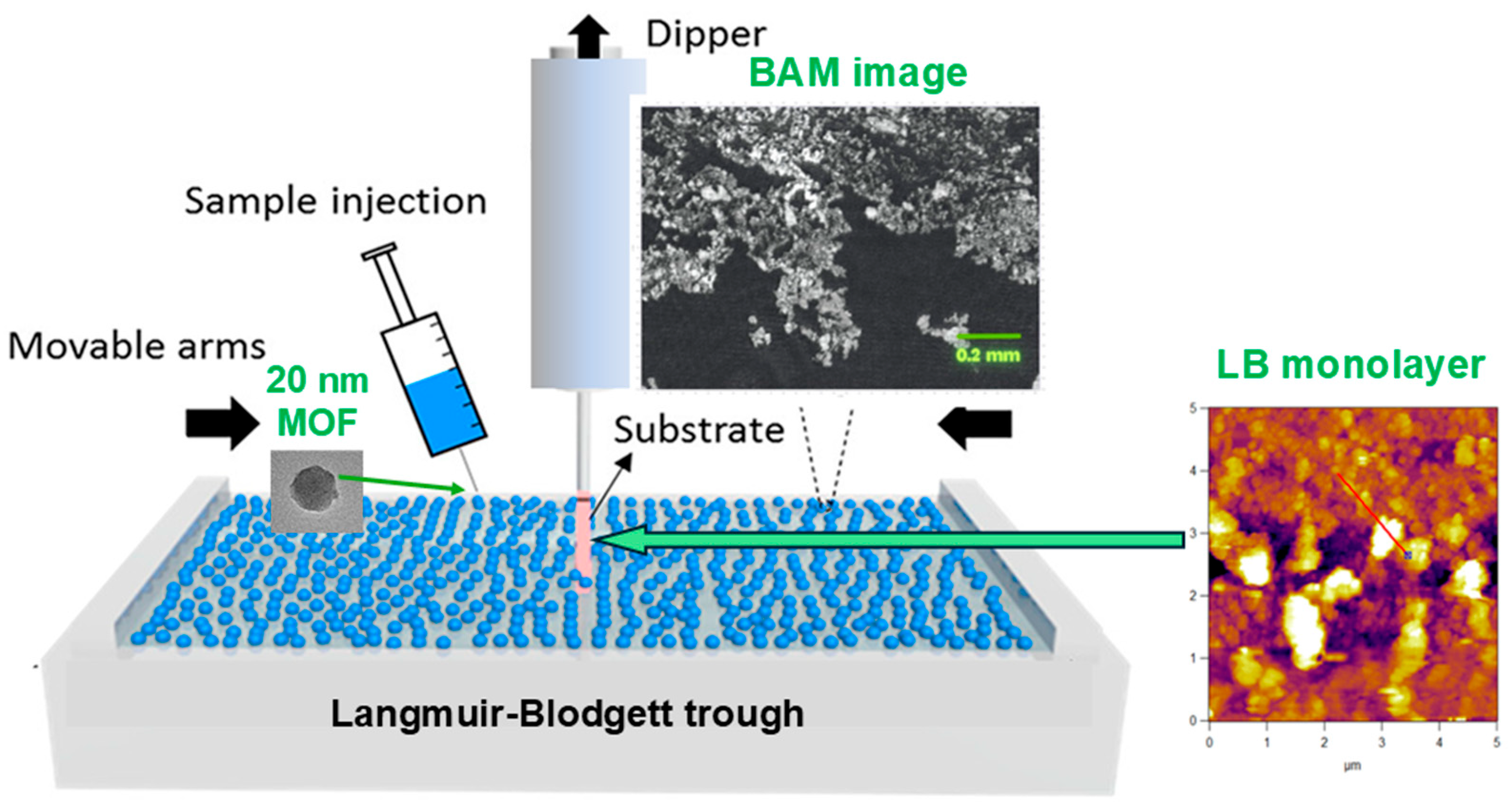
Metal–Organic Frameworks (MOFs) have diverse applications due to their tunable porosity, large surface area, and diverse chemical functionalities. Among them, one of the most researched MOFs is MIL-101(Cr), which, in addition, is very stable in water. We have used a commercially available substance with approximately 300 nm large crystals for the preparation of a sensing nano-thin layer for the emerging water contaminant PFOS, due to its high selectivity towards this compound. Here, we have synthesized 20 nm sized crystals of MIL-101(Cr), which are among the smallest reported, and compared them to the same material with 300 nm sized crystals. The material was characterized by TEM and XPS. It was possible to prepare insoluble monolayers at the air–water interface (Langmuir films), which were characterized with film compression isotherms, Brewster angle microscopy, and surface potential measurements. The Langmuir–Blodgett (LB) method was used to deposit monolayers on Si wafers and 434 MHz Surface Acoustic Wave resonator simultaneously. The LB layers were very stable over time. The smaller-sized MIL-101 (Cr) crystals exhibit denser, more homogeneous water coverage and packing upon compression, with no observable 10–100 µm aggregates. LB monolayers from the 20 nm particles have approximately six times lower surface roughness. The LB monolayer is far from being smooth, but this will allow excellent access to the MOF pores by the tested analyte in a chemical sensing application. The lack of research on depositing presynthesized MOFs using probably the best method for nanoarchitectonics—the LB method—is addressed. The 20 nm sized MOF crystals are the smallest deposited by this method so far.

Graphical Abstract

1. Introduction

Metal–organic frameworks (MOFs) are highly porous, crystalline materials composed of metal ions or clusters linked by organic linkers. When changing the building blocks used in MOFs, it is possible to design them to capture and store specific substances [1], drive chemical reactions [2], or for adsorption and molecular sensing [3] due to their unique properties such as large surface area, tunable pore size, and chemical versatility. This is why pioneers of the MOF synthesis were awarded the Nobel Prize in Chemistry in 2025 [4]. Beyond their established roles in catalysis and gas storage, MIL (Materials of the Institute Lavoisier)-based MOFs have emerged as highly versatile materials for chemical sensing applications. The MIL family of MOFs, encompassing systems such as MIL-101(Cr), MIL-100(Fe), MIL-53, and MIL-125, is important due to its structural diversity, large pore volumes, and chemical tunability [5,6,7]. The combination of robust metal–oxo clusters and functionalizable organic linkers provides a large number of active sites for interactions with analytes via physisorption, chemisorption, or coordination. These interactions underline the operation of MIL-type MOFs in various transduction modes, including gravimetric, optical, and electrochemical sensing. Gravimetric sensing, primarily implemented via quartz crystal microbalance (QCM) techniques, has been demonstrated to be effective using MIL-based thin films [8].
Despite their wide range of applications, many of which require smooth, thin-layer preparation, there are only very few papers in which the Langmuir–Blodgett (LB) method was used to deposit layers from presynthesized bulk MOFs [8,9,10]. In this method [11], a solution or dispersion of the tested substance is spread at the air–water interface of an LB system trough. The substance has to form an insoluble monolayer at the water surface after solvent evaporation. Afterwards the monolayer is compressed, and its surface pressure and, eventually, surface potential are recorded. The LB method is one of the very few methods for discrete layer-after-layer deposition. The surface density of defects in the monolayer is low because of its self-assembly at the air–water interface. Furthermore, there is complete control over the surface pressure of the deposition, thereby influencing the phase of the layer, molecular orientation, thickness, and layer composition. That is why this is considered the best method for supramolecular architecture [12]. There is a versatility of substrates that can be used without the need for chemical modification of the surface. While initially developed for work with biphylic molecules, such as lipids, the LB method has been successfully applied to the deposition of other structures, including nanoparticles [13], quantum dots [14], and water-soluble molecules, such as enzymes [15], among others.
An alternative approach to the LB film deposition of presynthesized MOFs is to utilize the air–water interface, which has recently emerged as an effective bottom-up route for preparing two-dimensional and ultrathin MOF assemblies with large lateral dimensions and controlled in-plane order. The liquid surface confines reactants to two dimensions and promotes oriented coordination between multi-topic organic linkers and metal centers, enabling the formation of molecularly thin, crystalline MOF nanosheets, such as the porphyrin-based systems, which are prototypical examples [5]. Investigations at the air–water interface with grazing-incidence X-ray diffraction and Brewster angle microscopy have revealed that post-injection or diffusion-controlled approaches at the subphase markedly enhance sheet domain size and uniformity. At the same time, similar methods have been adapted to assemble monolayers of preformed MOF nanoparticles or platelets [5,7,16]. Importantly, MOF assemblies formed at the air–water interface can be compressed in a Langmuir trough and transferred onto solid supports using Langmuir–Blodgett (vertical) or Langmuir–Schaefer (horizontal) techniques, yielding continuous ultrathin MOF coatings in a controlled layer-after-layer fashion [5,7]. The success of such transfers depends strongly on the MOF’s hydrolytic stability, particle dispersibility, and interfacial mechanics during compression and deposition. To improve film integrity and transfer efficiency, researchers have employed the hydrophobization of MOF particles, the use of co-spreaders such as long-chain fatty acids, and employed tailored linker designs [6,7,17]. Overall, interfacial synthesis combined with Langmuir–Blodgett or Langmuir–Schaefer deposition provides a versatile platform for generating device-compatible MOF thin films. However, reproducible large-area monolayers still require the optimization of the chemistry and transfer protocol [17]. Surface-supported MOF thin films (SURMOFs) fabricated by the Langmuir–Blodgett method exhibit ultrathin layers, low roughness, and high smoothness. The thickness and crystallite size of these films can be precisely controlled, and the use of self-assembled monolayers (SAMs) as interfaces further enhances the growth of highly crystalline, oriented, and flexible multilayered architectures [18]. However, stability remains a challenge, as many MOFs are sensitive to air, water, and acidic or alkaline environments [19].
Among all MOFs, MIL-101(Cr) stands out as one of the most frequently researched and utilized in applications, with over 4500 papers published in 2021 alone [20]. This chromium-based MOF is known for its exceptionally high surface area, large pore volume, and remarkable thermal and chemical stability, making it highly versatile for applications in gas adsorption, catalysis, and separations [16,20]. Langmuir–Blodgett and drop-cast MIL-101(Cr) coatings have demonstrated high selectivity and stability in the detection of volatile organic compounds and other analytes, utilizing, for example, gravimetric signal transduction via a quartz crystal microbalance (QCM) [21,22,23].
For MIL-101(Cr) to be investigated at the air–water interface and subsequently deposited as an LB film, it must be stable in the aqueous environment. It is characterized by a large number of unsaturated Cr(III) sites, which contribute to its ability to bind electron-rich functional groups and confer good water stability [24,25,26]. The material is synthesized under harsh acidic aqueous conditions (220 °C in water), which supports its fundamental water stability [24]. The highly porous MIL-101(Cr) can withstand multiple cycles of water uptake [27]. Unfortunately, MIL-101(Cr) is too hydrophobic, and the main water uptake occurs only at high pressures [27].
Despite these advances, several challenges remain in translating MOFs into practical devices. Moisture interference, slow recovery times, and difficulties in forming uniform thin films can limit reproducibility [28,29]. Recent research has focused on integrating MOFs into polymeric or conductive matrices and employing post-synthetic modifications to enhance selectivity and stability [30,31]. The synthesis and coupling of MOF sensing systems with machine learning approaches for signal analysis and analyte classification represents a promising frontier [32,33]. Collectively, these efforts highlight the potential of MIL-based MOFs as key materials for next-generation chemical sensors, combining high selectivity, low power consumption, and compatibility with flexible, miniaturized substrates.
Previously, we demonstrated that MIL-101(Cr) exhibits high selectivity for the emerging, highly hazardous water contaminant Perfluorooctane Sulfonic Acid (PFOS) [10]. This compound is part of a larger family of Per- and polyfluoroalkyl substances (PFAS) contaminants, also known as the so-called “forever chemicals”. According to the EU directive [34] and the US EPA [35] recommendation, water intended for human consumption should be monitored and controlled to the lowest concentrations among all water contaminants (0.1 µg/L). We utilized gravimetric signal transduction via an ultra-sensitive 434 MHz two-port Surface Acoustic Wave (SAW) resonator with an LB monolayer from the 300 nm MIL-101(Cr) as the sensing layer [10]. However, our limit of detection was an order and half of magnitude above the legislative limit. In the present study, an attempt was made to improve the future sensor sensitivity to PFOS by synthesizing much smaller 20 nm MIL-101(Cr) crystals. Their performance as a monolayer at the air–water interface and as an LB film monolayer was investigated.

2. Materials and Methods

2.1. Materials

The large crystal-sized MOF MIL-101(Cr) was acquired in powder form from NovoMOF AG (Zofingen, Switzerland). It is further denoted as 300 nm MIL-101(Cr) in the text, though the crystal size varies. The nitrogen adsorption–desorption tests yielded a surface area of 3269.3 m2/g [10], which is above the average for this material and shows minimal hysteresis [10]. The X-ray diffraction pattern corresponds to previously published experimental and calculated XRD data [10,36]. The peak sharpness indicates the well-ordered crystalline structure of the MOF crystals.
The small crystal-sized MIL-101(Cr), hereafter referred to as a 20 nm MOF, was synthesized according to the following protocol, modified from a previously published report [37]. Chromium nitrate nonahydrate ((Cr(NO3)3·9H2O, 2.0 g), 1,4-benzene dicarboxylic acid (H2BDC, 0.82 g), cetyltrimethylammonium bromide (CTAB, 0.36 g), and sodium acetate (NaAc, 0.10 g) were dissolved in 24 mL of deionized water by ultrasonication. The reaction mixture was transferred into a PTFE-coated steel autoclave and heated to 473 K for 24 h. After cooling to room temperature, a green powder was obtained by centrifugation. The product was washed three times with ethanol and then transferred to an Erlenmeyer flask. Under continuous shaking for one hour, 50 mL of dimethylformamide was added stepwise. After centrifugation, the product was transferred into a Teflon-coated steel autoclave, suspended in ethanol, and heated to 373 K for 20 h. After centrifugation, the product was rewashed with ethanol and dried overnight at 333 K. The MIL-101(Cr) synthesized in this manner in [37] was characterized by powder X-ray diffraction and nitrogen adsorption–desorption isotherms and was not found to differ from previously reported data for this material.
The arachidic acid (AA, CH3(CH2)18COOH) used was of 98% purity (Alfa Aesar, Karlsruhe, Germany). The reagents used for the 20 nm MIL-101(Cr) synthesis were chromium nitrate nonahydrate (Aladdin, China), sodium acetate (Damao, China), CTAB (Aladdin, China), dimethylformamide (Aladdin, China), terephthalic acid (Aladdin, China), and anhydrous ethanol (Fuyu Reagent, China). All the solvents used were of high purity and were used without further purification.
The water used for both the final cleanings and for the subphase in the LB film trough was model MillyQ IQ 7003 (Merck KGaA, Darmstadt, Germany) tap water purification system. This is the highest available water purity model, featuring a resistance of 18.2 MΩ/cm and less than 2.5 ppb total organic carbon (TOC), measured in real time. The water dispenser directly pours water into the LB system trough. The dispenser and the LB system were positioned in a high-quality ISO Class 3 vertical laminar flow hood, the FlowFAST V, with complete computer control (Faster Ltd., Cornaredo (MI), Italy).

2.2. Dispersion Preparation

Several dispersions were tested using different solvents or solvent mixtures. Some of them are presented here. The spreading dispersion for the Langmuir films was from the 300 nm MIL-101(Cr).5 mg of the powder was dispersed in a mixture consisting of 25% methanol by volume and 75% chloroform to a solution concentration of 0.83 mg/mL. The immiscibility of chloroform with water keeps the dispersion droplets afloat at the air–water interface during Langmuir film preparation, allowing for excellent spreading and minimal loss of substance into the water volume. The very strongly polar solvent methanol improved the dispersion of polar moieties. The homogenization was carried out at room temperature (23 °C) using an ultrasonic processor (20 kHz, 1200 W; Hangzhou Dowell Ultrasonic Tech Co., Ltd., Hangzhou, China). The ultrasound mixer operated at 600 W for 60 min. Langmuir and LB films were prepared from pure 300 nm MOF or with added AA lipid to 17.7% by mass to enhance film homogeneity. For the 300 nm monolayer with AA acid added, hexane was used as a less aggressive solvent and to compare spreading behaviors using different solvents. There was no difference in the isotherms of AA when hexane or chloroform/methanol was used as a solvent. Before each spread of the MOF dispersion, it was sonicated for at least 1 h in a standard ultrasound sonicator.
For the preparation of the 20 nm MIL-101(Cr) dispersion, the same solvent mixture (25% methanol by volume and 75% chloroform) was used. The dispersion was prepared in 1.5 mL glass bottles with PTFE caps. Concentrations were from 4.9 to 6.5 mg/mL. The dispersion was heated to 70 °C and sonicated in a standard heating sonicator for several hours.

2.3. Investigations at the Air–Water Interface and the LB Film Preparation

For the Langmuir film measurements and LB film deposition, an LB system model Microtrough G4 (Kibron Inc. Oy, Helsinki, Finland) was used. This is the largest-sized trough model from this company, with an area between fully opened barriers of 874 cm2, made from PTFE. The symmetrical compression barriers were made of a hydrophilic material to prevent film leaks. A precision Wilhelmy-type surface pressure sensor with an achievable resolution of 0.001 mN/m was used. Better results were obtained with filter paper Wilhelmy plates. The PTFE trough was cleaned with both Alconox Powder Precision Cleaner and Citranox Liquid Acid Cleaner and Detergent (Alconox Inc., New York, NY, USA) according to the company’s PTFE cleaning protocol. Warm water and a brush were used. Multiple rinses with pure water followed. A new filter paper was placed on the pressure sensor and calibrated against the surface tension of pure water before each new experiment. The presence of surface-active contaminants in the subphase water was checked by compressing the barriers and monitoring the surface pressure to ensure it was zero before each layer was spread. After spreading the layer, the solvent was allowed to evaporate for at least 40 min before compression. The velocity of compression was 2 cm2/min. In the LB system, a Kibron G-BAM was integrated, featuring motorized adjustment of the Brewster angle, the height above the water layer, and the focus. The field of view was 2.4 mm with 4 µm resolution. The sophisticated software enabled numerous corrections and improvements to the image in real time. The BAM received surface pressure, area, and time data in real time from the LB system, which were automatically recorded in the image file name or shown in the video recording. A low-noise MicroSpot surface potentiometer (Kibron) was also integrated into the system. An integrated motorized dip coater, LayerX (90) (Kibron), with three separate clamps, was used for LB film deposition.
All substrates for LB film deposition were cleaned for 2 min at 12 W in an air plasma using a plasma cleaner (model PDC-32G-2, Harrick Plasma, Ithaca, NY, USA) before immersion in the LB system dipping well. The air plasma simultaneously gently cleaned the surface and made it more hydrophilic, which is very important for high-quality deposition during the upstroke of the first LB layer. Before each LB film deposition, the layer was kept at a constant pressure for 5–10 min to allow it to stabilize. All isotherms were measured at 22–23 °C. Ultra-flat Si wafers (roughness of approximately 0.1 nm) were used as substrates for AFM investigation and purchased from NanoAndMore GmbH (Wetzlar, Germany). In most cases the deposition was carried out simultaneously on the Si wafer and a 434 MHz two-port Surface Acoustic Wave (SAW) resonator optimized for chemical sensing. Results from the SAW tests will be presented elsewhere.

2.4. Other Instruments Used

Measurements of X-ray photoelectron spectra (XPSs) studies were performed using a VG Escalab MKII electron spectrometer with achromatic AlKα radiation at an energy of 1486.6 eV, under a base pressure of 10−8 Pa and a total instrumental resolution of 1 eV. The binding energies (BE) were determined utilizing the C 1s line as a reference with an energy of 285.0 eV. The accuracy of the measured BE was 0.2 eV. C1s, O1s, Si2p, Cr2p, and F1s photoelectron lines were recorded. Atomic force microscope (AFM) imaging was performed in non-contact mode using an MFP-3D instrument (Asylum Research, Oxford Instruments, Santa Barbara, CA, USA). All measurements were conducted in air at room temperature. Silicon AFM probes (AC240TS) with a resonance frequency of 70 kHz and a nominal spring constant of 3.5 N/m were used. Morphometric characterization (surface roughness analysis) was carried out using IgorPro 6.37 software. Instruments used for the 20 nm MIL-101(Cr) synthesis were: water purification system Merck Millipore Elix high-purity water system (Merck KGaA, Darmstadt, Germany); centrifuge model H5424R (Shandong Baio Medical Technology Co., Ltd., Shandong, China); autoclave 50 mL custom-built; muffle furnace KSL-1100X (Hefei Kejing Materials Technology Co., Ltd., Hefei, China). The scanning electron microscope (SEM) is a modified 1830 model from Amray (Ada, MI, USA), equipped with a 550i controller from IXRF Systems (Austin, TX, USA). The software used was “Iridium Ultra”. The working distance was 15–20 mm, and an acceleration voltage of 16–20 kV was used. Transmission electron microscopy (TEM) was performed using a JEM-200 (JEOL, Tokyo, Japan).
Generative artificial intelligence tools ChatGPT and ScienceDirect AI have been used in this paper to assist with the reference search.

3. Results and Discussion

3.1. MOF Characterization

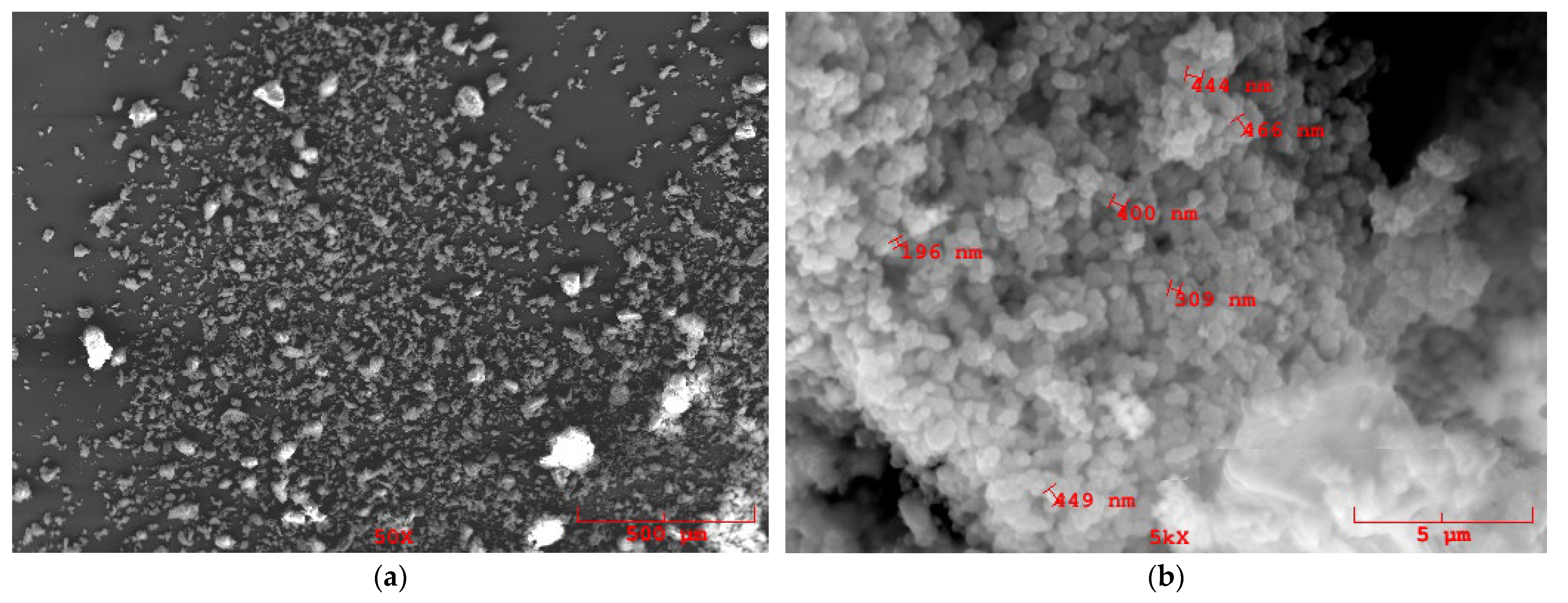
Powder X-ray diffraction (PXRD) and N2 adsorption–desorption isotherms for the commercially purchased 300 nm MIL-101(Cr) were presented in the supplemental file of [10]. Scanning electron microscopy (SEM) data for this material exhibit significant aggregation, with aggregates reaching 250 µm in size (Figure 1a). This can be due to the long-term storage of the material in powder form and its interaction with humid air. Individual MIL-101(Cr) crystals are observed at higher magnification, ranging in size from 220 nm to 450 nm. SEM and field-emission scanning electron microscopy (FESEM) analyses consistently reveal that MIL-101(Cr) exhibits a regular octahedral morphology with a smooth crystal surface, a feature repeatedly confirmed across multiple studies [38] and observed in this study. The particle size of MIL-101(Cr) varies depending on the synthesis conditions and possible modifications can reach 500 nm [39]. The MIL-101(Cr) particle sizes used for LB film deposition were those with an average size of 300 nm and 20 nm, as described below.
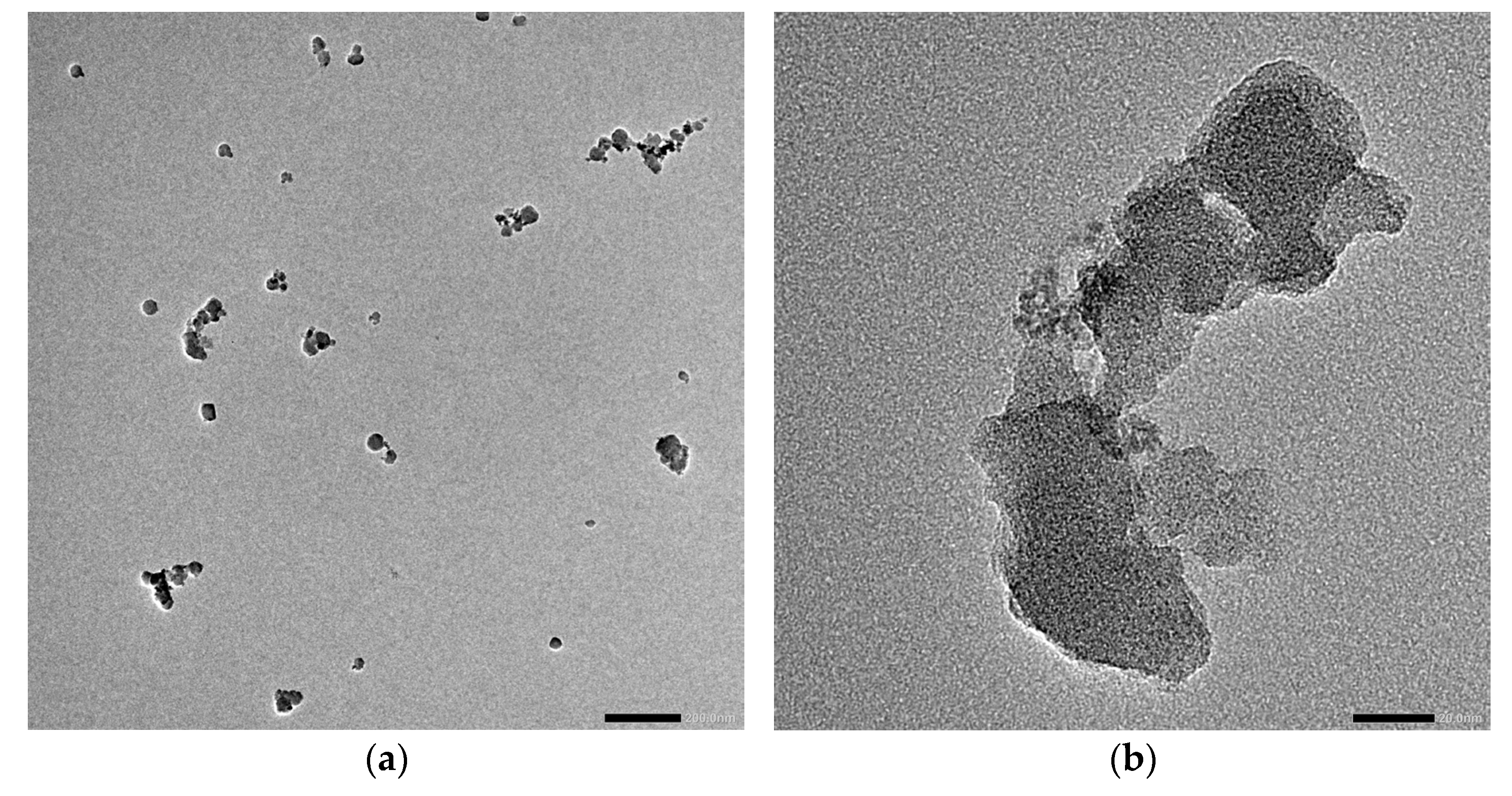
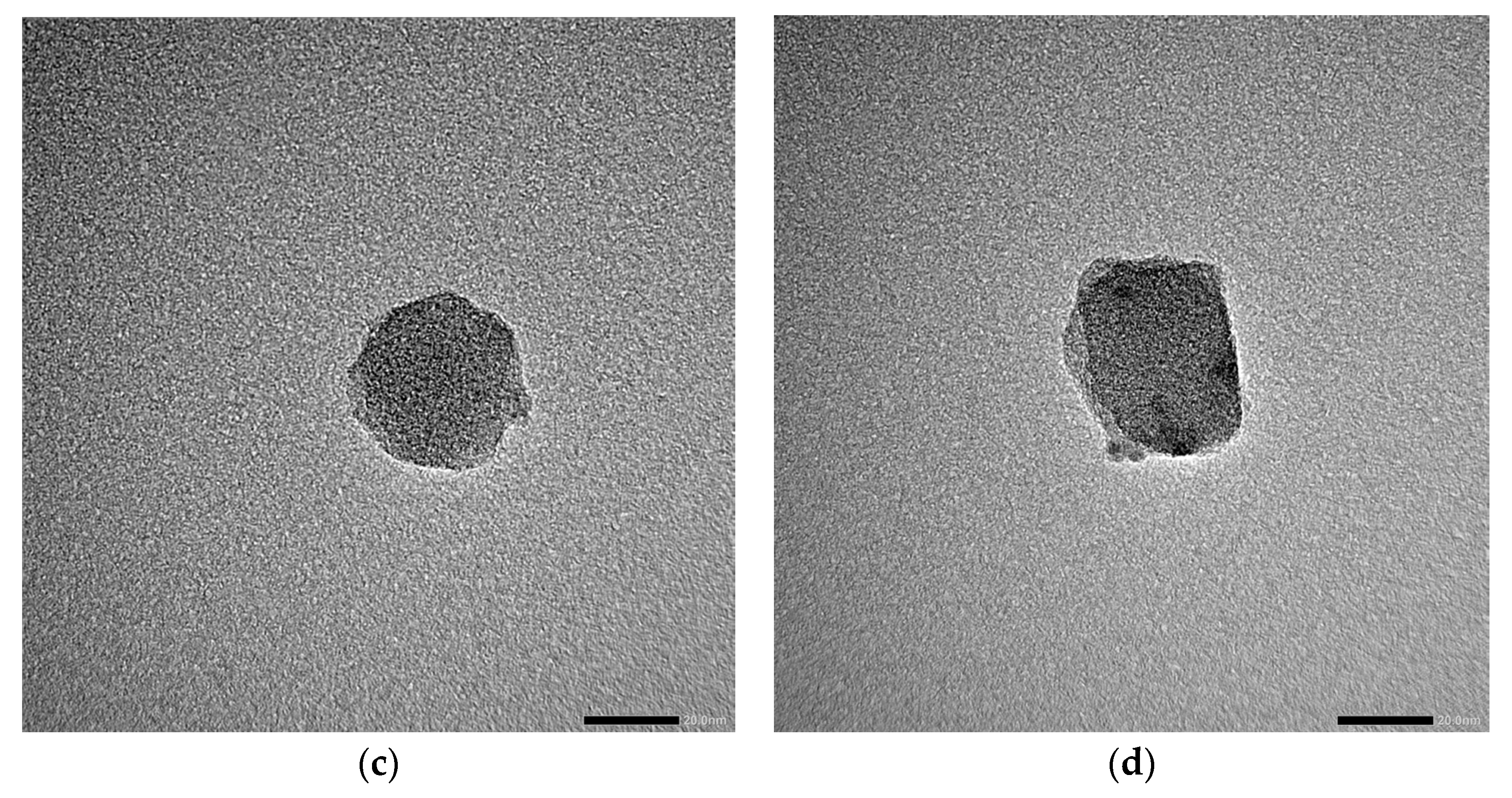
TEM data for the newly synthesized 20 nm MIL-101(Cr) is shown in Figure 2. The MOF material was suspended in ethanol and homogenized by ultrasonication prior to TEM sample preparation. Though some aggregation could still be seen (Figure 2a,b), where several particles attaching to each other could be seen, it is much less compared to the 300 nm MOF material (Figure 1). Individual crystals are approximately 20–25 nm in length and have a circular or rectangular shape (Figure 2c,d). This finding is in good agreement with reported particle sizes ranging from 10 to 30 nm [40]. Nearly spherical MIL-101(Cr) crystals, 51 ± 10 nm in size, were used to deposit the presynthesized MOF via LB film deposition [8].
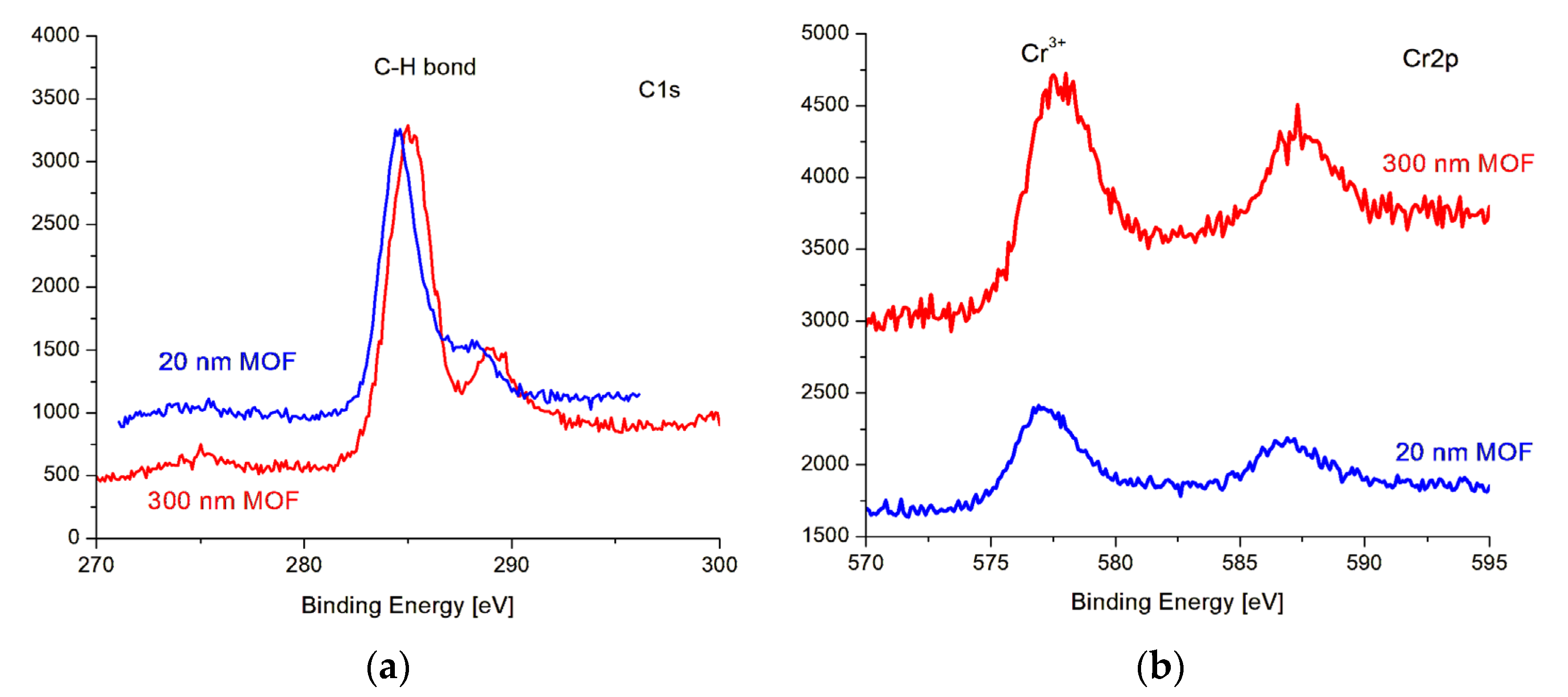
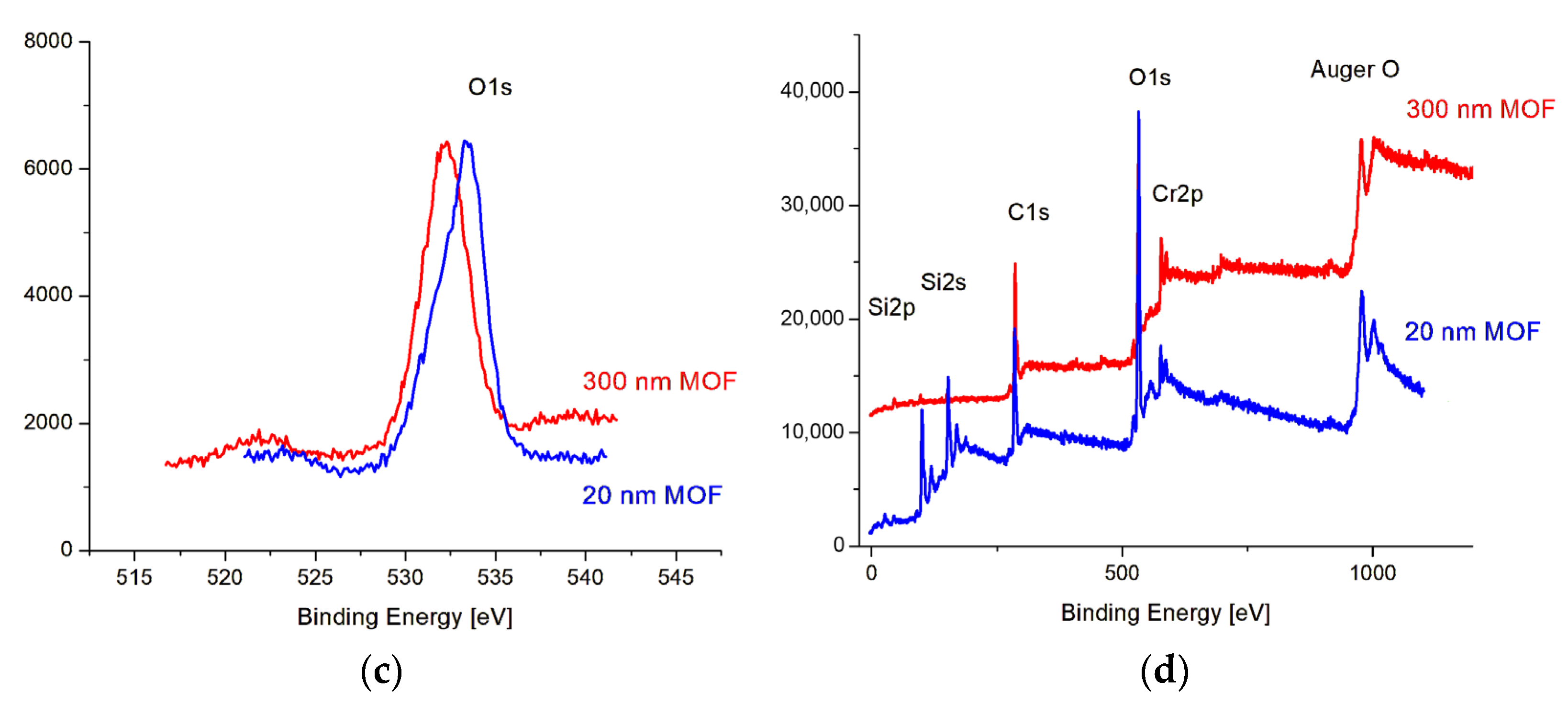
To verify the material’s chemical composition, it was deposited on a Si wafer and analyzed by XPS. The results for the two MOF materials are presented in Figure 3. The 300 nm MOF was drop-cast on the Si wafer, while the 20 nm MOF was deposited as a 1 LB monolayer at a surface pressure of 4 mN/m and is significantly thinner. This is the reason the 300 nm sample exhibits a higher-intensity signal at specific energies. Within the experimental error, the two materials are identical and correspond to the chemical composition of the MIL-101(Cr). The presence of chromium (Cr), carbon (C), and oxygen (O) peaks is clearly observed. The survey spectra typically show distinct peaks for Cr 2p, C 1s, and O 1s, confirming the elemental composition of the framework. The Cr 2p shows two prominent peaks: Cr 2p3/2: ~577.0–577.9 eV and Cr 2p1/2: ~586.7–587.3 eV. These peaks are attributed to the Cr(III) oxidation state and the presence of Cr–O bonds in the MOF nodes [41]. The peak of the C 1s spectrum is observed at 284.3, 284.8, and 285.6 eV, which are assigned to C–C, CO, and C–O, respectively [42]. In the 20 nm MOF curve, these peaks are not resolved. The O 1s spectrum contains two peaks, one at 351.6 eV, which is typical of the CrO bond, and the other at 533 eV, which stems from the hydroxyl group in absorbed H2O molecules within the framework. In the 20 nm MIL-101(Cr) XPS, the 533 peak dominates due to water trapped during the LB monolayer deposition, as evidenced by the poor vacuum [43].
The presence of Cr3+ imparts exceptional thermal and chemical stability to MIL-101(Cr), allowing it to withstand acidic and alkaline conditions (pH 0–12) and maintain its structure under various solvents. The small ionic radius, high charge, and strong polarization ability of Cr3+ enable the formation of more covalent bonds with oxygen-containing ligands, further enhancing the framework’s stability [44].

3.2. Investigations at the Air–Water Interface

To measure the equilibrium spreading pressure (ESP) of the 300 nm MIL-101(Cr), a small amount of powder was placed at the air–water interface while recording the surface pressure as a function of time. There was no rise in surface pressure, so the ESP was equal to 0 mN/m at 22 °C. This means that the insoluble monolayer at the air–water interface (Langmuir film) isotherm is in a thermodynamically metastable state at all pressures at room temperature. Thus, both the isotherm and the collapse pressure depend strongly on the speed of barrier compression, so we kept it slow. Furthermore, when spreading the Langmuir film, some substance seeps under the layer, despite it taking an unusually long waiting time (40 min or more) for the solvent to evaporate. So, the area/weight axis data should be regarded with caution, which was also noted in [8] for this compound.
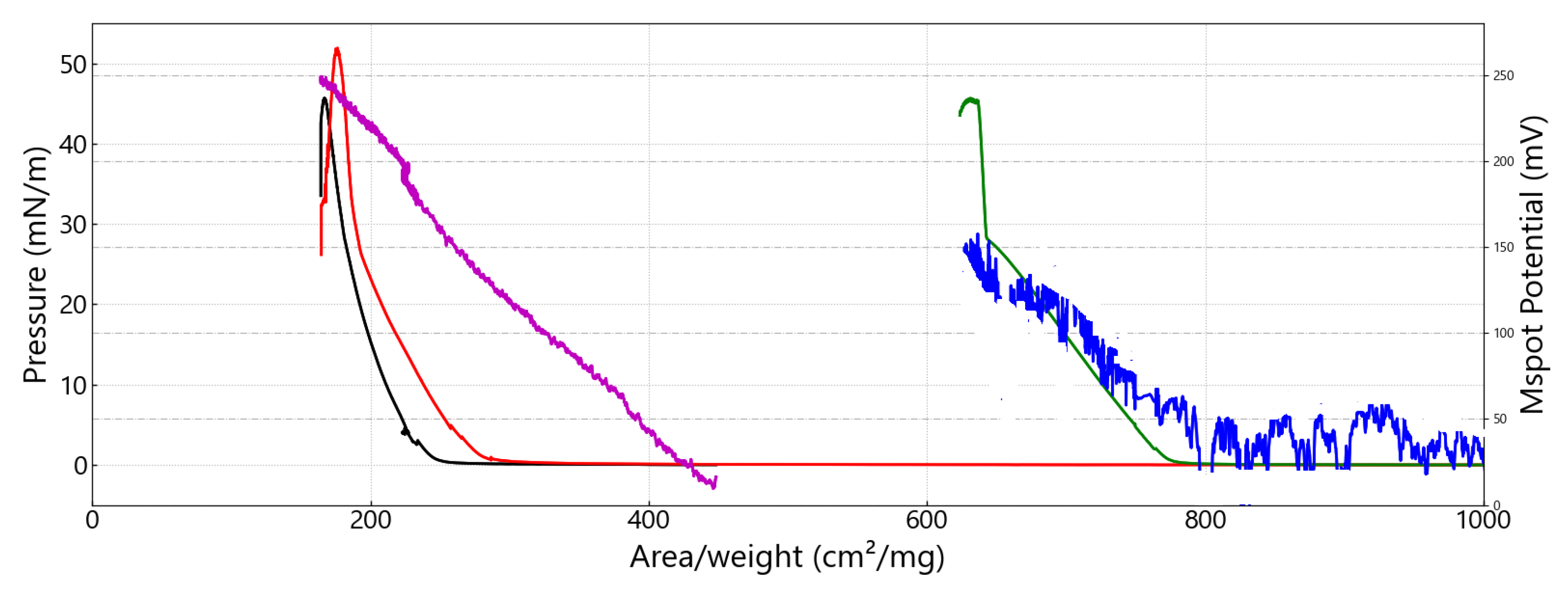
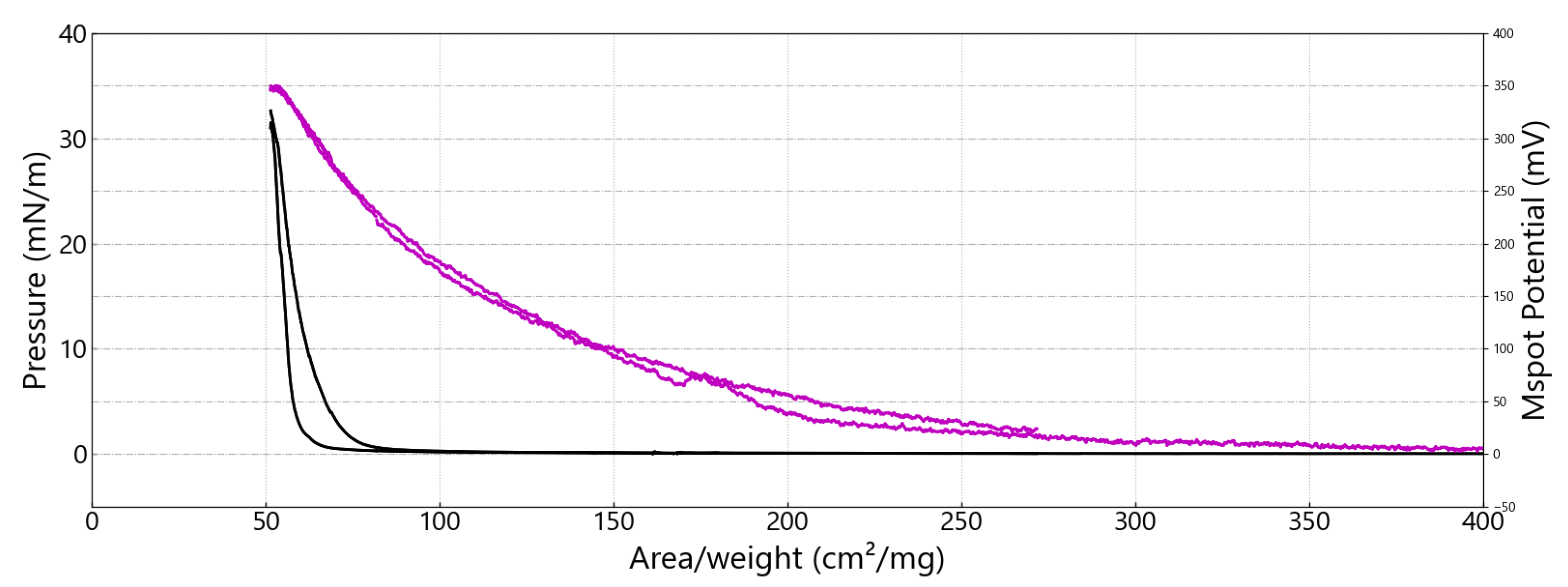
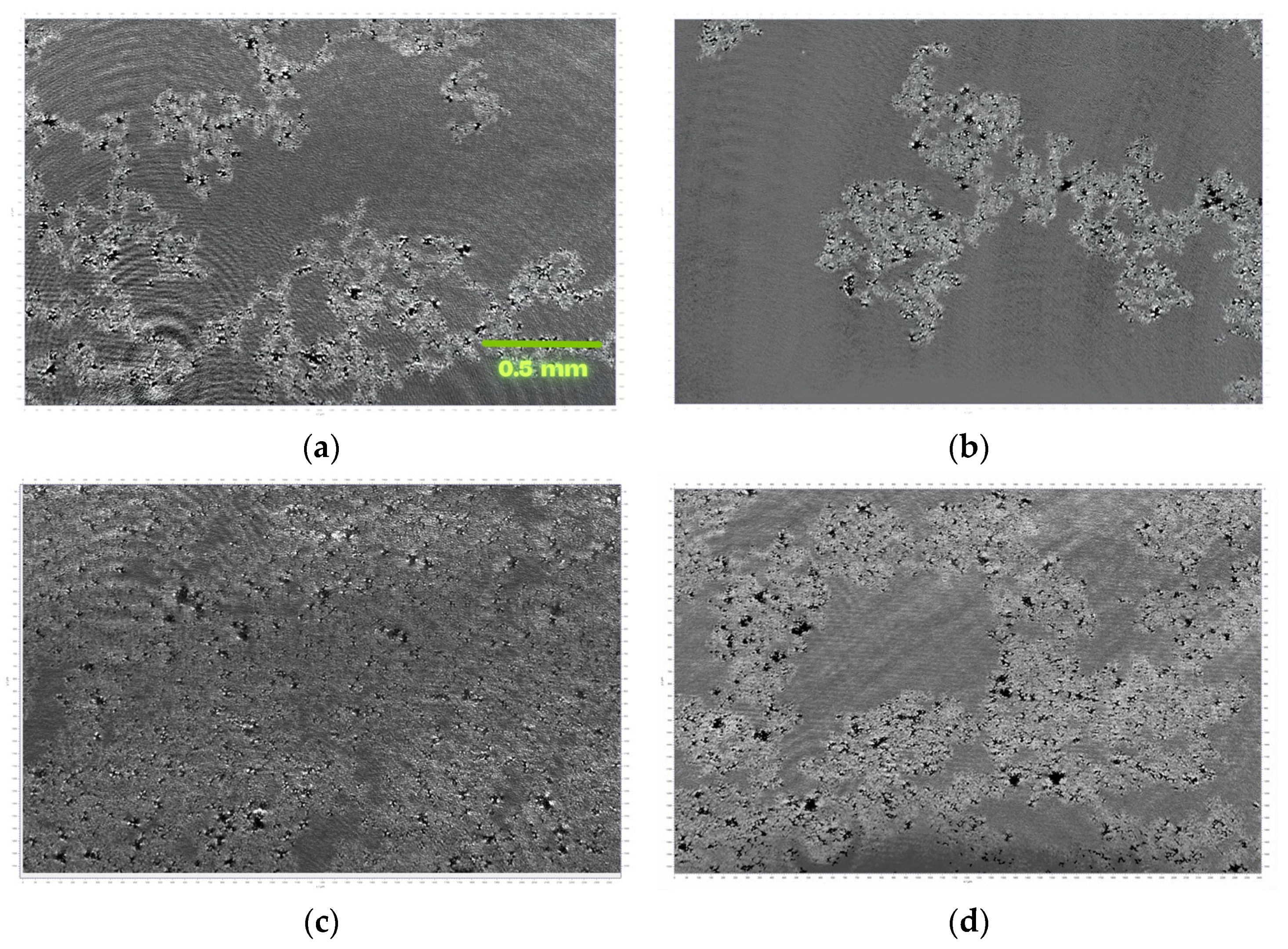
The compression (Figure 4) and compression–decompression (Figure 5) isotherms of the Langmuir films from MIL-101(Cr), together with surface potential data, are presented. This data will be discussed together with the simultaneously recorded BAM data (Figure 6, Figure 7 and Figure 8). The data for 300 nm MIL-101(Cr) with 17.7% AA added in hexane solvent are presented in Figure 4 (green–blue curves) and Figure 6. The data for 300 nm MIL-101(Cr) in a chloroform/methanol solvent dispersion are presented in Figure 4 (red) and Figure 7. The data for 20 nm MIL-101(Cr) in a chloroform/methanol solvent dispersion is presented in Figure 4 (black–purple), Figure 5 and Figure 8.
In all cases, stable layers were obtained with collapse pressures ranging from 45 to 50 mN/m. This is in good agreement with the previously reported data for a 51 nm crystal-sized MIL-101(Cr) isotherm [8]. The collapse pressure is significantly higher than the observed one for Fe-MIL-88B-NH2, where the collapse for the 1.5 µm particles occurred at around 13 mN/m, while, for the 70 nm particles, it was around 26 mN/m [9]. No significant dependence of the collapse pressure on particle size is observed in this study (Figure 4).
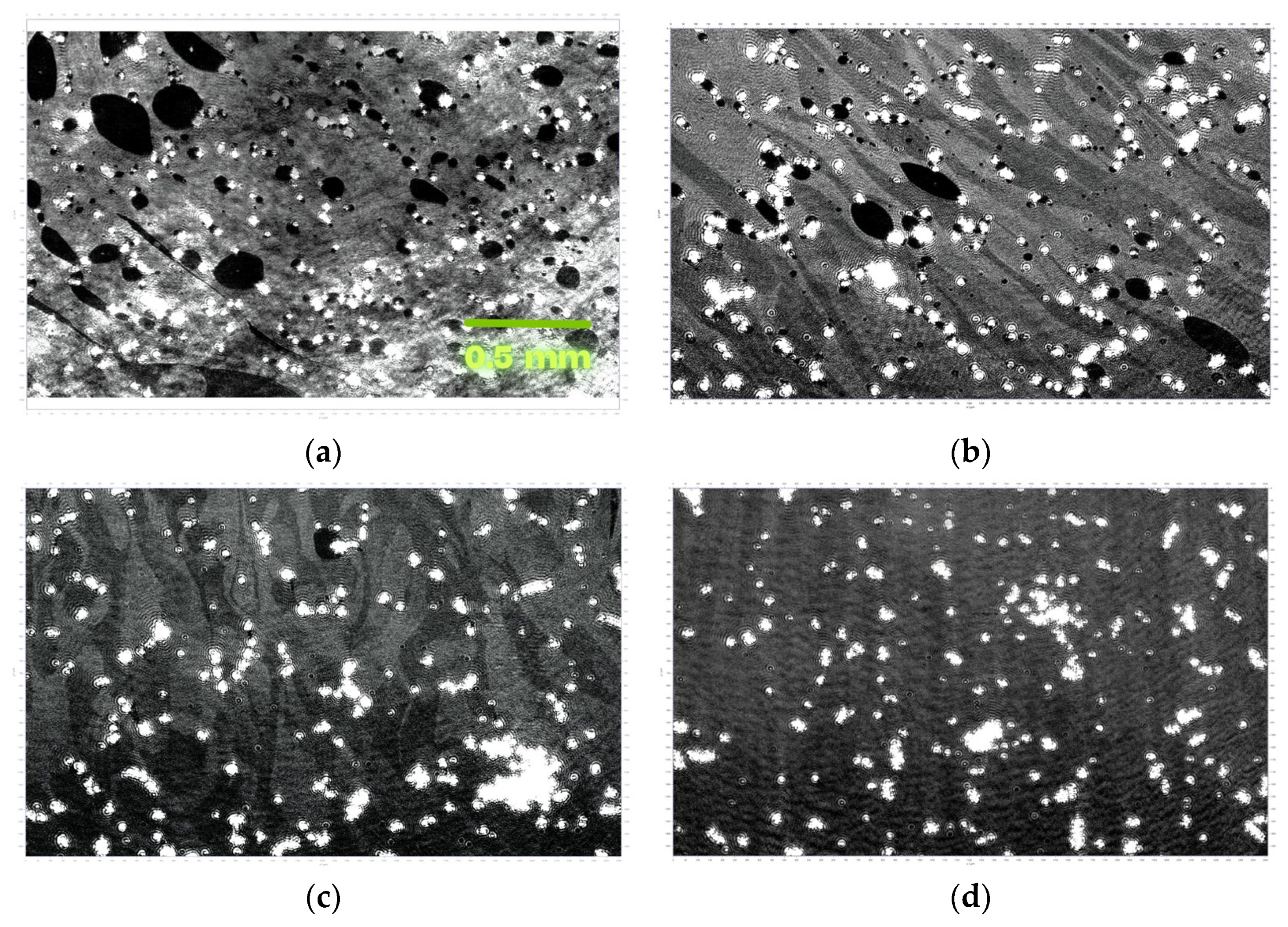
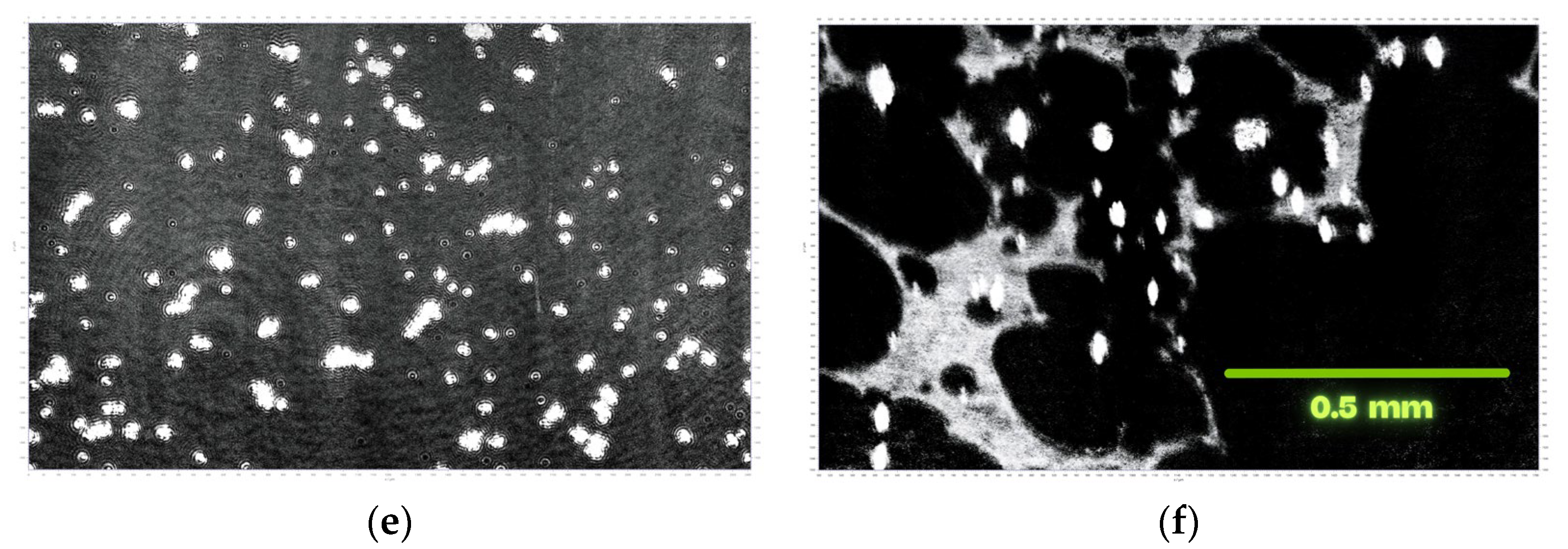
In the case of the Langmuir film of the 300 nm MIL-101(Cr) with added AA of 17.7% by weight, the AA isotherm strongly dominates the isotherm. The classical isotherm of AA, characterized by the well-known liquid-expanded to liquid-condensed phase transition at 25.6 mN/m at 20 °C, was obtained. Here, the transition is slightly higher because the temperature was 23 °C. However, the AA did not increase the collapse pressure. When only 3% of AA was added to the same MOF, the surface pressure rose only slightly, to around 1.5 mN/m, while the rest of the isotherm exhibited the same 2D gas-to-solid phase transition [10]. In the compressed film BAM data, the MIL-101(Cr) aggregates, ranging in size from 10 to 100 µm, are clearly resolved as bright spots, which float in the “sea” of AA (Figure 6d). At zero surface pressure, regions with no layer appear black (Figure 6a,b). MOF aggregates stick mainly to the AA layer with which they were mixed and do not enter the no-layer zones. Two gray colors of the AA monolayer can be seen, which probably belong to different tail tilts of the fatty acid molecule. At higher pressures, this difference in gray color disappears because the molecule tails obtain uniform orientation (Figure 6d,e). A vertical stripe is visible in Figure 6e, indicating the onset of collapse in the AA monolayer at a surface pressure of 40.6 mN/m. Upon film decompression after collapse, a patchy, network-like structure with numerous no-layer zones emerges, and the MOF aggregates infiltrate these no-layer areas (Figure 6f).
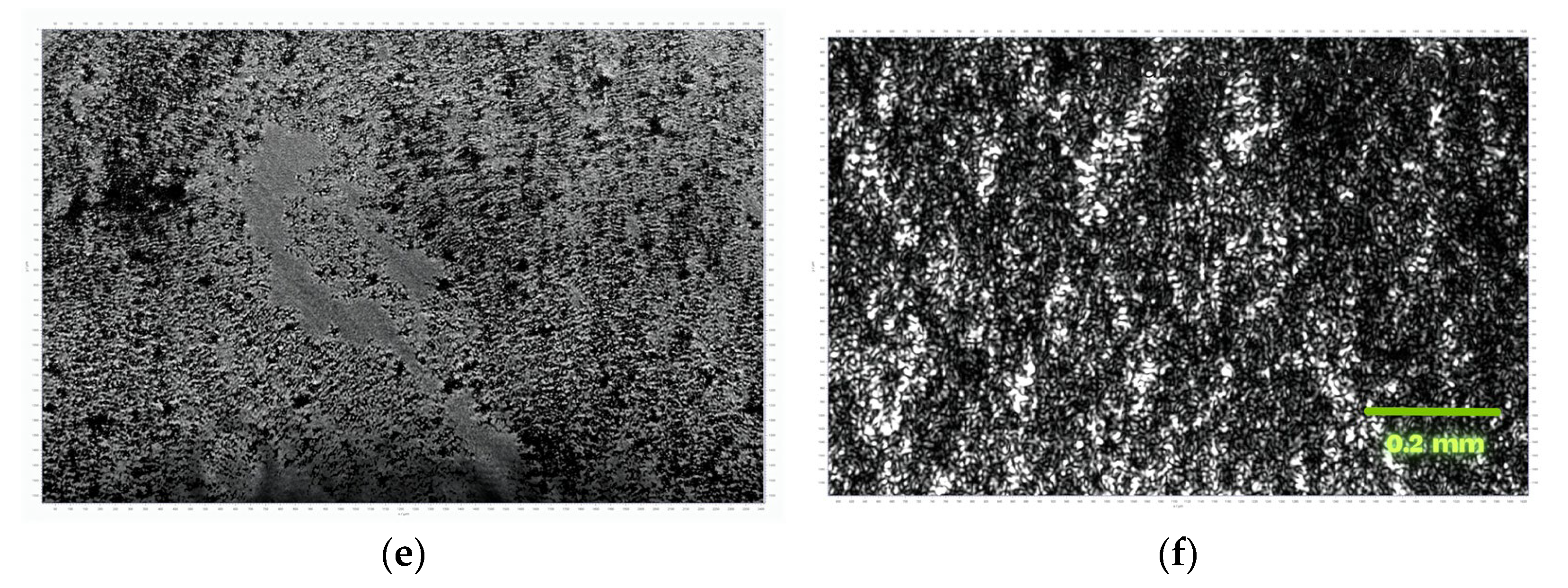
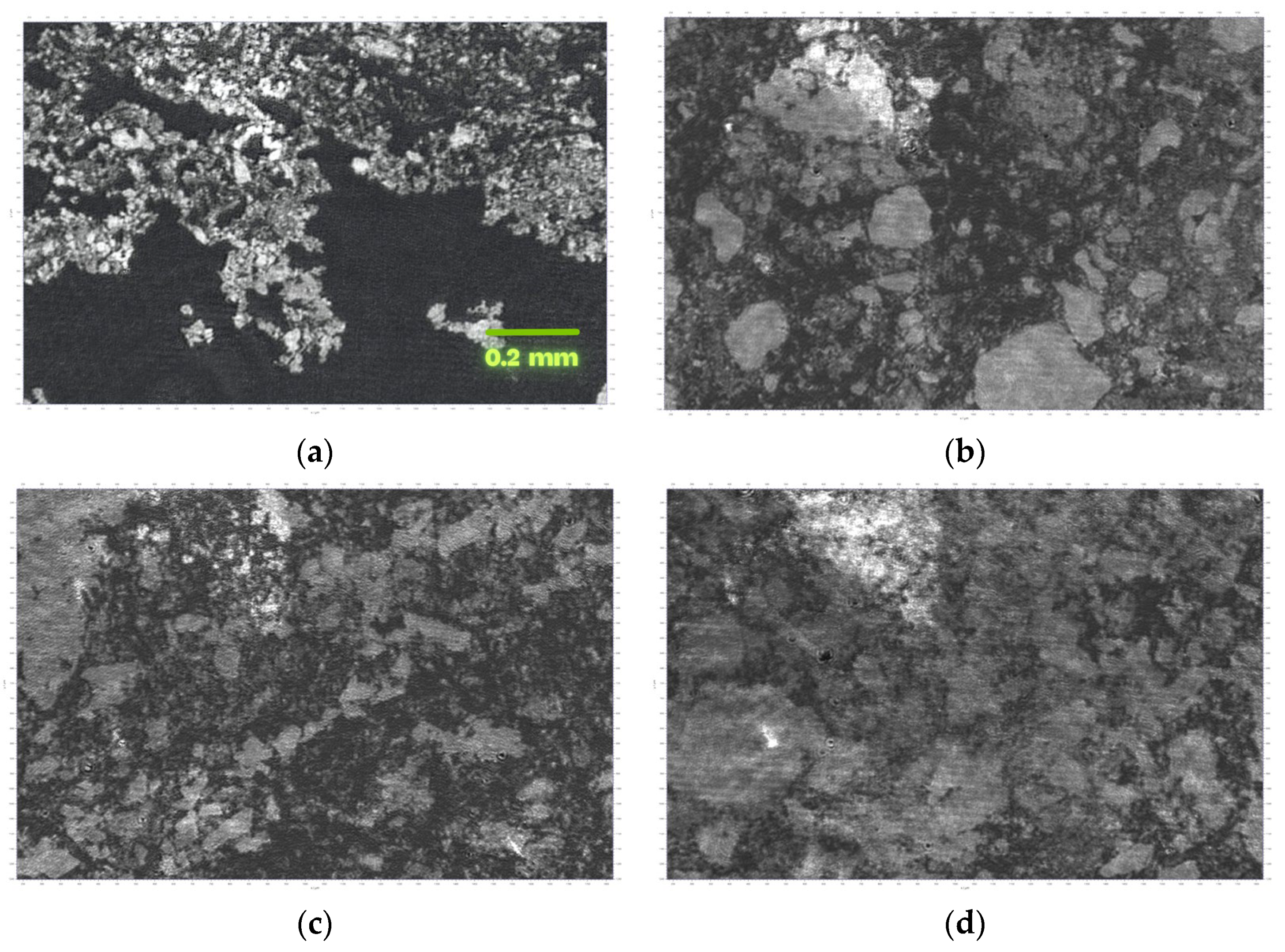
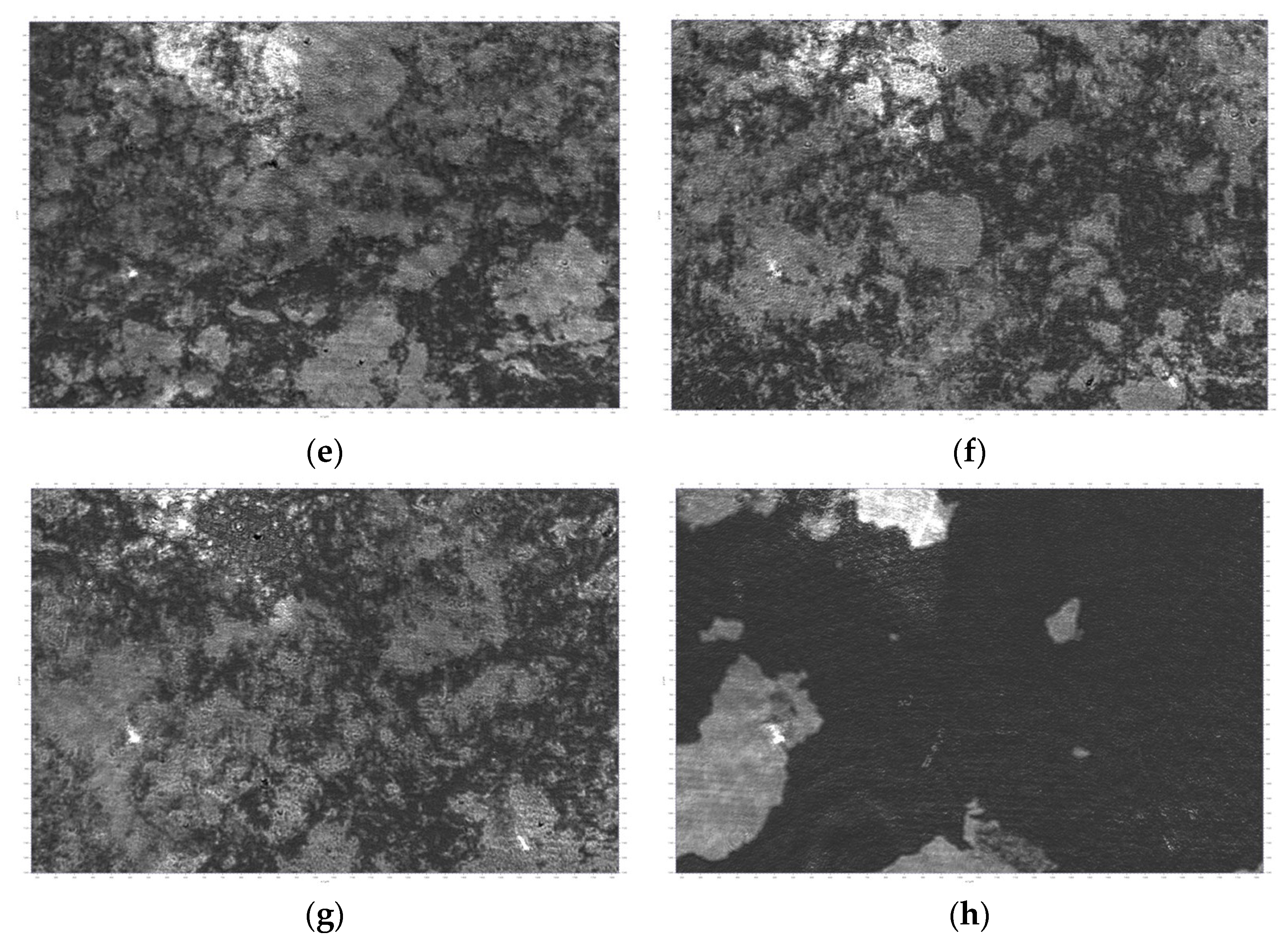
In pure MIL-101(Cr) layers, the isotherm exhibits the typical behavior of a 2D gas to a 2D solid phase transition upon film compression, characterized by a sharp increase in pressure with a further slope increase (higher compressibility modulus) starting at around 27 mN/m. There was no significant difference between the isotherms of both-sized MIL-101(Cr) crystals. Upon zooming in on the surface pressure, it can be seen that it begins to increase slightly at around 360 cm2/mg (Figure 5), which corresponds to the MOF patches starting to interact (Figure 8b). This occurs well before the transition to the 2D solid phase, at around 100 cm2/mg. Even at the very low pressure of around 2.5 mN/m, the monolayer appears very rigid (Figure 8c). At 4 mN/m, almost the entire surface is covered by the solid phase (Figure 8d). This was the most homogeneous part of the 20 nm MIL-101(Cr) monolayer, so we chose this pressure for the deposition of the LB monolayer.
MIL-101(Cr) exhibits pH-dependent surface charge characteristics, as determined by zeta potential measurements [45]. The material has a distinct point of zero charge (PZC) at approximately pH 9.5. Below this value, the surface carries a net positive charge. This is explained by the protonation (Cr–OH2+) and deprotonation (CrO) equilibria of Cr3+-hydroxyl groups, which are typically situated in the alkaline range and drive the PZC toward higher pH values [45]. At the neutral pH pure water used in this work, MIL-101(Cr) is positively charged. Consequently, the surface potential starts to increase the moment barrier compression begins, as the charge concentration below the vibrating plate electrode of the surface potentiometer increases (Figure 4 and Figure 5, purple). This is not the case for the 300 nm MIL-101(Cr) mixed with 17.7% AA (Figure 4—blue), in which the surface potential starts to increase only after the increase in surface pressure. This increase can be partly attributed to AA’s reorientation. The effect of the charged MOF should also be present, but it occupies only a small amount of the area compared to the area occupied by the AA molecules. Smaller-sized 20 nm particles cause almost a twice-higher increase in surface potential from zero to collapse pressure. This is due to much better and more homogeneous surface water coverage by the smaller particles.
The BAM images of the 300 nm MIL-101(Cr) appear slightly different, as the camera was positioned lower to achieve better contrast. So, the MOF aggregates appear black. It should be noted that there are many more areas uncovered by the film (Figure 7a,b), as there are no AA molecules to fill the gaps. On film compression, these areas decrease in size, but even at 11 mN/m there are still large uncovered areas. Upon further compression, collapse is reached (Figure 7f) and a multilayer is formed.
Compared to the larger crystal-sized MIL-101(Cr), the 20 nm MIL-101(Cr) exhibits much more dense packing, even at 0.27 mN/m surface pressure (Figure 8b). Remarkably, there are almost none of these 10–100 µm aggregates seen in the 300 nm MIL-101 (Cr) layers with or without AA. The monolayer remains patchy, even around the collapse pressure (Figure 8g). There is very little hysteresis in film compression below the collapse pressure and immediate decompression (Figure 5). This means the MOF patches can easily separate. Interestingly, after decompression to zero pressure, homogeneous-looking patches around 0.5 mm in size can be observed (Figure 8h).
Similarly, approximately 100 µm aggregates were observed in the BAM images of Langmuir films prepared from 1.5 µm sized Fe-MIL-88B-NH2 MOF particles [9]. At the collapse surface pressure of 14 mN/m, two distinct regions were observed. BAM images of the 70 nm sized Fe-MIL-88B-NH2 reveal better surface coverage, as expected for the much larger surface-to-volume ratio of the particles. Similarly, for the 20 nm MIL-101(Cr) particles, a much better water surface coverage was observed (Figure 8a). Manipulating the MOF particle PZP potential by adjusting the water subphase pH and rendering the particles neutral can enhance particle packing [9].

3.3. LB Film Monolayers on Solid Support

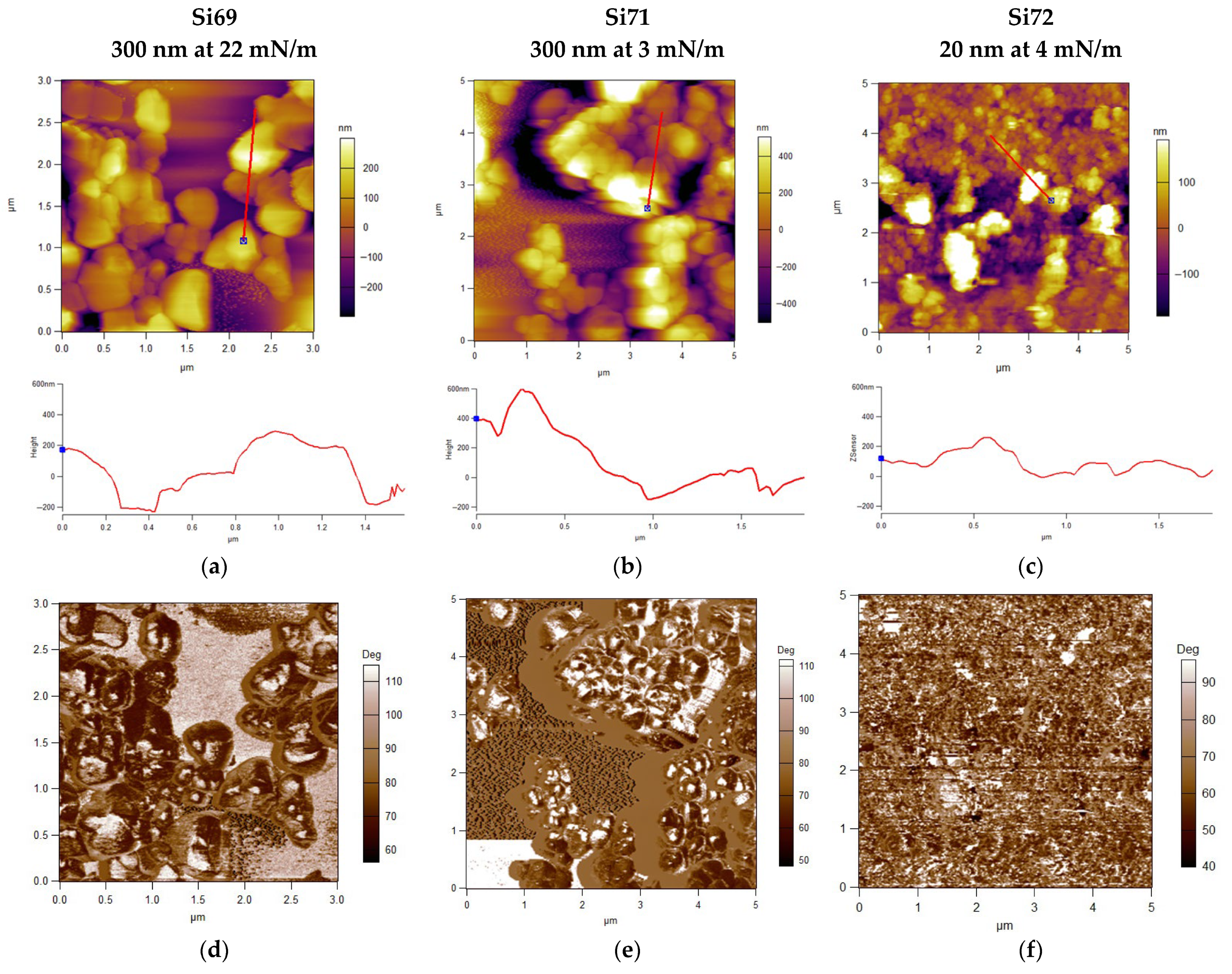
Simultaneously with the investigations of Langmuir films, LB monolayers were deposited on ultra-flat Si wafers for AFM investigation in non-contact mode. Here, the data for the following samples is presented: Si69—300 nm MIL-101(Cr) deposited at a surface pressure of 22 mN/m; Si71—300 nm MIL-101(Cr) deposited at a surface pressure of 3 mN/m; and Si72—20 nm MIL-101(Cr) deposited at a surface pressure of 4 mN/m. Lower surface pressure for LB film deposition was tested because, at a pressure of 22 mN/m, the mass of the deposited LB monolayer was too high, drastically decreasing the Q-factor of the 434 MHz SAW resonators. Before the LB film deposition, the monolayers were allowed to stabilize at the desired deposition pressure for 10 min. The sample notation is in line with our Nano lab standard because, simultaneously with these depositions, deposition was also carried out on other substrates. For example, G72 was deposited simultaneously with Si72, but the substrate was a two-port 434 MHz SAW resonator. Thus, data in different papers can be easily compared and data can be retrieved for further analysis or on request. The LB films were measured at least 1 day after deposition to allow them to dry. However, as shown in the XPS data above for the Si72 sample, there are some indications that trapped water remains.
Figure 9 presents the topography and phase contrast imaging data for the three LB MIL-101(Cr) monolayers tested in this study. A cross-section in the red line shows that, except for a large aggregate, the Si72 20 nm MIL-101(Cr) is much smoother. Individual aggregates are around 150 nm in size, while for the 300 nm MIL-101(Cr), aggregates are around 500 nm. Phase contrast data, which represent the mechanical properties (viscoelastic, adhesion, etc.) of the layer upon interaction with the instrument tip, also show that the 20 nm layer is significantly more homogeneous. No other AFM studies of the MIL-101(Cr) were found except for our previous work [10], where 300 nm MIL-101(Cr) was deposited as an LB monolayer at a surface pressure of 20 mN/m. Results for Si69 confirm previous findings.
The roughness of the layers is presented in Table 1 for both the topography images in Figure 9 and larger-scale scans obtained from the same samples. It is worth noting that larger scan sizes result in greater roughness. The 20 nm MIL-101(Cr) yields a surface approximately six times smoother. As can be expected, the monolayer is far from being perfectly smooth. However, for chemical sensing applications, this is not a requirement. In fact, a well-developed surface will have a significant interaction area with the analyte being measured. We have demonstrated that a well-developed surface with 3D peaks yields four times higher sensitivity to VOCs at an equal mass of the LB film layers [46].

4. Conclusions

MIL-101(Cr) is one of the most frequently researched MOFs because of its interesting properties. Here, we have synthesized and characterized one of the smallest MIL-101(Cr) crystals, with an average dimension of 20 nm. This MOF also exhibits excellent stability in a water environment. This allows for investigations at the air–water interface as a Langmuir film, followed by deposition as LB layers. Recently, we have used LB monolayers deposited on a 434 MHz SAW resonator from a commercially available MIL-101(Cr) with around 300 nm crystals. A gravimetric method combined with EIS was developed to measure the emerging water contaminant PFOS [10]. Here, we compare Langmuir and LB monolayers from 300 and 20 nm sized MIL-101(Cr) particles. The smaller-sized crystal exhibits denser and more homogeneous water coverage and packing upon compression, with no observable 10–100 µm aggregates. LB monolayers from the 20 nm particles have approximately six times lower surface roughness. The monolayer is far from being smooth, but this will allow excellent access to the MOF pores by the tested analyte in a chemical sensing application. This paper addresses the lack of research on depositing presynthesized MOFs using probably the best method for nanoarchitectonics—the LB method. The 20 nm sized MOF crystals are the smallest deposited by this method so far.

Author Contributions

Conceptualization, G.R.I.; methodology, G.R.I., A.T., and V.S.; validation, A.D. and L.K.; formal analysis, A.D., G.R.I., and V.S.; investigation, A.D., G.R.I., and L.K.; resources, G.R.I., J.L., and V.S.; supervision, G.R.I. and J.L., writing—original draft preparation, A.D. and G.R.I.; writing—review and editing—A.D., G.R.I., L.K., A.T., and V.S.; funding acquisition, G.R.I. All authors have read and agreed to the published version of the manuscript.

Funding

This research was funded by the Bulgarian National Science Foundation, grant number KP-06-N88/6 (2024) and, to a lesser extent, by the Center for Research and Design of the University of Architecture, Civil Engineering and Geodesy infrastructure, grant number BN/IF–311/24.

Institutional Review Board Statement

Not applicable.

Data Availability Statement

The raw data supporting the conclusions of this article will be made available by the authors on request.

Acknowledgments

Thanks are due to the Rectors of the University of Architecture, Civil Engineering and Geodesy (UACEG) for providing new facilities and their complete repair to the University Lab “Nanoscience and Nanotechnology”. Thanks are also due to the UACEG’s administration for their assistance in acquiring the new instrumentation. The AFM used in this paper is part of the Distributed Research Infrastructure INFRAMAT, part of the Bulgarian National Roadmap for Research Infrastructures, supported by the Bulgarian Ministry of Education and Science. During the preparation of this manuscript, the authors used ChatGPT and ScienceDirect AI for reference searches. The authors have reviewed and edited the output and take full responsibility for the content of this publication.

Conflicts of Interest

The authors declare no conflicts of interest. The funders had no role in the design of the study, in the collection, analysis, or interpretation of data, in the writing of the manuscript, or in the decision to publish the results.

References

  1. Shams, M.; Niazi, Z.; Saeb, M.R.; Moghadam, S.M.; Mohammadi, A.K.; Fattahi, M. Tailoring the topology of ZIF-67 metal-organic frameworks (MOFs) adsorbents to capture humic acids. Ecotox. Environ. Saf. 2024, 269, 115854–115866. [Google Scholar] [CrossRef]
  2. Luo, W.; Ma, Y.; Wang, M.; Wang, J.; Wu, C.; Yang, H. Three different configurations of MOFs constructed from 2,5-diketopiperazine-N, N’-diacetic acid for activating peroxymonosulfate (PMS) to degrade dyes and application in electrocatalysis. J. Mol. Struct. 2025, 1336, 142140–142151. [Google Scholar] [CrossRef]
  3. Yan, Y.-T.; Fan, X.-D.; Lu, J.-L.; Yang, Z.-H.; Zhang, Y.-B.; Wu, Y.-L.; Zhang, W.-Y.; Wang, Y.-Y. A novel porous Zn-MOF based on binuclear metal clusters for fluorescence detection of Cr(VI) and adsorption of dyes. J. Mol. Struct. 2025, 1322 Pt 3, 140553–140561. [Google Scholar] [CrossRef]
  4. Press Release: Nobel Prize in Chemistry 2025. Nobel Prize Outreach; The Royal Swedish Academy of Sciences. 8 October 2025. Available online: https://www.nobelprize.org/prizes/chemistry/2025/press-release/ (accessed on 31 October 2025).
  5. Makiura, R.; Konovalov, O. Interfacial growth of large-area single-layer metal–organic framework nanosheets. Sci. Rep. 2013, 3, 2506. [Google Scholar] [CrossRef] [PubMed]
  6. Wang, Z.; Walter, L.S.; Wang, M.; Petkov, P.S.; Liang, B.; Qi, H.; Nguyen, N.N.; Hambsch, M.; Zhong, H.; Wang, M.; et al. Interfacial synthesis of layer-oriented 2D conjugated metal–organic framework films toward directional charge transport. J. Am. Chem. Soc. 2021, 143, 13624–13632. [Google Scholar] [CrossRef] [PubMed]
  7. Bétard, A.; Fischer, R.A. Metal–organic framework thin films: From fundamentals to applications. Chem. Rev. 2012, 112, 1055–1083. [Google Scholar] [CrossRef]
  8. Benito, J.; Sorribas, S.; Lucas, I.; Coronas, J.; Gascon, I. Langmuir–Blodgett films of the metal–organic framework MIL-101(Cr): Preparation, characterization, and CO2 adsorption study using a QCM-based setup. ACS Appl. Mater. Interfaces 2016, 8, 16486–16492. [Google Scholar] [CrossRef]
  9. Benito, J.; Fenero, M.; Sorribas, S.; Zornoza, B.; Msayib, K.J.; McKeown, N.B.; Téllez, C.; Coronas, J.; Gascón, I. Fabrication of ultrathin films containing the metal organic framework Fe-MIL-88B-NH2 by the Langmuir–Blodgett technique. Coll. Surf. A Physicochem. Eng. Aspects 2015, 470, 161–170. [Google Scholar] [CrossRef]
  10. Ivanov, G.R.; Venelinov, T.; Marinov, Y.G.; Hadjichristov, G.B.; Terfort, A.; David, M.; Florescu, M.; Karakuş, S. First direct gravimetric detection of perfluorooctane sulfonic acid (PFOS) water contaminants, combination with electrical measurements on the same device—Proof of concepts. Chemosensors 2024, 12, 116. [Google Scholar] [CrossRef]
  11. Roberts, G.G. Langmuir–Blodgett Films; Springer: New York, NY, USA, 2014; ISBN 978-1-4899-3718-6. [Google Scholar] [CrossRef]
  12. Petty, M.C. Molecular Electronics: From Principles to Practice; John Wiley & Sons, Ltd.: Chichester, UK, 2007; ISBN 978-0-470-72389-0. [Google Scholar] [CrossRef]
  13. Angelov, T.; Radev, D.; Ivanov, G.; Antonov, D.; Petrov, A.G. Hydrophobic Magnetic Nanoparticles: Synthesis and LB Film Preparation. J. Optoelectron. Adv. Mater. 2007, 9, 424–426. [Google Scholar]
  14. Gorbachev, I.A.; Smirnov, A.V.; Glukhovskoy, E.G.; Kolesov, V.V.; Ivanov, G.R.; Kuznetsova, I.E. Morphology of Mixed Langmuir and Langmuir–Schaefer Monolayers with Covered CdSe/CdS/ZnS Quantum Dots and Arachidic Acid. Langmuir 2021, 37, 14105–14113. [Google Scholar] [CrossRef] [PubMed]
  15. Gorbachev, I.A.; Smirnov, A.V.; Ivanov, G.R.; Venelinov, T.I.; Amova, A.A.; Datsuk, E.V.; Anisimkin, V.I.; Kuznetsova, I.E.; Kolesov, V.V. Langmuir–Blodgett Films with Immobilized Glucose Oxidase Enzyme Molecules for Acoustic Glucose Sensor Application. Sensors 2023, 23, 5290. [Google Scholar] [CrossRef] [PubMed]
  16. Chen, J.; Tang, M.; Nie, S.; Xiao, P.; Zhao, T.; Chen, Y. Synthesis Methods, Performance Optimization, and Application Progress of Metal–Organic Framework Material MIL-101(Cr). Chemistry 2025, 7, 78. [Google Scholar] [CrossRef]
  17. Sahabudeen, H.; Dong, R.; Feng, X. Interfacial Synthesis of Structurally Defined Organic Two-Dimensional Materials: Progress and Perspectives. Chimia 2019, 73, 480. [Google Scholar] [CrossRef]
  18. Chuhadiya, S.; Himanshu; Suthar, D.; Patel, S.L.; Dhaka, M.S. Metal organic frameworks as hybrid porous materials for energy storage and conversion devices: A review. Coord. Chem. Rev. 2021, 446, 214115–214140. [Google Scholar] [CrossRef]
  19. Zhu, Y.; Li, J.; Gu, J.; Kan, L.; Liu, Y. A three-dimensional Cu-MOF with strong π-π interactions exhibiting high water and chemical stability. Inorg. Chem. Commun. 2019, 99, 108–112. [Google Scholar] [CrossRef]
  20. Zou, M.; Dong, M.; Zhao, T. Advances in Metal–Organic Frameworks MIL-101(Cr). Int. J. Mol. Sci. 2022, 23, 9396. [Google Scholar] [CrossRef]
  21. Haghighi, E.; Zeinali, S. Nanoporous MIL-101(Cr) as a Sensing Layer Coated on a Quartz Crystal Microbalance (QCM) Nanosensor to Detect Volatile Organic Compounds (VOCs). RSC Adv. 2019, 9, 24103–24112. [Google Scholar] [CrossRef]
  22. Haghighi, E.; Zeinali, S. Formaldehyde Detection Using Quartz Crystal Microbalance (QCM) Nanosensor Coated by Nanoporous MIL-101(Cr) Film. Microporous Mesoporous Mater. 2020, 300, 110065. [Google Scholar] [CrossRef]
  23. Wang, L. Metal-organic frameworks for QCM-based gas sensors: A review. Sens. Actuators A Phys. 2020, 307, 111984. [Google Scholar] [CrossRef]
  24. Castell, A.; Arroyo-Manzanares, N.; Viñas, P.; López-García, I.; Campillo, N. Advanced materials for magnetic solid-phase extraction of mycotoxins: A review. TrAC Trends Anal. Chem. 2024, 178, 117826. [Google Scholar] [CrossRef]
  25. Song, Y.; Zheng, S.; Ji, Y.; He, B.; Wang, M. Fabrication of novel mixed matrix composite membranes with polyethyleneimine-modified MIL-101 for CO2/CH4 separation. Chem. Eng. J. 2025, 518, 164526. [Google Scholar] [CrossRef]
  26. Evans, J.D.; Garai, B.; Reinsch, H.; Li, W.; Dissegna, S.; Bon, V.; Senkovska, I.; Kaskel, S.; Janiak, C.; Stock, N.; et al. Metal–organic frameworks in Germany: From synthesis to function. Coord. Chem. Rev. 2019, 380, 378–418. [Google Scholar] [CrossRef]
  27. Ehrenmann, J.; Henninger, S.K.; Janiak, C. Water adsorption characteristics of MIL-101 for heat-transformation applications of MOFs. Eur. J. Inorg. Chem. 2011, 4, 471–474. [Google Scholar] [CrossRef]
  28. Zhang, W.; Li, X.; Ding, X.; Hua, K.; Sun, A.; Hu, X.; Nie, Z.; Zhang, Y.; Wang, J.; Li, R.; et al. Progress and Opportunities for Metal–Organic Framework Composites in Electrochemical Sensors. RSC Adv. 2023, 13, 15442–15461. [Google Scholar] [CrossRef]
  29. Meng, Y.; Huang, Y.; Huang, G.; Song, Y. TPN-COF@Fe-MIL-100 Composite Used as an Electrochemical Aptasensor for Detection of Trace Tetracycline Residues. RSC Adv. 2023, 13, 28148–28157. [Google Scholar] [CrossRef]
  30. Benseghir, Y.; Tsang, M.Y.; Schöfbeck, F.; Hetey, D.; Kitao, T.; Uemura, T.; Shiozawa, H.; Reithofer, M.R.; Chin, J.M. Electric-Field Assisted Spatioselective Deposition of MIL-101(Cr)/PEDOT to Enhance Electrical Conductivity and Humidity Sensing Performance. J. Colloid Interface Sci. 2025, 678, 979–986. [Google Scholar] [CrossRef]
  31. He, W.; Lv, D.; Guan, Y.; Yu, S. Post-Synthesis Modification of Metal–Organic Frameworks: Synthesis, Characteristics, and Applications. J. Mater. Chem. A 2023, 11, 45. [Google Scholar] [CrossRef]
  32. Du, R.; Xin, R.; Wang, H.; Zhu, W.; Li, R.; Liu, W. Machine learning: An accelerator for the exploration and application of advanced metal-organic frameworks. Chem. Eng. J. 2024, 490, 151828. [Google Scholar] [CrossRef]
  33. Wei, D.; Xu, C.; Wang, Y.; Feng, W.; Deng, C.; Wu, X.; Deng, Y.; Yang, Z.; Zhang, Z. Machine Learning-Driven Sensor Array Based on Luminescent Metal–Organic Frameworks for Simultaneous Discrimination of Multiple Anions. Chem. Eng. J. 2025, 512, 162796. [Google Scholar] [CrossRef]
  34. Directive (EU) 2020/2184 of the European Parliament and of the Council of 16 December 2020 on the Quality of Water Intended for Human Consumption. Official Journal of the European Union, L 435, 23 December 2020. Available online: https://eur-lex.europa.eu/eli/dir/2020/2184/oj (accessed on 29 October 2025).
  35. Drinking Water Health Advisories for PFOA and PFOS. United States Environmental Protection Agency (US EPA). 15 June 2022. Available online: https://www.epa.gov/sdwa/drinking-water-health-advisories-pfoa-and-pfos (accessed on 30 October 2025).
  36. Yuan, M.; Ge, C.; Yang, W.; Wang, J.; Yin, C. Enhanced CO2 adsorption performance of amino-modified MIL-101(Cr–Al) materials: Synthesis, characterization, and mechanistic insights. Therm. Sci. Eng. Prog. 2025, 64, 103794. [Google Scholar] [CrossRef]
  37. Shen, T.; Luo, J.; Zhang, S.; Luo, X. Hierarchically mesostructured MIL-101 metal–organic frameworks with different mineralizing agents for adsorptive removal of methyl orange and methylene blue from aqueous solution. J. Environ. Chem. Eng. 2015, 3, 1372–1383. [Google Scholar] [CrossRef]
  38. Hosseini, S.A.; Kazemeini, M.; Mohammadi, A. A dual-functional Ni–MCr LDH nanostructure utilized for degradation of meropenem antibiotic pollutant: Synthesis and physicochemical characterizations toward development of a novel chemical mechanism. Adv. Powder Technol. 2025, 36, 105084. [Google Scholar] [CrossRef]
  39. Férey, G.; Mellot-Draznieks, C.; Serre, C.; Millange, F.; Dutour, J.; Surblé, S.; Margiolaki, I. A chromium terephthalate-based solid with unusually large pore volumes and surface area. Science 2005, 309, 2040–2042. [Google Scholar] [CrossRef]
  40. Parak, P.; Nikseresht, A.; Mohammadi, M.; Emaminia, M.S. Application of MIL-101(Cr) for biofuel dehydration and process optimization using the central composite design method. Nanoscale Adv. 2024, 6, 4625–4634. [Google Scholar] [CrossRef]
  41. You, M.; Tang, Y.; Liang, X.; Deng, T.; Peng, H.; Tian, J.; Du, J. Efficient photocatalytic degradation of tetracycline hydrochloride by Fe–TiO2/MIL-101(Cr) nanocomposites under visible light. J. Water Process Eng. 2025, 69, 106590. [Google Scholar] [CrossRef]
  42. Li, Z.; Hu, J.; Xiao, Y.; Zha, Q.; Zeng, L.; Zhu, M. Surfactant-assisted Cr–metal–organic framework for the detection of bisphenol A in dust from e-waste recycling area. Anal. Chim. Acta 2021, 1146, 174–183. [Google Scholar] [CrossRef]
  43. Vo, T.K.; Kim, J.-H.; Kwon, H.T.; Kim, J. Cost-effective and eco-friendly synthesis of MIL-101(Cr) from waste hexavalent chromium and its application for carbon monoxide separation. J. Ind. Eng. Chem. 2019, 80, 345–351. [Google Scholar] [CrossRef]
  44. Zhi, G.; Qi, X.; Li, Y.; Wang, J.; Wang, J. Efficient treatment of smelting wastewater: 3D nickel foam @MOF shatters the previous limitation, enabling high-throughput selective capture of arsenic to form non-homogeneous nuclei. Separ. Purif. Technol. 2024, 328, 124927–124945. [Google Scholar] [CrossRef]
  45. Han, J.; Albadarin, A.B.; Guo, C.; Annath, H.; Mangwandi, C. Solubility enhancement of BCS class II drugs via in-situ loading onto MIL-101(Cr) in a green solvent system. Separ. Purif. Technol. 2026, 380, 135225. [Google Scholar] [CrossRef]
  46. Avramov, I.D.; Ivanov, G.R. Layer by Layer Optimization of Langmuir–Blodgett Films for Surface Acoustic Wave (SAW) Based Sensors for Volatile Organic Compounds (VOC) Detection. Coatings 2022, 12, 669. [Google Scholar] [CrossRef]
Figure 1. SEM images at a 500 µm scale (a) and 5 µm scale (b) of the as-received commercial large crystal-sized MOF MIL-101(Cr), denoted as a 300 nm sized MIL-101(Cr). Significant substance aggregation can be seen.
Coatings 15 01449 g001
Figure 2. TEM images of the newly synthesized MIL-101(Cr), denoted as 20 nm MOF. Scale bar in (a) is 200 nm. In all other cases (bd) it is 20 nm.
Coatings 15 01449 g002aCoatings 15 01449 g002b
Figure 3. XPS data and comparison of the 20 nm and 300 MIL-101(Cr) material. Within the experimental error, the two materials are identical. (a) C1s region of the spectra; (b) Cr2p region of the spectra; (c) O1s region of the spectra; (d) the entire spectra.
Coatings 15 01449 g003aCoatings 15 01449 g003b
Figure 4. Isotherms at room temperature: black—20 nm sized MOF pressure; purple—surface potential data; LB monolayer deposition at 4 mN/m can be seen; red—300 nm sized MOF pressure data; green—300 nm sized MOF + 17% AA pressure data; and blue—surface potential data.
Coatings 15 01449 g004
Figure 5. Compression and decompression isotherms of the 20 nm sized MIL-101(Cr) at room temperature: black—surface pressure; purple—surface potential.
Coatings 15 01449 g005
Figure 6. BAM images of a Langmuir film from 300 nm sized MIL-101(Cr) crystal + 17.7% AA, all dispersed in hexane on film compression and decompression: (a) surface pressure π = 0 mN/m, trough area Atr = 87,400 mm2—after solvent evaporation before layer compression at fully extended trough barriers; (b) π = 0.0 mN/m, Atr = 79,170 mm2; (c) π = 0.89 mN/m, Atr = 61,725 mm2; (d) π = 20.17 mN/m, Atr = 54,600 mm2; (e) π = 40.61 mN/m, Atr = 51,095 mm2; (f) π = 0.0 mN/m, Atr = 87,400 mm2 immediately after layer decompression. Scale sizes from (ae) are shown on (a), while the scale size of (f) differs.
Coatings 15 01449 g006aCoatings 15 01449 g006b
Figure 7. BAM images of a Langmuir film from 300 nm sized MIL-101(Cr) crystal dispersed in 75% chloroform and 25% methanol solvent mixture to 0.83 mg/mL concentration on film compression: (a) surface pressure π = 0 mN/m, trough area Atr = 87,400 mm2—after solvent evaporation before layer compression at fully extended trough barriers; (b) π = 0.66 mN/m, Atr = 64,108 mm2; (c) π = 2.93 mN/m, Atr = 20,257 mm2; (d) π = 10.95 mN/m, Atr = 27,250 mm2; (e) π = 31.09 mN/m, Atr = 12,149 mm2; (f) π = 44.28 mN/m, Atr = 11,471 mm2 immediately after layer decompression. Scale sizes from (ae) are shown on (a), while the scale size of (f) differs.
Coatings 15 01449 g007aCoatings 15 01449 g007b
Figure 8. BAM images of a Langmuir film from 20 nm sized MIL-101(Cr) crystal dispersed in 75% chloroform and 25% methanol solvent mixture to 4.8 mg/mL concentration on film compression: (a) surface pressure π = 0.08 mN/m, trough area Atr = 64,185 mm2; (b) π = 0.27 mN/m, Atr = 50,607 mm2; (c) π = 2.55 mN/m, Atr = 20,257 mm2; (d) π = 4.03 mN/m, Atr = 44,146 mm2—LB monolayer deposition; (e) π = 12.88 mN/m, Atr = 12,149 mm2; (f) π = 33.44 mN/m, Atr = 34,484 mm2; (g) π = 45.55 mN/m, Atr = 32,588—film collapse; (h) π = 0.00 mN/m, Atr = 58,986 mm2—immediately after layer decompression. All scale sizes are identical and are shown on (a).
Coatings 15 01449 g008aCoatings 15 01449 g008b
Figure 9. AFM images of Si69, Si71, and Si72 LB monolayers from MIL-101(Cr): (ac) topography data with a cross-section across the red line; (df) phase contrast data for the corresponding topography data.
Coatings 15 01449 g009
Table 1. Surface roughness of the LB film monolayers from MIL-101(Cr).
SampleRoughness from Scan Size 5 × 5 µm [rms]Roughness from Scan Size 20 × 20 µm [rms]
Si69110.9 nm 603.7 nm
Si71257.2 nm686.9 nm
Si7288.7 nm123.4 nm
Disclaimer/Publisher’s Note: The statements, opinions and data contained in all publications are solely those of the individual author(s) and contributor(s) and not of MDPI and/or the editor(s). MDPI and/or the editor(s) disclaim responsibility for any injury to people or property resulting from any ideas, methods, instructions or products referred to in the content.