
Article

Preparation and Properties of Plasma Etching-Resistant Y2O3 Films

1
School of Electromechanical Engineering, Guangdong University of Technology, Guangzhou 510006, China
2
SuPro Instruments Limited, Shenzhen 518054, China
3
Ji Hua Laboratory, Foshan 528200, China
4
Plansee (Shanghai) High Performance Material Limited, Shanghai 201306, China
5
State Key Laboratory of High Performance Tools, Guangzhou 510006, China
*
Author to whom correspondence should be addressed.
Coatings 2025, 15(12), 1397; https://doi.org/10.3390/coatings15121397
Submission received: 28 October 2025 / Revised: 17 November 2025 / Accepted: 26 November 2025 / Published: 29 November 2025

Abstract

Yttrium oxide (Y2O3) films have been widely used as protective layers in plasma etching equipment, but achieving stoichiometric films with high deposition rates remains a challenge. In this study, Y2O3 films were fabricated by a medium-frequency reactive magnetron sputtering (MF-RMS) technique. The oxygen flow and target control voltage were regulated through a closed-loop feedback control system, which effectively solved the problem. The microstructure, mechanical, optical, and plasma etching properties were systematically investigated. The results showed that near-stoichiometric films can achieve a relatively high deposition rate. Increasing the deposition temperature induced a structural transition in the Y2O3 film from a predominantly cubic phase to a mixture of cubic and monoclinic phases. For Y2O3 films deposited at room temperature, increasing the bias voltage increased the deposition rate but reduced hardness and elastic modulus. The Y2O3 film deposited at 300 °C in the near-metallic mode exhibited the highest hardness and elastic modulus, reaching 13.3 GPa and 222.0 GPa, respectively. All Y2O3 films exhibited excellent transmittance and resistance to plasma etching. This study provides an effective protective strategy for semiconductor etching chambers.

1. Introduction

As integrated circuit (IC) process nodes continue to advance towards the nanoscale, plasma etching has become a critical technique in semiconductor manufacturing [1]. However, during the etching process, high-energy plasmas not only erode the chamber components, shortening their service life, but also generate etching residues [2,3]. If these residues are not effectively removed, they adhere to the chamber walls and contribute to the formation of particulate matter. When wafers are moved or gases are added, sudden changes in pressure can cause shock waves or gas viscous forces that make particles float and possibly move to the wafer. Transient electric fields can also cause electromagnetic stress, which may cause residuals to remain in the air. If plasma is not yet formed or the ion sheath is thin at this stage, these residuals will adhere to the wafer surface, affecting the precision of the etching process [4]. Depositing plasma-resistant films on the chamber walls represents an effective strategy to mitigate particle contamination [5,6].
Yttrium oxide (Y2O3), a representative rare-earth oxide, has been shown to exhibit excellent plasma etching resistance in fluorine-containing plasma environments [7]. During fluorine-based plasma etching, oxide ceramics typically undergo fluorination reactions with reactive species such as fluorine radicals and fluoride ions. Zhao et al. [8] observed that after CF4 plasma irradiation, Y2O3 films exhibited reduced mechanical properties at the initial stage of etching due to nanoscale surface pitting. As etching progressed, a protective YOxFy passivation layer formed on the surface, which not only prevented further etching but also increased the material flexural strength by 25%. Cao et al. [9] investigated the etch resistance of Y2O3 and Al2O3 films and revealed that the etch resistance of oxides was synergistically influenced by surface fluorination and fluoride layer removal. The resulting YF3 exhibits a sublimation enthalpy of 481 ± 21 kJ/mol, significantly higher than that of AlF3 (301 ± 4 kJ/mol) [10,11]. This indicates that Y2O3 films were shown to be more effective than Al2O3 films in suppressing further etching by fluorine-based plasma. Additionally, Choi et al. [12] fabricated dense Y2O3−C composites by high-temperature sintering, which exhibited an etch rate a factor of 15 lower than that of silicon wafers under plasma conditions.
Y2O3 films can be deposited using various techniques, among which physical vapor deposition (PVD) techniques are widely adopted due to their excellent controllability. In reactive magnetron sputtering of oxides, the transition of the target into the oxide mode is a critical factor that limits film deposition efficiency. Jang et al. [13] reported that during Y2O3 film deposition, the deposition rate of oxide films formed in the metallic mode was eight times higher than that in the oxide mode, while the O/Y atomic ratio was less than half of that in the oxide mode. Li et al. [14] employed multi-arc ion plating to deposit Y2O3 films on alumina ceramics and silicon wafers. They found that when the O2/Ar flow ratio increased to 1.5, the O/Y atomic ratio of the films approached the stoichiometric ratio (~1.4). However, the target entered the oxidation mode, leading to a significant reduction in the deposition rate compared to the metallic mode. Although the metallic mode exhibited higher deposition rates, achieving stoichiometric films proved challenging. In contrast, the oxide mode can yield stoichiometric films, but only at an extremely low deposition rate. Therefore, determining how to regulate the target to operate near the critical transition between metallic and oxide modes, achieving the deposition of stoichiometric oxide films while maintaining high sputtering rates, remains a key scientific challenge that requires urgent investigation.
In this study, Y2O3 films were fabricated using a Y target by the medium-frequency reactive magnetron sputtering (MF-RMS) technique. This study systematically varied key process parameters, including deposition temperature, deposition time and substrate bias. The oxygen flow rate and target control voltage were dynamically regulated through a closed-loop feedback control system to effectively stabilize the sputtering behavior of the target. Subsequently, the microstructure, mechanical, optical and plasma etching properties of the Y2O3 films prepared under these different process conditions were systematically characterized and evaluated.

2. Materials and Methods

2.1. Films Deposition

The self-built multi-chamber composite physical vapor deposition (PVD) system (CPU300, Supro, Shenzhen, China) was used to synthesize Y2O3 films on mirror-polished 6061 aluminum alloy (15 × 15 × 3 mm3), (100) silicon wafers (20 × 10 × 0.65 mm3), and quartz glass (16 × 16 × 4 mm3, SiO2 content > 99%) by the MF-RMS technique (frequency values: 40 kHz). The apparatus consists of one sample loading chamber and three film deposition chambers (P1, P2, and P3), with a robotic arm in the central transfer chamber enabling automated conveyance of sample trays between the vacuum chambers. All film deposition experiments in this study were conducted in chamber P3, utilizing two Y targets (purity: 99.99%) with dimensions of Ø76.2 mm × 5 mm. The chamber heating system was capable of heating the sample stage to a maximum temperature of 300 °C. Additionally, a closed-loop control system for target voltage and gas flow was employed, featuring integrated gas flow meters. A schematic of chamber P3 is shown in Figure 1a. Using this control system, the argon pressure was maintained at 0.9 Pa, while the oxygen flow rate was varied between 0 and 5 sccm. All substrates were ultrasonically cleaned in deionized water and anhydrous ethanol prior to placement on the sample stage. After the sample introduction chamber was evacuated to below 0.5 Pa, the sample stage was transferred into chamber P3. The deposition chamber was then evacuated to a base pressure of <5 × 10⁻⁴ Pa, while ensuring that the deposition temperature reached the preset value. Subsequently, the substrate surface was cleaned by argon glow discharge plasma treatment at 1.0 Pa for 20 min. Ar was then introduced to achieve the required sputtering pressure. Finally, the closed-loop control system was activated to regulate oxygen flow, and the medium-frequency power supply was initiated to deposit the Y2O3 film. Due to the hysteresis effect during the reactive magnetron sputtering process (detailed in Section 3.1), the oxygen flow rate was set within the range of 0–5 sccm, and control voltages of −300 V and −250 V were selected. High temperatures may induce changes in the phase structure and grain size of the films, so this study compared the film properties at room temperature and 300 °C. Additionally, the impact of high-energy ion bombardment on the films was investigated under different substrate bias conditions, while deposition time was used to assess the stability of film deposition. During the experiment, the power of the Y target and the substrate bias were set to 300 W and 1000 W, respectively. The detailed deposition parameters are listed in Table 1.

2.2. Etching

Plasma etching chambers are primarily made of aluminum alloys and stainless steel. For vacuum-compatible materials, the outgassing rate is a critical performance parameter, as excessive outgassing can degrade the vacuum level and induce instability in plasma processes. Aluminum alloys exhibit a significantly lower outgassing rate than stainless steel (approximately one-sixth that of the latter [15]), making them preferable for vacuum chamber construction. In addition, quartz glass is commonly employed for the viewing windows of etching chambers. Therefore, in this study, Y2O3 films deposited on aluminum alloy and quartz glass substrates were selected for plasma etching experiments. Plasma etching was performed using an anode layer ion source integrated into the custom-built PVD film system. During the experiments, areas not intended for etching were shielded using a polyimide mask. Simultaneously, a negative bias was applied to the chamber support to attract and accelerate positive ions towards the film surface. A schematic of the etching equipment is shown in Figure 1b, and the detailed etching parameters are listed in Table 2.

2.3. Films Characterizations

The surface and cross-sectional morphologies were characterized using a field emission scanning electron microscope (SEM, SU-8200, Hitachi, Tokyo, Japan) equipped with an integrated energy-dispersive X-ray spectrometer (EDS, Xflash 6-30, Bruker, Billerica, MA, USA) for elemental analysis. The film thickness was determined from cross-sectional SEM images using the built-in measurement tool in the imaging software. To prevent charge accumulation, the films were sputter-coated with gold for 120 s to improve conductivity. The chemical states of Y and O in selected regions of the Y2O3 films were analyzed using an X-ray photoelectron spectrometer (XPS, Escalab 250Xi, Thermo Fisher Scientific, Waltham, MA, USA). An Al Kα X-ray source was used to obtain surface chemical information. Prior to spectrum collection, the film surface was sputtered with an Ar+ ion beam to a depth of 10 nm to remove surface contaminants. The phase structure of the films was characterized using an X-ray diffractometer (XRD, D8-Discovery, Bruker, Billerica, MA, USA) with Cu Kα radiation (λ = 0.154 nm). The diffraction patterns were recorded over a 2θ range of 20° to 70° with a step size of 0.02°.
The hardness and elastic modulus of the films were measured using a nanoindenter (TTX-NHT2, Anton Paar, Graz, Austria) equipped with a Berkovich diamond tip, following the Oliver-Pharr method [16,17]. To limit the indenter penetration depth to less than 10% of the film thickness, an appropriate load was applied, and the load holding time was set to 10 s. Each measurement was repeated five times on each sample, and the average values were reported to ensure reliability. The optical transmittance of the Y2O3 films was measured using an ultraviolet-visible near-infrared spectrophotometer (UV-3600 Plus, Shimadzu, Kyoto, Japan) over the wavelength range of 200–1000 nm with a scanning step of 1 nm. The surface morphology of the etched regions was further examined using a laser confocal scanning microscope (OLS4100, Olympus, Tokyo, Japan).

3. Results and Discussion

3.1. Response Hysteresis Curve

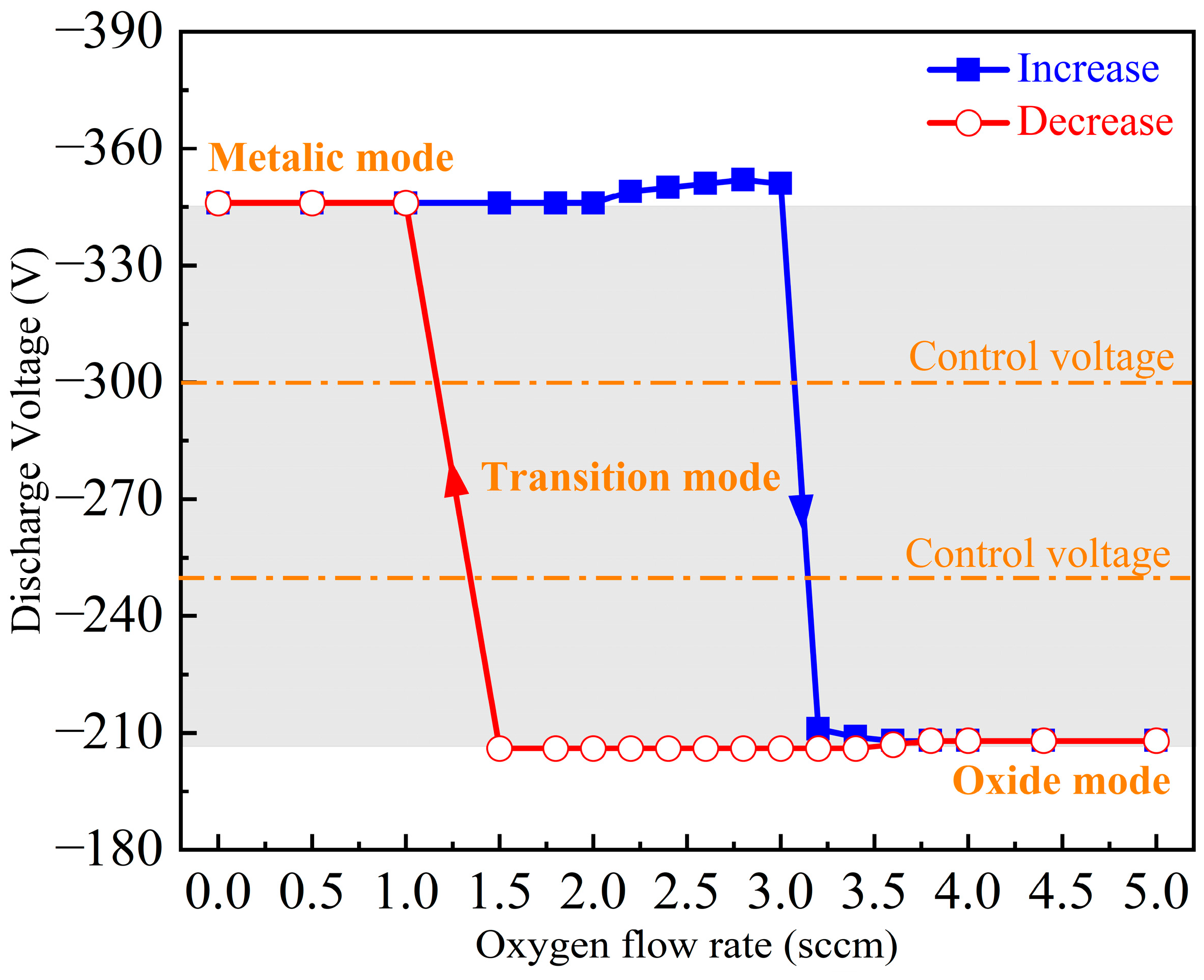
In the process of reactive magnetron sputtering deposition of oxide thin films, the operational state of the target material is primarily divided into the metallic mode and the oxide mode, which depends on the flow rate of the reactive gas (such as oxygen). When the oxygen flow rate is low, the target surface remains in a metallic state, which is the metallic mode. This mode features a high deposition rate and target voltage, but the resulting film is prone to oxygen deficiency. In contrast, when the oxygen flow rate is high, the target surface becomes covered by an insulating oxide layer and enters the oxide mode. In this state, due to the low sputtering yield of the oxide, the deposition rate and the target voltage drop sharply. However, this mode allows for the deposition of near-stoichiometric oxide films. The two operating modes can be easily distinguished by monitoring the target voltage. Upon formation of a stable compound layer on the target surface, the secondary electron emission coefficient of the compound phase (γc ≈ 0.1–0.3) is much higher than that of the pure metal state (γm ≈ 0.01–0.05). This reduces plasma impedance and induces an abrupt drop in target voltage, marking the transition from the metallic to the oxide mode [13,18]. To achieve well-crystallized Y2O3 films at higher deposition rates, a closed-loop feedback control system was employed.
Figure 2 presents the reaction hysteresis curve of discharge voltage versus oxygen flow rate. Given the substantial voltage difference between pure metallic Y targets and fully oxidized Y2O3 targets, the target voltage was dynamically controlled within 208–345 V using this closed-loop feedback system. The system dynamically adjusts the oxygen flow based on target voltage. When the bias is applied, the target voltage increases, indicating a shift towards the metallic mode of the target. Subsequently, the control system gradually increases the oxygen flow. Once the target is detected to enter the oxide mode, resulting in a voltage drop, the oxygen flow is immediately reduced. The relative oxidation state of the target can be defined by Equation (1) [19]. By substituting the target voltages in the metallic mode (345 V) and the oxide mode (208 V). In this study, control voltages of −300 V (near the metallic mode, η o x ≈ 30%) and −250 V (near the oxide mode, η o x ≈ 70%) were selected for investigation. Through high frequency monitoring and regulation, stable operation is achieved in the transition region (gray area) between the metallic and oxide modes.
η o x = V m V O 2 V m V o x
where η o x is the relative oxidation state of the target, V m and V o x are the target voltages in the metallic mode and the oxide mode, respectively, and V O 2 is the bias voltage at a specific oxygen flow rate on the curve.

3.2. Morphology and Microstructure

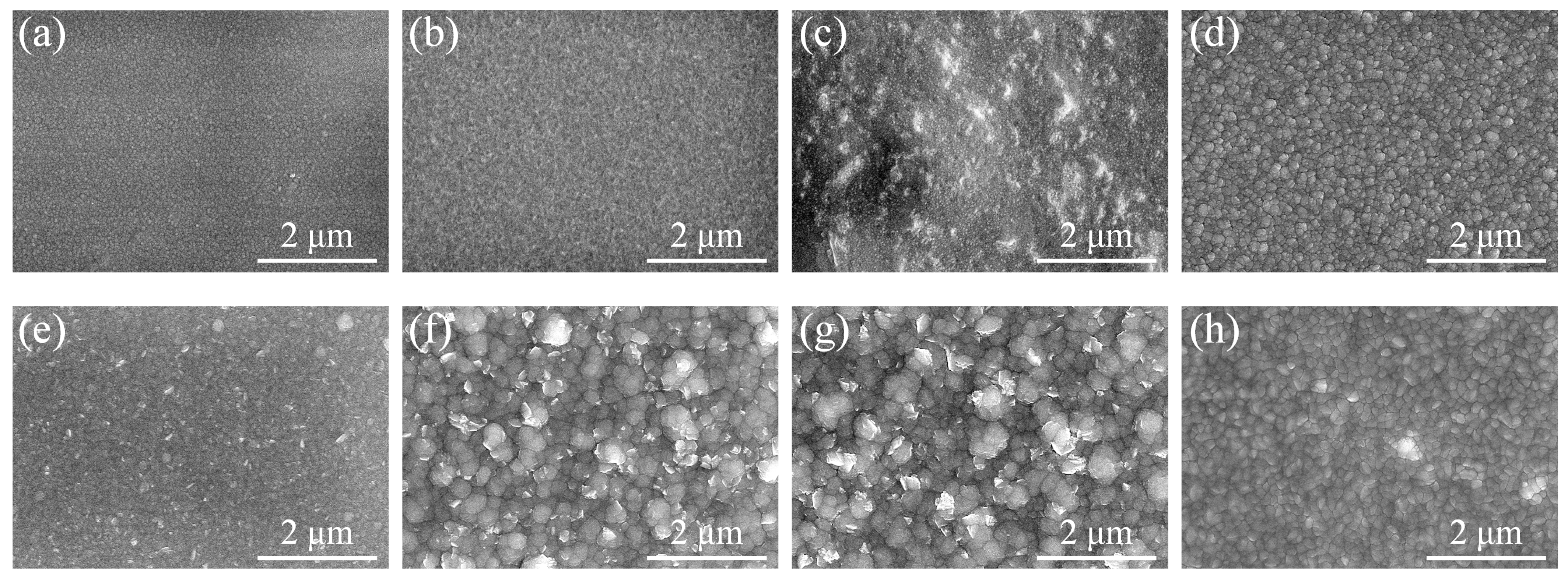
Figure 3 presents the surface morphology of Y2O3 films prepared under feedback control. At room temperature and a control voltage of −300 V without applied bias, particle bombardment is relatively weak, resulting in a film surface with a loose granular structure. Increasing the bias voltage intensifies particle bombardment, leading to the formation of lattice defects and a gradual transition towards a fibrous-like surface morphology. Conversely, when the control voltage is reduced to −250 V (near the oxide mode), the surface particles become significantly larger. Although the target material is more susceptible to target into the oxide mode. Under these conditions, the specific combination of lower target voltage and gas flow may lead to a different Y/O ratio, which promotes grain growth. Under deposition conditions of 300 °C and a control voltage of −300 V, the film surface initially exhibits small irregular flake-like protrusions after 60 min. With increasing deposition time, grain coarsening occurs. When the control voltage is maintained at −250 V (approaching the oxide mode), the reduced particle supply rate results in smaller grains with well-defined boundaries.
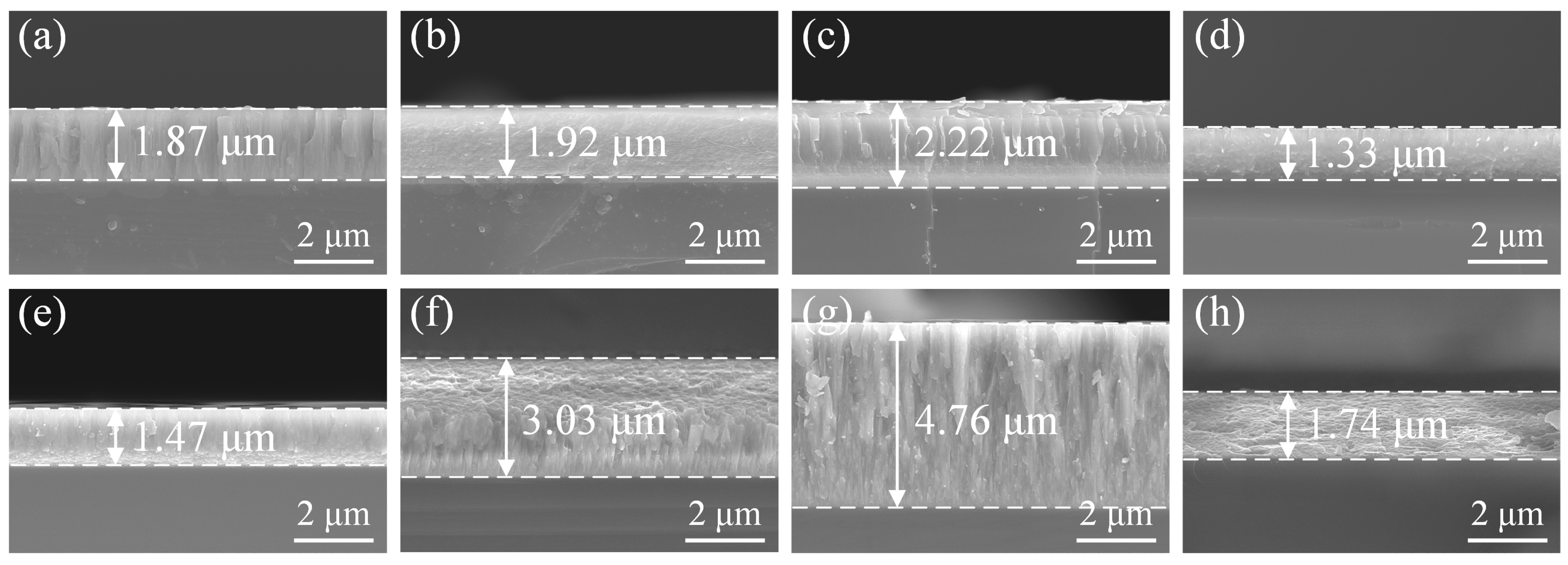
Figure 4 shows the cross-sectional morphology of Y2O3 films under feedback control. The films exhibit satisfactory interfacial adhesion to the substrate, with no observable delamination or peeling. At zero bias voltage, the low particle bombardment energy results in a columnar crystalline structure in the film cross-section. Increasing the bias voltage to −200 V introduces higher particle bombardment energy. This disrupts the columnar structure by inhibiting oriented grain growth during crystallization, thereby enhancing density and uniformity [20]. However, when the bias was further increasing to −400 V, the cross-sectional morphology exhibited a rough and non-uniform characteristic. The structure transitioned from a dense state to one resembling a delaminated condition. This change is likely attributed to the excessively high ion energy induced by the extreme negative bias, where the strong ion bombardment destroyed the original dense structure. Higher bias voltage also increases atomic mobility, enabling deposited atoms to overcome energy barriers and migrate to more stable lattice sites. This process effectively fills voids formed during the initial deposition phase, further promoting structural densification. However, the film cross-section maintains a columnar crystalline structure when deposited at 300 °C with a control voltage of −300 V.
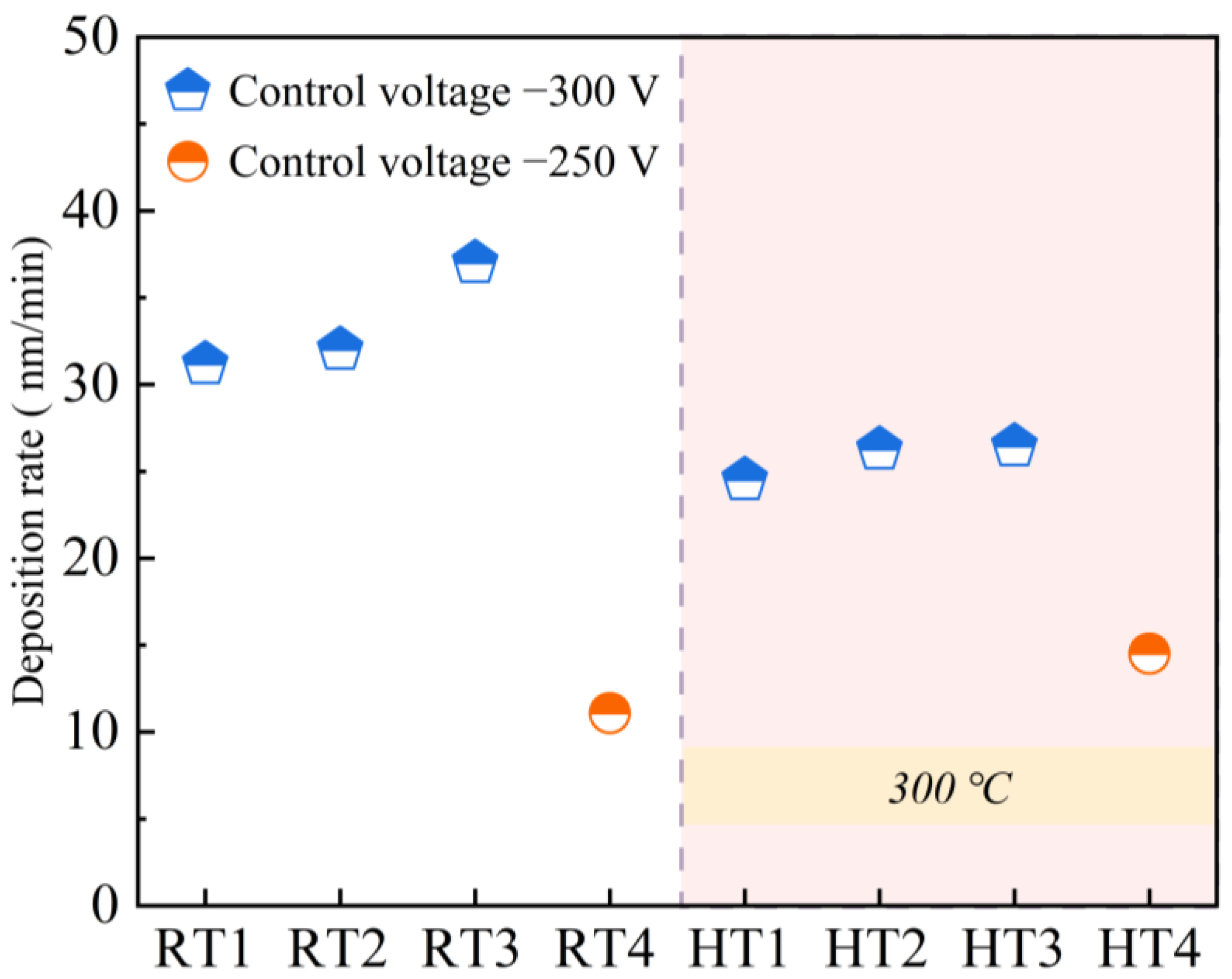
Figure 5 presents the deposition rates of Y2O3 films deposited at room temperature and 300 °C. At room temperature, the deposition rate increases with bias voltage, reaching a maximum of 37.0 nm/min at −400 V. At a target voltage of −300 V, the deposition rate at 300 °C is slightly lower than that at room temperature. However, when the target voltage is reduced to −250 V, the deposition rates at both temperatures decrease significantly. This decrease is attributed to the target approaching the oxide mode. At 300 °C without bias, reducing the target voltage from −300 V to −250 V results in a drop in the deposition rate from 26.3 nm/min to 14.5 nm/min. Similarly, at room temperature with a −200 V bias, reducing the target voltage to −250 V decreases the deposition rate from 32.0 nm/min to 11.1 nm/min. These results demonstrate that the target is in the oxide mode and strongly influences the deposition rate of Y2O3 films, with the effect being more pronounced at room temperature.
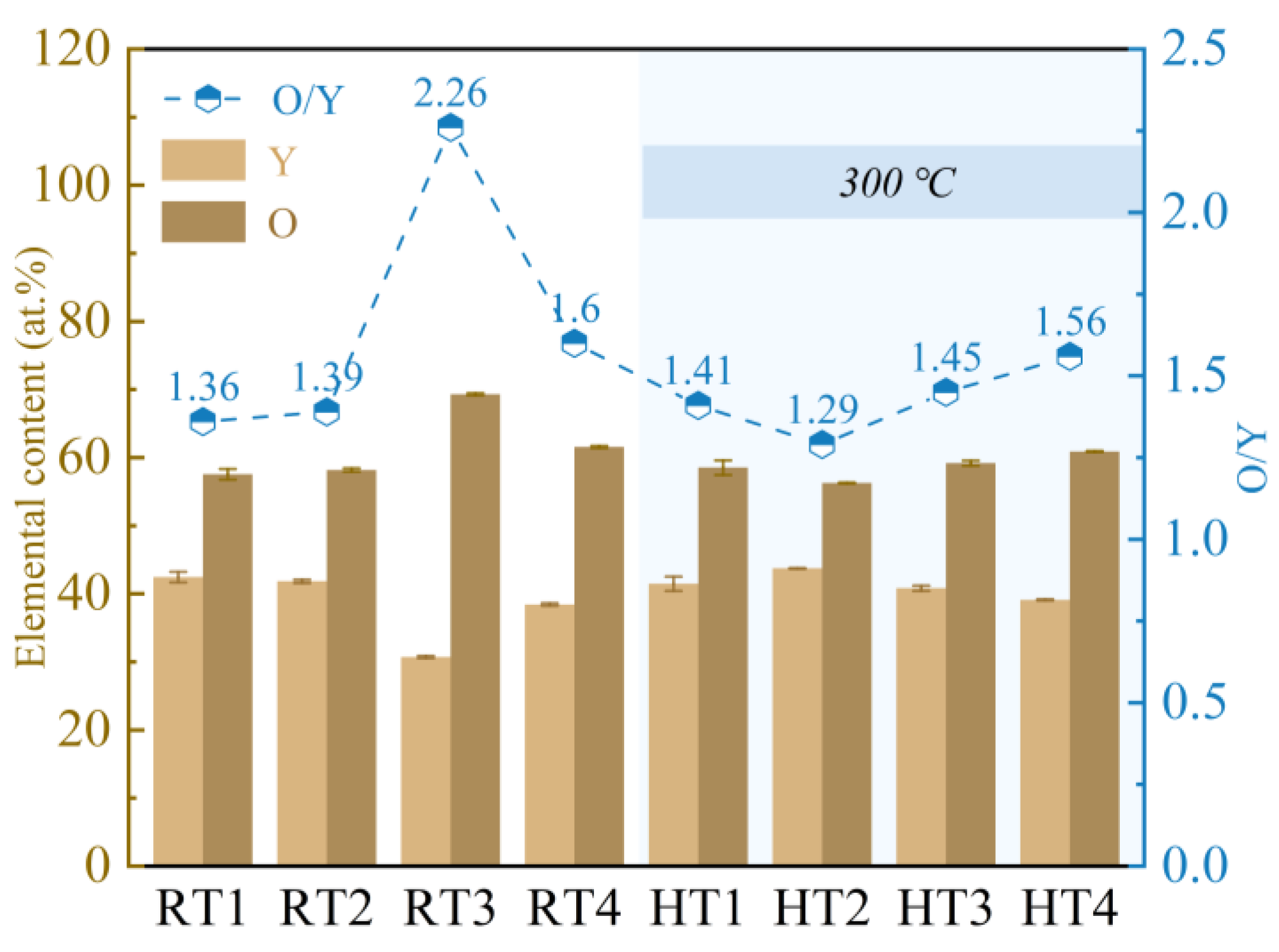
Figure 6 shows the elemental composition of the Y2O3 films and O/Y ratios. For Y2O3 films deposited at room temperature, the O/Y ratio increases with increasing bias voltage. Specifically, the O/Y ratio reaches 2.26 at a −400 V bias voltage. This increase in the oxygen content is attributed to the resputtering effect, which preferentially removes the heavier Y component from the growing film [21]. Using the stoichiometric O/Y ratio of 1.5 in Y2O3 as a reference, the film deposited at a target voltage of −250 V (near the oxide mode) exhibits relatively high oxygen content, exceeding the stoichiometric value. Conversely, at a target voltage of −300 V (near the metallic mode), the insufficient oxygen gas flux leads to a yield ratio of oxygen to yttrium atoms that falls below the stoichiometric ratio.
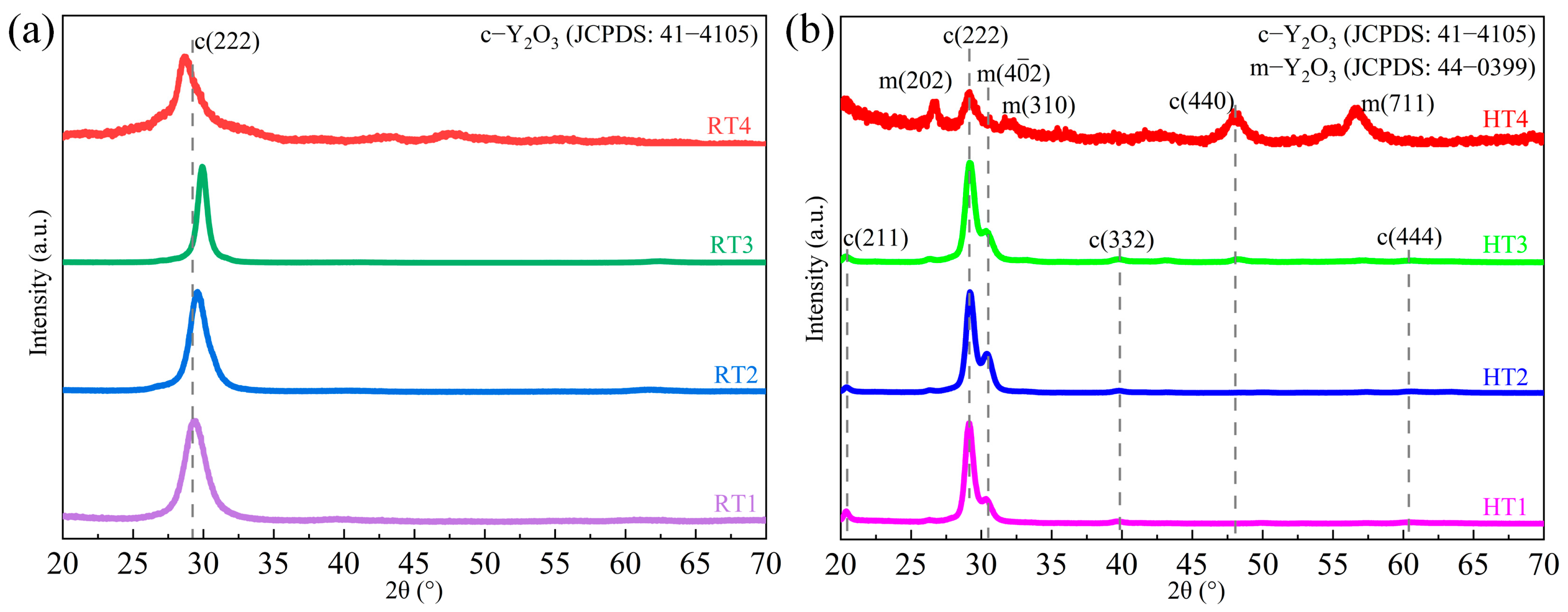
Figure 7 shows the XRD patterns of the Y2O3 films. At room temperature, the films exhibit a dominant c-(222) crystal structure with the Ia-3 (No. 206) space group (JCPDS: 41-1105 [22]). Keeping the control voltage at −300 V, the diffraction peaks shift towards higher angles with increasing bias voltage. This is attributed to enhanced ion bombardment that increases atomic mobility on the substrate surface and promotes lattice ordering. However, excessive bombardment also induces lattice distortion and interatomic compression, generating compressive stress within the film. This reduces the interplanar spacing and consequently decreases the lattice constant [23,24,25]. When the control voltage is −250 V (approaching the oxide mode), the Y2O3 films display weaker and broadened diffraction peaks, indicative of reduced crystallinity. Compared with those prepared at −300 V under equivalent bias conditions, the diffraction peaks shift towards smaller angles, which can be attributed to diminished ion bombardment intensity at lower voltages. Under deposition conditions at 300 °C, the Y2O3 films exhibit a mixed structure of cubic and monoclinic crystal structure with the C2/m (No. 12) space group (JCPDS: 44-0399 [26]). At a control voltage of −300 V, the diffraction peak intensity is significantly higher than that of the room-temperature samples, reflecting enhanced crystallinity at elevated temperature.
Crystal growth predominantly occurs along the c-(222) orientation, accompanied by weaker m-(4 0 ¯ 2) and c-(332) diffraction peaks. With increasing film thickness, additional weak cubic (440) and (444) diffraction peaks emerge. At elevated temperatures and a control voltage of −250 V, the Y2O3 films exhibit poor crystallinity but display a mixed-phase structure. The monoclinic structure, possessing lower symmetry than the cubic phase, is characterized by diagonally arranged atoms or ions within a less close-packed framework. Li et al. [14] reported that increasing the O2/Ar flow ratio transforms the Y2O3 film from a metastable monoclinic phase to a stable cubic phase. The formation of the monoclinic phase is generally associated with high-temperature and high-pressure conditions. The oxygen vacancies induced by ion bombardment can promote its nucleation by introducing lattice distortion and altering local oxygen coordination [27]. Cho et al. [28] demonstrated that monoclinic crystals appear when Ts ≤ 400 °C and the O/Y ratio is below 1.458. In contrast, when Ts = 500 °C and the O/Y ratio approaches the theoretical value of 1.5, a transformation from monoclinic to cubic structures occurs, indicating that oxygen deficiency favors monoclinic growth. Gaboriaud et al. [29] further observed that ion bombardment introduces substantial oxygen vacancies into epitaxial Y2O3 films, leading to the nucleation of a cubic structure within the monoclinic phase. Thus, sustained ion bombardment at elevated temperatures can generate oxygen vacancies that facilitate the formation of the monoclinic (4 0 ¯ 2) phase.
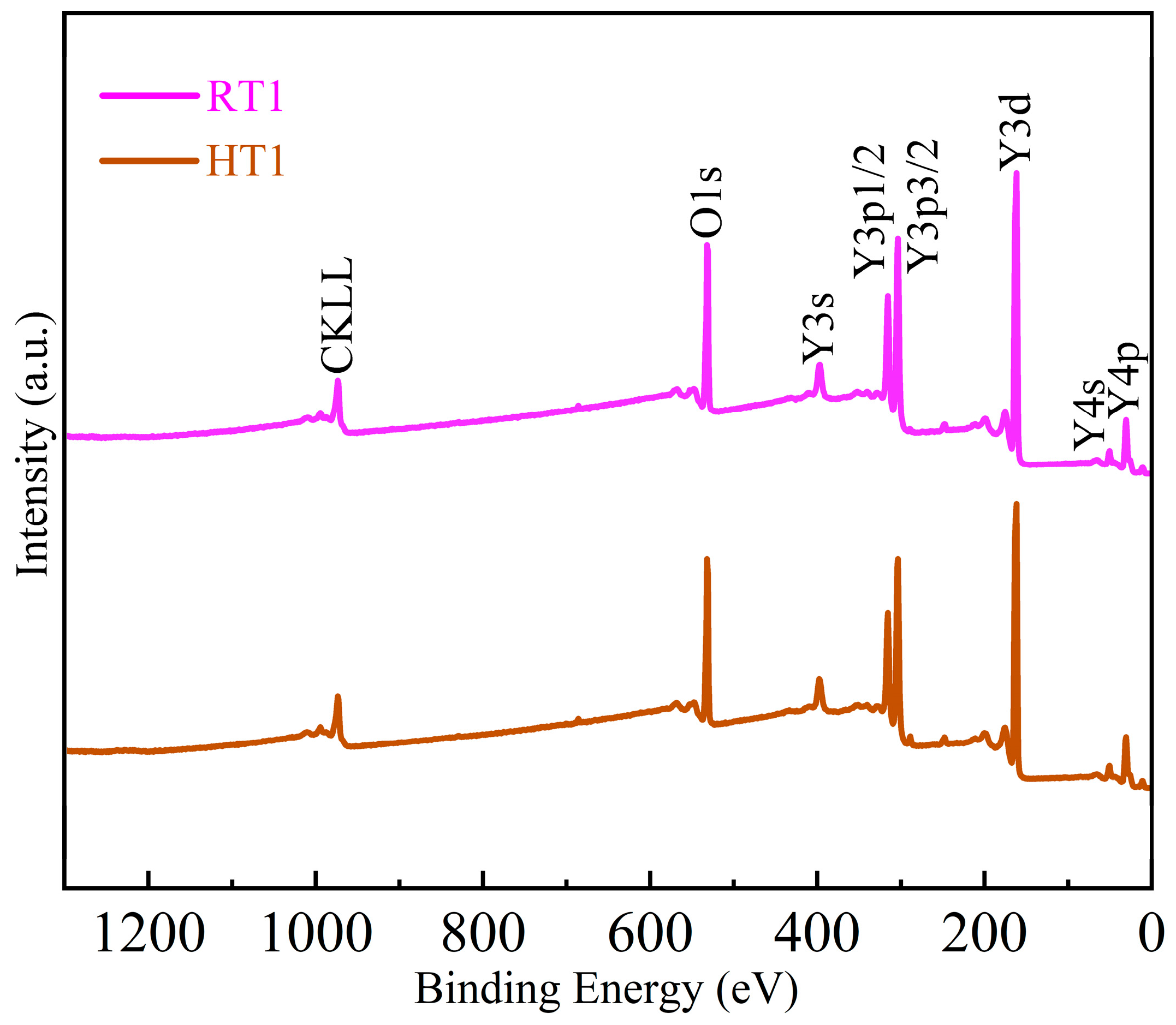
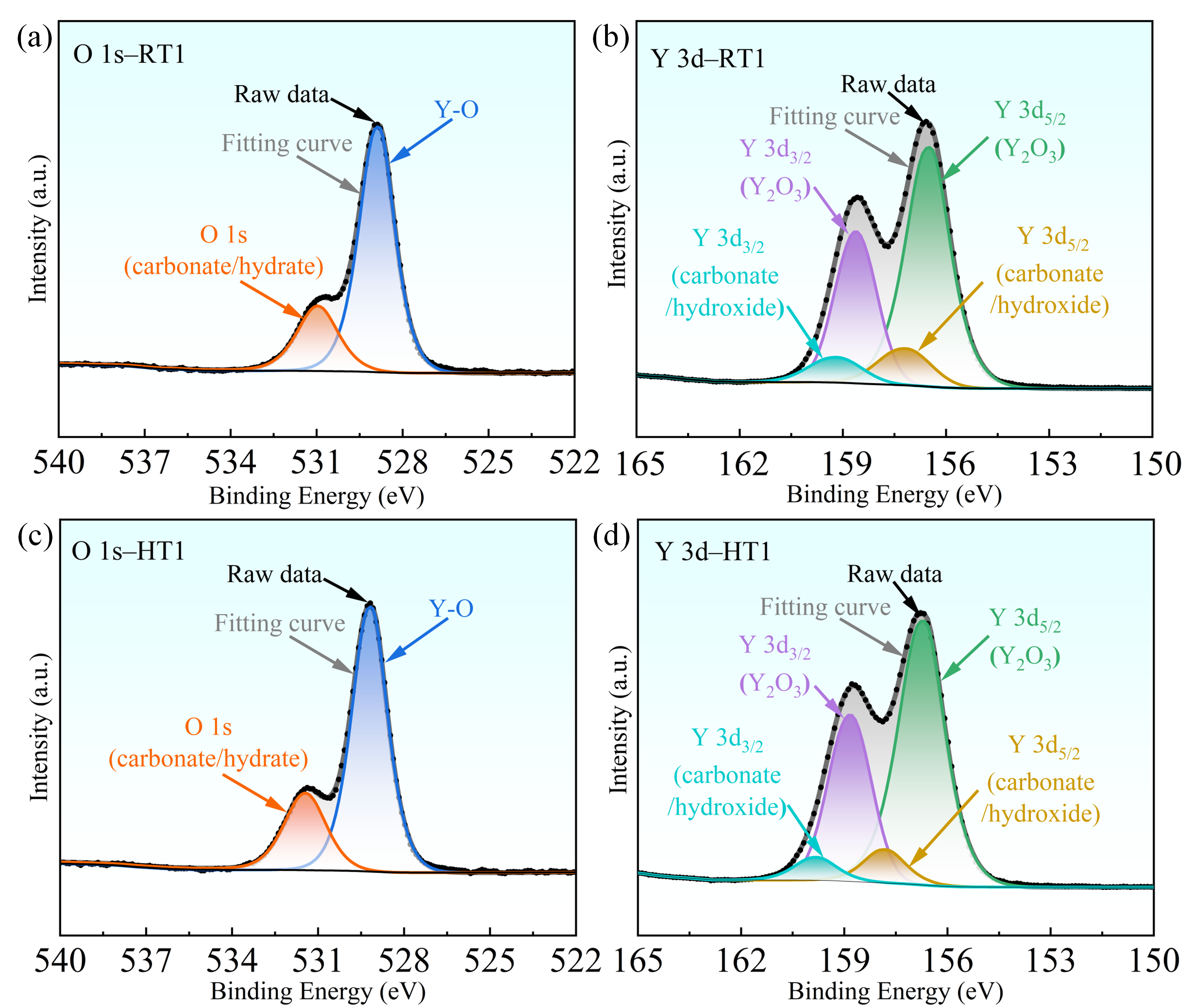
To further investigate the bonding states of the Y2O3 film, XPS analyses were conducted on the RT1 sample (prepared at room temperature) and the HT1 sample (prepared at 300 °C). The results are presented in Figure 8 and Figure 9. Figure 8 shows the full-range XPS survey spectra of the Y2O3 films after 10 nm Ar+ etching, while Figure 9 displays the high-resolution spectra of the O 1s and Y 3d regions. The spectral profiles of both films are similar, showing that they contain Y, O, and C elements. The C 1s peak primarily originates from surface contamination caused by atmospheric exposure, whereas the remaining peaks correspond to the characteristic Y and O signals of Y2O3, indicating high film purity. The O 1s spectrum (Figure 9) was fitted using a Gaussian-Lorentzian function [30,31] and deconvoluted into two components with binding energies of 531.45 eV (blue) and 529.14 eV (yellow). The higher binding energy component is attributed to surface-adsorbed oxygen species, such as carbon oxides, hydroxides, and loosely bound lattice oxygen formed during reactive sputtering [32]. The lower binding energy component corresponds to the intrinsic Y-O bonds in Y2O3. The Y 3d spectrum shows a typical spin–orbit doublet, which was deconvoluted into two sets of doublets. One for Y-O bonds (156.5 eV, 158.6 eV) and the other for Y-C or Y-OH bonds (157.2 eV, 159.2 eV). According to Rubio et al. [33], the binding energy difference between O 1s and Y 3d 5/2 in Y2O3 ranges from 371.3 to 373.0 eV. The measured difference in this study (371.9 eV) falls within this range, which is consistent with the characteristic range for stoichiometric Y2O3.
The film composition was semi-quantitatively analyzed using the sensitivity factor method based on the linear relationship between the XPS photoelectron peak intensity and surface atomic concentration. This was achieved through narrow-scan peak area integration, as described by Equations (2) and (3) [34,35]. By substituting the narrow-scan data of O and Y elements from Figure 9 and the instrumental parameters into these equations. The atomic percentages of O and Y in the film were calculated, and the results are summarized in Table 3. These values are consistent with the experimentally measured results shown in Figure 6.
C A = A t % A = N A i N i × 100 %               i = 1 , 2
N A = I A S F A × E 0.6 × T F
where CA is the atomic percentage concentration of element A; NA is the normalized peak area of element A; i N i represents the sum of normalized peak areas of all elements; IA is the peak area of element A; SFA is the sensitivity factor from the Scofield database; E is the incident X-ray energy; and TF is the transmission function.

3.3. Mechanical Properties

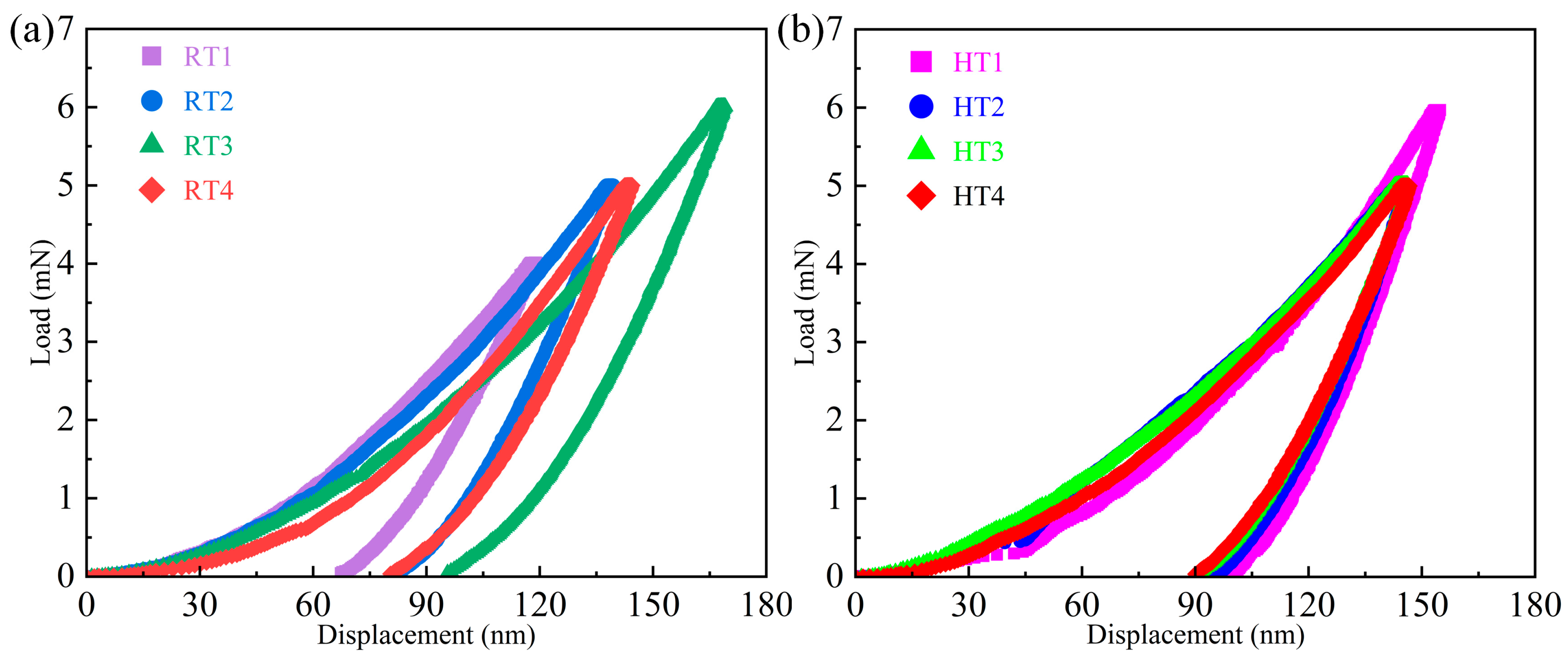
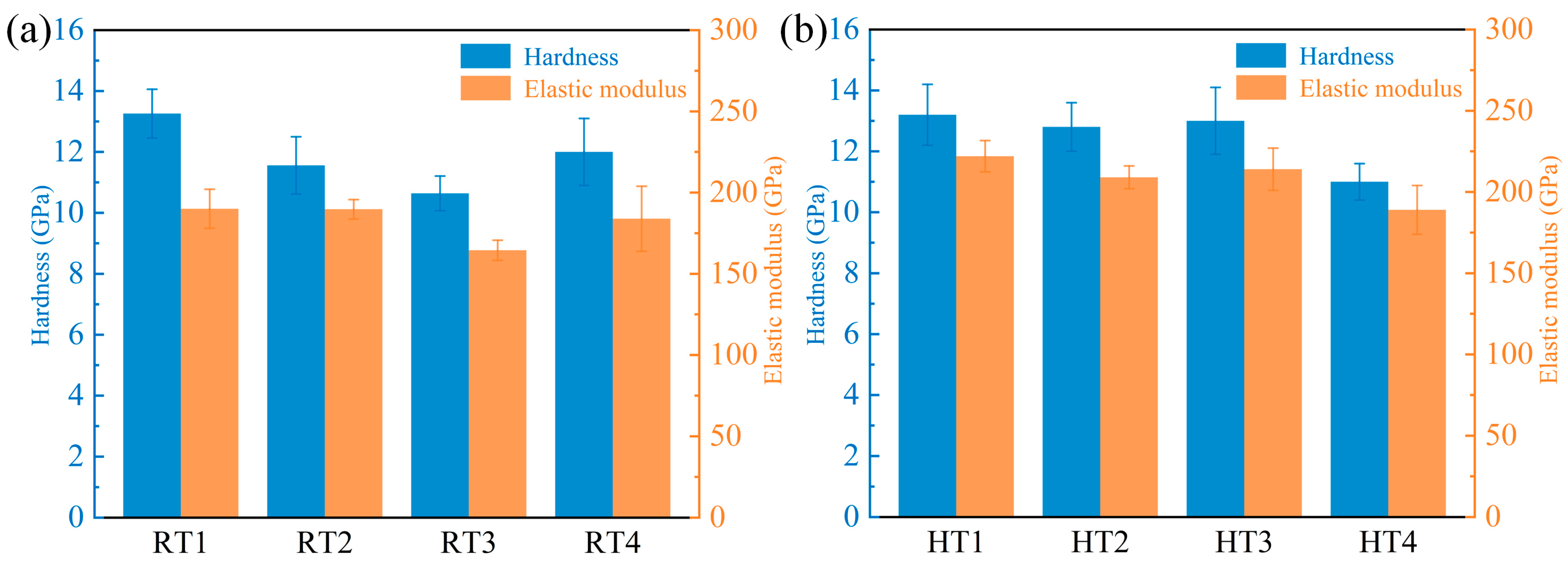
The mechanical properties of films are key indicators for evaluating their suitability in practical applications. High hardness and elastic modulus are essential for ensuring sufficient load-bearing capacity and directly affect the service lifespan of coated components [36,37,38]. Figure 10 shows the load–displacement curves of the Y2O3 films. The Y2O3 films deposited under different temperatures and bias voltages exhibit broadly similar curve profiles. Notably, the slope of the loading curve decreases slightly for films deposited at room temperature with applied bias, whereas films deposited at 300 °C show no significant slope variation with increasing thickness. The corresponding hardness and elastic modulus values are shown in Figure 11. The Y2O3 films exhibit hardness values ranging from 10.6 GPa to 13.3 GPa and elastic modulus values ranging from 162.0 GPa to 222.0 GPa. These values are comparable to those previously reported for sintered Y2O3 samples (hardness is 14.0 GPa and elastic modulus is 174 GPa [13]). At room temperature, the Y2O3 film deposited without any applied bias exhibits a high hardness of 13.3 GPa, which is attributed to its columnar microstructure and cubic crystal phase. However, with the increase in bias voltage, the Y2O3 film hardness gradually decreases, which may be due to the sharp increase in the O/Y ratio and the change in the columnar grain structure. The stable high values observed at 300 °C are primarily due to the dominant cubic crystal phase and enhanced structural densification at elevated temperature. Moreover, the columnar grain structure oriented perpendicular to the substrate contributes to the high hardness, similar to that observed in the room-temperature film deposited without bias. When the indenter penetrates the film along the direction normal to the substrate, the cubic (222) planes of the columnar grains provide resistance to deformation. Because fewer dislocation defects exist along the columnar direction, the number of active slip systems is reduced, thereby enhancing the film’s resistance to plastic deformation. The slight reduction in hardness at a control voltage of −250 V may be associated with the formation of the lower-symmetry monoclinic phase.

3.4. Optical Properties

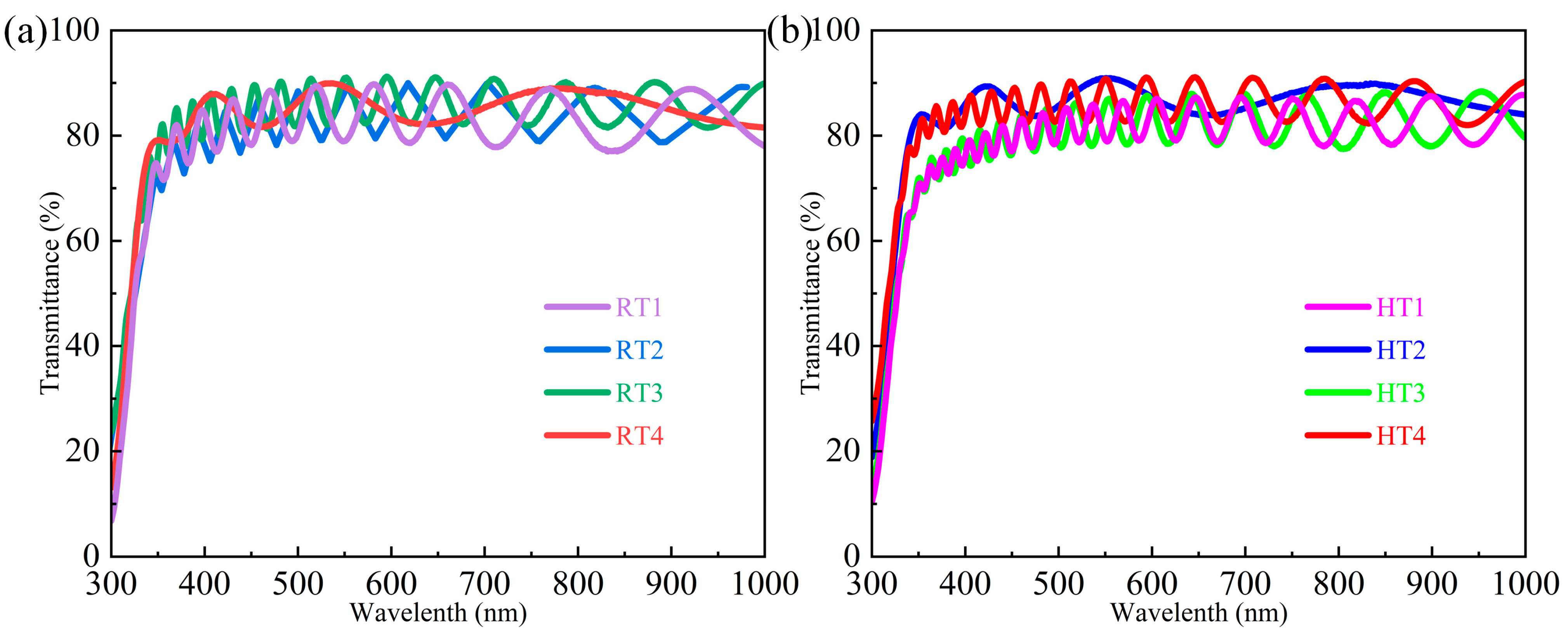
Y2O3 films, as a class of advanced ceramic materials, exhibit exceptional optical transparency in the visible spectrum (400–800 nm), which originates from their cubic fluorite crystal structure and minimal grain-boundary scattering. This key characteristic makes them highly promising for use as optical window materials in plasma etching equipment [39]. Figure 12 shows the transmission spectra of Y2O3 films deposited on quartz glass substrates via a feedback-controlled sputtering process. The films exhibit an average transmittance exceeding 80% over the wavelength range of 400–1000 nm, consistent with results reported in previous studies [40,41]. Y2O3 films prepared under metallic mode conditions contain substantial amounts of metallic yttrium and oxygen vacancies. Metallic yttrium exhibits reflectance values above 80% within the visible region, while oxygen vacancies act as point defects that introduce localized energy levels within the bandgap, thereby enhancing visible-light absorption. Consequently, the absorption coefficient may increase by one to two orders of magnitude [42,43]. The feedback control system is used through real-time regulation of the oxygen flow rate. This effectively suppresses the formation of oxygen vacancies and promotes the preferential growth of cubic crystal phases, thereby significantly improving the optical transparency of the films. The transmittance spectra show clear periodic interference fringes, which can be explained by the theory of film interference. Interference between the reflected light from the upper and lower surfaces occurs when electromagnetic waves pass through the film. Destructive interference of the reflected light (thereby maximizing transmission, corresponding to the peaks in the spectrum) occurs when the optical thickness of the film equals an odd multiple of a quarter-wavelength of the incident light. Conversely, constructive interference occurs when the optical thickness is an even multiple of a quarter-wavelength, reducing transmission (corresponding to the troughs). Due to variations in film thickness among samples, the peak and valley positions of the interference fringes exhibit systematic shifts [44]. The interference fringe oscillation frequency of the RT4 and HT2 samples significantly decreases, which may be influenced by various factors such as oxygen vacancies in the film, surface roughness, refractive index, and potential internal inhomogeneity of the samples. The inherent mechanism needs further investigations.
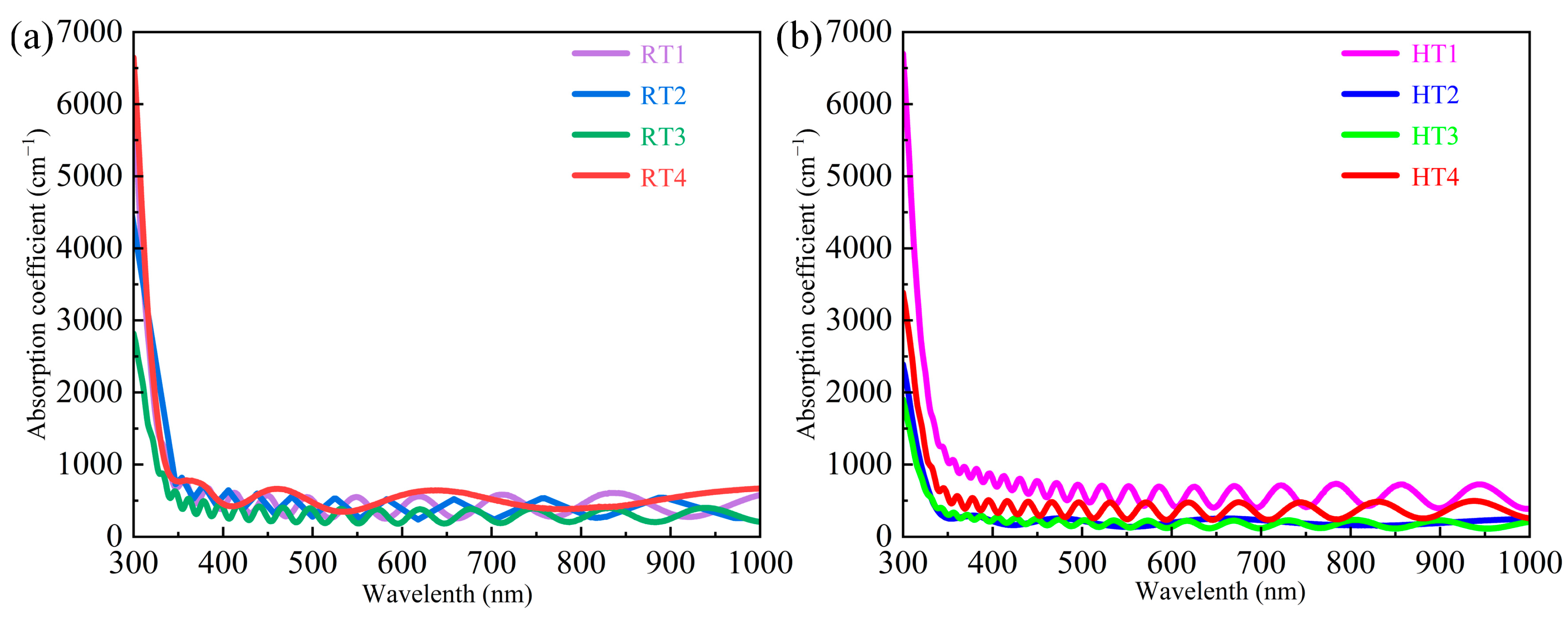
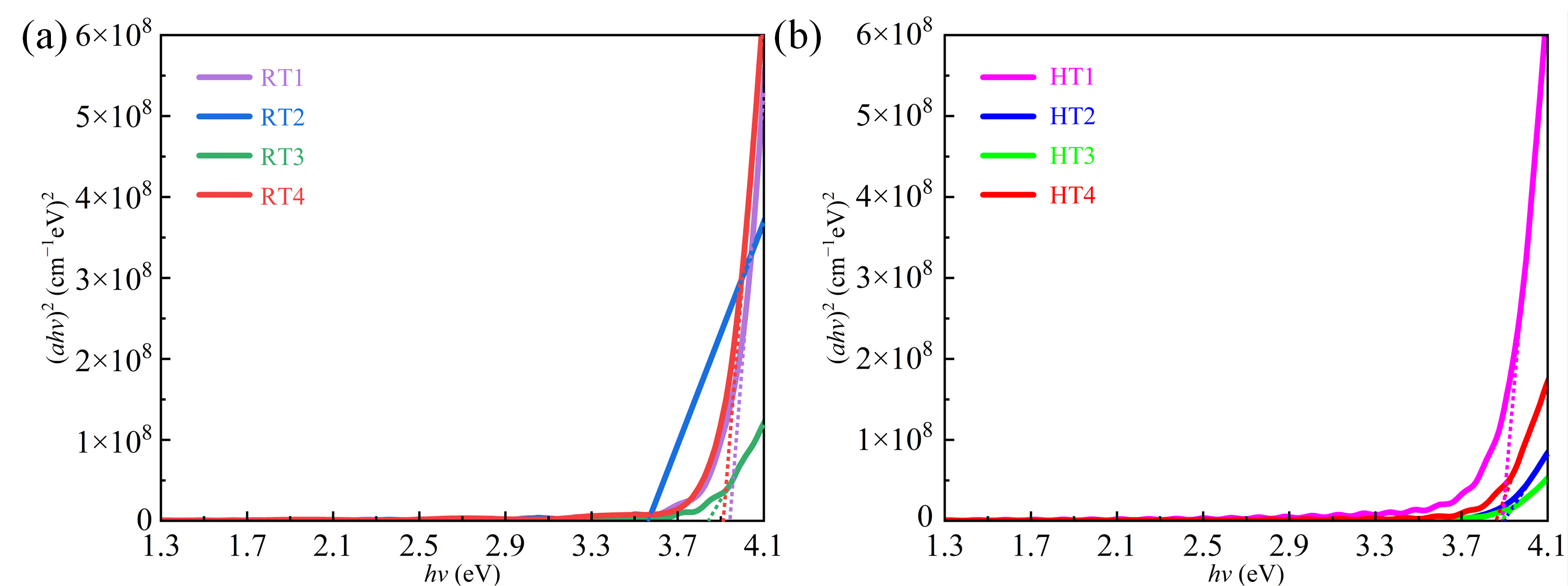
The absorption coefficient ɑ of the film can be calculated using Equation (4) [45]. Figure 12 shows the absorption coefficient of Y2O3 films, and the average transmittance and average absorption coefficient in the 400–1000 nm wavelength range are provided in Table 4. The absorption coefficient is influenced by the film thickness, with thinner coatings exhibiting relatively higher absorption. For instance, the HT3 sample, with a thickness of 4.76 μm, has the lowest absorption coefficient of 177.90 cm−1, while the thinner HT1 film under the same conditions shows a higher absorption coefficient of 581.23 cm−1. Additionally, the optical band gap energy Eg can be obtained using the Tauc equation, as shown in Equation (5) [39]. For direct bandgap materials, n = 2. The optical band gap Eg is determined by extrapolating the linear portion of the (ɑhv)2 versus hv curve to the photon energy axis, as shown in Figure 13. The optical band gap energies for Y2O3 films are listed in Table 4, revealing that the optical bandgap ranges from 3.5 to 4.0 eV with minimal variation. The RT2 sample, deposited at room temperature, exhibits a reduced band gap due to a dense and ordered film structure, which enhances electron mobility, a result consistent with literature reports [39]. As the bias voltage increases to −400V, high-energy particle bombardment leads to a non-uniform film surface, which causes an increase in the optical band gap Eg. In contrast, at a deposition temperature of 300 °C, the optical band gap remains stable with no significant variation (see Figure 14).
α = l o g T / d
(αhv)n = C(hv − Eg)
where ɑ is the absorption coefficient, d is the film thickness, T is the transmittance, h is Planck’s constant, ν is the optical frequency, and C is a constant.

3.5. Plasma Etching Resistant

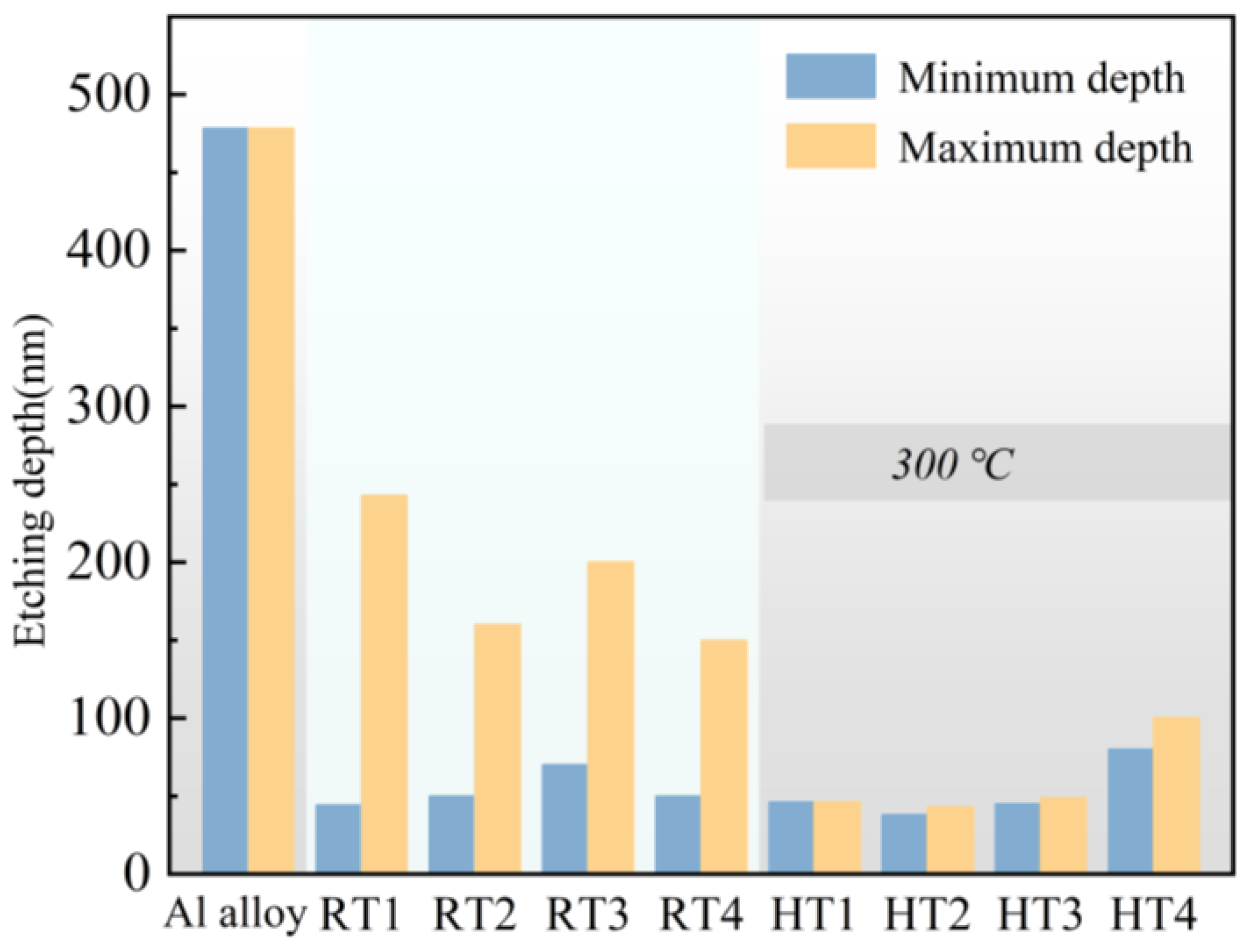
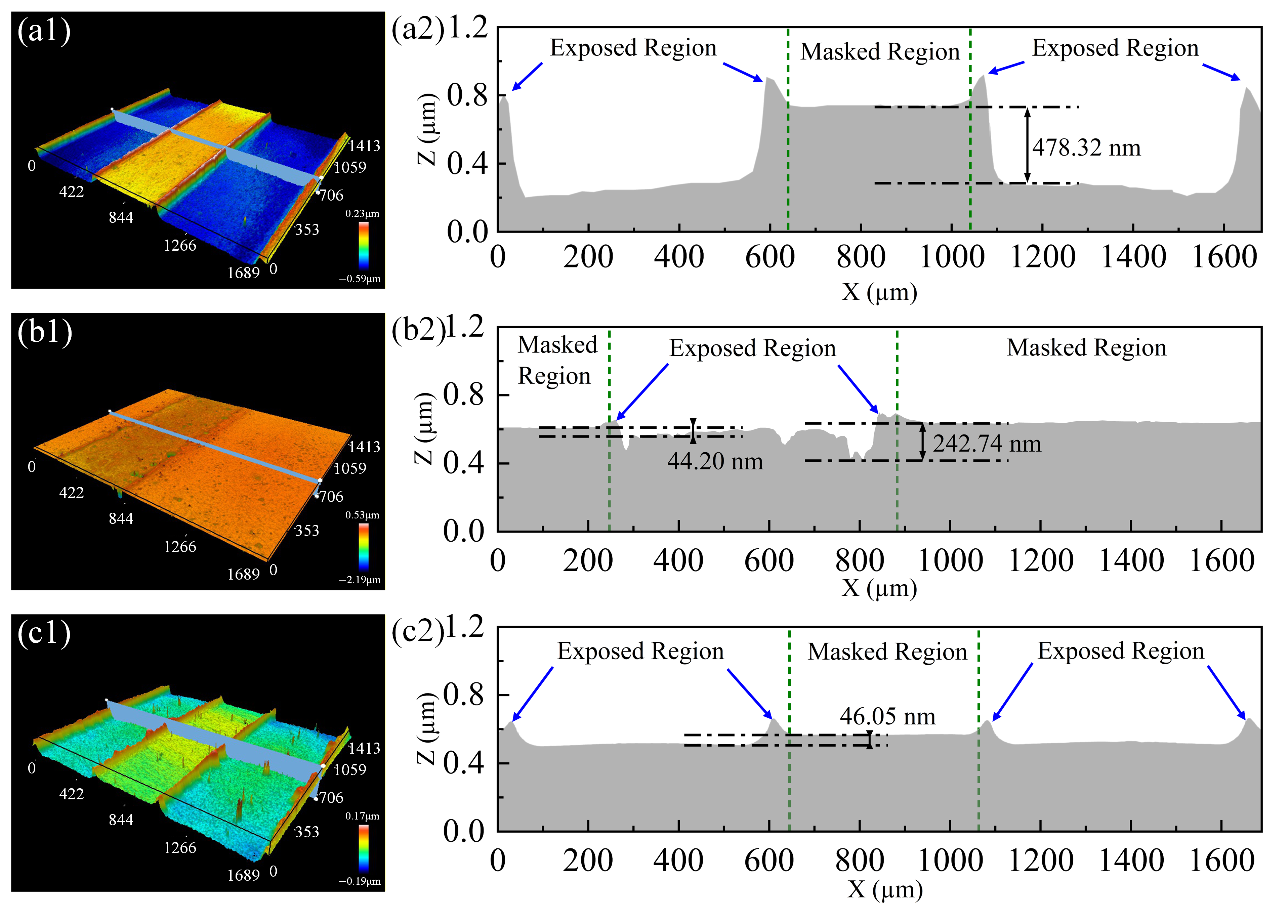
Figure 15 shows the etching depth of the aluminum alloy substrate and Y2O3 films after Ar+ etching. The etching depth of the aluminum alloy substrate reaches approximately 480 nm, whereas the Y2O3 films exhibit excellent protective performance, showing a markedly reduced surface erosion depth. Among the room-temperature deposited samples (RT1-RT4), the etching depth varies significantly from 44 to 242 nm. In contrast, the HT1-HT4 samples deposited at 300 °C exhibit shallower etching depths of 40–100 nm with less variation, indicating a substantially lower and more stable etching rate compared with the room-temperature films. To further examine the micromorphological characteristics of the Y2O3 film surfaces after Ar+ etching, the aluminum alloy substrates and representative films (RT1 and HT1) were selected for subsequent analysis. Figure 16 displays the 3D surface topography and depth profile analysis. The three samples exhibit distinct etching traces. At the interface between the ion-etched and masked regions (indicated by blue arrows), peak-like protrusions are observed above the film surface. These features mainly arise from material removal during Ar+ bombardment, followed by redeposition and accumulation along the mask edges. The aluminum alloy substrate shows deeper etched grooves with a uniform depth distribution. In contrast, the room-temperature deposited Y2O3 films exhibit pronounced non-uniform etching behavior. While localized pits reach depths of approximately 242.74 nm, the majority of the regions display shallower etching depths, averaging around 45 nm. The high-temperature deposited film exhibits a uniform morphology similar to that of the substrate but with significantly shallower overall etching, measuring approximately 46.05 nm. The maximum etch depth of high-temperature deposited Y2O3 films decreases by 81.03% compared with that of room-temperature films and by 90.37% compared with that of aluminum alloy substrates. Kreethi et al. [46] reported that film defects such as micropores and cracks tend to undergo preferential etching during Ar+ bombardment. Furthermore, the loosely packed atomic arrangement at grain boundaries increases susceptibility to ion erosion, intensifying intergranular indentation. Kwon et al. [47] also confirmed that dense films with closely bonded grain boundaries possess markedly enhanced resistance to physical sputtering. In this study, the room-temperature deposited Y2O3 films, although primarily composed of the cubic phase, exhibit relatively low crystallinity compared with the films deposited at 300 °C. This difference in structural quality results in inferior etching resistance.
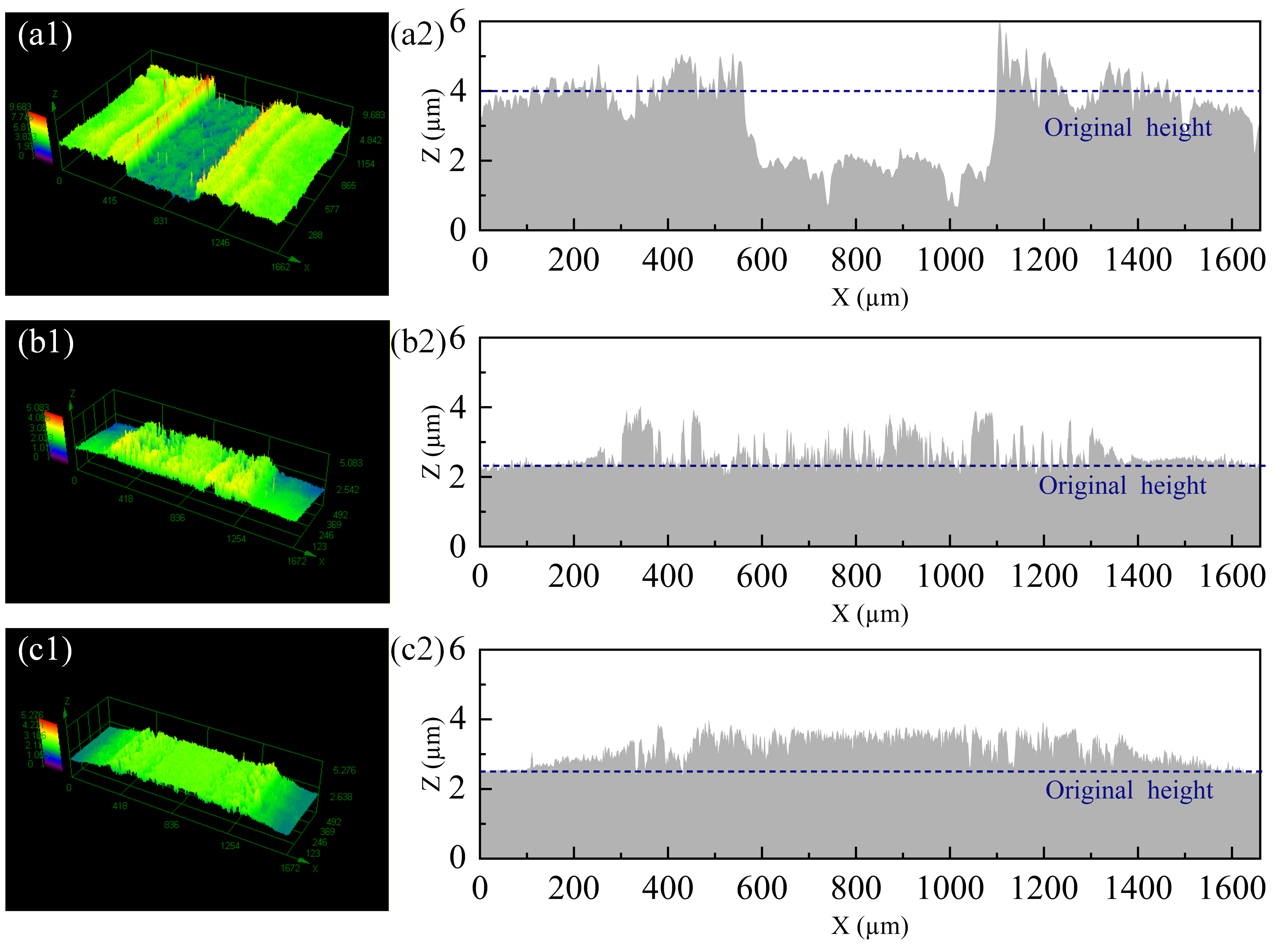
Figure 17 shows the 3D surface morphology and cross-sectional structure of the quartz glass substrate and deposited Y2O3 films following CF4 plasma etching. The surface evolution of Y2O3 films under CF4 plasma etching differs markedly from that observed in the pure Ar etching system. After CF4 plasma exposure, the uncoated quartz glass substrate develops distinct etched grooves in the central region, whereas the etched regions of the Y2O3 films uniformly exhibit uneven protrusions. Cross-sectional analysis (with blue dashed lines indicating the original surface prior to etching) reveals that the quartz glass substrate experiences an etching depth of approximately 2–3 μm. In contrast, the Y2O3 films regions exhibit pronounced protrusions, rising 1–2 µm above the original surface. Notably, while the quartz glass substrate suffers severe material loss under fluorocarbon plasma exposure, the Y2O3 films prepared under different deposition conditions show no pronounced trench like features or evidence of localized erosion. This result indicates that the Y2O3 films exhibit excellent resistance to CF4 plasma etching.
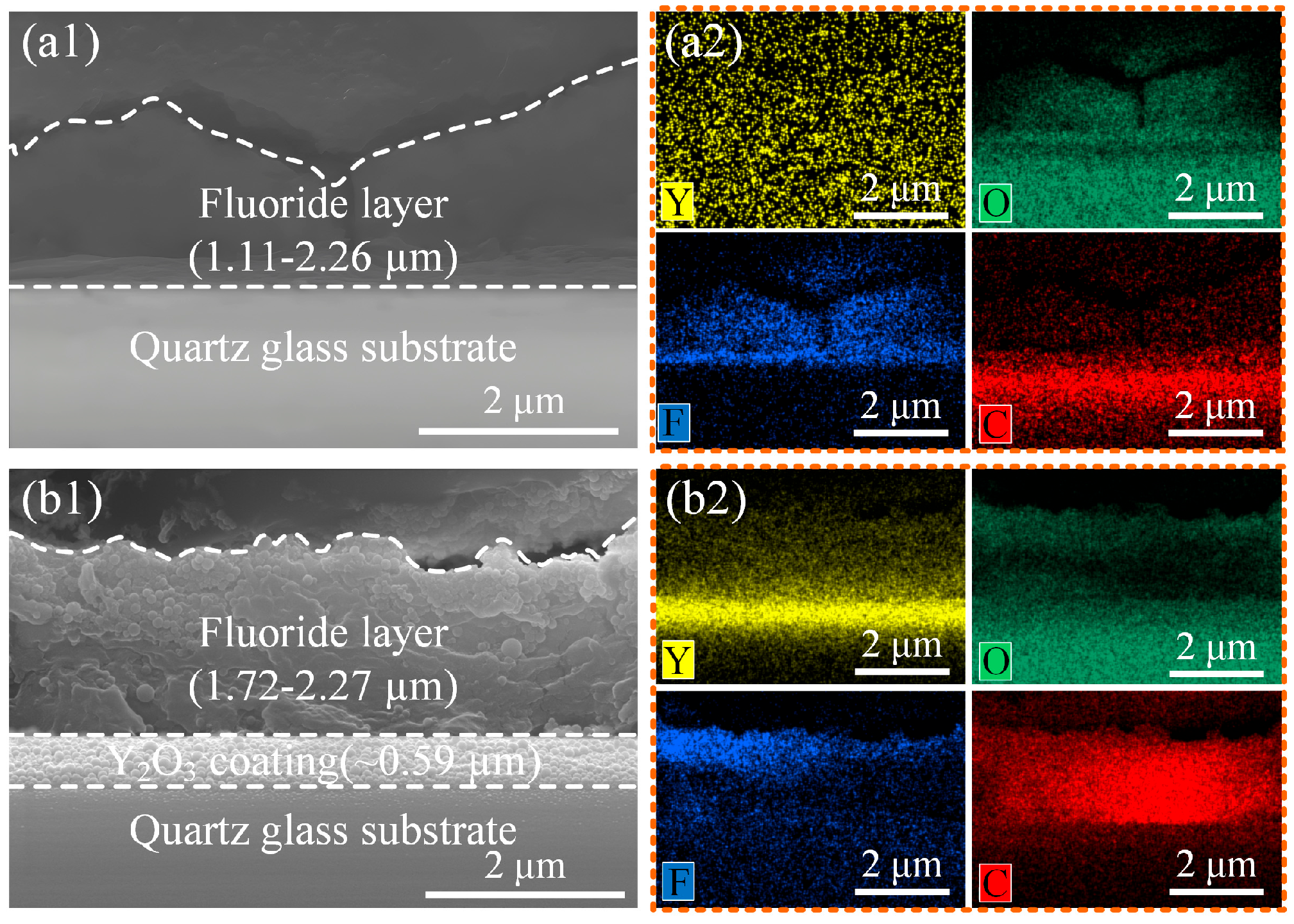
To determine whether CF4 plasma etching causes damage to the substrate, both the uncoated quartz glass and the HT1 sample were analyzed. The HT1 sample was specifically chosen as it retained a relatively intact fluoride layer after etching. Figure 18 presents the cross-sectional morphologies and corresponding elemental distributions of both samples after the etching process. For the uncoated quartz glass, an F-rich surface layer with a thickness of approximately 1.11–2.26 μm was formed in the etched region. Combined with the cross-sectional profile shown in Figure 17a, the total material loss (etching groove depth) of the uncoated substrate exceeded 3 μm and could reach beyond 5 μm. In contrast, the cross-sectional morphology of the HT1 sample (Figure 18b) reveals the formation of a thick YFx passivation layer (fluoride layer) approximately 1.72–2.27 μm on its surface. The original Y2O3 film thickness was 1.47 μm, with a remaining thickness of about 0.59 μm after etching, indicating a net material consumption of approximately 0.88 μm. These results indicate that CF4 plasma etching primarily induces surface fluorination reactions without causing significant damage to the substrate. These results demonstrate that the Y2O3 film provides effective protection as the etching process primarily induces the formation of a YFx surface fluorination layer without causing damage to the underlying substrate.
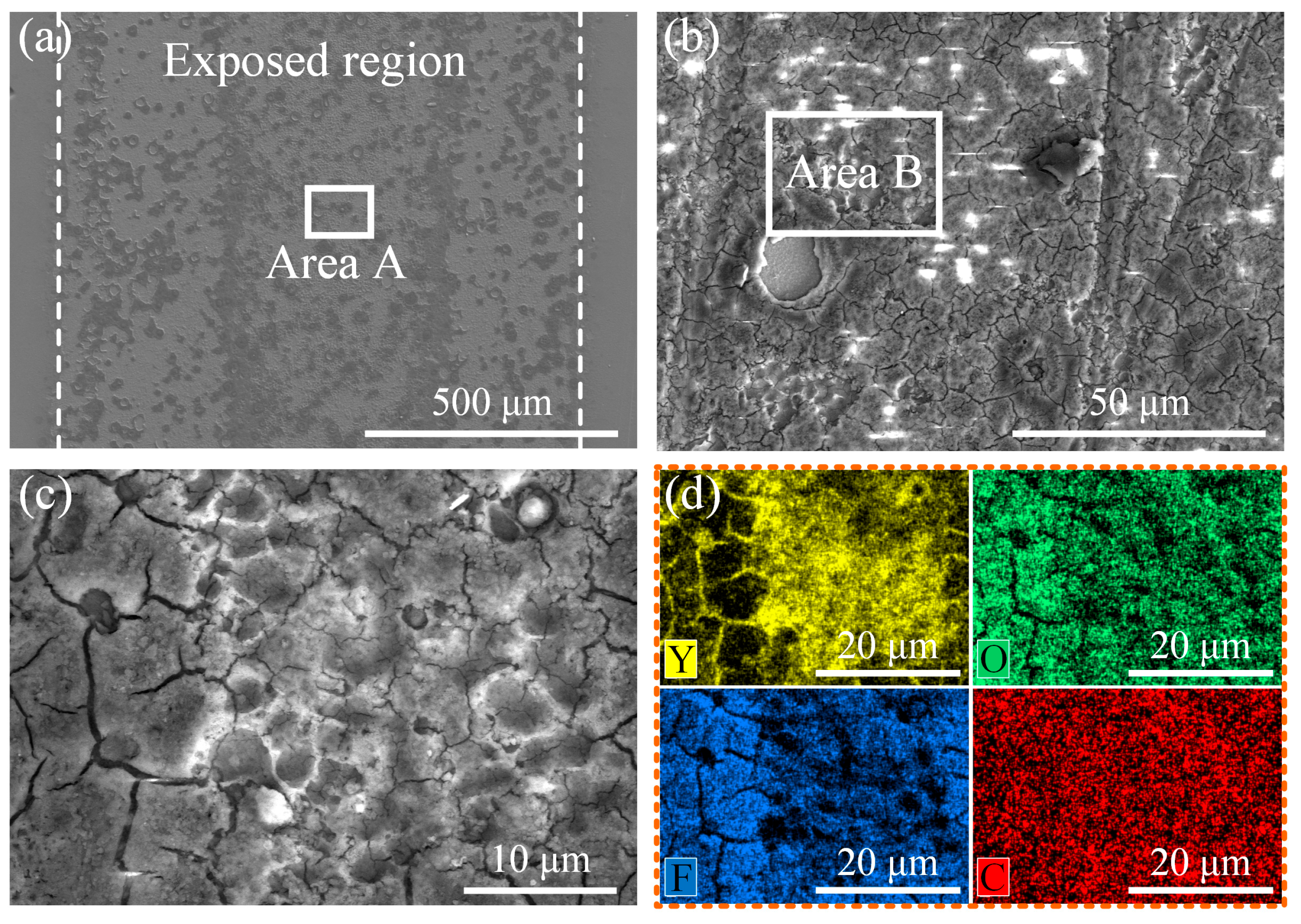
To further characterize the protruding regions within the etched areas of the Y2O3 film, the surface morphology and elemental distribution of the Y2O3 film (RT1) were examined. The results are shown in Figure 19. The protruding region exhibits a composite layered structure formed during CF4 plasma etching of the Y2O3 film. This structure is mainly composed of fluoride compounds and fluorocarbon, in which the fluoride layers serve as a physical barrier that suppresses further plasma-induced erosion of the substrate. For example, Wang et al. [48] observed that during SF6 plasma etching of Y2O3 films, fluorine radicals can diffuse into the film and substitute lattice oxygen or occupy oxygen vacancies, leading to the formation of a fluorine-rich YOF layer on the surface. The presence of this fluoride layer shifts the rate-determining step of the etching process from the intrinsic reactivity of Y2O3 to the removal of the fluoride layer itself, thereby markedly reducing the overall etching rate [49,50]. During the initial etching stage, CF4 molecules dissociate in the plasma, generating reactive fluorocarbon species. These species bombard the Y2O3 film surface, reacting with surface oxygen atoms to form volatile gases (CO2) that escape and subsequently break Y-O bonds. Subsequently, F radicals replace oxygen atoms and occupy oxygen vacancies, forming Y-F and Y-O-F bonds. As etching progresses, reaction products gradually accumulate on the surface, eventually forming a fluoride layer composed of YF3 and YOF. This fluoride layer effectively suppresses further etching of the Y2O3 film. Furthermore, continuous bombardment of fluorocarbon ions on the fluoride layer induces pits and microcracks, as observed in Figure 19c. In addition, due to the intentional introduction of a small amount of Ar during the chemical etching process, the synergistic effects of ion bombardment and fluorocarbon plasma lead to the formation of the observed loose and porous macroscopic surface morphology.
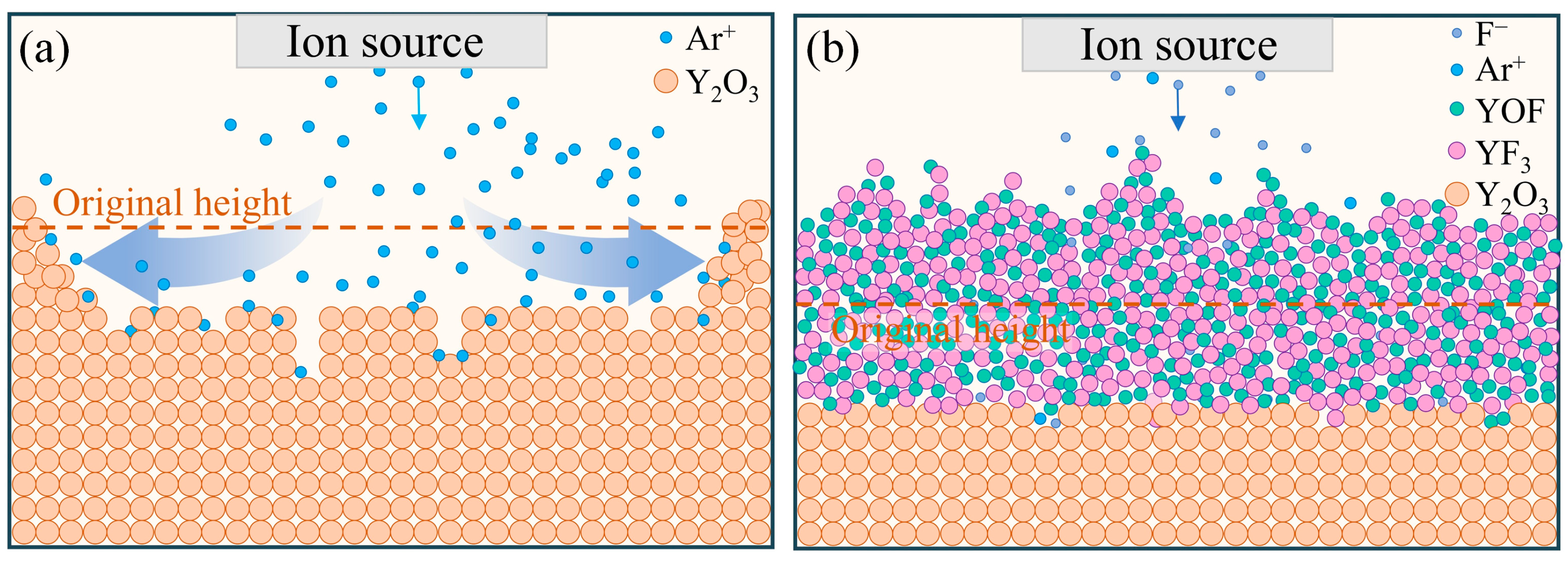
Figure 20 illustrates the etching behavior of Y2O3 films in Ar plasma and CF4 plasma environments, respectively. During Ar plasma etching (Figure 20a), high-energy Ar+ primarily interacts with the Y2O3 film surface via physical bombardment. This results in sputtering and removal of surface atoms, with physical etching dominating the process. This process not only reduces the film thickness but is also typically accompanied by increased surface roughness. A slight accumulation of the film is visible on both sides of the etched trench. In contrast, during CF4 plasma etching (Figure 20b), reactive F radicals and CFx ions preferentially chemically react with the Y2O3 film surface, forming fluoride reaction products such as YF3 and YOF. These products form a continuous reaction layer that covers the film surface, effectively inhibiting continued plasma etching of the underlying Y2O3. This mechanism significantly improves the plasma etch resistance of the Y2O3 film.

4. Conclusions

In this work, Y2O3 films were fabricated by the MF-RMS technique using a closed-loop feedback control system under varying deposition temperatures, substrate bias voltages, and target control voltages. The microstructure and properties of the films were investigated. The main conclusions are as follows:
(1) Increasing the deposition temperature drives a crystallographic transition in the Y2O3 film from a predominantly cubic structure to a mixed phase comprising both cubic and monoclinic structures. The Y2O3 film deposition rate in the near-metallic mode is significantly higher than that in the oxide mode. When the target is in the near-metal mode, the deposition rate is higher than 25 nm/min. Even in the near-oxide mode, the deposition rate can still reach 11 nm/min. Except for the thin films prepared under a bias voltage of −400 V, the composition of the remaining thin films is close to the stoichiometric ratio.
(2) For room-temperature deposited Y2O3 films, increasing the bias voltage enhances the deposition rate but reduces the hardness from 13.3 GPa to 10.6 GPa. The films fabricated at 300 °C with a control voltage of −300 V exhibited optimal mechanical performance, achieving the highest hardness (13.3 GPa) and elastic modulus (222.0 GPa).
(3) The feedback control system successfully suppressed the formation of oxygen vacancies, ensuring high optical quality. All Y2O3 films exhibited an average optical transmittance exceeding 80% in the 400–1000 nm wavelength range.
(4) The Y2O3 films demonstrated exceptional resistance to plasma etching. After Ar plasma etching, the HT1 films exhibited a reduction in maximum etch depth by 81.03% compared to RT1 films, and a 90.37% reduction compared to the aluminum alloy substrate. Only a slight loss of the Y2O3 film was observed after CF4 plasma etching, whereas the quartz glass substrate exhibited prominent etched grooves. These exceptional plasma etching resistance properties highlight the potential of Y2O3 films as promising candidates for applications such as optical windows, plasma-resistant barriers, and protective layers in semiconductor manufacturing and high-temperature environments.

Author Contributions

R.Z.—Writing and Visualization; J.P.—Original draft and Methodology; X.Z.—Review and editing; K.G.—Conceptualization; Z.G.—Methodology; W.D.—Review and editing and Investigation; Z.W.—Conceptualization and Investigation; Y.X.—Review and editing; Q.W.—Review and editing and Funding acquisition. All authors have read and agreed to the published version of the manuscript.

Funding

This work was financially supported by the National Natural Science Foundation of China (52401083, 52375173), the Guangdong Basic Applied Basic Research Foundation (2023B151520033) and the Major Science and Technology Projects in Dongguan (DGKJ2401).

Institutional Review Board Statement

Not applicable.

Informed Consent Statement

Not applicable.

Data Availability Statement

The data used to support the findings of this study are available from the corresponding author upon request.

Conflicts of Interest

Author Xiaobo Zhang was employed by SuPro Instruments Limited. Author Zecui Gao was employed by Plansee (Shanghai) High Performance Material Limited. The remaining authors declare that the research was conducted in the absence of any commercial or financial relationships that could be construed as a potential conflict of interest.

References

  1. Choi, J.H.; Im, W.B.; Kim, H.-J. Plasma resistant glass (PRG) for reducing particulate contamination during plasma etching in semiconductor manufacturing: A review. Mater. Today Commun. 2023, 34, 105267. [Google Scholar] [CrossRef]
  2. Romano, L. Etching: The art of semiconductor micromachining. Micromachines 2025, 16, 213. [Google Scholar] [CrossRef]
  3. Moothedath, A.; Ren, Z. Enhanced plasma etching using nonlinear parameter evolution. Micro Nano Eng. 2024, 25, 100288. [Google Scholar] [CrossRef]
  4. Moriya, T.; Nakayama, H.; Nagaike, H.; Kobayashi, Y.; Shimada, M.; Okuyama, K. Particle reduction and control in plasma etching equipment. IEEE Trans. Semicond. Manuf. 2005, 18, 477–486. [Google Scholar] [CrossRef]
  5. Bae, K.-B.; Jang, H.-S.; Oh, Y.-S.; Lee, I.-H.; Lee, S.-M. Effects of HfO2 addition on the plasma resistance of Y2O3 thin films deposited by e-beam PVD. Appl. Surf. Sci. 2023, 640, 158359. [Google Scholar] [CrossRef]
  6. Kindelmann, M.; Stamminger, M.; Schön, N.; Rasinski, M.; Eichel, R.-A.; Hausen, F.; Bram, M.; Guillon, O. Erosion behavior of Y2O3 in fluorine-based etching plasmas: Orientation dependency and reaction layer formation. J. Am. Ceram. Soc. 2020, 104, 1465–1474. [Google Scholar] [CrossRef]
  7. Jang, H.-Y.; Raju, K.; Lee, H.-K. Formation of YOF on Y2O3 through surface modification with NH4F and its plasma-resistance behavior. Ceram. Int. 2024, 50, 47513–47518. [Google Scholar] [CrossRef]
  8. Zhao, D.; Huang, L.; Gong, C.; Yu, Y. Erosion resistance of Y2O3 ceramics in CF4 etching plasma: Microstructural evolution and mechanical properties. Appl. Surf. Sci. 2024, 669, 160509. [Google Scholar] [CrossRef]
  9. Cao, Y.-C.; Zhao, L.; Luo, J.; Wang, K.; Zhang, B.-P.; Yokota, H.; Ito, Y.; Li, J.-F. Plasma etching behavior of Y2O3 ceramics: Comparative study with Al2O3. Appl. Surf. Sci. 2016, 366, 304–309. [Google Scholar] [CrossRef]
  10. So, J.; Kim, M.; Kwon, H.; Maeng, S.; Choi, E.; Chung, C.-W.; Yun, J.-Y. Investigation of contamination particles generation and surface chemical reactions on Al2O3, Y2O3, and YF3 coatings in F-based plasma. Appl. Surf. Sci. 2023, 629, 157367. [Google Scholar] [CrossRef]
  11. Ma, H.J.; Park, Y.-J.; Kim, M.-J.; Kim, H.-N.; Ko, J.-W.; Lee, J.-W.; Kim, J.-H.; Lee, H.-C. Physiochemical etching characteristics and surface analysis of Y2O3-MgO nanocomposite under different CF4/Ar/O2 plasma atmospheres. Appl. Surf. Sci. 2023, 641, 158483. [Google Scholar] [CrossRef]
  12. Choi, K.-Y.; Oh, Y.-S.; Kim, S.; Lee, S.-M. High erosion resistant Y2O3–carbon electroconductive composite under the fluorocarbon plasma. Ceram. Int. 2013, 39, 1209–1214. [Google Scholar] [CrossRef]
  13. Jang, H.-S.; Bae, K.-B.; Min, S.-R.; Oh, Y.-S.; Lee, I.-H.; Lee, S.-M. Remarkably enhanced plasma resistance of Y2O3- and Y-rich thin films through controllable reactive sputtering. Appl. Surf. Sci. 2025, 685, 162050. [Google Scholar] [CrossRef]
  14. Li, J.; Liu, Z.; Zhang, Y.; Jia, B.; Xu, W.; Liu, X.; Ji, L.; Wang, A.; Sun, C.; Li, H. Effect of O2/Ar ratio on the microstructure and tribological properties of Y2O3 films by multi-arc ion plating. Ceram. Int. 2024, 50, 43032–43043. [Google Scholar] [CrossRef]
  15. Kim, M.; Choi, E.; Lee, D.; Seo, J.; Back, T.-S.; So, J.; Yun, J.-Y.; Suh, S.-M. The effect of powder particle size on the corrosion behavior of atmospheric plasma spray-Y2O3 coating: Unraveling the corrosion mechanism by fluorine-based plasma. Appl. Surf. Sci. 2022, 606, 154958. [Google Scholar] [CrossRef]
  16. Oliver, W.C.; Pharr, G.M. An improved technique for determining hardness and elastic modulus using load and displacement sensing indentation experiments. J. Mater. Res. 1992, 7, 1564–1583. [Google Scholar] [CrossRef]
  17. Maier-Kiener, V.; Korte-Kerzel, S. Advanced nanoindentation testing: Beyond the Oliver–Pharr method. MRS Bull. 2025, 50, 689–694. [Google Scholar] [CrossRef]
  18. Strijckmans, K.; Schelfhout, R.; Depla, D. Tutorial: Hysteresis during the reactive magnetron sputtering process. J. Appl. Phys. 2018, 124, 241101. [Google Scholar] [CrossRef]
  19. Van Emmerik, C.I.; Hendriks, W.A.P.M.; Stok, M.M.; de Goede, M.; Chang, L.; Dijkstra, M.; Segerink, F.B.; Post, D.; Keim, E.G.; Dikkers, M.J.; et al. Relative oxidation state of the target as guideline for depositing optical quality RF reactive magnetron sputtered Al2O3 layers. Opt. Mater. Express 2020, 10, 1451–1462. [Google Scholar] [CrossRef]
  20. Shugurov, A.R.; Kuzminov, E.D.; Panin, A.V. The effect of substrate bias on the structure, mechanical and tribological properties of DC magnetron sputtered Ti-Al-Ta-Si-N coatings. Surf. Coat. Technol. 2025, 517, 132858. [Google Scholar] [CrossRef]
  21. Zhang, R.; Yan, K.; Gao, Z.; Wu, H.; Wang, Q. Microstructure and mechanical properties of CuZr thin-film metallic glasses deposited by magnetron sputtering. Lubricants 2025, 13, 447. [Google Scholar] [CrossRef]
  22. JCPDS 41-1105; Yttrium Oxide (Y2O3), Cubic. International Centre for Diffraction Data (ICDD): Newtown Square, PA, USA, 1999.
  23. Taghavi Pourian Azar, G.; Er, D.; Ürgen, M. The role of superimposing pulse bias voltage on DC bias on the macroparticle attachment and structure of TiAlN coatings produced with CA-PVD. Surf. Coat. Technol. 2018, 350, 1050–1057. [Google Scholar] [CrossRef]
  24. Mirzaei, S.; Alishahi, M.; Souček, P.; Buršíková, V.; Zábranský, L.; Gröner, L.; Burmeister, F.; Blug, B.; Daum, P.; Mikšová, R.; et al. Effect of substrate bias voltage on the composition, microstructure and mechanical properties of W-B-C coatings. Appl. Surf. Sci. 2020, 528, 146966. [Google Scholar] [CrossRef]
  25. Rusli, N.A.; Muhammad, R.; Ghoshal, S.K.; Nur, H.; Nayan, N.; Jaafar, S.N. Bias voltage dependent structure and morphology evolution of magnetron sputtered YSZ thin film: A basic insight. Mater. Res. Express 2019, 6, 106414. [Google Scholar] [CrossRef]
  26. JCPDS 44-0399; Yttrium Oxide (Y2O3), Monoclinic. International Centre for Diffraction Data (ICDD): Newtown Square, PA, USA, 1999.
  27. Lei, P.; Dai, B.; Zhu, J.; Chen, X.; Liu, G.; Zhu, Y.; Han, J. Controllable phase formation and physical properties of yttrium oxide films governed by substrate heating and bias voltage. Ceram. Int. 2015, 41, 8921–8930. [Google Scholar] [CrossRef]
  28. Cho, M.H.; Ko, D.H.; Jeong, K.; Whangbo, S.W.; Whang, C.N.; Choi, S.C.; Cho, S.J. Structural transition of crystalline Y2O3 film on Si(111) with substrate temperature. Thin Solid Film. 1999, 349, 266–269. [Google Scholar] [CrossRef]
  29. Gaboriaud, R.J.; Paumier, F.; Jublot, M.; Lacroix, B. Ion irradiation-induced phase transformation mechanisms in Y2O3 thin films. Nucl. Instrum. Methods Phys. Res. Sect. B Beam Interact. Mater. At. 2013, 311, 86–92. [Google Scholar] [CrossRef]
  30. Xu, X.; Guo, T.; Jin, X.; Ma, W.; Li, H.; Fan, L.; Hong, Y.; Wang, S. In situ XPS analysis of surface transformations in activated Ti-Zr-V thin films by nitrogen venting. Vacuum 2025, 234, 114089. [Google Scholar] [CrossRef]
  31. Kulikova, D.P.; Baburin, A.S.; Lotkov, E.S.; Rodionov, I.A.; Baryshev, A.V. In-situ ellipsometric study of WO3–x dielectric permittivity during gasochromic colouration. Int. J. Hydrog. Energy 2024, 82, 767–775. [Google Scholar] [CrossRef]
  32. Xia, J.; Liang, W.; Miao, Q.; Depla, D. The effect of energy and momentum transfer during magnetron sputter deposition of yttrium oxide thin films. Appl. Surf. Sci. 2018, 439, 545–551. [Google Scholar] [CrossRef]
  33. Rubio, E.J.; Atuchin, V.V.; Kruchinin, V.N.; Pokrovsky, L.D.; Prosvirin, I.P.; Ramana, C.V. Electronic structure and optical quality of nanocrystalline Y2O3 film surfaces and interfaces on silicon. J. Phys. Chem. C 2014, 118, 13644–13651. [Google Scholar] [CrossRef]
  34. Zhang, Z.; Zhang, Y.; Guo, Y.; Chen, X.; Chen, L. Impurity element analysis of aluminum hydride using PIXE, XPS and elemental analyzer technique. Nucl. Instrum. Methods Phys. Res. Sect. B Beam Interact. Mater. At. 2021, 488, 1–4. [Google Scholar] [CrossRef]
  35. Beyss, O.; Breuer, U.; Zander, D. An in-depth investigation of the native oxide formed on Al-Zn-Mg-Cu alloys by XPS, XRR and ToF-SIMS. Appl. Surf. Sci. 2025, 687, 162258. [Google Scholar] [CrossRef]
  36. Zhang, R.; Wang, Q.; Xu, Y.; Li, L.; Kim, K.H. Fabrication and properties of hard coatings by a hybrid PVD method. Lubricants 2025, 13, 390. [Google Scholar] [CrossRef]
  37. Chen, D.; Liang, D.; Dai, W.; Wang, Q.; Yan, J.; Wang, J. Mechanical properties and high-temperature steam oxidation of Cr/CrN multi-layers produced by high-power impulse magnetron sputtering. Coatings 2025, 15, 185. [Google Scholar] [CrossRef]
  38. Feng, Z.; Zhou, Z.; Zeng, J.; Chen, D.; Luo, F.; Wang, Q.; Dai, W.; Zhang, R. Comparison of corrosion behavior of a-C coatings deposited by cathode vacuum arc and filter cathode vacuum arc techniques. Coatings 2024, 14, 1053. [Google Scholar] [CrossRef]
  39. Soliman, T.S. The influence of Y2O3 ceramic rare-earth oxide nanoparticles on the bandgap energy and refractive index of polyvinylidene fluoride membrane. Ceram. Int. 2025, 51, 25408–25415. [Google Scholar] [CrossRef]
  40. Wiktorczyk, T.; Biegański, P.; Serafińczuk, J. Optical properties of nanocrystalline Y2O3 thin films grown on quartz substrates by electron beam deposition. Opt. Mater. 2016, 59, 150–156. [Google Scholar] [CrossRef]
  41. Zatsepin, A.; Kuznetsova, Y.; Zatsepin, D.; Wong, C.-H.; Law, W.-C.; Tang, C.-Y.; Gavrilov, N. Exciton luminescence and optical properties of nanocrystalline cubic Y2O3 films prepared by reactive magnetron sputtering. Nanomaterials 2022, 12, 2726. [Google Scholar] [CrossRef]
  42. Nistor, M.; Gherendi, F.; Dobrin, D.; Perrière, J. From transparent to black amorphous zinc oxide thin films through oxygen deficiency control. J. Appl. Phys. 2022, 132, 225705. [Google Scholar] [CrossRef]
  43. Chitanov, V.; Kolaklieva, L.; Kakanakov, R.; Cholakova, T.; Pashinski, C.; Kolchev, S.; Zlatareva, E.; Atanasova, G.; Tsanev, A.; Hingerl, K. Investigation of optical properties of complex Cr-Based hard coatings deposited through unbalanced magnetron sputtering intended for real industrial applications. Coatings 2024, 14, 946. [Google Scholar] [CrossRef]
  44. Taha, T.A.; Alanazi, S.S.; El-Nasser, K.S.; Alshammari, A.H.; Ismael, A. Structure–property relationships in PVDF/SrTiO3/CNT nanocomposites for optoelectronic and solar cell applications. Polymers 2024, 16, 736. [Google Scholar] [CrossRef] [PubMed]
  45. Chen, X.; Song, L.; You, L.; Zhao, L. Incorporation effect of Y2O3 on the structure and optical properties of HfO2 thin films. Appl. Surf. Sci. 2013, 271, 248–252. [Google Scholar] [CrossRef]
  46. Kreethi, R.; Hwang, Y.-J.; Lee, H.-Y.; Park, J.-H.; Lee, K.-A. Stability and plasma etching behavior of yttrium-based coatings by air plasma spray process. Surf. Coat. Technol. 2023, 454, 129182. [Google Scholar] [CrossRef]
  47. Kwon, H.; Kim, Y.; Park, H.; Lee, C. The importance of intimate inter-crystallite bonding for the plasma erosion resistance of vacuum kinetic sprayed Y2O3 coating. Surf. Coat. Technol. 2019, 374, 493–499. [Google Scholar] [CrossRef]
  48. Wang, W.-K.; Wang, S.Y.; Zhang, Y.H.; Huang, S.-Y. Passivation effect on the surface characteristics and corrosion properties of yttrium oxide films undergoing SF6 plasma treatment. Ceram. Int. 2022, 48, 19824–19830. [Google Scholar] [CrossRef]
  49. Song, J.-B.; Kim, J.-T.; Oh, S.-G.; Yun, J.-Y. Contamination particles and plasma etching behavior of atmospheric plasma sprayed Y2O3 and YF3 coatings under NF3 Plasma. Coatings 2019, 9, 102. [Google Scholar] [CrossRef]
  50. Kim, Y.; Kwon, H.; Park, H.; Lee, C. Correlation of plasma erosion resistance and the microstructure of YF3 coatings prepared by vacuum kinetic spray. J. Therm. Spray Technol. 2020, 29, 1016–1026. [Google Scholar] [CrossRef]
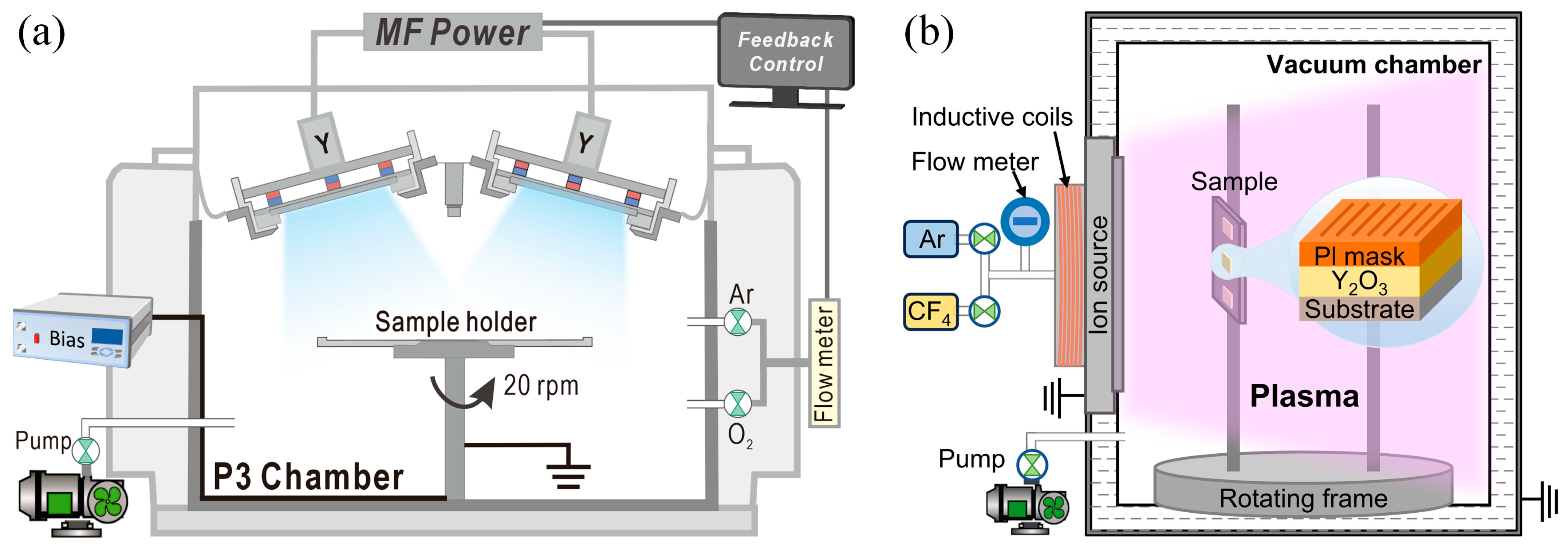
Figure 1. Schematic diagram of the equipment: (a) film deposition; (b) plasma etching.
Coatings 15 01397 g001
Figure 2. Hysteresis curves (discharge voltage vs. oxygen flow rate) of the Y target.
Coatings 15 01397 g002
Figure 3. Surface morphology of Y2O3 films: (a) RT1; (b) RT2; (c) RT3; (d) RT4; (e) HT1; (f) HT2; (g) HT3; (h) HT4.
Coatings 15 01397 g003
Figure 4. Cross-sectional morphology of Y2O3 films: (a) RT1; (b) RT2; (c) RT3; (d) RT4; (e) HT1; (f) HT2; (g) HT3; (h) HT4.
Coatings 15 01397 g004
Figure 5. Deposition rate of Y2O3 films deposited at different conditions. (The white region on the left corresponds to a deposition temperature of 25 °C, while the pink region on the right corresponds to 300°C.)
Coatings 15 01397 g005
Figure 6. Elemental composition and O/Y atomic ratio of Y2O3 films. (The white region on the left corresponds to a deposition temperature of 25 °C, while the blue region on the right corresponds to 300°C.)
Coatings 15 01397 g006
Figure 7. XRD patterns of Y2O3 films deposited at (a) 25 °C; (b) 300 °C.
Coatings 15 01397 g007
Figure 8. XPS survey spectra of typical Y2O3 films (RT1 and HT1) after 10 nm Ar+ surface etching.
Coatings 15 01397 g008
Figure 9. XPS spectra of O 1s and Y 3d regions for Y2O3 films: (a,b) RT1; (c,d) HT1.
Coatings 15 01397 g009
Figure 10. Load–displacement curves of Y2O3 films deposited at (a) 25 °C; (b) 300 °C.
Coatings 15 01397 g010
Figure 11. Hardness and elastic modulus of Y2O3 films deposited at (a) 25 °C; (b) 300 °C.
Coatings 15 01397 g011
Figure 12. Optical transmittance spectra of Y2O3 films deposited on glass substrates deposited at (a) 25 °C; (b) 300 °C.
Coatings 15 01397 g012
Figure 13. Optical absorption coefficient of Y2O3 films deposited on glass substrates deposited at (a) 25 °C; (b) 300 °C.
Coatings 15 01397 g013
Figure 14. (ɑhv)2 versus hv curves for Y2O3 films deposited on glass substrates deposited at (a) 25 °C; (b) 300 °C.
Coatings 15 01397 g014
Figure 15. Minimum and maximum etching depths of Y2O3 films and bare aluminum alloy substrate after Ar plasma etching. (The blue region corresponds to a deposition temperature of 25 °C, while the grey region corresponds to aluminum alloy substrate and a deposition temperature of 300°C.)
Coatings 15 01397 g015
Figure 16. 3D surface morphology (a1) aluminum alloy substrate; (b1) RT1; (c1) HT1 and corresponding cross-sectional profiles (a2) aluminum alloy substrate; (b2) RT1; (c2) HT1 of the samples after Ar plasma etching.
Coatings 15 01397 g016
Figure 17. 3D surface morphology (a1) quartz glass substrate; (b1) RT1; (c1) HT1 and corresponding cross-sectional profiles (a2) quartz glass substrate; (b2) RT1; (c2) HT1 of the samples after CF4 plasma etching.
Coatings 15 01397 g017
Figure 18. Cross-sectional morphology (a1) quartz glass substrate; (b1) HT1 and elemental mappings (a2) quartz glass substrate; (b2) HT1 after CF4 plasma etching.
Coatings 15 01397 g018
Figure 19. Surface morphology of a typical Y2O3 film after fluorocarbon plasma etching. (a) An overview of the exposed region etched area; (b) an enlarged SEM image of area A in (a); (c) magnification view of area B in (b); (d) elemental mapping of the region in (c).
Coatings 15 01397 g019
Figure 20. Schematic of the etching mechanisms of Y2O3 films in (a) Ar plasma; (b) CF4 plasma. (The direction of ion transport is represented by the small arrows, and the large arrows signify the modifications of the Y2O3 coating during plasma etching.)
Coatings 15 01397 g020
Table 1. Deposition parameters of Y2O3 films.
Control Voltage (V)O2 (Sccm)Temperature (°C)Bias (V)Time (min)
RT1−3000~525060
RT2−3000~525−20060
RT3−3000~525−40060
RT4−2500~525−200120
HT1−3000~5300060
HT2−3000~53000120
HT3−3000~53000180
HT4−2500~53000120
Table 2. Experimental parameters for plasma etching processes.
ParameterValue
Physical EtchingChemical Etching
Ionization power (W)15001200
Bias power (W)400200
Bias voltage (V)−200−100
GasArAr, CF4
Gas flow rate (sccm)15010, 50
Chamber pressure (Pa)0.81.0
Etching time (min)4060
Table 3. Elemental content and O/Y atomic ratios ratio of typical Y2O3 films.
Elemental Content (at.%)O/Y
YO
RT142.4557.551.36
HT141.1358.871.43
Table 4. Average transmittance, average absorption coefficient α, and optical band gap energy Eg of Y2O3 films.
RT1RT2RT3RT4HT1HT2HT3HT4
Average transmittance (%)83.3384.8885.8885.5582.2087.1482.3686.32
Average absorption coefficient α (cm−1)426.17374.98299.16511.15581.23197.74177.90368.59
Optical band gap energy Eg (eV)3.943.563.843.913.893.903.883.86
Disclaimer/Publisher’s Note: The statements, opinions and data contained in all publications are solely those of the individual author(s) and contributor(s) and not of MDPI and/or the editor(s). MDPI and/or the editor(s) disclaim responsibility for any injury to people or property resulting from any ideas, methods, instructions or products referred to in the content.