Formation of Solid Lubricants during High Temperature Tribology of Silver-Doped Molybdenum Nitride Coatings Deposited by dcMS and HIPIMS
 , , ,
, , ,
Abstract
1. Introduction
2. Materials and Methods
2.1. Film Deposition
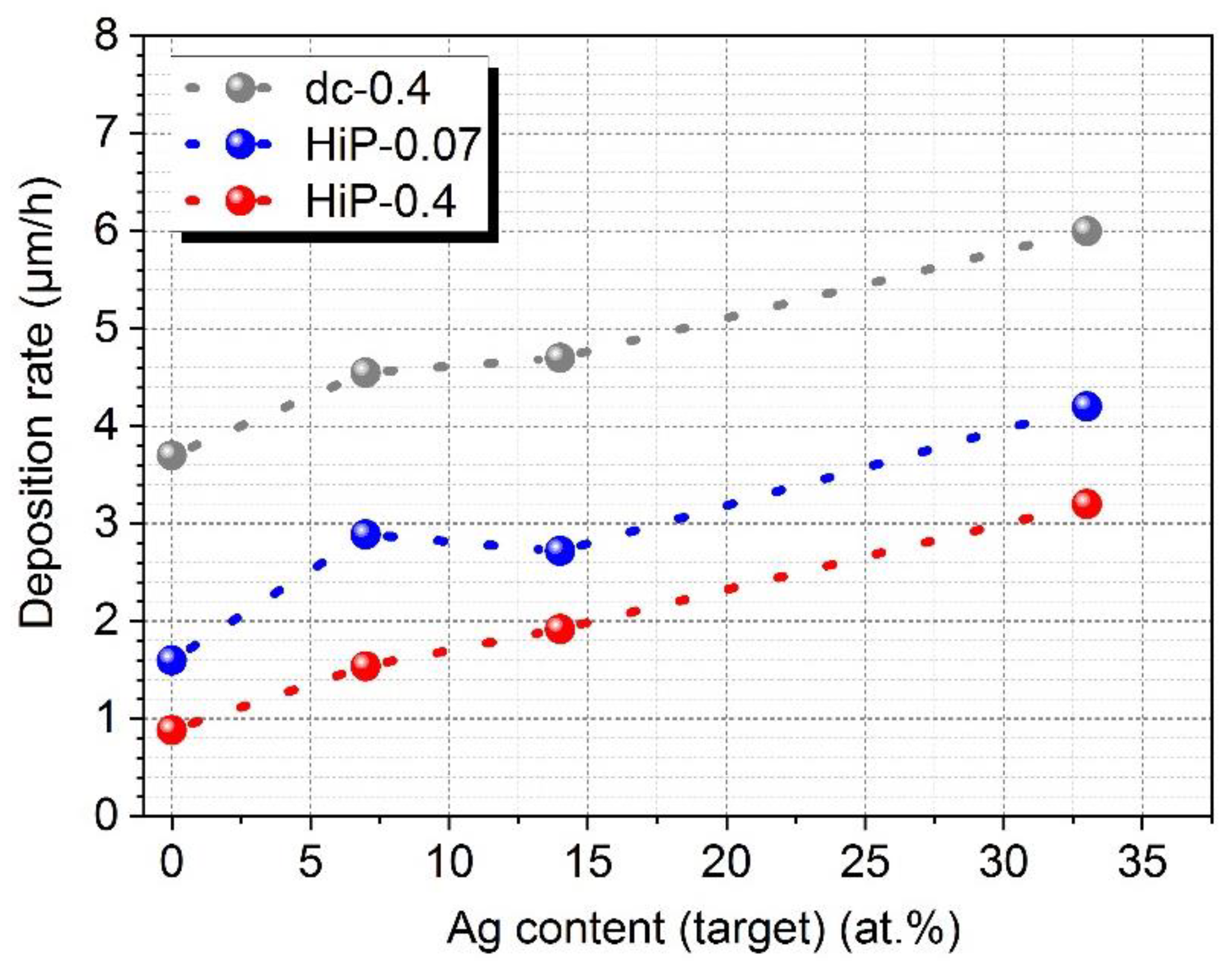
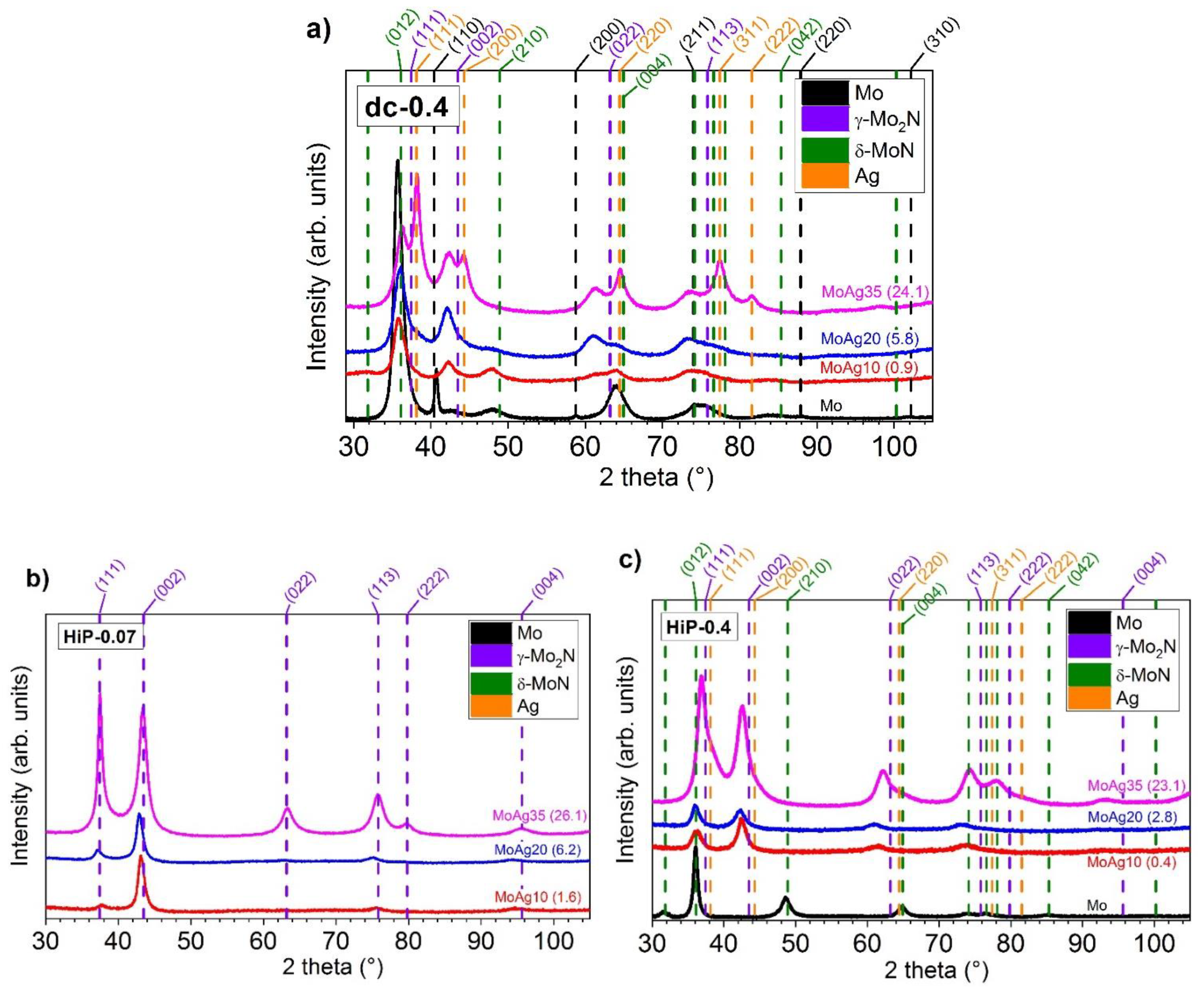
- Series dc-0.4: MoN and MoN-Ag films deposited by dcMS with a nitrogen partial pressure, p(N2), of 0.4 Pa and floating substrate bias voltage;
- Series HiP-0.07: MoN and MoN-Ag films deposited by HiPIMS with p(N2) = 0.07 Pa and floating substrate bias voltage;
- Series HiP-0.4: MoN and MoN-Ag films deposited by HiPIMS with p(N2) = 0.4 Pa and floating substrate bias voltage;
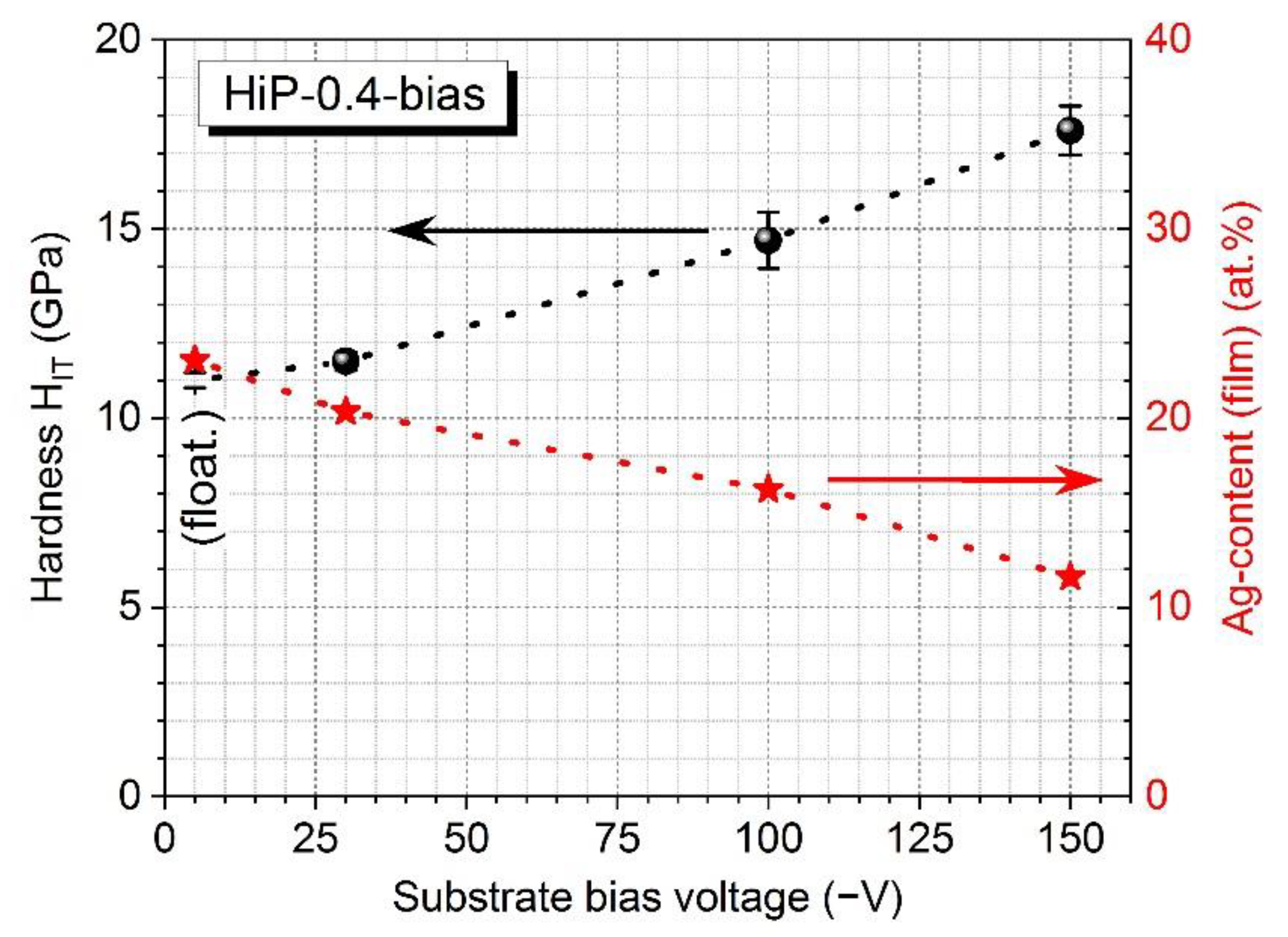
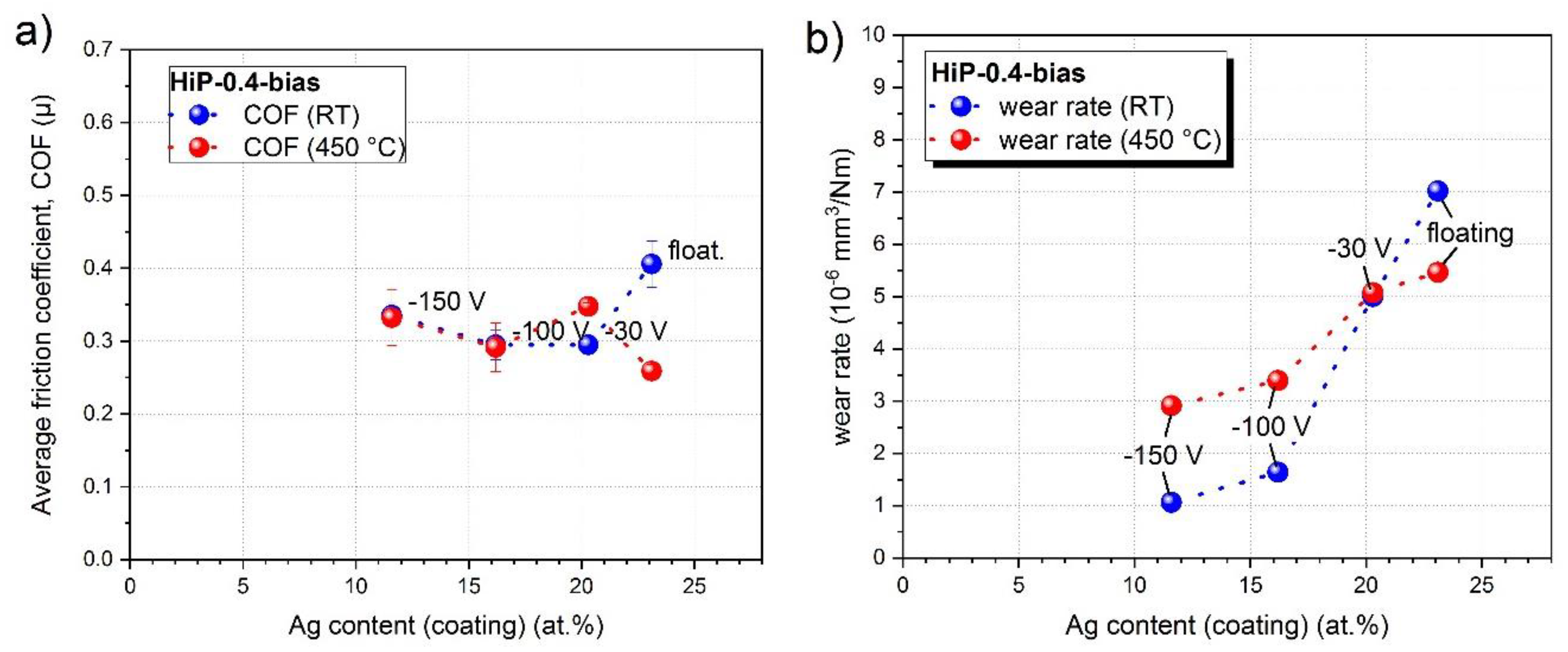
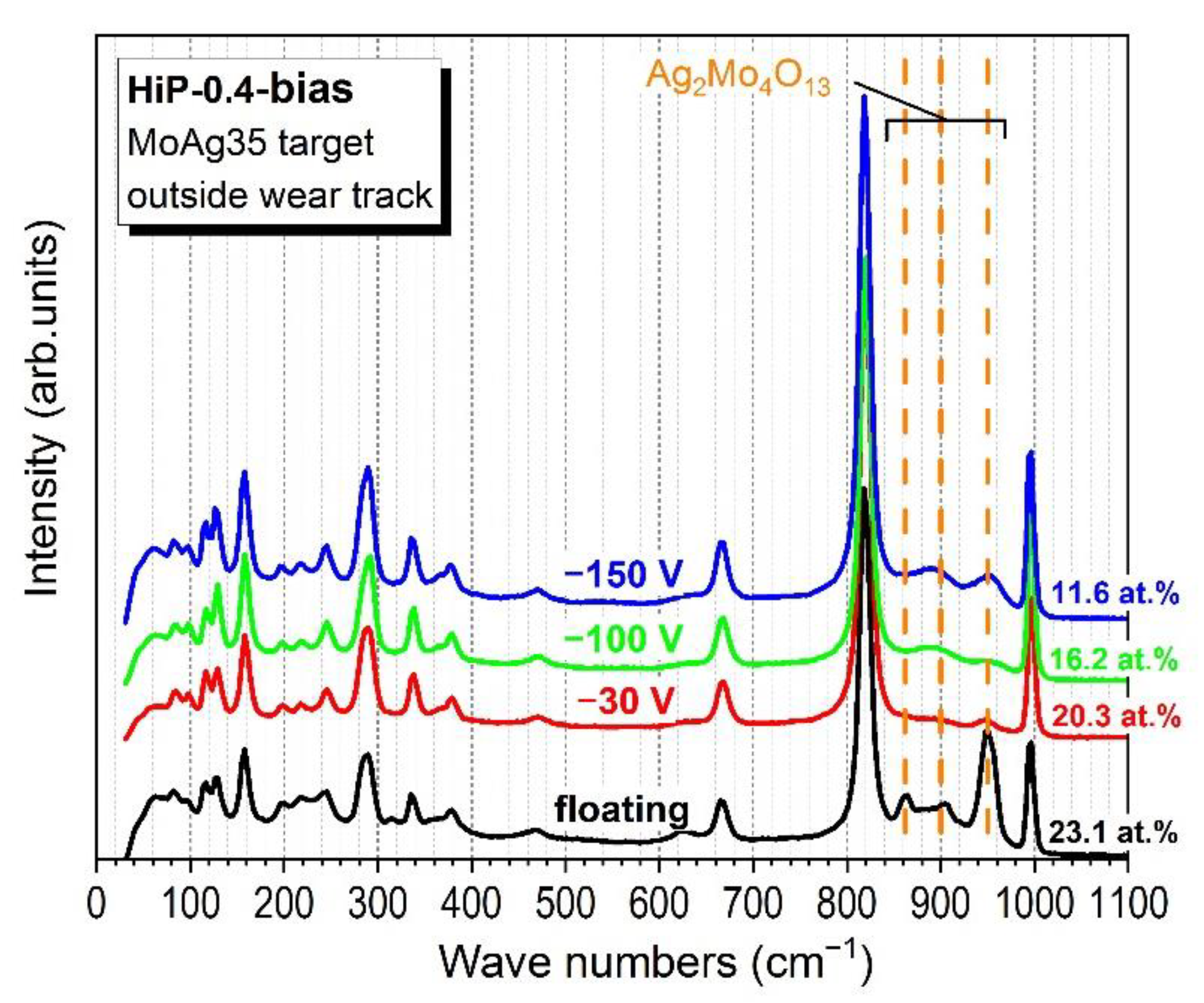
- Series HiP-0.4-bias: Process “HiP-0.4”, but with a variation of the substrate bias voltage from −30 to −150 V.
2.2. Characterization
- Glow discharge optical emission spectroscopy (GDOES, GDA 750, SPECTRUMA Analytik GmbH, Hof, Germany) for thin oxide films on Ag-free MoxN films;
- Optical profilometry (Nanofocus µsurf custom + Mountains Map, see above) on ball crater wear tracks for the other samples.
3. Results and Discussion
3.1. Sputtering Behavior of Mo and MoAg Targets
3.2. Chemical Composition of MoN and MoN-Ag Coatings
3.3. Microstructure and Morphology
3.4. Microhardness
3.5. Tribological Properties
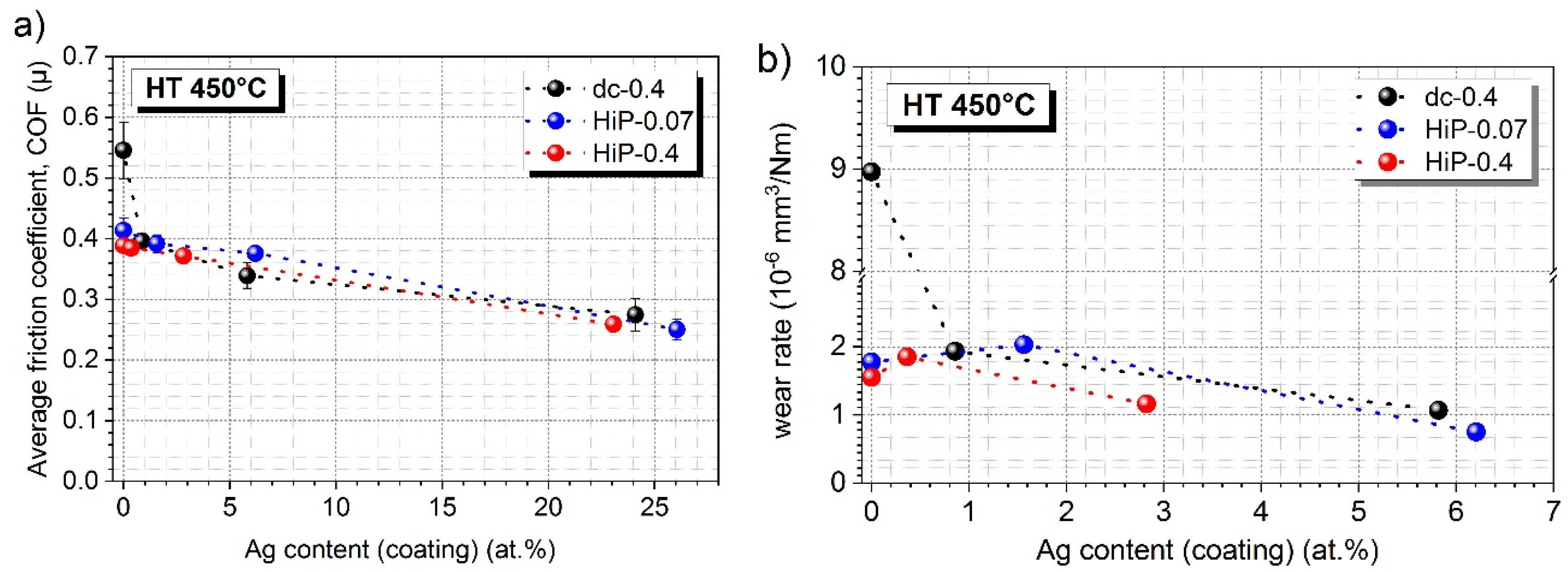
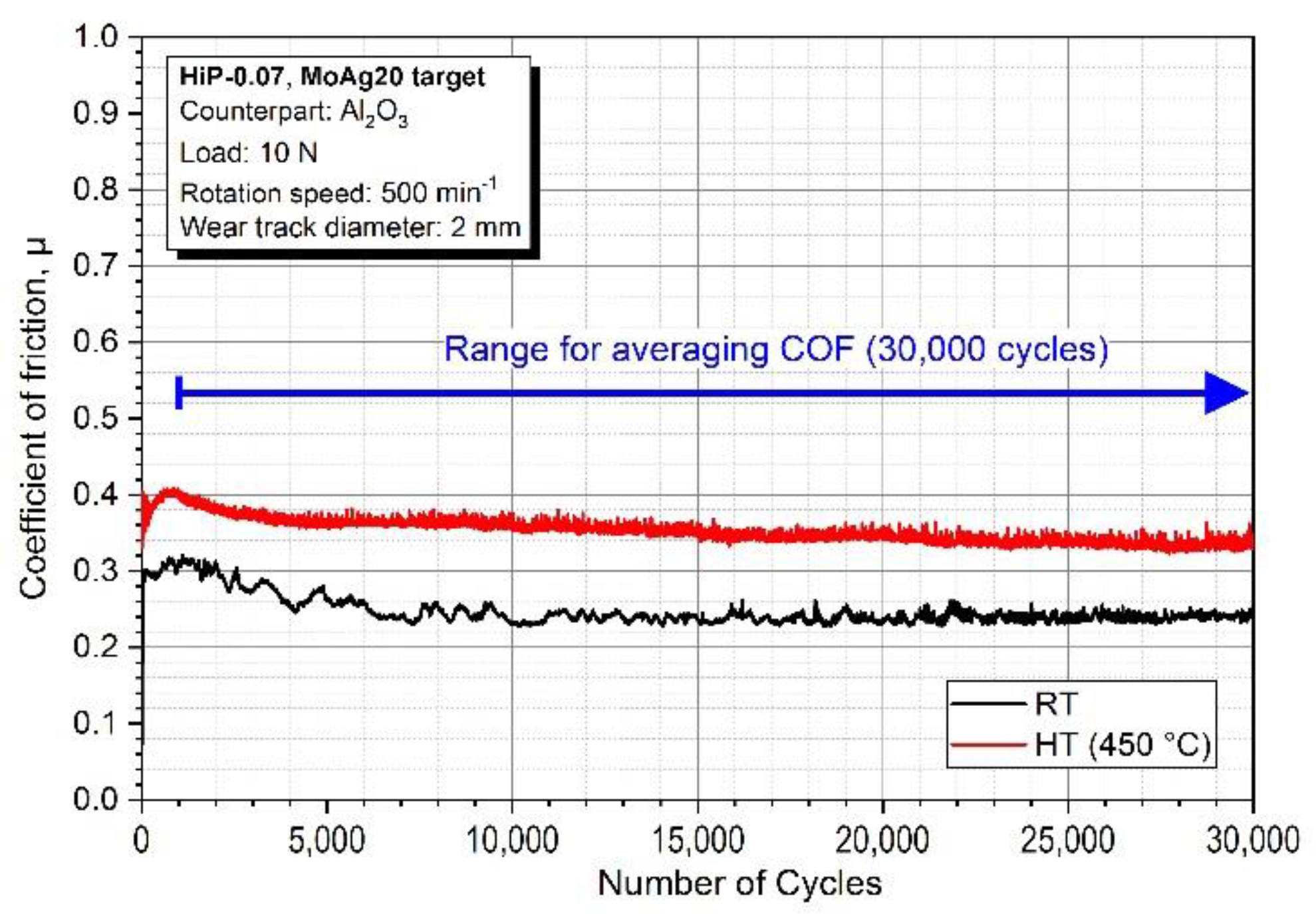
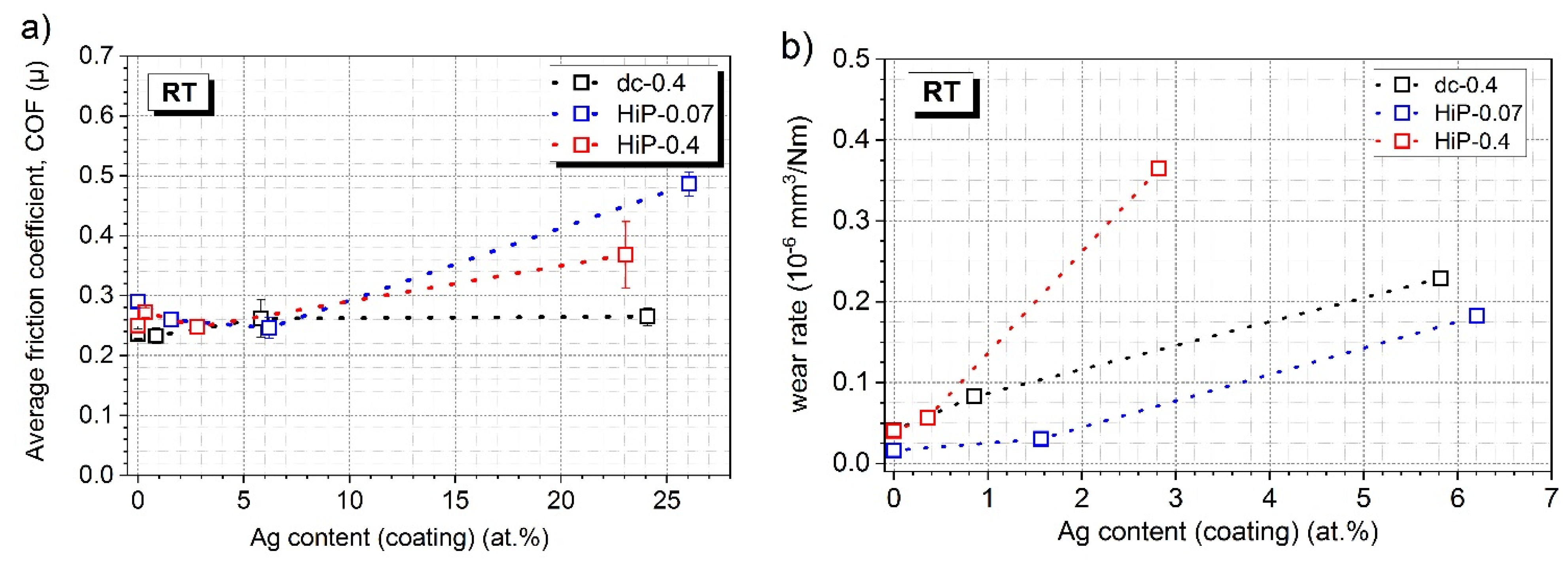
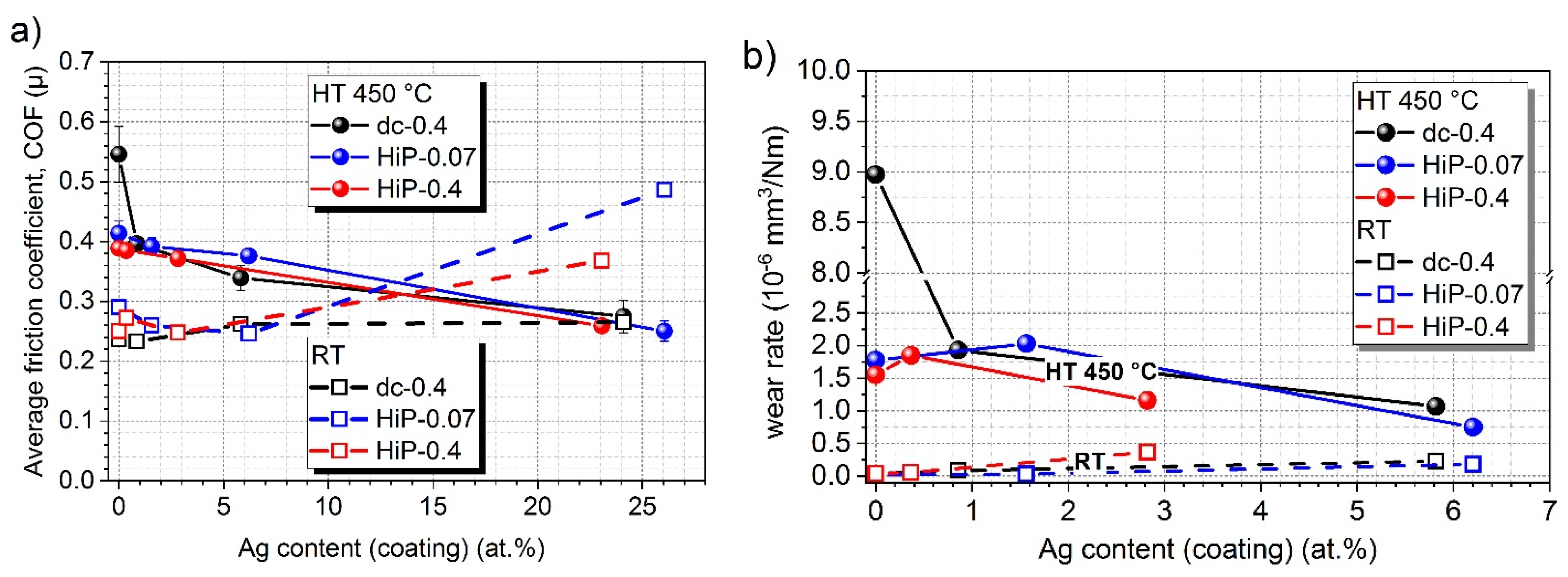
- dc-0.4: The Ag content seems to have no significant impact on the COF. For Ag contents of 1–24 at.% the COF is in the range of 0.23–0.26. The wear rate is linearly increasing with increasing Ag content.
- HiP-0.07: The COF of MoN-Ag films is decreasing with increasing Ag content, reaching a minimum at about 6 at.% Ag and then increasing to a COF of 0.49 at a Ag content of 26 at.%, which is the highest COF of all studied samples (at RT). The wear rate of the samples from this series is lower than from the other two series, but at a Ag content of about 6 at.% the wear rate is only slightly lower than the one of the dc-0.4 series.
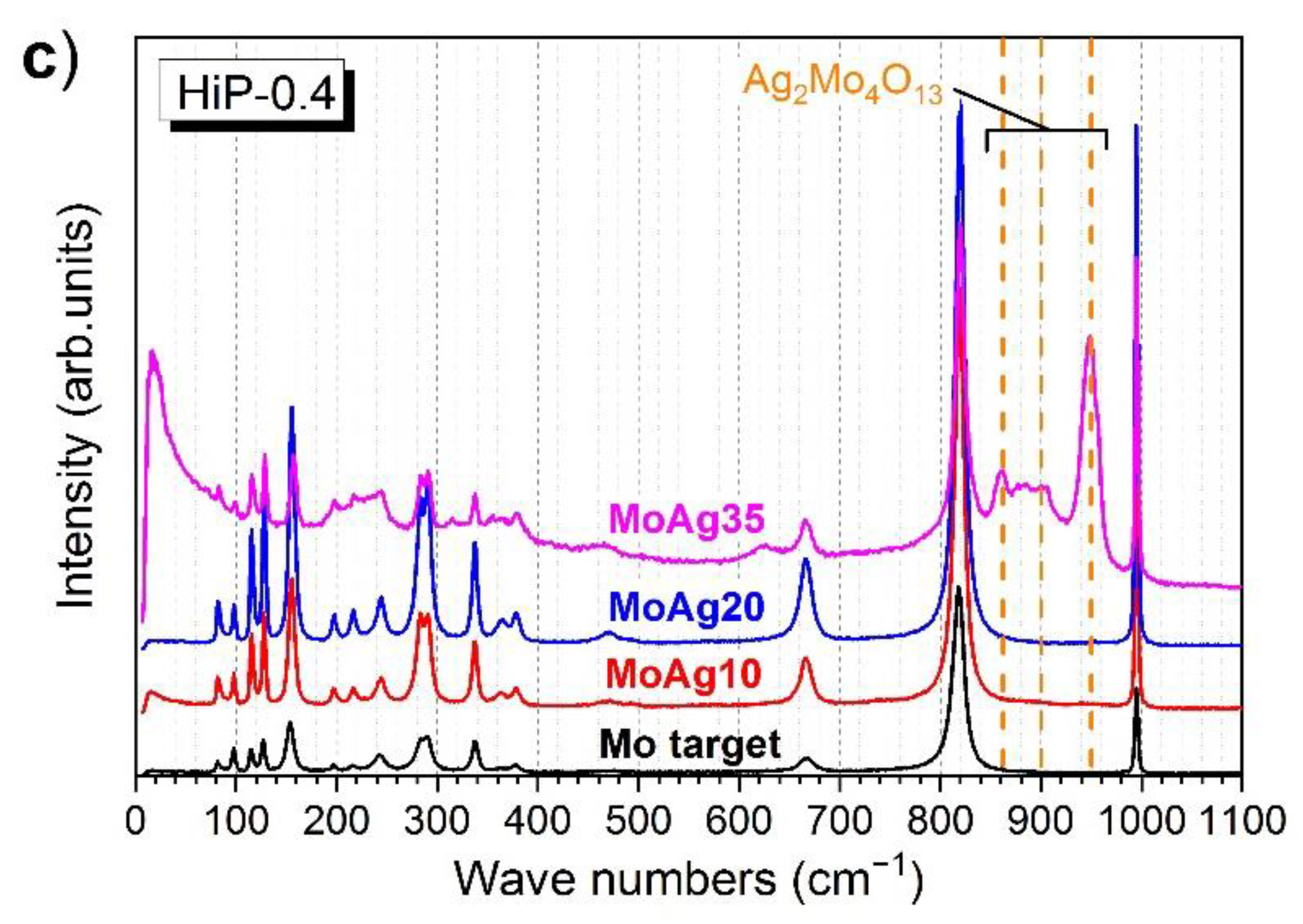
- HiP-0.4: The COF vs. Ag content shows a quite similar behavior as HiP-0.07 sputtering process. However, the COF of the highest Ag content is significantly lower compared to the sample of the HiP-0.07 sputtering process, scoring a value of 0.37 at a Ag content of 23 at.%. The wear rate at a Ag content of 0.4 at.% is the same as for the one of the dc-0.4 series. However, it strongly deviates to higher wear rates for a Ag content of 2.8 at.%, i.e., with a wear rate of 0.36 × 10⁻⁶ mm3/Nm it possesses the highest wear. This deviation is remarkable, as the COF for the MoN-Ag films is nearly identical at these Ag contents.
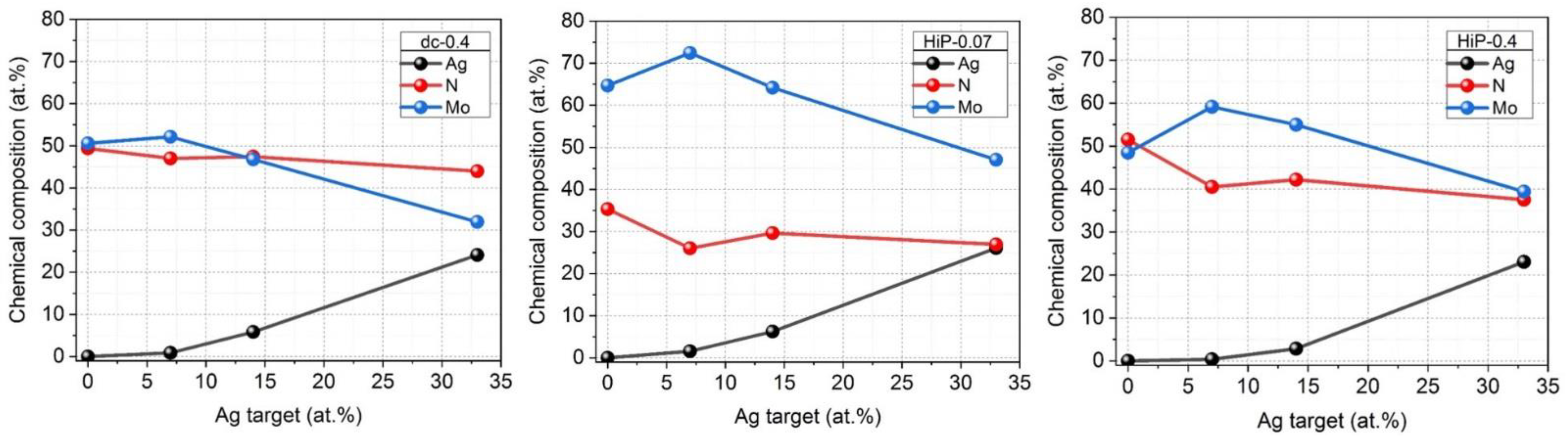
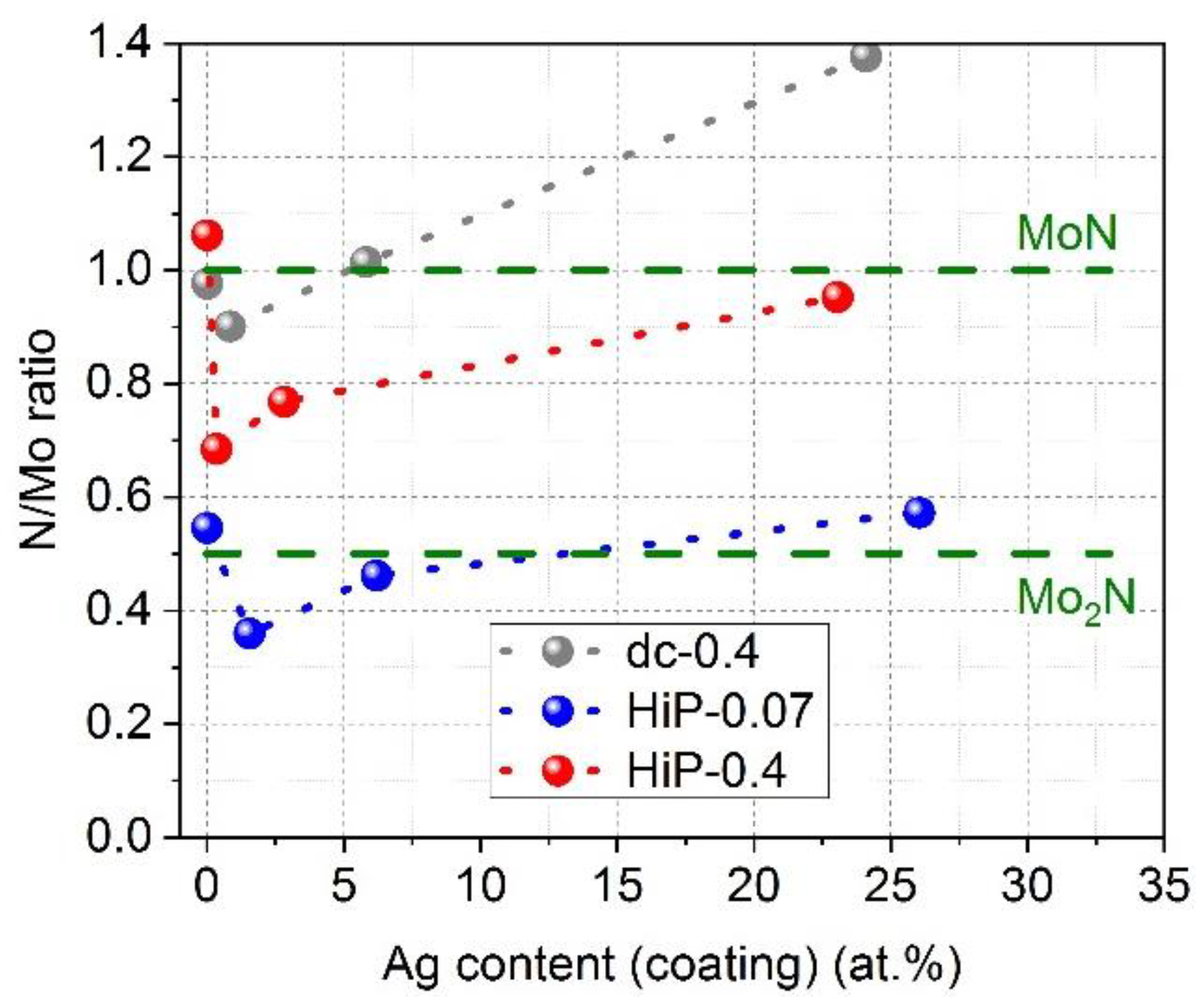
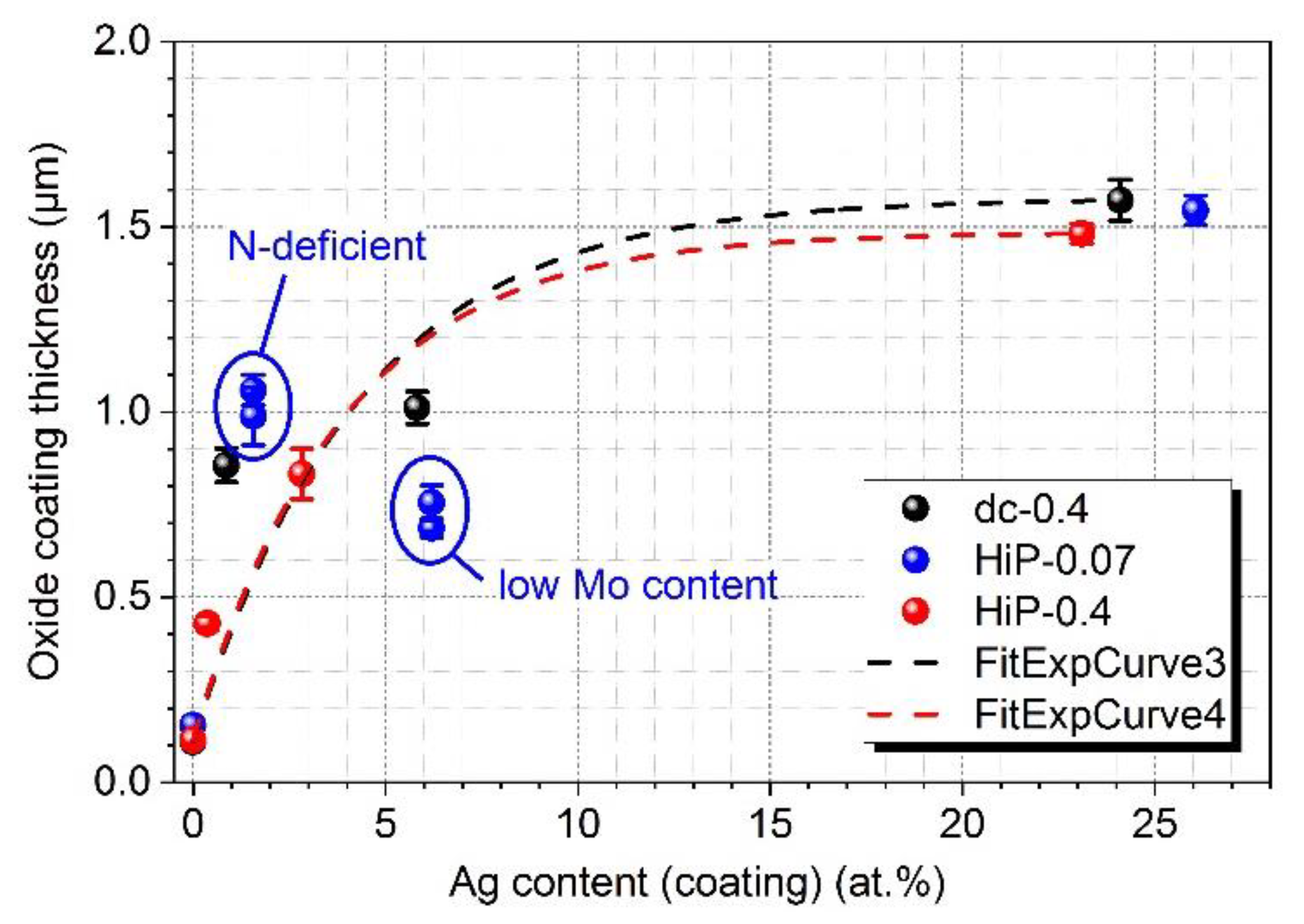
- Chemical composition: Figure 5 and Figure 6 revealed that the MoN-Ag coating with 1.6 at.% of Ag (MoAg10 target) is N-deficient, whereas the one with 6.2 at.% (MoAg20 target) has 10 at.% less Mo in the film. Maybe N-deficient Mo2N is more easily oxidized (no reference has been found for this statement).
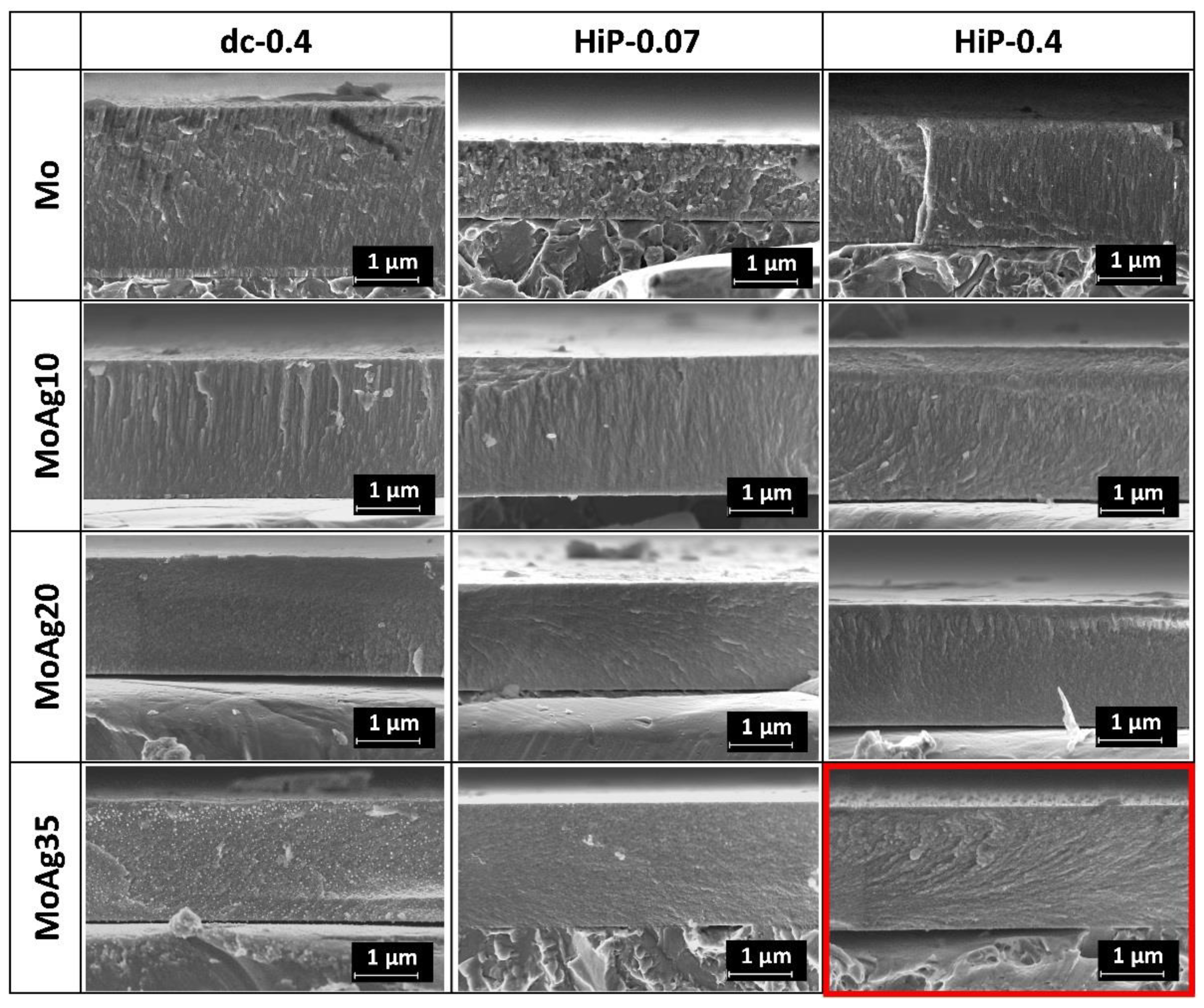
- Film microstructure: The MoN-Ag coating deposited with the MoAg10 target shows a columnar microstructure, whereas the coating deposited by MoAg20 lost its columnar structure (Figure 7). According to Musil et al. the oxidation of thin films can occur at the grain boundaries of thin films [32]. Hence, a columnar structure facilitates the oxidation process.
3.6. Raman Measurements
4. Conclusions
Author Contributions
Funding
Institutional Review Board Statement
Informed Consent Statement
Data Availability Statement
Acknowledgments
Conflicts of Interest
References
- Gassner, G.; Mayrhofer, P.H.; Kutschej, K.; Mitterer, C.; Kathrein, M. Magnéli phase formation of PVD Mo–N and W–N coatings. Surf. Coat. Technol. 2006, 201, 3335–3341. [Google Scholar] [CrossRef] [Scilit]
- Ürgen, M.; Eryilmaz, O.L.; Çakir, A.F.; Kayali, E.S.; Nilüfer, B.; Işik, Y. Characterization of molybdenum nitride coatings produced by arc-PVD technique. Surf. Coat. Technol. 1997, 94, 501–506. [Google Scholar] [CrossRef] [Scilit]
- Aouadi, S.M.; Paudel, Y.; Luster, B.; Stadler, S.; Kohli, P.; Muratore, C.; Hager, C.; Voevodin, A.A. Adaptive Mo2N/MoS2/Ag Tribological Nanocomposite Coatings for Aerospace Applications. Tribol. Lett. 2008, 29, 95–103. [Google Scholar] [CrossRef] [Scilit]
- Magnéli, A. Structures of the ReO3-type with recurrent dislocations of atoms: ‘homologous series’ of molybdenum and tungsten oxides. Acta Cryst. 1953, 6, 495–500. [Google Scholar] [CrossRef] [Scilit]
- Jehn, H.; Ettmayer, P. The molybdenum-nitrogen phase diagram. J. Less Common Met. 1978, 58, 85–98. [Google Scholar] [CrossRef] [Scilit]
- Gilewicz, A.; Warcholinski, B.; Murzynski, D. The properties of molybdenum nitride coatings obtained by cathodic arc evaporation. Surf. Coat. Technol. 2013, 236, 149–158. [Google Scholar] [CrossRef] [Scilit]
- Jehn, H.A.; Kim, J.-H.; Hofmann, S. Composition and properties of transition metal nitride thin films (ZrN, NbN, MoN). Surf. Coat. Technol. 1988, 36, 715–727. [Google Scholar] [CrossRef] [Scilit]
- Shen, Y.G. Effect of deposition conditions on mechanical stresses and microstructure of sputter-deposited molybdenum and reactively sputter-deposited molybdenum nitride films. Mater. Sci. Eng. A 2003, 359, 158–167. [Google Scholar] [CrossRef] [Scilit]
- Hones, P.; Martin, N.; Regula, M.; Lévy, F. Structural and mechanical properties of chromium nitride, molybdenum nitride, and tungsten nitride thin films. J. Phys. D Appl. Phys. 2003, 36, 1023–1029. [Google Scholar] [CrossRef] [Scilit]
- Suszko, T.; Gulbiński, W.; Jagielski, J. The role of surface oxidation in friction processes on molybdenum nitride thin films. Surf. Coat. Technol. 2005, 194, 319–324. [Google Scholar] [CrossRef] [Scilit]
- Zhu, X.; Yue, D.; Shang, C.; Fan, M.; Hou, B. Phase composition and tribological performance of molybdenum nitride coatings synthesized by IBAD. Surf. Coat. Technol. 2013, 228, S184–S189. [Google Scholar] [CrossRef] [Scilit]
- Gulbiński, W.; Suszko, T.; Sienicki, W.; Warcholiński, B. Tribological properties of silver- and copper-doped transition metal oxide coatings. Wear 2003, 254, 129–135. [Google Scholar] [CrossRef] [Scilit]
- Tung, S.C.; Cheng, Y.-T. Microstructures and tribological characteristics of electron-beam co-deposited Ag/Mo thin film coatings. Wear 1993, 162, 763–772. [Google Scholar] [CrossRef] [Scilit]
- Zhang, W.; Zhang, X.; Xue, Q.; Yang, D. Microstructure and tribological characteristics of multilayer films deposited by ion-beam mixing. Wear 1996, 197, 266–270. [Google Scholar] [CrossRef] [Scilit]
- Gulbiński, W.; Suszko, T. Thin films of Mo2N/Ag nanocomposite—the structure, mechanical and tribological properties. Surf. Coat. Technol. 2006, 201, 1469–1476. [Google Scholar] [CrossRef] [Scilit]
- Aouadi, S.M.; Paudel, Y.; Simonson, W.J.; Ge, Q.; Kohli, P.; Muratore, C.; Voevodin, A.A. Tribological investigation of adaptive Mo2N/MoS2/Ag coatings with high sulfur content. Surf. Coat. Technol. 2009, 203, 1304–1309. [Google Scholar] [CrossRef] [Scilit]
- Dai, X.; Wen, M.; Huang, K.; Wang, X.; Yang, L.; Wang, J.; Zhang, K. Toward low friction in water for Mo2N/Ag coatings by tailoring the wettability. Appl. Surf. Sci. 2018, 447, 886–893. [Google Scholar] [CrossRef] [Scilit]
- Murthy, A.P.; Govindarajan, D.; Theerthagiri, J.; Madhavan, J.; Parasuraman, K. Metal-doped molybdenum nitride films for enhanced hydrogen evolution in near-neutral strongly buffered aerobic media. Electrochim. Acta 2018, 283, 1525–1533. [Google Scholar] [CrossRef] [Scilit]
- Turutoğlu, T.; Ürgen, M.; Çakır, A.F.; Öztürk, A. Characterization of Mo2N/Ag Nanocomposite Coatings Produced by Magnetron Sputtering. Key Eng. Mater. 2004, 264, 489–492. [Google Scholar] [CrossRef] [Scilit]
- Neumann, S.; Wüstefeld, C.; Motylenko, M.; Haus, L.; Bräunig, S.; Müller, M.; Rafaja, D. Microstructure and thermal stability of Mo-(Ag)-N coatings with high nitrogen content. Surf. Coat. Technol. 2018, 352, 257–264. [Google Scholar] [CrossRef] [Scilit]
- VDI-Verlag. VDI 3198 Beschichten von Werkzeugen der Kaltmassivumformung; CVD- und PVD-Verfahren; VDI-Verlag: Duesseldorf, Germany, 1992. [Google Scholar]
- Broitman, E.; Hultman, L. Adhesion improvement of carbon-based coatings through a high ionization deposition technique. J. Phys. Conf. Ser. 2012, 370, 012009. [Google Scholar] [CrossRef] [Scilit]
- Anders, A.; Andersson, J.; Ehiasarian, A. High power impulse magnetron sputtering: Current-voltage-time characteristics indicate the onset of sustained self-sputtering. J. Appl. Phys. 2007, 102, 113303. [Google Scholar] [CrossRef] [Scilit]
- Anders, A. Deposition rates of high power impulse magnetron sputtering: Physics and economics. J. Vac. Sci. Technol. A Vac. Surf. Film. 2010, 28, 783–790. [Google Scholar] [CrossRef] [Scilit]
- Haye, E.; Colaux, J.L.; Moskovkin, P.; Pireaux, J.-J.; Lucas, S. Wide range investigation of duty cycle and frequency effects on bipolar magnetron sputtering of chromium nitride. Surf. Coat. Technol. 2018, 350, 84–94. [Google Scholar] [CrossRef] [Scilit]
- Messier, R.; Giri, A.P.; Roy, R.A. Revised structure zone model for thin film physical structure. J. Vac. Sci. Technol. A Vac. Surf. Film. 1984, 2, 500–503. [Google Scholar] [CrossRef] [Scilit]
- Mukherjee, S.; Gall, D. Structure zone model for extreme shadowing conditions. Thin Solid Film. 2013, 527, 158–163. [Google Scholar] [CrossRef] [Scilit]
- Kommer, M. Korrelation zwischen Plasma- und Schichteigenschaften Beim System Mo-N bei dcMS-bzw. HiPIMS-Plasmaabscheidungen. Ph.D. Thesis, Friedrich-Schiller-Universität Jena, Jena, Germany, 2018. [Google Scholar]
- Hall, E.O. The Deformation and Ageing of Mild Steel: III Discussion of Results. Proc. Phys. Soc. B 1951, 64, 747–753. [Google Scholar] [CrossRef] [Scilit]
- Petch, N.J. The Cleavage Strength of Polycrystals. J. Iron Steel Inst. 1953, 174, 25–28. [Google Scholar]
- Solak, N.; Ustel, F.; Ürgen, M.; Aydin, S.; Cakir, A.F. Oxidation behavior of molybdenum nitride coatings. Surf. Coat. Technol. 2003, 174, 713–719. [Google Scholar] [CrossRef] [Scilit]
- Musil, J. Hard nanocomposite coatings: Thermal stability, oxidation resistance and toughness. Surf. Coat. Technol. 2012, 207, 50–65. [Google Scholar] [CrossRef] [Scilit]
- Gulbiński, W.; Suszko, T. Thin films of MoO3–Ag2O binary oxides—The high temperature lubricants. Wear 2006, 261, 867–873. [Google Scholar] [CrossRef] [Scilit]
- Haro-Poniatowski, E.; Jouanne, M.; Morhange, J.F.; Julien, C.; Diamant, R.; Fernández-Guasti, M.; Fuentes, G.A.; Alonso, J.C. Micro-Raman characterization of WO3 and MoO3 thin films obtained by pulsed laser irradiation. Appl. Surf. Sci. 1998, 127, 674–678. [Google Scholar] [CrossRef] [Scilit]
- Holmberg, K.; Matthews, A. Coatings Tribology: Properties, Mechanisms, Techniques and Applications in Surface Engineering, 2nd ed.; Tribology and interface engineering series; Elsevier Science: Amsterdam, The Netherlands; Boston, MA, USA, 2009; ISBN 978-0-444-52750-9. [Google Scholar]





| Deposition Param. | HiPIMS Parameters | Thickness | |||||||
|---|---|---|---|---|---|---|---|---|---|
| Series | Target | Bias (V) | p(Ar) (Pa) | p(N2) (Pa) | ton (µs) | T (µs) | Duty Cycle | ipeak (A/cm2) | dfilm (µm) |
| dc-0.4 | Mo | float. | 0.3 | 0.4 | - | - | 100 | 0.022 | 1.9 |
| MoAg10 | 0.021 | 2.2 | |||||||
| MoAg20 | 0.019 | 1.7 | |||||||
| MoAg35 | 0.019 | 1.9 | |||||||
| HiP-0.07 | Mo | float. | 0.3 | 0.07 | 30 | 2000 | 1.5 | 1.5 | 2.4 |
| MoAg10 | 0.37 | 1 | 2.1 | ||||||
| MoAg20 | 0.9 | 1.5 | |||||||
| MoAg35 | 0.9 | 1.9 | |||||||
| HiP-0.4 | Mo | float. | 0.3 | 0.4 | 14 | 2000 | 0.7 | 3 | 2.1 |
| MoAg10 | 16 | 0.8 | 2 | 2.2 | |||||
| MoAg20 | 20 | 1 | 1.5 | 1.7 | |||||
| MoAg35 | 24 | 1.2 | 1.2 | 1.8 | |||||
| HiP-0.4-bias | MoAg35 | float. | 0.3 | 0.4 | 24 | 2000 | 1.2 | 1.2 | 1.8 |
| MoAg35 | −30 | 1.1 | 2.1 | ||||||
| MoAg35 | −100 | 1.1 | 2.0 | ||||||
| MoAg35 | −150 | 1.1 | 2.0 | ||||||
| Target | Ag Content Target, Ctarget (Ag) (at.%) | Ag Content Coating, Ccoat (Ag) | ||
|---|---|---|---|---|
| dc-0.4 (at.%) | HiP-0.07 (at.%) | HiP-0.4 (at.%) | ||
| MoAg10 | 7 | 0.9 | 1.6 | 0.4 |
| MoAg20 | 14 | 5.8 | 6.2 | 2.8 |
| MoAg35 | 33 | 24.1 | 26.1 | 23.1 |
| Target | Crystallographic Phases | ||
|---|---|---|---|
| dc-0.4 | HiP-0.07 | HiP-0.4 | |
| Mo | Mo 1, δ-MoN | - | δ-MoN |
| MoAg10 | γ-Mo2N, δ-MoN | γ-Mo2N | γ-Mo2N, (δ-MoN) |
| MoAg20 | γ-Mo2N, δ-MoN, (Ag) | γ-Mo2N | γ-Mo2N, (δ-MoN) |
| MoAg35 | γ-Mo2N, Ag | γ-Mo2N | γ-Mo2N, (Ag) |
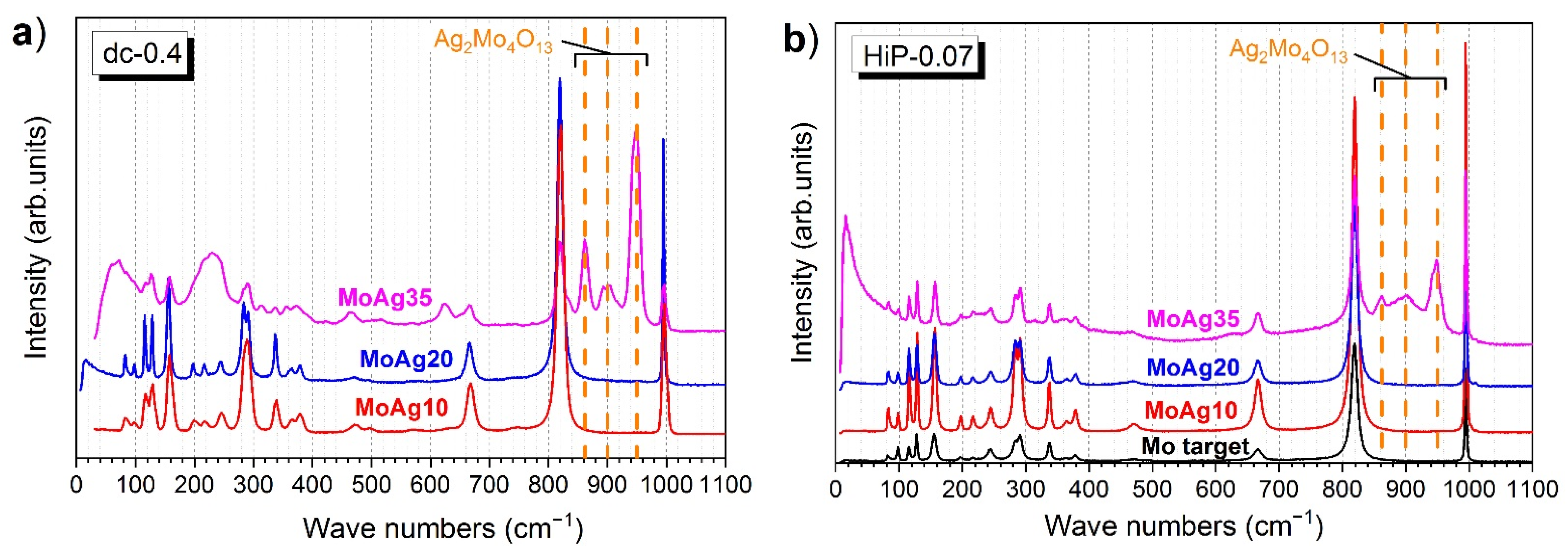
| Frequencies (cm−1) and Intensities of Raman Spectra of MoO3 Phase | |||||||
|---|---|---|---|---|---|---|---|
| 82.9 (w) | 97.7 (w) | 115.5 (m) | 127.3 (m) | 155.3 (s) | 197.7 (w) | 216.7 (w) | 244.3 (w) |
| 283.4 (s) | 336.6 (m) | 365.1 (w) | 377.9 (w) | 469.9 (w) | 666.6 (m) | 819.2 (vs) | 994.7 (vs) |
Publisher’s Note: MDPI stays neutral with regard to jurisdictional claims in published maps and institutional affiliations. |
© 2021 by the authors. Licensee MDPI, Basel, Switzerland. This article is an open access article distributed under the terms and conditions of the Creative Commons Attribution (CC BY) license (https://creativecommons.org/licenses/by/4.0/).
Share and Cite
Fenker, M.; Balzer, M.; Kellner, S.; Polcar, T.; Richter, A.; Schmidl, F.; Vitu, T. Formation of Solid Lubricants during High Temperature Tribology of Silver-Doped Molybdenum Nitride Coatings Deposited by dcMS and HIPIMS. Coatings 2021, 11, 1415. https://doi.org/10.3390/coatings11111415
Fenker M, Balzer M, Kellner S, Polcar T, Richter A, Schmidl F, Vitu T. Formation of Solid Lubricants during High Temperature Tribology of Silver-Doped Molybdenum Nitride Coatings Deposited by dcMS and HIPIMS. Coatings. 2021; 11(11):1415. https://doi.org/10.3390/coatings11111415
Chicago/Turabian StyleFenker, Martin, Martin Balzer, Sabine Kellner, Tomas Polcar, Andreas Richter, Frank Schmidl, and Tomas Vitu. 2021. "Formation of Solid Lubricants during High Temperature Tribology of Silver-Doped Molybdenum Nitride Coatings Deposited by dcMS and HIPIMS" Coatings 11, no. 11: 1415. https://doi.org/10.3390/coatings11111415
APA StyleFenker, M., Balzer, M., Kellner, S., Polcar, T., Richter, A., Schmidl, F., & Vitu, T. (2021). Formation of Solid Lubricants during High Temperature Tribology of Silver-Doped Molybdenum Nitride Coatings Deposited by dcMS and HIPIMS. Coatings, 11(11), 1415. https://doi.org/10.3390/coatings11111415