Article

Short-Term Impact of Oxytetracycline Administration on the Fecal Microbiome, Resistome and Virulome of Grazing Cattle

Instituto Nacional de Investigación Agropecuaria (INIA Uruguay), Treinta y Tres 33000, Uruguay
Antibiotics 2023, 12(3), 470; https://doi.org/10.3390/antibiotics12030470

Submission received: 27 December 2022 / Revised: 14 February 2023 / Accepted: 22 February 2023 / Published: 25 February 2023
(This article belongs to the Special Issue Antimicrobial Stewardship in Livestock)

Abstract

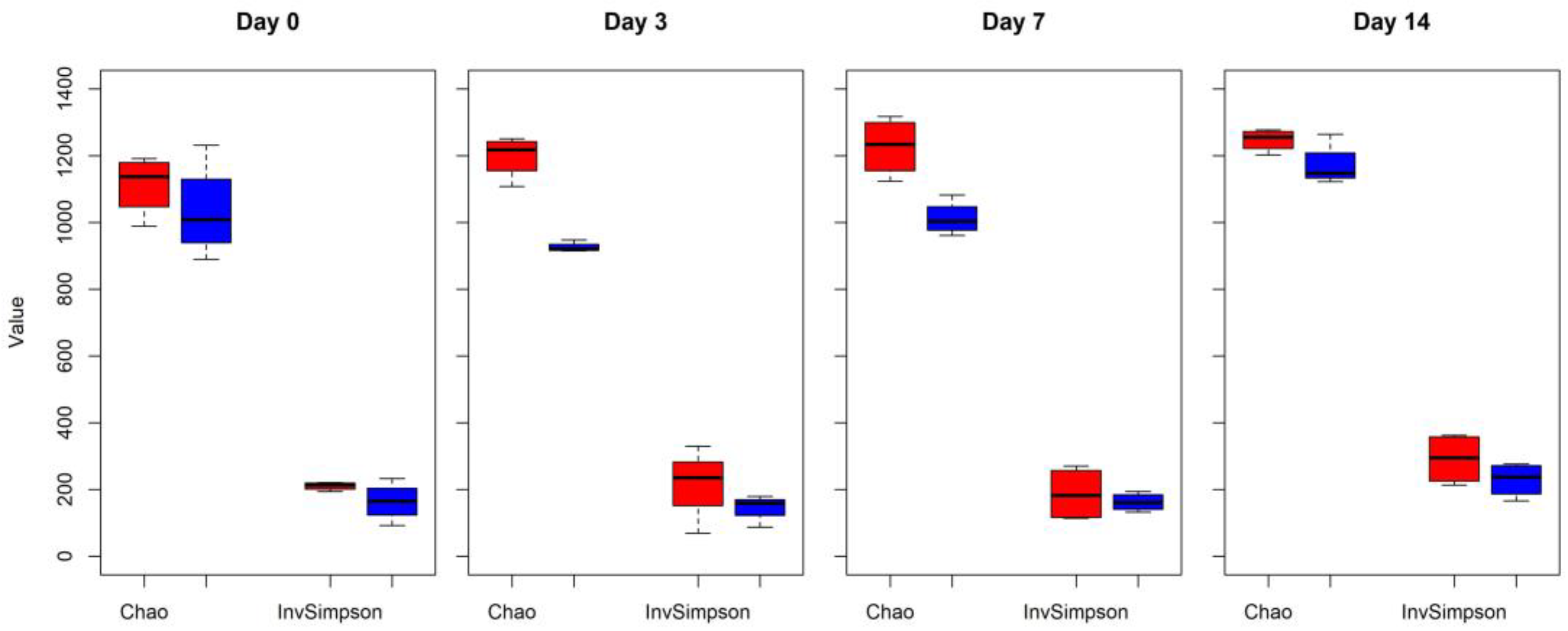
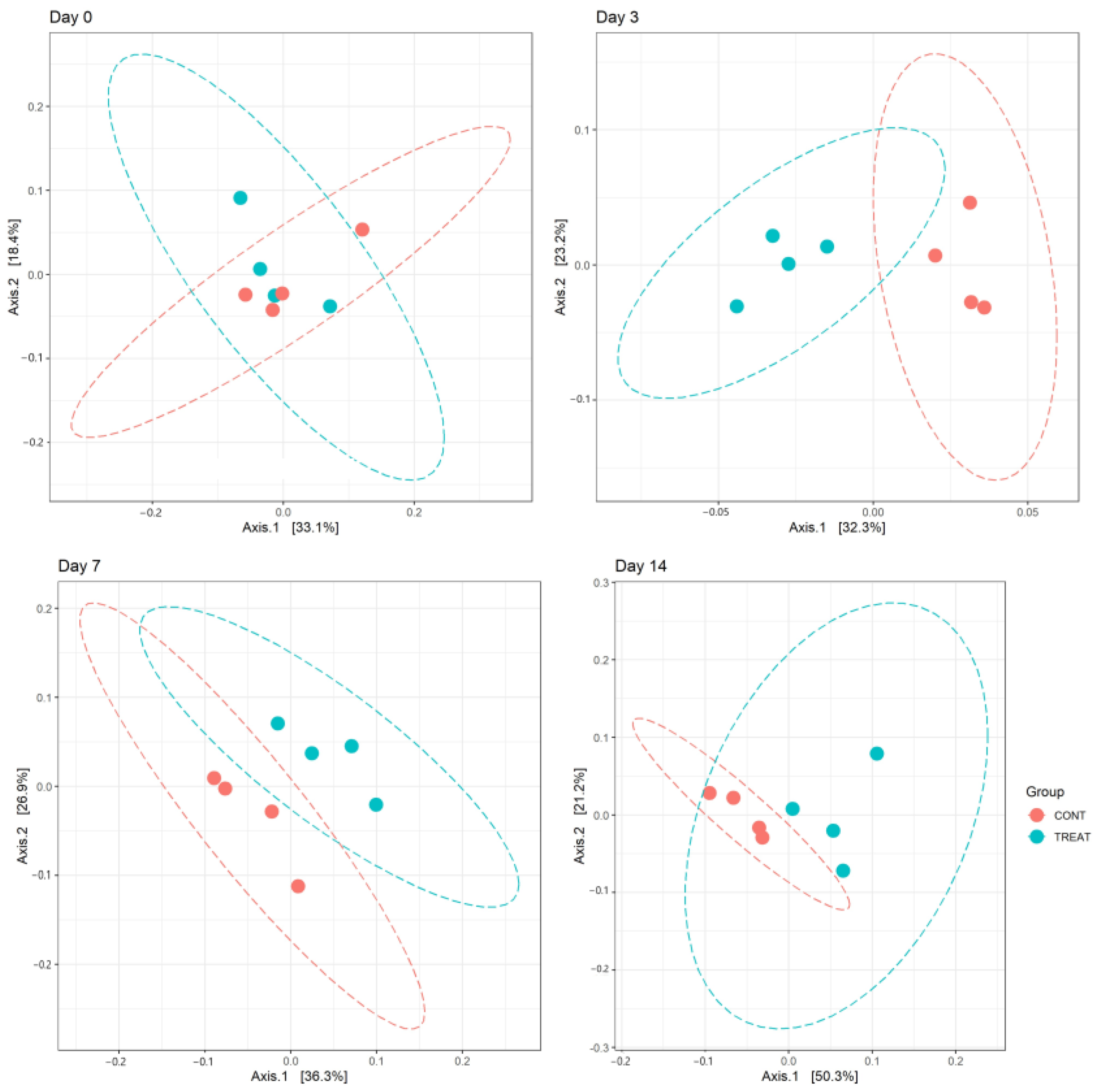
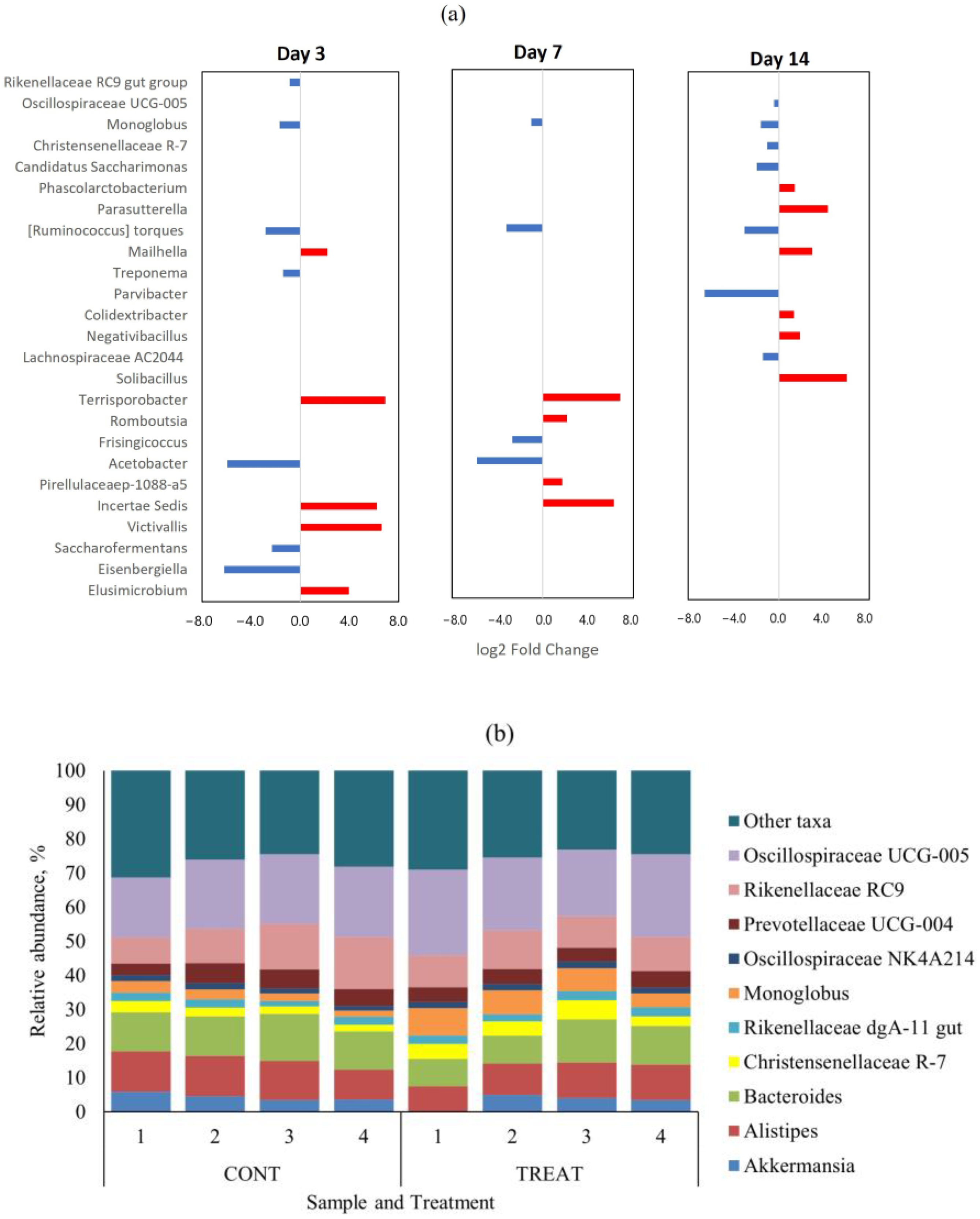
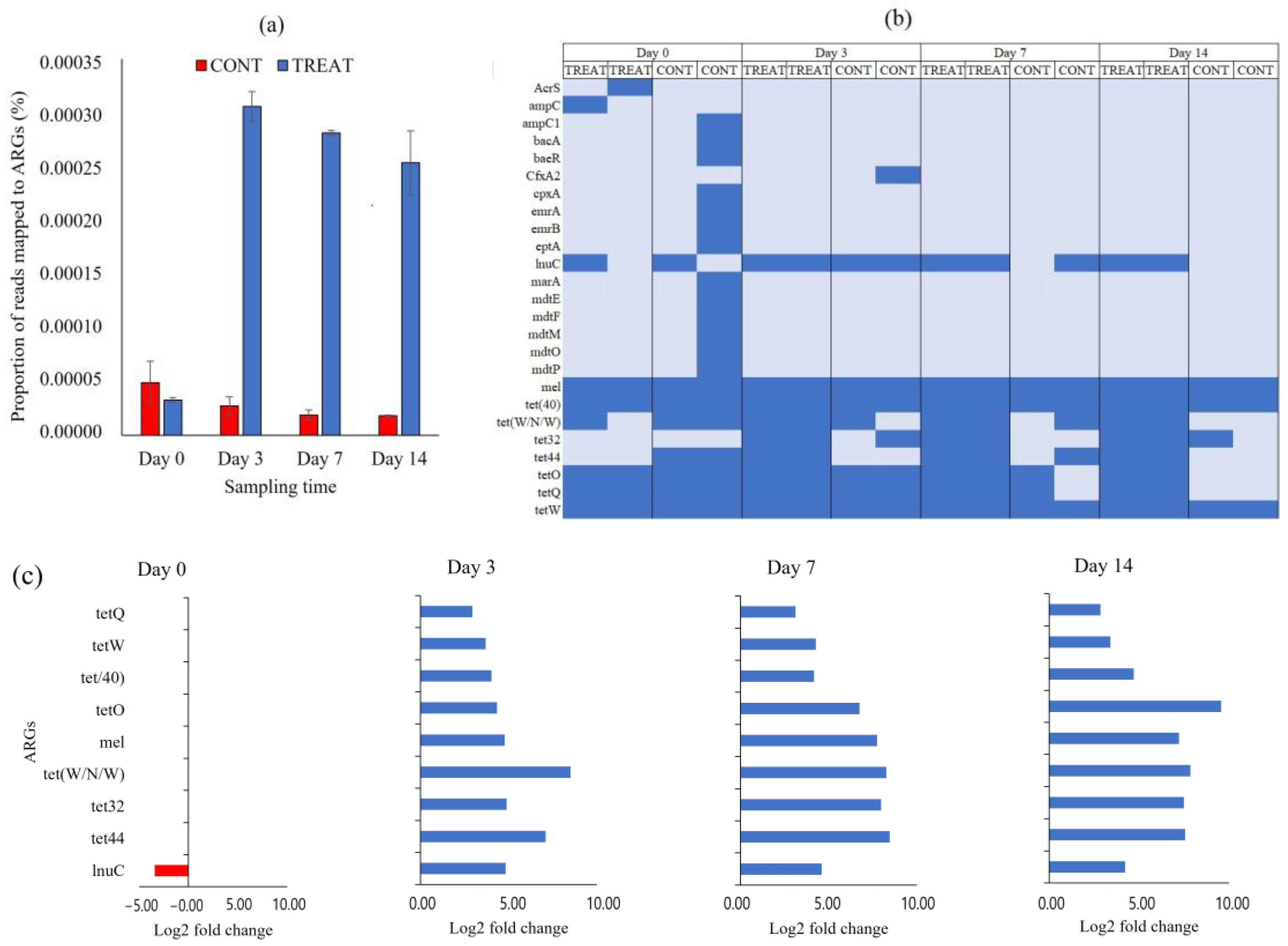
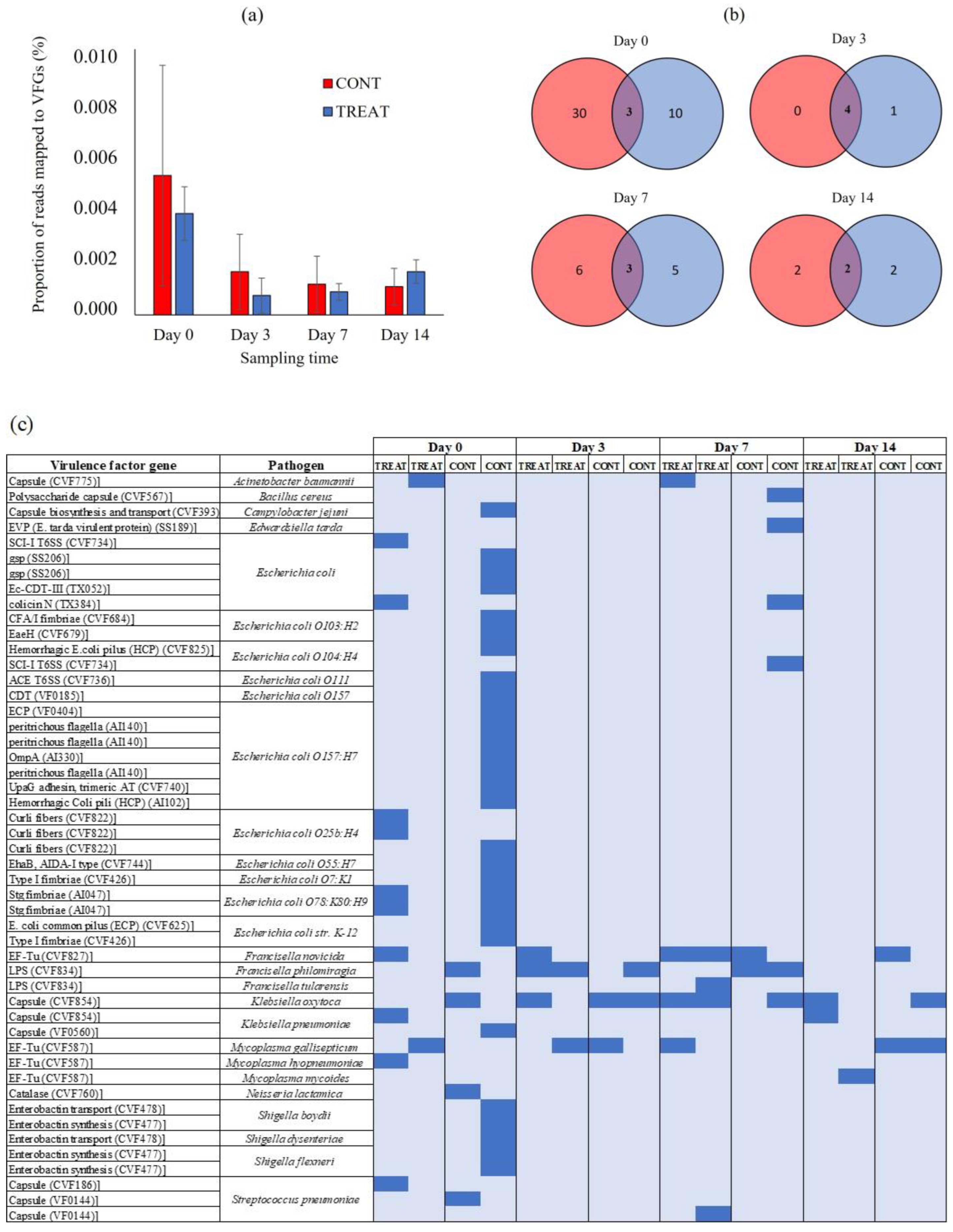
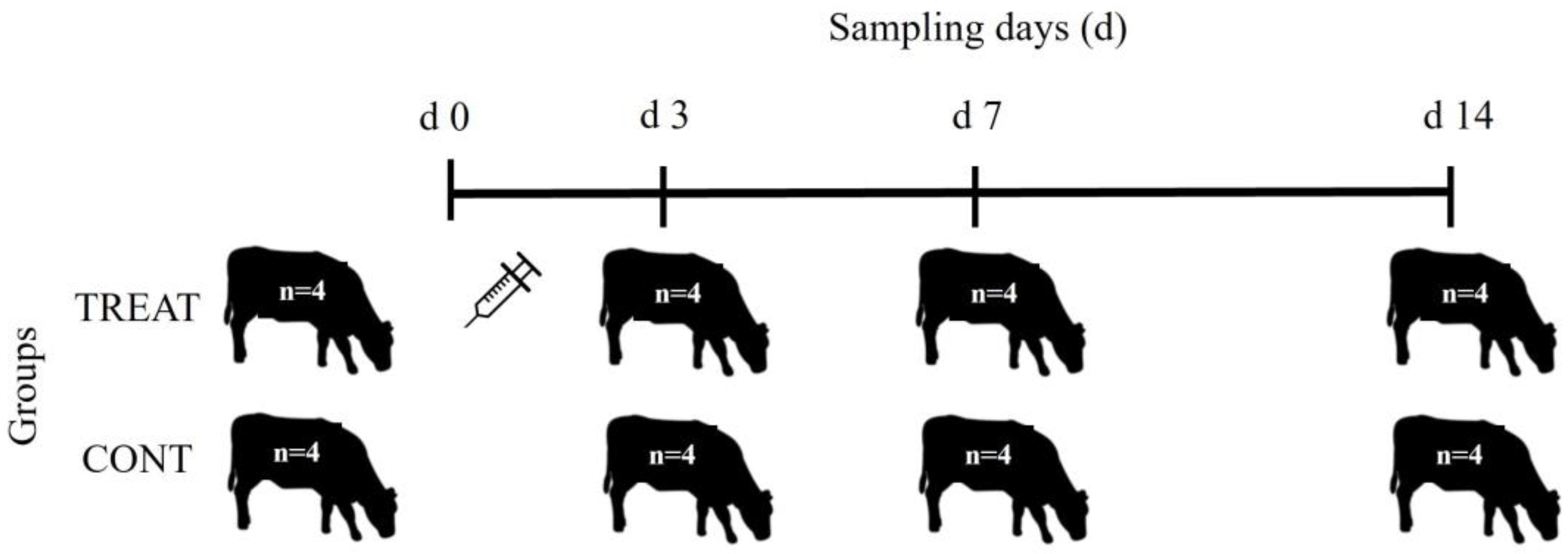
Antimicrobial resistance (AMR) is an important public health concern around the world. Limited information exists about AMR in grasslands-based systems where antibiotics are seldom used in beef cattle. The present study investigated the impacts of oxytetracycline (OTC) on the microbiome, antibiotic resistance genes (ARGs), and virulence factor genes (VFGs) in grazing steers with no previous exposure to antibiotic treatments. Four steers were injected with a single dose of OTC (TREAT), and four steers were kept as control (CONT). The effects of OTC on fecal microbiome, ARGs, and VFGs were assessed for 14 days using 16S rRNA sequencing and shotgun metagenomics. Alpha and beta microbiome diversities were significantly affected by OTC. Following treatment, less than 8% of bacterial genera had differential abundance between CONT and TREAT samples. Seven ARGs conferring resistance to tetracycline (tet32, tet40, tet44, tetO, tetQ, tetW, and tetW/N/W) increased their abundance in the post-TREAT samples compared to CONT samples. In addition, OTC use was associated with the enrichment of macrolide and lincosamide ARGs (mel and lnuC, respectively). The use of OTC had no significant effect on VFGs. In conclusion, OTC induced short-term alterations of the fecal microbiome and enrichment of ARGs in the feces of grazing beef cattle.
Keywords: grazing cattle; oxytetracycline; antibiotic resistance genes; fecal microbiome; virulence grazing cattle; oxytetracycline; antibiotic resistance genes; fecal microbiome; virulence