Abstract
A sphere phase liquid crystal (SPLC) composed of three-dimensional twist structures with disclinations among them exists between isotropic phase and blue phase in a very narrow temperature range, about several degrees centigrade. A low concentration polymer template is applied to improve the thermal stability of SPLCs and broadens the temperature range to more than 448 K. By template processing, a wavelength tunable random lasing is demonstrated with dye doped SPLC. With different polymer concentrations, the reconstructed SPLC random lasing may achieve more than 40 nm wavelength continuous shifting by electric field modulation.
1. Introduction
A self-assembly sphere phase liquid crystal (SPLC)—consisting of three-dimensional twist sphere (3-DTS) structures and disclinations among them—exists in a narrow temperature range, approximately several degree centigrade, between isotropic phase and blue phase [1]. Due to the fast switching with low electric field, the SPLC attracts people’s attention for its potential applications in displays, light shutters, and phase modulators after the temperature range is broadened to more than 358 K by stabilizing the disclinations with polymer networks [1]. By multiple scattering and interference effects in a chaotic amplifying medium, random lasing has appeared in scattering materials, such as polymer film [2], biological tissues [3], and liquid crystal [4]. Because of the 3-DTS structures, SPLC shows great potential application for random lasing. Recently, a SPLC random laser has been demonstrated with low threshold energy but weak thermal stability [5].
In this paper, a sphere phase template is demonstrated to improve the thermal stability of sphere phase. With LC refilling to the template, the temperature range of reconstructed sphere phase LC can be enlarged to more than 448 K. A random laser of reconstructed SPLC with wide temperature range is proposed. With the template of different polymer concentrations, a central wavelength tunable sphere phase random laser, whose tunable range is approximately 40 nm, can be achieved by electric field modulation. Therefore, templated SPLC shows great potential for photonic applications.
2. Materials and Methods
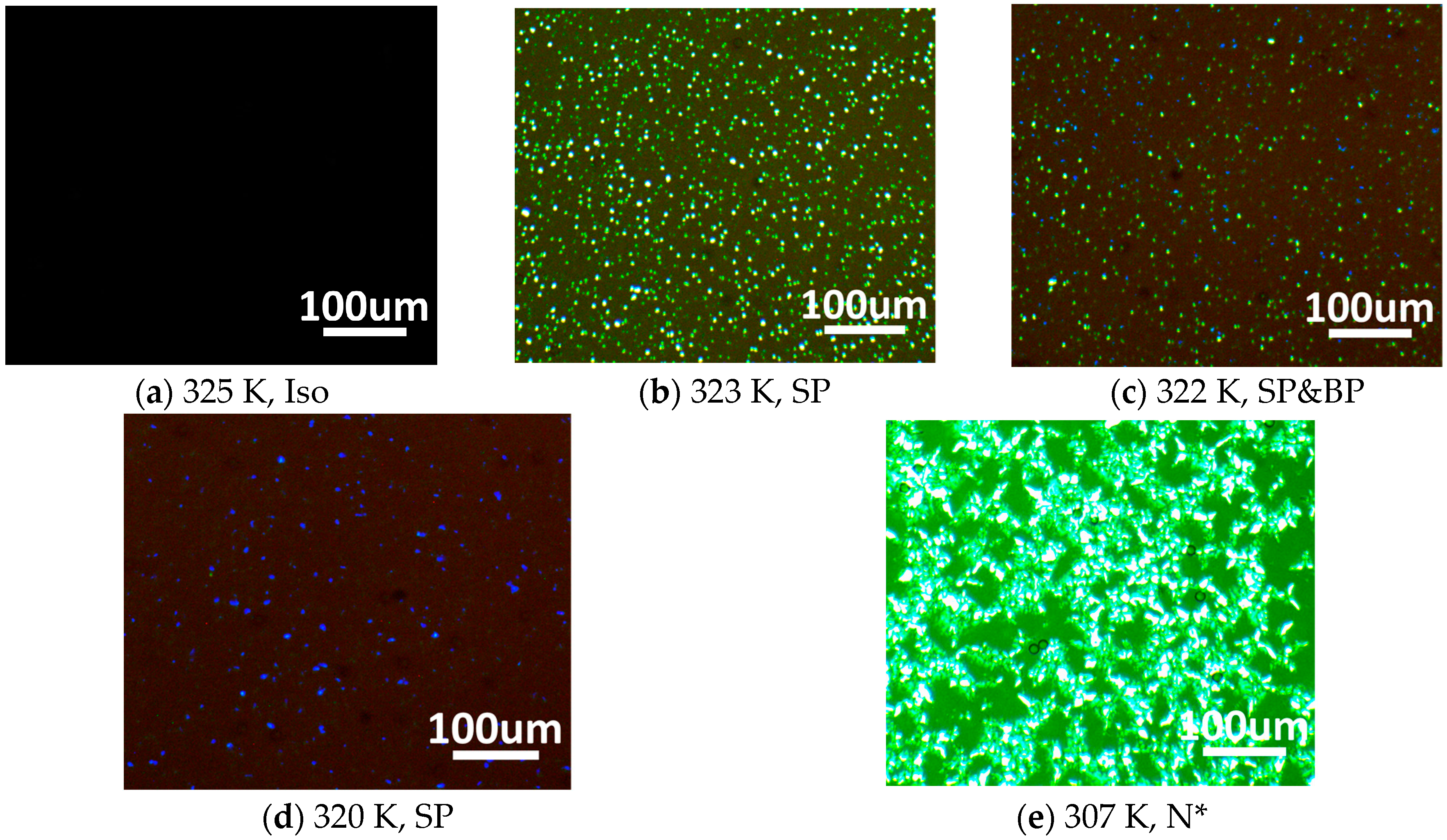
To investigate the reconstruction capability of the SPLC template, the material systems including 77.75 wt % of positive nematic LC (SP001, Δn = 0.148, Δε = 33.2, Jiangsu Hecheng Display Technology Co., Ltd., Jiangsu, China, (HCCH)), 4.21 wt % of chiral dopant (R5011,HCCH), 8.86 wt % of ultraviolet (UV)-curable monomer (12A,HCCH), 9.08 wt % of cross-linker agent (RM-257,HCCH), and 0.1 wt % of photo-initiator (IRG184,HCCH) were used in the experiment. The homogeneous mixture was capillary filled into the cell at the isotropic phase (353 K). The phase-transition process of the mixture was observed under a polarized optical microscope (POM, XPL-30TF, Shanghai WeiTu Optics & Electron Technology Co., Ltd., Shanghai, China) when it was cooled down from isotropic phase to chiral nematic phase at a rate of 0.5 °C/min by the temperature controller (HCS302, Intec Co., Ltd., Tokyo, Japan). The mixture showed the following phase sequence: isotropic phase -324.7 K-sphere phase -322.3 K-sphere phase and blue phase -321.5 K-blue phase- 308K-chiral nematic phase (N*). As shown in Figure 1b, sphere phase appeared between 324.7 K and 322.3 K with the light scattering phenomenon. From 322.3 K to 321.5 K, the coexistence of sphere phase and blue phase was observed with the light scattering and the classical platelet texture of the blue phase, as illustrated in Figure 1c.
Figure 1.
Reflective photographs under a POM of the LC mixture at different temperatures: (a) isotropic phase; (b) sphere phase; (c) sphere phase and blue phase; (d) blue phase; and (e) chiral nematic phase.
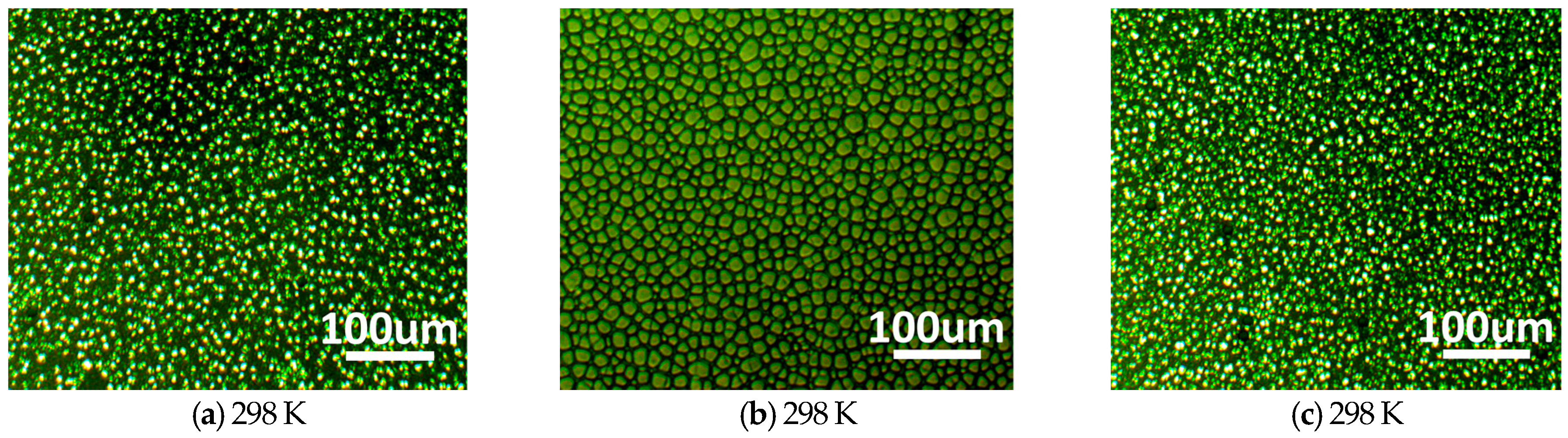
The sample was then cooled to 322.5 K in the temperature controller and irradiated with ultraviolet light (365 nm) at an intensity of 3 mW/cm2 for 15 min and after polymerization, the transmission photograph of the polymer-stabilized sphere phase liquid crystal (PS-SPLC) under a POM at room temperature was shown in Figure 2a. The transition temperature from sphere phase to isotropic phase is 348 K. Then the cell was immersed in the acetone for about 48 h to wash-out the liquid crystal, chiral dopant, unreacted monomers, and photo-initiator. After evaporating the remaining acetone at 358 K, the free-standing porous sphere phase template was formed, as shown in Figure 2b. To confirm the reconstruction capability of the sphere phase template, the nematic LC, SP001, was refilled into the polymer templates at isotropic phase.
Figure 2.
Transmission image of (a) the original PS-SPLC; (b) the polymer template; and (c) the templates with refilling nematic LC.
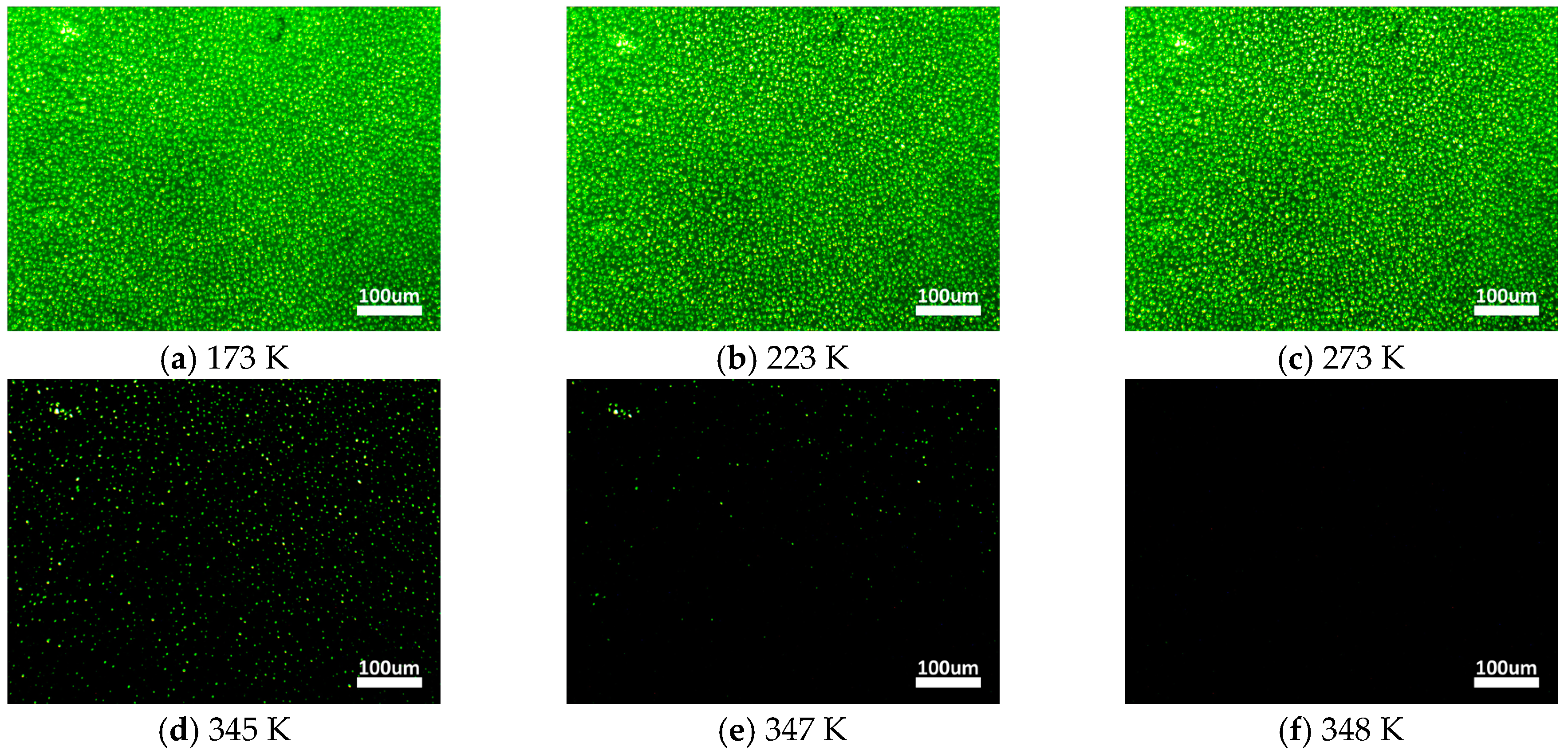
After LC refilling, the sphere phase texture was observed under a POM when the sample was cooled down to the room’s temperature, approximately 298 K, as shown in Figure 2c. The result indicated that the achiral liquid crystal could be reconstructed to the SPLC due to the anchoring energy of the polymer template. The templated SPLC showed perfect thermal stability that its temperature range of sphere phase was approximately 447 K, from 173 K to 347 K, as illustrated in Figure 3.
Figure 3.
Transmission images of the templated SPLC phase transition from 173 K to 348 K.
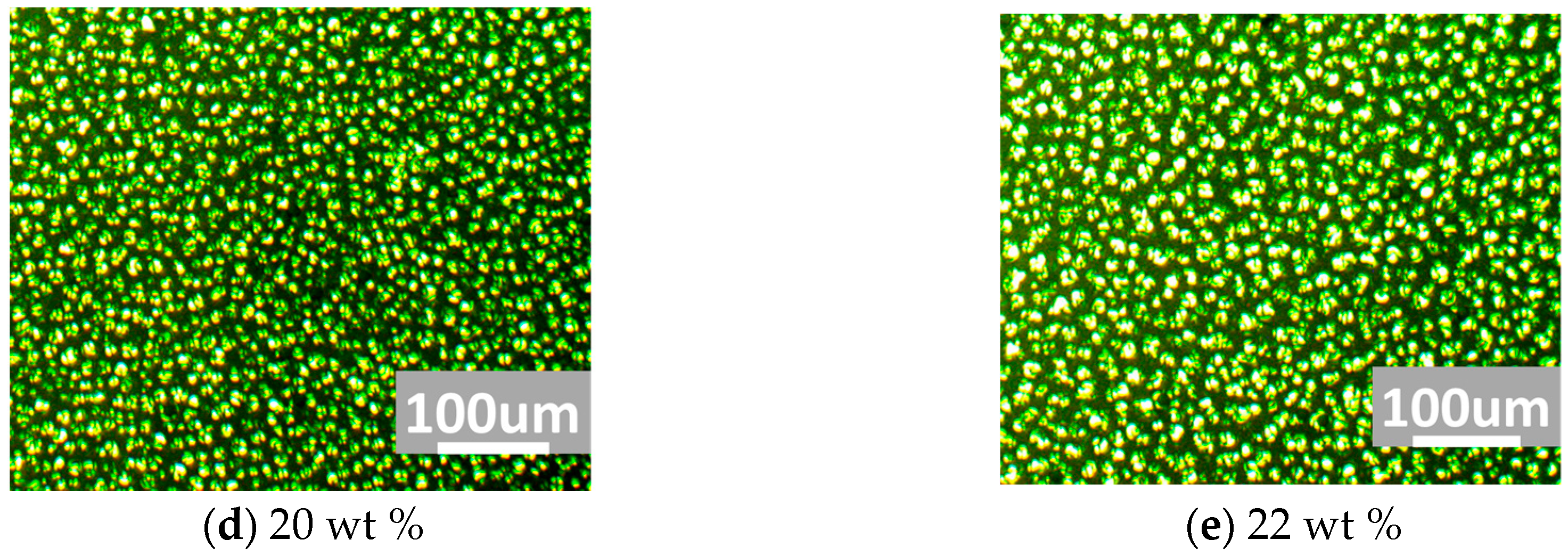
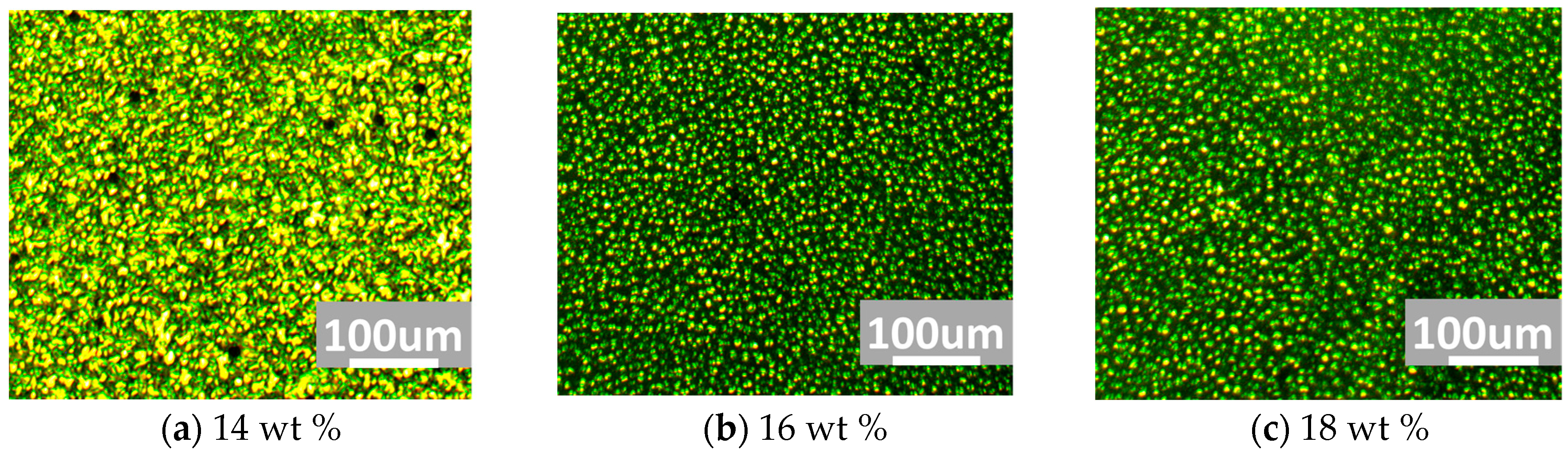
Precursors with different polymer concentration, as listed in Table 1, were prepared to investigate the relationship between polymer concentration and the reconstruction capability of polymer template. As illustrated in Figure 4, only the cell of 14 wt % polymer concentration showed the texture of chiral nematic phase, four other cells of higher polymer concentration showed the sphere phase textures. According to our previous research [6], with the material systems listed in Table 1, 16 wt % polymer concentration was a threshold value for the SPLC reconstruction. The polymer template with polymer concentrations of 16, 18, 20, and 22 wt % provided enough anchoring energy to reassemble 3-DTS structure resulting in the SPLC reconstruction.
Table 1.
Precursors with different polymer concentrations.

Figure 4.
Transmission images after refilling the nematic LC into the polymer template with the polymer concentration of (a) 14 wt %; (b) 16 wt %; (c) 18 wt %; (d) 20 wt %; and (e) 22 wt %, respectively.
3. Results and Discussion
To confirm a wide temperature wavelength tunable random lasing with the templated SPLC, a mixture of LC (99.7 wt %, SP001) and laser dye (0.3 wt %, Pyrromethene-597) is refilled into the cells with top-down ITO (Indium Tin Oxide) electrodes and 20 um cell gap of four kinds of SPLC templates with polymer concentrations of 16, 18, 20, and 22 wt % (Samples A, B, C, and D).
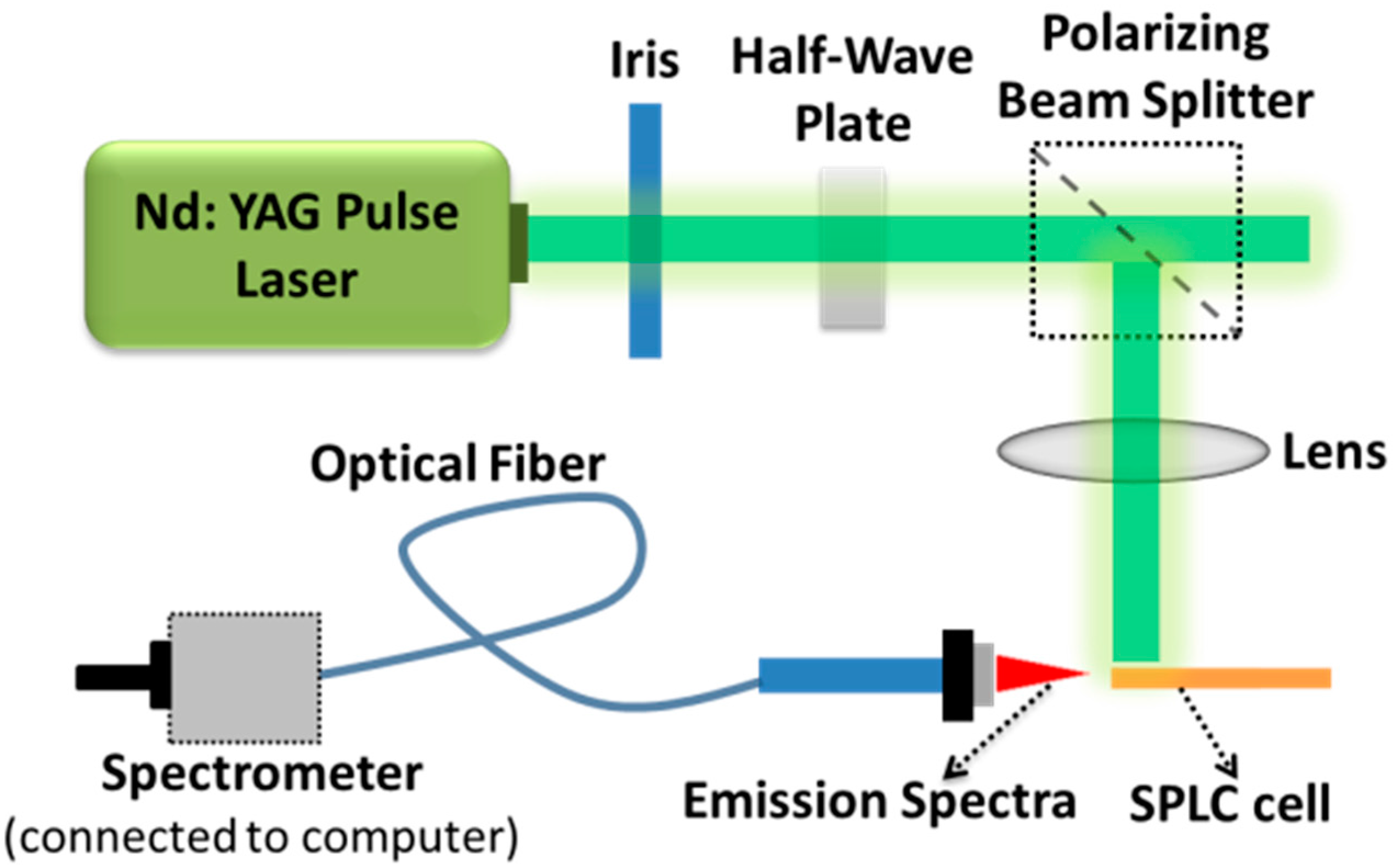
The experimental setup is shown in Figure 5. The cell is pumped by a Q-switched Nd:YAG (yttrium aluminium garnet) laser (λ = 532 nm; pulse width = 8 ns) with a repetition rate of 1 Hz. The pump beam is divided into two paths by a beam splitter. One is detected by an energy meter and the other is used as a pump source. The emission signals passed through the focusing lens are then collected by an optical fiber that is connected to a spectrometer (HR4000, Ocean Optics, Edinburgh, UK) [7].
Figure 5.
Experimental setup used to investigate laser action in dye-doped templated SPLC.
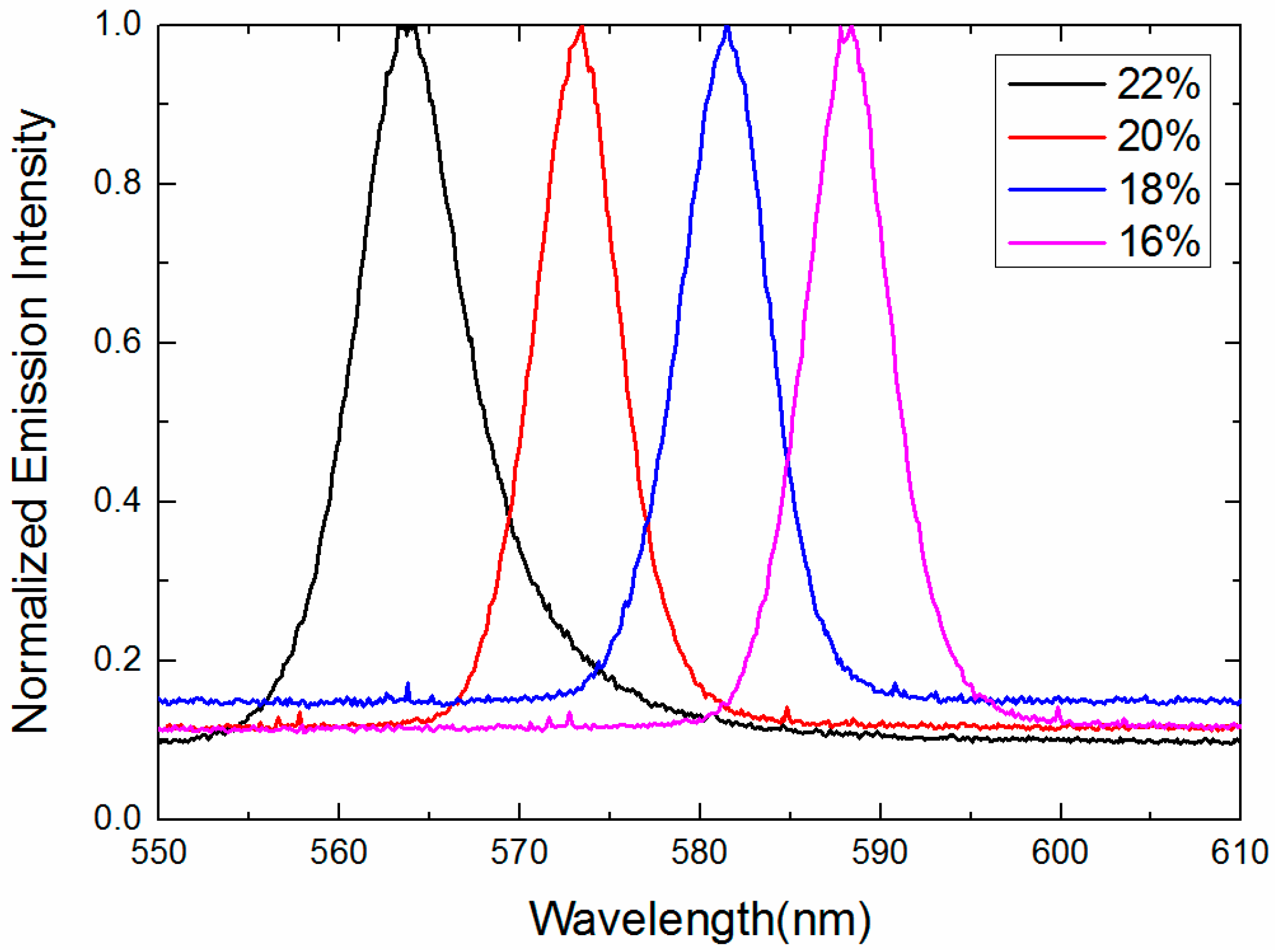
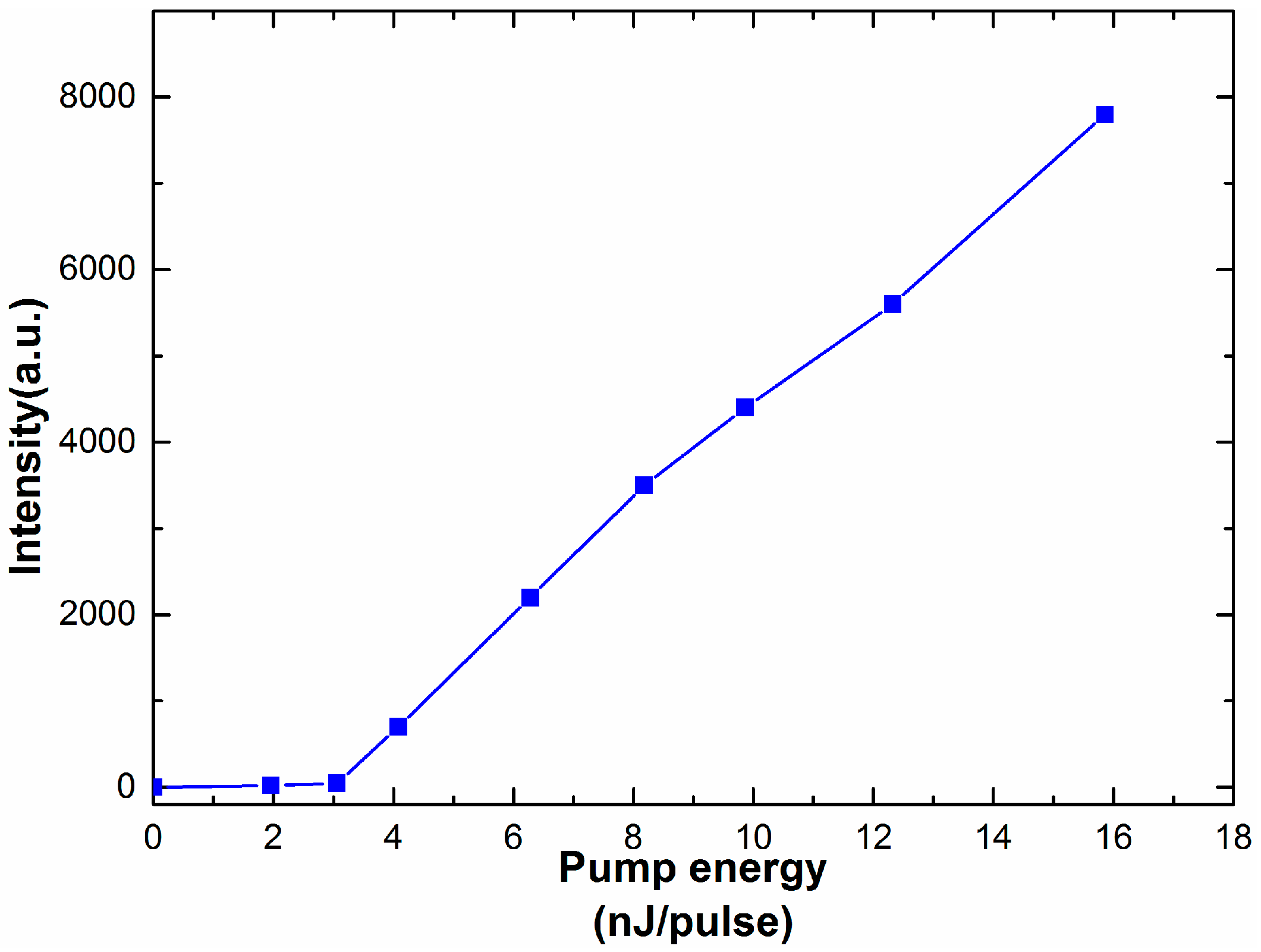
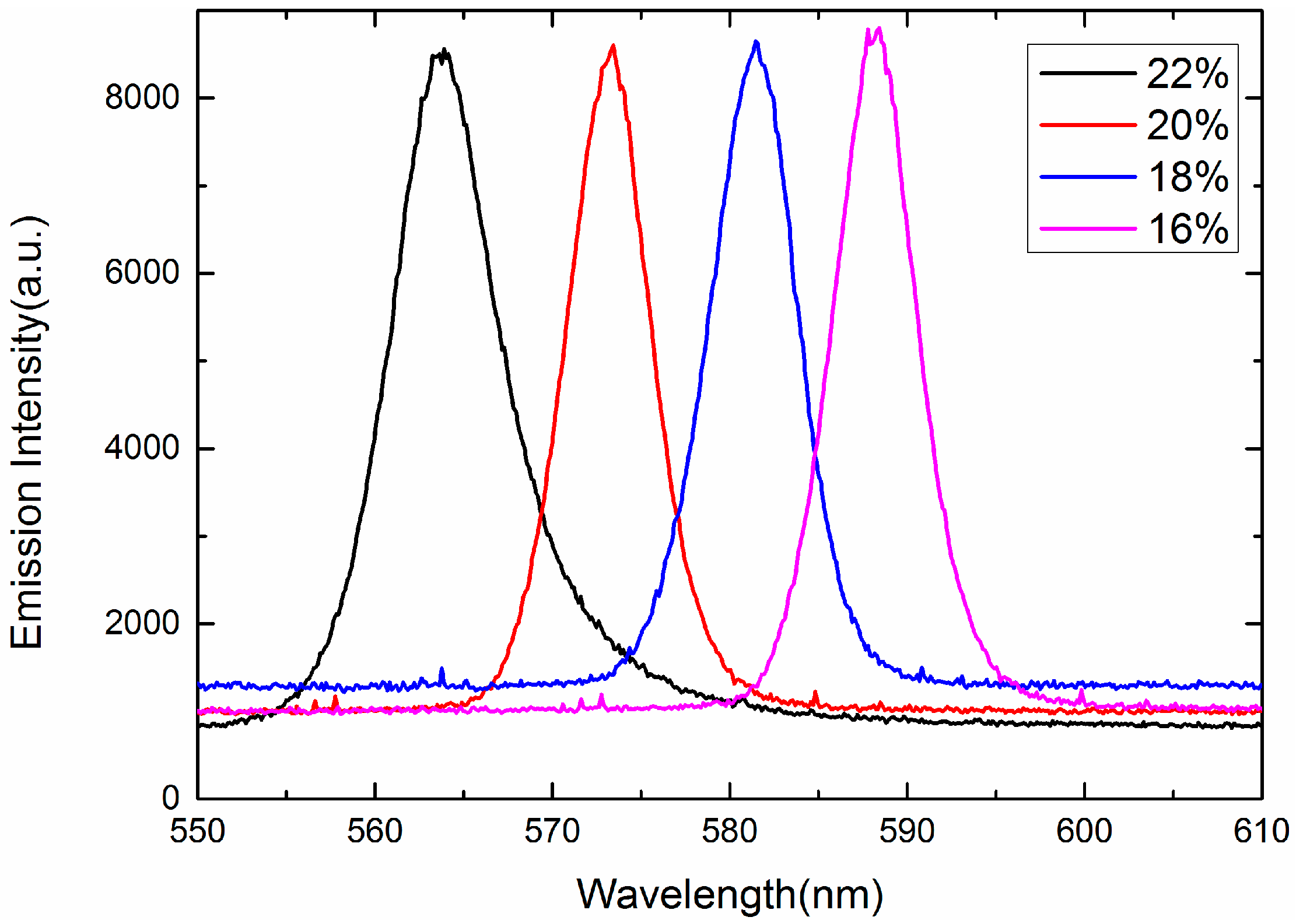
Rays emitted from the amplifying random medium travel among the self-assembled 3-DTSs of SPLCs while undergoing multiple scattering. When gain exceeds the loss, random lasing will occur [8,9,10,11,12,13,14,15,16,17,18,19,20]. As shown in Figure 6, laser emission can be observed in all the samples and the full width at half-maximum (FWHM) of the samples are approximately 6 nm. According to several prior studies of random lasing [21,22], the FWHM of the random laser was about 3 nm to 6 nm. Therefore, although the FWHM of the random laser is a little broad, we still relegate it to the random laser. We also think that the broad FWHM is probably the special characteristic of the random laser. As the polymer concentration of the templated SPLC system increases from 16 wt % to 22 wt %, the chiral dopant increases from 3.97 wt % to 4.52 wt %, resulting in decrease of the pitch length and blue shift of the central wavelength of the random lasing from 588 nm to 563 nm [20]. As listed in Table 1, the concentration of the chiral dopant rises from 4.09 wt % to 4.52 wt % when we make four kinds of the polymer templates, the helical pitch of the reconstructed SPLC decreases with the increase of polymer concentration, resulting in the shift of the central wavelength of the random lasing. As illustrated in Figure 7, the measured emission intensity of four samples is almost same because the LC molecules of four samples keep the same. Therefore, the wavelength tunable random lasing may be achieved with the templated SPLCs of different polymer concentrations. To further characterize the emission properties, the emitted intensity of sample B is recorded as a function of pump energy, as depicted in Figure 8. The lasing threshold is 4.01 nJ/pulse at room temperature.
Figure 6.
Emission spectra of templated SPLC systems with different concentrations of the polymer.
Figure 7.
Measured emission spectra of templated SPLC systems with different concentrations of the polymer.
Figure 8.
The emitted intensity of sample B as a function of pump energy.
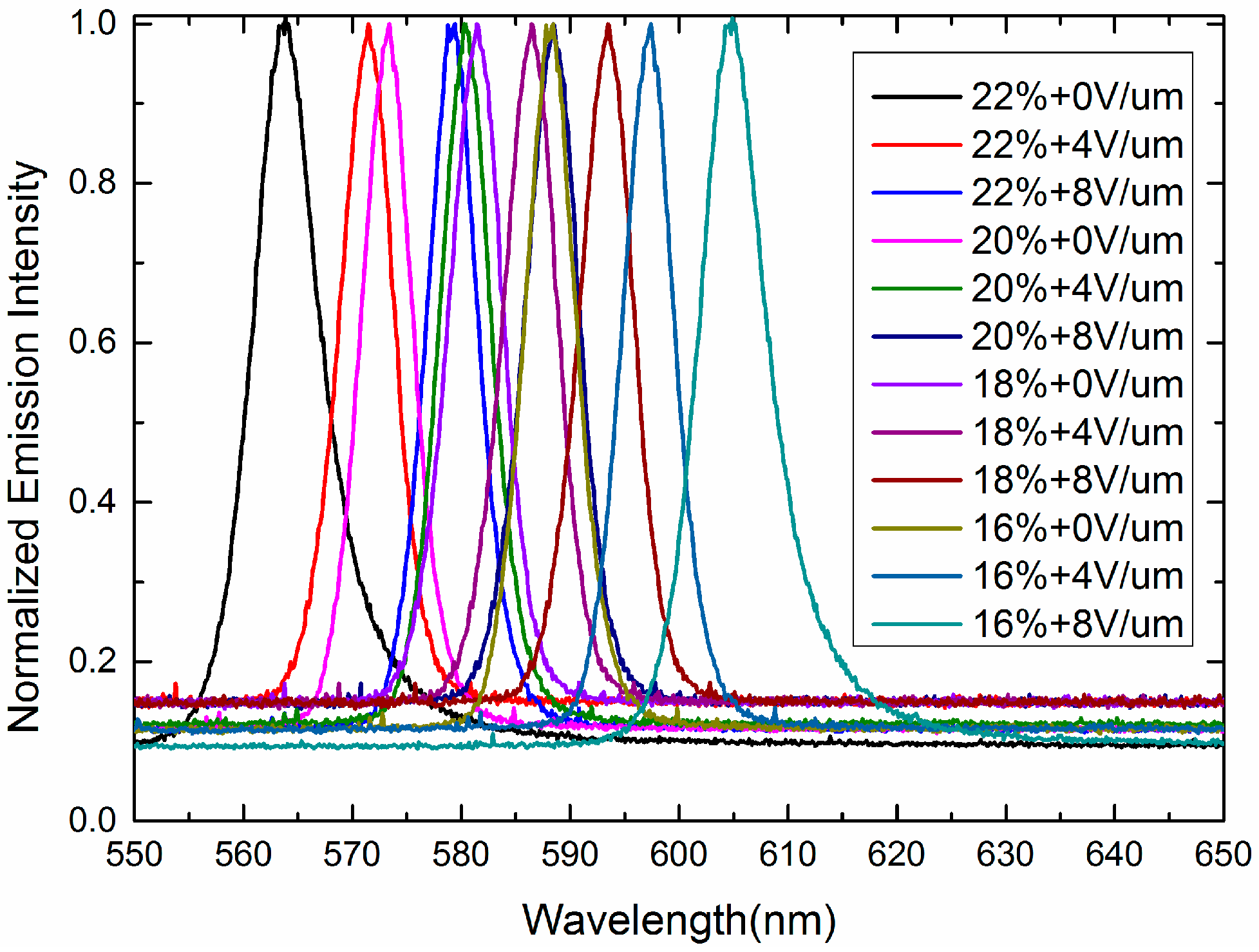
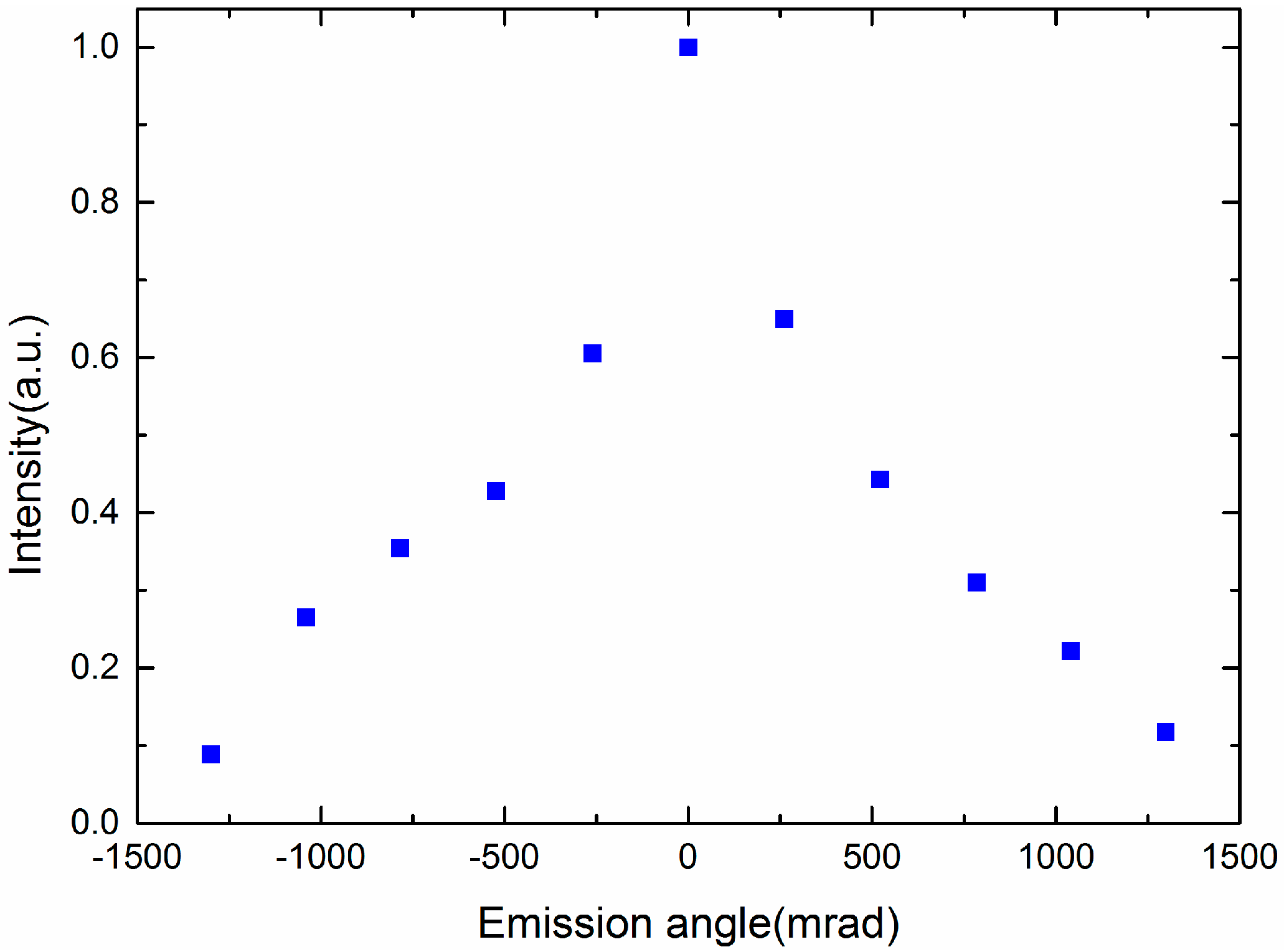
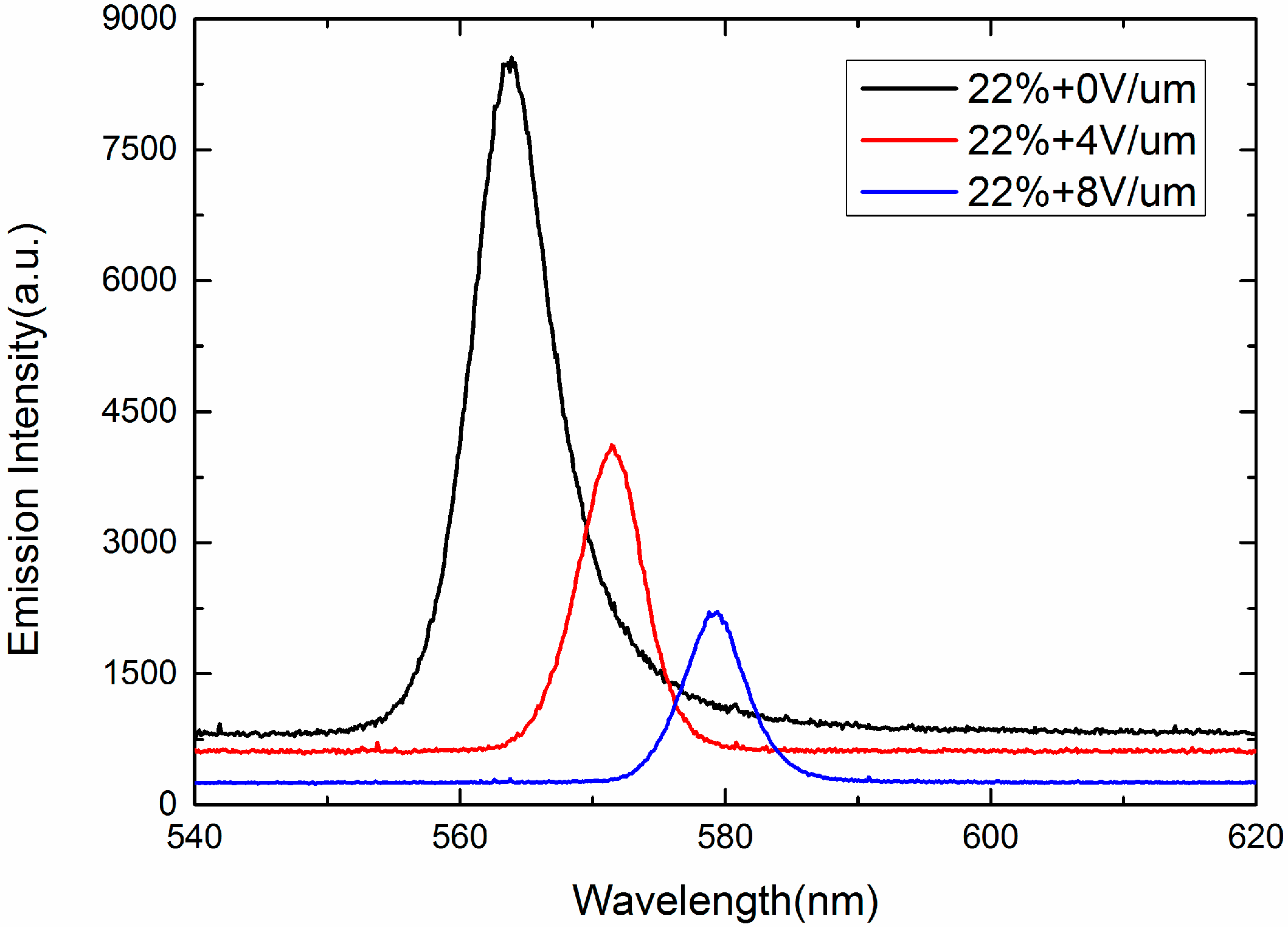
Besides, to shift the wavelengths of the random lasing continuously, electric field tuning random lasing is proposed. All the samples are applied with a 1 kHz AC signal. As shown in Figure 9, when the electric field increases from 0 V/μm to 8 V/μm, the central wavelength of Samples A, B, C, and D shifts from 588 nm to 604 nm, 581 nm to 593 nm, 573 nm to 588 nm, and 563 nm to 579 nm, respectively. The central wavelength of all the samples shows red shift with increasing the electric field. If the vertical electric field increases 1 V/μm, the central wavelength of laser emission will generate about 2 nm red shift. Because the director of LC molecule is gradually changed with the increase of electric field, the cubic lattice of the SPLC is deformed, which shifts the central wavelengths of the templated SPLC random lasing. If the electric field is higher than 8 V/μm, the laser emission will disappear because the sphere phase change to the chiral nematic phase, resulting in the lack of random path among 3-DTSs. Figure 10 shows the measured emission spectra of sample D. As the electric field increased from 0 V/μm to 8 V/μm, the intensity of the random laser decreased. While the applied voltage increases, all LC molecules gradually reorient to the direction of the external field, resulting in gradual decrease of the multiple scattering. Therefore, with four kinds of the SPLC templates, a mixture of LC and laser dye, a continuous central wavelength shifting of the SPLC random lasing can be enlarged to 40 nm by the electric field modulation which shows great potential application in the commercial random laser. We used the relatively thick, 20 um, cell because we try to measure the lasing spectra in the three orthogonal directions, x, y, and z. The measured scattering intensity of the random lasing shown in Figure 11 is similar to the previous research [23]. So the beam divergence of the sphere phase random laser is in the medium level.
Figure 9.
Emission spectra of templated SPLC systems under different electric fields.
Figure 10.
Measured emission spectra of sample D under different electric fields.
Figure 11.
The measured scattering intensity of random lasing.
4. Conclusions
In summary, we propose a sphere-phase template to improve the temperature range of sphere phase LC to more than 448 K. Based on the templated SPLC, a central wavelength tunable sphere phase random lasing is demonstrated. With different concentrations of chiral dopants, the random lasing from the reconstructed sphere phase may achieve a more than 40 nm wavelength shifting by electric field modulation.
Acknowledgments
This work was sponsored by National High Technology Research and Development Program of China (2015AA017001), NSFC (61775135), and financially supported by Shenzhen China Star Optoelectronics Technology Co., Ltd.
Author Contributions
Jiangang Lu conceived and designed the experiments; Ziping Chen, Dechun Hu, Xingwu Chen, Deren Zeng, Yungjui Lee, and Xiaoxian Chen performed the experiments; Ziping Chen analyzed the data; Ziping Chen and Jiangang Lu wrote the paper.
Conflicts of Interest
The authors declare no conflict of interest.
References
- Zhu, J.L.; Ni, S.B.; Chen, C.P.; Wu, D.Q.; Song, X.L.; Chen, C.Y.; Lu, Y.K.; Shieh, H.D. Chiral-induced self-assembly sphere phase liquid crystal with fast switching time. Appl. Phys. Lett. 2014, 104, 091116. [Google Scholar] [CrossRef]
- Frolov, S.V.; Vardeny, Z.V.; Yoshino, K.; Zakhidov, A.; Baughman, R.H. Stimulated emission in high-gain organic media. Phys. Rev. B 1999, 59, R5284–R5287. [Google Scholar] [CrossRef]
- Polson, R.C.; Vardeny, Z.V. Random lasing in human tissues. Appl. Phys. Lett. 2004, 85, 1289–1291. [Google Scholar] [CrossRef]
- Wiersma, D.S.; Van, M.P.; Lagendijk, A. Coherent backscattering of light from amplifying random media. Appl. Phys. Lett. 2015, 75, 1739–1742. [Google Scholar] [CrossRef] [PubMed]
- Zhu, J.L.; Li, W.H.; Sun, Y.B.; Lu, J.G.; Song, X.L.; Chen, C.Y.; Zhang, Z.D.; Su, Y.K. Random laser emission in a sphere-phase liquid crystal. Appl. Phys. Lett. 2015, 106, 191903. [Google Scholar] [CrossRef]
- Hu, D.C.; Li, W.H.; Chen, X.W.; Ma, X.L.; Lee, Y.J.; Lu, J.G. Template effect on reconstruction of blue phase liquid crystal. J. Soc. Inf. Disp. 2016, 24, 593–599. [Google Scholar] [CrossRef]
- Zhou, Y.; Huang, Y.H.; Ge, Z.B.; Chen, L.P.; Hong, Q.; Wu, T.X.; Wu, S.T. Enhanced photonic band edge laser emission in a cholesteric liquid crystal resonator. Phys. Rev. E 2006, 74, 061705. [Google Scholar] [CrossRef] [PubMed]
- Wiersma, D.S. The physics and applications of random lasers. Nat. Phys. 2008, 4, 359–367. [Google Scholar] [CrossRef]
- Morris, S.M.; Ford, A.D.; Pivnenko, M.N.; Coles, H.J. Enhanced emission from liquid-crystal lasers. J. Appl. Phys. 2005, 97, 023103. [Google Scholar] [CrossRef]
- Furnmi, S.; Yokoyama, S.; Otomo, A.; Mashiko, S. Electrical control of the structure and lasing in chiral photonic band-gap liquid crystals. Appl. Phys. Lett. 2003, 82, 16–18. [Google Scholar] [CrossRef]
- Kasano, M.; Ozaki, M.; Yoshino, K.; Ganzke, D.; Haase, W. Electrically tunable waveguide laser base on ferroelectric liquid crystal. Appl. Phys. Lett. 2003, 82, 4026–4028. [Google Scholar] [CrossRef]
- Lin, T.H.; Jau, H.C.; Chen, C.H.; Chen, Y.J.; Wei, T.H.; Chen, C.W.; Fuh, A.Y. Electrically controllable laser based on cholesteric liquid crystal with negative dielectric anisotropy. Appl. Phys. Lett. 2006, 88, 061122. [Google Scholar] [CrossRef]
- Chanishvili, A.; Chilaya, G.; Petriashvili, G.; Barberi, R.; Bartolino, R.; Cipparrone, G.; Mazzulla, A.; Oriol, L. Phototunable lasing in dye-doped cholesteric liquid crystals. Appl. Phys. Lett. 2003, 83, 5353–5355. [Google Scholar] [CrossRef]
- Furumi, S.; Yokoyama, S.; Otomo, A.; Mashiko, S. Phototunable photonic bandgap in a chiral liquid crystal laser device. Appl. Phys. Lett. 2004, 84, 2358–2363. [Google Scholar] [CrossRef]
- Shibaev, P.V.; Sanford, R.L.; Chiappetta, D.; Milner, V.; Genack, A.; Bobrovsky, A. Light controllable tuning and switching of lasing in chiral liquid crystals. Opt. Express 2005, 13, 2358–2363. [Google Scholar] [CrossRef] [PubMed]
- Ohta, T.; Song, M.H.; Tsunoda, Y.; Nagata, T.; Shin, K.C.; Araoka, F.; Takanishi, Y.C.; Ishkawa, K.; Watanabe, J.J.; Nishimura, S.; et al. Monodomain film formation and lasing in dye-doped polymer cholesteric liquid crystals. Jpn. J. Appl. Phys. 2004, 43, 6142. [Google Scholar] [CrossRef]
- Shibaev, P.V.; Kopp, V.; Genack, A.; Hanelt, E. Lasing from chiral photonic band gap materials based on cholesteric glasses. Liq. Cryst. 2003, 30, 1391–1400. [Google Scholar] [CrossRef]
- Finkelmann, H.; Kin, S.T.; Munoz, A.; Muhoray, P.P.; Taheri, B. Tunable mirrorless lasing in cholesteric liquid crystalline elastomers. Adv. Mater. 2001, 13, 1069–1072. [Google Scholar] [CrossRef]
- Morris, S.M.; Ford, A.D.; Pivnenko, M.N.; Coles, H.J. Electronic control of nonresonant random lasing from a dye-doped smectic A* liquid crystal scattering device. Appl. Phys. Lett. 2005, 86, 141103. [Google Scholar] [CrossRef]
- Huang, Y.H.; Zhou, Y.; Doyle, C.; Wu, S.T. Tuning the photonic band gap in cholesteric liquid crystals by temperature-dependent dopant solubility. Opt. Express 2006, 14, 1236–1242. [Google Scholar] [CrossRef] [PubMed]
- Cao, H.; Zhao, Y.G.; Ong, H.C.; Chang, R.P.H. Far-field characteristics of random lasers. Phys. Rev. B 1999, 59, 15107–15111. [Google Scholar] [CrossRef]
- Woltman, S.J.; Crawford, G.P. Tunable cholesteric liquid crystals lasers through in-plane switching. Proc. SPIE 2007, 6487. [Google Scholar] [CrossRef]
- Cao, H.; Zhao, Y.G.; Ho, S.T.; Seeling, E.W.; Wang, Q.H.; Chang, R.P.H. Random laser action in semiconductor power. Phys. Rev. Lett. 1999, 82, 2278–2281. [Google Scholar] [CrossRef]
© 2017 by the authors. Licensee MDPI, Basel, Switzerland. This article is an open access article distributed under the terms and conditions of the Creative Commons Attribution (CC BY) license (http://creativecommons.org/licenses/by/4.0/).